AB 223: Highways: exit information signs.
- Session Year: 2015-2016
- House: Assembly
- Latest Version Date: 2015-08-11
Existing law requires the Department of Transportation to adopt rules and regulations that allow the placement, near exits on freeways in rural areas, of information signs identifying specific roadside businesses. Existing law generally prohibits the department from approving the placement of any sign within any urban area with a population of 5,000 or more. However existing law also requires the department, until January 1, 2021, to allow the placement of information signs along State Highway Route 65 within, or at exits leading to, the City of Lincoln, and requires the department to report, by January 1, 2020, to the transportation committees of the Senate and Assembly on the implementation of this provision and on its recommendations as to whether the period of this authorization should be extended, and whether the authorization should be expanded to other urban areas.
This bill would additionally require the department, until January 1, 2021, to allow the placement of information signs along Interstate 80 within, or at exits leading to, the City of Truckee, as specified.
Existing law requires the Department of Transportation to adopt rules and regulations that allow the placement, near exits on freeways in rural areas, of information signs identifying specific roadside businesses. Existing law generally prohibits the department from approving the placement of any sign within any urban area with a population of 5,000 or more. However existing law also requires the department, until January 1, 2021, to allow the placement of information signs along State Highway Route 65 within, or at exits leading to, the City of Lincoln, and requires the department to report, by January 1, 2020, to the transportation committees of the Senate and Assembly on the implementation of this provision and on its recommendations as to whether the period of this authorization should be extended, and whether the authorization should be expanded to other urban areas.
This bill would additionally require the department, until January 1, 2021, to allow the placement of information signs along Interstate 80 within, or at exits leading to, the City of Truckee.
(a)The department shall adopt rules and regulations that allow the placement, near exits on freeways located in rural areas, of information signs identifying specific roadside businesses offering fuel, food, lodging, camping services, approved 24-hour pharmacy services, or approved attractions, and that prescribe the standards for those signs.
(b)The department shall provide equal access to all business applicants.
(c)(1)(A)Except as provided in paragraph (2), the department shall not approve the placement of a sign within an urban area designated by the United States Bureau of the Census as having a population of 5,000 or more.
(B)The department may not remove an information sign that was placed before January 1, 2003, due solely to population growth in an urban area that results in a population of 5,000 or more but less than 10,000.
(2)(A)Notwithstanding paragraph (1), the department, until January 1, 2021, shall allow the placement of information signs along State Highway Route 65 within, or at exits leading to, the City of Lincoln and along Interstate 80 within, or at exits leading to, the City of Truckee.
(B)The authorization in this paragraph with respect to information signs along Interstate 80 within, or at exits leading to, the City of Truckee, shall apply only to incorporated areas with a population density of less than one person per acre surrounded entirely by land of the Tahoe National Forest.
(C)On or before January 1, 2020, the department shall report to the transportation committees of the Senate and Assembly on the implementation of this paragraph. The report shall describe the implementation and any benefits of, or concerns regarding, that implementation, and shall include recommendations as to whether or not the period of this program should be extended and whether or not the authorization for information signs under this section should be expanded to urban areas having a population of 5,000 or more.
(d)The information signs authorized in this section may be placed near the freeway exits in addition to, or in lieu of, other highway signs of the department, but not in lieu of on-premises or off-premises highway oriented business signs and directional signs.
(e)The department shall establish and charge a fee to place and maintain information signs in an amount not less than 25 percent above its estimated cost in placing and maintaining the information signs. The department shall annually review the amount of that fee and revise it as necessary. Funds derived from the imposition of the fee, after deduction of the cost to the department for the placement and maintenance of the information signs, shall be available, upon appropriation by the Legislature, for safety roadside rest purposes.
(f)The department shall incorporate the use of an RV-friendly symbol on an information sign placed pursuant to this section for a specific roadside business that meets criteria of the department regarding sufficiency for recreational vehicles with respect to the parking spaces and surfaces, vertical clearance, turning radius, and entrances and exits of the facility. A specific roadside business otherwise qualified for a sign pursuant to this section may qualify for and request an RV-friendly symbol for that sign. The department shall adopt rules and regulations for an RV-friendly symbol consistent with this section as well as the Federal Highway Administrations Interim Approval for Addition of RV-friendly Symbol to Specific Service Signs. The rules and regulations adopted by the department shall include a provision for the roadside business to acknowledge that overnight occupancy is not permitted unless the roadside business is licensed as a special occupancy park as defined in Section 18862.43 of the Health and Safety Code. The department shall establish and charge an additional fee pursuant to subdivision (e) to place and maintain the symbol.
(g)The department shall develop rules and regulations governing signs for approved attractions, which shall include amusement parks, botanical and zoological facilities, business districts and main street communities, education centers, golf courses, historical sites, museums, religious sites, resorts, ski areas, marinas, u-pick farms and orchards, farmers markets, and wineries, viticulture areas, and vineyards.
(a)The department shall adopt rules and regulations that allow the placement, near exits on freeways located in rural areas, of information signs identifying specific roadside businesses offering fuel, food, lodging, camping services, approved 24-hour pharmacy services, or approved attractions, and that prescribe the standards for those signs.
(b)The department shall provide equal access to all business applicants.
(c)(1)(A)Except as provided in paragraph (2), the department shall not approve the placement of a sign within an urban area designated by the United States Bureau of the Census as having a population of 5,000 or more.
(B)The department may not remove an information sign that was placed before January 1, 2003, due solely to population growth in an urban area that results in a population of 5,000 or more but less than 10,000.
(2)(A)Notwithstanding paragraph (1), the department, until January 1, 2021, shall allow the placement of information signs along State Highway Route 65 within, or at exits leading to, the City of Lincoln and along Interstate 80 within, or at exits leading to, the City of Truckee.
(B)The authorization in this paragraph with respect to information signs along Interstate 80 within, or at exits leading to, the City of Truckee, shall apply only to incorporated areas with a population density of less than one person per acre surrounded entirely by land of the Tahoe National Forest.
(B)
(C)On or before January 1, 2020, the department shall report to the transportation committees of the Senate and Assembly on the implementation of this paragraph. The report shall describe the implementation and any benefits of, or concerns regarding, that implementation, and shall include recommendations as to whether or not the period of this program should be extended and whether or not the authorization for information signs under this section should be expanded to urban areas having a population of 5,000 or more.
(d)The information signs authorized in this section may be placed near the freeway exits in addition to, or in lieu of, other highway signs of the department, but not in lieu of on-premises or off-premises highway oriented business signs and directional signs.
(e)The department shall establish and charge a fee to place and maintain information signs in an amount not less than 25 percent above its estimated cost in placing and maintaining the information signs. The department shall annually review the amount of that fee and revise it as necessary. Funds derived from the imposition of the fee, after deduction of the cost to the department for the placement and maintenance of the information signs, shall be available, upon appropriation by the Legislature, for safety roadside rest purposes.
(f)The department shall incorporate the use of an RV-friendly symbol on an information sign placed pursuant to this section for a specific roadside business that meets criteria of the department regarding sufficiency for recreational vehicles with respect to the parking spaces and surfaces, vertical clearance, turning radius, and entrances and exits of the facility. A specific roadside business otherwise qualified for a sign pursuant to this section may qualify for and request an RV-friendly symbol for that sign. The department shall adopt rules and regulations for an RV-friendly symbol consistent with this section as well as the Federal Highway Administrations Interim Approval for Addition of RV-friendly Symbol to Specific Service Signs. The rules and regulations adopted by the department shall include a provision for the roadside business to acknowledge that overnight occupancy is not permitted unless the roadside business is licensed as a special occupancy park as defined in Section 18862.43 of the Health and Safety Code. The department shall establish and charge an additional fee pursuant to subdivision (e) to place and maintain the symbol.
(g)The department shall develop rules and regulations governing signs for approved attractions, which shall include amusement parks, botanical and zoological facilities, business districts and main street communities, education centers, golf courses, historical sites, museums, religious sites, resorts, ski areas, marinas, u-pick farms and orchards, farmers markets, and wineries, viticulture areas, and vineyards.
(a)The department shall adopt rules and regulations that allow the placement, near exits on freeways located in rural areas, of information signs identifying specific roadside businesses offering fuel, food, lodging, camping services, approved 24-hour pharmacy services, or approved attractions, and that prescribe the standards for those signs.
(b)The department shall provide equal access to all business applicants.
(c)(1)(A)Except as provided in paragraph (2), the department shall not approve the placement of a sign within an urban area designated by the United States Bureau of the Census as having a population of 5,000 or more.
(B)The department may not remove an information sign that was placed before January 1, 2003, due solely to population growth in an urban area that results in a population of 5,000 or more but less than 10,000.
(2)(A)Notwithstanding paragraph (1), the department, until January 1, 2021, shall allow the placement of information signs along State Highway Route 65 within, or at exits leading to, the City of Lincoln and along Interstate 80 within, or at exits leading to, the City of Truckee.
(B)On or before January 1, 2020, the department shall report to the transportation committees of the Senate and Assembly on the implementation of this paragraph. The report shall describe the implementation and any benefits of, or concerns regarding, that implementation, and shall include recommendations as to whether or not the period of this program should be extended and whether or not the authorization for information signs under this section should be expanded to urban areas having a population of 5,000 or more.
(d)The information signs authorized in this section may be placed near the freeway exits in addition to, or in lieu of, other highway signs of the department, but not in lieu of on-premises or off-premises highway oriented business signs and directional signs.
(e)The department shall establish and charge a fee to place and maintain information signs in an amount not less than 25 percent above its estimated cost in placing and maintaining the information signs. The department shall annually review the amount of that fee and revise it as necessary. Funds derived from the imposition of the fee, after deduction of the cost to the department for the placement and maintenance of the information signs, shall be available, upon appropriation by the Legislature, for safety roadside rest purposes.
(f)The department shall incorporate the use of an RV-friendly symbol on an information sign placed pursuant to this section for a specific roadside business that meets criteria of the department regarding sufficiency for recreational vehicles with respect to the parking spaces and surfaces, vertical clearance, turning radius, and entrances and exits of the facility. A specific roadside business otherwise qualified for a sign pursuant to this section may qualify for and request an RV-friendly symbol for that sign. The department shall adopt rules and regulations for an RV-friendly symbol consistent with this section as well as the Federal Highway Administrations Interim Approval for Addition of RV-friendly Symbol to Specific Service Signs. The rules and regulations adopted by the department shall include a provision for the roadside business to acknowledge that overnight occupancy is not permitted unless the roadside business is licensed as a special occupancy park as defined in Section 18862.43 of the Health and Safety Code. The department shall establish and charge an additional fee pursuant to subdivision (e) to place and maintain the symbol.
(g)The department shall develop rules and regulations governing signs for approved attractions, which shall include amusement parks, botanical and zoological facilities, business districts and main street communities, education centers, golf courses, historical sites, museums, religious sites, resorts, ski areas, marinas, u-pick farms and orchards, farmers markets, and wineries, viticulture areas, and vineyards.
|
Date
|
Status
|
|---|---|
| Jun 15, 2015 | From committee chair, with author's amendments: Amend, and re-refer to committee. Read second time, amended, and re-referred to Com. on T. & H. |
| Aug 11, 2015 | Chaptered by Secretary of State - Chapter 166, Statutes of 2015. |
| Aug 11, 2015 | Approved by the Governor. |
| Aug 3, 2015 | Enrolled and presented to the Governor at 3 p.m. |
| Jul 13, 2015 | Senate amendments concurred in. To Engrossing and Enrolling. (Ayes 78. Noes 0. Page 2352.). |
| Jul 13, 2015 | Senate amendments concurred in. To Engrossing and Enrolling. |
| Jul 9, 2015 | Read third time. Passed. Ordered to the Assembly. (Ayes 39. Noes 0. Page 1877.). |
| Jul 9, 2015 | In Assembly. Concurrence in Senate amendments pending. May be considered on or after July 11 pursuant to Assembly Rule 77. |
| Jul 7, 2015 | Read second time. Ordered to third reading. |
| Jul 6, 2015 | From committee: Be placed on second reading file pursuant to Senate Rule 28.8. |
| Jun 24, 2015 | From committee: Do pass and re-refer to Com. on APPR. (Ayes 11. Noes 0.) (June 23). Re-referred to Com. on APPR. |
| Feb 3, 2015 | Read first time. To print. |
| May 14, 2015 | Referred to Com. on T. & H. |
| Apr 30, 2015 | Read third time. Passed. Ordered to the Senate. (Ayes 77. Noes 0. Page 1222.) |
| Apr 30, 2015 | Read third time. Passed. Ordered to the Senate. |
| Apr 30, 2015 | In Senate. Read first time. To Com. on RLS. for assignment. |
| Apr 23, 2015 | Read second time. Ordered to Consent Calendar. |
| Apr 22, 2015 | From committee: Do pass. To Consent Calendar. (Ayes 17. Noes 0.) (April 22). |
| Apr 7, 2015 | From committee: Do pass and re-refer to Com. on APPR. with recommendation: To Consent Calendar. (Ayes 15. Noes 0.) (April 6). Re-referred to Com. on APPR. |
| Mar 19, 2015 | In committee: Hearing postponed by committee. |
| Feb 17, 2015 | Referred to Com. on TRANS. |
| Feb 4, 2015 | From printer. May be heard in committee March 6. |
|
Date
|
Description
|
Location
|
Votes
|
|
|---|---|---|---|---|
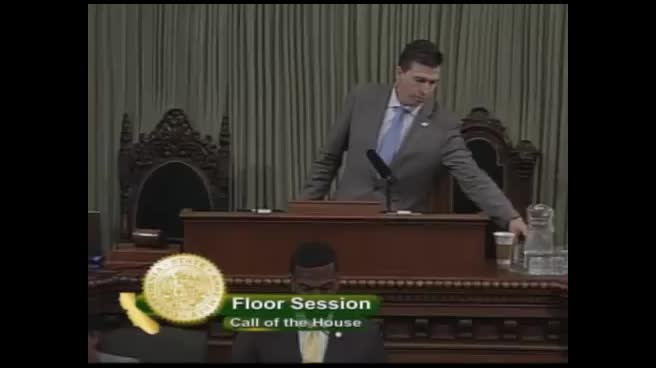
| Jul 13, 2015 | AB 223 DAHLE Concurrence in Senate Amendments | Assembly Floor |
Passed |
|
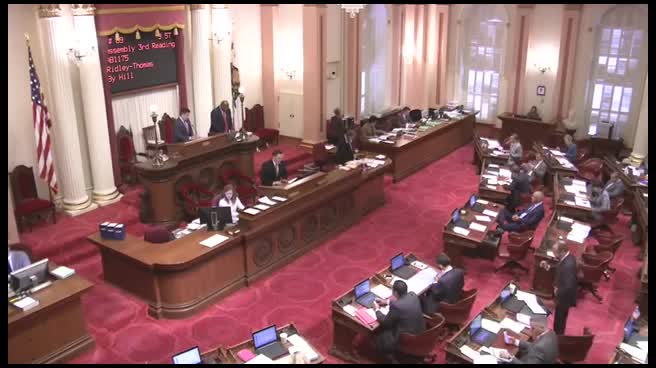
| Jul 9, 2015 | Assembly 3rd Reading AB223 Dahle By Gaines | Senate Floor |
Passed |
|
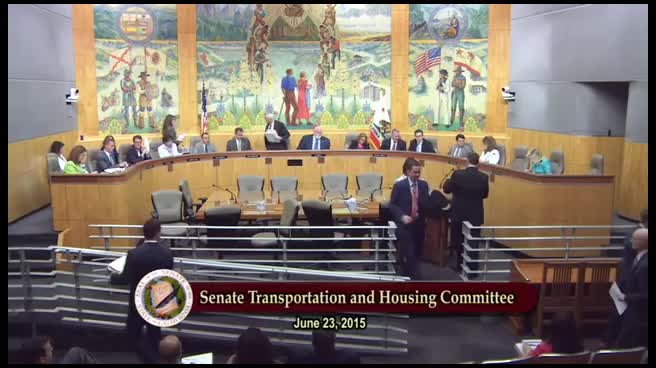
| Jun 23, 2015 | Do pass, but first be re-referred to the Committee on [Appropriations] | Senate Standing Committee on Transportation and Housing |
Passed |
|
| Apr 30, 2015 | AB 223 DAHLE Consent Calendar Second Day Regular Session | Assembly Floor |
Passed |
|
| Apr 22, 2015 | Do pass. To Consent Calendar. | Assembly Standing Committee on Appropriations |
Passed |
|
| Apr 6, 2015 | Do pass and be re-referred to the Committee on [Appropriations] with recommendation: To Consent Calendar | Assembly Standing Committee on Transportation |
Passed |
This list shows positions taken on this bill by organizations on the date displayed, which is linked to the original source.
Positions by individuals are not included.
|
Organization
|
Position
|
Date
|
|---|---|---|
| 2 Truckee business owners | ** Support | Jul 9, 2015 |
| Truckee Donner Chamber of Commerce | ** Support | Jul 9, 2015 |
| Truckee Town Council | ** Support | Jun 23, 2015 |
AB 223
Page 2
CONCURRENCE IN SENATE AMENDMENTS
AB 223
(Dahle)
As Amended June 15, 2015
Majority vote
ASSEMBLY: |
77-0 |
(April 30, 2015) |
SENATE: |
39-0 |
(July 9, 2015) |
Original Committee Reference: TRANS.
SUMMARY: Authorizes, until January 1, 2021, the placement of Business Logo Signing Program signs along Interstate 80 within, or at the exits leading to, the City of Truckee.
The Senate amendments limit the placement of business logo signs near Truckee to incorporated areas with a population density of less than one person per acre surrounded entirely by land of the Tahoe National Forest.
EXISTING LAW:
Directs the California Department of Transportation (Caltrans) to adopt rules and regulations for its Business Logo Signing Program – i.e., a program to allow the placement of signs near freeways identifying the presence of specific roadside businesses offering fuel, food, lodging, or camping services, approved 24-hour pharmacy services, or specific approved attractions, under the following conditions:
All business applicants must have equal access to the program; and,
Caltrans is prohibited from placing business logo signs within urban areas designated by the United State Bureau of Census as having a population of 5,000 or more (except for the City of Lincoln, as described below).
Prohibits the removal of business logo signs placed before January 1, 2003, due solely to population growth in an urban area that results in a population of 5,000 or more but less than 10,000.
Authorizes a limited exception to the Business Logo Signing Program for signs along State Route 65 within the City of Lincoln, until January 1, 2021.
FISCAL EFFECT: According to the Senate Appropriations Committee, pursuant to Senate Rule 28.8, negligible state costs.
COMMENTS: The Business Logo Signing Program was originally created to provide motorists with information regarding specific roadside businesses offering fuel, food, lodging, or camping services alongside along Interstate 5. The program was later expanded to rural areas generally.
Implementing regulations promulgated by Caltrans set forth criteria for businesses to be included in the program. For example, gas stations must meet the following criteria:
The business must be generally neat, clean, and have a comfortable appearance and an adequate scope of services.
For gas stations, a business must be located within one mile of the freeway interchange and it must provide vehicle services, including fuel, oil, tire repair, battery, and radiator water. It must also provide public restrooms, water fountains, and telephones and it must be open for a specified number of hours per day.
Business logo signs only accommodate six logos per type of service (i.e., food, gas, lodging or camping), and Caltrans does not install more than one sign per type of service. To address situations in which there are more qualified applicants than available logo spaces, Caltrans has developed a priority system. For lodging and camping signs, Caltrans prioritizes businesses that are closest to the highway. For food and fuel signs, priority is based on a point system that values proximity to the highway and longer hours of operation.
Last session, the Legislature passed AB 178 (Beth Gaines), Chapter 131, Statutes of 2013, to help the City of Lincoln. The city's business community had been negatively impacted by the opening of the Lincoln Bypass the year before that diverted traffic from the historic downtown and its fuel and food service providers. Lincoln is not otherwise eligible to participate in the business logo program because its population exceeds the definition of rural.
This bill was introduced to provide a similar, limited-time exception to the Business Logo Signing Program for the City of Truckee. Truckee has a population of over 16,000 and is, like the City of Lincoln, ineligible for participation in the Business Logo Signing Program.
Truckee's population has exceeded the rural threshold since inception of the Business Logo Signing Program so it is not clear why business logo signs were even authorized to begin with. Caltrans was unable to determine why the signs were originally placed but it did confirm that, in 2008, at least 11 business logo sign accounts in the Truckee area were closed when the department realized the signs did not comply with the Business Logo Signing Program guidelines related to population. Following removal of the business logo signs, Caltrans installed general service signs directing traffic to exits where food, fuel, and lodging are available but that do not display specific business logos.
According to the author, businesses in Truckee were negatively impacted following removal of logo signs. The author also suggests this bill is necessary because construction of the Truckee Bypass in 2002 has resulted in a downturn in Truckee businesses.
Analysis Prepared by: Janet Dawson / TRANS. / (916) 319-2093 FN: 0001190
AB 223
Page 4
|
Office of Senate Floor Analyses (916) 651-1520 Fax: (916) 327-4478 |
THIRD READING
Bill No: AB 223
Amended: 6/15/15 in Senate
SENATE TRANS. & HOUSING COMMITTEE: 11-0, 6/23/15
AYES: Beall, Cannella, Allen, Bates, Gaines, Galgiani, Leyva, McGuire, Mendoza, Roth, Wieckowski
SENATE APPROPRIATIONS COMMITTEE: Senate Rule 28.8
ASSEMBLY FLOOR: 77-0, 4/30/15 (Consent) - See last page for vote
SUBJECT: Highways: exit information signs
DIGEST: This bill requires Caltrans to permit the placement of Business Logo Signing Program signs on Interstate 80 (I-80) within, or at exits leading to, the City of Truckee, until January 1, 2021.
Existing law:
Requires Caltrans to adopt rules and regulations for its Business Logo Signing Program, which allows signs near freeway exits in rural areas to contain information about roadside businesses offering fuel, food, lodging, camping services, approved 24-hour pharmacy services, or approved attractions. These signs display up to six business logos for applicable businesses. Caltrans must provide equal access to all business applicants and may not approve signs in urban areas designated by the United States Bureau of the Census as having a population of 5,000 or more. Caltrans may not remove an information sign that was placed before January 1, 2003, if the population in an urban area grew to more than 5,000 but not less than 10,000 people.
Creates a limited exception to the Business Logo Signing Program and states that Caltrans shall, through January 1, 2021, allow the placement of information signs along State Highway Route 65 within, or at exits leading up to, the City of Lincoln. Caltrans must also report to the Senate and Assembly Transportation Committees before January 1, 2020, on the implementation of the exception, and offer any recommendations for extending the exception period and whether or not the authorization for the Business Logo Signing Program should be expanded to urban areas with populations of 5,000 or more.
This bill creates another exemption by requiring Caltrans to permit information signs to be placed on I-80 within, or at exits leading to, the City of Truckee. The authorization in this bill shall apply only to incorporated areas with a population density of less than one person per acre surrounded entirely by land of the Tahoe National Forest.
Comments
Purpose of the bill. Around 2008, Caltrans removed at least eight business logo signs in the Truckee area following construction of the Highway 267 bypass and, according to the town, businesses have seen a decrease in business. AB 223 seeks to replace those logo signs to inform travelers of businesses that are available.
City of Lincoln exception. Last session, the Legislature passed and the Governor signed AB 178 (Gaines, Chapter 131, Statutes of 2013) to help the City of Lincoln. The city’s business community had been negatively impacted by the opening of the Lincoln Bypass the year before, because it diverted traffic from the historic downtown and its fuel and food service providers. Lincoln is not otherwise eligible to participate in the business logo program because its population exceeds the definition of rural.
AB 178 established a limited exception to the Business Logo Signing Program by allowing business logo signs along State Route 65 until January 1, 2021 and required Caltrans to provide a report on or before January 1, 2020. That report shall include recommendations as to whether or not the business logo program should be expanded, and if so, in what ways.
Why Truckee? According to the source, the Town of Truckee, Truckee is a town deep in the Sierra Nevada Mountains, surrounded by dense forest and national park land. This national forest land precludes private business signage for miles leading into the town. Truckee is a large incorporated area with fewer than .69 people per acre (spread over 33 square miles) and the last full-service opportunity before leaving the state (25 miles from the next town in Nevada). The source believes that informing drivers will assist public safety at night or during winter driving conditions with chain requirements and snow removal equipment.
Truckee had logo signs on I-80 until 2008 when Caltrans removed the signs and replaced them with generic fuel, lodging, and food signs, because the population did not meet the definition of rural. In fact, Truckee’s population never met the rural threshold, and it is not clear why the business logo signs were authorized to begin with. Since then, the source states that businesses in Truckee, particularly those not located in historic downtown, saw a significant drop in business. Some hotels saw a 20% drop-off in bed nights, which greatly impacts the business and town revenues.
The Lincoln exception was intended to ease the transition for the city’s businesses following the construction of the newly opened bypass for a limited time period. The signs near Truckee were taken down in 2008, during the great recession, more than seven years ago. Caltrans did not merely take down existing signs; Caltrans replaced those signs with generic blue signs with fuel, lodging, and food symbols that provide travelers with information about the location of services. Additionally, the source states that Truckee lost two major businesses, as those businesses moved to Nevada. As a result, this bill seems less designed to assist travelers than to help businesses in an economically struggling town advertise in the public right-of-way.
Related Legislation
AB 179 (Gaines, Chapter 131, Statutes of 2013) authorized a limited exception to the Business Logo Signing Program for signs along the State Route 65 within the City of Lincoln until January 1, 2021.
FISCAL EFFECT: Appropriation: No Fiscal Com.: Yes Local: No
Town of Truckee (source)
Truckee Donner Chamber of Commerce
2 Truckee business owners
None received
ASSEMBLY FLOOR: 77-0, 4/30/15
AYES: Achadjian, Alejo, Travis Allen, Baker, Bigelow, Bloom, Bonilla, Bonta, Brough, Brown, Burke, Calderon, Chang, Chau, Chiu, Chu, Cooley, Cooper, Dababneh, Dahle, Daly, Dodd, Eggman, Frazier, Beth Gaines, Gallagher, Cristina Garcia, Eduardo Garcia, Gatto, Gipson, Gonzalez, Gordon, Gray, Grove, Hadley, Harper, Roger Hernández, Holden, Irwin, Jones, Jones-Sawyer, Kim, Lackey, Levine, Linder, Lopez, Low, Maienschein, Mathis, Mayes, McCarty, Medina, Melendez, Mullin, Nazarian, Obernolte, O'Donnell, Olsen, Patterson, Perea, Quirk, Rendon, Ridley-Thomas, Rodriguez, Salas, Santiago, Steinorth, Mark Stone, Thurmond, Ting, Wagner, Waldron, Weber, Wilk, Williams, Wood, Atkins
NO VOTE RECORDED: Campos, Chávez, Gomez
Prepared by: Alison Dinmore / T. & H. / (916) 651-4121
7/7/15 16:21:07
**** END ****
AB 223 (Dahle) Page 4 of 4
SENATE COMMITTEE ON TRANSPORTATION AND HOUSING
Senator Jim Beall, Chair
2015 - 2016 Regular
Bill No: AB 223 Hearing Date: 6/23/2015
Author: |
Dahle |
||
Version: |
6/15/2015 |
||
Urgency: |
No |
Fiscal: |
Yes |
Consultant: |
Alison Dinmore |
||
SUBJECT: Business Logo Signing Program: Town of Truckee exception
DIGEST: This bill requires Caltrans to permit the placement of Business Logo Signing Program signs on Interstate 80 (I-80) within, or at exits leading to, the City of Truckee, until January 1, 2021.
ANALYSIS:
Existing law:
Requires Caltrans to adopt rules and regulations for its Business Logo Signing Program, which allows signs near freeway exits in rural areas to contain information about roadside businesses offering fuel, food, lodging, camping services, approved 24-hour pharmacy services, or approved attractions. These signs display up to six business logos for applicable businesses. Caltrans must provide equal access to all business applicants and may not approve signs in urban areas designated by the United States Bureau of the Census as having a population of 5,000 or more. Caltrans may not remove an information sign that was placed before January 1, 2003, if the population in an urban area grew to more than 5,000 but not less than 10,000 people.
Creates a limited exception to the Business Logo Signing Program and states that Caltrans shall, through January 1, 2021, allow the placement of information signs along State Highway Route 65 within, or at exits leading up to, the City of Lincoln. Caltrans must also report to the Senate and Assembly Transportation Committees before January 1, 2020, on the implementation of the exception, and offer any recommendations for extending the exception period and whether or not the authorization for the Business Logo Signing Program should be expanded to urban areas with populations of 5,000 or more.
This bill creates another exemption by requiring Caltrans to permit information signs to be placed on I-80 within, or at exits leading to, the City of Truckee. The authorization in this bill shall apply only to incorporated areas with a population density of less than one person per acre surrounded entirely by land of the Tahoe National Forest.
COMMENTS:
Purpose of the bill. Around 2008, Caltrans removed at least eight business logo signs in the Truckee area following construction of the Highway 267 bypass and, according to the town, businesses have seen a decrease in business. AB 223 seeks to replace those logo signs to inform travelers of businesses that are available.
City of Lincoln exception. Last session, the Legislature passed and the Governor signed AB 178 (Gaines, Chapter 131, Statutes of 2013) to help the City of Lincoln. The city’s business community had been negatively impacted by the opening of the Lincoln Bypass the year before, because it diverted traffic from the historic downtown and its fuel and food service providers. Lincoln is not otherwise eligible to participate in the business logo program because its population exceeds the definition of rural.
AB 178 established a limited exception to the Business Logo Signing Program by allowing business logo signs along State Route 65 until January 1, 2021 and required Caltrans to provide a report on or before January 1, 2020. That report shall include recommendations as to whether or not the business logo program should be expanded, and if so, in what ways.
3) Why Truckee? According to the sponsor, the Town of Truckee, Truckee is a town deep in the Sierra Nevada Mountains, surrounded by dense forest and national park land. This national forest land precludes private business signage for miles leading into the town. Truckee is a large incorporated area with fewer than .69 people per acre (spread over 33 square miles) and the last full-service opportunity before leaving the state (25 miles from the next town in Nevada). The sponsor believes that informing drivers will assist public safety at night or during winter driving conditions with chain requirements and snow removal equipment.
Truckee had logo signs on I-80 until 2008 when Caltrans removed the signs and replaced them with generic fuel, lodging, and food signs, because the population did not meet the definition of rural. In fact, Truckee’s population never met the rural threshold, and it is not clear why the business logo signs were authorized to begin with. Since then, the sponsor states that businesses in Truckee, particularly those not located in historic downtown, saw a significant drop in business. Some hotels saw a 20% drop-off in bed nights, which greatly impacts the business and town revenues.
The Lincoln exception was intended to ease the transition for the city’s businesses following the construction of the newly opened bypass for a limited time period. The signs near Truckee were taken down in 2008, during the great recession, more than seven years ago. Caltrans did not merely take down existing signs; Caltrans replaced those signs with generic blue signs with fuel, lodging, and food symbols that provide travelers with information about the location of services. Additionally, the sponsor states that Truckee lost two major businesses, as those businesses moved to Nevada. As a result, this bill seems less designed to assist travelers than to help businesses in an economically struggling town advertise in the public right-of-way.
Precedent and proliferation of signs. The Business Logo Signing Program is intended to help travelers find services in rural areas, where not all exits provide services. In larger towns and cities, it is assumed that travelers know that almost all exits have services. This bill is likely to set a precedent for other cities to seek similar treatment, because their businesses would equally benefit from highway advertising. Ultimately, expanding the Business Logo Signing Program will result in more highway signage. The proliferation of signs has often been of concern to this committee because it adds to driver distraction and dilutes attention to highway safety signs.
Assembly Votes:
Floor: 77-0
Appr: 17-0
Trans: 15-0
Related Legislation:
AB 179 (Gaines, Chapter 131, Statutes of 2013) — authorized a limited exception to the Business Logo Signing Program for signs along the State Route 65 within the City of Lincoln until January 1, 2021.
FISCAL EFFECT: Appropriation: No Fiscal Com.: Yes Local: No
POSITIONS: (Communicated to the committee before noon on Wednesday,
June 17, 2015.)
SUPPORT:
Town of Truckee (sponsor)
Truckee Donner Chamber of Commerce
2 Truckee business owners
OPPOSITION:
None received
-- END --
AB 223
Page 2
Date of Hearing: April 22, 2015
ASSEMBLY COMMITTEE ON APPROPRIATIONS
Jimmy Gomez, Chair
AB 223
(Dahle) – As Introduced February 3, 2015
Policy Committee: |
Transportation |
Vote: |
15 - 0 |
|
|
|
|
|
|
|
|
Urgency: No State Mandated Local Program: No Reimbursable: No
SUMMARY:
This bill requires Caltrans, until January 1, 2021, to allow the placement of business logo signage along Interstate 80 at the exits leading to the City of Truckee (Placer County).
FISCAL EFFECT:
Minor up-front costs to Caltrans to install the signs, fully offset over time by permit fees paid by businesses benefitting from the logo signage.
COMMENTS:
Background. The business logo program provides motorists with information signs, along freeways in rural areas with less than 5,000 population, regarding specific roadside businesses offering gas, food, lodging, camping, 24-hour pharmacy services, or approved recreational attractions. Caltrans charges each business benefitting from the program a fee of at least 25% more than Caltrans’ cost for placing and maintaining signs.
Last session, the Legislature passed AB 178, a similar bill to assist the City of Lincoln. That city's business community had been negatively impacted by the opening of the Lincoln Bypass the year before, which diverted traffic from the historic downtown and its fuel and food service providers. Lincoln was not otherwise eligible to participate in the business logo program because its population exceeds the definition of rural.
Purpose. This bill intends to provide a similar, limited-time exception to the Business Logo Signing Program for participation by the City of Truckee. Truckee has a population of over 16,000 and, like Lincoln, has always been ineligible for participation in the Business Logo Signing Program.
Caltrans was unable to determine why business logo signs were originally placed near Truckee. In 2008, at least 11 business logo sign accounts in the Truckee area were closed. Following removal of these signs, Caltrans installed general service signs directing traffic to exits where food, fuel, and lodging are available without displaying specific business logos.
According to the author, businesses in Truckee were negatively impacted following removal of logo signs. The author also suggests the bill is necessary because construction of the Truckee Bypass in 2002 has resulted in a downturn in Truckee businesses.
Analysis Prepared by: Chuck Nicol / APPR. / (916) 319-2081
AB 223
Page 3
Date of Hearing: April 6, 2015
ASSEMBLY COMMITTEE ON TRANSPORTATION
Jim Frazier, Chair
AB 223
(Dahle) – As Introduced February 3, 2015
SUBJECT: Highways: exit information signs
SUMMARY: Authorizes, until January 1, 2021, the placement of Business Logo Signing Program signs along Interstate 80 within, or at the exits leading to, the City of Truckee.
EXISTING LAW:
Directs the California Department of Transportation (Caltrans) to adopt rules and regulations for its Business Logo Signing Program - i.e., a program to allow the placement of signs near freeways identifying the presence of specific roadside businesses offering fuel, food, lodging, or camping services, approved 24-hour pharmacy services, or specific approved attractions, under the following conditions:
All business applicants must have equal access to the program; and,
Caltrans is prohibited from placing business logo signs within urban areas designated by the United State Bureau of Census as having a population of 5,000 or more (except for the City of Lincoln, as described below).
Prohibits the removal of business logo signs placed before January 1, 2003, due solely to population growth in an urban area that results in a population of 5,000 or more but less than 10,000.
Authorizes a limited exception to the Business Logo Signing Program for signs along State Route 65 within the City of Lincoln, until January 1, 2021.
Requires Caltrans, on or before January 1, 2020, to report to the transportation committees of the Senate and Assembly on the implementation of the exception for the City of Lincoln. The report is to include recommendations as to whether or not the period of this exception should be extended and whether or not the authorization for the Business Logo Signing Program should be expanded to urban areas having a population of 5,000 or more.
FISCAL EFFECT: According to the Assembly Appropriation Committee's analysis of a similar bill last session, AB 178 (Gaines), Chapter 131, Statutes of 2013, the bill will likely have minor costs to Caltrans, which would be offset by fees.
COMMENTS: The Business Logo Signing Program was originally created to provide motorists with information regarding specific roadside businesses offering fuel, food, lodging, or camping services alongside along Interstate 5. The program was later expanded to rural areas generally.
Implementing regulations promulgated by Caltrans set forth criteria for businesses to be included in the program. For example, gas stations must meet the following criteria:
The business must be generally neat, clean, and have a comfortable appearance and an adequate scope of services.
For gas stations, a business must be located within one mile of the freeway interchange and it must provide vehicle services, including fuel, oil, tire repair, battery, and radiator water. It must also provide public restrooms, water fountains, and telephones and it must be open for a specified number of hours per day.
Business logo signs only accommodate six logos per type of service (i.e., food, gas, lodging or camping), and Caltrans does not install more than one sign per type of service. To address situations in which there are more qualified applicants than available logo spaces, Caltrans has developed a priority system. For lodging and camping signs, Caltrans prioritizes businesses that are closest to the highway. For food and fuel signs, priority is based on a point system that values proximity to the highway and longer hours of operation.
Last session, the Legislature passed AB 178 to help the City of Lincoln. The city's business community had been negatively impacted by the opening of the Lincoln Bypass the year before that diverted traffic from the historic downtown and its fuel and food service providers. Lincoln is not otherwise eligible to participate in the business logo program because its population exceeds the definition of rural.
This bill was introduced to provide a similar, limited-time exception to the Business Logo Signing Program for the City of Truckee. Truckee has a population of over 16,000 and is, like the City of Lincoln, ineligible for participation in the Business Logo Signing Program.
Truckee's population has exceeded the rural threshold since inception of the Business Logo Signing Program so it is not clear why business logo signs were even authorized to begin with. Caltrans was unable to determine why the signs were originally placed but it did confirm that, in 2008, at least 11 business logo sign accounts in the Truckee area were closed when the department realized the signs did not comply with the Business Logo Sign Program guidelines related to population. Following removal of the business logo signs, Caltrans installed general service signs directing traffic to exits where food, fuel, and lodging are available but that do not display specific business logos.
According to the author, businesses in Truckee were negatively impacted following removal of logo signs. The author also suggests the bill is necessary because construction of the Truckee Bypass in 2002 has resulted in a downturn in Truckee businesses.
Committee concern: The exception provided for the City of Lincoln was intended to ease the transition for the city's businesses following construction of the just-opened bypass. The exception is for a limited duration (7 years). The Truckee Bypass, on the other hand, was opened over 12 years ago, well beyond what could arguably be considered a reasonable transition period.
Previous legislation: AB 178 (Gaines), Chapter 131, Statutes of 2013, authorized a limited exception to the Business Logo Signing Program for signs along State Route 65 within the City of Lincoln, until January 1, 2021.
AB 1923 (Dickerson), Chapter 576, Statutes of 2002, was originally introduced to expand the Business Logo Signing Program to areas up to 15,000. AB 1923 was subsequently amended, and eventually signed to prohibit Caltrans from taking down business logo signs in areas with populations that exceeded 5,000 but did not exceed 10,000.
SB 599 (Knight), of 1997, would have required Caltrans to allow business logo signs in areas with populations larger than 5,000 if the city submits a written request to the department for such placement. SB 599 failed passage in the Senate Transportation Committee.
AB 1257 (Chandler), Chapter 560, Statutes of 1992, expanded the business logo program beyond rural areas alongside of Interstate 5 to other rural areas of California.
REGISTERED SUPPORT / OPPOSITION:
Support
Truckee Donner Chamber of Commerce
Truckee Town Council
2 private citizens
Opposition
None on file
Analysis Prepared by: Janet Dawson / TRANS. / (916) 319-2093
Discussed in Hearing
 1MIN
Assembly Floor
 1MIN
Senate Floor
 5MIN
Senate Standing Committee on Transportation and Housing
Bill Author

Bill Co-Author(s):