AB 2273: Military law: suicide.
- Session Year: 2015-2016
- House: Assembly
- Latest Version Date: 2016-09-13
Existing law establishes the California National Guard and adopts the Uniform Code of Military Justice, and the Manual for Courts-Martial, as governing and applicable to the active state militia, including the California National Guard.
This bill would prohibit a member of the active militia, including the California National Guard, from being prosecuted for a military crime based on an attempt to kill himself or herself. The bill would also require the Adjutant General to ensure that any member of the active militia that attempts to kill himself or herself is referred, as soon as practically possible, to the departments Behavioral Health Liaison Program, or its successor, to receive assistance, counseling, or referral to other appropriate available services.
Existing law establishes the California National Guard and adopts the Uniform Code of Military Justice, and the Manual for Courts-Martial, as governing and applicable to the active state militia, including the California National Guard.
This bill would prohibit a member of the active militia, including the California National Guard, from being prosecuted for a military crime based on an attempt to kill himself or herself.
(a)The constitution and jurisdiction of general courts-martial, special courts-martial, summary courts-martial, and courts of inquiry, the form and manner in which the proceedings are conducted and recorded, the forms of oaths and affirmations taken in the administration of military law by such courts, the limits of punishment, and the proceedings in the revision thereof, shall be governed by the terms of the laws and regulations governing the United States Army, Air Force, or Navy, and the law and procedure of similar courts of the United States Army, Air Force, or Navy, except as otherwise provided in this chapter.
(b)The provisions of the Uniform Code of Military Justice, and the rules and regulations published thereunder, shall govern and be applicable to the active militia, including the California National Guard, except as otherwise provided in this code, the California Manual for Courts-Martial, or other regulations as adopted by the Governor or Adjutant General.
(c)(1)Notwithstanding subdivision (b), an attempt by a member of the active militia, including the California National Guard, to kill himself or herself shall not be prosecuted as a military crime.
(2)The Adjutant General shall ensure that any member of the active militia that attempts to kill himself or herself shall be referred, as soon as practically possible, to the departments Behavioral Health Liaison Program, or its successor, to receive assistance, counseling, or referral to other appropriate available services.
(a)The constitution and jurisdiction of general courts-martial, special courts-martial, summary courts-martial, and courts of inquiry, the form and manner in which the proceedings are conducted and recorded, the forms of oaths and affirmations taken in the administration of military law by such courts, the limits of punishment, and the proceedings in the revision thereof, shall be governed by the terms of the laws and regulations governing the United States Army, Air Force, or Navy, and the law and procedure of similar courts of the United States Army, Air Force, or Navy, except as otherwise provided in this chapter.
(b)The provisions of the Uniform Code of Military Justice, and the rules and regulations published thereunder, shall govern and be applicable to the active militia, including the California National Guard, except as otherwise provided in this code, the California Manual for Courts-Martial, or other regulations as adopted by the Governor or Adjutant General.
(c)Notwithstanding subdivision (b), an attempt by a member of the active militia, including the California National Guard, to kill himself or herself shall not be prosecuted as a military crime.
|
Date
|
Status
|
|---|---|
| May 5, 2016 | Referred to Com. on V.A. |
| Sep 13, 2016 | Chaptered by Secretary of State - Chapter 328, Statutes of 2016. |
| Sep 13, 2016 | Approved by the Governor. |
| Aug 23, 2016 | Enrolled and presented to the Governor at 2 p.m. |
| Aug 17, 2016 | Read third time. Passed. Ordered to the Assembly. (Ayes 38. Noes 0.). |
| Aug 17, 2016 | Read third time. Passed. Ordered to the Assembly. (Ayes 38. Noes 0. Page 5055.). |
| Aug 17, 2016 | Read third time. Passed. Ordered to the Assembly. |
| Aug 17, 2016 | In Assembly. Ordered to Engrossing and Enrolling. |
| Aug 2, 2016 | Read second time. Ordered to third reading. |
| Aug 1, 2016 | From committee: Be placed on second reading file pursuant to Senate Rule 28.8. |
| Jun 14, 2016 | From committee: Do pass and re-refer to Com. on APPR. (Ayes 5. Noes 0.) (June 14). Re-referred to Com. on APPR. |
| Feb 18, 2016 | Read first time. To print. |
| Apr 21, 2016 | Read third time. Passed. Ordered to the Senate. (Ayes 79. Noes 0. Page 4463.) |
| Apr 21, 2016 | Read third time. Passed. Ordered to the Senate. |
| Apr 21, 2016 | In Senate. Read first time. To Com. on RLS. for assignment. |
| Apr 14, 2016 | Read second time. Ordered to Consent Calendar. |
| Apr 13, 2016 | From committee: Do pass. To Consent Calendar. (Ayes 20. Noes 0.) (April 13). |
| Mar 30, 2016 | From committee: Do pass and re-refer to Com. on APPR. (Ayes 8. Noes 0.) (March 29). Re-referred to Com. on APPR. |
| Mar 15, 2016 | Re-referred to Com. on V.A. |
| Mar 14, 2016 | From committee chair, with author's amendments: Amend, and re-refer to Com. on V.A. Read second time and amended. |
| Mar 3, 2016 | Referred to Com. on V.A. |
| Feb 19, 2016 | From printer. May be heard in committee March 20. |
|
Date
|
Description
|
Location
|
Votes
|
|
|---|---|---|---|---|
| Aug 17, 2016 | Assembly 3rd Reading AB2273 Irwin By Nielsen | Senate Floor |
Passed |
|
| Jun 14, 2016 | Do pass, but first be re-referred to the Committee on [Appropriations] | Senate Standing Committee on Veterans Affairs |
Passed |
|
| Apr 21, 2016 | AB 2273 IRWIN Consent Calendar Second Day Regular Session | Assembly Floor |
Passed |
|
| Apr 13, 2016 | Do pass. To Consent Calendar. | Assembly Standing Committee on Appropriations |
Passed |
|
| Mar 29, 2016 | Do pass and be re-referred to the Committee on [Appropriations] | Assembly Standing Committee on Veterans Affairs |
Passed |
This list shows positions taken on this bill by organizations on the date displayed, which is linked to the original source.
Positions by individuals are not included.
|
Organization
|
Position
|
Date
|
|---|---|---|
| American G.I. Forum of California | ** Support | Aug 17, 2016 |
| American Legion - Department of California | ** Support | Aug 17, 2016 |
| AMVETS - Department of California | ** Support | Aug 17, 2016 |
| California Association Of County Veterans Service Officers | ** Support | Aug 17, 2016 |
| National Association of Social Workers - California Chapter | ** Support | Aug 17, 2016 |
| One individual | ** Support | Aug 17, 2016 |
| Veterans of Foreign Wars - Department of California | ** Support | Aug 17, 2016 |
| Vietnam Veterans of American - California State Council | ** Support | Aug 17, 2016 |
Office of Senate Floor Analyses (916) 651-1520 Fax: (916) 327-4478 | AB |
THIRD READING
Bill No: AB 2273
:
SENATE VETERANS AFFAIRS COMMITTEE: 5-0, 6/14/16
AYES: Nielsen, Hueso, Allen, Nguyen, Roth
SENATE APPROPRIATIONS COMMITTEE: Senate Rule 28.8
ASSEMBLY FLOOR: 79-0, 4/21/16 (Consent) - See last page for vote
DIGEST: This bill prohibits a member of the active militia, including the California National Guard (CNG), from being prosecuted for a military crime, under state authority, based on an attempt to kill him or herself.
ANALYSIS: Existing law provides that the California Military Department (CMD) can prosecute member Soldiers and Airmen under state authority.
This bill:
- Prohibits a member of the active militia, including the CNG, from being prosecuted for a military crime based on an attempt to kill him or herself.
- Requires the Adjutant General to ensure that any member of the active militia who attempts to kill himself or herself is referred, as soon as practically possible, to the CMD’s Behavioral Health Liaison Program, or its successor, to receive assistance, counseling, or referral to other appropriate available services.
Background
California State Militia. The Military and Veterans Code (MVC) provides for a California state militia, which contains both an active militia and an unorganized militia, as follows:
- The active militia consists of the CNG, State Military Reserve (SMR) and Naval Militia. (MVC §120)
- The unorganized militia:
- Consists of all persons liable to serve in the militia, but not members of the CNG, SMR, or Naval Militia. (MVC §121)
- All able-bodied males between 18 and 45 years old who are not members of the CMD constitute the unorganized militia of the state. (MVC §122)
- The Governor may call the unorganized militia for active duty in case of war, rebellion, insurrection, invasion, tumult, riot, breach of the peace, public calamity or catastrophe, or other emergency or imminent danger, or may be called forth for service under the Constitution and laws of the United States. (MVC §128)
California Military Department. The CMD is a state department located within the executive branch. According to MVC Code Section 51, the CMD comprises the following:
- The active militia, which consists of the CNG, State Military Reserve and Naval Militia; and
- Two non-militia elements: (a) The Office of the Adjutant General and (b) the California Cadet Corps.
The CMD’s eclectic personnel mix includes both paid employees and volunteers, both uniformed military and civilian workers, both full-time and part-time status, and both federally funded and state-funded. All uniformed employees are subject to military law, either federal or state, depending upon their legal authorization and/or current duty status.
Military law. Federal courts-martial are conducted under a federal Uniform Code of Military Justice (UCMJ) and Manual for Courts-Martial (MCM). Congress enacted the UCMJ, the code of military criminal laws applicable to all U.S. federal military members. The MCM contains the Rules for Courts-Martial (RCM) and Military Rules of Evidence (MRE). Under this legal framework, military members are subject to rules, orders, proceedings, and consequences different from the rights and obligations of their civilian counterparts.
The UCMJ authorizes three types of courts-martial: (1) summary court-martial; (2) special court-martial; and (3) general court-martial. Depending on the severity of the alleged offense, the accused’s commanding officer enjoys great discretion with respect to the type of court-martial to convene. Generally, each of the courts-martial provides fundamental constitutional and procedural rights to the accused, including, but not limited to, the right to a personal representative or counsel, the opportunity to confront evidence and witnesses, and the right to have a decision reviewed by a lawyer or a court of appeals.
Military members convicted by federal courts-martial may appeal for review by the U.S. Court of Appeals for the Armed Services. This independent tribunal was established within the UCMJ by act of Congress -- not by a Presidential executive order. The same constitutional principles are applicable to the Courts-Martial Appellate Panel – the CMD's appellate tribunal.
California Military Law. California state law expressly adopts the substance of federal military statutes, the UCMJ, MCM, RCM, and MRE insofar as they may be applicable to state military matters. MVC Section 451 states:
(a) The constitution and jurisdiction of general courts-martial, special courts-martial, summary courts-martial, and courts of inquiry, the form and manner in which the proceedings are conducted and recorded, the forms of oaths and affirmations taken in the administration of military law by such courts, the limits of punishment, and the proceedings in the revision thereof, shall be governed by the terms of the laws and regulations governing the United States Army, Air Force, or Navy, and the law and procedure of similar courts of the United States Army, Air Force, or Navy, except as otherwise provided in this chapter.
(b) The provisions of the Uniform Code of Military Justice (UCMJ), and the rules and regulations published thereunder, shall govern and be applicable to the active militia, including the CNG, except as otherwise provided in this code, the California Manual for Courts-Martial, or other regulations as adopted by the Governor or Adjutant General.
Suicide. Articles 115 and 134 of the UCMJ penalize attempted suicide and self-injury. Article 134 of the federal UCMJ, called “the general article,” criminalizes “all disorders and neglects to the prejudice of good order and discipline in the Armed Forces” and “all conduct of a nature to bring discredit upon the Armed Forces.” The Manual for Courts-Martial lists “self-injury without intent to avoid service” as an example of conduct punishable under this code.
During the past decade, the U.S. military has witnessed abnormally high suicide rates, understood to be largely associated with the high deployment rates of active and reserve troops to the conflicts in Iraq and Afghanistan.
In response, the Department of Defense (DoD) established the Defense Suicide Prevention Office to provide advocacy, program oversight, and policy for military suicide prevention, intervention and postvention efforts to reduce suicidal behaviors in service members, civilians and their families. The DoD Suicide Event Report standardizes suicide surveillance efforts across the Army, Navy, Air Force, and Marine Corps to provide analytical data in support of the department’s suicide prevention mission.
On May 4, 2016, USA Today reported the following:
The Pentagon reported Friday that 265 active-duty servicemembers killed themselves last year, continuing a trend of unusually high suicide rates that have plagued the U.S. military for at least seven years.
The number of suicides among troops was 145 in 2001 and began a steady increase until more than doubling to 321 in 2012, the worst year in recent history for servicemembers killing themselves.
Behavioral Health Liaison Program. In a 2013 memorandum to the Little Hoover Commission, the CMD described its Behavioral Health Liaison Program (BHL) as follows:
“Proposition 63 funding has dramatically improved access to mental health care for Soldiers and Airmen of the California National Guard. It has enabled the California National Guard to implement a behavioral health program that is recognized as the best in the nation. Commonly referred to as ‘The California Model,’ our approach to delivering behavioral health services is being replicated by state National Guards across the country.
“The Military Department's Behavioral Health Outreach Liaison (BHL) program was established in 2009 with the assistance of the leadership of the California Legislature. Using Proposition 63 funds, this program provides two licensed therapists who are assigned to Northern and Southern California regions, and one agency coordinator.”
In a February 2016 memorandum to the Joint Legislative Budget Committee, the CMD reported that the BHL program:
“ . . . (S)upports the behavioral health needs of over 21,000 CNG and (SMR members. The CMD BHL program had a FY 2015-16 baseline funding of $1,590,000 that funds 8.2 positions through Proposition 63.”
The 2016 memorandum reported that – in calendar year 2015 – the BHL program had 9,198 contacts with supported service members and made 1,567 referrals to county mental health departments and other agencies. The “five top issues” for which CNG members sought assistance were:
- General mental health support.
- Suicidal ideation.
- Substance abuse.
- Employment.
- Family/relationship issues.
FISCAL EFFECT: Appropriation: Fiscal Com.: Local:
American G.I. Forum of California
American Legion - Department of California
AMVETS - Department of California
California Association of County Veterans Service Officers
Military Officers Association of America - California Council of Chapters
National Association of Social Workers - California Chapter
Veterans of Foreign Wars - Department of California
Vietnam Veterans of American - California State Council
One individual
None received
ASSEMBLY FLOOR: 79-0, 4/21/16
AYES: Achadjian, Alejo, Travis Allen, Arambula, Atkins, Baker, Bigelow, Bloom, Bonilla, Bonta, Brough, Brown, Burke, Calderon, Campos, Chang, Chau, Chávez, Chiu, Chu, Cooley, Cooper, Dababneh, Dahle, Daly, Dodd, Eggman, Frazier, Beth Gaines, Gallagher, Cristina Garcia, Eduardo Garcia, Gatto, Gipson, Gomez, Gonzalez, Gordon, Gray, Grove, Hadley, Harper, Roger Hernández, Holden, Irwin, Jones, Jones-Sawyer, Kim, Lackey, Levine, Linder, Lopez, Low, Maienschein, Mathis, Mayes, McCarty, Medina, Melendez, Mullin, Nazarian, Obernolte, O'Donnell, Olsen, Patterson, Quirk, Rodriguez, Salas, Santiago, Steinorth, Mark Stone, Thurmond, Ting, Wagner, Waldron, Weber, Wilk, Williams, Wood, Rendon
NO VOTE RECORDED: Ridley-Thomas
8/3/16 19:31:27
**** END ****
SENATE COMMITTEE ON
Senator Jim Nielsen, Chair
2015 - 2016 Regular
Bill No: Hearing Date: 6/14/16
Author: | Irwin | ||
Version: |
| ||
Urgency: | Fiscal: | ||
Consultant: | |||
Subject:
DESCRIPTION
Summary:
Prohibits a member of the active militia, including the California National Guard (CNG), from being prosecuted for a military crime, under state authority, based on an attempt to kill him or herself.
Existing law:
Provides that the California Military Department (CMD or Department) can prosecute member Soldiers and Airmen under state authority.
This bill:
- Prohibits a member of the active militia, including the CNG, from being prosecuted for a military crime based on an attempt to kill him or herself.
- Requires the Adjutant General (TAG) to ensure that any member of the active militia that attempts to kill himself or herself is referred, as soon as practically possible, to the CMD’s Behavioral Health Liaison Program, or its successor, to receive assistance, counseling, or referral to other appropriate available services.
BACKGROUND
California State Militia
The MVC provides for a California state militia, which contains both an active militia and an unorganized militia, as follows:
- The active militia consists of the CNG, State Military Reserve (SMR) and Naval Militia. (MVC §120)
- The unorganized militia:
- Consists of all persons liable to serve in the militia, but not members of the CNG, SMR, or Naval Militia. (MVC §121)
- All able-bodied males between 18 and 45 years old who are not members of the CMD constitute the unorganized militia of the state. (MVC §122)
- The Governor may call the unorganized militia for active duty in case of war, rebellion, insurrection, invasion, tumult, riot, breach of the peace, public calamity or catastrophe, or other emergency or imminent danger, or may be called forth for service under the Constitution and laws of the United States. (MVC §128)
California Military Department
The CMD is a state department located within the executive branch. According to MVC Code §51, the Department comprises the following:
- The active militia, which consists of the CNG, State Military Reserve and Naval Militia; and
- Two additional elements: (a) The Office of the Adjutant General and (b) the California Cadet Corps.
The Department’s eclectic personnel mix includes both paid employees and volunteers, uniformed military and civilian workers, both full-time and part-time, and both federally funded and state-funded. All uniformed employees are subject to military law, either federal or state, depending upon their category and current status.
Military law
Federal courts-martial are conducted under the Uniform Code of Military Justice (UCMJ) and the Manual for Courts-Martial (MCM). Congress enacted the UCMJ, the code of military criminal laws applicable to all U.S. military members. The MCM contains the Rules for Courts-Martial (RCM) and Military Rules of Evidence (MRE). Under this legal framework, military members are subject to rules, orders, proceedings, and consequences different from the rights and obligations of their civilian counterparts.
The UCMJ authorizes three types of courts-martial: (1) summary court-martial; (2) special court-martial; and (3) general court-martial. Depending on the severity of the alleged offense, the accused’s commanding officer enjoys great discretion with respect to the type of court-martial to convene. Generally, each of the courts-martial provides fundamental constitutional and procedural rights to the accused, including, but not limited to, the right to a personal representative or counsel, the opportunity to confront evidence and witnesses, and the right to have a decision reviewed by a lawyer or a court of appeals.
Military members convicted by federal courts-martial may appeal for review by the U.S. Court of Appeals for the Armed Services. This independent tribunal was established within the UCMJ by act of Congress -- not by a Presidential executive order. The same constitutional principles are applicable to the Courts-Martial Appellate Panel (CMAP) – the CMD's appellate tribunal.
California law expressly adopts federal military statutes, the UCMJ, MCM, RCM, and MRE as far as they may be applicable to state military matters. MVC §451 states:
(a) The constitution and jurisdiction of general courts-martial, special courts-martial, summary courts-martial, and courts of inquiry, the form and manner in which the proceedings are conducted and recorded, the forms of oaths and affirmations taken in the administration of military law by such courts, the limits of punishment, and the proceedings in the revision thereof, shall be governed by the terms of the laws and regulations governing the United States Army, Air Force, or Navy, and the law and procedure of similar courts of the United States Army, Air Force, or Navy, except as otherwise provided in this chapter.
(b) The provisions of the Uniform Code of Military Justice (UCMJ), and the rules and regulations published thereunder, shall govern and be applicable to the active militia, including the CNG, except as otherwise provided in this code, the California Manual for Courts-Martial, or other regulations as adopted by the Governor or Adjutant General.
Suicide
Articles 115 and 134 of the UCMJ penalize attempted suicide and self-injury. Article 134 of the federal UCMJ, called “the general article,” criminalizes “all disorders and neglects to the prejudice of good order and discipline in the Armed Forces” and “all conduct of a nature to bring discredit upon the Armed Forces.” The Manual for Courts-Martial lists “self-injury without intent to avoid service” as an example of conduct punishable under this code.
Behavioral Health Liaison Program
In a 2013 memorandum to the Little Hoover Commission, the CMD described its Behavioral Health Liaison Program (BHL) as follows:
“Proposition 63 funding has dramatically improved access to mental health care for Soldiers and Airmen of the California National Guard. It has enabled the California National Guard to implement a behavioral health program that is recognized as the best in the nation. Commonly referred to as "The California Model," our approach to delivering behavioral health services is being replicated by state National Guards across the country.
“The Military Department's Behavioral Health Outreach Liaison (BHL) program was established in 2009 with the assistance of the leadership of the California Legislature. Using Proposition 63 funds, this program provides two licensed therapists who are assigned to Northern and Southern California regions, and one agency coordinator.“
In February 2016 memorandum to the Joint Legislative Budget Committee, the CMD reported that the BHL program:
“ . . . (S)upports the behavioral health needs of over 21,000 CNG and (SMR members. The CMD BHL program had a FY 2015-16 baseline funding of $1,590,000 that funds 8.2 positions through Proposition 63.”
The 2016 memorandum reported that – in calendar year 2015 – the BHL program had 9,198 contacts with supported service members and made 1,567 referrals to county mental health departments and other agencies. The “five top issues” for which CNG members sought assistance were:
- General mental health support
- Suicidal ideation
- Substance abuse
- Employment
- Family/relationship issues
COMMENT
Author’s Comments:
“The Department of Defense (DoD) reports that 434 service members (active and reserve components) died by suicide in 2014. Through the third quarter of 2015 the DoD reported that 363 service members died by suicide. The high number of suicides among troops and veterans demands a proactive approach to support troops and veterans in crisis. When service members seek care, they should not fear retaliation from their unit. No troop or veteran can be allowed to fall through the cracks because they fear punishment.
“According to the Iraq Afghanistan Veterans of America (IAVA), member survey, an encouraging 77 percent of respondents sought care when it was suggested that they do so by a friend or family member. Still, the survey showed that many service members did not seek care because of concern that a mental health diagnosis might affect their career. Those concerns are not unfounded; under the Uniform Code of Military Justice, service members may be criminally prosecuted in military courts martial for attempting suicide.
“According to the IAVA, communities in and out of the military are vital to combating suicide among service members and veterans to ensure they are supported in their efforts to seek care and transition home. The stigma of seeking mental health care is a national problem, not just among military members and veterans, and keeps many people from trying to get help.
“AB 2273 would decriminalize suicide attempts, removing the disincentive for those who need help, to seek it, and for friends and colleagues to encourage seeking help or report accordingly.”
POSITIONS
Sponsor: Author.
Support:
American G.I. Forum of California
American Legion - Department of California
AMVETS - Department of California
California Association of County Veterans Service Officers
Military Officers Association of America - California Council of Chapters
National Association of Social Workers – California Chapter
Veterans of Foreign Wars - Department of California
Vietnam Veterans of American - California State Council
One (1) individual – Ari Freilich, Esq., veteran advocate
Oppose: None on file.
-- END --
Date of Hearing: April 13, 2016
ASSEMBLY COMMITTEE ON APPROPRIATIONS
Lorena Gonzalez, Chair
ABPCA Bill Id:AB 2273
Author:(Irwin) – As Amended Ver:March 14, 2016
Policy Committee: | Veterans Affairs | Vote: | 8 - 0 |
|
|
Urgency: No State Mandated Local Program: No Reimbursable: No
SUMMARY:
This bill prohibits prosecution for attempted suicide, as a military crime, by any member of the active militia or National Guard. This bill also requires that any member of the active militia that attempts suicide be referred by the Adjutant General to counseling or other appropriate services.
FISCAL EFFECT:
Minor absorbable cost to Military Department, the department already receives Proposition 60 funding for the Behavioral Health Liaison Program.
COMMENTS:
Background/Purpose. The federal Uniform Code of Military Justice (UCMJ) criminalizes “all disorders and neglects to the prejudice of good order and discipline in the Armed Forces” and “all conduct of a nature to bring discredit upon the Armed Forces.” The Manual for Courts-Martial lists “self-injury without intent to avoid service” as an example of conduct punishable under this code.
The UCMJ and regulations are applicable to the active militia, including the California National Guard, except as otherwise provided in by code, the California Manual for Courts-Martial, or other regulations as adopted by the Governor or Adjutant General. Therefore, National Guard servicemembers are covered by different sets of military law at different times, depending on their duty status. At times they are covered by the federal UCMJ, but when in a purely Title 32, or “state” status, they are subject to the federal UCMJ, as incorporated by Military and Veterans Code.
This bill decriminalizes suicide attempts by National Guard servicemembers while they are in the control of the State of California, and instead requires that they be referred to the to the department’s Behavioral Health Liaison Program, or its successor, to receive assistance, counseling, or referral to other appropriate available services.
Analysis Prepared by: Pedro Reyes / APPR. / (916) 319-2081
Date of Hearing: March 29, 2016
ASSEMBLY COMMITTEE ON VETERANS AFFAIRS
Jacqui Irwin, Chair
ABPCA Bill Id:AB 2273 (
Author:Irwin) – As Amended Ver:March 14, 2016
SUBJECT: Military law: suicide
SUMMARY: Prohibits a member of the active militia, including the California National Guard, from being prosecuted for a military crime based on an attempt to kill himself or herself. The bill also requires the Adjutant General to ensure that any member of the active militia that attempts to kill himself or herself is referred, as soon as practically possible, to the department’s Behavioral Health Liaison Program, or its successor, to receive assistance, counseling, or referral to other appropriate available services.
EXISTING LAW: Military and Veterans Code (MVC) section 451 states:
(a) The constitution and jurisdiction of general courts-martial, special courts-martial, summary courts-martial, and courts of inquiry, the form and manner in which the proceedings are conducted and recorded, the forms of oaths and affirmations taken in the administration of military law by such courts, the limits of punishment, and the proceedings in the revision thereof, shall be governed by the terms of the laws and regulations governing the United States Army, Air Force, or Navy, and the law and procedure of similar courts of the United States Army, Air Force, or Navy, except as otherwise provided in this chapter.
(b) The provisions of the Uniform Code of Military Justice (UCMJ), and the rules and regulations published thereunder, shall govern and be applicable to the active militia, including the California National Guard, except as otherwise provided in this code, the California Manual for Courts-Martial, or other regulations as adopted by the Governor or Adjutant General.
Articles 115 and 134 of the UCMJ penalize attempted suicide and self-injury.
Article 134 of the federal UCMJ, called “the general article,” criminalizes “all disorders and neglects to the prejudice of good order and discipline in the Armed Forces” and “all conduct of a nature to bring discredit upon the Armed Forces.” The Manual for Courts-Martial lists “self-injury without intent to avoid service” as an example of conduct punishable under this code
FISCAL EFFECT: Unknown at this time.
COMMENTS:
According to the author:
The Department of Defense (DoD) reports that 434 service members (active and reserve components) died by suicide in 2014. Through the third quarter of 2015 the DoD reported that 363 servicemembers died by suicide. The high number of suicides among troops and veterans demands a proactive approach to support troops and veterans in crisis. When service members seek care, they should not fear retaliation from their unit. No troop or veteran can be allowed to fall through the cracks because they fear punishment.
According to the Iraq Afghanistan Veterans of America (IAVA), member survey, an encouraging 77 percent of respondents sought care when it was suggested that they do so by a friend or family member. Still, the survey showed that many servicemembers did not seek care because of concern that a mental health diagnosis might affect their career. Those concerns are not unfounded; under the Uniform Code of Military Justice, servicemembers may be criminally prosecuted in military courts martial for attempting suicide.
According to the IAVA, communities in and out of the military are vital to combating suicide among service members and veterans to ensure they are supported in their efforts to seek care and transition home. The stigma of seeking mental health care is a national problem, not just among military members and veterans, and keeps many people from trying to get help.
AB 2273 would decriminalize suicide attempts, removing the disincentive for those who need help, to seek it, and for friends and colleagues to encourage seeking help or report accordingly.
National Guard servicemembers are covered by different sets of military law at different times, depending on their duty status. At times they are covered by the federal UCMJ, but when in a purely Title 32, or “state” status, they are subject to the federal UCMJ, as incorporated by Military and Veterans Code section 451.
The existing MVC 451 contains an explicit provision contemplating that as needed or desired, California may diverge from the federal UCMJ, “The provisions of the … UCMJ, …shall govern and be applicable to the … California National Guard except as otherwise provided in this code, …(MVC section 451). This bill would introduce a difference between the way suicide attempts are handled under the federal UCMJ and the UCMJ as applied to National Guard members when not covered by the federal UCMJ.
According to, “Fallen Soldier: Military (In)justice and the Criminalization of Attempted Suicide After U.S. v. Caldwell” (Berkeley Journal of Criminal Law, Spring 2014):
While military leadership has moved aggressively and with informed compassion to combat its unprecedented suicide rate, the military justice system has lagged tragically behind. In July 2012, the same month the Defense Department declared a “suicide epidemic” was afflicting the U.S. Armed Forces, the military’s highest court granted review of the following question in United States v. Caldwell: whether a bona fide suicide attempt remained criminally punishable under military law. Two years earlier, a military trial judge had sentenced Marine Corps Private Lazzaric Caldwell to prison on a charge of “wrongful selfinjury” after he gashed his wrists in his barracks. “You were thinking selfishly,” the judge told him, “because you were depressed.” …
In a vague and narrow 3-2 decision …, the Court of Appeals for the Armed Forces invalidated Private Caldwell’s guilty plea when it found insufficient evidence that his suicidal conduct had any “direct and palpable effect on good order and discipline.” However, the court still failed to decriminalize attempted suicide outright and declined to “determine whether, as a general matter, a bona fide suicide attempt alone may be service discrediting [and therefore criminally punishable], or is more properly considered a noncriminal matter requiring treatment not prosecution.” In doing so, the majority dodged the granted issue entirely and left roughly 3,500 active duty suicide survivors each year subject to prosecution and jail time for “wrongful self-injury,” no matter their intent.”
Though this bill will not reach the federal UCMJ, it does make a policy statement: California, where it is able, has made the policy decision that our National Guard members, insofar as they care in the control of the state, shall not be prosecuted for attempting suicide but shall instead be given the mental health support that they need.
REGISTERED SUPPORT / OPPOSITION:
Support
National Association of Social Workers, California Chapter
Opposition
None on File
Analysis Prepared by: John Spangler / V.A. / (916) 319-3550
Discussed in Hearing
View Older Hearings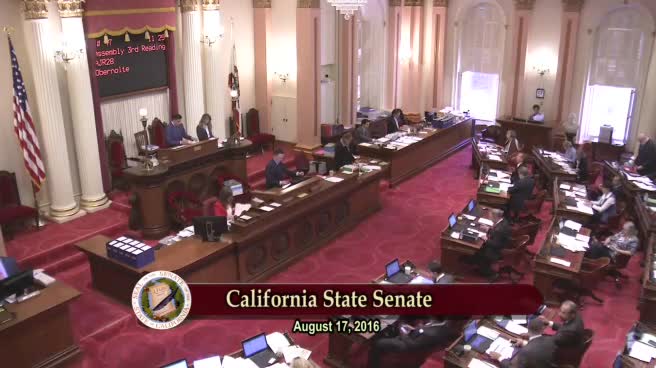
Bill Author

Bill Co-Author(s):