AB 229: State employees: travel reimbursement.
- Session Year: 2015-2016
- House: Assembly
- Latest Version Date: 2015-10-11
Under existing law and bargaining agreements, the state reimburses employees for all necessary and actual expenses they incur when they travel on official state business.
This bill would, until January 1, 2019, prohibit a state agency from prohibiting state employees traveling on official state business from using transportation provided by a transportation network company or lodging in a short-term rental, as defined. The bill would require a state agency to reimburse the actual and necessary expenses of a state employee using a transportation network company or a short-term rental consistent with the agencys standard reimbursement policies. The bill would request and encourage the University of California to adopt travel reimbursement policies in accordance with that prohibition. The bill would define terms for those purposes.
Under existing law and bargaining agreements, the state reimburses employees for all necessary and actual expenses they incur when they travel on official state business.
This bill would would, until January 1, 2019, prohibit a state agency from prohibiting state employees traveling on official state business from using transportation provided by a transportation network company or lodging in a short-term rental, as defined. The bill would require a state agency to reimburse the actual and necessary expenses of a state employee using a transportation network company or a short-term rental consistent with the agencys standard reimbursement policies. The bill would request and encourage the University of California to adopt travel reimbursement policies in accordance with that prohibition. The bill would define terms for those purposes.
Under existing law and bargaining agreements, the state reimburses employees for all necessary and actual expenses they incur when they travel on official state business.
This bill would prohibit a state agency from prohibiting state employees traveling on official state business from using transportation provided by a transportation network company or lodging in a short-term rental, as defined. The bill would require a state agency to reimburse the actual and necessary expenses of a state employee using a transportation network company or a short-term rental consistent with the agencys standard reimbursement policies. The bill would request and encourage the University of California to adopt travel reimbursement policies consistent in accordance with that prohibition. The bill would define terms for those purposes.
Under existing law and bargaining agreements, the state reimburses employees for all necessary and actual expenses they incur when they travel on official state business.
This bill would prohibit a state agency from prohibiting the use of, or denying reimbursement for, necessary and actual expenses of state employees traveling on official state business for from using transportation provided by a transportation network company or lodging in a short-term rental, as defined. The bill would require a state agency to reimburse the actual and necessary expenses of a state employee using a transportation network company or a short-term rental consistent with the agencys standard reimbursement policies. The bill would request and encourage the University of California to adopt travel reimbursement policies consistent with that prohibition. The bill would define terms for those purposes.
Under existing law and bargaining agreements, the state reimburses employees for all necessary and actual expenses they incur when they travel on official state business.
This bill would prohibit a state agency from prohibiting the use of, or denying reimbursement for, necessary and actual expenses of state employees traveling on official state business for transportation provided by a transportation network company or lodging in a short-term rental, as defined. The bill would request and encourage the University of California to adopt travel reimbursement policies consistent with that prohibition. The bill would define terms for those purposes.
The Planning and Zoning Law requires a city, county, or city and county to adopt a comprehensive general plan that addresses a number of elements. If a general plan has been adopted, each county or city officer, department, board, or commission, as specified, is required to submit a list of proposed public works for the ensuing fiscal year. The agency receiving the list of proposed public works is required to prepare, as specified, a coordinated program of proposed public works for the ensuing fiscal year.
This bill would make nonsubstantive changes to these provisions.
(a)As used in this section:
(1)Short-term rental means a residential property that is rented to a visitor for fewer than 30 days through a centralized online platform whereby the rental is advertised and payments for the rental are securely processed. For purposes of travel reimbursement, a short-term rental shall be considered a commercial lodging establishment.
(2)Transportation network company has the same meaning as defined in Section 5431 of the Public Utilities Code.
(b)(1)A state agency shall not prohibit state employees traveling on official state business from using transportation provided by a transportation network company or lodging in a short-term rental.
(2)Reimbursement shall be provided for necessary and actual expenses, consistent with the agencys policies for reimbursement of other lodging establishments or other vehicles for hire.
(c)The Legislature requests and encourages the University of California to adopt travel reimbursement policies in accordance with this section.
(d)This section shall remain in effect only until January 1, 2019, and as of that date is repealed, unless a later enacted statute, that is enacted before January 1, 2019, deletes or extends that date.
(a)As used in this section:
(1)Short-term rental means a residential property that: (A) that is rented to a visitor for fewer than 30 days through a centralized online platform whereby the rental is advertised and payments for the rental are securely processed and (B) maintains commercial liability insurance providing coverage for claims of bodily injury or property damage arising from the short-term rental stay in an amount not less than five hundred thousand dollars ($500,000) per occurrence. processed. For purposes of travel reimbursement, a short-term rental shall be considered a commercial lodging establishment.
(2)Transportation network company has the same meaning as defined in Section 5431 of the Public Utilities Code.
(b)(1)A state agency shall not prohibit state employees traveling on official state business from using transportation provided by a transportation network company or lodging in a short-term rental.
(2)Reimbursement shall be provided for necessary and actual expenses, consistent with the agencys policies for reimbursement of other lodging establishments or other vehicles for hire.
(c)The Legislature requests and encourages the University of California to adopt travel reimbursement policies in accordance with this section.
(d)This section shall remain in effect only until January 1, 2019, and as of that date is repealed, unless a later enacted statute, that is enacted before January 1, 2019, deletes or extends that date.
(a)As used in this section:
(1)Short-term rental means a residential property that that: (A) is rented to a visitor for fewer than 30 days through a centralized online platform whereby the rental is advertised and payments for the rental are securely processed. processed and (B) maintains commercial liability insurance providing coverage for claims of bodily injury or property damage arising from the short-term rental stay in an amount not less than five hundred thousand dollars ($500,000) per occurrence. For purposes of travel reimbursement, a short-term rental shall be considered a commercial lodging establishment.
(2)Transportation network company has the same meaning as defined in Section 5431 of the Public Utilities Code.
(b)(1)A state agency shall not prohibit state employees traveling on official state business from using transportation provided by a transportation network company or lodging in a short-term rental.
(2)Reimbursement shall be provided for necessary and actual expenses, consistent with the agencys policies for reimbursement of other lodging establishments or other vehicles for hire.
(c)The Legislature requests and encourages the University of California to adopt travel reimbursement policies in accordance with this section.
(d)This section shall remain in effect only until January 1, 2019, and as of that date is repealed, unless a later enacted statute, that is enacted before January 1, 2019, deletes or extends that date.
(a)As used in this section:
(1)Short-term rental means a residential property that is rented to a visitor for fewer than 30 days through a centralized online platform whereby the rental is advertised and payments for the rental are securely processed. For purposes of travel reimbursement, a short-term rental shall be considered a commercial lodging establishment.
(2)Transportation network company has the same meaning as defined in Section 5431 of the Public Utilities Code.
(b)(1)A state agency shall not prohibit state employees traveling on official state business from using transportation provided by a transportation network company or lodging in a short-term rental.
(2)Reimbursement shall be provided for necessary and actual expenses, consistent with the agencys policies for reimbursement of other lodging establishments or other vehicles for hire.
(c)The Legislature requests and encourages the University of California to adopt travel reimbursement policies in accordance with this section.
(d)This section shall remain in effect only until January 1, 2019, and as of that date is repealed, unless a later enacted statute, that is enacted before January 1, 2019, deletes or extends that date.
(a)As used in this section:
(1)Short-term rental means a residential property that is rented to a visitor for fewer than 30 days through a centralized online platform whereby the rental is advertised and payments for the rental are securely processed. For purposes of travel reimbursement, a short-term rental shall be considered a commercial lodging establishment.
(2)Transportation network company has the same meaning as defined in Section 5431 of the Public Utilities Code.
(b)(1)A state agency shall not prohibit state employees traveling on official state business from using transportation provided by a transportation network company or lodging in a short-term rental.
(2)Reimbursement shall be provided for necessary and actual expenses, consistent with the agencys policies for reimbursement of other lodging establishments or other vehicles for hire.
(c)The Legislature requests and encourages the University of California to adopt travel reimbursement policies consistent in accordance with this section.
(a)As used in this section:
(1)Short-term rental means a residential property that is rented to a visitor for fewer than 30 days through a centralized online platform whereby the rental is advertised and payments for the rental are securely processed. For purposes of travel reimbursement, a short-term rental shall be considered a commercial lodging establishment.
(2)Transportation network company has the same meaning as defined in Section 5431 of the Public Utilities Code.
(b)(1)A state agency shall not prohibit the use of, or deny reimbursement for, necessary and actual expenses of state employees traveling on official state business for from using transportation provided by a transportation network company or lodging in a short-term rental.
(2)Reimbursement shall be provided for necessary and actual expenses, consistent with the agencys policies for reimbursement of other lodging establishments or other vehicles for hire.
(c)The Legislature requests and encourages the University of California to adopt travel reimbursement policies consistent with this section.
(a)As used in this section:
(1)Short-term rental means a residential property that is rented to a visitor for fewer than 30 days through a centralized online platform whereby the rental is advertised and payments for the rental are securely processed. For purposes of travel reimbursement, a short-term rental shall be considered a commercial lodging establishment.
(2)Transportation network company has the same meaning as defined in Section 5431 of the Public Utilities Code.
(b)A state agency shall not prohibit the use of, or deny reimbursement for, necessary and actual expenses of state employees traveling on official state business for transportation provided by a transportation network company or lodging in a short-term rental.
(c)The Legislature requests and encourages the University of California to adopt travel reimbursement policies consistent with this section.
SECTION 1.Section 65401 of the Government Code is amended to read:65401.If a general plan or part thereof has been adopted, within the time fixed by the legislative body, each county or city officer, department, board, or commission, and each governmental body, commission, or board, including the governing body of any special district or school district, whose jurisdiction lies wholly or partially within the county or city, whose functions include recommending, preparing plans for, or constructing major public works, shall submit to the official agency, as designated by the respective county board of supervisors or city council, a list of the proposed public works recommended for planning, initiation, or construction during the ensuing fiscal year. The official agency receiving the list of proposed public works shall list and classify all of these recommendations and shall prepare a coordinated program of proposed public works for the ensuing fiscal year. The coordinated program shall be submitted to the county or city planning agency for review and report to the official agency as to conformity with the adopted general plan or part thereof.
If a general plan or part thereof has been adopted, within such the time as may be fixed by the legislative body, each county or city officer, department, board, or commission, and each governmental body, commission, or board, including the governing body of any special district or school district, whose jurisdiction lies wholly or partially within the county or city, whose functions include recommending, preparing plans for, or constructing, major public works, shall submit to the official agency, as designated by the respective county board of supervisors or city council, a list of the proposed public works recommended for planning, initiation, or construction during the ensuing fiscal year. The official agency receiving the list of proposed public works shall list and classify all such of these recommendations and shall prepare a coordinated program of proposed public works for the ensuing fiscal year. Such The coordinated program shall be submitted to the county or city planning agency for review and report to said the official agency as to conformity with the adopted general plan or part thereof.
|
Date
|
Status
|
|---|---|
| Sep 10, 2015 | Read third time. Passed. Ordered to the Assembly. |
| Jul 16, 2015 | Read second time and amended. Re-referred to Com. on APPR. |
| Aug 17, 2015 | In committee: Set, first hearing. Hearing canceled at the request of author. |
| Aug 18, 2015 | From committee chair, with author's amendments: Amend, and re-refer to committee. Read second time, amended, and re-referred to Com. on APPR. |
| Aug 24, 2015 | From committee: Be placed on second reading file pursuant to Senate Rule 28.8. |
| Aug 25, 2015 | Read second time. Ordered to third reading. |
| Aug 31, 2015 | Read third time and amended. Ordered to second reading. |
| Sep 1, 2015 | Read second time. Ordered to third reading. |
| Sep 10, 2015 | In Assembly. Concurrence in Senate amendments pending. |
| Jul 16, 2015 | From committee: Amend, and do pass as amended and re-refer to Com. on APPR. (Ayes 11. Noes 1.) (July 14). |
| Sep 10, 2015 | Read third time. Passed. Ordered to the Assembly. (Ayes 25. Noes 11. Page 2690.). |
| Sep 11, 2015 | Senate amendments concurred in. To Engrossing and Enrolling. |
| Sep 11, 2015 | Senate amendments concurred in. To Engrossing and Enrolling. (Ayes 74. Noes 3. Page 3134.). |
| Sep 11, 2015 | Senate amendments concurred in. To Engrossing and Enrolling. (Ayes 74. Noes 3.). |
| Sep 23, 2015 | Enrolled and presented to the Governor at 4 p.m. |
| Oct 11, 2015 | Approved by the Governor. |
| Oct 11, 2015 | Chaptered by Secretary of State - Chapter 770, Statutes of 2015. |
| Feb 4, 2015 | Read first time. To print. |
| Jul 7, 2015 | From committee chair, with author's amendments: Amend, and re-refer to committee. Read second time, amended, and re-referred to Com. on G.O. |
| Jun 4, 2015 | Referred to Com. on G.O. |
| May 22, 2015 | Read third time. Passed. Ordered to the Senate. (Ayes 74. Noes 0. Page 1561.) |
| May 22, 2015 | Read third time. Passed. Ordered to the Senate. |
| May 22, 2015 | In Senate. Read first time. To Com. on RLS. for assignment. |
| May 14, 2015 | Read second time. Ordered to Consent Calendar. |
| May 13, 2015 | From committee: Do pass. To Consent Calendar. (Ayes 17. Noes 0.) (May 13). |
| Apr 29, 2015 | From committee: Do pass and re-refer to Com. on APPR. with recommendation: To Consent Calendar. (Ayes 9. Noes 0.) (April 29). Re-referred to Com. on APPR. |
| Apr 29, 2015 | From committee: Do pass and re-refer to Com. on APPR. (Ayes 9. Noes 0.) (April 29). Re-referred to Com. on APPR. |
| Apr 23, 2015 | Re-referred to Com. on A. & A.R. |
| Apr 22, 2015 | From committee chair, with author's amendments: Amend, and re-refer to Com. on A. & A.R. Read second time and amended. |
| Apr 6, 2015 | Re-referred to Com. on A. & A.R. |
| Mar 26, 2015 | Referred to Com. on A. & A.R. |
| Mar 26, 2015 | From committee chair, with author's amendments: Amend, and re-refer to Com. on A. & A.R. Read second time and amended. |
| Feb 5, 2015 | From printer. May be heard in committee March 7. |
|
Date
|
Description
|
Location
|
Votes
|
|
|---|---|---|---|---|
| Sep 11, 2015 | AB 229 CHANG Concurrence in Senate Amendments | Assembly Floor |
Passed |
|
| Sep 10, 2015 | Assembly 3rd Reading AB229 Chang By Glazer | Senate Floor |
Passed |
|
| Jul 14, 2015 | Do pass as amended, but first amend, and re-refer to the Committee on [Appropriations] | Senate Standing Committee on Governmental Organization |
Passed |
|
| May 22, 2015 | AB 229 CHANG Consent Calendar Second Day Regular Session | Assembly Floor |
Passed |
|
| May 13, 2015 | Do pass. To Consent Calendar. | Assembly Standing Committee on Appropriations |
Passed |
|
| Apr 29, 2015 | Do pass and be re-referred to the Committee on [Appropriations] with recommendation: To Consent Calendar | Assembly Standing Committee on Accountability and Administrative Review |
Passed |
This list shows positions taken on this bill by organizations on the date displayed, which is linked to the original source.
Positions by individuals are not included.
|
Organization
|
Position
|
Date
|
|---|---|---|
| Association Of California Insurance Companies | ** Against | Sep 10, 2015 |
| California Teamsters Public Affairs Council | ** Against | Sep 10, 2015 |
| Children'S Law Center Of California | ** Support | Sep 10, 2015 |
| National Association of Mutual Insurance Companies | ** Against | Sep 10, 2015 |
| Natural Resources Defense Council | ** Support | Sep 10, 2015 |
| Pacific Association Of Domestic Insurance Companies | ** Against | Sep 10, 2015 |
| The Internet Association | ** Support | Sep 10, 2015 |
| Travelers United | ** Support | Sep 10, 2015 |
| UNITE-HERE, AFL-CIO | ** Against | Sep 10, 2015 |
AB 229
Page 1
CONCURRENCE IN SENATE AMENDMENTS
AB 229
(Chang)
As Amended August 31, 2015
Majority vote
ASSEMBLY: |
74-0 |
(May 22, 2015) |
SENATE: |
25-11 |
(September 10, 2015) |
Original Committee Reference: A. & A.R.
SUMMARY: Prevents state agencies from prohibiting state employees traveling on official state business from using transportation network companies or lodging in a short-term rental.
The Senate amendments:
Sunset this bill on January 1, 2019.
Make technical and non-substantive changes.
EXISTING LAW requires the director of the Department of Human Resources to adopt general rules and regulations that limit the amount, time, and place of expenses and allowances to be paid to officers, employees, experts, and agents of the state while traveling on official state business.
FISCAL EFFECT: According to the Senate Appropriations Committee, pursuant to Senate Rule 28.8, negligible state costs.
Analysis Prepared by: Scott Herbstman / A. & A.R. / (916) 319-3600 FN: 0001826
AB 229
Page 4
|
Office of Senate Floor Analyses (916) 651-1520 Fax: (916) 327-4478 |
THIRD READING
Bill No: AB 229
Amended: 8/31/15 in Senate
SENATE GOVERNMENTAL ORG. COMMITTEE: 11-1, 7/14/15
AYES: Hall, Berryhill, Block, Gaines, Galgiani, Glazer, Hill, Lara, McGuire, Runner, Vidak
NOES: Hueso
NO VOTE RECORDED: Hernandez
ASSEMBLY FLOOR: 74-0, 5/22/15 - See last page for vote
SUBJECT: State employees: travel reimbursement.
DIGEST: This bill prevents a state agency from prohibiting state employees traveling on official business from using transportation provided by a transportation network company, such as Uber or Lyft, or lodging in a short term rental as defined.
Senate Floor Amendments on 8/31/15 removed the requirement that a short term rental maintain commercial liability insurance providing coverage for claims of bodily injury or properly damage arising from the short term rental stay in an amount not less than five hundred thousand dollars ($500,000) per occurrence.
ANALYSIS:
Existing law:
Reimburses employees for all necessary and actual expenses they incur when they travel on official state business.
Requires the Director of the of the Department of Human Resources (CalHR) to adopt general rules and regulations that limit the amount, time, and place of expenses and allowances to be paid to officers, employees, experts, and agents of the state while traveling on official state business.
This bill:
Prevents a state agency from prohibiting state employees traveling on official business from using transportation provided by a transportation network company or lodging in a short term rental.
Defines “short-term rental” as a residential property that is rented to a visitor for fewer than 30 days through a centralized online platform whereby the rental is advertised and payments for the rental are securely processed.
Specifies that for purposes of travel reimbursement, a short-term rental shall be considered a commercial lodging establishment.
Defines a “transportation network company” as an organization, including, but not limited to, a corporation, limited liability company, partnership, sole proprietor, or any other entity, operating in California that provides prearranged transportation services for compensation using an online-enabled application or platform to connect passengers with drivers using a personal vehicle.
Provides that reimbursement shall be provided for necessary and actual expenses, consistent with the agency’s policies for reimbursement of other lodging establishments or other vehicles for hire.
Encourages the University of California to adopt travel reimbursement policies in accordance with the provisions of this bill.
Contains a sunset date of January 1, 2019.
Background
Purpose of the bill. According to the author, “there are over 271,000 active state employees in various state departments and agencies; another 92,000 UC employees, and many of them travel for their work. While the vast majority of travelling employees turn to hotels and taxi companies for ground travel and lodging, some employees do use sharing economy services. Sharing economy technology platforms are growing in popularity and can provide economical options for ground travel and lodging. For example, one analysis shows consumers can save up to 50% when lodging through an online home-sharing platform. Similarly, savings can be achieved through ride-sharing options depending on the region. Peer-to-peer services also provide an environmentally conscious option for ground travel”
The author further argues that, “as these innovative platforms become more ubiquitous, it is important for the state’s policies to adjust and conform to the progressive market-place. As the home and incubator of the sharing economy, it is critical California’s regulations are as innovative as the industry itself. AB 229 puts California at the forefront of the sharing economy by ensuring state employees can take full advantage of environmentally friendly peer-to-peer services and provides an opportunity to realize savings for the state as more employees turn to peer-to-peer services and thereby reducing total expenditures for travel related activity.”
Current CalHR rules. Current CalHR rules as well as memorandums of understanding (MOUs) with employee bargaining units do not currently prohibit the use of transportation network companies or short-term rentals for employees traveling on state business. These documents do not name either of these types of services when setting requirements.
Instead, rules and MOUs set lodging reimbursement maximum rates by location and require travelers to submit itemized receipts when claiming reimbursements. Rules and MOUs specify that to qualify for reimbursements, lodging must be in commercial lodging establishments. This bill specifies, for purposes of the section added by this bill, that short-term rentals are considered commercial lodging establishments. Additionally, this bill would not allow agencies to ban the use of short-term rental arrangements like Airbnb, which allows participants to rent out their homes or rooms in their homes for a specified number of nights.
Currently when state employees use taxis while traveling, depending on their employee group, they are either not required to submit taxi receipts or must only submit them when the ride exceeds $10.
Prior/Related Legislation
AB 2293 (Bonilla, Chapter 389, Statutes of 2014) established guidelines for insurance coverage for Transportation Network Companies to ensure personal and financial safety of consumers.
FISCAL EFFECT: Appropriation: No Fiscal Com.: Yes Local: No
Children’s Law Center of California
The Internet Association
Natural Resources Defense Council
Travelers United
California Teamsters Public Affairs Council
UNITE-HERE, AFL-CIO
ARGUMENTS IN SUPPORT: The Internet Association argues that “AB 229 recognizes the value of the emerging sharing economy and how it could be used to reduce state costs relating to travel. Providing the ability for state employees to use sharing economy services and receive reimbursement would increase the number of safe and reliable options available to employees when they travel on state business. In addition, AB 229 is in alignment with state travel policies requiring employees to use the least costly travel methods.”
ASSEMBLY FLOOR: 74-0, 5/22/15
AYES: Achadjian, Travis Allen, Baker, Bigelow, Bloom, Bonilla, Bonta, Brough, Brown, Burke, Calderon, Campos, Chang, Chau, Chávez, Chiu, Chu, Cooley, Cooper, Dababneh, Dahle, Daly, Dodd, Eggman, Frazier, Beth Gaines, Gallagher, Cristina Garcia, Eduardo Garcia, Gatto, Gipson, Gomez, Gonzalez, Gordon, Gray, Grove, Hadley, Harper, Roger Hernández, Holden, Irwin, Jones-Sawyer, Kim, Lackey, Levine, Linder, Lopez, Low, Maienschein, Mathis, Mayes, McCarty, Medina, Melendez, Mullin, Nazarian, Obernolte, Patterson, Perea, Quirk, Rendon, Ridley-Thomas, Rodriguez, Salas, Santiago, Steinorth, Mark Stone, Thurmond, Ting, Wagner, Wilk, Williams, Wood, Atkins
NO VOTE RECORDED: Alejo, Jones, O'Donnell, Olsen, Waldron, Weber
Prepared by: Felipe Lopez / G.O. / (916) 651-1530
9/9/15 16:01:38
AB 229
Page 4
|
Office of Senate Floor Analyses (916) 651-1520 Fax: (916) 327-4478 |
THIRD READING
Bill No: AB 229
Amended: 8/31/15 in Senate
SENATE GOVERNMENTAL ORG. COMMITTEE: 11-1, 7/14/15
AYES: Hall, Berryhill, Block, Gaines, Galgiani, Glazer, Hill, Lara, McGuire, Runner, Vidak
NOES: Hueso
NO VOTE RECORDED: Hernandez
ASSEMBLY FLOOR: 74-0, 5/22/15 - See last page for vote
SUBJECT: State employees: travel reimbursement.
DIGEST: This bill prevents a state agency from prohibiting state employees traveling on official business from using transportation provided by a transportation network company, such as Uber or Lyft, or lodging in a short term rental as defined.
Senate Floor Amendments on 8/31/15 removed the requirement that a short term rental maintain commercial liability insurance providing coverage for claims of bodily injury or properly damage arising from the short term rental stay in an amount not less than five hundred thousand dollars ($500,000) per occurrence.
ANALYSIS:
Existing law:
Reimburses employees for all necessary and actual expenses they incur when they travel on official state business.
Requires the Director of the of the Department of Human Resources (CalHR) to adopt general rules and regulations that limit the amount, time, and place of expenses and allowances to be paid to officers, employees, experts, and agents of the state while traveling on official state business.
This bill:
Prevents a state agency from prohibiting state employees traveling on official business from using transportation provided by a transportation network company or lodging in a short term rental.
Defines “short-term rental” as a residential property that is rented to a visitor for fewer than 30 days through a centralized online platform whereby the rental is advertised and payments for the rental are securely processed.
Specifies that for purposes of travel reimbursement, a short-term rental shall be considered a commercial lodging establishment.
Defines a “transportation network company” as an organization, including, but not limited to, a corporation, limited liability company, partnership, sole proprietor, or any other entity, operating in California that provides prearranged transportation services for compensation using an online-enabled application or platform to connect passengers with drivers using a personal vehicle.
Provides that reimbursement shall be provided for necessary and actual expenses, consistent with the agency’s policies for reimbursement of other lodging establishments or other vehicles for hire.
Encourages the University of California to adopt travel reimbursement policies in accordance with the provisions of this bill.
Contains a sunset date of January 1, 2019.
Background
Purpose of the bill. According to the author, “there are over 271,000 active state employees in various state departments and agencies; another 92,000 UC employees, and many of them travel for their work. While the vast majority of travelling employees turn to hotels and taxi companies for ground travel and lodging, some employees do use sharing economy services. Sharing economy technology platforms are growing in popularity and can provide economical options for ground travel and lodging. For example, one analysis shows consumers can save up to 50% when lodging through an online home-sharing platform. Similarly, savings can be achieved through ride-sharing options depending on the region. Peer-to-peer services also provide an environmentally conscious option for ground travel”
The author further argues that, “as these innovative platforms become more ubiquitous, it is important for the state’s policies to adjust and conform to the progressive market-place. As the home and incubator of the sharing economy, it is critical California’s regulations are as innovative as the industry itself. AB 229 puts California at the forefront of the sharing economy by ensuring state employees can take full advantage of environmentally friendly peer-to-peer services and provides an opportunity to realize savings for the state as more employees turn to peer-to-peer services and thereby reducing total expenditures for travel related activity.”
Current CalHR rules. Current CalHR rules as well as memorandums of understanding (MOUs) with employee bargaining units do not currently prohibit the use of transportation network companies or short-term rentals for employees traveling on state business. These documents do not name either of these types of services when setting requirements.
Instead, rules and MOUs set lodging reimbursement maximum rates by location and require travelers to submit itemized receipts when claiming reimbursements. Rules and MOUs specify that to qualify for reimbursements, lodging must be in commercial lodging establishments. This bill specifies, for purposes of the section added by this bill, that short-term rentals are considered commercial lodging establishments. Additionally, this bill would not allow agencies to ban the use of short-term rental arrangements like Airbnb, which allows participants to rent out their homes or rooms in their homes for a specified number of nights.
Currently when state employees use taxis while traveling, depending on their employee group, they are either not required to submit taxi receipts or must only submit them when the ride exceeds $10.
Prior/Related Legislation
AB 2293 (Bonilla, Chapter 389, Statutes of 2014) established guidelines for insurance coverage for Transportation Network Companies to ensure personal and financial safety of consumers.
FISCAL EFFECT: Appropriation: No Fiscal Com.: Yes Local: No
Children’s Law Center of California
The Internet Association
Natural Resources Defense Council
Travelers United
OPPOSITION: (Verified 8/31/15)
None received
ARGUMENTS IN SUPPORT: The Internet Association argues that “AB 229 recognizes the value of the emerging sharing economy and how it could be used to reduce state costs relating to travel. Providing the ability for state employees to use sharing economy services and receive reimbursement would increase the number of safe and reliable options available to employees when they travel on state business. In addition, AB 229 is in alignment with state travel policies requiring employees to use the least costly travel methods.”
ASSEMBLY FLOOR: 74-0, 5/22/15
AYES: Achadjian, Travis Allen, Baker, Bigelow, Bloom, Bonilla, Bonta, Brough, Brown, Burke, Calderon, Campos, Chang, Chau, Chávez, Chiu, Chu, Cooley, Cooper, Dababneh, Dahle, Daly, Dodd, Eggman, Frazier, Beth Gaines, Gallagher, Cristina Garcia, Eduardo Garcia, Gatto, Gipson, Gomez, Gonzalez, Gordon, Gray, Grove, Hadley, Harper, Roger Hernández, Holden, Irwin, Jones-Sawyer, Kim, Lackey, Levine, Linder, Lopez, Low, Maienschein, Mathis, Mayes, McCarty, Medina, Melendez, Mullin, Nazarian, Obernolte, Patterson, Perea, Quirk, Rendon, Ridley-Thomas, Rodriguez, Salas, Santiago, Steinorth, Mark Stone, Thurmond, Ting, Wagner, Wilk, Williams, Wood, Atkins
NO VOTE RECORDED: Alejo, Jones, O'Donnell, Olsen, Waldron, Weber
Prepared by: Felipe Lopez / G.O. / (916) 651-1530
9/1/15 21:40:48
AB 229
Page 5
|
Office of Senate Floor Analyses (916) 651-1520 Fax: (916) 327-4478 |
THIRD READING
Bill No: AB 229
Amended: 8/18/15 in Senate
SENATE GOVERNMENTAL ORG. COMMITTEE: 11-1, 7/14/15
AYES: Hall, Berryhill, Block, Gaines, Galgiani, Glazer, Hill, Lara, McGuire, Runner, Vidak
NOES: Hueso
NO VOTE RECORDED: Hernandez
SENATE APPROPRIATIONS COMMITTEE: Senate Rule 28.8
ASSEMBLY FLOOR: 74-0, 5/22/15 - See last page for vote
SUBJECT: State employees: travel reimbursement
DIGEST: This bill prevents a state agency from prohibiting state employees traveling on official business from using transportation provided by a transportation network company, such as Uber or Lyft, or lodging in a short term rental as defined.
ANALYSIS:
Existing law:
Reimburses employees for all necessary and actual expenses they incur when they travel on official state business.
Requires the Director of the of the Department of Human Resources (CalHR) to adopt general rules and regulations that limit the amount, time, and place of expenses and allowances to be paid to officers, employees, experts, and agents of the state while traveling on official state business.
This bill:
Prevents a state agency from prohibiting state employees traveling on official business from using transportation provided by a transportation network company or lodging in a short term rental.
Defines “short-term rental” as a residential property that is rented to a visitor for fewer than 30 days through a centralized online platform whereby the rental is advertised and payments for the rental are securely processed and maintains commercial liability insurance providing coverage for claims of bodily injury or property damage arising from the short-term rental stay in an amount not less than five hundred thousand dollars ($500,000) per occurrence.
Specifies that for purposes of travel reimbursement, a short-term rental shall be considered a commercial lodging establishment.
Defines a “transportation network company” as an organization, including, but not limited to, a corporation, limited liability company, partnership, sole proprietor, or any other entity, operating in California that provides prearranged transportation services for compensation using an online-enabled application or platform to connect passengers with drivers using a personal vehicle.
Provides that reimbursement shall be provided for necessary and actual expenses, consistent with the agency’s policies for reimbursement of other lodging establishments or other vehicles for hire.
Encourages the University of California to adopt travel reimbursement policies in accordance with the provisions of this bill.
Contains a sunset date of January 1, 2019.
Background
Purpose of the bill. According to the author, “There are over 271,000 active state employees in various state departments and agencies; another 92,000 UC employees, and many of them travel for their work. While the vast majority of travelling employees turn to hotels and taxi companies for ground travel and lodging, some employees do use sharing economy services. Sharing economy technology platforms are growing in popularity and can provide economical options for ground travel and lodging. For example, one analysis shows consumers can save up to 50% when lodging through an online home-sharing platform. Similarly, savings can be achieved through ride-sharing options depending on the region. Peer-to-peer services also provide an environmentally conscious option for ground travel”
The author further argues that, “as these innovative platforms become more ubiquitous, it is important for the state’s policies to adjust and conform to the progressive market-place. As the home and incubator of the sharing economy, it is critical California’s regulations are as innovative as the industry itself. AB 229 puts California at the forefront of the sharing economy by ensuring state employees can take full advantage of environmentally friendly peer-to-peer services and provides an opportunity to realize savings for the state as more employees turn to peer-to-peer services and thereby reducing total expenditures for travel related activity.”
Current CalHR rules. Current CalHR rules as well as memorandums of understanding (MOUs) with employee bargaining units do not currently prohibit the use of transportation network companies or short-term rentals for employees traveling on state business. These documents do not name either of these types of services when setting requirements.
Instead, rules and MOUs set lodging reimbursement maximum rates by location and require travelers to submit itemized receipts when claiming reimbursements. Rules and MOUs specify that to qualify for reimbursements, lodging must be in commercial lodging establishments. This bill specifies, for purposes of the section added by this bill, that short-term rentals are considered commercial lodging establishments. Additionally, this bill would not allow agencies to ban the use of short-term rental arrangements like Airbnb, which allows participants to rent out their homes or rooms in their homes for a specified number of nights.
Currently when state employees use taxis while traveling, depending on their employee group, they are either not required to submit taxi receipts or must only submit them when the ride exceeds $10.
Prior/Related Legislation
AB 2293 (Bonilla, Chapter 389, Statutes of 2014) established guidelines for insurance coverage for Transportation Network Companies to ensure personal and financial safety of consumers.
FISCAL EFFECT: Appropriation: No Fiscal Com.: Yes Local: No
Children’s Law Center of California
The Internet Association
Natural Resources Defense Council
OPPOSITION: (Verified 8/25/15)
Association of California Insurance Companies
National Association of Mutual Insurance Companies
Pacific Association of Domestic Insurance Companies
ARGUMENTS IN SUPPORT: The Internet Association argues that “AB 229 recognizes the value of the emerging sharing economy and how it could be used to reduce state costs relating to travel. Providing the ability for state employees to use sharing economy services and receive reimbursement would increase the number of safe and reliable options available to employees when they travel on state business. In addition, AB 229 is in alignment with state travel policies requiring employees to use the least costly travel methods.”
ARGUMENTS IN OPPOSITION: Opponents of the bill argue that “as proposed, the commercial policy must be $500,000 and narrowly specifies what is covered. It is well publicized that most short term rental hosts are either homeowners or renters. Simply put, these hosts do not have the financial backing of a hotel or motel ownership, and therefore may forgo buying any insurance when participating in a short term rental activity.”
ASSEMBLY FLOOR: 74-0, 5/22/15
AYES: Achadjian, Travis Allen, Baker, Bigelow, Bloom, Bonilla, Bonta, Brough, Brown, Burke, Calderon, Campos, Chang, Chau, Chávez, Chiu, Chu, Cooley, Cooper, Dababneh, Dahle, Daly, Dodd, Eggman, Frazier, Beth Gaines, Gallagher, Cristina Garcia, Eduardo Garcia, Gatto, Gipson, Gomez, Gonzalez, Gordon, Gray, Grove, Hadley, Harper, Roger Hernández, Holden, Irwin, Jones-Sawyer, Kim, Lackey, Levine, Linder, Lopez, Low, Maienschein, Mathis, Mayes, McCarty, Medina, Melendez, Mullin, Nazarian, Obernolte, Patterson, Perea, Quirk, Rendon, Ridley-Thomas, Rodriguez, Salas, Santiago, Steinorth, Mark Stone, Thurmond, Ting, Wagner, Wilk, Williams, Wood, Atkins
NO VOTE RECORDED: Alejo, Jones, O'Donnell, Olsen, Waldron, Weber
Prepared by: Felipe Lopez / G.O. / (916) 651-1530
8/26/15 10:19:12
**** END ****
AB 229 (Chang) Page 4 of 4
SENATE COMMITTEE ON GOVERNMENTAL ORGANIZATION
Senator Isadore Hall, III
Chair
2015 - 2016 Regular
Bill No: AB 229 Hearing Date: 7/14/2015
Author: |
Chang |
||
Version: |
7/7/2015 Amended |
||
Urgency: |
No |
Fiscal: |
Yes |
Consultant: |
Felipe Lopez |
||
SUBJECT: State employees: travel reimbursement
DIGEST: This bill prevents a state agency from prohibiting state employees traveling on official business from using transportation provided by a transportation network company, such as Uber or Lyft, or lodging in a short term rental as defined.
ANALYSIS:
Existing law:
Reimburses employees for all necessary and actual expenses they incur when they travel on official state business.
Requires the Director of the of the Department of Human Resources (CalHR) to adopt general rules and regulations that limit the amount, time, and place of expenses and allowances to be paid to officers, employees, experts, and agents of the state while traveling on official state business.
This bill:
Prevents a state agency from prohibiting state employees traveling on official business from using transportation provided by a transportation network company or lodging in a short term rental.
Defines “short-term rental” as a residential property that is rented to a visitor for fewer than 30 days through a centralized online platform whereby the rental is advertised and payments for the rental are securely processed.
Specifies that for purposes of travel reimbursement, a short-term rental shall be considered a commercial lodging establishment.
Defines a “transportation network company” as an organization, including, but not limited to, a corporation, limited liability company, partnership, sole proprietor, or any other entity, operating in California that provides prearranged transportation services for compensation using an online-enabled application or platform to connect passengers with drivers using a personal vehicle.
Provides that reimbursement shall be provided for necessary and actual expenses, consistent with the agency’s policies for reimbursement of other lodging establishments or other vehicles for hire.
Encourages the University of California to adopt travel reimbursement policies in accordance with the provisions of this bill.
Background
Purpose of the bill. According to the author, “There are over 271,000 active state employees in various state departments and agencies; another 92,000 UC employees, and many of them travel for their work. While the vast majority of travelling employees turn to hotels and taxi companies for ground travel and lodging, some employees do use sharing economy services. Sharing economy technology platforms are growing in popularity and can provide economical options for ground travel and lodging. For example, one analysis shows consumers can save up to 50% when lodging through an online home-sharing platform. Similarly, savings can be achieved through ride-sharing options depending on the region. Peer-to-peer services also provide an environmentally conscious option for ground travel”
The author further argues that, “as these innovative platforms become more ubiquitous, it is important for the state’s policies to adjust and conform to the progressive market-place. As the home and incubator of the sharing economy, it is critical California’s regulations are as innovative as the industry itself. AB 229 puts California at the forefront of the sharing economy by ensuring state employees can take full advantage of environmentally friendly peer-to-peer services and provides an opportunity to realize savings for the state as more employees turn to peer-to-peer services and thereby reducing total expenditures for travel related activity.”
Current CalHR rules. Current CalHR rules as well as memorandums of understanding (MOUs) with employee bargaining units do not currently prohibit the use of transportation network companies or short-term rentals for employees traveling on state business. These documents do not name either of these types of services when setting requirements.
Instead, rules and MOUs set lodging reimbursement maximum rates by location and require travelers to submit itemized receipts when claiming reimbursements. Rules and MOUs specify that to qualify for reimbursements, lodging must be in commercial lodging establishments. This bill specifies, for purposes of the section added by this bill, that short-term rentals are considered commercial lodging establishments. Additionally, this bill would not allow agencies to ban the use of short-term rental arrangements like Airbnb, which allows participants to rent out their homes or rooms in their homes for a specified number of nights.
Currently when state employees use taxis while traveling, depending on their employee group, they are either not required to submit taxi receipts or must only submit them when the ride exceeds $10.
Prior/Related Legislation
AB 2293 (Bonilla, Chapter 389, Statutes of 2014) established guidelines for insurance coverage for Transportation Network Companies to ensure personal and financial safety of consumers.
FISCAL EFFECT: Appropriation: No Fiscal Com.: Yes Local: No
SUPPORT:
The Internet Association
Natural Resources Defense Council
OPPOSITION:
None received
ARGUMENTS IN SUPPORT: The Internet Association argues that “AB 229 recognizes the value of the emerging sharing economy and how it could be used to reduce state costs relating to travel. Providing the ability for state employees to use sharing economy services and receive reimbursement would increase the number of safe and reliable options available to employees when they travel on state business. In addition, AB 229 is in alignment with state travel policies requiring employees to use the least costly travel methods.”
AB 229
Page 1
Date of Hearing: May 13, 2015
ASSEMBLY COMMITTEE ON APPROPRIATIONS
Jimmy Gomez, Chair
AB 229
(Chang) – As Amended April 22, 2015
Policy Committee: |
Accountability and Administrative Review |
Vote: |
9 - 0 |
|
|
|
|
|
|
|
|
Urgency: No State Mandated Local Program: No Reimbursable: No
SUMMARY:
This bill prevents state agencies from prohibiting state employees traveling on official state business from using transportation network companies or lodging in a short-term rental.
FISCAL EFFECT:
Unknown, but likely minor, state costs. State agencies are not currently prohibited from reimbursing these travel activities.
COMMENTS:
Purpose. According to the author, this bill seeks to ensure state employees can use "sharing economy" services like ride-sharing or home-sharing while traveling on state business. This bill would prevent agencies from prohibiting the reimbursement to traveling state employees for the use of transportation network companies like Uber and Lyft, in which participating drivers transport passengers in their own vehicles. Additionally, this bill would not allow agencies to ban the use of short-term rental arrangements like Airbnb, which allow participants to rent out their homes or rooms in their homes for a specified number of nights.
Background. CalHR rules, as well as relevant memorandums of understanding (MOUs) with employee bargaining units, are silent on the use of transportation network companies or short-term rentals for employees traveling on state business. Rules and MOUs specify that to qualify for reimbursements, lodging must be in commercial lodging establishments. This bill specifies that short-term rentals are considered commercial lodging establishments for purposes of this bill. CalHR rules and MOUs do not specifically mention transportation networks companies. Instead, they set requirements for taxi and similar transportation. This bill defines a transportation network company for purposes of reimbursement under this bill.
According to the author, "sharing economy" technology platforms are growing in popularity and can provide economical options for ground travel and lodging. This bill seeks to update the state's policies to conform to the marketplace.
Analysis Prepared by: Jennifer Swenson / APPR. / (916) 319-2081
AB 229
Page 2
Date of Hearing: April 29, 2015
ASSEMBLY COMMITTEE ON ACCOUNTABILITY AND ADMINISTRATIVE REVIEW
Rudy Salas, Chair
AB 229
Chang – As Amended April 22, 2015
SUBJECT: State employees: travel reimbursement
SUMMARY: Prevents state agencies from prohibiting state employees traveling on official state business from using transportation network companies or lodging in a short-term rental. Specifically, this bill:
Requires reimbursements for these necessary and actual expenses to be made consistent with the agency's policies for reimbursement of other lodging and other vehicles for hire.
Defines "short-term rental" and considers it a commercial lodging establishment for this section.
Defines "transportation network company" as having the same meaning as a specified Public Utilities Code section.
Requests the University of California (UC) to adopt travel reimbursement policies consistent with this bill.
EXISTING LAW requires the director of the Department of Human Resources (CalHR) to adopt general rules and regulations that limit the amount, time, and place of expenses and allowances to be paid to officers, employees, experts, and agents of the state while traveling on official state business.
FISCAL EFFECT: Unknown
COMMENTS: According to the author, the intent of this bill is to ensure state employees can use "sharing economy" services like ride-sharing or home-sharing while traveling on state business. This bill would prevent agencies from prohibiting the reimbursement to traveling state employees for the use of transportation network companies like Uber and Lyft, in which participating drivers transport passengers in their own vehicles. Additionally, this bill would not allow agencies to ban the use of short-term rental arrangements like Airbnb, which allows participants to rent out their homes or rooms in their homes for a specified number of nights.
Current CalHR rules as well as memorandums of understanding (MOUs) with employee bargaining units that specify travel reimbursement information do not currently prohibit the use of transportation network companies or short-term rentals for employees traveling on state business. These documents do not name either of these types of services when setting requirements.
Instead, rules and MOUs set lodging reimbursement maximum rates by location and require travelers to submit itemized receipts when claiming reimbursements. Rules and MOUs specify that to qualify for reimbursements, lodging must be in commercial lodging establishments. This bill specifies, for purposes of the section added by this bill, that short-term rentals are considered commercial lodging establishments.
This bill also defines a transportation network company to have the same meaning as a Public Utilities code section, which defines the term as an organization that "provides prearranged transportation services for compensation using an online-enabled application or platform to connect passengers with drivers using a personal vehicle." While CalHR rules and MOUs do not specifically mention transportation networks companies, they set requirements for taxi and similar transportation. Currently when state employees use taxis while traveling, depending on their employee group, they are either not required to submit taxi receipts or must only submit them when the ride exceeds $10.
This bill also encourages UC to adopt similar travel reimbursement policies as those specified in this bill.
REGISTERED SUPPORT / OPPOSITION:
Support
None on file
Opposition
None on file
Analysis Prepared by: Scott Herbstman / A. & A.R. / (916) 319-3600
Discussed in Hearing
 4MIN
Assembly Floor
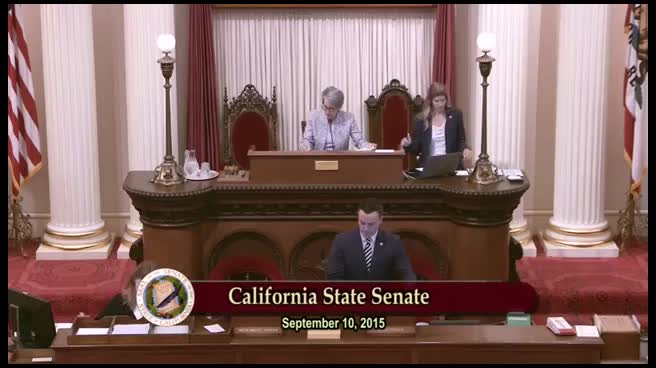 14MIN
Senate Floor
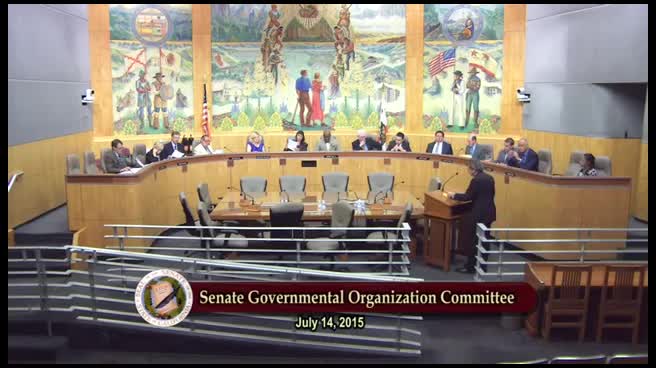 10MIN
Senate Standing Committee on Governmental Organization
Bill Author