AB 231: Parole: placement at release.
- Session Year: 2015-2016
- House: Assembly
- Latest Version Date: 2015-10-05
Existing law generally requires that an inmate released on parole or postrelease community supervision be returned to the county of last legal residence. Existing law provides, however, that an inmate who is released on parole for an offense involving stalking shall not be returned to a location within 35 miles of the victims actual residence or place of employment if specified criteria are satisfied.
This bill would make that provision applicable to an inmate released on postrelease community supervision. The bill would also authorize a supervising county agency to transfer an inmate who is released on postrelease community supervision to another county, upon approval of the receiving county, when the inmate cannot be placed in his or her county of last legal residence in compliance with this provision. The bill would make other clarifying changes. By imposing additional duties on supervising county agencies, this bill would impose a state-mandated local program.
The California Constitution requires the state to reimburse local agencies and school districts for certain costs mandated by the state. Statutory provisions establish procedures for making that reimbursement.
This bill would provide that, if the Commission on State Mandates determines that the bill contains costs mandated by the state, reimbursement for those costs shall be made pursuant to these statutory provisions.
Existing law generally requires that an inmate released on parole or postrelease community supervision be returned to the county of last legal residence. Existing law provides, however, that an inmate who is released on parole for an offense involving stalking shall not be returned to a location within 35 miles of the victims actual residence or place of employment if specified criteria are satisfied.
This bill would make that provision applicable to an inmate released on mandatory supervision or postrelease community supervision. The bill would also authorize a supervising county agency to transfer an inmate who is released on postrelease community supervision or mandatory supervision to another county, upon approval of the receiving county, when the inmate cannot be placed in his or her county of last legal residence in compliance with this provision. The bill would make other clarifying changes. By imposing additional duties on supervising county agencies, this bill would impose a state-mandated local program.
The California Constitution requires the state to reimburse local agencies and school districts for certain costs mandated by the state. Statutory provisions establish procedures for making that reimbursement.
This bill would provide that, if the Commission on State Mandates determines that the bill contains costs mandated by the state, reimbursement for those costs shall be made pursuant to these statutory provisions.
(a)Except as otherwise provided in this section, an inmate who is released on parole or postrelease supervision as provided by Title 2.05 (commencing with Section 3450) shall be returned to the county that was the last legal residence of the inmate prior to his or her incarceration. For purposes of this subdivision, last legal residence shall not be construed to mean the county wherein the inmate committed an offense while confined in a state prison or local jail facility or while confined for treatment in a state hospital.
(b)Notwithstanding subdivision (a), an inmate may be returned to another county if that would be in the best interests of the public. If the Board of Parole Hearings setting the conditions of parole for inmates sentenced pursuant to subdivision (b) of Section 1168, as determined by the parole consideration panel, or the Department of Corrections and Rehabilitation setting the conditions of parole for inmates sentenced pursuant to Section 1170, decides on a return to another county, it shall place its reasons in writing in the parolees permanent record and include these reasons in the notice to the sheriff or chief of police pursuant to Section 3058.6. In making its decision, the paroling authority shall consider, among others, the following factors, giving the greatest weight to the protection of the victim and the safety of the community:
(1)The need to protect the life or safety of a victim, the parolee, a witness, or any other person.
(2)Public concern that would reduce the chance that the inmates parole would be successfully completed.
(3)The verified existence of a work offer, or an educational or vocational training program.
(4)The existence of family in another county with whom the inmate has maintained strong ties and whose support would increase the chance that the inmates parole would be successfully completed.
(5)The lack of necessary outpatient treatment programs for parolees receiving treatment pursuant to Section 2960.
(c)The Department of Corrections and Rehabilitation, in determining an out-of-county commitment, shall give priority to the safety of the community and any witnesses and victims.
(d)In making its decision about an inmate who participated in a joint venture program pursuant to Article 1.5 (commencing with Section 2717.1) of Chapter 5, the paroling authority shall give serious consideration to releasing him or her to the county where the joint venture program employer is located if that employer states to the paroling authority that he or she intends to employ the inmate upon release.
(e)(1)The following information, if available, shall be released by the Department of Corrections and Rehabilitation to local law enforcement agencies regarding a paroled inmate or inmate placed on postrelease community supervision pursuant to Title 2.05 (commencing with Section 3450) who is released in their jurisdictions:
(A)Last, first, and middle names.
(B)Birth date.
(C)Sex, race, height, weight, and hair and eye color.
(D)Date of parole or placement on postrelease community supervision and discharge.
(E)Registration status, if the inmate is required to register as a result of a controlled substance, sex, or arson offense.
(F)California Criminal Information Number, FBI number, social security number, and drivers license number.
(G)County of commitment.
(H)A description of scars, marks, and tattoos on the inmate.
(I)Offense or offenses for which the inmate was convicted that resulted in parole or postrelease community supervision in this instance.
(J)Address, including all of the following information:
(i)Street name and number. Post office box numbers are not acceptable for purposes of this subparagraph.
(ii)City and ZIP Code.
(iii)Date that the address provided pursuant to this subparagraph was proposed to be effective.
(K)Contact officer and unit, including all of the following information:
(i)Name and telephone number of each contact officer.
(ii)Contact unit type of each contact officer such as units responsible for parole, registration, or county probation.
(L)A digitized image of the photograph and at least a single digit fingerprint of the parolee.
(M)A geographic coordinate for the inmates residence location for use with a Geographical Information System (GIS) or comparable computer program.
(2)Unless the information is unavailable, the Department of Corrections and Rehabilitation shall electronically transmit to the county agency identified in subdivision (a) of Section 3451 the inmates tuberculosis status, specific medical, mental health, and outpatient clinic needs, and any medical concerns or disabilities for the county to consider as the offender transitions onto postrelease community supervision pursuant to Section 3450, for the purpose of identifying the medical and mental health needs of the individual. All transmissions to the county agency shall be in compliance with applicable provisions of the federal Health Insurance Portability and Accountability Act of 1996 (HIPAA) (Public Law 104-191), the federal Health Information Technology for Clinical Health Act (HITECH) (Public Law 111-005), and the implementing of privacy and security regulations in Parts 160 and 164 of Title 45 of the Code of Federal Regulations. This paragraph shall not take effect until the Secretary of the United States Department of Health and Human Services, or his or her designee, determines that this provision is not preempted by HIPAA.
(3)Except for the information required by paragraph (2), the information required by this subdivision shall come from the statewide parolee database. The information obtained from each source shall be based on the same timeframe.
(4)All of the information required by this subdivision shall be provided utilizing a computer-to-computer transfer in a format usable by a desktop computer system. The transfer of this information shall be continually available to local law enforcement agencies upon request.
(5)The unauthorized release or receipt of the information described in this subdivision is a violation of Section 11143.
(f)Notwithstanding any other law, an inmate who is released on parole shall not be returned to a location within 35 miles of the actual residence of a victim of, or a witness to, a violent felony as defined in paragraphs (1) to (7), inclusive, and paragraph (16) of subdivision (c) of Section 667.5 or a felony in which the defendant inflicts great bodily injury on a person other than an accomplice that has been charged and proved as provided for in Section 12022.53, 12022.7, or 12022.9, if the victim or witness has requested additional distance in the placement of the inmate on parole, and if the Board of Parole Hearings or the Department of Corrections and Rehabilitation finds that there is a need to protect the life, safety, or well-being of a victim or witness.
(g)Notwithstanding any other law, an inmate who is released on parole for a violation of Section 288 or 288.5 whom the Department of Corrections and Rehabilitation determines poses a high risk to the public shall not be placed or reside, for the duration of his or her parole, within one-half mile of a public or private school including any or all of kindergarten and grades 1 to 12, inclusive.
(h)Notwithstanding any other law, an inmate who is released on parole or postrelease community supervision for a stalking offense shall not be returned to a location within 35 miles of the victims actual residence or place of employment if the victim or witness has requested additional distance in the placement of the inmate on parole or postrelease community supervision, and if the Board of Parole Hearings or the Department of Corrections and Rehabilitation, or the supervising county agency, as applicable, finds that there is a need to protect the life, safety, or well-being of the victim. If an inmate who is released on postrelease community supervision cannot be placed in his or her county of last legal residence in compliance with this subdivision, the supervising county agency may transfer the inmate to another county upon approval of the receiving county.
(i)The authority shall give consideration to the equitable distribution of parolees and the proportion of out-of-county commitments from a county compared to the number of commitments from that county when making parole decisions.
(j)An inmate may be paroled to another state pursuant to any other law. The Department of Corrections and Rehabilitation shall coordinate with local entities regarding the placement of inmates placed out of state on postrelease community supervision pursuant to Title 2.05 (commencing with Section 3450).
(k)(1)Except as provided in paragraph (2), the Department of Corrections and Rehabilitation shall be the agency primarily responsible for, and shall have control over, the program, resources, and staff implementing the Law Enforcement Automated Data System (LEADS) in conformance with subdivision (e). County agencies supervising inmates released to postrelease community supervision pursuant to Title 2.05 (commencing with Section 3450) shall provide any information requested by the department to ensure the availability of accurate information regarding inmates released from state prison. This information may include the issuance of warrants, revocations, or the termination of postrelease community supervision. On or before August 1, 2011, county agencies designated to supervise inmates released to postrelease community supervision shall notify the department that the county agencies have been designated as the local entity responsible for providing that supervision.
(2)Notwithstanding paragraph (1), the Department of Justice shall be the agency primarily responsible for the proper release of information under LEADS that relates to fingerprint cards.
(l)In addition to the requirements under subdivision (k), the Department of Corrections and Rehabilitation shall submit to the Department of Justice data to be included in the supervised release file of the California Law Enforcement Telecommunications System (CLETS) so that law enforcement can be advised through CLETS of all persons on postrelease community supervision and the county agency designated to provide supervision. The data required by this subdivision shall be provided via electronic transfer.
SEC. 2.If the Commission on State Mandates determines that this act contains costs mandated by the state, reimbursement to local agencies and school districts for those costs shall be made pursuant to Part 7 (commencing with Section 17500) of Division 4 of Title 2 of the Government Code.
(a)Except as otherwise provided in this section, an inmate who is released on parole or postrelease supervision as provided by Title 2.05 (commencing with Section 3450) shall be returned to the county that was the last legal residence of the inmate prior to his or her incarceration. For purposes of this subdivision, last legal residence shall not be construed to mean the county wherein the inmate committed an offense while confined in a state prison or local jail facility or while confined for treatment in a state hospital.
(b)Notwithstanding subdivision (a), an inmate may be returned to another county if that would be in the best interests of the public. If the Board of Parole Hearings setting the conditions of parole for inmates sentenced pursuant to subdivision (b) of Section 1168, as determined by the parole consideration panel, or the Department of Corrections and Rehabilitation setting the conditions of parole for inmates sentenced pursuant to Section 1170, decides on a return to another county, it shall place its reasons in writing in the parolees permanent record and include these reasons in the notice to the sheriff or chief of police pursuant to Section 3058.6. In making its decision, the paroling authority shall consider, among others, the following factors, giving the greatest weight to the protection of the victim and the safety of the community:
(1)The need to protect the life or safety of a victim, the parolee, a witness, or any other person.
(2)Public concern that would reduce the chance that the inmates parole would be successfully completed.
(3)The verified existence of a work offer, or an educational or vocational training program.
(4)The existence of family in another county with whom the inmate has maintained strong ties and whose support would increase the chance that the inmates parole would be successfully completed.
(5)The lack of necessary outpatient treatment programs for parolees receiving treatment pursuant to Section 2960.
(c)The Department of Corrections and Rehabilitation, in determining an out-of-county commitment, shall give priority to the safety of the community and any witnesses and victims.
(d)In making its decision about an inmate who participated in a joint venture program pursuant to Article 1.5 (commencing with Section 2717.1) of Chapter 5, the paroling authority shall give serious consideration to releasing him or her to the county where the joint venture program employer is located if that employer states to the paroling authority that he or she intends to employ the inmate upon release.
(e)(1)The following information, if available, shall be released by the Department of Corrections and Rehabilitation to local law enforcement agencies regarding a paroled inmate or inmate placed on postrelease community supervision pursuant to Title 2.05 (commencing with Section 3450) who is released in their jurisdictions:
(A)Last, first, and middle names.
(B)Birth date.
(C)Sex, race, height, weight, and hair and eye color.
(D)Date of parole or placement on postrelease community supervision and discharge.
(E)Registration status, if the inmate is required to register as a result of a controlled substance, sex, or arson offense.
(F)California Criminal Information Number, FBI number, social security number, and drivers license number.
(G)County of commitment.
(H)A description of scars, marks, and tattoos on the inmate.
(I)Offense or offenses for which the inmate was convicted that resulted in parole or postrelease community supervision in this instance.
(J)Address, including all of the following information:
(i)Street name and number. Post office box numbers are not acceptable for purposes of this subparagraph.
(ii)City and ZIP Code.
(iii)Date that the address provided pursuant to this subparagraph was proposed to be effective.
(K)Contact officer and unit, including all of the following information:
(i)Name and telephone number of each contact officer.
(ii)Contact unit type of each contact officer such as units responsible for parole, registration, or county probation.
(L)A digitized image of the photograph and at least a single digit fingerprint of the parolee.
(M)A geographic coordinate for the inmates residence location for use with a Geographical Information System (GIS) or comparable computer program.
(2)Unless the information is unavailable, the Department of Corrections and Rehabilitation shall electronically transmit to the county agency identified in subdivision (a) of Section 3451 the inmates tuberculosis status, specific medical, mental health, and outpatient clinic needs, and any medical concerns or disabilities for the county to consider as the offender transitions onto postrelease community supervision pursuant to Section 3450, for the purpose of identifying the medical and mental health needs of the individual. All transmissions to the county agency shall be in compliance with applicable provisions of the federal Health Insurance Portability and Accountability Act of 1996 (HIPAA) (Public Law 104-191), the federal Health Information Technology for Clinical Health Act (HITECH) (Public Law 111-005), and the implementing of privacy and security regulations in Parts 160 and 164 of Title 45 of the Code of Federal Regulations. This paragraph shall not take effect until the Secretary of the United States Department of Health and Human Services, or his or her designee, determines that this provision is not preempted by HIPAA.
(3)Except for the information required by paragraph (2), the information required by this subdivision shall come from the statewide parolee database. The information obtained from each source shall be based on the same timeframe.
(4)All of the information required by this subdivision shall be provided utilizing a computer-to-computer transfer in a format usable by a desktop computer system. The transfer of this information shall be continually available to local law enforcement agencies upon request.
(5)The unauthorized release or receipt of the information described in this subdivision is a violation of Section 11143.
(f)Notwithstanding any other law, an inmate who is released on parole shall not be returned to a location within 35 miles of the actual residence of a victim of, or a witness to, a violent felony as defined in paragraphs (1) to (7), inclusive, and paragraph (16) of subdivision (c) of Section 667.5 or a felony in which the defendant inflicts great bodily injury on any a person other than an accomplice that has been charged and proved as provided for in Section 12022.53, 12022.7, or 12022.9, if the victim or witness has requested additional distance in the placement of the inmate on parole, and if the Board of Parole Hearings or the Department of Corrections and Rehabilitation finds that there is a need to protect the life, safety, or well-being of a victim or witness.
(g)Notwithstanding any other law, an inmate who is released on parole for a violation of Section 288 or 288.5 whom the Department of Corrections and Rehabilitation determines poses a high risk to the public shall not be placed or reside, for the duration of his or her parole, within one-half mile of any a public or private school including any or all of kindergarten and grades 1 to 12, inclusive.
(h)Notwithstanding any other law, an inmate who is released on parole or postrelease community supervision for a stalking offense shall not be returned to a location within 35 miles of the victims actual residence or place of employment if the victim or witness has requested additional distance in the placement of the inmate on parole or postrelease community supervision, and if the Board of Parole Hearings or the Department of Corrections and Rehabilitation, or the supervising county agency, as applicable, finds that there is a need to protect the life, safety, or well-being of the victim. If an inmate who is released on postrelease community supervision cannot be placed in his or her county of last legal residence in compliance with this subdivision, the supervising county agency may transfer the inmate to another county upon approval of the receiving county.
(i)The authority shall give consideration to the equitable distribution of parolees and the proportion of out-of-county commitments from a county compared to the number of commitments from that county when making parole decisions.
(j)An inmate may be paroled to another state pursuant to any other law. The Department of Corrections and Rehabilitation shall coordinate with local entities regarding the placement of inmates placed out of state on postrelease community supervision pursuant to Title 2.05 (commencing with Section 3450).
(k)(1)Except as provided in paragraph (2), the Department of Corrections and Rehabilitation shall be the agency primarily responsible for, and shall have control over, the program, resources, and staff implementing the Law Enforcement Automated Data System (LEADS) in conformance with subdivision (e). County agencies supervising inmates released to postrelease community supervision pursuant to Title 2.05 (commencing with Section 3450) shall provide any information requested by the department to ensure the availability of accurate information regarding inmates released from state prison. This information may include the issuance of warrants, revocations, or the termination of postrelease community supervision. On or before August 1, 2011, county agencies designated to supervise inmates released to postrelease community supervision shall notify the department that the county agencies have been designated as the local entity responsible for providing that supervision.
(2)Notwithstanding paragraph (1), the Department of Justice shall be the agency primarily responsible for the proper release of information under LEADS that relates to fingerprint cards.
(l)In addition to the requirements under subdivision (k), the Department of Corrections and Rehabilitation shall submit to the Department of Justice data to be included in the supervised release file of the California Law Enforcement Telecommunications System (CLETS) so that law enforcement can be advised through CLETS of all persons on postrelease community supervision and the county agency designated to provide supervision. The data required by this subdivision shall be provided via electronic transfer.
SEC. 2.If the Commission on State Mandates determines that this act contains costs mandated by the state, reimbursement to local agencies and school districts for those costs shall be made pursuant to Part 7 (commencing with Section 17500) of Division 4 of Title 2 of the Government Code.
(a)Except as otherwise provided in this section, an inmate who is released on parole or postrelease supervision as provided by Title 2.05 (commencing with Section 3450) shall be returned to the county that was the last legal residence of the inmate prior to his or her incarceration. For purposes of this subdivision, last legal residence shall not be construed to mean the county wherein the inmate committed an offense while confined in a state prison or local jail facility or while confined for treatment in a state hospital.
(b)Notwithstanding subdivision (a), an inmate may be returned to another county if that would be in the best interests of the public. If the Board of Parole Hearings setting the conditions of parole for inmates sentenced pursuant to subdivision (b) of Section 1168, as determined by the parole consideration panel, or the Department of Corrections and Rehabilitation setting the conditions of parole for inmates sentenced pursuant to Section 1170, decides on a return to another county, it shall place its reasons in writing in the parolees permanent record and include these reasons in the notice to the sheriff or chief of police pursuant to Section 3058.6. In making its decision, the paroling authority shall consider, among others, the following factors, giving the greatest weight to the protection of the victim and the safety of the community:
(1)The need to protect the life or safety of a victim, the parolee, a witness, or any other person.
(2)Public concern that would reduce the chance that the inmates parole would be successfully completed.
(3)The verified existence of a work offer, or an educational or vocational training program.
(4)The existence of family in another county with whom the inmate has maintained strong ties and whose support would increase the chance that the inmates parole would be successfully completed.
(5)The lack of necessary outpatient treatment programs for parolees receiving treatment pursuant to Section 2960.
(c)The Department of Corrections and Rehabilitation, in determining an out-of-county commitment, shall give priority to the safety of the community and any witnesses and victims.
(d)In making its decision about an inmate who participated in a joint venture program pursuant to Article 1.5 (commencing with Section 2717.1) of Chapter 5, the paroling authority shall give serious consideration to releasing him or her to the county where the joint venture program employer is located if that employer states to the paroling authority that he or she intends to employ the inmate upon release.
(e)(1)The following information, if available, shall be released by the Department of Corrections and Rehabilitation to local law enforcement agencies regarding a paroled inmate or inmate placed on postrelease community supervision pursuant to Title 2.05 (commencing with Section 3450) who is released in their jurisdictions:
(A)Last, first, and middle name. names.
(B)Birth date.
(C)Sex, race, height, weight, and hair and eye color.
(D)Date of parole or placement on postrelease community supervision and discharge.
(E)Registration status, if the inmate is required to register as a result of a controlled substance, sex, or arson offense.
(F)California Criminal Information Number, FBI number, social security number, and drivers license number.
(G)County of commitment.
(H)A description of scars, marks, and tattoos on the inmate.
(I)Offense or offenses for which the inmate was convicted that resulted in parole or postrelease community supervision in this instance.
(J)Address, including all of the following information:
(i)Street name and number. Post office box numbers are not acceptable for purposes of this subparagraph.
(ii)City and ZIP Code.
(iii)Date that the address provided pursuant to this subparagraph was proposed to be effective.
(K)Contact officer and unit, including all of the following information:
(i)Name and telephone number of each contact officer.
(ii)Contact unit type of each contact officer such as units responsible for parole, registration, or county probation.
(L)A digitized image of the photograph and at least a single digit fingerprint of the parolee.
(M)A geographic coordinate for the inmates residence location for use with a Geographical Information System (GIS) or comparable computer program.
(2)Unless the information is unavailable, the Department of Corrections and Rehabilitation shall electronically transmit to the county agency identified in subdivision (a) of Section 3451 the inmates tuberculosis status, specific medical, mental health, and outpatient clinic needs, and any medical concerns or disabilities for the county to consider as the offender transitions onto postrelease community supervision pursuant to Section 3450, for the purpose of identifying the medical and mental health needs of the individual. All transmissions to the county agency shall be in compliance with applicable provisions of the federal Health Insurance Portability and Accountability Act of 1996 (HIPAA) (Public Law 104-191), the federal Health Information Technology for Clinical Health Act (HITECH) (Public Law 111-005), and the implementing of privacy and security regulations in Parts 160 and 164 of Title 45 of the Code of Federal Regulations. This paragraph shall not take effect until the Secretary of the United States Department of Health and Human Services, or his or her designee, determines that this provision is not preempted by HIPAA.
(3)Except for the information required by paragraph (2), the information required by this subdivision shall come from the statewide parolee database. The information obtained from each source shall be based on the same timeframe.
(4)All of the information required by this subdivision shall be provided utilizing a computer-to-computer transfer in a format usable by a desktop computer system. The transfer of this information shall be continually available to local law enforcement agencies upon request.
(5)The unauthorized release or receipt of the information described in this subdivision is a violation of Section 11143.
(f)Notwithstanding any other law, an inmate who is released on parole shall not be returned to a location within 35 miles of the actual residence of a victim of, or a witness to, a violent felony as defined in paragraphs (1) to (7), inclusive, and paragraph (16) of subdivision (c) of Section 667.5 or a felony in which the defendant inflicts great bodily injury on any person other than an accomplice that has been charged and proved as provided for in Section 12022.53, 12022.7, or 12022.9, if the victim or witness has requested additional distance in the placement of the inmate on parole, and if the Board of Parole Hearings or the Department of Corrections and Rehabilitation finds that there is a need to protect the life, safety, or well-being of a victim or witness.
(g)Notwithstanding any other law, an inmate who is released on parole for a violation of Section 288 or 288.5 whom the Department of Corrections and Rehabilitation determines poses a high risk to the public shall not be placed or reside, for the duration of his or her parole, within one-half mile of any public or private school including any or all of kindergarten and grades 1 to 12, inclusive.
(h)Notwithstanding any other law, an inmate who is released on parole, parole or postrelease community supervision, or mandatory supervision for an a stalking offense involving stalking shall not be returned to a location within 35 miles of the victims actual residence or place of employment if the victim or witness has requested additional distance in the placement of the inmate on parole, parole or postrelease community supervision, or mandatory supervision, and if the Board of Parole Hearings or the Department of Corrections and Rehabilitation, or the supervising county agency, as applicable, finds that there is a need to protect the life, safety, or well-being of the victim. If an inmate who is released on postrelease community supervision or mandatory supervision cannot be placed in his or her county of last legal residence in compliance with this subdivision, the supervising county agency may transfer the inmate to another county upon approval of the receiving county.
(i)The authority shall give consideration to the equitable distribution of parolees and the proportion of out-of-county commitments from a county compared to the number of commitments from that county when making parole decisions.
(j)An inmate may be paroled to another state pursuant to any other law. The Department of Corrections and Rehabilitation shall coordinate with local entities regarding the placement of inmates placed out of state on postrelease community supervision pursuant to Title 2.05 (commencing with Section 3450).
(k)(1)Except as provided in paragraph (2), the Department of Corrections and Rehabilitation shall be the agency primarily responsible for, and shall have control over, the program, resources, and staff implementing the Law Enforcement Automated Data System (LEADS) in conformance with subdivision (e). County agencies supervising inmates released to postrelease community supervision pursuant to Title 2.05 (commencing with Section 3450) shall provide any information requested by the department to ensure the availability of accurate information regarding inmates released from state prison. This information may include the issuance of warrants, revocations, or the termination of postrelease community supervision. On or before August 1, 2011, county agencies designated to supervise inmates released to postrelease community supervision shall notify the department that the county agencies have been designated as the local entity responsible for providing that supervision.
(2)Notwithstanding paragraph (1), the Department of Justice shall be the agency primarily responsible for the proper release of information under LEADS that relates to fingerprint cards.
(l)In addition to the requirements under subdivision (k), the Department of Corrections and Rehabilitation shall submit to the Department of Justice data to be included in the supervised release file of the California Law Enforcement Telecommunications System (CLETS) so that law enforcement can be advised through CLETS of all persons on postrelease community supervision and the county agency designated to provide supervision. The data required by this subdivision shall be provided via electronic transfer.
SEC. 2.If the Commission on State Mandates determines that this act contains costs mandated by the state, reimbursement to local agencies and school districts for those costs shall be made pursuant to Part 7 (commencing with Section 17500) of Division 4 of Title 2 of the Government Code.
(a)Except as otherwise provided in this section, an inmate who is released on parole or postrelease supervision as provided by Title 2.05 (commencing with Section 3450) shall be returned to the county that was the last legal residence of the inmate prior to his or her incarceration. For purposes of this subdivision, last legal residence shall not be construed to mean the county wherein the inmate committed an offense while confined in a state prison or local jail facility or while confined for treatment in a state hospital.
(b)Notwithstanding subdivision (a), an inmate may be returned to another county if that would be in the best interests of the public. If the Board of Parole Hearings setting the conditions of parole for inmates sentenced pursuant to subdivision (b) of Section 1168, as determined by the parole consideration panel, or the Department of Corrections and Rehabilitation setting the conditions of parole for inmates sentenced pursuant to Section 1170, decides on a return to another county, it shall place its reasons in writing in the parolees permanent record and include these reasons in the notice to the sheriff or chief of police pursuant to Section 3058.6. In making its decision, the paroling authority shall consider, among others, the following factors, giving the greatest weight to the protection of the victim and the safety of the community:
(1)The need to protect the life or safety of a victim, the parolee, a witness, or any other person.
(2)Public concern that would reduce the chance that the inmates parole would be successfully completed.
(3)The verified existence of a work offer, or an educational or vocational training program.
(4)The existence of family in another county with whom the inmate has maintained strong ties and whose support would increase the chance that the inmates parole would be successfully completed.
(5)The lack of necessary outpatient treatment programs for parolees receiving treatment pursuant to Section 2960.
(c)The Department of Corrections and Rehabilitation, in determining an out-of-county commitment, shall give priority to the safety of the community and any witnesses and victims.
(d)In making its decision about an inmate who participated in a joint venture program pursuant to Article 1.5 (commencing with Section 2717.1) of Chapter 5, the paroling authority shall give serious consideration to releasing him or her to the county where the joint venture program employer is located if that employer states to the paroling authority that he or she intends to employ the inmate upon release.
(e)(1)The following information, if available, shall be released by the Department of Corrections and Rehabilitation to local law enforcement agencies regarding a paroled inmate or inmate placed on postrelease community supervision pursuant to Title 2.05 (commencing with Section 3450) who is released in their jurisdictions:
(A)Last, first, and middle name.
(B)Birth date.
(C)Sex, race, height, weight, and hair and eye color.
(D)Date of parole or placement on postrelease community supervision and discharge.
(E)Registration status, if the inmate is required to register as a result of a controlled substance, sex, or arson offense.
(F)California Criminal Information Number, FBI number, social security number, and drivers license number.
(G)County of commitment.
(H)A description of scars, marks, and tattoos on the inmate.
(I)Offense or offenses for which the inmate was convicted that resulted in parole or postrelease community supervision in this instance.
(J)Address, including all of the following information:
(i)Street name and number. Post office box numbers are not acceptable for purposes of this subparagraph.
(ii)City and ZIP Code.
(iii)Date that the address provided pursuant to this subparagraph was proposed to be effective.
(K)Contact officer and unit, including all of the following information:
(i)Name and telephone number of each contact officer.
(ii)Contact unit type of each contact officer such as units responsible for parole, registration, or county probation.
(L)A digitized image of the photograph and at least a single digit fingerprint of the parolee.
(M)A geographic coordinate for the parolees inmates residence location for use with a Geographical Information System (GIS) or comparable computer program.
(2)Unless the information is unavailable, the Department of Corrections and Rehabilitation shall electronically transmit to the county agency identified in subdivision (a) of Section 3451 the inmates tuberculosis status, specific medical, mental health, and outpatient clinic needs, and any medical concerns or disabilities for the county to consider as the offender transitions onto postrelease community supervision pursuant to Section 3450, for the purpose of identifying the medical and mental health needs of the individual. All transmissions to the county agency shall be in compliance with applicable provisions of the federal Health Insurance Portability and Accountability Act of 1996 (HIPAA) (Public Law 104-191), the federal Health Information Technology for Clinical Health Act (HITECH) (Public Law 111-005), and the implementing of privacy and security regulations in Parts 160 and 164 of Title 45 of the Code of Federal Regulations. This paragraph shall not take effect until the Secretary of the United States Department of Health and Human Services, or his or her designee, determines that this provision is not preempted by HIPAA.
(3)Except for the information required by paragraph (2), the information required by this subdivision shall come from the statewide parolee database. The information obtained from each source shall be based on the same timeframe.
(4)All of the information required by this subdivision shall be provided utilizing a computer-to-computer transfer in a format usable by a desktop computer system. The transfer of this information shall be continually available to local law enforcement agencies upon request.
(5)The unauthorized release or receipt of the information described in this subdivision is a violation of Section 11143.
(f)Notwithstanding any other provision of law, an inmate who is released on parole shall not be returned to a location within 35 miles of the actual residence of a victim of, or a witness to, a violent felony as defined in paragraphs (1) to (7), inclusive, and paragraph (16) of subdivision (c) of Section 667.5 or a felony in which the defendant inflicts great bodily injury on any person other than an accomplice that has been charged and proved as provided for in Section 12022.53, 12022.7, or 12022.9, if the victim or witness has requested additional distance in the placement of the inmate on parole, and if the Board of Parole Hearings or the Department of Corrections and Rehabilitation finds that there is a need to protect the life, safety, or well-being of a victim or witness.
(g)Notwithstanding any other law, an inmate who is released on parole for a violation of Section 288 or 288.5 whom the Department of Corrections and Rehabilitation determines poses a high risk to the public shall not be placed or reside, for the duration of his or her parole, within one-half mile of any public or private school including any or all of kindergarten and grades 1 to 12, inclusive.
(h)Notwithstanding any other law, an inmate who is released on parole parole, postrelease community supervision, or mandatory supervision for an offense involving stalking shall not be returned to a location within 35 miles of the victims actual residence or place of employment if the victim or witness has requested additional distance in the placement of the inmate on parole, postrelease community supervision, or mandatory supervision, and if the Board of Parole Hearings or the Department of Corrections and Rehabilitation Rehabilitation, or the supervising county agency, as applicable, finds that there is a need to protect the life, safety, or well-being of the victim. If an inmate who is released on postrelease community supervision or mandatory supervision cannot be placed in his or her county of last legal residence in compliance with this subdivision, the supervising county agency may transfer the inmate to another county upon approval of the receiving county.
(i)The authority shall give consideration to the equitable distribution of parolees and the proportion of out-of-county commitments from a county compared to the number of commitments from that county when making parole decisions.
(j)An inmate may be paroled to another state pursuant to any other law. The Department of Corrections and Rehabilitation shall coordinate with local entities regarding the placement of inmates placed out of state on postrelease community supervision pursuant to Title 2.05 (commencing with Section 3450).
(k)(1)Except as provided in paragraph (2), the Department of Corrections and Rehabilitation shall be the agency primarily responsible for, and shall have control over, the program, resources, and staff implementing the Law Enforcement Automated Data System (LEADS) in conformance with subdivision (e). County agencies supervising inmates released to postrelease community supervision pursuant to Title 2.05 (commencing with Section 3450) shall provide any information requested by the department to ensure the availability of accurate information regarding inmates released from state prison. This information may include the issuance of warrants, revocations, or the termination of postrelease community supervision. On or before August 1, 2011, county agencies designated to supervise inmates released to postrelease community supervision shall notify the department that the county agencies have been designated as the local entity responsible for providing that supervision.
(2)Notwithstanding paragraph (1), the Department of Justice shall be the agency primarily responsible for the proper release of information under LEADS that relates to fingerprint cards.
(l)In addition to the requirements under subdivision (k), the Department of Corrections and Rehabilitation shall submit to the Department of Justice data to be included in the supervised release file of the California Law Enforcement Telecommunications System (CLETS) so that law enforcement can be advised through CLETS of all persons on postrelease community supervision and the county agency designated to provide supervision. The data required by this subdivision shall be provided via electronic transfer.
SEC. 2.If the Commission on State Mandates determines that this act contains costs mandated by the state, reimbursement to local agencies and school districts for those costs shall be made pursuant to Part 7 (commencing with Section 17500) of Division 4 of Title 2 of the Government Code.
|
Date
|
Status
|
|---|---|
| Jun 22, 2015 | In committee: Referred to suspense file. |
| Oct 5, 2015 | Chaptered by Secretary of State - Chapter 498, Statutes of 2015. |
| Oct 5, 2015 | Approved by the Governor. |
| Sep 16, 2015 | Enrolled and presented to the Governor at 4 p.m. |
| Sep 3, 2015 | Senate amendments concurred in. To Engrossing and Enrolling. (Ayes 78. Noes 0.). |
| Sep 3, 2015 | Senate amendments concurred in. To Engrossing and Enrolling. (Ayes 78. Noes 0. Page 2866.). |
| Sep 3, 2015 | Assembly Rule 77 suspended. (Page 2859.) |
| Sep 3, 2015 | Assembly Rule 77 suspended. |
| Sep 2, 2015 | Read third time. Passed. Ordered to the Assembly. (Ayes 39. Noes 0. Page 2396.). |
| Sep 2, 2015 | Read third time. Passed. Ordered to the Assembly. |
| Sep 2, 2015 | In Assembly. Concurrence in Senate amendments pending. May be considered on or after September 4 pursuant to Assembly Rule 77. |
| Aug 31, 2015 | Read second time. Ordered to third reading. |
| Aug 27, 2015 | From committee: Do pass. (Ayes 7. Noes 0.) (August 27). |
| Feb 4, 2015 | Read first time. To print. |
| Jun 9, 2015 | From committee: Do pass and re-refer to Com. on APPR. (Ayes 7. Noes 0.) (June 9). Re-referred to Com. on APPR. |
| May 26, 2015 | From committee chair, with author's amendments: Amend, and re-refer to committee. Read second time, amended, and re-referred to Com. on PUB. S. |
| May 14, 2015 | Referred to Com. on PUB. S. |
| Apr 30, 2015 | Read third time. Passed. Ordered to the Senate. (Ayes 77. Noes 0. Page 1222.) |
| Apr 30, 2015 | In Senate. Read first time. To Com. on RLS. for assignment. |
| Apr 23, 2015 | Read second time. Ordered to Consent Calendar. |
| Apr 22, 2015 | From committee: Do pass. To Consent Calendar. (Ayes 17. Noes 0.) (April 22). |
| Mar 24, 2015 | From committee: Do pass and re-refer to Com. on APPR. with recommendation: To Consent Calendar. (Ayes 7. Noes 0.) (March 24). Re-referred to Com. on APPR. |
| Mar 17, 2015 | Re-referred to Com. on PUB. S. |
| Mar 16, 2015 | From committee chair, with author's amendments: Amend, and re-refer to Com. on PUB. S. Read second time and amended. |
| Mar 9, 2015 | Referred to Com. on PUB. S. |
| Feb 5, 2015 | From printer. May be heard in committee March 7. |
|
Date
|
Description
|
Location
|
Votes
|
|
|---|---|---|---|---|
| Sep 3, 2015 | AB 231 EGGMAN Concurrence in Senate Amendments | Assembly Floor |
Passed |
|
| Sep 2, 2015 | Assembly 3rd Reading AB231 Eggman By Monning | Senate Floor |
Passed |
|
| Aug 27, 2015 | Do pass | Senate Standing Committee on Appropriations |
Passed |
|
| Jun 22, 2015 | Placed on suspense file | Senate Standing Committee on Appropriations |
Passed |
|
| Jun 9, 2015 | Do pass, but first be re-referred to the Committee on [Appropriations] | Senate Standing Committee on Public Safety |
Passed |
|
| Apr 30, 2015 | AB 231 EGGMAN Consent Calendar Second Day Regular Session | Assembly Floor |
Passed |
|
| Apr 22, 2015 | Do pass. To Consent Calendar. | Assembly Standing Committee on Appropriations |
Passed |
|
| Mar 24, 2015 | Do pass and be re-referred to the Committee on [Appropriations] with recommendation: To Consent Calendar | Assembly Standing Committee on Public Safety |
Passed |
This list shows positions taken on this bill by organizations on the date displayed, which is linked to the original source.
Positions by individuals are not included.
|
Organization
|
Position
|
Date
|
|---|---|---|
| California Communities United Institute | ** Support | Sep 2, 2015 |
| California District Attorneys Association | ** Support | Sep 2, 2015 |
| California Probation, Parole And Correctional Association | ** Support | Sep 2, 2015 |
| California State Sheriffs' Association | ** Support | Sep 2, 2015 |
| Californians for Safety and Justice | ** Support | Sep 2, 2015 |
| Chief Probation Officers Of California | ** Support | Sep 2, 2015 |
| Crime Victims United Of California | ** Support | Sep 2, 2015 |
| Los Angeles County District Attorney'S Office | ** Support | Sep 2, 2015 |
| National Association Of Social Workers, California Chapter | ** Support | Sep 2, 2015 |
AB 231
Page 3
CONCURRENCE IN SENATE AMENDMENTS
AB 231
(Eggman)
As Amended May 26, 2015
Majority vote
ASSEMBLY: |
77-0 |
(April 30, 2015) |
SENATE: |
39-0 |
(September 2, 2015) |
Original Committee Reference: PUB. S.
SUMMARY: Requires that an inmate who is released on postrelease community supervision (PRCS) for a stalking offense not be returned to a location within 35 miles of the victim's actual residence or place of employment, if specified criteria are satisfied.
The Senate amendments make a non-substantive correction.
EXISTING LAW:
Requires that, subject to specified exceptions, an inmate who is released on parole shall be returned to the county that was the last legal residence of the inmate prior to his or her incarceration.
States an inmate who is released on parole shall not be returned to a location within 35 miles of the actual residence of a victim of, or a witness to, specified violent felonies or a felony in which the defendant inflicts great bodily injury on any person, if the victim or witness has requested additional distance in the placement of the inmate on parole, and if Board of Parole Hearings (BPH) or the California Department of Corrections and Rehabilitation (CDCR) finds that there is a need to protect the life, safety, or well-being of a victim or witness.
Provides an inmate who is released on parole for a violation of lewd and lascivious acts or continuous sexual abuse of a child, whom the CDCR determines poses a high risk to the public, shall not be placed or reside, for the duration of his or her parole, within one-half mile of any public or private school.
Requires, an inmate who is released on parole for an offense involving stalking shall not be returned to a location within 35 miles of the victim's actual residence or place of employment if the victim or witness has requested additional distance in the placement of the inmate on parole, and if the BPH or the CDCR finds that there is a need to protect the life, safety, or wellbeing of the victim.
Provides an exception allowing an inmate may be returned to another county if that would be in the best interests of the public. If BPH or CDCR decides on a return to another county, it shall place its reasons in writing in the parolee's permanent record. In making its decision, the paroling authority shall consider, among others, the following factors, giving the greatest weight to the protection of the victim and the safety of the community:
The need to protect the life or safety of a victim, the parolee, a witness, or any other person;
Public concern that would reduce the chance that the inmate's parole would be successfully completed;
The verified existence of a work offer, or an educational or vocational training program;
The existence of family in another county with whom the inmate has maintained strong ties and whose support would increase the chance that the inmate's parole would be successfully completed; or
The lack of necessary outpatient treatment programs for parolees receiving treatment as mentally disordered offenders.
Requires all persons paroled before October 1, 2011 to remain under the supervision of the CDCR until jurisdiction is terminated by operation of law or until parole is discharged.
Requires the following persons released from prison on or after October 1, 2011, be subject to parole under the supervision of CDCR:
A person who committed a "serious" felony, as specified;
A person who committed a violent felony, as specified;
A person serving a Three-Strikes sentence;
A high risk sex offender;
A mentally disordered offender (MDO);
A person required to register as a sex offender and subject to a parole term exceeding three years at the time of the commission of the offense for which he or she is being released; and,
A person subject to lifetime parole at the time of the commission of the offense for which he or she is being released.
Requires all other offenders released from prison on or after October 1, 2011, to be placed on PRCS under the supervision of a county agency, such as a probation department.
Limits the term for PRCS to three years.
Provides for intermediate sanctions for violating the terms of PRCS, including "flash incarceration" for up to 10 days.
Specifies that if PRCS is revoked, the offender may be incarcerated in the county jail for a period not to exceed 180 days for each custodial sanction.
Prohibits the return of an offender who violates conditions of PRCS to prison.
AS PASSED BY THE ASSEMBLY, this bill:
Provided that an inmate who is released on postrelease community supervision for a stalking offense shall not be returned to a location within 35 miles of the victim's actual residence or place of employment if the victim has requested additional distance in the placement of the inmate.
Stated that if an inmate who is released on postrelease community supervision in his or her county of last legal residence in compliance with the victim's request for additional distance in the placement, the supervising county agency may transfer the inmate to another county upon approval of the receiving county.
Made other conforming changes.
FISCAL EFFECT:
According to the Senate Appropriations Committee, ongoing future minor to moderate costs, potentially in excess of $50,000 (General Fund*) statewide, to county probation departments for the placement of inmates released on PRCS. According to CDCR data, approximately 150 inmates per year are released on PRCS for a stalking offense. Based on historical data, about 50% of inmates released on parole for a stalking offense have required relocation services.
*Proposition 30 (2012) exempts the State from mandate reimbursement for realigned programs, however, legislation that has an overall effect of increasing the costs already borne by a local agency for realigned programs, including public safety services such as managing local jails and providing supervision of juvenile and adult offenders, apply to local agencies only to the extent that the State provides annual funding for the cost increase. To the extent the provisions of this measure increase the workload and overall costs of county probation departments could result in the provision of additional General Fund support from the State.
COMMENTS:
According to the author, "Current law states that a victim of a stalking offense may request that a parolee, who is released under state supervision, not be returned to a location within 35 miles of the victim’s actual residence or place of employment if the CDCR determines there is a need to protect the life, safety, or well-being of the victim. The need for this bill arises because current statute was not updated to include offenders released under local jurisdiction on PRCS when this category of supervised persons was created pursuant to the Public Safety Realignment Act of 2011. This bill will ensure that victims of stalking can request that their stalkers, upon release from state prison, not be returned to a location within 35 miles of their home or place of employment, regardless of whether the offender is under state or local supervision."
Analysis Prepared by: Gregory Pagan / PUB. S. / (916) 319-3744 FN: 0001816
AB 231
Page 5
|
Office of Senate Floor Analyses (916) 651-1520 Fax: (916) 327-4478 |
THIRD READING
Bill No: AB 231
Amended: 5/26/15 in Senate
SENATE PUBLIC SAFETY COMMITTEE: 7-0, 6/9/15
AYES: Hancock, Anderson, Glazer, Leno, Liu, Monning, Stone
SENATE APPROPRIATIONS COMMITTEE: 7-0, 8/27/15
AYES: Lara, Bates, Beall, Hill, Leyva, Mendoza, Nielsen
ASSEMBLY FLOOR: 77-0, 4/30/15 (Consent) - See last page for vote
SUBJECT: Parole: placement at release
SOURCE: Chief Probation Officers of California
DIGEST: This bill requires that an inmate who is released on postrelease community supervision for a stalking offense not be returned to a location within 35 miles of the victim's actual residence or place of employment, if specified criteria are satisfied.
Existing law:
Requires that, subject to specified exceptions, an inmate who is released on parole shall be returned to the county that was the last legal residence of the inmate prior to his or her incarceration. (Pen. Code, § 3003, subd. (a).)
States that an inmate who is released on parole shall not be returned to a location within 35 miles of the actual residence of a victim of, or a witness to, specified violent felonies or a felony in which the defendant inflicts great bodily injury on any person, if the victim or witness has requested additional distance in the placement of the inmate on parole, and if Board of Parole Hearings (BPH) or the Department of Corrections and Rehabilitation (CDCR) finds that there is a need to protect the life, safety, or well-being of a victim or witness. (Pen. Code, § 3003, subd. (f).)
Provides that an inmate who is released on parole for a violation of lewd and lascivious acts or continuous sexual abuse of a child, whom the CDCR determines poses a high risk to the public, shall not be placed or reside, for the duration of his or her parole, within one-half mile of any public or private school. (Pen. Code, § 3003, subd. (g).)
Requires that an inmate who is released on parole for an offense involving stalking shall not be returned to a location within 35 miles of the victim's actual residence or place of employment if the victim or witness has requested additional distance in the placement of the inmate on parole, and if the BPH or the CDCR finds that there is a need to protect the life, safety, or wellbeing of the victim. (Pen. Code, § 3003, subd. (h).)
Provides an exception allowing an inmate may be returned to another county if that would be in the best interests of the public. If BPH or CDCR decides on a return to another county, it shall place its reasons in writing in the parolee's permanent record. In making its decision, the paroling authority shall consider, among others, the following factors, giving the greatest weight to the protection of the victim and the safety of the community:
The need to protect the life or safety of a victim, the parolee, a witness, or any other person;
Public concern that would reduce the chance that the inmate's parole would be successfully completed;
The verified existence of a work offer, or an educational or vocational training program;
The existence of family in another county with whom the inmate has maintained strong ties and whose support would increase the chance that the inmate's parole would be successfully completed; or
The lack of necessary outpatient treatment programs for parolees receiving treatment as mentally disordered offenders. (Pen. Code, § 3003, subd. (b)(1)-(5).)
Requires the following persons released from prison on or after October 1, 2011, be subject to parole under the supervision of CDCR:
A person who committed a "serious" felony, as specified;
A person who committed a violent felony, as specified;
A person serving a Three-Strikes sentence;
A high risk sex offender;
A mentally disordered offender;
A person required to register as a sex offender and subject to a parole term exceeding three years at the time of the commission of the offense for which he or she is being released; and,
A person subject to lifetime parole at the time of the commission of the offense for which he or she is being released. (Pen. Code, § 3000.08, subds. (a) & (c).)
Requires all other offenders released from prison on or after October 1, 2011, to be placed on postrelease community supervision (PRCS) under the supervision of a county agency, such as a probation department. (Pen Code § 3000.08, subd. (b).)
This bill:
Provides that an inmate who is released from prison on PRCS for a stalking offense shall not be returned to a location within 35 miles of the victim's actual residence or place of employment if the victim has requested additional distance in the placement of the inmate.
States that if an inmate who is released on PRCS in his or her county of last legal residence in compliance with the victim's request for additional distance in the placement, the supervising county agency may transfer the inmate to another county upon approval of the receiving county.
Makes other conforming changes.
Background
Existing law provides that an inmate who is released on parole for an offense involving stalking shall not be returned to a location within 35 miles of the victim’s actual residence or place of employment if the victim or witness has requested additional distance in the placement of the inmate on parole, and if the BPH or the CDCR find that there is a need to protect the life, safety, or well-being of the victim. (Penal Code (PC) § 3003(h).)
Existing law requires specified persons (including, but not limited to, individuals who have committed a serious or violent felony, or persons required to register as sex offenders) released from state prison on or after October 1, 2011, to be subject to parole under the supervision of the CDCR, with all other offenders released from state prison to be placed on PRCS under the supervision of a county agency, such as a probation department. (PC § 3000.08(a)-(c).)
This bill provides that the siting restrictions described above – those applicable to felons being released from prison for an offense involving stalking – apply to persons subject to parole or to PRCS (probation).
FISCAL EFFECT: Appropriation: No Fiscal Com.: Yes Local: Yes
According to the Senate Appropriations Committee: Ongoing future minor to moderate costs, potentially in excess of $50,000 (General Fund*) statewide, to county probation departments for the placement of inmates released on PRCS. According to CDCR data, approximately 150 inmates per year are released on PRCS for a stalking offense. Based on historical data, about 50 percent of inmates released on parole for a stalking offense have required relocation services.
* Proposition 30 (2012) exempts the State from mandate reimbursement for realigned programs, however, legislation that has an overall effect of increasing the costs already borne by a local agency for realigned programs, including public safety services such as managing local jails and providing supervision of juvenile and adult offenders, apply to local agencies only to the extent that the State provides annual funding for the cost increase. To the extent the provisions of this bill increase the workload and overall costs of county probation departments could result in the provision of additional General Fund support from the State.
Chief Probation Officers of California (source)
California Communities United Institute
California District Attorneys Association
California Probation, Parole and Correctional Association
California State Sheriffs’ Association
Californians for Safety and Justice
Crime Victims United of California
Los Angeles County District Attorney’s Office
National Association of Social Workers, California Chapter
OPPOSITION: (Verified 8/28/15)
None received
ARGUMENTS IN SUPPORT: The author states, “Under AB 109 (Public Safety Realignment Act of 2011), those convicted of felony stalking, under Penal Code 646.9, may be sentenced to a term in state prison. Currently, offenders who are paroled from state prison can be prohibited from moving within 35 miles of the victim’s home or place of employment. The same is not true for offenders who have been released and placed under Post-Release Community Supervision.
“This is because existing law, Penal Code 3003, applies only to offenders released to parole supervision by the California Department of Corrections and Rehabilitation. As a result, Penal Code 3003 does not expressly authorize county probation to make the same prohibitions to protect the life, safety, or well-being of the victim.”
ASSEMBLY FLOOR: 77-0, 4/30/15
AYES: Achadjian, Alejo, Travis Allen, Baker, Bigelow, Bloom, Bonilla, Bonta, Brough, Brown, Burke, Calderon, Chang, Chau, Chiu, Chu, Cooley, Cooper, Dababneh, Dahle, Daly, Dodd, Eggman, Frazier, Beth Gaines, Gallagher, Cristina Garcia, Eduardo Garcia, Gatto, Gipson, Gonzalez, Gordon, Gray, Grove, Hadley, Harper, Roger Hernández, Holden, Irwin, Jones, Jones-Sawyer, Kim, Lackey, Levine, Linder, Lopez, Low, Maienschein, Mathis, Mayes, McCarty, Medina, Melendez, Mullin, Nazarian, Obernolte, O'Donnell, Olsen, Patterson, Perea, Quirk, Rendon, Ridley-Thomas, Rodriguez, Salas, Santiago, Steinorth, Mark Stone, Thurmond, Ting, Wagner, Waldron, Weber, Wilk, Williams, Wood, Atkins
NO VOTE RECORDED: Campos, Chávez, Gomez
Prepared by: Alison Anderson / PUB. S. /
8/31/15 8:32:13
**** END ****
AB 231 (Eggman) Page 2 of 2
SENATE COMMITTEE ON APPROPRIATIONS
Senator Ricardo Lara, Chair
2015 - 2016 Regular Session
AB 231 (Eggman) - Parole: placement at release
|
|
Version: May 26, 2015 |
Policy Vote: PUB. S. 7 - 0 |
Urgency: No |
Mandate: Yes |
Hearing Date: June 22, 2015 |
Consultant: Jolie Onodera |
This bill meets the criteria for referral to the Suspense File.
Bill Summary:
AB 231 would prohibit an inmate who is released on postrelease community supervision (PRCS) for a stalking offense from being returned to a location within 35 miles of the victim’s actual residence or place of employment at the request of the victim or witness, or if the supervising county agency finds that there is a need to protect the life, safety, or well-being of the victim.
Fiscal Impact:
Ongoing future minor to moderate costs, potentially in excess of $50,000 (General Fund*) statewide, to county probation departments for the placement of inmates released on PRCS. According to CDCR data, approximately 150 inmates per year are released on PRCS for a stalking offense. Based on historical data, about 50 percent of inmates released on parole for a stalking offense have required relocation services.
*Proposition 30 (2012) exempts the State from mandate reimbursement for realigned programs, however, legislation that has an overall effect of increasing the costs already borne by a local agency for realigned programs, including public safety services such as managing local jails and providing supervision of juvenile and adult offenders, apply to local agencies only to the extent that the State provides annual funding for the cost increase. To the extent the provisions of this measure increase the workload and overall costs of county probation departments could result in the provision of additional General Fund support from the State.
Background:
Existing law provides that an inmate who is released on parole for an offense involving stalking shall not be returned to a location within 35 miles of the victim’s actual residence or place of employment if the victim or witness has requested additional distance in the placement of the inmate on parole, and if the Board of Parole Hearings (BPH) or the Department of Corrections and Rehabilitation (CDCR) find that there is a need to protect the life, safety, or well-being of the victim. (Penal Code (PC) § 3003(h).)
Existing law requires specified persons (including but not limited to individuals who have committed a serious or violent felony, or persons required to register as sex offenders) released from state prison on or after October 1, 2011, to be subject to parole under the supervision of the CDCR, with all other offenders released from state prison to be placed on PRCS under the supervision of a county agency, such as a probation department. (PC § 3000.08(a)-(c).)
This bill seeks to create equal protection for victims of stalking offenses regardless of the type of post-release supervision provided to the offender, and would extend the post-incarceration placement restrictions on inmates convicted of an offense involving stalking who are released on parole to inmates similarly released on PRCS.
Proposed Law:
This bill would require an inmate who is released on PRCS for a stalking offense not to be returned to a location within 35 miles of the victim’s actual residence or place of employment if the victim or witness has requested additional distance in the placement of the inmate on PRCS, and if the BPH or the supervising county agency finds that there is a need to protect the life, safety, or well-being of the victim.
If an inmate released on PRCS cannot be placed in his or her county of last legal residence in compliance with this measure, the supervising county agency may transfer the inmate to another county upon approval of the receiving county.
Related Legislation:
None applicable.
Staff Comments:
By placing additional duties on probation departments to relocate specified inmates on PRCS, this bill could increase the workload and overall costs to county probation departments, potentially requiring a subvention of funds from the State pursuant to the provisions of Proposition 30 (2012).
Data from the CDCR indicates an average of 150 inmates released onto PRCS for a stalking offense in each of the last three years (2012-2014). Additional data from CDCR indicates approximately 50 percent of inmates released on parole for stalking (for a primary or secondary PC § 646.9 conviction) required relocation at the request of the victim. While it is unknown with certainty what percentage of the inmates released onto PRCS annually will require relocation at the request of the victim, applying the percentage applicable historically to parolees would result in 75 persons per year statewide requiring relocation. Assuming additional costs for staff time, including custody and travel time to transfer inmates to another county in some cases, the cost for relocation services could exceed $50,000 statewide in any one year.
-- END --
AB 231 (Eggman ) Page 4 of 4
SENATE COMMITTEE ON PUBLIC SAFETY
Senator Loni Hancock, Chair
2015 - 2016 Regular
Bill No: AB 231 Hearing Date: June 9, 2015
Author: |
Eggman |
||
Version: |
May 26, 2015 |
||
Urgency: |
No |
Fiscal: |
Yes |
Consultant: |
AA |
||
Subject: Stalking: Placement at Release From Prison
HISTORY
Source: Chief Probation Officers of California
Prior Legislation: None
Support: California Communities United Institute; California District Attorneys Association; California Probation, Parole and Correctional Association; California State Sheriffs’ Association; Crime Victims United of California
Opposition: None Known
Assembly Floor Vote: 77 - 0
PURPOSE
The purpose of this bill is to require that an inmate who is released on postrelease community supervision for a stalking offense not be returned to a location within 35 miles of the victim's actual residence or place of employment, if specified criteria are satisfied.
Existing law requires that, subject to specified exceptions, an inmate who is released on parole shall be returned to the county that was the last legal residence of the inmate prior to his or her incarceration. (Pen. Code, § 3003, subd. (a).)
Existing law states that an inmate who is released on parole shall not be returned to a location within 35 miles of the actual residence of a victim of, or a witness to, specified violent felonies or a felony in which the defendant inflicts great bodily injury on any person, if the victim or witness has requested additional distance in the placement of the inmate on parole, and if Board of Parole Hearings (BPH) or the Department of Corrections and Rehabilitation (“CDCR”) finds that there is a need to protect the life, safety, or well-being of a victim or witness. (Pen. Code, § 3003, subd. (f).)
Existing law provides that an inmate who is released on parole for a violation of lewd and lascivious acts or continuous sexual abuse of a child, whom the CDCR determines poses a high risk to the public, shall not be placed or reside, for the duration of his or her parole, within one-half mile of any public or private school. (Pen. Code, § 3003, subd. (g).)
Existing law requires that an inmate who is released on parole for an offense involving stalking shall not be returned to a location within 35 miles of the victim's actual residence or place of employment if the victim or witness has requested additional distance in the placement of the inmate on parole, and if the BPH or the CDCR finds that there is a need to protect the life, safety, or wellbeing of the victim. (Pen. Code, § 3003, subd. (h).)
Existing law provides an exception allowing an inmate may be returned to another county if that would be in the best interests of the public. If BPH or CDCR decides on a return to another county, it shall place its reasons in writing in the parolee's permanent record. In making its decision, the paroling authority shall consider, among others, the following factors, giving the greatest weight to the protection of the victim and the safety of the community:
The need to protect the life or safety of a victim, the parolee, a witness, or any other person;
Public concern that would reduce the chance that the inmate's parole would be successfully completed;
The verified existence of a work offer, or an educational or vocational training program;
The existence of family in another county with whom the inmate has maintained strong ties and whose support would increase the chance that the inmate's parole would be successfully completed; or
The lack of necessary outpatient treatment programs for parolees receiving treatment as mentally disordered offenders. (Pen. Code, § 3003, subd. (b)(1)-(5).)
Existing law requires the following persons released from prison on or after October 1, 2011, be subject to parole under the supervision of CDCR:
A person who committed a "serious" felony, as specified;
A person who committed a violent felony, as specified;
A person serving a Three-Strikes sentence;
A high risk sex offender;
A mentally disordered offender (MDO);
A person required to register as a sex offender and subject to a parole term exceeding three years at the time of the commission of the offense for which he or she is being released; and,
A person subject to lifetime parole at the time of the commission of the offense for which he or she is being released. (Pen. Code, § 3000.08, subds. (a) & (c).)
Existing law requires all other offenders released from prison on or after October 1, 2011, to be placed on PRCS under the supervision of a county agency, such as a probation department. (Pen Code § 3000.08, subd. (b).)
This bill provides that an inmate who is released from prison on postrelease community supervision for a stalking offense shall not be returned to a location within 35 miles of the victim's actual residence or place of employment if the victim has requested additional distance in the placement of the inmate.
This bill states that if an inmate who is released on postrelease community supervision in his or her county of last legal residence in compliance with the victim's request for additional distance in the placement, the supervising county agency may transfer the inmate to another county upon approval of the receiving county.
This bill makes other conforming changes.
RECEIVERSHIP/OVERCROWDING CRISIS AGGRAVATION
For the past eight years, this Committee has scrutinized legislation referred to its jurisdiction for any potential impact on prison overcrowding. Mindful of the United States Supreme Court ruling and federal court orders relating to the state’s ability to provide a constitutional level of health care to its inmate population and the related issue of prison overcrowding, this Committee has applied its “ROCA” policy as a content-neutral, provisional measure necessary to ensure that the Legislature does not erode progress in reducing prison overcrowding.
On February 10, 2014, the federal court ordered California to reduce its in-state adult institution population to 137.5% of design capacity by February 28, 2016, as follows:
143% of design bed capacity by June 30, 2014;
141.5% of design bed capacity by February 28, 2015; and,
137.5% of design bed capacity by February 28, 2016.
In February of this year the administration reported that as “of February 11, 2015, 112,993 inmates were housed in the State’s 34 adult institutions, which amounts to 136.6% of design bed capacity, and 8,828 inmates were housed in out-of-state facilities. This current population is now below the court-ordered reduction to 137.5% of design bed capacity.”( Defendants’ February 2015 Status Report In Response To February 10, 2014 Order, 2:90-cv-00520 KJM DAD PC, 3-Judge Court, Coleman v. Brown, Plata v. Brown (fn. omitted).
While significant gains have been made in reducing the prison population, the state now must stabilize these advances and demonstrate to the federal court that California has in place the “durable solution” to prison overcrowding “consistently demanded” by the court. (Opinion Re: Order Granting in Part and Denying in Part Defendants’ Request For Extension of December 31, 2013 Deadline, NO. 2:90-cv-0520 LKK DAD (PC), 3-Judge Court, Coleman v. Brown, Plata v. Brown (2-10-14). The Committee’s consideration of bills that may impact the prison population therefore will be informed by the following questions:
Whether a proposal erodes a measure which has contributed to reducing the prison population;
Whether a proposal addresses a major area of public safety or criminal activity for which there is no other reasonable, appropriate remedy;
Whether a proposal addresses a crime which is directly dangerous to the physical safety of others for which there is no other reasonably appropriate sanction;
Whether a proposal corrects a constitutional problem or legislative drafting error; and
Whether a proposal proposes penalties which are proportionate, and cannot be achieved through any other reasonably appropriate remedy.
COMMENTS
Stated Need for This Bill
The author states:
Under AB 109 (Public Safety Realignment Act of 2011), those convicted of felony stalking, under Penal Code 646.9, may be sentenced to a term in state prison. Currently, offenders who are paroled from state prison can be prohibited from moving within 35 miles of the victim’s home or place of employment. The same is not true for offenders who have been released and placed under Post-Release Community Supervision.
This is because existing law, Penal Code 3003, applies only to offenders released to parole supervision by the California Department of Corrections and Rehabilitation. As a result, Penal Code 3003 does not expressly authorize county probation to make the same prohibitions to protect the life, safety, or well-being of the victim.
Background
As explained above, this bill revises existing parole siting limitations to include persons released from prison for the crime of stalking who will be supervised by probation pursuant to the provisions of post release community supervision enacted by the public safety realignment of 2011.
-- END –
AB 231
Page 2
Date of Hearing: April 22, 2015
ASSEMBLY COMMITTEE ON APPROPRIATIONS
Jimmy Gomez, Chair
AB 231
(Eggman) – As Amended March 16, 2015
Policy Committee: |
Public Safety |
Vote: |
7 - 0 |
|
|
|
|
|
|
|
|
Urgency: No State Mandated Local Program: Yes Reimbursable: Yes
SUMMARY:
This bill requires that an inmate who is released on postrelease community supervision for a stalking offense not be returned to a location within 35 miles of the victim's actual residence or place of employment, if specified criteria are satisfied. Specifically, this bill:
Provides that an inmate who is released on postrelease community supervision for a stalking offense shall not be returned to a location within 35 miles of the victim's actual residence or place of employment if the victim has requested additional distance in the placement of the inmate.
States that if an inmate who is released on postrelease community supervision in his or her county of last legal residence in compliance with the victim's request for additional distance in the placement, the supervising county agency may transfer the inmate to another county upon approval of the receiving county.
FISCAL EFFECT:
Minor reimbursable mandated costs of less than $40,000(GF) for county probation departments to comply with victims' requests, if any requests are made. Approximately 150 inmates are released on postrelease community supervision for stalking offense. Reimbursable mandated costs may result if several victims requests additional distance and a county's annual costs exceed $1,000, which may be the case in the larger counties with multiple releases.
COMMENTS:
Purpose. According to the author, "The need for this bill arises because current statute was not updated to include offenders released under local jurisdiction on PRCS when this category of supervised persons was created pursuant to the Public Safety Realignment Act of 2011. This bill will ensure that victims of stalking can request that their stalkers, upon release from state prison, not be returned to a location within 35 miles of their home or place of employment, regardless of whether the offender is under state or local supervision."
Background. Current law requires an inmate who is released on parole for an offense involving stalking shall not be returned to a location within 35 miles of the victim's actual residence or place of employment if the victim or witness has requested additional distance in the placement of the inmate on parole, and if the Board of Parole Hearings (BPH) or the Department of Corrections and Rehabilitation (CDCR) finds that there is a need to protect the life, safety, or wellbeing of the victim. However, current law provides an exception allowing an inmate to be returned to another county if that would be in the best interests of the public.
Proposition 30. The Constitution was amended by Proposition 30, approved by the voters in 2012, to restrict the state's authority to implement laws enacted after September 2012 that increase local government costs to administer the program responsibility transferred in 2011, under the Public Safety Realignment Act of 2011, unless the state provides additional funds to pay for the increased costs. Although the intent of this bill is to treat PRCS released for the same offense as those paroled the by CDCR, the delay in enacting this alignment may result in a reimbursable state mandate cost.
Analysis Prepared by: Pedro R. Reyes / APPR. / (916) 319-2081
AB 231
Page 4
Date of Hearing: March 24, 2015
Chief Counsel: Gregory Pagan
ASSEMBLY COMMITTEE ON PUBLIC SAFETY
Quirk, Chair
AB 231
(Eggman) – As Amended March 16, 2015
SUMMARY:
Requires that an inmate who is released on postrelease community
supervision for a stalking offense not be returned to a location
within 35 miles of the victim's actual residence or place of
employment, if specified criteria are satisfied. Specifically, this
bill:
Provides that an inmate who is released on postrelease community supervision for a stalking offense shall not be returned to a location within 35 miles of the victim's actual residence or place of employment if the victim has requested additional distance in the placement of the inmate.
States that if an inmate who is released on postrelease community supervision in his or her county of last legal residence in compliance with the victim's request for additional distance in the placement, the supervising county agency may transfer the inmate to another county upon approval of the receiving county.
Makes other conforming changes.
EXISTING LAW:
Requires that, subject to specified exceptions, an inmate who is released on parole shall be returned to the county that was the last legal residence of the inmate prior to his or her incarceration. (Pen. Code, § 3003, subd. (a).)
States an inmate who is released on parole shall not be returned to a location within 35 miles of the actual residence of a victim of, or a witness to, specified violent felonies or a felony in which the defendant inflicts great bodily injury on any person, if the victim or witness has requested additional distance in the placement of the inmate on parole, and if Board of Parole Hearings (BPH) or the CDCR finds that there is a need to protect the life, safety, or well-being of a victim or witness. (Pen. Code, § 3003, subd. (f).)
Provides an inmate who is released on parole for a violation of lewd and lascivious acts or continuous sexual abuse of a child, whom the CDCR determines poses a high risk to the public, shall not be placed or reside, for the duration of his or her parole, within one-half mile of any public or private school. (Pen. Code, § 3003, subd. (g).)
Requires, an inmate who is released on parole for an offense involving stalking shall not be returned to a location within 35 miles of the victim's actual residence or place of employment if the victim or witness has requested additional distance in the placement of the inmate on parole, and if the BPH or the CDCR finds that there is a need to protect the life, safety, or wellbeing of the victim. (Pen. Code, § 3003, subd. (h).)
Provides an exception allowing an inmate may be returned to another county if that would be in the best interests of the public. If BPH or CDCR decides on a return to another county, it shall place its reasons in writing in the parolee's permanent record. In making its decision, the paroling authority shall consider, among others, the following factors, giving the greatest weight to the protection of the victim and the safety of the community:
The need to protect the life or safety of a victim, the parolee, a witness, or any other person;
Public concern that would reduce the chance that the inmate's parole would be successfully completed;
The verified existence of a work offer, or an educational or vocational training program;
The existence of family in another county with whom the inmate has maintained strong ties and whose support would increase the chance that the inmate's parole would be successfully completed; or
The lack of necessary outpatient treatment programs for parolees receiving treatment as mentally disordered offenders. (Pen. Code, § 3003, subd. (b)(1)-(5).)
Requires all persons paroled before October 1, 2011 to remain under the supervision of the California Department of Corrections and Rehabilitation (CDCR) until jurisdiction is terminated by operation of law or until parole is discharged. (Pen. Code, § 3000.09.)
Requires the following persons released from prison on or after October 1, 2011, be subject to parole under the supervision of CDCR:
A person who committed a "serious" felony, as specified;
A person who committed a violent felony, as specified;
A person serving a Three-Strikes sentence;
A high risk sex offender;
A mentally disordered offender (MDO);
A person required to register as a sex offender and subject to a parole term exceeding three years at the time of the commission of the offense for which he or she is being released; and,
A person subject to lifetime parole at the time of the commission of the offense for which he or she is being released. (Pen. Code, § 3000.08, subds. (a) & (c).)
Requires all other offenders released from prison on or after October 1, 2011, to be placed on PRCS under the supervision of a county agency, such as a probation department. (Pen Code § 3000.08, subd. (b).)
Limits the term for PRCS to three years. (Pen. Code, § 3451 subd. (a).)
Provides for intermediate sanctions for violating the terms of PRCS, including "flash incarceration" for up to 10 days. (Pen. Code, § 3454.)
Specifies that if PRCS is revoked, the offender may be incarcerated in the county jail for a period not to exceed 180 days for each custodial sanction. (Pen. Code, § 3455, subd. (d).)
Prohibits the return of an offender who violates conditions of PRCS to prison. (Pen. Code § 3458.)
FISCAL EFFECT:
Unknown
COMMENTS:
Author's Statement: According to the author, " Current law states that a victim of a stalking offense may request that a parolee, who is released under state supervision, not be returned to a location within 35 miles of the victim’s actual residence or place of employment if the CDCR determines there is a need to protect the life, safety, or well-being of the victim. The need for this bill arises because current statute was not updated to include offenders released under local jurisdiction on PRCS when this category of supervised persons was created pursuant to the Public Safety Realignment Act of 2011. This bill will ensure that victims of stalking can request that their stalkers, upon release from state prison, not be returned to a location within 35 miles of their home or place of employment, regardless of whether the offender is under state or local supervision.
REGISTERED SUPPORT / OPPOSITION:
Support
Chief Probation Officers of California
California Probation,
Parole and Correctional Association
California State Sheriffs'
Association
California Communities United Institute
Crime
Victims United of California
Opposition
None
Analysis Prepared by:
Gregory Pagan / PUB. S. / (916) 319-3744
Discussed in Hearing
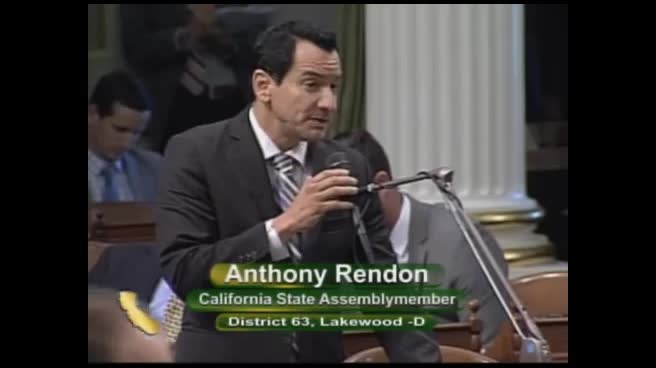 35SEC
Assembly Floor
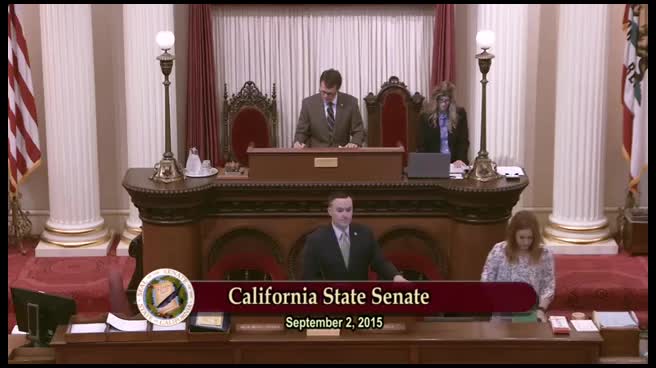 2MIN
Senate Floor
 1MIN
Senate Standing Committee on Appropriations
Bill Author



