AB 2353: Teacher professional development: culturally responsive instruction.
- Session Year: 2015-2016
- House: Assembly
- Latest Version Date: 2016-08-25
Existing law establishes various programs of professional development for teachers, including the California Beginning Teacher Support and Assessment System, and requires the State Department of Education to issue a request for proposals to contract for the development of standards for professional development for educators and instructional leaders.
This bill would require the department to identify professional development programs in culturally responsive instruction and provide links to those programs on its Internet Web site. The bill would state legislative findings and declarations relating to the importance of culturally responsive teaching.
(1)Existing
Existing law establishes various programs of professional development for teachers, including the California Beginning Teacher Support and Assessment System, and requires the State Department of Education to issue a request for proposals to contract for the development of standards for professional development for educators and instructional leaders.
This bill would require the department to identify professional development programs in culturally responsive instruction and provide links to those programs on its Internet Web site. The bill would state legislative findings and declarations relating to the importance of culturally responsive teaching.
(2)Existing law appropriated the sum of $490,000,000 from the General Fund to the Superintendent of Public Instruction to be allocated to school districts, county offices of education, charter schools, and the state special schools, as provided, for specified teacher and administrator training and professional development, including to promote educator quality and effectiveness.
This bill would specify that school districts, county offices of education, charter schools, and the state special schools are authorized to use those moneys to provide professional development in culturally responsive instruction.
(1)Existing law establishes various programs of professional development for teachers, including the California Beginning Teacher Support and Assessment System, and requires the State Department of Education to issue a request for proposals to contract for the development of standards for professional development for educators and instructional leaders.
This bill would require the department to identify professional development programs in culturally responsive instruction and provide links to those programs on its Internet Web site. The bill would state legislative findings and declarations relating to the importance of culturally responsive teaching.
(2)Existing law requires, on or before July 1, 2014, the governing boards of school districts and county boards of education to adopt a local control and accountability plan. Existing law requires the local control and accountability plan to include, among other things, a description of annual goals for all pupils and specified subgroups of pupils to be achieved for certain state priorities, including school climate, as specified, and a description of the specific actions the school district or county superintendent of schools will take to achieve those goals. For purposes of the local control and accountability plans, existing law requires school climate to be measured by pupil suspension and expulsion rates and other local measures, as applicable.
This bill would provide that other local measures may include the extent to which teachers and other school employees, as appropriate, have received or are receiving professional development related to culturally responsive instruction.
(3)
(2)Existing law appropriated the sum of $490,000,000 from the General Fund to the Superintendent of Public Instruction to be allocated to school districts, county offices of education, charter schools, and the state special schools, as provided, for specified teacher and administrator training and professional development, including to promote educator quality and effectiveness.
This bill would specify that school districts, county offices of education, charter schools, and the state special schools are authorized to use those moneys to provide professional development in culturally responsive instruction.
(1)Existing law establishes various programs of professional development for teachers, including the California Beginning Teacher Support and Assessment System, and requires the State Department of Education to issue a request for proposals to contract for the development of standards for professional development for educators and instructional leaders.
This bill would require the department to develop a curriculum for identify professional development programs in covering culturally responsive instruction and make this curriculum available as part of its continuing education and professional development programs for teachers. provide links to those programs on its Internet Web site. The bill would state legislative findings and declarations relating to the importance of culturally responsive teaching.
(2)Existing law requires, on or before July 1, 2014, the governing boards of school districts and county boards of education to adopt a local control and accountability plan. Existing law requires the local control and accountability plan to include, among other things, a description of annual goals for all pupils and specified subgroups of pupils to be achieved for certain state priorities, including school climate, as specified, and a description of the specific actions the school district or county superintendent of schools will take to achieve those goals. For purposes of the local control and accountability plans, existing law requires school climate to be measured by pupil suspension and expulsion rates and other local measures, as applicable.
This bill would provide that other local measures may include the extent to which teachers and other school employees, as appropriate, have received or are receiving professional development related to culturally responsive instruction.
(3)Existing law appropriated the sum of $490,000,000 from the General Fund to the Superintendent of Public Instruction to be allocated to school districts, county offices of education, charter schools, and the state special schools, as provided, for specified teacher and administrator training and professional development, including to promote educator quality and effectiveness.
This bill would specify that school districts, county offices of education, charter schools, and the state special schools are authorized to use those moneys to provide professional development in culturally responsive instruction.
Existing law establishes various programs of professional development for teachers, including the California Beginning Teacher Support and Assessment System, and requires the State Department of Education to issue a request for proposals to contract for the development of standards for professional development for educators and instructional leaders.
This bill would require the department to develop a curriculum for professional development in covering culturally responsive instruction and make this curriculum available as part of its continuing education and professional development programs for teachers. The bill would state legislative findings and declarations relating to the importance of culturally responsive teaching.
The Legislature finds and declares all of the following:
(a)Culture is essential to learning.
(b)Culture plays a role not only in communicating and receiving information, but also in shaping the thinking process of groups and individuals.
(c)A pedagogy that acknowledges, responds to, and celebrates fundamental cultures offers full, equitable access to education for pupils from all cultures.
(d)Culturally responsive teaching is a pedagogy that recognizes the importance of including pupils cultural references in all aspects of learning.
(e)Culturally responsive teaching acknowledges the legitimacy of a pupils cultural heritage that shapes dispositions and attitudes.
(f)Culturally responsive teaching builds bridges of meaningfulness between home and school.
(g)Culturally responsive teaching uses a wide variety of instructional strategies that are connected to learning styles.
(h)Culturally responsive teaching incorporates multicultural information, books, and other educational resources.
(i)Culturally responsive teaching promotes the idea of the classroom family and all pupils are in it together.
(j)Culturally responsive teaching teaches pupils that they can be successful and that they are appreciated by educators who have high expectations of them.
(k)Culturally responsive teaching develops the social consciousness of pupils to better handle the world of prejudice and racism.
SEC. 2.Article 3.2 (commencing with Section 44475) is added to Chapter 3 of Part 25 of Division 3 of Title 2 of the Education Code, to read:3.2.Professional Development in Culturally Responsive Instruction 44475.The department shall identify professional development programs in culturally responsive instruction and provide links to those programs on its Internet Web site.
SEC. 3.Moneys appropriated to the Superintendent of Public Instruction and allocated to school districts, county offices of education, charter schools, and the state special schools for professional development to promote educator quality and effectiveness pursuant to Section 58 of Chapter 13 of the Statutes of 2015 may be used by the school district, county office of education, charter school, or the state special school to provide professional development in culturally responsive instruction.
The Legislature finds and declares all of the following:
(a)Culture is essential to learning.
(b)Culture plays a role not only in communicating and receiving information, but also in shaping the thinking process of groups and individuals.
(c)A pedagogy that acknowledges, responds to, and celebrates fundamental cultures offers full, equitable access to education for pupils from all cultures.
(d)Culturally responsive teaching is a pedagogy that recognizes the importance of including pupils cultural references in all aspects of learning.
(e)Culturally responsive teaching acknowledges the legitimacy of a pupils cultural heritage that shapes dispositions and attitudes.
(f)Culturally responsive teaching builds bridges of meaningfulness between home and school.
(g)Culturally responsive teaching uses a wide variety of instructional strategies that are connected to learning styles.
(h)Culturally responsive teaching incorporates multicultural information, books, and other educational resources.
(i)Culturally responsive teaching promotes the idea of the classroom family and all pupils are in it together.
(j)Culturally responsive teaching teaches pupils that they can be successful and that they are appreciated by educators who have high expectations of them.
(k)Culturally responsive teaching develops the social consciousness of pupils to better handle the world of prejudice and racism.
SEC. 2.Article 3.2 (commencing with Section 44475) is added to Chapter 3 of Part 25 of Division 3 of Title 2 of the Education Code, to read:3.2.Professional Development in Culturally Responsive Instruction 44475.The department shall identify professional development programs in culturally responsive instruction and provide links to those programs on its Internet Web site.
SEC. 3.Section 52060 of the Education Code is amended to read:52060.(a)On or before July 1, 2014, the governing board of each school district shall adopt a local control and accountability plan using a template adopted by the state board.
(b)A local control and accountability plan adopted by the governing board of a school district shall be effective for a period of three years, and shall be updated on or before July 1 of each year.
(c)A local control and accountability plan adopted by the governing board of a school district shall include, for the school district and each school within the school district, both of the following:
(1)A description of the annual goals, for all pupils and each subgroup of pupils identified pursuant to Section 52052, to be achieved for each of the state priorities identified in subdivision (d) and for any additional local priorities identified by the governing board of the school district. For purposes of this article, a subgroup of pupils identified pursuant to Section 52052 shall be a numerically significant pupil subgroup as specified in paragraphs (2) and (3) of subdivision (a) of Section 52052.
(2)A description of the specific actions the school district will take during each year of the local control and accountability plan to achieve the goals identified in paragraph (1), including the enumeration of any specific actions necessary for that year to correct any deficiencies in regard to the state priorities listed in paragraph (1) of subdivision (d). The specific actions shall not supersede the provisions of existing local collective bargaining agreements within the jurisdiction of the school district.
(d)All of the following are state priorities:
(1)The degree to which the teachers of the school district are appropriately assigned in accordance with Section 44258.9, and fully credentialed in the subject areas, and, for the pupils they are teaching, every pupil in the school district has sufficient access to the standards-aligned instructional materials as determined pursuant to Section 60119, and school facilities are maintained in good repair, as defined in subdivision (d) of Section 17002.
(2)Implementation of the academic content and performance standards adopted by the state board, including how the programs and services will enable English learners to access the common core academic content standards adopted pursuant to Section 60605.8 and the English language development standards adopted pursuant to former Section 60811.3, as that section read on June 30, 2013, or Section 60811.4, for purposes of gaining academic content knowledge and English language proficiency.
(3)Parental involvement, including efforts the school district makes to seek parent input in making decisions for the school district and each individual schoolsite, and including how the school district will promote parental participation in programs for unduplicated pupils and individuals with exceptional needs.
(4)Pupil achievement, as measured by all of the following, as applicable:
(A)Statewide assessments administered pursuant to Article 4 (commencing with Section 60640) of Chapter 5 of Part 33 or any subsequent assessment, as certified by the state board.
(B)The Academic Performance Index, as described in Section 52052.
(C)The percentage of pupils who have successfully completed courses that satisfy the requirements for entrance to the University of California and the California State University, or career technical education sequences or programs of study that align with state board-approved career technical education standards and frameworks, including, but not limited to, those described in subdivision (a) of Section 52302, subdivision (a) of Section 52372.5, or paragraph (2) of subdivision (e) of Section 54692.
(D)The percentage of English learner pupils who make progress toward English proficiency as measured by the California English Language Development Test or any subsequent assessment of English proficiency, as certified by the state board.
(E)The English learner reclassification rate.
(F)The percentage of pupils who have passed an advanced placement examination with a score of 3 or higher.
(G)The percentage of pupils who participate in, and demonstrate college preparedness pursuant to, the Early Assessment Program, as described in Chapter 6 (commencing with Section 99300) of Part 65 of Division 14 of Title 3, or any subsequent assessment of college preparedness.
(5)Pupil engagement, as measured by all of the following, as applicable:
(A)School attendance rates.
(B)Chronic absenteeism rates.
(C)Middle school dropout rates, as described in paragraph (3) of subdivision (a) of Section 52052.1.
(D)High school dropout rates.
(E)High school graduation rates.
(6)School climate, as measured by all of the following, as applicable:
(A)Pupil suspension rates.
(B)Pupil expulsion rates.
(C)(i)Other local measures, including surveys of pupils, parents, and teachers on the sense of safety and school connectedness.
(ii)Other local measures may include the extent to which teachers and other school employees, as appropriate, have received or are receiving professional development related to culturally responsive instruction.
(7)The extent to which pupils have access to, and are enrolled in, a broad course of study that includes all of the subject areas described in Section 51210 and subdivisions (a) to (i), inclusive, of Section 51220, as applicable, including the programs and services developed and provided to unduplicated pupils and individuals with exceptional needs, and the programs and services that are provided to benefit these pupils as a result of the funding received pursuant to Section 42238.02, as implemented by Section 42238.03.
(8)Pupil outcomes, if available, in the subject areas described in Section 51210 and subdivisions (a) to (i), inclusive, of Section 51220, as applicable.
(e)For purposes of the descriptions required by subdivision (c), the governing board of a school district may consider qualitative information, including, but not limited to, findings that result from school quality reviews conducted pursuant to subparagraph (J) of paragraph (4) of subdivision (a) of Section 52052 or any other reviews.
(f)To the extent practicable, data reported in a local control and accountability plan shall be reported in a manner consistent with how information is reported on a school accountability report card.
(g)The governing board of a school district shall consult with teachers, principals, administrators, other school personnel, local bargaining units of the school district, parents, and pupils in developing a local control and accountability plan.
(h)A school district may identify local priorities, goals in regard to the local priorities, and the method for measuring the school districts progress toward achieving those goals.
SEC. 4.Section 52066 of the Education Code is amended to read:52066.(a)On or before July 1, 2014, each county superintendent of schools shall develop, and present to the county board of education for adoption, a local control and accountability plan using a template adopted by the state board.
(b)A local control and accountability plan adopted by a county board of education shall be effective for a period of three years, and shall be updated on or before July 1 of each year.
(c)A local control and accountability plan adopted by a county board of education shall include, for each school or program operated by the county superintendent of schools, both of the following:
(1)A description of the annual goals, for all pupils and each subgroup of pupils identified pursuant to Section 52052, to be achieved for each of the state priorities identified in subdivision (d), as applicable to the pupils served, and for any additional local priorities identified by the county board of education.
(2)A description of the specific actions the county superintendent of schools will take during each year of the local control and accountability plan to achieve the goals identified in paragraph (1), including the enumeration of any specific actions necessary for that year to correct any deficiencies in regard to the state priorities listed in paragraph (1) of subdivision (d). The specific actions shall not supersede the provisions of existing local collective bargaining agreements within the jurisdiction of the county superintendent of schools.
(d)All of the following are state priorities:
(1)The degree to which the teachers in the schools or programs operated by the county superintendent of schools are appropriately assigned in accordance with Section 44258.9 and fully credentialed in the subject areas, and, for the pupils they are teaching, every pupil in the schools or programs operated by the county superintendent of schools has sufficient access to the standards-aligned instructional materials as determined pursuant to Section 60119, and school facilities are maintained in good repair, as defined in subdivision (d) of Section 17002.
(2)Implementation of the academic content and performance standards adopted by the state board, including how the programs and services will enable English learners to access the common core academic content standards adopted pursuant to Section 60605.8 and the English language development standards adopted pursuant to former Section 60811.3, as that section read on June 30, 2013, or Section 60811.4, for purposes of gaining academic content knowledge and English language proficiency.
(3)Parental involvement, including efforts the county superintendent of schools makes to seek parent input in making decisions for each individual schoolsite and program operated by a county superintendent of schools, and including how the county superintendent of schools will promote parental participation in programs for unduplicated pupils and individuals with exceptional needs.
(4)Pupil achievement, as measured by all of the following, as applicable:
(A)Statewide assessments administered pursuant to Article 4 (commencing with Section 60640) of Chapter 5 of Part 33 or any subsequent assessment, as certified by the state board.
(B)The Academic Performance Index, as described in Section 52052.
(C)The percentage of pupils who have successfully completed courses that satisfy the requirements for entrance to the University of California and the California State University, or career technical education sequences or programs of study that align with state board-approved career technical education standards and frameworks, including, but not limited to, those described in subdivision (a) of Section 52302, subdivision (a) of Section 52372.5, or paragraph (2) of subdivision (e) of Section 54692.
(D)The percentage of English learner pupils who make progress toward English proficiency as measured by the California English Language Development Test or any subsequent assessment of English proficiency, as certified by the state board.
(E)The English learner reclassification rate.
(F)The percentage of pupils who have passed an advanced placement examination with a score of 3 or higher.
(G)The percentage of pupils who participate in, and demonstrate college preparedness pursuant to, the Early Assessment Program, as described in Chapter 6 (commencing with Section 99300) of Part 65 of Division 14 of Title 3, or any subsequent assessment of college preparedness.
(5)Pupil engagement, as measured by all of the following, as applicable:
(A)School attendance rates.
(B)Chronic absenteeism rates.
(C)Middle school dropout rates, as described in paragraph (3) of subdivision (a) of Section 52052.1.
(D)High school dropout rates.
(E)High school graduation rates.
(6)School climate, as measured by all of the following, as applicable:
(A)Pupil suspension rates.
(B)Pupil expulsion rates.
(C)(i)Other local measures, including surveys of pupils, parents, and teachers on the sense of safety and school connectedness.
(ii)Other local measures may include the extent to which teachers and other school employees, as appropriate, have received or are receiving professional development related to culturally responsive instruction.
(7)The extent to which pupils have access to, and are enrolled in, a broad course of study that includes all of the subject areas described in Section 51210 and subdivisions (a) to (i), inclusive, of Section 51220, as applicable, including the programs and services developed and provided to unduplicated pupils and individuals with exceptional needs, and the programs and services that are provided to benefit these pupils as a result of the funding received pursuant to Section 42238.02, as implemented by Section 42238.03.
(8)Pupil outcomes, if available, in the subject areas described in Section 51210 and subdivisions (a) to (i), inclusive, of Section 51220, as applicable.
(9)How the county superintendent of schools will coordinate instruction of expelled pupils pursuant to Section 48926.
(10)How the county superintendent of schools will coordinate services for foster children, including, but not limited to, all of the following:
(A)Working with the county child welfare agency to minimize changes in school placement.
(B)Providing education-related information to the county child welfare agency to assist the county child welfare agency in the delivery of services to foster children, including, but not limited to, educational status and progress information that is required to be included in court reports.
(C)Responding to requests from the juvenile court for information and working with the juvenile court to ensure the delivery and coordination of necessary educational services.
(D)Establishing a mechanism for the efficient expeditious transfer of health and education records and the health and education passport.
(e)For purposes of the descriptions required by subdivision (c), a county board of education may consider qualitative information, including, but not limited to, findings that result from school quality reviews conducted pursuant to subparagraph (J) of paragraph (4) of subdivision (a) of Section 52052 or any other reviews.
(f)To the extent practicable, data reported in a local control and accountability plan shall be reported in a manner consistent with how information is reported on a school accountability report card.
(g)The county superintendent of schools shall consult with teachers, principals, administrators, other school personnel, local bargaining units of the county office of education, parents, and pupils in developing a local control and accountability plan.
(h)A county board of education may identify local priorities, goals in regard to the local priorities, and the method for measuring the county office of educations progress toward achieving those goals.
SEC. 5.SEC. 3.Moneys appropriated to the Superintendent of Public Instruction and allocated to school districts, county offices of education, charter schools, and the state special schools for professional development to promote educator quality and effectiveness pursuant to Section 58 of Chapter 13 of the Statutes of 2015 may be used by the school district, county office of education, charter school, or the state special school to provide professional development in culturally responsive instruction.
The Legislature finds and declares all of the following:
(a)Culture is essential to learning.
(b)Culture plays a role not only in communicating and receiving information, but also in shaping the thinking process of groups and individuals.
(c)A pedagogy that acknowledges, responds to, and celebrates fundamental cultures offers full, equitable access to education for pupils from all cultures.
(d)Culturally responsive teaching is a pedagogy that recognizes the importance of including pupils cultural references in all aspects of learning.
(e)Culturally responsive teaching acknowledges the legitimacy of a pupils cultural heritage that shapes dispositions and attitudes.
(f)Culturally responsive teaching builds bridges of meaningfulness between home and school.
(g)Culturally responsive teaching uses a wide variety of instructional strategies that are connected to learning styles.
(h)Culturally responsive teaching incorporates multicultural information, books, and other educational resources.
(i)Culturally responsive teaching promotes the idea of the classroom family and all pupils are in it together.
(j)Culturally responsive teaching teaches pupils that they can be successful and that they are appreciated by educators who have high expectations of them.
(k)Culturally responsive teaching develops the social consciousness of pupils to better handle the world of prejudice and racism.
SEC. 2.Article 3.2 (commencing with Section 44475) is added to Chapter 3 of Part 25 of Division 3 of Title 2 of the Education Code, to read:3.2.Professional Development in Culturally Responsive Instruction 44475.The department shall develop a curriculum for identify professional development programs in covering culturally responsive instruction and make this curriculum available as part of the departments continuing education and professional development programs for teachers. provide links to those programs on its Internet Web site.
SEC. 3.Section 52060 of the Education Code is amended to read:52060.(a)On or before July 1, 2014, the governing board of each school district shall adopt a local control and accountability plan using a template adopted by the state board.
(b)A local control and accountability plan adopted by the governing board of a school district shall be effective for a period of three years, and shall be updated on or before July 1 of each year.
(c)A local control and accountability plan adopted by the governing board of a school district shall include, for the school district and each school within the school district, both of the following:
(1)A description of the annual goals, for all pupils and each subgroup of pupils identified pursuant to Section 52052, to be achieved for each of the state priorities identified in subdivision (d) and for any additional local priorities identified by the governing board of the school district. For purposes of this article, a subgroup of pupils identified pursuant to Section 52052 shall be a numerically significant pupil subgroup as specified in paragraphs (2) and (3) of subdivision (a) of Section 52052.
(2)A description of the specific actions the school district will take during each year of the local control and accountability plan to achieve the goals identified in paragraph (1), including the enumeration of any specific actions necessary for that year to correct any deficiencies in regard to the state priorities listed in paragraph (1) of subdivision (d). The specific actions shall not supersede the provisions of existing local collective bargaining agreements within the jurisdiction of the school district.
(d)All of the following are state priorities:
(1)The degree to which the teachers of the school district are appropriately assigned in accordance with Section 44258.9, and fully credentialed in the subject areas, and, for the pupils they are teaching, every pupil in the school district has sufficient access to the standards-aligned instructional materials as determined pursuant to Section 60119, and school facilities are maintained in good repair, as defined in subdivision (d) of Section 17002.
(2)Implementation of the academic content and performance standards adopted by the state board, including how the programs and services will enable English learners to access the common core academic content standards adopted pursuant to Section 60605.8 and the English language development standards adopted pursuant to former Section 60811.3, as that section read on June 30, 2013, or Section 60811.4, for purposes of gaining academic content knowledge and English language proficiency.
(3)Parental involvement, including efforts the school district makes to seek parent input in making decisions for the school district and each individual schoolsite, and including how the school district will promote parental participation in programs for unduplicated pupils and individuals with exceptional needs.
(4)Pupil achievement, as measured by all of the following, as applicable:
(A)Statewide assessments administered pursuant to Article 4 (commencing with Section 60640) of Chapter 5 of Part 33 or any subsequent assessment, as certified by the state board.
(B)The Academic Performance Index, as described in Section 52052.
(C)The percentage of pupils who have successfully completed courses that satisfy the requirements for entrance to the University of California and the California State University, or career technical education sequences or programs of study that align with state board-approved career technical education standards and frameworks, including, but not limited to, those described in subdivision (a) of Section 52302, subdivision (a) of Section 52372.5, or paragraph (2) of subdivision (e) of Section 54692.
(D)The percentage of English learner pupils who make progress toward English proficiency as measured by the California English Language Development Test or any subsequent assessment of English proficiency, as certified by the state board.
(E)The English learner reclassification rate.
(F)The percentage of pupils who have passed an advanced placement examination with a score of 3 or higher.
(G)The percentage of pupils who participate in, and demonstrate college preparedness pursuant to, the Early Assessment Program, as described in Chapter 6 (commencing with Section 99300) of Part 65 of Division 14 of Title 3, or any subsequent assessment of college preparedness.
(5)Pupil engagement, as measured by all of the following, as applicable:
(A)School attendance rates.
(B)Chronic absenteeism rates.
(C)Middle school dropout rates, as described in paragraph (3) of subdivision (a) of Section 52052.1.
(D)High school dropout rates.
(E)High school graduation rates.
(6)School climate, as measured by all of the following, as applicable:
(A)Pupil suspension rates.
(B)Pupil expulsion rates.
(C)(i)Other local measures, including surveys of pupils, parents, and teachers on the sense of safety and school connectedness.
(ii)Other local measures may include the extent to which teachers and other school employees, as appropriate, have received or are receiving professional development related to culturally responsive instruction.
(7)The extent to which pupils have access to, and are enrolled in, a broad course of study that includes all of the subject areas described in Section 51210 and subdivisions (a) to (i), inclusive, of Section 51220, as applicable, including the programs and services developed and provided to unduplicated pupils and individuals with exceptional needs, and the programs and services that are provided to benefit these pupils as a result of the funding received pursuant to Section 42238.02, as implemented by Section 42238.03.
(8)Pupil outcomes, if available, in the subject areas described in Section 51210 and subdivisions (a) to (i), inclusive, of Section 51220, as applicable.
(e)For purposes of the descriptions required by subdivision (c), the governing board of a school district may consider qualitative information, including, but not limited to, findings that result from school quality reviews conducted pursuant to subparagraph (J) of paragraph (4) of subdivision (a) of Section 52052 or any other reviews.
(f)To the extent practicable, data reported in a local control and accountability plan shall be reported in a manner consistent with how information is reported on a school accountability report card.
(g)The governing board of a school district shall consult with teachers, principals, administrators, other school personnel, local bargaining units of the school district, parents, and pupils in developing a local control and accountability plan.
(h)A school district may identify local priorities, goals in regard to the local priorities, and the method for measuring the school districts progress toward achieving those goals.
SEC. 4.Section 52066 of the Education Code is amended to read:52066.(a)On or before July 1, 2014, each county superintendent of schools shall develop, and present to the county board of education for adoption, a local control and accountability plan using a template adopted by the state board.
(b)A local control and accountability plan adopted by a county board of education shall be effective for a period of three years, and shall be updated on or before July 1 of each year.
(c)A local control and accountability plan adopted by a county board of education shall include, for each school or program operated by the county superintendent of schools, both of the following:
(1)A description of the annual goals, for all pupils and each subgroup of pupils identified pursuant to Section 52052, to be achieved for each of the state priorities identified in subdivision (d), as applicable to the pupils served, and for any additional local priorities identified by the county board of education.
(2)A description of the specific actions the county superintendent of schools will take during each year of the local control and accountability plan to achieve the goals identified in paragraph (1), including the enumeration of any specific actions necessary for that year to correct any deficiencies in regard to the state priorities listed in paragraph (1) of subdivision (d). The specific actions shall not supersede the provisions of existing local collective bargaining agreements within the jurisdiction of the county superintendent of schools.
(d)All of the following are state priorities:
(1)The degree to which the teachers in the schools or programs operated by the county superintendent of schools are appropriately assigned in accordance with Section 44258.9 and fully credentialed in the subject areas, and, for the pupils they are teaching, every pupil in the schools or programs operated by the county superintendent of schools has sufficient access to the standards-aligned instructional materials as determined pursuant to Section 60119, and school facilities are maintained in good repair as specified repair, as defined in subdivision (d) of Section 17002.
(2)Implementation of the academic content and performance standards adopted by the state board, including how the programs and services will enable English learners to access the common core academic content standards adopted pursuant to Section 60605.8 and the English language development standards adopted pursuant to Section 60811.3 former Section 60811.3, as that section read on June 30, 2013, or Section 60811.4, for purposes of gaining academic content knowledge and English language proficiency.
(3)Parental involvement, including efforts the county superintendent of schools makes to seek parent input in making decisions for each individual schoolsite and program operated by a county superintendent of schools, and including how the county superintendent of schools will promote parental participation in programs for unduplicated pupils and individuals with exceptional needs.
(4)Pupil achievement, as measured by all of the following, as applicable:
(A)Statewide assessments administered pursuant to Article 4 (commencing with Section 60640) of Chapter 5 of Part 33 or any subsequent assessment, as certified by the state board.
(B)The Academic Performance Index, as described in Section 52052.
(C)The percentage of pupils who have successfully completed courses that satisfy the requirements for entrance to the University of California and the California State University, or career technical education sequences or programs of study that align with state board-approved career technical education standards and frameworks, including, but not limited to, those described in subdivision (a) of Section 52302, subdivision (a) of Section 52372.5, or paragraph (2) of subdivision (e) of Section 54692.
(D)The percentage of English learner pupils who make progress toward English proficiency as measured by the California English Language Development Test or any subsequent assessment of English proficiency, as certified by the state board.
(E)The English learner reclassification rate.
(F)The percentage of pupils who have passed an advanced placement examination with a score of 3 or higher.
(G)The percentage of pupils who participate in, and demonstrate college preparedness pursuant to, the Early Assessment Program, as described in Chapter 6 (commencing with Section 99300) of Part 65 of Division 14 of Title 3, or any subsequent assessment of college preparedness.
(5)Pupil engagement, as measured by all of the following, as applicable:
(A)School attendance rates.
(B)Chronic absenteeism rates.
(C)Middle school dropout rates, as described in paragraph (3) of subdivision (a) of Section 52052.1.
(D)High school dropout rates.
(E)High school graduation rates.
(6)School climate, as measured by all of the following, as applicable:
(A)Pupil suspension rates.
(B)Pupil expulsion rates.
(C)(i)Other local measures, including surveys of pupils, parents, and teachers on the sense of safety and school connectedness.
(ii)Other local measures may include the extent to which teachers and other school employees, as appropriate, have received or are receiving professional development related to culturally responsive instruction.
(7)The extent to which pupils have access to, and are enrolled in, a broad course of study that includes all of the subject areas described in Section 51210 and subdivisions (a) to (i), inclusive, of Section 51220, as applicable, including the programs and services developed and provided to unduplicated pupils and individuals with exceptional needs, and the program programs and services that are provided to benefit these pupils as a result of the funding received pursuant to Section 42238.02, as implemented by Section 42238.03.
(8)Pupil outcomes, if available, in the subject areas described in Section 51210 and subdivisions (a) to (i), inclusive, of Section 51220, as applicable.
(9)How the county superintendent of schools will coordinate instruction of expelled pupils pursuant to Section 48926.
(10)How the county superintendent of schools will coordinate services for foster children, including, but not limited to, all of the following:
(A)Working with the county child welfare agency to minimize changes in school placement.
(B)Providing education-related information to the county child welfare agency to assist the county child welfare agency in the delivery of services to foster children, including, but not limited to, educational status and progress information that is required to be included in court reports.
(C)Responding to requests from the juvenile court for information and working with the juvenile court to ensure the delivery and coordination of necessary educational services.
(D)Establishing a mechanism for the efficient expeditious transfer of health and education records and the health and education passport.
(e)For purposes of the descriptions required by subdivision (c), a county board of education may consider qualitative information, including, but not limited to, findings that result from school quality reviews conducted pursuant to subparagraph (J) of paragraph (4) of subdivision (a) of Section 52052 or any other reviews.
(f)To the extent practicable, data reported in a local control and accountability plan shall be reported in a manner consistent with how information is reported on a school accountability report card.
(g)The county superintendent of schools shall consult with teachers, principals, administrators, other school personnel, local bargaining units of the county office of education, parents, and pupils in developing a local control and accountability plan.
(h)A county board of education may identify local priorities, goals in regard to the local priorities, and the method for measuring the county office of educations progress toward achieving those goals.
SEC. 5.Moneys appropriated to the Superintendent of Public Instruction and allocated to school districts, county offices of education, charter schools, and the state special schools for professional development to promote educator quality and effectiveness pursuant to Section 58 of Chapter 13 of the Statutes of 2015 may be used by the school district, county office of education, charter school, or the state special school to provide professional development in culturally responsive instruction.
The Legislature finds and declares all of the following:
(a)Culture is essential to learning.
(b)Culture plays a role not only in communicating and receiving information, but also in shaping the thinking process of groups and individuals.
(c)A pedagogy that acknowledges, responds to, and celebrates fundamental cultures offers full, equitable access to education for pupils from all cultures.
(d)Culturally responsive teaching is a pedagogy that recognizes the importance of including pupils cultural references in all aspects of learning.
(e)Culturally responsive teaching acknowledges the legitimacy of a pupils cultural heritage that shapes dispositions and attitudes.
(f)Culturally responsive teaching builds bridges of meaningfulness between home and school.
(g)Culturally responsive teaching uses a wide variety of instructional strategies that are connected to learning styles.
(h)Culturally responsive teaching incorporates multicultural information, books, and other educational resources.
(i)Culturally responsive teaching promotes the idea of the classroom family and all pupils are in it together.
(j)Culturally responsive teaching teaches pupils that they can be successful and that they are appreciated by educators who have high expectations of them.
(k)Culturally responsive teaching develops the social consciousness of pupils to better handle the world of prejudice and racism.
SEC. 2.Article 3.2 (commencing with Section 44475) is added to Chapter 3 of Part 25 of Division 3 of Title 2 of the Education Code, to read:3.2.Professional Development in Culturally Responsive Instruction 44475.The department shall develop a curriculum for professional development in covering culturally responsive instruction and make this curriculum available as part of the departments continuing education and professional development programs for teachers.
|
Date
|
Status
|
|---|---|
| Jun 1, 2016 | In Senate. Read first time. To Com. on RLS. for assignment. |
| Aug 31, 2016 | Enrolled and presented to the Governor at 4 p.m. |
| Aug 24, 2016 | Senate amendments concurred in. To Engrossing and Enrolling. (Ayes 80. Noes 0. Page 6211.). |
| Aug 24, 2016 | Senate amendments concurred in. To Engrossing and Enrolling. |
| Aug 19, 2016 | Read third time. Passed. Ordered to the Assembly. (Ayes 36. Noes 0.). |
| Aug 19, 2016 | Read third time. Passed. Ordered to the Assembly. (Ayes 36. Noes 0. Page 5163.). |
| Aug 19, 2016 | In Assembly. Concurrence in Senate amendments pending. May be considered on or after August 21 pursuant to Assembly Rule 77. |
| Aug 16, 2016 | Read second time and amended. Ordered to third reading. |
| Aug 15, 2016 | From committee: Amend, and do pass as amended. (Ayes 7. Noes 0.) (August 11). |
| Aug 1, 2016 | In committee: Referred to APPR. suspense file. |
| Jun 21, 2016 | Read second time and amended. Re-referred to Com. on APPR. |
| Jun 21, 2016 | From committee chair, with author's amendments: Amend, and re-refer to committee. Read second time, amended, and re-referred to Com. on APPR. |
| Jun 20, 2016 | From committee: Amend, and do pass as amended and re-refer to Com. on APPR. (Ayes 9. Noes 0.) (June 15). |
| Jun 9, 2016 | Referred to Com. on ED. |
| Feb 18, 2016 | Read first time. To print. |
| May 31, 2016 | Read third time. Passed. Ordered to the Senate. (Ayes 78. Noes 0.) |
| May 31, 2016 | Read third time. Passed. Ordered to the Senate. (Ayes 78. Noes 0. Page 5035.) |
| May 31, 2016 | Read third time. Passed. Ordered to the Senate. |
| May 27, 2016 | Read second time. Ordered to third reading. |
| May 27, 2016 | From committee: Do pass. (Ayes 20. Noes 0.) (May 27). |
| May 11, 2016 | In committee: Set, first hearing. Referred to APPR. suspense file. |
| Apr 28, 2016 | Re-referred to Com. on APPR. |
| Apr 27, 2016 | Read second time and amended. |
| Apr 26, 2016 | From committee: Amend, and do pass as amended and re-refer to Com. on APPR. with recommendation: To Consent Calendar. (Ayes 7. Noes 0.) (April 20). |
| Apr 13, 2016 | In committee: Set, second hearing. Hearing canceled at the request of author. |
| Apr 6, 2016 | In committee: Set, first hearing. Hearing canceled at the request of author. |
| Mar 3, 2016 | Referred to Com. on ED. |
| Feb 19, 2016 | From printer. May be heard in committee March 20. |
|
Date
|
Description
|
Location
|
Votes
|
|
|---|---|---|---|---|
| Aug 24, 2016 | AB 2353 MCCARTY Concurrence in Senate Amendments | Assembly Floor |
Passed |
|
| Aug 19, 2016 | Assembly 3rd Reading AB2353 McCarty By Mendoza | Senate Floor |
Passed |
|
| Aug 11, 2016 | Do pass as amended | Senate Standing Committee on Appropriations |
Passed |
|
| Aug 1, 2016 | Placed on suspense file | Senate Standing Committee on Appropriations |
Passed |
|
| Jun 15, 2016 | Do pass as amended, but first amend, and re-refer to the Committee on [Appropriations] | Senate Standing Committee on Education |
Passed |
|
| May 31, 2016 | AB 2353 MCCARTY Assembly Third Reading | Assembly Floor |
Passed |
|
| May 27, 2016 | Do pass. | Assembly Standing Committee on Appropriations |
Passed |
|
| Apr 20, 2016 | Do pass as amended, and be re-referred to the Committee on [Appropriations] with recommendation: To Consent Calendar | Assembly Standing Committee on Education |
Passed |
This list shows positions taken on this bill by organizations on the date displayed, which is linked to the original source.
Positions by individuals are not included.
|
Organization
|
Position
|
Date
|
|---|---|---|
| Alameda County Office Of Education | ** Support | Aug 19, 2016 |
| American Civil Liberties Union of California | ** Support | Aug 19, 2016 |
| Association Of California School Administrators | ** Support | Aug 19, 2016 |
| California Association For Bilingual Education | * Support | Jun 15, 2016 |
| California Association of African American Superintendents and Administrators | * Support | Jun 15, 2016 |
| California Federation Of Teachers | ** Support | Aug 19, 2016 |
| California Immigrant Policy Center | ** Support | May 31, 2016 |
| California Schools Administrators | * Support | Jun 15, 2016 |
| Californians Together | * Support | Jun 15, 2016 |
| Children Now | ** Support | Aug 19, 2016 |
| Los Angeles Unified School District | ** Support | Aug 19, 2016 |
| Public Advocates | ** Support | May 31, 2016 |
| Riverbank Unified School District | * Support | Jun 15, 2016 |
| San Bernardino County District Advocates for Better Schools | ** Support | Aug 19, 2016 |
| u None received. | ** Against | Aug 19, 2016 |
GOVERNOR'S VETO
GV Bill Id:AB 2353
Author:(McCarty)
As Enrolled Ver:August 31, 2016
2/3 vote
ASSEMBLY: | 78-0 | (May 31, 2016) | SENATE: | 36-0 | (August 19, 2016) |
ASSEMBLY: | 80-0 | (August 24, 2016) |
|
|
Original Committee Reference: ED.
SUMMARY: Requires the California Department of Education (CDE) to identify professional development programs in culturally responsive instruction and provide links to those programs on its Web site.
The Senate amendments strike language permitting local education agencies to include the extent to which teachers have received or are receiving professional development related to culturally responsive instruction as a measure of school climate for purposes of the Local Control and Accountability Plan; and strike language permitting local education agencies and the state special schools to use specified professional development funds for professional development in culturally responsive instruction.
EXISTING LAW:
- Provides for a Crosscultural, Language, and Academic Development (CLAD) Certificate, which requires preparation in culture and cultural diversity.
- Requires coursework in culturally responsive education to be included in teacher and school administrator preparation programs.
- Requires beginning teachers to complete an induction program prior to receiving a clear credential, and requires induction programs to include culturally responsive instruction.
FISCAL EFFECT: According to the Senate Appropriations Committee, CDE estimates about $150,000 one-time General Fund for experts to review and identify programs to post online and for CDE staff to support the project. These costs include the substitute reimbursements and travel costs for 20 volunteer teachers to serve as reviewers for three days and for four content experts. To the extent that the intent of this bill could also be met with consultation of a select few experts and a comparable reduction in administrative oversight, costs to the state would be less.
COMMENTS:
Need for the bill. According to the author's office, the current structure for ensuring that teachers receive appropriate training in cultural competency "does not include strategies for those who seek employment in a school district where racial and cultural makeup of the student body vastly differ from the school district where they were trained in their core competencies. This lack of training is also apparent when teachers pursue teaching opportunities in California who are from other states or other countries. Further, there is a need to address the training needs of teachers and administrators who have been working in the educational system for some time and may not have received the level of cultural competency training appropriate to meet their local district needs."
I am returning Assembly Bill 2353 without my signature.
This bill requires the California Department of Education to identify professional development programs in culturally responsive instruction and provide links to those programs on its website.
Clearly, it's important to train teachers in cultural competency, which is why California's teacher preparation programs provide instruction on this issue. The Department currently provides resources and links related to culturally responsive instruction on its website. If this information needs to be enhanced or expanded, I'm confident the Superintendent can handle that request without this bill.
Analysis Prepared by: Rick Pratt / ED. / (916) 319-2087 FN: 0005132
CONCURRENCE IN SENATE AMENDMENTS
CSA1 Bill Id:AB 2353
Author:(McCarty)
As Amended Ver:August 16, 2016
Majority vote
ASSEMBLY: | 78-0 | (May 31, 2016) | SENATE: | 36-0 | (August 19, 2016) |
Original Committee Reference: ED.
SUMMARY: Requires the California Department of Education (CDE) to identify professional development programs in culturally responsive instruction and provide links to those programs on its website.
The Senate amendments strike language permitting local education agencies to include the extent to which teachers have received or are receiving professional development related to culturally responsive instruction as a measure of school climate for purposes of the Local Control and Accountability Plan; and strike language permitting local education agencies and the state special schools to use specified professional development funds for professional development in culturally responsive instruction.
EXISTING LAW:
- Provides for a Crosscultural, Language, and Academic Development (CLAD) Certificate, which requires preparation in culture and cultural diversity.
- Requires coursework in culturally responsive education to be included in teacher and school administrator preparation programs.
- Requires beginning teachers to complete an induction program prior to receiving a clear credential, and requires induction programs to include culturally responsive instruction.
FISCAL EFFECT: According to the Senate Appropriations Committee, CDE estimates about $150,000 one-time General Fund for experts to review and identify programs to post online and for CDE staff to support the project. These costs include the substitute reimbursements and travel costs for 20 volunteer teachers to serve as reviewers for three days and for four content experts. To the extent that the intent of this bill could also be met with consultation of a select few experts and a comparable reduction in administrative oversight, costs to the state would be less.
COMMENTS:
Need for the bill. According to the author's office, the current structure for ensuring that teachers receive appropriate training in cultural competency "does not include strategies for those who seek employment in a school district where racial and cultural makeup of the student body vastly differ from the school district where they were trained in their core competencies. This lack of training is also apparent when teachers pursue teaching opportunities in California who are from other states or other countries. Further, there is a need to address the training needs of teachers and administrators who have been working in the educational system for some time and may not have received the level of cultural competency training appropriate to meet their local district needs."
Analysis Prepared by: Rick Pratt / ED. / (916) 319-2087 FN: 0004264
Office of Senate Floor Analyses (916) 651-1520 Fax: (916) 327-4478 | AB |
THIRD READING
Bill No: AB 2353
:
SENATE EDUCATION COMMITTEE: 9-0, 6/15/16
AYES: Liu, Block, Hancock, Huff, Leyva, Mendoza, Monning, Pan, Vidak
SENATE APPROPRIATIONS COMMITTEE: 7-0, 8/11/16
AYES: Lara, Bates, Beall, Hill, McGuire, Mendoza, Nielsen
ASSEMBLY FLOOR: 78-0, 5/31/16 - See last page for vote
SOURCE: California Federation of Teachers
DIGEST: This bill requires the California Department of Education (CDE) to identify professional development programs in culturally responsive instruction.
Existing law:
- Establishes the Local Control Funding Formula which permanently consolidated the vast majority of categorical programs, including the Professional Development Block Grant which supported professional development activities such as teacher recruitment and retention incentives, along with revenue limit apportionments, into a single source of funding. The statutory and programmatic requirements for almost all of these categorical programs were also eliminated, leaving any related activities left to local districts’ discretion.
- Requires the governing board of each school district and each county board of education to adopt a local control and accountability plan (LCAP), and to update the plan annually. Existing law requires LCAPs to include both of the following:
- A description of the annual goals, for all students and each subgroup of students, to be achieved for each of the state priorities and for any additional local priorities identified by the governing board.
- A description of the specific actions the school district will take during each year of the LCAP to achieve the goals, including the enumeration of any specific actions necessary for that year to correct any deficiencies in regard to the state priorities. (EC § 52060 and § 52066)
This bill:
- Specifies various legislative findings and declarations, including: culture is essential to learning; culture plays a role not only in communicating and receiving information, but also in shaping the thinking process of groups and individuals; and culturally responsive teaching is a pedagogy that recognizes the importance of including pupils’ cultural references in all aspects of learning.
- Requires the CDE to identify professional development programs in culturally responsive instruction and provide links to those programs on its Web site.
Comments
Need for the bill. According to the author’s office, the current structure for ensuring that teachers receive appropriate training in cultural competency “does not include strategies for those who seek employment in a school district where racial and cultural makeup of the student body vastly differ from the school district where they were trained in their core competencies. This lack of training is also apparent when teachers pursue teaching opportunities in California who are from other states or other countries. Further, there is a need to address the training needs of teachers and administrators who have been working in the educational system for some time and may not have received the level of cultural competency training appropriate to meet their local district needs.”
Related budget activity. The 2015-16 Budget Act included $490 million for local educational agencies (LEAs) to promote educator effectiveness and were specifically earmarked for a menu of options that included beginning teacher and administrator support and mentoring, professional development, and coaching and support services for teachers identified as needing improvement. Since LEAs have just received these funds and have three years to spend them, the number of districts that have fully spent them or still have funds available is unknown.
FISCAL EFFECT: Appropriation: Fiscal Com.: Local:
According to the Senate Appropriations Committee, CDE estimates about $150,000 one-time General Fund for experts to review and identify programs to post online and for CDE staff to support the project. These costs include the substitute reimbursements and travel costs for 20 volunteer teachers to serve as reviewers for three days and for four content experts. To the extent that the intent of this bill could also be met with consultation of a select few experts and a comparable reduction in administrative oversight, costs to the state would be less.
California Federation of Teachers (source)
Alameda County Office of Education
American Civil Liberties Union of California
Association of California School Administrators
Children Now
Los Angeles Unified School District
San Bernardino County District Advocates for Better Schools
OPPOSITION: (Verified 8/12/16)
None received
ASSEMBLY FLOOR: 78-0, 5/31/16
AYES: Achadjian, Alejo, Travis Allen, Arambula, Atkins, Baker, Bigelow, Bloom, Bonilla, Bonta, Brough, Brown, Burke, Calderon, Campos, Chang, Chau, Chávez, Chiu, Chu, Cooley, Cooper, Dababneh, Dahle, Daly, Dodd, Eggman, Frazier, Beth Gaines, Cristina Garcia, Eduardo Garcia, Gatto, Gipson, Gomez, Gonzalez, Gordon, Gray, Grove, Hadley, Roger Hernández, Holden, Irwin, Jones, Jones-Sawyer, Kim, Lackey, Levine, Linder, Lopez, Low, Maienschein, Mathis, Mayes, McCarty, Medina, Melendez, Mullin, Nazarian, Obernolte, O'Donnell, Olsen, Patterson, Quirk, Ridley-Thomas, Rodriguez, Salas, Santiago, Steinorth, Mark Stone, Thurmond, Ting, Wagner, Waldron, Weber, Wilk, Williams, Wood, Rendon
NO VOTE RECORDED: Gallagher, Harper
8/16/16 18:21:25
**** END ****
SENATE COMMITTEE ON APPROPRIATIONS
Senator Ricardo Lara, Chair
2015 - 2016 Regular Session
AB 2353 (McCarty) - Teacher professional development: culturally responsive instruction
Version: June 21, 2016 | Policy Vote: ED. 9 - 0 |
Urgency: No | Mandate: No |
Hearing Date: August 11, 2016 | Consultant: Jillian Kissee |
*********** ANALYSIS ADDENDUM – SUSPENSE FILE ***********
The following information is revised to reflect amendments
adopted by the committee on August 11, 2016
Bill Summary:
This bill requires the California Department of Education (CDE) to identify professional development programs in culturally responsive instruction and provide links to those programs on its website.
Fiscal Impact:
- CDE estimates about $150,000 one-time General Fund for experts to review and identify programs to post online and for CDE staff to support the project. These costs include the substitute reimbursements and travel costs for 20 volunteer teachers to serve as reviewers for three days and for four content experts. To the extent that the intent of this bill could also be met with consultation of a select few experts and a comparable reduction in administrative oversight, costs to the state would be less.
Committee Amendments:
Strikes the authorization that local educational agencies may use professional development funding appropriated in the Budget Act of 2015 to provide professional development in culturally responsive instruction.
-- END --
SENATE COMMITTEE ON EDUCATION
Senator Carol Liu, Chair
2015 - 2016 Regular
Bill No: AB 2353
Author: | |||
Version: | April 27, 2016 Hearing Date: June 15, 2016 | ||
Urgency: | No | Fiscal: | Yes |
Consultant: | Lenin DelCastillo | ||
Subject: Teacher professional development: culturally responsive instruction
SUMMARY
This bill requires the California Department of Education (CDE) to identify professional development programs in culturally responsive instruction and authorizes local educational agencies (LEAs) to include this professional development as a local measure of school climate as part of their local control and accountability plans (LCAPs).
BACKGROUND
Existing law:
- Establishes the Local Control Funding Formula which permanently consolidated the vast majority of categorical programs, including the Professional Development Block Grant which supported professional development activities such as teacher recruitment and retention incentives, along with revenue limit apportionments, into a single source of funding. The statutory and programmatic requirements for almost all of these categorical programs were also eliminated, leaving any related activities left to local districts’ discretion.
- Requires the governing board of each school district and each county board of education to adopt an LCAP, and to update the plan annually. Existing law requires LCAPs to include both of the following:
- A description of the annual goals, for all students and each subgroup of students, to be achieved for each of the state priorities and for any additional local priorities identified by the governing board.
- A description of the annual goals, for all students and each subgroup of students, to be achieved for each of the state priorities and for any additional local priorities identified by the governing board.
- A description of the specific actions the school district will take during each year of the LCAP to achieve the goals, including the enumeration of any specific actions necessary for that year to correct any deficiencies in regard to the state priorities. (EC § 52060 and § 52066)
ANALYSIS
This bill:
- Specifies various legislative findings and declarations, including: culture is essential to learning; culture plays a role not only in communicating and receiving information, but also in shaping the thinking process of groups and individuals; and culturally responsive teaching is a pedagogy that recognizes the importance of including pupils’ cultural references in all aspects of learning.
- Requires the California Department of Education (CDE) to identify professional development programs in culturally responsive instruction and provide links to those programs on its web site.
- Authorizes local education agencies (LEAs) to include the extent to which teachers and other school employees, as appropriate, have received or are receiving this professional development as a local measure of school climate as part of their local control and accountability plans (LCAPs).
- Authorizes LEAs to use $490 million provided in the 2015-16 Budget Act to provide professional development in culturally responsive instruction.
STAFF COMMENTS
- Need for the bill. According to the author’s office, the current structure for ensuring that teachers receive appropriate training in cultural competency “does not include strategies for those who seek employment in a school district where racial and cultural makeup of the student body vastly differ from the school district where they were trained in their core competencies. This lack of training is also apparent when teachers pursue teaching opportunities in California who are from other states or other countries. Further, there is a need to address the training needs of teachers and administrators who have been working in the educational system for some time and may not have received the level of cultural competency training appropriate to meet their local district needs.”
- Existing LCAP process. This bill authorizes an LEA to include professional development programs in culturally responsive instruction as a local measure of school climate as part of its LCAP. However, to the extent this is a local priority, an LEA may already include it and therefore, the Committee may wish to consider whether this provision is necessary. Specifically, do local school districts and their governing boards need further guidance on what to include in their LCAPs? Additionally, there have been notable criticisms of the LCAP since its implementation, including the notion that its primary purpose has been to serve primarily as a compliance driven document rather than for strategic planning purposes. There have also been concerns regarding the length and complexity of the LCAPs making them difficult to read and understand. Would it be prudent at this time to prescribe additional statutory provisions for the LCAP prior to making more meaningful reforms to address these issues? Staff recommends that the provision authorizing LEAs to include professional development programs in culturally responsive instruction as a local measure of school climate be removed from the bill.
- Related budget activity. The 2015-16 Budget Act included $490 million for local educational agencies (LEAs) to promote educator effectiveness and were specifically earmarked for a menu of options that included beginning teacher and administrator support and mentoring, professional development, and coaching and support services for teachers identified as needing improvement. Since LEAs have just received these funds and have three years to spend them, the number of districts that have fully spent them or still have funds available is unknown.
As this bill authorizes these funds to be used to provide professional development in culturally responsive instruction, one can argue these funds may already be used for this purpose if a district deems it to be a local priority. On the other hand, the Committee may wish to consider whether the bill’s provision is contrary to the budget agreement as it designates an additional purpose for which the funds can be used. For these reasons, staff recommends that this provision be removed from the bill.
- Fiscal impact. According to the Assembly Appropriations Committee, the California Department of Education (CDE) estimates one-time General Fund costs of approximately $150,000 for the department to identify and review existing professional development programs in culturally responsive instruction and to post online. These costs could be ongoing to the extent CDE is expected to review and update the list on a regular basis.
SUPPORT
Alameda County Office of Education
American Civil Liberties Union of California
Association of California School Administrators
California Federation of Teachers
Children Now
Los Angeles Unified School District
San Bernardino County District Advocates for Better Schools
OPPOSITION
None received.
-- END --
SENATE COMMITTEE ON APPROPRIATIONS
Senator Ricardo Lara, Chair
2015 - 2016 Regular Session
AB 2353 (McCarty) - Teacher professional development: culturally responsive instruction
Version: June 21, 2016 | Policy Vote: ED. 9 - 0 |
Urgency: No | Mandate: No |
Hearing Date: August 1, 2016 | Consultant: Jillian Kissee |
This bill meets the criteria for referral to the Suspense File.
Bill Summary:
This bill requires the California Department of Education (CDE) to identify professional development programs in culturally responsive instruction and provide links to those programs on its website. This bill also authorizes local educational agencies (LEAs) to use professional development funding appropriated in the Budget Act of 2015 to provide professional development in culturally responsive instruction.
Fiscal Impact:
- CDE estimates about $150,000 one-time General Fund for experts to review and identify programs to post online and for CDE staff to support the project. These costs include the substitute reimbursements and travel costs for 20 volunteer teachers to serve as reviewers for three days and for four content experts. To the extent that the intent of this bill could also be met with consultation of a select few experts and a comparable reduction in administrative oversight, costs to the state could be mitigated.
Background:
The Budget Act of 2015 included $490 million Proposition 98 for LEAs to promote educator effectiveness to be spent over three years, until the 2017-18 fiscal year. LEAs may use this funding for the following purposes:
- Beginning teacher and administrator support and mentoring;
- Professional development, coaching, and support services for teachers who have been identified as needing improvement or additional support by LEAs.
- Professional development for teachers and administrators that is aligned to the state academic content standards.
- To promote educator quality and effectiveness, including mentoring and coaching certificated staff and training certificated staff to support effective teaching and learning. (AB 104, 2015, Section 58)
According to the author’s office, the California Teacher Credentialing Commission is responsible for, among other things, ensuring that teachers receive appropriate training in cultural competency as part of their pre-service and induction programs. However, this structure does not include strategies for ensuring the competency of those who seek employment in a school district where racial and cultural makeup of the student body is vastly different from the school district where they were trained in their core competencies.
Proposed Law:
This bill requires the CDE to identify professional development programs in culturally responsive instruction and provide links to those programs on its website. This bill also authorizes LEAs to use the $490 million Proposition 98 that was appropriated in the Budget Act of 2015 for teacher professional development to provide professional development in culturally responsive instruction.
In the context of this bill, an LEA is a school district, county office of education, charter school, or a state special school.
Staff Comments:
This bill specifically authorizes the use of teacher effectiveness funding appropriated in the Budget Act of 2015 to be used to provide professional development in culturally responsive instruction. According to the CDE, all funding has been allocated to LEAs. As a condition of receiving funds, existing law provides that LEAs develop a plan delineating how funds will be spent and submit the reports to CDE by July 1, 2018. The CDE is required to submit a summary of the information reported by LEAs and to the Legislature and the Department of Finance by January 1, 2019. Without this report, it is unclear how LEAs will prioritize the use of these funds and whether they have been committed to other professional development activities.
This bill would expand the use of funds agreed to by the Administration and the Legislature in last year’s budget act for which LEAs may have already planned and budgeted.
-- END --
ASSEMBLY THIRD READING
ATR Bill Id:AB 2353
Author:(McCarty)
As Amended Ver:April 27, 2016
Majority vote
Committee | Votes | Ayes | Noes |
Education | 7-0 | O'Donnell, Olsen, Kim, McCarty, Santiago, Thurmond, Weber | |
Appropriations | 20-0 | Gonzalez, Bigelow, Bloom, Bonilla, Bonta, Calderon, Chang, Daly, Eggman, Gallagher, Eduardo Garcia, Roger Hernández, Holden, Jones, Obernolte, Quirk, Santiago, Wagner, Weber, Wood |
|
SUMMARY: Enacts provisions to promote professional development in culturally responsive instruction. Specifically, this bill:
- Requires the California Department of Education (CDE) to identify professional development programs in culturally responsive instruction.
- Authorizes local education agencies (LEAs) to include this professional development as a local measure of school climate under the Local Control Funding Formula (LCFF).
- Authorizes LEAs to use $490 million provided in the 2015-16 Budget Act to provide cultural responsive professional development.
FISCAL EFFECT: According to the Assembly Appropriations Committee, "the CDE estimates one-time General Fund costs of approximately $150,000 for the department to identify and review existing professional development programs in culturally responsive instruction and to post online. These costs could be ongoing to the extent CDE is expected to review and update the list on a regular basis."
COMMENTS:
- Purpose. Classroom instruction that connects the diverse backgrounds of students with curriculum and instruction is an approach sometimes referred to as "culturally responsive instruction." Culturally responsive instruction has been shown to be positively correlated with higher levels of academic achievement. Having staff trained in culturally responsive instruction can also lead to improvements in overall school climate. The American Civil Liberties Union (ACLU) of California supports this bill stating teachers in California have a responsibility to respect and value the cultural heritage of all of their students and teach their students to respect the cultures of others. This bill would assist teachers in understanding and appreciating the cultural differences of their students and how to incorporate these characteristics into their pedagogy.
- Educator Effectiveness Funding. The 2015-16 Budget Act appropriated $490 million to county offices of education, school districts, charter schools and state special schools based on full-time equivalent (FTE) certificated staff reported for the 2014-15 fiscal year. The Educator Effectiveness funds are authorized to be spent for professional development, coaching, and support services. The first apportionment reflecting approximately 80% of each LEA's entitlement as released in December of 2015. Remaining funds were released in March of 2016. The 2015–16 calculated funding rate is approximately $1,466 per FTE. Districts can spend these funds over three years. They are required to develop and adopt a plan for expenditure of these funds, and are required to provide a detailed report of expenditures by July 1, 2018.
Since LEAs have just received these funds and they have three years to spend the funds, the number of districts that have already expended or committed their total allocation is unknown. This bill adds professional development in culturally responsive instruction as another authorized use, but does not require schools to spend this funding for this purpose.
Analysis Prepared by: Rick Pratt / ED. / (916) 319-2087 FN: 0003176
Date of Hearing: May 11, 2016
ASSEMBLY COMMITTEE ON APPROPRIATIONS
Lorena Gonzalez, Chair
ABPCA Bill Id:AB 2353
Author:(McCarty) – As Amended Ver:April 27, 2016
Policy Committee: | Education | Vote: | 7 - 0 |
Urgency: No State Mandated Local Program: No Reimbursable: No
SUMMARY:
This bill requires the California Department of Education (CDE) to identify professional development programs in culturally responsive instruction. The bill also authorizes local education agencies (LEAs) to include this professional development as a local measure of school climate under the Local Control Funding Formula (LCFF). Additionally, this bill authorizes LEAs to use $490 million provided in the 2015-16 Budget Act to provide cultural responsive professional development.
FISCAL EFFECT:
The CDE estimates one-time General Fund costs of approximately $150,000 for the department to identify and review existing professional development programs in culturally responsive instruction and to post online. These costs could be ongoing to the extent CDE is expected to review and update the list on a regular basis.
COMMENTS:
- Purpose. Classroom instruction that connects the diverse backgrounds of students with curriculum and instruction is an approach sometimes referred to as “culturally responsive instruction.” Culturally responsive instruction has been shown to be positively correlated with higher levels of academic achievement. Having staff trained in culturally responsive instruction can also lead to improvements in overall school climate. The American Civil Liberties Union (ACLU) of California supports this bill stating teachers in California have a responsibility to respect and value the cultural heritage of all of their students and teach their students to respect the cultures of others. This bill would assist teachers in understanding and appreciating the cultural differences of their students and how to incorporate these characteristics into their pedagogy.
- Educator Effectiveness Funding. The 2015-16 Budget Act appropriated $490 million to county offices of education, school districts, charter schools and state special schools based on full-time equivalent (FTE) certificated staff reported for the 2014-15 fiscal year. The Educator Effectiveness funds are authorized to be spent for professional development, coaching, and support services. The first apportionment reflecting approximately 80 percent of each LEA’s entitlement as released in December of 2015. Remaining funds were released in March of 2016. The 2015–16 calculated funding rate is approximately $1,466 per FTE. Districts can spend these funds over three years. They are required to develop and adopt a plan for expenditure of these funds, and are required to provide a detailed report of expenditures by July 1, 2018.
Since LEAs have just received these funds and they have three years to spend the funds, the number of districts that have already expended or committed their total allocation is unknown. This bill adds professional development in culturally responsive instruction as another authorized use, but does not require schools to spend this funding for this purpose.
Analysis Prepared by: Misty Feusahrens / APPR. / (916) 319-2081
Date of Hearing: April 20 2016
ASSEMBLY COMMITTEE ON EDUCATION
Patrick O'Donnell, Chair
ABPCA Bill Id:AB 2353 (
Author:McCarty) – As Introduced Ver:February 18, 2016
SUBJECT: Teacher professional development: culturally responsive instruction
SUMMARY: Requires the California Department of Education (CDE) to develop a curriculum for professional development in covering culturally responsive instruction and make this curriculum available as part of the department's continuing education and professional development programs for teachers.
EXISTING LAW:
- Provides for a Crosscultural, Language, and Academic Development (CLAD) Certificate, which requires preparation in culture and cultural diversity.
- Requires coursework in culturally responsive education to be included in teacher and school administrator preparation programs.
- Requires beginning teachers to complete an induction program prior to receiving a clear credential, and requires induction programs to include culturally responsive instruction.
FISCAL EFFECT: Unknown
COMMENTS: California policy has recognized the value and importance of culturally responsive instruction for many years, in particular (but not exclusively) as it applies to English learners. In 1994, the Commission on Teacher Credentialing (CTC) began awarding the Crosscultural, Language, and Academic Development (CLAD) Certificate, which requires preparation in culture and cultural diversity. In 2006, the standards for CLAD certification were updated and now require teachers to pass the California Teachers of English Learners (CETL) Examination. The CETL exam assesses several domains, including "Culture and Cultural Diversity and Their Relationship to Academic Achievement," and "Culturally Inclusive Instruction."
In addition to CLAD certification, all teacher and administrator preparation programs in California include required coursework in cultural competency. Beginning teachers are required to complete an induction program, which provides further development in cultural competency.
In addition to required coursework and professional development in cultural competency, professional associations and academic institutions have provided frameworks and curricula in this area. These include the Association for Supervision and Curriculum Development, the National Education Association, and Edutopia.
Given the existence of preservice and inservice training requirements and the availability of professional development curricula from other sources, it is not clear what gap would be filled by requiring the CDE to develop and post on its website another curriculum. Moreover, a curriculum, by itself, has limited value unless it is by a qualified provider.
An alternative approach. The CDE currently maintains a web site that contains links to professional development programs in 43 different subject areas, such as English learners, visual and performing arts, and technology. Staff recommends that this bill be amended to delete its current requirements and instead require the CDE to include a link to professional development programs related to culturally responsive instruction among the other links it already provides. This would eliminate the need for the CDE to create another curriculum (when others already exist) and would be more useful to teachers and other educators than a stand-alone curriculum that has no provider.
Linkage to Local Control and Accountability Plans. Culturally responsive instruction has been shown to be positively correlated with higher levels of academic achievement. Having staff trained in culturally responsive instruction can also lead to improvements in overall school climate, and school climate is, itself, related to improved academic outcomes. That is why it is one of the eight state priorities schools are required to address in their Local Control and Accountability Plans (LCAPs). In recognition of this, and to encourage school districts and county offices of education to offer professional development in culturally responsive instruction, staff recommends that the bill to be further amended to specify that one measure of school climate, for purposes of the LCAP, may be the extent to which teachers and other school staff, as appropriate, have received or are receiving professional development in culturally responsive instruction.
Access to existing funding. The education trailer bill to the 2015-16 budget (AB 104, Chapter 13, Statutes of 2015) appropriated $500 million for educator improvement, of which $490 million may be used by local education agencies (LEAs) for professional development for teachers and school administrators, including, but not limited to, induction programs for beginning teachers and administrators and mentoring and support for teachers who have been identified as needing improvement. LEAs may spend the funds over a three-year period, ending in 2017-18. Staff recommends that the bill be amended to specify that the educator improvement funds may also be used for professional development programs in culturally responsive instruction.
REGISTERED SUPPORT / OPPOSITION:
Support
American Civil Liberties Union
Association of California School Administrators
California Federation of Teachers
California Immigrant Policy Center
Children Now
Los Angeles Unified School District
Public Advocates
Opposition
None received
Analysis Prepared by: Rick Pratt / ED. / (916) 319-2087
Date of Hearing: April 13, 2016
ASSEMBLY COMMITTEE ON EDUCATION
Patrick O'Donnell, Chair
ABPCA Bill Id:AB 2353 (
Author:McCarty) – As Introduced Ver:February 18, 2016
SUBJECT: Teacher professional development: culturally responsive instruction
SUMMARY: Requires the California Department of Education (CDE) to develop a curriculum for professional development in covering culturally responsive instruction and make this curriculum available as part of the department's continuing education and professional development programs for teachers.
EXISTING LAW: Requires training in culturally responsive instruction to be a part of preservice preparation programs for teachers and school administrators and a part of induction programs for beginning teachers.
FISCAL EFFECT: Unknown
COMMENTS: California policy has recognized the value and importance of culturally responsive instruction for many years, in particular (but not exclusively) as it applies to English learners. In 1994, the Commission on Teacher Credentialing (CTC) began awarding the Crosscultural, Language, and Academic Development (CLAD) Certificate, which requires preparation in culture and cultural diversity. In 2006, the standards for CLAD certification were updated and now require teachers to pass the California Teachers of English Learners (CETL) Examination. The CETL exam assesses several domains, including "Culture and Cultural Diversity and Their Relationship to Academic Achievement," and "Culturally Inclusive Instruction."
In addition to CLAD certification, all teacher and administrator preparation programs in California include required coursework in cultural competency. Beginning teachers are required to complete an induction program, which provides further development in cultural competency.
In addition to required coursework and professional development in cultural competency, professional associations and academic institutions have provided frameworks and curricula in this area. These include the Association for Supervision and Curriculum Development, the National Education Association, and Edutopia.
Given the existence of preservice and inservice training requirements and the availability of professional development curricula from other sources, it is not clear what gap would be filled by requiring the CDE to develop and post on its website another curriculum. Moreover, a curriculum, by itself, has limited value unless it is delivered by a qualified provider.
The CDE currently maintains a web site that contains links to professional development programs in 43 different subject areas, such as English learners, visual and performing arts, and technology. Staff recommends that this bill be amended to delete its current requirements and instead require the CDE to include a link to professional development programs related to culturally responsive instruction among the other links it already provides. This would eliminate the need for the CDE to create another curriculum (when others already exist) and would be more useful to teachers and other educators than a stand-alone curriculum that has no provider.
Linkage to Local Control and Accountability Plans. Culturally responsive instruction has been shown to be positively correlated with higher levels of academic achievement. Having staff trained in culturally responsive instruction can also lead to improvements in overall school climate, and school climate is, itself, related to improved academic outcomes. That is why it is one of the eight state priorities schools are required to address in their Local Control and Accountability Plans (LCAPs). In recognition of this, and to encourage school districts and county offices of education to offer professional development in culturally responsive instruction, staff recommends that the bill to be amended to specify that one measure of school climate, for purposes of the LCAP, may be the extent to which teachers and other school staff, as appropriate, have received or are receiving professional development in culturally responsive instruction.
REGISTERED SUPPORT / OPPOSITION:
Support
American Civil Liberties Union
California Federation of Teachers
Opposition
None received
Analysis Prepared by: Rick Pratt / ED. / (916) 319-2087
Discussed in Hearing
 45SEC
Assembly Floor
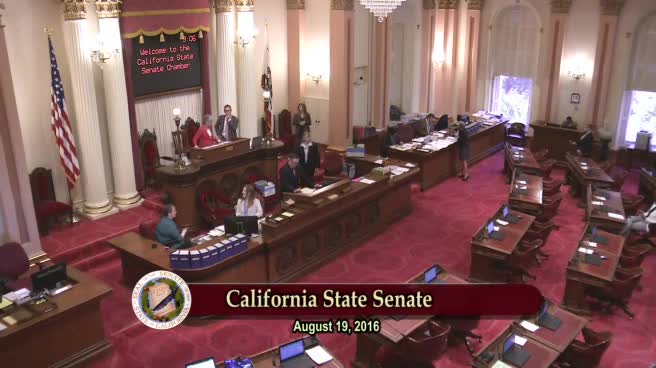 49SEC
Senate Floor
 8MIN
Senate Standing Committee on Education
 59SEC
Assembly Floor
Bill Author

Bill Co-Author(s):