AB 2361: Peace officers: independent institutions of higher education: security officers.
- Session Year: 2015-2016
- House: Assembly
- Latest Version Date: 2016-09-14
Existing law designates all persons who meet specified standards as peace officers. Existing law requires any sheriff, undersheriff, deputy sheriff or police officer, as specified, to successfully complete a course of training prescribed by the Commission on Peace Officer Standards and Training before exercising the powers of a peace officer. Under existing law, a person regularly employed as a security officer for an independent institution of higher education is not a peace officer but may exercise the powers of arrest of a peace officer during the course and within the scope of his or her employment if the employing institution of higher education has concluded a memorandum of understanding, permitting the exercise of authority, with the sheriff or the chief of police within whose jurisdiction the institution lies.
This bill would allow a person regularly employed as a security officer for an independent institution of higher education to be deputized or appointed as a reserve deputy or officer by a sheriff or chief of police if he or she has completed the basic training course for deputy sheriffs and police officers prescribed by the Commission on Peace Officer Standards and Training, and the institution of higher education and the appropriate local law enforcement agency have entered into a memorandum of understanding. The bill would extend the authority of a person designated as a peace officer pursuant to these provisions to any place in the state and would make that authority applicable only while he or she is engaged in the performance of his or her assigned duties, as specified.
Existing law designates all persons who meet specified standards as peace officers. Existing law requires any sheriff, undersheriff, deputy sheriff or police officer, as specified, to successfully complete a course of training prescribed by the Commission on Peace Officer Standards and Training before exercising the powers of a peace officer. Under existing law, a person regularly employed as a security officer for an independent institution of higher education is not a peace officer but may exercise the powers of arrest of a peace officer during the course and within the scope of their employment if the employing institution of higher education has concluded a memorandum of understanding, permitting the exercise of authority, with the sheriff or the chief of police within whose jurisdiction the institution lies.
This bill would allow a person regularly employed as a security officer for an independent institution of higher education to be deputized or appointed as a reserve deputy or officer by a sheriff or chief of police if he or she has completed the basic training course for deputy sheriffs and police officers prescribed by the Commission on Peace Officer Standards and Training, and the institution of higher education and the appropriate local law enforcement agency have entered into a memorandum of understanding. The bill would make extend the authority of a person designated as a peace officer pursuant to these provisions to any place in the state and would make that authority applicable only while he or she is engaged in the performance of his or her assigned duties. duties, as specified.
Existing law designates all persons who meet specified standards as peace officers. Existing law requires any sheriff, undersheriff, deputy sheriff or police officer, as specified, to successfully complete a course of training prescribed by the Commission on Peace Officer Standards and Training before exercising the powers of a peace officer. Under existing law, a person regularly employed as a security officer for an independent institution of higher education is not a peace officer but may exercise the powers of arrest of a peace officer during the course and within the scope of their employment if the employing institution of higher education has concluded a memorandum of understanding, permitting the exercise of authority, with the sheriff or the chief of police within whose jurisdiction the institution lies.
This bill would make a person regularly employed as a security officer of the University of Southern California a peace officer during the course and within the scope of his or her employment with the University of Southern California. The bill would require the University of Southern California to enter into a memorandum of understanding with the local law enforcement agency to implement the authority granted by the bill. The bill would require peace officers designated pursuant to its provisions to complete the course of training prescribed by the Commission on Peace Officer Standards and Training. The bill would allow a peace officer designated pursuant to its provisions to carry a firearm if authorized by his or her employer.
This bill would allow a person regularly employed as a security officer for an independent institution of higher education to be deputized or appointed as a reserve deputy or officer by a sheriff or chief of police if he or she has completed the basic training course for deputy sheriffs and police officers prescribed by the Commission on Peace Officer Standards and Training, and the institution of higher education and the appropriate local law enforcement agency have entered into a memorandum of understanding. The bill would make the authority of a person designated as a peace officer pursuant to these provisions applicable only while he or she is engaged in the performance of his or her assigned duties.
Existing law designates all persons who meet specified standards as peace officers. Existing law requires any sheriff, undersheriff, deputy sheriff or police officer, as specified, to successfully complete a course of training prescribed by the Commission on Peace Officer Standards and Training before exercising the powers of a peace officer.
This bill would authorize an independent institution of higher education, as defined, to designate a person regularly employed as a security officer as a peace officer during the course of and within the scope of his or her employment, as specified, provided that the person successfully completes the course of training described above. make a person regularly employed as a security officer of the University of Southern California a peace officer during the course and within the scope of his or her employment with the University of Southern California. The bill would require the University of Southern California to enter into a memorandum of understanding with the local law enforcement agency to implement the authority granted by the bill. The bill would require peace officers designated pursuant to its provisions to complete the course of training prescribed by the Commission on Peace Officer Standards and Training. The bill would allow a peace officer designated pursuant to its provisions to carry a firearm if authorized by his or her employer.
Existing law designates all persons who meet specified standards as peace officers. Existing law requires any sheriff, undersheriff, deputy sheriff or police officer, as specified, to successfully complete a course of training prescribed by the Commission on Peace Officer Standards and Training before exercising the powers of a peace officer.
This bill would authorize an independent institution of higher education, as defined, to designate a person regularly employed as a security officer as a peace officer during the course of and within the scope of his or her employment, as specified, provided that the person successfully completes the course of training described above.
(a)Notwithstanding subdivision (b) of Section 830.7, a person regularly employed as a security officer for an independent institution of higher education recognized under subdivision (b) of Section 66010 of the Education Code may be deputized or appointed by the sheriff or the chief of police of the jurisdiction in which the institution is located as a reserve deputy or officer pursuant to Section 830.6, notwithstanding that he or she is compensated by the institution of higher education or that the assigned specific law enforcement functions and duties may be of a recurring or continuous nature, if both of the following requirements are met:
(1)The person meets the requirements specified in paragraph (1) of subdivision (a) of Section 832.6.
(2)The institution of higher education and the appropriate local law enforcement agency have entered into a memorandum of understanding.
(b)The authority of a person designated as a peace officer pursuant to this section extends to any place in the state and applies only while he or she is engaged in the performance of his or her assigned duties for his or her institution of higher education pursuant to the memorandum entered into pursuant to paragraph (2) of subdivision (a). The primary duty of a person designated as a peace officer pursuant to this section shall be the enforcement of the law upon the campuses of his or her institution of higher education and within one mile of the exterior of those campuses, and in or about other grounds and properties owned, operated, controlled, or administered by that institution of higher education.
(c)Vehicles owned by an independent institution of higher education that are specifically designated for use by persons designated as peace officers pursuant to this section shall be deemed authorized emergency vehicles for all purposes of the law within the institutions jurisdiction.
(a)Notwithstanding subdivision (b) of Section 830.7, a person regularly employed as a security officer for an independent institution of higher education recognized under subdivision (b) of Section 66010 of the Education Code may be deputized or appointed by the sheriff or the chief of police of the jurisdiction in which the institution is located as a reserve deputy or officer pursuant to Section 830.6, notwithstanding that he or she is compensated by the institution of higher education or that the assigned specific law enforcement functions and duties may be of a recurring or continuous nature, if both of the following requirements are met:
(1)The person meets the requirements specified in paragraph (1) of subdivision (a) of Section 832.6.
(2)The institution of higher education and the appropriate local law enforcement agency have entered into a memorandum of understanding.
(b)The authority of a person designated as a peace officer pursuant to this section extends to any place in the state and applies only while he or she is engaged in the performance of his or her assigned duties for his or her institution of higher education pursuant to the memorandum entered into pursuant to paragraph (2) of subdivision (a). The primary duty of a person designated as a peace officer pursuant to this section shall be the enforcement of the law upon the campuses of his or her institution of higher education and within one mile of the exterior of those campuses, and in or about other grounds and properties owned, operated, controlled, or administered by the that institution of higher education.
(c)Vehicles owned by an independent institution of higher education that are specifically designated for use by persons designated as peace officers pursuant to this section shall be deemed authorized emergency vehicles for all purposes of the law within the institutions jurisdiction.
(a)Notwithstanding subdivision (b) of Section 830.7, a person regularly employed as a security officer for an independent institution of higher education recognized under subdivision (b) of Section 66010 of the Education Code may be deputized or appointed by the sheriff or the chief of police of the jurisdiction in which the institution is located as a reserve deputy or officer pursuant to Section 830.6, notwithstanding that he or she is compensated by the institution of higher education or that the assigned specific law enforcement functions and duties may be of a recurring or continuous nature, if both of the following requirements are met:
(1)The person meets the requirements specified in paragraph (1) of subdivision (a) of Section 832.6.
(2)The institution of higher education and the appropriate local law enforcement agency have entered into a memorandum of understanding.
(b)The authority of a person designated as a peace officer pursuant to this section applies only while he or she is engaged in the performance of his or her assigned duties pursuant to this section. extends to any place in the state and applies only while he or she is engaged in the performance of his or her assigned duties for his or her institution of higher education pursuant to the memorandum entered into pursuant to paragraph (2) of subdivision (a). The primary duty of a person designated as a peace officer pursuant to this section shall be the enforcement of the law upon the campuses of his or her institution of higher education and within one mile of the exterior of those campuses, and in or about other grounds and properties owned, operated, controlled, or administered by the institution of higher education.
(c)Vehicles owned by an independent institution of higher education that are specifically designated for use by persons designated as peace officers pursuant to this section shall be deemed authorized emergency vehicles for all purposes of the law within the institutions jurisdiction.
(a)Notwithstanding subdivision (b) of Section 830.7, a person regularly employed as a security officer for an independent institution of higher education recognized under subdivision (b) of Section 66010 of the Education Code may be deputized or appointed by the sheriff or the chief of police of the jurisdiction in which the institution is located as a reserve deputy or officer pursuant to Section 830.6, notwithstanding that he or she is compensated by the institution of higher education or that the assigned specific law enforcement functions and duties may be of a recurring or continuous nature, if both of the following requirements are met:
(1)The person meets the requirements specified in paragraph (1) of subdivision (a) of Section 832.6.
(2)The institution of higher education and the appropriate local law enforcement agency have entered into a memorandum of understanding.
(b)The authority of a person designated as a peace officer pursuant to this section applies only while he or she is engaged in the performance of his or her assigned duties pursuant to this section.
(c)Vehicles owned by an independent institution of higher education that are specifically designated for use by persons designated as peace officers pursuant to this section shall be deemed authorized emergency vehicles for all purposes of the law within the institutions jurisdiction.
SECTION 1.Section 830.75 is added to the Penal Code, to read:830.75.(a)Notwithstanding subdivision (b) of Section 830.7, a person regularly employed as a security officer for the University of Southern California is a peace officer during the course and within the scope of his or her employment with the University of Southern California, provided that these peace officers shall not exercise their powers or authority except upon the campuses of the University of Southern California and an area within one mile of the exterior boundaries of each, and in or about other grounds and properties owned, operated, controlled, or administered by the University of Southern California.
(b)In order to implement the authority of the state to grant police powers pursuant to subdivision (a), the local law enforcement agency and the University of Southern California shall enter into a memorandum of understanding pursuant to all of the following:
(1)The memorandum of understanding shall implement the exercise of the authority granted by the state pursuant to this section.
(2)The local law enforcement agency, or the chief or head of the department of public safety of the University of Southern California, shall designate security officers of the University of Southern California as peace officers under this section.
(3)The memorandum of understanding shall be recognized and duly enforced.
(c)Before exercising the powers of a peace officer, a person designated as a peace officer pursuant to this section shall successfully complete a regular basic course of training certified by the Commission on Peace Officer Standards and Training as prescribed in Section 832 and shall undergo a background investigation pursuant to Section 1031 of the Government Code.
(d)Persons designated as peace officers pursuant to this section shall maintain the same continuous professional training, including perishable skills training, as required by the Commission on Peace Officer Standards and Training with respect to duties involving responsibility for the prevention and detection of crime and the general enforcement of the criminal laws of this state, provided, however, that the persons designated as peace officers pursuant to this section shall not be reimbursed with state funds for any training they receive.
(e)A person designated as a peace officer pursuant to this section shall have all the authority, rights, powers, duties, responsibilities, and status afforded to peace officers under any other law, whether or not this section is specifically referenced therein, with the exception of retirement, workers compensation, or similar injury or death benefits, or other employee benefits for which peace officers in this state are eligible. Vehicles owned by the University of Southern California that are specifically designated for use by persons designated as peace officers pursuant to this section shall be deemed authorized emergency vehicles for all purposes of the law within the institutions jurisdiction.
(f)A person designated as a peace officer pursuant to this section may carry a firearm in the course of his or her duties only if authorized by, and under the terms and conditions of, his or her employer.
(a)Notwithstanding subdivision (b) of Section 830.7, a person regularly employed as a security officer for the University of Southern California is a peace officer during the course and within the scope of his or her employment with the University of Southern California, provided that these peace officers shall not exercise their powers or authority except upon the campuses of the University of Southern California and an area within one mile of the exterior boundaries of each, and in or about other grounds and properties owned, operated, controlled, or administered by the University of Southern California.
(b)In order to implement the authority of the state to grant police powers pursuant to subdivision (a), the local law enforcement agency and the University of Southern California shall enter into a memorandum of understanding pursuant to all of the following:
(1)The memorandum of understanding shall implement the exercise of the authority granted by the state pursuant to this section.
(2)The local law enforcement agency, or the chief or head of the department of public safety of the University of Southern California, shall designate security officers of the University of Southern California as peace officers under this section.
(3)The memorandum of understanding shall be recognized and duly enforced.
(c)Before exercising the powers of a peace officer, a person designated as a peace officer pursuant to this section shall successfully complete a regular basic course of training certified by the Commission on Peace Officer Standards and Training as prescribed in Section 832 and shall undergo a background investigation pursuant to Section 1031 of the Government Code.
(d)Persons designated as peace officers pursuant to this section shall maintain the same continuous professional training, including perishable skills training, as required by the Commission on Peace Officer Standards and Training with respect to duties involving responsibility for the prevention and detection of crime and the general enforcement of the criminal laws of this state, provided, however, that the persons designated as peace officers pursuant to this section shall not be reimbursed with state funds for any training they receive.
(e)A person designated as a peace officer pursuant to this section shall have all the authority, rights, powers, duties, responsibilities, and status afforded to peace officers under any other law, whether or not this section is specifically referenced therein, with the exception of retirement, workers compensation, or similar injury or death benefits, or other employee benefits for which peace officers in this state are eligible. Vehicles owned by the University of Southern California that are specifically designated for use by persons designated as peace officers pursuant to this section shall be deemed authorized emergency vehicles for all purposes of the law within the institutions jurisdiction.
(f)A person designated as a peace officer pursuant to this section may carry a firearm in the course of his or her duties only if authorized by, and under the terms and conditions of, his or her employer.
SECTION 1.Section 830.75 is added to the Penal Code, to read:830.75.(a)A person regularly employed as a security officer for an independent institution of higher education as defined in subdivision (b) of Section 66010 of the Education Code, may be designated as a peace officer during the course and within the scope of his or her employment, if the institution has, with the sheriff or chief of police of within whose jurisdiction the institution is located, entered into a memorandum of understanding that permits the exercise of that authority.
(b)Before exercising the powers of a peace officer, a person designated as a peace officer pursuant to subdivision (a) shall successfully complete a course of training prescribed by the Commission on Peace Officer Standards and Training pursuant to Section 832.3.
(c)A person designated as a peace officer pursuant to subdivision (a) shall not be reimbursed with state funds for any training he or she receives, and shall not be eligible to participate in any state or municipal retirement system based on his or her designation as a peace officer pursuant to subdivision (a).
(d)A person designated as a peace officer pursuant to subdivision (a) may carry a firearm in the course of his or her duties only if authorized by and under the terms and conditions of his or her employing agency.
(a)A person regularly employed as a security officer for an independent institution of higher education as defined in subdivision (b) of Section 66010 of the Education Code, may be designated as a peace officer during the course and within the scope of his or her employment, if the institution has, with the sheriff or chief of police of within whose jurisdiction the institution is located, entered into a memorandum of understanding that permits the exercise of that authority.
(b)Before exercising the powers of a peace officer, a person designated as a peace officer pursuant to subdivision (a) shall successfully complete a course of training prescribed by the Commission on Peace Officer Standards and Training pursuant to Section 832.3.
(c)A person designated as a peace officer pursuant to subdivision (a) shall not be reimbursed with state funds for any training he or she receives, and shall not be eligible to participate in any state or municipal retirement system based on his or her designation as a peace officer pursuant to subdivision (a).
(d)A person designated as a peace officer pursuant to subdivision (a) may carry a firearm in the course of his or her duties only if authorized by and under the terms and conditions of his or her employing agency.
|
Date
|
Status
|
|---|---|
| Jun 23, 2016 | Ordered to second reading. |
| Sep 14, 2016 | Chaptered by Secretary of State - Chapter 356, Statutes of 2016. |
| Sep 14, 2016 | Approved by the Governor. |
| Aug 31, 2016 | Enrolled and presented to the Governor at 4 p.m. |
| Aug 24, 2016 | Senate amendments concurred in. To Engrossing and Enrolling. (Ayes 75. Noes 4. Page 6195.). |
| Aug 24, 2016 | Senate amendments concurred in. To Engrossing and Enrolling. |
| Aug 19, 2016 | In Assembly. Concurrence in Senate amendments pending. May be considered on or after August 21 pursuant to Assembly Rule 77. |
| Aug 18, 2016 | Read third time. Passed. Ordered to the Assembly. (Ayes 38. Noes 0.). |
| Aug 18, 2016 | Read third time. Passed. Ordered to the Assembly. (Ayes 38. Noes 0. Page 5127.). |
| Aug 18, 2016 | Read third time. Passed. Ordered to the Assembly. |
| Aug 17, 2016 | Read second time. Ordered to third reading. |
| Aug 16, 2016 | Read third time and amended. Ordered to second reading. |
| Aug 15, 2016 | Read second time. Ordered to third reading. |
| Aug 11, 2016 | Read third time and amended. Ordered to second reading. |
| Jun 27, 2016 | Read second time. Ordered to third reading. |
| Jun 23, 2016 | Withdrawn from committee. |
| Feb 18, 2016 | Read first time. To print. |
| Jun 22, 2016 | From committee: Do pass and re-refer to Com. on APPR. (Ayes 7. Noes 0.) (June 21). Re-referred to Com. on APPR. |
| Jun 21, 2016 | From committee: Do pass and re-refer to Com. on APPR. (Ayes 7. Noes 0.) (June 21). Re-referred to Com. on APPR. |
| Jun 15, 2016 | From committee chair, with author's amendments: Amend, and re-refer to committee. Read second time, amended, and re-referred to Com. on PUB. S. |
| May 12, 2016 | Referred to Coms. on PUB. S. and APPR. |
| May 2, 2016 | Read third time. Passed. Ordered to the Senate. (Ayes 71. Noes 3. Page 4622.) |
| May 2, 2016 | Read third time. Passed. Ordered to the Senate. |
| May 2, 2016 | In Senate. Read first time. To Com. on RLS. for assignment. |
| Apr 20, 2016 | Read second time. Ordered to third reading. |
| Apr 19, 2016 | Read second time and amended. Ordered returned to second reading. |
| Apr 18, 2016 | From committee: Amend, and do pass as amended. (Ayes 7. Noes 0.) (April 12). |
| Apr 5, 2016 | In committee: Hearing postponed by committee. |
| Mar 29, 2016 | In committee: Set, first hearing. Hearing canceled at the request of author. |
| Mar 3, 2016 | Referred to Com. on PUB. S. |
| Feb 19, 2016 | From printer. May be heard in committee March 20. |
|
Date
|
Description
|
Location
|
Votes
|
|
|---|---|---|---|---|
| Aug 24, 2016 | AB 2361 SANTIAGO Concurrence in Senate Amendments | Assembly Floor |
Passed |
|
| Aug 18, 2016 | Assembly 3rd Reading AB2361 Santiago By Glazer | Senate Floor |
Passed |
|
| Jun 21, 2016 | Do pass, but first be re-referred to the Committee on [Appropriations] | Senate Standing Committee on Public Safety |
Passed |
|
| May 2, 2016 | AB 2361 SANTIAGO Assembly Third Reading | Assembly Floor |
Passed |
|
| Apr 12, 2016 | Do pass as amended. | Assembly Standing Committee on Public Safety |
Passed |
This list shows positions taken on this bill by organizations on the date displayed, which is linked to the original source.
Positions by individuals are not included.
|
Organization
|
Position
|
Date
|
|---|---|---|
| AFSCME 3299 | * Support | Jun 27, 2018 |
| Association For Los Angeles Deputy Sheriffs | ** Support | Aug 18, 2016 |
| California Association Of Code Enforcement Officers | ** Support | Aug 18, 2016 |
| California College And University Police Chiefs Association | ** Support | Aug 18, 2016 |
| California Public Defenders Association | ** Against | Aug 18, 2016 |
| Claremont College Campus Safety Department | ** Support | Aug 18, 2016 |
| Los Angeles County Professional Peace Officers Association | ** Support | Aug 18, 2016 |
| Los Angeles Police Protective League | ** Support | Aug 18, 2016 |
| One individual | ** Support | Aug 18, 2016 |
| PUB. S. | ** Against | May 2, 2016 |
| University of California, Los Angeles | ** Support | Aug 18, 2016 |
| University Of Southern California The | ** Support | Aug 18, 2016 |
| Western Association of Campus Law Enforcement | ** Support | Aug 18, 2016 |
CONCURRENCE IN SENATE AMENDMENTS
CSA1 Bill Id:AB 2361
Author:(Santiago)
As Amended Ver:August 16, 2016
Majority vote
ASSEMBLY: | 71-3 | (May 2, 2016) | SENATE: | 38-0 | (August 18, 2016) |
Original Committee Reference: PUB. S.
SUMMARY: Authorizes security guards employed by the University of Southern California (USC) to be appointed as peace officers while enforcing the law on the USC campus and surrounding university property.
The Senate amendments
- Allow a security officer employed by an independent institution of higher education to be deputized or appointed by the sheriff or the chief of police of the jurisdiction in which the institution is located as a reserve deputy or officer, as specified, notwithstanding that he or she is compensated by the institution of higher education or that the assigned specific law enforcement functions and duties may be of a recurring or continuous nature if both of the following requirements are met:
- The person has completed the basic training course for deputy sheriffs and police officers prescribed by the Commission on Peace Officer Standards and Training (POST); and,
- The institution of higher education and the appropriate local law enforcement agency have entered into a memorandum of understanding.
- Provide that the authority of a person designated as a peace officer extends to any place in the state and applies only while he or she is engaged in the performance of his or her assigned duties for his or her institution of higher education, as specified. The primary duty of a person designated peace officer employed by an institution of higher education shall be the enforcement of the law upon the institution of higher education campus and within one mile of the exterior of those campuses, and in and about other grounds and properties owned, operated, controlled, or administered by the institution of higher education.
- State that vehicles owned by an independent institution of higher education that are specifically designated for use by persons designated as peace officers shall be deemed emergency vehicles for all purposes of the law within the institution's jurisdiction.
EXISTING LAW:
- Requires that any person or persons desiring peace officer status under Chapter 4.5 (commencing with Section 830) of Title 3 of Part 2 who, on January 1, 1990, were not entitled to be designated as peace officers under that chapter shall request the POST to undertake a feasibility study regarding designating that person or persons as peace officers. The request and study shall be undertaken in accordance with regulations adopted by POST. POST may charge any person, with specified exceptions, requesting a study, a fee, not to exceed the actual cost of undertaking the study.
- Provides that any study undertaken under this article shall include, but shall not be limited to, the current and proposed duties and responsibilities of persons employed in the category seeking the designation change, their field law enforcement duties and responsibilities, their supervisory and management structure, their proposed training methods and funding sources and the extent to which their current duties and responsibilities require additional peace officer powers and authority.
- Defines "independent institutions of higher education" as those nonpublic higher education institutions that grant undergraduate degrees, graduate degrees, or both, and are formed as nonprofit corporations in this state and are accredited by an agency recognized by the United States Department of Education (USDOE).
- Provides that every peace officer shall satisfactorily complete an introductory course of training prescribed by the POST and that after July 1, 1989, satisfactory completion of the course shall be demonstrated by passage of an appropriate examination developed or approved by POST.
- Provides that prior to the exercise of peace officer powers, every peace officer shall have satisfactorily completed the POST course.
- Provides that a person shall not have the powers of a peace officer until he or she has satisfactorily completed the POST course.
- Provides that the following are peace offices, who may carry firearms only if authorized and under terms and conditions specified by their employing agency, whose authority extends to any place in California for the purpose of performing their primary duty, or when making an arrest for a public offense where there is immediate danger to a person or property or to prevent the perpetrator's escape, as specified, or during a state of emergency, as specified:
- Members of the San Francisco Bay Area Rapid Transit District Police Department if their primary duty is enforcement of the law in or about property owned, operated or administered by the district or when performing a necessary duty with respect to patrons, employees and properties of the district.
- Harbor or port police if their primary duty is enforcement of law in or about property owned, operated or administered by harbor or port or when performing a necessary duty with respect to patrons, employees and properties of the harbor or port.
- Transit police officers or peace offices of a county, city, transit development board or district if the primary duty is the enforcement of the law in or abut property owned, operated or administered by the employing agency or when performing a necessary duty with respect to patrons, employees and properties of the employing agency.
- Persons employed as airport law enforcement officers by a city, county or district operating the airport or a joint powers agency operating the airport if their primary duty is the enforcement of the law in or about property owned, operated and administered by the employing agency or when performing a necessary duty with respect to patrons, employees and properties of the employing agency.
- Railroad police officers commissioned by the Governor if their primary duty is the enforcement of the law in or about property owned, operated or administered by the employing agency or when performing necessary duties with respect to patrons, employees and properties of the employing agency.
- Provides that numerous types of publicly employed security officers are granted the powers of arrest of a peace officer although they are not peace officers. These persons may exercise the powers of arrest of a peace officer, as specified, during the course and within the scope of their employment if they successfully complete a course in the exercise of those powers, as specified, which has been certified by POST. Persons currently granted such powers are:
- Persons designated by a cemetery authority, as specified;
- Persons regularly employed as security officers for independent institutions of higher education, as specified, if the institution has concluded a Memorandum of Understanding (MOU) permitting the exercise of that authority with the sheriff or the chief of police within whose jurisdiction the institution lies;
- Persons regularly employed as security officers for health facilities, as specified, that are owned and operated by cities, counties, and cities and counties if the facility has concluded a MOU permitting the exercise of that authority with the sheriff or the chief of police within whose jurisdiction the facility lies;
- Employees or classes of employees of the California Department of Forestry and Fire Protection (CDFFP) designated by the CDFFP Director, provided that the primary duty of the employee shall be the enforcement of the law, as specified;
- Persons regularly employed as inspectors, supervisors, or security officers for transit districts, as specified, if the district has concluded a MOU permitting the exercise of that authority with, as applicable, the sheriff, the chief of police, or the Department of the California Highway Patrol within whose jurisdiction the district lies;
- Non-peace officers regularly employed as county parole officers, as specified;
- Persons appointed by the Executive Director of the California Science Center, as specified; and,
- Persons regularly employed as investigators, as specified, by the Department of Transportation for the City of Los Angeles and designated by local ordinance as public officers to the extent necessary to enforce laws related to public transportation and authorized by a MOU with the chief of police permitting the exercise of that authority.
FISCAL EFFECT: None. This bill is keyed non-fiscal by the Legislative Counsel.
AS PASSED BY THE ASSEMBLY, this bill:
- Provided that a security guard regularly employed by the USC is a peace officer during the course and within the scope of his or her employment with the USC, provided that such officers shall not exercise their powers or authority, except upon the campuses of the USC and an area within one mile of the exterior boundaries of each thereof, in or about other grounds or properties, owned, operated, controlled, or administered by the USC.
- Stated that in order to implement the authority of the state to grant police powers, the local law enforcement shall enter into a MOU which implements the exercise of authority granted by the state, and shall be recognized and duly enforced.
- Provided that the local law enforcement agency, or the chief or head of the department of public safety of the USC shall designate security officers as peace officers, as specified.
- Stated that before exercising the powers of a peace officer, a person designated as a USC peace officer shall undergo a background check, and successfully complete a course of training prescribed by the POST.
- Provided that persons designated as USC peace officers shall maintain the same continuous professional training (including perishable skills training) as required by POST with respect to duties having responsibility for the prevention and detection of crime and the general enforcement of the criminal laws of this state; provided, however, that persons designated as peace officers shall not be reimbursed with state funds for any training he or she receives.
- Stated person designated as a USC peace officer shall have all the authority, rights, powers, duties, responsibilities, and status afforded to peace officers under other sections of the law, whether or not USC peace officer is referenced therein, with the exception of retirement, workers' compensation, or similar injury or death benefits, or other employee benefits for which peace officers in this state are eligible. Vehicles owned by USC which are specifically designated for use by persons designated as USC peace officers shall be deemed authorized emergency vehicles for all purposes of the law within the institution's jurisdiction.
- Provided that a person appointed as a USC peace officer may carry a firearm in the course of his or her duties only if authorized and under the terms and conditions of his or her employing agency.
COMMENTS: "AB 2361 authorizes security guards employed by USC to be appointed as peace officer when enforcing the law on the USC campus, provided 1) the institution has a memorandum of understanding (MOU) with local law enforcement that permits this action and 2) the individual has completed the regular basic course as prescribed by POST. This measure will improve campus safety by affording independent college public safety departments the same status given to public university public safety departments, all while ensuring these departments remain under the control of local law enforcement."
Please see the policy committee analysis for a full discussion of this bill.
Analysis Prepared by: Gregory Pagan / PUB. S. / (916) 319-3744 FN: 0004391
Office of Senate Floor Analyses (916) 651-1520 Fax: (916) 327-4478 | AB 2361 |
THIRD READING
Bill No: AB 2361
Amended: 8/16/16 in Senate
SENATE PUBLIC SAFETY COMMITTEE: 7-0, 6/21/16
AYES: Hancock, Anderson, Glazer, Leno, Liu, Monning, Stone
ASSEMBLY FLOOR: 71-3, 5/2/16 - See last page for vote
SUBJECT: Peace officers: independent institutions of higher education: security officers
SOURCE: California College and University Police Chiefs Association
University of Southern California
DIGEST: This bill allows local law enforcement agencies to deputize or appoint reserve officers at private universities, as specified.
Senate Floor Amendments of 8/16/16 add a coauthor.
Senate Floor Amendments of 8/11/16 provide that the authority of a person designated as a peace officer pursuant to this bill applies only while he or she is engaged in the performance of his or her assigned duties for his or her institution of higher education pursuant to the memorandum specified in this bill. These amendments, additionally, provide that the primary duty of a person designated as a peace officer shall be the enforcement of the law upon campuses of his or her institution of higher education and within one mile of the exterior of those campuses, and in or about other grounds and properties owned, operation, controlled, or administered by the institution of higher education.
Existing law:
- Provides whenever any qualified person is deputized or appointed by the proper authority as a reserve or auxiliary sheriff or city police officer, a reserve deputy sheriff, a reserve deputy marshal, a reserve police officer of a regional park district or of a transit district, a reserve park ranger, a reserve harbor or port police officer of a county, city, or district as specified in Section 663.5 of the Harbors and Navigation Code, a reserve deputy of the Department of Fish and Game, a reserve special agent of the Department of Justice, a reserve officer of a community service district which is authorized under subdivision (h) of Section 61600 of the Government Code to maintain a police department or other police protection, a reserve officer of a school district police department under Section 35021.5 of the Education Code, a reserve officer of a community college police department under Section 72330, a reserve officer of a police protection district formed under Part 1 (commencing with Section 20000) of Division 14 of the Health and Safety Code, or a reserve housing authority patrol officer employed by a housing authority defined in subdivision (d) of Section 830.31, and is assigned specific police functions by that authority, the person is a peace officer, if the person qualifies as set forth in Section 832.6. The authority of a person designated as a peace officer pursuant to this paragraph extends only for the duration of the person’s specific assignment. A reserve park ranger or a transit, harbor, or port district reserve officer may carry firearms only if authorized by, and under those terms and conditions as are specified by, his or her employing agency. (Penal Code § 830.6 (a)(1).)
- Provides whenever any qualified person is deputized or appointed by the proper authority as a reserve or auxiliary sheriff or city police officer, a reserve deputy sheriff, a reserve deputy marshal, a reserve park ranger, a reserve police officer of a regional park district, transit district, community college district, or school district, a reserve harbor or port police officer of a county, city, or district as specified in Section 663.5 of the Harbors and Navigation Code, a reserve officer of a community service district that is authorized under subdivision (h) of Section 61600 of the Government Code to maintain a police department or other police protection, or a reserve officer of a police protection district formed under Part 1 (commencing with Section 20000) of Division 14 of the Health and Safety Code, and is so designated by local ordinance or, if the local agency is not authorized to act by ordinance, by resolution, either individually or by class, and is assigned to the prevention and detection of crime and the general enforcement of the laws of this state by that authority, the person is a peace officer, if the person qualifies as set forth in paragraph (1) of subdivision (a) of Section 832.6. The authority of a person designated as a peace officer pursuant to this paragraph includes the full powers and duties of a peace officer as provided by Section 830.1. A transit, harbor, or port district reserve police officer, or a city or county reserve peace officer who is not provided with the powers and duties authorized by Section 830.1, has the powers and duties authorized in Section 830.33, or in the case of a reserve park ranger, the powers and duties that are authorized in Section 830.31, or in the case of a reserve housing authority patrol officer, the powers and duties that are authorized in subdivision (d) of Section 830.31, and a school district reserve police officer or a community college district reserve police officer has the powers and duties authorized in Section 830.32. (Penal Code § 830.6 (a)(2).)
- States, in Penal Code Section 830.7, that the following persons are not peace officers but may exercise the powers of arrest of a peace officer as specified in Section 836 during the course and within the scope of their employment, if they successfully complete a course in the exercise of those powers pursuant to Section 832:
- Persons designated by a cemetery authority pursuant to Section 8325 of the Health and Safety Code.
- Persons regularly employed as security officers for independent institutions of higher education, recognized under subdivision (b) of Section 66010 of the Education Code, if the institution has concluded a memorandum of understanding, permitting the exercise of that authority, with the sheriff or the chief of police within whose jurisdiction the institution lies.
- Persons regularly employed as security officers for health facilities, as defined in Section 1250 of the Health and Safety Code, that are owned and operated by cities, counties, and cities and counties, as specified.
- Employees or classes of employees of the California Department of Forestry and Fire Protection designated by the Director of Forestry and Fire Protection, as specified.
- Persons regularly employed as inspectors, supervisors, or security officers for transit districts, as defined in Section 99213 of the Public Utilities Code, as specified.
- Nonpeace officers regularly employed as county parole officers pursuant to Section 3089.
- Persons appointed by the Executive Director of the California Science Center pursuant to Section 4108 of the Food and Agricultural Code.
- Persons regularly employed as investigators by the Department of Transportation for the City of Los Angeles and designated by local ordinance as public officers, as specified.
- Persons regularly employed by any department of the City of Los Angeles who are designated as security officers and authorized by local ordinance to enforce laws related to the preservation of peace in or about the properties owned, controlled, operated, or administered by any department of the City of Los Angeles and authorized by a memorandum of understanding with the Chief of Police of the City of Los Angeles permitting the exercise of that authority.
- Illegal dumping enforcement officers or code enforcement officers, as specified.
- Provides that, Penal Code Section 832.6 (a)(1)-(3), every person deputized or appointed shall have the powers of a peace officer only when the person is any of the following:
- A level I reserve officer deputized or appointed pursuant to paragraph (1) or (2) of subdivision (a) or subdivision (b) of Section 830.6 and assigned to the prevention and detection of crime and the general enforcement of the laws of this state, whether or not working alone, and the person has completed the basic training course for deputy sheriffs and police officers prescribed by the Commission on Peace Officer Standards and Training (Commission). For level I reserve officers appointed prior to January 1, 1997, the basic training requirement shall be the course that was prescribed at the time of their appointment. Reserve officers appointed pursuant to this paragraph shall satisfy the continuing professional training requirement prescribed by the Commission.
- A level II reserve officer assigned to the prevention and detection of crime and the general enforcement of the laws of this state while under the immediate supervision of a peace officer who has completed the basic training course for deputy sheriffs and police officers prescribed by the Commission, and the level II reserve officer has completed the course required by Section 832 and any other training prescribed by the Commission. Level II reserve officers appointed pursuant to this paragraph may be assigned, without immediate supervision, to those limited duties that are authorized for level III reserve officers pursuant to paragraph (3). Reserve officers appointed pursuant to this paragraph shall satisfy the continuing professional training requirement prescribed by the Commission.
- Level III reserve officers may be deployed and are authorized only to carry out limited support duties not requiring general law enforcement powers in their routine performance. Those limited duties shall include traffic control, security at parades and sporting events, report taking, evidence transportation, parking enforcement, and other duties that are not likely to result in physical arrests. Level III reserve officers while assigned these duties shall be supervised in the accessible vicinity by a level I reserve officer or a full-time, regular peace officer employed by a law enforcement agency authorized to have reserve officers. Level III reserve officers may transport prisoners without immediate supervision. Those persons shall have completed the training required under Section 832 and any other training prescribed by the Commission for those persons.
- States, in Penal Code Section 832.6(a)(5), that a reserve officer who has previously satisfied the training requirements stated, and has served as a level I or II reserve officer within the three-year period prior to the date of a new appointment shall be deemed to remain qualified as to the Commission requirements if that reserve officer accepts a new appointment at the same or lower level with another law enforcement agency. If the reserve officer has more than a three-year break in service, he or she shall satisfy current training requirements. This training shall fully satisfy any other training requirements required by law, including those specified in Section 832.
This bill:
- Provides that, notwithstanding subdivision (b) of Section 830.7 of the Penal Code, a person regularly employed as a security officer for an independent institution of higher education recognized under subdivision (b) of Section 66010 of the Education Code may be deputized or appointed by the sheriff or the chief of police of the jurisdiction in which the institution is located as a reserve deputy or officer pursuant to Section 830.6, notwithstanding that he or she is compensated by the institution of higher education or that the assigned specific law enforcement functions and duties may be of a recurring or continuous nature, if both of the flowing requirements are met:
- The person meets the requirements specified in Section 832.6, as specified.
- The institution of higher education and the appropriate local law enforcement agency have entered into a memorandum of understanding.
- That the authority of a person designated as a peace officer pursuant to this bill applies only while he or she is engaged in the performance of his or her assigned duties, for his or her institution of higher education pursuant to the memorandum specified in this bill. The primary duty of a person designated as a peace officer shall be the enforcement of the law upon campuses of his or her institution of higher education and within one mile of the exterior of those campuses, and in or about other grounds and properties owned, operation, controlled, or administered by the institution of higher education.
- Provides that vehicles owned by institutions of higher education that are specifically designated for use by the institutions’ employees who are designated as reserve deputies or officers pursuant to this bill shall be deemed authorized emergency vehicles for all purposes of the law within the jurisdictions specified by the sheriff or the chief of police.
Comments
While the University of the Pacific and Stanford both have agreements with local law enforcement to use reserve officers, University of Southern California has not been able to utilize reserve officers. According to information provided to the Senate Public Safety Committee, this is because the statutes do not clearly allow for this practice. This bill, thus, makes it clear in the Penal Code that local law enforcement agencies could deputize or appoint reserve officers at private universities in their jurisdiction, even though those officers are being paid by another entity.
FISCAL EFFECT: Appropriation: No Fiscal Com.: No Local: No
California College and University Police Chiefs Association (co-source)
University of Southern California (co-source)
Association for Los Angeles Deputy Sheriffs
California Association of Code Enforcement Officers
California Narcotic Officers Association
Claremont College Campus Safety Department
Los Angeles County Professional Peace Officers Association
Los Angeles Police Protective League
Riverside Sheriffs Association
University of California, Los Angeles
Western Association of Campus Law Enforcement
One individual
OPPOSITION: (Verified 8/11/16)
California Public Defenders Association
AYES: Achadjian, Alejo, Travis Allen, Arambula, Atkins, Baker, Bigelow, Bloom, Bonilla, Bonta, Brough, Brown, Burke, Calderon, Campos, Chang, Chau, Chávez, Chiu, Chu, Cooley, Cooper, Dababneh, Dahle, Daly, Dodd, Eggman, Frazier, Gallagher, Cristina Garcia, Eduardo Garcia, Gipson, Gomez, Gonzalez, Gray, Grove, Hadley, Holden, Jones, Jones-Sawyer, Kim, Lackey, Levine, Linder, Lopez, Low, Maienschein, Mathis, Mayes, McCarty, Medina, Melendez, Mullin, Nazarian, Obernolte, O'Donnell, Olsen, Patterson, Quirk, Rodriguez, Salas, Santiago, Steinorth, Mark Stone, Thurmond, Ting, Waldron, Weber, Wilk, Wood, Rendon
NOES: Gatto, Irwin, Wagner
NO VOTE RECORDED: Beth Gaines, Gordon, Harper, Roger Hernández, Ridley-Thomas, Williams
Prepared by: Jessica Devencenzi / PUB. S. /
8/17/16 15:58:00
**** END ****
Office of Senate Floor Analyses (916) 651-1520 Fax: (916) 327-4478 | AB 2361 |
THIRD READING
Bill No: AB 2361
Amended: 8/11/16 in Senate
SENATE PUBLIC SAFETY COMMITTEE: 7-0, 6/21/16
AYES: Hancock, Anderson, Glazer, Leno, Liu, Monning, Stone
ASSEMBLY FLOOR: 71-3, 5/2/16 - See last page for vote
SUBJECT: Peace officers: independent institutions of higher education: security officers
SOURCE: California College and University Police Chiefs Association
University of Southern California
DIGEST: This bill allows local law enforcement agencies to deputize or appoint reserve officers at private universities, as specified.
Senate Floor Amendments of 8/11/16 provide that the authority of a person designated as a peace officer pursuant to this bill applies only while he or she is engaged in the performance of his or her assigned duties for his or her institution of higher education pursuant to the memorandum specified in this bill. These amendments, additionally, provide that the primary duty of a person designated as a peace officer shall be the enforcement of the law upon campuses of his or her institution of higher education and within one mile of the exterior of those campuses, and in or about other grounds and properties owned, operation, controlled, or administered by the institution of higher education.
Existing law:
- Provides whenever any qualified person is deputized or appointed by the proper authority as a reserve or auxiliary sheriff or city police officer, a reserve deputy sheriff, a reserve deputy marshal, a reserve police officer of a regional park district or of a transit district, a reserve park ranger, a reserve harbor or port police officer of a county, city, or district as specified in Section 663.5 of the Harbors and Navigation Code, a reserve deputy of the Department of Fish and Game, a reserve special agent of the Department of Justice, a reserve officer of a community service district which is authorized under subdivision (h) of Section 61600 of the Government Code to maintain a police department or other police protection, a reserve officer of a school district police department under Section 35021.5 of the Education Code, a reserve officer of a community college police department under Section 72330, a reserve officer of a police protection district formed under Part 1 (commencing with Section 20000) of Division 14 of the Health and Safety Code, or a reserve housing authority patrol officer employed by a housing authority defined in subdivision (d) of Section 830.31, and is assigned specific police functions by that authority, the person is a peace officer, if the person qualifies as set forth in Section 832.6. The authority of a person designated as a peace officer pursuant to this paragraph extends only for the duration of the person’s specific assignment. A reserve park ranger or a transit, harbor, or port district reserve officer may carry firearms only if authorized by, and under those terms and conditions as are specified by, his or her employing agency. (Penal Code § 830.6 (a)(1).)
- Provides whenever any qualified person is deputized or appointed by the proper authority as a reserve or auxiliary sheriff or city police officer, a reserve deputy sheriff, a reserve deputy marshal, a reserve park ranger, a reserve police officer of a regional park district, transit district, community college district, or school district, a reserve harbor or port police officer of a county, city, or district as specified in Section 663.5 of the Harbors and Navigation Code, a reserve officer of a community service district that is authorized under subdivision (h) of Section 61600 of the Government Code to maintain a police department or other police protection, or a reserve officer of a police protection district formed under Part 1 (commencing with Section 20000) of Division 14 of the Health and Safety Code, and is so designated by local ordinance or, if the local agency is not authorized to act by ordinance, by resolution, either individually or by class, and is assigned to the prevention and detection of crime and the general enforcement of the laws of this state by that authority, the person is a peace officer, if the person qualifies as set forth in paragraph (1) of subdivision (a) of Section 832.6. The authority of a person designated as a peace officer pursuant to this paragraph includes the full powers and duties of a peace officer as provided by Section 830.1. A transit, harbor, or port district reserve police officer, or a city or county reserve peace officer who is not provided with the powers and duties authorized by Section 830.1, has the powers and duties authorized in Section 830.33, or in the case of a reserve park ranger, the powers and duties that are authorized in Section 830.31, or in the case of a reserve housing authority patrol officer, the powers and duties that are authorized in subdivision (d) of Section 830.31, and a school district reserve police officer or a community college district reserve police officer has the powers and duties authorized in Section 830.32. (Penal Code § 830.6 (a)(2).)
- States, in Penal Code Section 830.7, that the following persons are not peace officers but may exercise the powers of arrest of a peace officer as specified in Section 836 during the course and within the scope of their employment, if they successfully complete a course in the exercise of those powers pursuant to Section 832:
- Persons designated by a cemetery authority pursuant to Section 8325 of the Health and Safety Code.
- Persons regularly employed as security officers for independent institutions of higher education, recognized under subdivision (b) of Section 66010 of the Education Code, if the institution has concluded a memorandum of understanding, permitting the exercise of that authority, with the sheriff or the chief of police within whose jurisdiction the institution lies.
- Persons regularly employed as security officers for health facilities, as defined in Section 1250 of the Health and Safety Code, that are owned and operated by cities, counties, and cities and counties, as specified.
- Employees or classes of employees of the California Department of Forestry and Fire Protection designated by the Director of Forestry and Fire Protection, as specified.
- Persons regularly employed as inspectors, supervisors, or security officers for transit districts, as defined in Section 99213 of the Public Utilities Code, as specified.
- Nonpeace officers regularly employed as county parole officers pursuant to Section 3089.
- Persons appointed by the Executive Director of the California Science Center pursuant to Section 4108 of the Food and Agricultural Code.
- Persons regularly employed as investigators by the Department of Transportation for the City of Los Angeles and designated by local ordinance as public officers, as specified.
- Persons regularly employed by any department of the City of Los Angeles who are designated as security officers and authorized by local ordinance to enforce laws related to the preservation of peace in or about the properties owned, controlled, operated, or administered by any department of the City of Los Angeles and authorized by a memorandum of understanding with the Chief of Police of the City of Los Angeles permitting the exercise of that authority.
- Illegal dumping enforcement officers or code enforcement officers, as specified.
- Provides that, Penal Code Section 832.6 (a)(1)-(3), every person deputized or appointed shall have the powers of a peace officer only when the person is any of the following:
- A level I reserve officer deputized or appointed pursuant to paragraph (1) or (2) of subdivision (a) or subdivision (b) of Section 830.6 and assigned to the prevention and detection of crime and the general enforcement of the laws of this state, whether or not working alone, and the person has completed the basic training course for deputy sheriffs and police officers prescribed by the Commission on Peace Officer Standards and Training (Commission). For level I reserve officers appointed prior to January 1, 1997, the basic training requirement shall be the course that was prescribed at the time of their appointment. Reserve officers appointed pursuant to this paragraph shall satisfy the continuing professional training requirement prescribed by the Commission.
- A level II reserve officer assigned to the prevention and detection of crime and the general enforcement of the laws of this state while under the immediate supervision of a peace officer who has completed the basic training course for deputy sheriffs and police officers prescribed by the Commission, and the level II reserve officer has completed the course required by Section 832 and any other training prescribed by the Commission. Level II reserve officers appointed pursuant to this paragraph may be assigned, without immediate supervision, to those limited duties that are authorized for level III reserve officers pursuant to paragraph (3). Reserve officers appointed pursuant to this paragraph shall satisfy the continuing professional training requirement prescribed by the Commission.
- Level III reserve officers may be deployed and are authorized only to carry out limited support duties not requiring general law enforcement powers in their routine performance. Those limited duties shall include traffic control, security at parades and sporting events, report taking, evidence transportation, parking enforcement, and other duties that are not likely to result in physical arrests. Level III reserve officers while assigned these duties shall be supervised in the accessible vicinity by a level I reserve officer or a full-time, regular peace officer employed by a law enforcement agency authorized to have reserve officers. Level III reserve officers may transport prisoners without immediate supervision. Those persons shall have completed the training required under Section 832 and any other training prescribed by the Commission for those persons.
- States, in Penal Code Section 832.6(a)(5), that a reserve officer who has previously satisfied the training requirements stated, and has served as a level I or II reserve officer within the three-year period prior to the date of a new appointment shall be deemed to remain qualified as to the Commission requirements if that reserve officer accepts a new appointment at the same or lower level with another law enforcement agency. If the reserve officer has more than a three-year break in service, he or she shall satisfy current training requirements. This training shall fully satisfy any other training requirements required by law, including those specified in Section 832.
This bill:
- Provides that, notwithstanding subdivision (b) of Section 830.7 of the Penal Code, a person regularly employed as a security officer for an independent institution of higher education recognized under subdivision (b) of Section 66010 of the Education Code may be deputized or appointed by the sheriff or the chief of police of the jurisdiction in which the institution is located as a reserve deputy or officer pursuant to Section 830.6, notwithstanding that he or she is compensated by the institution of higher education or that the assigned specific law enforcement functions and duties may be of a recurring or continuous nature, if both of the flowing requirements are met:
- The person meets the requirements specified in Section 832.6, as specified.
- The institution of higher education and the appropriate local law enforcement agency have entered into a memorandum of understanding.
- That the authority of a person designated as a peace officer pursuant to this bill applies only while he or she is engaged in the performance of his or her assigned duties, for his or her institution of higher education pursuant to the memorandum specified in this bill. The primary duty of a person designated as a peace officer shall be the enforcement of the law upon campuses of his or her institution of higher education and within one mile of the exterior of those campuses, and in or about other grounds and properties owned, operation, controlled, or administered by the institution of higher education.
- Provides that vehicles owned by institutions of higher education that are specifically designated for use by the institutions’ employees who are designated as reserve deputies or officers pursuant to this bill shall be deemed authorized emergency vehicles for all purposes of the law within the jurisdictions specified by the sheriff or the chief of police.
Comments
While the University of the Pacific and Stanford both have agreements with local law enforcement to use reserve officers, University of Southern California has not been able to utilize reserve officers. According to information provided to the Senate Public Safety Committee, this is because the statutes do not clearly allow for this practice. This bill, thus, makes it clear in the Penal Code that local law enforcement agencies could deputize or appoint reserve officers at private universities in their jurisdiction, even though those officers are being paid by another entity.
FISCAL EFFECT: Appropriation: No Fiscal Com.: No Local: No
California College and University Police Chiefs Association (co-source)
University of Southern California (co-source)
Association for Los Angeles Deputy Sheriffs
California Association of Code Enforcement Officers
California Narcotic Officers Association
Claremont College Campus Safety Department
Los Angeles County Professional Peace Officers Association
Los Angeles Police Protective League
Riverside Sheriffs Association
University of California, Los Angeles
Western Association of Campus Law Enforcement
One individual
OPPOSITION: (Verified 8/11/16)
California Public Defenders Association
AYES: Achadjian, Alejo, Travis Allen, Arambula, Atkins, Baker, Bigelow, Bloom, Bonilla, Bonta, Brough, Brown, Burke, Calderon, Campos, Chang, Chau, Chávez, Chiu, Chu, Cooley, Cooper, Dababneh, Dahle, Daly, Dodd, Eggman, Frazier, Gallagher, Cristina Garcia, Eduardo Garcia, Gipson, Gomez, Gonzalez, Gray, Grove, Hadley, Holden, Jones, Jones-Sawyer, Kim, Lackey, Levine, Linder, Lopez, Low, Maienschein, Mathis, Mayes, McCarty, Medina, Melendez, Mullin, Nazarian, Obernolte, O'Donnell, Olsen, Patterson, Quirk, Rodriguez, Salas, Santiago, Steinorth, Mark Stone, Thurmond, Ting, Waldron, Weber, Wilk, Wood, Rendon
NOES: Gatto, Irwin, Wagner
NO VOTE RECORDED: Beth Gaines, Gordon, Harper, Roger Hernández, Ridley-Thomas, Williams
Prepared by: Jessica Devencenzi / PUB. S. /
8/15/16 20:29:58
**** END ****
Office of Senate Floor Analyses (916) 651-1520 Fax: (916) 327-4478 | AB |
THIRD READING
Bill No: AB 2361
:
SENATE PUBLIC SAFETY COMMITTEE: 7-0, 6/21/16
AYES: Hancock, Anderson, Glazer, Leno, Liu, Monning, Stone
ASSEMBLY FLOOR: 71-3, 5/2/16 - See last page for vote
SOURCE: California College and University Police Chiefs Association
University of Southern California
DIGEST: This bill allows local law enforcement agencies to deputize or appoint reserve officers at private universities, as specified.
Existing law:
- Provides whenever any qualified person is deputized or appointed by the proper authority as a reserve or auxiliary sheriff or city police officer, a reserve deputy sheriff, a reserve deputy marshal, a reserve police officer of a regional park district or of a transit district, a reserve park ranger, a reserve harbor or port police officer of a county, city, or district as specified in Section 663.5 of the Harbors and Navigation Code, a reserve deputy of the Department of Fish and Game, a reserve special agent of the Department of Justice, a reserve officer of a community service district which is authorized under subdivision (h) of Section 61600 of the Government Code to maintain a police department or other police protection, a reserve officer of a school district police department under Section 35021.5 of the Education Code, a reserve officer of a community college police department under Section 72330, a reserve officer of a police protection district formed under Part 1 (commencing with Section 20000) of Division 14 of the Health and Safety Code, or a reserve housing authority patrol officer employed by a housing authority defined in subdivision (d) of Section 830.31, and is assigned specific police functions by that authority, the person is a peace officer, if the person qualifies as set forth in Section 832.6. The authority of a person designated as a peace officer pursuant to this paragraph extends only for the duration of the person’s specific assignment. A reserve park ranger or a transit, harbor, or port district reserve officer may carry firearms only if authorized by, and under those terms and conditions as are specified by, his or her employing agency. (Penal Code § 830.6 (a)(1).)
- Provides whenever any qualified person is deputized or appointed by the proper authority as a reserve or auxiliary sheriff or city police officer, a reserve deputy sheriff, a reserve deputy marshal, a reserve park ranger, a reserve police officer of a regional park district, transit district, community college district, or school district, a reserve harbor or port police officer of a county, city, or district as specified in Section 663.5 of the Harbors and Navigation Code, a reserve officer of a community service district that is authorized under subdivision (h) of Section 61600 of the Government Code to maintain a police department or other police protection, or a reserve officer of a police protection district formed under Part 1 (commencing with Section 20000) of Division 14 of the Health and Safety Code, and is so designated by local ordinance or, if the local agency is not authorized to act by ordinance, by resolution, either individually or by class, and is assigned to the prevention and detection of crime and the general enforcement of the laws of this state by that authority, the person is a peace officer, if the person qualifies as set forth in paragraph (1) of subdivision (a) of Section 832.6. The authority of a person designated as a peace officer pursuant to this paragraph includes the full powers and duties of a peace officer as provided by Section 830.1. A transit, harbor, or port district reserve police officer, or a city or county reserve peace officer who is not provided with the powers and duties authorized by Section 830.1, has the powers and duties authorized in Section 830.33, or in the case of a reserve park ranger, the powers and duties that are authorized in Section 830.31, or in the case of a reserve housing authority patrol officer, the powers and duties that are authorized in subdivision (d) of Section 830.31, and a school district reserve police officer or a community college district reserve police officer has the powers and duties authorized in Section 830.32. (Penal Code § 830.6 (a)(2).)
- States, in Penal Code Section 830.7, that the following persons are not peace officers but may exercise the powers of arrest of a peace officer as specified in Section 836 during the course and within the scope of their employment, if they successfully complete a course in the exercise of those powers pursuant to Section 832:
- Persons designated by a cemetery authority pursuant to Section 8325 of the Health and Safety Code.
- Persons regularly employed as security officers for independent institutions of higher education, recognized under subdivision (b) of Section 66010 of the Education Code, if the institution has concluded a memorandum of understanding, permitting the exercise of that authority, with the sheriff or the chief of police within whose jurisdiction the institution lies.
- Persons regularly employed as security officers for health facilities, as defined in Section 1250 of the Health and Safety Code, that are owned and operated by cities, counties, and cities and counties, as specified.
- Employees or classes of employees of the California Department of Forestry and Fire Protection designated by the Director of Forestry and Fire Protection, as specified.
- Persons regularly employed as inspectors, supervisors, or security officers for transit districts, as defined in Section 99213 of the Public Utilities Code, as specified.
- Nonpeace officers regularly employed as county parole officers pursuant to Section 3089.
- Persons appointed by the Executive Director of the California Science Center pursuant to Section 4108 of the Food and Agricultural Code.
- Persons regularly employed as investigators by the Department of Transportation for the City of Los Angeles and designated by local ordinance as public officers, as specified.
- Persons regularly employed by any department of the City of Los Angeles who are designated as security officers and authorized by local ordinance to enforce laws related to the preservation of peace in or about the properties owned, controlled, operated, or administered by any department of the City of Los Angeles and authorized by a memorandum of understanding with the Chief of Police of the City of Los Angeles permitting the exercise of that authority.
- Illegal dumping enforcement officers or code enforcement officers, as specified.
- Provides that, Penal Code Section 832.6 (a)(1)-(3), every person deputized or appointed shall have the powers of a peace officer only when the person is any of the following:
- A level I reserve officer deputized or appointed pursuant to paragraph (1) or (2) of subdivision (a) or subdivision (b) of Section 830.6 and assigned to the prevention and detection of crime and the general enforcement of the laws of this state, whether or not working alone, and the person has completed the basic training course for deputy sheriffs and police officers prescribed by the Commission on Peace Officer Standards and Training (Commission). For level I reserve officers appointed prior to January 1, 1997, the basic training requirement shall be the course that was prescribed at the time of their appointment. Reserve officers appointed pursuant to this paragraph shall satisfy the continuing professional training requirement prescribed by the Commission.
- A level II reserve officer assigned to the prevention and detection of crime and the general enforcement of the laws of this state while under the immediate supervision of a peace officer who has completed the basic training course for deputy sheriffs and police officers prescribed by the Commission, and the level II reserve officer has completed the course required by Section 832 and any other training prescribed by the Commission. Level II reserve officers appointed pursuant to this paragraph may be assigned, without immediate supervision, to those limited duties that are authorized for level III reserve officers pursuant to paragraph (3). Reserve officers appointed pursuant to this paragraph shall satisfy the continuing professional training requirement prescribed by the Commission.
- Level III reserve officers may be deployed and are authorized only to carry out limited support duties not requiring general law enforcement powers in their routine performance. Those limited duties shall include traffic control, security at parades and sporting events, report taking, evidence transportation, parking enforcement, and other duties that are not likely to result in physical arrests. Level III reserve officers while assigned these duties shall be supervised in the accessible vicinity by a level I reserve officer or a full-time, regular peace officer employed by a law enforcement agency authorized to have reserve officers. Level III reserve officers may transport prisoners without immediate supervision. Those persons shall have completed the training required under Section 832 and any other training prescribed by the Commission for those persons.
- States, in Penal Code Section 832.6(a)(5), that a reserve officer who has previously satisfied the training requirements stated, and has served as a level I or II reserve officer within the three-year period prior to the date of a new appointment shall be deemed to remain qualified as to the Commission requirements if that reserve officer accepts a new appointment at the same or lower level with another law enforcement agency. If the reserve officer has more than a three-year break in service, he or she shall satisfy current training requirements. This training shall fully satisfy any other training requirements required by law, including those specified in Section 832.
This bill:
- Provides that, notwithstanding subdivision (b) of Section 830.7 of the Penal Code, a person regularly employed as a security officer for an independent institution of higher education recognized under subdivision (b) of Section 66010 of the Education Code may be deputized or appointed by the sheriff or the chief of police of the jurisdiction in which the institution is located as a reserve deputy or officer pursuant to Section 830.6, notwithstanding that he or she is compensated by the institution of higher education or that the assigned specific law enforcement functions and duties may be of a recurring or continuous nature, if both of the flowing requirements are met:
- The person meets the requirements specified in Section 832.6, as specified.
- The institution of higher education and the appropriate local law enforcement agency have entered into a memorandum of understanding.
- Provides that the authority of a person designated as a peace officer pursuant to this bill applies only while he or she is engaged in the performance of his or her assigned duties, as specified.
- Provides that vehicles owned by institutions of higher education that are specifically designated for use by the institutions’ employees who are designated as reserve deputies or officers pursuant to this bill shall be deemed authorized emergency vehicles for all purposes of the law within the jurisdictions specified by the sheriff or the chief of police.
Comments
While the University of the Pacific and Stanford both have agreements with local law enforcement to use reserve officers, University of Southern California has not been able to utilize reserve officers. According to information provided to the Senate Public Safety Committee, this is because the statutes do not clearly allow for this practice. This bill, thus, makes it clear in the Penal Code that local law enforcement agencies could deputize or appoint reserve officers at private universities in their jurisdiction, even though those officers are being paid by another entity.
FISCAL EFFECT: Appropriation: Fiscal Com.: Local:
California College and University Police Chiefs Association (co-source)
University of Southern California (co-source)
Association for Los Angeles Deputy Sheriffs
California Association of Code Enforcement Officers
California Narcotic Officers Association
Claremont College Campus Safety Department
Los Angeles County Professional Peace Officers Association
Los Angeles Police Protective League
Riverside Sheriffs Association
University of California, Los Angeles
Western Association of Campus Law Enforcement
One individual
OPPOSITION: (Verified 6/27/16)
California Public Defenders Association
ASSEMBLY FLOOR: 71-3, 5/2/16
AYES: Achadjian, Alejo, Travis Allen, Arambula, Atkins, Baker, Bigelow, Bloom, Bonilla, Bonta, Brough, Brown, Burke, Calderon, Campos, Chang, Chau, Chávez, Chiu, Chu, Cooley, Cooper, Dababneh, Dahle, Daly, Dodd, Eggman, Frazier, Gallagher, Cristina Garcia, Eduardo Garcia, Gipson, Gomez, Gonzalez, Gray, Grove, Hadley, Holden, Jones, Jones-Sawyer, Kim, Lackey, Levine, Linder, Lopez, Low, Maienschein, Mathis, Mayes, McCarty, Medina, Melendez, Mullin, Nazarian, Obernolte, O'Donnell, Olsen, Patterson, Quirk, Rodriguez, Salas, Santiago, Steinorth, Mark Stone, Thurmond, Ting, Waldron, Weber, Wilk, Wood, Rendon
NOES: Gatto, Irwin, Wagner
NO VOTE RECORDED: Beth Gaines, Gordon, Harper, Roger Hernández, Ridley-Thomas, Williams
Prepared by: Jessica Devencenzi / PUB. S. /
6/29/16 15:45:42
**** END ****
SENATE COMMITTEE ON PUBLIC SAFETY
Senator Loni Hancock, Chair
2015 - 2016 Regular
Bill No: AB 2361 Hearing Date: June 21, 2016
Author: | Santiago | ||
Version: | June 15, 2016 | ||
Urgency: | No | Fiscal: | No |
Consultant: | JRD | ||
Subject: Reserve Peace Officers: Private Universities
HISTORY
Source: University of Southern California; California College and University Police Chiefs Association
Prior Legislation: Senate Bill 1126 (Presley) – 1991, relevant portion of the bill removed
Support: University of Southern California; University of California, Los Angeles; Claremont College Campus Safety Department; California Association of Code Enforcement Officers; California Narcotic Officers Association; Los Angeles County Professional Peace Officers Association; Association for Los Angeles Deputy Sheriffs; Los Angeles Police Protective League; Riverside Sheriffs Association; Western Association of Campus Law Enforcement; one individual
Opposition: American Civil Liberties Union of California; California Public Defenders Association
Assembly Floor Vote: 71 - 3
PURPOSE
The purpose of this legislation is to allow local law enforcement agencies to deputize or appoint reserve officers at private universities, as specified.
Existing law provides whenever any qualified person is deputized or appointed by the proper authority as a reserve or auxiliary sheriff or city police officer, a reserve deputy sheriff, a reserve deputy marshal, a reserve police officer of a regional park district or of a transit district, a reserve park ranger, a reserve harbor or port police officer of a county, city, or district as specified in Section 663.5 of the Harbors and Navigation Code, a reserve deputy of the Department of Fish and Game, a reserve special agent of the Department of Justice, a reserve officer of a community service district which is authorized under subdivision (h) of Section 61600 of the Government Code to maintain a police department or other police protection, a reserve officer of a school district police department under Section 35021.5 of the Education Code, a reserve officer of a community college police department under Section 72330, a reserve officer of a police protection district formed under Part 1 (commencing with Section 20000) of Division 14 of the Health and Safety Code, or a reserve housing authority patrol officer employed by a housing authority defined in subdivision (d) of Section 830.31, and is assigned specific police functions by that authority, the person is a peace officer, if the person qualifies as set forth in Section 832.6. The authority of a person designated as a peace officer pursuant to this paragraph extends only for the duration of the person’s specific assignment. A reserve park ranger or a transit, harbor, or port district reserve officer may carry firearms only if authorized by, and under those terms and conditions as are specified by, his or her employing agency. (Penal Code § 830.6 (a)(1).)
Existing law provides whenever any qualified person is deputized or appointed by the proper authority as a reserve or auxiliary sheriff or city police officer, a reserve deputy sheriff, a reserve deputy marshal, a reserve park ranger, a reserve police officer of a regional park district, transit district, community college district, or school district, a reserve harbor or port police officer of a county, city, or district as specified in Section 663.5 of the Harbors and Navigation Code, a reserve officer of a community service district that is authorized under subdivision (h) of Section 61600 of the Government Code to maintain a police department or other police protection, or a reserve officer of a police protection district formed under Part 1 (commencing with Section 20000) of Division 14 of the Health and Safety Code, and is so designated by local ordinance or, if the local agency is not authorized to act by ordinance, by resolution, either individually or by class, and is assigned to the prevention and detection of crime and the general enforcement of the laws of this state by that authority, the person is a peace officer, if the person qualifies as set forth in paragraph (1) of subdivision (a) of Section 832.6. The authority of a person designated as a peace officer pursuant to this paragraph includes the full powers and duties of a peace officer as provided by Section 830.1. A transit, harbor, or port district reserve police officer, or a city or county reserve peace officer who is not provided with the powers and duties authorized by Section 830.1, has the powers and duties authorized in Section 830.33, or in the case of a reserve park ranger, the powers and duties that are authorized in Section 830.31, or in the case of a reserve housing authority patrol officer, the powers and duties that are authorized in subdivision (d) of Section 830.31, and a school district reserve police officer or a community college district reserve police officer has the powers and duties authorized in Section 830.32. (Penal Code § 830.6 (a)(2).)
Existing law states that the following persons are not peace officers but may exercise the powers of arrest of a peace officer as specified in Section 836 during the course and within the scope of their employment, if they successfully complete a course in the exercise of those powers pursuant to Section 832:
- Persons designated by a cemetery authority pursuant to Section 8325 of the Health and Safety Code.
- Persons regularly employed as security officers for independent institutions of higher education, recognized under subdivision (b) of Section 66010 of the Education Code, if the institution has concluded a memorandum of understanding, permitting the exercise of that authority, with the sheriff or the chief of police within whose jurisdiction the institution lies.
- Persons regularly employed as security officers for health facilities, as defined in Section 1250 of the Health and Safety Code, that are owned and operated by cities, counties, and cities and counties, as specified .
- Employees or classes of employees of the California Department of Forestry and Fire Protection designated by the Director of Forestry and Fire Protection, as specified.
- Persons regularly employed as inspectors, supervisors, or security officers for transit districts, as defined in Section 99213 of the Public Utilities Code, as specified.
- Nonpeace officers regularly employed as county parole officers pursuant to Section 3089.
- Persons appointed by the Executive Director of the California Science Center pursuant to Section 4108 of the Food and Agricultural Code.
- Persons regularly employed as investigators by the Department of Transportation for the City of Los Angeles and designated by local ordinance as public officers, as specified.
- Persons regularly employed by any department of the City of Los Angeles who are designated as security officers and authorized by local ordinance to enforce laws related to the preservation of peace in or about the properties owned, controlled, operated, or administered by any department of the City of Los Angeles and authorized by a memorandum of understanding with the Chief of Police of the City of Los Angeles permitting the exercise of that authority..
- Illegal dumping enforcement officers or code enforcement officers, as specified.
(Penal Code §830.7.)
Existing law provides that every person deputized or appointed shall have the powers of a peace officer only when the person is any of the following:
- A level I reserve officer deputized or appointed pursuant to paragraph (1) or (2) of subdivision (a) or subdivision (b) of Section 830.6 and assigned to the prevention and detection of crime and the general enforcement of the laws of this state, whether or not working alone, and the person has completed the basic training course for deputy sheriffs and police officers prescribed by the Commission on Peace Officer Standards and Training. For level I reserve officers appointed prior to January 1, 1997, the basic training requirement shall be the course that was prescribed at the time of their appointment. Reserve officers appointed pursuant to this paragraph shall satisfy the continuing professional training requirement prescribed by the commission.
- A level II reserve officer assigned to the prevention and detection of crime and the general enforcement of the laws of this state while under the immediate supervision of a peace officer who has completed the basic training course for deputy sheriffs and police officers prescribed by the Commission on Peace Officer Standards and Training, and the level II reserve officer has completed the course required by Section 832 and any other training prescribed by the commission. Level II reserve officers appointed pursuant to this paragraph may be assigned, without immediate supervision, to those limited duties that are authorized for level III reserve officers pursuant to paragraph (3). Reserve officers appointed pursuant to this paragraph shall satisfy the continuing professional training requirement prescribed by the commission.
- Level III reserve officers may be deployed and are authorized only to carry out limited support duties not requiring general law enforcement powers in their routine performance. Those limited duties shall include traffic control, security at parades and sporting events, report taking, evidence transportation, parking enforcement, and other duties that are not likely to result in physical arrests. Level III reserve officers while assigned these duties shall be supervised in the accessible vicinity by a level I reserve officer or a full-time, regular peace officer employed by a law enforcement agency authorized to have reserve officers. Level III reserve officers may transport prisoners without immediate supervision. Those persons shall have completed the training required under Section 832 and any other training prescribed by the commission for those persons.
(Penal Code § 832.6 (a)(1)-(3).)
Existing law states that a reserve officer who has previously satisfied the training requirements stated, and has served as a level I or II reserve officer within the three-year period prior to the date of a new appointment shall be deemed to remain qualified as to the Commission on Peace Officer Standards and Training requirements if that reserve officer accepts a new appointment at the same or lower level with another law enforcement agency. If the reserve officer has more than a three-year break in service, he or she shall satisfy current training requirements. This training shall fully satisfy any other training requirements required by law, including those specified in Section 832. (Penal Code §832.6(a)(5).)
This bill provides that, notwithstanding subdivision (b) of Section 830.7, a person regularly employed as a security officer for an independent institution of higher education recognized under subdivision (b) of Section 66010 of the Education Code may be deputized or appointed by the sheriff or the chief of police of the jurisdiction in which the institution is located as a reserve deputy or officer pursuant to Section 830.6, notwithstanding that he or she is compensated by the institution of higher education or that the assigned specific law enforcement functions and duties may be of a recurring or continuous nature, if both of the flowing requirements are met:
- The person meets the requirements specified in Section 832.6, as specified.
- The institution of higher education and the appropriate local law enforcement agency have entered into a memorandum of understanding.
This bill provides that the authority of a person designated as a peace officer pursuant to this section applies only while he or she is engaged in the performance of his or her assigned duties, as specified.
This bill provides that vehicles owned by institutions of higher education that are specifically designated for use by the institutions’ employees who are designated as reserve deputies or officers pursuant to this section shall be deemed authorized emergency vehicles for all purposes of the law within the jurisdictions specified by the sheriff or the chief of police.
RECEIVERSHIP/OVERCROWDING CRISIS AGGRAVATION
For the past eight years, this Committee has scrutinized legislation referred to its jurisdiction for any potential impact on prison overcrowding. Mindful of the United States Supreme Court ruling and federal court orders relating to the state’s ability to provide a constitutional level of health care to its inmate population and the related issue of prison overcrowding, this Committee has applied its “ROCA” policy as a content-neutral, provisional measure necessary to ensure that the Legislature does not erode progress in reducing prison overcrowding.
On February 10, 2014, the federal court ordered California to reduce its in-state adult institution population to 137.5% of design capacity by February 28, 2016, as follows:
- 143% of design bed capacity by June 30, 2014;
- 141.5% of design bed capacity by February 28, 2015; and,
- 137.5% of design bed capacity by February 28, 2016.
In February of this year the administration reported that as “of February 11, 2015, 112,993 inmates were housed in the State’s 34 adult institutions, which amounts to 136.6% of design bed capacity, and 8,828 inmates were housed in out-of-state facilities. This current population is now below the court-ordered reduction to 137.5% of design bed capacity.” ( Defendants’ February 2015 Status Report In Response To February 10, 2014 Order, 2:90-cv-00520 KJM DAD PC, 3-Judge Court, Coleman v. Brown, Plata v. Brown (fn. omitted).
While significant gains have been made in reducing the prison population, the state now must stabilize these advances and demonstrate to the federal court that California has in place the “durable solution” to prison overcrowding “consistently demanded” by the court. (Opinion Re: Order Granting in Part and Denying in Part Defendants’ Request For Extension of December 31, 2013 Deadline, NO. 2:90-cv-0520 LKK DAD (PC), 3-Judge Court, Coleman v. Brown, Plata v. Brown (2-10-14). The Committee’s consideration of bills that may impact the prison population therefore will be informed by the following questions:
- Whether a proposal erodes a measure which has contributed to reducing the prison population;
- Whether a proposal addresses a major area of public safety or criminal activity for which there is no other reasonable, appropriate remedy;
- Whether a proposal addresses a crime which is directly dangerous to the physical safety of others for which there is no other reasonably appropriate sanction;
- Whether a proposal corrects a constitutional problem or legislative drafting error; and
- Whether a proposal proposes penalties which are proportionate, and cannot be achieved through any other reasonably appropriate remedy.
COMMENTS
- Need for Legislation
According to the author:
In California, limited peace officer status is granted to security officers employed by the University of California, California State University, and California community colleges (Penal Code § 830.2 and 830.32; Education Code § 92600, 89560, and 72330). Unlike their counterparts at public institutions, security officers at various independent institutions of higher education are not classified as peace officers, and therefore lack equivalent powers. This current arrangement limits the provision of an appropriate level of campus security.
California statute offers two opportunities for enhanced security capabilities at private, non-profit independent colleges: reserve officers (P.C. § 830.6) and limited powers of arrest (P.C. § 830.7). However, these remedies remain inadequate. First, statute is unclear on whether all independent institutions of higher education can utilize reserve officers. Second, limited powers of arrest are not sufficient for the increasingly unique security situations present on college campuses.
AB 2361 clarifies that independent institutions of higher education can utilize reserve officers. This measure allows security officers employed by independent institutions of higher education to be deputized or appointed by the sheriff or chief of police of the jurisdiction in which the institution is located as a reserve deputy or officer, provided (1) the individual being deputized or appointed has met specified training requirements and (2) the institution has a memorandum of understanding (MOU) with local law enforcement that permits this action. This measure will help improve campus safety at independent institutions of higher education.
- Prior-POST Feasibility Study
The Penal Code states that any person or persons desiring peace officer status “shall request the Commission on Peace Officer Standards and Training to undertake a feasibility study regarding designating that person or persons as peace officers.” (Penal Code § 13540(a). And, any person or persons who are designated as peace officers “who desire a change in peace officer designation or status, shall request the Commission on Peace Officer Standards and Training to undertake a study to assess the need for a change in designation or status.” (Penal Code § 13540(b).)
In October 1990, the Association of Independent California Colleges and Universities requested a peace officer feasibility study regarding peace officer positions for private colleges and universities described in Senate Bill 1126 (Presley, of 1991).[1] The study was to focus on Stanford University, University of the Pacific, and University of Southern California.
The POST study found:
Peace officer authority is one appropriate means to provide for the safety and security of private educational institutions. However, law enforcement officers and university security officers do not agree on the need for peace officer authority for private university security departments. This difference of opinion also exists among the other states contact in this study.
The three institutions which are the focus of this study have demonstrated a need for a security program. However, this need should not be presumed to exist at other private educational institutions. Senate Bill 1126 does not require a demonstration of need by institutions which are not the subject of the study.
Because alternate models exist to provide security services to private colleges and universities, it is inappropriate to create a new category of peace officer solely for the use of private educational institutions. Additionally, the creation of a new category of peace officer must follow the public policy decision by the Legislature to delegate governmental police power to private enterprise.
(A Report to the Legislature and the Association of Independent California Colleges and Universities on Peace Officer Feasibility Study, October 1991.)
The study, thus, recommended:
The Commission recommends the public policy issue, the delegation of governmental policy power to a private entity, be decided by the Legislature before a new peace officer category is created.
The Commission further recommends that employees of private universities and colleges not be designated as peace officers. (Id.)
The report outlined five alternative models for campus security including:
Utiliz[ing] reserve peace officers of the local agency in which the educational jurisdiction the educational institution is located.
This is the model employed by Stanford University and University of the Pacific.
Issues related to the proper and legal use of reserve officers exist in this model. Issues include civil liability; supervision and management of a law enforcement program by the appointing authority; and, concerns regarding the continued use of this alternative. (Id.)
- Reserve Officers at Private Universities: Stanford University and University of the Pacific
Penal Code section 830.6 provides local law enforcement with the ability to deputize or appoint reserve officers. In 1973, Assemblymember Dixon Arnett requested an Attorney General Opinion on the following question:
May a sheriff assign specific peace officer functions of a continuing nature to a reserve deputy under section 830.6 of the Penal Code, although the reserve officer is paid by another entity?
The Attorney General opinion concluded:
Under state law, a sheriff may assign specific law enforcement functions to his reserve deputies even though they are paid by another entity and the assigned duties may be of a recurring or continuous nature. Such deputies are peace officers only while performing their assigned duties in behalf of the sheriff. (California Attorney General’s Opinion, 56 Ops. Cal. Atty. Gen. 390 (1973.)
Both the University of the Pacific and Stanford University depend on this interpretation of 830.6 to support their use of reserve officers for campus security. As stated above, there are issues related to the use of reserve officers for campus security, including supervision and liability. The MOU between Stanford and the Sheriff of the County of Santa Clara clearly addresses these issues. The MOU begins by stating:
In order to provide for the assignment of certain specific police functions to qualified members of the Stanford University Department of Public Safety, and in compliance with the request of the University, the Sheriff of the County of Santa Clara will deputize Reserve Deputy Sheriffs (under Section 830.6 of the Penal Code) under conditions herewith set forth.
The MOU specifies that:
All persons to be deputized as Stanford Reserves pursuant to his memorandum must:
- be employed full time by the Stanford University Department of Public Safety;
- meet the minimum standards for employment as prescribed by the California Commission on Peace Officer Standards and Training and such further reasonable qualifications deemed necessary by the Sheriff;
- meet the minimum standards for training as prescribed by the California Commission on Peace Officer Standards and Training for Level I Reserve Deputy Sheriffs as described in Sections 830.6 and 832.6 of the California Penal Code and such further reasonable standards for training as required by the Sheriff;
- be recommended for such deputization by the Chief and approved by the Sheriff or his/her designee.
With regard to management and supervision the MOU states:
The Sheriff’s oversight and operational authority under this Agreement will be carried out by a Captain employed by the Santa Clara Officer of the Sheriff who shall act at the direction of the Sheriff in policy matters and at the direction of the Chief[2] in operational matters, unless specifically directed by the Sheriff. . .
Stanford University agrees to fund the Captain position discussed immediately above and will pay, in quarterly installments, that amount equaling the annual salary and benefits which the Captain receives from the Santa Clara County Officer of the Sheriff.
The MOU, additionally, addresses liability:
Stanford University will provide for its own coverage for any potential liability arising from actions of the Stanford Reserves . . . pursuant to the Memorandum and in the event that additional premiums are necessary in order that the Stanford Reserves be covered by the false arrest insurance provided by the County of Santa Clara, Stanford University will agree to pay the additional amount. The University will also agree to indemnify, save harmless and defend the County of Santa Clara and tis officers, agents and employees from all liability or claims for money or damages, arising from any allege negligent or wrongful acts or omissions of on-duty Stanford Reserves and/or Stanford University excluding any such alleged negligent or wrongful acts or omissions done at the express and specific direction of the Sheriff or any Sheriff’s representative.
Finally, the MOU sets forth a process for internal affairs investigations:
The Sheriff will review and approve Stanford University Department of Public Safety polices guiding Internal Affairs investigations. The Stanford University Department of Public Safety will notify the Sheriff whenever it intends to conduct an Internal Affairs investigation on a matter that meets the requirements of the Santa Clara County Sheriff’s Office General Orders for conducting an Internal Affairs Investigation. The Sheriff may elect to take responsibility for such investigation.
4. Effect of this Legislation
While the University of the Pacific and Stanford both have agreements with local law enforcement to use reserve officers, University of Southern California has not been able to utilize reserve officers. According to information provided to the committee, this is because the statutes do not clearly allow for this practice. This legislation would, thus, make it clear in the Penal Code that local law enforcement agencies could deputize or appoint reserve officers at private universities in their jurisdiction, even though those officers are being paid by another entity.
5. Argument in Support
According to the University of Southern California:
In California, unlike their counterparts at public institutions, security officers at public institutions, security officers at private institutions are not classified as peace officers, limiting their ability to protect their campus community. Campus administrators need to be able to provide assurance to their communities that campus safety officials will not only take proactive measures to prevent campus violence, but will also effectively respond to any acts of violence and thereby minimize harm to the communities. Campus violence, in particular campus shooting incidents, has been occurring with increasing frequency. In addition, many universities are major centers of research and would also be considered attractive targets for acts of terrorism.
6. Argument in Opposition
The American Civil Liberties Union states, with regard to the previous version of the bill:
Penal Code section 13540 requires that “Any person or persons desiring peace officer status…shall request the Commission on Peace Officer Standards and Training to undertake a feasibility study regarding designating that person or persons as peace officers.” By failing to require such a study, this bill would violate Penal Code section 13540. The requirements of Penal Code section 13540 were enacted precisely because so many groups would like peace officers authority extended to them. This reflected in the Legislature’s understanding that it is frequently approached with such requests but the decision is too important to be dealt with in the absence of an objective evaluation of the need.
Additionally, this bill would grant the powers reserved for peace officers in making arrests and in the use of force without any of the accountability that accompanies these awesome powers. The power given to police officers should never be divorced from the democratic institutions that confer that power and regulate its use. Despite their status as peace officers, these private employees would not be accountable to the public in any way.
At a time when communities throughout the country are striving for greater accountability for their public police agencies, the Legislature should not be conferring police powers on private parties with no public accountability whatsoever.
-- END –
SB 1126, introduced in March 1991, would have bestowed upon any private, accredited, postsecondary educational institution the authority to employ peace officers. ↑
According to the MOU, the “operational control and supervision of Stanford Reserves for such functions performed as private citizen employees of Stanford University shall be exercised by the Chief. . .” ↑
ASSEMBLY THIRD READING
ATR Bill Id:AB 2361
Author:(Santiago)
As Amended Ver:April 19, 2016
Majority vote
Committee | Votes | Ayes | Noes |
Public Safety | 7-0 | Jones-Sawyer, Melendez, Lackey, Lopez, Low, Quirk, Santiago |
SUMMARY: Authorizes security guards employed by the University of Southern California (USC) to be appointed as peace officers while enforcing the law on the USC campus and surrounding university property. Specifically, this bill:
- Provides that a security guard regularly employed by the USC is a peace officer during the course and within the scope of his or her employment with the USC, provided that such officers shall not exercise their powers or authority, except upon the campuses of the University of Southern and an area within one mile of the exterior boundaries of each thereof, in or about other grounds or properties, owned, operated, controlled, or administered USC.
- States that in order to implement the authority of the state to grant police powers, the local law enforcement shall enter into a memorandum of understanding which implements the exercise of authority granted by the state, and shall be recognized and duly enforced.
- Provides that the local law enforcement agency, or the chief or head of the department of public safety of the USC shall designate security officers as peace officers, as specified.
- States that before exercising the powers of a peace officer, a person designated as a USC peace officer shall undergo a background check, and successfully complete a course of training prescribed by the Commission on Peace Officer Standards and Training (POST).
- Provides that persons designated as USC peace officers shall maintain the same continuous professional training (including perishable skills training) as required by POST with respect to duties having responsibility for the prevention and detection of crime and the general enforcement of the criminal laws of this state; provided, however, that persons designated as peace officers shall not be reimbursed with state funds for any training he or she receives.
- States person designated as a USC peace officer shall have all the authority, rights, powers, duties, responsibilities, and status afforded to peace officers under other sections of the law, whether or not USC peace officer is referenced therein, with the exception of retirement, workers' compensation, or similar injury or death benefits, or other employee benefits for which peace officers in this state are eligible. Vehicles owned by USC which are specifically designated for use by persons designated as USC peace officers shall be deemed authorized emergency vehicles for all purposes of the law within the institution's jurisdiction.
- Provides that a person appointed as a USC peace officer may carry a firearm in the course of his or her duties only if authorized and under the terms and conditions of his or her employing agency.
EXISTING LAW:
- Requires that any person or persons desiring peace officer status under Chapter 4.5 (commencing with Section 830) of Title 3 of Part 2 who, on January 1, 1990, were not entitled to be designated as peace officers under that chapter shall request the POST to undertake a feasibility study regarding designating that person or persons as peace officers. The request and study shall be undertaken in accordance with regulations adopted by POST. POST may charge any person, with specified exceptions, requesting a study, a fee, not to exceed the actual cost of undertaking the study.
- Provides that any study undertaken under this article shall include, but shall not be limited to, the current and proposed duties and responsibilities of persons employed in the category seeking the designation change, their field law enforcement duties and responsibilities, their supervisory and management structure, their proposed training methods and funding sources and the extent to which their current duties and responsibilities require additional peace officer powers and authority.
- Defines "independent institutions of higher education" as those nonpublic higher education institutions that grant undergraduate degrees, graduate degrees, or both, and are formed as nonprofit corporations in this state and are accredited by an agency recognized by the United States Department of Education (USDOE).
- Provides that every peace officer shall satisfactorily complete an introductory course of training prescribed by the POST and that after July 1, 1989 satisfactory completion of the course shall be demonstrated by passage of an appropriate examination developed or approved by POST.
- Provides that prior to the exercise of peace officer powers, every peace officer shall have satisfactorily completed the POST course.
- Provides that a person shall not have the powers of a peace officer until he or she has satisfactorily completed the POST course.
- Provides that the following are peace offices, who may carry firearms only if authorized and under terms and conditions specified by their employing agency, whose authority extends to any place in California for the purpose of performing their primary duty, or when making an arrest for a public offense where there is immediate danger to a person or property or to prevent the perpetrator's escape, as specified, or during a state of emergency, as specified:
- Members of the San Francisco Bay Area Rapid Transit District Police Department if their primary duty is enforcement of the law in or about property owned, operated or administered by the district or when performing a necessary duty with respect to patrons, employees and properties of the district.
- Harbor or port police if their primary duty is enforcement of law in or about property owned, operated or administered by harbor or port or when performing a necessary duty with respect to patrons, employees and properties of the harbor or port.
- Transit police officers or peace offices of a county, city, transit development board or district if the primary duty is the enforcement of the law in or abut property owned, operated or administered by the employing agency or when performing a necessary duty with respect to patrons, employees and properties of the employing agency.
- Persons employed as airport law enforcement officers by a city, county or district operating the airport or a joint powers agency operating the airport if their primary duty is the enforcement of the law in or about property owned, operated and administered by the employing agency or when performing a necessary duty with respect to patrons, employees and properties of the employing agency.
- Railroad police officers commissioned by the Governor if their primary duty is the enforcement of the law in or about property owned, operated or administered by the employing agency or when performing necessary duties with respect to patrons, employees and properties of the employing agency.
- Provides that numerous types of publicly employed security officers are granted the powers of arrest of a peace officer although they are not peace officers. These persons may exercise the powers of arrest of a peace officer, as specified, during the course and within the scope of their employment if they successfully complete a course in the exercise of those powers, as specified, which has been certified by POST. Persons currently granted such powers are:
- Persons designated by a cemetery authority, as specified;
- Persons regularly employed as security officers for independent institutions of higher education, as specified, if the institution has concluded a Memorandum of Understanding (MOU) permitting the exercise of that authority with the sheriff or the chief of police within whose jurisdiction the institution lies;
- Persons regularly employed as security officers for health facilities, as specified, that are owned and operated by cities, counties, and cities and counties if the facility has concluded a MOU permitting the exercise of that authority with the sheriff or the chief of police within whose jurisdiction the facility lies;
- Employees or classes of employees of the California Department of Forestry and Fire Protection (CDFFP) designated by the CDFFP Director, provided that the primary duty of the employee shall be the enforcement of the law, as specified;
- Persons regularly employed as inspectors, supervisors, or security officers for transit districts, as specified, if the district has concluded a MOU permitting the exercise of that authority with, as applicable, the sheriff, the chief of police, or the Department of the California Highway Patrol within whose jurisdiction the district lies;
- Non-peace officers regularly employed as county parole officers, as specified;
- Persons appointed by the Executive Director of the California Science Center, as specified; and,
- Persons regularly employed as investigators, as specified, by the Department of Transportation for the City of Los Angeles and designated by local ordinance as public officers to the extent necessary to enforce laws related to public transportation and authorized by a MOU with the chief of police permitting the exercise of that authority.
FISCAL EFFECT:
Unknown. This bill is keyed non-fiscal by the Legislative Counsel.
COMMENTS:
"AB 2361 authorizes security guards employed by USC to be appointed as peace officer when enforcing the law on the USC campus, provided (1) the institution has a memorandum of understanding (MOU) with local law enforcement that permits this action and (2) the individual has completed the regular basic course as prescribed by POST. This measure will improve campus safety by affording independent college public safety departments the same status given to public university public safety departments, all while ensuring these departments remain under the control of local law enforcement."
Analysis Prepared by: Gregory Pagan/ PUB. S. / (916) 319-3744 FN: 0002734
Date of Hearing:
Chief Counsel: Gregory Pagan
ASSEMBLY COMMITTEE ON PUBLIC SAFETY
Reginald Byron Jones-Sawyer, Sr., Chair
ABPCA Bill Id:AB 2361
Author:(Santiago) – As Introduced Ver:February 18, 2016
As Proposed to be Amended in Committee
SUMMARY:
Authorizes security guards employed by the University of Southern California (USC) to be appointed as peace officers while enforcing the law on the USC campus and surrounding university property. Specifically, this bill:
- Provides that a security guard employed by the Board of Trustees of the University of Southern California may be a peace officer, when appointed and sworn by the Board of Trustees if the primary duty of the peace officer is enforcing the law on the campus of the University of Southern California, and an area within one mile of the exterior boundaries of the campus, or in and about other grounds or properties, owned, operated, controlled, or administered by the Board of Trustees of the University of Southern California, and the University has a memorandum of understanding with the Los Angeles Police Department or the Los Angeles County Sheriff's Department that permits the exercise of the above peace officer authority.
- States that before exercising the powers of a peace officer appointed pursuant to subdivision (a) shall successfully complete a course of training prescribed by the Commission on Peace Officer Standards and Training (POST).
- Provides that notwithstanding any other law, the appointment as a USC peace officer shall serve only to define those persons as peace officers, the extent of their jurisdiction and the nature and scope of their authority, powers and duties, and their status shall not change for purposes of retirement, worker's compensation, or similar injury or death benefits, or other employee benefits.
- A person appointed as a USC peace officer shall not be reimbursed with state funds for any training he or she receives.
- A person appointed as a USC peace officer pursuant to subdivision (a) may carry a firearm in the course of his or her duties only if authorized and under the terms and conditions of his or her employing agency.
EXISTING LAW:
- Requires that any person or persons desiring peace officer status under Chapter 4.5 (commencing with Section 830) of Title 3 of Part 2 who, on January 1, 1990, were not entitled to be designated as peace officers under that chapter shall request the Commission on Peace Officers Standards and Training (POST) to undertake a feasibility study regarding designating that person or persons as peace officers. The request and study shall be undertaken in accordance with regulations adopted by POST. POST may charge any person, with specified exceptions, requesting a study, a fee, not to exceed the actual cost of undertaking the study. (Pen. Code, § 13540, subd. (a).)
- Provides that any study undertaken under this article shall include, but shall not be limited to, the current and proposed duties and responsibilities of persons employed in the category seeking the designation change, their field law enforcement duties and responsibilities, their supervisory and management structure, their proposed training methods and funding sources and the extent to which their current duties and responsibilities require additional peace officer powers and authority. (Pen. Code, § 13540, subd. (b).)
- Defines "independent institutions of higher education" as those nonpublic higher education institutions that grant under graduate degrees, graduate degrees, or both, and are formed as nonprofit corporations in this state and are accredited by an agency recognized by the United States Department of Education (USDOE). (Ed. Code § 66010, subd. (b).)
- Provides that every peace officer shall satisfactorily complete an introductory course of training prescribed by the Commission on Peace Officer Standards and Training (POST) and that after July 1, 1989 satisfactory completion of the course shall be demonstrated by passage of an appropriate examination developed or approved by POST. (Pen. Code. § 832, subd. (a).)
- Provides that prior to the exercise of peace officer powers, every peace officer shall have satisfactorily completed the POST course. (Pen. Code, § 832, subd. (b).)
- Provides that a person shall not have the powers of a peace officer until he or she has satisfactorily completed the POST course. (Pen. Code, § 832, subd. (c).)
- Provides that the following are peace offices, who may carry firearms only if authorized and under terms and conditions specified by their employing agency, whose authority extends to any place in California for the purpose of performing their primary duty, or when making an arrest for a public offense where there is immediate danger to a person or property or to prevent the perpetrator's escape, as specified, or during a state of emergency, as specified:
- Members of the San Francisco Bay Area Rapid Transit District Police Department if their primary duty is enforcement of the law in or about property owned, operated or administered by the district or when performing a necessary duty with respect to patrons, employees and properties of the district.
- Harbor or port police if their primary duty is enforcement of law in or about property owned, operated or administered by harbor or port or when performing a necessary duty with respect to patrons, employees and properties of the harbor or port.
- Transit police officers or peace offices of a county, city, transit development board or district if the primary duty is the enforcement of the law in or abut property owned, operated or administered by the employing agency or when performing a necessary duty with respect to patrons, employees and properties of the employing agency.
- Persons employed as airport law enforcement officers by a city, county or district operating the airport or a joint powers agency operating the airport if their primary duty is the enforcement of the law in or about property owned, operated and administered by the employing agency or when performing a necessary duty with respect to patrons, employees and properties of the employing agency.
- Railroad police officers commissioned by the Governor if their primary duty is the enforcement of the law in or about property owned, operated or administered by the employing agency or when performing necessary duties with respect to patrons, employees and properties of the employing agency. (Penal Code Section 830.33.)
- Members of the San Francisco Bay Area Rapid Transit District Police Department if their primary duty is enforcement of the law in or about property owned, operated or administered by the district or when performing a necessary duty with respect to patrons, employees and properties of the district.
- Provides that numerous types of publicly employed security officers are granted the powers of arrest of a peace officer although they are not peace officers. These persons may exercise the powers of arrest of a peace officer, as specified, during the course and within the scope of their employment if they successfully complete a course in the exercise of those powers, as specified, which has been certified by POST. Persons currently granted such powers are:
- Persons designated by a cemetery authority, as specified;
- Persons regularly employed as security officers for independent institutions of higher education, as specified, if the institution has concluded a MOU permitting the exercise of that authority with the sheriff or the chief of police within whose jurisdiction the institution lies;
- Persons regularly employed as security officers for health facilities, as specified, that are owned and operated by cities, counties, and cities and counties if the facility has concluded a MOU permitting the exercise of that authority with the sheriff or the chief of police within whose jurisdiction the facility lies;
- Employees or classes of employees of the California Department of Forestry and Fire Protection (CDFFP) designated by the CDFFP Director, provided that the primary duty of the employee shall be the enforcement of the law, as specified;
- Persons regularly employed as inspectors, supervisors, or security officers for transit districts, as specified, if the district has concluded a MOU permitting the exercise of that authority with, as applicable, the sheriff, the chief of police, or the Department of the California Highway Patrol within whose jurisdiction the district lies;
- Non-peace officers regularly employed as county parole officers, as specified;
- Persons appointed by the Executive Director of the California Science Center, as specified; and,
- Persons regularly employed as investigators, as specified, by the Department of Transportation for the City of Los Angeles and designated by local ordinance as public officers to the extent necessary to enforce laws related to public transportation and authorized by a MOU with the chief of police permitting the exercise of that authority. (Pen. Code, § 830.7.)
- Persons designated by a cemetery authority, as specified;
FISCAL EFFECT:
Unknown
COMMENTS:
- Author's Statement: According to the author, "AB 2361 authorizes security guards employed by USC to be appointed as peace officer when enforcing the law on the USC campus, provided (1) the institution has a memorandum of understanding (MOU) with local law enforcement that permits this action and (2) the individual has completed the regular basic course as prescribed by POST. This measure will improve campus safety by affording independent college public safety departments the same status given to public university public safety departments, all while ensuring these departments remain under the control of local law enforcement."
- POST Feasibility Study: In 1989, SB 353 (Presley), Chapter 1165, Statutes of 1989, was introduced as a result of interim hearings of the Senate Judiciary Subcommittee on Corrections and Law Enforcement Agencies. SB 353 regrouped peace officer categories according to the nature of their jurisdiction rather than the scope of their authority. SB 353 also required a POST review of all classification requests prior to legislative consideration of granting peace officer status in the future or where there is a request to change peace officer designation or status.
Pursuant to SB 353, Penal Code Section 13540 provides that POST may charge a fee to the person or entity requesting a feasibility study. The study must be completed within 18 months and include a review of the proposed duties and responsibilities of the person employed in the category seeking peace officer designation. (Penal Code Sections 13541 and 13542.)
It is a general rule that one legislative body cannot limit or restrict the power of subsequent Legislatures, and the act of one Legislature does not bind its successors (see In re Collie (1952) 38 Cal.2d 396, 398). Thus a statute purporting to condition future legislative action on compliance with conditions in that statute may be superseded by subsequent contrary legislative action. - Argument in Support: According to the University of Southern California, "In California, unlike their counterparts at public institutions, security officers at public institutions, security officers at private institutions are not classified as peace officers, limiting their ability to protect their campus community. Campus administrators need to be able to provide assurance to their communities that campus safety officials will not only take proactive measures to prevent campus violence, but will also effectively respond to any acts of violence and thereby minimize harm to the communities. Campus violence, in particular campus shooting incidents, has been occurring with increasing frequency. In addition, many universities are major centers of research and would also be considered attractive targets for acts of terrorism.”
- Argument in Opposition: According to the American Civil Liberties Union, "Penal Code section 13540 requires that “Any person or persons desiring peace officer status…shall request the Commission on Peace Officer Standards and Training to undertake a feasibility study regarding designating that person or persons as peace officers.” By failing to require such a study, this bill would violate Penal Code section 13540. The requirements of Penal Code section 13540 were enacted precisely because so many groups would like peace officers authority extended to them. This reflected in the Legislature’s understanding that it is frequently approached with such requests but the decision is too important to be dealt with in the absence of an objective evaluation of the need.
“Additionally, this bill would grant the powers reserved for peace officers in making arrests and in the use of force without any of the accountability that accompanies these awesome powers. The power given to police officers should never be divorced from the democratic institutions that confer that power and regulate its use. Despite their status as peace officers, these private employees would not be accountable to the public in any way.
“At a time when communities throughout the country are striving for greater accountability for their public police agencies, the Legislature should not be conferring police powers on private parties with no public accountability whatsoever.”
REGISTERED SUPPORT / OPPOSITION:
Support
University of Southern California
University of California, Los Angeles
Claremont College Campus Safety Department
California College and University Police Chiefs Association
California Association of Code Enforcement Officers
California Narcotics Officers Association
Los Angeles County Professional Peace Officers Association
Association of Los Angeles Deputy Sheriffs
Los Angeles Police Protective League
Riverside Sheriffs Association
Opposition
American Civil Liberties Union
California Public Defenders Association
Analysis Prepared by:
Gregory Pagan / PUB. S. / (916) 319-3744
Discussed in Hearing
 11MIN
Senate Standing Committee on Education
 43SEC
Assembly Floor
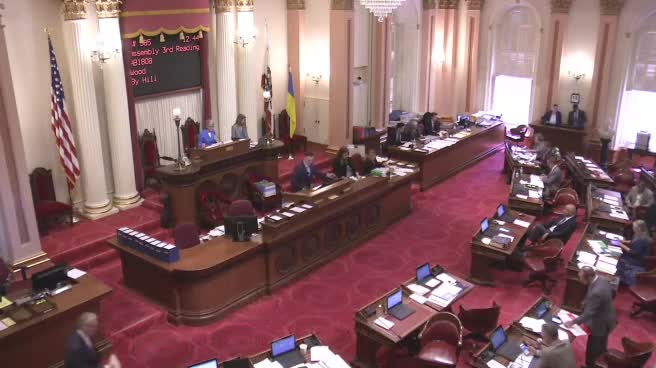 3MIN
Senate Floor
 1MIN
Assembly Floor
Bill Author

Bill Co-Author(s):
