AB 2365: Sales and use taxes: exclusion: pawnbrokers: transfer of vested property.
- Session Year: 2015-2016
- House: Assembly
- Latest Version Date: 2016-08-12
Existing sales and use tax laws impose a tax on retailers measured by the gross receipts from the sale of tangible personal property sold at retail in this state, or on the storage, use, or other consumption in this state of tangible personal property purchased from a retailer for storage, use, or other consumption in this state. Existing law defines sale and purchase for these purposes and provides certain exclusions from those definitions.
Existing law regulates pawnbrokers by, among other things, requiring every loan made by a pawnbroker for which goods are received in pledge as security to be evidenced by a written contract, a copy of which is required to be furnished to the pledgor. Existing law requires the loan period of a loan contract to be no less than 4 months, and requires the loan contract to set forth the loan period, the date on which the loan is due and payable, and to clearly inform the pledgor of his or her right to redeem the pledge during the loan period. Existing law provides procedures by which a pawnbroker may become vested with the title to pledged property.
This bill, until January 1, 2022, would provide that sale and purchase do not include the transfer of vested property, as defined, by a pawnbroker to a person who pledged the property to the pawnbroker as security for a loan if specified requirements are met, thus excluding that transfer from imposition of sales and use tax.
The Bradley-Burns Uniform Local Sales and Use Tax Law authorizes cities and counties to impose local sales and use taxes in conformity with the Sales and Use Tax Law, and existing law authorizes districts, as specified, to impose transactions and use taxes in accordance with the Transactions and Use Tax Law, which generally conforms to the Sales and Use Tax Law. Amendments to state sales and use taxes are incorporated into these laws.
Existing law requires the state to reimburse cities and counties for revenue losses caused by the enactment of sales and use tax exemptions.
This bill would provide that, notwithstanding those provisions, no appropriation is made and the state shall not reimburse cities and counties for sales and use tax revenues lost by them pursuant to this bill.
This bill would take effect immediately as a tax levy.
Existing sales and use tax laws impose a tax on retailers measured by the gross receipts from the sale of tangible personal property sold at retail in this state, or on the storage, use, or other consumption in this state of tangible personal property purchased from a retailer for storage, use, or other consumption in this state. Existing law defines sale and purchase for these purposes and provides certain exclusions from those definitions.
Existing law regulates pawnbrokers by, among other things, requiring every loan made by a pawnbroker for which goods are received in pledge as security to be evidenced by a written contract, a copy of which is required to be furnished to the pledgor. Existing law requires the loan period of a loan contract to be no less than 4 months, and requires the loan contract to set forth the loan period, the date on which the loan is due and payable, and to clearly inform the pledgor of his or her right to redeem the pledge during the loan period. Existing law provides procedures by which a pawnbroker may become vested with the title to pledged property.
This bill bill, until January 1, 2022, would provide that sale and purchase do not include the transfer of vested property, as defined, by a pawnbroker to a person who pledged the property to the pawnbroker as security for a loan if specified requirements are met, thus excluding that transfer from imposition of sales and use tax.
The Bradley-Burns Uniform Local Sales and Use Tax Law authorizes cities and counties to impose local sales and use taxes in conformity with the Sales and Use Tax Law, and existing law authorizes districts, as specified, to impose transactions and use taxes in accordance with the Transactions and Use Tax Law, which generally conforms to the Sales and Use Tax Law. Amendments to state sales and use taxes are incorporated into these laws.
Existing law requires the state to reimburse cities and counties for revenue losses caused by the enactment of sales and use tax exemptions.
This bill would provide that, notwithstanding those provisions, no appropriation is made and the state shall not reimburse cities and counties for sales and use tax revenues lost by them pursuant to this bill.
This bill would take effect immediately as a tax levy.
Existing sales and use tax laws impose a tax on retailers measured by the gross receipts from the sale of tangible personal property sold at retail in this state, or on the storage, use, or other consumption in this state of tangible personal property purchased from a retailer for storage, use, or other consumption in this state. Existing law provides various exemptions from the taxes imposed by those laws. Existing law defines sale and purchase for these purposes and provides certain exclusions from those definitions.
Existing law regulates pawnbrokers by, among other things, requiring every loan made by a pawnbroker for which goods are received in pledge as security to be evidenced by a written contract, a copy of which is required to be furnished to the pledgor. Existing law requires the loan period of a loan contract to be no less than 4 months, and requires the loan contract to set forth the loan period, the date on which the loan is due and payable, and to clearly inform the pledgor of his or her right to redeem the pledge during the loan period. Existing law provides procedures by which a pawnbroker may foreclose on become vested with the title to pledged property.
This bill would declare the intent of the Legislature to enact legislation that would provide an exemption from sales and use taxes if an original pledgor reacquires from a pawnbroker tangible personal property he or she pledged to the pawnbroker as security for a loan within six months after title to the property is vested in the pawnbroker.
This bill would provide that sale and purchase do not include the transfer of vested property, as defined, by a pawnbroker to a person who pledged the property to the pawnbroker as security for a loan if specified requirements are met, thus excluding that transfer from imposition of sales and use tax.
The Bradley-Burns Uniform Local Sales and Use Tax Law authorizes cities and counties to impose local sales and use taxes in conformity with the Sales and Use Tax Law, and existing law authorizes districts, as specified, to impose transactions and use taxes in accordance with the Transactions and Use Tax Law, which generally conforms to the Sales and Use Tax Law. Amendments to state sales and use taxes are incorporated into these laws.
Existing law requires the state to reimburse cities and counties for revenue losses caused by the enactment of sales and use tax exemptions.
This bill would provide that, notwithstanding those provisions, no appropriation is made and the state shall not reimburse cities and counties for sales and use tax revenues lost by them pursuant to this bill.
This bill would take effect immediately as a tax levy.
Existing sales and use tax laws impose a tax on retailers measured by the gross receipts from the sale of tangible personal property sold at retail in this state, or on the storage, use, or other consumption in this state of tangible personal property purchased from a retailer for storage, use, or other consumption in this state. Existing law provides various exemptions from the taxes imposed by those laws.
Existing law regulates pawnbrokers by, among other things, requiring every loan made by a pawnbroker for which goods are received in pledge as security to be evidenced by a written contract, a copy of which is required to be furnished to the pledgor. Existing law requires the loan period of a loan contract to be no less than 4 months, and requires the loan contract to set forth the loan period, the date on which the loan is due and payable, and to clearly inform the pledgor of his or her right to redeem the pledge during the loan period. Existing law provides procedures by which a pawnbroker may foreclose on pledged property.
This bill would declare the intent of the Legislature to enact legislation that would provide an exemption from sales and use taxes if an original pledgor reacquires from a pawnbroker tangible personal property he or she pledged to the pawnbroker as security for a loan within six months after title to the property is vested in the pawnbroker.
(a)Sale and purchase for the purposes of this part do not include the transfer of title to vested property by a pawnbroker to a person who pledged the property to the pawnbroker as security for a loan and from whom title to the property transferred to the pawnbroker pursuant to Section 21201 of the Financial Code, if both of the following requirements are met:
(1)The transfer occurs no more than six months after title to the property transferred to the pawnbroker from the person pursuant to Section 21201 of the Financial Code.
(2)As consideration for the transfer of the property, the person is required to pay the pawnbroker only the remaining unpaid balance of the amount borrowed under the loan as of the date the pawnbroker becomes vested with title to the property, together with one of the following:
(A)For an original loan amount not exceeding two thousand four hundred ninety-nine dollars and ninety-nine cents ($2,499.99), charges and interest due under the loan pursuant to Chapter 2 (commencing with Section 21200) of Division 8 of the Financial Code, from the date the pawnbroker is vested with title to the property to the date of the transfer to the person who pledged the property.
(B)For an original loan amount of two thousand five hundred dollars ($2,500) or more, charges and interest due in accordance with the last monthly contractual interest rate, from the date the pawnbroker is vested with title to the property until the date of the transfer to the person who pledged the property.
(b)As used in this section:
(1)Pawnbroker has the meaning described in Section 21000 of the Financial Code.
(2)Vested property has the meaning described in subdivision (b) of Section 21002 of the Financial Code.
(c)This section shall become inoperative and shall be repealed on January 1, 2022.
SEC. 2.Notwithstanding Section 2230 of the Revenue and Taxation Code, no appropriation is made by this act and the state shall not reimburse cities and counties for any sales and use tax revenues lost by them under this act.
SEC. 3.This act provides for a tax levy within the meaning of Article IV of the Constitution and shall go into immediate effect.
(a)Sale and purchase for the purposes of this part do not include the transfer of title to vested property by a pawnbroker to a person who pledged the property to the pawnbroker as security for a loan and from whom title to the property transferred to the pawnbroker pursuant to Section 21201 of the Financial Code, if both of the following requirements are met:
(1)The transfer occurs no more than six months after title to the property transferred to the pawnbroker from the person pursuant to Section 21201 of the Financial Code.
(2)As consideration for the transfer of the property, the person is required to pay the pawnbroker only the remaining unpaid balance of the amount borrowed under the loan as of the date the pawnbroker becomes vested with title to the property, together with one of the following:
(A)For an original loan amount not exceeding two thousand four hundred ninety-nine dollars and ninety-nine cents ($2,499.99), charges and interest due under the loan pursuant to Chapter 2 (commencing with Section 21200) of Division 8 of the Financial Code, from the date the pawnbroker is vested with title to the property to the date of the transfer to the person who pledged the property.
(B)For an original loan amount of two thousand five hundred dollars ($2,500) or more, charges and interest due in accordance with the last monthly contractual interest rate, from the date the pawnbroker is vested with title to the property until the date of the transfer to the person who pledged the property.
(b)As used in this section:
(1)Pawnbroker has the meaning described in Section 21000 of the Financial Code.
(2)Vested property has the meaning described in subdivision (b) of Section 21002 of the Financial Code.
SEC. 2.Notwithstanding Section 2230 of the Revenue and Taxation Code, no appropriation is made by this act and the state shall not reimburse cities and counties for any sales and use tax revenues lost by them under this act.
SEC. 3.This act provides for a tax levy within the meaning of Article IV of the Constitution and shall go into immediate effect.
SECTION 1.It is the intent of the Legislature to enact legislation that would provide an exemption from sales and use taxes if an original pledgor reacquires from a pawnbroker tangible personal property he or she pledged to the pawnbroker as security for a loan within six months after title to the property is vested in the pawnbroker.
It is the intent of the Legislature to enact legislation that would provide an exemption from sales and use taxes if an original pledgor reacquires from a pawnbroker tangible personal property he or she pledged to the pawnbroker as security for a loan within six months after title to the property is vested in the pawnbroker.
|
Date
|
Status
|
|---|---|
| May 31, 2016 | Read third time. Passed. Ordered to the Senate. (Ayes 80. Noes 0. Page 5051.) |
| Aug 30, 2016 | Consideration of Governor's veto pending. |
| Aug 29, 2016 | Vetoed by Governor. |
| Aug 15, 2016 | Enrolled and presented to the Governor at 3:30 p.m. |
| Aug 11, 2016 | Read third time. Passed. Ordered to the Assembly. (Ayes 37. Noes 0. Page 4873.). |
| Aug 11, 2016 | Read third time. Passed. Ordered to the Assembly. |
| Aug 11, 2016 | In Assembly. Ordered to Engrossing and Enrolling. |
| Aug 2, 2016 | Read second time. Ordered to Consent Calendar. |
| Aug 1, 2016 | From committee: Be placed on second reading file pursuant to Senate Rule 28.8 and ordered to consent calendar. |
| Jun 29, 2016 | From committee: Do pass and re-refer to Com. on APPR. with recommendation: To Consent Calendar. (Ayes 7. Noes 0.) (June 29). Re-referred to Com. on APPR. |
| Jun 21, 2016 | Referred to Com. on GOV. & F. |
| Jun 1, 2016 | In Senate. Read first time. To Com. on RLS. for assignment. |
| May 31, 2016 | Read third time. Passed. Ordered to the Senate. (Ayes 80. Noes 0.) |
| Feb 18, 2016 | Read first time. To print. |
| May 31, 2016 | Read third time. Passed. Ordered to the Senate. |
| May 26, 2016 | Read second time. Ordered to Consent Calendar. |
| May 25, 2016 | From committee: Do pass. To Consent Calendar. (Ayes 20. Noes 0.) (May 25). |
| May 17, 2016 | Re-referred to Com. on APPR. |
| May 16, 2016 | Read second time and amended. |
| May 12, 2016 | From committee: Amend, and do pass as amended and re-refer to Com. on APPR. (Ayes 9. Noes 0.) (May 9). |
| Apr 26, 2016 | In committee: Hearing postponed by committee. |
| Mar 28, 2016 | Re-referred to Com. on REV. & TAX. |
| Mar 18, 2016 | From committee chair, with author's amendments: Amend, and re-refer to Com. on REV. & TAX. Read second time and amended. |
| Mar 17, 2016 | Referred to Com. on REV. & TAX. |
| Feb 19, 2016 | From printer. May be heard in committee March 20. |
|
Date
|
Description
|
Location
|
Votes
|
|
|---|---|---|---|---|
| Aug 11, 2016 | Consent Calendar 2nd AB2365 Gipson | Senate Floor |
Passed |
|
| Jun 29, 2016 | Do pass, but first be re-referred to the Committee on [Appropriations] with the recommendation: To Consent Calendar | Senate Standing Committee on Governance and Finance |
Passed |
|
| May 31, 2016 | AB 2365 GIPSON Consent Calendar Second Day Regular Session | Assembly Floor |
Passed |
|
| May 25, 2016 | Do pass. To Consent Calendar. | Assembly Standing Committee on Appropriations |
Passed |
|
| May 9, 2016 | Do pass as amended and be re-referred to the Committee on [Appropriations] | Assembly Standing Committee on Revenue and Taxation |
Passed |
This list shows positions taken on this bill by organizations on the date displayed, which is linked to the original source.
Positions by individuals are not included.
|
Organization
|
Position
|
Date
|
|---|---|---|
| California State Board of Equalization | * Support | May 9, 2016 |
| State Board of Equalization | * Support | May 9, 2016 |
GOVERNOR'S VETO
GV Bill Id:AB 2365
Author:(Gipson)
As Enrolled Ver:August 15, 2016
2/3 vote
ASSEMBLY: | 80-0 | (May 31, 2016) | SENATE: | 37-0 | (August 11, 2016) |
SUMMARY: Provides that the terms "sale" and "purchase" do not include the transfer of "vested property", as defined, by a "pawnbroker" to a person who pledged the property to the pawnbroker as security for a loan if specified requirements are met, thus excluding such transfers from taxation under the Sales and Use Tax (SUT) Law. Specifically, this bill:
- Provides that, for purposes of the SUT Law, the terms "sale" and "purchase" do not include the transfer of title to "vested property" by a "pawnbroker" to a person who pledged the property to the "pawnbroker" as security for a loan and from whom title to the property transferred to the "pawnbroker" pursuant to Financial Code Section 21201, if both the following requirements are met:
- The transfer occurs no more than six months after title to the property transferred to the "pawnbroker" from the person pursuant to Financial Code Section 21201; and,
- As consideration for the transfer of the property, the person is required to pay the "pawnbroker" only the remaining unpaid balance of the amount borrowed under the loan as of the date the "pawnbroker" becomes vested with title to the property, together with one of the following:
- For an original loan amount not exceeding $2,499.99, charges and interest due under the loan pursuant to Financial Code Section 21200 et seq., from the date the "pawnbroker" is vested with title to the property to the date of the transfer to the person who pledged the property; or,
- For an original loan amount of $2,500 or more, charges and interest due in accordance with the last monthly contractual interest rate, from the date the "pawnbroker" is vested with title to the property until the date of the transfer to the person who pledged the property.
- Defines the term "pawnbroker" by reference to Financial Code Section 21000.
- Defines the term "vested property" by reference to Financial Code Section 21002(b).
- Provides that, notwithstanding Revenue and Taxation Code Section 2230, no appropriation is made by this bill and the state shall not reimburse cities and counties for any SUT revenues lost by them under this bill.
- Takes immediate effect as a tax levy.
- Sunsets on January 1, 2022.
EXISTING LAW:
- Imposes a sales tax on retailers for the privilege of selling tangible personal property (TPP), absent a specific exemption. The tax is based upon the retailer's gross receipts from TPP sales in this state.
- Imposes a complimentary use tax on the storage, use, or other consumption of TPP purchased out-of-state and brought into California. The use tax is imposed on the purchaser; and unless the purchaser pays the use tax to an out-of-state retailer registered to collect California's use tax, the purchaser remains liable for the tax. The use tax is set at the same rate as the state's sales tax and must generally be remitted to the State Board of Equalization (BOE).
- Regulates pawnbrokers by, among other things, requiring every pawnbroker loan for which goods are received in pledge as security to be evidenced by a written contract, a copy of which must be provided to the customer.
- Requires the loan period of a loan contract to be no less than four months, and requires the loan contract to set forth the loan period along with the date on which the loan is due and payable, and to inform the customer of his or her right to redeem the pledge during the loan period.
- Provides procedures by which a pawnbroker may become vested with title to pledged property.
FISCAL EFFECT: According to the Assembly Appropriations Committee, annual state and local revenue loss of approximately $33,000.
COMMENTS:
- The author has provided the following statement in support of this bill:
When a debtor acquires a loan from a pawn shop, using their personal property as collateral, their collateral may be seized by the pawn shop upon default of the debtor.
Under current law, when a consumer defaults and seeks to reacquire their seized collateral, they must pay a sales tax on the item they are reacquiring, even though they already have paid the sales tax on their initial purchase. This bill seeks to provide a sales tax exemption for consumer purchases of seized collateral and provide a fair taxing structure for consumers.
- Committee staff comments:
- Overview of existing law governing pawnbrokers: California's Department of Justice regulates pawnbrokers and enforces California's Financial Code provisions governing the industry. Every pawnbroker loan for which goods are received as security must be evidenced by a written contract, with a copy provided to the customer. By law, the loan contract must provide a loan period of at least four months. In addition, the contract must set forth the loan period and the date on which the loan will become due and payable. The contract must also clearly inform the customer of his or her right to redeem the pledge during the loan period by paying the loan amount and any applicable charges that have accrued through the date of redemption. Pawnbrokers are required by law to retain every article pledged for the duration of the applicable loan period.
If any pledged article is not redeemed during the loan period and the customer and pawnbroker do not mutually agree in writing to extend the loan period, the pawnbroker must notify the customer within one month after the loan period expires. This notice works to extend the right of redemption for a period of 10 days from the date of mailing or electronic transmission of that notice.
If any pledged article is not redeemed within the 10-day notice period, the pawnbroker becomes automatically vested with title to the pledged article. The pawnbroker may then sell or dispose of the property as he or she wishes.
- How does the SUT Law currently apply to pawnbrokers? Pawnbrokers are considered retailers under the SUT Law as they are in the business of making retail sales of TPP. As such, tax applies to pawnbroker sales to the same extent as sales by any other retailer of TPP in this state.
As noted above, if a customer defaults on a pawnbroker loan, the collateral becomes the pawnbroker's "vested property." After title has vested with the pawnbroker, the customer no longer has any legal right to the property that would distinguish him or her from any other customer. Accordingly, when a customer subsequently seeks to purchase the collateral, the transaction constitutes a taxable retail sale under the SUT Law (unless an applicable exclusion or exemption applies).
- What would this bill do? This bill would exclude from the computation of the SUT a pawnbroker's receipts derived from a transaction where a customer buys back his or her former property after defaulting on a loan. The BOE, which is sponsoring this bill, contends that this bill resolves a confusing area of the law and eliminates a barrier for some customers seeking to regain ownership of their former property.
- How did we get here? On November 23, 2015, the BOE's Legal Department received a petition on behalf of the California Pawnbrokers Association requesting an amendment to the California Code of Regulations. Specifically, the petition sought the addition of "clarifying language . . . to allow the original pledg[o]r to redeem personal property from a pawnbroker within six months of the expiration of the grace period as a non-taxable event." Legal Department staff recommended that the BOE deny the petition in its entirety because, as explained in a detailed memorandum, tax applies to the retail sale of TPP in California unless specifically exempt from taxation by statute; the petition would have, in effect, added an exemption for which there was no statutory basis.
This bill, until January 1, 2022, would establish a sales tax exemption to customers who buy back their pledged property from pawnbrokers after defaulting on a loan.
I continue to believe that the state's budget remains precariously balanced due to unexpected costs and the provision of new services. New sales tax exemptions, like new spending on programs, need to be considered comprehensively as part of the budget deliberations.
Analysis Prepared by: M. David Ruff / REV. & TAX. / (916) 319-2098 FN: 0004985
Office of Senate Floor Analyses (916) 651-1520 Fax: (916) 327-4478 | AB 2365 |
CONSENT
Bill No: AB 2365
Amended: 5/16/16 in Assembly
SENATE GOVERNANCE & FIN. COMMITTEE: 7-0, 6/29/16
AYES: Hertzberg, Nguyen, Beall, Hernandez, Lara, Moorlach, Pavley
SENATE APPROPRIATIONS COMMITTEE: Senate Rule 28.8
ASSEMBLY FLOOR: 80-0, 5/31/16 (Consent) - See last page for vote
SUBJECT: Sales and use taxes: exclusion: pawnbrokers: transfer of vested property
DIGEST: This bill establishes a temporary sales and use tax exemption to customers who buy back their property from a pawnbroker after defaulting on a loan.
Existing law:
- Imposes a sales and use tax (SUT) on the sale, storage, or use of tangible personal property unless exempted by state law.
- Requires every pawnbroker’s loan, for which goods are received as security, to be evidenced by a written contract, and the loan contract must set forth the loan period and the date on which the loan will become due and payable. Pawnbrokers are required by law to retain every article pledged for the duration of the applicable loan period.
- Requires if any pledged article is not redeemed during the loan period and the customer and pawnbroker do not mutually agree in writing to extend the loan period, the pawnbroker must notify the customer within one month after the loan period expires. This notice works to extend the right of redemption for a period of 10 days from the date of mailing or electronic transmission of that notice.
- Requires if any pledged article is not redeemed within the 10-day notice period, the pawnbroker becomes automatically vested with title to the pledged article. The pawnbroker may then sell or dispose of the property as he or she wishes. Pawnbrokers are considered retailers under the SUT Law, as they are in the business of making retail sales of tangible personal property (TPP). As such, tax applies to pawnbroker sales to the same extent as sales by any other retailer of TPP in this state. When a customer seeks to repurchase the collateral, the transaction constitutes a retail sale.
This bill:
- Establishes a temporary SUT exemption to customers that buy back their property from a pawnbroker after defaulting on a loan.
- Provides that the terms "sale" and "purchase" do not include the transfer of "vested property", as defined, by a pawnbroker to a person who pledged the property to the pawnbroker as security for a loan.
- Requires that the transfer occurs no more than six months after title to the property transferred to the pawnbroker from the person.
- States, as consideration for the transfer of the property, the person is required to pay the pawnbroker only the remaining unpaid balance of the amount borrowed under the loan as of the date the pawnbroker becomes vested with title to the property, together with one of the following:
- For an original loan amount not exceeding $2,499.99, charges and interest due under the loan from the date the pawnbroker is vested with title to the property to the date of the transfer to the person who pledged the property; or,
- For an original loan amount of $2,500 or more, charges and interest due in accordance with the last monthly contractual interest rate, from the date the pawnbroker is vested with title to the property until the date of the transfer to the person who pledged the property.
- Takes effect immediately and shall remain in effect until January 1, 2022.
Background
Pawnbrokers are considered retailers under the SUT Law as they are in the business of making retail sales. As such, tax applies to pawnbroker sales to the same extent as sales by any other retailer in this state. Thus, if a customer defaults on a pawnbroker loan, the collateral becomes the pawnbroker's vested property. After title has vested with the pawnbroker, the customer no longer has any legal right to the property that would distinguish him or her from any other customer. Accordingly, when a customer subsequently seeks to purchase the collateral, the transaction constitutes a taxable retail sale. According to the State Board of Equalization, both pawnbrokers and customers are often surprised that the sale is subject to sales tax, and the additional sales tax sometimes serves as an impediment to regaining ownership. This bill eliminates this problem as long as the customer reacquires the item within six months of title transferring to the pawnbroker.
FISCAL EFFECT: Appropriation: No Fiscal Com.: Yes Local: No
California Pawnbrokers Association
State Board of Equalization
OPPOSITION: (Verified 7/27/16)
None received
ARGUMENTS IN SUPPORT: According to the author, “When a debtor acquires a loan from a pawn shop, using their personal property as collateral, their collateral may be seized by the pawn shop upon default of the debtor. Under current law, when a consumer defaults and seeks to reacquire their seized collateral, they must pay a sales tax on the item they are reacquiring, even though they already have paid the sales tax on their initial purchase. This bill seeks to provide a sales tax exemption for consumer purchases of seized collateral and provide a fair taxing structure for consumers.”
ASSEMBLY FLOOR: 80-0, 5/31/16
AYES: Achadjian, Alejo, Travis Allen, Arambula, Atkins, Baker, Bigelow, Bloom, Bonilla, Bonta, Brough, Brown, Burke, Calderon, Campos, Chang, Chau, Chávez, Chiu, Chu, Cooley, Cooper, Dababneh, Dahle, Daly, Dodd, Eggman, Frazier, Beth Gaines, Gallagher, Cristina Garcia, Eduardo Garcia, Gatto, Gipson, Gomez, Gonzalez, Gordon, Gray, Grove, Hadley, Harper, Roger Hernández, Holden, Irwin, Jones, Jones-Sawyer, Kim, Lackey, Levine, Linder, Lopez, Low, Maienschein, Mathis, Mayes, McCarty, Medina, Melendez, Mullin, Nazarian, Obernolte, O'Donnell, Olsen, Patterson, Quirk, Ridley-Thomas, Rodriguez, Salas, Santiago, Steinorth, Mark Stone, Thurmond, Ting, Wagner, Waldron, Weber, Wilk, Williams, Wood, Rendon
Prepared by: Myriam Bouaziz / GOV. & F. / (916) 651-4119
8/3/16 19:33:35
**** END ****
SENATE COMMITTEE ON GOVERNANCE AND FINANCE
Senator Robert M. Hertzberg, Chair
2015 - 2016 Regular
Bill No: | AB 2365 | Hearing Date: | 6/29/16 |
Author: | Gipson | Tax Levy: | Yes |
Version: | 5/16/16 | Fiscal: | Yes |
Consultant: | Bouaziz | ||
Sales and use taxes: exclusion: pawnbrokers: transfer of vested property
Establishes a temporary sales and use tax exemption to customers who buy back their property from a pawnbroker after defaulting on a loan.
Background
California law allows various income tax credits, deductions, and sales and use tax exemptions to provide incentives to compensate taxpayers that incur certain expenses, such as child adoption, or to influence behavior, including business practices and decisions, such as research and development credits. The Legislature typically enacts such tax incentives to encourage taxpayers to do something that but for the tax credit, they would not do. The Department of Finance is required to annually publish a list of tax expenditures. Currently, tax expenditures exceed $57 billion dollars in forgone revenue.
State law imposes a sales and use tax (SUT) on the sale, storage, or use of tangible personal property unless exempted by state law. Cities and Counties may increase the SUT rate up to 2% as a transactions and use tax for either specific or general purposes with voter approval as required by the California Constitution.
The current state SUT is 7.5%, but beginning January 1, 2017, the state SUT rate on tangible personal property will be 7.25% and imposed as follows:
Rate | Jurisdiction | Purpose/Authority |
|---|---|---|
3.9375% | State (General Fund) | State general purposes |
1.0625% | Local Revenue Fund 2011 | Realignment of local public safety services |
0.50% | State (Local Revenue Fund) | Local governments to fund health and welfare programs |
0.50% | State (Local Public Safety Fund) | Local governments to fund public safety services |
1.25% | Local (City/County) 1.00% City and County | City and county general operations. Dedicated to county transportation purposes |
State law requires every pawnbroker’s loan, for which goods are received as security, to be evidenced by a written contract, and the loan contract must set forth the loan period and the date on which the loan will become due and payable. Pawnbrokers are required by law to retain every article pledged for the duration of the applicable loan period.
If any pledged article is not redeemed during the loan period and the customer and pawnbroker do not mutually agree in writing to extend the loan period, the pawnbroker must notify the customer within one month after the loan period expires. This notice works to extend the right of redemption for a period of 10 days from the date of mailing or electronic transmission of that notice.
If any pledged article is not redeemed within the 10-day notice period, the pawnbroker becomes automatically vested with title to the pledged article. The pawnbroker may then sell or dispose of the property as he or she wishes. Pawnbrokers are considered retailers under the SUT Law, as they are in the business of making retail sales of tangible personal property (TPP). As such, tax applies to pawnbroker sales to the same extent as sales by any other retailer of TPP in this state. When a customer seeks to repurchase the collateral, the transaction constitutes a retail sale.
Proposed Law
Assembly Bill 2365 establishes a temporary sales and use tax exemption to customers that buy back their property from a pawnbroker after defaulting on a loan. Specifically the bill:
- Provides that the terms "sale" and "purchase" do not include the transfer of "vested property", as defined, by a pawnbroker to a person who pledged the property to the pawnbroker as security for a loan.
- The transfer occurs no more than six months after title to the property transferred to the pawnbroker from the person.
- As consideration for the transfer of the property, the person is required to pay the pawnbroker only the remaining unpaid balance of the amount borrowed under the loan as of the date the pawnbroker becomes vested with title to the property, together with one of the following:
- For an original loan amount not exceeding $2,499.99, charges and interest due under the loan from the date the pawnbroker is vested with title to the property to the date of the transfer to the person who pledged the property; or,
- For an original loan amount of $2,500 or more, charges and interest due in accordance with the last monthly contractual interest rate, from the date the pawnbroker is vested with title to the property until the date of the transfer to the person who pledged the property.
AB 2365 takes effect immediately and shall remain in effect until January 1, 2022.
State Revenue Impact
The Board of Equalization (BOE) estimates annual state and local revenue losses of $33,250.
Comments
1. Purpose of the bill. According to the author, “When a debtor acquires a loan from a pawn shop, using their personal property as collateral, their collateral may be seized by the pawn shop upon default of the debtor. Under current law, when a consumer defaults and seeks to reacquire their seized collateral, they must pay a sales tax on the item they are reacquiring, even though they already have paid the sales tax on their initial purchase. This bill seeks to provide a sales tax exemption for consumer purchases of seized collateral and provide a fair taxing structure for consumers.”
2. Issue at hand. Pawnbrokers are considered retailers under the SUT Law as they are in the business of making retail sales. As such, tax applies to pawnbroker sales to the same extent as sales by any other retailer in this state. Thus, if a customer defaults on a pawnbroker loan, the collateral becomes the pawnbroker's vested property. After title has vested with the pawnbroker, the customer no longer has any legal right to the property that would distinguish him or her from any other customer. Accordingly, when a customer subsequently seeks to purchase the collateral, the transaction constitutes a taxable retail sale. According to BOE, both pawnbrokers and customers are often surprised that the sale is subject to sales tax, and the additional sales tax sometimes serves as an impediment to regaining ownership. This bill would eliminate this problem as long as the customer reacquires the item within six months of title transferring to the pawnbroker.
Assembly Actions
Assembly Revenue and Taxation 9-0
Assembly Appropriations 20-0
Assembly Floor 80-0
Support and Opposition
(6/23/16)
Support: State Board of Equalization.
Opposition: Unknown.
-- END --
Date of Hearing: May 25, 2016
ASSEMBLY COMMITTEE ON APPROPRIATIONS
Lorena Gonzalez, Chair
ABPCA Bill Id:AB 2365
Author:(Gipson) – As Amended Ver:May 16, 2016
Policy Committee: |
| Vote: |
|
Urgency: No State Mandated Local Program: No Reimbursable: No
SUMMARY:
This bill excludes from the Sales and Use Tax (SUT) Law a pawnbroker’s receipts from a transaction where customers buy back their property after defaulting on a loan. This exclusion is operative on taxable years starting on January 1, 2017, and before January 1, 2022.
FISCAL EFFECT:
Annual state and local revenue loss of approximately $33,000.
COMMENTS:
- Purpose. According to the author, AB 2365 provides a fair taxing structure for consumers who are trying to reacquire their seized collateral from a pawn shop. The BOE, who is a sponsor, argues that this bill resolves a confusing area of the law and eliminates a barrier for some customers seeking to regain ownership of their former property.
- Pawnbrokers and sales tax. Every pawnbroker loan for which goods are received as security must be evidenced by a written contract, and the loan contract must set forth the loan period and the date on which the loan will become due and payable. Pawnbrokers are required by law to retain every article pledged for the duration of the applicable loan period.
If any pledged article is not redeemed during the loan period and the customer and pawnbroker do not mutually agree in writing to extend the loan period, the pawnbroker must notify the customer within one month after the loan period expires. This notice works to extend the right of redemption for a period of 10 days from the date of mailing or electronic transmission of that notice.
If any pledged article is not redeemed within the 10-day notice period, the pawnbroker becomes automatically vested with title to the pledged article. The pawnbroker may then sell or dispose of the property as he or she wishes. Pawnbrokers are considered retailers under the SUT Law as they are in the business of making retail sales of tangible personal property (TPP). As such, tax applies to pawnbroker sales to the same extent as sales by any other retailer of TPP in this state. When a customer seeks to repurchase the collateral, the transaction constitutes a retail sale.
Analysis Prepared by: Luke Reidenbach / APPR. / (916) 319-2081
Date of Hearing: May 9, 2016
ASSEMBLY COMMITTEE ON REVENUE AND TAXATION
Sebastian Ridley-Thomas, Chair
ABPCA Bill Id:AB 2365 (
Author:Gipson) – As Amended Ver:March 18, 2016
Majority vote. Tax levy. Fiscal committee.
SUBJECT: Sales and use taxes: exclusion: pawnbrokers: transfer of vested property
SUMMARY: Provides that the terms "sale" and "purchase" do not include the transfer of "vested property", as defined, by a "pawnbroker" to a person who pledged the property to the pawnbroker as security for a loan if specified requirements are met, thus excluding such transfers from taxation under the Sales and Use Tax (SUT) Law. Specifically, this bill:
- Provides that, for purposes of the SUT Law, the terms "sale" and "purchase" do not include the transfer of title to "vested property" by a "pawnbroker" to a person who pledged the property to the "pawnbroker" as security for a loan and from whom title to the property transferred to the "pawnbroker" pursuant to Financial Code Section 21201, if both the following requirements are met:
- The transfer occurs no more than six months after title to the property transferred to the "pawnbroker" from the person pursuant to Financial Code Section 21201; and,
- As consideration for the transfer of the property, the person is required to pay the "pawnbroker" only the remaining unpaid balance of the amount borrowed under the loan as of the date the "pawnbroker" becomes vested with title to the property, together with one of the following:
- For an original loan amount not exceeding $2,499.99, charges and interest due under the loan pursuant to Financial Code Section 21200 et seq., from the date the "pawnbroker" is vested with title to the property to the date of the transfer to the person who pledged the property; or,
- For an original loan amount of $2,500 or more, charges and interest due in accordance with the last monthly contractual interest rate, from the date the "pawnbroker" is vested with title to the property until the date of the transfer to the person who pledged the property.
- Defines the term "pawnbroker" by reference to Financial Code Section 21000.
- Defines the term "vested property" by reference to Financial Code Section 21002(b).
- Provides that, notwithstanding Revenue and Taxation Code Section 2230, no appropriation is made by this bill and the state shall not reimburse cities and counties for any SUT revenues lost by them under this bill.
- Takes immediate effect as a tax levy.
EXISTING LAW:
- Imposes a sales tax on retailers for the privilege of selling tangible personal property (TPP), absent a specific exemption. The tax is based upon the retailer's gross receipts from TPP sales in this state.
- Imposes a complimentary use tax on the storage, use, or other consumption of TPP purchased out-of-state and brought into California. The use tax is imposed on the purchaser; and unless the purchaser pays the use tax to an out-of-state retailer registered to collect California's use tax, the purchaser remains liable for the tax. The use tax is set at the same rate as the state's sales tax and must generally be remitted to the State Board of Equalization (BOE).
- Regulates pawnbrokers by, among other things, requiring every pawnbroker loan for which goods are received in pledge as security to be evidenced by a written contract, a copy of which must be provided to the customer.
- Requires the loan period of a loan contract to be no less than four months, and requires the loan contract to set forth the loan period along with the date on which the loan is due and payable, and to inform the customer of his or her right to redeem the pledge during the loan period.
- Provides procedures by which a pawnbroker may become vested with title to pledged property.
FISCAL EFFECT: The BOE estimates annual state and local revenue losses of $33,250.
COMMENTS:
- The author has provided the following statement in support of this bill:
When a debtor acquires a loan from a pawn shop, using their personal property as collateral, their collateral may be seized by the pawn shop upon default of the debtor.
Under current law, when a consumer defaults and seeks to reacquire their seized collateral, they must pay a sales tax on the item they are reacquiring, even though they already have paid the sales tax on their initial purchase. This bill seeks to provide a sales tax exemption for consumer purchases of seized collateral and provide a fair taxing structure for consumers.
- This bill is sponsored by the BOE, which notes the following in its staff analysis of this bill:
- Effect of the bill: "Excludes from the computation of sales or use tax, a pawnbroker's receipts derived from a transaction where customers buy back their property after defaulting on a loan."
- This bill simplifies a confusing area in the law: "This bill would eliminate a complexity in the law that can potentially subject unaware pawnbrokers to liability for the tax."
- The sales tax comes as a surprise to customers: "Customers are often surprised that they must pay sales tax on their own item's reacquisition, and the additional sales tax sometimes serves as an impediment to regaining ownership. This bill would eliminate this problem as long as the customer reacquires the item within six months of title transferring to the pawnbroker."
- The tax is counterproductive: "Imposing the tax when customers return to buy back their property is counterproductive to the public policy of allowing customers to regain their property's ownership."
- Committee staff comments:
- Overview of existing law governing pawnbrokers: California's Department of Justice regulates pawnbrokers and enforces California's Financial Code provisions governing the industry. Every pawnbroker loan for which goods are received as security must be evidenced by a written contract, with a copy provided to the customer. By law, the loan contract must provide a loan period of at least four months. In addition, the contract must set forth the loan period and the date on which the loan will become due and payable. The contract must also clearly inform the customer of his or her right to redeem the pledge during the loan period by paying the loan amount and any applicable charges that have accrued through the date of redemption. Pawnbrokers are required by law to retain every article pledged for the duration of the applicable loan period.
If any pledged article is not redeemed during the loan period and the customer and pawnbroker do not mutually agree in writing to extend the loan period, the pawnbroker must notify the customer within one month after the loan period expires. This notice works to extend the right of redemption for a period of 10 days from the date of mailing or electronic transmission of that notice.
If any pledged article is not redeemed within the 10-day notice period, the pawnbroker becomes automatically vested with title to the pledged article. The pawnbroker may then sell or dispose of the property as he or she wishes.
- How does the SUT Law currently apply to pawnbrokers? Pawnbrokers are considered retailers under the SUT Law as they are in the business of making retail sales of TPP. As such, tax applies to pawnbroker sales to the same extent as sales by any other retailer of TPP in this state.
As noted above, if a customer defaults on a pawnbroker loan, the collateral becomes the pawnbroker's "vested property." After title has vested with the pawnbroker, the customer no longer has any legal right to the property that would distinguish him or her from any other customer. Accordingly, when a customer subsequently seeks to purchase the collateral, the transaction constitutes a taxable retail sale under the SUT Law (unless an applicable exclusion or exemption applies).
- What would this bill do? This bill would exclude from the computation of the SUT a pawnbroker's receipts derived from a transaction where a customer buys back his or her former property after defaulting on a loan. The BOE, which is sponsoring this bill, contends that this bill resolves a confusing area of the law and eliminates a barrier for some customers seeking to regain ownership of their former property.
- How did we get here? On November 23, 2015, the BOE's Legal Department received a petition on behalf of the California Pawnbrokers Association requesting an amendment to the California Code of Regulations. Specifically, the petition sought the addition of "clarifying language . . . to allow the original pledg[o]r to redeem personal property from a pawnbroker within six months of the expiration of the grace period as a non-taxable event." Legal Department staff recommended that the BOE deny the petition in its entirety because, as explained in a detailed memorandum, tax applies to the retail sale of TPP in California unless specifically exempt from taxation by statute; the petition would have, in effect, added an exemption for which there was no statutory basis.
- Potential sunset: This Committee has a longstanding practice of including a sunset date for any newly proposed exemption. Sunset dates give the Legislature an opportunity to both review a tax expenditure's application and determine whether foregone revenues are in line with original estimates. As such, the Author and Committee may wish to consider adding an appropriate sunset date to this bill.
REGISTERED SUPPORT / OPPOSITION:
Support
State Board of Equalization (sponsor)
Opposition
None on file
Analysis Prepared by: M. David Ruff / REV. & TAX. / (916) 319-2098
Discussed in Hearing
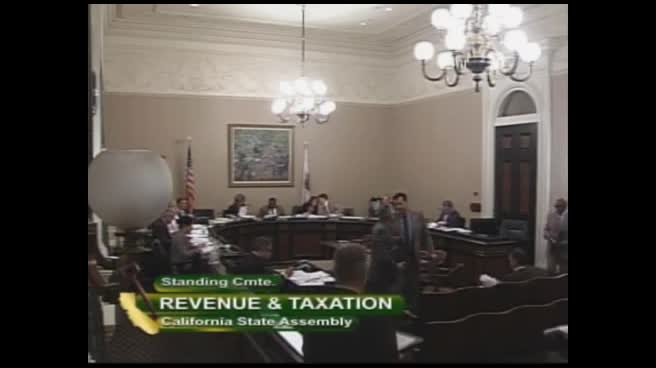 3MIN
Assembly Standing Committee on Revenue and Taxation
Bill Author