AB 2385: Medical Cannabis Regulation and Safety Act: state licenses: Measure D.
- Session Year: 2015-2016
- House: Assembly
- Latest Version Date: 2016-08-31
Existing law, the Medical Cannabis Regulation and Safety Act (MCRSA), provides for the licensure and regulation of medical cannabis and requires all commercial cannabis activity to be conducted between licensees. Existing law establishes the Bureau of Medical Cannabis Regulation within the Department of Consumer Affairs. Existing law authorizes licensing authorities to only issue state licenses to qualified applicants. Existing law, upon the date of implementation of regulations by the licensing authority, prohibits a person from engaging in commercial cannabis activity without possessing both a state license and a local permit, license, or other authorization.
This bill would instead prohibit a person from engaging in commercial cannabis activity without possessing both a state license and a local permit, license, or other authorization one year after the bureau posts a notice on its Internet Web site that the licensing authorities have commenced issuing licenses. The bill would also, with regard to commercial cannabis activity in the City of Los Angeles, prohibit licensing authorities from requiring a local license, permit, or other authorization, and would require the issuance of a state license, if the authorities determine, as specified, that the applicant meets all of the requirements of MCRSA and specified criteria relating to Measure D, which was approved by the voters of the City of Los Angeles at the May 21, 2013, general election. The bill would further provide that a license issued pursuant to the above provision has the same force and effect, and confers the same benefits and responsibilities, as licenses issued to licensees not subject to the above-described exception. The bill would require the exemption to the local licensing requirement provided by these provisions to be superseded by a subsequent initiative authorizing the City of Los Angeles to issue local licenses to medical marijuana businesses in the city if the voters of Los Angeles approve the initiative prior to the time the State of California begins issuing state licenses.
Existing law, the Medical Marijuana Cannabis Regulation and Safety Act, Act (MCRSA), provides for the licensure and regulation of medical marijuana cannabis and requires all commercial cannabis activity to be conducted between licensees. Existing law establishes the Bureau of Medical Cannabis Regulation within the Department of Consumer Affairs. Existing law authorizes licensing authorities to only issue state licenses to qualified applicants. Existing law law, upon the date of implementation of regulations by the licensing authority, prohibits a person from engaging in commercial cannabis activity without possessing both a state license and a local permit, license, or other authorization.
This bill would instead prohibit a person from engaging in commercial cannabis activity without possessing both a state license and a local permit, license, or other authorization one year after the bureau posts a notice on its Internet Web site that the licensing authorities have commenced issuing licenses. The bill would also prohibit licensing authorities from requiring a local license, permit, or other authorization, and would require the issuance of a state license, if the authorities determine, as specified, that the applicant meets all of the requirements of the act MCRSA and specified criteria relating to Measure D, which was approved by the voters of the City of Los Angeles at the May 21, 2013, general election. The bill would further provide that a license issued pursuant to the above provision has the same force and effect, and confers the same benefits and responsibilities, as licenses issued to licensees not subject to the above-described exception. The bill would require the exemption to the local licensing requirement provided by these provisions to be superseded by a subsequent initiative authorizing the City of Los Angeles to issue local licenses to medical marijuana businesses in the city if the voters of Los Angeles approve the initiative prior to the time the State of California begins issuing state licenses. This bill would make a technical amendment by repealing a duplicate state licensing provision.
Existing law, the Medical Marijuana Regulation and Safety Act, provides for the licensure and regulation of medical marijuana and authorizes licensing authorities to only issue state licenses to qualified applicants. Existing law prohibits a person from engaging in commercial cannabis activity without possessing both a state license and a local permit, license, or other authorization.
This bill would prohibit licensing authorities from requiring a local license, permit, or other authorization, and would require the issuance of a state license, if the authorities determine, as specified, that the applicant meets all of the requirements of the act and specified criteria relating to Measure D, which was approved by the voters of the City of Los Angeles at the May 21, 2013, general election. The bill would further provide that a license issued pursuant to the above provision has the same force and effect, and confers the same benefits and responsibilities, as licenses issued to licensees not subject to the above-described exception. The bill would require the exemption to the local licensing requirement provided by these provisions to be superseded by a subsequent initiative authorizing the City of Los Angeles to issue local licenses to medical marijuana businesses in the city if the voters of Los Angeles approve the initiative prior to the time the State of California begins issuing state licenses. This bill would make a technical amendment by repealing a duplicate state licensing provision.
Existing law, the Medical Marijuana Regulation and Safety Act, provides for the licensure and regulation of medical marijuana and authorizes licensing authorities to only issue state licenses to qualified applicants. Existing law prohibits a person from engaging in commercial cannabis activity without possessing both a state license and a local permit, license, or other authorization.
This bill would prohibit licensing authorities from requiring a local license, permit, or other authorization, and would require the issuance of a state license, if the authorities determine determine, as specified, that the applicant meets all of the requirements of the act and specified criteria relating to Measure D, which was approved by the voters of the City of Los Angeles at the May 21, 2013, general election. The bill would further provide that a license issued pursuant to the above provision has the same force and effect, and confers the same benefits and responsibilities, as licenses issued to licensees not subject to the above-described exception. The bill would require the exemption to the local licensing requirement provided by these provisions to be superseded by a subsequent initiative authorizing the City of Los Angeles to issue local licenses to medical marijuana businesses in the city if the voters of Los Angeles approve the initiative prior to the time the State of California begins issuing state licenses.
Existing law, the Medical Marijuana Regulation and Safety Act, provides for the licensure and regulation of medical marijuana and authorizes licensing authorities to only issue state licenses to qualified applicants. Existing law prohibits a person from engaging in commercial cannabis activity without possessing both a state license and a local permit, license, or other authorization.
This bill would prohibit licensing authorities from requiring a local license, permit, or other authorization, and would require the issuance of a state license, if the authorities determine that the applicant meets all of the requirements of the act and specified criteria relating to Measure D, which was approved by the voters of the City of Los Angeles at the May 21, 2013, general election. The bill would further provide that a license issued pursuant to the above provision has the same force and effect, and confers the same benefits and responsibilities, as licenses issued to licensees not subject to the above-described exception. The bill would require the exemption to the local licensing requirement provided by these provisions to be superseded by a subsequent initiative authorizing the City of Los Angeles to issue local licenses to medical marijuana businesses in the city if the voters of Los Angeles approve the initiative prior to the time the State of California begins issuing state licenses.
Existing law, the Medical Marijuana Regulation and Safety Act, provides for the licensure and regulation of medical marijuana and authorizes licensing authorities to only issue state licenses to qualified applicants. Existing law prohibits a person from engaging in commercial cannabis activity without possessing both a state license and a local permit, license, or other authorization.
This bill would prohibit licensing authorities from requiring a local license, permit, or other authorization, and would require the issuance of a state license, if the authorities determine that the applicant meets all of the requirements of the act and specified criteria relating to Measure D, which was approved by the voters of the City of Los Angeles at the May 21, 2013, general election. The bill would further provide that a license issued pursuant to the above provision has the same force and effect, and confers the same benefits and responsibilities, as licenses issued to licensees not subject to the above-described exception.
Existing law of the City of Los Angeles, Proposition D, approved by voters on the May 21, 2013, ballot for that city, prohibits the operation of medical marijuana businesses, as defined, within the city limits and grants immunity from that prohibition to those businesses that have operated since September 2007, that previously registered in accordance with the citys earlier medical marijuana registration law, and that comply with specified operational requirements.
Existing state law, the Medical Marijuana Regulation and Safety Act, establishes the Bureau of Medical Marijuana Regulation within the Department of Consumer Affairs and under the supervision and control of the Director of Consumer Affairs. Existing law provides that the bureaus licensure and regulation of dispensing facilities, cultivation sites, transporters, and manufacturers of medical marijuana and medical marijuana products is subject to express and specific authorization by the applicable local jurisdiction. Existing law also prohibits the issuance of a state license or a determination of compliance with local law by a licensing authority, in any way that limits the ability of the City of Los Angeles to enforce Proposition D. Existing law prohibits the issuance of a license or determination of compliance with local law by a licensing authority from being deemed to establish, or being relied upon in determining satisfaction with the immunity requirements of Proposition D or local zoning law, in court or in any other context or forum.
This bill would state the intent of the Legislature to enact legislation to enable medical marijuana businesses in Los Angeles granted immunity from prosecution under Proposition D to apply for a state license to engage in commercial medical marijuana activities.
(a)All commercial cannabis activity shall be conducted between licensees, except as otherwise provided in this chapter.
(b) Licensing authorities administering this chapter may issue state licenses only to qualified applicants engaging in commercial cannabis activity pursuant to this chapter. One year after the Bureau of Medical Cannabis Regulation posts a notice on its Internet Web site that the licensing authorities have commenced issuing licenses, no person shall engage in commercial cannabis activity without possessing both a state license and a local permit, license, or other authorization. An entity seeking licensure pursuant to this chapter shall obtain a local license, permit, or other authorization prior to applying for state licensure. State licensing entities shall not issue a license to any applicant that is unable to provide documentation confirming authorization to operate from the local government in which the applicant proposes to operate. A licensee shall not commence activity under the authority of a state license until the applicant has obtained, in addition to the state license, a local license, permit, or other authorization from the local jurisdiction in which he or she proposes to operate, following the requirements of the applicable local ordinance.
(c)Each licensee shall obtain a separate license for each location where it engages in commercial medical cannabis activity. However, transporters only need to obtain licenses for each physical location where the licensee conducts business while not in transport or where any equipment that is not currently transporting medical cannabis or medical cannabis products permanently resides.
(d)Revocation of a local license, permit, or other required authorization shall terminate the ability of a medical cannabis business to operate within that local jurisdiction until the local jurisdiction reinstates or reissues the local license, permit, or other authorization. Local authorities shall notify the bureau upon revocation of a local license, permit, or other authorization. The bureau shall inform relevant licensing authorities.
(e)Revocation of a state license shall terminate the ability of a medical cannabis licensee to operate within California until the licensing authority reinstates or reissues the state license.
(f)In addition to the provisions of this chapter, local jurisdictions retain the power to assess fees and taxes, as applicable, on facilities that are licensed pursuant to this chapter and the business activities of those licensees.
(g)Nothing in this chapter shall be construed to supersede or limit state agencies, including the Department of Food and Agriculture, the State Water Resources Control Board, and the Department of Fish and Wildlife, from establishing fees to support their medical cannabis regulatory programs.
(h)(1)Notwithstanding any other provision of this chapter:
(A)With regard to commercial cannabis activity in the City of Los Angeles, the licensing authorities shall not require a local license, permit, or other authorization and shall issue a state license to engage in commercial cannabis activity only if the licensing authorities determine the applicant satisfies all of the requirements of this act and demonstrates that it meets all of the following criteria established by Measure D, approved by the voters of the City of Los Angeles at the May 21, 2013, general election:
(i)The applicant was operating in the City of Los Angeles as a medical marijuana business by September 14, 2007, as evidenced by a business tax registration certificate issued by the City of Los Angeles on or before November 13, 2007.
(ii)The applicant registered with the City of Los Angeles city clerk by November 13, 2007, in accordance with all of the requirements of the City of Los Angeles Interim Control Ordinance.
(iii)The applicant obtained a City of Los Angeles business tax registration for taxation as a medical marijuana collective (class L050).
(B)A state license issued pursuant to this paragraph for commercial cannabis activity shall have the same force and effect and shall confer the same benefits and responsibilities as licenses issued to licensees outside the City of Los Angeles that obtain a license, permit, or other authorization from the local jurisdiction.
(C)The determination of the licensing authority that an applicant for a state license meets the criteria listed in subparagraph (A) shall be based on a written or electronic notification provided to the licensing authority by the City of Los Angeles that the applicant has met the criteria. If the City of Los Angeles does not provide written or electronic notification to the licensing authority confirming an applicant has met the criteria, the licensing authority shall not issue a state license.
(2)Notwithstanding paragraph (1), if the voters of Los Angeles approve an initiative, after January 1, 2016, but prior to the time that the State of California begins issuing state licenses, that authorizes the City of Los Angeles to issue local licenses to medical marijuana businesses in Los Angeles, the exemption for local licensing in Los Angeles as set forth in paragraph (1) shall be superseded by the local licensing requirements as enacted by that initiative.
(a)All commercial cannabis activity shall be conducted between licensees, except as otherwise provided in this chapter.
(b) Licensing authorities administering this chapter may issue state licenses only to qualified applicants engaging in commercial cannabis activity pursuant to this chapter. Upon the date of implementation of regulations by the licensing authority, One year after the Bureau of Medical Cannabis Regulation posts a notice on its Internet Web site that the licensing authorities have commenced issuing licenses, no person shall engage in commercial cannabis activity without possessing both a state license and a local permit, license, or other authorization. An entity seeking licensure pursuant to this chapter shall obtain a local license, permit, or other authorization prior to applying for state licensure. State licensing entities shall not issue a license to any applicant that is unable to provide documentation confirming authorization to operate from the local government in which the applicant proposes to operate. A licensee shall not commence activity under the authority of a state license until the applicant has obtained, in addition to the state license, a local license, permit, or other authorization from the local jurisdiction in which he or she proposes to operate, following the requirements of the applicable local ordinance.
(c)Each licensee shall obtain a separate license for each location where it engages in commercial medical cannabis activity. However, transporters only need to obtain licenses for each physical location where the licensee conducts business while not in transport or where any equipment that is not currently transporting medical cannabis or medical cannabis products permanently resides.
(d)Revocation of a local license, permit, or other required authorization shall terminate the ability of a medical cannabis business to operate within that local jurisdiction until the local jurisdiction reinstates or reissues the local license, permit, or other authorization. Local authorities shall notify the bureau upon revocation of a local license, permit, or other authorization. The bureau shall inform relevant licensing authorities.
(e)Revocation of a state license shall terminate the ability of a medical cannabis licensee to operate within California until the licensing authority reinstates or reissues the state license.
(f)In addition to the provisions of this chapter, local jurisdictions retain the power to assess fees and taxes, as applicable, on facilities that are licensed pursuant to this chapter and the business activities of those licensees.
(g)Nothing in this chapter shall be construed to supersede or limit state agencies, including the Department of Food and Agriculture, the State Water Resources Control Board, and the Department of Fish and Wildlife, from establishing fees to support their medical cannabis regulatory programs.
(h)(1)Notwithstanding any other provision of this chapter:
(A)With regard to commercial cannabis activity in the City of Los Angeles, the licensing authorities shall not require a local license, permit, or other authorization and shall issue a state license to engage in commercial cannabis activity only if the licensing authorities determine the applicant satisfies all of the requirements of this act and demonstrates that it meets all of the following criteria established by Measure D, approved by the voters of the City of Los Angeles at the May 21, 2013, general election:
(i)The applicant was operating in the City of Los Angeles as a medical marijuana business by September 14, 2007, as evidenced by a business tax registration certificate issued by the City of Los Angeles on or before November 13, 2007.
(ii)The applicant registered with the City of Los Angeles city clerk by November 13, 2007, in accordance with all of the requirements of the City of Los Angeles Interim Control Ordinance.
(iii)The applicant obtained a City of Los Angeles business tax registration for taxation as a medical marijuana collective (class L050).
(B)A state license issued pursuant to this paragraph for commercial cannabis activity shall have the same force and effect and shall confer the same benefits and responsibilities as licenses issued to licensees outside the City of Los Angeles that obtain a license, permit, or other authorization from the local jurisdiction.
(C)The determination of the licensing authority that an applicant for a state license meets the criteria listed in subparagraph (A) shall be based on a written or electronic notification provided to the licensing authority by the City of Los Angeles that the applicant has met the criteria. If the City of Los Angeles does not provide written or electronic notification to the licensing authority confirming an applicant has met the criteria, the licensing authority shall not issue a state license.
(2)Notwithstanding paragraph (1), if the voters of Los Angeles approve an initiative, after January 1, 2016, but prior to the time that the State of California begins issuing state licenses, that authorizes the City of Los Angeles to issue local licenses to medical marijuana businesses in Los Angeles, the exemption for local licensing in Los Angeles as set forth in paragraph (1) shall be superseded by the local licensing requirements as enacted by that initiative.
SECTION 1.Section 19320 of the Business and Professions Code, as added by Section 4 of Chapter 689 of the Statutes of 2015, is amended to read:19320.(a)(1)Licensing authorities administering this chapter may issue state licenses only to qualified applicants engaging in commercial cannabis activity pursuant to this chapter. Upon the date of implementation of regulations by the licensing authority, no person shall engage in commercial cannabis activity without possessing both a state license and a local permit, license, or other authorization. A licensee shall not commence activity under the authority of a state license until the applicant has obtained, in addition to the state license, a license or permit from the local jurisdiction in which he or she proposes to operate, following the requirements of the applicable local ordinance.
(2)Notwithstanding any other provision of this chapter:
(A)With regard to commercial cannabis activity in the City of Los Angeles, the licensing authorities shall not require a local license, permit, or other authorization and shall issue a state license to engage in commercial cannabis activity only if the licensing authorities determine the applicant satisfies all of the requirements of this act and demonstrates that it meets all of the following criteria established by Measure D, approved by the voters of the City of Los Angeles at the May 21, 2013, general election:
(i)The applicant was operating in the City of Los Angeles as a medical marijuana business by September 14, 2007, as evidenced by a business tax registration certificate issued by the City of Los Angeles on or before November 13, 2007.
(ii)The applicant registered with the City of Los Angeles city clerk by November 13, 2007, in accordance with all of the requirements of the City of Los Angeles Interim Control Ordinance.
(iii)The applicant obtained a City of Los Angeles business tax registration for taxation as a medical marijuana collective (class L050).
(B)A state license issued pursuant to this paragraph for commercial cannabis activity shall have the same force and effect and shall confer the same benefits and responsibilities as licenses issued to licensees outside the City of Los Angeles that obtain a license, permit, or other authorization from the local jurisdiction.
(C)The determination of the licensing authority that an applicant for a state license meets the criteria listed in subparagraph (A) shall be based on a written or electronic notification provided to the licensing authority by the City of Los Angeles that the applicant has met the criteria. If the City of Los Angeles does not provide written or electronic notification to the licensing authority confirming an applicant has met the criteria, the licensing authority shall not issue a state license.
(3)Notwithstanding paragraph (2), if the voters of Los Angeles approve an initiative, after January 1, 2016, but prior to the time that the State of California begins issuing state licenses, that authorizes the City of Los Angeles to issue local licenses to medical marijuana businesses in the City of Los Angeles, the exemption for local licensing in Los Angeles as set forth in paragraph (2) shall be superseded by the local licensing requirements as enacted by that initiative.
(b)Revocation of a local license, permit, or other authorization shall terminate the ability of a medical cannabis business to operate within that local jurisdiction until the local jurisdiction reinstates or reissues the local license, permit, or other required authorization. Local authorities shall notify the bureau upon revocation of a local license. The bureau shall inform relevant licensing authorities.
(c)Revocation of a state license shall terminate the ability of a medical cannabis licensee to operate within California until the licensing authority reinstates or reissues the state license. Each licensee shall obtain a separate license for each location where it engages in commercial medical cannabis activity. However, transporters only need to obtain licenses for each physical location where the licensee conducts business while not in transport, or any equipment that is not currently transporting medical cannabis or medical cannabis products, permanently resides.
(d)In addition to the provisions of this chapter, local jurisdictions retain the power to assess fees and taxes, as applicable, on facilities that are licensed pursuant to this chapter and the business activities of those licensees.
(e)Nothing in this chapter shall be construed to supersede or limit state agencies, including the State Water Resources Control Board and Department of Fish and Wildlife, from establishing fees to support their medical cannabis regulatory programs.
SEC. 2.Section 19320 of the Business and Professions Code, as added by Section 8 of Chapter 719 of the Statutes of 2015, is repealed.(a)(1)Licensing authorities administering this chapter may issue state licenses only to qualified applicants engaging in commercial cannabis activity pursuant to this chapter. Upon the date of implementation of regulations by the licensing authority, no person shall engage in commercial cannabis activity without possessing both a state license and a local permit, license, or other authorization. A licensee shall not commence activity under the authority of a state license until the applicant has obtained, in addition to the state license, a license or permit from the local jurisdiction in which he or she proposes to operate, following the requirements of the applicable local ordinance.
(2)Notwithstanding any other provision of this chapter:
(A)With regard to commercial cannabis activity in the City of Los Angeles, the licensing authorities shall not require a local license, permit, or other authorization and shall issue a state license to engage in commercial cannabis activity only if the licensing authorities determine the applicant satisfies all of the requirements of this act and demonstrates that it meets all of the following criteria established by Measure D, approved by the voters of the City of Los Angeles at the May 21, 2013, general election:
(i)The applicant was operating in the City of Los Angeles as a medical marijuana business by September 14, 2007, as evidenced by a business tax registration certificate issued by the City of Los Angeles on or before November 13, 2007.
(ii)The applicant registered with the City of Los Angeles city clerk by November 13, 2007, in accordance with all of the requirements of the City of Los Angeles Interim Control Ordinance.
(iii)The applicant obtained a City of Los Angeles business tax registration for taxation as a medical marijuana collective (class L050).
(B)A state license issued pursuant to this paragraph for commercial cannabis activity shall have the same force and effect and shall confer the same benefits and responsibilities as licenses issued to licensees outside the City of Los Angeles that obtain a license, permit, or other authorization from the local jurisdiction.
(C)The determination of the licensing authority that an applicant for a state license meets the criteria listed in subparagraph (A) shall be based on a written or electronic notification provided to the licensing authority by the City of Los Angeles that the applicant has met the criteria. If the City of Los Angeles does not provide written or electronic notification to the licensing authority confirming an applicant has met the criteria, the licensing authority shall not issue a state license.
(3)Notwithstanding paragraph (2), if the voters of Los Angeles approve an initiative, after January 1, 2016, but prior to the time that the State of California begins issuing state licenses, that authorizes the City of Los Angeles to issue local licenses to medical marijuana businesses in the City of Los Angeles, the exemption for local licensing in Los Angeles as set forth in paragraph (2) shall be superseded by the local licensing requirements as enacted by that initiative.
(b)Revocation of a local license, permit, or other authorization shall terminate the ability of a medical cannabis business to operate within that local jurisdiction until the local jurisdiction reinstates or reissues the local license, permit, or other required authorization. Local authorities shall notify the bureau upon revocation of a local license. The bureau shall inform relevant licensing authorities.
(c)Revocation of a state license shall terminate the ability of a medical cannabis licensee to operate within California until the licensing authority reinstates or reissues the state license. Each licensee shall obtain a separate license for each location where it engages in commercial medical cannabis activity. However, transporters only need to obtain licenses for each physical location where the licensee conducts business while not in transport, or any equipment that is not currently transporting medical cannabis or medical cannabis products, permanently resides.
(d)In addition to the provisions of this chapter, local jurisdictions retain the power to assess fees and taxes, as applicable, on facilities that are licensed pursuant to this chapter and the business activities of those licensees.
(e)Nothing in this chapter shall be construed to supersede or limit state agencies, including the State Water Resources Control Board and Department of Fish and Wildlife, from establishing fees to support their medical cannabis regulatory programs.
SEC. 2.Section 19320 of the Business and Professions Code, as added by Section 8 of Chapter 719 of the Statutes of 2015, is amended to read:19320.(a)(1)Licensing authorities administering this chapter may issue state licenses only to qualified applicants engaging in commercial cannabis activity pursuant to this chapter. Upon the date of implementation of regulations by the licensing authority, no person shall engage in commercial cannabis activity without possessing both a state license and a local permit, license, or other authorization. A licensee shall not commence activity under the authority of a state license until the applicant has obtained, in addition to the state license, a license or permit from the local jurisdiction in which he or she proposes to operate, following the requirements of the applicable local ordinance.
(2)Notwithstanding any other provision of this chapter:
(A)With regard to commercial cannabis activity in the City of Los Angeles, the licensing authorities shall not require a local license, permit, or other authorization and shall issue a state license to engage in commercial cannabis activity only if the licensing authorities determine the applicant satisfies all of the requirements of this act and demonstrates that it meets all of the following criteria established by Measure D, approved by the voters of the City of Los Angeles at the May 21, 2013, general election:
(i)The applicant was operating in the City of Los Angeles as a medical marijuana business by September 14, 2007, as evidenced by a business tax registration certificate issued by the City of Los Angeles on or before November 13, 2007.
(ii)The applicant registered with the City of Los Angeles city clerk by November 13, 2007, in accordance with all of the requirements of the City of Los Angeles Interim Control Ordinance.
(iii)The applicant obtained a City of Los Angeles business tax registration for taxation as a medical marijuana collective (class L050).
(B)A state license issued pursuant to this paragraph for commercial cannabis activity shall have the same force and effect and shall confer the same benefits and responsibilities as licenses issued to licensees outside the City of Los Angeles that obtain a license, permit, or other authorization from the local jurisdiction.
(C)The determination of the licensing authority that an applicant for a state license meets the criteria listed in subparagraph (A) shall be based on a written or electronic notification provided to the licensing authority by the City of Los Angeles that the applicant has met the criteria. If the City of Los Angeles does not provide written or electronic notification to the licensing authority confirming an applicant has met the criteria, the licensing authority shall not issue a state license.
(3)Notwithstanding paragraph (2), if the voters of Los Angeles approve an initiative, after January 1, 2016, but prior to the time that the State of California begins issuing state licenses, that authorizes the City of Los Angeles to issue local licenses to medical marijuana businesses in the City of Los Angeles, the exemption for local licensing in Los Angeles as set forth in paragraph (2) shall be superseded by the local licensing requirements as enacted by that initiative.
(b)Revocation of a local license, permit, or other authorization shall terminate the ability of a medical cannabis business to operate within that local jurisdiction until the local jurisdiction reinstates or reissues the local license, permit, or other required authorization. Local authorities shall notify the bureau upon revocation of a local license. The bureau shall inform relevant licensing authorities.
(c)Revocation of a state license shall terminate the ability of a medical cannabis licensee to operate within California until the licensing authority reinstates or reissues the state license. Each licensee shall obtain a separate license for each location where it engages in commercial medical cannabis activity. However, transporters only need to obtain licenses for each physical location where the licensee conducts business while not in transport, or any equipment that is not currently transporting medical cannabis or medical cannabis products, permanently resides.
(d)In addition to the provisions of this chapter, local jurisdictions retain the power to assess fees and taxes, as applicable, on facilities that are licensed pursuant to this chapter and the business activities of those licensees.
(e)Nothing in this chapter shall be construed to supersede or limit state agencies, including the State Water Resources Control Board and Department of Fish and Wildlife, from establishing fees to support their medical cannabis regulatory programs.
SEC. 2.Section 19320 of the Business and Professions Code, as added by Section 8 of Chapter 719 of the Statutes of 2015, is repealed.19320.(a)Licensing authorities administering this chapter may issue state licenses only to qualified applicants engaging in commercial cannabis activity pursuant to this chapter. Upon the date of implementation of regulations by the licensing authority, no person shall engage in commercial cannabis activity without possessing both a state license and a local permit, license, or other authorization. A licensee shall not commence activity under the authority of a state license until the applicant has obtained, in addition to the state license, a license or permit from the local jurisdiction in which he or she proposes to operate, following the requirements of the applicable local ordinance.
(b)Revocation of a local license, permit, or other authorization shall terminate the ability of a medical cannabis business to operate within that local jurisdiction until the local jurisdiction reinstates or reissues the local license, permit, or other required authorization. Local authorities shall notify the bureau upon revocation of a local license. The bureau shall inform relevant licensing authorities.
(c)Revocation of a state license shall terminate the ability of a medical cannabis licensee to operate within California until the licensing authority reinstates or reissues the state license. Each licensee shall obtain a separate license for each location where it engages in commercial medical cannabis activity. However, transporters only need to obtain licenses for each physical location where the licensee conducts business while not in transport, or any equipment that is not currently transporting medical cannabis or medical cannabis products, permanently resides.
(d)In addition to the provisions of this chapter, local jurisdictions retain the power to assess fees and taxes, as applicable, on facilities that are licensed pursuant to this chapter and the business activities of those licensees.
(e)Nothing in this chapter shall be construed to supersede or limit state agencies, including the State Water Resources Control Board and Department of Fish and Wildlife, from establishing fees to support their medical cannabis regulatory programs.
(a)(1)Licensing authorities administering this chapter may issue state licenses only to qualified applicants engaging in commercial cannabis activity pursuant to this chapter. Upon the date of implementation of regulations by the licensing authority, no person shall engage in commercial cannabis activity without possessing both a state license and a local permit, license, or other authorization. A licensee shall not commence activity under the authority of a state license until the applicant has obtained, in addition to the state license, a license or permit from the local jurisdiction in which he or she proposes to operate, following the requirements of the applicable local ordinance.
(2)Notwithstanding any other provision of this chapter:
(A)With regard to commercial cannabis activity in the City of Los Angeles, the licensing authorities shall not require a local license, permit, or other authorization and shall issue a state license to engage in commercial cannabis activity only if the licensing authorities determine the applicant satisfies all of the requirements of this act and demonstrates that it meets all of the following criteria established by Measure D, approved by the voters of the City of Los Angeles at the May 21, 2013, general election:
(i)The applicant was operating in the City of Los Angeles as a medical marijuana business by September 14, 2007, as evidenced by a business tax registration certificate issued by the City of Los Angeles on or before November 13, 2007.
(ii)The applicant registered with the City of Los Angeles city clerk by November 13, 2007, in accordance with all of the requirements of the City of Los Angeles Interim Control Ordinance.
(iii)The applicant obtained a City of Los Angeles business tax registration for taxation as a medical marijuana collective (class L050).
(B)A state license issued pursuant to this paragraph for commercial cannabis activity shall have the same force and effect and shall confer the same benefits and responsibilities as licenses issued to licensees outside the City of Los Angeles that obtain a license, permit, or other authorization from the local jurisdiction.
(C)The determination of the licensing authority that an applicant for a state license meets the criteria listed in subparagraph (A) shall be based on a written or electronic notification provided to the licensing authority by the City of Los Angeles that the applicant has met the criteria. If the City of Los Angeles does not provide written or electronic notification to the licensing authority confirming an applicant has met the criteria, the licensing authority shall not issue a state license.
(3)Notwithstanding paragraph (2), if the voters of Los Angeles approve an initiative, after January 1, 2016, but prior to the time that the State of California begins issuing state licenses, that authorizes the City of Los Angeles to issue local licenses to medical marijuana businesses in the City of Los Angeles, the exemption for local licensing in Los Angeles as set forth in paragraph (2) shall be superseded by the local licensing requirements as enacted by that initiative.
(b)Revocation of a local license, permit, or other authorization shall terminate the ability of a medical cannabis business to operate within that local jurisdiction until the local jurisdiction reinstates or reissues the local license, permit, or other required authorization. Local authorities shall notify the bureau upon revocation of a local license. The bureau shall inform relevant licensing authorities.
(c)Revocation of a state license shall terminate the ability of a medical cannabis licensee to operate within California until the licensing authority reinstates or reissues the state license. Each licensee shall obtain a separate license for each location where it engages in commercial medical cannabis activity. However, transporters only need to obtain licenses for each physical location where the licensee conducts business while not in transport, or any equipment that is not currently transporting medical cannabis or medical cannabis products, permanently resides.
(d)In addition to the provisions of this chapter, local jurisdictions retain the power to assess fees and taxes, as applicable, on facilities that are licensed pursuant to this chapter and the business activities of those licensees.
(e)Nothing in this chapter shall be construed to supersede or limit state agencies, including the State Water Resources Control Board and Department of Fish and Wildlife, from establishing fees to support their medical cannabis regulatory programs.
SEC. 2.Section 19320 of the Business and Professions Code, as added by Section 8 of Chapter 719 of the Statutes of 2015, is amended to read:19320.(a)(1)Licensing authorities administering this chapter may issue state licenses only to qualified applicants engaging in commercial cannabis activity pursuant to this chapter. Upon the date of implementation of regulations by the licensing authority, no person shall engage in commercial cannabis activity without possessing both a state license and a local permit, license, or other authorization. A licensee shall not commence activity under the authority of a state license until the applicant has obtained, in addition to the state license, a license or permit from the local jurisdiction in which he or she proposes to operate, following the requirements of the applicable local ordinance.
(2)Notwithstanding any other provision of this chapter:
(A)With regard to commercial cannabis activity in the City of Los Angeles, the licensing authorities shall not require a local license, permit, or other authorization and shall issue a state license to engage in commercial cannabis activity only if the licensing authorities determine the applicant satisfies all of the requirements of this act and demonstrates that it meets all of the following criteria established by Measure D, approved by the voters of the City of Los Angeles at the May 21, 2013, general election:
(i)The applicant was operating in the City of Los Angeles as a medical marijuana business by September 14, 2007, as evidenced by a business tax registration certificate issued by the City of Los Angeles on or before November 13, 2007.
(ii)The applicant registered with the City of Los Angeles city clerk by November 13, 2007, in accordance with all of the requirements of the City of Los Angeles Interim Control Ordinance.
(iii)The applicant obtained a City of Los Angeles business tax registration for taxation as a medical marijuana collective (class L050).
(B)A state license issued pursuant to this paragraph for commercial cannabis activity shall have the same force and effect and shall confer the same benefits and responsibilities as licenses issued to licensees outside the City of Los Angeles that obtain a license, permit, or other authorization from the local jurisdiction.
(C)The determination of the licensing authority that an applicant for a state license meets the criteria listed in subparagraph (A) shall be based on a written or electronic notification provided to the licensing authority by the City of Los Angeles that the applicant has met the criteria. If the City of Los Angeles does not provide written or electronic notification to the licensing authority confirming an applicant has met the criteria, the licensing authority shall not issue a state license.
(3)Notwithstanding paragraph (2), if the voters of Los Angeles approve an initiative, after January 1, 2016, but prior to the time that the State of California begins issuing state licenses, that authorizes the City of Los Angeles to issue local licenses to medical marijuana businesses in the City of Los Angeles, the exemption for local licensing in Los Angeles as set forth in paragraph (2) shall be superseded by the local licensing requirements as enacted by that initiative.
(b)Revocation of a local license, permit, or other authorization shall terminate the ability of a medical cannabis business to operate within that local jurisdiction until the local jurisdiction reinstates or reissues the local license, permit, or other required authorization. Local authorities shall notify the bureau upon revocation of a local license. The bureau shall inform relevant licensing authorities.
(c)Revocation of a state license shall terminate the ability of a medical cannabis licensee to operate within California until the licensing authority reinstates or reissues the state license. Each licensee shall obtain a separate license for each location where it engages in commercial medical cannabis activity. However, transporters only need to obtain licenses for each physical location where the licensee conducts business while not in transport, or any equipment that is not currently transporting medical cannabis or medical cannabis products, permanently resides.
(d)In addition to the provisions of this chapter, local jurisdictions retain the power to assess fees and taxes, as applicable, on facilities that are licensed pursuant to this chapter and the business activities of those licensees.
(e)Nothing in this chapter shall be construed to supersede or limit state agencies, including the State Water Resources Control Board and Department of Fish and Wildlife, from establishing fees to support their medical cannabis regulatory programs.
(a)(1)Licensing authorities administering this chapter may issue state licenses only to qualified applicants engaging in commercial cannabis activity pursuant to this chapter. Upon the date of implementation of regulations by the licensing authority, no person shall engage in commercial cannabis activity without possessing both a state license and a local permit, license, or other authorization. A licensee shall not commence activity under the authority of a state license until the applicant has obtained, in addition to the state license, a license or permit from the local jurisdiction in which he or she proposes to operate, following the requirements of the applicable local ordinance.
(2)(A)Notwithstanding any other provision of this article, withregard chapter:
(A)With regard to commercial cannabis activity in the City of Los Angeles, the licensing authorities shall not require a local license, permit, or other authorization and shall issue a state license to engage in commercial cannabis activity only if the licensing authorities determine the applicant satisfies all of the requirements of this act and demonstrates that it meets all of the following criteria established by Measure D, approved by the voters of the City of Los Angeles at the May 21, 2013, general election:
(i)The applicant was operating in the City of Los Angeles as a medical marijuana business by September 14, 2007, as evidenced by a business tax registration certificate issued by the City of Los Angeles on or before November 13, 2007.
(ii)The applicant registered with the City of Los Angeles city clerk by November 13, 2007, in accordance with all of the requirements of the City of Los Angeles Interim Control Ordinance.
(iii)The applicant obtained a City of Los Angeles business tax registration for taxation as a medical marijuana collective (class L050).
(B)A state license issued pursuant to this paragraph for commercial cannabis activity shall have the same force and effect and shall confer the same benefits and responsibilities as licenses issued to licensees outside the City of Los Angeles that obtain a license, permit, or other authorization from the local jurisdiction.
(3)Notwithstanding paragraph (2), if the voters of Los Angeles approve an initiative, after January 1, 2016, but prior to the time that the State of California begins issuing state licenses, that authorizes the City of Los Angeles to issue local licenses to medical marijuana businesses in the City of Los Angeles, the exemption for local licensing in Los Angeles as set forth in paragraph (2) shall be superseded by the local licensing requirements as enacted by that initiative.
(b)Revocation of a local license, permit, or other authorization shall terminate the ability of a medical cannabis business to operate within that local jurisdiction until the local jurisdiction reinstates or reissues the local license, permit, or other required authorization. Local authorities shall notify the bureau upon revocation of a local license. The bureau shall inform relevant licensing authorities.
(c)Revocation of a state license shall terminate the ability of a medical cannabis licensee to operate within California until the licensing authority reinstates or reissues the state license. Each licensee shall obtain a separate license for each location where it engages in commercial medical cannabis activity. However, transporters only need to obtain licenses for each physical location where the licensee conducts business while not in transport, or any equipment that is not currently transporting medical cannabis or medical cannabis products, permanently resides.
(d)In addition to the provisions of this chapter, local jurisdictions retain the power to assess fees and taxes, as applicable, on facilities that are licensed pursuant to this chapter and the business activities of those licensees.
(e)Nothing in this chapter shall be construed to supersede or limit state agencies, including the State Water Resources Control Board and Department of Fish and Wildlife, from establishing fees to support their medical cannabis regulatory programs.
SEC. 2.Section 19320 of the Business and Professions Code, as added by Section 8 of Chapter 719 of the Statutes of 2015, is amended to read:19320.(a)(1)Licensing authorities administering this chapter may issue state licenses only to qualified applicants engaging in commercial cannabis activity pursuant to this chapter. Upon the date of implementation of regulations by the licensing authority, no person shall engage in commercial cannabis activity without possessing both a state license and a local permit, license, or other authorization. A licensee shall not commence activity under the authority of a state license until the applicant has obtained, in addition to the state license, a license or permit from the local jurisdiction in which he or she proposes to operate, following the requirements of the applicable local ordinance.
(2)(A)Notwithstanding any other provision of this article, withregard chapter:
(A)With regard to commercial cannabis activity in the City of Los Angeles, the licensing authorities shall not require a local license, permit, or other authorization and shall issue a state license to engage in commercial cannabis activity only if the licensing authorities determine the applicant satisfies all of the requirements of this act and demonstrates that it meets all of the following criteria established by Measure D, approved by the voters of the City of Los Angeles at the May 21, 2013, general election:
(i)The applicant was operating in the City of Los Angeles as a medical marijuana business by September 14, 2007, as evidenced by a business tax registration certificate issued by the City of Los Angeles on or before November 13, 2007.
(ii)The applicant registered with the City of Los Angeles city clerk by November 13, 2007, in accordance with all of the requirements of the City of Los Angeles Interim Control Ordinance.
(iii)The applicant obtained a City of Los Angeles business tax registration for taxation as a medical marijuana collective (class L050).
(B)A state license issued pursuant to this paragraph for commercial cannabis activity shall have the same force and effect and shall confer the same benefits and responsibilities as licenses issued to licensees outside the City of Los Angeles that obtain a license, permit, or other authorization from the local jurisdiction.
(3)Notwithstanding paragraph (2), if the voters of Los Angeles approve an initiative, after January 1, 2016, but prior to the time that the State of California begins issuing state licenses, that authorizes the City of Los Angeles to issue local licenses to medical marijuana businesses in the City of Los Angeles, the exemption for local licensing in Los Angeles as set forth in paragraph (2) shall be superseded by the local licensing requirements as enacted by that initiative.
(b)Revocation of a local license, permit, or other authorization shall terminate the ability of a medical cannabis business to operate within that local jurisdiction until the local jurisdiction reinstates or reissues the local license, permit, or other required authorization. Local authorities shall notify the bureau upon revocation of a local license. The bureau shall inform relevant licensing authorities.
(c)Revocation of a state license shall terminate the ability of a medical cannabis licensee to operate within California until the licensing authority reinstates or reissues the state license. Each licensee shall obtain a separate license for each location where it engages in commercial medical cannabis activity. However, transporters only need to obtain licenses for each physical location where the licensee conducts business while not in transport, or any equipment that is not currently transporting medical cannabis or medical cannabis products, permanently resides.
(d)In addition to the provisions of this chapter, local jurisdictions retain the power to assess fees and taxes, as applicable, on facilities that are licensed pursuant to this chapter and the business activities of those licensees.
(e)Nothing in this chapter shall be construed to supersede or limit state agencies, including the State Water Resources Control Board and Department of Fish and Wildlife, from establishing fees to support their medical cannabis regulatory programs.
(a)(1)Licensing authorities administering this chapter may issue state licenses only to qualified applicants engaging in commercial cannabis activity pursuant to this chapter. Upon the date of implementation of regulations by the licensing authority, no person shall engage in commercial cannabis activity without possessing both a state license and a local permit, license, or other authorization. A licensee shall not commence activity under the authority of a state license until the applicant has obtained, in addition to the state license, a license or permit from the local jurisdiction in which he or she proposes to operate, following the requirements of the applicable local ordinance.
(2)(A)Notwithstanding any other provision of this article, with regard to commercial cannabis activity in the City of Los Angeles, the licensing authorities shall not require a local license, permit, or other authorization and shall issue a state license to engage in commercial cannabis activity only if the licensing authorities determine the applicant satisfies all of the requirements of this act and demonstrates that it meets all of the following criteria established by Measure D, approved by the voters of the City of Los Angeles at the May 21, 2013, general election:
(i)The applicant was operating in the City of Los Angeles as a medical marijuana business by September 14, 2007, as evidenced by a business tax registration certificate issued by the City of Los Angeles on or before November 13, 2007.
(ii)The applicant registered with the City of Los Angeles city clerk by November 13, 2007, in accordance with all of the requirements of the City of Los Angeles Interim Control Ordinance.
(iii)The applicant obtained a City of Los Angeles business tax registration for taxation as a medical marijuana collective (class L050).
(B)A state license issued pursuant to this paragraph for commercial cannabis activity shall have the same force and effect and shall confer the same benefits and responsibilities as licenses issued to licensees outside the City of Los Angeles that obtain a license, permit, or other authorization from the local jurisdiction.
(b)Revocation of a local license, permit, or other authorization shall terminate the ability of a medical cannabis business to operate within that local jurisdiction until the local jurisdiction reinstates or reissues the local license, permit, or other required authorization. Local authorities shall notify the bureau upon revocation of a local license. The bureau shall inform relevant licensing authorities.
(c)Revocation of a state license shall terminate the ability of a medical cannabis licensee to operate within California until the licensing authority reinstates or reissues the state license. Each licensee shall obtain a separate license for each location where it engages in commercial medical cannabis activity. However, transporters only need to obtain licenses for each physical location where the licensee conducts business while not in transport, or any equipment that is not currently transporting medical cannabis or medical cannabis products, permanently resides.
(d)In addition to the provisions of this chapter, local jurisdictions retain the power to assess fees and taxes, as applicable, on facilities that are licensed pursuant to this chapter and the business activities of those licensees.
(e)Nothing in this chapter shall be construed to supersede or limit state agencies, including the State Water Resources Control Board and Department of Fish and Wildlife, from establishing fees to support their medical cannabis regulatory programs.
SEC. 2.Section 19320 of the Business and Professions Code, as added by Section 8 of Chapter 719 of the Statutes of 2015, is amended to read:19320.(a)(1)Licensing authorities administering this chapter may issue state licenses only to qualified applicants engaging in commercial cannabis activity pursuant to this chapter. Upon the date of implementation of regulations by the licensing authority, no person shall engage in commercial cannabis activity without possessing both a state license and a local permit, license, or other authorization. A licensee shall not commence activity under the authority of a state license until the applicant has obtained, in addition to the state license, a license or permit from the local jurisdiction in which he or she proposes to operate, following the requirements of the applicable local ordinance.
(2)(A)Notwithstanding any other provision of this article, with regard to commercial cannabis activity in the City of Los Angeles, the licensing authorities shall not require a local license, permit, or other authorization and shall issue a state license to engage in commercial cannabis activity only if the licensing authorities determine the applicant satisfies all of the requirements of this act and demonstrates that it meets all of the following criteria established by Measure D, approved by the voters of the City of Los Angeles at the May 21, 2013, general election:
(i)The applicant was operating in the City of Los Angeles as a medical marijuana business by September 14, 2007, as evidenced by a business tax registration certificate issued by the City of Los Angeles on or before November 13, 2007.
(ii)The applicant registered with the City of Los Angeles city clerk by November 13, 2007, in accordance with all of the requirements of the City of Los Angeles Interim Control Ordinance.
(iii)The applicant obtained a City of Los Angeles business tax registration for taxation as a medical marijuana collective (class L050).
(B)A state license issued pursuant to this paragraph for commercial cannabis activity shall have the same force and effect and shall confer the same benefits and responsibilities as licenses issued to licensees outside the City of Los Angeles that obtain a license, permit, or other authorization from the local jurisdiction.
(b)Revocation of a local license, permit, or other authorization shall terminate the ability of a medical cannabis business to operate within that local jurisdiction until the local jurisdiction reinstates or reissues the local license, permit, or other required authorization. Local authorities shall notify the bureau upon revocation of a local license. The bureau shall inform relevant licensing authorities.
(c)Revocation of a state license shall terminate the ability of a medical cannabis licensee to operate within California until the licensing authority reinstates or reissues the state license. Each licensee shall obtain a separate license for each location where it engages in commercial medical cannabis activity. However, transporters only need to obtain licenses for each physical location where the licensee conducts business while not in transport, or any equipment that is not currently transporting medical cannabis or medical cannabis products, permanently resides.
(d)In addition to the provisions of this chapter, local jurisdictions retain the power to assess fees and taxes, as applicable, on facilities that are licensed pursuant to this chapter and the business activities of those licensees.
(e)Nothing in this chapter shall be construed to supersede or limit state agencies, including the State Water Resources Control Board and Department of Fish and Wildlife, from establishing fees to support their medical cannabis regulatory programs.
SECTION 1.It is the intent of the Legislature to enact legislation to enable medical marijuana businesses in Los Angeles granted immunity from prosecution under Proposition D to apply for a state license to engage in commercial medical marijuana activities.
It is the intent of the Legislature to enact legislation to enable medical marijuana businesses in Los Angeles granted immunity from prosecution under Proposition D to apply for a state license to engage in commercial medical marijuana activities.
|
Date
|
Status
|
|---|---|
| May 19, 2016 | In Senate. Read first time. To Com. on RLS. for assignment. |
| Sep 7, 2016 | Enrolled and presented to the Governor at 12 p.m. |
| Aug 29, 2016 | Senate amendments concurred in. To Engrossing and Enrolling. (Ayes 60. Noes 14. Page 6391.). |
| Aug 29, 2016 | Senate amendments concurred in. To Engrossing and Enrolling. |
| Aug 24, 2016 | In Assembly. Concurrence in Senate amendments pending. May be considered on or after August 26 pursuant to Assembly Rule 77. |
| Aug 23, 2016 | Read third time. Passed. Ordered to the Assembly. (Ayes 30. Noes 9. Page 5303.). |
| Aug 23, 2016 | Read third time. Passed. Ordered to the Assembly. |
| Aug 15, 2016 | Read second time and amended. Ordered to third reading. |
| Aug 11, 2016 | From committee: Amend, and do pass as amended. (Ayes 5. Noes 2.) (August 11). |
| Aug 1, 2016 | In committee: Referred to APPR. suspense file. |
| Jun 22, 2016 | Read second time and amended. Re-referred to Com. on APPR. |
| Jun 21, 2016 | From committee: Amend, and do pass as amended and re-refer to Com. on APPR. (Ayes 7. Noes 1.) (June 20). |
| May 26, 2016 | Referred to Com. on B., P. & E.D. |
| May 19, 2016 | Read third time. Passed. Ordered to the Senate. (Ayes 55. Noes 16.) |
| May 19, 2016 | Read third time. Passed. Ordered to the Senate. (Ayes 55. Noes 16. Page 4867.) |
| May 19, 2016 | Read third time. Passed. Ordered to the Senate. |
| Feb 18, 2016 | Read first time. To print. |
| May 16, 2016 | Read second time. Ordered to third reading. |
| May 12, 2016 | Read second time and amended. Ordered returned to second reading. |
| May 11, 2016 | From committee: Amend, and do pass as amended. (Ayes 15. Noes 2.) (May 11). |
| Apr 21, 2016 | From committee: Do pass and re-refer to Com. on APPR. (Ayes 7. Noes 1.) (April 20). Re-referred to Com. on APPR. |
| Apr 19, 2016 | From committee: Do pass and re-refer to Com. on L. GOV. (Ayes 13. Noes 1.) (April 19). Re-referred to Com. on L. GOV. |
| Apr 14, 2016 | Assembly Rule 56 suspended. (Page 4342.) |
| Apr 14, 2016 | Assembly Rule 56 suspended. |
| Apr 14, 2016 | (pending re-refer to Com. on L. GOV.) |
| Apr 6, 2016 | Re-referred to Com. on B. & P. |
| Apr 5, 2016 | From committee chair, with author's amendments: Amend, and re-refer to Com. on B. & P. Read second time and amended. |
| Mar 28, 2016 | Re-referred to Com. on B. & P. |
| Mar 18, 2016 | From committee chair, with author's amendments: Amend, and re-refer to Com. on B. & P. Read second time and amended. |
| Mar 17, 2016 | Referred to Coms. on B. & P. and L. GOV. |
| Feb 19, 2016 | From printer. May be heard in committee March 20. |
|
Date
|
Description
|
Location
|
Votes
|
|
|---|---|---|---|---|
| Aug 29, 2016 | AB 2385 JONES-SAWYER Concurrence in Senate Amendments | Assembly Floor |
Passed |
|
| Aug 23, 2016 | Assembly 3rd Reading AB2385 Jones-Sawyer By Allen | Senate Floor |
Passed |
|
| Aug 11, 2016 | Do pass as amended | Senate Standing Committee on Appropriations |
Passed |
|
| Aug 1, 2016 | Placed on suspense file | Senate Standing Committee on Appropriations |
Passed |
|
| Jun 20, 2016 | Do pass as amended, but first amend, and re-refer to the Committee on [Appropriations] | Senate Standing Committee on Business, Professions and Economic Development |
Passed |
|
| May 19, 2016 | AB 2385 JONES-SAWYER Assembly Third Reading | Assembly Floor |
Passed |
|
| May 11, 2016 | Do pass as amended. | Assembly Standing Committee on Appropriations |
Passed |
|
| Apr 20, 2016 | Do pass and be re-referred to the Committee on [Appropriations] | Assembly Standing Committee on Local Government |
Passed |
|
| Apr 19, 2016 | Do pass and be re-referred to the Committee on [Local Government] | Assembly Standing Committee on Business and Professions |
Passed |
This list shows positions taken on this bill by organizations on the date displayed, which is linked to the original source.
Positions by individuals are not included.
|
Organization
|
Position
|
Date
|
|---|---|---|
| California Growers Association | * Neutral | Apr 19, 2016 |
| Los Angeles Cannabis Task Force | ** Against | Aug 23, 2016 |
| United Cannabis Business Alliance Trade Association | ** Support | Aug 23, 2016 |
| United Food And Commercial Workers, Western States Council | ** Support | Aug 23, 2016 |
GOVERNOR'S VETO
GV Bill Id:AB 2385
Author:(Jones-Sawyer)
As Enrolled Ver:September 7, 2016
2/3 vote
ASSEMBLY: | 55-16 | (May 19, 2016) | SENATE: | 30-9 | (August 23, 2016) |
ASSEMBLY: | 60-14 | (August 29, 2016) |
Original Committee Reference: B. & P.
SUMMARY: Prohibits a person from engaging in commercial cannabis activity without possessing both a state license and a local permit, license, or other authorization one year after the bureau posts a notice on its Internet Web site that the licensing authorities have commenced issuing licenses. This bill also prohibits licensing authorities from requiring a local license, permit, or other authorization, and requires the issuance of a state license, if the authorities determine, as specified, that the applicant meets all of the requirements of Medical Cannabis Regulation and Safety Act and specified criteria relating to Measure D, which was approved by the voters of the City of Los Angeles at the May 21, 2013, general election. This bill further provides that a license issued pursuant to the above provision has the same force and effect, and confers the same benefits and responsibilities, as licenses issued to licensees not subject to the above-described exception. This bill requires the exemption to the local licensing requirement provided by these provisions to be superseded by a subsequent initiative authorizing the City of Los Angeles to issue local licenses to medical marijuana businesses in the city if the voters of Los Angeles approve the initiative prior to the time the State of California begins issuing state licenses.
The Senate amendments amend Business and Professions Code Section 19320 as follows:
- One year after the Bureau of Medical Cannabis Regulation posts a notice on its Internet Web site that the licensing authorities have commenced issuing licenses, no person shall engage in commercial cannabis activity without possessing both a state license and a local permit, license, or other authorization. An entity seeking licensure pursuant to this chapter shall obtain a local license, permit, or other authorization prior to applying for state licensure. State licensing entities shall not issue a license to any applicant that is unable to provide documentation confirming authorization to operate from the local government in which the applicant proposes to operate.
- With regard to commercial cannabis activity in the City of Los Angeles, the licensing authorities shall not require a local license, permit, or other authorization and shall issue a state license to engage in commercial cannabis activity only if the licensing authorities determine the applicant satisfies all of the requirements of this act and demonstrates that it meets all of the following criteria established by Measure D, approved by the voters of the City of Los Angeles at the May 21, 2013, general election:
- The applicant was operating in the City of Los Angeles as a medical marijuana business by September 14, 2007, as evidenced by a business tax registration certificate issued by the City of Los Angeles on or before November 13, 2007.
- The applicant registered with the City of Los Angeles city clerk by November 13, 2007, in accordance with all of the requirements of the City of Los Angeles' Interim Control Ordinance.
- The applicant obtained a City of Los Angeles business tax registration for taxation as a medical marijuana collective (class L050).
- A state license issued for commercial cannabis activity shall have the same force and effect and shall confer the same benefits and responsibilities as licenses issued to licensees outside the City of Los Angeles that obtain a license, permit, or other authorization from the local jurisdiction.
- The determination of the licensing authority that an applicant for a state license meets the criteria, as specified, shall be based on a written or electronic notification provided to the licensing authority by the City of Los Angeles that the applicant has met the criteria. If the City of Los Angeles does not provide written or electronic notification to the licensing authority confirming an applicant has met the criteria, the licensing authority shall not issue a state license.
- If the voters of Los Angeles approve an initiative, after January 1, 2016, but prior to the time that the State of California begins issuing state licenses, that authorizes the City of Los Angeles to issue local licenses to medical marijuana businesses in Los Angeles, the exemption for local licensing in Los Angeles, as specified, shall be superseded by the local licensing requirements as enacted by that initiative
FISCAL EFFECT: According to Assembly Appropriations Committee, as amended, the fiscal impact to state licensing authorities is expected to be minor and absorbable (fee-supported special funds).
Specifically, AB 243 (Wood), Chapter 688, Statutes of 2015, one of the bills establishing Medical Marijuana Regulation and Safety Act (MMRSA), appropriated $10 million General Fund to the Medical Marijuana Regulation and Safety Act Fund for start-up activities. MMRSA requires each licensing authority for medical marijuana, including the Bureau of Medical Marijuana Regulation within the Department of Consumer Affairs, the California Department of Public Health, and the California Department of Food and Agriculture, to charge fees commensurate with regulatory costs. Further, each licensing authority is required to generate sufficient fee revenue to cover the specific licensure program administered by that authority.
Implementation-related Budget Change Proposals proposed in the 2016-17 Governor's Budget are being considered through the budget process. Any work associated with licensing operations in the City of Los Angeles is expected to be absorbed within the existing workload plan.
COMMENTS: The Compassionate Use Act of 1996 (CUA). Proposition 215 was approved by California voters to exempt certain patients and their primary caregivers from criminal liability under state law for the possession and cultivation of marijuana. Proposition 215 was enacted to "ensure that seriously ill Californians have the right to obtain and use marijuana for medical purposes where that medical use is deemed appropriate and has been recommended by a physician who has determined that the person's health would benefit from the use of marijuana," and to "ensure that patients and their primary caregivers who obtain and use marijuana for medical purposes upon the recommendation of a physician are not subject to criminal prosecution or sanctions."
The Medical Marijuana Program Act. SB 420 (Vasconcellos), Chapter 875, Statutes of 2003, established the Medical Marijuana Program Act (MMP). The MMP, among other things, required the California Department of Public Health to establish and maintain a program for a statewide identification card system. Medical marijuana identification cards are intended to help law enforcement officers identify and verify that cardholders are able to cultivate, possess, and transport certain amounts of marijuana without being subject to arrest under specific conditions. All counties participate in the identification card program; however, participation by patients and primary caregivers in the identification card program is voluntary.
In 2008, the Attorney General issued guidelines to: 1) ensure that marijuana grown for medical purposes remains secure and does not find its way to non-patients or illicit markets, 2) help law enforcement agencies perform their duties effectively and in accordance with California law, and 3) help patients and primary caregivers understand how they may cultivate, transport, possess, and use medical marijuana under California law.
Since the passage of Proposition 215, a flood of medical marijuana collectives and cooperatives have created a patchwork of local regulations for these industries and with little statewide involvement.
The Federal Controlled Substances Act. Despite the CUA and SB 420, marijuana is still illegal under federal law. Adopted in 1970, the Controlled Substances Act (CSA) established a federal regulatory system designed to combat recreational drug abuse by making it unlawful to manufacture, distribute, dispense, or possess any controlled substance. (Title 21 United States Code (USC) Section 801, et seq.) Under California law, marijuana is listed as a hallucinogenic substance in Schedule I of the California Uniform Controlled Substances Act. Yet, the CUA prohibits prosecution for obtaining, distributing, or using marijuana for medical purposes. However, under the federal CSA, it is unlawful for any person to manufacture, distribute, dispense or possess a controlled substance, including marijuana, whether or not it is for a medical purpose. As a result, patients, caregivers, and dispensary operators, who engage in activities relating to medical marijuana, may still vulnerable to federal arrest and prosecution.
Congress has provided that states are free to regulate in the area of controlled substances, including marijuana, provided that state law does not positively conflict with the CSA (Title 21 USC Section 903). Neither Proposition 215, nor the MMP, conflicts with the CSA because medical marijuana use has not been "legalized" in the state; instead, California has tried to avoid this conflict by not pursuing the state's powers to punish certain offenses when a physician has recommended marijuana as a treatment for a serious medical condition.
The Center for Medicinal Cannabis Research. Health and Safety Code Section 11362.9 authorizes the creation of the Center for Medical Cannabis Research (CMCR). According to information obtained from the CMCR, "The [CMCR] was created in 2000 to conduct clinical and pre-clinical studies of cannabinoids, including smoked marijuana, to provide evidence one way or the other to answer the question 'Does marijuana have therapeutic value?' To accomplish this objective, the CMCR issued calls for applications from researchers at leading California institutions, developed a close working relationship with state and federal agencies to gain regulatory approvals, established panels of nationally-recognized experts to rigorously review the merit of applications, and funded carefully designed studies that have now been published in high impact scientific journals, making significant contributions to the available literature on cannabis and the cannabinoids."
The CMCR further states, "As a result of this program of systematic research, we now have reasonable evidence that cannabis is a promising treatment in selected pain syndromes caused by injury or diseases of the nervous system, and possibly for painful muscle spasticity due to multiple sclerosis. Obviously more research will be necessary to elucidate the mechanisms of action and the full therapeutic potential of cannabinoid compounds. Meanwhile, the knowledge and new findings from the CMCR provide a strong science-based context in which policy makers and the public can discuss the place of these compounds in medical care."
The Medical Marijuana Regulation and Safety Act. The Act consisted of three separate bills which were enacted together on Sept 11, 2015, to bring licensure and regulation to the medical marijuana industry nearly 20 years after the passage of Proposition 215 in 1996. The bills created a comprehensive state licensing system for the commercial cultivation, manufacture, retail sale, transport, distribution, delivery, and testing of medical cannabis. In addition, the bills affirm local control and require licensure by both a local government and the state in order for a licensee to operate. The Act went into effect on January 1, 2016, although licensure requirements will not go into effect until the regulatory entities responsible for implementing the act pass necessary regulations.
Among other things, the Act establishes the new Bureau under the Department of Consumer Affairs, which is responsible for licensing and regulating dispensaries, transporters, and distributors. In addition, the California Department of Public Health is responsible for regulating manufacturers, testing laboratories, and the production and labeling of edible medical marijuana products. The California Department of Food and Agriculture is responsible for regulating cultivation, and other state agencies, such as the Department of Pesticide Regulation (DPR) and the State Water Resources Control Board (SWRCB), are responsible for developing environmental standards.
Under the Act, applicants seeking licensure to cultivate, distribute, or manufacture medical cannabis are required to include a detailed description of the applicant's operating procedures for cultivation, extraction and infusion methods, transportation process, inventory procedures, and quality control procedures.
Measure D. The City of Los Angeles attempted multiple times to regulate medical marijuana, and in 2013 it passed a ballot measure, Measure D, which allowed 135 dispensaries, all of which had been in business since 2007, to remain open, while banning others. However, the measure did not actually permit those 135 dispensaries to operate because, according to federal law, marijuana is an illegal substance. Rather, Measure D specified the city would not prosecute those 135 dispensaries.
Enforcement Against Medical Cannabis Businesses in Los Angeles. Many Los Angeles based medical cannabis entities have not paid taxes and have opened and closed at different locations, on many occasions, to avoid prosecution by law enforcement. According to the author, since 2013, 716 medical marijuana businesses have been closed across the City of Los Angeles. The City Attorney's Office has also filed 365 criminal cases against 1,444 defendants.
Ineligibility for State Licensure. The recently enacted Act requires a license, permit, or other authorization from a local jurisdiction in order to apply and receive a state license. Los Angeles does not issue permits, thus, growers, testing labs, and dispensaries in Los Angles are not currently eligible for state licenses. As such, the provisions of this bill specify only those who have adhered to Measure D requirements will be eligible to be issued a state medical cannabis license.
I am returning Assembly Bill 2385 without my signature.
This bill requires California agencies to issue medical cannabis licenses to Measure D compliant dispensaries in the City of Los Angeles.
This bill is inconsistent with dual licensing requirement established last year by the Medical Cannabis Regulation and Safety Act.
Analysis Prepared by: Le Ondra Clark Harvey Ph.D. / B. & P. / (916) 319-3301 FN: 0005143
CONCURRENCE IN SENATE AMENDMENTS
CSA1 Bill Id:AB 2385
Author:(Jones-Sawyer)
As Amended Ver:August 15, 2016
Majority vote
ASSEMBLY: | 55-16 | (May 19, 2016) | SENATE: | 30-9 | (August 23, 2016) |
Original Committee Reference: B. & P.
SUMMARY: Prohibits a person from engaging in commercial cannabis activity without possessing both a state license and a local permit, license, or other authorization one year after the bureau posts a notice on its Internet Web site that the licensing authorities have commenced issuing licenses. This bill also prohibits licensing authorities from requiring a local license, permit, or other authorization, and requires the issuance of a state license, if the authorities determine, as specified, that the applicant meets all of the requirements of Medical Cannabis Regulation and Safety Act and specified criteria relating to Measure D, which was approved by the voters of the City of Los Angeles at the May 21, 2013, general election. This bill further provides that a license issued pursuant to the above provision has the same force and effect, and confers the same benefits and responsibilities, as licenses issued to licensees not subject to the above-described exception. This bill requires the exemption to the local licensing requirement provided by these provisions to be superseded by a subsequent initiative authorizing the City of Los Angeles to issue local licenses to medical marijuana businesses in the city if the voters of Los Angeles approve the initiative prior to the time the State of California begins issuing state licenses.
The Senate amendments amend Business and Professions Code section 19320 as follows:
- One year after the Bureau of Medical Cannabis Regulation posts a notice on its Internet Web site that the licensing authorities have commenced issuing licenses, no person shall engage in commercial cannabis activity without possessing both a state license and a local permit, license, or other authorization. An entity seeking licensure pursuant to this chapter shall obtain a local license, permit, or other authorization prior to applying for state licensure. State licensing entities shall not issue a license to any applicant that is unable to provide documentation confirming authorization to operate from the local government in which the applicant proposes to operate.
- With regard to commercial cannabis activity in the City of Los Angeles, the licensing authorities shall not require a local license, permit, or other authorization and shall issue a state license to engage in commercial cannabis activity only if the licensing authorities determine the applicant satisfies all of the requirements of this act and demonstrates that it meets all of the following criteria established by Measure D, approved by the voters of the City of Los Angeles at the May 21, 2013, general election:
- The applicant was operating in the City of Los Angeles as a medical marijuana business by September 14, 2007, as evidenced by a business tax registration certificate issued by the City of Los Angeles on or before November 13, 2007.
- The applicant registered with the City of Los Angeles city clerk by November 13, 2007, in accordance with all of the requirements of the City of Los Angeles' Interim Control Ordinance.
- The applicant obtained a City of Los Angeles business tax registration for taxation as a medical marijuana collective (class L050).
- A state license issued for commercial cannabis activity shall have the same force and effect and shall confer the same benefits and responsibilities as licenses issued to licensees outside the City of Los Angeles that obtain a license, permit, or other authorization from the local jurisdiction.
- The determination of the licensing authority that an applicant for a state license meets the criteria, as specified, shall be based on a written or electronic notification provided to the licensing authority by the City of Los Angeles that the applicant has met the criteria. If the City of Los Angeles does not provide written or electronic notification to the licensing authority confirming an applicant has met the criteria, the licensing authority shall not issue a state license.
- If the voters of Los Angeles approve an initiative, after January 1, 2016, but prior to the time that the State of California begins issuing state licenses, that authorizes the City of Los Angeles to issue local licenses to medical marijuana businesses in Los Angeles, the exemption for local licensing in Los Angeles, as specified, shall be superseded by the local licensing requirements as enacted by that initiative
FISCAL EFFECT: According to Assembly Appropriations Committee, as amended, the fiscal impact to state licensing authorities is expected to be minor and absorbable (fee-supported special funds).
Specifically, AB 243 (Wood), Chapter 688, Statutes of 2015, one of the bills establishing Medical Marijuana Regulation and Safety Act (MMRSA), appropriated $10 million General Fund to the Medical Marijuana Regulation and Safety Act Fund for start-up activities. MMRSA requires each licensing authority for medical marijuana, including the Bureau of Medical Marijuana Regulation within the Department of Consumer Affairs, the California Department of Public Health, and the California Department of Food and Agriculture, to charge fees commensurate with regulatory costs. Further, each licensing authority is required to generate sufficient fee revenue to cover the specific licensure program administered by that authority.
Implementation-related Budget Change Proposals proposed in the 2016-17 Governor's Budget are being considered through the budget process. Any work associated with licensing operations in the City of Los Angeles is expected to be absorbed within the existing workload plan.
COMMENTS: The Compassionate Use Act of 1996 (CUA). Proposition 215 was approved by California voters to exempt certain patients and their primary caregivers from criminal liability under state law for the possession and cultivation of marijuana. Proposition 215 was enacted to "ensure that seriously ill Californians have the right to obtain and use marijuana for medical purposes where that medical use is deemed appropriate and has been recommended by a physician who has determined that the person's health would benefit from the use of marijuana," and to "ensure that patients and their primary caregivers who obtain and use marijuana for medical purposes upon the recommendation of a physician are not subject to criminal prosecution or sanctions."
The Medical Marijuana Program Act. SB 420 (Vasconcellos), Chapter 875, Statutes of 2003, established the Medical Marijuana Program Act (MMP). The MMP, among other things, required the California Department of Public Health to establish and maintain a program for a statewide identification card system. Medical marijuana identification cards are intended to help law enforcement officers identify and verify that cardholders are able to cultivate, possess, and transport certain amounts of marijuana without being subject to arrest under specific conditions. All counties participate in the identification card program; however, participation by patients and primary caregivers in the identification card program is voluntary.
In 2008, the Attorney General issued guidelines to: 1) ensure that marijuana grown for medical purposes remains secure and does not find its way to non-patients or illicit markets, 2) help law enforcement agencies perform their duties effectively and in accordance with California law, and 3) help patients and primary caregivers understand how they may cultivate, transport, possess, and use medical marijuana under California law.
Since the passage of Proposition 215, a flood of medical marijuana collectives and cooperatives have created a patchwork of local regulations for these industries and with little statewide involvement.
The Federal Controlled Substances Act. Despite the CUA and SB 420, marijuana is still illegal under federal law. Adopted in 1970, the Controlled Substances Act (CSA) established a federal regulatory system designed to combat recreational drug abuse by making it unlawful to manufacture, distribute, dispense, or possess any controlled substance. (Title 21 United States Code (USC) Section 801, et seq.) Under California law, marijuana is listed as a hallucinogenic substance in Schedule I of the California Uniform Controlled Substances Act. Yet, the CUA prohibits prosecution for obtaining, distributing, or using marijuana for medical purposes. However, under the federal CSA, it is unlawful for any person to manufacture, distribute, dispense or possess a controlled substance, including marijuana, whether or not it is for a medical purpose. As a result, patients, caregivers, and dispensary operators, who engage in activities relating to medical marijuana, may still vulnerable to federal arrest and prosecution.
Congress has provided that states are free to regulate in the area of controlled substances, including marijuana, provided that state law does not positively conflict with the CSA (Title 21 USC Section 903). Neither Proposition 215, nor the MMP, conflicts with the CSA because medical marijuana use has not been "legalized" in the state; instead, California has tried to avoid this conflict by not pursuing the state's powers to punish certain offenses when a physician has recommended marijuana as a treatment for a serious medical condition.
The Center for Medicinal Cannabis Research. Health and Safety Code Section 11362.9 authorizes the creation of the Center for Medical Cannabis Research (CMCR). According to information obtained from the CMCR, "The [CMCR] was created in 2000 to conduct clinical and pre-clinical studies of cannabinoids, including smoked marijuana, to provide evidence one way or the other to answer the question 'Does marijuana have therapeutic value?' To accomplish this objective, the CMCR issued calls for applications from researchers at leading California institutions, developed a close working relationship with state and federal agencies to gain regulatory approvals, established panels of nationally-recognized experts to rigorously review the merit of applications, and funded carefully designed studies that have now been published in high impact scientific journals, making significant contributions to the available literature on cannabis and the cannabinoids."
The CMCR further states, "As a result of this program of systematic research, we now have reasonable evidence that cannabis is a promising treatment in selected pain syndromes caused by injury or diseases of the nervous system, and possibly for painful muscle spasticity due to multiple sclerosis. Obviously more research will be necessary to elucidate the mechanisms of action and the full therapeutic potential of cannabinoid compounds. Meanwhile, the knowledge and new findings from the CMCR provide a strong science-based context in which policy makers and the public can discuss the place of these compounds in medical care."
The Medical Marijuana Regulation and Safety Act. The Act consisted of three separate bills which were enacted together on Sept 11, 2015, to bring licensure and regulation to the medical marijuana industry nearly 20 years after the passage of Proposition 215 in 1996. The bills created a comprehensive state licensing system for the commercial cultivation, manufacture, retail sale, transport, distribution, delivery, and testing of medical cannabis. In addition, the bills affirm local control and require licensure by both a local government and the state in order for a licensee to operate. The Act went into effect on January 1, 2016, although licensure requirements will not go into effect until the regulatory entities responsible for implementing the act pass necessary regulations.
Among other things, the Act establishes the new Bureau under the Department of Consumer Affairs, which is responsible for licensing and regulating dispensaries, transporters, and distributors. In addition, the California Department of Public Health is responsible for regulating manufacturers, testing laboratories, and the production and labeling of edible medical marijuana products. The California Department of Food and Agriculture is responsible for regulating cultivation, and other state agencies, such as the Department of Pesticide Regulation (DPR) and the State Water Resources Control Board (SWRCB), are responsible for developing environmental standards.
Under the Act, applicants seeking licensure to cultivate, distribute, or manufacture medical cannabis are required to include a detailed description of the applicant's operating procedures for cultivation, extraction and infusion methods, transportation process, inventory procedures, and quality control procedures.
Measure D. The City of Los Angeles attempted multiple times to regulate medical marijuana, and in 2013 it passed a ballot measure, Measure D, which allowed 135 dispensaries, all of which had been in business since 2007, to remain open, while banning others. However, the measure did not actually permit those 135 dispensaries to operate because, according to federal law, marijuana is an illegal substance. Rather, Measure D specified the city would not prosecute those 135 dispensaries.
Enforcement Against Medical Cannabis Businesses in Los Angeles. Many Los Angeles based medical cannabis entities have not paid taxes and have opened and closed at different locations, on many occasions, to avoid prosecution by law enforcement. According to the author, since 2013, 716 medical marijuana businesses have been closed across the City of Los Angeles. The City Attorney's Office has also filed 365 criminal cases against 1,444 defendants.
Ineligibility for State Licensure. The recently enacted Act requires a license, permit, or other authorization from a local jurisdiction in order to apply and receive a state license. Los Angeles does not issue permits, thus, growers, testing labs, and dispensaries in Los Angles are not currently eligible for state licenses. As such, the provisions of this bill specify only those who have adhered to Measure D requirements will be eligible to be issued a state medical cannabis license.
Analysis Prepared by: Le Ondra Clark Harvey Ph.D. / B. & P. / (916) 319-3301 FN: 0004918
Office of Senate Floor Analyses (916) 651-1520 Fax: (916) 327-4478 | AB |
THIRD READING
Bill No: AB 2385
:
SENATE BUS., PROF. & ECON. DEV. COMMITTEE: 7-1, 6/20/16
AYES: Hill, Block, Galgiani, Hernandez, Jackson, Mendoza, Wieckowski
NOES: Gaines
NO VOTE RECORDED: Bates
SENATE APPROPRIATIONS COMMITTEE: 5-2, 8/11/16
AYES: Lara, Beall, Hill, McGuire, Mendoza
NOES: Bates, Nielsen
|
ASSEMBLY FLOOR: 55-16, 5/19/16 - See last page for vote
SOURCE: United Cannabis Business Alliance Trade Association
United Food and Commercial Workers, Western States Council
DIGEST: This bill exempts a commercial cannabis applicant from the local licensure requirement as a condition of state licensure if the applicant meets requirements specified by the City of Los Angeles’ Measure D and the Medical Marijuana Regulation and Safety Act (Act).
Existing law:
- Establishes the Bureau of Medical Marijuana Regulation within the Department of Consumer Affairs (DCA) to oversee the licensing and regulation of medical marijuana pursuant to the Act. (Business and Professions Code (BPC) Section 19300, et seq.)
- Defines a “licensing authority” as the state agency responsible for the issuance, renewal, or reinstatement of the license, or the state agency authorized to take disciplinary action against the license. (BPC § 19300.5 (w))
- Requires licensing authorities administering the Act to issue state licenses only to qualified applicants with a license or permit from the local jurisdiction in which he or she proposes to operate, following the requirements of the applicable local ordinance.
This bill:
- Exempts qualified applicants to engage in commercial cannabis activity from the local licensing requirement for state licensure if the licensing authority determines that the applicant satisfies requirements of the Act and Measure D.
- Establishes the following requirements pursuant to Measure D:
- The applicant was operating in the City of Los Angeles as a medical marijuana business by September 14, 2007, as evidenced by a business tax registration certificate issued by the City of Los Angeles on or before November 13, 2007.
- The applicant registered with the City of Los Angeles city clerk by November 13, 2007, in accordance with all of the requirements of the City of Los Angeles’ Interim Control Ordinance.
- The applicant obtained a City of Los Angeles business tax registration for taxation as a medical marijuana collective (class L050).
- States that a state license issued pursuant to this bill for commercial cannabis activity shall have the same force and effect and shall confer the same benefits and responsibilities as licenses issued to licensees outside the City of Los Angeles that obtain a license, permit, or other authorization from the local jurisdiction.
- States that the determination of the licensing authority that an applicant for a state license meets Measure D criteria shall be based on a written or electronic notification provided to the licensing authority by the City of Los Angeles that the applicant has met the criteria. If the City of Los Angeles does not provide written or electronic notification to the licensing authority confirming an applicant has met the criteria, the licensing authority shall not issue a state license.
- States that if the voters of Los Angeles approve an initiative after January 1, 2016, but prior to the time that the State of California begins issuing state licenses, the City of Los Angeles may issue local licenses to medical marijuana businesses in the City of Los Angeles, and the exemption for local licensing in Los Angeles shall be superseded by the local licensing requirements as enacted by that initiative.
According to the author, “The City of Los Angeles failed multiple times to regulate medical marijuana, but finally in 2013 it passed (Proposition D) Measure D. That ballot measure allowed 135 dispensaries, all of which had been in business since 2007, to remain open, while banning others. However, the measure did not actually permit those 135 dispensaries to operate — which legal experts said, at the time, the city could not do because marijuana remains illegal under federal law. Measure D merely said the city would not prosecute those 135 dispensaries.
“Under the recently enacted Medical Marijuana Regulation and Safety Act (MMRSA), California will start issuing licenses to medical cannabis businesses after January 1, 2018. MMRSA requires a license, permit or other authorization from a local jurisdiction in order to apply and receive a state license.
“However, the state will only grant them to businesses with permits from their local jurisdictions. Because Los Angeles doesn't issue permits, growers, testing labs and dispensaries in L.A. are not currently eligible for state licenses.
“AB 2385 seeks to protect these 135 dispensaries from future prosecution by allowing them to obtain a state issued medical cannabis license, provided that they can demonstrate that they have complied with specified Measure D requirements.”
FISCAL EFFECT: Appropriation: Fiscal Com.: Local:
According to the Senate Appropriations Committee, this bill has ongoing costs of $160,000 per year for the Bureau of Medical Cannabis Regulation to license applicants from the City of Los Angeles and verify that licensees meet the requirements of Measure D and all applicable state requirements (Medical Cannabis Regulation and Safety Act Fund).
United Cannabis Business Alliance Trade Association (co-source)
United Food and Commercial Workers, Western States Council (co-source)
OPPOSITION: (Verified 8/16/16)
Los Angeles Cannabis Task Force
ARGUMENTS IN SUPPORT: United Food and Commercial Workers, Western States Council writes, “This legislation will give state agencies direction to issue state licenses to those medical marijuana businesses that are Measure D compliant and will respect the Los Angeles voters’ desire to provide access to qualified patients who will continue to be able to obtain medical marijuana. This legislation will permit Measure D compliant medical marijuana businesses who have been afforded limited immunity to continue to operate as they have been since September 2007, and who have been continuously operating in compliance with all local zoning, environmental, and tax requirements as set forth in Measure D.”
ARGUMENTS IN OPPOSITION: The Los Angeles Cannabis Task Force writes:
“…our organization is writing to express deep concern over AB 2385. It is our firm belief that this well-intentioned bill will produce myriad negative unintended consequences that not only undermine the intent and purpose of MMRSA, but also quash the entrepreneurial spirit and racial/ethnic diversity that defines the Los Angeles cannabis industry.
“As you know, AB 2385 would provide state recognition and legitimacy to so called ‘Prop D’ retail establishments provided they can demonstrate compliance with the criteria set forth therein for businesses to be immune from the ordinance’s ban on medical marijuana businesses. Prop D bans all marijuana business from operating in the City of Los Angeles except for those that can meet these criteria, which have been applied in a controversial and confusing way by the City, and in particular the Office of the City Attorney, for years. In this way, AB 2385 provides a mechanism for select retail businesses otherwise banned in the City of Los Angeles to obtain state licensing. While this might seem to provide some relief to those qualifying shops and ensure continuity of at least some marijuana business in the City once MMRSA is fully implemented in 2018, in truth this bill would merely entrench the status quo.”
ASSEMBLY FLOOR: 55-16, 5/19/16
AYES: Alejo, Arambula, Atkins, Baker, Bloom, Bonilla, Bonta, Brown, Burke, Calderon, Campos, Chau, Chiu, Chu, Cooley, Cooper, Dababneh, Dahle, Daly, Dodd, Eggman, Frazier, Cristina Garcia, Eduardo Garcia, Gipson, Gomez, Gonzalez, Gordon, Roger Hernández, Holden, Irwin, Jones-Sawyer, Lackey, Levine, Linder, Lopez, Low, Medina, Mullin, Nazarian, O'Donnell, Quirk, Ridley-Thomas, Rodriguez, Salas, Santiago, Steinorth, Mark Stone, Thurmond, Ting, Waldron, Weber, Wilk, Wood, Rendon
NOES: Achadjian, Travis Allen, Bigelow, Chávez, Beth Gaines, Gatto, Gray, Grove, Harper, Kim, Maienschein, Mayes, Melendez, Obernolte, Patterson, Wagner
NO VOTE RECORDED: Brough, Chang, Gallagher, Hadley, Jones, Mathis, McCarty, Olsen, Williams
8/16/16 13:22:14
Office of Senate Floor Analyses (916) 651-1520 Fax: (916) 327-4478 | AB |
THIRD READING
Bill No: AB 2385
:
SENATE BUS., PROF. & ECON. DEV. COMMITTEE: 7-1, 6/20/16
AYES: Hill, Block, Galgiani, Hernandez, Jackson, Mendoza, Wieckowski
NOES: Gaines
NO VOTE RECORDED: Bates
SENATE APPROPRIATIONS COMMITTEE: 5-2, 8/11/16
AYES: Lara, Beall, Hill, McGuire, Mendoza
NOES: Bates, Nielsen
|
ASSEMBLY FLOOR: 55-16, 5/19/16 - See last page for vote
SOURCE: United Cannabis Business Alliance Trade Association
United Food and Commercial Workers, Western States Council
DIGEST: This bill exempts a commercial cannabis applicant from the local licensure requirement as a condition of state licensure if the applicant meets requirements specified by the City of Los Angeles’ Measure D and the Medical Marijuana Regulation and Safety Act (Act).
Existing law:
- Establishes the Bureau of Medical Marijuana Regulation within the Department of Consumer Affairs (DCA) to oversee the licensing and regulation of medical marijuana pursuant to the Act. (Business and Professions Code (BPC) Section 19300, et seq.)
- Defines a “licensing authority” as the state agency responsible for the issuance, renewal, or reinstatement of the license, or the state agency authorized to take disciplinary action against the license. (BPC § 19300.5 (w))
- Requires licensing authorities administering the Act to issue state licenses only to qualified applicants with a license or permit from the local jurisdiction in which he or she proposes to operate, following the requirements of the applicable local ordinance.
This bill:
- Exempts qualified applicants to engage in commercial cannabis activity from the local licensing requirement for state licensure if the licensing authority determines that the applicant satisfies requirements of the Act and Measure D.
- Establishes the following requirements pursuant to Measure D:
- The applicant was operating in the City of Los Angeles as a medical marijuana business by September 14, 2007, as evidenced by a business tax registration certificate issued by the City of Los Angeles on or before November 13, 2007.
- The applicant registered with the City of Los Angeles city clerk by November 13, 2007, in accordance with all of the requirements of the City of Los Angeles’ Interim Control Ordinance.
- The applicant obtained a City of Los Angeles business tax registration for taxation as a medical marijuana collective (class L050).
- States that a state license issued pursuant to this bill for commercial cannabis activity shall have the same force and effect and shall confer the same benefits and responsibilities as licenses issued to licensees outside the City of Los Angeles that obtain a license, permit, or other authorization from the local jurisdiction.
- States that the determination of the licensing authority that an applicant for a state license meets Measure D criteria shall be based on a written or electronic notification provided to the licensing authority by the City of Los Angeles that the applicant has met the criteria. If the City of Los Angeles does not provide written or electronic notification to the licensing authority confirming an applicant has met the criteria, the licensing authority shall not issue a state license.
- States that if the voters of Los Angeles approve an initiative after January 1, 2016, but prior to the time that the State of California begins issuing state licenses, the City of Los Angeles may issue local licenses to medical marijuana businesses in the City of Los Angeles, and the exemption for local licensing in Los Angeles shall be superseded by the local licensing requirements as enacted by that initiative.
According to the author, “The City of Los Angeles failed multiple times to regulate medical marijuana, but finally in 2013 it passed (Proposition D) Measure D. That ballot measure allowed 135 dispensaries, all of which had been in business since 2007, to remain open, while banning others. However, the measure did not actually permit those 135 dispensaries to operate — which legal experts said, at the time, the city could not do because marijuana remains illegal under federal law. Measure D merely said the city would not prosecute those 135 dispensaries.
“Under the recently enacted Medical Marijuana Regulation and Safety Act (MMRSA), California will start issuing licenses to medical cannabis businesses after January 1, 2018. MMRSA requires a license, permit or other authorization from a local jurisdiction in order to apply and receive a state license.
“However, the state will only grant them to businesses with permits from their local jurisdictions. Because Los Angeles doesn't issue permits, growers, testing labs and dispensaries in L.A. are not currently eligible for state licenses.
“AB 2385 seeks to protect these 135 dispensaries from future prosecution by allowing them to obtain a state issued medical cannabis license, provided that they can demonstrate that they have complied with specified Measure D requirements.”
FISCAL EFFECT: Appropriation: Fiscal Com.: Local:
According to the Senate Appropriations Committee, this bill has ongoing costs of $160,000 per year for the Bureau of Medical Cannabis Regulation to license applicants from the City of Los Angeles and verify that licensees meet the requirements of Measure D and all applicable state requirements (Medical Cannabis Regulation and Safety Act Fund).
United Cannabis Business Alliance Trade Association (co-source)
United Food and Commercial Workers, Western States Council (co-source)
OPPOSITION: (Verified 8/12/16)
None received
ARGUMENTS IN SUPPORT: United Food and Commercial Workers, Western States Council writes, “This legislation will give state agencies direction to issue state licenses to those medical marijuana businesses that are Measure D compliant and will respect the Los Angeles voters’ desire to provide access to qualified patients who will continue to be able to obtain medical marijuana. This legislation will permit Measure D compliant medical marijuana businesses who have been afforded limited immunity to continue to operate as they have been since September 2007, and who have been continuously operating in compliance with all local zoning, environmental, and tax requirements as set forth in Measure D.”
ASSEMBLY FLOOR: 55-16, 5/19/16
AYES: Alejo, Arambula, Atkins, Baker, Bloom, Bonilla, Bonta, Brown, Burke, Calderon, Campos, Chau, Chiu, Chu, Cooley, Cooper, Dababneh, Dahle, Daly, Dodd, Eggman, Frazier, Cristina Garcia, Eduardo Garcia, Gipson, Gomez, Gonzalez, Gordon, Roger Hernández, Holden, Irwin, Jones-Sawyer, Lackey, Levine, Linder, Lopez, Low, Medina, Mullin, Nazarian, O'Donnell, Quirk, Ridley-Thomas, Rodriguez, Salas, Santiago, Steinorth, Mark Stone, Thurmond, Ting, Waldron, Weber, Wilk, Wood, Rendon
NOES: Achadjian, Travis Allen, Bigelow, Chávez, Beth Gaines, Gatto, Gray, Grove, Harper, Kim, Maienschein, Mayes, Melendez, Obernolte, Patterson, Wagner
NO VOTE RECORDED: Brough, Chang, Gallagher, Hadley, Jones, Mathis, McCarty, Olsen, Williams
8/15/16 20:33:29
SENATE COMMITTEE ON
Senator Ricardo Lara, Chair
2015 - 2016 Regular Session
AB 2385 (Jones-Sawyer) - Medical Marijuana Regulation and Safety Act: state licenses: Measure D
Version: | Policy Vote: |
Urgency: | Mandate: |
Hearing Date: | Consultant: |
*********** ANALYSIS ADDENDUM – SUSPENSE FILE ***********
The following information is revised to reflect amendments
adopted by the committee on August 11, 2016
Bill Summary:
AB 2385 would exempt commercial cannabis applicants from the requirement that they have a local license as a condition of state licensure, if the applicant meets the requirements of the City of Los Angeles’ Measure D.
Fiscal Impact:
Ongoing costs of $160,000 per year for the Bureau of Medical Cannabis Regulation to license applicants from the City of Los Angeles and verify that licensees meet the requirements of Measure D and all applicable state requirements (Medical Cannabis Regulation and Safety Act Fund).
Author Amendments:
Revise the bill to avoid chaptering issues with a recently adopted budget trailer bill.
-- END --
SENATE COMMITTEE ON APPROPRIATIONS
Senator Ricardo Lara, Chair
2015 - 2016 Regular Session
AB 2385 (Jones-Sawyer) - Medical Marijuana Regulation and Safety Act: state licenses: Measure D
Version: June 22, 2016 | Policy Vote: B., P. & E.D. 7 - 1 |
Urgency: No | Mandate: No |
Hearing Date: August 1, 2016 | Consultant: Brendan McCarthy |
This bill meets the criteria for referral to the Suspense File.
Bill Summary:
AB 2385 would exempt commercial cannabis applicants from the requirement that they have a local license as a condition of state licensure, if the applicant meets the requirements of the City of Los Angeles’ Measure D.
Fiscal Impact:
- Ongoing costs of $160,000 per year for the Bureau of Medical Cannabis Regulation to license applicants from the City of Los Angeles and verify that licensees meet the requirements of Measure D and all applicable state requirements (Medical Cannabis Regulation and Safety Act Fund).
Background:
Under current law, the Bureau of Medical Cannabis Regulation is authorized to license medical cannabis dispensaries and transporters. Licensure by the state requires the license applicant to demonstrate that it has a license or permit from the applicable local jurisdiction.
In 2013, voters in the City of Los Angeles adopted Measure D, relating to medical marijuana/cannabis. Under Measure D, the City of Los Angeles does not license or permit medical marijuana dispensaries. Rather, Measure D specifies that 135 existing dispensaries that meet specified requirements are allowed to continue to operate, while no other dispensaries are allowed to open.
Proposed Law:
AB 2385 would exempt commercial cannabis applicants from the requirement that they have a local license as a condition of state licensure, if the applicant meets the requirements of the City of Los Angeles’ Measure D.
Specific provisions of the bill would:
- Provide that state licensing authorities shall not require a local license, permit, or other authorization and shall issue a state license to engage in commercial cannabis activity if the licensing entity determines that the applicant satisfies the requirements of Measure D;
- Provide that a state license issued under the bill shall have the same benefits and responsibilities as other state licenses;
- Require a determination that an applicant meets the criteria of Measure D to be based on information provided by the City of Los Angeles;
- Provide that if a subsequent initiative in the City of Los Angeles authorizes the issuance of local licenses, the exemption in the bill shall be superseded.
Related Legislation:
AB 266 (Bonta, Cooley, Jones-Sawyer, Lacky, and Wood, Statutes of 2015), AB 243 (Wood, Statutes of 2015), and SB 643 (McGuire, Statutes of 2015) established the Medical Marijuana Regulation and Safety Act, which provides for the licensure and regulation of commercial medical marijuana in the state.
There are several cleanup bills to the legislation from last year, including this bill, AB 26 (Jones-Sawyer), AB 1575 (Bonta), AB 2672 (Bonilla), and SB 837 (Committee on Budget and Fiscal Review).
-- END --
SENATE COMMITTEE ON
BUSINESS, PROFESSIONS AND ECONOMIC DEVELOPMENT
Senator Jerry Hill, Chair
2015 - 2016 Regular
Bill No: Hearing Date: June 20, 2016
Author: | |||
Version: | May 12, 2016 | ||
Urgency: | No | Fiscal: | Yes |
Consultant: | Sarah Huchel | ||
Subject:
SUMMARY:
Exempts a commercial cannabis applicant from the local licensure requirement as a condition of state licensure if the applicant meets requirements specified by the City of Los Angeles’ Measure D and the Medical Marijuana Regulation and Safety Act (Act).
Existing law:
- Establishes the Bureau of Medical Marijuana Regulation (Bureau) within the Department of Consumer Affairs (DCA) to oversee the licensing and regulation of medical marijuana pursuant to the Act. (Business and Professions Code (BPC) Section 19300, et seq.)
- Defines a “licensing authority” as the state agency responsible for the issuance, renewal, or reinstatement of the license, or the state agency authorized to take disciplinary action against the license. (BPC § 19300.5 (w))
- Requires licensing authorities administering the Act to issue state licenses only to qualified applicants with a license or permit from the local jurisdiction in which he or she proposes to operate, following the requirements of the applicable local ordinance.
This bill:
- Exempts qualified applicants to engage in commercial cannabis activity from the local licensing requirement for state licensure if the licensing authority determines that the applicant satisfies requirements of the Act and Measure D.
- Establishes the following requirements pursuant to Measure D:
- The applicant was operating in the City of Los Angeles as a medical marijuana business by September 14, 2007, as evidenced by a business tax registration certificate issued by the City of Los Angeles on or before November 13, 2007.
- The applicant registered with the City of Los Angeles city clerk by November 13, 2007, in accordance with all of the requirements of the City of Los Angeles’ Interim Control Ordinance.
- The applicant obtained a City of Los Angeles business tax registration for taxation as a medical marijuana collective (class L050).
- States that a state license issued pursuant to this bill for commercial cannabis activity shall have the same force and effect and shall confer the same benefits and responsibilities as licenses issued to licensees outside the City of Los Angeles that obtain a license, permit, or other authorization from the local jurisdiction.
- States that the determination of the licensing authority that an applicant for a state license meets Measure D criteria shall be based on a written or electronic notification provided to the licensing authority by the City of Los Angeles that the applicant has met the criteria. If the City of Los Angeles does not provide written or electronic notification to the licensing authority confirming an applicant has met the criteria, the licensing authority shall not issue a state license.
- States that if the voters of Los Angeles approve an initiative after January 1, 2016, but prior to the time that the State of California begins issuing state licenses, the City of Los Angeles may issue local licenses to medical marijuana businesses in the City of Los Angeles, and the exemption for local licensing in Los Angeles shall be superseded by the local licensing requirements as enacted by that initiative.
FISCAL EFFECT:
This bill is keyed “fiscal” by the Legislative Counsel. According to the Assembly Committee on Appropriations analysis dated May 11, 2016, the fiscal impact of this bill to state licensing authorities is expected to be minor and absorbable.
COMMENTS:
- Purpose. This bill is sponsored by the United Food and Commercial Workers (UFCW) Western States Council and the United Cannabis Business Alliance Trade Association (UCBA). According to the Author, “The City of Los Angeles failed multiple times to regulate medical marijuana, but finally in 2013 it passed (Proposition D) Measure D. That ballot measure allowed 135 dispensaries, all of which had been in business since 2007, to remain open, while banning others. However, the measure did not actually permit those 135 dispensaries to operate — which legal experts said, at the time, the city could not do because marijuana remains illegal under federal law. Measure D merely said the city would not prosecute those 135 dispensaries.
“Under the recently enacted Medical Marijuana Regulation and Safety Act (MMRSA), California will start issuing licenses to medical cannabis businesses after January 1, 2018. MMRSA requires a license, permit or other authorization from a local jurisdiction in order to apply and receive a state license.
“However, the state will only grant them to businesses with permits from their local jurisdictions. Because Los Angeles doesn't issue permits, growers, testing labs and dispensaries in L.A. are not currently eligible for state licenses.
“AB 2385 seeks to protect these 135 dispensaries from future prosecution by allowing them to obtain a state issued medical cannabis license, provided that they can demonstrate that they have complied with specified Measure D requirements.”
- California’s Medical Marijuana Regulatory Background. California began regulating medical marijuana with the passage of the Compassionate Use Act in 1996, which exempted patients and their primary caregivers from criminal liability under state law for the possession and cultivation of marijuana. In 2003, the Legislature authorized the formation of medical marijuana cooperatives—nonprofit organizations that cultivate and distribute marijuana for medical uses to their members through dispensaries. Most recently, the Medical Marijuana Regulation and Safety Act (Act) passed in 2015, which consisted of three separate bills enacted together to license and regulate medical marijuana AB 243 (Wood, Chapter 688, Statues of 2015); AB 266 (Bonta, Chapter 689, Statutes of 2015); and SB 643 (McGuire, Chapter 719, Statutes of 2015). These bills created a comprehensive state licensing system for the commercial cultivation, manufacture, retail sale, transport, distribution, delivery, and testing of medical cannabis. Medical marijuana cooperatives will be phased out under the Act and replaced by state licensed businesses.
The Act went into effect on January 1, 2016, and licensure requirements will follow when the regulatory entities responsible for implementation pass necessary regulations.
The Act distributes state responsibilities among six agencies:
- The Bureau: responsible for licensing and regulating dispensaries, transporters, and distributors.
- Department of Fish and Wildlife (DFW): monitor and reduce environmental impacts of marijuana cultivation.
- State Water Resources Control Board (SWRCB): regulate the environmental impacts of marijuana cultivation on water quality and instream flows.
- California Department of Food and Agriculture (CDFA): regulate medical marijuana cultivation and issue licenses to growers.
- Department of Public Health (DPH): develop and enforce regulations and standards for medical marijuana product manufacturers and testing laboratories.
- Department of Pesticide Regulation (DPR): develop pesticide use guidelines for the cultivation of medical marijuana.
- Arguments in Support. UFCW writes, “This legislation will give state agencies direction to issue state licenses to those medical marijuana businesses that are Measure D compliant and will respect the Los Angeles voters’ desire to provide access to qualified patients who will continue to be able to obtain medical marijuana. This legislation will permit Measure D compliant medical marijuana businesses who have been afforded limited immunity to continue to operate as they have been since September 2007, and who have been continuously operating in compliance with all local zoning, environmental, and tax requirements as set forth in Measure D.”
- Recommended Technical Amendment. Due to a chaptering error, there are two identical sections of BPC § 19320. The following amendment will delete the redundant section.
On page 4, delete lines 11-39, and delete pages 5 -6.
SUPPORT AND OPPOSITION:
Support:
United Food and Commercial Workers (UFCW) Western States Council
United Cannabis Business Alliance (UCBA) Trade Association
Opposition:
None on file as of June 14, 2016.
-- END --
ASSEMBLY THIRD READING
ATR Bill Id:AB 2385
Author:(Jones-Sawyer)
As Amended Ver:May 12, 2016
Majority vote
Committee | Votes | Ayes | Noes |
Business & Professions | 13-1 | Salas, Baker, Bloom, Campos, Dahle, Dodd, Eggman, Gatto, Gomez, Holden, Mullin, Ting, Wood | Chávez |
Local Government | 7-1 | Eggman, Waldron, Alejo, Chiu, Cooley, Gordon, Linder | Beth Gaines |
Appropriations | 15-2 | Gonzalez, Bloom, Bonilla, Bonta, Calderon, Chang, McCarty, Eggman, Eduardo Garcia, Chau, Holden, Quirk, Santiago, Weber, Wood | Bigelow, Obernolte |
SUMMARY: Prohibits licensing authorities from requiring a local license, permit, or other authorization, and would require the issuance of state license, if the authorities determine that the applicant meets all the requirements of the Medical Marijuana Regulation and Safety Act (Act) and specified criteria relating to Measure D, which was approved by the voters of the City of Los Angeles. Further provides that a license issued pursuant to Measure D has the same effect, benefits, and responsibilities as licenses that were not issues pursuant to Measure D.
FISCAL EFFECT: According to Assembly Appropriations Committee, as amended, the fiscal impact to state licensing authorities is expected to be minor and absorbable (fee-supported special funds).
Specifically, AB 243 (Wood), Chapter 688, Statutes of 2015, one of the bills establishing Medical Marijuana Regulation and Safety Act (MMRSA), appropriated $10 million General Fund to the Medical Marijuana Regulation and Safety Act Fund for start-up activities. MMRSA requires each licensing authority for medical marijuana, including the Bureau of Medical Marijuana Regulation within the Department of Consumer Affairs, the California Department of Public Health, and the California Department of Food and Agriculture, to charge fees commensurate with regulatory costs. Further, each licensing authority is required to generate sufficient fee revenue to cover the specific licensure program administered by that authority.
Implementation-related Budget Change Proposals proposed in the 2016-17 Governor's Budget are being considered through the budget process. Any work associated with licensing operations in the City of Los Angeles is expected to be absorbed within the existing workload plan.
COMMENTS: The Compassionate Use Act of 1996 (CUA). Proposition 215 was approved by California voters to exempt certain patients and their primary caregivers from criminal liability under state law for the possession and cultivation of marijuana. Proposition 215 was enacted to "ensure that seriously ill Californians have the right to obtain and use marijuana for medical purposes where that medical use is deemed appropriate and has been recommended by a physician who has determined that the person's health would benefit from the use of marijuana," and to "ensure that patients and their primary caregivers who obtain and use marijuana for medical purposes upon the recommendation of a physician are not subject to criminal prosecution or sanctions."
The Medical Marijuana Program Act. SB 420 (Vasconcellos), Chapter 875, Statutes of 2003, established the Medical Marijuana Program Act (MMP). The MMP, among other things, required the California Department of Public Health to establish and maintain a program for a statewide identification card system. Medical marijuana identification cards are intended to help law enforcement officers identify and verify that cardholders are able to cultivate, possess, and transport certain amounts of marijuana without being subject to arrest under specific conditions. All counties participate in the identification card program; however, participation by patients and primary caregivers in the identification card program is voluntary.
In 2008, the Attorney General issued guidelines to: 1) ensure that marijuana grown for medical purposes remains secure and does not find its way to non-patients or illicit markets, 2) help law enforcement agencies perform their duties effectively and in accordance with California law, and 3) help patients and primary caregivers understand how they may cultivate, transport, possess, and use medical marijuana under California law.
Since the passage of Proposition 215, a flood of medical marijuana collectives and cooperatives have created a patchwork of local regulations for these industries and with little statewide involvement.
The Federal Controlled Substances Act. Despite the CUA and SB 420, marijuana is still illegal under federal law. Adopted in 1970, the Controlled Substances Act (CSA) established a federal regulatory system designed to combat recreational drug abuse by making it unlawful to manufacture, distribute, dispense, or possess any controlled substance. (Title 21 United States Code (USC) Section 801, et seq.) Under California law, marijuana is listed as a hallucinogenic substance in Schedule I of the California Uniform Controlled Substances Act. Yet, the CUA prohibits prosecution for obtaining, distributing, or using marijuana for medical purposes. However, under the federal CSA, it is unlawful for any person to manufacture, distribute, dispense or possess a controlled substance, including marijuana, whether or not it is for a medical purpose. As a result, patients, caregivers, and dispensary operators, who engage in activities relating to medical marijuana, may still vulnerable to federal arrest and prosecution.
Congress has provided that states are free to regulate in the area of controlled substances, including marijuana, provided that state law does not positively conflict with the CSA (Title 21 USC Section 903). Neither Proposition 215, nor the MMP, conflicts with the CSA because medical marijuana use has not been "legalized" in the state; instead, California has tried to avoid this conflict by not pursuing the state's powers to punish certain offenses when a physician has recommended marijuana as a treatment for a serious medical condition.
The Center for Medicinal Cannabis Research. Health and Safety Code Section 11362.9 authorizes the creation of the Center for Medical Cannabis Research (CMCR). According to information obtained from the CMCR, "The [CMCR] was created in 2000 to conduct clinical and pre-clinical studies of cannabinoids, including smoked marijuana, to provide evidence one way or the other to answer the question 'Does marijuana have therapeutic value?' To accomplish this objective, the CMCR issued calls for applications from researchers at leading California institutions, developed a close working relationship with state and federal agencies to gain regulatory approvals, established panels of nationally-recognized experts to rigorously review the merit of applications, and funded carefully designed studies that have now been published in high impact scientific journals, making significant contributions to the available literature on cannabis and the cannabinoids."
The CMCR further states, "As a result of this program of systematic research, we now have reasonable evidence that cannabis is a promising treatment in selected pain syndromes caused by injury or diseases of the nervous system, and possibly for painful muscle spasticity due to multiple sclerosis. Obviously more research will be necessary to elucidate the mechanisms of action and the full therapeutic potential of cannabinoid compounds. Meanwhile, the knowledge and new findings from the CMCR provide a strong science-based context in which policy makers and the public can discuss the place of these compounds in medical care."
The Medical Marijuana Regulation and Safety Act. The Act consisted of three separate bills which were enacted together on Sept 11, 2015, to bring licensure and regulation to the medical marijuana industry nearly 20 years after the passage of Proposition 215 in 1996. The bills created a comprehensive state licensing system for the commercial cultivation, manufacture, retail sale, transport, distribution, delivery, and testing of medical cannabis. In addition, the bills affirm local control and require licensure by both a local government and the state in order for a licensee to operate. The Act went into effect on January 1, 2016, although licensure requirements will not go into effect until the regulatory entities responsible for implementing the act pass necessary regulations.
Among other things, the Act establishes the new Bureau under the Department of Consumer Affairs, which is responsible for licensing and regulating dispensaries, transporters, and distributors. In addition, the California Department of Public Health is responsible for regulating manufacturers, testing laboratories, and the production and labeling of edible medical marijuana products. The California Department of Food and Agriculture is responsible for regulating cultivation, and other state agencies, such as the Department of Pesticide Regulation (DPR) and the State Water Resources Control Board (SWRCB), are responsible for developing environmental standards.
Under the Act, applicants seeking licensure to cultivate, distribute, or manufacture medical cannabis are required to include a detailed description of the applicant's operating procedures for cultivation, extraction and infusion methods, transportation process, inventory procedures, and quality control procedures.
Measure D. The City of Los Angeles attempted multiple times to regulate medical marijuana, and in 2013 it passed a ballot measure, Measure D, which allowed 135 dispensaries, all of which had been in business since 2007, to remain open, while banning others. However, the measure did not actually permit those 135 dispensaries to operate because, according to federal law, marijuana is an illegal substance. Rather, Measure D specified the city would not prosecute those 135 dispensaries.
Enforcement Against Medical Cannabis Businesses in Los Angeles. Many Los Angeles based medical cannabis entities have not paid taxes and have opened and closed at different locations, on many occasions, to avoid prosecution by law enforcement. According to the author, since 2013, 716 medical marijuana businesses have been closed across the City of Los Angeles. The City Attorney's Office has also filed 365 criminal cases against 1,444 defendants.
Ineligibility for State Licensure. The recently enacted Act requires a license, permit, or other authorization from a local jurisdiction in order to apply and receive a state license. Los Angeles does not issue permits, thus, growers, testing labs, and dispensaries in Los Angles are not currently eligible for state licenses. As such, the provisions of this bill specify only those who have adhered to Measure D requirements will be eligible to be issued a state medical cannabis license.
Analysis Prepared by: Le Ondra Clark Harvey, Ph.D. / B. & P. / (916) 319-3301 FN: 0002995
Date of Hearing: May 11, 2016
ASSEMBLY COMMITTEE ON APPROPRIATIONS
Lorena Gonzalez, Chair
ABPCA Bill Id:AB 2385
Author:(Jones-Sawyer) – As Amended Ver:April 5, 2016
Policy Committee: | Business and Professions | Vote: | 13 - 1 |
Local Government | 7 - 1 | ||
|
|
Urgency: No State Mandated Local Program: No Reimbursable: No
SUMMARY:
As proposed to be amended, this bill specifies state licensing authorities shall not require a local license, permit, or other authorization in order to issue a state license for commercial cannabis license applicants located in the City of Los Angeles, provided the applicant meets specified criteria.
It also provides that notwithstanding the provisions above, if the voters approve an initiative after January 1, 2016, but prior to the time the state begins issuing state licenses, that authorizes the City of Los Angeles to issue local licenses, the exemption for local licensing as set forth above shall be superseded by the local licensing requirements as enacted by that initiative.
Amendments clarify the state licensing authority's determination of whether applicants meet the criteria, which include compliance with City of Los Angeles’ requirements under Measure D of 2013, is based on a written or electronic notification provided by the City of Los Angeles to the licensing authority.
FISCAL EFFECT:
As amended, the fiscal impact to state licensing authorities is expected to be minor and absorbable (fee-supported special funds).
Specifically, AB 243 (Wood), Chapter 688, Statutes of 2015, one of the bills establishing Medical Marijuana Regulation and Safety Act (MMRSA), appropriated $10 million GF to the Medical Marijuana Regulation and Safety Act Fund for start-up activities. MMRSA requires each licensing authority for medical marijuana, including the Bureau of Medical Marijuana Regulation within the Department of Consumer Affairs, the California Department of Public Health, and the California Department of Food and Agriculture, to charge fees commensurate with regulatory costs. Further, each licensing authority is required to generate sufficient fee revenue to cover the specific licensure program administered by that authority.
Implementation-related Budget Change Proposals proposed in the 2016-17 Governor's Budget are being considered through the budget process. Any work associated with licensing operations in the City of Los Angeles is expected to be absorbed within the existing workload plan.
COMMENTS:
- Purpose. This bill will allow entities currently operating in the City of Los Angeles to apply for and receive a state license by allowing businesses operating in compliance with specified provisions of the City's voter-approved initiative do not need a local permit. This will allow them to comply with state licensure. This bill also allows for the adoption of local permits by the City if voters approve an initiative allowing for this, which would then supersede the bill's other provisions and become the operative local approval process.
- Background. Medical cannabis (or marijuana), though illegal under federal law, has been legal under state law since the passage of Proposition 215 in 1996. The Medical Marijuana Regulation and Safety Act (MMRSA) was a package of three bills enacted together in 2015 to regulate the industry and license its participants. The bills created a comprehensive state regulatory system for the commercial cultivation, manufacture, retail sale, transport, distribution, delivery, and testing of medical cannabis. Various state agencies are tasked with implementation, as noted above.
Current law prohibits a person from engaging in commercial cannabis activity without possessing both a state license and a local permit or other authorization, upon the date of implementation of regulations by the licensing authority.
In 2013, the City of Los Angeles passed Measure D, allowing some dispensaries to remain open while banning others. Under Measure D, the City of Los Angeles does not actually issue permits or licenses to those dispensaries; instead, the city gave certain businesses immunity. This bill will allow applicants are in the City Los Angeles that are compliant with specified provisions of Measure D to apply for state licenses.
- Prior Legislation. AB 266 (Bonta, Cooley, Jones-Sawyer, Lackey, and Wood), Chapter 689, Statutes of 2015; SB 643 (McGuire), Chapter 719, Statutes of 2015; and AB 243, described above, were companion bills that formed the MMRSA.
- Related Legislation. Eight other bills active in this session address various issues of cannabis regulation, taxation, and reporting, including AB 1575 (Bonta), which is a cannabis-related omnibus bill also being heard today in this committee.
Analysis Prepared by: Lisa Murawski / APPR. / (916) 319-2081
Date of Hearing: April 20, 2016
ASSEMBLY COMMITTEE ON LOCAL GOVERNMENT
Susan Talamantes Eggman, Chair
ABPCA Bill Id:AB 2385 (
Author:Jones-Sawyer) – As Amended Ver:April 5, 2016
SUBJECT: Medical Marijuana Regulation and Safety Act: state licenses: Measure D.
SUMMARY: Amends the recently-enacted Medical Marijuana Regulation and Safety Act to clarify state licensing requirements for commercial cannabis activity in the City of Los Angeles. Specifically, this bill:
- Prohibits, with regard to commercial cannabis activity in the City of Los Angeles (Los Angeles) and notwithstanding any other provision of the Medical Marijuana Regulation and Safety Act (MMRSA), state licensing authorities from requiring a local license, permit, or other authorization.
- Requires state licensing authorities to issue a state license to engage in commercial cannabis activity in Los Angeles only if the licensing authorities determine the applicant satisfies all
of the requirements of the MMRSA and demonstrates that it meets all of the following criteria established by Measure D, approved by the voters of Los Angeles at the May 21, 2013, general election:- The applicant was operating in Los Angeles as a medical marijuana (MM) business by September 14, 2007, as evidenced by a business tax registration certificate issued by Los Angeles on or before November 13, 2007;
- The applicant registered with the Los Angeles city clerk by November 13, 2007, in accordance with all of the requirements of the Los Angeles’ Interim Control Ordinance; and,
- The applicant obtained a Los Angeles business tax registration for taxation as an MM collective, as specified.
- Provides that a state license issued, pursuant to the provisions of 1) and 2), above, for commercial cannabis activity shall have the same force and effect and shall confer the same benefits and responsibilities as licenses issued to licensees outside of Los Angeles that obtain a license, permit, or other authorization from the local jurisdiction.
- Provides that the exemption for local licensing in Los Angeles as outlined in 1) through 3), above, shall be superseded if the voters of Los Angeles approve an initiative that authorizes Los Angeles to issue local licenses to MM businesses after January 1, 2016, but prior to the time that the State of California begins issuing state licenses.
EXISTING LAW:
- Prohibits, pursuant to the Compassionate Use Act (CUA, also known as Proposition 215), criminal prosecution of a qualified patient with specified illnesses, or a patient’s primary caregiver, for the possession or cultivation of MM upon the written or oral recommendation or approval of an attending physician.
- Provides, pursuant to MMRSA, for the licensing and regulation by both state and local governments of MM and its cultivation.
- Allows licensing authorities administering the MMRSA to issue state licenses only to qualified applicants engaging in commercial cannabis activity, pursuant to the MMRSA.
- Prohibits any person, upon the date of implementation of regulations by the licensing authority, from engaging in commercial cannabis activity without possessing both a state license and a local permit, license, or other authorization.
- Prohibits a person or entity from submitting an application for a state license, unless that person or entity has received a license, permit, or authorization by a local jurisdiction.
- Prohibits a licensee from commencing activity under the authority of a state license until the applicant has obtained, in addition to the state license, a license or permit from the local jurisdiction in which he or she proposes to operate, following the requirements of the applicable local ordinance.
- Provides that issuance of a state license or a determination of compliance with local law by the licensing authority shall in no way limit the ability of Los Angeles to prosecute any person or entity for a violation of, or otherwise enforce, Proposition D, nor may issuance of a license or determination of compliance with local law by the licensing authority be deemed to establish, or be relied upon, in determining satisfaction with the immunity requirements of Proposition D, as specified.
- Defines "licensing authority" to mean the state agency responsible for the issuance, renewal, or reinstatement of the license, or the state agency authorized to take disciplinary action against the license.
FISCAL EFFECT: This bill is keyed fiscal.
COMMENTS:
- Bill Summary. This bill clarifies that existing MM businesses operating in Los Angeles in compliance with that city's MM ordinance, which does not require a local license, may operate under a state license without having to obtain a local license.
This bill prohibits state licensing authorities from requiring a local permit from these MM businesses. Instead, this bill requires state licensing authorities to issue a state license only
if the licensing authorities determine the applicant meets the requirements of the MMRSA and demonstrates that it meets specified criteria established by Measure D, which Los Angeles voters approved in 2013.
This bill contains a mechanism that would eliminate this local licensing exemption for Los Angeles if Los Angeles voters approve an initiative that authorizes Los Angeles to issue local licenses to MM businesses after January 1, 2016, but prior to the time that the state begins issuing state licenses.
This bill is sponsored by the United Food and Commercial Workers, Western States Council and the UCBA Trade Association.
- Author's Statement. According to the author, "Under the Medical Marijuana Regulation and Safety Act (MMRSA), California will start issuing licenses to medical cannabis businesses after January 1, 2018. MMRSA requires a license, permit or other authorization from a local jurisdiction in order to apply and receive a state license.
"This legislation will give state agencies direction to issue state licenses to respect the will
of Los Angeles voters, which is to permit patients to be able to obtain medical marijuana. This legislation will permit Measure D-compliant medical marijuana businesses to continue to operate as they have been in compliance with local zoning, environmental, and tax requirements."
- Background. Last year, the Legislature approved three measures that collectively established the MMRSA: AB 243 (Wood), Chapter 688, Statutes of 2015; AB 266 (Bonta, et al), Chapter 689, Statutes of 2015; and, SB 643 (McGuire), Chapter 719, Statutes of 2015. The MMRSA established a regulatory framework for the cultivation, manufacturing, transport, distribution, sale and product safety of MM.
Voters approved the CUA in 1996, well before the enactment of the MMRSA. The CUA established the right of patients to obtain and use MM to treat specified illnesses, including any illness for which it provides relief. The CUA prohibits prosecution for cultivating or possessing MM for qualified patients and their primary caregivers. Additionally, the CUA exempts qualified patients and their primary caregivers from California drug laws prohibiting possession and cultivation of MM.
- Measure D. After passage of the CUA, but before the MMRSA was approved, many local jurisdictions established MM ordinances, including Los Angeles. Los Angeles voters approved Measure D on May 21, 2013, which generally prohibited the operation or establishment of MM businesses but provided limited immunity for MM businesses that met the following four requirements:
- Were timely registered with the city clerk under Los Angeles' 2007 Interim Control Ordinance;
- Timely applied for registration under Los Angeles' 2010 Medical Marijuana Ordinance, as amended by the 2011 Temporary Urgency Ordinance;
- Registered under Measure M regarding taxation of medical marijuana in 2011 or 2012; and,
- Complied with other operating and location restrictions, pursuant to Measure D.
Since passage of Measure D, 716 medical marijuana businesses have been closed across Los Angeles. The City Attorney’s Office has also filed 365 criminal cases against 1,444 defendants.
- Related Legislation. AB 21 (Wood, et al.), Chapter 1, Statutes of 2016, amended the MMRSA to clarify the authority of cities and counties to regulate medical marijuana cultivation in their jurisdictions.
- Previous Legislation. SB 643 (McGuire), Chapter 719, Statutes of 2015; AB 243 (Wood), Chapter 688, Statutes of 2015; and, AB 266 (Bonta, et al.), Chapter 689, Statutes of 2015, were a package of bills that comprised the MMRSA, which provided for the licensing and regulation by both state and local entities of MM and its cultivation.
- Arguments in Support. The United Food and Commercial Workers, Western States Council, and the UCBA Trade Association, co-sponsors of this measure, write, "In 2013, over 63% of the City of Los Angeles voters passed Measure D allowing approximately
135 dispensaries to remain open while banning others. Under Measure D, the City of Los Angeles does not actually issue permits or licenses to those 135 dispensaries; instead, the city gave the right to assert limited immunity to these medical marijuana operators.
"As medical marijuana business operators start to apply for state licenses after January 1, 2018, the California Department of Consumer Affairs, the Department of Food and Agriculture, and the Department of Public Health will need proof from operators in the city of Los Angeles that they are Measure D compliant…This legislation will ensure that the state does not issue licenses to operators that are not following Measure D requirements."
- Arguments in Opposition. None on file.
- Double-Referral. This bill is double-referred to the Business and Professions Committee, where it is scheduled to be heard on April 19, 2016.
REGISTERED SUPPORT / OPPOSITION:
Support
UCBA Trade Association [SPONSOR]
United Food and Commercial Workers, Western States Council [SPONSOR]
Opposition
None on file
Analysis Prepared by: Angela Mapp / L. GOV. / (916) 319-3958
Date of Hearing:
ASSEMBLY COMMITTEE ON BUSINESS AND PROFESSIONS
Rudy Salas, Chair
ABPCA Bill Id:AB 2385
Author:(Jones-Sawyer) – As Amended Ver:April 5, 2016
NOTE: This bill is double referred and should it pass this committee, it will be referred to the Assembly Committee on Local Government.
SUBJECT: Medical Marijuana Regulation and Safety Act: state licenses: Measure D.
SUMMARY: Prohibits licensing authorities from requiring a local license, permit, or other authorization, and would require the issuance of state license, if the authorities determine that the applicant meets all for the requirements of the Medical Marijuana Regulation and Safety Act (Act) and specified criteria relating to Measure D, which was approved by the voters of the City of Los Angeles. Further provides that a license issued pursuant to Measure D has the same effect, benefits, and responsibilities as licenses that were not issues pursuant to Measure D.
EXISTING LAW:
- Prohibits the possession, possession with intent to sell, cultivation, sale, transportation, importation, or furnishing of marijuana, except as otherwise provided by law. (Health and Safety Code (HSC) §§ 11357, 11358, 11359, and 11360)
- Prohibits prosecution of a patient or a patient’s primary caregiver, under the CUA, an initiative measure, for possessing or cultivating marijuana for personal medical purposes of the patient upon the written or oral recommendation or approval of a physician. (HSC § 11362.5)
- Provides that qualified patients, persons with valid identification cards, and their designated primary caregivers who associate in order to collectively or cooperatively cultivate marijuana, are not subject to criminal liability solely on that basis, until one year after the Bureau of Medical Marijuana Regulation (Bureau) begins issuing licenses under the ACTAct. (HSC § 11362.775)
- Enacts the Act, which provides for the state licensure and regulation of commercial cannabis activities, including cultivation, possession, manufacture, processing, storing, laboratory testing, labeling, transporting, distribution, and sale of medical cannabis or medical cannabis products. (Business and Professions Code (BPC) § 19300, et seq.)
- Establishes the Bureau within the Department of Consumer Affairs (DCA), and requires the Bureau, the California Department of Public Health (CDPH), and the CDFA to administer the Act and promulgate regulations for implementation of the act. (BPC § 19300, et seq.)
- Vests in the DCA the sole authority to create, issue, renew, discipline, suspend, or revoke licenses for medical marijuana activities, including licenses for dispensaries, distributors, and transporters. Prohibits a licensee from holding more than one license except as specified. (BPC §§ 19302.1, 19328)
- Allows the Bureau to convene an advisory committee to advise the Bureau and licensing authorities on the development of standards and regulations, including best practices and guidelines to ensure qualified patients have adequate access to medical marijuana and medical marijuana products. (BPC § 19306)
- Provides that the actions of a licensee permitted pursuant to both a state license and a license or permit issued by the local jurisdiction following the requirements of the applicable local ordinances, and conducted in accordance with the Act are not unlawful under state law. (BPC § 19317)
- Prohibits a person from engaging in commercial cannabis activity without possessing both a state license and a local permit or other authorization upon the date of implementation of regulations by the licensing authority. (BPC § 19320)
- Requires an applicant for a state license to, among other things, submit fingerprints to the Department of Justice, and provide documentation, issued by the local jurisdiction, certifying that the applicant is in compliance with all local ordinances and regulations; evidence of the legal right to occupy the proposed location; for applicants with 20 or more employees, provide a statement that the applicant will enter into, or already has entered into, a labor peace agreement; a seller's permit number; and other specified information. (BPC § 19322)
- Requires applicants seeking licensure to cultivate, distribute, or manufacture medical cannabis, to include a detailed description of the applicant's operating procedures for all of the following as required by the licensing authority: 1) cultivation; 2) extraction and infusion methods; 3) transportation procedures; 4) inventory procedures; and 5) quality control procedures. (BPC § 19322)
- Requires the Bureau to deny an application if the applicant or the premises do not qualify for licensure or fail to comply with the Act. (BPC § 19323)
- Allows licensing authorities to take disciplinary action against a licensee for any violation of any provision in this bill, and requires a licensing authority to inform the Bureau upon suspension or revocation of a license. (BPC §§ 19313, 19313.5)
- Provides that nothing shall be interpreted to supersede or limit existing local authority for law enforcement activity, enforcement of local zoning requirements or local ordinances, or enforcement of local permit or licensing requirements. (BPC § 19315)
- Requires the CDPH to administer the provisions of the Act related to the manufacturing and testing of medical cannabis and to promulgate regulations governing the licensing of manufacturers and testing laboratories. Requires the CDPH to develop standards for the production and labeling of all edible medical cannabis products. (BPC §§ 19332, 19341)
- Requires all licensed cultivators and manufacturers to package all medical cannabis and medical cannabis products in tamper-evident packaging and to use a unique identifier to identify and track the product, and requires the product to be labeled as specified. (BPC § 19326)
- Requires all licensees holding cultivation or manufacturing licensees to send all medical cannabis and medical cannabis products to a distributor for quality assurance and inspection by the distribution licensee and for batch testing by a testing licensee prior to distribution to a dispensary. (BPC § 19326)
- Requires the CDFA to administer the provisions of the Act related to the cultivation of medical cannabis; to create, issue, and suspend or revoke cultivation licenses for violations of the Act; and to promulgate regulations governing the licensing of indoor and outdoor cultivation sites. (BPC § 19302.1, 19332)
- Requires the CDFA, in consultation with the Bureau, to establish a track and trace program for reporting the movement of medical marijuana items throughout the distribution chain that use a unique identifier and secure packaging, and is capable of providing specified information, including the licensee receiving the product, the transaction date, and the cultivator from which the product originates. (BPC § 19335)
- Requires the CDFA to create an electronic database containing the electronic shipping manifests which shall include the quantity, or weight, and variety of products shipped and received; estimated and actual times of departure and arrival; and license number and unique identifiers issued by the licensing authority for all licensees involved in the shipping process. (BPC § 19335)
- Requires the Bureau to establish minimum security requirements for the commercial transportation and delivery of medical cannabis and products. (BPC § 19334)
- Authorizes a county to impose a tax on the privilege of cultivating, dispensing, producing, processing, preparing, storing, providing, donating, selling, or distributing medical cannabis or medical cannabis products by a licensee operating pursuant to the Act, as specified. (BPC § 19348)
- Provides for a General Fund or special fund loan, including up to $10 million from the General Fund, to the Bureau to support the initial regulatory activities authorized by Act. (BPC § 19351)
- Requires the Bureau to establish a grant program to fund activities by state and local law enforcement to remedy the environmental effects of cannabis cultivation, payable from fines and penalties charged pursuant to the Act after all outstanding loans for the program are repaid. (BPC § 19351)
- Directs the State Board of Equalization (BOE) to adopt a system, in consultation with the CDFA, to report the movement of commercial cannabis and cannabis products throughout the distribution chain, which must not duplicate CDFA's track and trace program. (Revenue and Taxation Code § 31020)
- Requires, beginning March 1, 2023, and on or before March 1 of each following year, each licensing authority to prepare and submit to the Legislature an annual report on the authority's activities and post it on its Internet Web site, as specified. (BPC § 19353)
- By January 1, 2017, requires the Division of Occupational Safety and Health to convene an advisory committee to evaluate whether there is a need to develop industry-specific regulations related to the activities of licensed facilities. (Labor Code § 147.5)
THIS BILL:
- Indicates that the state licensing authorities shall not require a local license, permit, or other authorization and shall issue a state license to engage in commercial cannabis activity only if the licensing authorities determine the applicant satisfies all of the requirements of the Act and demonstrates that it meets the following criteria established by Measure D, approved by the voters of the city of Los Angeles at the May 2, 2013 general election:
- The applicant was operating in the City of Los Angeles as a medical marijuana business by September 14, 2007, as evidenced by a business tax registration certificate issued by the city of Los Angeles on or before November 13, 2007.
- The applicant registered with the city of Los Angeles city clerk by November 13, 2007, in accordance with all of the requirements of the City of Los Angeles’ Interim Control Ordinance.
- The applicant obtained a City of Los Angeles business tax registration for taxation as a medical marijuana collective.
- A state license issued for commercial cannabis activity shall have the same force and effect and shall confer the same benefits and responsibilities as licenses issued to licensees outside the City of Los Angles that obtain a license, permit, or other authorization from the local jurisdiction.
FISCAL EFFECT: Unknown. This bill has been keyed fiscal by the Legislative Counsel.
COMMENTS:
Purpose. This bill is sponsored by the United Food and Commercial Workers. According to the author, “Under the [Act], California will start issuing licenses to medical cannabis businesses after January 1, 2018. [The Act] requires a license, permit or other authorization from a local jurisdiction in order to apply and receive a state license.
In 2013, the City of Los Angeles passed Measure D, allowing 135 dispensaries to remain open while banning others. Under Measure D, the City of Los Angeles does not actually issue permits or licenses to those 135 dispensaries; instead, the city gave immunity to these medical marijuana operators.
As medical marijuana business operators start to apply for state licenses, after January 1, 2018, the DCA, the CDFA, and the CDPH will need proof from operators in the city of Los Angeles that they are Measure D compliant. This legislation will give state agencies direction to issue state licenses to respect the will of Los Angeles voters, which is to permit patients to be able to obtain medical marijuana. This legislation will permit Measure D compliant medical marijuana businesses to continue to operate as they have been in compliance with local zoning, environmental, and tax requirements.”
Background. The Compassionate Use Act of 1996 (CUA). Proposition 215 was approved by California voters to exempt certain patients and their primary caregivers from criminal liability under state law for the possession and cultivation of marijuana. Proposition 215 was enacted to “ensure that seriously ill Californians have the right to obtain and use marijuana for medical purposes where that medical use is deemed appropriate and has been recommended by a physician who has determined that the person’s health would benefit from the use of marijuana,” and to “ensure that patients and their primary caregivers who obtain and use marijuana for medical purposes upon the recommendation of a physician are not subject to criminal prosecution or sanctions.”
The Medical Marijuana Program Act. SB 420 (Vasconcellos), Chapter 875, Statutes of 2003, established the Medical Marijuana Program Act (MMP). The MMP, among other things, required the CDPH to establish and maintain a program for a statewide identification card system. Medical marijuana identification cards are intended to help law enforcement officers identify and verify that cardholders are able to cultivate, possess, and transport certain amounts of marijuana without being subject to arrest under specific conditions. All counties participate in the identification card program; however, participation by patients and primary caregivers in the identification card program is voluntary.
In 2008, the Attorney General issued guidelines to: 1) ensure that marijuana grown for medical purposes remains secure and does not find its way to non-patients or illicit markets, 2) help law enforcement agencies perform their duties effectively and in accordance with California law, and 3) help patients and primary caregivers understand how they may cultivate, transport, possess, and use medical marijuana under California law.
Since the passage of Proposition 215, a flood of medical marijuana collectives and cooperatives have created a patchwork of local regulations for these industries and with little statewide involvement.
The Federal Controlled Substances Act. Despite the CUA and SB 420, marijuana is still illegal under federal law. Adopted in 1970, the Controlled Substances Act (CSA) established a federal regulatory system designed to combat recreational drug abuse by making it unlawful to manufacture, distribute, dispense, or possess any controlled substance. (Title 21 United States Code Section (USC) 801, et seq.) Under California law, marijuana is listed as a hallucinogenic substance in Schedule I of the California Uniform Controlled Substances Act. Yet, the CUA prohibits prosecution for obtaining, distributing, or using marijuana for medical purposes. However, under the federal CSA, it is unlawful for any person to manufacture, distribute, dispense or possess a controlled substance, including marijuana, whether or not it is for a medical purpose. As a result, patients, caregivers, and dispensary operators, who engage in activities relating to medical marijuana, may still vulnerable to federal arrest and prosecution.
Congress has provided that states are free to regulate in the area of controlled substances, including marijuana, provided that state law does not positively conflict with the CSA (Title 21 USC Section 903). Neither Proposition 215, nor the MMP, conflicts with the CSA because medical marijuana use has not been “legalized” in the state; instead, California has tried to avoid this conflict by not pursuing the state's powers to punish certain offenses when a physician has recommended marijuana as a treatment for a serious medical condition.
The Center for Medicinal Cannabis Research. Health and Safety Code section 11362.9 authorizes the creation of the Center for Medical Cannabis Research (CMCR). According to information obtained from the CMCR, “The [CMCR] was created in 2000 to conduct clinical and pre-clinical studies of cannabinoids, including smoked marijuana, to provide evidence one way or the other to answer the question “Does marijuana have therapeutic value?” To accomplish this objective, the CMCR issued calls for applications from researchers at leading California institutions, developed a close working relationship with state and federal agencies to gain regulatory approvals, established panels of nationally-recognized experts to rigorously review the merit of applications, and funded carefully designed studies that have now been published in high impact scientific journals, making significant contributions to the available literature on cannabis and the cannabinoids.”
The CMCR further states, “As a result of this program of systematic research, we now have reasonable evidence that cannabis is a promising treatment in selected pain syndromes caused by injury or diseases of the nervous system, and possibly for painful muscle spasticity due to multiple sclerosis. Obviously more research will be necessary to elucidate the mechanisms of action and the full therapeutic potential of cannabinoid compounds. Meanwhile, the knowledge and new findings from the CMCR provide a strong science-based context in which policy makers and the public can discuss the place of these compounds in medical care.”
The Medical Marijuana Regulation and Safety Act. The Act consisted of three separate bills which were enacted together on Sept 11, 2015, to bring licensure and regulation to the medical marijuana industry nearly 20 years after the passage of Proposition 215 in 1996. The bills created a comprehensive state licensing system for the commercial cultivation, manufacture, retail sale, transport, distribution, delivery, and testing of medical cannabis. In addition, the bills affirm local control and require licensure by both a local government and the state in order for a licensee to operate. The Act went into effect on January 1, 2016, although licensure requirements will not go into effect until the regulatory entities responsible for implementing the act pass necessary regulations.
Among other things, the Act establishes the new Bureau under the DCA, which is responsible for licensing and regulating dispensaries, transporters, and distributors. In addition, the CDPH is responsible for regulating manufacturers, testing laboratories, and the production and labeling of edible medical marijuana products. The CDFA is responsible for regulating cultivation, and other state agencies, such as the Department of Pesticide Regulation (DPR) and the State Water Resources Control Board (SWRCB), are responsible for developing environmental standards.
Under the Act, applicants seeking licensure to cultivate, distribute, or manufacture medical cannabis are required to include a detailed description of the applicant's operating procedures for cultivation, extraction and infusion methods, transportation process, inventory procedures, and quality control procedures.
Measure D. The City of Los Angeles attempted multiple times to regulate medical marijuana, and in 2013 it passed a ballot measure, Measure D, which allowed 135 dispensaries, all of which had been in business since 2007, to remain open, while banning others. However, the measure did not actually permit those 135 dispensaries to operate because, according to federal law, marijuana is an illegal substance. Rather, Measure D specified the city would not prosecute those 135 dispensaries.
Enforcement Against Medical Cannabis Businesses in Los Angeles. Many Los Angeles based medical cannabis entities have not paid taxes and have opened and closed at different locations, on many occasions, to avoid prosecution by law enforcement. According to the author, since 2013, 716 medical marijuana businesses have been closed across the City of Los Angeles. The City Attorney’s Office has also filed 365 criminal cases against 1,444 defendants.
Ineligibility for State Licensure. The recently enacted Act requires a license, permit, or other authorization from a local jurisdiction in order to apply and receive a state license. Los Angeles does not issue permits, thus, growers, testing labs, and dispensaries in Los Angles are not currently eligible for state licenses. As such, the provisions of this bill specify only those who have adhered to Measure D requirements will be eligible to be issued a state medical cannabis license.
Current Related Legislation. AB 26 (Jones-Sawyer) of the current legislative session requires a licensee under the Act to institute and maintain a training program to educate, inform, and train the licensee's agents and employees regarding compliance with the Act, and requires the Bureau to approve and regulate the training programs. STATUS: This bill is pending in the Senate Committee on Business, Professions and Economic Development.
AB 567 (Gipson) of the current legislative session, would prohibit mobile, vehicular, or technology platforms that enable qualified patients or primary caregivers to arrange for any delivery with a third party; would provide that a dispensary that employs or uses the services of any person under 21 years of age for the sale or delivery of medical cannabis or medical cannabis products is subject to suspension or revocation of certain state or local licenses; and would require tax penalty amnesty programs, for medical cannabis-related businesses, as provided. STATUS: This bill is pending in the Senate Committee on Health.
AB 1548 (Wood) of the current legislative session, would impose a tax in specified amounts on the distribution in this state by a cultivator of marijuana to a licensed distributor, as specified; require the licensed distributor to collect the tax from the cultivator and remit it to the BOE; and require all moneys, less refunds and costs of administration, to be deposited into the Marijuana Production and Environment Mitigation Fund, as specified. NOTE: This measure died in the Assembly Committee on Revenue and Taxation.
AB 1575 (Bonta) of the current legislative session makes a number of changes to the Act including, among others: specifies that it is not a violation of state law for certain licensees to sell medical cannabis under 8 ounces; specifies that no individual or group may cultivate or distribute cannabis other than what is specified in the Act or the Compassionate Use Act; and, exempts any commercial cannabis activity by a holder of a state license who complies with the Act. STATUS: This bill is pending in the Assembly Committee on Banking and Finance.
AB 2516 (Wood) of the current legislative session provides for the issuance of a Type 1C, or “specialty cottage,” state cultivator license, as specified, by the CDFA. STATUS: This bill will also be heard before the Assembly Committee on Business and Professions during today’s hearing.
AB 2545 (Bonta) of the current legislative session authorizes the Governor to enter into agreements with federally recognized sovereign Indian tribes, as defined; authorizes these agreements to include provisions regulating activities between licensees operating on and off the land of federally recognized sovereign Indian tribes; authorizes the Governor to delegate to the chief of the Bureau authority to negotiate these agreements. STATUS: This bill will also be heard before the Assembly Committee on Business and Professions during today’s hearing.
AB 2672 (Bonilla) of the current legislative session renames the Medical Marijuana Regulation and Safety Act (Act) to the Medical Cannabis Regulation and Safety Act; renames the Bureau of Medical Marijuana Regulation (Bureau) to the Bureau of Medical Cannabis Regulation; renames the Medical Marijuana Regulation and Safety Act Fund (Fund) to the Medical Cannabis Regulation and Safety Act Fund; renames the Medical Marijuana Fines and Penalties Account (Account) to the Medical Cannabis Fines and Penalties Account; and, makes other conforming changes throughout the Business and Professions (BPC), Fish and Game (FGC), Government (GOV), Health and Safety (HSC), Revenue and Taxation (RTC), and Water Codes (WAT). STATUS: This bill will also be heard before the Assembly Committee on Business and Professions during today’s hearing.
AB 2679 (Cooley) of the current legislative session increases the reporting requirements of the Bureau to include the number of appeals of denial of state licenses or other disciplinary actions taken by the licensing authorities, the number of complaints submitted to the Bureau regarding licenses; and, expands scope of the CMCS to include in its studies the effect of marijuana on a person’s motor skills. STATUS: This bill is pending in the Assembly Committee on Appropriations.
Prior Related Legislation. AB 266 (Bonta, Cooley, Jones-Sawyer, Lackey, and Wood), Chapter 689, Statutes of 2015, enacted the Act for the licensure and regulation of medical marijuana and established the Bureau within the DCA, under the supervision and control of the Director of the DCA, and required the Director to administer and enforce the provisions of the Act. AB 266 also required the CDFA to administer the provisions of the act related to cultivation, and required the CDPH to administer the provisions of the Act related to manufacturing and testing of medical cannabis. The bill also required the BOE, in consultation with the CDFA, to adopt a system for reporting the movement of commercial cannabis and cannabis products.
AB 243 (Wood), Chapter 688, Statutes of 2015, required the CDFA, the DPR, the CDPH, the DFW, and the SWRCB to promulgate regulations or standards relating to medical marijuana and its cultivation, as specified, required various state agencies to take specified actions to mitigate the impact that marijuana cultivation has on the environment, and established the Act Fund.
SB 643 (McGuire), Chapter 719, Statutes of 2015, set forth standards for a physician and surgeon prescribing medical cannabis, required the Medical Board of California to prioritize its investigative and prosecutorial resources to identify and discipline physicians and surgeons that have repeatedly recommended excessive cannabis to patients for medical purposes or repeatedly recommended cannabis to patients for medical purposes without a good faith examination, as specified, authorized counties to impose a tax upon specified cannabis-related activity, and set forth standards for the licensed cultivation of medical cannabis.
ARGUMENTS IN SUPPORT:
The United Cannabis Business Alliance Trade Association writes in support, “This legislation will give state agencies direction to issue state licenses to those medical marijuana businesses that are Measure D compliant and will respect the Los Angeles voters’ desire to provide medical marijuana access to qualified patients. This legislation will permit Measure D compliant medical marijuana businesses who have been afforded limited immunity to continue to operate as they have been since September 2007, and who have been continuously operating in compliance with all local zoning, environmental, and tax requirements as set forth in Measure D.”
ARGUMENTS IN OPPOSITION:
None on file.
REGISTERED SUPPORT:
United Cannabis Business Alliance Trade Association
REGISTERED OPPOSITION:
None on file.
Analysis Prepared by: Le Ondra Clark Harvey, Ph.D. / B. & P. / (916) 319-3301
Discussed in Hearing
 3MIN
Senate Floor
 9MIN
Senate Standing Committee on Business, Professions and Economic Development
 1MIN
Assembly Floor
 1MIN
Assembly Standing Committee on Appropriations
 5MIN
Assembly Standing Committee on Local Government
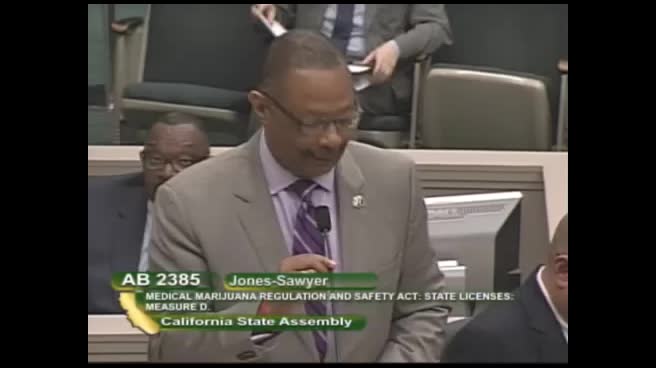 17MIN
Assembly Standing Committee on Business and Professions
Bill Author

Bill Co-Author(s):