AB 2416: Escrow agent rating service.
- Session Year: 2015-2016
- House: Assembly
- Latest Version Date: 2016-08-17
Existing law, the Consumer Credit Reporting Agencies Act, requires every consumer credit reporting agency, upon request and proper identification of any consumer, to allow the consumer to visually inspect all files maintained regarding that consumer at the time of the request. Existing law requires every consumer reporting agency to advise the consumer of the agencys obligation to provide a decoded written version of the file. Existing law grants the consumer the right to request and receive a decoded written version of the file. Existing law requires a consumer credit reporting agency to disclose the recipients of any consumer credit report on the consumer which the consumer credit reporting agency has furnished, as specified.
Under existing law, a consumer credit reporting agency is required to furnish a consumer credit report only under certain circumstances, including in accordance with the written instructions of the consumer to whom it relates. Existing law prohibits a consumer credit reporting agency from making any consumer credit report containing specified information. Existing law requires every consumer credit reporting agency to maintain reasonable procedures designed to avoid disclosing certain information and to limit the furnishing of consumer credit reports to specified purposes. If the completeness or accuracy of any item of information in a consumers file is disputed by the consumer, existing law requires the consumer credit reporting agency to reinvestigate and record the current status of the disputed information within a specified period of time. Existing law requires each consumer credit reporting agency that compiles and reports items of information that are matters of public record to specify the source from which that information was obtained. Existing law requires a person that procures a consumer credit report for the purpose of reselling the report to take specified actions.
Existing law authorizes any consumer suffering damages as a result of a violation of the Consumer Credit Reporting Agencies Act by any person to bring a court action for damages or injunctive relief, as specified.
Existing law requires an escrow agent rating service, as defined, to comply with the provisions described above. Existing law makes an escrow agent rating service subject to the requirements applicable to a reseller of credit information if it acts in that capacity, as specified. Existing law requires an escrow agent rating service to establish policies and procedures to protect the personal information it obtains from escrow agents. Existing law authorizes an escrow agent, as defined, who suffers damages as a result of the failure of an escrow agent rating service to comply with these provisions to bring a court action for specified damages. Existing law repeals, on January 1, 2017, these escrow agent rating service requirements.
This bill would instead extend the operation of the escrow agent rating service requirements until January 1, 2022.
Existing law, the Consumer Credit Reporting Agencies Act, requires every consumer credit reporting agency, upon request and proper identification of any consumer, to allow the consumer to visually inspect all files maintained regarding that consumer at the time of the request. Existing law requires every consumer reporting agency to advise the consumer of the agencys obligation to provide a decoded written version of the file. Existing law grants the consumer the right to request and receive a decoded written version of the file. Existing law requires a consumer credit reporting agency to disclose the recipients of any consumer credit report on the consumer which the consumer credit reporting agency has furnished, as specified.
Under existing law, a consumer credit reporting agency is required to furnish a consumer credit report only under certain circumstances, including in accordance with the written instructions of the consumer to whom it relates. Existing law prohibits a consumer credit reporting agency from making any consumer credit report containing specified information. Existing law requires every consumer credit reporting agency to maintain reasonable procedures designed to avoid disclosing certain information and to limit the furnishing of consumer credit reports to specified purposes. If the completeness or accuracy of any item of information in a consumers file is disputed by the consumer, existing law requires the consumer credit reporting agency to reinvestigate and record the current status of the disputed information within a specified period of time. Existing law requires each consumer credit reporting agency that compiles and reports items of information that are matters of public record to specify the source from which that information was obtained. Existing law requires a person that procures a consumer credit report for the purpose of reselling the report to take specified actions.
Existing law authorizes any consumer suffering damages as a result of a violation of the Consumer Credit Reporting Agencies Act by any person to bring a court action for damages or injunctive relief, as specified.
Existing law requires an escrow agent rating service, as defined, to comply with the provisions described above. Existing law makes an escrow agent rating service subject to the requirements applicable to a reseller of credit information if it acts in that capacity, as specified. Existing law requires an escrow agent rating service to establish policies and procedures to protect the personal information it obtains from escrow agents. Existing law authorizes an escrow agent, as defined, who suffers damages as a result of the failure of an escrow agent rating service to comply with these provisions to bring a court action for specified damages. Existing law repeals, on January 1, 2017, these escrow agent rating service requirements.
This bill would instead extend the operation of the escrow agent rating service requirements until January 1, 2022.
Existing law, the Consumer Credit Reporting Agencies Act, requires every consumer credit reporting agency, upon request and proper identification of any consumer, to allow the consumer to visually inspect all files maintained regarding that consumer at the time of the request. Existing law requires every consumer reporting agency to advise the consumer of the agencys obligation to provide a decoded written version of the file. Existing law grants the consumer the right to request and receive a decoded written version of the file. Existing law requires a consumer credit reporting agency to disclose the recipients of any consumer credit report on the consumer which the consumer credit reporting agency has furnished, as specified.
Under existing law, a consumer credit reporting agency is required to furnish a consumer credit report only under certain circumstances, including in accordance with the written instructions of the consumer to whom it relates. Existing law prohibits a consumer credit reporting agency from making any consumer credit report containing specified information. Existing law requires every consumer credit reporting agency to maintain reasonable procedures designed to avoid disclosing certain information and to limit the furnishing of consumer credit reports to specified purposes. If the completeness or accuracy of any item of information in a consumers file is disputed by the consumer, existing law requires the consumer credit reporting agency to reinvestigate and record the current status of the disputed information within a specified period of time. Existing law requires each consumer credit reporting agency that compiles and reports items of information that are matters of public record to specify the source from which that information was obtained. Existing law requires a person that procures a consumer credit report for the purpose of reselling the report to take specified actions.
Existing law authorizes any consumer suffering damages as a result of a violation of the Consumer Credit Reporting Agencies Act by any person to bring a court action for damages or injunctive relief, as specified.
Existing law requires an escrow agent rating service, as defined, to comply with the provisions described above. Existing law makes an escrow agent rating service subject to the requirements applicable to a reseller of credit information if it acts in that capacity, as specified. Existing law requires an escrow agent rating service to establish policies and procedures to protect the personal information it obtains from escrow agents. Existing law authorizes an escrow agent, as defined, who suffers damages as a result of the failure of an escrow agent rating service to comply with these provisions to bring a court action for specified damages. Existing law repeals, on January 1, 2017, these escrow agent rating service requirements.
This bill would instead extend the operation of the escrow agent rating service requirements indefinitely. until January 1, 2022.
Existing law, the Consumer Credit Reporting Agencies Act, requires every consumer credit reporting agency, upon request and proper identification of any consumer, to allow the consumer to visually inspect all files maintained regarding that consumer at the time of the request. Existing law requires every consumer reporting agency to advise the consumer of the agencys obligation to provide a decoded written version of the file. Existing law grants the consumer the right to request and receive a decoded written version of the file. Existing law requires a consumer credit reporting agency to disclose the recipients of any consumer credit report on the consumer which the consumer credit reporting agency has furnished, as specified.
Under existing law, a consumer credit reporting agency is required to furnish a consumer credit report only under certain circumstances, including in accordance with the written instructions of the consumer to whom it relates. Existing law prohibits a consumer credit reporting agency from making any consumer credit report containing specified information. Existing law requires every consumer credit reporting agency to maintain reasonable procedures designed to avoid disclosing certain information and to limit the furnishing of consumer credit reports to specified purposes. If the completeness or accuracy of any item of information in a consumers file is disputed by the consumer, existing law requires the consumer credit reporting agency to reinvestigate and record the current status of the disputed information within a specified period of time. Existing law requires each consumer credit reporting agency that compiles and reports items of information that are matters of public record to specify the source from which that information was obtained. Existing law requires a person that procures a consumer credit report for the purpose of reselling the report to take specified actions.
Existing law authorizes any consumer suffering damages as a result of a violation of the Consumer Credit Reporting Agencies Act by any person to bring a court action for damages or injunctive relief, as specified.
Existing law requires an escrow agent rating service, as defined, to comply with the provisions described above. Existing law makes an escrow agent rating service subject to the requirements applicable to a reseller of credit information if it acts in that capacity, as specified. Existing law requires an escrow agent rating service to establish policies and procedures to protect the personal information it obtains from escrow agents. Existing law authorizes an escrow agent, as defined, who suffers damages as a result of the failure of an escrow agent rating service to comply with these provisions to bring a court action for specified damages. Existing law repeals, on January 1, 2017, these escrow agent rating service requirements.
This bill would instead extend the operation of the escrow agent rating service requirements indefinitely.
This chapter shall remain in effect only until January 1, 2022, and as of that date is repealed.
This chapter shall remain in effect only until January 1, 2022, and as of that date is repealed.
This chapter shall remain in effect only until January 1, 2017, 2022, and as of that date is repealed, unless a later enacted statute, that is enacted before January 1, 2017, deletes or extends that date. repealed.
This chapter shall remain in effect only until January 1, 2017, and as of that date is repealed, unless a later enacted statute, that is enacted before January 1, 2017, deletes or extends that date.
|
Date
|
Status
|
|---|---|
| Jun 20, 2016 | From committee: Amend, and do pass as amended. To Consent Calendar. (Ayes 7. Noes 0.) (June 14). |
| Aug 17, 2016 | Chaptered by Secretary of State - Chapter 135, Statutes of 2016. |
| Aug 17, 2016 | Approved by the Governor. |
| Aug 5, 2016 | Enrolled and presented to the Governor at 2:30 p.m. |
| Aug 1, 2016 | Senate amendments concurred in. To Engrossing and Enrolling. (Ayes 76. Noes 0. Page 5639.). |
| Aug 1, 2016 | Senate amendments concurred in. To Engrossing and Enrolling. |
| Jun 30, 2016 | Read third time. Passed. Ordered to the Assembly. (Ayes 37. Noes 0. Page 4646.). |
| Jun 30, 2016 | Read third time. Passed. Ordered to the Assembly. |
| Jun 30, 2016 | In Assembly. Concurrence in Senate amendments pending. May be considered on or after July 30 pursuant to Assembly Rule 77. |
| Jun 30, 2016 | In Assembly. Concurrence in Senate amendments pending. May be considered on or after July 29 pursuant to Assembly Rule 77. |
| Jun 21, 2016 | Read second time and amended. Ordered to consent calendar. |
| Feb 19, 2016 | Introduced. To print. |
| May 12, 2016 | Referred to Com. on JUD. |
| May 2, 2016 | Read third time. Passed. Ordered to the Senate. (Ayes 76. Noes 0. Page 4626.) |
| May 2, 2016 | Read third time. Passed. Ordered to the Senate. |
| May 2, 2016 | In Senate. Read first time. To Com. on RLS. for assignment. |
| Apr 27, 2016 | Read second time. Ordered to Consent Calendar. |
| Apr 26, 2016 | From committee: Do pass. To Consent Calendar. (Ayes 12. Noes 0.) (April 25). |
| Mar 8, 2016 | Referred to Com. on B. & F. |
| Feb 22, 2016 | Read first time. |
| Feb 21, 2016 | From printer. May be heard in committee March 22. |
|
Date
|
Description
|
Location
|
Votes
|
|
|---|---|---|---|---|
| Aug 1, 2016 | AB 2416 WILK Concurrence in Senate Amendments | Assembly Floor |
Passed |
|
| Jun 30, 2016 | Consent Calendar 2nd AB2416 Wilk | Senate Floor |
Passed |
|
| Jun 14, 2016 | Do pass as amended, and be ordered to the Consent Calendar | Senate Standing Committee on Judiciary |
Passed |
|
| May 2, 2016 | AB 2416 WILK Consent Calendar Second Day | Assembly Floor |
Passed |
|
| Apr 25, 2016 | Do pass. To Consent Calendar. | Assembly 1st Extraordinary Session on Finance |
Passed |
This list shows positions taken on this bill by organizations on the date displayed, which is linked to the original source.
Positions by individuals are not included.
|
Organization
|
Position
|
Date
|
|---|---|---|
| California Escrow Association | ** Support | Aug 1, 2016 |
| California Escrow Association - Sponsor | ** Support | Aug 1, 2016 |
| Escrow Institute Of California | ** Support | Aug 1, 2016 |
CONCURRENCE IN SENATE AMENDMENTS
CSA1 Bill Id:AB 2416
Author:(Wilk)
As Amended Ver:June 21, 2016
Majority vote
ASSEMBLY: | 76-0 | (May 2, 2016) | SENATE: | 37-0 | (June 30, 2016) |
Original Committee Reference: B. & F.
SUMMARY: Extends the sunset date from January 1, 2017, of the statute governing escrow agent rating services to January 1, 2022.
The Senate amendments extend the sunset date to January 1, 2022, rather than deleting the sunset date.
EXISTING LAW:
- Defines an escrow agent rating service as a person or entity that prepares a report, for compensation or in expectation of compensation, for use by a creditor in evaluating the capacity of an escrow agent to perform escrow services in connection with an extension of credit. An escrow agent rating service does not include either of the following: A creditor or an employee of a creditor evaluating an escrow agent in connection with an extension of credit by that creditor or an entity described in paragraph 2) below, for which a natural person performs escrow services as an employee or an independent contractor. [Civil Code, Section 1785.28]
- Provides a sunset date of January 1, 2017 unless a later enacted statute, that is enacted before January 1, 2017, deletes or extends that date. [Civil Code, Section 1785.28.6]
FISCAL EFFECT: None.
COMMENTS: In 2013, the California Legislature enacted protections for California escrow agents. New entities, defined as "escrow agent rating services" in Civil Code Section 1785.28, were evaluating the suitability of escrow agents to perform settlement services by examining credit information, bankruptcy filings, and other criteria. These companies were providing the services as third-party vendors for lenders to assist with federal requirements to conduct due diligence on their vendors. The 2013 bill applied protections from California's credit reporting laws to escrow agents, such as the right to receive a copy of any report produced by the rating service, and the right to dispute and correct inaccurate information. Without these protections, escrow agents could literally be put out of business based upon inaccurate information. The 2013 bill included a January 1, 2017 sunset date, to determine if any problems arose for lenders or others as a result of extending credit report protections to these ratings services. This bill extends the sunset date January 1, 2022.
Background:
The federal Consumer Financial Protection Bureau (CFPB), established by the Dodd-Frank Wall Street Reform and Consumer Protection Act of 2010 (Dodd-Frank Act), supervises 111 depository institutions and their affiliates. On April 13, 2012, the CFPB released a bulletin to clarify that institutions under CFPB supervision may be held responsible for the actions of the companies with which they contract. The CFPB further noted that:
Using outside vendors can pose additional risks. A service provider that is unfamiliar with consumer financial protection laws or has weak internal controls can harm consumers. The CFPB wants to ensure that consumers are protected from irresponsible service providers and that banks and nonbanks are contracting with honest third parties.
Today's bulletin states the Bureau's expectation that supervised financial institutions have an effective process for managing the risks of service provider relationships. The CFPB recommends that supervised financial institutions take steps to ensure that business arrangements with service providers do not present unwarranted risks to consumers. (CFPB, Consumer Financial Protection Bureau to hold financial institutions and their service providers accountable (Apr. 13, 2012) <http://www.consumerfinance.gov/pressreleases/consumer-financial-protection-bureau-to-hold-financial-institutions-and-their-service-providers-accountable/> [as of June 26, 2013].)
In response to that bulletin, some companies (self-described as "risk management providers" (RMPs)) now offer to vet service providers (such as escrow agents) for supervised financial institutions. Some of those companies reportedly charge fees to the service provider for inclusion (or preferential treatment) in their database and prepare reports using a combination of public and private data.
How do these RMPs work? For a fee, a settlement provider, such as an escrow agent, sign up to be included on a database managed by the RMP that generates a low, medium or high risk index score that is made available to lenders and others in the mortgage industry. Settlement service providers are told that they will receive preference by lenders for the use of their services because of the special vetting process. The fee for each settlement service provider is several hundred dollars per year to maintain "accreditation." A failure to maintain "accreditation" could lead a provider to lose business from lenders as these RMPs use information on settlement providers to create lists of vetted agents that are made available to supervised entities. As one company advertises, "These lenders and underwriters utilize the…list as their key source of closing professionals…" The implication here appears to be that either through a bad review or no review at all, a settlement service provider runs the risk of being pushed out of their industry.
The reports done by RMPs are prepared using a combination of public and private data, including credit reports, civil cases, arrest records, bankruptcy, unlawful detainer actions and more.
On December 5, 2012, the Commissioner of the Department of Corporations now known as the Department of Business Oversight issued Commissioner's Bulletin No: 001-12. The Commissioner's Bulletin addressed the rise of concerns relating to RMPs.
Analysis Prepared by: Kathleen OMalley / B. & F. / (916) 319-3081 FN: 0003595
Office of Senate Floor Analyses (916) 651-1520 Fax: (916) 327-4478 | AB |
CONSENT
Bill No: AB 2416
:
SENATE JUDICIARY COMMITTEE: 7-0, 6/14/16
AYES: Jackson, Moorlach, Anderson, Hertzberg, Leno, Monning, Wieckowski
ASSEMBLY FLOOR: 76-0, 5/2/16 (Consent) - See last page for vote
SOURCE: California Escrow Association
DIGEST: This bill extends, until January 1, 2022, a requirement that escrow agent rating services comply with specified portions of the California Consumer Credit Reporting Agencies Act, as well as specified policies and procedures intended to safeguard from theft or misuse any personally identifiable information such a service obtains from an escrow agent.
Existing law:
- Defines, in the Escrow Law, which is administered by the Department of Corporations, the following:
- “escrow” is any transaction in which one person, for the purpose of effecting the sale, transfer, encumbering, or leasing of real or personal property to another person, delivers any written instrument, money, evidence of title to real or personal property, or other thing of value to a third person to be held by that third person until the happening of a specified event or the performance of a prescribed condition, when it is then to be delivered by that third person to a grantee, grantor, promisee, promisor, obligee, obligor, bailee, bailor, or any agent or employee of any of the latter (Fin. Code Sec. 17003); and
- an escrow agent is any person engaged in the business of receiving escrows for deposit or delivery (Fin. Code Sec. 17004).
- Exempts the following from the Escrow Law:
- any person doing business under any state or federal law relating to banks, trust companies, building and loan or savings and loan associations, or insurance companies;
- any person licensed to practice law in California who has a bona fide client relationship with a principal in a real estate or personal property transaction and who is not actively engaged in the business of an escrow agent;
- any person whose principal business is that of preparing abstracts or making searches of title that are used as a basis for the issuance of a policy of title insurance by a company doing business under any law of this state relating to insurance companies; and
- any broker licensed by the Real Estate Commissioner while performing acts in the course of or incidental to a real estate transaction in which the broker is an agent or a party to the transaction and in which the broker is performing an act for which a real estate license is required. (Fin. Code Sec. 17006).
- Establishes, in the Consumer Credit Reporting Agencies Act (CCRAA), obligations of consumer credit reporting agencies, requirements for users of consumer credit reports, obligations of furnishers of credit information, and provides for remedies available to persons harmed through violations of the CCRAA, as specified. (Civ. Code Sec. 1785.1 et seq.)
- Requires an escrow agent rating service to comply with and be subject to the following provisions of the CCRAA:
- upon request and proper identification of any consumer, allow the consumer to visually inspect all files maintained regarding that consumer at the time of the request;
- inform a consumer of their right to request a decoded written version of the file a consumer credit reporting agency has on that consumer;
- disclose the recipients of any consumer credit report on the consumer which the consumer credit reporting agency has furnished within two-years preceding the consumer’s request;
- only furnish a consumer credit report in accordance with the written instructions of the consumer to whom it relates;
- prohibit a consumer credit report from containing: bankruptcies that antedate the report by more than 10 years; suits and judgments that antedate the report by more than seven years; unlawful detainer actions, unless the lessor was the prevailing party; paid tax liens that antedate the report by more than seven years; accounts placed for collection or charged to profit or loss that antedate the report by more than seven years; and records of arrest or other adverse information that antedates the report by more than seven years;
- maintain reasonable procedures to ensure that consumer credit reports are furnished only to persons entitled to receive them;
- allow a consumer to request and receive either a decoded written version of their file or a written copy of their file, including all information in the file at the time of the request, with an explanation of any code used;
- allow a consumer to dispute the completeness or accuracy of any item of information in his or her credit file, require the consumer credit reporting agency to reinvestigate information that is disputed, allow a consumer to include a note in his or her file disputing certain information, and require the consumer credit reporting agency to include a consumer’s note in any consumer credit report it provides that includes information being disputed by that consumer; and
- specify the source of any public records they include in their credit reports. (Civ. Code Sec. 1785.28 (b).)
- Provides that an escrow agent rating service that acts as a reseller of credit information shall comply with the following:
- only procure a consumer credit report for the purpose of reselling the report or any information therein if the person discloses to the consumer credit reporting agency which issues the report the identity of the ultimate end user and each permissible purpose for which the report is furnished to the end user of the consumer credit report or information therein; and
- if the report is procured for the purpose of reselling the report or any information in the report, the service must establish and comply with reasonable procedures designed to ensure that the report or information is resold by the person only for a purpose for which the report may legally be furnished. (Civ. Code Sec. 1785.28 (c).)
- Requires an escrow agent rating service to establish policies and procedures reasonably intended to safeguard from theft or misuse any personally identifiable information it obtains from an escrow agent. (Civ. Code Sec. 1785.28 (d).)
- Provides that an escrow agent who suffers damages as a result of the failure of an escrow agent rating service to comply with the above requirements may bring an action and recover the following:
- in the case of a negligent violation: actual damages, including court costs, loss of wages, attorney’s fees and costs, and, when applicable, pain and suffering;
- in the case of a willful violation: actual damages, including court costs, loss of wages, attorney’s fees and costs, plus punitive damages between $100 and $5,000 per violation, as the court deems proper, plus any other relief the court deems proper;
- in the case of a class action alleging a willful violation: punitive damages in an amount that the court may allow, plus attorney’s fees and costs; and
- in the case of injunctive relief to compel compliance with the above requirements: court costs and attorney’s fees. (Civ. Code Sec. 1785.28 (e).)
- Provides that if an escrow agent rating service is also a consumer credit reporting agency, as specified, it must also comply with other provisions of the CCRAA applicable to consumer credit reporting agencies. (Civ. Code Sec. 1785.28 (f).)
- Specifies that the above provisions shall remain in effect only until January 1, 2017, and on that date shall be repealed. (Civ. Code Sec. 1785.28.6.)
This bill extends the above sunset provision to January 1, 2022.
Background
The federal Consumer Financial Protection Bureau (CFPB), established by the Dodd-Frank Wall Street Reform and Consumer Protection Act of 2010, supervises over 100 depository institutions and their affiliates. On April 13, 2012, the CFPB released a bulletin to clarify that institutions under CFPB supervision may be held responsible for the actions of companies with which they contract. That bulletin, in part, stated:
The CFPB recognizes that the use of service providers is often an appropriate business decision for supervised banks and nonbanks. Supervised banks and nonbanks may outsource certain functions to service providers due to resource constraints, use service providers to develop and market additional products or services, or rely on expertise from service providers that would not otherwise be available without significant investment.
However, the mere fact that a supervised bank or nonbank enters into a business relationship with a service provider does not absolve the supervised bank or nonbank of responsibility for complying with Federal consumer financial law to avoid consumer harm. A service provider that is unfamiliar with the legal requirements applicable to the products or services being offered, or that does not make efforts to implement those requirements carefully and effectively, or that exhibits weak internal controls, can harm consumers and create potential liabilities for both the service provider and the entity with which it has a business relationship. Depending on the circumstances, legal responsibility may lie with the supervised bank or nonbank as well as with the supervised service provider.
. . .
The CFPB expects supervised banks and nonbanks to have an effective process for managing the risks of service provider relationships. The CFPB will apply these expectations consistently, regardless of whether it is a supervised bank or nonbank that has the relationship with a service provider. (CFPB, CFPB Bulletin 2012-03 (Apr. 13, 2012) <http://files.consumerfinance.gov/ f/201204_cfpb_bulletin_service-providers.pdf [as of May 24, 2016].)
In response to that bulletin, some companies (self-described as “risk management providers”) now offer to vet service providers (such as escrow agents) for supervised financial institutions. Some of those companies reportedly charge fees to the service provider for inclusion (or preferential treatment) in their database and prepare reports regarding these providers using a combination of public and private data. In 2013, the Legislature responded to concerns from escrow agents about the business practices of these companies by enacting AB 1169 (Daly, Chapter 380, Statutes of 2013). AB 1169 enacted safeguards to ensure that escrow agents are able to obtain access to information that these third party vetting companies have collected about them, as well as to challenge information they believe is incorrect or misleading.
By its terms, the safeguards enacted by AB 1169 will sunset on January 1, 2017. This bill extends that sunset date to January 1, 2022.
Comments
According to the author:
In 2013, the Legislature enacted Assembly Bill 1169 (Daly), which created . . . Chapter 3.6, commencing with Section 1785.28 to the California Civil Code. The intent of the bill was to apply provisions of California’s credit reporting law to “escrow agent rating services” which purport to evaluate the suitability of escrow professionals to close transactions. The bill was approved unanimously in both houses. The bill contains a January 1, 2017 sunset clause, codified at Section 1785.28.6.
Without the protections provided by existing provisions of the Civil Code, escrow agent rating services could incorporate inaccurate credit or bankruptcy data in evaluations of escrow agent settlement services providers, effectively putting these escrow agents out of business based upon inaccurate data. As noted in the analysis of AB 1169 prepared by the Assembly Banking and Finance Committee, these companies are clearly evaluating credit information in assigning a low, medium or high risk index score to be made available to lenders and others in the mortgage industry. These index scores are thus not unlike credit scores in the consumer context. The law does not prohibit the evaluative process; in fact lenders have been evaluating settlement service providers for many years and new rules promulgated pursuant to Dodd-Frank obligate lenders to perform due diligence on vendors. Existing law also does not affect evaluations performed by lenders themselves. Instead, the law applies to third-party evaluation entities.
Related/Prior Legislation
AB 1169 (Daly, Chapter 380, Statutes of 2013) required, until January 1, 2017, an escrow agent rating service to comply with specified portions of the California Consumer Credit Reporting Agencies Act, and established policies and procedures reasonably intended to safeguard from theft or misuse any personally identifiable information obtained from an escrow agent.
FISCAL EFFECT: Appropriation: Fiscal Com.: Local:
California Escrow Association (source)
Escrow Institute of California
OPPOSITION: (Verified 6/14/16)
None received
ASSEMBLY FLOOR: 76-0, 5/2/16
AYES: Achadjian, Alejo, Travis Allen, Arambula, Atkins, Baker, Bigelow, Bloom, Bonilla, Bonta, Brough, Brown, Burke, Calderon, Campos, Chang, Chau, Chávez, Chiu, Chu, Cooley, Cooper, Dababneh, Dahle, Daly, Dodd, Eggman, Frazier, Gallagher, Cristina Garcia, Eduardo Garcia, Gatto, Gipson, Gomez, Gonzalez, Gordon, Gray, Grove, Hadley, Harper, Holden, Irwin, Jones, Jones-Sawyer, Kim, Lackey, Levine, Linder, Lopez, Low, Maienschein, Mathis, Mayes, McCarty, Medina, Melendez, Mullin, Nazarian, Obernolte, O'Donnell, Olsen, Patterson, Quirk, Rodriguez, Salas, Santiago, Steinorth, Mark Stone, Thurmond, Ting, Wagner, Waldron, Weber, Wilk, Wood, Rendon
NO VOTE RECORDED: Beth Gaines, Roger Hernández, Ridley-Thomas, Williams
6/22/16 15:14:53
**** END ****
Senator Hannah-Beth Jackson, Chair
2015-2016 Regular Session
Bill No: AB 2416 (Author:Wilk)
Version: February 19, 2016
Hearing Date: June 14, 2016
Fiscal: No
Urgency: No
Consultant: TH
SUBJECT
Escrow Agent Rating Service
DESCRIPTION
Existing law, until January 1, 2017, requires an escrow agent rating service to comply with specified portions of the California Consumer Credit Reporting Agencies Act, and establishes policies and procedures reasonably intended to safeguard from theft or misuse any personally identifiable information the service obtains from an escrow agent.
This bill would eliminate the above sunset, thereby extending these requirements indefinitely.
BACKGROUND
The federal Consumer Financial Protection Bureau (CFPB), established by the Dodd-Frank Wall Street Reform and Consumer Protection Act of 2010 (Dodd-Frank Act), supervises over 100 depository institutions and their affiliates. On April 13, 2012, the CFPB released a bulletin to clarify that institutions under CFPB supervision may be held responsible for the actions of companies with which they contract. That bulletin, in part, stated:
The CFPB recognizes that the use of service providers is often an appropriate business decision for supervised banks and nonbanks. Supervised banks and nonbanks may outsource certain functions to service providers due to resource constraints, use service providers to develop and market additional products or services, or rely on expertise from service providers that would not otherwise be available without significant investment.
However, the mere fact that a supervised bank or nonbank enters into a business relationship with a service provider does not absolve the supervised bank or nonbank of responsibility for complying with Federal consumer financial law to avoid consumer harm. A service provider that is unfamiliar with the legal requirements applicable to the products or services being offered, or that does not make efforts to implement those requirements carefully and effectively, or that exhibits weak internal controls, can harm consumers and create potential liabilities for both the service provider and the entity with which it has a business relationship. Depending on the circumstances, legal responsibility may lie with the supervised bank or nonbank as well as with the supervised service provider.
. . .
The CFPB expects supervised banks and nonbanks to have an effective process for managing the risks of service provider relationships. The CFPB will apply these expectations consistently, regardless of whether it is a supervised bank or nonbank that has the relationship with a service provider. (CFPB, CFPB Bulletin 2012-03 (Apr. 13, 2012) <http://files.consumerfinance.gov/f/201204_cfpb_bulletin_service-providers.pdf> [as of May 24, 2016].)
In response to that bulletin, some companies (self-described as “risk management providers”) now offer to vet service providers (such as escrow agents) for supervised financial institutions. Some of those companies reportedly charge fees to the service provider for inclusion (or preferential treatment) in their database and prepare reports regarding these providers using a combination of public and private data. In 2013, the Legislature responded to concerns from escrow agents about the business practices of these companies by enacting AB 1169 (Daly, Ch. 380, Stats. 2013). AB 1169 enacted safeguards to ensure that escrow agents are able to obtain access to information that these third party vetting companies have collected about them, as well as to challenge information they believe is incorrect or misleading.
By its terms, the safeguards enacted by AB 1169 will sunset on January 1, 2017. This bill eliminates that sunset, thereby extending these safeguards in perpetuity.
CHANGES TO EXISTING LAW
Existing law, the Escrow Law, which is administered by the Department of Corporations, includes the following definitions:
- “escrow” is any transaction in which one person, for the purpose of effecting the sale, transfer, encumbering, or leasing of real or personal property to another person, delivers any written instrument, money, evidence of title to real or personal property, or other thing of value to a third person to be held by that third person until the happening of a specified event or the performance of a prescribed condition, when it is then to be delivered by that third person to a grantee, grantor, promisee, promisor, obligee, obligor, bailee, bailor, or any agent or employee of any of the latter (Fin. Code Sec. 17003); and
- an escrow agent is any person engaged in the business of receiving escrows for deposit or delivery (Fin. Code Sec. 17004).
Existing law exempts the following from the Escrow Law:
- any person doing business under any state or federal law relating to banks, trust companies, building and loan or savings and loan associations, or insurance companies;
- any person licensed to practice law in California who has a bona fide client relationship with a principal in a real estate or personal property transaction and who is not actively engaged in the business of an escrow agent;
- any person whose principal business is that of preparing abstracts or making searches of title that are used as a basis for the issuance of a policy of title insurance by a company doing business under any law of this state relating to insurance companies; and
- any broker licensed by the Real Estate Commissioner while performing acts in the course of or incidental to a real estate transaction in which the broker is an agent or a party to the transaction and in which the broker is performing an act for which a real estate license is required. (Fin. Code Sec. 17006).
Existing law, the Consumer Credit Reporting Agencies Act (CCRAA), establishes obligations of consumer credit reporting agencies, requirements for users of consumer credit reports, obligations of furnishers of credit information, and provides for remedies available to persons harmed through violations of the CCRAA, as specified. (Civ. Code Sec. 1785.1 et seq.)
Existing law requires an escrow agent rating service to comply with and be subject to the following provisions of the CCRAA:
- upon request and proper identification of any consumer, allow the consumer to visually inspect all files maintained regarding that consumer at the time of the request;
- inform a consumer of their right to request a decoded written version of the file a consumer credit reporting agency has on that consumer;
- disclose the recipients of any consumer credit report on the consumer which the consumer credit reporting agency has furnished within two-years preceding the consumer’s request;
- only furnish a consumer credit report in accordance with the written instructions of the consumer to whom it relates;
- prohibit a consumer credit report from containing: bankruptcies that antedate the report by more than 10 years; suits and judgments that antedate the report by more than seven years; unlawful detainer actions, unless the lessor was the prevailing party; paid tax liens that antedate the report by more than seven years; accounts placed for collection or charged to profit or loss that antedate the report by more than seven years; and records of arrest or other adverse information that antedates the report by more than seven years;
- maintain reasonable procedures to ensure that consumer credit reports are furnished only to persons entitled to receive them;
- allow a consumer to request and receive either a decoded written version of their file or a written copy of their file, including all information in the file at the time of the request, with an explanation of any code used;
- allow a consumer to dispute the completeness or accuracy of any item of information in his or her credit file, require the consumer credit reporting agency to reinvestigate information that is disputed, allow a consumer to include a note in his or her file disputing certain information, and require the consumer credit reporting agency to include a consumer’s note in any consumer credit report it provides that includes information being disputed by that consumer; and
- specify the source of any public records they include in their credit reports. (Civ. Code Sec. 1785.28 (b).)
Existing law additionally provides that an escrow agent rating service that acts as a reseller of credit information shall comply with the following:
- only procure a consumer credit report for the purpose of reselling the report or any information therein if the person discloses to the consumer credit reporting agency which issues the report the identity of the ultimate end user and each permissible purpose for which the report is furnished to the end user of the consumer credit report or information therein; and
- if the report is procured for the purpose of reselling the report or any information in the report, the service must establish and comply with reasonable procedures designed to ensure that the report or information is resold by the person only for a purpose for which the report may legally be furnished. (Civ. Code Sec. 1785.28 (c).)
Existing law requires an escrow agent rating service to establish policies and procedures reasonably intended to safeguard from theft or misuse any personally identifiable information it obtains from an escrow agent. (Civ. Code Sec. 1785.28 (d).)
Existing law provides that an escrow agent who suffers damages as a result of the failure of an escrow agent rating service to comply with the above requirements may bring an action and recover the following:
- in the case of a negligent violation: actual damages, including court costs, loss of wages, attorney’s fees and costs, and, when applicable, pain and suffering;
- in the case of a willful violation: actual damages, including court costs, loss of wages, attorney’s fees and costs, plus punitive damages between $100 and $5,000 per violation, as the court deems proper, plus any other relief the court deems proper;
- in the case of a class action alleging a willful violation: punitive damages in an amount that the court may allow, plus attorney’s fees and costs; and
- in the case of injunctive relief to compel compliance with the above requirements: court costs and attorney’s fees. (Civ. Code Sec. 1785.28 (e).)
Existing law provides that if an escrow agent rating service is also a consumer credit reporting agency, as specified, it must also comply with other provisions of the CCRAA applicable to consumer credit reporting agencies. (Civ. Code Sec. 1785.28 (f).)
Existing law specifies that the above provisions shall remain in effect only until January 1, 2017, and on that date shall be repealed. (Civ. Code Sec. 1785.28.6.)
This bill would remove the above sunset provision, thereby extending these provisions of existing law indefinitely.
COMMENT
- Stated need for the bill
According to the author:
In 2013, the Legislature enacted Assembly Bill 1169 (Daly), which created . . . Chapter 3.6, commencing with Section 1785.28 to the California Civil Code. The intent of the bill was to apply provisions of California’s credit reporting law to “escrow agent rating services” which purport to evaluate the suitability of escrow professionals to close transactions. The bill was approved unanimously in both houses. The bill contains a January 1, 2017 sunset clause, codified at Section 1785.28.6.
Without the protections provided by existing provisions of the Civil Code, escrow agent rating services could incorporate inaccurate credit or bankruptcy data in evaluations of escrow agent settlement services providers, effectively putting these escrow agents out of business based upon inaccurate data. As noted in the analysis of AB 1169 prepared by the Assembly Banking and Finance Committee, these companies are clearly evaluating credit information in assigning a low, medium or high risk index score to be made available to lenders and others in the mortgage industry. These index scores are thus not unlike credit scores in the consumer context. The law does not prohibit the evaluative process; in fact lenders have been evaluating settlement service providers for many years and new rules promulgated pursuant to Dodd-Frank obligate lenders to perform due diligence on vendors. Existing law also does not affect evaluations performed by lenders themselves. Instead, the law applies to third-party evaluation entities.
- Removal of sunset provision
Existing law protects escrow agents from being subjected to unfair business practices by third-party escrow rating or vetting companies by applying certain provisions of the Consumer Credit Reporting Agencies Act (CCRAA) to these companies. Existing law, among other things, grants escrow agents the right to inspect the files a rating service maintains pertaining to that agent, grants agents the right to receive a decoded copy of the file, prohibits reports from containing certain adverse events that are over seven or ten years old, and allows an escrow agent to dispute the completeness or accuracy of any item in his or her file. Existing law also requires an escrow agent rating service to establish policies and procedures reasonably intended to safeguard from theft or misuse any personally identifiable information it obtains from an escrow agent.
The Escrow Institute of California, writing in support, states:
The Daly bill was enacted to address the emergence of unregulated “risk management providers” (RMPs) that organized following the issuance of Bulletin 2012-03 on April 13, 2012 by the Consumer Financial Protection Bureau (CFPB). The Thesis that has been promoted since 2012 by certain out-of-state unregulated RMPs is that the CFPB Bulletin requires some level of “vetting” of settlement service providers which, from our discussions with the CFPB, is not accurate.
From our limited analysis and input we have received from attorneys that have a significant base of escrow agent client representation is that the requirements and safeguards to ensure that these third party RMPs maintain proper policies and procedures to protect information from escrow agents, that escrow agents have the ability to access any information that these third party vetting companies may have collected about them, and that escrow agents may challenge that information if they believe it is incorrect or misleading, has seemed to serve as a necessary caution and warning to these unregulated risk management providers. Further, the law provides some level of protections and legal rights for California Escrow Agents and their clients should any information be misused or compromised . . .
Despite their apparent utility, information received from the sponsor of this bill suggests that these protections are rarely invoked, and that they instead serve more of a deterrent role in protecting escrow agents from unfair business practices. Given the lack of sufficient information to determine whether these provisions operate as intended for those who invoke them directly, the author offers the following amendment to extend the current sunset period by an additional five years.
Author’s Amendment:
On page 2, strike lines 2 through 5, and insert: “1785.28.6. This chapter shall remain in effect only until January 1, 2022, and as of that date is repealed, unless a later enacted statute, that is enacted before January 1, 2022, deletes or extends that date.”
Support: Escrow Institute of California
Opposition: None Known
HISTORY
Source: California Escrow Association
Related Pending Legislation: None Known
Prior Legislation: AB 1169 (Daly, Ch. 380, Stats. 2013) required, until January 1, 2017, an escrow agent rating service to comply with specified portions of the California Consumer Credit Reporting Agencies Act, and established policies and procedures reasonably intended to safeguard from theft or misuse any personally identifiable information obtained from an escrow agent.
Prior Vote:
Assembly Floor (Ayes 76, Noes 0)
Assembly Banking and Finance Committee (Ayes 12, Noes 0)
**************
Date of Hearing: April 25, 2016
ASSEMBLY COMMITTEE ON BANKING AND FINANCE
Matthew Dababneh, Chair
ABPCA Bill Id:AB 2416 (
Author:Wilk) – As Introduced Ver:February 19, 2016
SUBJECT: Escrow agent rating service
SUMMARY: Deletes the sunset date of January 1, 2017 of the statute governing escrow agent rating services thereby extending the statute indefinitely.
EXISTING LAW:
- Defines an escrow agent rating service as a person or entity that prepares a report, for compensation or in expectation of compensation, for use by a creditor in evaluating the capacity of an escrow agent to perform escrow services in connection with an extension of credit. An escrow agent rating service does not include either of the following: A creditor or an employee of a creditor evaluating an escrow agent in connection with an extension of credit by that creditor or an entity described in paragraph (2) for which a natural person performs escrow services as an employee or an independent contractor. [Civil Code, Section 1785.28]
- Provides a sunset date of January 1, 2017 unless a later enacted statute, that is enacted before January 1, 2017, deletes or extends that date. [Civil Code, Section 1785.28.6]
FISCAL EFFECT: None.
COMMENTS:
In 2013, the California Legislature enacted protections for California escrow agents. New entities, defined as “escrow agent rating services” in Civil Code Section 1785.28, were evaluating the suitability of escrow agents to perform settlement services by examining credit information, bankruptcy filings, and other criteria. These companies were providing the services as third-party vendors for lenders to assist with federal requirements to conduct due diligence on their vendors. The 2013 bill applied protections from California’s credit reporting laws to escrow agents, such as the right to receive a copy of any report produced by the rating service, and the right to dispute and correct inaccurate information. Without these protections, escrow agents could literally be put out of business based upon inaccurate information. The 2013 bill included a January 1, 2017 sunset date, to determine if any problems arose for lenders or others as a result of extending credit report protections to these ratings services. Assembly Bill 2416 merely repeals this sunset date.
Background:
The federal Consumer Financial Protection Bureau (CFPB), established by the Dodd-Frank Wall Street Reform and Consumer Protection Act of 2010 (Dodd-Frank Act), supervises 111 depository institutions and their affiliates. On April 13, 2012, the CFPB released a bulletin to clarify that institutions under CFPB supervision may be held responsible for the actions of the companies with which they contract. The CFPB further noted that:
Using outside vendors can pose additional risks. A service provider that is unfamiliar with consumer financial protection laws or has weak internal controls can harm consumers. The CFPB wants to ensure that consumers are protected from irresponsible service providers and that banks and nonbanks are contracting with honest third parties.
Today’s bulletin states the Bureau’s expectation that supervised financial institutions have an effective process for managing the risks of service provider relationships. The CFPB recommends that supervised financial institutions take steps to ensure that business arrangements with service providers do not present unwarranted risks to consumers. (CFPB, Consumer Financial Protection Bureau to hold financial institutions and their service providers accountable (Apr. 13, 2012) <http://www.consumerfinance.gov/pressreleases/consumer-financial-protection-bureau-to-hold-financial-institutions-and-their-service-providers-accountable/> [as of June 26, 2013].)
In response to that bulletin, some companies (self-described as “risk management providers” (RMPs)) now offer to vet service providers (such as escrow agents) for supervised financial institutions. Some of those companies reportedly charge fees to the service provider for inclusion (or preferential treatment) in their database and prepare reports using a combination of public and private data.
How do these RMPs work? For a fee, a settlement provider, such as an escrow agent, sign up to be included on a database managed by the RMP that generates a low, medium or high risk index score that is made available to lenders and others in the mortgage industry. Settlement service providers are told that they will receive preference by lenders for the use of their services because of the special vetting process. The fee for each settlement service provider is several hundred dollars per year to maintain "accreditation." A failure to maintain "accreditation" could lead a provider to lose business from lenders as these RMPs use information on settlement providers to create lists of vetted agents that are made available to supervised entities. As one company advertises, "These lenders and underwriters utilize the…list as their key source of closing professionals…" The implication here appears to be that either through a bad review or no review at all, a settlement service provider runs the risk of being pushed out of their industry.
The reports done by RMPs are prepared using a combination of public and private data, including credit reports, civil cases, arrest records, bankruptcy, unlawful detainer actions and more.
On December 5, 2012, the Commissioner of the Department of Corporations now known as the Department of Business Oversight issued Commissioner's Bulletin No: 001-12. The Commissioner's Bulletin addressed the rise of concerns relating to RMPs.
Previous Legislation:
AB 1169 (Daly, Chapter 380, Statutes of 2013) defined the term “escrow agent rating service” and would, until January 1, 2017, require escrow agent rating services to comply with specified portions of the California Consumer Credit Reporting Agencies Act (CCRAA), and establish policies and procedures reasonably intended to safeguard from theft or misuse any personally identifiable information it obtains from an escrow agent.
REGISTERED SUPPORT / OPPOSITION:
Support
California Escrow Association (CEA) - Sponsor
Opposition
None on file.
Analysis Prepared by: Kathleen O'Malley / B. & F. / (916) 319-3081
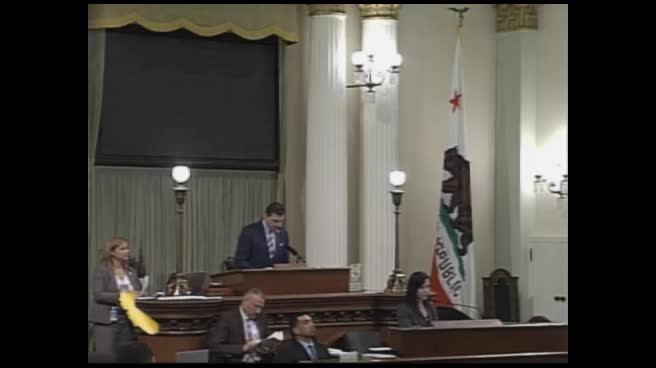
Bill Author

Bill Co-Author(s):