AB 2470: Municipal water districts: water service: Indian tribes.
- Session Year: 2015-2016
- House: Assembly
- Latest Version Date: 2016-09-12
Existing law, the Municipal Water District Law of 1911, provides for the formation of municipal water districts and grants to those districts specified powers. Existing law permits a district to acquire, control, distribute, store, spread, sink, treat, purify, recycle, recapture, and salvage any water for the beneficial use of the district, its inhabitants, or the owners of rights to water in the district. Existing law authorizes a district to sell water under its control, without preference, to cities, other public corporations and agencies, and persons, within the district for use within the district. Existing law authorizes a district to sell or otherwise dispose of water above that required by consumers within the district to any persons, public corporations or agencies, or other consumers.
This bill, upon the request of an Indian tribe and the satisfaction of certain conditions, would require a district to provide service of water at substantially the same terms applicable to the customers of the district to an Indian tribes lands that are not within a district, as prescribed, if the Indian tribes lands meet certain requirements and the Indian tribe satisfies prescribed conditions. The bill would deem the service areas of a district and of any public agencies providing water to the district for all purposes to include an Indian tribes land for a prescribed period of time if the district provides service of water to the Indian tribes lands under these provisions. By imposing new duties on a municipal water district, this bill would create a state-mandated local program.
The California Constitution requires the state to reimburse local agencies and school districts for certain costs mandated by the state. Statutory provisions establish procedures for making that reimbursement.
This bill would provide that no reimbursement is required by this act for a specified reason.
Existing law, the Municipal Water District Law of 1911, provides for the formation of municipal water districts and grants to those districts specified powers. Existing law permits a district to acquire, control, distribute, store, spread, sink, treat, purify, recycle, recapture, and salvage any water for the beneficial use of the district, its inhabitants, or the owners of rights to water in the district. Existing law authorizes a district to sell water under its control, without preference, to cities, other public corporations and agencies, and persons, within the district for use within the district. Existing law authorizes a district to sell or otherwise dispose of water above that required by consumers within the district to any persons, public corporations or agencies, or other consumers.
This bill, upon the request of an Indian tribe and the satisfaction of certain conditions, would require a district to provide service of water at substantially the same terms applicable to the customers of the district to an Indian tribes lands that are not within a district, as prescribed, if the Indian tribes lands meet certain requirements. requirements and the Indian tribe satisfies prescribed conditions. The bill would deem the service areas of a district and of any public agency agencies providing water to the district for all purposes to include an Indian tribes land for a prescribed period of time if the district provides service of water to the Indian tribes lands under these provisions. This bill would require an Indian tribe provided water service under these provisions to make all required payments as if it were annexed into a districts service area and would make the payments a condition of continued service of water by the district. By imposing new duties on a municipal water district, this bill would create a state-mandated local program.
The California Constitution requires the state to reimburse local agencies and school districts for certain costs mandated by the state. Statutory provisions establish procedures for making that reimbursement.
This bill would provide that no reimbursement is required by this act for a specified reason.
Existing law, the Municipal Water District Law of 1911, provides for the formation of municipal water districts and grants to those districts specified powers. Existing law permits a district to acquire, control, distribute, store, spread, sink, treat, purify, recycle, recapture, and salvage any water for the beneficial use of the district, its inhabitants, or the owners of rights to water in the district. Existing law authorizes a district to sell water under its control, without preference, to cities, other public corporations and agencies, and persons, within the district for use within the district. Existing law authorizes a district to sell or otherwise dispose of water above that required by consumers within the district to any persons, public corporations or agencies, or other consumers.
This bill, upon the request of an Indian tribe, tribe and the satisfaction of certain conditions, would require a district to provide service of water at substantially the same terms available applicable to the current customers of the district to an Indian tribes lands that are not within a district, as prescribed, if the Indian tribes lands meet certain requirements. The bill would deem the service areas of a district and of any public agency providing water to the district for all purposes to include an Indian tribes land for a prescribed period of time if the district provides service of water to the Indian tribes lands under these provisions. This bill would require an Indian tribe provided water service under these provisions to make all required payments as if it were annexed into a districts service area and would make the payments a condition of continued service of water by the district. By imposing new duties on a municipal water district, this bill would create a state-mandated local program.
The California Constitution requires the state to reimburse local agencies and school districts for certain costs mandated by the state. Statutory provisions establish procedures for making that reimbursement.
This bill would provide that no reimbursement is required by this act for a specified reason.
Existing law, the Municipal Water District Law of 1911, provides for the formation of municipal water districts and grants to those districts specified powers. Existing law permits a district to acquire, control, distribute, store, spread, sink, treat, purify, recycle, recapture, and salvage any water for the beneficial use of the district, its inhabitants, or the owners of rights to water in the district. Existing law authorizes a district to sell water under its control, without preference, to cities, other public corporations and agencies, and persons, within the district for use within the district. Existing law authorizes a district to sell or otherwise dispose of water above that required by consumers within the district to any persons, public corporations or agencies, or other consumers.
This bill, upon the request of an Indian tribe, would authorize require a district to provide permanent or temporary service of water to Indian lands, as prescribed. This bill would exempt the provision of water pursuant to these provisions from the California Environmental Quality Act. at the same terms available to the current customers of the district to an Indian tribes lands that are not within a district, as prescribed, if the Indian tribes lands meet certain requirements. By imposing new duties on a municipal water district, this bill would create a state-mandated local program.
The California Constitution requires the state to reimburse local agencies and school districts for certain costs mandated by the state. Statutory provisions establish procedures for making that reimbursement.
This bill would provide that no reimbursement is required by this act for a specified reason.
Existing law, the Municipal Water District Law of 1911, provides for the formation of municipal water districts and grants to those districts specified powers. Existing law permits a district to acquire, control, distribute, store, spread, sink, treat, purify, recycle, recapture, and salvage any water for the beneficial use of the district, its inhabitants, or the owners of rights to water in the district. Existing law authorizes a district to sell water under its control, without preference, to cities, other public corporations and agencies, and persons, within the district for use within the district. Existing law authorizes a district to sell or otherwise dispose of water above that required by consumers within the district to any persons, public corporations or agencies, or other consumers.
This bill, upon the request of an Indian tribe, would require authorize a district to provide permanent or temporary service of water to Indian lands, as prescribed. This bill would exempt the provision of water pursuant to these provisions from the California Environmental Quality Act. By imposing new duties on a municipal water district, this bill would create a state-mandated local program.
The California Constitution requires the state to reimburse local agencies and school districts for certain costs mandated by the state. Statutory provisions establish procedures for making that reimbursement.
This bill would provide that no reimbursement is required by this act for a specified reason.
Existing law, the Municipal Water District Law of 1911, provides for the formation of municipal water districts and grants to those districts specified powers. Existing law permits a district to acquire, control, distribute, store, spread, sink, treat, purify, recycle, recapture, and salvage any water for the beneficial use of the district, its inhabitants, or the owners of rights to water in the district. Existing law authorizes a district to sell water under its control, without preference, to cities, other public corporations and agencies, and persons, within the district for use within the district. Existing law authorizes a district to sell or otherwise dispose of water above that required by consumers within the district to any persons, public corporations or agencies, or other consumers.
This bill, upon the request of an Indian tribe, would require a district to provide permanent or temporary service of water to Indian lands, as prescribed. This bill would exempt the provision of water pursuant to these provisions from the California Environmental Quality Act. By imposing new duties on a municipal water district, this bill would create a state-mandated local program.
The California Constitution requires the state to reimburse local agencies and school districts for certain costs mandated by the state. Statutory provisions establish procedures for making that reimbursement.
This bill would provide that no reimbursement is required by this act for a specified reason.
Existing law requires the State Water Resources Control Board and the 9 California regional water quality control boards to prescribe waste discharge requirements in accordance with the federal national pollutant discharge elimination system permit program established by the federal Clean Water Act and the Porter-Cologne Water Quality Control Act (state act). The state act requires regional boards to consist of 7 members appointed by the Governor, 6 of them on the basis of demonstrated interest or proven ability in the field of water quality and one as a public member not specifically associated with any enumerated qualification.
This bill would make nonsubstantive changes to these provisions.
Notwithstanding any other law:
(a)Upon the request of an Indian tribe and the satisfaction of the conditions stated in subdivision (b), a district shall provide service of water at substantially the same terms applicable to the customers of the district to an Indian tribes lands that are not within a district as if the lands had been fully annexed into the district and into any other public agencies required for the provision of water service if the Indian tribes lands meet all of the following requirements:
(1)The lands were owned by the tribe on January 1, 2016.
(2)The lands are contiguous with at least two districts.
(3)The lands lie within the special study area of at least one district.
(4)At least 70 percent of the Indian tribes total Indian lands are currently within the boundaries of one or more districts.
(b)Before a district provides service of water pursuant to this section, the Indian tribe shall satisfy all of the following conditions:
(1)The Indian tribe complies with all federal and tribal laws.
(2)The Indian tribe acquires all federal and tribal approvals necessary for the applicable district to provide water service to the tribal lands on substantially the same terms applicable to customers of the district.
(3)The Indian tribe shall by agreement accept all terms of, and payments to (including service payments), the district and any public agency providing water to said district, as if the Indian tribes lands were fully annexed into the district and into the service area of any other public agency, which terms and payments are also a condition of continued service by a district and by any public agency providing water to said district.
(c)If a district provides service of water to an Indian tribes lands pursuant to this section, the service areas of the district and of any public agencies providing water to the district are deemed for all purposes to include the Indian tribes lands for the longest of the following periods of time:
(1)The time service of water is provided by the district to the Indian tribe.
(2)The time moneys are owed by the Indian tribe to the district for the service of water.
(3)The term of any agreement between the district and the Indian tribe.
SEC. 2.No reimbursement is required by this act pursuant to Section 6 of Article XIIIB of the California Constitution because a local agency or school district has the authority to levy service charges, fees, or assessments sufficient to pay for the program or level of service mandated by this act, within the meaning of Section 17556 of the Government Code.
(a)Notwithstanding any other law, upon law:
(a)Upon the request of an Indian tribe and the satisfaction of the conditions stated in subdivision (b), a district shall provide service of water at substantially the same terms applicable to the customers of the district to an Indian tribes lands that are not within a district as if the lands had been fully annexed within into the district and any other special districts into any other public agencies required for the provision of water service if the Indian tribes lands meet all of the following requirements:
(1)The lands were owned by the tribe on January 1, 2016.
(2)The lands are contiguous with at least two districts.
(3)The lands lie within the special study area of at least one district.
(4)At least 70 percent of the Indian tribes total Indian lands are currently within the boundaries of one or more districts.
(b)Before a district provides service of water pursuant to this section, the Indian tribe shall satisfy both all of the following conditions:
(1)The Indian tribe complies with all federal and tribal laws.
(2)The Indian tribe acquires all federal and tribal approvals necessary for the applicable district to provide water service to the tribal lands on substantially the same terms applicable to customers of the district.
(3)The Indian tribe shall by agreement accept all terms of, and payments to (including service payments), the district and any public agency providing water to said district, as if the Indian tribes lands were fully annexed into the district and into the service area of any other public agency, which terms and payments are also a condition of continued service by a district and by any public agency providing water to said district.
(c)If a district provides service of water to an Indian tribes lands pursuant to this section, the service areas of the district and of any public agency agencies providing water to the district are deemed for all purposes to include the Indian tribes lands for the longest of the following periods of time:
(1)The time service of water is provided by the district to the Indian tribe.
(2)The time moneys are owed by the Indian tribe to the district for the service of water.
(3)The term of any agreement between the district and the Indian tribe.
(d)An Indian tribe provided water service pursuant to this section shall make all required payments, including service payments, as if it were annexed into a districts service area. The payments are a condition of continued service of water by the district pursuant to this section.
SEC. 2.No reimbursement is required by this act pursuant to Section 6 of Article XIIIB of the California Constitution because a local agency or school district has the authority to levy service charges, fees, or assessments sufficient to pay for the program or level of service mandated by this act, within the meaning of Section 17556 of the Government Code.
(a)Notwithstanding any other law, upon the request of an Indian tribe, tribe and the satisfaction of the conditions stated in subdivision (b), a district shall provide service of water at substantially the same terms available applicable to the current customers of the district to an Indian tribes lands that are not within a district as if the lands had been fully annexed within the district and any other special districts required for the provision of water service if the Indian tribes lands meet all of the following requirements:
(a)
(1)The lands were owned by the tribe on January 1, 2016.
(b)
(2)The lands are contiguous with at least two districts.
(c)
(3)The lands lie within the special study area of at least one district.
(d)
(4)At least 75 70 percent of the Indian tribes total Indian lands are currently within the boundaries of one or more districts.
(b)Before a district provides service of water pursuant to this section, the Indian tribe shall satisfy both of the following conditions:
(1)The Indian tribe complies with all federal and tribal laws.
(2)The Indian tribe acquires all federal and tribal approvals necessary for the applicable district to provide water service to the tribal lands on substantially the same terms applicable to customers of the district.
(c)If a district provides service of water to an Indian tribes lands pursuant to this section, the service areas of the district and of any public agency providing water to the district are deemed for all purposes to include the Indian tribes lands for the longest of the following periods of time:
(1)The time service of water is provided by the district to the Indian tribe.
(2)The time moneys are owed by the Indian tribe to the district for the service of water.
(3)The term of any agreement between the district and the Indian tribe.
(d)An Indian tribe provided water service pursuant to this section shall make all required payments, including service payments, as if it were annexed into a districts service area. The payments are a condition of continued service of water by the district pursuant to this section.
SEC. 2.No reimbursement is required by this act pursuant to Section 6 of Article XIIIB of the California Constitution because a local agency or school district has the authority to levy service charges, fees, or assessments sufficient to pay for the program or level of service mandated by this act, within the meaning of Section 17556 of the Government Code.
(a)Notwithstanding any other law, upon the request of an Indian tribe, a district may shall provide permanent or temporary service of water at the same terms available to the current customers of the district to an Indian tribes lands that are not within a municipal water district but are contiguous with at least two municipal water districts and lie within the special study area of at least one municipal water district, if at least 75 percent of the Indian tribes total Indian lands are currently within the boundaries of one or more municipal water districts. district as if the lands had been fully annexed within the district and any other special districts required for the provision of water service if the Indian tribes lands meet all of the following requirements:
(a)The lands were owned by the tribe on January 1, 2016.
(b)The lands are contiguous with at least two districts.
(c)The lands lie within the special study area of at least one district.
(d)At least 75 percent of the Indian tribes total Indian lands are currently within the boundaries of one or more districts.
(b)Division 13 (commencing with Section 21000) of the Public Resources Code does not apply to the provision of water service pursuant to this section.
SEC. 2.No reimbursement is required by this act pursuant to Section 6 of Article XIIIB of the California Constitution because a local agency or school district has the authority to levy service charges, fees, or assessments sufficient to pay for the program or level of service mandated by this act, within the meaning of Section 17556 of the Government Code.
(a)Notwithstanding any other law, upon the request of an Indian tribe, a district shall may provide permanent or temporary service of water at the same terms available to the current customers of the district to an Indian tribes lands that are not within a municipal water district but are contiguous with at least two municipal water districts and lie within the special study area of at least one municipal water district, if at least 75 percent of the Indian tribes total Indian lands are currently within the boundaries of one or more municipal water districts.
(b)Division 13 (commencing with Section 21000) of the Public Resources Code does not apply to the provision of water service pursuant to this section.
SEC. 2.No reimbursement is required by this act pursuant to Section 6 of Article XIIIB of the California Constitution because a local agency or school district has the authority to levy service charges, fees, or assessments sufficient to pay for the program or level of service mandated by this act, within the meaning of Section 17556 of the Government Code.
(a)Notwithstanding any other law, upon the request of an Indian tribe, a district shall provide permanent or temporary service of water at the same terms available to the current customers of the district to an Indian tribes lands that are not within a municipal water district but are contiguous with at least two municipal water districts and lie within the special study area of at least one municipal water district, if at least 75 percent of the Indian tribes total Indian lands are currently within the boundaries of one or more municipal water districts.
(b)Division 13 (commencing with Section 21000) of the Public Resources Code does not apply to the provision of water service pursuant to this section.
SEC. 2.No reimbursement is required by this act pursuant to Section 6 of Article XIIIB of the California Constitution because a local agency or school district has the authority to levy service charges, fees, or assessments sufficient to pay for the program or level of service mandated by this act, within the meaning of Section 17556 of the Government Code.
SECTION 1.Section 13201 of the Water Code is amended to read:13201.(a)There is a regional board for each of the regions described in Section 13200. Each board shall consist of seven members appointed by the Governor, each of whom shall represent, and act on behalf of, all the people and shall reside or have a principal place of business within the region.
(b)Except as specified in subdivision (c), each member shall be appointed on the basis of his or her demonstrated interest or proven ability in the field of water quality, including water pollution control, water resource management, water use, or water protection. The Governor shall consider appointments from the public and nonpublic sectors. In regard to appointments from the nonpublic sector, the Governor shall consider including members from key economic sectors in a given region, such as agriculture, industry, commercial activities, forestry, and fisheries.
(c)At least one member shall be appointed as a public member who is not required to meet the criteria established pursuant to subdivision (b).
(d)All persons appointed to a regional board shall be subject to Senate confirmation, but shall not be required to appear before any committee of the Senate for purposes of the confirmation unless specifically requested to appear by the Senate Committee on Rules.
(e)Insofar as practicable, appointments shall be made in a manner as to result in representation on the board from all parts of the region.
(f)Insofar as practicable, appointments shall be made in a manner as to result in representation on the board from diverse experiential backgrounds.
(g)Each member shall be appointed on the basis of his or her ability to attend substantially all meetings of the board and to actively discharge all duties and responsibilities of a member of the board.
(h)The reduction in the number of members of each regional board required by Chapter 39 of the Statutes of 2012 shall be achieved according to the ordinary expiration of the terms of incumbents and other vacancies. Notwithstanding Section 13202, the Governor shall not fill a vacancy on a regional board until the number of members serving on that regional board falls below seven members. If the numbers of members serving on the regional board falls below seven members, the Governor shall appoint or reappoint individuals pursuant to this section.
(a)There is a regional board for each of the regions described in Section 13200. Each board shall consist of seven members appointed by the Governor, each of whom shall represent, and act on behalf of, all the people and shall reside or have a principal place of business within the region.
(b)Except as specified in subdivision (c), each member shall be appointed on the basis of his or her demonstrated interest or proven ability in the field of water quality, including water pollution control, water resource management, water use, or water protection. The Governor shall consider appointments from the public and nonpublic sectors. In regard to appointments from the nonpublic sector, the Governor shall consider including members from key economic sectors in a given region, such as agriculture, industry, commercial activities, forestry, and fisheries.
(c)At least one member shall be appointed as a public member who is not required to meet the criteria established pursuant to subdivision (b).
(d)All persons appointed to a regional board shall be subject to Senate confirmation, but shall not be required to appear before any committee of the Senate for purposes of such the confirmation unless specifically requested to appear by the Senate Committee on Rules.
(e)Insofar as practicable, appointments shall be made in such a manner as to result in representation on the board from all parts of the region.
(f)Insofar as practicable, appointments shall be made in a manner as to result in representation on the board from diverse experiential backgrounds.
(g)Each member shall be appointed on the basis of his or her ability to attend substantially all meetings of the board and to actively discharge all duties and responsibilities of a member of the board.
(h)The reduction in the number of members of each regional board required by Chapter 39 of the act that added this subdivision Statutes of 2012 shall be achieved according to the ordinary expiration of the terms of incumbents and other vacancies. Notwithstanding Section 13202 13202, the Governor shall not fill a vacancy on any a regional board until the number of members serving on that regional board falls below seven members. When If the numbers of members serving on the regional board falls below seven members, the Governor shall appoint or reappoint individuals pursuant to this section.
|
Date
|
Status
|
|---|---|
| May 18, 2016 | From committee: Do pass. To Consent Calendar. (Ayes 20. Noes 0.) (May 18). |
| Sep 12, 2016 | Chaptered by Secretary of State - Chapter 301, Statutes of 2016. |
| Sep 12, 2016 | Approved by the Governor. |
| Sep 2, 2016 | Enrolled and presented to the Governor at 12 p.m. |
| Aug 25, 2016 | In Assembly. Ordered to Engrossing and Enrolling. |
| Aug 16, 2016 | Read third time. Passed. Ordered to the Assembly. (Ayes 36. Noes 0.). |
| Aug 16, 2016 | Read third time. Passed. Ordered to the Assembly. (Ayes 36. Noes 0. Page 5010.). |
| Aug 16, 2016 | Read third time. Passed. Ordered to the Assembly. |
| Aug 2, 2016 | Read second time. Ordered to third reading. |
| Aug 1, 2016 | From committee: Be placed on second reading file pursuant to Senate Rule 28.8. |
| Jun 22, 2016 | From committee: Do pass and re-refer to Com. on APPR. (Ayes 5. Noes 0.) (June 22). Re-referred to Com. on APPR. |
| Jun 9, 2016 | Referred to Com. on GOV. & F. |
| May 27, 2016 | Read third time. Passed. Ordered to the Senate. (Ayes 67. Noes 0. Page 4959.) |
| May 27, 2016 | Read third time. Passed. Ordered to the Senate. |
| May 27, 2016 | In Senate. Read first time. To Com. on RLS. for assignment. |
| May 19, 2016 | Read second time. Ordered to Consent Calendar. |
| Feb 19, 2016 | Introduced. To print. |
| Apr 27, 2016 | Re-referred to Com. on APPR. |
| Apr 26, 2016 | From committee chair, with author's amendments: Amend, and re-refer to Com. on APPR. Read second time and amended. |
| Apr 21, 2016 | From committee: Do pass and re-refer to Com. on APPR. (Ayes 8. Noes 0.) (April 20). Re-referred to Com. on APPR. |
| Apr 13, 2016 | Re-referred to Com. on L. GOV. |
| Apr 12, 2016 | From committee chair, with author's amendments: Amend, and re-refer to Com. on L. GOV. Read second time and amended. |
| Apr 11, 2016 | In committee: Hearing postponed by committee. |
| Apr 5, 2016 | Re-referred to Com. on L. GOV. |
| Apr 4, 2016 | From committee chair, with author's amendments: Amend, and re-refer to Com. on L. GOV. Read second time and amended. |
| Mar 30, 2016 | Re-referred to Com. on L. GOV. |
| Mar 29, 2016 | Re-referred to Com. on L. GOV. |
| Mar 29, 2016 | From committee chair, with author's amendments: Amend, and re-refer to Com. on L. GOV. Read second time and amended. |
| Mar 28, 2016 | From committee chair, with author's amendments: Amend, and re-refer to Com. on L. GOV. Read second time and amended. |
| Mar 17, 2016 | Referred to Coms. on L. GOV. and NAT. RES. |
| Feb 22, 2016 | Read first time. |
| Feb 21, 2016 | From printer. May be heard in committee March 22. |
|
Date
|
Description
|
Location
|
Votes
|
|
|---|---|---|---|---|
| Aug 16, 2016 | Assembly 3rd Reading AB2470 Gonzalez By Anderson | Senate Floor |
Passed |
|
| Jun 22, 2016 | Do pass, but first be re-referred to the Committee on [Appropriations] | Senate Standing Committee on Governance and Finance |
Passed |
|
| May 27, 2016 | AB 2470 GONZALEZ Consent Calendar Second Day Regular Session | Assembly Floor |
Passed |
|
| May 18, 2016 | Do pass. To Consent Calendar. | Assembly Standing Committee on Appropriations |
Passed |
|
| Apr 20, 2016 | Do pass and be re-referred to the Committee on [Appropriations] | Assembly Standing Committee on Local Government |
Passed |
This list shows positions taken on this bill by organizations on the date displayed, which is linked to the original source.
Positions by individuals are not included.
|
Organization
|
Position
|
Date
|
|---|---|---|
| Ace Parking Management, Inc. | ** Support | Aug 16, 2016 |
| Agua Caliente Band of Cahuilla Indians Tribal Council | ** Support | Aug 16, 2016 |
| ASSEMBLY FLOOR: 67-0, 5 | ** Against | Aug 16, 2016 |
| Barona Band Of Mission Indians | ** Support | Aug 16, 2016 |
| Barrio Station | ** Support | Aug 16, 2016 |
| Butte Local Agency Formation Commission | ** Against | Aug 16, 2016 |
| California Teamsters Public Affairs Council | ** Support | Aug 16, 2016 |
| City of San Diego, Mayor Kevin L. Faulconer | ** Support | Aug 16, 2016 |
| City of Santee, Mayor Randy Voepel | ** Support | Aug 16, 2016 |
| Deputy Sheriff's Association of San Diego County | ** Support | Aug 16, 2016 |
| Endangered Habitats League | ** Support | Aug 16, 2016 |
| JDRF San Diego | ** Support | Aug 16, 2016 |
| JDRF, San Diego Chapter | ** Support | Apr 20, 2016 |
| Kumeyaay Diegueno Land Conservancy | ** Support | Aug 16, 2016 |
| Law Office of Cynthia L. Eldred, APC | ** Support | Apr 20, 2016 |
| Leong-Kuba Sea Products, Inc. | ** Support | Aug 16, 2016 |
| Mayor Kevin L. Faulconer, City of San Diego | ** Support | Apr 20, 2016 |
| Mayor Randy Voepel, City of Santee | ** Support | Apr 20, 2016 |
| Moceri Produce | ** Support | Aug 16, 2016 |
| Mothers Against Drunk Driving | ** Support | Aug 16, 2016 |
| Mothers Against Drunk Driving, San Diego Affiliate | ** Support | Apr 20, 2016 |
| Newport Meat Company | ** Support | Aug 16, 2016 |
| Ocean Defenders Alliance | ** Support | Aug 16, 2016 |
| One individual | ** Support | Aug 16, 2016 |
| Otay Water District | ** Support | Aug 16, 2016 |
| Padre Dam Municipal Water District | ** Support | Aug 16, 2016 |
| Paradise Creek Educational Park | ** Support | Aug 16, 2016 |
| Pepsi Beverages Company | ** Support | Aug 16, 2016 |
| PlanSEA.org | ** Support | Aug 16, 2016 |
| San Diego County Water Authority | ** Support | Aug 16, 2016 |
| San Diego Gas & Electric | ** Support | Aug 16, 2016 |
| San Diego Museum of Man | ** Support | Aug 16, 2016 |
| San Diego Police Officers Association | ** Support | Aug 16, 2016 |
| San Diego Regional Chamber Of Commerce | ** Support | Apr 20, 2016 |
| San Diego Regional Economic Development Corporation | ** Support | Aug 16, 2016 |
| Santa Ynez Band Of Chumash Indians | ** Support | Aug 16, 2016 |
| Sycuan Band Of The Kumeyaay Nation | ** Support | Aug 16, 2016 |
| The Art Miles Mural Project | ** Support | Aug 16, 2016 |
| The Metropolitan Water District Of Southern California | ** Support | Apr 20, 2016 |
| Unite Here | ** Support | Aug 16, 2016 |
| United Auburn Indian Community of the Auburn Rancheria | ** Support | Aug 16, 2016 |
| Urban Corps of San Diego County | ** Support | Aug 16, 2016 |
| Wildcoast | ** Support | Aug 16, 2016 |
Office of Senate Floor Analyses (916) 651-1520 Fax: (916) 327-4478 | AB |
THIRD READING
Bill No: AB 2470
:
SENATE GOVERNANCE & FIN. COMMITTEE: 5-0, 6/22/16
AYES: Hertzberg, Nguyen, Beall, Hernandez, Pavley
NO VOTE RECORDED: Lara, Moorlach
SENATE APPROPRIATIONS COMMITTEE: Senate Rule 28.8
ASSEMBLY FLOOR: 67-0, 5/27/16 (Consent) - See last page for vote
SOURCE: Sycuan Band of the Kumeyaay Nation
DIGEST: This bill requires a district to provide water to an Indian tribe outside of the district’s boundaries upon request of the tribe.
Existing law:
- Creates a local agency formation commission (LAFCO) in each county to control the boundaries of cities, county service areas, and most special districts.
- Allows local governments to only exercise their powers and provide services where LAFCO allows them to.
- Requires a LAFCO to adopt a policy document for each city and district called a sphere of influence, updated at least every five years.
- Requires a LAFCO’s boundary decisions to be consistent with the spheres of influence of the affected cities or districts.
- Requires a LAFCO to periodically conduct a “municipal service review” to inform its decisions about spheres of influence, and authorizes a LAFCO to create special study areas to investigate the potential for annexations or other boundary changes.
- Establishes the powers and organization of municipal water districts.
- Allows municipal water districts to sell water to entities within the district for use within the district and to levy taxes on the land within the district.
- Allows municipal water districts to establish special rates for areas acquired by annexation and may charge special fees when it serves areas that do not pay district taxes, such as property taxes.
- Provides, under the Indian Gaming Regulatory Act, for the negotiation and conclusion of compacts between federally recognized Indian tribes and the state for the purpose of conducting Class III gaming activities on Indian lands within a state as a means of promoting tribal economic development, self-sufficiency, and strong tribal governments.
- Authorizes expressly a number of tribal-state gaming compacts between the State of California and specified Indian tribes.
11) Authorizes the Governor, under the California Constitution, to negotiate and conclude compacts, subject to ratification by the Legislature.
This bill:
- Requires—notwithstanding any other law—a district to provide water to an Indian tribe upon request of the tribe, subject to the following conditions:
- The lands were owned by the tribe on January 1, 2016;
- The lands are contiguous with at least two districts;
- The lands lie within the special study area of at least one district; and,
- At least 70% of the Indian tribe's total Indian lands are currently within the boundaries of one or more districts.
- Requires the water service to be provided as if the Indian tribe’s lands had been fully annexed into the district’s territory and the territory of any other public agencies that are required for the provision of water service.
- Requires the tribe to meet certain conditions prior to the district providing water, specifically to:
- Comply with all federal and tribal laws and secure all federal and tribal approvals necessary for the water to be provided on substantially the same terms applicable to customers of the district.
- By agreement, accept all terms of and payments to the district and to any public agency providing water to said district, including service payments. These terms and payments are a condition of continued service by the district.
- Deems the service area of a district providing water to a tribe pursuant to this bill to include the tribe’s lands as long as water is provided to the tribe, the tribe owes money to the district, or there is an agreement between the tribe and the district, whichever is longest.
Background
The Cortese-Knox-Hertzberg Act creates a LAFCO in each county to control the boundaries of cities, county service areas, and most special districts. Local governments can only exercise their powers and provide services where LAFCO allows them to; the courts refer to LAFCOs as the Legislature’s watchdog over boundary changes. LAFCO boundary changes can be considered projects under the California Environmental Quality Act (CEQA), in which case an annexation is scrutinized for environmental or growth-inducing impacts.
San Diego County Water Provision. The Metropolitan Water District of Southern California (Metropolitan) is a water wholesaler that sells water to its 26 member agencies. About one-quarter of the water Metropolitan sells is purchased by the San Diego County Water Authority (SDCWA). SDCWA then sells it to its 24 member agencies, including Padre Dam Municipal Water District and Otay Water District, and coordinates regional water supplies. Metropolitan and SDCWA can only serve water within their boundaries, so annexations to member agencies like Padre Dam and Otay Water District also require annexations to Metropolitan and SDCWA. Thus an annexation of territory to these retail water agencies would require LAFCO approval and must also be consistent with Met's Administrative Code, the County Water Authority Act, and SDCWA's Annexation Policies and Procedures, which requires the Water Authority to evaluate the adequacy of water supplies and facilities to meet the needs of the proposed annexed territory.
Sycuan Tribe. The Sycuan Band of the Kumeyaay Nation is a federally recognized tribe of Mission Indians from Southern California, near El Cajon. The Tribe consists of 220 members, approximately 160 of whom are voting members (over 18 years old). In 2015, the Legislature ratified a new compact with the state that expanded the number of Class III games that the tribe may operate. Within the last 15 years, due in part to the economic success of the tribal government gaming operation, the tribe has purchased a number of private parcels of land to augment its original reservation lands.
The Sycuan Tribe is a sovereign government and is therefore not subject to state and local laws and regulations, except for those required under the compact. The compact requires the Tribe to prepare a Tribal Environmental Impact Report (TEIR) and negotiate mitigation of any off-reservation impacts prior to initiating the development of a project for a facility. In 2015, Sycuan issued a notice of preparation of a TEIR for an expansion of their hotel and casino located on the reservation.
Otay Water District and Padre Dam currently serve water to much of the tribe’s lands. However, the original reservation remains outside of, but largely surrounded by, the two districts’ territories and is served by a single well that is vulnerable to contamination. In order to secure water for the original reservation, Sycuan paid to extend a water line through Padre Dam territory to the border of the district but was unable to connect to the system without going through LAFCO. Instead, Sycuan subsequently submitted a petition in 2008 to the Otay Water District to annex the original reservation parcels to the district. Otay prepared a draft environmental impact report covering the annexation and circulated it for comment, but Sycuan later withdrew the application.
Seeking to ensure that it has access to water sources other than the groundwater well on the reservation, Sycuan wants to connect to one of the two bordering water districts—most likely, Padre Dam Municipal Water District.
Comments
- Purpose of the bill. The original Sycuan reservation is currently served by a single well that is vulnerable to upstream contamination and could be threatened by an earthquake due to the geology of the area. But time-consuming and expensive local processes stand in the way of shoring up supplies for the reservation, even though there are two water districts that border the tribe’s land and water lines have already been laid. AB 2470 cuts through the red tape of these processes by requiring a nearby district to serve the original reservation. It provides the Sycuan tribe with the independence that is warranted by its sovereign nation status and lets the tribe deal with the Legislature on equal footing instead of subjecting itself to local processes—the outcome of which is far from guaranteed. AB 2470 paves the way for quickly addressing the public safety risks currently faced by the tribe, while ensuring that it pays its fair share for water service.
- Precedent. The Legislature has delegated the power to control local boundaries to the 58 LAFCOs, directing the LAFCOs to discourage urban sprawl, preserve open space and agricultural lands, and provide efficient government services, while considering local conditions and circumstances. This bill bypasses LAFCO and circumvents the usual annexation process, including approval by other districts in the chain of water suppliers. Proponents of this bill argue that it is appropriate for the Legislature to make this determination, instead of LAFCO, to reflect the unique relationship between the state and the tribe. This bill may set a precedent and encourage additional tribes or other parties to bypass the local process, and instead, ask for a statutory fix from the Legislature.
- CEQA. Annexation often requires CEQA analysis on the part of the LAFCO and the agency proposing the annexation, and the 2008 proceedings for annexation of the reservation into Otay Water District was no exception. Yet CEQA does not apply to actions where an agency has no discretion. By mandating that a district serve the tribe instead of going through LAFCO, AB 2470 eliminates a level of CEQA analysis that would otherwise need to be done. Some additional analysis of the potential for growth inducement may be required.
FISCAL EFFECT: Appropriation: Fiscal Com.: Local:
Sycuan Band of the Kumeyaay Nation (source)
Ace Parking Management, Inc.
Agua Caliente Band of Cahuilla Indians Tribal Council
Associated General Contractors of America, San Diego Chapter, Inc.
Barona Band of Mission Indians
Barrio Station
California Teamsters Public Affairs Council
City of San Diego, Mayor Kevin L. Faulconer
City of Santee, Mayor Randy Voepel
County of San Diego, 5th District Supervisor Bill Horn
Deputy Sheriff’s Association of San Diego County
Endangered Habitats League
JDRF San Diego
Kumeyaay Diegueno Land Conservancy
Leong-Kuba Sea Products, Inc.
Moceri Produce
Mothers Against Drunk Driving
Newport Meat Company
Ocean Defenders Alliance
Otay Water District
Padre Dam Municipal Water District
Paradise Creek Educational Park
Pepsi Beverages Company
PlanSEA.org
San Diego County Water Authority
San Diego Gas & Electric
San Diego Museum of Man
San Diego Police Officers Association
San Diego Regional Economic Development Corporation
Santa Ynez Band of Chumash Indians
The Art Miles Mural Project
UNITE HERE
United Auburn Indian Community of the Auburn Rancheria
Urban Corps of San Diego County
Wildcoast
One individual
Butte Local Agency Formation Commission
AYES: Achadjian, Alejo, Travis Allen, Arambula, Atkins, Baker, Bigelow, Bonilla, Bonta, Burke, Calderon, Campos, Chang, Chau, Chávez, Chu, Cooley, Cooper, Dababneh, Dahle, Daly, Eggman, Frazier, Beth Gaines, Gallagher, Cristina Garcia, Gatto, Gipson, Gomez, Gonzalez, Gordon, Gray, Harper, Roger Hernández, Holden, Irwin, Jones, Kim, Lackey, Levine, Linder, Lopez, Maienschein, Mathis, Mayes, McCarty, Medina, Mullin, Nazarian, Obernolte, Olsen, Patterson, Quirk, Ridley-Thomas, Rodriguez, Salas, Santiago, Steinorth, Mark Stone, Thurmond, Wagner, Waldron, Weber, Wilk, Williams, Wood, Rendon
NO VOTE RECORDED: Bloom, Brough, Brown, Chiu, Dodd, Eduardo Garcia, Grove, Hadley, Jones-Sawyer, Low, Melendez, O'Donnell, Ting
8/3/16 19:36:07
**** END ****
SENATE COMMITTEE ON GOVERNANCE AND FINANCE
Senator Robert M. Hertzberg, Chair
2015 - 2016 Regular
Bill No: | AB 2470 | Hearing Date: | 6/22/16 |
Author: | Gonzalez | Tax Levy: | No |
Version: | 4/26/16 | Fiscal: | Yes |
Consultant: | Favorini-Csorba | ||
Municipal water districts: water service: Indian tribes
Requires a district to provide water to an Indian tribe outside of the district’s boundaries upon request of the tribe.
Background
Local Government Boundaries. The Cortese-Knox-Hertzberg Act creates a local agency formation commission (LAFCO) in each county to control the boundaries of cities, county service areas, and most special districts. Local governments can only exercise their powers and provide services where LAFCO allows them to; the courts refer to LAFCOs as the Legislature’s watchdog over boundary changes. To plan for the future boundaries and service areas of the cities and special districts, a LAFCO must adopt a policy document for each city and district called a sphere of influence. The LAFCOs’ boundary decisions must be consistent with the spheres of influence of the affected cities or districts. Spheres must be updated at least every five years. In order to determine spheres of influence, LAFCOs must periodically conduct a “municipal service review” (MSR) to inform their decisions about spheres of influence. LAFCOs may also create special study areas to investigate the potential for annexations or other boundary changes.
LAFCO boundary changes can be considered projects under the California Environmental Quality Act (CEQA), in which case an annexation is scrutinized for environmental or growth-inducing impacts.
Municipal Water Districts. The Municipal Water District Act of 1911 establishes the powers and organization of municipal water districts. Among other things, the act allows municipal water districts to sell water to entities within the district for use within the district and to levy taxes on the land within the district. When acquiring new customers, municipal water districts may require them to implement water conservation requirements. A district may also establish special rates for areas acquired by annexation and may charge special fees when it serves areas that do not pay district taxes, such as property taxes.
San Diego County Water Provision. The Metropolitan Water District of Southern California (Metropolitan) is a water wholesaler that sells water to its 26 member agencies. About one-quarter of the water Metropolitan sells is purchased by the San Diego County Water Authority (SDCWA). SDCWA then sells it to its 24 member agencies, including Padre Dam Municipal Water District and Otay Water District, and coordinates regional water supplies. Metropolitan and SDCWA can only serve water within their boundaries, so annexations to member agencies like Padre Dam and Otay Water District also require annexations to Metropolitan and SDCWA. Thus an annexation of territory to these retail water agencies would require LAFCO approval and must also be consistent with Met's Administrative Code, the County Water Authority Act, and SDCWA's Annexation Policies and Procedures, which requires the Water Authority to evaluate the adequacy of water supplies and facilities to meet the needs of the proposed annexed territory.
Sycuan Tribe. The Sycuan Band of the Kumeyaay Nation is a federally recognized tribe of Mission Indians from Southern California, near El Cajon. The Tribe consists of 220 members, approximately 160 of whom are voting members (over 18 years old). The Tribe opened its first gambling facility, the Sycuan Bingo Palace, on its reservation in 1983. In 1999, the Tribe entered into a tribal-state gaming compact with the State of California which has provided it with extensive economic opportunities, including a profitable casino that can operate lucrative Class III games such as slot machines, in exchange for accepting some gaming regulations, mitigating some of the impacts of the gaming operations, and paying substantial fees. In 2015, the Legislature ratified a new compact with the state that expanded the number of Class III games that the tribe may operate and requires payment of fees to the state of around $11 million annually, including 4.75% of the tribe’s gross gaming revenue plus a share of the costs of the state to perform duties required by the compact. Within the last 15 years, due in part to the economic success of the tribal government gaming operation, the tribe has purchased a number of private parcels of land to augment its original reservation lands.
The Sycuan Tribe is a sovereign government and is therefore not subject to state and local laws and regulations, except for those required under the compact. The compact requires the Tribe to prepare a Tribal Environmental Impact Report (TEIR) and negotiate mitigation of any off-reservation impacts prior to initiating the development of a project for a facility. The Tribe’s failure to prepare an adequate TEIR when required is deemed a breach of the compact and is grounds for issuance of an injunction or other appropriate equitable relief. A completed TEIR must be filed with San Diego County, the Department of Justice, the State Clearinghouse and the State Gaming Agency. In 2015, Sycuan issued a notice of preparation of a TEIR for an expansion of their hotel and casino located on the reservation.
Otay Water District and Padre Dam currently serve water to much of the tribe’s lands. However, the original reservation remains outside of, but largely surrounded by, the two districts’ territories and is served by a single well that is vulnerable to contamination. In order to secure water for the original reservation, Sycuan paid to extend a water line through Padre Dam territory to the border of the district but was unable to connect to the system without going through LAFCO. Instead, Sycuan subsequently submitted a petition in 2008 to the Otay Water District to annex the original reservation parcels to the district. Otay prepared a draft environmental impact report covering the annexation and circulated it for comment, but Sycuan later withdrew the application.
Seeking to ensure that it has access to water sources other than the groundwater well on the reservation, Sycuan wants to connect to one of the two bordering water districts—most likely, Padre Dam Municipal Water District.
Proposed Law
Assembly Bill 2470 requires—notwithstanding any other law—a district to provide water to an Indian tribe upon request of the tribe, subject to specified conditions. The water must be provided as if the Indian tribe’s lands had been fully annexed into the district’s territory and the territory of any other public agencies that are required for the provision of water service.
The bill only applies to Indian lands that meet requirements that narrow the bill to apply only to the Sycuan tribe, specifically:
The lands were owned by the tribe on January 1, 2016;
The lands are contiguous with at least two districts;
The lands lie within the special study area of at least one district; and,
At least 70% of the Indian tribe's total Indian lands are currently within the boundaries of one or more districts.
AB 2470 requires the tribe to meet certain conditions prior to the district providing water. Specifically, the tribe must comply with all federal and tribal laws and secure all federal and tribal approvals necessary for the water to be provided on substantially the same terms applicable to customers of the district. The Indian tribe must also, by agreement, accept all terms of and payments to the district and to any public agency providing water to said district, including service payments. These terms and payments are a condition of continued service by the district.
AB 2470 deems the service area of a district providing water to a tribe pursuant to this bill to include the tribe’s lands as long as water is provided to the tribe, the tribe owes money to the district, or there is an agreement between the tribe and the district, whichever is longest.
State Revenue Impact
No estimate.
Comments
1. Purpose of the bill. The original Sycuan reservation is currently served by a single well that is vulnerable to upstream contamination and could be threatened by an earthquake due to the geology of the area. But time-consuming and expensive local processes stand in the way of shoring up supplies for the reservation, even though there are two water districts that border the tribe’s land and water lines have already been laid. AB 2470 cuts through the red tape of these processes by requiring a nearby district to serve the original reservation. It provides the Sycuan tribe with the independence that is warranted by its sovereign nation status and lets the tribe deal with the Legislature on equal footing instead of subjecting itself to local processes—the outcome of which is far from guaranteed. AB 2470 paves the way for quickly addressing the public safety risks currently faced by the tribe, while ensuring that it pays its fair share for water service.
2. Precedent. The Legislature has delegated the power to control local boundaries to the 58 LAFCOs, directing the LAFCOs to discourage urban sprawl, preserve open space and agricultural lands, and provide efficient government services, while considering local conditions and circumstances. This bill bypasses LAFCO and circumvents the usual annexation process, including approval by other districts in the chain of water suppliers. Currently, Metropolitan and the Eastern Municipal Water District in Riverside County are undergoing an annexation process to include a commercial zone within the Pechanga Indian Reservation into the district. Proponents of this bill argue that it is appropriate for the Legislature to make this determination, instead of LAFCO, to reflect the unique relationship between the state and the tribe. Will this bill set a precedent and encourage additional tribes or other parties to bypass the local process, and instead, ask for a statutory fix from the Legislature?
3. CEQA. Annexation often requires CEQA analysis on the part of the LAFCO and the agency proposing the annexation, and the 2008 proceedings for annexation of the reservation into Otay Water District was no exception. Yet CEQA does not apply to actions where an agency has no discretion. By mandating that a district serve the tribe instead of going through LAFCO, AB 2470 eliminates a level of CEQA analysis that would otherwise need to be done. Should some analysis of the potential for growth inducement be required?
4. Who pays? Annexations to water districts, including Metropolitan, SDCWA, and Padre Dam typically include payment of connection fees to ensure that new customers share in the costs of the infrastructure that the districts have developed. These fees can be considerable—potentially reaching the millions of dollars. In addition, these districts levy taxes and assessments that the tribe’s lands would not be subject to. AB 2470 requires Sycuan to make payments as if the tribe’s lands were fully annexed but also provides that water must be provided on the same terms as those for existing customers. Thus it is ambiguous whether these districts will be authorized to charge connection fees or fees in lieu of taxes, potentially shifting burdens onto existing ratepayers. As sovereign nations, tribes generally may not be sued, leaving the water districts with few options in the event of any dispute. The Committee may wish to consider amending AB 2470 to specify that the payments made by the tribe shall include connection fees and other fees necessary to ensure that the cost of infrastructure is equitably distributed between the tribe and existing ratepayers.
5. Mandate. The California Constitution generally requires the state to reimburse local agencies for their costs when the state imposes new programs or additional duties on them. According to the Legislative Counsel’s Office, AB 2470 creates a new state-mandated local program because it imposes new duties on municipal water districts. AB 2470 disclaims this liability by stating that no reimbursement is required under the Constitution because local agencies have the authority to levy fees sufficient to cover the cost of the increased services.
Assembly Actions
Assembly Local Government Committee: 8-0
Assembly Appropriations Committee: 20-0
Assembly Floor: 67-0
Support and Opposition
(6/16/16)
Support: Sycuan Band of the Kumeyaay Nation (sponsor); Ace Parking Management, Inc; Agua Caliente Band of Cahuilla Indians Tribal Council; Associated General Contractors of America, San Diego Chapter, Inc.; Barona Band of Mission Indians; Barrio Station; California Teamsters Public Affairs Council; Cynthia L. Eldred, Esq.; Deputy Sheriff’s Association of San Diego County; Endangered Habitats League; JDRF San Diego; Kumeyaay Diegueno Land Conservancy; Leong-Kuba Sea Products, Inc; Mayor Kevin L. Faulconer, City of San Diego; Mayor Randy Voepel, City of Santee; Moceri Produce; Mothers Against Drunk Driving; Newport Meat Company; Ocean Defenders Alliance; Otay Water District; Paradise Creek Educational Park; Pepsi Beverages Company; PlanSEA.org; San Diego County Water Authority; San Diego Gas & Electric; San Diego Museum of Man; San Diego Police Officers Association; San Diego Regional Economic Development Corporation; Santa Ynez Band of Chumash Indians; Supervisor Bill Horn, 5th District, County of San Diego; The Art Miles Mural Project; Urban Corps of San Diego County; UNITE HERE; Wildcoast.
Opposition: Unknown.
-- END --
Date of Hearing: May 18, 2016
ASSEMBLY COMMITTEE ON APPROPRIATIONS
Lorena Gonzalez, Chair
ABPCA Bill Id:AB 2470
Author:(Gonzalez) – As Amended Ver:April 26, 2016
Policy Committee: | Local Government | Vote: | 8 - 0 |
Urgency: No State Mandated Local Program: Yes Reimbursable: No
SUMMARY: This bill requires a municipal water district, upon request of an Indian tribe, to provide water service to the tribe's lands that are not within a district. This bill only applies if the tribe's land meet specified requirements: a) the lands were owned by the tribe on January 1, 2016; b) the lands are contiguous with at least two districts; c) the lands lie within the special study area of at least one district; and, d) at least 70% of the tribe's total Indian lands are currently within the boundaries of one or more districts. A district would have to provide water service at the same terms available to their current customers. This bill also establishes conditions that an Indian tribe must meet prior to receiving water service. Under this bill, the service area of the district and any public agency providing water would include the tribe's land, as specified. As written, this bill applies only to the Sycuan Nation in San Diego County.
FISCAL EFFECT:
No state fiscal impact. Local agencies have the authority to levy fees for related costs and thus, any local costs are not reimbursable. Further, the bill requires the Indian tribe, by agreement to accept all terms of, and payments to (including service payments), the district as if the lands were fully annexed into the district.
COMMENTS:
- Purpose. According to the author, "The Sycuan Reservation is uniquely placed in relation to surrounding water district boundaries. The reservation is surrounded on three sides by two different water districts, the Otay Municipal Water District and the Padre Dam Municipal Water District. Both districts are retail water agencies and members of both the San Diego County Water Authority and the Metropolitan Water District.
"Ironically, to better serve tribal homes on after-acquired parcels with a safe and reliable source of drinking water, the tribe paid millions of dollars to extend the water line within the boundaries of the Padre Dam Municipal Water District. This line terminates a mere two feet from the boundary of the original reservation, yet cannot be extended on to the original reservation without lengthy, costly, unnecessary and uncertain artificial state-created processes, including affirmative votes by the County Water Authority and Metropolitan Water District, LAFCO review and approval and CEQA analysis. To ensure the public’s safety, Sycuan needs legislation requiring either adjoining water district to serve the developed portions of the original Reservation, assuming the tribe pays all necessary and appropriate charges as any other similarly situated development or governmental entity."
- Background. The San Diego County Water Authority (SDCWA) is a water wholesaler and purchases more than half of the water used in the region from the Metropolitan Water District of Southern California (MWD) and sells it to its 24 member agencies, including Padre Dam Municipal Water District and Otay Municipal Water District. According to San Diego LAFCO's municipal service review, "Membership in SDCWA is a prerequisite for gaining entitlement to imported Colorado River water and membership requires local agencies to defer to SDCWA in certain areas of governance; for example, SDCWA boundaries determine where agencies can extend service."
Annexations to member agencies like Padre Dam and Otay Municipal Water District also require annexations to the entities that provide them with the imported potable water they provide to their customers. The Cortese-Knox-Hertzberg Act delegates the Legislature's power to control the boundaries of cities and special districts to LAFCOs. The Act prohibits the districts from providing water service to the lands outside their boundaries, unless the area is annexed within their boundaries or they obtain written approval to serve territory outside their boundaries.
Under existing law, for Padre Dam Municipal Water District to provide water service to the tribe's lands outside its boundaries would require LAFCO approval, and must also be consistent with MWD's Administrative Code, the County Water Authority Act, and SDCWA's Annexation Policies and Procedures which requires the Water Authority to evaluate the adequacy of water supplies and facilities to meet the needs of the proposed annexed territory. Sycuan submitted a petition in 2008 to the Otay Water District to annex the original reservation parcels to the district, but later withdrew the application.
This bill avoids the usual LAFCO annexation process and instead requires either adjoining water district to serve the developed portions of the original Reservation.
Analysis Prepared by: Jennifer Swenson / APPR. / (916) 319-2081
Date of Hearing: April 20, 2016
ASSEMBLY COMMITTEE ON LOCAL GOVERNMENT
Susan Talamantes Eggman, Chair
ABPCA Bill Id:AB 2470 (
Author:Gonzalez) – As Amended Ver:April 12, 2016
SUBJECT: Municipal water districts: water service: Indian tribes.
SUMMARY: Requires a municipal water district, upon request of an Indian tribe, to provide water service to a tribe's land outside the district. Specifically, this bill:
- Requires, notwithstanding any other provision of law, a municipal water district, upon request of an Indian tribe and the satisfaction of the conditions stated in 3), below, to provide water service to the tribe's lands that are not within a district, if the Indian tribe's land meet all of the following requirements:
- The lands were owned by the tribe on January 1, 2016;
- The lands are contiguous with at least two districts;
- The lands lie within the special study area of at least one district; and,
- At least 70% of the Indian tribe's total Indian lands are currently within the boundaries of one or more districts.
- Requires a district to provide water service, upon request of an Indian tribe, at substantially the same terms applicable to the customer of the district to an Indian tribe's lands that are not within the district, as if the lands had been fully annexed within the district, and any other special districts required for the provision of water service.
- Requires the Indian tribe, before a district provides water service, to satisfy both of the following conditions:
- The Indian tribe complies with all federal and tribal laws; and,
- The Indian tribe acquires all federal and tribal approvals necessary for the applicable district to provide water service to the tribal lands on substantially the same terms applicable to customers of the district.
- Deems, if a district provides water service to an Indian tribe's lands pursuant to this bill, the service areas of the district and of any public agency providing water to the district include the Indian tribe's lands for the longest of the following periods of time:
- The time water service is provided by the district to the Indian tribe;
- The time moneys are owed by the Indian tribe to the district for water service; and,
- The term of any agreement between the district and the Indian tribe.
- Requires an Indian tribe that is provided water service pursuant to this bill to make all required payments, including service payments, as if it were annexed into a district's service area. Provides that payments are a condition of continued water service by the district pursuant to this bill.
- States that no reimbursement is required by this bill because a local agency or school district has the authority to levy service charges, fees, or other assessments sufficient to pay for the program or level of service mandated by this bill.
EXISTING LAW:
- Defines district to mean a municipal water district formed, pursuant to the Municipal Water District Act of 1911.
- Authorizes a municipal water district to sell water under its control, without preference, to cities, other public corporations and agencies, and persons within the district for use within the district. Defines "water" to include potable and nonpotable water.
- Authorizes a municipal water district to supply and deliver water to property not subject to district taxes at special rates, terms, and conditions as determined by the Board.
- Establishes the Cortese-Knox-Hertzberg Act (Act), which defines the procedures for the organization and reorganization of cities, counties, and special districts, including district annexation.
- Authorizes a city or district to provide new or extended services by contract or agreement outside its jurisdictional boundaries, if it requests and receives written approval from the local agency formation commission (LAFCO) in the affected county, as specified.
FISCAL EFFECT: This bill is keyed fiscal.
COMMENTS:
- Author's Statement. According to the author, "California was admitted into the Union as the 31st state in 1850. The Sycuan Reservation was established through Executive Order of President Ulysses Grant in 1875. Nearly all of the tribal reservations in California were never included within the boundaries of neighboring municipal water districts. The Sycuan Reservation is uniquely placed in relation to surrounding water district boundaries. [The] reservation is surrounded on three sides by two different water districts, the Otay Municipal Water District and the Padre Dam Municipal Water District. Both districts are retail water agencies and members of both the San Diego County Water Authority and the Metropolitan Water District.
"Within the last 15 years, due in part to the economic success of the tribal government gaming operation, the tribe has purchased a number of private parcels of land. These purchases occurred for a number of reasons, but primarily to provide adequate space for tribal member housing. In addition, the tribe has desired to keep adjoining land as permanent open space; to prevent further future development; to protect cultural and archaeological resources; and to expand the tribe’s economic diversification. These lands of course are the aboriginal territory of the Sycuan Tribe pre-dating the establishment of California, the US, Mexico or even European contact by thousands of years.
"Ironically, to better serve tribal homes on after-acquired parcels with a safe and reliable source of drinking water (as a result of unsafe groundwater due to upstream contamination), the tribe paid millions of dollars to extend the water line within the boundaries of the [Padre Dam Municipal Water District]. This line terminates a mere two feet from the boundary of the original reservation, yet cannot be extended on to the original reservation without lengthy, costly, unnecessary and uncertain artificial state-created processes, including affirmative votes by [the] County Water Authority and Metropolitan Water District, LAFCO review and approval and CEQA analysis.
"The original reservation, or the 'hole in the donut', is entirely dependent upon groundwater in a fractured rock system. This creates a unique public safety problem in the event of an earthquake or other emergency situation. To ensure the public’s safety in the event of a wildfire, earthquake, prolonged drought or other public emergency, Sycuan needs legislation requiring either adjoining water district to serve the developed portions of the original Reservation, assuming the tribe pays all necessary and appropriate charges as any other similarly situated development or governmental entity. Legislation would also reflect the unique government-to-government relationship between the tribe and the state."
- Bill Summary. This bill requires a municipal water district, upon request of an Indian tribe, to provide water service to the tribe's lands that are not within a district. This bill only applies if the tribe's land meet specified requirements: a) the lands were owned by the tribe on January 1, 2016; b) the lands are contiguous with at least two districts; c) the lands lie within the special study area of at least one district; and, d) at least 70% of the tribe's total Indian lands are currently within the boundaries of one or more districts. A district would have to provide water service at the same terms available to their current customers. This bill also establishes conditions that an Indian tribe must meet prior to receiving water service. Under this bill, the service area of the district and any public agency providing water would include the tribe's land, as specified.
The perimeters established by this bill currently apply to the Sycuan Nation in San Diego County. The Sycuan's original reservation is contiguous with two municipal water districts, Otay Water District and Padre Dam Municipal Water District, and is within a special study area in Padre Dam Municipal Water District. This bill is sponsored by the Sycuan Band of the Kumeyaay Nation (Sycuan).
- Background. According to the 2013 San Diego Integrated Regional Water Management Plan, San Diego County features the largest number of Tribes and Reservations in the state, including the Sycuan, one of the 18 federally recognized Tribal Nation Reservations. The Sycuan Band is a sovereign government and is therefore not subject to state and local laws and regulations, except for those required under a Compact with the state. The tribal nations are subject to federal requirements and compliance with the Federal Clean Water Act and Safe Drinking Water Act. According to the San Diego Integrated Regional Water Management Plan, "Though tribes may have adequate, modern, systems in place, they cannot purchase or receive imported water without annexing all or part of their systems to a water district, which can be a barrier because it may be considered a lack of acknowledgement of Tribes' sovereign governmental status."
The municipal water districts, which surround Sycuan's original reservation, are, however, subject to LAFCO. The Cortese-Knox-Hertzberg Act delegates the Legislature's power to control the boundaries of cities and special districts to LAFCOs. The Act prohibits the districts from providing water service to the lands outside their boundaries, unless the area is annexed within their boundaries or they obtain written approval to serve territory outside their boundaries.
The San Diego County Water Authority (SDCWA) is a regional umbrella agency that oversees the distribution of potable water, invokes emergency store quotas and maintains agreements between neighboring agencies for emergency interconnections. SDCWA is a water wholesaler and purchases more than half of the water used in the region from the Metropolitan Water District of Southern California (Metropolitan) and sells it to its 24 member agencies, including Padre Dam Municipal Water District and Otay Municipal Water District. According to San Diego LAFCO's municipal service review, "Membership in SDCWA is a prerequisite for gaining entitlement to imported Colorado River water and membership requires local agencies to defer to SDCWA in certain areas of governance; for example, SDCWA boundaries determine where agencies can extend service."
Annexations to member agencies like Padre Dam and Otay Municipal Water District also require annexations to the entities that provide them with the imported potable water they provide to their customers. Under existing law, for Padre Dam Municipal Water District to provide water service to the tribe's lands outside its boundaries would require LAFCO approval pursuant to the Act, and must also be consistent with Metropolitan's Administrative Code, the County Water Authority Act, and SDCWA's Annexation Policies and Procedures which requires the Water Authority to evaluate the adequacy of water supplies and facilities to meet the needs of the proposed annexed territory. Sycuan submitted a petition in 2008 to the Otay Water District to annex the original reservation parcels to the district, but later withdrew the application.
- Policy Consideration. The Legislature has delegated the power to control local boundaries to the 58 LAFCOs, directing the LAFCOs to discourage urban sprawl, preserve open space and agricultural lands, and provide efficient government services, while considering local conditions and circumstances. This bill bypasses LAFCO, and does not require the usual annexation process to occur. Currently, Metropolitan and the Eastern Municipal Water District in Riverside County are undergoing an annexation process to include a commercial zone within the Pechanga Indian Reservation into the district. Proponents of this bill argue that it is appropriate for the Legislature to make this determination, instead of LAFCO, to reflect the unique relationship between the state and the tribe. The Committee may wish to consider if this bill will set a precedent and may encourage additional tribes to bypass the local process, and instead, ask for a statutory fix from the Legislature.
- Arguments in Support. Supporters argue that the Sycuan Tribe's original reservation is served through groundwater wells in a fractured rock system. This bill would authorize the tribe to purchase water, under the same terms and conditions as other, from an adjacent municipal water district.
- Arguments in Opposition. None on file.
REGISTERED SUPPORT / OPPOSITION:
Support
Sycuan Band of the Kumeyaay Nation [SPONSOR]
Ace Parking
Agua Caliente Band of Cahuilla Indians Tribal Council
Associated General Contractors of America, San Diego Chapter, Inc.
Barona Band of Mission Indians
Barrio Station
California Teamsters Public Affairs Council
Deputy Sheriffs' Association of San Diego County
Endangered Habitats League (if amended)
JDRF, San Diego Chapter
Kumeyaay Diegueno Land Conservancy
Law Office of Cynthia L. Eldred, APC
Leong-Kuba Sea Products, Inc
Mayor Kevin L. Faulconer, City of San Diego
Mayor Randy Voepel, City of Santee
Moceri Produce
Mothers Against Drunk Driving, San Diego Affiliate
Ocean Defenders Alliance
Paradise Creek Educational Park
PlanSEA.org
Urban Corps of San Diego County
San Diego Gas & Electric
San Diego Museum of Man
San Diego Police Officers Association, Inc.
San Diego Regional Chamber of Commerce
San Diego Regional EDC
Santa Ynez Band of Chumash Indians\
Supervisor Bill Horn, 5th District, County of San Diego
The Art Miles Mural Project
The Metropolitan Water District of Southern California (if amended)
UNITE HERE
Urban Corps of San Diego County
Wildcoast
Individual letters (3)
Opposition
None on file
Analysis Prepared by: Misa Lennox / L. GOV. / (916) 319-3958
Discussed in Hearing
View Older Hearings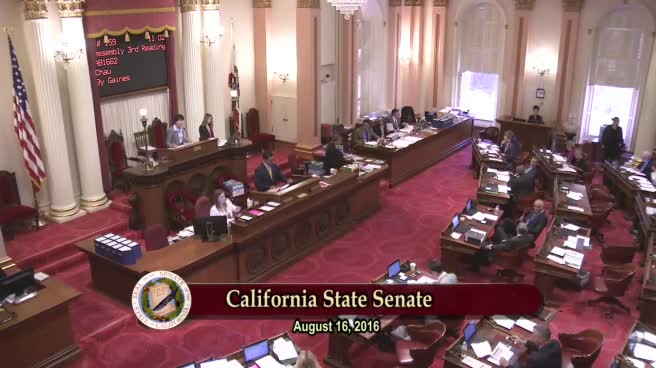


Bill Co-Author(s):







