AB 2480: Source watersheds: financing.
- Session Year: 2015-2016
- House: Assembly
- Latest Version Date: 2016-09-27
Existing law establishes various state water policies, including the policy that the Legislature consider other works as may be necessary to develop water to satisfy the requirements of the watershed in which water originates whenever the Legislature authorizes the construction or acquisition of a project that will develop water for use outside that watershed, as specified.
This bill would declare it to be state policy that source watersheds are recognized and defined as integral components of Californias water infrastructure. The bill would state the particular importance to maintaining the reliability, quantity, timing, and quality of Californias environmental, drinking, and agricultural water supply as climate change advances of source watersheds that supply the majority of the states drinking and irrigated agricultural water. The bill would state that the maintenance and repair of source watersheds is eligible for the same forms of financing as other water collection and treatment infrastructure and would specify that the maintenance and repair activities that are eligible are limited to specified forest ecosystem restoration and conservation activities.
Existing law establishes various state water policies, including the policy that the Legislature consider other works as may be necessary to develop water to satisfy the requirements of the watershed in which water originates whenever the Legislature authorizes the construction or acquisition of a project that will develop water for use outside that watershed, as specified.
This bill would declare it to be state policy that source watersheds are recognized and defined as integral components of Californias water infrastructure. The bill would state the particular importance to maintaining the reliability reliability, quantity, timing, and quality of Californias environmental, drinking, and agricultural water supply as climate change advances of the source watersheds that supply the Shasta and Oroville reservoirs of the State Water Project. majority of the states drinking and irrigated agricultural water. The bill would require state that the maintenance and repair of these source watersheds to receive financing consideration on the same basis as other State Water Project is eligible for the same forms of financing as other water collection and treatment infrastructure and would specify that the maintenance and repair activities that are eligible are limited to specified forest ecosystem restoration and conservation activities.
Existing law establishes various state water policies, including the policy that the Legislature consider other works as may be necessary to develop water to satisfy the requirements of the watershed in which water originates whenever the Legislature authorizes the construction or acquisition of a project that will develop water for use outside that watershed, as specified.
This bill would declare it to be state policy that source watersheds are recognized and defined as integral components of Californias water infrastructure. The bill would state the particular importance to maintaining the reliability of Californias water supply as climate change advances of the source watersheds that supply the Shasta and Oroville reservoirs of the State Water Project and the federal Central Valley Project and, to the extent feasible, Project. The bill would require the maintenance and repair of these watersheds to receive financing consideration on the same basis with as other State Water Project water collection and treatment infrastructure, infrastructure and would specify that the maintenance and repair activities that are eligible are limited to certain specified forest ecosystem management restoration and conservation activities.
Existing law establishes various state water policies, including the policy that the Legislature consider other works as may be necessary to develop water to satisfy the requirements of the watershed in which water originates whenever the Legislature authorizes the construction or acquisition of a project that will develop water for use outside that watershed, as specified.
This bill would declare it to be state policy that source watersheds are recognized and defined as integral components of Californias water system. infrastructure. The bill, bill would state the particular importance to maintaining the reliability of Californias water supply of the source watersheds that supply the State Water Project and the federal Central Valley Project and, to the extent feasible, would require source watershed the maintenance and repair of these watersheds to receive financing consideration on the same basis with other water collection and treatment infrastructure, and would specify that the maintenance and repair activities that are eligible are limited to certain forest ecosystem management activities.
Existing law establishes various state water policies, including the policy that the Legislature consider other works as may be necessary to develop water to satisfy the requirements of the watershed in which water originates whenever the Legislature authorizes the construction or acquisition of a project that will develop water for use outside that watershed, as specified.
This bill would declare it to be state policy that source watersheds are recognized and defined as integral components of Californias water system. The bill would also declare that their bill, to the extent feasible, would require source watershed maintenance and repair are eligible for to receive financing on an equivalent consideration on the same basis with other water collection and treatment infrastructure, and would specify that the maintenance and repair activities that are eligible are limited to certain forest ecosystem management activities.
Under existing law, the United States Bureau of Reclamation operates the federal Central Valley Project and the Department of Water Resources operates the State Water Resources Development System, known as the State Water Project, to supply water to persons and entities in the state.
This bill would require the State Water Resources Control Board, in consultation with the department, to develop investment plans that prioritize actions for restoration and conservation to improve watershed function in the watersheds that flow into the Shasta Reservoir and the Oroville Reservoir.
Existing law establishes various state water policies, including the policy that the Legislature consider other works as may be necessary to develop water to satisfy the requirements of the watershed in which water originates whenever the Legislature authorizes the construction or acquisition of a project that will develop water for use outside that watershed, as specified.
This bill would declare it to be state policy that source watersheds are recognized and defined as integral components of Californias water system. The bill would also declare that their maintenance and repair are eligible for financing on an equivalent basis with other water collection and treatment infrastructure. infrastructure, and would specify that the maintenance and repair activities that are eligible are limited to certain forest ecosystem management activities.
Under existing law, the United States Bureau of Reclamation operates the federal Central Valley Project and the Department of Water Resources operates the State Water Resources Development System, known as the State Water Project, to supply water to persons and entities in the state.
This bill would require the State Water Resources Control Board, in consultation with the department, to develop investment plans that prioritize actions for restoration and conservation to improve watershed function in the watersheds that flow into the Shasta Reservoir and the Oroville Reservoir.
Existing law declares that it is state policy to consider all water uses, including area-of-origin needs, in connection with the development and completion of any general or coordinated plan prepared and published by the Department of Water Resources. Existing law requires the Legislature to establishes various state water policies, including the policy that the Legislature consider other works as may be necessary to develop water to satisfy the requirements of the watershed in which water originates, as specified, originates whenever the Legislature authorizes the construction or acquisition of a project that will develop water for use outside that watershed. watershed, as specified.
This bill would declare it to be state policy that source watersheds are recognized and defined as integral components of Californias water system. The bill would also declare that their maintenance and repair are eligible for financing on an equivalent basis with other water collection and treatment infrastructure.
Under existing law, the United States Bureau of Reclamation operates the federal Central Valley Project and the Department of Water Resources operates the State Water Resources Development System, known as the State Water Project, to supply water to persons and entities in the state.
This bill would require the State Water Resources Control Board, in consultation with the department, to develop investment plans that prioritize actions for restoration and conservation to improve watershed function in the watersheds that flow into the Shasta Reservoir and the Oroville Reservoir.
Existing law declares that it is state policy to consider all water uses, including area-of-origin needs, in connection with the development and completion of any general or coordinated plan prepared and published by the Department of Water Resources. Existing law requires the Legislature to consider other works as may be necessary to develop water to satisfy the requirements of the watershed in which water originates, as specified, whenever the Legislature authorizes the construction or acquisition of a project that will develop water for use outside that watershed.
This bill would declare it to be state policy that source watersheds are recognized and defined as integral components of Californias water system. The bill would also declare that their maintenance and repair are eligible for financing on an equivalent basis with other water collection and treatment infrastructure.
(a)It is hereby declared to be the established policy of the state that source watersheds are recognized and defined as integral components of Californias water infrastructure.
(b)(1)As climate change advances, source watersheds that provide the majority of the states drinking and irrigated agricultural water are of particular importance to maintaining the reliability, quantity, timing, and quality of Californias environmental, drinking, and agricultural water supply.
(2)Recognizing the critical role of source watersheds in enhancing water supply reliability, the maintenance and repair of source watersheds is eligible for the same forms of financing as other water collection and treatment infrastructure.
(3)Nothing in this section is intended to constrain financing for source watersheds supplying local, state, or federal water systems.
(4)Nothing in this section is intended to supersede federal eligibility requirements or alter any of the following:
(A)Funding criteria or guidelines established for a bond or other measure enacted by the voters.
(B)Funding programs related to pollution control, cleanup, or abatement.
(C)Funding programs for addressing public health emergencies.
(c)Eligible maintenance and repair activities pursuant to this section are limited to the following forest ecosystem restoration and conservation activities:
(1)Upland vegetation management to restore the watersheds productivity and resiliency.
(2)Wet and dry meadow restoration.
(3)Road removal and repair.
(4)Stream channel restoration.
(5)Conservation of private forests to preserve watershed integrity through permanent prevention of land use conversion and improved land management, achieved through, and secured with, conservation easements.
(6)Other projects with a demonstrated likelihood of increasing conditions for water and snow attraction, retention, and release under changing climate conditions.
(a)It is hereby declared to be the established policy of the state that source watersheds are recognized and defined as integral components of Californias water infrastructure.
(b)(1)The source watersheds that supply the Shasta and Oroville reservoirs of the State Water Project As climate change advances, source watersheds that provide the majority of the states drinking and irrigated agricultural water are of particular importance to maintaining the reliability of Californias water supply as climate change advances. The maintenance and repair of these watersheds shall receive financing consideration on the same basis as other State Water Project water collection and treatment infrastructure. reliability, quantity, timing, and quality of Californias environmental, drinking, and agricultural water supply.
(2)Nothing in this section is intended to modify existing grant programs or guidelines or constrain financing for source watersheds supplying local, state, or federal water systems.
(2)Recognizing the critical role of source watersheds in enhancing water supply reliability, the maintenance and repair of source watersheds is eligible for the same forms of financing as other water collection and treatment infrastructure.
(3)Nothing in this section is intended to constrain financing for source watersheds supplying local, state, or federal water systems.
(4)Nothing in this section is intended to supersede federal eligibility requirements or alter any of the following:
(A)Funding criteria or guidelines established for a bond or other measure enacted by the voters.
(B)Funding programs related to pollution control, cleanup, or abatement.
(C)Funding programs for addressing public health emergencies.
(c)Eligible maintenance and repair activities pursuant to this section are limited to the following forest ecosystem restoration and conservation activities:
(1)Upland vegetation management to restore the watersheds productivity and resiliency.
(2)Wet and dry meadow restoration.
(3)Road removal and repair.
(4)Stream channel restoration.
(5)Conservation of private forests to preserve watershed integrity through permanent prevention of land use conversion and improved land management, achieved through, and secured with, conservation easements.
(6)Other projects with a demonstrated likelihood of increasing conditions for water and snow attraction, retention, and release under changing climate conditions.
(a)It is hereby declared to be the established policy of the state that source watersheds are recognized and defined as integral components of Californias water infrastructure.
(b)(1)The source watersheds that supply the state and federally operated systems, Shasta and Oroville reservoirs of the State Water Project and the federal Central Valley Project, collectively provide 80 percent of state reservoir capacity and are of particular importance to maintaining the reliability of Californias water supply. To the extent feasible, the supply as climate change advances. The maintenance and repair of these watersheds and associated projects shall receive financing consideration on the same basis with as other State Water Project water collection and treatment infrastructure.
(2)Nothing in this section is intended to modify existing grant programs or guidelines or constrain financing for source watersheds supplying local, state, or federal water systems.
(c)Eligible maintenance and repair activities pursuant to this section are limited to the following forest ecosystem management restoration and conservation activities:
(1)Upland vegetation management to restore the watersheds productivity and resiliency.
(2)Wet and dry meadow restoration.
(3)Road removal and repair.
(4)Stream channel restoration.
(5)Conservation of private forests to preserve watershed integrity through permanent prevention of land use conversion and degradation, improved land management, achieved through through, and secured with, conservation easements.
(6)Other projects with a demonstrated likelihood of increasing conditions for water and snow attraction, retention, and release under changing climate conditions.
(a)It is hereby declared to be the established policy of the state that source watersheds are recognized and defined as integral components of Californias water system. To infrastructure.
(b)The source watersheds that supply the state and federally operated systems, the State Water Project and the federal Central Valley Project, collectively provide 80 percent of state reservoir capacity and are of particular importance to maintaining the reliability of Californias water supply. To the extent feasible, the maintenance and repair of source these watersheds and associated projects shall receive financing consideration on the same basis with other water collection and treatment infrastructure.
(b)
(c)Eligible maintenance and repair activities pursuant to this section are limited to the following forest ecosystem management activities:
(1)Upland vegetation management to restore the watersheds productivity and resiliency.
(2)Wet and dry meadow restoration.
(3)Road removal and repair.
(4)Stream channel restoration.
(5)Conservation of private forests to preserve watershed integrity through permanent prevention of conversion and degradation, achieved through conservation easements.
(6)Other projects with a demonstrated likelihood of increasing conditions for water and snow attraction, retention, and release under changing climate conditions.
(a)It is hereby declared to be the established policy of the state that source watersheds are recognized and defined as integral components of Californias water system. The To the extent feasible, the maintenance and repair of source watersheds are eligible for financing on an equivalent and associated projects shall receive financing consideration on the same basis with other water collection and treatment infrastructure.
(b)Eligible maintenance and repair activities pursuant to this section are limited to the following forest ecosystem management activities:
(1)Upland vegetation management to restore the watersheds productivity and resiliency.
(2)Wet and dry meadow restoration.
(3)Road removal and repair.
(4)Stream channel restoration.
(5)Conservation of private forests to preserve watershed integrity through permanent prevention of conversion and degradation, achieved through conservation easements.
(6)Other projects with a demonstrated likelihood of increasing conditions for water and snow attraction, retention, and release under changing climate conditions.
SEC. 2.Chapter 3.3 (commencing with Section 12835) is added to Part 6 of Division 6 of the Water Code, to read:3.3.Watershed Investment Plans12835.On or before December 31, 2017, the board, in consultation with the department, shall develop investment plans that prioritize actions for restoration and conservation to improve watershed function in the watersheds that flow into the Shasta Reservoir and the Oroville Reservoir.
(a)It is hereby declared to be the established policy of the state that source watersheds are recognized and defined as integral components of Californias water system. The maintenance and repair of source watersheds are eligible for financing on an equivalent basis with other water collection and treatment infrastructure.
(b)Eligible maintenance and repair activities pursuant to this section are limited to the following forest ecosystem management activities:
(1)Upland vegetation management to restore the watersheds productivity and resiliency.
(2)Wet and dry meadow restoration.
(3)Road removal and repair.
(4)Stream channel restoration.
(5)Conservation of private forests to preserve watershed integrity through permanent prevention of conversion and degradation, achieved through conservation easements.
(6)Other projects with a demonstrated likelihood of increasing conditions for water and snow attraction, retention, and release under changing climate conditions.
SEC. 2.Chapter 3.3 (commencing with Section 12835) is added to Part 6 of Division 6 of the Water Code, to read:3.3.Watershed Investment Plans12835.On or before December 31, 2017, the board, in consultation with the department, shall develop investment plans that prioritize actions for restoration and conservation to improve watershed function in the watersheds that flow into the Shasta Reservoir and the Oroville Reservoir.
It is hereby declared to be the established policy of the state that source watersheds are recognized and defined as integral components of Californias water system. The maintenance and repair of source watersheds are eligible for financing on an equivalent basis with other water collection and treatment infrastructure.
|
Date
|
Status
|
|---|---|
| Jun 2, 2016 | Read third time. Passed. Ordered to the Senate. (Ayes 50. Noes 25.) |
| Sep 7, 2016 | Enrolled and presented to the Governor at 12 p.m. |
| Aug 29, 2016 | Senate amendments concurred in. To Engrossing and Enrolling. (Ayes 49. Noes 25. Page 6392.). |
| Aug 29, 2016 | Senate amendments concurred in. To Engrossing and Enrolling. |
| Aug 24, 2016 | In Assembly. Concurrence in Senate amendments pending. May be considered on or after August 26 pursuant to Assembly Rule 77. |
| Aug 23, 2016 | Read third time. Passed. Ordered to the Assembly. (Ayes 23. Noes 13. Page 5304.). |
| Aug 23, 2016 | Read third time. Passed. Ordered to the Assembly. |
| Aug 15, 2016 | Read second time and amended. Ordered to third reading. |
| Aug 11, 2016 | From committee: Amend, and do pass as amended. (Ayes 5. Noes 2.) (August 11). |
| Aug 1, 2016 | In committee: Referred to APPR. suspense file. |
| Aug 1, 2016 | From committee chair, with author's amendments: Amend, and re-refer to committee. Read second time, amended, and re-referred to Com. on APPR. |
| Jun 29, 2016 | From committee: Do pass and re-refer to Com. on APPR. (Ayes 6. Noes 2.) (June 28). Re-referred to Com. on APPR. |
| Jun 13, 2016 | From committee chair, with author's amendments: Amend, and re-refer to committee. Read second time, amended, and re-referred to Com. on N.R. & W. |
| Jun 9, 2016 | Referred to Com. on N.R. & W. |
| Jun 6, 2016 | In Senate. Read first time. To Com. on RLS. for assignment. |
| Feb 19, 2016 | Introduced. To print. |
| Jun 2, 2016 | Read third time. Passed. Ordered to the Senate. (Ayes 50. Noes 25. Page 5211.) |
| Jun 2, 2016 | Read third time. Passed. Ordered to the Senate. |
| Jun 1, 2016 | Read second time. Ordered to third reading. |
| May 31, 2016 | Read second time and amended. Ordered returned to second reading. |
| May 27, 2016 | From committee: Amend, and do pass as amended. (Ayes 14. Noes 6.) (May 27). |
| May 11, 2016 | In committee: Set, first hearing. Referred to APPR. suspense file. |
| Apr 13, 2016 | From committee: Do pass and re-refer to Com. on APPR. (Ayes 9. Noes 6.) (April 12). Re-referred to Com. on APPR. |
| Apr 6, 2016 | Re-referred to Com. on W., P., & W. |
| Apr 5, 2016 | From committee chair, with author's amendments: Amend, and re-refer to Com. on W., P., & W. Read second time and amended. |
| Mar 28, 2016 | Re-referred to Com. on W., P., & W. |
| Mar 17, 2016 | Referred to Com. on W., P., & W. |
| Mar 17, 2016 | From committee chair, with author's amendments: Amend, and re-refer to Com. on W., P., & W. Read second time and amended. |
| Feb 22, 2016 | Read first time. |
| Feb 21, 2016 | From printer. May be heard in committee March 22. |
|
Date
|
Description
|
Location
|
Votes
|
|
|---|---|---|---|---|
| Aug 29, 2016 | AB 2480 BLOOM Concurrence in Senate Amendments | Assembly Floor |
Passed |
|
| Aug 23, 2016 | Assembly 3rd Reading AB2480 Bloom By Pavley | Senate Floor |
Passed |
|
| Aug 11, 2016 | Do pass as amended | Senate Standing Committee on Appropriations |
Passed |
|
| Aug 1, 2016 | Placed on suspense file | Senate Standing Committee on Appropriations |
Passed |
|
| Jun 28, 2016 | Do pass, but first be re-referred to the Committee on [Appropriations] | Senate Standing Committee on Natural Resources and Water |
Passed |
|
| Jun 2, 2016 | AB 2480 BLOOM Assembly Third Reading | Assembly Floor |
Passed |
|
| May 27, 2016 | Do pass as amended. | Assembly Standing Committee on Appropriations |
Passed |
|
| Apr 12, 2016 | Do pass and be re-referred to the Committee on [Appropriations] | Assembly Standing Committee on Water, Parks, and Wildlife |
Passed |
This list shows positions taken on this bill by organizations on the date displayed, which is linked to the original source.
Positions by individuals are not included.
|
Organization
|
Position
|
Date
|
|---|---|---|
| Association Of California Water Agencies | ** Against | Aug 23, 2016 |
| Audubon California | ** Support | Aug 23, 2016 |
| Bear-Yuba Land Trust | ** Support | Aug 23, 2016 |
| Calaveras Healthy Impact Product Solutions | ** Against | Aug 23, 2016 |
| California League Of Conservation Voters | ** Support | Aug 23, 2016 |
| California Releaf | ** Support | Aug 23, 2016 |
| Defenders Of Wildlife | ** Support | Aug 23, 2016 |
| Foothill Conservancy | ** Against | Aug 23, 2016 |
| Former Legislator, Wesley Chesbro | ** Support | Aug 23, 2016 |
| Individual | ** Against | Aug 23, 2016 |
| League Of Women Voters Of California | ** Support | Aug 23, 2016 |
| Lutheran Office of Public Policy | ** Support | Aug 23, 2016 |
| Mono Lake Committee | ** Support | Aug 23, 2016 |
| Pacific Forest Trust | ** Support | Aug 23, 2016 |
| San Diego County Water Authority | ** Against | Aug 23, 2016 |
| Sequoia Riverlands Trust | ** Support | Aug 23, 2016 |
| Trust For Public Land, The | ** Support | Aug 23, 2016 |
| Wholly H2O | ** Support | Aug 23, 2016 |
CONCURRENCE IN SENATE AMENDMENTS
CSA1 Bill Id:AB 2480
Author:(Bloom)
As Amended Ver:August 15, 2016
Majority vote
ASSEMBLY: | 50-25 | (June 2, 2016) | SENATE: | 23-13 | (August 23, 2016) |
Original Committee Reference: W., P., & W.
SUMMARY: Declares it to be state policy that source watersheds are recognized and defined as integral components of California's water infrastructure, and that maintenance and repair of source watersheds is eligible for the same forms of financing as other water collection and treatment infrastructure, as specified.
The Senate amendments:
- Declare that as climate change advances source watersheds that provide the majority of the state's drinking and irrigated agricultural water are of particular importance to maintaining the reliability, quantity, timing, and quality of California's environmental, drinking, and agricultural water supply.
- Provide that, recognizing the critical role of source watersheds in enhancing water supply reliability, the maintenance and repair of source watersheds is eligible for the same forms of financing as other water collection and treatment infrastructure.
- Provide that nothing in this bill is intended to constrain financing for source watersheds, to supersede federal eligibility requirements, to alter funding criteria or guidelines established for a bond or other measure enacted by the voters, or to alter funding programs related to pollution control or public health emergencies.
- Change a reference to ecosystem management activities to instead refer to ecosystem restoration and conservation activities as eligible maintenance and repair activities. Clarify one of those eligible maintenance and repair activities includes conservation of private forests to preserve watershed integrity through prevention of land use conversion and improved land management secured with conservation easements.
EXISTING LAW:
- Authorizes the Department of Water Resources (DWR) to operate and maintain the State Water Project (SWP) that supplies water for urban and some agricultural uses in the state. Funds from the sale of general obligation and revenue bonds have provided about 78% of the financing for construction of the SWP, repayment of which is made by SWP beneficiaries. SWP contractors repay water supply related costs of the SWP that include about 94% of the annual costs for operation and maintenance of the SWP facilities.
- Authorizes the issuance of bonds and loans to finance expenditures of the SWP, and authorizes the DWR to enter into contracts and establish prices, rates, and charges to produce the revenues needed to pay for the costs of operation and maintenance of the SWP.
- Authorizes the Central Valley Project (CVP), a federal water project operated by the United States Bureau of Reclamation that provides water primarily for agricultural purposes but also supplies water for some urban uses in the state.
- Authorizes the DWR to use revenue bonds or other funds available for the purposes of the SWP to finance, in whole or in part, water conservation programs and facilities that reduce demands by the sponsoring contractor for project water from the system and increase the supply of project water available in the Delta for distribution.
- Includes a state policy that the Legislature consider other works as may be necessary to develop water to satisfy the requirements of the watershed in which water originates whenever the Legislature authorizes the construction or acquisition of a project that will develop water for use outside that watershed.
FISCAL EFFECT: According to the Senate Appropriations Committee analysis, this bill as amended will help watershed maintenance or repair projects access the same forms of financing available to other water infrastructure projects (special fund). To the extent that these projects compete with water infrastructure projects for funding, these projects will result in cost pressures in the millions.
COMMENTS: This bill establishes a state policy that source watersheds are recognized as essential components of the state's water infrastructure, and that their maintenance and repair is eligible for the same forms of financing as other water collection and treatment infrastructure. The Assembly version of this bill provided that, to the extent feasible, the maintenance and repair of source watersheds and associated projects shall receive financing consideration on the same basis with other water collection and treatment infrastructure. The Senate amendments modify and clarify this declaration to instead provide that source watersheds shall be eligible for the same forms of financing as other water collection and treatment infrastructure. The Senate amendments also add additional findings regarding the importance of source watersheds, and add other clarifying provisions.
The author of this bill emphasizes that California's complex water system, which includes the built infrastructure of dams, reservoirs, canals, pumps and pipes that deliver water throughout the state, rely on a suite of financing options that provide the funding for necessary infrastructure costs. However, these projects rely on more than the built infrastructure to function. They also rely on the five watersheds above the dams to collect, treat and deliver that water to the dams. While there is recognition that watersheds serve these functions, there is no policy or system of support for this natural infrastructure which is integral to, and supplies and complements, the built infrastructure. The author asserts these watersheds are essential to ensuring the future of a well-functioning water system. There is also scientific recognition that watershed condition affects the quality and quantity of water delivered by watersheds to dams. Enhancing the conditions of the watersheds would increase water quality by reducing sediment and lowering temperatures, and can also increase water quantity by as much as 5% to 20% depending on conditions. The goal of this bill is to recognize the fundamental role of source watersheds, and set the foundation for a comprehensive plan of restoration and conservation, with the potential of future financing such as revenue bonds and other financing mechanisms, similar to those available for the built infrastructure.
Analysis Prepared by: Diane Colborn / W., P., & W. / (916) 319-2096 FN: 0004262
Office of Senate Floor Analyses (916) 651-1520 Fax: (916) 327-4478 | AB |
THIRD READING
Bill No: AB 2480
:
SENATE NATURAL RES. & WATER COMMITTEE: 6-2, 6/28/16
AYES: Pavley, Allen, Hertzberg, Hueso, Jackson, Monning
NOES: Stone, Vidak
NO VOTE RECORDED: Wolk
SENATE APPROPRIATIONS COMMITTEE: 5-2, 8/11/16
AYES: Lara, Beall, Hill, McGuire, Mendoza
NOES: Bates, Nielsen
ASSEMBLY FLOOR: 50-25, 6/2/16 - See last page for vote
DIGEST: This bill declares it is state policy to recognize and define source watersheds as integral components of California's water system, and eligible for financing on an equivalent basis with other water infrastructure projects.
Existing law contains a number of statements of state water policy. These include:
- The water resources of the State [are to] be put to beneficial use to the fullest extent of which they are capable, and that the waste or unreasonable use or unreasonable method of use of water be prevented. CWC §100.
- All water within the State is the property of the people of the State, but the right to the use of water may be acquired by appropriation in the manner provided by law. CWC §102.
- It is hereby declared to be the established policy of this State that the use of water for domestic purposes is the highest use of water and that the next highest use is for irrigation. §106.
- It is hereby declared to be the established policy of the state that every human being has the right to safe, clean, affordable, and accessible water adequate for human consumption, cooking, and sanitary purposes. CWC §106.6.
This bill:
- Declares it to be “the established policy of the state that source watersheds are recognized and defined as integral components of California’s water infrastructure.”
- Makes the maintenance and repair of source watersheds is eligible for the same forms of financing as other water collection and treatment infrastructure.
- Limits eligible maintenance and repair activities pursuant to this bill to the following forest ecosystem management activities:
- Upland vegetation management to restore the watershed’s productivity and resiliency.
- Wet and dry meadow restoration.
- Road removal and repair.
- Stream channel restoration.
- Conservation of private forests to preserve watershed integrity through permanent prevention of land use conversion and improved land management, achieved through, and secured with, conservation easements.
- Other projects with a demonstrated likelihood of increasing conditions for water and snow attraction, retention, and release under changing climate conditions.
- Provides that nothing in this bill is intended to:
- Constrain financing for source watersheds supplying local, state, or federal water systems.
- Supersede federal eligibility requirements or alter any of the following:
- Funding criteria or guidelines established for a bond or other measure enacted by the voters.
- Funding programs related to pollution control, cleanup, or abatement.
- Funding programs for addressing public health emergencies.
Comments
ACWA Headwaters Framework. On March 20, 2015, the Association of California Water Agencies (ACWA) released a policy framework aimed at effectively managing headwaters areas such as the Sierra Nevada, source of much of the state’s water supply.
According to ACWA’s press release, “The formal release of the document, ‘Improving the Resiliency of California’s Headwaters,’ comes the day after Gov. Jerry Brown and legislative leaders outlined an emergency drought package to mobilize state resources to deal with a fourth year of drought. Given the severity of the drought, the risk of more destructive wildfires this summer and ongoing climate change, ACWA believes it is time to elevate headwaters issues and engage partners at all levels ‘Improving the Resiliency of California’s Headwaters – A Framework,’ makes nearly 30 specific recommendations in the areas of improved planning, coordination and implementation, managing headwaters resources, research and financing headwaters improvements.”
Among the recommendations in ACWA’s report were:
- Improved headwaters management must become a high priority for state, federal and local agencies.
- Agencies at all levels should find ways to help public and private landowners restore meadows and watersheds to improve their critical functions and reduce wildfire impacts.
- Stakeholders at all levels should invest and participate in landscape-level research that explores water and forestry relationships, including ecological forest thinning which can have multiple benefits for water supply reliability, water quality and ecosystems.
What Does The Science Show? While studies show a water supply benefit to different watershed restoration activities, the economics are a bit less clear. For example, a recent study by the Nature Conservancy titled Estimating the Water Supply Benefits from Forest Restoration in the Northern Sierra Nevada, found:
“This assessment is a first attempt at calculating the water supply benefits from watershed-scale forest restoration in the northern Sierra Nevada. These watershed level results suggest that the economic benefits from water yield increases may be an important argument in favor of additional forest restoration investments. Nevertheless it is important to emphasize that such actions do not represent a solution to California’s water crisis, but rather a sensible investment in forest management that is likely to create benefits for water users downstream.”
FISCAL EFFECT: Appropriation: Fiscal Com.: Local:
According to the Senate Appropriations Committee, the bill “will help watershed maintenance or repair projects access the same forms of financing available to other water infrastructure projects (special fund). To the extent that these projects compete with water infrastructure projects for funding. These projects will result in cost pressures in the millions.”
Audubon California
Bear-Yuba Land Trust
California League of Conservation Voters
California ReLeaf
Defenders of Wildlife
League of Women Voters of California
Lutheran Office of Public Policy
Mono Lake Committee
Pacific Forest Trust
Sequoia Riverlands Trust
Trust for Public Land
Wholly H2O
OPPOSITION: (Verified 8/12/16)
Association of California Water Agencies
Calaveras Healthy Impact Product Solutions
Foothill Conservancy
San Diego County Water Authority
(1) Individual
ARGUMENTS IN SUPPORT: According to the author, “California’s water system is highly complex and sophisticated. 80% of its reservoir supply is held in two dam facilities, the Shasta and Oroville Dams, which are the built infrastructure foundation for the State and Central Valley Water Projects.”
“[T]hese projects rely on more than the built infrastructure to function. They rely on the five watersheds above the dams to collect, treat and deliver that water to the dams. These are the Feather, Pit, McCloud, Upper Sacramento and Trinity River watersheds. While there is recognition that watersheds play these functions in various parts of the water code, there is no policy or system of support for this natural infrastructure which is integral to, and supplies and complements, the built infrastructure of these water systems.”
“Further, there is substantial scientific recognition that watershed condition affects the quality and quantity of water delivered by watersheds to dams. The condition of these five watersheds is distinctly suboptimal. Enhancing that condition would increase water quality (reducing sediment such as ash & soil), lowering temperatures, and likely quantity (from 5-20% or more depending on conditions) as well as fundamental function.”
“Restoration and conservation in these watersheds has been sporadic, inadequate and supported by general obligation bonds. There has been no comprehensive plan developed for their restoration and conservation to enhance our water security. Such efforts to date have been both limited and uncoordinated and fiscally inefficient.”
“AB 2480 therefore recognizes the fundamental water system infrastructure role of source watersheds, and set the foundation for a comprehensive plan of restoration and conservation, with the potential of future financing to be appropriately classed as revenue bonds and similarly financed as the built infrastructure improvements and maintenance are.”
ARGUMENTS IN OPPOSITION: According to the Association of California Water Agencies (ACWA), “AB 2480 would declare state policy that source watersheds are recognized and defined as integral components of California’s water system. As amended, this bill would now require that, to the extent feasible, the maintenance and repair of source watersheds and associated projects would receive financing consideration ‘on the same basis’ with other water collection and treatment infrastructure and would specify that the maintenance and repair activities that are eligible for funding are limited to certain forest ecosystem management activities. This bill does not define what ‘on the same basis’ would mean. The bill also does not include language prohibiting the imposition of a public goods charge to finance the provisions of this bill.”
“With respect to financing, much of the land within these source watersheds is federal national forest lands. If we are going to enhance these watersheds, we need to support a federal-state partnership in the funding portion moving forward.”
“ACWA supports watershed funding that is paid for through the General Fund, the Greenhouse Gas Reduction Fund (Cap and Trade), or a future General Obligation Water Bond. We do not support a public goods charge or statewide water tax to fund watersheds or any other priorities.”
“For these reasons, ACWA opposes AB 2480.”
ASSEMBLY FLOOR: 50-25, 6/2/16
AYES: Alejo, Arambula, Atkins, Bloom, Bonilla, Bonta, Brown, Burke, Calderon, Campos, Chau, Chiu, Chu, Cooley, Cooper, Dababneh, Daly, Dodd, Eggman, Frazier, Cristina Garcia, Eduardo Garcia, Gatto, Gipson, Gomez, Gonzalez, Gordon, Roger Hernández, Holden, Irwin, Jones-Sawyer, Levine, Lopez, Low, McCarty, Medina, Mullin, Nazarian, O'Donnell, Quirk, Ridley-Thomas, Rodriguez, Santiago, Mark Stone, Thurmond, Ting, Weber, Williams, Wood, Rendon
NOES: Achadjian, Travis Allen, Baker, Brough, Chang, Chávez, Gallagher, Grove, Harper, Jones, Kim, Lackey, Linder, Maienschein, Mathis, Mayes, Melendez, Obernolte, Olsen, Patterson, Salas, Steinorth, Wagner, Waldron, Wilk
NO VOTE RECORDED: Bigelow, Dahle, Beth Gaines, Gray, Hadley
8/15/16 19:39:52
**** END ****
SENATE COMMITTEE ON
Senator Ricardo Lara, Chair
2015 - 2016 Regular Session
AB 2480 (Bloom) - Source watersheds: financing
Version: | Policy Vote: |
Urgency: | Mandate: |
Hearing Date: | Consultant: |
*********** ANALYSIS ADDENDUM – SUSPENSE FILE ***********
The following information is revised to reflect amendments
adopted by the committee on August 11, 2016
Bill Summary:
AB 2480 declares it is state policy to recognize and define source watersheds as integral components of California's water system, and eligible for financing on an equivalent basis with other water infrastructure projects.
Fiscal Impact:
The amendments will help watershed maintenance or repair projects access the same forms of financing available to other water infrastructure projects (special fund). To the extent that these projects compete with water infrastructure projects for funding. These projects will result in cost pressures in the millions.
Author Amendments:
Clarify that the maintenance and repair of source watersheds are eligible for the same forms of financing as other water collection and treatment infrastructure projects.
-- END --
SENATE COMMITTEE ON APPROPRIATIONS
Senator Ricardo Lara, Chair
2015 - 2016 Regular Session
AB 2480 (Bloom) - Source watersheds: financing
Version: August 1, 2016 | Policy Vote: N.R. & W. 6 - 2 |
Urgency: No | Mandate: No |
Hearing Date: August 1, 2016 | Consultant: Narisha Bonakdar |
This bill meets the criteria for referral to the Suspense File.
Bill Summary:
AB 2480 declares it is state policy to recognize and define source watersheds as integral components of California's water system, and eligible for financing on an equivalent basis with other water infrastructure projects.
Fiscal Impact:
- Potential cost pressures in the hundreds of millions of dollars or more to finance watershed maintenance and repair on an equivalent basis with other water projects.
- Unknown, potentially significant, ongoing costs (General Fund) to the SWRCB and DWR to provide guidance and oversight on watershed financing and/or funding applications.
Background:
- A watershed is an area of land that drains all the streams and rainfall to a common outlet such as the outflow of a reservoir, mouth of a bay, or any point along a stream channel. The word watershed is sometimes used interchangeably with drainage basin or catchment. Ridges and hills that separate two watersheds are called the drainage divide. The watershed consists of surface water, including lakes, streams, reservoirs, and wetlands and all the underlying groundwater.
Watersheds are impacted by numerous stressors, including drought, climate change, forest conversion, invasive species, fire risks and fire suppression, neglect, and inadequate forest management. According to the author, enhancing the conditions of the watersheds increases water quality by reducing sediment, lowering temperatures, and may also increase water quantity by as much as 5 to 20%.
Klamath-Region Watershed. The Klamath-Cascade watershed spans 10 million acres and serves as the headwaters of the Sacramento River and the source of much of the water that flows into the Delta. The Klamath-Cascade watershed receives 75% of the state's precipitation. According to the Pacific Forest Trust, ensuring continued healthy watershed function requires that 85% of the watershed remain intact as relatively natural forest. The Trust is working with private landowners in the region to conserve forests, and asserts that watershed protection through maintenance of healthy forests is the least costly and most effective approach to guaranteeing flows in the Sacramento River.
Proposed Law:
This bill:
- Declares it is state policy to recognize and define source watersheds as integral components of California's water system, and eligible for financing on an equivalent basis with other water infrastructure projects.
- States that the source watersheds that supply the Shasta and Oroville reservoirs of the State Water Project (SWP) are of particular importance to maintaining the reliability of the California water advances.
- States that the maintenance and repair of these watersheds are eligible for financing on the same basis as other SWP water collection and treatment infrastructure.
- Specifies that nothing in this section is intended to modify existing grant programs or guidelines or constrain financing for source watersheds supplying local, state, or federal water systems.
- Defines eligible maintenance and repair activities to include the following forest ecosystem management activities:
- Upland vegetation management to restore watershed productivity and resilience.
- Wet and dry meadow restoration.
- Road removal and repair.
- Stream channel restoration.
- Conservation of private forests to preserve watershed integrity through permanent prevention of land use conversion, improved land management, achieved through, and secured with, conservation easements.
- Other projects with a demonstrated likelihood of increasing conditions for water and snow attraction, retention, and release under changing climate conditions.
Staff Comments:
Staff notes that the expectation of this language is unclear. Proponents of the bill assert that by clarifying that watershed improvements and repair should be treated the same as infrastructure, this bill will allow for more innovative financing for water projects, such as WIFIA.
Water Infrastructure Finance and Innovation Act. The Water Infrastructure Finance and Innovation Act (WIFIA) is a pilot program, jointly administered by the U.S. Environmental Protection Agency (US EPA) and the U.S. Army Corps of Engineers (Army Corps), to promote private-sector investment in water infrastructure by offering government-sponsored financing at below-market cost of capital. WIFIA provides a five-year pilot loan and guarantee program for water infrastructure development, commencing with $40 million for 2015 and increasing to $100 million in 2019.
The author may wish to more specifically clarify the intent and expectations of this bill. However, absent this clarity, the fiscal assumes that the bill will allow additional projects to be eligible for funding similar to that of the SWP. According to DWR, the state’s 29 water agencies, with whom the state has water supply contracts, were charged $506 million in 2015 (excluding power supply costs or bond payments) for the operation and maintenance costs of the SWP’s 20 reservoirs. If watershed restoration is expected to be funded on par with this (and water quality expenditures), costs for this bill could reach $500 million or more.
-- END --
SENATE COMMITTEE ON NATURAL RESOURCES AND WATER
Senator Fran Pavley, Chair
2015 - 2016 Regular
Bill No: AB 2480 Hearing Date: June 28, 2016
Author: | |||
Version: |
| ||
Urgency: | Fiscal: | ||
Consultant: | |||
Subject: Source watersheds: financing
BACKGROUND AND EXISTING LAW
The California Water Code contains a number of statements of state water policy. These include:
- The water resources of the State [are to] be put to beneficial use to the fullest extent of which they are capable, and that the waste or unreasonable use or unreasonable method of use of water be prevented. CWC §100.
- All water within the State is the property of the people of the State, but the right to the use of water may be acquired by appropriation in the manner provided by law. CWC §102.
- It is hereby declared to be the established policy of this State that the use of water for domestic purposes is the highest use of water and that the next highest use is for irrigation. §106.
- It is hereby declared to be the established policy of the state that every human being has the right to safe, clean, affordable, and accessible water adequate for human consumption, cooking, and sanitary purposes. CWC §106.6.
On March 8, 2016, this committee had an oversight hearing titled “Assessing California's Chronically Under Funded Water Needs: Options for Moving Forward.” The hearing included a panel that described different approaches to resolving some of these funding challenges. Among the panelists was Laurie A. Wayburn, Co-founder, Co-CEO, and President of the Pacific Forest Trust. In her testimony, she described an approach to invest in healthy watersheds and provide more water supply. (http://sntr.senate.ca.gov/content/2016-informationaloversight-hearings)
PROPOSED LAW
This bill would:
- Declare it to be “the established policy of the state that source watersheds are recognized and defined as integral components of California’s water infrastructure.”
- State that source watersheds that supply the state and federally operated systems, the State Water Project and the federal Central Valley Project, collectively provide 80 percent of state reservoir capacity and are of particular importance to maintaining the reliability of California’s water supply.
- State that to the extent feasible, the maintenance and repair of these watersheds and associated projects shall receive financing consideration on the same basis with other water collection and treatment infrastructure.
- Limit eligible maintenance and repair activities pursuant to this bill to the following forest ecosystem management activities:
- Upland vegetation management to restore the watershed’s productivity and resiliency.
- Wet and dry meadow restoration.
- Road removal and repair.
- Stream channel restoration.
- Conservation of private forests to preserve watershed integrity through permanent prevention of conversion and degradation, achieved through conservation easements.
- Other projects with a demonstrated likelihood of increasing conditions for water and snow attraction, retention, and release under changing climate conditions.
ARGUMENTS IN SUPPORT
According to the author, “California’s water system is highly complex and sophisticated. 80% of its reservoir supply is held in two dam facilities, the Shasta and Oroville Dams, which are the built infrastructure foundation for the State and Central Valley Water Projects.”
“[T]hese projects rely on more than the built infrastructure to function. They rely on the five watersheds above the dams to collect, treat and deliver that water to the dams. These are the Feather, Pit, McCloud, Upper Sacramento and Trinity River watersheds. While there is recognition that watersheds play these functions in various parts of the water code, there is no policy or system of support for this natural infrastructure which is integral to, and supplies and complements, the built infrastructure of these water systems.”
“Further, there is substantial scientific recognition that watershed condition affects the quality and quantity of water delivered by watersheds to dams. The condition of these five watersheds is distinctly suboptimal. Enhancing that condition would increase water quality (reducing sediment such as ash & soil), lowering temperatures, and likely quantity (from 5-20% or more depending on conditions) as well as fundamental function.”
“Restoration and conservation in these watersheds has been sporadic, inadequate and supported by general obligation bonds. There has been no comprehensive plan developed for their restoration and conservation to enhance our water security. Such efforts to date have been both limited and uncoordinated and fiscally inefficient.”
“AB 2480 therefore recognizes the fundamental water system infrastructure role of source watersheds, and set the foundation for a comprehensive plan of restoration and conservation, with the potential of future financing to be appropriately classed as revenue bonds and similarly financed as the built infrastructure improvements and maintenance are.”
ARGUMENTS IN OPPOSITION
According to the Association of California Water Agencies (ACWA), “AB 2480 would declare state policy that source watersheds are recognized and defined as integral components of California’s water system. As amended, this bill would now require that, to the extent feasible, the maintenance and repair of source watersheds and associated projects would receive financing consideration ‘on the same basis’ with other water collection and treatment infrastructure and would specify that the maintenance and repair activities that are eligible for funding are limited to certain forest ecosystem management activities. This bill does not define what ‘on the same basis’ would mean. The bill also does not include language prohibiting the imposition of a public goods charge to finance the provisions of this bill.”
“With respect to financing, much of the land within these source watersheds is federal national forest lands. If we are going to enhance these watersheds, we need to support a federal-state partnership in the funding portion moving forward.”
“ACWA supports watershed funding that is paid for through the General Fund, the Greenhouse Gas Reduction Fund (Cap and Trade), or a future General Obligation Water Bond. We do not support a public goods charge or statewide water tax to fund watersheds or any other priorities.”
“For these reasons, ACWA opposes AB 2480 and respectfully requests your “NO” vote when the bill is heard in the Senate Natural Resources and Water Committee on June 28, 2016.”
COMMENTS
ACWA Headwaters Framework. On March 20, 2015, the ACWA released a policy framework aimed at effectively managing headwaters areas such as the Sierra Nevada, source of much of the state’s water supply.
According to ACWA’s press release, “The formal release of the document, ‘Improving the Resiliency of California’s Headwaters,’ comes the day after Gov. Jerry Brown and legislative leaders outlined an emergency drought package to mobilize state resources to deal with a fourth year of drought. Given the severity of the drought, the risk of more destructive wildfires this summer and ongoing climate change, ACWA believes it is time to elevate headwaters issues and engage partners at all levels ‘Improving the Resiliency of California’s Headwaters – A Framework,’ makes nearly 30 specific recommendations in the areas of improved planning, coordination and implementation, managing headwaters resources, research and financing headwaters improvements.”
Among the recommendations in ACWA’s report were:
- Improved headwaters management must become a high priority for state, federal and local agencies.
- Agencies at all levels should find ways to help public and private landowners restore meadows and watersheds to improve their critical functions and reduce wildfire impacts.
- Stakeholders at all levels should invest and participate in landscape-level research that explores water and forestry relationships, including ecological forest thinning which can have multiple benefits for water supply reliability, water quality and ecosystems. (http://www.acwa.com/Headwaters)
What Does The Science Show? While studies show a water supply benefit to different watershed restoration activities, the economics are a bit less clear. For example, a recent study by the Nature Conservancy titled Estimating the Water Supply Benefits from Forest Restoration in the Northern Sierra Nevada, found:
“This assessment is a first attempt at calculating the water supply benefits from watershed-scale forest restoration in the northern Sierra Nevada. These watershed level results suggest that the economic benefits from water yield increases may be an important argument in favor of additional forest restoration investments. Nevertheless it is important to emphasize that such actions do not represent a solution to California’s water crisis, but rather a sensible investment in forest management that is likely to create benefits for water users downstream.”
(Podolak, K., D. Edelson, S. Kruse, B. Aylward, M. Zimring, and N. Wobbrock. 2015. Estimating the Water Supply Benefits from Forest Restoration in the Northern Sierra Nevada. An unpublished report of The Nature Conservancy prepared with Ecosystem Economics. San Francisco, CA.) (http://www.nature.org/ourinitiatives/regions/northamerica/unitedstates/california/forest-restoration-northern-sierras.pdf)
SUGGESTED AMENDMENTS: None
SUPPORT
Audubon California
Bear-Yuba Land Trust
California League of Conservation Voters
California ReLeaf
Defenders of Wildlife
Former Legislator, Wesley Chesbro
Lutheran Office of Public Policy
Mono Lake Committee
Pacific Forest Trust
Sequoia Riverlands Trust
Trust for Public Land
Wholly H2O
OPPOSITION
Association of California Water Agencies
San Diego County Water Authority
-- END --
ASSEMBLY THIRD READING
ATR Bill Id:AB 2480
Author:(Bloom)
As Amended Ver:
Majority vote
Committee | Votes | Ayes | Noes |
Water | 9-6 | Levine, Dodd, Eggman, Cristina Garcia, Eduardo Garcia, Gomez, Lopez, Medina, Williams | Gallagher, Bigelow, Harper, Mathis, Olsen, Salas |
Appropriations | 14-6 | Gonzalez, Bloom, Bonilla, Bonta, Calderon, Daly, Eggman, Eduardo Garcia, Roger Hernández, Holden, Quirk, Santiago, Weber, Wood | Bigelow, Chang, Gallagher, Jones, Obernolte, Wagner |
SUMMARY: Declares a state policy that source watersheds are recognized and defined as integral components of California's water system, and that, to the extent feasible, the maintenance and repair of source watersheds and associated projects shall receive financing consideration on the same basis as other water collection and treatment infrastructure. Specifically, this bill:
- Declares it to be established policy of the state that source watersheds are recognized and defined as an integral component of California's water system, and that, to the extent feasible, the maintenance and repair of source watersheds and associated projects shall receive financing consideration on the same basis as other water collection and treatment infrastructure.
- Limits eligible maintenance and repair activities to the following forest ecosystem management activities:
- Upland vegetation management to restore watershed productivity and resilience.
- Wet and dry meadow restoration.
- Road removal and repair.
- Stream channel restoration.
- Conservation of private forests to preserve watershed integrity through permanent prevention of conversion and degradation, achieved through conservation easements.
- Other projects with a demonstrated likelihood of increasing conditions for water and snow attraction, retention, and release under changing climate conditions.
EXISTING LAW:
- Authorizes Department of Water Resources (DWR) to operate and maintain the State Water Project (SWP) that provides water supplies for urban and some agricultural uses in the state. Funds from the sale of general obligation and revenue bonds have provided about 78% of the financing for construction of the SWP, repayment of which is made by the SWP beneficiaries. The contractors repay water supply related costs of the SWP that include about 94% of the annual costs for operation and maintenance of the SWP facilities. Authorizes the issuance of bonds and loans to finance expenditures of the SWP, and authorizes the DWR to enter into contracts and establish prices, rates, and charges to produce the revenues needed to pay for the costs of operation and maintenance of the SWP.
- Authorizes the Central Valley Project (CVP), a federal water project operated by the United States Bureau of Reclamation that provides water primarily for agricultural purposes but also supplies water for some urban uses in the state.
- Authorizes the DWR to use revenue bonds or other funds available for the purposes of the SWP to finance, in whole or in part, water conservation programs and facilities that reduce demands by the sponsoring contractor for project water from the system and increase the supply of project water available in the Delta for distribution.
- Includes a state policy that the Legislature consider other works as may be necessary to develop water to satisfy the requirements of the watershed in which water originates whenever the Legislature authorizes the construction or acquisition of a project that will develop water for use outside that watershed.
FISCAL EFFECT: According to the Assembly Appropriations Committee analysis:
- Potential cost pressures in the hundreds of millions of dollars or more to finance watershed maintenance and repair.
Based on watershed restoration projects in Denver and New York, the DWR estimates a per acre restoration cost of between $430 to $1,500. The Klamath-Cascade Range spans more than 10 million acres. If restoration costs are similar to projects in Denver and New York, costs may be somewhere in the $4.3 to $10 billion range, which the State Water Project would likely be able to pass on to its ratepayers (General Fund or special fund).
- Unknown increased ongoing State Water Resource Control Board (SWRCB) costs to provide guidance and oversight on watershed funding applications.
COMMENTS: This bill establishes a state policy that source watersheds are recognized as essential components of the state's water systems and that their maintenance and repair may be financed similarly to the ways in which other water collection and treatment infrastructure is financed.
The author of this bill emphasizes that California's complex water system, which includes the built infrastructure of dams, reservoirs, canals, pumps and pipes that deliver water throughout the state, rely on a suite of financing options that provide the funding for necessary infrastructure costs. However, these projects rely on more than the built infrastructure to function. They also rely on the five watersheds above the dams to collect, treat and deliver that water to the dams. These watersheds include the Feather, Pit, McCloud, Upper Sacramento and Trinity River watersheds. While there is recognition that watersheds serve these functions, there is no policy or system of support for this natural infrastructure which is integral to, and supplies and complements, the built infrastructure. The author asserts these watersheds are essential to ensuring the future of a well-functioning water system. There is also scientific recognition that watershed condition affects the quality and quantity of water delivered by watersheds to dams. Enhancing the conditions of the watersheds would increase water quality by reducing sediment and lowering temperatures, and can also increase water quantity by as much as 5% to 20% depending on conditions. The goal of this bill is to recognize the fundamental role of source watersheds, and set the foundation for a comprehensive plan of restoration and conservation, with the potential of future financing such as revenue bonds and other financing mechanisms, similar to those available for the built infrastructure.
Supporters assert that watersheds are an essential part of the state's water systems, constituting the natural infrastructure that collects, treats, and transports water to reservoirs. Supporters emphasize that watersheds in California are in sub-optimal condition, threatening water security. They assert this is especially true with the increased stresses of on-going drought and climate change. Watershed restoration and conservation will help prevent degradation, maintain and enhance water reliability, improve water quality, and, in some cases, increase the quantity of water flowing into the state's reservoirs. Healthier watersheds can also help regulate the timing of flows into reservoirs, extending flows later into the year.
Opponents to this bill, unless amended, expressed opposition to the insertion of the SWRCB into a role in the development of watershed financing investment plans. The amendments to this bill taken in the Assembly Appropriations Committee deleted that provision. Opponents also indicated that while they support some forms of watershed funding, such as the General Fund or general obligation bonds, they would oppose others, such as a public goods charge or statewide water tax, whether such methods were used to fund watersheds or other priorities.
Analysis Prepared by: Diane Colborn / W., P., & W. / (916) 319-2096 FN: 0003312
Date of Hearing: May 11, 2016
ASSEMBLY COMMITTEE ON APPROPRIATIONS
Lorena Gonzalez, Chair
ABPCA Bill Id:AB 2480
Author:(Bloom) – As Amended Ver:April 5, 2016
Policy Committee: | Water, Parks and Wildlife | Vote: | 9 - 6 |
Urgency: No State Mandated Local Program: No Reimbursable: No
SUMMARY:
This bill declares it is state policy to recognize and define source watersheds as integral components of California's water system, and eligible for financing on an equivalent basis with other water infrastructure projects. Specifically, this bill:
- Defines eligible maintenance and repair activities to include the following forest ecosystem management activities:
- Upland vegetation management to restore watershed productivity and resilience.
- Wet and dry meadow restoration.
- Road removal and repair.
- Stream channel restoration.
- Conservation of private forests to preserve watershed integrity through permanent prevention of conversion and degradation, achieved through conservation easements.
- Other projects with a demonstrated likelihood of increasing conditions for water and snow attraction, retention, and release under changing climate conditions.
- Requires the State Water Resources Control Board (SWRCB), in consultation with the Department of Water Resources (DWR), to develop investment plans that prioritize actions for restoration and conservation to improve watershed function in the watersheds that flow into the Shasta and Oroville Reservoirs by December 31, 2017.
FISCAL EFFECT:
- Potential cost pressures in the hundreds of millions of dollars or more to finance watershed maintenance and repair on an equivalent basis with other water projects.
Based on watershed restoration projects in Denver and New York, DWR estimates a per acre restoration cost of between $430 to $1,500. The Klamath-Cascade Range spans more than 10 million acres. If restoration costs are similar to projects in Denver and New York, costs may be somewhere in the $4.3 to $10 billion range, which the State Water Project would likely be able to pass on to its ratepayers (GF or special fund).
- Increased GF costs in the $800,000 to $1.2 million range for SWRCB to develop investment plans in the watersheds that flow into the Shasta and Oroville Reservoirs.
- Unknown increased ongoing SWRCB costs to provide guidance and oversight on watershed funding applications.
COMMENTS:
- Purpose. According to the author, this bill requires the state to recognize the role of source watersheds in the water system infrastructure and set the foundation for a comprehensive restoration plan with the potential of financing similar to that provided for the built infrastructure.
- Background. A watershed is an area of land that drains all the streams and rainfall to a common outlet such as the outflow of a reservoir, mouth of a bay, or any point along a stream channel. The word watershed is sometimes used interchangeably with drainage basin or catchment. Ridges and hills that separate two watersheds are called the drainage divide. The watershed consists of surface water, including lakes, streams, reservoirs, and wetlands and all the underlying groundwater.
Watersheds are impacted by numerous stressors, including drought, climate change, forest conversion, invasive species, fire risks and fire suppression, neglect, and inadequate forest management. According to the author, enhancing the conditions of the watersheds increases water quality by reducing sediment, lowering temperatures, and may also increase water quantity by as much as 5 to 20%.
- Klamath-Region Watershed. The Klamath-Cascade watershed spans 10 million acres and serves as the headwaters of the Sacramento River and the source of much of the water that flows into the Delta. The Klamath-Cascade watershed receives 75% of the state's precipitation. According to the Pacific Forest Trust, ensuring continued healthy watershed function requires that 85% of the watershed remain intact as relatively natural forest. The Trust is working with private landowners in the region to conserve forests, and asserts that watershed protection through maintenance of healthy forests is the least costly and most effective approach to guaranteeing flows in the Sacramento River.
This bill directs SWRCB to develop plans to maintain watersheds in the Klamath-Cascade Region that feed the Shasta and Oroville reservoirs, which, in turn, supply the State Water Project and Central Valley Project.
Analysis Prepared by: Jennifer Galehouse / APPR. / (916) 319-2081
Date of Hearing: April 12, 2016
ASSEMBLY COMMITTEE ON WATER, PARKS, AND WILDLIFE
Marc Levine, Chair
ABPCA Bill Id:AB 2480 (
Author:Bloom) – As Amended Ver:April 5, 2016
SUBJECT: Source watersheds: financing
SUMMARY: Declares a state policy that source watersheds be recognized and defined as integral components of California's water system, and eligible for financing on an equivalent basis with other water infrastructure. Specifically, this bill:
- Declares it to be established policy of the state that source watersheds are recognized and defined as an integral component of California's water system, and that the maintenance and repair of source watersheds are eligible for financing on an equivalent basis with other water collection and treatment infrastructure.
- Defines eligible maintenance and repair activities to include the following forest ecosystem management activities:
- Upland vegetation management to restore watershed productivity and resilience.
- Wet and dry meadow restoration.
- Road removal and repair.
- Stream channel restoration.
- Conservation of private forests to preserve watershed integrity through permanent prevention of conversion and degradation, achieved through conservation easements.
- Other projects with a demonstrated likelihood of increasing conditions for water and snow attraction, retention, and release under changing climate conditions.
- Requires the State Water Resources Control Board (Water Board), in consultation with the Department of Water Resources (DWR), to develop investment plans that prioritize actions for restoration and conservation to improve watershed function in the watersheds that flow into the Shasta and Oroville Reservoirs.
EXISTING LAW:
- Authorizes DWR to operate and maintain the State Water Project (SWP) that provides water supplies for urban and some agricultural uses in the state. Funds from the sale of general obligation and revenue bonds have provided about 78 percent of the financing for construction of the SWP, repayment of which is made by SWP beneficiaries. The contractors repay water supply related costs of the SWP that include about 94 percent of the annual costs for operation and maintenance of SWP facilities.
- Authorizes the issuance of bonds and loans to finance expenditures of the SWP, and authorizes DWR to enter into contracts and establish prices, rates, and charges to produce the revenues needed to pay for the costs of operation and maintenance of the SWP.
- Authorizes the Central Valley Project (CVP), a federal water project operated by the U.S. Bureau of Reclamation that provides water primarily for agricultural purposes but also supplies water for some urban uses in the state.
- Requires DWR, in fixing and establishing prices, rates, and charges for water and power, to include as a reimbursable cost of any state water project an amount sufficient to repay all costs incurred for the preservation of fish and wildlife and determined to be allocable to the costs of the project constructed for the development of that water and power. Costs incurred for enhancement of fish and wildlife or for the development of public recreation are not included as reimbursable costs.
- Authorizes DWR to use revenue bonds or other funds available for the purposes of the SWP to finance, in whole or in part, water conservation programs and facilities that reduce demands by the sponsoring contractor for project water from the system and increase the supply of project water available in the Delta for distribution.
- Includes a state policy that the Legislature consider other works as may be necessary to develop water to satisfy the requirements of the watershed in which water originates whenever the Legislature authorizes the construction or acquisition of a project that will develop water for use outside that watershed.
FISCAL EFFECT: Unknown
COMMENTS: This bill establishes a state policy that source watersheds are recognized as essential components of the state's water systems and that their maintenance and repair may be financed similarly to the ways in which other water collection and treatment infrastructure is financed. This bill also directs the Water Board to develop plans to maintain watersheds in the Klamath-Cascade Region that feed the Shasta and Oroville reservoirs, which, in turn, supply the SWP and CVP.
- Author's Statement: California's complex water system, which includes the built infrastructure of dams, reservoirs, canals, pumps and pipes that deliver water throughout the state rely on a suite of financing options that provide the funding for necessary infrastructure costs. However, these projects rely on more than the built infrastructure to function. They also rely on the five watersheds above the dams to collect, treat and deliver that water to the dams. These watersheds include the Feather, Pit, McCloud, Upper Sacramento and Trinity River watersheds. While there is recognition that watersheds serve these functions, there is no policy of system of support for this natural infrastructure which is integral to, and supplies and complements, the built infrastructure. These watersheds are essential to ensuring the future of a well-functioning water system. There is also substantial scientific recognition that watershed condition affects the quality and quantity of water delivered by watersheds to dams. Enhancing the conditions of the watersheds would increase water quality by reducing sediment, lowering temperatures, and can also increase water quantity by as much as 5 to 20% depending on conditions. The current condition of these watersheds is suboptimal. Restoration and conservation of these watersheds has been sporadic and inadequate, and there is no comprehensive plan for their restoration and conservation to support water security. The goal of this bill is to recognize the fundamental water system infrastructure role of source watersheds, and set the foundation for a comprehensive plan of restoration and conservation, with the potential of future financing such as revenue bonds and other financing mechanisms similar to those available for the built infrastructure.
- Background: California's two largest water projects are the SWP and the CVP. The SWP is a water storage and delivery system of reservoirs, aqueducts, power plants and pumping plants that store and distribute water to urban and agricultural water suppliers in Northern, Central, and Southern California, parts of the Bay Area and Central Coast. Of the contracted water supply, 70 percent goes to urban users and 30 percent to agricultural users. The Project makes deliveries to two-thirds of California's population.
The CVP is a federal water project operated by the U.S. Bureau of Reclamation. The CVP includes 22 reservoirs with a combined storage of 11 million acre-feet, of which 7 million acre-feet is delivered in an average year. In comparison, the SWP’s 20 major reservoirs can hold 5.8 million acre-feet, with annual deliveries averaging up to 3 million acre-feet. CVP water irrigates more than 3 million acres of farmland and provides drinking water to nearly 2 million consumers. SWP deliveries are 70 percent urban and 30 percent agriculture, meeting the needs of 20 million Californians and more than 600,000 irrigated acres, respectively. The CVP has long-term contracts with more than 250 contractors in 29 out of 58 counties; while 29 agencies have 50-year contracts with the SWP.
Background information provided by the author notes that watersheds are an essential part of the state's water systems, constituting the natural infrastructure that functions to collect, treat and transport water to reservoirs. The Klamath-Cascade watershed in particular spans 10 million acres and serves as the headwaters of the Sacramento River and the source of much of the water that flows into the Delta. As the original source of the water for 25 million people and much of California's agricultural economy, the author and sponsors assert it is imperative that this watershed remain healthy. However, watersheds are impacted by numerous stressors, including drought, climate change, forest conversion, invasive species, fire risks and fire suppression, neglect, and inadequate forest management.
Outside the Klamath-Cascade region, in other parts of the state the snowpack has been decreasing with that trend expected to continue into the next century. The Klamath-Cascade watershed receives 75% of the state's precipitation. According to the Pacific Forest Trust, ensuring continued healthy watershed function requires that 85% of the watershed remain intact as relatively natural forest. The Trust is working with private landowners in the region to conserve forests, and asserts that watershed protection through maintenance of healthy forests is the least costly and most effective approach to guaranteeing flows in the Sacramento River.
Examples of productive watershed investments in other states include New York City, where investments in watershed protection through forest conservation reportedly saved the City between $6 and $8 billion over 10 years. In 1989 New York City faced the requirement that all surface drinking water sources undergo filtration unless human activities could be controlled within source watersheds. The City faced the choice of constructing new filtration facilities at an estimated cost of $8 billion for construction and $300 million in annual operating costs, or protecting upstate watersheds for a cost of $1 to $1.5 billion.
Another example is the city of Denver which partnered with the U.S. Forest Service to invest in forest restoration and watershed improvements after devastating fires and associated sedimentation cost the city $160 million in fire suppression, recovery and cleanup costs. The city is investing $16.5 million over five years on 38,000 acres of priority watershed lands critical to Denver's water supply. The restoration actions include forest thinning, removing roads, re-contouring land, and controlled burns.
In another example closer to home, the San Francisco Public Utilities Commission indicates that it saves considerable costs that would otherwise be required for filtration of the City's water supply, by protecting the Hetch Hetchy watershed which is the source of much of the city's drinking water.
The Pacific Forest Trust also asserts that conserving and restoring wet meadows in the Klamath-Cascade watershed could increase groundwater storage by hundreds of thousands of acre-feet annually. Mountain meadows act as natural sponges, soaking up water during the wet season and releasing it slowly in the dry season when demand is highest. By filtering sediment, storing water and regulating stream flow, wet meadows help ensure high quality supplies of water, and help relieve drought and flood risks.
A February 2015 report by the Association of California Water Agencies (ACWA) entitled "Improving the Resiliency of California's Headwaters – A Framework" acknowledges that forests, meadows and source waters play a critical role in the state's water supply, including water supply reliability and improved water quality. With these areas at increasing risk of wildfires and other threats, ACWA stresses the pressing need for actions to help safeguard California's future water supply reliability and water quality. The report's recommendations include: 1) improving headwaters management as a high priority, 2) prioritizing funding for proactive headwaters improvements and substantially increasing restoration efforts, 3) better realignment and water resource management expertise among the Board of Forestry and CalFire, 4) incorporating headwaters management strategies into land use planning, 5) updating and optimizing multiple benefits of tools such as forest thinning, vegetation management and controlled burns, 6) investments in landscape-level research on water and forests, and 7) promotion of biomass as a potential source of revenue for headwaters protection.
- Prior and Related Legislation: AJR 24 (Dahle), Chapter 112, Resolutions of 2013, encouraged state and federal agencies with jurisdiction over forest resource management to collaborate across jurisdictions with regard to landscape-scale efforts to maintain and restore California’s forests to protect the state’s natural resources and water supply, including watersheds, for future generations.
AB 1471 (Rendon), Chapter 188, Statutes of 2014, authorized over $7 billion in General Obligation bond funds for various water needs, including $1.45 billion for multi-benefit ecosystem and watershed protection and restoration projects. The purposes of these expenditure authorizations include: 1) to protect and increase the economic benefits arising from healthy watersheds; and2) to implement fuel treatment projects to reduce wildfire risks, protect watersheds tributary to water storage facilities, and promote watershed health. - Support Arguments: Supporters assert this legislation is critical to supporting natural infrastructure improvements for source watersheds in the state. Watersheds are an essential part of the state's water systems, constituting the natural infrastructure that collects, treats, and transports water to reservoirs. Supporters emphasize that watersheds in California are in sub-optimal condition, threatening water security. This is especially true with the increased stresses of on-going drought and climate change. Watershed restoration and conservation will help prevent degradation, maintain and enhance reliability, improve water quality, and, in some cases, increase the quantity of water flowing into the state's reservoirs. Healthier watersheds also help regulate the timing of flows into reservoirs, extending flows later into the year. California does not currently have a comprehensive plan for financing or improving watershed function to support its water systems, yet the state does provide for comprehensive financing of the built infrastructure of water systems. This bill will lay the foundation for development of a comprehensive watershed investment plan that will provide environmental and social co-benefits.
- Opposition Arguments: None received.
REGISTERED SUPPORT / OPPOSITION:
Support
Audubon California
Bear-Yuba Land Trust
California League of Conservation Voters
Defenders of Wildlife
Mono Lake Committee
Pacific Forest Trust (sponsor)
Sequoia Riverlands Trust
Trust for Public Lands
Wholly H2O
Opposition
None on file.
Analysis Prepared by: Diane Colborn / W., P., & W. / (916) 319-2096
Discussed in Hearing
View Older Hearings
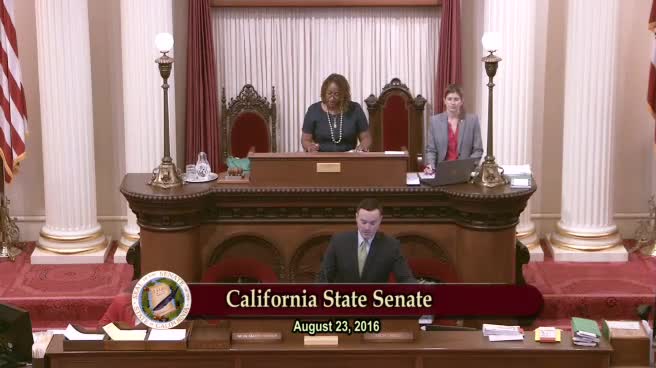
Bill Author

Bill Co-Author(s):