AB 249: Criminal courts: appeals: fees.
- Session Year: 2015-2016
- House: Assembly
- Latest Version Date: 2015-08-13
Existing law allows an appeal to be taken by the defendant from a final judgment of conviction, except that existing law prohibits an appeal by the defendant from a judgment of conviction on the ground of an error in the calculation of presentence custody credits, unless the defendant first presents the claim in the trial court at the time of sentencing, or if the error is not discovered after sentencing, the defendant first makes a motion for correction of the record in the trial court.
This bill would prohibit a defendant from taking an appeal from a judgment of conviction solely on the ground of an error in the imposition or calculation of fines, penalty assessments, surcharges, fees, or costs unless the defendant first presents the claim in the trial court at the time of sentencing, or if the error is not discovered until after sentencing, the defendant first makes a motion for correction in the trial court, which may be made informally in writing. The bill would also allow a motion for correction in the trial court regarding the calculation of presentence custody credits to be made informally in writing. The bill would provide that the trial court retains jurisdiction after a notice of appeal has been filed to correct any error in the calculation of presentence custody credits, or in the imposition or calculation of fines, penalty assessments, surcharges, fees, or costs, upon the defendants request for correction.
Existing law allows an appeal to be taken by the defendant from a final judgment of conviction, except that existing law prohibits an appeal by the defendant from a judgment of conviction on the ground of an error in the calculation of presentence custody credits, unless the defendant first presents the claim in the trial court at the time of sentencing, or if the error is not discovered after sentencing, the defendant first makes a motion for correction of the record in the trial court.
This bill would prohibit a defendant from taking an appeal from a judgment of conviction solely on the ground of an error in the imposition or calculation of fines, penalty assessments, surcharges, fees, or costs unless the defendant first presents the claim in the trial court at the time of sentencing, or if the error is not discovered until after sentencing, the defendant first makes a motion for correction in the trial court, which may be made informally in writing. The bill would also allow a motion for correction in the trial court regarding the calculation of presentence custody credits to be made informally in writing. The bill would provide that the trial court retains jurisdiction after a notice of appeal has been filed to correct any error in the imposition or calculation of presentence custody credits, or in the imposition or calculation of fines, penalty assessments, surcharges, fees, or costs costs, upon the defendants request for correction.
Existing law allows an appeal to be taken by the defendant from a final judgment of conviction, except that existing law prohibits an appeal by the defendant from a judgment of conviction on the ground of an error in the calculation of presentence custody credits, unless the defendant first presents the claim in the trial court at the time of sentencing, or if the error is not discovered after sentencing, the defendant first makes a motion for correction of the record in the trial court.
This bill would prohibit a defendant from taking an appeal from a judgment of conviction solely on the ground of an error in the imposition or calculation of fines, penalty assessments, surcharges, fees, or costs unless the defendant first presents the claim in the trial court at the time of sentencing, or if the error is not discovered until after sentencing, the defendant first makes a motion for correction in the trial court, which may be made informally in writing. The bill would also allow a motion for correction in the trial court regarding the calculation of presentence custody credits to be made informally in writing. The bill would provide that the trial court retains jurisdiction after a notice of appeal has been filed to correct any error in the imposition or calculation of fines, penalty assessments, surcharges, fees, or costs upon the defendants request for correction.
Existing law allows an appeal to be taken by the defendant from a final judgment of conviction, except that existing law prohibits an appeal by the defendant from a judgment of conviction on the ground of an error in the calculation of presentence custody credits, unless the defendant first presents the claim in the trial court at the time of sentencing, or if the error is not discovered after sentencing, the defendant first makes a motion for correction of the record in the trial court.
This bill would prohibit a defendant from taking an appeal from a judgment of conviction solely on the ground of an error in the imposition or calculation of fines, penalty assessments, surcharges, fees, or costs unless the defendant first presents the claim in the trial court at the time of sentencing, or if the error is not discovered until after sentencing, the defendant first makes a motion for correction in the trial court. court, which may be made informally in writing. The bill would also allow a motion for correction in the trial court regarding the calculation of presentence custody credits to be made informally in writing.
Existing law allows an appeal to be taken by the defendant from a final judgment of conviction, except that existing law prohibits an appeal by the defendant from a judgment of conviction on the ground of an error in the calculation of presentence custody credits, unless the defendant first presents the claim in the trial court at the time of sentencing, or if the error is not discovered after sentencing, the defendant first makes a motion for correction of the record in the trial court.
This bill would prohibit a defendant from taking an appeal from a judgment of conviction solely on the ground of an error in the imposition or calculation of fines, penalty assessments, surcharges, fees, or costs unless the defendant first presents the claim in the trial court at the time of sentencing, or if the error is not discovered until after sentencing, the defendant first makes a motion for correction in the trial court.
An appeal may be taken by the defendant from both of the following:
(a)Except as provided in Sections 1237.1, 1237.2, and 1237.5, from a final judgment of conviction. A sentence, an order granting probation, or the commitment of a defendant for insanity, the indeterminate commitment of a defendant as a mentally disordered sex offender, or the commitment of a defendant for controlled substance addiction shall be deemed to be a final judgment within the meaning of this section. Upon appeal from a final judgment the court may review any order denying a motion for a new trial.
(b)From any order made after judgment, affecting the substantial rights of the party.
SEC. 2.Section 1237.1 of the Penal Code is amended to read:1237.1.No appeal shall be taken by the defendant from a judgment of conviction on the ground of an error in the calculation of presentence custody credits, unless the defendant first presents the claim in the trial court at the time of sentencing, or if the error is not discovered until after sentencing, the defendant first makes a motion for correction of the record in the trial court, which may be made informally in writing. The trial court retains jurisdiction after a notice of appeal has been filed to correct any error in the calculation of presentence custody credits upon the defendants request for correction.
SEC. 3.Section 1237.2 is added to the Penal Code, to read:1237.2.An appeal may not be taken by the defendant from a judgment of conviction on the ground of an error in the imposition or calculation of fines, penalty assessments, surcharges, fees, or costs unless the defendant first presents the claim in the trial court at the time of sentencing, or if the error is not discovered until after sentencing, the defendant first makes a motion for correction in the trial court, which may be made informally in writing. The trial court retains jurisdiction after a notice of appeal has been filed to correct any error in the imposition or calculation of fines, penalty assessments, surcharges, fees, or costs upon the defendants request for correction. This section only applies in cases where the erroneous imposition or calculation of fines, penalty assessments, surcharges, fees, or costs are the sole issue on appeal.
An appeal may be taken by the defendant from both of the following:
(a)Except as provided in Sections 1237.1, 1237.2, and 1237.5, from a final judgment of conviction. A sentence, an order granting probation, or the commitment of a defendant for insanity, the indeterminate commitment of a defendant as a mentally disordered sex offender, or the commitment of a defendant for controlled substance addiction shall be deemed to be a final judgment within the meaning of this section. Upon appeal from a final judgment the court may review any order denying a motion for a new trial.
(b)From any order made after judgment, affecting the substantial rights of the party.
SEC. 2.Section 1237.1 of the Penal Code is amended to read:1237.1.No appeal shall be taken by the defendant from a judgment of conviction on the ground of an error in the calculation of presentence custody credits, unless the defendant first presents the claim in the trial court at the time of sentencing, or if the error is not discovered until after sentencing, the defendant first makes a motion for correction of the record in the trial court, which may be made informally in writing. The trial court retains jurisdiction after a notice of appeal has been filed to correct any error in the imposition or calculation of fines, penalty assessments, surcharges, fees, or costs presentence custody credits upon the defendants request for correction.
SEC. 3.Section 1237.2 is added to the Penal Code, to read:1237.2.An appeal may not be taken by the defendant from a judgment of conviction on the ground of an error in the imposition or calculation of fines, penalty assessments, surcharges, fees, or costs unless the defendant first presents the claim in the trial court at the time of sentencing, or if the error is not discovered until after sentencing, the defendant first makes a motion for correction in the trial court, which may be made informally in writing. The trial court retains jurisdiction after a notice of appeal has been filed to correct any error in the imposition or calculation of fines, penalty assessments, surcharges, fees, or costs upon the defendants request for correction. This section only applies in cases where the erroneous imposition or calculation of fines, penalty assessments, surcharges, fees, or costs are the sole issue on appeal.
An appeal may be taken by the defendant from both of the following:
(a)Except as provided in Sections 1237.1, 1237.2, and 1237.5, from a final judgment of conviction. A sentence, an order granting probation, or the commitment of a defendant for insanity, the indeterminate commitment of a defendant as a mentally disordered sex offender, or the commitment of a defendant for controlled substance addiction shall be deemed to be a final judgment within the meaning of this section. Upon appeal from a final judgment the court may review any order denying a motion for a new trial.
(b)From any order made after judgment, affecting the substantial rights of the party.
SEC. 2.Section 1237.1 of the Penal Code is amended to read:1237.1.No appeal shall be taken by the defendant from a judgment of conviction on the ground of an error in the calculation of presentence custody credits, unless the defendant first presents the claim in the trial court at the time of sentencing, or if the error is not discovered until after sentencing, the defendant first makes a motion for correction of the record in the trial court, which may be made informally in writing. The trial court retains jurisdiction after a notice of appeal has been filed to correct any error in the imposition or calculation of fines, penalty assessments, surcharges, fees, or costs upon the defendants request for correction.
SEC. 3.Section 1237.2 is added to the Penal Code, to read:1237.2.An appeal may not be taken by the defendant from a judgment of conviction on the ground of an error in the imposition or calculation of fines, penalty assessments, surcharges, fees, or costs unless the defendant first presents the claim in the trial court at the time of sentencing, or if the error is not discovered until after sentencing, the defendant first makes a motion for correction in the trial court, which may be made informally in writing. The trial court retains jurisdiction after a notice of appeal has been filed to correct any error in the imposition or calculation of fines, penalty assessments, surcharges, fees, or costs upon the defendants request for correction. This section only applies in cases where the erroneous imposition or calculation of fines, penalty assessments, surcharges, fees, or costs are the sole issue on appeal.
An appeal may be taken by the defendant from both of the following:
(a)Except as provided in Sections 1237.1, 1237.2, and 1237.5, from a final judgment of conviction. A sentence, an order granting probation, or the commitment of a defendant for insanity, the indeterminate commitment of a defendant as a mentally disordered sex offender, or the commitment of a defendant for controlled substance addiction shall be deemed to be a final judgment within the meaning of this section. Upon appeal from a final judgment the court may review any order denying a motion for a new trial.
(b)From any order made after judgment, affecting the substantial rights of the party.
SEC. 2.Section 1237.1 of the Penal Code is amended to read:1237.1.No appeal shall be taken by the defendant from a judgment of conviction on the ground of an error in the calculation of presentence custody credits, unless the defendant first presents the claim in the trial court at the time of sentencing, or if the error is not discovered until after sentencing, the defendant first makes a motion for correction of the record in the trial court. court, which may be made informally in writing.
SEC. 2.SEC. 3.Section 1237.2 is added to the Penal Code, to read:1237.2.An appeal may not be taken by the defendant from a judgment of conviction on the ground of an error in the imposition or calculation of fines, penalty assessments, surcharges, fees, or costs unless the defendant first presents the claim in the trial court at the time of sentencing, or if the error is not discovered until after sentencing, the defendant first makes a motion for correction in the trial court. court, which may be made informally in writing. This section only applies in cases where the erroneous imposition or calculation of fines, penalty assessments, surcharges, fees, or costs are the sole issue on appeal.
An appeal may be taken by the defendant from both of the following:
(a)From a final judgment of conviction except as provided in Section 1237.1 and Section 1237.5. Except as provided in Sections 1237.1, 1237.2, and 1237.5, from a final judgment of conviction. A sentence, an order granting probation, or the commitment of a defendant for insanity, the indeterminate commitment of a defendant as a mentally disordered sex offender, or the commitment of a defendant for controlled substance addiction shall be deemed to be a final judgment within the meaning of this section. Upon appeal from a final judgment the court may review any order denying a motion for a new trial.
(b)From any order made after judgment, affecting the substantial rights of the party.
SEC. 2.Section 1237.2 is added to the Penal Code, to read:1237.2.An appeal may not be taken by the defendant from a judgment of conviction on the ground of an error in the imposition or calculation of fines, penalty assessments, surcharges, fees, or costs unless the defendant first presents the claim in the trial court at the time of sentencing, or if the error is not discovered until after sentencing, the defendant first makes a motion for correction in the trial court. This section only applies in cases where the erroneous imposition or calculation of fines, penalty assessments, surcharges, fees, or costs are the sole issue on appeal.
|
Date
|
Status
|
|---|---|
| Apr 23, 2015 | In Senate. Read first time. To Com. on RLS. for assignment. |
| Aug 13, 2015 | Chaptered by Secretary of State - Chapter 194, Statutes of 2015. |
| Aug 13, 2015 | Approved by the Governor. |
| Aug 3, 2015 | Enrolled and presented to the Governor at 3 p.m. |
| Jul 6, 2015 | Read third time. Passed. Ordered to the Assembly. (Ayes 39. Noes 0. Page 1785.). |
| Jul 6, 2015 | Read third time. Passed. Ordered to the Assembly. |
| Jul 6, 2015 | In Assembly. Ordered to Engrossing and Enrolling. |
| Jun 23, 2015 | Read second time. Ordered to third reading. |
| Jun 22, 2015 | From committee: Be placed on second reading file pursuant to Senate Rule 28.8. |
| Jun 9, 2015 | From committee: Do pass and re-refer to Com. on APPR. (Ayes 7. Noes 0.) (June 9). Re-referred to Com. on APPR. |
| May 7, 2015 | Referred to Com. on PUB. S. |
| Apr 23, 2015 | Read third time. Passed. Ordered to the Senate. (Ayes 78. Noes 0.) |
| Apr 23, 2015 | Read third time. Passed. Ordered to the Senate. (Ayes 78. Noes 0. Page 1108.) |
| Feb 9, 2015 | Read first time. To print. |
| Apr 16, 2015 | Read second time. Ordered to consent calendar. |
| Apr 15, 2015 | From committee: Do pass. To Consent Calendar. (Ayes 16. Noes 0.) (April 15). |
| Apr 15, 2015 | From committee: Do pass. Ordered to Consent Calendar. (Ayes 16. Noes 0.) (April 15). |
| Apr 14, 2015 | Re-referred to Com. on APPR. |
| Apr 13, 2015 | From committee chair, with author's amendments: Amend, and re-refer to Com. on APPR. Read second time and amended. |
| Apr 9, 2015 | Re-referred to Com. on APPR. |
| Apr 8, 2015 | From committee chair, with author's amendments: Amend, and re-refer to Com. on APPR. Read second time and amended. |
| Mar 24, 2015 | Re-referred to Com. on APPR. |
| Mar 23, 2015 | Read second time and amended. |
| Mar 19, 2015 | From committee: Amend, and do pass as amended and re-refer to Com. on APPR. (Ayes 6. Noes 0.) (March 17). |
| Feb 17, 2015 | Referred to Com. on PUB. S. |
| Feb 10, 2015 | From printer. May be heard in committee March 12. |
|
Date
|
Description
|
Location
|
Votes
|
|
|---|---|---|---|---|
| Jul 6, 2015 | Assembly 3rd Reading AB249 Obernolte By Anderson | Senate Floor |
Passed |
|
| Jun 9, 2015 | Do pass, but first be re-referred to the Committee on [Appropriations] | Senate Standing Committee on Public Safety |
Passed |
|
| Apr 23, 2015 | AB 249 OBERNOLTE Consent Calendar Second Day Regular Session | Assembly Floor |
Passed |
|
| Apr 15, 2015 | Do pass. To Consent Calendar. | Assembly Standing Committee on Appropriations |
Passed |
|
| Mar 17, 2015 | Do pass as amended and be re-referred to the Committee on [Appropriations] | Assembly Standing Committee on Public Safety |
Passed |
This list shows positions taken on this bill by organizations on the date displayed, which is linked to the original source.
Positions by individuals are not included.
|
Organization
|
Position
|
Date
|
|---|---|---|
| California District Attorneys Association | ** Support | Jul 6, 2015 |
| California Judges Association | ** Support | Jul 6, 2015 |
| California Public Defenders Association | * Against | Mar 17, 2015 |
| California Public Defenders Association | * Support | Mar 17, 2015 |
| Judicial Council | ** Support | Jul 6, 2015 |
| PUB. S. | ** Against | Mar 17, 2015 |
AB 249
Page 4
|
Office of Senate Floor Analyses (916) 651-1520 Fax: (916) 327-4478 |
THIRD READING
Bill No: AB 249
Amended: 4/13/15 in Assembly
SENATE PUBLIC SAFETY COMMITTEE: 7-0, 6/9/15
AYES: Hancock, Anderson, Glazer, Leno, Liu, Monning, Stone
SENATE APPROPRIATIONS COMMITTEE: Senate Rule 28.8
ASSEMBLY FLOOR: 78-0, 4/23/15 (Consent) - See last page for vote
SUBJECT: Criminal courts: appeals: fees
DIGEST: This bill requires a defendant to make a motion in the trial court before filing an appellate brief alleging only errors in the imposition or calculation of fines, fees, and assessments.
Existing law:
Provides that either party in a felony case may appeal on questions of law alone. (Penal Code § 1235)
Allows a defendant to appeal a final judgment of conviction, subject to a few limitations, and from any order made after judgment affecting the defendant's substantial rights. (Penal Code § 1237)
Defines a "final judgment" for purposes of appeal as "[a] sentence, an order granting probation, or the commitment of the defendant for insanity, the indeterminate commitment of a defendant as a mentally disordered sex offender, or the commitment of a defendant for controlled substance addiction." (Penal Code §1237 (a))
Provides that a defendant cannot appeal from a judgment of conviction on the ground of an error in the calculation of presentence custody credits, unless the defendant first presents the claim in the trial court at the time of sentencing, or if the error is not discovered until after sentencing, the defendant first makes a motion for correction of the record in the trial court. (Penal Code § 1237.1)
Limits the issues a defendant can appeal in a guilty plea case, unless he or she obtains a certificate of probable cause. (Penal Code § 1237.5)
Allows the prosecution to appeal certain specified orders, such as a motion to dismiss, and order granting a new trial, and an unauthorized sentence. (Penal Code § 1238)
This bill:
Provides that an appeal may not be taken solely on the ground of an error in the imposition or calculation of fines, penalty assessments, surcharge, fees or costs unless the defendant first presents the claim in the trial court at the time of sentencing, or if the error is not discovered until after sentencing, the defendant first makes a motion for correction in the trial court, which may be informally in writing.
Provides that the trial court retains jurisdiction after a notice of appeal has been filed to correct any error in the imposition or calculation of fines, penalty assessments, surcharges, fees or costs upon the defendant’s request for correction.
Clarifies that a request to correct presentence custody credits in the trial court may be made informally in writing.
Provides that the trial court retains jurisdiction after a notice of appeal has been filed to correct any error in the calculation of presentence custody credits upon the defendant’s request for correction.
Background
As a general rule a trial court loses jurisdiction to vacate its own judgment once a party files a notice of appeal, thus shifting jurisdiction over the case to the Court of Appeal. (People v. Alanis (2008) 158 Cal.App.4th 1467, 1472.) The appellate court maintains jurisdiction of the case until the appeal is determined and the remittitur has issued. The purpose of this rule "'is to protect the appellate court's jurisdiction by preserving the status quo until the appeal is decided. The rule prevents the trial court from rendering an appeal futile by altering the appealed judgment.'" (Ibid., quoting Townsel v. Superior Court (1999) 20 Cal.4th 1084, 1089.")
This bill clarifies that the trial court retains jurisdiction to correct any error in the calculation of presentence credits or the imposition or calculation of fines, penalty assessments, surcharges, fees or costs upon the defendant’s request for corrections.
In People v. Clavel (2002) 103 Cal.App.4th 516, 519, the Court of Appeal dismissed an appeal because the sole issue raised was whether the trial court had miscalculated the credits and no formal motion had been filed. In Clavel, appellate counsel had filed an informal request for correction of credits before raising the issue on appeal, but the trial court failed to act on the request. (Id. at p. 518.) Because section 1237.1 requires the defendant to "make a motion" in the trial court, an informal request is not a motion, and an appeal raising a credits issue without such a motion is subject to dismissal. While the Clavel court expressly condoned the informal procedure to the extent that it gets the desired result, it held that if no action is taken by the superior court, counsel must proceed to make a formal motion. (Id. at p. 519.) This bill specifies that as to "motions" to correct either presentence credits or errors in the imposition or calculation of fines and fees, the requests may be made informally in writing.
FISCAL EFFECT: Appropriation: No Fiscal Com.: Yes Local: No
Judicial Council (source)
California District Attorneys Association
California Judges Association
OPPOSITION: (Verified 6/22/15)
None received
ASSEMBLY FLOOR: 78-0, 4/23/15
AYES: Achadjian, Alejo, Travis Allen, Baker, Bigelow, Bloom, Bonilla, Bonta, Brough, Brown, Burke, Calderon, Chang, Chau, Chávez, Chiu, Chu, Cooley, Cooper, Dababneh, Dahle, Daly, Dodd, Eggman, Frazier, Beth Gaines, Gallagher, Cristina Garcia, Eduardo Garcia, Gatto, Gipson, Gomez, Gonzalez, Gordon, Gray, Grove, Hadley, Harper, Roger Hernández, Holden, Irwin, Jones, Jones-Sawyer, Kim, Lackey, Levine, Linder, Lopez, Low, Maienschein, Mathis, Mayes, McCarty, Medina, Melendez, Mullin, Nazarian, Obernolte, O'Donnell, Olsen, Patterson, Perea, Quirk, Rendon, Ridley-Thomas, Rodriguez, Santiago, Steinorth, Mark Stone, Thurmond, Ting, Wagner, Waldron, Weber, Wilk, Williams, Wood, Atkins
NO VOTE RECORDED: Campos, Salas
Prepared by: Mary Kennedy / PUB. S. /
6/24/15 16:03:28
**** END ****
AB 249 (Obernolte ) Page 4 of 4
SENATE COMMITTEE ON PUBLIC SAFETY
Senator Loni Hancock, Chair
2015 - 2016 Regular
Bill No: AB 249 Hearing Date: June 9, 2015
Author: |
Obernolte |
||
Version: |
April 13, 2015 |
||
Urgency: |
No |
Fiscal: |
Yes |
Consultant: |
MK |
||
Subject: Criminal Courts: Appeals: Fees
HISTORY
Source: Judicial Council
Prior Legislation: AB 354 (Rogan), Chapter 18, Statutes of 1995
Support: California District Attorneys Association; California Judges Association
Opposition: None known
Assembly Floor Vote: 78 - 0
PURPOSE
The purpose of this bill is to require a defendant to make a motion in the trial court before filing an appellate brief alleging only errors in the imposition or calculation of fines, fees, and assessments.
Existing law provides that either party in a felony case may appeal on questions of law alone. (Penal Code, § 1235.)
Existing law allows a defendant to appeal a final judgment of conviction, subject to a few limitations, and from any order made after judgment affecting the defendant's substantial rights. (Penal Code, § 1237.)
Existing law defines a "final judgment" for purposes of appeal as "[a] sentence, an order granting probation, or the commitment of the defendant for insanity, the indeterminate commitment of a defendant as a mentally disordered sex offender, or the commitment of a defendant for controlled substance addiction." (Penal Code, §1237 (a).)
Existing law provides that a defendant cannot appeal from a judgment of conviction on the ground of an error in the calculation of presentence custody credits, unless the defendant first presents the claim in the trial court at the time of sentencing, or if the error is not discovered until after sentencing, the defendant first makes a motion for correction of the record in the trial court. (Penal Code § 1237.1.)
Existing law limits the issues a defendant can appeal in a guilty plea case, unless he or she obtains a certificate of probable cause. (Penal Code § 1237.5.)
Existing law allows the prosecution to appeal certain specified orders, such as a motion to dismiss, and order granting a new trial, and an unauthorized sentence. (Penal Code § 1238.)
This bill provides that an appeal may not be taken solely on the ground of an error in the imposition or calculation of fines, penalty assessments, surcharge, fees or costs unless the defendant first presents the claim in the trial court at the time of sentencing, or if the error is not discovered until after sentencing, the defendant first makes a motion for correction in the trial court, which may be informally in writing.
This bill provides that the trial court retains jurisdiction after a notice of appeal has been filed to correct any error in the imposition or calculation of fines, penalty assessments, surcharges, fees or costs upon the defendant’s request for correction.
This bill clarifies that a request to correct presentence custody credits in the trial court may be made informally in writing.
This bill provides that the trial court retains jurisdiction after a notice of appeal has been filed to correct any error in the calculation of presentence custody credits upon the defendant’s request for correction.
RECEIVERSHIP/OVERCROWDING CRISIS AGGRAVATION
For the past eight years, this Committee has scrutinized legislation referred to its jurisdiction for any potential impact on prison overcrowding. Mindful of the United States Supreme Court ruling and federal court orders relating to the state’s ability to provide a constitutional level of health care to its inmate population and the related issue of prison overcrowding, this Committee has applied its “ROCA” policy as a content-neutral, provisional measure necessary to ensure that the Legislature does not erode progress in reducing prison overcrowding.
On February 10, 2014, the federal court ordered California to reduce its in-state adult institution population to 137.5% of design capacity by February 28, 2016, as follows:
143% of design bed capacity by June 30, 2014;
141.5% of design bed capacity by February 28, 2015; and,
137.5% of design bed capacity by February 28, 2016.
In February of this year the administration reported that as “of February 11, 2015, 112,993 inmates were housed in the State’s 34 adult institutions, which amounts to 136.6% of design bed capacity, and 8,828 inmates were housed in out-of-state facilities. This current population is now below the court-ordered reduction to 137.5% of design bed capacity.”( Defendants’ February 2015 Status Report In Response To February 10, 2014 Order, 2:90-cv-00520 KJM DAD PC, 3-Judge Court, Coleman v. Brown, Plata v. Brown (fn. omitted).
While significant gains have been made in reducing the prison population, the state now must stabilize these advances and demonstrate to the federal court that California has in place the “durable solution” to prison overcrowding “consistently demanded” by the court. (Opinion Re: Order Granting in Part and Denying in Part Defendants’ Request For Extension of December 31, 2013 Deadline, NO. 2:90-cv-0520 LKK DAD (PC), 3-Judge Court, Coleman v. Brown, Plata v. Brown (2-10-14). The Committee’s consideration of bills that may impact the prison population therefore will be informed by the following questions:
Whether a proposal erodes a measure which has contributed to reducing the prison population;
Whether a proposal addresses a major area of public safety or criminal activity for which there is no other reasonable, appropriate remedy;
Whether a proposal addresses a crime which is directly dangerous to the physical safety of others for which there is no other reasonably appropriate sanction;
Whether a proposal corrects a constitutional problem or legislative drafting error; and
Whether a proposal proposes penalties which are proportionate, and cannot be achieved through any other reasonably appropriate remedy.
COMMENTS
1. Need for This Bill
According to the author:
The statutory scheme that governs the calculation of fines and other monetary penalties in California criminal cases is vast, complex, and frequently modified by the Legislature. As a result, appellate courts are often called upon to correct the erroneous calculation of fines and other monetary penalties on appeal.
When a calculation error is the sole issue on appeal, trial and appellate courts incur significant costs and burdens associated with preparation of the formal record on appeal and resulting in resentencing proceedings.
2. Appeal For an Error in Fines
Existing law provides that if a defendant is appealing the calculation of presentence credits, he or she must first make a formal request to the trial court before bringing the issue to the appellate court.
As was the case with the calculation of presentence custody credits, appellate courts are often called upon to correct sentences that contain errors in fines and penalty assessments. (People v. Hamed (2013) 221 Cal.App.4th 928, 939.) Appellate courts have voiced frustration about correcting these errors which can easily be resolved by the trial court. (Id.) This bill requires that criminal defendants resolve issues regarding fines, fees, and assessments in the trial court before raising them in the Court of Appeal. The sponsor, Judicial Council believes that”
AB 249 brings efficiencies to the court by reducing the burdens associated with formal appeals and resentencing proceedings stemming from a common sentencing error. By requiring that this sentencing error be first raised in the trial court, which has ready access to the court records and other information necessary to review and resolve such issues, this bill would promote judicial economies and efficiencies by avoiding the costs and burdens associated with a formal appeal.
3. Formal Motion vs. Informal Written Request
In People v. Clavel (2002) 103 Cal.App.4th 516, 519, the Court of Appeal dismissed an appeal because the sole issue raised was whether the trial court had miscalculated the credits and no formal motion had been filed. In Clavel, appellate counsel had filed an informal request for correction of credits before raising the issue on appeal, but the trial court failed to act on the request. (Id. at p. 518.) Because section 1237.1 requires the defendant to "make a motion" in the trial court, an informal request is not a motion, and an appeal raising a credits issue without such a motion is subject to dismissal. While the Clavel court expressly condoned the informal procedure to the extent that it gets the desired result, it held that if no action is taken by the superior court, counsel must proceed to make a formal motion. (Id. at p. 519.) This bill specifies that as to "motions" to correct either presentence credits or errors in the imposition or calculation of fines and fees, the requests may be made informally in writing.
4. Jurisdiction
As a general rule a trial court loses jurisdiction to vacate its own judgment once a party files a notice of appeal, thus shifting jurisdiction over the case to the Court of Appeal. (People v. Alanis (2008) 158 Cal.App.4th 1467, 1472.) The appellate court maintains jurisdiction of the case until the appeal is determined and the remittitur has issued. The purpose of this rule "'is to protect the appellate court's jurisdiction by preserving the status quo until the appeal is decided. The rule prevents the trial court from rendering an appeal futile by altering the appealed judgment.'" (Ibid., quoting Townsel v. Superior Court (1999) 20 Cal.4th 1084, 1089.") There are, however, a few exceptions to the rule removing subject matter jurisdiction from the trial court. First, after the notice of appeal is filed, the trial court retains jurisdiction to correct clerical errors, but not judicial errors. A clerical error is one that is made in recording the judgment, whereas a judicial error is one made in rendering the judgment. (People v. Mitchell (2001) 26 Cal.4th 181, 185; In re Candelario (1970) 3 Cal.3d 702, 705.) Additionally, the trial court may recall the sentence for 120 days under Penal Code section 1170 subdivision (d), if the recall is only for reasons rationally related to sentencing. (Portillo v. Superior Court (1992) 10 Cal.App.4th 1829, 1834-1836.) The trial court also has jurisdiction to vacate a void --but not voidable-- judgment, such as an unauthorized sentence. A judgment is void, rather than voidable, only if the trial court lacked subject matter jurisdiction. (People v. Malveaux (1996) 50 Cal.App.4th 1425, 1434.) This bill would require alleged errors regarding the imposition of fine, fees, and assessments to be raised in the trial court, rather than the appellate court, when there are no other issues to be raised on appeal. While some issues involving fines and fees may involve clerical changes or unauthorized sentences, others will not. The latter would fall outside the scope of the trial court's jurisdiction. However, the Legislature may regulate the mode of exercising appellate jurisdiction. (See e.g., Powers v. City of Richmond (1995) 10 Cal.4th 85.)
This bill clarifies that the trial court retains jurisdiction to correct any error in the calculation of presentence credits or the imposition or calculation of fines, penalty assessments, surcharges, fees or costs upon the defendant’s request for corrections.
--END--
AB 249
Page 2
Date of Hearing: April 15, 2015
ASSEMBLY COMMITTEE ON APPROPRIATIONS
Jimmy Gomez, Chair
AB 249
(Obernolte) – As AmendedApril 13, 2015
Policy Committee: |
Public Safety |
Vote: |
6 - 0 |
|
|
|
|
|
|
|
|
Urgency: No State Mandated Local Program: No Reimbursable: No
SUMMARY:
This bill requires a defendant to make a motion in the trial court before filing an appellate brief alleging only errors in the imposition or calculation of fines, fees, and assessments.
Specifically,
this bill:
Prohibits an appeal by a defendant on the ground of an error either in the imposition or calculation of fines and fees, unless the defendant first presents the claim in the trial court at the time of sentencing, or if the error is not discovered until after sentencing, the defendant first makes a motion for correction in the trial court.
Provides a motion to correct calculation errors may be made via an informal written letter to the trial court.
FISCAL EFFECT:
Minor costs to the Trial Courts to review requests for recalculations of fines, fees, and assessments, likely more than offset by savings to the Appellate Courts and Trial Courts by eliminating appeals based on calculation errors.
COMMENTS:
Background. Current law provides that a defendant cannot appeal from a judgment of conviction on the ground of an error in the calculation of presentence custody credits, unless the defendant first presents the claim in the trial court at the time of sentencing, or if the error is not discovered until after sentencing, the defendant first makes a motion for correction of the record in the trial court.
Purpose. This bill would provide the same appeal exception to final judgment conviction appeals based on errors on fines, fees and assessment calculations. According to the Judicial Council, the sponsor of this bill, "AB 249 will reduce the burdens associated with formal appeals and resentencing proceedings stemming from a common sentencing error. By requiring that this sentencing error first be raised in the trial court, which has ready access to the court records and other information necessary to review and resolve such issues, this proposal would promote judicial economies and efficiencies by avoiding the costs and burdens associated with a formal appeal."
Analysis Prepared by: Pedro R. Reyes / APPR. / (916) 319-2081
AB 249
Page 6
Date of Hearing: March 17, 2015
Counsel: Sandra Uribe
ASSEMBLY COMMITTEE ON PUBLIC SAFETY
Bill Quirk, Chair
AB 249
(Obernolte) – As Introduced February 9, 2015
As Proposed to be Amended in Committee
SUMMARY:
Requires a defendant to make a motion in the trial court before
filing an appellate brief alleging only errors in the imposition or
calculation of fines, fees, and assessments. Specifically, this
bill:
Prohibits an appeal by a defendant on the ground of an error either in the imposition or calculation of fines and fees unless the defendant first presents the claim in the trial court at the time of sentencing, or if the error is not discovered until after sentencing, the defendant first makes a motion for correction in the trial court.
Specifies that this limitation applies only in cases where the erroneous imposition or calculation of fines, penalty assessments, surcharges, fees, or costs are the only issue on appeal.
Provides that a motion to correct an error in the imposition or calculation of fines and fees in the trial court may be made via an informal written letter.
Amends the statute detailing which court actions are appealable by a criminal defendant to include this new exception in the list of exceptions.
Clarifies that a request to correct presentence custody credits in the trial court may be made informally in writing.
EXISTING LAW:
Provides that either party in a felony case may appeal on questions of law alone. (Pen. Code, § 1235.)
Allows a defendant to appeal a final judgment of conviction, subject to a few limitations, and from any order made after judgment affecting the defendant's substantial rights. (Pen. Code, § 1237.)
Defines a "final judgment" for purposes of appeal as "[a] sentence, an order granting probation, or the commitment of the defendant for insanity, the indeterminate commitment of a defendant as a mentally disordered sex offender, or the commitment of a defendant for controlled substance addiction." (Pen. Code, §1237, subd. (a).)
Provides that a defendant cannot appeal from a judgment of conviction on the ground of an error in the calculation of presentence custody credits, unless the defendant first presents the claim in the trial court at the time of sentencing, or if the error is not discovered until after sentencing, the defendant first makes a motion for correction of the record in the trial court. (Pen. Code, § 1237.1.)
Limits the issues a defendant can appeal in a guilty plea case, unless he or she obtains a certificate of probable cause. (Pen. Code, § 1237.5.)
Allows the prosecution to appeal certain specified orders, such as a motion to dismiss, and order granting a new trial, and an unauthorized sentence. (Pen. Code, § 1238.)
FISCAL EFFECT:
Unknown
COMMENTS:
Author's Statement: According to the author, "When a fines and fees error is the sole issue on appeal, trial and appellate courts incur significant costs and burdens associated with preparation of the formal record on appeal and resulting resentencing proceedings. AB 249 would prohibit a defendant from appealing a final conviction solely on the basis of an error in the imposition or calculation of fines, penalty assessments, surcharges, fees, or costs, unless the issue is raised in the trial court at the time of sentencing. AB 249 would not prohibit defendants from seeking appeals on the grounds of any substantive concern, but rather allow courts to handle the correction administratively."
Comparison with Penal Code Section 1237.1: In People v. Fares (1993) 16 Cal.App.4th 954, the Court of Appeal held that the appropriate way of correcting credit errors was to seek correction in the trial court because, under Penal Code section 2900.5, it is the obligation of the superior court to calculate the number of credits. (Id. at p. 958) The Court of Appeal was "disturbed that this attempt at a minor correction of a sentence error has required the formal appellate process." (Id. at p. 957.) The court warned it would reserve "the right in the future summarily to dismiss appeals directed to correction of presentence custody calculations when it appear[ed] that prior resort to the superior court in all likelihood would have afforded an adequate remedy."
The Legislature then codified the Fares opinion by enacting Penal Code section 1237.1, which became effective in 1996, and states: "No appeal shall be taken by the defendant from a judgment of conviction on the ground of an error in the calculation of presentence custody credits, unless the defendant first presents the claim in the trial court at the time of sentencing, or if the error is not discovered until after sentencing, the defendant first makes a motion for correction of the record in the trial court."
As was the case with the calculation of presentence custody credits, appellate courts are often called upon to correct sentences that contain errors in fines and penalty assessments. (People v. Hamed (2013) 221 Cal.App.4th 928, 939.) Appellate courts have voiced frustration about correcting these errors which can easily be resolved by the trial court. (Id.) This bill requires that criminal defendants resolve issues regarding fines, fees, and assessments in the trial court before raising them in the Court of Appeal.
Legal vs. Mathematical Errors: Penal Code section 1237.1 does not on its face make a distinction between a mathematical miscalculation of credits and a substantive issue dealing with statutory interpretation of credits statutes, or an exercise of judicial discretion in applying a credits statute. The language of the statute broadly states its mandate applies to "an error in the calculation of presentence custody credits." (Pen. Code, § 1237.1.) However, the error in question in Fares, was a minor, mathematical miscalculation which the Court of Appeal "deemed clerical, inadvertent, or at most negligent." (People v. Fares, supra, 16 Cal.App.4th at p. 957.) Further, the legislative history of Penal Code section 1237.1 described the purpose of the new law as "to curtail misuse of the formal appellate process to correct minor sentencing errors when alternative forums for resolution exist." (Sen. Com. on Criminal Procedure, Analysis of Assem. Bill No. 354 (1995-1996 Reg. Sess.).)
However, if there is a substantive legal issue involving the application of a credits statute, appellate courts have addressed the legal issue without reference to compliance with Penal Code section 1237.1. (See e.g, People v. Delgado (2012) 210 Cal.App.4th 761, 766-767.)
The provision of this bill directing correction of fines and fees in the trial court is broader than Penal Code section 1237.1 in that it directs an appellant not only to seek correction of miscalculations of fines and fees, but also to raise issues regarding their imposition, which may be strictly a legal issue.
Formal Motion vs. Informal Written Request: In People v. Clavel (2002) 103 Cal.App.4th 516, 519, the Court of Appeal dismissed an appeal because the sole issue raised was whether the trial court had miscalculated the credits and no formal motion had been filed. In Clavel, appellate counsel had filed an informal request for correction of credits before raising the issue on appeal, but the trial court failed to act on the request. (Id. at p. 518.) Because section 1237.1 requires the defendant to "make a motion" in the trial court, an informal request is not a motion, and an appeal raising a credits issue without such a motion is subject to dismissal. While the Clavel court expressly condoned the informal procedure to the extent that it gets the desired result, it held that if no action is taken by the superior court, counsel must proceed to make a formal motion. (Id. at p. 519.)
This bill specifies that as to "motions" to correct either presentence credits or errors in the imposition or calculation of fines and fees, the requests may be made informally in writing.
Other issues on Appeal: The appellate courts recognize an exception to compliance with Penal Code section 1237.1 when the credits error is not the only issue to be raised on appeal. (People v. Acosta (1996) 48 Cal.App.4th 411, see also People v. Duran (1998) 67 Cal.App.4th 267.) However, the California Supreme Court has stated that an appellate court is not obligated to consider an appellant’s credits claim even if other issues are raised on appeal. (People v. Mendez (1999) 19 Cal.4th 1084, 1100-1101 [the Court of Appeal may consider defendant's claim of miscalculated presentence credits but is not obligated to do so].)
This bill specifies that as to errors regarding fines and fees, the prerequisite to seek correction in the trial court only applies if that error is the only issue being raised on appeal. Should Penal Code section 1237.1 also be amended to clarify that compliance with the statute is only required when an alleged credits error is the only issue on appeal?
Fines and Fees Generally: The trial court is required to itemize the fines, fees, and penalties on the record. All fines and fees must be set forth in the abstract of judgment. (People v. Sanchez (1998) 64 Cal.App.4th 1329, 1332.) A classification of the fines and fees on the abstract of judgment assists the Department of Corrections and Rehabilitation to collect and forward deductions from prison wages to the appropriate agency based on the nature of the fine imposed. (People v. Hong (1998) 64 Cal.App.4th 1071, 1078-1079.) Including the breakdown of all fines and fees in the abstract also assists state and local agencies in their efforts to collect fines. (People v. High (2004) 119 Cal.App.4th 1192, 1200.) Thus, when the trial court fails to announce the separation of the fines, the matter should be remanded to the trial court for a detailed recitation of the fines/fees. (Ibid.)
The fines, fees, penalty assessments, and surcharges imposed by the Legislature has become increasingly complicated. As one court recently noted, "when [People v.] High was decided in June 2004, there were only four penalty assessments. This area has become more complex since then, with the addition of three more penalty assessments and multiple amendments to the statutes that impose base fines and penalty assessments. In light of this history, additional fines and penalty assessments—or amendments to those already in existence-- may be enacted by the Legislature in the years to come." (People v. Hamed (2013) 221 Cal.App.4th 928, 939.)
Jurisdiction: As a general rule a trial court loses jurisdiction to vacate its own judgment once a party files a notice of appeal, thus shifting jurisdiction over the case to the Court of Appeal. (People v. Alanis (2008) 158 Cal.App.4th 1467, 1472.) The appellate court maintains jurisdiction of the case until the appeal is determined and the remittitur has issued. The purpose of this rule "'is to protect the appellate court's jurisdiction by preserving the status quo until the appeal is decided. The rule prevents the trial court from rendering an appeal futile by altering the appealed judgment.'" (Ibid., quoting Townsel v. Superior Court (1999) 20 Cal.4th 1084, 1089.")
There are, however, a few exceptions to the rule removing subject matter jurisdiction from the trial court. First, after the notice of appeal is filed, the trial court retains jurisdiction to correct clerical errors, but not judicial errors. A clerical error is one that is made in recording the judgment, whereas a judicial error is one made in rendering the judgment. (People v. Mitchell (2001) 26 Cal.4th 181, 185; In re Candelario (1970) 3 Cal.3d 702, 705.) Additionally, the trial court may recall the sentence for 120 days under Penal Code section 1170 subdivision (d), if the recall is only for reasons rationally related to sentencing. (Portillo v. Superior Court (1992) 10 Cal.App.4th 1829, 1834-1836.) The trial court also has jurisdiction to vacate a void --but not voidable-- judgment, such as an unauthorized sentence. A judgment is void, rather than voidable, only if the trial court lacked subject matter jurisdiction. (People v. Malveaux (1996) 50 Cal.App.4th 1425, 1434.)
This bill would require alleged errors regarding the imposition of fine, fees, and assessments to be raised in the trial court, rather than the appellate court, when there are no other issues to be raised on appeal. While some issues involving fines and fees may involve clerical changes or unauthorized sentences, others will not. The latter would fall outside the scope of the trial court's jurisdiction. However, the Legislature may regulate the mode of exercising appellate jurisdiction. (See e.g., Powers v. City of Richmond (1995) 10 Cal.4th 85.) Thus, the bill appears to give concurrent jurisdiction to the appellate court and the trial court as to these matters, arguably in contravention of the established rules.
Juvenile Delinquency Proceedings: Juvenile delinquency appeals are not subject to Penal Code section 1237.1. (In re Antwon R. (2001) 87 Cal.App.4th 348, 350.) Section 1237.1 referred to an appeal by the defendant from a "judgment of conviction." Adjudications of juvenile wrongdoing are not "criminal convictions." (Id. at pp. 351-352.) Moreover, juvenile appeals are authorized by Welfare and Institutions Code section 800, not Penal Code section 1237. (Id. at p. 350.)
Presumably then, if this bill were to become law, juvenile delinquency appeals would not be subject to compliance with newly-created Penal Code section 1237.2.
Argument in Support: According to the Judicial Council, the sponsor of this bill, "AB 249 will reduce the burdens associated with formal appeals and resentencing proceedings stemming from a common sentencing error. By requiring that this sentencing error first be raised in the trial court, which has ready access to the court records and other information necessary to review and resolve such issues, this proposal would promote judicial economies and efficiencies by avoiding the costs and burdens associated with a formal appeal."
Argument in Opposition: According to the California Public Defenders Association, "Although we applaud the effort to increase judicial economy and agree that the court of appeals should not be the court of first resort to correct errors in fines and fees, the proposed language of AB 249 would leave the defendant without any venue to correct errors in fines in fees.
"Under existing law, the defendant has a limited time to file a notice of appeal. (30 days in misdemeanor cases and 60 days in felony cases.) Once the notice of appeal is filed, the trial court loses jurisdiction over the case. (CCP section 916(a); People v. Johnson (1992) 3 C4th 1183.)
"Typically, most defendants are represented by different lawyers with different skills at the trial and the appellate level. The trial lawyer will believe that there are valid grounds for an appeal beyond any errors in the calculation of fines and fees at the time the notice of appeal filed is. It is only later, that the appellate lawyer, a second set of eyes, if you will, might determine that the only basis for an appeal is the error in the calculation of fines and fees. This proposed legislation unless amended would effectively prevent the defendant from being heard in either the trial court or the appellate court.
"We suggest adding the following amendment at line 24 before the last sentence to address our concerns:
"The trial court retains jurisdiction after a notice of appeal has been filed to correct any error in the imposition or calculation of fines, penalty assessments, surcharges, fees, or costs upon the defendant’s motion for correction."
Prior Legislation: AB 354 (Rogan), Chapter 18, Statutes of 1995, prohibit an appeal by a defendant on the ground of an error in the calculation of presentence custody credits unless specified conditions are met.
REGISTERED
SUPPORT / OPPOSITION:
Support
Judicial Council (Sponsor)
Opposition
California Public Defenders Association
Analysis Prepared by:
Sandy Uribe/PUB. S./(916) 319-3744
Discussed in Hearing
View Older Hearings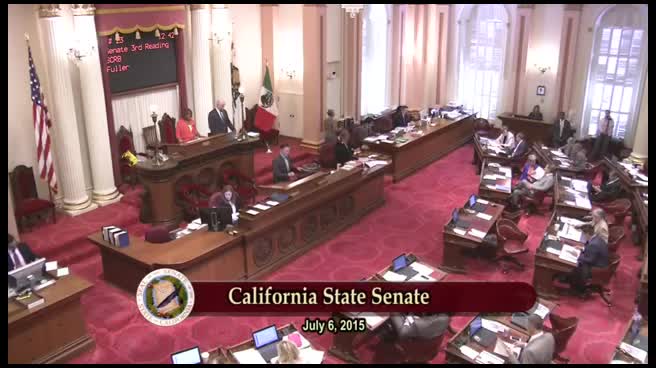
Bill Author

Bill Co-Author(s):