AB 2491: Vehicles: stopping, standing, and parking.
- Session Year: 2015-2016
- House: Assembly
- Latest Version Date: 2016-09-14
Existing law prohibits a person from stopping, parking, or leaving standing any vehicle whether attended or unattended, except when necessary to avoid conflict with other traffic or in compliance with the directions of a peace officer or official traffic control device, in designated places, including, among other places, within 15 feet of the driveway entrance to any fire station. A violation of this provision is subject to a civil penalty.
This bill would authorize a local authority to, by ordinance, prohibit a person from stopping, parking, or leaving a vehicle within 15 feet of a driveway that is used by certain emergency vehicles to enter or exit a police department, ambulance service provider facility, or general acute care hospital, except as specified, and would require a local authority that enacts that ordinance to provide appropriate curb markings or KEEP CLEAR pavement markings and post appropriate signs that delineate this prohibited area.
Existing law prohibits a person from stopping, parking, or leaving standing any vehicle whether attended or unattended, except when necessary to avoid conflict with other traffic or in compliance with the directions of a peace officer or official traffic control device, in designated places, including, among other places, within 15 feet of the driveway entrance to any fire station. A violation of this provision is subject to a civil penalty.
This bill would authorize a local authority to, by ordinance, prohibit a person from stopping, parking, or leaving a vehicle within 15 feet of a driveway that is used by certain emergency vehicles to enter or exit a fire department, police department, ambulance service provider facility, or general acute care hospital, except as specified, and would require a local authority that enacts that ordinance to provide appropriate curb markings or KEEP CLEAR pavement markings and post appropriate signs that delineate this prohibited area.
Existing law prohibits a person from stopping, parking, or leaving standing any vehicle whether attended or unattended, except when necessary to avoid conflict with other traffic or in compliance with the directions of a peace officer or official traffic control device, in designated places, including, among other places, within 15 feet of the driveway entrance to any fire station. A violation of this provision is subject to a civil penalty.
This bill would additionally authorize a local authority to, by ordinance, prohibit a person from stopping, parking, or leaving a vehicle within 15 feet of the driveway to a police station, ambulance company, or a driveway that is used by certain emergency vehicles to enter or exit a fire department, police department, ambulance service provider facility, or general acute care hospital, except as specified, and would authorize a require a local authority that enacts that ordinance to provide appropriate curb markings and post appropriate signs that delineate this prohibited area. The bill would also provide that a violation of these provisions is not a violation of law relating to the safe operation of vehicles for purposes of violation point assignment, but is instead a stopping violation or parking violation, as specified.
Existing law prohibits a person from stopping, parking, or leaving standing any vehicle whether attended or unattended, except when necessary to avoid conflict with other traffic or in compliance with the directions of a peace officer or official traffic control device, in designated places, including, among other places, within 15 feet of the driveway entrance to any fire station. A violation of this provision is subject to a civil penalty.
This bill would additionally prohibit a person from stopping, parking, or leaving a vehicle within 15 feet of the driveway to a police station, ambulance company, or general acute care hospital, except as specified, and would authorize a local authority to provide appropriate curb markings and post appropriate signs that delineate this prohibited area. The bill would also provide that a violation of these provisions is not a violation of law relating to the safe operation of vehicles for purposes of violation point assignment, but is instead a stopping violation or parking violation, as specified.
(a)A local authority may, by ordinance, prohibit a person from stopping, parking, or leaving standing a vehicle, whether attended or unattended, except if necessary to avoid conflict with other traffic or in compliance with the directions of a peace officer or official traffic control device, within 15 feet of a driveway that is used by an emergency vehicle owned or operated by a police department, ambulance service care provider, or general acute care hospital, to enter or exit a police station, ambulance service provider facility, or general acute care hospital. This section does not apply to any vehicle owned or operated by a fire department, police department, ambulance service provider, or general acute care hospital, if the vehicle is clearly marked as a fire department vehicle, police department vehicle, ambulance, or general acute care hospital vehicle.
(b)A local authority that enacts an ordinance pursuant to subdivision (a) shall provide appropriate curb markings or KEEP CLEAR pavement markings and post signs that delineate the area specified in subdivision (a).
(a)A local authority may, by ordinance, prohibit a person from stopping, parking, or leaving standing a vehicle, whether attended or unattended, except if necessary to avoid conflict with other traffic or in compliance with the directions of a peace officer or official traffic control device, within 15 feet of a driveway that is used by an emergency vehicle owned or operated by a fire department, police department, ambulance service care provider, or general acute care hospital, to enter or exit a fire station, police station, ambulance service provider facility, or general acute care hospital. This section does not apply to any vehicle owned or operated by a fire department, police department, ambulance service provider, or general acute care hospital, if the vehicle is clearly marked as a fire department vehicle, police department vehicle, ambulance, or general acute care hospital vehicle.
(b)A local authority that enacts an ordinance pursuant to subdivision (a) shall provide appropriate curb markings and post signs that delineate the area specified in subdivision (a).
SECTION 1.Section 22500 of the Vehicle Code is amended to read:22500.A person shall not stop, park, or leave standing any vehicle whether attended or unattended, except when necessary to avoid conflict with other traffic or in compliance with the directions of a peace officer or official traffic control device, in any of the following places:
(a)Within an intersection, except adjacent to curbs as may be permitted by local ordinance.
(b)On a crosswalk, except that a bus engaged as a common carrier or a taxicab may stop in an unmarked crosswalk to load or unload passengers when authorized by the legislative body of a city pursuant to an ordinance.
(c)Between a safety zone and the adjacent right-hand curb or within the area between the zone and the curb as may be indicated by a sign or red paint on the curb, which sign or paint was erected or placed by local authorities pursuant to an ordinance.
(d)(1)Within 15 feet of the driveway to a fire station, police station, ambulance company, or general acute care hospital. This subdivision does not apply to any vehicle owned or operated by a fire department, police department, ambulance company, or general acute care hospital, and clearly marked as a fire department vehicle, police department vehicle, ambulance, or general acute care hospital vehicle.
(2)A local authority may provide appropriate curb markings and post signs that delineate the area specified in paragraph (1).
(3)A violation of this subdivision is not a violation of a law relating to the safe operation of vehicles for purposes of Section 12810, but is instead either of the following:
(A)A stopping violation if a notice to appear has been issued by a peace officer described in Section 830.1, 830.2, or 830.33 of the Penal Code.
(B)A parking violation if a notice of parking violation is issued by a person, other than a peace officer described in subparagraph (A), who is authorized to enforce parking statutes and regulations.
(e)(1)In front of a public or private driveway, except that a bus engaged as a common carrier, schoolbus, or a taxicab may stop to load or unload passengers when authorized by local authorities pursuant to an ordinance.
(2)In unincorporated territory, where the entrance of a private road or driveway is not delineated by an opening in a curb or by other curb construction, so much of the surface of the ground as is paved, surfaced, or otherwise plainly marked by vehicle use as a private road or driveway entrance, shall constitute a driveway.
(f)On a portion of a sidewalk, or with the body of the vehicle extending over a portion of a sidewalk, except electric carts when authorized by local ordinance, as specified in Section 21114.5. Lights, mirrors, or devices that are required to be mounted upon a vehicle under this code may extend from the body of the vehicle over the sidewalk to a distance of not more than 10 inches.
(g)Alongside or opposite a street or highway excavation or obstruction when stopping, standing, or parking would obstruct traffic.
(h)On the roadway side of a vehicle stopped, parked, or standing at the curb or edge of a highway, except for a schoolbus when stopped to load or unload pupils in a business or residence district where the speed limit is 25 miles per hour or less.
(i)Except as provided under Section 22500.5, alongside curb space authorized for the loading and unloading of passengers of a bus engaged as a common carrier in local transportation when indicated by a sign or red paint on the curb erected or painted by local authorities pursuant to an ordinance.
(j)In a tube or tunnel, except vehicles of the authorities in charge, being used in the repair, maintenance, or inspection of the facility.
(k)Upon a bridge, except vehicles of the authorities in charge, being used in the repair, maintenance, or inspection of the facility, and except that buses engaged as a common carrier in local transportation may stop to load or unload passengers upon a bridge where sidewalks are provided, when authorized by local authorities pursuant to an ordinance, and except that local authorities pursuant to an ordinance or the Department of Transportation pursuant to an order, within their respective jurisdictions, may permit parking on bridges having sidewalks and shoulders of sufficient width to permit parking without interfering with the normal movement of traffic on the roadway. Local authorities, by ordinance or resolution, may permit parking on these bridges on state highways in their respective jurisdictions if the ordinance or resolution is first approved in writing by the Department of Transportation. Parking shall not be permitted unless there are signs in place, as may be necessary, to indicate the provisions of local ordinances or the order of the Department of Transportation.
(l)In front of or upon that portion of a curb that has been cut down, lowered, or constructed to provide wheelchair accessibility to the sidewalk.
No A person shall not stop, park, or leave standing any vehicle whether attended or unattended, except when necessary to avoid conflict with other traffic or in compliance with the directions of a peace officer or official traffic control device, in any of the following places:
(a)Within an intersection, except adjacent to curbs as may be permitted by local ordinance.
(b)On a crosswalk, except that a bus engaged as a common carrier or a taxicab may stop in an unmarked crosswalk to load or unload passengers when authorized by the legislative body of any a city pursuant to an ordinance.
(c)Between a safety zone and the adjacent right-hand curb or within the area between the zone and the curb as may be indicated by a sign or red paint on the curb, which sign or paint was erected or placed by local authorities pursuant to an ordinance.
(d)(1)Within 15 feet of the driveway entrance to any fire station. to a fire station, police station, ambulance company, or general acute care hospital. This subdivision does not apply to any vehicle owned or operated by a fire department, police department, ambulance company, or general acute care hospital, and clearly marked as a fire department vehicle. vehicle, police department vehicle, ambulance, or general acute care hospital vehicle.
(2)A local authority may provide appropriate curb markings and post signs that delineate the area specified in paragraph (1).
(3)A violation of this subdivision is not a violation of a law relating to the safe operation of vehicles for purposes of Section 12810, but is instead either of the following:
(A)A stopping violation if a notice to appear has been issued by a peace officer described in Section 830.1, 830.2, or 830.33 of the Penal Code.
(B)A parking violation if a notice of parking violation is issued by a person, other than a peace officer described in subparagraph (A), who is authorized to enforce parking statutes and regulations.
(e)(1)In front of a public or private driveway, except that a bus engaged as a common carrier, schoolbus, or a taxicab may stop to load or unload passengers when authorized by local authorities pursuant to an ordinance.
In
(2)In unincorporated territory, where the entrance of a private road or driveway is not delineated by an opening in a curb or by other curb construction, so much of the surface of the ground as is paved, surfaced, or otherwise plainly marked by vehicle use as a private road or driveway entrance, shall constitute a driveway.
(f)On any a portion of a sidewalk, or with the body of the vehicle extending over any a portion of a sidewalk, except electric carts when authorized by local ordinance, as specified in Section 21114.5. Lights, mirrors, or devices that are required to be mounted upon a vehicle under this code may extend from the body of the vehicle over the sidewalk to a distance of not more than 10 inches.
(g)Alongside or opposite any a street or highway excavation or obstruction when stopping, standing, or parking would obstruct traffic.
(h)On the roadway side of any a vehicle stopped, parked, or standing at the curb or edge of a highway, except for a schoolbus when stopped to load or unload pupils in a business or residence district where the speed limit is 25 miles per hour or less.
(i)Except as provided under Section 22500.5, alongside curb space authorized for the loading and unloading of passengers of a bus engaged as a common carrier in local transportation when indicated by a sign or red paint on the curb erected or painted by local authorities pursuant to an ordinance.
(j)In a tube or tunnel, except vehicles of the authorities in charge, being used in the repair, maintenance, or inspection of the facility.
(k)Upon a bridge, except vehicles of the authorities in charge, being used in the repair, maintenance, or inspection of the facility, and except that buses engaged as a common carrier in local transportation may stop to load or unload passengers upon a bridge where sidewalks are provided, when authorized by local authorities pursuant to an ordinance, and except that local authorities pursuant to an ordinance or the Department of Transportation pursuant to an order, within their respective jurisdictions, may permit parking on bridges having sidewalks and shoulders of sufficient width to permit parking without interfering with the normal movement of traffic on the roadway. Local authorities, by ordinance or resolution, may permit parking on these bridges on state highways in their respective jurisdictions if the ordinance or resolution is first approved in writing by the Department of Transportation. Parking shall not be permitted unless there are signs in place, as may be necessary, to indicate the provisions of local ordinances or the order of the Department of Transportation.
(l)In front of or upon that portion of a curb that has been cut down, lowered, or constructed to provide wheelchair accessibility to the sidewalk.
|
Date
|
Status
|
|---|---|
| Aug 22, 2016 | Read second time. Ordered to third reading. |
| Aug 15, 2016 | Read third time. Passed. Ordered to the Assembly. |
| Aug 15, 2016 | Read third time. Passed. Ordered to the Assembly. (Ayes 38. Noes 0. Page 4980.). |
| Aug 15, 2016 | Read third time. Passed. Ordered to the Assembly. (Ayes 38. Noes 0.). |
| Aug 16, 2016 | In Assembly. Concurrence in Senate amendments pending. May be considered on or after August 18 pursuant to Assembly Rule 77. |
| Aug 18, 2016 | Ordered to the Senate. |
| Aug 19, 2016 | Action rescinded whereby the bill was read third time, passed, and to Assembly. |
| Aug 19, 2016 | In Senate. Held at Desk. |
| Aug 19, 2016 | Ordered to third reading. |
| Aug 19, 2016 | Read third time and amended. Ordered to second reading. |
| Aug 9, 2016 | Read second time. Ordered to third reading. |
| Aug 23, 2016 | Read third time. Passed. Ordered to the Assembly. |
| Aug 23, 2016 | Read third time. Passed. Ordered to the Assembly. (Ayes 39. Noes 0. Page 5299.). |
| Aug 24, 2016 | In Assembly. Concurrence in Senate amendments pending. May be considered on or after August 26 pursuant to Assembly Rule 77. |
| Aug 29, 2016 | Senate amendments concurred in. To Engrossing and Enrolling. |
| Aug 29, 2016 | Senate amendments concurred in. To Engrossing and Enrolling. (Ayes 80. Noes 0. Page 6345.). |
| Sep 7, 2016 | Enrolled and presented to the Governor at 12 p.m. |
| Sep 14, 2016 | Approved by the Governor. |
| Sep 14, 2016 | Chaptered by Secretary of State - Chapter 358, Statutes of 2016. |
| Apr 28, 2016 | Read third time. Passed. Ordered to the Senate. (Ayes 76. Noes 0.) |
| Feb 21, 2016 | From printer. May be heard in committee March 22. |
| Feb 22, 2016 | Read first time. |
| Mar 8, 2016 | Referred to Com. on TRANS. |
| Apr 19, 2016 | From committee: Amend, and do pass as amended. To Consent Calendar. (Ayes 15. Noes 0.) (April 18). |
| Apr 20, 2016 | Read second time and amended. Ordered returned to second reading. |
| Apr 21, 2016 | Read second time. Ordered to Consent Calendar. |
| Apr 28, 2016 | In Senate. Read first time. To Com. on RLS. for assignment. |
| Apr 28, 2016 | Read third time. Passed. Ordered to the Senate. |
| Apr 28, 2016 | Read third time. Passed. Ordered to the Senate. (Ayes 76. Noes 0. Page 4592.) |
| Feb 19, 2016 | Introduced. To print. |
| May 5, 2016 | Referred to Com. on T. & H. |
| Jun 9, 2016 | In committee: Hearing postponed by committee. |
| Jun 13, 2016 | From committee chair, with author's amendments: Amend, and re-refer to committee. Read second time, amended, and re-referred to Com. on T. & H. |
| Jun 22, 2016 | From committee: Do pass. To Consent Calendar. (Ayes 11. Noes 0.) (June 21). |
| Jun 23, 2016 | Read second time. Ordered to Consent Calendar. |
| Jun 30, 2016 | From Consent Calendar. |
| Jun 30, 2016 | Ordered to third reading. |
| Aug 8, 2016 | Read third time and amended. Ordered to second reading. |
|
Date
|
Description
|
Location
|
Votes
|
|
|---|---|---|---|---|
| Aug 29, 2016 | AB 2491 NAZARIAN Concurrence in Senate Amendments | Assembly Floor |
Passed |
|
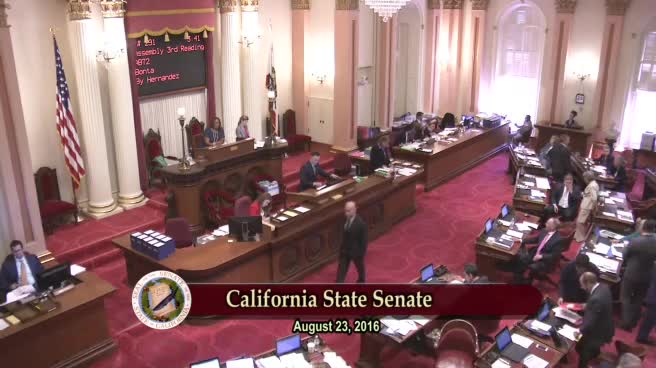
| Aug 23, 2016 | Assembly 3rd Reading AB2491 Nazarian By Allen | Senate Floor |
Passed |
|
| Aug 15, 2016 | Assembly 3rd Reading AB2491 Nazarian By Allen | Senate Floor |
Passed |
|
| Jun 21, 2016 | Do pass and be ordered to the Consent Calendar | Senate Standing Committee on Transportation and Housing |
Passed |
|
| Apr 28, 2016 | AB 2491 NAZARIAN Consent Calendar Second Day | Assembly Floor |
Passed |
|
| Apr 18, 2016 | Do pass as amended. To Consent Calendar. | Assembly Standing Committee on Transportation |
Passed |
This list shows positions taken on this bill by organizations on the date displayed, which is linked to the original source.
Positions by individuals are not included.
|
Organization
|
Position
|
Date
|
|---|---|---|
| California Ambulance Association | ** Support | Aug 23, 2016 |
| California Association Of Highway Patrolmen | ** Support | Aug 23, 2016 |
| California Police Chiefs Association | ** Support | Aug 23, 2016 |
| California State Sheriffs' Association | ** Support | Aug 23, 2016 |
| Mayor Eric Garcetti, Los Angeles | ** Support | Aug 23, 2016 |
| Peace Officers Research Association Of California | ** Support | Aug 23, 2016 |
| South Robertson Neighborhood Council | ** Support | Aug 15, 2016 |
CONCURRENCE IN SENATE AMENDMENTS
CSA1 Bill Id:AB 2491
Author:(Nazarian)
As Amended Ver:August 19, 2016
Majority vote
ASSEMBLY: | 76-0 | (April 28, 2016) | SENATE: | 39-0 | (August 23, 2016) |
Original Committee Reference: TRANS.
SUMMARY: Authorizes local jurisdictions to restrict parking, stopping, and standing of vehicles in the vicinity of driveways used by certain emergency vehicles.
The Senate amendments:
- Clarify that "KEEP CLEAR" pavement markings shall be used to denote restricted zones where no stopping and standing of vehicles is allowed.
- Make related, conforming changes.
EXISTING LAW:
- Prohibits, with certain exceptions, persons from stopping, parking, or leaving a vehicle standing within 15 feet of a fire station driveway unless the vehicle is owned or operated by the fire station entities and is clearly marked, as specified.
- Authorizes a local jurisdiction to provide appropriate curb markings and to post signs delineating the zone 15 feet zone adjacent to the fire station driveway entrance, as specified.
AS PASSED BY THE ASSEMBLY, this bill:
- Authorized a local authority, by ordinance, to prohibit parking, stopping, or leaving a vehicle standing, as specified, within 15 feet of a driveway used by emergency vehicles owned or operated by a fire department, police department, ambulance service care provider, and acute care hospital.
- Provided that the no parking, standing, and stopping restriction does not apply to any vehicle owned or operated by the fire department, police department, ambulance service provider, or acute care hospital provided that the vehicles are clearly marked as belonging to the respective entity.
- Required the local jurisdiction to post signs and provide appropriate curb markings that clearly delineate the no parking, standing, and stopping zones.
FISCAL EFFECT: Unknown, this bill is keyed non-fiscal by the Legislative Counsel.
COMMENTS: According to the author, emergency service vehicles entering or exiting driveways of police stations, ambulance service providers, and general acute care hospitals are often blocked by cars that are parked around or stopped in from of the driveway entrance. He notes that when emergency vehicles cannot enter or exit their facilities, critical response time is lost and important services are delayed.
The author points to statistics provided by the Los Angeles County Department of Health Services that approximately 295,000 patients are transported to emergency rooms each year and that over 2.2 million people received ambulatory care visits in Los Angeles County alone. The author also points out that, in particular, ambulance transport companies, who respond to millions of calls across the state annually, report frequently experiencing problems entering and exiting their facilities on emergency response calls. Unlike fire stations, there is no prohibition against vehicles stopping or standing in close proximity or in front of driveways of the emergency response providers identified in this bill.
To address this issue, the author introduced this bill, which would authorize a local jurisdiction to, after the passage of an ordinance, prohibit stopping, parking, or leaving a vehicle standing within 15 feet of a driveway to a police station, ambulance service provider, or general acute care hospital provided that appropriate signs and curb markings delineate the restricted zones.
Writing in support of this bill, the California Sheriffs' Association asserts that existing law rightly prohibits the stopping, parking, or standing of any vehicle within 15 feet of a fire station driveway entrance. They contend that it stands to reason that this prohibition be expanded to other facilities, such as police stations and hospitals, where clear access is needed to ensure timely response of emergency vehicles.
Analysis Prepared by: Victoria Alvarez / TRANS. / (916) 319-2093 FN: 0004787
Office of Senate Floor Analyses (916) 651-1520 Fax: (916) 327-4478 | AB 2491 |
THIRD READING
Bill No: AB 2491
Amended: 8/19/16 in Senate
SENATE TRANS. & HOUSING COMMITTEE: 11-0, 6/21/16
AYES: Beall, Cannella, Allen, Bates, Gaines, Galgiani, Leyva, McGuire, Mendoza, Roth, Wieckowski
SENATE FLOOR: 38-0, 8/15/16
AYES: Allen, Anderson, Bates, Beall, Block, Cannella, De León, Fuller, Gaines, Galgiani, Glazer, Hall, Hancock, Hernandez, Hertzberg, Hill, Hueso, Huff, Jackson, Lara, Leno, Leyva, Liu, McGuire, Mendoza, Mitchell, Monning, Moorlach, Morrell, Nguyen, Nielsen, Pan, Pavley, Roth, Stone, Vidak, Wieckowski, Wolk
NO VOTE RECORDED: Berryhill
ASSEMBLY FLOOR: 76-0, 4/28/16 (Consent) - See last page for vote
SUBJECT: Vehicles: stopping, standing, and parking
DIGEST: This bill authorizes local governments to pass ordinances that prohibit stopping, parking, or leaving a vehicle standing within 15 feet of driveways of certain emergency facilities that are regularly accessed by emergency vehicles.
Senate Floor Amendments of 8/19/16 correct a technical error in a prior amendment by adding fire department vehicles to the list of emergency vehicles exempt from the local ordinances authorized by this bill.
Senate Floor Amendments of 8/8/16 remove an authorization for local governments to restrict stopping around the driveways of fire stations because state law already contains a blanket prohibition against stopping in front of the driveways of these facilities.
Existing law:
- Prohibits stopping, parking, or leaving a vehicle, attended or unattended, in certain places, including, but not limited to, intersections, crosswalks, sidewalks, tunnels, bridges, in front of driveways, and within 15 feet of the driveway of a fire station.
- Provides a blanket exemption in cases when doing so “is necessary to avoid conflict with other traffic” or when directed to do so by a peace officer.
This bill:
- Allows local governments to adopt ordinances that prohibit stopping, parking, or leaving a vehicle standing, attended or unattended, within 15 feet of a driveway used by emergency vehicles to enter a police department, ambulance service provider, or general acute-care hospital. These prohibitions would be subject to the same exceptions related to avoiding conflict with other traffic and obeying peace officers as the general prohibitions related to parking in existing law.
- Exempts from these prohibitions vehicles owned by fire departments, police departments, ambulance companies, or general acute-care hospitals that are clearly marked as such.
- Requires a local authority that enacts such an ordinance to provide curb markings, street markings, and signs to delineate the areas in which parking, stopping, and standing are prohibited.
Comments
- Purpose. According to the author, while existing law prohibits parking, stopping, or leaving a vehicle standing within 15 feet of the driveway of a fire station, there is no equivalent, explicit prohibition for the driveways of other emergency facilities, such as police stations, hospitals, and ambulance companies. The author cites statistics from the California Ambulance Association indicating that California’s 365 ground ambulance companies operate some 4,500 ambulances and transport over 2.9 million Californians each year. The author points out that in urban areas, these vehicles generally must be on the scene of an emergency within eight minutes, and that rapid response is essential to achieving good outcomes and saving lives. The author notes that when emergency vehicles cannot enter or exit their facilities, critical response time is lost and important services are delayed. The purpose of this bill, according to the author, is to give local authorities the ability to effectively address the issue of keeping emergency response unit driveways clear.
- Beyond parking. This bill is intended to facilitate the adoption of ordinances that preclude stopping of any kind within 15 feet of driveways routinely used by emergency vehicles. This includes stopping in lanes designated for regular vehicle travel, such as occurs when cars back up behind a red light. The bill was amended by the author to make it clear that local governments that establish such “keep clear zones” must provide pavement markings in the affected lanes.
- Which driveways, which vehicles? This bill authorizes local governments to adopt ordinances that restrict stopping near the driveways of certain emergency response-related facilities. The bill does not concern all driveways at these facilities, however. Driveways that are not used by emergency vehicles, such as those providing access to patient and staff parking areas, are not affected. Additionally, the parking prohibitions authorized by this bill do not apply to emergency vehicles themselves. Vehicles that are owned by fire departments, police departments, ambulance service providers, or general acute-care hospitals and clearly labeled as such are exempt.
- Is there a problem? It is not clear how often emergency response is hampered by blocked driveways at hospitals, ambulance companies, and police stations, as this data is not tracked by all local governments or aggregated at the state level. However, at least one jurisdiction reports reoccurring problems of this nature. Writing in support of this bill, the North Hollywood Community Police Station (a subdivision of the Los Angeles Police Department) states, “There have been frequent occasions when vehicular traffic has blocked the driveway [of] the police station, causing delays and blocking the ingress and egress route for police and other emergency vehicles. This is a situation that is not unique to the [station].”
- By ordinance instead of by statute. Existing law bans parking, standing, or stopping within 15 feet of the driveway of a fire station anywhere in California. An earlier version of this bill simply expanded that blanket prohibition to include the driveways of other types of facilities. In contrast, the current version authorizes local governments to adopt their own prohibitions with respect to other facilities, giving them the tools to maintain access for emergency vehicles as well as the discretion to pursue parking, standing, and stopping limits in accordance with their own needs. The author also amended the bill to require local governments that pass such ordinances to erect signage and apply curb markings so that members of the public know where parking, standing, and stopping are forbidden.
FISCAL EFFECT: Appropriation: No Fiscal Com.: No Local: No
California Ambulance Association
California Association of Highway Patrolmen
California Police Chiefs Association
California State Sheriffs’ Association
Mayor Eric Garcetti, Los Angeles
North Hollywood Community Police Station, Los Angeles Police Department
Peace Officers Research Association of California
OPPOSITION: (Verified 8/18/16)
None received
ASSEMBLY FLOOR: 76-0, 4/28/16
AYES: Achadjian, Alejo, Travis Allen, Arambula, Atkins, Baker, Bigelow, Bloom, Bonilla, Bonta, Brough, Brown, Burke, Calderon, Campos, Chang, Chau, Chiu, Chu, Cooley, Cooper, Dababneh, Dahle, Dodd, Eggman, Frazier, Beth Gaines, Gallagher, Cristina Garcia, Eduardo Garcia, Gatto, Gipson, Gomez, Gonzalez, Gordon, Gray, Grove, Hadley, Harper, Roger Hernández, Holden, Irwin, Jones, Jones-Sawyer, Kim, Lackey, Levine, Linder, Lopez, Low, Maienschein, Mayes, McCarty, Medina, Melendez, Mullin, Nazarian, Obernolte, O'Donnell, Patterson, Quirk, Ridley-Thomas, Rodriguez, Salas, Santiago, Steinorth, Mark Stone, Thurmond, Ting, Wagner, Waldron, Weber, Wilk, Williams, Wood, Rendon
NO VOTE RECORDED: Chávez, Daly, Mathis, Olsen
Prepared by: Sarah Carvill / T. & H. / (916) 651-4121
8/22/16 22:42:34
**** END ****
CONCURRENCE IN SENATE AMENDMENTS
CSA1 Bill Id:AB 2491
Author:(Nazarian)
As Amended Ver:August 8, 2016
Majority vote
ASSEMBLY: | 76-0 | (April 28, 2016) | SENATE: | 38-0 | (August 15, 2016) |
Original Committee Reference: TRANS.
SUMMARY: Authorizes local jurisdictions to restrict parking, stopping, and standing of vehicles in the vicinity of driveways used by certain emergency vehicles.
The Senate amendments:
- Clarify that "KEEP CLEAR" pavement markings shall be used to denote restricted zones where no stopping and standing of vehicles is allowed.
- Makes related, conforming changes.
EXISTING LAW:
- Prohibits, with certain exceptions, persons from stopping, parking, or leaving a vehicle standing within 15 feet of a fire station driveway unless the vehicle is owned or operated by the fire station entities and is clearly marked, as specified.
- Authorizes a local jurisdiction to provide appropriate curb markings and to post signs delineating the zone 15 feet zone adjacent to the fire station driveway entrance, as specified.
AS PASSED BY THE ASSEMBLY, this bill:
- Authorized a local authority, by ordinance, to prohibit parking, stopping, or leaving a vehicle standing, as specified, within 15 feet of a driveway used by emergency vehicles owned or operated by a fire department, police department, ambulance service care provider, and acute care hospital.
- Provided that the no parking, standing, and stopping restriction does not apply to any vehicle owned or operated by the fire department, police department, ambulance service provider, or acute care hospital provided that the vehicles are clearly marked as belonging to the respective entity.
- Required the local jurisdiction to post signs and provide appropriate curb markings that clearly delineate the no parking, standing, and stopping zones.
FISCAL EFFECT: Unknown. This bill is keyed non-fiscal by the Legislative Counsel.
COMMENTS: According to the author, emergency service vehicles entering or exiting driveways of police stations, ambulance service providers, and general acute care hospitals are often blocked by cars that are parked around or stopped in from of the driveway entrance. He notes that when emergency vehicles cannot enter or exit their facilities, critical response time is lost and important services are delayed.
The author points to statistics provided by the Los Angeles County Department of Health Services that approximately 295,000 patients are transported to emergency rooms each year and that over 2.2 million people received ambulatory care visits in Los Angeles County alone. The author also points out that, in particular, ambulance transport companies, who respond to millions of calls across the state annually, report frequently experiencing problems entering and exiting their facilities on emergency response calls. Unlike fire stations, there is no prohibition against vehicles stopping or standing in close proximity or in front of driveways of the emergency response providers identified in this bill.
To address this issue, the author introduced this bill, which would authorize a local jurisdiction to, after the passage of an ordinance, prohibit stopping, parking, or leaving a vehicle standing within 15 feet of a driveway to a police station, ambulance service provider, or general acute care hospital provided that appropriate signs and curb markings delineate the restricted zones.
Writing in support of this bill, the California Sheriffs' Association asserts that existing law rightly prohibits the stopping, parking, or standing of any vehicle within 15 feet of a fire station driveway entrance. They contend that it stands to reason that this prohibition be expanded to other facilities, such as police stations and hospitals, where clear access is needed to ensure timely response of emergency vehicles.
Analysis Prepared by: Victoria Alvarez / TRANS. / (916) 319-2093 FN: 0004024
Office of Senate Floor Analyses (916) 651-1520 Fax: (916) 327-4478 | AB |
THIRD READING
Bill No: AB 2491
: 8/8/16
SENATE TRANS. & HOUSING COMMITTEE: 11-0, 6/21/16
AYES: Beall, Cannella, Allen, Bates, Gaines, Galgiani, Leyva, McGuire, Mendoza, Roth, Wieckowski
ASSEMBLY FLOOR: 76-0, 4/28/16 (Consent) - See last page for vote
DIGEST: This bill authorizes local governments to pass ordinances that prohibit stopping, parking, or leaving a vehicle standing within 15 feet of driveways of certain emergency facilities that are regularly accessed by emergency vehicles.
Senate Floor Amendments of 8/8/16 remove an authorization for local governments to restrict stopping around the driveways of fire stations because state law already contains a blanket prohibition against stopping in front of the driveways of these facilities.
Existing law:
- Prohibits stopping, parking, or leaving a vehicle, attended or unattended, in certain places, including but not limited to intersections, crosswalks, sidewalks, tunnels, bridges, in front of driveways, and within 15 feet of the driveway of a fire station.
- Provides a blanket exemption in cases when doing so “is necessary to avoid conflict with other traffic” or when directed to do so by a peace officer.
This bill:
- Allows local governments to adopt ordinances that prohibit stopping, parking, or leaving a vehicle standing, attended or unattended, within 15 feet of a driveway used by emergency vehicles to enter a police department, ambulance service provider, or general acute-care hospital. These prohibitions would be subject to the same exceptions related to avoiding conflict with other traffic and obeying peace officers as the general prohibitions related to parking in existing law.
- Exempts from these prohibitions vehicles owned by police departments, ambulance companies, or general acute-care hospitals that are clearly marked as such.
- Requires a local authority that enacts such an ordinance to provide curb markings, street markings, and signs to delineate the areas in which parking, stopping, and standing are prohibited.
Comments
- Purpose. According to the author, while existing law prohibits parking, stopping, or leaving a vehicle standing within 15 feet of the driveway of a fire station, there is no equivalent, explicit prohibition for the driveways of other emergency facilities, such as police stations, hospitals, and ambulance companies. The author cites statistics from the California Ambulance Association indicating that California’s 365 ground ambulance companies operate some 4,500 ambulances and transport over 2.9 million Californians each year. The author points out that in urban areas, these vehicles generally must be on the scene of an emergency within eight minutes, and that rapid response is essential to achieving good outcomes and saving lives. The author notes that when emergency vehicles cannot enter or exit their facilities, critical response time is lost and important services are delayed. The purpose of this bill, according to the author, is to give local authorities the ability to effectively address the issue of keeping emergency response unit driveways clear.
- Beyond parking. This bill is intended to facilitate the adoption of ordinances that preclude stopping of any kind within 15 feet of driveways routinely used by emergency vehicles. This includes stopping in lanes designated for regular vehicle travel, such as occurs when cars back up behind a red light. The bill was amended by the author to make it clear that local governments that establish such “keep clear zones” must provide pavement markings in the affected lanes.
- Which driveways, which vehicles? This bill authorizes local governments to adopt ordinances that restrict stopping near the driveways of certain emergency response-related facilities. The bill does not concern all driveways at these facilities, however. Driveways that are not used by emergency vehicles, such as those providing access to patient and staff parking areas, are not affected. Additionally, the parking prohibitions authorized by this bill do not apply to emergency vehicles themselves. Vehicles that are owned by police departments, ambulance service providers, or general acute-care hospitals and clearly labeled as such are exempt.
- Is there a problem? It is not clear how often emergency response is hampered by blocked driveways at hospitals, ambulance companies, and police stations, as this data is not tracked by all local governments or aggregated at the state level. However, at least one jurisdiction reports reoccurring problems of this nature. Writing in support of this bill, the North Hollywood Community Police Station (a subdivision of the Los Angeles Police Department) states, “There have been frequent occasions when vehicular traffic has blocked the driveway [of] the police station, causing delays and blocking the ingress and egress route for police and other emergency vehicles. This is a situation that is not unique to the [station].”
- By ordinance instead of by statute. Existing law bans parking, standing, or stopping within 15 feet of the driveway of a fire station anywhere in California. An earlier version of this bill simply expanded that blanket prohibition to include the driveways of other types of facilities. In contrast, the current version authorizes local governments to adopt their own prohibitions with respect to other facilities, giving them the tools to maintain access for emergency vehicles as well as the discretion to pursue parking, standing, and stopping limits in accordance with their own needs. The author also amended the bill to require local governments that pass such ordinances to erect signage and apply curb markings so that members of the public know where parking, standing, and stopping are forbidden.
FISCAL EFFECT: Appropriation: Fiscal Com.: Local:
California Ambulance Association
California Association of Highway Patrolmen
California Police Chiefs Association
California State Sheriffs’ Association
Mayor Eric Garcetti, Los Angeles
North Hollywood Community Police Station, Los Angeles Police Department
Peace Officers Research Association of California
None received
ASSEMBLY FLOOR: 76-0, 4/28/16
AYES: Achadjian, Alejo, Travis Allen, Arambula, Atkins, Baker, Bigelow, Bloom, Bonilla, Bonta, Brough, Brown, Burke, Calderon, Campos, Chang, Chau, Chiu, Chu, Cooley, Cooper, Dababneh, Dahle, Dodd, Eggman, Frazier, Beth Gaines, Gallagher, Cristina Garcia, Eduardo Garcia, Gatto, Gipson, Gomez, Gonzalez, Gordon, Gray, Grove, Hadley, Harper, Roger Hernández, Holden, Irwin, Jones, Jones-Sawyer, Kim, Lackey, Levine, Linder, Lopez, Low, Maienschein, Mayes, McCarty, Medina, Melendez, Mullin, Nazarian, Obernolte, O'Donnell, Patterson, Quirk, Ridley-Thomas, Rodriguez, Salas, Santiago, Steinorth, Mark Stone, Thurmond, Ting, Wagner, Waldron, Weber, Wilk, Williams, Wood, Rendon
NO VOTE RECORDED: Chávez, Daly, Mathis, Olsen
8/10/16 15:57:20
**** END ****
Office of Senate Floor Analyses (916) 651-1520 Fax: (916) 327-4478 | AB |
CONSENT
Bill No: AB 2491
:
SENATE TRANS. & HOUSING COMMITTEE: 11-0, 6/21/16
AYES: Beall, Cannella, Allen, Bates, Gaines, Galgiani, Leyva, McGuire, Mendoza, Roth, Wieckowski
ASSEMBLY FLOOR: 76-0, 4/28/16 (Consent) - See last page for vote
DIGEST: This bill authorizes local governments to pass ordinances that prohibit stopping, parking, or leaving a vehicle standing within 15 feet of driveways of certain emergency facilities that are regularly accessed by emergency vehicles.
Existing law:
- Prohibits stopping, parking, or leaving a vehicle, attended or unattended, in certain places, including, but not limited to, intersections, crosswalks, sidewalks, tunnels, bridges, in front of driveways, and within 15 feet of the driveway of a fire station.
- Provides a blanket exemption in cases when doing so “is necessary to avoid conflict with other traffic” or when directed to do so by a peace officer.
This bill:
- Allows local governments to adopt ordinances that prohibit stopping, parking, or leaving a vehicle standing, attended or unattended, within 15 feet of a driveway used by emergency vehicles to enter a fire department, police department, ambulance service provider, or general acute-care hospital. These prohibitions would be subject to the same exceptions related to avoiding conflict with other traffic and obeying peace officers as the general prohibitions related to parking in existing law.
- Exempts from these prohibitions vehicles owned by fire or police departments, ambulance companies, or general acute-care hospitals that are clearly marked as such.
- Requires a local authority that enacts such an ordinance to provide curb markings, street markings, and signs to delineate the areas in which parking, stopping, and standing are prohibited.
Comments
- Purpose. According to the author, while existing law prohibits parking, stopping, or leaving a vehicle standing within 15 feet of the driveway of a fire station, there is no equivalent, explicit prohibition for the driveways of other emergency facilities, such as police stations, hospitals, and ambulance companies. The author cites statistics from the California Ambulance Association indicating that California’s 365 ground ambulance companies operate some 4,500 ambulances and transport over 2.9 million Californians each year. The author points out that in urban areas, these vehicles generally must be on the scene of an emergency within eight minutes, and that rapid response is essential to achieving good outcomes and saving lives. The author notes that when emergency vehicles cannot enter or exit their facilities, critical response time is lost and important services are delayed. The purpose of this bill, according to the author, is to give local authorities the ability to effectively address the issue of keeping emergency response unit driveways clear.
- Beyond parking. This bill is intended to facilitate the adoption of ordinances that preclude stopping of any kind within 15 feet of driveways routinely used by emergency vehicles. This includes stopping in lanes designated for regular vehicle travel, such as occurs when cars back up behind a red light. This bill was amended by the author to make it clear that local governments that establish such “keep clear zones” must provide pavement markings in the affected lanes.
- Which driveways, which vehicles? This bill authorizes local governments to adopt ordinances that restrict stopping near the driveways of certain emergency response-related facilities. This bill does not concern all driveways at these facilities, however. Driveways that are not used by emergency vehicles, such as those providing access to patient and staff parking areas, are not affected. Additionally, the parking prohibitions authorized by this bill do not apply to emergency vehicles themselves. Vehicles that are owned by fire departments, police departments, ambulance service providers, or general acute-care hospitals and clearly labeled as such are exempt.
- Is there a problem? It is not clear how often emergency response is hampered by blocked driveways at hospitals, ambulance companies, and police and fire stations, as this data is not tracked by all local governments or aggregated at the state level. However, at least one jurisdiction reports reoccurring problems of this nature. Writing in support of this bill, the North Hollywood Community Police Station (a subdivision of the Los Angeles Police Department) states, “There have been frequent occasions when vehicular traffic has blocked the driveway [of] the police station, causing delays and blocking the ingress and egress route for police and other emergency vehicles. This is a situation that is not unique to the [station].”
- By ordinance instead of by statute. Existing law bans parking, standing, or stopping within 15 feet of the driveway of a fire station anywhere in California. An earlier version of this bill simply expanded that blanket prohibition to include the driveways of other types of facilities. In contrast, the current version authorizes local governments to adopt their own prohibitions with respect to other facilities, giving them the tools to maintain access for emergency vehicles as well as the discretion to pursue parking, standing, and stopping limits in accordance with their own needs. The author also amended this bill to require local governments that pass such ordinances to erect signage and apply curb markings so that members of the public know where parking, standing, and stopping are forbidden.
FISCAL EFFECT: Appropriation: Fiscal Com.: Local:
California Ambulance Association
California Association of Highway Patrolmen
California Police Chiefs Association
California State Sheriffs’ Association
Mayor Eric Garcetti, Los Angeles
North Hollywood Community Police Station, Los Angeles Police Department
Peace Officers Research Association of California
OPPOSITION: (Verified 6/23/16)
None received
ASSEMBLY FLOOR: 76-0, 4/28/16
AYES: Achadjian, Alejo, Travis Allen, Arambula, Atkins, Baker, Bigelow, Bloom, Bonilla, Bonta, Brough, Brown, Burke, Calderon, Campos, Chang, Chau, Chiu, Chu, Cooley, Cooper, Dababneh, Dahle, Dodd, Eggman, Frazier, Beth Gaines, Gallagher, Cristina Garcia, Eduardo Garcia, Gatto, Gipson, Gomez, Gonzalez, Gordon, Gray, Grove, Hadley, Harper, Roger Hernández, Holden, Irwin, Jones, Jones-Sawyer, Kim, Lackey, Levine, Linder, Lopez, Low, Maienschein, Mayes, McCarty, Medina, Melendez, Mullin, Nazarian, Obernolte, O'Donnell, Patterson, Quirk, Ridley-Thomas, Rodriguez, Salas, Santiago, Steinorth, Mark Stone, Thurmond, Ting, Wagner, Waldron, Weber, Wilk, Williams, Wood, Rendon
NO VOTE RECORDED: Chávez, Daly, Mathis, Olsen
6/24/16 14:33:44
**** END ****
SENATE COMMITTEE ON TRANSPORTATION AND HOUSING
Senator Jim Beall, Chair
2015 - 2016 Regular
Bill No: AB 2491 Hearing Date: 6/21/2016
Author: | Nazarian | ||
Version: | 6/13/2016 | ||
Urgency: | No | Fiscal: | No |
Consultant: | Sarah Carvill | ||
SUBJECT: Vehicles: stopping, standing, and parking
DIGEST: This bill authorizes local governments to pass ordinances that prohibit stopping, parking, or leaving a vehicle standing within 15 feet of driveways of certain emergency facilities that are regularly accessed by emergency vehicles.
ANALYSIS:
Existing law:
- Prohibits stopping, parking, or leaving a vehicle, attended or unattended, in certain places, including but not limited to intersections, crosswalks, sidewalks, tunnels, bridges, in front of driveways, and within 15 feet of the driveway of a fire station.
- Provides a blanket exemption in cases when doing so “is necessary to avoid conflict with other traffic” or when directed to do so by a peace officer.
This bill:
- Allows local governments to adopt ordinances that prohibit stopping, parking, or leaving a vehicle standing, attended or unattended, within 15 feet of a driveway used by emergency vehicles to enter a fire department, police department, ambulance service provider, or general acute-care hospital. These prohibitions would be subject to the same exceptions related to avoiding conflict with other traffic and obeying peace officers as the general prohibitions related to parking in existing law.
- Exempts from these prohibitions vehicles owned by fire or police departments, ambulance companies, or general acute-care hospitals that are clearly marked as such.
- Requires a local authority that enacts such an ordinance to provide curb markings, street markings, and signs to delineate the areas in which parking, stopping, and standing are prohibited.
COMMENTS:
- Purpose. According to the author, while existing law prohibits parking, stopping, or leaving a vehicle standing within 15 feet of the driveway of a fire station, there is no equivalent, explicit prohibition for the driveways of other emergency facilities, such as police stations, hospitals, and ambulance companies. The author cites statistics from the California Ambulance Association indicating that California’s 365 ground ambulance companies operate some 4,500 ambulances and transport over 2.9 million Californians each year. The author points out that in urban areas, these vehicles generally must be on the scene of an emergency within eight minutes, and that rapid response is essential to achieving good outcomes and saving lives. The author notes that when emergency vehicles cannot enter or exit their facilities, critical response time is lost and important services are delayed. The purpose of this bill, according to the author, is to give local authorities the ability to effectively address the issue of keeping emergency response unit driveways clear.
- Beyond parking. This bill is intended to facilitate the adoption of ordinances that preclude stopping of any kind within 15 feet of driveways routinely used by emergency vehicles. This includes stopping in lanes designated for regular vehicle travel, such as occurs when cars back up behind a red light. The bill was amended by the author to make it clear that local governments that establish such “keep clear zones” must provide pavement markings in the affected lanes.
- Which driveways, which vehicles? This bill authorizes local governments to adopt ordinances that restrict stopping near the driveways of certain emergency response-related facilities. The bill does not concern all driveways at these facilities, however. Driveways that are not used by emergency vehicles, such as those providing access to patient and staff parking areas, are not affected. Additionally, the parking prohibitions authorized by this bill do not apply to emergency vehicles themselves. Vehicles that are owned by fire departments, police departments, ambulance service providers, or general acute-care hospitals and clearly labeled as such are exempt.
- Is there a problem? It is not clear how often emergency response is hampered by blocked driveways at hospitals, ambulance companies, and police and fire stations, as this data is not tracked by all local governments or aggregated at the state level. However, at least one jurisdiction reports reoccurring problems of this nature. Writing in support of this bill, the North Hollywood Community Police Station (a subdivision of the Los Angeles Police Department) states, “There have been frequent occasions when vehicular traffic has blocked the driveway [of] the police station, causing delays and blocking the ingress and egress route for police and other emergency vehicles. This is a situation that is not unique to the [station].”
- By ordinance instead of by statute. Existing law bans parking, standing, or stopping within 15 feet of the driveway of a fire station anywhere in California. An earlier version of this bill simply expanded that blanket prohibition to include the driveways of other types of facilities. In contrast, the current version authorizes local governments to adopt their own prohibitions with respect to other facilities, giving them the tools to maintain access for emergency vehicles as well as the discretion to pursue parking, standing, and stopping limits in accordance with their own needs. The author also amended the bill to require local governments that pass such ordinances to erect signage and apply curb markings so that members of the public know where parking, standing, and stopping are forbidden.
FISCAL EFFECT: Appropriation: Fiscal Com.: Local:
Assembly Votes:
Floor: 76-0
Trans: 15-0
POSITIONS: (Communicated to the committee before noon on Wednesday,
June 8, 2016.)
SUPPORT:
California Ambulance Association
California Association of Highway Patrolmen
California Police Chiefs Association
California State Sheriffs’ Association
Mayor Eric Garcetti, Los Angeles
North Hollywood Community Police Station, Los Angeles Police Department
Peace Officers Research Association of California
OPPOSITION:
None received
-- END --
Date of Hearing: April 18, 2016
ASSEMBLY COMMITTEE ON TRANSPORTATION
Jim Frazier, Chair
ABPCA Bill Id:AB 2491 (
Author:Nazarian) – As Amended Ver:April 20, 2016
SUBJECT: Vehicles: stopping, standing, and parking
SUMMARY: Authorizes local jurisdictions to restrict parking, stopping, and standing of vehicles in the vicinity of driveways used by certain emergency vehicles. Specifically, this bill:
- Authorizes a local authority, by ordinance, to prohibit parking, stopping, or leaving a vehicle standing, as specified, within 15 feet of a driveway used by emergency vehicles owned or operated by a fire department, police department, ambulance service care provider, and acute care hospital.
- Provides that the no parking, standing, and stopping restriction does not apply to any vehicle owned or operated by the fire department, police department, ambulance service provider, or acute care hospital provided that the vehicles are clearly marked as belonging to the respective entity.
- Requires the local jurisdiction to post signs and provide appropriate curb markings that clearly delineate the no parking, standing, and stopping zones.
EXISTING LAW:
- Prohibits, with certain exceptions, persons from stopping, parking, or leaving a vehicle standing within 15 feet of a fire station driveway unless the vehicle is owned or operated by the fire station entities and is clearly marked, as specified.
- Authorizes a local jurisdiction to provide appropriate curb markings and to post signs delineating the zone 15 feet zone adjacent to the fire station driveway entrance, as specified.
FISCAL EFFECT: Unknown, this bill is keyed non-fiscal by the Legislative Counsel.
COMMENTS: According to the author, emergency service vehicles entering or exiting driveways of police stations, ambulance service providers, and general acute care hospitals are often blocked by cars that are parked around or stopped in from of the driveway entrance. He notes that when emergency vehicles cannot enter or exit their facilities, critical response time is lost and important services are delayed.
The author points to statistics provided by the Los Angeles County Department of Health Services that approximately 295,000 patients are transported to emergency rooms each year and that over 2.2 million people received ambulatory care visits in Los Angeles County alone. The author also points out that, in particular, ambulance transport companies, who respond to millions of calls across the state annually, report frequently experiencing problems entering and exiting their facilities on emergency response calls. Unlike fire stations, there is no prohibition against vehicles stopping or standing in close proximity or in front of driveways of the emergency response providers identified in AB 2491.
To address this issue, the author introduced this bill, which would authorize a local jurisdiction to, after the passage of an ordinance, prohibit stopping, parking, or leaving a vehicle standing within 15 feet of a driveway to a police station, ambulance service provider, or general acute care hospital provided that appropriate signs and curb markings delineate the restricted zones.
Writing in support of AB 2491, the California Sheriffs' Association asserts that existing law rightly prohibits the stopping, parking, or standing of any vehicle within 15 feet of a fire station driveway entrance. They contend that it stands to reason that this prohibition be expanded to other facilities, such as police stations and hospitals, where clear access is needed to ensure timely response of emergency vehicles.
REGISTERED SUPPORT / OPPOSITION:
Support
California Sheriffs' Association
Peace Officers Research Association of California
South Robertson Neighborhood Council
Opposition
None on file
Analysis Prepared by: Victoria Alvarez / TRANS. / (916) 319-2093
Date of Hearing: April 18, 2016
ASSEMBLY COMMITTEE ON TRANSPORTATION
Jim Frazier, Chair
ABPCA Bill Id:AB 2491 (
Author:Nazarian) – As Introduced Ver:February 19, 2016
SUBJECT: Vehicles: stopping, standing, and parking
SUMMARY: Adds police stations, ambulance companies, and general acute care hospitals to the list of facilities for which vehicle parking, stopping, or standing within 15 feet of the driveway is prohibited. Specifically, this bill:
- Prohibits parking within 15 feet of a driveway entrance of a police station, ambulance company, or acute care hospital unless, as specified, the vehicle is owned and operated by the facility and is clearly marked.
- Provides that a local authority may provide appropriate curb markings and post signs that delineate the area within 15 feet of a driveway entrance of a police station, ambulance company, or acute care hospital as a no parking, stopping, or standing zone.
- Makes related, clarifying amendments.
EXISTING LAW:
- Prohibits, with certain exceptions, persons from stopping, parking, or leaving a vehicle standing within 15 feet of a fire station driveway unless the vehicle is owned or operated by the fire station entities and is clearly marked, as specified.
- Authorizes a local jurisdiction to provide appropriate curb markings and to post signs delineating the zone 15 feet zone adjacent to the fire station driveway entrance, as specified.
FISCAL EFFECT: Unknown, this bill is keyed non-fiscal by the Legislative Counsel.
COMMENTS: According to the author, emergency service vehicles entering or exiting driveways of police stations, ambulance service providers, and general acute care hospitals are often blocked by cars that are parked around the driveway entrance or stopped in front of it. He notes that when emergency vehicles cannot enter or exit their facilities, critical response time is lost and important services are delayed.
The author points to statistics provided by the Los Angeles County Department of Health Services that approximately 295,000 patients are transported to emergency rooms each year and that over 2.2 million people received ambulatory care visits in Los Angeles County alone. The author also points out that, in particular, ambulance transport companies, who respond to millions of calls across the state annually, report frequently experiencing problems entering and exiting their facilities on emergency response calls. Unlike fire stations, there is no prohibition against vehicles stopping or standing in close proximity or in front of driveways of the emergency response providers identified in AB 2491.
To address this issue, the author introduced this bill, which would additionally prohibit a person from stopping, parking, or leaving a vehicle standing within 15 feet of a driveway to a police station, ambulance company, or general acute care hospital. AB 2491 specifies that a violation of the provision would be enforced as a stopping or parking violation rather than a moving violation. This bill also provides local jurisdictions with the authority to post appropriate signs and curb marking to delineate the areas.
Proposed amendments: While well intended, AB 2491 was drafted in such a way that that all driveway entrances to police stations, ambulance companies and acute care hospitals across the state would be subject to the prohibition. Additionally, by broadly designating these areas as no parking zones and simply authorizing the local jurisdiction to erect signage or identify the areas with curb markings, this bill could create a situation whereby citations can be issued to persons who, unknowingly, violate these provisions. To address this concern, the author has proposed to take amendments in committee that would:
- Require that local jurisdictions adopt an ordinance designating the prohibition against stopping, parking, or leaving a vehicle standing within 15 feet of a driveway that is used by emergency vehicles owned or operated by a police department, general acute care hospital, or ambulance service provider;
- Provide that the prohibition not apply to vehicles owned by a police department, general acute care hospital, or ambulance service provider provided that the vehicle is clearly marked, as specified; and,
- Require that the local jurisdiction, upon the passage of an ordinance prohibiting parking, stopping or standing within 15 feet of a driveway owned or operated by a police department, general acute care hospital, or ambulance service provider, that appropriate curb markings and signs be installed delineating the areas to alert the motorists of the restriction.
With the amendments, local jurisdictions would be authorized to restrict parking, stopping, and standing of vehicles at driveway entrances to these facilities that are used by emergency vehicles and that motorists are duly notified of the prohibition using signs and curb markings.
Writing in support of AB 2491, the California Sheriffs' Association asserts that existing law rightly prohibits the stopping, parking, or standing of any vehicle within 15 feet of a fire station driveway entrance. They contend that it stands to reason that this prohibition be expanded to other facilities, such as police stations and hospitals, where clear access is needed to ensure timely response of emergency vehicles.
REGISTERED SUPPORT / OPPOSITION:
Support
California Sheriffs' Association
Peace Officers Research Association of California
South Robertson Neighborhood Council
Opposition
None on file
Analysis Prepared by: Victoria Alvarez / TRANS. / (916) 319-2093
Discussed in Hearing
View Older Hearings
Bill Author

Bill Co-Author(s):