AB 2529: Structural pest control.
- Session Year: 2015-2016
- House: Assembly
- Latest Version Date: 2016-09-14
Existing law defines, licenses, and regulates structural pest control operators and creates the Structural Pest Control Board in the Department of Consumers Affairs to administer these provisions. Existing law defines a registered company to be any of specified types of business organizations registered with the board to engage in the practice of structural pest control and defines operators, field representatives, and applicators as specified classes of individuals licensed by the board to practice structural pest control. Existing law prescribes 3 different classifications of structural pest control licenses based on the types of pest control work permitted, which are termed branches. Existing law makes a violation of these provisions a misdemeanor, punishable by a fine of not less than $100 and not more $1,000, or 6 months in jail, or both.
Existing law authorizes a company registered with the board to engage in the practice of structural pest control to hire or employ individuals who are unlicensed to perform contracts covering wood destroying organisms only after an operator or field representative completes the negotiation or signing of the contract covering the job.
This bill would specify that the registered company may hire or employ unlicensed individuals to perform work on contracts or service agreements, as defined, covering Branch 1, 2, or 3, or combinations thereof.
Existing law designates the county agricultural commissioner as the lead agency for inspections and routine investigations of pesticide use by the board licensees and registered companies. Existing law prescribes the circumstances under which an employer may be cited by the commissioner if, during an inspection or investigation, an employee is found not wearing personal protective clothing required by regulation.
The bill would recast these provisions to permit referral for statewide disciplinary action against the employer, suspension of the employer, the assessment of an administrative fine against both the employer and the employee not to exceed $5,000 if the employee is found to not wear personal protective equipment required by label or regulation. The bill would, if disciplinary action is not taken against the employer and the employer is not assessed an administrative fine, permit an administrative fine to be assessed against the employee if an employer provides evidence of specified employer practices and would also include, in this regard, the requirement that the employer has not been disciplined or assessed an administrative fine for a violation of the requirement for the previous 2 years.
By expanding the definition of a crime, this bill would impose a state-mandated local program.
The California Constitution requires the state to reimburse local agencies and school districts for certain costs mandated by the state. Statutory provisions establish procedures for making that reimbursement.
This bill would provide that no reimbursement is required by this act for a specified reason.
Existing law defines, licenses, and regulates structural pest control operators and creates the Structural Pest Control Board in the Department of Consumers Affairs to administrate administer these provisions. Existing law defines a registered company to be specified types of business organizations registered with the board to engage in the practice of structural pest control and defines operators, field representatives, and applicators as specified classes of individual individuals licensed by the board to practice structural pest control. Existing law prescribes 3 different classifications of structural pest control licenses based on the types of pest control work permitted, which are termed branches. Existing law makes a violation of these provisions a misdemeanor, punishable by a fine of not less than $100 and not more $1,000, or 6 months in jail, or both.
Existing law authorizes a company registered with the board to engage in the practice of structural pest control to hire or employ individuals who are unlicensed to perform contracts covering wood destroying organisms only after an operator or field representative completes the negotiation or signing of the contract covering the job.
This bill would specify that the registered company may hire or employ unlicensed individuals to perform work on contracts or service agreements, as defined, covering Branches Branch 1, 2, or 3, or combination combinations thereof.
Existing law designates the county agricultural commissioner as the lead agency for inspections and routine investigations of pesticide use by the board licensees and registered companies. Existing law prescribes the circumstances under which an employer may be cited by the commissioner if, during an inspection or investigation, an employee is found not wearing personal protective clothing required by regulation.
The bill would, instead, would recast these provisions to permit referral for statewide disciplinary action against the employer and employer, suspension of the employer, the assessment of a civil an administrative fine against both the employer and the employee not to exceed $___ $5,000 if the employee is found to not wear personal protective equipment required by label or regulation. The bill would, if disciplinary action is not taken against the employer, employer and the employer is not assessed an administrative fine, permit a civil fine an administrative fine to be assessed against the employee only if an employer provides evidence of specified employer practices and would also include, in this regard, the requirement that the employer has not been disciplined or assessed an administrative fine for a violation of the requirement for the previous 2 years.
By expanding the definition of a crime, this bill would impose a state-mandated local program.
The California Constitution requires the state to reimburse local agencies and school districts for certain costs mandated by the state. Statutory provisions establish procedures for making that reimbursement.
This bill would provide that no reimbursement is required by this act for a specified reason.
Existing law defines, licenses, and regulates structural pest control operators and creates the Structural Pest Control Board in the Department of Consumers Affairs to administrate these provisions. Existing law defines a registered company to be specified types of business organizations registered with the board to engage in the practice of structural pest control and defines operators, field representatives, and applicators as specified classes of individual licensed by the board to practice structural pest control. Existing law prescribes 3 different classifications of structural pest control licenses based on the types of pest control work permitted, which are termed branches. Existing law makes a violation of these provisions a misdemeanor, punishable by a fine of not less than $100 and not more $1,000, or 6 months in jail, or both.
Existing law authorizes a company registered with the board to engage in the practice of structural pest control to hire or employ individuals who are unlicensed to perform contracts covering wood destroying organisms only after an operator or field representative completes the negotiation or signing of the contract covering the job.
This bill would specify that the registered company may hire or employ unlicensed individuals to perform work on contracts or service agreements, as defined, covering Branches 1, 2, or 3, or combination thereof.
Existing law prescribes the circumstances under which an employer may be cited if, during an inspection or investigation, an employee is found not wearing personal protective clothing required by regulation.
The bill would, instead, permit disciplinary action against the employer and the assessment of a civil fine not to exceed $___ if the employee is found to not wear personal protective equipment required by label or regulation. The bill would, if disciplinary action is not taken against the employer, permit a civil fine to be assessed against the employee only if an employer provides evidence of specified employer practices and would also include, in this regard, the requirement that the employer has not been disciplined for a violation of the requirement for the previous 2 years.
By expanding the definition of a crime, this bill would impose a state-mandated local program.
The California Constitution requires the state to reimburse local agencies and school districts for certain costs mandated by the state. Statutory provisions establish procedures for making that reimbursement.
This bill would provide that no reimbursement is required by this act for a specified reason.
(a)A registered company is any sole proprietorship, partnership, corporation, or other organization or any combination thereof that is registered with the Structural Pest Control Board to engage in the practice of structural pest control.
(b)A registered company may secure structural pest control work, submit bids, or otherwise contract for pest control work. A registered company may employ licensed field representatives and licensed operators to identify infestations or infections, make inspections, and represent the company in the securing of pest control work. A registered company may hire or employ individuals who are not licensed under this chapter to perform work on contracts covering Branch 1, 2, or 3, or any combination of branches, only after an operator or field representative has fully completed the negotiation or signing of the contract covering a given job.
(c)This section shall not be construed to authorize an unlicensed individual to perform work that requires a license pursuant to this chapter.
SEC. 2.Section 8616.9 of the Business and Professions Code is amended to read:8616.9.(a)If an employee is found during an inspection or investigation not wearing personal protective equipment required by label or regulation, the commissioner may refer the violation by the employer for statewide disciplinary action by the board or suspend the right of the employer to work in the county for up to three working days. If the commissioner does neither, the commissioner may assess an administrative fine against both the employer and the employee. If the commissioner takes no action against the employer for this violation, the commissioner may assess an administrative fine against the employee if the employer provides evidence of all of the following:
(1)The employer has a written training program, has provided training to the employee, and has maintained a record of training as required by label or regulation.
(2)The employer provided personal protective equipment required by label or regulation, the equipment was available at the site when the employee was handling the pesticide or pesticides, and the equipment was properly maintained and in good working order.
(3)The employer is in compliance with regulations relating to the workplace and supervision of employees.
(4)The employer has documented implementation and adheres to a written company policy of disciplinary action for employees who violate company policy or state or local laws or regulations.
(5)The employer has not been disciplined or assessed an administrative fine for a violation of the personal protective equipment requirement for the previous two years.
(b)(1)An administrative fine assessed against an employer pursuant to this section shall not be less than seven hundred dollars ($700) nor more than five thousand dollars ($5,000). An administrative fine assessed against an employee pursuant to this section shall not be less than two hundred fifty dollars ($250) nor more than five thousand dollars ($5,000).
(2)In assessing an administrative fine pursuant to this section, the board or commissioner shall consider the appropriateness of the amount of the fine to the gravity of the violation, the good faith of the licensee, and the history of prior violations.
(c)Nothing in this section is intended to limit the authority of the commissioner to take action against the employee pursuant to Section 8617, including suspension of the employees license or referral of the violation for statewide disciplinary action by the board pursuant to Section 8620.
SEC. 3.No reimbursement is required by this act pursuant to Section 6 of Article XIIIB of the California Constitution because the only costs that may be incurred by a local agency or school district will be incurred because this act creates a new crime or infraction, eliminates a crime or infraction, or changes the penalty for a crime or infraction, within the meaning of Section 17556 of the Government Code, or changes the definition of a crime within the meaning of Section 6 of Article XIIIB of the California Constitution.
(a)A registered company is any sole proprietorship, partnership, corporation, or other organization or any combination thereof that is registered with the Structural Pest Control Board to engage in the practice of structural pest control.
(b)A registered company may secure structural pest control work, submit bids, or otherwise contract for pest control work. A registered company may employ licensed field representatives and licensed operators to identify infestations or infections, make inspections, and represent the company in the securing of pest control work. A registered company may hire or employ individuals who are not licensed under this chapter to perform work on contracts covering Branch 1, 2, or 3, or any combination of branches, only after an operator or field representative has fully completed the negotiation or signing of the contract covering a given job.
(c)This section shall not be construed to authorize an unlicensed individual to perform work that requires a license pursuant to this chapter.
SEC. 2.Section 8616.9 of the Business and Professions Code is amended to read:8616.9.(a)If an employee is found during an inspection or investigation not wearing personal protective equipment required by label or regulation, the commissioner may take disciplinary action refer the violation by the employer for statewide disciplinary action by the board or suspend the right of the employer to work in the county for up to three working days. If the commissioner does neither, the commissioner may assess an administrative fine against an both the employer and may assess a civil fine against the employee. If the commissioner does not take disciplinary action against an employer, the If the commissioner takes no action against the employer for this violation, the commissioner may assess a civil an administrative fine against the employee only if the employer provides evidence of all of the following:
(1)The employer has a written training program, has provided training to the employee, and has maintained a record of training as required by label or regulation.
(2)The employer provided personal protective equipment required by label or regulation, the equipment was available at the site when the employee was handling the pesticide or pesticides, and the equipment was properly maintained and in good working order.
(3)The employer is in compliance with regulations relating to the workplace and supervision of employees.
(4)The employer has documented implementation and adheres to a written company policy of disciplinary action for employees who violate company policy or state or local laws or regulations.
(5)The employer has not been disciplined or assessed an administrative fine for a violation of the personal protective equipment requirement for the previous two years.
(b)A civil fine assessed against an employee pursuant to this section shall not exceed _____dollars ($____).
(b)(1)An administrative fine assessed against an employer pursuant to this section shall not be less than seven hundred dollars ($700) nor more than five thousand dollars ($5,000). An administrative fine assessed against an employee pursuant to this section shall not be less than two hundred fifty dollars ($250) nor more than five thousand dollars ($5,000).
(2)In assessing an administrative fine pursuant to this section, the board or commissioner shall consider the appropriateness of the amount of the fine to the gravity of the violation, the good faith of the licensee, and the history of prior violations.
(c)Nothing in this section is intended to limit the authority of the commissioner to take action against the employee pursuant to Section 8617, including suspension of the employees license or referral of the violation for statewide disciplinary action by the board pursuant to Section 8620.
SEC. 3.No reimbursement is required by this act pursuant to Section 6 of Article XIIIB of the California Constitution because the only costs that may be incurred by a local agency or school district will be incurred because this act creates a new crime or infraction, eliminates a crime or infraction, or changes the penalty for a crime or infraction, within the meaning of Section 17556 of the Government Code, or changes the definition of a crime within the meaning of Section 6 of Article XIIIB of the California Constitution.
(a)A registered company is any sole proprietorship, partnership, corporation, or other organization or any combination thereof that is registered with the Structural Pest Control Board to engage in the practice of structural pest control.
A
(b)A registered company may secure structural pest control work, submit bids, or otherwise contract for pest control work. A registered company may employ licensed field representatives and licensed operators to identify infestations or infections, make inspections, and represent the company in the securing of pest control work. A registered company may hire or employ individuals who are not licensed under this chapter to perform work on contracts covering wood-destroying organisms Branch 1, 2, or 3, or any combination of branches, only after an operator or field representative has fully completed the negotiation or signing of the contract covering a given job.
A registered company may hire and use individuals who are not licensed under this chapter on service contracts already established.
(c)This section shall not be construed to authorize an unlicensed individual to perform work that requires a license pursuant to this chapter.
SEC. 2.Section 8616.9 of the Business and Professions Code is amended to read:8616.9.(a)If an employee is found during an inspection or investigation not wearing personal protective equipment required by label or regulation, the commissioner shall have the option to use discretion in citing an employer only if evidence of all of the following is provided: may take disciplinary action against an employer and may assess a civil fine against the employee. If the commissioner does not take disciplinary action against an employer, the commissioner may assess a civil fine against the employee only if the employer provides evidence of all of the following:
(a)
(1)The employer has a written training program, has provided training to the employee, and has maintained a record of training as required by label or regulation.
(b)
(2)The employer provided personal protective equipment required by label or regulation, the equipment was available at the site when the employee was handling the pesticide or pesticides, and the equipment was properly maintained and in good working order.
(c)
(3)The employer is in compliance with regulations relating to the workplace and supervision of employees.
(d)
(4)The employer has implemented documented implementation and adheres to a written company policy of disciplinary action for employees who violate company policy or state or local laws or regulations.
(e)
(5)The employer has no history of repeated violations of this section. not been disciplined for a violation of the personal protective equipment requirement for the previous two years.
(b)A civil fine assessed against an employee pursuant to this section shall not exceed _____dollars ($____).
SEC. 3.No reimbursement is required by this act pursuant to Section 6 of Article XIIIB of the California Constitution because the only costs that may be incurred by a local agency or school district will be incurred because this act creates a new crime or infraction, eliminates a crime or infraction, or changes the penalty for a crime or infraction, within the meaning of Section 17556 of the Government Code, or changes the definition of a crime within the meaning of Section 6 of Article XIIIB of the California Constitution.
|
Date
|
Status
|
|---|---|
| May 5, 2016 | Read third time. Passed. Ordered to the Senate. (Ayes 79. Noes 0. Page 4686.) |
| Sep 14, 2016 | Chaptered by Secretary of State - Chapter 359, Statutes of 2016. |
| Sep 14, 2016 | Approved by the Governor. |
| Aug 25, 2016 | Enrolled and presented to the Governor at 5 p.m. |
| Aug 19, 2016 | Read third time. Passed. Ordered to the Assembly. (Ayes 37. Noes 0.). |
| Aug 19, 2016 | Read third time. Passed. Ordered to the Assembly. (Ayes 37. Noes 0. Page 5156.). |
| Aug 19, 2016 | In Assembly. Ordered to Engrossing and Enrolling. |
| Aug 2, 2016 | Read second time. Ordered to third reading. |
| Aug 1, 2016 | From committee: Be placed on second reading file pursuant to Senate Rule 28.8. |
| Jun 21, 2016 | From committee: Do pass and re-refer to Com. on APPR. (Ayes 9. Noes 0.) (June 20). Re-referred to Com. on APPR. |
| May 12, 2016 | Referred to Com. on B., P. & E.D. |
| Feb 19, 2016 | Introduced. To print. |
| May 5, 2016 | Read third time. Passed. Ordered to the Senate. |
| May 5, 2016 | In Senate. Read first time. To Com. on RLS. for assignment. |
| Apr 28, 2016 | Read second time. Ordered to Consent Calendar. |
| Apr 27, 2016 | From committee: Do pass. To Consent Calendar. (Ayes 19. Noes 0.) (April 27). |
| Apr 18, 2016 | Re-referred to Com. on APPR. |
| Apr 14, 2016 | Read second time and amended. |
| Apr 13, 2016 | From committee: Amend, and do pass as amended and re-refer to Com. on APPR. (Ayes 15. Noes 0.) (April 5). |
| Mar 8, 2016 | Referred to Com. on B. & P. |
| Feb 22, 2016 | Read first time. |
| Feb 21, 2016 | From printer. May be heard in committee March 22. |
|
Date
|
Description
|
Location
|
Votes
|
|
|---|---|---|---|---|
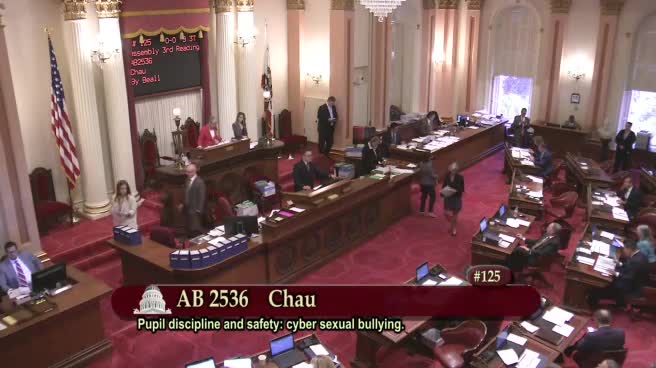
| Aug 19, 2016 | Assembly 3rd Reading AB2529 Linder By Berryhill | Senate Floor |
Passed |
|
| Jun 20, 2016 | Do pass, but first be re-referred to the Committee on [Appropriations] | Senate Standing Committee on Business, Professions and Economic Development |
Passed |
|
| May 5, 2016 | AB 2529 LINDER Consent Calendar Second Day Regular Session | Assembly Floor |
Passed |
|
| Apr 27, 2016 | Do pass. To Consent Calendar. | Assembly Standing Committee on Appropriations |
Passed |
|
| Apr 5, 2016 | Do pass as amended and be re-referred to the Committee on [Appropriations] | Assembly Standing Committee on Business and Professions |
Passed |
This list shows positions taken on this bill by organizations on the date displayed, which is linked to the original source.
Positions by individuals are not included.
|
Organization
|
Position
|
Date
|
|---|---|---|
| Newport Exterminating | ** Support | Aug 19, 2016 |
| Pest Control Operators Of California | ** Support | Aug 19, 2016 |
| Structural Pest Control Board | * Support | Jun 20, 2016 |
| Western Exterminator Company | ** Support | Aug 19, 2016 |
Office of Senate Floor Analyses (916) 651-1520 Fax: (916) 327-4478 | AB |
THIRD READING
Bill No: AB 2529
:
SENATE BUS., PROF. & ECON. DEV. COMMITTEE: 9-0, 6/20/16
AYES: Hill, Bates, Block, Gaines, Galgiani, Hernandez, Jackson, Mendoza, Wieckowski
SENATE APPROPRIATIONS COMMITTEE: Senate Rule 28.8
ASSEMBLY FLOOR: 79-0, 5/5/16 (Consent) - See last page for vote
SOURCE: Pest Control Operators of California
DIGEST: This bill provides that a company registered to perform structural pest control that hires or employs unlicensed individuals to perform work on contracts or service agreements, may do so for Branches 1, 2, or 3, as specified, and authorizes a county agricultural commissioner to take disciplinary action against an employer or employee for failing to wear personal protective equipment, as specified.
Existing law:
- Establishes the Structural Pest Control Board (SPCB) under the Department of Consumer Affairs to regulate the practice of structural pest control. (Business and Professions Code (BPC) §§ 8500 - 8697.4)
- Defines “structural pest control,” with respect to household pests and wood destroying pests or organisms, as performing or offering to perform any of the following:
- Identification of infestations or infections.
- The making of an inspection or inspections for the purpose of identifying or attempting to identify infestations or infections of household or other structures by those pests or organisms.
- The making of inspection reports, recommendations, estimates, and bids, whether oral or written, with respect to those infestations or infections.
- The making of contracts, or the submitting of bids for, or the performance of any work including the making of structural repairs or replacements, or the use of pesticides, or mechanical devices for the purpose of eliminating, exterminating, controlling or preventing infestations or infections of those pests, or organisms. (BPC § 8505)
- Classifies, for the purpose of delimiting the type and character of work authorized by the various branch licenses, the practice of pest control into the following three branches: (BPC § 8560)
- Branch 1: fumigation licenses, which authorize the practice relating to the control of household and wood-destroying pests or organisms by fumigation with poisonous or lethal gases.
- Branch 2: general pest license, which authorize the practice relating to the control of household pests, excluding fumigation with poisonous or lethal gases.
- Branch 3: termite licenses, which authorizes the practice relating to the control of wood-destroying pests or organisms by the use of insecticides, or structural repairs and corrections, excluding fumigation with poisonous or lethal gases.
- Defines “registered company” as a sole proprietorship, partnership, corporation, or other business organization that is registered with the SPCB to engage in the practice of structural pest control. (BPC § 8506.1)
- Authorizes a registered company to hire or employ individuals who are not licensed by the SPCB to perform work on contracts covering wood-destroying organisms only after an operator or field representative has fully completed the negotiation or signing of the contract covering a given job. (BPC § 8506.1)
- Provides that the SPCB shall delegate its authority to the Director of Pesticide Regulation for designating county agricultural commissioners. (BPC §§ 8616, 8616.4)
- Provides that the county agricultural commissioner shall be the lead agency for inspections and routine investigations of pesticide use by structural pest control licensees and registered companies, and of persons engaged in unlicensed structural pest control. Further provides that when a matter is referred to the SPCB for disciplinary action, the SPCB shall be the lead agency and may require that the commissioner assist in any investigation. (BPC § 8616.5)
- Provides that, if an employee is found during an inspection or investigation not wearing personal protective equipment required by regulation, the commissioner shall have the option to use discretion in citing an employer only if evidence of all of the following is provided:
- The employer has a written training program, has provided training to the employee, and has maintained a record of training as required by regulation.
- The employer provided personal protective equipment as required by regulation, the equipment was available at the site when the employee was handling the pesticide or pesticides, and the equipment was properly maintained and in good working order.
- The employer is in compliance with regulations relating to the workplace and supervision of employees.
- The employer has implemented and adheres to a written company policy of disciplinary action for employees who violate company policy or state or local laws or regulations.
- The employer has no history of repeated violations of this section.
(BPC § 8616.9)
- Authorizes the SPCB or county agricultural commissioners, when acting pursuant to BPC Section 8616.4, to suspend the right of a structural pest control licensee or registered company to work in a county for up to three working days or, for a licensee, registered company, or an unlicensed individual acting as a licensee, levy an administrative fine up to one thousand dollars or direct the licensee to attend and pass a SPCB-approved course of instruction at a cost not to exceed the administrative fine, or both, as specified. (BPC § 8617)
This bill:
- Expands the authority of a registered company to hire or employ individuals who are not licensed to practice structural pest control to perform work on contracts covering any Branch 1, 2, or 3, or any combination of branches, after an operator or field representative has fully completed the negotiation or signing of the contract covering a given job. Provides that this provision not be construed to authorize an unlicensed individual to perform work that requires a license.
- Authorizes a county agricultural commissioner that finds during an inspection or investigation an employee who is not wearing personal protective equipment required by label or regulation, to refer the violation by the employer for statewide disciplinary action by the SPCB, or suspend the right of the employer to work in the county for up to three working days. If the commissioner does neither, the commissioner may assess an administrative fine against both the employer and the employee. If the commissioner does not take disciplinary action against an employer, the commissioner may assess an administrative fine against the employee only if the employer provides evidence of all of the following:
- The employer has a written training program, has provided training to the employee, and has maintained a record of training as required by label or regulation;
- The employer provided personal protective equipment required by label or regulation, the equipment was available at the site when the employee was handling the pesticide or pesticides, and the equipment was properly maintained and in good working order;
- The employer is in compliance with regulations relating to the workplace and supervision of employees;
- The employer has documented implementation and adheres to a written company policy of disciplinary action for employees who violate company policy or state or local laws or regulations; and,
- The employer has not been disciplined or assessed an administrative fine for a violation of the personal protective equipment requirement for the previous two years.
- Provides that a county agricultural commissioner may impose an administrative fine assessed against an employer and shall not be less than $700 nor more than $5,000.
- Provides that a county agricultural commissioner may impose an administrative fine assessed against an employee and shall not be less than $250 nor more than $5,000.
- Requires that when assessing an administrative fine, the SPCB or commissioner consider the appropriateness of the amount of the fine to the gravity of the violation, the good faith of the licensee, and the history of prior violations.
- Provides that nothing in this section is intended to limit the authority of the commissioner to take action against the employee, including suspension of the employee’s license or referral of the violation for statewide disciplinary action by the SPCB pursuant to BPC Section 8620.
Comments
Purpose. The Pest Control Operators of California are the sponsor of this bill. According to the author, this bill “enables a Branch 1 and Branch 2 registered company to be equally competitive with a Branch 3 registered company in the use of those services of employees or independent contractors, who otherwise are not required to be licensed, to perform work in connection with a pest control contract or service. The proposed changes to BPC § 8616.9 would provide authority and guidelines for county enforcement personnel to take administrative action against the employee if it is found that the employer has met certain conditions.”
The changes this bill seeks to make were approved by the SPCB’s Act Review Committee, which reviews the structural pest control practice act and recommends changes to the full SPCB. The approval was adopted by the SPCB at its October 8, 2015 meeting.
FISCAL EFFECT: Appropriation: Fiscal Com.: Local:
Pest Control Operators of California (source)
Newport Exterminating
The Structural Pest Control Board
Western Exterminator Company
None received
ARGUMENTS IN SUPPORT: The Structural Pest Control Board writes that, “In 2010 the SPCB created the Act Review Committee and directed it to review the Structural Pest Control Act to recommend changes that would both strengthen consumer protection and modernize the language. The amendments being proposed by AB 2529 are recommendations from the Act Review Committee that the SPCB voted unanimously to approve.”
ASSEMBLY FLOOR: 79-0, 5/5/16
AYES: Achadjian, Alejo, Travis Allen, Arambula, Atkins, Baker, Bigelow, Bloom, Bonilla, Bonta, Brough, Brown, Burke, Calderon, Campos, Chang, Chau, Chávez, Chiu, Chu, Cooley, Cooper, Dababneh, Dahle, Daly, Dodd, Eggman, Frazier, Gallagher, Cristina Garcia, Eduardo Garcia, Gatto, Gipson, Gomez, Gonzalez, Gordon, Gray, Grove, Hadley, Harper, Roger Hernández, Holden, Irwin, Jones, Jones-Sawyer, Kim, Lackey, Levine, Linder, Lopez, Low, Maienschein, Mathis, Mayes, McCarty, Medina, Melendez, Mullin, Nazarian, Obernolte, O'Donnell, Olsen, Patterson, Quirk, Ridley-Thomas, Rodriguez, Salas, Santiago, Steinorth, Mark Stone, Thurmond, Ting, Wagner, Waldron, Weber, Wilk, Williams, Wood, Rendon
NO VOTE RECORDED: Beth Gaines
8/3/16 19:38:08
**** END ****
SENATE COMMITTEE ON
BUSINESS, PROFESSIONS AND ECONOMIC DEVELOPMENT
Senator Jerry Hill, Chair
2015 - 2016 Regular
Bill No: Hearing Date: June 20, 2016
Author: | |||
Version: | April 14, 2016 | ||
Urgency: | No | Fiscal: | Yes |
Consultant: | Mark Mendoza | ||
Subject:
SUMMARY:
Provides that a company registered to perform structural pest control that hires or employs unlicensed individuals to perform work on contracts or service agreements, may do so for Branches 1, 2, or 3, as specified, and authorizes a county agricultural commissioner to take disciplinary action against an employer or employee for failing to wear personal protective equipment, as specified.
Existing law:
- Establishes the Structural Pest Control Board (SPCB) under the Department of Consumer Affairs (DCA) to regulate the practice of structural pest control. (Business and Professions Code (BPC) §§ 8500 - 8697.4)
- Defines “structural pest control,” with respect to household pests and wood destroying pests or organisms, as performing or offering to perform any of the following:
- Identification of infestations or infections.
- The making of an inspection or inspections for the purpose of identifying or attempting to identify infestations or infections of household or other structures by those pests or organisms.
- The making of inspection reports, recommendations, estimates, and bids, whether oral or written, with respect to those infestations or infections.
- The making of contracts, or the submitting of bids for, or the performance of any work including the making of structural repairs or replacements, or the use of pesticides, or mechanical devices for the purpose of eliminating, exterminating, controlling or preventing infestations or infections of those pests, or organisms. (BPC § 8505)
- Classifies, for the purpose of delimiting the type and character of work authorized by the various branch licenses, the practice of pest control into the following three branches: (BPC § 8560)
- Branch 1: fumigation licenses, which authorize the practice relating to the control of household and wood-destroying pests or organisms by fumigation with poisonous or lethal gases.
- Branch 2: general pest license, which authorize the practice relating to the control of household pests, excluding fumigation with poisonous or lethal gases.
- Branch 3: termite licenses, which authorizes the practice relating to the control of wood-destroying pests or organisms by the use of insecticides, or structural repairs and corrections, excluding fumigation with poisonous or lethal gases.
- Defines “registered company” as a sole proprietorship, partnership, corporation, or other business organization that is registered with the SPCB to engage in the practice of structural pest control. (BPC § 8506.1)
- Authorizes a registered company to hire or employ individuals who are not licensed by the SPCB to perform work on contracts covering wood-destroying organisms only after an operator or field representative has fully completed the negotiation or signing of the contract covering a given job. (BPC § 8506.1)
- Provides that the SPCB shall delegate its authority to the Director of Pesticide Regulation for designating county agricultural commissioners. (BPC §§ 8616, 8616.4)
- Provides that the county agricultural commissioner shall be the lead agency for inspections and routine investigations of pesticide use by structural pest control licensees and registered companies, and of persons engaged in unlicensed structural pest control. Further provides that when a matter is referred to the SPCB for disciplinary action, the SPCB shall be the lead agency and may require that the commissioner assist in any investigation. (BPC § 8616.5)
- Provides that, if an employee is found during an inspection or investigation not wearing personal protective equipment required by regulation, the commissioner shall have the option to use discretion in citing an employer only if evidence of all of the following is provided:
- The employer has a written training program, has provided training to the employee, and has maintained a record of training as required by regulation.
- The employer provided personal protective equipment as required by regulation, the equipment was available at the site when the employee was handling the pesticide or pesticides, and the equipment was properly maintained and in good working order.
- The employer is in compliance with regulations relating to the workplace and supervision of employees.
- The employer has implemented and adheres to a written company policy of disciplinary action for employees who violate company policy or state or local laws or regulations.
- The employer has no history of repeated violations of this section.
(BPC § 8616.9)
- Authorizes the SPCB or county agricultural commissioners, when acting pursuant to BPC § 8616.4, to suspend the right of a structural pest control licensee or registered company to work in a county for up to three working days or, for a licensee, registered company, or an unlicensed individual acting as a licensee, levy an administrative fine up to one thousand dollars or direct the licensee to attend and pass a SPCB-approved course of instruction at a cost not to exceed the administrative fine, or both, as specified. (BPC § 8617)
This bill:
- Expands the authority of a registered company to hire or employ individuals who are not licensed to practice structural pest control to perform work on contracts covering any Branch 1, 2, or 3, or any combination of branches, after an operator or field representative has fully completed the negotiation or signing of the contract covering a given job. Provides that this provision not be construed to authorize an unlicensed individual to perform work that requires a license.
- Authorizes a county agricultural commissioner that finds during an inspection or investigation an employee who is not wearing personal protective equipment required by label or regulation, to refer the violation by the employer for statewide disciplinary action by the SPCB, or suspend the right of the employer to work in the county for up to three working days. If the commissioner does neither, the commissioner may assess an administrative fine against both the employer and the employee. If the commissioner does not take disciplinary action against an employer, the commissioner may assess an administrative fine against the employee only if the employer provides evidence of all of the following:
- The employer has a written training program, has provided training to the employee, and has maintained a record of training as required by label or regulation;
- The employer provided personal protective equipment required by label or regulation, the equipment was available at the site when the employee was handling the pesticide or pesticides, and the equipment was properly maintained and in good working order;
- The employer is in compliance with regulations relating to the workplace and supervision of employees;
- The employer has documented implementation and adheres to a written company policy of disciplinary action for employees who violate company policy or state or local laws or regulations; and,
- The employer has not been disciplined or assessed an administrative fine for a violation of the personal protective equipment requirement for the previous two years.
- Provides that a county agricultural commissioner may impose an administrative fine assessed against an employer and shall not be less than seven hundred dollars ($700) nor more than five thousand dollars ($5,000).
- Provides that a county agricultural commissioner may impose an administrative fine assessed against an employee and shall not be less than two hundred fifty dollars ($250) nor more than five thousand dollars ($5,000).
- Requires that when assessing an administrative fine, the SPCB or commissioner consider the appropriateness of the amount of the fine to the gravity of the violation, the good faith of the licensee, and the history of prior violations.
- Provides that nothing in this section is intended to limit the authority of the commissioner to take action against the employee, including suspension of the employee’s license or referral of the violation for statewide disciplinary action by the SPCB pursuant to BPC § 8620.
FISCAL EFFECT: This bill has been keyed “fiscal” by Legislative Counsel. According to the April 14, 2016 Assembly Appropriations Committee analysis, this bill will result in a minor increase in fine revenue to the SPCB due to potential increase in fines.
COMMENTS:
- Purpose. The Pest Control Operators of California are the Sponsor of this measure. According to the Author, this bill “enables a Branch 1 and Branch 2 registered company to be equally competitive with a Branch 3 registered company in the use of those services of employees or independent contractors, who otherwise are not required to be licensed, to perform work in connection with a pest control contract or service. The proposed changes to BPC § 8616.9 would provide authority and guidelines for county enforcement personnel to take administrative action against the employee if it is found that the employer has met certain conditions.”
The changes this bill seeks to make were approved by the SPCB’s Act Review Committee, which reviews the structural pest control practice act and recommends changes to the full SPCB. The approval was adopted by the SPCB at its October 8, 2015 meeting.
- Structural Pest Control Board. In 1936, the Structural Pest Control Act (AB 2382, Chapter 823, Statutes of 1935) established the first SPCB (Chapter 14 of the Business and Professions Code was codified in 1941 and established the current version of the SPCB. On October 23, 2009, the SPCB was transferred from the Department of Consumer Affairs to the Department of Pesticide Regulation (DPR). Effective July 1, 2013, under the Governor’s 2011-2012 Reorganization Plan (GRP) No. 2 and AB 1317 (Frazier Chapter 352, Statutes of 2013), the SPCB returned to the DCA.
SPCB issues three types of licenses for three different practice areas (branches) of pest control. The license types are Applicator, Field Representative, and Operator. The branches are fumigation, general pest, and termite (wood-destroying pests and organisms). Under the fumigation branch, the SPCB issues Field Representative Licenses and Operator Licenses. Under the general pest and termite branches, the SPCB issues all three licenses.
Each branch covers a distinct area of pest control:
- Fumigation – Whole structure treatment with lethal gas.
- General Pest – Ants, cockroaches, mice and rats.
- Termite – Termites, wood boring beetles, dry rot, and fungus.
As of April 2016, the licensee population included 7,113 Applicators, 10,876 Field Representatives, and 4,090 Operators. Each license has its own scope of practice, entry-level requirements, and education/examination requirements, with some overlap.
- Applicator – An entry-level license category issued in Branch 2 and 3 only. The Applicator is an individual licensed by the SPCB to apply a pesticide, or any other medium to eliminate, exterminate, control or prevent infestations or infections. Applicators cannot inject lethal gases used in fumigation.
- Field Representative – A full journey-level license. This individual secures work, makes identifications, makes inspections, submits bids, and contracts for work on behalf of a registered company.
- Operator – The highest level of license. Depending on the license category, the Operator must have at least two years’ or as many as four years’ qualifying experience. Only a licensed Operator may qualify a company for registration by assuming responsibility for the company and its employees as the company Qualifying Manager.
Each company and branch office must register with the SPCB (BPC § 8610). As of April 2016, there were 2,982 Principal Registrations and 440 Branch Office Registrations.
- Hiring Unlicensed Personnel for Non-Pest Control Work. Existing law allows a registered company to hire personnel who are unlicensed to practice structural pest control to perform work on a pest control contract covering wood destroying organisms. The conditions state that the unlicensed personnel may only start working after a licensed operator or field representative signs the contract and the unlicensed individual may not perform structural pest control. This exemption allowed for registered companies to negotiate contracts that included more than just pest control, such as repairs, and to utilize unlicensed individuals to perform the non-pest control work.
However, contracts involving other household pests and organisms may still require non-pest control work (e.g. exterminating bed bugs). Therefore, this bill seeks to expand the exemption to include all contracts.
- Disciplinary Action by County Agricultural Commissioners. Current law provides that a county agricultural commissioner shall be the lead agency for inspections and routine investigations of pesticide use by structural pest control licensees, registered companies, and unlicensed persons. Further, it authorizes the agricultural commissioners to cite an employer where an employee is discovered not wearing personal protective equipment, so long as there are specified circumstances indicating the employer is not at fault.
- Arguments in Support. The Structural Pest Control Board writes that, “In 2010 the SPCB created the Act Review Committee and directed it to review the Structural Pest Control Act to recommend changes that would both strengthen consumer protection and modernize the language. The amendments being proposed by AB 2529 are recommendations from the Act Review Committee that the SPCB voted unanimously to approve”
SUPPORT AND OPPOSITION:
Support:
Pest Control Operators of California (Sponsor)
Newport Exterminating
The Structural Pest Control Board
Western Exterminator Company
Opposition:
None on file as of June 14, 2016.
-- END --
Date of Hearing: April 27, 2016
ASSEMBLY COMMITTEE ON APPROPRIATIONS
Lorena Gonzalez, Chair
ABPCA Bill Id:AB 2529
Author:(Linder) – As Amended Ver:April 14, 2016
Policy Committee: | Business and Professions | Vote: | 15 - 0 |
|
|
Urgency: No State Mandated Local Program: Yes Reimbursable: No
SUMMARY:
This bill clarifies the circumstances under which a registered structural pest control company may hire or employ unlicensed individuals, and clarifies the authority of a county agricultural commissioner in taking disciplinary action against an employer, including imposing an administrative fine against both the employer and employee of up to $5,000, for failing to wear personal protective equipment.
FISCAL EFFECT:
Minor increase in fine revenue to the Structural Pest Control Board's (SPCB) due to potential increase in fines, but it is unclear how much revenue the fines will generate.
COMMENTS:
- Background/Purpose. The changes this bill seeks to make were approved by the Structural Pest Control Board's Act Review Committee, which reviews the structural pest control practice act and recommends changes to the full SPCB. The approval was adopted by the SPCB at its October 8, 2015 meeting. According to the author, this bill clarifies “the circumstances under which a registered company may hire or employ unlicensed individuals.” This bill also seeks to provide “clearer guidelines for county enforcement personnel to follow when deciding whether to take administrative action against an employer, an employee, or both, when an employee fails to wear the proper personal protective equipment.”
- Hiring Unlicensed Personnel for Non-Pest Control Work. Existing law prescribes three different classifications of structural pest control licenses (termed "branches") based on the types of pest control work permitted. Existing law allows a Branch 3 registered company to hire or employ unlicensed individuals to work on a pest control contract covering wood destroying organisms only after an operator or filed representative has fully negotiated or signed the contract. This allows registered companies to negotiate contracts that include more than just pest control, such as repairs, and to utilize unlicensed individuals to perform the non-pest control work.
However, Branch 1 and Branch 2 contracts involving other household pests and organisms often still require non-pest control work. This bill expands the existing authorization to hire unlicensed workers to Branch 1 and Branch 2 companies.
- Disciplinary Action by County Agricultural Commissioners. Current law provides that a county agricultural commissioner shall be the lead agency for inspections and routine investigations of pesticide use by structural pest control licensees, registered companies, and unlicensed persons. Further, it authorizes the agricultural commissioners to cite an employer where an employee is discovered not wearing personal protective equipment, so long as there are specified circumstances indicating the employer is not at fault.
However, the law is vague both as to what types of disciplinary actions the commissioner may take and the extent of the commissioner’s discretion. This bill seeks to clarify the duties and powers of the commissioner by providing additional guidelines.
Analysis Prepared by: Jennifer Swenson / APPR. / (916) 319-2081
Date of Hearing:
ASSEMBLY COMMITTEE ON BUSINESS AND PROFESSIONS
Rudy Salas, Chair
ABPCA Bill Id:AB 2529
Author:(Linder) – As Introduced Ver:February 19, 2016
SUBJECT: Structural pest control.
SUMMARY: Provides that a company registered to perform structural pest control that hires or employs unlicensed individuals to perform work on contracts or service agreements, may do so for Branches 1, 2, or 3, as specified, and specifies situations in which a county agricultural commissioner may take disciplinary action against an employer for failing to wear personal protective equipment.
EXISTING LAW:
- Establishes the Structural Pest Control Board (SPCB) under the Department of Consumer Affairs (DCA) to regulate the practice of structural pest control. (Business and Professions Code (BPC) §§ 8500 - 8697.4)
- Defines “structural pest control,” with respect to household pests and wood destroying pests or organisms, as performing or offering to perform any of the following: (BPC § 8505)
- Identification of infestations or infections.
- The making of an inspection or inspections for the purpose of identifying or attempting to identify infestations or infections of household or other structures by those pests or organisms.
- The making of inspection reports, recommendations, estimates, and bids, whether oral or written, with respect to those infestations or infections.
- The making of contracts, or the submitting of bids for, or the performance of any work including the making of structural repairs or replacements, or the use of pesticides, or mechanical devices for the purpose of eliminating, exterminating, controlling or preventing infestations or infections of those pests, or organisms.
- Classifies, for the purpose of delimiting the type and character of work authorized by the various branch licenses, the practice of pest control into the following three branches: (BPC § 8560)
- Branch 1: fumigation licenses, which authorize the practice relating to the control of household and wood-destroying pests or organisms by fumigation with poisonous or lethal gases.
- Branch 2: general pest license, which authorize the practice relating to the control of household pests, excluding fumigation with poisonous or lethal gases.
- Branch 3: termite licenses, which authorizes the practice relating to the control of wood-destroying pests or organisms by the use of insecticides, or structural repairs and corrections, excluding fumigation with poisonous or lethal gases.
- Defines “registered company” as a sole proprietorship, partnership, corporation, or other business organization that is registered with the SPCB to engage in the practice of structural pest control. (BPC § 8506.1)
- Authorizes a registered company to hire or employ individuals who are not licensed by the SPCB to perform work on contracts covering wood-destroying organisms only after an operator or field representative has fully completed the negotiation or signing of the contract covering a given job. (BPC § 8506.1)
- Provides that the SPCB shall delegate its authority to the Director of Pesticide Regulation for designating county agricultural commissioners. (BPC §§ 8616, 8616.4)
- Provides that the county agricultural commissioner shall be the lead agency for inspections and routine investigations of pesticide use by structural pest control licensees and registered companies, and of persons engaged in unlicensed structural pest control. Further provides that when a matter is referred to the SPCB for disciplinary action, the SPCB shall be the lead agency and may require that the commissioner assist in any investigation. (BPC § 8616.5)
- Provides that, if an employee is found during an inspection or investigation not wearing personal protective equipment required by regulation, the commissioner shall have the option to use discretion in citing an employer only if evidence of all of the following is provided: (BPC § 8616.9)
- The employer has a written training program, has provided training to the employee, and has maintained a record of training as required by regulation.
- The employer provided personal protective equipment required by regulation, the equipment was available at the site when the employee was handling the pesticide or pesticides, and the equipment was properly maintained and in good working order.
- The employer is in compliance with regulations relating to the workplace and supervision of employees.
- The employer has implemented and adheres to a written company policy of disciplinary action for employees who violate company policy or state or local laws or regulations.
- The employer has no history of repeated violations of this section.
- Authorizes the SPCB or county agricultural commissioners, when acting pursuant to BPC § 8616.4, to suspend the right of a structural pest control licensee or registered company to work in a county for up to three working days or, for a licensee, registered company, or an unlicensed individual acting as a licensee, levy an administrative fine up to one thousand dollars or direct the licensee to attend and pass a SPCB-approved course of instruction at a cost not to exceed the administrative fine, or both, as specified. (BPC § 8617)
THIS BILL:
- Expands the authority of a registered company to hire or employ individuals who are not licensed to practice structural pest control to perform work on contracts covering any Branch 1, 2, or 3, or any combination of branches, after an operator or field representative has fully completed the negotiation or signing of the contract covering a given job.
- Provides that an unlicensed individual may not perform work that requires one of the structural pest control licenses.
- Authorizes a county agricultural commissioner that finds during an inspection or investigation an employee who is not wearing personal protective equipment required by label or regulation to take disciplinary action against the employer and assess a civil fine against the employee. If the commissioner does not take disciplinary action against an employer, the commissioner may assess a civil fine against the employee only if the employer provides evidence of all of the following:
- The employer has a written training program, has provided training to the employee, and has maintained a record of training as required by label or regulation;
- The employer provided personal protective equipment required by label or regulation, the equipment was available at the site when the employee was handling the pesticide or pesticides, and the equipment was properly maintained and in good working order;
- The employer is in compliance with regulations relating to the workplace and supervision of employees;
- The employer has documented implementation and adheres to a written company policy of disciplinary action for employees who violate company policy or state or local laws or regulations; and,
- The employer has not been disciplined for a violation of the personal protective equipment requirement for the previous two years.
- Provides that a county agricultural commissioner may not assess a civil fine against an employee that exceeds _____dollars.
- Provides that no reimbursement is required pursuant to Section 6 of Article XIII B of the California Constitution because the only costs that may be incurred by a local agency or school district will be incurred because this act creates a new crime or infraction, eliminates a crime or infraction, or changes the penalty for a crime or infraction, within the meaning of Section 17556 of the Government Code, or changes the definition of a crime within the meaning of Section 6 of Article XIII B of the California Constitution.
FISCAL EFFECT: Unknown. This bill is keyed fiscal by the Legislative Counsel.
COMMENTS:
Purpose. This bill is sponsored by the Pest Control Operators of California. According to the author, this bill clarifies “the circumstances under which a registered company may hire or employ unlicensed individuals.” This bill also seeks to provide “clearer guidelines for county enforcement personnel to follow when deciding whether to take administrative action against an employer, an employee, or both, when an employee fails to wear the proper personal protective equipment.”
Background. The changes this bill seeks to make were approved by the SPCB’s Act Review Committee, which reviews the structural pest control practice act and recommends changes to the full SPCB. The approval was adopted by the SPCB at its October 8, 2015 meeting.
Hiring Unlicensed Personnel for Non-Pest Control Work. Existing law allows a registered company to hire personnel who are unlicensed to practice structural pest control to perform work on a pest control contract covering wood destroying organisms. The conditions state that the unlicensed personnel may only start working after a licensed operator or field representative signs the contract and the unlicensed individual may not perform structural pest control. This exemption allowed for registered companies to negotiate contracts that included more than just pest control, such as repairs, and to utilize unlicensed individuals to perform the non-pest control work.
However, contracts involving other household pests and organisms may still require non-pest control work. Therefore, this bill seeks to expand the exemption to include all contracts.
Disciplinary Action by County Agricultural Commissioners. Current law provides that a county agricultural commissioner shall be the lead agency for inspections and routine investigations of pesticide use by structural pest control licensees, registered companies, and unlicensed persons. Further, it authorizes the agricultural commissioners to cite an employer where an employee is discovered not wearing personal protective equipment, so long as there are specified circumstances indicating the employer is not at fault.
However, the law as drafted is vague both as to what types of disciplinary actions the commissioner may take and the extent of the commissioner’s discretion. Therefore, this bill seeks to clarify the duties and powers of the commissioner by providing additional guidelines.
AMENDMENTS:
The author should amend the bill to include the following clarifying changes as follows:
- Page 3, strike lines 16-21, inclusive, and insert:
may refer the violation for statewide disciplinary action by the board or suspend the right of the employer to work in the county for up to three working days. If the commissioner does not take disciplinary action against the employer, the commissioner may assess an administrative fine against the employer and the employee or the commissioner may assess an administrative fine against the employee solely if the employer provides evidence of all of the following:
This amendment clarifies the existing authority under of the commissioner under BPC § 8617 in the context of the equipment violations.
- Page 4, line 2 after “disciplined” insert:
nor assessed an administrative fine
This amendment distinguishes an administrative fine from SPCB disciplinary action.
- Page 4, strike lines 4-5 and insert:
An administrative fine assessed against an employee pursuant to this section shall not be no less than two hundred and fifty ($250) nor greater than five thousand dollars ($5,000).
An administrative fine assessed against an employer pursuant to this section shall be no less than seven hundred dollars ($700) nor greater than five thousand dollars ($5,000).
In assessing a fine the board or commission shall give due consideration to the appropriateness of the amount of the fine with respect to factors such as the gravity of the violation, the good faith of the licensee, and the history of previous violations.
Nothing in this section is intended to limit the authority of the commissioner to take any action against the employee pursuant 8617, including suspension of the employee’s license or to take action against an unlicensed employee for violation of this section or to refer a violation of this section for statewide disciplinary action by the board pursuant to Section 8620.
This amendment further clarifies the authority of the commissioner and fills in the fines using the number determined under the SPCB’s regulations (Title 16 California Code of Regulations § 1922).
REGISTERED SUPPORT:
Pest Control Operators of California (sponsor)
Structural Pest Control Board
Newport Exterminating
Western Exterminator
REGISTERED OPPOSITION:
None on file.
Analysis Prepared by: Vincent Chee / B. & P. / (916) 319-3301
Discussed in Hearing
 2MIN
Senate Floor
 6MIN
Senate Standing Committee on Business, Professions and Economic Development
Bill Author

Bill Co-Author(s):