AB 2530: Recycling: beverage containers.
- Session Year: 2015-2016
- House: Assembly
- Latest Version Date: 2016-09-30
Existing law, the California Beverage Container Recycling and Litter Reduction Act, requires that every beverage container sold or offered for sale in this state have a minimum refund value, and requires a beverage manufacturer to indicate on all beverage containers sold or offered for sale in the state the message California Redemption Value or one of similar alternative messages, as specified. A beverage distributor is required to pay a redemption payment to the Department of Resources Recycling and Recovery for every beverage container sold or offered for sale in the state to a dealer, and the department is required to deposit those amounts in the California Beverage Container Recycling Fund.
This bill, beginning March 1, 2018, would require a manufacturer of a beverage sold in a plastic beverage container subject to the California Redemption Value to annually report to the department, under penalty of perjury, the amount of virgin plastic and postconsumer recycled plastic used by the manufacturer for plastic beverage containers subject to the California Redemption Value for sale in the state in the previous calendar year. By expanding the crime of perjury, the bill would impose a state-mandated local program. The bill would require the department to post the information reported on the departments Internet Web site.
The California Constitution requires the state to reimburse local agencies and school districts for certain costs mandated by the state. Statutory provisions establish procedures for making that reimbursement.
This bill would provide that no reimbursement is required by this act for a specified reason.
Existing law, the California Beverage Container Recycling and Litter Reduction Act, requires that every beverage container sold or offered for sale in this state have a minimum refund value. value, and requires a beverage manufacturer to indicate on all beverage containers sold or offered for sale in the state the message California Redemption Value or one of similar alternative messages, as specified. A beverage distributor is required to pay a redemption payment to the Department of Resources Recycling and Recovery for every beverage container sold or offered for sale in the state to a dealer, and the department is required to deposit those amounts in the California Beverage Container Recycling Fund. The act defines the term beverage for these purposes to include certain types of products in liquid, ready-to-drink form, and also excludes specified products from the definition of beverage.
This bill, beginning March 1, 2018, would require a manufacturer of a beverage sold in a plastic beverage container subject to the California Redemption Value to annually report to the department, under penalty of perjury, the average percentage of postconsumer recycled content in beverage containers sold in the state by the manufacturer in the previous year and would require a manufacturer to use one or more of several specified methods of determining the average percentage of postconsumer recycled content for making a claim about the postconsumer recycled content.The bill would require a beverage manufacturer to demonstrate compliance with those provisions annually to the department. amount of virgin plastic and postconsumer recycled plastic used by the manufacturer for plastic beverage containers subject to the California Redemption Value for sale in the state in the previous calendar year. By expanding the crime of perjury, the bill would impose a state-mandated local program. The bill would require the department to post the information reported on the departments Internet Web site.
The California Constitution requires the state to reimburse local agencies and school districts for certain costs mandated by the state. Statutory provisions establish procedures for making that reimbursement.
This bill would provide that no reimbursement is required by this act for a specified reason.
Existing law, the California Beverage Container Recycling and Litter Reduction Act, requires that every beverage container sold or offered for sale in this state have a minimum refund value. A beverage distributor is required to pay a redemption payment to the Department of Resources Recycling and Recovery for every beverage container sold or offered for sale in the state to a dealer, and the department is required to deposit those amounts in the California Beverage Container Recycling Fund. The act defines the term beverage for these purposes to include certain types of products in liquid, ready-to-drink form, and also excludes specified products from the definition of beverage.
This bill, beginning January March 1, 2018, would require a manufacturer of a beverage sold in a plastic beverage container to clearly indicate through labeling report to the department the average percentage of postconsumer recycled content in the beverage container containers sold in the state by the manufacturer in the previous year and would require a manufacturer to use one or more of several specified methods of determining the average percentage of postconsumer recycled content for labeling or making a claim about the postconsumer recycled content of plastic beverage containers. content.
Existing law provides for the department to reduce processing fees paid by beverage manufacturers under certain circumstances.
This The bill would require a beverage manufacturer to demonstrate compliance with the labeling those provisions annually to the Department of Resources Recycling and Recovery, and would prohibit the department from reducing processing fees unless the manufacturer demonstrates compliance. department.
Existing law, the California Beverage Container Recycling and Litter Reduction Act, requires that every beverage container sold or offered for sale in this state have a minimum refund value. A beverage distributor is required to pay a redemption payment to the Department of Resources Recycling and Recovery for every beverage container sold or offered for sale in the state to a dealer, and the department is required to deposit those amounts in the California Beverage Container Recycling Fund. The act defines the term beverage for these purposes to include certain types of products in liquid, ready-to-drink form, and also excludes specified products from the definition of beverage.
This bill, beginning January 1, 2018, would require a manufacturer of a beverage sold in a plastic beverage container to clearly indicate through labeling the average percentage of postconsumer recycled content in the beverage container, subject to certification by a 3rd party certification entity, as specified. container and would require a manufacturer to use one or more of several specified methods of determining the average percentage of postconsumer recycled content for labeling or making a claim about the postconsumer recycled content of plastic beverage containers.
Existing law provides for the department to reduce processing fees paid by beverage manufacturers under certain circumstances.
This bill would require a beverage manufacturer to demonstrate compliance with the labeling provisions annually to the Department of Resources Recycling and Recovery, and would prohibit the department from reducing processing fees unless the manufacturer demonstrates compliance.
Existing law, the California Beverage Container Recycling and Litter Reduction Act, requires that every beverage container sold or offered for sale in this state have a minimum refund value. A beverage distributor is required to pay a redemption payment to the Department of Resources Recycling and Recovery for every beverage container sold or offered for sale in the state to a dealer, and the department is required to deposit those amounts in the California Beverage Container Recycling Fund. The act defines the term beverage for these purposes to include certain types of products in liquid, ready-to-drink form, and also excludes specified products from the definition of beverage.
This bill, beginning January 1, 2018, would require a manufacturer of a beverage sold in a plastic beverage container to clearly indicate through labeling the average percentage of postconsumer recycled content in the beverage container, subject to certification by a 3rd party certification entity, as specified.
Existing law provides for the department to reduce processing fees paid by beverage manufacturers under certain circumstances.
This bill would require a beverage manufacturer to demonstrate compliance with the labeling provisions annually to the Department of Resources Recycling and Recovery, and would prohibit the department from reducing processing fees unless the manufacturer demonstrates compliance.
(a)On or before March 1, 2018, and annually thereafter, a manufacturer of a beverage sold in a plastic beverage container subject to the California Redemption Value shall report to the department the amount of virgin plastic and postconsumer recycled plastic used by the manufacturer for plastic beverage containers subject to the California Redemption Value for sale in the state in the previous calendar year. The manufacturer shall submit this information to the department under penalty of perjury.
(b)The department shall post the information reported pursuant to subdivision (a) on the departments Internet Web site.
(c)This section does not apply to a refillable plastic beverage container.
SEC. 2.No reimbursement is required by this act pursuant to Section 6 of Article XIIIB of the California Constitution because the only costs that may be incurred by a local agency or school district will be incurred because this act creates a new crime or infraction, eliminates a crime or infraction, or changes the penalty for a crime or infraction, within the meaning of Section 17556 of the Government Code, or changes the definition of a crime within the meaning of Section 6 of Article XIIIB of the California Constitution.
(a)On or before March 1, 2018, and annually thereafter, a manufacturer of a beverage sold in a plastic beverage container subject to the California Redemption Value shall report to the department the average percentage amount of virgin plastic and postconsumer recycled content in plastic beverage containers sold used by the manufacturer for plastic beverage containers subject to the California Redemption Value for sale in the state in the previous calendar year. The manufacturer shall submit this information to the department under penalty of perjury.
(b)The department shall post the information reported pursuant to subdivision (a) on the departments Internet Web site.
(c)For purposes of making a claim of postconsumer recycled content pursuant to subdivision (a), a manufacturer of a beverage shall utilize one or more of the following:
(1)The average percentage of postconsumer recycled content in all plastic beverage containers sold by the manufacturer in the state during the previous year.
(2)The average percentage of postconsumer recycled content in the plastic beverage containers sold by the manufacturer in the state from the product line that carries the claim.
(3)Any other reasonable methodology for determining minimum postconsumer recycled content for a claim that is consistent with the Federal Trade Commissions Guides for the Use of Environmental Marketing Claims (16 C.F.R. Part 260).
(d)Any claim of recycled content made pursuant to this section shall be accurate and consistent with the Federal Trade Commissions Guides for the Use of Environmental Marketing Claims (16 C.F.R. Part 260).
(e)A manufacturer may use an independent third-party certification entity to certify that the manufacturers plastic beverage container postconsumer recycled content report pursuant to subdivision (a) meets the requirements of this section.
(f)
(c)This section does not apply to a refillable plastic beverage container.
SEC. 2.Section 14575.2 is added to the Public Resources Code, to read:14575.2.A manufacturer of a beverage sold in a plastic beverage container shall demonstrate compliance with Section 14549.3 to the department on an annual basis.
SEC. 2.No reimbursement is required by this act pursuant to Section 6 of Article XIIIB of the California Constitution because the only costs that may be incurred by a local agency or school district will be incurred because this act creates a new crime or infraction, eliminates a crime or infraction, or changes the penalty for a crime or infraction, within the meaning of Section 17556 of the Government Code, or changes the definition of a crime within the meaning of Section 6 of Article XIIIB of the California Constitution.
(a)On and after January or before March 1, 2018, and annually thereafter, a manufacturer of a beverage sold in a plastic beverage container shall clearly indicate through labeling report to the department the average percentage of postconsumer recycled content in the plastic beverage container by either printing or embossing the beverage container or by securely affixing a clear and prominent stamp, label, or other device to the beverage container. The indication of postconsumer recycled content shall follow the size and format requirements described in paragraph (2) of subdivision (b) of Section 2200 of Title 14 of the California Code of Regulations. containers sold by the manufacturer in the state in the previous calendar year.
(b)The department shall post the information reported pursuant to subdivision (a) on the departments Internet Web site.
(b)
(c)For purposes of making a claim of postconsumer recycled content and labeling the average percentage of postconsumer recycled content of plastic beverage containers, content pursuant to subdivision (a), a manufacturer of a beverage shall utilize one or more of the following:
(1)The average percentage of postconsumer recycled content in all plastic beverage containers sold by the manufacturer in the state during the previous year.
(2)The average percentage of postconsumer recycled content in the plastic beverage containers sold by the manufacturer in the state from the product line that carries the claim.
(3)Any other reasonable methodology for determining minimum postconsumer recycled content for a claim that is consistent with the Federal Trade Commissions Guides for the Use of Environmental Marketing Claims (16 C.F.R. Part 260).
(c)
(d)Any claim of recycled content made pursuant to this section shall be accurate and consistent with the Federal Trade Commissions Guides for the Use of Environmental Marketing Claims (16 C.F.R. Part 260).
(d)
(e)A manufacturer may use an independent third-party certification entity to certify that the manufacturers plastic beverage containers meet container postconsumer recycled content report pursuant to subdivision (a) meets the requirements of this section.
(e)
(f)This section does not apply to a refillable plastic beverage container.
SEC. 2.Section 14575.2 is added to the Public Resources Code, to read:14575.2.(a)A manufacturer of a beverage sold in a plastic beverage container shall demonstrate compliance with Section 14549.3 to the department on an annual basis.
(b)Notwithstanding subdivision (e) of Section 14575, the department shall not reduce the processing fee requirements for a beverage manufacturer for a plastic container sold in this state unless the manufacturer demonstrates to the department that the plastic beverage container complies with the labeling requirements of Section 14549.3, regardless of whether the plastic beverage container is manufactured in this state.
(a)On and after January 1, 2018, a manufacturer of a beverage sold in a plastic beverage container shall clearly indicate through labeling the average percentage of postconsumer recycled content in the beverage container by either printing or embossing the beverage container or by securely affixing a clear and prominent stamp, label, or other device to the beverage container. The indication of postconsumer recycled content shall follow the size and format requirements described in paragraph (2) of subdivision (b) of Section 2200 of Title 14 of the California Code of California Regulations.
(b)For purposes of determining making a claim of postconsumer recycled content and labeling the average percentage of postconsumer recycled content of plastic beverage containers, a manufacturer of a beverage shall utilize one or both more of the following approaches: following:
(1)The average amount percentage of postconsumer recycled content in all plastic beverage containers sold by the manufacturer in the state during the previous year.
(2)The average amount percentage of postconsumer recycled content in a specified type of beverage container. the plastic beverage containers sold by the manufacturer in the state from the product line that carries the claim.
(3)Any other reasonable methodology for determining minimum postconsumer recycled content for a claim that is consistent with the Federal Trade Commissions Guides for the Use of Environmental Marketing Claims (16 C.F.R. Part 260).
(c)Any claim of recycled content made pursuant to this section shall be accurate and consistent with the Federal Trade Commissions Guides for the Use of Environmental Marketing Claims (16 C.F.R. Part 260).
(c)
(d)A manufacturer may use an independent third-party certification entity shall to certify that the manufacturers plastic beverage containers meet the requirements of this section. The third-party certification entity shall be an independent, accredited (ISO/IEC 17025) laboratory.
(d)
(e)This section does not apply to a refillable plastic beverage container.
SEC. 2.Section 14575.2 is added to the Public Resources Code, to read:14575.2.(a)A manufacturer of a beverage sold in a plastic beverage container shall demonstrate compliance with Section 14549.3 to the department on an annual basis.
(b)Notwithstanding subdivision (e) of Section 14575, the department shall not reduce the processing fee requirements for a beverage manufacturer for a plastic container sold in this state unless the manufacturer demonstrates to the department that the plastic beverage container complies with the labeling requirements of Section 14549.3, regardless of whether the plastic beverage container is manufactured in this state.
(a)On and after January 1, 2018, a manufacturer of a beverage sold in a plastic beverage container shall clearly indicate through labeling the average percentage of postconsumer recycled content in the beverage container by either printing or embossing the beverage container or by securely affixing a clear and prominent stamp, label, or other device to the beverage container. The indication of postconsumer recycled content shall follow the size and format requirements described in paragraph (2) of subdivision (b) of Section 2200 of Title 14 of the Code of California Regulations.
(b)For purposes of determining and labeling the average percentage of postconsumer recycled content of plastic beverage containers, a manufacturer of a beverage shall utilize one or both of the following approaches:
(1)The average amount of postconsumer recycled content in all beverage containers sold by the manufacturer in the state during the previous year.
(2)The average amount of postconsumer recycled content in a specified type of beverage container.
(c)A third-party certification entity shall certify that the manufacturers plastic beverage containers meet the requirements of this section. The third-party certification entity shall be an independent, accredited (ISO/IEC 17025) laboratory.
(d)This section does not apply to a refillable plastic beverage container.
SEC. 2.Section 14575.2 is added to the Public Resources Code, to read:14575.2.(a)A manufacturer of a beverage sold in a plastic beverage container shall demonstrate compliance with Section 14549.3 to the department on an annual basis.
(b)Notwithstanding subdivision (e) of Section 14575, the department shall not reduce the processing fee requirements for a beverage manufacturer for a plastic container sold in this state unless the manufacturer demonstrates to the department that the plastic beverage container complies with the labeling requirements of Section 14549.3, regardless of whether the plastic beverage container is manufactured in this state.
|
Date
|
Status
|
|---|---|
| Jun 2, 2016 | Read third time. Passed. Ordered to the Senate. (Ayes 59. Noes 11. Page 5249.) |
| Sep 2, 2016 | Enrolled and presented to the Governor at 12 p.m. |
| Aug 25, 2016 | Senate amendments concurred in. To Engrossing and Enrolling. (Ayes 55. Noes 21. Page 6282.). |
| Aug 25, 2016 | Senate amendments concurred in. To Engrossing and Enrolling. |
| Aug 23, 2016 | In Assembly. Concurrence in Senate amendments pending. May be considered on or after August 25 pursuant to Assembly Rule 77. |
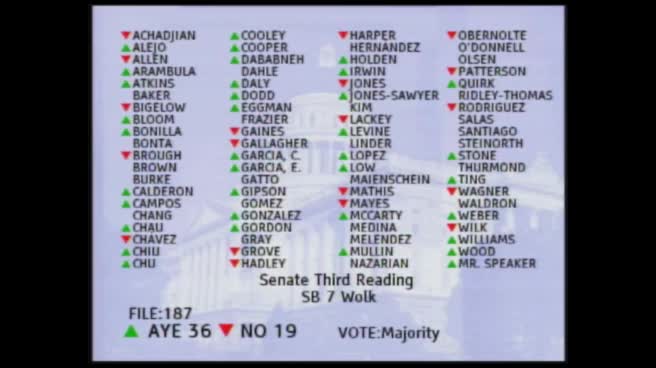
| Aug 22, 2016 | Read third time. Passed. Ordered to the Assembly. (Ayes 22. Noes 16. Page 5242.). |
| Aug 22, 2016 | Read third time. Passed. Ordered to the Assembly. |
| Aug 3, 2016 | Read second time. Ordered to third reading. |
| Aug 2, 2016 | From committee: Do pass. (Ayes 5. Noes 2.) (August 1). |
| Jun 30, 2016 | From committee: Do pass and re-refer to Com. on APPR. (Ayes 5. Noes 2.) (June 29). Re-referred to Com. on APPR. |
| Jun 15, 2016 | From committee chair, with author's amendments: Amend, and re-refer to committee. Read second time, amended, and re-referred to Com. on E.Q. |
| Jun 9, 2016 | Referred to Com. on E.Q. |
| Jun 6, 2016 | In Senate. Read first time. To Com. on RLS. for assignment. |
| Jun 2, 2016 | Read third time. Passed. Ordered to the Senate. (Ayes 59. Noes 11.) |
| Feb 19, 2016 | Introduced. To print. |
| Jun 2, 2016 | Read third time. Passed. Ordered to the Senate. |
| Jun 2, 2016 | Read second time. Ordered to third reading. |
| Jun 2, 2016 | Assembly Rule 63 suspended. (Page 5166.) |
| Jun 2, 2016 | Assembly Rule 63 suspended. |
| Jun 1, 2016 | Read second time and amended. Ordered returned to second reading. |
| May 31, 2016 | From committee: Amend, and do pass as amended. (Ayes 15. Noes 3.) (May 27). |
| May 11, 2016 | In committee: Set, first hearing. Referred to APPR. suspense file. |
| Apr 19, 2016 | Re-referred to Com. on APPR. |
| Apr 18, 2016 | Read second time and amended. |
| Apr 14, 2016 | From committee: Amend, and do pass as amended and re-refer to Com. on APPR. (Ayes 8. Noes 0.) (April 11). |
| Mar 8, 2016 | Referred to Com. on NAT. RES. |
| Feb 22, 2016 | Read first time. |
| Feb 21, 2016 | From printer. May be heard in committee March 22. |
|
Date
|
Description
|
Location
|
Votes
|
|
|---|---|---|---|---|
| Aug 25, 2016 | AB 2530 GORDON Concurrence in Senate Amendments | Assembly Floor |
Passed |
|
| Aug 22, 2016 | Assembly 3rd Reading AB2530 Gordon By Wieckowski | Senate Floor |
Passed |
|
| Aug 1, 2016 | Do pass | Senate Standing Committee on Appropriations |
Passed |
|
| Jun 29, 2016 | Do pass, but first be re-referred to the Committee on [Appropriations] | Senate Standing Committee on Environmental Quality |
Passed |
|
| Jun 2, 2016 | AB 2530 GORDON Assembly Third Reading | Assembly Floor |
Passed |
|
| May 27, 2016 | Do pass as amended. | Assembly Standing Committee on Appropriations |
Passed |
|
| Apr 11, 2016 | Do pass as amended and be re-referred to the Committee on [Appropriations] | Assembly Standing Committee on Natural Resources |
Passed |
This list shows positions taken on this bill by organizations on the date displayed, which is linked to the original source.
Positions by individuals are not included.
|
Organization
|
Position
|
Date
|
|---|---|---|
| American Beverage Association | ** Against | Aug 22, 2016 |
| American Chemistry Council | ** Against | Aug 22, 2016 |
| As You Sow | ** Support | Aug 22, 2016 |
| Associated Plastics Recyclers | * Support | Aug 1, 2016 |
| California and Nevada Beverage Association | * Against | Aug 1, 2016 |
| California Bottled Water Association | ** Against | Aug 22, 2016 |
| California Chamber Of Commerce | ** Against | Aug 22, 2016 |
| California Grocer Association | ** Against | Aug 22, 2016 |
| California League of Food Processors | ** Against | Aug 22, 2016 |
| California Manufacturers And Technology Association | ** Against | Aug 22, 2016 |
| California Nevada Beverage Association | ** Against | Aug 22, 2016 |
| California Retailers Association | ** Against | Aug 22, 2016 |
| Californians Against Waste | ** Support | Aug 22, 2016 |
| Central Contra Costa Solid Waste Authority | ** Support | Aug 22, 2016 |
| City and County of San Fransisco | * Support | Aug 1, 2016 |
| Clean Water Action | ** Support | Aug 22, 2016 |
| Clean Water Fund | ** Support | Jun 2, 2016 |
| development of a | ** Against | Aug 22, 2016 |
| EcoPET Plastics, Inc. | ** Support | Aug 22, 2016 |
| Global PET | ** Support | Aug 22, 2016 |
| Grocery Manufacturers Association | ** Against | Aug 22, 2016 |
| International Bottled Water Association | ** Against | Aug 22, 2016 |
| Los Angeles Alliance for a New Economy | ** Support | Aug 22, 2016 |
| manufacturers. | ** Against | Aug 22, 2016 |
| Marin Sanitary Service | ** Support | Aug 22, 2016 |
| Napa Recycling &Waste Services | ** Support | Aug 22, 2016 |
| Natural Resources Defense Council | ** Support | Aug 22, 2016 |
| Northern California Recycling Association | ** Support | Aug 22, 2016 |
| Plastic Recycling Corporation Of California | ** Against | Aug 22, 2016 |
| RePet | ** Support | Aug 22, 2016 |
| Sierra Club California | ** Support | Aug 22, 2016 |
| Solid Waste Association Of North America, California Chapters | * Support | Aug 1, 2016 |
| Sonoma County Waste Management Agency | ** Support | Aug 22, 2016 |
| Sonoma County Waste Management Authority | ** Support | Jun 2, 2016 |
| SPI - The Plastics Industry Trade Association | ** Against | Aug 22, 2016 |
| StopWaste | ** Support | Aug 22, 2016 |
| Tri-CED Community Recycling | ** Support | Aug 22, 2016 |
| u ARGUMENTS IN | ** Against | Aug 22, 2016 |
| UPSTREAM | ** Support | Aug 22, 2016 |
| Zanker Recycling | ** Support | Aug 22, 2016 |
CONCURRENCE IN SENATE AMENDMENTS
CSA1 Bill Id:AB 2530
Author:(Gordon)
As Amended Ver:June 15, 2016
Majority vote
ASSEMBLY: | 59-11 | (June 2, 2016) | SENATE: | 22-16 | (August 22, 2016) |
Original Committee Reference: NAT. RES.
SUMMARY: Requires a manufacturer of a plastic beverage container, beginning in March 1, 2018, to report the amount of virgin plastic and postconsumer recycled content in plastic used in their beverage containers subject to California Refund Value (CRV) sold in the state the previous calendar year.
The Senate amendments:
- Delete a requirement that manufacturers label the beverage containers with the amount of post-consumer recycled content;
- Require that information to instead be reported to the Department of Resources Recycling and Recovery (CalRecycle).
- Require CalRecycle to post the information provided on its website.
FISCAL EFFECT: According to the Senate Appropriations Committee, this bill has one-time costs of approximately $71,000 (California Beverage Container Recycling Fund) for CalRecycle to develop the reporting infrastructure and minor ongoing costs.
COMMENTS: Historically, glass, steel, aluminum, and paper have been recycled for use in food packaging. The risk of postconsumer contamination has not been a major concern with glass and metals, because they are generally impervious to contaminants and are adequately cleaned at the temperatures used in their recycling. In addition, pulp from reclaimed fiber in paper and paperboard may be used for food-contact articles provided it meets federal standards (Title 21 of the Code of Federal Regulations, Section (CFR) 176.260).
Manufacturers of plastic food packaging that contains recycled plastic are responsible for ensuring that the recycled material is of suitable purity for its intended use and will meet all existing specifications for the virgin material. The federal Food and Drug Association (FDA) states that safety concerns with the use of recycled plastic materials in food packaging include: 1) that contaminants from the postconsumer material may appear in the final food-contact product made from the recycled material; 2) that recycled postconsumer material not regulated for food-contact use may be incorporated into food-contact packaging; and, 3) that components in the recycled plastic may not comply with the regulations for food-contact use. To address these concerns, FDA considers each proposed use of recycled plastic on a case-by-case basis and issues informal advice as to whether the recycling process is expected to produce plastic suitable for food packaging. FDA then issues a "non-objection" letter to the manufacturer for the packaging. Generally, manufacturers use postfilled plastic, which refers to recycled materials that contained food or beverages prior to recycling, to meet FDA standards.
PET is the most common plastic used in food and beverage packaging, including bottled water and soda. According to CalRecycle data, 43% of containers included in the California Beverage Container Recycling and Litter Reduction Act (Bottle Bill) are PET, making it the most common beverage container packaging material in California.
Several plastic food and drink manufacturers located in California have received non-objection letters from the FDA and comply with the state's existing recycled content requirements for rigid plastic packaging containers. Several beverage manufacturers also include postfilled content in their packaging. For example, Arrowhead and Nestle bottled water both report a 50% recycled content rate; Pepsi reports 10% recycled content; and, Naked Juice reports that their bottles are made from 100% recycled content.
California has around 10 reclaimers accepting plastic for washing and producing recycled flake or pellets and 30 manufacturers that use recycled plastic to manufacture new products. While there has been significant growth in the use of recycled plastic in California, the vast majority of recycled plastic is sent overseas.
In 2014, Californians returned approximately 17.7 billion (one million tons) beverage containers covered by the Bottle Bill. Plastic containers accounted for 220,000 tons. Approximately half of these were processed and recycled in California.
Unlike other state laws that require minimum levels of postconsumer recycled material, this bill does not have a mandate for postconsumer recycled content in beverage containers. This bill requires manufacturers who sell beverages in plastic containers in California, and that are subject to the Bottle Bill, to report annually to CalRecycle on the level of postconsumer recycled material used for those plastic beverages. Making that information available to the public will enable consumers to determine whether or not beverage companies are using recycled plastic in the beverages they purchase.
Analysis Prepared by: Elizabeth MacMillan / NAT. RES. / (916) 319-2092 FN: 0003858
SENATE COMMITTEE ON ENVIRONMENTAL QUALITY
Senator Wieckowski, Chair
2015 - 2016 Regular
Bill No: AB 2530
Author: | Gordon | ||
Version: | 6/15/2016 | Hearing Date: | 6/29/2016 |
Urgency: | No | Fiscal: | Yes |
Consultant: | Rebecca Newhouse | ||
SUBJECT: Recycling: beverage containers.
ANALYSIS:
Existing law:
- Under the California Beverage Container Recycling and Litter Reduction Act (Bottle Bill):
- Requires beverage containers, as defined, sold in-state to have a California redemption value (CRV) of 5 cents for containers that hold fewer than 24 ounces and 10 cents for containers that hold 24 ounces or more, and requires distributors to pay a redemption payment to the Department of Resources Recycling and Recovery (CalRecycle) for every beverage container sold in the state. These funds are continuously appropriated to CalRecycle for the payment of refund values and processing fees.
- Requires every glass manufacturer in the state to use at least 35% of postfilled glass in the manufacturing of their glass food, drink or beverage containers, as specified.
- Pursuant to the Integrated Waste Management Act:
- Requires that rigid plastic packaging containers sold in the state contain a minimum of 25% postconsumer recycled material and have a recycling rate of at least 45%.
- Requires that manufacturers of plastic trash bags that are at or above 0.70 mils thick to annually certify that they comply with one of the following:
- That the bags sold in California contain a minimum of 10% recycled content; or,
- That all plastic products sold by the manufacturer in California contain a minimum of 30% recycled content.
- Requires that expanded polystyrene loosefill packaging (i.e., packing peanuts) sold in the state contain a minimum of 60% recycled content.
- Prohibits a manufacturer or supplier from selling a plastic food or beverage container that is advertised with a specific recycling content amount unless the manufacturer or supplier is able to provide certification of that claim in a format that is easy to understand and scientifically accurate.
- Requires a manufacturer or supplier to provide information and documentation verifying the recycling content of a plastic food or beverage container within 90 days of a request for such information made by a member of the public or a state agency.
This bill:
- Requires a manufacturer of a plastic beverage container, beginning in March 1, 2018, to report the amount of virgin plastic and postconsumer recycled content in plastic used in their beverage containers subject to CRV sold in the state the previous calendar year.
- Requires manufacturers submit the above information to CalRecycle under penalty of perjury.
- Specifies that the requirements above do not apply to a refillable plastic beverage container.
Background
- Statutes requiring recycled content. California has several programs and statutes that require minimum levels of recycled content or “postconsumer” material in various products or purchases. Postconsumer material is generally defined as products that were bought, used, and recycled by consumers. For example, a plastic bottle that has been purchased, recycled, and used to make another product would be considered postconsumer material.
- Rigid plastic packaging container law. California’s Rigid Plastic Packaging Container (RPPC) law was enacted in 1991 as part of an effort to reduce the amount of plastic waste disposed in California landfills and to increase the use of recycled postconsumer plastic. The law mandates that rigid plastic packaging containers sold in the state contain a minimum of 25% postconsumer recycled material. Some products are exempt from compliance, including food, drugs, baby formula, and other materials.
- Glass beverage container recycled content. California state law requires in-state glass manufacturers to use a minimum of 35% postfilled glass (glass that had previously been filled with a beverage or food) in the manufacturing of their glass food drink, or beverage containers, measured in the aggregate on an annual basis, and a minimum of 25% postfilled glass if the manufacturers use at least half mixed-color cullet.
Glass manufacturers are required to report each month to CalRecycle on the total tons of new glass food, drink and beverage containers made in California and the tons of California postfilled glass used in the manufacturing of those new containers.
There is no similar statewide requirement for plastic beverage containers.
- State Agency Buy Recycled Campaign. Current state law establishes the State Agency Buy Recycled Campaign (SABRC), which requires state agencies and the Legislature to purchase recycled-content products and track those purchases. The SABRC requires minimum postconsumer material content for 11 specified product categories, including a minimum level of 10% postconsumer material for plastic products. All state agencies are mandated to require all businesses to certify in writing the percentage of postconsumer material in the products, materials, goods, or supplies offered or sold to the state.
- Plastic recycling in California. California has around 10 reclaimers accepting plastic for washing and producing recycled flake or pellets and over 30 manufacturers that use recycled plastic to manufacture new products. While there has been significant growth in the use of recycled plastic in California, the vast majority of recycled plastic is sent overseas.
In 2014, Californians returned approximately 17.7 billion (one million tons) beverage containers covered by the Bottle Bill. Plastic containers accounted for 220,000 tons. Roughly half of these plastic containers are at least partially processed in California.
- Barriers to using postconsumer plastic.
- Economics. According to the report “One major driver of California’s recycling efforts is the broader market for recyclable materials. In order for recycling to be economically viable, the cost of processing and using the recycled material must be less than that of virgin material. One complication is that prices for materials can fluctuate wildly, leading to dramatic variations in the monetary reward for recycling.”
The report further states, “The prices of individual commodities are based on a range of factors, including global supply, demand, strength of the U.S. dollar, inventories, consumer consumption, material quality and cleanliness, and the availability of facilities to process recycled materials. In addition to the inherent volatility of market prices for secondary materials, small changes in prices can have strong impacts on the profitability of secondary materials compared to virgin material. For example, falling oil prices and other factors have reduced the price of virgin plastic and made recycling plastics less economically feasible by reducing the scrap value of post-consumer recyclable plastic.”
- Contamination. Historically, glass, steel, aluminum, and paper have been recycled for use in food packaging. The risk of postconsumer contamination has not been a major concern with glass and metals, because they are generally impervious to contaminants and are adequately cleaned at the temperatures used in their recycling. In addition, pulp from reclaimed fiber in paper and paperboard may be used for food-contact articles provided it meets federal standards.
Manufacturers of plastic food packaging that contains recycled plastic are responsible for ensuring that the recycled material is of suitable purity for its intended use and will meet all existing specifications for the virgin material.
- Contamination. Historically, glass, steel, aluminum, and paper have been recycled for use in food packaging. The risk of postconsumer contamination has not been a major concern with glass and metals, because they are generally impervious to contaminants and are adequately cleaned at the temperatures used in their recycling. In addition, pulp from reclaimed fiber in paper and paperboard may be used for food-contact articles provided it meets federal standards.
The federal Food and Drug Association (FDA) states that safety concerns with the use of recycled plastic materials in food packaging include: 1) that contaminants from the postconsumer material may appear in the final food-contact product made from the recycled material; 2) that recycled postconsumer material not regulated for food-contact use may be incorporated into food-contact packaging; and, 3) that components in the recycled plastic may not comply with the regulations for food-contact use.
To address these concerns, FDA considers proposed uses of recycled plastic on a case-by-case basis and issues informal advice as to whether the recycling process is expected to produce plastic suitable for food packaging. FDA then issues a "non-objection" letter to the manufacturer for the packaging. Generally, manufacturers use postfilled plastic, which refers to recycled materials that contained food or beverages prior to recycling, to meet FDA standards.
Several plastic food and drink manufacturers located in California have received non-objection letters from the FDA. Depending on the beverage manufacturer and product line, there is a range of recycled content used in plastic beverage containers. For example, Coca Cola uses on average 6% recycled content for their PET packaging, Pepsi Co reports they are at 10% for beverage containers, Arrowhead and Nestle bottled water both report a 50% recycled content rate, and Naked Juice reports that their bottles are made from 100% recycled content.
Comments
- Purpose of Bill. According to the author, “Thirty years ago, the Legislature passed and the Governor signed the California Beverage Container Recycling and Litter Reduction Act, better known as the Bottle Bill. This Act established California’s systems for the recycling of beverage containers. In the decades since the Bottle Bill was enacted, Californians have embraced recycling beverage containers and roughly 82% are returned for recycling. Given the public’s embrace of recycling, consumers should be able to determine whether beverage companies are using recycled plastic in the beverages they purchase.”
- No postconsumer recycled content requirement. As noted in the background, several other programs in California, including the Rigid Plastic Packaging Container program, require minimum levels of postconsumer recycled material. This bill does not have a mandate for postconsumer recycled content in beverage containers, but does require manufacturers who sell beverages in plastic containers in California, and that are subject to CVR, to report annually to CalRecycle on the level of postconsumer recycled material used for those plastic beverages.
Related/Prior Legislation
AB 1447 (Alejo) would have established minimum recycled content standards for polyethylene terephthalate (PET) food and beverage packing and expanded the recycled content requirement for glass food and beverage containers to containers manufactured out of state. This bill was held in the Assembly Appropriations Committee.
SB 732 (Pan) would have required every manufacturer of a beverage sold in any plastic container to demonstrate to CalRecycle that each type of a plastic beverage container sold in California contains no less than 10% postfilled material, and would have prohibited CalRecycle from reducing the processing fees for beverage manufacturers unless their beverage containers meet the required recycled content. This bill was held in Senate Environmental Quality Committee.
SOURCE:
Californians Against Waste
SUPPORT:
As You Sow
CarbonLITE Industries
Central Contra Costa Solid Waste Authority
Clean Water Action
EcoPET Plastics, Inc.
Global PET
Los Angeles Alliance for a New Economy
Marin County Hazardous and Solid Waste Management Joint Power Authority
Marin Sanitary Service
Napa Recycling &Waste Services
Natural Resources Defense Council
Northern California Recycling Association
RePET
Sierra Club California
Sonoma County Waste Management Agency
StopWaste
Tri-CED Community Recycling
UPSTREAM
Verdeco Recycling, Inc.
West Coast Chapter of the Institute of Scrap Recycling Industries
Zanker Recycling
OPPOSITION:
American Beverage Association
American Chemistry Council
California Bottled Water Association
California Chamber of Commerce
California League of Food Processors
California Manufacturers and Technology Association
California Nevada Beverage Association
California Retailers Association
Grocery Manufacturers Association
International Bottled Water Association
Plastic Recycling Corporation of California
SPI – The Plastics Industry Trade Association
ARGUMENTS IN SUPPORT:
Proponents say that AB 2530 creates a
voluntary market incentive for beverage producers to increase their use of
recycled content. They note that while Californians have done a great job
collecting beverage containers for recycling, the in-state plastic recycling market
is facing considerable challenges, including the drastic drop in oil prices, which
has lowered demand and price for California-generated recycled materials, and that
this has many manufacturers reconsidering their commitments to using recycled
content. They further state that AB 2530 will encourage the development of a
closed-loop recycling system that supports a robust in-state recycling industry that
not only creates jobs but also provides a valuable raw material for the state’s
manufacturers.
ARGUMENTS IN OPPOSITION:
Opponents argue that AB 2530 would
impose new, costly and unnecessary bureaucratic duties on the beverage industry
that ignore the realities of today’s regional beverage manufacturing and
distribution marketplace. Specifically, they note that large beverage manufacturers
have hundreds of specific product packages that would need an annual in-depth
supply chain analysis to generate an accurate percentage of recycled content, and
that there is no test to determine recycled content other than to audit the extensive
supply chain of both the source of beverages and beverage packaging. They state that the report would have to be revised each year to ensure accuracy and that it is unrealistic to assume such reports will provide meaningful information to the public or CalRecyle.
-- END --
Office of Senate Floor Analyses (916) 651-1520 Fax: (916) 327-4478 | AB |
THIRD READING
Bill No: AB 2530
:
SENATE ENVIRONMENTAL QUALITY COMMITTEE: 5-2, 6/29/16
AYES: Wieckowski, Hill, Jackson, Leno, Pavley
NOES: Gaines, Bates
SENATE APPROPRIATIONS COMMITTEE: 5-2, 8/1/16
AYES: Lara, Beall, Hill, McGuire, Mendoza
NOES: Bates, Nielsen
ASSEMBLY FLOOR: 59-11, 6/2/16 - See last page for vote
SOURCE: Californians Against Waste
DIGEST: This bill requires manufacturers of beverages sold in plastic beverage containers subject to the California Redemption Value (CRV) to report the amount of virgin plastic and postconsumer recycled plastic used to the California Department of Resources Recycling and Recovery (CalRecycle) annually.
Existing law:
- Enacts the California Beverage Container Recycling and Litter Reduction Act (Bottle Bill) which:
- Requires beverage containers, as defined, sold in-state to have a CRV of 5 cents for containers that hold fewer than 24 ounces and 10 cents for containers that hold 24 ounces or more, and requires distributors to pay a redemption payment to CalRecycle for every beverage container sold in the state. These funds are continuously appropriated to CalRecycle for the payment of refund values and processing fees.
- Requires every glass manufacturer in the state to use at least 35% of postfilled glass in the manufacturing of their glass food, drink or beverage containers, as specified.
- Enacts the Integrated Waste Management Act which:
- Requires that rigid plastic packaging containers sold in the state contain a minimum of 25% postconsumer recycled material and have a recycling rate of at least 45%.
- Requires that manufacturers of plastic trash bags that are at or above 0.70 mils thick to annually certify that they comply with one of the following:
- That the bags sold in California contain a minimum of 10% recycled content; or,
- That all plastic products sold by the manufacturer in California contain a minimum of 30% recycled content.
- Requires that expanded polystyrene loosefill packaging (i.e., packing peanuts) sold in the state contain a minimum of 60% recycled content.
- Prohibits a manufacturer or supplier from selling a plastic food or beverage container that is advertised with a specific recycling content amount unless the manufacturer or supplier is able to provide certification of that claim in a format that is easy to understand and scientifically accurate.
- Requires a manufacturer or supplier to provide information and documentation verifying the recycling content of a plastic food or beverage container within 90 days of a request for such information made by a member of the public or a state agency.
This bill:
- Requires a manufacturer of a plastic beverage container, beginning in March 1, 2018, to report the amount of virgin plastic and postconsumer recycled content in plastic used in their beverage containers subject to CRV sold in the state the previous calendar year.
- Requires manufacturers submit the above information to CalRecycle under penalty of perjury.
- Specifies that the requirements above do not apply to a refillable plastic beverage container.
Background
- Statutes requiring recycled content. California has several programs and statutes that require minimum levels of recycled content or “postconsumer” material in various products or purchases. Postconsumer material is generally defined as products that were bought, used, and recycled by consumers. For example, a plastic bottle that has been purchased, recycled, and used to make another product would be considered postconsumer material.
- Rigid plastic packaging container law. California’s Rigid Plastic Packaging Container (RPPC) law was enacted in 1991 as part of an effort to reduce the amount of plastic waste disposed in California landfills and to increase the use of recycled postconsumer plastic. The law mandates that rigid plastic packaging containers sold in the state contain a minimum of 25% postconsumer recycled material. Some products are exempt from compliance, including food, drugs, baby formula, and other materials.
- Glass beverage container recycled content. California state law requires in-state glass manufacturers to use a minimum of 35% postfilled glass (glass that had previously been filled with a beverage or food) in the manufacturing of their glass food drink, or beverage containers, measured in the aggregate on an annual basis, and a minimum of 25% postfilled glass if the manufacturers use at least half mixed-color cullet.
Glass manufacturers are required to report each month to CalRecycle on the total tons of new glass food, drink and beverage containers made in California and the tons of California postfilled glass used in the manufacturing of those new containers.
There is no similar statewide requirement for plastic beverage containers.
- State Agency Buy Recycled Campaign. Current state law establishes the State Agency Buy Recycled Campaign (SABRC), which requires state agencies and the Legislature to purchase recycled-content products and track those purchases. The SABRC requires minimum postconsumer material content for 11 specified product categories, including a minimum level of 10% postconsumer material for plastic products. All state agencies are mandated to require all businesses to certify in writing the percentage of postconsumer material in the products, materials, goods, or supplies offered or sold to the state.
- Plastic recycling in California. California has around 10 reclaimers accepting plastic for washing and producing recycled flake or pellets and over 30 manufacturers that use recycled plastic to manufacture new products. While there has been significant growth in the use of recycled plastic in California, the vast majority of recycled plastic is sent overseas.
In 2014, Californians returned approximately 17.7 billion (one million tons) beverage containers covered by the Bottle Bill. Plastic containers accounted for 220,000 tons. Roughly half of these plastic containers are at least partially processed in California.
Comments
- Purpose of Bill. According to the author, “Thirty years ago, the Legislature passed and the Governor signed the California Beverage Container Recycling and Litter Reduction Act, better known as the Bottle Bill. This Act established California’s systems for the recycling of beverage containers. In the decades since the Bottle Bill was enacted, Californians have embraced recycling beverage containers and roughly 82% are returned for recycling. Given the public’s embrace of recycling, consumers should be able to determine whether beverage companies are using recycled plastic in the beverages they purchase.”
- No postconsumer recycled content requirement. As noted in the background, several other programs in California, including the RPPC program, require minimum levels of postconsumer recycled material. This bill does not impose a mandate for postconsumer recycled content in beverage containers, but does require manufacturers who sell beverages in plastic containers in California, and that are subject to CVR, to report annually to CalRecycle on the level of postconsumer recycled material used for those plastic beverages.
Related/Prior Legislation
AB 1447 (Alejo, 2016) would have established minimum recycled content standards for polyethylene terephthalate (PET) food and beverage packing and expanded the recycled content requirement for glass food and beverage containers to containers manufactured out of state. This bill was held in the Assembly Appropriations Committee.
SB 732 (Pan, 2016) would have required every manufacturer of a beverage sold in any plastic container to demonstrate to CalRecycle that each type of a plastic beverage container sold in California contains no less than 10% postfilled material, and would have prohibited CalRecycle from reducing the processing fees for beverage manufacturers unless their beverage containers meet the required recycled content. This bill was held in Senate Environmental Quality Committee.
FISCAL EFFECT: Appropriation: Fiscal Com.: Local:
According to the Senate Appropriations Committee:
- One-time costs of approximately $71,000 (California Beverage Container Recycling Fund) for CalRecycle to develop the reporting infrastructure.
- Minor ongoing costs.
Californians Against Waste (source)
As You Sow
CarbonLITE Industries
Central Contra Costa Solid Waste Authority
Clean Water Action
EcoPET Plastics, Inc.
Global PET
Los Angeles Alliance for a New Economy
Marin County Hazardous and Solid Waste Management Joint Power Authority
Marin Sanitary Service
Napa Recycling &Waste Services
Natural Resources Defense Council
Northern California Recycling Association
RePET
Sierra Club California
Sonoma County Waste Management Agency
StopWaste
Tri-CED Community Recycling
UPSTREAM
Verdeco Recycling, Inc.
West Coast Chapter of the Institute of Scrap Recycling Industries
Zanker Recycling
American Beverage Association
American Chemistry Council
California Bottled Water Association
California Chamber of Commerce
California Grocer Association
California League of Food Processors
California Manufacturers and Technology Association
California Nevada Beverage Association
California Retailers Association
Grocery Manufacturers Association
International Bottled Water Association
Plastic Recycling Corporation of California
SPI – The Plastics Industry Trade Association
ARGUMENTS IN SUPPORT: Proponents say that AB 2530 creates a voluntary market incentive for beverage producers to increase their use of recycled content. They note that while Californians have done a great job collecting beverage containers for recycling, the in-state plastic recycling market is facing considerable challenges, including the drastic drop in oil prices, which has lowered demand and price for California-generated recycled materials, and that this has many manufacturers reconsidering their commitments to using recycled content. They further state that AB 2530 will encourage the development of a closed-loop recycling system that supports a robust in-state recycling industry that not only creates jobs but also provides a valuable raw material for the state’s manufacturers.
ARGUMENTS IN OPPOSITION: Opponents argue that AB 2530 would impose new, costly and unnecessary bureaucratic duties on the beverage industry that ignore the realities of today’s regional beverage manufacturing and distribution marketplace. Specifically, they note that large beverage manufacturers have hundreds of specific product packages that would need an annual in-depth supply chain analysis to generate an accurate percentage of recycled content.
They further argue that the bill fails to recognize alternative environmental commitments and packaging innovation, presents a potential for frivolous litigation, and fails to demonstrate a public policy rationale or purpose.
ASSEMBLY FLOOR: 59-11, 6/2/16
AYES: Alejo, Arambula, Atkins, Baker, Bloom, Bonilla, Bonta, Brown, Calderon, Campos, Chang, Chau, Chiu, Chu, Cooley, Dababneh, Daly, Dodd, Eggman, Frazier, Cristina Garcia, Eduardo Garcia, Gatto, Gipson, Gomez, Gonzalez, Gordon, Gray, Grove, Hadley, Roger Hernández, Holden, Irwin, Jones, Jones-Sawyer, Lackey, Levine, Linder, Lopez, Low, Maienschein, Mayes, McCarty, Medina, Mullin, Nazarian, O'Donnell, Olsen, Patterson, Quirk, Salas, Santiago, Mark Stone, Thurmond, Ting, Weber, Williams, Wood, Rendon
NOES: Achadjian, Travis Allen, Brough, Chávez, Harper, Mathis, Melendez, Obernolte, Wagner, Waldron, Wilk
NO VOTE RECORDED: Bigelow, Burke, Cooper, Dahle, Beth Gaines, Gallagher, Kim, Ridley-Thomas, Rodriguez, Steinorth
8/3/16 18:21:32
**** END ****
SENATE COMMITTEE ON APPROPRIATIONS
Senator Ricardo Lara, Chair
2015 - 2016 Regular Session
AB 2530 (Gordon) - Recycling: beverage containers
Version: June 15, 2016 | Policy Vote: E.Q. 5 - 2 |
Urgency: No | Mandate: Yes |
Hearing Date: August 1, 2016 | Consultant: Narisha Bonakdar |
This bill does not meet the criteria for referral to the Suspense File.
Bill Summary:
- AB 2530 requires manufacturers of beverages sold in plastic beverage containers subject to the California Redemption Value (CRV) to report the amount of virgin plastic and postconsumer recycled plastic used to the California Department of Resources Recycling and Recovery (CalRecycle) annually.
Fiscal Impact:
- One-time costs of approximately $71,000 (California Beverage Container Recycling Fund) for CalRecycle to develop the reporting infrastructure.
- Minor ongoing costs.
Background:
Statutes requiring recycled content. California has several programs and statutes that require minimum levels of recycled content or “postconsumer” material in various products or purchases. Postconsumer material is generally defined as products that were bought, used, and recycled by consumers. For example, a plastic bottle that has been purchased, recycled, and used to make another product would be considered postconsumer material.
Rigid plastic packaging container law. California’s Rigid Plastic Packaging Container (RPPC) law was enacted in 1991 as part of an effort to reduce the amount of plastic waste disposed in California landfills and to increase the use of recycled postconsumer plastic. The law mandates that rigid plastic packaging containers sold in the state contain a minimum of 25% postconsumer recycled material. Some products are exempt from compliance, including food, drugs, baby formula, and other materials.
Glass beverage container recycled content. California state law requires in-state glass manufacturers to use a minimum of 35% postfilled glass (glass that had previously been filled with a beverage or food) in the manufacturing of their glass food, drink, or beverage containers, measured in the aggregate on an annual basis, and a minimum of 25% postfilled glass if the manufacturers use at least half mixed-color cullet.
Glass manufacturers are required to report each month to CalRecycle on the total tons of new glass food, drink, and beverage containers made in California and the tons of California postfilled glass used in the manufacturing of those new containers.
There is no similar statewide requirement for plastic beverage containers.
State Agency Buy Recycled Campaign. Current state law establishes the State Agency Buy Recycled Campaign (SABRC), which requires state agencies and the Legislature to purchase recycled-content products and track those purchases. The SABRC requires minimum postconsumer material content for 11 specified product categories, including a minimum level of 10% postconsumer material for plastic products. All state agencies are mandated to require all businesses to certify in writing the percentage of postconsumer material in the products, materials, goods, or supplies offered or sold to the state.
Plastic recycling in California. California has around 10 reclaimers accepting plastic for washing and producing recycled flake or pellets and more than 30 manufacturers that use recycled plastic to manufacture new products. While there has been significant growth in the use of recycled plastic in California, the vast majority of recycled plastic is sent overseas.
In 2014, Californians returned approximately 17.7 billion beverage containers (one million tons). Plastic containers accounted for 220,000 tons. Roughly half of these plastic containers are at least partially processed in California.
Proposed Law:
This bill:
- Beginning on March 1, 2018, requires manufacturers of plastic beverage containers subject to the CRV to annually report to CalRecycle the amount of virgin plastic and postconsumer recycled plastic used.
- Requires manufacturers to submit the above information to CalRecycle under penalty of perjury.
- Specifies that the requirements above do not apply to a refillable plastic beverage container.
- Requires CalRecycle to post the information reported on its website.
Staff Comments:
- Purpose of Bill. According to the author, “Thirty years ago, the Legislature passed and the Governor signed the California Beverage Container Recycling and Litter Reduction Act, better known as the Bottle Bill. This Act established California’s systems for the recycling of beverage containers. In the decades since the Bottle Bill was enacted, Californians have embraced recycling beverage containers and roughly 82% are returned for recycling. Given the public’s embrace of recycling, consumers should be able to determine whether beverage companies are using recycled plastic in the beverages they purchase.”
This bill constitutes a state mandate. However, under the California Constitution, costs associated legislation defining a new crime or changing an existing definition of a crime are not reimbursable.
-- END --
Date of Hearing: May 11, 2016
ASSEMBLY COMMITTEE ON APPROPRIATIONS
Lorena Gonzalez, Chair
ABPCA Bill Id:AB 2530
Author:(Gordon) – As Amended Ver:April 18, 2016
Policy Committee: | Natural Resources | Vote: | 8 - 0 |
Urgency: No State Mandated Local Program: No Reimbursable: No
SUMMARY:
This bill requires manufacturers of plastic beverage containers sold in the state to label the containers with the percentage of postconsumer recycled content. Specifically, this bill:
- Beginning January 1, 2018, requires manufacturers a plastic beverage containers sold in the state to clearly indicate the average percentage of postconsumer recycled content in the beverage container, as specified.
- For purposes of making a claim of postconsumer recycled content and labeling the average percentage of postconsumer recycled content, requires the manufacturer to utilize one or more of the following approaches:
- The average percentage of postconsumer recycled content in all plastic beverage containers sold by the manufacturer in the state during the previous year.
- The average percentage of postconsumer recycled content in the plastic beverage containers sold by the manufacturer from a product line that carries the claim.
- Any other reasonable methodology consistent with the Federal Trade Commission's Guides for the Use of Environmental Marketing Claims.
- Requires any claim of recycled content to be accurate and consistent with the Federal Trade Commission's Guides for the Use of Environmental Marketing Claims.
- Allows a manufacturer to use an independent third-party certification entity to meet the requirements of the bill.
- Requires a manufacturer to demonstrate compliance with the bill's requirements to CalRecycle on an annual basis.
- Prohibits CalRecycle from reducing the processing fee requirements for a manufacturer of a plastic beverage container unless the manufacturer complies with the requirements of the bill.
FISCAL EFFECT:
- Increased initial and ongoing annual enforcement costs of between $400,000 and $600,000 beginning in 2017-18 for CalRecycle to: a) review and determine label compliance; b) review and determine the accuracy of claimed recycled content; c) verify third-party certifications; d) perform periodic inspections at dealer locations; and e) communicate and process fee rate change to manufacturers.
- Unknown potential processing fee increases if manufacturers fail to label their containers.
COMMENTS:
- Purpose. According to the author, consumers should be able to easily determine whether the beverages they purchase are made out of recycled plastic and know whether the beverage container material they have recycled is going back into new beverage containers. This bill provides consumers with that information.
- Background. The California Beverage Container Recycling and Litter Reduction Act (Bottle Bill) requires beverage containers sold in this state to have a California refund value (CRV) of 5 cents for containers that hold fewer than 24 ounces and 10 cents for containers that hold 24 ounces or more, and requires a distributor to pay a redemption payment to CalRecycle. These funds are continuously appropriated to CalRecycle for the payment of refund values and processing fees.
- Plastic recycling in California. California has around 10 reclaimers accepting plastic for washing and producing recycled flake or pellets and 30 manufacturers that use recycled plastic to manufacture new products. While there has been significant growth in the use of recycled plastic in California, the vast majority of recycled plastic is sent overseas.
In 2014, Californians returned approximately 17.7 billion (one million tons) beverage containers covered by the Bottle Bill. Plastic containers accounted for 220,000 tons. Approximately half of these were processed and recycled in California
Analysis Prepared by: Jennifer Galehouse / APPR. / (916) 319-2081
Date of Hearing: April 11, 2016
ASSEMBLY COMMITTEE ON NATURAL RESOURCES
Das Williams, Chair
ABPCA Bill Id:AB 2530 (
Author:Gordon) – As Introduced Ver:February 19, 2016
SUBJECT: Recycling: beverage containers
SUMMARY: Requires that manufacturers of plastic beverage containers sold in the state label the containers with the percentage of postconsumer recycled content.
EXISTING LAW:
- Pursuant to the California Beverage Container Recycling and Litter Reduction Act (Bottle Bill):
- Requires beverage containers sold in this state to have a California refund value (CRV) of 5 cents for containers that hold fewer than 24 ounces and 10 cents for containers that hold 24 ounces or more and requires a distributor to pay a redemption payment to the Department of Resources Recycling and Recovery (CalRecycle). Continuously appropriates these funds to CalRecycle for the payment of refund values and processing fees.
- Requires that each new glass container manufactured in the state contain a minimum of 35% postfilled (recycled food container cullet) glass. Requires every glass food, drink, or beverage container manufacturer in the state to report the amount of tons of new glass and the tons of postfilled glass used in the manufacturing of those containers to CalRecycle every month.
- Authorizes CalRecycle to conduct audits or investigations to determine compliance with the Bottle Bill and related regulations.
- Pursuant to the Integrated Waste Management Act (IWMA):
- Requires that local governments divert at least 50% of solid waste from landfill disposal and establishes a statewide goal that 75% of solid waste be diverted from landfill disposal by 2020.
- Requires that 50% of newsprint paper sold in the state contain a minimum of 40% postconsumer recycled content.
- Requires that rigid plastic packaging containers sold in the state contain a minimum of 25% postconsumer recycled material and have a recycling rate of at least 45%.
- Requires that manufacturers of plastic trash bags that are at or above 0.70 mils thick to annually certify that they comply with one of the following:
- That the bags sold in California contain a minimum of 10% recycled content; or,
- That all plastic products sold by the manufacturer in California contain a minimum of 30% recycled content.
- Requires that fiberglass sold in the state contain a minimum of 30% postconsumer recycled content.
- Requires that expanded polystyrene loosefill packaging (i.e., packing peanuts) sold in the state contain a minimum of 60% recycled content.
- Prohibits a manufacturer or supplier from selling a plastic food or beverage container that is advertised with a specific recycling content amount unless the manufacturer or supplier is able to provide certification of that claim in a format that is easy to understand and scientifically accurate. Requires a manufacturer or supplier to provide information and documentation verifying the recycling content of a plastic food or beverage container within 90 days of a request for such information made by a member of the public or a state agency.
THIS BILL:
- Beginning January 1, 2018, requires a manufacturer of a plastic beverage container sold in the state to clearly indicate the average percentage of postconsumer recycled content in the beverage container, as specified.
- For purposes of determining and labeling the amount of postconsumer recycled content, requires the manufacturer to utilize one or both of the following approaches:
- The average amount of postconsumer recycled content in all beverage containers sold by the manufacturer in the state during the previous year; or,
- The average amount of postconsumer recycled content in a specified type of beverage container.
- Requires a manufacturer to demonstrate compliance with the bill's requirements to CalRecycle on an annual basis.
- Prohibits CalRecycle from reducing the processing fee requirements for a manufacturer of a plastic beverage container unless the manufacturer complies with the requirements of the bill.
FISCAL EFFECT: Unknown
COMMENTS:
- Food and beverage packaging. Historically, glass, steel, aluminum, and paper have been recycled for use in food packaging. The risk of postconsumer contamination has not been a major concern with glass and metals, because they are generally impervious to contaminants and are adequately cleaned at the temperatures used in their recycling. In addition, pulp from reclaimed fiber in paper and paperboard may be used for food-contact articles provided it meets federal standards (Title 21 of the Code of Federal Regulations, Section 176.260).
Manufacturers of plastic food packaging that contains recycled plastic are responsible for ensuring that the recycled material is of suitable purity for its intended use and will meet all existing specifications for the virgin material. The federal Food and Drug Association (FDA) states that safety concerns with the use of recycled plastic materials in food packaging include: 1) that contaminants from the postconsumer material may appear in the final food-contact product made from the recycled material; 2) that recycled postconsumer material not regulated for food-contact use may be incorporated into food-contact packaging; and, 3) that components in the recycled plastic may not comply with the regulations for food-contact use. To address these concerns, FDA considers each proposed use of recycled plastic on a case-by-case basis and issues informal advice as to whether the recycling process is expected to produce plastic suitable for food packaging. FDA then issues a "non-objection" letter to the manufacturer for the packaging. Generally, manufacturers use postfilled plastic, which refers to recycled materials that contained food or beverages prior to recycling, to meet FDA standards. - Polyethylene terephthalate (PET). PET is the most common plastic used in food and beverage packaging, including bottled water and soda. According to CalRecycle data, 43% of Bottle Bill containers are PET, making it the most common beverage container packaging material in California.
Several plastic food and drink manufacturers located in California have received non-objection letters from the FDA and comply with the state's existing recycled content requirements for rigid plastic packaging containers. Several beverage manufacturers also include postfilled content in their packaging. For example, Arrowhead and Nestle bottled water both report a 50% recycled content rate; Pepsi reports 10% recycled content; and, Naked Juice reports that their bottles are made from 100% recycled content. - Plastic recycling in California. California has around 10 reclaimers accepting plastic for washing and producing recycled flake or pellets and 30 manufacturers that use recycled plastic to manufacture new products. While there has been significant growth in the use of recycled plastic in California, the vast majority of recycled plastic is sent overseas.
In 2014, Californians returned approximately 17.7 billion (one million tons) beverage containers covered by the Bottle Bill. Plastic containers accounted for 220,000 tons. Approximately half of these were processed and recycled in California.
- Author's statement:
In the decades since the Bottle Bill was enacted, Californians have embraced recycling beverage containers and roughly 82% are returned for recycling. Given the public's embrace of beverage container recycling, consumers should be able to easily determine whether the beverages they purchase are made out of recycled plastic – to know whether the beverage container material they have recycled is going back into new beverage containers.
- Suggested amendments:
- The requirements for determining postconsumer recycled content are unclear and not consistent. The committee may wish to amend the bill to clarify these provisions and specify that the recycling content claims comply with the Federal Trade Commission Guides for the Use of Environmental Marketing Claims.
- This bill requires that independent, accredited laboratories certify a manufacturer's beverage containers comply with the requirements of this bill; however, the bill requires labeling based on the average content, not by each container. The committee may wish amend the bill to allow manufacturers to acquire an independent, third-party certification for the average percentage of postconsumer recycled content and strike out the reference to laboratories.
- Previous legislation:
AB 1447 (Alejo) would have established minimum recycled content standards for PET food and beverage packing and expanded the recycled content requirement for glass food and beverage containers to containers manufactured out of state. This bill was held in the Assembly Appropriations Committee.
SB 732 (Pan) would have required every manufacturer of a beverage sold in any plastic container to demonstrate to CalRecycle that each type of a plastic beverage container sold in this state contains, on average, not less than 10% postfilled material on and after January 1, 2017. This bill would have also prohibited CalRecycle from reducing the processing fee requirements for any beverage manufacturer for any beverage sold in the state unless the manufacturer demonstrates to CalRecycle that the container is manufactured at a facility that meets or exceeds a specified percentage of recycled content, regardless of whether the container is manufactured in this state. This bill was held in Senate Environmental Quality Committee.
REGISTERED SUPPORT / OPPOSITION:
Support
As You Sow
Californians Against Waste
CarbonLITE Industries
Clean Water Action/Clean Water Fund
Marin Sanitary Service
Napa Recycling & Waste Services
RePET, Inc.
Sierra Club California
Sonoma County Waste Management Authority
StopWaste
UPSTREAM
Verdeco Recycling, Inc.
West Coast Chapter of the Institute of Scrap Recycling Industries
Zanker Recycling
Opposition
None on file
Analysis Prepared by: Elizabeth MacMillan / NAT. RES. / (916) 319-2092
Discussed in Hearing
 3MIN
Assembly Floor
 4MIN
Senate Floor
 6MIN
Senate Standing Committee on Appropriations
 3MIN
Assembly Floor
Bill Author

Bill Co-Author(s):