AB 2566: Notaries public: acceptance of identification.
- Session Year: 2015-2016
- House: Assembly
- Latest Version Date: 2016-09-28
Existing law relating to property transfers prohibits the acknowledgment of an instrument unless the officer taking it has satisfactory evidence that the person making the acknowledgment is the individual who is described in and who executed the instrument. Existing law provides that an officer may reasonably rely on, among other things, a passport issued by a foreign government, a drivers license issued by another state or a Canadian or Mexican public agency, an identification card issued by another state or a branch of the Armed Forces of the United States, or an employee identification card issued by an agency or office of this state or a city, county, or city and county in this state, provided that the document meets certain requirements. In the event the document is a passport, it must be stamped by the United States Citizenship and Immigration Services of the Department of Homeland Security.
This bill, instead of that provision pertaining to a passport issued by a foreign government, would authorize the acceptance of a valid passport from the applicants country of citizenship, or a valid consular identification document issued by a consulate from the applicants country of citizenship, as proof of identity. The bill would eliminate the requirement that the passport be stamped by the United States Citizenship and Immigration Services of the Department of Homeland Security.
This bill would incorporate additional changes to Section 1185 of the Civil Code proposed by SB 997 that would become operative if this bill and SB 997 are enacted and this bill is enacted last.
Existing law relating to property transfers prohibits the acknowledgment of an instrument unless the officer taking it has satisfactory evidence that the person making the acknowledgment is the individual who is described in and who executed the instrument. Existing law provides that an officer may reasonably rely on, among other things, a passport issued by a foreign government, a drivers license issued by another state or a Canadian or Mexican public agency, an identification card issued by another state or a branch of the Armed Forces of the United States, or an employee identification card issued by an agency or office of this state or a city, county, or city and county in this state, provided that the document meets certain requirements. In the event the document is a passport, it must be stamped by the United States Citizenship and Immigration Services of the Department of Homeland Security.
This bill, instead of that provision pertaining to a passport issued by a foreign government, would authorize the acceptance of a valid passport from the applicants county country of citizenship, or a valid consular identification document issued by a consulate from the applicants country of citizenship, as proof of identity. The bill would eliminate the requirement that the passport be stamped by the United States Citizenship and Immigration Services of the Department of Homeland Security.
This bill would incorporate additional changes to Section 1185 of the Civil Code proposed by SB 997 that would become operative if this bill and SB 997 are enacted and this bill is enacted last.
Existing law relating to property transfers prohibits the acknowledgment of an instrument unless the officer taking it has satisfactory evidence that the person making the acknowledgment is the individual who is described in and who executed the instrument. Existing law provides that an officer may reasonably rely on on, among other things, a passport issued by a foreign government, a drivers license issued by another state or a Canadian or Mexican public agency, an identification card issued by another state or a branch of the Armed Forces of the United States, or an employee identification card issued by an agency or office of this state or a city, county, or city and county in this state, provided that the document meets certain requirements. In the event the document is a passport, it must be stamped by the United States Citizenship and Immigration Services of the Department of Homeland Security.
This bill would also authorize the acceptance of a passport, whether or not it is stamped by the United States Citizenship and Immigration Services of the Department of Homeland Security, and a valid, unexpired consular identification document issued by a consulate from the persons country of citizenship, as proof of identity.
This bill, instead of that provision pertaining to a passport issued by a foreign government, would authorize the acceptance of a valid passport from the applicants county of citizenship, or a valid consular identification document issued by a consulate from the applicants country of citizenship, as proof of identity. The bill would eliminate the requirement that the passport be stamped by the United States Citizenship and Immigration Services of the Department of Homeland Security.
Existing law relating to property transfers prohibits the acknowledgment of an instrument unless the officer taking it has satisfactory evidence that the person making the acknowledgment is the individual who is described in and who executed the instrument. Existing law provides that an officer may reasonably rely on a passport issued by a foreign government, a drivers license issued by another state or a Canadian or Mexican public agency, an identification card issued by another state or a branch of the Armed Forces of the United States, or an employee identification card issued by an agency or office of this state or a city, county, or city and county in this state, provided that the document meets certain requirements. In the event the document is a passport, it must be stamped by the United States Citizenship and Immigration Services of the Department of Homeland Security.
This bill would also authorize the acceptance of a passport, whether or not it is stamped by the United States Citizenship and Immigration Services of the Department of Homeland Security, and a valid, unexpired consular identification document issued by a consulate from the persons country of citizenship, as proof of identity.
(a)The acknowledgment of an instrument shall not be taken unless the officer taking it has satisfactory evidence that the person making the acknowledgment is the individual who is described in and who executed the instrument.
(b)For purposes of this section, satisfactory evidence means the absence of information, evidence, or other circumstances that would lead a reasonable person to believe that the person making the acknowledgment is not the individual he or she claims to be and any one of the following:
(1)(A)The oath or affirmation of a credible witness personally known to the officer, whose identity is proven to the officer upon presentation of a document satisfying the requirements of paragraph (3) or (4), that the person making the acknowledgment is personally known to the witness and that each of the following are true:
(i)The person making the acknowledgment is the person named in the document.
(ii)The person making the acknowledgment is personally known to the witness.
(iii)That it is the reasonable belief of the witness that the circumstances of the person making the acknowledgment are such that it would be very difficult or impossible for that person to obtain another form of identification.
(iv)The person making the acknowledgment does not possess any of the identification documents named in paragraphs (3) and (4).
(v)The witness does not have a financial interest in the document being acknowledged and is not named in the document.
(B)A notary public who violates this section by failing to obtain the satisfactory evidence required by subparagraph (A) shall be subject to a civil penalty not exceeding ten thousand dollars ($10,000). An action to impose this civil penalty may be brought by the Secretary of State in an administrative proceeding or a public prosecutor in superior court, and shall be enforced as a civil judgment. A public prosecutor shall inform the secretary of any civil penalty imposed under this subparagraph.
(2)The oath or affirmation under penalty of perjury of two credible witnesses, whose identities are proven to the officer upon the presentation of a document satisfying the requirements of paragraph (3) or (4), that each statement in paragraph (1) is true.
(3)Reasonable reliance on the presentation to the officer of any one of the following, if the document or other form of identification is current or has been issued within five years:
(A)An identification card or drivers license issued by the Department of Motor Vehicles.
(B)A passport issued by the Department of State of the United States.
(C)An inmate identification card issued by the Department of Corrections and Rehabilitation, if the inmate is in custody in prison.
(D)Any form of inmate identification issued by a sheriffs department, if the inmate is in custody in a local detention facility.
(4)Reasonable reliance on the presentation of any one of the following, provided that a document specified in subparagraphs (A) to (E), inclusive, shall either be current or have been issued within five years and shall contain a photograph and description of the person named on it, shall be signed by the person, and shall bear a serial or other identifying number:
(A)A valid consular identification document issued by a consulate from the applicants country of citizenship, or a valid passport from the applicants country of citizenship.
(B)A drivers license issued by a state other than California or by a Canadian or Mexican public agency authorized to issue drivers licenses.
(C)An identification card issued by a state other than California.
(D)An identification card issued by any branch of the Armed Forces of the United States.
(E)An employee identification card issued by an agency or office of the State of California, or by an agency or office of a city, county, or city and county in this state.
(c)An officer who has taken an acknowledgment pursuant to this section shall be presumed to have operated in accordance with the provisions of law.
(d)A party who files an action for damages based on the failure of the officer to establish the proper identity of the person making the acknowledgment shall have the burden of proof in establishing the negligence or misconduct of the officer.
(e)A person convicted of perjury under this section shall forfeit any financial interest in the document.
SEC. 1.5.Section 1185 of the Civil Code is amended to read:1185.(a)The acknowledgment of an instrument shall not be taken unless the officer taking it has satisfactory evidence that the person making the acknowledgment is the individual who is described in and who executed the instrument.
(b)For purposes of this section, satisfactory evidence means the absence of information, evidence, or other circumstances that would lead a reasonable person to believe that the person making the acknowledgment is not the individual he or she claims to be and any one of the following:
(1)(A)The oath or affirmation of a credible witness personally known to the officer, whose identity is proven to the officer upon presentation of a document satisfying the requirements of paragraph (3) or (4), that the person making the acknowledgment is personally known to the witness and that each of the following are true:
(i)The person making the acknowledgment is the person named in the document.
(ii)The person making the acknowledgment is personally known to the witness.
(iii)That it is the reasonable belief of the witness that the circumstances of the person making the acknowledgment are such that it would be very difficult or impossible for that person to obtain another form of identification.
(iv)The person making the acknowledgment does not possess any of the identification documents named in paragraphs (3) and (4).
(v)The witness does not have a financial interest in the document being acknowledged and is not named in the document.
(B)A notary public who violates this section by failing to obtain the satisfactory evidence required by subparagraph (A) shall be subject to a civil penalty not exceeding ten thousand dollars ($10,000). An action to impose this civil penalty may be brought by the Secretary of State in an administrative proceeding or a public prosecutor in superior court, and shall be enforced as a civil judgment. A public prosecutor shall inform the secretary of any civil penalty imposed under this subparagraph.
(2)The oath or affirmation under penalty of perjury of two credible witnesses, whose identities are proven to the officer upon the presentation of a document satisfying the requirements of paragraph (3) or (4), that each statement in paragraph (1) is true.
(3)Reasonable reliance on the presentation to the officer of any one of the following, if the document or other form of identification is current or has been issued within five years:
(A)An identification card or drivers license issued by the Department of Motor Vehicles.
(B)A passport issued by the Department of State of the United States.
(C)An inmate identification card issued by the Department of Corrections and Rehabilitation, if the inmate is in custody in prison.
(D)Any form of inmate identification issued by a sheriffs department, if the inmate is in custody in a local detention facility.
(4)Reasonable reliance on the presentation of any one of the following, provided that a document specified in subparagraphs (A) to (F), inclusive, shall either be current or have been issued within five years and shall contain a photograph and description of the person named on it, shall be signed by the person, and shall bear a serial or other identifying number:
(A)A valid consular identification document issued by a consulate from the applicants country of citizenship, or a valid passport from the applicants country of citizenship.
(B)A drivers license issued by a state other than California or by a Canadian or Mexican public agency authorized to issue drivers licenses.
(C)An identification card issued by a state other than California.
(D)An identification card issued by any branch of the Armed Forces of the United States.
(E)An employee identification card issued by an agency or office of the State of California, or by an agency or office of a city, county, or city and county in this state.
(F)An identification card issued by a federally recognized tribal government.
(c)An officer who has taken an acknowledgment pursuant to this section shall be presumed to have operated in accordance with the provisions of law.
(d)A party who files an action for damages based on the failure of the officer to establish the proper identity of the person making the acknowledgment shall have the burden of proof in establishing the negligence or misconduct of the officer.
(e)A person convicted of perjury under this section shall forfeit any financial interest in the document.
SEC. 2.Section 1.5 of this bill incorporates amendments to Section 1185 of the Civil Code proposed by both this bill and Senate Bill 997. It shall only become operative if (1) both bills are enacted and become effective on or before January 1, 2017, (2) each bill amends Section 1185 of the Civil Code, and (3) this bill is enacted after Senate Bill 997, in which case Section 1 of this bill shall not become operative.
(a)The acknowledgment of an instrument shall not be taken unless the officer taking it has satisfactory evidence that the person making the acknowledgment is the individual who is described in and who executed the instrument.
(b)For purposes of this section, satisfactory evidence means the absence of information, evidence, or other circumstances that would lead a reasonable person to believe that the person making the acknowledgment is not the individual he or she claims to be and any one of the following:
(1)(A)The oath or affirmation of a credible witness personally known to the officer, whose identity is proven to the officer upon presentation of a document satisfying the requirements of paragraph (3) or (4), that the person making the acknowledgment is personally known to the witness and that each of the following are true:
(i)The person making the acknowledgment is the person named in the document.
(ii)The person making the acknowledgment is personally known to the witness.
(iii)That it is the reasonable belief of the witness that the circumstances of the person making the acknowledgment are such that it would be very difficult or impossible for that person to obtain another form of identification.
(iv)The person making the acknowledgment does not possess any of the identification documents named in paragraphs (3) and (4).
(v)The witness does not have a financial interest in the document being acknowledged and is not named in the document.
(B)A notary public who violates this section by failing to obtain the satisfactory evidence required by subparagraph (A) shall be subject to a civil penalty not exceeding ten thousand dollars ($10,000). An action to impose this civil penalty may be brought by the Secretary of State in an administrative proceeding or a public prosecutor in superior court, and shall be enforced as a civil judgment. A public prosecutor shall inform the secretary of any civil penalty imposed under this subparagraph.
(2)The oath or affirmation under penalty of perjury of two credible witnesses, whose identities are proven to the officer upon the presentation of a document satisfying the requirements of paragraph (3) or (4), that each statement in paragraph (1) is true.
(3)Reasonable reliance on the presentation to the officer of any one of the following, if the document or other form of identification is current or has been issued within five years:
(A)An identification card or drivers license issued by the Department of Motor Vehicles.
(B)A passport issued by the Department of State of the United States.
(C)An inmate identification card issued by the Department of Corrections and Rehabilitation, if the inmate is in custody in prison.
(D)Any form of inmate identification issued by a sheriffs department, if the inmate is in custody in a local detention facility.
(4)Reasonable reliance on the presentation of any one of the following, provided that a document specified in subparagraphs (A) to (E), inclusive, shall either be current or have been issued within five years and shall contain a photograph and description of the person named on it, shall be signed by the person, and shall bear a serial or other identifying number:
(A)A valid consular identification document issued by a consulate from the applicants county country of citizenship, or a valid passport from the applicants country of citizenship.
(B)A drivers license issued by a state other than California or by a Canadian or Mexican public agency authorized to issue drivers licenses.
(C)An identification card issued by a state other than California.
(D)An identification card issued by any branch of the Armed Forces of the United States.
(E)An employee identification card issued by an agency or office of the State of California, or by an agency or office of a city, county, or city and county in this state.
(c)An officer who has taken an acknowledgment pursuant to this section shall be presumed to have operated in accordance with the provisions of law.
(d)A party who files an action for damages based on the failure of the officer to establish the proper identity of the person making the acknowledgment shall have the burden of proof in establishing the negligence or misconduct of the officer.
(e)A person convicted of perjury under this section shall forfeit any financial interest in the document.
SEC. 1.5.Section 1185 of the Civil Code is amended to read:1185.(a)The acknowledgment of an instrument shall not be taken unless the officer taking it has satisfactory evidence that the person making the acknowledgment is the individual who is described in and who executed the instrument.
(b)For purposes of this section, satisfactory evidence means the absence of information, evidence, or other circumstances that would lead a reasonable person to believe that the person making the acknowledgment is not the individual he or she claims to be and any one of the following:
(1)(A)The oath or affirmation of a credible witness personally known to the officer, whose identity is proven to the officer upon presentation of a document satisfying the requirements of paragraph (3) or (4), that the person making the acknowledgment is personally known to the witness and that each of the following are true:
(i)The person making the acknowledgment is the person named in the document.
(ii)The person making the acknowledgment is personally known to the witness.
(iii)That it is the reasonable belief of the witness that the circumstances of the person making the acknowledgment are such that it would be very difficult or impossible for that person to obtain another form of identification.
(iv)The person making the acknowledgment does not possess any of the identification documents named in paragraphs (3) and (4).
(v)The witness does not have a financial interest in the document being acknowledged and is not named in the document.
(B)A notary public who violates this section by failing to obtain the satisfactory evidence required by subparagraph (A) shall be subject to a civil penalty not exceeding ten thousand dollars ($10,000). An action to impose this civil penalty may be brought by the Secretary of State in an administrative proceeding or a public prosecutor in superior court, and shall be enforced as a civil judgment. A public prosecutor shall inform the secretary of any civil penalty imposed under this subparagraph.
(2)The oath or affirmation under penalty of perjury of two credible witnesses, whose identities are proven to the officer upon the presentation of a document satisfying the requirements of paragraph (3) or (4), that each statement in paragraph (1) is true.
(3)Reasonable reliance on the presentation to the officer of any one of the following, if the document or other form of identification is current or has been issued within five years:
(A)An identification card or drivers license issued by the Department of Motor Vehicles.
(B)A passport issued by the Department of State of the United States.
(C)An inmate identification card issued by the Department of Corrections and Rehabilitation, if the inmate is in custody in prison.
(D)Any form of inmate identification issued by a sheriffs department, if the inmate is in custody in a local detention facility.
(4)Reasonable reliance on the presentation of any one of the following, provided that a document specified in subparagraphs (A) to (E), (F), inclusive, shall either be current or have been issued within five years and shall contain a photograph and description of the person named on it, shall be signed by the person, and shall bear a serial or other identifying number, and, in the event that the document is a passport, shall have been stamped by the United States Citizenship and Immigration Services of the Department of Homeland Security: number:
(A)A passport valid consular identification document issued by a foreign government. consulate from the applicants country of citizenship, or a valid passport from the applicants country of citizenship.
(B)A drivers license issued by a state other than California or by a Canadian or Mexican public agency authorized to issue drivers licenses.
(C)An identification card issued by a state other than California.
(D)An identification card issued by any branch of the Armed Forces of the United States.
(E)An employee identification card issued by an agency or office of the State of California, or by an agency or office of a city, county, or city and county in this state.
(F)An identification card issued by a federally recognized tribal government.
(c)An officer who has taken an acknowledgment pursuant to this section shall be presumed to have operated in accordance with the provisions of law.
(d)A party who files an action for damages based on the failure of the officer to establish the proper identity of the person making the acknowledgment shall have the burden of proof in establishing the negligence or misconduct of the officer.
(e)A person convicted of perjury under this section shall forfeit any financial interest in the document.
SEC. 2.Section 1.5 of this bill incorporates amendments to Section 1185 of the Civil Code proposed by both this bill and Senate Bill 997. It shall only become operative if (1) both bills are enacted and become effective on or before January 1, 2017, (2) each bill amends Section 1185 of the Civil Code, and (3) this bill is enacted after Senate Bill 997, in which case Section 1 of this bill shall not become operative.
(a)The acknowledgment of an instrument shall not be taken unless the officer taking it has satisfactory evidence that the person making the acknowledgment is the individual who is described in and who executed the instrument.
(b)For purposes of this section, satisfactory evidence means the absence of information, evidence, or other circumstances that would lead a reasonable person to believe that the person making the acknowledgment is not the individual he or she claims to be and any one of the following:
(1)(A)The oath or affirmation of a credible witness personally known to the officer, whose identity is proven to the officer upon presentation of a document satisfying the requirements of paragraph (3) or (4), that the person making the acknowledgment is personally known to the witness and that each of the following are true:
(i)The person making the acknowledgment is the person named in the document.
(ii)The person making the acknowledgment is personally known to the witness.
(iii)That it is the reasonable belief of the witness that the circumstances of the person making the acknowledgment are such that it would be very difficult or impossible for that person to obtain another form of identification.
(iv)The person making the acknowledgment does not possess any of the identification documents named in paragraphs (3) and (4).
(v)The witness does not have a financial interest in the document being acknowledged and is not named in the document.
(B)A notary public who violates this section by failing to obtain the satisfactory evidence required by subparagraph (A) shall be subject to a civil penalty not exceeding ten thousand dollars ($10,000). An action to impose this civil penalty may be brought by the Secretary of State in an administrative proceeding or a public prosecutor in superior court, and shall be enforced as a civil judgment. A public prosecutor shall inform the secretary of any civil penalty imposed under this subparagraph.
(2)The oath or affirmation under penalty of perjury of two credible witnesses, whose identities are proven to the officer upon the presentation of a document satisfying the requirements of paragraph (3) or (4), that each statement in paragraph (1) is true.
(3)Reasonable reliance on the presentation to the officer of any one of the following, if the document or other form of identification is current or has been issued within five years:
(A)An identification card or drivers license issued by the Department of Motor Vehicles.
(B)A passport issued by the Department of State of the United States.
(C)An inmate identification card issued by the Department of Corrections and Rehabilitation, if the inmate is in custody in prison.
(D)Any form of inmate identification issued by a sheriffs department, if the inmate is in custody in a local detention facility.
(4)Reasonable reliance on the presentation of any one of the following, provided that a document specified in subparagraphs (A) to (F), (E), inclusive, shall either be current or have been issued within five years and shall contain a photograph and description of the person named on it, shall be signed by the person, and shall bear a serial or other identifying number:
(A)A passport issued by a foreign government, with or without a stamp by the United States Citizenship and Immigration Services of the Department of Homeland Security.
(B)A valid, unexpired consular identification document issued by a consulate from the applicants country of citizenship.
(A)A valid consular identification document issued by a consulate from the applicants county of citizenship, or a valid passport from the applicants country of citizenship.
(C)
(B)A drivers license issued by a state other than California or by a Canadian or Mexican public agency authorized to issue drivers licenses.
(D)
(C)An identification card issued by a state other than California.
(E)
(D)An identification card issued by any branch of the Armed Forces of the United States.
(F)
(E)An employee identification card issued by an agency or office of the State of California, or by an agency or office of a city, county, or city and county in this state.
(c)An officer who has taken an acknowledgment pursuant to this section shall be presumed to have operated in accordance with the provisions of law.
(d)A party who files an action for damages based on the failure of the officer to establish the proper identity of the person making the acknowledgment shall have the burden of proof in establishing the negligence or misconduct of the officer.
(e)A person convicted of perjury under this section shall forfeit any financial interest in the document.
(a)The acknowledgment of an instrument shall not be taken unless the officer taking it has satisfactory evidence that the person making the acknowledgment is the individual who is described in and who executed the instrument.
(b)For purposes of this section, satisfactory evidence means the absence of information, evidence, or other circumstances that would lead a reasonable person to believe that the person making the acknowledgment is not the individual he or she claims to be and any one of the following:
(1)(A)The oath or affirmation of a credible witness personally known to the officer, whose identity is proven to the officer upon presentation of a document satisfying the requirements of paragraph (3) or (4), that the person making the acknowledgment is personally known to the witness and that each of the following are true:
(i)The person making the acknowledgment is the person named in the document.
(ii)The person making the acknowledgment is personally known to the witness.
(iii)That it is the reasonable belief of the witness that the circumstances of the person making the acknowledgment are such that it would be very difficult or impossible for that person to obtain another form of identification.
(iv)The person making the acknowledgment does not possess any of the identification documents named in paragraphs (3) and (4).
(v)The witness does not have a financial interest in the document being acknowledged and is not named in the document.
(B)A notary public who violates this section by failing to obtain the satisfactory evidence required by subparagraph (A) shall be subject to a civil penalty not exceeding ten thousand dollars ($10,000). An action to impose this civil penalty may be brought by the Secretary of State in an administrative proceeding or a public prosecutor in superior court, and shall be enforced as a civil judgment. A public prosecutor shall inform the secretary of any civil penalty imposed under this subparagraph.
(2)The oath or affirmation under penalty of perjury of two credible witnesses, whose identities are proven to the officer upon the presentation of a document satisfying the requirements of paragraph (3) or (4), that each statement in paragraph (1) is true.
(3)Reasonable reliance on the presentation to the officer of any one of the following, if the document or other form of identification is current or has been issued within five years:
(A)An identification card or drivers license issued by the Department of Motor Vehicles.
(B)A passport issued by the Department of State of the United States.
(C)An inmate identification card issued by the Department of Corrections and Rehabilitation, if the inmate is in custody in prison.
(D)Any form of inmate identification issued by a sheriffs department, if the inmate is in custody in a local detention facility.
(4)Reasonable reliance on the presentation of any one of the following, provided that a document specified in subparagraphs (A) to (E), (F), inclusive, shall either be current or have been issued within five years and shall contain a photograph and description of the person named on it, shall be signed by the person, and shall bear a serial or other identifying number, and, in the event that the document is a passport, shall have been stamped by the United States Citizenship and Immigration Services of the Department of Homeland Security: number:
(A)A passport issued by a foreign government. government, with or without a stamp by the United States Citizenship and Immigration Services of the Department of Homeland Security.
(B)A valid, unexpired consular identification document issued by a consulate from the applicants country of citizenship.
(B)
(C)A drivers license issued by a state other than California or by a Canadian or Mexican public agency authorized to issue drivers licenses.
(C)
(D)An identification card issued by a state other than California.
(D)
(E)An identification card issued by any branch of the Armed Forces of the United States.
(E)
(F)An employee identification card issued by an agency or office of the State of California, or by an agency or office of a city, county, or city and county in this state.
(c)An officer who has taken an acknowledgment pursuant to this section shall be presumed to have operated in accordance with the provisions of law.
(d)A party who files an action for damages based on the failure of the officer to establish the proper identity of the person making the acknowledgment shall have the burden of proof in establishing the negligence or misconduct of the officer.
(e)A person convicted of perjury under this section shall forfeit any financial interest in the document.
|
Date
|
Status
|
|---|---|
| Jun 15, 2016 | From committee: Do pass. (Ayes 6. Noes 1.) (June 14). |
| Aug 29, 2016 | Enrolled and presented to the Governor at 4 p.m. |
| Aug 22, 2016 | Senate amendments concurred in. To Engrossing and Enrolling. (Ayes 74. Noes 2. Page 6036.). |
| Aug 22, 2016 | Senate amendments concurred in. To Engrossing and Enrolling. |
| Aug 16, 2016 | In Assembly. Concurrence in Senate amendments pending. May be considered on or after August 18 pursuant to Assembly Rule 77. |
| Aug 15, 2016 | Read third time. Passed. Ordered to the Assembly. (Ayes 32. Noes 4.). |
| Aug 15, 2016 | Read third time. Passed. Ordered to the Assembly. (Ayes 32. Noes 4. Page 4977.). |
| Aug 15, 2016 | Read third time. Passed. Ordered to the Assembly. |
| Aug 9, 2016 | Read second time. Ordered to third reading. |
| Aug 8, 2016 | Read third time and amended. Ordered to second reading. |
| Jun 16, 2016 | Read second time. Ordered to third reading. |
| Feb 19, 2016 | Introduced. To print. |
| May 19, 2016 | Referred to Com. on JUD. |
| May 9, 2016 | Read third time. Passed. Ordered to the Senate. (Ayes 72. Noes 2. Page 4714.) |
| May 9, 2016 | Read third time. Passed. Ordered to the Senate. |
| May 9, 2016 | In Senate. Read first time. To Com. on RLS. for assignment. |
| Apr 11, 2016 | Read second time. Ordered to third reading. |
| Apr 7, 2016 | Read second time and amended. Ordered returned to second reading. |
| Apr 6, 2016 | From committee: Amend, and do pass as amended. (Ayes 10. Noes 0.) (April 5). |
| Mar 8, 2016 | Referred to Com. on JUD. |
| Feb 22, 2016 | Read first time. |
| Feb 21, 2016 | From printer. May be heard in committee March 22. |
|
Date
|
Description
|
Location
|
Votes
|
|
|---|---|---|---|---|
| Aug 22, 2016 | AB 2566 NAZARIAN Concurrence in Senate Amendments | Assembly Floor |
Passed |
|
| Aug 15, 2016 | Assembly 3rd Reading AB2566 Nazarian By Lara | Senate Floor |
Passed |
|
| Jun 14, 2016 | Do pass | Senate Standing Committee on Judiciary |
Passed |
|
| May 9, 2016 | AB 2566 NAZARIAN Assembly Third Reading | Assembly Floor |
Passed |
|
| Apr 5, 2016 | Do pass as amended. | Assembly Standing Committee on Judiciary |
Passed |
This list shows positions taken on this bill by organizations on the date displayed, which is linked to the original source.
Positions by individuals are not included.
|
Organization
|
Position
|
Date
|
|---|---|---|
| California Dream Network | ** Support | Aug 15, 2016 |
| California Immigrant Policy Center | ** Support | Aug 15, 2016 |
| California Rural Legal Assistance Foundation, Inc. | ** Support | Aug 15, 2016 |
| Coalition for Humane Immigrant Rights of Los Angeles | ** Support | Aug 15, 2016 |
| Los Angeles Mayor Eric Garcetti | ** Support | Aug 15, 2016 |
| Mexican American Legal Defense and Educational Fund | ** Support | Aug 15, 2016 |
| United Farm Workers | ** Support | Aug 15, 2016 |
CONCURRENCE IN SENATE AMENDMENTS
CSA1 Bill Id:AB 2566
Author:(Nazarian)
As Amended Ver:August 8, 2016
Majority vote
ASSEMBLY: | 72-2 | (May 9, 2016) | SENATE: | 32-4 | (August 15, 2016) |
Original Committee Reference: JUD.
SUMMARY: Revises the list of acceptable non-state and foreign-issued documents that notaries public may reasonably rely upon as evidence to prove a person's identity when acknowledging a written instrument. Specifically, this bill authorizes a notary public to take acknowledgement of a written instrument in reasonable reliance upon the presentation of the following documents as satisfactory evidence that the person is the same individual described in and executing the instrument:
- A valid consular identification document issued by a consulate from the applicant's country of citizenship.
- A valid passport from the applicant's country of citizenship.
The Senate amendments add chaptering out language for Senate Bill 997 (Lara) of the current legislative session.
EXISTING LAW:
- Authorizes a notary public to take acknowledgement for advance health care directives, powers of attorney, mortgages, deeds, grants, transfers, and other instruments of writing executed by any person.
- Prohibits notary publics from acknowledging a written instrument unless the notary has satisfactory evidence that the person making the acknowledgement is the individual who is described in and who executed the instrument.
- Defines "satisfactory evidence" to mean the absence of any information, evidence, or other circumstances that would lead a reasonable person to believe that the person making the acknowledgement is not the individual he or she claims to be, and there is any one of the following:
- An oath or affirmation of a credible witness personally known to the notary as provided;
- An oath or affirmation under penalty of perjury of two credible witnesses as provided;
- A reasonable reliance on the presentation to the notary on certain California-issued or United States-issued identification documents; or
- A reasonable reliance on the presentation to the notary on certain non-State- or foreign-issued documents that contains a photograph and description of the person named on it, a signature by the person, and a serial or identifying number.
- Allows a notary public to reasonably rely on the presentation of non-State and foreign-issued documents, provided that the documents are either current or have been issued within five years, and the documents are any of the following:
- A passport issued by a foreign government;
- A driver's license issued by a state other than California or by a Canadian or Mexican public agency authorized to issue driver's licenses;
- An identification card issued by a state other than California;
- An identification card issued by any branch of the Armed Forces of the United States; or
- An employee identification card issued by an agency or office of the State of California, or by an agency or office of a city, county, or city and county in this state.
- Provides that in the event the document is a passport issued by a foreign government, it shall have been stamped by the United States Citizenship and Immigration Services of the Department of Homeland Security.
- Provides that the Department of Motor Vehicles shall issue an original driver's license to a person who is unable to submit satisfactory proof that the applicant's presence in the United States is authorized under federal law if he or she meets all other qualifications for licensure and provides satisfactory proof to the department of his or her identity and California residency.
- Provides that the Department of Motor Vehicles shall accept various types of documentation for this purpose, including, but not limited to, the following documents:
- A valid, unexpired consular identification document issued by a consulate from the applicant's country of citizenship; or
- A valid, unexpired passport from the applicant's country of citizenship.
FISCAL EFFECT: None
COMMENTS: Current law prohibits a notary public from acknowledging a written instrument unless the notary has satisfactory evidence that the person making the acknowledgement is the person he or she claims to be. As it stands, there are several ways for the person to establish his or her identity. First and foremost, there must be no evidence or other circumstances that would lead a reasonable person to believe that the person is not the individual he or she claims to be. Then, the notary can either rely on oaths made by credible witnesses, or in most circumstances, rely on some form of identification.
This bill allows a notary public to reasonably rely on a valid consular identification document issued by a consulate of the applicant's country of citizenship, or a valid passport from the applicant's country of citizenship regardless of whether the valid passport has a stamp or not, to establish the identity of the person seeking the acknowledgment of the notary public.
In 2013, California enacted legislation that allows undocumented immigrants to obtain drivers' licenses. Under AB 60 (Alejo), Chapter 524, Statutes of 2013, the Department of Motor Vehicles (DMV) is required to issue a driver's license to an undocumented individual if the individual provides satisfactory proof of his or her identity and California residency. To prove identity, AB 60 allows the DMV to accept a valid, unexpired consular identification document issued by a consulate from the applicant's country of citizenship, or a valid, unexpired passport from the applicant's country of citizenship. No stamps from the United States Citizenship and Immigration Services of the Department of Homeland Security are necessary.
This bill tracts the similar thinking behind AB 60 by allowing notaries to rely on a valid consular identification document issued by a consulate from the applicant's country of citizenship, and a valid passport from the applicant's country of citizenship. Because the DMV does not accept expired consular identification documents and foreign passports under AB 60, this bill could provide relief to those immigrants who have expired documents and are therefore unable to obtain a driver's license, or those immigrants who do not seek to obtain a driver's license.
Immigrant rights advocates indicate that the DMV has interpreted "valid passport" to include unstamped passports – that is, passports that do not bear an I-551 stamp. (When a new immigrant first enters into the United States through Customs and Border Protection, the immigrant's passport will bear an I-551 stamp. Since an undocumented person is unlikely to have an I-551 stamp, this requirement under current law prevents undocumented persons from using their valid foreign passports as a form of identification for notary purposes.)
There are arguments that have suggested that allowing a passport without the I-551 stamp would make it difficult for a notary public to decipher whether the passport is authentic or a sham. However, for a number of reasons, these arguments appear unpersuasive. First, this concern would exist whether a passport included a stamp, or not. In other words, if a criminal made a counterfeit passport, couldn't that criminal also make a fake stamp? Second, it seems reasonable to trust that a trained notary public could reasonably detect forged identification documents. After all, a notary public must complete certain educational and certification requirements before becoming certified by the Secretary of State. Indeed, a notary public must complete a six-hour course of study and complete a written examination, both prescribed by the Secretary of State. And when the notary seeks reappointment, the notary must complete a three-hour refresher course. It seems safe to assume that identification documents would be a natural part of a notary's study. Finally, even if a notary public was unsure about whether a passport was authentic or not, current law provides first and foremost that there "must be no evidence or other circumstances that would lead a reasonable person to believe that the person is not the individual he or she claims to be." To the extent that the notary was uncertain about a particular document, the notary would not be required to accept it. In the notary's exercise of ordinary care, he or she would likely seek additional evidence until the notary was satisfied.
Analysis Prepared by: Eric Dang / JUD. / (916) 319-2334 FN: 0003905
Office of Senate Floor Analyses (916) 651-1520 Fax: (916) 327-4478 | AB |
THIRD READING
Bill No: AB 2566
:
SENATE JUDICIARY COMMITTEE: 6-1, 6/14/16
AYES: Jackson, Moorlach, Hertzberg, Leno, Monning, Wieckowski
NOES: Anderson
ASSEMBLY FLOOR: 72-2, 5/9/16 - See last page for vote
SOURCE: Coalition for Humane Immigrant Rights of Los Angeles
DIGEST: This bill allows the identity of the signer of an acknowledgement to be established by a notary public’s reasonable reliance on a valid consular identification document issued by a consulate from the signer’s country of citizenship or a valid passport from the signer’s country of citizenship.
Senate Floor Amendments of 8/8/16 add double-jointing language to address a chaptering-out issue with SB 997 (Lara).
Existing law:
- Authorizes the proof or acknowledgment of written instruments before specified officers of the state, including notaries public.
- Provides that the acknowledgment of an instrument may not be taken unless the officer (notary public) taking it has satisfactory evidence that the person making the acknowledgment is the individual who is described in and who executed the instrument.
- Provides that “satisfactory evidence” means the absence of any information, evidence, or other circumstances that would lead a reasonable person to believe that the person making the acknowledgment is not the individual he or she claims to be plus the use of any one of various specified ways of establishing the proper identity of the person making the acknowledgment (such as the oath or affirmation of a credible witness or the presentation of a specified identifying document).
- Provides that the officer (notary public) may reasonably rely on the presentation of any one of the following, provided that the document is current or has been issued within five years:
- An identification card or driver’s license issued by the California Department of Motor Vehicles (DMV);
- A passport issued by the Department of State of the United States;
- An inmate identification card issued by the Department of Corrections and Rehabilitation, if the inmate is in custody in prison; or
- Any form of inmate identification issued by a sheriff’s department, if the inmate is in custody in a local detention facility. (Civ. Code Sec. 1185(b)(3).)
- Provides that the officer (notary public) may reasonably rely on the presentation of any one of the following, provided that the document is current or has been issued within five years and contains a photograph and description of the person named on it, is signed by the person, and bears a serial or other identifying number, and, in the event that the document is a passport, has been stamped by the United States Citizenship and Immigration Services (USCIS) of the Department of Homeland Security (DHS):
- A passport issued by a foreign government;
- A driver’s license issued by a state other than California, or by a Canadian or Mexican public agency authorized to issue driver’s licenses;
- An ID card issued by a state other than California;
- An ID card issued by any branch of the Armed Forces of the United States; or
- An employee ID card issued by an agency or office of the State of California, or by an agency or office of a city, county, or city and county in this state. (Civ. Code Sec. 1185(b)(4).)
This bill:
- Provides that the officer (notary public) may reasonably rely on the presentation of a valid consular identification document issued by a consulate from the applicant’s country of citizenship, or a valid passport from the applicant’s country of citizenship, provided that the consular identification document or passport is current or has been issued within five years and contains a photograph and description of the person named on it, is signed by the person, and bears a serial or other identifying number.
- Deletes the requirement that a passport issued by a foreign government must be stamped by the USCIS of the DHS in order to be reasonably relied on by the officer (notary public).
Background
A notary public is a public officer appointed and commissioned by the Secretary of State to serve the public in non-contentious matters generally concerning estates, deeds, powers-of-attorney, foreign and international business, and other written instruments. Occasionally, an individual who is party to a more sensitive formal agreement, such as a child custody agreement, a confidential marriage license, or an advance healthcare directive, must have the agreement notarized before it can enter into force. A notary’s main functions are to take acknowledgements of various written instruments, administer oaths and affirmations, take depositions and affidavits, certify copies of powers of attorney under the Probate Code, demand acceptance and payment of foreign and inland bills of exchange or promissory notes, and to protest nonpayment and nonacceptance of bills and notes. (Gov. Code Sec. 8205.)
A certificate of acknowledgment is the form most frequently completed by a notary public. In the certificate of acknowledgment, the notary public certifies: 1) that the signer personally appeared before the notary public on the date indicated in the county indicated; 2) the identity of the signer; and 3) that the signer acknowledged executing the document.
Under current law, the identity of the signer of an acknowledgment may be established by the notary public’s reasonable reliance on any one of a number of documents. (Civ. Code Sec. 1185.) Certain government documents that are current or have been issued within five years, such as a California driver’s license or identification (ID) card, or a U.S. passport, provide sufficient proof of identity without having to meet separately specified criteria. Other documents, including a foreign passport stamped by the USCIS, a government employee ID card, and a driver’s license issued by another state, or a Canadian or Mexican public agency authorized to issue driver’s licenses, must meet certain threshold criteria before a notary can reasonably rely on them to establish identity. Documents within this latter category must contain a photograph, description of the person, signature of the person, and an identifying number, in order to constitute a valid proof of identity for obtaining notarization of an instrument.
Under current law, the identity of the signer of an acknowledgment cannot be established by the notary public’s reasonable reliance on a consular identification document or a foreign passport unless the passport has been stamped by USCIS. Since there has not been comprehensive immigration reform in two decades and undocumented Californians live under fear of deportation due to reported immigration raids, undocumented individuals frequently do not present themselves to USCIS to have their passports stamped.
California’s recent history has been one of inclusion and respect for immigrants. In 2013, the Legislature passed historic legislation to allow undocumented immigrants to obtain drivers’ licenses. [See AB 60 (Alejo, Chapter 524, Statutes of 2013)] Pursuant to AB 60, the DMV must issue a driver’s license to an undocumented Californian if he or she provides satisfactory proof of his or her identity and California residency, and, the DMV must accept a valid, unexpired consular identification document issued by a consulate from the applicant’s country of citizenship, or a valid, unexpired passport from the applicant’s country of citizenship to prove identity.
This bill allows the identity of the signer of an acknowledgement to be established by a notary public’s reasonable reliance on a valid consular identification document issued by a consulate from the applicant’s country of citizenship or a valid passport from the applicant’s country of citizenship, even if it has not been stamped by the USCIS.
Comments
California’s Recent History of Respecting Immigrants
California’s recent history has been one of inclusion and respect for immigrants. California is leading the nation in ensuring that immigrants are treated with dignity and respect. While Congress fails to pass comprehensive immigration reform, California has exercised its state power to protect immigrants who are caught in limbo due to Washington’s inaction. In 2013, California enacted AB 60 (Alejo, Chapter 524, Statutes of 2013) which requires the DMV to issue a driver’s license to an undocumented Californian if the Californian provides satisfactory proof of identity.
Just last year, the Legislature passed a historic package of 10 bills to empower immigrants in California—the “Immigrants Shape California” package. All 10 bills were signed into law by Governor Jerry Brown, including: AB 900 (Levine, Chapter 694, Statutes of 2015) allowing youth aged 18-21 who have escaped violence and terror in Central America to come under the protection of a guardianship that can also help the youth obtain Special Immigrant Juvenile Status immigration relief; SB 674 (De León, Chapter 721, Statutes of 2015) requiring law enforcement to complete certifications for a victim of crime who was helpful to the criminal investigation so that victims can apply for Victims of Crime immigration visas (U-Visas); and AB 1343 (Thurmond, Chapter 705, Statutes of 2015) requiring defense counsel in criminal proceedings to provide accurate and affirmative advice and defense to immigrants to avoid unintended immigration consequences, such as detention, deportation, and loss of citizenship eligibility.
This bill furthers the public policy of California by providing undocumented Californians with the ability to use documents that they are likely to have as undocumented immigrants in order to verify their identity with notary publics.
This bill allows undocumented Californians better access to public and private services
Because the federal government has failed to pass comprehensive immigration reform for two decades, many Californians who are integral to our communities and families are undocumented. According to the Public Policy Institute of California, in 2013 there were an estimated 2.67 million undocumented immigrants in California.
One might argue that this bill is unnecessary because under current law, an undocumented Californian could provide an AB 60 driver’s license as identification for purposes of proving identity to a notary public. And, under current law an undocumented Californian could provide a foreign passport stamped by the USCIS to prove identity to a notary public. However, the bill is necessary because although many undocumented Californians have applied for drivers’ licenses, many have not for a number of reasons, including fear and mistrust of government due to reported raids on immigrants by the DHS. Additionally, undocumented Californians are not going to present themselves to the USCIS to receive a stamp on their passports because they will immediately come under the threat of deportation by the DHS. This bill provides an alternative way for an undocumented immigrant to have signatures verified by notary publics.
Under California law, undocumented Californians must also have their signatures notarized when they engage in certain transactions such as purchasing real property. If undocumented Californians were not able to, because of their status, prove their identity to a notary sufficient to have their signatures verified, California’s laws, including laws that allow undocumented immigrants to own property, would be frustrated.
Accordingly, this bill allows the identity of the signer of an acknowledgement to be established by the notary public’s reasonable reliance on a valid consular identification document issued by a consulate from the applicant’s county of citizenship or a valid passport from the applicant’s country of citizenship that has not been stamped by the USCIS.
FISCAL EFFECT: Appropriation: Fiscal Com.: Local:
Coalition for Humane Immigrant Rights of Los Angeles (source)
California Dream Network
California Immigrant Policy Center
California Labor Federation
California Rural Legal Assistance Foundation
Los Angeles Mayor Eric Garcetti
Mexican American Legal Defense and Educational Fund
Service Employees International Union
United Farm Workers
None received
ASSEMBLY FLOOR: 72-2, 5/9/16
AYES: Achadjian, Alejo, Arambula, Atkins, Baker, Bigelow, Bloom, Bonilla, Bonta, Brough, Brown, Burke, Calderon, Campos, Chang, Chau, Chávez, Chiu, Chu, Cooley, Cooper, Dababneh, Dahle, Daly, Dodd, Eggman, Frazier, Gallagher, Cristina Garcia, Gatto, Gipson, Gomez, Gonzalez, Gordon, Gray, Grove, Hadley, Roger Hernández, Holden, Irwin, Jones-Sawyer, Kim, Lackey, Levine, Linder, Lopez, Low, Maienschein, Mayes, McCarty, Medina, Mullin, Nazarian, Obernolte, O'Donnell, Olsen, Patterson, Quirk, Ridley-Thomas, Rodriguez, Salas, Santiago, Steinorth, Mark Stone, Thurmond, Ting, Wagner, Weber, Wilk, Williams, Wood, Rendon
NOES: Travis Allen, Harper
NO VOTE RECORDED: Beth Gaines, Eduardo Garcia, Jones, Mathis, Melendez, Waldron
8/10/16 15:57:22
**** END ****
Office of Senate Floor Analyses (916) 651-1520 Fax: (916) 327-4478 | AB 2566 |
THIRD READING
Bill No: AB 2566
Amended: 4/7/16 in Assembly
SENATE JUDICIARY COMMITTEE: 6-1, 6/14/16
AYES: Jackson, Moorlach, Hertzberg, Leno, Monning, Wieckowski
NOES: Anderson
ASSEMBLY FLOOR: 72-2, 5/9/16 - See last page for vote
SUBJECT: Notaries public: acceptance of identification
DIGEST: This bill allows the identity of the signer of an acknowledgement to be established by a notary public’s reasonable reliance on a valid consular identification document issued by a consulate from the signer’s country of citizenship or a valid passport from the signer’s country of citizenship.
Existing law:
- Authorizes the proof or acknowledgment of written instruments before specified officers of the state, including notaries public.
- Provides that the acknowledgment of an instrument may not be taken unless the officer (notary public) taking it has satisfactory evidence that the person making the acknowledgment is the individual who is described in and who executed the instrument.
- Provides that “satisfactory evidence” means the absence of any information, evidence, or other circumstances that would lead a reasonable person to believe that the person making the acknowledgment is not the individual he or she claims to be plus the use of any one of various specified ways of establishing the proper identity of the person making the acknowledgment (such as the oath or affirmation of a credible witness or the presentation of a specified identifying document).
- Provides that the officer (notary public) may reasonably rely on the presentation of any one of the following, provided that the document is current or has been issued within five years:
- An identification card or driver’s license issued by the California Department of Motor Vehicles (DMV);
- A passport issued by the Department of State of the United States;
- An inmate identification card issued by the Department of Corrections and Rehabilitation, if the inmate is in custody in prison; or
- Any form of inmate identification issued by a sheriff’s department, if the inmate is in custody in a local detention facility. (Civ. Code Sec. 1185(b)(3).)
- Provides that the officer (notary public) may reasonably rely on the presentation of any one of the following, provided that the document is current or has been issued within five years and contains a photograph and description of the person named on it, is signed by the person, and bears a serial or other identifying number, and, in the event that the document is a passport, has been stamped by the United States Citizenship and Immigration Services (USCIS) of the Department of Homeland Security (DHS):
- A passport issued by a foreign government;
- A driver’s license issued by a state other than California, or by a Canadian or Mexican public agency authorized to issue driver’s licenses;
- An identification card issued by a state other than California;
- An identification card issued by any branch of the Armed Forces of the United States; or
- An employee identification card issued by an agency or office of the State of California, or by an agency or office of a city, county, or city and county in this state. (Civ. Code Sec. 1185(b)(4).)
This bill:
- Provides that the officer (notary public) may reasonably rely on the presentation of a valid consular identification document issued by a consulate from the applicant’s country of citizenship, or a valid passport from the applicant’s country of citizenship, provided that the consular identification document or passport is current or has been issued within five years and contains a photograph and description of the person named on it, is signed by the person, and bears a serial or other identifying number.
- Deletes the requirement that a passport issued by a foreign government must be stamped by the USCIS of the DHS in order to be reasonably relied on by the officer (notary public).
Background
A notary public is a public officer appointed and commissioned by the Secretary of State to serve the public in non-contentious matters generally concerning estates, deeds, powers-of-attorney, foreign and international business, and other written instruments. Occasionally, an individual who is party to a more sensitive formal agreement, such as a child custody agreement, a confidential marriage license, or an advance healthcare directive, must have the agreement notarized before it can enter into force. A notary’s main functions are to take acknowledgements of various written instruments, administer oaths and affirmations, take depositions and affidavits, certify copies of powers of attorney under the Probate Code, demand acceptance and payment of foreign and inland bills of exchange or promissory notes, and to protest nonpayment and nonacceptance of bills and notes. (Gov. Code Sec. 8205.)
A certificate of acknowledgment is the form most frequently completed by a notary public. In the certificate of acknowledgment, the notary public certifies: 1) that the signer personally appeared before the notary public on the date indicated in the county indicated; 2) the identity of the signer; and 3) that the signer acknowledged executing the document.
Under current law, the identity of the signer of an acknowledgment may be established by the notary public’s reasonable reliance on any one of a number of documents. (Civ. Code Sec. 1185.) Certain government documents that are current or have been issued within five years, such as a California driver’s license or identification card, or a U.S. passport, provide sufficient proof of identity without having to meet separately specified criteria. Other documents, including a foreign passport stamped by the USCIS, a government employee identification card, and a driver’s license issued by another state, or a Canadian or Mexican public agency authorized to issue driver’s licenses, must meet certain threshold criteria before a notary can reasonably rely on them to establish identity. Documents within this latter category must contain a photograph, description of the person, signature of the person, and an identifying number, in order to constitute a valid proof of identity for obtaining notarization of an instrument.
Under current law, the identity of the signer of an acknowledgment cannot be established by the notary public’s reasonable reliance on a consular identification document or a foreign passport unless the passport has been stamped by USCIS. Since there has not been comprehensive immigration reform in two decades and undocumented Californians live under fear of deportation due to reported immigration raids, undocumented individuals frequently do not present themselves to USCIS to have their passports stamped.
California’s recent history has been one of inclusion and respect for immigrants. In 2013, the Legislature passed historic legislation to allow undocumented immigrants to obtain drivers’ licenses. [See AB 60 (Alejo, Chapter 524, Statutes of 2013).] Pursuant to AB 60, the DMV must issue a driver’s license to an undocumented Californian if he or she provides satisfactory proof of his or her identity and California residency, and, the DMV must accept a valid, unexpired consular identification document issued by a consulate from the applicant’s country of citizenship, or a valid, unexpired passport from the applicant’s country of citizenship to prove identity.
This bill allows the identity of the signer of an acknowledgement to be established by a notary public’s reasonable reliance on a valid consular identification document issued by a consulate from the applicant’s country of citizenship or a valid passport from the applicant’s country of citizenship, even if it has not been stamped by the USCIS.
Comments
California’s Recent History of Respecting Immigrants
California’s recent history has been one of inclusion and respect for immigrants. California is leading the nation in ensuring that immigrants are treated with dignity and respect. While Congress fails to pass comprehensive immigration reform, California has exercised its state power to protect immigrants who are caught in limbo due to Washington’s inaction. In 2013, California enacted AB 60 (Alejo, Chapter 524, Statutes of 2013) which requires the DMV to issue a driver’s license to an undocumented Californian if the Californian provides satisfactory proof of identity.
Just last year, the Legislature passed a historic package of 10 bills to empower immigrants in California—the “Immigrants Shape California” package. All 10 bills were signed into law by Governor Jerry Brown, including: AB 900 (Levine, Chapter 694, Statutes of 2015) allowing youth aged 18-21 who have escaped violence and terror in Central America to come under the protection of a guardianship that can also help the youth obtain Special Immigrant Juvenile Status immigration relief; SB 674 (De León, Chapter 721, Statutes of 2015) requiring law enforcement to complete certifications for a victim of crime who was helpful to the criminal investigation so that victims can apply for Victims of Crime immigration visas (U-Visas); and AB 1343 (Thurmond, Chapter 705, Statutes of 2015) requiring defense counsel in criminal proceedings to provide accurate and affirmative advice and defense to immigrants to avoid unintended immigration consequences, such as detention, deportation, and loss of citizenship eligibility.
This bill furthers the public policy of California by providing undocumented Californians with the ability to use documents that they are likely to have as undocumented immigrants in order to verify their identity with notary publics.
This bill allows undocumented Californians better access to public and private services.
Because the federal government has failed to pass comprehensive immigration reform for two decades, many Californians who are integral to our communities and families are undocumented. According to the Public Policy Institute of California, in 2013 there were an estimated 2.67 million undocumented immigrants in California.
One might argue that this bill is unnecessary because under current law, an undocumented Californian could provide an AB 60 driver’s license as identification for purposes of proving identity to a notary public. And, under current law an undocumented Californian could provide a foreign passport stamped by the USCIS to prove identity to a notary public. However, this bill is necessary because although many undocumented Californians have applied for drivers’ licenses, many have not for a number of reasons, including fear and mistrust of government due to reported raids on immigrants by the DHS. Additionally, undocumented Californians are not going to present themselves to the USCIS to receive a stamp on their passports because they will immediately come under the threat of deportation by the DHS. This bill provides an alternative way for an undocumented immigrant to have signatures verified by notary publics.
Under California law, undocumented Californians must also have their signatures notarized when they engage in certain transactions such as purchasing real property. If undocumented Californians were not able to, because of their status, prove their identity to a notary sufficient to have their signatures verified, California’s laws, including laws that allow undocumented immigrants to own property, would be frustrated.
Accordingly, this bill allows the identity of the signer of an acknowledgement to be established by the notary public’s reasonable reliance on a valid consular identification document issued by a consulate from the applicant’s county of citizenship or a valid passport from the applicant’s country of citizenship that has not been stamped by the USCIS.
FISCAL EFFECT: Appropriation: No Fiscal Com.: No Local: No
California Dream Network
California Immigrant Policy Center
California Labor Federation
California Rural Legal Assistance Foundation
Los Angeles Mayor Eric Garcetti
Mexican American Legal Defense and Educational Fund
Service Employees International Union
United Farm Workers
OPPOSITION: (Verified 6/14/16)
None received
ASSEMBLY FLOOR: 72-2, 5/9/16
AYES: Achadjian, Alejo, Arambula, Atkins, Baker, Bigelow, Bloom, Bonilla, Bonta, Brough, Brown, Burke, Calderon, Campos, Chang, Chau, Chávez, Chiu, Chu, Cooley, Cooper, Dababneh, Dahle, Daly, Dodd, Eggman, Frazier, Gallagher, Cristina Garcia, Gatto, Gipson, Gomez, Gonzalez, Gordon, Gray, Grove, Hadley, Roger Hernández, Holden, Irwin, Jones-Sawyer, Kim, Lackey, Levine, Linder, Lopez, Low, Maienschein, Mayes, McCarty, Medina, Mullin, Nazarian, Obernolte, O'Donnell, Olsen, Patterson, Quirk, Ridley-Thomas, Rodriguez, Salas, Santiago, Steinorth, Mark Stone, Thurmond, Ting, Wagner, Weber, Wilk, Williams, Wood, Rendon
NOES: Travis Allen, Harper
NO VOTE RECORDED: Beth Gaines, Eduardo Garcia, Jones, Mathis, Melendez, Waldron
Prepared by: Margie Estrada / JUD. / (916) 651-4113
6/17/16 15:03:47
**** END ****
Senator Hannah-Beth Jackson, Chair
2015-2016 Regular Session
Bill No: AB 2566 (Author:Nazarian)
Version: April 7, 2016
Hearing Date: June 14, 2016
Fiscal: No
Urgency: No
Consultant: ME
SUBJECT
Notaries public: acceptance of identification
DESCRIPTION
This bill would allow the identity of the signer of an acknowledgement to be established by a notary public’s reasonable reliance on a valid consular identification document issued by a consulate from the signer’s country of citizenship or a valid passport from the signer’s country of citizenship.
BACKGROUND
A notary public is a public officer appointed and commissioned by the Secretary of State to serve the public in non-contentious matters generally concerning estates, deeds, powers-of-attorney, foreign and international business, and other written instruments. Occasionally, an individual who is party to a more sensitive formal agreement, such as a child custody agreement, a confidential marriage license, or an advance healthcare directive, must have the agreement notarized before it can enter into force. A notary’s main functions are to take acknowledgements of various written instruments, administer oaths and affirmations, take depositions and affidavits, certify copies of powers of attorney under the Probate Code, demand acceptance and payment of foreign and inland bills of exchange or promissory notes, and to protest nonpayment and nonacceptance of bills and notes. (Gov. Code Sec. 8205.)
A certificate of acknowledgment is the form most frequently completed by a notary public. In the certificate of acknowledgment, the notary public certifies: 1) that the signer personally appeared before the notary public on the date indicated in the county indicated; 2) the identity of the signer; and 3) that the signer acknowledged executing the document.
Under current law, the identity of the signer of an acknowledgment may be established by the notary public’s reasonable reliance on any one of a number of documents. (Civ. Code Sec. 1185.) Certain government documents that are current or have been issued within five years, such as a California driver’s license or identification (ID) card, or a U.S. passport, provide sufficient proof of identity without having to meet separately specified criteria. Other documents, including a foreign passport stamped by the United States Citizenship and Immigration Services (USCIS), a government employee ID card, and a driver’s license issued by another state, or a Canadian or Mexican public agency authorized to issue driver’s licenses, must meet certain threshold criteria before a notary can reasonably rely on them to establish identity. Documents within this latter category must contain a photograph, description of the person, signature of the person, and an identifying number, in order to constitute a valid proof of identity for obtaining notarization of an instrument.
Under current law, the identity of the signer of an acknowledgment cannot be established by the notary public’s reasonable reliance on a consular identification document or a foreign passport unless the passport has been stamped by USCIS. Since there has not been comprehensive immigration reform in two decades and undocumented Californians live under fear of deportation due to reported immigration raids, undocumented individuals frequently do not present themselves to USCIS to have their passports stamped.
California’s recent history has been one of inclusion and respect for immigrants. In 2013, the legislature passed historic legislation to allow undocumented immigrants to obtain drivers’ licenses. See AB 60 (Alejo, Ch. 524, Stats. 2013) Pursuant to AB 60, the Department of Motor Vehicles (DMV) must issue a driver’s license to an undocumented Californian if he or she provides satisfactory proof of his or her identity and California residency, and, the DMV must accept a valid, unexpired consular identification document issued by a consulate from the applicant’s country of citizenship, or a valid, unexpired passport from the applicant’s country of citizenship to prove identity.
This bill would allow the identity of the signer of an acknowledgement to be established by a notary public’s reasonable reliance on a valid consular identification document issued by a consulate from the applicant’s country of citizenship or a valid passport from the applicant’s country of citizenship, even if it has not been stamped by USCIS.
CHANGES TO EXISTING LAW
Existing law authorizes the proof or acknowledgment of written instruments before specified officers of the state, including notaries public. (Civ. Code Secs. 1180-1183.)
Existing law provides that the acknowledgment of an instrument may not be taken unless the officer (notary public) taking it has satisfactory evidence that the person making the acknowledgment is the individual who is described in and who executed the instrument. (Civ. Code Sec. 1185(a).)
Existing law provides that “satisfactory evidence” means the absence of any information, evidence, or other circumstances that would lead a reasonable person to believe that the person making the acknowledgment is not the individual he or she claims to be plus the use of any one of various specified ways of establishing the proper identity of the person making the acknowledgment (such as the oath or affirmation of a credible witness or the presentation of a specified identifying document). (Civ. Code Sec. 1185(b).)
Existing law provides that the officer (notary public) may reasonably rely on the presentation of any one of the following, provided that the document is current or has been issued within five years:
- an identification card or driver’s license issued by the California Department of Motor Vehicles;
- a passport issued by the Department of State of the United States;
- an inmate identification card issued by the Department of Corrections and Rehabilitation, if the inmate is in custody in prison; or
- any form of inmate identification issued by a sheriff’s department, if the inmate is in custody in a local detention facility. (Civ. Code Sec. 1185(b)(3).)
Existing law provides that the officer (notary public) may reasonably rely on the presentation of any one of the following, provided that the document is current or has been issued within five years and contains a photograph and description of the person named on it, is signed by the person, and bears a serial or other identifying number, and, in the event that the document is a passport, has been stamped by the United States Citizenship and Immigration Services of the Department of Homeland Security:
- a passport issued by a foreign government;
- a driver’s license issued by a state other than California, or by a Canadian or Mexican public agency authorized to issue driver’s licenses;
- an ID card issued by a state other than California;
- an ID card issued by any branch of the Armed Forces of the United States; or
- an employee ID card issued by an agency or office of the State of California, or by an agency or office of a city, county, or city and county in this state. (Civ. Code Sec. 1185(b)(4).)
This bill would provide that the officer (notary public) may reasonably rely on the presentation of a valid consular identification document issued by a consulate from the applicant’s country of citizenship, or a valid passport from the applicant’s country of citizenship, provided that the consular identification document or passport is current or has been issued within five years and contains a photograph and description of the person named on it, is signed by the person, and bears a serial or other identifying number.
This bill deletes the requirement that a passport issued by a foreign government must be stamped by the United States Citizenship and Immigration Services (USCIS) of the Department of Homeland Security (DHS) in order to be reasonably relied on by the officer (notary public).
COMMENT
1. Stated need for the bill
According to the author:
A notarized document is a document which has been authenticated by the signature of the relevant individual and the signature of the notary public who acts as a witness to the signature. Additionally, this document is given an official notary seal. When a document has been notarized, it has been [authenticated] by a notary public. The inability for individuals to get their documents notarized is an issue in our state. The lack of acceptable identification under current laws governing notaries public serves as a major obstacle for these individuals to access vital services such as wills, trusts, and medical documents that require notarization on documents. AB 2566 increases accessibility to vital services for individuals who only possess valid consular identifications and valid foreign passports as a form of identification to have documents notarized.
According to a Consumer Action Publication, Consular ID cards are now being accepted as a valid form of identification by many U.S. cities, counties, as well as national financial institutions. People are allowed to use their consular ID card to open an account at a bank or credit union as well as to conduct other financial transactions [. . .] The California Department of Motor Vehicles also accepts valid Mexican Consular IDs for individuals attempting to secure a California License. Also, those applying for Deferred Action for Childhood Arrivals (DACA) and Deferred Action for Parents of Americans and Lawful Permanent Residents (DAPA) are authorized to use their consular IDs or foreign passport as identity documents. However, affidavits are stronger when notarized, which will strengthen their applications when applying for these two programs. For example, some applicants must rely on people to have their documents notarized to prove their residence in this country.
According to the Migration Policy Institute, for the millions of undocumented immigrants living in the United States, many of these individuals not only have the legal right to live and work in this country but many of them cannot prove their identity. Furthermore, “their lack of identification prevents undocumented immigrants from accessing the few public and private services that are available to them and intensifies their fear of contact with public and other official institutions.” AB 2566 assists undocumented immigrants in gaining access to vital services as well as being able to use valid consular identification documents and valid foreign passports to get documents notarized.
2. California’s recent history of respecting immigrants
California’s recent history has been one of inclusion and respect for immigrants. California is leading the nation in ensuring that immigrants are treated with dignity and respect. While Congress fails to pass comprehensive immigration reform, California has exercised its state power to protect immigrants who are caught in limbo due to Washington’s inaction. In 2013, California enacted AB 60 (Alejo, Ch. 524, Stats. 2013) which requires the Department of Motor Vehicles to issue a driver’s license to an undocumented Californian if the Californian provides satisfactory proof of identity.
Just last year, the legislature passed a historic package of 10 bills to empower immigrants in California—the “Immigrants Shape California” package. All 10 bills were signed into law by Governor Jerry Brown, including: AB 900 (Levine, Ch. 694, Stats. 2015) to allow youth aged 18-21 who have escaped violence and terror in Central America to come under the protection of a guardianship that can also help the youth obtain Special Immigrant Juvenile Status immigration relief; SB 674 (De León, Ch. 721, Stats. 2015) requiring law enforcement to complete certifications for a victim of crime who was helpful to the criminal investigation so that victims can apply for Victims of Crime immigration visas (U-Visas); and AB 1343 (Thurmond, Ch. 705, Stats. 2015) requiring defense counsel in criminal proceedings to provide accurate and affirmative advice and defense to immigrants to avoid unintended immigration consequences, such as detention, deportation, and loss of citizenship eligibility.
This bill furthers the public policy of California by providing undocumented Californians with the ability to use documents that they are likely to have as undocumented immigrants in order to verify their identity with notary publics.
3. This bill allows undocumented Californians better access to public and private services
Because the federal government has failed to pass comprehensive immigration reform for two decades, many Californians who are integral to our communities and families are undocumented. According to the Public Policy Institute of California, in 2013 there were an estimated 2.67 million undocumented immigrants in California.
One might argue that this bill is unnecessary because under current law, an undocumented Californian could provide an AB 60 driver’s license as identification for purposes of proving identity to a notary public. And, under current law an undocumented Californian could provide a foreign passport stamped by the United States Customs and Immigration Services (USCIS) to prove identity to a notary public. However, the bill is necessary because although many undocumented Californians have applied for drivers’ licenses, many have not for a number of reasons, including fear and mistrust of government due to reported raids on immigrants by the Department of Homeland Security. Additionally, undocumented Californians are not going to present themselves to USCIS to receive a stamp on their passports because they will immediately come under the threat of deportation by the Department of Homeland Security. This bill provides an alternative way for an undocumented immigrant to have signatures verified by notary publics.
Under California law, undocumented Californians must also have their signatures notarized when they engage in certain transactions such as purchasing real property. If undocumented Californians were not able to, because of their status, prove their identity to a notary sufficient to have their signatures verified, California’s laws, including laws that allow undocumented immigrants to own property, would be frustrated.
Accordingly, this bill would allow the identity of the signer of an acknowledgement to be established by the notary public’s reasonable reliance on a valid consular identification document issued by a consulate from the applicant’s county of citizenship or a valid passport from the applicant’s country of citizenship that has not been stamped by the USCIS.
Support: California Dream Network; California Immigrant Policy Center (CIPC); California Labor Federation; California Rural Legal Assistance Foundation; Los Angeles Mayor Eric Garcetti; Mexican American Legal Defense and Education Fund (MALDEF); Service Employees International Union (SEIU); United Farm workers (UFW)
Opposition: None Known
HISTORY
Source: Coalition for Humane Immigrant Rights of Los Angeles (CHIRLA)
Related Pending Legislation: None Known
Prior Legislation:
AB 1036 (Quirk, Ch. 42, Stats. of 2015) amended Civil Code Section 1185 to add inmate identification issued by a sheriff’s department to the list of documents presumed to prove the identity of an individual in custody in a local detention facility who executes a written instrument.
AB 625 (Quirk, Ch. 159, Stats. 2013) amended Civil Code Section 1185 to add inmate identification cards issued by the California Department of Corrections and Rehabilitation (CDCR) to the list of documents presumed to prove the identity of an incarcerated individual who executes a written instrument.
AB 60 (Alejo, Ch. 524, Stats. 2013) requires the Department of Motor Vehicles (DMV) to issue a driver’s license to an undocumented Californian if he or she provides satisfactory proof of his or her identity and California residency. Requires the DMV to accept a valid, unexpired consular identification document issued by a consulate from the applicant’s country of citizenship, or a valid, unexpired passport from the applicant’s country of citizenship to prove identity.
SB 461 (Correa, 2009) would have amended Civil Code Section 1185 to add a matrícula consular, issued through a consulate office of the Mexican Government, as an allowable form of identification to prove the identity of an individual who executes a written instrument. SB 461 died in the Senate Judiciary Committee.
AB 442 (Arambula, 2009) would have amended Civil Code Section 1185 to add a Matricula Consular, issued through a consulate office of the Mexican Government, as an allowable form of identification to prove the identity of an individual who executes a written instrument. This bill was vetoed by Governor Schwarzenegger.
AB 2452 (Davis, Chapter 67, Statutes of 2008) added specified government employee identification cards as an allowable form of identification to prove the identity of an individual who executes a written instrument before a notary public. This bill also deleted a provision allowing a witness to an individual’s identification who is personally known to the notary to serve as evidence for an acknowledgment by a notary public.
AB 886 (Runner, Chapter 399, Statutes of 2007) requires, among other things, notaries public to determine by satisfactory evidence only that a person acknowledging an instrument is the individual who is described in and who signed the instrument, and to certify the document under penalty of perjury. This bill also requires notaries to obtain the thumbprint of a party signing a document where the document to be notarized is a deed, quitclaim deed, deed of trust affecting real property, or a power of attorney.
AB 2062 (Nakano, Chapter 539, Statutes of 2004) requires a notary public to use a jurat (i.e., an official declaration similar to an affidavit) form to certify the identity of persons signing documents.
AB 1090 (Tucker, Chapter 1044, Statutes of 1993), among other things, revised the criteria for determining whether an individual has presented satisfactory evidence of identity for a notary public to take an acknowledgment of an instrument.
Prior Vote:
Assembly Floor (Ayes 72, Noes 2)
Assembly Judiciary Committee (Ayes 10, Noes 0)
**************
ASSEMBLY THIRD READING
ATR Bill Id:AB 2566
Author:(Nazarian)
As Amended Ver:April 7, 2016
Majority vote
Committee | Votes | Ayes | Noes |
Judiciary | 10-0 | Mark Stone, Wagner, Alejo, Chau, Chiu, Gallagher, Weber, Holden, Maienschein, Ting |
|
SUMMARY: Revises the list of acceptable non-state and foreign-issued documents that notaries public may reasonably rely upon as evidence to prove a person's identity when acknowledging a written instrument. Specifically, this bill authorizes a notary public to take acknowledgement of a written instrument in reasonable reliance upon the presentation of the following documents as satisfactory evidence that the person is the same individual described in and executing the instrument:
- A valid consular identification document issued by a consulate from the applicant's country of citizenship.
- A valid passport from the applicant's country of citizenship.
EXISTING LAW:
- Authorizes a notary public to take acknowledgement for advance health care directives, powers of attorney, mortgages, deeds, grants, transfers, and other instruments of writing executed by any person.
- Prohibits notary publics from acknowledging a written instrument unless the notary has satisfactory evidence that the person making the acknowledgement is the individual who is described in and who executed the instrument.
- Defines "satisfactory evidence" to mean the absence of any information, evidence, or other circumstances that would lead a reasonable person to believe that the person making the acknowledgement is not the individual he or she claims to be, and there is any one of the following:
- An oath or affirmation of a credible witness personally known to the notary as provided;
- An oath or affirmation under penalty of perjury of two credible witnesses as provided;
- A reasonable reliance on the presentation to the notary on certain California-issued or United States-issued identification documents; or
- A reasonable reliance on the presentation to the notary on certain non-State- or foreign-issued documents that contains a photograph and description of the person named on it, a signature by the person, and a serial or identifying number.
- Allows a notary public to reasonably rely on the presentation of non-State and foreign-issued documents, provided that the documents are either current or have been issued within five years, and the documents are any of the following:
- A passport issued by a foreign government;
- A driver's license issued by a state other than California or by a Canadian or Mexican public agency authorized to issue driver's licenses;
- An identification card issued by a state other than California;
- An identification card issued by any branch of the Armed Forces of the United States; or
- An employee identification card issued by an agency or office of the State of California, or by an agency or office of a city, county, or city and county in this state.
- Provides that in the event the document is a passport issued by a foreign government, it shall have been stamped by the United States Citizenship and Immigration Services of the Department of Homeland Security.
- Provides that the Department of Motor Vehicles shall issue an original driver's license to a person who is unable to submit satisfactory proof that the applicant's presence in the United States is authorized under federal law if he or she meets all other qualifications for licensure and provides satisfactory proof to the department of his or her identity and California residency.
- Provides that the Department of Motor Vehicles shall accept various types of documentation for this purpose, including, but not limited to, the following documents:
- A valid, unexpired consular identification document issued by a consulate from the applicant's country of citizenship; or
- A valid, unexpired passport from the applicant's country of citizenship.
FISCAL EFFECT: None
COMMENTS: Current law prohibits a notary public from acknowledging a written instrument unless the notary has satisfactory evidence that the person making the acknowledgement is the person he or she claims to be. As it stands, there are several ways for the person to establish his or her identity. First and foremost, there must be no evidence or other circumstances that would lead a reasonable person to believe that the person is not the individual he or she claims to be. Then, the notary can either rely on oaths made by credible witnesses, or in most circumstances, rely on some form of identification.
This bill allows a notary public to reasonably rely on a valid consular identification document issued by a consulate of the applicant's country of citizenship, or a valid passport from the applicant's country of citizenship regardless of whether the valid passport has a stamp or not, to establish the identity of the person seeking the acknowledgment of the notary public.
In 2013, California enacted legislation that allows undocumented immigrants to obtain drivers’ licenses. Under AB 60 (Alejo), Chapter 524, Statutes of 2013, the Department of Motor Vehicles (DMV) is required to issue a driver's license to an undocumented individual if the individual provides satisfactory proof of his or her identity and California residency. To prove identity, AB 60 allows the DMV to accept a valid, unexpired consular identification document issued by a consulate from the applicant's country of citizenship, or a valid, unexpired passport from the applicant's country of citizenship. No stamps from the United States Citizenship and Immigration Services of the Department of Homeland Security are necessary.
This bill tracts the similar thinking behind AB 60 by allowing notaries to rely on a valid consular identification document issued by a consulate from the applicant's country of citizenship, and a valid passport from the applicant's country of citizenship. Because the DMV does not accept expired consular identification documents and foreign passports under AB 60, this bill could provide relief to those immigrants who have expired documents and are therefore unable to obtain a driver's license, or those immigrants who do not seek to obtain a driver's license.
Immigrant rights advocates indicate that the DMV has interpreted "valid passport" to include unstamped passports – that is, passports that do not bear an I-551 stamp. (When a new immigrant first enters into the United States through Customs and Border Protection, the immigrant's passport will bear an I-551 stamp. Since an undocumented person is unlikely to have an I-551 stamp, this requirement under current law prevents undocumented persons from using their valid foreign passports as a form of identification for notary purposes.)
There are arguments that have suggested that allowing a passport without the I-551 stamp would make it difficult for a notary public to decipher whether the passport is authentic or a sham. However, for a number of reasons, these arguments appear unpersuasive. First, this concern would exist whether a passport included a stamp, or not. In other words, if a criminal made a counterfeit passport, couldn't that criminal also make a fake stamp? Second, it seems reasonable to trust that a trained notary public could reasonably detect forged identification documents. After all, a notary public must complete certain educational and certification requirements before becoming certified by the Secretary of State. Indeed, a notary public must complete a six-hour course of study and complete a written examination, both prescribed by the Secretary of State. And when the notary seeks reappointment, the notary must complete a three-hour refresher course. It seems safe to assume that identification documents would be a natural part of a notary's study. Finally, even if a notary public were unsure about whether a passport was authentic or not, current law provides first and foremost that there "must be no evidence or other circumstances that would lead a reasonable person to believe that the person is not the individual he or she claims to be." To the extent that the notary was uncertain about a particular document, the notary would not be required to accept it. In the notary's exercise of ordinary care, he or she would likely seek additional evidence until the notary was satisfied.
Analysis Prepared by: Eric Dang / JUD. / (916) 319-2334 FN: 0002721
Date of Hearing: April 5, 2016
ASSEMBLY COMMITTEE ON JUDICIARY
Mark Stone, Chair
ABPCA Bill Id:AB 2566
Author:(Nazarian) – As Introduced Ver:February 19, 2016
As Proposed to be Amended
SUBJECT: NOTARIES PUBLIC: ACCEPTED IDENTIFICATION
KEY ISSUE: SHOULD A NOTARY PUBLIC BE AUTHORIZED TO RELY ON THE PRESENTATION OF A VALID CONSULAR IDENTIFICATION DOCUMENT OR A VALID PASSPORT TO ESTABLISH THE IDENTITY OF A PERSON WHO EXECUTES A WRITTEN INSTRUMENT?
SYNOPSIS
In recent years, the Legislature has taken steps to ensure that California’s labor laws, civil rights laws, and worker’s compensation laws, among others, protect undocumented immigrants in this state without regard to their immigration status. In 2013, California enacted groundbreaking legislation to allow undocumented immigrants to obtain drivers’ licenses. Under AB 60 (Alejo, Chap. 6, Stats. 2013), the Department of Motor Vehicles (DMV) is required to issue a driver’s license to an undocumented individual if the individual provides satisfactory proof of his or her identity and California residency. To prove identity, AB 60 provides that the DMV shall accept a valid, unexpired consular identification document issued by a consulate from the applicant’s country of citizenship, or a valid, unexpired passport from the applicant’s country of citizenship.
Consistent with these goals, this bill, as proposed to be amended, would allow a notary public to reasonably rely on a valid consular identification document issued by a consulate from the applicant’s country of citizenship, or a valid passport from the applicant’s country of citizenship, to establish the identity of the person seeking a notary’s acknowledgment. These forms of identification, while not exactly the same, are comparable to identification documents that AB 60 authorized the DMV to accept as proof of an applicant’s identity. This bill is sponsored by the Coalition for Humane Immigrant Rights of Los Angeles, and supported by the California Immigrant Policy Center. There is no opposition on file.
SUMMARY: Revises the list of acceptable non-state and foreign-issued documents that notaries public may reasonably rely upon as evidence to prove a person’s identity when acknowledging a written instrument. Specifically, this bill authorizes a notary public to take acknowledgement of a written instrument in reasonable reliance upon the presentation of the following documents as satisfactory evidence that the person is the same individual described in and executing the instrument:
- A valid consular identification document issued by a consulate from the applicant’s country of citizenship.
- A valid passport from the applicant’s country of citizenship.
EXISTING LAW:
- Authorizes a notary public to take acknowledgement for advance health care directives, powers of attorney, mortgages, deeds, grants, transfers, and other instruments of writing executed by any person. (Government Code Section 8205.)
- Requires a notary, when executing a jurat to administer an oath or affirmation to the affiant and to determine, from satisfactory evidence, as specified, that the affiant is the person executing the document. In addition, the affiant must sign the document in the presence of the notary. (Government Code Section 8202.)
- Prohibits notary publics from acknowledging a written instrument unless the notary has satisfactory evidence that the person making the acknowledgement is the individual who is described in and who executed the instrument. (Civil Code Section 1185.)
- Defines “satisfactory evidence” to mean the absence of any information, evidence, or other circumstances that would lead a reasonable person to believe that the person making the acknowledgement is not the individual he or she claims to be, and there is any one of the following:
- An oath or affirmation of a credible witness personally known to the notary as provided;
- An oath or affirmation under penalty of perjury of two credible witnesses as provided;
- A reasonable reliance on the presentation to the notary on certain California-issued or United States-issued identification documents; or
- A reasonable reliance on the presentation to the notary on certain non-State- or foreign-issued documents that contains a photograph and description of the person named on it, a signature by the person, and a serial or identifying number. (Ibid.)
- Allows a notary public to reasonably rely on the presentation of non-State and foreign-issued documents, provided that the documents are either current or have been issued within five years, and the documents are any of the following:
- A passport issued by a foreign government;
- A driver’s license issued by a state other than California or by a Canadian or Mexican public agency authorized to issue driver’s licenses;
- An identification card issued by a state other than California;
- An identification card issued by any branch of the Armed Forces of the United States; or
- An employee identification card issued by an agency or office of the State of California, or by an agency or office of a city, county, or city and county in this state. (Ibid.)
- Provides that in the event the document is a passport issued by a foreign government, it shall have been stamped by the United States Citizenship and Immigration Services of the Department of Homeland Security. (Ibid.)
- Provides that the Department of Motor Vehicles shall issue an original driver’s license to a person who is unable to submit satisfactory proof that the applicant’s presence in the United States is authorized under federal law if he or she meets all other qualifications for licensure and provides satisfactory proof to the department of his or her identity and California residency. (Vehicle Code Section 12801.9.)
- Provides that the Department of Motor Vehicles shall accept various types of documentation for this purpose, including, but not limited to, the following documents:
- A valid, unexpired consular identification document issued by a consulate from the applicant’s country of citizenship; or
- A valid, unexpired passport from the applicant’s country of citizenship. (Ibid.)
- Requires every person appointed as a notary public to, among other things, complete a six-hour course of study approved by the Secretary of State as provided, concerning the functions and duties of a notary public. Also requires the person to complete a written examination prescribed by the Secretary of State to determine the fitness of the person to exercise the functions and duties of the office of notary public. (Government Code Section 8201.)
- Requires a person applying for reappointment as a notary public to complete a three-hour refresher course of study. (Ibid.)
FISCAL EFFECT: As currently in print this bill is keyed non-fiscal.
COMMENTS: When an individual is looking to obtain services that require a formal written instrument (such as an advance health care directive, a mortgage, a deed, a property transfer, a guardianship letter, or powers of attorney), the individual must obtain the acknowledgment of a notary public on that written instrument.
Current law prohibits a notary public from acknowledging a written instrument unless the notary has satisfactory evidence that the person making the acknowledgement is the person he or she claims to be. (Civil Code Section 1185.) As it stands, there are several ways for the person to establish his or her identity. First and foremost, there must be no evidence or other circumstances that would lead a reasonable person to believe that the person is not the individual he or she claims to be. (Ibid.) Then, the notary can either rely on oaths made by credible witnesses, or in most circumstances, rely on some form of identification.
For sake of simplicity, the forms of identification can be grouped into two categories: (1) identification documents issued by the State of California or by the United States; or (2) documents issued outside of California, including foreign countries.
In the case of the former category, the identification must be current or have been issued within five years. (Civil Code Section 1185.) These documents include:
- An identification card or driver’s license issued by the Department of Motor Vehicles;
- A passport issued by the Department of State of the United States;
- An inmate identification card issued by the Department of Corrections and Rehabilitation, if the inmate is in custody in prison; or
- Any form of inmate identification issued by a sheriff’s department, if the inmate is in custody in a local detention facility. (Ibid.)
In the case of identification issued outside of the state or the United States, the identification must be current or have been issued within five years, contain a photograph and description of the person named on it, bear the signature of that person, and include a serial or other identifying number. (Civil Code Section 1185.) These documents include:
- A passport issued by a foreign government;
- A driver’s license issued by a state other than California or by a Canadian or Mexican public agency authorized to issue driver’s licenses;
- An identification card issued by a state other than California;
- An identification card issued by any branch of the Armed Forces of the United States; or
- An employee identification card issued by an agency or office of the State of California, or by an agency or office of a city, county, or city and county in this state. (Ibid.)
If the document is a passport issued by a foreign government, Civil Code Section 1185 requires the passport to bear a stamp issued by the United States Citizenship and Immigration Services of the Department of Homeland Security.
This Bill Promotes California’s Goals in Supporting Immigrants in this State Regardless of Their Immigration Status. This bill, as proposed to be amended, would allow a notary public to reasonably rely on a valid consular identification document issued by a consulate of the applicant’s country of citizenship, or a valid passport from the applicant’s country of citizenship, to establish the identity of the person seeking the acknowledgment of the notary public.
According to the Coalition for Humane Immigrant Rights of Los Angeles (CHIRLA), the sponsors of the bill, many undocumented persons across the state are being denied access to essential services because current law prevents notaries public from relying on valid foreign consular documents, or passports without stamps of the United States Citizenship and Immigration Services of the Department of Homeland Security.
In support of the bill, the author writes:
The lack of acceptable identification under current laws governing notaries public, services as a major obstacle for these individuals to access vital services such as wills, trusts, and medical documents that require notarization on documents.
AB 2566 allows individuals who possess consular identifications and unstamped valid foreign passports, as a form of identification, to have their documents notarized. Additionally, notarized documents protect families from litigation and fraud, and help families preserve what is lawfully theirs.
As Proposed to Be Amended, This Bill Allows Notaries to Accept Certain Forms of Identification, Comparable to the Kinds of Documents Accepted by the DMV Under AB 60. In 2013, California enacted groundbreaking legislation that allows undocumented immigrants to obtain drivers’ licenses. Under AB 60 (Alejo, Chap. 6, Stats. 2013), the Department of Motor Vehicles (DMV) is required to issue a driver’s license to an undocumented individual if the individual provides satisfactory proof of his or her identity and California residency. To prove identity, AB 60 allows the DMV to accept a valid, unexpired consular identification document issued by a consulate from the applicant’s country of citizenship, or a valid, unexpired passport from the applicant’s country of citizenship. No stamps from the United States Citizenship and Immigration Services of the Department of Homeland Security are necessary.
This bill, as proposed to be amended, tracts the similar thinking behind AB 60 by allowing notaries to rely on a valid consular identification document issued by a consulate from the applicant’s country of citizenship, and a valid passport from the applicant’s country of citizenship.
To a certain extent, the enactment of AB 60 has allowed a significant group of undocumented immigrants to use their driver’s licenses as a form of identification for notarial purposes. Under current law, a notary public may reasonably rely on an “identification card or driver’s license issued by the Department of Motor Vehicles” to establish satisfactory evidence. (Civil Code Section 1185.) If such identification is sufficient to establish identity to obtain a state-issued driver’s license (which would be sufficient to prove identity to a notary) then it should also be sufficient to prove identity to a notary. This bill, as proposed to be amended, could help additional immigrants obtain notary services without compromising the state’s interest in ensuring authenticity of the consular documents.
Even Though AB 60 Allows Many Undocumented Immigrants to Use Their Drivers’ Licenses to Verify Their Identity for Notary Purposes, This Bill Would Provide Additional Forms of Acceptable Identification. Because the DMV does not accept expired consular identification documents and foreign passports under AB 60, this bill could provide relief to those immigrants who have expired documents and are therefore unable to obtain a driver’s license. Setting aside the debate of whether expired foreign documents should be accepted by the DMV, when it comes to notary services, the expiration date on the document does not appear to be the most important factor in verifying identity for notary services.
When considering the purpose of a certificate of acknowledgment by a notary, the approach behind this bill seems reasonable. It is well established that “the purpose of a certificate of acknowledgment is to establish, under oath, the identity of the person making the acknowledgment and the genuineness of the signature subscribed to the instrument. As otherwise stated, the purpose of statutes requiring acknowledgment is to… give notice to those examining the record that the execution has been made with due care and circumspection.” (1 Cal.Jur.3d (2014) Acknowledgments, § 2, p. 749-50.)
When a notary public is reviewing an affiant’s identifying documents, the notary is assessing whether the person in front of the notary is actually who he or she says they are. Although the validity or authenticity of the document seems relevant, the expiration date does not. Indeed, existing law already allows notaries to reasonably rely on an expired California driver’s license, as long as it was issued less than five years ago. (Civil Code Section 1185.) Similarly, this bill allows a notary to reasonably rely on expired consular identification documents and foreign passports, provided those documents were issued less than five years ago.
According to the Author and Other Immigrant Rights Advocates, the DMV Accepts Unstamped Passports As a Form of Identification Under AB 60. As noted above, this bill, as proposed to be amended, would allow a notary public to reasonably rely upon a valid passport from the applicant’s country of citizenship, regardless of whether the valid passport has a stamp or not.
This Committee has learned from the author and from other immigrant rights advocates that the DMV has interpreted “valid passport” to include unstamped passports – that is, passports that do not bear an I-551 stamp. (When a new immigrant first enters into the United States through Customs and Border Protection, the immigrant’s passport will bear an I-551 stamp. Since an undocumented person is unlikely to have an I-551 stamp, this requirement under current law prevents undocumented persons from using their valid foreign passports as a form of identification for notary purposes.)
An Unstamped Passport Not Likely to Increase the Likelihood of Forgery. This Committee is aware of some arguments that allowing a passport without the I-551 stamp would make it difficult for a notary public to decipher whether the passport is authentic or a sham. However, for a number of reasons, this concern appears unpersuasive.
First, this concern would exist whether a passport included a stamp, or not. In other words, if a criminal made a counterfeit passport, couldn’t that criminal also make a fake stamp? Second, it seems reasonable to trust that a trained notary public could reasonably detect forged identification documents. After all, a notary public must complete certain educational and certification requirements before becoming certified by the Secretary of State. Indeed, a notary public must complete a six-hour course of study and complete a written examination, both prescribed by the Secretary of State. And when the notary seeks reappointment, the notary must complete a three-hour refresher course. (Government Code Section 8201.) Although this Committee has not heard from representatives from notary associations or organizations regarding this bill, it seems safe to assume that identification documents would be a natural part of a notary’s study.
Finally, even if a notary public were unsure about whether a passport was authentic or not, current law provides first and foremost that there “must be no evidence or other circumstances that would lead a reasonable person to believe that the person is not the individual he or she claims to be.” (Civil Code Section 1185.) To the extent that the notary was uncertain about a particular document, the notary would not be required to accept it. In the notary’s exercise of ordinary care, he or she would likely seek additional evidence until the notary was satisfied.
Previous Legislation: AB 442 (Arambula) of 2009, sought to authorize notaries public to reasonably rely on presentation of a Matricular Consular, an identification card issued by the Mexican government, to establish the identity of a person attempting to have a document notarized. AB 442 was vetoed.
ARGUMENTS IN SUPPORT: In support of the bill, the California Immigrant Policy Center writes:
Consular ID cards and passports from a number of foreign countries are being accepted as valid forms of identifications by private banks, local governments, and the California Department of Motor Vehicles. AB 2566 (Nazarian) ensures access to vital public notary services to undocumented immigrants using the same forms of identification documents currently accepted by legitimate government and private entities.
REGISTERED SUPPORT / OPPOSITION:
Support
Coalition for Humane Immigrant Rights of Los Angeles (sponsor)
California Immigrant Policy Center
Opposition
None on file
Analysis Prepared by: Eric Dang / JUD. / (916) 319-2334
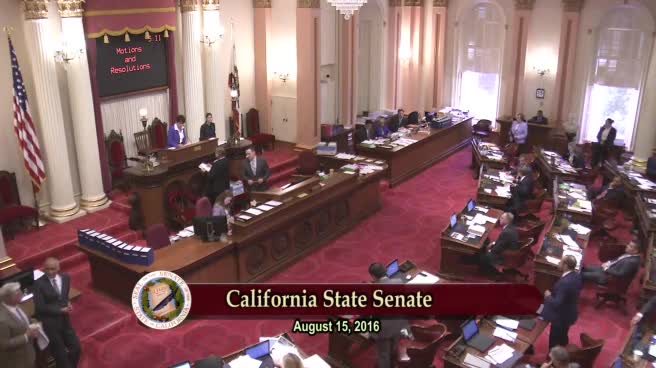
Bill Author

Bill Co-Author(s):