AB 2613: County auditor: audits: special districts.
- Session Year: 2015-2016
- House: Assembly
- Latest Version Date: 2016-08-22
Existing law requires the county auditor to either perform an audit, or contract with a certified public accountant or public accountant to perform an audit, of the accounts and records of every special district within the county, as specified. Existing law authorizes a special district, by unanimous request of its governing board and unanimous approval by the board of supervisors, to replace the annual audit with an audit over a longer period of time or with a financial review, as specified.
This bill would additionally authorize a special district, until January 1, 2027, by unanimous request of its governing board and with unanimous approval of the board of supervisors, to replace the annual audit for not more than 5 consecutive years with an annual financial compilation of the special district to be performed by the county auditor, or with an agreed-upon procedures engagement, in accordance with professional standards, if certain conditions are met.
Existing law requires the county auditor to either perform an audit, or contract with a certified public accountant or public accountant to perform an audit, or perform an audit, of the accounts and records of every special district within the county, as specified. Existing law authorizes a special district, by unanimous request of its governing board and unanimous approval by the board of supervisors, to replace the annual audit with an audit over a longer period of time or with a financial review, as specified.
This bill would additionally authorize a special district, until January 1, 2027, and for a period of not more than 5 consecutive years, by unanimous request of its governing board and with unanimous approval of the board of supervisors, to replace the annual audit with an annual financial compilation of the special district to be performed by the county auditor, or an agreed-upon procedures engagement, in accordance with professional standards, if certain conditions are met.
Existing law requires the county auditor to either contract with a certified public accountant or public accountant to perform an audit, or perform an audit, of the accounts and records of every special district within the county, as specified. Existing law authorizes a special district, by unanimous request of its governing board and unanimous approval by the board of supervisors, to replace the annual audit with an audit over a longer period of time or with a financial review, as specified.
This bill would additionally authorize a special district, until January 1, 2027, and for a period of not more than 5 consecutive years, by annual unanimous request of its governing board and with annual unanimous approval of the board of supervisors, to replace the annual audit with an annual financial compilation and an annual review of the internal control procedures of the special district to be performed by the county auditor auditor, or an agreed-upon procedures engagement, in accordance with professional standards, if certain conditions are met.
Existing law requires the county auditor to either contract with a certified public accountant or public accountant to perform an audit, or perform an audit, of the accounts and records of every special district within the county, as specified circumstances. specified. Existing law authorizes a special district, by unanimous request of its governing board and unanimous approval by the board of supervisors, to replace the annual audit with an audit over a longer period of time or with a financial review, as specified.
This bill would additionally authorize a special district to, district, until January 1, 2027, and for a period of not more than 5 consecutive years, by annual unanimous request of its governing board and with annual unanimous approval of the board of supervisors, to replace the annual audit with an annual financial compilation and an annual review of the internal control procedures of the special district to be performed by the county auditor in accordance with professional standards, if certain conditions are met.
Existing law requires the county auditor to either contract with a certified public accountant or public accountant to perform an audit, or perform an audit, of the accounts and records of every special district within the county, as specified circumstances. Existing law authorizes a special district, by unanimous request of its governing board and unanimous approval by the board of supervisors, to replace the annual audit with an audit over a longer period of time or with a financial review, as specified.
This bill would additionally authorize a special district to, by unanimous request of its governing board and with unanimous approval of the board of supervisors, replace the annual audit with an annual financial compilation and an annual review of the internal control procedures of the special district to be performed by the county auditor in accordance with professional standards if certain conditions are met.
(a)(1)The county auditor shall either make or contract with a certified public accountant or public accountant to make an annual audit of the accounts and records of every special district within the county for which an audit by a certified public accountant or public accountant is not otherwise provided. In each case, the minimum requirements of the audit shall be prescribed by the Controller and shall conform to generally accepted auditing standards.
(2)If an audit of a special districts accounts and records is made by a certified public accountant or public accountant, the minimum requirements of the audit shall be prescribed by the Controller and shall conform to generally accepted auditing standards, and a report thereof shall be filed with the Controller and with the county auditor of the county in which the special district is located. The report shall be filed within 12 months of the end of the fiscal year or years under examination.
(3)Any costs incurred by the county auditor, including contracts with, or employment of, certified public accountants or public accountants, in making an audit of every special district pursuant to this section shall be borne by the special district and shall be a charge against any unencumbered funds of the district available for the purpose.
(4)For a special district that is located in two or more counties, this subdivision shall apply to the auditor of the county in which the treasury is located.
(5)The county controller, or ex officio county controller, shall effect this section in those counties having a county controller or ex officio county controller.
(b)A special district may, by unanimous request of the governing board of the special district and with unanimous approval of the board of supervisors, replace the annual audit required by this section with one of the following, performed in accordance with professional standards, as determined by the county auditor:
(1)A biennial audit covering a two-year period.
(2)An audit covering a five-year period if the special districts annual revenues do not exceed an amount specified by the board of supervisors.
(3)An audit conducted at specific intervals, as recommended by the county auditor, that shall be completed at least once every five years.
(c)(1)A special district may, by unanimous request of the governing board of the special district and with unanimous approval of the board of supervisors, replace the annual audit required by this section with a financial review, or an agreed-upon procedures engagement, in accordance with the appropriate professional standards, as determined by the county auditor, if the following conditions are met:
(A)All of the special districts revenues and expenditures are transacted through the countys financial system.
(B)The special districts annual revenues do not exceed one hundred fifty thousand dollars ($150,000).
(C)The special district shall pay for any costs incurred by the county auditor in performing an agreed-upon procedures engagement. Those costs shall be charged against any unencumbered funds of the district available for that purpose.
(2)If the board of supervisors is the governing board of the special district, it may, upon unanimous approval, replace the annual audit of the special district required by this section with a financial review, or an agreed-upon procedures engagement, in accordance with the appropriate professional standards, as determined by the county auditor, if the special district satisfies the requirements of subparagraphs (A) and (B) of paragraph (1).
(d)(1)A special district may, by annual unanimous request of the governing board of the special district and with annual unanimous approval of the board of supervisors, replace the annual audit required by this section with an annual financial compilation of the special district to be performed by the county auditor in accordance with professional standards, if all of the following conditions are met:
(A)All of the special districts revenues and expenditures are transacted through the countys financial system.
(B)The special districts annual revenues do not exceed one hundred fifty thousand dollars ($150,000).
(C)The special district shall pay for any costs incurred by the county auditor in performing a financial compilation. Those costs shall be a charge against any unencumbered funds of the district available for that purpose.
(2)A special district shall not replace an annual audit required by this section with an annual financial compilation of the special district pursuant to paragraph (1) for more than five consecutive years, after which a special district shall comply with subdivision (a).
(e)Notwithstanding this section, a special district shall be exempt from the requirement of an annual audit if the financial statements are audited by the Controller to satisfy federal audit requirements.
(f)Upon receipt of the financial review, agreed-upon procedures engagement, or financial compilation, the county auditor shall have the right to appoint, pursuant to subdivision (a), a certified public accountant or a public accountant to conduct an audit of the special district, with proper notice to the governing board of the special district and board of supervisors.
(g)This section shall remain in effect only until January 1, 2027, and as of that date is repealed.
SEC. 2.Section 26909 is added to the Government Code, to read:26909.(a)(1)The county auditor shall either make or contract with a certified public accountant or public accountant to make an annual audit of the accounts and records of every special district within the county for which an audit by a certified public accountant or public accountant is not otherwise provided. In each case, the minimum requirements of the audit shall be prescribed by the Controller and shall conform to generally accepted auditing standards.
(2)If an audit of a special districts accounts and records is made by a certified public accountant or public accountant, the minimum requirements of the audit shall be prescribed by the Controller and shall conform to generally accepted auditing standards, and a report thereof shall be filed with the Controller and with the county auditor of the county in which the special district is located. The report shall be filed within 12 months of the end of the fiscal year or years under examination.
(3)Any costs incurred by the county auditor, including contracts with, or employment of, certified public accountants or public accountants, in making an audit of every special district pursuant to this section shall be borne by the special district and shall be a charge against any unencumbered funds of the district available for the purpose.
(4)For a special district that is located in two or more counties, this subdivision shall apply to the auditor of the county in which the treasury is located.
(5)The county controller, or ex officio county controller, shall effect this section in those counties having a county controller or ex officio county controller.
(b)A special district may, by unanimous request of the governing board of the special district and with unanimous approval of the board of supervisors, replace the annual audit required by this section with one of the following, performed in accordance with professional standards, as determined by the county auditor:
(1)A biennial audit covering a two-year period.
(2)An audit covering a five-year period if the special districts annual revenues do not exceed an amount specified by the board of supervisors.
(3)An audit conducted at specific intervals, as recommended by the county auditor, that shall be completed at least once every five years.
(c)(1) A special district may, by unanimous request of the governing board of the special district and with unanimous approval of the board of supervisors, replace the annual audit required by this section with a financial review, in accordance with the appropriate professional standards, as determined by the county auditor, if the following conditions are met:
(A)All of the special districts revenues and expenditures are transacted through the countys financial system.
(B)The special districts annual revenues do not exceed one hundred fifty thousand dollars ($150,000).
(2)If the board of supervisors is the governing board of the special district, it may, upon unanimous approval, replace the annual audit of the special district required by this section with a financial review in accordance with the appropriate professional standards, as determined by the county auditor, if the special district satisfies the requirements of subparagraphs (A) and (B) of paragraph (1).
(d)Notwithstanding this section, a special district shall be exempt from the requirement of an annual audit if the financial statements are audited by the Controller to satisfy federal audit requirements.
(e)The section shall become operative on January 1, 2027.
(a)(1)The county auditor shall either make or contract with a certified public accountant or public accountant to make an annual audit of the accounts and records of every special district within the county for which an audit by a certified public accountant or public accountant is not otherwise provided. In each case, the minimum requirements of the audit shall be prescribed by the Controller and shall conform to generally accepted auditing standards.
(2)If an audit of a special districts accounts and records is made by a certified public accountant or public accountant, the minimum requirements of the audit shall be prescribed by the Controller and shall conform to generally accepted auditing standards, and a report thereof shall be filed with the Controller and with the county auditor of the county in which the special district is located. The report shall be filed within 12 months of the end of the fiscal year or years under examination.
(3)Any costs incurred by the county auditor, including contracts with, or employment of, certified public accountants or public accountants, in making an audit of every special district pursuant to this section shall be borne by the special district and shall be a charge against any unencumbered funds of the district available for the purpose.
(4)For a special district that is located in two or more counties, this subdivision shall apply to the auditor of the county in which the treasury is located.
(5)The county controller, or ex officio county controller, shall effect this section in those counties having a county controller or ex officio county controller.
(b)A special district may, by unanimous request of the governing board of the special district and with unanimous approval of the board of supervisors, replace the annual audit required by this section with one of the following, performed in accordance with professional standards, as determined by the county auditor:
(1)A biennial audit covering a two-year period.
(2)An audit covering a five-year period if the special districts annual revenues do not exceed an amount specified by the board of supervisors.
(3)An audit conducted at specific intervals, as recommended by the county auditor, that shall be completed at least once every five years.
(c)(1)A special district may, by unanimous request of the governing board of the special district and with unanimous approval of the board of supervisors, replace the annual audit required by this section with a financial review, or an agreed-upon procedures engagement, in accordance with the appropriate professional standards, as determined by the county auditor, if the following conditions are met:
(A)All of the special districts revenues and expenditures are transacted through the countys financial system.
(B)The special districts annual revenues do not exceed one hundred fifty thousand dollars ($150,000).
(C)The special district shall pay for any costs incurred by the county auditor in performing an agreed-upon procedures engagement. Those costs shall be charged against any unencumbered funds of the district available for that purpose.
(2)If the board of supervisors is the governing board of the special district, it may, upon unanimous approval, replace the annual audit of the special district required by this section with a financial review, or an agreed-upon procedures engagement, in accordance with the appropriate professional standards, as determined by the county auditor, if the special district satisfies the requirements of subparagraphs (A) and (B) of paragraph (1).
(d)(1)A special district may, by annual unanimous request of the governing board of the special district and with annual unanimous approval of the board of supervisors, replace the annual audit required by this section with an annual financial compilation of the special district to be performed by the county auditor in accordance with professional standards, if all of the following conditions are met:
(A)All of the special districts revenues and expenditures are transacted through the countys financial system.
(B)The special districts annual revenues do not exceed one hundred fifty thousand dollars ($150,000).
(C)The special district shall pay for any costs incurred by the county auditor in performing a financial compilation and evaluation of the internal control procedures. compilation. Those costs shall be a charge against any unencumbered funds of the district available for that purpose.
(2)A special district shall not replace an annual audit required by this section with an annual financial compilation of the special district pursuant to paragraph (1) for more than five consecutive years, after which a special district shall comply with subdivision (a).
(e)Notwithstanding this section, a special district shall be exempt from the requirement of an annual audit if the financial statements are audited by the Controller to satisfy federal audit requirements.
(f)Upon receipt of the financial review, agreed-upon procedures engagement, or financial compilation, the county auditor shall have the right to appoint, pursuant to subdivision (a), a certified public accountant or a public accountant to conduct an audit of the special district, with proper notice to the governing board of the special district and board of supervisors.
(f)
(g)This section shall remain in effect only until January 1, 2027, and as of that date is repealed.
SEC. 2.Section 26909 is added to the Government Code, to read:26909.(a)(1)The county auditor shall either make or contract with a certified public accountant or public accountant to make an annual audit of the accounts and records of every special district within the county for which an audit by a certified public accountant or public accountant is not otherwise provided. In each case, the minimum requirements of the audit shall be prescribed by the Controller and shall conform to generally accepted auditing standards.
(2)If an audit of a special districts accounts and records is made by a certified public accountant or public accountant, the minimum requirements of the audit shall be prescribed by the Controller and shall conform to generally accepted auditing standards, and a report thereof shall be filed with the Controller and with the county auditor of the county in which the special district is located. The report shall be filed within 12 months of the end of the fiscal year or years under examination.
(3)Any costs incurred by the county auditor, including contracts with, or employment of, certified public accountants or public accountants, in making an audit of every special district pursuant to this section shall be borne by the special district and shall be a charge against any unencumbered funds of the district available for the purpose.
(4)For a special district that is located in two or more counties, this subdivision shall apply to the auditor of the county in which the treasury is located.
(5)The county controller, or ex officio county controller, shall effect this section in those counties having a county controller or ex officio county controller.
(b)A special district may, by unanimous request of the governing board of the special district and with unanimous approval of the board of supervisors, replace the annual audit required by this section with one of the following, performed in accordance with professional standards, as determined by the county auditor:
(1)A biennial audit covering a two-year period.
(2)An audit covering a five-year period if the special districts annual revenues do not exceed an amount specified by the board of supervisors.
(3)An audit conducted at specific intervals, as recommended by the county auditor, that shall be completed at least once every five years.
(c)(1) A special district may, by unanimous request of the governing board of the special district and with unanimous approval of the board of supervisors, replace the annual audit required by this section with a financial review, in accordance with the appropriate professional standards, as determined by the county auditor, if the following conditions are met:
(A)All of the special districts revenues and expenditures are transacted through the countys financial system.
(B)The special districts annual revenues do not exceed one hundred fifty thousand dollars ($150,000).
(2)If the board of supervisors is the governing board of the special district, it may, upon unanimous approval, replace the annual audit of the special district required by this section with a financial review in accordance with the appropriate professional standards, as determined by the county auditor, if the special district satisfies the requirements of subparagraphs (A) and (B) of paragraph (1).
(d)Notwithstanding this section, a special district shall be exempt from the requirement of an annual audit if the financial statements are audited by the Controller to satisfy federal audit requirements.
(e)The section shall become operative on January 1, 2027.
(a)(1)The county auditor shall either make or contract with a certified public accountant or public accountant to make an annual audit of the accounts and records of every special district within the county for which an audit by a certified public accountant or public accountant is not otherwise provided. In each case, the minimum requirements of the audit shall be prescribed by the Controller and shall conform to generally accepted auditing standards.
(2)If an audit of a special districts accounts and records is made by a certified public accountant or public accountant, the minimum requirements of the audit shall be prescribed by the Controller and shall conform to generally accepted auditing standards, and a report thereof shall be filed with the Controller and with the county auditor of the county in which the special district is located. The report shall be filed within 12 months of the end of the fiscal year or years under examination.
(3)Any costs incurred by the county auditor, including contracts with, or employment of, certified public accountants or public accountants, in making an audit of every special district pursuant to this section shall be borne by the special district and shall be a charge against any unencumbered funds of the district available for the purpose.
(4)For a special district that is located in two or more counties, this subdivision shall apply to the auditor of the county in which the treasury is located.
(5)The county controller, or ex officio county controller, shall effect this section in those counties having a county controller or ex officio county controller.
(b)A special district may, by unanimous request of the governing board of the special district and with unanimous approval of the board of supervisors, replace the annual audit required by this section with one of the following, performed in accordance with professional standards, as determined by the county auditor:
(1)A biennial audit covering a two-year period.
(2)An audit covering a five-year period if the special districts annual revenues do not exceed an amount specified by the board of supervisors.
(3)An audit conducted at specific intervals, as recommended by the county auditor, that shall be completed at least once every five years.
(c)(1)A special district may, by unanimous request of the governing board of the special district and with unanimous approval of the board of supervisors, replace the annual audit required by this section with a financial review, or an agreed-upon procedures engagement, in accordance with the appropriate professional standards, as determined by the county auditor, if the following conditions are met:
(A)All of the special districts revenues and expenditures are transacted through the countys financial system.
(B)The special districts annual revenues do not exceed one hundred fifty thousand dollars ($150,000).
(2)If the board of supervisors is the governing board of the special district, it may, upon unanimous approval, replace the annual audit of the special district required by this section with a financial review review, or an agreed-upon procedures engagement, in accordance with the appropriate professional standards, as determined by the county auditor, if the special district satisfies the requirements of subparagraphs (A) and (B) of paragraph (1).
(d)(1)A special district may, by annual unanimous request of the governing board of the special district and with annual unanimous approval of the board of supervisors, replace the annual audit required by this section with an annual financial compilation and an annual review of the internal control procedures of the special district to be performed by the county auditor in accordance with professional standards, if all of the following conditions are met:
(A)All of the special districts revenues and expenditures are transacted through the countys financial system.
(B)The special districts annual revenues do not exceed one hundred fifty thousand dollars ($150,000).
(C)The special district shall pay for any costs incurred by the county auditor in performing a financial compilation and evaluation of the internal control procedures. Those costs shall be a charge against any unencumbered funds of the district available for that purpose.
(2)A special district shall not replace an annual audit required by this section with an annual financial compilation and an annual review of the internal control procedures of the special district pursuant to paragraph (1) for more than five consecutive years, after which a special district shall comply with subdivision (a).
(e)Notwithstanding this section, a special district shall be exempt from the requirement of an annual audit if the financial statements are audited by the Controller to satisfy federal audit requirements.
(f)This section shall remain in effect only until January 1, 2027, and as of that date is repealed.
SEC. 2.Section 26909 is added to the Government Code, to read:26909.(a)(1)The county auditor shall either make or contract with a certified public accountant or public accountant to make an annual audit of the accounts and records of every special district within the county for which an audit by a certified public accountant or public accountant is not otherwise provided. In each case, the minimum requirements of the audit shall be prescribed by the Controller and shall conform to generally accepted auditing standards.
(2)If an audit of a special districts accounts and records is made by a certified public accountant or public accountant, the minimum requirements of the audit shall be prescribed by the Controller and shall conform to generally accepted auditing standards, and a report thereof shall be filed with the Controller and with the county auditor of the county in which the special district is located. The report shall be filed within 12 months of the end of the fiscal year or years under examination.
(3)Any costs incurred by the county auditor, including contracts with, or employment of, certified public accountants or public accountants, in making an audit of every special district pursuant to this section shall be borne by the special district and shall be a charge against any unencumbered funds of the district available for the purpose.
(4)For a special district that is located in two or more counties, this subdivision shall apply to the auditor of the county in which the treasury is located.
(5)The county controller, or ex officio county controller, shall effect this section in those counties having a county controller or ex officio county controller.
(b)A special district may, by unanimous request of the governing board of the special district and with unanimous approval of the board of supervisors, replace the annual audit required by this section with one of the following, performed in accordance with professional standards, as determined by the county auditor:
(1)A biennial audit covering a two-year period.
(2)An audit covering a five-year period if the special districts annual revenues do not exceed an amount specified by the board of supervisors.
(3)An audit conducted at specific intervals, as recommended by the county auditor, that shall be completed at least once every five years.
(c)(1) A special district may, by unanimous request of the governing board of the special district and with unanimous approval of the board of supervisors, replace the annual audit required by this section with a financial review, in accordance with the appropriate professional standards, as determined by the county auditor, if the following conditions are met:
(A)All of the special districts revenues and expenditures are transacted through the countys financial system.
(B)The special districts annual revenues do not exceed one hundred fifty thousand dollars ($150,000).
(2)If the board of supervisors is the governing board of the special district, it may, upon unanimous approval, replace the annual audit of the special district required by this section with a financial review in accordance with the appropriate professional standards, as determined by the county auditor, if the special district satisfies the requirements of subparagraphs (A) and (B) of paragraph (1).
(d)Notwithstanding this section, a special district shall be exempt from the requirement of an annual audit if the financial statements are audited by the Controller to satisfy federal audit requirements.
(e)The section shall become operative on January 1, 2027.
(a)(1)The county auditor shall either make or contract with a certified public accountant or public accountant to make an annual audit of the accounts and records of every special district within the county for which an audit by a certified public accountant or public accountant is not otherwise provided. In each case, the minimum requirements of the audit shall be prescribed by the Controller and shall conform to generally accepted auditing standards.
(2)Where If an audit of a special districts accounts and records is made by a certified public accountant or public accountant, the minimum requirements of the audit shall be prescribed by the Controller and shall conform to generally accepted auditing standards, and a report thereof shall be filed with the Controller and with the county auditor of the county in which the special district is located. The report shall be filed within 12 months of the end of the fiscal year or years under examination.
(3)Any costs incurred by the county auditor, including contracts with, or employment of, certified public accountants or public accountants, in making an audit of every special district pursuant to this section shall be borne by the special district and shall be a charge against any unencumbered funds of the district available for the purpose.
(4)For a special district that is located in two or more counties, the provisions of this subdivision shall apply to the auditor of the county in which the treasury is located.
(5)The county controller, or ex officio county controller, shall effect this section in those counties having a county controller, controller or ex officio county controller.
(b)A special district may, by unanimous request of the governing board of the special district, district and with unanimous approval of the board of supervisors, replace the annual audit required by this section with one of the following, performed in accordance with professional standards, as determined by the county auditor:
(1)A biennial audit covering a two-year period.
(2)An audit covering a five-year period, period if the special districts annual revenues do not exceed an amount specified by the board of supervisors.
(3)An audit conducted at specific intervals, as recommended by the county auditor, that shall be completed at least once every five years.
(c)(1)A special district may, by unanimous request of the governing board of the special district, district and with unanimous approval of the board of supervisors, replace the annual audit required by this section with a financial review, in accordance with the appropriate professional standards, as determined by the county auditor, if the following conditions are met:
(A)All of the special districts revenues and expenditures are transacted through the countys financial system.
(B)The special districts annual revenues do not exceed one hundred fifty thousand dollars ($150,000).
(2)If the board of supervisors is the governing board of the special district, it may, upon unanimous approval, replace the annual audit of the special district required by this section with a financial review in accordance with the appropriate professional standards, as determined by the county auditor, if the special district satisfies the requirements of subparagraphs (A) and (B) of paragraph (1).
(d)(1)A special district may, by annual unanimous request of the governing board of the special district and with annual unanimous approval of the board of supervisors, replace the annual audit required by this section with an annual financial compilation and an annual review of the internal control procedures of the special district to be performed by the county auditor in accordance with professional standards standards, if all of the following conditions are met:
(1)
(A)All of the special districts revenues and expenditures are transacted through the countys financial system.
(2)
(B)The special districts annual revenues do not exceed one hundred fifty thousand dollars ($150,000).
(3)
(C)The special district shall pay for any costs incurred by the county auditor in performing a financial compilation and evaluation of the internal control procedures. Those costs shall be a charge against any unencumbered funds of the district available for that purpose.
(2)A special district shall not replace an annual audit required by this section with an annual financial compilation and an annual review of the internal control procedures of the special district pursuant to paragraph (1) for more than five consecutive years, after which a special district shall comply with subdivision (a).
(e)Notwithstanding the provisions of this section, a special district shall be exempt from the requirement of an annual audit if the financial statements are audited by the Controller to satisfy federal audit requirements.
(f)This section shall remain in effect only until January 1, 2027, and as of that date is repealed.
SEC. 2.Section 26909 is added to the Government Code, to read:26909.(a)(1)The county auditor shall either make or contract with a certified public accountant or public accountant to make an annual audit of the accounts and records of every special district within the county for which an audit by a certified public accountant or public accountant is not otherwise provided. In each case, the minimum requirements of the audit shall be prescribed by the Controller and shall conform to generally accepted auditing standards.
(2)If an audit of a special districts accounts and records is made by a certified public accountant or public accountant, the minimum requirements of the audit shall be prescribed by the Controller and shall conform to generally accepted auditing standards, and a report thereof shall be filed with the Controller and with the county auditor of the county in which the special district is located. The report shall be filed within 12 months of the end of the fiscal year or years under examination.
(3)Any costs incurred by the county auditor, including contracts with, or employment of, certified public accountants or public accountants, in making an audit of every special district pursuant to this section shall be borne by the special district and shall be a charge against any unencumbered funds of the district available for the purpose.
(4)For a special district that is located in two or more counties, this subdivision shall apply to the auditor of the county in which the treasury is located.
(5)The county controller, or ex officio county controller, shall effect this section in those counties having a county controller or ex officio county controller.
(b)A special district may, by unanimous request of the governing board of the special district and with unanimous approval of the board of supervisors, replace the annual audit required by this section with one of the following, performed in accordance with professional standards, as determined by the county auditor:
(1)A biennial audit covering a two-year period.
(2)An audit covering a five-year period if the special districts annual revenues do not exceed an amount specified by the board of supervisors.
(3)An audit conducted at specific intervals, as recommended by the county auditor, that shall be completed at least once every five years.
(c)(1) A special district may, by unanimous request of the governing board of the special district with unanimous approval of the board of supervisors, replace the annual audit required by this section with a financial review, in accordance with the appropriate professional standards, as determined by the county auditor, if the following conditions are met:
(A)All of the special districts revenues and expenditures are transacted through the countys financial system.
(B)The special districts annual revenues do not exceed one hundred fifty thousand dollars ($150,000).
(2)If the board of supervisors is the governing board of the special district, it may, upon unanimous approval, replace the annual audit of the special district required by this section with a financial review in accordance with the appropriate professional standards, as determined by the county auditor, if the special district satisfies the requirements of subparagraphs (A) and (B) of paragraph (1).
(d)Notwithstanding this section, a special district shall be exempt from the requirement of an annual audit if the financial statements are audited by the Controller to satisfy federal audit requirements.
(e)The section shall become operative on January 1, 2027.
(a)(1)The county auditor shall either make or contract with a certified public accountant or public accountant to make an annual audit of the accounts and records of every special district within the county for which an audit by a certified public accountant or public accountant is not otherwise provided. In each case, the minimum requirements of the audit shall be prescribed by the Controller and shall conform to generally accepted auditing standards.
(2)Where an audit of a special districts accounts and records is made by a certified public accountant or public accountant, the minimum requirements of the audit shall be prescribed by the Controller and shall conform to generally accepted auditing standards, and a report thereof shall be filed with the Controller and with the county auditor of the county in which the special district is located. The report shall be filed within 12 months of the end of the fiscal year or years under examination.
(3)Any costs incurred by the county auditor, including contracts with, or employment of, certified public accountants or public accountants, in making an audit of every special district pursuant to this section shall be borne by the special district and shall be a charge against any unencumbered funds of the district available for the purpose.
(4)For a special district that is located in two or more counties, the provisions of this subdivision shall apply to the auditor of the county in which the treasury is located.
(5)The county controller, or ex officio county controller, shall effect this section in those counties having a county controller, or ex officio county controller.
(b)A special district may, by unanimous request of the governing board of the special district, with unanimous approval of the board of supervisors, replace the annual audit required by this section with one of the following, performed in accordance with professional standards, as determined by the county auditor:
(1)A biennial audit covering a two-year period.
(2)An audit covering a five-year period, if the special districts annual revenues do not exceed an amount specified by the board of supervisors.
(3)An audit conducted at specific intervals, as recommended by the county auditor, that shall be completed at least once every five years.
(c)(1)A special district may, by unanimous request of the governing board of the special district, with unanimous approval of the board of supervisors, replace the annual audit required by this section with a financial review, in accordance with the appropriate professional standards, as determined by the county auditor, if the following conditions are met:
(A)All of the special districts revenues and expenditures are transacted through the countys financial system.
(B)The special districts annual revenues do not exceed one hundred fifty thousand dollars ($150,000).
(2)If the board of supervisors is the governing board of the special district, it may, upon unanimous approval, replace the annual audit of the special district required by this section with a financial review in accordance with the appropriate professional standards, as determined by the county auditor, if the special district satisfies the requirements of subparagraphs (A) and (B) of paragraph (1).
(d)A special district may, by unanimous request of the governing board of the special district and with unanimous approval of the board of supervisors, replace the annual audit required by this section with an annual financial compilation and an annual review of the internal control procedures of the special district to be performed by the county auditor in accordance with professional standards if all of the following conditions are met:
(1)All of the special districts revenues and expenditures are transacted through the countys financial system.
(2)The special districts annual revenues do not exceed one hundred fifty thousand dollars ($150,000).
(3)The special district shall pay for any costs incurred by the county auditor in performing a financial compilation and evaluation of the internal control procedures. Those costs shall be a charge against any unencumbered funds of the district available for that purpose.
(d)
(e)Notwithstanding the provisions of this section, a special district shall be exempt from the requirement of an annual audit if the financial statements are audited by the Controller to satisfy federal audit requirements.
|
Date
|
Status
|
|---|---|
| Jun 8, 2016 | From committee chair, with author's amendments: Amend, and re-refer to committee. Read second time, amended, and re-referred to Com. on GOV. & F. |
| Aug 22, 2016 | Chaptered by Secretary of State - Chapter 164, Statutes of 2016. |
| Aug 22, 2016 | Approved by the Governor. |
| Aug 10, 2016 | Enrolled and presented to the Governor at 3 p.m. |
| Aug 4, 2016 | Senate amendments concurred in. To Engrossing and Enrolling. (Ayes 77. Noes 0. Page 5702.). |
| Aug 4, 2016 | Senate amendments concurred in. To Engrossing and Enrolling. |
| Aug 2, 2016 | In Assembly. Concurrence in Senate amendments pending. May be considered on or after August 4 pursuant to Assembly Rule 77. |
| Aug 1, 2016 | Read third time. Passed. Ordered to the Assembly. (Ayes 39. Noes 0. Page 4729.). |
| Aug 1, 2016 | Read third time. Passed. Ordered to the Assembly. |
| Jun 21, 2016 | Read second time and amended. Ordered to third reading. |
| Jun 20, 2016 | From committee: Amend, and do pass as amended. (Ayes 7. Noes 0.) (June 15). |
| Feb 19, 2016 | Introduced. To print. |
| May 12, 2016 | Referred to Com. on GOV. & F. |
| May 5, 2016 | Read third time. Passed. Ordered to the Senate. (Ayes 78. Noes 0. Page 4680.) |
| May 5, 2016 | Read third time. Passed. Ordered to the Senate. |
| May 5, 2016 | In Senate. Read first time. To Com. on RLS. for assignment. |
| May 3, 2016 | Read second time. Ordered to third reading. |
| May 2, 2016 | Read second time and amended. Ordered returned to second reading. |
| Apr 28, 2016 | From committee: Amend, and do pass as amended. (Ayes 9. Noes 0.) (April 27). |
| Mar 10, 2016 | Referred to Com. on L. GOV. |
| Feb 22, 2016 | Read first time. |
| Feb 21, 2016 | From printer. May be heard in committee March 22. |
|
Date
|
Description
|
Location
|
Votes
|
|
|---|---|---|---|---|
| Aug 4, 2016 | AB 2613 ACHADJIAN Concurrence in Senate Amendments | Assembly Floor |
Passed |
|
| Aug 1, 2016 | Assembly 3rd Reading AB2613 Achadjian By Monning | Senate Floor |
Passed |
|
| Jun 15, 2016 | Do pass as amended | Senate Standing Committee on Governance and Finance |
Passed |
|
| May 5, 2016 | AB 2613 ACHADJIAN Assembly Third Reading | Assembly Floor |
Passed |
|
| Apr 27, 2016 | Do pass as amended. | Assembly Standing Committee on Local Government |
Passed |
This list shows positions taken on this bill by organizations on the date displayed, which is linked to the original source.
Positions by individuals are not included.
|
Organization
|
Position
|
Date
|
|---|---|---|
| Alpine Village-Sequoia Crest Community Services District | ** Support | Aug 1, 2016 |
| Association of California Healthcare Districts | ** Support | Aug 1, 2016 |
| Association Of California Water Agencies | ** Support | Aug 1, 2016 |
| California Fire Chiefs Association | ** Support | Aug 1, 2016 |
| California Special Districts Association | ** Support | Aug 1, 2016 |
| Carmel Valley Recreation and Park District | ** Support | Aug 1, 2016 |
| Fire Districts Association Of California | ** Support | Aug 1, 2016 |
| McKinleyville Community Services District | ** Support | Aug 1, 2016 |
| Pasadena Glen Community Services District | ** Support | Aug 1, 2016 |
| Pilocene Ridge Community Services District | ** Support | May 5, 2016 |
| Pliocene Ridge Community Services District | ** Support | Aug 1, 2016 |
| Plumas Eureak Community Services District | ** Support | Aug 1, 2016 |
| Plumas Eureka Community Services District | ** Support | May 5, 2016 |
| Resource Conservation District of the Santa Monica Mountains | ** Support | Aug 1, 2016 |
| Sausalito-Marin City Sanitary District | ** Support | Aug 1, 2016 |
| Spreckels Community Services District | ** Support | Aug 1, 2016 |
| Spreckels Community Services District Spreckels Memorial District | ** Support | May 5, 2016 |
| Spreckels Memorial District | ** Support | Aug 1, 2016 |
CONCURRENCE IN SENATE AMENDMENTS
CSA1 Bill Id:AB 2613
Author:(Achadjian)
As Amended Ver:June 21, 2016
Majority vote
ASSEMBLY: | 78-0 | (May 5, 2016) | SENATE: | 39-0 | (August 1, 2016) |
Original Committee Reference: L. GOV.
SUMMARY: Authorizes a special district, subject to specified conditions, to replace a required annual audit with an annual financial compilation or an agreed-upon procedures engagement.
The Senate amendments:
- Authorize a special district, by unanimous request of the governing board of the special district, and unanimous approval of the board of supervisors, to replace the required annual audit with an agreed-upon procedures engagement, if specified conditions in existing law for a financial review are met.
- Require the special district to pay for any costs incurred by the county auditor in performing an agreed-upon procedures engagement. Require those costs to be charged against any unencumbered funds of the district available for that purpose.
- Authorize a dependent special district, if the board of supervisors is the governing board of the special district and with unanimous approval, to replace the required annual audit with an agreed-upon procedures engagement, done in accordance with appropriate professional standards, as determined by the county auditor, if the conditions in existing law for a financial review are met.
- Delete the authority for a special district to replace an annual audit with an annual review of the internal control procedures of the special district.
EXISTING LAW:
- Requires a county auditor to either make or contract with a certified public accountant to make an annual audit of the accounts and records of every special purpose district within the county for which an audit by a certified public accountant or public accountant is not otherwise provided. Requires the minimum requirements of the audit to be prescribed by the Controller and to conform to generally accepted auditing standards.
- Requires the report, where an audit of a special districts accounts and records is made by a certified public accountant, to be filed with the Controller and with the county auditor in which the special district is located within 12 months of the end of the year or years under examination.
- Authorizes a special district, by unanimous request of the governing board of the special district, and unanimous approval of the board of supervisors, to replace the required annual audit with one of the following:
- A biennial audit covering a two-year period;
- An audit covering a five-year period, if the district's annual budget does not exceed an amount specified by the board of supervisors;
- An audit conducted at specific intervals, as recommended by the county auditor, completed at least once every five years; or,
- A financial review, if the following conditions are met: i) all of the special district revenues and expenditures are transacted through the county's financial system; and, ii) the special district's annual revenues do not exceed $150,000.
- Authorizes a dependent special district, if the board of supervisors is the governing board of the special district and with unanimous approval, to replace the required annual audit with a financial review done in accordance with appropriate professional standards as determined by the county auditor, if the conditions in 3) d) above, are met.
- States that a special district shall be exempt from the requirements of an annual audit, if the financial statements are audited by the Controller to satisfy federal audit requirements.
- Requires the officer of each local agency, city, county, and district, who has charge of the financial records to furnish to the Controller a report of all the financial transactions of the local agency during the next preceding fiscal year.
- Requires the California State Controller, on or before January 1, 2015, to develop internal control guidelines applicable to each local agency to prevent and detect financial errors and fraud.
AS PASSED BY THE ASSEMBLY, this bill:
- Authorized a special district until January 1, 2027, by annual unanimous request of the governing board of the special district and with annual unanimous approval of the county board of supervisors, to replace a required annual audit with an annual financial compilation and a review of the internal control procedures of the special district performed by the county auditor in accordance with professional standards, if all of the following conditions are met:
- All of the special district revenues and expenditures are transacted through the county's financial system;
- The special district's annual revenues do not exceed $150,000; and,
- The special district pays for any costs incurred by the county auditor in performing the financial compilation and evaluation of the internal control procedures.
- Prohibited a special district from replacing an annual audit with an annual financial compilation and annual review of the internal control procedures pursuant to 1) above, for more than five consecutive years, after which a special district must comply with an annual audit.
- Required the special district to pay for costs incurred by the county auditor as a charge against any unencumbered funds of the special district available for that purpose.
FISCAL EFFECT: None
COMMENTS:
- Background. Pursuant to existing law, special districts are required to submit an annual Financial Transactions Report, a Compensation Report, and an annual audit to the Controller. County auditors are required to annually audit each special district or contract with a certified public accountant or public accountant for this work. Existing law requires that the audit conforms to standards established by the Controller and to generally accepted auditing standards. Special districts must pay for the annual audit. Due to the costs of annual audits, AB 2510 (La Malfa), Chapter 244, Statues of 2008, expanded the options available to special districts to satisfy the annual audit requirement with less formal financial reviews and less frequent audits. Proponents of this bill provided several examples of the percentage of an annual budget that is expended to comply with audit requirements in existing law: Tucker Oakes Water District 16%, Allegheny County Water District 10%, Bayshore Sanitary District 8%, Mokelumne Cemetery District 9%, and Beaumont Library District 8%.
Due to the changes made by AB 2510, special districts that meet specified conditions have several options to replace the required annual audit. Upon the unanimous request of a special district's governing board and the unanimous approval of the county board of supervisors, a required annual audit may be replaced by a biennial audit, a five-year audit (if the district's revenues do not exceed a specified amount by the board of supervisors), or an audit conducted at specific intervals, as recommended by the county auditor. Additionally, if a special district's transactions go through the county's financial system and the district's annual revenues are less than $150,000, a special district may replace the required annual audit with a financial review.
- Bill Summary. This bill provides an additional options for special districts in meeting the annual audit requirement in existing law. This bill authorizes a special district until January 1, 2027, by unanimous request of their governing body and with the unanimous approval of the county board of supervisors, to replace the required annual audit with an annual financial compilation if the district's transactions go through the county's financial system and the district's annual revenues are less than $150,000. This bill authorizes a special district to perform an annual financial compilation for up to five consecutive years at which point they would need to return to an annual audit. Senate amendments also expand the options under existing law for a special district to replace an annual audit with an agreed-upon procedures engagement, in the same manner as established for a financial review. This bill is sponsored by the California Special Districts Association.
- Author's Statement. According to the author, "This bill will give special districts in good standing the opportunity to utilize a less costly alternative to the regular audit or financial review, while continuing to maintain the proper financial oversight and accountability of these government entities."
- Financial Oversight. There are key differences between an audit, financial review, agreed-upon procedure engagement, and financial compilation and the scope, activity, and assurance of financial stability provided by each. An audit is the highest level of financial oversight that can be provided. Its purpose is to provide financial statement users with an opinion by the auditor on whether the financial statements are prepared in accordance with the proper financial reporting framework. The auditor evaluates the internal control system and obtains reasonable assurance about whether the financial statements are free from misstatement and free from error or fraud. Agreed-upon procedures engagement allow an auditor and the client to agree on specific audit procedures or specific aspects of the agency to review, but stops short of performing all the procedures required in a full audit. A financial review provides less assurance than an audit because there is only limited assurance that there are no material modifications that should be made to the financial statements for them to be in conformity with the financial reporting framework. The auditor does not perform any audit procedures in a financial review. A financial compilation provides less assurance than an audit or financial review because the auditor's report will not express an opinion or provide any assurance regarding the financial statements. The objective of a financial compilation is to present the financial information.
- Arguments in Support. The California Special District Association argues, "For some special districts, the cost of the audits has surpassed 33% of their entire operating budget for the year. Special districts are authorized under existing law to utilize a biennial audit, or a financial review if they meet similar thresholds, but even those cost saving alternatives remain too costly for many of the smallest districts. By allowing qualified special districts to submit a financial compilation instead of an audit, district's limited funds can now be directed towards providing intended services."
- Arguments in Opposition. None on file.
Analysis Prepared by: Misa Lennox / L. GOV. / (916) 319-3958 FN: 0003571
Office of Senate Floor Analyses (916) 651-1520 Fax: (916) 327-4478 | AB |
THIRD READING
Bill No: AB 2613
:
SENATE GOVERNANCE & FIN. COMMITTEE: 7-0, 6/15/16
AYES: Hertzberg, Nguyen, Beall, Hernandez, Lara, Moorlach, Pavley
ASSEMBLY FLOOR: 78-0, 5/5/16 - See last page for vote
SOURCE: California Special Districts Association
DIGEST: This bill authorizes certain special districts to replace a required annual audit with a financial compilation or agreed-upon procedures engagement.
Existing law:
- Requires county auditors to annually audit each special district’s accounts and records.
- Requires special districts to pay for the annual audit.
- Authorizes a special district, by unanimous request of the special district’s governing board and with the unanimous approval of the county board of supervisors, to replace the annual audit with:
- A biennial audit;
- A five-year audit if the district’s annual budget doesn’t exceed an amount set by the county supervisors; or
- An audit at a specified interval, as designated by the county auditor, not to exceed five years.
- Authorizes a special district that processes their financial transactions through the county’s financial system and has annual revenues below $150,000 to replace the annual audit with a financial review upon unanimous request of the special district’s governing board and with the unanimous approval of the county board of supervisors.
This bill:
- Authorizes, until January 1, 2027, additional alternatives to the annual audit for special districts that both process their financial transactions through the county’s financial system and have annual revenues below $150,000, as follows:
- Upon unanimous request of the governing board of the special district and with unanimous approval of the board of supervisors, the district may replace the annual audit with an agreed-upon procedures engagement (AUP).
- Upon annual unanimous request of the governing board of the special district and with annual unanimous approval of the board of supervisors, the district may replace the annual audit with an annual financial compilation performed by the county auditor.
- Prohibits a special district from replacing the audit with a financial compilation for more than five consecutive years, at which time the district must undergo an annual audit.
- Requires the special district to pay for any costs incurred by the county auditor in performing a financial compilation or an AUP.
- Authorizes a county auditor, upon receipt of the financial review, AUP, or financial compilation, to appoint an accountant to conduct an audit of the special district, with proper notice to the governing board of the special district and board of supervisors.
Background
Auditors perform a variety of financial oversight services that differ in the scope, activity, and assurance of financial stability provided, including:
- Audit. An audit is the highest level of financial oversight that can be provided. Its purpose is to provide financial statement users with an opinion by the auditor on whether the financial statements are prepared in accordance with the proper financial reporting framework. The auditor evaluates the internal control system, tests accounting records by examining source documents, and performs other procedures to obtain reasonable assurance about whether the financial statements are free from misstatement, error, or fraud.
- Financial Review. When performing a financial review, an auditor issues a formal report that includes a conclusion as to whether he or she is aware of any material modifications that should be made to the financial statements in order for them to meet the accounting principles and practices generally used in an industry. The auditor does not perform any audit procedures, such as assessing fraud risk. Thus, a financial review provides less assurance than an audit.
- Agreed-upon Procedures Engagement (AUP). Auditors may also enter into an AUP, where the auditor and the client agree upon specific audit procedures to perform or specific aspects of the agency to review, but stops short of performing all of the procedures required in a full audit. An AUP provides more assurance than a financial review because it can include additional analyses and tests, but less assurance than a full audit.
- Financial Compilation. The objective of a financial compilation is to present the financial information in a standardized format. A financial compilation provides no assurance regarding the financial statements because the auditor is not required to verify the accuracy or completeness of the information provided, or express an audit opinion or a review conclusion. Furthermore, unlike other financial oversight services, an auditor is not required to be independent, although any lack of independence must be disclosed.
State law generally requires special districts to be audited annually. But annual audits can be costly. To reduce the burden on smaller special districts, the Legislature has authorized several alternatives to the annual audit, including less frequent audits or a financial review instead of an audit.
Some special districts continue to find the audit requirements in law to be burdensome and have been unable to utilize the financial review options available to them. They want the Legislature to provide additional alternatives to the annual audit requirements.
Comments
- Purpose of the bill. Rigorous fiscal oversight reassures taxpayers that public officials spend their money wisely. But tough auditing standards are expensive. Formal annual audits can cost more than 30% of small special districts’ revenues. When districts spend scarce revenues on annual audits, they divert funds from the services that their constituents want. AB 2613 provides small special districts with additional options to replace the annual audit, including an AUP that provides more assurance than the financial review under current law. AB 2613 will reduce costs and make additional funds available to provide services while maintaining necessary transparency and accountability.
- Accountability and Efficiency. Special districts vary widely in size and annual budgets. Smaller special districts may be more accountable than larger districts because residents of the district may have greater access to the board of directors or may be able to more easily attend district meetings. On the other hand, small districts can be less well known or visible to residents, may lack a public Web site, and may have difficulties holding competitive elections for board seats. Smaller districts may also be less efficient because they lack the ability to take advantage of economies of scale. AB 2613 provides additional options for the smallest districts to replace the annual audit. If a special district’s size prevents it from performing basic financial analyses such as audits or financial reviews, it may not be large enough to provide truly accountable and efficient service. Other entities, such as general-purpose governments or larger districts, may be better suited to providing these services.
FISCAL EFFECT: Appropriation: Fiscal Com.: Local:
California Special Districts Association (source)
Alpine Village-Sequoia Crest Community Services District
Association of California Healthcare Districts
Association of California Water Agencies
California Fire Chiefs Association
Carmel Valley Recreation and Park District
Fire Districts Association of California
McKinleyville Community Services District
Pasadena Glen Community Services District
Pliocene Ridge Community Services District
Plumas Eureak Community Services District
Resource Conservation District of the Santa Monica Mountains
Sausalito-Marin City Sanitary District
Spreckels Community Services District
Spreckels Memorial District
OPPOSITION: (Verified 6/22/16)
None received
ASSEMBLY FLOOR: 78-0, 5/5/16
AYES: Achadjian, Alejo, Travis Allen, Arambula, Atkins, Baker, Bigelow, Bloom, Bonilla, Bonta, Brough, Brown, Burke, Calderon, Campos, Chang, Chau, Chávez, Chiu, Chu, Cooley, Cooper, Dababneh, Dahle, Daly, Dodd, Eggman, Frazier, Gallagher, Cristina Garcia, Eduardo Garcia, Gatto, Gipson, Gomez, Gonzalez, Gordon, Gray, Grove, Hadley, Harper, Roger Hernández, Holden, Irwin, Jones, Kim, Lackey, Levine, Linder, Lopez, Low, Maienschein, Mathis, Mayes, McCarty, Medina, Melendez, Mullin, Nazarian, Obernolte, O'Donnell, Olsen, Patterson, Quirk, Ridley-Thomas, Rodriguez, Salas, Santiago, Steinorth, Mark Stone, Thurmond, Ting, Wagner, Waldron, Weber, Wilk, Williams, Wood, Rendon
NO VOTE RECORDED: Beth Gaines, Jones-Sawyer
6/22/16 15:15:21
**** END ****
SENATE COMMITTEE ON GOVERNANCE AND FINANCE
Senator Robert M. Hertzberg, Chair
2015 - 2016 Regular
Bill No: | AB 2613 | Hearing Date: | 6/15/16 |
Author: | Achadjian | Tax Levy: | No |
Version: | 6/8/16 | Fiscal: | No |
Consultant: | Favorini-Csorba | ||
County auditor: audits: special districts
Authorizes certain special districts to replace a required annual audit with a financial compilation or agreed-upon procedures engagement.
Background
California has roughly 3,300 special districts that provide specific, focused service within their boundaries. About two-thirds of these districts are independent and have their own elected governing boards; one-third are “dependent” special districts that are governed by either a city council or county board of supervisors.
County auditors must annually audit each special district’s accounts and records. The county auditor can contract with a certified public accountant or public accountant for this work. In either case, the audit must meet the State Controller’s standards and conform to generally accepted auditing standards. If the State Controller audits a district’s financial statement to satisfy federal audit requirements, the district is exempt from the requirement for an annual audit. The special district pays for the audit.
Annual audits can be costly. To reduce the burden on smaller special districts, the Legislature has authorized several alternatives to the annual audit. By unanimous request of the special district’s governing board and with the unanimous approval of the county board of supervisors, a district may replace the annual audit with: (1) a biennial audit; (2) a five-year audit if the district’s annual budget doesn’t exceed an amount set by the county supervisors; or (3) an audit at a specified interval, as designated by the county auditor, not to exceed five years.
Special districts that both process their financial transactions through the county’s financial system and have annual revenues below $150,000 may also avail themselves of another option. In 2008, the Legislature authorized these districts to replace the annual audit with a financial review upon unanimous request of the special district’s governing board and with the unanimous approval of the county board of supervisors (AB 2510, La Malfa, 2008). If the governing board of the district is the county board of supervisors, the district may replace the annual audit with a financial review upon unanimous approval of the board.
Types of Financial Oversight. Auditors perform a variety of financial oversight services that differ in the scope, activity, and assurance of financial stability provided, including:
- Audit. An audit is the highest level of financial oversight that can be provided. Its purpose is to provide financial statement users with an opinion by the auditor on whether the financial statements are prepared in accordance with the proper financial reporting framework. The auditor evaluates the internal control system, tests accounting records by examining source documents, and performs other procedures to obtain reasonable assurance about whether the financial statements are free from misstatement, error, or fraud.
- Financial Review. When performing a financial review, an auditor issues a formal report that includes a conclusion as to whether he or she is aware of any material modifications that should be made to the financial statements in order for them to meet the accounting principles and practices generally used in an industry. The auditor does not perform any audit procedures, such as assessing fraud risk. Thus, a financial review provides less assurance than an audit.
- Agreed-upon Procedures Engagement (AUP). Auditors may also enter into an AUP, where the auditor and the client agree upon specific audit procedures to perform or specific aspects of the agency to review, but stops short of performing all of the procedures required in a full audit. An AUP provides more assurance than a financial review because it can include additional analyses and tests, but less assurance than a full audit.
- Financial Compilation. The objective of a financial compilation is to present the financial information in a standardized format. A financial compilation provides no assurance regarding the financial statements because the auditor is not required to verify the accuracy or completeness of the information provided, or express an audit opinion or a review conclusion. Furthermore, unlike other financial oversight services, an auditor is not required to be independent, although any lack of independence must be disclosed.
Some special districts continue to find the audit requirements in law to be burdensome and have been unable to utilize the financial review options available to them. They want the Legislature to provide additional alternatives to the annual audit requirements.
Proposed Law
Assembly Bill 2613 authorizes, until January 1, 2027, additional alternatives to the annual audit for special districts that both process their financial transactions through the county’s financial system and have annual revenues below $150,000, as follows:
- Upon unanimous request of the governing board of the special district and with unanimous approval of the board of supervisors, the district may replace the annual audit with an agreed-upon procedures engagement.
- Upon annual unanimous request of the governing board of the special district and with annual unanimous approval of the board of supervisors, the district may replace the annual audit with an annual financial compilation performed by the county auditor.
However, AB 2613 prohibits a special district from replacing the audit with a financial compilation for more than five consecutive years, at which time the district must undergo an annual audit.
AB 2613 requires the special district to pay for any costs incurred by the county auditor in performing a financial compilation and evaluation of the internal control procedures.
State Revenue Impact
No estimate.
Comments
1. Purpose of the bill. Rigorous fiscal oversight reassures taxpayers that public officials spend their money wisely. But tough auditing standards are expensive. Formal annual audits can cost more than 30% of small special districts’ revenues. When districts spend scarce revenues on annual audits, they divert funds from the services that their constituents want. AB 2613 provides small special districts with additional options to replace the annual audit, including an AUP that provides more assurance than the financial review under current law. AB 2613 will reduce costs and make additional funds available to provide services while maintaining necessary transparency and accountability.
2. Accountability. Accurate financial data is necessary to hold special districts accountable. This information is used by the State Controller and others in compiling annual reports and exercising oversight of these bodies. For example, last year the Legislature required local governments to submit audited financial data, if available, to the State Controller in order to improve the accuracy of financial information available to the public (AB 341, Achadjian, 2015). AB 2613 could inadvertently reduce the availability of accurate, verified data based on audits. In addition, special districts have reported difficulty in utilizing the less costly financial review option currently allowed by state law because boards of supervisors are unwilling to authorize the less rigorous financial oversight provided by a financial review. Does allowing a financial compilation provide enough relief, if any, to special districts to justify the potential increase in incorrect or fraudulent financial data? The Committee may wish to consider amending AB 2613 to restrict its provisions to authorizing only an AUP.
3. Accountability, redux. Special districts vary widely in size and annual budgets. Smaller special districts may be more accountable than larger districts because residents of the district may have greater access to the board of directors or may be able to more easily attend district meetings. On the other hand, small districts can be less well known or visible to residents, may lack a public website, and may have difficulties holding competitive elections for board seats. Smaller districts may also be less efficient because they lack the ability to take advantage of economies of scale. AB 2613 provides additional options for the smallest districts to replace the annual audit. If a special district’s size prevents it from performing basic financial analyses such as audits or financial reviews, it may not be large enough to provide truly accountable and efficient service. Other entities, such as general-purpose governments or larger districts, may be better suited to providing these services.
4. Technical amendment. Amendments to AB 2613 on June 8th, 2016 deleted several references to “a review of the internal control procedures” and added an agreed-upon procedures engagement. However, one reference to “an evaluation of internal control procedures” remains on page 4, lines 2 and 3. The Committee may wish to consider amending to replace this phrase with “an agreed-upon procedures engagement” to ensure that the bill is consistent.
Assembly Actions
Assembly Local Government Committee: 9-0
Assembly Floor: 78-0
Support and Opposition
(6/9/16)
Support: California Special Districts Association (sponsor); Alpine Village-Sequoia Crest Community Services District; Association of California Healthcare Districts; Association of California Water Agencies; California Fire Chiefs Association; Carmel Valley Recreation and Park District; Fire Districts Association of California; McKinleyville Community Services District; Pasadena Glen Community Services District; Pliocene Ridge Community Services District; Plumas Eureak Community Services District; Resource Conservation District of the Santa Monica Mountains; Sausalito-Marin City Sanitary District; Spreckels Community Services District; Spreckels Memorial District.
Opposition: Unknown.
-- END --
ASSEMBLY THIRD READING
ATR Bill Id:
Author:(Achadjian)
As Amended Ver:May 2, 2016
Majority vote
Committee | Votes | Ayes | Noes |
Local Government | 9-0 | Eggman, Waldron, Alejo, Bonilla, Chiu, Cooley, Beth Gaines, Gordon, Linder |
SUMMARY: Authorizes a special district, subject to specified conditions, to replace a required annual audit with an annual financial compilation and a review of the internal control procedures of the special district. Specifically, this bill:
- Authorizes a special district until January 1, 2027, by annual unanimous request of the governing board of the special district and with annual unanimous approval of the county board of supervisors, to replace a required annual audit with an annual financial compilation and a review of the internal control procedures of the special district performed by the county auditor in accordance with professional standards, if all of the following conditions are met:
- All of the special district revenues and expenditures are transacted through the county's financial system;
- The special district's annual revenues do not exceed $150,000; and,
- The special district pays for any costs incurred by the county auditor in performing the financial compilation and evaluation of the internal control procedures.
- Prohibits a special district from replacing an annual audit with an annual financial compilation and annual review of the internal control procedures pursuant to 1) above, for more than five consecutive years, after which a special district must comply with an annual audit.
- Requires the special district to pay for costs incurred by the county auditor as a charge against any unencumbered funds of the special district available for that purpose.
EXISTING LAW:
- Requires a county auditor to either make or contract with a certified public accountant to make an annual audit of the accounts and records of every special purpose district within the county for which an audit by a certified public accountant or public accountant is not otherwise provided. Requires the minimum requirements of the audit to be prescribed by the Controller and to conform to generally accepted auditing standards.
- Requires the report, where an audit of a special districts accounts and records is made by a certified public accountant, to be filed with the Controller and with the county auditor in which the special district is located within 12 months of the end of the year or years under examination.
- Authorizes a special district, by unanimous request of the governing board of the special district, and unanimous approval of the board of supervisors, to replace the required annual audit with one of the following:
- A biennial audit covering a two-year period;
- An audit covering a five-year period, if the district's annual budget does not exceed an amount specified by the board of supervisors;
- An audit conducted at specific intervals, as recommended by the county auditor, completed at least once every five years; or,
- A financial review, if the following conditions are met:
- All of the special district revenues and expenditures are transacted through the county's financial system; and,
- The special district's annual revenues do not exceed $150,000.
- Authorizes a dependent special district, if the board of supervisors is the governing board of the special district and with unanimous approval, to replace the required annual audit with a financial review done in accordance with appropriate professional standards as determined by the county auditor, if the conditions in 3) d) above, are met.
- States that a special district shall be exempt from the requirements of an annual audit, if the financial statements are audited by the Controller to satisfy federal audit requirements.
- Requires the officer of each local agency, city, county, and district, who has charge of the financial records to furnish to the Controller a report of all the financial transactions of the local agency during the next preceding fiscal year.
- Requires the California State Controller, on or before January 1, 2015, to develop internal control guidelines applicable to each local agency to prevent and detect financial errors and fraud.
FISCAL EFFECT: None
COMMENTS:
- Background. Pursuant to existing law, special districts are required to submit an annual Financial Transactions Report, a Compensation Report, and an annual audit to the Controller. County auditors are required to annually audit each special district or contract with a certified public accountant or public accountant for this work. Existing law requires that the audit conforms to standards established by the Controller and to generally accepted auditing standards. Special districts must pay for the annual audit. Due to the costs of annual audits, AB 2510 (La Malfa), Chapter 244, Statues of 2008, expanded the options available to special districts to satisfy the annual audit requirement with less formal financial reviews and less frequent audits. Proponents of this bill provided several examples of the percentage of an annual budget that is expended to comply with audit requirements in existing law: Tucker Oakes Water District 16%, Allegheny County Water District 10%, Bayshore Sanitary District 8%, Mokelumne Cemetery District 9%, and Beaumont Library District 8%.
Due to the changes made by AB 2510, special districts that meet specified conditions have several options to replace the required annual audit. Upon the unanimous request of a special district's governing board and the unanimous approval of the county board of supervisors, a required annual audit may be replaced by a biennial audit, a five-year audit (if the district's revenues do not exceed a specified amount by the board of supervisors), or an audit conducted at specific intervals, as recommended by the county auditor. Additionally, if a special district's transactions go through the county's financial system and the district's annual revenues are less than $150,000, a special district may replace the required annual audit with a financial review.
- Bill Summary. This bill provides an additional option for special districts in meeting the annual audit requirement in existing law. This bill authorizes a special district until January 1, 2027, by unanimous request of their governing body and with the unanimous approval of the county board of supervisors, to replace the required annual audit with an annual financial compilation and review of the internal control procedures of the district in accordance with professional standards performed by the county auditor, if the district's transactions go through the county's financial system and the district's annual revenues are less than $150,000. This bill authorizes a special district to perform an annual financial compilation and review of the internal control procedures for up to five consecutive years at which point they would need to return to an annual audit. This bill is sponsored by the California Special Districts Association.
- Author's Statement. According to the author, "AB 2613 will allow special districts to carry out a financial compilation and review of internal control and procedures in lieu of an annual audit when revenues do not exceed $150,000. This bill will give special districts in good standing the opportunity to utilize a less costly alternative to the regular audit or financial review, while continuing to maintain the proper financial oversight and accountability of these government entities."
- Audit, Financial Review, and Financial Compilation. There are key differences between an audit, financial review and financial compilation and the scope, activity, and assurance of financial stability provided by each. An audit is the highest level of financial oversight that can be provided. Its purpose is to provide financial statement users with an opinion by the auditor on whether the financial statements are prepared in accordance with the proper financial reporting framework. The auditor evaluates the internal control system and obtains reasonable assurance about whether the financial statements are free from misstatement and free from error or fraud.
A financial review provides less assurance than an audit because there is only limited assurance that there are no material modifications that should be made to the financial statements for them to be in conformity with the financial reporting framework. The auditor does not perform any audit procedures in a financial review. A financial compilation provides less assurance than an audit or financial review because the auditor's report will not express an opinion or provide any assurance regarding the financial statements. The objective of a financial compilation is to present the financial information.
- Policy Considerations. The Legislature may wish to take into consideration some of the inherent differences between a financial review and a financial compilation. Current law authorizes specified districts to replace the annual audit with a financial review. A financial review is second to an audit and still requires an auditor or accountant to perform analytical procedures and inquiries. A financial compilation requires no analytical procedures and inquiries, and requires the auditor to assist in the presentation of a financial statement. The Legislature may wish to consider if this is an appropriate level of review despite the more limited number of special districts that would be authorized to utilize this option.
- Arguments in Support. The California Special District Association argues, "For some special districts, the cost of the audits has surpassed 33% of their entire operating budget for the year. Special districts are authorized under existing law to utilize a biennial audit, or a financial review if they meet similar thresholds, but even those cost saving alternatives remain too costly for many of the smallest district. By allowing qualified special districts to submit a financial compilation instead of an audit, district's limited funds can now be directed towards providing intended services."
- Arguments in Opposition. None on file.
Analysis Prepared by: Misa Lennox / L. GOV. / (916) 319-3958 FN: 0002842
Date of Hearing: April 27, 2016
ASSEMBLY COMMITTEE ON LOCAL GOVERNMENT
Susan Talamantes Eggman, Chair
ABPCA Bill Id:AB 2613 (
Author:Achadjian) – As Introduced Ver:February 19, 2016
SUBJECT: County auditor: audits: special districts.
SUMMARY: Authorizes a special district, subject to specified conditions, to replace a required annual audit with an annual financial compilation and a review of the internal control procedures of the special district. Specifically, this bill:
- Authorizes a special district, by unanimous request of the governing board of the special district and with unanimous approval of the county board of supervisors, to replace a required annual audit with an annual financial compilation and a review of the internal control procedures of the special district performed by the county auditor in accordance with professional standards, if all of the following conditions are met:
- All of the special district revenues and expenditures are transacted through the county's financial system;
- The special district's annual revenues do not exceed $150,000; and,
- The special district pays for any costs incurred by the county auditor in performing the financial compilation and evaluation of the internal control procedures.
- Requires the special district to pay for costs incurred by the county auditor as a charge against any unencumbered funds of the special district available for that purpose.
EXISTING LAW:
- Requires a county auditor to either make or contract with a certified public accountant to make an annual audit of the accounts and records of every special purpose district within the county for which an audit by a certified public accountant or public accountant is not otherwise provided. Requires the minimum requirements of the audit to be prescribed by the Controller and to conform to generally accepted auditing standards.
- Requires the report, where an audit of a special districts accounts and records is made by a certified public accountant, to be filed with the Controller and with the county auditor in which the special district is located within 12 months of the end of the year or years under examination.
- Authorizes a special district, by unanimous request of the governing board of the special district, and unanimous approval of the board of supervisors, to replace the required annual audit with one of the following:
- A biennial audit covering a two-year period;
- An audit covering a five-year period, if the district's annual budget does not exceed an amount specified by the board of supervisors;
- An audit conducted at specific intervals, as recommended by the county auditor, completed at least once every five years; or,
- A financial review, if the following conditions are met:
- All of the special district revenues and expenditures are transacted through the county's financial system; and,
- The special district's annual revenues do not exceed $150,000.
- Authorizes a dependent special district, if the board of supervisors is the governing board
of the special district and with unanimous approval, to replace the required annual audit with a financial review done in accordance with appropriate professional standards as determined by the county auditor, if the conditions in 3), d), above are met. - States that a special district shall be exempt from the requirements of an annual audit, if the financial statements are audited by the Controller to satisfy federal audit requirements.
- Requires the officer of each local agency, city, county, and district, who has charge of the financial records to furnish to the Controller a report of all the financial transactions of the local agency during the next preceding fiscal year.
- Requires the California State Controller, on or before January 1, 2015, to develop internal control guidelines applicable to each local agency to prevent and detect financial errors and fraud.
FISCAL EFFECT: None
COMMENTS:
- Background. Pursuant to existing law, special districts are required to submit an annual Financial Transactions Report, a Compensation Report, and an annual audit to the Controller. County auditors are required to annually audit each special district or contract with a certified public accountant or public accountant for this work. Existing law requires that the audit conforms to standards established by the Controller and to generally accepted auditing standards. Special districts must pay for the annual audit. Due to the costs of annual audits, AB 2510 (La Malfa), Chapter 244, Statues of 2008, expanded the options available to special districts to satisfy the annual audit requirement with less formal financial reviews and less frequent audits. Proponents of this bill provided several examples of the percentage of an annual budget that is expended to comply with audit requirements in existing law: Tucker Oakes Water District 16%, Allegheny County Water District 10%, Bayshore Sanitary District 8%, Mokelumne Cemetery District 9%, and Beaumont Library District 8%.
Due to the changes made by AB 2510, special districts that meet specified conditions have several options to replace the required annual audit. Upon the unanimous request of a special district's governing board and the unanimous approval of the county board of supervisors, a required annual audit may be replaced by a biennial audit, a five-year audit (if the district's revenues do not exceed a specified amount by the board of supervisors), or an audit conducted at specific intervals, as recommended by the county auditor. Additionally, if a special district's transactions go through the county's financial system and the district's annual revenues are less than $150,000, a special district may replace the required annual audit with a financial review.
- Bill Summary. This bill provides an additional option for special districts in meeting the annual audit requirement in existing law. This bill authorizes a special district, by unanimous request of their governing body and with the unanimous approval of the county board of supervisors, to replace the required annual audit with an annual financial compilation and review of the internal control procedures of the district in accordance with professional standards performed by the county auditor, if the district's transactions go through the county's financial system and the district's annual revenues are less than $150,000. This bill is sponsored by the California Special Districts Association.
- Author's Statement. According to the author, "AB 2613 will allow special districts to carry out a financial compilation and review of internal control and procedures in lieu of an annual audit when revenues do not exceed $150,000. This bill will give special districts in good standing the opportunity to utilize a less costly alternative to the regular audit or financial review, while continuing to maintain the proper financial oversight and accountability of these government entities."
- Audit, Financial Review, and Financial Compilation. There are key differences between an audit, financial review and financial compilation and the scope, activity, and assurance of financial stability provided by each. An audit is the highest level of financial oversight that can be provided. Its purpose is to provide financial statement users with an opinion by the auditor on whether the financial statements are prepared in accordance with the proper financial reporting framework. The auditor evaluates the internal control system and obtains reasonable assurance about whether the financial statements are free from misstatement and free from error or fraud.
A financial review provides less assurance than an audit because there is only limited assurance that there are no material modifications that should be made to the financial statements for them to be in conformity with the financial reporting framework. The auditor does not perform any audit procedures in a financial review. A financial compilation provides less assurance than an audit or financial review because the auditor's report will not express an opinion or provide any assurance regarding the financial statements. The objective of a financial compilation is to present the financial information.
- Policy Considerations: The Committee may wish to consider the following:
- Financial Compilation vs. Financial Review. The Committee may wish to take into consideration some of the inherent differences between a financial review and a financial compilation. Current law authorizes specified districts to replace the annual audit with a financial review. A financial review is second to an audit and still requires an auditor or accountant to perform analytical procedures and inquiries. A financial compilation requires no analytical procedures and inquiries, and requires the auditor to assist in the presentation of a financial statement. The Committee may wish to consider if this is an appropriate level of review despite the more limited number of special districts that would be authorized to utilize this option.
- The Cost of Transparency. This Committee has seen several bills seeking to increase transparency among local governments. In particular, following the City of Bell and other local government scandals, several bills have sought to increase the auditing authority of the Controller's Office arguing that the current reporting requirements, including audit requirements in existing law, do not provide sufficient oversight of local governments. Additionally, AB 1248 (Cooley), Chapter 190, Statues of 2013, required the Controller to develop internal control guidelines applicable to local governments to assist the local agencies in establishing a system of internal controls to safeguard assets and prevent and detect financial errors and fraud. The bill did not contain a requirement that the local governments must adopt the tools developed.
The Committee may wish to consider if this bill goes in the wrong direction. Proponents would argue that this bill only applies to smaller special districts with revenue below $150,000 and that those special districts must receive unanimous approval from the board of supervisors which will provide protection against special districts inappropriately utilizing the alternative to an annual audit that this bill provides.
- Committee Amendments. The Committee may wish to ask the author to accept the following amendments to ensure that this bill strikes the appropriate balance in the consideration of transparency and the costs of annual audits and the other options under existing law.
- Sunset Date. The Committee may wish to ask the author to sunset the bill's provisions in 10 years. At that point, the Legislature would have the opportunity to review a special district's utilization of the financial compilation options and any cost savings achieved.
- Up to 5 years. The Committee may wish to ask the author to limit the provisions of the bill by authorizing a special district to perform an annual financial compilation for up to five consecutive years at which point they would need to return to an annual audit.
- Arguments in Support. The California Special District Association argues, "For some special districts, the cost of the audits has surpassed 33% of their entire operating budget for the year. Special districts are authorized under existing law to utilize a biennial audit, or a financial review if they meet similar thresholds, but even those cost saving alternatives remain too costly for many of the smallest district. By allowing qualified special districts to submit a financial compilation instead of an audit, district's limited funds can now be directed towards providing intended services."
- Arguments in Opposition. None on file.
REGISTERED SUPPORT / OPPOSITION:
Support
California Special Districts Association [SPONSOR]
Alpine Village-Sequoia Crest Community Services District
Association of California Healthcare Districts
California Fire Chiefs Association
Carmel Valley Recreation & Park District
Fire Districts Association of California
McKinleyville Community Services District
Pilocene Ridge Community Services District
Plumas Eureka Community Services District
Resource Conservation District of the Santa Monica Mountains
Sausalito-Marin City Sanitary District
Spreckels Community Services District
Spreckels Memorial District
Opposition
None on file
Analysis Prepared by: Misa Lennox / L. GOV. / (916) 319-3958
Discussed in Hearing
View Older Hearings
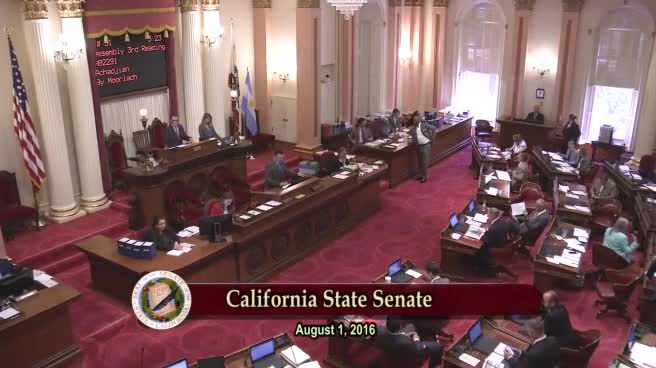
Bill Author

Bill Co-Author(s):