AB 2616: California Coastal Commission: environmental justice.
- Session Year: 2015-2016
- House: Assembly
- Latest Version Date: 2016-09-24
Existing law, the California Coastal Act of 1976, establishes the California Coastal Commission and prescribes the membership and functions and duties of the commission. Existing law provides that the commission consists of 15 members.
This bill would require one of the members of the commission appointed by the Governor to reside in, and work directly with, communities in the state that are disproportionately burdened by, and vulnerable to, high levels of pollution and issues of environmental justice, as defined. The bill would require that the Governor appoint a member who meets these qualifications to a vacant position from the appointments available no later than the fourth appointment available after January 1, 2017.
Existing law requires any person, as defined, wishing to perform or undertake any development, as defined, in the coastal zone to obtain a permit, except as provided. Existing law prescribes a process for the certification of local coastal programs in the state and requires, after certification of the local coastal program, a coastal development permit to be issued if the issuing agency, or the commission on appeal, finds that the proposed development is in conformity with the certified local coastal program.
This bill would authorize the issuing agency, or the commission on appeal, to consider environmental justice, as defined, or the equitable distribution of environmental benefits in communities throughout the state, when acting on a coastal development permit.
Existing law, the California Coastal Act of 1976, establishes the California Coastal Commission and prescribes the membership and functions and duties of the commission. Existing law provides that the commission consists of 15 members.
This bill would require that three of the 12 voting representatives be individuals who one of the members appointed by the Governor to reside in, and work directly with, communities in the state that are disproportionately burdened by, and vulnerable to, high levels of pollution and issues of environmental justice, as defined. The bill would require that the Governor, the Senate Committee on Rules, and the Speaker of the Assembly each appoint a member so qualified Governor appoint a member who meets these qualifications to a vacant position from the appointments available, available no later than the fourth appointment of each appointing authority available after January 1, 2017.
Existing law requires any person, as defined, wishing to perform or undertake any development, as defined, in the coastal zone to obtain a permit, except as provided. Existing law prescribes a process for the certification of local coastal programs in the state and requires, after certification of the local coastal program, a coastal development permit to be issued if the issuing agency, or the commission on appeal, finds that the proposed development is in conformity with the certified local coastal program.
This bill would authorize the issuing agency, or the commission on appeal, to consider environmental justice, as defined, or the equitable distribution of environmental benefits in communities throughout the state, when acting on a coastal development permit.
Existing law, the California Coastal Act of 1976, establishes the California Coastal Commission and prescribes the membership and functions and duties of the commission. Existing law provides that the commission consists of 15 members.
This bill would increase the membership of the commission to 18 by requiring 3 additional members to be appointed, require that three of the 12 voting representatives be individuals one each by the Governor, the Senate Committee on Rules, and the Speaker of the Assembly, who represent reside in, and work directly with with, communities in the state that are most disproportionately burdened by, and vulnerable to, high levels of pollution and issues of environmental justice, as defined. The bill would require that the Governor, the Senate Committee on Rules, and the Speaker of the Assembly each appoint a member so qualified to a vacant position from the appointments available, no later than the fourth appointment of each appointing authority after January 1, 2017.
Existing law requires any person, as defined, wishing to perform or undertake any development, as defined, in the coastal zone to obtain a permit, except as provided. Existing law prescribes a process for the certification of local coastal programs in the state and requires, after certification of the local coastal program, a coastal development permit to be issued if the issuing agency, or the commission on appeal, finds that the proposed development is in conformity with the certified local coastal program.
This bill would authorize the issuing agency, or the commission on appeal, to consider environmental justice, as defined, or the equitable distribution of environmental benefits in communities throughout the state, when acting on a coastal development permit.
Existing law, the California Coastal Act of 1976, establishes the California Coastal Commission and prescribes the membership and functions and duties of the commission. Existing law provides that the commission consists of 15 members.
This bill would increase the membership of the commission to 18 and would require by requiring 3 additional members to be appointed, one each by the Governor, the Senate Committee on Rules, and the Speaker of the Assembly, who represent and work directly with communities in the state that are most burdened by, and vulnerable to, high levels of pollution and issue issues of environmental justice, as defined.
Existing law requires maximum access and recreational opportunities to be provided to the public in the states coastal areas and, in that regard, requires lower cost visitor and recreational facilities to be protected, encouraged, and, where feasible, provided.
This bill would additionally require housing opportunities for persons of low and moderate income to be protected, encouraged, and, where feasible, provided in coastal areas.
Existing law provides that no local coastal program is required to include housing policies and programs.
This bill would repeal that provision.
Existing law requires any person, as defined, wishing to perform or undertake any development, as defined, in the coastal zone to obtain a permit, except as provided. Existing law prescribes a process for the certification of local coastal programs in the state and requires that, requires, after certification of the local coastal program, a coastal development permit to be issued if the issuing agency, or the commission on appeal, finds that the proposed development is in conformity with the certified local coastal program.
This bill would authorize the issuing agency, or the commission on appeal, to consider environmental justice, as defined, or the equitable distribution of environmental benefits in communities throughout the state, when acting on a coastal development permit.
Existing law, the California Coastal Act of 1976, establishes the California Coastal Commission and prescribes the membership and functions and duties of the commission. Existing law provides that the commission consists of 15 members.
This bill would increase the membership of the commission to 18 and would require 3 additional members to be appointed, one each by the Governor, the Senate Committee on Rules, and the Speaker of the Assembly, who represent and work directly with communities in the state that are most burdened by, and vulnerable to, high levels of pollution and issue of environmental justice, as defined.
Existing law requires maximum access and recreational opportunities to be provided to the public in the states coastal areas and, in that regard, requires lower cost visitor and recreational facilities to be protected, encouraged, and, where feasible, provided.
This bill would additionally require housing opportunities for persons of low and moderate income to be protected, encouraged, and, where feasible, provided in coastal areas. The bill would also specify that the act does not preclude or otherwise restrict the consideration of environmental justice or the equitable distribution of environmental benefits in communities throughout the state.
Existing law provides that no local coastal program is required to include housing policies and programs.
This bill would repeal that provision.
Existing law requires any person, as defined, wishing to perform or undertake any development, as defined, in the coastal zone to obtain a permit, except as provided. Existing law prescribes a process for the certification of local coastal programs in the state and requires that, after certification of the coastal program, a coastal development permit be issued if the issuing agency, or the commission on appeal, finds that the proposed development is in conformity with the certified local coastal program.
This bill would authorize the issuing agency, or the commission on appeal, to consider environmental justice, as defined, or the equitable distribution of environmental benefits in communities throughout the state, when acting on a coastal development permit.
Existing law, the California Coastal Act of 1976, establishes the California Coastal Commission and prescribes the membership and functions and duties of the commission. Existing law provides that the commission consists of 15 members.
This bill would increase the membership of the commission to 18 and would require 3 additional members to be appointed, one each by the Governor, the Senate Committee on Rules, and the Speaker of the Assembly, who represent and work directly with communities in the state that are most burdened by, and vulnerable to, high levels of pollution and issue of environmental justice, as defined.
Existing law requires maximum access and recreational opportunities to be provided to the public in the states coastal areas and, in that regard, requires lower cost visitor and recreational facilities to be protected, encouraged, and, where feasible, provided.
This bill would additionally require housing opportunities for persons of low and moderate income to be protected, encouraged, and, where feasible, provided in coastal areas. The bill would also specify that the act does not preclude or otherwise restrict the consideration of environmental justice or the equitable distribution of environmental benefits in communities throughout the state.
The Legislature further finds and declares that in order to advance the principles of environmental justice and equality, subdivision (a) of Section 11135 of the Government Code and subdivision (e) of Section 65040.12 of the Government Code apply to the commission and all public agencies implementing the provisions of this division. As required by Section 11135 of the Government Code, no person in the State of California, on the basis of race, national origin, ethnic group identification, religion, age, sex, sexual orientation, color, genetic information, or disability, shall be unlawfully denied full and equal access to the benefits of, or be unlawfully subjected to discrimination, under any program or activity that is conducted, operated, or administered pursuant to this division, is funded directly by the state for purposes of this division, or receives any financial assistance from the state pursuant to this division.
SEC. 2.Section 30107.3 is added to the Public Resources Code, to read:30107.3.Environmental justice means the fair treatment of people of all races, cultures, and incomes with respect to the development, adoption, implementation, and enforcement of environmental laws, regulations, and policies.
SEC. 3.Section 30301 of the Public Resources Code is amended to read:30301.The commission shall consist of the following 15 members:
(a)The Secretary of the Natural Resources Agency.
(b)The Secretary of Transportation.
(c)The Chairperson of the State Lands Commission.
(d)Six representatives of the public from the state at large. The Governor, the Senate Committee on Rules, and the Speaker of the Assembly shall each appoint two of these members.
(e)Six representatives selected from six coastal regions. The Governor shall select one member from the north coast region and one member from the south central coast region. The Speaker of the Assembly shall select one member from the central coast region and one member from the San Diego coast region. The Senate Committee on Rules shall select one member from the north central coast region and one member from the south coast region. For purposes of this division, these regions are defined as follows:
(1)The north coast region consists of the Counties of Del Norte, Humboldt, and Mendocino.
(2)The north central coast region consists of the Counties of Sonoma and Marin and the City and County of San Francisco.
(3)The central coast region consists of the Counties of San Mateo, Santa Cruz, and Monterey.
(4)The south central coast region consists of the Counties of San Luis Obispo, Santa Barbara, and Ventura.
(5)The south coast region consists of the Counties of Los Angeles and Orange.
(6)The San Diego coast region consists of the County of San Diego.
(f)Of the representatives appointed by the Governor pursuant to subdivision (d) or (e), one of the representatives shall reside in, and work directly with, communities in the state that are disproportionately burdened by, and vulnerable to, high levels of pollution and issues of environmental justice, including, but not limited to, communities with diverse racial and ethnic populations and communities with low-income populations. The Governor shall appoint a representative qualified pursuant to this subdivision to a vacant position from the appointments available pursuant to either subdivision (d) or (e) no later than the fourth appointment available after January 1, 2017.
SEC. 4.Section 30604 of the Public Resources Code is amended to read:30604.(a)Prior to certification of the local coastal program, a coastal development permit shall be issued if the issuing agency, or the commission on appeal, finds that the proposed development is in conformity with Chapter 3 (commencing with Section 30200) and that the permitted development will not prejudice the ability of the local government to prepare a local coastal program that is in conformity with Chapter 3 (commencing with Section 30200). A denial of a coastal development permit on grounds it would prejudice the ability of the local government to prepare a local coastal program that is in conformity with Chapter 3 (commencing with Section 30200) shall be accompanied by a specific finding that sets forth the basis for that conclusion.
(b)After certification of the local coastal program, a coastal development permit shall be issued if the issuing agency, or the commission on appeal, finds that the proposed development is in conformity with the certified local coastal program.
(c)Every coastal development permit issued for any development between the nearest public road and the sea or the shoreline of any body of water located within the coastal zone shall include a specific finding that the development is in conformity with the public access and public recreation policies of Chapter 3 (commencing with Section 30200).
(d)No development or any portion thereof that is outside the coastal zone shall be subject to the coastal development permit requirements of this division, nor shall anything in this division authorize the denial of a coastal development permit by the commission on the grounds the proposed development within the coastal zone will have an adverse environmental effect outside the coastal zone.
(e)No coastal development permit may be denied under this division on the grounds that a public agency is planning or contemplating to acquire the property, or property adjacent to the property, on which the proposed development is to be located, unless the public agency has been specifically authorized to acquire the property and there are funds available, or funds that could reasonably be expected to be made available within one year, for the acquisition. If a permit has been denied for that reason and the property has not been acquired by a public agency within a reasonable period of time, a permit may not be denied for the development on grounds that the property, or adjacent property, is to be acquired by a public agency when the application for such a development is resubmitted.
(f)The commission shall encourage housing opportunities for persons of low and moderate income. In reviewing residential development applications for low- and moderate-income housing, as defined in paragraph (3) of subdivision (h) of Section 65589.5 of the Government Code, the issuing agency, or the commission on appeal, may not require measures that reduce residential densities below the density sought by an applicant if the density sought is within the permitted density or range of density established by local zoning plus the additional density permitted under Section 65915 of the Government Code, unless the issuing agency or the commission on appeal makes a finding, based on substantial evidence in the record, that the density sought by the applicant cannot feasibly be accommodated on the site in a manner that is in conformity with Chapter 3 (commencing with Section 30200) or the certified local coastal program.
(g)The Legislature finds and declares that it is important for the commission to encourage the protection of existing and the provision of new affordable housing opportunities for persons of low and moderate income in the coastal zone.
(h)When acting on a coastal development permit, the issuing agency, or the commission on appeal, may consider environmental justice, or the equitable distribution of environmental benefits throughout the state.
The Legislature further finds and declares that in order to advance the principles of environmental justice and equality, subdivision (a) of Section 11135 of the Government Code and subdivision (e) of Section 65040.12 of the Government Code apply to the commission and all public agencies implementing the provisions of this division. As required by Section 11135 of the Government Code, no person in the State of California, on the basis of race, national origin, ethnic group identification, religion, age, sex, sexual orientation, color, genetic information, or disability, shall be unlawfully denied full and equal access to the benefits of, or be unlawfully subjected to discrimination, under any program or activity that is conducted, operated, or administered pursuant to this division, is funded directly by the state for purposes of this division, or receives any financial assistance from the state pursuant to this division.
SEC. 2.Section 30107.3 is added to the Public Resources Code, to read:30107.3.Environmental justice means the fair treatment of people of all races, cultures, and incomes with respect to the development, adoption, implementation, and enforcement of environmental laws, regulations, and policies.
SEC. 3.Section 30301 of the Public Resources Code is amended to read:30301.The commission shall consist of the following 15 members:
(a)The Secretary of the Natural Resources Agency.
(b)The Secretary of Transportation.
(c)The Chairperson of the State Lands Commission.
(d)Six representatives of the public from the state at large. The Governor, the Senate Committee on Rules, and the Speaker of the Assembly shall each appoint two of these members.
(e)Six representatives selected from six coastal regions. The Governor shall select one member from the north coast region and one member from the south central coast region. The Speaker of the Assembly shall select one member from the central coast region and one member from the San Diego coast region. The Senate Committee on Rules shall select one member from the north central coast region and one member from the south coast region. For purposes of this division, these regions are defined as follows:
(1)The north coast region consists of the Counties of Del Norte, Humboldt, and Mendocino.
(2)The north central coast region consists of the Counties of Sonoma and Marin and the City and County of San Francisco.
(3)The central coast region consists of the Counties of San Mateo, Santa Cruz, and Monterey.
(4)The south central coast region consists of the Counties of San Luis Obispo, Santa Barbara, and Ventura.
(5)The south coast region consists of the Counties of Los Angeles and Orange.
(6)The San Diego coast region consists of the County of San Diego.
(f)Three of the 12 voting representatives shall be individuals who Of the representatives appointed by the Governor pursuant to subdivision (d) or (e), one of the representatives shall reside in, and who work directly with, communities in the state that are disproportionately burdened by, and vulnerable to, high levels of pollution and issues of environmental justice, including, but not limited to, communities with diverse racial and ethnic populations and communities with low-income populations. The Governor, the Senate Committee on Rules, and the Speaker of the Assembly shall each appoint a member qualified pursuant to this subdivision populations. The Governor shall appoint a representative qualified pursuant to this subdivision to a vacant position from the appointments available pursuant to either subdivision (d) or (e), (e) no later than the fourth appointment of each appointing authority available after January 1, 2017.
SEC. 4.Section 30604 of the Public Resources Code is amended to read:30604.(a)Prior to certification of the local coastal program, a coastal development permit shall be issued if the issuing agency, or the commission on appeal, finds that the proposed development is in conformity with Chapter 3 (commencing with Section 30200) and that the permitted development will not prejudice the ability of the local government to prepare a local coastal program that is in conformity with Chapter 3 (commencing with Section 30200). A denial of a coastal development permit on grounds it would prejudice the ability of the local government to prepare a local coastal program that is in conformity with Chapter 3 (commencing with Section 30200) shall be accompanied by a specific finding that sets forth the basis for that conclusion.
(b)After certification of the local coastal program, a coastal development permit shall be issued if the issuing agency, or the commission on appeal, finds that the proposed development is in conformity with the certified local coastal program.
(c)Every coastal development permit issued for any development between the nearest public road and the sea or the shoreline of any body of water located within the coastal zone shall include a specific finding that the development is in conformity with the public access and public recreation policies of Chapter 3 (commencing with Section 30200).
(d)No development or any portion thereof that is outside the coastal zone shall be subject to the coastal development permit requirements of this division, nor shall anything in this division authorize the denial of a coastal development permit by the commission on the grounds the proposed development within the coastal zone will have an adverse environmental effect outside the coastal zone.
(e)No coastal development permit may be denied under this division on the grounds that a public agency is planning or contemplating to acquire the property, or property adjacent to the property, on which the proposed development is to be located, unless the public agency has been specifically authorized to acquire the property and there are funds available, or funds that could reasonably be expected to be made available within one year, for the acquisition. If a permit has been denied for that reason and the property has not been acquired by a public agency within a reasonable period of time, a permit may not be denied for the development on grounds that the property, or adjacent property, is to be acquired by a public agency when the application for such a development is resubmitted.
(f)The commission shall encourage housing opportunities for persons of low and moderate income. In reviewing residential development applications for low- and moderate-income housing, as defined in paragraph (3) of subdivision (h) of Section 65589.5 of the Government Code, the issuing agency, or the commission on appeal, may not require measures that reduce residential densities below the density sought by an applicant if the density sought is within the permitted density or range of density established by local zoning plus the additional density permitted under Section 65915 of the Government Code, unless the issuing agency or the commission on appeal makes a finding, based on substantial evidence in the record, that the density sought by the applicant cannot feasibly be accommodated on the site in a manner that is in conformity with Chapter 3 (commencing with Section 30200) or the certified local coastal program.
(g)The Legislature finds and declares that it is important for the commission to encourage the protection of existing and the provision of new affordable housing opportunities for persons of low and moderate income in the coastal zone.
(h)When acting on a coastal development permit, the issuing agency, or the commission on appeal, may consider environmental justice, or the equitable distribution of environmental benefits throughout the state.
The Legislature further finds and declares that in order to advance the principles of environmental justice and equality, subdivision (a) of Section 11135 of the Government Code and subdivision (e) of Section 65040.12 of the Government Code apply to the commission and all public agencies implementing the provisions of this division. As required by Section 11135 of the Government Code, no person in the State of California, on the basis of race, national origin, ethnic group identification, religion, age, sex, sexual orientation, color, genetic information, or disability, shall be unlawfully denied full and equal access to the benefits of, or be unlawfully subjected to discrimination, under any program or activity that is conducted, operated, or administered pursuant to this division, is funded directly by the state for purposes of this division, or receives any financial assistance from the state pursuant to this division.
SEC. 2.Section 30107.3 is added to the Public Resources Code, to read:30107.3.Environmental justice means the fair treatment of people of all races, cultures, and incomes with respect to the development, adoption, implementation, and enforcement of environmental laws, regulations, and policies.
SECTION 1.SEC. 3.Section 30301 of the Public Resources Code is amended to read:30301.The commission shall consist of the following 18 15 members:
(a)The Secretary of the Natural Resources Agency.
(b)The Secretary of Transportation.
(c)The Chairperson of the State Lands Commission.
(d)Six representatives of the public from the state at large. The Governor, the Senate Committee on Rules, and the Speaker of the Assembly shall each appoint two of these members.
(e)Six representatives selected from six coastal regions. The Governor shall select one member from the north coast region and one member from the south central coast region. The Speaker of the Assembly shall select one member from the central coast region and one member from the San Diego coast region. The Senate Committee on Rules shall select one member from the north central coast region and one member from the south coast region. For purposes of this division, these regions are defined as follows:
(1)The north coast region consists of the Counties of Del Norte, Humboldt, and Mendocino.
(2)The north central coast region consists of the Counties of Sonoma and Marin and the City and County of San Francisco.
(3)The central coast region consists of the Counties of San Mateo, Santa Cruz, and Monterey.
(4)The south central coast region consists of the Counties of San Luis Obispo, Santa Barbara, and Ventura.
(5)The south coast region consists of the Counties of Los Angeles and Orange.
(6)The San Diego coast region consists of the County of San Diego.
(f)Three representatives of, of the 12 voting representatives shall be individuals who reside in, and who work directly with, communities in the state that are most disproportionately burdened by, and vulnerable to, high levels of pollution and issues of environmental justice, as defined in subdivision (e) of Section 65040.12 of the Government Code, including, but not limited to, communities with diverse racial and ethnic populations and communities with low-income populations. The Governor, the Senate Committee on Rules, and the Speaker of the Assembly shall each appoint one of these members. a member qualified pursuant to this subdivision to a vacant position from the appointments available pursuant to either subdivision (d) or (e), no later than the fourth appointment of each appointing authority after January 1, 2017.
SEC. 2.SEC. 4.Section 30604 of the Public Resources Code is amended to read:30604.(a)Prior to certification of the local coastal program, a coastal development permit shall be issued if the issuing agency, or the commission on appeal, finds that the proposed development is in conformity with Chapter 3 (commencing with Section 30200) and that the permitted development will not prejudice the ability of the local government to prepare a local coastal program that is in conformity with Chapter 3 (commencing with Section 30200). A denial of a coastal development permit on grounds it would prejudice the ability of the local government to prepare a local coastal program that is in conformity with Chapter 3 (commencing with Section 30200) shall be accompanied by a specific finding that sets forth the basis for that conclusion.
(b)After certification of the local coastal program, a coastal development permit shall be issued if the issuing agency, or the commission on appeal, finds that the proposed development is in conformity with the certified local coastal program.
(c)Every coastal development permit issued for any development between the nearest public road and the sea or the shoreline of any body of water located within the coastal zone shall include a specific finding that the development is in conformity with the public access and public recreation policies of Chapter 3 (commencing with Section 30200).
(d)No development or any portion thereof that is outside the coastal zone shall be subject to the coastal development permit requirements of this division, nor shall anything in this division authorize the denial of a coastal development permit by the commission on the grounds the proposed development within the coastal zone will have an adverse environmental effect outside the coastal zone.
(e)No coastal development permit may be denied under this division on the grounds that a public agency is planning or contemplating to acquire the property, or property adjacent to the property, on which the proposed development is to be located, unless the public agency has been specifically authorized to acquire the property and there are funds available, or funds that could reasonably be expected to be made available within one year, for the acquisition. If a permit has been denied for that reason and the property has not been acquired by a public agency within a reasonable period of time, a permit may not be denied for the development on grounds that the property, or adjacent property, is to be acquired by a public agency when the application for such a development is resubmitted.
(f)The commission shall encourage housing opportunities for persons of low and moderate income. In reviewing residential development applications for low- and moderate-income housing, as defined in paragraph (3) of subdivision (h) of Section 65589.5 of the Government Code, the issuing agency, or the commission on appeal, may not require measures that reduce residential densities below the density sought by an applicant if the density sought is within the permitted density or range of density established by local zoning plus the additional density permitted under Section 65915 of the Government Code, unless the issuing agency or the commission on appeal makes a finding, based on substantial evidence in the record, that the density sought by the applicant cannot feasibly be accommodated on the site in a manner that is in conformity with Chapter 3 (commencing with Section 30200) or the certified local coastal program.
(g)The Legislature finds and declares that it is important for the commission to encourage the protection of existing and the provision of new affordable housing opportunities for persons of low and moderate income in the coastal zone.
(h)When acting on a coastal development permit, the issuing agency, or the commission on appeal, may consider environmental justice, as defined in subdivision (e) of Section 65040.12 of the Government Code, or the equitable distribution of environmental benefits throughout the state.
Lower cost visitor and recreational facilities and housing opportunities for persons of low and moderate income shall be protected, encouraged, and, where feasible, provided. Developments providing public recreational opportunities are preferred.
The commission shall not do either of the following:
(a)Require that overnight room rentals be fixed at an amount certain for any privately owned and operated hotel, motel, or other similar visitor-serving facility located on either public or private lands.
(b)Establish or approve any method for the identification of low or moderate income persons for the purpose of determining eligibility for overnight room rentals in any of those facilities.
SEC. 2.SECTION 1.Section 30301 of the Public Resources Code is amended to read:30301.The commission shall consist of the following 18 members:
(a)The Secretary of the Natural Resources Agency.
(b)The Secretary of Transportation.
(c)The Chairperson of the State Lands Commission.
(d)Six representatives of the public from the state at large. The Governor, the Senate Committee on Rules, and the Speaker of the Assembly shall each appoint two of these members.
(e)Six representatives selected from six coastal regions. The Governor shall select one member from the north coast region and one member from the south central coast region. The Speaker of the Assembly shall select one member from the central coast region and one member from the San Diego coast region. The Senate Committee on Rules shall select one member from the north central coast region and one member from the south coast region. For purposes of this division, these regions are defined as follows:
(1)The north coast region consists of the Counties of Del Norte, Humboldt, and Mendocino.
(2)The north central coast region consists of the Counties of Sonoma and Marin and the City and County of San Francisco.
(3)The central coast region consists of the Counties of San Mateo, Santa Cruz, and Monterey.
(4)The south central coast region consists of the Counties of San Luis Obispo, Santa Barbara, and Ventura.
(5)The south coast region consists of the Counties of Los Angeles and Orange.
(6)The San Diego coast region consists of the County of San Diego.
(f)Three representatives of, and who work directly with, communities in the state that are most burdened by, and vulnerable to, high levels of pollution and issues of environmental justice, as defined in subdivision (e) of Section 65040.12 of the Government Code, including, but not limited to, communities with diverse racial and ethnic populations and communities with low-income populations. The Governor, the Senate Committee on Rules, and the Speaker of the Assembly shall each appoint one of these members.
SEC. 3.Section 30500.1 of the Public Resources Code is repealed.SEC. 4.SEC. 2.Section 30604 of the Public Resources Code is amended to read:30604.(a)Prior to certification of the local coastal program, a coastal development permit shall be issued if the issuing agency, or the commission on appeal, finds that the proposed development is in conformity with Chapter 3 (commencing with Section 30200) and that the permitted development will not prejudice the ability of the local government to prepare a local coastal program that is in conformity with Chapter 3 (commencing with Section 30200). A denial of a coastal development permit on grounds it would prejudice the ability of the local government to prepare a local coastal program that is in conformity with Chapter 3 (commencing with Section 30200) shall be accompanied by a specific finding that sets forth the basis for that conclusion.
(b)After certification of the local coastal program, a coastal development permit shall be issued if the issuing agency, or the commission on appeal, finds that the proposed development is in conformity with the certified local coastal program.
(c)Every coastal development permit issued for any development between the nearest public road and the sea or the shoreline of any body of water located within the coastal zone shall include a specific finding that the development is in conformity with the public access and public recreation policies of Chapter 3 (commencing with Section 30200).
(d)No development or any portion thereof that is outside the coastal zone shall be subject to the coastal development permit requirements of this division, nor shall anything in this division authorize the denial of a coastal development permit by the commission on the grounds the proposed development within the coastal zone will have an adverse environmental effect outside the coastal zone.
(e)No coastal development permit may be denied under this division on the grounds that a public agency is planning or contemplating to acquire the property, or property adjacent to the property, on which the proposed development is to be located, unless the public agency has been specifically authorized to acquire the property and there are funds available, or funds that could reasonably be expected to be made available within one year, for the acquisition. If a permit has been denied for that reason and the property has not been acquired by a public agency within a reasonable period of time, a permit may not be denied for the development on grounds that the property, or adjacent property, is to be acquired by a public agency when the application for such a development is resubmitted.
(f)The commission shall encourage housing opportunities for persons of low and moderate income. In reviewing residential development applications for low- and moderate-income housing, as defined in paragraph (3) of subdivision (h) of Section 65589.5 of the Government Code, the issuing agency, or the commission on appeal, may not require measures that reduce residential densities below the density sought by an applicant if the density sought is within the permitted density or range of density established by local zoning plus the additional density permitted under Section 65915 of the Government Code, unless the issuing agency or the commission on appeal makes a finding, based on substantial evidence in the record, that the density sought by the applicant cannot feasibly be accommodated on the site in a manner that is in conformity with Chapter 3 (commencing with Section 30200) or the certified local coastal program.
(g)The Legislature finds and declares that it is important for the commission to encourage the protection of existing and the provision of new affordable housing opportunities for persons of low and moderate income in the coastal zone.
(h)When acting on a coastal development permit, the issuing agency, or the commission on appeal, may consider environmental justice, as defined in subdivision (e) of Section 65040.12 of the Government Code, or the equitable distribution of environmental benefits throughout the state.
This division shall not preclude or otherwise restrict the consideration of environmental justice, as defined in subdivision (e) of Section 65040.12 of the Government Code, or the equitable distribution of environmental benefits in communities throughout the state.
SEC. 2.SECTION 1.Section 30213 of the Public Resources Code is amended to read:30213.Lower cost visitor and recreational facilities and housing opportunities for persons of low and moderate income shall be protected, encouraged, and, where feasible, provided. Developments providing public recreational opportunities are preferred.
The commission shall not do either of the following:
(a)Require that overnight room rentals be fixed at an amount certain for any privately owned and operated hotel, motel, or other similar visitor-serving facility located on either public or private lands.
(b)Establish or approve any method for the identification of low or moderate income persons for the purpose of determining eligibility for overnight room rentals in any of those facilities.
SEC. 3.SEC. 2.Section 30301 of the Public Resources Code is amended to read:30301.The commission shall consist of the following 18 members:
(a)The Secretary of the Natural Resources Agency.
(b)The Secretary of Transportation.
(c)The Chairperson of the State Lands Commission.
(d)Six representatives of the public from the state at large. The Governor, the Senate Committee on Rules, and the Speaker of the Assembly shall each appoint two of these members.
(e)Six representatives selected from six coastal regions. The Governor shall select one member from the north coast region and one member from the south central coast region. The Speaker of the Assembly shall select one member from the central coast region and one member from the San Diego coast region. The Senate Committee on Rules shall select one member from the north central coast region and one member from the south coast region. For purposes of this division, these regions are defined as follows:
(1)The north coast region consists of the Counties of Del Norte, Humboldt, and Mendocino.
(2)The north central coast region consists of the Counties of Sonoma and Marin and the City and County of San Francisco.
(3)The central coast region consists of the Counties of San Mateo, Santa Cruz, and Monterey.
(4)The south central coast region consists of the Counties of San Luis Obispo, Santa Barbara, and Ventura.
(5)The south coast region consists of the Counties of Los Angeles and Orange.
(6)The San Diego coast region consists of the County of San Diego.
(f)Three representatives of, and who work directly with, communities in the state that are most burdened by, and vulnerable to, high levels of pollution and issues of environmental justice, as defined in subdivision (e) of Section 65040.12 of the Government Code, including, but not limited to, communities with diverse racial and ethnic populations and communities with low-income populations. The Governor, the Senate Committee on Rules, and the Speaker of the Assembly shall each appoint one of these members.
SEC. 3.Section 30500.1 of the Public Resources Code is repealed.30500.1.No local coastal program shall be required to include housing policies and programs.
SEC. 4.Section 30604 of the Public Resources Code is amended to read:30604.(a)Prior to certification of the local coastal program, a coastal development permit shall be issued if the issuing agency, or the commission on appeal, finds that the proposed development is in conformity with Chapter 3 (commencing with Section 30200) and that the permitted development will not prejudice the ability of the local government to prepare a local coastal program that is in conformity with Chapter 3 (commencing with Section 30200). A denial of a coastal development permit on grounds it would prejudice the ability of the local government to prepare a local coastal program that is in conformity with Chapter 3 (commencing with Section 30200) shall be accompanied by a specific finding that sets forth the basis for that conclusion.
(b)After certification of the local coastal program, a coastal development permit shall be issued if the issuing agency agency, or the commission on appeal appeal, finds that the proposed development is in conformity with the certified local coastal program.
(c)Every coastal development permit issued for any development between the nearest public road and the sea or the shoreline of any body of water located within the coastal zone shall include a specific finding that the development is in conformity with the public access and public recreation policies of Chapter 3 (commencing with Section 30200).
(d)No development or any portion thereof that is outside the coastal zone shall be subject to the coastal development permit requirements of this division, nor shall anything in this division authorize the denial of a coastal development permit by the commission on the grounds the proposed development within the coastal zone will have an adverse environmental effect outside the coastal zone.
(e)No coastal development permit may be denied under this division on the grounds that a public agency is planning or contemplating to acquire the property on, property, or property adjacent to the property on, property, on which the proposed development is to be located, unless the public agency has been specifically authorized to acquire the property and there are funds available, or funds that could reasonably be expected to be made available within one year, for the acquisition. If a permit has been denied for that reason and the property has not been acquired by a public agency within a reasonable period of time, a permit may not be denied for the development on grounds that the property, or adjacent property, is to be acquired by a public agency when the application for such a development is resubmitted.
(f)The commission shall encourage housing opportunities for persons of low and moderate income. In reviewing residential development applications for low- and moderate-income housing, as defined in paragraph (3) of subdivision (h) of Section 65589.5 of the Government Code, the issuing agency agency, or the commission, commission on appeal, may not require measures that reduce residential densities below the density sought by an applicant if the density sought is within the permitted density or range of density established by local zoning plus the additional density permitted under Section 65915 of the Government Code, unless the issuing agency or the commission on appeal makes a finding, based on substantial evidence in the record, that the density sought by the applicant cannot feasibly be accommodated on the site in a manner that is in conformity with Chapter 3 (commencing with Section 30200) or the certified local coastal program.
(g)The Legislature finds and declares that it is important for the commission to encourage the protection of existing and the provision of new affordable housing opportunities for persons of low and moderate income in the coastal zone.
(h)When acting on a coastal development permit, the issuing agency, or the commission on appeal, may consider environmental justice, as defined in subdivision (e) of Section 65040.12 of the Government Code, or the equitable distribution of environmental benefits throughout the state.
This division shall not preclude or otherwise restrict the consideration of environmental justice, as defined in subdivision (e) of Section 65040.12 of the Government Code, or the equitable distribution of environmental benefits in communities throughout the state.
SEC. 2.Section 30213 of the Public Resources Code is amended to read:30213.Lower cost visitor and recreational facilities and housing opportunities for persons of low and moderate income shall be protected, encouraged, and, where feasible, provided. Developments providing public recreational opportunities are preferred.
The commission shall not: (1) require not do either of the following:
(a)Require that overnight room rentals be fixed at an amount certain for any privately owned and operated hotel, motel, or other similar visitor-serving facility located on either public or private lands; or (2) establish lands.
(b)Establish or approve any method for the identification of low or moderate income persons for the purpose of determining eligibility for overnight room rentals in any such of those facilities.
SEC. 3.Section 30301 of the Public Resources Code is amended to read:30301.The commission shall consist of the following 15 18 members:
(a)The Secretary of the Natural Resources Agency.
(b)The Secretary of Transportation.
(c)The Chairperson of the State Lands Commission.
(d)Six representatives of the public from the state at large. The Governor, the Senate Committee on Rules, and the Speaker of the Assembly shall each appoint two of these members.
(e)Six representatives selected from six coastal regions. The Governor shall select one member from the north coast region and one member from the south central coast region. The Speaker of the Assembly shall select one member from the central coast region and one member from the San Diego coast region. The Senate Committee on Rules shall select one member from the north central coast region and one member from the south coast region. For purposes of this division, these regions are defined as follows:
(1)The north coast region consists of the Counties of Del Norte, Humboldt, and Mendocino.
(2)The north central coast region consists of the Counties of Sonoma and Marin and the City and County of San Francisco.
(3)The central coast region consists of the Counties of San Mateo, Santa Cruz, and Monterey.
(4)The south central coast region consists of the Counties of San Luis Obispo, Santa Barbara, and Ventura.
(5)The south coast region consists of the Counties of Los Angeles and Orange.
(6)The San Diego coast region consists of the County of San Diego.
(f)Three representatives of, and who work directly with, communities in the state that are most burdened by, and vulnerable to, high levels of pollution and issues of environmental justice, as defined in subdivision (e) of Section 65040.12 of the Government Code, including, but not limited to, communities with diverse racial and ethnic populations and communities with low-income populations. The Governor, the Senate Committee on Rules, and the Speaker of the Assembly shall each appoint one of these members.
|
Date
|
Status
|
|---|---|
| Jun 9, 2016 | Referred to Com. on N.R. & W. |
| Sep 9, 2016 | Enrolled and presented to the Governor at 2:30 p.m. |
| Aug 30, 2016 | Senate amendments concurred in. To Engrossing and Enrolling. (Ayes 51. Noes 25. Page 6489.). |
| Aug 30, 2016 | Senate amendments concurred in. To Engrossing and Enrolling. |
| Aug 30, 2016 | In Assembly. Concurrence in Senate amendments pending. |
| Aug 30, 2016 | Assembly Rule 63 suspended. (Page 6474.) |
| Aug 30, 2016 | Assembly Rule 63 suspended. |
| Aug 29, 2016 | Read third time. Passed. Ordered to the Assembly. (Ayes 26. Noes 13. Page 5481.). |
| Aug 29, 2016 | Read third time. Passed. Ordered to the Assembly. |
| Aug 16, 2016 | Read second time and amended. Ordered to third reading. |
| Aug 15, 2016 | From committee: Amend, and do pass as amended. (Ayes 5. Noes 2.) (August 11). |
| Aug 11, 2016 | In committee: Referred to APPR. suspense file. |
| Aug 8, 2016 | In committee: Hearing postponed by committee. |
| Aug 2, 2016 | Read second time and amended. Re-referred to Com. on APPR. |
| Aug 1, 2016 | From committee: Amend, and do pass as amended and re-refer to Com. on APPR. (Ayes 6. Noes 2.) (June 28). |
| Feb 19, 2016 | Introduced. To print. |
| Jun 6, 2016 | In Senate. Read first time. To Com. on RLS. for assignment. |
| Jun 2, 2016 | Read third time. Passed. Ordered to the Senate. (Ayes 49. Noes 26.) |
| Jun 2, 2016 | Read third time. Passed. Ordered to the Senate. (Ayes 49. Noes 26. Page 5194.) |
| Jun 2, 2016 | Read third time. Passed. Ordered to the Senate. |
| Jun 1, 2016 | Read second time. Ordered to third reading. |
| May 31, 2016 | Read second time and amended. Ordered returned to second reading. |
| May 27, 2016 | From committee: Amend, and do pass as amended. (Ayes 13. Noes 6.) (May 27). |
| May 4, 2016 | In committee: Set, first hearing. Referred to APPR. suspense file. |
| Apr 19, 2016 | From committee: Do pass and re-refer to Com. on APPR. (Ayes 6. Noes 2.) (April 18). Re-referred to Com. on APPR. |
| Apr 13, 2016 | Re-referred to Com. on NAT. RES. |
| Apr 12, 2016 | From committee chair, with author's amendments: Amend, and re-refer to Com. on NAT. RES. Read second time and amended. |
| Mar 10, 2016 | Referred to Com. on NAT. RES. |
| Feb 22, 2016 | Read first time. |
| Feb 21, 2016 | From printer. May be heard in committee March 22. |
|
Date
|
Description
|
Location
|
Votes
|
|
|---|---|---|---|---|
| Aug 30, 2016 | AB 2616 BURKE Concurrence in Senate Amendments | Assembly Floor |
Passed |
|
| Aug 29, 2016 | Assembly 3rd Reading AB2616 Burke By Allen | Senate Floor |
Passed |
|
| Aug 11, 2016 | Do pass as amended | Senate Standing Committee on Appropriations |
Passed |
|
| Aug 11, 2016 | Placed on suspense file | Senate Standing Committee on Appropriations |
Passed |
|
| Jun 28, 2016 | Do pass as amended, but first amend, and re-refer to the Committee on [Appropriations] | Senate Standing Committee on Natural Resources and Water |
Passed |
|
| Jun 2, 2016 | AB 2616 BURKE Assembly Third Reading | Assembly Floor |
Passed |
|
| May 27, 2016 | Do pass as amended. | Assembly Standing Committee on Appropriations |
Passed |
|
| Apr 18, 2016 | Do pass and be re-referred to the Committee on [Appropriations] | Assembly Standing Committee on Natural Resources |
Passed |
This list shows positions taken on this bill by organizations on the date displayed, which is linked to the original source.
Positions by individuals are not included.
|
Organization
|
Position
|
Date
|
|---|---|---|
| All are support if amended: | ** Support | Aug 29, 2016 |
| Amigos de los Rios | ** Support | Apr 18, 2016 |
| Audubon California | ** Support | Aug 29, 2016 |
| Azul | ** Support | Aug 29, 2016 |
| California Coastal Commission | ** Support | Aug 29, 2016 |
| California Coastal Protection Network | ** Support | Aug 29, 2016 |
| California League Of Conservation Voters | ** Support | Aug 29, 2016 |
| California State Association Of Counties | ** Against | Aug 29, 2016 |
| Committee for Green Foothills | ** Against | Aug 29, 2016 |
| Committee for Green Foothills | ** Support | Aug 29, 2016 |
| County of Santa Barbara | ** Against | Aug 29, 2016 |
| Courage Campaign | ** Support | Aug 29, 2016 |
| Day One | ** Support | Apr 18, 2016 |
| Earthjustice | ** Support | Aug 29, 2016 |
| Environment California | ** Support | Aug 29, 2016 |
| Leadership Council for Justice and Accountability | * Indeterminate | Apr 18, 2016 |
| NextGen Climate | ** Support | Aug 29, 2016 |
| Sacred Places Institute | ** Support | Aug 29, 2016 |
| San Luis Obispo Coastkeeper | ** Against | Aug 29, 2016 |
| San Luis Obispo Coastkeeper | ** Support | Aug 29, 2016 |
| Sierra Club California | ** Support | Aug 29, 2016 |
| Surfrider Foundation | ** Support | Aug 29, 2016 |
| The Nature Conservancy | ** Support | Apr 18, 2016 |
| Trust For Public Land, The | ** Support | Aug 29, 2016 |
| Western Alliance for Nature | ** Support | Aug 29, 2016 |
(Without Reference to File)
CONCURRENCE IN SENATE AMENDMENTS
CSA1 Bill Id:AB 2616
Author:(Burke)
As Amended Ver:August 16, 2016
Majority vote
ASSEMBLY: | 49-26 | (June 2, 2016) | SENATE: | 26-13 | (August 29, 2016) |
Original Committee Reference: NAT. RES.
SUMMARY: Specifies that one of the members appointed to the Coastal Commission (Commission) by the Governor is required to work directly with communities in the state that are most burdened by, and vulnerable to, high levels of pollution and issues of environmental justice. Allows the Commission to address environmental justice concerns.
The Senate amendments eliminate the increase in Commission membership and instead specify that one of the Governor's existing appointees be required to work directly with communities in the state that are most burdened by, and vulnerable to, high levels of pollution and issues of environmental justice.
EXISTING LAW:
- Pursuant to the California Coastal Act of 1976 (Coastal Act),
- Establishes the Commission in the Natural Resources Agency and requires the Commission to consist of 15 members (3 non-voting and 12 voting).
- Requires the membership of the Commission to include six members of the public at large and six local government representatives from six coastal regions.
- Provides that the Governor, the Speaker of the Assembly, and Senate Rules Committee each appoint four of the members.
- Requires the Governor, the Senate Committee on Rules, and the Speaker of the Assembly to make good faith efforts to assure that their appointments, as a whole, reflect, to the greatest extent feasible, the economic, social, and geographic diversity of the state.
- Requires a person planning to perform or undertake any development in the coastal zone to obtain a coastal development permit (CDP) from the Commission or local government enforcing a Local Coastal Program (LCP).
- Defines "environmental justice" to mean the fair treatment of people of all races, cultures, and incomes with respect to the development, adoption, implementation, and enforcement of environmental laws, regulations, and policies.
FISCAL EFFECT: According to the Senate Appropriations Committee, no fiscal impact.
COMMENTS:
- Coastal Commission. The Commission was established by voter initiative in 1972 (Proposition 20) and later made permanent by the Legislature through adoption of the Coastal Act. In partnership with coastal cities and counties, the Commission plans and regulates the use of land and water in the coastal zone. Development activities, which are broadly defined by the Coastal Act to include construction of buildings, divisions of land, and activities that change the intensity of use of land or public access to coastal waters generally require a CDP from either the Commission or the local government with a certified LCP. The Commission is an independent, quasi-judicial state agency. Currently, the Commission voting members are evenly divided between local governments and public at large members.
- Environmental justice. According to the Office of Environmental Health Hazard Assessment, approximately 8 million Californians (21%) live in zip codes that are considered "highly impacted" by environmental, public health, and socioeconomic stressors. Nearly half of all Californians live within six miles of a facility that is a significant greenhouse gas emitter (46%), and they are disproportionately people of color (62%). Throughout California, people of color face a 50% higher risk of cancer from ambient concentrations of air pollutants listed under the Clean Air Act. These impacts are felt by all Californians. The Air Resources Board estimates that air pollution exposure accounts for 19,000 premature deaths, 280,000 cases of asthma, and 1.9 million lost work days every year.
Analysis Prepared by: Michael Jarred / NAT. RES. / (916) 319-2092 FN: 0004529
Office of Senate Floor Analyses (916) 651-1520 Fax: (916) 327-4478 | AB |
THIRD READING
Bill No: AB 2616
:
SENATE NATURAL RES. & WATER COMMITTEE: 6-2, 6/28/16
AYES: Pavley, Allen, Hertzberg, Hueso, Jackson, Monning
NOES: Stone, Vidak
NO VOTE RECORDED: Wolk
SENATE APPROPRIATIONS COMMITTEE: 5-2, 8/11/16
AYES: Lara, Beall, Hill, McGuire, Mendoza
NOES: Bates, Nielsen
ASSEMBLY FLOOR: 49-26, 6/2/16 - See last page for vote
DIGEST: This bill adds an environmental justice representative to the Coastal Commission to be appointed by the Governor without increasing the size of the commission, adds the definition of “environmental justice” from existing law into the Coastal Act, and adds the prohibition on discrimination from the state Civil Rights Act into the Coastal Act.
Existing law, pursuant to the Coastal Act:
- Establishes the Coastal Commission in the Natural Resources Agency and requires the Commission to consist of 15 members (3 non-voting and 12 voting).
- Requires the membership of the Commission include six members of the public at large and six from local governments representatives from six coastal regions.
- Provides that the Governor, the Speaker of the Assembly, and Senate Rules Committee each appoint four of the members.
- Requires the Governor, the Senate Rules Committee, and the Speaker of the Assembly to make good faith efforts to assure that their appointments, as a whole, reflect, to the greatest extent feasible, the economic, social, and geographic diversity of the state.
- Requires a person planning to perform or undertake any development in the coastal zone to obtain a coastal development permit from the Commission or local government enforcing a Local Coastal Program.
- Defines "development" to mean, among other things, the placement or erection of any solid material or structure on land or in water. "Structure" includes, but is not limited to, any building, road, pipe, flume, conduit, siphon, aqueduct, telephone line, and electrical power transmission and distribution line.
- Defines the “coastal zone” as the land and water area of the State of California from the Oregon border to the border of the Republic of Mexico, extending seaward to the state's outer limit of jurisdiction, including all offshore islands, and extending inland generally 1,000 yards from the mean high tide line of the sea. In significant coastal estuarine, habitat, and recreational areas, the coastal zone extends inland to the first major ridgeline paralleling the sea or five miles from the mean high tide line of the sea, whichever is less. In developed urban areas, the zone generally extends inland less than 1,000 yards. The coastal zone does not include the area of jurisdiction of the San Francisco Bay Conservation and Development Commission, nor any area contiguous thereto, including any river, stream, tributary, creek, or flood control or drainage channel flowing into such area.
Existing law defines “environmental justice” to mean the fair treatment of people of all races, cultures, and incomes with respect to the development, adoption, implementation, and enforcement of environmental laws, regulations, and policies.
This bill:
- Adds an environmental justice representative who resides in, and who works directly with, communities in the state that are disproportionately burdened by, and vulnerable to, high levels of pollution and issues of environmental justice to be appointed by the Governor from one of his four appointments (may be either a local elected official or a public member) no later than his fourth available appointment after the effective date of this bill.
- Cross-references and incorporates Section 11135 of the Government Code into the Coastal Act to prohibit discrimination on any and all of the bases identified in the Civil Rights Act.
- Cross-references and incorporates the definition of “environmental justice” from the Health and Safety Code into the Coastal Act.
FISCAL EFFECT: Appropriation: Fiscal Com.: Local:
According to the Senate Appropriations Committee, there is no fiscal impact.
Audubon California
Azul
California Coastal Commission
California Coastal Protection Network
California League of Conservation Voters
Committee for Green Foothills
Courage Campaign
Earthjustice
Environment California
NextGen Climate
Sacred Places Institute
San Luis Obispo Coastkeeper
Sierra Club California
Surfrider Foundation
Trust for Public Land
Western Alliance for Nature
OPPOSITION: (Verified 8/19/16)
County of Santa Barbara
ARGUMENTS IN SUPPORT: According to the author, this bill gives a voice to the environmental justice community by adding an environmental justice member and provides the Commission the ability to consider environmental justice issues when making decisions regarding the California coast. She believes that the bill is consistent with a recent law that added additional environmental justice representatives to the California Air Resources Control Board and a pending proposal to add representation to the South Coast Air Quality Management Board.
An environmental/social justice coalition supports strengthening the civil rights language in the bill but did not address the amendment from the Senate Appropriations Committee regarding the single environmental justice appointee.
ARGUMENTS IN OPPOSITION: The arguments in opposition do not address the bill as amended in the Senate Appropriations Committee except to note that the County of Santa Barbara believes that environmental justice should be handled by the Commission currently and it does not support adding new commissioners for the specific purposes that the Commission should be handling already.
ASSEMBLY FLOOR: 49-26, 6/2/16
AYES: Alejo, Arambula, Atkins, Baker, Bloom, Bonilla, Bonta, Brown, Burke, Calderon, Campos, Chau, Chiu, Chu, Cooley, Cooper, Dababneh, Dodd, Eggman, Frazier, Cristina Garcia, Eduardo Garcia, Gatto, Gipson, Gomez, Gonzalez, Roger Hernández, Holden, Irwin, Jones-Sawyer, Levine, Lopez, Low, McCarty, Medina, Mullin, O'Donnell, Quirk, Ridley-Thomas, Rodriguez, Salas, Santiago, Mark Stone, Thurmond, Ting, Weber, Williams, Wood, Rendon
NOES: Achadjian, Travis Allen, Bigelow, Brough, Chang, Chávez, Dahle, Beth Gaines, Gallagher, Grove, Harper, Jones, Kim, Lackey, Linder, Maienschein, Mathis, Mayes, Melendez, Obernolte, Olsen, Patterson, Steinorth, Wagner, Waldron, Wilk
NO VOTE RECORDED: Daly, Gordon, Gray, Hadley, Nazarian
8/25/16 9:55:24
**** END ****
Office of Senate Floor Analyses (916) 651-1520 Fax: (916) 327-4478 | AB |
THIRD READING
Bill No: AB 2616
:
SENATE NATURAL RES. & WATER COMMITTEE: 6-2, 6/28/16
AYES: Pavley, Allen, Hertzberg, Hueso, Jackson, Monning
NOES: Stone, Vidak
NO VOTE RECORDED: Wolk
SENATE APPROPRIATIONS COMMITTEE: 5-2, 8/11/16
AYES: Lara, Beall, Hill, McGuire, Mendoza
NOES: Bates, Nielsen
ASSEMBLY FLOOR: 49-26, 6/2/16 - See last page for vote
DIGEST: This bill adds an environmental justice representative to the Coastal Commission to be appointed by the Governor without increasing the size of the commission, adds the definition of “environmental justice” from existing law into the Coastal Act, and adds the prohibition on discrimination from the state Civil Rights Act into the Coastal Act.
Existing law, pursuant to the Coastal Act:
- Establishes the Coastal Commission in the Natural Resources Agency and requires the Commission to consist of 15 members (3 non-voting and 12 voting).
- Requires the membership of the Commission include six members of the public at large and six from local governments representatives from six coastal regions.
- Provides that the Governor, the Speaker of the Assembly, and Senate Rules Committee each appoint four of the members.
- Requires the Governor, the Senate Rules Committee, and the Speaker of the Assembly to make good faith efforts to assure that their appointments, as a whole, reflect, to the greatest extent feasible, the economic, social, and geographic diversity of the state.
- Requires a person planning to perform or undertake any development in the coastal zone to obtain a coastal development permit from the Commission or local government enforcing a Local Coastal Program.
- Defines "development" to mean, among other things, the placement or erection of any solid material or structure on land or in water. "Structure" includes, but is not limited to, any building, road, pipe, flume, conduit, siphon, aqueduct, telephone line, and electrical power transmission and distribution line.
- Defines the “coastal zone” as the land and water area of the State of California from the Oregon border to the border of the Republic of Mexico, extending seaward to the state's outer limit of jurisdiction, including all offshore islands, and extending inland generally 1,000 yards from the mean high tide line of the sea. In significant coastal estuarine, habitat, and recreational areas, the coastal zone extends inland to the first major ridgeline paralleling the sea or five miles from the mean high tide line of the sea, whichever is less. In developed urban areas, the zone generally extends inland less than 1,000 yards. The coastal zone does not include the area of jurisdiction of the San Francisco Bay Conservation and Development Commission, nor any area contiguous thereto, including any river, stream, tributary, creek, or flood control or drainage channel flowing into such area.
Existing law defines “environmental justice” to mean the fair treatment of people of all races, cultures, and incomes with respect to the development, adoption, implementation, and enforcement of environmental laws, regulations, and policies.
This bill:
- Adds an environmental justice representative who resides in, and who works directly with, communities in the state that are disproportionately burdened by, and vulnerable to, high levels of pollution and issues of environmental justice to be appointed by the Governor from one of his four appointments (may be either a local elected official or a public member) no later than his fourth available appointment after the effective date of this bill.
- Cross-references and incorporates Section 11135 of the Government Code into the Coastal Act to prohibit discrimination on any and all of the bases identified in the Civil Rights Act.
- Cross-references and incorporates the definition of “environmental justice” from the Health and Safety Code into the Coastal Act.
FISCAL EFFECT: Appropriation: Fiscal Com.: Local:
According to the Senate Appropriations Committee, there is no fiscal impact.
Audubon California
California Coastal Commission
California Coastal Protection Network
California League of Conservation Voters
Committee for Green Foothills
Courage Campaign
Environment California
San Luis Obispo Coastkeeper
Sierra Club California
Trust for Public Land
OPPOSITION: (Verified 8/19/16)
County of Santa Barbara
ARGUMENTS IN SUPPORT: According to the author, this bill gives a voice to the environmental justice community by adding an environmental justice member and provides the Commission the ability to consider environmental justice issues when making decisions regarding the California coast. She believes that the bill is consistent with a recent law that added additional environmental justice representatives to the California Air Resources Control Board and a pending proposal to add representation to the South Coast Air Quality Management Board.
An environmental/social justice coalition supports strengthening the civil rights language in the bill but did not address the amendment from the Senate Appropriations Committee regarding the single environmental justice appointee.
ARGUMENTS IN OPPOSITION: The arguments in opposition do not address the bill as amended in the Senate Appropriations Committee except to note that the County of Santa Barbara believes that environmental justice should be handled by the Commission currently and it does not support adding new commissioners for the specific purposes that the Commission should be handling already.
ASSEMBLY FLOOR: 49-26, 6/2/16
AYES: Alejo, Arambula, Atkins, Baker, Bloom, Bonilla, Bonta, Brown, Burke, Calderon, Campos, Chau, Chiu, Chu, Cooley, Cooper, Dababneh, Dodd, Eggman, Frazier, Cristina Garcia, Eduardo Garcia, Gatto, Gipson, Gomez, Gonzalez, Roger Hernández, Holden, Irwin, Jones-Sawyer, Levine, Lopez, Low, McCarty, Medina, Mullin, O'Donnell, Quirk, Ridley-Thomas, Rodriguez, Salas, Santiago, Mark Stone, Thurmond, Ting, Weber, Williams, Wood, Rendon
NOES: Achadjian, Travis Allen, Bigelow, Brough, Chang, Chávez, Dahle, Beth Gaines, Gallagher, Grove, Harper, Jones, Kim, Lackey, Linder, Maienschein, Mathis, Mayes, Melendez, Obernolte, Olsen, Patterson, Steinorth, Wagner, Waldron, Wilk
NO VOTE RECORDED: Daly, Gordon, Gray, Hadley, Nazarian
8/19/16 13:05:37
**** END ****
Office of Senate Floor Analyses (916) 651-1520 Fax: (916) 327-4478 | AB |
THIRD READING
Bill No: AB 2616
:
SENATE NATURAL RES. & WATER COMMITTEE: 6-2, 6/28/16
AYES: Pavley, Allen, Hertzberg, Hueso, Jackson, Monning
NOES: Stone, Vidak
NO VOTE RECORDED: Wolk
SENATE APPROPRIATIONS COMMITTEE: 5-2, 8/11/16
AYES: Lara, Beall, Hill, McGuire, Mendoza
NOES: Bates, Nielsen
ASSEMBLY FLOOR: 49-26, 6/2/16 - See last page for vote
DIGEST: This bill adds an environmental justice representative to the Coastal Commission to be appointed by the Governor without increasing the size of the commission, adds the definition of “environmental justice” from existing law into the Coastal Act, and adds the prohibition on discrimination from the state Civil Rights Act into the Coastal Act.
Existing law, pursuant to the Coastal Act:
- Establishes the Coastal Commission in the Natural Resources Agency and requires the Commission to consist of 15 members (3 non-voting and 12 voting).
- Requires the membership of the Commission include six members of the public at large and six from local governments representatives from six coastal regions.
- Provides that the Governor, the Speaker of the Assembly, and Senate Rules Committee each appoint four of the members.
- Requires the Governor, the Senate Rules Committee, and the Speaker of the Assembly to make good faith efforts to assure that their appointments, as a whole, reflect, to the greatest extent feasible, the economic, social, and geographic diversity of the state.
- Requires a person planning to perform or undertake any development in the coastal zone to obtain a coastal development permit from the Commission or local government enforcing a Local Coastal Program.
- Defines "development" to mean, among other things, the placement or erection of any solid material or structure on land or in water. "Structure" includes, but is not limited to, any building, road, pipe, flume, conduit, siphon, aqueduct, telephone line, and electrical power transmission and distribution line.
- Defines the “coastal zone” as the land and water area of the State of California from the Oregon border to the border of the Republic of Mexico, extending seaward to the state's outer limit of jurisdiction, including all offshore islands, and extending inland generally 1,000 yards from the mean high tide line of the sea. In significant coastal estuarine, habitat, and recreational areas, the coastal zone extends inland to the first major ridgeline paralleling the sea or five miles from the mean high tide line of the sea, whichever is less. In developed urban areas, the zone generally extends inland less than 1,000 yards. The coastal zone does not include the area of jurisdiction of the San Francisco Bay Conservation and Development Commission, nor any area contiguous thereto, including any river, stream, tributary, creek, or flood control or drainage channel flowing into such area.
Existing law defines “environmental justice” to mean the fair treatment of people of all races, cultures, and incomes with respect to the development, adoption, implementation, and enforcement of environmental laws, regulations, and policies.
This bill:
- Adds an environmental justice representative who resides in, and who works directly with, communities in the state that are disproportionately burdened by, and vulnerable to, high levels of pollution and issues of environmental justice to be appointed by the Governor from one of his four appointments (may be either a local elected official or a public member) no later than his fourth available appointment after the effective date of this bill.
- Cross-references and incorporates Section 11135 of the Government Code into the Coastal Act to prohibit discrimination on any and all of the bases identified in the Civil Rights Act.
- Cross-references and incorporates the definition of “environmental justice” from the Health and Safety Code into the Coastal Act.
FISCAL EFFECT: Appropriation: Fiscal Com.: Local:
According to the Senate Appropriations Committee, there is no fiscal impact.
Audubon California
California Coastal Commission
California Coastal Protection Network
California League of Conservation Voters
Courage Campaign
Environment California
Sierra Club California
Trust for Public Land
OPPOSITION: (Verified 8/12/16)
Committee for Green Foothills
County of Santa Barbara
San Luis Obispo Coastkeeper
ARGUMENTS IN SUPPORT: According to the author, this bill gives a voice to the environmental justice community by adding an environmental justice member and provides the Commission the ability to consider environmental justice issues when making decisions regarding the California coast. She believes that the bill is consistent with a recent law that added additional environmental justice representatives to the California Air Resources Control Board and a pending proposal to add representation to the South Coast Air Quality Management Board.
An environmental/social justice coalition supports strengthening the civil rights language in the bill but did not address the amendment from the Senate Appropriations Committee regarding the single environmental justice appointee.
ARGUMENTS IN OPPOSITION: The arguments in opposition do not address the bill as amended in the Senate Appropriations Committee except to note that the County of Santa Barbara believes that environmental justice should be handled by the Commission currently and it does not support adding new commissioners for the specific purposes that the Commission should be handling already.
ASSEMBLY FLOOR: 49-26, 6/2/16
AYES: Alejo, Arambula, Atkins, Baker, Bloom, Bonilla, Bonta, Brown, Burke, Calderon, Campos, Chau, Chiu, Chu, Cooley, Cooper, Dababneh, Dodd, Eggman, Frazier, Cristina Garcia, Eduardo Garcia, Gatto, Gipson, Gomez, Gonzalez, Roger Hernández, Holden, Irwin, Jones-Sawyer, Levine, Lopez, Low, McCarty, Medina, Mullin, O'Donnell, Quirk, Ridley-Thomas, Rodriguez, Salas, Santiago, Mark Stone, Thurmond, Ting, Weber, Williams, Wood, Rendon
NOES: Achadjian, Travis Allen, Bigelow, Brough, Chang, Chávez, Dahle, Beth Gaines, Gallagher, Grove, Harper, Jones, Kim, Lackey, Linder, Maienschein, Mathis, Mayes, Melendez, Obernolte, Olsen, Patterson, Steinorth, Wagner, Waldron, Wilk
NO VOTE RECORDED: Daly, Gordon, Gray, Hadley, Nazarian
8/16/16 17:47:54
**** END ****
SENATE COMMITTEE ON
Senator Ricardo Lara, Chair
2015 - 2016 Regular Session
AB 2616 (Burke) - California Coastal Commission: environmental justice
Version: | Policy Vote: |
Urgency: | Mandate: |
Hearing Date: | Consultant: |
*********** ANALYSIS ADDENDUM – SUSPENSE FILE ***********
The following information is revised to reflect amendments
adopted by the committee on August 11, 2016
Bill Summary:
- SB 2616 requires that three of the 12 voting representatives on the Coastal Commission (Commission) are individuals who reside in or work with communities disproportionately burdened by, and vulnerable to, high levels of pollution and environmental justice issues. The bill also states that when acting on a coastal development permit, the issuing agency, or the Commission on appeal, may consider environmental justice.
Fiscal Impact:
No fiscal impact.
Committee Amendments:
Requires one of the Governor’s appointees to the Commission to represent the environmental justice community.
-- END --
SENATE COMMITTEE ON APPROPRIATIONS
Senator Ricardo Lara, Chair
2015 - 2016 Regular Session
AB 2616 (Burke) - California Coastal Commission: environmental justice
Version: May 31, 2016 | Policy Vote: N.R. & W. 6 - 2 |
Urgency: No | Mandate: No |
Hearing Date: August 8, 2016 | Consultant: Narisha Bonakdar |
This bill does not meet the criteria for referral to the Suspense File.
Bill Summary:
- SB 2616 requires that three of the 12 voting representatives on the Coastal Commission (Commission) are individuals who reside in or work with communities disproportionately burdened by, and vulnerable to, high levels of pollution and environmental justice issues. The bill also states that when acting on a coastal development permit, the issuing agency, or the Commission on appeal, may consider environmental justice.
Fiscal Impact:
Unknown, likely minor, fiscal impact.
Background:
Coastal Commission. The Commission is an independent, quasi-judicial state agency located in the Natural Resources Agency. It consists of 12 voting members and three nonvoting members (six members of the public at large and six from local governments representing six coastal regions). The Governor, the Speaker of the Assembly, and Senate Rules Committee each appoint four of the members.
The Commission was established by voter initiative in 1972 (Proposition 20) and was later made permanent by the Legislature through adoption of the California Coastal Act of 1976 (Act). In partnership with coastal cities and counties, the Commission plans and regulates the use of land and water in the coastal zone.
Development activities, which are broadly defined by the Act, include building construction, land divisions, and activities that change land use intensity or public access to coastal waters, generally require a coastal development permit from either the Commission or a local government with a certified local coastal plan.
Environmental Justice. Environmental justice is the fair treatment of people of all races, cultures, and incomes with respect to the development, adoption, implementation, and enforcement of environmental laws, regulations, and policies. According to the Office of Environmental Health Hazard Assessment, approximately 8 million Californians live in zip codes that are considered "highly impacted" by environmental, public health, and socioeconomic stressors.
Proposed Law:
This bill:
- Requires that one of the four Commissioners appointed by each of the appointing authorities (the Governor, the Speaker of the Assembly, and Senate Rules Committee) represents environmental justice communities.
- Makes a finding that Commission decisions must adhere to the Civil Rights Act.
- Authorizes the issuing agency, or the Commission on appeal to consider environmental justice, or the equitable distribution of environmental benefits throughout the state, when acting on a coastal development permit.
Related Legislation:
SB 1190 (Jackson, 2016) prohibits a Coastal Commissioner or an interested person from intentionally conducting any ex parte and other communication, as specified, and prohibits Commissioners from unduly influencing Commission staff reports. This bill is pending consideration in Assembly Appropriations Committee.
Staff Comments:
Purpose. According to the author, the additional three members will help ensure the Commission effectively addresses the diverse needs and perspectives of all California's residents.
-- END --
SENATE COMMITTEE ON NATURAL RESOURCES AND WATER
Senator Fran Pavley, Chair
2015 - 2016 Regular
Bill No: AB 2616 Hearing Date: June 28, 2016
Author: | |||
Version: |
| ||
Urgency: | Fiscal: | ||
Consultant: | |||
Subject: California Coastal Commission: environmental justice
BACKGROUND AND EXISTING LAW
1. Pursuant to the Coastal Act:
- Establishes the Commission in the Natural Resources Agency and requires the Commission to consist of 15 members (3 non-voting and 12 voting).
- Requires the membership of the Commission include six members of the public at large and six from local governments representatives from six coastal regions.
- Provides that the Governor, the Speaker of the Assembly, and Senate Rules Committee each appoint four of the members.
- Requires the Governor, the Senate Committee on Rules, and the Speaker of the Assembly to make good faith efforts to assure that their appointments, as a whole, reflect, to the greatest extent feasible, the economic, social, and geographic diversity of the state.
- Requires a person planning to perform or undertake any development in the coastal zone to obtain a coastal development permit (CDP) from the Commission or local government enforcing a Local Coastal Program (LCP).
- Defines "development" to mean, among other things, the placement or erection of any solid material or structure on land or in water. "Structure" includes, but is not limited to, any building, road, pipe, flume, conduit, siphon, aqueduct, telephone line, and electrical power transmission and distribution line.
- Defines the “coastal zone” as the land and water area of the State of California from the Oregon border to the border of the Republic of Mexico, extending seaward to the state's outer limit of jurisdiction, including all offshore islands, and extending inland generally 1,000 yards from the mean high tide line of the sea. In significant coastal estuarine, habitat, and recreational areas, the coastal zone extends inland to the first major ridgeline paralleling the sea or five miles from the mean high tide line of the sea, whichever is less. In developed urban areas, the zone generally extends inland less than 1,000 yards. The coastal zone does not include the area of jurisdiction of the San Francisco Bay Conservation and Development Commission, nor any area contiguous thereto, including any river, stream, tributary, creek, or flood control or drainage channel flowing into such area.
2) The Government Code defines “environmental justice” to mean the fair treatment of people of all races, cultures, and incomes with respect to the development, adoption, implementation, and enforcement of environmental laws, regulations, and policies.
PROPOSED LAW
This bill would add three new members to the Commission to represent environmental justice communities. It also allows, but does not require, the Commission, when acting on a coastal development permit to consider environmental justice and the equitable distribution of environmental benefits throughout the state.
ARGUMENTS IN SUPPORT
According to the author, the bill gives a voice to the environmental justice community by adding three new environmental justice members and provides the Commission the ability to consider environmental justice issues when making decisions regarding the California coast. She believes that the bill is consistent with a recent law that added additional environmental justice representatives to the California Air Resources Control Board and a pending proposal to add representation to the South Coast Air Quality Management Board.
An environmental/social justice coalition has adopted a support if amended position that seeks to strengthen the civil rights language in the bill but expressed a lack of support over the proposal to add three new members. It would like a public process to ensure that the environmental justice appointees represent impacted communities. It is also concerned by the recent action of the Coastal Commission to suggest an amendment to this bill that the three new members are elected officials—and not public members--who may or may not adequately represent disadvantaged communities.
ARGUMENTS IN OPPOSITION
Opposition arguments raise several considerations: (1) Expanding the size of the commission may or may not result in improved consideration of environmental justice considerations; (2) that the 12-member commission currently comprises 4 people of color, two LGBT members, and a majority of 7 women, which suggests that representatives of underserved communities are currently serving.
As an alternative to three new members, the California State Association of Counties suggests one environmental justice advisory member.
The County of Santa Barbara believes that environmental justice should be handled by the commission currently and does not support adding new commissioners for the specific purposes that the Commission should be handling already.
COMMENTS
1. Environmental Justice.
According to the Office of Environmental Health Hazard Assessment, approximately 8 million Californians (21%) live in zip codes that are
considered "highly impacted" by environmental, public health, and socioeconomic stressors. Nearly half of all Californians live within six miles of a facility that is a significant greenhouse gas emitter (46%), and they are disproportionately people of color (62%). Throughout California, people of color face a 50% higher risk of cancer from ambient concentrations of air pollutants listed under the Clean Air Act. These impacts affect all Californians. The Air Resources Board (ARB) estimates that air pollution exposure accounts for 19,000 premature deaths, 280,000 cases of asthma, and 1.9 million lost work days every year.
2. Discussions with the author and the Committee resulted in a potential mechanism to achieve environmental justice representation within the existing structure of 12 members as well as to strengthen the environmental justice language in the bill:
Each of the appointing authorities (Speaker, Senate Rules, Governor) has 4 appointees consisting of two public appointments and two appointees from local government.
The amendment would provide that one of the four, from each of the appointing authorities, must represent disadvantaged communities. The statutory balance of 6 public members and 6 local government members would not be altered.
The appointing authorities would have to decide which of their appointees would represent disadvantaged communities and the timing of that appointment. The amendment would not require that any current commissioners be removed. (Amendment 1)
The Committee recommends that the environmental justice members actually reside in the communities they represent on the commission, and have a demonstrated commitment to environmental justice. (Amendment 2)
Additionally, the Committee and the author have discussed adding a cross-reference from the Civil Rights Act (Government Code section 11135(a) or another appropriate cross-reference) so that the statutory link between environmental justice and the Coastal Act is made crystal clear and would therefore become an obligation of all commissioners to uphold. (Amendment 3).
It should also be stated that these amendments do not affect the discretion of an appointing authority to increase the representation from disadvantaged communities or from communities historically disproportionately affected by environmental impacts.
SUGGESTED AMENDMENTS
AMENDMENT 1
Provide that one of the four appointees by each appointing authority represents disadvantaged communities on a selection schedule determined by each appointing authority.
AMENDMENT 2
Provide that each appointee pursuant to Amendment 1 reside in a disadvantaged community or a community historically disproportionately affected by environmental impacts, and that each appointee has demonstrated a commitment to environmental justice.
AMENDMENT 3
Add appropriate cross-reference to the Civil Rights Act.
SUPPORT
All are support if amended:
Audubon California
California Coastal Commission
California Coastal Protection Network
California League of Conservation Voters
Courage Campaign
Environment California
Sierra Club California
Trust for Public Land
OPPOSITION
California State Association of Counties
Committee for Green Foothills
County of Santa Barbara
San Luis Obispo Coastkeeper
-- END --
ASSEMBLY THIRD READING
ATR Bill Id:
Author:(Burke)
As Amended Ver:
Majority vote
Committee | Votes | Ayes | Noes |
Natural Resources | 6-2 | Williams, Cristina Garcia, Gomez, McCarty, Mark Stone, Wood | Jones, Harper |
Appropriations | 13-6 | Gonzalez, Bloom, Bonilla, Bonta, Calderon, Eggman, Eduardo Garcia, Roger Hernández, Holden, Quirk, Santiago, Weber, Wood | Bigelow, Chang, Gallagher, Jones, Obernolte, Wagner |
SUMMARY: Increases the Coastal Commission (Commission) membership by three members who are required to work directly with communities in the state that are most burdened by, and vulnerable to, high levels of pollution and issues of environmental justice. Allows the Commission to address environmental justice concerns.
EXISTING LAW:
- Pursuant to the Coastal Act,
- Establishes the Commission in the Natural Resources Agency and requires the Commission to consist of 15 members (3 non-voting and 12 voting).
- Requires the membership of the Commission to include six members of the public at large and six local government representatives from six coastal regions.
- Provides that the Governor, the Speaker of the Assembly, and Senate Rules Committee each appoint four of the members.
- Requires the Governor, the Senate Committee on Rules, and the Speaker of the Assembly to make good faith efforts to assure that their appointments, as a whole, reflect, to the greatest extent feasible, the economic, social, and geographic diversity of the state.
- Requires a person planning to perform or undertake any development in the coastal zone to obtain a coastal development permit (CDP) from the Commission or local government enforcing a Local Coastal Program (LCP).
- Defines "environmental justice" to mean the fair treatment of people of all races, cultures, and incomes with respect to the development, adoption, implementation, and enforcement of environmental laws, regulations, and policies.
FISCAL EFFECT: According to the Assembly Appropriations Committee, ongoing, minor annual costs of $45,000 (General Fund or special fund) resulting from the increase in membership.
COMMENTS:
- Coastal Commission. The Commission was established by voter initiative in 1972 (Proposition 20) and later made permanent by the Legislature through adoption of the California Coastal Act of 1976. In partnership with coastal cities and counties, the Commission plans and regulates the use of land and water in the coastal zone. Development activities, which are broadly defined by the Coastal Act to include construction of buildings, divisions of land, and activities that change the intensity of use of land or public access to coastal waters generally require a CDP from either the Commission or the local government with a certified LCP. The Commission is an independent, quasi-judicial state agency. Currently, the Commission voting members are evenly divided between local governments and public at large members.
- Environmental justice. According to the Office of Environmental Health Hazard Assessment, approximately 8 million Californians (21%) live in zip codes that are considered "highly impacted" by environmental, public health, and socioeconomic stressors. Nearly half of all Californians live within six miles of a facility that is a significant greenhouse gas emitter (46%), and they are disproportionately people of color (62%). Throughout California, people of color face a 50% higher risk of cancer from ambient concentrations of air pollutants listed under the Clean Air Act. These impacts are felt by all Californians. The Air Resources Board estimates that air pollution exposure accounts for 19,000 premature deaths, 280,000 cases of asthma, and 1.9 million lost work days every year.
Analysis Prepared by: Michael Jarred / NAT. RES. / (916) 319-2092 FN: 0003334
Date of Hearing: May 4, 2016
ASSEMBLY COMMITTEE ON APPROPRIATIONS
Lorena Gonzalez, Chair
ABPCA Bill Id:AB 2616
Author:(Burke) – As Amended Ver:April 12, 2016
Policy Committee: | Natural Resources | Vote: | 6 - 2 |
|
| ||
|
|
Urgency: No State Mandated Local Program: No Reimbursable: No
SUMMARY:
This bill increases the membership of the California Coastal Commission (Commission) and gives the Commission authority to address affordable housing and environmental justice concerns. Specifically, this bill:
- Requires the Commission to protect, encourage, and where feasible, provide housing opportunities for low and moderate-income people in coastal areas.
- Adds three members to the Commission who are required to work directly with communities most burdened by, and vulnerable to high levels of pollution and environmental justice issues. The Governor, the Speaker of the Assembly and the Senate Rules Committee each appoint one member.
- Repeals the provision that prohibits the Commission from requiring housing policies and programs to be included in local coastal programs.
- Authorizes the consideration of environmental justice when the permit issuing agency, or the Commission on appeal, considers a development permit.
FISCAL EFFECT:
- Potential increased one-time GF costs in the $150,000 to $250,000 range depending on whether the Commission implements its new housing authority through regulations or interpretive guidelines.
- Ongoing, minor annual costs of $45,000 (GF or special fund) resulting from the increase in membership.
COMMENTS:
- Purpose. According to the author, the additional three members will help ensure the Commission effectively addresses the diverse needs and perspectives of all California's residents. The author further states that when the Coastal Act was enacted, it included broad policy language requiring the provision of affordable housing in the coastal zone for persons of low and moderate income. This bill restores that authority.
- Environmental Justice. Environmental justice is the fair treatment of people of all races, cultures, and incomes with respect to the development, adoption, implementation, and enforcement of environmental laws, regulations, and policies. According to the Office of Environmental Health Hazard Assessment, approximately 8 million Californians live in zip codes that are considered "highly impacted" by environmental, public health, and socioeconomic stressors.
Nearly half of all Californians live within six miles of a facility that is a significant
greenhouse gas emitter and they are disproportionately people of color. Throughout California, people of color face a 50% higher risk of cancer from ambient concentrations of air pollutants listed under the Clean Air Act.
- Coastal Commission. The Commission is located in the Natural Resources Agency and consists of 12 voting members and three nonvoting members. The Commission is required to include six members of the public at large and six from local governments representatives from six coastal regions. The Governor, the Speaker of the Assembly, and Senate Rules Committee each appoint four of the members.
The Commission was established by voter initiative in 1972 (Proposition 20) and later made permanent by the Legislature through adoption of the California Coastal Act of 1976. In partnership with coastal cities and counties, the Commission plans and regulates the use of land and water in the coastal zone.
Development activities, which are broadly defined by the Coastal Act to include construction of buildings, divisions of land, and activities that change the intensity of use of land or public access to coastal waters, generally require a coastal development permit (CDP) from either the Commission or the local government with a certified local coastal plan (LCP).
The Commission is an independent, quasi-judicial state agency.
Analysis Prepared by: Jennifer Galehouse / APPR. / (916) 319-2081
Date of Hearing: April 18, 2016
ASSEMBLY COMMITTEE ON NATURAL RESOURCES
Das Williams, Chair
ABPCA Bill Id:AB 2616 (
Author:Burke) – As Introduced Ver:April 12, 2016
SUBJECT: California Coastal Commission: membership: environmental justice
SUMMARY: Increases the Coastal Commission (Commission) membership by three members who are required to work directly with communities in the state that are most burdened by, and vulnerable to, high levels of pollution and issues of environmental justice. Allows the Commission to address affordable housing and environmental justice concerns.
EXISTING LAW:
- Pursuant to the Coastal Act,
- Establishes the Commission in the Natural Resources Agency and requires the Commission to consist of 15 members (3 non-voting and 12 voting).
- Requires the membership of the Commission include six members of the public at large and six from local governments representatives from six coastal regions.
- Provides that the Governor, the Speaker of the Assembly, and Senate Rules Committee each appoint four of the members.
- Requires the Governor, the Senate Committee on Rules, and the Speaker of the Assembly to make good faith efforts to assure that their appointments, as a whole, reflect, to the greatest extent feasible, the economic, social, and geographic diversity of the state.
- Requires a person planning to perform or undertake any development in the coastal zone to obtain a coastal development permit (CDP) from the Commission or local government enforcing a Local Coastal Program (LCP).
- Defines "development" to mean, among other things, the placement or erection of any solid material or structure on land or in water. "Structure" includes, but is not limited to, any building, road, pipe, flume, conduit, siphon, aqueduct, telephone line, and electrical power transmission and distribution line.
- Defines the “coastal zone” as the land and water area of the State of California from the Oregon border to the border of the Republic of Mexico, extending seaward to the state's outer limit of jurisdiction, including all offshore islands, and extending inland generally 1,000 yards from the mean high tide line of the sea. In significant coastal estuarine, habitat, and recreational areas, the coastal zone extends inland to the first major ridgeline paralleling the sea or five miles from the mean high tide line of the sea, whichever is less. In developed urban areas, the zone generally extends inland less than 1,000 yards. The coastal zone does not include the area of jurisdiction of the San Francisco Bay Conservation and Development Commission, nor any area contiguous thereto, including any river, stream, tributary, creek, or flood control or drainage channel flowing into such area.
- Requires lower cost visitor and recreational facilities to be protected, encouraged, and, where feasible, provided. Declares a preference for developments providing public recreational opportunities.
- Prohibits LCP’s from being required to include housing polies and programs.
- Requires a person planning to perform or undertake any development in the coastal zone to obtain a coastal development permit (CDP) from the Commission or local government enforcing a Local Coastal Program (LCP).
- Defines “environmental justice” to mean the fair treatment of people of all races, cultures, and incomes with respect to the development, adoption, implementation, and enforcement of environmental laws, regulations, and policies.
THIS BILL:
- Requires that housing opportunities for persons of low and moderate income to be protected, encouraged, and, where feasible, provided.
- Adds three members to the Commission who are required to work directly with communities in the state that are most burdened by, and vulnerable to, high levels of pollution and issues of environmental justice. Specifies that the Governor, the Speaker of the Assembly, and Senate Rules Committee will each appoint one of these new members.
- Eliminates prohibition on requiring housing polies and programs in LCPs.
- Allows the Commission to consider environmental justice when acting on a CDP.
FISCAL EFFECT: Unknown
COMMENTS:
- Author’s statement:
When the Coastal Act was originally passed it included broad policy language requiring the provision of affordable housing in the coastal zone for persons of low and moderate income. From 1976 to 1981 under this authority the Commission developed guidelines which stated, “Meaningful access to the coast requires housing opportunities as well as other forms of coastal access… If the coast is not to exclude the less affluent members of society and become an exclusive enclave of the wealthy, affordable housing must be protected, encouraged, and, where feasible, provided.” As a result, between 1976 and 1981 the Commission approved approximately 5,000 affordable units with about two-thirds of them located in Southern California.
In the years after the Coastal Act was adopted there were multiple attempts to undermine the Commission’s authority over affordable housing. Unfortunately, in 1981, Senate Bill 626 (Ch. 1007, Statutes of 1981) by Senator Henry Mello repealed the Commission’s statutory authority to protect and provide affordable housing for persons of low and moderate income in the coastal zone. As a result of the repeal, only about 1,000 affordable units were built, instead of the 5,000 that were initially approved by the Commission. This bill restores that authority that the Commission initially was able to use.
The additional three Commissioners that represent diverse racial and ethnic populations and low-income communities will help ensure that the California Coastal Commission effectively addresses the needs and perspectives of all of California’s diverse residents. The bill will also give the Commission the authority to be an effective voice for these communities by allowing the consideration of environmental justice issues in a decision before the Commission.
- Coastal Commission. The Commission was established by voter initiative in 1972 (Proposition 20) and later made permanent by the Legislature through adoption of the California Coastal Act of 1976. In partnership with coastal cities and counties, the Commission plans and regulates the use of land and water in the coastal zone. Development activities, which are broadly defined by the Coastal Act to include construction of buildings, divisions of land, and activities that change the intensity of use of land or public access to coastal waters, generally require a CDP from either the Commission or the local government with a certified LCP.
The Commission is an independent, quasi-judicial state agency. The Commission’s mission statement is:
The Commission is committed to protecting and enhancing California’s coast and ocean for present and future generations. It does so through careful planning and regulation of environmentally-sustainable development, rigorous use of science, strong public participation, education, and effective intergovernmental coordination.
- Environmental justice. According to the Office of Environmental Health Hazard Assessment, approximately 8 million Californians (21%) live in zip codes that are
considered "highly impacted" by environmental, public health, and socioeconomic stressors.
Nearly half of all Californians live within six miles of a facility that is a significant
greenhouse gas emitter (46%), and they are disproportionately people of color (62%). Throughout California, people of color face a 50% higher risk of cancer
from ambient concentrations of air pollutants listed under the Clean Air Act. These impacts
are felt by all Californians. The Air Resources Board (ARB) estimates that air pollution
exposure accounts for 19,000 premature deaths, 280,000 cases of asthma, and 1.9 million lost
work days every year.
- This bill. This bill contains several provisions to empower the Commission to protect affordable housing and consider environmental justice impacts when acting on CDPs and LCPs. These changes are consistent with the Commission’s other requirements to improve public access and protect low cost visitor serving facilities on the coast. This bill also adds three members to the Commission who are required to work directly with communities in the state that are most burdened by, and vulnerable to, high levels of pollution and issues of environmental justice. Each appointing authority would have one of these appointments. Currently, the Commission voting members are evenly divided between local governments and public at large members. This bill would upset that balance by adding three additional at large members who have expertise with issues of environmental justice. Shifting the balance may reduce representation from regions of the coast. Each appointing authority already has four appointments. The Governor, Speaker, and Senate Rules Committee could use their existing appointment authority to appoint members with expertise on issues of environmental justice. As the bill moves forward, the author may wish to consider exploring other options to improve the Commission’s awareness of environmental justice issues.
- Prior Legislation.
AB 1288 (Atkins), Chapter 586, Statutes of 2015, requires the Senate Rules Committee and the Speaker of the Assembly to each appoint one member to the ARB. This bill requires appointees to work directly with communities in the state that are most significantly burdened by, and vulnerable to, high levels of pollution, including communities with diverse racial and ethnic populations and low-income populations.
REGISTERED SUPPORT / OPPOSITION:
Support
Amigos de los Rios
Audubon California
Azul
California Coastal Protection Network
California League of Conservation Voters
Courage Campaign
Day One
Sierra Club California
The Nature Conservancy
Trust for Public Land
Opposition
None on file
Analysis Prepared by: Michael Jarred / NAT. RES. / (916) 319-2092
Discussed in Hearing
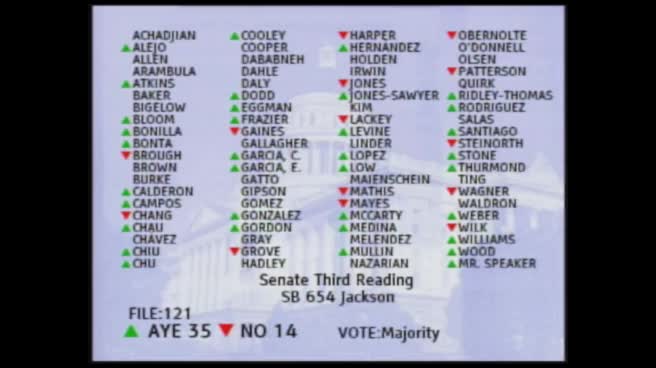 2MIN
Assembly Floor
 2MIN
Senate Floor
 8MIN
Assembly Floor
 15MIN
Assembly Standing Committee on Natural Resources
Bill Author

Bill Co-Author(s):
