AB 2691: Property taxation: Monthly Property Tax Payment Program.
- Session Year: 2015-2016
- House: Assembly
- Latest Version Date: 2016-08-23
Existing property tax law specifies that all taxes on personal property and half of the taxes on real property are due and payable each November 1 and provides that these taxes are delinquent if not paid by each December 10. Existing property tax law specifies that the second half of taxes on real property is due each February 1 and provides that these taxes are delinquent if not paid by each April 10.
This bill would authorize a county board of supervisors to implement a Monthly Property Tax Payment Program to authorize qualified taxpayers, as defined, to pay the property tax owed on the qualified taxpayers principal place of residence in monthly installments. The bill would authorize the ordinance or resolution implementing the program to set forth specific procedures for purposes of determining delinquency and default, as specified. The bill would require the monthly property tax payment to be allocated among the county, cities, special districts, and school entities in proportion to the amounts of ad valorem property tax revenue otherwise allocated among these entities. The bill would exclude from its provisions property for which an escrow account is established, as provided.
Existing property tax law specifies that all taxes on personal property and half of the taxes on real property are due and payable each November 1 and provides that these taxes are delinquent if not paid by each December 10. Existing property tax law specifies that the second half of taxes on real property is due each February 1 and provides that these taxes are delinquent if not paid by each April 10.
This bill would authorize a county board of supervisors to implement a Monthly Property Tax Payment Program to authorize qualified taxpayers, as defined, to pay the property tax owed on the qualified taxpayers principal place of residence in monthly installments. The bill would authorize the ordinance or resolution implementing the program to set forth specific procedures for purposes of determining delinquency and default, as specified. The bill would require the monthly property tax payment to be allocated among the county, cities, special districts, and school entities in proportion to the amounts of ad valorem property tax revenue otherwise allocated among these entities. The bill would exclude from its provisions property for which an escrow account is established, as provided.
Existing property tax law specifies that all taxes on personal property and half of the taxes on real property are due and payable each November 1 and provides that these taxes are delinquent if not paid by each December 10. Existing property tax law specifies that the second half of taxes on real property is due each February 1 and provides that these taxes are delinquent if not paid by each April 10.
This bill would authorize a county board of supervisors to implement a Monthly Property Tax Payment Program to authorize qualified taxpayers, as defined, to pay the property tax owed on the qualified taxpayers principal place of residence in monthly installments. The bill would authorize the ordinance or resolution implementing the program to set forth specific procedures for purposes of determining delinquency and default, as specified. The bill would require the monthly property tax payment to be allocated among the county, cities, and special districts special districts, and school entities in proportion to the amounts of ad valorem property tax revenue otherwise allocated among these local agencies. entities.
Existing property tax law specifies that all taxes on personal property and half of the taxes on real property are due and payable each November 1 and provides that these taxes are delinquent if not paid by each December 10. Existing property tax law specifies that the second half of taxes on real property is due each February 1 and provides that these taxes are delinquent if not paid by each April 10.
This bill would authorize a county board of supervisors to implement a Monthly Property Tax Payment Program to authorize qualified taxpayers, as defined, to pay the ad valorem property tax owed on the qualified taxpayers principal place of residence in monthly installments. The bill would authorize the ordinance or resolution implementing the program to set forth specific procedures for purposes of determining delinquency and default, as specified. The bill would require the monthly property tax payment to be allocated among the county, cities, and special districts in proportion to the amounts of ad valorem property tax revenue otherwise allocated among these local agencies.
Existing property tax law specifies that all taxes on personal property and half of the taxes on real property are due and payable each November 1 and provides that these taxes are delinquent if not paid by each December 10. Existing property tax law specifies that the second half of taxes on real property are is due each February 1 and provides that these taxes are delinquent if not paid by each April 10.
This bill would authorize a county board of supervisors to implement a Senior Citizen Monthly Property Tax Payment Program to authorize qualified taxpayers, as defined, to pay the ad valorem property tax owed on the qualified taxpayers principal place of residence in monthly installments.
Existing property tax law specifies that all taxes on personal property and half of the taxes on real property are due and payable each November 1 and provides that these taxes are delinquent if not paid by each December 10. Existing property tax law specifies that the second half of taxes on real property are due each February 1 and provides that these taxes are delinquent if not paid by each April 10.
This bill would authorize a county board of supervisors to implement a Senior Citizen Monthly Property Tax Payment Program to authorize qualified taxpayers, as defined, to pay the ad valorem property tax owed on the qualified taxpayers principal place of residence in monthly installments.
Existing law, until January 1, 2020, establishes the California Board of Accountancy within the Department of Consumer Affairs. The board is responsible for the licensure and regulation of accountants and consists of licensed and nonlicensed appointed members.
This bill would make nonsubstantive changes to the provision establishing the board.
Existing law, until January 1, 2020, establishes the California Board of Accountancy within the Department of Consumer Affairs. The board is responsible for the licensure and regulation of accountants and consists of licensed and nonlicensed appointed members.
This bill would make nonsubstantive changes to the provision establishing the board.
(a)Notwithstanding any other law, a county board of supervisors may adopt a resolution or ordinance to implement a Monthly Property Tax Payment Program, to authorize qualified taxpayers to pay the property tax owed on the qualified taxpayers principal place of residence in monthly installments.
(b)The ordinance or resolution implementing the program may set forth specific procedures for the tax collector to deem as timely monthly installments paid late but within a specified grace period due to reasonable cause for purposes of determining delinquency and default.
(c)The monthly property tax payment shall be allocated among the county, cities, special districts, and school entities in proportion to the amounts of ad valorem property tax revenue otherwise allocated among these entities.
(d)For purposes of this section, both of the following shall apply:
(1)Qualified taxpayer means a taxpayer who is either or both of the following:
(A)A person who is 62 years of age or older.
(B)A person receiving supplemental security income for a disability, regardless of age.
(2)School entities has the same meaning as that term is defined in subdivision (f) of Section 95.
(e)This section shall not apply to property for which an escrow account, as defined in Section 1024.17 of Title 12 of the Code of Federal Regulations, is established.
(a)Notwithstanding any other law, a county board of supervisors may adopt a resolution or ordinance to implement a Monthly Property Tax Payment Program, to authorize qualified taxpayers to pay the property tax owed on the qualified taxpayers principal place of residence in monthly installments.
(b)The ordinance or resolution implementing the program may set forth specific procedures for the tax collector to deem as timely monthly installments paid late but within a specified grace period due to reasonable cause for purposes of determining delinquency and default.
(c)The monthly property tax payment shall be allocated among the county, cities, special districts, and school entities in proportion to the amounts of ad valorem property tax revenue otherwise allocated among these entities.
(d)For purposes of this section, both of the following shall apply:
(1)qualified taxpayers Qualified taxpayer means a taxpayer who is any either or both of the following:
(A)A person who is 62 years of age or older.
(B)A person receiving supplemental security income for a disability, regardless of age.
(2)School entities has the same meaning as that term is defined in subdivision (f) of Section 95.
(e)This section shall not apply to property for which an escrow account, as defined in Section 1024.17 of Title 12 of the Code of Federal Regulations, is established.
(a)Notwithstanding any other law, a county board of supervisors may adopt a resolution or ordinance to implement a Monthly Property Tax Payment Program, to authorize qualified taxpayers to pay the property tax owed on the qualified taxpayers principal place of residence in monthly installments.
(b)The ordinance or resolution implementing the program may set forth specific procedures for the tax collector to deem as timely monthly installments paid late but within a specified grace period due to reasonable cause for purposes of determining delinquency and default.
(c)The monthly property tax payment shall be allocated among the county, cities, and special districts special districts, and school entities in proportion to the amounts of ad valorem property tax revenue otherwise allocated among these local agencies. entities.
(d)For purposes of this section, qualified both of the following shall apply:
(1)qualified taxpayers means a taxpayer who is any or both of the following:
(1)
(A)A person who is 62 years of age or older.
(2)
(B)A person receiving supplemental security income for a disability, regardless of age.
(2)School entities has the same meaning as that term is defined in subdivision (f) of Section 95.
(a)Notwithstanding any other law, a county board of supervisors may adopt a resolution or ordinance to implement a Monthly Property Tax Payment Program, to authorize qualified taxpayers to pay the ad valorem property tax owed on the qualified taxpayers principal place of residence in monthly installments.
(b)The ordinance or resolution implementing the program may set forth specific procedures for the tax collector to deem as timely monthly installments paid late but within a specified grace period due to reasonable cause for purposes of determining delinquency and default.
(c)The monthly property tax payment shall be allocated among the county, cities, and special districts in proportion to the amounts of ad valorem property tax revenue otherwise allocated among these local agencies.
(b)
(d)For purposes of this section, qualified taxpayers means a taxpayer who is any or both of the following:
(1)A person who is 62 years of age or older.
(2)A person receiving supplemental security income for a disability, regardless of age.
(a)Notwithstanding any other law, a county board of supervisors may adopt a resolution or ordinance to implement a Senior Citizen Monthly Property Tax Payment Program, to authorize qualified taxpayers to pay the ad valorem property tax owed on the qualified taxpayers principal place of residence in monthly installments.
(b)For purposes of this section, qualified taxpayers means a taxpayer who is 55 years of age or older. any or both of the
following: (1)A person who is 62 years of age or older. (2)A person receiving supplemental security income for a disability, regardless of age.
(a)Notwithstanding any other law, a county board of supervisors may adopt a resolution or ordinance to implement a Senior Citizen Monthly Property Tax Payment Program, to authorize qualified taxpayers to pay the ad valorem property tax owed on the qualified taxpayers principal place of residence in monthly installments.
(b)For purposes of this section, qualified taxpayers means a taxpayer who is 55 years of age or older.
SECTION 1.Section 5000 of the Business and Professions Code is amended to read:5000.(a)There is in the Department of Consumer Affairs the California Board of Accountancy, which consists of 15 members, 7 of whom shall be licensees, and 8 of whom shall be public members who shall not be licentiates of the board or registered by the board. The board has the powers and duties conferred by this chapter.
(b)The Governor shall appoint four of the public members, and the seven licensee members as provided in this section. The Senate Committee on Rules and the Speaker of the Assembly shall each appoint two public members. In appointing the seven licensee members, the Governor shall appoint individuals representing a cross section of the accounting profession.
(c)(1)This section shall remain in effect only until January 1, 2020, and as of that date is repealed, unless a later enacted statute, that is enacted before January 1, 2020, deletes or extends that date.
(2)Notwithstanding any other provision of law, the repeal of this section renders the board subject to review by the appropriate policy committees of the Legislature. However, the review of the board shall be limited to reports or studies specified in this chapter and those issues identified by the appropriate policy committees of the Legislature and the board regarding the implementation of new licensing requirements.
(a)There is in the Department of Consumer Affairs the California Board of Accountancy, which consists of 15 members, 7 of whom shall be licensees, and 8 of whom shall be public members who shall not be licentiates of the board or registered by the board. The board has the powers and duties conferred by this chapter.
(b)The Governor shall appoint four of the public members, and the seven licensee members as provided in this section. The Senate Committee on Rules and the Speaker of the Assembly shall each appoint two public members. In appointing the seven licensee members, the Governor shall appoint individuals representing a cross section of the accounting profession.
(c)(1)This section shall remain in effect only until January 1, 2020, and as of that date is repealed, unless a later enacted statute, that is enacted before January 1, 2020, deletes or extends that date.
(d)
(2)Notwithstanding any other provision of law, the repeal of this section renders the board subject to review by the appropriate policy committees of the Legislature. However, the review of the board shall be limited to reports or studies specified in this chapter and those issues identified by the appropriate policy committees of the Legislature and the board regarding the implementation of new licensing requirements.
|
Date
|
Status
|
|---|---|
| May 12, 2016 | Referred to Com. on GOV. & F. |
| Aug 29, 2016 | Enrolled and presented to the Governor at 4 p.m. |
| Aug 22, 2016 | Senate amendments concurred in. To Engrossing and Enrolling. (Ayes 78. Noes 0. Page 6037.). |
| Aug 22, 2016 | Senate amendments concurred in. To Engrossing and Enrolling. |
| Aug 16, 2016 | In Assembly. Concurrence in Senate amendments pending. May be considered on or after August 18 pursuant to Assembly Rule 77. |
| Aug 15, 2016 | Read third time. Passed. Ordered to the Assembly. (Ayes 37. Noes 0.). |
| Aug 15, 2016 | Read third time. Passed. Ordered to the Assembly. (Ayes 37. Noes 0. Page 4968.). |
| Aug 15, 2016 | Read third time. Passed. Ordered to the Assembly. |
| Aug 2, 2016 | Read second time. Ordered to third reading. |
| Aug 1, 2016 | Read third time and amended. Ordered to second reading. |
| Jun 22, 2016 | Read second time. Ordered to third reading. |
| Jun 21, 2016 | Read third time and amended. Ordered to second reading. |
| Jun 15, 2016 | Read second time and amended. Ordered to third reading. |
| Jun 14, 2016 | From committee: Amend, and do pass as amended. (Ayes 6. Noes 1.) (June 8). |
| Feb 19, 2016 | Introduced. To print. |
| May 2, 2016 | Read third time. Passed. Ordered to the Senate. (Ayes 75. Noes 0. Page 4623.) |
| May 2, 2016 | Read third time. Passed. Ordered to the Senate. |
| May 2, 2016 | In Senate. Read first time. To Com. on RLS. for assignment. |
| Apr 27, 2016 | Read second time. Ordered to third reading. |
| Apr 26, 2016 | From committee: Do pass. (Ayes 9. Noes 0.) (April 25). |
| Apr 20, 2016 | Re-referred to Com. on REV. & TAX. |
| Apr 19, 2016 | From committee chair, with author's amendments: Amend, and re-refer to Com. on REV. & TAX. Read second time and amended. |
| Apr 11, 2016 | In committee: Set, first hearing. Hearing canceled at the request of author. |
| Mar 28, 2016 | Re-referred to Com. on REV. & TAX. |
| Mar 18, 2016 | From committee chair, with author's amendments: Amend, and re-refer to Com. on REV. & TAX. Read second time and amended. |
| Mar 17, 2016 | Referred to Com. on REV. & TAX. |
| Feb 22, 2016 | Read first time. |
| Feb 21, 2016 | From printer. May be heard in committee March 22. |
|
Date
|
Description
|
Location
|
Votes
|
|
|---|---|---|---|---|
| Aug 22, 2016 | AB 2691 HOLDEN Concurrence in Senate Amendments | Assembly Floor |
Passed |
|
| Aug 15, 2016 | Assembly 3rd Reading AB2691 Holden By Hertzberg | Senate Floor |
Passed |
|
| Jun 8, 2016 | Do pass as amended | Senate Standing Committee on Governance and Finance |
Passed |
|
| May 2, 2016 | AB 2691 HOLDEN Assembly Third Reading | Assembly Floor |
Passed |
|
| Apr 25, 2016 | Do pass. | Assembly Standing Committee on Revenue and Taxation |
Passed |
This list shows positions taken on this bill by organizations on the date displayed, which is linked to the original source.
Positions by individuals are not included.
|
Organization
|
Position
|
Date
|
|---|---|---|
| Association of County Auditors Part | * Against | Jun 8, 2016 |
| California Association of County Treasurer-Tax Collectors | ** Against | Aug 15, 2016 |
| California State Retirees | ** Support | Aug 15, 2016 |
| Contra Costa County | * Against | Jun 8, 2016 |
| Howard Jarvis Taxpayers Association | ** Support | Aug 15, 2016 |
| Sonoma County | * Against | Jun 8, 2016 |
| State Association Of County Auditors | ** Against | Aug 15, 2016 |
GOVERNOR'S VETO
GV Bill Id:AB 2691
Author:(Holden)
As Enrolled Ver:August 29, 2016
2/3
ASSEMBLY: | 75-0 | (May 2, 2016) | SENATE: | 37-0 | (August 15, 2016) |
ASSEMBLY: | 78-0 | (August 22, 2016) |
|
|
Original Committee Reference: REV. & TAX.
SUMMARY: Authorizes a county board of supervisors to adopt a resolution or ordinance allowing certain taxpayers to pay their property tax in monthly installments.
The Senate amendments:
- Allow the ordinance or resolution to set forth specific procedures for the tax collector to deem as timely monthly installments paid late but within a specified grace period for purposes of determining delinquency and default.
- Require the monthly property tax payment to be allocated among the county, cities, special districts, and school entities in proportion to the amounts of property tax revenue otherwise allocated.
- Define "school entities" as having the same meaning as Revenue & Taxation Code Section 95(f).
- Provide that this bill does not apply to property for which an escrow account is established.
EXISTING LAW:
- Provides that all property is taxable, unless otherwise provided by the California Constitution or federal laws (California Constitution Article XIII, Section 1(a)). Limits ad valorem taxes on real property to 1% of the full cash value of that property (California Constitution Article XIII A, Section 1(a) (Proposition 13 of 1978)).
- Requires an annual payment of property tax and provides that unpaid taxes become delinquent and subject to penalties and costs.
- Specifies that half of the property tax on real property is due and payable November 1, and the second half is due and payable on February 1.
- Provides that the entire tax on real property may be paid when the first installment is due and payable or at any time thereafter until the properties on the current roll become tax defaulted. The second installment may be paid separately only if the first installment has been paid.
AS PASSED BY THE ASSEMBLY, this bill:
- Authorized a county board of supervisors to adopt a resolution or ordinance to implement a Monthly Property Tax Payment Program to allow a qualified taxpayer to pay the ad valorem property tax owed on the qualified taxpayer's principal residence in monthly installments.
- Defined a "qualified taxpayer" as a taxpayer who is any or both of the following:
- A person who is 62 years of age or older.
- A person receiving supplemental security income for a disability, regardless of age.
FISCAL EFFECT: None
COMMENTS:
- Proposition 13. Much of the law pertaining to property taxation is prescribed by Articles XIII and XIII A (commonly known as "Proposition 13") of the California Constitution. Proposition 13 was added to the California Constitution in June 1978 and was most recently amended by Proposition 26 in 2010. Proposition 13 was designed to provide real property tax relief by imposing a set of interlocking limitations upon the assessment and taxing powers of state and local governments.[1] California Constitution Article XIII A, Section 1, states that, as a general rule, the maximum amount of any ad valorem tax on real property may not exceed 1% of the property's full cash value, as adjusted for the lesser of inflation or 2% per year. The term "full cash value" is defined as the "county assessor's valuation of real property as shown on the 1975-1976 tax bill" or thereafter "the appraised value of real property when purchased, newly constructed, or a change in ownership has occurred after the 1975 assessment" (California Constitution Article XIII A, Sections 1 and 2).
- Property Tax Payments: Due Dates. Generally, property taxes on the secured roll are due in two installments: on November 1 and February 1. Property taxes that are due but unpaid after December 10 or April 10 become delinquent and incur a 10% penalty per installment. After April 10, the taxpayer is also charged a $10 fee for preparation of his/her delinquent tax records. If there are any unpaid taxes after June 30, then the property taxes are declared to be in default and incur additional penalties at the rate of 1.5% per month of the unpaid taxes (18% per year), as well as a $15 redemption fee.
- Is There a Problem? According to this bill's author, many seniors, particularly those on fixed incomes, have trouble saving up for a large expenditure such as an annual property tax bill. While California is among the states with the lowest property tax rates, a large number of seniors who are homeowners still struggle to make ends meet during retirement. The Economic Policy Institute has described the status of these seniors as "economically vulnerable". Nearly one-half of the elderly population in the United States, or 48%, falls within this category.
- Proposed Solution: Monthly Property Tax Program. This bill proposes to authorize a county board of supervisors to create a Monthly Property Tax Payment program for seniors and disabled individuals, regardless of age. In essence, the program would allow those property owners to pay their property tax bill in monthly installments instead of bi-annual payments. Property for which an escrow account is established would not qualify for the program.
- Implementation Issues. County tax collectors currently send only two bills per year, one for each installment, so administering a monthly payment system would increase printing, mailing, and banking costs. Information technology may also need to be reprogrammed as most of the state's tax collectors use the same collections software built around the two-installment system, which does not currently allow for monthly payments. Because this bill allows, but does not require, counties to allow monthly payments, this bill does not obligate the state to pay these costs; instead, tax collectors would have to ask their boards of supervisors for funding to implement the program.
I am returning Assembly Bill 2691 without my signature.
This bill authorizes a county board of supervisors to let qualified taxpayers pay their property taxes in monthly, rather than biannual, payments.
County supervisors, tax collectors, and auditors across the state oppose this measure due to the significant costs to upgrade tax collection systems. I am not convinced that changing these current systems, many of which have been in place for decades, is worth the cost.
Analysis Prepared by: Irene Ho / REV. & TAX. / (916) 319-2098 FN: 0005069
Since any tax savings resulting from the real property tax limitations provided in California Constitution Article XIII A, Sections 1 and 2 could be effectively eliminated through the imposition of additional state and local taxes, Sections 3 and 4 place additional restrictions upon the imposition of any such taxes. See Amador Valley Joint Union High Sch. Dist. v. State Bd. of Equalization, (1978) 22 Cal.3d 208. ↑
CONCURRENCE IN SENATE AMENDMENTS
CSA1 Bill Id:AB 2691
Author:(Holden)
As Amended Ver:August 1, 2016
Majority vote
ASSEMBLY: | 75-0 | (May 2, 2016) | SENATE: | 37-0 | (August 15, 2016) |
Original Committee Reference: REV. & TAX.
SUMMARY: Authorizes a county board of supervisors to adopt a resolution or ordinance allowing certain taxpayers to pay their property tax in monthly installments.
The Senate amendments:
- Allow the ordinance or resolution to set forth specific procedures for the tax collector to deem as timely monthly installments paid late but within a specified grace period for purposes of determining delinquency and default.
- Require the monthly property tax payment to be allocated among the county, cities, special districts, and school entities in proportion to the amounts of property tax revenue otherwise allocated.
- Define "school entities" as having the same meaning as Revenue & Taxation Code Section 95(f).
- Provide that this bill does not apply to property for which an escrow account is established.
EXISTING LAW:
- Provides that all property is taxable, unless otherwise provided by the California Constitution or federal laws [California Constitution Article XIII, Section 1(a)]. Limits ad valorem taxes on real property to 1% of the full cash value of that property [California Constitution Article XIII A, Section 1(a) (Proposition 13 of 1978)].
- Requires an annual payment of property tax and provides that unpaid taxes become delinquent and subject to penalties and costs.
- Specifies that half of the property tax on real property is due and payable November 1, and the second half is due and payable on February 1.
- Provides that the entire tax on real property may be paid when the first installment is due and payable or at any time thereafter until the properties on the current roll become tax defaulted. The second installment may be paid separately only if the first installment has been paid.
AS PASSED BY THE ASSEMBLY, this bill:
- Authorized a county board of supervisors to adopt a resolution or ordinance to implement a Monthly Property Tax Payment Program to allow a qualified taxpayer to pay the ad valorem property tax owed on the qualified taxpayer's principal residence in monthly installments.
- Defined a "qualified taxpayer" as a taxpayer who is any or both of the following:
- A person who is 62 years of age or older.
- A person receiving supplemental security income for a disability, regardless of age.
FISCAL EFFECT: None
COMMENTS:
- Proposition 13. Much of the law pertaining to property taxation is prescribed by Articles XIII and XIII A (commonly known as "Proposition 13") of the California Constitution. Proposition 13 was added to the California Constitution in June 1978 and was most recently amended by Proposition 26 in 2010. Proposition 13 was designed to provide real property tax relief by imposing a set of interlocking limitations upon the assessment and taxing powers of state and local governments.[1] California Constitution Article XIII A, Section 1, states that, as a general rule, the maximum amount of any ad valorem tax on real property may not exceed 1% of the property's full cash value, as adjusted for the lesser of inflation or 2% per year. The term "full cash value" is defined as the "county assessor's valuation of real property as shown on the 1975-1976 tax bill" or thereafter "the appraised value of real property when purchased, newly constructed, or a change in ownership has occurred after the 1975 assessment" [California Constitution Article XIII A, Sections 1 and 2].
- Property Tax Payments: Due Dates. Generally, property taxes on the secured roll are due in two installments: on November 1 and February 1. Property taxes that are due but unpaid after December 10 or April 10 become delinquent and incur a 10% penalty per installment. After April 10, the taxpayer is also charged a $10 fee for preparation of his/her delinquent tax records. If there are any unpaid taxes after June 30, then the property taxes are declared to be in default and incur additional penalties at the rate of 1.5% per month of the unpaid taxes (18% per year), as well as a $15 redemption fee.
- Is There a Problem? According to this bill's author, many seniors, particularly those on fixed incomes, have trouble saving up for a large expenditure such as an annual property tax bill. While California is among the states with the lowest property tax rates, a large number of seniors who are homeowners still struggle to make ends meet during retirement. The Economic Policy Institute has described the status of these seniors as "economically vulnerable". Nearly one-half of the elderly population in the United States, or 48%, falls within this category.
- Proposed Solution: Monthly Property Tax Program. This bill proposes to authorize a county board of supervisors to create a Monthly Property Tax Payment program for seniors and disabled individuals, regardless of age. In essence, the program would allow those property owners to pay their property tax bill in monthly installments instead of bi-annual payments. Property for which an escrow account is established would not qualify for the program.
- Implementation Issues. County tax collectors currently send only two bills per year, one for each installment, so administering a monthly payment system would increase printing, mailing, and banking costs. Information technology may also need to be reprogrammed as most of the state's tax collectors use the same collections software built around the two-installment system, which does not currently allow for monthly payments. Because this bill allows, but does not require, counties to allow monthly payments, this bill does not obligate the state to pay these costs; instead, tax collectors would have to ask their boards of supervisors for funding to implement the program.
Analysis Prepared by: Irene Ho / REV. & TAX. / (916) 319-2098 FN: 0004278
Since any tax savings resulting from the real property tax limitations provided in California Constitution Article XIII A, Sections 1 and 2 could be effectively eliminated through the imposition of additional state and local taxes, Sections 3 and 4 place additional restrictions upon the imposition of any such taxes. See Amador Valley Joint Union High Sch. Dist. v. State Bd. of Equalization, (1978) 22 Cal.3d 208. ↑
Office of Senate Floor Analyses (916) 651-1520 Fax: (916) 327-4478 | AB |
THIRD READING
Bill No: AB 2691
:
SENATE GOVERNANCE & FIN. COMMITTEE: 6-1, 6/8/16
AYES: Hertzberg, Nguyen, Beall, Hernandez, Lara, Pavley
NOES: Moorlach
ASSEMBLY FLOOR: 75-0, 5/2/16 - See last page for vote
DIGEST: This bill allows counties boards of supervisors to implement monthly property tax payment programs.
Senate Floor Amendments of 8/1/16 add a provision that states that the bill does not apply to escrow accounts, as defined.
Senate Floor Amendments of 6/21/16 add references to school entities for purposes of the auditor’s allocation of property tax revenue.
Existing law:
- Sets January 1 of each year as the “lien date,” or the date upon which the assessor values property, and property taxes are imposed on its owner in the form of a lien against the property.
- Requires tax collectors to send bills to taxpayers on the secured roll by November 1.
- Requires taxpayers must pay their bills in two installments: the first on November 1, which becomes delinquent December 10, and the second on February 1, with delinquency occurring on April 10, but allows taxpayers to pay in full in the first installment.
- Imposes a 10% penalty on each amount, and allows counties to also apply administrative charges.
- Provides that a property becomes tax defaulted if taxes remain unpaid as of June 30th, triggering redemption penalties of 1.5% a month until the full amount is paid.
- Allows the tax collector with approval by the board of supervisors to sell a tax defaulted residential property to satisfy back taxes, penalties, costs, and other liens; for commercial property, the tax collector can do so after three years.
- Requires counties to allow taxpayers to pay in installments by making an initial payment of 20% of the amount outstanding, but only after a property becomes tax defaulted. Under an installment plan, taxpayers must make one payment a year for five years, in addition to paying current taxes. Failure to make timely payments on an installment plan again places the property in default; however, taxpayers can enter into another installment plan at the beginning of the next fiscal year.
- Allows tax collectors to also accept partial payments from delinquent taxpayers if authorized to do so by the board of supervisors.
This bill:
- Authorizes a county board of supervisors to adopt a resolution or ordinance to implement a Monthly Property Tax Payment Program, where qualified taxpayers can instead pay taxes on a monthly basis.
- Allows the ordinance or resolution authorizing the program to set forth specific procedures for the tax collector to deem as timely filed monthly installments paid late but within a specified grace period due to reasonable cause for purposes of determining delinquency and default.
- Directs the auditor to apportion property tax payments to cities, counties, special districts and school entities on a proportional basis based on existing law.
- Defines as “qualified taxpayers” those individuals who are 62 years of age or older, or who receive supplemental security income.
- Defines “school entities” by reference to the Revenue and Taxation Code.
- States that the bill not apply to escrow accounts, as defined in Section 1024.17 of Title 12 of the Code of Federal Regulations.
Background
County tax collectors administer the property tax collection, billing, and tax sale process. County tax collectors currently send only two bills per year, one for each installment, so administering a monthly payment system would increase printing, mailing, and banking costs. Information technology may also need to be reprogrammed, because most of the state’s tax collectors use the same collections software built around the two-installment system, which does not currently allow for monthly payments. Because AB 2691 allows, but does not require, counties to allow monthly payments, this bill does not obligate the state to pay these costs; instead, tax collectors would have to ask their boards of supervisors for funding to implement the program.
AB 2691 allows counties to enact ordinances or resolutions implementing a program for eligible taxpayers to pay property taxes in monthly installments. However, shifting the payment schedule from twice per year to monthly doesn’t affect the amount due, or positively impact the taxpayer’s ability to pay. For low-income home-owning taxpayers, the State Controller administers the Property Tax Postponement Program, which allows the state to loan funds to individuals over the age of 62 or disabled persons with less than $39,000 in income per year to pay their property taxes to the county tax collector. The Controller secures repayment by recording a lien against the claimant’s property, which is satisfied when the home is sold or refinanced. As liens are repaid, revenue flows back to the Controller, who in turn uses these funds to pay property taxes for new applicants, up to $20 million annually; the Controller must shift any amounts received above that amount to the General Fund.
FISCAL EFFECT: Appropriation: Fiscal Com.: Local:
California State Retirees
Howard Jarvis Taxpayers Association
California Association of County Treasurer-Tax Collectors
State Association of County Auditors
ARGUMENTS IN SUPPORT: According to the author, “Assembly Bill 2691 would authorize a county board of supervisors to implement a Monthly Property Tax Payment Program. The Program would allow qualified individuals living on a fixed-income to pay their property tax in monthly installments. The individual would have to be 62 years of age or older or be receiving supplemental security income for a disability, regardless of age. By providing an option to pay property taxes in lower monthly installments, AB 2691 makes it easier for individuals on fixed incomes to pay the principal of the tax steadily, rather than face the uncertainty of paying a month’s worth of Social Security Income. This bill provides the power to the county board of supervisors to implement such a program.”
ARGUMENTS IN OPPOSITION: According to the California Association of County Treasurer-Tax Collectors, “The use of the word installment suggests that the tax collector has the capacity to send out monthly bills requiring that month’s payment and outstanding balances; tax collectors do not have this capacity – this would require a significant investment at the Board of Supervisors to upgrade tax collection systems to produce those mailings and handle postage. Many counties’ systems are decades old and predicated on the December 10 and April 10 collection dates. Changes to these systems take enormous time and resources that the Tax Collector must request from the County’s General Fund, and compete with public safety, health, and public works projects for local resources. There are existing options to assist seniors who wish to remain current on their taxes without creating new local, publicly funded programs.”
ASSEMBLY FLOOR: 75-0, 5/2/16
AYES: Achadjian, Alejo, Travis Allen, Arambula, Atkins, Baker, Bigelow, Bloom, Bonilla, Bonta, Brough, Brown, Burke, Calderon, Campos, Chang, Chau, Chávez, Chiu, Chu, Cooley, Cooper, Dababneh, Dahle, Daly, Dodd, Eggman, Frazier, Gallagher, Cristina Garcia, Eduardo Garcia, Gatto, Gipson, Gomez, Gonzalez, Gray, Grove, Hadley, Harper, Holden, Irwin, Jones, Jones-Sawyer, Kim, Lackey, Levine, Linder, Lopez, Low, Maienschein, Mathis, Mayes, McCarty, Medina, Melendez, Mullin, Nazarian, Obernolte, O'Donnell, Olsen, Patterson, Quirk, Rodriguez, Salas, Santiago, Steinorth, Mark Stone, Thurmond, Ting, Wagner, Waldron, Weber, Wilk, Wood, Rendon
NO VOTE RECORDED: Beth Gaines, Gordon, Roger Hernández, Ridley-Thomas, Williams
8/3/16 19:38:12
**** END ****
Office of Senate Floor Analyses (916) 651-1520 Fax: (916) 327-4478 | AB |
THIRD READING
Bill No: AB 2691
:
SENATE GOVERNANCE & FIN. COMMITTEE: 6-1, 6/8/16
AYES: Hertzberg, Nguyen, Beall, Hernandez, Lara, Pavley
NOES: Moorlach
ASSEMBLY FLOOR: 75-0, 5/2/16 - See last page for vote
DIGEST: This bill allows counties boards of supervisors to implement monthly property tax payment programs.
Senate Floor Amendments of 6/21/16 add references to school entities for purposes of the auditor’s allocation of property tax revenue.
Existing law:
- Sets January 1 of each year as the “lien date,” or the date upon which the assessor values property, and property taxes are imposed on its owner in the form of a lien against the property.
- Requires tax collectors to send bills to taxpayers on the secured roll by November 1.
- Requires taxpayers must pay their bills in two installments: the first on November 1, which becomes delinquent December 10, and the second on February 1, with delinquency occurring on April 10, but allows taxpayers to pay in full in the first installment.
- Imposes a 10% penalty on each amount, and allows counties to also apply administrative charges.
- Provides that a property becomes tax defaulted if taxes remain unpaid as of June 30th, triggering redemption penalties of 1.5% a month until the full amount is paid.
- Allows the tax collector with approval by the board of supervisors to sell a tax defaulted residential property to satisfy back taxes, penalties, costs, and other liens; for commercial property, the tax collector can do so after three years.
- Requires counties to allow taxpayers to pay in installments by making an initial payment of 20% of the amount outstanding, but only after a property becomes tax defaulted. Under an installment plan, taxpayers must make one payment a year for five years, in addition to paying current taxes. Failure to make timely payments on an installment plan again places the property in default; however, taxpayers can enter into another installment plan at the beginning of the next fiscal year.
- Allows tax collectors to also accept partial payments from delinquent taxpayers if authorized to do so by the board of supervisors.
This bill:
- Authorizes a county board of supervisors to adopt a resolution or ordinance to implement a Monthly Property Tax Payment Program, where qualified taxpayers can instead pay taxes on a monthly basis.
- Allows the ordinance or resolution authorizing the program to set forth specific procedures for the tax collector to deem as timely filed monthly installments paid late but within a specified grace period due to reasonable cause for purposes of determining delinquency and default.
- Directs the auditor to apportion property tax payments to cities, counties, special districts and school entities on a proportional basis based on existing law.
- Defines as “qualified taxpayers” those individuals who are 62 years of age or older, or who receive supplemental security income.
- Defines “school entities” by reference to the Revenue and Taxation Code.
Background
County tax collectors administer the property tax collection, billing, and tax sale process. County tax collectors currently send only two bills per year, one for each installment, so administering a monthly payment system would increase printing, mailing, and banking costs. Information technology may also need to be reprogrammed, because most of the state’s tax collectors use the same collections software built around the two-installment system, which does not currently allow for monthly payments. Because AB 2691 allows, but does not require, counties to allow monthly payments, this bill does not obligate the state to pay these costs; instead, tax collectors would have to ask their boards of supervisors for funding to implement the program.
AB 2691 allows counties to enact ordinances or resolutions implementing a program for eligible taxpayers to pay property taxes in monthly installments. However, shifting the payment schedule from twice per year to monthly doesn’t affect the amount due, or positively impact the taxpayer’s ability to pay. For low-income home-owning taxpayers, the State Controller administers the Property Tax Postponement Program, which allows the state to loan funds to individuals over the age of 62 or disabled persons with less than $39,000 in income per year to pay their property taxes to the county tax collector. The Controller secures repayment by recording a lien against the claimant’s property, which is satisfied when the home is sold or refinanced. As liens are repaid, revenue flows back to the Controller, who in turn uses these funds to pay property taxes for new applicants, up to $20 million annually; the Controller must shift any amounts received above that amount to the General Fund.
FISCAL EFFECT: Appropriation: Fiscal Com.: Local:
California State Retirees
Howard Jarvis Taxpayers Association
OPPOSITION: (Verified 6/21/16)
California Association of County Treasurer-Tax Collectors
State Association of County Auditors
ARGUMENTS IN SUPPORT: According to the author, “Assembly Bill 2691 would authorize a county board of supervisors to implement a Monthly Property Tax Payment Program. The Program would allow qualified individuals living on a fixed-income to pay their property tax in monthly installments. The individual would have to be 62 years of age or older or be receiving supplemental security income for a disability, regardless of age. By providing an option to pay property taxes in lower monthly installments, AB 2691 makes it easier for individuals on fixed incomes to pay the principal of the tax steadily, rather than face the uncertainty of paying a month’s worth of Social Security Income. This bill provides the power to the county board of supervisors to implement such a program.”
ARGUMENTS IN OPPOSITION: According to the California Association of County Treasurer-Tax Collectors, “The use of the word installment suggests that the tax collector has the capacity to send out monthly bills requiring that month’s payment and outstanding balances; tax collectors do not have this capacity – this would require a significant investment at the Board of Supervisors to upgrade tax collection systems to produce those mailings and handle postage. Many counties’ systems are decades old and predicated on the December 10 and April 10 collection dates. Changes to these systems take enormous time and resources that the Tax Collector must request from the County’s General Fund, and compete with public safety, health, and public works projects for local resources. There are existing options to assist seniors who wish to remain current on their taxes without creating new local, publicly funded programs.”
ASSEMBLY FLOOR: 75-0, 5/2/16
AYES: Achadjian, Alejo, Travis Allen, Arambula, Atkins, Baker, Bigelow, Bloom, Bonilla, Bonta, Brough, Brown, Burke, Calderon, Campos, Chang, Chau, Chávez, Chiu, Chu, Cooley, Cooper, Dababneh, Dahle, Daly, Dodd, Eggman, Frazier, Gallagher, Cristina Garcia, Eduardo Garcia, Gatto, Gipson, Gomez, Gonzalez, Gray, Grove, Hadley, Harper, Holden, Irwin, Jones, Jones-Sawyer, Kim, Lackey, Levine, Linder, Lopez, Low, Maienschein, Mathis, Mayes, McCarty, Medina, Melendez, Mullin, Nazarian, Obernolte, O'Donnell, Olsen, Patterson, Quirk, Rodriguez, Salas, Santiago, Steinorth, Mark Stone, Thurmond, Ting, Wagner, Waldron, Weber, Wilk, Wood, Rendon
NO VOTE RECORDED: Beth Gaines, Gordon, Roger Hernández, Ridley-Thomas, Williams
6/22/16 15:15:31
Office of Senate Floor Analyses (916) 651-1520 Fax: (916) 327-4478 | AB |
THIRD READING
Bill No: AB 2691
: 6/15/16 Senate
SENATE GOVERNANCE & FIN. COMMITTEE: 6-1, 6/8/16
AYES: Hertzberg, Nguyen, Beall, Hernandez, Lara, Pavley
NOES: Moorlach
ASSEMBLY FLOOR: 75-0, 5/2/16 - See last page for vote
DIGEST: This bill allows counties boards of supervisors to implement monthly property tax payment programs.
Existing law:
- Sets January 1 of each year as the “lien date,” or the date upon which the assessor values property, and property taxes are imposed on its owner in the form of a lien against the property.
- Requires tax collectors to send bills to taxpayers on the secured roll by November 1.
- Requires taxpayers must pay their bills in two installments: the first on November 1, which becomes delinquent December 10, and the second on February 1, with delinquency occurring on April 10, but allows taxpayers to pay in full in the first installment.
- Imposes a 10% penalty on each amount, and allows counties to also apply administrative charges.
- Provides that a property becomes tax defaulted if taxes remain unpaid as of June 30, triggering redemption penalties of 1.5% a month until the full amount is paid.
- Allows the tax collector with approval by the board of supervisors to sell a tax defaulted residential property to satisfy back taxes, penalties, costs, and other liens; for commercial property, the tax collector can do so after three years.
- Requires counties to allow taxpayers to pay in installments by making an initial payment of 20% of the amount outstanding, but only after a property becomes tax defaulted. Under an installment plan, taxpayers must make one payment a year for five years, in addition to paying current taxes. Failure to make timely payments on an installment plan again places the property in default; however, taxpayers can enter into another installment plan at the beginning of the next fiscal year.
- Allows tax collectors to also accept partial payments from delinquent taxpayers if authorized to do so by the board of supervisors.
This bill:
- Authorizes a county board of supervisors to adopt a resolution or ordinance to implement a Monthly Property Tax Payment Program, where qualified taxpayers can instead pay taxes on a monthly basis.
- Allows the ordinance or resolution authorizing the program to set forth specific procedures for the tax collector to deem as timely filed monthly installments paid late but within a specified grace period due to reasonable cause for purposes of determining delinquency and default.
- Directs the auditor to apportion property tax payments to each taxing agency on a proportional basis based on existing law.
- Defines as “qualified taxpayers” those individuals who are 62 years of age or older, or who receive supplemental security income.
Background
County tax collectors administer the property tax collection, billing, and tax sale process. County tax collectors currently send only two bills per year, one for each installment, so administering a monthly payment system would increase printing, mailing, and banking costs. Information technology may also need to be reprogrammed, because most of the state’s tax collectors use the same collections software built around the two-installment system, which does not currently allow for monthly payments. Because AB 2691 allows, but does not require, counties to allow monthly payments, this bill does not obligate the state to pay these costs; instead, tax collectors would have to ask their boards of supervisors for funding to implement the program.
AB 2691 allows counties to enact ordinances or resolutions implementing a program for eligible taxpayers to pay property taxes in monthly installments. However, shifting the payment schedule from twice per year to monthly doesn’t affect the amount due, or positively impact the taxpayer’s ability to pay. For low-income home-owning taxpayers, the State Controller administers the Property Tax Postponement Program, which allows the state to loan funds to individuals over the age of 62 or disabled persons with less than $39,000 in income per year to pay their property taxes to the county tax collector. The Controller secures repayment by recording a lien against the claimant’s property, which is satisfied when the home is sold or refinanced. As liens are repaid, revenue flows back to the Controller, who in turn uses these funds to pay property taxes for new applicants, up to $20 million annually; the Controller must shift any amounts received above that amount to the General Fund.
FISCAL EFFECT: Appropriation: Fiscal Com.: Local:
California State Retirees
Howard Jarvis Taxpayers Association
OPPOSITION: (Verified 6/15/16)
California Association of County Treasurer-Tax Collectors
State Association of County Auditors
ARGUMENTS IN SUPPORT: According to the author, “Assembly Bill 2691 would authorize a county board of supervisors to implement a Monthly Property Tax Payment Program. The Program would allow qualified individuals living on a fixed-income to pay their property tax in monthly installments. The individual would have to be 62 years of age or older or be receiving supplemental security income for a disability, regardless of age. By providing an option to pay property taxes in lower monthly installments, AB 2691 makes it easier for individuals on fixed incomes to pay the principal of the tax steadily, rather than face the uncertainty of paying a month’s worth of Social Security Income. This bill provides the power to the county board of supervisors to implement such a program.”
ARGUMENTS IN OPPOSITION: According to the California Association of County Treasurer-Tax Collectors, “The use of the word installment suggests that the tax collector has the capacity to send out monthly bills requiring that month’s payment and outstanding balances; tax collectors do not have this capacity – this would require a significant investment at the Board of Supervisors to upgrade tax collection systems to produce those mailings and handle postage. Many counties’ systems are decades old and predicated on the December 10 and April 10 collection dates. Changes to these systems take enormous time and resources that the Tax Collector must request from the County’s General Fund, and compete with public safety, health, and public works projects for local resources. There are existing options to assist seniors who wish to remain current on their taxes without creating new local, publicly funded programs.”
ASSEMBLY FLOOR: 75-0, 5/2/16
AYES: Achadjian, Alejo, Travis Allen, Arambula, Atkins, Baker, Bigelow, Bloom, Bonilla, Bonta, Brough, Brown, Burke, Calderon, Campos, Chang, Chau, Chávez, Chiu, Chu, Cooley, Cooper, Dababneh, Dahle, Daly, Dodd, Eggman, Frazier, Gallagher, Cristina Garcia, Eduardo Garcia, Gatto, Gipson, Gomez, Gonzalez, Gray, Grove, Hadley, Harper, Holden, Irwin, Jones, Jones-Sawyer, Kim, Lackey, Levine, Linder, Lopez, Low, Maienschein, Mathis, Mayes, McCarty, Medina, Melendez, Mullin, Nazarian, Obernolte, O'Donnell, Olsen, Patterson, Quirk, Rodriguez, Salas, Santiago, Steinorth, Mark Stone, Thurmond, Ting, Wagner, Waldron, Weber, Wilk, Wood, Rendon
NO VOTE RECORDED: Beth Gaines, Gordon, Roger Hernández, Ridley-Thomas, Williams
6/15/16 17:24:45
**** END ****
SENATE COMMITTEE ON GOVERNANCE AND FINANCE
Senator Robert M. Hertzberg, Chair
2015 - 2016 Regular
Bill No: | AB 2691 | Hearing Date: | 6/8/16 |
Author: | Holden | Tax Levy: | No |
Version: | 4/19/16 | Fiscal: | No |
Consultant: | Grinnell | ||
Property taxation: Monthly Property Tax Payment Program
Allows counties boards of supervisors to implement monthly property tax payment programs.
Background
State law sets January 1st of each year as the “lien date,” or the date upon which the assessor values property, and property taxes are imposed on its owner in the form of a lien against the property. For property on the secured roll, which generally includes real property such as land and buildings, tax collectors must send bills to taxpayers by November 1st. Taxpayers must pay their bills in two installments: the first on November 1st, which becomes delinquent December 10th, and the second on February 1st, with delinquency occurring on April 10th. Taxpayers can pay in full at the first installment. Taxpayers with mortgages who pay property taxes through impound accounts collected as part of monthly mortgage payments don’t pay according to this schedule; they receive informational copies of tax bills instead. Many other locally-imposed charges, fees, taxes, and assessments, such as Mello-Roos taxes, benefit assessments, and parcel taxes, are also collected as part of the property tax bill, and subject to the same restrictions and penalties.
When taxes become delinquent, state law imposes a 10% penalty on each amount, and counties can also apply administrative charges. The property becomes tax defaulted if taxes remain unpaid as of June 30th, triggering redemption penalties of 1.5% a month until the full amount is paid. After five years, the tax collector with approval by the Board of Supervisors can sell a tax defaulted residential property to satisfy back taxes, penalties, costs, and other liens; for commercial property, the tax collector can do so after three years. Counties allow taxpayers to pay in installments by making an initial payment of 20% of the amount outstanding, but only after a property becomes tax defaulted. Under an installment plan, taxpayers must make one payment a year for five years, in addition to paying current taxes. Failure to make timely payments on an installment plan again places the property in default; however, taxpayers can enter into another installment plan at the beginning of the next fiscal year. Additionally, tax collectors can also accept partial payments from delinquent taxpayers if authorized to do so by the board of supervisors. Seeking to allow taxpayers to pay in installments before delinquency, taxpayer groups want to authorize counties to adopt a resolution or ordinance to implement a program for taxpayers to pay property taxes in monthly installments.
Proposed Law
Assembly Bill 2691 authorizes a county board of supervisors to adopt a resolution or ordinance to implement a Month Property Tax Payment Program, where qualified taxpayers can instead pay ad valorem property taxes on a monthly basis. The measure defines as “qualified taxpayers” those individuals who are 62 years of age or older, or who receive supplemental security income.
State Revenue Impact
No estimate.
Comments
1. Purpose of the bill. According to the author, “Assembly Bill 2691 would authorize a county board of supervisors to implement a Monthly Property Tax Payment Program. The Program would allow qualified individuals living on a fixed-income to pay their property tax in monthly installments. The individual would have to be 62 years of age or older or be receiving supplemental security income for a disability, regardless of age. By providing an option to pay property taxes in lower monthly installments, AB 2691 makes it easier for individuals on fixed incomes to pay the principal of the tax steadily, rather than face the uncertainty of paying a month’s worth of Social Security Income. This bill provides the power to the county board of supervisors to implement such a program.”
2. Implementation. County tax collectors administer the property tax collection, billing, and tax sale process. County tax collectors currently send only two bills per year, one for each installment, so administering a monthly payment system would increase printing, mailing, and banking costs. Information technology may also need to be reprogrammed, because most of the state’s tax collectors use the same collections software built around the two-installment system, which does not currently allow for monthly payments. Because AB 2691 allows, but does not require, counties to allow monthly payments, the measure would not obligate the state to pay these costs; instead, tax collectors would have to ask their boards of supervisors for funding to implement the program. Instead, the measure could be amended to require the consent of the tax collector prior to implementation, or allow the tax collector to apportion these costs to taxpayers enrolling in the monthly payment program, and charge a fee necessary to compensate for them. The Committee may wish to consider whether AB 2691 is worth the potential tradeoff of increased administrative costs for tax collectors.
3. PTP. AB 2691 allows counties to enact ordinances or resolutions implementing a program for eligible taxpayers to pay property taxes in monthly installments. However, shifting the payment schedule from twice per year to monthly doesn’t affect the amount due, or positively impact the taxpayer’s ability to pay. For low-income home-owning taxpayers, the State Controller administers the Property Tax Postponement (PTP) Program, which allows the state to loan funds to individuals over the age of 62 or disabled persons with less than $39,000 in income per year to pay their property taxes to the county tax collector. The Controller secures repayment by recording a lien against the claimant’s property, which is satisfied when the home is sold or refinanced. As liens are repaid, revenue flows back to the Controller, who in turn uses these funds to pay property taxes for new applicants, up to $20 million annually; the Controller must shift any amounts received above that amount to the General Fund. While PTP was defunct from 2009 until recently, the Controller may not have sufficient current resources to grant every claim, but the Legislature could appropriate more, or remove the requirement to shift funds back to the General Fund. The Committee may wish to consider, given the measure’s potential administrative difficulty, whether adding resources to PTP may be a better way of helping low-income senior taxpayers than altering the payment schedule.
4. Technicals. Committee staff recommends the following amendments to assist implementation:
- Instead of applying only to ad valorem property taxes, apply the measure to all charges that appear on the property tax bill, and require the county auditor to prorate payments between each component on the bill.
- Require the ordinance or resolution authorizing the program to set forth specific procedures for the tax collector to deem as timely filed monthly installments paid late but within a specified grace period due to reasonable cause for purposes of determining delinquency and default for failing to pay by specified deadlines currently in state law.
Assembly Actions
Assembly Revenue and Taxation 9-0
Assembly Floor 75-0
Support and Opposition
(6/2/16)
Support: Howard Jarvis Taxpayers Association, California State Retirees.
Opposition: California Association of County Treasurer-Tax Collectors, State Association of County Auditors.
-- END --
ASSEMBLY THIRD READING
ATR Bill Id:AB 2691
Author:(Holden)
As Amended Ver:April 19, 2016
Majority vote
Committee | Votes | Ayes | Noes |
Revenue & Taxation | 9-0 | Ridley-Thomas, Brough, Dababneh, Gipson, Mullin, O'Donnell, Patterson, Quirk, Wagner |
SUMMARY: Authorizes a county board of supervisors to adopt a resolution or ordinance allowing certain taxpayers to pay their property tax in monthly installments. Specifically, this bill:
- Authorizes a county board of supervisors to adopt a resolution or ordinance to implement a Monthly Property Tax Payment Program to allow a qualified taxpayer to pay the ad valorem property tax owed on the qualified taxpayer's principal residence in monthly installments.
- Defines a "qualified taxpayer" as a taxpayer who is any or both of the following:
- A person who is 62 years of age or older.
- A person receiving supplemental security income for a disability, regardless of age.
EXISTING LAW:
- Provides that all property is taxable, unless otherwise provided by the California Constitution or federal laws [California Constitution Article XIII, Section 1(a)]. Limits ad valorem taxes on real property to 1% of the full cash value of that property [California Constitution Article XIII A, Section 1(a) (Proposition 13 of 1978)].
- Requires an annual payment of property tax and provides that unpaid taxes become delinquent and subject to penalties and costs.
- Specifies that half of the property tax on real property is due and payable November 1, and the second half is due and payable on February 1.
- Provides that the entire tax on real property may be paid when the first installment is due and payable or at any time thereafter until the properties on the current roll become tax defaulted. The second installment may be paid separately only if the first installment has been paid.
FISCAL EFFECT: None
COMMENTS:
- The Author's Statement. The author has provided the following statement in support of this bill:
"Assembly Bill 2691 would authorize a county board of supervisors to implement a Monthly Property Tax Payment Program. The Program would allow seniors, particularly those living on a fixed income, to pay their property tax in monthly installments."
- Proposition 13. Much of the law pertaining to property taxation is prescribed by Articles XIII and XIII A (commonly known as "Proposition 13") of the California Constitution. Proposition 13 was added to the California Constitution in June 1978 and was most recently amended by Proposition 26 in 2010. Proposition 13 was designed to provide real property tax relief by imposing a set of interlocking limitations upon the assessment and taxing powers of state and local governments.[1] California Constitution Article XIII A, Section 1, states that, as a general rule, the maximum amount of any ad valorem tax on real property may not exceed 1% of the property's full cash value, as adjusted for the lesser of inflation or 2% per year. The term "full cash value" is defined as the "county assessor's valuation of real property as shown on the 1975-1976 tax bill" or thereafter "the appraised value of real property when purchased, newly constructed, or a change in ownership has occurred after the 1975 assessment" [California Constitution Article XIII A, Sections 1 and 2].
- Property Tax Payments: Due Dates. Generally, property taxes on the secured roll are due in two installments: on November 1 and February 1. Property taxes that are due but unpaid after December 10 or April 10 become delinquent and incur a 10% penalty per installment. After April 10, the taxpayer is also charged a $10 fee for preparation of his/her delinquent tax records. If there are any unpaid taxes after June 30, then the property taxes are declared to be in default and incur additional penalties at the rate of 1.5% per month of the unpaid taxes (18% per year), as well as a $15 redemption fee.
- Is There a Problem? According to this bill's author, many seniors, particularly those on fixed incomes, have trouble saving up for a large expenditure such as an annual property tax bill. While California is among the states with the lowest property tax rates, a large number of seniors who are homeowners still struggle to make ends meet during retirement. The Economic Policy Institute has described the status of these seniors as "economically vulnerable". Nearly one-half of the elderly population in the United States, or 48%, falls within this category.
- Proposed Solution: Monthly Property Tax Program. This bill proposes to authorize a county board of supervisors to create a Monthly Property Tax Payment program for seniors and disabled individuals, regardless of age. In essence, the program would allow those property owners to pay their property tax bill in monthly installments instead of bi-annual payments.
- The Scope of the Proposal. This bill would only allow the ad valorem property tax imposed on a qualified homeowner's principal residence, but not the special taxes or assessments that might be due on the property. Direct levies, special taxes, and special assessments are not property taxes because they are not based upon the assessed value of the property. Such levies are usually imposed by independent governmental entities within a county; the county has no jurisdiction over most of those levies or the agencies issuing them. However, those special taxes, direct assessments and other levies generally are included in, and collected through, a property tax statement. Thus, while a county board of supervisors may allow qualified homeowners to pay property tax on a monthly basis, the homeowners, presumably, would still be required to pay all other local taxes and fees assessed against the property on a bi-annually basis.
Analysis Prepared by: Oksana Jaffe / REV. & TAX. / (916) 319-2098 FN: 0002803
Since any tax savings resulting from the real property tax limitations provided in California Constitution Article XIII A, Sections 1 and 2 could be effectively eliminated through the imposition of additional state and local taxes, Sections 3 and 4 place additional restrictions upon the imposition of any such taxes. See Amador Valley Joint Union High Sch. Dist. v. State Bd. of Equalization, (1978) 22 Cal.3d 208. ↑
Date of Hearing: April 25, 2016
ASSEMBLY COMMITTEE ON REVENUE AND TAXATION
Sebastian Ridley-Thomas, Chair
ABPCA Bill Id:AB 2691 (
Author:Holden) – As Amended Ver:April 19, 2016
Majority vote. Nonfiscal.
SUBJECT: Property taxation: Monthly Property Tax Payment Program
SUMMARY: Authorizes a county board of supervisors to adopt a resolution or ordinance allowing certain taxpayers to pay their property tax in monthly installments. Specifically, this bill:
- Authorizes a county board of supervisors to adopt a resolution or ordinance to implement a Monthly Property Tax Payment Program to allow a qualified taxpayer to pay the ad valorem property tax owed on the qualified taxpayer's principal residence in monthly installments.
- Defines a "qualified taxpayer" as a taxpayer who is any or both of the following:
- A person who is 62 years of age or older.
- A person receiving supplemental security income for a disability, regardless of age.
EXISTING LAW:
- Provides that all property is taxable, unless otherwise provided by the California Constitution or federal laws [Section 1(a), Article XIII, California Constitution]. Limits ad valorem taxes on real property to 1% of the full cash value of that property [Section 1(a), Article XIII A, California Constitution (Proposition 13)].
- Requires an annual payment of property tax and provides that unpaid taxes become delinquent and subject to penalties and costs.
- Specifies that half of the property tax on real property is due and payable November 1, and the second half is due and payable on February 1.
- Provides that the entire tax on real property may be paid when the first installment is due and payable or at any time thereafter until the properties on the current roll become tax defaulted. The second installment may be paid separately only if the first installment has been paid.
FISCAL EFFECT: None
COMMENTS:
- The Author's Statement. The author has provided the following statement in support of this bill:
"Assembly Bill 2691 would authorize a county board of supervisors to implement a Monthly Property Tax Payment Program. The Program would allow seniors, particularly those living on a fixed income, to pay their property tax in monthly installments." - Arguments in Support. The proponents of this bill assert that despite Proposition 13 many retired seniors on fixed incomes are having trouble paying their property taxes. The proponents argue that along with the re-enactment of the Property Tax Postponement program "slated to begin later this year, AB 2691 gives both municipal government and local taxpayers additional options to pay their taxes in a timely manner."
- Arguments in Opposition. While appreciating the intent of the bill, the opponents state that the measure "only covers ad valorem taxes but not direct assessments and voted indebtedness that are also collected on the tax bill." Further, the opponents argue that tax collectors do not have capacity to send out monthly bills reflecting that month's payment and outstanding balances. Upgrades to tax collection systems would be time-consuming and costly. In addition, this bill may create "significant tension between the tax collector and the board of supervisor over the ability to implement such a program without appropriate resources, fee authority and programmatic improvements." Finally, the opponents argue that "there are existing options available to assist seniors who wish to remain current on their taxes without creating new local, publicly funded programs." They contend that "[w]hat may seem like a sensible and considerable program to help seniors on fixed budgets would actually require a significant public investment in order to establish a system that would work properly and would take much time to establish and implement."
- Proposition 13. Much of the law pertaining to property taxation is prescribed by Articles XIII and XIII A (commonly known as "Proposition 13") of the California Constitution. Proposition 13 was added to the California Constitution in June 1978 and was most recently amended by Proposition 26 in 2010. Proposition 13 was designed to provide real property tax relief by imposing a set of interlocking limitations upon the assessment and taxing powers of state and local governments.[1] Section 1 of Article XIII A states that, as a general rule, the maximum amount of any ad valorem tax on real property may not exceed 1% of the property's full cash value, as adjusted for the lesser of inflation or 2% per year. The term "full cash value" is defined as the "county assessor's valuation of real property as shown on the 1975-1976 tax bill" or thereafter "the appraised value of real property when purchased, newly constructed, or a change in ownership has occurred after the 1975 assessment" [California Constitution, Article XIII A, Sections 1 and 2].
- Property Tax Payments: Due Dates. Generally, property taxes on the secured roll are due in two installments: on November 1 and February 1. Property taxes that are due but unpaid after December 10 or April 10 become delinquent and incur a 10% penalty per installment. After April 10, the taxpayer is also charged a $10 fee for preparation of his/her delinquent tax records. If there are any unpaid taxes after June 30, then the property taxes are declared to be in default and incur additional penalties at the rate of 1.5% per month of the unpaid taxes (18% per year), as well as a $15 redemption fee.
- Is There a Problem? According to this bill's author, many seniors, particularly those on fixed incomes, have trouble saving up for a large expenditure such as an annual property tax bill. While California is among the states with the lowest property tax rates, a large number of seniors who are homeowners still struggle to make ends meet during retirement. The Economic Policy Institute has described the status of these seniors as "economically vulnerable". Nearly one-half of the elderly population in the United States, or 48%, falls within this category.
- Proposed Solution: Monthly Property Tax Program. This bill proposes to authorize a county board of supervisors to create a Monthly Property Tax Payment program for seniors and disabled individuals, regardless of age. In essence, the program would allow those property owners to pay their property tax bill in monthly installments instead of bi-annual payments.
- The Scope of the Proposal. This bill would only allow the ad valorem property tax imposed on a qualified homeowner's principal residence, but not the special taxes or assessments that might be due on the property. Direct levies, special taxes, and special assessments are not property taxes because they are not based upon the assessed value of the property. Such levies are usually imposed by independent governmental entities within a county; the county has no jurisdiction over most of those levies or the agencies issuing them. However, those special taxes, direct assessments and other levies generally are included in, and collected through, a property tax statement. Thus, while a county board of supervisors may allow qualified homeowners to pay property tax on a monthly basis, the homeowners, presumably, would still be required to pay all other local taxes and fees assessed against the property on a bi-annually basis.
- Existing Partial Payment Arrangements. Existing law already authorizes partial property tax payment arrangements, but only in the case of tax-defaulted property. In fact, counties are required to offer taxpayers a Permanent Installment Plan (PIP), through which homeowners may make annual payments to redeem their tax defaulted property. The PIP may be opened any time prior to the property becoming subject to the power of sale, during which time the property will not be subject to sale unless payments are not made by the dates prescribed. The PIP requires the delinquent taxpayer to make an initial payment of at least 20% of the redemption amount and make subsequent yearly payments of at least 20%, in addition to paying current year taxes and any applicable penalties.
In addition to a PIP, a county tax collector may choose to accept partial payments from delinquent taxpayers if authorized to do so by the board of supervisors. These partial payments could be accepted on an ad hoc basis or, on a more formal basis, in the form of a monthly payment plan. Making partial payments serves as an alternative for taxpayers who want to catch up on delinquent taxes, but cannot afford to begin a PIP given the 20% down payment requirement.
In view of the existing partial payment options for delinquent taxpayers, the Committee may wish to consider whether a partial payment arrangement should also be extended to regular payments of property taxes by homeowners who are not delinquent taxpayers.
REGISTERED SUPPORT / OPPOSITION:
Support
Howard Jarvis Taxpayers Association
Opposition
California Association of County Treasurers and Tax Collectors
Analysis Prepared by: Oksana Jaffe / REV. & TAX. / (916) 319-2098
Since any tax savings resulting from the real property tax limitations provided in Sections 1 and 2 of Article XIII A could be effectively eliminated through the imposition of additional state and local taxes, Sections 3 and 4 place additional restrictions upon the imposition of any such taxes. See Amador Valley Joint Union High Sch. Dist. v. State Bd. of Equalization, (1978) 22 Cal.3d 208. ↑
Discussed in Hearing
 59SEC
Assembly Floor
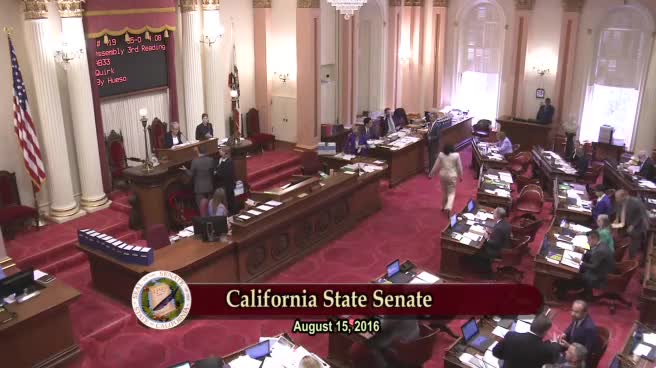 2MIN
Senate Floor
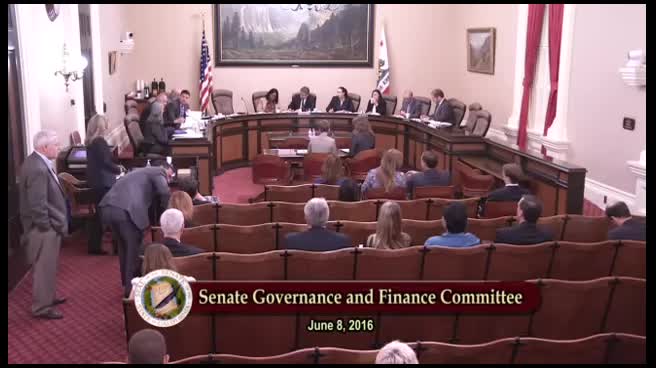 12MIN
Senate Standing Committee on Governance and Finance
 1MIN
Assembly Floor
Bill Author
Bill Co-Author(s):