AB 271: Child care: alternative payment programs and contractors: electronic records: digital signatures.
- Session Year: 2015-2016
- House: Assembly
- Latest Version Date: 2015-10-04
The Child Care and Development Services Act, administered by the State Department of Education, provides that children from infancy to 13 years of age are eligible, with certain requirements, for child care and development services. The act requires the department to contract with local contracting agencies to provide for alternative payment programs, and authorizes alternative payment programs for services provided in licensed centers and family day care homes and for other types of programs that conform to applicable law. Existing law authorizes alternative payment programs and providers and other contractors providing child care development services to maintain records in electronic format if the original documents were created in electronic format, including, but not limited to, child immunization records.
This bill would authorize contractors and alternative payment programs and providers to maintain any records electronically, as provided, regardless of whether the original documents were created in electronic format. The bill would authorize alternative payment programs and providers to use a digital signature, as provided, and would require that the use of a digital signature have the same force and effect as the use of a manual signature if specified requirements are met. The bill would require the above provisions relating to the electronic maintenance of records or digital signatures to be in compliance with state and federal standards, as determined by the department. The bill would additionally require any conversion from a paper record to an electronic format, as well as the storage of the electronic record, to comply with specified standards.
The Child Care and Development Services Act, administered by the State Department of Education, provides that children from infancy to 13 years of age are eligible, with certain requirements, for child care and development services. The act requires the department to contract with local contracting agencies to provide for alternative payment programs, and authorizes alternative payment programs for services provided in licensed centers and family day care homes and for other types of programs that conform to applicable law. Existing law authorizes alternative payment programs and providers and other contractors providing child care development services to maintain records in electronic format if the original documents were created in electronic format, including, but not limited to, child immunization records.
This bill would authorize contractors and alternative payment programs and providers to maintain any records electronically, as provided, regardless of whether the original documents were created in electronic format. The bill would authorize alternative payment programs and providers to use an electronic a digital signature, as provided. provided, and would require that the use of a digital signature have the same force and effect as the use of a manual signature if specified requirements are met. The bill would require the above provisions relating to the electronic maintenance of records or electronic digital signatures to be in compliance with state and federal standards, as determined by the department. The bill would additionally require any conversion from a paper record to an electronic format, as well as the storage of the electronic record, to comply with specified standards.
The Child Care and Development Services Act, administered by the State Department of Education, provides that children from infancy to 13 years of age are eligible, with certain requirements, for child care and development services. The act requires the department to contract with local contracting agencies to provide for alternative payment programs, and authorizes alternative payment programs for services provided in licensed centers and family day care homes and for other types of programs that conform to applicable law. Existing law authorizes alternative payment programs and providers and other contractors providing child care development services to maintain records in electronic format if the original documents were created in electronic format, including, but not limited to, child immunization records.
This bill would authorize contractors and alternative payment programs and providers to maintain any records electronically, as provided, regardless of whether the original documents were created in electronic format. The bill would authorize alternative payment programs and providers to retain a case record using either electronic or other alternative storage technologies, as provided. The bill would authorize alternative payment programs and providers to use an electronic signature, as provided. The bill would require the above provisions relating to the electronic maintenance of records or electronic signatures to be in compliance with state and federal standards, as determined by the department.
The Child Care and Development Services Act, administered by the State Department of Education, provides that children from infancy to 13 years of age are eligible, with certain requirements, for child care and development services. The act requires the department to contract with local contracting agencies to provide for alternative payment programs, and authorizes alternative payment programs for services provided in licensed centers and family day care homes and for other types of programs that conform to applicable law. Existing law authorizes alternative payment programs and providers and other contractors providing child care development services to maintain records in electronic format if the original documents were created in electronic format, including, but not limited to, child immunization records.
This bill would authorize contractors to maintain any records electronically regardless of whether the original documents were created in electronic format. The bill would authorize alternative payment programs and providers to retain a case record using either electronic or other alternative storage technologies, as provided. The bill would authorize alternative payment programs and providers to use an electronic signature, as provided.
(a)Alternative payment programs and providers operating or providing services pursuant to this article may maintain records electronically, in compliance with state and federal standards, as determined by the department. Any conversion from a paper record to an electronic format, as well as the storage of the electronic record, shall comply with the minimum standards described in Section 12168.7 of the Government Code and the standards for trustworthy electronic document or record preservation described in Chapter 15 (commencing with Section 22620.1) of Division 7 of Title 2 of the California Code of Regulations.
(b)Pursuant to Section 33421, the records shall be retained by each contractor for at least five years, or, where an audit has been requested by a state agency, until the date the audit is resolved, whichever is longer.
(c)This section does not require an alternative payment program or provider to create records electronically.
SEC. 2.Section 8227.5 is added to the Education Code, to read:8227.5.Alternative payment programs and providers operating or providing services pursuant to this article may use a digital signature that complies with state and federal standards, as determined by the department, that may be a marking that is either computer generated or produced by electronic means and is intended by the signatory to have the same effect as a handwritten signature. The use of a digital signature shall have the same force and effect as the use of a manual signature if the requirements for digital signatures and their acceptable technology, as provided in Section 16.5 of the Government Code and in Chapter 10 (commencing with Section 22000) of Division 7 of Title 2 of the California Code of Regulations, are satisfied.
SEC. 3.Section 8262.1 of the Education Code is amended to read:8262.1.(a)Contractors operating or providing services pursuant to this chapter may maintain records electronically, in compliance with state and federal standards, as determined by the department. Any conversion from a paper record to an electronic format, as well as the storage of the electronic record, shall comply with the minimum standards described in Section 12168.7 of the Government Code and the standards for trustworthy electronic document or record preservation described in Chapter 15 (commencing with Section 22620.1) of Division 7 of Title 2 of the California Code of Regulations.
(b)Pursuant to Section 33421, the records shall be retained by each contractor for at least five years, or, where an audit has been requested by a state agency, until the date the audit is resolved, whichever is longer.
(c)This section does not require a contractor to create records electronically.
(a)Alternative payment programs and providers operating or providing services pursuant to this article may maintain records electronically, in compliance with state and federal standards, as determined by the department. Any conversion from a paper record to an electronic format, as well as the storage of the electronic record, shall comply with the minimum standards described in Section 12168.7 of the Government Code and the standards for trustworthy electronic document or record preservation described in Chapter 15 (commencing with Section 22620.1) of Division 7 of Title 2 of the California Code of Regulations.
(b)Pursuant to Section 33421, the records shall be retained by each contractor for at least five years, or, where an audit has been requested by a state agency, until the date the audit is resolved, whichever is longer.
(c)This section does not require an alternative payment program or provider to create records electronically.
SEC. 2.Section 8227.5 is added to the Education Code, to read:8227.5.Alternative payment programs and providers operating or providing services pursuant to this article may use an electronic a digital signature that complies with state and federal standards, as determined by the department, that may be a marking that is either computer generated or produced by electronic means and is intended by the signatory to have the same effect as a handwritten signature. An email signature may constitute an electronic signature. The use of a digital signature shall have the same force and effect as the use of a manual signature if the requirements for digital signatures and their acceptable technology, as provided in Section 16.5 of the Government Code and in Chapter 10 (commencing with Section 22000) of Division 7 of Title 2 of the California Code of Regulations, are satisfied.
SEC. 3.Section 8262.1 of the Education Code is amended to read:8262.1.(a)Contractors operating or providing services pursuant to this chapter may maintain records electronically, in compliance with state and federal standards, as determined by the department. Any conversion from a paper record to an electronic format, as well as the storage of the electronic record, shall comply with the minimum standards described in Section 12168.7 of the Government Code and the standards for trustworthy electronic document or record preservation described in Chapter 15 (commencing with Section 22620.1) of Division 7 of Title 2 of the California Code of Regulations.
(b)Pursuant to Section 33421, the records shall be retained by each contractor for at least five years, or, where an audit has been requested by a state agency, until the date the audit is resolved, whichever is longer.
(c)This section does not require a contractor to create records electronically.
Notwithstanding any other law, including Section 8227.3, alternative payment programs and providers may retain a case record using either electronic or other alternative storage technologies. Permissible alternative storage technologies shall include, but not be limited to, photography, microphotography, electronically recorded video images on magnetic surfaces, electronic data processing systems, optical disk storage, or any other electronic medium that is a trusted system and that does not permit additions, deletions, or changes to the original document and meets all necessary state and federal laws for recording of permanent records or nonpermanent records. A duplicate copy of any record reproduced shall be deemed an original.
SECTION 1.Section 8227.3 of the Education Code is amended to read:8227.3.(a)Alternative payment programs and providers operating or providing services pursuant to this article may maintain records in electronic format only if the original documents were created in electronic format. Records that may be created in electronic format and maintained electronically include, but are not limited to, the following: electronically, in compliance with state and federal standards, as determined by the department.
(1)Child immunization records.
(2)Parental job verification records.
(3)Parent income verification.
(4)Parent school or training verifications and attendance records.
(b)Pursuant to Section 33421, the original records shall be retained by each contractor for at least five years, or, where an audit has been requested by a state agency, until the date the audit is resolved, whichever is longer.
(c)Nothing in this section requires This section does not require an alternative payment program or provider to create records electronically.
SEC. 2.Section 8227.5 is added to the Education Code, to read:8227.5.Alternative payment programs and providers operating or providing services pursuant to this article may use an electronic signature signature that complies with state and federal standards, as determined by the department, that can may be a marking that is either computer generated or produced by electronic means and is intended by the signatory to have the same effect as a handwritten signature. An e-mail email signature may constitute an electronic signature.
SEC. 3.Section 8262.1 of the Education Code is amended to read:8262.1.(a)Contractors operating or providing services pursuant to this chapter may maintain records electronically electronically, in compliance with state and federal standards, as determined by the department.
(b)Pursuant to Section 33421, the records shall be retained by each contractor for at least five years, or, where an audit has been requested by a state agency, until the date the audit is resolved, whichever is longer.
(c)This section does not require a contractor to create records electronically.
Notwithstanding any other law, including Section 8262.1, 8227.3, alternative payment programs and providers may retain a case record using either electronic or other alternative storage technologies. Permissible alternative storage technologies shall include, but not be limited to, photography, microphotography, electronically recorded video images on magnetic surfaces, electronic data processing systems, optical disk storage, or any other electronic medium that is a trusted system and that does not permit additions, deletions, or changes to the original document and meets all necessary state and federal laws for recording of permanent records or nonpermanent records. A duplicate copy of any record reproduced shall be deemed an original.
SEC. 2.Section 8227.5 is added to the Education Code, to read:8227.5.Alternative payment programs and providers operating or providing services pursuant to this article may use an electronic signature that can be a marking that is either computer generated or produced by electronic means and is intended by the signatory to have the same effect as a handwritten signature. An e-mail signature may constitute an electronic signature.
SEC. 3.Section 8262.1 of the Education Code is amended to read:8262.1.(a)Contractors operating or providing services pursuant to this chapter may maintain records in electronic format only if the original documents were created in electronic format. Records that may be created in electronic format and maintained electronically include, but are not limited to, the following: electronically.
(1)Child immunization records.
(2)Parental job verification records.
(3)Parent income verification.
(4)Parent school or training verifications and attendance records.
(b)Pursuant to Section 33421, the original records shall be retained by each contractor for at least five years, or, where an audit has been requested by a state agency, until the date the audit is resolved, whichever is longer.
(c)Nothing in this This section requires does not require a contractor to create records electronically.
|
Date
|
Status
|
|---|---|
| Jun 3, 2015 | Read third time. Passed. Ordered to the Senate. (Ayes 80. Noes 0. Page 1854.) |
| Oct 4, 2015 | Chaptered by Secretary of State - Chapter 476, Statutes of 2015. |
| Oct 4, 2015 | Approved by the Governor. |
| Sep 10, 2015 | Enrolled and presented to the Governor at 4 p.m. |
| Sep 1, 2015 | Read third time. Passed. Ordered to the Assembly. (Ayes 40. Noes 0. Page 2344.). |
| Sep 1, 2015 | Read third time. Passed. Ordered to the Assembly. |
| Sep 1, 2015 | In Assembly. Ordered to Engrossing and Enrolling. |
| Aug 31, 2015 | Read second time. Ordered to third reading. |
| Aug 27, 2015 | From committee: Do pass. (Ayes 7. Noes 0.) (August 27). |
| Aug 17, 2015 | In committee: Referred to APPR. suspense file. |
| Jul 15, 2015 | From committee: Do pass and re-refer to Com. on APPR. with recommendation: To Consent Calendar. (Ayes 5. Noes 0.) (July 14). Re-referred to Com. on APPR. |
| Jul 8, 2015 | From committee: Do pass and re-refer to Com. on HUMAN S. with recommendation: To Consent Calendar. (Ayes 9. Noes 0.) (July 8). Re-referred to Com. on HUMAN S. |
| Jun 18, 2015 | Referred to Coms. on ED. and HUMAN S. |
| Feb 10, 2015 | Read first time. To print. |
| Jun 3, 2015 | Read third time. Passed. Ordered to the Senate. |
| Jun 3, 2015 | In Senate. Read first time. To Com. on RLS. for assignment. |
| Jun 1, 2015 | Read second time. Ordered to third reading. |
| May 28, 2015 | Read second time and amended. Ordered returned to second reading. |
| May 28, 2015 | From committee: Amend, and do pass as amended. (Ayes 17. Noes 0.) (May 28). |
| Apr 15, 2015 | In committee: Set, first hearing. Referred to suspense file. |
| Apr 8, 2015 | Re-referred to Com. on APPR. |
| Apr 7, 2015 | Read second time and amended. |
| Apr 6, 2015 | From committee: Amend, and do pass as amended and re-refer to Com. on APPR. (Ayes 7. Noes 0.) (March 24). |
| Feb 17, 2015 | Referred to Com. on HUM. S. |
| Feb 11, 2015 | From printer. May be heard in committee March 13. |
|
Date
|
Description
|
Location
|
Votes
|
|
|---|---|---|---|---|
| Sep 1, 2015 | Assembly 3rd Reading AB271 Obernolte By McGuire | Senate Floor |
Passed |
|
| Aug 27, 2015 | Do pass | Senate Standing Committee on Appropriations |
Passed |
|
| Aug 17, 2015 | Placed on suspense file | Senate Standing Committee on Appropriations |
Passed |
|
| Jul 14, 2015 | Do pass, but first be re-referred to the Committee on [Appropriations] with the recommendation: To Consent Calendar | Senate Standing Committee on Human Services |
Passed |
|
| Jul 8, 2015 | Do pass, but first be re-referred to the Committee on [Human Services] with the recommendation: To Consent Calendar | Senate Standing Committee on Education |
Passed |
|
| Jun 3, 2015 | AB 271 OBERNOLTE Assembly Third Reading | Assembly Floor |
Passed |
|
| May 28, 2015 | Do pass as amended. | Assembly Standing Committee on Appropriations |
Passed |
|
| Mar 24, 2015 | Do pass as amended and be re-referred to the Committee on [Appropriations] | Assembly Standing Committee on Human Services |
Passed |
This list shows positions taken on this bill by organizations on the date displayed, which is linked to the original source.
Positions by individuals are not included.
|
Organization
|
Position
|
Date
|
|---|---|---|
| California Alternative Payment Program | ** Support | Sep 1, 2015 |
| California Alternative Payment Program Association | * Support | Apr 15, 2015 |
| California Alternative Payment Program Association , sponsor | ** Support | Mar 24, 2015 |
| California State PTA | ** Support | Sep 1, 2015 |
| CAPPA Children's Foundation | ** Support | Aug 17, 2015 |
| Child Care Links | ** Support | Aug 17, 2015 |
| Child Development Resources of Ventura County, Inc. | ** Support | Aug 17, 2015 |
| Children's Council of San Francisco | * Support | Mar 24, 2015 |
| Choices For Children | * Support | Mar 24, 2015 |
| Community Action Partnership of San Luis Obispo | ** Support | Aug 17, 2015 |
| Community Child Care Council of Alameda County | ** Support | Aug 17, 2015 |
| Community Resources for Children | ** Support | Aug 17, 2015 |
| Controltec, Inc. | ** Support | Aug 17, 2015 |
| Crystal Stairs La | * Support | Mar 24, 2015 |
| Davis Street Family Resource Center | ** Support | Aug 17, 2015 |
| Family Resource & Referral Center | ** Support | Aug 17, 2015 |
| Knowledge Universe | ** Support | Sep 1, 2015 |
| Knowledge Universe-Us, LLC | * Support | Apr 15, 2015 |
| Mexican American Opportunity Foundation | ** Support | Aug 17, 2015 |
| Page I | ** Support | Mar 24, 2015 |
| Santa Cruz County Parents Association | ** Support | Aug 17, 2015 |
| Sierra Nevada Children's Services | ** Support | Aug 17, 2015 |
| Supportive Services, Inc. | ** Support | Aug 17, 2015 |
| u None received. | ** Against | Aug 17, 2015 |
AB 271
Page 6
|
Office of Senate Floor Analyses (916) 651-1520 Fax: (916) 327-4478 |
THIRD READING
Bill No: AB 271
Amended: 5/28/15 in Assembly
SENATE EDUCATION COMMITTEE: 9-0, 7/8/15
AYES: Liu, Runner, Block, Hancock, Leyva, Mendoza, Monning, Pan, Vidak
SENATE HUMAN SERVICES COMMITTEE: 5-0, 7/14/15
AYES: McGuire, Berryhill, Hancock, Liu, Nguyen
SENATE APPROPRIATIONS COMMITTEE: 7-0, 8/27/15
AYES: Lara, Bates, Beall, Hill, Leyva, Mendoza, Nielsen
ASSEMBLY FLOOR: 80-0, 6/3/15 - See last page for vote
SUBJECT: Child care: alternative payment programs and contractors: electronic records: digital signatures
DIGEST: This bill expands the existing authority of Alternative Payment Programs (APP) and child care providers to use electronic methods for storage of documents or records and use of digital signatures pursuant to current state standards, as specified.
Existing law:
Authorizes local government agencies or non-profit organizations to contract with the California Department of Education (CDE) to operate APPs and provide alternative payments and support services to parents and child development providers. APPs help parents arrange child care services and make payments directly to the provider, which may be in-home care, family child care or center-based care, and either licensed or license-exempt. (Education Code § 8220)
Establishes requirements and procedures that APPs and child development providers must follow as contracted agencies with the CDE, including but not limited to tracking and reporting of attendance, accounting and auditing requirements, and reimbursement and payment procedures. (EC § 8221.5)
Current regulations require child care and development providers that contract with APPs to submit periodic reports that must include:
Days and hours of enrollment and attendance.
Total days of operation.
Services, revenues and expenditures relating to care provided for subsidized and unsubsidized children.
Parents are required to physically sign-in and sign-out their child when they drop off and pick up their child each day. (California Code of Regulations, Title 5, § 18065)
3) Requires agencies that receive state funds to, at the request of the Superintendent of Public Instruction, make all records pertaining to its state-funded programs available to the CDE, as specified, and requires that all records be retained by each agency for at least five years, as specified. (EDC § 33421)
4) Authorizes alternative payment programs and providers and other contractors providing child care development services to maintain records in electronic format if the original documents were created in electronic format. (EC § 8262.1)
This bill:
Expands the existing authority of APP and child care providers to use electronic methods for storage of documents or records pursuant to current law and the standards for trustworthy electronic document preservation under state regulations.
Authorizes APPs and child care providers to maintain child care records electronically and requires any conversion from a paper record to an electronic format, as well as the storage of the electronic record to comply with the specified state standards for electronic document or record preservation.
Authorizes APPs and child care providers to use digital signatures and requires a digital signature to have the same force and effect as the manual signature provided that the requirements for digital signatures and their acceptable technology satisfy state standards, as specified.
Deletes the requirement that APPs and child care providers only store records electronically if the original documents were created in electronic format.
Extends the existing five-year requirements for the storage of original records, as specified to all records including electronic records as described in this bill.
Makes other non-substantive technical changes.
Comments
Need for the bill. According to the author existing law governing the use of technology for child care contractors fails to reflect recent technological advances. The author further asserts that local child care agencies and contractors are expending dollars and resources to store paper copies of case files dating back five to seven years. This bill seeks to give APPs and child care providers the option of storing documents electronically and the ability to use digital signatures on records.
Alternative Payment Programs. APPs are funded with state and federal funds and offer vouchers to parents that allow them choose care from licensed or license-exempt child care providers, such as in-home care, family child care, and center-based care. APPs help families arrange child care services through referral networks and make payments for those services directly to the child care provider selected by the family. Statewide, there are currently 76 APPs contracted with CDE.
System for preserving documents. Existing law requires uniform statewide standards for the purpose of storing and recording documents in electronic media to be approved and adopted by the Secretary of State in accordance with the American National Standards Institute or the Association for Information and Image Management (AIIM). These standards specify that in order to ensure that official electronic documents are considered to be a true and an accurate copy of the original information received and before the original copy may be destroyed, at least two separate copies of the official document must be created to meet the following AIIM standards:
Copies are stored using both hardware and media storage methodologies.
The system for storing copies must ensure that there is no plausible way for electronically stored information to be modified, altered, or deleted during the approved information lifecycle.
At least one copy of the electronic document or record must not permit unauthorized additions, deletions, or changes to the original document and that is to be stored and maintained in a safe and separate location.
Additionally, any information being scanned, or electronically received or stored should be stored using industry accepted format such as JPEG, JBIG, JPEG 2000, or PDF-A.
This bill seeks to authorize APPs and child care providers that use at minimum the system described above in order to reduce costs of maintaining original documents.
Digital signature. Current regulations establish criteria for public entities using digital signature of technology. Acceptable technology must be capable of creating signatures that are unique to the person using it, capable of verification, under sole control of the person using it and cannot be altered. The regulations also provide recommendations of acceptable digital signature technology. This bill attempts to authorize digital signatures to have the same effect as a manual signature.
Auditing. The Child Care and Development Services Act requires an independent financial and compliance audit of organizations that contract with the CDE under direct service contracts. Existing law also requires agencies that receive state funds to, at the request of the Superintendent of Public Instruction, make all records pertaining to its state-funded programs available to the CDE and requires that all records be retained by each agency for at least five years. This bill extends the existing five-year requirements for the storage of original records to all records including electronic documents and records. It is unclear how the use of electronic records, if at all, will impact audit procedures by CDE. Concerns were raised on prior versions of this bill regarding the integrity of electronically stored documents. This bill has since been amended to comply with existing state standards for storing electronic documents as described in #3 and #4 above.
Prior Legislation
AB 2101 (Levine, 2014), similar to this bill, would have allowed APPs and child care providers to maintain and retain records electronically and would have expanded the list of types of records that can be maintained electronically. AB 2101 died in the Assembly Appropriations Committee.
FISCAL EFFECT: Appropriation: No Fiscal Com.: Yes Local: No
According to the Senate Appropriations Committee:
The CDE indicates that this bill will drive one-time costs of $73,000 to train audit staff, update related auditing procedures, and participate in the development of regulations. (Federal funds and General Fund)
The CDE anticipates unknown additional costs for audit fieldwork to verify systems meet required standards, with costs expected to decrease over time. Potential costs could be between the low tens of thousands to the low hundreds of thousands. Costs will largely depend on the duration and complexity of each audit. (Federal funds and General Fund)
California Alternative Payment Program
California State PTA
Knowledge Universe
OPPOSITION: (Verified 8/28/15)
None received
ASSEMBLY FLOOR: 80-0, 6/3/15
AYES: Achadjian, Alejo, Travis Allen, Baker, Bigelow, Bloom, Bonilla, Bonta, Brough, Brown, Burke, Calderon, Campos, Chang, Chau, Chávez, Chiu, Chu, Cooley, Cooper, Dababneh, Dahle, Daly, Dodd, Eggman, Frazier, Beth Gaines, Gallagher, Cristina Garcia, Eduardo Garcia, Gatto, Gipson, Gomez, Gonzalez, Gordon, Gray, Grove, Hadley, Harper, Roger Hernández, Holden, Irwin, Jones, Jones-Sawyer, Kim, Lackey, Levine, Linder, Lopez, Low, Maienschein, Mathis, Mayes, McCarty, Medina, Melendez, Mullin, Nazarian, Obernolte, O'Donnell, Olsen, Patterson, Perea, Quirk, Rendon, Ridley-Thomas, Rodriguez, Salas, Santiago, Steinorth, Mark Stone, Thurmond, Ting, Wagner, Waldron, Weber, Wilk, Williams, Wood, Atkins
Prepared by: Olgalilia Ramirez / ED. / (916) 651-4105
8/30/15 19:42:04
**** END ****
AB 271 (Obernolte) Page 3 of 3
SENATE COMMITTEE ON APPROPRIATIONS
Senator Ricardo Lara, Chair
2015 - 2016 Regular Session
AB 271 (Obernolte) - Child care: alternative payment programs and contractors: electronic records: digital signatures.
|
|
Version: May 28, 2015 |
Policy Vote: ED. 9 - 0, HUMAN S. 5 - 0 |
Urgency: No |
Mandate: No |
Hearing Date: August 17, 2015 |
Consultant: Jillian Kissee |
This bill meets the criteria for referral to the Suspense File.
Bill Summary:
This bill expands the existing authority of alternative payment programs and child care providers to use electronic methods for storage of documents or records and to use digital signatures pursuant to state and federal standards, as specified.
Fiscal Impact:
The California Department of Education (CDE) indicates that this bill will drive one-time costs of $73,000 to train audit staff, update related auditing procedures, and participate in the development of regulations. (Federal funds and General Fund)
The CDE anticipates unknown additional costs for audit fieldwork to verify systems meet required standards, with costs expected to decrease over time. Potential costs could be between the low tens of thousands to the low hundreds of thousands. Costs will largely depend on the duration and complexity of each audit. (Federal funds and General Fund)
Background:
Existing law authorizes local government agencies or non-profit
organizations to contract with the California Department of Education
(CDE) to operate alternative payment programs and provide alternative
payments and support services to parents and child development
providers. Alternative payment programs help parents arrange child
care services and make payments directly to the provider, which may
be in-home care, family child care or center-based care, and either
licensed or license-exempt. (Education Code § 8220) Care provided
through General Child Care, Migrant and Handicapped child care, and
State Preschool is reimbursed through contracts with CDE. Providers
are reimbursed based on the number of children they serve.
Current
regulations require child care and development providers that
contract with alternative payment programs to submit periodic reports
that must include: (1) days and hours of enrollment and attendance;
(2) total days of operation; and (3) services, revenues and
expenditures relating to care provided for subsidized and
unsubsidized children. Parents are required to
physically sign-in and sign-out each child when they drop off and
pick up their child each day.
Existing law requires agencies that receive state funds to, at the request of the Superintendent of Public Instruction, make all records pertaining to its state-funded programs available to the CDE, as specified, and requires that all records be retained by each agency for at least five years, as specified. (EC § 33421)
Existing
law authorizes alternative payment programs and providers and other
contractors providing child care development services to maintain
records in electronic format if the original documents were created
in electronic format. (EC § 8262.1)
State law and regulations specify protocols for the maintenance of electronic records. Statute requires the Secretary of State to approve and adopt appropriate nationally recognized standards, while state regulations list minimum standards and conditions that must be met to be defined as a “trusted system.” Examples of appropriate electronic record management include assigning unique identifiers to individual records and providing safeguards against unauthorized changes made to records. Regulations also establish criteria for public entities using digital signatures.
Proposed Law:
This bill allows alternative payment programs and child care providers to maintain records electronically, in compliance with state and federal standards, as determined by the CDE. It also requires alternative payment programs and child care providers, when converting from a paper record to an electronic format and storing the electronic record, to comply with the specified state standards. This bill also authorizes alternative payment programs and child care providers to use digital signatures, pursuant to state and federal standards, and requires a digital signature to have the same force and effect as a manual signature, as specified.
Related Legislation:
AB 2101 (Levine, 2014) similar to this bill, would have allowed alternative payment programs and child care providers to retain records electronically. AB 2101 failed passage in the Assembly Appropriations Committee.
Staff Comments:
It is unclear how broadly electronic maintenance of records will be implemented as systems will have to comply with specified state and federal standards for electronic records. However, over time one can assume that agencies and providers will realize potentially significant savings from increased operational efficiency due to an electronic recordkeeping system.
The Child Development Division of the CDE, which conducts the child care audits, is supported through a split of federal funds (83 percent) and state General Fund (17 percent). Currently, the CDE conducts four to six annual program audits of child care providers, and verifies that the provider has kept the required sign-in and sign-out attendance sheets and they contain the required parent or guardian signatures.
The CDE anticipates shifting to an electronic recordkeeping system will increase costs to conduct audits by $3,980 per week and for a small agency, and a minimum of one additional week would be required. For a larger agency, multiple additional weeks could be required. However, costs are expected to decline over time. Actual costs will ultimately depend on the duration of the annual audits which is largely determined by the level of funding an agency receives, the number of contracts the agency has with the CDE, and the workload necessary to accomplish the objectives of the audit. However, assuming (1) the CDE conducts four audits of small agencies in a year, (2) the audit of this type of agency normally takes one week, (3) additional costs of $3,980 per week and one additional week are required, increased audit costs could be about $32,000. Another scenario could assume the CDE audits six, more complex agencies, and their audits typically take about three weeks, and an additional two weeks are required. Associated increased costs would be about $119,000.
-- END --
AB 271 (Obernolte) Page 6 of 6
SENATE COMMITTEE ON HUMAN SERVICES
Senator McGuire, Chair
2015 - 2016 Regular
Bill No: AB 271
Author: |
Obernolte |
||
Version: |
May 28, 2015 |
Hearing Date: |
July 14, 2015 |
Urgency: |
No |
Fiscal: |
Yes |
Consultant: |
Mareva Brown |
||
Subject: Child care: alternative payment programs and contractors: electronic records: digital signatures
SUMMARY
This bill authorizes alternative payment programs (APPs) and providers to maintain any records electronically, as specified, regardless of whether the original documents were created in electronic format. It also authorizes APPs and providers to use a digital signature, as defined. This bill additionally requires the use and storage of electronic records or signatures and the conversion from a paper record to an electronic format, to comply with specified standards.
ABSTRACT
Existing law:
Establishes the California Child Care and Development Services Act to provide a comprehensive, community-based, coordinated, and cost-effective system of child care and development services for children from birth to age 13 in order to enhance the social, emotional, physical, and intellectual development of children. (EDC 8200 and 8201)
Defines “alternative payments” to include payments that are made by one child care agency to another agency or child care provider for the provision of child care and development services, and payments that are made by an agency to a parent for the parent’s purchase of child care and development services. Defines “alternative payment program” to mean a local government agency or nonprofit organization that has contracted with the California Department of Education (CDE) to provide alternative payments and to provide support services to parents and providers. (EDC 8208)
Defines APPs to include the following:
A subsidy that follows a family from one provider to another within a given APP.
Choices, whenever possible, among hours of service including before and after school, evenings, weekends, and split shifts.
Child care and development services according to parental choice, including use of family day care homes, general center based programs, and other state-funded programs to the extent that those programs exist in the general service area and are in conformity with the purposes and applicable laws for which those programs were established, excluding state preschool programs. (EDC 8220)
Permits APPs, providers and contractors who provide state-funded child care and development programs to maintain records in electronic format only if the original documents were created in electronic format, including child immunization records, parental job verification records, parent income verification and others. (EDC 8227.3) (EDC 8262.1)
Requires the Secretary of State to approve and adopt appropriate electronic record keeping standards established by the American National Standards Institute or the Association for Information and Image Management and defines a “trusted system” of storage, as specified. (GOV 12168.7)
Defines in regulation the uniform statewide standards adopted by the Secretary of State, in consultation with the Department of General Services, for use in recording, storing, and reproducing permanent and nonpermanent documents or records in electronic media. These regulations list minimum standards recommended by the American National Standards Institute or the Association for Information and Image Management, and provide specific conditions that would meet the definition of trusted system. (2 CCR § 22620.1)
Defines in regulation the criteria for the use of digital signatures and their acceptable use, including the requirements that a signature be unique to the person using it and under the sole control of the user, is capable of verification, and other specified requirements, and defines specific technology for acceptable usage, as specified. (2 CCR § 22002)
This bill:
Deletes the requirement that specified electronic records may be maintained only by APPs and providers or contractors operating or providing child care services, as specified, if the original documents were created in an electronic format.
Replaces that deletion with the authorization to maintain records electronically, in compliance with state and federal standards.
Requires that any conversion from a paper record to an electronic format, as well as the storage of the electronic record, shall comply with minimum standards established in statute complies with the standards for trustworthy electronic document or record preservation, as defined.
Deletes the requirement that documents that must be retained by each contractor for audit purposes for at least five years be records in their original form.
Adds to the education code a new section permitting APPs and providers operating or providing child care services, as defined, to use a digital signature that complies with state and federal standards, as determined by the department, that may be a marking that is either computer-generated or produced by electronic means and is intended by the signatory to have the same effect as a handwritten signature.
Establishes that the use of a digital signature shall have the same force and effect as the use of a manual signature if the statutory standards for digital signatures are satisfied.
FISCAL IMPACT
An analysis by the Assembly Appropriations Committee identified one-time costs in the range of $175,000 to train CDE audit staff and unknown ongoing costs likely in the low millions of dollars due to increased audit costs on all 76 AP providers and potentially 800 child care providers. The Appropriations Committee also identified the risk of losing approximately $700 million in federal funds if CDE does not have a system in place to accept the required documentation necessary for auditors to verify the accuracy of reported information.
BACKGROUND AND DISCUSSION
Purpose of the bill:
The author writes that currently, laws governing the use of technology for early care contractors fail to reflect recent technological advances. Accordingly, county agencies and early care and education contractors are expending contract dollars and personnel resources and grappling with outmoded technologies, the author states. This is important to note as more than 40 counties contract out their child care contracts to APP agencies. AB 271 would authorize APPs to maintain any records electronically regardless of whether the original documents were created in electronic format.
The author states that this bill will not create a mandate but will allow local APPs the option of working towards a more efficient and cost-effective paperless environment. According to the author, providing child care programs with this option would both modernize agency operations and maximize the use of public dollars.
Child care
Approximately 350,000 children receive subsidized child care in California through a variety of home-based and center-based programs which are intended to both support child development and parents’ participation in work. To be eligible for subsidized child care, a family’s income must be below 70 percent of the state median income, or $42,000 for a family of three; parents must be working or participating in an education or training program; and children must be under the age of 13.
Space in child care and early childhood education programs is limited, and shrunk considerably during the Great Recession. The Legislature has made significant effort in the past several years to recoup some of the lost slots, however there remains more demand than supply.
The chart on the next page shows the share of subsidized child care slots by program from July 1, 2014 through December 31, 2104. Under AB 271, all of the providers in this chart would be permitted to store records electronically, according to CDE.
AGGREGATED CHILD COUNTS AND NUMBER OF CONTRACTS FOR THE FIRST SIX MONTHS OF CURRENT YEAR 2014-15 |
|||
CONTRACT TYPE |
CHILD COUNTS |
% |
CONTRACT COUNTS |
ALTERNATIVE PAYMENT PROGRAM (CAPP) |
31,305 |
8.94 |
76 |
CALWORKS STAGE 2 (C2AP) |
68,352 |
19.52 |
69 |
CALWORKS STAGE 3 (C3AP) |
38,462 |
10.99 |
67 |
GENERAL CHILD CARE - CCTR |
39,269 |
11.22 |
319 |
FAMILY CHILD CARE HOME - (CFCC) |
3,903 |
1.11 |
33 |
GENERAL MIGRANT CHILD CARE (CMIG) |
3,102 |
0.89 |
23 |
MIGRANT ALTERNATIVE PAYMENT PROGRAM (CMAP) |
1,038 |
0.3 |
1 |
SEVERELY HANDICAPPED (CHAN) |
167 |
0.05 |
3 |
CALIFORNIA STATE PRESCHOOL PROGRAM(CSPP) |
164,493 |
46.99 |
632 |
|
|
|
|
Source: California Department of Education 801A Archived reports July 2014 - December 2014 |
|
|
|
Alternative Payment Programs
The 76 APPs that contract with CDE provide an array of support and payment services for low-income, eligible families, but do not provide direct child services or programs. Providers through the APP are reimbursed with vouchers. Parents are offered vouchers to purchase care from licensed or license-exempt caregivers, such as friends or relatives who provide in-home care. Families can use these vouchers at any licensed child care provider in the state, and the value of child care vouchers is capped. The state pays a Regional Market Rate (RMR), which varies by county based on surveys of the local cost of care.
Contracts
Providers of State Preschool, General Child Care, and Migrant Child Care – known collectively as Title 5 programs for their regulation under Title 5 of the California Code of Regulations — are required to meet additional requirements. These include development assessments for children, rating scales, and staff development. Title 5 programs contract directly with CDE, and receive the same reimbursement rates statewide.
Electronic records
Fifteen years ago, California adopted the Uniform Electronic Transactions Act (SB 820, Sher, Chapter 428, Statutes of 1999), following similar federal legislation. The Act enabled electronically produced signatures and records to be legally effective and enforceable, but it stopped short of addressing how records or signatures should be maintained electronically.
AB 274 (Bonilla, Chapter 733, Statutes of 2013) allowed APPs to electronically maintain records, including child attendance records, in accordance with state and federal auditing standards. However, it limited the electronic maintenance of records to only those that were generated electronically in response to CDEs concerns about their ability to adequately audit such documents. In December 2013, when CDE issued its management bulletin implementing the requirements of AB 274, it included additional guidance that "documents or records created in paper form cannot be scanned and stored electronically. These records must be stored in their original paper format."1
Federal guidance
In May 2015, the U.S. Administration for Children and Families wrote a letter to the author of this bill upon his request for an opinion on federal support for the storage of electronic records. It states, in part, “The federal government supports the management of records electronically. Good electronic management includes systematic storage of records with solid uniform standards and policies and procedures for the retention and retrieval of necessary information.”
Standards for storage and maintenance of electronic records
State statute and regulations specify a series of protocols for the storage and maintenance of electronic records. Government Code 12168.7 requires the Secretary of State to approve and adopt appropriate nationally recognized standards, while state regulations list minimum standards and conditions that must be met to be defined as a “trusted system.”
According to the Association for Information and Image Management, which is cited as an acceptable standard in state law, appropriate record management of electronic documents records includes assigning unique identifiers to individual records, providing safeguards against unauthorized changes being made to those records, and creating an unbreakable audit trail for reasons of accountability and e-discovery.
Related legislation:
AB 2101 (Levine, 2014) was substantially similar to this bill. It was held in the Assembly Appropriations Committee.
AB 274 (Bonilla, Chapter 733, Statutes of 2013) allows APPs to maintain records, including child attendance records, electronically in accordance with state and federal auditing standards, but limited the electronic maintenance of records to only those that were generated electronically.
COMMENTS
The prior version of this bill (AB 2010, Levine, 2014) was given a high implementation cost by CDE in part due to potential loss of federal child care funds of up to $1.7 billion. The bill did not require providers to retain original paper source documents which are currently required by CDE for performance of its audits. If the lack of required documentation necessary for auditors to verify the accuracy of reported information is absent, federal funds could be at risk.
After extensive work with the state Department of Education, insertion of language requiring specified state and federal electronic record management standards and solicitation of a letter from the US Department of Education indicating the federal government’s support of the electronic management of records, the author has reduced the appropriations estimate in this bill and some concerns of CDE.
It remains unclear how broadly the electronic management of records will be employed, since compliance with audit standards for electronic records require significant financial and technological resources. The process of certifying that a particular agency's system of developing and maintaining electronic records is trustworthy and meets certain standards is costly and complex.
PRIOR VOTES
Assembly Floor: |
80 - 0 |
Assembly Appropriations Committee: |
17 - 0 |
Assembly Human Services Committee: |
7 - 0 |
POSITIONS
Support:
California Alternative Payment Program (Sponsor)
CA State PTA
CAPPA Children’s Foundation
Child Care Links
Child Development Associates, Inc.
Child Development Resources of Ventura County, Inc.
Community Action Partnership of San Luis Obispo
Community Child Care Council (4C's) of Alameda County
Community Resources for Children
Controltec, Inc.
Davis Street Family Resource Center
Family Resource & Referral Center
Knowledge Universe
Mexican American Opportunity Foundation
North Coast Opportunities, Inc.
Santa Cruz County Parents Association
Sierra Nevada Children's Services
Supportive Services, Inc.
Valley Oak Children’s Services
Oppose:
None received.
-- END --
1 California Department of Education Management Bulletin 13-10, December 2013.
AB 271 (Obernolte) Page 4 of 4
SENATE COMMITTEE ON EDUCATION
Senator Carol Liu, Chair
2015 - 2016 Regular
Bill No: AB 271
Author: |
Obernolte |
||
Version: |
May 28, 2015 Hearing Date: July 8, 2015 |
||
Urgency: |
No |
Fiscal: |
Yes |
Consultant: |
Olgalilia Ramirez |
||
Subject: Child care: alternative payment programs and contractors: electronic records: digital signatures
Note: This bill has been referred to the Committees on Education and Human Services. A "do pass" motion should include referral to the Committee on Human Services
SUMMARY
This bill expands the existing authority of Alternative Payment Programs (APP) and child care providers to use electronic methods for storage of documents or records and use of digital signatures pursuant to current state standards, as specified.
BACKGROUND
Existing law authorizes local government agencies or non-profit organizations to contract with the California Department of Education (CDE) to operate APPs and provide alternative payments and support services to parents and child development providers. APPs help parents arrange child care services and make payments directly to the provider, which may be in-home care, family child care or center-based care, and either licensed or license-exempt. (Education Code § 8220)
Existing law establishes requirements and procedures that APPs and child development providers must follow as contracted agencies with the CDE, including but not limited to tracking and reporting of attendance, accounting and auditing requirements, and reimbursement and payment procedures. (EC § 8221.5)
Current regulations require child care and development providers that contract with APPs to submit periodic reports that must include:
Days and hours of enrollment and attendance.
Total days of operation.
Services, revenues and expenditures relating to care provided for subsidized and unsubsidized children.
Parents are required to physically sign-in and sign-out their child when they drop off and pick up their child each day. (California Code of Regulations, Title 5, § 18065)
Existing law requires agencies that receive state funds to, at the request of the Superintendent of Public Instruction, make all records pertaining to its state-funded programs available to the California Department Education (CDE), as specified, and requires that all records be retained by each agency for at least five years, as specified.
(EDC § 33421)
Existing law authorizes alternative payment programs and providers and other contractors providing child care development services to maintain records in electronic format if the original documents were created in electronic format. (EC § 8262.1)
ANALYSIS
This bill expands the existing authority of Alternative Payment Programs (APP) and child care providers to use electronic methods for storage of documents or records pursuant to current law and the standards for trustworthy electronic document preservation under state regulations. Specifically this bill:
Authorizes APPs and child care providers to maintain child care records electronically and requires any conversion from a paper record to an electronic format, as well as the storage of the electronic record to comply with the specified state standards for electronic document or record preservation.
Authorizes APPs and child care providers to use digital signatures and requires a digital signature to have the same force and effect as the manual signature provided that the requirements for digital signatures and their acceptable technology satisfy state standards, as specified.
Deletes the requirement that APPs and child care providers only store records electronically if the original documents were created in electronic format.
Extends the existing five year requirements for the storage of original records, as specified to all records including electronic records as described in this bill.
Makes other non-substantive technical changes.
STAFF
COMMENTS
Need for the bill. According to the author current law governing the use of technology for child care contractors fail to reflect recent technological advances. The author further asserts that local child care agencies and contractors are expending dollars and resources to store paper copies of case files dating back five to seven years. This bill seeks to give APPs and child care providers the option of storing documents electronically and the ability to use digital signatures on records.
Alternative Payment Programs (APP). APPs are funded with state and federal funds and offer vouchers to parents that allow them choose care from licensed or license-exempt child care providers, such as in-home care, family child care, and center-based care. APPs help families arrange child care services through referral networks and make payments for those services directly to the child care provider selected by the family. Statewide, there are currently 76 APPs contracted with CDE.
System for Preserving Documents. Current law requires uniform statewide standards for the purpose of storing and recording documents in electronic media to be approved and adopted by the Secretary of State in accordance with the American National Standards Institute or the Association for Information and Image Management (AIIM). These standards specify that in order to ensure that official electronic documents are considered to be a true and an accurate copy of the original information received and before the original copy may be destroyed, at least two separate copies of the official document must be created to meet the following AIIM standards:
Copies are stored using both hardware and media storage methodologies.
The system for storing copies must ensure that there is no plausible way for electronically stored information to be modified, altered, or deleted during the approved information lifecycle.
At least one copy of the electronic document or record must not permit unauthorized additions, deletions, or changes to the original document and that is to be stored and maintained in a safe and separate location.
Additionally, any information being scanned, or electronically received or stored should be stored using industry accepted format such as JPEG, JBIG, JPEG 2000, or PDF-A.
This bill seeks to authorize APPs and child care providers that use at minimum the system described above in order to reduce costs of maintaining original documents.
Digital Signature. Current regulations establish criteria for public entities using digital signature of technology. Acceptable technology must be capable of creating signatures that are unique to the person using it, capable of verification, under sole control of the person using it and cannot be altered. The regulations also provide recommendations of acceptable digital signature technology. This bill attempts to authorize digital signatures to have the same effect as a manual signature.
Auditing. The Child Care and Development Services Act requires an independent financial and compliance audit of organizations that contract with California Department of Education (CDE) under direct service contracts. Current law also requires agencies that receive state funds to, at the request of the Superintendent of Public Instruction, make all records pertaining to its state-funded programs available to the CDE and requires that all records be retained by each agency for at least five years. This bill extends the existing five year requirements for the storage of original records to all records including electronic documents and records. It is unclear how the use of electronic records, if at all, will impact audit procedures by CDE. Concerns were raised on prior versions of this bill regarding the integrity of electronically stored documents. The bill has since been amended to comply with existing state standards for storing electronic documents as described in staff comment 3 and 4.
Prior legislation.
AB 2101 (Levine, 2014) similar to this bill, would have allowed alternative payment programs and child care providers to maintain and retain records electronically and expanded the list of types of records that can be maintained electronically. AB 2101 died in the Assembly Appropriations Committee.
SUPPORT
California Alternative Payment Program (CAPPA)
California State PTA
OPPOSITION
None received.
-- END --
AB 271
Page 3
ASSEMBLY THIRD READING
AB 271
(Obernolte)
As Amended May 28, 2015
Majority vote
Committee |
Votes |
Ayes |
Noes |
Human Services |
7-0 |
Chu, Mayes, Calderon, Lopez, Maienschein, Mark Stone, Thurmond |
|
Appropriations |
17-0 |
Gomez, Bigelow, Bonta, Calderon, Chang, Daly, Eggman, Gallagher, Eduardo Garcia, Gordon, Holden, Jones, Quirk, Rendon, Wagner, Weber, Wood |
|
SUMMARY:
Expands the authority granted under current law for Alternative Payment Programs (APPs) and child care providers to use electronic or other alternative methods for the storage of records. Specifically, this bill:
Authorizes APPs and child care providers to retain child care records electronically, and requires any conversion from a paper record to an electronic format, as well as the storage of the electronic record, to comply with minimum state and federal standards, as specified.
Authorizes APPs and providers to use a digital signature, which shall have the same force and effect as a manual signature, provided state and federal standards are met, as specified.
Deletes the requirement that APPs and child care providers only store records electronically if the original documents were created in electronic format. Additionally expands the current five-year requirement for the storage of original records, as specified, to all records.
EXISTING LAW:
Establishes the California Child Care and Development Services Act (CCDSA) to provide a comprehensive, community-based, coordinated, and cost-effective system of child care and development services for children from birth to age 13 with the purpose of enhancing the social, emotional, physical, and intellectual development of children. (Education Code (EDC) Sections 8200 and 8201)
States the intent of the Legislature that all families have access to child care and development services, regardless of their demographic background, in order to help them attain financial stability through employment, while maximizing growth and development of their children, and enhancing their parenting skills through participation in child care and development programs. (EDC Section 8202)
Defines child care and development services as care and services designed to meet a wide variety of needs of children and their families, while their parents or guardians are working, in training, seeking employment, incapacitated, or in need of respite. (EDC Section 8208(i))
Authorizes local government agencies or non-profit organizations to contract with the California Department of Education (CDE) to operate APPs and provide alternative payments and support services to parents and child development providers. (EDC Section 8220)
Establishes requirements and procedures APPs and child development providers must follow as contracted agencies with the CDE, including but not limited to tracking and reporting of attendance, accounting and auditing requirements, and reimbursement and payment procedures. (EDC Section 8221.5)
Requires any agency that contracts with CDE for the provision of educational services to undergo a periodic audit regarding the use of state and federal funds, as specified. (EDC Section 33420)
Requires agencies that receive state funds to, at the request of the Superintendent of Public Instruction, make all records pertaining to its state-funded programs available to the CDE, as specified, and requires that all records be retained by each agency for at least five years, as specified. (EDC Section 33421)
Permits APPs and child care providers to maintain records in electronic format only if the original documents were created in electronic format, as specified. (EDC Section 8227.3)
Establishes the Uniform Electronic Transactions Act (UETA), which permits, but does not require, a record or signature to be created, generated, sent, communicated, received, stored, or otherwise processed or used by electronic means or in electronic form. (Civil Code Section 1633.1 et seq.)
FISCAL EFFECT:
According to the Assembly Appropriations Committee, this bill will result in one-time costs of approximately $73,000 to train CDE audit staff, revise existing audit procedures, update CDE’s Audit Guide and develop regulations. This bill will also result in on-going costs, likely in the several hundred thousands of dollars, for increased audit fieldwork costs of approximately $3,980 per week. For a small agency a minimum of one additional week would be required. For larger agencies, it is unknown how many additional weeks would be required due to a variety of recordkeeping complexities.
COMMENTS:
Alternative Payment Programs: There are currently 76 APPs contracted with the CDE, funded through state and federal funds, to provide an array of support and payment services that enable low-income, eligible families to access subsidized child care. APPs do not provide direct child development services or programs, rather they provide families who are participating in welfare-to-work activities under the California Work Opportunities and Responsibility to Kids (CalWORKs) program, or who are low-income but do not qualify for CalWORKs, with subsidized child care vouchers. Those child care vouchers can be used to access child care at either a Title 5 or Title 22 child development center or with a license-exempt child care provider who meets certain criteria. The voucher can only be used at a Title 22 program that accepts them, whereas all vouchers must be accepted at Title 5 programs.
Typically, a family that receives a voucher from an APP will then be referred to a local child care resource and referral (R&R) network. The R&R network, also funded through state and federal dollars, will assist a family by helping to identify and access the appropriate and desired child development program for the child or children. However, due to lack of state resources and ongoing cuts to child care, access to programs able to accept vouchers is limited. Should the family be unable to find appropriate care, they will be placed on a waiting list, if one is available.
Electronic records: SB 820 (Sher), Chapter 428, Statutes of 1999, enacted the Uniform Electronic Transactions Act (UETA), which is described as the first comprehensive effort to prepare state law for the electronic commerce era. Through this legislation, California aligned itself with a process developed by the Conference of Commissioners on Uniform State Laws to govern electronic transactions, which generally applies to all records or signatures that are generated or transmitted electronically, the formation of contracts using electronic records, the creation and retention of electronic records and signatures, and the procedures governing changes and errors in electronically-transmitted records. While the UETA does not require records or signatures to be recorded or maintained electronically, it does provide a process by which transactions can occur electronically. Writing in explanation of the UETA, the Conference of Commissioners on Uniform State Laws states "UETA applies only to transactions in which each party has agreed by some means to conduct them by electronically. Agreement is essential. Nobody is forced to conduct to electronic transactions."
Fourteen years later, AB 274 (Bonilla) Chapter 733, Statutes of 2013, was adopted. Although AB 274 was not directly associated with the further implementation of the UETA, it was initially introduced to, among other changes, specifically allow APPs to maintain records electronically in accordance with state and federal auditing standards. It was later amended to limit the electronic maintenance of records to only those that were generated electronically. In December 2013, the California Department of Education issued management bulletin 13-10 implementing the requirements of AB 274, which included additional guidance on what types of documents could be generated and transmitted electronically. In this guidance, the department explicitly states that "documents or records created in paper form cannot be scanned and stored electronically. These records must be stored in their original paper format."
Need for this bill: According to the author, "California leads the nation when it comes to innovation and technology. However, many of our state government operations have been left in the past. As a result, a number of state agencies are forced to operate in a manner that is both outdated and inefficient. [This bill] would update an outmoded procedure by giving child care agencies the option of saving and storing all of their paperwork electronically. Providing child care programs with this option would both modernize agency operations and maximize the use of public dollars."
Analysis Prepared by: Myesha Jackson / HUM. S. / (916) 319-2089 FN: 0000658
AB 271
Page 3
Date of Hearing: April 15, 2015
ASSEMBLY COMMITTEE ON APPROPRIATIONS
Jimmy Gomez, Chair
AB 271
(Obernolte) – As Amended April 7, 2015
Policy Committee: |
Human Services |
Vote: |
7 - 0 |
|
|
|
|
|
|
|
|
Urgency: No State Mandated Local Program: No Reimbursable: No
SUMMARY: This bill allows alternative payment programs and child care providers to maintain records electronically. Specifically, this bill:
Allows alternative payment programs and child care providers to:
Maintain records electronically regardless of whether the original documents were created electronically.
Use electronic signatures that may be a marking that is computer generated, produced by electronic means, or an email signature that is intended by the signatory to have the same effect as a handwritten signature.
Allows contractors operating and providing services under this section to maintain records electronically regardless of whether the original documents were created electronically.
Requires all of the above provisions to be done in compliance with state and federal standards as determined by the State Department of Education.
FISCAL EFFECT:
The California Department of Education (CDE) is required to audit child care contractors per federal law in order to receive federal funds to support child care programs. While CDE supports efforts to transition to the collection and use of electronic records, it lacks the capacity and resources to adequately receive and verify electronically generated and maintained records. This bill will create significant General Fund cost pressure to the CDE to develop audit procedures and reporting systems to accommodate electronic record formats and a process to verify the authenticity of those records. Likely CDE costs to develop an appropriate system would be as follows:
One-time costs in the range of $175,000 to train CDE audit staff.
Unknown on-going costs likely in the low millions of dollars due to increased audit costs for all 76 alternative payment programs and potentially all 800 child care providers.
Potential loss of federal child care funds of approximately $700 million. If CDE does not have a system in place to accept the required documentation necessary for auditors to verify the accuracy of reported information, federal funds could be at risk.
COMMENTS:
Purpose. The author states, "California leads the nation when it comes to innovation and technology. However, many of our state government operations have been left in the past. As a result, a number of state agencies are forced to operate in a manner that is both outdated and inefficient. [This bill] would update an outmoded procedure by giving child care agencies the option of saving and storing their paperwork electronically. Providing child care programs with this option would both modernize agency operations and maximize the use of public dollars."
Alternative Payment Programs. There are currently 76 APPs contracted with the California Department of Education (CDE), funded through state and federal funds, to provide an array of support and payment services that enable low-income and eligible families to access subsidized child care. APPs do not provide direct child services or programs, but rather provide families who are participating in welfare-to-work activities under the CalWORKs program, or who are low-income but do not qualify for CalWORKs, with subsidized child care vouchers.
Electronic records. In 2009, the state adopted the Uniform Electronic Transactions Act (UETA). The UETA is the first comprehensive effort to prepare state law for the electronic commerce era. The state adopted rules and regulations that generally apply to all records or signatures generated or transmitted electronically, the formation of contracts using electronic records, the making and retention of electronic records and signatures, and the procedures governing changes and errors in electronically transmitted records. However, UETA does not require records or signatures to be recorded or maintained electronically, but rather it provides a process by which transactions can occur electronically.
In 2013, AB 274 (Bonilla) was enacted which allowed APPs to maintain records, including child attendance records, electronically in accordance with state and federal auditing standards. However, it limited the electronic maintenance of records to only those that were generated electronically in response to CDEs concerns about their ability to adequately audit such providers. In December 2013, the CDE issued management bulletin 13-10 implementing the requirements of AB 274, which included additional guidance which states that "documents or records created in paper form cannot be scanned and stored electronically. These records must be stored in their original paper format."
This bill seeks to further the AB 274 effort by permitting all records to be maintained electronically. However, it is unclear whether this bill will achieve the desired outcome while also ensuring that the electronic records meet state auditing requirements. In order for an electronic record to be used and accepted, CDE, which is the contracting agency, must agree to the use of electronic documents and have the technology available to accept such documents. Although the bill allows for APPs and child care providers to use electronic records, it does not mandate the CDE to accept or use them for purposes of programmatic or fiscal compliance. Without the proper systems in place, it is unlikely CDE would do so.
Prior Legislation. AB 2101 (Levine), 2014, was substantially similar to this bill. It was held on this Committee’s Suspense File.
Analysis Prepared by: Jennifer Swenson / APPR. / (916) 319-2081
AB 271
Page 5
Date of Hearing: March 24, 2015
ASSEMBLY COMMITTEE ON HUMAN SERVICES
Chu, Chair
AB 271
(Obernolte) – As Introduced February 10, 2015
SUBJECT:
Child care: alternative payment programs and contractors: electronic records
SUMMARY:
Expands the authority granted under current law for Alternative Payment Programs (APPs) and child care providers to use electronic or other alternative methods for the storage of records.
Specifically, this bill:
Authorizes APPs and child care providers, notwithstanding any other law, to retain child care case records electronically or through an alternative means.
Includes within the permissible alternative storage technologies: photography, microphotography, electronically recorded video images on magnetic surfaces, electronic data processing systems, optical disk storage, or any other electronic medium that is a trusted system.
Requires any alternative storage technologies used to not permit additions, deletions, or changes to the original document and to meet all necessary state and federal laws for recording of permanent records or nonpermanent records.
Requires a duplicate copy of any record reproduced to be deemed an original.
Authorizes APPs and providers to use an electronic signature, which can be a marking that is either computer generated or produced by electronic means and is intended by the signatory to have the same effect as a handwritten signature. Provides that an e-mail signature may constitute an electronic signature.
Deletes the requirement that child care contractors only be authorized to store records electronically if the original documents were created in electronic format. Additionally expands the five-year requirement for the storage of original records, as specified, to all records.
EXISTING LAW:
Establishes the California Child Care and Development Services Act (CCDSA) to provide a comprehensive, community-based, coordinated, and cost-effective system of child care and development services for children from birth to age 13 with the purpose of enhancing the social, emotional, physical, and intellectual development of children. (EDC 8200 and 8201)
States the intent of the Legislature that all families have access to child care and development services, regardless of their demographic background, in order to help them attain financial stability through employment, while maximizing growth and development of their children, and enhancing their parenting skills through participation in child care and development programs. (EDC 8202)
Defines child care and development services as care and services designed to meet a wide variety of needs of children and their families, while their parents or guardians are working, in training, seeking employment, incapacitated, or in need of respite. (EDC 8208(i))
Authorizes local government agencies or non-profit organizations to contract with the California Department of Education (CDE) to operate APPs and provide alternative payments and support services to parents and child development providers. (EDC 8220)
Establishes requirements and procedures APPs and child development providers must follow as contracted agencies with the CDE, including but not limited to tracking and reporting of attendance, accounting and auditing requirements, and reimbursement and payment procedures. (EDC 8221.5)
Requires any agency that contracts with CDE for the provision of educational services to undergo a periodic audit regarding the use of state and federal funds, as specified. (EDC 33420)
Requires agencies that receive state funds to, at the request of the Superintendent of Public Instruction, make all records pertaining to its state-funded programs available to the CDE, as specified, and that all records be retained by each agency for at least five years, as specified. (EDC 33421)
Permits APPs and child care providers to maintain records in electronic format only if the original documents were created in electronic format, as specified. (EDC 8227.3)
Establishes the Uniform Electronic Transactions Act (UETA), which permits, but does not require, a record or signature to be created, generated, sent, communicated, received, stored, or otherwise processed or used by electronic means or in electronic form. (CIV 1633.1 et seq.)
FISCAL EFFECT:
Unknown
COMMENTS:
Alternative Payment Programs: There are currently 76 APPs contracted with the CDE, funded through state and federal funds, to provide an array of support and payment services that enable low-income, eligible families to access subsidized child care. APPs do not provide direct child development services or programs, rather they provide families who are participating in welfare-to-work activities under the California Work Opportunities and Responsibility to Kids (CalWORKs) program, or who are low-income but do not qualify for CalWORKs, with subsidized child care vouchers. Those child care vouchers can be used to access child care at either a Title 5 or Title 22 child development center or with a license-exempt child care provider who meets certain criteria. The voucher can only be used at a Title 22 program that accepts them, whereas all vouchers must be accepted at Title 5 programs.
Typically, a family that receives a voucher from an APP will then be referred to a local child care resource and referral (R&R) network. The R&R network, also funded through state and federal dollars, will assist a family by helping to identify and access the appropriate and desired child development program for the child or children. However, due to lack of state resources and ongoing cuts to child care, access to programs able to accept vouchers is limited. Should the family be unable to find appropriate care, they will be placed on a waiting list, if one is available.
Electronic records: SB 820 (Sher/Pavley), Chapter 428, Statutes of 1999, enacted the Uniform Electronic Transactions Act (UETA), which is described as the first comprehensive effort to prepare state law for the electronic commerce era. Through this legislation, California aligned itself with a process developed by the Conference of Commissioners on Uniform State Laws to govern electronic transactions, which generally applies to all records or signatures that are generated or transmitted electronically, the formation of contracts using electronic records, the creation and retention of electronic records and signatures, and the procedures governing changes and errors in electronically-transmitted records. While the UETA does not require records or signatures to be recorded or maintained electronically, it does provide a process by which transactions can occur electronically. Writing in explanation of the UETA, the Conference of Commissioners on Uniform State Laws states "UETA applies only to transactions in which each party has agreed by some means to conduct them by electronically. Agreement is essential. Nobody is forced to conduct to electronic transactions."1
Fourteen years later, AB 274 (Bonilla) Chapter 733, Statutes of 2013, was adopted. Although AB 274 was not directly associated with the further implementation of the UETA, it was initially introduced to, among other changes, specifically allow APPs to maintain records electronically in accordance with state and federal auditing standards. It was later amended to limit the electronic maintenance of records to only those that were generated electronically. In December 2013, the California Department of Education issued management bulletin 13-10 implementing the requirements of AB 274, which included additional guidance on what types of documents could be generated and transmitted electronically. In this guidance, the department explicitly states that "documents or records created in paper form cannot be scanned and stored electronically. These records must be stored in their original paper format."
Need for this bill: According to the author, "California leads the nation when it comes to innovation and technology. However, many of our state government operations have been left in the past. As a result, a number of state agencies are forced to operate in a manner that is both outdated and inefficient. [This bill] would update an outmoded procedure by giving child care agencies the option of saving and storing all of their paperwork electronically. Providing child care programs with this option would both modernize agency operations and maximize the use of public dollars."
Staff comments: This measure seeks to further the AB 274 (Bonilla) effort by permitting all records to be maintained electronically. However, it is unclear whether the bill will achieve the desired outcome while also ensuring that the electronic records meet state auditing requirements. In order for an electronic record to be used and accepted, CDE, which is the contracting agency, will have to agree to the use of electronic documents and have the technology available to accept such documents. Although the bill allows for APPs and child care providers to use electronic records, it does not mandate the CDE to accept or use them for purposes of programmatic or fiscal compliance.
It is also unclear whether APPs and child care providers have the financial and technological resources to comply with industry standards of what is considered an authentic or otherwise accurate and reliable electronic document. The process of certifying that a particular agency's system of developing and maintaining electronic records is trustworthy and meets certain standards is costly, generally requiring a third party auditor or software firm to assess the system and provide an adequate level of protections and quality assurances necessary to meet state and federal auditing standards. This would occur in addition to annual auditing requirements for agencies already in statute.
While CDE supports efforts to transition to the collection and use of electronic records, it lacks the capacity and resources to adequately receive and verify electronically generated and maintained records. Similar to the requirements for local agencies, CDE would likely have to put in place a system that allows for the receipt and use of electronic records for quality assurance and auditing purposes, and a process to verify the authenticity of those records. Without the appropriate checks and balances in the system, child care funding could be jeopardized.
Recommended amendments: If the author's intent is to, as was stated, update an old system for the generation and storage of child care records, the provisions of this bill should be consistently applied across the local child care agency spectrum and should fully comply with federal and state statute. Committee staff recommends the bill be amended to do the following:
Align language in Section 8227.3 of the Education Code relating to APPs with Section 8262.1 related to contractors;
Delete language that exempts the maintenance of electronic records from having to comply with any other laws, including the UETA;
Ensure that the option to maintain records electronically is in compliance with state and federal requirements, as determined by CDE;
Ensure that the option to use an electronic signature is in compliance with state and federal law, as determined by CDE; and
Delete language specific to electronic records storage modalities that could conflict with state and federal law.
PRIOR LEGISLATION:
AB 2101 (Levine), 2014, was nearly identical to this bill, as introduced. It died on the Assembly Appropriations Committee Suspense File.
REGISTERED SUPPORT / OPPOSITION:
Support
California Alternative Payment Program Association (CAPPA), sponsor
CAPPA Children’s Foundation
Child Care Links
Child Development Associates, Inc.
Child Development Resources of Ventura County, Inc.
Community Action Partnership of San Luis Obispo
Community Child Care Council (4C's) of Alameda County
Community Resources for Children
Controltec, Inc.
Davis Street Family Resource Center
Family Resource & Referral Center
Knowledge Universe
Mexican American Opportunity Foundation
North Coast Opportunities, Inc.
Santa Cruz County Parents Association
Sierra Nevada Children's Services
Supportive Services, Inc.
Valley Oak Children’s Services
Opposition
None on file.
Analysis Prepared by:
Myesha Jackson/HUM. S./(916) 319-2089
1 The National Conference of Commissioners on Uniform State Laws; Electronic Transactions Summary. http://www.uniformlaws.org/ActSummary.aspx?title=Electronic+Transactions+Act

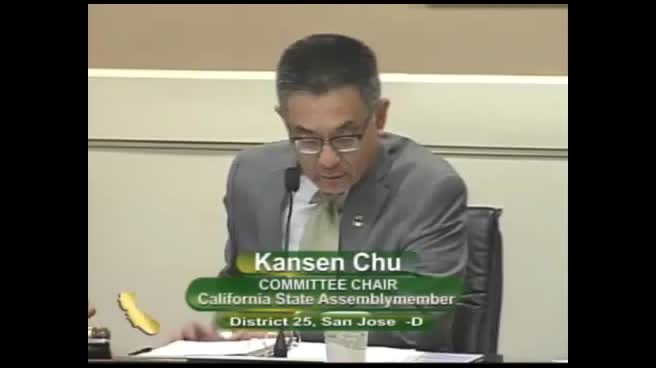
Bill Author

Bill Co-Author(s):