AB 272: California Fair Employment and Housing Act: reserve peace officers.
- Session Year: 2015-2016
- House: Assembly
- Latest Version Date: 2015-08-19
Under the California Fair Employment and Housing Act, it is unlawful to engage in specified discriminatory practices in employment or housing accommodations on the basis of certain specified characteristics, including race, creed, or national origin. Existing law defines these characteristics and other terms for purposes of the act.
Under existing law, a person deputized or appointed as a reserve or auxiliary sheriff or city police officer, a reserve deputy sheriff, a reserve deputy marshal, a reserve police officer of a transit district, a reserve park ranger, a reserve harbor or port police officer, or a reserve officer of a school district, among others, by the proper authority, who is assigned specific police functions by that authority or is designated by local ordinance or resolution, and who meets specified requirements, is a peace officer.
This bill would make a person deputized or appointed by the proper authority as a peace officer pursuant to the above provisions an employee for purposes of the California Fair Employment and Housing Act.
The bill would also update an obsolete cross-reference.
Under the California Fair Employment and Housing Act, it is unlawful to engage in specified discriminatory practices in employment or housing accommodations on the basis of certain specified characteristics, including race, creed, or national origin. Existing law defines these characteristics and other terms for purposes of the act.
This bill would define specified reserve or auxiliary public safety officers as employees for purposes of these provisions.
Under existing law, a person deputized or appointed as a reserve or auxiliary sheriff or city police officer, a reserve deputy sheriff, a reserve deputy marshal, a reserve police officer of a transit district, a reserve park ranger, a reserve harbor or port police officer, or a reserve officer of a school district, among others, by the proper authority, who is assigned specific police functions by that authority or is designated by local ordinance or resolution, and who meets specified requirements, is a peace officer.
This bill would make a person deputized or appointed by the proper authority as a peace officer pursuant to the above provisions an employee for purposes of the California Fair Employment and Housing Act.
The bill would also update an obsolete cross-reference.
Under the California Fair Employment and Housing Act, it is unlawful to engage in specified discriminatory practices in employment or housing accommodations on the basis of certain specified characteristics, including race, creed, or national origin. Existing law defines these characteristics and other terms for purposes of the act.
This bill would make a nonsubstantive change to these definitions. define specified reserve or auxiliary public safety officers as employees for purposes of these provisions.
Under the California Fair Employment and Housing Act, it is unlawful to engage in specified discriminatory practices in employment or housing accommodations on the basis of certain specified characteristics, including race, creed, or national origin. Existing law defines these characteristics and other terms for purposes of the act.
This bill would make a nonsubstantive change to these definitions.
(a)(1)Whenever a qualified person is deputized or appointed by the proper authority as a reserve or auxiliary sheriff or city police officer, a reserve deputy sheriff, a reserve deputy marshal, a reserve police officer of a regional park district or of a transit district, a reserve park ranger, a reserve harbor or port police officer of a county, city, or district as specified in Section 663.5 of the Harbors and Navigation Code, a reserve deputy of the Department of Fish and Game, a reserve special agent of the Department of Justice, a reserve officer of a community service district which is authorized under subdivision (i) of Section 61100 of the Government Code to maintain a police department or other police protection, a reserve officer of a school district police department under Section 35021.5 of the Education Code, a reserve officer of a community college police department under Section 72330 of the Education Code, a reserve officer of a police protection district formed under Part 1 (commencing with Section 20000) of Division 14 of the Health and Safety Code, or a reserve housing authority patrol officer employed by a housing authority defined in subdivision (d) of Section 830.31, and is assigned specific police functions by that authority, the person is a peace officer, if the person qualifies as set forth in Section 832.6. The authority of a person designated as a peace officer pursuant to this paragraph extends only for the duration of the persons specific assignment. A reserve park ranger or a transit, harbor, or port district reserve officer may carry firearms only if authorized by, and under those terms and conditions as are specified by, his or her employing agency.
(2)Whenever a qualified person is deputized or appointed by the proper authority as a reserve or auxiliary sheriff or city police officer, a reserve deputy sheriff, a reserve deputy marshal, a reserve park ranger, a reserve police officer of a regional park district, transit district, community college district, or school district, a reserve harbor or port police officer of a county, city, or district as specified in Section 663.5 of the Harbors and Navigation Code, a reserve officer of a community service district that is authorized under subdivision (i) of Section 61100 of the Government Code to maintain a police department or other police protection, or a reserve officer of a police protection district formed under Part 1 (commencing with Section 20000) of Division 14 of the Health and Safety Code, and is so designated by local ordinance or, if the local agency is not authorized to act by ordinance, by resolution, either individually or by class, and is assigned to the prevention and detection of crime and the general enforcement of the laws of this state by that authority, the person is a peace officer, if the person qualifies as set forth in paragraph (1) of subdivision (a) of Section 832.6. The authority of a person designated as a peace officer pursuant to this paragraph includes the full powers and duties of a peace officer as provided by Section 830.1. A transit, harbor, or port district reserve police officer, or a city or county reserve peace officer who is not provided with the powers and duties authorized by Section 830.1, has the powers and duties authorized in Section 830.33, or in the case of a reserve park ranger, the powers and duties that are authorized in Section 830.31, or in the case of a reserve housing authority patrol officer, the powers and duties that are authorized in subdivision (d) of Section 830.31, and a school district reserve police officer or a community college district reserve police officer has the powers and duties authorized in Section 830.32.
(b)Whenever a person designated by a Native American tribe recognized by the United States Secretary of the Interior is deputized or appointed by the county sheriff as a reserve or auxiliary sheriff or a reserve deputy sheriff, and is assigned to the prevention and detection of crime and the general enforcement of the laws of this state by the county sheriff, the person is a peace officer, if the person qualifies as set forth in paragraph (1) of subdivision (a) of Section 832.6. The authority of a peace officer pursuant to this subdivision includes the full powers and duties of a peace officer as provided by Section 830.1.
(c)A person deputized or appointed by the proper authority as a peace officer pursuant to subdivision (a) or (b), including, but not limited to, a person who is deputized or appointed by the proper authority as a reserve deputy sheriff or a reserve city police officer, is an employee of the appointing authority for purposes of the California Fair Employment and Housing Act (Part 2.8 (commencing with Section 12900) of Division 3 of Title 2 of the Government Code).
(d)Whenever a person is summoned to the aid of any uniformed peace officer, the summoned person is vested with the powers of a peace officer that are expressly delegated to him or her by the summoning officer or that are otherwise reasonably necessary to properly assist the officer.
(a)(1)Whenever any a qualified person is deputized or appointed by the proper authority as a reserve or auxiliary sheriff or city police officer, a reserve deputy sheriff, a reserve deputy marshal, a reserve police officer of a regional park district or of a transit district, a reserve park ranger, a reserve harbor or port police officer of a county, city, or district as specified in Section 663.5 of the Harbors and Navigation Code, a reserve deputy of the Department of Fish and Game, a reserve special agent of the Department of Justice, a reserve officer of a community service district which is authorized under subdivision (h) (i) of Section 61600 61100 of the Government Code to maintain a police department or other police protection, a reserve officer of a school district police department under Section 35021.5 of the Education Code, a reserve officer of a community college police department under Section 72330 of the Education Code, a reserve officer of a police protection district formed under Part 1 (commencing with Section 20000) of Division 14 of the Health and Safety Code, or a reserve housing authority patrol officer employed by a housing authority defined in subdivision (d) of Section 830.31, and is assigned specific police functions by that authority, the person is a peace officer, if the person qualifies as set forth in Section 832.6. The authority of a person designated as a peace officer pursuant to this paragraph extends only for the duration of the persons specific assignment. A reserve park ranger or a transit, harbor, or port district reserve officer may carry firearms only if authorized by, and under those terms and conditions as are specified by, his or her employing agency.
(2)Whenever any a qualified person is deputized or appointed by the proper authority as a reserve or auxiliary sheriff or city police officer, a reserve deputy sheriff, a reserve deputy marshal, a reserve park ranger, a reserve police officer of a regional park district, transit district, community college district, or school district, a reserve harbor or port police officer of a county, city, or district as specified in Section 663.5 of the Harbors and Navigation Code, a reserve officer of a community service district that is authorized under subdivision (h) (i) of Section 61600 61100 of the Government Code to maintain a police department or other police protection, or a reserve officer of a police protection district formed under Part 1 (commencing with Section 20000) of Division 14 of the Health and Safety Code, and is so designated by local ordinance or, if the local agency is not authorized to act by ordinance, by resolution, either individually or by class, and is assigned to the prevention and detection of crime and the general enforcement of the laws of this state by that authority, the person is a peace officer, if the person qualifies as set forth in paragraph (1) of subdivision (a) of Section 832.6. The authority of a person designated as a peace officer pursuant to this paragraph includes the full powers and duties of a peace officer as provided by Section 830.1. A transit, harbor, or port district reserve police officer, or a city or county reserve peace officer who is not provided with the powers and duties authorized by Section 830.1, has the powers and duties authorized in Section 830.33, or in the case of a reserve park ranger, the powers and duties that are authorized in Section 830.31, or in the case of a reserve housing authority patrol officer, the powers and duties that are authorized in subdivision (d) of Section 830.31, and a school district reserve police officer or a community college district reserve police officer has the powers and duties authorized in Section 830.32.
(b)Whenever any a person designated by a Native American tribe recognized by the United States Secretary of the Interior is deputized or appointed by the county sheriff as a reserve or auxiliary sheriff or a reserve deputy sheriff, and is assigned to the prevention and detection of crime and the general enforcement of the laws of this state by the county sheriff, the person is a peace officer, if the person qualifies as set forth in paragraph (1) of subdivision (a) of Section 832.6. The authority of a peace officer pursuant to this subdivision includes the full powers and duties of a peace officer as provided by Section 830.1.
(c)A person deputized or appointed by the proper authority as a peace officer pursuant to subdivision (a) or (b), including, but not limited to, a person who is deputized or appointed by the proper authority as a reserve deputy sheriff or a reserve city police officer, is an employee of the appointing authority for purposes of the California Fair Employment and Housing Act (Part 2.8 (commencing with Section 12900) of Division 3 of Title 2 of the Government Code).
(c)
(d)Whenever any a person is summoned to the aid of any uniformed peace officer, the summoned person is vested with the powers of a peace officer that are expressly delegated to him or her by the summoning officer or that are otherwise reasonably necessary to properly assist the officer.
SECTION 1.Section 12926 of the Government Code is amended to read:12926.As used in this part in connection with unlawful practices, unless a different meaning clearly appears from the context, the following terms have the following meanings:
(a)Affirmative relief or prospective relief includes the authority to order reinstatement of an employee, awards of backpay, reimbursement of out-of-pocket expenses, hiring, transfers, reassignments, grants of tenure, promotions, cease and desist orders, posting of notices, training of personnel, testing, expunging of records, reporting of records, and any other similar relief that is intended to correct unlawful practices under this part.
(b)Age refers to the chronological age of any individual who has reached his or her 40th birthday.
(c)Employee also includes a qualified person deputized or appointed by proper authority as a reserve or auxiliary sheriff or city police officer, a deputy sheriff, or a reserve police officer of a regional park district or a transit district, and is assigned specific police functions. Employee does not include any individual employed by his or her parents, spouse, or child, or any individual employed under a special license in a nonprofit sheltered workshop or rehabilitation facility.
(d)Employer includes any person regularly employing five or more persons, or any person acting as an agent of an employer, directly or indirectly, the state or any political or civil subdivision of the state, and cities, except as follows:
Employer does not include a religious association or corporation not organized for private profit.
(e)Employment agency includes any person undertaking for compensation to procure employees or opportunities to work.
(f)Essential functions means the fundamental job duties of the employment position the individual with a disability holds or desires. Essential functions does not include the marginal functions of the position.
(1)A job function may be considered essential for any of several reasons, including, but not limited to, any one or more of the following:
(A)The function may be essential because the reason the position exists is to perform that function.
(B)The function may be essential because of the limited number of employees available among whom the performance of that job function can be distributed.
(C)The function may be highly specialized, so that the incumbent in the position is hired for his or her expertise or ability to perform the particular function.
(2)Evidence of whether a particular function is essential includes, but is not limited to, the following:
(A)The employers judgment as to which functions are essential.
(B)Written job descriptions prepared before advertising or interviewing applicants for the job.
(C)The amount of time spent on the job performing the function.
(D)The consequences of not requiring the incumbent to perform the function.
(E)The terms of a collective bargaining agreement.
(F)The work experiences of past incumbents in the job.
(G)The current work experience of incumbents in similar jobs.
(g)(1)Genetic information means, with respect to any individual, information about any of the following:
(A)The individuals genetic tests.
(B)The genetic tests of family members of the individual.
(C)The manifestation of a disease or disorder in family members of the individual.
(2)Genetic information includes any request for, or receipt of, genetic services, or participation in clinical research that includes genetic services, by an individual or any family member of the individual.
(3)Genetic information does not include information about the sex or age of any individual.
(h)Labor organization includes any organization that exists and is constituted for the purpose, in whole or in part, of collective bargaining or of dealing with employers concerning grievances, terms or conditions of employment, or of other mutual aid or protection.
(i)Medical condition means either of the following:
(1)Any health impairment related to or associated with a diagnosis of cancer or a record or history of cancer.
(2)Genetic characteristics. For purposes of this section, genetic characteristics means either of the following:
(A)Any scientifically or medically identifiable gene or chromosome, or combination or alteration thereof, that is known to be a cause of a disease or disorder in a person or his or her offspring, or that is determined to be associated with a statistically increased risk of development of a disease or disorder, and that is presently not associated with any symptoms of any disease or disorder.
(B)Inherited characteristics that may derive from the individual or family member, that are known to be a cause of a disease or disorder in a person or his or her offspring, or that are determined to be associated with a statistically increased risk of development of a disease or disorder, and that are presently not associated with any symptoms of any disease or disorder.
(j)Mental disability includes, but is not limited to, all of the following:
(1)Having any mental or psychological disorder or condition, such as intellectual disability, organic brain syndrome, emotional or mental illness, or specific learning disabilities, that limits a major life activity. For purposes of this section:
(A)Limits shall be determined without regard to mitigating measures, such as medications, assistive devices, or reasonable accommodations, unless the mitigating measure itself limits a major life activity.
(B)A mental or psychological disorder or condition limits a major life activity if it makes the achievement of the major life activity difficult.
(C)Major life activities shall be broadly construed and shall include physical, mental, and social activities and working.
(2)Any other mental or psychological disorder or condition not described in paragraph (1) that requires special education or related services.
(3)Having a record or history of a mental or psychological disorder or condition described in paragraph (1) or (2), which is known to the employer or other entity covered by this part.
(4)Being regarded or treated by the employer or other entity covered by this part as having, or having had, any mental condition that makes achievement of a major life activity difficult.
(5)Being regarded or treated by the employer or other entity covered by this part as having, or having had, a mental or psychological disorder or condition that has no present disabling effect, but that may become a mental disability as described in paragraph (1) or (2).
Mental disability does not include sexual behavior disorders, compulsive gambling, kleptomania, pyromania, or psychoactive substance use disorders resulting from the current unlawful use of controlled substances or other drugs.
(k)Military and veteran status means a member or veteran of the United States Armed Forces, United States Armed Forces Reserve, the United States National Guard, and the California National Guard.
(l)On the bases enumerated in this part means or refers to discrimination on the basis of one or more of the following: race, religious creed, color, national origin, ancestry, physical disability, mental disability, medical condition, genetic information, marital status, sex, age, sexual orientation, or military and veteran status.
(m)Physical disability includes, but is not limited to, all of the following:
(1)Having any physiological disease, disorder, condition, cosmetic disfigurement, or anatomical loss that does both of the following:
(A)Affects one or more of the following body systems: neurological, immunological, musculoskeletal, special sense organs, respiratory, including speech organs, cardiovascular, reproductive, digestive, genitourinary, hemic and lymphatic, skin, and endocrine.
(B)Limits a major life activity. For purposes of this section:
(i)Limits shall be determined without regard to mitigating measures such as medications, assistive devices, prosthetics, or reasonable accommodations, unless the mitigating measure itself limits a major life activity.
(ii)A physiological disease, disorder, condition, cosmetic disfigurement, or anatomical loss limits a major life activity if it makes the achievement of the major life activity difficult.
(iii)Major life activities shall be broadly construed and includes physical, mental, and social activities and working.
(2)Any other health impairment not described in paragraph (1) that requires special education or related services.
(3)Having a record or history of a disease, disorder, condition, cosmetic disfigurement, anatomical loss, or health impairment described in paragraph (1) or (2), which is known to the employer or other entity covered by this part.
(4)Being regarded or treated by the employer or other entity covered by this part as having, or having had, any physical condition that makes achievement of a major life activity difficult.
(5)Being regarded or treated by the employer or other entity covered by this part as having, or having had, a disease, disorder, condition, cosmetic disfigurement, anatomical loss, or health impairment that has no present disabling effect but may become a physical disability as described in paragraph (1) or (2).
(6)Physical disability does not include sexual behavior disorders, compulsive gambling, kleptomania, pyromania, or psychoactive substance use disorders resulting from the current unlawful use of controlled substances or other drugs.
(n)Notwithstanding subdivisions (j) and (m), if the definition of disability used in the federal Americans with Disabilities Act of 1990 (Public Law 101-336) would result in broader protection of the civil rights of individuals with a mental disability or physical disability, as defined in subdivision (j) or (m), or would include any medical condition not included within those definitions, then that broader protection or coverage shall be deemed incorporated by reference into, and shall prevail over conflicting provisions of, the definitions in subdivisions (j) and (m).
(o)Race, religious creed, color, national origin, ancestry, physical disability, mental disability, medical condition, genetic information, marital status, sex, age, sexual orientation, or military and veteran status includes a perception that the person has any of those characteristics or that the person is associated with a person who has, or is perceived to have, any of those characteristics.
(p)Reasonable accommodation may include either of the following:
(1)Making existing facilities used by employees readily accessible to, and usable by, individuals with disabilities.
(2)Job restructuring, part-time or modified work schedules, reassignment to a vacant position, acquisition or modification of equipment or devices, adjustment or modifications of examinations, training materials or policies, the provision of qualified readers or interpreters, and other similar accommodations for individuals with disabilities.
(q)Religious creed, religion, religious observance, religious belief, and creed include all aspects of religious belief, observance, and practice, including religious dress and grooming practices. Religious dress practice shall be construed broadly to include the wearing or carrying of religious clothing, head or face coverings, jewelry, artifacts, and any other item that is part of the observance by an individual of his or her religious creed. Religious grooming practice shall be construed broadly to include all forms of head, facial, and body hair that are part of the observance by an individual of his or her religious creed.
(r)(1)Sex includes, but is not limited to, the following:
(A)Pregnancy or medical conditions related to pregnancy.
(B)Childbirth or medical conditions related to childbirth.
(C)Breastfeeding or medical conditions related to breastfeeding.
(2)Sex also includes, but is not limited to, a persons gender. Gender means sex, and includes a persons gender identity and gender expression. Gender expression means a persons gender-related appearance and behavior whether or not stereotypically associated with the persons assigned sex at birth.
(s)Sexual orientation means heterosexuality, homosexuality, and bisexuality.
(t)Supervisor means any individual having the authority, in the interest of the employer, to hire, transfer, suspend, lay off, recall, promote, discharge, assign, reward, or discipline other employees, or the responsibility to direct them, or to adjust their grievances, or effectively to recommend that action, if, in connection with the foregoing, the exercise of that authority is not of a merely routine or clerical nature, but requires the use of independent judgment.
(u)Undue hardship means an action requiring significant difficulty or expense, when considered in light of the following factors:
(1)The nature and cost of the accommodation needed.
(2)The overall financial resources of the facilities involved in the provision of the reasonable accommodations, the number of persons employed at the facility, and the effect on expenses and resources or the impact otherwise of these accommodations upon the operation of the facility.
(3)The overall financial resources of the covered entity, the overall size of the business of a covered entity with respect to the number of employees, and the number, type, and location of its facilities.
(4)The type of operations, including the composition, structure, and functions of the workforce of the entity.
(5)The geographic separateness or administrative or fiscal relationship of the facility or facilities.
(v)National origin discrimination includes, but is not limited to, discrimination on the basis of possessing a drivers license granted under Section 12801.9 of the Vehicle Code.
As used in this part in connection with unlawful practices, unless a different meaning clearly appears from the context, the following terms have the following meanings:
(a)Affirmative relief or prospective relief includes the authority to order reinstatement of an employee, awards of backpay, reimbursement of out-of-pocket expenses, hiring, transfers, reassignments, grants of tenure, promotions, cease and desist orders, posting of notices, training of personnel, testing, expunging of records, reporting of records, and any other similar relief that is intended to correct unlawful practices under this part.
(b)Age refers to the chronological age of any individual who has reached his or her 40th birthday.
(c)Employee also includes a qualified person deputized or appointed by proper authority as a reserve or auxiliary sheriff or city police officer, a deputy sheriff, or a reserve police officer of a regional park district or a transit district, and is assigned specific police functions. Employee does not include any individual employed by his or her parents, spouse, or child, or any individual employed under a special license in a nonprofit sheltered workshop or rehabilitation facility.
(d)Employer includes any person regularly employing five or more persons, or any person acting as an agent of an employer, directly or indirectly, the state or any political or civil subdivision of the state, and cities, except as follows:
Employer does not include a religious association or corporation not organized for private profit.
(e)Employment agency includes any person undertaking for compensation to procure employees or opportunities to work.
(f)Essential functions means the fundamental job duties of the employment position the individual with a disability holds or desires. Essential functions does not include the marginal functions of the position.
(1)A job function may be considered essential for any of several reasons, including, but not limited to, any one or more of the following:
(A)The function may be essential because the reason the position exists is to perform that function.
(B)The function may be essential because of the limited number of employees available among whom the performance of that job function can be distributed.
(C)The function may be highly specialized, so that the incumbent in the position is hired for his or her expertise or ability to perform the particular function.
(2)Evidence of whether a particular function is essential includes, but is not limited to, the following:
(A)The employers judgment as to which functions are essential.
(B)Written job descriptions prepared before advertising or interviewing applicants for the job.
(C)The amount of time spent on the job performing the function.
(D)The consequences of not requiring the incumbent to perform the function.
(E)The terms of a collective bargaining agreement.
(F)The work experiences of past incumbents in the job.
(G)The current work experience of incumbents in similar jobs.
(g)(1)Genetic information means, with respect to any individual, information about any of the following:
(A)The individuals genetic tests.
(B)The genetic tests of family members of the individual.
(C)The manifestation of a disease or disorder in family members of the individual.
(2)Genetic information includes any request for, or receipt of, genetic services, or participation in clinical research that includes genetic services, by an individual or any family member of the individual.
(3)Genetic information does not include information about the sex or age of any individual.
(h)Labor organization includes any organization that exists and is constituted for the purpose, in whole or in part, of collective bargaining or of dealing with employers concerning grievances, terms or conditions of employment, or of other mutual aid or protection.
(i)Medical condition means either of the following:
(1)Any health impairment related to or associated with a diagnosis of cancer or a record or history of cancer.
(2)Genetic characteristics. For purposes of this section, genetic characteristics means either of the following:
(A)Any scientifically or medically identifiable gene or chromosome, or combination or alteration thereof, that is known to be a cause of a disease or disorder in a person or his or her offspring, or that is determined to be associated with a statistically increased risk of development of a disease or disorder, and that is presently not associated with any symptoms of any disease or disorder.
(B)Inherited characteristics that may derive from the individual or family member, that are known to be a cause of a disease or disorder in a person or his or her offspring, or that are determined to be associated with a statistically increased risk of development of a disease or disorder, and that are presently not associated with any symptoms of any disease or disorder.
(j)Mental disability includes, but is not limited to, all of the following:
(1)Having any mental or psychological disorder or condition, such as intellectual disability, organic brain syndrome, emotional or mental illness, or specific learning disabilities, that limits a major life activity. For purposes of this section:
(A)Limits shall be determined without regard to mitigating measures, such as medications, assistive devices, or reasonable accommodations, unless the mitigating measure itself limits a major life activity.
(B)A mental or psychological disorder or condition limits a major life activity if it makes the achievement of the major life activity difficult.
(C)Major life activities shall be broadly construed and shall include physical, mental, and social activities and working.
(2)Any other mental or psychological disorder or condition not described in paragraph (1) that requires special education or related services.
(3)Having a record or history of a mental or psychological disorder or condition described in paragraph (1) or (2), which is known to the employer or other entity covered by this part.
(4)Being regarded or treated by the employer or other entity covered by this part as having, or having had, any mental condition that makes achievement of a major life activity difficult.
(5)Being regarded or treated by the employer or other entity covered by this part as having, or having had, a mental or psychological disorder or condition that has no present disabling effect, but that may become a mental disability as described in paragraph (1) or (2).
Mental disability does not include sexual behavior disorders, compulsive gambling, kleptomania, pyromania, or psychoactive substance use disorders resulting from the current unlawful use of controlled substances or other drugs.
(k)Military and veteran status means a member or veteran of the United States Armed Forces, United States Armed Forces Reserve, the United States National Guard, and the California National Guard.
(l)On the bases enumerated in this part means or refers to discrimination on the basis of one or more of the following: race, religious creed, color, national origin, ancestry, physical disability, mental disability, medical condition, genetic information, marital status, sex, age, sexual orientation, or military and veteran status.
(m)Physical disability includes, but is not limited to, all of the following:
(1)Having any physiological disease, disorder, condition, cosmetic disfigurement, or anatomical loss that does both of the following:
(A)Affects one or more of the following body systems: neurological, immunological, musculoskeletal, special sense organs, respiratory, including speech organs, cardiovascular, reproductive, digestive, genitourinary, hemic and lymphatic, skin, and endocrine.
(B)Limits a major life activity. For purposes of this section:
(i)Limits shall be determined without regard to mitigating measures such as medications, assistive devices, prosthetics, or reasonable accommodations, unless the mitigating measure itself limits a major life activity.
(ii)A physiological disease, disorder, condition, cosmetic disfigurement, or anatomical loss limits a major life activity if it makes the achievement of the major life activity difficult.
(iii)Major life activities shall be broadly construed and includes physical, mental, and social activities and working.
(2)Any other health impairment not described in paragraph (1) that requires special education or related services.
(3)Having a record or history of a disease, disorder, condition, cosmetic disfigurement, anatomical loss, or health impairment described in paragraph (1) or (2), which is known to the employer or other entity covered by this part.
(4)Being regarded or treated by the employer or other entity covered by this part as having, or having had, any physical condition that makes achievement of a major life activity difficult.
(5)Being regarded or treated by the employer or other entity covered by this part as having, or having had, a disease, disorder, condition, cosmetic disfigurement, anatomical loss, or health impairment that has no present disabling effect but may become a physical disability as described in paragraph (1) or (2).
(6)Physical disability does not include sexual behavior disorders, compulsive gambling, kleptomania, pyromania, or psychoactive substance use disorders resulting from the current unlawful use of controlled substances or other drugs.
(n)Notwithstanding subdivisions (j) and (m), if the definition of disability used in the federal Americans with Disabilities Act of 1990 (Public Law 101-336) would result in broader protection of the civil rights of individuals with a mental disability or physical disability, as defined in subdivision (j) or (m), or would include any medical condition not included within those definitions, then that broader protection or coverage shall be deemed incorporated by reference into, and shall prevail over conflicting provisions of, the definitions in subdivisions (j) and (m).
(o)Race, religious creed, color, national origin, ancestry, physical disability, mental disability, medical condition, genetic information, marital status, sex, age, sexual orientation, or military and veteran status includes a perception that the person has any of those characteristics or that the person is associated with a person who has, or is perceived to have, any of those characteristics.
(p)Reasonable accommodation may include either of the following:
(1)Making existing facilities used by employees readily accessible to, and usable by, individuals with disabilities.
(2)Job restructuring, part-time or modified work schedules, reassignment to a vacant position, acquisition or modification of equipment or devices, adjustment or modifications of examinations, training materials or policies, the provision of qualified readers or interpreters, and other similar accommodations for individuals with disabilities.
(q)Religious creed, religion, religious observance, religious belief, and creed include all aspects of religious belief, observance, and practice, including religious dress and grooming practices. Religious dress practice shall be construed broadly to include the wearing or carrying of religious clothing, head or face coverings, jewelry, artifacts, and any other item that is part of the observance by an individual of his or her religious creed. Religious grooming practice shall be construed broadly to include all forms of head, facial, and body hair that are part of the observance by an individual of his or her religious creed.
(r)(1)Sex includes, but is not limited to, the following:
(A)Pregnancy or medical conditions related to pregnancy.
(B)Childbirth or medical conditions related to childbirth.
(C)Breastfeeding or medical conditions related to breastfeeding.
(2)Sex also includes, but is not limited to, a persons gender. Gender means sex, and includes a persons gender identity and gender expression. Gender expression means a persons gender-related appearance and behavior whether or not stereotypically associated with the persons assigned sex at birth.
(s)Sexual orientation means heterosexuality, homosexuality, and bisexuality.
(t)Supervisor means any individual having the authority, in the interest of the employer, to hire, transfer, suspend, lay off, recall, promote, discharge, assign, reward, or discipline other employees, or the responsibility to direct them, or to adjust their grievances, or effectively to recommend that action, if, in connection with the foregoing, the exercise of that authority is not of a merely routine or clerical nature, but requires the use of independent judgment.
(u)Undue hardship means an action requiring significant difficulty or expense, when considered in light of the following factors:
(1)The nature and cost of the accommodation needed.
(2)The overall financial resources of the facilities involved in the provision of the reasonable accommodations, the number of persons employed at the facility, and the effect on expenses and resources or the impact otherwise of these accommodations upon the operation of the facility.
(3)The overall financial resources of the covered entity, the overall size of the business of a covered entity with respect to the number of employees, and the number, type, and location of its facilities.
(4)The type of operations, including the composition, structure, and functions of the workforce of the entity.
(5)The geographic separateness or administrative or fiscal relationship of the facility or facilities.
(v)National origin discrimination includes, but is not limited to, discrimination on the basis of possessing a drivers license granted under Section 12801.9 of the Vehicle Code.
As used in this part in connection with unlawful practices, unless a different meaning clearly appears from the context context, the following terms have the following meanings:
(a)Affirmative relief or prospective relief includes the authority to order reinstatement of an employee, awards of backpay, reimbursement of out-of-pocket expenses, hiring, transfers, reassignments, grants of tenure, promotions, cease and desist orders, posting of notices, training of personnel, testing, expunging of records, reporting of records, and any other similar relief that is intended to correct unlawful practices under this part.
(b)Age refers to the chronological age of any individual who has reached his or her 40th birthday.
(c)Employee does not include any individual employed by his or her parents, spouse, or child, or any individual employed under a special license in a nonprofit sheltered workshop or rehabilitation facility.
(d)Employer includes any person regularly employing five or more persons, or any person acting as an agent of an employer, directly or indirectly, the state or any political or civil subdivision of the state, and cities, except as follows:
Employer does not include a religious association or corporation not organized for private profit.
(e)Employment agency includes any person undertaking for compensation to procure employees or opportunities to work.
(f)Essential functions means the fundamental job duties of the employment position the individual with a disability holds or desires. Essential functions does not include the marginal functions of the position.
(1)A job function may be considered essential for any of several reasons, including, but not limited to, any one or more of the following:
(A)The function may be essential because the reason the position exists is to perform that function.
(B)The function may be essential because of the limited number of employees available among whom the performance of that job function can be distributed.
(C)The function may be highly specialized, so that the incumbent in the position is hired for his or her expertise or ability to perform the particular function.
(2)Evidence of whether a particular function is essential includes, but is not limited to, the following:
(A)The employers judgment as to which functions are essential.
(B)Written job descriptions prepared before advertising or interviewing applicants for the job.
(C)The amount of time spent on the job performing the function.
(D)The consequences of not requiring the incumbent to perform the function.
(E)The terms of a collective bargaining agreement.
(F)The work experiences of past incumbents in the job.
(G)The current work experience of incumbents in similar jobs.
(g)(1)Genetic information means, with respect to any individual, information about any of the following:
(A)The individuals genetic tests.
(B)The genetic tests of family members of the individual.
(C)The manifestation of a disease or disorder in family members of the individual.
(2)Genetic information includes any request for, or receipt of, genetic services, or participation in clinical research that includes genetic services, by an individual or any family member of the individual.
(3)Genetic information does not include information about the sex or age of any individual.
(h)Labor organization includes any organization that exists and is constituted for the purpose, in whole or in part, of collective bargaining or of dealing with employers concerning grievances, terms or conditions of employment, or of other mutual aid or protection.
(i)Medical condition means either of the following:
(1)Any health impairment related to or associated with a diagnosis of cancer or a record or history of cancer.
(2)Genetic characteristics. For purposes of this section, genetic characteristics means either of the following:
(A)Any scientifically or medically identifiable gene or chromosome, or combination or alteration thereof, that is known to be a cause of a disease or disorder in a person or his or her offspring, or that is determined to be associated with a statistically increased risk of development of a disease or disorder, and that is presently not associated with any symptoms of any disease or disorder.
(B)Inherited characteristics that may derive from the individual or family member, that are known to be a cause of a disease or disorder in a person or his or her offspring, or that are determined to be associated with a statistically increased risk of development of a disease or disorder, and that are presently not associated with any symptoms of any disease or disorder.
(j)Mental disability includes, but is not limited to, all of the following:
(1)Having any mental or psychological disorder or condition, such as intellectual disability, organic brain syndrome, emotional or mental illness, or specific learning disabilities, that limits a major life activity. For purposes of this section:
(A)Limits shall be determined without regard to mitigating measures, such as medications, assistive devices, or reasonable accommodations, unless the mitigating measure itself limits a major life activity.
(B)A mental or psychological disorder or condition limits a major life activity if it makes the achievement of the major life activity difficult.
(C)Major life activities shall be broadly construed and shall include physical, mental, and social activities and working.
(2)Any other mental or psychological disorder or condition not described in paragraph (1) that requires special education or related services.
(3)Having a record or history of a mental or psychological disorder or condition described in paragraph (1) or (2), which is known to the employer or other entity covered by this part.
(4)Being regarded or treated by the employer or other entity covered by this part as having, or having had, any mental condition that makes achievement of a major life activity difficult.
(5)Being regarded or treated by the employer or other entity covered by this part as having, or having had, a mental or psychological disorder or condition that has no present disabling effect, but that may become a mental disability as described in paragraph (1) or (2).
Mental disability does not include sexual behavior disorders, compulsive gambling, kleptomania, pyromania, or psychoactive substance use disorders resulting from the current unlawful use of controlled substances or other drugs.
(k)Military and veteran status means a member or veteran of the United States Armed Forces, United States Armed Forces Reserve, the United States National Guard, and the California National Guard.
(l)On the bases enumerated in this part means or refers to discrimination on the basis of one or more of the following: race, religious creed, color, national origin, ancestry, physical disability, mental disability, medical condition, genetic information, marital status, sex, age, sexual orientation, or military and veteran status.
(m)Physical disability includes, but is not limited to, all of the following:
(1)Having any physiological disease, disorder, condition, cosmetic disfigurement, or anatomical loss that does both of the following:
(A)Affects one or more of the following body systems: neurological, immunological, musculoskeletal, special sense organs, respiratory, including speech organs, cardiovascular, reproductive, digestive, genitourinary, hemic and lymphatic, skin, and endocrine.
(B)Limits a major life activity. For purposes of this section:
(i)Limits shall be determined without regard to mitigating measures such as medications, assistive devices, prosthetics, or reasonable accommodations, unless the mitigating measure itself limits a major life activity.
(ii)A physiological disease, disorder, condition, cosmetic disfigurement, or anatomical loss limits a major life activity if it makes the achievement of the major life activity difficult.
(iii)Major life activities shall be broadly construed and includes physical, mental, and social activities and working.
(2)Any other health impairment not described in paragraph (1) that requires special education or related services.
(3)Having a record or history of a disease, disorder, condition, cosmetic disfigurement, anatomical loss, or health impairment described in paragraph (1) or (2), which is known to the employer or other entity covered by this part.
(4)Being regarded or treated by the employer or other entity covered by this part as having, or having had, any physical condition that makes achievement of a major life activity difficult.
(5)Being regarded or treated by the employer or other entity covered by this part as having, or having had, a disease, disorder, condition, cosmetic disfigurement, anatomical loss, or health impairment that has no present disabling effect but may become a physical disability as described in paragraph (1) or (2).
(6)Physical disability does not include sexual behavior disorders, compulsive gambling, kleptomania, pyromania, or psychoactive substance use disorders resulting from the current unlawful use of controlled substances or other drugs.
(n)Notwithstanding subdivisions (j) and (m), if the definition of disability used in the federal Americans with Disabilities Act of 1990 (Public Law 101-336) would result in broader protection of the civil rights of individuals with a mental disability or physical disability, as defined in subdivision (j) or (m), or would include any medical condition not included within those definitions, then that broader protection or coverage shall be deemed incorporated by reference into, and shall prevail over conflicting provisions of, the definitions in subdivisions (j) and (m).
(o)Race, religious creed, color, national origin, ancestry, physical disability, mental disability, medical condition, genetic information, marital status, sex, age, sexual orientation, or military and veteran status includes a perception that the person has any of those characteristics or that the person is associated with a person who has, or is perceived to have, any of those characteristics.
(p)Reasonable accommodation may include either of the following:
(1)Making existing facilities used by employees readily accessible to, and usable by, individuals with disabilities.
(2)Job restructuring, part-time or modified work schedules, reassignment to a vacant position, acquisition or modification of equipment or devices, adjustment or modifications of examinations, training materials or policies, the provision of qualified readers or interpreters, and other similar accommodations for individuals with disabilities.
(q)Religious creed, religion, religious observance, religious belief, and creed include all aspects of religious belief, observance, and practice, including religious dress and grooming practices. Religious dress practice shall be construed broadly to include the wearing or carrying of religious clothing, head or face coverings, jewelry, artifacts, and any other item that is part of the observance by an individual of his or her religious creed. Religious grooming practice shall be construed broadly to include all forms of head, facial, and body hair that are part of the observance by an individual of his or her religious creed.
(r)(1)Sex includes, but is not limited to, the following:
(A)Pregnancy or medical conditions related to pregnancy.
(B)Childbirth or medical conditions related to childbirth.
(C)Breastfeeding or medical conditions related to breastfeeding.
(2)Sex also includes, but is not limited to, a persons gender. Gender means sex, and includes a persons gender identity and gender expression. Gender expression means a persons gender-related appearance and behavior whether or not stereotypically associated with the persons assigned sex at birth.
(s)Sexual orientation means heterosexuality, homosexuality, and bisexuality.
(t)Supervisor means any individual having the authority, in the interest of the employer, to hire, transfer, suspend, lay off, recall, promote, discharge, assign, reward, or discipline other employees, or the responsibility to direct them, or to adjust their grievances, or effectively to recommend that action, if, in connection with the foregoing, the exercise of that authority is not of a merely routine or clerical nature, but requires the use of independent judgment.
(u)Undue hardship means an action requiring significant difficulty or expense, when considered in light of the following factors:
(1)The nature and cost of the accommodation needed.
(2)The overall financial resources of the facilities involved in the provision of the reasonable accommodations, the number of persons employed at the facility, and the effect on expenses and resources or the impact otherwise of these accommodations upon the operation of the facility.
(3)The overall financial resources of the covered entity, the overall size of the business of a covered entity with respect to the number of employees, and the number, type, and location of its facilities.
(4)The type of operations, including the composition, structure, and functions of the workforce of the entity.
(5)The geographic separateness or administrative or fiscal relationship of the facility or facilities.
(v)National origin discrimination includes, but is not limited to, discrimination on the basis of possessing a drivers license granted under Section 12801.9 of the Vehicle Code.
|
Date
|
Status
|
|---|---|
| May 21, 2015 | Referred to Com. on PUB. S. |
| Jan 15, 2016 | Consideration of Governor's veto stricken from file. |
| Sep 8, 2015 | Vetoed by Governor. |
| Sep 8, 2015 | Consideration of Governor's veto pending. |
| Aug 24, 2015 | Enrolled and presented to the Governor at 3:30 p.m. |
| Aug 18, 2015 | In Assembly. Ordered to Engrossing and Enrolling. |
| Aug 17, 2015 | Read third time. Passed. Ordered to the Assembly. (Ayes 37. Noes 0. Page 2051.). |
| Aug 17, 2015 | Read third time. Passed. Ordered to the Assembly. |
| Jul 7, 2015 | Read second time. Ordered to third reading. |
| Jul 6, 2015 | From committee: Be placed on second reading file pursuant to Senate Rule 28.8. |
| Jun 25, 2015 | From committee: Do pass and re-refer to Com. on APPR. (Ayes 5. Noes 0.) (June 24). Re-referred to Com. on APPR. |
| Jun 16, 2015 | In committee: Hearing postponed by committee. |
| Jun 11, 2015 | Re-referred to Com. on L. & I.R. |
| Jun 1, 2015 | Withdrawn from committee. |
| Jun 1, 2015 | Re-referred to Com. on RLS. |
| Feb 11, 2015 | Introduced. To print. |
| May 7, 2015 | Read third time. Passed. Ordered to the Senate. (Ayes 75. Noes 0. Page 1335.) |
| May 7, 2015 | Read third time. Passed. Ordered to the Senate. |
| May 7, 2015 | In Senate. Read first time. To Com. on RLS. for assignment. |
| Apr 30, 2015 | Read second time. Ordered to third reading. |
| Apr 29, 2015 | From committee: Do pass. (Ayes 17. Noes 0.) (April 29). |
| Apr 16, 2015 | Re-referred to Com. on APPR. |
| Apr 15, 2015 | Read second time and amended. |
| Apr 14, 2015 | From committee: Amend, and do pass as amended and re-refer to Com. on APPR. with recommendation: To Consent Calendar. (Ayes 10. Noes 0.) (April 14). |
| Apr 9, 2015 | From committee: Do pass and re-refer to Com. on JUD. (Ayes 7. Noes 0.) (April 8). Re-referred to Com. on JUD. |
| Mar 16, 2015 | Re-referred to Com. on L. & E. |
| Mar 12, 2015 | Referred to Coms. on L. & E. and JUD. |
| Mar 12, 2015 | From committee chair, with author's amendments: Amend, and re-refer to Com. on L. & E. Read second time and amended. |
| Feb 12, 2015 | From printer. May be heard in committee March 14. |
|
Date
|
Description
|
Location
|
Votes
|
|
|---|---|---|---|---|
| Aug 17, 2015 | Assembly 3rd Reading AB272 Lackey By Hertzberg | Senate Floor |
Passed |
|
| Jun 24, 2015 | Do pass, but first be re-referred to the Committee on [Appropriations] | Senate Standing Committee on Labor and Industrial Relations |
Passed |
|
| May 7, 2015 | AB 272 LACKEY Assembly Third Reading | Assembly Floor |
Passed |
|
| Apr 29, 2015 | Do pass. | Assembly Standing Committee on Appropriations |
Passed |
|
| Apr 14, 2015 | Do pass as amended, and be re-referred to the Committee on [Appropriations] with recommendation: To Consent Calendar | Assembly Standing Committee on Judiciary |
Passed |
|
| Apr 8, 2015 | Do pass and be re-referred to the Committee on [Judiciary] | Assembly Standing Committee on Labor and Employment |
Passed |
This list shows positions taken on this bill by organizations on the date displayed, which is linked to the original source.
Positions by individuals are not included.
|
Organization
|
Position
|
Date
|
|---|---|---|
| 1-Individual | ** Support | Jun 24, 2015 |
| Associated Builders And Contractors Of California | * Against | Jun 24, 2015 |
| California Association Of Joint Powers Authorities | ** Against | Aug 17, 2015 |
| California Reserve Peace Officers Association | ** Support | Aug 17, 2015 |
| California State and Association of Counties | ** Against | Aug 17, 2015 |
| League Of California Cities | ** Against | Aug 17, 2015 |
| One individual | ** Support | Aug 17, 2015 |
| Page E | ** Support | Apr 8, 2015 |
| San Fernando Police Department | * Support | Jun 24, 2015 |
| San Fernando Police Department, California Peace Officer Reserves | * Indeterminate | Apr 8, 2015 |
GOVERNOR'S VETO
AB 272
(Lackey)
As Enrolled August 19, 2015
2/3 vote
Committee |
Votes |
Ayes |
Noes |
Labor |
7-0 |
Roger Hernández, Harper, Chu, Low, McCarty, Patterson, Thurmond |
|
Judiciary |
10-0 |
Mark Stone, Wagner, Alejo, Chau, Chiu, Gallagher, Cristina Garcia, Holden, Maienschein, O'Donnell |
|
Appropriations |
17-0 |
Gomez, Bigelow, Bloom, Bonta, Calderon, Chang, Daly, Eggman, Gallagher, Eduardo Garcia, Holden, Jones, Quirk, Rendon, Wagner, Weber, Wood |
|
SUMMARY: Provides that a person deputized or appointed by the proper authority as a reserve deputy sheriff or a reserve city police officer, is an employee of the county, city, city and county, town, district or other such proper authority for all purposes of the Fair Employment and Housing Act (FEHA).
EXISTING LAW prohibits employment discrimination on the basis of race, religious creed, color, national origin, ancestry, physical disability, mental disability, medical condition, genetic information, marital status, sex, gender, gender identity, gender expression, age, sexual orientation, or military and veteran status.
FISCAL EFFECT: According to the Assembly Appropriations Committee, this bill will result in minor and absorbable costs to the Department of Fair Employment and Housing. In addition, this bill will result in unknown, potentially significant costs to local governments related to civil litigation.
COMMENTS: FEHA prohibits employment discrimination on the bases of enumerated protected categories. However, the FEHA definition of "employee" does not actually define who is an employee under the law; it merely excludes specified individuals from the definition. However, the FEHA regulations define an employee as "[a]ny individual under the direction and control of an employer under any appointment or contract of hire or apprenticeship, express or implied, oral or written." Therefore, FEHA provides little or no protection to individuals who do not meet the definition of "employee" under the law.
One of the most notable recent cases arising under FEHA was Estrada v. City of Los Angeles, 218 Cal. App. 4th 143 (2013), a case involving a claim for disability discrimination under FEHA by a reserve officer for the Los Angeles Police Department. The court held that Estrada was an uncompensated volunteer rather than an employee, despite the fact that such officers were deemed by the City to be "employees" for the limited purpose of extending workers' compensation benefits to them in the event they were injured while performing their duties. Therefore, he was not able to pursue a discrimination claim under FEHA.
This bill responds directly to the Estrada decision by specifically providing that specified reserve peace officers are considered to be "employees" for purposes of FEHA. According to the author, this bill would ensure that reserve peace officers are protected under FEHA and would protect against their mistreatment and discrimination within the workplace.
The California Reserve Peace Officers Association supports this bill, arguing that despite the fact that reserve peace officers perform "the same duties and functions as full-time peace officers," they are vulnerable to termination, discrimination and harassment that should be viewed as unlawful.
There is no opposition on file.
This bill would impose, for the first time, liability upon public entities for claims of discrimination brought by volunteer peace officers.
Last year I signed AB 1443, which afforded protection against harassment to all volunteers, including peace officers. That bill makes sense, but I am not convinced that the expanded liability included in this bill does.
Analysis Prepared by: Benjamin Ebbink / L. & E. / (916) 319-2091 FN: 0002288
AB 272
Page 5
|
Office of Senate Floor Analyses (916) 651-1520 Fax: (916) 327-4478 |
THIRD READING
Bill No: AB 272
Amended: 4/15/15 in Assembly
SENATE LABOR & IND. REL. COMMITTEE: 5-0, 6/24/15
AYES: Mendoza, Stone, Jackson, Leno, Mitchell
SENATE APPROPRIATIONS COMMITTEE: Senate Rule 28.8
ASSEMBLY FLOOR: 75-0, 5/7/15 - See last page for vote
SUBJECT: California Fair Employment and Housing Act: reserve peace officers
DIGEST: This bill provides that a person deputized or appointed by the proper authority as a peace officer pursuant to Penal Code Section 830.6 including, but not limited to, a person who is deputized or appointed as a reserve deputy sheriff or a reserve city police officer, is an employee of the appointing authority for purposes of the California Fair Employment and Housing Act.
Existing
law:
Prohibits, under the Fair Employment and Housing Act (FEHA), as a matter of public policy, discrimination and harassment in employment on the basis of race, religious creed, color, national origin, ancestry, physical disability, mental disability, medical condition, genetic information, marital status, sex, gender, gender identity, gender expression, age, sexual orientation, or military and veteran status. Those protections cover employment applicants, employment training applicants, employees, and apprentices. (Gov. Code Sec. 12940 et seq.)
Prohibits, unless based upon a bona fide occupational qualification, or, except where based upon applicable security regulations, as specified, an employer to refuse to hire or employ a person or to refuse to select a person for a training program leading to employment or to bar or to discharge a person from employment or from a training program leading to employment, or to discriminate against a person in compensation or in terms, conditions, or privileges of employment because of a conflict between the person’s religious belief or observance and any employment requirement. (Gov. Code Sec. 12940(l).)
Provides that whenever a qualified person is deputized or appointed by the proper authority as a reserve or auxiliary sheriff or city police officer, a reserve deputy sheriff, a reserve deputy marshal, a reserve police officer of a regional park district or of a transit district, among others, and is assigned specific police functions by that authority, the person is a peace officer and the authority of a person designated as a peace officer extends only for the duration of the person’s specific assignment. (Penal Code Sec. 830.6)
Provides that whenever a qualified person is deputized or appointed by the proper authority as a reserve or auxiliary sheriff or city police officer, a deputy sheriff, or a reserve police officer of a regional park district or a transit district, and is assigned specific police functions by that authority, the person is an employee of the county, city, city and county, town, or district for the purposes of worker’s compensation. (Labor Code Sec. 3362.5)
This bill provides that a person deputized or appointed by the proper authority as a peace officer pursuant to Penal Code Section 830.6 including, but not limited to, a person who is deputized or appointed as a reserve deputy sheriff or a reserve city police officer, is an employee of the appointing authority for purposes of FEHA.
Comments
Existing law under FEHA bars employment discrimination on the basis of enumerated protected categories. However, the FEHA definition of “employee” (Government Code Section 12926(c)) does not define who is an employee under the law; but rather excludes specified individuals from the definition. FEHA regulations define an employee as “any individual under the direction and control of an employer under any appointment or contract of hire or apprenticeship, express or implied, oral or written.”
There have been several recent state cases where the courts have denied FEHA coverage to certain categories of “volunteers”:
Mendoza v. Town of Ross, 128 Cal. App. 4th 625 (2005). The plaintiff was born with cerebral palsy resulting in quadriplegia, and used a wheelchair. He was retained as a volunteer community service officer and was assigned to an elementary school and assisted in traffic duties, crime prevention and neighborhood crime watch programs. After he was terminated from his volunteer position, he filed suit alleging wrongful termination and discrimination based on disability in violation of FEHA. The court held that because Mendoza was unpaid and did not allege that he was provided any substantial benefits, he did not meet the definition of “employee” for FEHA purposes.
Estrada
v. City of Los Angeles, 218 Cal. App. 4th 143 (2013), involved a
claim for disability discrimination under FEHA by a reserve officer
for the Los Angeles Police Department. The court held that Estrada
was an uncompensated volunteer rather than an employee, despite the
fact that such officers were deemed by the City to be “employees”
for the limited purpose of extending workers’ compensation benefits
to them in the event they were injured while performing their duties.
Therefore, he was not able to pursue a discrimination claim under
FEHA.
Need for this bill? According the author, currently there are conflicting definitions when referring to reserve peace officers, namely an uncertainty as to whether they are volunteers or employees. AB 272 clarifies that reserve peace officers are employees, therefore protecting them under FEHA. The author notes that the proposed bill imposes no additional requirements on law enforcement agencies as they are required to abide by these requirements as to their full-time sworn and non-sworn employees in any event – by specifically defining a reserve peace officer as an employee within the meaning of FEHA, the same protections will be extended to reserve peace officers.
FISCAL EFFECT: Appropriation: No Fiscal Com.: Yes Local: No
California Reserve Peace Officers Association
One individual
California Association of Joint Powers Authorities
California State and Association of Counties
California State and Association of Counties Excess Insurance Authority
League of California Cities
ARGUMENTS
IN SUPPORT: Proponents note that under existing law, FEHA does
not include reserve peace officers. Proponents argue that due to this
oversight peace officers are vulnerable to termination,
discrimination and harassment that should be viewed as unlawful.
Proponents note that reserve peace officers perform the same duties
and functions as full-time peace officers. Proponents argue that
reserve peace officers can be terminated or disciplined on the basis
of their race, age, or sexual orientation and AB 272 corrects this
due process problem.
ARGUMENTS IN OPPOSITION: Opponents express concern that AB 272 establishes new liability for public entities that utilize volunteer reserve officers for claims of discrimination under FEHA, using valuable resources in responding to claims, regardless of the merit. Opponents contend that AB 272 also increases the costs of utilizing volunteers because of heightened requirements of qualifying, documenting, and reporting of volunteers to develop a defense against potential future allegations of discrimination. Lastly, opponents argue that the public entity will also pay heavily, even if the plaintiff loses as the employer is prohibited by a recent case from seeking reimbursement of their attorney fees and costs when they successfully defend against a FEHA claim by an employee.
ASSEMBLY FLOOR: 75-0, 5/7/15
AYES: Achadjian, Alejo, Travis Allen, Baker, Bigelow, Bloom, Bonilla, Bonta, Brough, Brown, Burke, Calderon, Chang, Chau, Chávez, Chiu, Chu, Cooley, Cooper, Dababneh, Dahle, Daly, Dodd, Eggman, Frazier, Beth Gaines, Gallagher, Cristina Garcia, Eduardo Garcia, Gatto, Gipson, Gomez, Gonzalez, Gordon, Gray, Grove, Hadley, Harper, Irwin, Jones, Jones-Sawyer, Kim, Lackey, Levine, Linder, Lopez, Low, Maienschein, Mathis, Mayes, McCarty, Medina, Melendez, Mullin, Obernolte, O’Donnell, Olsen, Patterson, Perea, Quirk, Rendon, Ridley-Thomas, Rodriguez, Salas, Santiago, Mark Stone, Thurmond, Ting, Wagner, Waldron, Weber, Wilk, Williams, Wood, Atkins
NO VOTE RECORDED: Campos, Roger Hernández, Holden, Nazarian, Steinorth
Prepared by: Deanna Ping / L. & I.R. / (916) 651-1556
7/8/15 11:53:21
**** END ****
AB 272 (Lackey) Page 3 of 3
SENATE COMMITTEE ON LABOR AND INDUSTRIAL RELATIONS
Senator Tony Mendoza, Chair
2015 - 2016 Regular
Bill No: AB 272 Hearing Date: June 24, 2015
Author: |
Lackey |
||
Version: |
April 15, 2015 |
||
Urgency: |
No |
Fiscal: |
Yes |
Consultant: |
Deanna Ping |
||
Subject: California Fair Employment and Housing Act: reserve peace officers
KEY ISSUE
Should the legislature include an appointed or deputized peace officer in the designation of an employee for the purposes of the California Fair Employment and Housing Act?
ANALYSIS
Existing law under the Fair Employment and Housing Act (FEHA) prohibits, as a matter of public policy, discrimination and harassment in employment on the basis of race, religious creed, color, national origin, ancestry, physical disability, mental disability, medical condition, genetic information, marital status, sex, gender, gender identity, gender expression, age, sexual orientation, or military and veteran status. Those protections cover employment applicants, employment training applicants, employees, and apprentices. (Gov. Code Sec. 12940 et seq.)
Existing law prohibits, unless based upon a bona fide occupational qualification, or, except where based upon applicable security regulations, as specified, an employer to refuse to hire or employ a person or to refuse to select a person for a training program leading to employment or to bar or to discharge a person from employment or from a training program leading to employment, or to discriminate against a person in compensation or in terms, conditions, or privileges of employment because of a conflict between the person’s religious belief or observance and any employment requirement. (Gov. Code Sec. 12940(l).)
Existing law provides that whenever a qualified person is deputized or appointed by the proper authority as a reserve or auxiliary sheriff or city police officer, a reserve deputy sheriff, a reserve deputy marshal, a reserve police officer of a regional park district or of a transit district, among others, and is assigned specific police functions by that authority, the person is a peace officer and the authority of a person designated as a peace officer extends only for the duration of the person’s specific assignment. (Penal Code Sec. 830.6)
Existing law provides that whenever a qualified person is deputized or appointed by the proper authority as a reserve or auxiliary sheriff or city police officer, a deputy sheriff, or a reserve police officer of a regional park district or a transit district, and is assigned specific police functions by that authority, the person is an employee of the county, city, city and county, town, or district for the purposes of worker’s compensation. (Labor Code Sec. 3362.5)
This Bill provides that a person deputized or appointed by the proper authority as a peace officer pursuant to Penal Code Section 830.6 including, but not limited to, a person who is deputized or appointed as a reserve deputy sheriff or a reserve city police officer, is an employee of the appointing authority for purposes of the California Fair Employment and Housing Act.
COMMENTS
1. Legislative and Legal Background
Current law under the Fair Employment and Housing Act (FEHA) bars employment discrimination on the basis of enumerated protected categories. However, the FEHA definition of "employee" (Government Code Section 12926(c)) does not define who is an employee under the law; but rather excludes specified individuals from the definition. FEHA regulations define an employee as "any individual under the direction and control of an employer under any appointment or contract of hire or apprenticeship, express or implied, oral or written."
There have been several recent state cases where the courts have denied FEHA coverage to certain categories of "volunteers:”
Mendoza v. Town of Ross, 128 Cal. App. 4th 625 (2005). The plaintiff was born with cerebral palsy resulting in quadriplegia, and used a wheelchair. He was retained as a volunteer community service officer and was assigned to an elementary school and assisted in traffic duties, crime prevention and neighborhood crime watch programs. After he was terminated from his volunteer position, he filed suit alleging wrongful termination and discrimination based on disability in violation of FEHA. The court held that because Mendoza was unpaid and did not allege that he was provided any substantial benefits, he did not meet the definition of "employee" for FEHA purposes.
Estrada
v. City of Los Angeles,
218 Cal. App. 4th
143 (2013), involved a claim for disability discrimination under FEHA
by a reserve officer for the Los Angeles Police Department. The
court held that Estrada was an uncompensated volunteer rather than an
employee, despite the fact that such officers were deemed by the City
to be "employees" for the limited purpose of extending
workers' compensation benefits to them in the event they were injured
while performing their duties. Therefore, he was not able to pursue
a discrimination claim under FEHA.
2. Need for this bill?
According the author, currently there are conflicting definitions when referring to reserve peace officers, namely an uncertainty as to whether they are volunteers or employees. AB 272 would clarify that reserve peace officers are employees, therefore protecting them under the Fair Employment and Housing Act. The author notes that the proposed bill imposes no additional requirements on law enforcement agencies as they are required to abide by these requirements as to their full-time sworn and non-sworn employees in any event – by specifically defining a reserve peace officer as an employee within the meaning of FEHA, the same protections will be extended to reserve peace officers.
2. Proponent Arguments:
Proponents note that under current law, the California Fair Employment and Housing Act does not include reserve peace officers. Proponents argue that due to this oversight peace officers are vulnerable to termination, discrimination and harassment that should be viewed as unlawful. Proponents note that reserve peace officers perform the same duties and functions as full-time peace officers. Proponents argue that reserve peace officers can be terminated or disciplined on the basis of their race, age, or sexual orientation and AB 272 corrects this due process problem.
3. Opponent Arguments:
Opponents express concern that AB 272 establishes new liability for public entities that utilize volunteer reserve officers for claims of discrimination under FEHA, using valuable resources in responding to claims, regardless of the merit. Opponents contend that AB 272 also increases the costs of utilizing volunteers because of heightened requirements of qualifying, documenting, and reporting of volunteers to develop a defense against potential future allegations of discrimination. Lastly, opponents argue that the public entity will also pay heavily, even if the plaintiff loses as the employer is prohibited by a recent case from seeking reimbursement of their attorney fees and costs when they successfully defend against a FEHA claim by an employee.
4. Prior Legislation
AB 1443 (Skinner) Chapter 302, Statutes of 2014, amended FEHA's harassment provisions to include unpaid interns and volunteers, meaning that such individuals are now protected from unlawful employment harassment in a manner similar to employees.
AB 11 (Logue) Chapter 120, Statutes of 2013, requires an employer employing 50 or more employees to allow an employee who performs duty as a reserve peace officer or emergency rescue personnel to take temporary leaves of absence, for up to 14 days in a calendar year, to engage in fire, law enforcement, or emergency rescue training.
SUPPORT
California Reserve Peace Officers Association
1-individual
OPPOSITION
California Association of Joint Powers Authorities
-- END --
AB 272
Page 2
ASSEMBLY THIRD READING
AB 272
(Lackey)
As Amended April 15, 2015
Majority vote
Committee |
Votes |
Ayes |
Noes |
Labor |
7-0 |
Roger Hernández, Harper, Chu, Low, McCarty, Patterson, Thurmond |
|
Judiciary |
10-0 |
Mark Stone, Wagner, Alejo, Chau, Chiu, Gallagher, Cristina Garcia, Holden, Maienschein, O'Donnell |
|
Appropriations |
17-0 |
Gomez, Bigelow, Bloom, Bonta, Calderon, Chang, Daly, Eggman, Gallagher, Eduardo Garcia, Holden, Jones, Quirk, Rendon, Wagner, Weber, Wood |
|
SUMMARY: Provides that a person deputized or appointed by the proper authority as a reserve deputy sheriff or a reserve city police officer, is an employee of the county, city, city and county, town, district or other such proper authority for all purposes of the Fair Employment and Housing Act (FEHA).
EXISTING LAW prohibits employment discrimination on the basis of race, religious creed, color, national origin, ancestry, physical disability, mental disability, medical condition, genetic information, marital status, sex, gender, gender identity, gender expression, age, sexual orientation, or military and veteran status.
FISCAL EFFECT: According to the Assembly Appropriations Committee, this bill will result in minor and absorbable costs to the Department of Fair Employment and Housing. In addition, this bill will result in unknown, potentially significant costs to local governments related to civil litigation.
COMMENTS: FEHA prohibits employment discrimination on the bases of enumerated protected categories. However, the FEHA definition of "employee" does not actually define who is an employee under the law; it merely excludes specified individuals from the definition. However, the FEHA regulations define an employee as "[a]ny individual under the direction and control of an employer under any appointment or contract of hire or apprenticeship, express or implied, oral or written." Therefore, FEHA provides little or no protection to individuals who do not meet the definition of "employee" under the law.
One of the most notable recent cases arising under FEHA was Estrada v. City of Los Angeles, 218 Cal. App. 4th 143 (2013), a case involving a claim for disability discrimination under FEHA by a reserve officer for the Los Angeles Police Department. The court held that Estrada was an uncompensated volunteer rather than an employee, despite the fact that such officers were deemed by the City to be "employees" for the limited purpose of extending workers' compensation benefits to them in the event they were injured while performing their duties. Therefore, he was not able to pursue a discrimination claim under FEHA.
This bill responds directly to the Estrada decision by specifically providing that specified reserve peace officers are considered to be "employees" for purposes of FEHA. According to the author, this bill would ensure that reserve peace officers are protected under FEHA and would protect against their mistreatment and discrimination within the workplace.
The California Reserve Peace Officers Association supports this bill, arguing that despite the fact that reserve peace officers perform "the same duties and functions as full-time peace officers," they are vulnerable to termination, discrimination and harassment that should be viewed as unlawful.
There is no opposition on file.
Analysis Prepared by: Ben Ebbink / L. & E. / (916) 319-2091 FN: 0000212
AB 272
Page 2
Date of Hearing: April 29, 2015
ASSEMBLY COMMITTEE ON APPROPRIATIONS
Jimmy Gomez, Chair
AB 272
(Lackey) – As Amended April 15, 2015
Policy Committee: |
Labor and Employment |
Vote: |
7 - 0 |
|
Judiciary |
|
10 - 0 |
|
|
|
|
Urgency: No State Mandated Local Program: No Reimbursable: No
SUMMARY: This bill provides that a person deputized or appointed by the proper authority as a reserve deputy sheriff or a reserve city police officer, is an employee of the county, city, city and county, town, district or other such proper authority for all purposes of the California Fair Employment and Housing Act (FEHA).
FISCAL EFFECT:
Minor/absorbable costs to the Department of Fair Employment and Housing as reserve or auxiliary peace officers constitute a small percentage of the workforce and any increase in complaints filed would likely be minimal.
Unknown, potentially significant costs to local governments related to civil litigation. The usual damages paid to employees as a result of discrimination is lost wages. Since reserve and auxiliary officers are not paid for their services, they would likely seek punitive damages and legal fees through the courts. This could result in legal costs to local governments, potentially in the hundreds of thousands of dollars.
COMMENTS:
Purpose. According to the author, the purpose of this bill is to protect reserve peace officers under FEHA. By expressly granting employee status to reserve peace officers, this bill would effectively overturn a 2013 California appellate court decision. In Estrada v. City of Los Angeles 218 Cal. App. 4th 143 (2013), the court held that the plaintiff, a volunteer police reserve officer appointed by the Los Angeles Chief of Police, was not an employee within the meaning of FEHA. The plaintiff had contended that he was an employee because the city provided him with workers' compensation benefits (even though the city was not required to do so by state law.) Yet the court held that providing the plaintiff with workers' compensation coverage did not transform him into an "employee" for purposes of the FEHA. As a result, the plaintiff could not bring an action against the city alleging disability discrimination.
Existing statute does not provide an affirmative definition of employee; rather, it states what is excluded: "'Employee' does not include any individual employed by his or parents, spouse, or child, or any individual employed under a special license in a nonprofit sheltered workshop or rehabilitation facility."
The Department of Fair Employment and Housing enacted regulations under FEHA that define an employee as any individual "under the direction and control of an employer under any appointment or contract of hire of apprenticeship, express or implied, oral or written." (2 CCR Section 7286.5 (b).) Although courts in Mendoza and Estrada concluded that an individual must receive some form of compensation in order to be considered an employee, the regulatory definition does not include such a requirement.
Reserve peace officers are appointed by, and under the supervision of, a local law enforcement authority. This bill seeks to clarify that reserve peace officers are, therefore, employees for purposes of FEHA.
Prior related legislation. AB 1443 (Skinner), Chapter 302, Statutes of 2014, amended the harassment provisions under FEHA to include unpaid interns and volunteers, meaning that such individuals are now protected from unlawful employment harassment in a manner similar to employees.
Analysis Prepared by: Misty Feusahrens / APPR. / (916) 319-2081
AB 272
Page 4
Date of Hearing: April 14, 2015
ASSEMBLY COMMITTEE ON JUDICIARY
Mark Stone, Chair
AB 272
(Lackey) – As Amended March 12, 2015
PROPOSED CONSENT (As Proposed to be Amended)
SUBJECT: California Fair Employment and Housing Act
KEY ISSUE: Should the anti-discrimination protections of the Fair Employment and Housing Act be extended to volunteer reserve and auxiliary peace officers?
SYNOPSIS
The bill would declare that volunteer reserve and auxiliary peace offers are "employees" for purposes of California's Fair Employment and Housing Act (FEHA). FEHA prohibits discrimination in employment on the basis of certain characteristics, including race, gender, sexual orientation, religion, and disability. Although existing law defines "employee" broadly, the courts have generally held that the term "employee" only applies to those who receive compensation for services. Last year's AB 1443 (Chapter 302, Stats. of 2014) provided that the anti-harassment protections of FEHA applied to unpaid interns and volunteers, but the other anti-discrimination provisions of FEHA still do not apply to volunteers. This bill is largely a response to Estrada v. City of Los Angeles, a 2013 appellate court finding that a volunteer reserve police officer is not an employee for purposes of FEHA's anti-discrimination provisions, notwithstanding the fact that the city provided Estrada and other reserve peace officers workers' compensation benefits. As introduced this bill would have added reserve peace officers to the definition of employee in FEHA. However, rather than add reserve peace officers (alone among all volunteers) to the otherwise general definition of employee in FEHA, the author agreed in the Assembly Labor and Employment Committee to achieve the same end by amending the Penal Code section that authorizes reserve and auxiliary peace officers to specify that they are employees for purposes of FEHA. Because of timing considerations, the amendments agreed to in the Assembly Labor and Employment Committee will be formally adopted in this Committee. The analysis reflects those amendments. There is no known opposition to this bill.
SUMMARY: Provides that any person deputized or appointed by the proper authority as a reserve deputy sheriff or a reserve city police officer, is an employee of the county, city, city and county, town, district or other such proper authority for all purposes of the California Fair Employment and Housing Act.
EXISTING LAW:
Prohibits, under FEHA, harassment and discrimination in employment because of race, color, religion, sex, gender, gender identity, gender expression, sexual orientation, marital status, national origin, ancestry, mental and physical disability, medical condition, age, pregnancy, denial of medical and family care leave, or pregnancy disability leave. Also prohibits retaliation for exercising one's right to report or protest such discrimination or harassment. (Government Code Sections 12940, 12945, 12945.2.)
Provides for purposes of FEHA that an "employee" does not include any individual employed by his or her parents, spouse, or child, or any individual employed under a special license in a nonprofit sheltered workshop or rehabilitation facility. (Government Code Section 12926 (c).)
Defines employee, pursuant to regulations developed by FEHA, as "any individual under the direction and control of an employer under any appointment or contract of hire or apprenticeship, express or implied, oral or written." (2 Cal. Code of Regulations Section 7286.5 (b).)
FISCAL EFFECT: As currently in print this bill is keyed fiscal.
COMMENTS: According to the author, "the purpose of this bill is to protect reserve peace officers under FEHA." The author contends that under existing law "there are conflicting definitions when referring to reserve peace officers, and uncertainty as to whether they are volunteers or employees." This bill seeks to remedy this problem by stating unequivocally that reserve peace officers are "employees" for purposes of FEHA and are therefore protected by its anti-discrimination provisions.
By expressly granting employee status to reserve peace officers, this bill would effectively overturn a 2013 California appellate court decision. In Estrada v. City of Los Angeles 218 Cal. App. 4th 143 (2013), the court held that the plaintiff, a volunteer police reserve officer appointed by the Los Angeles Chief of Police, was not an employee within the meaning of FEHA. The plaintiff had contended that he was an employee because the city provided him with workers' compensation benefits (even though the city was not required to do so by state law.) Yet the court held that providing the plaintiff with workers' compensation coverage did not transform him into an "employee" for purposes of the FEHA. As a result, the plaintiff could not bring an action against the city alleging disability discrimination.
As the court noted in Mendoza v Town of Ross 128 Cal. App. 4th 625 (2005), the existing statute does not offer much guidance in how to define an "employee" for purposes of FEHA. Indeed, the purported "definition" in existing law does not offer any affirmative definition at all; rather, it simply states what is excluded: "'Employee' does not include any individual employed by his or parents, spouse, or child, or any individual employed under a special license in a nonprofit sheltered workshop or rehabilitation facility." (Government Code Section 12926 (c).) Fortunately, the definition of employee in the FEHA statute is not the only one. To implement FEHA, the Department of Fair Employment and Housing enacted regulations that define an employee as any individual "under the direction and control of an employer under any appointment or contract of hire of apprenticeship, express or implied, oral or written." (2 CCR Section 7286.5 (b).) Although courts in Mendoza and Estrada concluded that an individual must receive some form of compensation in order to be considered an employee, the regulatory definition does not, in fact, include such a requirement. Rather, the statute only requires that the individual be "under the direction and control of an employer" and that the individual be under "appointment" or under "contract for hire." Reserve peace officers are appointed by, and under the supervision of, a local law enforcement authority. Not unreasonably, then, this bill will specify that reserve peace officers are employees for purposes of FEHA.
Author to Adopt Amendments Proposed by Assembly Labor and Employment Committee: Although the bill in print seeks to achieve the author's end by amending the definition of "employee" in FEHA, the author agreed in the Assembly Labor and Employment Committee to place the substantive provision in the Penal Code section that authorizes and defines the duties of reserve peace officers. As noted above, the FEHA definition of employee is structured in negative terms; that is, it defines the categories of persons excluded from the definition of employee rather than offering an affirmative definition or listing categories of persons included within the definition. As such, adding reserve peace officers affirmatively to the definition of employee would fit awkwardly within the existing structure. Alternatively, the Assembly Labor and Employment Committee recommended amending the Penal Code section that authorizes reserve peace officers so as to specify that they are employees for purposes of FEHA. Due to timing considerations, the amendment agreed to in the prior Committee (which is detailed below) will be formally adopted in this Committee.
Status of Other Volunteers under FEHA: As noted above, last year's AB 1443 extended the anti-harassment provisions of FEHA – but only those provisions – to unpaid interns and volunteers. This bill will extend all anti-discrimination provisions in FEHA to volunteer reserve peace officers, who perform effectively the same functions as paid employees. However, this raises a significant question as to whether FEHA's anti-discrimination provisions should protect all volunteers who are appointed to their position and perform the same functions as paid employees. This bill focuses on volunteer reserve and auxiliary peace officers whose duties are similar enough to those of paid employees that local jurisdictions often grant them benefits, including Workers' Compensation benefits. But surely reserve peace officers do not constitute the universe of appointed and supervised volunteers who perform the same functions as regular employees. At some point the Legislature may wish to address the desirability and potential consequences of extending FEHA protections to volunteers more generally. This bill, however, responds to a specific court case and accordingly limits itself to a specific category of volunteers who seem to merit FEHA protections.
Arguments in Support: According to the author, this bill would ensure that reserve peace officers are protected under FEHA and would protect against their mistreatment and discrimination within the workplace. The sponsor, the California Reserve Peace Officers Association, argues that despite the fact that reserve peace officers perform "the same duties and functions as full-time peace officers," they are vulnerable to termination, discrimination and harassment that should be viewed as unlawful.
Proposed Author Amendments: Due to timing and scheduling considerations, the amendments agreed to in the Assembly Labor and Employment Committee will be formally adopted in this Committee. The amendment will strike the contents of the bill in print and add a new subdivision (a) (3) to Penal Code Section 830.6 to read as follows:
Any person that is deputized or appointed by the proper authority as a reserve deputy sheriff or a reserve city police officer, and any other person deputized or appointed by the proper authority as a peace officer pursuant to subsection (a) or (b) of this section 830.6, is an employee of the county, city, city and county, town, district or other such proper authority for all purposes of the California Fair Employment and Housing Act, Part 2.8 (commencing with Section 12900) of Division 3 of Title 2 of the Government Code.
REGISTERED SUPPORT / OPPOSITION:
Support
California Reserve Peace Officers Association (sponsor)
Opposition
None on file
Analysis Prepared by: Thomas Clark / JUD. / (916) 319-2334
AB 272
Page 3
Date of Hearing: April 8, 2015
ASSEMBLY COMMITTEE ON LABOR AND EMPLOYMENT
Roger Hernández, Chair
AB 272
(Lackey) – As Amended March 12, 2015
SUBJECT: California Fair Employment and Housing Act
SUMMARY: Provides that specified reserve peace officers are considered to be "employees" for purposes of the employment discrimination provisions of the Fair Employment and Housing Act.
EXISTING LAW prohibits employment discrimination on the basis of race, religious creed, color, national origin, ancestry, physical disability, mental disability, medical condition, genetic information, marital status, sex, gender, gender identity, gender expression, age, sexual orientation, or military and veteran status.
FISCAL EFFECT: Unknown
COMMENTS: The Fair Employment and Housing Act (FEHA) prohibits employment discrimination on the bases of enumerated protected categories. However, the FEHA definition of "employee" (Government Code Section 12926(c)) does not actually define who is an employee under the law; it merely excludes specified individuals from the definition. However, the FEHA regulations define an employee as "[a]ny individual under the direction and control of an employer under any appointment or contract of hire or apprenticeship, express or implied, oral or written."
Therefore, FEHA provides little or no protection to individuals who do not meet the definition of "employee" under the law.
Last year, AB 1443 (Skinner) amended FEHA's harassment provisions to include unpaid interns and volunteers, meaning that such individuals are now protected from unlawful employment harassment in a manner similar to employees. However, AB 1443 was narrowly-tailored and generally did not amend the overall statutory employment discrimination provisions to cover volunteers or unpaid interns1.
As discussed last year, several state cases have refused to extend FEHA's overall coverage to certain categories of "volunteers."
One of the most notable cases arising under FEHA was Mendoza v. Town of Ross, 128 Cal. App. 4th 625 (2005). The plaintiff was born with cerebral palsy resulting in quadriplegia, and used a wheelchair. He was retained as a volunteer community service officer and was assigned to an elementary school and assisted in traffic duties, crime prevention and neighborhood crime watch programs. After he was terminated from his volunteer position, he filed suit alleging wrongful termination and discrimination based on disability in violation of FEHA. However, the court held that because Mendoza was unpaid and did not allege that he was provided any substantial benefits, he did not meet the definition of "employee" for FEHA purposes.
More recently, a similar holding was reached in Estrada v. City of Los Angeles, 218 Cal. App. 4th 143 (2013), a case involving a claim for disability discrimination under FEHA by a reserve officer for the Los Angeles Police Department. The court held that Estrada was an uncompensated volunteer rather than an employee, despite the fact that such officers were deemed by the City to be "employees" for the limited purpose of extending workers' compensation benefits to them in the event they were injured while performing their duties. Therefore, he was not able to pursue a discrimination claim under FEHA.
This bill responds directly to the Estrada decision by specifically providing that specified reserve peace officers are considered to be "employees" for purposes of FEHA.
ARGUMENTS IN SUPPORT
According to the author, this bill would ensure that reserve peace officers are protected under FEHA and would protect against their mistreatment and discrimination within the workplace.
The California Reserve Peace Officers Association supports this bill, arguing that despite the fact that reserve peace officers perform "the same duties and functions as full-time peace officers," they are vulnerable to termination, discrimination and harassment that should be viewed as unlawful.
COMMITTEE STAFF COMMENT
As discussed above, FEHA does not actually define who is an employee for statutory purposes. Instead, the statute defines who is not an employee. Therefore, amending the statute to define employee to include one specific category of individual may have unintended consequences and result in a negative implication that those not specifically defined are somehow excluded from the definition.
Therefore, the author has agreed to add language to the Penal Code, rather than amending FEHA. Specifically a new subdivision (a)(3) to Penal Code Section 830.6 to read as follows:
"Any person that is deputized or appointed by the proper authority as a reserve deputy sheriff or a reserve city police officer, and any other person deputized or appointed by the proper authority as a peace officer pursuant to subsection (a) or (b) of this section 830.6, is an employee of the county, city, city and county, town, district or other such proper authority for all purposes of the California Fair Employment and Housing Act, Part 2.8 (commencing with Section 12900) of Division 3 of Title 2 of the Government Code."
However, due to legislative deadlines, this amendment will be adopted in the Assembly Judiciary Committee, to which this bill is double-referred.
REGISTERED SUPPORT / OPPOSITION:
Support
California Reserve Peace Officers Association (Sponsor)
Opposition
None on file.
Analysis Prepared by: Ben Ebbink / L. & E. / (916) 319-2091
1 In addition to the harassment provisions, AB 1443 included unpaid internships in discrimination provisions related to the selection or termination of individuals for apprenticeship or similar training programs, and included unpaid internships in provisions of the law related to religious accommodation.
Discussed in Hearing
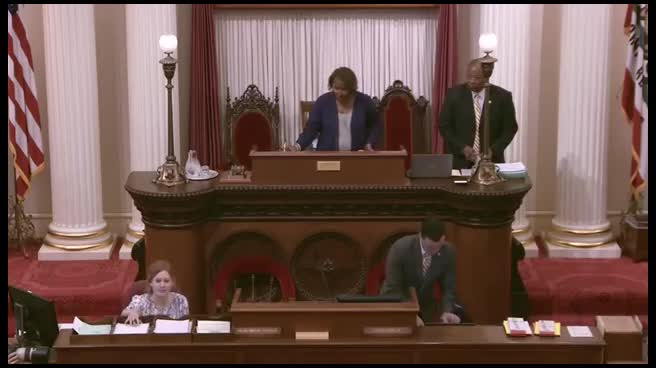 2MIN
Senate Floor
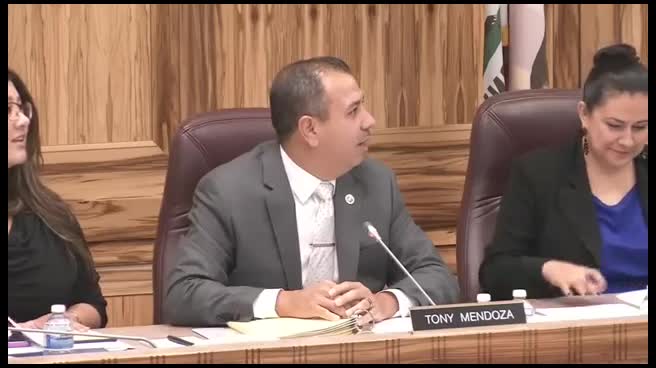 23MIN
Senate Standing Committee on Labor and Industrial Relations
 2MIN
Assembly Floor
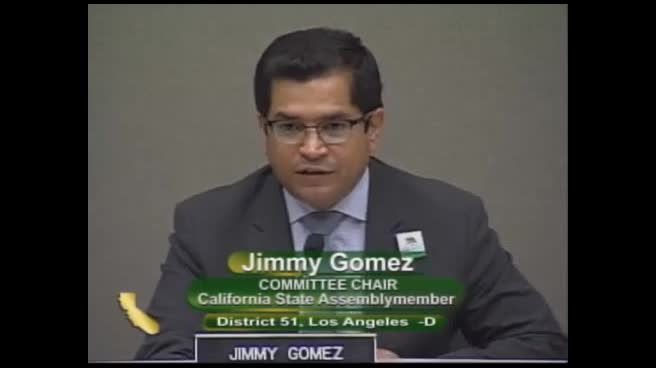 1MIN
Assembly Standing Committee on Appropriations
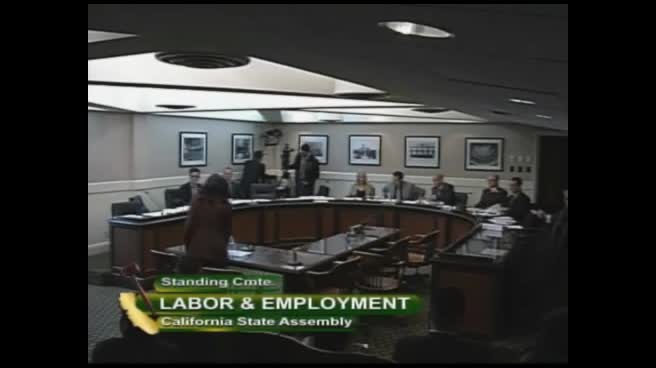 6MIN
Assembly Standing Committee on Labor and Employment
Bill Author





