AB 273: Hazardous waste and substances: corrective action: liability.
- Session Year: 2015-2016
- House: Assembly
- Latest Version Date: 2015-10-02
Existing law authorizes the Department of Toxic Substances Control to issue an order under the hazardous waste control laws requiring that a violation be corrected and imposing a civil penalty to specified persons, including a person who has violated various provisions regulating hazardous waste or provisions concerning removal and remedial actions for hazardous substance releases. A person who is issued that order is required to pay for oversight of the removal or remedial action.
Existing law, the Carpenter-Presley-Tanner Hazardous Substance Account Act, authorizes the department to take or oversee removal and remedial actions related to the release of hazardous substances. Existing law authorizes the Attorney General to recover from the liable person, as defined, the costs incurred by the department or a California regional water quality control board in carrying out the act and subjects any monetary obligation owed to the department pursuant to the act or the hazardous waste control laws to a specified rate of interest earned in the Surplus Money Investment Fund. Existing law authorizes the department to waive the interest if the obligation is satisfied within 60 days of the date of the invoice.
This bill would explicitly apply each of these provisions regarding a persons liability for cost recovery to the release of hazardous waste constituents into the environment. The bill would also explicitly make the costs of response or corrective action recoverable.
The bill would, until June 30, 2021, subject a monetary obligation owed to the department under the act or these laws to an interest rate of 7% per annum. After that date, the bill would subject the monetary obligation to an interest rate of 10% per annum, except that, in the case of obligations of local governments, the rate after that date would remain at 7% per annum. The bill would require the department to waive the interest if the obligation is satisfied within 60 days or if the person, within 45 days of receiving an invoice, provides specified notice to the department disputing the obligation.
Existing law authorizes the Department of Toxic Substances Control to issue an order under the hazardous waste control laws requiring that a violation be corrected and imposing a civil penalty to specified persons, including a person who has violated various provisions regulating hazardous waste or provisions concerning removal and remedial actions for hazardous substance releases. A person who is issued that order is required to pay for oversight of the removal or remedial action.
Existing law, the Carpenter-Presley-Tanner Hazardous Substance Account Act, authorizes the department to take or oversee removal and remedial actions related to the release of hazardous substances. Existing law authorizes the Attorney General to recover from the liable person, as defined, the costs incurred by the department or a California regional water quality control board in carrying out the act and subjects any monetary obligation owed to the department pursuant to the act or the hazardous waste control laws to a specified rate of interest earned in the Surplus Money Investment Fund. Existing law authorizes the department to waive the interest if the obligation is satisfied within 60 days of the date of the invoice.
This bill would explicitly apply each of these provisions regarding a persons liability for cost recovery to the release of hazardous waste constituents into the environment. The bill would also explicitly make the costs of response or corrective action recoverable.
The bill would require would, until June 30, 2021, subject a monetary obligation owed to the department under the act or these laws to be subject to an interest rate of 10% per annum, or, in the case of local governments, 7% per annum. annum. After that date, the bill would subject the monetary obligation to an interest rate of 10% per annum, except that, in the case of obligations of local governments, the rate after that date would remain at 7% per annum. The bill would instead require the department to waive the interest if the obligation is satisfied within 60 days or if the person, within 45 days of receiving an invoice, provides specified notice to the department disputing the obligation.
Existing law authorizes the Department of Toxic Substances Control to issue an order under the hazardous waste control laws requiring that a violation be corrected and imposing a civil penalty to specified persons, including a person who has violated various provisions regulating hazardous waste or provisions concerning removal and remedial actions for hazardous substance releases. A person who is issued that order is required to pay for oversight of the removal or remedial action.
Existing law, the Carpenter-Presley-Tanner Hazardous Substance Account Act, authorizes the department to take or oversee removal and remedial actions related to the release of hazardous substances. Existing law authorizes the Attorney General to recover from the liable person, as defined, the costs incurred by the department or a California regional water quality control board in carrying out the act and requires that subjects any monetary obligation owed to the department pursuant to the act or the hazardous waste control laws be subject to a specified rate of interest earned in the Surplus Money Investment Fund. Existing law authorizes the department to waive the interest if the obligation is satisfied within 60 days of the date of the invoice.
This bill would require a person to pay for oversight of any corrective action required of the person with respect to hazardous waste, and would authorize the recovery by the Attorney General of costs incurred with regard to carrying out or overseeing a removal action, a remedial action, or a corrective action under the act or under the hazardous waste control laws. The explicitly apply each of these provisions regarding a persons liability for cost recovery to the release of hazardous waste constituents into the environment. The bill would also explicitly make the costs of response or corrective action recoverable.
The bill would require a monetary obligation owed to the department under the act or these laws to be subject to an interest rate of 10% per annum, or, in the case of local governments, 7% per annum. The bill would instead require the department to waive the interest if the obligation is satisfied within 60 days or if the person person, within 45 days of receiving an invoice, provides notice to the department disputing the obligation, for a period determined as specified. obligation.
Existing law authorizes the Department of Toxic Substances Control to issue an order under the hazardous waste control laws requiring that a violation be corrected and imposing a civil penalty to specified persons, including a person who has violated various provisions regulating hazardous waste or provisions concerning removal and remedial actions for hazardous substance releases. A person who is issued that order is required to pay for oversight of the removal or remedial action.
Existing law, the Carpenter-Presley-Tanner Hazardous Substance Account Act, authorizes the department to take or oversee removal and remedial actions related to the release of hazardous substances. Existing law authorizes the Attorney General to recover from the liable person, as defined, the costs incurred by the department or a California regional water quality control board in carrying out the act and requires that any monetary obligation owed to the department pursuant to the act or the hazardous waste control laws be subject to a specified rate of interest earned in the Surplus Money Investment Fund. Existing law authorizes the department to waive the interest if the obligation is satisfied within 60 days of the date of the invoice.
This bill would require a person to pay for oversight of any corrective action required of the person with respect to hazardous waste, and would authorize the recovery by the Attorney General of costs incurred with regard to carrying out or overseeing a removal action, a remedial action, or a corrective action under the act or under the hazardous waste control laws. The bill would require a monetary obligation owed to the department under the act or these laws to be subject to an interest rate of 10% per annum, or, in the case of local governments, 7% per annum. The bill would instead require the department to waive the interest if the obligation is satisfied within 60 days or if the person provides notice to the department disputing the obligation, for a period determined as specified.
If an order or agreement issued by the department pursuant to Section 25187 to a potentially responsible party requires a person to take corrective action with respect to a release of hazardous waste or hazardous waste constituents into the environment, that person shall pay for the departments costs incurred in overseeing or carrying out the corrective action.
SEC. 2.Section 25360 of the Health and Safety Code is amended to read:25360.(a)A cost incurred by the department or regional board in carrying out or overseeing a response or a corrective action under this chapter or Chapter 6.5 (commencing with Section 25100) shall be recoverable pursuant to state or federal law by the Attorney General, upon the request of the department or regional board, from the liable person or persons. The amount of any response or corrective action costs that may be recovered pursuant to this section shall include interest on any amount paid.
(b)A person who is liable for response or corrective action costs incurred at a site shall have the liability reduced by any reimbursements that were paid by that person for that site pursuant to Section 25343.
(c)The amount of response or corrective action costs incurred by the department or regional board shall be recoverable at the discretion of the department or regional board, either in a separate action or by way of intervention as of right in an action for contribution or indemnity. Nothing in this section deprives a party of any defense that the party may have.
(d)Moneys recovered by the Attorney General pursuant to this section shall be deposited in the state account.
SEC. 3.Section 25360.1 of the Health and Safety Code is amended to read:25360.1.(a)Until June 30, 2021, except as provided in subdivision (b), a monetary obligation to the department pursuant to Chapter 6.5 (commencing with Section 25100) or this chapter shall be subject to interest from the date of the demand at an interest rate of 7 percent per annum. Commencing July 1, 2021, except as provided in subdivision (b), a monetary obligation to the department pursuant to Chapter 6.5 (commencing with Section 25100) or this chapter shall be subject to interest from the date of the demand at an interest rate of 10 percent per annum, except that, for obligations of local governments, the interest rate shall be 7 percent per annum.
(b)The department shall waive the interest described in subdivision (a) if the obligation is satisfied within 60 days from the date of invoice. If, within 45 days of receiving an invoice, the liable person or persons provide written notice to the department in accordance with its invoice dispute resolution procedures disputing in good faith the monetary obligation specified in the invoice, or a portion thereof, the department shall waive the interest until the dispute is resolved.
If an order or agreement issued by the department pursuant to Section 25187 to a potentially responsible party requires a person to take corrective action with respect to a release of hazardous waste or hazardous waste constituents into the environment, that person shall pay for the departments costs incurred in overseeing or carrying out the corrective action.
SEC. 2.Section 25360 of the Health and Safety Code is amended to read:25360.(a)A cost incurred by the department or regional board in carrying out or overseeing a response or a corrective action under this chapter or Chapter 6.5 (commencing with Section 25100) shall be recoverable pursuant to state or federal law by the Attorney General, upon the request of the department or regional board, from the liable person or persons. The amount of any response or corrective action costs that may be recovered pursuant to this section shall include interest on any amount paid.
(b)A person who is liable for response or corrective action costs incurred at a site shall have the liability reduced by any reimbursements that were paid by that person for that site pursuant to Section 25343.
(c)The amount of response or corrective action costs incurred by the department or regional board shall be recoverable at the discretion of the department or regional board, either in a separate action or by way of intervention as of right in an action for contribution or indemnity. Nothing in this section deprives a party of any defense that the party may have.
(d)Moneys recovered by the Attorney General pursuant to this section shall be deposited in the state account.
SEC. 3.Section 25360.1 of the Health and Safety Code is amended to read:25360.1.(a)Except Until June 30, 2021, except as provided in subdivision (b), a monetary obligation to the department pursuant to Chapter 6.5 (commencing with Section 25100) or this chapter shall be subject to interest from the date of the demand at an interest rate of 10 7 percent per annum, except that, for local governments, the interest rate shall be 7 percent per annum. annum. Commencing July 1, 2021, except as provided in subdivision (b), a monetary obligation to the department pursuant to Chapter 6.5 (commencing with Section 25100) or this chapter shall be subject to interest from the date of the demand at an interest rate of 10 percent per annum, except that, for obligations of local governments, the interest rate shall be 7 percent per annum.
(b)The department shall waive the interest described in subdivision (a) if the obligation is satisfied within 60 days from the date of invoice. If, within 45 days of receiving an invoice, the liable person or persons provide written notice to the department in accordance with its invoice dispute resolution procedures disputing in good faith the monetary obligation specified in the invoice, or a portion thereof, the department shall waive the interest until the dispute is resolved.
If a person is required to take corrective action with respect to hazardous waste, that person shall pay for oversight of the corrective action. This section does not prohibit the department or unified program agency from assessing any other penalty or recovering any costs for oversight of a removal or remedial action, pursuant to any other provision. Nothing in this section limits the due process requirements of Section 25187.
SECTION 1.Section 25187.2 of the Health and Safety Code is amended to read:25187.2.If a removal or remedial action an order or agreement issued by the department pursuant to Section 25187 to a potentially responsible party requires a person to take corrective action with respect to a release of hazardous waste or hazardous waste constituents into the environment, that person shall pay for oversight of the removal or remedial action. This section does not prohibit the department or unified program agency from assessing any other penalty or recovering any costs for oversight of a removal or remedial action, pursuant to any other provision. Nothing in this section limits the due process requirements of Section 25187. the departments costs incurred in overseeing or carrying out the corrective action.
SEC. 2.Section 25360 of the Health and Safety Code is amended to read:25360.(a)A cost incurred by the department or regional board in carrying out or overseeing a removal action, a remedial action, response or a corrective action under this chapter or Chapter 6.5 (commencing with Section 25100) shall be recoverable pursuant to state or federal law by the Attorney General, upon the request of the department or regional board, from the liable person or persons. The amount of any response or corrective action costs that may be recovered pursuant to this section shall include interest on any amount paid.
(b)A person who is liable for response or corrective action costs incurred at a site shall have the liability reduced by any reimbursements that were paid by that person for that site pursuant to Section 25343.
(c)The amount of cost determined pursuant to this section response or corrective action costs incurred by the department or regional board shall be recoverable at the discretion of the department, department or regional board, either in a separate action or by way of intervention as of right in an action for contribution or indemnity. Nothing in this section deprives a party of any defense that the party may have.
(d)Moneys recovered by the Attorney General pursuant to this section shall be deposited in the state account.
SEC. 3.Section 25360.1 of the Health and Safety Code is amended to read:25360.1.(a)Except as provided in subdivision (b), a monetary obligation to the department pursuant to Chapter 6.5 (commencing with Section 25100) or this chapter shall be subject to interest from the date of the demand at an interest rate of 10 percent per annum, except that, for local governments, the interest rate shall be 7 percent per annum.
(b)The department shall waive the interest described in subdivision (a) if the obligation is satisfied within 60 days from the date of invoice. If, within 60 45 days of receiving an invoice, the liable person or persons provide written notice to the department disputing the monetary obligation specified in the invoice, or a portion thereof, the department shall waive the interest until the dispute is resolved, or 180 days from the date the department received the written notice disputing the obligation, whichever occurs first. If the dispute is not resolved within that 180 days, then upon the accrual of 180 days, the liable person or persons shall pay the obligation specified in the invoice, including interest, or seek judicial or other legal relief, as appropriate. resolved.
If a removal or remedial action order issued pursuant to Section 25187 to a potentially responsible party requires a person is required to take corrective action with respect to hazardous waste, that person shall pay for oversight of the removal or remedial corrective action. This section does not prohibit the department or unified program agency from assessing any other penalty or recovering any costs for oversight of a removal or remedial action, pursuant to any other provision. Nothing in this section limits the due process requirements of Section 25187.
SEC. 2.Section 25360 of the Health and Safety Code is amended to read:25360.(a)Any costs A cost incurred by the department or regional board in carrying out or overseeing a removal action, a remedial action, or a corrective action under this chapter or Chapter 6.5 (commencing with Section 25100) shall be recoverable pursuant to state or federal law by the Attorney General, upon the request of the department or regional board, from the liable person or persons. The amount of any response action costs that may be recovered pursuant to this section shall include interest on any amount paid. The interest on amounts paid from the state account or the Site Remediation Account shall be calculated at the rate of return earned on investment in the Surplus Money Investment Fund pursuant to Section 16475 of the Government Code.
(b)A person who is liable for costs incurred at a site shall have the liability reduced by any reimbursements that were paid by that person for that site pursuant to Section 25343.
(c)The amount of cost determined pursuant to this section shall be recoverable at the discretion of the department, either in a separate action or by way of intervention as of right in an action for contribution or indemnity. Nothing in this section deprives a party of any defense that the party may have.
(d)Money Moneys recovered by the Attorney General pursuant to this section shall be deposited in the state account.
SEC. 3.Section 25360.1 of the Health and Safety Code is amended to read:25360.1.Any (a)Except as provided in subdivision (b), a monetary obligation to the department pursuant to Chapter 6.5 (commencing with Section 25100) or this chapter shall be subject to interest from the date of the demand at the same rate of return earned on investment in the Surplus Money Investment Fund pursuant to Section 16475 of the Government Code, except the department may an interest rate of 10 percent per annum, except that, for local governments, the interest rate shall be 7 percent per annum.
(b)The department shall waive the interest described in subdivision (a) if the obligation is satisfied within 60 days from the date of invoice. If, within 60 days of receiving an invoice, the liable person or persons provide written notice to the department disputing the monetary obligation specified in the invoice, or a portion thereof, the department shall waive the interest until the dispute is resolved, or 180 days from the date the department received the written notice disputing the obligation, whichever occurs first. If the dispute is not resolved within that 180 days, then upon the accrual of 180 days, the liable person or persons shall pay the obligation specified in the invoice, including interest, or seek judicial or other legal relief, as appropriate.
|
Date
|
Status
|
|---|---|
| Jul 7, 2015 | From committee: Be placed on second reading file pursuant to Senate Rule 28.8 and be amended. |
| Oct 2, 2015 | Chaptered by Secretary of State - Chapter 456, Statutes of 2015. |
| Oct 2, 2015 | Approved by the Governor. |
| Sep 10, 2015 | Enrolled and presented to the Governor at 4 p.m. |
| Sep 1, 2015 | Senate amendments concurred in. To Engrossing and Enrolling. (Ayes 77. Noes 2.). |
| Sep 1, 2015 | Senate amendments concurred in. To Engrossing and Enrolling. (Ayes 77. Noes 2. Page 2731.). |
| Sep 1, 2015 | Assembly Rule 77 suspended. (Page 2729.) |
| Sep 1, 2015 | Assembly Rule 77 suspended. |
| Aug 31, 2015 | Read third time. Passed. Ordered to the Assembly. (Ayes 25. Noes 10. Page 2278.). |
| Aug 31, 2015 | Read third time. Passed. Ordered to the Assembly. |
| Aug 31, 2015 | In Assembly. Concurrence in Senate amendments pending. May be considered on or after September 2 pursuant to Assembly Rule 77. |
| Jul 8, 2015 | Read second time and amended. Ordered to third reading. |
| Feb 11, 2015 | Read first time. To print. |
| Jun 17, 2015 | From committee: Do pass and re-refer to Com. on APPR. (Ayes 6. Noes 0.) (June 17). Re-referred to Com. on APPR. |
| Jun 2, 2015 | From committee chair, with author's amendments: Amend, and re-refer to committee. Read second time, amended, and re-referred to Com. on E.Q. |
| May 7, 2015 | Referred to Com. on E.Q. |
| Apr 20, 2015 | Read third time. Passed. Ordered to the Senate. (Ayes 64. Noes 9. Page 1013.) |
| Apr 20, 2015 | In Senate. Read first time. To Com. on RLS. for assignment. |
| Apr 16, 2015 | Read second time. Ordered to third reading. |
| Apr 15, 2015 | From committee: Do pass. (Ayes 11. Noes 0.) (April 15). |
| Mar 24, 2015 | From committee: Do pass and re-refer to Com. on APPR. (Ayes 5. Noes 0.) (March 24). Re-referred to Com. on APPR. |
| Feb 23, 2015 | Referred to Com. on E.S. & T.M. |
| Feb 12, 2015 | From printer. May be heard in committee March 14. |
|
Date
|
Description
|
Location
|
Votes
|
|
|---|---|---|---|---|
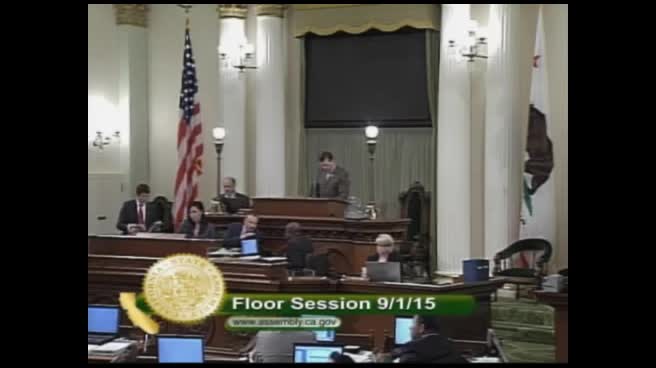
| Sep 1, 2015 | AB 273 E.S. & T.M. Concurrence in Senate Amendments By ALEJO | Assembly Floor |
Passed |
|
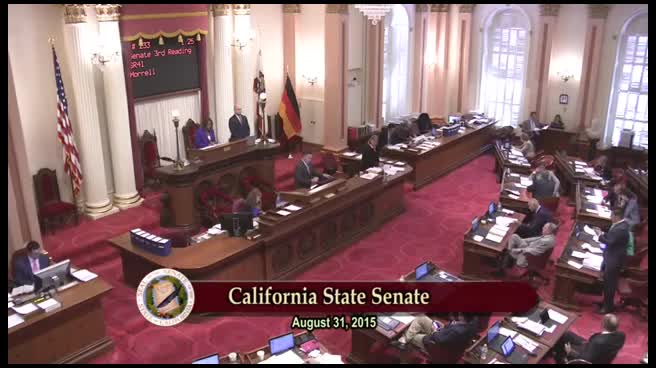
| Aug 31, 2015 | Assembly 3rd Reading AB273 Committee On E.S. & T.M. (Alejo) By Jackson | Senate Floor |
Passed |
|
| Jun 17, 2015 | Do pass, but first be re-referred to the Committee on [Appropriations] | Senate Standing Committee on Environmental Quality |
Passed |
|
| Apr 20, 2015 | AB 273 E.S. & T.M. Assembly Third Reading By ALEJO | Assembly Floor |
Passed |
|
| Apr 15, 2015 | Do pass. | Assembly Standing Committee on Appropriations |
Passed |
|
| Mar 24, 2015 | Do pass and be re-referred to the Committee on [Appropriations] | Assembly Standing Committee on Environmental Safety and Toxic Materials |
Passed |
This list shows positions taken on this bill by organizations on the date displayed, which is linked to the original source.
Positions by individuals are not included.
|
Organization
|
Position
|
Date
|
|---|---|---|
| California League Of Conservation Voters | ** Support | Aug 17, 2015 |
| Clean Water Action | * Support | Jun 17, 2015 |
| Environment California | ** Support | Aug 17, 2015 |
| Environmental Working Group | ** Support | Aug 17, 2015 |
| Natural Resources Defense Council | ** Support | Aug 17, 2015 |
| Sierra Club | ** Support | Aug 17, 2015 |
AB 273
Page 3
CONCURRENCE IN SENATE AMENDMENTS
AB 273
(Committee on Environmental Safety and Toxic Materials)
As Amended July 8, 2015
Majority vote
ASSEMBLY: |
64-9 |
(April 20, 2015) |
SENATE: |
25-10 |
(August 31, 2015) |
Original Committee Reference: E.S. & T.M.
SUMMARY: Increases the interest rate accrued on monetary obligations owed to the California Department of Toxic Substances Control (DTSC). Specifically, this bill:
Requires a person to pay for DTSC's costs to carry out or oversee a corrective action with respect to the release of hazardous waste.
Authorizes the State Attorney General to recover costs incurred with regard to carrying out or overseeing a removal action, a remedial action, or a corrective action.
Deletes the interest rate on monetary obligations owed to DTSC as being the same rate earned on investments in the Surplus Money Investment Fund, and establishes the interest rate, until June 30, 2021, as 7% per annum, and commencing July 1, 2021, establishes the interest rate as 10% per annum, and 7% per annum for local governments.
Requires DTSC to waive the interest if the obligation is paid within 45 days of receipt of the invoice.
The Senate amendments:
Restore existing law and make clarifications as it relates to DTSC requiring a person responsible for a corrective action with respect to a release of hazardous waste or hazardous waste constituents into the environment to pay for DTSC's costs incurred in overseeing or carrying out a corrective action.
Establish, until June 30, 2021, the interest rate as 7% per annum, and commencing July 1, 2021, establishes the interest rate as 10% per annum, and 7% per annum for local governments.
Make technical changes to conform terminology used in Health and Safety Code Chapters 6.5 and 6.8.
Change, from 60 days to 45 days, the time frame in which DTSC must waive the interest if the monetary obligation is paid.
Delete the requirement that DTSC waive the interest from accruing for up to 180 days if the liable person in receipt of the invoice notifies DSTC of dispute over all or a portion of the invoice.
EXISTING LAW:
Requires a responsible party that is required to take corrective action to pay for oversight of the removal or remedial action. (Health and Safety Code (H&S) Section 25187.2)
Requires DTSC or regional board that has incurred costs in overseeing or carrying out a remedial action to recover those costs from the responsible party, and requires those recoverable costs to be subject to interest. (H&S Section 25360)
Subjects monetary obligations owed to DTSC to an interest rate that is the same rate earned on investments in the Surplus Money Investment Fund. (H&S Section 25360.1)
Authorizes DTSC to waive the interest if the obligation is satisfied within 60 days from the date of invoice. (H&S Section 25360.1)
Establishes an interest rate at 10% per annum on the principal amount of a money judgment remaining unsatisfied, and establishes the right of the Legislature to change the rate of interest at any time to a rate of less than 10% per annum, regardless of the date of entry of the judgment or the date any obligation upon which the judgment is based was incurred. (Code of Civil Procedure Section 685.010)
Establishes that interest on a tax or fee judgment against a local public entity shall accrue at a rate equal to the weekly average one year constant maturity United States Treasury yield at the time of the judgment plus 2%, but shall not exceed 7% per annum. (Government Code Section 970.1)
FISCAL EFFECT: According to the Senate Appropriations Committee, pursuant to Senate Rule 28.8, negligible state costs.
COMMENTS: State Audit Report: On August 7, 2014, the Bureau of State Audits (BSA) released a report on DTSC's cost recovery. The BSA found that long-standing shortcomings with DTSC's recovery of costs have resulted in millions of dollars in unbilled and billed but uncollected cleanup costs dating back to 1987.
According to the report, "increasing the interest rate charged on billed but delinquent unpaid amounts may improve the timeliness of collections from responsible parties. State law requires the department to charge interest for invoices not paid within 60 days at a rate equal to the rate of return earned on investments in the State's Surplus Money Investment Fund (SMIF). However, the SMIF interest rate is substantially lower than the interest rate charged for late payments by other state entities, such as the California State Board of Equalization (BOE). For example, for the quarter ending June 30, 2013, the SMIF interest rate was 0.246 percent, while the BOE interest rate was 6 percent for the same period. As long as the SMIF interest rate remains low, there is less incentive for responsible parties to make payments on time."
The BSA recommended that in order to improve DTSC's efforts to promptly recover its costs, the legislature should revise state law to allow DTSC to use a higher interest rate assessed on late payments.
Analysis Prepared by: Paige Brokaw / E.S. & T.M. / (916) 319-3965 FN: 0001257
AB 273
Page 5
|
Office of Senate Floor Analyses (916) 651-1520 Fax: (916) 327-4478 |
THIRD READING
Bill No: AB 273
Author: Committee on Environmental Safety and Toxic Materials
Amended: 7/8/15 in Senate
SENATE ENVIRONMENTAL QUALITY COMMITTEE: 6-0, 6/17/15
AYES: Wieckowski, Gaines, Hill, Jackson, Leno, Pavley
NO VOTE RECORDED: Bates
SENATE APPROPRIATIONS COMMITTEE: Senate Rule 28.8
ASSEMBLY FLOOR: 64-9, 4/20/15 - See last page for vote
SUBJECT: Hazardous waste and substances: corrective action: liability
DIGEST: This bill increases the interest rate accrued on monetary obligations owed to the California Department of Toxic Substances Control (DTSC).
ANALYSIS: Existing federal law, under the federal Resource Conservation and Recovery Act (RCRA) of 1976, governs the disposal of hazardous waste:
Through regulation, sets standards for the treatment, storage, transport, tracking and disposal of hazardous waste in the United States.
Authorizes states to carry out many of the functions of the federal law through their own hazardous waste laws if such programs have been approved by the United States Environmental Protection Agency (US EPA).
Existing
state law, under the California Hazardous Waste Control Act (HWCA) of
1972:
Establishes the Hazardous Waste Control program.
Regulates the appropriate handling, processing and disposal of hazardous and extremely hazardous waste to protect the public, livestock and wildlife from hazards to health and safety.
Authorizes the DTSC to issue an order under the hazardous waste control laws requiring that a violation be corrected and imposing a civil penalty to specified persons, including a person who has violated various provisions regulating hazardous waste or provisions concerning removal and remedial actions for hazardous substance releases. A person who is issued that order is required to pay for oversight of the removal or remedial action.
Authorizes, under the Carpenter-Presley-Tanner Hazardous Substance Account Act, the DTSC to take or oversee removal and remedial actions related to the release of hazardous substances.
Authorizes the Attorney General to recover from the liable person, as defined, the costs incurred by the DTSC or a California regional water quality control board in carrying out HWCA and subjects any monetary obligation owed to the DTSC pursuant to HWCA or the hazardous waste control laws to a specified rate of interest earned in the Surplus Money Investment Fund (SMIF).
Authorizes the DTSC to waive the interest if the obligation is satisfied within 60 days of the date of the invoice.
This bill:
Increases the interest rate accrued on monetary obligations owed to the DTSC.
Makes explicit the requirement that a responsible party pay for DTSC’s oversight of any corrective action with respect to hazardous waste.
Makes explicit that the cost of response or corrective action are recoverable.
Deletes the interest rate on monetary obligations owed to the DTSC as being the same rate earned on investments in the SMIF, and establishes the interest rate as 7% per annum until June 30, 2021 and 10% per annum after June 30, 2021, and 7% per annum for local governments.
Requires the DTSC to waive the interest if the obligation is paid within 60 days of receipt of the invoice.
Requires the DTSC to waive the interest from accruing until dispute is resolved if the liable person in receipt of the invoice notifies DTSC of a good faith dispute over all or a portion of the invoice within 45 days.
Background
State Audit Report. On August 7, 2014, the Bureau of State Audits (BSA) released a report on the DTSC’s cost recovery. The BSA found that long-standing shortcomings with the DTSC’s recovery of costs have resulted in millions of dollars in unbilled and billed but uncollected cleanup costs dating back to 1987.
Existing law requires the DTSC to charge interest for invoices not paid within 60 days at a rate equal to the rate of return earned on investments in the state’s SMIF.
For the quarter ending June 30, 2013, the SMIF interest rate was 0.246%. This low interest rate provides less incentive for responsible parties to make payments on time.
According to the report, “increasing the interest rate charged on billed but delinquent unpaid amounts may improve the timeliness of collections from responsible parties. State law requires the department to charge interest for invoices not paid within 60 days at a rate equal to the rate of return earned on investments in the State’s Surplus Money Investment Fund (SMIF). However, the SMIF interest rate is substantially lower than the interest rate charged for late payments by other state entities, such as the California State Board of Equalization (BOE). For example, for the quarter ending June 30, 2013, the SMIF interest rate was 0.246 percent, while the BOE interest rate was 6 percent for the same period. As long as the SMIF interest rate remains low, there is less incentive for responsible parties to make payments on time.”
The BSA report specifically recommended that in order to improve the DTSC’s efforts to promptly recover its costs, the Legislature should revise state law to allow DTSC to use a higher interest rate assessed on late payments.
Special treatment for local governments. State law establishes different interest rates for local governments. Government Code Section 970.1 sets an interest rate for local governments only for interest on tax or fee judgments. Article XV of the California Constitution provides that “[t]he rate of interest upon a judgment rendered in any court of this State shall be set by the Legislature at not more than 10 percent per annum. Such rate may be variable and based upon interest rates charged by federal agencies, or economic indicators, or both. In the absence of setting of such rate by the Legislature, the rate of interest on any judgment rendered in any court of the State shall be 7 percent per annum.”
The California Supreme Court determined in California Federal Savings and Loan Association v. City of Los Angeles (1995) 11 Cal.4th 342 that in the absence of the Legislature establishing a different rate, the “applicable rate of post-judgment interest to be paid by local public entities is 7 percent.”
The interest rate imposed on local governments (aside from judgments involving taxes or fees) is unspecified and is the 7% specified in the Constitution.
Comments
Purpose of bill. According to the author, AB 273 is part of a package of reform measures to improve the DTSC’s cost recovery efforts aimed at amending exiting cost recovery statutes and strengthening or expanding the DTSC’s authority to improve its timeliness of collecting costs related to hazardous waste cleanup.
Related/Prior Legislation
In addition to this bill, the Assembly Committee on Environmental Safety and Toxic Materials (ESTM) has introduced the following bills to address the shortcomings found in the BSA report:
AB 274 (ESTM) allows the DTSC to not expend resources to pursue an uncollectible account, as defined.
AB 275 (ESTM) revises the DTSC’s statute of limitation for cost recovery.
AB 276 (ESTM) allows the DTSC to request financial information from specified entities who claim inability to pay.
SB 812 (de León 2014), among other provisions, proposed to require any monetary obligation owed to the DTSC to accrue interest at the same rate as the modified adjusted rate per annum imposed for underpayments of sales and use taxes to the state. The bill was vetoed by Governor Brown on September 29, 2014.
FISCAL EFFECT: Appropriation: No Fiscal Com.: Yes Local: No
California League of Conservation Voters
Environment California
Environmental Working Group
Natural Resources Defense Council
Sierra Club
OPPOSITION: (Verified 7/15/15)
None received
ARGUMENTS IN SUPPORT:
The supporters believe that by “increasing the interest rate charged on billed but unpaid invoices owed the DTSC may improve the timeliness of collections from responsible parties. The current interest rate is so low that the State Auditor believes there is little incentive for responsible parties to make payments on time.”
ASSEMBLY FLOOR: 64-9, 4/20/15
AYES: Achadjian, Alejo, Bloom, Bonilla, Bonta, Brown, Burke, Calderon, Campos, Chau, Chiu, Chu, Cooley, Cooper, Dababneh, Dahle, Daly, Dodd, Eggman, Frazier, Cristina Garcia, Eduardo Garcia, Gatto, Gipson, Gomez, Gonzalez, Gordon, Gray, Hadley, Roger Hernández, Holden, Jones, Jones-Sawyer, Kim, Lackey, Levine, Linder, Lopez, Low, Maienschein, Mathis, McCarty, Medina, Melendez, Mullin, Nazarian, Obernolte, O’Donnell, Perea, Quirk, Rendon, Ridley-Thomas, Rodriguez, Salas, Santiago, Mark Stone, Thurmond, Ting, Waldron, Weber, Wilk, Williams, Wood, Atkins
NOES: Baker, Brough, Chávez, Beth Gaines, Grove, Irwin, Mayes, Olsen, Wagner
NO VOTE RECORDED: Travis Allen, Bigelow, Chang, Gallagher, Harper, Patterson, Steinorth
Prepared by: Rachel Machi Wagoner / E.Q. / (916) 651-4108
7/15/15 17:03:28
**** END ****
AB 273
Page 6
|
Office of Senate Floor Analyses (916) 651-1520 Fax: (916) 327-4478 |
THIRD READING
Bill No: AB 273
Author: Committee on Environmental Safety and Toxic Materials
Amended: 7/8/15 in Senate
SENATE ENVIRONMENTAL QUALITY COMMITTEE: 6-0, 6/17/15
AYES: Wieckowski, Gaines, Hill, Jackson, Leno, Pavley
NO VOTE RECORDED: Bates
SENATE APPROPRIATIONS COMMITTEE: Senate Rule 28.8
ASSEMBLY FLOOR: 64-9, 4/20/15 - See last page for vote
SUBJECT: Hazardous waste and substances: corrective action: liability
DIGEST: This bill increases the interest rate accrued on monetary obligations owed to the California Department of Toxic Substances Control (DTSC).
ANALYSIS: Existing federal law, under the federal Resource Conservation and Recovery Act (RCRA) of 1976, governs the disposal of hazardous waste:
Through regulation, sets standards for the treatment, storage, transport, tracking and disposal of hazardous waste in the United States.
Authorizes states to carry out many of the functions of the federal law through their own hazardous waste laws if such programs have been approved by the United States Environmental Protection Agency (US EPA).
Existing
state law, under the California Hazardous Waste Control Act (HWCA) of
1972:
Establishes the Hazardous Waste Control program.
Regulates the appropriate handling, processing and disposal of hazardous and extremely hazardous waste to protect the public, livestock and wildlife from hazards to health and safety.
Authorizes the DTSC to issue an order under the hazardous waste control laws requiring that a violation be corrected and imposing a civil penalty to specified persons, including a person who has violated various provisions regulating hazardous waste or provisions concerning removal and remedial actions for hazardous substance releases. A person who is issued that order is required to pay for oversight of the removal or remedial action.
Authorizes, under the Carpenter-Presley-Tanner Hazardous Substance Account Act, the DTSC to take or oversee removal and remedial actions related to the release of hazardous substances.
Authorizes the Attorney General to recover from the liable person, as defined, the costs incurred by the DTSC or a California regional water quality control board in carrying out HWCA and subjects any monetary obligation owed to the DTSC pursuant to HWCA or the hazardous waste control laws to a specified rate of interest earned in the Surplus Money Investment Fund (SMIF).
Authorizes the DTSC to waive the interest if the obligation is satisfied within 60 days of the date of the invoice.
This bill:
Increases the interest rate accrued on monetary obligations owed to the DTSC.
Makes explicit the requirement that a responsible party pay for DTSC’s oversight of any corrective action with respect to hazardous waste.
Makes explicit that the cost of response or corrective action are recoverable.
Deletes the interest rate on monetary obligations owed to the DTSC as being the same rate earned on investments in the SMIF, and establishes the interest rate as 7% per annum until June 30, 2021 and 10% per annum after June 30, 2021, and 7% per annum for local governments.
Requires the DTSC to waive the interest if the obligation is paid within 60 days of receipt of the invoice.
Requires the DTSC to waive the interest from accruing until dispute is resolved if the liable person in receipt of the invoice notifies DTSC of a good faith dispute over all or a portion of the invoice within 45 days.
Background
State Audit Report. On August 7, 2014, the Bureau of State Audits (BSA) released a report on the DTSC’s cost recovery. The BSA found that long-standing shortcomings with the DTSC’s recovery of costs have resulted in millions of dollars in unbilled and billed but uncollected cleanup costs dating back to 1987.
Existing law requires the DTSC to charge interest for invoices not paid within 60 days at a rate equal to the rate of return earned on investments in the state’s SMIF.
For the quarter ending June 30, 2013, the SMIF interest rate was 0.246%. This low interest rate provides less incentive for responsible parties to make payments on time.
According to the report, “increasing the interest rate charged on billed but delinquent unpaid amounts may improve the timeliness of collections from responsible parties. State law requires the department to charge interest for invoices not paid within 60 days at a rate equal to the rate of return earned on investments in the State’s Surplus Money Investment Fund (SMIF). However, the SMIF interest rate is substantially lower than the interest rate charged for late payments by other state entities, such as the California State Board of Equalization (BOE). For example, for the quarter ending June 30, 2013, the SMIF interest rate was 0.246 percent, while the BOE interest rate was 6 percent for the same period. As long as the SMIF interest rate remains low, there is less incentive for responsible parties to make payments on time.”
The BSA report specifically recommended that in order to improve the DTSC’s efforts to promptly recover its costs, the Legislature should revise state law to allow DTSC to use a higher interest rate assessed on late payments.
Special treatment for local governments. State law establishes different interest rates for local governments. Government Code Section 970.1 sets an interest rate for local governments only for interest on tax or fee judgments. Article XV of the California Constitution provides that “[t]he rate of interest upon a judgment rendered in any court of this State shall be set by the Legislature at not more than 10 percent per annum. Such rate may be variable and based upon interest rates charged by federal agencies, or economic indicators, or both. In the absence of setting of such rate by the Legislature, the rate of interest on any judgment rendered in any court of the State shall be 7 percent per annum.”
The California Supreme Court determined in California Federal Savings and Loan Association v. City of Los Angeles (1995) 11 Cal.4th 342 that in the absence of the Legislature establishing a different rate, the “applicable rate of post-judgment interest to be paid by local public entities is 7 percent.”
The interest rate imposed on local governments (aside from judgments involving taxes or fees) is unspecified and is the 7% specified in the Constitution.
Comments
Purpose of bill. According to the author, AB 273 is part of a package of reform measures to improve the DTSC’s cost recovery efforts aimed at amending exiting cost recovery statutes and strengthening or expanding the DTSC’s authority to improve its timeliness of collecting costs related to hazardous waste cleanup.
Related/Prior Legislation
In addition to this bill, the Assembly Committee on Environmental Safety and Toxic Materials (ESTM) has introduced the following bills to address the shortcomings found in the BSA report:
AB 274 (ESTM) allows the DTSC to not expend resources to pursue an uncollectible account, as defined.
AB 275 (ESTM) revises the DTSC’s statute of limitation for cost recovery.
AB 276 (ESTM) allows the DTSC to request financial information from specified entities who claim inability to pay.
SB 812 (de León 2014), among other provisions, proposed to require any monetary obligation owed to the DTSC to accrue interest at the same rate as the modified adjusted rate per annum imposed for underpayments of sales and use taxes to the state. The bill was vetoed by Governor Brown on September 29, 2014.
FISCAL EFFECT: Appropriation: No Fiscal Com.: Yes Local: No
California League of Conservation Voters
Environment California
Environmental Working Group
Natural Resources Defense Council
Sierra Club
The Civil Justice Association of California
ARGUMENTS IN SUPPORT:
The supporters believe that by “increasing the interest rate charged on billed but unpaid invoices owed the DTSC may improve the timeliness of collections from responsible parties. The current interest rate is so low that the State Auditor believes there is little incentive for responsible parties to make payments on time.”
ARGUMENTS IN OPPOSITION:
The opposition argues that “federal law provides a floating interest rate on judgments, which is less than 1% (equal to the weekly average 1-year constant maturity Treasury yield, as published by the Board of Governors of the Federal Reserve System). Many other states have variable interest rates on judgment awards. Over 16 states have enacted reforms to reduce interest rates on judgments to reflect current market realities.”
The opposition believes that “by increasing the judgment interest in these claims from the rate of investment in the Surplus Money Investment Fund to 10% (per the previous version of the bill) against private parties AB 273 would increase the rate by approximately 40 times and against local governments by 28 times.”
The opposition argues that, “at a time when California’s legal climate is already ranked as one of the worst in the nation – a factor considered by businesses when making decisions about where to grow or relocate, AB 273 goes the wrong direction.”
ASSEMBLY FLOOR: 64-9, 4/20/15
AYES: Achadjian, Alejo, Bloom, Bonilla, Bonta, Brown, Burke, Calderon, Campos, Chau, Chiu, Chu, Cooley, Cooper, Dababneh, Dahle, Daly, Dodd, Eggman, Frazier, Cristina Garcia, Eduardo Garcia, Gatto, Gipson, Gomez, Gonzalez, Gordon, Gray, Hadley, Roger Hernández, Holden, Jones, Jones-Sawyer, Kim, Lackey, Levine, Linder, Lopez, Low, Maienschein, Mathis, McCarty, Medina, Melendez, Mullin, Nazarian, Obernolte, O’Donnell, Perea, Quirk, Rendon, Ridley-Thomas, Rodriguez, Salas, Santiago, Mark Stone, Thurmond, Ting, Waldron, Weber, Wilk, Williams, Wood, Atkins
NOES: Baker, Brough, Chávez, Beth Gaines, Grove, Irwin, Mayes, Olsen, Wagner
NO VOTE RECORDED: Travis Allen, Bigelow, Chang, Gallagher, Harper, Patterson, Steinorth
Prepared by: Rachel Machi Wagoner / E.Q. / (916) 651-4108
7/8/15 15:51:50
**** END ****
AB 273 (Committee on Environmental Safety and Toxic Materials) Page 5 of 5
SENATE COMMITTEE ON ENVIRONMENTAL QUALITY
Senator Wieckowski, Chair
2015 - 2016 Regular
Bill No: AB 273
Author: |
Committee on Environmental Safety and Toxic Materials |
||
Version: |
6/2/2015 |
Hearing Date: |
6/17/2015 |
Urgency: |
No |
Fiscal: |
Yes |
Consultant: |
Rachel Machi Wagoner |
||
SUBJECT: Hazardous waste and substances: corrective action: liability
ANALYSIS:
Existing law:
Under the federal Resource Conservation and Recovery Act (RCRA) of 1976, governs the disposal of hazardous waste:
Through regulation, sets standards for the treatment, storage, transport, tracking and disposal of hazardous waste in the United States.
Authorizes states to carry out many of the functions of the federal law through their own hazardous waste laws if such programs have been approved by the United States Environmental Protection Agency (US EPA).
Under the California Hazardous Waste Control Act (HWCA) of 1972:
Establishes the Hazardous Waste Control program;
Regulates the appropriate handling, processing and disposal of hazardous and extremely hazardous waste to protect the public, livestock and wildlife from hazards to health and safety.
Authorizes the Department of Toxic Substances Control (DTSC) to issue an order under the hazardous waste control laws requiring that a violation be corrected and imposing a civil penalty to specified persons, including a person who has violated various provisions regulating hazardous waste or provisions concerning removal and remedial actions for hazardous substance releases. A person who is issued that order is required to pay for oversight of the removal or remedial action.
Under the Carpenter-Presley-Tanner Hazardous Substance Account Act, authorizes DTSC to take or oversee removal and remedial actions related to the release of hazardous substances.
Authorizes the Attorney General to recover from the liable person, as defined, the costs incurred by DTSC or a California regional water quality control board in carrying out the act and subjects any monetary obligation owed to the department pursuant to the act or the hazardous waste control laws to a specified rate of interest earned in the Surplus Money Investment Fund.
Authorizes DTSC to waive the interest if the obligation is satisfied within 60 days of the date of the invoice.
This bill: Increases the interest rate accrued on monetary obligations owed to the California Department of Toxic Substances Control (DTSC). Specifically:
Makes explicit the requirement that a responsible party pay for DTSC’s oversight of any corrective action with respect to hazardous waste;
Makes explicit that the cost of response or corrective action are recoverable;
Deletes the interest rate on monetary obligations owed to DTSC as being the same rate earned on investments in the Surplus Money Investment Fund, and establishes the interest rate as 10% per annum, and 7% per annum for local governments;
Requires DTSC to waive the interest if the obligation is paid within 60 days of receipt of the invoice;
Requires DTSC to waive the interest from accruing until dispute is resolved if the liable person in receipt of the invoice notifies DTSC of dispute over all or a portion of the invoice within 45 days.
Background
State Audit Report: On August 7, 2014, the Bureau of State Audits (BSA) released a report on DTSC's cost recovery. The BSA found that long-standing shortcomings with DTSC's recovery of costs have resulted in millions of dollars in unbilled and billed but uncollected cleanup costs dating back to 1987.
Existing law requires DTSC to charge interest for invoices not paid within 60 days at a rate equal to the rate of return earned on investments in the State’s Surplus Money Investment Fund (SMIF).
For the quarter ending June 30, 2013, the SMIF interest rate was 0.246 percent. This low interest rate provides less incentive for responsible parties to make payments on time.
According to the report, “increasing the interest rate charged on billed but delinquent unpaid amounts may improve the timeliness of collections from responsible parties. State law requires the department to charge interest for invoices not paid within 60 days at a rate equal to the rate of return earned on investments in the State’s Surplus Money Investment Fund (SMIF). However, the SMIF interest rate is substantially lower than the interest rate charged for late payments by other state entities, such as the California State Board of Equalization (BOE). For example, for the quarter ending June 30, 2013, the SMIF interest rate was 0.246 percent, while the BOE interest rate was 6 percent for the same period. As long as the SMIF interest rate remains low, there is less incentive for responsible parties to make payments on time.”
The BSA report specifically recommended that in order to improve DTSC's efforts to promptly recover its costs, the Legislature should revise state law to allow DTSC to use a higher interest rate assessed on late payments.
Special treatment for local governments: State law establishes different interest rates for local governments. Government Code §970.1 sets an interest rate for local governments only for interest on tax or fee judgments. Article XV of the California Constitution provides that “[t]he rate of interest upon a judgment rendered in any court of this State shall be set by the Legislature at not more than 10 percent per annum. Such rate may be variable and based upon interest rates charged by federal agencies, or economic indicators, or both. In the absence of setting of such rate by the Legislature, the rate of interest on any judgment rendered in any court of the State shall be 7 percent per annum.”
The California Supreme Court determined in California Federal Savings and Loan Association v. City of Los Angeles (1995) 11 Cal.4th 342 that in the absence of the Legislature establishing a different rate, the "applicable rate of post-judgment interest to be paid by local public entities is 7 percent."
The interest rate imposed on local governments (aside from judgments involving taxes or fees) is unspecified and is the 7% specified in the Constitution.
Comments
Purpose of Bill. According to the author, AB 273 is part of a package of reform measures to improve DTSC’s cost recovery efforts aimed at amending exiting cost recovery statutes and strengthening or expanding DTSC’s authority to improve its timeliness of collecting costs related to hazardous waste cleanup.
Related/Prior Legislation
Related Legislation. In addition to this bill, the Committee on Environmental Safety and Toxic Materials has introduced the following bills to address the shortcomings found in the BSA report:
AB 274 (ESTM) allows DTSC to not expend resources to pursue an uncollectible account, as defined.
AB 275 (ESTM) revises DTSC's statute of limitation for cost recovery.
AB 276 (ESTM) allows DTSC to request financial information from specified entities who claim inability to pay.
SB 812 (de León 2014), among other provisions, proposed to require any monetary obligation owed to DTSC to accrue interest at the same rate as the modified adjusted rate per annum imposed for underpayments of sales and use taxes to the state. That bill was vetoed by Governor Brown on September 29, 2014.
SOURCE:
Committee on Environmental Safety and Toxic Materials
SUPPORT:
California League of Conservation Voters
Environment California
Environmental Working Group
Natural Resources Defense Council
Sierra Club
OPPOSITION:
The Civil Justice Association of California
ARGUMENTS IN SUPPORT:
The support believes that by “increasing the interest rate charged on billed but unpaid invoices owed DTSC may improve the timeliness of collections from responsible parties. The current interest rate is so low that the State Auditor believes there is little incentive for responsible parties to make payments on time.”
ARGUMENTS IN OPPOSITION:
The opposition argues that “federal law provides a floating interest rate on judgments, which is less than 1% (equal to the weekly average 1-year constant maturity Treasury yield, as published by the Board of Governors of the Federal Reserve System). Many other states have variable interest rates on judgment awards. Over 16 states have enacted reforms to reduce interest rates on judgments to reflect current market realities.”
The opposition believes that “by increasing the judgment interest in these claims from the rate of investment in the Surplus Money Investment Fund to 10% against private parties AB 273 would increase the rate by approximately 40 times and against local governments by 28 times.”
The opposition argues that, “at a time when California’s legal climate is already ranked as one of the worst in the nation – a factor considered by businesses when making decisions about where to grow or relocate, AB 273 goes the wrong direction.”
-- END --
AB 273
Page 2
ASSEMBLY THIRD READING
AB 273
(Committee on Environmental Safety and Toxic Materials)
As Introduced February 11, 2015
Majority vote
Committee |
Votes |
Ayes |
Noes |
Environmental Safety |
5-0 |
Alejo, Dahle, Gonzalez, McCarty, Ting |
|
Appropriations |
11-0 |
Gomez, Bonta, Calderon, Daly, Eggman, Eduardo Garcia, Holden, Quirk, Rendon, Weber, Wood |
|
SUMMARY:
Increases the interest rate accrued on monetary obligations owed to the California Department of Toxic Substances Control (DTSC). Specifically, this bill:
Requires a person to pay for oversight of any corrective action with respect to hazardous waste;
Authorizes the State Attorney General to recover costs incurred with regard to carrying out or overseeing a removal action, a remedial action, or a corrective action;
Deletes the interest rate on monetary obligations owed to DTSC as being the same rate earned on investments in the Surplus Money Investment Fund, and establishes the interest rate as 10% per annum, and 7% per annum for local governments;
Requires DTSC to waive the interest if the obligation is paid within 60 days of receipt of the invoice;
Requires DTSC to waive the interest from accruing for up to 180 days if the liable person in receipt of the invoice notifies DSTC of dispute over all or a portion of the invoice.
FISCAL EFFECT:
According to the Assembly Appropriations Committee, assuming the 10% interest is applied and received from all outstanding invoices as well as increased cost recovery, the potential increased revenues to the Toxic Substance Control Account could be up to $3 million. DTSC would have minor and absorbable costs for updating billing documents and procedures.
COMMENTS:
State Audit Report: On August 7, 2014, the Bureau of State Audits (BSA) released a report on DTSC's cost recovery. The BSA found that long-standing shortcomings with DTSC's recovery of costs have resulted in millions of dollars in unbilled and billed but uncollected cleanup costs dating back to 1987.
According to the report, "increasing the interest rate charged on billed but delinquent unpaid amounts may improve the timeliness of collections from responsible parties. State law requires the department to charge interest for invoices not paid within 60 days at a rate equal to the rate of return earned on investments in the State’s Surplus Money Investment Fund (SMIF). However, the SMIF interest rate is substantially lower than the interest rate charged for late payments by other state entities, such as the California State Board of Equalization (BOE). For example, for the quarter ending June 30, 2013, the SMIF interest rate was 0.246%, while the BOE interest rate was 6% for the same period. As long as the SMIF interest rate remains low, there is less incentive for responsible parties to make payments on time."
The BSA recommended that in order to improve DTSC's efforts to promptly recover its costs, the legislature should revise state law to allow DTSC to use a higher interest rate assessed on late payments.
Analysis Prepared by: Paige Brokaw / E.S. & T.M. / (916) 319-3965 FN: 0000157
AB 273
Page 2
Date of Hearing: April 15, 2015
ASSEMBLY COMMITTEE ON APPROPRIATIONS
Jimmy Gomez, Chair
AB 273
(Committee on Environmental Safety) – As Introduced February 11, 2015
Policy Committee: |
Environmental Safety and Toxic Materials |
Vote: |
5 - 0 |
|
|
|
|
|
|
|
|
Urgency: No State Mandated Local Program: No Reimbursable:
SUMMARY:
This bill modifies provisions relating to the Department of Toxic Substance Control's (DTSC) authority to require corrective actions under hazardous waste control laws. Specifically, this bill:
Requires a person to pay for the oversight of any corrective action required under hazardous waste laws.
Authorizes the Attorney General to recover costs incurred with regard to carrying out or overseeing a removal action, remedial action or a coercive action.
Changes the interest rate on monetary obligations owed to DTSC from the earned investment rate established in the Surplus Money Investment Fund to a 10 percent per annum rate or 7 percent per annum for local governments.
Requires rather than allows DTSC to waive the interest if the obligation is paid within 60 days of receipt of the invoice.
Requires DTSC to waive the interest from accruing for up to 180 days upon notification from the liable person disputing all or a portion of the invoice.
FISCAL EFFECT:
Potential increased revenues to the Toxic Substance Control Account (TSCA) of up to $3 million. This figure assumes the 10 percent interest is applied and received from all outstanding invoices as well as increased cost recovery.
Minor and absorbable costs to DTSC for updating billing documents and procedures (TSCA).
No significant costs for the Attorney General to implement cost recovery procedures.
COMMENTS:
Rational. On August 7, 2014, the Bureau of State Audits (BSA) released a report on DTSC's cost recovery. The BSA found long-standing shortcomings resulting in millions of dollars in unbilled and uncollected cleanup costs dating back to 1987.
Existing law requires DTSC to charge interest for invoices not paid within 60 days at a rate equal to the rate of return earned on investments in the State’s Surplus Money Investment Fund (SMIF). For the quarter ending June 30, 2013, the SMIF interest rate was 0.246 percent. This low interest rate provides less incentive for responsible parties to make payments on time.
The BSA recommended that in order to improve DTSC's efforts to promptly recover its costs, the legislature should revise state law to allow DTSC to use a higher interest rate assessed on late payments. This bill is consistent with that recommendation.
Lower rates for Local Government. Existing law establishes different interest rates for local governments and sets an interest rate for local governments only for interest on tax or fee judgments. Article XV of the California Constitution provides that the rate of interest upon a judgment rendered in any court of this State shall be set by the Legislature at not more than 10 percent per annum. Such rate may be variable and based upon interest rates charged by federal agencies, or economic indicators, or both. In the absence of setting of such rate by the Legislature, the rate of interest on any judgment rendered in any court of the State shall be 7 percent per annum.
The California Supreme Court determined in California Federal Savings and Loan Association v. City of Los Angeles (1995) 11 Cal.4th 342 that in the absence of the Legislature establishing a different rate, the "applicable rate of post-judgment interest to be paid by local public entities is 7 percent."
The local government interest rate established in this bill is consistent with this determination.
Related Legislation. In addition to this bill, the Committee on Environmental Safety and Toxic Materials has introduced the following bills to address the shortcomings found in the BSA report:
AB 274 (ESTM) allows DTSC to not expend resources to pursue an uncollectible account, as defined.
AB 275 (ESTM) revises DTSC's statute of limitation for cost recovery.
AB 276 (ESTM) allows DTSC to request financial information from specified entities who claim inability to pay.
All four bills will be heard in this Committee on April 15, 2015
Analysis Prepared by: Jennifer Galehouse / APPR. / (916) 319-2081
AB 273
Page 3
Date of Hearing: March 24, 2015
ASSEMBLY COMMITTEE ON ENVIRONMENTAL SAFETY AND TOXIC MATERIALS
Alejo, Chair
AB 273
(Committee on Environmental Safety and Toxic Materials) – As Introduced February 11, 2015
SUBJECT:
Hazardous waste and substances: corrective action: liability.
SUMMARY:
Increases the interest rate accrued on monetary obligations owed to the California Department of Toxic Substances Control (DTSC). Specifically, this bill:
1) Requires a person to pay for oversight of any corrective action with respect to hazardous waste;
2) Authorizes the State Attorney General to recover costs incurred with regard to carrying out or overseeing a removal action, a remedial action, or a corrective action;
3) Deletes the interest rate on monetary obligations owed to DTSC as being the same rate earned on investments in the Surplus Money Investment Fund, and establishes the interest rate as 10 percent per annum, and 7 percent per annum for local governments;
4) Requires DTSC to waive the interest if the obligation is paid within 60 days of receipt of the invoice;
5) Requires DTSC to waive the interest from accruing for up to 180 days if the liable person in receipt of the invoice notifies DSTC of dispute over all or a portion of the invoice.
EXISTING LAW:
Establishes DTSC to protect California against threats to public health and degradation to the environment, to restore properties degraded by past environmental contamination, and requires DTSC to regulate management of hazardous wastes, clean up existing contamination, and prevent pollution by working with businesses to reduce their hazardous waste and use of toxic materials. (Health & Safety Code [H&S] § 25360.1, et seq.)
Requires a responsible party that is required to take corrective action to pay for oversight of the removal or remedial action. (H&S § 25187.2)
Requires DTSC or regional board that has incurred costs in overseeing or carrying out a remedial action to recover those costs from the responsible party, and requires those recoverable costs to be subject to interest. (H&S § 25360)
Subjects monetary obligations owed to DTSC to an interest rate that’s the same rate earned on investments in the Surplus Money Investment Fund. (H&S § 25360.1)
Authorizes DTSC to waive the interest if the obligation is satisfied within 60 days from the date of invoice. (H&S § 25360.1)
Establishes an interest rate at 10 percent per annum on the principal amount of a money judgment remaining unsatisfied, and establishes the right of the Legislature to change the rate of interest at any time to a rate of less than 10 percent per annum, regardless of the date of entry of the judgment or the date any obligation upon which the judgment is based was incurred. (Code of Civil Procedure § 685.010)
Establishes that interest on a tax or fee judgment against a local public entity shall accrue at a rate equal to the weekly average one year constant maturity United States Treasury yield at the time of the judgment plus 2 percent, but shall not exceed 7 percent per annum. (Government Code § 970.1)
FISCAL EFFECT:
Unknown.
COMMENTS:
State Audit Report: On August 7, 2014, the Bureau of State Audits (BSA) released a report on DTSC's cost recovery. The BSA found that long-standing shortcomings with DTSC's recovery of costs have resulted in millions of dollars in unbilled and billed but uncollected cleanup costs dating back to 1987.
According to the report, "increasing the interest rate charged on billed but delinquent unpaid amounts may improve the timeliness of collections from responsible parties. State law requires the department to charge interest for invoices not paid within 60 days at a rate equal to the rate of return earned on investments in the State’s Surplus Money Investment Fund (SMIF). However, the SMIF interest rate is substantially lower than the interest rate charged for late payments by other state entities, such as the California State Board of Equalization (BOE). For example, for the quarter ending June 30, 2013, the SMIF interest rate was 0.246 percent, while the BOE interest rate was 6 percent for the same period. As long as the SMIF interest rate remains low, there is less incentive for responsible parties to make payments on time."
The BSA recommended that in order to improve DTSC's efforts to promptly recover its costs, the legislature should revise state law to allow DTSC to use a higher interest rate assessed on late payments.
Special treatment for local governments: State law establishes different interest rates for local governments. California Government Code § 970.1 sets an interest rate for local governments only for interest on tax or fee judgments. Article XV of the California Constitution provides that "[t]he rate of interest upon a judgment rendered in any court of this State shall be set by the Legislature at not more than 10 percent per annum. Such rate may be variable and based upon interest rates charged by federal agencies, or economic indicators, or both. In the absence of setting of such rate by the Legislature, the rate of interest on any judgment rendered in any court of the State shall be 7 percent per annum."
The California Supreme Court determined in California Federal Savings and Loan Association v. City of Los Angeles (1995) 11 Cal.4th 342 that in the absence of the Legislature establishing a different rate, the "applicable rate of post-judgment interest to be paid by local public entities is 7 percent."
The interest rate imposed on local governments (aside from judgments involving taxes or fees) is unspecified and is the 7% specified in the Constitution.
Previous legislation: SB 812 (De León 2014), among other provisions, proposed to require any monetary obligation owed to DTSC to accrue interest at the same rate as the modified adjusted rate per annum imposed for underpayments of sales and use taxes to the state. That bill was vetoed on September 29, 2014, for reasons stated unrelated to the provision modifying the interest rate.
REGISTERED SUPPORT / OPPOSITION:
Support
Natural Resources Defense Council
Opposition
None on file
Analysis Prepared by: Paige Brokaw / E.S. & T.M. / (916) 319-3965
Bill Author
Bill Co-Author(s):