AB 2737: Nonprovider health care districts.
- Session Year: 2015-2016
- House: Assembly
- Latest Version Date: 2016-09-21
The Local Health Care District Law provides for local health care districts that govern certain health care facilities. Each health care district has specific duties and powers respecting the creation, administration, and maintenance of the districts, including the authority to purchase, receive, take, hold, lease, use, and enjoy property of every kind and description within and without the limits of the district.
This bill would require a nonprovider health care district, as defined, to spend at least 80% of its annual budget on community grants awarded to organizations that provide direct health services and not more than 20% of its annual budget on administrative expenses, as defined. The bill would require a nonprovider health care district to pay any amount required to be paid in the districts annual budget year by a final judgment, court order, or arbitration award before payment of those grants or administrative expenses, as specified. By requiring a higher level of service from nonprovider health care districts, this bill would impose a state-mandated local program.
The California Constitution requires the state to reimburse local agencies and school districts for certain costs mandated by the state. Statutory provisions establish procedures for making that reimbursement.
This bill would provide that, if the Commission on State Mandates determines that the bill contains costs mandated by the state, reimbursement for those costs shall be made pursuant to these statutory provisions.
The Local Health Care District Law provides for local health care districts that govern certain health care facilities. Each health care district has specific duties and powers respecting the creation, administration, and maintenance of the districts, including the authority to purchase, receive, take, hold, lease, use, and enjoy property of every kind and description within and without the limits of the district.
This bill would require a nonprovider health care district, as defined, to spend at least 80% of its annual budget on community grants awarded to organizations that provide direct health services and not more than 20% of its annual budget on administrative expenses, as defined. The bill would require a nonprovider health care district to pay any amount required to be paid in the districts annual budget year by a final judgment, court order, or arbitration award before payment of those grants or administrative expenses, as specified. By requiring a higher level of service from nonprovider health care districts, this bill would impose a state-mandated local program.
The California Constitution requires the state to reimburse local agencies and school districts for certain costs mandated by the state. Statutory provisions establish procedures for making that reimbursement.
This bill would provide that, if the Commission on State Mandates determines that the bill contains costs mandated by the state, reimbursement for those costs shall be made pursuant to these statutory provisions.
The Local Health Care District Law provides for local health care districts that govern certain health care facilities. Each health care district has specific duties and powers respecting the creation, administration, and maintenance of the districts, including the authority to purchase, receive, take, hold, lease, use, and enjoy property of every kind and description within and without the limits of the district.
This bill would require a nonprovider health care district, as defined, to spend at least 80% of its annual budget on community grants awarded to organizations that provide direct health services and not more than 20% of its annual budget on administrative expenses, as defined. The bill would require a nonprovider health care district to pay any amount required to be paid in the districts annual budget year by a final judgment, court order, or arbitration award before payment of those grants or administrative expenses, as specified. By requiring a higher level of service from nonprovider health care districts, this bill would impose a state-mandated local program.
The California Constitution requires the state to reimburse local agencies and school districts for certain costs mandated by the state. Statutory provisions establish procedures for making that reimbursement.
This bill would provide that, if the Commission on State Mandates determines that the bill contains costs mandated by the state, reimbursement for those costs shall be made pursuant to these statutory provisions.
The Local Health Care District Law provides for local health care districts that govern certain health care facilities. Each health care district has specific duties and powers respecting the creation, administration, and maintenance of the districts, including the authority to purchase, receive, take, hold, lease, use, and enjoy property of every kind and description within and without the limits of the district.
This bill would require a nonprovider health care district, as defined, to spend at least 80% of its annual budget on community grants awarded to organizations that provide direct health services and not more than 20% of its annual budget on administrative expenses, as defined. The bill would require a nonprovider health care district to pay any amount required to be paid in the districts annual budget year by a final judgment, court order, or arbitration award before payment of those grants or administrative expenses, as specified. By requiring a higher level of service from nonprovider health care districts, this bill would impose a state-mandated local program.
The California Constitution requires the state to reimburse local agencies and school districts for certain costs mandated by the state. Statutory provisions establish procedures for making that reimbursement.
This bill would provide that, if the Commission on State Mandates determines that the bill contains costs mandated by the state, reimbursement for those costs shall be made pursuant to these statutory provisions.
The Local Health Care District Law provides for local health care districts that govern certain health care facilities. Each health care district has specific duties and powers respecting the creation, administration, and maintenance of the districts, including the authority to purchase, receive, take, hold, lease, use, and enjoy property of every kind and description within and without the limits of the district.
This bill would require a nonprovider health care district, as defined, to spend at least 80% of its annual budget on community grants awarded to organizations that provide direct health services and not more than 20% of its annual budget on administrative expenses. expenses, as defined. By requiring a higher level of service from nonprovider health care districts, this bill would impose a state-mandated local program.
The California Constitution requires the state to reimburse local agencies and school districts for certain costs mandated by the state. Statutory provisions establish procedures for making that reimbursement.
This bill would provide that, if the Commission on State Mandates determines that the bill contains costs mandated by the state, reimbursement for those costs shall be made pursuant to these statutory provisions.
The Local Health Care District Law provides for local health care districts that govern certain health care facilities. Each health care district has specific duties and powers respecting the creation, administration, and maintenance of the districts, including the authority to purchase, receive, take, hold, lease, use, and enjoy property of every kind and description within and without the limits of the district.
This bill would require a nonprovider health care district, as defined, to spend at least 80% of its annual budget on community grants awarded to organizations that provide direct health services and not more than 20% of its annual budget on administrative expenses. By requiring a higher level of service from nonprovider health care districts, this bill would impose a state-mandated local program.
The California Constitution requires the state to reimburse local agencies and school districts for certain costs mandated by the state. Statutory provisions establish procedures for making that reimbursement.
This bill would provide that, if the Commission on State Mandates determines that the bill contains costs mandated by the state, reimbursement for those costs shall be made pursuant to these statutory provisions.
Existing law, the Local Health Care District Law, regulates local health care districts and authorizes the health care districts to exercise specified powers, including purchasing and using property for the benefit of the district and exercising the power of eminent domain to acquire real or personal property necessary to the exercise of the districts powers. Existing law authorizes a district to include incorporated or unincorporated territory, or both, or territory in one or more counties, subject to specified limitations.
This bill would make technical, nonsubstantive changes to those provisions.
Existing law, the Local Health Care District Law, regulates local health care districts and authorizes the health care districts to exercise specified powers, including purchasing and using property for the benefit of the district and exercising the power of eminent domain to acquire real or personal property necessary to the exercise of the districts powers. Existing law authorizes a district to include incorporated or unincorporated territory, or both, or territory in one or more counties, subject to specified limitations.
This bill would make technical, nonsubstantive changes to those provisions.
For the purposes of this chapter, the following definitions shall apply:
(a)Administrative expenses means expenses relating to the general management of a health care district, such as accounting, budgeting, personnel, procurement, legal fees, legislative advocacy services, public relations, salaries, benefits, rent, office supplies, or other miscellaneous overhead costs.
(b)Direct health service means ownership or direct operation of a hospital, medical clinic, ambulance service, transportation program for seniors or persons with disabilities, a wellness center, health education, or other similar service.
(c)Nonprovider health care district means a health care district that meets all of the following criteria:
(1)The district does not provide direct health care services to consumers.
(2)The district has not received an allocation of real property taxes in the past three years.
(3)The district has assets of twenty million dollars ($20,000,000) or more.
(4)The district is not located in a rural area that is typically underserved for health care services.
(5)In two or more consecutive years, the amount the district has dedicated to community grants has amounted to less than twice the total administrative costs and overhead not directly associated with revenue-generating enterprises.
32496.(a)A nonprovider health care district shall not spend more than 20 percent of its annual budget on administrative expenses.
(b)A nonprovider health care district shall spend at least 80 percent of its annual budget on community grants awarded to organizations that provide direct health services.
32498.Notwithstanding Section 32496, and prior to payment of any annual budget item described in Section 32496, a nonprovider health care district shall pay any amount required to be paid in the districts annual budget year by a final judgment, court order, or arbitration award for which appeals have been exhausted or for which the period for appeal has expired, enforcement of which is not barred by the order of any court or by any statutory provision, and which has not been nullified or rendered void by any court order or statutory provision.
SEC. 2.If the Commission on State Mandates determines that this act contains costs mandated by the state, reimbursement to local agencies and school districts for those costs shall be made pursuant to Part 7 (commencing with Section 17500) of Division 4 of Title 2 of the Government Code.
For the purposes of this chapter, the following definitions shall apply:
(a)Administrative expenses means expenses relating to the general management of a health care district, such as accounting, budgeting, personnel, procurement, legal fees, legislative advocacy services, public relations, salaries, benefits, rent, office supplies, or other miscellaneous overhead costs.
(b)Direct health service means ownership or direct operation of a hospital, medical clinic, ambulance service, transportation program for seniors or persons with disabilities, a wellness center, health education, or other similar service.
(c)Nonprovider health care district means a health care district that meets all of the following criteria:
(1)The district does not provide direct health care services to consumers.
(2)The district has not received an allocation of real property taxes in the past three years.
(3)The district has assets of twenty million dollars ($20,000,000) or more.
(4)The district is not located in a rural area that is typically underserved for health care services.
(5)In two or more consecutive years, the amount the district has dedicated to community grants has amounted to less than twice the total administrative costs and overhead not directly associated with revenue-generating enterprises.
32496.(a)A nonprovider health care district shall not spend more than 20 percent of its annual budget on administrative expenses.
(b)A nonprovider health care district shall spend at least 80 percent of its annual budget on community grants awarded to organizations that provide direct health services.
32498.Notwithstanding Section 32496, and prior to payment of any annual budget item described in Section 32496, a nonprovider health care district shall pay any amount required to be paid in the districts annual budget year by a final judgment, court order, or arbitration award for which appeals have been exhausted or for which the period for appeal has expired, enforcement of which is not barred by the order of any court or by any statutory provision, and which has not been nullified or rendered void by any court order or statutory provision.
SEC. 2.If the Commission on State Mandates determines that this act contains costs mandated by the state, reimbursement to local agencies and school districts for those costs shall be made pursuant to Part 7 (commencing with Section 17500) of Division 4 of Title 2 of the Government Code.
For the purposes of this chapter, the following definitions shall apply:
(a)Administrative expenses means expenses relating to the general management of a health care district, such as accounting, budgeting, personnel, procurement, legal fees, legislative advocacy services, public relations, salaries, benefits, rent, office supplies, or other miscellaneous overhead costs.
(b)Direct health service means ownership or direct operation of a hospital, medical clinic, ambulance service, transportation program for seniors or persons with disabilities, a wellness center, health education, or other similar service.
(c)Nonprovider health care district means a health care district that meets all of the following criteria:
(1)The district does not provide direct health care services to consumers.
(2)The district has not received an allocation of real property taxes in the past three years.
(3)The district has assets of twenty million dollars ($20,000,000) or more.
(4)The district is not located in a rural area that is typically underserved for health care services.
(5)In two or more consecutive years, the amount the district has dedicated to community grants has amounted to less than twice the total administrative costs and overhead not directly associated with revenue-generating enterprises.
32496.(a)A nonprovider health care district shall not spend more than 20 percent of its annual budget on administrative expenses.
(b)A nonprovider health care district shall spend at least 80 percent of its annual budget on community grants awarded to organizations that provide direct health services.
32498.Notwithstanding Section 32496, and prior to payment of any annual budget item described in Section 32496, a nonprovider health care district shall pay any amount required to be paid in the districts annual budget year by a final judgment, court order, or arbitration award for which appeals have been exhausted or for which the period for appeal has expired, enforcement of which is not barred by the order of any court or by any statutory provision, and which has not been nullified or rendered void by any court order or statutory provision.
SEC. 2.If the Commission on State Mandates determines that this act contains costs mandated by the state, reimbursement to local agencies and school districts for those costs shall be made pursuant to Part 7 (commencing with Section 17500) of Division 4 of Title 2 of the Government Code.
For the purposes of this chapter, the following definitions shall apply:
(a)Administrative expenses means expenses relating to the general management of a health care district, such as accounting, budgeting, personnel, procurement, legislative advocacy services, public relations, salaries, benefits, rent, office supplies, or other miscellaneous overhead costs.
(b)Direct health service means ownership or direct operation of a hospital, medical clinic, ambulance service, transportation program for seniors or persons with disabilities, a wellness center, health education, or other similar service.
(c)Nonprovider health care district means a health care district that meets all of the following criteria:
(1)The district does not provide direct health care services to consumers.
(2)The district has not received an allocation of real property taxes in the past three years.
(3)The district has assets of twenty million dollars ($20,000,000) or more.
(4)The district is not located in a rural area that is typically underserved for health care services.
(5)In two or more consecutive years, the amount the district has dedicated to community grants has amounted to less than twice the total administrative costs and overhead not directly associated with revenue-generating enterprises.
32496.(a)A nonprovider health care district shall not spend more than 20 percent of its annual budget on administrative expenses.
(b)A nonprovider health care district shall spend at least 80 percent of its annual budget on community grants awarded to organizations that provide direct health services.
32498.Notwithstanding Section 32496, and prior to payment of any annual budget item described in Section 32496, a nonprovider health care district shall pay any amount required to be paid in the districts annual budget year by a final judgment, court order, or arbitration award for which appeals have been exhausted or for which the period for appeal has expired, enforcement of which is not barred by the order of any court or by any statutory provision, and which has not been nullified or rendered void by any court order or statutory provision.
SEC. 2.If the Commission on State Mandates determines that this act contains costs mandated by the state, reimbursement to local agencies and school districts for those costs shall be made pursuant to Part 7 (commencing with Section 17500) of Division 4 of Title 2 of the Government Code.
For the purposes of this chapter, the following definitions shall apply:
(a)Administrative expenses means expenses relating to the general management of a health care district, such as accounting, budgeting, personnel, procurement, legislative advocacy services, public relations, salaries, benefits, rent, office supplies, or other miscellaneous overhead costs.
(a)
(b)Direct health service means ownership or direct operation of a hospital, medical clinic, ambulance service, transportation program for seniors or persons with disabilities, a wellness center, health education, or other similar service.
(b)
(c)Nonprovider health care district means a health care district that meets all of the following criteria:
(1)The district does not provide direct health care services to consumers.
(2)The district has not received an allocation of real property taxes in the past three years.
(3)The district has assets of twenty million dollars ($20,000,000) or more.
(4)The district is not located in a rural area that is typically underserved for health care services.
(5)In two or more consecutive years, the amount the district has dedicated to community grants has amounted to less than twice the total administrative costs and overhead not directly associated with revenue-generating enterprises.
32496.(a)A nonprovider health care district shall not spend more than 20 percent of its annual budget on administrative expenses.
(b)A nonprovider health care district shall spend at least 80 percent of its annual budget on community grants awarded to organizations that provide direct health services.
SEC. 2.If the Commission on State Mandates determines that this act contains costs mandated by the state, reimbursement to local agencies and school districts for those costs shall be made pursuant to Part 7 (commencing with Section 17500) of Division 4 of Title 2 of the Government Code.
For the purposes of this chapter, the following definitions shall apply:
(a)Direct health service means ownership or direct operation of a hospital, medical clinic, ambulance service, transportation program for seniors or persons with disabilities, a wellness center, health education, or other similar service.
(b)Nonprovider health care district means a health care district that meets all of the following criteria:
(1)The district does not provide direct health care services to consumers.
(2)The district has not received an allocation of real property taxes in the past three years.
(3)The district has assets of twenty million dollars ($20,000,000) or more.
(4)The district is not located in a rural area that is typically underserved for health care services.
(5)In two or more consecutive years, the amount the district has dedicated to community grants has amounted to less than twice the total administrative costs and overhead not directly associated with revenue-generating enterprises.
32496.(a)A nonprovider health care district shall not spend more than 20 percent of its annual budget on administrative expenses.
(b)A nonprovider health care district shall spend at least 80 percent of its annual budget on community grants awarded to organizations that provide direct health services.
SEC. 2.If the Commission on State Mandates determines that this act contains costs mandated by the state, reimbursement to local agencies and school districts for those costs shall be made pursuant to Part 7 (commencing with Section 17500) of Division 4 of Title 2 of the Government Code.
SECTION 1.Section 32001 of the Health and Safety Code is amended to read:32001.A local hospital district may be organized, incorporated, and managed, as provided in this division, and may exercise the powers herein granted or necessarily implied. The district may include incorporated or unincorporated territory, or both, or territory in one or more counties. The territory comprising the district need not be contiguous, but the territory of a municipal corporation shall not be divided; provided, that land either in a municipal corporation or in unincorporated territory that the supervising authority finds will not be benefited shall not be included.
A local hospital district may be organized, incorporated incorporated, and managed, as provided in this division division, and may exercise the powers herein granted or necessarily implied. Such a The district may include incorporated or unincorporated territory, or both, or territory in any one or more counties. The territory comprising this the district need not be contiguous contiguous, but the territory of a municipal corporation shall not be divided; provided, that land either in a municipal corporation or in unincorporated territory which that the supervising authority finds will not be benefited shall not be included.
|
Date
|
Status
|
|---|---|
| May 27, 2016 | Read third time. Passed. Ordered to the Senate. |
| Sep 7, 2016 | Enrolled and presented to the Governor at 3 p.m. |
| Aug 29, 2016 | Senate amendments concurred in. To Engrossing and Enrolling. (Ayes 66. Noes 12. Page 6346.). |
| Aug 29, 2016 | Senate amendments concurred in. To Engrossing and Enrolling. |
| Aug 24, 2016 | In Assembly. Concurrence in Senate amendments pending. May be considered on or after August 26 pursuant to Assembly Rule 77. |
| Aug 23, 2016 | Read third time. Passed. Ordered to the Assembly. (Ayes 28. Noes 9. Page 5300.). |
| Aug 23, 2016 | Read third time. Passed. Ordered to the Assembly. |
| Aug 2, 2016 | Read second time. Ordered to third reading. |
| Aug 1, 2016 | From committee: Be placed on second reading file pursuant to Senate Rule 28.8. |
| Jun 30, 2016 | From committee: Do pass and re-refer to Com. on APPR. (Ayes 7. Noes 0.) (June 29). Re-referred to Com. on APPR. |
| Jun 20, 2016 | From committee chair, with author's amendments: Amend, and re-refer to committee. Read second time, amended, and re-referred to Com. on HEALTH. |
| Jun 9, 2016 | Referred to Com. on HEALTH. |
| May 27, 2016 | Read third time. Passed. Ordered to the Senate. (Ayes 59. Noes 10. Page 4957.) |
| Feb 19, 2016 | Introduced. To print. |
| May 27, 2016 | In Senate. Read first time. To Com. on RLS. for assignment. |
| May 25, 2016 | Read second time. Ordered to third reading. |
| May 24, 2016 | Read second time and amended. Ordered returned to second reading. |
| May 23, 2016 | From committee: Amend, and do pass as amended. (Ayes 17. Noes 3.) (May 18). |
| Apr 21, 2016 | From committee: Do pass and re-refer to Com. on APPR. (Ayes 7. Noes 0.) (April 20). Re-referred to Com. on APPR. |
| Apr 12, 2016 | Re-referred to Com. on L. GOV. |
| Apr 11, 2016 | From committee chair, with author's amendments: Amend, and re-refer to Com. on L. GOV. Read second time and amended. |
| Mar 28, 2016 | Re-referred to Com. on L. GOV. |
| Mar 17, 2016 | Referred to Com. on L. GOV. |
| Mar 17, 2016 | From committee chair, with author's amendments: Amend, and re-refer to Com. on L. GOV. Read second time and amended. |
| Feb 22, 2016 | Read first time. |
| Feb 21, 2016 | From printer. May be heard in committee March 22. |
|
Date
|
Description
|
Location
|
Votes
|
|
|---|---|---|---|---|
| Aug 29, 2016 | AB 2737 BONTA Concurrence in Senate Amendments | Assembly Floor |
Passed |
|
| Aug 23, 2016 | Assembly 3rd Reading AB2737 Bonta By Wieckowski | Senate Floor |
Passed |
|
| Jun 29, 2016 | Do pass, but first be re-referred to the Committee on [Appropriations] | Senate Standing Committee on Health |
Passed |
|
| May 27, 2016 | AB 2737 BONTA Assembly Third Reading | Assembly Floor |
Passed |
|
| May 18, 2016 | Do pass as amended. | Assembly Standing Committee on Appropriations |
Passed |
|
| Apr 20, 2016 | Do pass and be re-referred to the Committee on [Appropriations] | Assembly Standing Committee on Local Government |
Passed |
This list shows positions taken on this bill by organizations on the date displayed, which is linked to the original source.
Positions by individuals are not included.
|
Organization
|
Position
|
Date
|
|---|---|---|
| Alameda Health System | ** Support | Aug 23, 2016 |
| Association of California Healthcare Districts | ** Against | Aug 23, 2016 |
| California Special Districts Association | ** Against | Aug 23, 2016 |
| City of San Leandro [SPONSOR] | ** Support | Apr 20, 2016 |
| Eden Healthcare District | * Against | Jun 29, 2016 |
| Eden Township Healthcare District | ** Against | Aug 23, 2016 |
| L. GOV. | ** Against | Apr 20, 2016 |
| San Leandro, California | * Indeterminate | Apr 20, 2016 |
| San Leandro, City Of | ** Support | Aug 23, 2016 |
CONCURRENCE IN SENATE AMENDMENTS
CSA1 Bill Id:AB 2737
Author:(Bonta)
As Amended Ver:June 20, 2016
Majority vote
ASSEMBLY: | 59-10 | (May 27, 2016) | SENATE: | 28-9 | (August 23, 2016) |
Original Committee Reference: L. GOV.
SUMMARY: Requires a "nonprovider healthcare district" to spend at least 80% of its annual budget on community grants awarded to organizations that provide direct health services, and prohibits more than 20% of its annual budget to be spent on administrative expenses.
The Senate amendments add legal fees to the definition of "administrative expenses".
EXISTING LAW establishes the Local Health Care District Law that defines the powers and duties of healthcare districts, including contracting with and making grants to provider groups and clinics in the community.
AS PASSED BY THE ASSEMBLY, this bill:
- Required a "nonprovider healthcare district" to spend at least 80% of their annual budget on community grants awarded to organizations that provide direct health services, and prohibits more than 20% of their annual budget to be spent on administrative expenses.
- Defined "nonprovider healthcare district" to mean a healthcare district that meets all of the following criteria:
- The district does not provide direct health care services to consumers;
- The district has not received an allocation of real property taxes in the past three years;
- The district has assets of $20 million or more;
- The district is not located in a rural area that is typically underserved for health care services; and,
- The district, in two or more consecutive years, has dedicated an amount to community grants that is less than twice the total administrative costs and overhead not directly associated with revenue-generating enterprises.
- Required a "nonprovider healthcare district," notwithstanding 1) above, to pay any amount required to be paid in the district's annual budget year by a final judgment, court order, or arbitration award, as specified, prior to payment of any annual budget items in 1) above.
- Defined "direct health service" to mean "ownership or direct operation of a hospital, medical clinic, ambulance service, transportation program for seniors or persons with disabilities, a wellness center, health education, or other similar service."
- Defined "administrative expenses" to mean "expenses relating to the general management of a healthcare district, such as accounting, budgeting, personnel, procurement, legislative advocacy services, public relations, salaries, benefits, rent, office supplies, or other miscellaneous overhead costs."
- Provided that, if the Commission on State Mandates determines that this bill contains costs mandated by the state, reimbursement to local agencies and school districts for those costs shall be made, pursuant to current laws governing state mandated local costs.
FISCAL EFFECT: According to the Senate Appropriations Committee, pursuant to Senate Rule 28.8, negligible state costs.
COMMENTS:
- Healthcare Districts. Near the end of World War II, California faced a severe shortage of hospital beds. To respond to the inadequacy of acute care services in the non-urban areas of the state, the Legislature enacted the Local Hospital District Law, with the intent to give rural, low-income areas without ready access to hospital facilities a source of tax dollars that could be used to construct and operate community hospitals and health care institutions in medically underserved areas, to recruit physicians and support their practices. The Local Hospital District Law (now called the Local Health Care District Law) allowed communities to create a new governmental entity – independent of local and county jurisdictions – that had the power to impose property taxes, purchase property, and issue debt.
According to the Association of California Healthcare Districts, there are currently 78 districts, of which three have stand-alone skilled nursing facilities, 54 are rural, 34 hospitals, 20 of which are critical access, and five have stand-alone clinics. These institutions provide a significant portion of the medical care to minority populations and the uninsured in medically underserved regions of the state and are mainly funded by Medicare, Medi-Cal, and district tax dollars.
- Bill Summary. This bill requires specified healthcare districts to spend at least 80% of their annual budget on community grants awarded to organizations that provide direct health services, and prohibits more than 20% of their annual budget to be spent on administrative expenses. This bill only applies to "nonprovider healthcare districts," which must meet all of the following criteria: a) the district does not provide direct health care services to consumers; b) the district has not received an allocation of real property taxes in the past three years; c) the district has assets of $20 million or more; d) the district is not located in a rural area that is typically underserved for health care services; and, e) the district, in two or more consecutive years, has dedicated an amount to community grants that is less than twice the total administrative costs and overhead not directly associated with revenue-generating enterprises. Additionally, this bill defines "administrative expenses" and "direct healthcare service." The parameters of this bill were established to address one healthcare district, Eden Township Healthcare District (District).
In the 2010-11 fiscal year, the District's Board voted to temporarily suspend grants to offset legal expenses over the dispute with Sutter Health over the closure of the San Leandro Hospital. Following that case the District is legally required to make specified payments to Sutter. This bill requires the District to make these payments prior to any annual budget item. This bill is sponsored by the City of San Leandro.
- Author's Statement. According to the author, "The Eden Township Healthcare District was established to serve the health needs of Castro Valley, San Leandro, San Lorenzo, Hayward and other nearby communities. At one point, Eden owned and operated a hospital and provided direct healthcare services to the community. Currently, Eden no longer owns or operates a hospital and does not provide any direct health services to the public. Aside from managing buildings they own, Eden primarily serves as a grant making entity with the purpose of providing grants to community non-profits to provide healthcare services to the public. In 2013 and 2014, Eden spent almost twice as much on salaries and benefits for its three employees compared to what it gave out in community grants for healthcare services. The basic foundation for a healthcare district's existence is to provide healthcare services to the community it serves. When that basic premise [is not] being followed, rules need to be set in place for the benefit of the community."
- Eden Township Healthcare District. According to Alameda County Local Agency Formation Commission's (LAFCO) 2012 municipal service review (MSR), the District was established by the voters in 1948 to finance construction of Eden Hospital, which opened in 1954. In 1998, the District transferred all of the net operating assets and operations of the hospital to Sutter Health. In 2004, the District purchased San Leandro Hospital and leased it to Sutter Health. In order to comply with seismic safety laws, the District entered into an agreement with Sutter Health to replace Eden Medical Center. The agreement also gave Sutter the option to purchase San Leandro Hospital. On December 21, 2011, an appellate court ruled in favor of Sutter in litigation over the terms of the 2008 agreement. On October 31, 2013, Sutter transferred San Leandro Hospital to the Alameda Health System, the public health authority that operates Alameda County's health care system.
Currently, the District provides grant funding to health-related organizations through a Community Health Fund and owns three office buildings, where it leases office space to healthcare providers. The District does not receive any property tax, special tax, or benefit assessments. The main source of revenue is rental income. The District consists of 130 square miles and includes the City of San Leandro, most of the City of Hayward, and the unincorporated areas of Castro Valley and San Lorenzo, and is governed by a five-member board of directors elected to four-year terms.
Alameda LAFCO's MSR identified three governance structure options for the District: a) Annexation of City of Dublin by the District; b) dissolution; and, c) consolidation with Washington Township Healthcare District. The MSR found that while the District no longer owns and operates a hospital, it is premature to dissolve the District pointing to the grant funding, leased office space, and an indication from the District of their willingness to provide direct services in the future.
- Controversy and Subsequent Legislation. Recent controversy surrounding several healthcare districts has brought greater media and legislative scrutiny on several issues, including their fiscal management. The Assembly Committee on Accountability and Administrative Review conducted several hearings regarding healthcare districts, and focused specifically on healthcare districts that do not operate hospitals.
AB 2418 (Gordon) of 2012 would have required healthcare districts to expend 95% of any property tax revenue on current community healthcare benefits. AB 912 (Gordon) Chapter 109, Statues of 2011, created an expedited process for the dissolution of special districts.
AB 72 (Bonta) of the current legislative session, which would have authorized the District, until January, 1 2026, to impose special taxes within the District, subject to the approval of two-thirds of the District's voters, was subsequently amended into a different subject matter. AB 2471 (Quirk) of the current legislative session, pending in the Senate, would require Alameda LAFCO to order the dissolution of the District, if the District meets specified criteria.
- Policy Considerations. The Legislature may wish to consider the following:
- Identifying the Problem. The Assembly Local Government Committee has heard several bills aiming to address many of the same issues raised by the proponents of this bill in regards to the District. These issues include healthcare districts that 1) do not operate hospitals; 2) do not expend adequate funds on community needs; and, 3) expend funds on administrative costs, instead of providing benefits to the community. The Legislature may wish to consider, if it is necessary to legislate how an independent special district expends its revenue to a specified percentage. If so, then the Legislature may wish to consider whether the author and proponents of the bill should more appropriately address these issues, pursuant to the local process provided by existing law, to initiate the dissolution of the District.
- Healthcare Districts and LAFCO. The relationship between LAFCOs and healthcare districts is unique in comparison to other special districts. The Local Healthcare District Law and the formation of some healthcare districts predate the Knox Nisbet Act, which created LAFCOs and formalized the process for establishing a hospital district. Due to the unique nature of healthcare services and the long history of healthcare district's principal act, the Legislature may wish to consider if there is a need to more clearly define the relationship between LAFCOs and healthcare districts, and undertake a closer examination of healthcare district's service boundaries, the process of dissolution for healthcare districts, and the considerations LAFCOs are required to make when doing an MSR and determining the sphere of influence for healthcare districts.
- Compliance. The Legislature may wish to consider the logistical challenges the District may encounter when trying to comply with the provisions of this bill.
- Other Costs. The Legislature may wish to consider how costs not defined by this bill will be addressed. For example, the District must comply with requirements in the Ralph M. Brown Act, elections for board positions, or any outstanding debt for construction or maintenance of District-owned facilities. The Legislature may wish to consider how these costs, some of which are required by law, are different from the costs resulting from litigation with Sutter which are addressed by this bill.
- 80/20. Some costs included in the definition provided for administrative costs are easier to determine than others. For example, due to compensation reporting requirements for local agencies, including healthcare districts' salary and benefits are easy to access and determine. According to the State Controller's Web site, in 2014 the District reported eight employees with total wages at $318,231 and total retirement and health costs at $23,401. Reported in the number of employees are five board members. The total wages for the three employees of the District, Chief Executive Office, Senior Accountant, and Executive Officer's Assistant are $312,131. The Legislature may wish to consider that the 20% cap on administrative costs must include all other expenditures of the District because 80% of the budget must be expended on community grants.
- Arguments in Support. According to the City of San Leandro, "…one of the top priorities for the City of San Leandro is a legislative solution to help address the financial sustainability of San Leandro Hospital. With the resolution of the six-year lawsuit between Eden Township Healthcare District and Sutter regarding San Leandro Hospital, it is imperative to activate Eden's obligation to the San Leandro community and create a sustainable environment for the hospital. The basic foundation for a healthcare district's existence is to provide healthcare services. When a healthcare district isn't following that basic premise, rules need to be put in place."
- Arguments in Opposition. According to the Association of California Healthcare Districts, "While we can appreciate that there may be local concerns about the level, type, and cost of services provided, we assert that the best approach to addressing those concerns is through engagement with the duly elected trustees of the district. Statewide measures like AB 2737 have the effect of bypassing an important local discourse and are likely to impose unintended consequences on other local agencies not involved in the controversy."
Analysis Prepared by: Misa Lennox / L. GOV. / (916) 319-3958 FN: 0003694
Office of Senate Floor Analyses (916) 651-1520 Fax: (916) 327-4478 | AB |
THIRD READING
Bill No: AB 2737
:
SENATE HEALTH COMMITTEE: 7-0, 6/29/16
AYES: Nguyen, Hall, Mitchell, Monning, Nielsen, Pan, Roth
NO VOTE RECORDED: Hernandez, Wolk
SENATE APPROPRIATIONS COMMITTEE: Senate Rule 28.8
ASSEMBLY FLOOR: 59-10, 5/27/16 - See last page for vote
DIGEST: This bill requires a nonprovider healthcare district, which this bill defines using parameters that limit its application to the Eden Township Healthcare District (ETHD) in Alameda County, to spend at least 80% of its annual budget on community grants awarded to organizations that provide direct health services, and no more than 20% of its annual budget on administrative expenses.
Existing law:
- Establishes “The Local Health Care District Law,” under which a local hospital district may be organized, incorporated and managed. Permits a district to include incorporated or unincorporated territory, or both, in any one or more counties. Requires health care districts to be governed by an elected board of five members, who are required to live within the healthcare district.
- Provides local health care districts with certain powers, including establishing and operating one or more health facilities or other health care programs, and to establish and operate, or provide assistance in the operation of, free clinics, diagnostic and testing centers, health education programs, wellness and prevention programs, rehabilitation, aftercare, and any other health care services providers, groups, and organizations that are necessary for the maintenance of good physical and mental health in the communities served by the district.
- Authorizes a health care district to transfer, for the benefit of the communities served by the district, any part of the assets of the district to one or more non-profit corporations to operate and maintain the assets. Prior to the district transfer, requires the district board to submit a measure to the voters of the district proposing the transfer.
- Requires a health care district that leases or transfers its assets to a corporation to act as an advocate for the community to the operating corporation, and to report annually to the community on the progress made in meeting the community’s health needs.
- Establishes a local agency formation commission (LAFCO) in each county, and provides LAFCOs with certain duties and powers, including the power to control the boundaries of cities and special districts. Requires LAFCOs to prepare and regularly revise a sphere of influence for each city and special district, and before preparing this sphere of influence, to conduct a municipal services review of the area, as specified.
This bill:
- Prohibits a nonprovider health care district, as defined, from spending more than 20% of its annual budget on administrative expenses, as defined.
- Requires a nonprovider health care district to spend at least 80% of its annual budget on community grants awarded to organizations that provide direct health services, as defined.
- Defines “nonprovider health care district,” for purposes of this bill, as a health care district that meets all of the following criteria:
- The district does not provide direct health care services to consumers;
- The district has not received an allocation of real property taxes in the past three years;
- The district has assets of $20 million or more;
- The district is not located in a rural area that is typically underserved for health care services; and,
- In two or more consecutive years, the amount the district has dedicated to community grants has amounted to less than twice the total administrative costs and overhead not directly associated with revenue-generating enterprises.
- Defines “direct health service,” for purposes of this bill, as ownership or direct operation of a hospital, medical clinic, ambulance service, transportation program for seniors or persons with disabilities, a wellness center, health education, or other similar service.
- Defines “administrative expenses,” for purposes of this bill, as expenses relating to the general management of a health care district, such as accounting, budgeting, personnel, procurement, legal fees, legislative advocacy services, public relations, salaries, benefits, rent, office supplies, or other miscellaneous overhead costs.
Comments
- Author’s statement. According to the author, ETHD was established to serve the health needs of Castro Valley, San Leandro, San Lorenzo, Hayward and other nearby communities. At one point, ETHD owned and operated a hospital and provided direct healthcare services to the community. Currently, ETHD no longer owns or operates a hospital and does not provide any direct health services to the public. Aside from managing buildings they own, ETHD primarily serves as a grant-making entity with the purpose of providing grants to community non-profits to provide healthcare services to the public. In 2013 and 2014, ETHD spent almost twice as much on salaries and benefits for its three employees compared to what it gave out in community grants for healthcare services. The basic foundation for a healthcare district’s existence is to provide healthcare services to the community it serves. When that basic premise isn’t being followed, rules need to be set in place for the benefit of the community.
- History of ETHD. ETHD was established by the voters of that district in 1948 to finance construction of Eden Medical Center, which opened in 1954. ETHD is governed by a five-member board of directors elected to four-year terms and serves a 130-square mile area that includes the City of San Leandro, most of the City of Hayward, and the unincorporated areas of Castro Valley and San Lorenzo. ETHD, like most health care districts, initially was funded by voter-approved property tax assessments, which financed the construction and operation of Eden Medical Center. However, the district ceased levying taxes to fund its operation in 1977. In the 1990s, facing a seismic upgrade requirements, voters authorized ETHD to sell Eden Medical Center to Sutter Health, which replaced the old hospital with a new Eden Medical Center that was completed in 2012. With the proceeds of the sale of Eden Medical Center, ETHD purchased two medical office properties to generate lease income, and in 2013, opened a third medical office building that it built itself. In 2004, ETHD purchased San Leandro Hospital and immediately leased it to Sutter Health. The lease agreement also gave Sutter the option to purchase San Leandro Hospital. In 2009, Sutter exercised the option to purchase, but ETHD refused to comply due to community concerns that Sutter would close the emergency room. Various lawsuits and appeals ultimately resulted in Sutter prevailing over the ETHD, with a judgment against ETHD for $19 million. On October 31, 2013, Sutter transferred San Leandro Hospital to the Alameda Health System, the public health authority that operates Alameda County’s health care system. ETHD has made one payment, and has a current liability for this judgement of $17.7 million.
ETHD’s 2016 budget allocates $340,000 for salaries and benefits provided to district employees, while allocating $250,000 to grants to health service providers. The $219,000 that ETHD has budgeted in 2016 for consulting, legal, accounting, and public relations costs is nearly as much as it budgeted for grants. Alameda County LAFCO's 2012 municipal services review (MSR) identified three governance structure options for ETHD: annexation of the City of Dublin by ETHD; dissolution; or, consolidation with Washington Township Healthcare District. The MSR found that, while ETHD no longer owns and operates a hospital, it is premature to dissolve it, pointing to the grant funding, leased office space, and an indication from ETHD of their willingness to provide direct services in the future. - Grand Jury Report on ETHD. On June 1 of this year, the Alameda Grand Jury release a report titled “The Failure of Eden Township Healthcare District’s Mission” (report). The report followed an investigation that was initiated by a citizen complaint that ETHD does not adequately provide for the healthcare needs of its residents, and questioned whether the district should continue to exist. The report stated that ETHD administers income generated from a $12 million cash management portfolio and other investments for purposes of funding a community grants program for the marginalized, underserved, high-risk and special needs populations of the district. In the past three years, the district annually awarded between $200,000 and $300,000 in grants, which is less than 5% of the organization’s total expenses. In the previous 15 years, ETHD dispersed $10 million in grants to more than 60 organizations, and that current district policy is to allocate 65% of its regulated investment proceeds to community grants. According to the report, ETHD’s forecasted grant awards to service providers account for a mere 12% of the district’s total expenses, with 88% of the budget spent on real estate, administration, legal and consulting fees. In effect, the report stated, ETHD is essentially a commercial real estate management operation rather than an indirect (or direct) healthcare provider for citizens of the community. The findings of the report include the following:
- ETHD lacks a clear vision of its future as a viable governmental agency;
- The amount of resources devoted to ETHD’s primary mission is only 12% of its total expenses, which is an indication that ETHD’s attention has been diverted away from its primary mission which is to “improve the health of the people in our community;”
- ETHD’s stated priority to provide direct healthcare services to the community is unachievable under its current operating structure, and that this problem highlights the fact that the district has not aligned its strategic priorities with the reality of its operating structure; and,
- There is little or no evidence of collaboration between ETHD and the Alameda County Health Care Services Agency, which is wasteful and detrimental to the community the district serves.
The report recommended, among other steps, that ETHD provide the electorate with a choice to vote on whether the district should continue to exist.
- Overview of health care districts. The Local Hospital District Law was established in 1945 to authorize special districts to build and operate hospitals and other health care facilities in underserved areas. Legislation in 1994 renamed it the Local Health Care District Law to reflect the fact health care was increasingly being provided outside of the hospital setting. Health care districts are a form of special district. Special districts are local governments that are legally separate from counties and cities, and they have the authority to build public works projects and run programs, and the power to impose taxes to raise funds to pay for these services. Special districts have the ability to enter into contracts, purchase property, exercise eminent domain, issue debt, and hire staff. Each health care district is governed by a locally elected five-member board of directors, and are subject to state policies and regulations as applied by each county’s LAFCO.
There are currently 78 health care districts, and most of these were established in the first two decades following enactment of the Local Hospital District Law. Of these, 40 own and operate hospitals, eight operate ambulance services, five operate clinics, and four operate skilled nursing facilities. A handful of others own a hospital but lease its operations to another hospital provider. The remainder, numbering approximately 12 to 15 (including ETHD), do not provide any direct health services. Most health care districts receive a share of local property taxes, which varies among districts. Some health care districts have received two-thirds approval to levy special “parcel taxes,” such as Alameda Health Care District, which was formed in 2002 when voters approved a $296 annual parcel tax to assume operation of Alameda Hospital. Health care districts can also generate revenues from other resources, including property lease income and interest earnings from investments, or by creating debt to borrow money for capital projects. Five health care districts have been dissolved or otherwise reorganized by their respective LAFCO since 2000.
Related/Prior Legislation
AB 678 (Gordon and Dickinson, 2013) would have required health care districts to conduct a community health needs assessment every five years with the involvement of specified stakeholders, and to include progress toward meeting the health needs identified in this assessment in an existing annual report that is required of health care districts. AB 678 died on the Senate Appropriations Committee suspense file.
SB 804 (Corbett, Chapter 684, Statutes of 2012) required health care districts to include, in an agreement transferring more than 50 percent of the health care district’s assets, the appraised fair market value of any asset transferred to a non-profit corporation, as defined. Further required the appraisal of the fair market value to be performed within the six months preceding the date on which the district approves the transfer agreement.
SB 1240 (Corbett, 2010) would have imposed conditions on contracts between districts and other entities to operate one or more health facilities owned by the district. SB 1240 was vetoed by Governor Arnold Schwarzenegger, who stated that SB 1240 would have limited the discretion of a district when entering into a contract with another operating entity and would have created the unintended consequence of reducing the incentive for such arrangements when hospitals are struggling to remain open.
FISCAL EFFECT: Appropriation: Fiscal Com.: Local:
Alameda Health System
City of San Leandro
Association of California Healthcare Districts
California Special Districts Association
Eden Township Healthcare District
ARGUMENTS IN SUPPORT: This bill is supported the City of San Leandro (City), which states that one of its top priorities is a legislative solution to help address the financial sustainability of San Leandro Hospital. The City states that with the resolution of the six-year lawsuit between ETHD and Sutter regarding San Leandro Hospital, it is imperative to activate ETHD’s obligation to the San Leandro community and create a sustainable environment for the hospital. The City states that considerable efforts have been made by the City, Alameda County, and Alameda Health System to keep San Leandro Hospital open for the community. The City argues that the basic foundation for a healthcare district’s existence is to provide healthcare services, and when a district isn’t following that basic premise, rules need to be put into place. This bill is also supported by the Alameda Health System, which states that this bill ensures health care districts that do not provide direct health services are required to spend a minimum amount of their budget in support of health care for the communities they serve.
ARGUMENTS IN OPPOSITION: ETHD opposes this bill, stating that it does not define overhead and appears to make arbitrary rules on what constitutes services to the community. ETSD states that this bill targets a local agency, with a publicly elected board, entirely bypassing existing statutes and provisions for dealing with such issues as excessive overhead and inadequate service delivery, which are adequately handled under existing law by the LAFCO. The Association of California Healthcare Districts (ACHD) states in opposition that, while it recognizes that the bill is focused on a specific healthcare district, it is concerned about the precedent-setting approach this bill takes to a local issue that can be best resolved by a local discussion. ACHD states that while it can appreciate that there may be local concerns about the level, type, and cost of services provided, the best approach to addressing those concerns is through engagement with the duly elected trustees of the district. The California Special Districts Association also opposes this bill for similar reasons as ACHD, stating that bypassing an important local discourse is likely to impose unintended consequences on other local agencies not involved in the controversy.
ASSEMBLY FLOOR: 59-10, 5/27/16
AYES: Achadjian, Alejo, Travis Allen, Arambula, Atkins, Baker, Bloom, Bonilla, Bonta, Burke, Calderon, Campos, Chau, Chu, Cooley, Dababneh, Daly, Eggman, Frazier, Gallagher, Cristina Garcia, Eduardo Garcia, Gatto, Gipson, Gomez, Gonzalez, Gordon, Gray, Roger Hernández, Holden, Irwin, Jones-Sawyer, Kim, Lackey, Levine, Linder, Lopez, Low, Maienschein, McCarty, Medina, Mullin, Nazarian, Obernolte, Quirk, Ridley-Thomas, Rodriguez, Salas, Santiago, Steinorth, Mark Stone, Thurmond, Ting, Wagner, Waldron, Weber, Wilk, Williams, Rendon
NOES: Bigelow, Chang, Chávez, Dahle, Beth Gaines, Harper, Jones, Mathis, Olsen, Patterson
NO VOTE RECORDED: Brough, Brown, Chiu, Cooper, Dodd, Grove, Hadley, Mayes, Melendez, O'Donnell, Wood
8/3/16 19:11:03
**** END ****
SENATE COMMITTEE ON HEALTH
Senator Ed Hernandez, O.D., Chair
BILL NO: AB 2737
AUTHOR: | Bonta | ||
VERSION: | June 20, 2016 | ||
HEARING DATE: | June 29, 2016 | ||
CONSULTANT: | Vince Marchand | ||
SUBJECT: Nonprovider health care districts
SUMMARY:
Requires a nonprovider healthcare district, which this bill defines using parameters that limit its application to the Eden Township Healthcare District in Alameda County, to spend at least 80% of its annual budget on community grants awarded to organizations that provide direct health services, and no more than 20% of its annual budget on administrative expenses.
Existing law:
- Establishes “The Local Health Care District Law,” under which a local hospital district may be organized, incorporated and managed. Permits a district to include incorporated or unincorporated territory, or both, in any one or more counties. Requires health care districts to be governed by an elected board of five members, who are required to live within the healthcare district.
- Provides local health care districts with certain powers, including establishing and operating one or more health facilities or other health care programs, and to establish and operate, or provide assistance in the operation of, free clinics, diagnostic and testing centers, health education programs, wellness and prevention programs, rehabilitation, aftercare, and any other health care services providers, groups, and organizations that are necessary for the maintenance of good physical and mental health in the communities served by the district.
- Authorizes a health care district to transfer, for the benefit of the communities served by the district, any part of the assets of the district to one or more non-profit corporations to operate and maintain the assets. Prior to the district transfer, requires the district board to submit a measure to the voters of the district proposing the transfer.
- Requires a health care district that leases or transfers its assets to a corporation to act as an advocate for the community to the operating corporation, and to report annually to the community on the progress made in meeting the community’s health needs.
- Establishes a local agency formation commission (LAFCO) in each county, and provides LAFCOs with certain duties and powers, including the power to control the boundaries of cities and special districts. Requires LAFCOs to prepare and regularly revise a sphere of influence for each city and special district, and before preparing this sphere of influence, to conduct a municipal services review of the area, as specified.
This bill:
- Prohibits a nonprovider health care district, as defined, from spending more than 20% of its annual budget on administrative expenses, as defined.
- Requires a nonprovider health care district to spend at least 80% of its annual budget on community grants awarded to organizations that provide direct health services, as defined.
- Defines “nonprovider health care district,” for purposes of this bill, as a health care district that meets all of the following criteria:
- The district does not provide direct health care services to consumers;
- The district has not received an allocation of real property taxes in the past three years;
- The district has assets of $20 million or more;
- The district is not located in a rural area that is typically underserved for health care services; and,
- In two or more consecutive years, the amount the district has dedicated to community grants has amounted to less than twice the total administrative costs and overhead not directly associated with revenue-generating enterprises.
- Defines “direct health service,” for purposes of this bill, as ownership or direct operation of a hospital, medical clinic, ambulance service, transportation program for seniors or persons with disabilities, a wellness center, health education, or other similar service.
- Defines “administrative expenses,” for purposes of this bill, as expenses relating to the general management of a health care district, such as accounting, budgeting, personnel, procurement, legal fees, legislative advocacy services, public relations, salaries, benefits, rent, office supplies, or other miscellaneous overhead costs.
FISCAL EFFECT:
According to the Assembly Appropriations Committee, unknown costs to the Eden Township Healthcare District (ETHD) in Alameda County, likely minor, to comply with the administrative requirements in the bill. Any costs are potentially reimbursable, should ETHD choose to submit a claim to the Commission on State Mandates and the Commission determines the costs are reimbursable.
PRIOR VOTES:
Assembly Floor: | 59 - 10 |
Assembly Appropriations Committee: | 17 - 3 |
Assembly Local Government Committee: | 7 - 0 |
COMMENTS:
- Author’s statement. According to the author, ETHD was established to serve the health needs of Castro Valley, San Leandro, San Lorenzo, Hayward and other nearby communities. At one point, ETHD owned and operated a hospital and provided direct healthcare services to the community. Currently, ETHD no longer owns or operates a hospital and does not provide any direct health services to the public. Aside from managing buildings they own, ETHD primarily serves as a grant-making entity with the purpose of providing grants to community non-profits to provide healthcare services to the public. In 2013 and 2014, ETHD spent almost twice as much on salaries and benefits for its three employees compared to what it gave out in community grants for healthcare services. The basic foundation for a healthcare district’s existence is to provide healthcare services to the community it serves. When that basic premise isn’t being followed, rules need to be set in place for the benefit of the community.
- History of ETHD. ETHD was established by the voters of that district in 1948 to finance construction of Eden Medical Center, which opened in 1954. ETHD is governed by a five-member board of directors elected to four-year terms and serves a 130 square mile area that includes the City of San Leandro, most of the City of Hayward, and the unincorporated areas of Castro Valley and San Lorenzo. ETHD, like most health care districts, initially was funded by voter-approved property tax assessments, which financed the construction and operation of Eden Medical Center. However, the district ceased levying taxes to fund its operation in 1977. In the 1990s, facing a seismic upgrade requirements, voters authorized ETHD to sell Eden Medical Center to Sutter Health, which replaced the old hospital with a new Eden Medical Center that was completed in 2012. With the proceeds of the sale of Eden Medical Center, ETHD purchased two medical office properties to generate lease income, and in 2013, opened a third medical office building that it built itself. In 2004, ETHD purchased San Leandro Hospital and immediately leased it to Sutter Health. The lease agreement also gave Sutter the option to purchase San Leandro Hospital. In 2009, Sutter exercised the option to purchase, but ETHD refused to comply due to community concerns that Sutter would close the emergency room. Various lawsuits and appeals ultimately resulted in Sutter prevailing over the ETHD, with a judgment against ETHD for $19 million. On October 31, 2013, Sutter transferred San Leandro Hospital to the Alameda Health System, the public health authority that operates Alameda County’s health care system. ETHD has made one payment, and has a current liability for this judgement of $17.7 million.
ETHD’s 2016 budget allocates $340,000 for salaries and benefits provided to district employees, while allocating $250,000 to grants to health service providers. The $219,000 that ETHD has budgeted in 2016 for consulting, legal, accounting, and public relations costs is nearly as much as it budgeted for grants. Alameda County LAFCO's 2012 municipal services review (MSR) identified three governance structure options for ETHD: annexation of the City of Dublin by ETHD; dissolution; or, consolidation with Washington Township Healthcare District. The MSR found that, while ETHD no longer owns and operates a hospital, it is premature to dissolve it, pointing to the grant funding, leased office space, and an indication from ETHD of their willingness to provide direct services in the future. - Grand Jury Report on ETHD. On June 1 of this year, the Alameda Grand Jury release a report titled “The Failure of Eden Township Healthcare District’s Mission” (report). The report followed an investigation that was initiated by a citizen complaint that ETHD does not adequately provide for the healthcare needs of its residents, and questioned whether the district should continue to exist. The report stated that ETHD administers income generated from a $12 million cash management portfolio and other investments for purposes of funding a community grants program for the marginalized, underserved, high-risk and special needs populations of the district. In the past three years, the district annually awarded between $200,000 and $300,000 in grants, which is less than 5% of the organization’s total expenses. In the previous 15 years, ETHD dispersed $10 million in grants to more than 60 organizations, and that current district policy is to allocate 65% of its regulated investment proceeds to community grants. According to the report, ETHD’s forecasted grant awards to service providers account for a mere 12% of the district’s total expenses, with 88% of the budget spent on real estate, administration, legal and consulting fees. In effect, the report stated, ETHD is essentially a commercial real estate management operation rather than an indirect (or direct) healthcare provider for citizens of the community. The findings of the report include the following:
- ETHD lacks a clear vision of its future as a viable governmental agency;
- The amount of resources devoted to ETHD’s primary mission is only 12% of its total expenses, which is an indication that ETHD’s attention has been diverted away from its primary mission which is to “improve the health of the people in our community;”
- ETHD’s stated priority to provide direct healthcare services to the community is unachievable under its current operating structure, and that this problem highlights the fact that the district has not aligned its strategic priorities with the reality of its operating structure; and,
- There is little or no evidence of collaboration between ETHD and the Alameda County Health Care Services Agency, which is wasteful and detrimental to the community the district serves.
The report recommended, among other steps, that ETHD provide the electorate with a choice to vote on whether the district should continue to exist.
- Overview of health care districts. The Local Hospital District Law was established in 1945 to authorize special districts to build and operate hospitals and other health care facilities in underserved areas. Legislation in 1994 renamed it the Local Health Care District Law to reflect the fact health care was increasingly being provided outside of the hospital setting. Health care districts are a form of special district. Special districts are local governments that are legally separate from counties and cities, and they have the authority to build public works projects and run programs, and the power to impose taxes to raise funds to pay for these services. Special districts have the ability to enter into contracts, purchase property, exercise eminent domain, issue debt, and hire staff. Each health care district is governed by a locally elected five-member board of directors, and are subject to state policies and regulations as applied by each county’s LAFCO.
There are currently 78 health care districts, and most of these were established in the first two decades following enactment of the Local Hospital District Law. Of these, 40 own and operate hospitals, eight operate ambulance services, five operate clinics, and four operate skilled nursing facilities. A handful of others own a hospital but lease its operations to another hospital provider. The remainder, numbering approximately 12 to 15 (including ETHD), do not provide any direct health services. Most health care districts receive a share of local property taxes, which varies among districts. Some health care districts have received two-thirds approval to levy special “parcel taxes,” such as Alameda Health Care District, which was formed in 2002 when voters approved a $296 annual parcel tax to assume operation of Alameda Hospital. Health care districts can also generate revenues from other resources, including property lease income and interest earnings from investments, or by creating debt to borrow money for capital projects. Five health care districts have been dissolved or otherwise reorganized by their respective LAFCO since 2000. - Related legislation. AB 2471 (Quirk) would require the Alameda LAFCO to order the ETHD’s dissolution if it meets certain criteria, including that the ETSD does not provide a direct health care service, and that it fails to comply with the provisions of this bill to spend at least 80% of its budget on community grants awarded to organizations that provide direct health care services. AB 2471 passed the Senate Governance and Finance Committee by a vote of 4-1 on June 22, 2016.
AB 2414 (Garcia) would require the Riverside County LAFCO to submit to voters a proposal to expand the Desert Healthcare District. AB 2414 passed the Senate Governance and Finance Committee by a vote of 4-1 on June 22, 2016. - Prior legislation. AB 678 (Gordon and Dickinson of 2013), would have required health care districts to conduct a community health needs assessment every five years with the involvement of specified stakeholders, and to include progress toward meeting the health needs identified in this assessment in an existing annual report that is required of health care districts. AB 678 was held on the Senate Appropriations Committee suspense file.
SB 804 (Corbett, Chapter 684, Statutes of 2012), required health care districts to include, in an agreement transferring more than 50 percent of the health care district’s assets, the appraised fair market value of any asset transferred to a non-profit corporation, as defined. Further required the appraisal of the fair market value to be performed within the six months preceding the date on which the district approves the transfer agreement.
SB 1240 (Corbett of 2010), would have imposed conditions on contracts between districts and other entities to operate one or more health facilities owned by the district. SB 1240 was vetoed by Governor Arnold Schwarzenegger, who stated that SB 1240 would have limited the discretion of a district when entering into a contract with another operating entity and would have created the unintended consequence of reducing the incentive for such arrangements when hospitals are struggling to remain open. - Support. This bill is supported the City of San Leandro (City), which states that one of its top priorities is a legislative solution to help address the financial sustainability of San Leandro Hospital. The City states that with the resolution of the six-year lawsuit between ETHD and Sutter regarding San Leandro Hospital, it is imperative to activate ETHD’s obligation to the San Leandro community and create a sustainable environment for the hospital. The City states that considerable efforts have been made by the City, Alameda County, and Alameda Health System to keep San Leandro Hospital open for the community. The City argues that the basic foundation for a healthcare district’s existence is to provide healthcare services, and when a district isn’t following that basic premise, rules need to be put into place. This bill is also supported by the Alameda Health System, which states that this bill would ensure health care districts that do not provide direct health services are required to spend a minimum amount of their budget in support of health care for the communities they serve.
- Opposition. ETHD opposes this bill, stating that it does not define overhead and appears to make arbitrary rules on what constitutes services to the community. ETSD states that this bill targets a local agency, with a publicly elected board, entirely bypassing existing statutes and provisions for dealing with such issues as excessive overhead and inadequate service delivery, which are adequately handled under existing law by the LAFCO. The Association of California Healthcare Districts (ACHD) states in opposition that, while it recognizes that the bill is focused on a specific healthcare district, it is concerned about the precedent-setting approach this bill takes to a local issue that can be best resolved by a local discussion. ACHD states that while it can appreciate that there may be local concerns about the level, type, and cost of services provided, the best approach to addressing those concerns is through engagement with the duly elected trustees of the district. The California Special Districts Association also opposes this bill for similar reasons as ACHD, stating that bypassing an important local discourse is likely to impose unintended consequences on other local agencies not involved in the controversy.
- Policy comments.
- Dispute is about support for San Leandro Hospital. As noted by the support letter from the City of San Leandro, at least a portion of the dispute concerning ETHD is about the extent to which it should be supporting the operation of San Leandro Hospital. As discussed above, ETHD at one point owned this hospital, and sued to prevent Sutter Health from exercising its option to purchase the hospital in order to try and prevent Sutter from closing the emergency department. Five years of litigation ensued, with ETHD ultimately losing, and Sutter was awarded a nearly $20 million judgment for legal costs and the costs of keeping the emergency room open. After prevailing in the lawsuit, Sutter Health turned the hospital over to Alameda Health System, a public health authority, in 2013. At the time, according to local news reports, Sutter pledged to provide $20 million, ostensibly from the settlement, to the Alameda Health System to help support the operation of San Leandro Hospital. However, subsequent to that, the court permitted ETHD to make the settlement payments in $2 million installment payments over a ten year period. It is now unclear whether, and to what extent, these settlement funds will go toward Alameda Health System for the support of the hospital. Newspaper articles from 2013 also reported that ETHD pledged to contribute $20 million to Alameda Health System, but since that time, ETHD has argued that the legal settlement with Sutter has meant that they do not have the funds to make this contribution. This bill is an effort to ensure ETHD provides financial support for direct health care providers such as San Leandro Hospital.
- Bypassing a locally elected board and LAFCO. This bill is imposing limitations on how a particular health care district is to spend its resources by requiring that 80% of its annual budget be awarded in the form of grants to organizations that provide direct health services, as defined. While the original purpose of health care districts was to operate health facilities, and this particular health care district no longer operates the hospital it was originally formed to operate, ETHD does have a locally elected board of directors. Additionally, special districts are subject to the oversight of the LAFCO for the county in which they are located. For example, upon request by a city within the LAFCO’s jurisdiction, the LAFCO could begin a dissolution process of a special district. The committee may wish to consider whether those concerned with ETHD have exhausted remedies available under existing law related to special districts.
- Is 80% a realistic number? This bill requires 80% of ETHD’s annual budget to be spent on direct health services. However, by using a percentage of the overall annual budget, this bill does not distinguish between expenses where there may be flexibility to spend less, such as staff salaries and benefits, and fixed operating costs, such as those associated with owning commercial properties. Given that ETHD receives the bulk of its income from lease revenue associated with its commercial properties, the amount available for health care spending is limited by non-optional spending, such as debt service and maintenance associated with its commercial properties. Therefore, in order to comply with this bill’s requirements, it is probable that one or more properties would have to be sold, which would reduce annual income available for grant-making in favor of one-time cash availability.
SUPPORT AND OPPOSITION:
Support: Alameda Health System
City of San Leandro
Oppose: Association of California Healthcare Districts
California Special Districts Association
Eden Township Healthcare District
-- END --
ASSEMBLY THIRD READING
ATR Bill Id:AB 2737
Author:(Bonta)
As Amended Ver:May 24, 2016
Majority vote
Committee | Votes | Ayes | Noes |
Local Government | 7-0 | Eggman, Waldron, Alejo, Chiu, Cooley, Gordon, Linder | |
Appropriations | 17-3 | Gonzalez, Bloom, Bonilla, Bonta, Calderon, Daly, Eggman, Gallagher, Eduardo Garcia, Roger Hernández, Holden, Obernolte, Quirk, Santiago, Wagner, Weber, Wood | Bigelow, Patterson, Jones |
SUMMARY: Requires a "nonprovider healthcare district" to spend at least 80% of its annual budget on community grants awarded to organizations that provide direct health services, and prohibits more than 20% of its annual budget to be spent on administrative expenses. Specifically, this bill:
- Requires a "nonprovider healthcare district" to spend at least 80% of their annual budget on community grants awarded to organizations that provide direct health services, and prohibits more than 20% of their annual budget to be spent on administrative expenses.
- Defines "nonprovider healthcare district" to mean a healthcare district that meets all of the following criteria:
- The district does not provide direct health care services to consumers;
- The district has not received an allocation of real property taxes in the past three years;
- The district has assets of $20 million dollars or more;
- The district is not located in a rural area that is typically underserved for health care services; and,
- The district, in two or more consecutive years, has dedicated an amount to community grants that is less than twice the total administrative costs and overhead not directly associated with revenue-generating enterprises.
- Requires a "nonprovider healthcare district," notwithstanding 1) above, to pay any amount required to be paid in the district's annual budget year by a final judgment, court order, or arbitration award, as specified, prior to payment of any annual budget items in 1) above.
- Defines "direct health service" to mean "ownership or direct operation of a hospital, medical clinic, ambulance service, transportation program for seniors or persons with disabilities, a wellness center, health education, or other similar service."
- Defines "administrative expenses" to mean "expenses relating to the general management of a healthcare district, such as accounting, budgeting, personnel, procurement, legislative advocacy services, public relations, salaries, benefits, rent, office supplies, or other miscellaneous overhead costs."
- Provides that, if the Commission on State Mandates determines that this bill contains costs mandated by the state, reimbursement to local agencies and school districts for those costs shall be made, pursuant to current laws governing state mandated local costs.
EXISTING LAW:
- Establishes the Local Health Care District Law that defines the powers and duties of healthcare districts, including, but not limited to, the following:
- Operating health care facilities, such as hospitals, clinics, skilled nursing facilities (SNFs), nurses' training schools, and child care facilities;
- Operating ambulance services within and outside of the district;
- Operating programs that provide chemical dependency services, health education, wellness and prevention, rehabilitation, and aftercare;
- Establishing or participating in managed care;
- Contracting with and making grants to provider groups and clinics in the community; and,
- Other activities that are necessary for the maintenance of good physical and mental health in communities served by the district.
FISCAL EFFECT: According to the Assembly Appropriations Committee, there are unknown costs to the District, likely minor, to comply with the administrative requirements in the bill. Any costs are potentially reimbursable, should the District choose to submit a claim to the Commission on State Mandates and the Commission determines the costs are reimbursable.
COMMENTS:
- Healthcare Districts. Near the end of World War II, California faced a severe shortage of hospital beds. To respond to the inadequacy of acute care services in the non-urban areas of the state, the Legislature enacted the Local Hospital District Law, with the intent to give rural, low-income areas without ready access to hospital facilities a source of tax dollars that could be used to construct and operate community hospitals and health care institutions in medically underserved areas, to recruit physicians and support their practices. The Local Hospital District Law (now called the Local Health Care District Law) allowed communities to create a new governmental entity – independent of local and county jurisdictions – that had the power to impose property taxes, purchase property, and issue debt.
According to the Association of California Healthcare Districts, there are currently 78 districts, of which three have stand-alone skilled nursing facilities, 54 are rural, 34 hospitals, 20 of which are critical access, and five have stand-alone clinics. These institutions provide a significant portion of the medical care to minority populations and the uninsured in medically underserved regions of the state and are mainly funded by Medicare, Medi-Cal, and district tax dollars.
- Bill Summary. This bill requires specified healthcare districts to spend at least 80% of their annual budget on community grants awarded to organizations that provide direct health services, and prohibits more than 20% of their annual budget to be spent on administrative expenses. This bill only applies to "nonprovider healthcare districts," which must meet all of the following criteria: a) the district does not provide direct health care services to consumers; b) the district has not received an allocation of real property taxes in the past three years; c) the district has assets of $20 million or more; d) the district is not located in a rural area that is typically underserved for health care services; and, e) the district, in two or more consecutive years, has dedicated an amount to community grants that is less than twice the total administrative costs and overhead not directly associated with revenue-generating enterprises. Additionally, this bill defines "administrative expenses" and "direct healthcare service." The parameters of this bill were established to address one healthcare district, Eden Township Healthcare District (District).
In the 2010-11 fiscal year, the District's Board voted to temporarily suspend grants to offset legal expenses over the dispute with Sutter Health over the closure of the San Leandro Hospital. Following that case the District is legally required to make specified payments to Sutter. This bill requires the District to make these payments prior to any annual budget item. This bill is sponsored by the City of San Leandro.
- Author's Statement. According to the author, "The Eden Township Healthcare District was established to serve the health needs of Castro Valley, San Leandro, San Lorenzo, Hayward and other nearby communities. At one point, Eden owned and operated a hospital and provided direct healthcare services to the community. Currently, Eden no longer owns or operates a hospital and does not provide any direct health services to the public. Aside from managing buildings they own, Eden primarily serves as a grant making entity with the purpose of providing grants to community non-profits to provide healthcare services to the public. In 2013 and 2014, Eden spent almost twice as much on salaries and benefits for its three employees compared to what it gave out in community grants for healthcare services. The basic foundation for a healthcare district's existence is to provide healthcare services to the community it serves. When that basic premise [is not] being followed, rules need to be set in place for the benefit of the community."
- Eden Township Healthcare District. According to Alameda County Local Agency Formation Commission's (LAFCO) 2012 municipal service review (MSR), the District was established by the voters in 1948 to finance construction of Eden Hospital, which opened in 1954. In 1998, the District transferred all of the net operating assets and operations of the hospital to Sutter Health. In 2004, the District purchased San Leandro Hospital and leased it to Sutter Health. In order to comply with seismic safety laws, the District entered into an agreement with Sutter Health to replace Eden Medical Center. The agreement also gave Sutter the option to purchase San Leandro Hospital. On December 21, 2011, an appellate court ruled in favor of Sutter in litigation over the terms of the 2008 agreement. On October 31, 2013, Sutter transferred San Leandro Hospital to the Alameda Health System, the public health authority that operates Alameda County's health care system.
Currently, the District provides grant funding to health-related organizations through a Community Health Fund and owns three office buildings, where it leases office space to healthcare providers. The District does not receive any property tax, special tax, or benefit assessments. The main source of revenue is rental income. The District consists of 130 square miles and includes the City of San Leandro, most of the City of Hayward, and the unincorporated areas of Castro Valley and San Lorenzo, and is governed by a five-member board of directors elected to four-year terms.
Alameda LAFCO's MSR identified three governance structure options for the District: a) Annexation of City of Dublin by the District; b) dissolution; and, c) consolidation with Washington Township Healthcare District. The MSR found that while the District no longer owns and operates a hospital, it is premature to dissolve the District pointing to the grant funding, leased office space, and an indication from the District of their willingness to provide direct services in the future.
- Controversy and Subsequent Legislation. Recent controversy surrounding several healthcare districts has brought greater media and legislative scrutiny on several issues, including their fiscal management. The Assembly Committee on Accountability and Administrative Review conducted several hearings regarding healthcare districts, and focused specifically on healthcare districts that do not operate hospitals.
AB 2418 (Gordon) of 2012 would have required healthcare districts to expend 95% of any property tax revenue on current community healthcare benefits. AB 912 (Gordon) Chapter 109, Statues of 2011, created an expedited process for the dissolution of special districts.
AB 72 (Bonta) of 2015, on the Senate Inactive File, would have authorized the District, until January, 1 2026, to impose special taxes within the District, subject to the approval of two-thirds of the District's voters. AB 2471 (Quirk) of the current legislative session, pending in the Senate, would require Alameda LAFCO to order the dissolution of the District, if the District meets specified criteria.
- Policy Considerations. The Legislature may wish to consider the following:
- Identifying the Problem. The Assembly Local Government Committee has heard several bills aiming to address many of the same issues raised by the proponents of this bill in regards to the District. These issues include healthcare districts that 1) do not operate hospitals; 2) do not expend adequate funds on community needs; and, 3) expend funds on administrative costs, instead of providing benefits to the community. The Legislature may wish to consider, if it is necessary to legislate how an independent special district expends its revenue to a specified percentage. If so, then the Legislature may wish to consider whether the author and proponents of the bill should more appropriately address these issues, pursuant to the local process provided by existing law, to initiate the dissolution of the District.
- Healthcare Districts and LAFCO. The relationship between LAFCOs and healthcare districts is unique in comparison to other special districts. The Local Healthcare District Law and the formation of some healthcare districts predate the Knox Nisbet Act, which created LAFCOs and formalized the process for establishing a hospital district. Due to the unique nature of healthcare services and the long history of healthcare district's principal act, the Legislature may wish to consider if there is a need to more clearly define the relationship between LAFCOs and healthcare districts, and undertake a closer examination of healthcare district's service boundaries, the process of dissolution for healthcare districts, and the considerations LAFCOs are required to make when doing an MSR and determining the sphere of influence for healthcare districts.
- Compliance. The Legislature may wish to consider the logistical challenges the District may encounter when trying to comply with the provisions of this bill.
- Other Costs. The Legislature may wish to consider how costs not defined by this bill will be addressed. For example, the District must comply with requirements in the Ralph M. Brown Act, elections for board positions, or any outstanding debt for construction or maintenance of District-owned facilities. Additionally, in 2011 the District loaned St. Rose Hospital $3 million to fund their operating expenses. St. Rose is an independent hospital located in Hayward and has experienced significant operating losses. The Legislature may wish to consider how these costs, some of which are required by law, are different from the costs resulting from litigation with Sutter which are addressed by this bill.
- 80/20. Some costs included in the definition provided for administrative costs are easier to determine than others. For example, due to compensation reporting requirements for local agencies, including healthcare districts' salary and benefits are easy to access and determine. According to the State Controller's Web site, in 2014 the District reported eight employees with total wages at $318,231 and total retirement and health costs at $23,401. Reported in the number of employees are five board members. The total wages for the three employees of the District, Chief Executive Office, Senior Accountant, and Executive Officer's Assistant are $312,131. The Legislature may wish to consider that the 20% cap on administrative costs must include all other expenditures of the District because 80% of the budget must be expended on community grants.
- Arguments in Support. According to the City of San Leandro, "…one of the top priorities for the City of San Leandro is a legislative solution to help address the financial sustainability of San Leandro Hospital. With the resolution of the six-year lawsuit between Eden Township Healthcare District and Sutter regarding San Leandro Hospital, it is imperative to activate Eden's obligation to the San Leandro community and create a sustainable environment for the hospital. The basic foundation for a healthcare district's existence is to provide healthcare services. When a healthcare district isn't following that basic premise, rules need to be put in place."
- Arguments in Opposition. According to the Association of California Healthcare Districts, "While we can appreciate that there may be local concerns about the level, type, and cost of services provided, we assert that the best approach to addressing those concerns is through engagement with the duly elected trustees of the district. Statewide measures like AB 2737 have the effect of bypassing an important local discourse and are likely to impose unintended consequences on other local agencies not involved in the controversy."
Analysis Prepared by: Misa Lennox / L. GOV. / (916) 319-3958 FN: 0003056
Date of Hearing: May 18, 2016
ASSEMBLY COMMITTEE ON APPROPRIATIONS
Lorena Gonzalez, Chair
ABPCA Bill Id:AB 2737
Author:(Bonta) – As Amended Ver:April 11, 2016
Policy Committee: | Local Government | Vote: | 7 - 0 |
Urgency: No State Mandated Local Program: Yes Reimbursable: Yes
SUMMARY:
This bill requires a "nonprovider healthcare district" to spend at least 80% of its annual budget on community grants awarded to organizations that provide direct health services, and prohibits more than 20% of its annual budget to be spent on administrative expenses. The bill contains parameters such that it only applies to the Eden Township Healthcare District (District) in Alameda County.
FISCAL EFFECT:
Unknown costs to the District, likely minor, to comply with the administrative requirements in the bill. Any costs are potentially reimbursable, should the District choose to submit a claim to the Commission on State Mandates and the Commission determines the costs are reimbursable.
COMMENTS:
- Purpose. According to the author, “The Eden Township Healthcare District was established to serve the health needs of Castro Valley, San Leandro, San Lorenzo, Hayward and other nearby communities. At one point, Eden owned and operated a hospital and provided direct healthcare services to the community. Currently, Eden no longer owns or operates a hospital and does not provide any direct health services to the public. Aside from managing buildings they own, Eden primarily serves as a grant making entity with the purpose of providing grants to community non-profits to provide healthcare services to the public. In 2013 and 2014, Eden spent almost twice as much on salaries and benefits for its three employees compared to what it gave out in community grants for healthcare services. The basic foundation for a healthcare district’s existence is to provide healthcare services to the community it serves. When that basic premise is not being followed, rules need to be set in place for the benefit of the community.”
- Background. The Eden Township Healthcare District was established by the voters in 1948 to finance construction of Eden Hospital, which opened in 1954. In 1998, the District transferred all of the net operating assets and operations of the hospital to Sutter Health. In 2004, the District purchased San Leandro Hospital and leased it to Sutter Health. In order to comply with seismic safety laws, the District entered into an agreement with Sutter Health to replace Eden Medical Center. The agreement also gave Sutter the option to purchase San Leandro Hospital. On December 21, 2011, an appellate court ruled in favor of Sutter in litigation over the terms of the 2008 agreement. On October 31, 2013, Sutter transferred San Leandro Hospital to the Alameda Health System, the public health authority that operates Alameda County’s health care system.
Currently, the District provides grant funding to health-related organizations through a Community Health Fund and owns three office buildings, where it leases office space to healthcare providers. The District does not receive any property tax, special tax, or benefit assessments. The main source of revenue is rental income. The District consists of 130 square miles and includes the City of San Leandro, most of the City of Hayward, and the unincorporated areas of Castro Valley and San Lorenzo, and is governed by a five-member board of directors elected to four-year terms.
- Amendment Needed. The District has committed to paying damages claimed by Sutter Health, which was sued by the District. The District currently owes $17 million on the court judgement and pays $2 million annually. This payment does not appear to fit into either side of the 80/20 requirement in the bill. It is not clear that the District can comply with the bill as written. Staff notes that failure to comply with this bill is one of the criteria set forth in AB 2471 (Quirk), currently in the Senate, necessary for dissolution of the District.
The Committee may wish to consider amending the bill to clarify how the court judgment payment fits into the 80/20 requirement.
- Arguments in Support. According to the City of San Leandro, "…one of the top priorities for the City of San Leandro is a legislative solution to help address the financial sustainability of San Leandro Hospital. With the resolution of the six-year lawsuit between Eden Township Healthcare District and Sutter regarding San Leandro Hospital, it is imperative to activate Eden's obligation to the San Leandro community and create a sustainable environment for the hospital. The basic foundation for a healthcare district's existence is to provide healthcare services. When a healthcare district isn't following that basic premise, rules need to be put in place. Fortunately, AB 2737 serves to create an appropriate set of rules to address this issue."
- Arguments in Opposition. According to the Association of California Healthcare Districts, "While we can appreciate that there may be local concerns about the level, type, and cost of services provided, we assert that the best approach to addressing those concerns is through engagement with the duly elected trustees of the district. Statewide measures like AB 2737 have the effect of bypassing an important local discourse and are likely to impose unintended consequences on other local agencies not involved in the controversy."
- Related Legislation.
- AB 2471 (Quirk), awaiting referral in the Senate, would require LAFCO to order the dissolution of the Eden Township Healthcare District without an election, if the district meets specified criteria.
- AB 72 (Bonta) of 2015, on the Senate Inactive File, would have authorized the District, until January, 1 2026, to impose special taxes within the District, subject to the approval of two-thirds of the District's voters.
Analysis Prepared by: Jennifer Swenson / APPR. / (916) 319-2081
Date of Hearing: April 20, 2016
ASSEMBLY COMMITTEE ON LOCAL GOVERNMENT
Susan Talamantes Eggman, Chair
ABPCA Bill Id:AB 2737 (
Author:Bonta) – As Amended Ver:April 11, 2016
SUBJECT: Nonprovider health care districts.
SUMMARY: Requires a "nonprovider healthcare district" to spend at least 80% of its annual budget on community grants awarded to organizations that provide direct health services, and prohibits more than 20% of its annual budget to be spent on administrative expenses. Specifically, this bill:
- Requires a "nonprovider healthcare district" to spend at least 80% of their annual budget on community grants awarded to organizations that provide direct health services, and prohibits more than 20% of their annual budget to be spent on administrative expenses.
- Defines "nonprovider health care district" to mean a healthcare district that meets all of the following criteria:
- The district does not provide direct health care services to consumers;
- The district has not received an allocation of real property taxes in the past three years;
- The district has assets of $20 million dollars or more;
- The district is not located in a rural area that is typically underserved for health care services; and,
- The district, in two or more consecutive years, has dedicated an amount to community grants that is less than twice the total administrative costs and overhead not directly associated with revenue-generating enterprises.
- Defines "direct health service" to mean "ownership or direct operation of a hospital, medical clinic, ambulance service, transportation program for seniors or persons with disabilities, a wellness center, health education, or other similar service."
- Defines "administrative expenses" to mean "expenses relating to the general management
of a healthcare district, such as accounting, budgeting, personnel, procurement, legislative advocacy services, public relations, salaries, benefits, rent, office supplies, or other miscellaneous overhead costs." - Provides that, if the Commission on State Mandates determines that this bill contains costs mandated by the state, reimbursement to local agencies and school districts for those costs shall be made, pursuant to current laws governing state mandated local costs.
EXISTING LAW:
- Establishes the Local Health Care District Law that defines the powers and duties of healthcare districts, including, but not limited to, the following:
- Operating health care facilities, such as hospitals, clinics, skilled nursing facilities (SNFs), nurses’ training schools, and child care facilities;
- Operating ambulance services within and outside of the district;
- Operating programs that provide chemical dependency services, health education, wellness and prevention, rehabilitation, and aftercare;
- Carrying out activities through corporations, joint ventures, or partnerships;
- Establishing or participating in managed care;
- Contracting with and making grants to provider groups and clinics in the community; and,
- Other activities that are necessary for the maintenance of good physical and mental health in communities served by the district.
FISCAL EFFECT: This bill is keyed fiscal.
COMMENTS:
- Healthcare Districts. Near the end of World War II, California faced a severe shortage
of hospital beds. To respond to the inadequacy of acute care services in the non-urban areas of the state, the Legislature enacted the Local Hospital District Law, with the intent to give rural, low-income areas without ready access to hospital facilities a source of tax dollars that could be used to construct and operate community hospitals and health care institutions in medically underserved areas, to recruit physicians and support their practices. The Local Hospital District Law (now called the Local Health Care District Law) allowed communities to create a new governmental entity – independent of local and county jurisdictions – that had the power to impose property taxes, enter into contracts, purchase property, issue debt, and hire staff. In general, the process of creating a hospital district started with citizens in a community identifying the need for improved access to medical care.
According to the Association of California Healthcare Districts, there are currently 78 districts, of which three have stand-alone skilled nursing facilities, 54 are rural, 34 hospitals, 20 of which are critical access, and five have stand-alone clinics. These institutions provide a significant portion of the medical care to minority populations and the uninsured in medically underserved regions of the state and are mainly funded by Medicare, Medi-Cal, and district tax dollars.
- Bill Summary. This bill requires specified healthcare districts to spend at least 80% of their annual budget on community grants awarded to organizations that provide direct health services, and prohibits more than 20% of their annual budget to be spent on administrative expenses. This bill only applies to "nonprovider healthcare districts," which must meet all
of the following criteria: a) the district does not provide direct health care services to consumers; b) the district has not received an allocation of real property taxes in the past three years; c) the district has assets of $20 million or more; d) the district is not located in a rural area that is typically underserved for health care services; and, e) the district, in two or more consecutive years, has dedicated an amount to community grants that is less than twice the total administrative costs and overhead not directly associated with revenue-generating enterprises. Additionally, this bill defines "administrative expenses" and "direct healthcare service." The parameters of this bill were established to address one healthcare district, Eden Township Healthcare District (District). This bill is sponsored by the City of San Leandro. - Author's Statement. According to the author, “The Eden Township Healthcare District was established to serve the health needs of Castro Valley, San Leandro, San Lorenzo, Hayward and other nearby communities. At one point, Eden owned and operated a hospital and provided direct healthcare services to the community. Currently, Eden no longer owns or operates a hospital and does not provide any direct health services to the public. Aside from managing buildings they own, Eden primarily serves as a grant making entity with the purpose of providing grants to community non-profits to provide healthcare services to the public. In 2013 and 2014, Eden spent almost twice as much on salaries and benefits for its three employees compared to what it gave out in community grants for healthcare services. The basic foundation for a healthcare district’s existence is to provide healthcare services to the community it serves. When that basic premise [is not] being followed, rules need to be set in place for the benefit of the community.”
- Eden Township Healthcare District. According to Alameda County Local Agency Formation Commission's (LAFCO) 2012 municipal service review (MSR), the District was established by the voters in 1948 to finance construction of Eden Hospital, which opened in 1954. In 1998, the District transferred all of the net operating assets and operations of the hospital to Sutter Health. In 2004, the District purchased San Leandro Hospital and leased it to Sutter Health. In order to comply with seismic safety laws, the District entered into an agreement with Sutter Health to replace Eden Medical Center. The agreement also gave Sutter the option to purchase San Leandro Hospital. On December 21, 2011, an appellate court ruled in favor of Sutter in litigation over the terms of the 2008 agreement. On October 31, 2013, Sutter transferred San Leandro Hospital to the Alameda Health System, the public health authority that operates Alameda County’s health care system.
Currently, the District provides grant funding to health-related organizations through a Community Health Fund and owns three office buildings, where it leases office space to healthcare providers. The District does not receive any property tax, special tax, or benefit assessments. The main source of revenue is rental income. The District consists of 130 square miles and includes the City of San Leandro, most of the City of Hayward, and the unincorporated areas of Castro Valley and San Lorenzo, and is governed by a five-member board of directors elected to four-year terms.
Alameda LAFCO's MSR identified three governance structure options for the District:
a) annexation of City of Dublin by the District; b) dissolution; and, c) consolidation with Washington Township Healthcare District. The MSR found that while the District no longer owns and operates a hospital, it is premature to dissolve the District pointing to the grant funding, leased office space, and an indication from the District of their willingness to provide direct services in the future.
- Controversy and Subsequent Legislation. Recent controversy surrounding several healthcare districts has brought greater media and legislative scrutiny on several issues, including their fiscal management. The Assembly Committee on Accountability and Administrative Review conducted several hearings regarding healthcare districts, and focused specifically on healthcare districts that do not operate hospitals. Additionally, the Legislative Analyst Office (LAO) produced a report entitled, "Overview of Health Care Districts", in April 2012 in response to several healthcare districts that have declared bankruptcy since 2000. There have also been concerns regarding districts maintaining reserve balances in the tens of millions of dollars. For example, Peninsula Health Care District and Beach Cities Health District have each reported over $45 million in unrestricted net assets (reserves) at the end of June 2011.
Additionally, according to the LAO report, several LAFCOs have considered dissolving districts. Five districts have been dissolved or otherwise reorganized since 2000. Since that time, the Contra Costa County LAFCO consolidated Mount Diablo Healthcare District into the City of Concord. The Mount Diablo Healthcare District did not operate a hospital and similar concerns were expressed about the amount of revenue spent on administrative costs, instead of on grant funding for community health needs.
A Bureau of State Audits' (BSA) audit of Salinas Valley Memorial Health Care System found that the District's Board violated open meeting laws to grant overly generous compensation, retirement, and benefits to the chief executive officer. This Committee heard several bills addressing the employment contract between a healthcare district and hospital administrator, including AB 2115 (Alejo) of 2012, AB 2180 (Alejo), Chapter 322, Statutes
of 2012, and, AB 130 (Alejo), Chapter 92, Statutes of 2013.
AB 2418 (Gordon and Dickinson) of 2012 would have required healthcare districts to expend 95% of any property tax revenue on current community healthcare benefits. AB 2418 sought to exclude salaries and benefits paid to staff, benefits provided to board members, and expenses of hiring a consultant from the definition of community healthcare benefit. AB 912 (Gordon) Chapter 109, Statues of 2011, created an expedited process for the dissolution of special districts.
- Related Legislation. AB 72 (Bonta) of 2015, on the Senate Inactive File, would have authorized the District, until January, 1 2026, to impose special taxes within the District, subject to the approval of two-thirds of the District's voters.
AB 2471 (Quirk), pending in this Committee, would require LAFCO to order the dissolution of a healthcare district without an election, if the district meets specified criteria. The District meets the criteria established by AB 2471. The Committee may wish to consider the necessity of this bill, if AB 2471 is signed into law.
- Policy Considerations. The Committee may wish to consider the following:
- Identifying the Problem. This Committee has heard several bills aiming to address many of the same issues raised by the proponents of this bill in regards to the District. These issues include healthcare districts that 1) do not operate hospitals; 2) do not expend adequate funds on community needs; and, 3) expend funds on administrative costs, instead of providing benefits to the community. The Committee may wish to consider,
if it is necessary to legislate how an independent special district expends its revenue to a specified percentage. If so, then the Committee may wish to consider whether the author and proponents of the bill should more appropriately address these issues, pursuant to the local process provided by existing law, to initiate the dissolution of the District. - Healthcare Districts and LAFCO. The relationship between LAFCOs and healthcare districts is unique in comparison to other special districts. The Local Healthcare District Law and the formation of some healthcare districts predate the Knox Nisbet Act, which created LAFCOs and formalized the process for establishing a hospital district. Due to the unique nature of healthcare services and the long history of healthcare district's principal act, the Committee may wish to consider, beyond the scope of this individual bill, if there is a need to more clearly define the relationship between LAFCOs and healthcare districts, and undertake a closer examination of healthcare district's service boundaries, the process of dissolution for healthcare districts, and the considerations LAFCOs are required to make when doing an MSR and determining the sphere of influence for healthcare districts.
- Compliance. The Committee may wish to consider the logistical challenges the District may encounter when trying to comply with the provisions of this bill.
- Other Costs. The Committee may wish to consider how costs not defined by this bill will be addressed. For example, the District must comply with requirements in the Ralph M. Brown Act, elections for board positions, or any outstanding debt for construction or maintenance of District owned facilities.
- Identifying the Problem. This Committee has heard several bills aiming to address many of the same issues raised by the proponents of this bill in regards to the District. These issues include healthcare districts that 1) do not operate hospitals; 2) do not expend adequate funds on community needs; and, 3) expend funds on administrative costs, instead of providing benefits to the community. The Committee may wish to consider,
In the 2010-11 fiscal year, the District's Board voted to temporarily suspend grants to offset legal expenses over the dispute with Sutter Health over the closure of the San Leandro Hospital. Following that case the District is legally required to make specified payments to Sutter. Additionally, in 2011 the District made a $3 million loan to St. Rose Hospital to fund their operating expenses. St. Rose is an independent hospital located in Hayward and has experienced significant operating losses. The Committee may wish to consider how the requirements established by this bill would affect scenarios like these recent examples.
- 80/20. Some costs included in the definition provided for administrative costs are easier to determine than others. For example, due to compensation reporting requirements for local agencies, including healthcare districts' salary and benefits are easy to access and determine. According to the State Controller's website, in 2014 the District reported eight employees with total wages at $318,231 and total retirement and health costs at $23,401. Reported in the number of employees are
five board members. The total wages for the three employees of the District,
Chief Executive Office, Senior Accountant, and Executive Officer's Assistant are $312, 131. The Committee may wish to consider that the 20% cap on administrative costs must include all other expenditures of the District because 80% of the budget must be expended on community grants.
- 80/20. Some costs included in the definition provided for administrative costs are easier to determine than others. For example, due to compensation reporting requirements for local agencies, including healthcare districts' salary and benefits are easy to access and determine. According to the State Controller's website, in 2014 the District reported eight employees with total wages at $318,231 and total retirement and health costs at $23,401. Reported in the number of employees are
- Arguments in Support. According to the City of San Leandro, "…one of the top priorities for the City of San Leandro is a legislative solution to help address the financial sustainability of San Leandro Hospital. With the resolution of the six-year lawsuit between Eden Township Healthcare District and Sutter regarding San Leandro Hospital, it is imperative to activate Eden's obligation to the San Leandro community and create a sustainable environment for the hospital. The basic foundation for a healthcare district's existence is to provide healthcare services. When a healthcare district isn't following that basic premise, rules need to be put in place. Fortunately, AB 2737 serves to create an appropriate set of rules to address this issue."
- Arguments in Opposition. According to the Association of California Healthcare Districts, "While we can appreciate that there may be local concerns about the level, type, and cost of services provided, we assert that the best approach to addressing those concerns is through engagement with the duly elected trustees of the district. Statewide measures like AB 2737 have the effect of bypassing an important local discourse and are likely to impose unintended consequences on other local agencies not involved in the controversy."
REGISTERED SUPPORT / OPPOSITION:
Support
City of San Leandro [SPONSOR]
Opposition
Association of California Healthcare Districts
California Special Districts Association
Analysis Prepared by: Misa Lennox / L. GOV. / (916) 319-3958
Discussed in Hearing
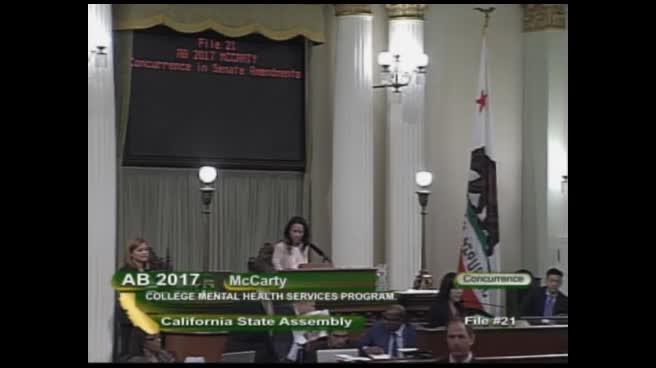 45SEC
Assembly Floor
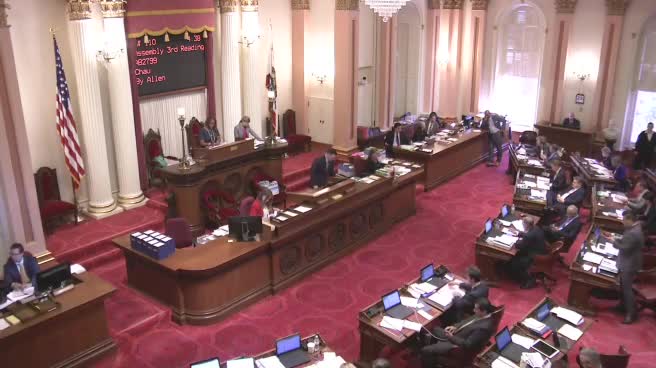 3MIN
Senate Floor
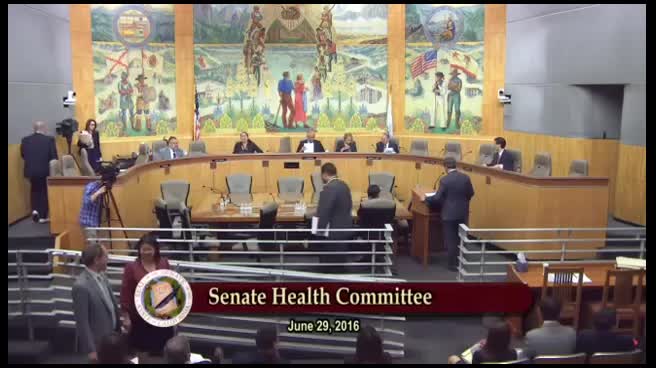 13MIN
Senate Standing Committee on Health
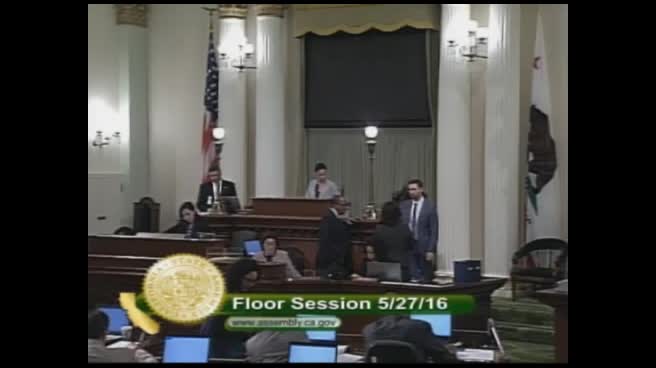 57SEC
Assembly Floor
 1MIN
Assembly Standing Committee on Appropriations
 14MIN
Assembly Standing Committee on Local Government
Bill Author

Bill Co-Author(s):