AB 278: Municipal elections.
- Session Year: 2015-2016
- House: Assembly
- Latest Version Date: 2016-09-28
Existing law authorizes the legislative body of a city to submit to voters at any municipal or special election an ordinance providing for the election of members of the legislative body by districts, from districts, by districts with an elective mayor, or from districts with an elective mayor. Existing law also authorizes such an ordinance to be submitted to the voters by means of an initiative measure. Existing law requires that the ordinance state the number of legislative districts, describe the boundaries of each, number the districts, and state the method for electing the members of the legislative body, as described above.
This bill would delete the requirement that the ordinance describe the boundaries, and number, of each legislative district and would instead require the legislative body to prepare a proposed map describing the boundaries and numbers of the legislative districts after the ordinance is passed or enacted, as specified. The bill would require a legislative body changing from a from district method of election to a by district method of election, or adjusting the district boundaries, to hold public hearings on the change or adjustments, as specified. The bill would also make numerous technical, nonsubstantive changes to these provisions.
Existing law applies certain procedures if a majority of votes on the subject of incorporating a new city are in favor of incorporation and in favor of a by district method of election, including, among other things, requiring the boundaries of the districts of the legislative body to be as nearly equal in population as possible.
This bill would also require the districts to comply with applicable provisions of the federal Voting Rights Act of 1965.
Existing law authorizes the legislative body of a city with a population of fewer than 100,000 people to adopt an ordinance that requires the members of the legislative body to be elected by district or by district with an elective mayor without submitting the ordinance for voter approval.
This bill would extend this authority to the legislative body of any city, regardless of its population.
Existing law authorizes the legislative body of a city to submit to voters at any municipal or special election an ordinance providing for the election of members of the legislative body by districts, from districts, by districts with an elective mayor, or from districts with an elective mayor. Existing law also authorizes such an ordinance to be submitted to the voters by means of an initiative measure. Existing law requires that the ordinance state the number of legislative districts, describe the boundaries of each, number the districts, and state the method for electing the members of the legislative body, as described above.
This bill would delete the requirement that the ordinance describe the boundaries, and number, of each legislative district and would instead require the legislative body to prepare a proposed map describing the boundaries and numbers of the legislative districts after the ordinance is passed or enacted, as specified. The bill would require a legislative body changing from a from district method of election to a by district method of election, or adjusting the district boundaries, to hold public hearings on the change, as specified. The bill would also make numerous technical, nonsubstantive changes to these provisions.
Existing law applies certain procedures if a majority of votes on the subject of incorporating a new city are in favor of incorporation and in favor of a by district method of election, including, among other things, requiring the boundaries of the districts of the legislative body to be as nearly equal in population as possible.
This bill would also require the districts to comply with applicable provisions of the federal Voting Rights Act of 1965.
Existing law authorizes the legislative body of a city with a population of fewer than 100,000 people to adopt an ordinance that requires the members of the legislative body to be elected by district or by district with an elective mayor without submitting the ordinance for voter approval.
This bill would extend this authority to the legislative body of any city, regardless of its population.
Existing law authorizes the legislative body of a city to submit to voters at any municipal or special election an ordinance providing for the election of members of the legislative body by districts, from districts, by districts with an elective mayor, or from districts with an elective mayor. Existing law also authorizes such an ordinance to be submitted to the voters by means of an initiative measure. Existing law requires that the ordinance to state the number of legislative districts, describe the boundaries of each, number the districts, and state the method for electing the members of the legislative body, as described above.
This bill would delete the requirement that the ordinance describe the boundaries, and number, of each legislative district and would instead require the legislative body, or the proponents of the initiative measure, body to prepare a proposed map describing the boundaries and numbers of the legislative districts after the ordinance is passed or enacted, as specified. The bill would require a legislative body changing from a from district method of election to a by district method of election, or adjusting the district boundaries, to hold public hearings on the change, as specified. The bill would also make numerous technical, nonsubstantive changes to these provisions.
Existing law applies certain procedures if a majority of votes on the subject of incorporating a new city are in favor of incorporation and in favor of a by district method of election, including, among other things, requiring the boundaries of the districts of the legislative body to be as nearly equal in population as possible.
This bill would also require the districts to comply with the applicable provisions of the federal Voting Rights Act of 1965.
Existing law authorizes the legislative body of a city with a population of fewer than 100,000 people to adopt an ordinance that requires the members of the legislative body to be elected by district or by district with an elective mayor without submitting the ordinance for voter approval.
This bill would extend this authority to the legislative body of any city, regardless of its population.
Existing law authorizes the legislative body of a city to submit to voters at any municipal or special election an ordinance providing for the election of members of the legislative body by districts, from districts, by districts with an elective mayor, or from districts with an elective mayor. Existing law also authorizes such an ordinance to be submitted to the voters by means of an initiative measure. Existing law requires the ordinance to state the number of legislative districts, describe the boundaries of each, number the districts, and state the method for electing the members of the legislative body, as described above.
This bill would delete the requirement that the ordinance describe the boundaries, and number, of each legislative district and would instead require the legislative body, or the proponents of the initiative measure, to prepare a proposed map describing the boundaries and numbers of the legislative districts after the ordinance is passed or enacted, as specified. The bill would require a legislative body changing from a from district method of election to a by district method of election, or adjusting the district boundaries, to hold public hearings on the change, as specified. The bill would also make numerous technical, nonsubstantive changes to these provisions.
Existing law applies certain procedures if a majority of votes on the subject of incorporating a new city are in favor of incorporation and in favor of a by district method of election, including, among other things, requiring the boundaries of the districts of the legislative body to be as nearly equal in population as possible.
This bill would also require the districts to comply with the applicable provisions of the federal Voting Rights Act of 1965.
Existing law authorizes the legislative body of a city with a population of fewer than 100,000 people to adopt an ordinance that requires the members of the legislative body to be elected by district or by district with an elective mayor without submitting the ordinance for voter approval.
This bill would extend this authority to the legislative body of any city, regardless of its population.
Existing law provides for political subdivisions that encompass areas of representation within the state. With respect to these areas, public officials are generally elected by all of the voters of the political subdivision (at-large) or from districts formed within the political subdivision (district-based). Existing law, the California Voting Rights Act of 2001, prohibits an at-large method of election from being imposed or applied in a manner that impairs the ability of a protected class to elect candidates of its choice or its ability to influence the outcome of an election, as a result of the dilution or the abridgment of the rights of voters who are members of a protected class, as defined.
Existing law authorizes the legislative body of a city to submit to voters at any municipal or special election an ordinance providing for the election of members of the legislative body by districts, from districts, by districts with an elective mayor, or from districts with an elective mayor. Under existing law, by district means election of members of the legislative body by voters of the district alone and from district means election of members of the legislative body who are residents of the district from which they are elected by the voters of the entire city. Existing law prescribes the procedures for the electors to change from the election of these members by district to election from districts or vice versa.
This bill would require the legislative body of a general law city with a population of 100,000 or more to adopt an ordinance, without submitting the ordinance to the voters of the city for approval, for the election of members of the legislative body by district. The bill would require that the boundary lines of each district be adjusted in accordance with specified provisions of existing law. The bill would require that the proposed boundaries satisfy specified criteria.
By requiring certain cities to conduct elections for members of their legislative bodies in a specified manner, this bill would impose a state-mandated local program.
The California Constitution requires the state to reimburse local agencies and school districts for certain costs mandated by the state. Statutory provisions establish procedures for making that reimbursement.
This bill would provide that, if the Commission on State Mandates determines that the bill contains costs mandated by the state, reimbursement for those costs shall be made pursuant to these statutory provisions.
Existing law provides for political subdivisions that encompass areas of representation within the state. With respect to these areas, public officials are generally elected by all of the voters of the political subdivision (at-large) or from districts formed within the political subdivision (district-based). Existing law, the California Voting Rights Act of 2001, prohibits an at-large method of election to be from being imposed or applied in a manner that impairs the ability of a protected class to elect candidates of its choice or its ability to influence the outcome of an election, as a result of the dilution or the abridgment of the rights of voters who are members of a protected class, as defined.
Existing law authorizes the legislative body of a city to submit to voters at any municipal or special election an ordinance providing for the election of members of the legislative body by districts, from districts, by districts with an elective mayor, or from districts with an elective mayor. Under existing law, by district means election of members of the legislative body by voters of the district alone and from district means election of members of the legislative body who are residents of the district from which they are elected by the voters of the entire city. Existing law prescribes the procedures for the electors to change from the election of these members by district to election from districts or vice versa.
This bill would require the legislative body of a general law city with a population of 100,000 or more to adopt an ordinance, without submitting the ordinance to the voters of the city for approval, for the election of members of the legislative body by district. The bill would require that the boundary lines of each district be adjusted in accordance with specified provisions of existing law, except as otherwise provided in this bill. law. The bill would require the legislative body to hold public hearings before and after drawing a draft map of the proposed boundaries of the districts of the legislative body, as specified. The bill would also require the legislative body to take certain actions to encourage public participation in the drawing of the proposed boundaries and would require that the proposed boundaries satisfy specified criteria.
By requiring certain cities to conduct elections for members of their legislative bodies in a specified manner, this bill would impose a state-mandated local program.
The California Constitution requires the state to reimburse local agencies and school districts for certain costs mandated by the state. Statutory provisions establish procedures for making that reimbursement.
This bill would provide that, if the Commission on State Mandates determines that the bill contains costs mandated by the state, reimbursement for those costs shall be made pursuant to these statutory provisions.
Existing law provides for political subdivisions that encompass areas of representation within the state. With respect to these areas, public officials are generally elected by all of the voters of the political subdivision (at-large) or from districts formed within the political subdivision (district-based). Existing law, the California Voting Rights Act of 2001, prohibits an at-large method of election to be imposed or applied in a manner that impairs the ability of a protected class to elect candidates of its choice or its ability to influence the outcome of an election, as a result of the dilution or the abridgment of the rights of voters who are members of a protected class, as defined.
Existing law authorizes the legislative body of a city to submit to voters at any municipal or special election an ordinance providing for the election of members of the legislative body by districts, from districts, by districts with an elective mayor, or from districts with an elective mayor. Under existing law, by district means election of members of the legislative body by voters of the district alone and from district means election of members of the legislative body who are residents of the district from which they are elected by the voters of the entire city. Existing law prescribes the procedures for the electors to change from the election of these members by district to election from districts or vice versa.
This bill would require the legislative body of a general law city with a population of 100,000 or more to adopt an ordinance, without submitting the ordinance to the voters of the city for approval, for the election of members of the legislative body by district. The bill would require that the boundary lines of each district be adjusted in accordance with specified provisions of existing law, except as otherwise provided in this bill. The bill would require the legislative body to hold public hearings before and after drawing a draft map of the proposed boundaries of the districts of the legislative body, as specified. The bill would also require the legislative body to take certain actions to encourage public participation in the drawing of the proposed boundaries and would require that the proposed boundaries satisfy specified criteria.
By requiring certain cities to conduct elections for members of their legislative bodies in a specified manner, this bill would impose a state-mandated local program.
The California Constitution requires the state to reimburse local agencies and school districts for certain costs mandated by the state. Statutory provisions establish procedures for making that reimbursement.
This bill would provide that, if the Commission on State Mandates determines that the bill contains costs mandated by the state, reimbursement for those costs shall be made pursuant to these statutory provisions.
Existing law provides for political subdivisions that encompass areas of representation within the state. With respect to these areas, public officials are generally elected by all of the voters of the political subdivision (at-large) or from districts formed within the political subdivision (district-based). Existing law, the California Voting Rights Act of 2001, prohibits an at-large method of election to be imposed or applied in a manner that impairs the ability of a protected class to elect candidates of its choice or its ability to influence the outcome of an election, as a result of the dilution or the abridgment of the rights of voters who are members of a protected class, as defined.
Existing law authorizes the legislative body of a city to submit to voters at any municipal or special election an ordinance providing for the election of members of the legislative body by districts, from districts, by districts with an elective mayor, or from districts with an elective mayor. Under existing law, by district means election of members of the legislative body by voters of the district alone and from district means election of members of the legislative body who are residents of the district from which they are elected by the voters of the entire city. Existing law prescribes the procedures for the electors to change from the election of these members by district to election from districts or vice versa.
This bill would require the legislative body of a city with a population of 100,000 or more to adopt an ordinance, without submitting the ordinance to the voters of the city for approval, for the election of members of the legislative body by district. The bill would require that the boundary lines of each district be adjusted in accordance with specified provisions of existing law, except as otherwise provided in this bill. The bill would require the legislative body to hold public hearings before and after drawing a draft map of the proposed boundaries of the districts of the legislative body, as specified. The bill would also require the legislative body to take certain actions to encourage public participation in the drawing of the proposed boundaries and would require that the proposed boundaries satisfy specified criteria.
By requiring certain cities to conduct elections for members of their legislative bodies in a specified manner, this bill would impose a state-mandated local program.
The California Constitution requires the state to reimburse local agencies and school districts for certain costs mandated by the state. Statutory provisions establish procedures for making that reimbursement.
This bill would provide that, if the Commission on State Mandates determines that the bill contains costs mandated by the state, reimbursement for those costs shall be made pursuant to these statutory provisions.
Existing law provides for political subdivisions that encompass areas of representation within the state. With respect to these areas, public officials are generally elected by all of the voters of the political subdivision (at-large) or from districts formed within the political subdivision (district-based). Existing law, the California Voting Rights Act of 2001, prohibits an at-large method of election to be imposed or applied in a manner that impairs the ability of a protected class to elect candidates of its choice or its ability to influence the outcome of an election, as a result of the dilution or the abridgment of the rights of voters who are members of a protected class, as defined.
Existing law authorizes the legislative body of a city to submit to voters at any municipal or special election an ordinance providing for the election of members of the legislative body by districts, from districts, by districts with an elective mayor, or from districts with an elective mayor. Under existing law, by district means election of members of the legislative body by voters of the district alone and from district means election of members of the legislative body who are residents of the district from which they are elected by the voters of the entire city. Existing law prescribes the procedures for the electors to change from the election of these members by district to election from districts or vice versa.
This bill would require the legislative body of a city with a population of 100,000 or more to adopt an ordinance, without submitting the ordinance to the voters of the city for approval, for the election of members of the legislative body by district. This The bill would require that the boundary lines of each district be adjusted in accordance with specified provisions of law. existing law, except as otherwise provided in this bill. The bill would require the legislative body to hold public hearings before and after drawing a draft map of the proposed boundaries of the districts of the legislative body, as specified. The bill would also require the legislative body to take certain actions to encourage public participation in the drawing of the proposed boundaries and would require that the proposed boundaries satisfy specified criteria.
By requiring certain cities to conduct elections for members of their legislative bodies in a specified manner, this bill would impose a state-mandated local program.
The California Constitution requires the state to reimburse local agencies and school districts for certain costs mandated by the state. Statutory provisions establish procedures for making that reimbursement.
This bill would provide that, if the Commission on State Mandates determines that the bill contains costs mandated by the state, reimbursement for those costs shall be made pursuant to these statutory provisions.
Existing law provides for political subdivisions that encompass areas of representation within the state. With respect to these areas, public officials are generally elected by all of the voters of the political subdivision (at-large) or from districts formed within the political subdivision (district-based). Existing law, the California Voting Rights Act of 2001, prohibits an at-large method of election to be imposed or applied in a manner that impairs the ability of a protected class to elect candidates of its choice or its ability to influence the outcome of an election, as a result of the dilution or the abridgment of the rights of voters who are members of a protected class, as defined.
Existing law authorizes the legislative body of a city to submit to voters at any municipal or special election an ordinance providing for the election of members of the legislative body by districts, from districts, by districts with an elective mayor, or from districts with an elective mayor. Under existing law, by district means election of members of the legislative body by voters of the district alone and from district means election of members of the legislative body who are residents of the district from which they are elected by the voters of the entire city. Existing law prescribes the procedures for the electors to change from the election of these members by district to election from districts or vice versa.
This bill would require the legislative body of a city with a population of 100,000 or more to adopt an ordinance, without submitting the ordinance to the voters of the city for approval, for the election of members of the legislative body by district. This bill would require that the boundary lines of each district be adjusted in accordance with specified provisions of law.
By requiring certain cities to conduct elections for members of their legislative bodies in a specified manner, this bill would impose a state-mandated local program.
The California Constitution requires the state to reimburse local agencies and school districts for certain costs mandated by the state. Statutory provisions establish procedures for making that reimbursement.
This bill would provide that, if the Commission on State Mandates determines that the bill contains costs mandated by the state, reimbursement for those costs shall be made pursuant to these statutory provisions.
An ordinance shall state the number of legislative districts and whether members of the legislative body shall be elected by districts, from districts, by districts with an elective mayor, or from districts with an elective mayor.
SEC. 2.Section 34876.5 is added to the Government Code, to read:34876.5.(a)If an ordinance is submitted to the voters pursuant to Section 34871, there shall be printed on the ballots substantially as follows:
Shall members of the legislative body of the City of ____ be elected by (or from) districts?
or, if applicable:
Shall members of the legislative body of the City of ____ be elected by (or from) districts, and the Mayor of the City of ____ be elected on a citywide basis by the voters of the entire city?
followed by the words Yes and No, so printed that the voters may express their choice.
(b)If a majority of the voters voting on the proposed ordinance vote in its favor, members of the legislative body shall be elected in the manner approved by the voters beginning at the first election following approval of the district boundaries pursuant to Section 34877.5, and for which the election consolidation deadlines established in the Elections Code have not passed.
SEC. 3.Section 34877 of the Government Code is amended to read:34877.The proposition of altering legislative districts shall be printed on the ballots substantially as follows:
Shall members of the legislative body of the City of ____ be elected by (or from) districts described in Ordinance No. ____?
or, if applicable:
Shall members of the legislative body of the City of ____ be elected by (or from) districts described in Ordinance No. ____, and the Mayor of the City of ____ be elected on a citywide basis by the voters of the entire city?
followed by the words Yes and No, so printed that the voters may express their choice.
SEC. 4.Section 34877.5 is added to the Government Code, to read:34877.5.(a)After an ordinance is passed by the voters pursuant to Section 34876.5, or after an ordinance is enacted by the legislative body pursuant to Section 34886, the legislative body shall prepare a proposed map that describes the boundaries and numbers of the districts for the legislative body. In preparing the proposed map, the legislative body may seek public input, including accepting proposed maps submitted by the public.
(b)If the legislative body is changing from an at-large method of election to a district-based election, as those terms are defined in Section 14026 of the Elections Code, the legislative body shall hold public hearings pursuant to Section 10010 of the Elections Code. If the legislative body is otherwise adjusting the district boundaries, the legislative body shall hold public hearings on the proposed district boundaries pursuant to Section 21607 of the Elections Code.
SEC. 5.Section 34884 of the Government Code is amended to read:34884.(a)If, at the time a vote is held on the subject of incorporation of a new city, a majority of the votes cast is for incorporation and, if, in accordance with Section 57116, a majority of the votes cast on the question of whether members of the city council in future elections are to be elected by district or at large is in favor of election by district, all of the following procedures apply:
(1)Before the first day on which voters may nominate candidates for election at the next regular municipal election, the legislative body shall, by ordinance or resolution, establish the boundaries of the districts of the legislative body. The districts shall be as nearly equal in population as may be. The districts shall comply with applicable provisions of the federal Voting Rights Act of 1965 (52 U.S.C. Sec. 10301 et seq.), as amended. In establishing the boundaries of the districts, the legislative body may consider the following factors:
(A)Topography.
(B)Geography.
(C)Cohesiveness, contiguity, integrity, and compactness of territory.
(D)Community of interests of the districts.
(2)The terms of office of the two members elected with the lowest vote shall expire on the Tuesday succeeding the next regular municipal election. At that election, members shall be elected by district in the even-numbered districts and shall hold office for four years.
(3)The terms of office of the three members elected with the highest vote shall expire on the Tuesday succeeding the second regular municipal election following the incorporation. At that election, members shall be elected by district in the odd-numbered districts and shall hold office for four years.
(b)The result of the vote cast on the question of whether members of the city council in future elections are to be elected by district or at large shall not preclude the submission to the voters at any future election of a measure in accordance with Section 34871.
SEC. 6.Section 34886 of the Government Code is amended to read:34886.Notwithstanding Section 34871 or any other law, the legislative body of a city may adopt an ordinance that requires the members of the legislative body to be elected by district or by district with an elective mayor, as described in subdivisions (a) and (c) of Section 34871, without being required to submit the ordinance to the voters for approval. An ordinance adopted pursuant to this section shall include a declaration that the change in the method of electing members of the legislative body is being made in furtherance of the purposes of the California Voting Rights Act of 2001 (Chapter 1.5 (commencing with Section 14025) of Division 14 of the Elections Code).
An ordinance shall state the number of legislative districts and whether members of the legislative body shall be elected by districts, from districts, by districts with an elective mayor, or from districts with an elective mayor.
SEC. 2.Section 34876.5 is added to the Government Code, to read:34876.5.(a)If an ordinance is submitted to the voters pursuant to Section 34871, there shall be printed on the ballots substantially as follows:
Shall members of the legislative body of the City of ____ be elected by (or from) districts?
or, if applicable:
Shall members of the legislative body of the City of ____ be elected by (or from) districts, and the Mayor of the City of ____ be elected on a citywide basis by the voters of the entire city?
followed by the words Yes and No, so printed that the voters may express their choice.
(b)If a majority of the voters voting on the proposed ordinance vote in its favor, members of the legislative body shall be elected in the manner approved by the voters beginning at the first election following approval of the district boundaries pursuant to Section 34877.5, and for which the election consolidation deadlines established in the Elections Code have not passed.
SEC. 3.Section 34877 of the Government Code is amended to read:34877.The proposition of altering legislative districts shall be printed on the ballots substantially as follows:
Shall members of the legislative body of the City of ____ be elected by (or from) districts described in Ordinance No. ____?
or, if applicable:
Shall members of the legislative body of the City of ____ be elected by (or from) districts described in Ordinance No. ____, and the Mayor of the City of ____ be elected on a citywide basis by the voters of the entire city?
followed by the words Yes and No, so printed that the voters may express their choice.
SEC. 4.Section 34877.5 is added to the Government Code, to read:34877.5.(a)After an ordinance is passed by the voters pursuant to Section 34876.5, or after an ordinance is enacted by the legislative body pursuant to Section 34886, the legislative body shall prepare a proposed map that describes the boundaries and numbers of the districts for the legislative body. In preparing the proposed map, the legislative body may seek public input, including accepting proposed maps submitted by the public.
(b)If the legislative body is changing from an at-large method of election to a district-based election, as those terms are defined in Section 14026 of the Elections Code, the legislative body shall hold public hearings pursuant to Section 10010 of the Elections Code. If the legislative body is otherwise adjusting the district boundaries, the legislative body shall hold public hearings on the proposed district boundaries pursuant to Section 21607 of the Elections Code.
SEC. 5.Section 34884 of the Government Code is amended to read:34884.(a)If, at the time a vote is held on the subject of incorporation of a new city, a majority of the votes cast is for incorporation and, if, in accordance with Section 57116, a majority of the votes cast on the question of whether members of the city council in future elections are to be elected by district or at large is in favor of election by district, all of the following procedures apply:
(1)Before the first day on which voters may nominate candidates for election at the next regular municipal election, the legislative body shall, by ordinance or resolution, establish the boundaries of the districts of the legislative body. The districts shall be as nearly equal in population as may be. The districts shall comply with applicable provisions of the federal Voting Rights Act of 1965 (52 U.S.C. Sec. 10301 et seq.), as amended. In establishing the boundaries of the districts, the legislative body may consider the following factors:
(A)Topography.
(B)Geography.
(C)Cohesiveness, contiguity, integrity, and compactness of territory.
(D)Community of interests of the districts.
(2)The terms of office of the two members elected with the lowest vote shall expire on the Tuesday succeeding the next regular municipal election. At that election, members shall be elected by district in the even-numbered districts and shall hold office for four years.
(3)The terms of office of the three members elected with the highest vote shall expire on the Tuesday succeeding the second regular municipal election following the incorporation. At that election, members shall be elected by district in the odd-numbered districts and shall hold office for four years.
(b)The result of the vote cast on the question of whether members of the city council in future elections are to be elected by district or at large shall not preclude the submission to the voters at any future election of a measure in accordance with Section 34871.
SEC. 6.Section 34886 of the Government Code is amended to read:34886.Notwithstanding Section 34871 or any other law, the legislative body of a city may adopt an ordinance that requires the members of the legislative body to be elected by district or by district with an elective mayor, as described in subdivisions (a) and (c) of Section 34871, without being required to submit the ordinance to the voters for approval. An ordinance adopted pursuant to this subdivision section shall include a declaration that the change in the method of electing members of the legislative body is being made in furtherance of the purposes of the California Voting Rights Act of 2001 (Chapter 1.5 (commencing with Section 14025) of Division 14 of the Elections Code).
An ordinance shall state the number of legislative districts and whether members of the legislative body shall be elected by districts, from districts, by districts with an elective mayor, or from districts with an elective mayor.
SEC. 2.Section 34876.5 is added to the Government Code, to read:34876.5.(a)If an ordinance is submitted to the voters pursuant to Section 34871, there shall be printed on the ballots substantially as follows:
Shall members of the legislative body of the City of ____ be elected by (or from) districts?
or, if applicable:
Shall members of the legislative body of the City of ____ be elected by (or from) districts, and the Mayor of the City of ____ be elected on a citywide basis by the voters of the entire city?
followed by the words Yes and No, so printed that the voters may express their choice.
(b)If a majority of the voters voting on the proposed ordinance vote in its favor, members of the legislative body shall be elected in the manner approved by the voters beginning at the first election following approval of the district boundaries pursuant to Section 34877.5. 34877.5, and for which the election consolidation deadlines established in the Elections Code have not passed.
SEC. 3.Section 34877 of the Government Code is amended to read:34877.The proposition of altering legislative districts shall be printed on the ballots substantially as follows:
Shall members of the legislative body of the City of ____ be elected by (or from) districts described in Ordinance No. ____?
or, if applicable:
Shall members of the legislative body of the City of ____ be elected by (or from) districts described in Ordinance No. ____, and the Mayor of the City of ____ be elected on a citywide basis by the voters of the entire city?
followed by the words Yes and No, so printed that the voters may express their choice.
SEC. 4.Section 34877.5 is added to the Government Code, to read:34877.5.(a)After an ordinance is passed by the voters pursuant to Section 34876.5, or after an ordinance is enacted by the legislative body pursuant to Section 34886, the legislative body shall prepare a proposed map that describes the boundaries and numbers of the districts for the legislative body. In preparing the proposed map, the legislative body may seek public input, including accepting proposed maps submitted by the public.
(b)If the legislative body is changing from an at-large method of election to a district-based election, as those terms are defined in Section 14026 of the Elections Code, the legislative body shall hold public hearings pursuant to Section 10010 of the Elections Code. If the legislative body is otherwise adjusting the district boundaries, the legislative body shall hold public hearings on the proposed district boundaries pursuant to Section 21607 of the Elections Code.
SEC. 5.Section 34884 of the Government Code is amended to read:34884.(a)If, at the time a vote is held on the subject of incorporation of a new city, a majority of the votes cast is for incorporation and, if, in accordance with Section 57116, a majority of the votes cast on the question of whether members of the city council in future elections are to be elected by district or at large is in favor of election by district, all of the following procedures apply:
(1)Before the first day on which voters may nominate candidates for election at the next regular municipal election, the legislative body shall, by ordinance or resolution, establish the boundaries of the districts of the legislative body. The districts shall be as nearly equal in population as may be. The districts shall comply with applicable provisions of the federal Voting Rights Act of 1965 (52 U.S.C. Sec. 10301 et seq.), as amended. In establishing the boundaries of the districts, the legislative body may consider the following factors:
(A)Topography.
(B)Geography.
(C)Cohesiveness, contiguity, integrity, and compactness of territory.
(D)Community of interests of the districts.
(2)The terms of office of the two members elected with the lowest vote shall expire on the Tuesday succeeding the next regular municipal election. At that election, members shall be elected by district in the even-numbered districts and shall hold office for four years.
(3)The terms of office of the three members elected with the highest vote shall expire on the Tuesday succeeding the second regular municipal election following the incorporation. At that election, members shall be elected by district in the odd-numbered districts and shall hold office for four years.
(b)The result of the vote cast on the question of whether members of the city council in future elections are to be elected by district or at large shall not preclude the submission to the voters at any future election of a measure in accordance with Section 34871.
SEC. 6.Section 34886 of the Government Code is amended to read:34886.Notwithstanding Section 34871 or any other law, the legislative body of a city may adopt an ordinance that requires the members of the legislative body to be elected by district or by district with an elective mayor, as described in subdivisions (a) and (c) of Section 34871, without being required to submit the ordinance to the voters for approval. An ordinance adopted pursuant to this subdivision shall include a declaration that the change in the method of electing members of the legislative body is being made in furtherance of the purposes of the California Voting Rights Act of 2001 (Chapter 1.5 (commencing with Section 14025) of Division 14 of the Elections Code).
An ordinance shall state the number of legislative districts and whether members of the legislative body shall be elected by districts, from districts, by districts with an elective mayor, or from districts with an elective mayor.
SEC. 2.Section 34876.5 is added to the Government Code, to read:34876.5.(a)If an ordinance is submitted to the voters pursuant to Section 34871, there shall be printed on the ballots substantially as follows:
Shall members of the legislative body of the City of ____ be elected by (or from) districts?
or, if applicable:
Shall members of the legislative body of the City of ____ be elected by (or from) districts, and the Mayor of the City of ____ be elected on a citywide basis by the voters of the entire city?
followed by the words Yes and No, so printed that the voters may express their choice.
(b)If a majority of the voters voting on the proposed ordinance vote in its favor, members of the legislative body shall be elected in the manner approved by the voters beginning at the first election following approval of the district boundaries pursuant to Section 34877.5.
SEC. 3.Section 34877 of the Government Code is amended to read:34877.The proposition of altering legislative districts shall be printed on the ballots substantially as follows:
Shall members of the legislative body of the City of ____ be elected by (or from) districts described in Ordinance No. ____?
or, if applicable:
Shall members of the legislative body of the City of ____ be elected by (or from) districts described in Ordinance No. ____, and the Mayor of the City of ____ be elected on a citywide basis by the voters of the entire city?
followed by the words Yes and No, so printed that the voters may express their choice.
SEC. 4.Section 34877.5 is added to the Government Code, to read:34877.5.(a)After an ordinance is passed by the voters pursuant to Section 34876.5, or after an ordinance is enacted by the legislative body pursuant to Section 34886, the legislative body shall prepare a proposed map that describes the boundaries and numbers of the districts for the legislative body. In preparing the proposed map, the legislative body may seek public input, including accepting proposed maps submitted by the public.
(b)If the legislative body is changing from an at-large method of election to a district-based election, as those terms are defined in Section 14026 of the Elections Code, the legislative body shall, shall hold public hearings pursuant to Section 10010 of the Elections Code, hold at least two public hearings on the proposed district boundaries. Code. If the legislative body is otherwise adjusting the district boundaries, the legislative body shall hold at least one public hearing hearings on the proposed district boundaries pursuant to Section 21607 of the Elections Code.
SEC. 5.Section 34884 of the Government Code is amended to read:34884.(a)If, at the time a vote is held on the subject of incorporation of a new city, a majority of the votes cast is for incorporation and, if, in accordance with Section 57116, a majority of the votes cast on the question of whether members of the city council in future elections are to be elected by district or at large is in favor of election by district, all of the following procedures apply:
(1)Before the first day on which voters may nominate candidates for election at the next regular municipal election, the legislative body shall, by ordinance or resolution, establish the boundaries of the districts of the legislative body. The districts shall be as nearly equal in population as may be. The districts shall comply with applicable provisions of the federal Voting Rights Act of 1965 (52 U.S.C. Sec. 10301, 10301 et seq.), as amended. In establishing the boundaries of the districts, the legislative body may consider the following factors:
(A)Topography.
(B)Geography.
(C)Cohesiveness, contiguity, integrity, and compactness of territory.
(D)Community of interests of the districts.
(2)The terms of office of the two members elected with the lowest vote shall expire on the Tuesday succeeding the next regular municipal election. At that election, members shall be elected by district in the even-numbered districts and shall hold office for four years.
(3)The terms of office of the three members elected with the highest vote shall expire on the Tuesday succeeding the second regular municipal election following the incorporation. At that election, members shall be elected by district in the odd-numbered districts and shall hold office for four years.
(b)The result of the vote cast on the question of whether members of the city council in future elections are to be elected by district or at large shall not preclude the submission to the voters at any future election of a measure in accordance with Section 34871.
SEC. 6.Section 34886 of the Government Code is amended to read:34886.Notwithstanding Section 34871 or any other law, the legislative body of a city may adopt an ordinance that requires the members of the legislative body to be elected by district or by district with an elective mayor, as described in subdivisions (a) and (c) of Section 34871, without being required to submit the ordinance to the voters for approval. An ordinance adopted pursuant to this subdivision shall include a declaration that the change in the method of electing members of the legislative body is being made in furtherance of the purposes of the California Voting Rights Act of 2001 (Chapter 1.5 (commencing with Section 14025) of Division 14 of the Elections Code).
An ordinance shall state the number of legislative districts and whether members of the legislative body shall be elected by districts, from districts, by districts with an elective mayor, or from districts with an elective mayor.
SEC. 2.Section 34874 of the Government Code is repealed.SEC. 3.SEC. 2.Section 34874 34876.5 is added to the Government Code, to read:34874.34876.5.(a)If an ordinance is submitted to the voters pursuant to Section 34871, there shall be printed on the ballots substantially as follows:
Shall members of the legislative body of the City of ____ be elected by (or from) districts?
or,
or, if applicable:
Shall members of the legislative body of the City of ____ be elected by (or from) districts, and the Mayor of the City of ____ be elected on a citywide basis by the voters of the entire city?
followed
followed by the words Yes and No, so printed that the voters may express their choice.
(b)If a majority of the voters voting on the proposed ordinance vote in its favor, members of the legislative body shall be elected in the manner approved by the voters beginning at the first election following the approval of the district boundaries pursuant to Section 34875. 34877.5.
SEC. 4.Section 34875 of the Government Code is repealed.SEC. 3.Section 34877 of the Government Code is amended to read:34877.The proposition of establishing or altering legislative districts shall be printed on the ballots substantially as follows:
Shall members of the legislative body of the City of ____ be elected by (or from) districts described in Ordinance No. ____?
or, if applicable:
Shall members of the legislative body of the City of ____ be elected by (or from) districts described in Ordinance No. ____, and the Mayor of the City of ____ be elected on a citywide basis by the voters of the entire city?
followed by the words Yes and No, so printed that the voters may express their choice.
SEC. 5.SEC. 4.Section 34875 34877.5 is added to the Government Code, to read:34875.34877.5.(a)After an ordinance is passed by the voters pursuant to Section 34874, 34876.5, or after an ordinance is enacted by the legislative body pursuant to Section 34886, the legislative body or the proponents of the initiative measure, as applicable, shall prepare a proposed map that describes the boundaries and numbers of the districts for the legislative body. In preparing the proposed map, the legislative body may seek public input, including accepting proposed maps submitted by the public.
(b)If the legislative body is changing from an at-large method of election to a district-based election, as those terms are defined in Section 14026 of the Elections Code, the legislative body shall, pursuant to Section 10010 of the Elections Code, hold at least two public hearings on the proposed district boundaries. If the legislative body is otherwise adjusting the district boundaries, the legislative body shall hold at least one public hearing on the proposed district boundaries pursuant to Section 21607 of the Elections Code.
(c)After completing the hearing process, the legislative body shall submit the proposed district boundaries to the planning commission of the city for an examination as to the definiteness and certainty of the boundaries of the legislative districts proposed. If the city does not have a planning commission, the legislative body shall conduct the examination of the proposed boundaries.
(d)(1)The planning commission, or the legislative body, shall reject the proposed boundaries if it finds any of the following:
(A)One or more of the legislative districts do not close.
(B)One or more entire legislative districts are eliminated before the termination of the term of office of the council members of or from the district.
(C)The effect is that a greater number of members of the legislative body will be qualified to hold office concurrently than are authorized by this article or the amendatory ordinance.
(2)If a substantial change to the proposed boundaries is necessary to address the reason the proposed boundaries were rejected pursuant to paragraph (1), the legislative body or the proponents of the initiative measure, as applicable, shall begin anew the process for approval of the proposed boundaries, starting with subdivision (a). If a substantial change to the proposed boundaries is not necessary to address the reason the proposed boundaries were rejected pursuant to paragraph (2), the planning commission, or the legislative body, may revise the proposed boundaries to address the reason for rejection.
(e)The planning commission of the city or, in the absence of the planning commission, the legislative body of the city, shall make findings as to the matters set forth in subdivision (d) by resolution within 90 days after submission of the amendatory ordinance to the city clerk. Failure to make findings shall constitute a finding of compliance with subdivision (d).
SEC. 6.Section 34876 of the Government Code is repealed.SEC. 7.Section 34877 of the Government Code is repealed.SEC. 8.SEC. 5.Section 34884 of the Government Code is amended to read:34884.(a)If, at the time a vote is held on the subject of incorporation of a new city, a majority of the votes cast is for incorporation and, if, in accordance with Section 57116, a majority of the votes cast on the question of whether members of the city council in future elections are to be elected by district or at large is in favor of election by district, all of the following procedures apply:
(1)Before the first day on which voters may nominate candidates for election at the next regular municipal election, the legislative body shall, by ordinance or resolution, establish the boundaries of the districts of the legislative body. The districts shall be as nearly equal in population as may be. The districts shall comply with the applicable provisions of the federal Voting Rights Act of 1965 (52 U.S.C. Sec. 10301, et seq.), as amended. In establishing the boundaries of the districts, the legislative body may give consideration to consider the following factors:
(A)Topography.
(B)Geography.
(C)Cohesiveness, contiguity, integrity, and compactness of territory.
(D)Community of interests of the districts.
(2)The terms of office of the two members elected with the lowest vote shall expire on the Tuesday succeeding the next regular municipal election. At that election, members shall be elected by district in the even-numbered districts and shall hold office for four years.
(3)The terms of office of the three members elected with the highest vote shall expire on the Tuesday succeeding the second regular municipal election following the incorporation. At that election, members shall be elected by district in the odd-numbered districts and shall hold office for four years.
(b)The result of the vote cast on the question of whether members of the city council in future elections are to be elected by district or at large shall not preclude the submission to the voters at any future election of a measure in accordance with Section 34871.
SEC. 9.SEC. 6.Section 34886 of the Government Code is amended to read:34886.(a)Notwithstanding Section 34871 or any other law, the legislative body of a city may adopt an ordinance that requires the members of the legislative body to be elected by district or by district with an elective mayor, as described in subdivisions (a) and (c) of Section 34871, without being required to submit the ordinance to the voters for approval. An ordinance adopted pursuant to this subdivision shall include a declaration that the change in the method of electing members of the legislative body is being made in furtherance of the purposes of the California Voting Rights Act of 2001 (Chapter 1.5 (commencing with Section 14025) of Division 14 of the Elections Code).
(b)For purposes of this section, the population of a city shall be determined by the most recent federal decennial census.
The An ordinance shall state the number of legislative districts, describe the boundaries of each, number them, and state districts and whether members of the legislative body shall be elected by districts or districts, from districts, or by or from districts except for by districts with an elective mayor, or from districts with an elective mayor.
SEC. 2.Section 34874 of the Government Code is repealed.34874.No amendatory ordinance altering the boundaries of the legislative districts established pursuant to this article shall be submitted to the registered voters until the ordinance has been submitted to the planning commission of the city or, in absence of a planning commission, to the legislative body of said city for an examination as to the definiteness and certainty of the boundaries of the legislative districts proposed.
SEC. 3.Section 34874 is added to the Government Code, to read:34874.(a)If an ordinance is submitted to the voters pursuant to Section 34871, there shall be printed on the ballots substantially as follows:
Shall members of the legislative body of the City of ____ be elected by (or from) districts?
or, if applicable:
Shall members of the legislative body of the City of ____ be elected by (or from) districts, and the Mayor of the City of ____ be elected on a citywide basis by the voters of the entire city?
followed by the words Yes and No, so printed that the voters may express their choice.
(b)If a majority of the voters voting on the proposed ordinance vote in its favor, members of the legislative body shall be elected in the manner approved by the voters beginning at the first election following the approval of the district boundaries pursuant to Section 34875.
SEC. 4.Section 34875 of the Government Code is repealed.34875.The amendatory ordinance shall not be submitted to the voters if (a) one or more of the legislative districts do not close, (b) one or more entire legislative districts are eliminated prior to the termination of the term of office of the council member of or from the district, (c) the effect is that a greater number of council members will be qualified to hold office concurrently than are authorized by this article or the amendatory ordinance.
SEC. 5.Section 34875 is added to the Government Code, to read:34875.(a)After an ordinance is passed by the voters pursuant to Section 34874, or after an ordinance is enacted by the legislative body pursuant to Section 34886, the legislative body or the proponents of the initiative measure, as applicable, shall prepare a proposed map that describes the boundaries and numbers of the districts for the legislative body.
(b)If the legislative body is changing from an at-large method of election to a district-based election, as those terms are defined in Section 14026 of the Elections Code, the legislative body shall, pursuant to Section 10010 of the Elections Code, hold at least two public hearings on the proposed district boundaries. If the legislative body is otherwise adjusting the district boundaries, the legislative body shall hold at least one public hearing on the proposed district boundaries pursuant to Section 21607 of the Elections Code.
(c)After completing the hearing process, the legislative body shall submit the proposed district boundaries to the planning commission of the city for an examination as to the definiteness and certainty of the boundaries of the legislative districts proposed. If the city does not have a planning commission, the legislative body shall conduct the examination of the proposed boundaries.
(d)(1)The planning commission, or the legislative body, shall reject the proposed boundaries if it finds any of the following:
(A)One or more of the legislative districts do not close.
(B)One or more entire legislative districts are eliminated before the termination of the term of office of the council members of or from the district.
(C)The effect is that a greater number of members of the legislative body will be qualified to hold office concurrently than are authorized by this article or the amendatory ordinance.
(2)If a substantial change to the proposed boundaries is necessary to address the reason the proposed boundaries were rejected pursuant to paragraph (1), the legislative body or the proponents of the initiative measure, as applicable, shall begin anew the process for approval of the proposed boundaries, starting with subdivision (a). If a substantial change to the proposed boundaries is not necessary to address the reason the proposed boundaries were rejected pursuant to paragraph (2), the planning commission, or the legislative body, may revise the proposed boundaries to address the reason for rejection.
(e)The planning commission of the city or, in the absence of the planning commission, the legislative body of the city, shall make findings as to the matters set forth in subdivision (d) by resolution within 90 days after submission of the amendatory ordinance to the city clerk. Failure to make findings shall constitute a finding of compliance with subdivision (d).
SEC. 6.Section 34876 of the Government Code is repealed.34876.The planning commission of the city or, in absence of such body, the legislative body of the city shall make findings as to the matters set forth in Section 34875 by resolution within 90 days after submission of the amendatory ordinance to the city clerk. Failure to make findings shall be constituted as a finding of compliance with Section 34875.
SEC. 7.Section 34877 of the Government Code is repealed.34877.The proposition of establishing or altering legislative districts shall be printed on the ballots substantially as follows:
Shall members of the legislative body of the City of ____ be elected by (or from) districts described in Ordinance No. ____?
or, if applicable:
Shall members of the legislative body of the City of ____ be elected by (or from) districts described in Ordinance No. ____, and the Mayor of the City of ____ be elected on a citywide basis by the voters of the entire city?
followed by the words Yes and No, so printed that the voters may express their choice.
SEC. 8.Section 34884 of the Government Code is amended to read:34884.(a)If, at the time a vote is held on the subject of incorporation of a new city, a majority of the votes cast is for incorporation and, if, in accordance with Section 35258, 57116, a majority of the votes cast on the question of whether members of the city council in future elections are to be elected by district or at large is in favor of election by district, all of the following procedure shall procedures apply:
(a)Prior to
(1)Before the first day on which voters may nominate candidates for election at the next regular municipal election, the legislative body shall, by ordinance or resolution, establish the boundaries of the councilmanic districts. districts of the legislative body. The districts shall be as nearly equal in population as may be. The districts shall comply with the applicable provisions of the federal Voting Rights Act of 1965 (52 U.S.C. Sec. 10301, et seq.), as amended. In establishing the boundaries of the districts, the legislative body may give consideration to the following factors: (1) topography, (2) geography, (3) cohesiveness, contiguity, integrity, and compactness of territory, and (4) community of interests of the districts;
(A)Topography.
(B)Geography.
(C)Cohesiveness, contiguity, integrity, and compactness of territory.
(D)Community of interests of the districts.
(b)
(2)The terms of office of the two members elected with the lowest vote shall expire on the Tuesday succeeding the next regular municipal election. At that election, members shall be elected by district in the even-numbered districts and shall hold office for four years; and years.
(c)
(3)The terms of office of the three members elected with the highest vote shall expire on the Tuesday succeeding the second regular municipal election following the incorporation. At that election, members shall be elected by district in the odd-numbered districts and shall hold office for four years.
The
(b)The result of the vote cast on the question of whether members of the city council in future elections are to be elected by district or at large shall not preclude the submission to the voters at any future election of a measure in accordance with the provisions of Section 34871.
SEC. 9.Section 34886 of the Government Code is amended to read:34886.(a)Notwithstanding Section 34871 or any other law, the legislative body of a city with a population of fewer than 100,000 people may adopt an ordinance that requires the members of the legislative body to be elected by district or by district with an elective mayor, as described in subdivisions (a) and (c) of Section 34871, without being required to submit the ordinance to the voters for approval. An ordinance adopted pursuant to this subdivision shall include a declaration that the change in the method of electing members of the legislative body is being made in furtherance of the purposes of the California Voting Rights Act of 2001 (Chapter 1.5 (commencing with Section 14025) of Division 14 of the Elections Code).
(b)For purposes of this section, the population of a city shall be determined by the most recent federal decennial census.
SECTION 1.Section 10010 of the Elections Code is amended to read:10010.(a)A political subdivision not subject to the provisions of Section 34885 of the Government Code, other than a charter city, charter county, or charter city and county, that changes from an at-large method of election to a district-based election shall hold at least two public hearings on a proposal to establish the district boundaries of the political subdivision before a public hearing at which the governing body of the political subdivision votes to approve or defeat the proposal.
(b)This section applies to, but is not limited to, a proposal that is required due to a court-imposed change from an at-large method of election to a district-based election.
(c)For purposes of this section, the following terms have the following meanings:
(1)At-large method of election has the same meaning as set forth in subdivision (a) of Section 14026.
(2)District-based election has the same meaning as set forth in subdivision (b) of Section 14026.
(3)Political subdivision has the same meaning as set forth in subdivision (c) of Section 14026.
SEC. 2.Section 34885 is added to the Government Code, to read:34885.(a)(1)Notwithstanding any other law, the legislative body of a general law city with a population of 100,000 or more shall adopt an ordinance, without submitting the ordinance to the electors of the city for approval, for the election of members of the legislative body by district as provided in subdivision (a) or (c) of Section 34871.
(2)For purposes of this subdivision, the population of a city shall be determined by the most recent federal decennial census.
(b)The boundaries of the districts for the legislative body shall be established and adjusted in accordance with Chapter 7 (commencing with Section 21600) of Division 21 of the Elections Code.
(c)The legislative body shall ensure all of the following criteria are satisfied in preparing the boundaries of the districts for the legislative body:
(1)The boundaries are drawn to ensure fair and effective representation of all city residents including racial, ethnic, and language minorities.
(2)The boundaries conform to the requirements of the United States Constitution and all applicable federal and state laws.
(3)The boundaries respect communities of interest.
(4)The boundaries have substantially equal populations as determined by the most recent federal decennial census.
(5)The boundaries are geographically compact and contiguous.
(6)The boundaries are drawn without regard to the advantage or disadvantage of incumbents, challengers, or any political party.
(d)(1)Communications between any party and the legislative body regarding the drawing of the boundaries of the districts for the legislative body shall be disclosed to the public and maintained by the city in a publicly available log.
(2) Communications related to the dissemination of the procedural information about the drawing of the boundaries of the districts for the legislative body, including, but not limited to, communications regarding the time and place of meetings or how to submit public testimony, are exempt from paragraph (1).
(e)This section does not apply to a charter city or charter city and county.
SEC. 3.If the Commission on State Mandates determines that this act contains costs mandated by the state, reimbursement to local agencies and school districts for those costs shall be made pursuant to Part 7 (commencing with Section 17500) of Division 4 of Title 2 of the Government Code.
(a)A political subdivision not subject to the provisions of Section 34885 of the Government Code, other than a charter city, charter county, or charter city and county, that changes from an at-large method of election to a district-based election shall hold at least two public hearings on a proposal to establish the district boundaries of the political subdivision before a public hearing at which the governing body of the political subdivision votes to approve or defeat the proposal.
(b)This section applies to, but is not limited to, a proposal that is required due to a court-imposed change from an at-large method of election to a district-based election.
(c)For purposes of this section, the following terms have the following meanings:
(1)At-large method of election has the same meaning as set forth in subdivision (a) of Section 14026.
(2)District-based election has the same meaning as set forth in subdivision (b) of Section 14026.
(3)Political subdivision has the same meaning as set forth in subdivision (c) of Section 14026.
SEC. 2.Section 34885 is added to the Government Code, to read:34885.(a)(1)Notwithstanding any other law, the legislative body of a general law city with a population of 100,000 or more shall adopt an ordinance, without submitting the ordinance to the electors of the city for approval, for the election of members of the legislative body by district as provided in subdivision (a) or (c) of Section 34871.
(2)For purposes of this subdivision, the population of a city shall be determined by the most recent federal decennial census.
(b)Except as otherwise provided in subdivisions (c) to (f), inclusive, the The boundaries of the districts for the legislative body shall be established and adjusted in accordance with Chapter 7 (commencing with Section 21600) of Division 21 of the Elections Code.
(c)(1)Before drawing a draft map of the proposed boundaries of the districts for the legislative body, the legislative body shall hold at least four public hearings where the public has the opportunity to provide input. The hearings shall occur over the course of at least 30 days.
(2)After the draft map of the proposed boundaries of the districts for the legislative body is drawn and published, the legislative body, before adopting the final map of the proposed boundaries, shall hold at least two public hearings in which the public has the opportunity to provide input. The hearings shall occur over the course of at least 30 days.
(3)A calendar of the hearings required by paragraphs (1) and (2) shall be prepared and published at least seven days before the first hearing to allow citizens to plan their attendance.
(4)The hearings required by paragraphs (1) and (2) shall do all of the following:
(A)Be held in locations accessible to people with disabilities.
(B)To the greatest extent possible, be held in numerous locations to maximize community participation.
(C)To the greatest extent possible, be held in locations accessible by public transportation.
(D)To the greatest extent possible, be held on different days of the week and at varying times to maximize community participation.
(5)If requested, at least 24 hours before a hearing required by paragraph (1) or (2), the legislative body shall provide simultaneous translation of the hearing in any language that meets the requirements of subdivision (c) of Section 14201 of the Elections Code in a precinct in the city.
(d)The legislative body of the city shall encourage public participation in the drawing of the boundaries of the districts for the legislative body by doing all of the following:
(1)Developing an outreach and education plan, and media and social media strategy, in partnership with community organizations and individuals that advocate on behalf of, or provide services to, non-English-speaking individuals and individuals with disabilities.
(2)For each hearing required by paragraph (1) or (2) of subdivision (c), publicize at least one public service announcement using a media outlet that serves English-speaking individuals for purposes of informing individuals of the boundary drawing process and the upcoming hearing date.
(3)For each hearing required by paragraph (1) or (2) of subdivision (c), publicize at least one public service announcement in each language that meets the requirements of subdivision (c) of Section 14201 of the Elections Code in a precinct in the city, using a media outlet that serves speakers of that language, for purposes of informing individuals of the boundary-drawing process and the upcoming hearing date.
(4)Publish an Internet Web site that explains the boundary-drawing process and its significance, that includes notice of the hearings required by paragraphs (1) and (2) of subdivision (c), and that explains how public testimony may be submitted. The Internet Web site shall be available in each language that meets the requirements of subdivision (c) of Section 14201 of the Elections Code in a precinct in the city.
(5)Provide the means for the submission of public testimony by mail, by telephone, online, and in person at the hearings required by paragraphs (1) and (2) of subdivision (c).
(6)Any other outreach or publicity the legislative body determines will encourage public participation in the drawing of the boundaries of the districts for the legislative body.
(e)
(c)The legislative body shall ensure all of the following criteria are satisfied in preparing the boundaries of the districts for the legislative body:
(1)The boundaries are drawn to ensure fair and effective representation of all city residents including racial, ethnic, and language minorities.
(2)The boundaries conform to the requirements of the United States Constitution and all applicable federal and state laws.
(3)The boundaries respect communities of interest.
(4)The boundaries have substantially equal populations as determined by the most recent federal decennial census.
(5)The boundaries are geographically compact and contiguous.
(6)The boundaries are drawn without regard to the advantage or disadvantage of incumbents, challengers, or any political party.
(f)
(d)(1)Communications between any party and the legislative body regarding the drawing of the boundaries of the districts for the legislative body shall be disclosed to the public and maintained by the city in a publicly available log.
(2) Communications related to the dissemination of the procedural information about the drawing of the boundaries of the districts for the legislative body, including, but not limited to, communications regarding the time and place of meetings or how to submit public testimony, are exempt from paragraph (1).
(g)
(e)This section does not apply to a charter city or charter city and county.
SEC. 3.If the Commission on State Mandates determines that this act contains costs mandated by the state, reimbursement to local agencies and school districts for those costs shall be made pursuant to Part 7 (commencing with Section 17500) of Division 4 of Title 2 of the Government Code.
(a)A political subdivision not subject to the provisions of Section 34885 of the Government Code Code, other than a charter city, charter county, or charter city and county, that changes from an at-large method of election to a district-based election shall hold at least two public hearings on a proposal to establish the district boundaries of the political subdivision before a public hearing at which the governing body of the political subdivision votes to approve or defeat the proposal.
(b)This section applies to, but is not limited to, a proposal that is required due to a court-imposed change from an at-large method of election to a district-based election.
(c)For purposes of this section, the following terms have the following meanings:
(1)At-large method of election has the same meaning as set forth in subdivision (a) of Section 14026.
(2)District-based election has the same meaning as set forth in subdivision (b) of Section 14026.
(3)Political subdivision has the same meaning as set forth in subdivision (c) of Section 14026.
SEC. 2.Section 34885 is added to the Government Code, to read:34885.(a)(1)Notwithstanding any other law, the legislative body of a general law city with a population of 100,000 or more shall adopt an ordinance, without submitting the ordinance to the electors of the city for approval, for the election of members of the legislative body by district as provided in subdivision (a) or (c) of Section 34871.
(2)For purposes of this subdivision, the population of a city shall be determined by the most recent federal decennial census.
(b)Except as otherwise provided in subdivisions (c) to (f), inclusive, the boundaries of the districts for the legislative body shall be established and adjusted in accordance with Chapter 7 (commencing with Section 21600) of Division 21 of the Elections Code.
(c)(1)Before drawing a draft map of the proposed boundaries of the districts for the legislative body, the legislative body shall hold at least four public hearings where the public has the opportunity to provide input. The hearings shall occur over the course of at least 30 days.
(2)After the draft map of the proposed boundaries of the districts for the legislative body is drawn and published, the legislative body, before adopting the final map of the proposed boundaries, shall hold at least two public hearings in which the public has the opportunity to provide input. The hearings shall occur over the course of at least 30 days.
(3)A calendar of the hearings required by paragraphs (1) and (2) shall be prepared and published at least seven days before the first hearing to allow citizens to plan their attendance.
(4)The hearings required by paragraphs (1) and (2) shall do all of the following:
(A)Be held in locations accessible to people with disabilities.
(B)To the greatest extent possible, be held in numerous locations to maximize community participation.
(C)To the greatest extent possible, be held in locations accessible by public transportation.
(D)To the greatest extent possible, be held on different days of the week and at varying times to maximize community participation.
(5)If requested, at least 24 hours before a hearing required by paragraph (1) or (2), the legislative body shall provide simultaneous translation of the hearing in any language that meets the requirements of subdivision (c) of Section 14201 of the Elections Code in a precinct in the city.
(d)The legislative body of the city shall encourage public participation in the drawing of the boundaries of the districts for the legislative body by doing all of the following:
(1)Developing an outreach and education plan, and media and social media strategy, in partnership with community organizations and individuals that advocate on behalf of, or provide services to, non-English-speaking individuals and individuals with disabilities.
(2)For each hearing required by paragraph (1) or (2) of subdivision (c), publicize at least one public service announcement using a media outlet that serves English-speaking individuals for purposes of informing individuals of the boundary drawing process and the upcoming hearing date.
(3)For each hearing required by paragraph (1) or (2) of subdivision (c), publicize at least one public service announcement in each language that meets the requirements of subdivision (c) of Section 14201 of the Elections Code in a precinct in the city, using a media outlet that serves speakers of that language, for purposes of informing individuals of the boundary-drawing process and the upcoming hearing date.
(4)Publish an Internet Web site that explains the boundary-drawing process and its significance, that includes notice of the hearings required by paragraphs (1) and (2) of subdivision (c), and that explains how public testimony may be submitted. The Internet Web site shall be available in each language that meets the requirements of subdivision (c) of Section 14201 of the Elections Code in a precinct in the city.
(5)Provide the means for the submission of public testimony by mail, by telephone, online, and in person at the hearings required by paragraphs (1) and (2) of subdivision (c).
(6)Any other outreach or publicity the legislative body determines will encourage public participation in the drawing of the boundaries of the districts for the legislative body.
(e)The legislative body shall ensure all of the following criteria are satisfied in preparing the boundaries of the districts for the legislative body:
(1)The boundaries are drawn to ensure fair and effective representation of all city residents including racial, ethnic, and language minorities.
(2)The boundaries conform to the requirements of the United States Constitution and all applicable federal and state laws.
(3)The boundaries respect communities of interest.
(4)The boundaries have substantially equal populations as determined by the most recent federal decennial census.
(5)The boundaries are geographically compact and contiguous.
(6)The boundaries are drawn without regard to the advantage or disadvantage of incumbents, challengers, or any political party.
(f)(1)Communications between any party and the legislative body regarding the drawing of the boundaries of the districts for the legislative body shall be disclosed to the public and maintained by the city in a publicly available log.
(2) Communications related to the dissemination of the procedural information about the drawing of the boundaries of the districts for the legislative body, including, but not limited to, communications regarding the time and place of meetings or how to submit public testimony, are exempt from paragraph (1).
(g)This section does not apply to a charter city or charter city and county.
SEC. 3.If the Commission on State Mandates determines that this act contains costs mandated by the state, reimbursement to local agencies and school districts for those costs shall be made pursuant to Part 7 (commencing with Section 17500) of Division 4 of Title 2 of the Government Code.
(a)A political subdivision not subject to the provisions of Section 34885 of the Government Code that changes from an at-large method of election to a district-based election shall hold at least two public hearings on a proposal to establish the district boundaries of the political subdivision before a public hearing at which the governing body of the political subdivision votes to approve or defeat the proposal.
(b)This section applies to, but is not limited to, a proposal that is required due to a court-imposed change from an at-large method of election to a district-based election.
(c)For purposes of this section, the following terms have the following meanings:
(1)At-large method of election has the same meaning as set forth in subdivision (a) of Section 14026.
(2)District-based election has the same meaning as set forth in subdivision (b) of Section 14026.
(3)Political subdivision has the same meaning as set forth in subdivision (c) of Section 14026.
SEC. 2.Section 34885 is added to the Government Code, to read:34885.(a)(1)Notwithstanding any other law, the legislative body of a city with a population of 100,000 or more shall adopt an ordinance, without submitting the ordinance to the electors of the city for approval, for the election of members of the legislative body by district as provided in subdivision (a) or (c) of Section 34871.
(2)For purposes of this subdivision, the population of a city shall be determined by the most recent federal decennial census.
(b)Except as otherwise provided in subdivisions (c) to (f), inclusive, the boundaries of the districts for the legislative body shall be established and adjusted in accordance with Chapter 7 (commencing with Section 21600) of Division 21 of the Elections Code.
(c)(1)Before drawing a draft map of the proposed boundaries of the districts for the legislative body, the legislative body shall hold at least four public hearings where the public has the opportunity to provide input. The hearings shall occur over the course of at least 30 days.
(2)After the draft map of the proposed boundaries of the districts for the legislative body is drawn and published, the legislative body, before adopting the final map of the proposed boundaries, shall hold at least two public hearings in which the public has the opportunity to provide input. The hearings shall occur over the course of at least 30 days.
(3)A calendar of the hearings required by paragraphs (1) and (2) shall be prepared and published at least seven days before the first hearing to allow citizens to plan their attendance.
(4)The hearings required by paragraphs (1) and (2) shall do all of the following:
(A)Be held in locations accessible to people with disabilities.
(B)To the greatest extent possible, be held in numerous locations to maximize community participation.
(C)To the greatest extent possible, be held in locations accessible by public transportation.
(D)To the greatest extent possible, be held on different days of the week and at varying times to maximize community participation.
(5)If requested at least 24 hours before a hearing required by paragraph (1) or (2), the legislative body shall provide simultaneous translation of the hearing in any language that meets the requirements of subdivision (c) of Section 14201 of the Elections Code in a precinct in the city.
(d)The legislative body of the city shall encourage public participation in the drawing of the boundaries of the districts for the legislative body by doing all of the following:
(1)Developing an outreach and education plan, and media and social media strategy, in partnership with community organizations and individuals that advocate on behalf of, or provide services to, non-English-speaking individuals and individuals with disabilities.
(2)For each hearing required by paragraph (1) or (2) of subdivision (c), publicize at least one public service announcement using a media outlet that serves English-speaking individuals for purposes of informing individuals of the boundary drawing process and the upcoming hearing date.
(3)For each hearing required by paragraph (1) or (2) of subdivision (c), publicize at least one public service announcement in each language that meets the requirements of subdivision (c) of Section 14201 of the Elections Code in a precinct in the city, using a media outlet that serves speakers of that language, for purposes of informing individuals of the boundary-drawing process and the upcoming hearing date.
(4)Publish an Internet Web site that explains the boundary-drawing process and its significance, that includes notice of the hearings required by paragraphs (1) and (2) of subdivision (c), and that explains how public testimony may be submitted. The Internet Web site shall be available in each language that meets the requirements of subdivision (c) of Section 14201 of the Elections Code in a precinct in the city.
(5)Provide the means for the submission of public testimony by mail, by telephone, online, and in person at the hearings required by paragraphs (1) and (2) of subdivision (c).
(6)Any other outreach of or publicity the legislative body determines will encourage public participation in the drawing of the boundaries of the districts for the legislative body.
(e)The legislative body shall ensure all of the following criteria are satisfied in preparing the boundaries of the districts for the legislative body:
(1)The boundaries are drawn to ensure fair and effective representation of all city residents including racial, ethnic, and language minorities.
(2)The boundaries conform to the requirements of the United State States Constitution and all applicable federal and state laws.
(3)The boundaries respect communities of interest.
(4)The boundaries have substantially equal populations as determined by the most recent federal decennial census.
(5)The boundaries are geographically compact and contiguous.
(6)The boundaries are drawn without regard to the advantage or disadvantage of incumbents, challengers, or any political party.
(f)(1)Communications between any party and the legislative body regarding the drawing of the boundaries of the districts for the legislative body shall be disclosed to the public and maintained by the city in a publicly available log.
(2) Communications related to the dissemination of the procedural information about the drawing of the boundaries of the districts for the legislative body, including, but not limited to, communications regarding the time and place of meetings or how to submit public testimony, are exempt from paragraph (1).
SEC. 3.If the Commission on State Mandates determines that this act contains costs mandated by the state, reimbursement to local agencies and school districts for those costs shall be made pursuant to Part 7 (commencing with Section 17500) of Division 4 of Title 2 of the Government Code.
(a)A political subdivision not subject to the provisions of Section 34885 of the Government Code that changes from an at-large method of election to a district-based election shall hold at least two public hearings on a proposal to establish the district boundaries of the political subdivision prior to before a public hearing at which the governing body of the political subdivision votes to approve or defeat the proposal.
(b)This section applies to, but is not limited to, a proposal that is required due to a court-imposed change from an at-large method of election to a district-based election.
(c)For purposes of this section, the following terms have the following meanings:
(1)At-large method of election has the same meaning as set forth in subdivision (a) of Section 14026.
(2)District-based election has the same meaning as set forth in subdivision (b) of Section 14026.
(3)Political subdivision has the same meaning as set forth in subdivision (c) of Section 14026.
SECTION 1.SEC. 2.Section 34885 is added to the Government Code, to read:34885.(a)(1)Notwithstanding any other law, the legislative body of a city with a population of 100,000 or more shall adopt an ordinance, without submitting the ordinance to the electors of the city for approval, for the election of members of the legislative body by district as provided in subdivision (a) or (c) of Section 34871.
(2)For purposes of this subdivision, the population of a city shall be determined by the most recent federal decennial census.
(b)The Except as otherwise provided in subdivisions (c) to (f), inclusive, the boundaries of the districts for the legislative body shall be established and adjusted in accordance with Chapter 7 (commencing with Section 21600) of Division 21 of the Elections Code.
(c)(1)Before drawing a draft map of the proposed boundaries of the districts for the legislative body, the legislative body shall hold at least four public hearings where the public has the opportunity to provide input. The hearings shall occur over the course of at least 30 days.
(2)After the draft map of the proposed boundaries of the districts for the legislative body is drawn and published, the legislative body, before adopting the final map of the proposed boundaries, shall hold at least two public hearings in which the public has the opportunity to provide input. The hearings shall occur over the course of at least 30 days.
(3)A calendar of the hearings required by paragraphs (1) and (2) shall be prepared and published at least seven days before the first hearing to allow citizens to plan their attendance.
(4)The hearings required by paragraphs (1) and (2) shall do all of the following:
(A)Be held in locations accessible to people with disabilities.
(B)To the greatest extent possible, be held in numerous locations to maximize community participation.
(C)To the greatest extent possible, be held in locations accessible by public transportation.
(D)To the greatest extent possible, be held on different days of the week and at varying times to maximize community participation.
(5)If requested at least 24 hours before a hearing required by paragraph (1) or (2), the legislative body shall provide simultaneous translation of the hearing in any language that meets the requirements of subdivision (c) of Section 14201 of the Elections Code in a precinct in the city.
(d)The legislative body of the city shall encourage public participation in the drawing of the boundaries of the districts for the legislative body by doing all of the following:
(1)Developing an outreach and education plan, and media and social media strategy, in partnership with community organizations and individuals that advocate on behalf of, or provide services to, non-English-speaking individuals and individuals with disabilities.
(2)For each hearing required by paragraph (1) or (2) of subdivision (c), publicize at least one public service announcement using a media outlet that serves English-speaking individuals for purposes of informing individuals of the boundary drawing process and the upcoming hearing date.
(3)For each hearing required by paragraph (1) or (2) of subdivision (c), publicize at least one public service announcement in each language that meets the requirements of subdivision (c) of Section 14201 of the Elections Code in a precinct in the city, using a media outlet that serves speakers of that language, for purposes of informing individuals of the boundary-drawing process and the upcoming hearing date.
(4)Publish an Internet Web site that explains the boundary-drawing process and its significance, that includes notice of the hearings required by paragraphs (1) and (2) of subdivision (c), and that explains how public testimony may be submitted. The Internet Web site shall be available in each language that meets the requirements of subdivision (c) of Section 14201 of the Elections Code in a precinct in the city.
(5)Provide the means for the submission of public testimony by mail, by telephone, online, and in person at the hearings required by paragraphs (1) and (2) of subdivision (c).
(6)Any other outreach of publicity the legislative body determines will encourage public participation in the drawing of the boundaries of the districts for the legislative body.
(e)The legislative body shall ensure all of the following criteria are satisfied in preparing the boundaries of the districts for the legislative body:
(1)The boundaries are drawn to ensure fair and effective representation of all city residents including racial, ethnic, and language minorities.
(2)The boundaries conform to the requirements of the United State Constitution and all applicable federal and state laws.
(3)The boundaries respect communities of interest.
(4)The boundaries have substantially equal populations as determined by the most recent federal decennial census.
(5)The boundaries are geographically compact and contiguous.
(6)The boundaries are drawn without regard to the advantage or disadvantage of incumbents, challengers, or any political party.
(f)(1)Communications between any party and the legislative body regarding the drawing of the boundaries of the districts for the legislative body shall be disclosed to the public and maintained by the city in a publicly available log.
(2) Communications related to the dissemination of the procedural information about the drawing of the boundaries of the districts for the legislative body, including, but not limited to, communications regarding the time and place of meetings or how to submit public testimony, are exempt from paragraph (1).
SEC. 2.SEC. 3.If the Commission on State Mandates determines that this act contains costs mandated by the state, reimbursement to local agencies and school districts for those costs shall be made pursuant to Part 7 (commencing with Section 17500) of Division 4 of Title 2 of the Government Code.
(a)(1)Notwithstanding any other law, the legislative body of a city with a population of 100,000 or more shall adopt an ordinance, without submitting the ordinance to the electors of the city for approval, for the election of members of the legislative body by district as provided in subdivision (a) or (c) of Section 34871.
(2)For purposes of this subdivision, the population of a city shall be determined by the most recent federal decennial census.
(b)The boundaries of the districts for the legislative body shall be established and adjusted in accordance with Chapter 7 (commencing with Section 21600) of Division 21 of the Elections Code.
SEC. 2.If the Commission on State Mandates determines that this act contains costs mandated by the state, reimbursement to local agencies and school districts for those costs shall be made pursuant to Part 7 (commencing with Section 17500) of Division 4 of Title 2 of the Government Code.
|
Date
|
Status
|
|---|---|
| Aug 11, 2016 | Read third time and amended. Ordered to second reading. |
| Jul 7, 2015 | In committee: Set, second hearing. Failed passage. Reconsideration granted. |
| Feb 18, 2016 | From committee chair, with author's amendments: Amend, and re-refer to committee. Read second time, amended, and re-referred to Com. on E. & C.A. |
| May 19, 2016 | In committee: Hearing postponed by committee. |
| Jun 1, 2016 | From committee chair, with author's amendments: Amend, and re-refer to committee. Read second time, amended, and re-referred to Com. on E. & C.A. |
| Jun 13, 2016 | From committee: Amend, and do pass as amended and re-refer to Com. on GOV. & F. (Ayes 5. Noes 0.) (June 8). |
| Jun 14, 2016 | Read second time and amended. Re-referred to Com. on GOV. & F. |
| Jun 20, 2016 | From committee chair, with author's amendments: Amend, and re-refer to committee. Read second time, amended, and re-referred to Com. on GOV. & F. |
| Jun 29, 2016 | From committee: Do pass. (Ayes 7. Noes 0.) (June 29). |
| Jun 30, 2016 | Read second time. Ordered to third reading. |
| Jun 24, 2015 | In committee: Set, first hearing. Hearing canceled at the request of author. |
| Aug 15, 2016 | Read second time. Ordered to third reading. |
| Aug 17, 2016 | In Assembly. Concurrence in Senate amendments pending. May be considered on or after August 19 pursuant to Assembly Rule 77. |
| Aug 17, 2016 | Read third time. Passed. Ordered to the Assembly. |
| Aug 17, 2016 | Read third time. Passed. Ordered to the Assembly. (Ayes 33. Noes 5. Page 5058.). |
| Aug 17, 2016 | Read third time. Passed. Ordered to the Assembly. (Ayes 33. Noes 5.). |
| Aug 22, 2016 | Re-referred to Com. on E. & R. pursuant to Assembly Rule 77.2. |
| Aug 30, 2016 | From committee: That the Senate amendments be concurred in. (Ayes 5. Noes 2.) (August 29). |
| Aug 31, 2016 | Senate amendments concurred in. To Engrossing and Enrolling. |
| Sep 9, 2016 | Enrolled and presented to the Governor at 2:30 p.m. |
| Apr 22, 2015 | In committee: Set, first hearing. Hearing canceled at the request of author. |
| Feb 12, 2015 | From printer. May be heard in committee March 14. |
| Feb 23, 2015 | Referred to Coms. on E. & R. and L. GOV. |
| Mar 18, 2015 | From committee chair, with author's amendments: Amend, and re-refer to Com. on E. & R. Read second time and amended. |
| Mar 19, 2015 | Re-referred to Com. on E. & R. |
| Apr 6, 2015 | From committee: Amend, and do pass as amended and re-refer to Com. on L. GOV. (Ayes 4. Noes 1.) (March 25). |
| Apr 7, 2015 | Read second time and amended. |
| Apr 8, 2015 | Re-referred to Com. on L. GOV. |
| Apr 13, 2015 | From committee chair, with author's amendments: Amend, and re-refer to Com. on L. GOV. Read second time and amended. |
| Apr 14, 2015 | Re-referred to Com. on L. GOV. |
| Feb 11, 2015 | Read first time. To print. |
| Apr 30, 2015 | From committee: Do pass and re-refer to Com. on APPR. (Ayes 5. Noes 1.) (April 29). Re-referred to Com. on APPR. |
| May 13, 2015 | In committee: Set, first hearing. Referred to APPR. suspense file. |
| May 28, 2015 | From committee: Amend, and do pass as amended. (Ayes 12. Noes 0.) (May 28). |
| Jun 1, 2015 | Read second time and amended. Ordered returned to second reading. |
| Jun 2, 2015 | Read second time. Ordered to third reading. |
| Jun 3, 2015 | In Senate. Read first time. To Com. on RLS. for assignment. |
| Jun 3, 2015 | Read third time. Passed. Ordered to the Senate. |
| Jun 3, 2015 | Read third time. Passed. Ordered to the Senate. (Ayes 43. Noes 32. Page 1865.) |
| Jun 18, 2015 | Referred to Coms. on E. & C.A. and GOV. & F. |
|
Date
|
Description
|
Location
|
Votes
|
|
|---|---|---|---|---|
| Aug 31, 2016 | AB 278 HERNÁNDEZ Concurrence in Senate Amendments | Assembly Floor |
Passed |
|
| Aug 29, 2016 | With recommendation: That Senate amendments be concurred in. | Assembly Standing Committee on Elections and Redistricting |
Passed |
|
| Aug 17, 2016 | Assembly 3rd Reading AB278 Roger Hernández By Allen | Senate Floor |
Passed |
|
| Jun 29, 2016 | Do pass | Senate Standing Committee on Governance and Finance |
Passed |
|
| Jun 8, 2016 | Do pass as amended, but first amend, and re-refer to the Committee on [Governance and Finance] | Senate Standing Committee on Elections and Constitutional Amendments |
Passed |
|
| Jul 7, 2015 | [Second] hearing set for [07-07-2015]: Failed passage in Committee. Reconsideration granted | Senate Standing Committee on Elections and Constitutional Amendments |
Passed |
|
| Jul 7, 2015 | Do pass, but first be re-referred to the Committee on [Governance and Finance] | Senate Standing Committee on Elections and Constitutional Amendments |
Failed |
|
| Jun 3, 2015 | AB 278 HERNÁNDEZ Assembly Third Reading | Assembly Floor |
Passed |
|
| May 28, 2015 | Do pass as amended. | Assembly Standing Committee on Appropriations |
Passed |
|
| Apr 29, 2015 | Do pass and be re-referred to the Committee on [Appropriations] | Assembly Standing Committee on Local Government |
Passed |
|
| Mar 25, 2015 | Do pass as amended and be re-referred to the Committee on [Local Government] | Assembly Standing Committee on Elections and Redistricting |
Passed |
This list shows positions taken on this bill by organizations on the date displayed, which is linked to the original source.
Positions by individuals are not included.
|
Organization
|
Position
|
Date
|
|---|---|---|
| American Civil Liberties Union of California | ** Support | Aug 31, 2016 |
| California Common Cause | ** Against | Jun 8, 2016 |
| California Immigrant Policy Center | ** Support | Jun 8, 2016 |
| Californians for Electoral Reform | ** Against | Jun 8, 2016 |
| Cities of Clovis, Temecula, and Thousand Oaks | ** Against | Jun 3, 2015 |
| City Clerks Association of California | * Support | Jun 8, 2016 |
| City of Fremont | ** Against | Jun 8, 2016 |
| City of Santa Clarita | ** Against | Jun 8, 2016 |
| City Of Temecula | ** Against | Jun 8, 2016 |
| Howard Jarvis Taxpayers Association | ** Against | Jun 8, 2016 |
| League Of California Cities | * Against | Jun 8, 2016 |
| League Of California Cities | * Against Unless Amend | Jun 8, 2016 |
| Mexican American Legal Defense and Educational Fund | ** Support | Jun 3, 2015 |
| Mexican American Legal Defense and Education Fund [SPONSOR] | ** Support | Jun 3, 2015 |
| Murrieta, City Of | ** Against | Jun 8, 2016 |
| Norwalk, City Of And Norwalk Redevelopment Agency | ** Against | Jun 8, 2016 |
| Southwest California Legislative Council | ** Against | Jun 3, 2015 |
| Thousand Oaks, City Of | ** Against | Jun 8, 2016 |
| Torrance, City Of | ** Against | Jun 8, 2016 |
| West Covina, City Of | ** Against | Jun 8, 2016 |
CONCURRENCE IN SENATE AMENDMENTS
CSA2 Bill Id:AB 278
Author:(Roger Hernández)
As Amended Ver:August 11, 2016
Majority vote
ASSEMBLY: |
| (June 3, 2015) | SENATE: | 33-5 | (August 17, 2016) |
(vote not relevant)
COMMITTEE VOTE: | 5-2 | (August 29, 2016) | RECOMMENDATION: | concur |
(E. & R.)
Original Committee Reference: E. & R.
SUMMARY: Permits any city, regardless of population size, to change the method of electing its governing board members from at-large to a by-district method of election without receiving voter approval and provides that if voter approval is sought, the proposed boundaries for the districts are not required to appear on the ballot.
The Senate amendments delete the Assembly version of the bill, and instead:
- Repeal the population limitation on a law that permits the legislative body of a city with a population of fewer than 100,000 people to adopt an ordinance, without being required to submit the ordinance to the voters for approval, that requires the members of the legislative body to be elected by districts, thereby giving all cities, regardless of population the flexibility that is provided by that law.
- Repeal a requirement that a city ordinance submitted to the voters asking whether they want to adopt a by-district or from-district method of election for members of the legislative body must include the boundaries and number of each such district. Require the legislative body to prepare a proposed map describing the boundaries and numbers of the legislative districts after the ordinance is passed, as specified. Permit the legislative body to seek public input, including accepting proposed maps submitted by the public. Require the district boundaries to be effective beginning the first election following approval by the legislative body for which election consolidation deadlines have not passed, as specified.
- Require a legislative body that is establishing or adjusting district boundaries pursuant to this bill to hold public hearings on the boundaries, as specified by existing law.
- Require the legislative body of a newly incorporated city that has voted to elect members of the city council by district, when establishing the boundaries of city council districts, to comply with applicable provisions of the federal Voting Rights Act of 1965.
- Make technical, nonsubstantive, and conforming changes.
AS PASSED BY THE ASSEMBLY, this bill required general law cities with a population of 100,000 or more, as specified, to elect members of the city council by district.
FISCAL EFFECT: None. This bill is keyed non-fiscal by the Legislative Counsel.
COMMENTS: According to the author:
AB 278 advances a more fair, comprehensive and balanced process to the potential adoption of district-based elections. I have worked diligently to address all the issues raised by the opposition to this bill over the last two years.
The bill accomplishes the following:
- The bill broadens the applicability of SB 493 (Cannella) [Chapter 735, Statutes of 2015] to allow all city councils, regardless of the city's population size, to adopt the district-based election method directly instead of going to the voters to seek that change.
- In the event a city council chooses not to adopt a change in the election method and instead seek voter approval, the approval of the district maps would occur after the voters have approved changing to district-based elections, not concurrently. This is similar to how the map adoption process is envisioned to work under SB 493 which was approved last year.
Until last year, any city that wished to move from at-large elections to a district-based method of election generally needed voter approval in order to enact such a change. SB 493 (Cannella), Chapter 735, Statutes of 2015, however, permitted a city with a population of fewer than 100,000 people to change the method of electing council members to a by-district method of election without receiving voter approval if such a change was made in furtherance of the purposes of the California Voting Rights Act (CVRA). Any city with a population of 100,000 or more still generally needs voter approval in order to change from at-large elections to a district-based method of election.
This bill was substantially amended in the Senate and the Assembly-approved provisions of this bill were deleted. As a result, this bill was re-referred to the Assembly Elections and Redistricting Committee pursuant to Assembly Rule 77.2, and the committee subsequently recommended that the Assembly concur in the Senate amendments.
Please see the policy committee analysis for a full discussion of this bill.
Analysis Prepared by: Ethan Jones / E. & R. / (916) 319-2094 FN: 0004983
Date of Hearing: August 29, 2016
ASSEMBLY COMMITTEE ON ELECTIONS AND REDISTRICTING
Shirley Weber, Chair
ABPCA Bill Id:AB 278 (
Author:Roger Hernández) – As Amended Ver:August 11, 2016
CONCURRENCE IN SENATE AMENDMENTS
ASSEMBLY: |
| (June 3, 2015) | SENATE: | 33-5 | (August 17, 2016) |
(vote not relevant)
SUBJECT: Municipal elections.
SUMMARY: Permits any city, regardless of population, to change the method of electing its governing board members from at-large to a by-district method of election without receiving voter approval and provides that if voter approval is sought, the proposed boundaries for the districts are not required to appear on the ballot.
The Senate amendments delete the Assembly version of the bill, and instead:
- Repeal the population limitation on a law that permits the legislative body of a city with a population of fewer than 100,000 people to adopt an ordinance, without being required to submit the ordinance to the voters for approval, that requires the members of the legislative body to be elected by districts, thereby giving all cities, regardless of population the flexibility that is provided by that law.
- Repeal a requirement that a city ordinance submitted to the voters asking whether they want to adopt a by-district or from-district method of election for members of the legislative body must include the boundaries and number of each such district. Require the legislative body to prepare a proposed map describing the boundaries and numbers of the legislative districts after the ordinance is passed, as specified. Permit the legislative body to seek public input, including accepting proposed maps submitted by the public. Require the district boundaries to be effective beginning the first election following approval by the legislative body for which election consolidation deadlines have not passed, as specified.
- Require a legislative body that is establishing or adjusting district boundaries pursuant to this bill to hold public hearings on the boundaries, as required by existing law.
- Require the legislative body of a newly incorporated city that has voted to elect members of the city council by districts, when establishing the boundaries of city council districts, to comply with applicable provisions of the federal Voting Rights Act of 1965.
- Make technical, nonsubstantive, and conforming changes.
EXISTING LAW:
- Permits a city with a population of fewer than 100,000 people, which elects its city council members at-large, to enact an ordinance switching its election method to by-district elections without submitting the change to voters for approval. Requires ordinances adopted pursuant to this provision to be accompanied by a declaration that the change is being made in furtherance of the purposes of the California Voting Rights Act of 2001 (CVRA).
- Permits a city to submit an ordinance to the voters to provide for city council members to be elected in any of the following ways:
- By districts, in five, seven, or nine districts;
- From districts, in five, seven, or nine districts;
- By districts, in four, six, or eight districts, with a mayor who is elected citywide; or,
- From districts, in four, six, or eight districts, with a mayor who is elected citywide.
Provides that the change shall occur, except as specified, only upon the approval of the voters. Provides that the term "by districts," for the purposes of this provision, means the election of members by voters of the district alone and provides that "from districts" means the election of members who are residents of the district from which they are elected, but who are elected by voters of the city as a whole.
- Prohibits, pursuant to the CVRA, an at-large method of election from being imposed or applied in a political subdivision (including a city) in a manner that impairs the ability of a protected class of voters to elect the candidate of its choice or its ability to influence the outcome of an election, as a result of the dilution or the abridgement of the rights of voters who are members of a protected class. Requires a court, upon finding a violation of the CVRA, to implement appropriate remedies, including the imposition of district-based elections, which are tailored to remedy the violation.
AS PASSED BY THE ASSEMBLY, this bill required general law cities with a population of 100,000 or more, as specified, to elect members of the city council by district.
FISCAL EFFECT: None. This bill has been keyed non-fiscal by the Legislative Counsel.
COMMENTS:
- Prior Committee Consideration of this Bill: In March 2015, this committee considered and approved this bill on a 4-1 vote. At the time, this bill would have prohibited general law cities with a population of 100,000 or more, as specified, from electing city council members through at-large elections, and instead would have required those cities to elect city council members by district, among other provisions. Subsequent to the committee's approval of this bill, it was amended in the Senate to delete the Assembly-approved provisions of the bill, and to add the current provisions. As a result, this bill has been re-referred to this committee for further consideration pursuant to Assembly Rule 77.2.
- Purpose of the Bill: According to the author:
AB 278 advances a more fair, comprehensive and balanced process to the potential adoption of district-based elections. I have worked diligently to address all the issues raised by the opposition to this bill over the last two years.
The bill accomplishes the following:
1. The bill broadens the applicability of SB 493 (Cannella) to allow all city councils, regardless of the city’s population size, to adopt the district-based election method directly instead of going to the voters to seek that change.
2. In the event a city council chooses not to adopt a change in the election method and instead seek voter approval, the approval of the district maps would occur after the voters have approved changing to district-based elections, not concurrently. This is similar to how the map adoption process is envisioned to work under SB 493 which was approved last year.
The decoupling of the question of whether a city should convert to district-based elections and the subsequent approval of the maps allows for two very important objectives:
• Voters are better able to focus solely on the main question regarding the need to change the election method, and
• Saves money as the drawing of the maps matters most when voters have approved changing to the district-based election method.
AB 278 provides an opportunity to bring forward a more comprehensive modification to our state’s district-based election law.
- At-Large vs. District Elections and Previous Legislation: Under existing law, a city can be organized so that members of the city council are elected at-large or are elected using districts. In cities that have districts, the city can be organized such that the registered voters in the entire city vote for councilmembers from each of the districts (known as "from-district" elections), or so that only the registered voters in a district vote in the election to choose the councilmember from that area (known as "by-district" elections). In either case, a candidate for the city council must reside in the district in which he or she is running.
Until last year, any city that wished to move from at-large elections to a district-based method of election generally needed voter approval in order to make such a change. SB 493 (Cannella), Chapter 735, Statutes of 2015, however, permitted a city with a population of fewer than 100,000 people to change the method of electing council members to a by-district method of election without receiving voter approval if such a change was made in furtherance of the purposes of the CVRA. Any city with a population of 100,000 or more still generally needs voter approval in order to change from at-large elections to a district-based method of election. - California Voting Rights Act of 2001: SB 976 (Polanco), Chapter 129, Statutes of 2002, enacted the CVRA to address racial block voting in at-large elections for local office in California. In areas where racial block voting occurs, an at-large method of election can dilute the voting rights of minority communities if the majority typically votes to support candidates that differ from the candidates who are preferred by minority communities. In such situations, breaking a jurisdiction up into districts can result in districts in which a minority community can elect the candidate of its choice or otherwise have the ability to influence the outcome of an election. Accordingly, the CVRA prohibits an at-large method of election from being imposed or applied in a political subdivision in a manner that impairs the ability of a protected class of voters to elect the candidate of its choice or to influence the outcome of an election, as a result of the dilution or the abridgement of the rights of voters who are members of the protected class.
The first case brought under the CVRA was filed in 2004, and the jurisdiction that was the target of that case—the City of Modesto—challenged the constitutionality of the law. Ultimately, the City of Modesto appealed that case all the way to the United States Supreme Court, which rejected the city's appeal in October 2007. The legal uncertainty surrounding the CVRA may have limited the impacts of that law in the first five years after its passage.
Since the case in Modesto was resolved, however, many local jurisdictions have converted or are in the process of converting from an at-large method of election to district-based elections due to the CVRA. In all, at least 160 local government bodies have transitioned from at-large to district-based elections since the enactment of the CVRA. While some jurisdictions did so in response to litigation or threats of litigation, other jurisdictions proactively changed election methods because they believed they could be susceptible to a legal challenge under the CVRA, and they wished to avoid the potential expense of litigation.
- Related Legislation: AB 2220 (Cooper), which is pending on the Governor's desk, allows all cities, regardless of population, to change the method of electing council members to a by-district method of election without receiving voter approval. AB 2220 was approved by the Assembly on a 60-11 vote.
AB 350 (Alejo), which is also being heard in this committee today, requires a political subdivision that changes to, or establishes, district-based elections to hold at least two public hearings both before and after drawing a preliminary map or maps of the proposed district boundaries, as specified, among other provisions.
REGISTERED SUPPORT / OPPOSITION:
Support
American Civil Liberties Union of California (prior version)
Opposition
None on file.
Analysis Prepared by: Ethan Jones / E. & R. / (916) 319-2094
CONCURRENCE IN SENATE AMENDMENTS
CSA1 Bill Id:AB 278
Author:(Roger Hernández)
As Amended Ver:August 11, 2016
Majority vote
ASSEMBLY: |
| (June 3, 2015) | SENATE: | 33-5 | (August 17, 2016) |
(vote not relevant)
Original Committee Reference: E. & R.
SUMMARY: Permits any city, regardless of population size, to change the method of electing its governing board members from at-large to a by-district method of election without receiving voter approval and provides that if voter approval is sought, the proposed boundaries for the districts are not required to appear on the ballot.
The Senate amendments delete the Assembly version of the bill, and instead:
- Repeal the population limitation on a law that permits the legislative body of a city with a population of fewer than 100,000 people to adopt an ordinance, without being required to submit the ordinance to the voters for approval, that requires the members of the legislative body to be elected by districts, thereby giving all cities, regardless of population the flexibility that is provided by that law.
- Repeal a requirement that a city ordinance submitted to the voters asking whether they want to adopt a by-district or from-district method of election for members of the legislative body must include the boundaries and number of each such district. Require the legislative body to prepare a proposed map describing the boundaries and numbers of the legislative districts after the ordinance is passed, as specified. Permit the legislative body to seek public input, including accepting proposed maps submitted by the public. Require the district boundaries to be effective beginning the first election following approval by the legislative body for which election consolidation deadlines have not passed, as specified.
- Require a legislative body that is establishing or adjusting district boundaries pursuant to this bill to hold public hearings on the boundaries, as specified by existing law.
- Require the legislative body of a newly incorporated city that has voted to elect members of the city council by district, when establishing the boundaries of city council districts, to comply with applicable provisions of the federal Voting Rights Act of 1965.
- Make technical, nonsubstantive, and conforming changes.
AS PASSED BY THE ASSEMBLY, this bill required general law cities with a population of 100,000 or more, as specified, to elect members of the city council by district.
FISCAL EFFECT: None. This bill is keyed non-fiscal by the Legislative Counsel.
COMMENTS: Under existing law, a city can be organized so that members of the city council are elected at-large or are elected using districts. In cities that have districts, the city can be organized such that the registered voters in the entire city vote for councilmembers from each of the districts (known as "from district" elections), or such that only the registered voters in a district vote in the election to choose the councilmember from that area (known as "by-district" elections). In either instance, a candidate for the city council must reside in the district in which he or she is running.
Until last year, any city that wished to move from at-large elections to a district-based method of election generally needed voter approval in order to enact such a change. SB 493 (Cannella), Chapter 735, Statutes of 2015, however, permitted a city with a population of fewer than 100,000 people to change the method of electing council members to a by-district method of election without receiving voter approval if such a change was made in furtherance of the purposes of the California Voting Rights Act (CVRA). Any city with a population of 100,000 or more still generally needs voter approval in order to change from at-large elections to a district-based method of election.
SB 976 (Polanco), Chapter 129, Statutes of 2002, enacted the CVRA to address racial block voting in at-large elections for local office in California. In areas where racial block voting occurs, an at-large method of election can dilute the voting rights of minority communities if the majority typically votes to support candidates that differ from the candidates who are preferred by minority communities. In such situations, breaking a jurisdiction up into districts can result in districts in which a minority community can elect the candidate of its choice or otherwise have the ability to influence the outcome of an election.
Accordingly, the CVRA prohibits an at-large method of election from being imposed or applied in a political subdivision in a manner that impairs the ability of a protected class of voters to elect the candidate of its choice or to influence the outcome of an election, as a result of the dilution or the abridgement of the rights of voters who are members of the protected class.
As a result of the CVRA, many local jurisdictions have converted or are in the process of converting from at-large methods of election to district-based elections. Requiring voter approval for such a change to take effect, however, can make it difficult for jurisdictions to proactively transition to district-based elections in order to address potential liability under the CVRA.
This bill was substantially amended in the Senate and the Assembly-approved provisions of this bill were deleted. This bill, as amended in the Senate, is inconsistent with Assembly actions. The provision of this bill that allows all cities, regardless of population, to change the method of electing council members to a by-district method of election without receiving voter approval is similar to AB 2220 (Cooper) of the current legislative session, which is pending in the Senate. AB 2220 was approved by the Assembly on a 60-11 vote.
Analysis Prepared by: Ethan Jones / E. & R. / (916) 319-2094 FN: 0003601
Office of Senate Floor Analyses (916) 651-1520 Fax: (916) 327-4478 | AB |
THIRD READING
Bill No: AB 278
:
SENATE ELECTIONS & C.A. COMMITTEE: 2-0, 7/7/15 (FAIL)
AYES: Hancock, Hertzberg
NO VOTE RECORDED: Allen, Anderson, Liu
SENATE ELECTIONS & C.A. COMMITTEE: 5-0, 6/8/16
AYES: Allen, Anderson, Hancock, Hertzberg, Liu
SENATE GOVERNANCE & FIN. COMMITTEE: 7-0, 6/29/16
AYES: Hertzberg, Nguyen, Beall, Hernandez, Lara, Moorlach, Pavley
ASSEMBLY FLOOR: Not relevant
DIGEST: This bill permits any city, regardless of population size, to change the method of electing its governing board members from at-large to a by-district method of election without receiving voter approval and provides that if voter approval is sought, the proposed boundaries for the districts are not required to appear on the ballot.
Senate Floor Amendments of 8/11/16 correct an improper term.
Existing law:
- Authorizes the legislative body of a city to submit to voters at any municipal or special election an ordinance providing for the election of members of the legislative body by districts, from districts, by districts with an elective mayor, or from districts with an elective mayor.
- Authorizes such an ordinance to be submitted to the voters by means of an initiative measure.
- Requires that the ordinance state the number of legislative districts, describe the boundaries of each, number the districts, and state the method for electing the members of the legislative body, as described above.
- Permits a city with a population of fewer than 100,000 people to change the method of electing council members from at-large to a by-district method of election without receiving voter approval. Requires ordinances adopted pursuant to this provision to be accompanied by a declaration that the change is being made in furtherance of the purposes of the California Voting Rights Act (CVRA) of 2001.
- Prohibits, pursuant to the CVRA, an at-large method of election from being imposed or applied in a political subdivision (including a special district) in a manner that impairs the ability of a protected class of voters to elect the candidate of its choice or its ability to influence the outcome of an election, as a result of the dilution or the abridgement of the rights of voters who are members of a protected class.
- Provides that a violation of the CVRA may be established if it is shown that racially polarized voting occurs in elections for members of the governing body of the political subdivision or in elections incorporating other electoral choices by the voters of the political subdivision.
- Requires a court, upon finding a violation of the CVRA, to implement appropriate remedies, including the imposition of district-based elections, which are tailored to remedy the violation.
- Permits any voter who is a member of a protected class and who resides in a political subdivision where a violation of the CVRA is alleged to file an action in the superior court of the county in which the political subdivision is located.
This bill:
- Repeals the population limitation on a law that permits the legislative body of a city with a population of fewer than 100,000 people to adopt an ordinance, without being required to submit the ordinance to the voters for approval, that requires the members of the legislative body to be elected by districts, thereby giving all cities, regardless of population the flexibility that is provided by that law.
- Deletes the requirement that the ordinance describe the boundaries, and number, of each legislative district and would instead require the legislative body to prepare a proposed map describing the boundaries and numbers of the legislative districts after the ordinance is passed or enacted, as specified. This bill requires a legislative body changing from a from district method of election to a by-district method of election, or adjusting the district boundaries, to hold public hearings on the change, as specified.
- Provides that after an ordinance is passed by the voters or after an ordinance is enacted by the legislative body to change from an at-large method of election to a district-based election, the legislative body shall prepare a proposed map that describes the boundaries and numbers of the districts for the legislative body. In preparing the proposed map, the legislative body may seek public input, including accepting proposed maps submitted by the public.
- Provides that if the legislative body is changing from an at-large method of election to a district-based election, the legislative body shall, pursuant to existing provisions of the Elections Code, hold at least two public hearings on the proposed district boundaries. If the legislative body is otherwise adjusting the district boundaries, the legislative body shall hold at least one public hearing on the proposed district boundaries pursuant to other existing provisions of the Elections Code.
- Requires the districts to comply with applicable provisions of the federal Voting Rights Act of 1965.
- Makes numerous technical, nonsubstantive, and conforming changes to these provisions.
Background
At-large vs. district elections. Under existing law, a city can be organized so that members of the city council are elected at-large or are elected using districts. In cities that have districts, the city can be organized such that the registered voters in the entire city vote for councilmembers from each of the districts (known as "from district" elections), or the city can be organized so that only the registered voters in a district vote in the election to choose the councilmember from that area (known as by-district elections). In either instance, a candidate for the city council must reside in the district in which he or she is running.
For any city with a population of fewer than 100,000 people that wishes to move from an at-large method of electing their city council members, an ordinance may be adopted to switch their method of voting to by-district elections without seeking the approval of the voters, but a city with a population of 100,000 or more requires the voters of the city to approve the change. If the voters reject the proposed change, the city must continue holding elections using an at-large method of election.
California Voting Rights Act of 2001. SB 976 (Polanco, Chapter 129, Statutes of 2002) enacted the CVRA to address racial block voting in at-large elections for local office in California. In areas where racial block voting occurs, an at-large method of election can dilute the voting rights of minority communities if the majority typically votes to support candidates that differ from the candidates who are preferred by minority communities. In such situations, breaking a jurisdiction up into districts can result in districts in which a minority community can elect the candidate of its choice or otherwise have the ability to influence the outcome of an election.
Accordingly, the CVRA prohibits an at-large method of election from being imposed or applied in a political subdivision in a manner that impairs the ability of a protected class of voters to elect the candidate of its choice or to influence the outcome of an election, as a result of the dilution or the abridgement of the rights of voters who are members of the protected class.
The first case brought under the CVRA was filed in 2004, and the jurisdiction that was the target of that case - the City of Modesto - challenged the constitutionality of the law. Ultimately, the City of Modesto appealed that case all the way to the United States Supreme Court, which rejected the City's appeal in October 2007. The legal uncertainty surrounding the CVRA may have limited the impacts of that law in the first five years after its passage.
Since the case in Modesto was resolved, however, many local jurisdictions have converted or are in the process of converting from an at-large method of election to district-based elections due to the CVRA. In many cases, local government bodies must receive voter approval to move from an at-large method of election to a district-based method of election for selecting governing board members. This voter approval requirement can make it difficult for jurisdictions to proactively transition to district-based elections in order to address potential liability under the CVRA. If a jurisdiction attempts to transition from at-large to district-based elections to address CVRA concerns, but the voters reject the proposal, the jurisdiction nonetheless remains subject to a lawsuit under the CVRA.
Furthermore, to the extent that there is racially polarized voting on the question of whether to transition from at-large to district-based elections, the results of the vote on that question could provide further evidence for a lawsuit under the CVRA. As a result, many jurisdictions have sought ways to transition from at-large to district-based elections without having to receive voter approval for such a change.
Since the enactment of the CVRA in 2001, at least 160 local governments have switched from at-large to district based elections. While some jurisdictions did so in response to litigation or threats of litigation, other jurisdictions proactively changed election methods because they believed they could be susceptible to a legal challenge under the CVRA, and they wished to avoid the potential expense of litigation.
Notably, many school districts have transitioned from at-large to district-based elections without receiving voter approval in an effort to avoid potential liability under the CVRA. Even though state law generally requires such a transition to be approved by the voters in a school district, existing law also permits the State Board of Education (SBE) to waive all or part of any section of the Education Code, with certain identified exceptions, upon request by the governing board of a school district or county board of education. The SBE generally is required to approve any and all requests for waivers unless it makes a finding that one of the seven enumerated conditions exists. Since 2009, the SBE has approved more than 130 waivers to permit school districts to change from at-large to district-based elections without voter approval, as would otherwise be required by the Education Code.
Furthermore, in response to concerns that community college districts were subject to liability under the CVRA but were unable to change from at-large to district-based elections without receiving voter approval, AB 684 (Block, Chapter 614, Statutes of 2011) established a process under which a community college district could transition from at-large to district-based elections without receiving voter approval if such a transition was first approved by the Board of Governors (BOG) of the California Community Colleges, among other provisions. Since the enactment of AB 684, the BOG has received and approved requests from approximately 20 community college districts to change their election method from at-large to district-based elections.
Comments
- According to the author, while many cities are spending millions in litigation costs to avoid a more fair election method, district-based elections, AB 278 will facilitate a more effective process for cities to adopt district-based elections. District elections have resulted in elected representatives who are more knowledgeable of local problems and issues and constituents are more likely to be better served by having a local point of contact in their neighborhood.
The at-large election method has shown to have significant downsides for minority groups and more broadly speaking for all groups, as its applicability can isolate certain geographic parts of districts from civic participation, engagement and representation. AB 278 will empower all communities to elect their own voice, their own advocate, their own council member. They can hold him or her accountable and in turn decisions made by the council will more likely represent the needs of all its residents.
The at-large method of disenfranchisement of communities is found throughout the state, including in Antioch, Concord, Daly City, Fontana, Oxnard, Rialto and West Covina. At-large elections have been the subject of litigation as a violation of both the state and federal Voting Rights Act. Voters in numerous cities, including Anaheim, Compton, Palmdale and Watsonville have gone to court to discard the at-large system.
AB 278 will create more accountability at the local level by maintaining local control and leveling the playing field for voters to better determine if they want district-based elections. Moreover, the Mexican American Legal Defense and Educational Fund argues that many times voters are confused or distracted by the maps at the time of voting on whether district-based elections should be adopted. This confusion can often lead to a lack of understanding why district-based elections can further democracy in their communities.
Related/Prior Legislation
SB 493 (Cannella, Chapter 735, Statutes of 2015) permitted a city with a population of fewer than 100,000 people to change the method of electing council members to a by-district method of election without receiving voter approval. This bill mirrors this process and permits the governing body of a special district, as defined, to adopt a resolution, without being required to submit the resolution to the voters for approval, to elect the members of its governing body using district-based elections.
AB 2220 (Cooper, 2016) also extends the option created in SB 493 to all cities regardless of population size.
SB 927 (Anderson, 2016) permits directors of any public utility district that is wholly or partially within the County of San Diego to be elected at large, by subdistrict, or from subdistricts, as defined.
FISCAL EFFECT: Appropriation: Fiscal Com.: Local:
None received
OPPOSITION: (Verified 8/15/16)
None received
8/15/16 20:17:15
**** END ****
Office of Senate Floor Analyses (916) 651-1520 Fax: (916) 327-4478 | AB |
THIRD READING
Bill No: AB 278
:
SENATE ELECTIONS & C.A. COMMITTEE: 2-0, 7/7/15 (FAIL)
AYES: Hancock, Hertzberg
NO VOTE RECORDED: Allen, Anderson, Liu
SENATE ELECTIONS & C.A. COMMITTEE: 5-0, 6/8/16
AYES: Allen, Anderson, Hancock, Hertzberg, Liu
SENATE GOVERNANCE & FIN. COMMITTEE: 7-0, 6/29/16
AYES: Hertzberg, Nguyen, Beall, Hernandez, Lara, Moorlach, Pavley
ASSEMBLY FLOOR: Not relevant
DIGEST: This bill permits any city, regardless of population size, to change the method of electing its governing board members from at-large to a by-district method of election without receiving voter approval and provides that if voter approval is sought, the proposed boundaries for the districts are not required to appear on the ballot.
Existing law:
- Authorizes the legislative body of a city to submit to voters at any municipal or special election an ordinance providing for the election of members of the legislative body by districts, from districts, by districts with an elective mayor, or from districts with an elective mayor.
- Authorizes such an ordinance to be submitted to the voters by means of an initiative measure.
- Requires that the ordinance state the number of legislative districts, describe the boundaries of each, number the districts, and state the method for electing the members of the legislative body, as described above.
- Permits a city with a population of fewer than 100,000 people to change the method of electing council members from at-large to a by-district method of election without receiving voter approval. Requires ordinances adopted pursuant to this provision to be accompanied by a declaration that the change is being made in furtherance of the purposes of the California Voting Rights Act (CVRA) of 2001.
- Prohibits, pursuant to the CVRA, an at-large method of election from being imposed or applied in a political subdivision (including a special district) in a manner that impairs the ability of a protected class of voters to elect the candidate of its choice or its ability to influence the outcome of an election, as a result of the dilution or the abridgement of the rights of voters who are members of a protected class.
- Provides that a violation of the CVRA may be established if it is shown that racially polarized voting occurs in elections for members of the governing body of the political subdivision or in elections incorporating other electoral choices by the voters of the political subdivision.
- Requires a court, upon finding a violation of the CVRA, to implement appropriate remedies, including the imposition of district-based elections, which are tailored to remedy the violation.
- Permits any voter who is a member of a protected class and who resides in a political subdivision where a violation of the CVRA is alleged to file an action in the superior court of the county in which the political subdivision is located.
This bill:
- Repeals the population limitation on a law that permits the legislative body of a city with a population of fewer than 100,000 people to adopt an ordinance, without being required to submit the ordinance to the voters for approval, that requires the members of the legislative body to be elected by districts, thereby giving all cities, regardless of population the flexibility that is provided by that law.
- Deletes the requirement that the ordinance describe the boundaries, and number, of each legislative district and would instead require the legislative body to prepare a proposed map describing the boundaries and numbers of the legislative districts after the ordinance is passed or enacted, as specified. This bill requires a legislative body changing from a from district method of election to a by-district method of election, or adjusting the district boundaries, to hold public hearings on the change, as specified.
- Provides that after an ordinance is passed by the voters or after an ordinance is enacted by the legislative body to change from an at-large method of election to a district-based election, the legislative body shall prepare a proposed map that describes the boundaries and numbers of the districts for the legislative body. In preparing the proposed map, the legislative body may seek public input, including accepting proposed maps submitted by the public.
- Provides that if the legislative body is changing from an at-large method of election to a district-based election, the legislative body shall, pursuant to existing provisions of the Elections Code, hold at least two public hearings on the proposed district boundaries. If the legislative body is otherwise adjusting the district boundaries, the legislative body shall hold at least one public hearing on the proposed district boundaries pursuant to other existing provisions of the Elections Code.
- Requires the districts to comply with applicable provisions of the federal Voting Rights Act of 1965.
- Makes numerous technical, nonsubstantive, and conforming changes to these provisions.
Background
At-large vs. district elections. Under existing law, a city can be organized so that members of the city council are elected at-large or are elected using districts. In cities that have districts, the city can be organized such that the registered voters in the entire city vote for councilmembers from each of the districts (known as "from district" elections), or the city can be organized so that only the registered voters in a district vote in the election to choose the councilmember from that area (known as by-district elections). In either instance, a candidate for the city council must reside in the district in which he or she is running.
For any city with a population of fewer than 100,000 people that wishes to move from an at-large method of electing their city council members, an ordinance may be adopted to switch their method of voting to by-district elections without seeking the approval of the voters, but a city with a population of 100,000 or more requires the voters of the city to approve the change. If the voters reject the proposed change, the city must continue holding elections using an at-large method of election.
California Voting Rights Act of 2001. SB 976 (Polanco, Chapter 129, Statutes of 2002) enacted the CVRA to address racial block voting in at-large elections for local office in California. In areas where racial block voting occurs, an at-large method of election can dilute the voting rights of minority communities if the majority typically votes to support candidates that differ from the candidates who are preferred by minority communities. In such situations, breaking a jurisdiction up into districts can result in districts in which a minority community can elect the candidate of its choice or otherwise have the ability to influence the outcome of an election.
Accordingly, the CVRA prohibits an at-large method of election from being imposed or applied in a political subdivision in a manner that impairs the ability of a protected class of voters to elect the candidate of its choice or to influence the outcome of an election, as a result of the dilution or the abridgement of the rights of voters who are members of the protected class.
The first case brought under the CVRA was filed in 2004, and the jurisdiction that was the target of that case - the City of Modesto - challenged the constitutionality of the law. Ultimately, the City of Modesto appealed that case all the way to the United States Supreme Court, which rejected the City's appeal in October 2007. The legal uncertainty surrounding the CVRA may have limited the impacts of that law in the first five years after its passage.
Since the case in Modesto was resolved, however, many local jurisdictions have converted or are in the process of converting from an at-large method of election to district-based elections due to the CVRA. In many cases, local government bodies must receive voter approval to move from an at-large method of election to a district-based method of election for selecting governing board members. This voter approval requirement can make it difficult for jurisdictions to proactively transition to district-based elections in order to address potential liability under the CVRA. If a jurisdiction attempts to transition from at-large to district-based elections to address CVRA concerns, but the voters reject the proposal, the jurisdiction nonetheless remains subject to a lawsuit under the CVRA.
Furthermore, to the extent that there is racially polarized voting on the question of whether to transition from at-large to district-based elections, the results of the vote on that question could provide further evidence for a lawsuit under the CVRA. As a result, many jurisdictions have sought ways to transition from at-large to district-based elections without having to receive voter approval for such a change.
Since the enactment of the CVRA in 2001, at least 160 local governments have switched from at-large to district based elections. While some jurisdictions did so in response to litigation or threats of litigation, other jurisdictions proactively changed election methods because they believed they could be susceptible to a legal challenge under the CVRA, and they wished to avoid the potential expense of litigation.
Notably, many school districts have transitioned from at-large to district-based elections without receiving voter approval in an effort to avoid potential liability under the CVRA. Even though state law generally requires such a transition to be approved by the voters in a school district, existing law also permits the State Board of Education (SBE) to waive all or part of any section of the Education Code, with certain identified exceptions, upon request by the governing board of a school district or county board of education. The SBE generally is required to approve any and all requests for waivers unless it makes a finding that one of the seven enumerated conditions exists. Since 2009, the SBE has approved more than 130 waivers to permit school districts to change from at-large to district-based elections without voter approval, as would otherwise be required by the Education Code.
Furthermore, in response to concerns that community college districts were subject to liability under the CVRA but were unable to change from at-large to district-based elections without receiving voter approval, AB 684 (Block, Chapter 614, Statutes of 2011) established a process under which a community college district could transition from at-large to district-based elections without receiving voter approval if such a transition was first approved by the Board of Governors (BOG) of the California Community Colleges, among other provisions. Since the enactment of AB 684, the BOG has received and approved requests from approximately 20 community college districts to change their election method from at-large to district-based elections.
Comments
- According to the author, while many cities are spending millions in litigation costs to avoid a more fair election method, district-based elections, AB 278 will facilitate a more effective process for cities to adopt district-based elections. District elections have resulted in elected representatives who are more knowledgeable of local problems and issues and constituents are more likely to be better served by having a local point of contact in their neighborhood.
The at-large election method has shown to have significant downsides for minority groups and more broadly speaking for all groups, as its applicability can isolate certain geographic parts of districts from civic participation, engagement and representation. AB 278 will empower all communities to elect their own voice, their own advocate, their own council member. They can hold him or her accountable and in turn decisions made by the council will more likely represent the needs of all its residents.
The at-large method of disenfranchisement of communities is found throughout the state, including in Antioch, Concord, Daly City, Fontana, Oxnard, Rialto and West Covina. At-large elections have been the subject of litigation as a violation of both the state and federal Voting Rights Act. Voters in numerous cities, including Anaheim, Compton, Palmdale and Watsonville have gone to court to discard the at-large system.
AB 278 will create more accountability at the local level by maintaining local control and leveling the playing field for voters to better determine if they want district-based elections. Moreover, the Mexican American Legal Defense and Educational Fund argues that many times voters are confused or distracted by the maps at the time of voting on whether district-based elections should be adopted. This confusion can often lead to a lack of understanding why district-based elections can further democracy in their communities.
Related/Prior Legislation
SB 493 (Cannella, Chapter 735, Statutes of 2015) permitted a city with a population of fewer than 100,000 people to change the method of electing council members to a by-district method of election without receiving voter approval. This bill mirrors this process and permits the governing body of a special district, as defined, to adopt a resolution, without being required to submit the resolution to the voters for approval, to elect the members of its governing body using district-based elections.
AB 2220 (Cooper, 2016) also extends the option created in SB 493 to all cities regardless of population size.
SB 927 (Anderson, 2016) permits directors of any public utility district that is wholly or partially within the County of San Diego to be elected at large, by subdistrict, or from subdistricts, as defined.
FISCAL EFFECT: Appropriation: Fiscal Com.: Local:
None received
OPPOSITION: (Verified 7/18/16)
None received
7/29/16 10:48:58
**** END ****
SENATE COMMITTEE ON GOVERNANCE AND FINANCE
Senator Robert M. Hertzberg, Chair
2015 - 2016 Regular
Bill No: | AB 278 | Hearing Date: | 6/29/16 |
Author: | Roger Hernández | Tax Levy: | No |
Version: | 6/20/16 | Fiscal: | No |
Consultant: | Weinberger | ||
Municipal elections
Allows any city that elects its city council at-large to enact an ordinance switching its election method to by-district without obtaining voter approval.
Background
Existing law permits a general law city that elects its councilmembers through at-large elections to provide for city council members to be elected by district. A city may only change its election method after the city’s voters approve a measure proposing a switch. The measure can either be submitted to the voters by the city council or placed on the ballot through the initiative process. The ordinance changing the method of election must state the number of legislative districts, describe the boundaries of each, number the districts, and state the method for electing the members of the legislative body,
The California Voting Rights Act (CVRA) prohibits an at-large method of election from being imposed or applied in a political subdivision (including a special district) in a manner that impairs the ability of a protected class of voters to elect the candidate of its choice or its ability to influence the outcome of an election, as a result of the dilution or the abridgement of the rights of voters who are members of a protected class (SB 976, Polanco, 2002). The CVRA was enacted to address racial block voting in at-large elections for local office in California. In areas where racial block voting occurs, an at-large method of election can dilute the voting rights of a protected class of voters if a majority usually votes for candidates who differ from candidates who are preferred by the protected class of voters. In such situations, breaking up a jurisdiction into districts can result in districts in which a protected class of voters can elect the candidate of its choice or otherwise have the power to influence the outcome of an election. If a judge finds that a city’s at-large election method violates the CVRA, state law requires the court to implement appropriate remedies, including the imposition of district-based elections.
At least 160 local governments have switched from at-large to district-based elections since the enactment of the CVRA in 2002. While some jurisdictions did so in response to litigation, other jurisdictions proactively changed election methods because they believed they could be susceptible to a legal challenge under the CVRA, and they wished to avoid the potential expense of litigation. However, submitting an ordinance to voters via the ballot initiative process can be cumbersome and costly. Furthermore, there is no guarantee that a city’s voters will approve a proposed change, no matter how proactive the city council.
Last year, the Legislature responded by allowing cities with populations of less than 100,000 people to change to a district-based electoral system without having to obtain voter approval (SB 493, Cannella, 2015). Some city officials now want the Legislature to extend that authority to all cities, regardless of their populations, and provide city officials with more a more flexible process for adopting electoral district maps when a city switches to a by-district election method.
Proposed Law
Assembly Bill 278 allows the legislative body of any city, regardless of its population, to adopt an ordinance that requires members of the city’s legislative body to be elected by district or by district with an elective mayor, without having to submit the ordinance to the city’s voters for approval. The adopted ordinance must include a declaration that the change in the method of electing members of the legislative body is being made in furtherance of the purposes of the California Voting Rights Act of 2001.
AB 278 deletes a statutory requirement that the ordinance must describe the boundaries, and number, of each legislative district and, instead, requires the legislative body to prepare a proposed map describing the boundaries and numbers of the legislative districts after the ordinance is passed or enacted, as specified.
AB 278 requires a legislative body changing from a from district method of election to a by-district method of election, or adjusting the district boundaries, to hold public hearings on the change, as specified.
AB 278 provides that after an ordinance is passed by the voters or after an ordinance is enacted by the legislative body to change from an at-large method of election to a district-based election, the legislative body shall prepare a proposed map that describes the boundaries and numbers of the districts for the legislative body. In preparing the proposed map, the legislative body may seek public input, including accepting proposed maps submitted by the public.
AB 278 provides that if the legislative body is changing from an at-large method of election to a district-based election, the legislative body shall, pursuant to existing provisions of the Elections Code, hold at least two public hearings on the proposed district boundaries. If the legislative body is otherwise adjusting the district boundaries, the legislative body shall hold at least one public hearing on the proposed district boundaries pursuant to other existing provisions of the Elections Code. AB 278 requires the districts to comply with applicable provisions of the federal Voting Rights Act of 1965.
The bill makes numerous technical, nonsubstantive, and conforming changes to state law.
State Revenue Impact
No estimate.
Comments
1. Purpose of the bill. Since the passage of the California Voting Rights Act of 2001, an increasing number of cities are opting to switch to by-district elections. Numerous cities that use at-large election methods have been sued under the CVRA by groups arguing that at-large elections prevent minority groups from electing candidates that represent their community or their interests. In all such cases, citizens alleging that at-large elections violated the CVRA prevailed. Reading the proverbial writing on the wall, cities with at-large election methods want to avoid inevitable CVRA lawsuits, but are also weary of the costly process of submitting an ordinance to the voters for approval to switch to by-district voting—which, ultimately, the voters might reject. Last year, the Legislature allow cities with fewer than 100,000 residents to switch to by-district elections, as recommended by many judges in CVRA lawsuits, without having to first go through the costly and uncertain process of voter approval. AB 278 builds upon last year’s bill by extending the same authority to all cities. AB 278 also provides local officials more flexibility in developing electoral district maps by establishing an alternative process for adopting district maps after local officials, or voters, have approved a switch to district-based elections.
2. Finding a balance. The CVRA was enacted to protect democratic principles of fairness and equal access to representation in government. Democratic principles also suggest that local voters should be allowed to make fundamental decisions about the methods by which their communities’ local officials are elected. Sometimes, these principles conflict, as is the case when at-large elections for a local governing board are supported by a majority of a community’s voters but impair a protected class of voters’ ability to influence elections. AB 278 attempts to strike a balance between making it easier for local governments to modify their elections to comply with the CVRA while still leaving some local discretion over the method by which governing boards are elected.
3. Related Legislation. AB 2220 (Cooper), which will be heard by the Senate Governance & Finance Committee at its June 29 hearing, also would allow all cities, regardless of population size, to change the method of electing council members to a by-district method of election without receiving voter approval. AB 2389 (Ridley-Thomas), which will be heard by the Senate Governance & Finance Committee at its June 29 hearing, would allow special districts’ governing boards, without having to seek voter approval, to change from an at-large to a by-district method of electing the district’s governing board members. SB 927 (Anderson), which is pending in the Assembly Local Government Committee, permits directors of any public utility district that is wholly or partially within the County of San Diego to be elected at large or by subdistrict. The Senate Governance & Finance Committee approved SB 927 at its March 30 hearing on a 7-0 vote.
4. Double Referred. The Senate Rules Committee has ordered a double-referral of AB 278, first to the Senate Committee on Elections & Constitutional Amendments, which has jurisdiction over bills relating to local elections and the CVRA, and then to the Senate Governance & Finance Committee, which has jurisdiction over bills relating to special districts’ governing boards. The Senate Elections & Constitutional Amendments Committee passed AB 278 at its June 8, 2016 hearing on a 5-0 vote.
Assembly Actions
Assembly Elections & Redistricting Committee: 4-1
Assembly Local Government Committee: 5-1
Assembly Appropriations Committee: 12-0
Assembly Floor: 43-32
Support and Opposition
(6/23/16)
Support: American Civil Liberties Union.
Opposition: League of California Cities – Riverside County Division.
-- END --
SENATE COMMITTEE ON
ELECTIONS AND CONSTITUTIONAL AMENDMENTS
Senator Ben Allen, Chair
2015 - 2016 Regular
Bill No: 278 Hearing Date: 6/8/16
Author: | Roger Hernández | ||
Version: |
| ||
Urgency: | Fiscal: | ||
Consultant: | |||
Subject:
DIGEST
Permits any city, regardless of population size, to change the method of electing its governing board members from at-large to a by-district method of election without receiving voter approval and provides that if voter approval is sought, the proposed boundaries for the districts are not required to appear on the ballot.
ANALYSIS
Existing law:
- Authorizes the legislative body of a city to submit to voters at any municipal or special election an ordinance providing for the election of members of the legislative body by districts, from districts, by districts with an elective mayor, or from districts with an elective mayor.
- Authorizes such an ordinance to be submitted to the voters by means of an initiative measure.
- Requires that the ordinance state the number of legislative districts, describe the boundaries of each, number the districts, and state the method for electing the members of the legislative body, as described above.
- Permits a city with a population of fewer than 100,000 people to change the method of electing council members from at-large to a by-district method of election without receiving voter approval. Requires ordinances adopted pursuant to this provision to be accompanied by a declaration that the change is being made in furtherance of the purposes of the California Voting Rights Act (CVRA) of 2001.
- Prohibits, pursuant to the CVRA, an at-large method of election from being imposed or applied in a political subdivision (including a special district) in a manner that impairs the ability of a protected class of voters to elect the candidate of its choice or its ability to influence the outcome of an election, as a result of the dilution or the abridgement of the rights of voters who are members of a protected class.
- Provides that a violation of the CVRA may be established if it is shown that racially polarized voting occurs in elections for members of the governing body of the political subdivision or in elections incorporating other electoral choices by the voters of the political subdivision.
- Requires a court, upon finding a violation of the CVRA, to implement appropriate remedies, including the imposition of district-based elections, which are tailored to remedy the violation.
- Permits any voter who is a member of a protected class and who resides in a political subdivision where a violation of the CVRA is alleged to file an action in the superior court of the county in which the political subdivision is located.
This bill:
- Repeals the population limitation on a law that permits the legislative body of a city with a population of fewer than 100,000 people to adopt an ordinance, without being required to submit the ordinance to the voters for approval, that requires the members of the legislative body to be elected by districts, thereby giving all cities, regardless of population the flexibility that is provided by that law.
- Deletes the requirement that the ordinance describe the boundaries, and number, of each legislative district and would instead require the legislative body to prepare a proposed map describing the boundaries and numbers of the legislative districts after the ordinance is passed or enacted, as specified. The bill would require a legislative body changing from a from district method of election to a by-district method of election, or adjusting the district boundaries, to hold public hearings on the change, as specified.
- Provides that after an ordinance is passed by the voters or after an ordinance is enacted by the legislative body to change from an at-large method of election to a district-based election, the legislative body shall prepare a proposed map that describes the boundaries and numbers of the districts for the legislative body. In preparing the proposed map, the legislative body may seek public input, including accepting proposed maps submitted by the public.
- Provides that if the legislative body is changing from an at-large method of election to a district-based election, the legislative body shall, pursuant to existing provisions of the Elections Code, hold at least two public hearings on the proposed district boundaries. If the legislative body is otherwise adjusting the district boundaries, the legislative body shall hold at least one public hearing on the proposed district boundaries pursuant to other existing provisions of the Elections Code.
- This bill would also require the districts to comply with applicable provisions of the federal Voting Rights Act of 1965.
- Makes numerous technical, nonsubstantive, and conforming changes to these provisions.
BACKGROUND
At-Large vs. District Elections. Under existing law, a city can be organized so that members of the city council are elected at-large or are elected using districts. In cities that have districts, the city can be organized such that the registered voters in the entire city vote for councilmembers from each of the districts (known as "from district" elections), or the city can be organized so that only the registered voters in a district vote in the election to choose the councilmember from that area (known as by-district elections). In either instance, a candidate for the city council must reside in the district in which he or she is running.
For any city with a population of fewer than 100,000 people that wishes to move from an at-large method of electing their city council members, an ordinance may be adopted to switch their method of voting to by-district elections without seeking the approval of the voters, but a city with a population of 100,000 or more requires the voters of the city to approve the change. If the voters reject the proposed change, the city must continue holding elections using an at-large method of election.
California Voting Rights Act of 2001. SB 976 (Polanco, Chapter 129, Statutes of 2002), enacted the CVRA to address racial block voting in at-large elections for local office in California. In areas where racial block voting occurs, an at-large method of election can dilute the voting rights of minority communities if the majority typically votes to support candidates that differ from the candidates who are preferred by minority communities. In such situations, breaking a jurisdiction up into districts can result in districts in which a minority community can elect the candidate of its choice or otherwise have the ability to influence the outcome of an election.
Accordingly, the CVRA prohibits an at-large method of election from being imposed or applied in a political subdivision in a manner that impairs the ability of a protected class of voters to elect the candidate of its choice or to influence the outcome of an election, as a result of the dilution or the abridgement of the rights of voters who are members of the protected class.
The first case brought under the CVRA was filed in 2004, and the jurisdiction that was the target of that case - the City of Modesto - challenged the constitutionality of the law. Ultimately, the City of Modesto appealed that case all the way to the United States Supreme Court, which rejected the city's appeal in October 2007. The legal uncertainty surrounding the CVRA may have limited the impacts of that law in the first five years after its passage.
Since the case in Modesto was resolved, however, many local jurisdictions have converted or are in the process of converting from an at-large method of election to district-based elections due to the CVRA. In many cases, local government bodies must receive voter approval to move from an at-large method of election to a district-based method of election for selecting governing board members. This voter approval requirement can make it difficult for jurisdictions to proactively transition to district-based elections in order to address potential liability under the CVRA. If a jurisdiction attempts to transition from at-large to district-based elections to address CVRA concerns, but the voters reject the proposal, the jurisdiction nonetheless remains subject to a lawsuit under the CVRA.
Furthermore, to the extent that there is racially polarized voting on the question of whether to transition from at-large to district-based elections, the results of the vote on that question could provide further evidence for a lawsuit under the CVRA. As a result, many jurisdictions have sought ways to transition from at-large to district-based elections without having to receive voter approval for such a change.
Since the enactment of the CVRA in 2001, at least 160 local governments have switched from at-large to district based elections. While some jurisdictions did so in response to litigation or threats of litigation, other jurisdictions proactively changed election methods because they believed they could be susceptible to a legal challenge under the CVRA, and they wished to avoid the potential expense of litigation.
Notably, many school districts have transitioned from at-large to district-based elections without receiving voter approval in an effort to avoid potential liability under the CVRA. Even though state law generally requires such a transition to be approved by the voters in a school district, existing law also permits the State Board of Education (SBE) to waive all or part of any section of the Education Code, with certain identified exceptions, upon request by the governing board of a school district or county board of education. The SBE generally is required to approve any and all requests for waivers unless it makes a finding that one of the seven enumerated conditions exists. Since 2009, the SBE has approved more than 130 waivers to permit school districts to change from at-large to district-based elections without voter approval, as would otherwise be required by the Education Code.
Furthermore, in response to concerns that community college districts were subject to liability under the CVRA but were unable to change from at-large to district-based elections without receiving voter approval, AB 684 (Block), Chapter 614, Statutes of 2011, established a process under which a community college district could transition from at-large to district-based elections without receiving voter approval if such a transition was first approved by the Board of Governors (BOG) of the California Community Colleges, among other provisions. Since the enactment of AB 684, the BOG has received and approved requests from approximately 20 community college districts to change their election method from at-large to district-based elections.
COMMENTS
- According to the author: While many cities are spending millions in litigation costs to avoid a more fair election method, district-based elections, AB 278 will facilitate a more effective process for cities to adopt district-based elections. District elections have resulted in elected representatives who are more knowledgeable of local problems and issues and constituents are more likely to be better served by having a local point of contact in their neighborhood.
The at-large election method has shown to have significant downsides for minority groups and more broadly speaking for all groups, as its applicability can isolate certain geographic parts of districts from civic participation, engagement and representation. AB 278 will empower all communities to elect their own voice, their own advocate, their own council member. They can hold him or her accountable and in turn decisions made by the council will more likely represent the needs of all its residents.
The at-large method of disenfranchisement of communities is found throughout the state, including in Antioch, Concord, Daly City, Fontana, Oxnard, Rialto and West Covina. At-large elections have been the subject of litigation as a violation of both the state and federal Voting Rights Act. Voters in numerous cities, including Anaheim, Compton, Palmdale and Watsonville have gone to court to discard the at-large system.
AB 278 will create more accountability at the local level by maintaining local control and leveling the playing field for voters to better determine if they want district-based elections. Moreover, MALDEF argues that many times voters are confused or distracted by the maps at the time of voting on whether district-based elections should be adopted. This confusion can often lead to a lack of understanding why district-based elections can further democracy in their communities.
RELATED/PRIOR LEGISLATION
SB 493 (Cannella, Chapter 735, Statutes of 2015), permitted a city with a population of fewer than 100,000 people to change the method of electing council members to a by-district method of election without receiving voter approval. This bill mirrors this process and permits the governing body of a special district, as defined, to adopt a resolution, without being required to submit the resolution to the voters for approval, to elect the members of its governing body using district-based elections.
AB 2220 (Cooper), which is pending referral in the Senate, also extends the option created in SB 493 to all cities regardless of population size.
SB 927 (Anderson), which is pending in the Assembly Local Government Committee, permits directors of any public utility district that is wholly or partially within the County of San Diego to be elected at large, by subdistrict, or from subdistricts, as defined.
PRIOR ACTION
Assembly Floor: | 43 - 32 |
Assembly Appropriations Committee: | 12 - 0 |
Assembly Local Government Committee: | 5 - 1 |
Assembly Elections and Redistricting Committee: | 4 - 1 |
POSITIONS
Sponsor: Author
Support: None received
Oppose: None received
-- END --
AB 278 (Roger Hernández) Page 7 of 7
SENATE COMMITTEE ON
ELECTIONS AND CONSTITUTIONAL AMENDMENTS
Senator Ben Allen, Chair
2015 - 2016 Regular
Bill No: AB 278 Hearing Date: 7/7/15
Author: |
Roger Hernández |
||
Version: |
6/1/15 |
||
Urgency: |
No |
Fiscal: |
Yes |
Consultant: |
Darren Chesin |
||
Subject: District-based municipal elections
DIGEST
This bill requires general law cities with a population of 100,000 or more, as specified, to elect members of the city council by district.
ANALYSIS
Existing law:
Permits a general law city that elects its councilmembers through at-large elections to change the method by which councilmembers are elected so that its city council members are elected by districts or from districts. Provides that such a change shall occur only upon the approval of voters of a measure submitted to them by the city council or placed on the ballot through the initiative process. Provides that the term "by districts," for the purposes of this provision, means the election of members by voters of the district alone; provides that "from districts" means the election of members who are residents of the districts from which they are elected, but who are elected by voters of the city as a whole.
Prohibits, pursuant to the California Voting Rights Act of 2001 (CVRA), an at-large method of election from being imposed or applied in a political subdivision (including a city) in a manner that impairs the ability of a protected class of voters to elect the candidate of its choice or its ability to influence the outcome of an election, as a result of the dilution or the abridgement of the rights of voters who are members of a protected class.
Provides that a violation of the CVRA may be established if it is shown that racially polarized voting occurs in elections for members of the governing body of the political subdivision or in elections incorporating other electoral choices by the voters of the political subdivision.
Requires a court, upon finding a violation of the CVRA, to implement appropriate remedies, including the imposition of district-based elections, which are tailored to remedy the violation.
Permits any voter who is a member of a protected class and who resides in a political subdivision where a violation of the CVRA is alleged to file an action in the superior court of the county in which the political subdivision is located.
This bill:
Requires the legislative body of a general law city with a population of 100,000 or more, as determined by the most recent federal census, to adopt an ordinance, without submitting that ordinance to the electors of the city for approval that provides for the members of the legislative body to be elected by district. Requires the ordinance to provide for members of the legislative body to be elected in one of the following ways:
a) By districts, in five, seven, or nine districts; or,
b) By districts in four, six, or eight districts, with an elective mayor, as specified.
Requires a city council that is establishing districts pursuant to this bill to satisfy the following criteria in preparing the boundaries of the districts for the city council:
a) The boundaries are drawn to ensure fair and effective representation of all city residents including racial, ethnic, and language minorities;
b) The boundaries conform to the requirements of the United States Constitution and all applicable federal and state laws;
c) The boundaries respect communities of interest;
d) The boundaries have substantially equal populations as determined by the most recent federal decennial census;
e) The boundaries are geographically compact and contiguous; and,
f) The boundaries are drawn without regard to the advantage or disadvantage of incumbents, challengers, or any political party.
Requires communications between any party and the city council regarding the drawing of boundaries of the districts for the city council to be disclosed to the public and maintained by the city in a publicly available log. Provides that communications related to the dissemination of procedural information about the drawing of boundaries of the districts for the city council, including but not limited to, communications regarding the time and place of meetings or how to submit public testimony, need not be disclosed or maintained in the log.
BACKGROUND
California Voting Rights Act of 2001. SB 976 (Polanco), Chapter 129, Statutes of 2002, enacted the CVRA to address racial block voting in at-large elections for local office in California. In areas where racial block voting occurs, an at-large method of election can dilute the voting rights of minority communities if the majority typically votes to support candidates that differ from the candidates who are preferred by minority communities.
In such situations, breaking a jurisdiction up into districts can result in districts in which a minority community can elect the candidate of its choice or otherwise have the ability to influence the outcome of an election. Accordingly, the CVRA prohibits an at-large method of election from being imposed or applied in a political subdivision in a manner that impairs the ability of a protected class of voters to elect the candidate of its choice or to influence the outcome of an election, as a result of the dilution or the abridgement of the rights of voters who are members of the protected class.
Prior to the enactment of the CVRA, concerns about racial block voting led to the consideration of a number of bills that sought to prohibit at-large voting in certain political subdivisions (for instance, AB 2 (Chacon), of the 1989-90 regular session; AB 1002 (Chacon), of the 1991-92 regular session; AB 2482 (Baca), of the 1993-94 regular session; and AB 172 (Firebaugh), of the 1999-2000 regular session all proposed to prohibit at-large elections in school districts that met certain criteria; additionally, AB 8 (Cardenas) and AB 1328 (Cardenas), both of the 1999-2000 regular session, sought to eliminate the at-large election system within the Los Angeles Community College District). None of these bills became law -- in many cases the bills were vetoed, while in other cases, the bills failed to reach the Governor's desk. For those bills that were vetoed, the veto messages typically stated that the decision to create single-member districts was best made at the local level, and not by the state.
The CVRA followed these unsuccessful efforts; rather than prohibiting at-large elections in certain political subdivisions, the CVRA instead established a policy that an at-large method of election could not be imposed in situations where it could be demonstrated that such a policy had the effect of impairing the ability of a protected class of voters to elect a candidate of its choice or its ability to influence the outcome of an election. The CVRA specifically provided for a prevailing plaintiff party to have the ability to recover attorney's fees and litigation expenses to increase the likelihood that attorneys would be willing to bring challenges under the law.
The first case brought under the CVRA was filed in 2004, and the jurisdiction that was the target of that case -- the City of Modesto -- challenged the constitutionality of the law. Ultimately, the City of Modesto appealed that case all the way to the United States Supreme Court, which rejected the city's appeal in October 2007. The legal uncertainty surrounding the CVRA may have limited the impacts of that law in the first five years after its passage.
Since the case in Modesto was resolved, however, many local jurisdictions have converted or are in the process of converting from an at-large method of election to district-based elections due to the CVRA. Generally, local government bodies must receive voter approval to move from an at-large method of election to a district-based method of election for selecting governing board members, though the State Board of Education and the Board of Governors of the California Community Colleges have the authority to waive the voter-approval requirement for school districts and community college districts, respectively. There is no procedure in law for cities or special districts to receive a waiver for the voter-approval requirement to move from at-large to district-based elections if those governmental bodies have concerns about liability under the CVRA. In at least some cases, however, judges have approved settlements to CVRA lawsuits that allow the governing body to transition from at-large to district-based elections without voter approval.
In all, more than 140 local government bodies have transitioned from at-large to district-based elections since the enactment of the CVRA. While some jurisdictions did so in response to litigation or threats of litigation, other jurisdictions proactively changed election methods because they believed they could be susceptible to a legal challenge under the CVRA, and they wished to avoid the potential expense of litigation.
COMMENTS
According to the author: AB 278 will empower all communities to elect their own voice, their own advocate, their own council member. They can hold him or her accountable and in turn decisions made by the council will more likely represent the needs of all its residents. It is important to note the fact that at-large elections have been the subject of litigation across our state that challenges that election process as a violation of the both the state and federal Voting Rights Act. Voters in numerous cities, including Anaheim, Compton, Palmdale, and Watsonville have gone to court to discard the at-large system. It is important for local governments to embrace district-based elections in order to bring justice to their residents now, not when mandated by the courts.
In June of 2013, the U.S. Supreme Court declared certain elements of the federal Voting Rights Act (VRA) unconstitutional. This has increased use of the California Voting Rights Act (CVRA) of 2001.
The CVRA prohibits at-large elections to be applied in a manner that impairs the ability of a protected class to elect candidates of its choice or its ability to influence the outcome of an election.
Public officials may be elected by all of the voters of the jurisdiction (at-large) or from districts formed within political subdivision (district-based).
While the diversity of city councils across the state has increased, evidence suggests that at-large based elections unsuccessfully reflect minority representation in large cities with sizeable minority populations. Currently, minority groups make-up close to 60% of the population in California.
District-based elections offer several benefits. Each geographic area is represented which helps ensure an even distribution of city resources. While each voter is represented by all city council members, each voter has one specific council member to petition to for help.
This method of disenfranchisement of communities is found throughout the state, including in Antioch, Concord, Daly City, Fontana, Oxnard, Rialto, and West Covina.
AB 278 will create stronger accountability in city councils for voters of the districts.
Cities Affected. According to the 2010 United States Census, there are 66 cities in California with a population of at least 100,000 residents. Of those 66 cities, 41 are charter cities, and thus would not be affected by the provisions of this bill. Of the 25 general law cities in California with a population of 100,000 or more, 22 (Antioch, Concord, Corona, Costa Mesa, Daly City, El Monte, Fairfield, Fontana, Fremont, Fullerton, Garden Grove, Murrieta, Norwalk, Ontario, Orange, Oxnard, Rancho Cucamonga, Santa Clarita, Simi Valley, Temecula, Thousand Oaks, and West Covina) elect city council members at-large, and one (Elk Grove) elects city council members at-large from districts.
Those 23 cities would be required to change their method of electing city council members under the provisions of this bill. The City of Santa Clarita has reached a settlement agreement in a CVRA lawsuit, but that agreement calls on the city to use an alternative voting method known as cumulative voting in an effort to address the voting rights issues raised in the lawsuit. Because cumulative voting would be conducted at-large in the city, this bill would require the City of Santa Clarita to move to by-district elections, notwithstanding the tentative settlement. Additionally, two lawsuits brought under the CVRA challenging Fullerton's at-large method of election for city council members are pending.
Based on current population growth rates, as estimated by the United States Census Bureau, four additional cities (Clovis, Jurupa Valley, Mission Viejo, and Rialto) likely would be covered by this bill following the 2020 Census.
The cities of Escondido and Moreno Valley are the only general law cities in California with a population of at least 100,000 that currently elect city council members by districts.
How Extensive is the Problem in these Cities? An online survey of the 23 cities affected by this bill indicated that only four -- Concord, Costa Mesa, Fullerton, and Santa Clarita – had city councils that did not include any ethnic minority members. In fact, over half of the affected cities have multiple council members who are ethnic minorities. As noted above, Fullerton and Santa Clarita are already the subject of CVRA lawsuits. While the author asserts that this bill is also intended to ensure even geographic representation on the affected city councils, neither Committee staff nor the author’s office was able to determine the extent of that problem for the affected cities.
Is the CVRA a Better Approach? This bill would force all the 23 aforementioned cities to replace their at-large city council elections with district-based elections whether or not they have a lack of ethnic or geographic representation. Conversely, lawsuits filed under the CVRA target jurisdictions where the plaintiffs perceive tangible problems to exist. While CVRA lawsuits can be expensive to pursue -- and plaintiffs may have limited financial resources -- they arguably provide a more surgical approach to addressing this issue than the one provided for in this bill.
State Mandate. By requiring certain cities to elect city council members by districts, instead of at-large, this bill would impose a state-mandated local program, for which the state could be required to reimburse those cities for the costs of transitioning from an at-large election system to a district-based election system. On the other hand, political subdivisions that transition from at-large to district-based elections systems on their own, either as the result of a legal challenge brought under the CVRA, or for other reasons, must bear their own costs of changing election methods.
According to the Assembly Appropriations Committee, each city would incur significant costs for city staff, as well as a consulting contract to map the districts. Assuming average costs in the range of $100,000 per city, total one-time costs would be $2.2 million, which would be reimbursable state-mandated General Fund costs. At least some cities will also likely incur litigation costs, which cumulatively could be significant, to the extent the proposed district boundaries result in legal challenges.
The last five state budgets have suspended various state mandates as a mechanism for cost savings. Among the mandates that were suspended were all existing elections-related mandates. In light of this fact, and given the fact that the CVRA provides a remedy to compel jurisdictions to move from at-large to district-based elections when at-large elections are impairing the ability of a protected class of voters to influence the outcome of an election, the Committee may wish to consider whether it is desirable to establish this new mandate when the Legislature has voted to suspend the existing election mandates.
Double Referral. This bill is double-referred to the Senate Governance and Finance Committee.
RELATED/PRIOR LEGISLATION
SB 493 (Cannella), which is pending in the Assembly, authorizes the legislative body of a city to adopt an ordinance that requires members of the legislative body to be elected by district or by district with an elective mayor without being required to submit the ordinance to the voters for approval.
AB 277 (Roger Hernández), which is pending on the Senate floor at the time this analysis was written, expressly provides that the CVRA applies to charter cities, charter counties, and charter cities and counties.
This bill is similar to AB 2715 (Roger Hernández of 2014). AB 2715 was held on the Assembly Appropriations Committee's suspense file.
AB 450 (Jones-Sawyer of 2013) would have required the Los Angeles Community College District to elect governing board members by trustee area, instead of at-large. AB 450 was also held on the Assembly Appropriations Committee's suspense file.
AB 1979 (Roger Hernández of 2012) would have required the City of West Covina to elect city council members by districts, instead of at-large. AB 1979 was pulled by the author prior to being heard in the Assembly Elections and Redistricting Committee.
PRIOR ACTION
Assembly Floor: |
43 - 32 |
Assembly Appropriations Committee: |
12 - 0 |
Assembly Local Government Committee: |
5 - 1 |
Assembly Elections and Redistricting Committee: |
4 - 1 |
POSITIONS
Sponsor: Mexican American Legal Defense and Educational Fund
Support: California Immigrant Policy Center
Oppose: California Common Cause
Californians for Electoral Reform
City of Camarillo
City of Fremont
City of Murrieta
City of Norwalk
City of Rancho Cucamonga
City of Santa Clarita
City of Temecula
City of Thousand Oaks
City of Torrance
City of West Covina
Howard Jarvis Taxpayers Association
League of California Cities
AB 278
Page 3
ASSEMBLY THIRD READING
AB 278
(Roger Hernández)
As Amended June 1, 2015
Majority vote
Committee |
Votes |
Ayes |
Noes |
Elections |
4-1 |
Ridley-Thomas, Gatto, Mullin, Perea |
Travis Allen |
Local Government |
5-1 |
Gonzalez, Alejo, Chiu, Cooley, Holden |
Waldron |
Appropriations |
12-0 |
Gomez, Bonta, Calderon, Daly, Eggman, Eduardo Garcia, Gordon, Holden, Quirk, Rendon, Weber, Wood |
|
SUMMARY:
Requires general law cities with a population of 100,000 or more, as specified, to elect members of the city council by district. Specifically, this bill:
Requires the legislative body of a general law city with a population of 100,000 or more, as determined by the most recent federal census, to adopt an ordinance, without submitting that ordinance to the electors of the city for approval, that provides for the members of the legislative body to be elected by district. Requires the ordinance to provide for members of the legislative body to be elected in one of the following ways:
By districts, in five, seven, or nine districts; or,
By districts in four, six, or eight districts, with an elective mayor, as specified.
Requires a city council that is establishing districts pursuant to this bill to satisfy the following criteria in preparing the boundaries of the districts for the city council:
The boundaries are drawn to ensure fair and effective representation of all city residents including racial, ethnic, and language minorities;
The boundaries conform to the requirements of the United States Constitution and all applicable federal and state laws;
The boundaries respect communities of interest;
The boundaries have substantially equal populations as determined by the most recent federal decennial census;
The boundaries are geographically compact and contiguous; and,
The boundaries are drawn without regard to the advantage or disadvantage of incumbents, challengers, or any political party.
Requires communications between any party and the city council regarding the drawing of boundaries of the districts for the city council to be disclosed to the public and maintained by the city in a publicly available log. Provides that communications related to the dissemination of procedural information about the drawing of boundaries of the districts for the city council, including but not limited to, communications regarding the time and place of meetings or how to submit public testimony, need not be disclosed or maintained in the log.
FISCAL EFFECT:
According to the Assembly Appropriations Committee, up to 22 general law cities with a population over 100,000 would be required to undertake this conversion: Antioch, Concord, Corona, Costa Mesa, Daly City, El Monte, Fairfield, Fontana, Fremont, Fullerton, Garden Grove, Murrieta, Norwalk, Ontario, Orange, Oxnard, Rancho Cucamonga, Santa Clarita, Simi Valley, Temecula, Thousand Oaks, and West Covina.
Each city would incur significant costs for city staff, as well as a consulting contract to map the districts. Assuming average costs in the range of $100,000 per city, total one-time costs would be $2.2 million, which would be reimbursable state-mandated General Fund costs. At least some cities will also likely incur litigation costs, which cumulatively could be significant, to the extent the proposed district boundaries result in legal challenges.
To the extent some of these cities, absent this bill, would be faced with litigation challenging their at-large elections, their cost to comply with this bill might otherwise be spent defending such litigation and possibly changing to district-based elections anyway.
Based on current population growth rates, four additional cities (Rialto, Clovis, Jurupa Valley, and Mission Viejo) would likely be subject to this bill following the 2020 census.
COMMENTS:
According to the author, "While the diversity of city councils across the state has increased, evidence suggests that at-large based elections unsuccessfully reflect minority representation in large cities with sizeable minority populations. Currently, minority groups make-up close to 60% of the population in California. District-based elections offer several benefits. Each geographic area is represented which helps ensure an even distribution of city resources. While each voter is represented by all city council members, each voter has one specific council member to petition to for help…. AB 278 will create stronger accountability in city councils for voters of the districts."
SB 976 (Polanco), Chapter 129, Statutes of 2002, enacted the California Voting Rights Act (CVRA) to address racial block voting in at-large elections for local office in California. In areas where racial block voting occurs, an at-large method of election can dilute the voting rights of minority communities if the majority typically votes to support candidates that differ from the candidates who are preferred by minority communities. In such situations, breaking a jurisdiction up into districts can result in districts in which a minority community can elect the candidate of its choice or otherwise have the ability to influence the outcome of an election. Accordingly, the CVRA prohibits an at-large method of election from being imposed or applied in a political subdivision in a manner that impairs the ability of a protected class of voters to elect the candidate of its choice or to influence the outcome of an election, as a result of the dilution or the abridgement of the rights of voters who are members of the protected class.
In all, more than 140 local government bodies have transitioned from at-large to district-based elections since the enactment of the CVRA. While some jurisdictions did so in response to litigation or threats of litigation, other jurisdictions proactively changed election methods because they believed they could be susceptible to a legal challenge under the CVRA, and they wished to avoid the potential expense of litigation.
By requiring certain cities to elect city council members by districts, instead of at-large, this bill would impose a state-mandated local program, for which the state could be required to reimburse those cities for the costs of transitioning from an at-large election system to a district-based election system. On the other hand, political subdivisions that transition from at-large to district-based elections systems on their own, either as the result of a legal challenge brought under the CVRA, or for other reasons, must bear their own costs of changing election methods.
This bill does not contain an operative date, a deadline by which cities with a population of 100,000 or more must adopt an ordinance transitioning to by-district elections, or a date by which cities must begin conducting elections using the by-district method of election.
Analysis Prepared by: Ethan Jones / E. & R. / (916) 319-2094 FN: 0000724
AB 278
Page 2
Date of Hearing: May 13, 2015
ASSEMBLY COMMITTEE ON APPROPRIATIONS
Jimmy Gomez, Chair
AB 278
(Roger Hernández) – As Amended April 13, 2015
Policy Committee: |
Elections and Redistricting |
Vote: |
4 - 1 |
|
Local Government |
|
5 - 1 |
|
|
|
|
Urgency: No State Mandated Local Program: Yes Reimbursable: Yes
SUMMARY:
The bill requires general law cities with a population over 100,000 to elect their city council members by district. Specifically, this bill:
Requires these cities to adopt an ordinance, without going to their voters for approval, to implement district rather than at-large elections for council members.
Specifies a process for cities to follow in adopting council district boundaries, including: holding four public hearings prior to drafting the boundaries, two hearings after drafting the boundaries; providing simultaneous translation of the hearings upon request; encouraging public participation through public outreach and education, to include public service announcements in English and in other languages as applicable; providing a website explaining the boundary-drawing process; and providing means to submit public testimony by mail, telephone, and online.
FISCAL EFFECT:
Up to twenty-two general law cities with a population over 100,000 would be required to undertake this conversion: Antioch, Concord, Corona, Costa Mesa, Daly City, El Monte, Fairfield, Fontana, Fremont, Fullerton, Garden Grove, Murrieta, Norwalk, Ontario, Orange, Oxnard, Rancho Cucamonga, Santa Clarita, Simi Valley, Temecula, Thousand Oaks, and West Covina.
Each city would incur significant costs for city staff, particularly given the detailed process required by the bill (see Comment #3), as well as a consulting contract to map the districts. Assuming average costs in the range of $200,000 per city, total one-time costs would be $4.4 million, which would be reimbursable state-mandated General Fund costs. At least some cities will also likely incur litigation costs, which cumulatively could be significant, to the extent the proposed district boundaries result in legal challenges.
To the extent some of these cities, absent this bill, would be faced with litigation challenging their at-large elections, their cost to comply with this bill might otherwise be spent defending such litigation and possibly changing to district-based elections anyway.
Based on current population growth rates, four additional cities (Rialto, Clovis, Jurupa Valley, and Mission Viejo) would likely be subject to this bill following the 2020 census.
COMMENTS:
Background. The California Voting Rights Act (CVRA) prohibits an at-large method of election from being imposed or applied in a political subdivision in a manner that impairs the ability of a protected class of voters to elect the candidate of its choice, or to influence the outcome of an election, as a result of the dilution or the abridgement of the rights of voters who are members of the protected class. Approximately 130 local government bodies have transitioned from at-large to district-based elections since the enactment of the CVRA.
Purpose. According to the author, "This bill creates a practice that is more transparent and inclusive for participation from community members… The current method of electing city council members at-large creates a system in which one community is empowered over the needs of others. City council members can, under this system of voting, come from only certain neighborhoods in the district. This outcome could potentially make the city council members out of touch and less aware of the needs of other parts of the community."
Changing to District Elections. AB 1440 (Campos), Chapter 873, Statutes of 2014, requires any political subdivision that is switching from an at-large method of election to a district-based method of election to hold at least two public hearings on the proposed district boundaries prior to adopting those boundaries. This requirement will continue to apply to any city, such as a charter city or a city under 100,000 population, that transitions from at-large to district-based elections, and is not required to do so pursuant to this bill.
Cities impacted by this bill, however, would be subject to much more extensive procedural and hearing requirements than under existing law. In addition to being required to hold at least six public hearings prior to adopting district lines, cities forced to transition to by-district elections under this bill would face restrictions on the locations, dates, and times of public hearings; would be required to develop extensive outreach and educational plans and media strategies, potentially in multiple languages; could be required to provide real-time translations of public hearings, potentially in multiple languages; and would be required to comply with criteria in creating district boundaries that differ from the criteria that generally apply when local government entities draw district lines. According to the author, these requirements are intended to ensure that the process that cities follow when creating district boundaries is open and inclusive, and to ensure that cities do not undermine the voting rights of citizens when creating district lines.
Opposition. The California League of Cities objects to a costly new mandate, arguing that the CVRA already provides significant leverage for anyone seeking to challenge a city's at-large election system.
Prior Legislation. This bill is similar to AB 2715 (Roger Hernández) of 2014, with was held on this committee's Suspense file.
Analysis Prepared by: Chuck Nicol / APPR. / (916) 319-2081
AB 278
Page 9
Date of Hearing: April 29, 2015
ASSEMBLY COMMITTEE ON LOCAL GOVERNMENT
Brian Maienschein, Chair
AB 278
(Roger Hernández) – As Amended April 13, 2015
SUBJECT: District-based municipal elections.
SUMMARY:
Requires general law cities with a population of 100,000 or more, as
specified,
to elect members of the city council by district,
and establishes procedures that these cities must follow when
creating city council districts. Specifically, this bill:
Requires the legislative body of a general law city with a population of 100,000 or more, as determined by the most recent federal census, to adopt an ordinance, without submitting that ordinance to the electors of the city for approval, that provides for the members of the legislative body to be elected by district. Requires the ordinance to provide for members
of the legislative body to be elected in one of the following ways:
By districts, in five, seven, or nine districts; or,
By districts in four, six, or eight districts, with an elective mayor, as specified.
Requires a city that is establishing districts, pursuant to this bill, to conduct hearings, pursuant to the following requirements:
Hold at least four public hearings over a period of at least 30 days prior to drawing a draft map of boundaries;
Hold at least two public hearings over a period of at least 30 days after a draft map of boundaries has been drawn and published, but before adopting a final map;
Publish a calendar of hearings at least seven days before the first hearing;
Hold hearings consistent with the following:
In locations that are accessible to people with disabilities;
To the greatest extent possible, in numerous locations to maximize community participation;
To the greatest extent possible, in locations accessible by public transportation;
To the greatest extent possible, on different days of the week and at varying times to maximize community participation; and,
Provide simultaneous translation of a hearing held, pursuant to this bill, if requested at least 24 hours before the hearing, in any language in which the city is required to post translated copies of ballots at any precinct in the city, pursuant to existing law.
Requires a city that is establishing districts, pursuant to this bill, to encourage public participation in the drawing of the boundaries of the districts for the legislative body by doing all of the following:
Developing an outreach and education plan, and media and social media strategy, in partnership with community organizations and individuals that advocate on behalf of, or provide services to, non-English-speaking individuals and individuals with disabilities;
For each hearing required by this bill, publicize at least one public service announcement using a media outlet that serves English-speaking individuals for purposes of informing individuals of the boundary-drawing process and the hearing date;
For each hearing required by this bill, publicize at least one public service announcement in any language in which the city is required to post translated copies of ballots at any precinct in the city, pursuant to existing law, using a media outlet that serves speakers of that language, for purposes of informing individuals of the boundary-drawing process and the hearing date;
Publish an Internet Web site (website) that explains the boundary-drawing process and its significance, that includes notice of the hearings, and that explains how public testimony may be submitted. The website must be available in each language in which the city is required to post translated copies of ballots at any precinct in the city, pursuant to existing law;
Provide the means for the submission of public testimony by mail, by telephone, online, and in person at the hearings; and,
Any other outreach or publicity the legislative body determines will encourage public participation in the drawing of the boundaries of the districts for the legislative body.
Requires a city that is establishing districts, pursuant to this bill, to establish and adjust the boundaries of those districts in accordance with provisions of existing law governing the adjustment of the boundaries of city council districts, except as provided.
Requires a city that is establishing districts, pursuant to this bill, to ensure that all of the following criteria are satisfied in preparing the boundaries of the districts for the city council:
The boundaries are drawn to ensure fair and effective representation of all city residents, including racial, ethnic, and language minorities;
The boundaries conform to the requirements of the United States Constitution and all applicable federal and state laws;
The boundaries respect communities of interest;
The boundaries have substantially equal populations as determined by the most recent federal decennial census;
The boundaries are geographically compact and contiguous; and,
The boundaries are drawn without regard to the advantage or disadvantage of incumbents, challengers, or any political party.
Requires communications between any party and the city council regarding the drawing of boundaries of the districts for the city council to be disclosed to the public and maintained by the city in a publicly available log. Communications related to the dissemination of procedural information about the drawing of boundaries of the districts for the city council, including but not limited to, communications regarding the time and place of meetings or how to submit public testimony, are exempt from this requirement.
Provides that the provisions of this bill do not apply to a charter city or charter city and county.
Makes corresponding changes.
Provides that, if the Commission on State Mandates determines that this bill contains costs mandated by the state, reimbursement to local agencies and school districts for those costs shall be made pursuant to current law governing state mandated local costs.
EXISTING LAW:
Permits a general law city that elects its councilmembers through at-large elections to provide for city council members to be elected by districts or from districts. Such a change shall occur only upon the approval of voters of a measure submitted to them by the city council or placed on the ballot through the initiative process.
Defines, for the purposes of 1), above, the following:
"By districts" to mean the election of members by voters of the district alone; and,
"From districts" to mean the election of members who are residents of the districts from which they are elected, but who are elected by voters of the city as a whole.
Prohibits, pursuant to the California Voting Rights Act of 2002 (CVRA), an at-large method of election from being imposed or applied in a political subdivision (including a city) in a manner that impairs the ability of a protected class of voters to elect a candidate of its choice or its ability to influence the outcome of an election, as a result of the dilution or the abridgement of the rights of voters who are members of a protected class.
Provides that a violation of the CVRA may be established, if it is shown that racially polarized voting occurs in elections for members of the governing body of the political subdivision or in elections incorporating other electoral choices by the voters of the political subdivision.
Requires a court, upon finding a violation of the CVRA, to implement appropriate remedies, including the imposition of district-based elections, which are tailored to remedy the violation.
Permits any voter who is a member of a protected class and who resides in a political subdivision where a violation of the CVRA is alleged to file an action in the superior court
of the county in which the political subdivision is located.
Requires a general law city that elects councilmembers "by districts" or "from districts" to adjust the boundaries of the council districts following each decennial federal census so that the districts are as nearly equal in population as may be. The districts must comply with specified provisions of the federal Voting Rights Act. The city council may give consideration to the following factors when establishing the boundaries of districts:
Topography;
Geography;
Cohesiveness, contiguity, integrity, and compactness of territory; and,
Communities of interests of the districts.
Permits a city to provide for its own governance through the adoption of a charter by a majority vote of its electors voting on the question.
Permits a city charter to provide for the conduct of city elections, including the manner in which, the method by which, the times at which, and the terms for which municipal officers are elected or appointed.
Provides that a legally adopted city charter supersedes all laws inconsistent with that charter with respect to municipal affairs.
FISCAL EFFECT: This bill is keyed fiscal and contains a state-mandated local program.
COMMENTS:
Bill Summary. This bill requires general law cities with a population of 100,000 or more to elect members of the city council by district, and establishes procedures that these cities must follow when creating city council districts. These procedures are more detailed and extensive than the procedures that current law requires for cities that use district elections. Cities that would be subject to this bill's requirements would have to hold more hearings and would have to implement comprehensive public outreach and involvement measures before and during those hearings. This bill also imposes additional criteria for the drawing of district boundaries than current law requires. This bill is sponsored by the Mexican American Legal Defense and Education Fund.
Author's Statement. According to the author, "This bill creates a practice that is more transparent and inclusive for participation from community members. District-based elections offer several benefits. Each geographic area is represented which helps ensure an even distribution of city resources. While each voter is represented by all city council members, each voter has one specific board member to petition for help.
"The current method of electing city council members at-large creates a system in which one community is empowered over the needs of others. City council members can, under this system of voting, come from only certain neighborhoods in the district. This outcome could potentially make the city council members out of touch and less aware of the needs of other parts of the community. Moreover, there are countless examples throughout the state that demonstrate another important weakness of at-large voting.
"It is important to note the fact that at-large elections have been the subject of litigation across our state that challenges this election process as a violation of both the state and federal Voting Rights Act. Voters in numerous cities, including Anaheim, Compton, Palmdale and Watsonville have gone to court to discard the at-large system. Relief for communities will take a long time if we wait for the judicial system and will be costly as it is very expensive for cities in legal costs. AB 278 provides an opportunity to remedy this problem."
Background. The CVRA was enacted to address racial block voting in at-large elections for local office in California. In areas where racial block voting occurs, an at-large method of election can dilute the voting rights of minority communities, if the majority usually votes for majority candidates rather than for minority candidates. In such situations, breaking up a jurisdiction into districts can result in districts in which a minority community can elect the candidate of its choice or otherwise have the ability to influence the outcome of an election. Accordingly, the CVRA prohibits an at-large method of election from being imposed or applied in a political subdivision in a manner that impairs the ability of a protected class
of voters to elect the candidate of its choice or to influence the outcome of an election, as a result of the dilution or the abridgement of the rights of voters who are members of the protected class.
The CVRA also allows a prevailing plaintiff to recover attorney's fees and litigation expenses to increase the likelihood that attorneys will be willing to bring challenges under the law.
More than 140 local government bodies have transitioned from at-large to district-based elections since the enactment of the CVRA in 2002. While some jurisdictions did so in response to litigation or threats of litigation, other jurisdictions proactively changed election methods because they believed they could be susceptible to a legal challenge under the CVRA, and they wished to avoid the potential expense of litigation.
Voter Approval and Waivers. Generally, local government bodies must receive voter approval to move from an at-large method of election to a district-based method of election for selecting governing board members. However, the State Board of Education (SBE) and the Board of Governors (BOG) of the California Community Colleges can waive the voter-approval requirement for school districts and community college districts. The SBE and the BOG have granted nearly 120 requests for waivers from the voter-approval requirement for school districts and community college districts that have sought to move to district-based elections for board members due to concerns about potential liability under the CVRA.
There is no procedure in statute for cities or special districts to receive a waiver for the voter-approval requirement to move from at-large to district-based elections, if those governmental bodies have concerns about liability under the CVRA. However, in at least some cases, judges have approved settlements to CVRA lawsuits that allow the governing body to transition from at-large to district-based elections without voter approval. According to information compiled by the Lawyers' Committee for Civil Rights of the San Francisco Bay Area, at least a dozen other local jurisdictions statewide have transitioned to electing governing board members by districts as a result of settlements to lawsuits brought under the CVRA.
General Law vs. Charter Cities. The California Constitution gives cities the ability to exercise greater control over municipal affairs through the adoption of a charter by a majority vote of the city's electors voting on the question. Cities that have not adopted charters are commonly referred to as "general law" cities, because such cities are subject to the state's general laws, regardless of whether those laws concern a municipal affair.
The California Constitution grants charter cities the plenary authority, subject only to restrictions contained in specified provisions of the California Constitution, to provide for the manner in which municipal officers are elected or appointed. Because this bill seeks to regulate the manner in which municipal officers are elected, the provisions of this bill would not apply to charter cities, but instead, would apply only to general law cities.
This bill also contains an explicit exemption for charter cities.
Cities Affected. According to the 2010 United States Census, there are 66 cities in California with a population of at least 100,000 residents. Of those 66 cities, 41 are charter cities, and would not be affected by the provisions of this bill.
Of the 25 general law cities in California with a population of 100,000 or more, 22 (Antioch, Concord, Corona, Costa Mesa, Daly City, El Monte, Fairfield, Fontana, Fremont, Fullerton, Garden Grove, Murrieta, Norwalk, Ontario, Orange, Oxnard, Rancho Cucamonga, Santa Clarita, Simi Valley, Temecula, Thousand Oaks, and West Covina) elect city council members at-large, and one (Elk Grove) elects city council members at-large from districts. Those 23 cities would be required to change their method of electing city council members under the provisions of this bill. (The City of Santa Clarita has reached a settlement agreement in a CVRA lawsuit, but that agreement calls on the city to use an alternative voting method known as cumulative voting in an effort to address the voting rights issues raised in the lawsuit. Because cumulative voting would be conducted at large in the city, this bill would require the City of Santa Clarita to move to district-based elections, in contravention of the settlement.) Based on current population growth rates, as estimated by the United States Census Bureau, four additional cities (Rialto, Clovis, Jurupa Valley, and Mission Viejo) likely would be covered by this bill following the 2020 census.
The City of Escondido previously elected its council members using an at-large method of election, but it has agreed to transition to a district-based method of election for city council elections beginning this year, pursuant to a settlement reached in a lawsuit brought pursuant to the CVRA. The City of Moreno Valley was the only general law city in California with a population of at least 100,000 that elected city council members by districts prior to this year.
New Procedural Requirements. AB 1440 (Campos), Chapter 873, Statutes of 2014, required any political subdivision that is switching from an at-large method of election to a district-based method of election to hold at least two public hearings on the proposed district boundaries before adopting those boundaries. This requirement will continue to apply to any city that changes from an at-large to a district-based election, and that is not required to do so, pursuant to this bill. For example, if a charter city, or a general law city with a population of less than 100,000, chooses to transition from at-large to district-based elections, the hearing requirements of AB 1440 would apply.
However, cities that are required to change from at-large to by-district elections, pursuant to this bill, would be subject to much more extensive procedural and hearing requirements than what is required under existing law. In addition to having to hold at least six public hearings before adopting district lines, cities forced to transition to district-based elections under this bill would face restrictions on the locations, dates and times of public hearings. Cities would have to develop extensive outreach and educational plans and media strategies and could be required to provide real-time translations of public hearings, potentially in multiple languages.
Under this bill, cities also would have to meet criteria in creating district boundaries that differ from the criteria that generally apply when local government entities draw district lines. According to the author, these requirements are intended to ensure that the process that cities follow when creating district boundaries is open and inclusive, and to ensure that cities do not undermine the voting rights of citizens when creating district lines.
These requirements will increase the cost to cities that are required to transition from at-large elections under this bill and, in turn, could increase the cost to the state to reimburse those cities, if this bill is found to impose a reimbursable state mandate. Apart from the costs, some of these requirements could impose significant logistical burdens to cities that are required to comply. For example, this bill requires cities, under certain circumstances, to provide simultaneous translations of public hearings into languages other than English and to conduct voter outreach and education and media strategies in languages other than English. Those requirements could apply if as little as 3% of the voting age population of a single precinct in a city with a population of 100,000 or more are limited-English proficient and are members of a single language minority, even if there are very few members of that language minority in the city as a whole.
Operative Date. This bill does not contain an operative date, a deadline by which cities with a population of 100,000 or more must adopt an ordinance transitioning to district-based elections, or a date by which cities must begin conducting elections using the district-based method of election. The Committee may wish to consider an amendment to establish a reasonable timeline for cities to comply with the provisions of this bill.
Related Legislation. AB 277 (Roger Hernández) provides that the CVRA applies to charter cities, charter counties, and charter cities and counties.
Previous Legislation. AB 2715 (Roger Hernández) and AB 1383 (Roger Hernández) of 2014 would have cities with a population of 100,000 or more to elect city council members by district. AB 2715 was held in the Assembly Appropriations Committee and AB 1383 was held in the Senate Rules Committee.
AB 1440 (Campos), Chapter 873, Statutes of 2014, required political subdivisions that change from an at-large method of election to a district-based election to hold public hearings, and required special districts to hold a public hearing before adjusting the boundaries of a division.
SB 1365 (Padilla) of 2014, which was vetoed by the Governor, would have prohibited the use of a district-based election in a political subdivision, if it would impair the ability of a protected class to elect candidates of its choice or otherwise influence the outcome of an election as a result of the dilution or the abridgment of the rights of voters who are members of a protected class, and would have required a court to implement specified remedies.
AB 1979 (R. Hernández) of 2012 would have required the City of West Covina to elect city council members by districts, instead of at-large. AB 1979 was held in the Assembly Elections and Redistricting Committee.
AB 450 (Jones-Sawyer) of 2013 would have required the Los Angeles Community College District to elect governing board members by trustee area, instead of at-large. AB 450 was held in the Assembly Appropriations Committee.
State Mandate. This bill is keyed a state mandate, which means the state could be required to reimburse local agencies and school districts for implementing the bill's provisions if the Commission on State Mandates determines that the bill contains costs mandated by the state.
Arguments in Support. The sponsor of this bill, the Mexican American Legal Defense and Educational Fund, writes:
"Minority representation is affected by the electoral structure. California is now a minority‐majority state, but number of minorities alone is no guarantee of political influence. A lack of fair representation still exists in cities with at‐large elections.
"An at‐large method of electing a city council can result in vote dilution for minority residents, impairing their ability to elect candidates of choice or to influence the outcome of City elections. In contrast, district based elections can correct underrepresentation of minority governing board members, decrease campaign costs, enhance direct neighborhood representation, promote councilmember accessibility and responsiveness, and increase voter turnout.
"The provisions of AB 278 that address the process for drawing the lines of the new districts will enhance voter engagement by providing meaningful access through hearings at which community members will have the opportunity to submit testimony regarding their neighborhoods and their communities of interest – testimony that is crucial to the design of districts that are representative of the economic, racial, ethnic, educational, linguistic and social diversity of the jurisdictions. The public will also have the opportunity to review draft maps and submit proposals of their own prior to adoption of the final maps. The hearings will be held at times and in places designed to maximize community input, as is the outreach that precedes the hearings. Finally, language access and transparency are built into the provisions regarding process, and the districting criteria reflect this State’s interest in ensuring effective and fair representation on local governing boards."
Arguments in Opposition. In opposition to this bill, the League of California Cities writes:
"This measure is a sweeping and costly unfunded state mandate. Impacted cities would have to hire consultants to draft maps and analyze election patterns—with costs ranging from $50,000 to $100,000 per city to draw various maps. Attorneys with specialized expertise in the federal and state election laws would need to be retained to advise and protect cities from litigation over how district lines are drawn.
"Additionally, this bill is based around an arbitrary population threshold and does not take into account that the affected cities all have unique population and geographic characteristics. In the event there is an issue of vote dilution, the CVRA provides significant legal leverage to any voter who seeks to challenge an at-large election system of a city, school district, community college district or any other district authorized by the state. In fact, under the CVRA it is easier for plaintiffs to bring and prevail in lawsuits alleging that their votes are diluted in at-large elections.
"In short, for those who prefer existing at-large election systems to be closely examined for conformance with the CVRA, existing law is robust and working. New mandates are unnecessary."
Double-Referral. This bill was heard in the Elections and Redistricting Committee on March 25, 2015, where it passed with a 4-1 vote.
REGISTERED SUPPORT / OPPOSITION:
Support
Mexican American Legal Defense and Education Fund [SPONSOR]
California Immigrant Policy Center
Opposition
Californians for Electoral Reform
Cities of Clovis, Temecula, and Thousand Oaks
Howard Jarvis Taxpayers Association
League of California Cities
Southwest California Legislative Council
Analysis Prepared by: Angela Mapp / L. GOV. / (916) 319-3958
AB 278
Page 9
Date of Hearing: April 22, 2015
ASSEMBLY COMMITTEE ON LOCAL GOVERNMENT
Brian Maienschein, Chair
AB 278
(Roger Hernández) – As Amended April 13, 2015
SUBJECT: District-based municipal elections.
SUMMARY: Requires general law cities with a population of 100,000 or more, as specified, to elect members of the city council by district, and establishes procedures that these cities must follow when creating city council districts. Specifically, this bill:
Requires the legislative body of a general law city with a population of 100,000 or more, as determined by the most recent federal census, to adopt an ordinance, without submitting that ordinance to the electors of the city for approval, that provides for the members of the legislative body to be elected by district. Requires the ordinance to provide for members of the legislative body to be elected in one of the following ways:
By districts, in five, seven, or nine districts; or,
By districts in four, six, or eight districts, with an elective mayor, as specified.
Requires a city that is establishing districts pursuant to this bill to conduct hearings pursuant to the following requirements:
Hold at least four public hearings over a period of at least 30 days prior to drawing a draft map of boundaries;
Hold at least two public hearings over a period of at least 30 days after a draft map of boundaries has been drawn and published, but before adopting a final map;
Publish a calendar of hearings at least seven days before the first hearing;
Hold hearings consistent with the following:
In locations that are accessible to people with disabilities;
To the greatest extent possible, in numerous locations to maximize community participation;
To the greatest extent possible, in locations accessible by public transportation;
To the greatest extent possible, on different days of the week and at varying times to maximize community participation; and,
Provide simultaneous translation of a hearing held pursuant to this bill, if requested at least 24 hours before the hearing, in any language in which the city is required to post translated copies of ballots at any precinct in the city, pursuant to existing law.
Requires a city that is establishing districts pursuant to this bill to encourage public participation in the drawing of the boundaries of the districts for the legislative body by doing all of the following:
Developing an outreach and education plan, and media and social media strategy, in partnership with community organizations and individuals that advocate on behalf of, or provide services to, non-English-speaking individuals and individuals with disabilities;
For each hearing required by this bill, publicize at least one public service announcement using a media outlet that serves English-speaking individuals for purposes of informing individuals of the boundary-drawing process and the hearing date;
For each hearing required by this bill, publicize at least one public service announcement in any language in which the city is required to post translated copies of ballots at any precinct in the city, pursuant to existing law, using a media outlet that serves speakers of that language, for purposes of informing individuals of the boundary-drawing process and the hearing date;
Publish an Internet Web site (website) that explains the boundary-drawing process and its significance, that includes notice of the hearings, and that explains how public testimony may be submitted. The website must be available in each language in which the city is required to post translated copies of ballots at any precinct in the city, pursuant to existing law;
Provide the means for the submission of public testimony by mail, by telephone, online, and in person at the hearings; and,
Any other outreach or publicity the legislative body determines will encourage public participation in the drawing of the boundaries of the districts for the legislative body.
Requires a city that is establishing districts pursuant to this bill to establish and adjust the boundaries of those districts in accordance with provisions of existing law governing the adjustment of the boundaries of city council districts, except as provided.
Requires a city that is establishing districts pursuant to this bill to ensure that all of the following criteria are satisfied in preparing the boundaries of the districts for the city council:
The boundaries are drawn to ensure fair and effective representation of all city residents including racial, ethnic, and language minorities;
The boundaries conform to the requirements of the United States Constitution and all applicable federal and state laws;
The boundaries respect communities of interest;
The boundaries have substantially equal populations as determined by the most recent federal decennial census;
The boundaries are geographically compact and contiguous; and,
The boundaries are drawn without regard to the advantage or disadvantage of incumbents, challengers, or any political party.
Requires communications between any party and the city council regarding the drawing of boundaries of the districts for the city council to be disclosed to the public and maintained by the city in a publicly available log. Communications related to the dissemination of procedural information about the drawing of boundaries of the districts for the city council, including but not limited to, communications regarding the time and place of meetings or how to submit public testimony, are exempt from this requirement.
Provides that the provisions of this bill do not apply to a charter city or charter city and county.
Makes corresponding changes.
Provides that, if the Commission on State Mandates determines that this bill contains costs mandated by the state, reimbursement to local agencies and school districts for those costs shall be made pursuant to current law governing state mandated local costs.
EXISTING LAW:
Permits a general law city that elects its councilmembers through at-large elections to provide for city council members to be elected by districts or from districts. Such a change shall occur only upon the approval of voters of a measure submitted to them by the city council or placed on the ballot through the initiative process.
Defines, for the purposes of 1), above, the following:
"By districts" to mean the election of members by voters of the district alone; and,
"From districts" to mean the election of members who are residents of the districts from which they are elected, but who are elected by voters of the city as a whole.
Prohibits, pursuant to the California Voting Rights Act of 2002 (CVRA), an at-large method of election from being imposed or applied in a political subdivision (including a city) in a manner that impairs the ability of a protected class of voters to elect a candidate of its choice or its ability to influence the outcome of an election, as a result of the dilution or the abridgement of the rights of voters who are members of a protected class.
Provides that a violation of the CVRA may be established, if it is shown that racially polarized voting occurs in elections for members of the governing body of the political subdivision or in elections incorporating other electoral choices by the voters of the political subdivision.
Requires a court, upon finding a violation of the CVRA, to implement appropriate remedies, including the imposition of district-based elections, which are tailored to remedy the violation.
Permits any voter who is a member of a protected class and who resides in a political subdivision where a violation of the CVRA is alleged to file an action in the superior court
of the county in which the political subdivision is located.
Requires a general law city that elects councilmembers "by districts" or "from districts" to adjust the boundaries of the council districts following each decennial federal census so that the districts are as nearly equal in population as may be. The districts must comply with specified provisions of the federal Voting Rights Act. The city council may give consideration to the following factors when establishing the boundaries of districts:
Topography;
Geography;
Cohesiveness, contiguity, integrity, and compactness of territory; and,
Communities of interests of the districts.
Permits a city to provide for its own governance through the adoption of a charter by a majority vote of its electors voting on the question.
Permits a city charter to provide for the conduct of city elections, including the manner in which, the method by which, the times at which, and the terms for which municipal officers are elected or appointed.
Provides that a legally adopted city charter supersedes all laws inconsistent with that charter with respect to municipal affairs.
FISCAL EFFECT: This bill is keyed fiscal and contains a state-mandated local program.
COMMENTS:
Bill Summary. This bill requires general law cities with a population of 100,000 or more to elect members of the city council by district, and establishes procedures that these cities must follow when creating city council districts. These procedures are more detailed and extensive than the procedures that current law requires for cities that use district elections. Cities that would be subject to this bill's requirements would have to hold more hearings and would have to implement comprehensive public outreach and involvement measures before and during those hearings. This bill also imposes additional criteria for the drawing of district boundaries than current law requires. This bill is sponsored by the Mexican American Legal Defense and Education Fund.
Author's Statement. According to the author, "This bill creates a practice that is more transparent and inclusive for participation from community members. District-based elections offer several benefits. Each geographic area is represented which helps ensure an even distribution of city resources. While each voter is represented by all city council members, each voter has one specific board member to petition for help.
"The current method of electing city council members at-large creates a system in which one community is empowered over the needs of others. City council members can, under this system of voting, come from only certain neighborhoods in the district. This outcome could potentially make the city council members out of touch and less aware of the needs of other parts of the community. Moreover, there are countless examples throughout the state that demonstrate another important weakness of at-large voting.
"It is important to note the fact that at-large elections have been the subject of litigation across our state that challenges this election process as a violation of both the state and federal Voting Rights Act. Voters in numerous cities, including Anaheim, Compton, Palmdale and Watsonville have gone to court to discard the at-large system. Relief for communities will take a long time if we wait for the judicial system and will be costly as it is very expensive for cities in legal costs. AB 278 provides an opportunity to remedy this problem."
Background. The CVRA was enacted to address racial block voting in at-large elections for local office in California. In areas where racial block voting occurs, an at-large method of election can dilute the voting rights of minority communities, if the majority usually votes for majority candidates rather than for minority candidates. In such situations, breaking up a jurisdiction into districts can result in districts in which a minority community can elect the candidate of its choice or otherwise have the ability to influence the outcome of an election. Accordingly, the CVRA prohibits an at-large method of election from being imposed or applied in a political subdivision in a manner that impairs the ability of a protected class
of voters to elect the candidate of its choice or to influence the outcome of an election, as a result of the dilution or the abridgement of the rights of voters who are members of the protected class.
The CVRA also allows a prevailing plaintiff to recover attorney's fees and litigation expenses to increase the likelihood that attorneys will be willing to bring challenges under the law.
More than 140 local government bodies have transitioned from at-large to district-based elections since the enactment of the CVRA in 2002. While some jurisdictions did so in response to litigation or threats of litigation, other jurisdictions proactively changed election methods because they believed they could be susceptible to a legal challenge under the CVRA, and they wished to avoid the potential expense of litigation.
Voter Approval and Waivers. Generally, local government bodies must receive voter approval to move from an at-large method of election to a district-based method of election for selecting governing board members. However, the State Board of Education (SBE) and the Board of Governors (BOG) of the California Community Colleges can waive the voter-approval requirement for school districts and community college districts. The SBE and the BOG have granted nearly 120 requests for waivers from the voter-approval requirement for school districts and community college districts that have sought to move to district-based elections for board members due to concerns about potential liability under the CVRA.
There is no procedure in statute for cities or special districts to receive a waiver for the voter-approval requirement to move from at-large to district-based elections, if those governmental bodies have concerns about liability under the CVRA. However, in at least some cases, judges have approved settlements to CVRA lawsuits that allow the governing body to transition from at-large to district-based elections without voter approval. According to information compiled by the Lawyers' Committee for Civil Rights of the San Francisco Bay Area, at least a dozen other local jurisdictions statewide have transitioned to electing governing board members by districts as a result of settlements to lawsuits brought under the CVRA.
General Law vs. Charter Cities. The California Constitution gives cities the ability to exercise greater control over municipal affairs through the adoption of a charter by a majority vote of the city's electors voting on the question. Cities that have not adopted charters are commonly referred to as "general law" cities, because such cities are subject to the state's general laws, regardless of whether those laws concern a municipal affair.
The California Constitution grants charter cities the plenary authority, subject only to restrictions contained in specified provisions of the California Constitution, to provide for the manner in which municipal officers are elected or appointed. Because this bill seeks to regulate the manner in which municipal officers are elected, the provisions of this bill would not apply to charter cities, but instead, would apply only to general law cities.
This bill also contains an explicit exemption for charter cities.
Cities Affected. According to the 2010 United States Census, there are 66 cities in California with a population of at least 100,000 residents. Of those 66 cities, 41 are charter cities, and would not be affected by the provisions of this bill.
Of the 25 general law cities in California with a population of 100,000 or more, 22 (Antioch, Concord, Corona, Costa Mesa, Daly City, El Monte, Fairfield, Fontana, Fremont, Fullerton, Garden Grove, Murrieta, Norwalk, Ontario, Orange, Oxnard, Rancho Cucamonga, Santa Clarita, Simi Valley, Temecula, Thousand Oaks, and West Covina) elect city council members at-large, and one (Elk Grove) elects city council members at-large from districts. Those 23 cities would be required to change their method of electing city council members under the provisions of this bill. (The City of Santa Clarita has reached a settlement agreement in a CVRA lawsuit, but that agreement calls on the city to use an alternative voting method known as cumulative voting in an effort to address the voting rights issues raised in the lawsuit. Because cumulative voting would be conducted at large in the city, this bill would require the City of Santa Clarita to move to by-district elections, notwithstanding the tentative settlement.) Based on current population growth rates, as estimated by the United States Census Bureau, four additional cities (Rialto, Clovis, Jurupa Valley, and Mission Viejo) likely would be covered by this bill following the 2020 census.
The City of Escondido previously elected its council members using an at-large method of election, but it has agreed to transition to a district-based method of election for city council elections beginning this year, pursuant to a settlement reached in a lawsuit brought pursuant to the CVRA. The City of Moreno Valley was the only general law city in California with a population of at least 100,000 that elected city council members by districts prior to this year.
New Procedural Requirements. AB 1440 (Campos), Chapter 873, Statutes of 2014, required any political subdivision that is switching from an at-large method of election to a district-based method of election to hold at least two public hearings on the proposed district boundaries before adopting those boundaries. This requirement will continue to apply to any city that changes from an at-large to a district-based election, and that is not required to do so pursuant to this bill. For example, if a charter city, or a general law city with a population of less than 100,000, chooses to transition from at-large to district-based elections, the hearing requirements of AB 1440 would apply.
However, cities that are required to change from at-large to by-district elections pursuant to this bill would be subject to much more extensive procedural and hearing requirements than what is required under existing law. In addition to having to hold at least six public hearings before adopting district lines, cities forced to transition to district-based elections under this bill would face restrictions on the locations, dates and times of public hearings. Cities would have to develop extensive outreach and educational plans and media strategies and could be required to provide real-time translations of public hearings, potentially in multiple languages.
Under this bill, cities also would have to meet criteria in creating district boundaries that differ from the criteria that generally apply when local government entities draw district lines. According to the author, these requirements are intended to ensure that the process that cities follow when creating district boundaries is open and inclusive, and to ensure that cities do not undermine the voting rights of citizens when creating district lines.
These requirements will increase the cost to cities that are required to transition from at-large elections under this bill and, in turn, could increase the cost to the state to reimburse those cities, if this bill is found to impose a reimbursable state mandate. Apart from the costs, some of these requirements could impose significant logistical burdens to cities that are required to comply. For example, this bill requires cities, under certain circumstances, to provide simultaneous translations of public hearings into languages other than English and to conduct voter outreach and education and media strategies in languages other than English. Those requirements could apply if as little as 3% of the voting age population of a single precinct in a city with a population of 100,000 or more are limited-English proficient and are members of a single language minority, even if there are very few members of that language minority in the city as a whole.
Operative Date. This bill does not contain an operative date, a deadline by which cities with a population of 100,000 or more must adopt an ordinance transitioning to district-based elections, or a date by which cities must begin conducting elections using the district-based method of election. The Committee may wish to consider an amendment to establish a reasonable timeline for cities to comply with the provisions of this bill.
Related Legislation. AB 277 (Roger Hernández) provides that the CVRA applies to charter cities, charter counties, and charter cities and counties.
Previous Legislation. AB 2715 (Roger Hernández) and AB 1383 (Roger Hernández) of 2014 would have cities with a population of 100,000 or more to elect city council members by district. AB 2715 was held in the Assembly Appropriations Committee and AB 1383 was held in the Senate Rules Committee.
AB 1440 (Campos), Chapter 873, Statutes of 2014, required political
subdivisions that change from an at-large method of election to a
district-based election to hold public hearings, and would have
required special districts to hold a public hearing before adjusting
the boundaries of a division.
SB 1365 (Padilla) of 2014, which was vetoed by the Governor, would have prohibited the use of a district-based election in a political subdivision, if it would impair the ability of a protected class to elect candidates of its choice or otherwise influence the outcome of an election as a result of the dilution or the abridgment of the rights of voters who are members of a protected class, and would have required a court to implement specified remedies.
AB 1979 (R. Hernández) of 2012 would have required the City of West Covina to elect city council members by districts, instead of at-large. AB 1979 was held in the Assembly Elections and Redistricting Committee.
AB 450 (Jones-Sawyer) of 2013 would have required the Los Angeles Community College District to elect governing board members by trustee area, instead of at-large. AB 450 was held in the Assembly Appropriations Committee.
State Mandate. This bill is keyed a state mandate, which means the state could be required to reimburse local agencies and school districts for implementing the bill's provisions if the Commission on State Mandates determines that the bill contains costs mandated by the state.
Arguments in Support. The sponsor of this bill, the Mexican American Legal Defense and Educational Fund, writes:
"Minority representation is affected by the electoral structure. California is now a minority‐majority state, but number of minorities alone is no guarantee of political influence. A lack of fair representation still exists in cities with at‐large elections.
"An at‐large method of electing a city council can result in vote dilution for minority residents, impairing their ability to elect candidates of choice or to influence the outcome of City elections. In contrast, district based elections can correct underrepresentation of minority governing board members, decrease campaign costs, enhance direct neighborhood representation, promote councilmember accessibility and responsiveness, and increase voter turnout.
"The provisions of AB 278 that address the process for drawing
the lines of the new districts will enhance voter engagement by
providing meaningful access through hearings at which community
members will have the opportunity to submit testimony regarding their
neighborhoods and their communities of interest – testimony that is
crucial to the design of districts that are representative of the
economic, racial, ethnic, educational, linguistic and social
diversity of the jurisdictions. The public will also have the
opportunity to review draft maps and submit proposals of their own
prior to adoption of the final maps. The hearings will be held at
times and in places designed to maximize community input, as is the
outreach that precedes the hearings. Finally, language access and
transparency are built into the provisions regarding process, and the
districting criteria reflect this State’s interest in ensuring
effective and fair representation on local governing boards."
Arguments in Opposition. In opposition to this bill, the League of California Cities writes:
"This measure is a sweeping and costly unfunded state mandate. Impacted cities would have to hire consultants to draft maps and analyze election patterns—with costs ranging from $50,000 to $100,000 per city to draw various maps. Attorneys with specialized expertise in the federal and state election laws would need to be retained to advise and protect cities from litigation over how district lines are drawn.
"Additionally, this bill is based around an arbitrary population threshold and does not take into account that the affected cities all have unique population and geographic characteristics. In the event there is an issue of vote dilution, the CVRA provides significant legal leverage to any voter who seeks to challenge an at-large election system of a city, school district, community college district or any other district authorized by the state. In fact, under the CVRA it is easier for plaintiffs to bring and prevail in lawsuits alleging that their votes are diluted in at-large elections.
"In short, for those who prefer existing at-large election systems to be closely examined for conformance with the CVRA, existing law is robust and working. New mandates are unnecessary."
Double-Referral. This bill was heard in the Elections and Redistricting Committee on March 25, 2015, where it passed with a 4-1 vote.
REGISTERED SUPPORT / OPPOSITION:
Support
Mexican American Legal Defense and Education Fund [SPONSOR]
California Immigrant Policy Center
Opposition
Californians for Electoral Reform
City of Temecula
Howard Jarvis Taxpayers Association
League of California Cities
Southwest California Legislative Council
Analysis Prepared by: Angela Mapp / L. GOV. / (916) 319-3958
AB 278
Page 10
Date of Hearing: March 25, 2015
ASSEMBLY COMMITTEE ON ELECTIONS AND REDISTRICTING
Sebastian Ridley-Thomas, Chair
AB 278
(Roger Hernández) – As Amended March 18, 2015
SUBJECT: District-based municipal elections.
SUMMARY:
Requires cities with a population of 100,000 or more, as specified, to elect members of the city council by district. Establishes procedures that these cities must follow when creating city council districts. Specifically, this bill:
Requires the legislative body of a city with a population of 100,000 or more, as determined by the most recent federal census, to adopt an ordinance, without submitting that ordinance to the electors of the city for approval, that provides for the members of the legislative body to be elected by district. Requires the ordinance to provide for members of the legislative body to be elected in one of the following ways:
By districts, in five, seven, or nine districts; or,
By districts in four, six, or eight districts, with an elective mayor, as specified.
Requires a city that is establishing districts pursuant to this bill to do all of the following as part of the process of establishing districts:
Conduct hearings pursuant to the following requirements:
Hold at least four public hearings over a period of at least 30 days prior to drawing a draft map of boundaries;
Hold at least two public hearings over a period of at least 30 days after a draft map of boundaries has been drawn and published, but before adopting a final map;
Publish a calendar of hearings at least seven days before the first hearing;
Hold hearings consistent with the following:
In locations that are accessible to people with disabilities;
To the greatest extent possible, in numerous locations to maximize community participation;
To the greatest extent possible, in locations accessible by public transportation;
To the greatest extent possible, on different days of the week and at varying times to maximize community participation; and,
Provide simultaneous translation of a hearing held pursuant to this bill, if requested at least 24 hours before the hearing, in any language in which the city is required to post translated copies of ballots at any precinct in the city, pursuant to existing law.
Encourage public participation in the drawing of the boundaries of the districts for the legislative body by doing all of the following:
Developing an outreach and education plan, including media and social media strategy, in partnership with community organizations and individuals that advocate on behalf of, or provide services to, non-English-speaking individuals and individuals with disabilities;
For each hearing required by this bill, publicizing at least one public service announcement using a media outlet that serves English-speaking individuals for purposes of informing individuals of the boundary-drawing process and the hearing date;
For each hearing required by this bill, publicizing at least one public service announcement in any language in which the city is required to post translated copies of ballots at any precinct in the city, pursuant to existing law, using a media outlet that serves speakers of that language, for purposes of informing individuals of the boundary-drawing process and the hearing date;
Publishing an Internet Web site that explains the boundary-drawing process and its significance, that includes notice of the hearings, and that explains how public testimony may be submitted. Requires the Internet Web site to be available in each language in which the city is required to post translated copies of ballots at any precinct in the city, pursuant to existing law;
Providing the means for the submission of public testimony by mail, by telephone, online, and in person at the hearings; and,
Conducting any other outreach or publicity the legislative body determines will encourage public participation in the drawing of the boundaries of the districts for the legislative body.
Requires a city that is establishing districts pursuant to this bill to establish and adjust the boundaries of those districts in accordance with provisions of existing law governing the adjustment of the boundaries of city council districts, except as provided.
Requires a city council that is establishing districts pursuant to this bill to ensure that all of the following criteria are satisfied in preparing the boundaries of the districts for the city council:
The boundaries are drawn to ensure fair and effective representation of all city residents including racial, ethnic, and language minorities;
The boundaries conform to the requirements of the United States Constitution and all applicable federal and state laws;
The boundaries respect communities of interest;
The boundaries have substantially equal populations as determined by the most recent federal decennial census;
The boundaries are geographically compact and contiguous; and,
The boundaries are drawn without regard to the advantage or disadvantage of incumbents, challengers, or any political party.
Requires communications between any party and the city council regarding the drawing of boundaries of the districts for the city council to be disclosed to the public and maintained by the city in a publicly available log. Provides that communications related to the dissemination of procedural information about the drawing of boundaries of the districts for the city council, including but not limited to, communications regarding the time and place of meetings or how to submit public testimony, need not be disclosed or maintained in the log.
Makes corresponding changes.
EXISTING LAW:
Permits a general law city that elects its councilmembers through at-large elections to provide for city council members to be elected by districts or from districts. Provides that such a change shall occur only upon the approval of voters of a measure submitted to them by the city council or placed on the ballot through the initiative process. Provides that the term "by districts," for the purposes of this provision, means the election of members by voters of the district alone; provides that "from districts" means the election of members who are residents of the districts from which they are elected, but who are elected by voters of the city as a whole.
Prohibits, pursuant to the California Voting Rights Act of 2001 (CVRA), an at-large method of election from being imposed or applied in a political subdivision (including a city) in a manner that impairs the ability of a protected class of voters to elect the candidate of its choice or its ability to influence the outcome of an election, as a result of the dilution or the abridgement of the rights of voters who are members of a protected class.
Provides that a violation of the CVRA may be established if it is shown that racially polarized voting occurs in elections for members of the governing body of the political subdivision or in elections incorporating other electoral choices by the voters of the political subdivision.
Requires a court, upon finding a violation of the CVRA, to implement appropriate remedies, including the imposition of district-based elections, which are tailored to remedy the violation.
Permits any voter who is a member of a protected class and who resides in a political subdivision where a violation of the CVRA is alleged to file an action in the superior court of the county in which the political subdivision is located.
Requires a general law city that elects councilmembers "by districts" or "from districts" to adjust the boundaries of the council districts following each decennial federal census so that the districts are as nearly equal in population as may be. Requires the districts to comply with specified provisions of the federal Voting Rights Act. Permits the city council to give consideration to the following factors when establishing the boundaries of districts:
Topography;
Geography;
Cohesiveness, contiguity, integrity, and compactness of territory; and,
Communities of interests of the districts.
Requires, in counties where the Secretary of State (SOS) has determined it is appropriate, each precinct board to post at least one copy of the ballot with ballot measures and ballot instructions printed in Spanish. Provides that the ballot shall also be posted in other languages if a significant and substantial need is found by the SOS. Provides that in determining whether it is appropriate to require a county to post a copy of the ballot at a precinct in a language other than English, the SOS shall find a need to post such translated copies of the ballot if the number of residents of voting age in the precinct who are members of a single language minority and who lack sufficient skills in English to vote without assistance equals three percent or more of the voting-age residents in the precinct.
Permits a city to provide for its own governance through the adoption of a charter by a majority vote of its electors voting on the question.
Permits a city charter to provide for the conduct of city elections, including the manner in which, the method by which, the times at which, and the terms for which municipal officers are elected or appointed.
Provides that a legally adopted city charter supersedes all laws inconsistent with that charter with respect to municipal affairs.
FISCAL EFFECT:
Unknown. State-mandated local program; contains reimbursement direction.
COMMENTS:
Purpose of the Bill: According to the author:
While the diversity of city councils across the State has increased, evidence suggests that at-large based elections unsuccessfully reflect minority representation in large cities with sizeable minority populations. Currently, minority groups make-up close to 60% of the population in California. District-based elections offer several benefits. Each geographic area is represented which helps ensure an even distribution of city resources. While each voter is represented by all city council members, each voter has one specific council member to petition to for help.
This method of disenfranchisement of communities is found throughout the state, including in Antioch, Concord, Daly City, Fontana, Oxnard, Rialto and West Covina.
AB 278 will create stronger accountability in city councils for
voters of the districts.
General Law Cities Only: The California Constitution gives cities the ability to exercise greater control over municipal affairs through the adoption of a charter by a majority vote of the city's electors voting on the question. Cities that have not adopted charters are commonly referred to as "general law" cities, because such cities are subject to the state's general laws, regardless of whether those laws concern a municipal affair.
The California Constitution grants charter cities the plenary authority, subject only to restrictions contained in specified provisions of the California Constitution, to provide for the manner in which municipal officers are elected or appointed. Because this bill seeks to regulate the manner in which municipal officers are elected, the provisions of this bill likely would not be applicable to charter cities, but instead would apply to general law cities.
Cities Affected: According to the 2010 United States Census, there are 66 cities in California with a population of at least 100,000 residents. Of those 66 cities, 41 are charter cities, and thus likely would not be affected by the provisions of this bill.
Of the 25 general law cities in California with a population of 100,000 or more, 22 (Antioch, Concord, Corona, Costa Mesa, Daly City, El Monte, Fairfield, Fontana, Fremont, Fullerton, Garden Grove, Murrieta, Norwalk, Ontario, Orange, Oxnard, Rancho Cucamonga, Santa Clarita, Simi Valley, Temecula, Thousand Oaks, and West Covina) elect city council members at-large, and one (Elk Grove) elects city council members at-large from districts. Those 23 cities would be required to change their method of electing city council members under the provisions of this bill. (The City of Santa Clarita has reached a settlement agreement in a CVRA lawsuit, but that agreement calls on the city to use an alternative voting method known as cumulative voting in an effort to address the voting rights issues raised in the lawsuit. Because cumulative voting would be conducted at-large in the city, this bill would require the City of Santa Clarita to move to by-district elections, notwithstanding the tentative settlement. Additionally, two lawsuits brought under the CVRA challenging Fullerton's at-large method of election for city council members are pending.) Based on current population growth rates, as estimated by the United States Census Bureau, four additional cities (Clovis, Jurupa Valley, Mission Viejo, and Rialto) likely would be covered by this bill following the 2020 census.
The cities of Escondido and Moreno Valley are the only general law cities in California with a population of at least 100,000 that currently elect city council members by districts.
California Voting Rights Act of 2001: SB 976 (Polanco), Chapter 129, Statutes of 2002, enacted the CVRA to address racial block voting in at-large elections for local office in California. In areas where racial block voting occurs, an at-large method of election can dilute the voting rights of minority communities if the majority typically votes to support candidates that differ from the candidates who are preferred by minority communities. In such situations, breaking a jurisdiction up into districts can result in districts in which a minority community can elect the candidate of its choice or otherwise have the ability to influence the outcome of an election. Accordingly, the CVRA prohibits an at-large method of election from being imposed or applied in a political subdivision in a manner that impairs the ability of a protected class of voters to elect the candidate of its choice or to influence the outcome of an election, as a result of the dilution or the abridgement of the rights of voters who are members of the protected class.
Prior to the enactment of the CVRA, concerns about racial block voting led to the consideration of a number of bills that sought to prohibit at-large voting in certain political subdivisions (for instance, AB 2 (Chacon), of the 1989-90 regular session; AB 1002 (Chacon), of the 1991-92 regular session; AB 2482 (Baca), of the 1993-94 regular session; and AB 172 (Firebaugh), of the 1999-2000 regular session all proposed to prohibit at-large elections in school districts that met certain criteria; additionally, AB 8 (Cardenas) and AB 1328 (Cardenas), both of the 1999-2000 regular session, sought to eliminate the at-large election system within the Los Angeles Community College District). None of these bills became law—in many cases the bills were vetoed, while in other cases, the bills failed to reach the Governor's desk. For those bills that were vetoed, the veto messages typically stated that the decision to create single-member districts was best made at the local level, and not by the state.
The CVRA followed these unsuccessful efforts; rather than prohibiting at-large elections in certain political subdivisions, the CVRA instead established a policy that an at-large method of election could not be imposed in situations where it could be demonstrated that such a policy had the effect of impairing the ability of a protected class of voters to elect a candidate of its choice or its ability to influence the outcome of an election. The CVRA specifically provided for a prevailing plaintiff party to have the ability to recover attorney's fees and litigation expenses to increase the likelihood that attorneys would be willing to bring challenges under the law.
The first case brought under the CVRA was filed in 2004, and the jurisdiction that was the target of that case—the City of Modesto—challenged the constitutionality of the law. Ultimately, the City of Modesto appealed that case all the way to the United States Supreme Court, which rejected the city's appeal in October 2007. The legal uncertainty surrounding the CVRA may have limited the impacts of that law in the first five years after its passage.
Since the case in Modesto was resolved, however, many local
jurisdictions have converted or are in the process of converting from
an at-large method of election to district-based elections due to the
CVRA. Generally, local government bodies must receive voter approval
to move from an at-large method of election to a district-based
method of election for selecting governing board members, though the
State Board of Education and the Board of Governors of the California
Community Colleges have the authority to waive the voter-approval
requirement for school districts and community college districts,
respectively. There is no procedure in law for cities or special
districts to receive a waiver for the voter-approval requirement to
move from at-large to district-based elections if those governmental
bodies have concerns about liability under the CVRA. In at least
some cases, however, judges have approved settlements to CVRA
lawsuits that allow the governing body to transition from at-large to
district-based elections without voter approval.
In all,
more than 140 local government bodies have transitioned from at-large
to district-based elections since the enactment of the CVRA. While
some jurisdictions did so in response to litigation or threats of
litigation, other jurisdictions proactively changed election methods
because they believed they could be susceptible to a legal challenge
under the CVRA, and they wished to avoid the potential expense of
litigation.
State Mandates: By requiring certain cities to elect city council members by districts, instead of at-large, this bill would impose a state-mandated local program, for which the state could be required to reimburse those cities for the costs of transitioning from an at-large election system to a district-based election system. On the other hand, political subdivisions that transition from at-large to district-based elections systems on their own, either as the result of a legal challenge brought under the CVRA, or for other reasons, must bear their own costs of changing election methods.
The last four state budgets have suspended various state mandates as
a mechanism for cost savings. Among the mandates that were suspended
were all existing elections-related mandates. All the existing
elections-related mandates have been proposed for suspension again by
the Governor in his budget for the 2015-16 fiscal year. In light of
this fact, and given the fact that the CVRA provides a remedy to
compel jurisdictions to move from at-large to district-based
elections when at-large elections are impairing the ability of a
protected class of voters to influence the outcome of an election,
the Committee may wish to consider whether it is desirable to
establish this new mandate when the Legislature has voted to suspend
the existing election mandates.
Procedural Requirements and Standards for Cities Transitioning To District Elections: AB 1440 (Campos), Chapter 873, Statutes of 2014, requires any political subdivision that is switching from an at-large method of election to a district-based method of election to hold at least two public hearings on the proposed district boundaries prior to adopting those boundaries. This requirement will continue to apply to any city that transitions from at-large to district-based elections, and that is not required to do so pursuant to this bill. For example, if a charter city, or a general law city with a population of less than 100,000, chooses to transition from at-large to by-district elections, the hearing requirements of AB 1440 would continue to apply.
Cities that are required to change from at-large to by-district elections pursuant to this bill, however, would be subject to much more extensive procedural and hearing requirements than under existing law. In addition to being required to hold at least six public hearings prior to adopting district lines, cities forced to transition to by-district elections under this bill would face restrictions on the locations, dates, and times of public hearings; would be required to develop extensive outreach and educational plans and media strategies, potentially in multiple languages; could be required to provide real-time translations of public hearings, potentially in multiple languages; and would be required to comply with criteria in creating district boundaries that differ from the criteria that generally apply when local government entities draw district lines. According to the author, these requirements are intended to ensure that the process that cities follow when creating district boundaries is open and inclusive, and to ensure that cities do not undermine the voting rights of citizens when creating district lines.
These requirements, however, also will increase the cost to cities that are required to transition from at-large elections under this bill, and in turn, could increase the cost to the state to reimburse those cities if this bill is found to impose a reimbursable state mandate. Apart from the costs, some of these requirements could impose significant logistical burdens to cities that are required to comply. For example, this bill requires cities, under certain circumstances, to provide simultaneous translations of public hearings into languages other than English and to conduct voter outreach and education and media strategies in languages other than English. Those requirements could apply if as little as three percent of the voting age population of a single precinct in a city with a population of 100,000 or more are limited-English proficient and are members of a single language minority, even if there are very few members of that language minority in the city as a whole.
Operative Date: This bill does not contain an operative date, a deadline by which cities with a population of 100,000 or more must adopt an ordinance transitioning to by-district elections, or a date by which cities must begin conducting elections using the by-district method of election. The committee and the author may wish to consider an amendment to this bill to establish a reasonable timeline for cities to comply with the provisions of this bill.
Arguments in Support: The sponsor of this bill, the Mexican American Legal Defense and Educational Fund, writes:
Minority representation is affected by the electoral structure.
California is now a minority‐majority
state, but number of minorities alone is no guarantee of political
influence. A lack of fair representation still exists in cities with
at‐large elections.
An
at‐large method of electing
a city council can result in vote dilution for minority residents,
impairing their ability to elect candidates of choice or to influence
the outcome of City elections. In contrast, district based elections
can correct underrepresentation of minority governing board members,
decrease campaign costs, enhance direct neighborhood representation,
promote councilmember accessibility and responsiveness, and increase
voter turnout.
The provisions of AB 278 that address the
process for drawing the lines of the new districts will enhance voter
engagement by providing meaningful access through hearings at which
community members will have the opportunity to submit testimony
regarding their neighborhoods and their communities of interest –
testimony that is crucial to the design of districts that are
representative of the economic, racial, ethnic, educational,
linguistic and social diversity of the jurisdictions. The public will
also have the opportunity to review draft maps and submit proposals
of their own prior to adoption of the final maps. The hearings will
be held at times and in places designed to maximize community input,
as is the outreach that precedes the hearings. Finally, language
access and transparency are built into the provisions regarding
process, and the districting criteria reflect this State’s interest
in ensuring effective and fair representation on local governing
boards.
Arguments in Opposition: In opposition to this bill, the League of California Cities writes:
This measure is a sweeping and costly unfunded state mandate.
Impacted cities would have to hire consultants to draft maps and
analyze election patterns—with costs ranging from $50,000 to
$100,000 per city to draw various maps. Attorneys with specialized
expertise in the federal and state election laws would need to be
retained to advise and protect cities from litigation over how
district lines are drawn.
Additionally, this bill is based
around an arbitrary population threshold and does not take into
account that the affected cities all have unique population and
geographic characteristics. In the event there is an issue of vote
dilution, the CVRA provides significant legal leverage to any voter
who seeks to challenge an at-large election system of a city, school
district, community college district or any other district authorized
by the state. In fact, under the CVRA it is easier for plaintiffs to
bring and prevail in lawsuits alleging that their votes are diluted
in at-large elections.
In short, for those who prefer
existing at-large election systems to be closely examined for
conformance with the CVRA, existing law is robust and working. New
mandates are unnecessary.
Technical Amendment: Committee staff recommends the following technical amendment to address a drafting error in this bill:
On page 5, line 18, strike out "State" and insert:
"States".
Related Legislation: AB 277 (Roger Hernández), which is also being heard in this committee today, expressly provides that the CVRA applies to charter cities, charter counties, and charter cities and counties.
Previous Legislation: This bill is similar to AB 2715 (Roger Hernández) of 2014. AB 2715 was approved by this committee, but was held on the Assembly Appropriations Committee's suspense file.
AB 450 (Jones-Sawyer) of 2013 would have required the Los Angeles Community College District to elect governing board members by trustee area, instead of at-large. AB 450 was approved by this committee on a 4-1 vote, but was held on the Assembly Appropriations Committee's suspense file.
AB 1979 (Roger Hernández) of 2012 would have required the City of
West Covina to elect city council members by districts, instead of
at-large. AB 1979 was pulled by the author prior to being heard in
this committee.
Double-Referral: This bill has been double-referred to the Assembly Committee on Local Government.
REGISTERED SUPPORT / OPPOSITION:
Support
Mexican American Legal Defense and Educational Fund (sponsor)
Opposition
Californians for Electoral Reform (unless amended)
City Clerks Association of California
City of Murrieta
City of Norwalk
City of Temecula
Howard Jarvis Taxpayers Association
League of California Cities
Southwest California Legislative Council
Analysis Prepared by: Ethan Jones / E. & R. / (916) 319-2094
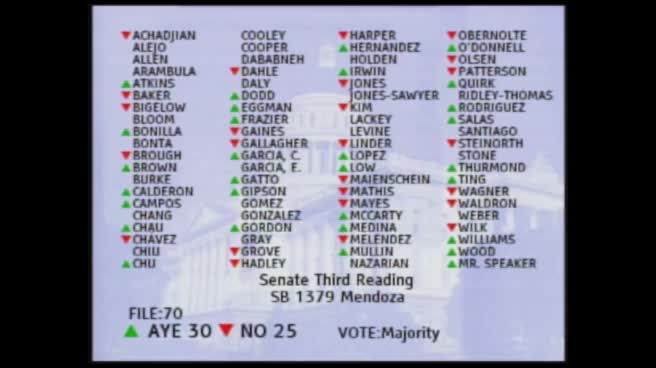
Bill Author