AB 2792: Local law enforcement agencies: federal immigration policy enforcement: ICE access.
- Session Year: 2015-2016
- House: Assembly
- Latest Version Date: 2016-09-28
Existing federal law authorizes issuance of an immigration detainer that serves to advise another law enforcement agency that the federal department seeks custody of an alien presently in the custody of that agency, for the purpose of arresting and removing the alien. Existing federal law provides that the detainer is a request that the agency advise the department, prior to release of the alien, in order for the department to arrange to assume custody in situations when gaining immediate physical custody is either impracticable or impossible.
Existing law, commonly known as the TRUST Act, prohibits a law enforcement official, as defined, from detaining an individual on the basis of a United States Immigration and Customs Enforcement hold after that individual becomes eligible for release from custody, unless, at the time that the individual becomes eligible for release from custody, certain conditions are met, including, among other things, that the individual has been convicted of specified crimes. Existing law defines specified terms for purposes of these provisions.
This bill, the Transparent Review of Unjust Transfers and Holds (TRUTH) Act, would require a local law enforcement agency, prior to an interview between the United States Immigration and Customs Enforcement (ICE) and an individual in custody regarding civil immigration violations, to provide the individual a written consent form, as specified, that would explain, among other things, the purpose of the interview, that it is voluntary, and that the individual may decline to be interviewed. The bill would require the consent form to be available in specified languages. The bill would require a local law enforcement agency to provide copies of specified documentation received from ICE to the individual and to notify the individual regarding the intent of the agency to comply with ICE requests. The bill would require that the records related to ICE access be public records for purposes of the California Public Records Act. The bill, commencing January 1, 2018, would require the local governing body of any county, city, or city and county in which a local law enforcement agency has provided ICE access to an individual during the last year, to hold at least one public community forum during the following year, as specified, to provide information to the public about ICEs access to individuals and to receive and consider public comment. By requiring these local agencies to comply with these requirements, this bill would impose a state-mandated local program.
The California Constitution requires the state to reimburse local agencies and school districts for certain costs mandated by the state. Statutory provisions establish procedures for making that reimbursement.
This bill would provide that with regard to certain mandates no reimbursement is required by this act for a specified reason.
The California Constitution requires local agencies, for the purpose of ensuring public access to the meetings of public bodies and the writings of public officials and agencies, to comply with a statutory enactment that amends or enacts laws relating to public records or open meetings and contains findings demonstrating that the enactment furthers the constitutional requirements relating to this purpose.
This bill would make legislative findings to that effect.
Existing federal law authorizes issuance of an immigration detainer that serves to advise another law enforcement agency that the federal department seeks custody of an alien presently in the custody of that agency, for the purpose of arresting and removing the alien. Existing federal law provides that the detainer is a request that the agency advise the department, prior to release of the alien, in order for the department to arrange to assume custody in situations when gaining immediate physical custody is either impracticable or impossible.
Existing law, commonly known as the TRUST Act, prohibits a law enforcement official, as defined, from detaining an individual on the basis of a United States Immigration and Customs Enforcement hold after that individual becomes eligible for release from custody, unless, at the time that the individual becomes eligible for release from custody, certain conditions are met, including, among other things, that the individual has been convicted of specified crimes. Existing law defines specified terms for purposes of these provisions.
This bill, the Transparent Review of Unjust Transfers and Holds (TRUTH) Act, would authorize require a local law enforcement agency to provide agency, prior to an interview between the United States Immigration and Customs Enforcement (ICE) with access to and an individual if certain conditions are met, as provided. in custody regarding civil immigration violations, to provide the individual a written consent form, as specified, that would explain, among other things, the purpose of the interview, that it is voluntary, and that the individual may decline to be interviewed. The bill would require the consent form to be available in specified languages. The bill would require a local law enforcement agency to provide copies of specified documentation received from ICE to the individual and to notify the individual regarding the intent of the agency to comply with ICE requests. The bill would require that the records related to ICE access be public records for purposes of the California Public Records Act. The bill, commencing January 1, 2018, would require the local governing body of any county, city, or city and county in which a local law enforcement agency has provided ICE access to an individual during the last year, to hold at least one public community forum during the following year, as specified, to provide information to the public about ICEs access to individuals and to receive and consider public comment. The bill would require the community forum to include a report by the local law enforcement agency about its policies and practices regarding ICE access to individuals and compliance with the TRUTH act. By requiring these local agencies to comply with these requirements, this bill would impose a state-mandated local program. The bill would also prohibit police and security departments of the California State University, community colleges, schools, and school districts from providing ICE access to any individual.
The California Constitution requires the state to reimburse local agencies and school districts for certain costs mandated by the state. Statutory provisions establish procedures for making that reimbursement.
This bill would provide that no reimbursement is required by this act for a specified reason.
The California Constitution requires the state to reimburse local agencies and school districts for certain costs mandated by the state. Statutory provisions establish procedures for making that reimbursement.
This bill would provide that with regard to certain mandates no reimbursement is required by this act for a specified reason.
The California Constitution requires local agencies, for the purpose of ensuring public access to the meetings of public bodies and the writings of public officials and agencies, to comply with a statutory enactment that amends or enacts laws relating to public records or open meetings and contains findings demonstrating that the enactment furthers the constitutional requirements relating to this purpose.
This bill would make legislative findings to that effect.
Existing federal law authorizes issuance of an immigration detainer that serves to advise another law enforcement agency that the federal department seeks custody of an alien presently in the custody of that agency, for the purpose of arresting and removing the alien. Existing federal law provides that the detainer is a request that the agency advise the department, prior to release of the alien, in order for the department to arrange to assume custody in situations when gaining immediate physical custody is either impracticable or impossible.
Existing law, commonly known as the TRUST Act, prohibits a law enforcement official, as defined, from detaining an individual on the basis of a United States Immigration and Customs Enforcement hold after that individual becomes eligible for release from custody, unless, at the time that the individual becomes eligible for release from custody, certain conditions are met, including, among other things, that the individual has been convicted of specified crimes. Existing law defines specified terms for purposes of these provisions.
This bill, the Transparent Review of Unjust Transfers and Holds (TRUTH) Act, would authorize a local law enforcement agency to provide the United States Immigration and Customs Enforcement (ICE) with access to an individual if certain conditions are met, as provided. The bill would require that the records related to ICE access be public records for purposes of the California Public Records Act. The bill bill, commencing January 1, 2018, would require the local governing body to hold a community forum or forums, as specified, to provide information to the public about the policy under consideration, and to receive and consider public comment before entering into the MOU or policy. of any county, city, or city and county in which a local law enforcement agency has provided ICE access to an individual during the last year, to hold at least one public community forum during the following year, as specified, to provide information to the public about ICEs access to individuals and to receive and consider public comment. The bill would require the MOU or ICE access, which shall community forum to include a report by the local law enforcement agency about its policies and practices regarding ICE access to individuals. individuals and compliance with the TRUTH act. By requiring these local agencies to comply with these requirements, this bill would impose a state-mandated local program. The bill would also prohibit police and security departments of the California State University, community colleges, schools, and school districts from providing ICE access to any individual.
The California Constitution requires the state to reimburse local agencies and school districts for certain costs mandated by the state. Statutory provisions establish procedures for making that reimbursement.
This bill would provide that no reimbursement is required by this act for a specified reason.
The California Constitution requires local agencies, for the purpose of ensuring public access to the meetings of public bodies and the writings of public officials and agencies, to comply with a statutory enactment that amends or enacts laws relating to public records or open meetings and contains findings demonstrating that the enactment furthers the constitutional requirements relating to this purpose.
This bill would make legislative findings to that effect.
Existing federal law authorizes issuance of an immigration detainer that serves to advise another law enforcement agency that the federal department seeks custody of an alien presently in the custody of that agency, for the purpose of arresting and removing the alien. Existing federal law provides that the detainer is a request that the agency advise the department, prior to release of the alien, in order for the department to arrange to assume custody in situations when gaining immediate physical custody is either impracticable or impossible.
Existing law, commonly known as the TRUST Act, prohibits a law enforcement official, as defined, from detaining an individual on the basis of a United States Immigration and Customs Enforcement hold after that individual becomes eligible for release from custody, unless, at the time that the individual becomes eligible for release from custody, certain conditions are met, including, among other things, that the individual has been convicted of specified crimes. Existing law defines specified terms for purposes of these provisions.
This bill, the Transparent Review of Unjust Transfers and Holds (TRUTH) Act, would authorize a local law enforcement agency to participate in a United States Immigration and Customs Enforcement (ICE) immigration enforcement program only if it enters into a memorandum of understanding (MOU) with the governing body of the political subdivision in which the law enforcement agency is located, or the governing body adopts a binding policy directive, as specified, that describes the terms and conditions pursuant to which the agency will participate in the immigration enforcement program. The bill would authorize the MOU or policy to take effect 30 days after ratification by the governing body, and would authorize the MOU or policy to be valid for a period not exceeding 3 years. provide the United States Immigration and Customs Enforcement (ICE) with access to an individual if certain conditions are met, as provided. The bill would require that the MOU or policy and any records related to its development ICE access be public records for purposes of the California Public Records Act. The bill would require the local governing body to hold a community forum or forums, as specified, to provide information to the public about the policy under consideration, and to receive and consider public comment before entering into the MOU or policy. The bill would require the MOU or policy to require compliance with the TRUST Act, prohibit law enforcement responses to ICE notification or transfer requests except in those situations in which a law enforcement official would have discretion to detain an individual, requiring compliance with local ordinances or policies that limits law enforcement responses to ICE notifications, or detainer or transfer requests, prohibit execution of an ICE detainer or transfer request, a plan to ensure that ICE does not have access to individuals protected from continued detention on the basis of an immigration hold, and a plan to ensure that any individual who is not protected from continued detention is served a copy of any ICE detainer, transfer, or notification request issued for him or her, as specified. ICE access, which shall include a report by the local law enforcement agency about its policies and practices regarding ICE access to individuals. By requiring these local agencies to comply with these requirements, this bill would impose a state-mandated local program. The bill would also prohibit police and security departments of the California State University, community colleges, schools, and school districts from participating in any ICE immigration enforcement program. providing ICE access to any individual.
The California Constitution requires the state to reimburse local agencies and school districts for certain costs mandated by the state. Statutory provisions establish procedures for making that reimbursement.
This bill would provide that no reimbursement is required by this act for a specified reason.
The California Constitution requires local agencies, for the purpose of ensuring public access to the meetings of public bodies and the writings of public officials and agencies, to comply with a statutory enactment that amends or enacts laws relating to public records or open meetings and contains findings demonstrating that the enactment furthers the constitutional requirements relating to this purpose.
This bill would make legislative findings to that effect.
Existing federal law authorizes issuance of an immigration detainer that serves to advise another law enforcement agency that the federal department seeks custody of an alien presently in the custody of that agency, for the purpose of arresting and removing the alien. Existing federal law provides that the detainer is a request that the agency advise the department, prior to release of the alien, in order for the department to arrange to assume custody in situations when gaining immediate physical custody is either impracticable or impossible.
Existing law, commonly known as the TRUST Act, prohibits a law enforcement official, as defined, from detaining an individual on the basis of a United States Immigration and Customs Enforcement hold after that individual becomes eligible for release from custody, unless, at the time that the individual becomes eligible for release from custody, certain conditions are met, including, among other things, that the individual has been convicted of specified crimes. Existing law defines specified terms for purposes of these provisions.
This bill, the Transparent Review of Unjust Transfers and Holds (TRUTH) Act, would authorize a local law enforcement agency to participate in a United States Immigration and Customs Enforcement (ICE) immigration enforcement program only if it enters into a memorandum of understanding (MOU) with the governing body of the political subdivision in which the law enforcement agency is located located, or the governing body adopts a binding policy directive, as specified, that describes the terms and conditions pursuant to which the agency will participate in the immigration enforcement program. The bill would authorize the MOU or policy to take effect 30 days after ratification by the governing body, and would authorize the MOU or policy to be valid for a period not exceeding 2 3 years. The bill would require the MOU or policy and any records related to its development be public records for purposes of the California Public Records Act. The bill would require the local governing body to hold at least 3 community forums a community forum or forums, as specified, to provide information to the public about the policy under consideration, and to receive and consider public comment before entering into the MOU. MOU or policy. The bill would require the MOU or policy to require compliance with the TRUST Act, prohibit law enforcement responses to ICE notification or transfer requests except in those situations in which a law enforcement official would have discretion to detain an individual, requiring compliance with local ordinances or policies that limits law enforcement responses to ICE notifications, or detainer or transfer requests, prohibit execution of an ICE detainer or transfer request and request, a plan to ensure that ICE does not have access to individuals protected from continued detention on the basis of an immigration hold. hold, and a plan to ensure that any individual who is not protected from continued detention is served a copy of any ICE detainer, transfer, or notification request issued for him or her, as specified. By requiring these local agencies to comply with these requirements, this bill would impose a state-mandated local program. The bill would also prohibit police and security departments of the California State University, community colleges, schools, and school districts from participating in any ICE immigration enforcement program.
The California Constitution requires the state to reimburse local agencies and school districts for certain costs mandated by the state. Statutory provisions establish procedures for making that reimbursement.
This bill would provide that no reimbursement is required by this act for a specified reason.
The California Constitution requires local agencies, for the purpose of ensuring public access to the meetings of public bodies and the writings of public officials and agencies, to comply with a statutory enactment that amends or enacts laws relating to public records or open meetings and contains findings demonstrating that the enactment furthers the constitutional requirements relating to this purpose.
This bill would make legislative findings to that effect.
Existing federal law authorizes issuance of an immigration detainer that serves to advise another law enforcement agency that the federal department seeks custody of an alien presently in the custody of that agency, for the purpose of arresting and removing the alien. Existing federal law provides that the detainer is a request that the agency advise the department, prior to release of the alien, in order for the department to arrange to assume custody in situations when gaining immediate physical custody is either impracticable or impossible.
Existing law, commonly know known as the TRUST Act, prohibits a law enforcement official, as defined, from detaining an individual on the basis of a United States Immigration and Customs Enforcement hold after that individual becomes eligible for release from custody, unless, at the time that the individual becomes eligible for release from custody, certain conditions are met, including, among other things, that the individual has been convicted of specified crimes. Existing law defines specified terms for purposes of these provisions.
This bill bill, the Transparent Review of Unjust Transfers and Holds (TRUTH) Act, would authorize a local law enforcement agency to participate in a federal United States Immigration and Customs Enforcement (ICE) immigration enforcement program only if it enters into a memorandum of understanding (MOU) with the governing body of the political subdivision in which the law enforcement agency is located that describes the terms and conditions pursuant to which the agency will participate in the immigration enforcement program. The bill would authorize the MOU to take effect 30 days after ratification by the governing body, and would authorize the MOU to be valid for a period not exceeding 2 years. The bill would require the MOU and any records related to its development be public records for purposes of the California Public Records Act. The bill would require the local governing body to hold at least 3 community forums to provide information to the public about the policy under consideration, and to receive and consider public comment before entering into the MOU. The bill would require the MOU to require compliance with the TRUST Act, prohibit law enforcement responses to ICE notification or transfer requests except in those situations in which a law enforcement official would have discretion to detain an individual, requiring compliance with local ordinances or policies that limits law enforcement responses to ICE notifications, or detainer or transfer requests, prohibit execution of an ICE detainer or transfer request and a plan to ensure that ICE does not have access to individuals protected from continued detention on the basis of an immigration hold. By requiring these local agencies to comply with these requirements, this bill would impose a state-mandated local program.
The California Constitution requires the state to reimburse local agencies and school districts for certain costs mandated by the state. Statutory provisions establish procedures for making that reimbursement.
This bill would provide that no reimbursement is required by this act for a specified reason.
The California Constitution requires local agencies, for the purpose of ensuring public access to the meetings of public bodies and the writings of public officials and agencies, to comply with a statutory enactment that amends or enacts laws relating to public records or open meetings and contains findings demonstrating that the enactment furthers the constitutional requirements relating to this purpose.
This bill would make legislative findings to that effect.
Existing federal law authorizes issuance of an immigration detainer that serves to advise another law enforcement agency that the federal department seeks custody of an alien presently in the custody of that agency, for the purpose of arresting and removing the alien. Existing federal law provides that the detainer is a request that the agency advise the department, prior to release of the alien, in order for the department to arrange to assume custody in situations when gaining immediate physical custody is either impracticable or impossible.
Existing law law, commonly know as the TRUST Act, prohibits a law enforcement official, as defined, from detaining an individual on the basis of a United States Immigration and Customs Enforcement hold after that individual becomes eligible for release from custody, unless, at the time that the individual becomes eligible for release from custody, certain conditions are met, including, among other things, that the individual has been convicted of specified crimes. Existing law defines specified terms for purposes of these provisions.
This bill would authorize a local law enforcement agency to participate in a federal Immigration and Customs Enforcement (ICE) immigration enforcement program only if it enters into a memorandum of understanding (MOU) with the governing body of the political subdivision in which the law enforcement agency is located that describes the terms and conditions pursuant to which the agency will participate in the immigration enforcement program. The bill would authorize the MOU to take effect 30 days after ratification by the governing body, and would authorize the MOU to be valid for a period not exceeding 2 years. The bill would require the MOU and any records related to its development be public records for purposes of the California Public Records Act. The bill would require the local governing body to hold at least 3 community forums to provide information to the public about the policy under consideration, and to receive and consider public comment before entering into the MOU. The bill would require the MOU to require compliance with the TRUST Act, prohibit law enforcement responses to ICE notification or transfer requests except in those situations in which a law enforcement official would have discretion to detain an individual, requiring compliance with local ordinances or policies that limits law enforcement responses to ICE notifications, or detainer or transfer requests, prohibit execution of an ICE detainer or transfer request and a plan to ensure that ICE does not have access to individuals protected from continued detention on the basis of an immigration hold. By requiring these local agencies to comply with these requirements this bill would impose a state-mandated local program.
The California Constitution requires the state to reimburse local agencies and school districts for certain costs mandated by the state. Statutory provisions establish procedures for making that reimbursement.
This bill would provide that no reimbursement is required by this act for a specified reason.
The California Constitution requires local agencies, for the purpose of ensuring public access to the meetings of public bodies and the writings of public officials and agencies, to comply with a statutory enactment that amends or enacts laws relating to public records or open meetings and contains findings demonstrating that the enactment furthers the constitutional requirements relating to this purpose.
This bill would make legislative findings to that effect.
This bill would make nonsubstantive changes to those provisions.
Existing federal law authorizes issuance of an immigration detainer that serves to advise another law enforcement agency that the federal department seeks custody of an alien presently in the custody of that agency, for the purpose of arresting and removing the alien. Existing federal law provides that the detainer is a request that the agency advise the department, prior to release of the alien, in order for the department to arrange to assume custody in situations when gaining immediate physical custody is either impracticable or impossible.
Existing law prohibits a law enforcement official, as defined, from detaining an individual on the basis of a United States Immigration and Customs Enforcement hold after that individual becomes eligible for release from custody, unless, at the time that the individual becomes eligible for release from custody, certain conditions are met, including, among other things, that the individual has been convicted of specified crimes. Existing law defines specified terms for purposes of these provisions.
This bill would make nonsubstantive changes to those provisions.
This act shall be known, and may be cited, as the Transparent Review of Unjust Transfers and Holds (TRUTH) Act.
SEC. 2.(a)Transparency and accountability are essential minimum requirements for any collaboration between state and federal agencies.
(b)Recent immigration enforcement programs sponsored by the United States Immigration and Customs Enforcement (ICE) agency have suffered from a lack of transparency and accountability.
(c)For example, a federal judge found that ICE went out of [its] way to mislead the public about Secure Communities, a deportation program in which ICE collaborated with local law enforcement agencies to identify people for deportation.
(d)The Legislature further found that Secure Communities harmed community policing and shifted the burden of federal immigration enforcement onto local law enforcement agencies.
(e)Although ICE has terminated the Secure Communities program, it continues to promote a number of similar programs, including the Priority Enforcement Program, the 287(g) Program, and the Criminal Alien Program.
(f)The Priority Enforcement Program has many similarities to Secure Communities, including the checking of fingerprints for immigration purposes at the point of arrest; the continued use of immigration detainers, which have been found by the courts to pose constitutional concerns; and the reliance on local law enforcement to assist in immigration enforcement.
(g)Just as with Secure Communities, numerous questions have been raised about whether ICE has been transparent and accountable with respect to its current deportation programs.
(h)This bill seeks to address the lack of transparency and accountability by ensuring that all ICE deportation programs that depend on entanglement with local law enforcement agencies in California are subject to meaningful public oversight.
(i)This bill also seeks to promote public safety and preserve limited local resources because entanglement between local law enforcement and ICE undermines community policing strategies and drains local resources.
SEC. 3.Chapter 17.2 (commencing with Section 7283) is added to Division 7 of Title 1 of the Government Code, to read:17.2.Standards for Participation in United States Immigration and Customs Enforcement Programs7283.For purposes of this chapter, the following terms have the following meanings:
(a)Community forum includes, but is not limited to, any regular meeting of the local governing body that is open to the public, where the public may provide comment, is in an accessible location, and is noticed at least 30 days in advance.
(b)Hold request means a federal Immigration and Customs Enforcement (ICE) request that a local law enforcement agency maintain custody of an individual currently in its custody beyond the time he or she would otherwise be eligible for release in order to facilitate transfer to ICE and includes, but is not limited to, Department of Homeland Security (DHS) Form I-247D.
(c)Governing body with respect to a county, means the county board of supervisors.
(d)ICE access means, for the purposes of civil immigration enforcement, including when an individual is stopped with or without their consent, arrested, detained, or otherwise under the control of the local law enforcement agency, all of the following:
(1)Responding to an ICE hold, notification, or transfer request.
(2)Providing notification to ICE in advance of the public that an individual is being or will be released at a certain date and time through data sharing or otherwise.
(3)Providing ICE non-publicly available information regarding release dates, home addresses, or work addresses, whether through computer databases, jail logs, or otherwise.
(4)Allowing ICE to interview an individual.
(5)Providing ICE information regarding dates and times of probation or parole check-ins.
(e)Local law enforcement agency means any agency of a city, county, city and county, special district, or other political subdivision of the state that is authorized to enforce criminal statutes, regulations, or local ordinances; or to operate jails or to maintain custody of individuals in jails; or to operate juvenile detention facilities or to maintain custody of individuals in juvenile detention facilities; or to monitor compliance with probation or parole conditions.
(f)Notification request means an Immigration and Customs Enforcement request that a local law enforcement agency inform ICE of the release date and time in advance of the public of an individual in its custody and includes, but is not limited to, DHS Form I-247N.
(g)Transfer request means an Immigration and Customs Enforcement request that a local law enforcement agency facilitate the transfer of an individual in its custody to ICE, and includes, but is not limited to, DHS Form I-247X.
7283.1.(a)In advance of any interview between ICE and an individual in local law enforcement custody regarding civil immigration violations, the local law enforcement entity shall provide the individual with a written consent form that explains the purpose of the interview, that the interview is voluntary, and that he or she may decline to be interviewed or may choose to be interviewed only with his or her attorney present. The written consent form shall be available in English, Spanish, Chinese, Tagalog, Vietnamese, and Korean. The written consent form shall also be available in any additional languages that meet the county threshold as defined in subdivision (d) of Section 128552 of the Health and Safety Code if certified translations in those languages are made available to the local law enforcement agency at no cost.
(b)Upon receiving any ICE hold, notification, or transfer request, the local law enforcement agency shall provide a copy of the request to the individual and inform him or her whether the law enforcement agency intends to comply with the request. If a local law enforcement agency provides ICE with notification that an individual is being, or will be, released on a certain date, the local law enforcement agency shall promptly provide the same notification in writing to the individual and to his or her attorney or to one additional person who the individual shall be permitted to designate.
(c)All records relating to ICE access provided by local law enforcement agencies, including all communication with ICE, shall be public records for purposes of the California Public Records Act (Chapter 3.5 (commencing with Section 6250)), including the exemptions provided by that act and, as permitted under that act, personal identifying information may be redacted prior to public disclosure. Records relating to ICE access include, but are not limited to, data maintained by the local law enforcement agency regarding the number and demographic characteristics of individuals to whom the agency has provided ICE access, the date ICE access was provided, and whether the ICE access was provided through a hold, transfer, or notification request or through other means.
(d)Beginning January 1, 2018, the local governing body of any county, city, or city and county in which a local law enforcement agency has provided ICE access to an individual during the last year shall hold at least one community forum during the following year, that is open to the public, in an accessible location, and with at least 30 days notice to provide information to the public about ICEs access to individuals and to receive and consider public comment. As part of this forum, the local law enforcement agency may provide the governing body with data it maintains regarding the number and demographic characteristics of individuals to whom the agency has provided ICE access, the date ICE access was provided, and whether the ICE access was provided through a hold, transfer, or notification request or through other means. Data may be provided in the form of statistics or, if statistics are not maintained, individual records, provided that personally identifiable information shall be redacted.
7283.2.Nothing in this chapter shall be construed to provide, expand, or ratify the legal authority of any state or local law enforcement agency to detain an individual based upon an ICE hold request.
SEC. 4.The Legislature finds and declares that Section 3 of this act, which adds Chapter 17.2 (commencing with Section 7283) to Division 7 of Title 1 of the Government Code, furthers, within the meaning of paragraph (7) of subdivision (b) of Section 3 of Article I of the California Constitution, the purposes of that constitutional section as it relates to the right of public access to the meetings of local public bodies or the writings of local public officials and local agencies. Pursuant to paragraph (7) of subdivision (b) of Section 3 of Article I of the California Constitution, the Legislature makes the following findings:
By requiring public meetings relating to the manner in which local law enforcement entities cooperate with federal authorities in enforcing federal immigration laws and making related documents open to public inspection, this act furthers the purposes of paragraph (7) of subdivision (b) of Section 3 of Article I of the California Constitution.
SEC. 5.No reimbursement is required by this act pursuant to Section 6 of Article XIIIB of the California Constitution because the only costs that may be incurred by a local agency or school district under this act would result from a legislative mandate that is within the scope of paragraph (7) of subdivision (b) of Section 3 of Article I of the California Constitution.
This act shall be known, and may be cited, as the Transparent Review of Unjust Transfers and Holds (TRUTH) Act.
SEC. 2.(a)Transparency and accountability are essential minimum requirements for any collaboration between state and federal agencies.
(b)Recent immigration enforcement programs sponsored by the United States Immigration and Customs Enforcement (ICE) agency have suffered from a lack of transparency and accountability.
(c)For example, a federal judge found that ICE went out of [its] way to mislead the public about Secure Communities, a deportation program in which ICE collaborated with local law enforcement agencies to identify people for deportation.
(d)The Legislature further found that Secure Communities harmed community policing and shifted the burden of federal immigration enforcement onto local law enforcement agencies.
(e)Although ICE has terminated the Secure Communities program, it continues to promote a number of similar programs, including the Priority Enforcement Program, the 287(g) Program, and the Criminal Alien Program.
(f)The Priority Enforcement Program has many similarities to Secure Communities, including the checking of fingerprints for immigration purposes at the point of arrest; the continued use of immigration detainers, which have been found by the courts to pose constitutional concerns; and the reliance on local law enforcement to assist in immigration enforcement.
(g)Just as with Secure Communities, numerous questions have been raised about whether ICE has been transparent and accountable with respect to its current deportation programs.
(h)This bill seeks to address the lack of transparency and accountability by ensuring that all ICE deportation programs that depend on entanglement with local law enforcement agencies in California are subject to meaningful public oversight and meet certain minimum standards. oversight.
(i)This bill also seeks to promote public safety and preserve limited local resources because entanglement between local law enforcement and ICE undermines community policing strategies and drains local resources.
SEC. 3.Chapter 17.2 (commencing with Section 7283) is added to Division 7 of Title 1 of the Government Code, to read:17.2.Standards for Participation in United States Immigration and Customs Enforcement Programs7283.For purposes of this chapter, the following terms have the following meanings:
(a)Community forum includes, but is not limited to, any regular meeting of the local governing body that is open to the public, where the public may provide comment, is in an accessible location, and is noticed at least 30 days in advance.
(b)Hold request means a federal Immigration and Customs Enforcement (ICE) request that a local law enforcement agency maintain custody of an individual currently in its custody beyond the time he or she would otherwise be eligible for release in order to facilitate transfer to ICE and includes, but is not limited to, Department of Homeland Security (DHS) Form I-247D.
(c)Governing body with respect to a county, means the county board of supervisors.
(d)ICE access means, for the purposes of civil immigration enforcement, including when an individual is stopped with or without their consent, arrested, detained, or otherwise under the control of the local law enforcement agency, all of the following:
(1)Responding to an ICE hold, notification, or transfer request.
(2)Providing notification to ICE in advance of the public that an individual is being or will be released at a certain date and time through data sharing or otherwise.
(3)Providing ICE non-publicly available information regarding release dates, home addresses, or work addresses, whether through computer databases, jail logs, or otherwise.
(4)Allowing ICE to interview an individual.
(5)Providing ICE information regarding dates and times of probation or parole check-ins.
(e)Local law enforcement agency means any agency of a city, county, city and county, special district, or other political subdivision of the state that is authorized to enforce criminal statutes, regulations, or local ordinances; or to operate jails or to maintain custody of individuals in jails; or to operate juvenile detention facilities or to maintain custody of individuals in juvenile detention facilities; or to monitor compliance with probation or parole conditions.
(f)Notification request means an Immigration and Customs Enforcement request that a local law enforcement agency inform ICE of the release date and time in advance of the public of an individual in its custody and includes, but is not limited to, DHS Form I-247N.
(g)Transfer request means an Immigration and Customs Enforcement request that a local law enforcement agency facilitate the transfer of an individual in its custody to ICE, and includes, but is not limited to, DHS Form I-247X.
7283.1.(a)A local law enforcement agency shall have the discretion to provide ICE access to an individual if all of the following conditions are met:
(1)The agency would have discretion to detain the individual on the basis of an immigration hold request pursuant to Section 7282.5.
(2)The agency would not violate any local law or policy by providing access to the individual.
(3)The individual has been served with a copy of any ICE hold, transfer, or notification request issued for him or her and has been provided with
7283.1.(a)In advance of any interview between ICE and an individual in local law enforcement custody regarding civil immigration violations, the local law enforcement entity shall provide the individual with a written consent form in advance of any interview with ICE that explains the purpose of the interview, that the interview is voluntary, and that he or she may decline to be interviewed or may choose to be interviewed only with his or her attorney present. The written consent form shall be available in English, Spanish, Chinese, Tagalog, Vietnamese, and Korean. The written consent form shall also be available in any additional languages that meet the county threshold as defined in subdivision (d) of Section 128552 of the Health and Safety Code if certified translations in those languages are made available to the local law enforcement agency at no cost.
(b)Upon receiving any ICE hold, notification, or transfer request, the local law enforcement agency shall provide a copy of the request to the individual and inform him or her whether the law enforcement agency intends to comply with the request. If a local law enforcement agency provides ICE with notification that an individual is being, or will be, released on a certain date, the local law enforcement agency shall promptly provide the same notification in writing to the individual and to his or her attorney or to one additional person who the individual shall be permitted to designate.
(c)All records relating to ICE access provided by local law enforcement agencies, including all communication with ICE about that access ICE, shall be public records for purposes of the California Public Records Act (Chapter 3.5 (commencing with Section 6250)), except that, where otherwise including the exemptions provided by that act and, as permitted under the Public Records Act, that act, personal identifying information may be redacted prior to public disclosure. Records relating to ICE access include, but are not limited to, data maintained by the local law enforcement agency regarding the number and demographic characteristics of individuals to whom the agency has provided ICE access, the date ICE access was provided, and whether the ICE access was provided through a hold, transfer, or notification request or through other means.
(d)Beginning January 1, 2018, the local governing body of any county, city, or city and county in which a local law enforcement agency has provided ICE access to an individual during the last year shall hold at least one community forum during the following year, that is open to the public, in an accessible location, and with at least 30 days notice to provide information to the public about ICEs access to individuals and to receive and consider public comment. At the community forum, the local law enforcement agency shall report to the local governing body about its policies and practices regarding ICE access to individuals and its compliance with this chapter. As part of this report, forum, the local law enforcement agency shall may provide the governing body with any and all data it maintains regarding the number and demographic characteristics of individuals to whom the agency has provided ICE access, the date ICE access was provided, and whether the ICE access was provided through a hold, transfer, or notification request or through other means. Data may be provided in the form of statistics or, if statistics are not maintained, individual records, provided that personally identifiable information shall be redacted.
7283.2.Nothing in this chapter shall be construed to provide, expand, or ratify the legal authority of any state or local law enforcement agency to detain an individual based upon an ICE hold request.
7283.3.(a)Notwithstanding any other provision of this chapter, police and security departments of the California State University, California Community Colleges, schools, and school districts shall not provide ICE access to any individual.
(b)The University of California is requested to comply with this section.
SEC. 4.The Legislature finds and declares that Section 3 of this act, which adds Chapter 17.2 (commencing with Section 7283) to Division 7 of Title 1 of the Government Code, furthers, within the meaning of paragraph (7) of subdivision (b) of Section 3 of Article I of the California Constitution, the purposes of that constitutional section as it relates to the right of public access to the meetings of local public bodies or the writings of local public officials and local agencies. Pursuant to paragraph (7) of subdivision (b) of Section 3 of Article I of the California Constitution, the Legislature makes the following findings:
By requiring public meetings relating to the manner in which local law enforcement entities cooperate with federal authorities in enforcing federal immigration laws and making related documents open to public inspection, this act furthers the purposes of paragraph (7) of subdivision (b) of Section 3 of Article I of the California Constitution.
SEC. 5.No reimbursement is required by this act pursuant to Section 6 of Article XIIIB of the California Constitution because the only costs that may be incurred by a local agency or school district under this act would result from a legislative mandate that is within the scope of paragraph (7) of subdivision (b) of Section 3 of Article I of the California Constitution.
This act shall be known, and may be cited, as the Transparent Review of Unjust Transfers and Holds (TRUTH) Act.
SEC. 2.(a)Transparency and accountability are essential minimum requirements for any collaboration between state and federal agencies.
(b)Recent immigration enforcement programs sponsored by the United States Immigration and Customs Enforcement (ICE) agency have suffered from a lack of transparency and accountability.
(c)For example, a federal judge found that ICE went out of [its] way to mislead the public about Secure Communities, a deportation program in which ICE collaborated with local law enforcement agencies to identify people for deportation.
(d)The Legislature further found that Secure Communities harmed community policing and shifted the burden of federal immigration enforcement onto local law enforcement agencies.
(e)Although ICE has terminated the Secure Communities program, it continues to promote a number of similar programs, including the Priority Enforcement Program, the 287(g) Program, and the Criminal Alien Program.
(f)The Priority Enforcement Program has many similarities to Secure Communities, including the checking of fingerprints for immigration purposes at the point of arrest; the continued use of immigration detainers, which have been found by the courts to pose constitutional concerns; and the reliance on local law enforcement to assist in immigration enforcement.
(g)Just as with Secure Communities, numerous questions have been raised about whether ICE has been transparent and accountable with respect to its current deportation programs.
(h)This bill seeks to address the lack of transparency and accountability by ensuring that all ICE deportation programs that depend on entanglement with local law enforcement agencies in California are subject to meaningful public oversight and meet certain minimum standards.
SEC. 3.Chapter 17.2 (commencing with Section 7283) is added to Division 7 of Title 1 of the Government Code, to read:17.2.Standards for Participation in United States Immigration and Customs Enforcement Programs7283.For purposes of this chapter, the following terms have the following meanings:
(a)Community forum includes, but is not limited to, any regular meeting of the local governing body that is open to the public, where the public may provide comment, is in an accessible location, and is noticed at least 30 days in advance.
(b)Hold request means a federal Immigration and Customs Enforcement (ICE) request that a local law enforcement agency maintain custody of an individual currently in its custody beyond the time he or she would otherwise be eligible for release in order to facilitate transfer to ICE and includes, but is not limited to, Department of Homeland Security (DHS) Form I-247D.
(c)Governing body with respect to a county, means the county board of supervisors.
(d)ICE access means, for the purposes of civil immigration enforcement, including when an individual is stopped with or without their consent, arrested, detained, or otherwise under the control of the local law enforcement agency, all of the following:
(1)Responding to an ICE hold, notification, or transfer request.
(2)Providing notification to ICE in advance of the public that an individual is being or will be released at a certain date and time through data sharing or otherwise.
(3)Providing ICE non-publicly available information or access to non-publicly available computer databases and jail logs containing regarding release dates, home addresses, or work addresses. addresses, whether through computer databases, jail logs, or otherwise.
(4)Allowing ICE to interview an individual.
(5)Providing ICE information regarding dates and times of probation or parole check-ins.
(e)Local law enforcement agency means any agency of a city, county, city and county, special district, or other political subdivision of the state that is authorized to enforce criminal statutes, regulations, or local ordinances; or to operate jails or to maintain custody of individuals in jails; or to operate juvenile detention facilities or to maintain custody of individuals in juvenile detention facilities; or to monitor compliance with probation or parole conditions.
(f)Notification request means an Immigration and Customs Enforcement request that a local law enforcement agency inform ICE of the release date and time in advance of the public of an individual in its custody and includes, but is not limited to, DHS Form I-247N.
(g)Transfer request means an Immigration and Customs Enforcement request that a local law enforcement agency facilitate the transfer of an individual in its custody to ICE, and includes, but is not limited to, DHS Form I-247X.
7283.1.(a)A local law enforcement agency shall have the discretion to provide ICE access to an individual if all of the following conditions are met:
(1)The agency would have discretion to detain the individual on the basis of an immigration hold request pursuant to Section 7282.5.
(2)The agency would not violate any local law or policy by providing access to the individual.
(3)The individual has been served with a copy of any ICE hold, transfer, or notification request issued for him or her and has been provided with a written consent form in advance of any interview with ICE that explains the purpose of the interview, that the interview is voluntary, and that he or she may decline to be interviewed or may choose to be interviewed only with his or her attorney present.
(b)If a local law enforcement agency provides ICE with notification that an individual is being, or will be, released on a certain date, the local law enforcement agency shall promptly provide the same notification in writing to the individual and to his or her attorney or to one additional person who the individual shall be permitted to designate.
(c)All records relating to ICE access provided by local law enforcement agencies, including all communication with ICE about that access shall be public records for purposes of the California Public Records Act, Act (Chapter 3.5 (commencing with Section 6250)), except that, where otherwise permitted under the Public Records Act, personal identifying information may be redacted prior to public disclosure.
(d)The Beginning January 1, 2018, the local governing body of any county, city, or city and county in which a local law enforcement agency has provided ICE access to an individual during the last year shall hold at least one community forum every year during the following year, that is open to the public, in an accessible location, and with at least 30 days notice to provide information to the public about ICEs access to individuals and to receive and consider public comment. At the community forum, the local law enforcement agency shall report to the local governing body about its policies and practices regarding ICE access to individuals and its compliance with this chapter. As part of this report, the local law enforcement agency shall provide the governing body with any and all data it maintains regarding the number and demographic characteristics of individuals to whom the agency has provided ICE access, the date ICE access was provided, and whether the ICE access was provided through a hold, transfer, or notification request or through other means.
7283.2.Nothing in this chapter shall be construed to provide, expand, or ratify the legal authority of any state or local law enforcement agency to detain an individual based upon an ICE hold request.
7283.3.(a)Notwithstanding any other provision of this chapter, police and security departments of the California State University, California Community Colleges, schools, and school districts shall not provide ICE access to any individual.
(b)The University of California is requested to comply with this section.
SEC. 4.The Legislature finds and declares that Section 2 3 of this act, which adds Chapter 17.2 (commencing with Section 7283) to Division 7 of Title 1 of the Government Code, furthers, within the meaning of paragraph (7) of subdivision (b) of Section 3 of Article I of the California Constitution, the purposes of that constitutional section as it relates to the right of public access to the meetings of local public bodies or the writings of local public officials and local agencies. Pursuant to paragraph (7) of subdivision (b) of Section 3 of Article I of the California Constitution, the Legislature makes the following findings:
By requiring public meetings relating to the manner in which local law enforcement entities cooperate with federal authorities in enforcing federal immigration laws and making related documents open to public inspection inspection, this act furthers the purposes of paragraph (7) of subdivision (b) of Section 3 of Article I of the California Constitution.
SEC. 5.No reimbursement is required by this act pursuant to Section 6 of Article XIIIB of the California Constitution because the only costs that may be incurred by a local agency or school district under this act would result from a legislative mandate that is within the scope of paragraph (7) of subdivision (b) of Section 3 of Article I of the California Constitution.
This act shall be known, and may be cited, as the Transparent Review of Unjust Transfers and Holds (TRUTH) Act.
SEC. 2.(a)Transparency and accountability are essential minimum requirements for any collaboration between state and federal agencies.
(b)Recent immigration enforcement programs sponsored by the United States Immigration and Customs Enforcement (ICE) agency have suffered from a lack of transparency and accountability.
(c)For example, a federal judge found that ICE went out of [its] way to mislead the public about Secure Communities, a deportation program in which ICE collaborated with local law enforcement agencies to identify people for deportation.
(d)The Legislature further found that Secure Communities harmed community policing and shifted the burden of federal immigration enforcement onto local law enforcement agencies.
(e)Although ICE has terminated the Secure Communities program, it continues to promote a number of similar programs, including the Priority Enforcement Program, the 287(g) Program, and the Criminal Alien Program.
(f)The Priority Enforcement Program has many similarities to Secure Communities, including the checking of fingerprints for immigration purposes at the point of arrest; the continued use of immigration detainers, which have been found by the courts to pose constitutional concerns; and the reliance on local law enforcement to assist in immigration enforcement.
(g)Just as with Secure Communities, numerous questions have been raised about whether ICE has been transparent and accountable with respect to its current deportation programs.
(h)This bill seeks to address the lack of transparency and accountability by ensuring that all ICE deportation programs that depend on entanglement with local law enforcement agencies in California are subject to meaningful public oversight and meet certain minimum standards.
SEC. 3.Chapter 17.2 (commencing with Section 7283) is added to Division 7 of Title 1 of the Government Code, to read:17.2.Standards for Participation in United States Immigration and Customs Enforcement Programs7283.For purposes of this chapter, the following terms have the following meanings:
(a)Community forum includes, but is not limited to, any regular meeting of the local governing body that is open to the public, where the public may provide comment, is in an accessible location, and is noticed at least 30 days in advance.
(b)Detainer Hold request means a federal Immigration and Customs Enforcement (ICE) request that a local law enforcement agency maintain custody of an individual currently in its custody beyond the time he or she would otherwise be eligible for release in order to facilitate transfer to ICE and includes, but is not limited to, Department of Homeland Security (DHS) Form I-247D.
(c)Governing body with respect to a county, means the county board of supervisors.
(d)ICE immigration enforcement program means any program or practice by which the United States Immigration and Customs Enforcement (ICE) agency works with local law enforcement agencies, or police and security departments of the University of California, California State University, community colleges, schools, and school districts to detect, detain, transfer, or share information about individuals who allegedly are noncitizens or who have committed civil immigration violations, or to station ICE agents in local jails, or to interview individuals in local jails about alleged civil immigration violations, or to issue or respond to detainer, notification, or transfer requests, and includes, but is not limited to, the Priority Enforcement Program, the 287(g) Program, and the Criminal Alien Program.
(d)ICE access means, for the purposes of civil immigration enforcement, including when an individual is stopped with or without their consent, arrested, detained, or otherwise under the control of the local law enforcement agency, all of the following:
(1)Responding to an ICE hold, notification, or transfer request.
(2)Providing notification to ICE in advance of the public that an individual is being or will be released at a certain date and time through data sharing or otherwise.
(3)Providing ICE non-publicly available information or access to non-publicly available computer databases and jail logs containing release dates, home addresses, or work addresses.
(4)Allowing ICE to interview an individual.
(5)Providing ICE information regarding dates and times of probation or parole check-ins.
(e)Local law enforcement agency means any agency of a city, county, city and county, special district, or other political subdivision of the state that is authorized to enforce criminal statutes, regulations, or local ordinances; or to operate jails or to maintain custody of individuals in jails; or to operate juvenile detention facilities or to maintain custody of individuals in juvenile detention facilities. facilities; or to monitor compliance with probation or parole conditions.
(f)Notification request means an Immigration and Customs Enforcement request that a local law enforcement agency inform ICE of the release date and time in advance of the public of an individual in its custody and includes, but is not limited to, DHS Form I-247N.
(g)Small city means a city with a population of 100,000 or less, as determined by the annual city total population rankings by the Demographic Research Unit of the Department of Finance.
(h)
(g)Transfer request means an Immigration and Customs Enforcement request that a local law enforcement agency facilitate the transfer of an individual in its custody to ICE, and includes, but is not limited to, DHS Form I-247X.
7293.1.(a)A local law enforcement agency may participate in an ICE immigration enforcement program only if the law enforcement agency and the governing body of the political subdivision in which the law enforcement agency is located enter into a memorandum of understanding (MOU) in the case of a local law enforcement agency headed by an elected official, or the governing body adopts a binding policy directive, in the case of a local law enforcement agency headed by an employee of the political subdivision hired and fired by the governing body, that describes the terms and conditions pursuant to which the local law enforcement agency will participate in the immigration enforcement program. The MOU or policy shall only take effect 30 days after ratification of the MOU or policy by vote of the governing body of the political subdivision in which the law enforcement agency is located.
(b)The MOU or policy and any records related to the development of the MOU or policy, including, but not limited to, records of communication with ICE, shall be public records for purposes of the California Public Records Act (Chapter 3.5 (commencing with Section 6250) of Division 7 of Title 1).
(c)An MOU or policy enacted under this chapter shall be valid for a period not exceeding three years. Renewal of an MOU or policy requires compliance with all of the provision of this chapter, including the public input process described in subdivision (d) and an evaluation of whether the conditions described in subdivision (e) have been fully implemented. An MOU or policy may be renewed for a period not exceeding three years. An MOU or policy may remain in effect for a period not exceeding six months following the two-year period if the renewal process began at least three months before expiration of the initial three-year period.
(d)Before entering into an MOU or policy, the local governing body shall hold at least three community forums that are open to the public on different days, in accessible locations, and with at least 30 days notice to the public to provide information to the public about the policy under consideration and to receive and consider public comment, except that the local governing body of a small city shall be required to hold only one forum. The community forums shall be held pursuant to the Ralph M. Brown Act (Chapter 9 (commencing with Section 54950) of Part 1 of Division 2 of Title 5).
(e)An MOU or policy enacted under this chapter shall be incorporated into any contract for the operation of a government-owned detention facility entered into by a local law enforcement agency or the governing body of the political subdivision in which the law enforcement agency is located.
7293.2.(a)An MOU or policy entered into pursuant to this chapter shall include all of the following:
(1)A provision requiring compliance with Sections 7282 and 7282.5, commonly known as the TRUST Act.
(2)A prohibition on law enforcement responses to ICE notification or transfer requests except in those situations in which a law enforcement official would have discretion to detain an individual on the basis of an immigration hold pursuant to Section 7282.5.
(3)A provision requiring compliance with any local ordinance or policy that limits law enforcement responses to ICE notifications, or detainer or transfer requests.
(4)A plan to ensure that ICE does not have access to an individual protected from continued detention under Section 7282.5, including, but not limited to, notification in advance of the public that the individual is being or will be released at a certain date and time through data sharing or otherwise, the ability to interview the individual, and access to nonpublicly available personal identifying information, including work or home addresses, of the individual.
(5)A plan to ensure that any individual not protected from continued detention under Section 7282.5 is served with a copy of any ICE detainer, transfer, or notification request issued for him or her and is provided a written consent form in advance of any interview with ICE that explains the purpose of the interview, that the interview is voluntary, and that he or she may decline to be interviewed or may choose to be interviewed only with his or her attorney present.
(b)Unless otherwise prohibited by a local ordinance, law enforcement policy, or an MOU or policy entered into pursuant to this chapter, nothing in this chapter shall prohibit a local law enforcement agency from responding to an ICE notification or transfer request if a law enforcement official would have discretion to detain an individual on the basis of an immigration hold pursuant to Section 7282.5.
7293.3.(a)Notwithstanding any other provision of this chapter, police and security departments of the California State University, California Community Colleges, schools, and school districts shall not participate in any ICE immigration enforcement program.
(b)The University of California is requested to comply with this section.
7283.1.(a)A local law enforcement agency shall have the discretion to provide ICE access to an individual if all of the following conditions are met:
(1)The agency would have discretion to detain the individual on the basis of an immigration hold request pursuant to Section 7282.5.
(2)The agency would not violate any local law or policy by providing access to the individual.
(3)The individual has been served with a copy of any ICE hold, transfer, or notification request issued for him or her and has been provided with a written consent form in advance of any interview with ICE that explains the purpose of the interview, that the interview is voluntary, and that he or she may decline to be interviewed or may choose to be interviewed only with his or her attorney present.
(b)If a local law enforcement agency provides ICE with notification that an individual is being, or will be, released on a certain date, the local law enforcement agency shall promptly provide the same notification in writing to the individual and to his or her attorney or to one additional person who the individual shall be permitted to designate.
(c)All records relating to ICE access provided by local law enforcement agencies, including all communication with ICE about that access shall be public records for purposes of the California Public Records Act, except that, where otherwise permitted under the Public Records Act, personal identifying information may be redacted prior to public disclosure.
(d)The local governing body of any county, city, or city and county in which a local law enforcement agency has provided ICE access to an individual during the last year shall hold at least one community forum every year that is open to the public, in an accessible location, and with at least 30 days notice to provide information to the public about ICEs access to individuals and to receive and consider public comment. At the community forum, the local law enforcement agency shall report to the local governing body about its policies and practices regarding ICE access to individuals and its compliance with this chapter. As part of this report, the local law enforcement agency shall provide the governing body with any and all data it maintains regarding the number and demographic characteristics of individuals to whom the agency has provided ICE access, the date ICE access was provided, and whether the ICE access was provided through a hold, transfer, or notification request or through other means.
7283.2.Nothing in this chapter shall be construed to provide, expand, or ratify the legal authority of any state or local law enforcement agency to detain an individual based upon an ICE hold request.
7283.3.(a)Notwithstanding any other provision of this chapter, police and security departments of the California State University, California Community Colleges, schools, and school districts shall not provide ICE access to any individual.
(b)The University of California is requested to comply with this section.
SEC. 4.The Legislature finds and declares that Section 2 of this act, which adds Chapter 17.2 (commencing with Section 7283) to Division 7 of Title 1 of the Government Code, furthers, within the meaning of paragraph (7) of subdivision (b) of Section 3 of Article I of the California Constitution, the purposes of that constitutional section as it relates to the right of public access to the meetings of local public bodies or the writings of local public officials and local agencies. Pursuant to paragraph (7) of subdivision (b) of Section 3 of Article I of the California Constitution, the Legislature makes the following findings:
By requiring public meetings relating to the manner in which local law enforcement entities cooperate with federal authorities in enforcing federal immigration laws and making related documents open to public inspection this act furthers the purposes of paragraph (7) of subdivision (b) of Section 3 of Article I of the California Constitution.
SEC. 5.No reimbursement is required by this act pursuant to Section 6 of Article XIIIB of the California Constitution because the only costs that may be incurred by a local agency or school district under this act would result from a legislative mandate that is within the scope of paragraph (7) of subdivision (b) of Section 3 of Article I of the California Constitution.
This act shall be known, and may be cited, as the Transparent Review of Unjust Transfers and Holds (TRUTH) Act.
SEC. 2.(a)Transparency and accountability are essential minimum requirements for any collaboration between state and federal agencies.
(b)Recent immigration enforcement programs sponsored by the United States Immigration and Customs Enforcement (ICE) agency have suffered from a lack of transparency and accountability.
(c)For example, a federal judge found that ICE went out of [its] way to mislead the public about Secure Communities, a deportation program in which ICE collaborated with local law enforcement agencies to identify people for deportation.
(d)The Legislature further found that Secure Communities harmed community policing and shifted the burden of federal immigration enforcement onto local law enforcement agencies.
(e)Although ICE has terminated the Secure Communities program, it continues to promote a number of similar programs, including the Priority Enforcement Program, the 287(g) Program, and the Criminal Alien Program.
(f)The Priority Enforcement Program has many similarities to Secure Communities, including the checking of fingerprints for immigration purposes at the point of arrest; the continued use of immigration detainers, which have been found by the courts to pose constitutional concerns; and the reliance on local law enforcement to assist in immigration enforcement.
(g)Just as with Secure Communities, numerous questions have been raised about whether ICE has been transparent and accountable with respect to its current deportation programs.
(h)This bill seeks to address the lack of transparency and accountability by ensuring that all ICE deportation programs that depend on entanglement with local law enforcement agencies in California are subject to meaningful public oversight and meet certain minimum standards.
SEC. 3.Chapter 17.2 (commencing with Section 7283) is added to Division 7 of Title 1 of the Government Code, to read:17.2.Standards for Participation in United States Immigration and Customs Enforcement Programs7283.For purposes of this chapter, the following terms have the following meanings:
(a)Community forum includes, but is not limited to, any regular meeting of the local governing body that is open to the public, where the public may provide comment, is in an accessible location, and is noticed at least 30 days in advance.
(a)
(b)Detainer request means a federal Immigration and Customs Enforcement (ICE) request that a local law enforcement agency maintain custody of an individual currently in its custody beyond the time he or she would otherwise be eligible for release in order to facilitate transfer to ICE and includes, but is not limited to, Department of Homeland Security (DHS) Form I-247D.
(c)Governing body with respect to a county, means the county board of supervisors.
(b)
(d)ICE immigration enforcement program means any program through or practice by which the federal United States Immigration and Customs Enforcement (ICE) agency works with local law enforcement agencies agencies, or police and security departments of the University of California, California State University, community colleges, schools, and school districts to detect, detain, transfer, or share information about individuals who allegedly are noncitizens or who have committed civil immigration violations, or to station ICE agents in local jails, or to interview individuals in local jails about alleged civil immigration violations, or to issue or respond to detainer, notification, or transfer requests, and includes, but is not limited to, the Priority Enforcement Program, the 287(g) Program, and the Criminal Alien Program.
(c)
(e)Local law enforcement agency means any agency of a city, county, city and county, special district, or other political subdivision of the state that is authorized to enforce criminal statutes, regulations, or local ordinances; or to operate jails or to maintain custody of individuals in jails; or to operate juvenile detention facilities or to maintain custody of individuals in juvenile detention facilities.
(d)
(f)Notification request means an Immigration and Customs Enforcement request that a local law enforcement agency inform ICE of the release date and time of an individual in its custody and includes, but is not limited to, DHS Form I-247N.
(g)Small city means a city with a population of 100,000 or less, as determined by the annual city total population rankings by the Demographic Research Unit of the Department of Finance.
(e)
(h)Transfer request means an Immigration and Customs Enforcement request that a local law enforcement agency facilitate the transfer of an individual in its custody to ICE, and includes, but is not limited to, DHS Form I-247X.
7293.1.(a)A local law enforcement agency may participate in a federal Immigration and Customs Enforcement (ICE) an ICE immigration enforcement program only if the law enforcement agency and the governing body of the political subdivision in which the law enforcement agency is located enter into a memorandum of understanding (MOU) in the case of a local law enforcement agency headed by an elected official, or the governing body adopts a binding policy directive, in the case of a local law enforcement agency headed by an employee of the political subdivision hired and fired by the governing body, that describes the terms and conditions pursuant to which the local law enforcement agency will participate in the immigration enforcement program. The MOU or policy shall only take effect 30 days after ratification of the MOU or policy by vote of the governing body of the political subdivision in which the law enforcement agency is located.
(b)The MOU or policy and any records related to the development of the MOU, MOU or policy, including, but not limited to, records of communication with ICE, shall be public records for purposes of the California Public Records Act (Chapter 3.5 (commencing with Section 6250) of Division 7 of Title 1).
(c)An MOU or policy enacted under this chapter shall be valid for a period not exceeding two three years. Renewal of an MOU or policy requires compliance with all of the provision of this chapter, including the public input process described in subdivision (d) and an evaluation of whether the conditions described in subdivision (e) have been fully implemented. An MOU or policy may be renewed for a period not exceeding two three years. An MOU or policy may remain in effect for a period not exceeding six months following the two-year period if the renewal process began at least three months before expiration of the initial two-year three-year period.
(d)Before entering into an MOU, MOU or policy, the local governing body shall hold at least three community forums that are open to the public on different days, in accessible locations, and with at least 30 days notice to the public to provide information to the public about the policy under consideration and to receive and consider public comment. comment, except that the local governing body of a small city shall be required to hold only one forum. The community forums shall be held pursuant to the Ralph M. Brown Act (Chapter 9 (commencing with Section 54950) of Part 1 of Division 2 of Title 5.) 5).
(e)An MOU or policy enacted under this chapter shall be incorporated into any contract for the operation of a government-owned detention facility entered into by a local law enforcement agency or the governing body of the political subdivision in which the law enforcement agency is located.
7293.2.(a)An MOU or policy entered into pursuant to this chapter shall include all of the following:
(1)A provision requiring compliance with Sections 7282 and 7282.5, commonly known as the TRUST Act.
(2)A prohibition on law enforcement responses to ICE notification or transfer requests except in those situations in which a law enforcement official would have discretion to detain an individual on the basis of an immigration hold pursuant to Section 7282.5.
(3)A provision requiring compliance with any local ordinance or policy that limits law enforcement responses to ICE notifications, or detainer or transfer requests.
(4)A prohibition on executing an ICE detainer or transfer request that does not indicate, in writing, whether the request is supported by a judicial warrant.
(5)
(4)A plan to ensure that ICE does not have access to an individual protected from continued detention under Section 7282.5, including, but not limited to, notification in advance of the public regarding the release date and time of an individual in the custody of local law enforcement that the individual is being or will be released at a certain date and time through data sharing or otherwise, the ability to interview the individual, and access to nonpublicly available personal identifying information, including work or home addresses, of the individual.
(5)A plan to ensure that any individual not protected from continued detention under Section 7282.5 is served with a copy of any ICE detainer, transfer, or notification request issued for him or her and is provided a written consent form in advance of any interview with ICE that explains the purpose of the interview, that the interview is voluntary, and that he or she may decline to be interviewed or may choose to be interviewed only with his or her attorney present.
(b)Unless otherwise prohibited by a local ordinance, law enforcement policy, or an MOU or policy entered into pursuant to this chapter, nothing in this chapter shall prohibit a local law enforcement agency from responding to an ICE notification or transfer request if a law enforcement official would have discretion to detain an individual on the basis of an immigration hold pursuant to Section 7282.5.
7293.3.(a)Notwithstanding any other provision of this chapter, police and security departments of the California State University, California Community Colleges, schools, and school districts shall not participate in any ICE immigration enforcement program.
(b)The University of California is requested to comply with this section.
SEC. 4.The Legislature finds and declares that Section 2 of this act, which adds Chapter 17.2 (commencing with Section 7283) to Division 7 of Title 1 of the Government Code, furthers, within the meaning of paragraph (7) of subdivision (b) of Section 3 of Article I of the California Constitution, the purposes of that constitutional section as it relates to the right of public access to the meetings of local public bodies or the writings of local public officials and local agencies. Pursuant to paragraph (7) of subdivision (b) of Section 3 of Article I of the California Constitution, the Legislature makes the following findings:
By requiring public meetings relating to the manner in which local law enforcement entities cooperate with federal authorities in enforcing federal immigration laws and making related documents open to public inspection this act furthers the purposes of paragraph (7) of subdivision (b) of Section 3 of Article I of the California Constitution.
SEC. 5.No reimbursement is required by this act pursuant to Section 6 of Article XIII B of the California Constitution because the only costs that may be incurred by a local agency or school district under this act would result from a legislative mandate that is within the scope of paragraph (7) of subdivision (b) of Section 3 of Article I of the California Constitution.
This act shall be known, and may be cited, as the Transparent Review of Unjust Transfers and Holds (TRUTH) Act.
SECTION 1.SEC. 2.(a)Transparency and accountability are essential minimum requirements for any collaboration between state and federal agencies.
(b)Recent immigration enforcement programs sponsored by the federal United States Immigration and Customs Enforcement agency (ICE) agency have suffered from a lack of transparency and accountability.
(c)For example, a federal judge found that ICE went out of [its] way to mislead the public about Secure Communities, a deportation program in which ICE collaborated with local law enforcement agencies to identify people for deportation.
(d)The Legislature further found that Secure Communities harmed community policing and shifted the burden of federal immigration enforcement onto local law enforcement agencies.
(e)Although ICE has terminated the Secure Communities program, it continues to promote a number of similar programs, including the Priority Enforcement Program, the 287(g) Program, and the Criminal Alien Program.
(f)The Priority Enforcement Program has many similarities to Secure Communities, including the checking of fingerprints for immigration purposes at the point of arrest; the continued use of immigration detainers, which have been found by the courts to pose constitutional concerns; and the reliance on local law enforcement to assist in immigration enforcement.
(g)Just as with Secure Communities, numerous questions have been raised about whether ICE has been transparent and accountable with respect to its current deportation programs.
(h)This bill seeks to address the lack of transparency and accountability by ensuring that all ICE deportation programs that depend on entanglement with local law enforcement agencies in California are subject to meaningful public oversight and meet certain minimum standards.
SEC. 2.SEC. 3.Chapter 17.2 (commencing with Section 7283) is added to Division 7 of Title 1 of the Government Code, to read:17.2.Standards for Participation in United States Immigration and Customs Enforcement Programs7283.For purposes of this chapter, the following terms have the following meanings:
(a)Detainer request means a federal Immigration and Customs Enforcement (ICE) request that a local law enforcement agency maintain custody of an individual currently in its custody beyond the time he or she would otherwise be eligible for release in order to facilitate transfer to ICE and includes, but is not limited to, Department of Homeland Security (DHS) Form I-247D.
(b)ICE immigration enforcement program means any program through which the federal Immigration and Customs Enforcement (ICE) agency works with local law enforcement agencies to detect, detain, transfer, or share information about individuals who allegedly are noncitizens or who have committed civil immigration violations, or to station ICE agents in local jails, and includes, but is not limited to, the Priority Enforcement Program, the 287(g) Program, and the Criminal Alien Program.
(c)Local law enforcement agency means any agency of a city, county, city and county, special district, or other political subdivision of the state that is authorized to enforce criminal statutes, regulations, or local ordinances; or to operate jails or to maintain custody of individuals in jails; or to operate juvenile detention facilities or to maintain custody of individuals in juvenile detention facilities.
(d)Notification request means an Immigration and Customs Enforcement request that a local law enforcement agency inform ICE of the release date and time of an individual in its custody and includes, but is not limited to, DHS Form I-247N.
(e)Transfer request means an Immigration and Customs Enforcement request that a local law enforcement agency facilitate the transfer of an individual in its custody to ICE, and includes, but is not limited to, DHS Form I-247X.
7293.1.(a)A local law enforcement agency may participate in a federal Immigration and Customs Enforcement (ICE) immigration enforcement program only if the law enforcement agency and the governing body of the political subdivision in which the law enforcement agency is located enter into a memorandum of understanding (MOU) that describes the terms and conditions pursuant to which the local law enforcement agency will participate in the immigration enforcement program. The MOU shall only take effect 30 days after ratification of the MOU by vote of the governing body of the political subdivision in which the law enforcement agency is located.
(b)The MOU and any records related to the development of the MOU, including, but not limited to, records of communication with ICE, shall be public records for purposes of the California Public Records Act (Chapter 3.5 (commencing with Section 6250) of Division 7 of Title 1).
(c)An MOU enacted under this chapter shall be valid for a period not exceeding two years. Renewal of an MOU requires compliance with all of the provision of this chapter, including the public input process described in subdivision (d) and an evaluation of whether the conditions described in subdivision (e) have been fully implemented. An MOU may be renewed for a period not exceeding two years. An MOU may remain in effect for a period of not exceeding six months following the two-year period if the renewal process began at least three months before expiration of the initial two-year period.
(d)Before entering into an MOU, the local governing body shall hold at least three community forums that are open to the public on different days, in accessible locations, and with at least 30 days notice to the public to provide information to the public about the policy under consideration and to receive and consider public comment. The community forums shall be held pursuant to the Ralph M. Brown Act (Chapter 9 (commencing with Section 54950) of Part 1 of Division 2 of Title 5. 5.)
7293.2.(a)An MOU entered into pursuant to this chapter shall include all of the following:
(1)A provision requiring compliance with Sections 7282 and 7282.5, commonly known as the TRUST Act.
(2)A prohibition on law enforcement responses to ICE notification or transfer requests except in those situations in which a law enforcement official would have discretion to detain an individual on the basis of an immigration hold pursuant to Section 7282.5.
(3)A provision requiring compliance with any local ordinance or policy that limits law enforcement responses to ICE notifications, or detainer or transfer requests.
(4)A prohibition on executing an ICE detainer or transfer request that does not indicate, in writing, whether the request is supported by a judicial warrant.
(5)A plan to ensure that ICE does not have access to an individual protected from continued detention under Section 7282.5, including, but not limited to, notification of the presence of the in advance of the public regarding the release date and time of an individual in the custody of local law enforcement through data sharing or otherwise, the ability to interview the individual, and access to the nonpublicly available personal identifying information, including work or home addresses, of the individual.
(b)Unless otherwise prohibited by a local ordinance, law enforcement policy, or an MOU entered into pursuant to this chapter, nothing in this chapter shall prohibit a local law enforcement agency from responding to an ICE notification or transfer request if a law enforcement official would have discretion to detain an individual on the basis of an immigration hold pursuant to Section 7282.5.
SEC. 3.SEC. 4.The Legislature finds and declares that Section 2 of this act, which adds Chapter 17.2 (commencing with Section 7283) to Division 7 of Title 1 of the Government Code, furthers, within the meaning of paragraph (7) of subdivision (b) of Section 3 of Article I of the California Constitution, the purposes of that constitutional section as it relates to the right of public access to the meetings of local public bodies or the writings of local public officials and local agencies. Pursuant to paragraph (7) of subdivision (b) of Section 3 of Article I of the California Constitution, the Legislature makes the following findings:
By requiring public meetings relating to the manner in which local law enforcement entities cooperate with federal authorities in enforcing federal immigration laws and making related documents open to public inspection this act furthers the purposes of paragraph (7) of subdivision (b) of Section 3 of Article I of the California Constitution.
SEC. 4. SEC. 5.No reimbursement is required by this act pursuant to Section 6 of Article XIII B of the California Constitution because the only costs that may be incurred by a local agency or school district under this act would result from a legislative mandate that is within the scope of paragraph (7) of subdivision (b) of Section 3 of Article I of the California Constitution.
(a)Transparency and accountability are essential minimum requirements for any collaboration between state and federal agencies.
(b)Recent immigration enforcement programs sponsored by the federal Immigration and Customs Enforcement agency (ICE) have suffered from a lack of transparency and accountability.
(c)For example, a federal judge found that ICE went out of [its] way to mislead the public about Secure Communities, a deportation program in which ICE collaborated with local law enforcement agencies to identify people for deportation.
(d)The Legislature further found that Secure Communities harmed community policing and shifted the burden of federal immigration enforcement onto local law enforcement agencies.
(e)Although ICE has terminated the Secure Communities program, it continues to promote a number of similar programs, including the Priority Enforcement Program, the 287(g) Program, and the Criminal Alien Program.
(f)The Priority Enforcement Program has many similarities to Secure Communities, including the checking of fingerprints for immigration purposes at the point of arrest; the continued use of immigration detainers, which have been found by the courts to pose constitutional concerns; and the reliance on local law enforcement to assist in immigration enforcement.
(g)Just as with Secure Communities, numerous questions have been raised about whether ICE has been transparent and accountable with respect to its current deportation programs.
(h)This bill seeks to address the lack of transparency and accountability by ensuring that all ICE deportation programs that depend on entanglement with local law enforcement agencies in California are subject to meaningful public oversight and meet certain minimum standards.
SEC. 2.Chapter 17.2 (commencing with Section 7283) is added to Division 7 of Title 1 of the Government Code, to read:17.2.Standards for Participation in United States Immigration and Customs Enforcement Programs7283.For purposes of this chapter, the following terms have the following meanings:
(a)Detainer request means a federal Immigration and Customs Enforcement (ICE) request that a local law enforcement agency maintain custody of an individual currently in its custody beyond the time he or she would otherwise be eligible for release in order to facilitate transfer to ICE and includes, but is not limited to, Department of Homeland Security (DHS) Form I-247D.
(b)ICE immigration enforcement program means any program through which the federal Immigration and Customs Enforcement (ICE) agency works with local law enforcement agencies to detect, detain, transfer, or share information about individuals who allegedly are noncitizens or who have committed civil immigration violations, or to station ICE agents in local jails, and includes, but is not limited to, the Priority Enforcement Program, the 287(g) Program, and the Criminal Alien Program.
(c)Local law enforcement agency means any agency of a city, county, city and county, special district, or other political subdivision of the state that is authorized to enforce criminal statutes, regulations, or local ordinances; or to operate jails or to maintain custody of individuals in jails; or to operate juvenile detention facilities or to maintain custody of individuals in juvenile detention facilities.
(d)Notification request means an Immigration and Customs Enforcement request that a local law enforcement agency inform ICE of the release date and time of an individual in its custody and includes, but is not limited to, DHS Form I-247N.
(e)Transfer request means an Immigration and Customs Enforcement request that a local law enforcement agency facilitate the transfer of an individual in its custody to ICE, and includes, but is not limited to, DHS Form I-247X.
7293.1.(a)A local law enforcement agency may participate in a federal Immigration and Customs Enforcement (ICE) immigration enforcement program only if the law enforcement agency and the governing body of the political subdivision in which the law enforcement agency is located enter into a memorandum of understanding (MOU) that describes the terms and conditions pursuant to which the local law enforcement agency will participate in the immigration enforcement program. The MOU shall only take effect 30 days after ratification of the MOU by vote of the governing body of the political subdivision in which the law enforcement agency is located.
(b)The MOU and any records related to the development of the MOU, including, but not limited to, records of communication with ICE, shall be public records for purposes of the California Public Records Act (Chapter 3.5 (commencing with Section 6250) of Division 7 of Title 1).
(c)An MOU enacted under this chapter shall be valid for a period not exceeding two years. Renewal of an MOU requires compliance with all of the provision of this chapter, including the public input process described in subdivision (d) and an evaluation of whether the conditions described in subdivision (e) have been fully implemented. An MOU may be renewed for a period not exceeding two years. An MOU may remain in effect for a period of not exceeding six months following the two-year period if the renewal process began at least three months before expiration of the initial two-year period.
(d)Before entering into an MOU, the local governing body shall hold at least three community forums that are open to the public on different days, in accessible locations, and with at least 30 days notice to the public to provide information to the public about the policy under consideration and to receive and consider public comment. The community forums shall be held pursuant to the Ralph M. Brown Act (Chapter 9 (commencing with Section 54950) of Part 1 of Division 2 of Title 5.
7293.2.(a)An MOU entered into pursuant to this chapter shall include all of the following:
(1)A provision requiring compliance with Sections 7282 and 7282.5, commonly known as the TRUST Act.
(2)A prohibition on law enforcement responses to ICE notification or transfer requests except in those situations in which a law enforcement official would have discretion to detain an individual on the basis of an immigration hold pursuant to Section 7282.5.
(3)A provision requiring compliance with any local ordinance or policy that limits law enforcement responses to ICE notifications, or detainer or transfer requests.
(4)A prohibition on executing an ICE detainer or transfer request that does not indicate, in writing, whether the request is supported by a judicial warrant.
(5)A plan to ensure that ICE does not have access to an individual protected from continued detention under Section 7282.5, including, but not limited to, notification of the presence of the individual in the custody of local law enforcement through data sharing or otherwise, the ability to interview the individual, and access to the personal identifying information, including work or home addresses, of the individual.
(b)Unless otherwise prohibited by a local ordinance, law enforcement policy, or an MOU entered into pursuant to this chapter, nothing in this chapter shall prohibit a local law enforcement agency from responding to an ICE notification or transfer request if a law enforcement official would have discretion to detain an individual on the basis of an immigration hold pursuant to Section 7282.5.
SEC. 3.The Legislature finds and declares that Section 2 of this act, which adds Chapter 17.2 (commencing with Section 7283) to Division 7 of Title 1 of the Government Code, furthers, within the meaning of paragraph (7) of subdivision (b) of Section 3 of Article I of the California Constitution, the purposes of that constitutional section as it relates to the right of public access to the meetings of local public bodies or the writings of local public officials and local agencies. Pursuant to paragraph (7) of subdivision (b) of Section 3 of Article I of the California Constitution, the Legislature makes the following findings:
By requiring public meetings relating to the manner in which local law enforcement entities cooperate with federal authorities in enforcing federal immigration laws and making related documents open to public inspection this act furthers the purposes of paragraph (7) of subdivision (b) of Section 3 of Article I of the California Constitution.
SEC. 4.No reimbursement is required by this act pursuant to Section 6 of Article XIII B of the California Constitution because the only costs that may be incurred by a local agency or school district under this act would result from a legislative mandate that is within the scope of paragraph (7) of subdivision (b) of Section 3 of Article I of the California Constitution.
SECTION 1.Section 7282 of the Government Code is amended to read:7282.For purposes of this chapter, the following terms have the following meanings:
(a)Conviction shall have the same meaning as subdivision (d) of Section 667 of the Penal Code.
(b)Eligible for release from custody means that the individual may be released from custody because one of the following conditions has occurred:
(1)All criminal charges against the individual have been dropped or dismissed.
(2)The individual has been acquitted of all criminal charges filed against him or her.
(3)The individual has served all the time required for his or her sentence.
(4)The individual has posted a bond.
(5)The individual is otherwise eligible for release under state or local law, or local policy.
(c)Immigration hold means an immigration detainer issued by an authorized immigration officer, pursuant to Section 287.7 of Title 8 of the Code of Federal Regulations, that requests that the law enforcement official maintain custody of the individual for a period not to exceed 48 hours, excluding Saturdays, Sundays, and holidays, and advise the authorized immigration officer prior to the release of that individual.
(d)Law enforcement official means any local agency or officer of a local agency authorized to enforce criminal statutes, regulations, or local ordinances or to operate jails or to maintain custody of individuals in jails, and any person or local agency authorized to operate juvenile detention facilities or to maintain custody of individuals in juvenile detention facilities.
(e)Local agency means any city, county, city and county, special district, or other political subdivision of the state.
(f)Serious felony means any offense listed in subdivision (c) of Section 1192.7 of the Penal Code and any offense committed in another state that, if committed in California, would be punishable as a serious felony as defined by subdivision (c) of Section 1192.7 of the Penal Code.
(g)Violent felony means any offense listed in subdivision (c) of Section 667.5 of the Penal Code and any offense committed in another state that, if committed in California, would be punishable as a violent felony as defined by subdivision (c) of Section 667.5 of the Penal Code.
For purposes of this chapter, the following terms have the following meanings:
(a)Conviction shall have the same meaning as subdivision (d) of Section 667 of the Penal Code.
(b)Eligible for release from custody means that the individual may be released from custody because one of the following conditions has occurred:
(1)All criminal charges against the individual have been dropped or dismissed.
(2)The individual has been acquitted of all criminal charges filed against him or her.
(3)The individual has served all the time required for his or her sentence.
(4)The individual has posted a bond.
(5)The individual is otherwise eligible for release under state or local law, or local policy.
(c)Immigration hold means an immigration detainer issued by an authorized immigration officer, pursuant to Section 287.7 of Title 8 of the Code of Federal Regulations, that requests that the law enforcement official to maintain custody of the individual for a period not to exceed 48 hours, excluding Saturdays, Sundays, and holidays, and to advise the authorized immigration officer prior to the release of that individual.
(d)Law enforcement official means any local agency or officer of a local agency authorized to enforce criminal statutes, regulations, or local ordinances or to operate jails or to maintain custody of individuals in jails, and any person or local agency authorized to operate juvenile detention facilities or to maintain custody of individuals in juvenile detention facilities.
(e)Local agency means any city, county, city and county, special district, or other political subdivision of the state.
(f)Serious felony means any of the offenses offense listed in subdivision (c) of Section 1192.7 of the Penal Code and any offense committed in another state which, that, if committed in California, would be punishable as a serious felony as defined by subdivision (c) of Section 1192.7 of the Penal Code.
(g)Violent felony means any of the offenses offense listed in subdivision (c) of Section 667.5 of the Penal Code and any offense committed in another state which, that, if committed in California, would be punishable as a violent felony as defined by subdivision (c) of Section 667.5 of the Penal Code.
|
Date
|
Status
|
|---|---|
| Aug 25, 2016 | Read third time. Passed. Ordered to the Assembly. |
| Jun 29, 2016 | From committee: Do pass and re-refer to Com. on APPR. (Ayes 5. Noes 2.) (June 28). Re-referred to Com. on APPR. |
| Aug 1, 2016 | In committee: Set, first hearing. Hearing canceled at the request of author. |
| Aug 3, 2016 | From committee chair, with author's amendments: Amend, and re-refer to committee. Read second time, amended, and re-referred to Com. on APPR. |
| Aug 8, 2016 | Referred to APPR. suspense file. |
| Aug 11, 2016 | From committee: Amend, and do pass as amended. (Ayes 5. Noes 2.) (August 11). |
| Aug 15, 2016 | Read second time and amended. Ordered to third reading. |
| Aug 19, 2016 | Read third time and amended. Ordered to second reading. |
| Aug 22, 2016 | Read second time. Ordered to third reading. |
| Jun 22, 2016 | From committee chair, with author's amendments: Amend, and re-refer to committee. Read second time, amended, and re-referred to Com. on PUB. S. |
| Aug 25, 2016 | Read third time. Passed. Ordered to the Assembly. (Ayes 26. Noes 10. Page 5418.). |
| Aug 30, 2016 | Assembly Rule 63 suspended. |
| Aug 30, 2016 | Assembly Rule 63 suspended. (Page 6474.) |
| Aug 30, 2016 | In Assembly. Concurrence in Senate amendments pending. |
| Aug 30, 2016 | Senate amendments concurred in. To Engrossing and Enrolling. |
| Aug 30, 2016 | Senate amendments concurred in. To Engrossing and Enrolling. (Ayes 46. Noes 29. Page 6491.). |
| Sep 9, 2016 | Enrolled and presented to the Governor at 2:30 p.m. |
| Feb 19, 2016 | Introduced. To print. |
| Jun 9, 2016 | Referred to Com. on PUB. S. |
| May 23, 2016 | Read third time. Passed. Ordered to the Senate. (Ayes 44. Noes 29.) |
| May 23, 2016 | Read third time. Passed. Ordered to the Senate. (Ayes 44. Noes 29. Page 4890.) |
| May 23, 2016 | Read third time. Passed. Ordered to the Senate. |
| May 23, 2016 | In Senate. Read first time. To Com. on RLS. for assignment. |
| Apr 28, 2016 | Read second time. Ordered to third reading. |
| Apr 27, 2016 | From committee: Do pass. (Ayes 13. Noes 5.) (April 27). |
| Apr 13, 2016 | From committee: Do pass and re-refer to Com. on APPR. (Ayes 5. Noes 2.) (April 12). Re-referred to Com. on APPR. |
| Apr 11, 2016 | Re-referred to Com. on PUB. S. |
| Apr 7, 2016 | From committee chair, with author's amendments: Amend, and re-refer to Com. on PUB. S. Read second time and amended. |
| Mar 28, 2016 | Re-referred to Com. on PUB. S. |
| Mar 17, 2016 | Referred to Com. on PUB. S. |
| Mar 17, 2016 | From committee chair, with author's amendments: Amend, and re-refer to Com. on PUB. S. Read second time and amended. |
| Feb 22, 2016 | Read first time. |
| Feb 21, 2016 | From printer. May be heard in committee March 22. |
|
Date
|
Description
|
Location
|
Votes
|
|
|---|---|---|---|---|
| Aug 30, 2016 | AB 2792 BONTA Concurrence in Senate Amendments | Assembly Floor |
Passed |
|
| Aug 25, 2016 | Assembly 3rd Reading AB2792 Bonta By Leno | Senate Floor |
Passed |
|
| Aug 11, 2016 | Do pass as amended | Senate Standing Committee on Appropriations |
Passed |
|
| Aug 8, 2016 | Placed on suspense file | Senate Standing Committee on Appropriations |
Passed |
|
| Jun 28, 2016 | Do pass, but first be re-referred to the Committee on [Appropriations] | Senate Standing Committee on Public Safety |
Passed |
|
| May 23, 2016 | AB 2792 BONTA Assembly Third Reading | Assembly Floor |
Passed |
|
| Apr 27, 2016 | Do pass. | Assembly Standing Committee on Appropriations |
Passed |
|
| Apr 12, 2016 | Do pass and be re-referred to the Committee on [Appropriations] | Assembly Standing Committee on Public Safety |
Passed |
This list shows positions taken on this bill by organizations on the date displayed, which is linked to the original source.
Positions by individuals are not included.
|
Organization
|
Position
|
Date
|
|---|---|---|
| ACLU of California | ** Support | Aug 25, 2016 |
| African Advocacy Network | ** Support | Aug 25, 2016 |
| Alameda County District Attorney Nancy O'Malley | * Support | Jun 28, 2016 |
| Alameda County District Attorney's Office | * Support | Jun 28, 2016 |
| Alliance for Boys and Men of Color | * Support | Jun 28, 2016 |
| Alliance San Diego | ** Support | Aug 25, 2016 |
| American Friends Service Committee | ** Support | Aug 25, 2016 |
| Asian Americans Advancing Justice | ** Support | Aug 25, 2016 |
| Asian Pacific Islander Legal Outreach | ** Support | Aug 25, 2016 |
| Asian Students Promoting Immigrant Rights through Education | ** Support | Aug 25, 2016 |
| ASPIRE | ** Support | Apr 27, 2016 |
| California Attorneys For Criminal Justice | ** Support | Aug 25, 2016 |
| California Department of Justice Alliance | * Indeterminate | Jun 28, 2016 |
| California Immigrant Policy Center | ** Support | Aug 25, 2016 |
| California Immigrant Youth Justice Alliance | ** Support | Aug 25, 2016 |
| California Partnership To End Domestic Violence | ** Support | Aug 25, 2016 |
| California Police Chiefs Association California State Sheriffs' Association | ** Against | Aug 25, 2016 |
| California Public Defenders Association | ** Support | Aug 25, 2016 |
| California Rural Legal Assistance Foundation, Inc. | ** Support | Apr 27, 2016 |
| CARECEN-LA | ** Support | Aug 25, 2016 |
| Central American Resource Center | ** Support | Apr 27, 2016 |
| Central Regal De la Rasa | * Support | Jun 28, 2016 |
| Centro Legal de la Raza | ** Support | Aug 25, 2016 |
| Community Health for Asian Americans | ** Support | Aug 25, 2016 |
| Community initiatives for Visiting Immigrants in confinement | ** Support | Aug 25, 2016 |
| Community United Against Violence | ** Support | Aug 25, 2016 |
| Congregations Building Community | ** Support | Aug 25, 2016 |
| Courage Campaign | ** Support | Aug 25, 2016 |
| Dolores Street Community Services | ** Support | Aug 25, 2016 |
| Dream Team Los Angeles | ** Support | Aug 25, 2016 |
| East Bay Immigrant Youth Coalition | ** Support | Aug 25, 2016 |
| East Bay Organizing Committee | ** Support | Aug 25, 2016 |
| Filipino Advocates for Justice | ** Support | Aug 25, 2016 |
| Immigrant Legal Resource Center | ** Support | Aug 25, 2016 |
| Immigrant Youth Coalition | ** Support | Aug 25, 2016 |
| Immigration Action Group | ** Support | Aug 25, 2016 |
| Indigena Community Organizing Project | ** Support | Aug 25, 2016 |
| Inland Coalition for Immigrant Justice | ** Support | Aug 25, 2016 |
| Inland Empire Immigrant Youth Coalition | ** Support | Aug 25, 2016 |
| Inland Empire Rapid Response Network | ** Support | Aug 25, 2016 |
| Institute of Popular Education of Southern California | ** Support | Aug 25, 2016 |
| Instituto de Educacion Popular del Sur de California | ** Support | Apr 27, 2016 |
| Interfaith Coalition for Immigrant Rights | ** Support | Aug 25, 2016 |
| Interfaith Movement for Human Integrity | ** Support | Apr 27, 2016 |
| Khmer Girls in Action | ** Support | Aug 25, 2016 |
| Legal Services for Prisoners with Children | ** Support | Aug 25, 2016 |
| Long Beach City College | * Support | Jun 28, 2016 |
| Los Angeles County Supervisor, District 3, Sheila Kuehl | ** Support | Aug 25, 2016 |
| Los Angeles Immigrant Youth Coalition | ** Support | Aug 25, 2016 |
| MALDEF | ** Support | Aug 25, 2016 |
| Mixteco | ** Support | Aug 25, 2016 |
| Mujeres Unidas Y Activas | ** Support | Aug 25, 2016 |
| National Day Laborer Organizing Network | ** Support | Aug 25, 2016 |
| National Immigration Law Center | ** Support | Aug 25, 2016 |
| National Lawyers Guild Los Angeles Chapter | ** Support | Aug 25, 2016 |
| North Bay Immigrant Youth Union | ** Support | Aug 25, 2016 |
| Orange County Immigrant Youth United | ** Support | Aug 25, 2016 |
| Pangea Legal Services | ** Support | Aug 25, 2016 |
| PICO California | ** Support | Aug 25, 2016 |
| Pomona Economic Opportunity Center | ** Support | Aug 25, 2016 |
| Prison Policy Initiative | ** Support | Aug 25, 2016 |
| PUB. S. | ** Against | Apr 27, 2016 |
| RAIZ | ** Support | Aug 25, 2016 |
| Sacramento Immigration Alliance | ** Support | Aug 25, 2016 |
| San Diego Immigrant Rights Consortium | ** Support | Aug 25, 2016 |
| San Fernando Dream Team | ** Support | Aug 25, 2016 |
| San Fernando Valley Dream Team | ** Support | Apr 27, 2016 |
| San Fernando Valley Immigrant Youth Coalition | ** Support | Aug 25, 2016 |
| San Joaquin Immigrant Youth Collective | ** Support | Aug 25, 2016 |
| Southeast Asia Resource Action Center | ** Support | Apr 27, 2016 |
| Street Level Health Project | ** Support | Aug 25, 2016 |
| Thai Community Development Center | ** Support | Aug 25, 2016 |
| Vital Immigrant Defense Advocacy and Services | ** Support | Aug 25, 2016 |
(Without Reference to File)
CONCURRENCE IN SENATE AMENDMENTS
CSA1 Bill Id:AB 2792
Author:(Bonta)
As Amended Ver:August 19, 2016
Majority vote
ASSEMBLY: | 44-29 | (May 23, 2016) | SENATE: | 26-10 | (August 25, 2016) |
Original Committee Reference: PUB. S.
SUMMARY: Requires local law enforcement agencies, prior to an interview between the United States Immigration and Customs Enforcement (ICE) and an individual in custody, to provide the individual a written consent form, as specified, that would include information describing the purpose of the interview, that it is voluntary, and that the individual may decline to be interviewed. Requires local law enforcement agencies to provide copies of specified documentation received from ICE to the individual and to notify the individual regarding the intent of the agency to comply with ICE requests.
The Senate amendments:
- Delete the requirement for a memorandum of understanding between local law enforcement agencies and ICE in order for local law enforcement agencies to participate in ICE enforcement programs.
- Specify that in advance of any interview between ICE and an individual in local law enforcement custody regarding civil immigration violations, the local law enforcement entity shall provide the individual with a written consent form that explains the purpose of the interview, that the interview is voluntary, and that he or she may decline to be interviewed or may choose to be interviewed only with his or her attorney present.
- Require the written consent form to be available in English, Spanish, Chinese, Tagalog, Vietnamese, and Korean, and additional languages as specified.
- State that upon receiving any ICE hold, notification, or transfer request, the local law enforcement agency shall provide a copy of the request to the individual and inform him or her whether the law enforcement agency intends to comply with the request.
- Specify that if a local law enforcement agency provides ICE with notification that an individual is being, or will be, released on a certain date, the local law enforcement agency shall promptly provide the same notification in writing to the individual and to his or her attorney or to one additional person who the individual shall be permitted to designate.
- State that all records relating to ICE access provided by local law enforcement agencies, including all communication with ICE, shall be public records for purposes of the California Public Records Act, as specified.
- Records relating to ICE access include, but are not limited to, data maintained by the local law enforcement agency regarding the number and demographic characteristics of individuals to whom the agency has provided ICE access, the date ICE access was provided, and whether the ICE access was provided through a hold, transfer, or notification request or through other means.
- Require after January 1, 2018, the local governing body of any county, city, or city and county in which a local law enforcement agency has provided ICE access to an individual during the last year to hold at least one community forum the following year that is open to the public with at least 30 days notice to provide information to the public about ICE's access to individuals and to receive and consider public comment.
- Require as part of the report, the local law enforcement agency may provide the governing body with any and all data it maintains regarding the number and demographic characteristics of individuals to whom the agency has provided ICE access, the date ICE access was provided, and whether the ICE access was provided through a hold, transfer, or notification request or through other means.
- Specify that "ICE access" includes all of the following:
- Responding to an ICE hold, notification, or transfer request;
- Providing notification to ICE in advance of the public that an individual is being or will be released at a certain date and time through data sharing or otherwise;
- Providing ICE non-publicly available information regarding release dates, home addresses, or work addresses, whether through computer databases, jail logs, or otherwise.
- Allowing ICE to interview an individual; and
- Providing ICE information regarding dates and times of probation or parole check-ins.
- Define additional terms for purposes of this bill.
- Make technical, non-substantive changes.
EXISTING FEDERAL LAW:
- Provides that any authorized immigration officer may at any time issue Immigration Detainer-Notice of Action, to any other federal, state, or local law enforcement agency. A detainer serves to advise another law enforcement agency that the Department of Homeland Security (DHS) seeks custody of an alien presently in the custody of that agency, for the purpose of arresting and removing the alien. The detainer is a request that such agency advise the DHS, prior to release of the alien, in order for the DHS to arrange to assume custody, in situations when gaining immediate physical custody is either impracticable or impossible.
- States that upon a determination by the DHS to issue a detainer for an alien not otherwise detained by a criminal justice agency, such agency shall maintain custody of the alien for a period not to exceed 48 hours, excluding Saturdays, Sundays, and holidays in order to permit assumption of custody by the DHS.
- Authorizes the Secretary of Homeland Security under the 287(g) program to enter into agreements that delegate immigration powers to local police. The negotiated agreements between ICE and the local police are documented in memorandum of agreements (MOAs).
- Provides that no State shall make or enforce any law which shall abridge the privileges or immunities of citizens of the United States; nor shall any State deprive any person of life, liberty, or property, without due process of law; nor deny to any person within its jurisdiction the equal protection of the laws.
EXISTING LAW:
- Defines "immigration hold" as "an immigration detainer issued by an authorized immigration officer, pursuant to specified regulations, that requests that the law enforcement official to maintain custody of the individual for a period not to exceed 48 hours, excluding Saturdays, Sundays, and holidays, and to advise the authorized immigration officer prior to the release of that individual."
- States that a law enforcement official shall have discretion to cooperate with federal immigration officials by detaining an individual on the basis of an immigration hold after that individual becomes eligible for release from custody only if the continued detention of the individual on the basis of the immigration hold would not violate any federal, state, or local law, or any local policy, and only under the following circumstances:
- The individual has been convicted of a serious or violent felony;
- The individual has been convicted of a felony punishable by imprisonment in the state prison;
- The individual has been convicted within the past five years of a misdemeanor for a crime that is punishable as either a misdemeanor or a felony, or has been convicted at any time of a specified felony;
- The individual is a current registrant on the California Sex and Arson Registry;
- The individual is arrested and taken before a magistrate on a charge involving a serious or violent felony, a felony punishable by imprisonment in state prison, or other specified felonies, and the magistrate makes a finding of probable cause as to that charge after a preliminary hearing; and
- The individual has been convicted of a federal crime that meets the definition of an aggravated felony as specified, or is identified by the United States Department of Homeland Security's Immigration and Customs Enforcement as the subject of an outstanding federal felony arrest warrant.
- States that if none of the conditions listed above is satisfied, an individual shall not be detained on the basis of an immigration hold after the individual becomes eligible for release from custody.
FISCAL EFFECT: According to the Senate Appropriations Committee:
- Local law enforcement agencies: Potentially significant non-reimbursable local costs (Local Funds) to local law enforcement agencies for administrative and operational workload to adhere to the specified conditions in order to provide ICE access to individuals. New workload would include facilitating the public input process, compiling data reports, and responding to CPRA requests.
- First-year community forum: Potential state-reimbursable local agency costs (General Fund) to hold the first-year community forum based on activities provided during the past year to the extent a forum is required to be held in 2017. All subsequent community forums to be held based on discretionary actions prospectively are estimated to result in non-reimbursable local costs.
- Federal grant funding: Unknown impact on future federal Edward Byrne Justice Assistance Grant (JAG) Program and State Criminal Alien Assistance Program (SCAAP) grant awards. To the extent the prohibition from providing ICE with "non-publicly available information" includes information about an individual's immigration status could potentially result in non-compliance with 8 United States Code (USC) Section 1373, which prevents federal, state, and local government entities and officials from prohibiting or in any way restricting government entities from exchanging information concerning an individual's citizenship or immigration status with federal immigration officers. In fiscal year (FY) 2015, state and local agencies in California received $57 million in SCAAP funding, and the FY 2016 state and local agency JAG allocations totaled $29.3 million.
- CSU/CCC/schools: Unknown future impact resulting from the blanket prohibition from providing "ICE access" to an individual, with no exceptions.
AS PASSED BY THE ASSEMBLY, this bill:
- Authorized a local law enforcement agency to participate in a federal Immigration and Customs Enforcement (ICE) immigration enforcement program only if it enters into a memorandum of understanding (MOU) with the governing body of the political subdivision in which the law enforcement agency is located that describes the terms and conditions pursuant to which the agency will participate in the immigration enforcement program.
- Stated that the MOU must require compliance with the Transparency and Responsibility Using State Tools (TRUST) Act.
- Stated that the MOU must prohibit law enforcement responses to ICE notification or transfer requests except in those situations in which a law enforcement official would have discretion to detain an individual under the TRUST Act.
- Specified that the MOU must contain a provision requiring compliance with any local ordinance or policy that limits law enforcement responses to ICE notifications, or detainer or transfer requests.
- Stated that the MOU must have a prohibition on executing an ICE detainer or transfer request that does not indicate, in writing, whether the request is supported by a judicial warrant.
- Required the MOU to have a plan to ensure that ICE does not have access to an individual protected from continued detention under the TRUST Act, including, but not limited to, notification of the presence of the individual in the custody of local law enforcement through data sharing or otherwise, the ability to interview the individual, and access to the personal identifying information, including work or home addresses, of the individual.
- Specified that unless otherwise prohibited by a local ordinance, law enforcement policy, or an MOU entered into pursuant to this chapter, nothing in this bill shall prohibit a local law enforcement agency from responding to an ICE notification or transfer request if a law enforcement official would have discretion to detain an individual on the basis of an immigration as specified.
- Specified that the MOU must prohibit execution of an ICE detainer or transfer request and a plan to ensure that ICE does not have access to individuals protected from continued detention on the basis of an immigration hold.
- Required the MOU and any records related to its development be a public record for purposes of the California Public Records Act.
- Required the local governing body to hold at least three community forums to provide information to the public about the policy under consideration, and to receive and consider public comment before entering into the MOU.
- Authorized the MOU to take effect 30 days after ratification by the governing body.
- Specified that the MOU be valid for a period not exceeding two years.
- Defined "ICE immigration enforcement program" as "any program through which ICE works with local law enforcement agencies to detect, detain, transfer, or share information about individuals who allegedly are noncitizens or who have committed civil immigration violations, or to station ICE agents in local jails."
- Defined "detainer request" as "an ICE request that a local law enforcement agency maintain custody of an individual currently in its custody beyond the time he or she would otherwise be eligible for release in order to facilitate transfer to ICE."
- Defined "notification request" as "an ICE request that a local law enforcement agency inform ICE of the release date and time of an individual in its custody."
- Defined "transfer request" as "an ICE request that a local law enforcement agency facilitate the transfer of an individual in its custody to ICE."
COMMENTS: According to the author, "Immigrant communities form an integral part of our state's social fabric. When Immigration and Customs Enforcement (ICE) coerces local law enforcement to carry out deportations, family members are separated and community trust destroyed, and undocumented witnesses and victims are afraid to step forward or seek help.
"In 2013, Governor Brown signed AB 4 [(Ammiano), Chapter 570], the TRUST Act, which protected community members from being detained by local law enforcement under immigration holds requested by ICE. Prior to the TRUST Act, ICE requested local jails hold community members until they could be picked up for deportation. From tamale vendors to domestic violence survivors transferred to ICE for deportation, the holds caused significant suffering and further weakened community-police relations as ICE sought to have local police officers and sheriff's deputies help it carry out mass deportation. After TRUST went into effect, a federal court found all immigration holds unconstitutional, but ICE has continued to circumvent the protections of TRUST by requesting local law enforcement notify them of personal information, such as release time and location.
"With AB 2792, the Transparent Review of Unjust Transfers and Holds (TRUTH) Act, we close that loophole and build upon the TRUST Act by. The TRUTH Act requires a transparent process, including community engagement, prior to local law enforcement participation in ICE deportation programs. Local law enforcement must then reach an agreement with their city council or county supervisors, dictating the terms and conditions of any participation in such programs, including compliance with the state's TRUST Act.
"The TRUTH Act requires critical transparency from ICE, ensures local communities have a voice, and creates clear guidelines to guard against future abuses."
Please see the policy committee analysis for a full discussion of this bill.
Analysis Prepared by: David Billingsley / PUB. S. / (916) 319-3744 FN: 0004809
Office of Senate Floor Analyses (916) 651-1520 Fax: (916) 327-4478 | AB |
THIRD READING
Bill No: AB 2792
:
SENATE PUBLIC SAFETY COMMITTEE: 5-2, 6/28/16
AYES: Hancock, Glazer, Leno, Liu, Monning
NOES: Anderson, Stone
SENATE APPROPRIATIONS COMMITTEE: 5-2, 8/11/16
AYES: Lara, Beall, Hill, McGuire, Mendoza
NOES: Bates, Nielsen
ASSEMBLY FLOOR: 44-29, 5/23/16 - See last page for vote
Asian Americans Advancing Justice
California Immigrant Policy Center
Immigrant Legal Resource Center
MALDEF
National Day Laborer Organizing Network
DIGEST: This bill authorizes a local law enforcement agency to provide federal Immigration and Customs Enforcement (ICE) with access to an individual only if specified conditions are met.
Senate Floor Amendments of 8/19/16 (1) remove the limitation on ICE access; (2) expand the “know your rights” provision, including requiring it to be in at least five languages, with additional translations provided at no cost to the local government; (3) clarify the scope of the California Public Record Act (CPRA); (4) no longer require the report as part of the public forum; and (5) remove the provision stating University of California, California State University (CSU), California Community Colleges (CCC), schools and school districts shall not provide ICE access to any individual.
Existing federal law:
- Provides that any authorized immigration officer may at any time issue Immigration Detainer-Notice of Action, to any other federal, state, or local law enforcement agency. A detainer serves to advise another law enforcement agency that the Department of Homeland Security (DHS) seeks custody of an alien presently in the custody of that agency, for the purpose of arresting and removing the alien. The detainer is a request that such agency advise the DHS, prior to release of the alien, in order for the DHS to arrange to assume custody, in situations when gaining immediate physical custody is either impracticable or impossible. (8 CFR Section 287.7(a).)
- States that upon a determination by the DHS to issue a detainer for an alien not otherwise detained by a criminal justice agency, such agency shall maintain custody of the alien for a period not to exceed 48 hours, excluding Saturdays, Sundays, and holidays in order to permit assumption of custody by the DHS. (8 CFR Section 287.7(d).)
- Authorizes the Secretary of DHS under the 287(g) program to enter into agreements that delegate immigration powers to local police. The negotiated agreements between ICE and the local police are documented in memorandum of agreements (MOAs). (8 U.S.C. Section 1357(g).)
- Provides that no state shall make or enforce any law which shall abridge the privileges or immunities of citizens of the United States; nor shall any state deprive any person of life, liberty, or property, without due process of law; nor deny to any person within its jurisdiction the equal protection of the laws. (U.S. Const. 14th Amend.)
Existing state law:
- Defines "immigration hold" as "an immigration detainer issued by an authorized immigration officer, pursuant to specified regulations, that requests that the law enforcement official to maintain custody of the individual for a period not to exceed 48 hours, excluding Saturdays, Sundays, and holidays, and to advise the authorized immigration officer prior to the release of that individual." (Government Code, § 7282 (c).)
- States that a law enforcement official shall have discretion to cooperate with federal immigration officials by detaining an individual on the basis of an immigration hold after that individual becomes eligible for release from custody only if the continued detention of the individual on the basis of the immigration hold would not violate any federal, state, or local law, or any local policy, and only under the following circumstances:
- The individual has been convicted of a serious or violent felony;
- The individual has been convicted of a felony punishable by imprisonment in the state prison;
- The individual has been convicted within the past five years of a misdemeanor for a crime that is punishable as either a misdemeanor or a felony, or has been convicted at any time of a specified felony;
- The individual is a current registrant on the California Sex and Arson Registry;
- The individual is arrested and taken before a magistrate on a charge involving a serious or violent felony, a felony punishable by imprisonment in state prison, or other specified felonies, and the magistrate makes a finding of probable cause as to that charge after a preliminary hearing; and
- The individual has been convicted of a federal crime that meets the definition of an aggravated felony as specified, or is identified by the DHS's ICE as the subject of an outstanding federal felony arrest warrant. (Government Code, § 7282.5(a))
- States that if none of the conditions listed above is satisfied, an individual shall not be detained on the basis of an immigration hold after the individual becomes eligible for release from custody. (Government Code, § 7282.5 (b).)
This bill:
- States that if the local law enforcement agency provides ICE with a notification that an individual is being, or will be released on a certain date, the local law enforcement agency shall promptly provide the same notification in writing to the individual and to his or her attorney or to one additional person who the individual shall be permitted to designate.
- Provides that in advance of any interview between ICE and an individual in local custody regarding immigration violations, the local law enforcement shall provide the individual with a written consent form that explains the interview and that it is voluntary.
- Provides that the written consent form shall be available in specified languages.
- Provides that all records relating to the ICE access provided by local law enforcement agencies, including all communications with ICE about that access shall be public records for the purpose of the CPRA, except that where otherwise permitted under the CPRA personal identifying information may be redacted.
- States that beginning January 1, 2018, the local governing body of a local governing body of a city, county or city and county in which a local law enforcement agency has provided ICE with access to an individual during the last year shall hold at least one community forum open to the public and may provide information to the public about ICE’s access to individuals and at the meeting report specified information to the public.
- Defines specified terms for the purpose of this bill.
Background
According to the author:
California’s TRUST Act— AB 4 (Ammiano) of 2013— was instrumental in preventing the separation of thousands of families. This law limits immigration “hold” or detainer requests, triggered by deeply controversial deportation programs like the program formerly known as “Secure Communities” or S-Comm. The requests, found unconstitutional by a federal court in 2014, caused immigrants to be detained for extra time, at local expense, merely for deportation purposes.
On November 20, 2014, The Obama administration acknowledged the failure of S-Comm and announced a reboot of the program. However, ICE's reboot – named the Priority Enforcement Program or PEP – contains the same fundamental flaws. In fact, identical to S-Comm, PEP continues to check the immigration status of all individuals by reviewing fingerprints obtained by local police at the point of booking, without any due process whatsoever.
While PEP relies more on requests to local law enforcement to notify ICE when an individual is released, the end result is the same. ICE requests notification of release time so that they can detain the person at the point of release, leading to unconstitutional detentions at local jails and separating Californian families. PEP, just like its predecessor, is overburdening local law enforcement’s resources and further undercutting the confidence that the TRUST Act had started to build between the community and law enforcement.
Aside from ICE notification requests, since passage of the TRUST Act, ICE has utilized other troubling tactics to burden local law enforcement with deportations. This includes racially profiling individuals for interrogations in jail about their immigration status, while denying them access to counsel. ICE is also reviewing inmate logs and searching jail computers to gather addresses and telephone numbers to conduct home raids or courthouse raids, traumatizing family members and invoking fear in immigrant communities
The recent case of a San Francisco father who sought police's help in locating his stolen car, only to end up detained by ICE for more than 50 days, illustrates how ICE's new tactics hurt families and further damage confidence in law enforcement.
FISCAL EFFECT: Appropriation: Fiscal Com.: Local:
According to the Senate Appropriations Committee:
- Local law enforcement agencies: Potentially significant non-reimbursable local costs (Local Funds) to local law enforcement agencies for administrative and operational workload to adhere to the specified conditions in order to provide ICE access to individuals. New workload would include facilitating the public input process, compiling data reports, and responding to CPRA requests.
- Federal grant funding: Unknown impact on future federal Edward Byrne Justice Assistance Grant (JAG) Program and State Criminal Alien Assistance Program (SCAAP) grant awards. To the extent the prohibition from providing ICE with “non-publicly available information” includes information about an individual’s immigration status could potentially result in non-compliance with 8 U.S.C. Section 1373, which prevents federal, state, and local government entities and officials from prohibiting or in any way restricting government entities from exchanging information concerning an individual’s citizenship or immigration status with federal immigration officers. In FFY 2015, state and local agencies in California received $57 million in SCAAP funding, and the FFY 2016 state and local agency JAG allocations totaled $29.3 million.
- CSU/CCC/schools: Unknown future impact resulting from the blanket prohibition from providing “ICE access” to an individual, with no exceptions.
ACLU of California (co-source)
Asian Americans Advancing Justice (co-source)
California Immigrant Policy Center (co-source)
Immigrant Legal Resource Center (co-source)
MALDEF (co-source)
National Day Laborer Organizing Network (co-source)
African Advocacy Network
Alliance San Diego
American Friends Service Committee
Asian Pacific Islander Legal Outreach
Asian Students Promoting Immigrant Rights through Education
California Attorneys for Criminal Justice
California Immigrant Youth Justice Alliance
California Partnership to End Domestic Violence
California Public Defenders Association
CARECEN-LA
Centro Legal de la Raza
Community Health for Asian Americans
Community Initiatives for Visiting Immigrants in Confinement
Community United Against Violence
Congregations Building Community
Courage Campaign
Dolores Street Community Services
Dream Team Los Angeles
East Bay Immigrant Youth Coalition
East Bay Organizing Committee
Ella Baker Center
Filipino Advocates for Justice
Immigrant Youth Coalition
Immigration Action Group
Inland Coalition for Immigrant Justice
Inland Empire Immigrant Youth Coalition
Inland Empire Rapid Response Network
Institute of Popular Education of Southern California
Interfaith Coalition for Immigrant Rights
Khmer Girls in Action
Lawyers Committee for Civil Rights
Legal Services for Prisoners with Children
Los Angeles County Supervisor, District 3, Sheila Kuehl
Los Angeles Immigrant Youth Coalition
Mixteco/Indigena Community Organizing Project
Mujeres Unidas y Activas
National Immigration Law Center
National Lawyers Guild Los Angeles Chapter
North Bay Immigrant Youth Union
Orange County Immigrant Youth United
Pangea Legal Services
PICO California
Pomona Economic Opportunity Center
Prison Policy Initiative
RAIZ
Sacramento Immigration Alliance
San Diego Immigrant Rights Consortium
San Fernando Dream Team
San Fernando Valley Immigrant Youth Coalition
San Joaquin Immigrant Youth Collective
SEIU
Street Level Health Project
Thai Community Development Center
Vital Immigrant Defense Advocacy and Services
OPPOSITION: (Verified 8/22/16)
California Police Chiefs Association
California State Sheriffs’ Association
ASSEMBLY FLOOR: 44-29, 5/23/16
AYES: Alejo, Atkins, Bloom, Bonilla, Bonta, Brown, Burke, Calderon, Campos, Chau, Chiu, Chu, Dababneh, Daly, Dodd, Cristina Garcia, Eduardo Garcia, Gipson, Gomez, Gonzalez, Gordon, Roger Hernández, Holden, Jones-Sawyer, Levine, Lopez, Low, McCarty, Medina, Mullin, Nazarian, O'Donnell, Quirk, Ridley-Thomas, Rodriguez, Salas, Santiago, Mark Stone, Thurmond, Ting, Weber, Williams, Wood, Rendon
NOES: Achadjian, Travis Allen, Baker, Bigelow, Brough, Chang, Chávez, Cooley, Dahle, Beth Gaines, Gallagher, Gatto, Grove, Hadley, Harper, Jones, Kim, Lackey, Linder, Maienschein, Mathis, Mayes, Melendez, Obernolte, Olsen, Steinorth, Wagner, Waldron, Wilk
NO VOTE RECORDED: Arambula, Cooper, Eggman, Frazier, Gray, Irwin, Patterson
Prepared by: Mary Kennedy / PUB. S. /
8/22/16 23:10:18
**** END ****
Office of Senate Floor Analyses (916) 651-1520 Fax: (916) 327-4478 | AB |
THIRD READING
Bill No: AB 2792
:
SENATE PUBLIC SAFETY COMMITTEE: 5-2, 6/28/16
AYES: Hancock, Glazer, Leno, Liu, Monning
NOES: Anderson, Stone
SENATE APPROPRIATIONS COMMITTEE: 5-2, 8/11/16
AYES: Lara, Beall, Hill, McGuire, Mendoza
NOES: Bates, Nielsen
ASSEMBLY FLOOR: 44-29, 5/23/16 - See last page for vote
Asian Americans Advancing Justice
California Immigrant Policy Center
Immigrant Legal Resource Center
MALDEF
National Day Laborer Organizing Network
DIGEST: This bill authorizes a local law enforcement agency to provide federal Immigration and Customs Enforcement (ICE) with access to an individual only if specified conditions are met.
Existing federal law:
- Provides that any authorized immigration officer may at any time issue Immigration Detainer-Notice of Action, to any other federal, state, or local law enforcement agency. A detainer serves to advise another law enforcement agency that the Department of Homeland Security (DHS) seeks custody of an alien presently in the custody of that agency, for the purpose of arresting and removing the alien. The detainer is a request that such agency advise the DHS, prior to release of the alien, in order for the DHS to arrange to assume custody, in situations when gaining immediate physical custody is either impracticable or impossible. (8 CFR Section 287.7(a).)
- States that upon a determination by the DHS to issue a detainer for an alien not otherwise detained by a criminal justice agency, such agency shall maintain custody of the alien for a period not to exceed 48 hours, excluding Saturdays, Sundays, and holidays in order to permit assumption of custody by the DHS. (8 CFR Section 287.7(d).)
- Authorizes the Secretary of DHS under the 287(g) program to enter into agreements that delegate immigration powers to local police. The negotiated agreements between ICE and the local police are documented in memorandum of agreements (MOAs). (8 U.S.C. Section 1357(g).)
- Provides that no state shall make or enforce any law which shall abridge the privileges or immunities of citizens of the United States; nor shall any state deprive any person of life, liberty, or property, without due process of law; nor deny to any person within its jurisdiction the equal protection of the laws. (U.S. Const. 14th Amend.)
Existing state law:
- Defines "immigration hold" as "an immigration detainer issued by an authorized immigration officer, pursuant to specified regulations, that requests that the law enforcement official to maintain custody of the individual for a period not to exceed 48 hours, excluding Saturdays, Sundays, and holidays, and to advise the authorized immigration officer prior to the release of that individual." (Government Code, § 7282 (c).)
- States that a law enforcement official shall have discretion to cooperate with federal immigration officials by detaining an individual on the basis of an immigration hold after that individual becomes eligible for release from custody only if the continued detention of the individual on the basis of the immigration hold would not violate any federal, state, or local law, or any local policy, and only under the following circumstances:
- The individual has been convicted of a serious or violent felony;
- The individual has been convicted of a felony punishable by imprisonment in the state prison;
- The individual has been convicted within the past five years of a misdemeanor for a crime that is punishable as either a misdemeanor or a felony, or has been convicted at any time of a specified felony;
- The individual is a current registrant on the California Sex and Arson Registry;
- The individual is arrested and taken before a magistrate on a charge involving a serious or violent felony, a felony punishable by imprisonment in state prison, or other specified felonies, and the magistrate makes a finding of probable cause as to that charge after a preliminary hearing; and
- The individual has been convicted of a federal crime that meets the definition of an aggravated felony as specified, or is identified by the DHS's ICE as the subject of an outstanding federal felony arrest warrant. (Government Code, § 7282.5(a))
- States that if none of the conditions listed above is satisfied, an individual shall not be detained on the basis of an immigration hold after the individual becomes eligible for release from custody. (Government Code, § 7282.5 (b).)
This bill:
- Provides that a local law enforcement agency shall have the discretion to provide ICE access to an individual if the following conditions are met.
- The agency would have the discretion to detain the individual on the basis of an immigration hold.
- The agency would not violate any local law or policy by providing access to the individual.
- The individual has been served with a copy of any ICE hold, transfer, or notification request issued for him or her and has been provided with a written consent form in advance of any interview with ICE that explains the purpose of the interview, that the interview is voluntary, and that he or she may decline to be interviewed or may be interviewed with his or her attorney present.
- States that if the local law enforcement agency provides ICE with a notification that an individual is being, or will be released on a certain date, the local law enforcement agency shall promptly provide the same notification in writing to the individual and to his or her attorney or to one additional person who the individual shall be permitted to designate.
- Provides that all records relating to the ICE access provided by local law enforcement agencies, including all communications with ICE about that access shall be public reecords for the purpose of the California Public Records Act (CPRA), except that where otherwise permitted under the CPRA personal identifying information may be redacted.
- States that beginning January 1, 2018, the local governing body of a local governing body of a city, county or city and county in which a local law enforcement agency has provided ICE with access to an individual during the last year shall hold at least one community forum open to the public to provide information to the public about ICE’s access to individuals and at the meeting report specified information to the public.
- Defines specified terms for the purpose of this bill.
According to the author:
California’s TRUST Act— AB 4 (Ammiano) of 2013— was instrumental in preventing the separation of thousands of families. This law limits immigration “hold” or detainer requests, triggered by deeply controversial deportation programs like the program formerly known as “Secure Communities” or S-Comm. The requests, found unconstitutional by a federal court in 2014, caused immigrants to be detained for extra time, at local expense, merely for deportation purposes.
On November 20, 2014, The Obama administration acknowledged the failure of S-Comm and announced a reboot of the program. However, ICE's reboot – named the Priority Enforcement Program or PEP – contains the same fundamental flaws. In fact, identical to S-Comm, PEP continues to check the immigration status of all individuals by reviewing fingerprints obtained by local police at the point of booking, without any due process whatsoever.
While PEP relies more on requests to local law enforcement to notify ICE when an individual is released, the end result is the same. ICE requests notification of release time so that they can detain the person at the point of release, leading to unconstitutional detentions at local jails and separating Californian families. PEP, just like its predecessor, is overburdening local law enforcement’s resources and further undercutting the confidence that the TRUST Act had started to build between the community and law enforcement.
Aside from ICE notification requests, since passage of the TRUST Act, ICE has utilized other troubling tactics to burden local law enforcement with deportations. This includes racially profiling individuals for interrogations in jail about their immigration status, while denying them access to counsel. ICE is also reviewing inmate logs and searching jail computers to gather addresses and telephone numbers to conduct home raids or courthouse raids, traumatizing family members and invoking fear in immigrant communities
The recent case of a San Francisco father who sought police's help in locating his stolen car, only to end up detained by ICE for more than 50 days, illustrates how ICE's new tactics hurt families and further damage confidence in law enforcement.
FISCAL EFFECT: Appropriation: Fiscal Com.: Local:
According to the Senate Appropriations Committee:
- Local law enforcement agencies: Potentially significant non-reimbursable local costs (Local Funds) to local law enforcement agencies for administrative and operational workload to adhere to the specified conditions in order to provide ICE access to individuals. New workload would include facilitating the public input process, compiling data reports, and responding to CPRA requests.
- Federal grant funding: Unknown impact on future federal Edward Byrne Justice Assistance Grant (JAG) Program and State Criminal Alien Assistance Program (SCAAP) grant awards. To the extent the prohibition from providing ICE with “non-publicly available information” includes information about an individual’s immigration status could potentially result in non-compliance with 8 U.S.C. Section 1373, which prevents federal, state, and local government entities and officials from prohibiting or in any way restricting government entities from exchanging information concerning an individual’s citizenship or immigration status with federal immigration officers. In FFY 2015, state and local agencies in California received $57 million in SCAAP funding, and the FFY 2016 state and local agency JAG allocations totaled $29.3 million.
- CSU/CCC/schools: Unknown future impact resulting from the blanket prohibition from providing “ICE access” to an individual, with no exceptions.
ACLU of California (co-source)
Asian Americans Advancing Justice (co-source)
California Immigrant Policy Center (co-source)
Immigrant Legal Resource Center (co-source)
MALDEF (co-source)
National Day Laborer Organizing Network (co-source)
African Advocacy Network
Alliance San Diego
American Friends Service Committee
Asian Pacific Islander Legal Outreach
Asian Students Promoting Immigrant Rights through Education
California Attorneys for Criminal Justice
California Immigrant Youth Justice Alliance
California Partnership to End Domestic Violence
California Public Defenders Association
CARECEN-LA
Centro Legal de la Raza
Community Health for Asian Americans
Community Initiatives for Visiting Immigrants in Confinement
Community United Against Violence
Congregations Building Community
Courage Campaign
Dolores Street Community Services
Dream Team Los Angeles
East Bay Immigrant Youth Coalition
East Bay Organizing Committee
Ella Baker Center
Filipino Advocates for Justice
Immigrant Youth Coalition
Immigration Action Group
Inland Coalition for Immigrant Justice
Inland Empire Immigrant Youth Coalition
Inland Empire Rapid Response Network
Institute of Popular Education of Southern California
Interfaith Coalition for Immigrant Rights
Khmer Girls in Action
Lawyers Committee for Civil Rights
Legal Services for Prisoners with Children
Los Angeles County Supervisor, District 3, Sheila Kuehl
Los Angeles Immigrant Youth Coalition
Mixteco/Indigena Community Organizing Project
Mujeres Unidas y Activas
National Immigration Law Center
National Lawyers Guild Los Angeles Chapter
North Bay Immigrant Youth Union
Orange County Immigrant Youth United
Pangea Legal Services
PICO California
Pomona Economic Opportunity Center
Prison Policy Initiative
RAIZ
Sacramento Immigration Alliance
San Diego Immigrant Rights Consortium
San Fernando Dream Team
San Fernando Valley Immigrant Youth Coalition
San Joaquin Immigrant Youth Collective
SEIU
Street Level Health Project
Thai Community Development Center
Vital Immigrant Defense Advocacy and Services
OPPOSITION: (Verified 8/11/16)
California Police Chiefs Association
California State Sheriffs’ Association
ASSEMBLY FLOOR: 44-29, 5/23/16
AYES: Alejo, Atkins, Bloom, Bonilla, Bonta, Brown, Burke, Calderon, Campos, Chau, Chiu, Chu, Dababneh, Daly, Dodd, Cristina Garcia, Eduardo Garcia, Gipson, Gomez, Gonzalez, Gordon, Roger Hernández, Holden, Jones-Sawyer, Levine, Lopez, Low, McCarty, Medina, Mullin, Nazarian, O'Donnell, Quirk, Ridley-Thomas, Rodriguez, Salas, Santiago, Mark Stone, Thurmond, Ting, Weber, Williams, Wood, Rendon
NOES: Achadjian, Travis Allen, Baker, Bigelow, Brough, Chang, Chávez, Cooley, Dahle, Beth Gaines, Gallagher, Gatto, Grove, Hadley, Harper, Jones, Kim, Lackey, Linder, Maienschein, Mathis, Mayes, Melendez, Obernolte, Olsen, Steinorth, Wagner, Waldron, Wilk
NO VOTE RECORDED: Arambula, Cooper, Eggman, Frazier, Gray, Irwin, Patterson
Prepared by: Mary Kennedy / PUB. S. /
8/15/16 20:22:30
**** END ****
SENATE COMMITTEE ON
Senator Ricardo Lara, Chair
2015 - 2016 Regular Session
AB 2792 (Bonta) - Local law enforcement agencies: federal immigration policy enforcement: ICE access
Version: | Policy Vote: |
Urgency: | Mandate: |
Hearing Date: | Consultant: |
*********** ANALYSIS ADDENDUM – SUSPENSE FILE ***********
The following information is revised to reflect amendments
adopted by the committee on August 11, 2016
Bill Summary:
AB 2792 would provide a local law enforcement agency with the discretion to provide “Immigration and Customs Enforcement (ICE) access,” as defined, to an individual if specified conditions are met. This bill would prohibit the California State University, community colleges, schools, and school districts from providing ICE access to an individual, and would request the University of California to likewise comply with this prohibition.
Fiscal Impact:
- Local law enforcement agencies: Potentially significant non-reimbursable local costs (Local Funds) to local law enforcement agencies for administrative and operational workload to adhere to the specified conditions in order to provide ICE access to individuals. New workload would include facilitating the public input process, compiling data reports, and responding to CPRA requests.
- Federal grant funding: Unknown impact on future federal Edward Byrne Justice Assistance Grant (JAG) Program and State Criminal Alien Assistance Program (SCAAP) grant awards. To the extent the prohibition from providing ICE with “non-publicly available information” includes information about an individual’s immigration status could potentially result in non-compliance with 8 U.S.C. Section 1373, which prevents federal, state, and local government entities and officials from prohibiting or in any way restricting government entities from exchanging information concerning an individual’s citizenship or immigration status with federal immigration officers. In FFY 2015, state and local agencies in California received $57 million in SCAAP funding, and the FFY 2016 state and local agency JAG allocations totaled $29.3 million.
- CSU/CCC/schools: Unknown future impact resulting from the blanket prohibition from providing “ICE access” to an individual, with no exceptions.
Author Amendments:
- Delay the requirement to hold a community forum to 2018 and make other technical changes.
-- END --
SENATE COMMITTEE ON APPROPRIATIONS
Senator Ricardo Lara, Chair
2015 - 2016 Regular Session
AB 2792 (Bonta) - Local law enforcement agencies: federal immigration policy enforcement
Version: August 3, 2016 | Policy Vote: PUB. S. 5 - 2 |
Urgency: No | Mandate: Yes |
Hearing Date: August 8, 2016 | Consultant: Jolie Onodera |
This bill meets the criteria for referral to the Suspense File.
Bill Summary:
AB 2792 would provide a local law enforcement agency with the discretion to provide “Immigration and Customs Enforcement (ICE) access,” as defined, to an individual if specified conditions are met. This bill would prohibit the California State University, community colleges, schools, and school districts from providing ICE access to an individual, and would request the University of California to likewise comply with this prohibition.
Fiscal Impact:
- Local law enforcement agencies: Potentially significant non-reimbursable local costs (Local Funds) to local law enforcement agencies for administrative and operational workload to adhere to the specified conditions in order to provide ICE access to individuals. New workload would include facilitating the public input process, compiling data reports, and responding to CPRA requests.
- First-year community forum: Potential state-reimbursable local agency costs (General Fund) to hold the first-year community forum based on activities provided during the past year to the extent a forum is required to be held in 2017. All subsequent community forums to be held based on discretionary actions prospectively are estimated to result in non-reimbursable local costs.
- Federal grant funding: Unknown impact on future federal Edward Byrne Justice Assistance Grant (JAG) Program and State Criminal Alien Assistance Program (SCAAP) grant awards. To the extent the prohibition from providing ICE with “non-publicly available information” includes information about an individual’s immigration status could potentially result in non-compliance with 8 U.S.C. Section 1373, which prevents federal, state, and local government entities and officials from prohibiting or in any way restricting government entities from exchanging information concerning an individual’s citizenship or immigration status with federal immigration officers. In FFY 2015, state and local agencies in California received $57 million in SCAAP funding, and the FFY 2016 state and local agency JAG allocations totaled $29.3 million.
- CSU/CCC/schools: Unknown future impact resulting from the blanket prohibition from providing “ICE access” to an individual, with no exceptions.
Background:
Under existing law, a law enforcement official has discretion to cooperate with federal immigration officials by detaining an individual on the basis of an immigration hold after that individual becomes eligible for release from custody only if the continued detention of the individual on the basis of the immigration hold would not violate any federal, state, or local law, or any local policy, and only under any of the following circumstances:
- The individual has been convicted of a serious or violent felony identified in subdivision (c) of Section 1192.7 of, or subdivision (c) of Section 667.5 of, the Penal Code.
- The individual has been convicted of a felony punishable by imprisonment in the state prison.
- The individual has been convicted within the past five years of a misdemeanor for a crime that is punishable as either a misdemeanor or a felony for, or has been convicted at any time of a felony for, any of specified offenses.
- The individual is a current registrant on the California Sex and Arson Registry.
- The individual is arrested and taken before a magistrate on a charge involving a serious or violent felony, as identified in subdivision (c) of Section 1192.7 or subdivision (c) of Section 667.5 of the Penal Code, a felony punishable by imprisonment in state prison, or any felony listed in paragraph (2) or (3) other than domestic violence, and the magistrate makes a finding of probable cause as to that charge pursuant to Section 872 of the Penal Code.
- The individual has been convicted of a federal crime that meets the definition of an aggravated felony as set forth in subparagraphs (A) to (P), inclusive, of paragraph (43) of subsection (a) of Section 101 of the federal Immigration and Nationality Act (8 U.S.C. Sec. 1101), or is identified by the United States Department of Homeland Security’s ICE as the subject of an outstanding federal felony arrest warrant.
If none of the conditions listed above is satisfied, an individual may not be detained on the basis of an immigration hold after the individual becomes eligible for release from custody. (Government Code § 7282.5.)
This bill seeks to address transparency and accountability issues by ensuring that all ICE deportation programs that depend on interaction with local law enforcement agencies in California are subject to meaningful public oversight and specified minimum standards.
Proposed Law:
This bill would establish the Transparent Review of Unjust Transfers and Holds (TRUTH) Act. Specifically, this bill:
- Provides that a local law enforcement agency has the discretion to provide “ICE access” to an individual if all of the following conditions are met:
- The agency would have discretion to detain the individual on the basis of an immigration hold request pursuant to Government Code § 7282.5.
- The agency would not violate any local law or policy by providing access to the individual.
- The individual has been served with a copy of any ICE hold, transfer, or notification request issued for him or her and has been provided with a written consent form in advance of any interview with ICE that explains the purpose of the interview, that the interview is voluntary, and that he or she may decline to be interviewed or may choose to be interviewed only with his or her attorney present.
- Provides that if a local law enforcement agency provides ICE with notification that an individual is being, or will be, released on a certain date, the local law enforcement agency shall promptly provide the same notification in writing to the individual and to his or her attorney or to one additional person who the individual shall be permitted to designate.
- Provides that all records relating to ICE access provided by local law enforcement agencies, including all communication with ICE about that access shall be public records for purposes of the California Public Records Act, except that, where otherwise permitted under the Public Records Act, personal identifying information may be redacted prior to public disclosure.
- Requires a local governing body of any county, city, or city and county in which a local law enforcement agency has provided ICE access to an individual during the last year to hold at least one community forum every year that is open to the public, in an accessible location, and with at least 30 days’ notice to provide information to the public about ICE’s access to individuals and to receive and consider public comment. At the community forum, the local law enforcement agency shall report to the local governing body about its policies and practices regarding ICE access to individuals and its compliance with this chapter. As part of this report, the local law enforcement agency shall provide the governing body with any and all data it maintains regarding the number and demographic characteristics of individuals to whom the agency has provided ICE access, the date ICE access was provided, and whether the ICE access was provided through a hold, transfer, or notification request or through other means.
- For purposes of this chapter, the following terms have the following meanings:
- “Community forum” includes, but is not limited to, any regular meeting of the local governing body that is open to the public, where the public may provide comment, is in an accessible location, and is noticed at least 30 days in advance.
- “Hold request” means a federal ICE request that a local law enforcement agency maintain custody of an individual currently in its custody beyond the time he or she would otherwise be eligible for release in order to facilitate transfer to ICE and includes, but is not limited to, Department of Homeland Security (DHS) Form I-247D.
- “Governing body” with respect to a county, means the county board of supervisors.
- “ICE access” means, for the purposes of civil immigration enforcement, including when an individual is stopped with or without their consent, arrested, detained, or otherwise under the control of the local law enforcement agency, all of the following:
- Responding to an ICE hold, notification, or transfer request.
- Providing notification to ICE in advance of the public that an individual is being or will be released at a certain date and time through data sharing or otherwise.
- Providing ICE non-publicly available information or access to non-publicly available computer databases and jail logs containing release dates, home addresses, or work addresses.
- Allowing ICE to interview an individual.
- Providing ICE information regarding dates and times of probation or parole check-ins.
- “Local law enforcement agency” means any agency of a city, county, city and county, special district, or other political subdivision of the state that is authorized to enforce criminal statutes, regulations, or local ordinances; or to operate jails or to maintain custody of individuals in jails; or to operate juvenile detention facilities or to maintain custody of individuals in juvenile detention facilities; or to monitor compliance with probation or parole conditions.
- “Notification request” means an Immigration and Customs Enforcement request that a local law enforcement agency inform ICE of the release date and time in advance of the public of an individual in its custody and includes, but is not limited to, DHS Form I-247N.
- “Transfer request” means an Immigration and Customs Enforcement request that a local law enforcement agency facilitate the transfer of an individual in its custody to ICE, and includes, but is not limited to, DHS Form I-247X.
- Provides that nothing in this chapter shall be construed to provide, expand, or ratify the legal authority of any state or local law enforcement agency to detain an individual based upon an ICE hold request.
- Notwithstanding any other provision of this chapter, prohibits police and security departments of the California State University, California Community Colleges, schools, and school districts from providing ICE access to any individual.
- Requests the University of California to comply with this section.
- Provides for uncodified legislative findings and declarations regarding the lack of transparency and accountability provided in recent federal immigration enforcement programs, as specified.
Prior Legislation:
AB 4 (Ammiano) Chapter 570/2013 prohibits a law enforcement official, as defined, from detaining an individual on the basis of a United States ICE hold after that individual becomes eligible for release from custody, unless, at the time that the individual becomes eligible for release from custody, certain conditions are met, including, among other things, that the individual has been convicted of specified crimes.
Staff Comments:
This bill would authorize local law enforcement agencies to provide ICE access to an individual only if specified conditions are met, including that the agency would not violate any local law or policy by providing access to the individual. Under this bill, a local agency that has adopted a policy limiting the extent to which law enforcement and other government employees will assist the federal government on immigration matters (for example restricting assistance unless compelled by court order or state law) could prohibit a local law enforcement agency from providing “ICE access” to an individual, which would include “providing ICE non-publicly available information.” To the extent non-publicly available information includes information regarding citizenship and immigration status of an individual, the impact on federal grant funding under the JAG and SCAAP could potentially be impacted.
On July 7, 2016, the US DOJ issued a letter stating that the Office of Justice Programs determined that Section 1373 is an applicable federal law for the purposes of JAG and SCAAP funding, and included guidance for grantees with clear direction on the requirements of Section 1373:
Title 8, USC, Section 1373 addresses the exchange of information regarding citizenship and immigration status among federal, state, and local government entities and officials. Subsection (a) prevents federal, state, and local government entities and officials from “prohibit[ing] or in any way restrict[ing]” government officials or entities from sending to, or receiving from, federal immigration officers information concerning an individual’s citizenship or immigration status. Subsection (b) provides that no person or agency may “prohibit, or in any way restrict,” a federal, state, or local government entity from (1) sending to, or requesting or receiving from, federal immigration officers information regarding an individual’s immigration status, (2) maintaining such information, or (3) exchanging such information with any other federal, state, or local government entity.
Recommended Amendments: To address the potential impact on federal grant funding, the author may wish to consider an amendment clarifying that “non-publicly available information” does not include information regarding citizenship and immigration status of an individual.
To remove the potential state-reimbursable mandate imposed on local law enforcement agencies to hold a community forum in 2017 based on actions conducted prior to the bill’s implementation, the author may wish to consider an amendment to delay the requirement to hold a forum until one year after the bill’s implementation date.
Staff also recommends a technical amendment in Section 4 of the bill to delete the reference on page 9, in line 30, to Section 2 and replace with a reference to Section 3.
-- END --
SENATE COMMITTEE ON PUBLIC SAFETY
Senator Loni Hancock, Chair
2015 - 2016 Regular
Bill No: AB 2792 Hearing Date: June 28, 2016
Author: | Bonta | ||
Version: | June 22, 2016 | ||
Urgency: | No | Fiscal: | Yes |
Consultant: | MK | ||
Subject: Local Law Enforcement Agencies: Federal Immigration Policy Enforcement
HISTORY
Source: ACLU of California
Asian Americans Advancing Justice
California Immigrant Policy Center
Immigrant Legal Resource Center
MALDEF
National Day Laborer Organizing Network
Prior Legislation: AB 4 (Ammiano) – Chapter 570, Stats. 2013
AB 524 (Mullin) – Chapter 572, Stats. 2013
Support: African Advocacy Network; Alliance San Diego; American Friends Service Committee; Asian Pacific Islander Legal Outreach; Asian Students Promoting Immigrant Rights through Education; California Attorneys for Criminal Justice; California Immigrant Youth Justice Alliance; California Partnership to End Domestic Violence; California Public Defenders Association; CARECEN-LA; Centro Legal de la Raza; Community Health for Asian Americans; Community Initiatives for Visiting Immigrants in Confinement; Community United Against Violence; Congregations Building Community; Courage Campaign; Dolores Street Community Services; Dream Team Los Angeles; East Bay Immigrant Youth Coalition; East Bay Organizing Committee; Ella Baker Center; Filipino Advocates for Justice; Immigrant Youth Coalition; Immigration Action Group; Inland Coalition for Immigrant Justice; Inland Empire Immigrant Youth Coalition; Inland Empire Rapid Response Network; Institute of Popular Education of Southern California; Interfaith Coalition for Immigrant Rights; Lawyers Committee for Civil Rights; Legal Services for Prisoners with Children; Los Angeles County Supervisor, District 3, Sheila Kuehl; Los Angeles Immigrant Youth Coalition; Mixteco/Indigena Community Organizing Project; Mujeres Unidas y Activas; National Immigration Law Center; National Lawyers Guild Los Angeles Chapter; North Bay Immigrant Youth Union; Orange County Immigrant Youth United; Pangea Legal Services; PICO California; Pomona Economic Opportunity Center; Prison Policy Initiative; RAIZ; Sacramento Immigration Alliance; San Diego Immigrant rights Consortium; San Fernando Dream Team; San Fernando Valley Immigrant Youth Coalition; San Joaquin Immigrant Youth Collective; SEIU; Street Level Health Project; Thai Community Development Center; Vital Immigrant Defense Advocacy and Services
Opposition: California State Sheriffs’ Association; California Police Chiefs Association
Assembly Floor Vote: 44 - 29
PURPOSE
The purpose of this bill is to authorize a local law enforcement agency to participate in a federal Immigration and Customers Enforcement (ICE) immigration enforcement program only if it enters into an MOU with the governing body or the governing body adopts a policy.
Existing federal law provides that any authorized immigration officer may at any time issue Immigration Detainer-Notice of Action, to any other federal, state, or local law enforcement agency. A detainer serves to advise another law enforcement agency that the Department of Homeland Security (DHS) seeks custody of an alien presently in the custody of that agency, for the purpose of arresting and removing the alien. The detainer is a request that such agency advise the DHS, prior to release of the alien, in order for the DHS to arrange to assume custody, in situations when gaining immediate physical custody is either impracticable or impossible. (8 CFR Section 287.7(a).)
Existing federal law states that upon a determination by the DHS to issue a detainer for an alien not otherwise detained by a criminal justice agency, such agency shall maintain custody of the alien for a period not to exceed 48 hours, excluding Saturdays, Sundays, and holidays in order to permit assumption of custody by the DHS. (8 CFR Section 287.7(d).)
Existing federal law authorizes the Secretary of Homeland Security under the 287(g) program to enter into agreements that delegate immigration powers to local police. The negotiated agreements between ICE and the local police are documented in memorandum of agreements (MOAs). (8 U.S.C. Section 1357(g).)
Existing federal law provides that no State shall make or enforce any law which shall abridge the privileges or immunities of citizens of the United States; nor shall any State deprive any person of life, liberty, or property, without due process of law; nor deny to any person within its jurisdiction the equal protection of the laws. (U.S. Const. 14th Amend.)
Existing law defines "immigration hold" as "an immigration detainer issued by an authorized immigration officer, pursuant to specified regulations, that requests that the law enforcement official to maintain custody of the individual for a period not to exceed 48 hours, excluding Saturdays, Sundays, and holidays, and to advise the authorized immigration officer prior to the release of that individual." (Government Code, § 7282 (c).)
Existing law states that a law enforcement official shall have discretion to cooperate with federal immigration officials by detaining an individual on the basis of an immigration hold after that individual becomes eligible for release from custody only if the continued detention of the individual on the basis of the immigration hold would not violate any federal, state, or local law, or any local policy, and only under the following circumstances:
- The individual has been convicted of a serious or violent felony;
- The individual has been convicted of a felony punishable by imprisonment in the state prison;
- The individual has been convicted within the past five years of a misdemeanor for a crime that is punishable as either a misdemeanor or a felony, or has been convicted at any time of a specified felony;
- The individual is a current registrant on the California Sex and Arson Registry;
- The individual is arrested and taken before a magistrate on a charge involving a serious or violent felony, a felony punishable by imprisonment in state prison, or other specified felonies, and the magistrate makes a finding of probable cause as to that charge after a preliminary hearing; and
- The individual has been convicted of a federal crime that meets the definition of an aggravated felony as specified, or is identified by the United States Department of Homeland Security's Immigration and Customs Enforcement as the subject of an outstanding federal felony arrest warrant. (Government Code, § 7282.5(a))
Existing law states that if none of the conditions listed above is satisfied, an individual shall not be detained on the basis of an immigration hold after the individual becomes eligible for release from custody. (Government Code, § 7282.5 (b).)
This bill provides that a local law enforcement agency may participate in an ICE immigration enforcement program only if the law enforcement agency and the governing body of a the political subdivision in which the law enforcement agency is located enter into a memorandum of understanding (MOU) in the case of a local law enforcement agency headed by an elected official, or the governing body adopts a binding policy directive (Policy) in the case of a local law enforcement agency headed by an employee of the political subdivision hired and fired by the governing board that describes the terms and conditions pursuant to which local law enforcement agency will participate in the immigration enforcement program. The MOU or policy shall only take effect 30 days after ratification of the MOU or policy by vote of the governing body of the political subdivision in which the law enforcement agency is located.
This bill provides that the MOU or policy and any records related to the development of the MOU including, but not limited to, records communication with ICE, shall be public records for the purposes of the California Public Records Act.
This bill provides an MOU or policy enacted under this chapter shall be valid for a period not exceeding three years. Renewal of an MOU or policy requires compliance with all of the provision of this chapter, including the public input process and an evaluation.
This bill provides that an MOU or policy may be renewed for a period not exceeding three years.
This bill provides that an MOU or policy may remain in effect for a period not exceeding six months following the three year period if the renewal process began at least three months before the expiration of the initial three year period.
This bill provides that before entering into an MOU or policy the local governing body shall hold at least three community forums that are open to the public and with at least 30 days notice, except that the local governing body of a small city shall be required to hold only one such forum.
This bill provides that an MOU or policy enacted under this chapter shall incorporated into any contract for the operation of a government-owned detention facility entered into by a local law enforcement agency or the governing body of the political subdivision in which the law enforcement agency is located.
This bill provides that a MOU or policy entered into under this bill shall include all of the following:
- A provision requiring compliance with the TRUST Act.
- A prohibition on law enforcement responses to ICE notification or transfer requests except in those situations in which a law enforcement official would have discretion to detain an individual on the basis of an immigration hold pursuant to the TRUST Act.
- A provision requiring compliance with any local ordinance or policy that limits law enforcement responses to ICE notifications, or detainer or transfer requests.
- A plan to ensure that ICE does not have access to an individual protected from continued detention under the TRUST Act, including but not limited to, notification in advance of the public that the individual is being or will be released on a certain date and time through data sharing or otherwise, the ability to interview the individual, and access nonpublicly available personal identifying information, including work or home addresses of the individual.
- A plan to ensure that any individual not protected from continued detention under the TRUST Act is served with a copy of any ICE detainer, transfer, or notification request issued for him or her and is provided a written consent form in advance of any interview with ICE that explains the purpose of the interview, that the interview is voluntary, and that he or she may decline to be interviewed or may choose to be interviewed only with his or her attorney present.
This bill provides that unless otherwise prohibited by a local ordinance, law enforcement policy or an MOU or policy, nothing shall prohibit a local law enforcement agency from responding to an ICE notification or transfer request if a law enforcement official would have discretion to detain an individual on the basis of an immigration hold under the TRUST Act.
This bill defines specified terms for the purpose of this bill.
RECEIVERSHIP/OVERCROWDING CRISIS AGGRAVATION
For the past several years this Committee has scrutinized legislation referred to its jurisdiction for any potential impact on prison overcrowding. Mindful of the United States Supreme Court ruling and federal court orders relating to the state’s ability to provide a constitutional level of health care to its inmate population and the related issue of prison overcrowding, this Committee has applied its “ROCA” policy as a content-neutral, provisional measure necessary to ensure that the Legislature does not erode progress in reducing prison overcrowding.
On February 10, 2014, the federal court ordered California to reduce its in-state adult institution population to 137.5% of design capacity by February 28, 2016, as follows:
- 143% of design bed capacity by June 30, 2014;
- 141.5% of design bed capacity by February 28, 2015; and,
- 137.5% of design bed capacity by February 28, 2016.
In December of 2015 the administration reported that as “of December 9, 2015, 112,510 inmates were housed in the State’s 34 adult institutions, which amounts to 136.0% of design bed capacity, and 5,264 inmates were housed in out-of-state facilities. The current population is 1,212 inmates below the final court-ordered population benchmark of 137.5% of design bed capacity, and has been under that benchmark since February 2015.” (Defendants’ December 2015 Status Report in Response to February 10, 2014 Order, 2:90-cv-00520 KJM DAD PC, 3-Judge Court, Coleman v. Brown, Plata v. Brown (fn. omitted).) One year ago, 115,826 inmates were housed in the State’s 34 adult institutions, which amounted to 140.0% of design bed capacity, and 8,864 inmates were housed in out-of-state facilities. (Defendants’ December 2014 Status Report in Response to February 10, 2014 Order, 2:90-cv-00520 KJM DAD PC, 3-Judge Court, Coleman v. Brown, Plata v. Brown (fn. omitted).)
While significant gains have been made in reducing the prison population, the state must stabilize these advances and demonstrate to the federal court that California has in place the “durable solution” to prison overcrowding “consistently demanded” by the court. (Opinion Re: Order Granting in Part and Denying in Part Defendants’ Request For Extension of December 31, 2013 Deadline, NO. 2:90-cv-0520 LKK DAD (PC), 3-Judge Court, Coleman v. Brown, Plata v. Brown (2-10-14). The Committee’s consideration of bills that may impact the prison population therefore will be informed by the following questions:
- Whether a proposal erodes a measure which has contributed to reducing the prison population;
- Whether a proposal addresses a major area of public safety or criminal activity for which there is no other reasonable, appropriate remedy;
- Whether a proposal addresses a crime which is directly dangerous to the physical safety of others for which there is no other reasonably appropriate sanction;
- Whether a proposal corrects a constitutional problem or legislative drafting error; and
- Whether a proposal proposes penalties which are proportionate, and cannot be achieved through any other reasonably appropriate remedy.
COMMENTS
1. Need for This Bill
According to the author:
California’s TRUST Act— AB 4 (Ammiano) of 2013— was instrumental in preventing the separation of thousands of families. This law limits immigration “hold” or detainer requests, triggered by deeply controversial deportation programs like the program formerly known as “Secure Communities” or S-Comm. The requests, found unconstitutional by a federal court in 2014, caused immigrants to be detained for extra time, at local expense, merely for deportation purposes.
On November 20, 2014, The Obama administration acknowledged the failure of S-Comm and announced a reboot of the program. However, ICE's reboot – named the Priority Enforcement Program or PEP – contains the same fundamental flaws. In fact, identical to S-Comm, PEP continues to check the immigration status of all individuals by reviewing fingerprints obtained by local police at the point of booking, without any due process whatsoever.
While PEP relies more on requests to local law enforcement to notify ICE when an individual is released, the end result is the same. ICE requests notification of release time so that they can detain the person at the point of release, leading to unconstitutional detentions at local jails and separating Californian families. PEP, just like its predecessor, is overburdening local law enforcement’s resources and further undercutting the confidence that the TRUST Act had started to build between the community and law enforcement.
Aside from ICE notification requests, since passage of the TRUST Act, ICE has utilized other troubling tactics to burden local law enforcement with deportations. This includes racially profiling individuals for interrogations in jail about their immigration status, while denying them access to counsel. ICE is also reviewing inmate logs and searching jail computers to gather addresses and telephone numbers to conduct home raids or courthouse raids, traumatizing family members and invoking fear in immigrant communities
The recent case of a San Francisco father who sought police's help in locating his stolen car, only to end up detained by ICE for more than 50 days, illustrates how ICE's new tactics hurt families and further damage confidence in law enforcement.
2. Federal Immigration Programs
California’s TRUST Act was enacted in 2013. (AB 4 (Ammiano), Chapter 570, Statutes of 2013.) The TRUST Act limits immigration “hold” or detainer requests, triggered by deportation programs like the program formerly known as “Secure Communities” or S-Comm. The requests caused immigrants to be detained for extra time for deportation purposes.
On November 20, 2014, the Obama administration stopped S-Comm and put in place a new program, the Priority Enforcement Program (PEP). PEP is similar to S-Comm, in that it continues to check the immigration status of all individuals by reviewing fingerprints obtained by local police at the point of booking. PEP begins at the state and local level when an individual is arrested and booked by a law enforcement officer for a criminal violation and his or her fingerprints are submitted to the FBI for criminal history and warrant checks. This same biometric data is also sent to U.S. Immigration and Customs Enforcement (ICE) so that ICE can determine whether the individual is a priority for removal, consistent with the DHS enforcement priorities. Under PEP, ICE will seek the transfer of a removable individual when that individual has been convicted of an offense listed under the DHS civil immigration enforcement priorities, has intentionally participated in an organized criminal gang to further the illegal activity of the gang, or poses a danger to national security. (https://www.ice.gov/sites/default/files/documents/Fact%20sheet/2015/pep_brochure.pdf)
Under PEP, ICE will only seek transfer of individuals in state and local custody in specific, limited circumstances. ICE will only issue a detainer where an individual fits within DHS’s narrower enforcement priorities and ICE has probable cause that the individual is removable. In many cases, rather than issue a detainer, ICE will instead request notification (at least 48 hours, if possible) of when an individual is to be released. ICE will use this time to determine whether there is probable cause to conclude that the individual is removable. (Id.)
Although PEP relies more on requests to local law enforcement to notify ICE when an individual is released than hold requests, concerns have been raised that the requests for notifications of release have resulted in delays in release to allow ICE time to detain the individual.
3. MOU or Policy Required
In order to participate in an ICE immigration enforcement action, this bill would require a law enforcement agency to either to have an MOU or a policy adopted by the local governing body that describes the terms and conditions to which the local agency will participate in the ICE program. This bill also prescribes some of the things that must be included in the MOU or policy. The MOU or policy will need to be renewed every three years.
4. Support
MALDEF one of the sponsors of this bill states in support:
Passage of California’s TRUST Act (AB 4 -Ammiano) in 2013 was instrumental in preventing the separation of thousands of families. This law limits immigration “hold” or detainer requests, triggered by deeply controversial deportation programs like the program formerly known as “Secure Communities” or S-Comm. These ICE hold requests, found unconstitutional by a federal court in 2014, caused immigrants to be detained for extra time, at local expense, merely for deportation purposes.
On November 20, 2014, the Department of Homeland Security acknowledged the failure of the S-Comm Program and announced a reboot of the program. However, ICE's reboot – named the Priority Enforcement Program or PEP – contains the same fundamental flaws. Like S-Comm, PEP has been shrouded in secrecy since its beginning with little information available to the public about which jurisdictions it is active in and how it is operating in these jurisdictions.
Like its predecessor S-Comm, PEP continues to check the immigration status of all individuals by reviewing fingerprints taken by local police at the point of arrest, prior to the individual receiving any due process. In addition to continuing to rely on ICE hold requests, PEP also relies on notification requests, which are requests to local law enforcement to notify ICE when an individual is released. The end result of responding to a notification request is the same as with an ICE hold. ICE requests notification of release time so that they can detain the person at the point of release, leading to unconstitutional detentions at local jails and separating Californian families.
In addition to continuing to rely on ICE hold requests, PEP also relies on notification requests, which are requests to local law enforcement to notify ICE when an individual is released. The end result of responding to a notification request is the same as with an ICE hold. ICE requests notification of release time so that they can detain the person at the point of release, leading to unconstitutional detentions at local jails and separating Californian families. Aside from ICE notification requests, since passage of the TRUST Act, ICE has utilized other troubling tactics to burden local law enforcement with deportations. This includes racially profiling individuals for interrogations in jail about their immigration status, while denying them access to counsel. ICE is also reviewing inmate logs and searching jail computers to gather addresses and telephone numbers to conduct raids, traumatizing family members and invoking fear in immigrant communities.
The TRUTH Act would bring transparency to participation in federal immigration enforcement by requiring the local government and local law enforcement agency to enter into a Memorandum of Understanding before participating in ICE programs. The bill requires public meetings vetting such an agreement, as well as a public vote by the local government, allowing for the public’s voice to be heard. The TRUTH Act also prevents separation of immigrant families by requiring local governments to abide by the protections of the TRUST Act for ICE notification requests.
5. Opposition
The California Sate Sheriffs’ Association opposes this bill stating:
AB 2792 unduly burdens law enforcement by requiring an agency to enter into a memorandum of understanding (MOU) with its governing body if the law enforcement agency intends to cooperate with federal authorities on issues related to immigration, particularly detention and notification. As long as law enforcement actions comport with local, state, and federal law, agencies should not be limited by this MOU process. Additionally, a proposed MOU would be the subject of at least three different public forums and the MOU would have to be renewed every two years. We oppose this unwieldly process as it will impede law enforcement’s ability to keep our communities safe by requiring agencies to negotiate unnecessary hurdles to simply work with our federal partners.
Additionally, this bill attempts to preclude law enforcement from responding to federal requests for notification when a jail houses someone who might be the subject of an immigration hold. State law, the TRUST Act, already governs when and how a local entity may detain a person subject to an immigration hold. That said, we believe it is inappropriate for the state to tell a local agency that it cannot respond to a request for information from the federal government unless the local entity has the authority itself to detain the individual.
-- END –
ASSEMBLY THIRD READING
ATR Bill Id:AB 2792
Author:()
As Amended Ver:April 7, 2016
Majority vote
Committee | Votes | Ayes | Noes |
Public Safety | 5-2 | Jones-Sawyer, Lopez, Low, Quirk, Santiago | Melendez, Lackey |
Appropriations | 13-5 | Gonzalez, Bloom, Bonilla, Bonta, Calderon, Daly, Eggman, Eduardo Garcia, Holden, Quirk, Santiago, Weber, Wood | Bigelow, Gallagher, Jones, Obernolte, Wagner |
SUMMARY:
Requires a memorandum of understanding (MOU), meeting specific criteria, between the governing body of the appropriate political subdivision and Immigration and Customs Enforcement (ICE) in order for a local law enforcement agency to participate in an immigration enforcement program. Specifically, this bill:
- Authorizes a local law enforcement agency to participate in a federal Immigration and Customs Enforcement (ICE) immigration enforcement program only if it enters into a memorandum of understanding (MOU) with the governing body of the political subdivision in which the law enforcement agency is located that describes the terms and conditions pursuant to which the agency will participate in the immigration enforcement program.
- States that the MOU must require compliance with the Transparency and Responsibility Using State Tools (TRUST) Act.
- States that the MOU must prohibit law enforcement responses to ICE notification or transfer requests except in those situations in which a law enforcement official would have discretion to detain an individual under the TRUST Act.
- Specifies that the MOU must contain a provision requiring compliance with any local ordinance or policy that limits law enforcement responses to ICE notifications, or detainer or transfer requests.
- States that the MOU must have a prohibition on executing an ICE detainer or transfer request that does not indicate, in writing, whether the request is supported by a judicial warrant.
- Requires the MOU to have a plan to ensure that ICE does not have access to an individual protected from continued detention under the TRUST Act, including, but not limited to, notification of the presence of the individual in the custody of local law enforcement through data sharing or otherwise, the ability to interview the individual, and access to the personal identifying information, including work or home addresses, of the individual.
- Specifies that unless otherwise prohibited by a local ordinance, law enforcement policy, or an MOU entered into pursuant to this chapter, nothing in this bill shall prohibit a local law enforcement agency from responding to an ICE notification or transfer request if a law enforcement official would have discretion to detain an individual on the basis of an immigration as specified.
- Specifies that the MOU must prohibit execution of an ICE detainer or transfer request and a plan to ensure that ICE does not have access to individuals protected from continued detention on the basis of an immigration hold.
- Requires the MOU and any records related to its development be a public record for purposes of the California Public Records Act.
- Requires the local governing body to hold at least three community forums to provide information to the public about the policy under consideration, and to receive and consider public comment before entering into the MOU.
- Authorizes the MOU to take effect 30 days after ratification by the governing body.
- Specifies that the MOU be valid for a period not exceeding two years.
- Defines "ICE immigration enforcement program" as "any program through which ICE works with local law enforcement agencies to detect, detain, transfer, or share information about individuals who allegedly are noncitizens or who have committed civil immigration violations, or to station ICE agents in local jails."
- Defines "detainer request" as "an ICE request that a local law enforcement agency maintain custody of an individual currently in its custody beyond the time he or she would otherwise be eligible for release in order to facilitate transfer to ICE."
- Defines "notification request" as "an ICE request that a local law enforcement agency inform ICE of the release date and time of an individual in its custody."
- Defines "transfer request" as "an ICE request that a local law enforcement agency facilitate the transfer of an individual in its custody to ICE."
EXISTING FEDERAL LAW:
- Provides that any authorized immigration officer may at any time issue Immigration Detainer-Notice of Action, to any other federal, state, or local law enforcement agency. A detainer serves to advise another law enforcement agency that the Department of Homeland Security (DHS) seeks custody of an alien presently in the custody of that agency, for the purpose of arresting and removing the alien. The detainer is a request that such agency advise the DHS, prior to release of the alien, in order for the DHS to arrange to assume custody, in situations when gaining immediate physical custody is either impracticable or impossible.
- States that upon a determination by the DHS to issue a detainer for an alien not otherwise detained by a criminal justice agency, such agency shall maintain custody of the alien for a period not to exceed 48 hours, excluding Saturdays, Sundays, and holidays in order to permit assumption of custody by the DHS.
- Authorizes the Secretary of Homeland Security under the 287(g) program to enter into agreements that delegate immigration powers to local police. The negotiated agreements between ICE and the local police are documented in memorandum of agreements (MOAs).
- Provides that no State shall make or enforce any law which shall abridge the privileges or immunities of citizens of the United States; nor shall any State deprive any person of life, liberty, or property, without due process of law; nor deny to any person within its jurisdiction the equal protection of the laws.
EXISTING LAW:
- Defines "immigration hold" as "an immigration detainer issued by an authorized immigration officer, pursuant to specified regulations, that requests that the law enforcement official to maintain custody of the individual for a period not to exceed 48 hours, excluding Saturdays, Sundays, and holidays, and to advise the authorized immigration officer prior to the release of that individual."
- States that a law enforcement official shall have discretion to cooperate with federal immigration officials by detaining an individual on the basis of an immigration hold after that individual becomes eligible for release from custody only if the continued detention of the individual on the basis of the immigration hold would not violate any federal, state, or local law, or any local policy, and only under the following circumstances:
- The individual has been convicted of a serious or violent felony;
- The individual has been convicted of a felony punishable by imprisonment in the state prison;
- The individual has been convicted within the past five years of a misdemeanor for a crime that is punishable as either a misdemeanor or a felony, or has been convicted at any time of a specified felony;
- The individual is a current registrant on the California Sex and Arson Registry;
- The individual is arrested and taken before a magistrate on a charge involving a serious or violent felony, a felony punishable by imprisonment in state prison, or other specified felonies, and the magistrate makes a finding of probable cause as to that charge after a preliminary hearing; and
- The individual has been convicted of a federal crime that meets the definition of an aggravated felony as specified, or is identified by the United States Department of Homeland Security's Immigration and Customs Enforcement as the subject of an outstanding federal felony arrest warrant.
- States that if none of the conditions listed above is satisfied, an individual shall not be detained on the basis of an immigration hold after the individual becomes eligible for release from custody.
FISCAL EFFECT:
According to the Assembly Appropriations Committee, unknown nonreimbursable costs to local agencies to comply with the public forum requirements and request for public records if the local law enforcement agency opts to participate in a federal ICE immigration enforcement program.
COMMENTS:
According to the author, "Immigrant communities form an integral part of our state's social fabric. When Immigration and Customs Enforcement (ICE) coerces local law enforcement to carry out deportations, family members are separated and community trust destroyed, and undocumented witnesses and victims are afraid to step forward or seek help.
"In 2013, Governor Brown signed AB 4 [(Ammiano), Chapter 570], the TRUST Act, which protected community members from being detained by local law enforcement under immigration holds requested by ICE. Prior to the TRUST Act, ICE requested local jails hold community members until they could be picked up for deportation. From tamale vendors to domestic violence survivors transferred to ICE for deportation, the holds caused significant suffering and further weakened community-police relations as ICE sought to have local police officers and sheriff's deputies help it carry out mass deportation. After TRUST went into effect, a federal court found all immigration holds unconstitutional, but ICE has continued to circumvent the protections of TRUST by requesting local law enforcement notify them of personal information, such as release time and location.
"With AB 2792, the Transparent Review of Unjust Transfers and Holds (TRUTH) Act, we close that loophole and build upon the TRUST Act by. The TRUTH Act requires a transparent process, including community engagement, prior to local law enforcement participation in ICE deportation programs. Local law enforcement must then reach an agreement with their city council or county supervisors, dictating the terms and conditions of any participation in such programs, including compliance with the state's TRUST Act.
"The TRUTH Act requires critical transparency from ICE, ensures local communities have a voice, and creates clear guidelines to guard against future abuses."
Analysis Prepared by: David Billingsley/ PUB. S. / (916) 319-3744 FN: 0002809
Date of Hearing: April 27, 2016
ASSEMBLY COMMITTEE ON APPROPRIATIONS
Lorena Gonzalez, Chair
ABPCA Bill Id:AB 2792
Author:(Bonta) – As Amended Ver:April 7, 2016
Policy Committee: | Public Safety | Vote: | 5 - 2 |
Urgency: No State Mandated Local Program: Yes Reimbursable: No
SUMMARY:
This bill enacts the Transparent Review of Unjust Transfers and Holds (TRUTH) Act, which requires a memorandum of understanding (MOU), meeting specific criteria, between the governing body of the appropriate political subdivision and Immigration and Customs Enforcement (ICE) in order for a local law enforcement agency to participate in an immigration enforcement program. Specifically, this bill:
- Authorizes a local law enforcement agency to participate in a federal ICE immigration enforcement program only if it enters into a MOU with the governing body of the political subdivision in which the law enforcement agency is located that describes the terms and conditions pursuant to which the agency will participate in the immigration enforcement program.
- Requires the local governing body to hold at least three community forums to provide information to the public about the policy under consideration, and to receive and consider public comment before entering into the MOU; and requires the MOU and any records related to its development be a public record for purposes of the California Public Records Act.
FISCAL EFFECT:
Unkown nonreimbursable costs to local agencies to comply with the public forum requirements and request for public records if the local law enforcement agency opts to participate in a federal ICE immigration enforcement program.
COMMENTS:
- Background. Current federal law authorizes the Secretary of Homeland Security to enter into agreements that delegate immigration powers to local police. The negotiated agreements between ICE and the local police are documented in memorandum of agreements (MOAs).
Current state law authorizes a law enforcement official to cooperate with federal immigration officials by detaining an individual on the basis of an immigration hold after that individual becomes eligible for release from custody only if the continued detention of the individual on the basis of the immigration hold would not violate any federal, state, or local law, or any local policy, and only under specific felony circumstances, or the individual is a registrant on the California Sex and Arson Registry. However, if none of the conditions listed is satisfied, an individual may not be detained on the basis of an immigration hold after the individual becomes eligible for release from custody.
- Purpose. According to the author, "Immigrant communities form an integral part of our state's social fabric. When Immigration and Customs Enforcement (ICE) coerces local law enforcement to carry out deportations, family members are separated and community trust destroyed, and undocumented witnesses and victims are afraid to step forward or seek help.
“In 2013, Governor Brown signed AB 4, the TRUST Act, which protected community members from being detained by local law enforcement under immigration holds requested by ICE. Prior to the TRUST Act, ICE requested local jails hold community members until they could be picked up for deportation. From tamale vendors to domestic violence survivors transferred to ICE for deportation, the holds caused significant suffering and further weakened community-police relations as ICE sought to have local police officers and sheriff’s deputies help it carry out mass deportation. After TRUST went into effect, a federal court found all immigration holds unconstitutional, but ICE has continued to circumvent the protections of TRUST by requesting local law enforcement to notify them of personal information, such as release time and location.
“With AB 2792, the Transparent Review of Unjust Transfers and Holds (TRUTH) Act, we close that loophole and build upon the TRUST Act. The TRUTH Act requires a transparent process, including community engagement, prior to local law enforcement participation in ICE deportation programs. Local law enforcement must then reach an agreement with their city council or county supervisors, dictating the terms and conditions of any participation in such programs, including compliance with the state's TRUST Act.
“The TRUTH Act requires critical transparency from ICE, ensures local communities have a voice, and creates clear guidelines to guard against future abuses.”
- Support: According to The Mexican American Legal Defense and Educational Fund, “The TRUTH Act also prevents separation of immigrant families by requiring local governments to abide by the protections of the TRUST Act for ICE notification requests.”
- Opposition: The California State Sheriffs’ Association (CSSA), objects to the requirement of an MOU between the law enforcement and its governing body if the law enforcement agency intends to cooperate with federal authorities on issues related to immigration. CSSA also objects to a process that provides for a two-year limit on the MOU and subjects the MOU to at least three different public forums.
- Prior Legislation:
- AB 4 (Ammiano), Chapter 570, Statutes of 2013, prohibits a law enforcement official, as defined, from detaining an individual on the basis of a United States Immigration and Customs Enforcement hold after that individual becomes eligible for release from custody, unless, at the time that the individual becomes eligible for release from custody, certain conditions are met, including, among other things, that the individual has been convicted of specified crimes.
- AB 524 (Mullin), Chapter 572, Statutes of 2013, provides that a threat to report the immigration status or suspected immigration status of an individual or the individual's family may induce fear sufficient to constitute extortion.
- AB 4 (Ammiano), Chapter 570, Statutes of 2013, prohibits a law enforcement official, as defined, from detaining an individual on the basis of a United States Immigration and Customs Enforcement hold after that individual becomes eligible for release from custody, unless, at the time that the individual becomes eligible for release from custody, certain conditions are met, including, among other things, that the individual has been convicted of specified crimes.
Analysis Prepared by: Pedro Reyes / APPR. / (916) 319-2081
Date of Hearing:
Counsel: David Billingsley
ASSEMBLY COMMITTEE ON PUBLIC SAFETY
Reginald Byron Jones-Sawyer, Sr., Chair
ABPCA Bill Id:AB 2792
Author:(Bonta) – As Amended Ver:April 7, 2016
SUMMARY:
Requires a memorandum of understanding (MOU), meeting specific criteria, between the governing body of the appropriate political subdivision and Immigration and Customs Enforcement (ICE) in order for a local law enforcement agency to participate in an immigration enforcement program. Specifically, this bill:
- Authorizes a local law enforcement agency to participate in a federal Immigration and Customs Enforcement (ICE) immigration enforcement program only if it enters into a memorandum of understanding (MOU) with the governing body of the political subdivision in which the law enforcement agency is located that describes the terms and conditions pursuant to which the agency will participate in the immigration enforcement program.
- States that the MOU must require compliance with the TRUST Act.
- States that the MOU must prohibit law enforcement responses to ICE notification or transfer requests except in those situations in which a law enforcement official would have discretion to detain an individual under the TRUST Act.
- Specifies that the MOU must contain a provision requiring compliance with any local ordinance or policy that limits law enforcement responses to ICE notifications, or detainer or transfer requests.
- States that the MOU must have a prohibition on executing an ICE detainer or transfer request that does not indicate, in writing, whether the request is supported by a judicial warrant.
- Requires the MOU to have a plan to ensure that ICE does not have access to an individual protected from continued detention under the TRUST Act, including, but not limited to, notification of the presence of the individual in the custody of local law enforcement through data sharing or otherwise, the ability to interview the individual, and access to the personal identifying information, including work or home addresses, of the individual.
- Specifies that unless otherwise prohibited by a local ordinance, law enforcement policy, or an MOU entered into pursuant to this chapter, nothing in this bill shall prohibit a local law enforcement agency from responding to an ICE notification or transfer request if a law enforcement official would have discretion to detain an individual on the basis of an immigration as specified.
- Specifies that the MOU must prohibit execution of an ICE detainer or transfer request and a plan to ensure that ICE does not have access to individuals protected from continued detention on the basis of an immigration hold.
- Requires the MOU and any records related to its development be a public record for purposes of the California Public Records Act.
- Requires the local governing body to hold at least three community forums to provide information to the public about the policy under consideration, and to receive and consider public comment before entering into the MOU.
- Authorizes the MOU to take effect 30 days after ratification by the governing body.
- Specifies that the MOU be valid for a period not exceeding two years.
- Defines “ICE immigration enforcement program” as "any program through which ICE works with local law enforcement agencies to detect, detain, transfer, or share information about individuals who allegedly are noncitizens or who have committed civil immigration violations, or to station ICE agents in local jails."
- Defines “detainer request” as "an ICE request that a local law enforcement agency maintain custody of an individual currently in its custody beyond the time he or she would otherwise be eligible for release in order to facilitate transfer to ICE."
- Defines “notification request” as "an ICE request that a local law enforcement agency inform ICE of the release date and time of an individual in its custody."
- Defines “transfer request” as "an ICE request that a local law enforcement agency facilitate the transfer of an individual in its custody to ICE."
EXISTING FEDERAL LAW:
- Provides that any authorized immigration officer may at any time issue Immigration Detainer-Notice of Action, to any other federal, state, or local law enforcement agency. A detainer serves to advise another law enforcement agency that the Department of Homeland Security (DHS) seeks custody of an alien presently in the custody of that agency, for the purpose of arresting and removing the alien. The detainer is a request that such agency advise the DHS, prior to release of the alien, in order for the DHS to arrange to assume custody, in situations when gaining immediate physical custody is either impracticable or impossible. (8 CFR Section 287.7(a).)
- States that upon a determination by the DHS to issue a detainer for an alien not otherwise detained by a criminal justice agency, such agency shall maintain custody of the alien for a period not to exceed 48 hours, excluding Saturdays, Sundays, and holidays in order to permit assumption of custody by the DHS. (8 CFR Section 287.7(d).)
- Authorizes the Secretary of Homeland Security under the 287(g) program to enter into agreements that delegate immigration powers to local police. The negotiated agreements between ICE and the local police are documented in memorandum of agreements (MOAs). (8 U.S.C. Section 1357(g).)
- Provides that no State shall make or enforce any law which shall abridge the privileges or immunities of citizens of the United States; nor shall any State deprive any person of life, liberty, or property, without due process of law; nor deny to any person within its jurisdiction the equal protection of the laws. (U.S. Const. 14th Amend.)
EXISTING LAW:
- Defines "immigration hold" as "an immigration detainer issued by an authorized immigration officer, pursuant to specified regulations, that requests that the law enforcement official to maintain custody of the individual for a period not to exceed 48 hours, excluding Saturdays, Sundays, and holidays, and to advise the authorized immigration officer prior to the release of that individual." (Gov. Code, § 7282, subd. (c).)
- States that a law enforcement official shall have discretion to cooperate with federal immigration officials by detaining an individual on the basis of an immigration hold after that individual becomes eligible for release from custody only if the continued detention of the individual on the basis of the immigration hold would not violate any federal, state, or local law, or any local policy, and only under the following circumstances:
- The individual has been convicted of a serious or violent felony; (Gov. Code, § 7282.5, subd. (a), subd. (1).)
- The individual has been convicted of a felony punishable by imprisonment in the state prison; (Gov. Code, § 7282.5, subd. (a), subd. (2).)
- The individual has been convicted within the past five years of a misdemeanor for a crime that is punishable as either a misdemeanor or a felony, or has been convicted at any time of a specified felony; (Gov. Code, § 7282.5, subd. (a), subd. (3).)
- The individual is a current registrant on the California Sex and Arson Registry; (Gov. Code, § 7282.5, subd. (a), subd. (4).)
- The individual is arrested and taken before a magistrate on a charge involving a serious or violent felony, a felony punishable by imprisonment in state prison, or other specified felonies, and the magistrate makes a finding of probable cause as to that charge after a preliminary hearing; and (Gov. Code, § 7282.5, subd. (a), subd. (5).)
- The individual has been convicted of a federal crime that meets the definition of an aggravated felony as specified, or is identified by the United States Department of Homeland Security's Immigration and Customs Enforcement as the subject of an outstanding federal felony arrest warrant. (Gov. Code, § 7282.5, subd. (a), subd. (6).)
- The individual has been convicted of a serious or violent felony; (Gov. Code, § 7282.5, subd. (a), subd. (1).)
- States that if none of the conditions listed above is satisfied, an individual shall not be detained on the basis of an immigration hold after the individual becomes eligible for release from custody. (Gov. Code, § 7282.5, subd. (b).)
FISCAL EFFECT:
Unknown
COMMENTS:
- Author's Statement: According to the author, "Immigrant communities form an integral part of our state's social fabric. When Immigration and Customs Enforcement (ICE) coerces local law enforcement to carry out deportations, family members are separated and community trust destroyed, and undocumented witnesses and victims are afraid to step forward or seek help.
“In 2013, Governor Brown signed AB 4, the TRUST Act, which protected community members from being detained by local law enforcement under immigration holds requested by ICE. Prior to the TRUST Act, ICE requested local jails hold community members until they could be picked up for deportation. From tamale vendors to domestic violence survivors transferred to ICE for deportation, the holds caused significant suffering and further weakened community-police relations as ICE sought to have local police officers and sheriff’s deputies help it carry out mass deportation. After TRUST went into effect, a federal court found all immigration holds unconstitutional, but ICE has continued to circumvent the protections of TRUST by requesting local law enforcement notify them of personal information, such as release time and location.
“With AB 2792, the Transparent Review of Unjust Transfers and Holds (TRUTH) Act, we close that loophole and build upon the TRUST Act by. The TRUTH Act requires a transparent process, including community engagement, prior to local law enforcement participation in ICE deportation programs. Local law enforcement must then reach an agreement with their city council or county supervisors, dictating the terms and conditions of any participation in such programs, including compliance with the state's TRUST Act.
“The TRUTH Act requires critical transparency from ICE, ensures local communities have a voice, and creates clear guidelines to guard against future abuses.” - Federal Immigration Programs: California’s TRUST Act was enacted in 2013. (AB 4 (Ammiano), Chapter 570, Statutes of 2013.) The TRUST Act limits immigration “hold” or detainer requests, triggered by deportation programs like the program formerly known as “Secure Communities” or S-Comm. The requests caused immigrants to be detained for extra time for deportation purposes.
On November 20, 2014, the Obama administration stopped S-Comm and put in place a new program, the Priority Enforcement Program (PEP). PEP is similar to S-Comm, in that it continues to check the immigration status of all individuals by reviewing fingerprints obtained by local police at the point of booking. PEP begins at the state and local level when an individual is arrested and booked by a law enforcement officer for a criminal violation and his or her fingerprints are submitted to the FBI for criminal history and warrant checks. This same biometric data is also sent to U.S. Immigration and Customs Enforcement (ICE) so that ICE can determine whether the individual is a priority for removal, consistent with the DHS enforcement priorities. Under PEP, ICE will seek the transfer of a removable individual when that individual has been convicted of an offense listed under the DHS civil immigration enforcement priorities, has intentionally participated in an organized criminal gang to further the illegal activity of the gang, or poses a danger to national security. (https://www.ice.gov/sites/default/files/documents/Fact%20sheet/2015/pep_brochure.pdf)
Under PEP, ICE will only seek transfer of individuals in state and local custody in specific, limited circumstances. ICE will only issue a detainer where an individual fits within DHS’s narrower enforcement priorities and ICE has probable cause that the individual is removable. In many cases, rather than issue a detainer, ICE will instead request notification (at least 48 hours, if possible) of when an individual is to be released. ICE will use this time to determine whether there is probable cause to conclude that the individual is removable. (Id.)
Although PEP relies more on requests to local law enforcement to notify ICE when an individual is released than hold requests, concerns have been raised that the requests for notifications of release have resulted in delays in release to allow ICE time to detain the individual. - ICE Involvement Can Impede Cooperation Between Local Law Enforcement and the Community: A study by the University of Illinois – Chicago surveyed Latino immigrants in Cook (Chicago), Harris (Houston), Los Angeles, and Maricopa (Phoenix) counties on their perception of local law enforcement when there’s involvement in immigration enforcement found the following:
- 44 percent of Latinos surveyed reported they are less likely to contact police officers if they have been the victim of a crime because they fear that police officers will use this interaction as an opportunity to inquire into their immigration status or that of people they know;
- 45 percent of Latinos stated that they are less likely to voluntarily offer information about crimes, and 45 percent are less likely to report a crime because they are afraid the police will ask them or people they know about their immigration status;
- 70 percent of undocumented immigrants reported they are less likely to contact law enforcement authorities if they were victims of a crime;
- Fear of police contact is not confined to immigrants. For example, 28 percent of US-born Latinos said they are less likely to contact police officers if they have been the victim of a crime because they fear that police officers will use this interaction as an opportunity to inquire into their immigration status or that of people they know; and
- 38 percent of Latinos reported they feel like they are under more suspicion now that local law enforcement authorities have become involved in immigration enforcement. This figure includes 26 percent of US-born respondents, 40 percent of foreign-born respondents, and 58 percent of undocumented immigrant respondents. (Insecure Communities: Latino Perceptions of Police Involvement in Immigration Enforcement, University of Illinois at Chicago, Nik, Theodore et al., (May 2013), available at http://www.policylink.org/sites/default/files/INSECURE_COMMUNITIES_REPORT_FINAL.PDF)
- 44 percent of Latinos surveyed reported they are less likely to contact police officers if they have been the victim of a crime because they fear that police officers will use this interaction as an opportunity to inquire into their immigration status or that of people they know;
- Argument in Support: According to The Mexican American Legal Defense and Educational Fund, “Passage of California’s TRUST Act (AB 4 -Ammiano) in 2013 was instrumental in preventing the separation of thousands of families. This law limits immigration 'hold' or detainer requests, triggered by deeply controversial deportation programs like the program formerly known as 'Secure Communities' or S-Comm. These ICE hold requests, found unconstitutional by a federal court in 2014, caused immigrants to be detained for extra time, at local expense, merely for deportation purposes.
“On November 20, 2014, the Department of Homeland Security acknowledged the failure of the S-Comm Program and announced a reboot of the program. However, ICE's reboot – named the Priority Enforcement Program or PEP – contains the same fundamental flaws. Like S-Comm, PEP has been shrouded in secrecy since its beginning with little information available to the public about which jurisdictions it is active in and how it is operating in these jurisdictions.
“Like its predecessor S-Comm, PEP continues to check the immigration status of all individuals by reviewing fingerprints taken by local police at the point of arrest, prior to the individual receiving any due process. In addition to continuing to rely on ICE hold requests, PEP also relies on notification requests, which are requests to local law enforcement to notify ICE when an individual is released. The end result of responding to a notification request is the same as with an ICE hold. ICE requests notification of release time so that they can detain the person at the point of release, leading to unconstitutional detentions at local jails and separating Californian families.
“In addition to continuing to rely on ICE hold requests, PEP also relies on notification requests, which are requests to local law enforcement to notify ICE when an individual is released. The end result of responding to a notification request is the same as with an ICE hold. ICE requests notification of release time so that they can detain the person at the point of release, leading to unconstitutional detentions at local jails and separating Californian families. Aside from ICE notification requests, since passage of the TRUST Act, ICE has utilized other troubling tactics to burden local law enforcement with deportations. This includes racially profiling individuals for interrogations in jail about their immigration status, while denying them access to counsel. ICE is also reviewing inmate logs and searching jail computers to gather addresses and telephone numbers to conduct raids, traumatizing family members and invoking fear in immigrant communities.
“The TRUTH Act would bring transparency to participation in federal immigration enforcement by requiring the local government and local law enforcement agency to enter into a Memorandum of Understanding before participating in ICE programs. The bill requires public meetings vetting such an agreement, as well as a public vote by the local government, allowing for the public’s voice to be heard. The TRUTH Act also prevents separation of immigrant families by requiring local governments to abide by the protections of the TRUST Act for ICE notification requests.” - Argument in Opposition: According to The California State Sheriffs’ Association, “AB 2792 unduly burdens law enforcement by requiring an agency to enter into a memorandum of understanding (MOU) with its governing body if the law enforcement agency intends to cooperate with federal authorities on issues related to immigration, particularly detention and notification. As long as law enforcement actions comport with local, state, and federal law, agencies should not be limited by this MOU process. Additionally, a proposed MOU would be the subject of at least three different public forums and the MOU would have to be renewed every two years. We oppose this unwieldy process as it will impede law enforcement’s ability to keep our communities safe by requiring agencies to negotiate unnecessary hurdles to simply work with our federal partners.
“Additionally, this bill attempts to preclude law enforcement from responding to federal requests for notification when a jail houses someone who might be the subject of an immigration hold. State law, the TRUST Act, already governs when and how a local entity may detain a person subject to an immigration hold. That said, we believe it is inappropriate for the state to tell a local agency that it cannot respond to a reque3st for information from the federal government unless the local entity has the authority itself to detain the individual. These are two entirely separate situations, yet AB 2792 inappropriately melds them.” - Prior Legislation:
- AB 4 (Ammiano), Chapter 570, Statutes of 2013, prohibits a law enforcement official, as defined, from detaining an individual on the basis of a United States Immigration and Customs Enforcement hold after that individual becomes eligible for release from custody, unless, at the time that the individual becomes eligible for release from custody, certain conditions are met, including, among other things, that the individual has been convicted of specified crimes.
- AB 524 (Mullin), Chapter 572, Statutes of 2013, provides that a threat to report the immigration status or suspected immigration status of an individual or the individual's family may induce fear sufficient to constitute extortion.
- AB 4 (Ammiano), Chapter 570, Statutes of 2013, prohibits a law enforcement official, as defined, from detaining an individual on the basis of a United States Immigration and Customs Enforcement hold after that individual becomes eligible for release from custody, unless, at the time that the individual becomes eligible for release from custody, certain conditions are met, including, among other things, that the individual has been convicted of specified crimes.
REGISTERED SUPPORT / OPPOSITION:
Support
California Immigrant Policy Center (Co-sponsor)
Asian Americans Advancing Justice – Asian Law Caucus (Co-sponsor)
National Day Laborer Organizing Network (Co-sponsor)
American Civil Liberties Union of California (Co-sponsor)
Immigrant Legal Resource Center (Co-sponsor)
Mexican American Legal Defense and Educational Fund (Co-sponsor)
National Day Laborer Organizing Network (Co-sponsor)
Alliance San Diego
American Friends Service Committee
Asian Pacific Islander Legal Outreach
ASPIRE
California Attorneys for Criminal Justice
California Immigrant Youth Justice Alliance
California Public Defenders Association
California Rural Legal Assistance Foundation
Central American Resource Center
Centro Legal de la Raza
Coalition for Humane Immigrant Rights of Los Angeles
Community Health for Asian Americans
Community Initiatives for Visiting Immigrants in Confinement
Community United Against Violence
Congregations Building Community
Dolores Street Community Services
Dream Team Los Angeles
East Bay Immigrant Youth Coalition
East Bay Organizing Committee
Filipino Advocates for Justice
Immigration Action Group
Immigrant Youth Coalition
Inland Coalition for Immigrant Justice
Inland Empire Immigrant Youth Coalition
Inland Empire Rapid Response Network
Instituto de Educacion Popular del Sur de California
Interfaith Movement for Human Integrity
Lawyers Committee for Civil Rights of the San Francisco Bay Area.
Legal Services for Prisoners with Children
Los Angeles Immigrant Youth Coalition
Mujeres Unidas y Activas
Mixteco/Indigena Community Organizing Project
National Immigration Law Center
North Bay Immigrant Youth Union
Orange County Immigrant Youth United
Pangea Legal Services
PICO California
Pomona Economic Opportunity Center (PEOC)
Prison Policy Initiative
RAIZ
Sacramento Immigration Alliance
San Diego Immigrant Rights Consortium
San Fernando Valley Dream Team
San Fernando Valley Immigrant Youth Coalition
San Joaquin Immigrant Youth Collective
Southeast Asia Resource Action Center
Street Level Health Project
Supervisor Sheila Kuehl, Board of Supervisors County of Los Angeles
Thai Community Development Center
Vital Immigrant Defense Advocacy & Services, Inc.
Opposition
The California State Sheriffs’ Association
Analysis Prepared by:
David Billingsley / PUB. S. / (916) 319-3744
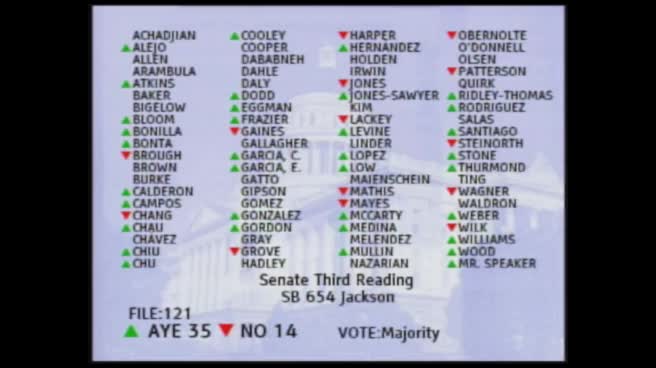
Bill Author



