AB 2801: Local government: fees and charges: written protest.
- Session Year: 2015-2016
- House: Assembly
- Latest Version Date: 2016-08-30
Articles XIIIC and XIIID of the California Constitution generally require that assessments, fees, and charges be submitted to property owners for approval or rejection after the provision of written notice and the holding of a public hearing. Existing law, the Proposition 218 Omnibus Implementation Act, prescribes specific procedures and parameters for local jurisdictions to comply with Articles XIIIC and XIIID of the California Constitution.
Existing statutory law provides notice, protest, and hearing procedures for the levying of new or increased fees or charges by local government agencies pursuant to Article XIIID of the California Constitution. Under existing statutory law, one written protest per parcel, filed by an owner or tenant of the parcel, is counted in calculating a majority protest to a proposed new or increased fee or charge.
This bill would require the agency to maintain the written protests for a minimum of 2 years following the date of the hearing to consider the written protests. By increasing the duties of local officials, this bill would impose a state-mandated local program.
The California Constitution requires the state to reimburse local agencies and school districts for certain costs mandated by the state. Statutory provisions establish procedures for making that reimbursement.
This bill would provide that, if the Commission on State Mandates determines that the bill contains costs mandated by the state, reimbursement for those costs shall be made pursuant to these statutory provisions.
Articles XIIIC and XIIID of the California Constitution generally require that assessments, fees, and charges be submitted to property owners for approval or rejection after the provision of written notice and the holding of a public hearing. Existing law, the Proposition 218 Omnibus Implementation Act, prescribes specific procedures and parameters for local jurisdictions to comply with Articles XIIIC and XIIID of the California Constitution.
Existing statutory law provides notice, protest, and hearing procedures for the levying of new or increased fees or charges by local government agencies pursuant to Article XIIID of the California Constitution. Under existing statutory law, one written protest per parcel, filed by an owner or tenant of the parcel, is counted in calculating a majority protest to a proposed new or increased fee or charge.
This bill would additionally require the local agency to keep the written protests securely stored and sealed until the public hearing. The bill would prohibit an agency from requiring a written protest to include any identification of the property other than the street address unless the property does not have a street address and from requiring a written protest to be submitted on a form provided by the agency. The bill would require the agency to maintain the written protests for a minimum of 2 years and would provide that the written protests are a public record subject to inspection, as specified. following the date of the hearing to consider the written protests. By increasing the duties of local officials, this bill would impose a state-mandated local program.
Existing constitutional provisions require that a statute that limits the right of access to the meetings of public bodies or the writings of public officials and agencies be adopted with findings demonstrating the interest protected by the limitation and the need for protecting that interest.
This bill would make legislative findings to that effect.
The California Constitution requires local agencies, for the purpose of ensuring public access to the meetings of public bodies and the writings of public officials and agencies, to comply with a statutory enactment that amends or enacts laws relating to public records or open meetings and contains findings demonstrating that the enactment furthers the constitutional requirements relating to this purpose.
This bill would make legislative findings to that effect.
The California Constitution requires the state to reimburse local agencies and school districts for certain costs mandated by the state. Statutory provisions establish procedures for making that reimbursement.
This bill would provide that no reimbursement is required by this act for a specified reason.
The California Constitution requires the state to reimburse local agencies and school districts for certain costs mandated by the state. Statutory provisions establish procedures for making that reimbursement.
This bill would provide that, if the Commission on State Mandates determines that the bill contains costs mandated by the state, reimbursement for those costs shall be made pursuant to these statutory provisions.
Articles XIII C and XIII D of the California Constitution generally require that assessments, fees, and charges be submitted to property owners for approval or rejection after the provision of written notice and the holding of a public hearing. Existing law, the Proposition 218 Omnibus Implementation Act, prescribes specific procedures and parameters for local jurisdictions to comply with Articles XIII C and XIII D of the California Constitution.
Existing statutory law provides notice, protest, and hearing procedures for the levying of new or increased fees or charges by local government agencies pursuant to Article XIII D of the California Constitution. Under existing statutory law, one written protest per parcel, filed by an owner or tenant of the parcel, is counted in calculating a majority protest to a proposed new or increased fee or charge.
This bill would additionally require the local agency to keep the written protests securely stored and sealed until the public hearing. The bill would prohibit an agency from requiring a written protest to include any identification of the property other than the street address unless the property does not have a street address and from requiring a written protest to be submitted on a form provided by the agency. The bill would require the agency to maintain the written protests for a minimum of 2 years and would provide that the written protests are a public record subject to inspection, as specified. By increasing the duties of local officials, this bill would impose a state-mandated local program.
Existing constitutional provisions require that a statute that limits the right of access to the meetings of public bodies or the writings of public officials and agencies be adopted with findings demonstrating the interest protected by the limitation and the need for protecting that interest.
This bill would make legislative findings to that effect.
The California Constitution requires local agencies, for the purpose of ensuring public access to the meetings of public bodies and the writings of public officials and agencies, to comply with a statutory enactment that amends or enacts laws relating to public records or open meetings and contains findings demonstrating that the enactment furthers the constitutional requirements relating to this purpose.
This bill would make legislative findings to that effect.
The California Constitution requires the state to reimburse local agencies and school districts for certain costs mandated by the state. Statutory provisions establish procedures for making that reimbursement.
This bill would provide that no reimbursement is required by this act for a specified reason.
Existing law authorizes a public agency to bring an action in court to determine the validity of certain matters within 60 days of the existence of the matter, as specified. If the public agency does not bring this action, existing law authorizes any interested person to bring the same action in court to determine the validity within 60 days of the existence of the matter, as specified. Existing law prohibits a contest of any thing or matter under these provisions from being made other than within the specified time and manner, except by the public agency or its officer or agent.
This bill would delete the prohibition on a contest of any thing or matter under these provisions being made other than within the specified time and manner, except by the public agency or its officer or agent.
(a)(1)The notice required by paragraph (1) of subdivision (a) of Section 6 of Article XIIID of the California Constitution of a proposed increase of an existing fee or charge for a property-related service being provided to a parcel may be given by including it in the agencys regular billing statement for the fee or charge or by any other mailing by the agency to the address to which the agency customarily mails the billing statement for the fee or charge.
(2)The notice required by paragraph (1) of subdivision (a) of Section 6 of Article XIIID of the California Constitution of a proposed new fee or charge may be given in the manner authorized for notice of an increase of a fee or charge if the agency is currently providing an existing property-related service to the address.
(3)If the agency desires to preserve any authority it may have to record or enforce a lien on the parcel to which service is provided, the agency shall also mail notice to the recordowners address shown on the last equalized assessment roll if that address is different than the billing or service address.
(b)One written protest per parcel, filed by an owner or tenant of the parcel, shall be counted in calculating a majority protest to a proposed new or increased fee or charge subject to the requirements of Section 6 of Article XIIID of the California Constitution.
(c)Any agency that bills, collects, and remits a fee or charge on behalf of another agency may provide the notice required by Section 6 of Article XIII D of the California Constitution on behalf of the other agency.
(d)The agency shall maintain all written protests for a minimum of two years following the date of the hearing to consider written protests.
SEC. 2.If the Commission on State Mandates determines that this act contains costs mandated by the state, reimbursement to local agencies and school districts for those costs shall be made pursuant to Part 7 (commencing with Section 17500) of Division 4 of Title 2 of the Government Code.
(a)(1)The notice required by paragraph (1) of subdivision (a) of Section 6 of Article XIIID of the California Constitution of a proposed increase of an existing fee or charge for a property-related service being provided to a parcel may be given by including it in the agencys regular billing statement for the fee or charge or by any other mailing by the agency to the address to which the agency customarily mails the billing statement for the fee or charge.
(2)The notice required by paragraph (1) of subdivision (a) of Section 6 of Article XIIID of the California Constitution of a proposed new fee or charge may be given in the manner authorized for notice of an increase of a fee or charge if the agency is currently providing an existing property-related service to the address.
(3)If the agency desires to preserve any authority it may have to record or enforce a lien on the parcel to which service is provided, the agency shall also mail notice to the recordowners address shown on the last equalized assessment roll if that address is different than the billing or service address.
(b)One written protest per parcel, filed by an owner or tenant of the parcel, shall be counted in calculating a majority protest to a proposed new or increased fee or charge subject to the requirements of Section 6 of Article XIIID of the California Constitution.
(c)Any agency that bills, collects, and remits a fee or charge on behalf of another agency may provide the notice required by Section 6 of Article XIII D of the California Constitution on behalf of the other agency.
(c)
(d)The agency shall maintain all written protests for a minimum of two years following the date of the hearing to consider written protests.
SEC. 2.If the Commission on State Mandates determines that this act contains costs mandated by the state, reimbursement to local agencies and school districts for those costs shall be made pursuant to Part 7 (commencing with Section 17500) of Division 4 of Title 2 of the Government Code.
(a)(1)The notice required by paragraph (1) of subdivision (a) of Section 6 of Article XIIID of the California Constitution of a proposed increase of an existing fee or charge for a property-related service being provided to a parcel may be given by including it in the agencys regular billing statement for the fee or charge or by any other mailing by the agency to the address to which the agency customarily mails the billing statement for the fee or charge.
(2)The notice required by paragraph (1) of subdivision (a) of Section 6 of Article XIIID of the California Constitution of a proposed new fee or charge may be given in the manner authorized for notice of an increase of a fee or charge if the agency is currently providing an existing property-related service to the address.
(3)If the agency desires to preserve any authority it may have to record or enforce a lien on the parcel to which service is provided, the agency shall also mail notice to the recordowners address shown on the last equalized assessment roll if that address is different than the billing or service address.
(b)(1)One written protest per parcel, filed by an owner or tenant of the parcel, shall be counted in calculating a majority protest to a proposed new or increased fee or charge subject to the requirements of Section 6 of Article XIIID of the California Constitution.
(2)An agency shall not require a written protest to include any identification of the property other than the street address unless the property does not have a street address.
(3)An agency shall not require a written protest to be submitted on a form provided by the agency.
(4)(A)The agency shall keep any written protest it receives securely stored and sealed until the public hearing at which time it may be opened and counted pursuant to paragraph (1).
(B)
(c)The agency shall maintain all written protests for a minimum of two years. years following the date of the hearing to consider written protests.
(C)(i)A written protest is a public record within the meaning of subdivision (e) of Section 6252 and shall be subject to the provisions of the California Public Records Act (Chapter 3.5 (commencing with Section 6250) of Division 7 of Title 1).
(ii)Notwithstanding subparagraph (i), written protests shall remain confidential and shall not be disclosed pursuant to any state law, including, but not limited to, the California Public Records Act (Chapter 3.5 (commencing with Section 6250) of Division 7 of Title 1) until they have been opened for counting at a public hearing.
(c)Any agency that bills, collects, and remits a fee or charge on behalf of another agency may provide the notice required by Section 6 of Article XIIID of the California Constitution on behalf of the other agency.
SEC. 2.The Legislature finds and declares that Section 1 of this act, which amends Section 53755 of the Government Code, imposes a limitation on the publics right of access to the meetings of public bodies or the writings of public officials and agencies within the meaning of Section 3 of Article I of the California Constitution. Pursuant to that constitutional provision, the Legislature makes the following findings to demonstrate the interest protected by this limitation and the need for protecting that interest:
In order to avoid undue influence in the decision on whether to protest a proposed levy of a new or increased fee or charge, and to ensure that written protests remain sealed from all parties, including the agency receiving the protest, until counted at a public hearing, a limitation on access by all parties to these written protests is required.
SEC. 3.The Legislature finds and declares that Section 1 of this act, which amends Section 53755 of the Government Code, furthers, within the meaning of paragraph (7) of subdivision (b) of Section 3 of Article I of the California Constitution, the purposes of that constitutional section as it relates to the right of public access to the meetings of local public bodies or the writings of local public officials and local agencies. Pursuant to paragraph (7) of subdivision (b) of Section 3 of Article I of the California Constitution, the Legislature makes the following findings:
To increase the transparency of the process for the levy of a new or increased fee or charge, the maintenance of, and access to, the records of written protests maintained by local agencies is within the public interest and therefore furthers the purpose of paragraph (7) of subdivision (b) of Section 3 of Article I of the California Constitution.
SEC. 4.No reimbursement is required by this act pursuant to Section 6 of Article XIII B of the California Constitution because the only costs that may be incurred by a local agency or school district under this act would result from a legislative mandate that is within the scope of paragraph (7) of subdivision (b) of Section 3 of Article I of the California Constitution.
SEC. 2.If the Commission on State Mandates determines that this act contains costs mandated by the state, reimbursement to local agencies and school districts for those costs shall be made pursuant to Part 7 (commencing with Section 17500) of Division 4 of Title 2 of the Government Code.
(a)(1)The notice required by paragraph (1) of subdivision (a) of Section 6 of Article XIIID of the California Constitution of a proposed increase of an existing fee or charge for a property-related service being provided to a parcel may be given by including it in the agencys regular billing statement for the fee or charge or by any other mailing by the agency to the address to which the agency customarily mails the billing statement for the fee or charge.
(2)The notice required by paragraph (1) of subdivision (a) of Section 6 of Article XIIID of the California Constitution of a proposed new fee or charge may be given in the manner authorized for notice of an increase of a fee or charge if the agency is currently providing an existing property-related service to the address.
(3)If the agency desires to preserve any authority it may have to record or enforce a lien on the parcel to which service is provided, the agency shall also mail notice to the recordowners address shown on the last equalized assessment roll if that address is different than the billing or service address.
(b)(1)One written protest per parcel, filed by an owner or tenant of the parcel, shall be counted in calculating a majority protest to a proposed new or increased fee or charge subject to the requirements of Section 6 of Article XIIID of the California Constitution.
(2)An agency shall not require a written protest to include any identification of the property other than the street address unless the property does not have a street address.
(3)An agency shall not require a written protest to be submitted on a form provided by the agency.
(4)(A)The agency shall keep any written protest it receives securely stored and sealed until the public hearing at which time it may be opened and counted pursuant to paragraph (1).
(B)The agency shall maintain all written protests for a minimum of two years.
(C)(i)A written protest is a public record within the meaning of subdivision (e) of Section 6252 and shall be subject to the provisions of the California Public Records Act (Chapter 3.5 (commencing with Section 6250) of Division 7 of Title 1).
(ii)Notwithstanding subparagraph (i), written protests shall remain confidential and shall not be disclosed pursuant to any state law, including, but not limited to, the California Public Records Act (Chapter 3.5 (commencing with Section 6250) of Division 7 of Title 1) until they have been opened for counting at a public hearing.
(c)Any agency that bills, collects, and remits a fee or charge on behalf of another agency may provide the notice required by Section 6 of Article XIIID of the California Constitution on behalf of the other agency.
SEC. 2.The Legislature finds and declares that Section 1 of this act, which amends Section 53755 of the Government Code, imposes a limitation on the publics right of access to the meetings of public bodies or the writings of public officials and agencies within the meaning of Section 3 of Article I of the California Constitution. Pursuant to that constitutional provision, the Legislature makes the following findings to demonstrate the interest protected by this limitation and the need for protecting that interest:
In order to avoid undue influence in the decision on whether to protest a proposed levy of a new or increased fee or charge, and to ensure that written protests remain sealed from all parties, including the agency receiving the protest, until counted at a public hearing, a limitation on access by all parties to these written protests is required.
SEC. 3.The Legislature finds and declares that Section 1 of this act, which amends Section 53755 of the Government Code, furthers, within the meaning of paragraph (7) of subdivision (b) of Section 3 of Article I of the California Constitution, the purposes of that constitutional section as it relates to the right of public access to the meetings of local public bodies or the writings of local public officials and local agencies. Pursuant to paragraph (7) of subdivision (b) of Section 3 of Article I of the California Constitution, the Legislature makes the following findings:
To increase the transparency of the process for the levy of a new or increased fee or charge, the maintenance of, and access to, the records of written protests maintained by local agencies is within the public interest and therefore furthers the purpose of paragraph (7) of subdivision (b) of Section 3 of Article I of the California Constitution.
SEC. 4.No reimbursement is required by this act pursuant to Section 6 of Article XIII B of the California Constitution because the only costs that may be incurred by a local agency or school district under this act would result from a legislative mandate that is within the scope of paragraph (7) of subdivision (b) of Section 3 of Article I of the California Constitution.
SECTION 1.Section 869 of the Code of Civil Procedure is amended to read:869.The availability to a public agency, including a local agency, or to its officers or agents, of the remedy provided by this chapter, shall not be construed to preclude the use by the public agency or its officers or agents, of mandamus or any other remedy to determine the validity of any thing or matter.
No contest except by the public agency or its officer or agent of any thing or matter under this chapter shall be made other than within the time and the manner herein specified. The availability to any a public agency, including any a local agency, or to its officers or agents, of the remedy provided by this chapter, shall not be construed to preclude the use by such the public agency or its officers or agents, of mandamus or any other remedy to determine the validity of any thing or matter.
|
Date
|
Status
|
|---|---|
| May 19, 2016 | Read third time. Passed. Ordered to the Senate. |
| Aug 30, 2016 | Chaptered by Secretary of State - Chapter 248, Statutes of 2016. |
| Aug 30, 2016 | Approved by the Governor. |
| Aug 22, 2016 | Enrolled and presented to the Governor at 4 p.m. |
| Aug 16, 2016 | In Assembly. Ordered to Engrossing and Enrolling. |
| Aug 15, 2016 | Read third time. Passed. Ordered to the Assembly. (Ayes 38. Noes 0.). |
| Aug 15, 2016 | Read third time. Passed. Ordered to the Assembly. (Ayes 38. Noes 0. Page 4986.). |
| Aug 15, 2016 | Read third time. Passed. Ordered to the Assembly. |
| Jun 30, 2016 | Ordered to third reading. |
| Jun 30, 2016 | From Consent Calendar. |
| Jun 28, 2016 | Read second time. Ordered to Consent Calendar. |
| Jun 27, 2016 | From committee: Be placed on second reading file pursuant to Senate Rule 28.8 and ordered to consent calendar. |
| Jun 15, 2016 | From committee: Do pass and re-refer to Com. on APPR. with recommendation: To Consent Calendar. (Ayes 7. Noes 0.) (June 15). Re-referred to Com. on APPR. |
| May 26, 2016 | Referred to Com. on GOV. & F. |
| May 19, 2016 | Read third time. Passed. Ordered to the Senate. (Ayes 76. Noes 0.) |
| May 19, 2016 | Read third time. Passed. Ordered to the Senate. (Ayes 76. Noes 0. Page 4872.) |
| Feb 19, 2016 | Introduced. To print. |
| May 19, 2016 | In Senate. Read first time. To Com. on RLS. for assignment. |
| May 12, 2016 | Read second time. Ordered to Consent Calendar. |
| May 11, 2016 | From committee: Do pass. To Consent Calendar. (Ayes 20. Noes 0.) (May 11). |
| May 5, 2016 | Re-referred to Com. on APPR. |
| May 4, 2016 | From committee chair, with author's amendments: Amend, and re-refer to Com. on APPR. Read second time and amended. |
| Apr 27, 2016 | Re-referred to Com. on APPR. |
| Apr 26, 2016 | Read second time and amended. |
| Apr 25, 2016 | From committee: Amend, and do pass as amended and re-refer to Com. on APPR. (Ayes 8. Noes 0.) (April 20). |
| Apr 11, 2016 | From committee: Be re-referred to Com. on L. GOV. Re-referred. (Ayes 9. Noes 0.) (April 11). Re-referred to Com. on L. GOV. |
| Apr 7, 2016 | Re-referred to Com. on RLS. pursuant to Assembly Rule 96. |
| Apr 5, 2016 | Re-referred to Com. on JUD. |
| Apr 4, 2016 | From committee chair, with author's amendments: Amend, and re-refer to Com. on JUD. Read second time and amended. |
| Mar 14, 2016 | Referred to Com. on JUD. |
| Feb 22, 2016 | Read first time. |
| Feb 21, 2016 | From printer. May be heard in committee March 22. |
|
Date
|
Description
|
Location
|
Votes
|
|
|---|---|---|---|---|
| Aug 15, 2016 | Assembly 3rd Reading AB2801 Gallagher By Moorlach | Senate Floor |
Passed |
|
| Jun 15, 2016 | Do pass, but first be re-referred to the Committee on [Appropriations] with the recommendation: To Consent Calendar | Senate Standing Committee on Governance and Finance |
Passed |
|
| May 19, 2016 | AB 2801 GALLAGHER Consent Calendar Second Day Regular Session | Assembly Floor |
Passed |
|
| May 11, 2016 | Do pass. To Consent Calendar. | Assembly Standing Committee on Appropriations |
Passed |
|
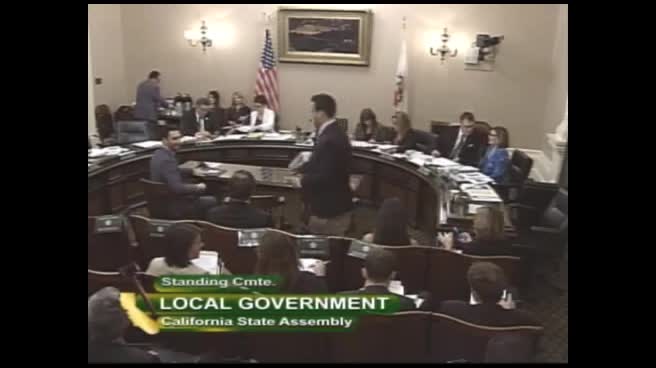
| Apr 20, 2016 | Do pass as amended and be re-referred to the Committee on [Appropriations] | Assembly Standing Committee on Local Government |
Passed |
|
| Apr 11, 2016 | Be re-referred to the Committee on [Local Government] | Assembly Standing Committee on Rules |
Passed |
This list shows positions taken on this bill by organizations on the date displayed, which is linked to the original source.
Positions by individuals are not included.
|
Organization
|
Position
|
Date
|
|---|---|---|
| California Special Districts Association | ** Against | Apr 20, 2016 |
| California State Association Of Counties | ** Against | Apr 20, 2016 |
| Howard Jarvis Taxpayers Association | ** Support | Aug 15, 2016 |
Office of Senate Floor Analyses (916) 651-1520 Fax: (916) 327-4478 | AB |
THIRD READING
Bill No: AB 2801
:
SENATE GOVERNANCE & FIN. COMMITTEE: 7-0, 6/15/16
AYES: Hertzberg, Nguyen, Beall, Hernandez, Lara, Moorlach, Pavley
SENATE APPROPRIATIONS COMMITTEE: Senate Rule 28.8
ASSEMBLY FLOOR: 76-0, 5/19/16 (Consent) - See last page for vote
SOURCE: Howard Jarvis Taxpayers Association
DIGEST: This bill requires local agencies to retain written protests for a minimum of two years.
Existing law:
- Requires local governments to follow specified procedures to impose fees, assessments, and taxes, including voter approval in some cases.
- Specifies the process for seeking voter approval and requires local officials to hold ballots for at least two years following the election (SB 553, Yee, Chapter 215, Statutes of 2013), including:
- Prior to imposing or increasing a property-related fee, a local government is required to identify the parcels, mail a written notice to all the property owners subject to the fee detailing the amount of the fee, the reason for the fee, and the date, time, and location of a public hearing on the proposed fee.
- No sooner than 45 days after mailing the notice to property owners, the agency must conduct a public hearing on the proposed fee.
- If a majority of owners of the identified parcels provide written protests against the fee, it cannot be imposed or increased by the agency.
- Only one written protest per parcel, filed by an owner or tenant of the parcel, counts in order to calculate the majority protest.
- Establishes similar procedures for assessments (SB 1477, Lewis, Chapter 220, Statutes of 2000).
This bill requires an agency that proposes to charge a new property related fee or increase an existing one to maintain all written protests for at least two years after the hearing at which the protests were counted.
Background
Article XIIID of the California Constitution (Proposition 218, 1996) distinguishes among fees for property-related services, taxes, and assessments, and local governments must take certain actions before they can impose those charges. Counties and other local agencies with police powers may impose any one of these charges on property owners, after meeting the requirements established by Proposition 218. Special districts created by statute, however, must have specific authority for each of these revenue sources.
The Constitution defines a fee (or charge) as any levy other than an ad valorem tax, special tax, or assessment that is imposed by a local government on a parcel or on a person as an incident of property ownership, including a user fee for a property-related service. The fee imposed on any parcel or person cannot exceed the proportional cost of the service that is attributable to the parcel. Additionally, a property-related fee cannot be imposed for general governmental services like police, fire, and library services.
The Legislature enacted the Proposition 218 Omnibus Implementation Act to translate many of Proposition 218's requirements into statutory definitions and procedures (SB 919, Rainey, 1997). Prior to imposing or increasing a property-related fee, a local government is required to identify the parcels, mail a written notice to all the property owners subject to the fee detailing the amount of the fee, the reason for the fee, and the date, time, and location of a public hearing on the proposed fee. No sooner than 45 days after mailing the notice to property owners, the agency must conduct a public hearing on the proposed fee. If a majority of owners of the identified parcels provide written protests against the fee, it cannot be imposed or increased by the agency. Only one written protest per parcel, filed by an owner or tenant of the parcel, counts in order to calculate the majority protest.
Additionally, the California Constitution requires voter approval for most property-related fees, except for fees or charges for sewer, water, and refuse collection services, which are specifically exempted from the voter approval requirement. State law specifies the process for seeking voter approval and requires local officials to hold ballots for at least two years following the election (SB 553, Yee, 2013). Previous legislation established similar procedures for assessments (SB 1477, Lewis, 2000).
Some taxpayer advocates want to clarify the requirements local agencies must meet following a protest hearing for a fee increase.
Comments
Purpose of the bill. On several occasions, the Legislature has recognized the value in preserving records related to Proposition 218’s requirements for imposing fees and charges on property owners. Most recently, SB 553 enacted a comprehensive framework for conducting elections for those property-related fees that require voter approval, including a requirement to hold ballots for two years. But written protests are not as transparent and accessible as the ballots for other types of fees and charges, even though both protests and ballots determine whether a fee may be imposed. By requiring local officials to retain written protests for at least two years following the protest hearing, AB 2801 takes a small but important step towards preserving written protests so that the public can be certain of the integrity of protest procedures.
FISCAL EFFECT: Appropriation: Fiscal Com.: Local:
Howard Jarvis Taxpayers Association (source)
OPPOSITION: (Verified 6/29/16)
None received
ASSEMBLY FLOOR: 76-0, 5/19/16
AYES: Achadjian, Alejo, Travis Allen, Arambula, Atkins, Baker, Bigelow, Bloom, Bonilla, Bonta, Brough, Brown, Burke, Calderon, Campos, Chau, Chávez, Chiu, Chu, Cooley, Cooper, Dababneh, Dahle, Daly, Dodd, Eggman, Frazier, Beth Gaines, Gallagher, Cristina Garcia, Eduardo Garcia, Gatto, Gipson, Gomez, Gonzalez, Gordon, Gray, Grove, Hadley, Harper, Roger Hernández, Holden, Irwin, Jones, Jones-Sawyer, Kim, Lackey, Levine, Linder, Lopez, Low, Maienschein, Mayes, Medina, Melendez, Mullin, Nazarian, Obernolte, O'Donnell, Olsen, Patterson, Quirk, Ridley-Thomas, Rodriguez, Salas, Santiago, Steinorth, Mark Stone, Thurmond, Ting, Wagner, Waldron, Weber, Wilk, Wood, Rendon
NO VOTE RECORDED: Chang, Mathis, McCarty, Williams
6/29/16 15:50:54
**** END ****
SENATE COMMITTEE ON GOVERNANCE AND FINANCE
Senator Robert M. Hertzberg, Chair
2015 - 2016 Regular
Bill No: | AB 2801 | Hearing Date: | 6/15/16 |
Author: | Gallagher | Tax Levy: | No |
Version: | 5/4/16 | Fiscal: | Yes |
Consultant: | Favorini-Csorba | ||
Local government: fees and charges: written protest
Requires local agencies to retain written protests for a minimum of two years.
Background
Article XIIID of the California Constitution (Proposition 218, 1996) distinguishes among fees for property-related services, taxes, and assessments, and local governments must take certain actions before they can impose those charges. Counties and other local agencies with police powers may impose any one of these charges on property owners, after meeting the requirements established by Proposition 218. Special districts created by statute, however, must have specific authority for each of these revenue sources.
The Constitution defines a fee (or charge) as any levy other than an ad valorem tax, special tax, or assessment that is imposed by a local government on a parcel or on a person as an incident of property ownership, including a user fee for a property-related service. The fee imposed on any parcel or person cannot exceed the proportional cost of the service that is attributable to the parcel. Additionally, a property-related fee cannot be imposed for general governmental services like police, fire, and library services.
The Legislature enacted the Proposition 218 Omnibus Implementation Act to translate many of Proposition 218's requirements into statutory definitions and procedures (SB 919, Rainey, 1997). Prior to imposing or increasing a property-related fee, a local government is required to identify the parcels, mail a written notice to all the property owners subject to the fee detailing the amount of the fee, the reason for the fee, and the date, time, and location of a public hearing on the proposed fee. No sooner than 45 days after mailing the notice to property owners, the agency must conduct a public hearing on the proposed fee. If a majority of owners of the identified parcels provide written protests against the fee, it cannot be imposed or increased by the agency. Only one written protest per parcel, filed by an owner or tenant of the parcel, counts in order to calculate the majority protest.
Additionally, the California Constitution requires voter approval for most property-related fees, except for fees or charges for sewer, water, and refuse collection services, which are specifically exempted from the voter approval requirement. State law specifies the process for seeking voter approval and requires local officials to hold ballots for at least two years following the election (SB 553, Yee, 2013). Previous legislation established similar procedures for assessments (SB 1477, Lewis, 2000).
Some taxpayer advocates want to clarify the requirements local agencies must meet following a protest hearing for a fee increase.
Proposed Law
Assembly Bill 2801 requires an agency that proposes to charge a new property related fee or increase an existing one to maintain all written protests for at least two years after the hearing at which the protests were counted.
State Revenue Impact
No estimate.
Comments
1. Purpose of the bill. On several occasions, the Legislature has recognized the value in preserving records related to Proposition 218’s requirements for imposing fees and charges on property owners. Most recently, SB 553 enacted a comprehensive framework for conducting elections for those property-related fees that require voter approval, including a requirement to hold ballots for two years. But written protests are not as transparent and accessible as the ballots for other types of fees and charges, even though both protests and ballots determine whether a fee may be imposed. By requiring local officials to retain written protests for at least two years following the protest hearing, AB 2801 takes a small but important step towards preserving written protests so that the public can be certain of the integrity of protest procedures.
2. Mandate. The California Constitution generally requires the state to reimburse local agencies for their costs when the state imposes new programs or additional duties on them. According to the Legislative Counsel’s Office, AB 2801 creates a new state-mandated local program because it increases the duties of local officials. AB 2801 says that if the Commission on State Mandates determines that it creates a state-mandated local program, the state must reimburse local agencies by following the existing statutory process for mandate claims.
Assembly Actions
Assembly Local Government Committee: 8-0
Assembly Appropriations Committee: 20-0
Assembly Floor: 76-0
Support and Opposition
(6/9/16)
Support: Howard Jarvis Taxpayers Association (sponsor).
Opposition: Unknown.
-- END --
Date of Hearing: May 11, 2016
ASSEMBLY COMMITTEE ON APPROPRIATIONS
Lorena Gonzalez, Chair
ABPCA Bill Id:AB 2801
Author:(Gallagher) – As Amended Ver:May 4, 2016
Policy Committee: | Local Government | Vote: | 8 - 0 |
Urgency: No State Mandated Local Program: Yes Reimbursable: Yes
SUMMARY: This bill, regarding protest proceedings for property-related fees, pursuant to Proposition 218, requires the local agency to maintain all written protests for a minimum of two years following the date of the hearing to consider written protests.
FISCAL EFFECT:
Unknown, likely minor, potentially reimbursable mandate costs (GF). Local agencies would likely incur minor ongoing costs to store records. Although not required, many local agencies already hold these records, sometimes electronically. These costs could be subject to state-reimbursement to the extent local agencies file a claim for reimbursement and the Commission on State Mandates determines specified activities are subject to reimbursement.
COMMENTS:
- Purpose. According to the author, "AB 2801 adds needed transparency to the fee protest procedure first implemented by Proposition 218, which voters approved in 1996. Proposition 218 provides a streamlined protest procedure in place of an election when local agencies propose increases in water, sewer, or refuse collection rates. The agency must mail a specified notice to affected ratepayers and allow them at least 45 days before the hearing on the increase to submit written protests. If a majority of the ratepayers submit timely written protests, the rate increase is tabled. To ensure that ratepayers are not disenfranchised, uniform standards should be adopted across California for how protest notices should be accepted and retained.
- Proposition 218. Article XIII D of the California Constitution [Proposition 218, 1996] distinguishes among taxes, assessments and fees for property-related revenues, and requires certain actions before such revenues may be collected. Counties and other local agencies with police powers may impose any one of these options on property owners, after completing the Proposition 218 process. Special districts created by statute, however, must have specific authority for each of these revenue sources.
The Constitution defines a fee (or charge) as any levy other than an ad valorem tax, special tax, or assessment that is imposed by a local government on a parcel or on a person as an incident of property ownership, including a user fee for a property-related service. The fee imposed on any parcel or person cannot exceed the proportional cost of the service that is attributable to the parcel. Prior to imposing or increasing a property-related fee, the local government is required to identify the parcels, mail a written notice to all the property owners subject to the fee detailing the amount of the fee, the reason for the fee, and the date, time, and location of a public hearing on the proposed fee. No sooner than 45 days after mailing the notice to property owners, the agency must conduct a public hearing on the proposed fee.
If a majority of owners of the identified parcels provide written protests against the fee, it cannot be imposed or increased by the agency. One written protest per parcel, filed by an owner or tenant of the parcel, is counted in order to calculate the majority protest. Current law is silent on maintaining written protests. However, ballots submitted during proposed assessment proceedings under Proposition 218 must be preserved for a minimum of two years.
- Prior Legislation.
- SB 553 (Yee), Chapter 215, Statues of 2013, applied many of the requirements in current law for assessment ballot procedures to the elections for property-related fees submitted to property owners.
- SB 321 (Benoit), Chapter 580, Statutes of 2009, imposed additional requirements on local governments when conducting assessment ballot proceedings, pursuant to Proposition 218.
- AB 2218 (Gaines) of 2008, held on the Senate Appropriations Suspense File, would have imposed new restrictions on local governments, when conducting property-related fee and assessment ballot proceedings, pursuant to Proposition 218.
- AB 1260 (Caballero), Chapter 280, Statues of 2007, clarified how a public agency may provide notice when proposing a new, or increasing an existing property-related fee.
Analysis Prepared by: Jennifer Swenson / APPR. / (916) 319-2081
Date of Hearing: April 20, 2016
ASSEMBLY COMMITTEE ON LOCAL GOVERNMENT
Susan Talamantes Eggman, Chair
ABPCA Bill Id:AB 2801 (
Author:Gallagher) – As Amended Ver:April 4, 2016
SUBJECT: Local government: fees and charges: written protest.
SUMMARY: Imposes requirements on local governments, when conducting protest proceedings for property-related fees, pursuant to Proposition 218. Specifically, this bill:
- Imposes additional requirements on local governments (used interchangeably with 'agency'), when conducting protest proceedings to impose or increase property-related fees or charges.
- Prohibits a local agency from requiring a written protest to include any identification of the property other than the street address, unless the property does not have a street address.
- Prohibits a local agency from requiring a written protest to be submitted on a form provided by the agency.
- Requires the agency to keep any written protest it receives securely stored and sealed until the public hearing at which time it may be opened and counted pursuant to existing law.
- Requires the agency to maintain all written protests for a minimum of two years.
- Provides that a written protest is a public record, pursuant to the definition of public records contained in the California Public Records Act (PRA), and requires that a written protest is subject to the provisions of the PRA.
- Requires notwithstanding 6), above, written protests to remain confidential, and prohibits written protests from being disclosed, pursuant to state law including, but not limited to, PRA, until they have been opened for counting at a public hearing.
- Makes several findings and declarations.
- Provides that no reimbursement is required, pursuant to the California Constitution, which exempts the state from reimbursing local agencies for costs related to complying with the PRA and the Ralph M. Brown Act (Brown Act), as specified.
EXISTING LAW:
- Provides notice, protest, and hearing procedures for the levying of new or increased assessments or property-related fees or charges by local government agencies, pursuant to Proposition 218.
- Defines "agency" to mean any local government, including a county, city, city and county, including a charter city or county, any special district, or any other local regional governmental entity.
FISCAL EFFECT: This bill is keyed fiscal.
COMMENTS:
- Proposition 218. Article XIII D of the California Constitution [Proposition 218, 1996] distinguishes among taxes, assessments and fees for property-related revenues, and requires certain actions before such revenues may be collected. Counties and other local agencies with police powers may impose any one of these options on property owners, after completing the Proposition 218 process. Special districts created by statute, however, must have specific authority for each of these revenue sources.
The Constitution defines a fee (or charge) as any levy other than an ad valorem tax, special tax, or assessment that is imposed by a local government on a parcel or on a person as an incident of property ownership, including a user fee for a property-related service. The fee imposed on any parcel or person cannot exceed the proportional cost of the service that is attributable to the parcel. Additionally, a property-related fee cannot be imposed for general governmental services like police, fire, and library services. Prior to imposing or increasing a property-related fee, the local government is required to identify the parcels, mail a written notice to all the property owners subject to the fee detailing the amount of the fee, the reason for the fee, and the date, time, and location of a public hearing on the proposed fee. No sooner than 45 days after mailing the notice to property owners, the agency must conduct a public hearing on the proposed fee. If a majority of owners of the identified parcels provide written protests against the fee, it cannot be imposed or increased by the agency. One written protest per parcel, filed by an owner or tenant of the parcel, is counted in order to calculate the majority protest. Additionally, the California Constitution specifies election requirements, except for fees or charges for sewer, water, and refuse collection services.
- Bill Summary. This bill establishes several requirements for the protest proceedings for property-related fees conducted by local agencies. This bill would prohibit a local agency from requiring written protest to be submitted on a form provided by the agency. Additionally a local agency would be prohibited from requiring written protest to include any information about the property, except for a street address. Written protests would have to be sealed and securely stored until they can be opened and counted at a public hearing. This bill specifies that written protest must be kept for two years and is a public record, pursuant to the PRA. This bill provides no reimbursement to local agencies. pursuant to the California Constitution, which exempts the state from reimbursing local agencies for costs related to complying with the PRA and the Brown Act. This bill is sponsored by the Howard Jarvis Taxpayers Association.
- Prior Legislation. AB 1260 (Caballero), Chapter 280, Statues of 2007, clarified how a public agency may provide notice when proposing a new, or increasing an existing property-related fee. AB 2218 (Gaines) of 2008, held on the Senate Appropriations Suspense File, would have imposed new restrictions on local governments, when conducting property-related fee and assessment ballot proceedings, pursuant to Proposition 218. SB 321 (Benoit), Chapter 580, Statutes of 2009, imposed additional requirements on local governments when conducting assessment ballot proceedings, pursuant to Proposition 218.
SB 553 (Yee), Chapter 215, Statues of 2013, applied many of the requirements in current law for assessment ballot procedures to the elections for property-related fees submitted to property owners. For example, SB 553 required specified information to be printed on the ballot and established requirements for ballot tabulation, including that the ballots are tabulated in a location accessible to the public and by an impartial person with no vested interest in the outcome.
- Author's Statement. According to the author, "AB 2801 adds needed transparency to the fee protest procedure first implemented by Proposition 218, which voters approved in 1996. Proposition 218 provides a streamlined protest procedure in place of an election when local agencies propose increases in water, sewer, or refuse collection rates. The agency must mail a specified notice to affected ratepayers and allow them at least 45 days before the hearing on the increase to submit written protests. If a majority of the ratepayers submit timely written protests, the rate increase is tabled. To ensure that ratepayers are not disenfranchised, uniform standards should be adopted across California for how protest notices should be accepted and retained.
"Over the nearly 20 years that Proposition 218 has been in place, there have been a number of inconsistencies regarding how to record and tabulate protest procedures. Included among these are complaints about agencies opening protests before the hearing, unjustifiably disqualifying protests, and erecting unnecessary procedural hurdles to discourage protests.
"In recent years the Legislature has enacted standards for fair and transparent assessment and fee elections. SB 1477 (Lewis, of 2000), which related to assessment elections, and SB 553 (Yee, of 2013), which related to fee elections, increased public confidence in the process and the declared outcome of these elections by requiring, for example, that ballots must remain sealed until the public hearing, must be tabulated in public view by a disinterested person, became disclosable public records after the hearing, and needed to be maintained for a minimum of two years. Both SB 1477 and SB 553 (an HJTA sponsored bill) were approved on a wide bi-partisan basis. In the same manner, the procedure for fee protests should be fair and transparent.
"AB 2801 similarly requires the local agency to keep protests securely stored and sealed until the public hearing and makes them disclosable public records after the hearing. The bill states that a protest in order to be valid doesn’t need to be on a form provided by the public agency, and also that a protest doesn’t need to include any identifying information beyond a street address. This bill doesn’t mandate new responsibilities or requirements upon local agencies; it simply broadens and makes more inclusive the process regarding how to protest a rate increase."
- Committee Amendments. The Committee may wish to ask the author to strike out all of the provisions in the bill with the exception of the requirement that local agencies maintain written protests for a minimum of two years. This requirement is consistent with current law for ballots in property-related fee elections. Additionally, the Committee may wish to clarify that the two-year period begins on the date of the hearing which protest is considered. The Committee may wish to ask the author to remove all other provisions of the bill in light of the following:
- Consistency. Proponents of this bill state that there are inconsistencies with local agencies recording and tabulating protest procedures. The Committee may wish to consider if this bill prohibits locals from providing a standardized form that must be used for written protest if it will in fact result in less uniformity.
Additionally, the Committee may wish to consider how local agencies can keep written protests "securely stored and sealed" when this bill prohibits them from providing a specific form. Opposition notes that local agencies may receive written protests in multiple formats, including, e-mails, faxes, postcards, handwritten notes, unmarked envelopes, or included with a bill payment. The Committee may wish to consider the practical challenges for local agencies in complying with the seemingly inconsistent requirements and prohibitions established by this bill.
- Hearing. In December 2015, the City of Milpitas received 2,046 written protests, short of the 9,100 necessary for a majority protest. The Committee may wish to consider the practicality of requiring a local agency to count and verify all written protests in a hearing. Additionally, opposition notes that some local agencies include written protests in an agenda packet so the governing board and public can see the number of protests and any comments for consideration at the hearing, which also allows members of the public to verify their protest has been received. The Committee may wish to consider that this bill would prohibit that practice, which some may argue makes the protest process more transparent.
- Parcels. Opposition argues that because the protest process is based on parcels, a local agency might require a parcel number to ensure that they only count one protest per parcel. Parcels may have multiple street addresses with the same parcel number; therefore, allowing a local agency to require a parcel number ensures a fair and efficient process. The Committee may wish to consider if prohibiting a local agency from requiring specified information on a written protest will be contrary to the stated goal of the bill to provide a more fair and consistent process.
- Arguments in Support. The Howard Jarvis Taxpayers Association (HJTA) argues,
"AB 2801 will provide much needed transparency to the protest notice process. Earlier this year, HJTA heard from an individual in Fresno County who wanted to review protests from a recent rate increase proposal, only to find that he could not because the protests were not disclosable public records. As with any process regarding taxpayer dollars, ratepayers deserve to have as much access as is reasonably prudent. Certainly, allowing concerned citizens to review protests is not burdensome. AB 2801 mirrors earlier proposals that extended this necessary transparency across all forms of local government exactions." - Arguments in Opposition. The California State Association of Counties argues, "At the present we are unaware of a pervasive problem with existing local practices. We are eager to learn of incidents where the existing written protest submission or review procedure did not meet the needs of the property owners…" The California Special Districts Association argues, "The piecemeal approach contained in AB 2801 will create new questions regarding implementation and will be difficult for local agencies to implement. Each public agency establishes a written protest process be designated to meet the needs of the local community."
REGISTERED SUPPORT / OPPOSITION:
Support
Howard Jarvis Taxpayers Association [SPONSOR]
Opposition
California Special Districts Association
California State Association of Counties (unless amended)
Analysis Prepared by: Misa Lennox / L. GOV. / (916) 319-3958
Discussed in Hearing
View Older Hearings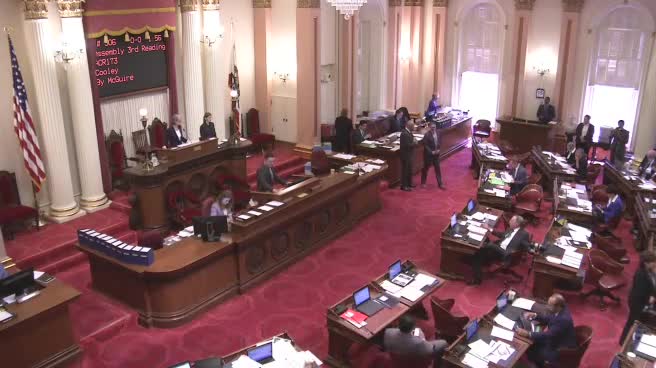
Bill Author

Bill Co-Author(s):