AB 2805: Cargo theft: working group.
- Session Year: 2015-2016
- House: Assembly
- Latest Version Date: 2016-08-25
Existing law establishes the Motor Carriers Safety Improvement Fund and provides that the fund is available for appropriation by the Legislature to cover the costs for the Department of the California Highway Patrol to deter commercial motor vehicle cargo thefts and provide security of highway carriers and cargoes throughout the state.
This bill would create the California Agriculture Cargo Theft Prevention Working Group, to be coordinated by the Department of the California Highway Patrol, and to consist of volunteer members from the county offices of the agricultural commissioner, the interested district attorney, the interested sheriff, and the agricultural industry stakeholders of each participating county. The bill would require the working group to address issues, including, but not limited to, agriculture cargo theft, problem solving, and theft control techniques. The bill would allow the working group to develop cargo theft prevention programs, including a system for reporting agriculture cargo theft in a timely manner, and a uniform procedure for all participating counties to collect data on agriculture cargo theft.
Existing law establishes the Motor Carriers Safety Improvement Fund and provides that the fund is available for appropriation by the Legislature to cover the costs for the Department of the California Highway Patrol to deter commercial motor vehicle cargo thefts and provide security of highway carriers and cargoes throughout the state.
This bill would create the California Agriculture Cargo Theft Prevention Working Group, to be coordinated by the Department of the California Highway Patrol, and to consist of volunteer members from the county offices of the agricultural commissioner, the interested district attorney, the interested sheriff, and the agricultural industry stakeholders of each participating county. The bill would require the working group to address issues, including, but not limited to, agriculture cargo theft, problem solving, and theft control techniques. The bill would allow the working group to develop cargo theft prevention programs, including a system for reporting agriculture cargo theft in a timely manner and a uniform procedure for all participating counties to collect data on agriculture cargo theft.
Existing law establishes the Motor Carriers Safety Improvement Fund and provides that the fund is available for appropriation by the Legislature to cover the costs for the Department of the California Highway Patrol to deter commercial motor vehicle cargo thefts and provide security of highway carriers and cargoes throughout the state.
This bill would permit specified counties to enter into an agreement to form the California Agriculture Cargo Theft Crime Prevention Program, which the bill would require to be jointly administered by the county sheriffs department of each participating county under a joint powers agreement.
The bill would require the parties to the agreement to form a task force known as the California Agriculture Cargo Theft Crime Prevention Task Force. The bill would require the task force to be an interactive team working together to develop crime prevention, problem solving, and crime control techniques, to encourage timely reporting of crimes, and to evaluate the results of these activities. The bill would permit the task force to operate from a joint facility in order to facilitate investigative coordination. The bill would allow the task force to develop a uniform procedure for all participating counties to collect data on agricultural cargo theft crimes.
This bill would state the intent of the Legislature to enhance crime prevention efforts by establishing a pilot program to strengthen the ability of law enforcement agencies in California to detect and monitor cargo theft crimes, and to authorize a cargo theft crime prevention program that provides for the protection and safety of California businesses and citizens by creating statewide standards and methods of detecting and tracking cargo theft crime.
Existing law establishes the Motor Carriers Safety Improvement Fund and provides that the fund is available for appropriation by the Legislature to cover the costs for the Department of the California Highway Patrol to deter commercial motor vehicle cargo thefts and provide security of highway carriers and cargoes throughout the state.
This bill would state the intent of the Legislature to enhance crime prevention efforts by establishing a pilot program to strengthen the ability of law enforcement agencies in California to detect and monitor cargo theft crimes, and to authorize a cargo theft crime prevention program that provides for the protection and safety of California businesses and citizens by creating statewide standards and methods of detecting and tracking cargo theft crime.
(a)It is the intent of the Legislature in enacting this act to enhance crime prevention efforts by establishing a working group to strengthen the ability of law enforcement agencies in California to detect and monitor agriculture cargo theft crimes.
(b)The Legislature finds and declares all of the following:
(1)California has experienced an escalation in cargo theft crimes.
(2)In 2015, agriculture cargo theft of nut products totaled more than four billion dollars ($4,000,000,000), which is an increase of more than 85 percent over 2014.
(3)The California Highway Patrol is the statewide coordinator for combating cargo-related theft.
(4)Local law enforcement agencies do not possess the jurisdictional authority, investigative facilities, or data systems to coordinate a comprehensive approach to the states cargo theft problem.
(5)The proliferation of agriculture cargo theft in the state is a threat to the vitality of our economy. Agriculture cargo theft, if left unchecked, endangers an industry that is vital to Americas continued economic role in the world, and therefore requires a proactive response from the Legislature.
(c)It is further the intent of the Legislature to authorize an Agriculture Cargo Theft Prevention Working Group in this act to provide for coordination and communication between state and local law enforcement agencies and agricultural industry stakeholders.
SEC. 2.Title 11.8 (commencing with Section 14190) is added to Part 4 of the Penal Code, to read:11.8.California Agriculture Cargo Theft Prevention Working Group14190.(a)The California Agriculture Cargo Theft Prevention Working Group shall be coordinated by the Department of the California Highway Patrol and may consist of volunteer members from the county offices of the agricultural commissioner, the interested district attorney, the interested sheriff, and the agricultural industry stakeholders of each participating county. The working group shall address issues, including, but not limited to, agriculture cargo theft prevention, problem solving, and theft control techniques.
(b)The California Agriculture Cargo Theft Prevention Working Group may consult with experts, including, but not limited to, the Armed Forces of the United States, the Military Department, the Department of Justice, other law enforcement entities, and other state and private organizations in order to maximize the effectiveness of the working group.
(c)The California Agriculture Cargo Theft Prevention Working Group may develop cargo theft prevention programs, including a system for reporting agriculture cargo theft in a timely manner that enables the swift recovery of stolen goods and the apprehension of those responsible for the thefts.
(d)The California Agriculture Cargo Theft Prevention Working Group may develop a uniform procedure for all participating counties to collect, and each participating county may collect, data on agriculture cargo theft in order to evaluate the results of the working groups activities pursuant to this title.
(a)It is the intent of the Legislature in enacting this act to enhance crime prevention efforts by establishing a working group to strengthen the ability of law enforcement agencies in California to detect and monitor agriculture cargo theft crimes.
(b)The Legislature finds and declares all of the following:
(1)California has experienced an escalation in cargo theft crimes.
(2)In 2015, agriculture cargo theft of nut products totaled more than four billion dollars ($4,000,000,000), which is an increase of more than 85 percent over 2014.
(3)The California Highway Patrol is the statewide coordinator for combating cargo-related theft.
(4)Local law enforcement agencies do not possess the jurisdictional authority, investigative facilities, or data systems to coordinate a comprehensive approach to the states cargo theft problem.
(5)The proliferation of agriculture cargo theft in the state is a threat to the vitality of our economy. Agriculture cargo theft, if left unchecked, endangers an industry that is vital to Americas continued economic role in the world, and therefore requires a proactive response from the Legislature.
(c)It is further the intent of the Legislature to authorize an Agriculture Cargo Theft Prevention Working Group in this act to provide for coordination and communication between state and local law enforcement agencies and agricultural industry stakeholders.
SECTION 1.SEC. 2.Title 11.8 (commencing with Section 14190) is added to Part 4 of the Penal Code, to read:11.8.California Agriculture Cargo Theft Prevention Working Group14190.(a)It is the intent of the Legislature in enacting this title to enhance crime prevention efforts by establishing a working group to strengthen the ability of law enforcement agencies in California to detect and monitor agriculture cargo theft crimes.
(b)The Legislature finds and declares all of the following:
(1)California has experienced an escalation in cargo theft crimes.
(2)In 2015, agriculture cargo theft of nut products totaled more than four billion dollars ($4,000,000,000), which is an increase of more than 85 percent over 2014.
(3)The California Highway Patrol is the statewide coordinator for combating cargo-related theft.
(4)Local law enforcement agencies do not possess the jurisdictional authority, investigative facilities, or data systems to coordinate a comprehensive approach to the states cargo theft problem.
(5)The proliferation of agriculture cargo theft in the state is a threat to the vitality of our economy. Agriculture cargo theft, if left unchecked, endangers an industry that is vital to Americas continued economic role in the world, and therefore requires a proactive response from the Legislature.
(c)It is further the intent of the Legislature to authorize an Agriculture Cargo Theft Prevention Working Group in this title to provide for coordination and communication between state and local law enforcement agencies and agricultural industry stakeholders.
14191.14190.(a)The California Agriculture Cargo Theft Prevention Working Group shall be coordinated by the Department of the California Highway Patrol and may consist of volunteer members from the county offices of the agricultural commissioner, the interested district attorney, the interested sheriff, and the agricultural industry stakeholders of each participating county. The working group shall address issues, including, but not limited to, agriculture cargo theft prevention, problem solving, and theft control techniques.
(b)The California Agriculture Cargo Theft Prevention Working Group may consult with experts, including, but not limited to, the Armed Forces of the United States, the Military Department, the Department of Justice, other law enforcement entities, and other state and private organizations in order to maximize the effectiveness of the working group.
(c)The California Agriculture Cargo Theft Prevention Working Group may develop cargo theft prevention programs, including a system for reporting agriculture cargo theft in a timely manner that enables the swift recovery of stolen goods and the apprehension of those responsible for the thefts.
(d)The California Agriculture Cargo Theft Prevention Working Group may develop a uniform procedure for all participating counties to collect, and each participating county may collect, data on agriculture cargo theft in order to evaluate the results of the working groups activities pursuant to this title.
(a)It is the intent of the Legislature in enacting this title to enhance crime prevention efforts by establishing a working group to strengthen the ability of law enforcement agencies in California to detect and monitor agriculture cargo theft crimes.
(b)The Legislature finds and declares all of the following:
(1)California has experienced an escalation in cargo theft crimes.
(2)In 2015, agriculture cargo theft of nut products totaled more than four billion dollars ($4,000,000,000), which is an increase of more than 85 percent over 2014.
(3)The California Highway Patrol is the statewide coordinator for combating cargo-related theft.
(4)Local law enforcement agencies do not possess the jurisdictional authority, investigative facilities, or data systems to coordinate a comprehensive approach to the states cargo theft problem.
(5)The proliferation of agriculture cargo theft in the state is a threat to the vitality of our economy. Agriculture cargo theft, if left unchecked, endangers an industry that is vital to Americas continued economic role in the world, and therefore requires a proactive response from the Legislature.
(c)It is further the intent of the Legislature to authorize an Agriculture Cargo Theft Prevention Working Group in this title to provide for coordination and communication between state and local law enforcement agencies and agricultural industry stakeholders.
14191.(a)The California Agriculture Cargo Theft Prevention Working Group shall be coordinated by the Department of the California Highway Patrol and may consist of volunteer members from the county offices of the agricultural commissioner, the interested district attorney, the interested sheriff, and the agricultural industry stakeholders of each participating county. The working group shall address issues, including, but not limited to, agriculture cargo theft prevention, problem solving, and theft control techniques.
(b)The California Agriculture Cargo Theft Prevention Working Group may consult with experts, including, but not limited to, the Armed Forces of the United States, the Military Department, the Department of Justice, other law enforcement entities, and other state and private organizations in order to maximize the effectiveness of the working group.
(c)The California Agriculture Cargo Theft Prevention Working Group may develop cargo theft prevention programs, including a system for reporting agriculture cargo theft in a timely manner that enables the swift recovery of stolen goods and the apprehension of those responsible for the thefts.
(d)The California Agriculture Cargo Theft Prevention Working Group may develop a uniform procedure for all participating counties to collect, and each participating county may collect, data on agriculture cargo theft in order to evaluate the results of the working groups activities pursuant to this title.
SECTION 1.Title 11.8 (commencing with Section 14190) is added to Part 4 of the Penal Code, to read:11.8.California Agriculture Cargo Theft Crime Prevention Program14190.(a)It is the intent of the Legislature in enacting this title to enhance crime prevention efforts by establishing a pilot program to strengthen the ability of law enforcement agencies in California to detect and monitor cargo theft crimes.
(b)The Legislature finds and declares all of the following:
(1)California has experienced an escalation in cargo theft crimes and there has been no concentrated effort applied to the prevention of cargo theft crimes.
(2)According to media reports, the state loses five million dollars ($5,000,000) to six million dollars ($6,000,000) per day in cargo theft. These crimes impact all sectors of Californias economy, including agriculture, retail, and technology.
(3)Local law enforcement agencies do not possess the jurisdictional authority, investigative facilities, or data systems to coordinate a comprehensive approach to the states cargo theft crime problem.
(4)The proliferation of cargo theft crimes in the state is a threat to the vitality of our economy. Cargo theft crime, if left unchecked, endangers multiple industries that are vital to Americas continued economic role in the world, and therefore requires a proactive response from the Legislature.
(c)It is further the intent of the Legislature to authorize a cargo theft crime prevention program in this title that provides for the protection and safety of California businesses and citizens by creating statewide standards and methods of detecting and tracking cargo theft crime.
14191.(a)All or any of the counties of Butte, Colusa, Fresno, Glenn, Kern, Kings, Los Angeles, Madera, Merced, Sacramento, San Benito, San Joaquin, Stanislaus, Sutter, Tehama, Tulare, Yolo, and Yuba, may enter into an agreement to form the California Agriculture Cargo Theft Crime Prevention Program, which shall be jointly administered by the county sheriffs department of each participating county under a joint powers agreement entered into pursuant to Chapter 5 (commencing with Section 6500) of Division 7 of Title 1 of the Government Code.
(b)The parties to the agreement shall form a task force, known as the California Agriculture Cargo Theft Crime Prevention Task Force, that may include the respective county offices of the agricultural commissioner, the district attorney, and the sheriff of each respective member county, and interested property owner groups or associations. The task force shall be an interactive team working together to develop crime prevention, problem solving, and crime control techniques, to encourage timely reporting of crimes, and to evaluate the results of these activities. The task force may operate from a joint facility in order to facilitate investigative coordination. The task force may also consult with experts from the United States military, the Military Department, the Department of Justice, other law enforcement entities, and various other state and private organizations as deemed necessary to maximize the effectiveness of the program. Media and community support may be solicited to promote the program. Each of the participating counties shall adopt rules and regulations for the implementation and administration of the program.
(c)The California Agriculture Cargo Theft Crime Prevention Program may develop cargo theft crime prevention programs containing a system for reporting cargo theft crimes that enable the swift recovery of stolen goods and the apprehension of criminal suspects for prosecution. The task force may develop computer software and use communication technology to implement the reporting system, although the task force is not limited to the use of these means to achieve the stated goals.
(d)The California Agriculture Cargo Theft Crime Prevention Task Force may develop a uniform procedure for all participating counties to collect, and each participating county may collect, data on agricultural cargo theft crimes. The task force may also establish a central database for the collection and maintenance of data on agricultural cargo theft crimes and designate one participating county to maintain the database.
(a)It is the intent of the Legislature in enacting this title to enhance crime prevention efforts by establishing a pilot program to strengthen the ability of law enforcement agencies in California to detect and monitor cargo theft crimes.
(b)The Legislature finds and declares all of the following:
(1)California has experienced an escalation in cargo theft crimes and there has been no concentrated effort applied to the prevention of cargo theft crimes.
(2)According to media reports, the state loses five million dollars ($5,000,000) to six million dollars ($6,000,000) per day in cargo theft. These crimes impact all sectors of Californias economy, including agriculture, retail, and technology.
(3)Local law enforcement agencies do not possess the jurisdictional authority, investigative facilities, or data systems to coordinate a comprehensive approach to the states cargo theft crime problem.
(4)The proliferation of cargo theft crimes in the state is a threat to the vitality of our economy. Cargo theft crime, if left unchecked, endangers multiple industries that are vital to Americas continued economic role in the world, and therefore requires a proactive response from the Legislature.
(c)It is further the intent of the Legislature to authorize a cargo theft crime prevention program in this title that provides for the protection and safety of California businesses and citizens by creating statewide standards and methods of detecting and tracking cargo theft crime.
|
Date
|
Status
|
|---|---|
| Jun 30, 2016 | Read second time. Ordered to Consent Calendar. |
| Sep 1, 2016 | Enrolled and presented to the Governor at 4:30 p.m. |
| Aug 23, 2016 | Senate amendments concurred in. To Engrossing and Enrolling. (Ayes 80. Noes 0. Page 6138.). |
| Aug 23, 2016 | Senate amendments concurred in. To Engrossing and Enrolling. |
| Aug 17, 2016 | Read third time. Passed. Ordered to the Assembly. (Ayes 39. Noes 0.). |
| Aug 17, 2016 | Read third time. Passed. Ordered to the Assembly. (Ayes 39. Noes 0. Page 5053.). |
| Aug 17, 2016 | Read third time. Passed. Ordered to the Assembly. |
| Aug 17, 2016 | In Assembly. Concurrence in Senate amendments pending. May be considered on or after August 19 pursuant to Assembly Rule 77. |
| Aug 16, 2016 | Read second time and amended. Ordered to third reading. |
| Aug 15, 2016 | From committee: Amend, and do pass as amended. (Ayes 7. Noes 0.) (August 11). |
| Aug 11, 2016 | In committee: Referred to APPR. suspense file. |
| Aug 8, 2016 | Read second time. Ordered to third reading. |
| Aug 8, 2016 | Re-referred to Com. on APPR. pursuant to Joint Rule 10.5. |
| Aug 4, 2016 | Read third time and amended. Ordered to second reading. |
| Aug 1, 2016 | Ordered to third reading. |
| Aug 1, 2016 | From Consent Calendar. |
| Feb 19, 2016 | Introduced. To print. |
| Jun 29, 2016 | From committee: Do pass. To Consent Calendar. (Ayes 7. Noes 0.) (June 28). |
| Jun 21, 2016 | In committee: Set, first hearing. Hearing canceled at the request of author. |
| May 5, 2016 | Referred to Com. on PUB. S. |
| Apr 28, 2016 | Read third time. Passed. Ordered to the Senate. (Ayes 76. Noes 0.) |
| Apr 28, 2016 | Read third time. Passed. Ordered to the Senate. (Ayes 76. Noes 0. Page 4592.) |
| Apr 28, 2016 | Read third time. Passed. Ordered to the Senate. |
| Apr 28, 2016 | In Senate. Read first time. To Com. on RLS. for assignment. |
| Apr 21, 2016 | Read second time. Ordered to Consent Calendar. |
| Apr 20, 2016 | From committee: Do pass. To Consent Calendar. (Ayes 7. Noes 0.) (April 19). |
| Apr 13, 2016 | From committee: Do pass and re-refer to Com. on PUB. S. with recommendation: To Consent Calendar. (Ayes 10. Noes 0.) (April 13). Re-referred to Com. on PUB. S. |
| Mar 28, 2016 | Re-referred to Com. on AGRI. |
| Mar 17, 2016 | Referred to Coms. on AGRI. and PUB. S. |
| Mar 17, 2016 | From committee chair, with author's amendments: Amend, and re-refer to Com. on AGRI. Read second time and amended. |
| Feb 22, 2016 | Read first time. |
| Feb 21, 2016 | From printer. May be heard in committee March 22. |
|
Date
|
Description
|
Location
|
Votes
|
|
|---|---|---|---|---|
| Aug 23, 2016 | AB 2805 OLSEN Concurrence in Senate Amendments | Assembly Floor |
Passed |
|
| Aug 17, 2016 | Assembly 3rd Reading AB2805 Olsen By Cannella | Senate Floor |
Passed |
|
| Aug 11, 2016 | Do pass as amended | Senate Standing Committee on Appropriations |
Passed |
|
| Aug 11, 2016 | Placed on suspense file | Senate Standing Committee on Appropriations |
Passed |
|
| Jun 28, 2016 | Do pass and be ordered to the Consent Calendar | Senate Standing Committee on Public Safety |
Passed |
|
| Apr 28, 2016 | AB 2805 OLSEN Consent Calendar Second Day Regular Session | Assembly Floor |
Passed |
|
| Apr 19, 2016 | Do pass. To Consent Calendar. | Assembly Standing Committee on Public Safety |
Passed |
|
| Apr 13, 2016 | Do pass and be re-referred to the Committee on [Public Safety] with recommendation: To Consent Calendar | Assembly Standing Committee on Agriculture |
Passed |
This list shows positions taken on this bill by organizations on the date displayed, which is linked to the original source.
Positions by individuals are not included.
|
Organization
|
Position
|
Date
|
|---|---|---|
| Agricultural Council Of California | ** Support | Aug 17, 2016 |
| Bitterwater Outfitters | * Against | Jun 26, 2018 |
| California Bowmen Hunters/ State Archery Association | * Support | Jun 26, 2018 |
| California Deer Association | * Support | Jun 26, 2018 |
| California Farm Bureau Federation | * Support | Jun 26, 2018 |
| California Rifle and Pistol Association | * Support | Jun 26, 2018 |
| California Sportsman's Lobby, Inc. | * Against | Jun 26, 2018 |
| California State Association Of Counties | ** Support | Aug 17, 2016 |
| California State Sheriffs' Association | ** Support | Aug 17, 2016 |
| California Waterfowl Association | * Support | Jun 26, 2018 |
| Golden Ram Sportsman's Club | * Against | Jun 26, 2018 |
| Midpeninsula Regional Open Space District | * Support | Jun 26, 2018 |
| Our Heroes' Dreams | * Against | Jun 26, 2018 |
| Outdoor Sportsmen'S Coalition Of California | * Against | Jun 26, 2018 |
| Pacific Merchant Shipping Association | ** Support | Aug 17, 2016 |
| Personal | * Indeterminate | Jun 26, 2018 |
| Safari Club International | * Against | Jun 26, 2018 |
| Western Agricultural Processors | ** Support | Aug 17, 2016 |
| Western Agricultural Processors Association | ** Support | Aug 17, 2016 |
| Western Agriculture Processers Association | ** Support | Aug 17, 2016 |
| Western Growers Association | ** Support | Aug 17, 2016 |
| Wounded Soldiers Family Relief Fund | * Against | Jun 26, 2018 |
GOVERNOR'S VETO
GV Bill Id:AB 2805
Author:(Olsen)
As Enrolled Ver:September 1, 2016
2/3 vote
ASSEMBLY: |
| (April 28, 2016) | SENATE: | 39-0 | (August 17, 2016) |
(Vote not relevant)
ASSEMBLY: | 80-0 | (August 23, 2016) |
Original Committee Reference: AGRI.
SUMMARY: Creates the California Agriculture Cargo Theft Prevention Working Group (working group), to be coordinated by the Department of the California Highway Patrol (CHP), and to consist of volunteer members from private and public organizations, as specified. Requires the working group to address issues of agricultural cargo theft (ACT), problem solving, and cargo theft control techniques, as specified. Specifically this bill:
- Makes legislative findings and declarations on the need for the working group.
- Requires the working group to be coordinated by the CHP and may consist of volunteer members from the county offices of the agricultural commissioner, the interested district attorney, the interested sheriff, and the agricultural industry stakeholders of each participating county, with the purpose of addressing issues, including, but not limited to, ACT prevention, problem solving, and theft control techniques.
- Allows the working group to consult with experts, including, but not limited to, the Armed Forces of the United States, the Military Department, the Department of Justice, other law enforcement entities, and other state and private organizations in order to maximize the effectiveness of the working group.
- Allows the working group to develop ACT programs, including a system for reporting agricultural cargo theft in a timely manner that enables the swift recovery of stolen goods and the apprehension of those responsible for the thefts.
- Allows the working group to develop a uniform procedure for all participating counties to collect, and each participating county may collect, data on ACT in order to evaluate the results of the working group's activities pursuant to this title.
EXISTING LAW:
- Creates the Motor Carriers Safety Improvement Fund to cover the costs for the CHP to deter commercial motor vehicle cargo, as specified.
- Creates the Cargo Theft Interdiction Program to combat the ever increasing cargo theft problem.
- Creates the Rural Crime Prevention Program to enhance crime prevention efforts by establishing programs to strengthen law enforcement agencies in rural areas to detect and monitor agricultural and rural based crimes.
- Allows for the formation of a Joint Powers Authority for the purpose of two or more public agencies, by agreement, to jointly exercise any power common to the contracting parties.
FISCAL EFFECT: Unknown. This bill is keyed non-fiscal by the Legislative Counsel.
COMMENTS: California has seen an increase in incidents of ACT in recent years. According to CargoNet, California experienced 158 cargo theft incidents in 2015, costing businesses over $18.7 million. Between 2012 and 2015, food and beverage cargos accounted for roughly 28% of cargo theft in California. These losses are spread across all sectors of our economy including agriculture, retail, and technology.
Organized crime has been responsible for many of these thefts, and law enforcement officials believe organized criminal enterprises might be diverting some of the nut cargo to the export market. However, local law enforcement agencies have been unable to adequately respond due to a lack of resources and the inability to coordinate statewide. According to the author, California needs a proactive solution that will aid law enforcement, protect businesses, and deter future theft.
According to supporters, the tree nut industry has reported 30 separate incidents of cargo theft in the last six months. Millions of dollars in almonds, walnuts, cashews and pistachios have been stolen via thieves, posing as legitimate truck drivers, creating fraudulent paperwork and picking up cargo. The industry has responded by fingerprinting truckers who come in to pick up loads and sometimes photographing big rig drivers. Processors also are checking truck vehicle identification numbers and calling to verify information. Others are adopting high-tech solutions, such as radio-frequency identification tags to track cargo loads. Supporters say a proactive working group on cargo theft will help lower the number of thefts.
To address this issue, this bill will create the working group coordinated by the CHP and consisting of volunteer members from specified public and private organizations. The working group is modeled after the Rural Crime Prevention Task Force.
This bill was amended in the Senate and deleted the Assembly version of this bill. This bill, as amended in the Senate, is substantially similar to the Assembly approved version of this bill and is consistent with the aims of the Assembly actions and provision of the bill.
This bill establishes a working group to combat agricultural cargo theft.
Agricultural cargo theft is a growing problem in California, worthy of prioritization. The goals of this bill, however, can be accomplished administratively without another law. I am directing the CHP Commissioner and the Secretary of the State Transportation Agency to examine ways to improve enforcement in this area and carry out the goals of this bill.
Analysis Prepared by: Victor Francovich / AGRI. / (916) 319-2084 FN: 0005056
CONCURRENCE IN SENATE AMENDMENTS
CSA1 Bill Id:AB 2805
Author:(Olsen)
As Amended Ver:August 16, 2016
Majority vote
ASSEMBLY: |
| (April 28, 2016) | SENATE: | 39-0 | (August 17, 2016) |
(Vote not relevant)
Original Committee Reference: AGRI.
SUMMARY: Creates the California Agriculture Cargo Theft Prevention Working Group (working group), to be coordinated by the Department of the California Highway Patrol (CHP), and to consist of volunteer members from private and public organizations, as specified. Requires the working group to address issues of agriculture cargo theft (ACT), problem solving, and theft control techniques cargo, as specified.
The Senate amendments delete the Assembly version of this bill, and instead:
- Make legislative findings and declarations on the need for the working group.
- Require the working group to be coordinated by CHP and may consist of volunteer members from the county offices of the agricultural commissioner, the interested district attorney, the interested sheriff, and the agricultural industry stakeholders of each participating county, with the purpose of addressing issues, including, but not limited to, ACT prevention, problem solving, and theft control techniques.
- Allow the working group to consult with experts, including, but not limited to, the Armed Forces of the United States, the Military Department, the Department of Justice, other law enforcement entities, and other state and private organizations in order to maximize the effectiveness of the working group.
- Allow the working group to develop ACT programs, including a system for reporting agriculture cargo theft in a timely manner that enables the swift recovery of stolen goods and the apprehension of those responsible for the thefts.
- Allow the working group to develop a uniform procedure for all participating counties to collect, and each participating county may collect, data on ACT in order to evaluate the results of the working group’s activities pursuant to this title.
EXISTING LAW:
- Creates the Motor Carriers Safety Improvement Fund to cover the costs for CHP to deter commercial motor vehicle cargo, as specified.
- Creates the Cargo Theft Interdiction Program to combat the ever increasing cargo theft problem.
- Creates the Rural Crime Prevention Program to enhance crime prevention efforts by establishing programs to strengthen law enforcement agencies in rural areas to detect and monitor agricultural and rural based crimes.
- Allows for the formation of a Joint Powers Authority for the purpose of two or more public agencies, by agreement, to jointly exercise any power common to the contracting parties.
FISCAL EFFECT: Unknown. This bill is keyed non-fiscal by the Legislative Counsel.
COMMENTS: California has seen an increase in incidents of ACT in recent years. According to CargoNet, California experienced 158 cargo theft incidents in 2015, costing businesses over $18.7 million. Between 2012 and 2015, food and beverage cargos accounted for roughly 28% of cargo theft in California. These losses are spread across all sectors of our economy including agriculture, retail, and technology.
Organized crime has been responsible for many of these thefts, and law enforcement officials believe organized criminal enterprises might be diverting some of the nut cargo to the export market. However, local law enforcement agencies have been unable to adequately respond due to a lack of resources and the inability to coordinate statewide. According to the author, California needs a proactive solution that will aid law enforcement, protect businesses, and deter future theft.
According to supporters, the tree nut industry has reported 30 separate incidents of cargo theft in the last six months. Millions of dollars in almonds, walnuts, cashews and pistachios have been stolen via thieves, posing as legitimate truck drivers, creating fraudulent paperwork and picking up cargo. The industry has responded by fingerprinting truckers who come in to pick up loads and sometimes photographing big rig drivers. Processors also are checking truck vehicle identification numbers and calling to verify information. Others are adopting high-tech solutions, such as radio-frequency identification tags to track cargo loads. Supporters say a proactive working group on cargo theft will help lower the number of thefts.
To address this issue, this bill will create the working group coordinated by CHP and consisting of volunteer members from specified public and private organizations. The working group is modeled after the Rural Crime Prevention Task Force.
This bill was amended in the Senate and deleted the Assembly version of this bill. This bill, as amended in the Senate, is substantially similar to the Assembly approved version of this bill and is consistent with the aims of the Assembly actions and provision of the bill.
Analysis Prepared by: Victor Francovich / AGRI. / (916) 319-2084 FN: 0003860
Office of Senate Floor Analyses (916) 651-1520 Fax: (916) 327-4478 | AB |
THIRD READING
Bill No: AB 2805
:
SENATE PUBLIC SAFETY COMMITTEE: 7-0, 6/28/16
AYES: Hancock, Anderson, Glazer, Leno, Liu, Monning, Stone
SENATE APPROPRIATIONS COMMITTEE: 7-0, 8/11/16
AYES: Lara, Bates, Beall, Hill, McGuire, Mendoza, Nielsen
ASSEMBLY FLOOR: 76-0, 4/28/16 (Consent) - See last page for vote
SOURCE: Western Agricultural Processors Association
DIGEST: This bill authorizes and defines a working group to monitor and prevent agricultural cargo crimes. The working group would be coordinated by the California Highway Patrol (CHP) and may include law enforcement, prosecutors, county officials and agriculture business stakeholders in each participating county.
Existing law:
- Includes the Motor Carriers Safety Improvement Fund to cover the costs for the CHP to deter commercial motor vehicle cargo, as specified. (Pen. Code § 14170.)
- Includes the Cargo Theft Interdiction Program to combat the ever increasing cargo theft problem. (Pen. Code § 14170.)
- Includes the Rural Crime Prevention Program to enhance crime prevention efforts by establishing programs to strengthen law enforcement agencies in rural areas to detect and monitor agricultural and rural based crimes. (Pen. Code § 14170.)
- Allows for the formation of a Joint Powers Authority for the purpose of two or more public agencies, by agreement, to jointly exercise any power common to the contracting parties. (Pen. Code, § 14170.)
- Provides that grand theft is theft committed in any of the following cases: (Pen. Code § 487, subd. (h).)
- When the money, labor, or real or personal property taken is of a value exceeding nine hundred fifty dollars ($950).
- Grand theft is committed in any of the following cases:
- When domestic fowls, avocados, olives, citrus or deciduous fruits, other fruits, vegetables, nuts, artichokes, or other farm crops are taken of a value exceeding two hundred fifty dollars ($250).
- For the purposes of establishing that the value of domestic fowls, avocados, olives, citrus or deciduous fruits, other fruits, vegetables, nuts, artichokes, or other farm crops under this paragraph exceeds two hundred fifty dollars ($250), that value may be shown by the presentation of credible evidence which establishes that on the day of the theft domestic fowls, avocados, olives, citrus or deciduous fruits, other fruits, vegetables, nuts, artichokes, or other farm crops of the same variety and weight exceeded two hundred fifty dollars ($250) in wholesale value.
- When fish, shellfish, mollusks, crustaceans, kelp, algae, or other aquacultural products are taken from a commercial or research operation which is producing that product, of a value exceeding two hundred fifty dollars ($250).
- Where the money, labor, or real or personal property is taken by a servant, agent, or employee from his or her principal or employer and aggregates nine hundred fifty dollars ($950) or more in any 12 consecutive month period.
- When the property is taken from the person of another.
- When the property taken is any of the following:
- An automobile.
- A firearm.
This bill:
- Authorizes the development of the California Agricultural Cargo Theft Prevention Working Group, to be coordinated by the CHP.
- Provides that the working group may consist of volunteer members from a participating county agriculture commissioners, district attorneys, sheriffs and industry stakeholders.
- Authorizes the working group to consult with a wide range of public and private experts.
- Authorizes creation of cargo theft prevention programs, including a system for timely reporting of thefts, recovery swift recovery of stolen goods.
- Authorizes the working group to develop a uniform procedure for all participating counties to collect data on agricultural cargo theft crimes and thereby evaluate the effectiveness of the working group.
- Makes findings of fact concerning the prevalence of agricultural cargo theft and the resulting economic harm.
- States legislative intent to enhance prevention of agricultural cargo theft.
Background
According to the author:
California has seen an increase in incidents of cargo theft in recent years. According to CargoNet, California experienced 158 cargo theft incidents in 2015, costing businesses over $18.7 million – more than any other state. These massive losses are spread across all sectors of our economy including agriculture, retail, and technology. Organized crime has been responsible for many of these thefts, and the scope of crime suggests international actors are at play. However, local law enforcement agencies have been unable to adequately respond due to a lack of resources and the inability to coordinate statewide.
California needs a proactive solution that will aid local law enforcement officials and protect businesses. AB 2805 provides a solution to this ever-growing problem.
As noted in author’s statement, cargo theft of all kinds is a growing problem for a wide range of business, although agriculture has been hit particularly hard. According to the Western Agricultural Processors Association (Processors), the tree nut industry has reported 30 separate incidents of cargo theft in the last six months. Millions of dollars in almonds, walnuts, cashews and pistachios have been stolen via thieves, posing as legitimate truck drivers, creating fraudulent paperwork and picking up cargo. The Processors Association, the Agricultural Council of California and the Farm Bureau argue that a proactive, coordinated statewide task force will help lower the number of thefts. Law enforcement officials believe organized criminal enterprises might be diverting some of the nut cargo to the export market. However, local law enforcement agencies have been unable to adequately respond due to a lack of resources and the inability to coordinate statewide.
This bill previously would have created the California Agriculture Cargo Theft Crime Prevention Program, in which each participating county would have created a task force of the district attorney, sheriff, agricultural commissioner, and interested property owner groups or associations. The recent amendments recognize that the CHP has primary jurisdiction to investigate cargo theft and apprehend perpetrators.
FISCAL EFFECT: Appropriation: Fiscal Com.: Local:
According to the Senate Appropriations Committee:
CHP: Minor and absorbable ongoing costs (Special Fund*) to coordinate the activities of the working group. The CHP currently operates the Cargo Theft Interdiction Program (CTIP), which was created to provide statewide ongoing cargo theft suppression efforts.
Working group activities: Major future cost pressure (Special Fund*/General Fund/Federal Funds) to support the authorized activities of the working group, including but not limited to the development of agriculture cargo theft prevention programs, as well as outreach, training, and potential upgrades to the existing CTIP statewide computerized information system to enable uniform statewide data reporting by participating counties.
Western Agricultural Processors Association (source)
Agricultural Council of California
California Farm Bureau Federation
California State Association of Counties
California State Sheriffs’ Association
Pacific Merchant Shipping Association
Western Growers Association
OPPOSITION: (Verified 8/11/16)
None received
ASSEMBLY FLOOR: 76-0, 4/28/16
AYES: Achadjian, Alejo, Travis Allen, Arambula, Atkins, Baker, Bigelow, Bloom, Bonilla, Bonta, Brough, Brown, Burke, Calderon, Campos, Chang, Chau, Chiu, Chu, Cooley, Cooper, Dababneh, Dahle, Dodd, Eggman, Frazier, Beth Gaines, Gallagher, Cristina Garcia, Eduardo Garcia, Gatto, Gipson, Gomez, Gonzalez, Gordon, Gray, Grove, Hadley, Harper, Roger Hernández, Holden, Irwin, Jones, Jones-Sawyer, Kim, Lackey, Levine, Linder, Lopez, Low, Maienschein, Mayes, McCarty, Medina, Melendez, Mullin, Nazarian, Obernolte, O'Donnell, Patterson, Quirk, Ridley-Thomas, Rodriguez, Salas, Santiago, Steinorth, Mark Stone, Thurmond, Ting, Wagner, Waldron, Weber, Wilk, Williams, Wood, Rendon
NO VOTE RECORDED: Chávez, Daly, Mathis, Olsen
8/16/16 17:38:43
**** END ****
SENATE COMMITTEE ON
Senator Ricardo Lara, Chair
2015 - 2016 Regular Session
AB 2805 (Olsen) - Cargo theft: working group
Version: | Policy Vote: |
Urgency: | Mandate: |
Hearing Date: | Consultant: |
*********** ANALYSIS ADDENDUM – SUSPENSE FILE ***********
The following information is revised to reflect amendments
adopted by the committee on August 11, 2016
Bill Summary:
AB 2805 would require the California Highway Patrol (CHP) to coordinate the California Agriculture Cargo Theft Prevention Working Group, as specified, to address issues including agriculture cargo theft prevention, problem solving, and theft control techniques.
Fiscal Impact:
- CHP: Minor and absorbable ongoing costs (Special Fund*) to coordinate the activities of the working group. The CHP currently operates the Cargo Theft Interdiction Program (CTIP), which was created to provide statewide ongoing cargo theft suppression efforts.
- Working group activities: Major future cost pressure (Special Fund*/General Fund/Federal Funds) to support the authorized activities of the working group, including but not limited to the development of agriculture cargo theft prevention programs, as well as outreach, training, and potential upgrades to the existing CTIP statewide computerized information system to enable uniform statewide data reporting by participating counties.
*Motor Carriers Safety Improvement (MCSI) Fund – Staff notes the MCSI Fund is structurally imbalanced and facing insolvency in FY 2017-18 with a projected reserve balance of $159,000 at year-end FY 2016-17. In the absence of changes to the level of current operating expenditures or an increase to the CTIP program fee imposed on vehicles subject to weight fees, funding from another source, potentially the General Fund or federal grant funds, may be required to support the activities authorized by this bill.
Committee Amendments:
Place the legislative findings and declarations in an uncodified section of the bill.
-- END --
SENATE COMMITTEE ON
Senator Ricardo Lara, Chair
2015 - 2016 Regular Session
AB 2805 (Olsen) - Cargo theft: working group
Version: | Policy Vote: |
Urgency: | Mandate: |
Hearing Date: August 11, 2016 | Consultant: |
This bill meets the criteria for referral to the Suspense File.
Bill Summary:
AB 2805 would require the California Highway Patrol (CHP) to coordinate the California Agriculture Cargo Theft Prevention Working Group, as specified, to address issues including agriculture cargo theft prevention, problem solving, and theft control techniques.
Fiscal Impact:
- CHP: Minor and absorbable ongoing costs (Special Fund*) to coordinate the activities of the working group. The CHP currently operates the Cargo Theft Interdiction Program (CTIP), which was created to provide statewide ongoing cargo theft suppression efforts.
- Working group activities: Major future cost pressure (Special Fund*/General Fund/Federal Funds) to support the authorized activities of the working group, including but not limited to the development of agriculture cargo theft prevention programs, as well as outreach, training, and potential upgrades to the existing CTIP statewide computerized information system to enable uniform statewide data reporting by participating counties.
*Motor Carriers Safety Improvement (MCSI) Fund – Staff notes the MCSI Fund is structurally imbalanced and facing insolvency in FY 2017-18 with a projected reserve balance of $159,000 at year-end FY 2016-17. In the absence of changes to the level of current operating expenditures or an increase to the CTIP program fee imposed on vehicles subject to weight fees, funding from another source, potentially the General Fund or federal grant funds, may be required to support the activities authorized by this bill.
Background:
Existing law creates the Motor Carriers Safety Improvement Fund to cover the costs for the CHP to deter commercial motor vehicle cargo theft and provide security of highway carriers and cargoes throughout the state. (Revenue and Taxation Code §§ 7237, 7238.)
Under existing law, a Cargo Theft Interdiction Program fee of $3 is required to be paid at the time of initial registration or renewal of registration of each motor vehicle subject to weight fees, as specified. The funds collected are then transferred to the Motor Carriers Safety Improvement Fund. (Vehicle Code § 9400.1(d)(1).)
The CHP currently administers the Cargo Theft Interdiction Program (CTIP), which “was created to combat the ever increasing cargo theft problem. Over the past decade the cost of cargo theft related crimes has risen dramatically. It is estimated that combined losses suffered by the trucking industry, insurance companies, and the railroads, surpasses $10 billion in the United States annually. However, no financial total can adequately quantify the actual costs of cargo theft related losses which includes jobsite downtime, replacement of stole commercial vehicles, time spent on additional paperwork, and increased insurance costs…. In a state as large and diverse as California, each geographic region is unique as to the extent and type of problem solving being experienced. In some areas, efforts are already ongoing to address the cargo theft problem. In others, virtually nothing is being done in any coordinated manner. Because of these factors, the approach that will be taken in each region may be different; however, efforts will be made to establish regional teams that can serve as a proactive response to this type of crime.” <<https://www.chp.ca.gov/notify-chp/cargo-theft-interdiction-program>> [as of August 7, 2016].
Under existing law, two regional programs administered by participating counties and interested industry groups, the Central Valley Rural Crime Prevention Program and the Central Coast Rural Crime Prevention Program, were established in 1996 and 2003, respectively, to develop crime prevention programs and crime control techniques unique to their regions. These programs are provided annual funding through a distribution formula to participating counties. Both regional programs were made permanent but permissive under 2011 Public Safety Realignment.
This bill seeks to authorize an Agriculture Cargo Theft Prevention Working Group coordinated at the state level by the CHP to provide for coordination and communication between state and local law enforcement agencies and agricultural industry stakeholders.
Proposed Law:
This bill would establish the California Agriculture Cargo Theft Prevention Working Group, to be coordinated by the CHP, as follows:
- Provides that the working group may consist of volunteer members from the county offices of the agricultural commissioner, the interested district attorney, the interested sheriff, and the agricultural industry stakeholders of each participating county.
- Requires the working group to address issues, including, but not limited to, agriculture cargo theft prevention, problem solving, and theft control techniques.
- Provides that the working group may consult with experts, including, but not limited to, the Armed Forces of the United States, the Military Department, the Department of Justice, other law enforcement entities, and other state and private organizations in order to maximize the effectiveness of the working group.
- Authorizes the working group to develop cargo theft prevention programs, including a system for reporting agriculture cargo theft in a timely manner that enables the swift recovery of stolen goods and the apprehension of those responsible for the thefts.
- Authorizes the working group to develop a uniform procedure for all participating counties to collect, and authorizes each participating county to collect, data on agriculture cargo theft in order to evaluate the results of the working group’s activities pursuant to this title.
- Includes codified legislative findings and declarations, as follows:
- California has experienced an escalation in cargo theft crimes.
- In 2015, agriculture cargo theft of nut products totaled more than $4 billion which is an increase of more than 85 percent over 2014.
- The CHP is the statewide coordinator for combating cargo-related theft.
- Local law enforcement agencies do not possess the jurisdictional authority, investigative facilities, or data systems to coordinate a comprehensive approach to the state’s cargo theft problem.
- The proliferation of agriculture cargo theft in the state is a threat to the vitality of our economy. Agriculture cargo theft, if left unchecked, endangers an industry that is vital to America’s continued economic role in the world, and therefore requires a proactive response from the Legislature.
- It is further the intent of the Legislature to authorize an Agriculture Cargo Theft Prevention Working Group in this title to provide for coordination and communication between state and local law enforcement agencies and agricultural industry stakeholders.
Prior Legislation:
AB 1468 (Committee on Budget) Chapter 26/2014, the public safety budget trailer bill, specified that commencing with the 2013-14 fiscal year, the Central Valley and Central Coast Rural Crime Prevention Programs are to receive 9.06425605 percent of a specified portion of the remaining amount deposited in the Enhancing Law Enforcement Activities Subaccount in the Local Revenue Fund 2011.
SB 1023 (Committee on Budget and Fiscal Review) Chapter 43/2012, the public safety realignment budget trailer bill, extended the Central Valley Rural Crime Prevention Program and the Central Coast Rural Crime Prevention Program indefinitely, authorized the county sheriffs’ departments to administer the programs, and made the specific provisions of the rural crime prevention programs voluntary instead of mandatory.
SB 24 (Oropeza) Chapter 607/2009 revised the definition of grand theft to provide that every person who steals, takes, or carries away cargo of another, if the value of the cargo taken exceeds $950, except as specified, is guilty of grand theft.
SB 44 (Denham) Chapter 18/2003 established the Central Coast Rural Crime Prevention Program, based on the Central Valley Rural Crime Prevention Program established in 1996.
AB 2768 (Poochigian) Chapter 327/1996 established the California Rural Crime Prevention Program to enhance crime prevention efforts by establishing a pilot program to strengthen the ability of law enforcement agencies in rural areas to detect and monitor agricultural- and rural-based crimes. This program was later renamed the Central Valley Rural Crime Prevention Program in 2002.
AB 1683 (Conroy) Chapter 1042/1996 enacted the Motor Carrier Safety Improvement Act of 1996, which among its provisions, transferred authority for the regulation of safety with respect to motor carriers of property from the Public Utilities Commission to the Department of Motor Vehicles and the CHP. AB 1683 established a permit fee on motor carriers of property comprised of a safety fee and a cargo theft interdiction fee, that would be available for appropriation for the purposes of the bill, and a business license tax fee, as specified.
AB 813 (Conroy) Chapter 849/1993 provided funding to implement ongoing statewide cargo theft suppression efforts, which resulted in the creation of the Cargo Theft Interdiction Program (CTIP) to combat the increasing prevalence of cargo theft.
Staff Comments:
The CHP has indicated the effort to coordinate the working group can be absorbed within existing personnel resources.
This bill authorizes the working group to develop a system for reporting agriculture cargo theft in a timely manner. Staff notes the development of a uniform statewide computerized information system that links regional operations for the reporting of cargo theft has already been completed for the existing CTIP. The CHP has indicated the existing system could be modified to meet the needs of the working group as specified in this bill. The potential costs of system modifications, including the necessary coordination, training, and outreach involved, is unknown at this time, but could be substantial.
As noted above in the Fiscal Impact section of this analysis, the MCSI Fund, which the CHP utilizes to support its current cargo theft suppression efforts, is structurally imbalanced and facing insolvency in FY 2017-18, with a projected reserve balance of $159,000 at year-end FY 2016-17. Annual expenditures from the fund have averaged about $2.5 million, and annual revenues have been consistent over the past three years at $1.7 million. In the absence of changes to the level of operating expenditures or an increase to the $3 CTIP program fee imposed on vehicles subject to weight fees, funding from another source, potentially the General Fund or federal grant funds, may be required to support the activities authorized by this bill.
Recommended Amendments:
In the interest of code clarity, staff recommends an amendment to place the findings and declarations in an uncodified section of the bill.
-- END --
Office of Senate Floor Analyses (916) 651-1520 Fax: (916) 327-4478 | AB 2805 |
THIRD READING
Bill No: AB 2805
Amended: 3/17/16 in Assembly
SENATE PUBLIC SAFETY COMMITTEE: 7-0, 6/28/16
AYES: Hancock, Anderson, Glazer, Leno, Liu, Monning, Stone
ASSEMBLY FLOOR: 76-0, 4/28/16 (Consent) - See last page for vote
SUBJECT: Cargo theft: prevention program
SOURCE: Western Agricultural Processors Association
DIGEST:
This bill allows specified counties to enter into an agreement to form the California Agriculture Cargo Theft Crime Prevention Program, which would be administered by the county sheriff’s department of each participating county under a joint powers agreement (JPA).
Existing law:
- Includes the Motor Carriers Safety Improvement Fund to cover the costs for the Department of the California Highway Patrol to deter commercial motor vehicle cargo, as specified. (Pen. Code § 14170.)
- Includes the Cargo Theft Interdiction Program to combat the ever increasing cargo theft problem. (Pen. Code § 14170.)
- Includes the Rural Crime Prevention Program to enhance crime prevention efforts by establishing programs to strengthen law enforcement agencies in rural areas to detect and monitor agricultural and rural based crimes. (Pen. Code § 14170.)
- Allows for the formation of a JPA for the purpose of two or more public agencies, by agreement, to jointly exercise any power common to the contracting parties. (Pen. Code, § 14170.)
- Provides that grand theft is theft committed in any of the following cases: (Pen. Code § 487, subd. (h).)
- When the money, labor, or real or personal property taken is of a value exceeding nine hundred fifty dollars ($950).
- Grand theft is committed in any of the following cases:
- When domestic fowls, avocados, olives, citrus or deciduous fruits, other fruits, vegetables, nuts, artichokes, or other farm crops are taken of a value exceeding two hundred fifty dollars ($250).
- For the purposes of establishing that the value of domestic fowls, avocados, olives, citrus or deciduous fruits, other fruits, vegetables, nuts, artichokes, or other farm crops under this paragraph exceeds two hundred fifty dollars ($250), that value may be shown by the presentation of credible evidence which establishes that on the day of the theft domestic fowls, avocados, olives, citrus or deciduous fruits, other fruits, vegetables, nuts, artichokes, or other farm crops of the same variety and weight exceeded two hundred fifty dollars ($250) in wholesale value.
- When fish, shellfish, mollusks, crustaceans, kelp, algae, or other aquacultural products are taken from a commercial or research operation which is producing that product, of a value exceeding two hundred fifty dollars ($250).
- Where the money, labor, or real or personal property is taken by a servant, agent, or employee from his or her principal or employer and aggregates nine hundred fifty dollars ($950) or more in any 12 consecutive month period.
- When the property is taken from the person of another.
- When the property taken is any of the following:
- An automobile.
- A firearm.
This bill:
- Permits the counties of Butte, Colusa, Fresno, Glenn, Kern, Kings, Los Angeles, Madera, Merced, Sacramento, San Benito, San Joaquin, Stanislaus, Sutter, Tehama, Tulare, Yolo, and Yuba to enter into an agreement to form the California Agriculture Cargo Theft Crime Prevention Program.
- Requires the California Agriculture Cargo Theft Crime Prevention Program to be jointly administered by the county sheriff’s department of each participating county under a joint powers agreement.
- Requires the parties to the agreement to form a task force known as the California Agriculture Cargo Theft Crime Prevention Task Force.
- Requires the task force to be an interactive team working together to develop crime prevention, problem solving, and crime control techniques, to encourage timely reporting of crimes, and to evaluate the results of these activities.
- Permits the task force to operate from a joint facility in order to facilitate investigative coordination.
- Allows the task force to develop a uniform procedure for all participating counties to collect data on agricultural cargo theft crimes.
Background
According to the author:
California has seen an increase in incidents of cargo theft in recent years. According to CargoNet, California experienced 158 cargo theft incidents in 2015, costing businesses over $18.7 million – more than any other state. These massive losses are spread across all sectors of our economy including agriculture, retail, and technology. Organized crime has been responsible for many of these thefts, and the scope of crime suggests international actors are at play. However, local law enforcement agencies have been unable to adequately respond due to a lack of resources and the inability to coordinate statewide.
California needs a proactive solution that will aid local law enforcement officials and protect businesses. AB 2805 provides a solution to this ever-growing problem.
As noted in author’s statement, cargo theft of all kinds is a growing problem for a wide range of business, although agriculture has been hit particularly hard. According to the Western Agricultural Processors Association (Processors), the tree nut industry has reported 30 separate incidents of cargo theft in the last six months. Millions of dollars in almonds, walnuts, cashews and pistachios have been stolen via thieves, posing as legitimate truck drivers, creating fraudulent paperwork and picking up cargo. The Processors Association, the Agricultural Council of California and the Farm Bureau argue that a proactive, coordinated statewide task force will help lower the number of thefts. Law enforcement officials believe organized criminal enterprises might be diverting some of the nut cargo to the export market. However, local law enforcement agencies have been unable to adequately respond due to a lack of resources and the inability to coordinate statewide.
This bill creates the California Agriculture Cargo Theft Crime Prevention Program. Participating counties will create a task force comprising of members from each county office of the district attorney, sheriff, agricultural commissioner, and interested property owner groups or associations. The task force will be modeled after the Rural Crime Prevention Task Force. At this time there is no proposed funding for AB 2805.
This bill is similar in concept to the California Rural Crime Prevention Program, which was established by AB 2768 (Poochigian, Chapter 327, Statutes of 1996). The program was renamed the Central Valley Rural Crime Prevention Program (CVRCPP) in 2002. A parallel program - the Central Coast Rural Crime Prevention Program (CCRCPP) - was enacted by SB 44 (Denham, Chapter 18, Statutes of 2003) in 2003. The programs – including a funding distribution formula for participating counties – are still in statute.
2014 Budget legislation – AB 1468 (Committee on Budget, Chapter 26, Statutes of 2014) included the following funding sources and allocations for CVRCPP and CCRCPP in Penal Code 13821, subdivision (c): “ Commencing with the 2013–14 fiscal year, the Central Valley and Central Coast Rural Crime Prevention Programs, authorized by Sections 14170 and 14180, shall receive 9.06425605 percent,” allocated by county as specified.
The experience of the participants in the CVRCPP and the CCRCPP could be valuable for participants in implementing the program created by this bill. Participants could limit mistakes and emphasize strategies that were successful in those programs. Further, an agricultural cargo crime prevention program could perhaps use part of collaborative structure created for the CVRCPP and CCRCPP.
California law defines cargo theft as a separate form of grand theft. (Pen. Code § 487h.) The basic elements of the crime are the same as other forms of grand theft, The only difference is the kind of property taken.
The cargo theft statute was enacted to allow law enforcement to separately track the incidence of cargo theft in California. The Los Angeles County Sheriff sponsored the bill that defined cargo theft - SB 24 (Oropeza, Chapter 607, Statutes of 2009). At the time that SB 24 was enacted, the sponsor noted that federal funding was available for security at ports, including to combat cargo theft.
FISCAL EFFECT: Appropriation: No Fiscal Com.: No Local: No
Western Agricultural Processors Association (source)
Agricultural Council of California
California Farm Bureau Federation
California State Association of Counties
California State Sheriffs’ Association
Pacific Merchant Shipping Association
Western Growers Association
None received
ASSEMBLY FLOOR: 76-0, 4/28/16
AYES: Achadjian, Alejo, Travis Allen, Arambula, Atkins, Baker, Bigelow, Bloom, Bonilla, Bonta, Brough, Brown, Burke, Calderon, Campos, Chang, Chau, Chiu, Chu, Cooley, Cooper, Dababneh, Dahle, Dodd, Eggman, Frazier, Beth Gaines, Gallagher, Cristina Garcia, Eduardo Garcia, Gatto, Gipson, Gomez, Gonzalez, Gordon, Gray, Grove, Hadley, Harper, Roger Hernández, Holden, Irwin, Jones, Jones-Sawyer, Kim, Lackey, Levine, Linder, Lopez, Low, Maienschein, Mayes, McCarty, Medina, Melendez, Mullin, Nazarian, Obernolte, O'Donnell, Patterson, Quirk, Ridley-Thomas, Rodriguez, Salas, Santiago, Steinorth, Mark Stone, Thurmond, Ting, Wagner, Waldron, Weber, Wilk, Williams, Wood, Rendon
NO VOTE RECORDED: Chávez, Daly, Mathis, Olsen
Prepared by: Jerome McGuire / PUB.S. /
8/4/16 12:45:06
**** END ****
Office of Senate Floor Analyses (916) 651-1520 Fax: (916) 327-4478 | AB |
CONSENT
Bill No: AB 2805
:
SENATE PUBLIC SAFETY COMMITTEE: 7-0, 6/28/16
AYES: Hancock, Anderson, Glazer, Leno, Liu, Monning, Stone
ASSEMBLY FLOOR: 76-0, 4/28/16 (Consent) - See last page for vote
SOURCE: Western Agricultural Processors Association
DIGEST: This bill allows specified counties to enter into an agreement to form the California Agriculture Cargo Theft Crime Prevention Program, which would be administered by the county sheriff’s department of each participating county under a joint powers agreement (JPA).
Existing law:
- Includes the Motor Carriers Safety Improvement Fund to cover the costs for the Department of the California Highway Patrol to deter commercial motor vehicle cargo, as specified. (Pen. Code § 14170.)
- Includes the Cargo Theft Interdiction Program to combat the ever increasing cargo theft problem. (Pen. Code § 14170.)
- Includes the Rural Crime Prevention Program to enhance crime prevention efforts by establishing programs to strengthen law enforcement agencies in rural areas to detect and monitor agricultural and rural based crimes. (Pen. Code § 14170.)
- Allows for the formation of a JPA for the purpose of two or more public agencies, by agreement, to jointly exercise any power common to the contracting parties. (Pen. Code, § 14170.)
- Provides that grand theft is theft committed in any of the following cases: (Pen. Code § 487, subd. (h).)
- When the money, labor, or real or personal property taken is of a value exceeding nine hundred fifty dollars ($950).
- Grand theft is committed in any of the following cases:
- When domestic fowls, avocados, olives, citrus or deciduous fruits, other fruits, vegetables, nuts, artichokes, or other farm crops are taken of a value exceeding two hundred fifty dollars ($250).
- For the purposes of establishing that the value of domestic fowls, avocados, olives, citrus or deciduous fruits, other fruits, vegetables, nuts, artichokes, or other farm crops under this paragraph exceeds two hundred fifty dollars ($250), that value may be shown by the presentation of credible evidence which establishes that on the day of the theft domestic fowls, avocados, olives, citrus or deciduous fruits, other fruits, vegetables, nuts, artichokes, or other farm crops of the same variety and weight exceeded two hundred fifty dollars ($250) in wholesale value.
- When fish, shellfish, mollusks, crustaceans, kelp, algae, or other aquacultural products are taken from a commercial or research operation which is producing that product, of a value exceeding two hundred fifty dollars ($250).
- Where the money, labor, or real or personal property is taken by a servant, agent, or employee from his or her principal or employer and aggregates nine hundred fifty dollars ($950) or more in any 12 consecutive month period.
- When the property is taken from the person of another.
- When the property taken is any of the following:
- An automobile.
- A firearm.
This bill:
- Permits the counties of Butte, Colusa, Fresno, Glenn, Kern, Kings, Los Angeles, Madera, Merced, Sacramento, San Benito, San Joaquin, Stanislaus, Sutter, Tehama, Tulare, Yolo, and Yuba to enter into an agreement to form the California Agriculture Cargo Theft Crime Prevention Program.
- Requires the California Agriculture Cargo Theft Crime Prevention Program to be jointly administered by the county sheriff’s department of each participating county under a joint powers agreement.
- Requires the parties to the agreement to form a task force known as the California Agriculture Cargo Theft Crime Prevention Task Force.
- Requires the task force to be an interactive team working together to develop crime prevention, problem solving, and crime control techniques, to encourage timely reporting of crimes, and to evaluate the results of these activities.
- Permits the task force to operate from a joint facility in order to facilitate investigative coordination.
- Allows the task force to develop a uniform procedure for all participating counties to collect data on agricultural cargo theft crimes.
Background
According to the author:
California has seen an increase in incidents of cargo theft in recent years. According to CargoNet, California experienced 158 cargo theft incidents in 2015, costing businesses over $18.7 million – more than any other state. These massive losses are spread across all sectors of our economy including agriculture, retail, and technology. Organized crime has been responsible for many of these thefts, and the scope of crime suggests international actors are at play. However, local law enforcement agencies have been unable to adequately respond due to a lack of resources and the inability to coordinate statewide.
California needs a proactive solution that will aid local law enforcement officials and protect businesses. AB 2805 provides a solution to this ever-growing problem.
As noted in author’s statement, cargo theft of all kinds is a growing problem for a wide range of business, although agriculture has been hit particularly hard. According to the Western Agricultural Processors Association (Processors), the tree nut industry has reported 30 separate incidents of cargo theft in the last six months. Millions of dollars in almonds, walnuts, cashews and pistachios have been stolen via thieves, posing as legitimate truck drivers, creating fraudulent paperwork and picking up cargo. The Processors Association, the Agricultural Council of California and the Farm Bureau argue that a proactive, coordinated statewide task force will help lower the number of thefts. Law enforcement officials believe organized criminal enterprises might be diverting some of the nut cargo to the export market. However, local law enforcement agencies have been unable to adequately respond due to a lack of resources and the inability to coordinate statewide.
This bill creates the California Agriculture Cargo Theft Crime Prevention Program. Participating counties will create a task force comprising of members from each county office of the district attorney, sheriff, agricultural commissioner, and interested property owner groups or associations. The task force will be modeled after the Rural Crime Prevention Task Force. At this time there is no proposed funding for AB 2805.
This bill is similar in concept to the California Rural Crime Prevention Program, which was established by AB 2768 (Poochigian, Chapter 327, Statutes of 1996). The program was renamed the Central Valley Rural Crime Prevention Program (CVRCPP) in 2002. A parallel program - the Central Coast Rural Crime Prevention Program (CCRCPP) - was enacted by SB 44 (Denham, Chapter 18, Statutes of 2003) in 2003. The programs – including a funding distribution formula for participating counties – are still in statute.
2014 Budget legislation – AB 1468 (Committee on Budget, Chapter 26, Statutes of 2014) included the following funding sources and allocations for CVRCPP and CCRCPP in Penal Code 13821, subdivision (c): “ Commencing with the 2013–14 fiscal year, the Central Valley and Central Coast Rural Crime Prevention Programs, authorized by Sections 14170 and 14180, shall receive 9.06425605 percent,” allocated by county as specified.
The experience of the participants in the CVRCPP and the CCRCPP could be valuable for participants in implementing the program created by this bill. Participants could limit mistakes and emphasize strategies that were successful in those programs. Further, an agricultural cargo crime prevention program could perhaps use part of collaborative structure created for the CVRCPP and CCRCPP.
California law defines cargo theft as a separate form of grand theft. (Pen. Code § 487h.) The basic elements of the crime are the same as other forms of grand theft, The only difference is the kind of property taken.
The cargo theft statute was enacted to allow law enforcement to separately track the incidence of cargo theft in California. The Los Angeles County Sheriff sponsored the bill that defined cargo theft - SB 24 (Oropeza, Chapter 607, Statutes of 2009). At the time that SB 24 was enacted, the sponsor noted that federal funding was available for security at ports, including to combat cargo theft.
FISCAL EFFECT: Appropriation: Fiscal Com.: Local:
Western Agricultural Processors Association (source)
Agricultural Council of California
California Farm Bureau Federation
California State Association of Counties
California State Sheriffs’ Association
Pacific Merchant Shipping Association
Western Growers Association
None received
ASSEMBLY FLOOR: 76-0, 4/28/16
AYES: Achadjian, Alejo, Travis Allen, Arambula, Atkins, Baker, Bigelow, Bloom, Bonilla, Bonta, Brough, Brown, Burke, Calderon, Campos, Chang, Chau, Chiu, Chu, Cooley, Cooper, Dababneh, Dahle, Dodd, Eggman, Frazier, Beth Gaines, Gallagher, Cristina Garcia, Eduardo Garcia, Gatto, Gipson, Gomez, Gonzalez, Gordon, Gray, Grove, Hadley, Harper, Roger Hernández, Holden, Irwin, Jones, Jones-Sawyer, Kim, Lackey, Levine, Linder, Lopez, Low, Maienschein, Mayes, McCarty, Medina, Melendez, Mullin, Nazarian, Obernolte, O'Donnell, Patterson, Quirk, Ridley-Thomas, Rodriguez, Salas, Santiago, Steinorth, Mark Stone, Thurmond, Ting, Wagner, Waldron, Weber, Wilk, Williams, Wood, Rendon
NO VOTE RECORDED: Chávez, Daly, Mathis, Olsen
Prepared by: Jerome McGuire / PUB. S. /
7/29/16 12:35:05
**** END ****
SENATE COMMITTEE ON PUBLIC SAFETY
Senator Loni Hancock, Chair
2015 - 2016 Regular
Bill No: AB 2805 Hearing Date: June 28, 2016
Author: | Olsen | ||
Version: | March 17, 2016 | ||
Urgency: | No | Fiscal: | No |
Consultant: | JM | ||
Subject: Cargo Theft: Prevention Program
HISTORY
Source: Western Agricultural Processors Association
Prior Legislation: SB 1023 (Budget and Fiscal Review) – Ch. 43, Stats 2012
SB 44 (Denham) – Ch. 18, Stats. 2003
AB 1727 (Reyes) – Ch. 310, Stats. 2003
AB 2768 (Poochigian) – Ch. 327, Stats. 1996
Support: Agricultural Council of California; California Farm Bureau Federation; California State Association of Counties; California State Sheriffs’ Association; Pacific Merchant Shipping Association; Western Growers Association
Opposition: California Association of Highway Patrolmen
Assembly Floor Vote: 76 - 0
PURPOSE
The purpose of this bill is to allow specified counties to enter into an agreement to form the California Agriculture Cargo Theft Crime Prevention Program, which would be administered by the county sheriff’s department of each participating county under a joint powers agreement (JPA).
Existing law creates the Motor Carriers Safety Improvement Fund to cover the costs for the Department of the California Highway Patrol to deter commercial motor vehicle cargo, as specified. (Pen. Code § 14170.)
Existing law creates the Cargo Theft Interdiction Program to combat the ever increasing cargo theft problem. (Pen. Code § 14170.)
Existing law creates the Rural Crime Prevention Program to enhance crime prevention efforts by establishing programs to strengthen law enforcement agencies in rural areas to detect and monitor agricultural and rural based crimes. (Pen. Code § 14170.)
Existing law allows for the formation of a JPA for the purpose of two or more public agencies, by agreement, to jointly exercise any power common to the contracting parties. (Pen. Code, § 14170.)
Existing law provides that grand theft is theft committed in any of the following cases: (Pen. Code § 487, subd. (h).)
- When the money, labor, or real or personal property taken is of a value exceeding nine hundred fifty dollars ($950).
- Grand theft is committed in any of the following cases:
- When domestic fowls, avocados, olives, citrus or deciduous fruits, other fruits, vegetables, nuts, artichokes, or other farm crops are taken of a value exceeding two hundred fifty dollars ($250).
- For the purposes of establishing that the value of domestic fowls, avocados, olives, citrus or deciduous fruits, other fruits, vegetables, nuts, artichokes, or other farm crops under this paragraph exceeds two hundred fifty dollars ($250), that value may be shown by the presentation of credible evidence which establishes that on the day of the theft domestic fowls, avocados, olives, citrus or deciduous fruits, other fruits, vegetables, nuts, artichokes, or other farm crops of the same variety and weight exceeded two hundred fifty dollars ($250) in wholesale value.
- When fish, shellfish, mollusks, crustaceans, kelp, algae, or other aquacultural products are taken from a commercial or research operation which is producing that product, of a value exceeding two hundred fifty dollars ($250).
- Where the money, labor, or real or personal property is taken by a servant, agent, or employee from his or her principal or employer and aggregates nine hundred fifty dollars ($950) or more in any 12 consecutive month period.
- When the property is taken from the person of another.
- When the property taken is any of the following:
- An automobile.
- A firearm.
- An automobile.
- When domestic fowls, avocados, olives, citrus or deciduous fruits, other fruits, vegetables, nuts, artichokes, or other farm crops are taken of a value exceeding two hundred fifty dollars ($250).
- When the money, labor, or real or personal property taken is of a value exceeding nine hundred fifty dollars ($950).
This bill permits the counties of Butte, Colusa, Fresno, Glenn, Kern, Kings, Los Angeles, Madera, Merced, Sacramento, San Benito, San Joaquin, Stanislaus, Sutter, Tehama, Tulare, Yolo, and Yuba to enter into an agreement to form the California Agriculture Cargo Theft Crime Prevention Program.
This bill requires the California Agriculture Cargo Theft Crime Prevention Program to be jointly administered by the county sheriff’s department of each participating county under a joint powers agreement.
This bill requires the parties to the agreement to form a task force known as the California Agriculture Cargo Theft Crime Prevention Task Force.
This bill requires the task force to be an interactive team working together to develop crime prevention, problem solving, and crime control techniques, to encourage timely reporting of crimes, and to evaluate the results of these activities.
This bill permits the task force to operate from a joint facility in order to facilitate investigative coordination.
This bill allows the task force to develop a uniform procedure for all participating counties to collect data on agricultural cargo theft crimes.
RECEIVERSHIP/OVERCROWDING CRISIS AGGRAVATION
For the past several years this Committee has scrutinized legislation referred to its jurisdiction for any potential impact on prison overcrowding. Mindful of the United States Supreme Court ruling and federal court orders relating to the state’s ability to provide a constitutional level of health care to its inmate population and the related issue of prison overcrowding, this Committee has applied its “ROCA” policy as a content-neutral, provisional measure necessary to ensure that the Legislature does not erode progress in reducing prison overcrowding.
On February 10, 2014, the federal court ordered California to reduce its in-state adult institution population to 137.5% of design capacity by February 28, 2016, as follows:
- 143% of design bed capacity by June 30, 2014;
- 141.5% of design bed capacity by February 28, 2015; and,
- 137.5% of design bed capacity by February 28, 2016.
In December of 2015 the administration reported that as “of December 9, 2015, 112,510 inmates were housed in the State’s 34 adult institutions, which amounts to 136.0% of design bed capacity, and 5,264 inmates were housed in out-of-state facilities. The current population is 1,212 inmates below the final court-ordered population benchmark of 137.5% of design bed capacity, and has been under that benchmark since February 2015.” (Defendants’ December 2015 Status Report in Response to February 10, 2014 Order, 2:90-cv-00520 KJM DAD PC, 3-Judge Court, Coleman v. Brown, Plata v. Brown (fn. omitted).) One year ago, 115,826 inmates were housed in the State’s 34 adult institutions, which amounted to 140.0% of design bed capacity, and 8,864 inmates were housed in out-of-state facilities. (Defendants’ December 2014 Status Report in Response to February 10, 2014 Order, 2:90-cv-00520 KJM DAD PC, 3-Judge Court, Coleman v. Brown, Plata v. Brown (fn. omitted).)
While significant gains have been made in reducing the prison population, the state must stabilize these advances and demonstrate to the federal court that California has in place the “durable solution” to prison overcrowding “consistently demanded” by the court. (Opinion Re: Order Granting in Part and Denying in Part Defendants’ Request For Extension of December 31, 2013 Deadline, NO. 2:90-cv-0520 LKK DAD (PC), 3-Judge Court, Coleman v. Brown, Plata v. Brown (2-10-14). The Committee’s consideration of bills that may impact the prison population therefore will be informed by the following questions:
- Whether a proposal erodes a measure which has contributed to reducing the prison population;
- Whether a proposal addresses a major area of public safety or criminal activity for which there is no other reasonable, appropriate remedy;
- Whether a proposal addresses a crime which is directly dangerous to the physical safety of others for which there is no other reasonably appropriate sanction;
- Whether a proposal corrects a constitutional problem or legislative drafting error; and
- Whether a proposal proposes penalties which are proportionate, and cannot be achieved through any other reasonably appropriate remedy.
COMMENTS
Need for This Bill
According to the author:
California has seen an increase in incidents of cargo theft in recent years. According to CargoNet, California experienced 158 cargo theft incidents in 2015, costing businesses over $18.7 million – more than any other state. These massive losses are spread across all sectors of our economy including agriculture, retail, and technology. Organized crime has been responsible for many of these thefts, and the scope of crime suggests international actors are at play. However, local law enforcement agencies have been unable to adequately respond due to a lack of resources and the inability to coordinate statewide.
California needs a proactive solution that will aid local law enforcement officials and protect businesses. AB 2805 provides a solution to this ever-growing problem.
Cargo Theft of Agricultural Products - Background
As noted in author’s statement, cargo theft of all kinds is a growing problem for a wide range of business, although agriculture has been hit particularly hard. According to the Western Agricultural Processors Association (Processors), the tree nut industry has reported 30 separate incidents of cargo theft in the last six months. Millions of dollars in almonds, walnuts, cashews and pistachios have been stolen via thieves, posing as legitimate truck drivers, creating fraudulent paperwork and picking up cargo. The industry has responded by fingerprinting truckers who come in to pick up loads and sometimes photographing big rig drivers. Processors also are checking truck vehicle identification numbers and calling to verify information. Others are adopting high-tech solutions, such as radio-frequency identification tags to track cargo loads. The Processors Association, the Agricultural Council of California and the Farm Bureau argue that a proactive, coordinated statewide task force will help lower the number of thefts. Law enforcement officials believe organized criminal enterprises might be diverting some of the nut cargo to the export market. However, local law enforcement agencies have been unable to adequately respond due to a lack of resources and the inability to coordinate statewide.
This bill would create the California Agriculture Cargo Theft Crime Prevention Program. Participating counties will create a task force comprising of members from each county office of the district attorney, sheriff, agricultural commissioner, and interested property owner groups or associations. The task force will be modeled after the Rural Crime Prevention Task Force. At this time there is no proposed funding for AB 2805.
California Rural Crime Prevention Programs
This bill is similar in concept to the California Rural Crime Prevention Program, which was established by AB 2768 (Poochigian), Ch. 327, Stats. 1996. The program was renamed the Central Valley Rural Crime Prevention Program (CVRCPP) in 2002. A parallel program - the Central Coast Rural Crime Prevention Program (CCRCPP) - was enacted by SB 44 (Denham) in 2003. The programs – including a funding distribution formula for participating counties – are still in statute.
2014 Budget legislation – AB 1468 (Committee on Budget) included the following funding sources and allocations for CVRCPP and CCRCPP in Penal Code 13821, subdivision (c): Commencing with the 2013–14 fiscal year, the Central Valley and Central Coast Rural Crime Prevention Programs, authorized by Sections 14170 and 14180, shall receive 9.06425605 percent and shall be allocated by the Controller in monthly installments according to the following schedule:
Fresno County 18.5588%
Kern County 13.7173%
Kings County 6.8587%
Madera County 4.4380%
Merced County 6.8587%
Monterey County 7.2411%
San Benito County 4.8273%
San Joaquin County 6.8587%
San Luis Obispo County 2.1723%
Santa Barbara County 3.6206%
Santa Cruz County 1.4482%
Stanislaus County 6.8587%
Tulare County 16.5415%
A 2002 report by the Legislative Analyst found mixed results for the CVRCPP, although LAO had limited data to analyze. The report included the following positive conclusion: “[A]ll eight [participating] counties had better outcomes than the state as a whole, suggesting that the Rural Crime Prevention program has led to greater success in the area of arrests, prosecutions, and convictions.” http://www.lao.ca.gov/2002/rural_crime/rural_crime_052102.pdf
The experience of the participants in the CVRCPP and the CCRCPP could be valuable for participants in implementing the program created by this bill. Participants could limit mistakes and emphasize strategies that were successful in those programs. Further, an agricultural cargo crime prevention program could perhaps use part of collaborative structure created for the CVRCPP and CCRCPP.
A Separate Statute Defines Cargo Theft
California law defines cargo theft as a separate form of grand theft. (Pen. Code § 487h.) The basic elements of the crime are the same as other forms of grand theft – the taking of the property of another valued at over $950, with the intent to permanently deprive the owner of possession or use of the property. The only difference is the kind of property taken.
The cargo theft statute was enacted to allow law enforcement to separately track the incidence of cargo theft in California. The Federal Bureau of Investigation has required separate reporting of cargo theft since 2006. California ports are a substantial security concern of the federal and state governments. In 2015, the Brookings Institute the reported that the combined value of good handled by the ports of Long Beach and Los Angeles ranked 1st in the United States and the San Francisco-Oakland ports ranked 9th.[1] The Los Angeles County Sheriff sponsored the bill that defined cargo theft - SB 24 (Oropeza) Ch. 607, Stats. 2009. At the time that SB 24 was enacted, the sponsor noted that federal funding is available for security at ports, including to combat cargo theft.
Argument in Support
The California State Association of Counties argues in support:
In recent years, California has seen an increase in incidents of cargo theft with over 150 cargo thefts in 2015, costing businesses over $18.7 million. These massive losses are spread across all sectors of our economy. Local law enforcement has struggled to adequately respond due to a lack of resources and the inability to coordinate statewide.
AB 2805 creates a task force charged with developing and adopting standards for detecting and tracking cargo theft. The task force would be compromised of members from diverse law enforcement groups and businesses from the following participating counties: Butte, Colusa, Fresno, Glenn, Kern, Kings, Los Angeles, Madera, Merced, Sacramento, San Benito, San Joaquin, Stanislaus, Sutter, Tehama, Tulare, Yolo and Yuba. The bill provides a comprehensive, cross jurisdictional approach to cargo theft of agricultural commodities, many of which are destined for export. Because of the nature of cargo moving throughout the state, this bill addresses some of the impediments facing law enforcement by providing better coordination and cooperation between various jurisdictions.
Argument in Opposition
The California Association of Highway Patrolmen argues in opposition:
The CHP is the statewide law enforcement organization tasked with addressing cargo theft in California, and has been providing cargo theft investigations for more than two decades. We are unaware of any allegations that the CHP has not performed their duties adequately.
AB 2805 would set up a cargo theft program in Butte, Colusa, Fresno, Glenn, Kern, Kings, Los Angeles, Madera, Sacramento, San Benito, San Joaquin, Stanislaus, Sutter, Tehama, Tulare, Yolo and Yuba counties and rely on sheriffs to coordinate so that enforcement is done consistently throughout each county. This is precisely why the CHP was formed – for uniform, statewide enforcement of commercial vehicle laws and the California Vehicle Code. The CHP is the only agency that has jurisdiction across all county lines. We simply do not believe this bill is necessary.
-- END –
http://www.brookings.edu/blogs/the-avenue/posts/2015/07/01-top-10-metro-ports-tomer-kane. This ranking appears to include cargo handled by the Los Angeles World Airports ↑
SENATE COMMITTEE ON PUBLIC SAFETY
Senator Loni Hancock, Chair
2015 - 2016 Regular
Bill No: AB 2805 Hearing Date: June 21, 2016
Author: | Olsen | ||
Version: | March 17, 2016 | ||
Urgency: | No | Fiscal: | No |
Consultant: | JM | ||
Subject: Cargo Theft: Prevention Program
HISTORY
Source: Western Agricultural Processors Association
Prior Legislation: SB 1023 (Budget and Fiscal Review) – Ch. 43, Stats 2012
SB 44 (Denham) – Ch. 18, Stats. 2003
AB 1727 (Reyes) – Ch. 310, Stats. 2003
AB 2768 (Poochigian) – Ch. 327, Stats. 1996
Support: Agricultural Council of California; California Farm Bureau Federation; California State Sheriffs’ Association; Pacific Merchant Shipping Association; Western Growers Association
Opposition: None known
Assembly Floor Vote: 76 - 0
PURPOSE
The purpose of this bill is to allow specified counties to enter into an agreement to form the California Agriculture Cargo Theft Crime Prevention Program, which would be administered by the county sheriff’s department of each participating county under a joint powers agreement (JPA).
Existing law creates the Motor Carriers Safety Improvement Fund to cover the costs for the Department of the California Highway Patrol to deter commercial motor vehicle cargo, as specified. (Pen. Code § 14170.)
Existing law creates the Cargo Theft Interdiction Program to combat the ever increasing cargo theft problem. (Pen. Code § 14170.)
Existing law creates the Rural Crime Prevention Program to enhance crime prevention efforts by establishing programs to strengthen law enforcement agencies in rural areas to detect and monitor agricultural and rural based crimes. (Pen. Code § 14170.)
Existing law allows for the formation of a JPA for the purpose of two or more public agencies, by agreement, to jointly exercise any power common to the contracting parties. (Pen. Code, § 14170.)
Existing law provides that grand theft is theft committed in any of the following cases: (Pen. Code § 487, subd. (h).)
- When the money, labor, or real or personal property taken is of a value exceeding nine hundred fifty dollars ($950).
- Grand theft is committed in any of the following cases:
- When domestic fowls, avocados, olives, citrus or deciduous fruits, other fruits, vegetables, nuts, artichokes, or other farm crops are taken of a value exceeding two hundred fifty dollars ($250).
- For the purposes of establishing that the value of domestic fowls, avocados, olives, citrus or deciduous fruits, other fruits, vegetables, nuts, artichokes, or other farm crops under this paragraph exceeds two hundred fifty dollars ($250), that value may be shown by the presentation of credible evidence which establishes that on the day of the theft domestic fowls, avocados, olives, citrus or deciduous fruits, other fruits, vegetables, nuts, artichokes, or other farm crops of the same variety and weight exceeded two hundred fifty dollars ($250) in wholesale value.
- When fish, shellfish, mollusks, crustaceans, kelp, algae, or other aquacultural products are taken from a commercial or research operation which is producing that product, of a value exceeding two hundred fifty dollars ($250).
- Where the money, labor, or real or personal property is taken by a servant, agent, or employee from his or her principal or employer and aggregates nine hundred fifty dollars ($950) or more in any 12 consecutive month period.
- When the property is taken from the person of another.
- When the property taken is any of the following:
- An automobile.
- A firearm.
- An automobile.
- When domestic fowls, avocados, olives, citrus or deciduous fruits, other fruits, vegetables, nuts, artichokes, or other farm crops are taken of a value exceeding two hundred fifty dollars ($250).
- When the money, labor, or real or personal property taken is of a value exceeding nine hundred fifty dollars ($950).
This bill permits the counties of Butte, Colusa, Fresno, Glenn, Kern, Kings, Los Angeles, Madera, Merced, Sacramento, San Benito, San Joaquin, Stanislaus, Sutter, Tehama, Tulare, Yolo, and Yuba to enter into an agreement to form the California Agriculture Cargo Theft Crime Prevention Program.
This bill requires the California Agriculture Cargo Theft Crime Prevention Program to be jointly administered by the county sheriff’s department of each participating county under a joint powers agreement.
This bill requires the parties to the agreement to form a task force known as the California Agriculture Cargo Theft Crime Prevention Task Force.
This bill requires the task force to be an interactive team working together to develop crime prevention, problem solving, and crime control techniques, to encourage timely reporting of crimes, and to evaluate the results of these activities.
This bill permits the task force to operate from a joint facility in order to facilitate investigative coordination.
This bill allows the task force to develop a uniform procedure for all participating counties to collect data on agricultural cargo theft crimes.
RECEIVERSHIP/OVERCROWDING CRISIS AGGRAVATION
For the past several years this Committee has scrutinized legislation referred to its jurisdiction for any potential impact on prison overcrowding. Mindful of the United States Supreme Court ruling and federal court orders relating to the state’s ability to provide a constitutional level of health care to its inmate population and the related issue of prison overcrowding, this Committee has applied its “ROCA” policy as a content-neutral, provisional measure necessary to ensure that the Legislature does not erode progress in reducing prison overcrowding.
On February 10, 2014, the federal court ordered California to reduce its in-state adult institution population to 137.5% of design capacity by February 28, 2016, as follows:
- 143% of design bed capacity by June 30, 2014;
- 141.5% of design bed capacity by February 28, 2015; and,
- 137.5% of design bed capacity by February 28, 2016.
In December of 2015 the administration reported that as “of December 9, 2015, 112,510 inmates were housed in the State’s 34 adult institutions, which amounts to 136.0% of design bed capacity, and 5,264 inmates were housed in out-of-state facilities. The current population is 1,212 inmates below the final court-ordered population benchmark of 137.5% of design bed capacity, and has been under that benchmark since February 2015.” (Defendants’ December 2015 Status Report in Response to February 10, 2014 Order, 2:90-cv-00520 KJM DAD PC, 3-Judge Court, Coleman v. Brown, Plata v. Brown (fn. omitted).) One year ago, 115,826 inmates were housed in the State’s 34 adult institutions, which amounted to 140.0% of design bed capacity, and 8,864 inmates were housed in out-of-state facilities. (Defendants’ December 2014 Status Report in Response to February 10, 2014 Order, 2:90-cv-00520 KJM DAD PC, 3-Judge Court, Coleman v. Brown, Plata v. Brown (fn. omitted).)
While significant gains have been made in reducing the prison population, the state must stabilize these advances and demonstrate to the federal court that California has in place the “durable solution” to prison overcrowding “consistently demanded” by the court. (Opinion Re: Order Granting in Part and Denying in Part Defendants’ Request For Extension of December 31, 2013 Deadline, NO. 2:90-cv-0520 LKK DAD (PC), 3-Judge Court, Coleman v. Brown, Plata v. Brown (2-10-14). The Committee’s consideration of bills that may impact the prison population therefore will be informed by the following questions:
- Whether a proposal erodes a measure which has contributed to reducing the prison population;
- Whether a proposal addresses a major area of public safety or criminal activity for which there is no other reasonable, appropriate remedy;
- Whether a proposal addresses a crime which is directly dangerous to the physical safety of others for which there is no other reasonably appropriate sanction;
- Whether a proposal corrects a constitutional problem or legislative drafting error; and
- Whether a proposal proposes penalties which are proportionate, and cannot be achieved through any other reasonably appropriate remedy.
COMMENTS
Need for this Bill
According to the author:
California has seen an increase in incidents of cargo theft in recent years. According to CargoNet, California experienced 158 cargo theft incidents in 2015, costing businesses over $18.7 million – more than any other state. These massive losses are spread across all sectors of our economy including agriculture, retail, and technology. Organized crime has been responsible for many of these thefts, and the scope of crime suggests international actors are at play. However, local law enforcement agencies have been unable to adequately respond due to a lack of resources and the inability to coordinate statewide.
California needs a proactive solution that will aid local law enforcement officials and protect businesses. AB 2805 provides a solution to this ever-growing problem.
Cargo Theft of Agricultural Products - Background
As noted in author’s statement, cargo theft of all kinds is a growing problem for a wide range of business, although agriculture has been hit particularly hard. According to the Western Agricultural Processors Association (Processors), the tree nut industry has reported 30 separate incidents of cargo theft in the last six months. Millions of dollars in almonds, walnuts, cashews and pistachios have been stolen via thieves, posing as legitimate truck drivers, creating fraudulent paperwork and picking up cargo. The industry has responded by fingerprinting truckers who come in to pick up loads and sometimes photographing big rig drivers. Processors also are checking truck vehicle identification numbers and calling to verify information. Others are adopting high-tech solutions, such as radio-frequency identification tags to track cargo loads. The Processors Association, the Agricultural Council of California and the Farm Bureau argue that a proactive, coordinated statewide task force will help lower the number of thefts. Law enforcement officials believe organized criminal enterprises might be diverting some of the nut cargo to the export market. However, local law enforcement agencies have been unable to adequately respond due to a lack of resources and the inability to coordinate statewide.
This bill would create the California Agriculture Cargo Theft Crime Prevention Program. Participating counties will create a task force comprising of members from each county office of the district attorney, sheriff, agricultural commissioner, and interested property owner groups or associations. The task force will be modeled after the Rural Crime Prevention Task Force. At this time there is no proposed funding for AB 2805.
California Rural Crime Prevention Programs
This bill is similar in concept to the California Rural Crime Prevention Program, which was established by AB 2768 (Poochigian), Ch. 327, Stats. 1996. The program was renamed the Central Valley Rural Crime Prevention Program (CVRCPP) in 2002. A parallel program - the Central Coast Rural Crime Prevention Program (CCRCPP) - was enacted by SB 44 (Denham) in 2003. The programs – including a funding distribution formula for participating counties – are still in statute.
2014 Budget legislation – AB 1468 (Committee on Budget) included the following funding sources and allocations for CVRCPP and CCRCPP in Penal Code 13821, subdivision (c): Commencing with the 2013–14 fiscal year, the Central Valley and Central Coast Rural Crime Prevention Programs, authorized by Sections 14170 and 14180, shall receive 9.06425605 percent and shall be allocated by the Controller in monthly installments according to the following schedule:
Fresno County 18.5588%
Kern County 13.7173%
Kings County 6.8587%
Madera County 4.4380%
Merced County 6.8587%
Monterey County 7.2411%
San Benito County 4.8273%
San Joaquin County 6.8587%
San Luis Obispo County 2.1723%
Santa Barbara County 3.6206%
Santa Cruz County 1.4482%
Stanislaus County 6.8587%
Tulare County 16.5415%
A 2002 report by the Legislative Analyst found mixed results for the CVRCPP, although LAO had limited data to analyze. The report included the following positive conclusion: “[A]ll eight [participating] counties had better outcomes than the state as a whole, suggesting that the Rural Crime Prevention program has led to greater success in the area of arrests, prosecutions, and convictions.” http://www.lao.ca.gov/2002/rural_crime/rural_crime_052102.pdf
The experience of the participants in the CVRCPP and the CCRCPP could be valuable for participants in implementing the program created by this bill. Participants could limit mistakes and emphasize strategies that were successful in those programs. Further, an agricultural cargo crime prevention program could perhaps use part of collaborative structure created for the CVRCPP and CCRCPP.
A Separate Statute Defines Cargo Theft
California law defines cargo theft as a separate form of grand theft. (Pen. Code § 487h.) The basic elements of the crime are the same as other forms of grand theft – the taking of the property of another valued at over $950, with the intent to permanently deprive the owner of possession or use of the property. The only difference is the kind of property taken.
The cargo theft statute was enacted to allow law enforcement to separately track the incidence of cargo theft in California. The Federal Bureau of Investigation has required separate reporting of cargo theft since 2006. California ports are a substantial security concern of the federal and state governments. In 2015, the Brookings Institute the reported that the combined value of good handled by the ports of Long Beach and Los Angeles ranked 1st in the United States and the San Francisco-Oakland ports ranked 9th.[1] The Los Angeles County Sheriff sponsored the bill that defined cargo theft - SB 24 (Oropeza) Ch. 607, Stats. 2009. At the time that SB 24 was enacted, the sponsor noted that federal funding is available for security at ports, including to combat cargo theft.
-- END –
http://www.brookings.edu/blogs/the-avenue/posts/2015/07/01-top-10-metro-ports-tomer-kane. This ranking appears to include cargo handled by the Los Angeles World Airports ↑
Date of Hearing:
Counsel: Gabriel Caswell
ASSEMBLY COMMITTEE ON PUBLIC SAFETY
Reginald Byron Jones-Sawyer, Sr., Chair
ABPCA Bill Id:AB 2805
Author:(Olsen) – As Amended Ver:March 17, 2016
SUMMARY: Allows specified counties to enter into an agreement to form the California Agriculture Cargo Theft Crime Prevention Program , which would be administered by the county sheriff’s department of each participating county under a joint powers agreement (JPA). Specifically, this bill:
- Permits the counties of Butte, Colusa, Fresno, Glenn, Kern, Kings, Los Angeles, Madera, Merced, Sacramento, San Benito, San Joaquin, Stanislaus, Sutter, Tehama, Tulare, Yolo, and Yuba to enter into an agreement to form the California Agriculture Cargo Theft Crime Prevention Program.
- Requires the California Agriculture Cargo Theft Crime Prevention Program to be jointly administered by the county sheriff’s department of each participating county under a joint powers agreement.
- Requires the parties to the agreement to form a task force known as the California Agriculture Cargo Theft Crime Prevention Task Force.
- Requires the task force to be an interactive team working together to develop crime prevention, problem solving, and crime control techniques, to encourage timely reporting of crimes, and to evaluate the results of these activities.
- Permits the task force to operate from a joint facility in order to facilitate investigative coordination.
- Allows the task force to develop a uniform procedure for all participating counties to collect data on agricultural cargo theft crimes.
EXISTING LAW:
- Creates the Motor Carriers Safety Improvement Fund to cover the costs for the Department of the California Highway Patrol to deter commercial motor vehicle cargo, as specified. (Pen. Code, § 14170.)
- Creates the Cargo Theft Interdiction Program to combat the ever increasing cargo theft problem. (Pen. Code, § 14170.)
- Creates the Rural Crime Prevention Program to enhance crime prevention efforts by establishing programs to strengthen law enforcement agencies in rural areas to detect and monitor agricultural and rural based crimes. (Pen. Code, § 14170.)
- Allows for the formation of a JPA for the purpose of two or more public agencies, by agreement, to jointly exercise any power common to the contracting parties. (Pen. Code, § 14170.)
- Provides that grand theft is theft committed in any of the following cases: (Pen. Code, § 487, subd. (h).)
- When the money, labor, or real or personal property taken is of a value exceeding nine hundred fifty dollars ($950).
- Grand theft is committed in any of the following cases:
- When domestic fowls, avocados, olives, citrus or deciduous fruits, other fruits, vegetables, nuts, artichokes, or other farm crops are taken of a value exceeding two hundred fifty dollars ($250).
- For the purposes of establishing that the value of domestic fowls, avocados, olives, citrus or deciduous fruits, other fruits, vegetables, nuts, artichokes, or other farm crops under this paragraph exceeds two hundred fifty dollars ($250), that value may be shown by the presentation of credible evidence which establishes that on the day of the theft domestic fowls, avocados, olives, citrus or deciduous fruits, other fruits, vegetables, nuts, artichokes, or other farm crops of the same variety and weight exceeded two hundred fifty dollars ($250) in wholesale value.
- When fish, shellfish, mollusks, crustaceans, kelp, algae, or other aquacultural products are taken from a commercial or research operation which is producing that product, of a value exceeding two hundred fifty dollars ($250).
- Where the money, labor, or real or personal property is taken by a servant, agent, or employee from his or her principal or employer and aggregates nine hundred fifty dollars ($950) or more in any 12 consecutive month period.
- When the property is taken from the person of another.
- When the property taken is any of the following:
- An automobile.
- A firearm.
- An automobile.
- When domestic fowls, avocados, olives, citrus or deciduous fruits, other fruits, vegetables, nuts, artichokes, or other farm crops are taken of a value exceeding two hundred fifty dollars ($250).
- When the money, labor, or real or personal property taken is of a value exceeding nine hundred fifty dollars ($950).
FISCAL EFFECT:
COMMENTS: Unknown
- Author's Statement: According to the author, "California has seen an increase in incidents of cargo theft in recent years. According to CargoNet, California experienced 158 cargo theft incidents in 2015, costing businesses over $18.7 million – more than any other state. These massive losses are spread across all sectors of our economy including agriculture, retail, and technology. Organized crime has been responsible for many of these thefts, and the scope of crime suggests international actors are at play. However, local law enforcement agencies have been unable to adequately respond due to a lack of resources and the inability to coordinate statewide. By bringing together law enforcement and business, this bill will protect the integrity of our economy and prevent future cargo thefts."
- Cargo Theft: California has seen an increase in incidents of agricultural cargo theft in recent years. According to CargoNet, California experienced 158 cargo theft incidents in 2015, costing businesses over $18.7 million. Between 2012 and 2015 food and beverage cargos accounted for roughly 28% of cargo theft in California. These losses are spread across all sectors of our economy including agriculture, retail, and technology.
Organized crime has been responsible for many of these thefts, and law enforcement officials believe organized criminal enterprises might be diverting some of the nut cargo to the export market. However, local law enforcement agencies have been unable to adequately respond due to a lack of resources and the inability to coordinate statewide. According to the author, California needs a proactive solution that will aid law enforcement, protect businesses, and deter future theft.
According to supporters, the tree nut industry has reported 30 separate incidents of cargo theft in the last six months. Millions of dollars in almonds, walnuts, cashews and pistachios have been stolen via thieves, posing as legitimate truck drivers, creating fraudulent paperwork and picking up cargo. The industry has responded by fingerprinting truckers who come in to pick up loads and sometimes photographing big rig drivers. Processors also are checking truck vehicle identification numbers and calling to verify information. Others are adopting high-tech solutions, such as radio-frequency identification tags to track cargo loads. Supporters say a proactive statewide task force on cargo theft will help lower the number of thefts.
To address this issue, AB 2805 will create the California Agriculture Cargo Theft Crime Prevention. Participating counties will create a task force comprising of members from each county office of the district attorney, sheriff, agricultural commissioner, and interested property owner groups or associations. The task force will be modeled after the Rural Crime Prevention Task Force. At this time there is no proposed funding for AB 2805.
- Argument in Support: According to the Pacific Merchant Shipping Association, "AB 2805 provides for a comprehensive, cross jurisdictional approach to addressing the problem of cargo theft of agricultural commodities, many of which are destined for export from California's public ports. Because of the nature of cargo moving throughout the state, this bill addresses some of the impediments facing law enforcement by providing for better coordination and cooperation between various jurisdictions."
REGISTERED SUPPORT / OPPOSITION:
Support
Agricultural Council of California
California Farm Bureau Federation
California State Sheriffs' Association
Pacific Merchant Shipping Association
Western Agricultural Processors
Opposition
None
Analysis Prepared by:
Gabriel Caswell / PUB. S. / (916) 319-3744
Date of Hearing: April 13, 2016
ASSEMBLY COMMITTEE ON AGRICULTURE
Bill Dodd, Chair
ABPCA Bill Id:AB 2805 (
Author:Olsen) – As Amended Ver:March 17, 2016
SUBJECT: Cargo theft: prevention program.
SUMMARY: This bill allows specified counties to enter into an agreement to form the California Agriculture Cargo Theft Crime Prevention Program (CACTCPP), which would be administered by the county sheriff’s department of each participating county under a joint powers agreement (JPA). Specifically, this bill:
- Makes legislative finding and declarations regarding an increase in cargo theft, monetary impacts of cargo theft and the need for a proactive response to cargo theft.
- Allows the following counties: Butte, Colusa, Fresno, Glenn, Kern, Kings, Los Angeles, Madera, Merced, Sacramento, San Benito, San Joaquin, Stanislaus, Sutter, Tehama, Tulare, Yolo, and Yuba, to form the CACTCPP.
- Requires CACTCPP to be operated jointly by the county sheriff's department of each participating county as a JPA.
- Requires counties that form CACTCPP to operate a task force known as the California Agriculture Cargo Theft Crime Prevention Task Force (Task Force).
- Allows the Task Force member to include representatives from the respective counties Agriculture Commissioner, the district attorney, and sheriffs, and, interested property owners and associations.
- Requires the Task Force to develop crime control techniques, encourage timely reporting of crime and evaluate the work of the Task Force.
- Allows the Task Force to operate a joint operation center.
- Allows the Task Force to work with the United States (US) military, US Justice Department, other law enforcement organizations and state or private organizations needed to help the CACTCPP.
- Allows the Task Force to solicit community and media support to further CACTCPP.
- Requires participating counties to adopt rules and regulation for implanting and administering CACTCPP.
- Allows the Task Force member to include representatives from the respective counties Agriculture Commissioner, the district attorney, and sheriffs, and, interested property owners and associations.
- Allows CACTCPP to develop crime prevention programs, computer software and communication technology, as specified, to further the goals of the Task Force.
- Allows the Task Force and participating counties to develop uniform procedures to collect data on agriculture cargo theft and create a database to track agriculture cargo theft.
EXISTING LAW:
- Creates the Motor Carriers Safety Improvement Fund to cover the costs for the Department of the California Highway Patrol to deter commercial motor vehicle cargo, as specified.
- Creates the Cargo Theft Interdiction Program to combat the ever increasing cargo theft problem.
- Creates the Rural Crime Prevention Program to enhance crime prevention efforts by establishing programs to strengthen law enforcement agencies in rural areas to detect and monitor agricultural and rural based crimes.
- Allows for the formation of a JPA for the purpose of two or more public agencies, by agreement, to jointly exercise any power common to the contracting parties.
FISCAL EFFECT: Unknown.
COMMENTS: California has seen an increase in incidents of agricultural cargo theft in recent years. According to CargoNet, California experienced 158 cargo theft incidents in 2015, costing businesses over $18.7 million. Between 2012 and 2015 food and beverage cargos accounted for roughly 28% of cargo theft in California. These losses are spread across all sectors of our economy including agriculture, retail, and technology.
Organized crime has been responsible for many of these thefts, and law enforcement officials believe organized criminal enterprises might be diverting some of the nut cargo to the export market. However, local law enforcement agencies have been unable to adequately respond due to a lack of resources and the inability to coordinate statewide. According to the author, California needs a proactive solution that will aid law enforcement, protect businesses, and deter future theft.
According to supporters, the tree nut industry has reported 30 separate incidents of cargo theft in the last six months. Millions of dollars in almonds, walnuts, cashews and pistachios have been stolen via thieves, posing as legitimate truck drivers, creating fraudulent paperwork and picking up cargo. The industry has responded by fingerprinting truckers who come in to pick up loads and sometimes photographing big rig drivers. Processors also are checking truck vehicle identification numbers and calling to verify information. Others are adopting high-tech solutions, such as radio-frequency identification tags to track cargo loads. Supporters say a proactive statewide task force on cargo theft will help lower the number of thefts.
To address this issue, AB 2805 will create CACTCPP. Participating counties will create a task force comprising of members from each county office of the district attorney, sheriff, agricultural commissioner, and interested property owner groups or associations. The task force will be modeled after the Rural Crime Prevention Task Force. At this time there is no proposed funding for AB 2805.
REGISTERED SUPPORT / OPPOSITION:
Support
Agricultural Council of California
California Farm Bureau Federation
Western Agriculture Processers Association
Western Growers Association
Opposition
None on file.
Analysis Prepared by: Victor Francovich / AGRI. / (916) 319-2084
Discussed in Hearing
 29MIN
Senate Standing Committee on Natural Resources and Water
 1MIN
Assembly Floor
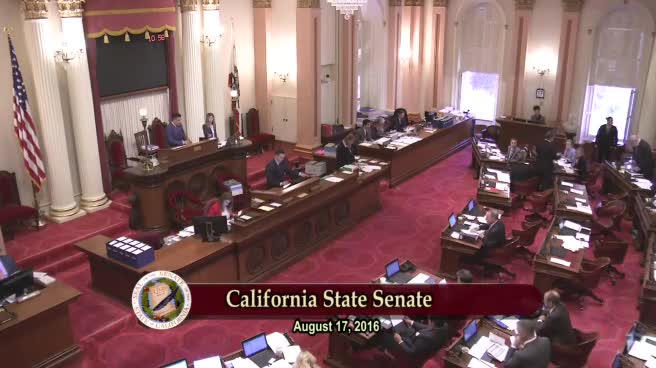 2MIN
Senate Floor
Bill Author