AB 2822: Student financial aid: community college students: emergency financial assistance.
- Session Year: 2015-2016
- House: Assembly
- Latest Version Date: 2016-08-16
Existing law establishes the California Community Colleges, under the administration of the Board of Governors of the California Community Colleges, as one of the segments of public postsecondary education in this state. Existing law authorizes the board of governors to establish auxiliary organizations, as defined, for the purpose of providing supportive services and specialized programs for the general benefit of the mission of the California Community Colleges.
This bill would authorize the use of private funds from a community college district, community college campus, or local community college foundation for the provision of emergency student financial assistance, as defined, to eligible students, as defined, to overcome unforeseen financial challenges, as specified, that would directly impact a students ability to persist in his or her course of study. The bill would authorize a community college district, community college campus, or local community college foundation to solicit and accept private funding, as specified, for the purposes of this bill.
Existing law establishes the California Community Colleges, under the administration of the Board of Governors of the California Community Colleges, as one of the segments of public postsecondary education in this state. Existing law authorizes the board of governors to establish auxiliary organizations, as defined, for the purpose of providing supportive services and specialized programs for the general benefit of the mission of the California Community Colleges.
This bill would authorize the use of auxiliary organization private funds from a community college district, community college campus, or local community college foundation for the provision of emergency student financial assistance, as defined, to eligible students, as defined, to overcome unforeseen financial challenges, as specified, that would directly impact a students ability to persist in his or her course of study. The bill would authorize auxiliary organizations a community college district, community college campus, or local community college foundation to solicit and accept private funding, as specified, for the purposes of this bill.
Existing law establishes the California Community Colleges, under the administration of the Board of Governors of the California Community Colleges, as one of the segments of public postsecondary education in this state. Existing law, known as the Seymour-Campbell Student Success Act of 2012, defines matriculation as a process that brings a college and a student who enrolls for credit into an agreement for the purpose of realizing the students educational objectives. The act specifies the matriculation services that community colleges are required to provide. law authorizes the board of governors to establish auxiliary organizations, as defined, for the purpose of providing supportive services and specialized programs for the general benefit of the mission of the California Community Colleges.
This bill would authorize the use of Student Success and Support Program auxiliary organization funds for the provision of emergency student financial assistance, as defined, to eligible students, as defined, to overcome unforeseen financial challenges, as specified, that would directly impact a students ability to persist in his or her course of study, if emergency student financial assistance is included in an institutions plan for interventions to students. The bill would authorize no more than 3% of the total funding that a community college district or campus receives for the Student Success and Support Program to be used for the provision of emergency student financial assistance. study. The bill would authorize auxiliary organizations to solicit and accept private funding, as specified, for the purposes of this bill.
Existing law establishes the California Community Colleges, under the administration of the Board of Governors of the California Community Colleges, as one of the segments of public postsecondary education in this state. Existing law, known as the Seymour-Campbell Student Success Act of 2012, defines matriculation as a process that brings a college and a student who enrolls for credit into an agreement for the purpose of realizing the students educational objectives. The act specifies the matriculation services that community colleges are required to provide.
This bill would authorize the use of Student Success and Support Program funds for the provision of emergency student financial assistance, as defined, to eligible students, as defined, to overcome unforeseen financial challenges, as specified, that would directly impact a students ability to persist in his or her course of study, if emergency student financial assistance is included in an institutions plan for interventions to students. The bill would authorize no more than 3% of the total funding that a community college district or campus receives for the Student Success and Support Program to be used for the provision of emergency student financial assistance.
Existing law establishes the California Community Colleges, under the administration of the Board of Governors of the California Community Colleges, as one of the segments of public postsecondary education in this state. Existing law, known as the Seymour-Campbell Student Success Act of 2012, defines matriculation as a process that brings a college and a student who enrolls for credit into an agreement for the purpose of realizing the students educational objectives. The act specifies the matriculation services that community colleges are required to provide.
This bill would authorize the use of Student Success and Support Program funds for the provision of emergency student financial assistance, as defined, to eligible students, as defined, if emergency student financial assistance is included in an institutions plan for interventions to students.
Existing law establishes various state-funded student financial aid programs, including, among others, the Ortiz-Pacheco-Poochigian-Vasconcellos Cal Grant Program, administered by the Student Aid Commission. Existing law provides that the methodology set forth in federal law or regulation serves as the formula for determining the expected family contribution of students seeking any state-funded financial assistance and that, for purposes of determining the dependent and independent status of students, the definition set forth in the federal law or regulation serves as the definition for students seeking any state-funded financial assistance.
This bill would make a nonsubstantive change in this provision.
The Legislature finds and declares all of the following:
(a)Research indicates that students ability to pay for nontuition costs plays a major role in determining the outcomes of their academic careers and impacts student success. Unexpected financial emergencies can play a major role when community college students drop out of school.
(b)Emergency aid is an effective strategy to retain students and ultimately improve graduation rates and overall student success. Emergency aid provides the flexibility needed to respond to a students unexpected financial emergency that may arise during the academic year. Emergency aid is a critical tool for student retention and persistence that is most effective as a part of a broader set of student success efforts.
(c)It is in the interest of the state to reduce the attrition rates of full-time students. Nationally, billions of dollars are lost when full-time students do not return in what would be their second year of college. California has lost more than one hundred million dollars ($100,000,000) in state and federal funding due to first-year attrition. Emergency aid is an efficient investment that addresses student attrition while only providing small dollar grants when a student is in crisis. With this type of well-timed aid, students are more likely to complete the academic term and re-enroll for the next term.
(d)A well-educated citizenry provides tremendous benefits to the state as higher educational attainment is connected with higher earnings, which produce more tax revenue and lower the cost of social services.
SEC. 2.Section 76072 is added to the Education Code, to read:76072.(a)The CCC Chancellors Office shall provide guidelines for community college districts or campuses that seek to establish student emergency aid programs among the supportive services and specialized programs it provides.
(b)Any Only private funds that a community college district, community college campus, or local community college foundation may receive may be used for the provision of emergency student financial assistance to help eligible students to overcome unforeseen financial challenges that would directly impact the students ability to persist in his or her course of study. These challenges include, but are not necessarily limited to, the immediate need for shelter or food. A community college district, community college campus, or local community college foundation shall consider the unique characteristics of its student body in developing specific guidelines for further defining what constitutes an unforeseen financial challenge for its students.
(c)For purposes of this section, the following terms are defined as follows:
(1)Eligible student means a student who has experienced an unforeseen financial challenge, who currently meets satisfactory academic progress of the institution he or she attends, and who is at risk of not persisting in his or her course of study due to the unforeseen financial challenge.
(2)Emergency student financial assistance means financial support in the form of financial assistance to support a student to help overcome unforeseen financial challenges so that the student can continue his or her course of study.
(d)It is the intent of the Legislature that priority be given to student populations that are in the most need.
(e)A community college district, community college campus, or local community college foundation may solicit and accept private funding for the purposes of this section. These private funding sources may include, but are not necessarily limited to, foundations, corporate funding, crowdfunding, donation drives, or any other sources of private investment that may be available.
The Legislature finds and declares all of the following:
(a)Research indicates that students ability to pay for nontuition costs plays a major role in determining the outcomes of their academic careers and impacts student success. Unexpected financial emergencies can play a major role when community college students drop out of school.
(b)Emergency aid is an effective strategy to retain students and ultimately improve graduation rates and overall student success. Emergency aid provides the flexibility needed to respond to a students unexpected financial emergency that may arise during the academic year. Emergency aid is a critical tool for student retention and persistence that is most effective as a part of a broader set of student success efforts.
(c)It is in the interest of the state to reduce the attrition rates of full-time students. Nationally, billions of dollars are lost when full-time students do not return in what would be their second year of college. California has lost more than one hundred million dollars ($100,000,000) in state and federal funding due to first-year attrition. Emergency aid is an efficient investment that addresses student attrition while only providing small dollar grants when a student is in crisis. With this type of well-timed aid, students are more likely to complete the academic term and re-enroll for the next term.
(d)A well-educated citizenry provides tremendous benefits to the state as higher educational attainment is connected with higher earnings, which produce more tax revenue and lower the cost of social services.
SEC. 2.Section 72670.7 76072 is added to the Education Code, to read:72670.7.(a)An auxiliary organization established pursuant to Section 72670.5
76072.(a)The CCC Chancellors Office shall provide guidelines and resources for community college districts or campuses that seek to establish student emergency aid programs among the supportive services and specialized programs it provides.
(b)Any private funds that the auxiliary organization a community college district, community college campus, or local community college foundation may receive may be used for the provision of emergency student financial assistance to help eligible students to overcome unforeseen financial challenges that would directly impact the students ability to persist in his or her course of study. These challenges include, but are not necessarily limited to, the immediate need for shelter or food. The auxiliary organization A community college district, community college campus, or local community college foundation shall encourage each community college district and campus to which it provides supportive services or specialized programs under this section to consider the unique characteristics of its student body in developing specific guidelines for further defining what constitutes an unforeseen financial challenge for its students.
(c)For purposes of this section, the following terms are defined as follows:
(1)Eligible student means a student who has experienced an unforeseen financial challenge, who currently meets satisfactory academic progress of the institution he or she attends, and who is at risk of not persisting in his or her course of study due to the unforeseen financial challenge.
(2)Emergency student financial assistance means financial support in the form of financial assistance to support a student to help overcome unforeseen financial challenges so that the student can continue his or her course of study.
(d)It is the intent of the Legislature that priority for emergency assistance funding be given to community college districts or campuses based on their enrollment of student populations that are in the most need.
(e)The auxiliary organization A community college district, community college campus, or local community college foundation may solicit and accept private funding for the purposes of this section. These private funding sources may include, but are not necessarily limited to, foundations, corporate funding, crowdfunding, donation drives, or any other sources of private investment that may be available.
The Legislature finds and declares all of the following:
(a)Given the need to improve community college student outcomes, the Legislature required the California Community Colleges to develop plans to improve student success through the Seymour-Campbell Student Success Act of 2012 (Article 1 (commencing with Section 78210) of Chapter 2 of Part 48 of Division 7 of Title 3 of the Education Code).
(b)
(a)Research indicates that students ability to pay for nontuition costs plays a major role in determining the outcomes of their academic careers and impacts student success. Unexpected financial emergencies can play a major role when community college students drop out of school.
(c)
(b)Emergency aid is an effective strategy to retain students and ultimately improve graduation rates and overall student success. Emergency aid provides the flexibility needed to respond to a students unexpected financial emergency that may arise during the academic year. Emergency aid is a critical tool for student retention and persistence that is most effective as a part of a broader set of student success efforts.
(d)
(c)It is in the interest of the state to reduce the attrition rates of full-time students. Nationally, billions of dollars are lost when full-time students do not return in what would be their second year of college. California has lost more than one hundred million dollars ($100,000,000) in state and federal funding due to first-year attrition. Emergency aid is an efficient investment that addresses student attrition while only providing small dollar grants when a student is in crisis. With this type of well-timed aid, students are more likely to complete the academic term and re-enroll for the next term.
(e)
(d)A well-educated citizenry provides tremendous benefits to the state as higher educational attainment is connected with higher earnings, which produce more tax revenue and lower the cost of social services.
SEC. 2.Section 78212 of the Education Code is amended to read:78212.(a)(1)For purposes of this article, matriculation means a process that brings a college and a student into an agreement for the purpose of achieving the students educational goals and completing the students course of study. The agreement involves the responsibilities of both parties to attain those objectives through the colleges established programs, policies, and requirements including those established by the board of governors pursuant to Section 78215.
(2)The institutions responsibility under the agreement includes the provision of student services to provide a strong foundation and support for their academic success and ability to achieve their educational goals. The program of services funded through the Seymour-Campbell Student Success Act of 2012, which shall be known and may be cited as the Student Success and Support Program, shall include, but are not necessarily limited to, all of the following:
(A)Orientation services designed to provide to students, on a timely basis, information concerning campus procedures, academic expectations, financial assistance, and any other matters the college or district finds appropriate.
(B)Assessment before course registration, as defined in Section 78213.
(C)Counseling and other education planning services, which shall include, but not necessarily be limited to, all of the following:
(i)Counseling and advising.
(ii)Assistance to students in the exploration of educational and career interests and aptitudes and identification of educational objectives, including, but not necessarily limited to, preparation for transfer, associate degrees, and career technical education certificates and licenses.
(iii)The provision of information, guided by sound counseling principles and practices, using a broad array of delivery mechanisms, including technology-based strategies to serve a continuum of student needs and abilities, that will enable students to make informed choices.
(iv)Development of an education plan leading to a course of study and guidance on course selection that is informed by, and related to, a students academic and career goals.
(D)Referral to specialized support services as needed and available, including, but not necessarily limited to, federal, state, and local financial assistance; health services; career services; veteran support services; foster youth services; extended opportunity programs and services provided pursuant to Article 8 (commencing with Section 69640) of Chapter 2 of Part 42 of Division 5; campus child care services provided pursuant to Article 6 (commencing with Section 66060) of Chapter 2 of Part 40 of Division 5; programs that teach basic skills education and English as a second language; and disabled student services provided pursuant to Chapter 14 (commencing with Section 67300) of Part 40 of Division 5.
(E)Evaluation of each students progress and referral to appropriate interventions for students who are enrolled in basic skills courses, who have not declared an educational goal as required, or who are on academic probation, as defined by standards adopted by the Board of Governors of the California Community Colleges and community college districts.
(3)The students responsibilities under the agreement include, but are not necessarily limited to, the identification of an academic and career goal upon application, the declaration of a specific course of study after a specified time period or unit accumulation, as defined by the board of governors, diligence in class attendance and completion of assigned coursework, and the completion of courses and maintenance of academic progress toward an educational goal and course of study identified in the students education plan. To ensure that students are not unfairly impacted by the requirements of this chapter, the board of governors shall establish a reasonable implementation period that is phased in as resources are available to provide nonexempt students with the core services pursuant to this section.
(b)Funding for the Student Success and Support Program shall be targeted to fully implement orientation, assessment, counseling and advising, and other education planning services needed to assist a student in making an informed decision about his or her educational goal and course of study and in the development of an education plan.
(c)(1)Funding for the Student Success and Support Program may be used for provision of emergency student financial assistance to help eligible students to overcome unforeseen financial challenges that would directly impact the students ability to persist in his or her course of study. These challenges include, but are not necessarily limited to, the immediate need for shelter or food. Each community college district and campus is encouraged to consider the unique characteristics of its student body in developing specific guidelines for further defining what constitutes an unforeseen financial challenge for its students.
(2)In order for emergency student financial assistance to be an allowable use of Student Success and Support Program funds, emergency student financial assistance shall be included in the institutions plan for interventions to students.
(3)For purposes of this subdivision, the following terms are defined as follows:
(A)Eligible student means a student who has experienced an unforeseen financial challenge, who currently meets satisfactory academic progress of the institution he or she attends, and who is at risk of not persisting in his or her course of study due to the unforeseen financial challenge.
(B)Emergency student financial assistance means financial support in the form of financial assistance to support a student to help overcome unforeseen financial challenges so that the student can continue his or her course of study.
(4)No more than 3 percent of the total funding that a community college district or campus receives for the Student Success and Support Program may be used for the provision of emergency student financial assistance.
SEC. 2.Section 72670.7 is added to the Education Code, to read:72670.7.(a)An auxiliary organization established pursuant to Section 72670.5 shall provide guidelines and resources for community college districts or campuses that seek to establish student emergency aid programs among the supportive services and specialized programs it provides.
(b)Any funds that the auxiliary organization may receive may be used for the provision of emergency student financial assistance to help eligible students to overcome unforeseen financial challenges that would directly impact the students ability to persist in his or her course of study. These challenges include, but are not necessarily limited to, the immediate need for shelter or food. The auxiliary organization shall encourage each community college district and campus to which it provides supportive services or specialized programs under this section to consider the unique characteristics of its student body in developing specific guidelines for further defining what constitutes an unforeseen financial challenge for its students.
(c)For purposes of this section, the following terms are defined as follows:
(1)Eligible student means a student who has experienced an unforeseen financial challenge, who currently meets satisfactory academic progress of the institution he or she attends, and who is at risk of not persisting in his or her course of study due to the unforeseen financial challenge.
(2)Emergency student financial assistance means financial support in the form of financial assistance to support a student to help overcome unforeseen financial challenges so that the student can continue his or her course of study.
(d)It is the intent of the Legislature that priority for emergency assistance funding be given to community college districts or campuses based on their enrollment of student populations that are in the most need.
(e)The auxiliary organization may solicit and accept private funding for the purposes of this section. These private funding sources may include, but are not necessarily limited to, foundations, corporate funding, crowdfunding, donation drives, or any other sources of private investment that may be available.
The Legislature finds and declares all of the following:
(a)Given the need to improve community college student outcomes, the Legislature required the California Community Colleges to develop plans to improve student success through the Seymour-Campbell Student Success Act of 2012 (Article 1 (commencing with Section 78210) of Chapter 2 of Part 48 of Division 7 of Title 3 of the Education Code).
(b)Research indicates that students ability to pay for nontuition costs plays a major role in determining the outcomes of their academic careers and impacts student success. Unexpected financial emergencies can play a major role when community college students drop out of school.
(c)Emergency aid is an effective strategy to retain students and ultimately improve graduation rates and overall student success. Emergency aid provides the flexibility needed to respond to a students unexpected financial emergency that may arise during the academic year. Emergency aid is a critical tool for student retention and persistence that is most effective as a part of a broader set of student success efforts.
(d)It is in the interest of the state to reduce the attrition rates of full-time students. Nationally, billions of dollars are lost when full-time students do not return in what would be their second year of college. California has lost more than one hundred million dollars ($100,000,000) in state and federal funding due to first-year attrition. Emergency aid is an efficient investment that addresses student attrition while only providing small dollar grants when a student is in crisis. With this type of well-timed aid, students are more likely to complete the academic term and re-enroll for the next term.
(e)A well-educated citizenry provides tremendous benefits to the state as higher educational attainment is connected with higher earnings, which produce more tax revenue and lower the cost of social services.
SECTION 1.SEC. 2.Section 78212 of the Education Code is amended to read:78212.(a)(1)For purposes of this article, matriculation means a process that brings a college and a student into an agreement for the purpose of achieving the students educational goals and completing the students course of study. The agreement involves the responsibilities of both parties to attain those objectives through the colleges established programs, policies, and requirements including those established by the board of governors pursuant to Section 78215.
(2)The institutions responsibility under the agreement includes the provision of student services to provide a strong foundation and support for their academic success and ability to achieve their educational goals. The program of services funded through the Seymour-Campbell Student Success Act of 2012, which shall be known and may be cited as the Student Success and Support Program, shall include, but are not necessarily limited to, all of the following:
(A)Orientation services designed to provide to students, on a timely basis, information concerning campus procedures, academic expectations, financial assistance, and any other matters the college or district finds appropriate.
(B)Assessment before course registration, as defined in Section 78213.
(C)Counseling and other education planning services, which shall include, but not necessarily be limited to, all of the following:
(i)Counseling and advising.
(ii)Assistance to students in the exploration of educational and career interests and aptitudes and identification of educational objectives, including, but not necessarily limited to, preparation for transfer, associate degrees, and career technical education certificates and licenses.
(iii)The provision of information, guided by sound counseling principles and practices, using a broad array of delivery mechanisms, including technology-based strategies to serve a continuum of student needs and abilities, that will enable students to make informed choices.
(iv)Development of an education plan leading to a course of study and guidance on course selection that is informed by, and related to, a students academic and career goals.
(D)Referral to specialized support services as needed and available, including, but not necessarily limited to, federal, state, and local financial assistance; health services; career services; veteran support services; foster youth services; extended opportunity programs and services provided pursuant to Article 8 (commencing with Section 69640) of Chapter 2 of Part 42 of Division 5; campus child care services provided pursuant to Article 6 (commencing with Section 66060) of Chapter 2 of Part 40 of Division 5; programs that teach basic skills education and English as a second language; and disabled student services provided pursuant to Chapter 14 (commencing with Section 67300) of Part 40 of Division 5.
(E)Evaluation of each students progress and referral to appropriate interventions for students who are enrolled in basic skills courses, who have not declared an educational goal as required, or who are on academic probation, as defined by standards adopted by the Board of Governors of the California Community Colleges and community college districts.
(3)The students responsibilities under the agreement include, but are not necessarily limited to, the identification of an academic and career goal upon application, the declaration of a specific course of study after a specified time period or unit accumulation, as defined by the board of governors, diligence in class attendance and completion of assigned coursework, and the completion of courses and maintenance of academic progress toward an educational goal and course of study identified in the students education plan. To ensure that students are not unfairly impacted by the requirements of this chapter, the board of governors shall establish a reasonable implementation period that is phased in as resources are available to provide nonexempt students with the core services pursuant to this section.
(b)Funding for the Student Success and Support Program shall be targeted to fully implement orientation, assessment, counseling and advising, and other education planning services needed to assist a student in making an informed decision about his or her educational goal and course of study and in the development of an education plan.
(c)(1)Funding for the Student Success and Support Program may be used for provision of emergency student financial assistance to help eligible students to overcome unforeseen financial challenges, including, but challenges that would directly impact the students ability to persist in his or her course of study. These challenges include, but are not necessarily limited to, the immediate need for shelter or food. Each community college district and campus is encouraged to consider the unique characteristics of its student body in developing specific guidelines for further defining what constitutes an unforeseen financial challenge for its students.
(2)In order for emergency student financial assistance to be an allowable use of Student Success and Support Program funds, emergency student financial assistance shall be included in the institutions plan for interventions to students.
(3)For purposes of this subdivision, the following terms are defined as follows:
(A)Eligible student means a student who has experienced an unforeseen financial challenge, who currently meets satisfactory academic progress of the institution he or she attends, and who is at risk of not persisting in his or her course of study due to the unforeseen financial challenge.
(B)Emergency student financial assistance means financial support in the form of financial assistance to support a student to help overcome unforeseen financial challenges so that the student can continue his or her course of study.
(4)No more than 3 percent of the total funding that a community college district or campus receives for the Student Success and Support Program may be used for the provision of emergency student financial assistance.
(a)(1)For purposes of this article, matriculation means a process that brings a college and a student into an agreement for the purpose of achieving the students educational goals and completing the students course of study. The agreement involves the responsibilities of both parties to attain those objectives through the colleges established programs, policies, and requirements including those established by the board of governors pursuant to Section 78215.
(2)The institutions responsibility under the agreement includes the provision of student services to provide a strong foundation and support for their academic success and ability to achieve their educational goals. The program of services funded through the Seymour-Campbell Student Success Act of 2012, which shall be known and may be cited as the Student Success and Support Program, shall include, but are not necessarily limited to, all of the following:
(A)Orientation services designed to provide to students, on a timely basis, information concerning campus procedures, academic expectations, financial assistance, and any other matters the college or district finds appropriate.
(B)Assessment before course registration, as defined in Section 78213.
(C)Counseling and other education planning services, which shall include, but not necessarily be limited to, all of the following:
(i)Counseling and advising.
(ii)Assistance to students in the exploration of educational and career interests and aptitudes and identification of educational objectives, including, but not limited to, preparation for transfer, associate degrees, and career technical education certificates and licenses.
(iii)The provision of information, guided by sound counseling principles and practices, using a broad array of delivery mechanisms, including technology-based strategies to serve a continuum of student needs and abilities, that will enable students to make informed choices.
(iv)Development of an education plan leading to a course of study and guidance on course selection that is informed by, and related to, a students academic and career goals.
(D)Referral to specialized support services as needed and available, including, but not necessarily limited to, federal, state, and local financial assistance; health services; career services; veteran support services; foster youth services; extended opportunity programs and services provided pursuant to Article 8 (commencing with Section 69640) of Chapter 2 of Part 42 of Division 5; campus child care services provided pursuant to Article 4 (commencing with Section 8225) of Chapter 2 of Part 6 of Division 1 of Title 1; Article 6 (commencing with Section 66060) of Chapter 2 of Part 40 of Division 5; programs that teach basic skills education and English as a second language; and disabled student services provided pursuant to Chapter 14 (commencing with Section 67300) of Part 40 of Division 5.
(E)Evaluation of each students progress and referral to appropriate interventions for students who are enrolled in basic skills courses, who have not declared an educational goal as required, or who are on academic probation, as defined by standards adopted by the Board of Governors of the California Community Colleges and community college districts.
(3)The students responsibilities under the agreement include, but are not necessarily limited to, the identification of an academic and career goal upon application, the declaration of a specific course of study after a specified time period or unit accumulation, as defined by the board of governors, diligence in class attendance and completion of assigned coursework, and the completion of courses and maintenance of academic progress toward an educational goal and course of study identified in the students education plan. To ensure that students are not unfairly impacted by the requirements of this chapter, the board of governors shall establish a reasonable implementation period that is phased in as resources are available to provide nonexempt students with the core services pursuant to this section.
(b)Funding for the Student Success and Support Program shall be targeted to fully implement orientation, assessment, counseling and advising, and other education planning services needed to assist a student in making an informed decision about his or her educational goal and course of study and in the development of an education plan.
(c)(1)Funding for the Student Success and Support Program may be used for provision of emergency student financial assistance to help eligible students to overcome unforeseen financial challenges, including, but not necessarily limited to, the immediate need for shelter or food.
(2)In order for emergency student financial assistance to be an allowable use of Student Success and Support Program funds, emergency student financial assistance shall be included in the institutions plan for interventions to students.
(3)For purposes of this subdivision, the following terms are defined as follows:
(A)Eligible student means a student who has experienced an unforeseen financial challenge, who currently meets satisfactory academic progress of the institution he or she attends, and who is at risk of not persisting in his or her course of study due to the unforeseen financial challenge.
(B)Emergency student financial assistance means financial support in the form of financial assistance to support a student to help overcome unforeseen financial challenges so that the student can continue his or her course of study.
SECTION 1.Section 69506 of the Education Code is amended to read:69506.(a)The methodology set forth in federal law or regulation shall serve as the formula for determining the expected family contribution of students seeking any state-funded financial assistance.
(b)For purposes of determining the dependent and independent status of students, the definition set forth in the federal law or regulation shall serve as the definition for students seeking any state-funded financial assistance.
(a)The methodology set forth in federal law or regulation shall serve as the formula for determining the expected family contribution of students seeking any state-funded financial assistance.
(b)For the purposes of determining the dependent and independent status of students, the definition set forth in the federal law or regulation shall serve as the definition for students seeking any state-funded financial assistance.
|
Date
|
Status
|
|---|---|
| Jun 2, 2016 | Read third time. Passed. Ordered to the Senate. (Ayes 55. Noes 25.) |
| Aug 31, 2016 | Ordered to inactive file at the request of Assembly Member Chiu. |
| Aug 19, 2016 | Read third time. Passed. Ordered to the Assembly. (Ayes 28. Noes 8.). |
| Aug 19, 2016 | Read third time. Passed. Ordered to the Assembly. (Ayes 28. Noes 8. Page 5164.). |
| Aug 19, 2016 | In Assembly. Concurrence in Senate amendments pending. May be considered on or after August 21 pursuant to Assembly Rule 77. |
| Aug 16, 2016 | Read second time and amended. Ordered to third reading. |
| Aug 15, 2016 | From committee: Amend, and do pass as amended. (Ayes 5. Noes 2.) (August 11). |
| Aug 8, 2016 | Referred to APPR. suspense file. |
| Aug 3, 2016 | From committee chair, with author's amendments: Amend, and re-refer to committee. Read second time, amended, and re-referred to Com. on APPR. |
| Aug 2, 2016 | Read second time and amended. Re-referred to Com. on APPR. |
| Aug 1, 2016 | From committee: Amend, and do pass as amended and re-refer to Com. on APPR. (Ayes 8. Noes 1.) (June 29). |
| Jun 20, 2016 | In committee: Set, first hearing. Hearing canceled at the request of author. |
| Jun 9, 2016 | Referred to Com. on ED. |
| Jun 6, 2016 | In Senate. Read first time. To Com. on RLS. for assignment. |
| Feb 19, 2016 | Introduced. To print. |
| Jun 2, 2016 | Read third time. Passed. Ordered to the Senate. (Ayes 55. Noes 25. Page 5202.) |
| Jun 2, 2016 | Read third time. Passed. Ordered to the Senate. |
| Jun 1, 2016 | Read second time. Ordered to third reading. |
| May 31, 2016 | Read second time and amended. Ordered returned to second reading. |
| May 27, 2016 | From committee: Amend, and do pass as amended. (Ayes 14. Noes 6.) (May 27). |
| May 4, 2016 | In committee: Set, first hearing. Referred to APPR. suspense file. |
| Apr 20, 2016 | From committee: Do pass and re-refer to Com. on APPR. (Ayes 10. Noes 3.) (April 19). Re-referred to Com. on APPR. |
| Mar 28, 2016 | Re-referred to Com. on HIGHER ED. |
| Mar 17, 2016 | Referred to Com. on HIGHER ED. |
| Mar 17, 2016 | From committee chair, with author's amendments: Amend, and re-refer to Com. on HIGHER ED. Read second time and amended. |
| Feb 22, 2016 | Read first time. |
| Feb 21, 2016 | From printer. May be heard in committee March 22. |
|
Date
|
Description
|
Location
|
Votes
|
|
|---|---|---|---|---|
| Aug 19, 2016 | Assembly 3rd Reading AB2822 Chiu By Pan | Senate Floor |
Passed |
|
| Aug 11, 2016 | Do pass as amended | Senate Standing Committee on Appropriations |
Passed |
|
| Aug 8, 2016 | Placed on suspense file | Senate Standing Committee on Appropriations |
Passed |
|
| Jun 29, 2016 | Do pass as amended, but first amend, and re-refer to the Committee on [Appropriations] | Senate Standing Committee on Education |
Passed |
|
| Jun 2, 2016 | AB 2822 CHIU Assembly Third Reading | Assembly Floor |
Passed |
|
| May 27, 2016 | Do pass as amended. | Assembly Standing Committee on Appropriations |
Passed |
|
| Apr 19, 2016 | Do pass and be re-referred to the Committee on [Appropriations] | Assembly Standing Committee on Higher Education |
Passed |
This list shows positions taken on this bill by organizations on the date displayed, which is linked to the original source.
Positions by individuals are not included.
|
Organization
|
Position
|
Date
|
|---|---|---|
| Campaign For College Opportunity | ** Support | Aug 19, 2016 |
| Institute for College Access and Success | ** Support | Aug 19, 2016 |
| Los Angeles Area Chamber Of Commerce | ** Support | Aug 19, 2016 |
| Scholarhip America | ** Support | Jun 2, 2016 |
| Scholarship America | ** Support | Aug 19, 2016 |
| Student Senate for California Community Colleges Region I | ** Support | Aug 19, 2016 |
| Student Senate for California Community Colleges Region II | ** Support | Aug 19, 2016 |
| Student Senate for California Community Colleges Region III | ** Support | Aug 19, 2016 |
| Student Senate for California Community Colleges Region IV | ** Support | Aug 19, 2016 |
| Student Senate for California Community Colleges Region IX | ** Support | Aug 19, 2016 |
| Student Senate for California Community Colleges Region V | ** Support | Aug 19, 2016 |
| Student Senate for California Community Colleges Region VI | ** Support | Aug 19, 2016 |
| Student Senate for California Community Colleges Region VII | ** Support | Aug 19, 2016 |
| Student Senate for California Community Colleges Region VIII | ** Support | Aug 19, 2016 |
| Student Senate for California Community Colleges Region X | ** Support | Aug 19, 2016 |
| u None received. | ** Against | Aug 19, 2016 |
CONCURRENCE IN SENATE AMENDMENTS
CSA1 Bill Id:AB 2822
Author:(Chiu)
As Amended Ver:August 16, 2016
Majority vote
ASSEMBLY: | 55-25 | (June 2, 2016) | SENATE: | 28-8 | (August 19, 2016) |
Original Committee Reference: HIGHER ED.
SUMMARY: Requires the California Community Colleges (CCC) Chancellor's Office to provide guidelines for community college districts (CCD) or campuses that seek to establish student emergency aid programs among the services they provide.
The Senate amendments do all of the following:
- Require The CCC Chancellor's Office to provide guidelines for CCDs or campuses that seek to establish student emergency aid programs among the supportive services and specialized programs it provides.
- Delete the requirement that CCDs shall provide emergency student financial assistance with CCC Student Success and Support Program funds.
- Clarify that only private funds may be used for administering emergency student financial assistance, as specified.
- Define "eligible student" as a student who has experienced an unforeseen financial challenge, who currently meets satisfactory academic progress of the institution he or she attends, and who is at risk of not persisting in his or her course of study due to the unforeseen financial challenge.
- Define "emergency student financial assistance" as financial support in the form of financial assistance to support a student to help overcome unforeseen financial challenges so that the student can continue his or her course of study.
- State that the Legislature intends that priority be given to student populations that are in the most need when seeking student emergency aid.
EXISTING LAW: Requires that all CCDs, with the assistance of the CCC Chancellor, establish and maintain institutional research to evaluate the effectiveness of the Student Success and Support Program (SSSP), as specified, and of any other programs or services designed to facilitate students' completion of their educational goals and course of study. Specifies the metrics for said research shall include, but be not limited to the following: 1) prior educational experience, including transcripts when appropriate, as determined by the chancellor; 2) educational goals and courses of study; 3) criteria for exemption from orientation, assessment, or required counseling or advisement, if applicable; 4) need for financial assistance; 5) disaggregated data by ethnicity, gender, disability, age, and socioeconomic status, to the extent this information is available; 6) academic performance, such as the completion of specified unit thresholds, success in basic skills courses, grade point average, course completion outcomes, transfer readiness, and degree and certificate completion; and, 7) any additional information that the chancellor finds appropriate (Education Code Section 78214).
FISCAL EFFECT: According to the Senate Appropriations Committee, the CCC Chancellor's Office indicates that the costs to develop the required guidelines would be minor.
COMMENTS: Emergency aid. According to information provided by the author, the field of emergency aid is emerging as a best practice for community colleges around the nation; however, the field is remains relative new. California presently has three community colleges, Cuyamaca Community College, Grossmont Community College, and Pasadena Community College that have begun emergency aid programs. To note, Committee staff understands that anecdotally, many community colleges are hesitant to implement some form of emergency aid shy of clear direction from the Legislature.
Additionally, According to a December 2015 report, by Wisconsin Hope Lab, entitled, "Investing in Student Completion: Overcoming Financial Barriers to Retention Through Small-Dollar Grants and Emergency Aid Programs," a deepening financial need among students exists and growing concerns about college retention. The report finds that there is an increased interest in emergency aid programs, but also many challenges in implementing them effectively, due in part, to administrators having to delicately navigate tensions between providing access and support and rationing scarce resources. The report recommends that clear criteria for program eligibility, while providing flexibility for determinations in unusual circumstances, must be established and clearly communicated.
Purpose of this measure. According to the author, "If California seriously wants to meet the goals outlined in the Seymour-Campbell Student Success Act, then the CCCs should have every effective tool available to them." The author contends that, this measure provides the CCCs another means to supporting students, despite unforeseen financial emergencies.
The author argues that, "This measure would further the goals of California community colleges' to retain and graduate students by providing emergency aid, at just the right time, to students who would otherwise be forced to leave school because of a financial emergency."
Analysis Prepared by: Jeanice Warden / HIGHER ED. / (916) 319-3960 FN: 0004243
Office of Senate Floor Analyses (916) 651-1520 Fax: (916) 327-4478 | AB |
THIRD READING
Bill No: AB 2822
:
SENATE EDUCATION COMMITTEE: 8-1, 6/29/16
AYES: Liu, Block, Hancock, Huff, Leyva, Mendoza, Monning, Pan
NOES: Vidak
SENATE APPROPRIATIONS COMMITTEE: 5-2, 8/11/16
AYES: Lara, Beall, Hill, McGuire, Mendoza
NOES: Bates, Nielsen
ASSEMBLY FLOOR: 55-25, 6/2/16 - See last page for vote
DIGEST: This bill requires the California Community Colleges (CCC) Chancellor’s Office to provide guidelines for community college districts or campuses that seek to establish student emergency aid programs among the services it provides.
Existing law:
- Establishes the CCC, under the administration of the Board of Governors of the CCC, as one of the segments of public postsecondary education in this state. (Education Code §70900)
- Authorizes the board of governors to establish auxiliary organizations, as defined, for the purpose of providing supportive services and specialized programs for the general benefit of the mission of the CCC. (EC § 72670)
This bill:
- Requires the CCC Chancellor’s Office to provide guidelines for community college districts or campuses that seek to establish student emergency aid programs among the services it provides.
- Authorizes a community college district, campus, or local community college foundation to solicit and accept funding from private sources that may include, but are not limited to, foundations, corporate funding, crowdfunding, donation drives, or any other sources of private investments.
- Provides that only private funds that a community college district, campus, or local community college foundation may receive may be used for emergency student financial assistance to help eligible students to overcome unforeseen financial challenges that would directly impact the student’s ability to persist in his or her course of study.
- Specifies that these challenges include, but are not necessarily limited to, the immediate need for shelter or food.
- Requires a community college district, community college campus, or local community college foundation to consider the unique characteristics of its student body in developing specific guidelines for further defining what constitutes an unforeseen financial challenge for its students.
- Declares the intent of the Legislature that priority be given to student populations that are in most need.
- Requires an eligible student to:
- Currently meet satisfactory academic progress at the institution of attendance.
- Be at risk of not persisting in his or her course of study due to the unforeseen financial challenge.
- Defines various terms for purposes of the bill.
Comments
- Need for the bill. According to the author, emergency aid provides ‘just-in-time” grants to students or quick infusions of funds when a student finds themselves with unexpected costs such as medical expenses, car repairs or child care. The author reports that three community colleges, Pasadena City College, Grossmont Community College, and Cuyamaca Community College have started such a program since 2010. The author contends that this type of assistance would further the ability of CCC to retain students by allowing grants for students who would otherwise be forced to leave school because of these unforeseen financial challenges. This bill proposes to fund such a program with Student Success Act funding currently provided for matriculation services.
- Existing emergency assistance programs. This bill requires the Chancellor’s Office to develop guidelines regarding the establishment of student emergency aid programs for community colleges that seek to establish programs among the supportive services and specialized programs they provide. According to the CCC there are existing categorical programs, such as the Extended Opportunity Programs and Services that have within their scope the ability to provide emergency grants from these programs using state funds, though this practice appears to be rare. According to the author, while some districts have foundations which have established these types of programs, it is the intent of this bill to ensure that resources for this purpose are available to districts and campuses that may lack the resources and infrastructure to establish a local foundation to address these needs.
This bill specifies that these programs would provide financial assistance to students to help them overcome unforeseen financial challenges that directly impact their ability to persist in their course of study. This allows for broad interpretation of what constitutes an unforeseen financial challenge. These programs are likely to be designed and administered considerably differently by campus. However, the Pasadena City College offers an example. It implements a program that provides grants of up to $500 for certain eligible expenses such as utilities, rent, medical and dental costs, or car expenses as long as students take a minimum number of courses and maintain a certain grade point average. Money for books or tuition-related expenses is not permitted.
FISCAL EFFECT: Appropriation: Fiscal Com.: Local:
According to the Senate Appropriations Committee, the California Community College, Chancellor’s Office indicates that the costs to develop the required guidelines would be minor.
Student Senate for California Community Colleges Region X
Student Senate for California Community Colleges Region IX
Student Senate for California Community Colleges Region IV
Student Senate for California Community Colleges Region V
Student Senate for California Community Colleges Region VI
Student Senate for California Community Colleges Region VII
Student Senate for California Community Colleges Region VIII
Student Senate for California Community Colleges Region I
Student Senate for California Community Colleges Region II
Student Senate for California Community Colleges Region III
OPPOSITION: (Verified 8/15/16)
None received
ASSEMBLY FLOOR: 55-25, 6/2/16
AYES: Alejo, Arambula, Atkins, Baker, Bloom, Bonilla, Bonta, Brown, Burke, Calderon, Campos, Chau, Chiu, Chu, Cooley, Cooper, Dababneh, Daly, Dodd, Eggman, Frazier, Cristina Garcia, Eduardo Garcia, Gatto, Gipson, Gomez, Gonzalez, Gordon, Gray, Roger Hernández, Holden, Irwin, Jones-Sawyer, Lackey, Levine, Lopez, Low, Maienschein, McCarty, Medina, Mullin, Nazarian, O'Donnell, Quirk, Ridley-Thomas, Rodriguez, Salas, Santiago, Mark Stone, Thurmond, Ting, Weber, Williams, Wood, Rendon
NOES: Achadjian, Travis Allen, Bigelow, Brough, Chang, Chávez, Dahle, Beth Gaines, Gallagher, Grove, Hadley, Harper, Jones, Kim, Linder, Mathis, Mayes, Melendez, Obernolte, Olsen, Patterson, Steinorth, Wagner, Waldron, Wilk
8/16/16 17:33:38
**** END ****
SENATE COMMITTEE ON APPROPRIATIONS
Senator Ricardo Lara, Chair
2015 - 2016 Regular Session
AB 2822 (Chiu) - Student financial aid: community college students: emergency financial assistance
Version: August 3, 2016 | Policy Vote: ED. 8 - 1 |
Urgency: No | Mandate: No |
Hearing Date: August 11, 2016 | Consultant: Jillian Kissee |
*********** ANALYSIS ADDENDUM – SUSPENSE FILE ***********
The following information is revised to reflect amendments
adopted by the committee on August 11, 2016
Bill Summary:
This bill requires the California Community Colleges (CCC) Chancellor’s Office to provide guidelines for community college districts or campuses that seek to establish student emergency aid programs among the services they provide.
Fiscal Impact:
- The CCC Chancellor’s Office indicates that the costs to develop the required guidelines would be minor.
Committee Amendments:
Clarify that only private funds may be used for the provision of emergency student financial assistance.
-- END --
SENATE COMMITTEE ON APPROPRIATIONS
Senator Ricardo Lara, Chair
2015 - 2016 Regular Session
AB 2822 (Chiu) - Student financial aid: community college students: emergency financial assistance
Version: August 3, 2016 | Policy Vote: ED. 8 - 1 |
Urgency: No | Mandate: No |
Hearing Date: August 8, 2016 | Consultant: Jillian Kissee |
This bill meets the criteria for referral to the Suspense File.
Bill Summary:
This bill requires the California Community Colleges (CCC) Chancellor’s Office to provide guidelines for community college districts or campuses that seek to establish student emergency aid programs among the services they provide.
Fiscal Impact:
- Potentially significant Proposition 98 cost pressure for community colleges to use state funds to provide student emergency aid to the extent private funds do not materialize.
- The CCC Chancellor’s Office indicates that the costs to develop the required guidelines would be minor.
Background:
According to the author, emergency aid provides ‘just-in-time” grants to students or quick infusions of funds when students find themselves with unexpected costs such as medical expenses, car repairs or child care. The author reports that three community colleges, Pasadena City College, Grossmont Community College, and Cuyamaca Community College have started such a program since 2010. The author contends that this type of assistance would further the ability of CCCs to retain students by allowing grants for students who would otherwise be forced to leave school because of these unforeseen financial challenges.
Proposed Law:
This bill requires the CCC Chancellor’s Office to provide guidelines for community college districts or campuses that seek to establish student emergency aid programs among the services they provide.
This bill provides that any funds that a community college district, campus, or local community college foundation may receive may be used for emergency student financial assistance to help eligible students to overcome unforeseen financial challenges. The challenges would include, but not be limited to, the immediate need for shelter or food that would directly impact the student’s ability to persist in his or her course of study. This bill requires a community college to consider the unique characteristics of its student body in order to further define what constitutes an unforeseen financial challenge for its students.
This bill defines an “eligible student” as one who has experienced an unforeseen financial challenge, who currently meets satisfactory academic progress and who is at risk of not persisting in his or her course of study due to the unforeseen financial challenge.
This bill also defines “emergency student financial assistance” as financial assistance to support a student to help overcome unforeseen financial challenges so that the student can continue his or her course of study.
Staff Comments:
This bill requires the Chancellor’s Office to develop guidelines regarding the establishment of student emergency aid programs for community colleges that seek to establish programs among the supportive services and specialized programs they provide. According to the CCC there are existing categorical programs, such as the Extended Opportunity Programs and Services, that have within their scope the ability to provide emergency grants from these programs using state funds, though this practice appears to be rare.
Though this bill provides the authority for community colleges to solicit and accept private funding for the establishment of these programs, it does not preclude the use of Proposition 98 General Fund. Therefore, to the extent community colleges seek to establish such programs, as encouraged by this bill, and private funding is unavailable, this could create a significant state cost pressure.
This bill specifies that these programs would provide financial assistance to students to help them overcome unforeseen financial challenges that directly impact their ability to persist in their course of study. This allows for broad interpretation of what constitutes an unforeseen financial challenge.
These programs are likely to be designed and administered considerably differently by campus. However, the Pasadena City College offers an example. It implements a program that provides grants of up to $500 for certain eligible expenses such as utilities, rent, medical and dental costs, or car expenses as long as students take a minimum number of courses and maintain a certain grade point average. Money for books or tuition-related expenses is not permitted. The CCC enrolls about 2.1 million students. To the extent 1 percent of the student population was in need of a grant, cost pressures could reach about $10 million.
-- END --
SENATE COMMITTEE ON EDUCATION
Senator Carol Liu, Chair
2015 - 2016 Regular
Bill No:
Author: | Chiu | ||
Version: | Hearing Date: June 29, 2016 | ||
Urgency: | Fiscal: | ||
Consultant: | |||
Subject:
SUMMARY
This bill authorizes the use of up to 3 percent of Student Success and Support Program funding received by a community college campus or district for the provision of emergency student financial assistance.
BACKGROUND
Current law establishes the Student Success Act, which applies to all community college students, for the purpose of increasing student access and success by providing effective core matriculation services, including orientation, assessment and placement, counseling and other education planning services and academic interventions. Community colleges have the responsibility to provide student services and support, including orientation, assessment, counseling and education planning, referral to specialized support services, and evaluation of each student's progress and referral to appropriate interventions. Students have the responsibility to identify an academic and career goal, declare a specific course of study, be diligent in class attendance and completion of assigned coursework, and complete courses and maintain academic progress toward an educational goal. (Education Code § 78210-78219; 5 California Code of Regulations § 55500-55534)
ANALYSIS
This bill:
- Authorizes the use of Student Success and Support Program funding for emergency student financial assistance to help eligible students to overcome unforeseen financial challenges that would directly impact the student’s ability to persist in his or her course of study.
- Specifies that these challenges include, but are not necessarily limited to, the immediate need for shelter or food.
- Encourages each community college district and campus to consider the unique characteristics of its student body in developing specific guidelines for further defining what constitutes an unforeseen financial challenge for its students.
- Requires, as a condition of using funds for this purpose, that emergency student financial assistance be included in the institution’s plan for interventions to students.
- Requires an eligible student to:
- Currently meet satisfactory academic progress at the institution of attendance.
- Be at risk of not persisting in his or her course of study due to the unforeseen financial challenge.
- Defines various terms for purposes of the bill.
STAFF COMMENTS
- Need for the bill. According to the author, emergency aid provides ‘just-in-time” grants to students or quick infusions of funds when a student finds themselves with unexpected costs such as medical expenses, car repairs or child care. The author reports that three community colleges, Pasadena City College, Grossmont Community College, and Cuyamaca Community College have started such a program since 2010. The author contends that this type of assistance would further the ability of California Community Colleges to retain students by allowing grants for students who would otherwise be forced to leave school because of these unforeseen financial challenges. This bill proposes to fund such a program with Student Success Act funding currently provided for matriculation services.
- Student Success at the Community Colleges. Pursuant to Senate Bill 1143 (Liu, Chapter 409, Statutes of 2010), the Board of Governors of the California Community Colleges created the Student Success Task Force (SSTF); 20 individuals (community college chief executive officers, faculty, students, researchers, staff and external stake holders) who spent a year researching, studying and debating the best methods to improve student outcomes at the community colleges.
According to the SSTF report, which was unanimously adopted by the Board of Governors in January 2012, it was their goal to identify best practices for promoting student success and to develop statewide strategies to take these approaches to scale while ensuring that educational opportunity for historically underrepresented students would not just be maintained, but bolstered.
The Student Success Task Force (SSTF efforts resulted in 22 specific recommendations focused on the following eight areas:
a) Increasing college and career readiness.
b) Strengthening support for entering students.
c) Incentivizing successful student behaviors.
d) Aligning course offerings to meet student needs.
e) Improving education of basic skills students.
f) Revitalizing and re-envisioning professional development.
g) Enabling efficient statewide leadership and increase coordination among colleges.
h) Aligning resources with student success recommendations.
Implementation of these recommendations is being accomplished by the Chancellor’s Office of the California Community Colleges via the “Student Success Initiative” through regulatory changes, system-wide administrative policies, local best practices and legislation. These implementation efforts include the following:
- SB 1456 (Lowenthal, Chapter 624, Statutes of 2012) recast the Seymour-Campbell Matriculation Act of 1986 in order to target funding to services such as orientation, assessment, and counseling and advising to assist students with the development of education plans. It also required that students define goals, required that students declare a course of study and mandated student participation in assessment, orientation and education planning.
- At a regulatory level, the Board of Governors approved regulations that provide enrollment priority to students who have participated in assessment, orientation, and who have developed an education plan. In addition, statutory priority enrollment extended to veterans, foster youth, Extended Opportunity Program & Services students, and disabled students requires participation in these Student Success Services and programs. Students are now required to complete core services as well as to declare a course of study. In addition, districts are now required to notify students that accumulating 100 degree applicable units or being on academic or progress probation for two consecutive terms will result in the loss of enrollment priority.
- Since 2012, the State has increased ongoing funding for community college student success and support by nearly $600 million. These funds have been designated to support the Student Services Support Program (SSSP) established by SB 1456 (Lowenthal) to provide targeted services such as orientation, assessment, and counseling and advising to assist students with the development of education plans. In addition these funds support the creation of Student Equity Plans to improve access and outcomes for disadvantaged groups, as well as a number of Chancellor’s Office Initiatives to provide related support to districts.
In February 2016, this Committee held an informational hearing, California’s Community Colleges: Implementation of Student Success where the committee received an update on the use of these funds, the progress made in implementing student success strategies both systemwide and at the campus level, and heard preliminary reports on student outcomes.
- Related report expected SB 1456 (Lowenthal, Chapter 624, Statutes of 2012), in addition to establishing the Student Success Act of 2012, required the Legislative Analyst (LAO) to submit a report to the Legislature evaluating progress on implementation of the Act and impacts on student completion, by July 1, 2016. According to the LAO, this report should be available in mid-September 2016.
According to the LAO, the report will focus on implementation of the Student Success and Support Program and Student Equity Program. The LAO report will evaluate how the system and individual colleges and districts have implemented student success initiatives, including how they have used state categorical funding for these programs. The LAO will also examine the extent to which colleges have hired additional counselors, and the extent to which colleges are providing mandatory services to entering students. In addition, the LAO will attempt to determine the early effects of these programs on student success rates and student equity.
Should any expansion of the use of these funds be authorized prior to the LAO evaluation of the use/need for these funds for their original purpose?
- Dilution of SSSP efforts. As noted in staff comment #2, the State has exerted extensive effort and allocated substantial funding to provide direct matriculation services to students through the Student Success and Support Program (SSSP). At current funding levels, this bill authorizes the use of up to $9 million in SSSP funds for the provisions of emergency student financial assistance.
Should this Committee authorize the use of SSSP funds for purposes unrelated to the 6-year effort to implement strategies to incentivize successful student behaviors and improve completion at the community colleges? Would this bill set a precedent that dilutes SSSP funds intended for critical academic support services for the provision of nonacademic financial assistance?
The current programs at Pasadena City College and Grossmont College were funded from external sources, such as district foundations and other fundraising efforts. Are these more appropriate funding sources? If state funds are to be used for this purpose, would it be more appropriate to expand the resources available through state financial aid programs?
- Alternative proposal? According to the author, while some districts have auxiliary foundations which have established these types of programs, it is the intent of this bill to ensure that resources for this purpose are available to districts and campuses that may lack the resources and infrastructure to establish a local auxiliary to address these needs.
Current law provides for the establishment of an auxiliary organization to the Board of Governors for the purpose of providing supportive services and specialized programs for the general benefit of the mission of the California Community College. Accordingly, if it is the desire of the Committee to establish an emergency assistance program, staff recommends the bill be amended to delete section 2 of the bill and instead require the statewide auxiliary organization to provide guidelines and resources to districts or campuses seeking to establish student emergency aid programs, authorize the auxiliary to solicit and accept private funds for this to be used for the specified purposes, and declare the intent of the Legislature that priority for these statewide funds be granted to districts or campuses based on their enrollment of student populations that are in the most need.
SUPPORT
Campaign for College Opportunity
Los Angeles Area Chamber of Commerce
Scholarship America
The Institute for College Access and Success
OPPOSITION
None received.
-- END --
ASSEMBLY THIRD READING
ATR Bill Id:AB 2822
Author:(Chiu)
As Amended Ver:
Majority vote
Committee | Votes | Ayes | Noes |
Higher Education | 10-3 | Medina, Baker, Bloom, Irwin, Jones-Sawyer, Levine, Low, Santiago, Weber, Williams | Chávez, Linder, Olsen |
Appropriations | 14-6 | Gonzalez, Bloom, Bonilla, Bonta, Calderon, Daly, Eggman, Eduardo Garcia, Roger Hernández, Holden, Quirk, Santiago, Weber, Wood | Bigelow, Chang, Gallagher, Jones, Obernolte, Wagner |
SUMMARY: Authorizes the use of Student Success and Support Program (SSSP) funds for the provision of emergency student financial assistance. Specifically, this bill:
- States findings and declarations of the Legislature to include, among others:
- Research indicates that students' ability to pay for nontuition costs plays a major role in determining the outcomes of their academic careers and impacts student success;
- Unexpected financial emergencies can play a major role when community college students drop out of school;
- Emergency aid is an effective strategy to retain students and ultimately improve graduation rates and overall student success; and,
- Emergency aid is a critical tool for student retention and persistence that is most effective as a part of a broader set of student success efforts.
- Authorizes funding for SSSP to be used for providing emergency student financial assistance in order to assist eligible students to overcome unforeseen financial challenges that would directly impact their ability to persist in their course of study. Specifies that these challenges include, but are not necessarily limited to, the immediate need for shelter or food.
- Specifies that no more than 3% of the total funding that a community college district or campus receives for the SSSP may be used for the provision of emergency student financial assistance.
- Requests each community college district and campus to consider the unique characteristics of its student body in developing specific guidelines for further defining what constitutes an unforeseen financial challenge for its students.
- Specifies that in order for emergency student financial assistance to be an allowable use of SSSP funds, emergency student financial assistance shall be included in the institution's plan for interventions to students.
- Defines "eligible student" to mean a student who has experienced an unforeseen financial challenge, who currently meets satisfactory academic progress of the institution he or she attends, and who is at risk of not persisting in his or her course of study due to the unforeseen financial challenge.
- Defines "emergency student financial assistance" to mean financial support in the form of financial assistance to support a student to help overcome unforeseen financial challenges so that the student can continue his or her course of study.
EXISTING LAW:
- Creates the SSSP in order to provide a variety of programs intended to ensure the success of CCC students, including, but not limited to: a) student assessment before course registration; b) counseling and other education planning services; c) advising; and, d) development of an education plan leading to a course of study. Specifies funding for SSSP shall be targeted to fully implement orientation, assessment, counseling and advising, and other education planning services needed to assist a student in making an informed decision about his or her educational goal and course of study and in the development of an education plan. (Education Code (EC) 78212).
- Requires that all community college districts (CCD), with the assistance of the California Community Colleges (CCC) Chancellor, establish and maintain institutional research to evaluate the effectiveness of the SSSP, as specified, and of any other programs or services designed to facilitate students' completion of their educational goals and course of study. Specifies the metrics for said research shall include, but be not limited to the following: a) prior educational experience, including transcripts when appropriate, as determined by the chancellor; b) educational goals and courses of study; c) criteria for exemption from orientation, assessment, or required counseling or advisement, if applicable; d) need for financial assistance; e) disaggregated data by ethnicity, gender, disability, age, and socioeconomic status, to the extent this information is available; f) academic performance, such as the completion of specified unit thresholds, success in basic skills courses, grade point average, course completion outcomes, transfer readiness, and degree and certificate completion; and, g) any additional information that the chancellor finds appropriate (EC Section 78214).
FISCAL EFFECT: According to the Assembly Appropriations Committee, significant cost pressure, at least in the low millions of dollars annually, from expanding eligible uses of SSSP funding, which is currently at $300 million annually. Pasadena City College provided $500 emergency grants to 35 students, totaling $17,500. Grossmont College spent $40,000 on emergency assistance in an academic year. These programs have been funded with external fund sources, such as through district foundations and from fundraising. Representatives from both colleges stated that they could serve many more students if more funds were available.
COMMENTS: Student success and support. SB 1456 (Lowenthal), Chapter 624, Statutes of 2012, was enacted to implement some of the Student Success Task Force recommendations. Among other things, SB 1456 revised and recast the Seymour-Campbell Matriculation Act of 1986 as the Seymour-Campbell Success Act of 2012 in order to target funding to services such as orientation, assessment, and counseling and advising to assist students with the development of education plans. It also required that students define goals, required that students declare a course of study and mandated student participation in assessment, orientation and education planning.
At a regulatory level, the CCC Board of Governors (BOG) has approved regulations that provide enrollment priority to students who have participated in assessment, orientation and who have developed an education plan. A revision of Title 5 regulations is in progress to implement provisions of SB 1456 to require students to complete core services as well as to declare a course of study. Additionally, in 2012 the BOG adopted enrollment priorities and, in Spring 2013, districts are required to notify students that accumulating 100 degree applicable units or being on academic or progress probation for two consecutive terms will result in the loss of enrollment priority. Finally, as of Fall 2014, students who complete orientation, assessment, and have a student education plan, will receive a higher enrollment priority.
Funding structure for SSSP. Existing funding for the SSSP is targeted to fully implement core services: orientation; assessment; counseling; advising; and other education planning services needed to assist a student in making an informed decision about his/her education goal and course of study and to develop an education plan; and, follow up for at-risk students. Additionally, SSSP funds may only be used for core services and any CCD or college receiving SSSP funding must agree to implement the CCC BOG's system of common assessment.
Emergency aid. According to information provided by the author, the field of emergency aid is emerging as a best practice for community colleges around the nation; however, the field is remains relative new. California presently has three community colleges, Cuyamaca Community College, Grossmont Community College, and Pasadena Community College that have begun emergency aid programs. To note, Committee staff understands that anecdotally, many community colleges are hesitant to implement some form of emergency aid shy of clear direction from the Legislature.
Additionally, According to a December 2015 report, by Wisconsin Hope Lab, entitled, "Investing in Student Completion: Overcoming Financial Barriers to Retention Through Small-Dollar Grants and Emergency Aid Programs," a deepening financial need among students exists and growing concerns about college retention. The report finds that there is an increased interest in emergency aid programs, but also many challenges in implementing them effectively, due in part, to administrators having to delicately navigate tensions between providing access and support and rationing scarce resources. The report recommends that clear criteria for program eligibility, while providing flexibility for determinations in unusual circumstances, must be established and clearly communicated.
This measure would provide clear authority to community colleges to be able to utilize SSSP funds for emergency aid, if they so choose.
Purpose of this measure. According to the author, "If California seriously wants to meet the goals outlined in the Seymour-Campbell Student Success Act, then the CCCs should have every effective tool available to them." The author contends that, this measure provides the CCCs another means to supporting students, despite unforeseen financial emergencies.
This measure would allow California's community colleges to use SSSP funds in order to provide emergency aid to eligible students who face unforeseen financial challenges. The measure stipulates that eligible students must be making satisfactory academic progress and be at risk of dropping out of school, due to an unforeseen financial emergency.
The author argues that, "This measure would further the goals of California community colleges' to retain and graduate students by providing emergency aid, at just the right time, to students who would otherwise be forced to leave school because of a financial emergency."
Previous legislation. SB 1143 (Liu) Chapter 409, Statutes of 2010, created the California Community Colleges Student Success Task Force which made 22 recommendations to the CCC BOG to improve student educational achievement in the state. To note, the CCC BOG approved the recommendations in January 2012, which focused on increasing student graduation, transfer, and certificate completion rates at then all 112 community colleges.
SB 1456 (Lowenthal) Chapter 624, Statutes of 2012, established the Seymour-Campbell Student Success Act of 2012, and among other reforms to the CCCs relating to student success, established the SSSP. To note, since the enactment of SB 1456, the Legislature and the Governor have continually provided funding to SSSP.
Analysis Prepared by: Jeanice Warden / HIGHER ED. / (916) 319-3960 FN: 0003289
Date of Hearing: May 4, 2016
ASSEMBLY COMMITTEE ON APPROPRIATIONS
Lorena Gonzalez, Chair
ABPCA Bill Id:AB 2822
Author:(Chiu) – As Amended Ver:March 17, 2016
Policy Committee: | Higher Education | Vote: | 10 - 3 |
|
| ||
|
|
Urgency: No State Mandated Local Program: No Reimbursable: No
SUMMARY:
This bill authorizes the use of the California Community Colleges' (CCCs') Student Success and Support Program (SSSP) funds for the provision of emergency student financial assistance. Specifically, this bill:
- Authorizes funding for SSSP to be used for providing emergency student financial assistance in order to assist eligible students to overcome unforeseen financial challenges, including, but not necessarily limited to, the immediate need for shelter or food.
- Defines "eligible student" to mean a student who has experienced an unforeseen financial challenge, who currently meets satisfactory academic progress of the institution he or she attends, and who is at risk of not persisting in his or her course of study due to the unforeseen financial challenge.
FISCAL EFFECT:
Significant cost pressure, at least in the low millions of dollars annually, from expanding eligible uses of SSSP funding, which is currently at $300 million annually. Pasadena City College provided $500 emergency grants to 35 students, totaling $17,500. Grossmont College spent $40,000 on emergency assistance in an academic year. These programs have been funded with external fund sources, such as through district foundations and from fundraising. Representatives from both colleges stated that they could serve many more students if more funds were available.
COMMENTS:
- Purpose. According to the author, "If California seriously wants to meet the goals outlined in the Seymour-Campbell Student Success Act, then the CCCs should have every effective tool available to them." The author contends that, this measure provides the CCCs another means to supporting students, despite unforeseen financial emergencies.
The author argues that, "This measure would further the goals of California community colleges’ to retain and graduate students by providing emergency aid, at just the right time, to students who would otherwise be forced to leave school because of a financial emergency."
According to information provided by the author, the field of emergency aid is emerging as a best practice for community colleges around the nation; however, the field remains relative new. California presently has three community colleges, Cuyamaca Community College, Grossmont Community College, and Pasadena Community College that have begun emergency aid programs.
- SSSP Funding. Existing funding for the SSSP ($300 million annually) is targeted to fully implement core services: orientation; assessment; counseling; advising; and other education planning services needed to assist a student in making an informed decision about his/her education goal and course of study and to develop an education plan; and, follow up for at-risk students. Additionally, SSSP funds may only be used for core services and any CCD or college receiving SSSP funding must agree to implement the CCC BOG's system of common assessment.
- Related Legislation. AB 1995 (Williams), also on today's committee agenda, requires CCC campuses to grant enrolled homeless students access to campus shower facilities, as part of the SSSP.
Analysis Prepared by: Chuck Nicol / APPR. / (916) 319-2081
Date of Hearing: April 19, 2016
ASSEMBLY COMMITTEE ON HIGHER EDUCATION
Jose Medina, Chair
ABPCA Bill Id:AB 2822 (
Author:Chiu) – As Amended Ver:March 17, 2016
SUBJECT: Student financial aid: Student Success and Support Program: emergency student financial assistance.
SUMMARY: Authorizes the use of Student Success and Support Program (SSSP) funds for the provision of emergency student financial assistance. Specifically, this bill:
- Authorizes funding for SSSP to be used for providing emergency student financial assistance in order to assist eligible students to overcome unforeseen financial challenges, including, but not necessarily limited to, the immediate need for shelter or food.
- Specifies that in order for emergency student financial assistance to be an allowable use of SSSP funds, emergency student financial assistance shall be included in the institution’s plan for interventions to students.
- Defines "eligible student" to mean a student who has experienced an unforeseen financial challenge, who currently meets satisfactory academic progress of the institution he or she attends, and who is at risk of not persisting in his or her course of study due to the unforeseen financial challenge.
- Defines "emergency student financial assistance" to mean financial support in the form of financial assistance to support a student to help overcome unforeseen financial challenges so that the student can continue his or her course of study.
EXISTING LAW:
- Creates the SSSP in order to provide a variety of programs intended to ensure the success of CCC students, including, but not limited to: a) student assessment before course registration; b) counseling and other education planning services; c) advising; and, d) development of an education plan leading to a course of study. Specifies funding for SSSP shall be targeted to fully implement orientation, assessment, counseling and advising, and other education planning services needed to assist a student in making an informed decision about his or her educational goal and course of study and in the development of an education plan. (Education Code (EC) 78212).
- Requires that all community college districts (CCD), with the assistance of the California Community Colleges (CCC) Chancellor, establish and maintain institutional research to evaluate the effectiveness of the SSSP, as specified, and of any other programs or services designed to facilitate students' completion of their educational goals and course of study. Specifies the metrics for said research shall include, but be not limited to the following: a) prior educational experience, including transcripts when appropriate, as determined by the chancellor; b) educational goals and courses of study; c) criteria for exemption from orientation, assessment, or required counseling or advisement, if applicable; d) need for financial assistance; e) disaggregated data by ethnicity, gender, disability, age, and socioeconomic status, to the extent this information is available; f) academic performance, such as the completion of specified unit thresholds, success in basic skills courses, grade point average, course completion outcomes, transfer readiness, and degree and certificate completion; and, g) any additional information that the chancellor finds appropriate (EC Section 78214).
FISCAL EFFECT: Unknown
COMMENTS: Student success and support. Senate Bill 1456 (Lowenthal), Chapter 624, Statutes of 2012, was enacted to implement some of the Student Success Task Force recommendations. Among other things, SB 1456 revised and recast the Seymour-Campbell Matriculation Act of 1986 as the Seymour-Campbell Success Act of 2012 in order to target funding to services such as orientation, assessment, and counseling and advising to assist students with the development of education plans. It also required that students define goals, required that students declare a course of study and mandated student participation in assessment, orientation and education planning.
At a regulatory level, the CCC Board of Governors (BOG) has approved regulations that provide enrollment priority to students who have participated in assessment, orientation and who have developed an education plan. A revision of Title 5 regulations is in progress to implement provisions of SB 1456 to require students to complete core services as well as to declare a course of study. Additionally, in 2012 the Board of Governors adopted enrollment priorities and, in Spring 2013, districts are required to notify students that accumulating 100 degree applicable units or being on academic or progress probation for two consecutive terms will result in the loss of enrollment priority. Finally, as of Fall 2014, students who complete orientation, assessment, and have a student education plan, will receive a higher enrollment priority.
Funding structure for SSSP. Existing funding for the SSSP is targeted to fully implement core services: orientation; assessment; counseling; advising; and other education planning services needed to assist a student in making an informed decision about his/her education goal and course of study and to develop an education plan; and, follow up for at-risk students. Additionally, SSSP funds may only be used for core services and any CCD or college receiving SSSP funding must agree to implement the CCC BOG's system of common assessment.
Emergency aid. According to information provided by the author, the field of emergency aid is emerging as a best practice for community colleges around the nation; however, the field is remains relative new. California presently has three community colleges, Cuyamaca Community College, Grossmont Community College, and Pasadena Community College that have begun emergency aid programs. To note, Committee staff understands that anecdotally, many community colleges are hesitant to implement some form of emergency aid shy of clear direction from the Legislature.
Additionally, According to a December 2015 report, by Wisconsin Hope Lab, entitled, "Investing in Student Completion: Overcoming Financial Barriers to Retention Through Small-Dollar Grants and Emergency Aid Programs," a deepening financial need among students exists and growing concerns about college retention. The report finds that there is an increased interest in emergency aid programs, but also many challenges in implementing them effectively, due in part, to administrators having to delicately navigate tensions between providing access and support and rationing scarce resources. The report recommends that clear criteria for program eligibility, while providing flexibility for determinations in unusual circumstances, must be established and clearly communicated.
This measure would provide clear authority to community colleges to be able to utilize SSSP funds for emergency aid, if they so choose.
Purpose of this measure. According to the author, "If California seriously wants to meet the goals outlined in the Seymour-Campbell Student Success Act, then the CCCs should have every effective tool available to them." The author contends that, this measure provides the CCCs another means to supporting students, despite unforeseen financial emergencies.
This measure would allow California’s community colleges to use SSSP funds in order to provide emergency aid to eligible students who face unforeseen financial challenges. The measure stipulates that eligible students must be making satisfactory academic progress and be at risk of dropping out of school, due to an unforeseen financial emergency.
The author argues that, "This measure would further the goals of California community colleges’ to retain and graduate students by providing emergency aid, at just the right time, to students who would otherwise be forced to leave school because of a financial emergency."
Policy considerations. As presently drafted, this measure authorizes community college districts to use SSSP funds in order to provide emergency student financial assistance to students needing to overcome unforeseen financial challenges. While the measure indicates that unforeseen financial challenges may include the immediate need for food or shelter, the bill does not define the term "unforeseen financial challenges."
Moving forward, the author may wish to define the term "unforeseen financial challenges."
As aforementioned, this measure authorizes community college districts to use SSSP funds in order to provide assistance to students facing emergency financial situations; however, the measure is silent as to the percentage of SSSP funds that community college districts may appropriate in order to meet the financial needs of the students.
Moving forward, the author may wish to work with the California Community Colleges Chancellor's Office, in order to provide clarity as to the usage of SSSP funds for the specified purpose outlined in this measure.
Previous legislation. SB 1143 (Liu) Chapter 409, Statutes of 2010, created the California Community Colleges Student Success Task Force which made 22 recommendations to the CCC BOG to improve student educational achievement in the state. To note, the CCC BOG approved the recommendations in January 2012, which focused on increasing student graduation, transfer, and certificate completion rates at then all 112 community colleges.
SB 1456 (Lowenthal) Chapter 624, Statutes of 2012, established the Seymour-Campbell Student Success Act of 2012, and among other reforms to the CCCs relating to student success, established the SSSP. To note, since the enactment of SB 1456, the Legislature and the Governor have continually provided funding to SSSP.
REGISTERED SUPPORT / OPPOSITION:
Support
The Institute for College Access & Success
Los Angeles Area Chamber of Commerce
Scholarhip America
Student Senate for California Community Colleges
Opposition
None on file.
Analysis Prepared by: Jeanice Warden / HIGHER ED. / (916) 319-3960
Discussed in Hearing
View Older Hearings
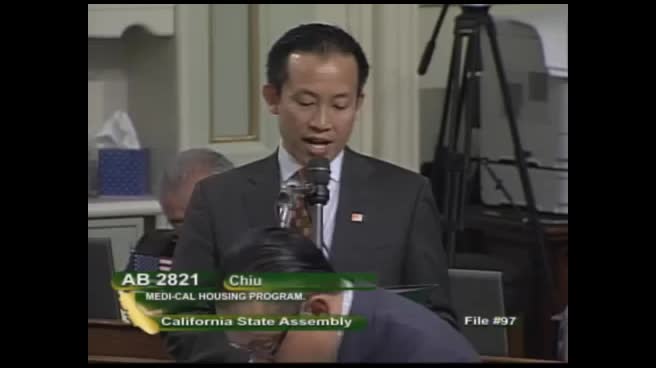
Bill Author




