AB 2839: Criminal penalties: nonpayment of fines.
- Session Year: 2015-2016
- House: Assembly
- Latest Version Date: 2016-09-28
Existing law permits a judgment against a criminal defendant that orders the defendant to pay a fine, other than a restitution fine or order, to also direct that he or she be imprisoned until the fine is satisfied. Existing law requires the judgment to specify the term of imprisonment for nonpayment of the fine, and prohibits that term from exceeding one day for each $125 of the fine, or exceeding the term for which the defendant may be sentenced for the offense of which he or she has been convicted.
This bill would prohibit the term of imprisonment for nonpayment of a fine from exceeding one day for each $125 of the base fine or the term for which the defendant may be sentenced. The bill would require the penalties and assessments imposed on the base fine, if an amount of the base fine is not satisfied by jail credits or community service, to be reduced by the percentage of the base fine that was satisfied.
Existing law also requires that in all felony and misdemeanor convictions, when the defendant has been in custody, that all days of custody of the defendant, as specified, are to be credited upon his or her term of imprisonment, or credited to any fine, on a proportional basis, that may be imposed, at the rate of not less than $125 per day, in the discretion of the court imposing the sentence.
This bill would specify that the rate of credit under those provisions be credited to the term of imprisonment of the defendant or credited to the base fine that may be imposed. The bill would require the penalties and assessments imposed on the base fine, if an amount of the base fine is not satisfied by jail credits or community service, to be reduced by the percentage of the base fine that was satisfied.
Existing law permits a judgment against a criminal defendant that orders the defendant to pay a fine, other than a restitution fine or order, to also direct that he or she be imprisoned until the fine is satisfied. Existing law requires the judgment to specify the term of imprisonment for nonpayment of the fine, and prohibits that term from exceeding one day for each $125 of the fine, or exceeding the term for which the defendant may be sentenced for the offense of which he or she has been convicted.
This bill would prohibit the term of imprisonment for nonpayment of a fine from exceeding one day for each $125 of the base fine or the term for which the defendant may be sentenced.
Existing law also requires that in all felony and misdemeanor convictions, when the defendant has been in custody, that all days of custody of the defendant, as specified, are to be credited upon his or her term of imprisonment, or credited to any fine, on a proportional basis, that may be imposed, at the rate of not less than $125 per day, in the discretion of the court imposing the sentence.
This bill would specify that the rate of credit under those provisions be credited to the term of imprisonment of the defendant or credited to the base fine that may be imposed.
Existing law provides that a defendant who is in custody and arraigned for a misdemeanor offense, or who has been arrested upon an out-of-county warrant arising from a case involving only misdemeanors, is entitled to be released on his or her recognizance unless the court finds that the release will compromise public safety or will not reasonably ensure the appearance of the defendant, in which case the court is required to set bail and specify conditions, if any, for release.
This bill would make technical, nonsubstantive changes to those provisions.
(a)A judgment that the defendant pay a fine, with or without other punishment, may also direct that he or she be imprisoned until the fine is satisfied and may further direct that the imprisonment begin at and continue after the expiration of any imprisonment imposed as a part of the punishment or of any other imprisonment to which the defendant may have been sentenced. The judgment shall specify the term of imprisonment for nonpayment of the fine, which shall not be more than one day for each one hundred twenty-five dollars ($125) of the base fine, nor exceed the term for which the defendant may be sentenced to imprisonment for the offense of which he or she has been convicted. A defendant held in custody for nonpayment of a fine shall be entitled to credit on the fine for each day he or she is held in custody, at the rate specified in the judgment. When the defendant has been convicted of a misdemeanor, a judgment that the defendant pay a fine may also direct that he or she pay the fine within a limited time or in installments on specified dates, and that in default of payment as stipulated he or she be imprisoned in the discretion of the court either until the defaulted installment is satisfied or until the fine is satisfied in full; but unless the direction is given in the judgment, the fine shall be payable. If an amount of the base fine is not satisfied by jail credits, or by community service, the penalties and assessments imposed on the base fine shall be reduced by the percentage of the base fine that was satisfied.
(b)Except as otherwise provided in case of fines imposed, as a condition of probation, the defendant shall pay the fine to the clerk of the court, or to the judge if there is no clerk, unless the defendant is taken into custody for nonpayment of the fine, in which event payments made while he or she is in custody shall be made to the officer who holds the defendant in custody, and all amounts paid shall be paid over by the officer to the court that rendered the judgment. The clerk shall report to the court every default in payment of a fine or any part of that fine, or if there is no clerk, the court shall take notice of the default. If time has been given for payment of a fine or it has been made payable in installments, the court shall, upon any default in payment, immediately order the arrest of the defendant and order him or her to show cause why he or she should not be imprisoned until the fine or installment is satisfied in full. If the fine or installment is payable forthwith and it is not paid, the court shall, without further proceedings, immediately commit the defendant to the custody of the proper officer to be held in custody until the fine or installment is satisfied in full.
(c)This section applies to any violation of any of the codes or statutes of this state punishable by a fine or by a fine and imprisonment.
(d)Nothing in this section shall be construed to prohibit the clerk of the court, or the judge if there is no clerk, from turning these accounts over to another county department or a collecting agency for processing and collection.
(e)The defendant shall pay to the clerk of the court or the collecting agency a fee for the processing of installment accounts. This fee shall equal the administrative and clerical costs, as determined by the board of supervisors, or by the court, depending on which entity administers the account. The defendant shall pay to the clerk of the court or the collecting agency the fee established for the processing of the accounts receivable that are not to be paid in installments. The fee shall equal the administrative and clerical costs, as determined by the board of supervisors, or by the court, depending on which entity administers the account, except that the fee shall not exceed thirty dollars ($30).
(f)This section shall not apply to restitution fines and restitution orders.
SEC. 2.Section 2900.5 of the Penal Code is amended to read:2900.5.(a)In all felony and misdemeanor convictions, either by plea or by verdict, when the defendant has been in custody, including, but not limited to, any time spent in a jail, camp, work furlough facility, halfway house, rehabilitation facility, hospital, prison, juvenile detention facility, or similar residential institution, all days of custody of the defendant, including days served as a condition of probation in compliance with a court order, credited to the period of confinement pursuant to Section 4019, and days served in home detention pursuant to Section 1203.016 or 1203.018, shall be credited upon his or her term of imprisonment, or credited to any base fine that may be imposed, at the rate of not less than one hundred twenty-five dollars ($125) per day, or more, in the discretion of the court imposing the sentence. If the total number of days in custody exceeds the number of days of the term of imprisonment to be imposed, the entire term of imprisonment shall be deemed to have been served. In any case where the court has imposed both a prison or jail term of imprisonment and a fine, any days to be credited to the defendant shall first be applied to the term of imprisonment imposed, and thereafter the remaining days, if any, shall be applied to the base fine. If an amount of the base fine is not satisfied by jail credits, or by community service, the penalties and assessments imposed on the base fine shall be reduced by the percentage of the base fine that was satisfied.
(b)For the purposes of this section, credit shall be given only where the custody to be credited is attributable to proceedings related to the same conduct for which the defendant has been convicted. Credit shall be given only once for a single period of custody attributable to multiple offenses for which a consecutive sentence is imposed.
(c)For the purposes of this section, term of imprisonment includes any period of imprisonment imposed as a condition of probation or otherwise ordered by a court in imposing or suspending the imposition of any sentence, and also includes any term of imprisonment, including any period of imprisonment prior to release on parole and any period of imprisonment and parole, prior to discharge, whether established or fixed by statute, by any court, or by any duly authorized administrative agency.
(d)It is the duty of the court imposing the sentence to determine the date or dates of any admission to, and release from, custody prior to sentencing and the total number of days to be credited pursuant to this section. The total number of days to be credited shall be contained in the abstract of judgment provided for in Section 1213.
(e)It is the duty of any agency to which a person is committed to apply the credit provided for in this section for the period between the date of sentencing and the date the person is delivered to the agency.
(f)If a defendant serves time in a camp, work furlough facility, halfway house, rehabilitation facility, hospital, juvenile detention facility, similar residential facility, or home detention program pursuant to Section 1203.016, 1203.017, or 1203.018, in lieu of imprisonment in a county jail, the time spent in these facilities or programs shall qualify as mandatory time in jail.
(g)Notwithstanding any other provision of this code as it pertains to the sentencing of convicted offenders, this section does not authorize the sentencing of convicted offenders to any of the facilities or programs mentioned herein.
(a)A judgment that the defendant pay a fine, with or without other punishment, may also direct that he or she be imprisoned until the fine is satisfied and may further direct that the imprisonment begin at and continue after the expiration of any imprisonment imposed as a part of the punishment or of any other imprisonment to which the defendant may have been sentenced. The judgment shall specify the term of imprisonment for nonpayment of the fine, which shall not be more than one day for each one hundred twenty five twenty-five dollars ($125) of the base fine, nor exceed the term for which the defendant may be sentenced to imprisonment for the offense of which he or she has been convicted. A defendant held in custody for nonpayment of a fine shall be entitled to credit on the fine for each day he or she is held in custody, at the rate specified in the judgment. When the defendant has been convicted of a misdemeanor, a judgment that the defendant pay a fine may also direct that he or she pay the fine within a limited time or in installments on specified dates, and that in default of payment as stipulated he or she be imprisoned in the discretion of the court either until the defaulted installment is satisfied or until the fine is satisfied in full; but unless the direction is given in the judgment, the fine shall be payable.
(b)Except as otherwise provided in case of fines imposed, as a condition of probation, the defendant shall pay the fine to the clerk of the court, or to the judge if there is no clerk, unless the defendant is taken into custody for nonpayment of the fine, in which event payments made while he or she is in custody shall be made to the officer who holds the defendant in custody, and all amounts paid shall be paid over by the officer to the court that rendered the judgment. The clerk shall report to the court every default in payment of a fine or any part of that fine, or if there is no clerk, the court shall take notice of the default. If time has been given for payment of a fine or it has been made payable in installments, the court shall, upon any default in payment, immediately order the arrest of the defendant and order him or her to show cause why he or she should not be imprisoned until the fine or installment is satisfied in full. If the fine or installment is payable forthwith and it is not paid, the court shall, without further proceedings, immediately commit the defendant to the custody of the proper officer to be held in custody until the fine or installment is satisfied in full.
(c)This section applies to any violation of any of the codes or statutes of this state punishable by a fine or by a fine and imprisonment.
(d)Nothing in this section shall be construed to prohibit the clerk of the court, or the judge if there is no clerk, from turning these accounts over to another county department or a collecting agency for processing and collection.
(e)The defendant shall pay to the clerk of the court or the collecting agency a fee for the processing of installment accounts. This fee shall equal the administrative and clerical costs, as determined by the board of supervisors, or by the court, depending on which entity administers the account. The defendant shall pay to the clerk of the court or the collecting agency the fee established for the processing of the accounts receivable that are not to be paid in installments. The fee shall equal the administrative and clerical costs, as determined by the board of supervisors, or by the court, depending on which entity administers the account, except that the fee shall not exceed thirty dollars ($30).
(f)This section shall not apply to restitution fines and restitution orders.
SEC. 2.Section 2900.5 of the Penal Code is amended to read:2900.5.(a)In all felony and misdemeanor convictions, either by plea or by verdict, when the defendant has been in custody, including, but not limited to, any time spent in a jail, camp, work furlough facility, halfway house, rehabilitation facility, hospital, prison, juvenile detention facility, or similar residential institution, all days of custody of the defendant, including days served as a condition of probation in compliance with a court order, credited to the period of confinement pursuant to Section 4019, and days served in home detention pursuant to Section 1203.016 or 1203.018, shall be credited upon his or her term of imprisonment, or credited to any fine, including, but not limited to, base fines, on a proportional basis, base fine that may be imposed, at the rate of not less than one hundred twenty five twenty-five dollars ($125) per day, or more, in the discretion of the court imposing the sentence. If the total number of days in custody exceeds the number of days of the term of imprisonment to be imposed, the entire term of imprisonment shall be deemed to have been served. In any case where the court has imposed both a prison or jail term of imprisonment and a fine, any days to be credited to the defendant shall first be applied to the term of imprisonment imposed, and thereafter the remaining days, if any, shall be applied to the fine, including, but not limited to, base fines, on a proportional basis. base fine.
(b)For the purposes of this section, credit shall be given only where the custody to be credited is attributable to proceedings related to the same conduct for which the defendant has been convicted. Credit shall be given only once for a single period of custody attributable to multiple offenses for which a consecutive sentence is imposed.
(c)For the purposes of this section, term of imprisonment includes any period of imprisonment imposed as a condition of probation or otherwise ordered by a court in imposing or suspending the imposition of any sentence, and also includes any term of imprisonment, including any period of imprisonment prior to release on parole and any period of imprisonment and parole, prior to discharge, whether established or fixed by statute, by any court, or by any duly authorized administrative agency.
(d)It is the duty of the court imposing the sentence to determine the date or dates of any admission to, and release from, custody prior to sentencing and the total number of days to be credited pursuant to this section. The total number of days to be credited shall be contained in the abstract of judgment provided for in Section 1213.
(e)It is the duty of any agency to which a person is committed to apply the credit provided for in this section for the period between the date of sentencing and the date the person is delivered to the agency.
(f)If a defendant serves time in a camp, work furlough facility, halfway house, rehabilitation facility, hospital, juvenile detention facility, similar residential facility, or home detention program pursuant to Section 1203.016, 1203.017, or 1203.018, in lieu of imprisonment in a county jail, the time spent in these facilities or programs shall qualify as mandatory time in jail.
(g)Notwithstanding any other provision of this code as it pertains to the sentencing of convicted offenders, this section does not authorize the sentencing of convicted offenders to any of the facilities or programs mentioned herein.
SECTION 1.Section 1270 of the Penal Code is amended to read:1270.(a)Any person who has been arrested for, or charged with, an offense other than a capital offense may be released on his or her own recognizance by a court or magistrate who could release a defendant from custody upon the defendant giving bail, including a defendant arrested upon an out-of-county warrant. A defendant who is in custody and is arraigned on a complaint alleging an offense that is a misdemeanor, and a defendant who appears before a court or magistrate upon an out-of-county warrant arising out of a case involving only misdemeanors, shall be entitled to an own recognizance release unless the court makes a finding on the record, in accordance with Section 1275, that an own recognizance release will compromise public safety or will not reasonably ensure the appearance of the defendant as required. Public safety shall be the primary consideration. If the court makes one of those findings, the court shall then set bail and specify the conditions, if any, whereunder the defendant shall be released.
(b)Article 9 (commencing with Section 1318) shall apply to a person who is released pursuant to this section.
(a)Any person who has been arrested for, or charged with, an offense other than a capital offense may be released on his or her own recognizance by a court or magistrate who could release a defendant from custody upon the defendant giving bail, including a defendant arrested upon an out-of-county warrant. A defendant who is in custody and is arraigned on a complaint alleging an offense which that is a misdemeanor, and a defendant who appears before a court or magistrate upon an out-of-county warrant arising out of a case involving only misdemeanors, shall be entitled to an own recognizance release unless the court makes a finding on the record, in accordance with Section 1275, that an own recognizance release will compromise public safety or will not reasonably assure ensure the appearance of the defendant as required. Public safety shall be the primary consideration. If the court makes one of those findings, the court shall then set bail and specify the conditions, if any, whereunder the defendant shall be released.
(b)Article 9 (commencing with Section 1318) shall apply to any a person who is released pursuant to this section.
|
Date
|
Status
|
|---|---|
| May 12, 2016 | In Senate. Read first time. To Com. on RLS. for assignment. |
| Aug 25, 2016 | Enrolled and presented to the Governor at 5 p.m. |
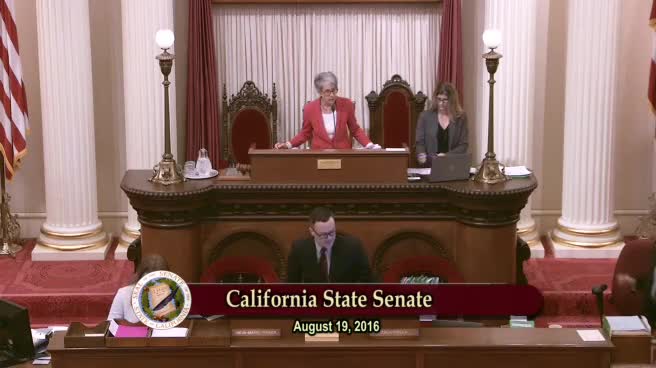
| Aug 19, 2016 | Read third time. Passed. Ordered to the Assembly. (Ayes 36. Noes 0.). |
| Aug 19, 2016 | Read third time. Passed. Ordered to the Assembly. (Ayes 36. Noes 0. Page 5161.). |
| Aug 19, 2016 | In Assembly. Ordered to Engrossing and Enrolling. |
| Aug 15, 2016 | Read second time. Ordered to third reading. |
| Aug 11, 2016 | From committee: Do pass. (Ayes 7. Noes 0.) (August 11). |
| Aug 1, 2016 | In committee: Referred to APPR. suspense file. |
| Jun 29, 2016 | From committee: Do pass and re-refer to Com. on APPR. with recommendation: To Consent Calendar. (Ayes 7. Noes 0.) (June 28). Re-referred to Com. on APPR. |
| May 19, 2016 | Referred to Com. on PUB. S. |
| May 12, 2016 | Read third time. Passed. Ordered to the Senate. (Ayes 78. Noes 0.) |
| May 12, 2016 | Read third time. Passed. Ordered to the Senate. (Ayes 78. Noes 0. Page 4790.) |
| May 12, 2016 | Read third time. Passed. Ordered to the Senate. |
| Feb 19, 2016 | Introduced. To print. |
| May 5, 2016 | Read second time. Ordered to Consent Calendar. |
| May 4, 2016 | From committee: Do pass. To Consent Calendar. (Ayes 20. Noes 0.) (May 4). |
| Apr 20, 2016 | From committee: Do pass and re-refer to Com. on APPR. with recommendation: To Consent Calendar. (Ayes 7. Noes 0.) (April 19). Re-referred to Com. on APPR. |
| Apr 14, 2016 | Re-referred to Com. on PUB. S. |
| Apr 13, 2016 | From committee chair, with author's amendments: Amend, and re-refer to Com. on PUB. S. Read second time and amended. |
| Apr 12, 2016 | In committee: Hearing postponed by committee. |
| Mar 28, 2016 | Re-referred to Com. on PUB. S. |
| Mar 17, 2016 | Referred to Com. on PUB. S. |
| Mar 17, 2016 | From committee chair, with author's amendments: Amend, and re-refer to Com. on PUB. S. Read second time and amended. |
| Feb 22, 2016 | Read first time. |
| Feb 21, 2016 | From printer. May be heard in committee March 22. |
|
Date
|
Description
|
Location
|
Votes
|
|
|---|---|---|---|---|
| Aug 19, 2016 | Assembly 3rd Reading AB2839 Thurmond By Leno | Senate Floor |
Passed |
|
| Aug 11, 2016 | Do pass | Senate Standing Committee on Appropriations |
Passed |
|
| Aug 1, 2016 | Placed on suspense file | Senate Standing Committee on Appropriations |
Passed |
|
| Jun 28, 2016 | Do pass, but first be re-referred to the Committee on [Appropriations] with the recommendation: To Consent Calendar | Senate Standing Committee on Public Safety |
Passed |
|
| May 12, 2016 | AB 2839 THURMOND Consent Calendar Second Day Regular Session | Assembly Floor |
Passed |
|
| May 4, 2016 | Do pass. To Consent Calendar. | Assembly Standing Committee on Appropriations |
Passed |
|
| Apr 19, 2016 | Do pass and be re-referred to the Committee on [Appropriations] with recommendation: To Consent Calendar | Assembly Standing Committee on Public Safety |
Passed |
This list shows positions taken on this bill by organizations on the date displayed, which is linked to the original source.
Positions by individuals are not included.
|
Organization
|
Position
|
Date
|
|---|---|---|
| California Public Defenders Association | ** Support | Aug 19, 2016 |
| Conference of California Bar Associations | ** Support | Aug 19, 2016 |
| Legal Services for Prisoners with Children | ** Support | Aug 19, 2016 |
Office of Senate Floor Analyses (916) 651-1520 Fax: (916) 327-4478 | AB |
THIRD READING
Bill No: AB 2839
:
SENATE PUBLIC SAFETY COMMITTEE: 7-0, 6/28/16
AYES: Hancock, Anderson, Glazer, Leno, Liu, Monning, Stone
SENATE APPROPRIATIONS COMMITTEE: 7-0, 8/11/16
AYES: Lara, Bates, Beall, Hill, McGuire, Mendoza, Nielsen
ASSEMBLY FLOOR: 78-0, 5/12/16 (Consent) - See last page for vote
SOURCE: Conference of California Bar Associations
DIGEST: This bill clarifies that when a criminal defendant is ordered imprisoned for non-payment of a non-restitution criminal fine, only the base fine is used when determining the term of imprisonment.
Existing law:
- Authorizes the court to incarcerate a defendant until an imposed criminal fine is satisfied, but limits such imprisonment to the maximum term permitted for the particular offense of conviction. (Penal Code § 1205 (a).)
- Requires that the time of imprisonment for failure to pay a fine be calculated as no more than one day for every $125 of the fine. (Penal Code § 1205 (a).)
- States that this provision applies to any violation of any of the codes or statutes of the state which are punishable by a fine or by a fine and imprisonment, but that it does not apply to restitution fines or restitution orders. (Penal Code § 1205 (c) & (f).)
- Provides that all days spent in custody by the defendant must first be applied to the term of imprisonment and then to any fine including, but not limited to, base fines at the rate of not less than $125 per day, or more, in the discretion of the trial court. (Penal Code § 2900.5. (a).)
This bill
- Prohibits the term of imprisonment for nonpayment of a fine from exceeding one day for each $125 of the base fine or the term for which the defendant may be sentenced.
- Specifies that all days that a defendant is in custody shall be credited upon the defendant’s term of imprisonment or credited proportionally to any criminal base fine, excluding restitution or restitution orders, at a rate of not less than $125 per day.
- States that any fees and assessments imposed on the base fine shall be reduced proportionally to the reduction of the base fine awarded as a result of custody credits.
Background
The Conference of California Bar Associations, the sponsor of this bill, states:
AB 2839 is follow-up legislation to AB 1375 (Thurmond) of 2015, reaffirming that bill’s intent and invalidating its mis-implementation by at least one court. AB 1375, which was approved unanimously by both houses, amended Penal Code §§1205 and §2900.5 to increase the minimum credit for incarceration towards paying off a criminal fine from $30.00 per day to $125.00 per day. The intent of the bill was to make it easier for poor defendants charged with minor offenses to ease the burden of paying off ever-increasing fines by converting those fines to jail time at a more reasonable rate, and to ease jail overcrowding by enabling low-income defendants to satisfy their debt more quickly. The bill was also intended to reduce incarceration costs, since counties end up paying significant amounts of money to incarcerate non-violent, poor defendants, jailed only for non-payment of debt.
For forty years, California courts have calculated jail credits against the base fine, with penalties and assessments reduced proportionately. Unfortunately, in response to the change made by AB 1375, some courts have changed their method of calculating the fines against which the jail time is applied by applying credits only after penalties and assessments have been added. In these courts, indigent defendants now face more jail time for the same minor fine than they did before AB 1375, despite the legislation’s clear intent. This also increases jail overcrowding for minor offenses, and costs counties more money in incarceration costs.
AB 2839 would restore the “normal” calculation method in place for the forty years before the passage of AB 1375, thereby ensuring that the Legislature’s intent in enacting the bill is given effect, jail overcrowding is reduced, and local costs are kept low.
FISCAL EFFECT: Appropriation: Fiscal Com.: Local:
According to the Senate Appropriations Committee analysis:
- County jails: Potentially significant reduction in local incarceration costs (Local Funds) due to shorter lengths of stay required for persons incarcerated for the nonpayment of fines.
- Penalty assessment/surcharge revenue: Potentially significant reduction in local penalty assessment, state penalty assessment, special fund assessment, and state surcharge revenues (Local Fund/General Fund/Special Funds) due to the mandated proportional reduction in penalties and assessments applied against the amount of base fines that have been served through time served. The magnitude of foregone revenue would be dependent on numerous factors, including but not limited to the number of defendants electing to serve time in lieu of payment of fines, and the ability to collect the penalties and assessments had they been imposed on the defendant in the absence of this measure.
Conference of California Bar Associations (source)
Legal Services for Prisoners with Children
California Public Defenders Association
OPPOSITION: (Verified 8/12/16)
None received
ASSEMBLY FLOOR: 78-0, 5/12/16
AYES: Achadjian, Alejo, Travis Allen, Arambula, Atkins, Baker, Bigelow, Bloom, Bonilla, Bonta, Brough, Brown, Calderon, Campos, Chang, Chau, Chávez, Chiu, Chu, Cooley, Cooper, Dababneh, Dahle, Daly, Dodd, Eggman, Frazier, Beth Gaines, Gallagher, Cristina Garcia, Eduardo Garcia, Gatto, Gipson, Gomez, Gonzalez, Gordon, Gray, Grove, Hadley, Harper, Roger Hernández, Holden, Irwin, Jones, Kim, Lackey, Levine, Linder, Lopez, Low, Maienschein, Mathis, Mayes, McCarty, Medina, Melendez, Mullin, Nazarian, Obernolte, O'Donnell, Olsen, Patterson, Quirk, Ridley-Thomas, Rodriguez, Salas, Santiago, Steinorth, Mark Stone, Thurmond, Ting, Wagner, Waldron, Weber, Wilk, Williams, Wood, Rendon
NO VOTE RECORDED: Burke, Jones-Sawyer
8/15/16 19:40:00
**** END ****
SENATE COMMITTEE ON
Senator Ricardo Lara, Chair
2015 - 2016 Regular Session
AB 2839 (Thurmond) - Criminal penalties: nonpayment of fines
Version: | Policy Vote: |
Urgency: | Mandate: |
Hearing Date: | Consultant: |
This bill meets the criteria for referral to the Suspense File.
Bill Summary:
AB 2839 would prohibit the term of imprisonment for nonpayment of a fine from exceeding one day for each $125 of the base fine or the term for which the defendant may be sentenced. This bill would require the penalties and assessments imposed on the base fine to be reduced by the percentage of the base fine that was satisfied by jail credits or community service, as specified.
Fiscal Impact:
- County jails: Potentially significant reduction in local incarceration costs (Local Funds) due to shorter lengths of stay required for persons incarcerated for the nonpayment of fines.
- Penalty assessment/surcharge revenue: Potentially significant reduction in local penalty assessment, state penalty assessment, special fund assessment, and state surcharge revenues (Local Fund/General Fund/Special Funds) due to the mandated proportional reduction in penalties and assessments applied against the amount of base fines that have been served through time served. The magnitude of foregone revenue would be dependent on numerous factors, including but not limited to the number of defendants electing to serve time in lieu of payment of fines, and the ability to collect the penalties and assessments had they been imposed on the defendant in the absence of this measure.
Background:
Existing law permits a judgment against a criminal defendant that orders the defendant to pay a fine, with or without other punishment, other than a restitution fine or order, to also direct that he or she be imprisoned until the fine is satisfied. Existing law requires the judgment to specify the term of imprisonment for nonpayment of the fine, and prohibits the term from exceeding one day for each $125 of the fine, or exceeding the term for which the defendant may be sentenced for the offense of which he or she has been convicted. (Penal Code § 1205 (a).)
In all felony and misdemeanor convictions, either by plea or by verdict, when the defendant has been in custody, all days of custody are to be credited upon his or her term of imprisonment, or credited to any fine, including, but not limited to, base fines, on a proportional basis, that may be imposed at the rate of not less than $125 per day, or more, in the discretion of the court imposing the sentence. (Penal Code § 2900.5.)
Proposed Law:
This bill would prohibit the term of imprisonment for nonpayment of a fine from exceeding one day for each $125 of the base fine or the term for which the defendant may be sentenced. Additionally, this bill:
- Specifies that all days that a defendant is in custody shall be credited upon the defendant’s term of imprisonment or credited proportionally to any criminal base fine, excluding restitution fines or restitution orders, at a rate not less than $125 per day.
- States that any penalties and assessments imposed on the base fine shall be reduced proportionally to the reduction of the base fine awarded as a result of custody credits or community service.
Related Legislation:
AB 1375 (Thurmond) Chapter 209/2015 increases the statutory rate for payment of fines by incarceration from not less than $30 per day to not less than $125 per day.
Staff Comments:
By prohibiting the term of imprisonment for nonpayment of a fine from exceeding one day for each $125 of the base fine, as opposed to one day for each $125 of the [total] fine, this bill will have the effect of shorter lengths of stay in county jail required for persons incarcerated for the nonpayment of fines and potential cost savings to local law enforcement agencies.
This bill additionally requires the penalties and assessments imposed on the base fine to be reduced by the percentage of the base fine that was satisfied by jail credits or community service, which could result in a potential reduction in local and state penalty assessments, and state surcharge revenues. The magnitude of foregone revenue would be dependent on numerous factors, including but not limited to the number of defendants electing to serve time in lieu of payment of fines, and the ability to collect the penalties and assessments had they been imposed on the defendant in the absence of this measure. Although the probability of collection of the assessed penalties and assessments imposed in many cases would be small, even a negligible impact against the substantial level of outstanding court-ordered debt could have a fiscal impact, at a minimum, in the hundreds of thousands of dollars annually.
-- END --
SENATE COMMITTEE ON PUBLIC SAFETY
Senator Loni Hancock, Chair
2015 - 2016 Regular
Bill No: AB 2839 Hearing Date: June 28, 2016
Author: | Thurmond | ||
Version: | April 13, 2016 | ||
Urgency: | No | Fiscal: | Yes |
Consultant: | MK | ||
Subject: Criminal Penalties: Nonpayment of Fines
HISTORY
Source: Conference of California Bar Associations
Prior Legislation: AB 1375 (Thurmond) Chapter 209, Stats. 2015
Support: Legal Services for Prisoners with Children; California Public Defenders Association
Opposition: None known
Assembly Floor Vote: 78 - 0
PURPOSE
The purpose of this bill is to clarify that when a criminal defendant is ordered imprisoned for non-payment of a non-restitution criminal fine, only the base fine is used when determining the term of imprisonment.
Existing law authorizes the court to incarcerate a defendant until an imposed criminal fine is satisfied, but limits such imprisonment to the maximum term permitted for the particular offense of conviction. (Penal Code § 1205 (a).)
Existing law requires that the time of imprisonment for failure to pay a fine be calculated as no more than one day for every $125 of the fine. (Penal Code § 1205 (a).)
Existing law states that this provision applies to any violation of any of the codes or statutes of the state which are punishable by a fine or by a fine and imprisonment, but that it does not apply to restitution fines or restitution orders. (Penal Code § 1205 (c) & (f).)
Existing law provides that all days spent in custody by the defendant must first be applied to the term of imprisonment and then to any fine including, but not limited to, base fines at the rate of not less than $125 per day, or more, in the discretion of the trial court. (Penal Codea § 2900.5. (a).)
This bill prohibits the term of imprisonment for nonpayment of a fine from exceeding one day for each $125 of the base fine or the term for which the defendant may be sentenced.
This bill specifies that all days that a defendant is in custody shall be credited upon the defendant’s term of imprisonment or credited proportionally to any criminal base fine, excluding restitution or restitution orders, at a rate of not less than $125 per day.
This bill states that any fees and assessments imposed on the base fine shall be reduced proportionally to the reduction of the base fine awarded as a result of custody credits.
RECEIVERSHIP/OVERCROWDING CRISIS AGGRAVATION
For the past several years this Committee has scrutinized legislation referred to its jurisdiction for any potential impact on prison overcrowding. Mindful of the United States Supreme Court ruling and federal court orders relating to the state’s ability to provide a constitutional level of health care to its inmate population and the related issue of prison overcrowding, this Committee has applied its “ROCA” policy as a content-neutral, provisional measure necessary to ensure that the Legislature does not erode progress in reducing prison overcrowding.
On February 10, 2014, the federal court ordered California to reduce its in-state adult institution population to 137.5% of design capacity by February 28, 2016, as follows:
- 143% of design bed capacity by June 30, 2014;
- 141.5% of design bed capacity by February 28, 2015; and,
- 137.5% of design bed capacity by February 28, 2016.
In December of 2015 the administration reported that as “of December 9, 2015, 112,510 inmates were housed in the State’s 34 adult institutions, which amounts to 136.0% of design bed capacity, and 5,264 inmates were housed in out-of-state facilities. The current population is 1,212 inmates below the final court-ordered population benchmark of 137.5% of design bed capacity, and has been under that benchmark since February 2015.” (Defendants’ December 2015 Status Report in Response to February 10, 2014 Order, 2:90-cv-00520 KJM DAD PC, 3-Judge Court, Coleman v. Brown, Plata v. Brown (fn. omitted).) One year ago, 115,826 inmates were housed in the State’s 34 adult institutions, which amounted to 140.0% of design bed capacity, and 8,864 inmates were housed in out-of-state facilities. (Defendants’ December 2014 Status Report in Response to February 10, 2014 Order, 2:90-cv-00520 KJM DAD PC, 3-Judge Court, Coleman v. Brown, Plata v. Brown (fn. omitted).)
While significant gains have been made in reducing the prison population, the state must stabilize these advances and demonstrate to the federal court that California has in place the “durable solution” to prison overcrowding “consistently demanded” by the court. (Opinion Re: Order Granting in Part and Denying in Part Defendants’ Request For Extension of December 31, 2013 Deadline, NO. 2:90-cv-0520 LKK DAD (PC), 3-Judge Court, Coleman v. Brown, Plata v. Brown (2-10-14). The Committee’s consideration of bills that may impact the prison population therefore will be informed by the following questions:
- Whether a proposal erodes a measure which has contributed to reducing the prison population;
- Whether a proposal addresses a major area of public safety or criminal activity for which there is no other reasonable, appropriate remedy;
- Whether a proposal addresses a crime which is directly dangerous to the physical safety of others for which there is no other reasonably appropriate sanction;
- Whether a proposal corrects a constitutional problem or legislative drafting error; and
- Whether a proposal proposes penalties which are proportionate, and cannot be achieved through any other reasonably appropriate remedy.
COMMENTS
1. Need for This Bill
According to the author:
Last year, the Legislature unanimously approved AB 1375 to help address the excesses of the “debt trap” faced by many defendant facing small fines in criminal court. The bill enacted an inflationary adjustment from $30 to $125 per day to the rate at which jail time offset assessed fines that the prisoner could not pay. The purpose of the bill was to reduce the time spent in jail by indigent defendants unable to pay small fines.
Unfortunately, in response, some courts have now changed their method of calculating the fines against which the jail time is offset. Where before the offset was applied to the base fine, with penalties and assessments disregarded or reduced, these courts now are applying the credit only after penalties and assessments have been added. The net result in these courts is that indigent defendants now end up facing more jail time for the same minor fine, rather than less.
AB 2839 will address this issue by specifying that the credit for jail time is to be applied to the base fine, not to the fine enhanced by penalties and assessments.
2. Criminal Fines and Penalties
Criminal fines and penalties have climbed steadily in recent decades. Government entities tasked with collecting these fines have realized diminishing returns from collection efforts. A recent San Francisco Daily Journal article noted, “California courts and counties collect nearly $2 billion in fines and fees every year. Nevertheless, the state still has a more than $10.2 billion balance of uncollected debt from prior years, according to the most recent date from 2012.” (See Jones & Sugarman, State Judges Bemoan Fee Collection Process, San Francisco Daily Journal, (January 5, 2015).) “Felons convicted to prison time usually can’t pay their debts at all. The annual growth in delinquent debt partly reflects a supply of money that doesn’t exist to be collected.” (Id.) In the same article, the Presiding Judge of San Bernardino County was quoted 1 However, imprisonment pending payment of a fine is unconstitutional as applied to a convicted indigent defendant if the failure to pay is due to indigence and not to willfulness. (In re Antazo (1970) 3 Cal.3d 100, 103-104.) AB 1375 (Thurmond ) Page 4 of 4 as saying “the whole concept is getting blood out of a turnip.” (Id.)
3. Clarifying Credits Apply to the Base Fine
As noted in the author’s statement, AB 1375 (Thurmond), enacted last year, increased the amount of credit toward fines that a person gets for each day served in jail. This bill clarifies that fees and assessments are to be imposed on the base fine as reduced by custody credits. Currently, courts impose fees and assessments automatically in proportion to the base fine. Existing law states that when incarcerated individuals receive credit toward their criminal fines –excluding restitution fines and orders-, those individuals receive not less than $125 per day in custody. This bill would apply those custody credits to the base fine, rather than the total of the base fine with added fees and assessments. Because fees and assessments are calculated proportionally to the base AB 2839 Page 3 fine, these amendments would reduce the total of the fines imposed on defendants by reducing the base fine.
4. Support
The Conference of California Bar Associations, the sponsor of this bill, states:
AB 2839 is follow-up legislation to AB 1375 (Thurmond) of 2015, reaffirming that bill’s intent and invalidating its mis-implementation by at least one court. AB 1375, which was approved unanimously by both houses, amended Penal Code §§1205 and §2900.5 to increase the minimum credit for incarceration towards paying off a criminal fine from $30.00 per day to $125.00 per day. The intent of the bill was to make it easier for poor defendants charged with minor offenses to ease the burden of paying off ever-increasing fines by converting those fines to jail time at a more reasonable rate, and to ease jail overcrowding by enabling low-income defendants to satisfy their debt more quickly. The bill was also intended to reduce incarceration costs, since counties end up paying significant amounts of money to incarcerate non-violent, poor defendants, jailed only for non-payment of debt.
For forty years, California courts have calculated jail credits against the base fine, with penalties and assessments reduced proportionately. Unfortunately, in response to the change made by AB 1375, some courts have changed their method of calculating the fines against which the jail time is applied by applying credits only after penalties and assessments have been added. In these courts, indigent defendants now face more jail time for the same minor fine than they did before AB 1375, despite the legislation’s clear intent. This also increases jail overcrowding for minor offenses, and costs counties more money in incarceration costs.
AB 2839 would restore the “normal” calculation method in place for the forty years before the passage of AB 1375, thereby ensuring that the Legislature’s intent in enacting the bill is given effect, jail overcrowding is reduced, and local costs are kept low.
-- END –
Date of Hearing: May 4, 2016
ASSEMBLY COMMITTEE ON APPROPRIATIONS
Lorena Gonzalez, Chair
ABPCA Bill Id:AB 2839
Author:(Thurmond) – As Amended Ver:April 13, 2016
Policy Committee: | Public Safety | Vote: | 7 - 0 |
|
| ||
|
|
Urgency: No State Mandated Local Program: No Reimbursable: No
SUMMARY:
This bill clarifies that when a criminal defendant is ordered imprisoned for non-payment of a non-restitution criminal fine, that only the base fine is used when determining the term of imprisonment.
FISCAL EFFECT:
- Reduced costs of incarceration in county jails. Because some defendants choose to convert their fines to time in custody, by requiring custody credits be applied to the base fine, those defendants who choose to serve time in lieu of paying fines would be able to serve less time in custody to satisfy payment of the criminal base fines and not serve time for the additional assessments.
COMMENTS:
- Purpose/Background. According to the author, the Legislature passed AB 1375 to help address the excesses of the ‘debt trap’ faced by many defendants facing small fines in criminal court. It increased from $30 to $125 per day the rate at which jail time offset assessed fines that the prisoner could not pay. The purpose of the bill was to reduce the time spent in jail by indigent defendants unable to pay small fines. However, some courts changed their method of calculating the fines against which the jail time is offset, these courts now are applying the credit only after penalties and assessments have been added. In these courts, indigent defendants face more jail time for the same minor fine, rather than less.
The author states,“AB 2839 will address this issue by specifying that the credit for jail time is to be applied to the base fine, not to the fine enhanced by penalties and assessments.”
Currently, courts impose fees and assessments automatically in proportion to the base fine. Existing law states that when incarcerated individuals receive credit toward their criminal fines –excluding restitution fines and orders those individuals receive not less than $125 per day credit in custody. This bill would apply those custody credits to the base fine, rather than the total of the base fine with added fees and assessments. Because fees and assessments are calculated proportionally to the base fine, these amendments would reduce the total of the fines imposed on defendants by reducing the base fine.
- Support. According to the Conference of California Bar Associations, “AB 2839 would restore the “normal” calculation method in place for the forty years before the passage of AB 1375, thereby ensuring that the Legislature’s intent in enacting the bill is given effect, jail overcrowding is reduced, and local costs are kept low.”
- Prior Legislation:
- AB 1375 (Thurmond), Chapter 209, Statutes of 2015, increased the rates to be applied, when a criminal defendant is ordered imprisoned for non-payment of a non-restitution criminal fine, from a credit of not less than $30 to not less than $125 per day for each day served pursuant to a judgment for non-payment of a criminal fine.
- AB 1819 (Robert Pacheco), Chapter 62, Statutes of 2002, authorizes any county or court that implements a comprehensive program to identify and collect delinquent fines and forfeitures, with or without a warrant having been issued against the alleged violator, if the base fines and forfeitures are delinquent.
Analysis Prepared by: Pedro Reyes / APPR. / (916) 319-2081
Date of Hearing: April 19, 2016
Consultant: Matt Dean
ASSEMBLY COMMITTEE ON
Reginald Byron Jones-Sawyer, Sr., Chair
ABPCA Bill Id:
Author:() – As Ver:April 13, 2016
SUMMARY:
Clarifies that when a criminal defendant is ordered imprisoned for non-payment of a non-restitution criminal fine, that only the base fine is used when determining the term of imprisonment. Specifically, this bill:
- Prohibits the term of imprisonment for nonpayment of a fine from exceeding one day for each $125 of the base fine or the term for which the defendant may be sentenced.
- Specifies that all days that a defendant is in custody shall be credited upon the defendant’s term of imprisonment or credited proportionally to any criminal base fine, excluding restitution or restitution orders, at a rate of not less than $125 per day.
- States that any fees and assessments imposed on the base fine shall be reduced proportionally to the reduction of the base fine awarded as a result of custody credits.
EXISTING LAW:
- Authorizes the court to incarcerate a defendant until an imposed criminal fine is satisfied, but limits such imprisonment to the maximum term permitted for the particular offense of conviction. (Pen. Code, § 1205, subd. (a).)
- Requires that the time of imprisonment for failure to pay a fine be calculated as no more than one day for every $125 of the fine. (Pen. Code, § 1205, subd. (a).)
- States that this provision applies to any violation of any of the codes or statutes of the state which are punishable by a fine or by a fine and imprisonment, but that it does not apply to restitution fines or restitution orders. (Pen. Code, § 1205, subds. (c) & (f).)
- Provides that all days spent in custody by the defendant must first be applied to the term of imprisonment and then to any fine including, but not limited to, base fines at the rate of not less than $125 per day, or more, in the discretion of the trial court. (Pen. Code, § 2900.5, subd. (a).)
FISCAL EFFECT:
Unknown
COMMENTS:
- Author's Statement: According to the author, "Last year, the Legislature unanimously approved AB1375 to help address the excesses of the ‘debt trap’ faced by many defendant facing small fines in criminal court. The bill called for an inflationary adjustment from $30 to $125 per day to the rate at which jail time offset assessed fines that the prisoner could not pay. The purpose of the bill was to reduce the time spent in jail by indigent defendants unable to pay small fines.
“Unfortunately, in response, some courts have now changed their method of calculating the fines against which the jail time is offset. Where before the offset was applied to the base fine, with penalties and assessments disregarded or reduced, these courts now are applying the credit only after penalties and assessments have been added. The net result in these courts is that indigent defendants now end up facing more jail time for the same minor fine, rather than less.
“AB 2839 will address this issue by specifying that the credit for jail time is to be applied to the base fine, not to the fine enhanced by penalties and assessments.” - Penal Code Section 1205: Pen. Code, § 1205 gives the court power to enforce payment of fine in a criminal case by imprisonment. However, imprisonment pending payment of a fine is unconstitutional as applied to a convicted indigent defendant if the failure to pay is due to indigence and not to willfulness. (In re Antazo (1970) 3 Cal.3d 100, 103-104.)
Pen. Code, § 1205 is also used by defendants as a vehicle to request that the trial court exercise its discretion to convert fines to jail time. However, the statute cannot be used to pay off restitution fines or victim restitution orders. (Pen. Code, § 1205, subd. (f).) - Criminal Fine Increases: Criminal fines and penalties have climbed steadily in recent decades. Government entities tasked with collecting these fines have realized diminishing returns from collection efforts. The San Francisco Daily Journal noted, "California courts and counties collect nearly $2 billion in fines and fees every year. Nevertheless, the state still has a more than $10.2 billion balance of uncollected debt from prior years, according to the most recent date from 2012." (See Jones & Sugarman, State Judges Bemoan Fee Collection Process, San Francisco Daily Journal, (January 5, 2015).) "Felons convicted to prison time usually can't pay their debts at all. The annual growth in delinquent debt partly reflects a supply of money that doesn't exist to be collected." (Ibid.) In the same article, the Presiding Judge of San Bernardino County was quoted as saying "the whole concept is getting blood out of a turnip." (Ibid.) Considering that so many fines remain to be collected, it seems unlikely that the reduction in collectable fines this bill would create would actually impact revenues for the State of California. Moreover, because some defendants choose to convert their fines to time in custody, by requiring custody credits be applied to the base fine, those defendants who choose to serve time in lieu of paying fines would be able to serve less time in custody to satisfy payment of the criminal fines in their judgment. It is unclear whether this would reduce prison and jail populations, but it is possible this would reduce those populations.
- Purpose of Amendments: The amendments to this bill clarify that fees and assessments are to be imposed on the base fine as reduced by custody credits. Currently, courts impose fees and assessments automatically in proportion to the base fine. Existing law states that when incarcerated individuals receive credit toward their criminal fines –excluding restitution fines and orders-, those individuals receive not less than $125 per day in custody. This bill would apply those custody credits to the base fine, rather than the total of the base fine with added fees and assessments. Because fees and assessments are calculated proportionally to the base fine, these amendments would reduce the total of the fines imposed on defendants by reducing the base fine.
- Argument in Support: According to the Conference of California Bar Associations, “AB 2839 is follow-up legislation to AB 1375 (Thurmond) of 2015, reaffirming that bill’s intent and invalidating its mis-implementation by at least one court. AB 1375, which was approved unanimously by both houses, amended Penal Code §§1205 and §2900.5 to increase the minimum credit for incarceration towards paying off a criminal fine from $30.00 per day to $125.00 per day. The intent of the bill was to make it easier for poor defendants to satisfy the burden of paying off ever-increasing fines by converting those fines to jail time at a more reasonable rate, and to ease jail overcrowding by enabling these poor defendants to satisfy their debt and get our more quickly. The bill also was intended to reduce costs, since counties end up paying the costs of incarceration for these poor defendants.
“For forty years, California courts have calculated jail time against the base fine, with penalties and assessments reduced proportionately. Unfortunately, in response to the change made by AB 1375, some courts have changed their method of calculating the fines against which the jail time is applied, applying the credit only after penalties and assessments have been added. In these courts, indigent defendants now face more jail time for the same minor fine than they did before AB 1375, despite the legislation’s clear intent. This also increases jail overcrowding for minor offenses, and costs counties more money in incarceration costs.
“AB 2839 would restore the “normal” calculation method in place for the forty years before the passage of AB 1375, thereby ensuring that the Legislature’s intent in enacting the bill is given effect, jail overcrowding is reduced, and local costs are kept low.” - Prior Legislation:
- AB 1375 (Thurmond), Chapter 209, Statutes of 2015, increased the rates to be applied, when a criminal defendant is ordered imprisoned for non-payment of a non-restitution criminal fine, from a credit of not less than $30 to not less than $125 per day for each day served pursuant to a judgment for non-payment of a criminal fine.
- AB 1819 (Robert Pacheco), Chapter 62, Statutes of 2002, authorized any county or court that implements a comprehensive program to identify and collect delinquent fines and forfeitures, with or without a warrant having been issued against the alleged violator, if the base fines and forfeitures are delinquent.
- AB 1375 (Thurmond), Chapter 209, Statutes of 2015, increased the rates to be applied, when a criminal defendant is ordered imprisoned for non-payment of a non-restitution criminal fine, from a credit of not less than $30 to not less than $125 per day for each day served pursuant to a judgment for non-payment of a criminal fine.
REGISTERED SUPPORT / OPPOSITION:
Support
American Civil Liberties Union
Conference of California Bar Associations
Opposition
None
Analysis Prepared by:
Bill Author

Bill Co-Author(s):