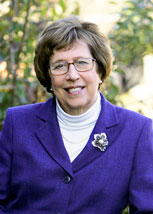
AB 2844: Public contracts: discrimination.
- Session Year: 2015-2016
- House: Assembly
- Latest Version Date: 2016-09-24
Existing law governs the procurement process for contracts of specified public entities. Existing law, the Unruh Civil Rights Act, states that all persons within this state are free and equal and, no matter what their sex, race, color, religion, ancestry, national origin, disability, medical condition, genetic information, marital status, sexual orientation, citizenship, primary language, or immigration status, are entitled to full and equal accommodations, advantages, facilities, privileges, or services in all business establishments. Existing law, the California Fair Employment and Housing Act, protects and safeguards the right and opportunity of all persons to seek, obtain, and hold employment without discrimination, abridgment, or harassment on account of race, religious creed, color, national origin, ancestry, physical disability, mental disability, medical condition, genetic information, marital status, sex, gender, gender identity, gender expression, age, sexual orientation, or military and veteran status.
This bill would, with certain exceptions, require a person that submits a bid or proposal to, or otherwise proposes to enter into or renew a contract with, a state agency with respect to any contract in the amount of $100,000 or more to certify, under penalty of perjury, at the time the bid or proposal is submitted or the contract is renewed that they are in compliance with the Unruh Civil Rights Act and the California Fair Employment and Housing Act, and that any policy that they have adopted against any sovereign nation or peoples recognized by the government of the United States, including, but not limited to, the nation and people of Israel, is not used to discriminate in violation of the Unruh Civil Rights Act or the California Fair Employment and Housing Act. By requiring a person to certify under penalty of perjury, this bill would expand the definition of a crime, thereby imposing a state-mandated local program.
The California Constitution requires the state to reimburse local agencies and school districts for certain costs mandated by the state. Statutory provisions establish procedures for making that reimbursement.
This bill would provide that no reimbursement is required by this act for a specified reason.
Existing law governs the procurement process for contracts of specified public entities. Existing law, the Unruh Civil Rights Act, states that all persons within this state are free and equal and, no matter what their sex, race, color, religion, ancestry, national origin, disability, medical condition, genetic information, marital status, sexual orientation, citizenship, primary language, or immigration status, are entitled to full and equal accommodations, advantages, facilities, privileges, or services in all business establishments. Existing law, the California Fair Employment and Housing Act, protects and safeguards the right and opportunity of all persons to seek, obtain, and hold employment without discrimination, abridgment, or harassment on account of race, religious creed, color, national origin, ancestry, physical disability, mental disability, medical condition, genetic information, marital status, sex, gender, gender identity, gender expression, age, sexual orientation, or military and veteran status.
This bill would would, with certain exceptions, require a person that submits a bid or proposal to, or otherwise proposes to enter into or renew a contract with, a state agency with respect to any contract in the amount of $100,000 or more to certify, under penalty of perjury, at the time the bid or proposal is submitted or the contract is renewed that they are in compliance with the Unruh Civil Rights Act and the California Fair Employment and Housing Act, and that any policy that they have adopted against any sovereign nation or peoples recognized by the government of the United States, including, but not limited to, the nation and people of Israel, is not used as a pretext for discrimination to discriminate in violation of the Unruh Civil Rights Act or the California Fair Employment and Housing Act. By requiring a person to certify under penalty of perjury, this bill would expand the definition of a crime, thereby imposing a state-mandated local program.
The California Constitution requires the state to reimburse local agencies and school districts for certain costs mandated by the state. Statutory provisions establish procedures for making that reimbursement.
This bill would provide that no reimbursement is required by this act for a specified reason.
Existing law governs the procurement process for contracts of specified public entities. Existing law, the Unruh Civil Rights Act, states that all persons within this state are free and equal and, no matter what their sex, race, color, religion, ancestry, national origin, disability, medical condition, genetic information, marital status, sexual orientation, citizenship, primary language, or immigration status, are entitled to full and equal accommodations, advantages, facilities, privileges, or services in all business establishments. Existing law, the California Fair Employment and Housing Act, protects and safeguards the right and opportunity of all persons to seek, obtain, and hold employment without discrimination, abridgment, or harassment on account of race, religious creed, color, national origin, ancestry, physical disability, mental disability, medical condition, genetic information, marital status, sex, gender, gender identity, gender expression, age, sexual orientation, or military and veteran status.
This bill would require a person that submits a bid or proposal to, or otherwise proposes to enter into or renew a contract with, a state agency with respect to any contract in the amount of $100,000 or more to certify, under penalty of perjury, at the time the bid or proposal is submitted or the contract is renewed that they have complied are in compliance with the Unruh Civil Rights Act and the California Fair Employment and Housing Act, and that any policy that they have adopted against any sovereign nation or peoples recognized by the government of the United States, including, but not limited to, the nation and people of Israel, is not used as a pretext for discrimination in violation of the Unruh Civil Rights Act or the California Fair Employment and Housing Act. By requiring a person to certify under penalty of perjury, this bill would expand the definition of a crime, thereby imposing a state-mandated local program. The bill would authorize the Attorney General to receive and investigate complaints regarding violations of, and to bring suit to enforce, these provisions.
The California Constitution requires the state to reimburse local agencies and school districts for certain costs mandated by the state. Statutory provisions establish procedures for making that reimbursement.
This bill would provide that no reimbursement is required by this act for a specified reason.
Existing law governs the procurement process for contracts of specified public entities. Existing law prohibits a person that, at the time of bid or proposal for a new contract or renewal of an existing contract, engages in investment activities in Iran from bidding on, submitting a proposal for, or entering into, a contract with a public entity for goods or services of $1,000,000 or more.
This bill would require the Attorney General to develop, maintain, and post on its Internet Web site, a list of companies that are engaging in discriminatory business practices in furtherance of a boycott of any sovereign nation or peoples recognized by the government of the United States. The bill would also require the Attorney General, on or before January 1, 2018, to provide an assessment to the Legislature of the constitutionality of prohibiting a company on the list from entering into a contract with a public entity.
This bill would require a person that submits a bid or proposal to, or otherwise proposes to enter into or renew a contract with, a state agency with respect to any contract in the amount of $100,000 or more to certify, under penalty of perjury, at the time the bid or proposal is submitted or the contract is renewed that they have complied with the Unruh Civil Rights Act and the California Fair Employment and Housing Act, and that any policy that they have adopted against any sovereign nation or peoples recognized by the government of the United States, including, but not limited to, the nation and people of Israel, is not used as a pretext for discrimination in violation of the Unruh Civil Rights Act or the California Fair Employment and Housing Act. By requiring a person to certify under penalty of perjury, this bill would expand the definition of a crime, thereby imposing a state-mandated local program. The bill would authorize the Attorney General to receive and investigate complaints regarding violations of, and to bring suit to enforce, these provisions.
The California Constitution requires the state to reimburse local agencies and school districts for certain costs mandated by the state. Statutory provisions establish procedures for making that reimbursement.
This bill would provide that no reimbursement is required by this act for a specified reason.
Existing law governs the procurement process for contracts of specified public entities. Existing law prohibits a person that, at the time of bid or proposal for a new contract or renewal of an existing contract, engages in investment activities in Iran from bidding on, submitting a proposal for, or entering into, a contract with a public entity for goods or services of $1,000,000 or more.
This bill, with certain exceptions, would prohibit a public entity, which includes state and local entities, from entering into a contract, on or after January 1, 2017, with a company that is engaging in discriminatory business practices in furtherance of a boycott of any sovereign nation or peoples recognized by the government of the United States, including, but not limited to, the nation of Israel. The bill would require the Attorney General to develop, maintain, and post on its Internet Web site, a list of companies that are engaging in discriminatory business practices in furtherance of a boycott of any sovereign nation or peoples recognized by the government of the United States, including, but not limited to, the nation of Israel. The bill would prohibit a company that, at the time of bid or proposal for a new contract or renewal of an existing contract, is identified on that list from bidding on, submitting a proposal for, or entering into or renewing a contract with a public entity to acquire or dispose of goods, services, information technology, or construction for $10,000 or more. The bill would require a public entity to notify any company that bids on or submits a proposal for a contract with the public entity for $10,000 or more, that is determined to be engaging in discriminatory business practices in furtherance of a boycott of any sovereign nation or peoples recognized by the government of the United States, including, but not limited to, the nation of Israel, that the public entity is prohibited from contracting with the company and to request that the company take substantial action to cease its discriminatory business practices. States. The bill would also require the Attorney General, on or before January 1, 2018, to provide an assessment to the Legislature of the constitutionality of prohibiting a company on the list from entering into a contract with a public entity.
By imposing additional duties with respect to local public contracting, this bill would impose a state-mandated local program.
The California Constitution requires the state to reimburse local agencies and school districts for certain costs mandated by the state. Statutory provisions establish procedures for making that reimbursement.
This bill would provide that, if the Commission on State Mandates determines that the bill contains costs mandated by the state, reimbursement for those costs shall be made pursuant to these statutory provisions.
Existing law governs the procurement process for contracts of specified public entities. Existing law prohibits a person that, at the time of bid or proposal for a new contract or renewal of an existing contract, engages in investment activities in Iran from bidding on, submitting a proposal for, or entering into, a contract with a public entity for goods or services of $1,000,000 or more.
This bill, with certain exceptions, would prohibit a public entity, which includes state and local entities, from entering into a contract, on or after January 1, 2017, with a company that is participating in the boycott of Israel, as provided. engaging in discriminatory business practices in furtherance of a boycott of any sovereign nation or peoples recognized by the government of the United States, including, but not limited to, the nation of Israel. The bill would require the Attorney General to develop, or contract to develop, maintain, and post on its Internet Web site, a list of companies it determines are engaging in a boycott of Israel. that are engaging in discriminatory business practices in furtherance of a boycott of any sovereign nation or peoples recognized by the government of the United States, including, but not limited to, the nation of Israel. The bill would prohibit a company that, at the time of bid or proposal for a new contract or renewal of an existing contract, is identified on that list from bidding on, submitting a proposal for, or entering into or renewing a contract with a public entity to acquire or dispose of goods, services, information technology, or construction for $10,000 or more. The bill would require a public entity to require a company that submits a bid or proposal to, or otherwise proposes to enter into or renew a contract with, the public entity with respect to a contract for goods or services for $10,000 or more to certify, at the time the bid is submitted or the contract is renewed, that the company is not identified on the list. The bill would provide that if a public entity or the Department of General Services determines that a company has submitted a false certification, and the company fails to demonstrate to the local public entity or the Department of General Services that the company has ceased engaging in a boycott of Israel within 90 days after the determination of a false certification, the company would be subject to a civil penalty of $250,000 or twice the amount of the contract for which the false certification was made, whichever is greater, termination of an existing contract with the awarding body at the option of the awarding body or the Department of General Services, and ineligibility to bid on a contract for a period of 3 years from the date of the determination that the company submitted the false certification. The bill would find and declare that these provisions of this bill are a matter of statewide concern due to the political nature of contracting with a company that is participating in the boycott of Israel, and therefore, these provisions apply to charter cities, charter counties, and a charter city and county and supersede any inconsistent charter provision. notify any company that bids on or submits a proposal for a contract with the public entity for $10,000 or more, that is determined to be engaging in discriminatory business practices in furtherance of a boycott of any sovereign nation or peoples recognized by the government of the United States, including, but not limited to, the nation of Israel, that the public entity is prohibited from contracting with the company and to request that the company take substantial action to cease its discriminatory business practices.
By imposing additional duties with respect to local public contracting, this bill would impose a state-mandated local program.
The California Constitution requires the state to reimburse local agencies and school districts for certain costs mandated by the state. Statutory provisions establish procedures for making that reimbursement.
This bill would provide that, if the Commission on State Mandates determines that the bill contains costs mandated by the state, reimbursement for those costs shall be made pursuant to these statutory provisions.
Existing law governs the procurement process for contracts of specified public entities. Existing law prohibits a person that, at the time of bid or proposal for a new contract or renewal of an existing contract, engages in investment activities in Iran from bidding on, submitting a proposal for, or entering into, a contract with a public entity for goods or services of $1,000,000 or more.
This bill, with certain exceptions, would prohibit a public entity, which includes state and local entities, from entering into a contract, on or after January 1, 2017, with a company that is participating in the boycott of Israel, as provided. The bill would require the Attorney General to develop, or contract to develop, a list of companies it determines are engaging in a boycott of Israel. The bill would prohibit a company that, at the time of bid or proposal for a new contract or renewal of an existing contract, is identified on that list from bidding on, submitting a proposal for, or entering into or renewing a contract with a public entity to acquire or dispose of goods, services, information technology, or construction for $10,000 or more. The bill would require a public entity to require a company that submits a bid or proposal to, or otherwise proposes to enter into or renew a contract with, the public entity with respect to a contract for goods or services for $10,000 or more to certify, at the time the bid is submitted or the contract is renewed, that the company is not identified on the list. The bill would provide that if a public entity or the Department of General Services determines that a company has submitted a false certification, and the company fails to demonstrate to the local public entity or the Department of General Services that the company has ceased engaging in a boycott of Israel within 90 days after the determination of a false certification, the company would be subject to a civil penalty of $250,000 or twice the amount of the contract for which the false certification was made, whichever is greater, termination of an existing contract with the awarding body at the option of the awarding body or the Department of General Services, and ineligibility to bid on a contract for a period of 3 years from the date of the determination that the company submitted the false certification. The bill would find and declare that these provisions of this bill are a matter of statewide concern due to the political nature of contracting with a company that is participating in the boycott of Israel, and therefore, these provisions apply to charter cities, charter counties, and a charter city and county and supersede any inconsistent charter provision.
By imposing additional duties with respect to local public contracting, this bill would impose a state-mandated local program.
This bill also would require the Governors Office of Business and Economic Development to incentivize specified activities between Israel and California and to disincentivize barriers hindering those activities.
The California Constitution requires the state to reimburse local agencies and school districts for certain costs mandated by the state. Statutory provisions establish procedures for making that reimbursement.
This bill would provide that, if the Commission on State Mandates determines that the bill contains costs mandated by the state, reimbursement for those costs shall be made pursuant to these statutory provisions.
Existing law governs the procurement process for contracts of specified public entities. Existing law prohibits a person that, at the time of bid or proposal for a new contract or renewal of an existing contract, engages in investment activities in Iran from bidding on, submitting a proposal for, or entering into, a contract with a public entity for goods or services of $1,000,000 or more.
This bill, with certain exceptions, would prohibit a public entity, which includes state and local entities, from entering into a contract, on or after January 1, 2017, with a company that is participating in the boycott of Israel, as provided. The bill would find and declare that these provisions of this bill are a matter of statewide concern due to the political nature of contracting with a company that is participating in the boycott of Israel, and therefore, these provisions apply to charter cities, charter counties, and a charter city and county and supersede any inconsistent charter provision.
By imposing additional duties with respect to local public contracting, this bill would impose a state-mandated local program.
This bill also would require the Governors Office of Business and Economic Development to incentivize specified activities between Israel and California and to disincentivize barriers hindering those activities.
The California Constitution requires the state to reimburse local agencies and school districts for certain costs mandated by the state. Statutory provisions establish procedures for making that reimbursement.
This bill would provide that, if the Commission on State Mandates determines that the bill contains costs mandated by the state, reimbursement for those costs shall be made pursuant to these statutory provisions.
The California Safe Drinking Water Act requires a person operating a public water system to obtain and provide an analysis of the water to the State Water Resources Control Board (state board), as provided.
This bill would require the person to include in the analysis samples from schools, day care facilities, and health care facilities, to the extent those locations are within the public water system. The bill would require the person to report to the state board other information regarding the samples taken. The bill would require the state board to post this information on its Internet Web site, as provided.
The State Department of Public Health regulates various issues with respect to environmental health, including, but not limited to, the consumer product safety program.
This bill would make a technical, nonsubstantive change to a provision relating to consumer product safety.
The State Department of Public Health regulates various issues with respect to environmental health, including, but not limited to, the consumer product safety program.
This bill would make a technical, nonsubstantive change to a provision relating to consumer product safety.
The Legislature hereby finds and declares all of the following:
(a)California is a leader in protecting civil rights and preventing discrimination.
(b)Californias robust nondiscrimination laws include protections on the basis of religion, race, national origin, sex, sexual orientation, gender identity, gender expression, and disability, among other characteristics.
(c)Californias strong public policy against unlawful discrimination is reflected in numerous statutes. The California Fair Employment and Housing Act (Chapter 7 (commencing with Section 12960) of Part 2.8 of Division 3 of Title 2 of the Government Code) and the Unruh Civil Rights Act (Section 51 of the Civil Code) prohibit unlawful discrimination in employment, housing, public accommodation, and services provided by business establishments on the basis of certain personal characteristics, such as sex, race, color, religion, ancestry, national origin, age, disability, medical condition, genetic information, marital status, or sexual orientation. Section 11135 of the Government Code specifically prohibits unlawful discrimination on the basis of many of these same characteristics in the conduct, operation, or administration of any program or activity that is by the state or by any state agency, funded directly by the state, or receives any financial assistance from the state.
(d)Californias Public Contract Code similarly affirms these nondiscrimination policies and prohibits a state agency from entering into certain contracts with any contractor unless the contractor complies with all appropriate state laws concerning wages, workplace safety, rights to association and assembly, and nondiscrimination standards as well as appropriate federal laws.
(e)Both freedom of speech and religion are cornerstones of law and public policy in the United States, and the Legislature strongly supports and affirms these important freedoms.
(f)The exercise of ones First Amendment rights is not a justification for engaging in acts of unlawful discrimination.
(g)California must take action to avoid supporting or financing unlawful discrimination against protected classes.
(h)It is the policy of the State of California to promote fairness and equality and to combat unlawful discrimination and if California hopes to remain a national leader on behalf of these communities, action must be taken to recognize that discriminatory laws and policies are unacceptable for Californias partners in business.
(i)California has significant influence in the marketplace. The state at times operates not as a market regulator, but as a market participant, and in this latter role it may determine that companies engaging in discriminatory actions in the conduct and operation of their business adversely affects the states procurement activities and places the state in a position of supporting activities that could be seen as a violation of the nondiscrimination policies of the State of California.
(j)It is the intent of the Legislature to ensure that taxpayer funds are not used to do business with or otherwise support any state or private entity that engages in discriminatory actions against individuals under the pretext of exercising First Amendment rights. This includes, but is not limited to, discriminatory actions taken against individuals of the Jewish faith under the pretext of a constitutionally protected boycott or protest of the State of Israel.
(k)It is the intent of the Legislature to ensure that taxpayer funds are not used to do business with or support discriminatory actions against any individuals.
SEC. 2.Section 2010 is added to the Public Contract Code, to read:2010.A person that submits a bid or proposal to, or otherwise proposes to enter into or renew a contract with, a state agency with respect to any contract in the amount of one hundred thousand dollars ($100,000) or more shall certify, under penalty of perjury, at the time the bid or proposal is submitted or the contract is renewed, all of the following:
(a)That they are in compliance with the Unruh Civil Rights Act (Section 51 of the Civil Code).
(b)That they are in compliance with the California Fair Employment and Housing Act (Chapter 7 (commencing with Section 12960) of Part 2.8 of Division 3 of Title 2 of the Government Code).
(c)(1)That any policy that they have against any sovereign nation or peoples recognized by the government of the United States, including, but not limited to, the nation and people of Israel, is not used to discriminate in violation of the Unruh Civil Rights Act (Section 51 of the Civil Code) or the California Fair Employment and Housing Act (Chapter 7 (commencing with Section 12960) of Part 2.8 of Division 3 of Title 2 of the Government Code).
(2)Any policy adopted by a person or actions taken thereunder that are reasonably necessary to comply with federal or state sanctions or laws affecting sovereign nations or their nationals shall not be construed as unlawful discrimination in violation of the Unruh Civil Rights Act (Section 51 of the Civil Code) or the California Fair Employment and Housing Act (Chapter 7 (commencing with Section 12960) of Part 2.8 of Division 3 of Title 2 of the Government Code.
SEC. 3.No reimbursement is required by this act pursuant to Section 6 of Article XIIIB of the California Constitution because the only costs that may be incurred by a local agency or school district will be incurred because this act creates a new crime or infraction, eliminates a crime or infraction, or changes the penalty for a crime or infraction, within the meaning of Section 17556 of the Government Code, or changes the definition of a crime within the meaning of Section 6 of Article XIIIB of the California Constitution.
The Legislature hereby finds and declares all of the following:
(a)California is a leader in protecting civil rights and preventing discrimination.
(b)Californias robust nondiscrimination laws include protections on the basis of religion, race, national origin, sex, sexual orientation, gender identity, gender expression, and disability, among other characteristics.
(c)Californias strong public policy against unlawful discrimination is reflected in numerous statutes. The California Fair Employment and Housing Act (Chapter 7 (commencing with Section 12960) of Part 2.8 of Division 3 of Title 2 of the Government Code) and the Unruh Civil Rights Act (Section 51 of the Civil Code) prohibit unlawful discrimination in employment, housing, public accommodation, and services provided by business establishments on the basis of certain personal characteristics, such as sex, race, color, religion, ancestry, national origin, age, disability, medical condition, genetic information, marital status, or sexual orientation. Section 11135 of the Government Code specifically prohibits unlawful discrimination on the basis of many of these same characteristics in the conduct, operation, or administration of any program or activity that is by the state or by any state agency, funded directly by the state, or receives any financial assistance from the state.
(d)Californias Public Contract Code similarly affirms these nondiscrimination policies and prohibits a state agency from entering into certain contracts with any contractor unless the contractor complies with all appropriate state laws concerning wages, workplace safety, rights to association and assembly, and nondiscrimination standards as well as appropriate federal laws.
(e)Both freedom of speech and religion are cornerstones of law and public policy in the United States, and the Legislature strongly supports and affirms these important freedoms.
(f)The exercise of ones First Amendment rights is not a justification for engaging in acts of unlawful discrimination.
(g)California must take action to avoid supporting or financing unlawful discrimination against protected classes.
(h)It is the policy of the State of California to promote fairness and equality and to combat unlawful discrimination and if California hopes to remain a national leader on behalf of these communities, action must be taken to recognize that discriminatory laws and policies are unacceptable for Californias partners in business.
(i)California has significant influence in the marketplace. The state at times operates not as a market regulator, but as a market participant, and in this latter role it may determine that companies engaging in discriminatory actions in the conduct and operation of their business adversely affects the states procurement activities and places the state in a position of supporting activities that could be seen as a violation of the nondiscrimination policies of the State of California.
(j)It is the intent of the Legislature to ensure that taxpayer funds are not used to do business with or otherwise support any state or private entity that engages in discriminatory actions against individuals under the pretext of exercising First Amendment rights. This includes, but is not limited to, discriminatory actions taken against individuals of the Jewish faith under the pretext of a constitutionally protected boycott or protest of the State of Israel.
(k)It is the intent of the Legislature to ensure that taxpayer funds are not used to do business with or support discriminatory actions against any individuals.
SEC. 2.Section 2010 is added to the Public Contract Code, to read:2010.A person that submits a bid or proposal to, or otherwise proposes to enter into or renew a contract with, a state agency with respect to any contract in the amount of one hundred thousand dollars ($100,000) or more shall certify, under penalty of perjury, at the time the bid or proposal is submitted or the contract is renewed, all of the following:
(a)That they are in compliance with the Unruh Civil Rights Act (Section 51 of the Civil Code).
(b)That they are in compliance with the California Fair Employment and Housing Act (Chapter 7 (commencing with Section 12960) of Part 2.8 of Division 3 of Title 2 of the Government Code).
(c)(1)That any policy that they have against any sovereign nation or peoples recognized by the government of the United States, including, but not limited to, the nation and people of Israel, is not used as a pretext for discrimination to discriminate in violation of the Unruh Civil Rights Act (Section 51 of the Civil Code) or the California Fair Employment and Housing Act (Chapter 7 (commencing with Section 12960) of Part 2.8 of Division 3 of Title 2 of the Government Code).
(2)Any policy adopted by a person or actions taken thereunder that are reasonably necessary to comply with federal or state sanctions or laws affecting sovereign nations or their nationals shall not be construed as unlawful discrimination in violation of the Unruh Civil Rights Act (Section 51 of the Civil Code) or the California Fair Employment and Housing Act (Chapter 7 (commencing with Section 12960) of Part 2.8 of Division 3 of Title 2 of the Government Code.
SEC. 3.No reimbursement is required by this act pursuant to Section 6 of Article XIIIB of the California Constitution because the only costs that may be incurred by a local agency or school district will be incurred because this act creates a new crime or infraction, eliminates a crime or infraction, or changes the penalty for a crime or infraction, within the meaning of Section 17556 of the Government Code, or changes the definition of a crime within the meaning of Section 6 of Article XIIIB of the California Constitution.
The Legislature hereby finds and declares all of the following:
(a)California is a leader in protecting civil rights and preventing discrimination.
(b)Californias robust nondiscrimination laws include protections on the basis of religion, race, national origin, sex, sexual orientation, gender identity, gender expression, and disability, among other characteristics.
(c)Californias strong public policy against unlawful discrimination is reflected in numerous statutes. The California Fair Employment and Housing Act (Chapter 7 (commencing with Section 12960) of Part 2.8 of Division 3 of Title 2 of the Government Code) and the Unruh Civil Rights Act (Section 51 of the Civil Code) prohibit unlawful discrimination in employment, housing, public accommodation, and services provided by business establishments on the basis of certain personal characteristics, such as sex, race, color, religion, ancestry, national origin, age, disability, medical condition, genetic information, marital status, or sexual orientation. Section 11135 of the Government Code specifically prohibits unlawful discrimination on the basis of many of these same characteristics in the conduct, operation, or administration of any program or activity that is by the state or by any state agency, funded directly by the state, or receives any financial assistance from the state.
(d)Californias Public Contract Code similarly affirms these nondiscrimination policies and prohibits a state agency from entering into certain contracts with any contractor unless the contractor complies with all appropriate state laws concerning wages, workplace safety, rights to association and assembly, and nondiscrimination standards as well as appropriate federal laws.
(e)Both freedom of speech and religion are cornerstones of law and public policy in the United States, and the Legislature strongly supports and affirms these important freedoms.
(f)The exercise of ones First Amendment rights is not a justification for engaging in acts of unlawful discrimination.
(g)California must take action to avoid supporting or financing unlawful discrimination against protected classes.
(h)It is the policy of the State of California to promote fairness and equality and to combat unlawful discrimination and if California hopes to remain a national leader on behalf of these communities, action must be taken to recognize that discriminatory laws and policies are unacceptable for Californias partners in business.
(i)California has significant influence in the marketplace. The state at times operates not as a market regulator, but as a market participant, and in this latter role it may determine that companies engaging in discriminatory actions in the conduct and operation of their business adversely affects the states procurement activities and places the state in a position of supporting activities that could be seen as a violation of the nondiscrimination policies of the State of California.
(j)It is the intent of the Legislature to ensure that taxpayer funds are not used to do business with or otherwise support any state or private entity that engages in discriminatory actions against individuals under the pretext of exercising First Amendment rights. This includes, but is not limited to, discriminatory actions taken against individuals of the Jewish faith under the pretext of a constitutionally protected boycott or protest of the State of Israel.
(k)It is the intent of the Legislature to ensure that taxpayer funds are not used to do business with or support discriminatory actions against any individuals.
SEC. 2.Section 2010 is added to the Public Contract Code, to read:2010.(a)A person that submits a bid or proposal to, or otherwise proposes to enter into or renew a contract with, a state agency with respect to any contract in the amount of one hundred thousand dollars ($100,000) or more shall certify, under penalty of perjury, at the time the bid or proposal is submitted or the contract is renewed, all of the following:
(1)
(a)That they have complied are in compliance with the Unruh Civil Rights Act (Section 51 of the Civil Code).
(2)
(b)That they have complied are in compliance with the California Fair Employment and Housing Act (Chapter 7 (commencing with Section 12960) of Part 2.8 of Division 3 of Title 2 of the Government Code).
(3)
(c)That any policy that they have against any sovereign nation or peoples recognized by the government of the United States, including, but not limited to, the nation and people of Israel, is not used as a pretext for discrimination in violation of the Unruh Civil Rights Act (Section 51 of the Civil Code) or the California Fair Employment and Housing Act (Chapter 7 (commencing with Section 12960) of Part 2.8 of Division 3 of Title 2 of the Government Code).
(b)The Attorney General may receive and investigate complaints regarding violations of, and may bring suit to enforce the provisions of, subdivision (a).
SEC. 3.No reimbursement is required by this act pursuant to Section 6 of Article XIIIB of the California Constitution because the only costs that may be incurred by a local agency or school district will be incurred because this act creates a new crime or infraction, eliminates a crime or infraction, or changes the penalty for a crime or infraction, within the meaning of Section 17556 of the Government Code, or changes the definition of a crime within the meaning of Section 6 of Article XIIIB of the California Constitution.
The Legislature hereby finds and declares all of the following:
(a)California is a leader in protecting civil rights and preventing discrimination.
(b)Californias robust nondiscrimination laws include protections on the basis of religion, race, national origin, sex, sexual orientation, gender identity, gender expression, and disability, among other characteristics.
(c)Californias strong public policy against discrimination is reflected in numerous statutes. The California Fair Employment and Housing Act (Chapter 7 (commencing with Section 12960) of Part 2.8 of Division 3 of Title 2 of the Government Code) and the Unruh Civil Rights Act (Section 51 of the Civil Code) prohibit discrimination in employment, housing, public accommodation, and services provided by business establishments on the basis of certain personal characteristics, such as sex, race, color, religion, ancestry, national origin, age, disability, medical condition, genetic information, marital status, or sexual orientation. Section 11135 of the Government Code specifically prohibits discrimination on the basis of many of these same characteristics in the conduct, operation, or administration of any program or activity that is by the state or by any state agency, funded directly by the state, or receives any financial assistance from the state.
(d)Californias Public Contract Code similarly affirms these nondiscrimination policies and prohibits a state agency from entering into certain contracts with any contractor unless the contractor complies with all appropriate state laws concerning wages, workplace safety, rights to association and assembly, and nondiscrimination standards as well as appropriate federal laws.
(e)Both freedom of speech and religion are cornerstones of law and public policy in the United States, and the Legislature strongly supports and affirms these important freedoms.
(f)The exercise of ones First Amendment rights is not a justification for engaging in acts of discrimination.
(g)California must take action to avoid supporting or financing discrimination against protected classes.
(h)It is the policy of the State of California to promote fairness and equality and to combat discrimination and if California hopes to remain a national leader on behalf of these communities, action must be taken to recognize that discriminatory laws and policies are unacceptable for Californias partners in business.
(i)California has significant influence in the marketplace. The state at times operates not as a market regulator, but as a market participant, and in this latter role it may determine that companies engaging in discriminatory actions in the conduct and operation of their business adversely affects the states procurement activities and places the state in a position of supporting activities that could be seen as a violation of the nondiscrimination policies of the State of California.
(j)It is the intent of the Legislature to ensure that taxpayer funds are not used to do business with or otherwise support any state or private entity that engages in discriminatory actions against individuals under the pretext of exercising First Amendment rights. This includes, but is not limited to, discriminatory actions taken against individuals of the Jewish faith under the pretext of a constitutionally protected boycott or protest of the State of Israel.
(k)It is the intent of the Legislature to ensure that taxpayer funds are not used to do business with or support discriminatory actions against any individuals.
SEC. 2.Section 2010 is added to the Public Contract Code, to read:2010.(a)A person that submits a bid or proposal to, or otherwise proposes to enter into or renew a contract with, a state agency with respect to any contract in the amount of one hundred thousand dollars ($100,000) or more shall certify, under penalty of perjury, at the time the bid or proposal is submitted or the contract is renewed, all of the following:
(1)That they have complied with the Unruh Civil Rights Act (Section 51 of the Civil Code).
(2)That they have complied with the California Fair Employment and Housing Act (Chapter 7 (commencing with Section 12960) of Part 2.8 of Division 3 of Title 2 of the Government Code).
(3)That any policy that they have against any sovereign nation or peoples recognized by the government of the United States, including, but not limited to, the nation and people of Israel, is not used as a pretext for discrimination in violation of the Unruh Civil Rights Act (Section 51 of the Civil Code) or the California Fair Employment and Housing Act (Chapter 7 (commencing with Section 12960) of Part 2.8 of Division 3 of Title 2 of the Government Code).
(b)The Attorney General may receive and investigate complaints regarding violations of, and may bring suit to enforce the provisions of, subdivision (a).
SEC. 3.No reimbursement is required by this act pursuant to Section 6 of Article XIIIB of the California Constitution because the only costs that may be incurred by a local agency or school district will be incurred because this act creates a new crime or infraction, eliminates a crime or infraction, or changes the penalty for a crime or infraction, within the meaning of Section 17556 of the Government Code, or changes the definition of a crime within the meaning of Section 6 of Article XIIIB of the California Constitution.
SECTION 1.Chapter 2.6 (commencing with Section 2100) is added to Part 1 of Division 2 of the Public Contract Code, to read:2.6.Boycott, Divestment, and Sanctions of Recognized Sovereign Nations or Peoples2100.(a)The Attorney General shall develop, maintain, and post on the Internet Web site of the Office of the Attorney General a list of companies that have engaged in discriminatory business practices in furtherance of a boycott of any sovereign nation or peoples recognized by the government of the United States.
(b)(1)On or before January 1, 2018, the Attorney General shall provide an assessment to the Legislature of the constitutionality of prohibiting a company on the list developed pursuant to subdivision (a) from entering into a contract with a public entity.
(2)(A)The requirement for submitting a report imposed under paragraph (1) is inoperative on January 1, 2022, pursuant to Section 10231.5 of the Government Code.
(B)A report to be submitted pursuant to paragraph (1) shall be submitted in compliance with Section 9795 of the Government Code.
(c)For the purposes of this section, the following definitions shall apply:
(1)(A) Boycott means refusing to deal with, terminating business activities with, or taking other actions that are intended to penalize, inflict economic harm, or otherwise limit commercial relations with the boycotted entity for reasons other than business, investment, or commercial reasons.
(B)Boycott does not include any of the following:
(i)A decision based on business or economic reasons.
(ii)Termination or prohibition of commercial activity within a particular jurisdiction that is required by federal or state law.
(2)Company means a sole proprietorship, organization, association, corporation, partnership, joint venture, limited partnership, limited liability partnership, limited liability company, or other entity or business association, including all wholly owned subsidiaries, majority-owned subsidiaries, and parent companies, that exists for the purpose of making profit.
(3)Discriminatory business practices means business arrangements that are prohibited by Sections 16721 and 16721.5 of the Business and Professions Code.
(4)Public entity shall have the same meaning as defined in subdivision (a) of Section 5100.
This act shall be known and may be cited as the California Combating the Boycott, Divestment, and Sanctions of Israel Act of 2016.
SEC. 2.The Legislature finds and declares the following:
(a)The United States and Israel have a unique bond based on their shared, enduring values, which are reflected in the virtues and principles of freedom and democracy, and have stood together as allies since Israel was first formed as a nation.
(b)California and Israel have established business partnerships and trade relations with each other, and those partnerships have helped enhance the agricultural, educational, energy, entertainment, health, medical, scientific, and water policies in California, Israel, and the United States.
(c)On March 5, 2014, as the culmination of an effort started as Assembly Bill 1032 of the 200910 Regular Session, the Governor of California and the Prime Minister of Israel signed a memorandum of understanding (MOU) for strategic partnerships for joint innovation, exchanges, and cooperation between California and Israel.
(d)In July 2015, the Legislature affirmed its support for the MOU by passing Senate Concurrent Resolution 25, noting that participants in the MOU had already expanded cooperation between Israel and California in areas such as alternative energy, agriculture, business innovation, and academia, and declaring that collaboration with Israel will foster peace and democracy in the Middle East.
(e)Boycotts of Israel by companies doing business in California undermine the aforesaid express policy and purpose of encouraging trade, business, and academic cooperation between California and Israel. Therefore, it is in the best interests of the State of California that it not contract with any company participating in a boycott of Israel.
SEC. 3.SECTION 1.Chapter 2.6 (commencing with Section 2100) is added to Part 1 of Division 2 of the Public Contract Code, to read:2.6.California Combating the Boycott, Divestment, and Sanctions of Israel Act of 2016 Recognized Sovereign Nations or Peoples2100.(a)Notwithstanding any other law, a public entity shall not enter into a contract on or after January 1, 2017, to acquire or dispose of goods, services, information technology, or for construction if the contracting company is engaging in discriminatory business practices in furtherance of a boycott of any sovereign nation or peoples recognized by the government of the United States, including, but not limited to, the nation of Israel.
(b)A public entity shall notify any company that bids on or submits a proposal for a contract with the public entity for ten thousand dollars ($10,000) or more, that is determined to be engaging in discriminatory business practices, as described in subdivision (a), that the public entity is prohibited from contracting with the company, and permit the company to respond to the notification. The public entity shall request that the company take substantial action to cease its discriminatory business practices no later than 90 days from the date that the public entity notified the company under this subdivision. If the public entity determines that a company has taken substantial action to cease its discriminatory business practices before the expiration of the 90-day period, that company shall not be subject to subdivision (a).
(c)A company that, at the time of bid or proposal for a new contract or renewal of an existing contract, is identified on a list created pursuant to subdivision (d), is ineligible to, and shall not, bid on, submit a proposal for, or enter into or renew a contract with a public entity to acquire or dispose of goods, services, information technology, or construction for ten thousand dollars ($10,000) or more.
(d)(1)
2100.(a)The Attorney General shall develop, maintain, and post on the Internet Web site of the Office of the Attorney General a list of companies that have engaged in discriminatory business practices in furtherance of a boycott of any sovereign nation or peoples recognized by the government of the United States, including, but not limited to, the nation of Israel. States.
(2)(A)The Attorney General shall provide 90 days written notice of its intent to include the company on the list. The notice shall inform the company that inclusion on the list would make the company ineligible to bid on, submit a proposal for, or enter into or renew a contract for goods, services, information technology, or construction for ten thousand dollars ($10,000) or more with a public entity. The notice shall specify that the company, if it ceases the discriminatory business practice described in subdivision (a) and is removed from the list, it may become eligible for a future contract, or contract renewal, for goods, services, information technology, or construction for ten thousand dollars ($10,000) or more with a public entity.
(B)The Attorney General shall provide a company with an opportunity to comment in writing to the Attorney General that it is not engaging in a discriminatory business practice described in subdivision (a). If the company demonstrates to the Attorney General that the company is not engaging in a discriminatory business practice described in subdivision (a), the company shall not be included on the list and shall be eligible to enter into or renew a contract for goods, services, information technology, or construction for ten thousand dollars ($10,000) or more with a public entity.
(3)If a company submits a comment in writing as authorized in subparagraph (B) of paragraph (2) and the Attorney General refuses to remove the company from the list, and the company continues to believe that it is not engaging in a discriminatory practice a described in subdivision (a), the company may seek appropriate relief in superior court.
(b)(1)On or before January 1, 2018, the Attorney General shall provide an assessment to the Legislature of the constitutionality of prohibiting a company on the list developed pursuant to subdivision (a) from entering into a contract with a public entity.
(2)(A)The requirement for submitting a report imposed under paragraph (1) is inoperative on January 1, 2022, pursuant to Section 10231.5 of the Government Code.
(B)A report to be submitted pursuant to paragraph (1) shall be submitted in compliance with Section 9795 of the Government Code.
(e)
(c)For the purposes of this section, the following definitions shall apply:
(1)(A) Boycott means refusing to deal with, terminating business activities with, or taking other actions that are intended to penalize, inflict economic harm, or otherwise limit commercial relations with the boycotted entity for reasons other than business, investment, or commercial reasons.
(B)Boycott does not include any of the following:
(i)A decision based on business or economic reasons.
(ii)Termination or prohibition of commercial activity within a particular jurisdiction that is required by federal or state law.
(2)Company means a sole proprietorship, organization, association, corporation, partnership, joint venture, limited partnership, limited liability partnership, limited liability company, or other entity or business association, including all wholly owned subsidiaries, majority-owned subsidiaries, and parent companies, that exists for the purpose of making profit.
(3)Discriminatory business practices means business arrangements that are prohibited by Sections 16721 and 16721.5 of the Business and Professions Code.
(4)Public entity shall have the same meaning as defined in subdivision (a) of Section 5100.
(f)This section shall not apply to a contract if either of the following apply:
(1)The total value of the contract is less than ten thousand dollars ($10,000).
(2)The public entity makes a formal, written determination that the goods, services, information technology, or other matters that are the subject of the contract are necessary for the public entity to perform its functions and that, absent this exemption, the public entity would be unable to obtain said goods, services, information technology, or other matters for which the contract is offered.
SEC. 4.If the Commission on State Mandates determines that this act contains costs mandated by the state, reimbursement to local agencies and school districts for those costs shall be made pursuant to Part 7 (commencing with Section 17500) of Division 4 of Title 2 of the Government Code.
This act shall be known and may be cited as the California Combating the Boycott, Divestment, and Sanctions of Israel Act of 2016.
SEC. 2.The Legislature finds and declares the following:
(a)The United States and Israel have a unique bond based on their shared, enduring values, which are reflected in the virtues and principles of freedom and democracy, and have stood together as allies since Israel was first formed as a nation.
(b)California and Israel have established business partnerships and trade relations with each other, and those partnerships have helped enhance the agricultural, educational, energy, entertainment, health, medical, scientific, and water policies in California, Israel, and the United States.
(c)On March 5, 2014, as the culmination of an effort started as Assembly Bill 1032 of the 200910 Regular Session, the Governor of California and the Prime Minister of Israel signed a memorandum of understanding (MOU) for strategic partnerships for joint innovation, exchanges, and cooperation between California and Israel.
(d)In July 2015, the Legislature affirmed its support for the MOU by passing Senate Concurrent Resolution 25, noting that participants in the MOU had already expanded cooperation between Israel and California in areas such as alternative energy, agriculture, business innovation, and academia, and declaring that collaboration with Israel will foster peace and democracy in the Middle East.
(e)Boycotts of Israel by companies doing business in California undermine the aforesaid express policy and purpose of encouraging trade, business, and academic cooperation between California and Israel. Therefore, it is in the best interests of the State of California that it not contract with any company participating in a boycott of Israel.
(f)Notwithstanding any other law, including, but not limited to, Section 1100.7 of the Public Contract Code, the provisions of this measure address the political nature of contracting with a company that is participating in the boycott of Israel and the need for the government of this state to respond to the policies of Israel in a uniform fashion, a matter of statewide concern, and therefore, shall apply to charter cities, charter counties, and a charter city and county.
SEC. 3.Chapter 2.6 (commencing with Section 2100) is added to Part 1 of Division 2 of the Public Contract Code, to read:2.6.California Combating the Boycott, Divestment, and Sanctions of Israel Act of 20162100.(a)Notwithstanding any other law, and except as provided in subdivision (d), a public entity shall not enter into a contract on or after January 1, 2017, to acquire or dispose of goods, services, information technology, or for construction if the contracting company is participating in a boycott of Israel. engaging in discriminatory business practices in furtherance of a boycott of any sovereign nation or peoples recognized by the government of the United States, including, but not limited to, the nation of Israel.
(b)A public entity shall notify any company that bids on or submits a proposal for a contract with the public entity for ten thousand dollars ($10,000) or more, that is determined to be engaging in discriminatory business practices, as described in subdivision (a), that the public entity is prohibited from contracting with the company, and permit the company to respond to the notification. The public entity shall request that the company take substantial action to cease its discriminatory business practices no later than 90 days from the date that the public entity notified the company under this subdivision. If the public entity determines that a company has taken substantial action to cease its discriminatory business practices before the expiration of the 90-day period, that company shall not be subject to subdivision (a).
(b)
(c)A company that, at the time of bid or proposal for a new contract or renewal of an existing contract, is identified on a list created pursuant to subdivision (c) as a company engaging in a boycott of Israel (d), is ineligible to, and shall not, bid on, submit a proposal for, or enter into or renew a contract with a public entity to acquire or dispose of goods, services, information technology, or construction for ten thousand dollars ($10,000) or more.
(c)(1)The Department of General Services shall, using information available to the public contained in the report presented to the Congress pursuant to Section 909 of the Federal Trade Facilitation and Trade Enforcement Act of 2015, develop, or contract to develop, a list of companies it determines are engaging in a boycott of Israel.
(2)The Department of General Services shall update the list every 180 days.
(3)Before finalizing an initial list pursuant to paragraph (1) or an updated list pursuant to paragraph (2), the Department of General Services shall do all of the following before a company is included on the list:
(d)(1)The Attorney General shall develop, maintain, and post on the Internet Web site of the Office of the Attorney General a list of companies that have engaged in discriminatory business practices in furtherance of a boycott of any sovereign nation or peoples recognized by the government of the United States, including, but not limited to, the nation of Israel.
(A)Provide
(2)(A)The Attorney General shall provide 90 days written notice of its intent to include the company on the list. The notice shall inform the company that inclusion on the list would make the company ineligible to bid on, submit a proposal for, or enter into or renew a contract for goods, services, information technology, or construction for ten thousand dollars ($10,000) or more with a public entity. The notice shall specify that the company, if it ceases engaging in a boycott of Israel the discriminatory business practice described in subdivision (a) and is removed from the list, it may become eligible for a future contract, or contract renewal, for goods, services, information technology, or construction for ten thousand dollars ($10,000) or more with a public entity.
(B)The Department of General Services Attorney General shall provide a company with an opportunity to comment in writing to the Department of General Services Attorney General that it is not engaging in a boycott of Israel. discriminatory business practice described in subdivision (a). If the company demonstrates to the Department of General Services Attorney General that the company is not engaging in a boycott of Israel, discriminatory business practice described in subdivision (a), the company shall not be included on the list and shall be eligible to enter into or renew a contract for goods, services, information technology, or construction for ten thousand dollars ($10,000) or more with a public entity, unless the company is otherwise ineligible to bid on a contract pursuant to subparagraph (C) of paragraph (2) of subdivision (d). entity.
(3)If a company submits a comment in writing as authorized in subparagraph (B) of paragraph (2) and the Attorney General refuses to remove the company from the list, and the company continues to believe that it is not engaging in a discriminatory practice a described in subdivision (a), the company may seek appropriate relief in superior court.
(4)The Department of General Services shall make every effort to avoid erroneously including a company on the list.
(d)(1)A public entity shall require a company that submits a bid or proposal to, or otherwise proposes to enter into or renew a contract with, the public entity with respect to a contract for goods or services for ten thousand dollars ($10,000) or more to certify, at the time the bid is submitted or the contract is renewed, that the company is not identified on a list created pursuant to subdivision (c) as a company that is engaging in a boycott of Israel. A state agency shall submit the certification information to the Department of General Services.
(2)If a public entity, or the Department of General Services in the case of a state agency, determines, using credible information available to the public and after providing 90 days written notice and an opportunity to comment in writing to the company for it to demonstrate that it is not engaging in a boycott of Israel, that a company has submitted a false certification, and the company fails to demonstrate to the local public entity or the Department of General Services that the company has ceased engaging in a boycott of Israel within 90 days after the determination of a false certification, the company shall be subject to all of the following:
(A)Pursuant to an action under subdivision (e), a civil penalty in an amount that is equal to the greater of two hundred fifty thousand dollars ($250,000) or twice the amount of the contract for which the false certification was made. Only one civil penalty may be imposed with respect to one or more certifications made to any public entity that are false as a result of a particular contract.
(B)Termination of an existing contract with the awarding body at the option of the awarding body or the Department of General Services.
(C)Ineligibility to bid on a contract for a period of three years from the date of the determination that the company submitted the false certification.
(e)(1)A local public entity, or the Department of General Services in the case of a state agency, shall report to the Attorney General the name of a company that the local public entity or the Department of General Services has determined has submitted a false certification under paragraph (2) of subdivision (d), together with its information as to the false certification, and the Attorney General shall determine whether to bring a civil action against the company to collect the penalty described in subparagraph (A) of paragraph (2) of subdivision (d).
(2)The awarding body of a local public entity may report to the city attorney, county counsel, or district attorney the name of a company that the awarding body determines has submitted a false certification under paragraph (2) of subdivision (d), together with its information as to the false certification, and the city attorney, county counsel, or district attorney may determine whether to bring a civil action against the company to collect the penalty described in subparagraph (A) of paragraph (2) of subdivision (d).
(3)If it is determined in an action under this subdivision that a company submitted a false certification, the company shall pay all reasonable costs and fees incurred in a civil action, including costs incurred by the awarding body for investigations that led to the finding of the false certification and all reasonable costs and fees incurred by the Attorney General, city attorney, county counsel, or district attorney.
(4)Only one civil action against a company to collect the penalty described in subparagraph (A) of paragraph (2) of subdivision (d) may be brought for a false certification on a contract.
(5)A civil action to collect the penalty described in subparagraph (A) of paragraph (2) of subdivision (d) must commence within three years from the date the certification was made.
(f)An unsuccessful bidder, or any other company other than the awarding body, shall have no right to protest the award of a contractor contract renewal on the basis of a false certification.
(g)This section does not create or authorize a private right of action or enforcement of the penalties provided for in subparagraph (A) of paragraph (2) of subdivision (d).
(h)
(e)For the purposes of this section, the following definitions shall apply:
(1)(A)Boycott Israel or boycott of Israel Boycott means refusing to deal with, terminating business activities with, or taking other actions that are intended to penalize, inflict economic harm, or otherwise limit commercial relations with Israel or persons or entities incorporated in Israel or doing business in Israel the boycotted entity for reasons other than business, investment, or commercial reasons. A statement by a company that it is participating in a boycott of Israel, or that it has initiated a boycott in response to a request for a boycott of Israel or in compliance with, or in furtherance of, calls for a boycott of Israel, may be considered by a public entity to be evidence that a company is participating in a boycott of Israel.
(B)Boycott does not include any of the following:
(i)A decision based on business or economic reasons.
(ii)Termination or prohibition of commercial activity within a particular jurisdiction that is required by federal or state law.
(2)Company means a sole proprietorship, organization, association, corporation, partnership, joint venture, limited partnership, limited liability partnership, limited liability company, or other entity or business association, including all wholly owned subsidiaries, majority-owned subsidiaries, and parent companies, that exists for the purpose of making profit.
(3)Discriminatory business practices means business arrangements that are prohibited by Sections 16721 and 16721.5 of the Business and Professions Code.
(3)Public
(4)Public entity shall have the same meaning as defined in subdivision (a) of Section 5100.
(i)
(f)This section shall not apply to a contract if either of the following apply:
(1)The total value of the contract is less than ten thousand dollars ($10,000).
(2)The public entity makes a formal, written determination that the goods, services, information technology, or other matters that are the subject of the contract are necessary for the public entity to perform its functions and that, absent this exemption, the public entity would be unable to obtain said goods, services, information technology, or other matters for which the contract is offered.
SEC. 4.If the Commission on State Mandates determines that this act contains costs mandated by the state, reimbursement to local agencies and school districts for those costs shall be made pursuant to Part 7 (commencing with Section 17500) of Division 4 of Title 2 of the Government Code.
This act shall be known and may be cited as the California Combating the Boycott, Divestment, and Sanctions of Israel Act of 2016.
SEC. 2.The Legislature finds and declares the following:
(a)The United States and Israel have a unique bond based on their shared, enduring values, which are reflected in the virtues and principles of freedom and democracy, and have stood together as allies since Israel was first formed as a nation.
(b)California and Israel have established business partnerships and trade relations with each other, and those partnerships have helped enhance the agricultural, educational, energy, entertainment, health, medical, scientific, and water policies in California, Israel, and the United States.
(c)On March 5, 2014, as the culmination of an effort started as Assembly Bill 1032 of the 200910 Regular Session, the Governor of California and the Prime Minister of Israel signed a memorandum of understanding (MOU) for strategic partnerships for joint innovation, exchanges, and cooperation between California and Israel.
(d)In July 2015, the Legislature affirmed its support for the MOU by passing Senate Concurrent Resolution 25, noting that participants in the MOU had already expanded cooperation between Israel and California in areas such as alternative energy, agriculture, business innovation, and academia, and declaring that collaboration with Israel will foster peace and democracy in the Middle East.
(e)Boycotts of Israel by companies doing business in California undermine the aforesaid express policy and purpose of encouraging trade, business, and academic cooperation between California and Israel. Therefore, it is in the best interests of the State of California that it not contract with any company participating in a boycott of Israel.
(f)Notwithstanding any other law, including, but not limited to, Section 1100.7 of the Public Contract Code, the provisions of this measure address the political nature of contracting with a company that is participating in the boycott of Israel and the need for the government of this state to respond to the policies of Israel in a uniform fashion, a matter of statewide concern, and therefore, shall apply to charter cities, charter counties, and a charter city and county.
SEC. 3.Chapter 2.6 (commencing with Section 2100) is added to Part 1 of Division 2 of the Public Contract Code, to read:2.6.California Combating the Boycott, Divestment, and Sanctions of Israel Act of 20162100.(a)Notwithstanding any other law, and except as provided in subdivision (d), a public entity shall not enter into a contract on or after January 1, 2017, to acquire or dispose of goods, services, information technology, or for construction if the contracting company is participating in a boycott of Israel.
(b)A public entity shall notify any company determined to be participating in a boycott of Israel that the public entity is prohibited from contracting with the company and permit that company to respond to the notification. The public entity shall request that the company take substantial action to cease its boycott of Israel no later than 90 days from the date the public entity notified the company under this subdivision. If the public entity determines that a company has taken substantial action to cease its boycott of Israel before the expiration of that 90-day period, that company shall not be subject to subdivision (a).
(b)A company that, at the time of bid or proposal for a new contract or renewal of an existing contract, is identified on a list created pursuant to subdivision (c) as a company engaging in a boycott of Israel is ineligible to, and shall not, bid on, submit a proposal for, or enter into or renew a contract with a public entity to acquire or dispose of goods, services, information technology, or construction for ten thousand dollars ($10,000) or more.
(c)(1)The Department of General Services shall, using information available to the public contained in the report presented to the Congress pursuant to Section 909 of the Federal Trade Facilitation and Trade Enforcement Act of 2015, develop, or contract to develop, a list of companies it determines are engaging in a boycott of Israel.
(2)The Department of General Services shall update the list every 180 days.
(3)Before finalizing an initial list pursuant to paragraph (1) or an updated list pursuant to paragraph (2), the Department of General Services shall do all of the following before a company is included on the list:
(A)Provide 90 days written notice of its intent to include the company on the list. The notice shall inform the company that inclusion on the list would make the company ineligible to bid on, submit a proposal for, or enter into or renew a contract for goods, services, information technology, or construction for ten thousand dollars ($10,000) or more with a public entity. The notice shall specify that the company, if it ceases engaging in a boycott of Israel and is removed from the list, may become eligible for a future contract, or contract renewal, for goods, services, information technology, or construction for ten thousand dollars ($10,000) or more with a public entity.
(B)The Department of General Services shall provide a company with an opportunity to comment in writing to the Department of General Services that it is not engaging in a boycott of Israel. If the company demonstrates to the Department of General Services that the company is not engaging in a boycott of Israel, the company shall not be included on the list and shall be eligible to enter into or renew a contract for goods, services, information technology, or construction for ten thousand dollars ($10,000) or more with a public entity, unless the company is otherwise ineligible to bid on a contract pursuant to subparagraph (C) of paragraph (2) of subdivision (d).
(4)The Department of General Services shall make every effort to avoid erroneously including a company on the list.
(d)(1)A public entity shall require a company that submits a bid or proposal to, or otherwise proposes to enter into or renew a contract with, the public entity with respect to a contract for goods or services for ten thousand dollars ($10,000) or more to certify, at the time the bid is submitted or the contract is renewed, that the company is not identified on a list created pursuant to subdivision (c) as a company that is engaging in a boycott of Israel. A state agency shall submit the certification information to the Department of General Services.
(2)If a public entity, or the Department of General Services in the case of a state agency, determines, using credible information available to the public and after providing 90 days written notice and an opportunity to comment in writing to the company for it to demonstrate that it is not engaging in a boycott of Israel, that a company has submitted a false certification, and the company fails to demonstrate to the local public entity or the Department of General Services that the company has ceased engaging in a boycott of Israel within 90 days after the determination of a false certification, the company shall be subject to all of the following:
(A)Pursuant to an action under subdivision (e), a civil penalty in an amount that is equal to the greater of two hundred fifty thousand dollars ($250,000) or twice the amount of the contract for which the false certification was made. Only one civil penalty may be imposed with respect to one or more certifications made to any public entity that are false as a result of a particular contract.
(B)Termination of an existing contract with the awarding body at the option of the awarding body or the Department of General Services.
(C)Ineligibility to bid on a contract for a period of three years from the date of the determination that the company submitted the false certification.
(e)(1)A local public entity, or the Department of General Services in the case of a state agency, shall report to the Attorney General the name of a company that the local public entity or the Department of General Services has determined has submitted a false certification under paragraph (2) of subdivision (d), together with its information as to the false certification, and the Attorney General shall determine whether to bring a civil action against the company to collect the penalty described in subparagraph (A) of paragraph (2) of subdivision (d).
(2)The awarding body of a local public entity may report to the city attorney, county counsel, or district attorney the name of a company that the awarding body determines has submitted a false certification under paragraph (2) of subdivision (d), together with its information as to the false certification, and the city attorney, county counsel, or district attorney may determine whether to bring a civil action against the company to collect the penalty described in subparagraph (A) of paragraph (2) of subdivision (d).
(3)If it is determined in an action under this subdivision that a company submitted a false certification, the company shall pay all reasonable costs and fees incurred in a civil action, including costs incurred by the awarding body for investigations that led to the finding of the false certification and all reasonable costs and fees incurred by the Attorney General, city attorney, county counsel, or district attorney.
(4)Only one civil action against a company to collect the penalty described in subparagraph (A) of paragraph (2) of subdivision (d) may be brought for a false certification on a contract.
(5)A civil action to collect the penalty described in subparagraph (A) of paragraph (2) of subdivision (d) must commence within three years from the date the certification was made.
(f)An unsuccessful bidder, or any other company other than the awarding body, shall have no right to protest the award of a contractor contract renewal on the basis of a false certification.
(g)This section does not create or authorize a private right of action or enforcement of the penalties provided for in subparagraph (A) of paragraph (2) of subdivision (d).
(c)
(h)For the purposes of this section, the following definitions shall apply:
(1)(A)Boycott Israel or boycott of Israel means refusing to deal with, terminating business activities with, or taking other actions that are intended to penalize, inflict economic harm, or otherwise limit commercial relations with Israel or persons or entities incorporated in Israel or doing business in Israel for reasons other than business, investment, or commercial reasons. A statement by a company that it is participating in a boycott of Israel, or that it has initiated a boycott in response to a request for a boycott of Israel or in compliance with, or in furtherance of, calls for a boycott of Israel, may be considered by a public entity to be evidence that a company is participating in a boycott of Israel.
(B)Boycott does not include any of the following:
(i)A decision based on business or economic reasons.
(ii)Termination or prohibition of commercial activity within a particular jurisdiction that is required by federal or state law.
(2)Company means a sole proprietorship, organization, association, corporation, partnership, joint venture, limited partnership, limited liability partnership, limited liability company, or other entity or business association, including all wholly owned subsidiaries, majority-owned subsidiaries, and parent companies, that exists for the purpose of making profit.
(3)Public entity shall have the same meaning as defined in subdivision (a) of Section 5100.
(d)
(i)This section shall not apply to a contract if either of the following apply:
(1)The total value of the contract is less than ten thousand dollars ($10,000).
(2)The public entity makes a formal, written determination that the goods, services, information technology, or other matters that are the subject of the contract are necessary for the public entity to perform its functions and that, absent this exemption, the public entity would be unable to obtain said goods, services, information technology, or other matters for which the contract is offered.
2101.The provisions of this chapter shall supersede any inconsistent provisions in the charter of a charter city, charter county, or charter city and county.
2102.The Governors Office of Business and Economic Development shall recommend tools to incentivize business and academic collaboration, trade, and partnership between Israel and California and to disincentivize any and all barriers hindering that collaboration, trade, and partnership, pursuant to Senate Concurrent Resolution 121 of the 2014 Regular Session and Senate Concurrent Resolution 25 of the 2015 Regular Session. These incentives may include, but not be limited to, tax credits, partnership subsidies, innovative grant programs, job creation initiatives, and contracting preferences.
SEC. 4.If the Commission on State Mandates determines that this act contains costs mandated by the state, reimbursement to local agencies and school districts for those costs shall be made pursuant to Part 7 (commencing with Section 17500) of Division 4 of Title 2 of the Government Code.
This act shall be known and may be cited as the California Combating the Boycott, Divestment, and Sanctions of Israel Act of 2016.
SEC. 2.The Legislature finds and declares the following:
(a)The United States and Israel have a unique bond based on their shared, enduring values, which are reflected in the virtues and principles of freedom and democracy, and have stood together as allies since Israel was first formed as a nation.
(b)California and Israel have established business partnerships and trade relations with each other, and those partnerships have helped enhance the agricultural, educational, energy, entertainment, health, medical, scientific, and water policies in California, Israel, and the United States.
(c)On March 5, 2014, as the culmination of an effort started as Assembly Bill 1032 of the 200910 Regular Session, the Governor of California and the Prime Minister of Israel signed a memorandum of understanding (MOU) for strategic partnerships for joint innovation, exchanges, and cooperation between California and Israel.
(d)In July 2015, the Legislature affirmed its support for the MOU by passing Senate Concurrent Resolution 25, noting that participants in the MOU had already expanded cooperation between Israel and California in areas such as alternative energy, agriculture, business innovation, and academia, and declaring that collaboration with Israel will foster peace and democracy in the Middle East.
(e)Boycotts of Israel by companies doing business in California undermine the aforesaid express policy and purpose of encouraging trade, business, and academic cooperation between California and Israel. Therefore, it is in the best interests of the State of California that it not contract with any company participating in a boycott of Israel.
(f)Notwithstanding any other law, including, but not limited to, Section 1100.7 of the Public Contract Code, the provisions of this measure address the political nature of contracting with a company that is participating in the boycott of Israel and the need for the government of this state to respond to the policies of Israel in a uniform fashion, a matter of statewide concern, and therefore, shall apply to charter cities, charter counties, and a charter city and county.
SEC. 3.Chapter 2.6 (commencing with Section 2100) is added to Part 1 of Division 2 of the Public Contract Code, to read:2.6.California Combating the Boycott, Divestment, and Sanctions of Israel Act of 20162100.(a)Notwithstanding any other law, and except as provided in subdivision (d), a public entity shall not enter into a contract on or after January 1, 2017, to acquire or dispose of goods, services, information technology, or for construction if the contracting company is participating in a boycott of Israel.
(b)A public entity shall notify any company determined to be participating in a boycott of Israel that the public entity is prohibited from contracting with the company and permit that company to respond to the notification. The public entity shall request that the company take substantial action to cease its boycott of Israel no later than 90 days from the date the public entity notified the company under this subdivision. If the public entity determines that a company has taken substantial action to cease its boycott of Israel before the expiration of that 90-day period, that company shall not be subject to subdivision (a).
(c)For the purposes of this section, the following definitions shall apply:
(1)(A)Boycott Israel or boycott of Israel means refusing to deal with, terminating business activities with, or taking other actions that are intended to penalize, inflict economic harm, or otherwise limit commercial relations with Israel or persons or entities incorporated in Israel or doing business in Israel for reasons other than business, investment, or commercial reasons. A statement by a company that it is participating in a boycott of Israel, or that it has initiated a boycott in response to a request for a boycott of Israel or in compliance with, or in furtherance of, calls for a boycott of Israel, may be considered by a public entity to be evidence that a company is participating in a boycott of Israel.
(B)Boycott does not include any of the following:
(i)A decision based on business or economic reasons.
(ii)Termination or prohibition of commercial activity within a particular jurisdiction that is required by federal or state law.
(2)Company means a sole proprietorship, organization, association, corporation, partnership, joint venture, limited partnership, limited liability partnership, limited liability company, or other entity or business association, including all wholly owned subsidiaries, majority-owned subsidiaries, and parent companies, that exists for the purpose of making profit.
(3)Public entity shall have the same meaning as defined in subdivision (a) of Section 5100.
(d)This section shall not apply to a contract if either of the following apply:
(1)The total value of the contract is less than ten thousand dollars ($10,000).
(2)The public entity makes a formal, written determination that the goods, services, information technology, or other matters that are the subject of the contract are necessary for the public entity to perform its functions and that, absent this exemption, the public entity would be unable to obtain said goods, services, information technology, or other matters for which the contract is offered.
2101.The provisions of this chapter shall supersede any inconsistent provisions in the charter of a charter city, charter county, or charter city and county.
2102.The Governors Office of Business and Economic Development shall recommend tools to incentivize business and academic collaboration, trade, and partnership between Israel and California and to disincentivize any and all barriers hindering that collaboration, trade, and partnership, pursuant to Senate Concurrent Resolution 121 of the 2014 Regular Session and Senate Concurrent Resolution 25 of the 2015 Regular Session. These incentives may include, but not be limited to, tax credits, partnership subsidies, innovative grant programs, job creation initiatives, and contracting preferences.
SEC. 4.If the Commission on State Mandates determines that this act contains costs mandated by the state, reimbursement to local agencies and school districts for those costs shall be made pursuant to Part 7 (commencing with Section 17500) of Division 4 of Title 2 of the Government Code.
SECTION 1.Section 116385 of the Health and Safety Code is amended to read:116385.(a)Any person operating a public water system shall obtain and provide to the state board, at the persons expense, an analysis of the water, in the form, covering those matters, and at intervals as the state board prescribes by regulation. The analysis shall be performed by a laboratory duly certified by the state board.
(b)(1)An analysis provided pursuant to subdivision (a) shall include, but need not be limited to, samples from schools, day care facilities, and health care facilities, to the extent that these locations are within the public water system.
(2)This subdivision does not require an increase in the number of samples a person collects.
(c)(1)The person shall report to the state board the date and results of any sampling at a school, day care facility, and health care facility, and where relevant, the contents of any notice issued to the school or day care facility, students, or parents, and any notices to the health care facility, and any followup action taken to mitigate contamination.
(2)The state board shall post the information contained in paragraph (1) to its Internet Web site in a manner that is searchable by schools and school districts. The state boards Internet Web site shall also include a link to the public water systems most recent consumer confidence report.
(a)Any person operating a public water system shall obtain and provide at that persons expense provide to the state board, at the persons expense, an analysis of the water to the department, water, in the form, covering those matters, and at intervals as the department by regulation may prescribe. state board prescribes by regulation. The analysis shall be performed by a laboratory duly certified by the department. state board.
(b)(1)An analysis provided pursuant to subdivision (a) shall include, but need not be limited to, samples from schools, day care facilities, and health care facilities, to the extent that these locations are within the public water system.
(2)This subdivision does not require an increase in the number of samples a person collects.
(c)(1)The person shall report to the state board the date and results of any sampling at a school, day care facility, and health care facility, and where relevant, the contents of any notice issued to the school or day care facility, students, or parents, and any notices to the health care facility, and any followup action taken to mitigate contamination.
(2)The state board shall post the information contained in paragraph (1) to its Internet Web site in a manner that is searchable by schools and school districts. The state boards Internet Web site shall also include a link to the public water systems most recent consumer confidence report.
SECTION 1.Section 108115 of the Health and Safety Code is amended to read:108115.Department means the State Department of Public Health.
Department means the State Department of Health Services. Public Health.
|
Date
|
Status
|
|---|---|
| Aug 11, 2016 | In committee: Reconsideration of a favorable vote granted. |
| Jun 2, 2016 | Read third time. Passed. Ordered to the Senate. (Ayes 64. Noes 0. Page 5212.) |
| Jun 2, 2016 | Read third time. Passed. Ordered to the Senate. (Ayes 64. Noes 0.) |
| Jun 6, 2016 | In Senate. Read first time. To Com. on RLS. for assignment. |
| Jun 9, 2016 | Referred to Com. on JUD. |
| Jun 20, 2016 | From committee chair, with author's amendments: Amend, and re-refer to committee. Read second time, amended, and re-referred to Com. on JUD. |
| Jun 29, 2016 | From committee: Do pass and re-refer to Com. on APPR. (Ayes 5. Noes 2.) (June 28). Re-referred to Com. on APPR. |
| Aug 1, 2016 | In committee: Referred to APPR. suspense file. |
| Aug 11, 2016 | From committee: Amend, and do pass as amended. (Ayes 4. Noes 0.) (August 11). |
| Aug 11, 2016 | From committee: Amend, and do pass as amended. (Ayes 6. Noes 0.) (August 11). |
| Jun 2, 2016 | Read third time. Passed. Ordered to the Senate. |
| Aug 15, 2016 | Read second time and amended. Ordered to third reading. |
| Aug 19, 2016 | Read third time and amended. Ordered to second reading. |
| Aug 22, 2016 | Read second time. Ordered to third reading. |
| Aug 24, 2016 | Read third time. Passed. Ordered to the Assembly. |
| Aug 24, 2016 | Read third time. Passed. Ordered to the Assembly. (Ayes 34. Noes 1. Page 5367.). |
| Aug 25, 2016 | In Assembly. Concurrence in Senate amendments pending. May be considered on or after August 28 pursuant to Assembly Rule 77. |
| Aug 30, 2016 | Senate amendments concurred in. To Engrossing and Enrolling. |
| Aug 30, 2016 | Senate amendments concurred in. To Engrossing and Enrolling. (Ayes 69. Noes 1. Page 6445.). |
| Sep 9, 2016 | Enrolled and presented to the Governor at 2:30 p.m. |
| Apr 11, 2016 | From committee chair, with author's amendments: Amend, and re-refer to Com. on A. & A.R. Read second time and amended. |
| Feb 21, 2016 | From printer. May be heard in committee March 22. |
| Feb 22, 2016 | Read first time. |
| Mar 17, 2016 | From committee chair, with author's amendments: Amend, and re-refer to Com. on E.S. & T.M. Read second time and amended. |
| Mar 17, 2016 | Referred to Com. on E.S. & T.M. |
| Mar 28, 2016 | From committee chair, with author's amendments: Amend, and re-refer to Com. on E.S. & T.M. Read second time and amended. |
| Mar 28, 2016 | Re-referred to Com. on E.S. & T.M. |
| Mar 29, 2016 | Re-referred to Com. on E.S. & T.M. |
| Mar 31, 2016 | Re-referred to Com. on RLS. pursuant to Assembly Rule 96. |
| Apr 4, 2016 | From committee: Be re-referred to Coms. on A. & A.R. and JUD. (Ayes 8. Noes 2.) (April 4). Re-referred to Com. on A. & A.R. |
| Feb 19, 2016 | Introduced. To print. |
| Apr 12, 2016 | Re-referred to Com. on A. & A.R. |
| Apr 13, 2016 | From committee: Do pass and re-refer to Com. on JUD. (Ayes 5. Noes 1.) (April 13). Re-referred to Com. on JUD. |
| Apr 25, 2016 | From committee: Amend, and do pass as amended and re-refer to Com. on APPR. (Ayes 10. Noes 0.) (April 19). |
| Apr 26, 2016 | Read second time and amended. |
| Apr 27, 2016 | Re-referred to Com. on APPR. |
| May 11, 2016 | In committee: Set, first hearing. Referred to APPR. suspense file. |
| May 27, 2016 | From committee: Amend, and do pass as amended. (Ayes 11. Noes 0.) (May 27). |
| May 31, 2016 | Read second time and amended. Ordered returned to second reading. |
| Jun 1, 2016 | Read second time. Ordered to third reading. |
|
Date
|
Description
|
Location
|
Votes
|
|
|---|---|---|---|---|
| Aug 30, 2016 | AB 2844 BLOOM Concurrence in Senate Amendments | Assembly Floor |
Passed |
|
| Aug 24, 2016 | Assembly 3rd Reading AB2844 Bloom By Block | Senate Floor |
Passed |
|
| Aug 11, 2016 | Do pass as amended | Senate Standing Committee on Appropriations |
Passed |
|
| Aug 11, 2016 | [08-11-2016] set for [First] hearing: Reconsideration of favorable vote granted | Senate Standing Committee on Appropriations |
Passed |
|
| Aug 11, 2016 | Do pass as amended | Senate Standing Committee on Appropriations |
Passed |
|
| Aug 1, 2016 | Placed on suspense file | Senate Standing Committee on Appropriations |
Passed |
|
| Jun 28, 2016 | Do pass, but first be re-referred to the Committee on [Appropriations] | Senate Standing Committee on Judiciary |
Passed |
|
| Jun 2, 2016 | AB 2844 BLOOM Assembly Third Reading | Assembly Floor |
Passed |
|
| Jun 2, 2016 | AB 2844 BLOOM Assembly Third Reading Motion to Suspend the Rules By ALLEN | Assembly Floor |
Failed |
|
| May 27, 2016 | Do pass as amended. | Assembly Standing Committee on Appropriations |
Passed |
|
| Apr 19, 2016 | Do pass as amended and be re-referred to the Committee on [Appropriations] | Assembly Standing Committee on Judiciary |
Passed |
|
| Apr 13, 2016 | Do pass and be re-referred to the Committee on [Judiciary] | Assembly Standing Committee on Accountability and Administrative Review |
Passed |
|
| Apr 4, 2016 | Be re-referred to the Committee on [Accountability and Administrative Review] | Assembly Standing Committee on Rules |
Passed |
This list shows positions taken on this bill by organizations on the date displayed, which is linked to the original source.
Positions by individuals are not included.
|
Organization
|
Position
|
Date
|
|---|---|---|
| 30 Years After | ** Support | Aug 24, 2016 |
| 30th California Congressman | * Support | Jun 28, 2016 |
| Agudath Israel Of California | ** Support | Aug 24, 2016 |
| Alpha Epsilon Pi, Chapman University | ** Support | Aug 24, 2016 |
| Alpha Epsilon Pi, Claremont Colleges | ** Support | Aug 24, 2016 |
| Alpha Epsilon Pi, CSU, Chico | ** Support | Aug 24, 2016 |
| Alpha Epsilon Pi, CSU, Fullerton | ** Support | Aug 24, 2016 |
| Alpha Epsilon Pi, CSU, Northridge | ** Support | Aug 24, 2016 |
| Alpha Epsilon Pi, CSU, San Jose | ** Support | Aug 24, 2016 |
| Alpha Epsilon Pi, San Diego State University | ** Support | Aug 24, 2016 |
| Alpha Epsilon Pi, San Francisco State University | ** Support | Aug 24, 2016 |
| Alpha Epsilon Pi, UC Berkeley | ** Support | Aug 24, 2016 |
| Alpha Epsilon Pi, UC Davis | ** Support | Aug 24, 2016 |
| Alpha Epsilon Pi, UC Irvine | ** Support | Aug 24, 2016 |
| Alpha Epsilon Pi, UC Riverside | ** Support | Aug 24, 2016 |
| Alpha Epsilon Pi, UC San Diego | ** Support | Aug 24, 2016 |
| Alpha Epsilon Pi, UC Santa Barbara | ** Support | Aug 24, 2016 |
| Alpha Epsilon Pi, UC Santa Cruz | ** Support | Aug 24, 2016 |
| Alpha Epsilon Pi, UCLA | ** Support | Aug 24, 2016 |
| American Civil Liberties Union Foundation Of Southern California | * Indeterminate | Aug 1, 2016 |
| American Friends Service Committee | ** Against | Aug 24, 2016 |
| American Israeli Community | * Indeterminate | Aug 1, 2016 |
| American Jewish Committee | ** Support | Aug 24, 2016 |
| American Muslims for Palestine | ** Against | Apr 19, 2016 |
| American Muslims for Palestine, various chapters | ** Against | Aug 24, 2016 |
| American-Arab Anti-Discrimination Committee | ** Against | Aug 24, 2016 |
| Arab American Caucus, California Democratic Party | ** Against | Aug 24, 2016 |
| Arab American Civic Council | ** Against | Aug 24, 2016 |
| Arab American Cultural Center of Silicon Valley | ** Against | Aug 24, 2016 |
| Arab Resource and Organizing Center, SF Bay Area | ** Against | Apr 19, 2016 |
| Arm Organization | ** Support | Aug 24, 2016 |
| Asian Pacific American Democratic Caucus | ** Against | Aug 24, 2016 |
| attorney | * Indeterminate | Aug 1, 2016 |
| B'NAI B'RITH of Fariborz Matloob | ** Support | Aug 24, 2016 |
| Bay Area Women in Black | ** Against | Aug 24, 2016 |
| BDS-LA for Justice in Palestine | ** Against | Aug 24, 2016 |
| Beit David Congregation | ** Support | Aug 24, 2016 |
| Beth Abraham | ** Support | Aug 24, 2016 |
| Bill of Rights Defense Committee | ** Against | Aug 24, 2016 |
| Board of Trustees | * Support | May 11, 2016 |
| Bruin-Israel Public Affairs Committee | ** Support | Aug 24, 2016 |
| Bruins for Israel | ** Support | Aug 24, 2016 |
| Buena Vista United Methodist Chruch | * Indeterminate | Aug 1, 2016 |
| California Church Impact | * Indeterminate | Aug 1, 2016 |
| California Democratic Party, Arab American Caucus | ** Against | Apr 19, 2016 |
| California Peace and Freedom Party | * Against | Jun 28, 2016 |
| California Teamsters Public Affairs Council | ** Support | Aug 24, 2016 |
| Care California | * Against | Apr 19, 2016 |
| Center for Constitutional Rights | ** Against | Aug 24, 2016 |
| Chabad of San Diego State University | ** Support | Aug 24, 2016 |
| Chico Jews for Palestine-Israel | * Against | Jun 28, 2016 |
| Chico Palestine Action Group | ** Against | Aug 24, 2016 |
| Chico Peace and Justice Center | * Against | Jun 28, 2016 |
| Christians United for Israel | * Support | Apr 19, 2016 |
| City Of Beverly Hills | ** Support | Aug 24, 2016 |
| City Of Redwood | * Indeterminate | Aug 1, 2016 |
| City of West Hollywood | ** Support | Aug 24, 2016 |
| civil rights advocate | * Against | Jun 28, 2016 |
| Coalition of Palestinian American Organizations | ** Against | Aug 24, 2016 |
| Cognitive Liberty | ** Against | Aug 24, 2016 |
| Cohen Synagogue, Inc. | ** Support | Aug 24, 2016 |
| Collusion Project | * Support | Jun 28, 2016 |
| Concerned Women for America | ** Support | Aug 24, 2016 |
| Congregation Betham | * Support | Jun 28, 2016 |
| Council on American Islamic Relations, California | ** Against | Aug 24, 2016 |
| Culture and Conflict Forum | ** Against | Aug 24, 2016 |
| Davis Committee for Palestinian Rights | ** Against | Aug 24, 2016 |
| Defending Dissent Foundation | ** Against | Aug 24, 2016 |
| Defense for Children International Palestine Division | * Against | Jun 28, 2016 |
| Democrats for Israel Los Angeles | ** Support | Aug 24, 2016 |
| East Board of Trustees | * Support | Jun 28, 2016 |
| East Timor Action Network | ** Against | Aug 24, 2016 |
| Episcopal Peace Fellowship, Palestine Israel Network | ** Against | Aug 24, 2016 |
| Episcopal Peace Fellowship, Palestine Israel Network, LA | ** Against | Aug 24, 2016 |
| Eretz Cultural Center | ** Support | Aug 24, 2016 |
| ETTA Israel | ** Support | Aug 24, 2016 |
| Free Palestine Movement | ** Against | Aug 24, 2016 |
| Friends Committee on Legislation, California | ** Against | Aug 24, 2016 |
| Friends of Sabeel | * Indeterminate | Aug 1, 2016 |
| Friends of Sabeel North America | ** Against | Aug 24, 2016 |
| Friends of Seville | * Indeterminate | Aug 1, 2016 |
| Grape and Lettuce Boycotter | * Indeterminate | Aug 1, 2016 |
| Hadassa Malka | ** Support | Aug 24, 2016 |
| Hadassah Haifa | ** Support | Aug 24, 2016 |
| If Americans Knew | ** Against | Aug 24, 2016 |
| International Jewish Anti-Zionist Network | ** Against | Aug 24, 2016 |
| International Solidarity Movement, Northern California | ** Against | Aug 24, 2016 |
| Iranian American Jewish Federation | ** Support | Aug 24, 2016 |
| Iranian Jewish Senior Center | ** Support | Aug 24, 2016 |
| Iranian Jewish Women's Organization | ** Support | Aug 24, 2016 |
| Islah Reparations Project | ** Against | Aug 24, 2016 |
| Islamic Shura Council of Southern California | ** Against | Aug 24, 2016 |
| Israel | * Indeterminate | Aug 1, 2016 |
| Israel Matters Committee of Davis | * Support | Jun 28, 2016 |
| Israel of Sacramento | * Support | Jun 28, 2016 |
| Israel-Palestine Task Force of the California-Nevada United Methodist Church | * Indeterminate | Aug 1, 2016 |
| Israeli citizen | * Against | Jun 28, 2016 |
| Israeli-American Council | ** Support | Aug 24, 2016 |
| Israeli-American Nexus | ** Support | Aug 24, 2016 |
| J Street | ** Support | Aug 24, 2016 |
| Jewish | * Indeterminate | Aug 1, 2016 |
| Jewish Community Relations Council of San Francisco | ** Support | Aug 24, 2016 |
| Jewish Federation | * Support | Apr 19, 2016 |
| Jewish Federation of Sacramento | * Support | Jun 28, 2016 |
| Jewish Public Affairs Committee Of California | ** Support | Aug 24, 2016 |
| Jewish social activist | * Against | Jun 28, 2016 |
| Jewish Voice for Peace | * Against | Jun 28, 2016 |
| LA Community College District | * Indeterminate | Aug 1, 2016 |
| Los Angeles Jewish Federation | * Support | Jun 28, 2016 |
| Los Angeles, City Of | * Indeterminate | Aug 1, 2016 |
| Magbit Foundation | ** Support | Aug 24, 2016 |
| Mayor Eric Garcetti, City of Los Angeles | ** Support | Aug 24, 2016 |
| Mosaic La Congregation | * Support | Jun 28, 2016 |
| Namat USA | ** Support | Aug 24, 2016 |
| Nessah Educational & Cultural Center | ** Support | Aug 24, 2016 |
| of United Methodists | ** Against | Apr 19, 2016 |
| Ogodeath | * Support | Jun 28, 2016 |
| Ohel Moshe Congregation | ** Support | Aug 24, 2016 |
| Ohr Haemet Institute | ** Support | Aug 24, 2016 |
| Olive Harvest Delegation | * Indeterminate | Aug 1, 2016 |
| One individual | ** Support | Aug 24, 2016 |
| Orange County | * Indeterminate | Aug 1, 2016 |
| ORT Organization | ** Support | Aug 24, 2016 |
| Palestine Action Group | * Against | Jun 28, 2016 |
| Palestine Task Force of the California Nevada Conference | ** Against | Apr 19, 2016 |
| Palestinian Rights Action Group | * Against | Jun 28, 2016 |
| Peace and Freedom Party of Santa Cruz | * Against | Jun 28, 2016 |
| Personal Insurance Federation Of California | * Support | Jun 27, 2018 |
| Religious Action Center of Reform Judaism | ** Support | Aug 24, 2016 |
| Sacramento | * Indeterminate | Aug 1, 2016 |
| Sacramento Area Peace Action | * Against | Jun 28, 2016 |
| Sacramento Community | * Support | Jun 28, 2016 |
| Sacramento Jewish Community Relations Council | ** Support | Aug 24, 2016 |
| Sacramento Jewish Federation | * Support | Jun 28, 2016 |
| Sacramento Jewish Voice for Peace | * Against | Jun 28, 2016 |
| Sacramento Regional Coalition for Palestinian Rights | * Against | Jun 28, 2016 |
| Sacramento State University | * Indeterminate | Aug 1, 2016 |
| Sacremento Community | * Indeterminate | Aug 1, 2016 |
| San Joaquin | * Indeterminate | Aug 1, 2016 |
| San Leandro, City Of | * Indeterminate | Aug 1, 2016 |
| SC Students Supporting Israel | ** Support | Aug 24, 2016 |
| Simon Wiesenthal Center, Inc. | ** Support | Aug 24, 2016 |
| StandWithUs | ** Support | Aug 24, 2016 |
| Students for Justice in Palestine | * Against | Jun 28, 2016 |
| Students Supporting Israel at UCLA | ** Support | Aug 24, 2016 |
| Torat Hayim | ** Support | Aug 24, 2016 |
| Trojans for Israel | ** Support | Aug 24, 2016 |
| UC Berkeley | * Against | Jun 28, 2016 |
| UC Davis | * Against | Apr 19, 2016 |
| UC Davis grad | * Against | Jun 28, 2016 |
| Union of Reformed Judaism | * Support | Jun 28, 2016 |
| Unitarian Universal Justice for Middle East | * Indeterminate | Aug 1, 2016 |
| Unitarian Universalist Justice for the Middle East | * Against | Jun 28, 2016 |
| Unitarian Universalists Justice | * Indeterminate | Aug 1, 2016 |
| Veterans for Peace | * Against | Jun 28, 2016 |
| Voter | * Indeterminate | Aug 1, 2016 |
| Women's International League of Peace and Freedom | * Indeterminate | Aug 1, 2016 |
| Zapatista Solidarity Coalition | * Indeterminate | Aug 1, 2016 |
CONCURRENCE IN SENATE AMENDMENTS
CSA1 Bill Id:AB 2844
Author:(Bloom)
As Amended Ver:August 19, 2016
Majority vote
ASSEMBLY: | 64-0 | (June 2, 2016) | SENATE: | 34-1 | (August 24, 2016) |
Original Committee Reference: A. & A.R.
SUMMARY: Requires a person who submits a bid or proposal to enter into, or renew, a contract of $100,000 or more with a state agency to certify the following, under penalty of perjury:
- They are in compliance with the California Fair Employment and Housing Act (FEHA) and the Unruh Civil Rights Act (Unruh Act) and,
- Any policy that they have against any sovereign nation or peoples recognized by the government of the United States, including, but not limited to, the nation and people of Israel, is not used to discriminate in violation of the FEHA or the Unruh Act.
The Senate amendments:
- Delete provisions requiring the Attorney General (AG) to develop, maintain, and post on its Internet Web site a list of companies that have engaged in discriminatory business practices in furtherance of a boycott of another country and report to the Legislature on the constitutionality of prohibiting a company on the list from contracting with public entities.
- Make a number of findings and declarations relating to California's robust nondiscrimination laws and California's influence in the marketplace as a market participant.
- Express legislative intent to ensure that taxpayer funds are not used to do business with or otherwise support any state or private entity that engages in discriminatory actions against individuals under the pretext of exercising First Amendment rights.
- Require specified contractors to self-certify, under penalty of perjury, that they are in compliance with the FEHA and the Unruh Act; and that any policy that they have adopted against any sovereign nation or peoples recognized by the United States (U.S.) government is not used to discriminate in violation of the FEHA or the Unruh Act.
- Clarify that any policy adopted by a person or actions taken thereunder that are reasonably necessary to comply with federal or state sanctions laws affecting sovereign nations or their nationals shall not be construed as unlawful discrimination in violation of this bill.
EXISTING LAW protects individuals against discrimination under numerous statutes, covering a variety of contexts. FEHA, established in Government Code Section 12920, and the Unruh Act, specified in Civil Code Section 51, prohibit discrimination in employment, housing, public accommodation, and services provided by business establishments on the basis of specified personal characteristics, such as sex, race, color, religion, ancestry, national origin, age, disability, medical condition, genetic information, marital status, or sexual orientation. Additionally, Government Code Section 11135 specifically prohibits discrimination on the basis of many of these same protected characteristics in the conduct, operation, or administration of any program or activity that is by the state or by any state agency, funded directly by the state, or receives any financial assistance from the state.
FISCAL EFFECT: According to the Senate Appropriations Committee:
- Department of General Services (DGS): Unquantifiable but potentially major future increase in ongoing operating costs due to higher contract costs (General Fund) resulting from the exclusion of otherwise qualified bidders that may no longer submit bids under the required certification. The DGS administers over 9,000 contracts with a value of $100,000 or more with a combined value of $27.9 billion. In the absence of any exceptions for situations involving a sole source or for cases in which all otherwise qualified bidders are excluded, the costs to obtain alternative goods and/or services may increase costs to the state. Additionally, to the extent exercising an option to extend a contract, which oftentimes provides for advantageous rates or prices, is deemed a renewal under the provisions of this bill could likewise result in additional administrative workload and higher costs to the state for goods and services. While the magnitude of the impact cannot be quantified, for context, even a 0.5% increase to overall contract costs would result in increased costs to the state of about $140 million.
- Perjury violations: Unknown; potential increase in local enforcement and incarceration costs (Local Funds) to the extent felony arrests and convictions for the offense of perjury are pursued under the provisions of this measure.
- Other state agencies: In addition to the DGS, numerous other state agencies that enter into contracts of over $100,000 would be impacted by an unquantifiable but potentially significant amount due to the contract certification requirement established in this bill.
- Department of Fair Employment and Housing (DFEH): Potential workload increase to receive and respond to complaints, and potentially conduct investigations. The actual workload impact of this measure is largely unknown and would be dependent on the volume and nature of complaints received and subsequently investigated. Although this bill does not directly specify DFEH to field complaints or investigate potential violations, the receipt of violations of the Unruh Act and FEHA do fall under the purview of DFEH.
COMMENTS: Senate amendments delete an earlier Assembly-approved version of this bill that would have required the Attorney General to maintain a list of companies that engage in discriminatory business practices in furtherance of a boycott and provide a related constitutional assessment. Instead, the Senate amendments limit this bill to contractor self-certification. Specifically, the amendments require a contractor seeking to enter into, or renew, a state contract with a value of $100,000 or more to certify under penalty of perjury that they are complying with the state's existing anti-discrimination laws. The amendments further require the contractor to certify that any policy that they have adopted against a sovereign nation or peoples recognized by the U.S. government is not used to discriminate in violation of the state's anti-discrimination laws.
Analysis Prepared by: Cassie Royce / A. & A.R. / (916) 319-3600 FN: 0004801
Office of Senate Floor Analyses (916) 651-1520 Fax: (916) 327-4478 | AB 2844 |
THIRD READING
Bill No: AB 2844
Amended: 8/19/16 in Senate
SENATE JUDICIARY COMMITTEE: 5-2, 6/28/16
AYES: Jackson, Moorlach, Anderson, Hertzberg, Leno
NOES: Monning, Wieckowski
SENATE APPROPRIATIONS COMMITTEE: 6-0, 8/11/16
AYES: Lara, Bates, Hill, McGuire, Mendoza, Nielsen
NO VOTE RECORDED: Beall
ASSEMBLY FLOOR: 64-0, 6/2/16 - See last page for vote
SUBJECT: Public contracts: discrimination
DIGEST: This bill requires a person that submits a bid or proposal to, or otherwise proposes to enter into or renew a contract of $100,000 or more with a state agency, as defined, to certify, under penalty of perjury, their compliance with the Unruh Civil Rights Act and the Fair Employment and Housing Act (FEHA), and that any policy against a Sovereign nation or peoples, including, but not limited to, the nation and people of Israel, are not used to discriminate in violation of those laws. This bill sets forth various findings and declarations regarding the state’s anti-discrimination policies and First Amendment rights, as specified.
Senate Floor Amendments of 8/19/16 (1) add various coauthors to the bill; and (2) clarify that certain policies and actions shall not be construed as unlawful discrimination in violation of the Unruh Civil Rights Act or FEHA under this bill, if they are reasonably necessary to comply with federal or state sanctions laws.
Existing law:
- Prohibits, under Government Code Section 11135, any person in this state from being unlawfully denied, on the basis of race, national origin, ethnic group identification, religion, age, sex, sexual orientation, color, genetic information, or disability, full and equal access to the benefits of, or the unlawful discrimination under, any program or activity that is conducted, operated, or administered by the state or by any state agency, is funded directly by the state, or receives any financial assistance from the state.
- Provides, under the Unruh Civil Rights Act, that all persons in California are free and equal, and regardless of a person’s sex, race, color, religion, ancestry, national origin, disability, medical condition, genetic information, marital status, sexual orientation, citizenship, primary language, or immigration status, everyone is entitled to the full and equal accommodations, advantages, facilities, privileges, or services in all business establishments.
- Prohibits, under FEHA, discrimination in housing and employment on the basis of race, religious creed, color, national origin, ancestry, physical disability, mental disability, medical condition, genetic information, marital status, sex, gender, gender identity, gender expression, age, sexual orientation, or military and veteran status.
- Provides definitions for various protected bases, above. For example, “sex” includes, but is not limited to, a person’s gender, which, in turn, includes a person’s gender identity and gender expression, as specified. Further provides that “race, religious creed, color, national origin, ancestry, physical disability, mental disability, medical condition, genetic information, marital status, sex, age, sexual orientation, or military and veteran status” includes a perception that the person has any of those characteristics or that the person is associated with a person who has, or is perceived to have, any of those characteristics.
- Requires, under the Public Contract Code, that bidders or persons entering into state contracts sign or certify various statements or certify various matters under penalty of perjury.
This bill:
- Requires a person that submits a bid or proposal to, or otherwise proposes to enter into or renew a contract with, a state agency with respect to any contract in the amount of one hundred thousand dollars ($100,000) or more to certify, under penalty of perjury, as specified, all of the following:
- That they are in compliance with the Unruh Civil Rights Act;
- That they are in compliance with FEHA; and
- That any policy that they have against any sovereign nation or peoples recognized by the government of the United States, including, but not limited to, the nation and people of Israel, is not used to discriminate in violation of the Unruh Civil Rights Act or FEHA.
- Provides that any policy adopted by a person or actions taken thereunder that are reasonable necessary to comply with federal or state sanctions or laws affecting sovereign nations or their nationals shall not be construed as unlawful discrimination in violation of the Unruh Civil Rights Act or FEHA.
- Sets forth various findings and declarations, including, among other things:
- California’s robust nondiscrimination laws include protections on the basis of religion, race, national origin, sex, sexual orientation, gender identity, gender expression, and disability, among other characteristics;
- Both freedom of speech and religion are cornerstones of law and public policy in the U.S., and the Legislature strongly supports and affirms these important freedoms;
- The exercise of one’s First Amendment rights is not a justification for engaging in acts of unlawful discrimination;
- California has significant influence in the marketplace. The state at times operates not as a market regulator, but as a market participant, and in this latter role it may determine that companies engaging in discriminatory actions in the conduct and operation of their business adversely affect the state’s procurement activities and place the state in a position of supporting activities that could be seen as a violation of its nondiscrimination policies; and
- It is intent of the Legislature to ensure that taxpayer funds are not used to do business with or otherwise support any state or private entity that engages in discriminatory actions against individuals under the pretext of exercising First Amendment rights. This includes, but is not limited to, discriminatory actions taken against individuals of the Jewish faith under the pretext of a constitutionally protected boycott or protest of the State of Israel.
Background
According to various reports, numerous states across the country have taken action in the last year to withdraw state support for companies participating in a boycott of the State of Israel, known as the Boycott, Divestment and Sanctions (BDS) movement. The author cites among the states that have passed laws the states of Florida, South Carolina, Indiana, Iowa, Illinois, Colorado, and Arizona, and notes that a handful of others are considering pending legislation on this issue as well.
The BDS Movement Web site describes BDS as “[t]he global movement for a campaign of Boycott, Divestment and Sanctions (BDS) against Israel until it complies with international law and Palestinian rights [ . . . ]. BDS is a strategy that allows people of conscience to play an effective role in the Palestinian struggle for justice. [ . . . ] The campaign for [BDS] is shaped by a rights-based approach and highlights the three broad sections of the Palestinian people: the refugees, those under military occupation in the West Bank and Gaza Strip, and Palestinians in Israel. The call urges various forms of boycott against Israel until it meets its obligations under international law by: (1) [e]nding its occupation and colonization of all Arab lands occupied in June 1967 and dismantling the Wall; (2) [r]ecognizing the fundamental rights of the Arab-Palestinian citizens of Israel to full equality; and (3) [r]especting, protecting and promoting the rights of Palestinian refugees to return to their homes and properties as stipulated in UN Resolution 194.” (BDS Movement, Introducing the BDS Movement <https://bdsmovement.net/bdsintro [as of Jun. 25, 2016].)
This bill, as it was initially drafted, sought to limit the ability of individuals who boycott to enter into contracts with the State. As it evolved, the bill went on to instead prohibit contracting with companies engaging in discriminatory business actions in furtherance of a boycott of a sovereign nation or peoples, including, but not limited to, the nation of Israel. A more recent version of this bill would have required that the Attorney General maintain a list of companies that engage in discriminatory business practices in furtherance of a boycott. The current bill reflects the author’s attempt to strike a compromise, recognizing the right of individuals and businesses to exercise their constitutionally-protected freedoms (free speech, or religion, or otherwise), but also the right of the State to select its business partners as a market participant, and its obligation to ensure it does not use taxpayer money to fund unlawful discrimination.
Comments
As stated by the author:
Since 2004, organized campaigns around the world have promoted a policy of Boycott, Divestment and Sanctions (BDS) against Israel. Campaigns have been launched demanding the “divestment” of university, municipal, church, union and other investment portfolios from companies that do business with Israel, as well as the banning of Israeli products, professionals, academics, academic institutions and artistic performances (in Israel and abroad). The arbitrary nature of these boycotts and divestments has caused concern about financial uncertainty within investment portfolios and has caused corporations to stray from their fiduciary responsibilities.
[ . . .] Companies adhering to boycotts of Israel undermine the aforesaid policy and purpose of encouraging trade, business, and academic cooperation between California and Israel. Therefore, it is in the best interest of the State of California that it not contract with any company participating in a boycott of Israel. Although the state has affirmed its relationship with Israel through SCR 25, it has yet to take any binding action on the BDS movement. Numerous states around the country have passed such legislation and California, as one of Israel’s partners, cannot stay silent.
FISCAL EFFECT: Appropriation: No Fiscal Com.: Yes Local: Yes
According to the Senate Appropriations Committee:
- Department of General Services (DGS): Unquantifiable but potentially major future increase in ongoing operating costs due to higher contract costs (General Fund) resulting from the exclusion of otherwise qualified bidders that may no longer submit bids under the required certification. The DGS administers over 9,000 contracts with a value of $100,000 or more with a combined value of $27.9 billion. In the absence of any exceptions for situations involving a sole source or for cases in which all otherwise qualified bidders are excluded, the costs to obtain alternative goods and/or services may increase costs to the state. Additionally, to the extent exercising an option to extend a contract, which oftentimes provides for advantageous rates or prices, is deemed a renewal under the provisions of this bill could likewise result in additional administrative workload and higher costs to the state for goods and services. While the magnitude of the impact cannot be quantified, for context, even a one-half of one percent (0.5%) increase to overall contract costs would result in increased costs to the state of about $140 million.
- Perjury violations: Unknown; potential increase in local enforcement and incarceration costs (Local Funds) to the extent felony arrests and convictions for the offense of perjury are pursued under the provisions of this bill.
- Other state agencies: In addition to the DGS, numerous other state agencies that enter into contracts of over $100,000 would be impacted by an unquantifiable but potentially significant amount due to the contract certification requirement established in this bill.
- Department of Fair Employment and Housing (DFEH): Potential workload increase to receive and respond to complaints, and potentially conduct investigations. The actual workload impact of this bill is largely unknown and would be dependent on the volume and nature of complaints received and subsequently investigated. Although the bill does not directly specify DFEH to field complaints or investigate potential violations, the receipt of violations of the Unruh Act and FEHA do fall under the purview of DFEH.
Agudath Israel of California
Alpha Epsilon Pi Fraternity, Inc.
Alpha Epsilon Pi, California Polytechnic State University, San Luis Obispo
Alpha Epsilon Pi, Chapman University
Alpha Epsilon Pi, Claremont Colleges
Alpha Epsilon Pi, CSU, Chico
Alpha Epsilon Pi, CSU, Fullerton
Alpha Epsilon Pi, CSU, Northridge
Alpha Epsilon Pi, CSU, San Jose
Alpha Epsilon Pi, UC Berkeley
Alpha Epsilon Pi, UC Davis
Alpha Epsilon Pi, UC Irvine
Alpha Epsilon Pi, UCLA
Alpha Epsilon Pi, UC Riverside
Alpha Epsilon Pi, UC Santa Cruz
Alpha Epsilon Pi, UC Santa Barbara
Alpha Epsilon Pi, UC San Diego
Alpha Epsilon Pi, San Diego State University
Alpha Epsilon Pi, San Francisco State University
American Jewish Committee
Arm Organization
Beit David Congregation
B’NAI B’RITH of Fariborz Matloob
Beth Abraham
Bruins for Israel
Bruin-Israel Public Affairs Committee
California Teamsters Public Affairs Council
Chabad of San Diego State University
City of Beverly Hills
City of West Hollywood
Cohen Synagogue, Inc.
Concerned Women for America
Democrats for Israel Los Angeles
Eretz Cultural Center
ETTA Israel
Hadassah Haifa
Hadassa Malka
J Street
Iranian Jewish Senior Center
Iranian Jewish Women’s Organization
Israeli-American Council
Israeli-American Nexus
Jewish Community Relations Council of San Francisco
Jewish Public Affairs Committee of California
Iranian American Jewish Federation
Iranian Jewish Women’s Organization
Magbit Foundation
Mayor Eric Garcetti, City of Los Angeles
Namat USA
Nessah Educational & Cultural Center
Ohel Moshe Congregation
Ohr Haemet Institute
ORT Organization
Religious Action Center of Reform Judaism
Torat Hayim
Trojans for Israel
Sacramento Jewish Community Relations Council
Simon Wiesenthal Center
SC Students Supporting Israel
StandWithUs
Students Supporting Israel at UCLA
30 Years After
One individual
OPPOSITION: (Verified 8/19/16)
American-Arab Anti-Discrimination Committee
American Civil Liberties Union
American Friends Service Committee
American Muslims for Palestine, various chapters
Arab American Civic Council
Arab American Caucus, California Democratic Party
Arab American Cultural Center of Silicon Valley
Arab Resource and Organizing Center, San Francisco Bay Area
Asian Pacific American Democratic Caucus
Bay Area Women in Black
BDS-LA for Justice in Palestine
Bill of Rights Defense Committee
Center for Constitutional Rights
Chico Palestine Action Group
Coalition of Palestinian American Organizations
Cognitive Liberty
Council on American Islamic Relations, California
Culture and Conflict Forum
Davis Committee for Palestinian Rights
Defending Dissent Foundation
East Timor Action Network
Episcopal Peace Fellowship, Palestine Israel Network
Episcopal Peace Fellowship, Palestine Israel Network, LA
Free Palestine Movement
Friends Committee on Legislation, California
Friends of Sabeel North America
If Americans Knew
International Jewish Anti-Zionist Network
International Solidarity Movement, Northern California
Islah Reparations Project
Islamic Shura Council of Southern California
Israel Palestine Task Force of the California Nevada Conference of United Methodists
Jewish Voice for Peace, various chapters
Justice for Palestinians, San Jose
Kairos USA
Keep Hope Alive -- Bay Area Presbyterians
LA Jews for Peace
Middle East Peace Task Force, Southwest California
Synod, Evangelical Lutheran Church
National Lawyers Guild, various chapters
North Coast Coalition for Palestine
Northern California Islamic Council
Our Developing World
Palestine American Congress
Palestine American League
Palestine Israel Action Committee
Palestine-Israel Working Group of Nevada County
Palestine Legal
Palestine Political Action Committee
Palestinian American Women's Association
Palestinian Youth Movement-USA
Peace Action of San Mateo Co.
Peace and Freedom Party of California
Peninsula Peace and Justice Center
People for Palestinian-Israeli Justice
Petaluma Progressives
Pilgrims of Ibillin
Queers Undermining Israeli Terrorism
Ramallah Club of San Jose
Rebuilding Alliance
Resource Center for Non-Violence, Santa Cruz
Sacramento Regional Coalition for Palestinian Rights
San Jose Peace and Justice Center
Social Justice Center of Marin
Stop AB 2844 Coalition
Students for Justice in Palestine, various chapters
Sustainable Agriculture Water and Health
Syria Solidarity Movement
UAW 2865 Joint Council/Executive Board
Unitarian Universalists for Justice in the Middle East
United Church of Christ Palestine Israel Network
United Methodist Kairos Response
U.S. Campaign to End the Israeli Occupation
U.S. Palestinian Community Network
Veterans for Peace, Chapter 87, Sacramento
Voices for Justice in Palestine, Rossmoor, Walnut Creek
Washington Interfaith Alliance for Middle East Peace
Wellstone Progressive Democrats of Sacramento
Women’s International League for Peace & Freedom, various chapters
14 Friends of Palestine, Marin County
Hundreds of individuals
ASSEMBLY FLOOR: 64-0, 6/2/16
AYES: Achadjian, Alejo, Travis Allen, Arambula, Atkins, Baker, Bloom, Bonilla, Brough, Brown, Burke, Campos, Chang, Chau, Chávez, Chiu, Cooley, Cooper, Dababneh, Daly, Dodd, Eggman, Frazier, Cristina Garcia, Eduardo Garcia, Gatto, Gipson, Gomez, Gonzalez, Gray, Grove, Hadley, Roger Hernández, Holden, Irwin, Jones, Jones-Sawyer, Lackey, Levine, Lopez, Low, Maienschein, Mathis, Medina, Melendez, Mullin, Nazarian, O'Donnell, Olsen, Patterson, Ridley-Thomas, Salas, Santiago, Steinorth, Mark Stone, Thurmond, Ting, Wagner, Waldron, Weber, Wilk, Williams, Wood, Rendon
NO VOTE RECORDED: Bigelow, Bonta, Calderon, Chu, Dahle, Beth Gaines, Gallagher, Gordon, Harper, Kim, Linder, Mayes, McCarty, Obernolte, Quirk, Rodriguez
8/22/16 22:43:28
**** END ****
Office of Senate Floor Analyses (916) 651-1520 Fax: (916) 327-4478 | AB |
THIRD READING
Bill No: AB 2844
:
SENATE JUDICIARY COMMITTEE: 5-2, 6/28/16
AYES: Jackson, Moorlach, Anderson, Hertzberg, Leno
NOES: Monning, Wieckowski
SENATE APPROPRIATIONS COMMITTEE: 6-0, 8/11/16
AYES: Lara, Bates, Hill, McGuire, Mendoza, Nielsen
NO VOTE RECORDED: Beall
ASSEMBLY FLOOR: 64-0, 6/2/16 - See last page for vote
DIGEST: This bill requires a person that submits a bid or proposal to, or otherwise proposes to enter into or renew a contract of $100,000 or more with, a state agency, as defined, to certify, under penalty of perjury, their compliance with the Unruh Civil Rights Act and the Fair Employment and Housing Act, and that any policy against a Sovereign nation or peoples, including, but not limited to, the nation and people of Israel, are not used as a pretext in violation of those laws. This bill sets forth various findings and declarations regarding the state’s anti-discrimination policies and First Amendment rights of individuals, as specified.
Existing law:
- Prohibits, under Section 11135 of the Government Code, any person in this state from being unlawfully denied, on the basis of race, national origin, ethnic group identification, religion, age, sex, sexual orientation, color, genetic information, or disability, full and equal access to the benefits of, or the unlawful discrimination under, any program or activity that is conducted, operated, or administered by the state or by any state agency, is funded directly by the state, or receives any financial assistance from the state.
- Provides, under the Unruh Civil Rights Act, that all persons in California are free and equal, and regardless of a person’s sex, race, color, religion, ancestry, national origin, disability, medical condition, genetic information, marital status, sexual orientation, citizenship, primary language, or immigration status, everyone is entitled to the full and equal accommodations, advantages, facilities, privileges, or services in all business establishments.
- Prohibits, under the Fair Employment and Housing Act (FEHA), prohibits discrimination in housing and employment on the basis of race, religious creed, color, national origin, ancestry, physical disability, mental disability, medical condition, genetic information, marital status, sex, gender, gender identity, gender expression, age, sexual orientation, or military and veteran status.
- Provides, under both Unruh and FEHA, specific definitions for various protected bases. For example, “sex” includes, but is not limited to, a person’s gender, which, in turn, includes a person’s gender identity and gender expression, as specified. Further provides under these laws that “race, religious creed, color, national origin, ancestry, physical disability, mental disability, medical condition, genetic information, marital status, sex, age, sexual orientation, or military and veteran status” includes a perception that the person has any of those characteristics or that the person is associated with a person who has, or is perceived to have, any of those characteristics.
- Requires, under the Public Contract Code, that bidders or persons entering into state contracts sign various statements or certify various matters under penalty of perjury.
This bill:
- Requires a person that submits a bid or proposal to, or otherwise proposes to enter into or renew a contract with, a state agency with respect to any contract in the amount of one hundred thousand dollars ($100,000) or more to certify, under penalty of perjury, as specified, all of the following:
- That they are in compliance with the Unruh Civil Rights Act;
- That they are in compliance with FEHA; and
- That any policy that they have against any sovereign nation or peoples recognized by the government of the United States, including, but not limited to, the nation and people of Israel, is not used as a pretext for discrimination in violation of the Unruh Civil Rights Act or FEHA.
- Sets forth various findings and declarations, including, among other things::
- California’s robust nondiscrimination laws include protections on the basis of religion, race, national origin, sex, sexual orientation, gender identity, gender expression, and disability, among other characteristics;
- Both freedom of speech and religion are cornerstones of law and public policy in the U.S., and the Legislature strongly supports and affirms these important freedoms;
- The exercise of one’s First Amendment rights is not a justification for engaging in acts of unlawful discrimination;
- California has significant influence in the marketplace. The state at times operates not as a market regulator, but as a market participant, and in this latter role it may determine that companies engaging in discriminatory actions in the conduct and operation of their business adversely affects the state’s procurement activities and places the state in a position of supporting activities that could be seen as a violation of the nondiscrimination policies of the State of California; and
- It is intent of the Legislature to ensure that taxpayer funds are not used to do business with or otherwise support any state or private entity that engages in discriminatory actions against individuals under the pretext of exercising First Amendment rights. This includes, but is not limited to, discriminatory actions taken against individuals of the Jewish faith under the pretext of a constitutionally protected boycott or protest of the State of Israel.
Background
According to various reports, numerous states across the country have taken action in the last year to withdraw state support for companies participating in a boycott of the State of Israel, known as the Boycott, Divestment and Sanctions (BDS) movement. The author cites among the states that have passed laws the states of Florida, South Carolina, Indiana, Iowa, Illinois, Colorado, and Arizona, and notes that a handful of others are considering pending legislation on this issue as well.
The BDS Movement Web site describes BDS as “[t]he global movement for a campaign of Boycott, Divestment and Sanctions (BDS) against Israel until it complies with international law and Palestinian rights [ . . . ]. BDS is a strategy that allows people of conscience to play an effective role in the Palestinian struggle for justice. [ . . . ] The campaign for [BDS] is shaped by a rights-based approach and highlights the three broad sections of the Palestinian people: the refugees, those under military occupation in the West Bank and Gaza Strip, and Palestinians in Israel. The call urges various forms of boycott against Israel until it meets its obligations under international law by: (1) [e]nding its occupation and colonization of all Arab lands occupied in June 1967 and dismantling the Wall; (2) [r]ecognizing the fundamental rights of the Arab-Palestinian citizens of Israel to full equality; and (3) [r]especting, protecting and promoting the rights of Palestinian refugees to return to their homes and properties as stipulated in UN Resolution 194.” (BDS Movement, Introducing the BDS Movement <https://bdsmovement.net/bdsintro [as of Jun. 25, 2016].)
This bill, as it was initially drafted, sought to limit the ability of individuals who boycott to enter into contracts with the State. As it evolved, the bill went on to instead prohibit contracting with companies engaging in discriminatory business actions in furtherance of a boycott of a sovereign nation or peoples, including, but not limited to, the nation of Israel. A more recent version of this bill would have required that the Attorney General maintain a list of companies that engage in discriminatory business practices in furtherance of a boycott. The current bill reflects the author’s attempt to strike a compromise, recognizing the right of individuals and businesses to exercise their constitutionally-protected freedoms (whether they are of free speech, or religion, or otherwise), but also the right of the State to select its business partners as a market participant, and its obligation to ensure it does not use tax payer money to fund individuals who discriminate in violation of this State’s major anti-discrimination laws.
Comments
As stated by the author:
Since 2004, organized campaigns around the world have promoted a policy of Boycott, Divestment and Sanctions (BDS) against Israel. Campaigns have been launched demanding the “divestment” of university, municipal, church, union and other investment portfolios from companies that do business with Israel, as well as the banning of Israeli products, professionals, academics, academic institutions and artistic performances (in Israel and abroad). The arbitrary nature of these boycotts and divestments has caused concern about financial uncertainty within investment portfolios and has caused corporations to stray from their fiduciary responsibilities.
[ . . .] Companies adhering to boycotts of Israel undermine the aforesaid policy and purpose of encouraging trade, business, and academic cooperation between California and Israel. Therefore, it is in the best interest of the State of California that it not contract with any company participating in a boycott of Israel. Although the state has affirmed its relationship with Israel through SCR 25, it has yet to take any binding action on the BDS movement. Numerous states around the country have passed such legislation and California, as one of Israel’s partners, cannot stay silent.
FISCAL EFFECT: Appropriation: Fiscal Com.: Local:
According to the Senate Appropriations Committee:
- Department of General Services (DGS): Unquantifiable but potentially major future increase in ongoing operating costs due to higher contract costs (General Fund) resulting from the exclusion of otherwise qualified bidders that may no longer submit bids under the required certification. The DGS administers over 9,000 contracts with a value of $100,000 or more with a combined value of $27.9 billion. In the absence of any exceptions for situations involving a sole source or for cases in which all otherwise qualified bidders are excluded, the costs to obtain alternative goods and/or services may increase costs to the state. Additionally, to the extent exercising an option to extend a contract, which oftentimes provides for advantageous rates or prices, is deemed a renewal under the provisions of this bill could likewise result in additional administrative workload and higher costs to the state for goods and services. While the magnitude of the impact cannot be quantified, for context, even a one-half of one percent (0.5%) increase to overall contract costs would result in increased costs to the state of about $140 million.
- Perjury violations: Unknown; potential increase in local enforcement and incarceration costs (Local Funds) to the extent felony arrests and convictions for the offense of perjury are pursued under the provisions of this bill.
- Other state agencies: In addition to the DGS, numerous other state agencies that enter into contracts of over $100,000 would be impacted by an unquantifiable but potentially significant amount due to the contract certification requirement established in this bill.
- Department of Fair Employment and Housing (DFEH): Potential workload increase to receive and respond to complaints, and potentially conduct investigations. The actual workload impact of this bill is largely unknown and would be dependent on the volume and nature of complaints received and subsequently investigated. Although the bill does not directly specify DFEH to field complaints or investigate potential violations, the receipt of violations of the Unruh Act and FEHA do fall under the purview of DFEH.
Agudath Israel of California
Alpha Epsilon Pi Fraternity, Inc.
Alpha Epsilon Pi, California Polytechnic State University, San Luis Obispo
Alpha Epsilon Pi, Chapman University
Alpha Epsilon Pi, Claremont Colleges
Alpha Epsilon Pi, CSU, Chico
Alpha Epsilon Pi, CSU, Fullerton
Alpha Epsilon Pi, CSU, Northridge
Alpha Epsilon Pi, CSU, San Jose
Alpha Epsilon Pi, UC Berkeley
Alpha Epsilon Pi, UC Davis
Alpha Epsilon Pi, UC Irvine
Alpha Epsilon Pi, UCLA
Alpha Epsilon Pi, UC Riverside
Alpha Epsilon Pi, UC Santa Cruz
Alpha Epsilon Pi, UC Santa Barbara
Alpha Epsilon Pi, UC San Diego
Alpha Epsilon Pi, San Diego State University
Alpha Epsilon Pi, San Francisco State University
American Jewish Committee
Arm Organization
Beit David Congregation
B’NAI B’RITH of Fariborz Matloob
Beth Abraham
Bruins for Israel
Bruin-Israel Public Affairs Committee
California Teamsters Public Affairs Council
Chabad of San Diego State University
City of Beverly Hills
City of West Hollywood
Cohen Synagogue, Inc.
Concerned Women for America
Democrats for Israel Los Angeles
Eretz Cultural Center
ETTA Israel
Hadassah Haifa
Hadassa Malka
J Street
Iranian Jewish Senior Center
Iranian Jewish Women’s Organization
Israeli-American Council
Israeli-American Nexus
Jewish Community Relations Council of San Francisco
Jewish Public Affairs Committee of California
Iranian American Jewish Federation
Iranian Jewish Women’s Organization
Magbit Foundation
Mayor Eric Garcetti, City of Los Angeles
Namat USA
Nessah Educational & Cultural Center
Ohel Moshe Congregation
Ohr Haemet Institute
ORT Organization
Religious Action Center of Reform Judaism
Torat Hayim
Trojans for Israel
Sacramento Jewish Community Relations Council
Simon Wiesenthal Center
SC Students Supporting Israel
StandWithUs
Students Supporting Israel at UCLA
30 Years After
One individual
OPPOSITION: (Verified 8/12/16)
American-Arab Anti-Discrimination Committee
American Civil Liberties Union
American Friends Service Committee
American Muslims for Palestine, various chapters
Arab American Civic Council
Arab American Caucus, California Democratic Party
Arab American Cultural Center of Silicon Valley
Arab Resource and Organizing Center, San Francisco Bay Area
Asian Pacific American Democratic Caucus
Bay Area Women in Black
BDS-LA for Justice in Palestine
Bill of Rights Defense Committee
Center for Constitutional Rights
Chico Palestine Action Group
Coalition of Palestinian American Organizations
Cognitive Liberty
Council on American Islamic Relations, California
Culture and Conflict Forum
Davis Committee for Palestinian Rights
Defending Dissent Foundation
East Timor Action Network
Episcopal Peace Fellowship, Palestine Israel Network
Episcopal Peace Fellowship, Palestine Israel Network, LA
Free Palestine Movement
Friends Committee on Legislation, California
Friends of Sabeel North America
If Americans Knew
International Jewish Anti-Zionist Network
International Solidarity Movement, Northern California
Islah Reparations Project
Islamic Shura Council of Southern California
Israel Palestine Task Force of the California Nevada Conference of United Methodists
Jewish Voice for Peace, various chapters
Justice for Palestinians, San Jose
Kairos USA
Keep Hope Alive -- Bay Area Presbyterians
LA Jews for Peace
Middle East Peace Task Force, Southwest California
Synod, Evangelical Lutheran Church
National Lawyers Guild, various chapters
North Coast Coalition for Palestine
Northern California Islamic Council
Our Developing World
Palestine American Congress
Palestine American League
Palestine Israel Action Committee
Palestine-Israel Working Group of Nevada County
Palestine Legal
Palestine Political Action Committee
Palestinian American Women's Association
Palestinian Youth Movement-USA
Peace Action of San Mateo Co.
Peace and Freedom Party of California
Peninsula Peace and Justice Center
People for Palestinian-Israeli Justice
Petaluma Progressives
Pilgrims of Ibillin
Queers Undermining Israeli Terrorism
Ramallah Club of San Jose
Rebuilding Alliance
Resource Center for Non-Violence, Santa Cruz
Sacramento Regional Coalition for Palestinian Rights
San Jose Peace and Justice Center
Social Justice Center of Marin
Stop AB 2844 Coalition
Students for Justice in Palestine, various chapters
Sustainable Agriculture Water and Health
Syria Solidarity Movement
UAW 2865 Joint Council/Executive Board
Unitarian Universalists for Justice in the Middle East
United Church of Christ Palestine Israel Network
United Methodist Kairos Response
U.S. Campaign to End the Israeli Occupation
U.S. Palestinian Community Network
Veterans for Peace, Chapter 87, Sacramento
Voices for Justice in Palestine, Rossmoor, Walnut Creek
Washington Interfaith Alliance for Middle East Peace
Wellstone Progressive Democrats of Sacramento
Women’s International League for Peace & Freedom, various chapters
14 Friends of Palestine, Marin County
Hundreds of individuals
ASSEMBLY FLOOR: 64-0, 6/2/16
AYES: Achadjian, Alejo, Travis Allen, Arambula, Atkins, Baker, Bloom, Bonilla, Brough, Brown, Burke, Campos, Chang, Chau, Chávez, Chiu, Cooley, Cooper, Dababneh, Daly, Dodd, Eggman, Frazier, Cristina Garcia, Eduardo Garcia, Gatto, Gipson, Gomez, Gonzalez, Gray, Grove, Hadley, Roger Hernández, Holden, Irwin, Jones, Jones-Sawyer, Lackey, Levine, Lopez, Low, Maienschein, Mathis, Medina, Melendez, Mullin, Nazarian, O'Donnell, Olsen, Patterson, Ridley-Thomas, Salas, Santiago, Steinorth, Mark Stone, Thurmond, Ting, Wagner, Waldron, Weber, Wilk, Williams, Wood, Rendon
NO VOTE RECORDED: Bigelow, Bonta, Calderon, Chu, Dahle, Beth Gaines, Gallagher, Gordon, Harper, Kim, Linder, Mayes, McCarty, Obernolte, Quirk, Rodriguez
8/15/16 20:33:33
**** END ****
SENATE COMMITTEE ON
Senator Ricardo Lara, Chair
2015 - 2016 Regular Session
AB 2844 (Bloom) - Public contracts: discrimination
Version: | Policy Vote: |
Urgency: | Mandate: |
Hearing Date: | Consultant: |
*********** ANALYSIS ADDENDUM – SUSPENSE FILE ***********
The following information is revised to reflect amendments
adopted by the committee on August 11, 2016
Bill Summary:
AB 2844 would require a person that submits a bid or proposal to enter into or renew a contract of $100,000 or more with a state agency to certify under penalty of perjury that any policy that they have against any sovereign nation or peoples recognized by the government of the United States, including, but not limited to, the nation and people of Israel, is not used as a pretext for discrimination in violation of the Unruh Civil Rights Act or the California Fair Employment and Housing Act, as specified.
Fiscal Impact:
- Department of General Services (DGS): Unquantifiable but potentially major future increase in ongoing operating costs due to higher contract costs (General Fund) resulting from the exclusion of otherwise qualified bidders that may no longer submit bids under the required certification. The DGS administers over 9,000 contracts with a value of $100,000 or more with a combined value of $27.9 billion. In the absence of any exceptions for situations involving a sole source or for cases in which all otherwise qualified bidders are excluded, the costs to obtain alternative goods and/or services may increase costs to the state. Additionally, to the extent exercising an option to extend a contract, which oftentimes provides for advantageous rates or prices, is deemed a renewal under the provisions of this bill could likewise result in additional administrative workload and higher costs to the state for goods and services. While the magnitude of the impact cannot be quantified, for context, even a one-half of one percent (0.5%) increase to overall contract costs would result in increased costs to the state of about $140 million.
- Perjury violations: Unknown; potential increase in local enforcement and incarceration costs (Local Funds) to the extent felony arrests and convictions for the offense of perjury are pursued under the provisions of this measure.
- Other state agencies: In addition to the DGS, numerous other state agencies that enter into contracts of over $100,000 would be impacted by an unquantifiable but potentially significant amount due to the contract certification requirement established in this bill.
- Department of Fair Employment and Housing (DFEH): Potential workload increase to receive and respond to complaints, and potentially conduct investigations. The actual workload impact of this measure is largely unknown and would be dependent on the volume and nature of complaints received and subsequently investigated. Although the bill does not directly specify DFEH to field complaints or investigate potential violations, the receipt of violations of the Unruh Act and FEHA do fall under the purview of DFEH.
Author Amendments:
- Remove the provision authorizing the Attorney General to receive and investigate complaints regarding violations of this measure.
- Revise the requirement that bidders “have complied with” the Unruh Act and FEHA to instead require bidders to certify that they “are in compliance with” the Unruh Act and FEHA.
- Make other technical and clarifying changes.
-- END --
SENATE COMMITTEE ON
Senator Ricardo Lara, Chair
2015 - 2016 Regular Session
AB 2844 (Bloom) - Public contracts: discrimination
Version: | Policy Vote: |
Urgency: | Mandate: |
Hearing Date: | Consultant: |
This bill meets the criteria for referral to the Suspense File.
Bill Summary:
AB 2844 would require a person that submits a bid or proposal to enter into or renew a contract of $100,000 or more with a state agency to certify under penalty of perjury that any policy that they have against any sovereign nation or peoples recognized by the government of the United States, including, but not limited to, the nation and people of Israel, is not used as a pretext for discrimination in violation of the Unruh Civil Rights Act or the California Fair Employment and Housing Act, as specified.
This bill would authorize the Attorney General to receive and investigate complaints regarding violations of, and may bring suit to enforce the provisions of, this bill.
Fiscal Impact:
- Attorney General (AG): Potentially significant increase in staffing costs of $370,000 in FY 2016-17, and $625,000 annually thereafter (50 percent General Fund/ 50 percent Special Fund*) to the Civil Rights Enforcement Section and False Claims Unit of the Department of Justice (DOJ) to receive and respond to complaints, conduct investigations, and implement related enforcement activities. The actual workload impact of this measure is largely unknown and would be dependent on the volume and nature of complaints received and subsequently investigated. Although the bill effectively authorizes but does not mandate the AG to investigate and bring suit to enforce the provisions of this measure, the potential workload impact could be substantial.
- Department of General Services (DGS): Unquantifiable but potentially major future increase in ongoing operating costs due to higher contract costs (General Fund) resulting from the exclusion of otherwise qualified bidders that may no longer submit bids under the required certification. The DGS administers over 9,000 contracts with a value of $100,000 or more with a combined value of $27.9 billion. In the absence of any exceptions for situations involving a sole source or for cases in which all otherwise qualified bidders are excluded, the costs to obtain alternative goods and/or services may increase costs to the state. Additionally, to the extent exercising an option to extend a contract, which oftentimes provides for advantageous rates or prices, is deemed a renewal under the provisions of this bill could likewise result in additional administrative workload and higher costs to the state for goods and services. While the magnitude of the impact cannot be quantified, for context, even a one-half of one percent (0.5%) increase to overall contract costs would result in increased costs to the state of about $140 million.
- Perjury violations: Unknown; potential increase in local enforcement and incarceration costs (Local Funds) to the extent felony arrests and convictions for the offense of perjury are pursued under the provisions of this measure.
- Other state agencies: In addition to the DGS, numerous other state agencies that enter into contracts of over $100,000 would be impacted by an unquantifiable but potentially significant amount due to the contract certification requirement established in this bill.
*False Claims Act Fund
Background:
Existing law prohibits any person in this state from being unlawfully denied, on the basis of race, national origin, ethnic group identification, religion, age, sex, sexual orientation, color, genetic information, or disability, full and equal access to the benefits of, or the unlawful discrimination under, any program or activity that is conducted, operated, or administered by the state or by any state agency, is funded directly by the state, or receives any financial assistance from the state. (Government Code § 11135(a).)
It has been reported that numerous states across the country have taken or are considering taking action to withdraw state support for companies participating in a boycott of the State of Israel, known as the Boycott, Divestment and Sanctions (BDS) movement. According to the BDS Movement website, BDS is “a Palestinian-led movement for freedom, justice and equality. BDS upholds the simple principle that Palestinians are entitled to the same rights as the rest of humanity. […] Inspired by the South African anti-apartheid movement, the BDS call urges non-violent pressure on Israel to comply with international law. BDS is now a vibrant global movement made up of unions, academic associations, churches, and grassroots movements across the world. […] The call urges various forms of boycott against Israel until it meets its obligations under international law by: (1) Ending its occupation and colonization of all Arab lands and dismantling the Wall; (2) Recognizing the fundamental rights of the Arab-Palestinian citizens of Israel to full equality; and, (3) Respecting, protecting and promoting the rights of Palestinian refugees to return to their homes and properties as stipulated in UN Resolution 194.” (BDS Movement, What is BDS?, <https://bdsmovement.net/what-is-bds> [as of July 29, 2016].)
According to various reports, legislatures across the country have considered or are pending consideration of bills in a display of disapproval of the BDS movement. This bill seeks to balance the rights of individuals and businesses to exercise their constitutionally-protected freedoms with the right of the State to select its business partners as a market participant, and its obligation to protect tax payer funds to support individuals who discriminate in violation of this State’s fundamental anti-discrimination laws.
Proposed Law:
This bill would require a person that submits a bid or proposal to, or otherwise proposes to enter into or renew a contract with, a state agency with respect to any contract in the amount of $100,000 or more to certify, under penalty of perjury, at the time the bid or proposal is submitted or the contract is renewed, all of the following:
- That they have complied with the Unruh Civil Rights Act (Section 51 of the Civil Code).
- That they have complied with the California Fair Employment and Housing Act (FEHA) (Chapter 7 (commencing with Section 12960) of Part 2.8 of Division 3 of Title 2 of the Government Code).
- That any policy that they have against any sovereign nation or peoples recognized by the government of the United States, including, but not limited to, the nation and people of Israel, is not used as a pretext for discrimination in violation of the Unruh Civil Rights Act or FEHA, as specified.
This bill would authorize the Attorney General to receive and investigate complaints regarding violations of, and may bring suit to enforce the provisions of, the bill.
This bill sets forth numerous uncodified legislative findings and declarations regarding the state’s anti-discrimination policies and the First Amendment rights of individuals, including but not limited to the following:
- It is the policy of the State of California to promote fairness and equality and to combat discrimination and if California hopes to remain a national leader on behalf of these communities, action must be taken to recognize that discriminatory laws and policies are unacceptable for California’s partners in business.
- California has significant influence in the marketplace. The state at times operates not as a market regulator, but as a market participant, and in this latter role it may determine that companies engaging in discriminatory actions in the conduct and operation of their business adversely affects the state’s procurement activities and places the state in a position of supporting activities that could be seen as a violation of the nondiscrimination policies of the State of California.
- It is the intent of the Legislature to ensure that taxpayer funds are not used to do business with or otherwise support any state or private entity that engages in discriminatory actions against individuals under the pretext of exercising First Amendment rights. This includes, but is not limited to, discriminatory actions taken against individuals of the Jewish faith under the pretext of a constitutionally protected boycott or protest of the State of Israel.
Related Legislation:
AB 1551 (Allen) 2016 would prohibit state trust funds from making or holding any investment in any business firm or financial institution, as well as prohibit state moneys from being deposited in any financial institution, that engages in discriminatory business practices in furtherance of or in compliance with the boycott of Israel. This bill remains pending referral from the Assembly Committee on Rules.
AB 1552 (Allen) 2016 would, with certain exceptions, prohibit a public entity from entering into a contract to acquire or dispose of goods, services, information technology, or construction unless the contract includes a representation that the contractor is not currently engaged in, and an agreement that the contractor will not during the duration of the contract engage in, the boycott, as defined, of a person or an entity based in or doing business with a jurisdiction with which the state can enjoy open trade, defined as a state that is a member of the World Trade Organization. This bill remains pending referral from the Assembly Committee on Rules.
Prior Legislation: AB 1151 (Feuer) Chapter 441/2011 required additional public reporting requirements, as specified, by CalPERS and CalSTRS, regarding retirement investments in companies with business operations in Iran. AB 1151 additionally clarified the fiduciary duties of CalPERS and CalSTRS regarding investments subject to the CPDIA.
AB 1650 (Feuer) Chapter 573/2010, the Iran Contracting Act of 2010, prohibits all public entities in the state from renewing or entering into contracts of $1 million or more with companies identified by the Department of General Services as having substantial business in Iran’s energy sector.
AB 221 (Anderson) Chapter 671/2007 enacted the California Public Divest from Iran Act (CPDIA), which prohibits CalPERS and CalSTRS from investing public employee retirement funds in a company with business operations in Iran, as specified.
AB 2251 (Friedman) Chapter 1351/1992 prohibited state trust fund and state money investments in business firms or financial institutions that engage in discriminatory business practices, as defined, in furtherance of or in compliance with the Arab League’s economic boycott of Israel.
Staff Comments:
AG Impact
By authorizing the AG to receive and investigate complaints regarding violations of, and to bring suit to enforce the provisions of, the bill, the AG could experience a significant increase in ongoing workload to its Civil Rights Enforcement Section and False Claims Unit. Additional workload would include but not be limited to receiving and responding to complaints, conducting investigations, and implementing related enforcement activities, potentially culminating in bringing suit to enforce the bill’s provisions. The DOJ has indicated the need for additional staffing at a cost of $370,000 in FY 2016-17, and $625,000 annually thereafter to address the potential workload increase.
Staff notes the actual workload impact of this measure is largely unknown at this time and would be dependent on the volume and nature of complaints received and subsequently investigated. Although the bill effectively authorizes but does not mandate the AG to investigate and bring suit to enforce the provisions of this measure, the potential workload impact could be substantial.
DGS/State agency Impact
By requiring a person that submits a bid or proposal to a state agency for any contract in the amount of $100,000 or more to certify, under penalty of perjury, at the time a bid or proposal is submitted or a contract is renewed, to comply with numerous requirements, this bill could have the practical effect of severely restricting the ability of businesses and organizations from contracting with the state due to their inability to submit the required certification.
DGS could incur an unquantifiable but potentially major future increase in ongoing costs due to higher contract costs resulting from the exclusion of otherwise qualified bidders that may no longer submit bids under the required certification. The DGS administers over 9,000 contracts with a value of $100,000 or more with a combined value of $27.9 billion. In the absence of any exceptions for situations involving a sole source or for cases in which all otherwise qualified bidders are excluded, the costs to obtain alternative goods and/or services may increase costs to the state. Additionally, to the extent exercising an option to extend a contract, which oftentimes provides for advantageous rates or prices, is deemed a renewal under the provisions of this bill could likewise result in additional administrative workload and higher costs to the state for goods and services. While the magnitude of the impact cannot be known with certainty, for context, even a one-half of one percent (0.5%) increase to contract costs would result in increased costs to the state of about $140 million. In addition to the DGS, any other state agency engaged in contracts in the amount of $100,000 or more would additionally be subject to the requirements of the bill. Although the impacts may be of smaller scale that those imposed on the DGS, other state agencies could additionally incur greater administrative workload and increased costs for goods and services due to the specified contracting requirements.
This bill may restrict or in some cases inadvertently prohibit the ability of qualified businesses and organizations to contract with the state due to the following certification requirements:
Mandates past compliance with the Unruh Act and FEHA. This bill requires businesses and organizations to certify that they have complied with specified laws, which seems to imply that if, at any time in the past, the business or organization has failed to comply, that entity could be violation of the certification. Because the Unruh Act and FEHA are broad-ranging civil rights laws that regulate many aspects of business and employment practices, respectively, it is not improbable for an entity to have been subject to a prior violation of either of the laws, for example, a construction-related accessibility violation filed under the Unruh Act, or a past FEHA violation by a former employee for a workplace-related incident that is charged against the business. Businesses that have violated these laws at any point in the past could potentially be unable to certify compliance, and therefore, unable to contract with the state for contracts in excess of $100,000.
Scope of Unruh Act/FEHA. This bill provides that businesses must have complied with the Unruh Act and FEHA or that any policy of the business is not used as a pretext for discrimination in violation of the Unruh Act or FEHA, the scope of which applies within the State of California. To the extent the certification requirement has the effect of primarily disqualifying businesses in California or with physical facilities within the state, could have additional indirect cost implications more broadly.
Contract renewals. The term “renewal” is not clearly defined in the bill. It may be interpreted to refer to an amendment extending the term of an existing contract beyond its originally scheduled expiration date. However, it is unclear whether a renewal would also include options to extend that were included in the original competitively bid contract. If exercising an option to extend is deemed a “renewal” for purposes of this requirement, and the current contractor were unable to make the required certification, the state would be unable to exercise an extension option even if the rates or prices were advantageous, resulting in additional costs to the state, both in staff time to conduct the contracting process and in higher costs for the goods and services.
Exclusion of otherwise qualified bidders. Excluding some otherwise qualified bidders on contracts of $100,000 or more may result in higher contract costs. Imposing contracting restrictions may result in the exclusion of otherwise qualified bidders that may have been the lowest bidder, resulting in the state paying higher prices for goods, services, or construction. Under less competitive pressure to bid aggressively once aware that key competitors are unable to bid, the remaining bidders may increase the cost of their proposals.
No exceptions. This bill does not contain any exceptions for situations in which the only vendor(s) capable of performing the contract is/are unable to make the required certification. In addition to sole source situations, circumstances in which more than one source is available, but all potential bidders are unable to meet the certification requirements, may arise, effectively precluding the state from acquiring certain goods or services needed for state operations. The inability to acquire needed goods and services may result in additional costs to the state to secure alternative products or services, disrupt state operations, or both.
Administrative costs. This bill applies both to contract awards and contract renewals. DGS has indicated that boilerplate certifications are currently used in bids and contracts, and the certification required by this bill could be integrated without undue administrative difficulty. The cost of developing and implementing such certifications is estimated to be minor and absorbable. However, contract extensions are granted without competitive bidding, and currently there is not a comparable certification requirement. Implementing this recertification process for extensions/renewals could result in slightly greater ongoing administrative costs.
-- END --
Senator Hannah-Beth Jackson, Chair
2015-2016 Regular Session
Bill No: AB 2844 (Author:Bloom)
Version: June 20, 2016
Hearing Date: June 28, 2016
Fiscal: Yes
Urgency: No
Consultant: RD
SUBJECT
Public contracts: discrimination
DESCRIPTION
This bill would require a person that submits a bid or proposal to, or otherwise proposes to enter into or renew a contract with, a state agency, as defined, to certify, under penalty of perjury, that it has complied with the Unruh Civil Rights Act and the Fair Employment and Housing Act, and that any policy against a Sovereign nation or peoples, including, but not limited to, the nation and people of Israel, are not used as a pretext in violation of those laws. The provisions requiring self-certification would apply to contracts in the amount of $100,000 or more. This bill would authorize the Attorney General to receive and investigate complaints regarding violations of, and to bring suit to enforce, these provisions. Lastly, this bill would set forth various findings and declarations regarding the state’s anti-discrimination policies and First Amendment rights of individuals, as specified.
BACKGROUND
According to various reports, numerous states across the country have taken action in the last year to withdraw state support for companies participating in a boycott of the State of Israel, known as the Boycott, Divestment and Sanctions (BDS) movement. The BDS Movement website describes BDS as “[t]he global movement for a campaign of Boycott, Divestment and Sanctions (BDS) against Israel until it complies with international law and Palestinian rights [ . . . ]. BDS is a strategy that allows people of conscience to play an effective role in the Palestinian struggle for justice. [ . . . ] The campaign for [BDS] is shaped by a rights-based approach and highlights the three broad sections of the Palestinian people: the refugees, those under military occupation in the West Bank and Gaza Strip, and Palestinians in Israel. The call urges various forms of boycott against Israel until it meets its obligations under international law by: (1) [e]nding its occupation and colonization of all Arab lands occupied in June 1967 and dismantling the Wall; (2) [r]ecognizing the fundamental rights of the Arab-Palestinian citizens of Israel to full equality; and (3) [r]especting, protecting and promoting the rights of Palestinian refugees to return to their homes and properties as stipulated in UN Resolution 194.” (BDS Movement, Introducing the BDS Movement <https://bdsmovement.net/bdsintro> [as of Jun. 25, 2016].)
According to reports and information provided by the author, legislatures across the country are enacting bills in a display of disapproval of the BDS movement. The author cites among the states that have passed laws the states of Florida, South Carolina, Indiana, Iowa, Illinois, Colorado, and Arizona, and notes that a handful of others are considering pending legislation on this issue as well. As described in one article:
The trend began last year, when both Illinois and South Carolina virtually unanimously passed bills withdrawing state support for companies participating in BDS. South Carolina’s bill wasn’t targeted towards Israel specifically, but prohibited state contracting with companies participating in boycotts based on race, religion or ethnicity. Illinois’ bill was more direct – the state pension fund would divest from any companies refusing to do business in Israel or in the territories.
This year, however, the pace has picked up considerably. First, Indiana passed a pension divestment bill that Gov. Mike Pence (R) signed this week. Then, in February, Florida enacted a law prohibiting contracting and implementing divestment at the state and local levels, also irrespective of the Green Line. Arizona passed a similarly strong bill. And Colorado’s governor signed a law mandating pension divestment from BDS companies.
[ . . . ] Georgia is currently considering a bill that would end state contracting with BDS companies. Iowa and California are both hearing similar bills, and bills are likely to be introduced soon in other states, as well. (Sharf, BDS on the Run in State Legislatures, The Hill (Mar. 28, 2016) < http://thehill.com/blogs/congress-blog/274202-bds-on-the-run-in-state-legislatures> [as of Jun. 24, 2016].)
This bill, as it was initially drafted, sought to limit the ability of individuals who boycott to enter into contracts with the State. As it evolved, the bill went on to instead prohibit contracting with companies engaging in discriminatory business actions in furtherance of a boycott of a sovereign nation or peoples, including, but not limited to, the nation of Israel. A more recent version of this bill would have required that the Attorney General maintain a list of companies that engage in discriminatory business practices in furtherance of a boycott. Before this Committee is now a version that reflects the author’s attempt to strike a compromise, recognizing the right of individuals and businesses to exercise their constitutionally-protected freedoms (whether they are of free speech, or religion, or otherwise), but also the right of the State to select its business partners as a market participant, and its obligation to ensure it does not use tax payer money to fund individuals who discriminate in violation of this State’s major anti-discrimination laws.
CHANGES TO EXISTING LAW
Existing law, Section 11135 of the Government Code, prohibits any person in this state from being unlawfully denied, on the basis of race, national origin, ethnic group identification, religion, age, sex, sexual orientation, color, genetic information, or disability, full and equal access to the benefits of, or the unlawful discrimination under, any program or activity that is conducted, operated, or administered by the state or by any state agency, is funded directly by the state, or receives any financial assistance from the state. (Gov. Code Sec. 11135(a).)
Existing law, Section 11135, imports various definitions from FEHA and the Unruh Civil Rights Act for certain protected bases, including “disability,” “sex or sexual orientation,” and “genetic information.” (Gov. Code Sec. 11135(c)(1), (e), (g).) Existing law provides, for these purposes, that “race, national origin, ethnic group identification, religion, age, sex, sexual orientation, color, or disability” includes a perception that a person has any of those characteristics or that the person is associated with a person who has, or is perceived to have, any of those characteristics. (Gov. Code Sec. 11135(f).)
Existing law, the Unruh Civil Rights Act, provides that all persons in California are free and equal, and regardless of a person’s sex, race, color, religion, ancestry, national origin, disability, medical condition, genetic information, marital status, sexual orientation, citizenship, primary language, or immigration status, everyone is entitled to the full and equal accommodations, advantages, facilities, privileges, or services in all business establishments. (Civ. Code Sec. 51.) Existing law defines “sex” to include, but not be limited to, a person’s gender, which, in turn, includes a person’s gender identity and gender expression, as specified. (Civ. Code Sec. 51(e)(5).)
Existing law, the Unruh Civil Rights Act, provides definitions for various protected bases and imports certain definitions from FEHA. (Civ. Code Sec. 51(e).) The Unruh Civil Rights Act, further provides that “sex, race, color, religion, ancestry, national origin, disability, medical condition, genetic information, marital status, sexual orientation, citizenship, primary language, or immigration status” includes a perception that the person has any particular characteristic or characteristics within the listed categories or that the person is associated with a person who has, or is perceived to have, any particular characteristic or characteristics within the listed categories. (Civ. Code Sec. 51(e)(6).)
Existing law, the Fair Employment and Housing Act (FEHA), prohibits discrimination in housing and employment on the basis of race, religious creed, color, national origin, ancestry, physical disability, mental disability, medical condition, genetic information, marital status, sex, gender, gender identity, gender expression, age, sexual orientation, or military and veteran status. (Gov. Code Sec. 12920 et seq.)
Existing law, FEHA, provides specific definitions for various protected bases (Gov. Code Sec. 12926) and further provides that “race, religious creed, color, national origin, ancestry, physical disability, mental disability, medical condition, genetic information, marital status, sex, age, sexual orientation, or military and veteran status” includes a perception that the person has any of those characteristics or that the person is associated with a person who has, or is perceived to have, any of those characteristics. (Gov. Code Sec. 12926(o).)
Existing law provides that whenever there is reasonable cause to believe that any person or group of persons is engaged in conduct of resistance to the full enjoyment of any civil or personal rights, as specified, and that conduct is of that nature and is intended to deny the full exercise of those rights, the Attorney General, any district attorney or city attorney, or any person aggrieved by the conduct, may bring a civil action in the appropriate court by filing with it a complaint. (Civ. Code Sec. 52(c).)
Existing law, the Public Contract Code, requires that bidders or persons entering into contracts with the state to sign various statements or certify various matters under penalty of perjury. For example, the existing code:
- Authorizes a state entity to require, in lieu of specified verification of a contractor’s license before entering into a contract for work to be performed by a contractor, that the person seeking the contract provide a signed statement which swears, under penalty of perjury, that the pocket license or certificate of licensure presented is his or hers, is current and valid, and is in a classification appropriate to the work to be undertaken. (Pub. Contract Code Sec. 6100(b).)
- Requires specified departments under the State Contract Code to require from all prospective bidders the completion, under penalty of perjury, of a standard form of questionnaire inquiring whether such prospective bidder, any officer of such bidder, or any employee of such bidder who has a proprietary interest in such bidder, has ever been disqualified, removed, or otherwise prevented from bidding on, or completing a federal, state, or local government project because of a violation of law or a safety regulation, and if so to explain the circumstances. (Pub. Contract Code Sec. 10162.)
- Requires every bid on every public works contract of a public entity to include a noncollusion declaration under penalty of perjury under the laws of the State of California, as specified. (Pub. Contract Code Sec. 7106.)
- Requires every contract entered into by a state agency for the procurement of equipment, materials, supplies, apparel, garments and accessories and the laundering thereof, excluding public works contracts, to require a contractor to certify that no such items provided under the contract are produced by sweatshop labor, forced labor, convict labor, indentured labor under penal sanction, abusive forms of child labor, or exploitation of children in child labor. The law further requires contractors ensure that their subcontractors comply with the Sweat Free Code of Conduct, under penalty of perjury. (Pub. Contract Code Sec. 6108.)
This bill would require a person that submits a bid or proposal to, or otherwise proposes to enter into or renew a contract with, a state agency with respect to any contract in the amount of one hundred thousand dollars ($100,000) or more to certify, under penalty of perjury, at the time the bid or proposal is submitted or the contract is renewed, all of the following:
- that they have complied with the Unruh Civil Rights Act;
- that they have complied with FEHA; and
- that any policy that they have against any sovereign nation or peoples recognized by the government of the United States, including, but not limited to, the nation and people of Israel, is not used as a pretext for discrimination in violation of the Unruh Civil Rights Act or FEHA.
This bill would authorize the Attorney General to receive and investigate complaints regarding violations of, and may bring suit to enforce the provisions, above.
This bill would set forth various findings and declarations, including, among other things, the following:
- California is a leader in protecting civil rights and preventing discrimination;
- California’s robust nondiscrimination laws include protections on the basis of religion, race, national origin, sex, sexual orientation, gender identity, gender expression, and disability, among other characteristics;
- California’s strong public policy against discrimination is reflected in numerous statutes, including the Unruh Civil Rights Act and FEHA, as specified. Section 11135 of the Government Code specifically prohibits discrimination on the basis of many of these same characteristics in the conduct, operation, or administration of any program or activity that is by the state or by any state agency, funded directly by the state, or receives any financial assistance from the state.
- both freedom of speech and religion are cornerstones of law and public policy in the U.S., and the Legislature strongly supports and affirms these important freedoms;
- the exercise of one’s First Amendment rights is not a justification for engaging in acts of discrimination;
- California has significant influence in the marketplace. The state at times operates not as a market regulator, but as a market participant, and in this latter role it may determine that companies engaging in discriminatory actions in the conduct and operation of their business adversely affects the state’s procurement activities and places the state in a position of supporting activities that could be seen as a violation of the nondiscrimination policies of the State of California; and
- it is intent of the Legislature to ensure that taxpayer funds are not used to do business with or otherwise support any state or private entity that engages in discriminatory actions against individuals under the pretext of exercising First Amendment rights. This includes, but is not limited to, discriminatory actions taken against individuals of the Jewish faith under the pretext of a constitutionally protected boycott or protest of the State of Israel.
COMMENT
1. Stated need for the bill
According to the author:
Since 2004, organized campaigns around the world have promoted a policy of Boycott, Divestment and Sanctions (BDS) against Israel. Campaigns have been launched demanding the “divestment” of university, municipal, church, union and other investment portfolios from companies that do business with Israel, as well as the banning of Israeli products, professionals, academics, academic institutions and artistic performances (in Israel and abroad). The arbitrary nature of these boycotts and divestments has caused concern about financial uncertainty within investment portfolios and has caused corporations to stray from their fiduciary responsibilities.
In July 2015, the Legislature affirmed its support for [a memorandum of understanding (MOU) between the Governor of California and the Prime Minister of Israel for strategic partnerships for joint innovation, exchanges, and cooperation between California and Israel] by passing SCR 25, noting that participants in the MOU had already expanded cooperation between Israel and California in areas such as alternative energy, agriculture, business innovation, and academia, and declaring that collaboration with Israel will foster peace and democracy in the Middle East.
Companies adhering to boycotts of Israel undermine the aforesaid policy and purpose of encouraging trade, business, and academic cooperation between California and Israel. Therefore, it is in the best interest of the State of California that it not contract with any company participating in a boycott of Israel.
Although the state has affirmed its relationship with Israel through SCR 25, it has yet to take any binding action on the BDS movement. Numerous states around the country have passed such legislation and California, as one of Israel’s partners, cannot stay silent.
The Jewish Public Affairs Committee of California (JPAC) writes in support of the current bill, noting the bill now requires compliance with “two landmark civil rights laws that prohibit discrimination based on race, religion, sexual orientation, age, and a number of additional categories” as well as the requirement that any policy against a sovereign nation or peoples, including but not limited to the nation and people of Israel, is not used a pretext for discrimination in violation of those two laws. JPAC encourages the Legislature and elected officials to formally increase economic and cultural ties between California and Israel, and expresses support for the MOU between the Governor and the Prime Minister of Israel. JPAC asserts that the BDS “campaign seeks not only to damage this important relationship[,] but also to demonize and isolate Israel on our campuses, in our communities, and on the world stage. Moreover, BDS does not further efforts to negotiate a lasting peace for the people of Israel and the Palestinians, but rather seeks to isolate one party rather than build trust and goodwill between both. With recent BDS efforts intent on harming public opinion of and delegitimizing Israel, there is no more critical time to pass this legislation.”
Also in support, 30 Years After, an Iranian-American Jewish civil organization, writes that “[w]hen companies participate in boycotts against Israel, they misguidedly single out Israel for unfair treatment and lend support to nefarious anti-Semitic movements across the world that aim to delegitimize Israel. Entering into contracts with such companies is not in the interests of California or the United States.”
The Sacramento Jewish Community Relations Council (JCRC) also believes that this bill is consistent with the MOU between this State and Israel, and adds in support that, “[t]he Boycott, Divestment, and Sanctions (BDS) movement promotes falsehoods against the Jewish State and also rejects the accepted view of a two-state solution. Those involved with BDS are not interested in peace and security for Israelis and Palestinians; rather their goal is to isolate and delegitimize the State of Israel. Those companies who boycott or divest from Israel are hindering any chances for peace by creating economic hardships for both Israelis and Palestinians.”
2. Bill now distinguishes between boycotts and unlawful discrimination
As noted in the Background, this bill began as legislation that was intended to prohibit public entities in the State of California from entering into contracts with any companies that participate in a boycott of Israel. The bill, however, has gradually evolved, in what appears to be recognition by the author that there is a substantial difference between the government refusing to contract with someone who engages in an illegal practice, on the one hand, and the government refusing to contract with someone who engages in a legal boycott, on the other hand. As recently amended, the bill in no way prohibits any action based upon the boycott activities of an individual, nor does the bill require a state “list” of those who boycott. While the term “boycott” remains a point of contention for the opposition, staff notes that it is only mentioned in uncodified intent language describing the intent of the Legislature to ensure that taxpayer funds are not used to do business with or otherwise support entities that engage in discriminatory actions against individuals under the pretext of exercising First Amendment rights. That language provides, by way of example, that this includes, but is not limited to, discriminatory actions taken against individuals of the Jewish faith under the pretext of a constitutionally protected boycott or protest of the State of Israel.
The United States Supreme Court, dating as far back as the 1940s, has recognized that the Constitution’s rights of speech and association protect various forms of protest, beginning with union organizing and the picket line. (See e.g. Thornhill v. Alabama (1940) 310 U.S. 88, where the Court recognized the public’s First Amendment interest in open discussion of strikes, striking down an anti-picketing ordinance as overbroad.) In the 1960s, legal advocates stood on the precedents won by organized labor to urge the Supreme Court to expand First Amendment protections to protect civil rights. In 1982, in NAACP v. Claiborne Hardware, the Court upheld the constitutionality of NAACP boycotts held in retaliation against businesses that engaged in race discrimination. The Court recognized the “importance of freedom of association in guaranteeing the right of people to make their voices heard on public issues,” and held that the consumer boycotting and picketing in Claiborne Hardware clearly involved First Amendment activity and thus deserved protection. (See NAACP v. Claiborne Hardware Co. (1982) 458 U.S. 886.) As explained by the Court, “[t]he established elements of speech, assembly, association, and petition, ‘though not identical, are inseparable.’ Thomas v. Collins [(1945) 323 U.S. 516, 530]. Through exercise of these First Amendment rights, petitioners sought to bring about political, social, and economic change. Through speech, assembly, and petition -- rather than through riot or revolution -- petitioners sought to change a social order that had consistently treated them as second-class citizens.” (Claiborne, 458 U.S. at 911-912.)
While this long-standing Supreme Court case law upholds boycott as a protected form of First Amendment activity, as with all rights, the right does not exist in a vacuum and can at times conflict with the rights of others. For example, while the right might protect picketing or an economic boycott, it does not protect a right to do so in a violent manner. In this vein, the First Amendment also does not write a blank check for those exercising their protected rights to engage in acts of unlawful discrimination against other individuals on the basis of their race, sex, gender, or religion, among other things, in their places of work, school, or government services.
Again, while AB 2844 in its original form would have prohibited state contracts with businesses that engage in boycotts against Israel, it now more reasonably reflects a public policy disfavoring state contracts with businesses or entities that are not in compliance with the state’s anti-discrimination laws. This is a critical distinction, because while the state can, as a market participant, decide the terms upon which it will enter into a contract, there is a question as to what it can base those decisions on: it is one thing to preclude state contracts with a business that actively and unlawfully discriminates against people on the basis of protected characteristics; it’s another to withhold contracts based solely on political statements or activities, which is tantamount to penalizing a person for exercising his or her constitutional rights. This bill arguably now falls into the former category, thus minimizing the critical constitutional questions that previously overshadowed the bill.
Notably, while the opposition suggests that this bill still bars government contracts with businesses that boycott, staff notes that the plain text of the Public Contract Code section proposed by this bill contains no such reference to the term “boycott.” Thus, unless boycotts inherently involve actions that would be in violation of the Unruh Civil Rights Act or the Fair Employment and Housing Act, this bill does not, on its face, prohibit contracting with companies that boycott. To this end, however, the author may wish to consider further replacing any references in the findings and declarations to “discrimination” with “unlawful discrimination,” for added clarity.
3. Using taxpayer funds to enter into contracts with businesses or entities that discriminate in violation of state anti-discrimination laws would be inconsistent with this state’s strong public policy against discrimination
As noted in the Background, the author has recently amended the bill to gut and amend the prior version which would have raised potential questions regarding the First Amendment and chilling effects of a “blacklist” maintained by the Attorney General. This bill now represents a compromise which would help ensure that the state does not enter into contracts that would use taxpayer dollars to fund entities or businesses that would discriminate against individuals on protected bases, such as race, religion, sex, sexual orientation, disability, or nationality, in violation of California’s anti-discrimination laws, including Unruh or FEHA. Specifically, this bill would require any person that submits a bid or proposal to, or that otherwise proposes to enter into or renew a contract of $100,000 or more with a state entity, to certify, under penalty of perjury, at the time the bid or proposal is submitted, or the contract is renewed, that they have complied with both the Unruh Civil Rights Act and the Fair Employment and Housing Act. This bill would further require that the person certify that any policy that they have against a sovereign nation or peoples recognized by the government of the United States, including but not limited to the nation of Israel, is not used a pretext for discrimination in violation of the Unruh Civil Rights Act or FEHA.
Further, consistent with existing law, which allows the Attorney General (AG) to bring suits against those businesses in violation of the Unruh Civil Rights Act, this bill would authorize the AG to receive and investigate complaints regarding violations and to bring suit to enforce these provisions. Notably, the bill leaves any such actions to the discretion of the AG and does not require that the AG investigate or bring suit in each instance in which an allegation is made. Thus, if, for example, the AG does not find the complaint to set forth sufficient information to launch an investigation, or if upon investigation the AG does not believe sufficient evidence exists to bring suit, nothing in this bill would require the AG to take further actions.
As accurately reflected in the findings and declarations of this bill, California law evidences a strong public policy of protecting individuals against discrimination under numerous statutes, covering a variety of contexts. Together, FEHA and the Unruh Civil Rights Act operate to prohibit discrimination in employment, housing, public accommodation, and services provided by business establishments on the basis of specified personal characteristics, such as sex, race, color, religion, ancestry, national origin, age, disability, medical condition, genetic information, marital status, or sexual orientation. (See Gov. Code Sec. 12920 et seq. for FEHA; Civ. Code Sec. 51 for Unruh Civil Rights Act). Separately, Section 11135 of the Government Code specifically prohibits discrimination on the basis of many of these same characteristics in the conduct, operation, or administration of any program or activity that is by the state or by any state agency, funded directly by the state, or receives any financial assistance from the state.
Notably, even in the absence of this bill, a company in this state would have to comply with both the Unruh Civil Rights Act and FEHA. This bill would merely require that they certify that they are in compliance with these state anti-discrimination laws and ensures that the state does not use taxpayer moneys to fund large scale contracts for goods or services with another entity or business that does not comply with Unruh or FEHA, which could be seen as funding discrimination and send contradictory messages to the Californians who are protected by those very laws. If a state agency were to contract with a business or entity that is not in compliance with these laws, it would not only undermine the State’s strong public policy against discrimination, but could arguably put the State in the position of violating Government Code Section 11135 as well. Likewise, while California may not be able to regulate those companies by applying California law to out-of-state businesses that do not do business in the state of California, the State can arguably, as a market participant, decide that it will not enter into contracts for goods with those companies if they do not meet its nondiscrimination standards—again, avoiding the use of taxpayer moneys to fund entities that engage in activities that would constitute discrimination if committed in California.
Indeed, while the impetus for the author and proponents of this bill surrounds the BDS movement and acts of discrimination they believe are associated with that movement, the underlying language of this bill applies more expansively, to ensure that California taxpayer moneys do not fund discrimination on the basis of any protected characteristic. By way of example, if an out-of-state company prohibits transgender customers or employees from using their restrooms in accordance with their gender or gender identity, pursuant to that other state’s laws, such a company might not be able to certify that they are in compliance with Unruh or FEHA. As a result, under this bill, this State can be assured that a state agency could not do business with that company in amounts over $100,000. However, if another company in that same state does not engage in such acts of discrimination which would be tantamount to unlawful discrimination in California, they could certainly certify that they are in compliance with California’s anti-discrimination laws and could successfully bid, enter into, or renew a contract with a California state agency.
Thus, as a matter of public policy, this bill appears to set forth a principle that California will not partner with and finance business with entities or businesses that do not meet this State’s strong non-discrimination standards. As a technical matter, staff notes that the bill, as currently drafted, potentially suggests that the person seeking to bid on, enter into, or renew a contract with California would have to certify that they have always complied with Unruh or FEHA, when it appears that the author’s intent is to ensure that they are currently in compliance with these laws. To avoid any inference that a person would have to certify that they “have [for all of time] complied with” Unruh and FEHA, the author may wish to avoid such unintended consequences by simply replacing the phrases “have complied” with “are in compliance with.”
4. Policies used as a pretext for unlawful discrimination
This bill would also require that a person bidding on, renewing, or entering into a contract with a state entity certify that they do not have a policy against a sovereign nation or peoples, including, but not limited to the nation and people of Israel, that is used as a pretext for discrimination in violation of the Unruh Civil Rights Act or FEHA.
Notably, some of the opposition to this bill (see Comment 5) asserts that the bill creates a new crime “if a bidder certifies under penalty of perjury that ‘any policy that they have adopted against any sovereign nation or peoples recognized by the government of the United States, including, but not limited to, the nation and people of Israel, is not used as pretext for discrimination in violation of the Unruh Civil Rights Act or the California Fair Employment and Housing Act.’” However, it is important to note that a person would be guilty under penalty of perjury only if they falsely certified this fact. Moreover, in order to be deemed to have falsely certified this fact, it would not be enough that the person had a policy against the nation and peoples of Israel or other sovereign nation or peoples—the language requires that an element of discrimination in violation of FEHA or Unruh Civil Rights Act exist as well.
5. Opposition
Staff notes that many of the letters of support and opposition received are in regard to the prior versions of this bill. Because they have not removed or changed their registered positions, they remain listed at the end of this analysis. To the extent letters are quoted in this analysis, they are from letters submitted specifically in support or opposition to the current version of the bill.
The Asian Pacific American (APA) Democratic Caucus writes that it opposes this bill’s “attempt to silence non-violent efforts to speak truth to power,” asserting that the bill would “suppress companies and organizations from using boycott, divestment, and sanctions (BDS) against any country that the United States supports.” The APA Democratic Caucus adds that “[i]t is beyond ironic that the California legislature would seek to silence the voices of conscience against the powerful since BDS is a tool that this state and this country have used against other states and countries when the latter were believed to be violating human rights.”
A group of organizations known as the “Stop AB 2844 Coalition” writes in opposition that while the “odious [blacklist provision] of the bill has now been removed” AB 2844 remains problematic because it: (1) singles out boycotts of Israel; (2) restores an unconstitutional ban on state contracts with Israel; (3) targets private entities and not just for-profit businesses; (4) creates a new crime in violation of the Due Process Clause for vagueness, (5) caters to the characterization of boycotts and protests of Israel as “anti-Semitic,” (6) unconstitutionally profiles those who boycott Israel as likely to violate anti-discrimination laws; and (7) invites Israel-aligned organizations to file a barrage of complaints with the Attorney General’s office demanding that individuals who boycott Israel be banned from public contracts and be subjected to criminal penalties. More specifically, the coalition writes, among other things, that:
- Israel and its supporters have been unable to counter growing global concern over violations of human rights and violence against Palestinians under Israeli rule, and the accompanying grassroots campaigns to apply economic and moral pressure for change. With AB 2844, the author and supporters seek to sidestep the public forum and instead legislate against such nonviolent, protected speech.
- [By inserting language relating to the “nation and people of Israel,” this bill] suggests the false and dangerous conflation of protests against Israeli government policies with attacks on Jews everywhere, who are sometimes referred to in a historical, ethnic sense as “the people of Israel” and whom the government of Israel often claims to represent. It also suggests that the bill is intended to protect Jews within Israel and around the world from the imagined discriminatory acts associated with boycotts of Israel, even though the anti-discrimination laws referred to in the bill protect residents of California only. [ . . . ]
- [I]f private entities are subject to the ban, those affected could include churches affiliated with denominations that have refused to buy goods made in illegal Israel settlements in the West Bank or have divested their funds from corporations complicit in Israel’s violations of human rights and international law. Their state-funded work serving California’s most vulnerable populations could be cut off. Similarly, unions, student bodies, universities, charitable foundations or individual socially responsible investors who support boycott of Israel or divestment from complicit corporations or institutions could be banned from doing business with the state.
- In its latest iteration, AB 2844 creates a new crime – a felony – if a bidder certifies under penalty of perjury (as it requires) that “any policy that they have adopted against any sovereign nation or peoples recognized by the government of the United States, including, but not limited to, the nation and people of Israel, is not used as a pretext for discrimination in violation of the Unruh Civil Rights Act or [FEHA].”
- The concept of using boycott “as a pretext for discrimination” has never before been invoked or defined under California law. By any measure, it is unconstitutionally vague under the Fifth Amendment’s Due Process Clause. The key constructs of the void for vagueness doctrine were enunciated by the Supreme Court are as follows:
[T]he terms of a penal statute [...] must be sufficiently explicit to inform those who are subject to it what conduct on their part will render them liable to its penalties, … and a statute which either forbids or requires the doing of an act in terms so vague that men of common intelligence must necessarily guess at its meaning and differ as to its application violates the first essential of due process of law. [Citing Connally v. General Construction Co. (1926) 269 U.S. 385, 391.)
- [The term pretext] would involve an inquiry into a person’s motivations and subjective intent, and would compel the Attorney General’s office to function as thought police.
- Israel-aligned organizations routinely flood university administrators, the U.S. Department of Education and the courts with complaints that boycotts and protests of Israel are anti-Semitic. [ . . . ] Legislators should be aware of the floodgates that will open if the latest version of AB 2844 is passed, and of the burden that will be placed on the Attorney General’s Office both to process complaints and to repeatedly act as a surrogate for the courts in the arduous task of trying to determine when protected political speech is somehow “discriminatory.”
Support: Agudath Israel of California; Alpha Epsilon Pi Fraternity, Inc.; Alpha Epsilon Pi, California Polytechnic State University, San Luis Obispo; Alpha Epsilon Pi, Chapman University; Alpha Epsilon Pi, Claremont Colleges; Alpha Epsilon Pi, CSU, Chico; Alpha Epsilon Pi, CSU, Fullerton; Alpha Epsilon Pi, CSU, Northridge; Alpha Epsilon Pi, CSU, San Jose; Alpha Epsilon Pi, UC Berkeley; Alpha Epsilon Pi, UC Davis; Alpha Epsilon Pi, UC Irvine; Alpha Epsilon Pi, UCLA; Alpha Epsilon Pi, UC Riverside; Alpha Epsilon Pi, UC Santa Cruz; Alpha Epsilon Pi, UC Santa Barbara; Alpha Epsilon Pi, UC San Diego; Alpha Epsilon Pi, San Diego State University; Alpha Epsilon Pi, San Francisco State University; American Jewish Committee; Arm Organization; Beit David Congregation; B’NAI B’RITH of Fariborz Matloob; Beth Abraham; Bruins for Israel; Bruin-Israel Public Affairs Committee; California Teamsters Public Affairs Council; Chabad of San Diego State University; City of Beverly Hills; City of West Hollywood; Cohen Synagogue, Inc.; Concerned Women for America; Democrats for Israel Los Angeles; Eretz Cultural Center; ETTA Israel; Hadassah Haifa; Hadassa Malka; J Street; Iranian Jewish Senior Center; Iranian Jewish Women’s Organization; Israeli-American Council; Israeli-American Nexus; Jewish Community Relations Council of San Francisco; Jewish Public Affairs Committee of California (as amended); Iranian American Jewish Federation; Iranian Jewish Women’s Organization; Magbit Foundation; Namat USA; Nessah Educational & Cultural Center; Ohel Moshe Congregation; Ohr Haemet Institute; ORT Organization; Religious Action Center of Reform Judaism; Torat Hayim; Trojans for Israel; Sacramento Jewish Community Relations Council; Simon Wiesenthal Center; SC Students Supporting Israel; StandWithUs; Students Supporting Israel at UCLA; 30 Years After
Opposition: American-Arab Anti-Discrimination Committee; American Civil Liberties Union; American Friends Service Committee; American Muslims for Palestine, various chapters; Arab American Civic Council; Arab American Caucus, California Democratic Party; Arab American Cultural Center of Silicon Valley; Arab Resource and Organizing Center, SF Bay Area; Asian Pacific American Democratic Caucus; Bay Area Women in Black; BDS-LA for Justice in Palestine; Bill of Rights Defense Committee; Center for Constitutional Rights; Chico Palestine Action Group; Coalition of Palestinian American Organizations; Cognitive Liberty; Council on American Islamic Relations, California; Culture and Conflict Forum; Davis Committee for Palestinian Rights; Defending Dissent Foundation; East Timor Action Network; Episcopal Peace Fellowship, Palestine Israel Network; Episcopal Peace Fellowship, Palestine Israel Network, LA; Free Palestine Movement; Friends Committee on Legislation, California; Friends of Sabeel North America; If Americans Knew; International Jewish Anti-Zionist Network (IJAN); International Solidarity Movement, Northern California; Islah Reparations Project; Islamic Shura Council of Southern California; Israel Palestine Task Force of the California Nevada Conference of United Methodists; Jewish Voice for Peace, various chapters; Justice for Palestinians, San Jose; Kairos USA; Keep Hope Alive -- Bay Area Presbyterians; LA Jews for Peace; Middle East Peace Task Force, Southwest California; Synod, Evangelical Lutheran Church; National Lawyers Guild, various chapters; North Coast Coalition for Palestine; Northern California Islamic Council; Our Developing World; Palestine American Congress; Palestine American League; Palestine Israel Action Committee; Palestine-Israel Working Group of Nevada County; Palestine Legal; Palestine Political Action Committee; Palestinian American Women's Association; Palestinian Youth Movement-USA; Peace Action of San Mateo Co.; Peninsula Peace and Justice Center; People for Palestinian-Israeli Justice; Petaluma Progressives; Pilgrims of Ibillin; Queers Undermining Israeli Terrorism; Ramallah Club of San Jose; Rebuilding Alliance; Resource Center for Non-Violence, Santa Cruz; Sacramento Regional Coalition for Palestinian Rights; San Jose Peace and Justice Center; Social Justice Center of Marin; Stop AB 2844 Coalition; Students for Justice in Palestine, various chapters; Sustainable Agriculture Water and Health (SAWAH); Syria Solidarity Movement; UAW 2865 Joint Council/Executive Board; Unitarian Universalists for Justice in the Middle East; United Church of Christ Palestine Israel Network; United Methodist Kairos Response; U.S. Campaign to End the Israeli Occupation; U.S. Palestinian Community Network; Veterans for Peace, Chapter 87, Sacramento; Voices for Justice in Palestine, Rossmoor, Walnut Creek; Washington Interfaith Alliance for Middle East Peace; Wellstone Progressive Democrats of Sacramento; Women’s International League for Peace & Freedom, various chapters; 14 Friends of Palestine, Marin County; over 1300 individuals
HISTORY
Source: Author
Related Pending Legislation:
AB 1552 (Allen, 2016) would generally prohibit a public entity from entering into a contract to acquire or dispose of goods, services, information technology, or construction unless the contract includes a representation that the contractor is not currently engaged in, and will not during the duration of the contract engage in, a boycott, as specified. The bill is currently in the Assembly Rules Committee.
AB 1551 (Allen, 2016) would prohibit the investment of certain state funds in business firms or financial institutions that engage in discriminatory business practices in furtherance or in compliance with the boycott of Israel, as defined. The bill is currently in the Assembly Rules Committee.
Prior Legislation:
SCR 25 (Block et al., Ch. 127, Stats. 2015) stated the Legislature’s recognition and support for the MOU for strategic partnerships for joint innovation, exchanges, and cooperation between California and Israel.
AB 1151 (Feuer & Blumenfield, Ch. 441, Stats. 2011) required additional public reporting requirements, as specified, by CalPERS and CalSTRS, regarding retirement investments in companies with business operations in Iran. The bill also clarified the fiduciary duties of CalPERS and CalSTRS regarding investments subject to the CPDIA.
AB 221 (Anderson, Ch. 671, Stats. 2007) enacted the California Public Divest from Iran Act (CPDIA), which prohibits CalPERS and CalSTRS from investing public employee retirement funds in a company with business operations in Iran, as specified.
AB 2251 (Friedman and Margolin, Ch. 1351, Stats. 1992) prohibited state trust fund and state money investments in business firms or financial institutions that engage in discriminatory business practices, as defined, in furtherance of or in compliance with the Arab League’s economic boycott of Israel.
Prior Vote:
Assembly Floor (Ayes 64, Noes 0)
Assembly Floor (Ayes 26, Noes 50)
Assembly Appropriations Committee (Ayes 11, Noes 0)
Assembly Judiciary Committee (Ayes 10, Noes 0)
Assembly Accountability and Administrative Review Committee (Ayes 5, Noes 1)
Assembly Rules Committee (Ayes 8, Noes 2)
**************
ASSEMBLY THIRD READING
ATR Bill Id:AB 2844
Author:(Bloom)
As Amended Ver:May 31, 2016
Majority vote
Committee | Votes | Ayes | Noes |
Accountability | 5-1 | Lackey, Brough, Beth Gaines, Irwin, Medina | Cristina Garcia |
Judiciary | 10-0 | Mark Stone, Wagner, Alejo, Chau, Chiu, Gallagher, Cristina Garcia, Holden, Maienschein, Ting | |
Appropriations | 11-0 | Gonzalez, Bonilla, Calderon, Daly, Eggman, Eduardo Garcia, Holden, Quirk, Santiago, Weber, Wood |
SUMMARY: Requires the Attorney General (AG) to develop, maintain, and post on its Internet Web site a list of companies that have engaged in discriminatory business practices in furtherance of a boycott of another country, as specified, and report to the Legislature on the constitutionality of prohibiting a company on the list from contracting with public entities. Specifically, this bill:
- Directs the AG to develop, maintain, and post on its Internet Web site a list of companies that have engaged in discriminatory business practices in furtherance of a boycott of any sovereign nation or peoples recognized by the government of the United States.
- Requires the AG to provide an assessment to the Legislature, on or before January 1, 2018, of the constitutionality of prohibiting a company on the list developed pursuant to this bill from entering into a contract with a public entity.
- Requires the assessment above to be submitted in accordance with existing law governing reports to the Legislature.
- Defines various terms for purposes of this bill, including "boycott," "discriminatory business practices," and "public entity."
FISCAL EFFECT: According to the Assembly Appropriations Committee:
The AG could have significant one-time costs to research, develop, and maintain the Web site list of companies, and to provide the required assessment.
The Department of General Services (DGS) anticipates one-time costs of several hundred thousand dollars to complete a rulemaking, considering the complexity of the issues involved, including constitutional issues, and the likelihood of extensive public comments from affected businesses and supporters and opponents of this measure. DGS also identifies unknown ongoing costs to investigate whether companies are engaged in discriminatory business practices, to notify those companies of their ineligibility to bid on state contracts and to request that the companies take "substantial action" to cease their discriminatory practices within 90 days, and to determine whether companies have done so. DGS also notes that agencies outside DGS' authority may need to conduct their own rulemakings.
DGS also notes that, in general, exclusion of bidders from contracts can result in higher contract prices, and thus higher costs to the state and local government. Finally, DGS cites the potential for significant costs related to litigation over the provisions of this bill.
COMMENTS: Current state contracting bans against companies involved in specified business activities in Iran or Sudan were enacted under specific circumstances against two countries with well-documented human rights violations. Specifically, companies involved in certain business activities in Iran or Sudan are banned from entering into contracts with state entities for goods and services and a prospective bidder is required to certify that his or her company is not engaged in such activities. Companies must be given written notice of their right to challenge their disqualification for prohibited activities. Those that cease the prohibited activities are fully eligible to contract with the state and other public entities. Companies that are found by an awarding entity to have submitted a false certification incur civil penalties, face termination of the contract, and are deemed ineligible to bid on public contracts for three years.
This bill tasks the AG with compiling and maintaining on its website a list of companies engaged in discriminatory business practices in furtherance of a boycott of another country. The AG would also be required to assess the constitutionality of prohibiting a company on the list from contracting with state and local public entities and provide that assessment to the Legislature by January 1, 2018.
Analysis Prepared by: Cassie Royce / A. & A.R. / (916) 319-3600 FN: 0003319
Date of Hearing: May 11, 2016
ASSEMBLY COMMITTEE ON APPROPRIATIONS
Lorena Gonzalez, Chair
ABPCA Bill Id:AB 2844
Author:(Bloom) – As Amended Ver:April 26, 2016
Policy Committee: | Accountability and Administrative Review | Vote: | 5 - 1 |
Judiciary | 10 - 0 | ||
| > |
Urgency: No State Mandated Local Program: Yes Reimbursable: Yes
SUMMARY:
This bill prohibits state and local contracting with companies engaged in discriminatory business practices in furtherance of a boycott of any sovereign nation, as specified. Specifically, this bill:
- Prohibits any state or local public entity from entering into a contract exceeding $10,000 with a company engaged in discriminatory business practices in furtherance of a boycott of any sovereign nation or peoples recognized by the United States, including the nation of Israel.
- Requires a public entity, if a company as described in (1) bids on a contract, to notify the company that the public entity is prohibited from contracting with that company, and to allow the company to respond to the notification. The public entity must also request that the company take action to cease its discriminatory business practices within 90 days, and if the company does so, as determined by the public entity, then the company would not be barred from bidding.
- Prohibits a company as described in (1) from bidding on a state or local public contract.
- Requires the Attorney General (AG) to develop and maintain on its website a list of companies described in (1).
- Requires the AG to provide a company 90 days' written notice of its intent to include the company on the above list, including specifying that, if the company ceases its discriminatory business practices per (1), it shall be removed from the AG's list and become eligible to bid on public contracts.
- Requires the AG to allow the company to respond that it is not engaged in discriminatory business practices, and if the AG concurs, the company shall not be included on the AG's list. If the AG does not concur with the company's response, and refuses to remove the company from the list, the company may seek relief in superior court.
FISCAL EFFECT:
Attorney General. Given the vast number of companies with which the state and local governments contract and the broad and complex nature of this bill, in terms of its worldwide sweep and the many aspects of potential discriminatory practices that may apply, the AG's Office anticipates significant costs to implement this bill in a thorough and fair manner. The AG estimates a need for up to six positions in its Civil Rights Enforcement Section to research, develop, and maintain the website list of companies, notify companies that they will be prohibited from contracting with the state, review company responses, and defend any determinations that would be challenged in court. The annual General Fund cost would be about $1.2 million. To the extent the AG's research determines that relatively few companies are engaged in activities that would place them on the list, the ongoing cost should be less, though there will be a need to continue making determinations as to whether additional companies should be added to the list. In addition, in the event a company would misrepresent its practices in order to get a public contract, the AG's False Claim Unit would have to investigate such circumstances, which could require additional resources.
Department of General Services (DGS). DGS notes that the bill, as currently constructed, has a two-part contracting ban. The first part, as described in (1) in the above Summary, prohibits public entities from contracting with companies engaged in discriminatory business practices in furtherance of a boycott. The second part, as described in (3) of the Summary, make a company identified on the AG's list ineligible to bid on a public contract. DGS notes that neither of these parts of the bill references the other. Therefore, pursuant to (1) DGS believes that public agencies may be required to make their own determinations as to whether certain companies are ineligible to contract. As such, DGS believes a rulemaking is necessary to implement the requirements of (1) and (2) above, particularly because the proposed statute lies outside the bounds of DGS' exemption from the Administrative Procedures Act. DGS anticipates one-time costs of several hundred thousand dollars, considering the complexity of the issues involved, including constitutional issues, and the likelihood of extensive public comments from affected businesses and supporters and opponents of this measure. DGS also identifies unknown ongoing costs to investigate whether companies are engaged in discriminatory business practices, to notify those companies of their ineligibility to bid on state contracts and to request that the companies take "substantial action" to cease their discriminatory practices within 90 days, and to determine whether companies have done so. DGS also notes that agencies outside DGS' authority may need to conduct their own rulemakings.
The costs identified above by DGS could probably be avoided by amending the bill to make clear that the only criterion for agencies to apply in determining whether a company is ineligible to bid is that company's placement on the AG's list.
DGS also notes that in general, exclusion of bidders from contracts can result in higher contract prices, and thus higher costs to the state and local government. Finally, DGS sites the potential for significant costs related to litigation over the provisions of this bill.
CalSTRS. The California Teachers' Retirement System estimates initial costs exceeding $1 million and annual costs exceeding $200,000 for "benchmark/index modification costs, transaction costs for terminating contracts, external research services and staff resources."
COMMENTS:
- Background/Purpose. This bill is a response to the Boycott, Divestment and Sanctions (BDS) movement, an organized campaign calling upon businesses, unions, churches, universities, and academic associations, among others, to divest all funds from Israel, or from any company that does business in or with Israel. It calls for boycotts of Israeli goods and products and seeks to prohibit academic and cultural exchanges between Israel and the United States. The most commonly asserted goal of BDS is to pressure Israel to change its policies toward, and treatment of, Palestinians in the occupied territories. The author and supporters of this bill see the BDS movement as a continuation of the Arab League boycott, an effort to isolate and "demonize" Israel.
The prior version of this bill would have prohibited a public entity from entering into a contract if the company seeking the contract is participating in a boycott against Israel. As discussed in detail in the Assembly Judiciary Committee's analysis, these provisions raised serious and perhaps insurmountable First Amendment concerns. Most notably regarding the "unconstitutional conditions" doctrine, which holds that a government may not condition a government benefit on the recipient’s willingness to forgo a constitutional right, and its corollary, that government cannot deny a benefit to penalize a person for exercising a constitutional right, and while "conduct," as opposed to "speech," is not protected by the First Amendment, the U.S. Supreme Court has held that a boycott is a form of protected speech.
As amended by the Judiciary Committee, this bill is now modeled after California law enacted in 1992, which prohibits the State of California from investing funds in financial institutions engaged in the Arab League boycott of Israel. It does not apply to companies that engage in a boycott, but rather to companies "engaging in discriminatory business practices" in furtherance of a boycott of Israel. The statute then defines “discriminatory business practices” to mean any activity prohibited by Business & Professions Code Section 16721 and 16721.5, which, in turn, prohibit business discrimination "on the basis of any characteristic listed” in the state's Unruh Civil Rights Act. This law therefore does not condition the benefit on forgoing the exercise of free speech but instead denies the benefit based upon the company’s engagement in discriminatory “practices” that are already prohibited by law.
In addition, the bill does not single out Israel, but rather applies to discriminatory business practices against any sovereign nation or peoples, including, but not limited to, Israel. According to the committee's analysis, broadening the statute in this way was intended to address some of the problematic, one-sided 'viewpoint discrimination" in the prior version of the bill.
- Opposition. A coalition of several dozen organizations argues that, despite the most recent amendments, the bill "remains a misguided, costly attempt to unconstitutionally punish First Amendment-protected speech."
- Prior Legislation. AB 1650 (Feuer), Chapter 573, Statutes of 2010, the Iran Contracting Act, prohibits all public entities in the state from renewing or entering into contracts of $1 million or more with companies identified by the Department of General Services (DGS) as having substantial business in Iran’s energy sector.
Analysis Prepared by: Chuck Nicol / APPR. / (916) 319-2081
Date of Hearing:
ASSEMBLY COMMITTEE ON
, Chair
ABPCA Bill Id:
Author:() – As Ver:
SUBJECT:
KEY ISSUES:
- should the state of California refuse to contract with companies that participate in a boycott against Israel, even though A boycott is protected speech and denying a benefit based on the exercise of protected speech is most likely an unconstitutional condition?
- ALTERNATIVELY, SHOULD The state of California refuse to contract with companies that ENGAGE IN DISCRIMINATORY BUSINESS PRACTICES as opposed to protected speech WHICH WOULD most likely BE a condition THAT WOULD SURVIVE CONSTITUTIONAL CHALLENGE?
SYNOPSIS
This bill is a response to the Boycott, Divestment and Sanctions (BDS) movement, an organized campaign calling upon businesses, unions, churches, universities, and academic associations, among others, to divest all funds from Israel, or from any company that does business in or with Israel. It calls for boycotts of Israeli goods and products and seeks to prohibit academic and cultural exchanges between Israel and the United States. The most commonly asserted goal of BDS is to pressure Israel to change its policies toward, and treatment of, Palestinians in the occupied territories. The author and supporters of this bill see the BDS movement as a continuation of the Arab League boycott, an effort to isolate and "demonize" Israel. This bill would, therefore, prohibit a public entity from entering into a contract if the company seeking the contract is participating in a boycott against Israel. The bill would require the Department of General Services (DGS) to develop a list of companies engaged in a boycott against Israel. The bill sets forth procedures by which a company could seek removal from the list, and it would impose civil penalties on any company that falsely certified that it was not engaged in a boycott of Israel. As noted in the analysis, the bill in print raises serious and perhaps insurmountable First Amendment concerns. Most notably, it offers a clear illustration of the "unconstitutional conditions" doctrine, which holds that a government may not condition a government benefit on the recipient’s willingness to forgo a constitutional right, and its corollary, that government cannot deny a benefit to penalize a person for exercising a constitutional right. The Committee has recommended amendments that may address the constitutional issues, but at the time of this writing, the author had not informed the Committee as to whether he would accept the suggested amendments. The bill is supported by Jewish-American groups, including the Jewish Public Affairs Committee of California and the Simon Wiesenthal Center, as well as the California Teamsters Public Affairs Council. The bill is opposed by dozens of groups representing a range of civil rights, civil liberties, religious, peace, human rights, and Palestinian groups. The bill recently passed out the Assembly Committee on Accountability and Administrative Review on a 5-1 vote, with three members abstaining.
SUMMARY: Prohibits a public entity from entering into a contract if the contracting company is participating in a boycott against Israel. Specifically, this bill:
- Provides that, notwithstanding any other law, a public entity shall not enter into a contract on or after January 1, 2017, to acquire or dispose of goods, services, information technology, or for construction if the contracting party is participating in a boycott against Israel.
- Prohibits a company that is on a list of designated companies engaging in a boycott of Israel from bidding on, submitting, or entering into or renewing a contract with a public entity to acquire or dispose of goods, services, information technology, or construction for $10,000 or more.
- Requires the Department of General Services (DGS) to create, based upon a specified federal report, a list of companies engaged in a boycott of Israel, and to update that list every 180 days. Requires DGS to provide a company with 90-days prior notice of its intent to place the company on the list. Provides the company with an opportunity to contest its inclusion on the list.
- Requires any company that submits a bid or proposal to enter into or renew a contract for $10,000 or more with a public entity to certify that it is not on the DGS list and is not engaging in a boycott against Israel. If the public entity determines, by credible information, that a company has submitted a false certification, the company shall be subject to a civil penalty of $250,000 dollars or twice the amount of the value of the contract, whichever is greater. Permits a city attorney, county counsel, or district attorney to bring a civil action to recover the civil penalty and associated costs and fees of recovery. A company that submits a false certification would also be ineligible to bid on any contract for three years. Requires DGS to submit the name of any company that submits a false certification to the Office of the Attorney General.
- Defines "boycott of Israel" to mean refusing to deal with, terminating business activities with, or taking other actions that are intended to penalize, inflict economic harm, or otherwise limit commercial relations with Israel or persons or entities incorporated with Israel or doing business in Israel for reasons other than business, investment, or commercial reasons. Specifies that "boycott" does not include any of the following: a decision based on business or economic reasons; termination or prohibition of commercial activity within a particular jurisdiction that is required by federal or state law.
- Defines "company" to mean a sole proprietorship, organization, association, corporation, partnership, joint venture, limited partnership, limited liability partnership, limited liability company, or other business association, including all wholly owned subsidiaries, majority-owned subsidiaries, and parent companies, that exist for the purpose of making profit.
EXISTING LAW:
- Prohibits Congress and, through the Fourteenth Amendment, any state from abridging freedom of speech or of the press. (United States Constitution, Amendments I and XIV.)
- Provides that every person may freely speak, write and publish his or her sentiments on all subjects, being responsible for the abuse of this right. Provides that no law may restrain or abridge liberty of speech or press. (California Constitution, Article I, Section 2(a).)
- Holds that an economic boycott, even though it may cause economic disruption, is protected expression under the First Amendment. (NAACP v. Claiborne Hardware Co. (1982) 458 U.S. 886.)
- Holds, under the unconstitutional conditions doctrine, that the government cannot condition a benefit on the requirement that a person forgo a constitutional right, and, as a necessary corollary, that the government may not deny a benefit to a person because he or she exercises a constitutional right. (Regan v. Taxation with Representation of Washington (1983) 461 U.S. 540, 545, citing Perry v. Sindermann (1958) 408 U.S. 593, 597; see also Speiser v. Randall (1958) 357 U.S. 513, especially at 518-519; Federal Communications Commission v. League of Women Voters (1984) 468 U.S. 364; Legal Services Corporation v. Velazquez (2001) 531 U.S. 533; and Rumsfeld v. Forum for Academic and Institutional Rights (2006) 574 U.S. 47, 59.)
FISCAL EFFECT: As currently in print this bill is keyed fiscal.
COMMENTS: According to the author and sponsors, this bill is a response to the Boycott, Divestment and Sanctions (BDS) movement, an organized, international campaign calling upon businesses, unions, churches, universities, and academic associations, among others, to divest any funds or investments in Israel, or any company that does business in Israel. It calls for boycotts of Israeli goods and products, and seeks to prohibit academic and exchanges between Israel and the United States. The most commonly asserted purpose of these actions to pressure Israel to change its policies toward, and treatment of, Palestinians in the occupied territories. While the proponents of this bill depict the BDS movement as an anti-Semitic, internationally-led effort to demonize Israel, the opponents of this bill – including many Jewish American groups who have nothing to do with the BDS movement – contend that the purpose is to change Israel's policies. Both proponents and opponents are understandably passionate about this bill, which pits one group who is deeply and genuinely concerned about the fate of Israel's existence, against another group that is just as deeply and genuinely concerned about the fate of Palestinians in the occupied territories. This analysis, however, deals with a different issue: whether the provisions of this bill would likely violate the First Amendment. Not surprisingly, proponents of the bill seem quite certain that it does not violate the First Amendment; while opponents are equally certain that it does. This analysis presumes that matters of constitutional law are rarely if ever certain. It concludes that the bill in print raises very serious and possibly insurmountable First Amendment concerns; however, it also concludes that if the bill were amended to focus on discriminatory "practices," as opposed to boycotts, it would be more likely to withstand a First Amendment challenge.
What the Bill Does: As currently in print, this bill would prohibit a public entity, on or after January 1, 2017, from entering into a contract with a company if the company seeking the contract is participating in a boycott against Israel. It would, correspondingly, prohibit a company participating in a boycott against Israel from bidding on a contract with any public agency if the contract is valued at more than $10,000. The bill would also require the Department of General Services (DGS) to develop a list of companies that it determines are engaged in a boycott against Israel. In order to develop this list, DGS is directed to use a report that the President of United States will be required to submit to Congress pursuant to the recently signed HR 644, known as the Trade Facilitation and Trade Enforcement Act of 2015. DGS would be required to update its list every 180 days.
Once the relevant companies are identified and the list becomes effective, DGS would provide each company with 90 days' written notice of its intent to include the company on the list. The notified company would be afforded an opportunity to contact DGS in writing if it believed that it had been wrongly placed on the list. The bill does not specify what would happens if DGS were not persuaded by the company's claim, or what remedies, if any, the company would have after that point.
In addition, the bill requires any company that submits a bid for a new contract, or for renewal of an existing contract, to "certify" that it is not on the DGS list and is not engaged in a boycott of Israel. If DGS or the contracting public entity determined, based on "credible evidence," that the company was engaged in a boycott of Israel after certifying that it was not, the company would be liable for a civil penalty of $250,000 or twice the value of the contract, whichever is greater.
The bill defines "boycott of Israel" in a customary way: refusing to deal with, terminating business activities with, or taking other actions that are intended to penalize, inflict economic harm, or otherwise limit commercial relations with Israel, or with persons or entities doing business in Israel, for other than business, investment, or commercial reasons. The bill specifies that "boycott" does not mean a decision for business or economic reasons. While the definition is customary, it nonetheless illustrates a problem when applied to this context; it may be difficult to distinguish when a decision is made to inflict harm on Israel from when a decision is made for "business or economic reasons." That is especially difficult considering that the very purpose of a boycott is to exert economic pressure. What if a company decided to stop doing business with Israel, not out of sympathy with the boycott, but because it feared that, in light of the boycott, continuing to do business with Israel would hurt its business? Would that decision constitute impermissible "participation" in the boycott, or would it be a decision for business and economic reasons?
Problems with the DGS "List" of Companies: Before addressing the larger constitutional issues, it is necessary to consider a practical problem with the bill in print. As noted, the bill requires DGS to develop a list of companies engaged in a boycott of Israel, based on a report required by "Section 909" of the Trade Facilitation and Trade Enforcement Act of 2015. (In fact, "Section 909" refers to the section of the bill, HR 644, that enacts the Act; the Act itself will have a different section number in the United States Codes, but that is an easily addressed technical problem.) However, it is not clear how the report required by Section 909 could possibly provide DGS with any information to help it develop a list of private companies engaged in a boycott against Israel. Section 909 does not require that the report contain any information on private companies engaged in a boycott of Israel. Rather, it requires the report to include a "description" of barriers to trade with Israel and a summary of what the President has done to remove those barriers. The final part of the report requires information on “decisions by foreign persons, including corporate entities and state-affiliated financial institutions, that limit or prohibit economic relations with Israel or persons doing business in Israel or in any territory controlled by Israel." It seems unlikely that DGS could develop a meaningful list of “companies” engaged in a boycott of Israel when all that the report calls for is a description of barriers to trade with Israel; a summary of what the President has done to remove those barriers; and information about “decisions by foreign persons” that limit or prohibit economic relations with Israel. There is no indication that the report will include any information about companies, foreign or domestic, that are participating in a boycott of Israel.
The Unconstitutional Conditions Doctrine: Proponents of the bill have suggested that this bill does not violate the First Amendment because it would not prohibit anyone from engaging in a boycott; it would only provide that those who do so would forgo the privilege, not the right, to seek a government contract. This reasoning, however, ignores the well-established "unconstitutional conditions" doctrine. An underlying principle of the doctrine is that the government cannot condition the receipt of a government benefit upon the recipient's willingness to forgo a constitutional right. The U.S. Supreme Court has also recognized a necessary corollary: just as the government may not condition a benefit on a willingness to forgo a constitutional right, it may not deny a benefit to a person because he or she has exercised a constitutional right. As a number of constitutional scholars have noted, the unconstitutional conditions doctrine is especially relevant when the constitutional right is one of the "preferred rights" of the First Amendment. The doctrine is also bolstered by the principle that the government may not leverage a benefit to prohibit indirectly what it cannot constitutionally prohibit in a direct manner. Because a government cannot prohibit speech directly (and the Supreme Court, as noted below, has held that a peaceful boycott is protected speech), it cannot withhold a government benefit to achieve that unconstitutional end indirectly. (For a concise overview of the doctrine see Erwin Chemerinsky Constitutional Law: Policies and Principles 3d. Ed., pp. 980-984; for a more extended treatment see Kathleen Sullivan, "Unconstitutional Conditions," 102 Harvard Law Review 1413 (1989).)
The author submitted to the Committee a four-page article from the magazine, Tablet, to provide the Committee with what was described as a legal "analysis" purporting to show the inapplicability of the unconstitutional conditions to this issue. While the article is indeed written by a respected constitutional law scholar, Eugene Kontorovich of Northwestern University School of Law, it is not a scholarly analysis of the issue. For example, the article begins by comparing the legislative approach endorsed by this bill with federal and state laws that require contractors to not discriminate "on the basis of sexual orientation or gender identity," because there is "no doubt that the First Amendment protects a potential contractor's belief that homosexuality is wicked behavior." The obvious problem with this comparison is that unlawful discrimination is not protected speech. Under those federal and state laws, a contractor is not denied a contract because of his or her constitutionally protected "belief" that homosexuality is wicked; rather, the contractor is denied the contract because discrimination in employment on those grounds is an illegal "practice." There is a substantial difference between the government refusing to contract with someone who engages in an illegal practice, on the one hand, and the government refusing to contract with someone who engages in a legal boycott, on the other hand, because the U.S. recognizes a boycott as protected speech. (NAACP v. Claiborne Hardware Co. (1982) 458 U.S. 886.) No court has ever held that unlawful discrimination is protected speech.
Professor Kontorovich's Tablet article also compares legislation of the sort proposed by this bill to a law or policy that prohibits someone from wearing an "obscene T-shirt," even though "wearing obscene T-shirts is a clear First Amendment right, more obviously expressive than refusing to do business with Israeli companies. Yet states can obviously rethink contracts to companies whose executives habitually show up to meetings in such shirts, because wearing obscene T-shirts is also bad business." The problem with this comparison is that "obscenity" is a classic example of "unprotected speech" under First Amendment case law. Thus wearing an obscene T-shirt is not "a clear First Amendment right." Professor Kontorovich next discusses the U.S. Supreme Court's decision in Rumsfeld v. Forum for Academic and Institutional Rights (2006) without noting that the decision actually endorsed the unconstitutional conditions doctrine, holding that the “government may not deny a benefit to a person on a basis that infringes constitutionally protected . . . freedom of speech even if he had not entitlement to that benefit.” (Rumsfeld, supra, 574 U.S. 47, at 59.) The Court upheld a policy in that particular case not because it rejected the unconstitutional conditions doctrine, but because it found the specific prohibited activity was "conduct" not "speech." Professor Kontorovich fails to acknowledge that the Court has held that a boycott is speech. (Curiously, Professor Kontorovich claims that those who cite NAACP v. Claiborne for the proposition that boycotts are protected speech are trying to "confuse people," and that it "takes more than waving one's hands in the direction of a Supreme Court case to make a legal argument." But it also does not prove that a United State Supreme Court case, widely and repeated cited as holding that a boycott is speech, is not relevant by merely asserting so. Professor Kantorovich claims that the case only held that the picketing and speeches that accompanied the boycott were protected. It is certainly true that the Court found the picketing and speeches to be protected speech. But it is equally true that the Court found that a boycott itself, unless accompanied by violence or other unlawful activity, is also protected speech.)
In sum, notwithstanding the claims of Professor Kontorovich, the well-established unconstitutional conditions doctrine provides that the government may not condition a benefit on the recipient's willingness to forgo a constitutional right, nor can it deny a government benefit to a person because that person has exercised a constitutional right. While it is true that "conduct," as opposed to "speech," is not protected by the First Amendment, the U.S. Supreme Court has held that a boycott is a form of protected speech. This bill, as currently in print, would prohibit a public entity from contracting with a private company that engages in a boycott of Israel. It would require a company wishing to contract with the state to certify that is not engaged in a boycott of Israel (a possible coerced speech problem) and impose draconian and unprecedented penalties ($250,000 or twice the value of the contract) for any false certification. It allows the company to submit a letter to DGS challenging its placement on a list of companies boycotting Israel, but it provides no legal remedy if DGS rejects this challenge. It is difficult to imagine legislation more clearly calculated to have a chilling impact of the exercise of protected speech.
Federal and State Laws Restricting Boycotts Do Not Justify the Approach Taken in this Bill. In addition to dismissing the unconstitutional conditions doctrine, proponents of this bill also claim that the approach adopted by this bill squares with prior California legislation and current federal legislation. It is true that federal and state laws were passed, beginning in the 1970s, in response to the Arab League boycott. However, while one could question the constitutionality of those laws as well, it should be noted that those laws are different from this bill in very substantial ways.
Since 1977, federal law has imposed various restrictions on foreign entities that boycott Israel, as well as restrictions on private entities that participate in boycotts against Israel fostered by foreign states. For example, the federal Foreign Relations Authorization Act of 1994, like AB 2844, prohibits government contracts with persons or entities boycotting of Israel. However, the differences between that Act and this bill are substantial and revealing. The Act prohibited the Department of State from entering into any contract with either of the following:
witha foreign person that complies with the Arab League boycott of Israel, or
(B) with a foreign or United States person that discriminates in the award of subcontracts on the basis of religion. (22 USC Section 2679c (1)(A)-(B); emphasis added.)
In other words, the Department of State may not enter into contracts with a “foreign person” that participates in the Arab League boycott of Israel; but, significantly, when it comes to a “United States person” (defined elsewhere in the statute as a United States resident or citizen) the prohibition only applies if that person “discriminates . . . on the basis of religion.” In other words, when it comes to a citizen or resident of the United States, as opposed to a "foreign person," the contract cannot be denied simply because the person participated in the Arab League boycott of Israel. That person must have done something more; that person must have also “discriminated” – engaged in conduct, not speech – "on the basis of religion.” Clearly, Congress understood that American citizens could not be denied a government contract simply for engaging in a boycott of Israel, even one unquestionably led by for a foreign entity and disfavored by the American government. A U.S. resident or citizen, protected by the First Amendment, could only be denied a contract if he or she engaged in a discriminatory practice "based on religion." Clearly, Congress understood that a boycott is speech that is protected by the First Amendment, while discriminatory practices are conduct and therefore unprotected.
This federal law is remarkably consistent with California’s existing Arab League boycott law, enacted in 1992, two years before the federal law cited above. Codified as Government Code Section 16649.80 et seq., the California law prohibits the State of California from investing funds in financial institutions engaged in the Arab League boycott of Israel. The author and supporters of AB 2844 cite this existing law as supporting the constitutionality of the bill under consideration. However, the California statute is substantially different than AB 2844. Specifically, the 1992 legislation does not apply to companies that engage in a boycott, but rather to companies "engaging in discriminatory business practices" in furtherance of a boycott of Israel. (Government Code Section 16649.82.) The existing law then defines “discriminatory business practices” to mean any activity prohibited by Business & Professions Code Section 16721 and 16721.5. These sections, in turn, prohibit business discrimination "on the basis of any characteristic listed” in the Unruh Civil Rights Act. Clearly the existing law is much more limited than AB 2844, because it does not condition the benefit on forgoing the exercise of free speech but instead denies the benefit based upon the company’s engagement in discriminatory “practices” that are already prohibited by law. It is one thing to say that the state will not contract with, or invest in, any company that violates anti-discrimination laws or engages in discriminatory behavior based on the protected characteristics in the Unruh Act; it is quite another to say that the state will not contract with a company that participates in a lawful boycott.
Proposed Committee Amendments: As currently in print, AB 2844 does not appear to the Committee able to pass constitutional muster, and even if it could, the mechanism for identifying relevant companies is simply not up to the task. The Committee therefore strongly recommends that the author amend the bill to model the 1992 statute on the Arab League boycott of Israel (Government Code Section 16649.80 et seq.) As proponents of this bill have repeatedly told the Committee, this statute has never been challenged on constitutional grounds. This appears to be true, but that also means that the statute has never been upheld as constitutional. It may be that the statute was never challenged because apparently it was rarely if ever used. At any rate, the existing state law, like the federal statute noted above, raises less compelling constitutional concerns because it focuses on "discriminatory business practices" linked to existing prohibitions in the Unruh Act, instead of focusing on boycotts which, unless coupled with other kinds of unlawful conduct, are protected speech under the First Amendment. In addition, the Committee's proposed amendments would remove any reference to a DGS list and the federal report that, even when it comes into existence, will not keep track of companies engaged in boycotts against Israel. In addition, the Committee's proposed amendments would not single out Israel, but would rather apply to discriminatory business practices against any sovereign nation or peoples, including, but not limited to, Israel. Broadening the statute in this way may address some of the problematic, one-sided "viewpoint discrimination" in the current version of the bill.
The Committee proposes the following amendments:
- Throughout the bill replace “boycott against Israel” with “discriminatory business practices in furtherance of a boycott of a sovereign nation or peoples recognized by the government of the United States, including, but not limited to, the State of Israel.”
- Add a definition of “discriminatory business practices” that is identical to the existing Arab League boycott statute (GC 16649.80 et seq.), which requires discrimination based on a characteristic listed in the Unruh Act.
- Delete subdivision (c) which requires the DGS to consult the President’s report from HR 644 in order to create a “list.”
- Insert a new subdivision (c) that requires the Attorney General to develop, keep, and maintain a list of companies that engage in discriminatory business practices in furtherance of a boycott of a sovereign nation or peoples.
- Make conforming changes in the subsequent subdivisions so as to account for the removal of the DGS list requirement. Where appropriate in the subsequent subdivisions replace DGS with "Attorney General."
- While keeping the provisions that allow the company to challenge its inclusion on the list, delete the sections that require a company to certify that it is not engaged in a discriminatory business practice and penalize the company if it makes a false certification. It seems unduly harsh to require a company to certify or prove what it is not under the threat of such a severe penalty.
ARGUMENTS IN SUPPORT: According to the author:
Since 2004, organized campaigns around the world have promoted a policy of Boycott, Divestment and Sanctions (BDS) against Israel. Campaigns have been launched demanding the "divestment" of university, municipal, church, union and other investment portfolios from companies that do business with Israel, as well as the banning of Israeli products, professionals, academics, academic institutions and artistic performances (in Israel and abroad).
The arbitrary nature of these boycotts and divestments has caused concern about financial uncertainty within investment portfolios and has caused corporations to stray from their fiduciary responsibilities.
In July 2015, the Legislature affirmed its support for the MOU by passing SCR 25, noting that participants in the MOU had already expanded cooperation between Israel and California in areas such as alternative energy, agriculture, business innovation, and academia, and declaring that collaboration with Israel will foster peace and democracy in the Middle East.
Companies adhering to boycotts of Israel undermine the aforesaid policy and purpose of encouraging trade, business, and academic cooperation between California and Israel. Therefore, it is in the best interest of the State of California that it not contract with any company participating in a boycott of Israel.
The Jewish Public Affairs Committee of California (JPACC) writes that this bill "reaffirms a commitment to increased cooperation, trade, and mutually beneficial partnerships between California and Israel on key issues such as water and energy. Similar to the author's statement above, JPACC stresses that the BDS movement seeks to damage this important relationship but adds that, in addition to this, the BDS movement seeks to "demonize and isolate Israel on our campuses, in our communities, and on the world stage." JPACC claims that "BDS does not further efforts to negotiate a lasting peace for the people of Israel and the Palestinians, but rather seeks to isolate one party rather than build trust and goodwill between both. With recent BDS efforts intent on harming public opinion and delegitimizing Israel," JPACC concludes, "there is no more crucial time to pass this legislation."
ARGUMENTS IN OPPOSITION: Representatives of the Berkeley and Sacramento chapters of Jewish Voice for Peace (JVP) argue that "in the guise of expressing concern for purported discriminatory practices affecting Israel, the true agenda for these bills [AB 2844 as well as AB 1551 and AB 1552] is to shield Israel from growing criticism of its policies and from nonviolent measures taken to express and make meaningful that criticism." In addressing the constitutionality of this measure, JVP cites several court cases holding that "boycotts are protected speech and therefore must be accorded the highest level of First Amendment protection." JVP cites two U.S Supreme Court decisions holding that government contractors cannot be punished for political beliefs. JVP quotes the following language from the 1996 case, O'Hare Truck Service Inc. v. City of Northlake: "[government] may not deny a benefit to a person on a basis that infringes his constitutionally protect interest – especially, his interest in freedom of speech. For if the government could deny a benefit to a person because of his constitutionally protected speech or associations, his exercise of those freedoms would in effect be penalized and inhibited . . . Such interference with constitutional rights is impermissible." Finally JVP argues that the bill's mechanisms for identifying the blacklisted companies and implementing the measure are "impossibly vague, and enforcement would therefore be capricious and arbitrary." JVP concludes that AB 2844 is "deeply flawed" and "an utterly unconstitutional undertaking."
The American Civil Liberties Union of California opposes AB 2844 because it would penalize constitutionally-protected political speech. ACLU argues that that "however sympathetic one might be to the cause the government seeks to support, the constitutional rights to free speech cannot depend on whether the content of the speech is admired or abhorred. Nor can any governmental right to speak in aid of its interests outweigh the individual right of its people to disagree. If governmental speech rights trumped individual speech rights, the First Amendment would have no meaning." ACLU also disputes the claims of the author and supporters that this bill is about promoting trade and cooperation between Israel and California, pointing to statements in the bill's fact sheet and supporter statements made elsewhere suggesting that the bill is motivated by opposition to the political beliefs and motives of the BDS movement and its critical stance on Israel. From the ACLU's point of view, therefore, this bill is clearly a content-based, if not viewpoint-based, infringement on free speech rights. ACLU concludes: "Just as the government may not exercise its sovereign power against its people in retaliation for their political speech, it cannot deprive them of valuable financial benefits to chill their speech on matters of public concern without a compelling governmental interest – and unquestionably not because it prefers another view. To uphold the right to engage in a boycott is not necessarily to support its aims or objectives – just as to uphold freedom of speech is not to endorse the ideas expressed."
RELATED LEGISLATION: AB 1552 (Allen), currently awaiting referral in Assembly Rules Committee, would generally prohibit a public entity from entering into a contract to acquire or dispose of goods, services, information technology, or construction unless the contract includes a representation that the contractor is not currently engaged in, and an agreement that the contractor will not during the duration of the contract engage in, the boycott, as defined, of a person or an entity based in or doing business with a jurisdiction with which the state can enjoy open trade, defined as a state that is a member of the World Trade Organization.
AB 1551 (Allen), also awaiting referral in Assembly Rules Committee, would prohibit the investment of certain state funds in business firms or financial institutions that engage in discriminatory business practices in furtherance or in compliance with the boycott of Israel, as defined. The bill would require state trust funds to use the most recent federal report on politically motivated acts of boycott, divestment from, and sanctions against Israel to determine which business firms and financial institutions engage in those practices.
REGISTERED SUPPORT / OPPOSITION:
Support
30 Years After
Agudath Israel of California
Alpha Epsilon Pi Fraternity, Inc.
Alpha Epsilon Pi, California Polytechnic State University, San Luis Obispo
Alpha Epsilon Pi, Chapman University
Alpha Epsilon Pi, Claremont Colleges
Alpha Epsilon Pi, CSU, Chico
Alpha Epsilon Pi, CSU, Fullerton
Alpha Epsilon Pi, CSU, Northridge
Alpha Epsilon Pi, CSU, San Jose
Alpha Epsilon Pi, UC Berkeley
Alpha Epsilon Pi, UC Davis
Alpha Epsilon Pi, UC Irvine
Alpha Epsilon Pi, UCLA
Alpha Epsilon Pi, UC Riverside
Alpha Epsilon Pi, UC Santa Cruz
Alpha Epsilon Pi, UC Santa Barbara
Alpha Epsilon Pi, UC San Diego
Alpha Epsilon Pi, San Diego State University
Alpha Epsilon Pi, San Francisco State University
American Jewish Committee
California Teamsters Public Affairs Council
Chabad of San Diego State University
Democrats for Israel Los Angeles
Israeli-American Council
Israeli-American Nexus
Jewish Public Affairs Committee of California
Simon Wiesenthal Center
StandWithUs
Opposition
American Muslims for Palestine, various chapters
American-Arab Anti-Discrimination Committee
American Friends Service Committee
American Muslims for Palestine
Arab American Civic Council
Arab American Cultural Center of Silicon Valley
Arab Resource and Organizing Center, SF Bay Area
Bay Area Women in Black
BDS-LA for Justice in Palestine
Bill of Rights Defense Committee
Center for Constitutional Rights
Council on American Islamic Relations, California
California Democratic Party, Arab American Caucus
Chico Palestine Action Group
Coalition of Palestinian American Organizations
Cognitive Liberty
Culture and Conflict Forum
Defending Dissent Foundation
Davis Committee for Palestinian Rights
East Timor Action Network
Episcopal Peace Fellowship, Palestine Israel Network
Friends Committee on Legislation, California
Friends of Sabeel North America
Free Palestine Movement
If Americans Knew
International Jewish Anti-Zionist Network (IJAN)
International Solidarity Movement, Northern California
Islah Reparations Project
Islamic Shura Council of Southern California
Israel/Palestine Task Force of the California Nevada Conference of United Methodists
Jewish Voice for Peace, various chapters
Justice for Palestinians, San Jose
Kairos USA
Keep Hope Alive -- Bay Area Presbyterians
LA Jews for Peace
Middle East Peace Task Force, Southwest California Synod, Evangelical Lutheran Church
National Lawyers Guild, various chapters
North Coast Coalition for Palestine
Northern California Islamic Council
Our Developing World
Palestine American Congress
Palestine American League
Palestine Israel Action Committee
Palestine-Israel Working Group of Nevada County
Palestine Legal
Palestine Political Action Committee
Palestinian American Women's Association
Palestinian Youth Movement-USA
Peace Action of San Mateo Co.
Peninsula Peace and Justice Center
People for Palestinian-Israeli Justice
Petaluma Progressives
Pilgrims of Ibillin
Queers Undermining Israeli Terrorism
Ramallah Club of San Jose
Rebuilding Alliance
Resource Center for Non-Violence, Santa Cruz
Sacramento Regional Coalition for Palestinian Rights
San Jose Peace and Justice Center
Social Justice Center of Marin
Students for Justice in Palestine, various chapters
Sustainable Agriculture Water and Health (SAWAH)
Syria Solidarity Movement
UAW 2865 Joint Council/Executive Board
Unitarian Universalists for Justice in the Middle East
United Church of Christ Palestine Israel Network
United Methodist Kairos Response
U.S. Campaign to End the Israeli Occupation
U.S. Palestinian Community Network
Veterans for Peace, Chapter 87, Sacramento
Voices for Justice in Palestine, Rossmoor, Walnut Creek
Washington Interfaith Alliance for Middle East Peace
Wellstone Progressive Democrats of Sacramento
Women’s International League for Peace & Freedom, various chapters
14 Friends of Palestine, Marin County
Several individual letters and e-mails
Analysis Prepared by:
Date of Hearing: April 13, 2016
ASSEMBLY COMMITTEE ON ACCOUNTABILITY AND ADMINISTRATIVE REVIEW
Cristina Garcia, Chair
ABPCA Bill Id:AB 2844 (
Author:Bloom) – As Amended Ver:April 11, 2016
SUBJECT: Public contracts: California Combating the Boycott, Divestment, and Sanctions of Israel Act of 2016
SUMMARY: Prohibits a public entity from contracting with a company that is participating in a boycott of Israel, as specified. Specifically, this bill:
- Makes a number of legislative findings and declarations, including the following:
- California and Israel have established collaborative partnerships in a variety of subject areas;
- Boycotts of Israel by companies doing business in California undermine the policy and purpose of encouraging trade, business, and academic cooperation between California and Israel; and,
- The provisions of this bill address the political nature of contracting with a company that is participating in the boycott of Israel and the need for the government of California to respond to the policies of Israel in a uniform fashion.
- Prohibits companies identified as engaging in a boycott of Israel, as specified, from bidding on, submitting a proposal for, or entering into or renewing a contract with a public entity for goods, services, information technology or construction.
- Requires the Department of General Services (DGS) to develop, or contract to develop, a list of companies it determines are engaging in a boycott of Israel, using information from a federal report containing a list of companies that have decided to boycott Israel.
- Requires DGS to update the list every 180 days.
- Requires DGS to provide a company with 90 days written notice of its intent to include the company on the list compiled in 3) above and to provide an opportunity for the company to subsequently appeal its inclusion on the list, as specified.
- Directs DGS to make every effort to avoid erroneously including a company on the list.
- Directs public entities to require prospective companies to certify that they are not on the list, as specified.
- Provides that if the awarding entity determines that a company has submitted a false certification, the company shall be subject to civil penalties, termination of existing contracts, and ineligible to bid on contracts for the next three years.
- Specifies that this bill does not create or authorize a private right of action or enforcement of the penalties prescribed in this bill.
- Defines "boycott Israel" or "boycott of Israel" to mean refusing to deal with, terminating business activities with, or taking other actions that are intended to penalize, inflict economic harm, or otherwise limit commercial relations with Israel or persons or entities incorporated in Israel or doing business in Israel for reasons other than business, investment, or commercial reasons.
- Excludes from the definition of "boycott" the following:
- A decision based on business or economic reasons; or,
- Termination or prohibition of commercial activity within a particular jurisdiction that is required by federal or state law.
- Exempts from the provisions of this bill the following:
- Contracts valued under $10,000; and,
- Contracts for which the state agency makes a formal written determination that there is only one source that can provide the goods or services the entity requires to perform its functions from the provisions of this bill.
EXISTING LAW:
- Requires the President of the United States, under federal H.R.644 (Public Law 114-125), known as the Trade Facilitation and Trade Enforcement Act of 2015, to submit a report to Congress, by August 2016, that lists foreign companies, including corporate entities and state-affiliated financial institutions, that have decided to limit or prohibit economic relations with Israel or persons doing business in Israel or in any territory controlled by Israel.
- Establishes, pursuant to AB 1650 (Feuer), Chapter 573, Statutes of 2010, the Iran Contracting Act which prohibits all public entities in the state from renewing or entering into contracts of $1 million or more with companies identified by DGS that have substantial business in Iran’s energy sector.
- Requires DGS to develop, or contract to develop, a list of companies with energy activities in Iran that are prohibited from contracting with public agencies in California.
- Creates, pursuant to AB 498 (Hernandez), Chapter 272, Statutes of 2008, the Darfur Contracting Act which generally precludes state agencies from contracting with “scrutinized” companies that do business in the African nation of Sudan, of which the Darfur region is a part.
- Defines a "scrutinized company" as a company in Sudan that is involved in power production activities, mineral extraction activities, oil-related activities, or the production of military equipment, with specified exceptions.
FISCAL EFFECT: Unknown
COMMENTS: This bill seeks to impose a state contracting ban against companies involved in boycotting Israel for non-commercial or non-economic reasons. According to the author, this bill "asserts the State's right and responsibility of doing business with fiscally stable firms which are able to fulfill the duties, demands, and obligations of a contract with the State. Firms that prioritize arbitrary and discriminatory economic interests put the State and its fiduciary obligations at risk. This bill manages and mitigates that risk by protecting the State from doing business with fiscally unstable firms."
Under current law, companies involved in specified business activities in Iran or Sudan are banned from entering into contracts with state entities for goods and services and a prospective bidder is required to certify that his or her company is not engaged in such activities. Companies must be given written notice of their right to challenge their disqualification for prohibited activities and those that cease the prohibited activities are fully eligible to contract with the state and other public entities. Companies that are found by an awarding entity to have submitted a false certification incur civil penalties, face termination of the contract, and are deemed ineligible to bid on public contracts for three years.
DGS is required to create and maintain a list of companies with business activities in Iran's energy sector that are prohibited from contracting with public entities in California "using credible information available to the public," as specified in the Iran Contract Act. The list currently identifies 21 companies. To enforce the Darfur Contracting Act, DGS includes a form in bidding documents that requires prospective bidders to certify that their company is not a scrutinized company doing business in Sudan. Scrutinized companies are ineligible to, and cannot bid on, or submit a proposal for, a contract with a state agency.
This bill would apply the contract prohibitions and bidder certification requirements in current law to companies involved in a boycott of Israel. Rather than task DGS with compiling a list of prohibited companies based on 'credible public information', this bill would direct DGS to reference the federal list required by H.R. 644.
The current state contracting bans were enacted under specific circumstances against two countries with well-documented human rights violations. The foreign policy surrounding this particular bill is more contentious and remains subject to intense debate. The Committee may wish to consider whether it is appropriate for the State of California to take any action at this time given the ongoing international controversy.
RELATED LEGISLATION: AB 1552 (Allen), pending in the Assembly Rules Committee, prohibits state and local government entities from entering into contracts with businesses that engage in boycotts of a person or entity based on the race, color, religion, gender, or nationality of the targeted person or entity.
DOUBLE REFERRAL: This bill has been double referred. Should it pass this committee, it will be referred to the Assembly Judiciary Committee.
REGISTERED SUPPORT / OPPOSITION:
Support
30 Years After
Agudath Israel of California
Alpha Epsilon Pi Fraternity, Inc.
Alpha Epsilon Pi, California Polytechnic State University, San Luis Obispo
Alpha Epsilon Pi, Chapman University
Alpha Epsilon Pi, Claremont Colleges
Alpha Epsilon Pi, CSU, Chico
Alpha Epsilon Pi, CSU, Fullerton
Alpha Epsilon Pi, CSU, Northridge
Alpha Epsilon Pi, CSU, San Jose
Alpha Epsilon Pi, UC Berkeley
Alpha Epsilon Pi, UC Davis
Alpha Epsilon Pi, UC Irvine
Alpha Epsilon Pi, UCLA
Alpha Epsilon Pi, UC Riverside
Alpha Epsilon Pi, UC Santa Cruz
Alpha Epsilon Pi, UC Santa Barbara
Alpha Epsilon Pi, UC San Diego
Alpha Epsilon Pi, San Diego State University
Alpha Epsilon Pi, San Francisco State University
American Jewish Committee
California Teamsters Public Affairs Council
Chabad of San Diego State University
Democrats for Israel Los Angeles
Israeli-American Council
Israeli-American Nexus
Jewish Public Affairs Committee of California
Simon Wiesenthal Center
StandWithUs
Opposition
Center for Constitutional Rights
Israel/Palestine Task Force of the California Nevada Conference of United Methodists
National Lawyers Guild
Palestine Legal
Analysis Prepared by: Cassie Royce / A. & A.R. / (916) 319-3600
Date of Hearing: April 13, 2016
ASSEMBLY COMMITTEE ON ACCOUNTABILITY AND ADMINISTRATIVE REVIEW
Cristina Garcia, Chair
ABPCA Bill Id:AB 2844 (
Author:Bloom) – As Amended Ver:April 12, 2016
SUBJECT: Public contracts: California Combating the Boycott, Divestment, and Sanctions of Israel Act of 2016
SUMMARY: Prohibits a public entity from contracting with a company that is participating in a boycott of Israel, as specified. Specifically, this bill:
- Makes a number of legislative findings and declarations, including the following:
- California and Israel have established collaborative partnerships in a variety of subject areas;
- Boycotts of Israel by companies doing business in California undermine the policy and purpose of encouraging trade, business, and academic cooperation between California and Israel; and,
- The provisions of this bill address the political nature of contracting with a company that is participating in the boycott of Israel and the need for the government of California to respond to the policies of Israel in a uniform fashion.
- Prohibits companies identified as engaging in a boycott of Israel, as specified, from bidding on, submitting a proposal for, or entering into or renewing a contract with a public entity for goods, services, information technology or construction.
- Requires the Department of General Services (DGS) to develop, or contract to develop, a list of companies it determines are engaging in a boycott of Israel, using information from a federal report containing a list of companies that have decided to boycott Israel.
- Requires DGS to update the list every 180 days.
- Requires DGS to provide a company with 90 days written notice of its intent to include the company on the list compiled in 3) above and to provide an opportunity for the company to subsequently appeal its inclusion on the list, as specified.
- Directs DGS to make every effort to avoid erroneously including a company on the list.
- Directs public entities to require prospective companies to certify that they are not on the list, as specified.
- Provides that if the awarding entity determines that a company has submitted a false certification, the company shall be subject to civil penalties, termination of existing contracts, and ineligible to bid on contracts for the next three years.
- Specifies that this bill does not create or authorize a private right of action or enforcement of the penalties prescribed in this bill.
- Defines "boycott Israel" or "boycott of Israel" to mean refusing to deal with, terminating business activities with, or taking other actions that are intended to penalize, inflict economic harm, or otherwise limit commercial relations with Israel or persons or entities incorporated in Israel or doing business in Israel for reasons other than business, investment, or commercial reasons.
- Excludes from the definition of "boycott" the following:
- A decision based on business or economic reasons; or,
- Termination or prohibition of commercial activity within a particular jurisdiction that is required by federal or state law.
- Exempts from the provisions of this bill the following:
- Contracts valued under $10,000; and,
- Contracts for which the state agency makes a formal written determination that there is only one source that can provide the goods or services the entity requires to perform its functions from the provisions of this bill.
EXISTING LAW:
- Requires the President of the United States, under federal H.R.644 (Public Law 114-125), known as the Trade Facilitation and Trade Enforcement Act of 2015, to submit a report to Congress, by August 2016, that lists foreign companies, including corporate entities and state-affiliated financial institutions, that have decided to limit or prohibit economic relations with Israel or persons doing business in Israel or in any territory controlled by Israel.
- Establishes, pursuant to AB 1650 (Feuer), Chapter 573, Statutes of 2010, the Iran Contracting Act which prohibits all public entities in the state from renewing or entering into contracts of $1 million or more with companies identified by DGS that have substantial business in Iran’s energy sector.
- Requires DGS to develop, or contract to develop, a list of companies with energy activities in Iran that are prohibited from contracting with public agencies in California.
- Creates, pursuant to AB 498 (Hernandez), Chapter 272, Statutes of 2008, the Darfur Contracting Act which generally precludes state agencies from contracting with “scrutinized” companies that do business in the African nation of Sudan, of which the Darfur region is a part.
- Defines a "scrutinized company" as a company in Sudan that is involved in power production activities, mineral extraction activities, oil-related activities, or the production of military equipment, with specified exceptions.
FISCAL EFFECT: Unknown
COMMENTS: This bill seeks to impose a state contracting ban against companies involved in boycotting Israel for non-commercial or non-economic reasons. According to the author, this bill "asserts the State's right and responsibility of doing business with fiscally stable firms which are able to fulfill the duties, demands, and obligations of a contract with the State. Firms that prioritize arbitrary and discriminatory economic interests put the State and its fiduciary obligations at risk. This bill manages and mitigates that risk by protecting the State from doing business with fiscally unstable firms."
Under current law, companies involved in specified business activities in Iran or Sudan are banned from entering into contracts with state entities for goods and services and a prospective bidder is required to certify that his or her company is not engaged in such activities. Companies must be given written notice of their right to challenge their disqualification for prohibited activities and those that cease the prohibited activities are fully eligible to contract with the state and other public entities. Companies that are found by an awarding entity to have submitted a false certification incur civil penalties, face termination of the contract, and are deemed ineligible to bid on public contracts for three years.
DGS is required to create and maintain a list of companies with business activities in Iran's energy sector that are prohibited from contracting with public entities in California "using credible information available to the public," as specified in the Iran Contract Act. The list currently identifies 21 companies. To enforce the Darfur Contracting Act, DGS includes a form in bidding documents that requires prospective bidders to certify that their company is not a scrutinized company doing business in Sudan. Scrutinized companies are ineligible to, and cannot bid on, or submit a proposal for, a contract with a state agency.
This bill would apply the contract prohibitions and bidder certification requirements in current law to companies involved in a boycott of Israel. Rather than task DGS with compiling a list of prohibited companies based on 'credible public information', this bill would direct DGS to reference the federal list required by H.R. 644.
The current state contracting bans were enacted under specific circumstances against two countries with well-documented human rights violations. The foreign policy surrounding this particular bill is more contentious and remains subject to intense debate. The Committee may wish to consider whether it is appropriate for the State of California to take any action at this time given the ongoing international controversy.
RELATED LEGISLATION: AB 1552 (Allen), pending in the Assembly Rules Committee, prohibits state and local government entities from entering into contracts with businesses that engage in boycotts of a person or entity based on the race, color, religion, gender, or nationality of the targeted person or entity.
DOUBLE REFERRAL: This bill has been double referred. Should it pass this committee, it will be referred to the Assembly Judiciary Committee.
REGISTERED SUPPORT / OPPOSITION:
Support
30 Years After
Agudath Israel of California
Alpha Epsilon Pi Fraternity, Inc.
Alpha Epsilon Pi, California Polytechnic State University, San Luis Obispo
Alpha Epsilon Pi, Chapman University
Alpha Epsilon Pi, Claremont Colleges
Alpha Epsilon Pi, CSU, Chico
Alpha Epsilon Pi, CSU, Fullerton
Alpha Epsilon Pi, CSU, Northridge
Alpha Epsilon Pi, CSU, San Jose
Alpha Epsilon Pi, UC Berkeley
Alpha Epsilon Pi, UC Davis
Alpha Epsilon Pi, UC Irvine
Alpha Epsilon Pi, UCLA
Alpha Epsilon Pi, UC Riverside
Alpha Epsilon Pi, UC Santa Cruz
Alpha Epsilon Pi, UC Santa Barbara
Alpha Epsilon Pi, UC San Diego
Alpha Epsilon Pi, San Diego State University
Alpha Epsilon Pi, San Francisco State University
American Jewish Committee
California Teamsters Public Affairs Council
Chabad of San Diego State University
Democrats for Israel Los Angeles
Israeli-American Council
Israeli-American Nexus
Jewish Public Affairs Committee of California
Simon Wiesenthal Center
StandWithUs
Opposition
Center for Constitutional Rights
Israel/Palestine Task Force of the California Nevada Conference of United Methodists
National Lawyers Guild
Palestine Legal
Analysis Prepared by: Cassie Royce / A. & A.R. / (916) 319-3600
Discussed in Hearing
 18MIN
Senate Standing Committee on Insurance
 7MIN
Assembly Floor
 19MIN
Senate Floor
 22MIN
Senate Standing Committee on Appropriations
Senate Standing Committee on Judiciary
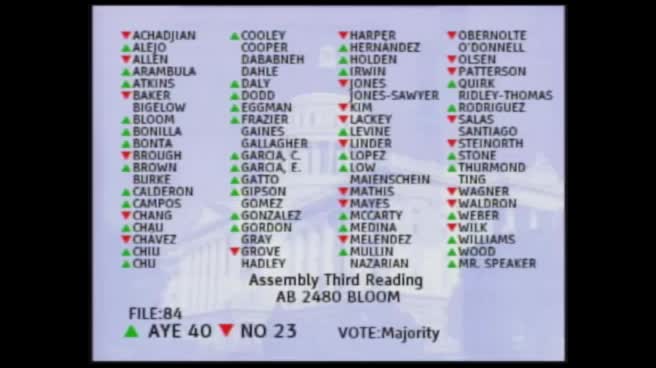 17MIN
Assembly Floor
 20MIN
Assembly Standing Committee on Appropriations
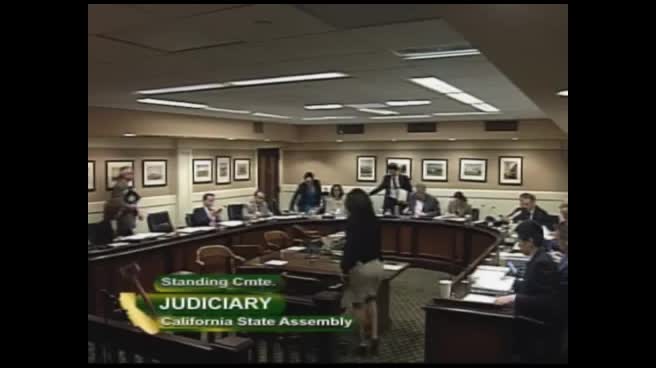
Assembly Standing Committee on Judiciary
Bill Author

Bill Co-Author(s):