AB 2874: Groundwater sustainability agencies: fees.
- Session Year: 2015-2016
- House: Assembly
- Latest Version Date: 2016-08-17
Existing law, the Sustainable Groundwater Management Act, requires all groundwater basins designated as high- or medium-priority basins by the Department of Water Resources that are designated as basins subject to critical conditions of overdraft to be managed under a groundwater sustainability plan or coordinated groundwater sustainability plans by January 31, 2020, and requires all other groundwater basins designated as high- or medium-priority basins to be managed under a groundwater sustainability plan or coordinated groundwater sustainability plans by January 31, 2022, except as specified. The act authorizes any local agency or combination of local agencies overlying a groundwater basin to decide to become a groundwater sustainability agency for that basin, as prescribed.
The act authorizes a groundwater sustainability agency to impose fees, including, but not limited to, permit fees and fees on groundwater extraction or other regulated activity, to fund the costs of a groundwater sustainability program.
This bill would require a groundwater sustainability agency, before imposing or increasing a fee pursuant to this authority relating to a groundwater basin that includes a water corporation regulated by the Public Utilities Commission, to notify the Public Utilities Commission.
Existing law, the Sustainable Groundwater Management Act, requires all groundwater basins designated as high- or medium-priority basins by the Department of Water Resources that are designated as basins subject to critical conditions of overdraft to be managed under a groundwater sustainability plan or coordinated groundwater sustainability plans by January 31, 2020, and requires all other groundwater basins designated as high- or medium-priority basins to be managed under a groundwater sustainability plan or coordinated groundwater sustainability plans by January 31, 2022, except as specified. The act authorizes any local agency or combination of local agencies overlying a groundwater basin to decide to become a groundwater sustainability agency for that basin, as prescribed.
Existing law
The act authorizes a groundwater sustainability agency to impose fees, including, but not limited to, permit fees and fees on groundwater extraction or other regulated activity, to fund the costs of a groundwater sustainability program.
This bill would require a groundwater sustainability agency, before imposing or increasing, increasing a fee pursuant to this authority, a fee authority relating to a groundwater basin that includes a water corporation regulated by the Public Utilities Commission, to notify the Public Utilities Commission.
Existing law, the Sustainable Groundwater Management Act, requires all groundwater basins designated as high- or medium-priority basins by the Department of Water Resources that are designated as basins subject to critical conditions of overdraft to be managed under a groundwater sustainability plan or coordinated groundwater sustainability plans by January 31, 2020, and requires all other groundwater basins designated as high- or medium-priority basins to be managed under a groundwater sustainability plan or coordinated groundwater sustainability plans by January 31, 2022, except as specified. The act authorizes any local agency or combination of local agencies overlying a groundwater basin to decide to become a groundwater sustainability agency for that basin, as prescribed.
Existing law authorizes a groundwater sustainability agency to impose fees, including, but not limited to, permit fees and fees on groundwater extraction or other regulated activity, to fund the costs of a groundwater sustainability program.
This bill would require a groundwater sustainability agency, before imposing or increasing, pursuant to this authority, a fee relating to a groundwater basin that includes a water corporation regulated by the Public Utilities Commission, to notify the Public Utilities Commission.
Existing law requires the Public Utilities Commission to investigate, as part of the rate proceeding for any gas corporation, impediments to the production and storage of natural gas within the state. Existing law authorizes the commission to adopt a tariff that encourages the production or storage of natural gas within the state, including, but not limited to, reducing local transmission rates applicable to in-state gas blends, unless the commission finds that adopting the tariff is likely to result in consequences adverse to the interests of gas customers.
This bill would make technical, nonsubstantive changes to that provision.
A groundwater sustainability agency, before imposing or increasing a fee pursuant to Section 10730 or 10730.2 relating to a groundwater basin that includes a water corporation regulated by the Public Utilities Commission, shall notify the Public Utilities Commission.
A groundwater sustainability agency, before imposing or increasing a fee pursuant to Section 10730 or 10730.2 relating to a groundwater basin that includes a water corporation regulated by the Public Utilities Commission, shall notify the Public Utilities Commission.
A groundwater sustainability agency, before imposing or increasing, pursuant to this chapter, increasing a fee pursuant to Section 10730 or 10730.2 relating to a groundwater basin that includes a water corporation regulated by the Public Utilities Commission, shall notify the Public Utilities Commission.
A groundwater sustainability agency, before imposing or increasing, pursuant to this chapter, a fee relating to a groundwater basin that includes a water corporation regulated by the Public Utilities Commission, shall notify the Public Utilities Commission.
SECTION 1.Section 785.2 of the Public Utilities Code is amended to read:785.2.The commission shall investigate, as part of the rate proceeding for any gas corporation, impediments to the production and storage of natural gas within the state. The commission may adopt a tariff that encourages the production or storage of natural gas within the state, including, but not limited to, reducing local transmission rates applicable to in-state gas blends, unless the commission finds that adopting the tariff is likely to result in consequences adverse to the interests of gas customers.
The commission shall investigate, as part of the rate proceeding for any gas corporation, impediments to the in-state production and storage of natural gas within the state. The commission may adopt a tariff that encourages in-state the production or storage of natural gas within the state, including, but not limited to, reducing local transmission rates applicable to in-state gas blends, unless the commission finds that adopting the tariff will is likely to result in consequences adverse to the interests of gas customers.
|
Date
|
Status
|
|---|---|
| Jun 2, 2016 | From committee chair, with author's amendments: Amend, and re-refer to committee. Read second time, amended, and re-referred to Com. on N.R. & W. |
| Aug 17, 2016 | Chaptered by Secretary of State - Chapter 139, Statutes of 2016. |
| Aug 17, 2016 | Approved by the Governor. |
| Aug 5, 2016 | Enrolled and presented to the Governor at 2:30 p.m. |
| Aug 1, 2016 | Senate amendments concurred in. To Engrossing and Enrolling. (Ayes 76. Noes 0. Page 5640.). |
| Aug 1, 2016 | Senate amendments concurred in. To Engrossing and Enrolling. |
| Jun 30, 2016 | Read third time. Passed. Ordered to the Assembly. (Ayes 37. Noes 0. Page 4652.). |
| Jun 30, 2016 | Read third time. Passed. Ordered to the Assembly. |
| Jun 30, 2016 | In Assembly. Concurrence in Senate amendments pending. May be considered on or after July 30 pursuant to Assembly Rule 77. |
| Jun 30, 2016 | In Assembly. Concurrence in Senate amendments pending. May be considered on or after July 29 pursuant to Assembly Rule 77. |
| Jun 28, 2016 | Read second time. Ordered to Consent Calendar. |
| Jun 27, 2016 | From committee: Be placed on second reading file pursuant to Senate Rule 28.8 and ordered to consent calendar. |
| Jun 14, 2016 | From committee: Do pass and re-refer to Com. on APPR. with recommendation: To Consent Calendar. (Ayes 9. Noes 0.) (June 14). Re-referred to Com. on APPR. |
| Feb 19, 2016 | Introduced. To print. |
| May 12, 2016 | Referred to Com. on N.R. & W. |
| May 5, 2016 | Read third time. Passed. Ordered to the Senate. (Ayes 79. Noes 0. Page 4688.) |
| May 5, 2016 | Read third time. Passed. Ordered to the Senate. |
| May 5, 2016 | In Senate. Read first time. To Com. on RLS. for assignment. |
| Apr 28, 2016 | Read second time. Ordered to Consent Calendar. |
| Apr 27, 2016 | From committee: Do pass. To Consent Calendar. (Ayes 19. Noes 0.) (April 27). |
| Apr 13, 2016 | From committee: Do pass and re-refer to Com. on APPR. with recommendation: To Consent Calendar. (Ayes 14. Noes 0.) (April 12). Re-referred to Com. on APPR. |
| Mar 16, 2016 | Re-referred to Com. on W., P., & W. |
| Mar 15, 2016 | From committee chair, with author's amendments: Amend, and re-refer to Com. on W., P., & W. Read second time and amended. |
| Mar 14, 2016 | Referred to Com. on W., P., & W. |
| Feb 22, 2016 | Read first time. |
| Feb 21, 2016 | From printer. May be heard in committee March 22. |
|
Date
|
Description
|
Location
|
Votes
|
|
|---|---|---|---|---|
| Aug 1, 2016 | AB 2874 GAINES Concurrence in Senate Amendments | Assembly Floor |
Passed |
|
| Jun 30, 2016 | Consent Calendar 2nd AB2874 Beth Gaines | Senate Floor |
Passed |
|
| Jun 14, 2016 | Do pass, but first be re-referred to the Committee on [Appropriations] with the recommendation: To Consent Calendar | Senate Standing Committee on Natural Resources and Water |
Passed |
|
| May 5, 2016 | AB 2874 GAINES Consent Calendar Second Day Regular Session | Assembly Floor |
Passed |
|
| Apr 27, 2016 | Do pass. To Consent Calendar. | Assembly Standing Committee on Appropriations |
Passed |
|
| Apr 12, 2016 | Do pass and be re-referred to the Committee on [Appropriations] with recommendation: To Consent Calendar | Assembly Standing Committee on Water, Parks, and Wildlife |
Passed |
This list shows positions taken on this bill by organizations on the date displayed, which is linked to the original source.
Positions by individuals are not included.
|
Organization
|
Position
|
Date
|
|---|---|---|
| Association of California Water Agencies , Unless Amended | ** Against | Aug 1, 2016 |
| California Water Association | ** Support | Aug 1, 2016 |
| Valley Ag Water Coalition | ** Against | Aug 1, 2016 |
CONCURRENCE IN SENATE AMENDMENTS
CSA1 Bill Id:AB 2874
Author:(Beth Gaines)
As Amended Ver:June 2, 2016
Majority vote
ASSEMBLY: | 79-0 | (May 05, 2016) | SENATE: | 37-0 | (June 30, 2016) |
Original Committee Reference: W., P., & W.
SUMMARY: Requires a groundwater sustainability agency (GSA), before imposing or increasing a fee authorized by certain provisions of the Sustainable Groundwater Management Act (SGMA) relating to a groundwater basin that includes a water corporation regulated by the California Public Utilities Commission (CPUC), to notify the CPUC.
The Senate amendments made technical changes to clarify that the fees to which the notice requirement apply are those authorized by SGMA.
EXISTING LAW:
- Requires, pursuant to Sustainable Groundwater Management Act (SGMA), all groundwater basins designated as high or medium priority basins subject to critical overdraft to be managed under a groundwater sustainability plan by January 31, 2020, and all other high or medium priority groundwater basins to be managed under such a plan by January 31, 2022.
- Authorizes any local agency or combination of agencies overlying a groundwater basin to become a GSA for that region. A combination of local agencies may form a GSA by using a joint powers agreement, or a memorandum of agreement or other legal agreement. Authorizes a water corporation regulated by the CPUC or a mutual water company to participate in a GSA through a memorandum of agreement or other legal agreement. Provides that this authority does not confer any additional powers to a nongovernmental entity.
- Authorizes a GSA to impose fees, including but not limited to, permit fees and fees on groundwater extraction, to fund the costs of a groundwater sustainability program.
- Authorizes the CPUC to regulate privately owned electric, natural gas, telephone, water, and sewer utilities, and to process utility rate change requests.
FISCAL EFFECT: According to the Senate Appropriations Committee, pursuant to Senate Rule 28.8, negligible if any state costs.
COMMENTS: This bill seeks to protect customers of water utilities regulated by the CPUC from the effects of a potential lack of coordination between GSAs and the CPUC. While SGMA allows an investor-owned utility to be a member of a GSA, not all communities are including investor-owned utilities in the GSAs that they are forming. In those instances in which an investor owned utility is not a member of the GSA, and the GSA imposes a fee, the notice requirement in this bill would alert the CPUC regarding the proposed fee. The Senate amendments were technical and address a potential concern that this bill as passed by the Assembly could have been interpreted to require GSAs to notify the CPUC regarding fees that are not related to SGMA. As amended, the notice requirement is triggered only if the GSA imposes or increases a fee authorized by specified provisions of SGMA.
Analysis Prepared by: Diane Colborn / W., P., & W. / (916) 319-2096 FN: 0003583
Office of Senate Floor Analyses (916) 651-1520 Fax: (916) 327-4478 | AB |
CONSENT
Bill No: AB 2874
:
SENATE NATURAL RES. & WATER COMMITTEE: 9-0, 6/14/16
AYES: Pavley, Stone, Allen, Hertzberg, Hueso, Jackson, Monning, Vidak, Wolk
SENATE APPROPRIATIONS COMMITTEE: Senate Rule 28.8
ASSEMBLY FLOOR: 79-0, 5/5/16 (Consent) - See last page for vote
SOURCE: California Water Association
DIGEST: This bill requires a groundwater sustainability agency (GSA), before imposing or increasing a fee relating to a groundwater basin that includes a water corporation regulated by the California Public Utilities Commission (CPUC), to notify the CPUC.
Existing law:
- Authorizes GSAs to impose fees, including, but not limited to, permit fees and fees on groundwater extraction, to fund the costs of a groundwater sustainability program.
- Requires the CPUC to regulate privately owned electric, natural gas, telephone, water, and sewer utilities, including approving all utility rate change requests.
This bill requires a GSA, before imposing or increasing a fee relating to a groundwater basin that includes a water corporation regulated by the CPUC, to notify the CPUC.
Comments
Why notify the CPUC? The Sustainable Groundwater Management Act (SGMA) authorizes GSA to impose fees on groundwater extraction. In order for CPUC utilities to include such fees in their water rates, the CPUC looks to ensure that fees imposed on CPUC regulated water utilities fees are fair in their formation, they are applied fairly across all similar water users etc. This bill is intended to ensure that the CPUC has the appropriate information for making such determinations.
FISCAL EFFECT: Appropriation: Fiscal Com.: Local:
California Water Association (source)
OPPOSITION: (Verified 6/27/16)
Valley Ag Water Coalition
ARGUMENTS IN SUPPORT: According to the sponsor, “Despite the significant impact SGMA has on CPUC-regulated water utilities, the act does not provide for a process in which the CPUC may participate in the policymaking alongside other state and local officials. Without consideration of the CPUC's regulatory responsibility, and the regulated utilities' circumstances, customers of regulated water utilities could be harmed through changes in fees and groundwater rights. This bill will protect customers of CPUC-regulated water utilities from the omission in SGMA of a formal coordination process between the GSA and the CPUC.”
ARGUMENTS IN OPPOSITION: According to the Valley Ag Water Coalition, “AB 2874 would impose a new mandate on GSAs – the local agencies responsible for implementation of SGMA. AB 2874 would require a GSA to notify the CPUC before imposing or increasing a SGMA fee relating to a groundwater basin that includes a water corporation regulated by the Commission.
“The imposition of SGMA fees is already required to comply with Proposition 218, thereby providing proper detailed notification to a water corporation subject to the fee or charge before the fee or charge is increased or imposed. Adding a further confusing notification requirement that falls outside the constitutional provisions under Proposition 218 is not only unnecessary from the legal standpoint of the GSA, it is not now, nor should it be, the responsibility of the GSA (or any other local agency).”
ASSEMBLY FLOOR: 79-0, 5/5/16
AYES: Achadjian, Alejo, Travis Allen, Arambula, Atkins, Baker, Bigelow, Bloom, Bonilla, Bonta, Brough, Brown, Burke, Calderon, Campos, Chang, Chau, Chávez, Chiu, Chu, Cooley, Cooper, Dababneh, Dahle, Daly, Dodd, Eggman, Frazier, Gallagher, Cristina Garcia, Eduardo Garcia, Gatto, Gipson, Gomez, Gonzalez, Gordon, Gray, Grove, Hadley, Harper, Roger Hernández, Holden, Irwin, Jones, Jones-Sawyer, Kim, Lackey, Levine, Linder, Lopez, Low, Maienschein, Mathis, Mayes, McCarty, Medina, Melendez, Mullin, Nazarian, Obernolte, O'Donnell, Olsen, Patterson, Quirk, Ridley-Thomas, Rodriguez, Salas, Santiago, Steinorth, Mark Stone, Thurmond, Ting, Wagner, Waldron, Weber, Wilk, Williams, Wood, Rendon
NO VOTE RECORDED: Beth Gaines
6/29/16 15:50:55
**** END ****
SENATE COMMITTEE ON NATURAL RESOURCES AND WATER
Senator Fran Pavley, Chair
2015 - 2016 Regular
Bill No: AB 2874 Hearing Date: June 14, 2016
Author: | |||
Version: |
| ||
Urgency: | Fiscal: | ||
Consultant: | |||
Subject: Groundwater sustainability agencies: fees
BACKGROUND AND EXISTING LAW
The Sustainable Groundwater Management Act (SGMA) authorizes groundwater sustainability agencies (GSAs) to impose fees, including but not limited to, permit fees and fees on groundwater extraction, to fund the costs of a groundwater sustainability program.
The California Public Utilities Commission (CPUC) regulates privately owned electric, natural gas, telephone, water, and sewer utilities, including approving all utility rate change requests.
PROPOSED LAW
This bill would require a GSA, before imposing or increasing a fee relating to a groundwater basin that includes a water corporation regulated by the CPUC, to notify the CPUC.
ARGUMENTS IN SUPPORT
According to the sponsor, “Despite the significant impact SGMA has on CPUC-regulated water utilities, the act does not provide for a process in which the CPUC may participate in the policymaking alongside other state and local officials. Without consideration of the CPUC's regulatory responsibility, and the regulated utilities' circumstances, customers of regulated water utilities could be harmed through changes in fees and groundwater rights. This bill will protect customers of CPUC-regulated water utilities from the omission in SGMA of a formal coordination process between the GSA and the CPUC.”
ARGUMENTS IN OPPOSITION:
The Association of California Water Agencies (ACWA), in its oppose unless amended letter, writes “While the bill intends to ensure that the CPUC’s oversight responsibilities to protect taxpayers remain intact and that the CPUC has coordination with eh GSA that implements SGMA in a basin that includes a private water corporation, AB 2874 could potentially require GSAs to notify the CPUC regarding fees that are not related to SGMA. As GSA’s are created to implement SGMA, they should notify CPUC regarding fees that relate to the Act.
ACWA respectfully requests that AB 2874 be amended as follows:
A groundwater sustainability agency, before imposing or increasing, pursuant to this chapter, increasing a fee pursuant to Section 10730 or 10730.2 relating to a groundwater basin that includes a water corporation regulated by the Public Utilities Commission, shall notify the Public Utilities Commission.
COMMENTS:
ACWA’s Issue Resolved. The amendments of a 6/2/16 mirror those requested by ACWA.
SUGGESTED AMENDMENTS: None
SUPPORT:
California Water Association (Sponsor)
OPPOSITION:
Association of California Water Agencies (ACWA), Unless Amended
-- END --
Date of Hearing: April 27, 2016
ASSEMBLY COMMITTEE ON APPROPRIATIONS
Lorena Gonzalez, Chair
ABPCA Bill Id:AB 2874
Author:(Beth Gaines) – As Amended Ver:March 15, 2016
Policy Committee: | Water, Parks and Wildlife | Vote: | 14 - 0 |
|
|
Urgency: No State Mandated Local Program: No Reimbursable: No
SUMMARY:
This bill requires a groundwater sustainability agency (GSA) to notify the California Public Utilities Commission (PUC) before imposing or increasing a fee if the groundwater basin includes a PUC regulated water corporation.
FISCAL EFFECT:
No additional state costs.
COMMENTS:
- Purpose. According to the author, without coordination between GSAs and the PUC, customers of regulated water utilities may be harmed by changes in fees. This bill will ensure the PUC is notified of any GSA fee decisions that may affect water rates.
- Background. There are over 108 investor-owned water utilities under the PUC's jurisdiction providing water service to about 6 million Californians. The PUC investigates water and sewer system service quality issues, and analyzes and processes utility rate change requests. Regulated private water utilities are not allowed to change rates or the terms of service to their customers without PUC approval.
- Sustainable Groundwater Management Act (SGMA). SGMA requires all groundwater basins designated as high or medium priority basins subject to critical overdraft to be managed under a groundwater sustainability plan by January 31, 2020, and all other high or medium priority groundwater basins to be managed under such a plan by January 31, 2022.
Local agencies overlying a groundwater basin to may become GSA for that region. Water corporations regulated by the PUC or mutual water companies may participate in a GSA through a memorandum of agreement or other legal agreement
While SGMA allows water corporations and mutual water companies to be members of a GSA, not all communities are including them. This bill addresses the instances in which a water corporation is not a member of the GSA. If the GSA imposes a fee, the corporation may not be authorized by the PUC to impose a surcharge on its customers in order to collect the fee. The notice requirement would alert the PUC regarding the proposed fee.
Analysis Prepared by: Jennifer Galehouse / APPR. / (916) 319-2081
Date of Hearing: April 12, 2016
ASSEMBLY COMMITTEE ON WATER, PARKS, AND WILDLIFE
Marc Levine, Chair
ABPCA Bill Id:AB 2874 (
Author:Beth Gaines) – As Amended Ver:March 15, 2016
SUBJECT: Groundwater sustainability agencies: fees
SUMMARY: Requires a groundwater sustainability agency (GSA), before imposing or increasing a fee relating to a groundwater basin that includes a water corporation regulated by the Public Utilities Commission (CPUC) to notify the CPUC.
EXISTING LAW:
- The Sustainable Groundwater Management Act (SGMA), requires all groundwater basins designated as high or medium priority basins subject to critical overdraft to be managed under a groundwater sustainability plan by January 31, 2020, and all other high or medium priority groundwater basins to be managed under such a plan by January 31, 2022.
- Authorizes any local agency or combination of agencies overlying a groundwater basin to become a GSA for that region. A combination of local agencies may form a GSA by using a joint powers agreement, or a memorandum of agreement or other legal agreement. Authorizes a water corporation regulated by the CPUC or a mutual water company to participate in a GSA through a memorandum of agreement or other legal agreement. Provides that this authority does not confer any additional powers to a nongovernmental entity.
- Authorizes a GSA to impose fees, including but not limited to, permit fees and fees on groundwater extraction, to fund the costs of a groundwater sustainability program.
- Authorizes the CPUC to regulate privately owned electric, natural gas, telephone, water, and sewer utilities, and to process utility rate change requests.
FISCAL EFFECT: Unknown
COMMENTS: This bill requires GSAs under SGMA to notify the CPUC before imposing a fee, as authorized under SGMA.
- Author's Statement: The author has introduced this bill to protect customers of water utilities regulated by the CPUC from the effects of a potential lack of coordination between GSAs and the CPUC. This will ensure a process is in place to notify the CPUC of any GSA decisions that could affect customers' water rates. Without coordination between GSAs and the PUC, customers of regulated water utilities could be harmed through changes in fees and ground water rights.
- Background: There are over 108 investor-owned water utilities under the CPUC's jurisdiction providing water service to about 6 million Californians, or 16 percent of California residents. The CPUC investigates water and sewer system service quality issues, and analyzes and processes utility rate change requests. Regulated private water utilities are not allowed to change rates or the terms of service to their customers without the CPUC's approval.
While SGMA allows an investor-owned utility to be a member of a GSA, not all communities are including investor-owned utilities in the GSAs that they are forming. The sponsors of this bill are concerned that in those instances in which an investor owned utility is not a member of the GSA, and the GSA imposes a fee, the utility may not be authorized by the CPUC to impose a surcharge on its customers in order to collect the fee. The notice requirement would alert the CPUC regarding the proposed fee.
The California Water Service Company cites an example of a 2014 case where they filed an application with the CPUC seeking authority to apply surcharges on customers, phased in over 8 years, to mitigate groundwater overdraft in the Upper Kings River Basin. The purpose of the surcharges was to fund groundwater recharge projects under a cooperative agreement between the City of Selma and the Consolidated Irrigation District (District) which supplies irrigation water to farmers in the area. A dispute between the District and the City over urban development led to a cooperative agreement through which both groundwater extraction and new urban development would be allowed to continue, and water customers in the City would be assessed surcharges to pay for groundwater recharge projects. The Office of Ratepayer Advocates intervened in the case and a settlement agreement was ultimately reached. - Prior and Related Legislation: SB 1168 (Pavley), Chapter 346, and AB 1739 (Dickinson), Chapter 437, Statutes of 2014, together enacted SGMA, which requires that each high- and medium-priority groundwater basin be managed pursuant to a groundwater sustainability plan by January 31, 2020, if in critical overdraft, or by January 31, 2022, with the goal of achieving sustainability within 20 years.
SB 13 (Pavley), Chapter 255, Statutes of 2015, among other things, authorized a mutual water company to participate in a GSA and provided that a water corporation or a mutual water company may participate in a GSA through a memorandum of agreement or other legal agreement. - Support Arguments: None received.
- Opposition Arguments: None received.
REGISTERED SUPPORT / OPPOSITION:
Support
California Water Association
Opposition
None on file.
Analysis Prepared by: Diane Colborn / W., P., & W. / (916) 319-2096
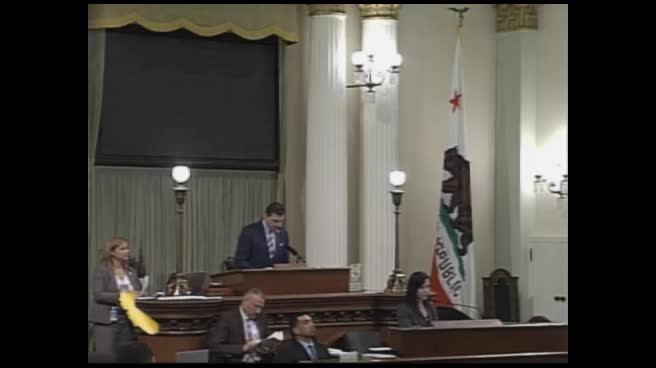
Bill Author

Bill Co-Author(s):