AB 2892: Pesticide poisoning.
- Session Year: 2015-2016
- House: Assembly
- Latest Version Date: 2016-09-22
Existing law, until January 1, 2017, requires, among other things, any laboratory that performs cholinesterase testing on human blood for an employer to enable the employer to satisfy his or her responsibilities for medical supervision of his or her employees who regularly handle pesticides pursuant to specified regulations or to respond to alleged exposure to cholinesterase inhibitors or known exposure to the inhibitors that resulted in illness, to electronically report specified information in its possession on every person tested to the Department of Pesticide Regulation. The department is required to share the information in an electronic format with the Office of Environmental Health Hazard Assessment (OEHHA) and the State Department of Public Health on an ongoing basis, as specified.
This bill would extend these requirements until January 1, 2021. The bill would require that an employer satisfying his or her responsibilities for medical supervision of employees who regularly handle pesticides contract with a medical supervisor registered with the OEHHA. The bill would require the OEHHA to establish a procedure for registering and deregistering medical supervisors and to establish requirements for their performance. The bill would additionally make specified changes to the information a laboratory is required to report to the Department of Pesticide Regulation.
Existing law, until January 1, 2017, requires, among other things, any laboratory that performs cholinesterase testing on human blood for an employer to enable the employer to satisfy his or her responsibilities for medical supervision of his or her employees who regularly handle pesticides pursuant to specified regulations or to respond to alleged exposure to cholinesterase inhibitors or known exposure to the inhibitors that resulted in illness, to electronically report specified information in its possession on every person tested to the Department of Pesticide Regulation. The department is required to share the information in an electronic format with the Office of Environmental Health Hazard Assessment (OEHHA) and the State Department of Public Health on an ongoing basis, as specified.
This bill would extend these requirements until January 1, 2021. The bill would require that an employer satisfying his or her responsibilities for medical supervision of employees who regularly handle pesticides contract with a medical supervisor registered with the OEHHA. The bill would require the OEHHA to establish a procedure for registering and deregistering medical supervisors and to establish requirements for their performance. The bill would additionally make specified changes to the information a testing laboratory is required to report to the Department of Pesticide Regulation.
Existing law, until January 1, 2017, requires, among other things, any laboratory that performs cholinesterase testing on human blood for an employer to enable the employer to satisfy his or her responsibilities for medical supervision of his or her employees who regularly handle pesticides pursuant to specified regulations or to respond to alleged exposure to cholinesterase inhibitors or known exposure to the inhibitors that resulted in illness, to electronically report specified information in its possession on every person tested to the Department of Pesticide Regulation, which would be Regulation. The department is required to share the information in an electronic format with the Office of Environmental Health Hazard Assessment (OEHHA) and the State Department of Public Health on an ongoing basis, as specified.
This bill would extend these provisions requirements until January 1, 2019. 2021. The bill would require that an employer satisfying his or her responsibilities for medical supervision of employees who regularly handle pesticides contract with a medical supervisor registered with the OEHHA. The bill would require the OEHHA to establish a procedure for registering and deregistering medical supervisors and to establish requirements for their performance. The bill would additionally make specified changes to the information a testing laboratory is required to report to the Department of Pesticide Regulation.
Existing law, until January 1, 2017, requires, among other things, any laboratory that performs cholinesterase testing on human blood for an employer to enable the employer to satisfy his or her responsibilities for medical supervision of his or her employees who regularly handle pesticides pursuant to specified regulations or to respond to alleged exposure to cholinesterase inhibitors or known exposure to the inhibitors that resulted in illness, to electronically report specified information in its possession on every person tested to the Department of Pesticide Regulation, which would be required to share the information in an electronic format with the Office of Environmental Health Hazard Assessment (OEHHA) and the State Department of Public Health on an ongoing basis, as specified.
This bill would extend these provisions until January 1, 2019.
(a)In order for an employer to satisfy his or her responsibilities for medical supervision of his or her employees who regularly handle pesticides pursuant to Section 6728 of Title 3 of the California Code of Regulations, the employer shall contract with a medical supervisor registered with the Office of Environmental Health Hazard Assessment (OEHHA).
(b)A laboratory that performs tests ordered by a medical supervisor shall report the information specified in subdivision (c) to the Department of Pesticide Regulation. Reports shall be submitted to the Department of Pesticide Regulation on, at a minimum, a monthly basis. For the purpose of meeting the requirements in subdivision (e), the reports shall be submitted via electronic media and formatted in a manner approved by the director. The Department of Pesticide Regulation shall share information from cholinesterase reports with the Office of Environmental Health Hazard Assessment (OEHHA) and the State Department of Public Health on an ongoing basis, in an electronic format, for the purpose of meeting the requirements of subdivisions (f) and (g).
(c)The laboratory shall report all of the following information in its possession in complying with subdivision (a):
(1)The test results in International Units per milliliter of sample (IU/mL).
(2)The purpose of the test, as indicated by the medical supervisor, as a cholinesterase test requested for an agricultural worker under medical supervision, and, if so, whether it is for a baseline, followup, or recovery test ordered to meet the requirements of Section 6728 of Title 3 of the California Code of Regulations or for the evaluation of suspected pesticide illness.
(3)The name of the person tested.
(4)The date of birth of the person tested.
(5)The name, address, and telephone number of the medical supervisor who ordered the analysis.
(6)The name, address, and telephone number of the laboratory.
(7)The date that the sample was collected from the person and the date the result was reported.
(8)Contact information for the person tested and his or her employer, if known and readily available.
(d)The registered medical supervisor ordering a cholinesterase test for a person pursuant to subdivision (a) shall note in the test order the name of the medical supervisor and the purpose of the test, pursuant to paragraph (2) of subdivision (c), and ensure that the person tested and the employer receive a copy of the cholinesterase test results and any recommendations from the medical supervisor based upon those results within 14 days of the medical supervisors receipt of the results. The medical supervisor shall report any worker with cholinesterase depression indicating pesticide exposure to the local health officer pursuant to Section 105200.
(e)All information reported pursuant to this section shall be confidential, as provided in Section 100330, except that the OEHHA, the Department of Pesticide Regulation, and the State Department of Public Health may share the information for the purpose of surveillance, case management, investigation, environmental remediation, or abatement with the appropriate county agricultural commissioner and local health officer.
(f)The OEHHA shall establish a procedure for registering and deregistering medical supervisors for the purposes of outreach and training and may establish reasonable requirements for performance. The OEHHA shall review the cholinesterase test results and may provide an appropriate medical or toxicological consultation to the medical supervisor. In addition to the duties performed pursuant to Section 105210, the OEHHA, in consultation with the Department of Pesticide Regulation and the local health officer, may provide medical and toxicological consultation, as appropriate, to the county agricultural commissioner to address medical issues related to the investigation of cholinesterase inhibitor-related illness.
(g)The Department of Pesticide Regulation and the OEHHA shall prepare and publicly post an update on the effectiveness of the medical supervision program and the utility of laboratory-based reporting of cholinesterase testing for illness surveillance and prevention by January 1, 2021.
(h)This section shall remain in effect only until January 1, 2021, and as of that date is repealed, unless a later enacted statute, that is enacted before January 1, 2021, deletes or extends that date.
(a)In order for an employer to satisfy his or her responsibilities for medical supervision of his or her employees who regularly handle pesticides pursuant to Section 6728 of Title 3 of the California Code of Regulations or to respond to alleged exposure to cholinesterase inhibitors or known exposure to cholinesterase inhibitors that resulted in illness, Regulations, the employer shall contract with a medical supervisor registered with the Office of Environmental Health Hazard Assessment (OEHHA).
(b)A testing laboratory that performs tests ordered by a medical supervisor shall report the information specified in subdivision (c) to the Department of Pesticide Regulation. Reports shall be submitted to the Department of Pesticide Regulation on, at a minimum, a monthly basis. For the purpose of meeting the requirements in subdivision (e), the reports shall be submitted via electronic media and formatted in a manner approved by the director. The Department of Pesticide Regulation shall share information from cholinesterase reports with the Office of Environmental Health Hazard Assessment (OEHHA) and the State Department of Public Health on an ongoing basis, in an electronic format, for the purpose of meeting the requirements of subdivisions (f) and (g).
(c)The testing laboratory shall report all of the following information in its possession in complying with subdivision (a):
(1)The test results in International Units per milliliter of sample (IU/mL).
(2)The purpose of the test, including baseline or other periodic testing, pursuant to as indicated by the medical supervisor, as a cholinesterase test requested for an agricultural worker under medical supervision, and, if so, whether it is for a baseline, followup, or recovery test ordered to meet the requirements of Section 6728 of Title 3 of the California Code of Regulations, Regulations or for the evaluation of suspected pesticide illness.
(3)The name of the person tested.
(4)The date of birth of the person tested.
(5)The name, address, and telephone number of the health care provider or medical supervisor who ordered the analysis.
(6)The name, address, and telephone number of the analyzing laboratory.
(7)The date that the sample was collected from the person and the date the result was reported.
(8)Contact information for the person tested and his or her employer, if known and readily available.
(d)The registered medical supervisor ordering a cholinesterase test for a person pursuant to subdivision (a) shall note in the test order the name of the medical supervisor and the purpose of the test, pursuant to paragraph (2) of subdivision (c), and ensure that the person tested and the employer receive a copy of the cholinesterase test results and any recommendations from the medical supervisor based upon those results within 14 days of the medical supervisors receipt of the results. The medical supervisor shall report any worker with cholinesterase depression, beyond the threshold defined by Section 6728 of Title 3 of the California Code of Regulations, depression indicating pesticide exposure to the local health officer pursuant to Section 105200.
(e)All information reported pursuant to this section shall be confidential, as provided in Section 100330, except that the OEHHA, the Department of Pesticide Regulation, and the State Department of Public Health may share the information for the purpose of surveillance, case management, investigation, environmental remediation, or abatement with the appropriate county agricultural commissioner and local health officer.
(f)The OEHHA shall establish a procedure for registering and deregistering medical supervisors for the purposes of outreach and training and may establish reasonable requirements for performance. The OEHHA shall review the cholinesterase test results and may provide an appropriate medical or toxicological consultation to the medical supervisor. In addition to the duties performed pursuant to Section 105210, the OEHHA, in consultation with the Department of Pesticide Regulation and the local health officer, may provide medical and toxicological consultation, as appropriate, to the county agricultural commissioner to address medical issues related to the investigation of cholinesterase inhibitor-related illness.
(g)The Department of Pesticide Regulation and the OEHHA shall prepare and publicly post an update on the effectiveness of the medical supervision program and the utility of laboratory-based reporting of cholinesterase testing for illness surveillance and prevention by January 1, 2021.
(h)This section shall remain in effect only until January 1, 2021, and as of that date is repealed, unless a later enacted statute, that is enacted before January 1, 2021, deletes or extends that date.
(a)A laboratory that performs cholinesterase testing on human blood drawn in California for an employer to enable the In order for an employer to satisfy his or her responsibilities for medical supervision of his or her employees who regularly handle pesticides pursuant to Section 6728 of Title 3 of the California Code of Regulations or to respond to alleged exposure to cholinesterase inhibitors or known exposure to cholinesterase inhibitors that resulted in illness illness, the employer shall contract with a medical supervisor registered with the Office of Environmental Health Hazard Assessment (OEHHA).
(b)A testing laboratory shall report the information specified in subdivision (b) (c) to the Department of Pesticide Regulation. Reports shall be submitted to the Department of Pesticide Regulation on, at a minimum, a monthly basis. For the purpose of meeting the requirements in subdivision (d), (e), the reports shall be submitted via electronic media and formatted in a manner approved by the director. The Department of Pesticide Regulation shall share information from cholinesterase reports with the Office of Environmental Health Hazard Assessment (OEHHA) and the State Department of Public Health on an ongoing basis, in an electronic format, for the purpose of meeting the requirements of subdivisions (e) (f) and (f). (g).
(b)
(c)The testing laboratory shall report all of the following information in its possession in complying with subdivision (a):
(1) The test results in International Units per milliliter of sample (IU/mL).
(2) The purpose of the test, including baseline or other periodic testing, pursuant to the requirements of Section 6728 of Title 3 of the California Code of Regulations, or evaluation of suspected pesticide illness.
(3) The name of the person tested.
(4) The date of birth of the person tested.
(5)The name, address, and telephone number of the health care provider or medical supervisor who ordered the analysis.
(6)The name, address, and telephone number of the analyzing laboratory.
(7)The accession number of the specimen.
(8)
(7)The date that the sample was collected from the person and the date the result was reported.
(9)
(8)Contact information for the person tested and his or her employer, if known and readily available.
(c)
(d)The registered medical supervisor ordering the a cholinesterase test for a person pursuant to subdivision (a) shall note in the test order the purpose of the test, pursuant to paragraph (2) of subdivision (b), (c), and ensure that the person tested receives and the employer receive a copy of the cholinesterase test results and any recommendations from the medical supervisor based upon those results within 14 days of the medical supervisor receiving the results. supervisors receipt of the results. The medical supervisor shall report any worker with cholinesterase depression, beyond the threshold defined by Section 6728 of Title 3 of the California Code of Regulations, to the local health officer pursuant to Section 105200.
(d)
(e)All information reported pursuant to this section shall be confidential, as provided in Section 100330, except that the OEHHA, the Department of Pesticide Regulation, and the State Department of Public Health may share the information for the purpose of surveillance, case management, investigation, environmental remediation, or abatement with the appropriate county agricultural commissioner and local health officer.
(e)
(f)The OEHHA shall establish a procedure for registering and deregistering medical supervisors for the purposes of outreach and training and may establish reasonable requirements for performance. The OEHHA shall review the cholinesterase test results and may provide an appropriate medical or toxicological consultation to the medical supervisor. In addition to the duties performed pursuant to Section 105210, the OEHHA, in consultation with the Department of Pesticide Regulation and the local health officer, may provide medical and toxicological consultation, as appropriate, to the county agricultural commissioner to address medical issues related to the investigation of cholinesterase inhibitor-related illness.
(f)By December 31, 2015, the
(g)The Department of Pesticide Regulation and the OEHHA, in consultation with the State Department of Public Health, shall prepare a report OEHHA shall prepare and publicly post an update on the effectiveness of the medical supervision program and the utility of laboratory-based reporting of cholinesterase testing for illness surveillance and prevention. The joint report may include recommendations to the Legislature that the Department of Pesticide Regulation and the OEHHA deem necessary. The Department of Pesticide Regulation and the OEHHA shall make the report publicly available on their Internet Web sites. prevention by January 1, 2021.
(g)
(h)This section shall remain in effect only until January 1, 2019, 2021, and as of that date is repealed, unless a later enacted statute, that is enacted before January 1, 2019, 2021, deletes or extends that date.
(a)A laboratory that performs cholinesterase testing on human blood drawn in California for an employer to enable the employer to satisfy his or her responsibilities for medical supervision of his or her employees who regularly handle pesticides pursuant to Section 6728 of Title 3 of the California Code of Regulations or to respond to alleged exposure to cholinesterase inhibitors or known exposure to cholinesterase inhibitors that resulted in illness shall report the information specified in subdivision (b) to the Department of Pesticide Regulation. Reports shall be submitted to the Department of Pesticide Regulation on, at a minimum, a monthly basis. For the purpose of meeting the requirements in subdivision (d), the reports shall be submitted via electronic media and formatted in a manner approved by the director. The Department of Pesticide Regulation shall share information from cholinesterase reports with the Office of Environmental Health Hazard Assessment (OEHHA) and the State Department of Public Health on an ongoing basis, in an electronic format, for the purpose of meeting the requirements of subdivisions (e) and (f).
(b)The testing laboratory shall report all of the following information in its possession in complying with subdivision (a):
(1)The test results in International Units per milliliter of sample (IU/mL).
(2)The purpose of the test, including baseline or other periodic testing, pursuant to the requirements of Section 6728 of Title 3 of the California Code of Regulations, or evaluation of suspected pesticide illness.
(3)The name of the person tested.
(4)The date of birth of the person tested.
(5)The name, address, and telephone number of the health care provider or medical supervisor who ordered the analysis.
(6)The name, address, and telephone number of the analyzing laboratory.
(7)The accession number of the specimen.
(8)The date that the sample was collected from the patient person and the date the result was reported.
(9)Contact information for the person tested and his or her employer, if known and readily available.
(c)The medical supervisor ordering the test for a person pursuant to subdivision (a) shall note in the test order the purpose of the test, pursuant to paragraph (2) of subdivision (b), and ensure that the person tested receives a copy of the cholinesterase test results and any recommendations from the medical supervisor within 14 days of the medical supervisor receiving the results.
(d)All information reported pursuant to this section shall be confidential, as provided in Section 100330, except that the OEHHA, the Department of Pesticide Regulation, and the State Department of Public Health may share the information for the purpose of surveillance, case management, investigation, environmental remediation, or abatement with the appropriate county agricultural commissioner and local health officer.
(e)The OEHHA shall review the cholinesterase test results and may provide an appropriate medical or toxicological consultation to the medical supervisor. In addition to the duties performed pursuant to Section 105210, the OEHHA, in consultation with the Department of Pesticide Regulation and the local health officer, may provide medical and toxicological consultation, as appropriate, to the county agricultural commissioner to address medical issues related to the investigation of cholinesterase inhibitor-related illness.
(f)By December 31, 2015, the Department of Pesticide Regulation and the OEHHA, in consultation with the State Department of Public Health, shall prepare a report on the effectiveness of the medical supervision program and the utility of laboratory-based reporting of cholinesterase testing for illness surveillance and prevention. The joint report may include recommendations to the Legislature that the Department of Pesticide Regulation and the OEHHA deem necessary. The Department of Pesticide Regulation and the OEHHA shall make the report publicly available on their Internet Web sites.
(g)This section shall remain in effect only until January 1, 2019, and as of that date is repealed, unless a later enacted statute, that is enacted before January 1, 2019, deletes or extends that date.
(a)A laboratory that performs cholinesterase testing on human blood drawn in California for an employer to enable the employer to satisfy his or her responsibilities for medical supervision of his or her employees who regularly handle pesticides pursuant to Section 6728 of Title 3 of the California Code of Regulations or to respond to alleged exposure to cholinesterase inhibitors or known exposure to cholinesterase inhibitors that resulted in illness shall report the information specified in subdivision (b) to the Department of Pesticide Regulation. Reports shall be submitted to the Department of Pesticide Regulation on, at a minimum, a monthly basis. For the purpose of meeting the requirements in subdivision (d), the reports shall be submitted via electronic media and formatted in a manner approved by the director. The Department of Pesticide Regulation shall share information from cholinesterase reports with the OEHHA Office of Environmental Health Hazard Assessment (OEHHA) and the State Department of Public Health on an ongoing basis, in an electronic format, for the purpose of meeting the requirements of subdivisions (e) and (f).
(b)The testing laboratory shall report all of the following information in its possession in complying with subdivision (a):
(1)The test results in International Units per milliliter of sample (IU/mL).
(2)The purpose of the test, including baseline or other periodic testing, pursuant to the requirements of Section 6728 of Title 3 of the California Code of Regulations, or evaluation of suspected pesticide illness.
(3)The name of the person tested.
(4)The date of birth of the person tested.
(5)The name, address, and telephone number of the health care provider or medical supervisor who ordered the analysis.
(6)The name, address, and telephone number of the analyzing laboratory.
(7)The accession number of the specimen.
(8)The date that the sample was collected from the patient and the date the result was reported.
(9)Contact information for the person tested and his or her employer, if known and readily available.
(c)The medical supervisor ordering the test for a person pursuant to subdivision (a) shall note in the test order the purpose of the test, pursuant to paragraph (2) of subdivision (b), and ensure that the person tested receives a copy of the cholinesterase test results and any recommendations from the medical supervisor within 14 days of the medical supervisor receiving the results.
(d)All information reported pursuant to this section shall be confidential, as provided in Section 100330, except that the OEHHA, the Department of Pesticide Regulation, and the State Department of Public Health may share the information for the purpose of surveillance, case management, investigation, environmental remediation, or abatement with the appropriate county agricultural commissioner and local health officer.
(e)The OEHHA shall review the cholinesterase test results and may provide an appropriate medical or toxicological consultation to the medical supervisor. In addition to the duties performed pursuant to Section 105210, the OEHHA, in consultation with the Department of Pesticide Regulation and the local health officer, may provide medical and toxicological consultation, as appropriate, to the county agricultural commissioner to address medical issues related to the investigation of cholinesterase inhibitor-related illness.
(f)By December 31, 2015, the Department of Pesticide Regulation and the OEHHA, in consultation with the State Department of Public Health, shall prepare a report on the effectiveness of the medical supervision program and the utility of laboratory-based reporting of cholinesterase testing for illness surveillance and prevention. The joint report may include recommendations to the Legislature that the Department of Pesticide Regulation and the OEHHA deem necessary. The Department of Pesticide Regulation and the OEHHA shall make the report publicly available on their Internet Web sites.
(g)This section shall remain in effect only until January 1, 2017, 2019, and as of that date is repealed, unless a later enacted statute, that is enacted before January 1, 2017, 2019, deletes or extends that date.
|
Date
|
Status
|
|---|---|
| Jun 30, 2016 | From committee: Do pass and re-refer to Com. on APPR. with recommendation: To Consent Calendar. (Ayes 7. Noes 0.) (June 29). Re-referred to Com. on APPR. |
| Aug 29, 2016 | Enrolled and presented to the Governor at 4 p.m. |
| Aug 22, 2016 | Senate amendments concurred in. To Engrossing and Enrolling. (Ayes 75. Noes 1. Page 6048.). |
| Aug 22, 2016 | Senate amendments concurred in. To Engrossing and Enrolling. |
| Aug 16, 2016 | In Assembly. Concurrence in Senate amendments pending. May be considered on or after August 18 pursuant to Assembly Rule 77. |
| Aug 15, 2016 | Read third time. Passed. Ordered to the Assembly. (Ayes 38. Noes 0.). |
| Aug 15, 2016 | Read third time. Passed. Ordered to the Assembly. (Ayes 38. Noes 0. Page 4977.). |
| Aug 15, 2016 | Read third time. Passed. Ordered to the Assembly. |
| Aug 9, 2016 | Read second time. Ordered to third reading. |
| Aug 8, 2016 | Read third time and amended. Ordered to second reading. |
| Aug 4, 2016 | Ordered to third reading. |
| Aug 4, 2016 | From Consent Calendar. |
| Aug 2, 2016 | Read second time. Ordered to Consent Calendar. |
| Aug 1, 2016 | From committee: Be placed on second reading file pursuant to Senate Rule 28.8 and ordered to consent calendar. |
| Feb 29, 2016 | Read first time. To print. |
| Jun 16, 2016 | From committee chair, with author's amendments: Amend, and re-refer to committee. Read second time, amended, and re-referred to Com. on E.Q. |
| Jun 9, 2016 | Referred to Com. on E.Q. |
| Jun 2, 2016 | In Senate. Read first time. To Com. on RLS. for assignment. |
| Jun 1, 2016 | Read third time. Passed. Ordered to the Senate. (Ayes 78. Noes 1.) |
| Jun 1, 2016 | Read third time. Passed. Ordered to the Senate. (Ayes 78. Noes 1. Page 5111.) |
| Jun 1, 2016 | Read third time. Passed. Ordered to the Senate. |
| May 31, 2016 | Read second time. Ordered to third reading. |
| May 27, 2016 | Read second time and amended. Ordered returned to second reading. |
| May 27, 2016 | From committee: Amend, and do pass as amended. (Ayes 20. Noes 0.) (May 27). |
| May 4, 2016 | In committee: Set, first hearing. Referred to APPR. suspense file. |
| Apr 13, 2016 | From committee: Do pass and re-refer to Com. on APPR. (Ayes 6. Noes 0.) (April 12). Re-referred to Com. on APPR. |
| Mar 28, 2016 | Referred to Com. on E.S. & T.M. |
| Mar 1, 2016 | From printer. May be heard in committee March 31. |
|
Date
|
Description
|
Location
|
Votes
|
|
|---|---|---|---|---|
| Aug 22, 2016 | AB 2892 E.S. & T.M. Concurrence in Senate Amendments By ALEJO | Assembly Floor |
Passed |
|
| Aug 15, 2016 | Assembly 3rd Reading AB2892 Committee On E.S. & T.M. (Alejo) By Allen | Senate Floor |
Passed |
|
| Jun 29, 2016 | Do pass, but first be re-referred to the Committee on [Appropriations] with the recommendation: To Consent Calendar | Senate Standing Committee on Environmental Quality |
Passed |
|
| Jun 1, 2016 | AB 2892 E.S. & T.M. Assembly Third Reading By ALEJO | Assembly Floor |
Passed |
|
| May 27, 2016 | Do pass as amended. | Assembly Standing Committee on Appropriations |
Passed |
|
| Apr 12, 2016 | Do pass and be re-referred to the Committee on [Appropriations] | Assembly Standing Committee on Environmental Safety and Toxic Materials |
Passed |
This list shows positions taken on this bill by organizations on the date displayed, which is linked to the original source.
Positions by individuals are not included.
|
Organization
|
Position
|
Date
|
|---|---|---|
| California Rural Legal Assistance Foundation, Inc. | ** Support | Aug 15, 2016 |
| Center for Farmworker Families | ** Support | Aug 15, 2016 |
| Health Officers Association Of California | ** Support | Aug 15, 2016 |
| Pesticide Action Network, North America | ** Support | Aug 15, 2016 |
| Physicians for Social Responsibility, Los Angeles | ** Support | Aug 15, 2016 |
| Swanton Berry Farms | ** Support | Aug 15, 2016 |
CONCURRENCE IN SENATE AMENDMENTS
CSA1 Bill Id:AB 2892
Author:(Committee on Environmental Safety and Toxic Materials)
As Amended Ver:August 8, 2016
Majority vote
ASSEMBLY: | 78-1 | (June 1, 2016) | SENATE: | 38-0 | (August 15, 2016) |
Original Committee Reference: E.S. & T.M.
SUMMARY: Updates and enhances the California Medical Supervision Program (Program) by extending the sunset on the requirement for laboratories to transmit cholinesterase test results to the state; requiring the Office of Environmental Health Hazard Assessment (OEHHA) to register medical supervisors; and, requiring medical supervisors to report depressions in cholinesterase levels as a pesticide illness.
The Senate amendments:
- Require employers, in order to satisfy their responsibilities for medical supervision of their employees who regularly handle pesticides, to contract with a medical supervisor registered with OEHHA.
- Make changes to current reporting requirements, under the Program, on laboratories by requiring them to report the purpose of the test, as indicated by the medical supervisor, as a cholinesterase test requested for an agricultural worker under medical supervision, and, if it is, whether it is for a baseline, followup, or recovery test.
- Under the Program, the purpose of the cholinesterase test as a test requested for an agricultural worker under medical supervision, as indicated by the medical supervisor, and whether it is a baseline, followup, or recovery test.
- Delete from statute the requirement that, for cholinesterase tests performed under the Program, laboratories transmit to the Department of Pesticide Regulation (DPR) the name, address, and telephone number of the health care provider and the accession number of the specimen.
- Require medical supervisors to ensure that the results of cholinesterase tests performed under the Program are received by the employer.
- Require medical supervisors to report to the local health officer any worker with cholinesterase depression indicating pesticide exposure, pursuant to existing law on pesticide poisoning reporting.
- Require OEHHA to establish a procedure for registering and deregistering medical supervisors for the purposes of outreach and training and authorize OEHHA to establish reasonable requirements for the performance of medical supervisors.
- Extend the sunset date, from 2019 to 2021, on the requirement for laboratories, as part of the Program, to electronically transmit specified agricultural worker cholinesterase test results to DPR.
- Require DPR and OEHHA to prepare and publicly post an update on the effectiveness of the medical supervision program and the utility of laboratory-based reporting of cholinesterase testing for illness surveillance and prevention by January 1, 2021.
- Make other technical and conforming changes.
EXISTING LAW:
- Requires each employer who has an employee who regularly handles organophosphate or carbamate pesticides (OP/CB pesticides) to contract with a physician to provide medical supervision of the employee.
- Delineates the employer's responsibilities for medical supervision for employees regularly handling OP/CB pesticides, including requiring baseline cholinesterase tests and follow up tests after the employee has handled OP/CB pesticides, as specified.
- Requires a laboratory that performs cholinesterase testing on human blood drawn under the Program, or drawn to respond to alleged or known exposure to cholinesterase inhibitors that resulted in illness, to report specified information, including test results and whether the test is baseline or other periodic testing, to DPR.
- Sunsets the cholinesterase test result reporting requirements on January 1, 2017.
AS PASSED BY THE ASSEMBLY, this bill extended the sunset, from January 1, 2017, to January 1, 2019, on the requirement for laboratories, as part of the Program, to electronically transmit cholinesterase test results to DPR.
FISCAL EFFECT: This bill was approved by the Senate Appropriations Committee pursuant to Senate Rule 28.8; therefore, enactment of this bill could result in minor, if any, costs.
COMMENTS: Organophosphate and carbamate (OP/CB) pesticides: Both OPs and CBs work as a pesticide by inhibiting the nerve enzyme cholinesterase, which breaks down the neurotransmitter acetylcholine, leading to the death of an insect. OPs and CBs can also affect humans by inhibiting cholinesterase. High exposure to OPs/ CBs can cause a variety of acute symptoms of neurological poisoning, including blurred vision, diarrhea, increased respiratory secretions, tremors, seizures, loss of consciousness, and death. The acute symptoms can mimic other illnesses, and people can be sub-clinically affected without showing major acute symptoms. Due to the potential for sub-clinical effects or misdiagnosis of the acute effects, it is useful to test for the depression of cholinesterase in order to identify potential overexposure to OPs/ CBs.
California Medical Supervision Program (Program): The Program was established in 1974 to protect pesticide handlers from excessive exposure to OPs and CBs. It requires employers to contract with a licensed physician as a "medical supervisor" to periodically test the cholinesterase level of workers who regularly handle these pesticides. Under the Program, the medical supervisor establishes baseline values of cholinesterase during non-exposure periods for each employee, and periodically measures cholinesterase activity levels while the worker handles OPs/CBs. If the employee's cholinesterase is depressed below certain levels, the employer must take immediate specified actions to reduce exposure, such as promptly retesting the employee, evaluating the work practices, or immediately removing the employee from further exposure.
Reporting requirements: Prior to 2010, the state received very little information from the field to determine whether the Program was effective. However, AB (AB) 1963 (Nava), Chapter 369, Statues of 2010, added Section 105206 to the Health & Safety Code, which requires laboratories that conduct cholinesterase tests as a part of the Program to report test results to DPR. The results are then analyzed by DPR and OEHHA.
AB 1963 also required, by December 31, 2015, DPR and OEHHA to prepare a report on the effectiveness of the medical supervision program and on the utility of laboratory-based reporting of cholinesterase testing for pesticide illness surveillance and prevention. AB 1963 stated that the joint report may include recommendations to the Legislature.
DPR and OEHHA submitted the resultant report, "The Report to the California Legislature: California's Cholinesterase Test Results," in December 2015, which found that overall, the Program appears effective in protecting agricultural workers who handle cholinesterase-inhibiting pesticides. The report did find, however, that based on the data submitted from 2011-2013, the utility of the data analysis is hampered by the inclusion of thousands of records from individuals who are not in the Program, and by missing data on the purpose of the cholinesterase test. DPR and OEHHA laid out specific "future directions," or actions that the two entities will take to improve the Program to and improve the utility of the data collected. DPR and OEHHA also made two recommendations that the legislature would need to enact for Program improvement, including that cholinesterase reporting should continue at least through December 31, 2018, so that DPR and OEHHA can obtain additional data with clearer information on the purpose of the test and to allow further evaluation of the Program.
This bill would enact the first recommendation in the report by extending the cholinesterase reporting requirement through January 1, 2021. It also makes additional improvements to the Program, such as requiring OEHHA to register medical supervisors so that it can provide better outreach and oversight of participating physicians; and, requiring medical supervisors to report depressions in cholinesterase levels as a pesticide illness so that DPR and the local agricultural commissioner can appropriately track and follow-up on over-exposure cases.
Analysis Prepared by: Shannon McKinney / E.S. & T.M. / (916) 319-3965 FN: 0004343
Office of Senate Floor Analyses (916) 651-1520 Fax: (916) 327-4478 | AB 2892 |
THIRD READING
Bill No: AB 2892
Author: Committee on Environmental Safety and Toxic Materials, et al.
Amended: 8/8/16 in Senate
SENATE ENVIRONMENTAL QUAL. COMMITTEE: 7-0, 6/29/16
AYES: Wieckowski, Gaines, Bates, Hill, Jackson, Leno, Pavley
SENATE APPROPRIATIONS COMMITTEE: Senate Rule 28.8
ASSEMBLY FLOOR: 78-1, 6/1/16 - See last page for vote
DIGEST: This bill extends the sunset on the requirement for laboratories to electronically transmit specified agricultural worker pesticide exposure test results to the California Department of Pesticide Regulation (DPR) under the California Medical Supervision Program (Program) from January 1, 2017, to January 1, 2021, and makes other specified changes.
Senate Floor Amendments of 8/8/16 clarify language concerning the role of the medical supervisor, type of laboratory and testing and reporting requirements for cholinesterase testing for agricultural workers.
ANALYSIS:
- Provides for the following, under California Code of Regulations (CCR), Title 3, §6728:
- Requires each employer, who has an employee who regularly handles organophosphate or carbamate (OP/CB) pesticides, to contract with a physician to provide medical supervision of the employee.
- Delineates the employer’s responsibilities for medical supervision for employees regularly handling OP/CB pesticides, including requiring baseline cholinesterase tests and follow up tests after the employee has handled OP/CB pesticides, as specified.
- Requires an employer to remove an employee from exposure to OP/CB pesticides if the employee’s cholinesterase level falls below specified baseline values.
- Requires a laboratory that performs cholinesterase testing on human blood drawn in California under the Program, or drawn to respond to alleged or known exposure to cholinesterase inhibitors that resulted in illness, to report specified information, including test results, to DPR.
- Requires the medical supervisor ordering a cholinesterase test under the Program to note in the test order the purpose of the test.
- Requires the Office of Environmental Health Hazard Assessment (OEHHA) to review the cholinesterase test results and authorizes OEHHA to provide an appropriate medical or toxicological consultation to the medical supervisor.
- Requires, by December 31, 2015, DPR and OEHHA, in consultation with the State Department of Public Health (DPH), to prepare a report on the effectiveness of the medical supervision program and on the utility of laboratory-based reporting of cholinesterase testing for illness surveillance and prevention. Clarifies that the joint report may include recommendations to the Legislature that DPR and OEHHA deem necessary.
- Sunsets the cholinesterase result reporting requirements on January 1, 2017.
- Requires any physician and surgeon who knows, or has reasonable cause to believe, that a patient is suffering from pesticide poisoning or any disease or condition caused by a pesticide to promptly report that fact to the local health officer by telephone within 24 hours.
- Requires OEHHA to develop and implement, in cooperation with local health officers and state and local medical associations, a program of medical education to alert physicians and other health care professionals to the symptoms, diagnosis, treatment, and reporting of pesticide poisoning.
This bill:
- Extends the sunset on the requirement for laboratories to electronically transmit specified agricultural worker pesticide exposure test results to DPR under the California Medical Supervision Program from January 1, 2017, to January 1, 2021.
- Requires that an employer satisfying his or her responsibilities for medical supervision of employees who regularly handle pesticides contract with a medical supervisor registered with OEHHA.
- Requires OEHHA to establish a procedure for registering and deregistering medical supervisors and to establish requirements for their performance.
- Makes specified changes to the information a testing laboratory is required to report to DPR.
Background
- OP/CB pesticides. According to DPR, both OPs and CBs work as a pesticide by inhibiting the nerve enzyme cholinesterase, which breaks down the neurotransmitter acetylcholine, leading to the death of an insect. OPs and CBs can also affect humans by inhibiting cholinesterase. High exposure to OPs/ CBs can cause a variety of acute symptoms of neurological poisoning, including blurred vision, diarrhea, increased respiratory secretions, tremors, seizures, loss of consciousness, and death. The acute symptoms can sometimes mimic other illnesses, and sometimes people can be sub-clinically affected without showing major acute symptoms. Due to the potential for sub-clinical effects or misdiagnosis of the acute effects, it is useful to test for the depression of cholinesterase in order to identify potential overexposure.
- California Medical Supervision Program. According to DPR, the Program was established in 1974 when the use of cholinesterase-inhibiting pesticides was extremely prevalent in California agriculture. While the use of cholinesterase-inhibiting pesticides has declined over the years, according to the most recent data, from 2008-2013, OP/CB use remained at between 4.1 to 5.1 million pounds applied per year.
The goal of the Program is to protect pesticide handlers from excessive exposure to OPs and CBs. It requires employers to contract with a licensed physician as a “medical supervisor” to periodically test the cholinesterase level of workers who regularly handle these pesticides. Under the Program, the medical supervisor establishes baseline values of cholinesterase during non-exposure periods for each employee, and periodically measures cholinesterase activity levels while the worker handles OPs/CBs. If the employee's cholinesterase is depressed below certain levels, the employer must take immediate specified actions to reduce exposure, such as promptly retesting the employee, evaluating the work practices, or immediately removing the employee from further exposure.
- Reporting requirements. While the Program had been in existence for more than 30 years, prior to 2010, the state received very little information from the field to determine whether the Program was effective. However, AB 1963 (Nava, Chapter 369, Statutes of 2010) added Section 105206 to the Health & Safety Code, which requires laboratories that conduct cholinesterase tests as a part of the Program to report test results to DPR. The results are then analyzed by DPR and OEHHA, in consultation with the DPH.
AB 1963 also required, by December 31, 2015, DPR and OEHHA, in consultation with the DPH, to prepare a report on the effectiveness of the medical supervision program and on the utility of laboratory-based reporting of cholinesterase testing for pesticide illness surveillance and prevention. AB 1963 stated that the joint report may include recommendations to the Legislature that DPR and OEHHA deem necessary. DPR and OEHHA submitted the resultant "The Report to the California Legislature: California’s Cholinesterase Test Results" in December 2015, which found that overall, the Program appears effective in protecting agricultural workers who handle cholinesterase-inhibiting pesticides. The report did find, however, that based on the data submitted from 2011-2013, the utility of the data analysis is hampered by the inclusion of thousands of records from individuals who are not in the Program, and by missing data on the purpose of the cholinesterase test. DPR and OEHHA laid out specific "future directions," or actions that the two entities will take to improve the Program and improve the utility of the data collected. DPR and OEHHA also made two recommendations for Program improvement: (a) Cholinesterase reporting should continue at least through December 31, 2018, so that DPR and OEHHA can obtain additional data with clearer information on the purpose of the test and to allow further evaluation of the Program; and, (b) Transferring cholinesterase reporting responsibilities from the laboratories to the medical supervisors may ultimately be a more efficient way to implement the Program.
Comments
Purpose of Bill. According to the author, while the agricultural use of OP/CB pesticides has declined over the decades, millions of pounds of these highly toxic pesticides are still applied every year in California. The Program is designed to protect agricultural workers who regularly mix, load, or apply OP/CB pesticides. In order to ensure that the Program is effective, agricultural worker pesticide exposure data (cholinesterase test results) are transmitted to the DPR. This data transmission requirement sunsets on January 1, 2017. AB 2892 extends this sunset to January 1, 2019, so that the state can continue to effectively evaluate and manage the Program, and to prevent worker pesticide illness due to the overexposure to OP/CB pesticides.
Related/Prior Legislation
AB 1963 (Nava, Chapter 369, Statutes of 2010) requires clinical laboratories that perform cholinesterase testing for the purpose of determining workers' pesticide exposure to electronically report test results to the DPR.
FISCAL EFFECT: Appropriation: Fiscal Com.: Local:
California Rural Legal Assistance Foundation
Center for Farmworker Families
Health Officers Association of California
Pesticide Action Network, North America
Physicians for Social Responsibility, Los Angeles
Physicians for Social Responsibility, San Francisco Bay Area Chapter
Swanton Berry Farms
None received
ASSEMBLY FLOOR: 78-1, 6/1/16
AYES: Achadjian, Alejo, Travis Allen, Arambula, Atkins, Baker, Bigelow, Bloom, Bonilla, Bonta, Brough, Brown, Burke, Calderon, Campos, Chang, Chau, Chávez, Chiu, Chu, Cooley, Cooper, Dababneh, Dahle, Daly, Dodd, Eggman, Frazier, Gallagher, Cristina Garcia, Eduardo Garcia, Gatto, Gipson, Gomez, Gonzalez, Gordon, Gray, Grove, Hadley, Roger Hernández, Holden, Irwin, Jones, Jones-Sawyer, Kim, Lackey, Levine, Linder, Lopez, Low, Maienschein, Mathis, Mayes, McCarty, Medina, Melendez, Mullin, Nazarian, Obernolte, O'Donnell, Olsen, Patterson, Quirk, Ridley-Thomas, Rodriguez, Salas, Santiago, Steinorth, Mark Stone, Thurmond, Ting, Wagner, Waldron, Weber, Wilk, Williams, Wood, Rendon
NOES: Harper
NO VOTE RECORDED: Beth Gaines
Prepared by: Rachel Machi Wagoner / E.Q. / (916) 651-4108
8/10/16 15:57:21
**** END ****
Office of Senate Floor Analyses (916) 651-1520 Fax: (916) 327-4478 | AB 2892 |
THIRD READING
Bill No: AB 2892
Author: Committee on Environmental Safety and Toxic Materials, et al.
Amended: 6/16/16 in Senate
SENATE ENVIRONMENTAL QUAL. COMMITTEE: 7-0, 6/29/16
AYES: Wieckowski, Gaines, Bates, Hill, Jackson, Leno, Pavley
SENATE APPROPRIATIONS COMMITTEE: Senate Rule 28.8
ASSEMBLY FLOOR: 78-1, 6/1/16 - See last page for vote
DIGEST: This bill extends the sunset on the requirement for laboratories to electronically transmit specified agricultural worker pesticide exposure test results to the California Department of Pesticide Regulation (DPR) under the California Medical Supervision Program (Program) from January 1, 2017, to January 1, 2021, and makes other specified changes.
ANALYSIS:
- Provides for the following, under California Code of Regulations (CCR), Title 3, §6728:
- Requires each employer, who has an employee who regularly handles organophosphate or carbamate (OP/CB) pesticides, to contract with a physician to provide medical supervision of the employee.
- Delineates the employer’s responsibilities for medical supervision for employees regularly handling OP/CB pesticides, including requiring baseline cholinesterase tests and follow up tests after the employee has handled OP/CB pesticides, as specified.
- Requires an employer to remove an employee from exposure to OP/CB pesticides if the employee’s cholinesterase level falls below specified baseline values.
- Requires a laboratory that performs cholinesterase testing on human blood drawn in California under the Program, or drawn to respond to alleged or known exposure to cholinesterase inhibitors that resulted in illness, to report specified information, including test results, to DPR.
- Requires the medical supervisor ordering a cholinesterase test under the Program to note in the test order the purpose of the test.
- Requires the Office of Environmental Health Hazard Assessment (OEHHA) to review the cholinesterase test results and authorizes OEHHA to provide an appropriate medical or toxicological consultation to the medical supervisor.
- Requires, by December 31, 2015, DPR and OEHHA, in consultation with the State Department of Public Health (DPH), to prepare a report on the effectiveness of the medical supervision program and on the utility of laboratory-based reporting of cholinesterase testing for illness surveillance and prevention. Clarifies that the joint report may include recommendations to the Legislature that DPR and OEHHA deem necessary.
- Sunsets the cholinesterase result reporting requirements on January 1, 2017.
- Requires any physician and surgeon who knows, or has reasonable cause to believe, that a patient is suffering from pesticide poisoning or any disease or condition caused by a pesticide to promptly report that fact to the local health officer by telephone within 24 hours.
- Requires OEHHA to develop and implement, in cooperation with local health officers and state and local medical associations, a program of medical education to alert physicians and other health care professionals to the symptoms, diagnosis, treatment, and reporting of pesticide poisoning.
This bill:
- Extends the sunset on the requirement for laboratories to electronically transmit specified agricultural worker pesticide exposure test results to DPR under the California Medical Supervision Program from January 1, 2017, to January 1, 2021.
- Requires that an employer satisfying his or her responsibilities for medical supervision of employees who regularly handle pesticides contract with a medical supervisor registered with OEHHA.
- Requires OEHHA to establish a procedure for registering and deregistering medical supervisors and to establish requirements for their performance.
- Makes specified changes to the information a testing laboratory is required to report to DPR.
Background
- OP/CB pesticides. According to DPR, both OPs and CBs work as a pesticide by inhibiting the nerve enzyme cholinesterase, which breaks down the neurotransmitter acetylcholine, leading to the death of an insect. OPs and CBs can also affect humans by inhibiting cholinesterase. High exposure to OPs/ CBs can cause a variety of acute symptoms of neurological poisoning, including blurred vision, diarrhea, increased respiratory secretions, tremors, seizures, loss of consciousness, and death. The acute symptoms can sometimes mimic other illnesses, and sometimes people can be sub-clinically affected without showing major acute symptoms. Due to the potential for sub-clinical effects or misdiagnosis of the acute effects, it is useful to test for the depression of cholinesterase in order to identify potential overexposure.
- California Medical Supervision Program. According to DPR, the Program was established in 1974 when the use of cholinesterase-inhibiting pesticides was extremely prevalent in California agriculture. While the use of cholinesterase-inhibiting pesticides has declined over the years, according to the most recent data, from 2008-2013, OP/CB use remained at between 4.1 to 5.1 million pounds applied per year.
The goal of the Program is to protect pesticide handlers from excessive exposure to OPs and CBs. It requires employers to contract with a licensed physician as a “medical supervisor” to periodically test the cholinesterase level of workers who regularly handle these pesticides. Under the Program, the medical supervisor establishes baseline values of cholinesterase during non-exposure periods for each employee, and periodically measures cholinesterase activity levels while the worker handles OPs/CBs. If the employee's cholinesterase is depressed below certain levels, the employer must take immediate specified actions to reduce exposure, such as promptly retesting the employee, evaluating the work practices, or immediately removing the employee from further exposure.
- Reporting requirements. While the Program had been in existence for more than 30 years, prior to 2010, the state received very little information from the field to determine whether the Program was effective. However, AB 1963 (Nava, Chapter 369, Statutes of 2010) added Section 105206 to the Health & Safety Code, which requires laboratories that conduct cholinesterase tests as a part of the Program to report test results to DPR. The results are then analyzed by DPR and OEHHA, in consultation with the DPH.
AB 1963 also required, by December 31, 2015, DPR and OEHHA, in consultation with the DPH, to prepare a report on the effectiveness of the medical supervision program and on the utility of laboratory-based reporting of cholinesterase testing for pesticide illness surveillance and prevention. AB 1963 stated that the joint report may include recommendations to the Legislature that DPR and OEHHA deem necessary. DPR and OEHHA submitted the resultant "The Report to the California Legislature: California’s Cholinesterase Test Results" in December 2015, which found that overall, the Program appears effective in protecting agricultural workers who handle cholinesterase-inhibiting pesticides. The report did find, however, that based on the data submitted from 2011-2013, the utility of the data analysis is hampered by the inclusion of thousands of records from individuals who are not in the Program, and by missing data on the purpose of the cholinesterase test. DPR and OEHHA laid out specific "future directions," or actions that the two entities will take to improve the Program and improve the utility of the data collected. DPR and OEHHA also made two recommendations for Program improvement: (a) Cholinesterase reporting should continue at least through December 31, 2018, so that DPR and OEHHA can obtain additional data with clearer information on the purpose of the test and to allow further evaluation of the Program; and, (b) Transferring cholinesterase reporting responsibilities from the laboratories to the medical supervisors may ultimately be a more efficient way to implement the Program.
Comments
Purpose of Bill. According to the author, while the agricultural use of OP/CB pesticides has declined over the decades, millions of pounds of these highly toxic pesticides are still applied every year in California. The Program is designed to protect agricultural workers who regularly mix, load, or apply OP/CB pesticides. In order to ensure that the Program is effective, agricultural worker pesticide exposure data (cholinesterase test results) are transmitted to the DPR. This data transmission requirement sunsets on January 1, 2017. AB 2892 extends this sunset to January 1, 2019, so that the state can continue to effectively evaluate and manage the Program, and to prevent worker pesticide illness due to the overexposure to OP/CB pesticides.
Related/Prior Legislation
AB 1963 (Nava, Chapter 369, Statutes of 2010) requires clinical laboratories that perform cholinesterase testing for the purpose of determining workers' pesticide exposure to electronically report test results to the DPR.
FISCAL EFFECT: Appropriation: Fiscal Com.: Local:
California Rural Legal Assistance Foundation
Center for Farmworker Families
Health Officers Association of California
Pesticide Action Network, North America
Physicians for Social Responsibility, Los Angeles
Physicians for Social Responsibility, San Francisco Bay Area Chapter
Swanton Berry Farms
None received
ASSEMBLY FLOOR: 78-1, 6/1/16
AYES: Achadjian, Alejo, Travis Allen, Arambula, Atkins, Baker, Bigelow, Bloom, Bonilla, Bonta, Brough, Brown, Burke, Calderon, Campos, Chang, Chau, Chávez, Chiu, Chu, Cooley, Cooper, Dababneh, Dahle, Daly, Dodd, Eggman, Frazier, Gallagher, Cristina Garcia, Eduardo Garcia, Gatto, Gipson, Gomez, Gonzalez, Gordon, Gray, Grove, Hadley, Roger Hernández, Holden, Irwin, Jones, Jones-Sawyer, Kim, Lackey, Levine, Linder, Lopez, Low, Maienschein, Mathis, Mayes, McCarty, Medina, Melendez, Mullin, Nazarian, Obernolte, O'Donnell, Olsen, Patterson, Quirk, Ridley-Thomas, Rodriguez, Salas, Santiago, Steinorth, Mark Stone, Thurmond, Ting, Wagner, Waldron, Weber, Wilk, Williams, Wood, Rendon
NOES: Harper
NO VOTE RECORDED: Beth Gaines
Prepared by: Rachel Machi Wagoner / E.Q. / (916) 651-4108
8/4/16 11:33:41
**** END ****
Office of Senate Floor Analyses (916) 651-1520 Fax: (916) 327-4478 | AB 2892 |
CONSENT
Bill No: AB 2892
Author: Committee on Environmental Safety and Toxic Materials, et al.
Amended: 6/16/16 in Senate
SENATE ENVIRONMENTAL QUAL. COMMITTEE: 7-0, 6/29/16
AYES: Wieckowski, Gaines, Bates, Hill, Jackson, Leno, Pavley
SENATE APPROPRIATIONS COMMITTEE: Senate Rule 28.8
ASSEMBLY FLOOR: 78-1, 6/1/16 - See last page for vote
DIGEST: This bill extends the sunset on the requirement for laboratories to electronically transmit specified agricultural worker pesticide exposure test results to the California Department of Pesticide Regulation (DPR) under the California Medical Supervision Program (Program) from January 1, 2017, to January 1, 2021, and makes other specified changes.
ANALYSIS:
- Provides for the following, under California Code of Regulations (CCR), Title 3, §6728:
- Requires each employer, who has an employee who regularly handles organophosphate or carbamate (OP/CB) pesticides, to contract with a physician to provide medical supervision of the employee.
- Delineates the employer’s responsibilities for medical supervision for employees regularly handling OP/CB pesticides, including requiring baseline cholinesterase tests and follow up tests after the employee has handled OP/CB pesticides, as specified.
- Requires an employer to remove an employee from exposure to OP/CB pesticides if the employee’s cholinesterase level falls below specified baseline values.
- Requires a laboratory that performs cholinesterase testing on human blood drawn in California under the Program, or drawn to respond to alleged or known exposure to cholinesterase inhibitors that resulted in illness, to report specified information, including test results, to DPR.
- Requires the medical supervisor ordering a cholinesterase test under the Program to note in the test order the purpose of the test.
- Requires the Office of Environmental Health Hazard Assessment (OEHHA) to review the cholinesterase test results and authorizes OEHHA to provide an appropriate medical or toxicological consultation to the medical supervisor.
- Requires, by December 31, 2015, DPR and OEHHA, in consultation with the State Department of Public Health (DPH), to prepare a report on the effectiveness of the medical supervision program and on the utility of laboratory-based reporting of cholinesterase testing for illness surveillance and prevention. Clarifies that the joint report may include recommendations to the Legislature that DPR and OEHHA deem necessary.
- Sunsets the cholinesterase result reporting requirements on January 1, 2017.
- Requires any physician and surgeon who knows, or has reasonable cause to believe, that a patient is suffering from pesticide poisoning or any disease or condition caused by a pesticide to promptly report that fact to the local health officer by telephone within 24 hours.
- Requires OEHHA to develop and implement, in cooperation with local health officers and state and local medical associations, a program of medical education to alert physicians and other health care professionals to the symptoms, diagnosis, treatment, and reporting of pesticide poisoning.
This bill:
- Extends the sunset on the requirement for laboratories to electronically transmit specified agricultural worker pesticide exposure test results to DPR under the California Medical Supervision Program from January 1, 2017, to January 1, 2021.
- Requires that an employer satisfying his or her responsibilities for medical supervision of employees who regularly handle pesticides contract with a medical supervisor registered with OEHHA.
- Requires OEHHA to establish a procedure for registering and deregistering medical supervisors and to establish requirements for their performance.
- Makes specified changes to the information a testing laboratory is required to report to DPR.
Background
- OP/CB pesticides. According to DPR, both OPs and CBs work as a pesticide by inhibiting the nerve enzyme cholinesterase, which breaks down the neurotransmitter acetylcholine, leading to the death of an insect. OPs and CBs can also affect humans by inhibiting cholinesterase. High exposure to OPs/ CBs can cause a variety of acute symptoms of neurological poisoning, including blurred vision, diarrhea, increased respiratory secretions, tremors, seizures, loss of consciousness, and death. The acute symptoms can sometimes mimic other illnesses, and sometimes people can be sub-clinically affected without showing major acute symptoms. Due to the potential for sub-clinical effects or misdiagnosis of the acute effects, it is useful to test for the depression of cholinesterase in order to identify potential overexposure.
- California Medical Supervision Program. According to DPR, the Program was established in 1974 when the use of cholinesterase-inhibiting pesticides was extremely prevalent in California agriculture. While the use of cholinesterase-inhibiting pesticides has declined over the years, according to the most recent data, from 2008-2013, OP/CB use remained at between 4.1 to 5.1 million pounds applied per year.
The goal of the Program is to protect pesticide handlers from excessive exposure to OPs and CBs. It requires employers to contract with a licensed physician as a “medical supervisor” to periodically test the cholinesterase level of workers who regularly handle these pesticides. Under the Program, the medical supervisor establishes baseline values of cholinesterase during non-exposure periods for each employee, and periodically measures cholinesterase activity levels while the worker handles OPs/CBs. If the employee's cholinesterase is depressed below certain levels, the employer must take immediate specified actions to reduce exposure, such as promptly retesting the employee, evaluating the work practices, or immediately removing the employee from further exposure.
- Reporting requirements. While the Program had been in existence for more than 30 years, prior to 2010, the state received very little information from the field to determine whether the Program was effective. However, AB 1963 (Nava, Chapter 369, Statutes of 2010) added Section 105206 to the Health & Safety Code, which requires laboratories that conduct cholinesterase tests as a part of the Program to report test results to DPR. The results are then analyzed by DPR and OEHHA, in consultation with the DPH.
AB 1963 also required, by December 31, 2015, DPR and OEHHA, in consultation with the DPH, to prepare a report on the effectiveness of the medical supervision program and on the utility of laboratory-based reporting of cholinesterase testing for pesticide illness surveillance and prevention. AB 1963 stated that the joint report may include recommendations to the Legislature that DPR and OEHHA deem necessary. DPR and OEHHA submitted the resultant "The Report to the California Legislature: California’s Cholinesterase Test Results" in December 2015, which found that overall, the Program appears effective in protecting agricultural workers who handle cholinesterase-inhibiting pesticides. The report did find, however, that based on the data submitted from 2011-2013, the utility of the data analysis is hampered by the inclusion of thousands of records from individuals who are not in the Program, and by missing data on the purpose of the cholinesterase test. DPR and OEHHA laid out specific "future directions," or actions that the two entities will take to improve the Program and improve the utility of the data collected. DPR and OEHHA also made two recommendations for Program improvement: (a) Cholinesterase reporting should continue at least through December 31, 2018, so that DPR and OEHHA can obtain additional data with clearer information on the purpose of the test and to allow further evaluation of the Program; and, (b) Transferring cholinesterase reporting responsibilities from the laboratories to the medical supervisors may ultimately be a more efficient way to implement the Program.
Comments
Purpose of Bill. According to the author, while the agricultural use of OP/CB pesticides has declined over the decades, millions of pounds of these highly toxic pesticides are still applied every year in California. The Program is designed to protect agricultural workers who regularly mix, load, or apply OP/CB pesticides. In order to ensure that the Program is effective, agricultural worker pesticide exposure data (cholinesterase test results) are transmitted to the DPR. This data transmission requirement sunsets on January 1, 2017. AB 2892 extends this sunset to January 1, 2019, so that the state can continue to effectively evaluate and manage the Program, and to prevent worker pesticide illness due to the overexposure to OP/CB pesticides.
Related/Prior Legislation
AB 1963 (Nava, Chapter 369, Statutes of 2010) requires clinical laboratories that perform cholinesterase testing for the purpose of determining workers' pesticide exposure to electronically report test results to the DPR.
FISCAL EFFECT: Appropriation: Fiscal Com.: Local:
California Rural Legal Assistance Foundation
Center for Farmworker Families
Health Officers Association of California
Pesticide Action Network, North America
Physicians for Social Responsibility, Los Angeles
Physicians for Social Responsibility, San Francisco Bay Area Chapter
Swanton Berry Farms
None received
ASSEMBLY FLOOR: 78-1, 6/1/16
AYES: Achadjian, Alejo, Travis Allen, Arambula, Atkins, Baker, Bigelow, Bloom, Bonilla, Bonta, Brough, Brown, Burke, Calderon, Campos, Chang, Chau, Chávez, Chiu, Chu, Cooley, Cooper, Dababneh, Dahle, Daly, Dodd, Eggman, Frazier, Gallagher, Cristina Garcia, Eduardo Garcia, Gatto, Gipson, Gomez, Gonzalez, Gordon, Gray, Grove, Hadley, Roger Hernández, Holden, Irwin, Jones, Jones-Sawyer, Kim, Lackey, Levine, Linder, Lopez, Low, Maienschein, Mathis, Mayes, McCarty, Medina, Melendez, Mullin, Nazarian, Obernolte, O'Donnell, Olsen, Patterson, Quirk, Ridley-Thomas, Rodriguez, Salas, Santiago, Steinorth, Mark Stone, Thurmond, Ting, Wagner, Waldron, Weber, Wilk, Williams, Wood, Rendon
NOES: Harper
NO VOTE RECORDED: Beth Gaines
Prepared by: Rachel Machi Wagoner / E.Q. / (916) 651-4108
8/3/16 19:11:09
**** END ****
SENATE COMMITTEE ON ENVIRONMENTAL QUALITY
Senator Wieckowski, Chair
2015 - 2016 Regular
Bill No: AB 2892
Author: | Committee on Environmental Safety and Toxic Materials | ||
Version: | 6/16/2016 | Hearing Date: | 6/29/2016 |
Urgency: | No | Fiscal: | Yes |
Consultant: | Rachel Machi Wagoner | ||
SUBJECT: Pesticide poisoning.
ANALYSIS:
Existing law:
- Under California Code of Regulations (CCR), Title 3, §6728:
- Requires each employer, who has an employee who regularly handles organophosphate or carbamate pesticides (OP/CB pesticides), to contract with a physician to provide medical supervision of the employee.
- Delineates the employer’s responsibilities for medical supervision for employees regularly handling OP/CB pesticides, including requiring baseline cholinesterase tests and follow up tests after the employee has handled OP/CB pesticides, as specified.
- Requires an employer to remove an employee from exposure to OP/CB pesticides if the employee’s cholinesterase level falls below specified baseline values.
- Requires a laboratory that performs cholinesterase testing on human blood drawn in California under the Program, or drawn to respond to alleged or known exposure to cholinesterase inhibitors that resulted in illness, to report specified information, including test results, to the California Department of Pesticide Regulation (DPR).
- Requires the medical supervisor ordering a cholinesterase test under the Program to note in the test order the purpose of the test.
- Requires the Office of Environmental Health Hazard Assessment (OEHHA) to review the cholinesterase test results and authorizes OEHHA to provide an appropriate medical or toxicological consultation to the medical supervisor.
- Requires, by December 31, 2015, DPR and OEHHA, in consultation with the State Department of Public Health (DPH), to prepare a report on the effectiveness of the medical supervision program and on the utility of laboratory-based reporting of cholinesterase testing for illness surveillance and prevention. Clarifies that the joint report may include recommendations to the Legislature that DPR and OEHHA deem necessary.
- Sunsets the cholinesterase result reporting requirements on January 1, 2017.
- Requires any physician and surgeon who knows, or has reasonable cause to believe, that a patient is suffering from pesticide poisoning or any disease or condition caused by a pesticide to promptly report that fact to the local health officer by telephone within 24 hours.
- Requires OEHHA to develop and implement, in cooperation with local health officers and state and local medical associations, a program of medical education to alert physicians and other health care professionals to the symptoms, diagnosis, treatment, and reporting of pesticide poisoning.
This bill:
- Extends the sunset on the requirement for laboratories to electronically transmit specified agricultural worker pesticide exposure test results to DPR under the California Medical Supervision Program from January 1, 2017, to January 1, 2021.
- Requires that an employer satisfying his or her responsibilities for medical supervision of employees who regularly handle pesticides contract with a medical supervisor registered with OEHHA.
- Requires OEHHA to establish a procedure for registering and deregistering medical supervisors and to establish requirements for their performance.
- Makes specified changes to the information a testing laboratory is required to report to DPR.
Background
- Organophosphate and carbamate (OP/CB) pesticides: According to DPR, both OPs and CBs work as a pesticide by inhibiting the nerve enzyme cholinesterase, which breaks down the neurotransmitter acetylcholine, leading to the death of an insect. OPs and CBs can also affect humans by inhibiting cholinesterase. High exposure to OPs/ CBs can cause a variety of acute symptoms of neurological poisoning, including blurred vision, diarrhea, increased respiratory secretions, tremors, seizures, loss of consciousness, and death. The acute symptoms can sometimes mimic other illnesses, and sometimes people can be sub-clinically affected without showing major acute symptoms. Due to the potential for sub-clinical effects or misdiagnosis of the acute effects, it is useful to test for the depression of cholinesterase in order to identify potential overexposure.
- California Medical Supervision Program (Program): According to DPR, the Program was established in 1974 when the use of cholinesterase-inhibiting pesticides was extremely prevalent in California agriculture. While the use of cholinesterase-inhibiting pesticides has declined over the years, according to the most recent data, from 2008-2013 OP/CB use remained at between 4.1 to 5.1 million pounds applied per year.
The goal of the Program is to protect pesticide handlers from excessive exposure to OPs and CBs. It requires employers to contract with a licensed physician as a “medical supervisor” to periodically test the cholinesterase level of workers who regularly handle these pesticides. Under the Program, the medical supervisor establishes baseline values of cholinesterase during non-exposure periods for each employee, and periodically measures cholinesterase activity levels while the worker handles OPs/CBs. If the employee's cholinesterase is depressed below certain levels, the employer must take immediate specified actions to reduce exposure, such as promptly retesting the employee, evaluating the work practices, or immediately removing the employee from further exposure.
- Reporting requirements: While the Program had been in existence for more than 30 years, prior to 2010, the state received very little information from the field to determine whether the Program was effective. However, AB 1963 (Nava, Chapter 369, Statutes of 2010) added Section 105206 to the Health & Safety Code, which requires laboratories that conduct cholinesterase tests as a part of the Program to report test results to DPR. The results are then analyzed by DPR and OEHHA, in consultation with the DPH.
AB 1963 also required, by December 31, 2015, DPR and OEHHA, in consultation with the DPH, to prepare a report on the effectiveness of the medical supervision program and on the utility of laboratory-based reporting of cholinesterase testing for pesticide illness surveillance and prevention. AB 1963 stated that the joint report may include recommendations to the Legislature that DPR and OEHHA deem necessary.
DPR and OEHHA submitted the resultant "The Report to the California Legislature: California’s Cholinesterase Test Results" in December 2015, which found that overall, the Program appears effective in protecting agricultural workers who handle cholinesterase-inhibiting pesticides. The report did find, however, that based on the data submitted from 2011-2013, the utility of the data analysis is hampered by the inclusion of thousands of records from individuals who are not in the Program, and by missing data on the purpose of the cholinesterase test. DPR and OEHHA laid out specific "future directions," or actions that the two entities will take to improve the Program and improve the utility of the data collected. DPR and OEHHA also made two recommendations for Program improvement: 1) Cholinesterase reporting should continue at least through December 31, 2018, so that DPR and OEHHA can obtain additional data with clearer information on the purpose of the test and to allow further evaluation of the Program; and, 2) Transferring cholinesterase reporting responsibilities from the laboratories to the medical supervisors may ultimately be a more efficient way to implement the Program.
Comments
- Purpose of Bill. According to the author, while the agricultural use of organophosphate and carbamate pesticides has declined over the decades, millions of pounds of these highly toxic pesticides are still applied every year in California. The California Medical Supervision Program (Program) is designed to protect agricultural workers who regularly mix, load, or apply organophosphate and carbamate pesticides. In order to ensure that the Program is effective, agricultural worker pesticide exposure data (cholinesterase test results) are transmitted to the Department of Pesticide Regulation (DPR). This data transmission requirement sunsets on January 1, 2017. AB 2892 extends this sunset to January 1, 2019, so that the state can continue to effectively evaluate and manage the Program, and to prevent worker pesticide illness due to the overexposure to organophosphate and carbamate pesticides.
Related/Prior Legislation
AB 1963 (Nava, Chapter 369, Statutes of 2010) requires clinical laboratories that perform cholinesterase testing for the purpose of determining workers' pesticide exposure to electronically report test results to the Department of Pesticide Regulation (DPR).
SOURCE:
Assembly Committee on Environmental Safety and Toxic Materials
SUPPORT:
California Rural Legal Assistance Foundation
Center for Farmworker Families
Health Officers Association of California
Pesticide Action Network, North America
Physicians for Social Responsibility, Los Angeles
Physicians for Social Responsibility, San Francisco Bay Area Chapter
Swanton Berry Farms
OPPOSITION:
None received
-- END --
ASSEMBLY THIRD READING
ATR Bill Id:AB 2892
Author:(Committee on Environmental Safety and Toxic Materials)
As Amended Ver:May 27, 2016
Majority vote
Committee | Votes | Ayes | Noes |
Environmental Safety | 6-0 | Alejo, Dahle, Gray, Lopez, McCarty, Ting | |
Appropriations | 20-0 | Gonzalez, Bigelow, Bloom, Bonilla, Bonta, Calderon, Chang, Daly, Eggman, Gallagher, Eduardo Garcia, Roger Hernández, Holden, Jones, Obernolte, Quirk, Santiago, Wagner, Weber, Wood |
|
SUMMARY: Extends the sunset, from January 1, 2017, to January 1, 2019, on the requirement for laboratories, as part of the California Medical Supervision Program (Program), to electronically transmit specified agricultural worker pesticide exposure test results to the Department of Pesticide Regulation (DPR).
EXISTING LAW:
- Requires each employer who has an employee who regularly handles organophosphate or carbamate pesticides (OP/CB pesticides) to contract with a physician to provide medical supervision of the employee.
- Delineates the employer's responsibilities for medical supervision for employees regularly handling OP/CB pesticides, including requiring baseline cholinesterase tests and follow up tests after the employee has handled OP/CB pesticides, as specified.
- Requires a laboratory that performs cholinesterase testing on human blood drawn in California under the Program, or drawn to respond to alleged or known exposure to cholinesterase inhibitors that resulted in illness, to report specified information, including test results, to DPR.
- Sunsets the cholinesterase result reporting requirements on January 1, 2017.
FISCAL EFFECT: According to the Assembly Appropriations Committee, should this bill be enacted, it could result in increased costs for the Office of Environmental Health Hazard Assessment (OEHHA) to review cholinesterase tests of $300,000 to $450,000 (general fund or special fund) over the extended two-year period; and, minor, absorbable costs to DPR.
COMMENTS: Organophosphate and carbamate (OP/CB) pesticides: Both OPs and CBs work as a pesticide by inhibiting the nerve enzyme cholinesterase, which breaks down the neurotransmitter acetylcholine, leading to the death of an insect. OPs and CBs can also affect humans by inhibiting cholinesterase. High exposure to OPs/ CBs can cause a variety of acute symptoms of neurological poisoning, including blurred vision, diarrhea, increased respiratory secretions, tremors, seizures, loss of consciousness, and death. The acute symptoms can mimic other illnesses, and people can be sub-clinically affected without showing major acute symptoms. Due to the potential for sub-clinical effects or misdiagnosis of the acute effects, it is useful to test for the depression of cholinesterase in order to identify potential overexposure to OPs/ CBs.
California Medical Supervision Program (Program): DPR reports that the Program was established in 1974 when the use of cholinesterase-inhibiting pesticides was extremely prevalent in California agriculture. While the use of cholinesterase-inhibiting pesticides has declined, from 2008-2013 OP/CB use remained between 4.1 to 5.1 million pounds applied per year.
The goal of the Program is to protect pesticide handlers from excessive exposure to OPs and CBs. It requires employers to contract with a licensed physician as a "medical supervisor" to periodically test the cholinesterase level of workers who regularly handle these pesticides. Under the Program, the medical supervisor establishes baseline values of cholinesterase during non-exposure periods for each employee, and periodically measures cholinesterase activity levels while the worker handles OPs/CBs. If the employee's cholinesterase is depressed below certain levels, the employer must take immediate specified actions to reduce exposure, such as promptly retesting the employee, evaluating the work practices, or immediately removing the employee from further exposure.
Reporting requirements: While the Program had been in existence for more than 30 years, prior to 2010, the state received very little information from the field to determine whether the Program was effective. However, AB 1963 (Nava), Chapter 369, Statues of 2010, added Section 105206 to the Health & Safety Code, which requires laboratories that conduct cholinesterase tests as a part of the Program to report test results to DPR. The results are then analyzed by DPR and OEHHA, in consultation with Department of Public Health (DPH).
AB 1963 also required, by December 31, 2015, DPR and OEHHA, in consultation with DPH, to prepare a report on the effectiveness of the medical supervision program and on the utility of laboratory-based reporting of cholinesterase testing for pesticide illness surveillance and prevention. AB 1963 stated that the joint report may include recommendations to the Legislature that DPR and OEHHA deem necessary.
DPR and OEHHA submitted the resultant report, The Report to the California Legislature: California’s Cholinesterase Test Results, in December 2015, which found that overall, the Program appears effective in protecting agricultural workers who handle cholinesterase-inhibiting pesticides. The report did find, however, that based on the data submitted from 2011-2013, the utility of the data analysis is hampered by the inclusion of thousands of records from individuals who are not in the Program, and by missing data on the purpose of the cholinesterase test. DPR and OEHHA laid out specific "future directions," or actions that the two entities will take to improve the Program and improve the utility of the data collected. DPR and OEHHA also made two recommendations that the legislature would need to enact for Program improvement: 1) Cholinesterase reporting should continue at least through December 31, 2018, so that DPR and OEHHA can obtain additional data with clearer information on the purpose of the test and to allow further evaluation of the Program; and, 2) That transferring cholinesterase reporting responsibilities from the laboratories to the medical supervisors may ultimately be a more efficient way to implement the Program.
This bill would enact the first recommendation in the report by extending the cholinesterase reporting requirement through January 1, 2019.
Analysis Prepared by: Shannon McKinney / E.S. & T.M. / (916) 319-3965 FN: 0003323
Date of Hearing: May 4, 2016
ASSEMBLY COMMITTEE ON APPROPRIATIONS
Lorena Gonzalez, Chair
ABPCA Bill Id:AB 2892
Author:(Environmental Safety and Toxic Materials) – As Introduced Ver:February 29, 2016
Policy Committee: | Environmental Safety and Toxic Materials | Vote: | 6 - 0 |
Urgency: No State Mandated Local Program: No Reimbursable: No
SUMMARY:
This bill extends the sunset on the requirement for laboratories to electronically transmit specified agricultural worker pesticide exposure test results to the Department of Pesticide Regulation (DPR) under the California Medical Supervision Program from January 1, 2017, to January 1, 2019.
FISCAL EFFECT:
- Increased costs for the Office of Environmental Health Hazard Assessment (OEHHA) to review cholinesterase tests in the range of $300,000 and $450,000 (GF or special fund) over the extended two-year period.
- Minor, absorbable DPR costs.
COMMENTS:
- Purpose. The California Medical Supervision Program (Program) is designed to protect workers who regularly mix, load, or apply highly toxic pesticides. In order to ensure the Program is effective, agricultural worker pesticide exposure data (cholinesterase test results) are transmitted to DPR. This data transmission requirement sunsets on January 1, 2017. This bill extends the sunset to January 1, 2019, so the state can continue to effectively evaluate and manage the Program.
- Background. While the Program had been in existence for more than 30 years, prior to 2010, the state received very little information from the field to determine whether the Program was effective. AB 1963 (Nava), Chapter 369, Statues of 2010, added the requirement for laboratories that conduct cholinesterase tests to report results to DPR. The results are then analyzed by DPR and OEHHA, in consultation with the DPH.
- DPR report. In December 2015, DPR and OEHHA released a report, California's Cholinesterase Test Results Reporting and the Medical Supervision Program, which found overall, the Program appear to be effective in protecting agricultural workers who handle cholinesterase-inhibiting pesticides. The report also found that the utility of the data analysis is hampered by missing data and the inclusion of records from individuals not in the program. The Report makes a series of recommendations including extending the reporting requirement. This bill is intended as a vehicle to implement report recommendations once approved by the Administration.
Analysis Prepared by: Jennifer Galehouse / APPR. / (916) 319-2081
Date of Hearing: April 12, 2016
ASSEMBLY COMMITTEE ON ENVIRONMENTAL SAFETY AND TOXIC MATERIALS
Luis Alejo, Chair
ABPCA Bill Id:AB 2892 (
Author:Committee on Environmental Safety and Toxic Materials) – As Introduced Ver:February 29, 2016
SUBJECT: Pesticide poisoning
SUMMARY: Extends the sunset, from January 1, 2017, to January 1, 2019, on the requirement for laboratories to, as part of the California Medical Supervision Program (Program), electronically transmit specified agricultural worker pesticide exposure test results to the Department of Pesticide Regulation (DPR).
EXISTING LAW:
- Requires each employer, who has an employee who regularly handles organophosphate or carbamate pesticides (OP/CB pesticides), to contract with a physician to provide medical supervision of the employee. (California Code of Regulations (CCR), Title 3, § 6728 (b))
- Delineates the employer’s responsibilities for medical supervision for employees regularly handling OP/CB pesticides, including requiring baseline cholinesterase tests and follow up tests after the employee has handled OP/CB pesticides, as specified. (CCR, Title 3, § 6728 (c))
- Requires an employer to remove an employee from exposure to OP/CB pesticides if the employee’s cholinesterase level falls below specified baseline values. (CCR), Title 3, § 6728 (e))
- Requires a laboratory that performs cholinesterase testing on human blood drawn in California under the Program, or drawn to respond to alleged or known exposure to cholinesterase inhibitors that resulted in illness, to report specified information, including test results, to DPR. (Health and Safety Code (HSC) § 105206 (a))
- Requires the medical supervisor ordering a cholinesterase test under the Program to note in the test order the purpose of the test. (HSC § 105206 (c))
- Requires the Office of Environmental Health Hazard Assessment (OEHHA) to review the cholinesterase test results and authorizes OEHHA to provide an appropriate medical or toxicological consultation to the medical supervisor. (HSC § 105206 (e))
- Requires, by December 31, 2015, DPR and OEHHA, in consultation with the State Department of Public Health (DPH), to prepare a report on the effectiveness of the medical supervision program and on the utility of laboratory-based reporting of cholinesterase testing for illness surveillance and prevention. Clarifies that the joint report may include recommendations to the Legislature that DPR and OEHHA deem necessary. (HSC § 105206 (f))
- Sunsets the cholinesterase result reporting requirements on January 1, 2017. (HSC § 105206 (g))
- Requires any physician and surgeon who knows, or has reasonable cause to believe, that a patient is suffering from pesticide poisoning or any disease or condition caused by a pesticide to promptly report that fact to the local health officer by telephone within 24 hours. (HSC § 105200)
- Requires OEHHA to develop and implement, in cooperation with local health officers and state and local medical associations, a program of medical education to alert physicians and other health care professionals to the symptoms, diagnosis, treatment, and reporting of pesticide poisoning. (HSC § 105205)
FISCAL EFFECT: Unknown.
COMMENTS:
Need for the bill: The California Medical Supervision Program (Program) is designed to protect workers who regularly mix, load, or apply organophosphate and carbamate pesticides (OP/CB), which are highly toxic pesticides. In order to ensure that the Program is effective, agricultural worker pesticide exposure data (cholinesterase test results) are transmitted to DPR. This data transmission requirement sunsets on January 1, 2017. AB 2892 extends this sunset to January 1, 2019, so that the state can continue to effectively evaluate and manage the Program.
Organophosphate and carbamate (OP/CB) pesticides: According to DPR, both OPs and CBs work as a pesticide by inhibiting the nerve enzyme cholinesterase, which breaks down the neurotransmitter acetylcholine, leading to the death of an insect. OPs and CBs can also affect humans by inhibiting cholinesterase. High exposure to OPs/ CBs can cause a variety of acute symptoms of neurological poisoning, including blurred vision, diarrhea, increased respiratory secretions, tremors, seizures, loss of consciousness, and death. The acute symptoms can sometimes mimic other illnesses, and sometimes people can be sub-clinically affected without showing major acute symptoms. Due to the potential for sub-clinical effects or misdiagnosis of the acute effects, it is useful to test for the depression of cholinesterase in order to identify potential overexposure.
California Medical Supervision Program (Program): According to DPR, the Program was established in 1974 when the use of cholinesterase-inhibiting pesticides was extremely prevalent in California agriculture. While the use of cholinesterase-inhibiting pesticides has declined over the years, according to the most recent data, from 2008-2013 OP/CB use remained at between 4.1 to 5.1 million pounds applied per year.
The goal of the Program is to protect pesticide handlers from excessive exposure to OPs and CBs. It requires employers to contract with a licensed physician as a “medical supervisor” to periodically test the cholinesterase level of workers who regularly handle these pesticides. Under the Program, the medical supervisor establishes baseline values of cholinesterase during non-exposure periods for each employee, and periodically measures cholinesterase activity levels while the worker handles OPs/CBs. If the employee's cholinesterase is depressed below certain levels, the employer must take immediate specified actions to reduce exposure, such as promptly retesting the employee, evaluating the work practices, or immediately removing the employee from further exposure.
Reporting requirements: While the Program had been in existence for more than 30 years, prior to 2010, the state received very little information from the field to determine whether the Program was effective. However, Assembly Bill (AB) 1963 (Nava, Chapter 369, Statues of 2010) added Section 105206 to the Health & Safety Code, which requires laboratories that conduct cholinesterase tests as a part of the Program to report test results to DPR. The results are then analyzed by DPR and OEHHA, in consultation with the DPH.
AB 1963 also required, by December 31, 2015, DPR and OEHHA, in consultation with the DPH, to prepare a report on the effectiveness of the medical supervision program and on the utility of laboratory-based reporting of cholinesterase testing for pesticide illness surveillance and prevention. AB 1963 stated that the joint report may include recommendations to the Legislature that DPR and OEHHA deem necessary.
DPR and OEHHA submitted the resultant "The Report to the California Legislature: California’s Cholinesterase Test Results" in December 2015, which found that overall, the Program appears effective in protecting agricultural workers who handle cholinesterase-inhibiting pesticides. The report did find, however, that based on the data submitted from 2011-2013, the utility of the data analysis is hampered by the inclusion of thousands of records from individuals who are not in the Program, and by missing data on the purpose of the cholinesterase test. DPR and OEHHA laid out specific "future directions," or actions that the two entities will take to improve the Program and improve the utility of the data collected. DPR and OEHHA also made two recommendations for Program improvement: 1) Cholinesterase reporting should continue at least through December 31, 2018, so that DPR and OEHHA can obtain additional data with clearer information on the purpose of the test and to allow further evaluation of the Program; and, 2) Transferring cholinesterase reporting responsibilities from the laboratories to the medical supervisors may ultimately be a more efficient way to implement the Program.
AB 2892 would enact the first recommendation by extending the cholinesterase reporting requirement through January 1, 2019.
REGISTERED SUPPORT / OPPOSITION:
Support
California Rural Legal Assistance Foundation
Center for Farmworker Families
Health Officers Association of California
Pesticide Action Network, North America
Physicians for Social Responsibility, Los Angeles
Physicians for Social Responsibility, San Francisco Bay Area Chapter
Swanton Berry Farms
Opposition
None on file.
Analysis Prepared by: Shannon McKinney / E.S. & T.M. / (916) 319-3965
Discussed in Hearing
View Older Hearings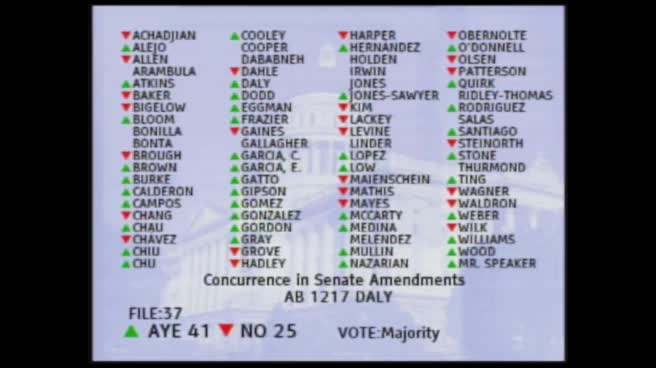


Bill Author
Bill Co-Author(s):
