AB 293: Prisons: inmate threats.
- Session Year: 2015-2016
- House: Assembly
- Latest Version Date: 2015-08-13
Existing law establishes the Department of Corrections and Rehabilitation to oversee the state prison system. Existing law makes it a crime to willfully threaten to commit a crime that will result in death or great bodily injury to another person, with the specific intent that the statement is to be taken as a threat and which, on its face and under the circumstances in which it is made, is so unequivocal, unconditional, immediate, and specific as to convey to the person threatened a gravity of purpose and an immediate prospect of execution of the threat, and thereby causes that person reasonably to be in sustained fear for his or her own safety or for his or her immediate familys safety.
This bill would require the department to establish a statewide policy on operational procedures for the handling of threats made by inmates or wards, and threats made by family members of inmates or wards, against department staff. The bill would require that the policy include methods to ensure that department staff members are advised of threats made against them by inmates, wards, or family members of inmates or wards, and that all threats against department staff made by inmates or wards, and their family members, are thoroughly investigated. The bill would require an individual institution within the department that has a more detailed policy to make the policy accessible to every member of the staff of the institution. The bill would require the department to provide training on the policy developed pursuant to these provisions as part of its existing training programs and would require the policy to be fully implemented by July 1, 2016.
This bill would declare that it is to take effect immediately as an urgency statute.
Existing law establishes the Department of Corrections and Rehabilitation to oversee the state prison system. Existing law makes it a crime to willfully threaten to commit a crime that will result in death or great bodily injury to another person, with the specific intent that the statement is to be taken as a threat and which, on its face and under the circumstances in which it is made, is so unequivocal, unconditional, immediate, and specific as to convey to the person threatened a gravity of purpose and an immediate prospect of execution of the threat, and thereby causes that person reasonably to be in sustained fear for his or her own safety or for his or her immediate familys safety.
This bill would require the department to establish a statewide policy on operational procedures for the handling of threats made by inmates or wards, and threats made by family members of inmates or wards, against department staff. The bill would require that the policy include methods to ensure that department staff members are advised of threats made against them by inmates, wards, or family members of inmates or wards, and that all threats against department staff made by inmates or wards, and their family members members, are thoroughly investigated. The bill would require an individual institution within the department that has a more detailed policy to make the policy accessible to every member of the staff of the institution. The bill would require the department to provide training on the policy developed pursuant to these provisions as part of its existing training programs. programs and would require the policy to be fully implemented by July 1, 2016.
This bill would declare that it is to take effect immediately as an urgency statute.
Existing law establishes the Department of Corrections and Rehabilitation to oversee the state prison system. Existing law makes it a crime to willfully threaten to commit a crime that will result in death or great bodily injury to another person, with the specific intent that the statement is to be taken as a threat and which, on its face and under the circumstances in which it is made, is so unequivocal, unconditional, immediate, and specific as to convey to the person threatened a gravity of purpose and an immediate prospect of execution of the threat, and thereby causes that person reasonably to be in sustained fear for his or her own safety or for his or her immediate familys safety.
This bill would require the department to establish a statewide policy on operational procedures for the handling of threats made by inmates, inmates or wards, and threats made by family members of inmates, inmates or wards, against department staff. The bill would require that the policy include methods to ensure that department staff members are advised of threats made against them by inmates and their family members inmates, wards, or family members of inmates or wards, and that all threats against department staff made by inmates inmates or wards, and their family members are thoroughly investigated. The bill would require an individual institution within the department that has a more detailed policy to make the policy accessible to every member of the staff of the institution. The bill would require the department to provide training on the policy developed pursuant to these provisions as part of its existing training programs.
This bill would declare that it is to take effect immediately as an urgency statute.
Existing law establishes the Department of Corrections and Rehabilitation to oversee the state prison system. Existing law makes it a crime to willfully threaten to commit a crime that will result in death or great bodily injury to another person, with the specific intent that the statement is to be taken as a threat and which, on its face and under the circumstances in which it is made, is so unequivocal, unconditional, immediate, and specific as to convey to the person threatened a gravity of purpose and an immediate prospect of execution of the threat, and thereby causes that person reasonably to be in sustained fear for his or her own safety or for his or her immediate familys safety.
This bill would require the department to establish a statewide policy on operational procedures for the handling of threats made by inmates, and threats made by family members of inmates, against department staff. The bill would require that the policy include methods to ensure that department staff members are advised of threats made against them by inmates and their family members and that all threats against department staff made by inmates and their family members are thoroughly investigated. The bill would require an individual institution within the department that has a more detailed policy to make the policy accessible to every member of the staff of the institution. The bill would require the department to provide training on the policy developed pursuant to these provisions as part of its existing training programs.
(a)The department shall establish a statewide policy on operational procedures for the handling of threats made by inmates or wards, and threats made by family members of inmates or wards, against department staff. The policy shall include methods to ensure that department staff members are advised of threats made against them by inmates, wards, or family members of inmates or wards, and shall require that all threats against department staff made by inmates, wards, or family members of inmates or wards are thoroughly investigated. A copy of the statewide policy shall be accessible to members of the public upon request.
(b)This section does not prohibit an individual institution within the department from developing a more detailed notification procedure for advising staff members of threats made against them. If an individual institution has a more detailed policy, the policy shall be accessible to every member of the staff of the institution.
(c)The department shall provide training on the policy developed pursuant to this section as part of its existing training programs.
(d)The policy developed pursuant to this section shall be fully implemented by July 1, 2016.
SEC. 2.This act is an urgency statute necessary for the immediate preservation of the public peace, health, or safety within the meaning of Article IV of the Constitution and shall go into immediate effect. The facts constituting the necessity are:
In order to increase safety in California prisons at the earliest possible time, it is necessary that this act take effect immediately.
(a)The department shall establish a statewide policy on operational procedures for the handling of threats made by inmates, inmates or wards, and threats made by family members of inmates, inmates or wards, against department staff. The policy shall include methods to ensure that department staff members are advised of threats made against them by inmates or their family members inmates, wards, or family members of inmates or wards, and shall require that all threats against department staff made by inmates or their family members inmates, wards, or family members of inmates or wards are thoroughly investigated. A copy of the statewide policy shall be accessible to members of the public upon request.
(b)This section does not prohibit an individual institution within the department from developing a more detailed notification procedure for advising staff members of threats made against them. If an individual institution has a more detailed policy, the policy shall be accessible to every member of the staff of the institution.
(c)The department shall provide training on the policy developed pursuant to this section as part of its existing training programs.
SEC. 2.This act is an urgency statute necessary for the immediate preservation of the public peace, health, or safety within the meaning of Article IV of the Constitution and shall go into immediate effect. The facts constituting the necessity are:
In order to increase safety in California prisons at the earliest possible time, it is necessary that this act take effect immediately.
(a)The department shall establish a statewide policy on operational procedures for the handling of threats made by inmates, and threats made by family members of inmates, against department staff. The policy shall include methods to ensure that department staff members are advised of threats made against them by inmates or their family members and shall require that all threats against department staff made by inmates or their family members are thoroughly investigated. A copy of the statewide policy shall be accessible to members of the public upon request.
(b)This section does not prohibit an individual institution within the department from developing a more detailed notification procedure for advising staff members of threats made against them. If an individual institution has a more detailed policy, the policy shall be accessible to every member of the staff of the institution.
(c)The department shall provide training on the policy developed pursuant to this section as part of its existing training programs.
|
Date
|
Status
|
|---|---|
| Jun 9, 2015 | From committee: Do pass and re-refer to Com. on APPR. (Ayes 7. Noes 0.) (June 9). Re-referred to Com. on APPR. |
| Aug 13, 2015 | Chaptered by Secretary of State - Chapter 195, Statutes of 2015. |
| Aug 13, 2015 | Approved by the Governor. |
| Aug 3, 2015 | Enrolled and presented to the Governor at 3 p.m. |
| Jul 9, 2015 | Urgency clause adopted. Senate amendments concurred in. To Engrossing and Enrolling. (Ayes 79. Noes 0. Page 2311.). |
| Jul 9, 2015 | Urgency clause adopted. Senate amendments concurred in. To Engrossing and Enrolling. |
| Jul 6, 2015 | Read third time. Urgency clause adopted. Passed. Ordered to the Assembly. (Ayes 39. Noes 0. Page 1786.). |
| Jul 6, 2015 | Read third time. Urgency clause adopted. Passed. Ordered to the Assembly. |
| Jul 6, 2015 | In Assembly. Concurrence in Senate amendments pending. May be considered on or after July 8 pursuant to Assembly Rule 77. |
| Jun 29, 2015 | Read second time. Ordered to third reading. |
| Jun 25, 2015 | Read third time and amended. Ordered to second reading. |
| Jun 23, 2015 | Read second time. Ordered to third reading. |
| Jun 22, 2015 | From committee: Be placed on second reading file pursuant to Senate Rule 28.8. |
| Feb 11, 2015 | Read first time. To print. |
| Jun 1, 2015 | From committee chair, with author's amendments: Amend, and re-refer to committee. Read second time, amended, and re-referred to Com. on PUB. S. |
| May 7, 2015 | Referred to Com. on PUB. S. |
| Apr 9, 2015 | Read third time. Passed. Ordered to the Senate. (Ayes 78. Noes 0.) |
| Apr 9, 2015 | Read third time. Passed. Ordered to the Senate. (Ayes 78. Noes 0. Page 856.) |
| Apr 9, 2015 | In Senate. Read first time. To Com. on RLS. for assignment. |
| Mar 26, 2015 | Read second time. Ordered to consent calendar. |
| Mar 25, 2015 | From committee: Do pass. To Consent Calendar. (Ayes 16. Noes 0.) (March 25). |
| Mar 25, 2015 | From committee: Do pass. Ordered to Consent Calendar. (Ayes 16. Noes 0.) (March 25). |
| Mar 17, 2015 | From committee: Do pass and re-refer to Com. on APPR. (Ayes 6. Noes 0.) (March 17). Re-referred to Com. on APPR. |
| Feb 23, 2015 | Referred to Com. on PUB. S. |
| Feb 12, 2015 | From printer. May be heard in committee March 14. |
|
Date
|
Description
|
Location
|
Votes
|
|
|---|---|---|---|---|
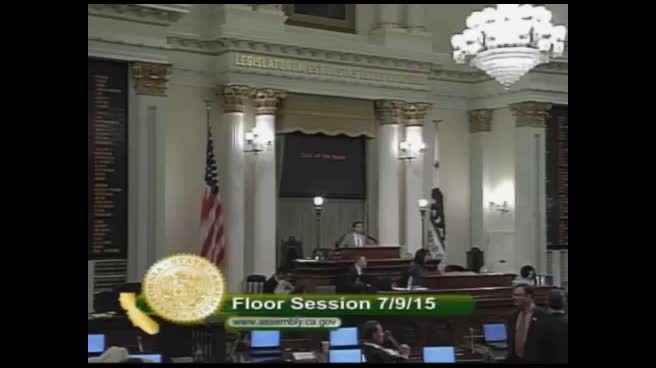
| Jul 9, 2015 | AB 293 LEVINE Concurrence - Urgency Added | Assembly Floor |
Passed |
|
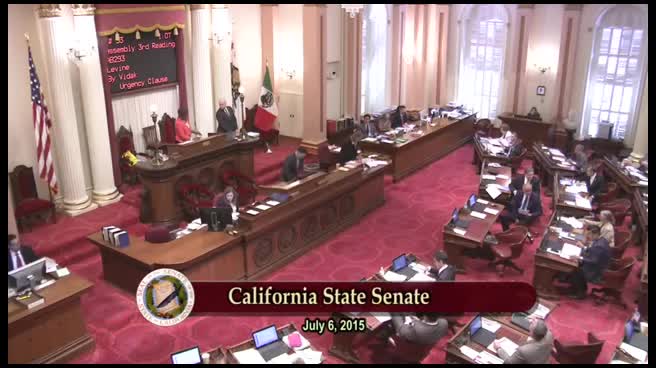
| Jul 6, 2015 | Assembly 3rd Reading AB293 Levine By Vidak Urgency Clause | Senate Floor |
Passed |
|
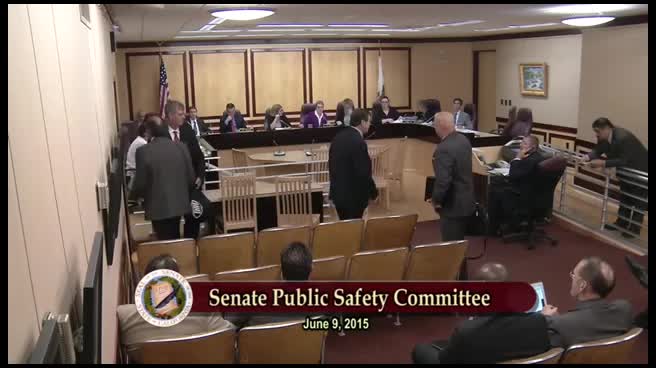
| Jun 9, 2015 | Do pass, but first be re-referred to the Committee on [Appropriations] | Senate Standing Committee on Public Safety |
Passed |
|
| Apr 9, 2015 | AB 293 LEVINE Consent Calendar Second Day Regular Session | Assembly Floor |
Passed |
|
| Mar 25, 2015 | Do pass. To Consent Calendar. | Assembly Standing Committee on Appropriations |
Passed |
|
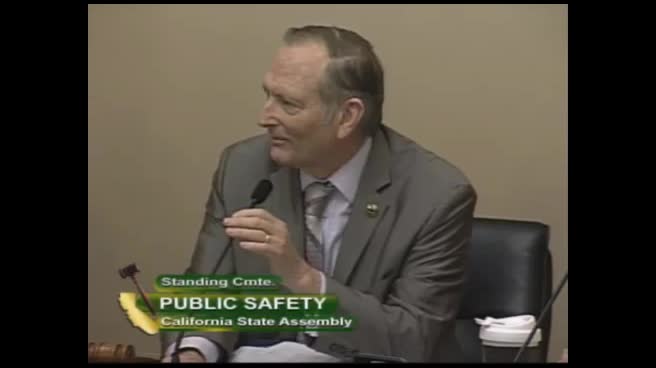
| Mar 17, 2015 | Do pass and be re-referred to the Committee on [Appropriations] | Assembly Standing Committee on Public Safety |
Passed |
This list shows positions taken on this bill by organizations on the date displayed, which is linked to the original source.
Positions by individuals are not included.
|
Organization
|
Position
|
Date
|
|---|---|---|
| American Federation of State, County and Municipal Employees | ** Support | Jul 6, 2015 |
| California Correctional Peace Officers Association | ** Support | Jul 6, 2015 |
| California Correctional Supervisors Organization, Inc. | ** Support | Jul 6, 2015 |
| Legal Services for Prisoners with Children | ** Against | Jul 6, 2015 |
| Service Employees International Union, Local 1000 | ** Support | Jul 6, 2015 |
AB 293
Page 2
CONCURRENCE IN SENATE AMENDMENTS
AB 293
(Levine)
As Amended June 1, 2015
2/3 vote. Urgency
ASSEMBLY: |
78-0 |
(April 9, 2015) |
SENATE: |
39-0 |
(July 6, 2015) |
Original Committee Reference: PUB. S.
SUMMARY: Requires the California Department of Corrections and Rehabilitation (CDCR) to establish a statewide policy on operational procedures for the handling of threats made by inmates or wards, and by family members of inmates or wards, against CDCR staff.
The Senate amendments:
Apply this bill's provisions to juvenile offenders in the custody of CDCR or family members of juvenile offenders.
Add an urgency clause.
Require the policy to be fully implemented by July 1, 2016.
EXISTING LAW:
Creates in state government CDCR, to be headed by a secretary, who shall be appointed by the Governor, subject to Senate confirmation, and shall serve at the pleasure of the Governor. CDCR shall consist of Adult Operations, Adult Programs, Health Care Services, Juvenile Justice, the Board of Parole Hearings, the State Commission on Juvenile Justice, the Prison Industry Authority, and the Prison Industry Board.
States that no state agency shall issue, utilize, enforce, or attempt to enforce any guideline, criterion, bulletin, manual, instruction, order, standard of general application, or other rule, which is a regulation as defined, unless the guideline, criterion, bulletin, manual, instruction, order, standard of general application, or other rule has been adopted as a regulation and filed with the Secretary of State.
States that whenever by the express or implied terms of any statute a state agency has authority to adopt regulations to implement, interpret, make specific or otherwise carry out the provisions of the statute, no regulation adopted is valid or effective unless consistent and not in conflict with the statute and reasonably necessary to effectuate the purpose of the statute.
Authorizes the Director of CDCR to prescribe and amend rules and regulations for the administration of the prisons and the administration of the parole of persons, except as specified. All rules and regulations shall, to the extent practical, be stated in language that is easily understood by the general public.
Provides that the director of CDCR shall require each state prison under the department's jurisdiction to develop a Mutual Aid Escape Pursuit Plan and Agreement with local law enforcement agencies. The plan, together with any supporting information, shall be submitted for annual review to the city council of the city containing, or nearest to, the institution and to the county board of supervisors of the county containing the prison. Nothing in this section shall require the department to disclose any information which may threaten the security of an institution or the safety of the surrounding community.
AS PASSED BY THE ASSEMBLY, this bill:
Stated that the policy shall include methods to ensure that CDCR staff members are advised of threats made against them by inmates or their family members.
Required all threats against CDCR staff made by inmates or their family members to be thoroughly investigated.
Provided that a copy of the statewide policy shall be accessible to members of the public upon request.
Specified that that the provisions of this bill do not prohibit an individual institution within CDCR from developing a more detailed notification procedure for advising staff members of threats made against them.
Provided if an individual institution has a more detailed policy, the policy shall be accessible to every member of the staff of the institution.
Mandated CDCR to provide training on the policy developed pursuant to the provisions of this bill as part of its existing training programs.
FISCAL EFFECT: According to the Senate Appropriations Committee, pursuant to Senate Rule 28.8, negligible state costs.
COMMENTS: According to the author, "AB 293 will require the Department of Corrections and Rehabilitation (CDCR) to establish statewide guidelines for investigating death threats against the women and men who work in California's correctional facilities."
Analysis Prepared by: Stella Choe / PUB. S. / (916) 319-3744 FN: 0001096
AB 293
Page 4
|
Office of Senate Floor Analyses (916) 651-1520 Fax: (916) 327-4478 |
THIRD READING
Bill No: AB 293
Amended: 6/25/15 in Senate
SENATE PUBLIC SAFETY COMMITTEE: 7-0, 6/9/15
AYES: Hancock, Anderson, Glazer, Leno, Liu, Monning, Stone
SENATE APPROPRIATIONS COMMITTEE: Senate Rule 28.8
ASSEMBLY FLOOR: 78-0, 4/9/15 (Consent) - See last page for vote
SUBJECT: Prisons: inmate threats
DIGEST: This bill establishes a statewide policy for the handling of threats made by inmates, wards, or family members of inmates and wards, against California Department of Corrections and Rehabilitation (CDCR) staff.
Senate Floor Amendments of 6/25/15 set an implementation date for July 1, 2016 and adds Senator Anderson as a coauthor.
Existing law:
1) Creates in state government that CDCR is to be headed by a secretary, who is appointed by the Governor, subject to Senate confirmation, and serves at the pleasure of the Governor. CDCR consists of Adult Operations, Adult Programs, Health Care Services, Juvenile Justice, the Board of Parole Hearings, the State Commission on Juvenile Justice, the Prison Industry Authority, and the Prison Industry Board. (Government Code § 12838 (a).).
2) Authorizes the Director of CDCR to prescribe and amend rules and regulations for the administration of the prisons and the administration of the parole of persons, except as specified. All rules and regulations must, to the extent practical, be stated in language that is easily understood by the general public. (Penal Code § 5058 (a).)
3) Requires each state prison under CDCR’s jurisdiction to develop a Mutual Aid Escape Pursuit Plan and Agreement with local law enforcement agencies. The plan, together with any supporting information, must be submitted for annual review to the city council of the city containing, or nearest to, the institution and to the county board of supervisors of the county containing the prison. Nothing in this section requires the CDCR to disclose any information which may threaten the security of an institution or the safety of the surrounding community. (Penal Code § 5004.5.)
This bill:
1) Requires CDCR to establish a statewide policy on operational procedures for handling threats made by inmates, wards, or by the family members of inmates and wards, against CDCR staff.
2) Requires the policy to include methods to ensure that CDCR staff members are advised of threats made against them by inmates, wards, or the family members of inmates and wards.
3) Requires that all threats against CDCR staff made by inmates, wards, or the family members of inmates and wards be thoroughly investigated.
4) Requires that a copy of the statewide policy be made accessible to members of the public, upon request.
5) Does not prohibit an individual institution within CDCR from developing a more detailed notification procedure for advising staff members of threats made against them. If an individual institution has a more detailed policy, the policy is required to be accessible to every member of the staff of the institution.
6) Requires CDCR to provide training on the policy developed pursuant to this section, as specified.
7) Takes effect immediately.
8) Sets an implementation date for July 1, 2016 and adds coauthor, Senator Anderson.
FISCAL EFFECT: Appropriation: No Fiscal Com.: Yes Local: No
AFL-CIO
American Federation of State, County and Municipal Employees
California Correctional Peace Officers Association
California Correctional Supervisors Organization
Service Employees International Union, Local 1000
OPPOSITION: (Verified 6/26/15)
Legal Services for Prisoners with Children
ARGUMENTS IN SUPPORT: According to the author:
Under existing law, there is no requirement that CDCR develop statewide notification procedures for handling death threats. Moreover, there is no requirement that individual institutions have policies. Of the institutions that do currently have policies, there is no requirement that those policies are made available to ensure proper procedure is followed and that notification occurs and threats are fully investigated.
The current situation potentially puts the peace officer, the officer’s family, and the officer’s community at risk.
AB 293 seeks to improve safety by creating uniformity among our correctional institutions and consistency for investigating threats.
ARGUMENTS IN OPPOSITION: Legal Services for Prisoners with Children states, in part:
While it would be helpful for CDCR to establish uniform, statewide policies, we feel that the Legislature could be much more proactive. Rather than let CDCR draft its own policy, the Legislature should use its authority to draft one that is sensible and fair. Letting CDCR draft its own disciplinary practices overlooks the important mandate that the Legislature has to govern California’s prison system.
Threats made against correctional officers are often unsubstantiated. In disciplinary hearings, it is often the officer’s word against the inmates. This bill, by not containing sufficient provisions, would allow prison officials to use criminal threats as a way of seeking disciplinary retaliation against California prisoners. This bill would be improved if it set forth protections for inmates, such as strict evidentiary criteria in disciplinary hearings and limits on the type of severity of punishment (if someone is found guilty). Furthermore, this bill should clearly state that prisoners cannot be punished or have privileges taken away if it is found that their family members threatened a correctional staff member.
ASSEMBLY FLOOR: 78-0, 4/9/15
AYES: Achadjian, Alejo, Travis Allen, Baker, Bigelow, Bloom, Bonilla, Bonta, Brough, Brown, Burke, Campos, Chang, Chau, Chávez, Chiu, Chu, Cooley, Cooper, Dababneh, Dahle, Daly, Dodd, Eggman, Frazier, Beth Gaines, Gallagher, Cristina Garcia, Eduardo Garcia, Gatto, Gipson, Gomez, Gonzalez, Gordon, Gray, Grove, Hadley, Harper, Roger Hernández, Holden, Irwin, Jones, Jones-Sawyer, Kim, Lackey, Levine, Linder, Lopez, Low, Maienschein, Mathis, Mayes, McCarty, Medina, Melendez, Mullin, Nazarian, Obernolte, Olsen, Patterson, Perea, Quirk, Rendon, Ridley-Thomas, Rodriguez, Salas, Santiago, Steinorth, Mark Stone, Thurmond, Ting, Wagner, Waldron, Weber, Wilk, Williams, Wood, Atkins
NO VOTE RECORDED: Calderon, O'Donnell
Prepared by: Linda Tenerowicz / PUB. S. /
7/1/15 16:19:45
**** END ****
AB 293
Page 4
|
Office of Senate Floor Analyses (916) 651-1520 Fax: (916) 327-4478 |
THIRD READING
Bill No: AB 293
Amended: 6/1/15 in Senate
SENATE PUBLIC SAFETY COMMITTEE: 7-0, 6/9/15
AYES: Hancock, Anderson, Glazer, Leno, Liu, Monning, Stone
SENATE APPROPRIATIONS COMMITTEE: Senate Rule 28.8
ASSEMBLY FLOOR: 78-0, 4/9/15 (Consent) - See last page for vote
SUBJECT: Prisons: inmate threats
DIGEST: This bill establishes a statewide policy for the handling of threats made by inmates, wards, or family members of inmates and wards, against California Department of Corrections and Rehabilitation (CDCR) staff.
Existing law:
1) Creates in state government that CDCR is to be headed by a secretary, who is appointed by the Governor, subject to Senate confirmation, and serves at the pleasure of the Governor. CDCR consists of Adult Operations, Adult Programs, Health Care Services, Juvenile Justice, the Board of Parole Hearings, the State Commission on Juvenile Justice, the Prison Industry Authority, and the Prison Industry Board. (Government Code § 12838 (a).).
2) Authorizes the Director of CDCR to prescribe and amend rules and regulations for the administration of the prisons and the administration of the parole of persons, except as specified. All rules and regulations must, to the extent practical, be stated in language that is easily understood by the general public. (Penal Code § 5058 (a).)
3) Requires each state prison under CDCR’s jurisdiction to develop a Mutual Aid Escape Pursuit Plan and Agreement with local law enforcement agencies. The plan, together with any supporting information, must be submitted for annual review to the city council of the city containing, or nearest to, the institution and to the county board of supervisors of the county containing the prison. Nothing in this section requires the CDCR to disclose any information which may threaten the security of an institution or the safety of the surrounding community. (Penal Code § 5004.5.)
This bill:
1) Requires CDCR to establish a statewide policy on operational procedures for handling threats made by inmates, wards, or by the family members of inmates and wards, against CDCR staff.
2) Requires the policy to include methods to ensure that CDCR staff members are advised of threats made against them by inmates, wards, or the family members of inmates and wards.
3) Requires that all threats against CDCR staff made by inmates, wards, or the family members of inmates and wards be thoroughly investigated.
4) Requires that a copy of the statewide policy be made accessible to members of the public, upon request.
5) Does not prohibit an individual institution within CDCR from developing a more detailed notification procedure for advising staff members of threats made against them. If an individual institution has a more detailed policy, the policy would be required to be accessible to every member of the staff of the institution.
6) Requires CDCR to provide training on the policy developed pursuant to this section, as specified.
7) Takes effect immediately.
FISCAL EFFECT: Appropriation: No Fiscal Com.: Yes Local: No
AFL-CIO
American Federation of State, County and Municipal Employees
California Correctional Peace Officers Association
California Correctional Supervisors Organization
Service Employees International Union, Local 1000
OPPOSITION: (Verified 6/22/15)
Legal Services for Prisoners with Children
ARGUMENTS IN SUPPORT: According to the author:
Under existing law, there is no requirement that CDCR develop statewide notification procedures for handling death threats. Moreover, there is no requirement that individual institutions have policies. Of the institutions that do currently have policies, there is no requirement that those policies are made available to ensure proper procedure is followed and that notification occurs and threats are fully investigated.
The current situation potentially puts the peace officer, the officer’s family, and the officer’s community at risk.
AB 293 seeks to improve safety by creating uniformity among our correctional institutions and consistency for investigating threats.
ARGUMENTS IN OPPOSITION: Legal Services for Prisoners with Children states, in part:
While it would be helpful for CDCR to establish uniform, statewide policies, we feel that the Legislature could be much more proactive. Rather than let CDCR draft its own policy, the Legislature should use its authority to draft one that is sensible and fair. Letting CDCR draft its own disciplinary practices overlooks the important mandate that the Legislature has to govern California’s prison system.
Threats made against correctional officers are often unsubstantiated. In disciplinary hearings, it is often the officer’s word against the inmates. This bill, by not containing sufficient provisions, would allow prison officials to use criminal threats as a way of seeking disciplinary retaliation against California prisoners. This bill would be improved if it set forth protections for inmates, such as strict evidentiary criteria in disciplinary hearings and limits on the type of severity of punishment (if someone is found guilty). Furthermore, this bill should clearly state that prisoners cannot be punished or have privileges taken away if it is found that their family members threatened a correctional staff member.
ASSEMBLY FLOOR: 78-0, 4/9/15
AYES: Achadjian, Alejo, Travis Allen, Baker, Bigelow, Bloom, Bonilla, Bonta, Brough, Brown, Burke, Campos, Chang, Chau, Chávez, Chiu, Chu, Cooley, Cooper, Dababneh, Dahle, Daly, Dodd, Eggman, Frazier, Beth Gaines, Gallagher, Cristina Garcia, Eduardo Garcia, Gatto, Gipson, Gomez, Gonzalez, Gordon, Gray, Grove, Hadley, Harper, Roger Hernández, Holden, Irwin, Jones, Jones-Sawyer, Kim, Lackey, Levine, Linder, Lopez, Low, Maienschein, Mathis, Mayes, McCarty, Medina, Melendez, Mullin, Nazarian, Obernolte, Olsen, Patterson, Perea, Quirk, Rendon, Ridley-Thomas, Rodriguez, Salas, Santiago, Steinorth, Mark Stone, Thurmond, Ting, Wagner, Waldron, Weber, Wilk, Williams, Wood, Atkins
NO VOTE RECORDED: Calderon, O'Donnell
Prepared by: Linda Tenerowicz / PUB. S. /
6/23/15 11:30:51
**** END ****
AB 293 (Levine ) Page 4 of 4
SENATE COMMITTEE ON PUBLIC SAFETY
Senator Loni Hancock, Chair
2015 - 2016 Regular
Bill No: AB 293 Hearing Date: June 9, 2015
Author: |
Levine |
||
Version: |
June 1, 2015 |
||
Urgency: |
Yes |
Fiscal: |
Yes |
Consultant: |
LT |
||
Subject: Prisons: Inmate Threats
HISTORY
Source: Author
Prior Legislation: None
Support: California Correctional Peace Officers Association; American Federation of State,
County and Municipal Employees, AFL-CIO; California Correctional Supervisors Organization; Service Employees International Union, Local 1000
Opposition: Legal Services for Prisoners with Children
Assembly Floor Vote: 78 - 0
PURPOSE
The purpose of this bill is to establish a statewide policy for the handling of threats made by inmates, wards, or family members of inmates and wards, against California Department of Corrections and Rehabilitation (CDCR) staff.
Existing law creates in state government CDCR, to be headed by a secretary, who is appointed by the Governor, subject to Senate confirmation, and serves at the pleasure of the Governor. CDCR consists of Adult Operations, Adult Programs, Health Care Services, Juvenile Justice, the Board of Parole Hearings, the State Commission on Juvenile Justice, the Prison Industry Authority, and the Prison Industry Board. (Government Code § 12838 (a).).
Existing law authorizes the Director of CDCR to prescribe and amend rules and regulations for the administration of the prisons and the administration of the parole of persons, except as specified. All rules and regulations must, to the extent practical, be stated in language that is easily understood by the general public. (Penal Code § 5058 (a).)
Existing law requires each state prison under CDCR’s jurisdiction to develop a Mutual Aid Escape Pursuit Plan and Agreement with local law enforcement agencies. The plan, together with any supporting information, must be submitted for annual review to the city council of the city containing, or nearest to, the institution and to the county board of supervisors of the county containing the prison. Nothing in this section requires the CDCR to disclose any information which may threaten the security of an institution or the safety of the surrounding community. (Penal Code § 5004.5.)
This bill would require CDCR to establish a statewide policy on operational procedures for handling threats made by inmates, wards, or by the family members of inmates and wards, against CDCR staff.
This bill would require the policy to include methods to ensure that CDCR staff members are advised of threats made against them by inmates, wards, or the family members of inmates and wards.
This bill would require that all threats against CDCR staff made by inmates, wards, or the family members of inmates and wards be thoroughly investigated.
This bill would require a copy of the statewide policy be made accessible to members of the public, upon request.
This bill would not prohibit an individual institution within CDCR from developing a more detailed notification procedure for advising staff members of threats made against them. If an individual institution has a more detailed policy, the policy would be required to be accessible to every member of the staff of the institution.
This bill would require CDCR to provide training on the policy developed pursuant to this section, as specified.
This bill would take effect immediately.
RECEIVERSHIP/OVERCROWDING CRISIS AGGRAVATION
For the past eight years, this Committee has scrutinized legislation referred to its jurisdiction for any potential impact on prison overcrowding. Mindful of the United States Supreme Court ruling and federal court orders relating to the state’s ability to provide a constitutional level of health care to its inmate population and the related issue of prison overcrowding, this Committee has applied its “ROCA” policy as a content-neutral, provisional measure necessary to ensure that the Legislature does not erode progress in reducing prison overcrowding.
On February 10, 2014, the federal court ordered California to reduce its in-state adult institution population to 137.5% of design capacity by February 28, 2016, as follows:
143% of design bed capacity by June 30, 2014;
141.5% of design bed capacity by February 28, 2015; and,
137.5% of design bed capacity by February 28, 2016.
In February of this year the administration reported that as “of February 11, 2015, 112,993 inmates were housed in the State’s 34 adult institutions, which amounts to 136.6% of design bed capacity, and 8,828 inmates were housed in out-of-state facilities. This current population is now below the court-ordered reduction to 137.5% of design bed capacity.”( Defendants’ February 2015 Status Report In Response To February 10, 2014 Order, 2:90-cv-00520 KJM DAD PC, 3-Judge Court, Coleman v. Brown, Plata v. Brown (fn. omitted).
While significant gains have been made in reducing the prison population, the state now must stabilize these advances and demonstrate to the federal court that California has in place the “durable solution” to prison overcrowding “consistently demanded” by the court. (Opinion Re: Order Granting in Part and Denying in Part Defendants’ Request For Extension of December 31, 2013 Deadline, NO. 2:90-cv-0520 LKK DAD (PC), 3-Judge Court, Coleman v. Brown, Plata v. Brown (2-10-14). The Committee’s consideration of bills that may impact the prison population therefore will be informed by the following questions:
Whether a proposal erodes a measure which has contributed to reducing the prison population;
Whether a proposal addresses a major area of public safety or criminal activity for which there is no other reasonable, appropriate remedy;
Whether a proposal addresses a crime which is directly dangerous to the physical safety of others for which there is no other reasonably appropriate sanction;
Whether a proposal corrects a constitutional problem or legislative drafting error; and
Whether a proposal proposes penalties which are proportionate, and cannot be achieved through any other reasonably appropriate remedy.
COMMENTS
1. Need for This Bill
The author states:
Under existing law, there is no requirement that CDCR develop statewide notification procedures for handling death threats. Moreover, there is no requirement that individual institutions have policies. Of the institutions that do currently have policies, there is no requirement that those policies are made available to ensure proper procedure is followed and that notification occurs and threats are fully investigated.
The current situation potentially puts the peace officer, the officer’s family, and the officer’s community at risk.
AB 293 seeks to improve safety by creating uniformity among our correctional institutions and consistency for investigating threats.
2. Effect of This Legislation
There is currently no statewide notification policy for inmate threats. In fact CDCR’s Division of Adult Institutions (DAI) conducted a survey of its 35 adult institutions. The survey inquired whether the institutions had established policies and procedures in place should an inmate threaten an employee, either verbally or non-verbally. Out of the 35 institutions surveyed, 28 institutions had various established local policies and procedures and the remaining seven institutions were determined not to have localized procedures. According to supporters, this bill closes the gap between varying policies and procedures among correctional institutions for investigating threats against CDCR staff, by creating a statewide policy for responding to threats made against CDCR staff. The procedure requires that staff is advised of threats made against them and that threats are thoroughly investigated.
3. Argument in Opposition
Legal Services for Prisoners with Children states, in part:
While it would be helpful for CDCR to establish uniform, statewide policies, we feel that the Legislature could be much more proactive. Rather than let CDCR draft its own policy, the Legislature should use its authority to draft one that is sensible and fair. Letting CDCR draft its own disciplinary practices overlooks the important mandate that the Legislature has to govern California’s prison system.
Threats made against correctional officers are often unsubstantiated. In disciplinary hearings, it is often the officer’s word against the inmates. This bill, by not containing sufficient provisions, would allow prison officials to use criminal threats as a way of seeking disciplinary retaliation against California prisoners. This bill would be improved if it set forth protections for inmates, such as strict evidentiary criteria in disciplinary hearings and limits on the type of severity of punishment (if someone is found guilty). Furthermore, this bill should clearly state that prisoners cannot be punished or have privileges taken away if it is found that their family members threatened a correctional staff member.
-- END --
AB 293
Page 1
Date of Hearing: March 25, 2015
ASSEMBLY COMMITTEE ON APPROPRIATIONS
Jimmy Gomez, Chair
AB 293
(Levine) – As Introduced February 11, 2015
Policy Committee: |
Public Safety |
Vote: |
6 - 0 |
|
|
|
|
|
|
|
|
Urgency: No State Mandated Local Program: No Reimbursable: No
SUMMARY:
This bill requires the California Department of Corrections and Rehabilitation (CDCR) to establish a statewide policy, to be available to the public upon request, on operational procedures for the handling of threats made by inmates, and by family members of inmates, against CDCR staff.
FISCAL EFFECT:
Minor absorbable costs to the CDCR to develop a statewide policy and to train CDCR staff on the policy. CDCR is already working on creating a policy and the training can be incorporated in to the 40 hours per year training and the 16-week training for new officers.
COMMENTS:
Background: Under current law, there is no requirement for CDCR to develop policies and procedures for investigating threats against CDCR staff. A recent survey found that 28 of the 35 adult institutions have established their own policies and procedures. As a result of this survey, a Warden's Advisory Group (WAG) was established for the purpose of creating a standardized procedure. The work is not complete, and it is not clear at this time if the end product will be made available to the public.
Purpose: This bill requires the CDCR to develop policies and procedures for investigating threats against CDCR employees and requires the policies and procedures be made available to the public, upon request. This bill also requires CDCR provide staff training, as part of its existing training programs.
Analysis Prepared by: Pedro Reyes / APPR. / (916) 319-2081
AB 293
Page 4
Date of Hearing: March 17, 2015
Counsel: Stella Choe
ASSEMBLY COMMITTEE ON PUBLIC SAFETY
Bill Quirk, Chair
AB 293
(Levine) – As Introduced February 11, 2015
SUMMARY:
Requires the California Department of Corrections and Rehabilitation
(CDCR) to establish a statewide policy on operational procedures for
the handling of threats made by inmates, and by family members of
inmates, against CDCR staff. Specifically, this bill:
States that the policy shall include methods to ensure that CDCR staff members are advised of threats made against them by inmates or their family members.
Requires all threats against CDCR staff made by inmates or their family members to be thoroughly investigated.
Provides that a copy of the statewide policy shall be accessible to members of the public upon request.
Specifies that that the provisions of this bill do not prohibit an individual institution within CDCR from developing a more detailed notification procedure for advising staff members of threats made against them.
Provides if an individual institution has a more detailed policy, the policy shall be accessible to every member of the staff of the institution.
Mandates CDCR to provide training on the policy developed pursuant to the provisions of this bill as part of its existing training programs.
EXISTING LAW:
Creates in state government CDCR, to be headed by a secretary, who shall be appointed by the Governor, subject to Senate confirmation, and shall serve at the pleasure of the Governor. CDCR shall consist of Adult Operations, Adult Programs, Health Care Services, Juvenile Justice, the Board of Parole Hearings, the State Commission on Juvenile Justice, the Prison Industry Authority, and the Prison Industry Board. (Gov. Code, § 12838, subd. (a).)
States that no state agency shall issue, utilize, enforce, or attempt to enforce any guideline, criterion, bulletin, manual, instruction, order, standard of general application, or other rule, which is a regulation as defined, unless the guideline, criterion, bulletin, manual, instruction, order, standard of general application, or other rule has been adopted as a regulation and filed with the Secretary of State. (Gov. Code, § 11340.5.)
States that whenever by the express or implied terms of any statute a state agency has authority to adopt regulations to implement, interpret, make specific or otherwise carry out the provisions of the statute, no regulation adopted is valid or effective unless consistent and not in conflict with the statute and reasonably necessary to effectuate the purpose of the statute. (Gov. Code, § 11342.2.)
Authorizes the Director of CDCR to prescribe and amend rules and regulations for the administration of the prisons and the administration of the parole of persons, except as specified. All rules and regulations shall, to the extent practical, be stated in language that is easily understood by the general public. (Pen. Code, § 5058, subd. (a).)
Provides that the director of CDCR shall require each state prison under the department's jurisdiction to develop a Mutual Aid Escape Pursuit Plan and Agreement with local law enforcement agencies. The plan, together with any supporting information, shall be submitted for annual review to the city council of the city containing, or nearest to, the institution and to the county board of supervisors of the county containing the prison. Nothing in this section shall require the department to disclose any information which may threaten the security of an institution or the safety of the surrounding community. (Pen. Code, § 5004.5.)
FISCAL EFFECT:
Unknown
COMMENTS:
Author's Statement: According to the author, "AB 293 will require the Department of Corrections and Rehabilitation (CDCR) to establish statewide guidelines for investigating death threats against the women and men who work in California’s correctional facilities."
Background: According to the background materials provided by the author's office, in December 2014, the Division of Adult Institutions (DAI) within CDCR conducted a survey of its 35 adult institutions in an effort to determine which institutions have notification procedures for threats against staff. The survey inquired whether the institutions had established policies and procedures in place should an inmate threaten an employee, either verbally or non-verbally. Out of the 35 institutions surveyed, 28 institutions had established local policies and procedures and the remaining seven institutions were determined to not have localized procedures. The survey found that some institutions have notification procedures that are kept in the confidential section of their operations manual, while others do not. Of the institutions that do have notification procedures, some do not provide training to staff on these procedures. In addition, it was found that some institutions do not have any notification procedures in place.
As a result of these findings, DAI established a Warden’s Advisory
Group for the purpose of creating a standardized procedure which
identifies institution and employee responsibilities for recognizing,
reporting, and responding to inmate threats, including threats made
by family members of inmates, against CDCR staff. DAI is currently
working on a statewide notification procedure that will apply to all
institutions. Since DAI is currently in the drafting phase, they are
not certain whether it will be included in the confidential
Department Operations Manual (DOM) or if it will be available in the
public DOM.
Argument in Support: According to the California Correctional Peace Officers Association, "Under current law, there is no requirement that CDCR develop a policy and procedure for investigating inmate threats against staff. This gap in existing law has resulted in a patchwork of policies and procedures that can vary from institution to institution; including some institutions that have policies that do not include a staff member being notified when there has been a threat made against them. As a result, death threats can be made against a Correctional Peace Officer or their family members, and the officer may never know it."
Argument in Opposition: Legal Services for Prisoners with Children argues, "While it would be helpful for CDCR to establish uniform, statewide policies, we feel that the Legislature could be much more proactive. Rather than let CDCR draft its own policy, the Legislature should use its authority to draft one that is sensible and fair. Letting CDCR draft its own disciplinary practices overlooks the important mandate that the Legislature has to govern California's prison system.
"Threats made against correctional officers are often unsubstantiated. In disciplinary hearings, it is often the officer's word against the inmates. This bill, by not containing sufficient provisions, would allow prison officials to use criminal threats as a way of seeking disciplinary retaliation against California prisoners. This bill would be improved if it set forth protections for inmates, such as strict evidentiary criteria in disciplinary hearings and limits on the type and severity of punishment (if someone is found guilty). Furthermore, this bill should clearly state that prisoners cannot be punished or have privileges taken away if it is found that their family members threatened a correctional staff member."
Related Legislation: SB 601 (Hancock) would require the Secretary of CDCR to develop a Corrections Accountability Report as described for each institution on January 10, March 15, and a fiscal year-end report and post those reports on the department’s Internet Web site. SB 601 is pending referral by the Senate Rules Committee.
REGISTERED
SUPPORT / OPPOSITION:
Support
American Federation of State, County and Municipal Employees
(AFSCME)
California Correctional Peace Officers Association
Opposition
Legal Services for Prisoners with Children
Analysis Prepared by:
Stella Choe/PUB. S./(916) 319-3744
Discussed in Hearing
 54SEC
Assembly Floor
 2MIN
Senate Floor
 3MIN
Senate Standing Committee on Public Safety
 4MIN
Assembly Standing Committee on Public Safety
Bill Author

Bill Co-Author(s):
