AB 302: Pupil services: lactation accommodations.
- Session Year: 2015-2016
- House: Assembly
- Latest Version Date: 2015-10-09
Existing law requires an employer to provide a reasonable amount of break time to accommodate an employee desiring to express breast milk for the employees infant child. Existing law requires the employer to make reasonable efforts to provide the employee with the use of a room or other location, other than a toilet stall, in close proximity to the employees work area, for the employee to express milk in private. Existing law establishes the California School Age Families Education Program, which is a comprehensive, continuous, and community linked school-based program that focuses on youth development and dropout prevention for pregnant and parenting pupils and on child care and development services for their children.
Existing federal law requires an educational institution to treat pregnancy, childbirth, recovery from childbirth, and other specified conditions in the same manner and under the same policies as any other temporary disability. Existing law also prohibits discrimination on the basis of disability, gender, or other specified characteristics in any program or activity conducted by an educational institution that receives, or benefits from, state financial assistance or enrolls pupils who receive state financial aid.
This bill would require a school operated by a school district or a county office of education, the California School for the Deaf, the California School for the Blind, and a charter school to provide, only if there is at least one lactating pupil on the school campus, reasonable accommodations to a lactating pupil on a school campus to express breast milk, breast-feed an infant child, or address other needs related to breast-feeding. The bill would require that these reasonable accommodations include, but are not limited to, access to a private and secure room, other than a restroom, to express breast milk or breast-feed an infant child, permission to bring onto a school campus any equipment used to express breast milk, access to a power source for that equipment, and access to a place to safely store expressed breast milk. The bill would also require that a lactating pupil on a school campus be given a reasonable amount of time to accommodate the need to express breast milk or breast-feed an infant child. The bill would prohibit a pupil from incurring an academic penalty as a result of her use, during the schoolday, of these reasonable accommodations. The bill would authorize a complaint of noncompliance with the requirements of the bill to be filed with the local educational agency, and would require the local educational agency to respond to such a complaint, in accordance with specified procedures. The bill would also authorize a complainant to appeal a decision of the local educational agency to the State Department of Education and would require the department to issue a written decision within 60 days of its receipt of the appeal. The bill would require a local educational agency to provide a remedy to the affected pupil if the local educational agency finds merit in a complaint or if the Superintendent of Public Instruction finds merit in an appeal. The bill would also include a statement of legislative findings and declarations. By imposing additional duties on local educational agencies, this bill would impose a state-mandated local program.
The California Constitution requires the state to reimburse local agencies and school districts for certain costs mandated by the state. Statutory provisions establish procedures for making that reimbursement.
This bill would provide that, if the Commission on State Mandates determines that the bill contains costs mandated by the state, reimbursement for those costs shall be made pursuant to these statutory provisions.
Existing law requires an employer to provide a reasonable amount of break time to accommodate an employee desiring to express breast milk for the employees infant child. Existing law requires the employer to make reasonable efforts to provide the employee with the use of a room or other location, other than a toilet stall, in close proximity to the employees work area, for the employee to express milk in private. Existing law establishes the California School Age Families Education Program, which is a comprehensive, continuous, and community linked school-based program that focuses on youth development and dropout prevention for pregnant and parenting pupils and on child care and development services for their children.
Existing federal law requires an educational institution to treat pregnancy, childbirth, recovery from childbirth, and other specified conditions in the same manner and under the same policies as any other temporary disability. Existing law also prohibits discrimination on the basis of disability, gender, or other specified characteristics in any program or activity conducted by an educational institution that receives, or benefits from, state financial assistance or enrolls pupils who receive state financial aid.
This bill would require a school operated by a school district or a county office of education, the California School for the Deaf, the California School for the Blind, and a charter school to provide, only if there is at least one lactating pupil on the school campus, reasonable accommodations to a lactating pupil on a school campus to express breast milk, breast-feed an infant child, or address other needs related to breast-feeding. The bill would require that these reasonable accommodations include, but are not limited to, access to a private and secure room, other than a restroom, to express breast milk or breast-feed an infant child, permission to bring onto a school campus any equipment used to express breast milk, access to a power source for that equipment, and access to a place to safely store expressed breast milk. The bill would also require that a lactating pupil on a school campus be given a reasonable amount of time to accommodate the need to express breast milk or breast-feed an infant child. The bill would prohibit a pupil from incurring an academic penalty as a result of her use, during the schoolday, of these reasonable accommodations. The bill would authorize a complaint of noncompliance with the requirements of the bill to be filed with the local educational agency, and would require the local educational agency to respond to such a complaint, in accordance with specified procedures. The bill would also authorize a complainant to appeal a decision of the local educational agency to the State Department of Education and would require the department to issue a written decision within 30 60 days of its receipt of the appeal. The bill would require a local educational agency to provide a remedy to the affected pupil if the local educational agency finds merit in a complaint or if the Superintendent of Public Instruction finds merit in an appeal. The bill would also include a statement of legislative findings and declarations. By imposing additional duties on local educational agencies, this bill would impose a state-mandated local program.
The California Constitution requires the state to reimburse local agencies and school districts for certain costs mandated by the state. Statutory provisions establish procedures for making that reimbursement.
This bill would provide that, if the Commission on State Mandates determines that the bill contains costs mandated by the state, reimbursement for those costs shall be made pursuant to these statutory provisions.
Existing law requires an employer to provide a reasonable amount of break time to accommodate an employee desiring to express breast milk for the employees infant child. Existing law requires the employer to make reasonable efforts to provide the employee with the use of a room or other location, other than a toilet stall, in close proximity to the employees work area, for the employee to express milk in private. Existing law establishes the California School Age Families Education Program, which is a comprehensive, continuous, and community linked school-based program that focuses on youth development and dropout prevention for pregnant and parenting pupils and on child care and development services for their children.
Existing federal law requires an educational institution to treat pregnancy, childbirth, recovery from childbirth, and other specified conditions in the same manner and under the same policies as any other temporary disability. Existing law also prohibits discrimination on the basis of disability, gender, or other specified characteristics in any program or activity conducted by an educational institution that receives, or benefits from, state financial assistance or enrolls pupils who receive state financial aid.
This bill would require a school operated by a school district or a county office of education, the California School for the Deaf, the California School for the Blind, and a charter school to provide, only if there is at least one lactating pupil on the school campus, reasonable accommodations to a lactating pupil on a school campus to express breast milk, breast-feed an infant child, or address other needs related to breast-feeding. The bill would require that these reasonable accommodations include, but are not limited to, access to a private and secure room, other than a restroom, to express breast milk or breast-feed an infant child, permission to bring onto a school campus any equipment used to express breast milk, access to a power source for that equipment, and access to a place to safely store expressed breast milk. The bill would also require that a lactating pupil on a school campus be given a reasonable amount of time to accommodate the need to express breast milk or breast-feed an infant child. The bill would prohibit a pupil from incurring an academic penalty as a result of her use, during the schoolday, of these reasonable accommodations. The bill would authorize a complaint of noncompliance with the requirements of the bill to be filed with the local educational agency agency, and would require the local educational agency to respond to such a complaint, in accordance with specified procedures and would require the local educational agency to conduct an investigation and issue a written decision within 5 schooldays of its receipt of such a complaint. procedures. The bill would also authorize a complainant to appeal a decision of the local educational agency to the State Department of Education and would require the department to issue a written decision within 30 days of its receipt of the appeal. The bill would require a local educational agency to provide a remedy to the affected pupil if the local educational agency finds merit in a complaint or if the Superintendent of Public Instruction finds merit in an appeal. The bill would also include a statement of legislative findings and declarations. By imposing additional duties on local educational agencies, this bill would impose a state-mandated local program.
The California Constitution requires the state to reimburse local agencies and school districts for certain costs mandated by the state. Statutory provisions establish procedures for making that reimbursement.
This bill would provide that, if the Commission on State Mandates determines that the bill contains costs mandated by the state, reimbursement for those costs shall be made pursuant to these statutory provisions.
Existing law requires an employer to provide a reasonable amount of break time to accommodate an employee desiring to express breast milk for the employees infant child. Existing law requires the employer to make reasonable efforts to provide the employee with the use of a room or other location, other than a toilet stall, in close proximity to the employees work area, for the employee to express milk in private. Existing law establishes the California School Age Families Education Program, which is a comprehensive, continuous, and community linked school-based program that focuses on youth development and dropout prevention for pregnant and parenting pupils and on child care and development services for their children.
Existing federal law requires an educational institution to treat pregnancy, childbirth, recovery from childbirth, and other specified conditions in the same manner and under the same policies as any other temporary disability. Existing law also prohibits discrimination on the basis of disability, gender, or other specified characteristics in any program or activity conducted by an educational institution that receives, or benefits from, state financial assistance or enrolls pupils who receive state financial aid.
This bill would require a school district operated by a school district or a county office of education, the California School for the Deaf, the California School for the Blind, and a charter school to provide provide, only if there is at least one lactating pupil on the school campus, reasonable accommodations to a lactating pupil on a high school campus to express breast milk, breastfeed breast-feed an infant child, or address other needs related to breastfeeding. breast-feeding. The bill would require that these reasonable accommodations include, but are not limited to, access to a private and secure room, other than a restroom, to express breast milk or breastfeed breast-feed an infant child, permission to bring onto a school campus any equipment used to express breast milk, access to a power source for that equipment, and access to a place to safely store expressed breast milk. The bill would also require that a lactating pupil on a high school campus be given a reasonable amount of time to accommodate the need to express breast milk or breastfeed breast-feed an infant child. The bill would require a school district to provide reasonable accommodations, as specified, only if there is at least one lactating pupil on a high school campus in that district. The bill would prohibit a pupil from incurring an academic penalty as a result of her use, during the schoolday, of these reasonable accommodations. The bill would authorize a complaint of noncompliance with the requirements of the bill to be filed with the local educational agency in accordance with specified procedures and would require the local educational agency to conduct an investigation and issue a written decision within 5 schooldays of its receipt of such a complaint. The bill would also authorize a complainant to appeal a decision of the local educational agency to the State Department of Education and would require the department to issue a written decision within 30 days of its receipt of the appeal. The bill would also include a statement of legislative findings and declarations. By imposing additional duties on school districts, local educational agencies, this bill would impose a state-mandated local program.
The California Constitution requires the state to reimburse local agencies and school districts for certain costs mandated by the state. Statutory provisions establish procedures for making that reimbursement.
This bill would provide that, if the Commission on State Mandates determines that the bill contains costs mandated by the state, reimbursement for those costs shall be made pursuant to these statutory provisions.
This bill would express the intent of the Legislature to enact legislation that would respect and uphold the rights and education opportunities of pregnant and parenting pupils, including providing lactation accommodations.
Existing federal law requires an educational institution to treat pregnancy, childbirth, recovery from childbirth, and other specified conditions in the same manner and under the same policies as any other temporary disability. Existing law also prohibits discrimination on the basis of disability, gender, or other specified characteristics in any program or activity conducted by an educational institution that receives, or benefits from, state financial assistance or enrolls pupils who receive state financial aid.
This bill would require a school district to provide reasonable accommodations to a lactating pupil on a high school campus to express breast milk, breastfeed an infant child, or address other needs related to breastfeeding. The bill would require that these reasonable accommodations include, but are not limited to, access to a private and secure room, other than a restroom, to express breast milk or breastfeed an infant child, permission to bring onto a school campus any equipment used to express breast milk, access to a power source for that equipment, and access to a place to safely store expressed breast milk. The bill would also require that a lactating pupil on a high school campus be given a reasonable amount of time to accommodate the need to express breast milk or breastfeed an infant child. The bill would require a school district to provide reasonable accommodations, as specified, only if there is at least one lactating pupil on a high school campus in that district. The bill would also include a statement of legislative findings and declarations. By imposing additional duties on school districts, this bill would impose a state-mandated local program.
The California Constitution requires the state to reimburse local agencies and school districts for certain costs mandated by the state. Statutory provisions establish procedures for making that reimbursement.
This bill would provide that, if the Commission on State Mandates determines that the bill contains costs mandated by the state, reimbursement for those costs shall be made pursuant to these statutory provisions.
Existing law requires every employer to provide a reasonable amount of break time to accommodate an employee desiring to express breast milk for the employees infant child. Existing law requires the employer to make reasonable efforts to provide the employee with the use of a room or other location, other than a toilet stall, in close proximity to the employees work area, for the employee to express milk in private. Existing law establishes the California School Age Families Education Program, which is a comprehensive, continuous, and community linked school-based program that focuses on youth development and dropout prevention for pregnant and parenting pupils and on child care and development services for their children.
This bill would express the intent of the Legislature to enact legislation that would respect and uphold the rights and education opportunities of pregnant and parenting pupils, including providing lactation accommodations.
The Legislature finds and declares all of the following:
(a)Title IX of the Education Amendments of 1972 (20 U.S.C. Sec. 1681 et seq.) prohibits sex discrimination in educational institutions, which includes discrimination against pregnant and parenting pupils.
(b)The federal regulations implementing Title IX of the Education Amendments of 1972 specify that sex discrimination includes discrimination against a pupil based on pregnancy, childbirth, false pregnancy, termination of pregnancy, or recovery from childbirth-related conditions.
(c)The federal regulations implementing Title IX of the Education Amendments of 1972 require a pupil with temporary medical conditions occasioned by pregnancy or related to recovery from childbirth to be treated the same as any other pupil with a temporary disability.
(d)The Sex Equity in Education Act (Article 4 (commencing with Section 221.5) of Chapter 2 of Part 1 of Division 1 of Title 1 of the Education Code) prohibits sex discrimination in educational institutions, which includes discrimination against pregnant and parenting pupils.
(e)The regulations implementing the Sex Equity in Education Act prohibit educational institutions from applying any rule concerning a pupils actual or potential parental, family, or marital status that treats a pupil differently on the basis of sex.
(f)The Unruh Civil Rights Act (Section 51 of the Civil Code) prohibits businesses, including public schools, from discriminating based on sex, which includes discrimination on the basis of pregnancy, childbirth, or medical conditions related to pregnancy or childbirth.
(g)Denial of accommodations to a pupil who chooses to breast-feed or express breast milk while at school is prohibited sex discrimination.
(h)Despite these laws, California schools are failing to accommodate the needs of lactating pupil parents on their campuses by providing them with reasonable time and private space to express breast milk, breast-feed infant children, or address other needs related to breast-feeding.
SEC. 2.Section 222 is added to the Education Code, to read:222.(a)A school operated by a school district or a county office of education, the California School for the Deaf, the California School for the Blind, and a charter school shall provide reasonable accommodations to a lactating pupil on a school campus to express breast milk, breast-feed an infant child, or address other needs related to breast-feeding. Reasonable accommodations under this section include, but are not limited to, all of the following:
(1)Access to a private and secure room, other than a restroom, to express breast milk or breast-feed an infant child.
(2)Permission to bring onto a school campus a breast pump and any other equipment used to express breast milk.
(3)Access to a power source for a breast pump or any other equipment used to express breast milk.
(4)Access to a place to store expressed breast milk safely.
(b)A lactating pupil on a school campus shall be provided a reasonable amount of time to accommodate her need to express breast milk or breast-feed an infant child.
(c)A school specified in subdivision (a) shall provide the reasonable accommodations specified in subdivisions (a) and (b) only if there is at least one lactating pupil on the school campus.
(d)A school subject to this section may use an existing facility to meet the requirements specified in subdivision (a).
(e)A pupil shall not incur an academic penalty as a result of her use, during the schoolday, of the reasonable accommodations specified in this section, and shall be provided the opportunity to make up any work missed due to such use.
(f)(1)A complaint of noncompliance with the requirements of this section may be filed with the local educational agency under the Uniform Complaint Procedures set forth in Chapter 5.1 (commencing with Section 4600) of Division 1 of Title 5 of the California Code of Regulations.
(2)A local educational agency shall respond to a complaint filed pursuant to paragraph (1) in accordance with Chapter 5.1 (commencing with Section 4600) of Division 1 of Title 5 of the California Code of Regulations.
(3)A complainant not satisfied with the decision of a local educational agency may appeal the decision to the department pursuant to Chapter 5.1 (commencing with Section 4600) of Division 1 of Title 5 of the California Code of Regulations and shall receive a written decision regarding the appeal within 60 days of the departments receipt of the appeal.
(4)If a local educational agency finds merit in a complaint, or if the Superintendent finds merit in an appeal, the local educational agency shall provide a remedy to the affected pupil.
SEC. 3.If the Commission on State Mandates determines that this act contains costs mandated by the state, reimbursement to local agencies and school districts for those costs shall be made pursuant to Part 7 (commencing with Section 17500) of Division 4 of Title 2 of the Government Code.
The Legislature finds and declares all of the following:
(a)Title IX of the Education Amendments of 1972 (20 U.S.C. Sec. 1681 et seq.) prohibits sex discrimination in educational institutions, which includes discrimination against pregnant and parenting pupils.
(b)The federal regulations implementing Title IX of the Education Amendments of 1972 specify that sex discrimination includes discrimination against a pupil based on pregnancy, childbirth, false pregnancy, termination of pregnancy, or recovery from childbirth-related conditions.
(c)The federal regulations implementing Title IX of the Education Amendments of 1972 require a pupil with temporary medical conditions occasioned by pregnancy or related to recovery from childbirth to be treated the same as any other pupil with a temporary disability.
(d)The Sex Equity in Education Act (Article 4 (commencing with Section 221.5) of Chapter 2 of Part 1 of Division 1 of Title 1 of the Education Code) prohibits sex discrimination in educational institutions, which includes discrimination against pregnant and parenting pupils.
(e)The regulations implementing the Sex Equity in Education Act prohibit educational institutions from applying any rule concerning a pupils actual or potential parental, family, or marital status that treats a pupil differently on the basis of sex.
(f)The Unruh Civil Rights Act (Section 51 of the Civil Code) prohibits businesses, including public schools, from discriminating based on sex, which includes discrimination on the basis of pregnancy, childbirth, or medical conditions related to pregnancy or childbirth.
(g)Denial of accommodations to a pupil who chooses to breast-feed or express breast milk while at school is prohibited sex discrimination.
(h)Despite these laws, California schools are failing to accommodate the needs of lactating pupil parents on their campuses by providing them with reasonable time and private space to express breast milk, breast-feed infant children, or address other needs related to breast-feeding.
SEC. 2.Section 222 is added to the Education Code, to read:222.(a)A school operated by a school district or a county office of education, the California School for the Deaf, the California School for the Blind, and a charter school shall provide reasonable accommodations to a lactating pupil on a school campus to express breast milk, breast-feed an infant child, or address other needs related to breast-feeding. Reasonable accommodations under this section include, but are not limited to, all of the following:
(1)Access to a private and secure room, other than a restroom, to express breast milk or breast-feed an infant child.
(2)Permission to bring onto a school campus a breast pump and any other equipment used to express breast milk.
(3)Access to a power source for a breast pump or any other equipment used to express breast milk.
(4)Access to a place to store expressed breast milk safely.
(b)A lactating pupil on a school campus shall be provided a reasonable amount of time to accommodate her need to express breast milk or breast-feed an infant child.
(c)A school specified in subdivision (a) shall provide the reasonable accommodations specified in subdivisions (a) and (b) only if there is at least one lactating pupil on the school campus.
(d)A school subject to this section may use an existing facility to meet the requirements specified in subdivision (a).
(e)A pupil shall not incur an academic penalty as a result of her use, during the schoolday, of the reasonable accommodations specified in this section, and shall be provided the opportunity to make up any work missed due to such use.
(f)(1)A complaint of noncompliance with the requirements of this section may be filed with the local educational agency under the Uniform Complaint Procedures set forth in Chapter 5.1 (commencing with Section 4600) of Division 1 of Title 5 of the California Code of Regulations.
(2)A local educational agency shall respond to a complaint filed pursuant to paragraph (1) in accordance with Chapter 5.1 (commencing with Section 4600) of Division 1 of Title 5 of the California Code of Regulations.
(3)A complainant not satisfied with the decision of a local educational agency may appeal the decision to the department pursuant to Chapter 5.1 (commencing with Section 4600) of Division 1 of Title 5 of the California Code of Regulations and shall receive a written decision regarding the appeal within 30 60 days of the departments receipt of the appeal.
(4)If a local educational agency finds merit in a complaint, or if the Superintendent finds merit in an appeal, the local educational agency shall provide a remedy to the affected pupil.
SEC. 3.If the Commission on State Mandates determines that this act contains costs mandated by the state, reimbursement to local agencies and school districts for those costs shall be made pursuant to Part 7 (commencing with Section 17500) of Division 4 of Title 2 of the Government Code.
The Legislature finds and declares all of the following:
(a)Title IX of the Education Amendments of 1972 (20 U.S.C. Sec. 1681 et seq.) prohibits sex discrimination in educational institutions, which includes discrimination against pregnant and parenting pupils.
(b)The federal regulations implementing Title IX of the Education Amendments of 1972 specify that sex discrimination includes discrimination against a pupil based on pregnancy, childbirth, false pregnancy, termination of pregnancy, or recovery from childbirth-related conditions.
(c)The federal regulations implementing Title IX of the Education Amendments of 1972 require a pupil with temporary medical conditions occasioned by pregnancy or related to recovery from childbirth to be treated the same as any other pupil with a temporary disability.
(d)The Sex Equity in Education Act (Article 4 (commencing with Section 221.5) of Chapter 2 of Part 1 of Division 1 of Title 1 of the Education Code) prohibits sex discrimination in educational institutions, which includes discrimination against pregnant and parenting pupils.
(e)The regulations implementing the Sex Equity in Education Act prohibit educational institutions from applying any rule concerning a pupils actual or potential parental, family, or marital status that treats a pupil differently on the basis of sex.
(f)The Unruh Civil Rights Act (Section 51 of the Civil Code) prohibits businesses, including public schools, from discriminating based on sex, which includes discrimination on the basis of pregnancy, childbirth, or medical conditions related to pregnancy or childbirth.
(g)Denial of accommodations to a pupil who chooses to breast-feed or express breast milk while at school is prohibited sex discrimination.
(h)Despite these laws, California schools are failing to accommodate the needs of lactating pupil parents on their campuses by providing them with reasonable time and private space to express breast milk, breast-feed infant children, or address other needs related to breast-feeding.
SEC. 2.Section 222 is added to the Education Code, to read:222.(a)A school operated by a school district or a county office of education, the California School for the Deaf, the California School for the Blind, and a charter school shall provide reasonable accommodations to a lactating pupil on a school campus to express breast milk, breast-feed an infant child, or address other needs related to breast-feeding. Reasonable accommodations under this section include, but are not limited to, all of the following:
(1)Access to a private and secure room, other than a restroom, to express breast milk or breast-feed an infant child.
(2)Permission to bring onto a school campus a breast pump and any other equipment used to express breast milk.
(3)Access to a power source for a breast pump or any other equipment used to express breast milk.
(4)Access to a place to store expressed breast milk safely.
(b)A lactating pupil on a school campus shall be provided a reasonable amount of time to accommodate her need to express breast milk or breast-feed an infant child.
(c)A school specified in subdivision (a) shall provide the reasonable accommodations specified in subdivisions (a) and (b) only if there is at least one lactating pupil on the school campus.
(d)A school subject to this section may use an existing facility to meet the requirements specified in subdivision (a).
(d)
(e)A pupil shall not incur an academic penalty as a result of her use, during the schoolday, of the reasonable accommodations specified in this section, and shall be provided the opportunity to make up any work missed due to such use.
(e)
(f)(1)A complaint of noncompliance with the requirements of this section may be filed with the local educational agency under the Uniform Complaint Procedures set forth in Chapter 5.1 (commencing with Section 4600) of Division 1 of Title 5 of the California Code of Regulations.
(2)Within five schooldays of a local educational agencys receipt of a complaint alleging a violation of the requirements of this section, the local educational agency shall conduct a complete investigation and issue a written local educational agency decision. The investigation and decision shall comply with the requirements of subdivisions (b) to (d), inclusive, and paragraphs (1) to (7), inclusive, of subdivision (e), of Section 4631 of Title 5 of the California Code of Regulations.
(2)A local educational agency shall respond to a complaint filed pursuant to paragraph (1) in accordance with Chapter 5.1 (commencing with Section 4600) of Division 1 of Title 5 of the California Code of Regulations.
(3)A complainant not satisfied with the decision of a local educational agency may appeal the decision to the department pursuant to Chapter 5.1 (commencing with Section 4600) of Division 1 of Title 5 of the California Code of Regulations. Regulations and shall receive a written decision regarding the appeal within 30 days of the departments receipt of the appeal.
(4)If the complainant appeals a local educational agency decision regarding an alleged violation of the requirements of subdivisions (a) through (d), inclusive, of this section, the department shall issue a written decision regarding the appeal within 30 days of the departments receipt of the appeal.
(4)If a local educational agency finds merit in a complaint, or if the Superintendent finds merit in an appeal, the local educational agency shall provide a remedy to the affected pupil.
SEC. 3.If the Commission on State Mandates determines that this act contains costs mandated by the state, reimbursement to local agencies and school districts for those costs shall be made pursuant to Part 7 (commencing with Section 17500) of Division 4 of Title 2 of the Government Code.
The Legislature finds and declares all of the following:
(a)Title IX of the Education Amendments of 1972 (20 U.S.C. Sec. 1681 et seq.) prohibits sex discrimination in educational institutions, which includes discrimination against pregnant and parenting pupils.
(b)The federal regulations implementing Title IX of the Education Amendments of 1972 specify that sex discrimination includes discrimination against a pupil based on pregnancy, childbirth, false pregnancy, termination of pregnancy, or recovery from childbirth-related conditions.
(c)The federal regulations implementing Title IX of the Education Amendments of 1972 require a pupil with temporary medical conditions occasioned by pregnancy or related to recovery from childbirth to be treated the same as any other pupil with a temporary disability.
(d)The Sex Equity in Education Act (Article 4 (commencing with Section 221.5) of Chapter 2 of Part 1 of Division 1 of Title 1 of the Education Code) prohibits sex discrimination in educational institutions, which includes discrimination against pregnant and parenting pupils.
(e)The regulations implementing the Sex Equity in Education Act prohibit educational institutions from applying any rule concerning a pupils actual or potential parental, family, or marital status that treats a pupil differently on the basis of sex.
(f)The Unruh Civil Rights Act (Section 51 of the Civil Code) prohibits businesses, including public schools, from discriminating based on sex, which includes discrimination on the basis of pregnancy, childbirth, or medical conditions related to pregnancy or childbirth.
(g)Denial of accommodations to a pupil who chooses to breastfeed breast-feed or express breast milk while at school is prohibited sex discrimination.
(h)Despite these laws, California schools are failing to accommodate the needs of lactating pupil parents on their campuses by providing them with reasonable time and private space to express breast milk, breastfeed breast-feed infant children, or address other needs related to breastfeeding. breast-feeding.
SEC. 2.Section 222 is added to the Education Code, to read:222.(a)A school operated by a school district district or a county office of education, the California School for the Deaf, the California School for the Blind, and a charter school shall provide reasonable accommodations to a lactating pupil on a high school campus to express breast milk, breastfeed breast-feed an infant child, or address other needs related to breastfeeding. breast-feeding. Reasonable accommodations under this section include, but are not limited to, all of the following:
(1)Access to a private and secure room, other than a restroom, to express breast milk or breastfeed breast-feed an infant child.
(2)Permission to bring onto a school campus a breast pump and any other equipment used to express breast milk.
(3)Access to a power source for a breast pump or any other equipment used to express breast milk.
(4)Access to a place to store expressed breast milk safely.
(b)A lactating pupil on a high school campus shall be provided a reasonable amount of time to accommodate her need to express breast milk or breastfeed breast-feed an infant child.
(c)A school district specified in subdivision (a) shall provide the reasonable accommodations specified in subdivisions (a) and (b) only if there is at least one lactating pupil on a high the school campus in that district. campus.
(d)A pupil shall not incur an academic penalty as a result of her use, during the schoolday, of the reasonable accommodations specified in this section, and shall be provided the opportunity to make up any work missed due to such use.
(e)(1)A complaint of noncompliance with the requirements of this section may be filed with the local educational agency under the Uniform Complaint Procedures set forth in Chapter 5.1 (commencing with Section 4600) of Division 1 of Title 5 of the California Code of Regulations.
(2)Within five schooldays of a local educational agencys receipt of a complaint alleging a violation of the requirements of this section, the local educational agency shall conduct a complete investigation and issue a written local educational agency decision. The investigation and decision shall comply with the requirements of subdivisions (b) to (d), inclusive, and paragraphs (1) to (7), inclusive, of subdivision (e), of Section 4631 of Title 5 of the California Code of Regulations.
(3)A complainant not satisfied with the decision of a local educational agency may appeal the decision to the department pursuant to Chapter 5.1 (commencing with Section 4600) of Division 1 of Title 5 of the California Code of Regulations.
(4)If the complainant appeals a local educational agency decision regarding an alleged violation of the requirements of subdivisions (a) through (d), inclusive, of this section, the department shall issue a written decision regarding the appeal within 30 days of the departments receipt of the appeal.
SEC. 3.If the Commission on State Mandates determines that this act contains costs mandated by the state, reimbursement to local agencies and school districts for those costs shall be made pursuant to Part 7 (commencing with Section 17500) of Division 4 of Title 2 of the Government Code.
The Legislature finds and declares all of the following:
(a)Title IX of the Education Amendments of 1972 (20 U.S.C. Sec. 1681 et seq.) prohibits sex discrimination in educational institutions, which includes discrimination against pregnant and parenting pupils.
(b)The federal regulations implementing Title IX of the Education Amendments of 1972 specify that sex discrimination includes discrimination against a pupil based on pregnancy, childbirth, false pregnancy, termination of pregnancy, or recovery from childbirth-related conditions.
(c)The federal regulations implementing Title IX of the Education Amendments of 1972 require a pupil with temporary medical conditions occasioned by pregnancy or related to recovery from childbirth to be treated the same as any other pupil with a temporary disability.
(d)The Sex Equity in Education Act (Article 4 (commencing with Section 221.5) of Chapter 2 of Part 1 of Division 1 of Title 1 of the Education Code) prohibits sex discrimination in educational institutions, which includes discrimination against pregnant and parenting pupils.
(e)The regulations implementing the Sex Equity in Education Act prohibit educational institutions from applying any rule concerning a pupils actual or potential parental, family, or marital status that treats a pupil differently on the basis of sex.
(f)The Unruh Civil Rights Act (Section 51 of the Civil Code) prohibits businesses, including public schools, from discriminating based on sex, which includes discrimination on the basis of pregnancy, childbirth, or medical conditions related to pregnancy or childbirth.
(g)Denial of accommodations to a pupil who chooses to breastfeed or express breast milk while at school is prohibited sex discrimination.
(h)Despite these laws, California schools are failing to accommodate the needs of lactating pupil parents on their campuses by providing them with reasonable time and private space to express breast milk, breastfeed infant children, or address other needs related to breastfeeding.
SEC. 2.Section 222 is added to the Education Code, to read:222.(a)A school district shall provide reasonable accommodations to a lactating pupil on a high school campus to express breast milk, breastfeed an infant child, or address other needs related to breastfeeding. Reasonable accommodations under this section include, but are not limited to, all of the following:
(1)Access to a private and secure room, other than a restroom, to express breast milk or breastfeed an infant child.
(2)Permission to bring onto a school campus a breast pump and any other equipment used to express breast milk.
(3)Access to a power source for a breast pump or any other equipment used to express breast milk.
(4)Access to a place to store expressed breast milk safely.
(b)A lactating pupil on a high school campus shall be provided a reasonable amount of time to accommodate her need to express breast milk or breastfeed an infant child.
(c)A school district shall provide the reasonable accommodations specified in subdivisions (a) and (b) only if there is at least one lactating pupil on a high school campus in that district.
SEC. 3.If the Commission on State Mandates determines that this act contains costs mandated by the state, reimbursement to local agencies and school districts for those costs shall be made pursuant to Part 7 (commencing with Section 17500) of Division 4 of Title 2 of the Government Code.
SECTION 1.It is the intent of the Legislature to enact legislation that would respect and uphold the rights and education opportunities of pregnant and parenting pupils, including providing lactation accommodations.
It is the intent of the Legislature to enact legislation that would respect and uphold the rights and education opportunities of pregnant and parenting pupils, including providing lactation accommodations.
|
Date
|
Status
|
|---|---|
| Jun 3, 2015 | Read third time. Passed. Ordered to the Senate. (Ayes 60. Noes 17. Page 1866.) |
| Oct 9, 2015 | Chaptered by Secretary of State - Chapter 690, Statutes of 2015. |
| Oct 9, 2015 | Approved by the Governor. |
| Sep 16, 2015 | Enrolled and presented to the Governor at 4 p.m. |
| Sep 3, 2015 | Senate amendments concurred in. To Engrossing and Enrolling. (Ayes 62. Noes 14.). |
| Sep 3, 2015 | Senate amendments concurred in. To Engrossing and Enrolling. (Ayes 62. Noes 14. Page 2835.). |
| Sep 1, 2015 | Read third time. Passed. Ordered to the Assembly. (Ayes 28. Noes 9. Page 2344.). |
| Sep 1, 2015 | Read third time. Passed. Ordered to the Assembly. |
| Sep 1, 2015 | In Assembly. Concurrence in Senate amendments pending. May be considered on or after September 3 pursuant to Assembly Rule 77. |
| Aug 31, 2015 | Read second time. Ordered to third reading. |
| Aug 27, 2015 | From committee: Do pass. (Ayes 5. Noes 2.) (August 27). |
| Aug 17, 2015 | In committee: Referred to APPR. suspense file. |
| Jul 14, 2015 | Read second time and amended. Re-referred to Com. on APPR. |
| Jul 13, 2015 | From committee: Amend, and do pass as amended and re-refer to Com. on APPR. (Ayes 7. Noes 1.) (July 8). |
| Jun 18, 2015 | Referred to Com. on ED. |
| Feb 12, 2015 | Read first time. To print. |
| Jun 3, 2015 | Read third time. Passed. Ordered to the Senate. |
| Jun 3, 2015 | In Senate. Read first time. To Com. on RLS. for assignment. |
| Jun 2, 2015 | Read second time. Ordered to third reading. |
| Jun 1, 2015 | Read second time and amended. Ordered returned to second reading. |
| May 28, 2015 | From committee: Amend, and do pass as amended. (Ayes 12. Noes 4.) (May 28). |
| Apr 29, 2015 | In committee: Set, first hearing. Referred to APPR. suspense file. |
| Apr 21, 2015 | Re-referred to Com. on APPR. |
| Apr 20, 2015 | Read second time and amended. |
| Apr 16, 2015 | From committee: Amend, and do pass as amended and re-refer to Com. on APPR. (Ayes 6. Noes 1.) (April 8). |
| Apr 6, 2015 | Re-referred to Com. on ED. |
| Mar 26, 2015 | Referred to Com. on ED. |
| Mar 26, 2015 | From committee chair, with author's amendments: Amend, and re-refer to Com. on ED. Read second time and amended. |
| Feb 13, 2015 | From printer. May be heard in committee March 15. |
|
Date
|
Description
|
Location
|
Votes
|
|
|---|---|---|---|---|
| Sep 3, 2015 | AB 302 GARCIA, C. Concurrence in Senate Amendments | Assembly Floor |
Passed |
|
| Sep 1, 2015 | Assembly 3rd Reading AB302 Cristina Garcia By Liu | Senate Floor |
Passed |
|
| Aug 27, 2015 | Do pass | Senate Standing Committee on Appropriations |
Passed |
|
| Aug 17, 2015 | Placed on suspense file | Senate Standing Committee on Appropriations |
Passed |
|
| Jul 8, 2015 | Do pass as amended, but first amend, and re-refer to the Committee on [Appropriations] | Senate Standing Committee on Education |
Passed |
|
| Jun 3, 2015 | AB 302 GARCIA, C. Assembly Third Reading | Assembly Floor |
Passed |
|
| May 28, 2015 | Do pass as amended. | Assembly Standing Committee on Appropriations |
Passed |
|
| Apr 8, 2015 | Do pass as amended and be re-referred to the Committee on [Appropriations] | Assembly Standing Committee on Education |
Passed |
This list shows positions taken on this bill by organizations on the date displayed, which is linked to the original source.
Positions by individuals are not included.
|
Organization
|
Position
|
Date
|
|---|---|---|
| Access Women's Health Justice | ** Support | Jul 8, 2015 |
| ACLU of Northern California | * Support | Jul 8, 2015 |
| Act for Women and Girls | ** Support | Apr 8, 2015 |
| American Congress of Obstetricians and Gynecologists | ** Support | Sep 1, 2015 |
| American Federation of State, County and Municipal Employees | ** Support | Jul 8, 2015 |
| Association Of California School Administrators | ** Support | Jul 8, 2015 |
| black women for wellness | ** Support | Sep 1, 2015 |
| Breastfeeding Coalition of San Joaquin County | ** Support | Sep 1, 2015 |
| Breastfeeding Task Force of Santa Clara Valley | ** Support | Sep 1, 2015 |
| BreastfeedLA | ** Support | Sep 1, 2015 |
| California Association for Health, Physical Education, of ? | ** Support | Jul 8, 2015 |
| California Black Health Network | ** Support | Jul 8, 2015 |
| California Breastfeeding Coalition | ** Support | Sep 1, 2015 |
| California Immigrant Policy Center | ** Support | Jul 8, 2015 |
| California Latinas for Reproductive Justice | ** Support | Sep 1, 2015 |
| California Nurse-Midwives Association | ** Support | Apr 8, 2015 |
| California School Board Association | * Support | Jul 8, 2015 |
| California Teachers Association | * Support | Aug 17, 2015 |
| California Wic Association | ** Support | Sep 1, 2015 |
| Citizens for Choice | ** Support | Sep 1, 2015 |
| Coalition of California Welfare Rights Organizations | ** Support | Jul 8, 2015 |
| Community Medical Centers | ** Support | Sep 1, 2015 |
| Contra Costa Brighter Beginnings | * Support | Apr 8, 2015 |
| Forward Together | ** Support | Jul 8, 2015 |
| Fresno Barrios Unidos | ** Support | Apr 8, 2015 |
| Guam Communications Network | ** Support | Jul 8, 2015 |
| Individuals | ** Support | Sep 1, 2015 |
| Latino Coalition for a Health California | ** Support | Jul 8, 2015 |
| Latino Health Alliance | ** Support | Jul 8, 2015 |
| LiquidGoldConcept | ** Support | Sep 1, 2015 |
| Madison High School Graduate | * Support | Jul 8, 2015 |
| Maternal and Child Health Access | ** Support | Sep 1, 2015 |
| Moms Orange County | ** Support | Apr 8, 2015 |
| NARAL Pro-Choice California | ** Support | Jul 8, 2015 |
| National Center for Youth Law | ** Support | Jul 8, 2015 |
| National Council of Jewish Women, Los Angeles | ** Support | Jul 8, 2015 |
| National Council Of La Raza | ** Support | Sep 1, 2015 |
| National Women's Law Center | ** Support | Sep 1, 2015 |
| Our Family Coalition | ** Support | Jul 8, 2015 |
| Physicians for Reproductive Health | ** Support | Sep 1, 2015 |
| Planned Parenthood Affiliates Of California | ** Support | Jul 8, 2015 |
| Public Health Foundation Enterprises | ** Support | Sep 1, 2015 |
| Recreation and Dance | ** Support | Jul 8, 2015 |
| San Francisco Democratic Women in Action | ** Support | Jul 8, 2015 |
| Teen Success, Inc. | ** Support | Apr 8, 2015 |
| u None received. | ** Against | Jul 8, 2015 |
| URGE: Unite for Reproductive & Gender Equity | ** Support | Sep 1, 2015 |
AB 302
Page 2
CONCURRENCE IN SENATE AMENDMENTS
AB 302
(Cristina Garcia)
As Amended July 14, 2015
Majority vote
ASSEMBLY: |
60-17 |
(June 3, 2015) |
SENATE: |
28-9 |
(September 1, 2015) |
Original Committee Reference: ED.
SUMMARY: Requires that schools provide reasonable accommodations to breastfeeding students on school campuses.
The Senate amendments change from 30 to 60 the number of days by which the California Department of Education (CDE) would be required to issue a written decision on the appeal of a local complaint decision under the Uniform Complain Procedures (UCP).
EXISTING LAW:
Requires (Labor Code Section 1030 et seq.) employers to provide break time and a location which is not a bathroom stall in which employees can express milk.
Federal law, known as the Patient Protection and Affordable Care Act (42 United States Code Section 18001 et seq., 2010) requires that employees covered by the Fair Labor Standards Act be given break time and a place which is not a bathroom to express breastmilk.
Prohibits (Government Code Section 12926) discriminatory practices in employment or housing accommodations on the basis of sex. For purposes of the act, the term sex also includes breastfeeding or medical conditions related to breastfeeding.
Requires, in federal (34 Code of Federal Regulations Section 106.40(b)(1)) and state law (Education Code Section 200) that pregnant students and those recovering from childbirth-related conditions must be provided with the same accommodations and support services available to other students with temporary medical conditions.
FISCAL EFFECT: According to the Senate Appropriations Committee:
New lactation mandate: Unknown, potentially significant reimbursable state mandate costs for schools to provide required accommodations for breastfeeding needs. The bill allows for broad interpretation of accommodation requirements which could result in a broad range of activities determined to be reimbursable under state mandate law. (Proposition 98, 1988)
The California Department of Education (CDE) anticipates the need for one full-time position and one part-time position and about $147,000 to address a potential increase in appeals due to adding a new category of potential complaints. Costs will depend on actual complaints received and appeals filed. (General Fund)
Expansion of existing UCP mandate: Unknown, potentially significant reimbursable state mandate costs related to developing procedures and local investigation of complaints. To the extent the Commission on State Mandates determines this bill to impose a new or expansion of an existing state mandate, this could create pressure to increase the K-12 Mandate Block Grant to reflect their inclusion. (Proposition 98)
COMMENTS:
Need for this bill. The author's office states, "Lactation is indisputably related to pregnancy and childbirth, and students who are nursing may need to express milk or breastfeed as frequently as every two to three hours. The California School Boards Association has a model policy for parenting students that includes optional lactation language, but few schools adopt it. Current law specifies how lactation accommodations are to be provided to school staff, but there is nothing in the Education Code that specifies how schools should meet parenting students' rights to lactation accommodations.
"Pregnant and parenting students should not be forced to make decisions about where to attend school or whether to breastfeed their child solely based on whether they can access appropriate lactation accommodations at school. California law should be clear that accommodations for lactating students include access to a private, secure room to breastfeed or express milk."
State and federal law extend rights to employees but not to students. Both state and federal law require most employers to provide reasonable accommodations to lactating employees, including break time and the provision of private space in which to express milk. Though Title IX of the Education Amendments of 1972 requirements, given recent changes in state housing and employment non-discrimination law which define "related conditions" of pregnancy to include lactation, might be understood to include lactation accommodations for students, these rights are not explicitly extended to students in state law.
Schools already required to provide space for employees. The requirements of this bill largely mirror those required under state and federal law for employees. As a result, schools may not have to designate a space for students beyond what they have already established for employees. Recent amendments make clear that an existing facility set aside for other mothers on a school site may be used to meet the requirements of this bill.
Lack of accommodations may affect educational choices. In a 2015 report titled, "Breaking Down Barriers for California’s Pregnant and Parenting Students," the American Civil Liberties Union found:
Failure to provide adequate lactation accommodations at one school site may result in a student’s decision to forego breastfeeding altogether or enroll in a school site exclusively based on the ability to pump or breastfeed during school hours. During focus group discussions, some pregnant and parenting students shared that school administrators discouraged them from expressing breast milk at school. Two out of the nine pregnant and parenting students interviewed said that their decision to leave regular school was based entirely on their inability to breastfeed or pump milk.
Analysis Prepared by: Tanya Lieberman / ED. / (916) 319-2087 FN: 0001935
AB 302
Page 7
|
Office of Senate Floor Analyses (916) 651-1520 Fax: (916) 327-4478 |
THIRD READING
Bill No: AB 302
Amended: 7/14/15 in Senate
SENATE EDUCATION COMMITTEE: 7-1, 7/8/15
AYES: Liu, Hancock, Leyva, Mendoza, Monning, Pan, Vidak
NOES: Runner
NO VOTE RECORDED: Block
SENATE APPROPRIATIONS COMMITTEE: 5-2, 8/27/15
AYES: Lara, Beall, Hill, Leyva, Mendoza
NOES: Bates, Nielsen
ASSEMBLY FLOOR: 60-17, 6/3/15 - See last page for vote
SUBJECT: Pupil services: lactation accommodations
SOURCE: American Civil Liberties Union
California Latinas for Reproductive Justice
DIGEST: This bill requires local educational agencies (LEAs) to provide reasonable accommodations to a lactating pupil on a school campus to express breast milk, breast-feed an infant child, or address other needs related to breast-feeding, and expands the Uniform Complaint Procedures to include complaints of noncompliance with this requirement.
Existing federal law:
Requires employers to provide a reasonable break time and a place which is not a bathroom to express breast milk. [The Patient Protection and Affordable Care Act amended the Fair Labor Standards Act to implement this provision.] (United States Code, Title 42, 18001, § 4207, et seq.)
Prohibits discrimination against any student, or exclusion of any student from its education program or activity, including any class or extracurricular activity, on the basis of such student's pregnancy, childbirth, false pregnancy, termination of pregnancy or recovery therefrom. Federal law also requires pregnant students and those recovering from childbirth-related conditions to be provided with the same accommodations and support services available to other students with temporary medical conditions. (Code of Federal Regulations, Title 34, §106.40)
Existing state law:
Requires every employer, including the state and any political subdivision, to provide a reasonable amount of break time to accommodate an employee desiring to express breast milk for the employee’s infant child. The break time must, if possible, run concurrently with any break time already provided to the employee. Break time for an employee that does not run concurrently with the rest time authorized for the employee is to be unpaid. (Labor Code § 1030)
Requires employers to make reasonable efforts to provide the employee with the use of a room or other location, other than a toilet stall, in close proximity to the employee’s work area, for the employee to express milk in private. The room or location may include the place where the employee normally works if it otherwise meets the requirements of this section. (Labor Code § 1031)
Prohibits discriminatory practices in employment or housing accommodations on the basis of sex, and defines “sex” to include breast-feeding or medical conditions related to breast-feeding. (Government Code §12926)
Defines “harassment and other discrimination on the basis of sex” to include specified practices such as the exclusion of any person from any program or activity or employment because of pregnancy or related conditions. (Education Code § 230)
Requires LEAs, through regulation, to adopt uniform complaint procedures through which the public can register complaints regarding educational programs and rights. (California Code of Regulations, Title 5, § 4600, et seq.)
This bill:
Requires schools operated by school districts, county offices of education, the California School for the Deaf and the California School for the Blind, and charter schools to provide reasonable accommodations to lactating students to express breast milk, breast-feed, or address other needs related to breast-feeding.
Provides that reasonable accommodations include, but are not limited to:
Access to a private and secure room, other than a restroom, to express breast milk or breast-feed a child.
Permission to bring a breast pump and any other equipment used to express breast milk onto a high school campus.
Access to a power source for a breast pump or any other equipment used to express breast milk.
Access to a place to store breast milk safely.
Requires a lactating student to be provided a reasonable amount of time to accommodate her need to express breast milk or breast-feed.
Requires LEAs to provide the reasonable accommodations only if there is at least one lactating student on the school campus.
Authorizes LEAs to use existing facilities to meet the requirements for providing reasonable accommodations.
Provides that a student is not to incur an academic penalty as a result of her use, during the schoolday, of the reasonable accommodations, and requires that the student be provided the opportunity to make up any work missed due to such use.
Authorizes a complaint of non-compliance with the requirement to provide reasonable accommodations to be filed with an LEA under the existing Uniform Complaint Procedures (UCP).
Requires an LEA to respond to a complaint in accordance with the existing UCP process.
Authorizes a complainant who is not satisfied with the decisions of an LEA to appeal the decision to the California Department of Education (CDE) through the existing UCP appeal process, and requires that the complainant receive a written decision regarding the appeal within 60 days of CDE’s receipt of the appeal.
Requires the LEA to provide a remedy to the affected student if the LEA or the Superintendent of Public Instruction finds merit in a complaint.
Comments
Existing rights
for employees but not for students. Both state and federal law
require employers to provide reasonable accommodations to lactating
employees, including break time and the provision of private space
(other than a restroom stall) in which to express breast milk or
breast-feed. Existing law prohibits discriminatory practices in
employment or housing accommodations on the basis of sex, and defines
“sex” to include breast-feeding or medical conditions related to
breast-feeding. Title IX prohibits discrimination on the basis of
sex in all aspects of education, but does not explicitly reference
breast-feeding.
This bill generally mirrors state and
federal requirements that employees be provided reasonable
accommodation to express breast milk or breast-feed. This bill
authorizes LEAs to use an existing facility to meet the requirements
of this bill. Therefore, schools should not have to designate a
space for students beyond what they have already established for
employees.
Uniform Complaint
Procedures. Required by federal law, the UCP was established in
1991 as a means of creating a “uniform system of complaint
processing” for educational programs. The authority for this
process is located in regulations, not state statute. These
regulations require the adoption of the UCP by school districts,
county offices of education, charter schools receiving federal funds,
and local public or private agencies which receive direct or indirect
state funding to provide school programs or special education or
related services. The UCP process generally involves the following
steps:
The filing of a complaint by an individual, agency, or organization.
The investigation and written response by the LEA within 60 days.
An appeal by the complainant to the CDE within 15 days of receiving the LEA response.
The response by the CDE to the appeal, with the investigation completed within 60 days.
A request for reconsideration by the complainant or LEA within 35 days of receiving CDE’s response to the appeal.
A response by the CDE within 35 days.
Complaints regarding pupil fees, harassment, discrimination, bullying, intimidation, local control accountability plans and some charter school requirements generally follow the UCP, but differ slightly in terms of timelines, anonymity of complainants, confidentiality, and with whom a complaint can be filed.
FISCAL EFFECT: Appropriation: No Fiscal Com.: Yes Local: Yes
According to the Senate Appropriations Committee:
New lactation mandate: Unknown, potentially significant reimbursable state mandate costs for schools to provide required accommodations for breastfeeding needs. This bill allows for broad interpretation of accommodation requirements which could result in a broad range of activities determined to be reimbursable under state mandate law. (Proposition 98)
The CDE anticipates the need for one full-time position and one part-time position and about $147,000 to address a potential increase in appeals due to adding a new category of potential complaints. Costs will depend on actual complaints received and appeals filed. (General Fund)
Expansion of existing UCP mandate: Unknown, potentially significant reimbursable state mandate costs related to developing procedures and local investigation of complaints. To the extent the Commission on State Mandates determines this bill to impose a new or expansion of an existing state mandate, this could create pressure to increase the K-12 Mandate Block Grant to reflect their inclusion. (Proposition 98)
American Civil Liberties Union (co-source)
California Latinas for Reproductive Justice (co-source)
American Congress of Obstetricians and Gynecologists
Black Women for Wellness
Breastfeeding Coalition of San Joaquin County
Breastfeeding Task Force of Santa Clara Valley
BreastfeedLA
California Breastfeeding Coalition
California WIC Association
Citizens for Choice
Community Medical Centers
LiquidGoldConcept
Maternal and Child Health Access
National Council of La Raza
National Women’s Law Center
Physicians for Reproductive Health
Public Health Foundation Enterprises
URGE: Unite for Reproductive & Gender Equity
Individuals
OPPOSITION: (Verified 8/28/15)
None received
ARGUMENTS IN SUPPORT: According to California Latinas for Reproductive Justice, “although lactating students’ right to accommodations is protected under current law, in practice, student requests for these accommodations may be denied because administrators are ill-informed or unaware of lactating students’ rights. Failure to provide adequate lactation accommodations at one school site may result in a student’s decision to forego breastfeeding altogether or enroll in a school site exclusively based on the ability to pump or breastfeed during school hours.”
ASSEMBLY FLOOR: 60-17, 6/3/15
AYES: Achadjian, Alejo, Bloom, Bonilla, Bonta, Brown, Burke, Calderon, Campos, Chang, Chau, Chávez, Chiu, Chu, Cooley, Cooper, Dababneh, Daly, Dodd, Eggman, Frazier, Gallagher, Cristina Garcia, Eduardo Garcia, Gatto, Gipson, Gomez, Gonzalez, Gordon, Gray, Roger Hernández, Holden, Irwin, Jones-Sawyer, Lackey, Levine, Linder, Lopez, Low, Maienschein, McCarty, Medina, Mullin, Nazarian, O'Donnell, Perea, Quirk, Rendon, Ridley-Thomas, Rodriguez, Salas, Santiago, Steinorth, Mark Stone, Ting, Weber, Wilk, Williams, Wood, Atkins
NOES: Travis Allen, Baker, Bigelow, Brough, Dahle, Beth Gaines, Grove, Hadley, Harper, Jones, Kim, Mathis, Melendez, Obernolte, Patterson, Wagner, Waldron
NO VOTE RECORDED: Mayes, Olsen, Thurmond
Prepared by: Lynn Lorber / ED. / (916) 651-4105
8/31/15 8:31:49
**** END ****
AB 302 (Cristina Garcia) Page 3 of 3
SENATE COMMITTEE ON APPROPRIATIONS
Senator Ricardo Lara, Chair
2015 - 2016 Regular Session
AB 302 (Cristina Garcia) - Pupil services: lactation accommodations
|
|
Version: July 14, 2015 |
Policy Vote: ED. 7 - 1 |
Urgency: No |
Mandate: Yes |
Hearing Date: August 17, 2015 |
Consultant: Jillian Kissee |
This bill meets the criteria for referral to the Suspense File.
Bill Summary:
This bill requires schools to provide reasonable accommodations, as specified, and a reasonable amount of time to a lactating student to express breast milk, breast-feed an infant child, or address other needs related to breast-feeding on a campus. This bill also allows a complaint of noncompliance with these requirements to be filed with the local educational agency (LEA) under the Uniform Complaint Procedures (UCP).
Fiscal Impact:
New lactation mandate: Unknown, potentially significant reimbursable state mandate costs for schools to provide required accommodations for breastfeeding needs. The bill allows for broad interpretation of accommodation requirements which could result in a broad range of activities determined to be reimbursable under state mandate law. (Proposition 98)
The California Department of Education (CDE) anticipates the need for one full-time position and one part-time position and about $147,000 to address a potential increase in appeals due to adding a new category of potential complaints. Costs will depend on actual complaints received and appeals filed. (General Fund)
Expansion of existing UCP mandate: Unknown, potentially significant reimbursable state mandate costs related to developing procedures and local investigation of complaints. To the extent the Commission on State Mandates determines this bill to impose a new or expansion of an existing state mandate, this could create pressure to increase the K-12 Mandate Block Grant to reflect their inclusion. (Proposition 98)
Background:
Both state and federal law require employers to provide reasonable
accommodations to lactating employees, including break time and the
provision of private space (other than a restroom stall) in which to
express breast milk or breast-feed. Existing law prohibits
discriminatory practices in employment or housing accommodations on
the basis of sex, and defines “sex” to include breast-feeding or
medical conditions related to breast-feeding. Title IX prohibits
discrimination on the basis of sex in all aspects of education, but
does not explicitly reference breast-feeding.
Federal
regulations prohibit discrimination against any student, or exclusion
of any student from its education program or activity, including any
class or extracurricular activity, on the basis of such student's
pregnancy, childbirth, false pregnancy, termination of pregnancy or
recovery therefrom. Federal law also requires pregnant students and
those recovering from childbirth-related conditions to be provided
with the same accommodations and support services available to other
students with temporary medical conditions. (Code of Federal
Regulations, Title 34, §106.40)
Required by
federal law, the UCP was established in 1991 as a means of creating a
“uniform system of complaint processing” for educational
programs. State regulations require the adoption of the UCP by
school districts, county offices of education, charter schools
receiving federal funds, and local public or private agencies which
receive direct or indirect state funding to provide school programs
or special education or related services.
Proposed Law:
This bill requires a school operated by a school district or county office of education, the California School for the Deaf, the California School for the Blind, and a charter school to provide reasonable accommodations and a reasonable amount of time to a lactating student on a campus to express breast milk, breast-feed an infant child, or address other needs related to breast-feeding.
Among the required accommodations is access to a private and secure room, other than a restroom, to express breast milk or breast-feed an infant child. This bill authorizes a school to use an existing facility to provide reasonable accommodations.
This bill allows a complaint of noncompliance with these requirements to be filed with the LEA under the UCP. A complainant not satisfied with the decision of the LEA may appeal the decision to the CDE. If a LEA or the CDE finds merit in a complaint, the LEA shall provide a remedy to the affected student.
Related Legislation:
There are numerous bills that expand the UCP to include additional areas in which complaints may be filed with LEAs.
AB 379 (Gordon, 2015) expands the UCP to include complaints of non-compliance with certain rights and responsibilities regarding the education of students who are in foster care or who are homeless. AB 379 is pending in this Committee.
SB 81 (Chapter 22, Statutes of 2015) among other things, expands the UCP to include complaints regarding an alleged violation by a local agency of federal or state law or regulations governing adult education programs or regional occupational centers and programs.
AB 1391 (Gomez, 2015), expands the UCP to include complaints of non-compliance with the required minimum instructional minutes for physical education. AB 1391 is pending in this Committee.
AB
1012 (Jones-Sawyer, 2015) prohibits a school district serving any of
grades 9 through 12 from assigning students to any course without
educational content for more than one week in any semester, and
prohibits the assignment of any student to a course that the student
has previously completed with and received a satisfactory grade,
unless specified conditions are met. AB 1012 is pending in this
Committee.
Staff Comments:
This bill requires schools to provide reasonable accommodations for students with needs related to breast-feeding. Schools must provide access to a private and secure room for breast-feeding; allow students to bring necessary equipment to school; provide access to a power source for the necessary equipment; and a place to store expressed breast milk safely. Each school will comply with these requirements differently based on local needs and capacity. Therefore costs will vary across the state.
According to the
California Department of Public Health, there were about 39,000
births in California in 2011 in which mothers were under the age of
15 and up to age 19. There are over 4,000 schools maintaining grades
7 through 12. Schools may be required to purchase a safe place to
store milk, such as a small refrigerator, for which costs could run
into the hundreds of thousands statewide. However, since federal and
state law require similar accommodations for employees, costs could
be mitigated to the extent schools can use the space already
established for employees.
Ultimately CDE’s resulting
workload is unknown, as it depends on the number complaints made to
LEAs, and of those, how many are appealed to the CDE. The bill’s
requirements for reasonable accommodations are broad and could result
in additional complaints depending upon interpretation of the law.
For example, “access to a private and secure room” could have
broad interpretations.
The CDE anticipates that adding a new category of potential complaints could increase workload and the need for additional resources. Additional workload may include: amending existing or developing new regulations and related activities; updating current UCP-related documents, procedures, and policies; increasing the CDE’s monitoring role including revising the monitoring instrument and training LEAs on compliance with the new requirements; technical assistance; processing appeals; and legal counsel assistance.
-- END --
AB 302 (Cristina Garcia) Page 6 of 6
SENATE COMMITTEE ON EDUCATION
Senator Carol Liu, Chair
2015 - 2016 Regular
Bill No: AB 302
Author: |
Cristina Garcia |
||
Version: |
June 1, 2015 Hearing Date: July 8, 2015 |
||
Urgency: |
No |
Fiscal: |
Yes |
Consultant: |
Lynn Lorber |
||
Subject: Pupil services: lactation accommodations
SUMMARY
This bill requires local educational agencies to provide reasonable accommodations to a lactating pupil on a school campus to express breast milk, breast-feed an infant child, or address other needs related to breast-feeding, and expands the Uniform Complaint Procedures to include complaints of noncompliance with this requirement.
BACKGROUND
Existing federal law:
The Patient Protection and Affordable Care Act, amended the Fair Labor Standards Act to require employers to provide a reasonable break time and a place which is not a bathroom to express breast milk. (United States Code, Title 42, 18001, § 4207, et seq.)
Prohibits discrimination against any student, or exclusion of any student from its education program or activity, including any class or extracurricular activity, on the basis of such student's pregnancy, childbirth, false pregnancy, termination of pregnancy or recovery therefrom. Federal law also requires pregnant students and those recovering from childbirth-related conditions to be provided with the same accommodations and support services available to other students with temporary medical conditions. (Code of Federal Regulations, Title 34, §106.40)
Existing state law:
Requires every employer, including the state and any political subdivision, to provide a reasonable amount of break time to accommodate an employee desiring to express breast milk for the employee’s infant child. The break time must, if possible, run concurrently with any break time already provided to the employee. Break time for an employee that does not run concurrently with the rest time authorized for the employee is to be unpaid. (Labor Code § 1030)
Requires employers to make reasonable efforts to provide the employee with the use of a room or other location, other than a toilet stall, in close proximity to the employee’s work area, for the employee to express milk in private. The room or location may include the place where the employee normally works if it otherwise meets the requirements of this section. (Labor Code § 1031)
Prohibits discriminatory practices in employment or housing accommodations on the basis of sex, and defines “sex” to include breast-feeding or medical conditions related to breast-feeding. (Government Code §12926)
Defines “harassment and other discrimination on the basis of sex” to include specified practices such as the exclusion of any person from any program or activity or employment because of pregnancy or related conditions. (Education Code § 230)
Through regulation, requires local educational agencies to adopt uniform complaint procedures through which the public can register complaints regarding educational programs and rights. (California Code of Regulations, Title 5, § 4600, et seq.)
ANALYSIS
This bill requires local educational agencies to provide reasonable accommodations to a lactating student on a school campus. Specifically, this bill:
Requires schools operated by school districts, county offices of education, the California School for the Deaf and the California School for the Blind, and charter schools to provide reasonable accommodations to lactating students to express breast milk, breast-feed, or address other needs related to breast-feeding.
Provides that reasonable accommodations include, but are not limited to:
Access to a private and secure room, other than a restroom, to express breast milk or breast-feed a child.
Permission to bring a breast pump and any other equipment used to express breast milk onto a high school campus.
Access to a power source for a breast pump or any other equipment used to express breast milk.
Access to a place to store breast milk safely.
Requires a lactating student to be provided a reasonable amount of time to accommodate her need to express breast milk or breast-feed.
Requires local educational agencies (LEAs) to provide the reasonable accommodations only if there is at least one lactating student on the school campus.
Authorizes LEAs to use existing facilities to meet the requirements for providing reasonable accommodations.
Provides that a student is not to incur an academic penalty as a result of her use, during the schoolday, of the reasonable accommodations, and requires that the student be provided the opportunity to make up any work missed due to such use.
Authorizes a complaint of non-compliance with the requirement to provide reasonable accommodations to be filed with a LEA under the existing Uniform Complaint Procedures (UCP).
Requires a local educational agency (LEA) to respond to a complaint in accordance with the existing Uniform Complaint Procedures (UCP) process.
Authorizes a complainant who is not satisfied with the decisions of a LEA to appeal the decision to the California Department of Education (CDE) through the existing UCP appeal process, and requires that the complainant receive a written decision regarding the appeal within 30 days of CDE’s receipt of the appeal.
Requires the LEA to provide a remedy to the affected student if the LEA or the Superintendent of Public Instruction finds merit in a complaint.
STAFF
COMMENTS
Need for the bill. According to the author, “A 2015 report published by American Civil Liberties Union (ACLU) of California, Breaking Down Educational Barriers for California’s Pregnant and Parenting Students, found that some lactating students were discouraged by school administrators from expressing milk at school. The report also found that, even when a student’s request to pump milk at school was granted, a student may not have access to a private, secure room or refrigerator to safely store the breast milk. Not providing a private, secure room and a consistent pumping schedule for lactating students could cause significant pain and discomfort to these students and potentially lead to breast infections, as well as causing embarrassing leakage issues and general distress.”
Existing rights for employees but not for students. Both state and federal law require employers to provide reasonable accommodations to lactating employees, including break time and the provision of private space (other than a restroom stall) in which to express breast milk or breast-feed. Existing law prohibits discriminatory practices in employment or housing accommodations on the basis of sex, and defines “sex” to include breast-feeding or medical conditions related to breast-feeding. Title IX prohibits discrimination on the basis of sex in all aspects of education, but does not explicitly reference breast-feeding.
This bill generally mirrors state and federal requirements that employees be provided reasonable accommodation to express breast milk or breast-feed. This bill authorizes LEAs to use an existing facility to meet the requirements of this bill. Therefore, schools should not have to designate a space for students beyond what they have already established for employees.
Uniform Complaint Procedures (UCP). Required by federal law, the UCP was established in 1991 as a means of creating a “uniform system of complaint processing” for educational programs. The authority for this process is located in regulations, not state statute. These regulations require the adoption of the UCP by school districts, county offices of education, charter schools receiving federal funds,
and
local public or private agencies which receive direct or indirect
state funding to provide school programs or special education or
related services. The Uniform Complaint Procedures (UCP)
process generally involves the
following steps:
The filing of a complaint by an individual, agency, or organization.
The investigation and written response by the local educational agency (LEA) within 60 days.
An appeal by the complainant to the California Department of Education (CDE) within 15 days of receiving the LEA response.
The response by the CDE to the appeal, with the investigation completed within 60 days.
A request for reconsideration by the complainant or LEA within 35 days of receiving CDE’s response to the appeal.
A response by the CDE within 35 days.
Complaints regarding pupil fees, harassment, discrimination,
bullying, intimidation, local control accountability plans and some
charter school requirements generally follow the UCP, but differ
slightly in terms of timelines, anonymity of complainants,
confidentiality, and with whom a complaint can be filed.
There
are several bills that expand the UCP to authorize complaints in
other areas of education; all use the existing UCP process. However,
this bill requires the California Department of Education (CDE) to
respond to an appeal within 30 days of the CDE’s receipt of the
appeal, while existing law provides a 60-day timeline. To ensure
consistency and that the existing UCP process is used, staff
recommends an amendment to delete the accelerated appeal timeline
of 30 days and specify the existing 60-day timeline is to be
utilized.
Fiscal impact. According to the Assembly Appropriations Committee, this bill would impose:
Unknown, likely minor, Proposition 98/General Fund state mandated costs for schools to provide reasonable accommodations to breastfeeding students using existing facilities.
Unknown, likely minor, Proposition 98/General Fund state mandated costs related to the expansion of the UCP. The existing UCP mandate is currently included in the K-12 Mandate Block Grant. If the Commission on State Mandates determines the requirements of this bill impose a higher level of service, this could place pressure on the Legislature to increase funding under the K-12 Mandate Block Grant.
Related legislation.
AB 379 (Gordon, 2015) expands the Uniform Complaint Procedures (UCP) to include complaints of non-compliance with certain rights and responsibilities regarding the education of students who are in foster care or who are homeless, including school placement decisions, responsibilities of foster youth liaisons,
provisions regarding school transfers, exemption from locally-imposed
graduation requirements, and the awarding of partial credit for
completed coursework. AB 379 is pending in the Senate Appropriations
Committee.
AB 1391 (Gomez, 2015) an urgency measure,
expands the Uniform Complaint Procedures (UCP) to include complaints
of non-compliance with the required minimum instructional minutes for
physical education. AB 1391 is pending in the Senate Appropriations
Committee.
AB 412 (Chavez, 2015) authorizes complaints of
non-compliance with the required minimum instructional minutes for
physical education to be filed with a local complaint process or
through the UCP. AB 412 was never heard.
AB 1012
(Jones-Sawyer, 2015) prohibits a school district from assigning any
students in grades 7-12 to any "course period without
educational content" for more than one week in any semester, or
to a course that the student has previously completed with a grade
sufficient to meet the A-G requirements and graduation requirements,
unless specifically authorized. AB 1012 also expands the UCP to
include complaints of noncompliance with these requirements. AB 1012
is scheduled to be heard by this Committee on July 8.
SB
81 (Committee on Budget and Fiscal Review, Ch. 22, 2015) among other
things, expands the UCP to include complaints regarding an alleged
violation by a local agency of federal or state law or regulations
governing adult education programs or regional occupational centers
and programs.
SB 425 (Hernandez, 2015) among other
things, expands the UCP to include complaints regarding an alleged
violation by a local agency of federal or state law or regulations
governing adult education programs or regional occupational centers
and programs, including allegations of unlawful discrimination,
harassment, intimidation, or bullying. SB 425 is pending in the
Assembly Higher Education Committee.
AB 907 (Burke, 2015)
is nearly identical to SB 425. AB 907 is pending in this Committee.
SUPPORT
ACCESS Women’s Health Justice
American Congress of Obstetricians and Gynecologists
American Federation of State, County and Municipal Employees
Association of California School Administrators
California Association for Health, Physical Education, Recreation and Dance
California Black Health Network
California Immigrant Policy Center
California Latinas for Reproductive Justice
California Teachers Association
Citizens for Choice
Coalition of California Welfare Rights Organizations
Forward Together
Guam Communications Network
Latino Coalition for a Health California
Latino Health Alliance
NARAL Pro-Choice California
National Center for Youth Law
National Council of Jewish Women, Los Angeles
National Council of La Raza
Our Family Coalition
Planned Parenthood Affiliates of California
San Francisco Democratic Women in Action
URGE: Unite for Reproductive and Gender Equity
OPPOSITION
None received.
-- END --
AB 302
Page 3
ASSEMBLY THIRD READING
AB 302
(Cristina Garcia)
As Amended June 1, 2015
Majority vote
Committee |
Votes |
Ayes |
Noes |
Education |
6-1 |
O'Donnell, Chávez, McCarty, Santiago, Thurmond, Weber |
Kim |
Appropriations |
12-4 |
Gomez, Bonta, Calderon, Daly, Eggman, Eduardo Garcia, Gordon, Holden, Quirk, Rendon, Weber, Wood |
Bigelow, Gallagher, Jones, Wagner |
SUMMARY: Requires that schools provide reasonable accommodations to breastfeeding students on school campuses. Specifically, this bill:
Requires schools operated by school districts, county offices of education, the California School for the Deaf and the California School for the Blind, and charter schools to provide reasonable accommodations to lactating students to express breastmilk, breastfeed, or other address other needs related to breastfeeding.
Defines reasonable accommodations as:
Access to a private and secure room, other than a restroom, to express milk or breastfeed a child.
Permission to bring a breast pump and related supplies onto a high school campus.
Access to a power source to run a breast pump.
Access to a place to store breastmilk safely.
Requires that a lactating student be provided a reasonable amount of time to express milk or breastfeed.
Permits schools to use existing facilities to meet the requirements for providing reasonable accommodations.
Prohibits students from being penalized academically for their use of the accommodations, and requires that they be provided the opportunity to make up any missed work.
Makes these requirements subject to the Uniform Complaint Procedures (UCP), requires the California Department of Education (CDE) to respond to appeals within 30 days, and requires that if merit is found in an appeal the local educational agency must provide a remedy to the affected student.
States that these requirements apply to schools where there is at least one lactating student.
EXISTING LAW:
Requires (Labor Code Section 1030 et seq.) employers to provide break time and a location which is not a bathroom stall in which employees can express milk.
Federal law, known as the Patient Protection and Affordable Care Act (42 United States Code Section 18001 et seq., 2010) requires that employees covered by the Fair Labor Standards Act be given break time and a place which is not a bathroom to express breastmilk.
Prohibits (Government Code Section 12926) discriminatory practices in employment or housing accommodations on the basis of sex. For purposes of the act, the term sex also includes breastfeeding or medical conditions related to breastfeeding.
Requires, in federal (34 Code of Federal Regulations Section 106.40(b)(1)) and state law (Education Code Section 200) that pregnant students and those recovering from childbirth-related conditions must be provided with the same accommodations and support services available to other students with temporary medical conditions.
FISCAL EFFECT: According to the Assembly Appropriations Committee:
Unknown, likely minor, Proposition 98 (1988)/General Fund state mandated costs for schools to provide reasonable accommodations to breastfeeding students using existing facilities.
Unknown, likely minor, Proposition 98/General Fund state mandated costs related to the expansion of the uniform complaint process (UCP). The existing UCP mandate is currently included in the K-12 Mandate Block Grant. If the Commission on State Mandates determines the requirements of this bill impose a higher level of service, this could place pressure on the Legislature to increase funding under the K-12 Mandate Block Grant.
COMMENTS:
Need for the bill. The author’s office states, "Lactation is indisputably related to pregnancy and childbirth, and students who are nursing may need to express milk or breastfeed as frequently as every two to three hours. The California School Boards Association has a model policy for parenting students that includes optional lactation language, but few schools adopt it. Current law specifies how lactation accommodations are to be provided to school staff, but there is nothing in the Education Code that specifies how schools should meet parenting students' rights to lactation accommodations.
"Pregnant and parenting students should not be forced to make decisions about where to attend school or whether to breastfeed their child solely based on whether they can access appropriate lactation accommodations at school. California law should be clear that accommodations for lactating students include access to a private, secure room to breastfeed or express milk."
State and federal law extend rights to employees but not to students. Both state and federal law require most employers to provide reasonable accommodations to lactating employees, including break time and the provision of private space in which to express milk. Though Title IX of the Education Amendments of 1972 requirements, given recent changes in state housing and employment non-discrimination law which define "related conditions" of pregnancy to include lactation, might be understood to include lactation accommodations for students, these rights are not explicitly extended to students in state law.
Schools already required to provide space for employees. The requirements of this bill largely mirror those required under state and federal law for employees. As a result, schools may not have to designate a space for students beyond what they have already established for employees. Recent amendments make clear that an existing facility set aside for other mothers on a school site may be used to meet the requirements of this bill.
Lack of accommodations may affect educational choices. In a 2015 report titled, "Breaking Down Barriers for California’s Pregnant and Parenting Students," the American Civil Liberties Union found:
Failure to provide adequate lactation accommodations at one school site may result in a student’s decision to forego breastfeeding altogether or enroll in a school site exclusively based on the ability to pump or breastfeed during school hours. During focus group discussions, some pregnant and parenting students shared that school administrators discouraged them from expressing breast milk at school. Two out of the nine pregnant and parenting students interviewed said that their decision to leave regular school was based entirely on their inability to breastfeed or pump milk.
Analysis Prepared by: Tanya Lieberman / ED. / (916) 319-2087 FN: 0000786
AB 302
Page 2
Date of Hearing: April 29, 2015
ASSEMBLY COMMITTEE ON APPROPRIATIONS
Jimmy Gomez, Chair
AB 302
(Cristina Garcia) – As Amended April 20, 2015
Policy Committee: |
Education |
Vote: |
6 - 1 |
|
|
|
|
|
|
|
|
Urgency: No State Mandated Local Program: Yes Reimbursable: Yes
SUMMARY:
This bill requires schools operated by school districts, County Offices of Education (COEs), California School for the Blind and School for the Deaf, and charter schools to provide reasonable accommodations to breastfeeding students to express breast milk, breastfeed, or other address other needs related to breastfeeding. These requirements apply where at least one lactating student is attending. Specifically, this bill:
Defines reasonable accommodations as access to a private and secure room (other than a restroom) to express milk or breastfeed a child. Further requires access to a power source and a place to store breast milk safely.
Requires that a lactating student be provided a reasonable amount of time to express milk or breastfeed. Specifies a student shall not incur an academic penalty as a result of her use of the accommodations, as specified, and shall be provided the opportunity to make up work missed.
Applies the requirements of the bill to an expedited Uniform Complaint Procedures (UCP) process. Specifically, requires the local education agency (LEA), within five days of receipt of a complaint, to conduct a complete investigation and issue a written decision. Further authorizes a complaint to be appealed to the California Department of Education (CDE), who shall issue a written decision within 30 days of receipt of the appeal.
FISCAL EFFECT:
Unknown Proposition 98/GF state mandated costs for schools to provide specific accommodations, such as access to a place to safely store breast-milk. There are approximately 4,100 schools serving grades 7 through 12. Statewide costs could range from $200,000 to $400,000 to provide a place to store milk, such as a small refrigerator. Actual costs will depend on the size and types of claims districts submit to the Commission on State Mandates (CSM).
Unknown Proposition 98/GF state mandated costs to expand the existing UCP mandate to require LEAs to investigate and respond to complaints of non-compliance within five days. In 2012, there were approximately 35,000 teen births to women ages 15-19 and teens under 15 combined. There are 1,044 school districts in California. For illustration, if 5% of districts filed cost claims similar to those filed under the existing mandate, costs could range from $70,000 to $100,000. The existing UCP mandate is currently included in the K-12 Mandate Block Grant. If the CSM determines the requirements of this bill impose a higher level of service, this could place pressure on the Legislature to increase funding under the K-12 Mandate Block Grant.
COMMENTS:
Purpose. The author’s office states, “Under federal Title IX and the California Sex Equity in Education Act, pregnant students and those recovering from childbirth-related conditions must be provided with the same accommodations and support services available to other students with temporary medical conditions." The author states that pregnant and parenting students should not be forced to make decisions about where to attend school, or whether to breastfeed their child solely based on whether they can access appropriate lactation accommodations at school. California law should be clear that accommodations for lactating students include access to a private, secure room to breastfeed or express milk.
Background. Existing state labor code requires every employer, including the state and any political subdivision, to provide a reasonable amount of break time to accommodate an employee desiring to express breast milk for the employee’s infant child. Labor code further requires an employer to make reasonable efforts to provide the employee with the use of a room or other location, other than a toilet stall, in close proximity to the employee’s work area, for the employee to express milk in private. The room or location may include the place where the employee normally works if it otherwise meets the requirements of this section. Current law does not require access to a place to store milk.
Opposition. The Association of California School Administrators (ACSA) is opposed to the bill unless amended to remove the provisions which specify the kind of space provided to students for expressing milk. ACSA notes that while there is a need to provide accommodations for lactating students, the approach in this bill is too restrictive, and that decisions on how best to implement “reasonable accommodations” should be left to local discretion.
Analysis Prepared by: Misty Feusahrens / APPR. / (916) 319-2081
AB 302
Page 4
Date of Hearing: April 8, 2015
ASSEMBLY COMMITTEE ON EDUCATION
Patrick O'Donnell, Chair
AB 302
(Cristina Garcia) – As Amended March 26, 2015
SUBJECT: Pupil services: lactation accommodations
SUMMARY: Requires that school districts provide reasonable accommodations to breastfeeding students on high school campuses. Specifically, this bill:
Requires school districts to provide reasonable accommodations to lactating high school students to express breastmilk, breastfeed, or other address other needs related to breastfeeding.
Defines reasonable accommodations as:
Access to a private and secure room, other than a restroom, to express milk or breastfeed a child.
Permission to bring a breast pump and related supplies onto a high school campus
Access to a power source to run a breast pump
Access to a place to store breastmilk safely
Requires that a lactating student be provided a reasonable amount of time to express milk or breastfeed.
States that these requirements apply to schools where there is at least one lactating student.
EXISTING LAW:
Requires (Labor Code § 1030 et seq.) employers to provide break time and a location which is not a bathroom stall in which employees can express milk.
Federal law, known as the Patient Protection and Affordable Care Act (42 U.S.C. § 18001 et seq., 2010) requires that employees covered by the Fair Labor Standards Act be given break time and a place which is not a bathroom to express breastmilk.
Prohibits (Government Code § 12926) discriminatory practices in employment or housing accommodations on the basis of sex. For purposes of the act, the term sex also includes breastfeeding or medical conditions related to breastfeeding.
Requires, in federal (34 C.F.R. § 106.40(b)(1) and state law (Education Code Section 200) that pregnant students and those recovering from childbirth-related conditions must be provided with the same accommodations and support services available to other students with temporary medical conditions.
FISCAL EFFECT: Legislative Counsel has keyed this bill as a state mandated local program.
COMMENTS:
Need for the bill: The author’s office states, “Under federal Title IX and the California Sex Equity in Education Act, pregnant students and those recovering from childbirth-related conditions must be provided with the same accommodations and support services available to other students with temporary medical conditions.
Lactation is indisputably related to pregnancy and childbirth, and students who are nursing may need to express milk or breastfeed as frequently as every two to three hours. The California School Boards Association has a model policy for parenting students that includes optional lactation language, but few schools adopt it. Current law specifies how lactation accommodations are to be provided to school staff, but there is nothing in the Education Code that specifies how schools should meet parenting students’ rights to lactation accommodations.
Pregnant and parenting students should not be forced to make decisions about where to attend school or whether to breastfeed their child solely based on whether they can access appropriate lactation accommodations at school. California law should be clear that accommodations for lactating students include access to a private, secure room to breastfeed or express milk.
Assembly Bill 302 would specify that high schools with one or more lactating students shall provide these students with access to a private, secure room to deal with any needs associated with breastfeeding or expressing milk. AB 302 would also require schools to allow lactating students to bring a breast pump to school and store expressed milk, and it would require schools to provide these students with reasonable break time or time away from the classroom to accommodate their lactation schedule.”
Lack of accommodations may affect educational choices. In a 2015 report titled, “Breaking Down Barriers for California’s Pregnant and Parenting Students,” the American Civil Liberties Union found:
Failure to provide adequate lactation accommodations at one school site may result in a student’s decision to forego breastfeeding altogether or enroll in a school site exclusively based on the ability to pump or breastfeed during school hours. During focus group discussions, some pregnant and parenting students shared that school administrators discouraged them from expressing breast milk at school. Two out of the nine pregnant and parenting students interviewed said that their decision to leave regular school was based entirely on their inability to breastfeed or pump milk.
State and federal law extend rights to employees but not to students. Both state and federal law require most employers to provide reasonable accommodations to lactating employees, including break time and the provision of private space in which to express milk. These rights are not explicitly extended to students, though Title IX requirements, given recent changes in state housing and employment non-discrimination law which define “related conditions” of pregnancy to include lactation, could be understood to include lactation accommodations for students.
Schools already required to provide space for employees. The requirements of this bill largely mirror those required under state and federal law for employees. As a result, schools may not have to designate a space for students beyond what they have already established for employees.
Argument in opposition. The Association of California School Administrators argues that, while there is a need to provide accommodations for lactating students, the approach in this bill is too restrictive, and that decisions on how best to implement “reasonable accommodations” should be left to local discretion. The Association opposes this bill unless amended to remove the provisions which specify the kind of space provided to students for expressing milk.
Extend this right to all lactating students, regardless of placement. Staff understands that it is the author’s intent that this bill apply to all lactating students, regardless of educational placement. The bill as currently drafted would apply only to students attending a high school operated by a school district. Staff recommends that the bill be amended to instead specify that it applies to “a school operated by a school district or a county office of education, the State Special Schools for the Blind and the Deaf, and a charter school.”
Prohibit academic penalties and allow students to make up work. In order to prevent students from being penalized for the time they take to express milk, staff recommends that the bill be amended to 1) prohibit students from being penalized academically for using time during the school day to express milk, and 2) require that students who have missed instruction due to their need to express milk be given the opportunity to make up any work missed.
Create complaint mechanism with expedited time frame. Under the California Labor Code, violations of employee rights to lactation accommodations are subject to fines imposed by the Labor Commissioner. Under the federal Fair Labor Standards Act, mothers can submit complaints about non-compliance with the Department of Labor.
No complaint or enforcement mechanism is proposed in this bill for allegations of non-compliance with a student’s right to express milk. An existing process administered by local educational agencies, called the Uniform Complaint Procedures (UCP) could be an appropriate means of addressing such complaints, but the timelines (60 days for an LEA to respond to a complaint) are not suitable for a situation in which a student might suffer medically within a few hours and might experience a reduced ability to provide sufficient milk for her child within a matter of days. Staff recommends that the bill be amended to make complaints regarding non-compliance with this law subject to the UCP, with expedited timeframes as follows: LEAs would be required, within five school days of receiving a complaint, to conduct a complete investigation and prepare a written decision. If these decisions were to be appealed to the California Department of Education, the Department would have 30 days to issue a written decision. These time frames are consistent with another bill approved by this Committee on March 25th regarding the educational rights of foster youth (AB 379, Gordon).
REGISTERED SUPPORT / OPPOSITION:
Support
American Civil Liberties Union (sponsor)
California Latinas for Reproductive Justice (sponsor)
ACCESS Women’s Health Justice
ACT for Women and Girls
American Congress of Obstetricians and Gynecologists, District IX
Black Women for Wellness
BreastfeedLA
California Association for Health, Physical Education, Recreation, and Dance
California Black Health Network
California Immigrant Policy Center
California Nurse-Midwives Association
California WIC Association
Center on Reproductive Rights and Justice, UC Berkeley School of Law
Forward Together
Fresno Barrios Unidos
Guam Communications Network
Moms Orange County
National Center for Youth Law
Physicians for Reproductive Health
Planned Parenthood Affiliates of California
Teen Success, Inc.
Several individuals
Opposition
Association of California School Administrators (oppose unless amended)
Analysis Prepared by: Tanya Lieberman / ED. / (916) 319-2087
Discussed in Hearing
 47SEC
Assembly Floor
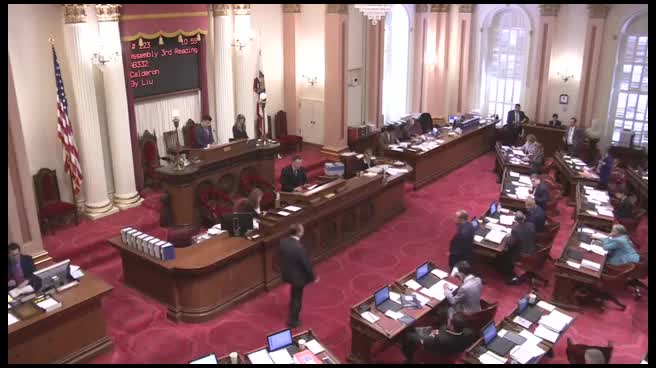 2MIN
Senate Floor
 58SEC
Senate Standing Committee on Appropriations
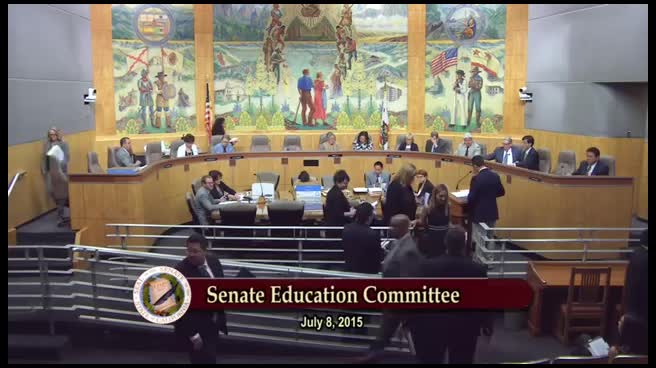 8MIN
Senate Standing Committee on Education
 1MIN
Assembly Floor
 1MIN
Assembly Standing Committee on Appropriations
 11MIN
Assembly Standing Committee on Education
Bill Author

Bill Co-Author(s):