AB 304: Sick leave: accrual and limitations.
- Session Year: 2015-2016
- House: Assembly
- Latest Version Date: 2015-07-13
(1)The Healthy Workplaces, Healthy Families Act of 2014 provides, among other things, that an employee who, on or after July 1, 2015, works in California for 30 or more days within a year from the commencement of employment is entitled to paid sick days for prescribed purposes, to be accrued at a rate of no less than one hour for every 30 hours worked.
This bill would require that the employee do that work for the same employer in order to qualify for accrued sick leave under these provisions. This bill would exclude a retired annuitant of a public entity, as specified, from the definition of employee under these provisions.
The bill would authorize an employer to provide for employee sick leave accrual on a basis other than one hour for each 30 hours worked, provided that the accrual is on a regular basis and the employee will have 24 hours of accrued sick leave available by the 120th calendar day of employment.
(2)Existing law entitles an employee to use accrued paid sick days beginning on the 90th day of employment. Existing law permits an employer to limit an employees use of paid sick days to 24 hours or 3 days in each year of employment. Existing law requires an employer to provide an employee with written notice of the amount of paid sick leave available, or paid time off leave an employer provides in lieu of sick leave, as specified. Existing law provides that an employer is not required to provide additional paid sick days if the employer has a paid leave policy or paid time off policy, the employer makes available an amount of leave for specified uses, and the policy either satisfies specified accrual, carry over, and use requirements or provides no less than 24 hours or 3 days of paid sick leave for each year of employment or calendar year or 12-month basis.
This bill would authorize an employer to limit an employees use of paid sick days to 24 hours or 3 days in each year of employment, a calendar year, or a 12-month period. This bill would, for specified industries, delay the application of the notice requirement. The bill would permit an employer who provides unlimited sick leave to its employees to satisfy notice requirements by indicating unlimited on the employees itemized wage statement. The bill would require an employer to calculate paid sick leave based upon an employees regular rate of pay, total wages divided by total hours worked in a 90-day period, or the wages for other forms of paid leave, as specified. The bill would provide that an employer is not required to reinstate accrued paid time off to an employee, rehired within one year of separation from employment, that was paid out at the time of termination, resignation, or separation. The bill would provide that an employer is not required to provide additional paid sick days if the employer has a paid leave policy or paid time off policy, the employer makes available an amount of leave applicable to employees for specified uses, and the policy satisfies specified accrual, carry over, and use requirements, or that provided paid sick leave or paid time off to employees before January 1, 2015, as specified, or that are provided pursuant to specified provisions of law or of a memorandum understanding that meet the requirements of these provisions.
(3)Existing law requires an employer to keep records for three years documenting the hours worked and paid sick days accrued and used by an employee and to make those records available to the Labor Commissioner upon request.
This bill would provide that the employer has no obligation to inquire into or record the purposes for which an employee uses sick leave or paid time off.
(4)The bill would specify that its provisions are severable and would also make technical and conforming changes.
(5)This bill would declare that it is to take effect immediately as an urgency statute.
(1)The Healthy Workplaces, Healthy Families Act of 2014 provides, among other things, that an employee who, on or after July 1, 2015, works in California for 30 or more days within a year from the commencement of employment is entitled to paid sick days for prescribed purposes, to be accrued at a rate of no less than one hour for every 30 hours worked.
This bill would require that the employee do that work for the same employer for 30 or more days within the previous 12 months in order to qualify for accrued sick leave under these provisions. This bill would exclude a retired annuitant of a public entity, as specified, from the definition of employee under these provisions.
The bill would authorize an employer to provide for employee sick leave accrual on a basis other than one hour for each 30 hours worked, provided that the accrual is on a regular basis and the employee will have 24 hours of accrued sick leave available by the 120th calendar day of employment.
(2)Existing law entitles an employee to use accrued paid sick days beginning on the 90th day of employment. Existing law permits an employer to limit an employees use of paid sick days to 24 hours or 3 days in each year of employment. Existing law requires an employer to provide an employee with written notice of the amount of paid sick leave available, or paid time off leave an employer provides in lieu of sick leave, as specified. Existing law provides that an employer is not required to provide additional paid sick days if the employer has a paid leave policy or paid time off policy, the employer makes available an amount of leave for specified uses, and the policy either satisfies specified accrual, carry over, and use requirements or provides no less than 24 hours or 3 days of paid sick leave for each year of employment or calendar year or 12-month basis.
This bill would authorize an employer to limit an employees use of paid sick days to 24 hours or 3 days in each year of employment, a calendar year, or a 12-month period. This bill would, for specified industries, delay the application of the notice requirement. The bill would permit an employer who provides unlimited sick leave to its employees to satisfy notice requirements by indicating unlimited on the employees itemized wage statement. The bill would provide that if the employee receives a different hourly rate when the accrued sick leave is taken, the rate of pay would be calculated in the same manner as the regular rate of pay for purposes of overtime. require an employer to calculate paid sick leave based upon an employees regular rate of pay, total wages divided by total hours worked in a 90-day period, or the wages for other forms of paid leave, as specified. The bill would provide that an employer is not required to reinstate accrued paid time off to an employee, rehired within one year of separation from employment, that was paid out at the time of termination, resignation, or separation. The bill would provide that an employer is not required to provide additional paid sick days if the employer has a paid leave policy or paid time off policy, the employer makes available an amount of leave applicable to employees for specified uses, and the policy satisfies specified accrual, carry over, and use requirements, or that provided paid sick leave or paid time off to employees before January 1, 2015, as specified, or that are provided pursuant to specified provisions of law or of a memorandum understanding that meet the requirements of these provisions.
(3)Existing law requires an employer to keep records for three years documenting the hours worked and paid sick days accrued and used by an employee and to make those records available to the Labor Commissioner upon request.
This bill would provide that the employer has no obligation to inquire into or record the purposes for which an employee uses sick leave or paid time off.
(4)The bill would specify that its provisions are severable and would also make technical and conforming changes.
(5)This bill would declare that it is to take effect immediately as an urgency statute.
(1)The Healthy Workplaces, Healthy Families Act of 2014 provides, among other things, that an employee who, on or after July 1, 2015, works in California for 30 or more days within a year from the commencement of employment is entitled to paid sick days for prescribed purposes, to be accrued at a rate of no less than one hour for every 30 hours worked.
This bill would require that the employee work for the same employer for 30 or more days within the previous 12 months in order to qualify for accrued sick leave under these provisions. This bill would exclude a retired annuitant of a public entity, as specified, from the definition of employee under these provisions.
The bill would authorize an employer to provide for employee sick leave accrual on a basis other than one hour for each 30 hours worked, provided that the accrual is on a regular basis and the employee will have 24 hours of accrued sick leave available by the 120th calender calendar day of employment.
(2)Existing law entitles an employee to use accrued paid sick days beginning on the 90th day of employment. Existing law permits an employer to limit an employees use of paid sick days to 24 hours or 3 days in each year of employment. Existing law requires an employer to provide an employee with written notice of the amount of paid sick leave available, or paid time off leave an employer provides in lieu of sick leave, as specified. Existing law provides that an employer is not required to provide additional paid sick days if the employer has a paid leave policy or paid time off policy, the employer makes available an amount of leave for specified uses, and the policy either satisfies specified accrual, carry over, and use requirements or provides no less than 24 hours or 3 days of paid sick leave for each year of employment or calendar year or 12-month basis.
This bill would authorize an employer to limit an employees use of paid sick days to 24 hours or 3 days in each year of employment, a calendar year, or a 12-month period. This bill would, for specified industries, delay the application of the notice requirement. The bill would permit an employer who provides unlimited sick leave to its employees to satisfy notice requirements by indicating unlimited on the employees itemized wage statement. The bill would provide that if the employee receives a different hourly rate when the accrued sick leave is taken, the rate of pay would be calculated in the same manner as the regular rate of pay for purposes of overtime. The bill would provide that an employer is not required to reinstate accrued paid time off to an employee, rehired within one year of separation from employment, that was paid out at the time of termination, resignation, or separation. The bill would provide that an employer is not required to provide additional paid sick days if the employer has a paid leave policy or paid time off policy, the employer makes available an amount of leave applicable to employees for specified uses, and the policy satisfies specified accrual, carry over, and use requirements, or that provided paid sick leave or paid time off to employees before January 1, 2015, as specified, or that are provided pursuant to specified provisions of law or of a memorandum understanding that meet the requirements of these provisions.
(3)Existing law requires an employer to keep records for three years documenting the hours worked and paid sick days accrued and used by an employee and to make those records available to the Labor Commissioner upon request.
This bill would provide that the employer has no obligation to inquire into or record the purposes for which an employee uses sick leave or paid time off.
(4)The bill would specify that its provisions are severable and would also make technical and conforming changes.
(5)This bill would declare that it is to take effect immediately as an urgency statute.
(1)The Healthy Workplaces, Healthy Families Act of 2014 provides, among other things, that an employee who, on or after July 1, 2015, works in California for 30 or more days within a year from the commencement of employment is entitled to paid sick days for prescribed purposes, to be accrued at a rate of no less than one hour for every 30 hours worked.
This bill would require that the employee work for the same employer for 30 or more days within the previous 12 months in order to qualify for accrued sick leave under these provisions. This bill would exclude a retired annuitant of a public entity, as specified, from the definition of employee under these provisions.
The bill would authorize an employer to provide for employee sick leave accrual on a basis other than one hour for each 30 hours worked, provided that the accrual is on a regular basis and the employee will have 24 hours of accrued sick leave available by the 120th calender day of employment.
(2)Existing law entitles an employee to use accrued paid sick days beginning on the 90th day of employment. Existing law permits an employer to limit an employees use of paid sick days to 24 hours or 3 days in each year of employment. Existing law requires an employer to provide an employee with written notice of the amount of paid sick leave available, or paid time off leave an employer provides in lieu of sick leave, as specified. Existing law provides that an employer is not required to provide additional paid sick days if the employer has a paid leave policy or paid time off policy, the employer makes available an amount of leave for specified uses, and the policy either satisfies specified accrual, carry over, and use requirements or provides no less than 24 hours or 3 days of paid sick leave for each year of employment or calendar year or 12-month basis.
This bill would, for specified industries, delay the application of the notice requirement. The bill would permit an employer who provides unlimited sick leave to its employees to satisfy notice requirements by indicating unlimited on the employees itemized wage statement. The bill would provide that if the employee receives a different hourly rate when the accrued sick leave is taken, the rate of pay would be calculated in the same manner as the regular rate of pay for purposes of overtime. The bill would provide that an employer is not required to reinstate accrued paid time off to an employee, rehired within one year of separation from employment, that was paid out at the time of termination, resignation, or separation.
(3)Existing law requires an employer to keep records for three years documenting the hours worked and paid sick days accrued and used by an employee and to make those records available to the Labor Commissioner upon request.
This bill would provide that the employer has no obligation to inquire into or record the purposes for which an employee uses sick leave or paid time off.
(4)The bill would specify that its provisions are severable and would also make technical and conforming changes.
(5)This bill would declare that it is to take effect immediately as an urgency statute.
The
(1)The Healthy Workplaces, Healthy Families Act of 2014 provides, among other things, that an employee who, on or after July 1, 2015, works in California for 30 or more days within a year from the commencement of employment is entitled to paid sick days for prescribed purposes, to be accrued at a rate of no less than one hour for every 30 hours worked.
This bill would require that the employee work for the same employer for 30 or more days within the previous 12 months in order to qualify for accrued sick leave under these provisions. This bill would exclude a retired annuitant of a public entity, as specified, from the definition of employee under these provisions.
The bill would authorize an employer to provide for employee sick leave accrual on a basis other than one hour for each 30 hours worked, provided that the accrual is on a regular basis and the employee will have 24 hours of accrued sick leave available by the 120th calender day of employment.
Existing
(2)Existing law entitles an employee to use accrued paid sick days beginning on the 90th day of employment. Existing law permits an employer to limit an employees use of paid sick days to 24 hours or 3 days in each year of employment. Existing law requires an employer to provide an employee with written notice of the amount of paid sick leave available, or paid time off leave an employer provides in lieu of sick leave, as specified. Existing law provides that an employer is not required to provide additional paid sick days if the employer has a paid leave policy or paid time off policy, the employer makes available an amount of leave for specified uses, and the policy either satisfies specified accrual, carry over, and use requirements or provides no less than 24 hours or 3 days of paid sick leave for each year of employment or calendar year or 12-month basis.
This bill would, for specified industries, delay the application of the notice requirement. The bill would permit an employer who provides unlimited sick leave to its employees to satisfy notice requirements by indicating unlimited on the employees itemized wage statement. The bill would also provide that if the employee receives a different hourly rate when the accrued sick leave is taken, the rate of pay would be calculated in the same manner as the regular rate of pay for purposes of overtime. The bill would provide that an employer is not required to reinstate accrued paid time off to an employee, rehired within one year of separation from employment, that was paid out at the time of termination, resignation, or separation.
(3)Existing law requires an employer to keep records for three years documenting the hours worked and paid sick days accrued and used by an employee and to make those records available to the Labor Commissioner upon request.
This bill would provide that the employer has no obligation to inquire into or record the purposes for which an employee uses sick leave or paid time off.
(4)The bill would specify that its provisions are severable and would also make technical and conforming changes.
(1)The
The Healthy Workplaces, Healthy Families Act of 2014 provides, among other things, that an employee who, on or after July 1, 2015, works in California for 30 or more days within a year from the commencement of employment is entitled to paid sick days for prescribed purposes, to be accrued at a rate of no less than one hour for every 30 hours worked.
This bill would require that the employee work for the same employer for 30 or more days within the previous 12 months in order to qualify for accrued sick leave under these provisions. This bill would exclude a retired annuitant of a public entity and a worker covered by the Railroad Unemployment Insurance Act, as specified, from the definition of employee under these provisions. The bill would also remove the definition of a health care provider under the act.
(2)Existing
Existing law entitles an employee to use accrued paid sick days beginning on the 90th day of employment. Existing law permits an employer to limit an employees use of paid sick days to 24 hours or 3 days in each year of employment. Existing law requires an employer to provide an employee with written notice of the amount of paid sick leave available, or paid time off leave an employer provides in lieu of sick leave, as specified. Existing law provides that an employer is not required to provide additional paid sick days if the employer has a paid leave policy or paid time off policy, the employer makes available an amount of leave for specified uses, and the policy either satisfies specified accrual, carry over, and use requirements or provides no less than 24 hours or 3 days of paid sick leave for each year of employment or calendar year or 12-month basis.
The bill would authorize an employer to provide for employee sick leave accrual on a basis other than one hour for each 30 hours worked, provided that the accrual is on a regular basis and the employee will have 24 hours of accrued sick leave available by the 120th calender day of employment.
This bill would, for specified industries, delay the application of the notice requirement. The bill would permit an employer who provides unlimited sick leave to its employees to satisfy notice requirements by indicating unlimited on the employees itemized wage statement. The bill would provide that if the employee receives a different hourly rate when the accrued sick leave is taken, the rate of pay would be calculated in the same manner as the regular rate of pay for purposes of overtime. The bill would provide that an employer is not required to reinstate accrued paid time off to an employee, rehired within one year of separation from employment, that was paid out at the time of termination, resignation, or separation. The bill would provide that an employer is not required to provide additional paid sick days if the employer has a paid leave policy or paid time off policy, the employer makes available an amount of leave for specified uses, and the policy either satisfies specified accrual, carry over, and use requirements or provides for no less than 24 hours or 3 days of paid sick leave at the beginning of each year of employment, calendar year, or 12-month period. The bill would also make technical and conforming changes.
(1)The Healthy Workplaces, Healthy Families Act of 2014 provides, among other things, that an employee who, on or after July 1, 2015, works in California for 30 or more days within a year from the commencement of employment is entitled to paid sick days for prescribed purposes, to be accrued at a rate of no less than one hour for every 30 hours worked.
This bill would require that the employee work for the same employer for 30 or more days within the previous 12 months in order to qualify for accrued sick leave under these provisions. This bill would exclude a retired annuitant of a public entity and a worker covered by the Railroad Unemployment Insurance Act, as specified, from the definition of employee under these provisions. The bill would also remove the definition of a health care provider under the act.
(2)Existing law entitles an employee to use accrued paid sick days beginning on the 90th day of employment. Existing law permits an employer to limit an employees use of paid sick days to 24 hours or 3 days in each year of employment. Existing law requires an employer to provide an employee with written notice of the amount of paid sick leave available, or paid time off leave an employer provides in lieu of sick leave, as specified. Existing law provides that an employer is not required to provide additional paid sick days if the employer has a paid leave policy or paid time off policy, the employer makes available an amount of leave for specified uses, and the policy either satisfies specified accrual, carry over, and use requirements or provides no less than 24 hours or 3 days of paid sick leave for each year of employment or calendar year or 12-month basis.
The bill would authorize an employer to provide for employee sick leave accrual on a basis other than one hour for each 30 hours worked, provided that the accrual is on a regular basis and the employee will have 24 hours of accrued sick leave available by the 120th calender day of employment. The
This bill would, for specified industries, delay the application of the notice requirement. The bill would permit an employer who provides unlimited sick leave to its employees to satisfy notice requirements by indicating unlimited on the employees itemized wage statement. The bill would provide that if the employee receives a different hourly rate when the accrued sick leave is taken, the rate of pay would be calculated in the same manner as the regular rate of pay for purposes of overtime. The bill would provide that an employer is not required to reinstate accrued paid time off to an employee, rehired within one year of separation from employment, that was paid out at the time of termination, resignation, or separation. The bill would provide that an employer is not required to provide additional paid sick days if the employer has a paid leave policy or paid time off policy, the employer makes available an amount of leave for specified uses, and the policy either satisfies specified accrual, carry over, and use requirements or provides for no less than 24 hours or 3 days of paid sick leave at the beginning of each year of employment, calendar year, or 12-month period. The bill would also make technical and conforming changes.
(1)The Healthy Workplaces, Healthy Families Act of 2014 provides, among other things, that an employee who, on or after July 1, 2015, works in California for 30 or more days within a year from the commencement of employment is entitled to paid sick days for prescribed purposes, to be accrued at a rate of no less than one hour for every 30 hours worked.
This bill would require that the employee work for the same employer for 30 or more days within the previous 12 months in order to qualify for accrued sick leave under these provisions. This bill would exclude a retired annuitant of a public entity and a worker covered by the Railroad Unemployment Insurance Act, as specified, from the definition of employee under these provisions. The bill would also remove the definition of a health care provider under the act.
(2)Existing law entitles an employee to use accrued paid sick days beginning on the 90th day of employment. Existing law permits an employer to limit an employees use of paid sick days to 24 hours or 3 days in each year of employment. Existing law requires an employer to provide an employee with written notice of the amount of paid sick leave available, or paid time off leave an employer provides in lieu of sick leave, as specified.
The bill would authorize an employer to provide for employee sick leave accrual on a basis other than one hour for each 30 hours worked, provided that the accrual is on a regular basis and the employee will have 24 hours of accrued sick leave available by the 120th calender day of employment. The bill would permit an employer who provides unlimited sick leave to its employees to satisfy notice requirements by indicating unlimited on the employees itemized wage statement. The bill would provide that if the employee receives a different hourly rate when the accrued sick leave is taken, the rate of pay would be calculated in the same manner as the regular rate of pay for purposes of overtime. The bill would provide that an employer is not required to reinstate accrued paid time off to an employee, rehired within one year of separation from employment, that was paid out at the time of termination, resignation, or separation. The bill would also make technical and conforming changes.
Existing law requires an employer who provides sick leave to employees, as specified, to allow the employees to use the sick leave to attend to the illness of a child, parent, spouse, or domestic partner.
This bill would make nonsubstantive changes to this provision.
Existing law requires an employer who provides sick leave to employees, as specified, to allow the employees to use the sick leave to attend to the illness of a child, parent, spouse, or domestic partner.
This bill would make nonsubstantive changes to this provision.
As used in this article:
(a)Employee does not include the following:
(1)An employee covered by a valid collective bargaining agreement if the agreement expressly provides for the wages, hours of work, and working conditions of employees, and expressly provides for paid sick days or a paid leave or paid time off policy that permits the use of sick days for those employees, final and binding arbitration of disputes concerning the application of its paid sick days provisions, premium wage rates for all overtime hours worked, and regular hourly rate of pay of not less than 30 percent more than the state minimum wage rate.
(2)An employee in the construction industry covered by a valid collective bargaining agreement if the agreement expressly provides for the wages, hours of work, and working conditions of employees, premium wage rates for all overtime hours worked, and regular hourly pay of not less than 30 percent more than the state minimum wage rate, and the agreement either (A) was entered into before January 1, 2015, or (B) expressly waives the requirements of this article in clear and unambiguous terms. For purposes of this subparagraph, employee in the construction industry means an employee performing work associated with construction, including work involving alteration, demolition, building, excavation, renovation, remodeling, maintenance, improvement, repair work, and any other work as described by Chapter 9 (commencing with Section 7000) of Division 3 of the Business and Professions Code, and other similar or related occupations or trades.
(3)A provider of in-home supportive services under Section 14132.95, 14132.952, or 14132.956 of, or Article 7 (commencing with Section 12300) of Chapter 3 of Part 3 of Division 9 of, the Welfare and Institutions Code.
(4)An individual employed by an air carrier as a flight deck or cabin crew member that is subject to the provisions of Title II of the federal Railway Labor Act (45 U.S.C. Sec. 151 et seq.), provided that the individual is provided with compensated time off equal to or exceeding the amount established in paragraph (1) of subdivision (b) of Section 246.
(5)An employee of the state, city, county, city and county, district, or any other public entity who is a recipient of a retirement allowance and employed without reinstatement into his or her respective retirement system pursuant to either Article 8 (commencing with Section 21220) of Chapter 12 of Part 3 of Division 5 of Title 2 of the Government Code, or Article 8 (commencing with Section 31680) of Chapter 3 of Part 3 of Division 4 of Title 3 of the Government Code.
(b)Employer means any person employing another under any appointment or contract of hire and includes the state, political subdivisions of the state, and municipalities.
(c)Family member means any of the following:
(1)A child, which for purposes of this article means a biological, adopted, or foster child, stepchild, legal ward, or a child to whom the employee stands in loco parentis. This definition of a child is applicable regardless of age or dependency status.
(2)A biological, adoptive, or foster parent, stepparent, or legal guardian of an employee or the employees spouse or registered domestic partner, or a person who stood in loco parentis when the employee was a minor child.
(3)A spouse.
(4)A registered domestic partner.
(5)A grandparent.
(6)A grandchild.
(7)A sibling.
(d)Health care provider has the same meaning as defined in paragraph (6) of subdivision (c) of Section 12945.2 of the Government Code.
(e)Paid sick days means time that is compensated at the same wage as the employee normally earns during regular work hours and is provided by an employer to an employee for the purposes described in Section 246.5.
SEC. 2.Section 246 of the Labor Code is amended to read:246.(a)An employee who, on or after July 1, 2015, works in California for the same employer for 30 or more days within a year from the commencement of employment is entitled to paid sick days as specified in this section.
(b)(1)An employee shall accrue paid sick days at the rate of not less than one hour per every 30 hours worked, beginning at the commencement of employment or the operative date of this article, whichever is later, subject to the use and accrual limitations set forth in this section.
(2)An employee who is exempt from overtime requirements as an administrative, executive, or professional employee under a wage order of the Industrial Welfare Commission is deemed to work 40 hours per workweek for the purposes of this section, unless the employees normal workweek is less than 40 hours, in which case the employee shall accrue paid sick days based upon that normal workweek.
(3)An employer may use a different accrual method, other than providing one hour per every 30 hours worked, provided that the accrual is on a regular basis so that an employee has no less than 24 hours of accrued sick leave or paid time off by the 120th calendar day of employment or each calendar year, or in each 12-month period.
(4)An employer may satisfy the accrual requirements of this section by providing not less than 24 hours or three days of paid sick leave that is available to the employee to use by the completion of his or her 120th calendar day of employment.
(c)An employee shall be entitled to use accrued paid sick days beginning on the 90th day of employment, after which day the employee may use paid sick days as they are accrued.
(d)Accrued paid sick days shall carry over to the following year of employment. However, an employer may limit an employees use of accrued paid sick days to 24 hours or three days in each year of employment, calendar year, or 12-month period. This section shall be satisfied and no accrual or carry over is required if the full amount of leave is received at the beginning of each year of employment, calendar year, or 12-month period. The term full amount of leave means three days or 24 hours.
(e)An employer is not required to provide additional paid sick days pursuant to this section if the employer has a paid leave policy or paid time off policy, the employer makes available an amount of leave applicable to employees that may be used for the same purposes and under the same conditions as specified in this section, and the policy satisfies one of the following:
(1)Satisfies the accrual, carry over, and use requirements of this section.
(2)Provided paid sick leave or paid time off to a class of employees before January 1, 2015, pursuant to a sick leave policy or paid time off policy that used an accrual method different than providing one hour per 30 hours worked, provided that the accrual is on a regular basis so that an employee, including an employee hired into that class after January 1, 2015, has no less than one day or eight hours of accrued sick leave or paid time off within three months of employment of each calendar year, or each 12-month period, and the employee was eligible to earn at least three days or 24 hours of sick leave or paid time off within nine months of employment. If an employer modifies the accrual method used in the policy it had in place prior to January 1, 2015, the employer shall comply with any accrual method set forth in subdivision (b) or provide the full amount of leave at the beginning of each year of employment, calendar year, or 12-month period. This section does not prohibit the employer from increasing the accrual amount or rate for a class of employees covered by this subdivision.
(3)Notwithstanding any other law, sick leave benefits provided pursuant to the provisions of Sections 19859 to 19868.3, inclusive, of the Government Code, or annual leave benefits provided pursuant to the provisions of Sections 19858.3 to 19858.7, inclusive, of the Government Code, or by provisions of a memorandum of understanding reached pursuant to Section 3517.5 that incorporate or supersede provisions of Section 19859 to 19868.3, inclusive, or Sections 19858.3 to 19858.7, inclusive of the Government Code, meet the requirements of this section.
(f)(1)Except as specified in paragraph (2), an employer is not required to provide compensation to an employee for accrued, unused paid sick days upon termination, resignation, retirement, or other separation from employment.
(2)If an employee separates from an employer and is rehired by the employer within one year from the date of separation, previously accrued and unused paid sick days shall be reinstated. The employee shall be entitled to use those previously accrued and unused paid sick days and to accrue additional paid sick days upon rehiring, subject to the use and accrual limitations set forth in this section. An employer is not required to reinstate accrued paid time off to an employee that was paid out at the time of termination, resignation, or separation of employment.
(g)An employer may lend paid sick days to an employee in advance of accrual, at the employers discretion and with proper documentation.
(h)An employer shall provide an employee with written notice that sets forth the amount of paid sick leave available, or paid time off leave an employer provides in lieu of sick leave, for use on either the employees itemized wage statement described in Section 226 or in a separate writing provided on the designated pay date with the employees payment of wages. If an employer provides unlimited paid sick leave or unlimited paid time off to an employee, the employer may satisfy this section by indicating on the notice or the employees itemized wage statement unlimited. The penalties described in this article for a violation of this subdivision shall be in lieu of the penalties for a violation of Section 226. This subdivision shall apply to employers covered by Wage Order 11 or 12 of the Industrial Welfare Commission only on and after January 21, 2016.
(i)An employer has no obligation under this section to allow an employees total accrual of paid sick leave to exceed 48 hours or 6 days, provided that an employees rights to accrue and use paid sick leave are not limited other than as allowed under this section.
(j)An employee may determine how much paid sick leave he or she needs to use, provided that an employer may set a reasonable minimum increment, not to exceed two hours, for the use of paid sick leave.
(k)For the purposes of this section, an employer shall calculate paid sick leave using any of the following calculations:
(1)Paid sick time for nonexempt employees shall be calculated in the same manner as the regular rate of pay for the workweek in which the employee uses paid sick time, whether or not the employee actually works overtime in that workweek.
(2)Paid sick time for nonexempt employees shall be calculated by dividing the employees total wages, not including overtime premium pay, by the employees total hours worked in the full pay periods of the prior 90 days of employment.
(3)Paid sick time for exempt employees shall be calculated in the same manner as the employer calculates wages for other forms of paid leave time.
(l)If the need for paid sick leave is foreseeable, the employee shall provide reasonable advance notification. If the need for paid sick leave is unforeseeable, the employee shall provide notice of the need for the leave as soon as practicable.
(m)An employer shall provide payment for sick leave taken by an employee no later than the payday for the next regular payroll period after the sick leave was taken.
SEC. 3.Section 247.5 of the Labor Code is amended to read:247.5.(a)An employer shall keep for at least three years records documenting the hours worked and paid sick days accrued and used by an employee, and shall allow the Labor Commissioner to access these records pursuant to the requirements set forth in Section 1174. An employer shall make these records available to an employee in the same manner as described in Section 226. If an employer does not maintain adequate records pursuant to this section, it shall be presumed that the employee is entitled to the maximum number of hours accruable under this article, unless the employer can show otherwise by clear and convincing evidence.
(b)Notwithstanding any other provision of this article, an employer is not obligated to inquire into or record the purposes for which an employee uses paid leave or paid time off.
SEC. 4.The provisions of this measure are severable. If any provision of this measure or its application is held invalid, that invalidity shall not affect other provisions or applications that can be given effect without the invalid provision or application.
SEC. 5.This act is an urgency statute necessary for the immediate preservation of the public peace, health, or safety within the meaning of Article IV of the Constitution and shall go into immediate effect. The facts constituting the necessity are:
In order to clarify provisions of Article 1.5 (commencing with Section 245) of Chapter 1 of Part 1 of Division 2 of the Labor Code, for the purposes of ensuring an effective and smooth implementation of the Healthy Workplaces, Healthy Families Act of 2014, it is necessary that this act take effect immediately.
As used in this article:
(a)Employee does not include the following:
(1)An employee covered by a valid collective bargaining agreement if the agreement expressly provides for the wages, hours of work, and working conditions of employees, and expressly provides for paid sick days or a paid leave or paid time off policy that permits the use of sick days for those employees, final and binding arbitration of disputes concerning the application of its paid sick days provisions, premium wage rates for all overtime hours worked, and regular hourly rate of pay of not less than 30 percent more than the state minimum wage rate.
(2)An employee in the construction industry covered by a valid collective bargaining agreement if the agreement expressly provides for the wages, hours of work, and working conditions of employees, premium wage rates for all overtime hours worked, and regular hourly pay of not less than 30 percent more than the state minimum wage rate, and the agreement either (A) was entered into before January 1, 2015, or (B) expressly waives the requirements of this article in clear and unambiguous terms. For purposes of this subparagraph, employee in the construction industry means an employee performing onsite work associated with construction, including work involving alteration, demolition, building, excavation, renovation, remodeling, maintenance, improvement, repair work, and any other work as described by Chapter 9 (commencing with Section 7000) of Division 3 of the Business and Professions Code, and other similar or related occupations or trades.
(3)A provider of in-home supportive services under Section 14132.95, 14132.952, or 14132.956 of, or Article 7 (commencing with Section 12300) of Chapter 3 of Part 3 of Division 9 of, the Welfare and Institutions Code.
(4)An individual employed by an air carrier as a flight deck or cabin crew member that is subject to the provisions of Title II of the federal Railway Labor Act (45 U.S.C. Sec. 151 et seq.), provided that the individual is provided with compensated time off equal to or exceeding the amount established in paragraph (1) of subdivision (b) of Section 246.
(5)An employee of the state, city, county, city and county, district, or any other public entity who is a recipient of a retirement allowance and employed without reinstatement into his or her respective retirement system pursuant to either Article 8 (commencing with Section 21220) of Chapter 12 of Part 3 of Division 5 of Title 2 of the Government Code, or Article 8 (commencing with Section 31680) of Chapter 3 of Part 3 of Division 4 of Title 3 of the Government Code.
(b)Employer means any person employing another under any appointment or contract of hire and includes the state, political subdivisions of the state, and municipalities.
(c)Family member means any of the following:
(1)A child, which for purposes of this article means a biological, adopted, or foster child, stepchild, legal ward, or a child to whom the employee stands in loco parentis. This definition of a child is applicable regardless of age or dependency status.
(2)A biological, adoptive, or foster parent, stepparent, or legal guardian of an employee or the employees spouse or registered domestic partner, or a person who stood in loco parentis when the employee was a minor child.
(3)A spouse.
(4)A registered domestic partner.
(5)A grandparent.
(6)A grandchild.
(7)A sibling.
(d)Health care provider has the same meaning as defined in paragraph (6) of subdivision (c) of Section 12945.2 of the Government Code.
(e)Paid sick days means time that is compensated at the same wage as the employee normally earns during regular work hours and is provided by an employer to an employee for the purposes described in Section 246.5.
SEC. 2.Section 246 of the Labor Code is amended to read:246.(a)An employee who, on or after July 1, 2015, works in California for the same employer for 30 or more days within a year from the commencement of employment is entitled to paid sick days as specified in this section.
(b)(1)An employee shall accrue paid sick days at the rate of not less than one hour per every 30 hours worked, beginning at the commencement of employment or the operative date of this article, whichever is later, subject to the use and accrual limitations set forth in this section.
(2)An employee who is exempt from overtime requirements as an administrative, executive, or professional employee under a wage order of the Industrial Welfare Commission is deemed to work 40 hours per workweek for the purposes of this section, unless the employees normal workweek is less than 40 hours, in which case the employee shall accrue paid sick days based upon that normal workweek.
(3)An employer may use a different accrual method, other than providing one hour per every 30 hours worked, provided that the accrual is on a regular basis so that an employee has no less than 24 hours of accrued sick leave or paid time off by the 120th calendar day of employment or each calendar year, or in each 12-month period.
(4)An employer may satisfy the accrual requirements of this section by providing not less than 24 hours or three days of paid sick leave that is available to the employee to use by the completion of his or her 120th calendar day of employment.
(c)An employee shall be entitled to use accrued paid sick days beginning on the 90th day of employment, after which day the employee may use paid sick days as they are accrued.
(d)Accrued paid sick days shall carry over to the following year of employment. However, an employer may limit an employees use of accrued paid sick days to 24 hours or three days in each year of employment, calendar year, or 12-month period. This section shall be satisfied and no accrual or carry over is required if the full amount of leave is received at the beginning of each year of employment employment, calendar year, or 12-month period. The term full amount of leave means three days or 24 hours.
(e)An employer is not required to provide additional paid sick days pursuant to this section if the employer has a paid leave policy or paid time off policy, the employer makes available an amount of leave applicable to employees that may be used for the same purposes and under the same conditions as specified in this section, and the policy satisfies one of the following:
(1)Satisfies the accrual, carry over, and use requirements of this section.
(2)Provided paid sick leave or paid time off to a class of employees before January 1, 2015, pursuant to a sick leave policy or paid time off policy that used an accrual method different than providing one hour per 30 hours worked, provided that the accrual is on a regular basis so that an employee, including an employee hired into that class after January 1, 2015, has no less than one day or eight hours of accrued sick leave or paid time off within three months of employment of each calendar year, or each 12-month period, and the employee was eligible to earn at least three days or 24 hours of sick leave or paid time off within nine months of employment. If an employer modifies the accrual method used in the policy it had in place prior to January 1, 2015, the employer shall comply with any accrual method set forth in subdivision (b) or provide the full amount of leave at the beginning of each year of employment, calendar year, or 12-month period. This section does not prohibit the employer from increasing the accrual amount or rate for a class of employees covered by this subdivision.
(3)Notwithstanding any other law, sick leave benefits provided pursuant to Article 3 (commencing with Section 19859) of Chapter 2.5 of Part 2.6 of Division 5 of Title 2 the provisions of Sections 19859 to 19868.3, inclusive, of the Government Code, or annual leave benefits provided pursuant to Article 2.5 (commencing with Section 19858.3) of Chapter 2.5 of Part 2.6 of Division 5 of Title 2 the provisions of Sections 19858.3 to 19858.7, inclusive, of the Government Code, that or by provisions of a memorandum of understanding reached pursuant to Section 3517.5 that incorporate or supersede provisions of Section 19859 to 19868.3, inclusive, or Sections 19858.3 to 19858.7, inclusive of the Government Code, meet the requirements of this section.
(f)(1)Except as specified in paragraph (2), an employer is not required to provide compensation to an employee for accrued, unused paid sick days upon termination, resignation, retirement, or other separation from employment.
(2)If an employee separates from an employer and is rehired by the employer within one year from the date of separation, previously accrued and unused paid sick days shall be reinstated. The employee shall be entitled to use those previously accrued and unused paid sick days and to accrue additional paid sick days upon rehiring, subject to the use and accrual limitations set forth in this section. An employer is not required to reinstate accrued paid time off to an employee that was paid out at the time of termination, resignation, or separation of employment.
(g)An employer may lend paid sick days to an employee in advance of accrual, at the employers discretion and with proper documentation.
(h)An employer shall provide an employee with written notice that sets forth the amount of paid sick leave available, or paid time off leave an employer provides in lieu of sick leave, for use on either the employees itemized wage statement described in Section 226 or in a separate writing provided on the designated pay date with the employees payment of wages. If an employer provides unlimited paid sick leave or unlimited paid time off to an employee, the employer may satisfy this section by indicating on the notice or the employees itemized wage statement unlimited. The penalties described in this article for a violation of this subdivision shall be in lieu of the penalties for a violation of Section 226. This subdivision shall apply to employers covered by Wage Order 11 or 12 of the Industrial Welfare Commission only on and after January 21, 2016.
(i)An employer has no obligation under this section to allow an employees total accrual of paid sick leave to exceed 48 hours or 6 days, provided that an employees rights to accrue and use paid sick leave are not limited other than as allowed under this section.
(j)An employee may determine how much paid sick leave he or she needs to use, provided that an employer may set a reasonable minimum increment, not to exceed two hours, for the use of paid sick leave.
(k)An For the purposes of this section, an employer shall calculate paid sick leave using either any of the following calculations:
(1)Paid sick time for nonexempt employees shall be calculated in the same manner as the regular rate of pay for the workweek in which the employee uses paid sick time, whether or not the employee actually works overtime in that workweek. Paid sick time for exempt employees shall be calculated in the same manner as the employer calculates wages for other forms of paid leave time.
(2)For purposes of this section, if the employee, in the 90 days of employment before taking accrued sick leave, had different hourly pay rates, was paid by commission or piece rate, or was a nonexempt salaried employee, the rate of pay Paid sick time for nonexempt employees shall be calculated by dividing the employees total wages, not including overtime premium pay, by the employees total hours worked in the full pay periods of the prior 90 days of employment.
(3)Paid sick time for exempt employees shall be calculated in the same manner as the employer calculates wages for other forms of paid leave time.
(l)If the need for paid sick leave is foreseeable, the employee shall provide reasonable advance notification. If the need for paid sick leave is unforeseeable, the employee shall provide notice of the need for the leave as soon as practicable.
(m)An employer shall provide payment for sick leave taken by an employee no later than the payday for the next regular payroll period after the sick leave was taken.
SEC. 3.Section 247.5 of the Labor Code is amended to read:247.5.(a)An employer shall keep for at least three years records documenting the hours worked and paid sick days accrued and used by an employee, and shall allow the Labor Commissioner to access these records pursuant to the requirements set forth in Section 1174. An employer shall make these records available to an employee in the same manner as described in Section 226. If an employer does not maintain adequate records pursuant to this section, it shall be presumed that the employee is entitled to the maximum number of hours accruable under this article, unless the employer can show otherwise by clear and convincing evidence.
(b)Notwithstanding any other provision of this article, an employer is not obligated to inquire into or record the purposes for which an employee uses paid leave or paid time off.
SEC. 4.The provisions of this measure are severable. If any provision of this measure or its application is held invalid, that invalidity shall not affect other provisions or applications that can be given effect without the invalid provision or application.
SEC. 5.This act is an urgency statute necessary for the immediate preservation of the public peace, health, or safety within the meaning of Article IV of the Constitution and shall go into immediate effect. The facts constituting the necessity are:
In order to clarify provisions of Article 1.5 (commencing with Section 245) of Chapter 1 of Part 1 of Division 2 of the Labor Code, for the purposes of ensuring an effective and smooth implementation of the Healthy Workplaces, Healthy Families Act of 2014, it is necessary that this act take effect immediately.
As used in this article:
(a)Employee does not include the following:
(1)An employee covered by a valid collective bargaining agreement if the agreement expressly provides for the wages, hours of work, and working conditions of employees, and expressly provides for paid sick days or a paid leave or paid time off policy that permits the use of sick days for those employees, final and binding arbitration of disputes concerning the application of its paid sick days provisions, premium wage rates for all overtime hours worked, and regular hourly rate of pay of not less than 30 percent more than the state minimum wage rate.
(2)An employee in the construction industry covered by a valid collective bargaining agreement if the agreement expressly provides for the wages, hours of work, and working conditions of employees, premium wage rates for all overtime hours worked, and regular hourly pay of not less than 30 percent more than the state minimum wage rate, and the agreement either (A) was entered into before January 1, 2015, or (B) expressly waives the requirements of this article in clear and unambiguous terms. For purposes of this subparagraph, employee in the construction industry means an employee performing onsite work associated with construction, including work involving alteration, demolition, building, excavation, renovation, remodeling, maintenance, improvement, repair work, and any other work as described by Chapter 9 (commencing with Section 7000) of Division 3 of the Business and Professions Code, and other similar or related occupations or trades.
(3)A provider of in-home supportive services under Section 14132.95, 14132.952, or 14132.956 of, or Article 7 (commencing with Section 12300) of Chapter 3 of Part 3 of Division 9 of, the Welfare and Institutions Code.
(4)An individual employed by an air carrier as a flight deck or cabin crew member that is subject to the provisions of Title II of the federal Railway Labor Act (45 U.S.C. Sec. 151 et seq.), provided that the individual is provided with compensated time off equal to or exceeding the amount established in paragraph (1) of subdivision (b) of Section 246.
(5)An employee of the state, city, county, city and county, district, or any other public entity who is a recipient of a retirement allowance and employed without reinstatement into his or her respective retirement system pursuant to either Article 8 (commencing with Section 21220) of Chapter 12 of Part 3 of Division 5 of Title 2 of the Government Code, or Article 8 (commencing with Section 31680) of Chapter 3 of Part 3 of Division 4 of Title 3 of the Government Code.
(b)Employer means any person employing another under any appointment or contract of hire and includes the state, political subdivisions of the state, and municipalities.
(c)Family member means any of the following:
(1)A child, which for purposes of this article means a biological, adopted, or foster child, stepchild, legal ward, or a child to whom the employee stands in loco parentis. This definition of a child is applicable regardless of age or dependency status.
(2)A biological, adoptive, or foster parent, stepparent, or legal guardian of an employee or the employees spouse or registered domestic partner, or a person who stood in loco parentis when the employee was a minor child.
(3)A spouse.
(4)A registered domestic partner.
(5)A grandparent.
(6)A grandchild.
(7)A sibling.
(d)Health care provider has the same meaning as defined in paragraph (6) of subdivision (c) of Section 12945.2 of the Government Code.
(e)Paid sick days means time that is compensated at the same wage as the employee normally earns during regular work hours and is provided by an employer to an employee for the purposes described in Section 246.5.
SEC. 2.Section 246 of the Labor Code is amended to read:246.(a)An employee who, on or after July 1, 2015, works in California for the same employer for 30 or more days within a year from the commencement of employment is entitled to paid sick days as specified in this section.
(b)(1)An employee shall accrue paid sick days at the rate of not less than one hour per every 30 hours worked, beginning at the commencement of employment or the operative date of this article, whichever is later, subject to the use and accrual limitations set forth in this section.
(2)An employee who is exempt from overtime requirements as an administrative, executive, or professional employee under a wage order of the Industrial Welfare Commission is deemed to work 40 hours per workweek for the purposes of this section, unless the employees normal workweek is less than 40 hours, in which case the employee shall accrue paid sick days based upon that normal workweek.
(3)An employer may use a different accrual method, other than providing one hour per every 30 hours worked, provided that the accrual is on a regular basis so that an employee has no less than 24 hours of accrued sick leave or paid time off by the 120th calendar day of employment or each calendar year, or each 12-month basis. in each 12-month period.
(4)An employer may satisfy the accrual requirements of this section by providing not less than 24 hours or three days of paid sick leave that is available to the employee to use by the completion of his or her 120th calendar day of employment.
(c)An employee shall be entitled to use accrued paid sick days beginning on the 90th day of employment, after which day the employee may use paid sick days as they are accrued.
(d)Accrued paid sick days shall carry over to the following year of employment. However, an employer may limit an employees use of accrued paid sick days to 24 hours or three days in each year of employment. employment, calendar year, or 12-month period. This section shall be satisfied and no accrual or carry over is required if the full amount of leave is received at the beginning of each year of employment calendar year, year of employment, or 12-month basis in accordance with subdivision (e). period. The term full amount of leave means three days or 24 hours.
(e)An employer is not required to provide additional paid sick days pursuant to this section if the employer has a paid leave policy or paid time off policy, the employer makes available an amount of leave applicable to employees that may be used for the same purposes and under the same conditions as specified in this section, and the policy does either of the following: satisfies one of the following:
(1)Satisfies the accrual, carry over, and use requirements of this section.
(2)Provides no less than 24 hours or three days of paid sick leave, or equivalent paid leave or paid time off, for employee use at the beginning of each year of employment, calendar year, or 12-month period.
(2)Provided paid sick leave or paid time off to a class of employees before January 1, 2015, pursuant to a sick leave policy or paid time off policy that used an accrual method different than providing one hour per 30 hours worked, provided that the accrual is on a regular basis so that an employee, including an employee hired into that class after January 1, 2015, has no less than one day or eight hours of accrued sick leave or paid time off within three months of employment of each calendar year, or each 12-month period, and the employee was eligible to earn at least three days or 24 hours of sick leave or paid time off within nine months of employment. If an employer modifies the accrual method used in the policy it had in place prior to January 1, 2015, the employer shall comply with any accrual method set forth in subdivision (b) or provide the full amount of leave at the beginning of each year of employment, calendar year, or 12-month period. This section does not prohibit the employer from increasing the accrual amount or rate for a class of employees covered by this subdivision.
(3)Notwithstanding any other law, sick leave benefits provided pursuant to Article 3 (commencing with Section 19859) of Chapter 2.5 of Part 2.6 of Division 5 of Title 2 of the Government Code, or annual leave benefits provided pursuant to Article 2.5 (commencing with Section 19858.3) of Chapter 2.5 of Part 2.6 of Division 5 of Title 2 of the Government Code, that meet the requirements of this section.
(f)(1)Except as specified in paragraph (2), an employer is not required to provide compensation to an employee for accrued, unused paid sick days upon termination, resignation, retirement, or other separation from employment.
(2)If an employee separates from an employer and is rehired by the employer within one year from the date of separation, previously accrued and unused paid sick days shall be reinstated. The employee shall be entitled to use those previously accrued and unused paid sick days and to accrue additional paid sick days upon rehiring, subject to the use and accrual limitations set forth in this section. An employer is not required to reinstate accrued paid time off to an employee that was paid out at the time of termination, resignation, or separation of employment.
(g)An employer may lend paid sick days to an employee in advance of accrual, at the employers discretion and with proper documentation.
(h)An employer shall provide an employee with written notice that sets forth the amount of paid sick leave available, or paid time off leave an employer provides in lieu of sick leave, for use on either the employees itemized wage statement described in Section 226 or in a separate writing provided on the designated pay date with the employees payment of wages. If an employer provides unlimited paid sick leave or unlimited paid time off to an employee, the employer may satisfy this section by indicating on the notice or the employees itemized wage statement unlimited. The penalties described in this article for a violation of this subdivision shall be in lieu of the penalties for a violation of Section 226. This subdivision shall apply to employers covered by Wage Order 11 or 12 of the Industrial Welfare Commission only on and after January 21, 2016.
(i)An employer has no obligation under this section to allow an employees total accrual of paid sick leave to exceed 48 hours or 6 days, provided that an employees rights to accrue and use paid sick leave are not limited other than as allowed under this section.
(j)An employee may determine how much paid sick leave he or she needs to use, provided that an employer may set a reasonable minimum increment, not to exceed two hours, for the use of paid sick leave.
(k)An employer shall calculate paid sick leave using either of the following calculations:
(1)Paid sick time for nonexempt employees shall be calculated in the same manner as the regular rate of pay for the workweek in which the employee uses paid sick time, whether or not the employee actually works overtime in that workweek. Paid sick time for exempt employees shall be calculated in the same manner as the employer calculates wages for other forms of paid leave time.
(2)For purposes of this section, if the employee, in the 90 days of employment before taking accrued sick leave, had different hourly pay rates, was paid by commission or piece rate, or was a nonexempt salaried employee, the rate of pay shall be calculated by dividing the employees total wages, not including overtime premium pay, by the employees total hours worked in the full pay periods of the prior 90 days of employment.
(l)If the need for paid sick leave is foreseeable, the employee shall provide reasonable advance notification. If the need for paid sick leave is unforeseeable, the employee shall provide notice of the need for the leave as soon as practicable.
(m)An employer shall provide payment for sick leave taken by an employee no later than the payday for the next regular payroll period after the sick leave was taken.
SEC. 3.Section 247.5 of the Labor Code is amended to read:247.5.(a)An employer shall keep for at least three years records documenting the hours worked and paid sick days accrued and used by an employee, and shall allow the Labor Commissioner to access these records pursuant to the requirements set forth in Section 1174. An employer shall make these records available to an employee in the same manner as described in Section 226. If an employer does not maintain adequate records pursuant to this section, it shall be presumed that the employee is entitled to the maximum number of hours accruable under this article, unless the employer can show otherwise by clear and convincing evidence.
(b)Notwithstanding any other provision of this article, an employer is not obligated to inquire into or record the purposes for which an employee uses paid leave or paid time off.
SEC. 4.The provisions of this measure are severable. If any provision of this measure or its application is held invalid, that invalidity shall not affect other provisions or applications that can be given effect without the invalid provision or application.
SEC. 5.This act is an urgency statute necessary for the immediate preservation of the public peace, health, or safety within the meaning of Article IV of the Constitution and shall go into immediate effect. The facts constituting the necessity are:
In order to clarify provisions of Article 1.5 (commencing with Section 245) of Chapter 1 of Part 1 of Division 2 of the Labor Code, for the purposes of ensuring an effective and smooth implementation of the Healthy Workplaces, Healthy Families Act of 2014, it is necessary that this act take effect immediately.
As used in this article:
(a)Employee does not include the following:
(1)An employee covered by a valid collective bargaining agreement if the agreement expressly provides for the wages, hours of work, and working conditions of employees, and expressly provides for paid sick days or a paid leave or paid time off policy that permits the use of sick days for those employees, final and binding arbitration of disputes concerning the application of its paid sick days provisions, premium wage rates for all overtime hours worked, and regular hourly rate of pay of not less than 30 percent more than the state minimum wage rate.
(2)An employee in the construction industry covered by a valid collective bargaining agreement if the agreement expressly provides for the wages, hours of work, and working conditions of employees, premium wage rates for all overtime hours worked, and regular hourly pay of not less than 30 percent more than the state minimum wage rate, and the agreement either (A) was entered into before January 1, 2015, or (B) expressly waives the requirements of this article in clear and unambiguous terms. For purposes of this subparagraph, employee in the construction industry means an employee performing onsite work associated with construction, including work involving alteration, demolition, building, excavation, renovation, remodeling, maintenance, improvement, repair work, and any other work as described by Chapter 9 (commencing with Section 7000) of Division 3 of the Business and Professions Code, and other similar or related occupations or trades.
(3)A provider of in-home supportive services under Section 14132.95, 14132.952, or 14132.956 of, or Article 7 (commencing with Section 12300) of Chapter 3 of Part 3 of Division 9 of, the Welfare and Institutions Code.
(4)An individual employed by an air carrier as a flight deck or cabin crew member that is subject to the provisions of Title II of the federal Railway Labor Act (45 U.S.C. Sec. 151 et seq.), provided that the individual is provided with compensated time off equal to or exceeding the amount established in paragraph (1) of subdivision (b) of Section 246.
(5)An employee of the state, city, county, city and county, district, or any other public entity who is a recipient of a retirement allowance and employed without reinstatement into his or her respective retirement system pursuant to either Article 8 (commencing with Section 21220) of Chapter 12 of Part 3 of Division 5 of Title 2 of the Government Code, or Article 8 (commencing with Section 31680) of Chapter 3 of Part 3 of Division 4 of Title 3 of the Government Code.
(b)Employer means any person employing another under any appointment or contract of hire and includes the state, political subdivisions of the state, and municipalities.
(c)Family member means any of the following:
(1)A child, which for purposes of this article means a biological, adopted, or foster child, stepchild, legal ward, or a child to whom the employee stands in loco parentis. This definition of a child is applicable regardless of age or dependency status.
(2)A biological, adoptive, or foster parent, stepparent, or legal guardian of an employee or the employees spouse or registered domestic partner, or a person who stood in loco parentis when the employee was a minor child.
(3)A spouse.
(4)A registered domestic partner.
(5)A grandparent.
(6)A grandchild.
(7)A sibling.
(d)Health care provider has the same meaning as defined in paragraph (6) of subdivision (c) of Section 12945.2 of the Government Code.
(e)Paid sick days means time that is compensated at the same wage as the employee normally earns during regular work hours and is provided by an employer to an employee for the purposes described in Section 246.5.
SEC. 2.Section 246 of the Labor Code is amended to read:246.(a)An employee who, on or after July 1, 2015, works in California for the same employer for 30 or more days within a year from the commencement of employment is entitled to paid sick days as specified in this section.
(b)(1)An employee shall accrue paid sick days at the rate of not less than one hour per every 30 hours worked, beginning at the commencement of employment or the operative date of this article, whichever is later, subject to the use and accrual limitations set forth in this section.
(2)An employee who is exempt from overtime requirements as an administrative, executive, or professional employee under a wage order of the Industrial Welfare Commission is deemed to work 40 hours per workweek for the purposes of this section, unless the employees normal workweek is less than 40 hours, in which case the employee shall accrue paid sick days based upon that normal workweek.
(3)An employer may use a different accrual method, other than providing one hour per every 30 hours worked, provided that the accrual is on a regular basis so that employee has no less than 24 hours of accrued sick leave or paid time off by the 120th calendar day of employment or each calendar year, or each 12-month basis.
(4)An employer may satisfy the accrual requirements of this section by providing not less than 24 hours or three days of paid sick leave that is available to the employee to use by the completion of his or her 120th calendar day of employment.
(c)An employee shall be entitled to use accrued paid sick days beginning on the 90th day of employment, after which day the employee may use paid sick days as they are accrued.
(d)Accrued paid sick days shall carry over to the following year of employment. However, an employer may limit an employees use of accrued paid sick days to 24 hours or three days in each year of employment. This section shall be satisfied and no accrual or carry over is required if the full amount of leave is received at the beginning of each calendar year, year of employment, or 12-month basis in accordance with subdivision (e). The term full amount of leave means three days or 24 hours.
(e)An employer is not required to provide additional paid sick days pursuant to this section if the employer has a paid leave policy or paid time off policy, the employer makes available an amount of leave that may be used for the same purposes and under the same conditions as specified in this section, and the policy does either of the following:
(1)Satisfies the accrual, carry over, and use requirements of this section.
(2)Provides no less than 24 hours or three days of paid sick leave, or equivalent paid leave or paid time off, for employee use at the beginning of each year of employment, calendar year, or 12-month period.
(f)(1)Except as specified in paragraph (2), an employer is not required to provide compensation to an employee for accrued, unused paid sick days upon termination, resignation, retirement, or other separation from employment.
(2)If an employee separates from an employer and is rehired by the employer within one year from the date of separation, previously accrued and unused paid sick days shall be reinstated. The employee shall be entitled to use those previously accrued and unused paid sick days and to accrue additional paid sick days upon rehiring, subject to the use and accrual limitations set forth in this section. An employer is not required to reinstate accrued paid time off to an employee that was paid out at the time of termination, resignation, or separation of employment.
(g)An employer may lend paid sick days to an employee in advance of accrual, at the employers discretion and with proper documentation.
(h)An employer shall provide an employee with written notice that sets forth the amount of paid sick leave available, or paid time off leave an employer provides in lieu of sick leave, for use on either the employees itemized wage statement described in Section 226 or in a separate writing provided on the designated pay date with the employees payment of wages. If an employer provides unlimited paid sick leave or unlimited paid time off to an employee, the employer may satisfy this section by indicating on the notice or the employees itemized wage statement unlimited. The penalties described in this article for a violation of this subdivision shall be in lieu of the penalties for a violation of Section 226. This subdivision shall apply to employers covered by Wage Order 11 or 12 of the Industrial Welfare Commission only on and after January 21, 2016.
(i)An employer has no obligation under this section to allow an employees total accrual of paid sick leave to exceed 48 hours or 6 days, provided that an employees rights to accrue and use paid sick leave are not limited other than as allowed under this section.
(j)An employee may determine how much paid sick leave he or she needs to use, provided that an employer may set a reasonable minimum increment, not to exceed two hours, for the use of paid sick leave.
(k)Paid sick time for nonexempt employees shall be calculated in the same manner as the regular rate of pay for the workweek in which the employee uses paid sick time, whether or not the employee actually works overtime in that workweek. Paid sick time for exempt employees shall be calculated in the same manner as the employer calculates wages for other forms of paid leave time.
(l)If the need for paid sick leave is foreseeable, the employee shall provide reasonable advance notification. If the need for paid sick leave is unforeseeable, the employee shall provide notice of the need for the leave as soon as practicable.
(m)An employer shall provide payment for sick leave taken by an employee no later than the payday for the next regular payroll period after the sick leave was taken.
SEC. 3.Section 247.5 of the Labor Code is amended to read:247.5.(a)An employer shall keep for at least three years records documenting the hours worked and paid sick days accrued and used by an employee, and shall allow the Labor Commissioner to access these records pursuant to the requirements set forth in Section 1174. An employer shall make these records available to an employee in the same manner as described in Section 226. If an employer does not maintain adequate records pursuant to this section, it shall be presumed that the employee is entitled to the maximum number of hours accruable under this article, unless the employer can show otherwise by clear and convincing evidence.
(b)Notwithstanding any other provision of this article, an employer is not obligated to inquire into or record the purposes for which an employee uses paid leave or paid time off.
SEC. 4.The provisions of this measure are severable. If any provision of this measure or its application is held invalid, that invalidity shall not affect other provisions or applications that can be given effect without the invalid provision or application.
SEC. 5.This act is an urgency statute necessary for the immediate preservation of the public peace, health, or safety within the meaning of Article IV of the Constitution and shall go into immediate effect. The facts constituting the necessity are:
In order to clarify provisions of Article 1.5 (commencing with Section 245) of Chapter 1 of Part 1 of Division 2 of the Labor Code, for the purposes of ensuring an effective and smooth implementation of the Healthy Workplaces, Healthy Families Act of 2014, it is necessary that this act take effect immediately.
As used in this article:
(a)Employee does not include the following:
(1)An employee covered by a valid collective bargaining agreement if the agreement expressly provides for the wages, hours of work, and working conditions of employees, and expressly provides for paid sick days or a paid leave or paid time off policy that permits the use of sick days for those employees, final and binding arbitration of disputes concerning the application of its paid sick days provisions, premium wage rates for all overtime hours worked, and regular hourly rate of pay of not less than 30 percent more than the state minimum wage rate.
(2)An employee in the construction industry covered by a valid collective bargaining agreement if the agreement expressly provides for the wages, hours of work, and working conditions of employees, premium wage rates for all overtime hours worked, and regular hourly pay of not less than 30 percent more than the state minimum wage rate, and the agreement either (A) was entered into before January 1, 2015, or (B) expressly waives the requirements of this article in clear and unambiguous terms. For purposes of this subparagraph, employee in the construction industry means an employee performing onsite work associated with construction, including work involving alteration, demolition, building, excavation, renovation, remodeling, maintenance, improvement, repair work, and any other work as described by Chapter 9 (commencing with Section 7000) of Division 3 of the Business and Professions Code, and other similar or related occupations or trades.
(3)A provider of in-home supportive services under Section 14132.95, 14132.952, or 14132.956 of, or Article 7 (commencing with Section 12300) of Chapter 3 of Part 3 of Division 9 of, the Welfare and Institutions Code.
(4)An individual employed by an air carrier as a flight deck or cabin crew member that is subject to the provisions of Title II of the federal Railway Labor Act (45 U.S.C. Sec. 151 et seq.), provided that the individual is provided with compensated time off equal to or exceeding the amount established in paragraph (1) of subdivision (b) of Section 246.
(5)An employee as defined by subsection (d) of Section 351 of the Railroad Unemployment Insurance Act (45 U.S.C. Sec. 351 et seq.).
(5)An employee of the state, city, county, city and county, district, or any other public entity who is a recipient of a retirement allowance and employed without reinstatement into his or her respective retirement system pursuant to either Article 8 (commencing with Section 21220) of Chapter 12 of Part 3 of Division 5 of Title 2 of the Government Code, or Article 8 (commencing with Section 31680) of Chapter 3 of Part 3 of Division 4 of Title 3 of the Government Code.
(b)Employer means any person employing another under any appointment or contract of hire and includes the state, political subdivisions of the state, and municipalities.
(c)Family member means any of the following:
(1)A child, which for purposes of this article means a biological, adopted, or foster child, stepchild, legal ward, or a child to whom the employee stands in loco parentis. This definition of a child is applicable regardless of age or dependency status.
(2)A biological, adoptive, or foster parent, stepparent, or legal guardian of an employee or the employees spouse or registered domestic partner, or a person who stood in loco parentis when the employee was a minor child.
(3)A spouse.
(4)A registered domestic partner.
(5)A grandparent.
(6)A grandchild.
(7)A sibling.
(d)Health care provider has the same meaning as defined in paragraph (6) of subdivision (c) of Section 12945.2 of the Government Code.
(e)Paid sick days means time that is compensated at the same wage as the employee normally earns during regular work hours and is provided by an employer to an employee for the purposes described in Section 246.5.
SEC. 2.Section 246 of the Labor Code is amended to read:246.(a)An employee who, on or after July 1, 2015, works in California for the same employer for 30 or more days within a year from the commencement of employment is entitled to paid sick days as specified in this section.
(b)(1)An employee shall accrue paid sick days at the rate of not less than one hour per every 30 hours worked, beginning at the commencement of employment or the operative date of this article, whichever is later. later, subject to the use and accrual limitations set forth in this section.
(2)An employee who is exempt from overtime requirements as an administrative, executive, or professional employee under a wage order of the Industrial Welfare Commission is deemed to work 40 hours per workweek for the purposes of this section, unless the employees normal workweek is less than 40 hours, in which case the employee shall accrue paid sick days based upon that normal workweek.
(3)An employer may use a different accrual method, other than providing one hour per every 30 hours worked, provided that the accrual is on a regular basis so that employee has no less than 24 hours of accrued sick leave or paid time off by the 120th calendar day of employment or each calendar year, or each 12-month basis.
(4)An employer may satisfy the accrual requirements of this section by providing not less than 24 hours or three days of paid sick leave that is available to the employee to use by the completion of his or her 120th calendar day of employment.
(c)An employee shall be entitled to use accrued paid sick days beginning on the 90th day of employment, after which day the employee may use paid sick days as they are accrued.
(d)Accrued paid sick days shall carry over to the following year of employment. However, an employer may limit an employees use of accrued paid sick days to 24 hours or three days in each year of employment. This section shall be satisfied and no accrual or carry over is required if the full amount of leave is received at the beginning of each year calendar year, year of employment, or 12-month basisin accordance with subdivision (e). The term full amount of leave means three days or 24 hours.
(e)An employer is not required to provide additional paid sick days pursuant to this section if the employer has a paid leave policy or paid time off policy, the employer makes available an amount of leave that may be used for the same purposes and under the same conditions as specified in this section, and the policy does either of the following:
(1)Satisfies the accrual, carry over, and use requirements of this section.
(2)Provides no less than 24 hours or three days of paid sick leave, or equivalent paid leave or paid time off, for employee use at the beginning of each year of employment, calendar year, or 12-month period.
(f)(1)Except as specified in paragraph (2), an employer is not required to provide compensation to an employee for accrued, unused paid sick days upon termination, resignation, retirement, or other separation from employment.
(2)If an employee separates from an employer and is rehired by the employer within one year from the date of separation, previously accrued and unused paid sick days shall be reinstated. The employee shall be entitled to use those previously accrued and unused paid sick days and to accrue additional paid sick days upon rehiring. rehiring, subject to the use and accrual limitations set forth in this section. An employer is not required to reinstate accrued paid time off to an employee that was paid out at the time of termination, resignation, or separation of employment.
(g)An employer may lend paid sick days to an employee in advance of accrual, at the employers discretion and with proper documentation.
(h)An employer shall provide an employee with written notice that sets forth the amount of paid sick leave available, or paid time off leave an employer provides in lieu of sick leave, for use on either the employees itemized wage statement described in Section 226 or in a separate writing provided on the designated pay date with the employees payment of wages. If an employer provides unlimited paid sick leave or unlimited paid time off to an employee, the employer may satisfy this section by indicating on the notice or the employees itemized wage statement unlimited. The penalties described in this article for a violation of this subdivision shall be in lieu of the penalties for a violation of Section 226. This subdivision shall apply to employers covered by Wage Order 11 or 12 of the Industrial Welfare Commission only on and after January 21, 2016.
(i)An employer has no obligation under this section to allow an employees total accrual of paid sick leave to exceed 48 hours or 6 days, provided that an employees rights to accrue and use paid sick leave are not limited other than as allowed under this section.
(j)An employee may determine how much paid sick leave he or she needs to use, provided that an employer may set a reasonable minimum increment, not to exceed two hours, for the use of paid sick leave.
(k)The rate of pay shall be the employees hourly wage. If the employee in the 90 days of employment before taking accrued sick leave had different hourly pay rates, was paid by commission or piece rate, or was a nonexempt salaried employee, then the rate of pay shall be calculated by dividing the employees total wages, not including overtime premium pay, by the employees total hours worked in the full pay periods of the prior 90 days of employment.
(k)Paid sick time for nonexempt employees shall be calculated in the same manner as the regular rate of pay for the workweek in which the employee uses paid sick time, whether or not the employee actually works overtime in that workweek. Paid sick time for exempt employees shall be calculated in the same manner as the employer calculates wages for other forms of paid leave time.
(l)If the need for paid sick leave is foreseeable, the employee shall provide reasonable advance notification. If the need for paid sick leave is unforeseeable, the employee shall provide notice of the need for the leave as soon as practicable.
(m)An employer shall provide payment for sick leave taken by an employee no later than the payday for the next regular payroll period after the sick leave was taken.
SEC. 3.Section 247.5 of the Labor Code is amended to read:247.5.(a)An employer shall keep for at least three years records documenting the hours worked and paid sick days accrued and used by an employee, and shall allow the Labor Commissioner to access these records pursuant to the requirements set forth in Section 1174. An employer shall make these records available to an employee in the same manner as described in Section 226. If an employer does not maintain adequate records pursuant to this section, it shall be presumed that the employee is entitled to the maximum number of hours accruable under this article, unless the employer can show otherwise by clear and convincing evidence.
(b)Notwithstanding any other provision of this article, an employer is not obligated to inquire into or record the purposes for which an employee uses paid leave or paid time off.
SEC. 4.The provisions of this measure are severable. If any provision of this measure or its application is held invalid, that invalidity shall not affect other provisions or applications that can be given effect without the invalid provision or application.
As used in this article:
(a)Employee does not include the following:
(1)An employee covered by a valid collective bargaining agreement if the agreement expressly provides for the wages, hours of work, and working conditions of employees, and expressly provides for paid sick days or a paid leave or paid time off policy that permits the use of sick days for those employees, final and binding arbitration of disputes concerning the application of its paid sick days provisions, premium wage rates for all overtime hours worked, and regular hourly rate of pay of not less than 30 percent more than the state minimum wage rate.
(2)An employee in the construction industry covered by a valid collective bargaining agreement if the agreement expressly provides for the wages, hours of work, and working conditions of employees, premium wage rates for all overtime hours worked, and regular hourly pay of not less than 30 percent more than the state minimum wage rate, and the agreement either (A) was entered into before January 1, 2015, or (B) expressly waives the requirements of this article in clear and unambiguous terms. For purposes of this subparagraph, employee in the construction industry means an employee performing onsite work associated with construction, including work involving alteration, demolition, building, excavation, renovation, remodeling, maintenance, improvement, repair work, and any other work as described by Chapter 9 (commencing with Section 7000) of Division 3 of the Business and Professions Code, and other similar or related occupations or trades.
(3)A provider of in-home supportive services under Section 14132.95, 14132.952, or 14132.956 of, or Article 7 (commencing with Section 12300) of Chapter 3 of Part 3 of Division 9 of, the Welfare and Institutions Code.
(4)An individual employed by an air carrier as a flight deck or cabin crew member that is subject to the provisions of Title II of the federal Railway Labor Act (45 U.S.C. Sec. 151 et seq.), provided that the individual is provided with compensated time off equal to or exceeding the amount established in paragraph (1) of subdivision (b) of Section 246.
(5)An employee of either the state, city, county, city and county, district, or any other public entity who is a recipient of a retirement allowance and employed without reinstatement into his or her respective retirement system pursuant to either Article 8 (commencing with Section 21220) of Chapter 12 of Part 3 of Division 5 of Title 2 of the Government Code, or Article 8 (commencing with Section 31680) of Chapter 3 of Part 3 of Division 4 of Title 3 of the Government Code.
(6)
(5)An employee as defined by subsection (d) of Section 351 of the Railroad Unemployment Insurance Act (45 U.S.C. Sec. 351 et seq.).
(b)Employer means any person employing another under any appointment or contract of hire and includes the state, political subdivisions of the state, and municipalities.
(c)Family member means any of the following:
(1)A child, which for purposes of this article means a biological, adopted, or foster child, stepchild, legal ward, or a child to whom the employee stands in loco parentis. This definition of a child is applicable regardless of age or dependency status.
(2)A biological, adoptive, or foster parent, stepparent, or legal guardian of an employee or the employees spouse or registered domestic partner, or a person who stood in loco parentis when the employee was a minor child.
(3)A spouse.
(4)A registered domestic partner.
(5)A grandparent.
(6)A grandchild.
(7)A sibling.
(d)Health care provider has the same meaning as defined in paragraph (6) of subdivision (c) of Section 12945.2 of the Government Code.
(d)
(e)Paid sick days means time that is compensated at the same wage as the employee normally earns during regular work hours and is provided by an employer to an employee for the purposes described in Section 246.5.
SEC. 2.Section 246 of the Labor Code is amended to read:246.(a)An employee who, on or after July 1, 2015, works in California for the same employer for 30 or more days within a year from the commencement of employment is entitled to paid sick days as specified in this section.
(b)(1)An employee shall accrue paid sick days at the rate of not less than one hour per every 30 hours worked, beginning at the commencement of employment or the operative date of this article, whichever is later, subject to the use and accrual limitations set forth in this section. later.
(2)An employee who is exempt from overtime requirements as an administrative, executive, or professional employee under a wage order of the Industrial Welfare Commission is deemed to work 40 hours per workweek for the purposes of this section, unless the employees normal workweek is less than 40 hours, in which case the employee shall accrue paid sick days based upon that normal workweek.
(c)An employee shall be entitled to use accrued paid sick days beginning on the 90th day of employment, after which day the employee may use paid sick days as they are accrued.
(d)Accrued paid sick days shall carry over to the following year of employment. However, an employer may limit an employees use of accrued paid sick days to 24 hours or three days in each year of employment. This section shall be satisfied and no accrual or carry over is required if the full amount of leave is received at the beginning of each calendar year, year of employment, or 12-month basis in accordance with subdivision (e). The term full amount of leave means three days or 24 hours.
(e)An employer is not required to provide additional paid sick days pursuant to this section if the employer has a paid leave policy or paid time off policy, the employer makes available an amount of leave that may be used for the same purposes and under the same conditions as specified in this section, and the policy does either of the following:
(1)Satisfies the accrual, carry over, and use requirements of this section.
(2)Provides no less than 24 hours or three days of paid sick leave, or equivalent paid leave or paid time off, for employee use at the beginning of each year of employment, calendar year, or 12-month period.
(f)(1)Except as specified in paragraph (2), an employer is not required to provide compensation to an employee for accrued, unused paid sick days upon termination, resignation, retirement, or other separation from employment.
(2)If an employee separates from an employer and is rehired by the employer within one year from the date of separation, previously accrued and unused paid sick days shall be reinstated. The employee shall be entitled to use those previously accrued and unused paid sick days and to accrue additional paid sick days upon rehiring, subject to the use and accrual limitations set forth in this section. An employer is not required to reinstate accrued paid time off to an employee that was paid out at the time of termination, resignation, or separation of employment. rehiring.
(g)An employer may lend paid sick days to an employee in advance of accrual, at the employers discretion and with proper documentation.
(h)An employer shall provide an employee with written notice that sets forth the amount of paid sick leave available, or paid time off leave an employer provides in lieu of sick leave, for use on either the employees itemized wage statement described in Section 226 or in a separate writing provided on the designated pay date with the employees payment of wages. If an employer provides unlimited paid sick leave or unlimited paid time off to an employee, the employer may satisfy this section by indicating on the notice or the employees itemized wage statement unlimited. The penalties described in this article for a violation of this subdivision shall be in lieu of the penalties for a violation of Section 226. This subdivision shall apply to employers covered by Wage Order 11 or 12 of the Industrial Welfare Commission only on and after January 21, 2016.
(i)An employer has no obligation under this section to allow an employees total accrual of paid sick leave to exceed 48 hours or 6 days, provided that an employees rights to accrue and use paid sick leave are not limited other than as allowed under this section.
(j)An employee may determine how much paid sick leave he or she needs to use, provided that an employer may set a reasonable minimum increment, not to exceed two hours, for the use of paid sick leave.
(k)The rate of pay shall be the employees hourly wage. If the employee receives different hourly rates in the pay period when the accrued paid sick leave is taken, in the 90 days of employment before taking accrued sick leave had different hourly pay rates, was paid by commission or piece rate, or was a nonexempt salaried employee, then the rate of pay shall be calculated in the same manner as the regular rate of pay for purposes of overtime. by dividing the employees total wages, not including overtime premium pay, by the employees total hours worked in the full pay periods of the prior 90 days of employment.
(l)If the need for paid sick leave is foreseeable, the employee shall provide reasonable advance notification. If the need for paid sick leave is unforeseeable, the employee shall provide notice of the need for the leave as soon as practicable.
(m)An employer shall provide payment for sick leave taken by an employee no later than the payday for the next regular payroll period after the sick leave was taken.
SEC. 3.Section 248.5 of the Labor Code is amended to read:248.5.(a)The Labor Commissioner shall enforce this article, including investigating an alleged violation, and ordering appropriate temporary relief to mitigate the violation or to maintain the status quo pending the completion of a full investigation or hearing.
(b)(1)If the Labor Commissioner, after a hearing that contains adequate safeguards to ensure that the parties are afforded due process, determines that a violation of this article has occurred, he or she may order any appropriate relief, including reinstatement, backpay, the payment of sick days unlawfully withheld, and the payment of an additional sum in the form of an administrative penalty to an employee or other person whose rights under this article were violated.
(2)If paid sick days were unlawfully withheld, the dollar amount of paid sick days withheld from the employee multiplied by three, or two hundred fifty dollars ($250), whichever amount is greater, but not to exceed an aggregate penalty of four thousand dollars ($4,000), shall be included in the administrative penalty.
(3)If a violation of this article results in other harm to the employee or person, such as discharge from employment, or otherwise results in a violation of the rights of the employee or person, the administrative penalty shall include a sum of fifty dollars ($50) for each day or portion thereof that the violation occurred or continued, not to exceed an aggregate penalty of four thousand dollars ($4,000).
(c)Where prompt compliance by an employer is not forthcoming, the Labor Commissioner may take any appropriate enforcement action to secure compliance, including the filing of a civil action. In compensation to the state for the costs of investigating and remedying the violation, the commissioner may order the violating employer to pay to the state a sum of not more than fifty dollars ($50) for each day or portion of a day a violation occurs or continues for each employee or other person whose rights under this article were violated.
(d)An employee or other person may report to the Labor Commissioner a suspected violation of this article. The commissioner shall encourage reporting pursuant to this subdivision by keeping confidential, to the maximum extent permitted by applicable law, the name and other identifying information of the employee or person reporting the violation. However, the commissioner may disclose that persons name and identifying information as necessary to enforce this article or for other appropriate purposes, upon the authorization of that person.
(e)The Labor Commissioner or the Attorney General may bring a civil action in a court of competent jurisdiction against the employer or other person violating this article and, upon prevailing, shall be entitled to collect legal or equitable relief on behalf of the aggrieved as may be appropriate to remedy the violation, including reinstatement, backpay, the payment of sick days unlawfully withheld, the payment of an additional sum, not to exceed an aggregate penalty of four thousand dollars ($4,000), as liquidated damages in the amount of fifty dollars ($50) to each employee or person whose rights under this article were violated for each day or portion thereof that the violation occurred or continued, plus, if the employer has unlawfully withheld paid sick days to an employee, the dollar amount of paid sick days withheld from the employee multiplied by three; or two hundred fifty dollars ($250), whichever amount is greater; and reinstatement in employment or injunctive relief; and further shall be awarded reasonable attorneys fees and costs, provided, however, that an entity enforcing this article on behalf of the public as provided for under applicable state law shall, upon prevailing, be entitled only to equitable, injunctive, or restitutionary relief, and reasonable attorneys fees and costs.
(f)In an administrative or civil action brought under this article, the Labor Commissioner or court, as the case may be, shall award interest on all amounts due and unpaid at the rate of interest specified in subdivision (b) of Section 3289 of the Civil Code.
(g)The remedies, penalties, and procedures provided under this article are cumulative.
(h)An employer shall not be assessed any penalty or liquidated damages under this article due to an isolated and unintentional payroll error or written notice error that is a clerical or an inadvertent mistake regarding the accrual or available use of paid sick leave. In reviewing for compliance with this section, the factfinder may consider as a relevant factor whether the employer, prior to an alleged violation, has adopted and is in compliance with a set of policies, procedures, and practices that fully comply with this section.
As used in this article:
(a)Employee does not include the following:
(1)An employee covered by a valid collective bargaining agreement if the agreement expressly provides for the wages, hours of work, and working conditions of employees, and expressly provides for paid sick days or a paid leave or paid time off policy that permits the use of sick days for those employees, final and binding arbitration of disputes concerning the application of its paid sick days provisions, premium wage rates for all overtime hours worked, and regular hourly rate of pay of not less than 30 percent more than the state minimum wage rate.
(2)An employee in the construction industry covered by a valid collective bargaining agreement if the agreement expressly provides for the wages, hours of work, and working conditions of employees, premium wage rates for all overtime hours worked, and regular hourly pay of not less than 30 percent more than the state minimum wage rate, and the agreement either (A) was entered into before January 1, 2015, or (B) expressly waives the requirements of this article in clear and unambiguous terms. For purposes of this subparagraph, employee in the construction industry means an employee performing onsite work associated with construction, including work involving alteration, demolition, building, excavation, renovation, remodeling, maintenance, improvement, repair work, and any other work as described by Chapter 9 (commencing with Section 7000) of Division 3 of the Business and Professions Code, and other similar or related occupations or trades.
(3)A provider of in-home supportive services under Section 14132.95, 14132.952, or 14132.956 of, or Article 7 (commencing with Section 12300) of Chapter 3 of Part 3 of Division 9 of, the Welfare and Institutions Code.
(4)An individual employed by an air carrier as a flight deck or cabin crew member that is subject to the provisions of Title II of the federal Railway Labor Act (45 U.S.C. 181 151 et seq.), provided that the individual is provided with compensated time off equal to or exceeding the amount established in paragraph (1) of subdivision (b) of Section 246.
(5)An employee of either the state, city, county, city and county, district, or any other public entity who is a recipient of a retirement allowance and employed without reinstatement into his or her respective retirement system pursuant to either Article 8 (commencing with Section 21220) of Chapter 12 of Part 3 of Division 5 of Title 2 of the Government Code, or Article 8 (commencing with Section 31680) of Chapter 3 of Part 3 of Division 4 of Title 3 of the Government Code.
(6)An employee as defined by subsection (d) of Section 1 351 of the Railroad Unemployment Insurance Act (45 U.S.C. 351 et seq.), provided that the individual is provided with compensated time off equal to or exceeding the amount established in paragraph (1) of subdivision (b) of Section 246. (45 U.S.C. 351 et seq.).
(b)Employer means any person employing another under any appointment or contract of hire and includes the state, political subdivisions of the state, and municipalities.
(c)Family member means any of the following:
(1)A child, which for purposes of this article means a biological, adopted, or foster child, stepchild, legal ward, or a child to whom the employee stands in loco parentis. This definition of a child is applicable regardless of age or dependency status.
(2)A biological, adoptive, or foster parent, stepparent, or legal guardian of an employee or the employees spouse or registered domestic partner, or a person who stood in loco parentis when the employee was a minor child.
(3)A spouse.
(4)A registered domestic partner.
(5)A grandparent.
(6)A grandchild.
(7)A sibling.
(d)Paid sick days means time that is compensated at the same wage as the employee normally earns during regular work hours and is provided by an employer to an employee for the purposes described in Section 246.5.
SEC. 2.Section 246 of the Labor Code is amended to read:246.(a)An employee who, on or after July 1, 2015, works in California for the same employer for 30 or more days within a year from the commencement of employment is entitled to paid sick days as specified in this section.
(b)(1)An employee shall accrue paid sick days at the rate of not less than one hour per every 30 hours worked, beginning at the commencement of employment or the operative date of this article, whichever is later, subject to the use and accrual limitations set forth in this section.
(2)An employee who is exempt from overtime requirements as an administrative, executive, or professional employee under a wage order of the Industrial Welfare Commission is deemed to work 40 hours per workweek for the purposes of this section, unless the employees normal workweek is less than 40 hours, in which case the employee shall accrue paid sick days based upon that normal workweek.
(c)An employee shall be entitled to use accrued paid sick days beginning on the 90th day of employment, after which day the employee may use paid sick days as they are accrued.
(d)Accrued paid sick days shall carry over to the following year of employment. However, an employer may limit an employees use of accrued paid sick days to 24 hours or three days in each year of employment. This section shall be satisfied and no accrual or carry over is required if the full amount of leave is received at the beginning of each calendar year, year of employment, or 12-month basis in accordance with subdivision (e). The term full amount of leave means three days or 24 hours.
(e)An employer is not required to provide additional paid sick days pursuant to this section if the employer has a paid leave policy or paid time off policy, the employer makes available an amount of leave that may be used for the same purposes and under the same conditions as specified in this section, and the policy does either of the following:
(1)Satisfies the accrual, carry over, and use requirements of this section.
(2)Provides no less than 24 hours or three days of paid sick leave, or equivalent paid leave or paid time off, for employee use for at the beginning of each year of employment or employment, calendar year year, or 12-month basis period. An employer may use a different accrual method, other than providing one hour per every 30 hours worked, provided that the accrual is on a regular basis so that employee has no less than 24 hours of accrued sick leave or paid time off by the 120th calendar day of employment or each calendar year, or each 12-month basis.
(3)An employer may satisfy the accrual requirements of this section by providing not less than 24 hours or 3 days of paid sick leave that is available to the employee to use by the completion of his or her 120th calendar day of employment.
(f)(1)Except as specified in paragraph (2), an employer is not required to provide compensation to an employee for accrued, unused paid sick days upon termination, resignation, retirement, or other separation from employment.
(2)If an employee separates from an employer and is rehired by the employer within one year from the date of separation, previously accrued and unused paid sick days shall be reinstated. The employee shall be entitled to use those previously accrued and unused paid sick days and to accrue additional paid sick days upon rehiring, subject to the use and accrual limitations set forth in this section. An employer is not required to reinstate accrued paid time off to an employee that was paid out at the time of termination, resignation, or separation of employment.
(g)An employer may lend paid sick days to an employee in advance of accrual, at the employers discretion and with proper documentation.
(h)An employer shall provide an employee with written notice that sets forth the amount of paid sick leave available, or paid time off leave an employer provides in lieu of sick leave, for use on either the employees itemized wage statement described in Section 226 or in a separate writing provided on the designated pay date with the employees payment of wages. If an employer provides unlimited paid sick leave or unlimited paid time off to an employee, the employer may satisfy this section by indicating on the notice or the employees itemized wage statement unlimited. The penalties described in this article for a violation of this subdivision shall be in lieu of the penalties for a violation of Section 226. This subdivision shall apply to employers covered by Wage Order 11 or 12 of the Industrial Welfare Commission only on and after January 21, 2016.
(i)An employer has no obligation under this section to allow an employees total accrual of paid sick leave to exceed 48 hours or 6 days, provided that an employees rights to accrue and use paid sick leave are not limited other than as allowed under this section.
(j)An employee may determine how much paid sick leave he or she needs to use, provided that an employer may set a reasonable minimum increment, not to exceed two hours, for the use of paid sick leave.
(k)The rate of pay shall be the employees hourly wage. If the employee receives different hourly rates in the pay period when the accrued paid sick leave is taken, then the rate of pay shall be calculated in the same manner as the regular rate of pay for purposes of overtime.
(l)If the need for paid sick leave is foreseeable, the employee shall provide reasonable advance notification. If the need for paid sick leave is unforeseeable, the employee shall provide notice of the need for the leave as soon as practicable.
(m)An employer shall provide payment for sick leave taken by an employee no later than the payday for the next regular payroll period after the sick leave was taken.
SEC. 3.Section 248.5 of the Labor Code is amended to read:248.5.(a)The Labor Commissioner shall enforce this article, including investigating an alleged violation, and ordering appropriate temporary relief to mitigate the violation or to maintain the status quo pending the completion of a full investigation or hearing.
(b)(1)If the Labor Commissioner, after a hearing that contains adequate safeguards to ensure that the parties are afforded due process, determines that a violation of this article has occurred, he or she may order any appropriate relief, including reinstatement, backpay, the payment of sick days unlawfully withheld, and the payment of an additional sum in the form of an administrative penalty to an employee or other person whose rights under this article were violated.
(2)If paid sick days were unlawfully withheld, the dollar amount of paid sick days withheld from the employee multiplied by three, or two hundred fifty dollars ($250), whichever amount is greater, but not to exceed an aggregate penalty of four thousand dollars ($4,000), shall be included in the administrative penalty.
(3)If a violation of this article results in other harm to the employee or person, such as discharge from employment, or otherwise results in a violation of the rights of the employee or person, the administrative penalty shall include a sum of fifty dollars ($50) for each day or portion thereof that the violation occurred or continued, not to exceed an aggregate penalty of four thousand dollars ($4,000).
(c)Where prompt compliance by an employer is not forthcoming, the Labor Commissioner may take any appropriate enforcement action to secure compliance, including the filing of a civil action. In compensation to the state for the costs of investigating and remedying the violation, the commissioner may order the violating employer to pay to the state a sum of not more than fifty dollars ($50) for each day or portion of a day a violation occurs or continues for each employee or other person whose rights under this article were violated.
(d)An employee or other person may report to the Labor Commissioner a suspected violation of this article. The commissioner shall encourage reporting pursuant to this subdivision by keeping confidential, to the maximum extent permitted by applicable law, the name and other identifying information of the employee or person reporting the violation. However, the commissioner may disclose that persons name and identifying information as necessary to enforce this article or for other appropriate purposes, upon the authorization of that person.
(e)The Labor Commissioner or the Attorney General may bring a civil action in a court of competent jurisdiction against the employer or other person violating this article and, upon prevailing, shall be entitled to collect legal or equitable relief on behalf of the aggrieved as may be appropriate to remedy the violation, including reinstatement, backpay, the payment of sick days unlawfully withheld, the payment of an additional sum, not to exceed an aggregate penalty of four thousand dollars ($4,000), as liquidated damages in the amount of fifty dollars ($50) to each employee or person whose rights under this article were violated for each day or portion thereof that the violation occurred or continued, plus, if the employer has unlawfully withheld paid sick days to an employee, the dollar amount of paid sick days withheld from the employee multiplied by three; or two hundred fifty dollars ($250), whichever amount is greater; and reinstatement in employment or injunctive relief; and further shall be awarded reasonable attorneys fees and costs, provided, however, that an entity enforcing this article on behalf of the public as provided for under applicable state law shall, upon prevailing, be entitled only to equitable, injunctive, or restitutionary relief, and reasonable attorneys fees and costs.
(f)In an administrative or civil action brought under this article, the Labor Commissioner or court, as the case may be, shall award interest on all amounts due and unpaid at the rate of interest specified in subdivision (b) of Section 3289 of the Civil Code.
(g)The remedies, penalties, and procedures provided under this article are cumulative.
(h)An employer shall not be assessed any penalty or liquidated damages under this article due to an isolated and unintentional payroll error or written notice error that is a clerical or an inadvertent mistake regarding the accrual or available use of paid sick leave. In reviewing for compliance with this section, the factfinder may consider as a relevant factor whether the employer, prior to an alleged violation, has adopted and is in compliance with a set of policies, procedures, and practices that fully comply with this section.
As used in this article:
(a)Employee does not include the following:
(1)An employee covered by a valid collective bargaining agreement if the agreement expressly provides for the wages, hours of work, and working conditions of employees, and expressly provides for paid sick days or a paid leave or paid time off policy that permits the use of sick days for those employees, final and binding arbitration of disputes concerning the application of its paid sick days provisions, premium wage rates for all overtime hours worked, and regular hourly rate of pay of not less than 30 percent more than the state minimum wage rate.
(2)An employee in the construction industry covered by a valid collective bargaining agreement if the agreement expressly provides for the wages, hours of work, and working conditions of employees, premium wage rates for all overtime hours worked, and regular hourly pay of not less than 30 percent more than the state minimum wage rate, and the agreement either (A) was entered into before January 1, 2015, or (B) expressly waives the requirements of this article in clear and unambiguous terms. For purposes of this subparagraph, employee in the construction industry means an employee performing onsite work associated with construction, including work involving alteration, demolition, building, excavation, renovation, remodeling, maintenance, improvement, repair work, and any other work as described by Chapter 9 (commencing with Section 7000) of Division 3 of the Business and Professions Code, and other similar or related occupations or trades.
(3)A provider of in-home supportive services under Section 14132.95, 14132.952, or 14132.956 of, or Article 7 (commencing with Section 12300) of Chapter 3 of Part 3 of Division 9 of, the Welfare and Institutions Code.
(4)An individual employed by an air carrier as a flight deck or cabin crew member that is subject to the provisions of Title II of the federal Railway Labor Act (45 U.S.C. 181 et seq.), provided that the individual is provided with compensated time off equal to or exceeding the amount established in paragraph (1) of subdivision (b) of Section 246.
(5)An employee of either the state, city, county, city and county, district, or any other public entity who is a recipient of a retirement allowance and employed without reinstatement into his or her respective retirement system pursuant to either Article 8 (commencing with Section 21220) of Chapter 12 of Part 3 of Division 5 of Title 2 of the Government Code, or Article 8 (commencing with Section 31680) of Chapter 3 of Part 3 of Division 4 of Title 3 of the Government Code.
(6)An employee as defined by subsection (d) of Section 1 of the Railroad Unemployment Insurance Act (45 U.S.C. 351 et seq.), provided that the individual is provided with compensated time off equal to or exceeding the amount established in paragraph (1) of subdivision (b) of Section 246.
(b)Employer means any person employing another under any appointment or contract of hire and includes the state, political subdivisions of the state, and municipalities.
(c)Family member means any of the following:
(1)A child, which for purposes of this article means a biological, adopted, or foster child, stepchild, legal ward, or a child to whom the employee stands in loco parentis. This definition of a child is applicable regardless of age or dependency status.
(2)A biological, adoptive, or foster parent, stepparent, or legal guardian of an employee or the employees spouse or registered domestic partner, or a person who stood in loco parentis when the employee was a minor child.
(3)A spouse.
(4)A registered domestic partner.
(5)A grandparent.
(6)A grandchild.
(7)A sibling.
(d)Health care provider has the same meaning as defined in paragraph (6) of subdivision (c) of Section 12945.2 of the Government Code.
(e)
(d)Paid sick days means time that is compensated at the same wage as the employee normally earns during regular work hours and is provided by an employer to an employee for the purposes described in Section 246.5.
SEC. 2.Section 246 of the Labor Code is amended to read:246.(a)An employee who, on or after July 1, 2015, works in California for the same employer for 30 or more days within a year from the commencement of employment is entitled to paid sick days as specified in this section.
(b)(1)An employee shall accrue paid sick days at the rate of not less than one hour per every 30 hours worked, beginning at the commencement of employment or the operative date of this article, whichever is later, subject to the use and accrual limitations set forth in this section.
(2)An employee who is exempt from overtime requirements as an administrative, executive, or professional employee under a wage order of the Industrial Welfare Commission is deemed to work 40 hours per workweek for the purposes of this section, unless the employees normal workweek is less than 40 hours, in which case the employee shall accrue paid sick days based upon that normal workweek.
(c)An employee shall be entitled to use accrued paid sick days beginning on the 90th day of employment, after which day the employee may use paid sick days as they are accrued.
(d)Accrued paid sick days shall carry over to the following year of employment. However, an employer may limit an employees use of accrued paid sick days to 24 hours or three days in each year of employment. This section shall be satisfied and no accrual or carry over is required if the full amount of leave is received at the beginning of each calendar year, year of employment, or 12-month basis in accordance with subdivision (e). The term full amount of leave means three days or 24 hours.
(e)An employer is not required to provide additional paid sick days pursuant to this section if the employer has a paid leave policy or paid time off policy, the employer makes available an amount of leave that may be used for the same purposes and under the same conditions as specified in this section, and the policy does either of the following:
(1)Satisfies the accrual, carry over, and use requirements of this section.
(2)Provides no less than 24 hours or three days of paid sick leave, or equivalent paid leave or paid time off, for employee use for each year of employment or calendar year or 12-month basis. An employer may use a different accrual method, other than providing one hour per every 30 hours worked, provided that the accrual is on a regular basis so that employee has no less than 24 hours of accrued sick leave or paid time off by the 120th calendar day of employment or each calendar year, or each 12-month basis.
(3)An employer may satisfy the accrual requirements of this section by providing not less than 24 hours or 3 days of paid sick leave that is available to the employee to use by the completion of his or her 120th calendar day of employment.
(f)(1)Except as specified in paragraph (2), an employer is not required to provide compensation to an employee for accrued, unused paid sick days upon termination, resignation, retirement, or other separation from employment.
(2)If an employee separates from an employer and is rehired by the employer within one year from the date of separation, previously accrued and unused paid sick days shall be reinstated. The employee shall be entitled to use those previously accrued and unused paid sick days and to accrue additional paid sick days upon rehiring. rehiring, subject to the use and accrual limitations set forth in this section. An employer is not required to reinstate accrued paid time off to an employee that was paid out at the time of termination, resignation, or separation of employment.
(g)An employer may lend paid sick days to an employee in advance of accrual, at the employers discretion and with proper documentation.
(h)An employer shall provide an employee with written notice that sets forth the amount of paid sick leave available, or paid time off leave an employer provides in lieu of sick leave, for use on either the employees itemized wage statement described in Section 226 or in a separate writing provided on the designated pay date with the employees payment of wages. If an employer provides unlimited paid sick leave or unlimited paid time off to an employee, the employer may satisfy this section by indicating on the notice or the employees itemized wage statement unlimited. The penalties described in this article for a violation of this subdivision shall be in lieu of the penalties for a violation of Section 226.
(i)An employer has no obligation under this section to allow an employees total accrual of paid sick leave to exceed 48 hours or 6 days, provided that an employees rights to accrue and use paid sick leave under this section are not otherwise limited other than as allowed under this section.
(j)An employee may determine how much paid sick leave he or she needs to use, provided that an employer may set a reasonable minimum increment, not to exceed two hours, for the use of paid sick leave.
(k)The rate of pay shall be the employees hourly wage. If the employee in the 90 days of employment before taking accrued sick leave had different hourly pay rates, was paid by commission or piece rate, or was a nonexempt salaried employee, then the rate of pay shall be calculated by dividing the employees total wages, not including overtime premium pay, by the employees total hours worked in the full pay periods of the prior 90 days of employment. receives different hourly rates in the pay period when the accrued paid sick leave is taken, then the rate of pay shall be calculated in the same manner as the regular rate of pay for purposes of overtime.
(l)If the need for paid sick leave is foreseeable, the employee shall provide reasonable advance notification. If the need for paid sick leave is unforeseeable, the employee shall provide notice of the need for the leave as soon as practicable.
(m)An employer shall provide payment for sick leave taken by an employee no later than the payday for the next regular payroll period after the sick leave was taken.
SEC. 3.Section 248.5 of the Labor Code is amended to read:248.5.(a)The Labor Commissioner shall enforce this article, including investigating an alleged violation, and ordering appropriate temporary relief to mitigate the violation or to maintain the status quo pending the completion of a full investigation or hearing.
(b)(1)If the Labor Commissioner, after a hearing that contains adequate safeguards to ensure that the parties are afforded due process, determines that a violation of this article has occurred, he or she may order any appropriate relief, including reinstatement, backpay, the payment of sick days unlawfully withheld, and the payment of an additional sum in the form of an administrative penalty to an employee or other person whose rights under this article were violated.
(2)If paid sick days were unlawfully withheld, the dollar amount of paid sick days withheld from the employee multiplied by three, or two hundred fifty dollars ($250), whichever amount is greater, but not to exceed an aggregate penalty of four thousand dollars ($4,000), shall be included in the administrative penalty.
(3)If a violation of this article results in other harm to the employee or person, such as discharge from employment, or otherwise results in a violation of the rights of the employee or person, the administrative penalty shall include a sum of fifty dollars ($50) for each day or portion thereof that the violation occurred or continued, not to exceed an aggregate penalty of four thousand dollars ($4,000).
(c)Where prompt compliance by an employer is not forthcoming, the Labor Commissioner may take any appropriate enforcement action to secure compliance, including the filing of a civil action. In compensation to the state for the costs of investigating and remedying the violation, the commissioner may order the violating employer to pay to the state a sum of not more than fifty dollars ($50) for each day or portion of a day a violation occurs or continues for each employee or other person whose rights under this article were violated.
(d)An employee or other person may report to the Labor Commissioner a suspected violation of this article. The commissioner shall encourage reporting pursuant to this subdivision by keeping confidential, to the maximum extent permitted by applicable law, the name and other identifying information of the employee or person reporting the violation. However, the commissioner may disclose that persons name and identifying information as necessary to enforce this article or for other appropriate purposes, upon the authorization of that person.
(e)The Labor Commissioner or the Attorney General may bring a civil action in a court of competent jurisdiction against the employer or other person violating this article and, upon prevailing, shall be entitled to collect legal or equitable relief on behalf of the aggrieved as may be appropriate to remedy the violation, including reinstatement, backpay, the payment of sick days unlawfully withheld, the payment of an additional sum, not to exceed an aggregate penalty of four thousand dollars ($4,000), as liquidated damages in the amount of fifty dollars ($50) to each employee or person whose rights under this article were violated for each day or portion thereof that the violation occurred or continued, plus, if the employer has unlawfully withheld paid sick days to an employee, the dollar amount of paid sick days withheld from the employee multiplied by three; or two hundred fifty dollars ($250), whichever amount is greater; and reinstatement in employment or injunctive relief; and further shall be awarded reasonable attorneys fees and costs, provided, however, that any person or an entity enforcing this article on behalf of the public as provided for under applicable state law shall, upon prevailing, be entitled only to equitable, injunctive, or restitutionary relief, and reasonable attorneys fees and costs.
(f)In an administrative or civil action brought under this article, the Labor Commissioner or court, as the case may be, shall award interest on all amounts due and unpaid at the rate of interest specified in subdivision (b) of Section 3289 of the Civil Code.
(g)The remedies, penalties, and procedures provided under this article are cumulative.
(h)An employer shall not be assessed any penalty or liquidated damages under this article due to an isolated and unintentional payroll error or written notice error that is a clerical or an inadvertent mistake regarding the accrual or available use of paid sick leave. In reviewing for compliance with this section, the factfinder may consider as a relevant factor whether the employer, prior to an alleged violation, has adopted and is in compliance with a set of policies, procedures, and practices that fully comply with this section.
SECTION 1.Section 233 of the Labor Code is amended to read:233.(a)Any employer who provides sick leave for employees shall permit an employee to use, in any calendar year, the employees accrued and available sick leave entitlement, in an amount not less than the sick leave that would be accrued during six months at the employees then current rate of entitlement, to attend to an illness of a child, parent, spouse, or domestic partner of the employee. All conditions and restrictions placed by the employer upon the use by an employee of sick leave also shall apply to the use by an employee of sick leave to attend to an illness of his or her child, parent, spouse, or domestic partner. This section does not extend the maximum period of leave to which an employee is entitled under Section 12945.2 of the Government Code or under the federal Family and Medical Leave Act of 1993 (29 U.S.C. Sec. 2606 et seq.), regardless of whether the employee receives sick leave compensation during that leave.
(b)As used in this section:
(1)Child means a biological, foster, or adopted child, a stepchild, a legal ward, a child of a domestic partner, or a child of a person standing in loco parentis.
(2)Employer means a person employing another under an appointment or contract of hire and includes the state, political subdivisions of the state, and municipalities.
(3)Parent means a biological, foster, or adoptive parent, a stepparent, or a legal guardian.
(4)Sick leave means accrued increments of compensated leave provided by an employer to an employee as a benefit of the employment for use by the employee during an absence from the employment for any of the following reasons:
(A)The employee is physically or mentally unable to perform his or her duties due to illness, injury, or a medical condition of the employee.
(B)The absence is for the purpose of obtaining professional diagnosis or treatment for a medical condition of the employee.
(C)The absence is for other medical reasons of the employee, such as pregnancy or obtaining a physical examination.
Sick leave does not include any benefit provided under an employee welfare benefit plan subject to the federal Employee Retirement Income Security Act of 1974 (Public Law 93-406, as amended) and does not include any insurance benefit, workers compensation benefit, unemployment compensation disability benefit, or benefit not payable from the employers general assets.
(c)No employer shall deny an employee the right to use sick leave or discharge, threaten to discharge, demote, suspend, or in any manner discriminate against an employee for using, or attempting to exercise the right to use, sick leave to attend to an illness of a child, parent, spouse, or domestic partner of the employee.
(d) An employee aggrieved by a violation of this section shall be entitled to reinstatement and actual damages or one days pay, whichever is greater, and to appropriate equitable relief.
(e)Upon the filing of a complaint by an employee, the Labor Commissioner shall enforce this section in accordance with the provisions of Chapter 4 (commencing with Section 79) of Division 1, including, Sections 92, 96.7, 98, and 98.1 to 98.8, inclusive. Alternatively, an employee may bring a civil action for the remedies provided by this section in a court of competent jurisdiction. If the employee prevails, the court may award reasonable attorneys fees.
(f)The rights and remedies specified in this section are cumulative and nonexclusive and are in addition to any other rights or remedies afforded by contract or under other provisions of law.
(a)Any employer who provides sick leave for employees shall permit an employee to use use, in any calendar year year, the employees accrued and available sick leave entitlement, in an amount not less than the sick leave that would be accrued during six months at the employees then current rate of entitlement, to attend to an illness of a child, parent, spouse, or domestic partner of the employee. All conditions and restrictions placed by the employer upon the use by an employee of sick leave also shall apply to the use by an employee of sick leave to attend to an illness of his or her child, parent, spouse, or domestic partner. This section does not extend the maximum period of leave to which an employee is entitled under Section 12945.2 of the Government Code or under the federal Family and Medical Leave Act of 1993 (29 U.S.C. Sec. 2606 et seq.), regardless of whether the employee receives sick leave compensation during that leave.
(b)As used in this section:
(1)Child means a biological, foster, or adopted child, a stepchild, a legal ward, a child of a domestic partner, or a child of a person standing in loco parentis.
(2)Employer means any a person employing another under any an appointment or contract of hire and includes the state, political subdivisions of the state, and municipalities.
(3)Parent means a biological, foster, or adoptive parent, a stepparent, or a legal guardian.
(4)Sick leave means accrued increments of compensated leave provided by an employer to an employee as a benefit of the employment for use by the employee during an absence from the employment for any of the following reasons:
(A)The employee is physically or mentally unable to perform his or her duties due to illness, injury, or a medical condition of the employee.
(B)The absence is for the purpose of obtaining professional diagnosis or treatment for a medical condition of the employee.
(C)The absence is for other medical reasons of the employee, such as pregnancy or obtaining a physical examination.
Sick leave does not include any benefit provided under an employee welfare benefit plan subject to the federal Employee Retirement Income Security Act of 1974 (Public Law 93-406, as amended) and does not include any insurance benefit, workers compensation benefit, unemployment compensation disability benefit, or benefit not payable from the employers general assets.
(c)No employer shall deny an employee the right to use sick leave or discharge, threaten to discharge, demote, suspend, or in any manner discriminate against an employee for using, or attempting to exercise the right to use, sick leave to attend to an illness of a child, parent, spouse, or domestic partner of the employee.
(d)Any An employee aggrieved by a violation of this section shall be entitled to reinstatement and actual damages or one days pay, whichever is greater, and to appropriate equitable relief.
(e)Upon the filing of a complaint by an employee, the Labor Commissioner shall enforce the provisions of this section in accordance with the provisions of Chapter 4 (commencing with Section 79) of Division 1, including, but not limited to, Sections 92, 96.7, 98, and 98.1 to 98.8, inclusive. Alternatively, an employee may bring a civil action for the remedies provided by this section in a court of competent jurisdiction. If the employee prevails, the court may award reasonable attorneys fees.
(f)The rights and remedies specified in this section are cumulative and nonexclusive and are in addition to any other rights or remedies afforded by contract or under other provisions of law.
|
Date
|
Status
|
|---|---|
| Jul 8, 2015 | From committee: Do pass and re-refer to Com. on APPR. (Ayes 5. Noes 0.) (July 8). Re-referred to Com. on APPR. |
| Jun 22, 2015 | Assembly Rule 63 suspended. (Ayes 52. Noes 21. Page 2085.) |
| Jun 22, 2015 | Assembly Rule 69 suspended. |
| Jun 22, 2015 | Read third time and amended. Ordered to third reading. |
| Jun 22, 2015 | Read third time and amended. Ordered to third reading. (Page 2085.) |
| Jun 22, 2015 | Read third time. Urgency clause adopted. Passed. Ordered to the Senate. (Ayes 69. Noes 0. Page 2086.). |
| Jun 23, 2015 | In Senate. Read first time. To Com. on RLS. for assignment. |
| Jun 25, 2015 | Referred to Com. on L. & I.R. |
| Jul 8, 2015 | From committee: Be placed on second reading file pursuant to Senate Rule 28.8. |
| Jun 18, 2015 | Read third time and amended. Ordered to third reading. (Page 2037.) |
| Jul 9, 2015 | Read second time. Ordered to third reading. |
| Jul 13, 2015 | Approved by the Governor. |
| Jul 13, 2015 | Chaptered by Secretary of State - Chapter 67, Statutes of 2015. |
| Jul 13, 2015 | Enrolled and presented to the Governor at 2:55 p.m. |
| Jul 13, 2015 | In Assembly. Ordered to Engrossing and Enrolling. |
| Jul 13, 2015 | Read third time. Urgency clause adopted. Passed. Ordered to the Assembly. |
| Jul 13, 2015 | Read third time. Urgency clause adopted. Passed. Ordered to the Assembly. (Ayes 39. Noes 0. Page 1904.). |
| Feb 12, 2015 | Read first time. To print. |
| Jun 18, 2015 | Read third time and amended. Ordered to third reading. |
| Jun 3, 2015 | Read second time. Ordered to third reading. |
| Jun 2, 2015 | Read second time and amended. Ordered returned to second reading. |
| Jun 1, 2015 | From committee: Amend, and do pass as amended. (Ayes 11. Noes 5.) (May 27). |
| May 26, 2015 | Re-referred to Com. on APPR. |
| May 22, 2015 | From committee chair, with author's amendments: Amend, and re-refer to Com. on APPR. Read second time and amended. |
| Apr 28, 2015 | Re-referred to Com. on APPR. |
| Apr 27, 2015 | Read second time and amended. |
| Apr 23, 2015 | From committee: Amend, and do pass as amended and re-refer to Com. on APPR. (Ayes 5. Noes 1.) (April 22). |
| Apr 15, 2015 | Re-referred to Com. on L. & E. |
| Apr 14, 2015 | From committee chair, with author's amendments: Amend, and re-refer to Com. on L. & E. Read second time and amended. |
| Apr 6, 2015 | Re-referred to Com. on L. & E. |
| Mar 26, 2015 | Referred to Com. on L. & E. |
| Mar 26, 2015 | From committee chair, with author's amendments: Amend, and re-refer to Com. on L. & E. Read second time and amended. |
| Feb 13, 2015 | From printer. May be heard in committee March 15. |
|
Date
|
Description
|
Location
|
Votes
|
|
|---|---|---|---|---|
| Jul 13, 2015 | Assembly 3rd Reading AB304 Gonzalez By Mendoza Urgency Clause | Senate Floor |
Passed |
|
| Jul 8, 2015 | Do pass, but first be re-referred to the Committee on [Appropriations] | Senate Standing Committee on Labor and Industrial Relations |
Passed |
|
| Jun 22, 2015 | AB 304 GONZALEZ Third Reading Urgency | Assembly Floor |
Passed |
|
| May 27, 2015 | Do pass as amended. | Assembly Standing Committee on Appropriations |
Passed |
|
| Apr 22, 2015 | Do pass as amended and be re-referred to the Committee on [Appropriations] | Assembly Standing Committee on Labor and Employment |
Passed |
This list shows positions taken on this bill by organizations on the date displayed, which is linked to the original source.
Positions by individuals are not included.
|
Organization
|
Position
|
Date
|
|---|---|---|
| African-American Farmers of California | ** Against | May 27, 2015 |
| Agricultural Council Of California | ** Against | May 27, 2015 |
| Air Conditioning Sheet Metal Association | ** Support | Jul 13, 2015 |
| Air-Conditioning & Refrigeration Contractors Association | ** Support | Jul 13, 2015 |
| Brocade Communications Systems, Inc. | ** Support | Jul 13, 2015 |
| California Association For Health Services At Home | * Against | May 27, 2015 |
| California Chapters of the National Electrical Contractors Association | ** Support | Jul 13, 2015 |
| California Employment Law Council | ** Support | Jul 13, 2015 |
| California railroad industry | ** Support | May 27, 2015 |
| California State Association Of Counties | ** Support | Jul 13, 2015 |
| Finishing Contractors Association Of Southern California | ** Support | Jul 13, 2015 |
| League Of California Cities | ** Support | Jul 13, 2015 |
| Motion Picture Association Of America | ** Support | Jul 13, 2015 |
| United Contractors | ** Support | Jul 13, 2015 |
| Wall and Ceiling Alliance | ** Support | Jul 13, 2015 |
| Wine Institute | ** Support | Jul 13, 2015 |
AB 304
Page 7
|
Office of Senate Floor Analyses (916) 651-1520 Fax: (916) 327-4478 |
THIRD READING
Bill No: AB 304
Amended: 6/22/15 in Assembly
SENATE LABOR & IND. REL. COMMITTEE: 5-0, 7/8/15
AYES: Mendoza, Stone, Jackson, Leno, Mitchell
SENATE APPROPRIATIONS COMMITTEE: Senate Rule 28.8
ASSEMBLY FLOOR: 69-0, 6/22/15 - See last page for vote
SUBJECT: Sick leave: accrual and limitations
DIGEST: This bill amends the Health Workplaces, Healthy Families Act of 2014 to provide clarification regarding which workers are covered, how the paid time off is accrued, and protections for employers that already provide paid sick leave.
Existing law:
Establishes the Healthy Workplaces, Healthy Families Act of 2014 to provide employees who works in California for 30 or more days within a year from the commencement of employment with paid sick days at the rate of not less than one hour per every 30 hours worked.
Authorizes the use of accrued paid sick days beginning on the 90th day of employment and allows employers to limit the use of paid sick days to 24 hours or three days per year.
Requires an employer to provide paid sick days for the diagnosis, care, or treatment of an existing health condition of, or preventive care for, the employee or the employee’s family member (defined as a child, parent, spouse, registered domestic partner, grandparent, grandchild and sibling).
Requires an employer to provide paid sick days for specified purposes, as defined, for an employee who is a victim of domestic violence, sexual assault, or stalking.
Prohibits an employer from denying an employee the right to use accrued sick days, discharge, threaten to discharge, demote, suspend, or in any manner discriminate against an employee for using accrued sick days, attempting to exercise the right to use accrued sick days, filing a complaint with the department or alleging a violation of this article, cooperating in an investigation or prosecution of an alleged violation of this article, or opposing any policy or practice or act that is prohibited by this article.
This bill:
Provides that the definition of "employee" does not include specified retired annuitants.
Specifies that an “employee in the construction industry” means an employee performing work – deleting the reference to “onsite work” in the current provisions of the law.
Specifies that the law applies to an employee who works in California "for the same employer" for 30 or more days within a year.
Provides that an employer may use a different accrual method, other than providing one hour per every 30 hours worked, provided that the accrual is on a regular basis so that an employee has no less than 24 hours of accrued sick leave or paid time off by the 120th calendar day of employment or each calendar year, or in each 12-month period.
Provides that an employer may satisfy the accrual requirements of this section by providing not less than 24 hours or three days of paid sick leave that is available to the employee to use by the completion of his or her 120th calendar day of employment.
Amends the law to specify that an employer is not required to provide additional paid sick days if the employer has a paid leave policy or paid time off policy, the employer makes available (beginning July 1, 2015) an amount of leave that may be used for the same purposes and under the same conditions, and the policy satisfies one of the following options:
Satisfies the accrual, carry over, and use requirements of the law.
Provided paid sick leave or paid time off to a class of employees before January 1, 2015, pursuant to a sick leave policy that used an accrual method different than providing one hour per every 30 hours worked, provided that the accrual is on a regular basis so that an employee, including an employee hired into that class after January 1, 2015, has no less than one day or eight hours of accrued leave within three months, and the employee was eligible to earn at least three days or 24 hours within nine months. If an employer modifies the accrual method used in the policy it had in place prior to January 1, 2015, the employer shall comply with any accrual method set forth in existing law or provide the full amount of leave at the beginning of the year. This bill shall not prohibit the employer from increasing the accrual amount or rate.
Provides that specified sick leave or annual leave benefits provided to specified state employees or officers by statute or the provisions of a memorandum of understanding meet the requirements of the paid sick day’s law.
Provides that an employer is not required to reinstate accrued paid time off to a rehired employee that was paid out at the time of termination, resignation, or separation of employment.
Provides that if an employer provides unlimited paid sick leave or unlimited paid time off, the employer may satisfy a specified written notice requirement of existing law by indicating on the notice or the employee's itemized wage statement that such leave is "unlimited."
Delays application of provisions related to the inclusion of the amount of paid sick leave available on itemized wage statements or separate writings until January 21, 2016, for employers in the broadcasting and motion picture industries.
Provides that an employer shall calculate paid sick leave using any of the following calculations:
Paid sick time for nonexempt employees shall be calculated in the same manner as the regular rate of pay for the workweek in which the employee uses paid sick time, whether or not the employee actually works overtime in that workweek.
Paid sick time for nonexempt employees shall be calculated by dividing the employee's total wages, not including overtime premium pay, by the employee's total hours worked in the full pay periods of the prior 90 days of employment.
Paid sick time for exempt employees shall be calculated in the same manner as the employer calculates wages for other forms of paid leave time.
Provides that an employer is not obligated to inquire into or record the purpose for which an employee uses paid leave or paid time off.
Provides that the provisions of this bill are severable, as specified.
Contains an urgency clause.
Background
AB 1522 (Gonzalez, Chapter 317, Statutes of 2014), enacted the Health
Workplaces, Healthy Families Act of 2014 to provide paid sick days to specified California employees effective July 1, 2015. AB 1522 was landmark legislation that extended the right to paid sick days to an estimated 6.5 million California workers. However, the passage of such a sweeping workplace benefit has spurred a robust public discussion regarding the implementation of the law. As such, the author wishes to clarify a handful of the law's requirements in order to ease implementation of California's new paid sick leave law.
This bill amends the Act in order to provide clarification regarding which workers are covered, how the paid time off is accrued, and protections for employers that already provide paid sick leave. Previous versions of the bill were opposed by various employer organizations, however, the author and stakeholders were able to reach agreement on the language before us which has addressed most of the employer concerns. In a letter dated June 19, 2015, the California Chamber of Commerce and a coalition of employer organizations removed their opposition to the bill.
Summary of changes to the Healthy Workplaces, Healthy Families Act of 2014:
Below is a summary of the changes to the paid sick law proposed with this bill:
Conforms to State Law Governing CalPERS Retired Annuitants: Under the Government Code, CalPERS retired annuitants are not allowed to receive any form of compensation in addition to their pay as it could affect their status under CalPERS. By exempting retired annuitants from the provisions of AB 1522, retired persons will be able to return to work while still receiving their pension annuity.
Flexibility for Existing Paid Sick Leave Plans: Prior to the signing of AB 1522, some employers were already engaged in the practice of providing paid leave or paid time off. This bill will clarify that employers are not required to provide additional paid sick days if the employer had a policy prior to January 1, 2015 that meets certain conditions, as specified.
Alternative Accrual for Non-Hourly Payroll: The payroll systems for many employers do not track their employees on an hourly basis. This bill will allow employers to comply with state law if they accrue or front-load their sick leave policies so employees receive three paid sick days by the 120th day of the year.
Labor-Management Consensus in Specific Industries: The motion picture and broadcasting industry commonly uses different third party payroll companies on each production. This bill will extend the start date for written notice requirements to January 21, 2016 as agreed to by both employer and labor representatives in the industry.
Flexibility for Calculating Sick Pay: Nonexempt employees often perform work at varying rates of pay, which can make it difficult to calculate the rates at which sick leave is paid to employees. This bill will allow employers to choose between the methodology required under AB 1522 as well as the “regular rate of pay” that is more familiar to many employers.
Related Legislation
AB 11 (Gonzalez, 2015): Held in Assembly Appropriations Committee.
AB 11 extends the provisions of paid sick days legislation enacted last year to include providers of in-home supportive services, as specified.
FISCAL EFFECT: Appropriation: No Fiscal Com.: Yes Local: No
Air Conditioning Sheet Metal Association
Air-Conditioning & Refrigeration Contractors Association
Brocade Communications Systems, Inc.
California Chapters of the National Electrical Contractors Association
California Employment Law Council
California Legislative Conference of the Plumbing, Heating and Piping Industry
California State Association of Counties
Finishing Contractors Association of Southern California
League of California Cities
Motion Picture Association of America
State Building and Construction Trades Council
United Contractors
Wall and Ceiling Alliance
Wine Institute
None received
ARGUMENTS IN SUPPORT: According to the author, in order to help employers meet requirements, clarify provisions and ensure the smooth implementation of the Healthy Workplaces, Healthy Families Act of 2014, this bill aims to conform state law governing CalPERS retired annuitants, provide flexibility for existing paid sick leave plans, allow for alternative accrual for non-hourly payroll, provide for labor-management consensus in specific industries, allow for flexibility in calculating sick pay for nonexempt employees and make a number of minor changes that are clarifying and technical in nature. Proponents state that this bill makes important changes to the sick leave law so that its provisions work better for employers and workers and facilitate an orderly implementation.
ASSEMBLY FLOOR: 69-0, 6/22/15
AYES: Achadjian, Alejo, Baker, Bigelow, Bloom, Bonilla, Bonta, Brown, Burke, Calderon, Campos, Chang, Chau, Chávez, Chiu, Chu, Cooley, Cooper, Dababneh, Daly, Dodd, Eggman, Frazier, Cristina Garcia, Eduardo Garcia, Gatto, Gipson, Gomez, Gonzalez, Gordon, Gray, Grove, Hadley, Roger Hernández, Holden, Irwin, Jones, Jones-Sawyer, Kim, Lackey, Levine, Linder, Lopez, Low, Maienschein, Mathis, McCarty, Medina, Melendez, Mullin, Nazarian, Obernolte, O'Donnell, Patterson, Perea, Quirk, Rendon, Rodriguez, Salas, Santiago, Steinorth, Mark Stone, Thurmond, Ting, Wagner, Weber, Wilk, Williams, Atkins
NO VOTE RECORDED: Travis Allen, Brough, Dahle, Beth Gaines, Gallagher, Harper, Mayes, Olsen, Ridley-Thomas, Waldron, Wood
Prepared by: Alma Perez / L. & I.R. / (916) 651-1556
7/10/15 14:06:03
**** END ****
AB 304 (Gonzalez) Page 6 of 6
SENATE COMMITTEE ON LABOR AND INDUSTRIAL RELATIONS
Senator Tony Mendoza, Chair
2015 - 2016 Regular
Bill No: AB 304 Hearing Date: July 8, 2015
Author: |
Gonzalez |
||
Version: |
June 22, 2015 |
||
Urgency: |
Yes |
Fiscal: |
Yes |
Consultant: |
Alma Perez-Schwab |
||
Subject: Sick leave: accrual and limitations.
KEY ISSUE
Should the Legislature amend the paid sick leave law enacted last year, which requires employers to provide specified employees with up to three days per year of leave, in order to address some stakeholder concerns and ensure proper implementation?
ANALYSIS
Under the existing Healthy Workplaces, Healthy Families Act of 2014, starting on July 1, 2015, an employee who works in California for 30 or more days within a year from the commencement of employment is entitled to paid sick days at the rate of not less than one hour per every 30 hours worked.
Among other things, the Act (Labor Code §245-249):
Authorizes the use of accrued paid sick days beginning on the 90th day of employment.
Allows employers to limit the use of paid sick days to 24 hours or three days per year.
Upon the oral or written request of an employee, requires an employer to provide paid sick days for:
Diagnosis, care, or treatment of an existing health condition of, or preventive care for, the employee or the employee’s family member (defined as a child, parent, spouse, registered domestic partner, grandparent, grandchild and sibling).
For specified purposes, as defined, for an employee who is a victim of domestic violence, sexual assault, or stalking.
Prohibits an employer from denying an employee the right to use accrued sick days, discharge, threaten to discharge, demote, suspend, or in any manner discriminate against an employee for using accrued sick days, attempting to exercise the right to use accrued sick days, filing a complaint with the department or alleging a violation of this article, cooperating in an investigation or prosecution of an alleged violation of this article, or opposing any policy or practice or act that is prohibited by this article.
This Bill would make a number of changes to the Healthy Workplaces, Healthy Families Act enacted last year. Specifically, this bill:
Provides that the definition of "employee" does not include specified retired annuitants.
Specifies that an “employee in the construction industry” means an employee performing work – deleting the reference to “onsite work” in the current provisions of the law.
Specifies that the law applies to an employee who works in California "for the same employer" for 30 or more days within a year.
Provides that an employer may use a different accrual method, other than providing one hour per every 30 hours worked, provided that the accrual is on a regular basis so that an employee has no less than 24 hours of accrued sick leave or paid time off by the 120th calendar day of employment or each calendar year, or in each 12-month period.
Provides that an employer may satisfy the accrual requirements of this section by providing not less than 24 hours or three days of paid sick leave that is available to the employee to use by the completion of his or her 120th calendar day of employment.
Amends the law to specify that an employer is not required to provide additional paid sick days if the employer has a paid leave policy or paid time off policy, the employer makes available (beginning July 1, 2015) an amount of leave that may be used for the same purposes and under the same conditions, and the policy satisfies one of the following options:
Satisfies the accrual, carry over, and use requirements of the law.
Provided paid sick leave or paid time off to a class of employees before January 1, 2015, pursuant to a sick leave policy that used an accrual method different than providing one hour per every 30 hours worked, provided that the accrual is on a regular basis so that an employee, including an employee hired into that class after January 1, 2015, has no less than one day or eight hours of accrued leave within three months, and the employee was eligible to earn at least three days or 24 hours within nine months. If an employer modifies the accrual method used in the policy it had in place prior to January 1, 2015, the employer shall comply with any accrual method set forth in existing law or provide the full amount of leave at the beginning of the year. This bill shall not prohibit the employer from increasing the accrual amount or rate.
Provides that specified sick leave or annual leave benefits provided to specified state employees or officers by statute or the provisions of a memorandum of understanding meet the requirements of the paid sick day’s law.
Provides that an employer is not required to reinstate accrued paid time off to a rehired employee that was paid out at the time of termination, resignation, or separation of employment.
Provides that if an employer provides unlimited paid sick leave or unlimited paid time off, the employer may satisfy a specified written notice requirement of existing law by indicating on the notice or the employee's itemized wage statement that such leave is "unlimited."
Delays application of provisions related to the inclusion of the amount of paid sick leave available on itemized wage statements or separate writings until January 21, 2016, for employers in the broadcasting and motion picture industries.
Provides that an employer shall calculate paid sick leave using any of the following calculations:
Paid sick time for nonexempt employees shall be calculated in the same manner as the regular rate of pay for the workweek in which the employee uses paid sick time, whether or not the employee actually works overtime in that workweek.
Paid sick time for nonexempt employees shall be calculated by dividing the employee's total wages, not including overtime premium pay, by the employee's total hours worked in the full pay periods of the prior 90 days of employment.
Paid sick time for exempt employees shall be calculated in the same manner as the employer calculates wages for other forms of paid leave time.
Provides that an employer is not obligated to inquire into or record the purpose for which an employee uses paid leave or paid time off.
Provides that the provisions of this bill are severable, as specified.
Contains an urgency clause.
COMMENTS
1. Need for this bill?
AB 1522 (Gonzalez), Chapter 317, Statutes of 2014, enacted the Health Workplaces, Healthy Families Act of 2014 to provide paid sick days to specified California employees effective July 1, 2015. AB 1522 was landmark legislation that extended the right to paid sick days to an estimated 6.5 million California workers. However, the passage of such a sweeping workplace benefit has spurred a robust public discussion regarding the implementation of the law. As such, the author wishes to clarify a handful of the law's requirements in order to ease implementation of California's new paid sick leave law.
This bill would amend the Act in order to provide clarification regarding which workers are covered, how the paid time off is accrued, and protections for employers that already provide paid sick leave. Previous versions of the bill were opposed by various employer organizations, however, the author and stakeholders were able to reach agreement on the language before us which has addressed most of the employer concerns. In a letter dated June 19, 2015, the California Chamber of Commerce and a coalition of employer organizations removed their opposition to the bill.
2. Summary of changes to the Healthy Workplaces, Healthy Families Act of 2014:
Below is a summary of the changes to the paid sick law that are proposed with this bill:
Conforms to State Law Governing CalPERS Retired Annuitants: Under the Government Code, CalPERS retired annuitants are not allowed to receive any form of compensation in addition to their pay as it could affect their status under CalPERS. By exempting retired annuitants from the provisions of AB 1522, retired persons will be able to return to work while still receiving their pension annuity.
Flexibility for Existing Paid Sick Leave Plans: Prior to the signing of AB 1522, some employers were already engaged in the practice of providing paid leave or paid time off. This bill will clarify that employers are not required to provide additional paid sick days if the employer had a policy prior to January 1, 2015 that meets certain conditions, as specified.
Alternative Accrual for Non-Hourly Payroll: The payroll systems for many employers do not track their employees on an hourly basis. This bill will allow employers to comply with state law if they accrue or front-load their sick leave policies so employees receive three paid sick days by the 120th day of the year.
Labor-Management Consensus in Specific Industries: The motion picture and broadcasting industry commonly uses different third party payroll companies on each production. This bill will extend the start date for written notice requirements to January 21, 2016 as agreed to by both employer and labor representatives in the industry.
Flexibility for Calculating Sick Pay: Nonexempt employees often perform work at varying rates of pay, which can make it difficult to calculate the rates at which sick leave is paid to employees. This bill will allow employers to choose between the methodology required under AB 1522 as well as the “regular rate of pay” that is more familiar to many employers.
3. Remaining Concerns:
Committee staff has received information regarding some unresolved concerns with the provisions of the paid sick days law and its implementation. Specifically, stakeholders are seeking clarification in the following areas:
Calculating Paid Sick Leave for Employees Working on Commission: Concerns have been raised regarding the calculation of wages to be paid for an employee working on commission that takes their accrued paid sick days.
The bill provides that an employer shall calculate paid sick leave using any of the following:
For nonexempt employees:
In the same manner as the regular rate of pay for the workweek in which the employee uses paid sick time, whether or not he/she works overtime in that week.
By dividing the employee's total wages, not including overtime premium pay, by the employee's total hours worked in the full pay periods of the prior 90 days.
Paid sick time for exempt employees (exempt as an administrative, executive, or professional employee under a wage order of the Industrial Welfare Commission) shall be calculated in the same manner as the employer calculates wages for other forms of paid leave time.
The concern is that an outside sales person that essentially sets their own hours and is highly compensated could ‘game’ the system by planning when to request the paid sick days in order to get a higher rate by timing the receipt of their income. Staff was given the example of property and casualty insurance agents and brokers who are paid on commission and have both renewal income as well as income based on new sales closed during the year. As an example, they offer the following scenario: an employee that earns $300,000 annually but takes a smaller monthly draw, say $8,000 per month, but toward the end of the year draws down the remainder of the income owed would be able to game the system because the balloon payments toward the end of the year will allow that person (for the next 90 days) to request sick pay at a much higher rate than if the sick pay was determined based on the income paid over the entire 12 months.
This is a similar concern for employees who earn bonuses. Stakeholders would like the provisions to align to last year’s regular rate of pay concept which stated, “If the employee in the 90 days of employment before taking accrued sick leave had different hourly pay rates, was paid by commission or piece rate, or was a nonexempt salaried employee, then the rate of pay shall be calculated by dividing the employee's total wages, not including overtime premium pay, by the employee's total hours worked in the full pay periods of the prior 90 days of employment.”
Continuous 90-day employment: Concerns have been raised by the City and County of San Francisco regarding an individual that works for an employer for part of the year, leaves that job and later in the year returns to work for the same employer. The concern lies in the ability of that employee to regain access to any balance paid sick days if they had such access at the time of separation. Specifically, the concern is that an employee might work for 30 days, then return 8 months later and the employer would have to stitch together the previous employment with the new employment to figure out when 90 days of employment is cumulatively met. They propose the following clarification: “246. (f)(2) If an employee separates from an employer 90 or more days after he or she was hired and is rehired by the employer within one year from the date of separation, previously accrued and unused paid sick days shall be reinstated…” They believe that this revision would allow the employee access to the balance but if the employee did not have access when he/she left, the clock would restart if rehired like any other new hire.
4. Proponent Arguments:
According to the author, in order to help employers meet requirements, clarify provisions and ensure the smooth implementation of the Healthy Workplaces, Healthy Families Act of 2014, this bill aims to conform state law governing CalPERS retired annuitants, provide flexibility for existing paid sick leave plans, allow for alternative accrual for non-hourly payroll, provide for labor-management consensus in specific industries, allow for flexibility in calculating sick pay for nonexempt employees and make a number of minor changes that are clarifying and technical in nature. Proponents state that this bill makes important changes to the sick leave law so that its provisions work better for employers and workers and facilitate an orderly implementation.
5. Opponent Arguments:
None received.
6. Prior Legislation:
AB 11 (Gonzalez) of 2015: Held in Assembly Appropriations Committee
AB 11, effective July 1, 2016, would extend the provisions of paid sick days legislation enacted last year to include providers of in-home supportive services, as described.
AB 1522 (Gonzalez) of 2014: Chaptered
AB 1522 enacted the Healthy Workplaces, Healthy Families Act of 2014 (discussed above) which requires employers to provide paid sick days to employees who work 30 or more days within a year from commencement of employment.
SUPPORT
Air Conditioning Sheet Metal Association
Air-Conditioning & Refrigeration Contractors Association
Brocade Communications Systems, Inc.
California Chapters of the National Electrical Contractors Association
California Employment Law Council
California Legislative Conference of the Plumbing, Heating and Piping Industry
California State Association of Counties
Finishing Contractors Association of Southern California
League of California Cities
Motion Picture Association of America
State Building and Construction Trades Council
United Contractors
Wall and Ceiling Alliance
Wine Institute
OPPOSITION
None received
-- END --
AB 304
Page 3
(Without Reference to File)
ASSEMBLY THIRD READING
AB 304
(Gonzalez)
As Amended June 22, 2015
2/3 vote. Urgency
Committee |
Votes |
Ayes |
Noes |
Labor |
5-1 |
Roger Hernández, Chu, Low, McCarty, Thurmond |
Harper |
Appropriations |
11-5 |
Gomez, Bonta, Calderon, Eggman, Eduardo Garcia, Gordon, Holden, Quirk, Rendon, Weber, Wood |
Bigelow, Chang, Gallagher, Jones, Wagner |
SUMMARY: Makes a number of changes to legislation enacted last year related to paid sick days. Specifically, this bill:
Provides that the definition of "employee" does not include specified retired annuitants.
Specifies that the law applies to an employee who works in California "for the same employer" for 30 or more days within a year.
Provides that an employer may use a different accrual method, other than providing one hour per every 30 hours worked, provided that the accrual is on a regular basis so that an employee has no less than 24 hours of accrued sick leave or paid time off by the 120th calendar day of employment or each calendar year, or each 12-month period.
Provides that an employer may satisfy the accrual requirements of this section by providing not less than 24 hours or three days of paid sick leave that is available to the employee to use by the completion of his or her 120th calendar day of employment.
Amends the law to provide that that an employer is not required to provide additional paid sick days if the employer has a paid leave policy or paid time off policy, the employer makes available an amount of leave applicable to employees that may be used for the same purposes and under the same conditions, and the policy satisfies one of the following options:
Satisfies the accrual, carry over, and use requirements of the law.
Provided paid sick leave or paid time off to a class of employees before January 1, 2015, pursuant to a sick leave policy that used an accrual method different than providing one hour per every 30 hours worked, provided that the accrual is on a regular basis so that an employee, including an employee hired into that class after January 1, 2015, has no less than one day or eight hours of accrued leave within three months, and the employee was eligible to earn at least three days or 24 hours within nine months. If an employer modifies the accrual method used in the policy it had in place prior to January 1, 2015, the employer shall comply with any accrual method set forth in existing law or provide the full amount of leave at the beginning of the year. This bill shall not prohibit the employer from increasing the accrual amount or rate.
Provides that specified sick leave or annual leave benefits provided to specified state employees by statute or the provisions of a memorandum of understanding meet the requirements of the paid sick days law.
Provides that an employer is not required to reinstate accrued paid time off to a rehired employee that was paid out at the time of termination, resignation, or separation of employment.
Provides that if an employer provides unlimited paid sick leave or unlimited paid time off, the employer may satisfy a specified written notice requirement of existing law by indicating on the notice or the employee's itemized wage statement that such leave is "unlimited."
Delays application of provisions related to the inclusion of the amount of paid sick leave available on itemized wage statements or separate writings until January 21, 2016, for employers in the broadcasting and motion picture industries.
Provides that paid sick time for nonexempt employees shall be calculated in the same manner as the regular rate of pay for the workweek in which the employee uses paid sick time, whether or not the employee actually works overtime in that workweek. Paid sick time for nonexempt employees shall be calculated by dividing the employee's total wages, not including overtime premium pay, by the employee's total hours worked in the full pay periods of the prior 90 days of employment.
Provides that paid sick time for exempt employees shall be calculated in the same manner as the employer calculates wages for other forms of paid time leave.
Provides that an employer is not obligated to inquire into or record the purpose for which an employee uses paid leave or paid time off.
Provides that the provisions of this bill are severable, as specified.
Makes other related changes.
Contains an urgency clause.
EXISTING LAW
provides that an employee who, on or after July 1, 2015, works in California for 30 or more days is entitled to paid sick days for specified purposes, to be accrued at a rate of not less than one hour for every 30 hours worked.
FISCAL EFFECT:
According to the Assembly Appropriations Committee, this bill will result in savings to state and local governments due to the exemption of retired annuitants and other clarification of law related to accrual and provision of paid sick leave.
COMMENTS:
AB 1522 (Gonzalez), Chapter 317, Statutes of 2014, enacted the Health Workplaces, Healthy Families Act of 2014 to provide paid sick days to specified California employees effective July 1, 2015. AB 1522 was landmark legislation that extended the right to paid sick days to an estimated 6.5 million California workers.
This bill makes a number of changes to the legislation passed last year.
According to the author, this bill aims to improve and ease implementation of California's new paid sick leave law. Last year, AB 1522 was signed into law by Governor Edmund G. Brown – giving more than 6.5 million workers the right to accrue no less than three paid sick days a year. However, the passage of such a sweeping workplace benefit has spurred a robust public discussion regarding the implementation of the law. As such, the author wishes to clarify a handful of the law's requirements before the law goes into effect on July 1, 2015.
Analysis Prepared by: Benjamin Ebbink / L. & E. / (916) 319-2091 FN: 0001047
AB 304
Page 3
ASSEMBLY THIRD READING
AB 304
(Gonzalez)
As Amended June 18, 2015
2/3 vote. Urgency
Committee |
Votes |
Ayes |
Noes |
Labor |
5-1 |
Roger Hernández, Chu, Low, McCarty, Thurmond |
Harper |
Appropriations |
11-5 |
Gomez, Bonta, Calderon, Eggman, Eduardo Garcia, Gordon, Holden, Quirk, Rendon, Weber, Wood |
Bigelow, Chang, Gallagher, Jones, Wagner |
SUMMARY: Makes a number of changes to legislation enacted last year related to paid sick days. Specifically, this bill:
Provides that the definition of "employee" does not include specified retired annuitants.
Specifies that the law applies to an employee who works in California "for the same employer" for 30 or more days within a year.
Provides that an employer may use a different accrual method, other than providing one hour per every 30 hours worked, provided that the accrual is on a regular basis so that an employee has no less than 24 hours of accrued sick leave or paid time off by the 120th calendar day of employment or each calendar year, or each 12-month period.
Provides that an employer may satisfy the accrual requirements of this section by providing not less than 24 hours or three days of paid sick leave that is available to the employee to use by the completion of his or her 120th calendar day of employment.
Amends the law to provide that that an employer is not required to provide additional paid sick days if the employer has a paid leave policy or paid time off policy, the employer makes available an amount of leave applicable to employees that may be used for the same purposes and under the same conditions, and the policy satisfies one of the following options:
Satisfies the accrual, carry over, and use requirements of the law.
Provided paid sick leave or paid time off to a class of employees before January 1, 2015, pursuant to a sick leave policy that used an accrual method different than providing one hour per every 30 hours worked, provided that the accrual is on a regular basis so that an employee, including an employee hired into that class after January 1, 2015, has no less than one day or eight hours of accrued leave within three months, and the employee was eligible to earn at least three days or 24 hours within nine months. If an employer modifies the accrual method used in the policy it had in place prior to January 1, 2015, the employer shall comply with any accrual method set forth in existing law or provide the full amount of leave at the beginning of the year. This bill shall not prohibit the employer from increasing the accrual amount or rate.
Provides that specified sick leave or annual leave benefits provided to specified state employees by statute or the provisions of a memorandum of understanding meet the requirements of the paid sick days law.
Provides that an employer is not required to reinstate accrued paid time off to a rehired employee that was paid out at the time of termination, resignation, or separation of employment.
Provides that if an employer provides unlimited paid sick leave or unlimited paid time off, the employer may satisfy a specified written notice requirement of existing law by indicating on the notice or the employee's itemized wage statement that such leave is "unlimited."
Delays application of provisions related to the inclusion of the amount of paid sick leave available on itemized wage statements or separate writings until January 21, 2016, for employers in the broadcasting and motion picture industries.
Provides that paid sick time for nonexempt employees shall be calculated in the same manner as the regular rate of pay for the workweek in which the employee uses paid sick time, whether or not the employee actually works overtime in that workweek. Paid sick time for exempt employees shall be calculated in the same manner as the employer calculates wages for other forms of paid time leave.
Provides that if the employee, in the 90 days of employment before taking accrued sick leave had different hourly pay rates, was paid by commission or piece rate, or was a nonexempt salaried employee, the rate of pay may be calculated by dividing the employee's total wages, not including overtime premium pay, by the employee's total hours worked in the full pay periods of the prior 90 days of employment.
Provides that an employer is not obligated to inquire into or record the purpose for which an employee uses paid leave or paid time off.
Provides that the provisions of this bill are severable, as specified.
Makes other related changes.
Contains an urgency clause.
EXISTING LAW
provides that an employee who, on or after July 1, 2015, works in California for 30 or more days is entitled to paid sick days for specified purposes, to be accrued at a rate of not less than one hour for every 30 hours worked.
FISCAL EFFECT:
According to the Assembly Appropriations Committee, this bill will result in savings to state and local governments due to the exemption of retired annuitants and other clarification of law related to accrual and provision of paid sick leave.
COMMENTS:
AB 1522 (Gonzalez), Chapter 317, Statutes of 2014, enacted the Health Workplaces, Healthy Families Act of 2014 to provide paid sick days to specified California employees effective July 1, 2015. AB 1522 was landmark legislation that extended the right to paid sick days to an estimated 6.5 million California workers.
This bill makes a number of changes to the legislation passed last year.
According to the author, this bill aims to improve and ease implementation of California's new paid sick leave law. Last year, AB 1522 was signed into law by Governor Edmund G. Brown – giving more than 6.5 million workers the right to accrue no less than three paid sick days a year. However, the passage of such a sweeping workplace benefit has spurred a robust public discussion regarding the implementation of the law. As such, the author wishes to clarify a handful of the law's requirements before the law goes into effect on July 1, 2015.
Analysis Prepared by: Ben Ebbink / L. & E. / (916) 319-2091 FN: 0000982
AB 304
Page 2
ASSEMBLY THIRD READING
AB 304
(Gonzalez)
As Amended June 2, 2015
2/3 vote. Urgency
Committee |
Votes |
Ayes |
Noes |
Labor |
5-1 |
Roger Hernández, Chu, Low, McCarty, Thurmond |
Harper |
Appropriations |
11-5 |
Gomez, Bonta, Calderon, Eggman, Eduardo Garcia, Gordon, Holden, Quirk, Rendon, Weber, Wood |
Bigelow, Chang, Gallagher, Jones, Wagner |
SUMMARY: Makes a number of changes to legislation enacted last year related to paid sick days. Specifically, this bill:
Provides that the definition of "employee" does not include specified retired annuitants.
Specifies that the law applies to an employee who works in California "for the same employer" for 30 or more days within a year.
Provides that an employer may use a different accrual method, other than providing one hour per every 30 hours worked, provided that the accrual is on a regular basis so that employee has no less than 24 hours of accrued sick leave or paid time off by the 120th calendar day of employment or each calendar year, or each 12-month basis.
Provides that an employer may satisfy the accrual requirements of this section by providing not less than 24 hours or three days of paid sick leave that is available to the employee to use by the completion of his or her 120th calendar day of employment.
Amends the law to provide that an employer is not required to provide additional paid sick days if the employer has a paid leave policy or paid time off policy, the employer makes available an amount of leave that may be used for the same purposes and under the same conditions of the existing paid sick days law, and the policy does either of the following:
Satisfies the accrual, carry over, and use requirements of the law.
Provides no less than 24 hours or three days of paid sick leave, or equivalent paid leave or paid time off, for employee use at the beginning of each year of employment, calendar year, or 12-month period.
Provides that an employer is not required to reinstate accrued paid time off to a rehired employee that was paid out at the time of termination, resignation, or separation of employment.
Provides that if an employer provides unlimited paid sick leave or unlimited paid time off, the employer may satisfy a specified written notice requirement of existing law by indicating on the notice or the employee's itemized wage statement that such leave is "unlimited."
Delays application of provisions related to the inclusion of the amount of paid sick leave available on itemized wage statements or separate writings until January 21, 2016, for employers in the broadcasting and motion picture industries.
Provides that paid sick time for nonexempt employees shall be calculated in the same manner as the regular rate of pay for the workweek in which the employee uses paid sick time, whether or not the employee actually works overtime in that workweek. Paid sick time for exempt employees shall be calculated in the same manner as the employer calculates wages for other forms of paid time leave.
Provides that an employer is not obligated to inquire into or record the purpose for which an employee uses paid leave or paid time off.
Provides that the provisions of this bill are severable, as specified.
Makes other related changes.
Contains an urgency clause.
EXISTING LAW provides that an employee who, on or after July 1, 2015, works in California for 30 or more days is entitled to paid sick days for specified purposes, to be accrued at a rate of not less than one hour for every 30 hours worked.
FISCAL EFFECT: According to the Assembly Appropriations Committee, this bill will result in savings to state and local governments due to the exemption of retired annuitants from sick leave requirements and other clarifications of law related to accrual and provision of paid sick leave.
COMMENTS: AB 1522 (Gonzalez), Chapter 317, Statutes of 2014, enacted the Health Workplaces, Healthy Families Act of 2014 to provide paid sick days to specified California employees effective July 1, 2015. AB 1522 was landmark legislation that extended the right to paid sick days to an estimated 6.5 million California workers.
This bill makes a number of changes to the legislation passed last year.
According to the author, this bill aims to improve and ease implementation of California's new paid sick leave law. Last year, AB 1522 was signed into law by Governor Jerry Brown – giving more than 6.5 million workers the right to accrue no less than three paid sick days a year. However, the passage of such a sweeping workplace benefit has spurred a robust public discussion regarding the implementation of the law. As such, the author wishes to clarify a handful of the law's requirements before the law goes into effect on July 1, 2015.
A coalition of employers, including the California Chamber of Commerce, state that while this bill purports to be a "clean-up" bill, it in fact substantively amends the law to eliminate the opportunity for an employer to provide a more beneficial, accrual based paid sick leave or paid time off policy to their employees. Specifically, they state that many employers in California already offer more generous paid time off or paid sick leave to their employees. However, most employers allow employees to accrue this time off according to pay period rather than hours worked as it is easier to track and administer. This type of policy, which is more beneficial to an employee, would be deemed non-compliant by this bill.
Analysis Prepared by: Ben Ebbink / L. & E. / (916) 319-2091 FN: 0000527
AB 304
Page 2
Date of Hearing: May 27, 2015
ASSEMBLY COMMITTEE ON APPROPRIATIONS
Jimmy Gomez, Chair
AB 304
(Gonzalez) – As Amended May 22, 2015
Policy Committee: |
Labor and Employment |
Vote: |
5 - 1 |
|
|
|
|
|
|
|
|
Urgency: No State Mandated Local Program: No Reimbursable: No
SUMMARY: This bill makes a number of changes to legislation enacted last year related to paid sick days. Specifically, this bill:
Provides that the definition of "employee" does not include specified retired annuitants.
Specifies that the law applies to an employee who works in California for the same employer for 30 or more days within a year.
Amends the law to clarify the terms under which an employer is not required to provide additional sick days. Specifically, modifies the requirement that the employer provide no less than 24 hours or three days of paid sick leave to require this benefit be provided for use at the beginning of each year of employment. Allows the employer to use a different accrual method other than providing one hour per every 30 hours worked (as prescribed under existing law), provided that the accrual is on a regular basis as specified.
Provides that an employer is not required to reinstate accrued paid time off to a rehired employee that was paid out at the time of termination, resignation, or separation of employment.
Authorizes an employer that provides unlimited paid sick leave or unlimited paid time off, to satisfy a written notice requirement of existing law by indicating on the notice or the employee's itemized wage statement that such leave is unlimited.
Delays application of provisions related to the inclusion of the amount of paid sick leave available on itemized wage statements, or separate writings, until January 21, 2016, for employers in the broadcasting and motion picture industries.
Specifies paid sick time for exempt employees shall be calculated in the same manner as the employer calculates wages for other forms of paid leave time, and clarifies the regular rate of pay for non-exempt employees so it is aligned with the method for how overtime pay is determined.
Clarifies an employer is not obligated to inquire into or record the purposes for which an employee uses paid leave or paid time off.
FISCAL EFFECT:
This bill will result in savings to state and local governments due to the exemption of retired annuitants from sick leave requirements and other clarifications of law related to accrual and provision of paid sick leave.
COMMENTS:
Purpose. According to the author, this bill aims to improve and ease implementation of California's new paid sick leave law. Last year, AB 1522 was signed into law providing more than 6.5 million workers the right to accrue no less than three paid sick days a year. However, the passage of such a sweeping workplace benefit has spurred a robust public discussion regarding the implementation of the law. As such, the author wishes to clarify a handful of the law's requirements before the law goes into effect on July 1, 2015.
Committee amendment. The committee proposes to add an urgency clause to ensure the provisions of this bill take effect concurrent with the implementation of the original sick leave law.
Analysis Prepared by: Misty Feusahrens / APPR. / (916) 319-2081
AB 304
Page 5
Date of Hearing: April 22, 2015
ASSEMBLY COMMITTEE ON LABOR AND EMPLOYMENT
Roger Hernández, Chair
AB 304
Gonzalez – As Amended April 14, 2015
SUBJECT: Sick leave: accrual and limitations
SUMMARY: Makes a number of changes to legislation enacted last year related to paid sick days. Specifically, this bill:
Provides that the definition of "employee" does not include specified retired annuitants.
Provides that the definition of "employee" does not include employees covered under the federal Railroad Unemployment Insurance Act.
Specifies that the law applies to an employee who works in California "for the same employer" for 30 or more days within a year.
Amends the law to provide that an employer is not required to provide additional paid sick days if the employer has a paid leave policy or paid time off policy, the employer makes available an amount of leave that may be used for the same purposes and under the same conditions of the existing paid sick days law, and the policy does either of the following:
Satisfies the accrual, carry over, and use requirements of the law.
Provides no less than 24 hours or three days of paid sick leave, or equivalent paid leave or paid time off, for employee use at the beginning of each year of employment, calendar year, or 12-month period.
Provides that an employer is not required to reinstate accrued paid time off to a rehired employee that was paid out at the time of termination, resignation, or separation of employment.
Provides that if an employer provides unlimited paid sick leave or unlimited paid time off, the employer may satisfy a specified written notice requirement of existing law by indicating on the notice or the employee's itemized wage statement that such leave is "unlimited."
Delays application of provisions related to the inclusion of the amount of paid sick leave available on itemized wage statements or separate writings until January 21, 2016 for employers in the broadcasting and motion picture industries.
Specifies that if an employee receives different hourly rates in the pay period when the accrued paid sick leave is taken, then the rate of pay shall be calculated in the same manner as the regular rate of pay for purposes of overtime.
Makes other related changes.
EXISTING LAW
provides that an employee who, on or after July 1, 2015, works in California for 30 or more days is entitled to paid sick days for specified purposes, to be accrued at a rate of not less than one hour for every 30 hours worked.
FISCAL EFFECT:
Unknown
COMMENTS:
AB 1522 (Gonzalez) of 2014 enacted the Health Workplaces, Healthy Families Act of 2014 to provide paid sick days to specified California employees effective July 1, 2015. AB 1522 was landmark legislation that extended the right to paid sick days to an estimated 6.5 million California workers.
This bill makes a number of changes to the legislation passed last year, most of which can be characterized as clarifying or clean-up in nature, and several of which have been negotiated with representatives of employers or various industries.
Key Provision of Existing Law at Issue in This Bill
One proposed change contained in this bill has generated significant controversy.
As passed last year, the law enacted Labor Code Section 246 (d) which reads as follows:
(d) Accrued paid sick days shall carry over to the following year of employment. However, an employer may limit an employee’s use of paid sick days to 24 hours or three days in each year of employment. This section shall be satisfied and no accrual or carry over is required if the full amount of leave is received at the beginning of each year, in accordance with subdivision (e).
In addition, Labor Code Section 246 (e) reads as follows:
(e) An employer is not required to provide additional paid sick days pursuant to this section if the employer has a paid leave policy or paid time off policy, the employer makes available an amount of leave that may be used for the same purposes and under the same conditions as specified in this section, and the policy does either of the following:
(1) Satisfies the accrual, carry over, and use requirements of this section.
(2) Provides no less than 24 hours or three days of paid sick leave, or equivalent paid leave or paid time off, for employee use for each year of employment or calendar year or 12-month basis.
Differences of Interpretation and the Change Proposed in This Bill
The language cited above appears to have become the subject of much debate among the stakeholders involved in the original discussions around AB 1522.
On the one hand, the author and supporters of AB 1522 contend that the language in Section 246(e)(2) above requires the leave to be provided at the beginning of the year, and allege that this is how the language has been interpreted by the Labor Commissioner. Any other interpretation, they contend, would allow an employer to wait to provide the leave until the last three days of the year, which was clearly not the intention of AB 1522. Moreover, they point to the language in Section 246(e) that states such leave must be provided "under the same conditions" to prohibit employers from ignoring the other conditions outlined in the bill (including the accrual rate).
The California Chamber of Commerce, on the other hand, argues that the aforementioned language in Section 246(e)(2) was a specifically-negotiated compromise to allow for employers who otherwise provide for paid sick leave, but do so under a different accrual method (such as by pay period) that therefore would not satisfy the accrual requirements of AB 1522. They deny that this language was intended to require such leave to be provided "up-front" at the beginning of the year, and deny that the Labor Commissioner has interpreted the requirement in this manner.
This bill proposes to amend Section 246(e) to read as follows:
(e) An employer is not required to provide additional paid sick days pursuant to this section if the employer has a paid leave policy or paid time off policy, the employer makes available an amount of leave that may be used for the same purposes and under the same conditions as specified in this section, and the policy does either of the following:
(1) Satisfies the accrual, carry over, and use requirements of this section.
(2) Provides no less than 24 hours or three days of paid sick leave, or equivalent paid leave or paid time off, for employee use at the beginning of each year of employment, calendar year, or 12-month period.
ARGUMENTS IN SUPPORT
According to the author, this bill aims to improve and ease implementation of California's new paid sick leave law. Last year, AB 1522 was signed into law by Governor Jerry Brown – giving more than 6.5 million workers the right to accrue no less than three paid sick days a year. However, the passage of such a sweeping workplace benefit has spurred a robust public discussion regarding the implementation of the law. As such, the author wishes to clarify a handful of the law's requirements before the law goes into effect on July 1, 2015.
ARGUMENTS IN OPPOSITION
A coalition of employers, including the California Chamber of Commerce, state that while this bill purports to be a “clean-up” bill, it in fact substantively amends the law to eliminate the opportunity for an employer to provide a more beneficial, accrual based paid sick leave or paid time off policy to their employees.
Specifically, they state the following:
"Section (2) of 246(e) currently allows an employer to have a written paid sick leave or paid time off policy wherein the employee accrues no fewer than three days or 24 hours in a year, by a method other than hours worked. Interpreting this section otherwise would essentially render Section (1) of 246(e) meaningless. Section 246 would not provide two options for an employer policy if the intent and requirement were that any employer policy had to match the specific accrual method set forth in AB 1522 of one hour for every 30 hours worked.
Moreover, Section 246(e)(2) is not currently limited to “front loading” policies, as such policies are separately recognized in the bill under Section 246(d). As set forth in Section 246(d), an employer does not have to accrue or carry over sick leave if the employer provides three days or 24 hours of paid sick leave at the beginning of each year in accordance with an employer policy. Section 246(d) references subdivision (e) to acknowledge that an employer must have a policy for front loading, not to limit Section 246(e)(2) to only a front loading policy. Nothing in Section 246(e)(2) requires that an employer provide the three days or 24 hours at the beginning of the year – it just requires that an employer provides an employee with three days or 24 hours of paid time off or paid leave within each year. If the Legislature intended Section 246(e)(2) to only apply to front loading policies, it would have explicitly stated so as it did in Section 246(d).
[This bill] amends Section 246(e)(2) to completely eliminate an employer’s ability to have a paid time off or paid leave policy that accrues paid sick leave in a different manner than hours worked. The amendments limit an employer’s policy to only a front loading policy, as referenced in section (d), or a policy that accrues based upon hours worked.
As recognized by the current language if Section 246(e)(2) in AB 1522, many employers in California already offer more generous paid time off or paid sick leave to their employees. However, most employers allow employees to accrue this time off according to pay period rather than hours worked as it is easier to track and administer. For example, an employer who provides 5 days of paid time off a year would simply break down 40 hours over each biweekly pay period for accrual purposes, which would be equivalent to 1.54 hours of accrued time off each per pay period. This type of policy, which is more beneficial to an employee, would be deemed non-compliant by [this bill].
Finally, there is no basis that the Labor Commissioner has mandated such an interpretation of Section 246(e)(2). As just recently provided in the Labor Commissioner’s webinar and power point presentation regarding AB 1522, a paid time off policy that provides no fewer than three days or 24 hours of usage for the same purposes as outlined in AB 1522 will be compliant. The Labor Commissioner does not specify that leave must be provided at the beginning of the year in order to be compliant, as [this bill] requires."
REGISTERED SUPPORT / OPPOSITION:
Support
California Railroad Industry
Opposition
African-American Farmers of California
Agricultural Council of California
Air Conditioning Trade Association
California Association for Health Services at Home
California Association of Bed & Breakfast Inns
California Bankers Association
California Business Properties Association
California Chamber of Commerce
California Citrus Mutual
California Farm Bureau Federation
California Fresh Fruit Association
California Hotel and Lodging Association
California League of Food Processors
California Manufacturers and Technology Association
California Restaurant Association
California Retailers Association
California Travel Association
Family Business Association
Far West Equipment Dealers Association
National Federation of Independent Business
National Hmong American Farmers
Nisei Farmers League
Plumbing-Heating-Cooling Contractors Association of California
Western Electrical Contractors Association
Western Growers Association
Western Plant Health Association
Analysis Prepared by: Ben Ebbink / L. & E. / (916) 319-2091
Discussed in Hearing
 3MIN
Senate Floor
 4MIN
Assembly Floor
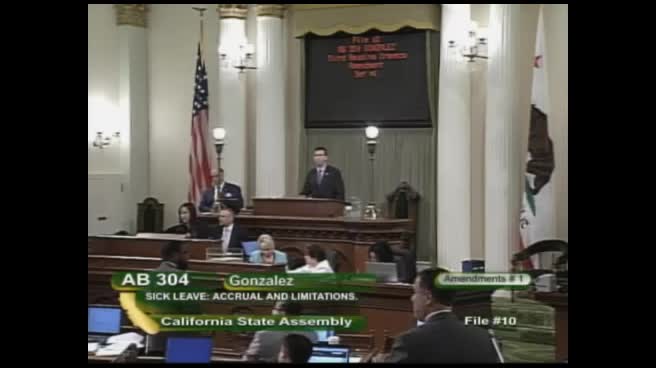 1MIN
Assembly Floor
 12MIN
Assembly Standing Committee on Appropriations
Bill Author

Bill Co-Author(s):