AB 325: Community Development Block Grant Program.
- Session Year: 2015-2016
- House: Assembly
- Latest Version Date: 2015-10-01
Existing law requires the Department of Housing and Community Development to allocate funds under the federal Community Development Block Grant Program to cities and counties. Existing law requires the department to determine and announce, in the applicable Notice of Funding Availability, the maximum amount of grant funds that may be used for economic development projects and programs, housing for persons and families of low or moderate income or for purposes directly related to the provision or improvement of housing opportunities for these persons and families, and for cities and counties that apply on behalf of certain Indian tribes. Existing law requires the department to develop and use certain eligibility criteria and requirements for certain economic development fund applications.
This bill would require the department, no later than 60 days, except as specified, after the department notifies an applicant that the department has approved the applicants application for those grant funds, to provide a grant agreement to the applicant. The bill would require the department, when the department enters into a grant agreement with an applicant, to provide the applicant with a complete and final list of activities the applicant must complete in order to receive a disbursement of funds pursuant to the agreement. The bill would authorize the department to make changes to the final list of activities if the applicant makes changes to the original application or the federal government or the Legislature requires changes. The bill would also require the department, no later than 30 days after receiving a grantees request for disbursement of funds, to notify the grantee that the department has approved disbursement or to provide the grantee with a complete and final list of all of the remaining activities the grantee must complete, as specified.
Existing law requires the Department of Housing and Community Development to allocate funds under the federal Community Development Block Grant Program to cities and counties. Existing law requires the department to determine and announce announce, in the applicable Notice of Funding Availability, the maximum amount of grant funds that may be used for economic development projects and programs, housing for persons and families of low or moderate income or for purposes directly related to the provision or improvement of housing opportunities for these persons and families, and for cities and counties that apply on behalf of certain Indian tribes. Existing law requires the department to develop and use certain eligibility criteria and requirements for certain economic development fund applications.
This bill would require the department, no later than 60 days days, except as specified, after the department notifies an applicant that the department has approved the applicants application for those grant funds, to enter into provide a grant agreement with to the applicant. The bill would require the department, when the department enters into a grant agreement with an applicant, to provide the applicant with a complete and final list of activities the applicant must complete in order to receive a disbursement of funds pursuant to the agreement. The bill would authorize the department to make changes to the final list of activities if the applicant makes changes to the original application or the federal government or the Legislature requires changes. The bill would also require the department, no later than 30 days after receiving a grantees request for disbursement of funds, to notify the grantee that the department has approved disbursement or to provide the grantee with a complete and final list of all of the remaining activities the grantee must complete, as specified.
Existing law requires the Department of Housing and Community Development to allocate funds under the federal Community Development Block Grant Program to cities and counties. Existing law requires the department to determine, determine and announce in the applicable Notice of Funding Availability, the maximum amount of grant funds that may be used for economic development projects and programs, housing for persons and families of low or moderate income or for purposes directly related to the provision or improvement of housing opportunities for these persons and families, and for cities and counties that apply on behalf of certain Indian tribes. Existing law requires the department to develop and use certain eligibility criteria and requirements for certain economic development fund applications.
This bill would require the department, no later than 60 days after the department notifies an applicant that the department has approved the applicants application for those grant funds, to enter into a grant agreement with the applicant. The bill would require the department, when the department enters into a grant agreement with an applicant, to provide the applicant with a complete and final list of activities the applicant must complete in order to receive a disbursement of funds pursuant to the agreement. The bill would also require the department, no later than 30 days after receiving a grantees request for disbursement of funds, to notify the grantee that the department has approved disbursement or to provide the grantee with a complete and final list of all of the remaining activities the grantee must complete, as specified.
Existing law creates the Building Equity and Growth in Neighborhoods (BEGIN) Program and the BEGIN Fund. Moneys in the fund are made available, upon appropriation, to the department for grants to cities, counties, and cities and counties for assistance for downpayment purposes to qualifying new home buyers in those cities, counties, and cities and counties that have taken prescribed actions to remove barriers to affordable housing. Existing law appropriates moneys to the department from the BEGIN fund and specifies the periods to liquidate the encumbrances.
This bill would, notwithstanding any other law, extend the period to liquidate the encumbrances of certain appropriations from the BEGIN fund to the department until June 30, 2017, or June 30, 2018.
This bill would declare that it is to take effect immediately as a bill providing for appropriations related to the Budget Bill.
Existing law requires the Department of Housing and Community Development to allocate funds under the federal Community Development Block Grant Program to cities and counties. Existing law requires the department to determine, and announce in the applicable Notice of Funding Availability, the maximum amount of grant funds that may be used for economic development projects and programs, housing for persons and families of low or moderate income or for purposes directly related to the provision or improvement of housing opportunities for these persons and families, and for cities and counties that apply on behalf of certain Indian tribes. Existing law requires the department to develop and use certain eligibility criteria and requirements for certain economic development fund applications.
This bill would require the department, no later than 60 days from when the department receives an economic development fund application, to inform the applicant of the decision to approve or deny the application and the reasons for a denial of this application. after the department notifies an applicant that the department has approved the applicants application for those grant funds, to enter into a grant agreement with the applicant. The bill would require the department, when the department enters into a grant agreement with an applicant, to provide the applicant with a complete and final list of activities the applicant must complete in order to receive a disbursement of funds pursuant to the agreement. The bill would also require the department, no later than 30 days after receiving a grantees request for disbursement of funds, to notify the grantee that the department has approved disbursement or to provide the grantee with a complete and final list of all of the remaining activities the grantee must complete, as specified.
Existing law requires the Department of Housing and Community Development to allocate funds under the federal Community Development Block Grant Program to cities and counties. Existing law requires the department to determine, and announce in the applicable Notice of Funding Availability, the maximum amount of grant funds that may be used for economic development projects and programs, housing for persons and families of low or moderate income or for purposes directly related to the provision or improvement of housing opportunities for these persons and families, and for cities and counties that apply on behalf of certain Indian tribes. Existing law requires the department to develop and use certain eligibility criteria and requirements for certain economic development fund applications.
This bill would require the department, no later than 60 days from when the department receives an economic development fund application, to inform the applicant of the decision to approve or deny the application and the reasons for a denial of this application.
(a)(1)No later than 60 days after the department notifies an applicant that the department has approved the applicants application for funds pursuant to this chapter, the department shall provide a grant agreement to the applicant. The 60 days notice requirement shall not apply if the federal government or the Legislature makes significant changes to the Community Development Block Grant Program.
(2)When the department enters into a grant agreement with an applicant, the department shall provide the applicant with a complete and final list of all of the activities the applicant must complete in order to receive a disbursement of funds pursuant to the agreement. The department may make appropriate and corresponding changes to the complete and final list of activities if the applicant makes changes to the original application or the federal government or the Legislature requires changes.
(b)No later than 30 days after the department receives a request for the disbursement of funds from a grantee, the department shall take either of the following actions:
(1)Notify the grantee that the department has approved disbursement of the funds.
(2)Provide the applicant with a complete and final list of all of the remaining activities the applicant must complete in order for the department to approve disbursement of the funds.
(a)(1)No later than 60 days after the department notifies an applicant that the department has approved the applicants application for funds pursuant to this chapter, the department shall enter into provide a grant agreement with to the applicant. The 60 days notice requirement shall not apply if the federal government or the Legislature makes significant changes to the Community Development Block Grant Program.
(2)When the department enters into a grant agreement with an applicant, the department shall provide the applicant with a complete and final list of all of the activities the applicant must complete in order to receive a disbursement of funds pursuant to the agreement. The department may make appropriate and corresponding changes to the complete and final list of activities if the applicant makes changes to the original application or the federal government or the Legislature requires changes.
(b)No later than 30 days after the department receives a request for the disbursement of funds from a grantee, the department shall take either of the following actions:
(1)Notify the grantee that the department has approved disbursement of the funds.
(2)Provide the applicant with a complete and final list of all of the remaining activities the applicant must complete in order for the department to approve disbursement of the funds.
It is the intent of the Legislature to assist cities including, but not limited to, the City of Santa Rosa by extending the period to liquidate certain encumbrances associated with the Building Equity and Growth in Neighborhoods (BEGIN) Fund.
SEC. 2.SECTION 1.Section 50832.2 is added to the Health and Safety Code, to read:50832.2.(a)(1)No later than 60 days after the department notifies an applicant that the department has approved the applicants application for funds pursuant to this chapter, the department shall enter into a grant agreement with the applicant.
(2)When the department enters into a grant agreement with an applicant, the department shall provide the applicant with a complete and final list of all of the activities the applicant must complete in order to receive a disbursement of funds pursuant to the agreement.
(b)No later than 30 days after the department receives a request for the disbursement of funds from a grantee, the department shall take either of the following actions:
(1)Notify the grantee that the department has approved disbursement of the funds.
(2)Provide the applicant with a complete and final list of all of the remaining activities the applicant must complete in order for the department to approve disbursement of the funds.
SEC. 3.Section 50860 of the Health and Safety Code is amended to read:50860.(a)The Building Equity and Growth in Neighborhoods (BEGIN) Program and the Building Equity and Growth in Neighborhoods (BEGIN) Fund are hereby created.
(b)Except as otherwise provided in this chapter, moneys in the BEGIN Fund shall be made available upon appropriation by the Legislature to the department and administered by the department pursuant to the CalHome Program (Chapter 6 (commencing with Section 50650), to make grants to qualifying cities, counties, or cities and counties that provide incentives or reduce or remove regulatory barriers as set forth in this chapter. These grants shall, except as otherwise provided by this chapter, be used for downpayment assistance to qualifying first-time home buyers of low- and moderate-incomes purchasing newly constructed homes in a BEGIN project.
(c)Any loan repayments shall be retained by the qualifying city, county, or city and county and reused for first-time home buyer downpayment assistance, home rehabilitation, home buyer counseling, home acquisition and rehabilitation, or self-help mortgage assistance for persons and families of low- or moderate-income, as defined in Section 50093.
(d)Notwithstanding any other law, the period to liquidate the encumbrances set forth in Items 2240-491 and 2240-102-6038 of the Budget Act of 2010 is hereby extended to June 30, 2017.
(e)Notwithstanding any other law, the periods to liquidate the encumbrances set forth in Item 2240-490 of the Budget Act of 2011 are hereby extended until June 30, 2018.
SEC. 4.This act is a bill providing for appropriations related to the Budget Bill within the meaning of subdivision (e) of Section 12 of Article IV of the California Constitution, has been identified as related to the budget in the Budget Bill, and shall take effect immediately.
It is the intent of the Legislature to assist cities including, but not limited to, the City of Santa Rosa by extending the period to liquidate certain encumbrances associated with the Building Equity and Growth in Neighborhoods (BEGIN) Fund.
SECTION 1.SEC. 2.Section 50832.2 is added to the Health and Safety Code, to read:50832.2.(a)(1)No later than 60 days after the department notifies an applicant that the department has approved the applicants application for funds pursuant to this chapter, the department shall enter into a grant agreement with the applicant.
(2)When the department enters into a grant agreement with an applicant, the department shall provide the applicant with a complete and final list of all of the activities the applicant must complete in order to receive a disbursement of funds pursuant to the agreement.
(b)No later than 30 days after the department receives a request for the disbursement of funds from a grantee, the department shall take either of the following actions:
(1)Notify the grantee that the department has approved disbursement of the funds.
(2)Provide the applicant with a complete and final list of all of the remaining activities the applicant must complete in order for the department to approve disbursement of the funds.
SEC. 3.Section 50860 of the Health and Safety Code is amended to read:50860.(a)The Building Equity and Growth in Neighborhoods (BEGIN) Program and the Building Equity and Growth in Neighborhoods (BEGIN) Fund are hereby created.
(b)Except as otherwise provided in this chapter, moneys in the BEGIN Fund shall be made available upon appropriation by the Legislature to the department and administered by the department pursuant to the CalHome Program (Chapter 6 (commencing with Section 50650), to make grants to qualifying cities, counties, or cities and counties that provide incentives or reduce or remove regulatory barriers as set forth in this chapter. These grants shall, except as otherwise provided by this chapter, be used for downpayment assistance to qualifying first-time home buyers of low- and moderate-incomes purchasing newly constructed homes in a BEGIN project.
(c)Any loan repayments shall be retained by the qualifying city, county, or city and county and reused for first-time home buyer downpayment assistance, home rehabilitation, home buyer counseling, home acquisition and rehabilitation, or self-help mortgage assistance for persons and families of low- or moderate-income, as defined in Section 50093.
(d)Notwithstanding any other law, the period to liquidate the encumbrances set forth in Items 2240-491 and 2240-102-6038 of the Budget Act of 2010 is hereby extended to June 30, 2017.
(e)Notwithstanding any other law, the periods to liquidate the encumbrances set forth in Item 2240-490 of the Budget Act of 2011 are hereby extended until June 30, 2018.
SEC. 4.This act is a bill providing for appropriations related to the Budget Bill within the meaning of subdivision (e) of Section 12 of Article IV of the California Constitution, has been identified as related to the budget in the Budget Bill, and shall take effect immediately.
(a)(1)No later than 60 days after the department notifies an applicant that the department has approved the applicants application for funds pursuant to this chapter, the department shall enter into a grant agreement with the applicant.
(2)When the department enters into a grant agreement with an applicant, the department shall provide the applicant with a complete and final list of all of the activities the applicant must complete in order to receive a disbursement of funds pursuant to the agreement.
(b)No later than 30 days after the department receives a request for the disbursement of funds from a grantee, the department shall take either of the following actions:
(1)Notify the grantee that the department has approved disbursement of the funds.
(2)Provide the applicant with a complete and final list of all of the remaining activities the applicant must complete in order for the department to approve disbursement of the funds.
SECTION 1.Section 50832.2 is added to the Health and Safety Code, to read:50832.2.The department shall, no later than 60 days from when the department receives an application for funds for economic development projects and programs, inform an applicant of the decision to approve or deny an application for these funds and the reasons for a denial of the application.
The department shall, no later than 60 days from when the department receives an application for funds for economic development projects and programs, inform an applicant of the decision to approve or deny an application for these funds and the reasons for a denial of the application.
|
Date
|
Status
|
|---|---|
| Jun 2, 2015 | In Senate. Read first time. To Com. on RLS. for assignment. |
| Oct 1, 2015 | Chaptered by Secretary of State - Chapter 397, Statutes of 2015. |
| Oct 1, 2015 | Approved by the Governor. |
| Sep 10, 2015 | Enrolled and presented to the Governor at 4 p.m. |
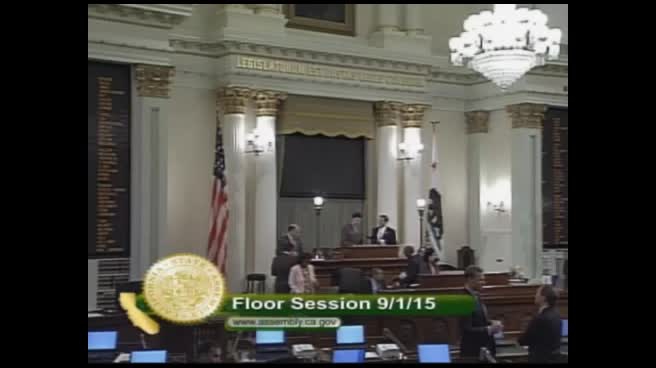
| Sep 1, 2015 | Senate amendments concurred in. To Engrossing and Enrolling. (Ayes 79. Noes 0.). |
| Sep 1, 2015 | Senate amendments concurred in. To Engrossing and Enrolling. (Ayes 79. Noes 0. Page 2715.). |
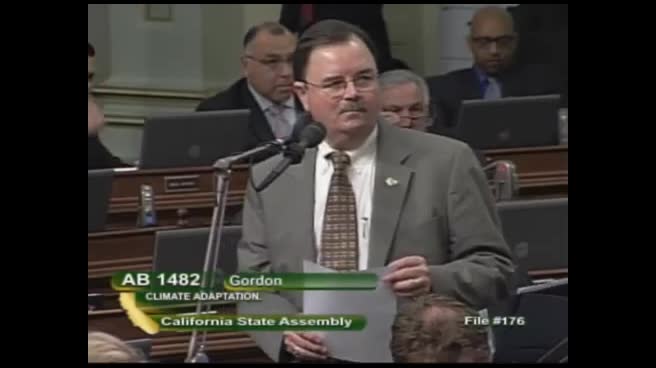
| Aug 20, 2015 | Read third time. Passed. Ordered to the Assembly. (Ayes 38. Noes 0. Page 2117.). |
| Aug 20, 2015 | Read third time. Passed. Ordered to the Assembly. |
| Aug 20, 2015 | In Assembly. Concurrence in Senate amendments pending. May be considered on or after August 22 pursuant to Assembly Rule 77. |
| Aug 18, 2015 | Read second time. Ordered to Consent Calendar. |
| Aug 17, 2015 | From committee: Be placed on second reading file pursuant to Senate Rule 28.8 and ordered to consent calendar. |
| Jul 8, 2015 | From committee: Do pass and re-refer to Com. on APPR. with recommendation: To Consent Calendar. (Ayes 11. Noes 0.) (July 7). Re-referred to Com. on APPR. |
| Jul 1, 2015 | From committee chair, with author's amendments: Amend, and re-refer to committee. Read second time, amended, and re-referred to Com. on T. & H. |
| Jun 11, 2015 | Referred to Com. on T. & H. |
| Jun 2, 2015 | Read third time. Passed. Ordered to the Senate. (Ayes 77. Noes 0. Page 1800.) |
| Jun 2, 2015 | Read third time. Passed. Ordered to the Senate. |
| Feb 13, 2015 | Read first time. To print. |
| Jun 1, 2015 | Read second time. Ordered to third reading. |
| May 28, 2015 | Read second time and amended. Ordered returned to second reading. |
| May 28, 2015 | From committee: Amend, and do pass as amended. (Ayes 17. Noes 0.) (May 28). |
| May 20, 2015 | In committee: Set, second hearing. Referred to APPR. suspense file. |
| May 20, 2015 | In committee: Set, second hearing. Referred to suspense file. |
| May 14, 2015 | Re-referred to Com. on APPR. |
| May 13, 2015 | In committee: Set, first hearing. Hearing canceled at the request of author. |
| May 13, 2015 | From committee chair, with author's amendments: Amend, and re-refer to Com. on APPR. Read second time and amended. |
| Apr 29, 2015 | From committee: Do pass and re-refer to Com. on APPR. (Ayes 6. Noes 0.) (April 29). Re-referred to Com. on APPR. |
| Apr 20, 2015 | Re-referred to Com. on H. & C.D. |
| Apr 16, 2015 | From committee chair, with author's amendments: Amend, and re-refer to Com. on H. & C.D. Read second time and amended. |
| Apr 6, 2015 | In committee: Hearing postponed by committee. |
| Feb 23, 2015 | Referred to Com. on H. & C.D. |
| Feb 17, 2015 | From printer. May be heard in committee March 19. |
|
Date
|
Description
|
Location
|
Votes
|
|
|---|---|---|---|---|
| Sep 1, 2015 | AB 325 WOOD Concurrence in Senate Amendments | Assembly Floor |
Passed |
|
| Aug 20, 2015 | Consent Calendar 2nd AB325 Wood | Senate Floor |
Passed |
|
| Jul 7, 2015 | Do pass, but first be re-referred to the Committee on [Appropriations] with the recommendation: To Consent Calendar | Senate Standing Committee on Transportation and Housing |
Passed |
|
| Jun 2, 2015 | AB 325 WOOD Assembly Third Reading | Assembly Floor |
Passed |
|
| May 28, 2015 | Do pass as amended. | Assembly Standing Committee on Appropriations |
Passed |
|
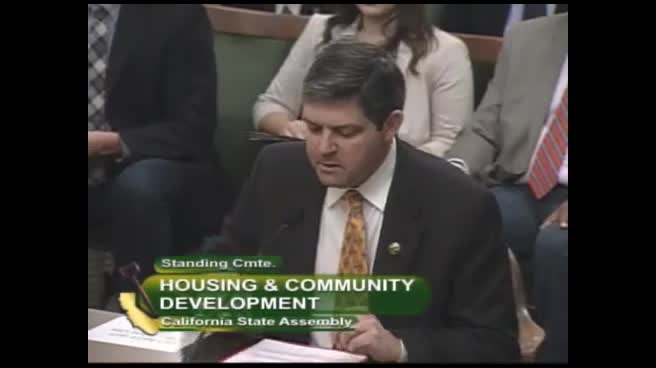
| Apr 29, 2015 | Do pass and be re-referred to the Committee on [Appropriations] | Assembly Standing Committee on Housing and Community Development |
Passed |
This list shows positions taken on this bill by organizations on the date displayed, which is linked to the original source.
Positions by individuals are not included.
|
Organization
|
Position
|
Date
|
|---|---|---|
| California State Association Of Counties | ** Support | Sep 1, 2015 |
| Community Development Commission of Mendocino County | ** Support | Sep 1, 2015 |
| Leading Age California | ** Support | Sep 1, 2015 |
| Rural County Representatives of California | ** Support | Sep 1, 2015 |
| West Company | ** Support | Sep 1, 2015 |
AB 325
Page 3
CONCURRENCE IN SENATE AMENDMENTS
AB 325
(Wood)
As Amended July 1, 2015
Majority vote
ASSEMBLY: |
77-0 |
(June 2, 2015) |
SENATE: |
38-0 |
(August 20, 2015) |
Original Committee Reference: H. & C.D.
SUMMARY: Makes specified changes to the Community Development Block Grant (CDBG) program application process. Specifically, this bill:
Requires the Department of Housing and Community Development (HCD) to provide a grant agreement to an applicant for execution no later than 60 days after HCD notifies the applicant that it was approved for funds. The 60 days' notice requirement shall not apply if the federal government or the Legislature makes significant changes to the CDBG program.
Requires HCD to provide the applicant with a complete and final list of all the activities the applicant must complete to receive a disbursement of funds pursuant to the agreement at the time HCD enters the agreement with the applicant. HCD may make appropriate and corresponding changes to the complete and final list of activities if the applicant makes changes to the original application or the federal government or Legislature requires changes.
Requires HCD to do one of the following no later than 30 days after it receives a request for disbursement of funds from a grantee:
Notify the grantee that HCD has approved disbursement of the funds.
Provide the applicant with a complete and final list of all the remaining activities the applicant must complete for disbursement of funds.
The Senate amendments:
Provide that the 60 days' notice requirement shall not apply if the federal government or the Legislature makes significant changes to the CDBG Program.
Authorize HCD to make appropriate and corresponding changes to the complete and final list of activities if the applicant makes changes to the original application or the federal government or the Legislature requires changes.
Require HCD to provide a grant agreement to an applicant no later than 60 days after HCD notifies the applicant that it was approved for funds, rather than enter into the agreement with the applicant within 60 days.
FISCAL EFFECT: According to the Senate Appropriations Committee, pursuant to Senate Rule 28.8, negligible state costs.
COMMENTS:
Background of the CDBG program: The CDBG program was established by the United States (U.S.) Housing & Community Development Act of 1974 (HCD Act) and is administered at the federal level by the U.S. Department of Housing and Urban Development (HUD). The primary federal objective of the CDBG program is to develop viable urban communities by providing decent housing and a suitable living environment and by expanding economic opportunities, principally for persons of low and moderate-income. "Persons of low and moderate-income" are defined as families, households and individuals whose incomes do not exceed 80% of the county median income, with adjustments for family or household size. Among the many uses of CDBG funds are infrastructure improvements and activities in support of the construction of housing.
Congress amended the HCD Act in 1981 to give each state the opportunity to administer CDBG funds for small cities and counties. Since 1983, HCD has administered the state CDBG program in California. Under the state CDBG Program, states award grants to smaller cities and counties to develop and preserve decent affordable housing, to provide services to the most vulnerable in our communities, and to create and retain jobs. Annually, each state develops funding priorities and criteria for selecting projects. Eligible applicants include counties with fewer than 200,000 residents in unincorporated areas and cities with fewer than 50,000 residents that do not participate in the HUD CDBG entitlement program. These are known as "non-entitlement" areas.
Each year, generally in January, the CDBG program releases one combined Notice of Funding Availability (NOFA) encompassing all CDBG-eligible activities, including Community Development, Economic Development, and the Native American and Colonia Set-Asides. The most recent NOFA was issued in January 2015, and announced the availability of nearly $25 million in state-administered federal CDBG funds.
State process following application: Federal and state laws apply to the state CDBG program. Following the notification to an applicant that the application was approved for funds, HCD prepares a grant agreement between HCD and the applicant. The grant agreement outlines, among other things, the activities for the use of the awards, federal and state requirements, and an expenditure timeline. HCD also sends a cover letter describing the next steps and a checklist of required documentation along with the grant agreement before disbursing funds. These checklists are also available on the HCD Web site. Once HCD has received, reviewed, and approved the appropriate documentation, it will disburse the funds to the applicant.
Purpose of the bill: The author contends that certain CDBG grantees are facing obstacles when applying for fund disbursements with HCD, leading to confusion about what steps need to be taken in order for the application to be acceptable. According to the author, the small cities and counties that stand to gain the most from this program do not have the expertise or resources to navigate the complicated and drawn-out grant process. To make the program more accessible, this bill seeks to establish a timeline to improve stability and predictability for grant applicants.
The author points to instances in his district in which an applicant was asked on multiple occasions to provide additional documentation, which resulted in months-long delays in the disbursement of funds. HCD has met with the author's office and is actively working to rectify delays and any ambiguities in the program. HCD has taken steps to streamline its application process and remove procedural requirements, and posted checklists for the program on its department Web site. Additionally, HCD provides standard agreement trainings across the state and has offered to provide webinars for more rural districts. HCD also has technical assistance advisors available to answer questions to navigate the process.
Program deadlines and procedural requirements such as those in this bill are generally not provided in statute to give the agency flexibility to adopt its own procedures and make necessary changes to align with federal requirements, as needed. In the author's view, however, placing timelines in statute will further ensure HCD is notifying applicants of their duties and ensuring the disbursement of funds in a timely fashion.
Senate amendments provide flexibility to HCD in meeting program deadlines under specified circumstances, such as if the applicant makes changes to the original application or the federal government or the Legislature requires changes. Senate amendments also require HCD to provide a grant agreement to an applicant no later than 60 days after HCD notifies the applicant that it was approved for funds, rather than enter into the agreement with the applicant within 60 days.
Analysis Prepared by: Rebecca Rabovsky / H. & C.D. / (916) 319-2085 FN: 0001460
AB 325
Page 5
|
Office of Senate Floor Analyses (916) 651-1520 Fax: (916) 327-4478 |
CONSENT
Bill No: AB 325
Amended: 7/1/15 in Senate
SENATE TRANS. & HOUSING COMMITTEE: 11-0, 7/7/15
AYES: Beall, Cannella, Allen, Bates, Gaines, Galgiani, Leyva, McGuire, Mendoza, Roth, Wieckowski
SENATE APPROPRIATIONS COMMITTEE: Senate Rule 28.8
ASSEMBLY FLOOR: 77-0, 6/2/15 - See last page for vote
SUBJECT: Community Development Block Grant Program
DIGEST: This bill makes specified changes to the Community Development Block Grant (CDBG) program application process.
Existing law:
Provides that the Legislature intends funds to be allocated to the state pursuant to the federal CDBG program, and administered by the Department of Housing and Community Development (HCD), to be of maximum benefit in meeting the housing and economic needs of persons and families of low or moderate income.
Requires HCD to administer the state CDBG program to eligible cities and counties.
Defines “non-entitlement area” as an area which is not a metropolitan city or part of an urban county and does not include Indian Tribes. “Urban county” generally means having a population greater than 200,000 and “metropolitan city” generally means having a population greater than 50,000.
Requires HCD to allocate not less than 51% of CDBG funds for purposes of providing or improving housing opportunities for low- or moderate-income households.
Requires HCD to allocate 30% of CDBG funds for purposes of economic development.
This bill:
Requires HCD to provide a grant agreement to an applicant for execution no later than 60 days after HCD notifies the applicant that it was approved for funds. The 60 days’ notice requirement shall not apply if the federal government or the Legislature makes significant changes to the CDBG program.
Requires HCD to provide the applicant with a complete and final list of all the activities the applicant must complete to receive a disbursement of funds pursuant to the agreement at the time HCD enters the agreement with the applicant. HCD may make appropriate and corresponding changes to the complete and final list of activities if the applicant makes changes to the original application or the federal government or Legislature requires changes.
Requires HCD to do one of the following no later than 30 days after it receives a request for disbursement of funds from a grantee:
Notify the grantee that HCD has approved disbursement of the funds.
Provide the applicant with a complete and final list of all the remaining activities the applicant must complete for disbursement of funds.
Background
Background of the CDBG program. Existing law established the CDBG program under the U.S. Housing and Community Development Act (Act) of 1974 and it is administered at the federal level by the U.S. Department of Housing and Urban Development (HUD). The purpose of the CDBG Program is to provide communities with resources to address a wide range of unique community development needs, including affordable housing, services to the most vulnerable, and job creation through the expansion and retention of businesses, particularly for persons of low and moderate income. “Persons of low and moderate income” are defined as families, households, and individuals whose incomes do not exceed 80% of the county median income, with adjustments for family or household size. Among the many uses of CDBG funds are infrastructure improvements and activities in support of the construction of housing.
HUD allocates CDBG funds via formula to “entitlement jurisdictions” (i.e., cities over 50,000 population and counties over 200,000 population). In 1981, Congress amended the Act to give each state the opportunity to administer federal CDBG funds for smaller cities and counties, known as “non-entitlement areas,” which include cities with populations under 50,000 and counties with populations under 200,000. Since 1983, HCD has developed funding priorities and criteria for selecting projects for the state CDBG program in California for non-entitlement areas.
Each year, generally in January, the CDBG program releases one combined Notice of Funding Availability (NOFA) encompassing all CDBG-eligible activities, including Community Development, Economic Development, and the Native American and Colonia Set-Asides. The most recent NOFA was issued in January 2015, and announced the availability of nearly $25 million in state-administered federal CDBG funds.
Comments
Purpose of the bill. According to the author, HCD allocates funds under the federal CDBG program to local municipalities. The small cities and counties that stand to gain the most from this program do not have the expertise or resources to navigate the complicated and drawn-out grant process. To make the program more accessible, this bill seeks to establish a timeline to improve stability and predictability for grant applicants.
State process following application. Federal and state laws apply to the state CDBG program. Following the notification to an applicant that the application was approved for funds, HCD prepares a grant agreement between HCD and the applicant. The grant agreement outlines, among other things, the activities for the use of the awards, federal and state requirements, and an expenditure timeline. HCD also sends a cover letter describing the next steps and a checklist of required documentation along with the grant agreement before disbursing funds. These checklists are also available on the HCD Web site. Once HCD has received, reviewed, and approved the appropriate documentation, it will disburse the funds to the applicant.
What’s the problem? The author points to instances in his district in which an applicant was asked on multiple occasions to provide additional documentation, which resulted in months-long delays in the disbursement of funds. HCD has met with the author’s office and is actively working to rectify delays and any ambiguities in the program. HCD has taken steps to streamline its application process and remove procedural requirements, and posted checklists for the program on its department website. Additionally, HCD provides standard agreement trainings across the state and has offered to provide webinars for more rural districts. HCD also has technical assistance advisors available to answer questions to navigate the process.
Program deadlines and procedural requirements such as those in this bill are generally not provided in statute to give the agency flexibility to adopt its own procedures and make necessary changes to align with federal requirements, as needed. In the author’s view, however, placing timelines in statute will further ensure HCD is notifying applicants of their duties and ensuring the disbursement of funds in a timely fashion.
FISCAL EFFECT: Appropriation: No Fiscal Com.: Yes Local: No
California State Association of Counties
Community Development Commission of Mendocino County
Leading Age California
Rural County Representatives of California
West Company
OPPOSITION: (Verified 8/17/15)
ASSEMBLY FLOOR: 77-0, 6/2/15
AYES: Achadjian, Alejo, Travis Allen, Baker, Bigelow, Bloom, Bonilla, Bonta, Brough, Brown, Burke, Calderon, Campos, Chang, Chau, Chiu, Chu, Cooley, Cooper, Dababneh, Dahle, Daly, Dodd, Frazier, Beth Gaines, Gallagher, Cristina Garcia, Eduardo Garcia, Gatto, Gipson, Gomez, Gonzalez, Gordon, Gray, Hadley, Harper, Roger Hernández, Holden, Irwin, Jones, Jones-Sawyer, Kim, Lackey, Levine, Linder, Lopez, Low, Maienschein, Mathis, Mayes, McCarty, Medina, Melendez, Mullin, Nazarian, Obernolte, O'Donnell, Olsen, Patterson, Perea, Quirk, Rendon, Ridley-Thomas, Rodriguez, Salas, Santiago, Steinorth, Mark Stone, Thurmond, Ting, Wagner, Waldron, Weber, Wilk, Williams, Wood, Atkins
NO VOTE RECORDED: Chávez, Eggman, Grove
Prepared by: Alison Dinmore / T. & H. / (916) 651-4121
8/18/15 12:48:42
**** END ****
AB 325 (Wood) Page 5 of 5
SENATE COMMITTEE ON TRANSPORTATION AND HOUSING
Senator Jim Beall, Chair
2015 - 2016 Regular
Bill No: AB 325 Hearing Date: 7/7/2015
Author: |
Wood |
||
Version: |
7/1/2015 |
||
Urgency: |
No |
Fiscal: |
Yes |
Consultant: |
Alison Dinmore |
||
SUBJECT: Community Development Block Grant Program
DIGEST: This bill makes specified changes to the Community Development Block Grant (CDBG) program application process.
ANALYSIS:
Existing Law:
1) Provides that the Legislature intends funds to be allocated to the state pursuant to the federal CDBG program, and administered by the Department of Housing and Community Development (HCD), to be of maximum benefit in meeting the housing and economic needs of persons and families of low or moderate income.
2) Requires HCD to administer the state CDBG program to eligible cities and counties.
3) Defines “non-entitlement area” as an area which is not a metropolitan city or part of an urban county and does not include Indian Tribes. “Urban county” generally means having a population greater than 200,000 and “metropolitan city” generally means having a population greater than 50,000.
4) Requires HCD to allocate not less than 51% of CDBG funds for purposes of providing or improving housing opportunities for low- or moderate-income households.
5) Requires HCD to allocate 30% of CDBG funds for purposes of economic development.
This bill:
1) Requires HCD to provide a grant agreement to an applicant for execution no later than 60 days after HCD notifies the applicant that it was approved for funds. The 60 days’ notice requirement shall not apply if the federal government or the Legislature makes significant changes to the CDBG program.
2) Requires HCD to provide the applicant with a complete and final list of all the activities the applicant must complete to receive a disbursement of funds pursuant to the agreement at the time HCD enters the agreement with the applicant. HCD may make appropriate and corresponding changes to the complete and final list of activities if the applicant makes changes to the original application or the federal government or Legislature requires changes.
3) Requires HCD to do one of the following no later than 30 days after it receives a request for disbursement of funds from a grantee:
Notify the grantee that HCD has approved disbursement of the funds.
Provide the applicant with a complete and final list of all the remaining activities the applicant must complete for disbursement of funds.
COMMENTS:
Purpose of the bill. According to the author, HCD allocates funds under the federal CDBG program to local municipalities. The small cities and counties that stand to gain the most from this program do not have the expertise or resources to navigate the complicated and drawn-out grant process. To make the program more accessible, this bill seeks to establish a timeline to improve stability and predictability for grant applicants.
Background of the CDBG program. Existing law established the CDBG program under the U.S. Housing and Community Development Act (the Act) of 1974 and it is administered at the federal level by the U.S. Department of Housing and Urban Development (HUD). The purpose of the CDBG Program is to provide communities with resources to address a wide range of unique community development needs, including affordable housing, services to the most vulnerable, and job creation through the expansion and retention of businesses, particularly for persons of low- and moderate-income. “Persons of low and moderate income” are defined as families, households, and individuals whose incomes do not exceed 80% of the county median income, with adjustments for family or household size. Among the many uses of CDBG funds are infrastructure improvements and activities in support of the construction of housing.
HUD allocates CDBG funds via formula to “entitlement jurisdictions” (i.e., cities over 50,000 population and counties over 200,000 population). In 1981, Congress amended the Act to give each state the opportunity to administer federal CDBG funds for smaller cities and counties, known as “non-entitlement areas,” which include cities with populations under 50,000 and counties with populations under 200,000. Since 1983, HCD has developed funding priorities and criteria for selecting projects for the state CDBG program in California for non-entitlement areas.
Each year, generally in January, the CDBG program releases one combined Notice of Funding Availability (NOFA) encompassing all CDBG-eligible activities, including Community Development, Economic Development, and the Native American and Colonia Set-Asides. The most recent NOFA was issued in January 2015, and announced the availability of nearly $25 million in state-administered federal CDBG funds.
State process following application. Federal and state laws apply to the state CDBG program. Following the notification to an applicant that the application was approved for funds, HCD prepares a grant agreement between HCD and the applicant. The grant agreement outlines, among other things, the activities for the use of the awards, federal and state requirements, and an expenditure timeline. HCD also sends a cover letter describing the next steps and a checklist of required documentation along with the grant agreement before disbursing funds. These checklists are also available on the HCD website. Once HCD has received, reviewed, and approved the appropriate documentation, it will disburse the funds to the applicant.
What’s the problem? The author points to instances in his district in which an applicant was asked on multiple occasions to provide additional documentation, which resulted in months-long delays in the disbursement of funds. HCD has met with the author’s office and is actively working to rectify delays and any ambiguities in the program. HCD has taken steps to streamline its application process and remove procedural requirements, and posted checklists for the program on its department website. Additionally, HCD provides standard agreement trainings across the state and has offered to provide webinars for more rural districts. HCD also has technical assistance advisors available to answer questions to navigate the process. In the author’s view, however, placing timelines in statute will further ensure HCD is notifying applicants of their duties and ensuring the disbursement of funds in a timely fashion.
This bill would require HCD to provide a grant agreement to an applicant no later than 60 days after approving an applicant for an award. The bill provides an exception in instances in which substantial changes were made at the federal or state level that require HCD to amend their regulations. When HCD sends the grant agreement, HCD must provide a complete and final list of all the activities the applicant must complete to receive disbursement of funds. HCD may make changes to the list of activities in instances in which the applicant makes changes to the original application or if the federal or state government require changes. Additionally, within 30 days of receiving a grantee’s request for disbursement of funds, HCD must either notify the grantee that it has approved the disbursement or provide the grantee with a complete and final list of all the remaining activities the applicant must complete for HCD to approve the disbursement of funds.
Inserting regulations into statute. Program deadlines and procedural requirements such as those in this bill are generally not provided in statute to give the agency flexibility to adopt its own procedures and make necessary changes to align with federal requirements, as needed. The author believes, however, that these changes are necessary to ensure timely distribution and communication with small cities and counties, as well as make the CBDG program more accessible to those communities.
Assembly Votes:
Floor: 77-0
Appr: 17-0
H&CD: 6-0
FISCAL EFFECT: Appropriation: No Fiscal Com.: Yes Local: No
POSITIONS: (Communicated to the committee before noon on Wednesday,
July 1, 2015.)
SUPPORT:
California State Association of Counties
Community Development Commission of Mendocino County
Leading Age California
Rural County Representatives of California
West Company
OPPOSITION:
None received
-- END --
AB 325
Page 3
ASSEMBLY THIRD READING
AB 325
(Wood)
As Amended May 28, 2015
Majority vote
Committee |
Votes |
Ayes |
Noes |
Housing |
6-0 |
Chau, Steinorth, Burke, Chiu, Beth Gaines, Lopez |
|
Appropriations |
17-0 |
Gomez, Bigelow, Bonta, Calderon, Chang, Daly, Eggman, Gallagher, Eduardo Garcia, Gordon, Holden, Jones, Quirk, Rendon, Wagner, Weber, Wood |
|
SUMMARY: Makes specified changes to the Community Development Block Grant (CDBG) program application process. Specifically, this bill:
Provides that, no later than 60 days after the Department of Housing and Community Development (HCD) notifies an applicant that their CDBG application has been approved, HCD must enter into a grant agreement with the applicant.
Requires HCD, when it enters into a grant agreement with an applicant, to provide the applicant with a complete and final list of all of the activities the applicant must complete in order to receive a disbursement of funds pursuant to the agreement.
Requires HCD to do either of the following no later than 30 days after it receives a request for the disbursement of funds from a grantee:
Notify the grantee that HCD has approved disbursement of the funds.
Provide the applicant with a complete and final list of all of the remaining activities the applicant must complete in order for HCD to approve disbursement of the funds.
FISCAL EFFECT: According to the Assembly Committee on Appropriations, on-going costs to HCD of up to $176,000 (General Fund) for up to one position to provide additional information to grant applicants. HCD administers approximately 200 CDBG contracts each year. Each contract can have eight or more activities, and each activity can have several individual disbursements.
COMMENTS:
Need for this bill: The author contends that certain CDBG grantees are facing obstacles when applying for fund disbursements with HCD, leading to confusion about what steps need to be taken in order for the application to be acceptable. According to the author, "the small cities and counties that stand to gain the most from this program do not have the expertise or the resources to navigate this unnecessarily complicated and drawn out process. In order to make the program more accessible to some of our most underserved constituencies we need to approve these efficiencies."
The Rural County Representatives of California, a supporter of this bill, states that "current practice in the grant program has no limitation as to how long HCD has to respond to a completed application, nor is there any requirement to give any reason or justification as to denial or rejection of that application." Additionally, "CDBG grants generate economic development opportunities within our rural and remote communities, but small local governments with minimal resources have difficulty engaging in the initial process, let alone working through and recovering from a rejection from a state agency."
The author contends that there have been attempts to address this issue non-legislatively with HCD. The author points to previous instances where local governments throughout the state "have met several times over the past two years along with past legislators and staff from HCD in attempts to make the program more effective. Each time HCD has promised action and the problems have only become worse."
CDBG program: The CDBG program was established by the United States Housing & Community Development Act of 1974 (HCD Act) and is administered at the federal level by the United States Department of Housing and Urban Development (HUD). The primary federal objective of the CDBG program is to develop viable urban communities by providing decent housing and a suitable living environment and by expanding economic opportunities, principally for persons of low and moderate-income. "Persons of low and moderate-income" are defined as families, households and individuals whose incomes do not exceed 80% of the county median income, with adjustments for family or household size. Among the many uses of CDBG funds are infrastructure improvements and activities in support of the construction of housing.
Congress amended the HCD Act in 1981 to give each state the opportunity to administer CDBG funds for small cities and counties. Since 1983, HCD has administered the state CDBG program in California. Under the state CDBG program, states award grants to smaller cities and counties to develop and preserve decent affordable housing, to provide services to the most vulnerable in our communities, and to create and retain jobs. Annually, each state develops funding priorities and criteria for selecting projects. Eligible applicants include counties with fewer than 200,000 residents in unincorporated areas and cities with fewer than 50,000 residents that do not participate in the HUD CDBG entitlement program. These are known as "non-entitlement" areas.
Each year, generally in January, HCD releases one combined Notice of Funding Availability (NOFA) encompassing all CDBG-eligible activities, including Community Development, Economic Development, and the Native American and Colonia Set-Asides. The most recent NOFA was issued in January 2015, and announced the availability of $24,983,999 in state-administered federal CDBG funds.
Federal and state laws and regulations apply to the state CDBG program, and HCD issues a grant management manual and numerous memoranda, checklists, and other documents that further expand on the CDBG application and grant management process and requirements. Applicants that receive award letters later receive a grant agreement, which is entered into between a local representative and HCD. The grant agreement reserves monies from the CDBG allocation approved for funding by HCD. Grant payments are made to grantees by an advance or a reimbursement, and the grant payment process must minimize the time between the transfer of funds to the applicant and the applicant then disbursing the funds. Grantees must submit funds request forms to HCD to request contract funds. According to HCD's grant management manual, HCD reviews each funds request and will return it if corrections are needed.
This bill would provide statutory authority for when and how HCD is required to respond to grantees in two situations. First, upon approving an applicant for an award, HCD would be required to enter into a grant agreement with the applicant no later than 60 days after it notifies the applicant that their CDBG application has been approved. When it enters into a grant agreement with an applicant, HCD must provide a complete and final list of all of the activities the applicant must complete in order to receive a disbursement of funds. Second, within 30 days of receiving a grantee's request for the disbursement of funds, HCD must either notify the grantee that it has approved the disbursement or provide the grantee with a complete and final list of all of the remaining activities the applicant must complete in order for HCD to approve disbursement of the funds.
Analysis Prepared by: Rebecca Rabovsky / H. & C.D. / (916) 319-2085 FN: 0000782
AB 325
Page 3
Date of Hearing: May 20, 2015
ASSEMBLY COMMITTEE ON APPROPRIATIONS
Jimmy Gomez, Chair
AB 325
(Wood) – As Amended May 13, 2015
Policy Committee: |
Housing and Community Development |
Vote: |
6 - 0 |
|
|
|
|
|
|
|
|
Urgency: Yes State Mandated Local Program: No Reimbursable: No
SUMMARY: This bill makes specified changes to the Community Development Block Grant (CDBG) Program application process, and provides a two year extension of HCD's Building Equity and Growth in Neighborhoods (BEGIN) program. Specifically, this bill:
Provides that, no later than 60 days after the Department of Housing and Community Development (HCD) notifies an applicant that their CDBG application has been approved, HCD must enter into a grant agreement with the applicant.
Requires HCD, when it enters into a grant agreement with an applicant, to provide the applicant with a complete and final list of all of the activities the applicant must complete in order to receive a disbursement of funds pursuant to the agreement.
Requires HCD to do either of the following, no later than 30 days after it receives a request for the disbursement of funds from a grantee:
Notify the grantee that HCD has approved disbursement of the funds.
Provide the applicant with a complete and final list of all of the remaining activities the applicant must complete in order for HCD to approve disbursement of the funds.
Extends the period to liquidate the encumbrances of certain appropriations from the BEGIN fund to HCD until June 30, 2017, and June 30, 2018. Because the bill provides for appropriations related to the budget in the Budget Bill, this bill shall take effect immediately.
FISCAL EFFECT:
On-going costs to HCD of up to $176,000 (GF) for up to one position to provide additional information to grant applicants. HCD administers approximately 200 CDGB contracts each year. Each contract can have eight or more activities, and each activity can have several individual disbursements.
One-time cost exceeding $3.8 million (BEGIN Fund) to extend the program.
COMMENTS:
Purpose. The author contends that certain CDBG grantees are facing obstacles when applying for fund disbursements with HCD, leading to confusion about what steps need to be taken in order for the application to be acceptable. According to the author, "the small cities and counties that stand to gain the most from this program do not have the expertise or the resources to navigate this unnecessarily complicated and drawn out process. In order to make the program more accessible to some of our most underserved constituencies, we need to approve these efficiencies."
In addition, it is the intent of the author to assist cities, including Santa Rosa, by extending the period to liquidate encumbrances associated with the BEGIN program.
CDBG Program. The CDBG program was established by the United States Housing & Community Development Act of 1974 (HCD Act) and is administered at the federal level by the U.S. Department of Housing and Urban Development (HUD). The primary federal objective of the CDBG program is to develop viable urban communities by providing decent housing and a suitable living environment, and by expanding economic opportunities, principally for persons of low and moderate-income.
Since 1983, HCD has administered the state CDBG program in California. Under the state CDBG Program, the state award grants to smaller cities and counties to develop and preserve decent affordable housing, to provide services to the most vulnerable in our communities, and to create and retain jobs. Annually, each state develops funding priorities and criteria for selecting projects. Eligible applicants include counties with fewer than 200,000 residents in unincorporated areas and cities with fewer than 50,000 residents that do not participate in the HUD CDBG entitlement program. These are known as "non-entitlement" areas.
Each year, generally in January, HCD releases one combined Notice of Funding Availability (NOFA) encompassing all CDBG-eligible activities, including Community Development, Economic Development, and the Native American and Colonia Set-Asides. The most recent NOFA was issued in January 2015, and announced the availability of almost $25 million in state-administered federal CDBG funds.
BEGIN Program Extension. The BEGIN fund is available, upon appropriation, to HCD for grants to cities and counties for downpayment assistance to qualifying new home buyers in those cities and counties that have taken specific actions to remove barriers to affordable housing.
The city of Santa Rosa has worked in partnership with Burbank Housing, a nonprofit that builds affordable housing units for low-income people, to increase the number of affordable homes in Sonoma County. The BEGIN program awarded Burbank Housing $3.8 million for the project. The construction of 32 homes has started, but Burbank Housing was recently informed by HCD that the $3.8 million award has to be spent by next month, June 30, 2015, the date that the BEGIN program expires. Effectively, the deadline places the entire Catalina Townhomes project in jeopardy. This bill extends the deadline to spend the money so the builder can complete the project.
Budget Discussion. The existing periods to liquidate the encumbrances for the BEGIN program were contained in the Budget Act of 2010 and the Budget Act of 2011. The issue of extending the encumbrance dates is also being discussed as part of this year's budget process and may get resolved through budget language.
Prior Legislation.
AB 232 (V. Manuel Pérez), Chapter 386, Statutes of 2012, regarding the economic development portion of the CDBG Program, eliminated the dollar-per-job test and the requirement that benefit to low- and moderate-income persons be a scoring factor in ranking applications.
AB 2188 (Arambula), Chapter 95, Statutes of 2008, deleted the sunset on provisions allowing HCD to annually establish the maximum grant amounts under the General Program and Economic Development Allocations of the CDBG program, and to determine the amount of funding that will be set aside for technical assistance and planning grants.
Analysis Prepared by: Jennifer Swenson / APPR. / (916) 319-2081
AB 325
Page 2
Date of Hearing: May 13, 2015
ASSEMBLY COMMITTEE ON APPROPRIATIONS
Jimmy Gomez, Chair
AB 325
(Wood) – As Amended April 16, 2015
Policy Committee: |
Housing and Community Development |
Vote: |
6 - 0 |
|
|
|
|
|
|
|
|
Urgency: No State Mandated Local Program: No Reimbursable: No
SUMMARY:
This bill makes specified changes to the Community Development Block Grant (CDBG) Program application process. Specifically, this bill:
Provides that, no later than 60 days after the Department of Housing and Community Development (HCD) notifies an applicant that their CDBG application has been approved, HCD must enter into a grant agreement with the applicant.
Requires HCD, when it enters into a grant agreement with an applicant, to provide the applicant with a complete and final list of all of the activities the applicant must complete in order to receive a disbursement of funds pursuant to the agreement.
Requires HCD to do either of the following, no later than 30 days after it receives a request for the disbursement of funds from a grantee:
Notify the grantee that HCD has approved disbursement of the funds.
Provide the applicant with a complete and final list of all of the remaining activities the applicant must complete in order for HCD to approve disbursement of the funds.
FISCAL EFFECT:
On-going costs to HCD of up to $176,000 (GF) for up to one position to provide additional information to grant applicants. HCD administers approximately 200 CDGB contracts each year. Each contract can have eight or more activities, and each activity can have several individual disbursements.
COMMENTS:
Purpose. The author contends that certain CDBG grantees are facing obstacles when applying for fund disbursements with HCD, leading to confusion about what steps need to be taken in order for the application to be acceptable. According to the author, "the small cities and counties that stand to gain the most from this program do not have the expertise or the resources to navigate this unnecessarily complicated and drawn out process. In order to make the program more accessible to some of our most underserved constituencies, we need to approve these efficiencies."
Background. The CDBG program was established by the United States Housing & Community Development Act of 1974 (HCD Act) and is administered at the federal level by the U.S. Department of Housing and Urban Development (HUD). The primary federal objective of the CDBG program is to develop viable urban communities by providing decent housing and a suitable living environment and by expanding economic opportunities, principally for persons of low and moderate-income.
Since 1983, HCD has administered the state CDBG program in California. Under the state CDBG Program, the state award grants to smaller cities and counties to develop and preserve decent affordable housing, to provide services to the most vulnerable in our communities, and to create and retain jobs. Annually, each state develops funding priorities and criteria for selecting projects. Eligible applicants include counties with fewer than 200,000 residents in unincorporated areas and cities with fewer than 50,000 residents that do not participate in the HUD CDBG entitlement program. These are known as "non-entitlement" areas.
Each year, generally in January, HCD releases one combined Notice of Funding Availability (NOFA) encompassing all CDBG-eligible activities, including Community Development, Economic Development, and the Native American and Colonia Set-Asides. The most recent NOFA was issued in January 2015, and announced the availability of almost $25 million in state-administered federal CDBG funds.
Prior Legislation.
AB 232 (V. Manuel Pérez), Chapter 386, Statutes of 2012, regarding the economic development portion of the CDBG Program, eliminated the dollar-per-job test and the requirement that benefit to low- and moderate-income persons be a scoring factor in ranking applications.
AB 2188 (Arambula), Chapter 95, Statutes of 2008, deleted the sunset on provisions allowing HCD to annually establish the maximum grant amounts under the General Program and Economic Development Allocations of the CDBG program and to determine the amount of funding that will be set aside for technical assistance and planning grants.
Analysis Prepared by: Jennifer Swenson / APPR. / (916) 319-2081
AB 325
Page 4
Date of Hearing: April 29, 2015
ASSEMBLY COMMITTEE ON HOUSING AND COMMUNITY DEVELOPMENT
Ed Chau, Chair
AB 325
Wood – As Amended April 16, 2015
SUBJECT: Community Development Block Grant Program: funds
SUMMARY: Makes specified changes to the Community Development Block Grant (CDBG) Program application process. Specifically, this bill:
Provides that, no later than 60 days after the Department of Housing and Community Development (HCD) notifies an applicant that their CDBG application has been approved, HCD must enter into a grant agreement with the applicant.
Requires HCD, when it enters into a grant agreement with an applicant, to provide the applicant with a complete and final list of all of the activities the applicant must complete in order to receive a disbursement of funds pursuant to the agreement.
Requires HCD to do either of the following no later than 30 days after it receives a request for the disbursement of funds from a grantee:
Notify the grantee that HCD has approved disbursement of the funds.
Provide the applicant with a complete and final list of all of the remaining activities the applicant must complete in order for HCD to approve disbursement of the funds.
EXISTING LAW:
Provides that the Legislature intends that funds allocated to the state pursuant to the federal CDBG program, and administered by HCD, be of maximum benefit in meeting the housing and economic development needs of persons and families of low or moderate-income (Health & Safety Code Section 50825).
Requires HCD to administer the State CDBG Program to eligible cities and counties (Health and Safety Code Section 50825, et seq., and the California Code of Regulations, Title 25, Section 7050, et seq.).
Defines the term “non-entitlement area” as an area which is not a metropolitan city or part of an urban county and does not include Indian tribes (42 United States Code Section 5302).
Defines an urban county generally, as having a population greater than 200,000 given certain specified criteria (42 United States Code Section 5302).
Defines a metropolitan city as having a population greater than 50,000 given certain specified criteria (42 United States Code Section 5302).
Requires generally, HCD to allocate not less than 51% of CDBG funds for purposes of providing or improving housing opportunities for low or moderate-income households (Health & Safety Code Section 50828).
Requires generally, HCD to allocate 30% of CDBG funds for purposes of economic development (Health & Safety Code Section 50827).
FISCAL EFFECT: Unknown.
COMMENTS:
Background: The CDBG program was established by the United States Housing & Community Development Act of 1974 (HCD Act) and is administered at the federal level by the U.S. Department of Housing and Urban Development (HUD). The primary federal objective of the CDBG program is to develop viable urban communities by providing decent housing and a suitable living environment and by expanding economic opportunities, principally for persons of low and moderate-income. "Persons of low and moderate-income" are defined as families, households and individuals whose incomes do not exceed 80% of the county median income, with adjustments for family or household size. Among the many uses of CDBG funds are infrastructure improvements and activities in support of the construction of housing.
Congress amended the HCD Act in 1981 to give each state the opportunity to administer CDBG funds for small cities and counties. Since 1983, HCD has administered the state CDBG program in California. Under the state CDBG Program, states award grants to smaller cities and counties to develop and preserve decent affordable housing, to provide services to the most vulnerable in our communities, and to create and retain jobs. Annually, each state develops funding priorities and criteria for selecting projects. Eligible applicants include counties with fewer than 200,000 residents in unincorporated areas and cities with fewer than 50,000 residents that do not participate in the HUD CDBG entitlement program. These are known as "non-entitlement" areas.
Each year, generally in January, HCD releases one combined Notice of Funding Availability (NOFA) encompassing all CDBG-eligible activities, including Community Development, Economic Development, and the Native American and Colonia Set-Asides. The most recent NOFA was issued in January 2015, and announced the availability of $24,983,999 in state-administered federal CDBG funds.
Federal and state laws and regulations apply to the state CDBG program, and HCD issues a grant management manual and numerous memoranda, checklists, and other documents that further expand on the CDBG application and grant management process and requirements. Applicants that receive award letters later receive a grant agreement, which is entered into between a local representative and HCD. The grant agreement reserves monies from the CDBG allocation approved for funding by HCD. Grant payments are made to grantees by an advance or a reimbursement, and the grant payment process must minimize the time between the transfer of funds to the applicant and the applicant then disbursing the funds. Grantees must submit funds request forms to HCD to request contract funds. According to HCD's grant management manual, HCD reviews each funds request and will return it if corrections are needed.
Need for this bill: The author contends that certain CDBG grantees are facing obstacles when applying for fund disbursements with HCD, leading to confusion about what steps need to be taken in order for the application to be acceptable. According to the author, "the small cities and counties that stand to gain the most from this program do not have the expertise or the resources to navigate this unnecessarily complicated and drawn out process. In order to make the program more accessible to some of our most underserved constituencies we need to approve these efficiencies."
The Rural County Representatives of California, a supporter of the bill, states that "current practice in the grant program has no limitation as to how long HCD has to respond to a completed application, nor is there any requirement to give any reason or justification as to denial or rejection of that application." Additionally, "CDBG grants generate economic development opportunities within our rural and remote communities, but small local governments with minimal resources have difficulty engaging in the initial process, let alone working through and recovering from a rejection from a state agency."
The author points out that there have been attempts to address this issue non-legislatively with HCD. The author points to previous instances where local governments throughout the state "have met several times over the past two years along with past legislators and staff from HCD in attempts to make the program more effective. Each time HCD has promised action and the problems have only become worse."
Staff comment: AB 325 would provide statutory authority for when and how HCD is required to respond to grantees in two situations. First, upon approving an applicant for an award, HCD would be required to enter into a grant agreement with the applicant no later than 60 days after it notifies the applicant that their CDBG application has been approved. When it enters into a grant agreement with an applicant, HCD must provide a complete and final list of all of the activities the applicant must complete in order to receive a disbursement of funds. Second, within 30 days of receiving a grantee's request for the disbursement of funds, HCD must either notify the grantee that it has approved the disbursement or provide the grantee with a complete and final list of all of the remaining activities the applicant must complete in order for HCD to approve disbursement of the funds.
Generally these types of program deadlines are not provided for in statute in order to give agencies the flexibility to adopt their own procedures. In the author's view, AB 325 is needed to better streamline the grant process, so as to make the CDBG program more accessible to small cities and counties.
Related legislation:
AB 232 (V. Manuel Pérez), Chapter 386, Statutes of 2012: This bill, for the economic development portion of the CDBG Program, eliminates the dollar-per-job test and the requirement that benefit to low- and moderate-income persons be a scoring factor in ranking applications.
AB 2188 (Arambula), Chapter 95, Statutes of 2008: This bill deletes the sunset on provisions allowing HCD to annually establish the maximum grant amounts under the General Program and Economic Development Allocations of the CDBG program and to determine the amount of funding that will be set aside for technical assistance and planning grants.
REGISTERED SUPPORT / OPPOSITION:
Support
Community Development Commission of Mendocino County
Leading Age California
Rural County Representatives of California (RCRC)
West Company
Opposition
None on file
Analysis Prepared by: Rebecca Rabovsky / H. & C.D. / (916) 319-2085
Discussed in Hearing
 1MIN
Assembly Floor
 56SEC
Assembly Floor
 3MIN
Assembly Standing Committee on Appropriations
 8MIN
Assembly Standing Committee on Housing and Community Development
Bill Author

Bill Co-Author(s):