AB 355: Unclaimed property: safe deposit boxes.
- Session Year: 2015-2016
- House: Assembly
- Latest Version Date: 2015-09-21
Existing law, the Unclaimed Property Law, governs the disposition of unclaimed property, including the escheat of certain property to the state. Existing law provides for the escheat to the state of the contents of, or proceeds of sale of the contents of, any safe deposit box or any other safekeeping repository held in the state by a business association, as specified. In cases where the contents of a safe deposit box or other safekeeping repository escheat to the state, existing law requires the business association to report to the Controller certain information regarding the property and owner, including a description of the property and the place where it is held and may be inspected by the Controller. Within 165 days after the final date for filing the report, existing law requires the Controller to mail a notice to each person having an address listed in the report who appears to be entitled to property escheated, as specified.
This bill would additionally authorize the Controller to mail a separate notice to an apparent owner of a United States savings bond, war bond, or military award inside a safe deposit box or other safekeeping repository whose name is shown on or can be associated with the contents of a safe deposit box or other safekeeping repository and is different from the name of the reported owner.
Existing law, the Unclaimed Property Law, governs the disposition of unclaimed property, including the escheat of certain property to the state. Existing law provides for the escheat to the state of the contents of, or proceeds of sale of the contents of, any safe deposit box or any other safekeeping repository held in the state by a business association, as specified. In cases where the contents of a safe deposit box or other safekeeping repository escheat to the state, existing law requires the business association to report to the Controller certain information regarding the property and owner, including a description of the property and the place where it is held and may be inspected by the Controller. Within 165 days after the final date for filing the report, existing law requires the Controller to mail a notice to each person having an address listed in the report who appears to be entitled to property escheated, as specified.
This bill would additionally require the business association to include in its report to the Controller any name attached to authorize the Controller to mail a separate notice to an apparent owner of a United States savings bond, war bond, or military award inside a safe deposit box or other safekeeping repository that whose name is shown on or can be associated with the contents of a safe deposit box or other safekeeping repository and is different from the name of the reported owner.
Existing law, the Unclaimed Property Law, governs the disposition of unclaimed property, including the escheat of certain property to the state. Existing law provides for the escheat to the state of the contents of, or proceeds of sale of the contents of, any safe deposit box or any other safekeeping repository held in the state by a business association, as specified. In cases where the contents of a safe deposit box or other safekeeping repository escheat to the state, existing law requires the business association to report to the Controller certain information regarding the property and owner, including a description of the property and the place where it is held and may be inspected by the Controller.
This bill would additionally require the business association to include in its report to the Controller any name attached to an item a United States savings bond or military award inside a safe deposit box or other safekeeping repository that is different from the name of the owner.
Existing law, the Unclaimed Property Law, governs the disposition of unclaimed property, including the escheat of certain property to the state. Existing law provides for the escheat to the state of the contents of, or proceeds of sale of the contents of, any safe deposit box or any other safekeeping repository held in the state by a business association, as specified. In cases where the contents of a safe deposit box or other safekeeping repository escheat to the state, existing law requires the business association to report to the Controller certain information regarding the property and owner, including a description of the property and the place where it is held and may be inspected by the Controller.
This bill would additionally require the business association to include in its report to the Controller any name attached to an item inside a safe deposit box or other safekeeping repository that is different from the name of the owner.
(a)In addition to the notices required pursuant to this chapter, the Controller may mail a separate notice to an apparent owner of a United States savings bond, war bond, or military award whose name is shown on or can be associated with the contents of a safe deposit box or other safekeeping repository and is different from the reported owner of the safe deposit box or other safekeeping repository.
(b)A notice sent pursuant to this section shall not contain a photograph or likeness of an elected official.
(c)(1)Notwithstanding any other law, upon request of the Controller, a state or local governmental agency may furnish to the Controller from its records the address or other identification or location information that could reasonably be used to locate an owner of unclaimed property.
(2)If the address or other identification or location information requested by the Controller is deemed confidential under any law or regulation of the state, it shall nevertheless be furnished to the Controller. However, neither the Controller nor any officer, agent, or employee of the Controller shall use or disclose that information, except as may be necessary in attempting to locate the owner of unclaimed property.
(3)This subdivision shall not be construed to require disclosure of information in violation of federal law.
(4)If a fee or charge is customarily made for the information requested by the Controller, the Controller shall pay the customary fee or charge.
(d)Costs for administering this section shall be subject to the level of appropriation in the annual Budget Act.
SEC. 2.Section 1563 of the Code of Civil Procedure is amended to read:1563.(a)Except as provided in subdivisions (b) and (c), all escheated property delivered to the Controller under this chapter shall be sold by the Controller to the highest bidder at public sale in whatever city in the state affords in his or her judgment the most favorable market for the property involved, or the Controller may conduct the sale by electronic media, including, but not limited to, the Internet, if in his or her judgment it is cost effective to conduct the sale of the property involved in that manner. However, no sale shall be made pursuant to this subdivision until 18 months after the final date for filing the report required by Section 1530. The Controller may decline the highest bid and reoffer the property for sale if he or she considers the price bid insufficient. The Controller need not offer any property for sale if, in his or her opinion, the probable cost of sale exceeds the value of the property. Any sale of escheated property held under this section shall be preceded by a single publication of notice thereof, at least one week in advance of sale, in an English language newspaper of general circulation in the county where the property is to be sold.
(b)Securities listed on an established stock exchange shall be sold at the prevailing prices on that exchange. Other securities may be sold over the counter at prevailing prices or, with prior approval of the California Victim Compensation and Government Claims Board, by any other method that the Controller may determine to be advisable. These securities shall be sold by the Controller no sooner than 18 months, but no later than 20 months, after the final date for filing the report required by Section 1530. If securities delivered to the Controller by a holder of the securities remain in the custody of the Controller, a person making a valid claim for those securities under this chapter shall be entitled to receive the securities from the Controller. If the securities have been sold, the person shall be entitled to receive the net proceeds received by the Controller from the sale of the securities. United States government savings bonds and United States war bonds shall be presented to the United States for payment. Subdivision (a) does not apply to the property described in this subdivision.
(c)(1)All escheated property consisting of military awards, decorations, equipment, artifacts, memorabilia, documents, photographs, films, literature, and any other item relating to the military history of California and Californians that is delivered to the Controller is exempt from subdivision (a) and may, at the discretion of the Controller, be held in trust for the Controller at the California State Military Museum and Resource Center, or successor entity. All escheated property held in trust pursuant to this subdivision is subject to the applicable regulations of the United States Army governing Army museum activities as described in Section 179 of the Military and Veterans Code. Any person claiming an interest in the escheated property may file a claim to the property pursuant to Article 4 (commencing with Section 1540).
(2)The California State Military Museum and Resource Center, or successor entity, shall be responsible for the costs of storage and maintenance of escheated property delivered by the Controller under this subdivision.
(d)The purchaser at any sale conducted by the Controller pursuant to this chapter shall receive title to the property purchased, free from all claims of the owner or prior holder thereof and of all persons claiming through or under them. The Controller shall execute all documents necessary to complete the transfer of title.
(a)In addition to the notices required pursuant to this chapter, the Controller may mail a separate notice to an apparent owner of a United States savings bond, war bond, or military award whose name is shown on or can be associated with the contents of a safe deposit box or other safekeeping repository and is different from the reported owner of the safe deposit box or other safekeeping repository.
(b)A notice sent pursuant to this section shall not contain a photograph or likeness of an elected official.
(c)(1)Notwithstanding any other law, upon request of the Controller, a state or local governmental agency may furnish to the Controller from its records the address or other identification or location information that could reasonably be used to locate an owner of unclaimed property.
(2)If the address or other identification or location information requested by the Controller is deemed confidential under any law or regulation of the state, it shall nevertheless be furnished to the Controller. However, neither the Controller nor any officer, agent, or employee of the Controller shall use or disclose that information, except as may be necessary in attempting to locate the owner of unclaimed property.
(3)This subdivision shall not be construed to require disclosure of information in violation of federal law.
(4)If a fee or change charge is customarily made for the information requested by the Controller, the Controller shall pay the customary fee or charge.
(d)Costs for administering this section shall be subject to the level of appropriation in the annual Budget Act.
SEC. 2.Section 1563 of the Code of Civil Procedure is amended to read:1563.(a)Except as provided in subdivisions (b) and (c), all escheated property delivered to the Controller under this chapter shall be sold by the Controller to the highest bidder at public sale in whatever city in the state affords in his or her judgment the most favorable market for the property involved, or the Controller may conduct the sale by electronic media, including, but not limited to, the Internet, if in his or her judgment it is cost effective to conduct the sale of the property involved in that manner. However, no sale shall be made pursuant to this subdivision until 18 months after the final date for filing the report required by Section 1530. The Controller may decline the highest bid and reoffer the property for sale if he or she considers the price bid insufficient. The Controller need not offer any property for sale if, in his or her opinion, the probable cost of sale exceeds the value of the property. Any sale of escheated property held under this section shall be preceded by a single publication of notice thereof, at least one week in advance of sale, in an English language newspaper of general circulation in the county where the property is to be sold.
(b)Securities listed on an established stock exchange shall be sold at the prevailing prices on that exchange. Other securities may be sold over the counter at prevailing prices or, with prior approval of the California Victim Compensation and Government Claims Board, by any other method that the Controller may determine to be advisable. These securities shall be sold by the Controller no sooner than 18 months, but no later than 20 months, after the final date for filing the report required by Section 1530. If securities delivered to the Controller by a holder of the securities remain in the custody of the Controller, a person making a valid claim for those securities under this chapter shall be entitled to receive the securities from the Controller. If the securities have been sold, the person shall be entitled to receive the net proceeds received by the Controller from the sale of the securities. United States government savings bonds and United States war bonds shall be presented to the United States for payment. Subdivision (a) does not apply to the property described in this subdivision.
(c)(1)All escheated property consisting of military awards, decorations, equipment, artifacts, memorabilia, documents, photographs, films, literature, and any other item relating to the military history of California and Californians that is delivered to the Controller is exempt from subdivision (a) and may, at the discretion of the Controller, be held in trust for the Controller at the California State Military Museum and Resource Center, or successor entity. All escheated property held in trust pursuant to this subdivision is subject to the applicable regulations of the United States Army governing Army museum activities as described in Section 179 of the Military and Veterans Code. Any person claiming an interest in the escheated property may file a claim to the property pursuant to Article 4 (commencing with Section 1540).
(2)The California State Military Museum and Resource Center, or successor entity, shall be responsible for the costs of storage and maintenance of escheated property delivered by the Controller under this subdivision.
(d)The purchaser at any sale conducted by the Controller pursuant to this chapter shall receive title to the property purchased, free from all claims of the owner or prior holder thereof and of all persons claiming through or under them. The Controller shall execute all documents necessary to complete the transfer of title.
(a)Within one year after payment or delivery of escheated property as required by Section 1532, the Controller shall cause a notice to be published, in a newspaper of general circulation, which the Controller determines is most likely to give notice to the apparent owner of the property.
(b)Each published notice shall be entitled notice to owners of unclaimed property.
(c)Each published notice shall also contain a statement that information concerning the amount or description of the property may be obtained by any persons possessing an interest in the property by addressing any inquiry to the Controller.
(d)(1)Within 165 days after the final date for filing the report required by Section 1530, the Controller shall mail a notice to each person having an address listed in the report who appears to be entitled to property of the value of fifty dollars ($50) or more escheated under this chapter. If the report filed pursuant to Section 1530 includes a social security number, the Controller shall request the Franchise Tax Board to provide a current address for the apparent owner on the basis of that number. The Controller shall mail the notice to the apparent owner for whom a current address is obtained if the address is different from the address previously reported to the Controller. If the Franchise Tax Board does not provide an address or a different address, then the Controller shall mail the notice to the address listed in the report required by Section 1530.
(2)The Controller may mail a separate notice to an apparent owner of a United States savings bond, war bond, or military award whose name is shown on or can be associated with the contents of a safe deposit box or other safekeeping repository and is different from the reported owner of the safe deposit box or other safekeeping repository.
(e)The mailed notice shall contain all of the following:
(1)A statement that, according to a report filed with the Controller, property is being held to which the addressee appears entitled.
(2)The name and address of the person holding the property and any necessary information regarding changes of name and address of the holder.
(3)A statement that, if satisfactory proof of claim is not presented by the owner to the holder by the date specified in the notice, the property will be placed in the custody of the Controller and may be sold or destroyed pursuant to this chapter, and all further claims concerning the property or, if sold, the net proceeds of its sale, must be directed to the Controller.
(f)This section is intended to inform owners about the possible existence of unclaimed property identified pursuant to this chapter.
SECTION 1.Section 1531.6 is added to the Code of Civil Procedure, to read:1531.6.(a)In addition to the notices required pursuant to this chapter, the Controller may mail a separate notice to an apparent owner of a United States savings bond, war bond, or military award whose name is shown on or can be associated with the contents of a safe deposit box or other safekeeping repository and is different from the reported owner of the safe deposit box or other safekeeping repository.
(b)A notice sent pursuant to this section shall not contain a photograph or likeness of an elected official.
(c)(1)Notwithstanding any other law, upon request of the Controller, a state or local governmental agency may furnish to the Controller from its records the address or other identification or location information that could reasonably be used to locate an owner of unclaimed property.
(2)If the address or other identification or location information requested by the Controller is deemed confidential under any law or regulation of the state, it shall nevertheless be furnished to the Controller. However, neither the Controller nor any officer, agent, or employee of the Controller shall use or disclose that information, except as may be necessary in attempting to locate the owner of unclaimed property.
(3)This subdivision shall not be construed to require disclosure of information in violation of federal law.
(4)If a fee or change is customarily made for the information requested by the Controller, the Controller shall pay the customary fee or charge.
(d)Costs for administering this section shall be subject to the level of appropriation in the annual Budget Act.
SEC. 2.Section 1563 of the Code of Civil Procedure is amended to read:1563.(a)Except as provided in subdivisions (b) and (c), all escheated property delivered to the Controller under this chapter shall be sold by the Controller to the highest bidder at public sale in whatever city in the state affords in his or her judgment the most favorable market for the property involved, or the Controller may conduct the sale by electronic media, including, but not limited to, the Internet, if in his or her judgment it is cost effective to conduct the sale of the property involved in that manner. However, no sale shall be made pursuant to this subdivision until 18 months after the final date for filing the report required by Section 1530. The Controller may decline the highest bid and reoffer the property for sale if he or she considers the price bid insufficient. The Controller need not offer any property for sale if, in his or her opinion, the probable cost of sale exceeds the value of the property. Any sale of escheated property held under this section shall be preceded by a single publication of notice thereof, at least one week in advance of sale, in an English language newspaper of general circulation in the county where the property is to be sold.
(b)Securities listed on an established stock exchange shall be sold at the prevailing prices on that exchange. Other securities may be sold over the counter at prevailing prices or, with prior approval of the California Victim Compensation and Government Claims Board, by any other method that the Controller may determine to be advisable. These securities shall be sold by the Controller no sooner than 18 months, but no later than 20 months, after the final date for filing the report required by Section 1530. If securities delivered to the Controller by a holder of the securities remain in the custody of the Controller, a person making a valid claim for those securities under this chapter shall be entitled to receive the securities from the Controller. If the securities have been sold, the person shall be entitled to receive the net proceeds received by the Controller from the sale of the securities. United States government savings bonds and United States war bonds shall be presented to the United States for payment. Subdivision (a) does not apply to the property described in this subdivision.
(c)(1)All escheated property consisting of military awards, decorations, equipment, artifacts, memorabilia, documents, photographs, films, literature, and any other item relating to the military history of California and Californians that is delivered to the Controller is exempt from subdivision (a) and may, at the discretion of the Controller, be held in trust for the Controller at the California State Military Museum and Resource Center, or successor entity. All escheated property held in trust pursuant to this subdivision is subject to the applicable regulations of the United States Army governing Army museum activities as described in Section 179 of the Military and Veterans Code. Any person claiming an interest in the escheated property may file a claim to the property pursuant to Article 4 (commencing with Section 1540).
(2)The California State Military Museum and Resource Center, or successor entity, shall be responsible for the costs of storage and maintenance of escheated property delivered by the Controller under this subdivision.
(d)The purchaser at any sale conducted by the Controller pursuant to this chapter shall receive title to the property purchased, free from all claims of the owner or prior holder thereof and of all persons claiming through or under them. The Controller shall execute all documents necessary to complete the transfer of title.
(a)Within one year after payment or delivery of escheated property as required by Section 1532, the Controller shall cause a notice to be published, in a newspaper of general circulation, which the Controller determines is most likely to give notice to the apparent owner of the property.
(b)Each published notice shall be entitled notice to owners of unclaimed property.
(c)Each published notice shall also contain a statement that information concerning the amount or description of the property may be obtained by any persons possessing an interest in the property by addressing any inquiry to the Controller.
(d)(1)Within 165 days after the final date for filing the report required by Section 1530, the Controller shall mail a notice to each person having an address listed in the report who appears to be entitled to property of the value of fifty dollars ($50) or more escheated under this chapter. If the report filed pursuant to Section 1530 includes a social security number, the Controller shall request the Franchise Tax Board to provide a current address for the apparent owner on the basis of that number. The Controller shall mail the notice to the apparent owner for whom a current address is obtained if the address is different from the address previously reported to the Controller. If the Franchise Tax Board does not provide an address or a different address, then the Controller shall mail the notice to the address listed in the report required by Section 1530.
(2)The Controller may mail a separate notice to an apparent owner of a United States savings bond, war bond, or military award whose name is shown on or can be associated with the contents of a safe deposit box or other safekeeping repository and is different from the reported owner of the safe deposit box or other safekeeping repository.
(e)The mailed notice shall contain all of the following:
(1)A statement that, according to a report filed with the Controller, property is being held to which the addressee appears entitled.
(2)The name and address of the person holding the property and any necessary information regarding changes of name and address of the holder.
(3)A statement that, if satisfactory proof of claim is not presented by the owner to the holder by the date specified in the notice, the property will be placed in the custody of the Controller and may be sold or destroyed pursuant to this chapter, and all further claims concerning the property or, if sold, the net proceeds of its sale, must be directed to the Controller.
(f)This section is intended to inform owners about the possible existence of unclaimed property identified pursuant to this chapter.
SEC. 2.Section 1563 of the Code of Civil Procedure is amended to read:1563.(a)Except as provided in subdivisions (b) and (c), all escheated property delivered to the Controller under this chapter shall be sold by the Controller to the highest bidder at public sale in whatever city in the state affords in his or her judgment the most favorable market for the property involved, or the Controller may conduct the sale by electronic media, including, but not limited to, the Internet, if in his or her judgment it is cost effective to conduct the sale of the property involved in that manner. However, no sale shall be made pursuant to this subdivision until 18 months after the final date for filing the report required by Section 1530. The Controller may decline the highest bid and reoffer the property for sale if he or she considers the price bid insufficient. The Controller need not offer any property for sale if, in his or her opinion, the probable cost of sale exceeds the value of the property. Any sale of escheated property held under this section shall be preceded by a single publication of notice thereof, at least one week in advance of sale, in an English language newspaper of general circulation in the county where the property is to be sold.
(b)Securities listed on an established stock exchange shall be sold at the prevailing prices on that exchange. Other securities may be sold over the counter at prevailing prices or, with prior approval of the California Victim Compensation and Government Claims Board, by any other method that the Controller may determine to be advisable. These securities shall be sold by the Controller no sooner than 18 months, but no later than 20 months, after the final date for filing the report required by Section 1530. If securities delivered to the Controller by a holder of the securities remain in the custody of the Controller, a person making a valid claim for those securities under this chapter shall be entitled to receive the securities from the Controller. If the securities have been sold, the person shall be entitled to receive the net proceeds received by the Controller from the sale of the securities. United States government savings bonds and United States war bonds shall be presented to the United States for payment. Subdivision (a) does not apply to the property described in this subdivision.
(c)(1)All escheated property consisting of military awards, decorations, equipment, artifacts, memorabilia, documents, photographs, films, literature, and any other item relating to the military history of California and Californians that is delivered to the Controller is exempt from subdivision (a) and shall may, at the discretion of the Controller, be held in trust for the Controller at the California State Military Museum and Resource Center. Center, or successor entity. All escheated property held in trust pursuant to this subdivision is subject to the applicable regulations of the United States Army governing Army museum activities as described in Section 179 of the Military and Veterans Code. Any person claiming an interest in the escheated property may file a claim to the property pursuant to Article 4 (commencing with Section 1540).
(2)The California State Military Museum and Resource Center Center, or successor entity, shall be responsible for the costs of storage and maintenance of escheated property delivered by the Controller under this subdivision.
(d)The purchaser at any sale conducted by the Controller pursuant to this chapter shall receive title to the property purchased, free from all claims of the owner or prior holder thereof and of all persons claiming through or under them. The Controller shall execute all documents necessary to complete the transfer of title.
SECTION 1.Section 1530 of the Code of Civil Procedure is amended to read:1530.(a)Every person holding funds or other property escheated to the state under this chapter shall report to the Controller as provided in this section.
(b)The report shall be on a form prescribed or approved by the Controller and shall include:
(1)Except with respect to travelers checks and money orders, the name, if known, and last known address, if any, of each person appearing from the records of the holder to be the owner of any property of value of at least fifty dollars ($50) escheated under this chapter. This paragraph shall become inoperative on July 1, 2014.
(2)Except with respect to travelers checks and money orders, the name, if known, and last known address, if any, of each person appearing from the records of the holder to be the owner of any property of value of at least twenty-five dollars ($25) escheated under this chapter. This paragraph shall become operative on July 1, 2014.
(3)In the case of escheated funds of life insurance corporations, the full name of the insured or annuitant, and his or her last known address, according to the life insurance corporations records.
(4)In the case of the contents of a safe deposit box or other safekeeping repository or in the case of other tangible property, a description of the property, including any name attached to a United States savings bond or military award inside the safe deposit box or other safekeeping repository that is different from the name of the owner, and the place where it is held and may be inspected by the Controller. The report shall set forth any amounts owing to the holder for unpaid rent or storage charges and for the cost of opening the safe deposit box or other safekeeping repository, if any, in which the property was contained.
(5)The nature and identifying number, if any, or description of any intangible property and the amount appearing from the records to be due, except that items of value under twenty-five dollars ($25) each may be reported in aggregate.
(6)Except for any property reported in the aggregate, the date when the property became payable, demandable, or returnable, and the date of the last transaction with the owner with respect to the property.
(7)Other information which the Controller prescribes by rule as necessary for the administration of this chapter.
(c)If the holder is a successor to other persons who previously held the property for the owner, or if the holder has changed his or her name while holding the property, he or she shall file with his or her report all prior known names and addresses of each holder of the property.
(d)The report shall be filed before November 1 of each year as of June 30 or fiscal yearend next preceding, but the report of life insurance corporations, and the report of all insurance corporation demutualization proceeds subject to Section 1515.5, shall be filed before May 1 of each year as of December 31 next preceding. The initial report for property subject to Section 1515.5 shall be filed on or before May 1, 2004, with respect to conditions in effect on December 31, 2003, and all property shall be determined to be reportable under Section 1515.5 as if that section were in effect on the date of the insurance company demutualization or related reorganization. The Controller may postpone the reporting date upon his or her own motion or upon written request by any person required to file a report.
(e)The report, if made by an individual, shall be verified by the individual; if made by a partnership, by a partner; if made by an unincorporated association or private corporation, by an officer; and if made by a public corporation, by its chief fiscal officer or other employee authorized by the holder.
(a)Every person holding funds or other property escheated to the state under this chapter shall report to the Controller as provided in this section.
(b)The report shall be on a form prescribed or approved by the Controller and shall include:
(1)Except with respect to travelers checks and money orders, the name, if known, and last known address, if any, of each person appearing from the records of the holder to be the owner of any property of value of at least fifty dollars ($50) escheated under this chapter. This paragraph shall become inoperative on July 1, 2014.
(2)Except with respect to travelers checks and money orders, the name, if known, and last known address, if any, of each person appearing from the records of the holder to be the owner of any property of value of at least twenty-five dollars ($25) escheated under this chapter. This paragraph shall become operative on July 1, 2014.
(3)In the case of escheated funds of life insurance corporations, the full name of the insured or annuitant, and his or her last known address, according to the life insurance corporations records.
(4)In the case of the contents of a safe deposit box or other safekeeping repository or in the case of other tangible property, a description of the property, including any name attached to an item a United States savings bond or military award inside the safe deposit box or other safekeeping repository that is different from the name of the owner, and the place where it is held and may be inspected by the Controller. The report shall set forth any amounts owing to the holder for unpaid rent or storage charges and for the cost of opening the safe deposit box or other safekeeping repository, if any, in which the property was contained.
(5)The nature and identifying number, if any, or description of any intangible property and the amount appearing from the records to be due, except that items of value under twenty-five dollars ($25) each may be reported in aggregate.
(6)Except for any property reported in the aggregate, the date when the property became payable, demandable, or returnable, and the date of the last transaction with the owner with respect to the property.
(7)Other information which the Controller prescribes by rule as necessary for the administration of this chapter.
(c)If the holder is a successor to other persons who previously held the property for the owner, or if the holder has changed his or her name while holding the property, he or she shall file with his or her report all prior known names and addresses of each holder of the property.
(d)The report shall be filed before November 1 of each year as of June 30 or fiscal yearend next preceding, but the report of life insurance corporations, and the report of all insurance corporation demutualization proceeds subject to Section 1515.5, shall be filed before May 1 of each year as of December 31 next preceding. The initial report for property subject to Section 1515.5 shall be filed on or before May 1, 2004, with respect to conditions in effect on December 31, 2003, and all property shall be determined to be reportable under Section 1515.5 as if that section were in effect on the date of the insurance company demutualization or related reorganization. The Controller may postpone the reporting date upon his or her own motion or upon written request by any person required to file a report.
(e)The report, if made by an individual, shall be verified by the individual; if made by a partnership, by a partner; if made by an unincorporated association or private corporation, by an officer; and if made by a public corporation, by its chief fiscal officer or other employee authorized by the holder.
(a)Every person holding funds or other property escheated to this the state under this chapter shall report to the Controller as provided in this section.
(b)The report shall be on a form prescribed or approved by the Controller and shall include:
(1)Except with respect to travelers checks and money orders, the name, if known, and last known address, if any, of each person appearing from the records of the holder to be the owner of any property of value of at least fifty dollars ($50) escheated under this chapter. This paragraph shall become inoperative on July 1, 2014.
(2)Except with respect to travelers checks and money orders, the name, if known, and last known address, if any, of each person appearing from the records of the holder to be the owner of any property of value of at least twenty-five dollars ($25) escheated under this chapter. This paragraph shall become operative on July 1, 2014.
(3)In the case of escheated funds of life insurance corporations, the full name of the insured or annuitant, and his or her last known address, according to the life insurance corporations records.
(4)In the case of the contents of a safe deposit box or other safekeeping repository or in the case of other tangible property, a description of the property, including any name attached to an item inside the safe deposit box or other safekeeping repository that is different from the name of the owner, and the place where it is held and may be inspected by the Controller. The report shall set forth any amounts owing to the holder for unpaid rent or storage charges and for the cost of opening the safe deposit box or other safekeeping repository, if any, in which the property was contained.
(5)The nature and identifying number, if any, or description of any intangible property and the amount appearing from the records to be due, except that items of value under twenty-five dollars ($25) each may be reported in aggregate.
(6)Except for any property reported in the aggregate, the date when the property became payable, demandable, or returnable, and the date of the last transaction with the owner with respect to the property.
(7)Other information which the Controller prescribes by rule as necessary for the administration of this chapter.
(c)If the holder is a successor to other persons who previously held the property for the owner, or if the holder has changed his or her name while holding the property, he or she shall file with his or her report all prior known names and addresses of each holder of the property.
(d)The report shall be filed before November 1 of each year as of June 30 or fiscal yearend next preceding, but the report of life insurance corporations, and the report of all insurance corporation demutualization proceeds subject to Section 1515.5, shall be filed before May 1 of each year as of December 31 next preceding. The initial report for property subject to Section 1515.5 shall be filed on or before May 1, 2004, with respect to conditions in effect on December 31, 2003, and all property shall be determined to be reportable under Section 1515.5 as if that section were in effect on the date of the insurance company demutualization or related reorganization. The Controller may postpone the reporting date upon his or her own motion or upon written request by any person required to file a report.
(e)The report, if made by an individual, shall be verified by the individual; if made by a partnership, by a partner; if made by an unincorporated association or private corporation, by an officer; and if made by a public corporation, by its chief fiscal officer or other employee authorized by the holder.
|
Date
|
Status
|
|---|---|
| Jul 7, 2015 | Read second time. Ordered to Consent Calendar. |
| Sep 21, 2015 | Chaptered by Secretary of State - Chapter 297, Statutes of 2015. |
| Sep 21, 2015 | Approved by the Governor. |
| Sep 10, 2015 | Enrolled and presented to the Governor at 4 p.m. |
| Sep 1, 2015 | Senate amendments concurred in. To Engrossing and Enrolling. (Ayes 80. Noes 0.). |
| Sep 1, 2015 | Senate amendments concurred in. To Engrossing and Enrolling. (Ayes 80. Noes 0. Page 2733.). |
| Sep 1, 2015 | Assembly Rule 77 suspended. (Page 2729.) |
| Sep 1, 2015 | Assembly Rule 77 suspended. |
| Aug 31, 2015 | Read third time. Passed. Ordered to the Assembly. (Ayes 40. Noes 0. Page 2291.). |
| Aug 31, 2015 | Read third time. Passed. Ordered to the Assembly. |
| Aug 31, 2015 | In Assembly. Concurrence in Senate amendments pending. May be considered on or after September 2 pursuant to Assembly Rule 77. |
| Aug 20, 2015 | Read second time. Ordered to third reading. |
| Aug 19, 2015 | Read third time and amended. Ordered to second reading. |
| Jul 9, 2015 | Ordered to third reading. |
| Jul 9, 2015 | From Consent Calendar. |
| Feb 17, 2015 | Read first time. To print. |
| Jul 6, 2015 | From committee: Be placed on second reading file pursuant to Senate Rule 28.8 and ordered to consent calendar. |
| Jun 23, 2015 | Read second time and amended. Re-referred to Com. on APPR. |
| Jun 22, 2015 | From committee: Amend, and do pass as amended and re-refer to Com. on APPR. with recommendation: To Consent Calendar. (Ayes 7. Noes 0.) (June 16). |
| Jun 9, 2015 | In committee: Set, first hearing. Hearing canceled at the request of author. |
| May 26, 2015 | From committee chair, with author's amendments: Amend, and re-refer to committee. Read second time, amended, and re-referred to Com. on JUD. |
| May 7, 2015 | Referred to Com. on JUD. |
| Mar 26, 2015 | Read third time. Passed. Ordered to the Senate. (Ayes 76. Noes 0. Page 714.) |
| Mar 26, 2015 | In Senate. Read first time. To Com. on RLS. for assignment. |
| Mar 25, 2015 | Read second time. Ordered to third reading. |
| Mar 24, 2015 | From committee: Do pass. (Ayes 10. Noes 0.) (March 24). |
| Mar 18, 2015 | Re-referred to Com. on JUD. |
| Mar 17, 2015 | From committee chair, with author's amendments: Amend, and re-refer to Com. on JUD. Read second time and amended. |
| Mar 2, 2015 | Referred to Com. on JUD. |
| Feb 18, 2015 | From printer. May be heard in committee March 20. |
|
Date
|
Description
|
Location
|
Votes
|
|
|---|---|---|---|---|
| Sep 1, 2015 | AB 355 GARCIA, E. Concurrence in Senate Amendments | Assembly Floor |
Passed |
|
| Aug 31, 2015 | Assembly 3rd Reading AB355 Eduardo Garcia By Anderson | Senate Floor |
Passed |
|
| Jun 16, 2015 | Do pass as amended, but first amend, and re-refer to the Committee on [Appropriations] with the recommendation: To Consent Calendar | Senate Standing Committee on Judiciary |
Passed |
|
| Mar 26, 2015 | AB 355 GARCIA, E. Assembly Third Reading | Assembly Floor |
Passed |
|
| Mar 24, 2015 | Do pass. | Assembly Standing Committee on Judiciary |
Passed |
This list shows positions taken on this bill by organizations on the date displayed, which is linked to the original source.
Positions by individuals are not included.
|
Organization
|
Position
|
Date
|
|---|---|---|
| California State Controller | ** Support | Aug 31, 2015 |
| State Controller's Office | ** Support | Mar 26, 2015 |
AB 355
Page 3
CONCURRENCE IN SENATE AMENDMENTS
AB 355
(Eduardo Garcia)
As Amended August 19, 2015
Majority vote
ASSEMBLY: |
76-0 |
(March 26, 2015) |
SENATE: |
40-0 |
(August 31, 2015) |
Original Committee Reference: JUD.
SUMMARY: Revises requirements for the handling of any United States (U.S.) savings bond, war bond, or military award found in a safe deposit box when the contents of that safe deposit box have escheated to the state. Specifically, this bill:
Authorizes the State Controller (Controller) to mail a separate notice to an apparent owner of a U.S. savings bond, war bond, or military award inside a safe deposit box or other safekeeping repository whose name is shown on or can be associated with the contents of a safe deposit box or other safekeeping repository and is different from the name of the reported owner.
Provides that the above notice shall not contain a photograph or likeness of an elected official.
Authorizes a state or local governmental agency, upon request of the Controller, to furnish to the Controller from its records the address or other identification or location information that could reasonably be used to locate an owner of unclaimed property. Prohibits the use or disclosure of that information for any other purpose, and requires the Controller to pay any customary fees or charges.
Authorizes the Controller to deposit any military awards, decorations, equipment, artifacts, memorabilia, documents, photographs, films, literature, or any other item relating to the military history of California, in trust with the California State Military Museum and Resource Center or its successor entity.
The Senate amendments:
Authorize the Controller to send an additional notice to the apparent owner of a U.S. savings bond, war bond, or military award whose name is shown on or can be associated with the contents of an escheated safe deposit box and is different from the name of the reported owner.
Mirror existing safeguards against including photographs of elected officials on notices sent under the Unclaimed Property Law.
Authorize the Controller to request information from other state or local government agencies for the limited purpose of locating owners of unclaimed property.
Clarify that the costs for sending additional notices pursuant to this bill shall be subject to the level of appropriation in the annual Budget Act.
FISCAL EFFECT: According to the Senate Appropriations Committee, pursuant to Senate Rule 28.8, negligible state costs.
COMMENTS: This bill, sponsored by the State Controller's Office (SCO), seeks to help the SCO reunite owners of savings bonds or military awards with their property when that property was contained in a safe deposit box belonging to a different person that escheated to the state. The author explains:
The State Controller can only list the owner of the property that has reverted to the state, not an owner of a separate piece of property that is a subset of the larger piece of property. This becomes a problem in the case of a safe deposit box, where the box itself may be in one person's name, but some of the contents – for example, military awards or U.S. Savings Bonds – may clearly be in another person's name. The State Controller is currently holding about 70,000 U.S. Savings Bonds, the majority of which have reached maturity and are no longer earning interest. Institutions that must escheat safe deposit boxes to the State Controller currently must report to the Controller a description of the items in the box and a place where the items can be inspected, the name of the owner of the safe deposit box, but they do not report any other name associated with the items inside the safe deposit box.
Background of the Unclaimed Property Law: The Unclaimed Property Law (UPL), enacted in 1958, establishes procedures for the escheat of unclaimed personal property. Property escheated to the state means the state has custody of the property in perpetuity, until the owner claims the property. Under the UPL, there are three significant parties: the owner, the holder, and the state. The "owner" is the person to whom the property actually belongs. The "holder" is the person or entity who has possession of the property. The holder might be a bank or other money depositary (e.g., holds deposits of owner's money, holds property in a safe deposit box), or a business that has issued a check to an individual or other business, or a life insurance or annuity. The UPL establishes procedures to be followed when property goes unclaimed, generally for a period of three years, and escheats to the state. Under existing law, the holder must annually report on unclaimed property and turn the property over to the Controller. In turn, the Controller is required to mail a notice to each person who appears to be entitled to unclaimed property according to the report filed by a holder, as well as publish a notice to unclaimed property owners in a newspaper of general circulation. A person with an interest in escheated property may file a claim to recover the property from the state. The Controller maintains a Web site (http://www.sco.ca.gov) where members of the public may search a database to discover if the state is holding any of their property, and may submit claims to recover the funds or property.
Limited name reporting requirement for U.S. savings bonds and military awards. Existing law requires the holder of escheated property to report to the Controller the name and last known address of each person appearing from the records of the holder to be the owner of the escheated property. In the case of a safe deposit box or other safekeeping repository, the holder's records generally indicate the name of the person who had opened the safe deposit account and was responsible for making rent payments on the box. With respect to the contents of a safe deposit box, however, existing law only requires the holder of the escheated property to report to the Controller a description of the property, the place where it is held and may be inspected, and any amounts owing to the holder for unpaid rent, storage charges, or the cost of opening the safe deposit box. As the author and sponsor point out, existing law does not require the report to the Controller to include any name attached to or appearing on a particular item found in the safe deposit box that may indicate ownership of that item. For example, a U.S. Savings Bond issued to Mary Smith that was discovered in a safe deposit box rented by her father John Brown would not itself be searchable in the Controller's database as unclaimed property belonging to Mary Smith.
To address instances such as these, this bill would authorize the Controller to mail a separate notice to an apparent owner of a United States savings bond, war bond, or military award inside a safe deposit box or other safekeeping repository whose name is shown on or can be associated with the contents of a safe deposit box or other safekeeping repository and is different from the name of the reported owner. In the case of U.S. savings bonds, the name of the holder of the bond appears on the bond itself, indicating its ownership and possibly distinguishing it from the deposit box owner. In the case of military awards or medals, however, the name of the recipient may or may not be inscribed on the award itself. For example, it may be housed in a small display carrying case with an accompanying certificate issued by the U.S. government naming the recipient.
This bill would not give the apparent owner of the award any preferential claim to the property. Any claimant of property under the UPL, including those who receive additional notices pursuant to this bill, would have to file a claim to the property with the Controller. The UPL requires the Controller to consider each claim and determine whether the claimant is the true owner of the claimed property. This bill would not modify the existing process for determining ownership to unclaimed property held by the Controller. Rather, it would expand the universe of potential claimants who receive notice that the subject property has escheated to, and is being held by, the state.
California State Military Museum. This bill would also modify existing law concerning escheated military awards, decorations, equipment, artifacts, memorabilia, documents, photographs, films, literature, and any other item relating to the military history of California. Existing law requires these items to be held in trust for the Controller at the California State Military Museum and Resource Center. However, following the loss of certain items in the collection and a dispute concerning the museum’s management, the California National Guard closed the museum in March of 2014. Consequently, this bill would provide that the Controller may deposit such items in trust with the museum or its successor entity, thus giving the Controller some flexibility to make arrangements for the safekeeping of items that would have previously gone to the museum.
Finally, technical amendments taken in the Senate incorporate existing prohibitions on including photographs of elected officials on notices sent pursuant to this bill, and authorize the Controller to request information from other state or local government agencies for the limited purpose of locating owners of unclaimed property. These amendments also clarify that the costs for sending additional notices under this bill shall be subject to the level of appropriation in the annual Budget Act.
Analysis Prepared by: Anthony Lew / JUD. / (916) 319-2334 FN: 0001488
AB 355
Page 8
|
Office of Senate Floor Analyses (916) 651-1520 Fax: (916) 327-4478 |
THIRD READING
Bill No: AB 355
Author: Eduardo Garcia (D), et al.
Amended: 8/19/15 in Senate
SENATE JUDICIARY COMMITTEE: 7-0, 6/16/15
AYES: Jackson, Moorlach, Anderson, Hertzberg, Leno, Monning, Wieckowski
SENATE APPROPRIATIONS COMMITTEE: Senate Rule 28.8
ASSEMBLY FLOOR: 76-0, 3/26/15 - See last page for vote
SUBJECT: Unclaimed property: safe deposit boxes
DIGEST: This bill authorizes the State Controller to mail a separate notice to an apparent owner of a United States savings bond, war bond, or military award inside a safe deposit box or other safekeeping repository whose name is shown on or can be associated with the contents of a safe deposit box or other safekeeping repository and is different from the name of the reported owner. This bill incorporates provisions found in other sections of the Unclaimed Property Law pertaining to notices, such as prohibiting the inclusion of photographs of elected officials on notices, as well as authorizing the controller to request information from other state or local government agencies for the limited purpose of locating owners of unclaimed property. This bill states that the costs for sending additional notices pursuant to this section shall be subject to the level of appropriation in the annual Budget Act.
Senate Floor Amendments of 8/19/15 make technical corrections and add a coauthor.
Existing law:
Requires, pursuant to the Unclaimed Property Law (UPL), property held or owing by a business association that is unclaimed for more than three years, as specified, to be reported to the State Controller and turned over to the state. (Code Civ. Proc. Secs. 1513, 1513.5, 1530-1532.)
Provides that the contents of, or the proceeds of sale of the contents of, any safe deposit box or any other safekeeping repository, held in this state by a business association, escheat to this state if unclaimed by the owner for more than three years from the date on which the lease or rental period on the box or other repository expired, or from the date of termination of any agreement because of which the box or other repository was furnished to the owner without cost, whichever last occurs. (Code Civ. Proc. Sec. 1514.)
Provides that, except as specified, when the holder of unclaimed property has in its records an address for the apparent owner of property valued at fifty dollars ($50) or more, the holder shall make reasonable efforts to notify the owner that the owner’s property will escheat to the state on a specified date. The notice shall be mailed not less than 6 nor more than 12 months before the time when the owner’s property would escheat and become reportable to the Controller. (Code Civ. Proc. Sec. 1520.)
Provides that tangible personal property may be excluded from the notices required by the UPL, shall not be delivered to the State Controller, and shall not escheat to the state, if the State Controller, in his discretion, determines that it is not in the interest of the state to take custody of the property and notifies the holder in writing of his determination not to take custody of the property. (Code Civ. Proc. Sec. 1533.)
Provides that within one year after payment or delivery of escheated property, the Controller shall cause a notice to be published, in a newspaper of general circulation which the Controller determines is most likely to give notice to the apparent owner of the property, that information concerning the amount or description of the property may be obtained by any persons possessing an interest in the property by addressing an inquiry to the Controller. (Code Civ. Proc. Sec. 1531.)
Provides that the Controller shall also mail a notice to each person having an address listed in the report from the holder who appears to be entitled to property of the value of fifty dollars ($50) or more that has escheated under the UPL. The Controller shall mail the notice to the apparent owner for whom a current address is obtained if the address is different from the address previously reported to the Controller. (Code Civ. Proc. Sec. 1531.)
Provides that all escheated property consisting of military awards, decorations, equipment, artifacts, memorabilia, documents, photographs, films, literature, and any other item relating to the military history of California and Californians that is delivered to the Controller shall be held in trust for the Controller at the California State Military Museum and Resource Center. Existing law states that the California State Military Museum and Resource Center shall be responsible for the costs of storage and maintenance of escheated property delivered by the Controller. (Code Civ. Proc. Sec. 1563.)
Authorizes the Controller to bring an action to enforce provisions of the UPL and provides for the imposition of penalties and interest against holders who willfully fail to comply with its provisions. (Code Civ. Proc. Sec. 1576.)
Authorizes any person, except another state, who claims an interest in property paid or delivered to the Controller to file a claim to the property. (Code Civ. Proc. Sec. 1540(a).)
This bill:
Authorizes the Controller to mail a separate notice to an apparent owner of a United States savings bond, war bond, or military award whose name is shown on or can be associated with the contents of a safe deposit box or other safekeeping repository and is different from the reported owner of the safe deposit box or other safekeeping repository.
States that a notice sent pursuant to this section shall not contain a photograph or likeness of an elected official.
Provides that upon request of the Controller, a state or local governmental agency may furnish to the Controller from its records the address or other identification or location information that could reasonably be used to locate an owner of unclaimed property, as specified.
Provides that the costs for sending a notice pursuant to this section shall be subject to the level of appropriation in the annual Budget Act.
Provides that all escheated property consisting of military awards, decorations, equipment, artifacts, memorabilia, documents, photographs, films, literature, and any other item relating to the military history of California and Californians that is delivered to the Controller may be held in trust for the Controller at the California State Military Museum and Resource Center or successor entity, and that the California State Military Museum and Resource Center or successor entity shall be responsible for the costs of storage and maintenance of escheated property delivered by the Controller.
Background
The Unclaimed Property Law (UPL), enacted in 1958, establishes procedures for the escheat of unclaimed personal property. Under the UPL, unclaimed property “escheats” to the state, which means the state has custody of the property in perpetuity, until the owner claims the property. The UPL assigns rights and responsibilities for the owners and holders of unclaimed property, as well as the state. The “owner” is the person to whom the property actually belongs. The “holder” is the person who has possession of the property. A holder might be a bank or other money depositary (e.g. one that holds deposits of owner’s money or holds property in a safe deposit box), a business that has issued a check to an individual or other business, or the issuer of a life insurance policy or an annuity. The holders of unclaimed property have no interest in that property. (See Bank of America v. Cory (1985) 164 Cal.App.3d 66, 74.) A holder acts rather as a trustee of the property while it is in the holder’s possession.
The UPL has dual objectives: (1) to reunite owners with unclaimed funds or property; and (2) to give the state, rather than the holder, the benefit of the use of unclaimed funds or property. (Bank of America v. Cory, 164 Cal.App.3d at 74; Douglas Aircraft Co. v. Cranston (1962) 58 Cal.2d 462, 463.) The state, through the Controller, acts as the protector of the rights of the true owner. (Bank of America at 74.)
The UPL establishes procedures to be followed when property goes unclaimed, generally for a period of three years, and escheats to the state. Under existing law, the holder must annually report on unclaimed property and turn the property over to the Controller. (Code Civ. Proc. Secs. 1530 and 1532.) The Controller is then required to mail a notice to each person who appears to be entitled to unclaimed property according to the report filed by the holder, and must publish notice to apparent owners of the property in newspapers of general circulation. (Code of Civ. Proc. Secs. 1531, 1531.5.) The UPL also delineates the procedure by which a person with an interest in escheated property may file a claim to recover the property from the state. The Controller maintains a public web site where individuals may discover whether or not the state is holding any of their funds or property, and may submit claims to recover the funds or property. (See https://ucpi.sco.ca.gov/ucp/)
This bill authorizes the State Controller to send a notice to the apparent owner of a United States savings bond, war bond, or military award whose name is shown on or can be associated with the contents of a safe deposit box or other safekeeping repository, in addition to sending a notice to the reported owner of the safe deposit box or other safekeeping repository. This bill also authorizes the State Controller to, at his or her discretion, have all escheated property consisting of military awards, decorations, equipment, artifacts, memorabilia, documents, photographs, films, literature, and any other item relating to the military history of California held in trust for the Controller at the California State Military Museum and Resource Center, or successor entity.
Comments
The author writes:
As a general rule, property that goes unclaimed or is untouched for three years escheats, or reverts to, the State Controller’s Office. The State Controller’s Office attempts to contact people and maintains a list of everyone whose property has reverted to the state. People can go to www.claimit.ca.gov to see if there is any unclaimed property being held in their name. Often the owner forgets that the account exists, or moves and does not leave a forwarding address or the forwarding order expires. In some cases, the owner dies and the heirs have no knowledge of the property.
Currently, the State Controller may only list the owner of the property that has reverted to the state, not an owner of a separate piece of property that is a subset of the larger property. This becomes a problem in the case of a safe deposit box, where the box itself may be in one person’s name, but some of the contents – for example, military awards or U.S. Savings Bonds – may clearly be in another person’s name. The State Controller is currently holding about 70,000 U.S. Savings Bonds, the majority of which have reached maturity and are no longer earning interest.
Institutions that must escheat safe deposit boxes to the State Controller currently have to report to the Controller a description of the items in the box and a place where the items can be inspected, the name of the owner of the safe deposit box, but they do not report any other name associated with the items inside the safe deposit box.
This bill will allow the Controller to contact not only the safe deposit box owner, but an apparent owner whose name is listed on a U.S. Savings Bond, War Bond or Military Award and is different than the owner of the safe deposit box or other safe keeping repository. This bill will also give the Controller flexibility to make provisions for military items and memorabilia from the California State Military Museum and Resource Center, since the museum has been closed.
Related/Prior Legislation
AB 318 (Chau, 2015) requires a person who finds property on a vehicle of public conveyance or on public transit property that is valued at $100 or more to turn the property in to the public transit agency within a reasonable time. If, after 90 days, no owner appears and proves ownership of the property, this bill provides that title to the property vests in the person who found it, as specified. This bill provides that, in the case of lost or unclaimed bicycles turned in to or held by a public transit agency, if the bicycle remains unclaimed after 45 days, the public transit agency may dispose of it by sale at public auction to the highest bidder. This bill is pending in the Senate Judiciary Committee.
AB 1275 (Chau, Chapter 128, Statutes of 2013) revised the Unclaimed Property Law (UPL) to only allow an owner of, instead of a person with an interest in, property to file a claim with the State Controller’s Office for recovery of property that has escheated to the state. This bill also revised the definition of “owner” to remove a personal representative and include an estate representative, conservator, or guardian.
AB 1011 (Salas, 2013) would have required the Controller to add interest, at specified rates, to the amount of any claim paid by the Controller to an owner under the UPL. This bill died in the Assembly Committee on Appropriations.
AB 2117 (Niello, 2010) would have eliminated the regular transfer of unclaimed property funds from the Abandoned Property Fund to the General Fund, would have required the Controller to add an interest payment to any claim for unclaimed property that the Controller pays to an owner, and would have extended the escheatment period for most types of unclaimed property from three years to five years. This bill failed passage in the Assembly Committee on Judiciary.
AB 1291 (Niello, Chapter 522, Statutes of 2009) made various reforms to the UPL to strengthen property owners’ rights and ensure that property holders reasonably inform customers about risks associated with leaving accounts dormant and the potential for escheatment of property after a period of inactivity.
SB 1319 (Machado, 2008) would have relieved a holder of escheated property of liability if the holder complied with notification requirements, would have increased civil penalties for non-compliance with the UPL, and would have revised notification requirements for holders of unclaimed property. This bill was vetoed by Governor Schwarzenegger.
SB 86 (Committee on Budget and Fiscal Review, Chapter 179, Statutes of 2007) modified the procedures governing the disposition of unclaimed property by, among other things, requiring the Controller to mail a notice, as specified, to each person having an address listed for property reported to the Controller under the UPL who appears to be entitled to escheated property valued at $50 or more. This bill requires the Controller to establish and conduct a notification program designed to inform owners about the possible existence of unclaimed property received pursuant to the UPL, and made specified changes regarding the duties of a holder of property that has escheated and the duties of the Controller after receiving the property, including a requirement that the Controller retain the property for 18 months from specified dates.
AB 378 (Steinberg, Chapter 304, Statutes of 2003) reduced the escheatment period from five years to three years for bank checks and deposit accounts, and from three years to one year for wages and salaries.
AB 1772 (Harman, Chapter 813, Statutes of 2002) prescribed the notice and information that a bank or financial institution must give to owners of financial accounts that are about to escheat to the state, and required the same notice by other holders of tangible and intangible property subject to the UPL.
SB 673 (Speier, 2001) would have provided for notices to be sent by mail from the Controller to apparent owners of unclaimed property, and for the Controller to take further steps, including searches of other governmental records and outreach to the general public, to alert owners that their unclaimed property had escheated to the state. This bill was held in the Assembly Committee on Appropriations.
FISCAL EFFECT: Appropriation: No Fiscal Com.: Yes Local: No
California State Controller (source)
OPPOSITION: (Verified 8/21/15)
None received
ASSEMBLY FLOOR: 76-0, 3/26/15
AYES: Achadjian, Alejo, Travis Allen, Baker, Bigelow, Bloom, Bonilla, Bonta, Brough, Brown, Burke, Calderon, Campos, Chang, Chau, Chávez, Chiu, Chu, Cooley, Cooper, Dababneh, Dahle, Daly, Dodd, Eggman, Frazier, Beth Gaines, Cristina Garcia, Eduardo Garcia, Gatto, Gipson, Gomez, Gonzalez, Gordon, Gray, Grove, Hadley, Harper, Roger Hernández, Holden, Irwin, Jones, Kim, Lackey, Levine, Linder, Lopez, Low, Maienschein, Mayes, McCarty, Medina, Melendez, Mullin, Nazarian, Obernolte, O'Donnell, Olsen, Patterson, Perea, Quirk, Ridley-Thomas, Rodriguez, Salas, Santiago, Steinorth, Mark Stone, Thurmond, Ting, Wagner, Waldron, Weber, Wilk, Williams, Wood, Atkins
NO VOTE RECORDED: Gallagher, Jones-Sawyer, Mathis, Rendon
Prepared by: Tobias Halvarson / JUD. / (916) 651-4113
8/21/15 15:53:40
**** END ****
AB 355
Page 8
|
Office of Senate Floor Analyses (916) 651-1520 Fax: (916) 327-4478 |
CONSENT
Bill No: AB 355
Amended: 6/23/15 in Senate
SENATE JUDICIARY COMMITTEE: 7-0, 6/16/15
AYES: Jackson, Moorlach, Anderson, Hertzberg, Leno, Monning, Wieckowski
SENATE APPROPRIATIONS COMMITTEE: Senate Rule 28.8
ASSEMBLY FLOOR: 76-0, 3/26/15 - See last page for vote
SUBJECT: Unclaimed property: safe deposit boxes
SOURCE: California State Controller
DIGEST: This bill authorizes the State Controller to mail a separate notice to an apparent owner of a United States savings bond, war bond, or military award inside a safe deposit box or other safekeeping repository whose name is shown on or can be associated with the contents of a safe deposit box or other safekeeping repository and is different from the name of the reported owner. This bill incorporates provisions found in other sections of the Unclaimed Property Law pertaining to notices, such as prohibiting the inclusion of photographs of elected officials on notices, as well as authorizing the controller to request information from other state or local government agencies for the limited purpose of locating owners of unclaimed property. This bill states that the costs for sending additional notices pursuant to this section shall be subject to the level of appropriation in the annual Budget Act.
Existing law:
Requires, pursuant to the Unclaimed Property Law (UPL), property held or owing by a business association that is unclaimed for more than three years, as specified, to be reported to the State Controller and turned over to the state. (Code Civ. Proc. Secs. 1513, 1513.5, 1530-1532.)
Provides that the contents of, or the proceeds of sale of the contents of, any safe deposit box or any other safekeeping repository, held in this state by a business association, escheat to this state if unclaimed by the owner for more than three years from the date on which the lease or rental period on the box or other repository expired, or from the date of termination of any agreement because of which the box or other repository was furnished to the owner without cost, whichever last occurs. (Code Civ. Proc. Sec. 1514.)
Provides that, except as specified, when the holder of unclaimed property has in its records an address for the apparent owner of property valued at fifty dollars ($50) or more, the holder shall make reasonable efforts to notify the owner that the owner’s property will escheat to the state on a specified date. The notice shall be mailed not less than 6 nor more than 12 months before the time when the owner’s property would escheat and become reportable to the Controller. (Code Civ. Proc. Sec. 1520.)
Provides that tangible personal property may be excluded from the notices required by the UPL, shall not be delivered to the State Controller, and shall not escheat to the state, if the State Controller, in his discretion, determines that it is not in the interest of the state to take custody of the property and notifies the holder in writing of his determination not to take custody of the property. (Code Civ. Proc. Sec. 1533.)
Provides that within one year after payment or delivery of escheated property, the Controller shall cause a notice to be published, in a newspaper of general circulation which the Controller determines is most likely to give notice to the apparent owner of the property, that information concerning the amount or description of the property may be obtained by any persons possessing an interest in the property by addressing an inquiry to the Controller. (Code Civ. Proc. Sec. 1531.)
Provides that the Controller shall also mail a notice to each person having an address listed in the report from the holder who appears to be entitled to property of the value of fifty dollars ($50) or more that has escheated under the UPL. The Controller shall mail the notice to the apparent owner for whom a current address is obtained if the address is different from the address previously reported to the Controller. (Code Civ. Proc. Sec. 1531.)
Provides that all escheated property consisting of military awards, decorations, equipment, artifacts, memorabilia, documents, photographs, films, literature, and any other item relating to the military history of California and Californians that is delivered to the Controller shall be held in trust for the Controller at the California State Military Museum and Resource Center. Existing law states that the California State Military Museum and Resource Center shall be responsible for the costs of storage and maintenance of escheated property delivered by the Controller. (Code Civ. Proc. Sec. 1563.)
Authorizes the Controller to bring an action to enforce provisions of the UPL and provides for the imposition of penalties and interest against holders who willfully fail to comply with its provisions. (Code Civ. Proc. Sec. 1576.)
Authorizes any person, except another state, who claims an interest in property paid or delivered to the Controller to file a claim to the property. (Code Civ. Proc. Sec. 1540(a).)
This bill:
Authorizes the Controller to mail a separate notice to an apparent owner of a United States savings bond, war bond, or military award whose name is shown on or can be associated with the contents of a safe deposit box or other safekeeping repository and is different from the reported owner of the safe deposit box or other safekeeping repository.
States that a notice sent pursuant to this section shall not contain a photograph or likeness of an elected official.
Provides that upon request of the Controller, a state or local governmental agency may furnish to the Controller from its records the address or other identification or location information that could reasonably be used to locate an owner of unclaimed property, as specified.
Provides that the costs for sending a notice pursuant to this section shall be subject to the level of appropriation in the annual Budget Act.
Provides that all escheated property consisting of military awards, decorations, equipment, artifacts, memorabilia, documents, photographs, films, literature, and any other item relating to the military history of California and Californians that is delivered to the Controller may be held in trust for the Controller at the California State Military Museum and Resource Center or successor entity, and that the California State Military Museum and Resource Center or successor entity shall be responsible for the costs of storage and maintenance of escheated property delivered by the Controller.
Background
The Unclaimed Property Law (UPL), enacted in 1958, establishes procedures for the escheat of unclaimed personal property. Under the UPL, unclaimed property “escheats” to the state, which means the state has custody of the property in perpetuity, until the owner claims the property. The UPL assigns rights and responsibilities for the owners and holders of unclaimed property, as well as the state. The “owner” is the person to whom the property actually belongs. The “holder” is the person who has possession of the property. A holder might be a bank or other money depositary (e.g. one that holds deposits of owner’s money or holds property in a safe deposit box), a business that has issued a check to an individual or other business, or the issuer of a life insurance policy or an annuity. The holders of unclaimed property have no interest in that property. (See Bank of America v. Cory (1985) 164 Cal.App.3d 66, 74.) A holder acts rather as a trustee of the property while it is in the holder’s possession.
The UPL has dual objectives: (1) to reunite owners with unclaimed funds or property; and (2) to give the state, rather than the holder, the benefit of the use of unclaimed funds or property. (Bank of America v. Cory, 164 Cal.App.3d at 74; Douglas Aircraft Co. v. Cranston (1962) 58 Cal.2d 462, 463.) The state, through the Controller, acts as the protector of the rights of the true owner. (Bank of America at 74.)
The UPL establishes procedures to be followed when property goes unclaimed, generally for a period of three years, and escheats to the state. Under existing law, the holder must annually report on unclaimed property and turn the property over to the Controller. (Code Civ. Proc. Secs. 1530 and 1532.) The Controller is then required to mail a notice to each person who appears to be entitled to unclaimed property according to the report filed by the holder, and must publish notice to apparent owners of the property in newspapers of general circulation. (Code of Civ. Proc. Secs. 1531, 1531.5.) The UPL also delineates the procedure by which a person with an interest in escheated property may file a claim to recover the property from the state. The Controller maintains a public web site where individuals may discover whether or not the state is holding any of their funds or property, and may submit claims to recover the funds or property. (See https://ucpi.sco.ca.gov/ucp/)
This bill authorizes the State Controller to send a notice to the apparent owner of a United States savings bond, war bond, or military award whose name is shown on or can be associated with the contents of a safe deposit box or other safekeeping repository, in addition to sending a notice to the reported owner of the safe deposit box or other safekeeping repository. This bill also authorizes the State Controller to, at his or her discretion, have all escheated property consisting of military awards, decorations, equipment, artifacts, memorabilia, documents, photographs, films, literature, and any other item relating to the military history of California held in trust for the Controller at the California State Military Museum and Resource Center, or successor entity.
Comments
The author writes:
As a general rule, property that goes unclaimed or is untouched for three years escheats, or reverts to, the State Controller’s Office. The State Controller’s Office attempts to contact people and maintains a list of everyone whose property has reverted to the state. People can go to www.claimit.ca.gov to see if there is any unclaimed property being held in their name. Often the owner forgets that the account exists, or moves and does not leave a forwarding address or the forwarding order expires. In some cases, the owner dies and the heirs have no knowledge of the property.
Currently, the State Controller may only list the owner of the property that has reverted to the state, not an owner of a separate piece of property that is a subset of the larger property. This becomes a problem in the case of a safe deposit box, where the box itself may be in one person’s name, but some of the contents – for example, military awards or U.S. Savings Bonds – may clearly be in another person’s name. The State Controller is currently holding about 70,000 U.S. Savings Bonds, the majority of which have reached maturity and are no longer earning interest.
Institutions that must escheat safe deposit boxes to the State Controller currently have to report to the Controller a description of the items in the box and a place where the items can be inspected, the name of the owner of the safe deposit box, but they do not report any other name associated with the items inside the safe deposit box.
This bill will allow the Controller to contact not only the safe deposit box owner, but an apparent owner whose name is listed on a U.S. Savings Bond, War Bond or Military Award and is different than the owner of the safe deposit box or other safe keeping repository. This bill will also give the Controller flexibility to make provisions for military items and memorabilia from the California State Military Museum and Resource Center, since the museum has been closed.
Related/Prior Legislation
AB 318 (Chau, 2015) requires a person who finds property on a vehicle of public conveyance or on public transit property that is valued at $100 or more to turn the property in to the public transit agency within a reasonable time. If, after 90 days, no owner appears and proves ownership of the property, this bill provides that title to the property vests in the person who found it, as specified. This bill provides that, in the case of lost or unclaimed bicycles turned in to or held by a public transit agency, if the bicycle remains unclaimed after 45 days, the public transit agency may dispose of it by sale at public auction to the highest bidder. This bill is pending in the Senate Judiciary Committee.
AB 1275 (Chau, Chapter 128, Statutes of 2013) revised the Unclaimed Property Law (UPL) to only allow an owner of, instead of a person with an interest in, property to file a claim with the State Controller’s Office for recovery of property that has escheated to the state. This bill also revised the definition of “owner” to remove a personal representative and include an estate representative, conservator, or guardian.
AB 1011 (Salas, 2013) would have required the Controller to add interest, at specified rates, to the amount of any claim paid by the Controller to an owner under the UPL. This bill died in the Assembly Committee on Appropriations.
AB 2117 (Niello, 2010) would have eliminated the regular transfer of unclaimed property funds from the Abandoned Property Fund to the General Fund, would have required the Controller to add an interest payment to any claim for unclaimed property that the Controller pays to an owner, and would have extended the escheatment period for most types of unclaimed property from three years to five years. This bill failed passage in the Assembly Committee on Judiciary.
AB 1291 (Niello, Chapter 522, Statutes of 2009) made various reforms to the UPL to strengthen property owners’ rights and ensure that property holders reasonably inform customers about risks associated with leaving accounts dormant and the potential for escheatment of property after a period of inactivity.
SB 1319 (Machado, 2008) would have relieved a holder of escheated property of liability if the holder complied with notification requirements, would have increased civil penalties for non-compliance with the UPL, and would have revised notification requirements for holders of unclaimed property. This bill was vetoed by Governor Schwarzenegger.
SB 86 (Committee on Budget and Fiscal Review, Chapter 179, Statutes of 2007) modified the procedures governing the disposition of unclaimed property by, among other things, requiring the Controller to mail a notice, as specified, to each person having an address listed for property reported to the Controller under the UPL who appears to be entitled to escheated property valued at $50 or more. This bill requires the Controller to establish and conduct a notification program designed to inform owners about the possible existence of unclaimed property received pursuant to the UPL, and made specified changes regarding the duties of a holder of property that has escheated and the duties of the Controller after receiving the property, including a requirement that the Controller retain the property for 18 months from specified dates.
AB 378 (Steinberg, Chapter 304, Statutes of 2003) reduced the escheatment period from five years to three years for bank checks and deposit accounts, and from three years to one year for wages and salaries.
AB 1772 (Harman, Chapter 813, Statutes of 2002) prescribed the notice and information that a bank or financial institution must give to owners of financial accounts that are about to escheat to the state, and required the same notice by other holders of tangible and intangible property subject to the UPL.
SB 673 (Speier, 2001) would have provided for notices to be sent by mail from the Controller to apparent owners of unclaimed property, and for the Controller to take further steps, including searches of other governmental records and outreach to the general public, to alert owners that their unclaimed property had escheated to the state. This bill was held in the Assembly Committee on Appropriations.
FISCAL EFFECT: Appropriation: No Fiscal Com.: Yes Local: No
California State Controller (source)
OPPOSITION: (Verified 6/16/15)
ASSEMBLY FLOOR: 76-0, 3/26/15
AYES: Achadjian, Alejo, Travis Allen, Baker, Bigelow, Bloom, Bonilla, Bonta, Brough, Brown, Burke, Calderon, Campos, Chang, Chau, Chávez, Chiu, Chu, Cooley, Cooper, Dababneh, Dahle, Daly, Dodd, Eggman, Frazier, Beth Gaines, Cristina Garcia, Eduardo Garcia, Gatto, Gipson, Gomez, Gonzalez, Gordon, Gray, Grove, Hadley, Harper, Roger Hernández, Holden, Irwin, Jones, Kim, Lackey, Levine, Linder, Lopez, Low, Maienschein, Mayes, McCarty, Medina, Melendez, Mullin, Nazarian, Obernolte, O'Donnell, Olsen, Patterson, Perea, Quirk, Ridley-Thomas, Rodriguez, Salas, Santiago, Steinorth, Mark Stone, Thurmond, Ting, Wagner, Waldron, Weber, Wilk, Williams, Wood, Atkins
NO VOTE RECORDED: Gallagher, Jones-Sawyer, Mathis, Rendon
Prepared by: Tobias Halvarson / JUD. / (916) 651-4113
7/9/15 9:00:53
**** END ****
AB 355
Page 8
|
Office of Senate Floor Analyses (916) 651-1520 Fax: (916) 327-4478 |
THIRD READING
Bill No: AB 355
Amended: 6/23/15 in Senate
SENATE JUDICIARY COMMITTEE: 7-0, 6/16/15
AYES: Jackson, Moorlach, Anderson, Hertzberg, Leno, Monning, Wieckowski
SENATE APPROPRIATIONS COMMITTEE: Senate Rule 28.8
ASSEMBLY FLOOR: 76-0, 3/26/15 - See last page for vote
SUBJECT: Unclaimed property: safe deposit boxes
DIGEST: This bill authorizes the State Controller to mail a separate notice to an apparent owner of a United States savings bond, war bond, or military award inside a safe deposit box or other safekeeping repository whose name is shown on or can be associated with the contents of a safe deposit box or other safekeeping repository and is different from the name of the reported owner. This bill incorporates provisions found in other sections of the Unclaimed Property Law pertaining to notices, such as prohibiting the inclusion of photographs of elected officials on notices, as well as authorizing the controller to request information from other state or local government agencies for the limited purpose of locating owners of unclaimed property. This bill states that the costs for sending additional notices pursuant to this section shall be subject to the level of appropriation in the annual Budget Act.
Existing law:
Requires, pursuant to the Unclaimed Property Law (UPL), property held or owing by a business association that is unclaimed for more than three years, as specified, to be reported to the State Controller and turned over to the state. (Code Civ. Proc. Secs. 1513, 1513.5, 1530-1532.)
Provides that the contents of, or the proceeds of sale of the contents of, any safe deposit box or any other safekeeping repository, held in this state by a business association, escheat to this state if unclaimed by the owner for more than three years from the date on which the lease or rental period on the box or other repository expired, or from the date of termination of any agreement because of which the box or other repository was furnished to the owner without cost, whichever last occurs. (Code Civ. Proc. Sec. 1514.)
Provides that, except as specified, when the holder of unclaimed property has in its records an address for the apparent owner of property valued at fifty dollars ($50) or more, the holder shall make reasonable efforts to notify the owner that the owner’s property will escheat to the state on a specified date. The notice shall be mailed not less than 6 nor more than 12 months before the time when the owner’s property would escheat and become reportable to the Controller. (Code Civ. Proc. Sec. 1520.)
Provides that tangible personal property may be excluded from the notices required by the UPL, shall not be delivered to the State Controller, and shall not escheat to the state, if the State Controller, in his discretion, determines that it is not in the interest of the state to take custody of the property and notifies the holder in writing of his determination not to take custody of the property. (Code Civ. Proc. Sec. 1533.)
Provides that within one year after payment or delivery of escheated property, the Controller shall cause a notice to be published, in a newspaper of general circulation which the Controller determines is most likely to give notice to the apparent owner of the property, that information concerning the amount or description of the property may be obtained by any persons possessing an interest in the property by addressing an inquiry to the Controller. (Code Civ. Proc. Sec. 1531.)
Provides that the Controller shall also mail a notice to each person having an address listed in the report from the holder who appears to be entitled to property of the value of fifty dollars ($50) or more that has escheated under the UPL. The Controller shall mail the notice to the apparent owner for whom a current address is obtained if the address is different from the address previously reported to the Controller. (Code Civ. Proc. Sec. 1531.)
Provides that all escheated property consisting of military awards, decorations, equipment, artifacts, memorabilia, documents, photographs, films, literature, and any other item relating to the military history of California and Californians that is delivered to the Controller shall be held in trust for the Controller at the California State Military Museum and Resource Center. Existing law states that the California State Military Museum and Resource Center shall be responsible for the costs of storage and maintenance of escheated property delivered by the Controller. (Code Civ. Proc. Sec. 1563.)
Authorizes the Controller to bring an action to enforce provisions of the UPL and provides for the imposition of penalties and interest against holders who willfully fail to comply with its provisions. (Code Civ. Proc. Sec. 1576.)
Authorizes any person, except another state, who claims an interest in property paid or delivered to the Controller to file a claim to the property. (Code Civ. Proc. Sec. 1540(a).)
This bill:
Authorizes the Controller to mail a separate notice to an apparent owner of a United States savings bond, war bond, or military award whose name is shown on or can be associated with the contents of a safe deposit box or other safekeeping repository and is different from the reported owner of the safe deposit box or other safekeeping repository.
States that a notice sent pursuant to this section shall not contain a photograph or likeness of an elected official.
Provides that upon request of the Controller, a state or local governmental agency may furnish to the Controller from its records the address or other identification or location information that could reasonably be used to locate an owner of unclaimed property, as specified.
Provides that the costs for sending a notice pursuant to this section shall be subject to the level of appropriation in the annual Budget Act.
Provides that all escheated property consisting of military awards, decorations, equipment, artifacts, memorabilia, documents, photographs, films, literature, and any other item relating to the military history of California and Californians that is delivered to the Controller may be held in trust for the Controller at the California State Military Museum and Resource Center or successor entity, and that the California State Military Museum and Resource Center or successor entity shall be responsible for the costs of storage and maintenance of escheated property delivered by the Controller.
Background
The Unclaimed Property Law (UPL), enacted in 1958, establishes procedures for the escheat of unclaimed personal property. Under the UPL, unclaimed property “escheats” to the state, which means the state has custody of the property in perpetuity, until the owner claims the property. The UPL assigns rights and responsibilities for the owners and holders of unclaimed property, as well as the state. The “owner” is the person to whom the property actually belongs. The “holder” is the person who has possession of the property. A holder might be a bank or other money depositary (e.g. one that holds deposits of owner’s money or holds property in a safe deposit box), a business that has issued a check to an individual or other business, or the issuer of a life insurance policy or an annuity. The holders of unclaimed property have no interest in that property. (See Bank of America v. Cory (1985) 164 Cal.App.3d 66, 74.) A holder acts rather as a trustee of the property while it is in the holder’s possession.
The UPL has dual objectives: (1) to reunite owners with unclaimed funds or property; and (2) to give the state, rather than the holder, the benefit of the use of unclaimed funds or property. (Bank of America v. Cory, 164 Cal.App.3d at 74; Douglas Aircraft Co. v. Cranston (1962) 58 Cal.2d 462, 463.) The state, through the Controller, acts as the protector of the rights of the true owner. (Bank of America at 74.)
The UPL establishes procedures to be followed when property goes unclaimed, generally for a period of three years, and escheats to the state. Under existing law, the holder must annually report on unclaimed property and turn the property over to the Controller. (Code Civ. Proc. Secs. 1530 and 1532.) The Controller is then required to mail a notice to each person who appears to be entitled to unclaimed property according to the report filed by the holder, and must publish notice to apparent owners of the property in newspapers of general circulation. (Code of Civ. Proc. Secs. 1531, 1531.5.) The UPL also delineates the procedure by which a person with an interest in escheated property may file a claim to recover the property from the state. The Controller maintains a public web site where individuals may discover whether or not the state is holding any of their funds or property, and may submit claims to recover the funds or property. (See https://ucpi.sco.ca.gov/ucp/)
This bill authorizes the State Controller to send a notice to the apparent owner of a United States savings bond, war bond, or military award whose name is shown on or can be associated with the contents of a safe deposit box or other safekeeping repository, in addition to sending a notice to the reported owner of the safe deposit box or other safekeeping repository. This bill also authorizes the State Controller to, at his or her discretion, have all escheated property consisting of military awards, decorations, equipment, artifacts, memorabilia, documents, photographs, films, literature, and any other item relating to the military history of California held in trust for the Controller at the California State Military Museum and Resource Center, or successor entity.
Comments
The author writes:
As a general rule, property that goes unclaimed or is untouched for three years escheats, or reverts to, the State Controller’s Office. The State Controller’s Office attempts to contact people and maintains a list of everyone whose property has reverted to the state. People can go to www.claimit.ca.gov to see if there is any unclaimed property being held in their name. Often the owner forgets that the account exists, or moves and does not leave a forwarding address or the forwarding order expires. In some cases, the owner dies and the heirs have no knowledge of the property.
Currently, the State Controller may only list the owner of the property that has reverted to the state, not an owner of a separate piece of property that is a subset of the larger property. This becomes a problem in the case of a safe deposit box, where the box itself may be in one person’s name, but some of the contents – for example, military awards or U.S. Savings Bonds – may clearly be in another person’s name. The State Controller is currently holding about 70,000 U.S. Savings Bonds, the majority of which have reached maturity and are no longer earning interest.
Institutions that must escheat safe deposit boxes to the State Controller currently have to report to the Controller a description of the items in the box and a place where the items can be inspected, the name of the owner of the safe deposit box, but they do not report any other name associated with the items inside the safe deposit box.
This bill will allow the Controller to contact not only the safe deposit box owner, but an apparent owner whose name is listed on a U.S. Savings Bond, War Bond or Military Award and is different than the owner of the safe deposit box or other safe keeping repository. This bill will also give the Controller flexibility to make provisions for military items and memorabilia from the California State Military Museum and Resource Center, since the museum has been closed.
Related/Prior Legislation
AB 318 (Chau, 2015) requires a person who finds property on a vehicle of public conveyance or on public transit property that is valued at $100 or more to turn the property in to the public transit agency within a reasonable time. If, after 90 days, no owner appears and proves ownership of the property, this bill provides that title to the property vests in the person who found it, as specified. This bill provides that, in the case of lost or unclaimed bicycles turned in to or held by a public transit agency, if the bicycle remains unclaimed after 45 days, the public transit agency may dispose of it by sale at public auction to the highest bidder. This bill is pending in the Senate Judiciary Committee.
AB 1275 (Chau, Chapter 128, Statutes of 2013) revised the Unclaimed Property Law (UPL) to only allow an owner of, instead of a person with an interest in, property to file a claim with the State Controller’s Office for recovery of property that has escheated to the state. This bill also revised the definition of “owner” to remove a personal representative and include an estate representative, conservator, or guardian.
AB 1011 (Salas, 2013) would have required the Controller to add interest, at specified rates, to the amount of any claim paid by the Controller to an owner under the UPL. This bill died in the Assembly Committee on Appropriations.
AB 2117 (Niello, 2010) would have eliminated the regular transfer of unclaimed property funds from the Abandoned Property Fund to the General Fund, would have required the Controller to add an interest payment to any claim for unclaimed property that the Controller pays to an owner, and would have extended the escheatment period for most types of unclaimed property from three years to five years. This bill failed passage in the Assembly Committee on Judiciary.
AB 1291 (Niello, Chapter 522, Statutes of 2009) made various reforms to the UPL to strengthen property owners’ rights and ensure that property holders reasonably inform customers about risks associated with leaving accounts dormant and the potential for escheatment of property after a period of inactivity.
SB 1319 (Machado, 2008) would have relieved a holder of escheated property of liability if the holder complied with notification requirements, would have increased civil penalties for non-compliance with the UPL, and would have revised notification requirements for holders of unclaimed property. This bill was vetoed by Governor Schwarzenegger.
SB 86 (Committee on Budget and Fiscal Review, Chapter 179, Statutes of 2007) modified the procedures governing the disposition of unclaimed property by, among other things, requiring the Controller to mail a notice, as specified, to each person having an address listed for property reported to the Controller under the UPL who appears to be entitled to escheated property valued at $50 or more. This bill requires the Controller to establish and conduct a notification program designed to inform owners about the possible existence of unclaimed property received pursuant to the UPL, and made specified changes regarding the duties of a holder of property that has escheated and the duties of the Controller after receiving the property, including a requirement that the Controller retain the property for 18 months from specified dates.
AB 378 (Steinberg, Chapter 304, Statutes of 2003) reduced the escheatment period from five years to three years for bank checks and deposit accounts, and from three years to one year for wages and salaries.
AB 1772 (Harman, Chapter 813, Statutes of 2002) prescribed the notice and information that a bank or financial institution must give to owners of financial accounts that are about to escheat to the state, and required the same notice by other holders of tangible and intangible property subject to the UPL.
SB 673 (Speier, 2001) would have provided for notices to be sent by mail from the Controller to apparent owners of unclaimed property, and for the Controller to take further steps, including searches of other governmental records and outreach to the general public, to alert owners that their unclaimed property had escheated to the state. This bill was held in the Assembly Committee on Appropriations.
FISCAL EFFECT: Appropriation: No Fiscal Com.: Yes Local: No
California State Controller (source)
OPPOSITION: (Verified 6/16/15)
None received
ASSEMBLY FLOOR: 76-0, 3/26/15
AYES: Achadjian, Alejo, Travis Allen, Baker, Bigelow, Bloom, Bonilla, Bonta, Brough, Brown, Burke, Calderon, Campos, Chang, Chau, Chávez, Chiu, Chu, Cooley, Cooper, Dababneh, Dahle, Daly, Dodd, Eggman, Frazier, Beth Gaines, Cristina Garcia, Eduardo Garcia, Gatto, Gipson, Gomez, Gonzalez, Gordon, Gray, Grove, Hadley, Harper, Roger Hernández, Holden, Irwin, Jones, Kim, Lackey, Levine, Linder, Lopez, Low, Maienschein, Mayes, McCarty, Medina, Melendez, Mullin, Nazarian, Obernolte, O'Donnell, Olsen, Patterson, Perea, Quirk, Ridley-Thomas, Rodriguez, Salas, Santiago, Steinorth, Mark Stone, Thurmond, Ting, Wagner, Waldron, Weber, Wilk, Williams, Wood, Atkins
NO VOTE RECORDED: Gallagher, Jones-Sawyer, Mathis, Rendon
Prepared by: Tobias Halvarson / JUD. / (916) 651-4113
7/9/15 10:59:30
**** END ****
AB 355 (Eduardo Garcia)
Page 9 of 9
Senator Hannah-Beth Jackson, Chair
2015-2016 Regular Session
AB 355 (Eduardo Garcia)
Version: May 26, 2015
Hearing Date: June 16, 2015
Fiscal: Yes
Urgency: No
TH
SUBJECT
Unclaimed Property: Safe Deposit Boxes
DESCRIPTION
Existing law, the Unclaimed Property Law, governs the disposition of unclaimed property, including the escheat of certain property to the state, and requires the State Controller to mail a notice to each person who appears to be entitled to escheated property, as specified. This bill would authorize the State Controller to mail a separate notice to an apparent owner of a United States savings bond, war bond, or military award inside a safe deposit box or other safekeeping repository whose name is shown on or can be associated with the contents of a safe deposit box or other safekeeping repository and is different from the name of the reported owner.
BACKGROUND
The Unclaimed Property Law (UPL), enacted in 1958, establishes procedures for the escheat of unclaimed personal property. Under the UPL, unclaimed property “escheats” to the state, which means the state has custody of the property in perpetuity, until the owner claims the property. The UPL assigns rights and responsibilities for the owners and holders of unclaimed property, as well as the state. The “owner” is the person to whom the property actually belongs. The “holder” is the person who has possession of the property. A holder might be a bank or other money depositary (e.g. one that holds deposits of owner’s money or holds property in a safe deposit box), a business that has issued a check to an individual or other business, or the issuer of a life insurance policy or an annuity. The holders of unclaimed property have no interest in that property. (See Bank of America v. Cory (1985) 164 Cal.App.3d 66, 74.) A holder acts rather as a trustee of the property while it is in the holder’s possession.
The UPL has dual objectives: (1) to reunite owners with unclaimed funds or property; and (2) to give the state, rather than the holder, the benefit of the use of unclaimed funds or property. (Bank of America v. Cory, 164 Cal.App.3d at 74; Douglas Aircraft Co. v. Cranston (1962) 58 Cal.2d 462, 463.) The state, through the Controller, acts as the protector of the rights of the true owner. (Bank of America at 74.)
The UPL establishes procedures to be followed when property goes unclaimed, generally for a period of three years, and escheats to the state. Under existing law, the holder must annually report on unclaimed property and turn the property over to the Controller. (Code Civ. Proc. Secs. 1530 and 1532.) The Controller is then required to mail a notice to each person who appears to be entitled to unclaimed property according to the report filed by the holder, and must publish notice to apparent owners of the property in newspapers of general circulation. (Code of Civ. Proc. Secs. 1531, 1531.5.) The UPL also delineates the procedure by which a person with an interest in escheated property may file a claim to recover the property from the state. The Controller maintains a public web site where individuals may discover whether or not the state is holding any of their funds or property, and may submit claims to recover the funds or property. (See https://ucpi.sco.ca.gov/ucp/)
This bill would authorize the State Controller to send a notice to the apparent owner of a United States savings bond, war bond, or military award whose name is shown on or can be associated with the contents of a safe deposit box or other safekeeping repository, in addition to sending a notice to the reported owner of the safe deposit box or other safekeeping repository. This bill would also authorize the State Controller to, at his or her discretion, have all escheated property consisting of military awards, decorations, equipment, artifacts, memorabilia, documents, photographs, films, literature, and any other item relating to the military history of California held in trust for the Controller at the California State Military Museum and Resource Center, or successor entity.
CHANGES TO EXISTING LAW
Existing law, the Unclaimed Property Law (UPL), requires property held or owing by a business association that is unclaimed for more than three years, as specified, to file a report with the State Controller and to turn over that property to the state. (Code Civ. Proc. Secs. 1513, 1513.5, 1530-1532.)
Existing law provides that the contents of, or the proceeds of sale of the contents of, any safe deposit box or any other safekeeping repository, held in this state by a business association, escheat to this state if unclaimed by the owner for more than three years from the date on which the lease or rental period on the box or other repository expired, or from the date of termination of any agreement because of which the box or other repository was furnished to the owner without cost, whichever last occurs. (Code Civ. Proc. Sec. 1514.)
Existing law provides that, except as provided, when the holder of unclaimed property has in its records an address for the apparent owner of property valued at fifty dollars ($50) or more, the holder shall make reasonable efforts to notify the owner that the owner’s property will escheat to the state on a specified date. The notice shall be mailed not less than 6 nor more than 12 months before the time when the owner’s property would escheat and become reportable to the Controller. (Code Civ. Proc. Sec. 1520.)
Existing law provides that tangible personal property may be excluded from the notices required by the UPL, shall not be delivered to the State Controller, and shall not escheat to the state, if the State Controller, in his discretion, determines that it is not in the interest of the state to take custody of the property and notifies the holder in writing of his determination not to take custody of the property. (Code Civ. Proc. Sec. 1533.)
Existing law provides that within one year after payment or delivery of escheated property, the Controller shall cause a notice to be published, in a newspaper of general circulation which the Controller determines is most likely to give notice to the apparent owner of the property, that information concerning the amount or description of the property may be obtained by any persons possessing an interest in the property by addressing an inquiry to the Controller. (Code Civ. Proc. Sec. 1531.)
Existing law provides that the Controller shall also mail a notice to each person having an address listed in the report from the holder who appears to be entitled to property of the value of fifty dollars ($50) or more that has escheated under the UPL. The Controller shall mail the notice to the apparent owner for whom a current address is obtained if the address is different from the address previously reported to the Controller. (Code Civ. Proc. Sec. 1531.)
Existing law provides that all escheated property consisting of military awards, decorations, equipment, artifacts, memorabilia, documents, photographs, films, literature, and any other item relating to the military history of California and Californians that is delivered to the Controller shall be held in trust for the Controller at the California State Military Museum and Resource Center. Existing law states that the California State Military Museum and Resource Center shall be responsible for the costs of storage and maintenance of escheated property delivered by the Controller. (Code Civ. Proc. Sec. 1563.)
Existing law authorizes the Controller to bring an action to enforce provisions of the UPL and provides for the imposition of penalties and interest against holders who willfully fail to comply with its provisions. (Code Civ. Proc. Sec. 1576.)
Existing law authorizes any person, except another state, who claims an interest in property paid or delivered to the Controller to file a claim to the property. (Code Civ. Proc. Sec. 1540(a).)
This bill would authorize the Controller to mail a separate notice to an apparent owner of a United States savings bond, war bond, or military award whose name is shown on or can be associated with the contents of a safe deposit box or other safekeeping repository and is different from the reported owner of the safe deposit box or other safekeeping repository.
This bill would provide that all escheated property consisting of military awards, decorations, equipment, artifacts, memorabilia, documents, photographs, films, literature, and any other item relating to the military history of California and Californians that is delivered to the Controller may be held in trust for the Controller at the California State Military Museum and Resource Center or successor entity, and that the California State Military Museum and Resource Center or successor entity shall be responsible for the costs of storage and maintenance of escheated property delivered by the Controller.
COMMENT
Stated need for the bill
The author writes:
As a general rule, property that goes unclaimed or is untouched for three years escheats, or reverts to, the State Controller’s Office. The State Controller’s Office attempts to contact people and maintains a list of everyone whose property has reverted to the state. People can go to www.claimit.ca.gov to see if there is any unclaimed property being held in their name.
Often the owner forgets that the account exists, or moves and does not leave a forwarding address or the forwarding order expires. In some cases, the owner dies and the heirs have no knowledge of the property.
Currently, the State Controller may only list the owner of the property that has reverted to the state, not an owner of a separate piece of property that is a subset of the larger property. This becomes a problem in the case of a safe deposit box, where the box itself may be in one person’s name, but some of the contents – for example, military awards or U.S. Savings Bonds – may clearly be in another person’s name. The State Controller is currently holding about 70,000 U.S. Savings Bonds, the majority of which have reached maturity and are no longer earning interest.
Institutions that must escheat safe deposit boxes to the State Controller currently have [to] report to the Controller a description of the items in the box and a place where the items can be inspected, the name of the owner of the safe deposit box, but they do not report any other name associated with the items inside the safe deposit box.
This bill will allow the Controller to contact not only the safe deposit box owner, but an apparent owner whose name is listed on a U.S. Saving[s] Bond, War Bond or Military Award and is different than the owner of the safe deposit box or other safe keeping repository. This bill will also give the Controller flexibility to make provisions for military items and memorabilia from the California State Military Museum and Resource Center, since the museum has been closed.
Returning Unclaimed Property
As noted above, the Unclaimed Property Law (UPL) has two parallel objectives: (1) to reunite owners with unclaimed funds or property; and (2) to give the state, rather than the holder, the beneficial use of unclaimed funds or property. (Bank of America v. Cory (1985) 164 Cal.App.3d 66, 74.) This bill arguably advances the UPL’s first objective of reuniting owners with their unclaimed property by authorizing the Controller to provide an additional notice to apparent owners of United States savings bonds and war bonds. These bonds typically display the name of the apparent owner on their face, and tend to be non-transferrable, creating a strong inference that the named owner of the bond is the apparent owner. (See EE/E Savings Bonds FAQs, U.S. Treasury <https://www.treasurydirect.gov/indiv/research/indepth/ebonds/res_e_bonds_eefaq.htm> [as of June 2, 2015], noting that a savings bond is a registered security, that ownership is non-transferable, and that the United States Treasury has a contractual relationship with the owner or co-owners named on the bond.) As the State Controller notes, the names associated with unclaimed safe deposit boxes containing bonds that are reported by a repository may differ from the names displayed on the bonds themselves. Under existing law the Controller is limited to contacting just the apparent owner of the safe deposit box. This bill would give the Controller added flexibility to send an additional notice to the apparent owner of an unclaimed bond as well.
This bill would also authorize the Controller to send an additional notice to the apparent owner of a military award whose name is shown on or can be associated with the contents of an escheated safe deposit box, but differs from the name of the apparent owner of the safe deposit box. Military awards occasionally include the name of the recipient on the award itself, such as when a name is etched into the back of a medal. While military awards – unlike savings and war bonds – are transferrable, this bill would not give the apparent owner of the award any preferential claim to the property. Any claimant of property under the UPL, including those who receive additional notices pursuant to this bill, would have to file a claim to the property with the Controller. The UPL requires the Controller to consider each claim and determine whether the claimant is the true owner of the claimed property. Thus, in the event the Controller received competing claims of ownership to military awards contained within an escheated safe deposit box, the Controller would have to determine which claimant has the superior claim, which may require the Controller to hold a hearing and receive evidence. (See Code Civ. Proc. Sec. 1540(b).) This bill would not modify the existing process for determining ownership to unclaimed property held by the Controller. Rather, it would expand the universe of potential claimants who receive notice that the subject property has escheated to, and is being held by, the state.
Successor to California State Military Museum and Resource Center
This bill would also modify existing law concerning escheated military awards, decorations, equipment, artifacts, memorabilia, documents, photographs, films, literature, and any other item relating to the military history of California. Existing law requires these items to be held in trust for the Controller at the California State Military Museum and Resource Center. However, following the loss of certain items in the collection and a dispute concerning the museum’s management, the California National Guard closed the museum in March of 2014. (See Kevin Oliver, Missing Artifacts Prompt Military to Close Old Sac Museum (Sep. 27, 2014) <http://www.kcra.com/news/missing-artifacts-prompt-military-to-close-old-sac-museum/28264568> [as of June 2, 2014].) This bill would provide that the Controller may deposit such items in trust with the museum or its successor entity, thus giving the Controller some flexibility to make arrangements for the safekeeping of items that would have previously gone to the museum.
Technical Amendments
The author offers the following technical amendments which would codify the authority for the Controller to send an additional notice to the apparent owner of a United States savings bond, war bond, or military award whose name is shown on or can be associated with the contents of an escheated safe deposit box in a new section of the Unclaimed Property Law. Mirroring safeguards provided in other sections of the Unclaimed Property Law pertaining to notices, these amendments would repeat prohibitions on including photographs of elected officials on notices sent under this new section, as well as authorize the controller to request information from other state or local government agencies for the limited purpose of locating owners of unclaimed property. These amendments would also clarify that the costs for sending additional notices pursuant to this section shall be subject to the level of appropriation in the annual Budget Act.
Author’s Amendments:
Strike page 2 in its entirety, strike lines 1 through 19 on page 3, and insert:
SECTION 1. Section 1531.6 is added to the Code of Civil Procedure, to read:
1531.6 (a) In addition to other notices required pursuant to this Chapter, the Controller may mail a separate notice to an apparent owner of a United States savings bond, war bond, or military award whose name is shown on or can be associated with the contents of a safe deposit box or other safekeeping repository and is different from the reported owner of the safe deposit box or other safekeeping repository.
(b) Any notice sent pursuant to this section shall not contain a photograph or likeness of an elected official.
(c) (1) Notwithstanding any other law, upon the request of the Controller, a state or local governmental agency may furnish to the Controller from its records the address or other identification or location information that could reasonably be used to locate an owner of unclaimed property.
(2) If the address or other identification or location information requested by the Controller is deemed confidential under any laws or regulations of this state, it shall nevertheless be furnished to the Controller. However, neither the Controller nor any officer, agent, or employee of the Controller shall use or disclose that information except as may be necessary in attempting to locate the owner of unclaimed property.
(3) This subdivision shall not be construed to require disclosure of information in violation of federal law.
(4) If a fee or charge is customarily made for the information requested by the Controller, the Controller shall pay that customary fee or charge.
(d) Costs for administering this section shall be subject to the level of appropriation in the annual Budget Act.
Support: None Known
Opposition: None Known
HISTORY
Source: California State Controller
Related Pending Legislation: AB 318 (Chau, 2015) would require a person who finds property on a vehicle of public conveyance or on public transit property that is valued at $100 or more to turn the property in to the public transit agency within a reasonable time. If, after 90 days, no owner appears and proves ownership of the property, this bill would provide that title to the property vests in the person who found it, as specified. This bill would provide that, in the case of lost or unclaimed bicycles turned in to or held by a public transit agency, if the bicycle remains unclaimed after 45 days, the public transit agency may dispose of the unclaimed bicycle by sale at public auction to the highest bidder, as specified. This bill is pending in the Senate Judiciary Committee.
Prior Legislation:
AB 1275 (Chau, Ch. 128, Stats. 2013) revised the Unclaimed Property Law (UPL) to only allow an owner of, instead of a person with an interest in, property to file a claim with the State Controller’s Office for recovery of property that has escheated to the state. This bill also revised the definition of “owner” to remove a personal representative and include an estate representative, conservator, or guardian.
AB 1011 (Salas, 2013) would have required the Controller to add interest, at specified rates, to the amount of any claim paid by the Controller to an owner under the UPL. This bill died in the Assembly Committee on Appropriations.
AB 2117 (Niello, 2010) would have eliminated the regular transfer of unclaimed property funds from the Abandoned Property Fund to the General Fund, would have required the Controller to add an interest payment to any claim for unclaimed property that the Controller pays to an owner, and would have extended the escheatment period for most types of unclaimed property from three years to five years. This bill failed passage in the Assembly Committee on Judiciary.
AB 1291 (Niello, Ch. 522, Stats. 2009) made various reforms to the UPL to strengthen property owners’ rights and ensure that property holders reasonably inform customers about risks associated with leaving accounts dormant and the potential for escheatment of property after a period of inactivity.
SB 1319 (Machado, 2008) would have relieved a holder of escheated property of liability if the holder complied with notification requirements, would have increased civil penalties for non-compliance with the UPL, and would have revised notification requirements for holders of unclaimed property. This bill was vetoed by Governor Schwarzenegger.
SB 86 (Committee on Budget and Fiscal Review, Ch. 179, Stats. 2007) modified the procedures governing the disposition of unclaimed property by, among other things, requiring the Controller to mail a notice, as specified, to each person having an address listed for property reported to the Controller under the UPL who appears to be entitled to escheated property valued at $50 or more. This bill requires the Controller to establish and conduct a notification program designed to inform owners about the possible existence of unclaimed property received pursuant to the UPL, and made specified changes regarding the duties of a holder of property that has escheated and the duties of the Controller after receiving the property, including a requirement that the Controller retain the property for 18 months from specified dates.
AB 378 (Steinberg, Ch. 304, Stats. 2003) reduced the escheatment period from five years to three years for bank checks and deposit accounts, and from three years to one year for wages and salaries.
AB 1772 (Harman, Ch. 813, Stats. 2002) prescribed the notice and information that a bank or financial institution must give to owners of financial accounts that are about to escheat to the state, and required the same notice by other holders of tangible and intangible property subject to the UPL.
SB 673 (Speier, 2001) would have provided for notices to be sent by mail from the Controller to apparent owners of unclaimed property, and for the Controller to take further steps, including searches of other governmental records and outreach to the general public, to alert owners that their unclaimed property had escheated to the state. This bill was held in the Assembly Committee on Appropriations.
Prior Vote:
Assembly Floor (Ayes 76, Noes 0)
Assembly Judiciary Committee (Ayes 10, Noes 0)
**************
AB 355
Page 3
ASSEMBLY THIRD READING
AB 355
(Eduardo Garcia)
As Amended March 17, 2015
Majority vote
Committee |
Votes |
Ayes |
Noes |
Judiciary |
10-0 |
Mark Stone, Wagner, Alejo, Chau, Chiu, Cristina Garcia, Gallagher, Holden, Maienschein, O'Donnell |
|
SUMMARY: Revises information that holders of property contained in safe deposit boxes must report to the State Controller (Controller) upon escheat of the contents. Specifically, this bill requires the business association holding the contents of the safe deposit box to additionally include in its report to the Controller any name attached to a United States (U.S.) Savings Bond or military award inside the safe deposit box that is different from the name of the owner.
EXISTING LAW:
Provides that the contents of a safe deposit box held by a business association shall escheat to the state if unclaimed by the property owner for more than three years.
Requires the business association that holds the property to notify the apparent owner, if known, that the owner’s contents, or the proceeds of the sale of the contents, will escheat to the state if unclaimed, and requires this notice to be provided not less than six months and not more than 12 months before the time the contents, or the proceeds of the sale of the contents, become reportable to the Controller.
Prescribes the content of the above notice, including, among other things: an identification of the safe deposit box by number or identifier; a statement that the contents of, or the proceeds of sale of the contents of, the safe deposit box will escheat to the state unless the owner requests the contents or their proceeds; and advice to the owner to make arrangements with the business association to either obtain possession of the contents of, or the proceeds of sale of the contents of, the safe deposit box or other safekeeping repository, or enter into a new agreement with the business association to establish a leasing or rental arrangement.
Provides that every person holding the contents of any safety deposit box that has escheated to the state shall report annually to the Controller a description of the escheated property and the place where it is held and may be inspected by the Controller. Further requires the report to set forth any amounts owing to the holder for unpaid rent or storage charges and the cost of opening the safe deposit box, if any, in which the property was contained.
FISCAL EFFECT: None
COMMENTS: According to the author, this bill, sponsored by the State Controller's Office (SCO), will help the SCO reunite owners of savings bonds or military awards with their property when that property was contained in a safe deposit box belonging to a different person that escheated to the state. The author explains:
The State Controller can only list the owner of the property that has reverted to the state, not an owner of a separate piece of property that is a subset of the larger piece of property. This becomes a problem in the case of a safe deposit box, where the box itself may be in one person’s name, but some of the contents – for example, military awards or U.S. Savings Bonds – may clearly be in another person’s name. The State Controller is currently holding about 70,000 U.S. Savings Bonds, the majority of which have reached maturity and are no longer earning interest.
Institutions that must escheat safe deposit boxes to the State Controller currently have report to the Controller a description of the items in the box and a place where the items can be inspected, the name of the owner of the safe deposit box, but they do not report any other name associated with the items inside the safe deposit box.
Background of the Unclaimed Property Law: The Unclaimed Property Law (UPL), enacted in 1958, establishes procedures for the escheat of unclaimed personal property. Property escheated to the state means the state has custody of the property in perpetuity, until the owner claims the property. Under the UPL, there are three significant parties: the owner, the holder, and the state. The "owner" is the person to whom the property actually belongs. The "holder" is the person or entity who has possession of the property. The holder might be a bank or other money depositary (e.g., holds deposits of owner's money, holds property in a safe deposit box), or a business that has issued a check to an individual or other business, or a life insurance or annuity. Holders of unclaimed property have no interest in the unclaimed property. (Bank of America v. Cory (1985) 164 Cal.App.3d 66, 74). A holder is simply a trustee of the property while the property is in the possession of the holder. However, while the property is in the custody of the holder, the holder generally uses the funds or the property as an asset.
The UPL establishes procedures to be followed when property goes unclaimed, generally for a period of three years, and escheats to the state. Under existing law, the holder must annually report on unclaimed property and turn the property over to the Controller. In turn, the Controller is required to mail a notice to each person who appears to be entitled to unclaimed property according to the report filed by a holder, as well as publish a notice to unclaimed property owners in a newspaper of general circulation. A person with an interest in escheated property may file a claim to recover the property from the state. The Controller maintains a Web site (http://www.sco.ca.gov) where members of the public may search a database to discover if the state is holding any of their property, and may submit claims to recover the funds or property.
Limited name reporting requirement for U.S. savings bonds and military awards. Existing law requires the holder of escheated property to report to the Controller the name and last known address of each person appearing from the records of the holder to be the owner of the escheated property. In the case of a safe deposit box or other safekeeping repository, the holder's records generally indicate the name of the person who had opened the safe deposit account and was responsible for making rent payments on the box. With respect to the contents of a safe deposit box, however, existing law only requires the holder of the escheated property to report to the Controller a description of the property, the place where it is held and may be inspected, and any amounts owing to the holder for unpaid rent, storage charges, or the cost of opening the safe deposit box. As the author and sponsor point out, existing law does not require the report to the Controller to include any name attached to or appearing on a particular item found in the safe deposit box that may indicate ownership of that item. For example, a U.S. Savings Bond issued to Mary Smith that was discovered in a safe deposit box rented by her father John Brown among other contents belonging to him would not itself be searchable in the Controller's database as unclaimed property belonging to Mary Smith.
To address instances such as these, this bill would require any name "attached to" a U.S. Savings Bond or military award inside the safe deposit box that is different from the name of the owner of the box to also be reported to the Controller. Recent amendments to the bill limit this rule to U.S. savings bonds and military awards, which, according to the author, are two types of property that are often found in escheated safe deposit boxes and whose owner is readily identifiable by the name attached to or appearing on the item itself. In the case of U.S. savings bonds, the name of the holder of the bond appears on the bond itself, indicating its ownership and possibly distinguishing it from the deposit box owner. In the case of military awards or medals, however, the name of the recipient may or may not be inscribed on the award itself. For example, it may be housed in a small display carrying case with an accompanying certificate issued by the U.S. government naming the recipient. According to proponents, the term "attached to" is not meant to require literal attachment, for example, of a certificate to a medal, but rather, a clear indication that the "attached" name is the name of the individual to whom the savings bond or military award was issued or awarded.
Because the name of the owner of the safe deposit box's contents must already be reported on the form prescribed by the Controller, this bill would only result in a modest, occasional obligation upon holders to report an additional name in cases where a savings bond or military award is found inside and indicates a different name than the owner of the box's contents.
Analysis Prepared by: Anthony Lew / JUD. / (916) 319-2334 FN: 0000074
AB 355
Page 4
Date of Hearing: March 24, 2015
ASSEMBLY COMMITTEE ON JUDICIARY
Mark Stone, Chair
AB 355 (
Eduardo Garcia) – As Amended March 17, 2015
SUBJECT: UNCLAIMED PROPERTY: SAFE DEPOSIT BOXES
KEY ISSUE: IN ORDER TO FURTHER THE GOAL OF REUNITING OWNERS WITH THEIR UNCLAIMED PROPERTY, SHOULD A NAME ATTACHED TO A U.S. SAVINGS BOND OR MILITARY AWARD FOUND IN A SAFE DEPOSIT BOX BE REPORTED TO THE STATE CONTROLLER SO THAT THE BOND OR AWARD can be listed UNDER A SEARCH OF THAT NAME IN THE STATE'S UNCLAIMED PROPERTY DATABASE?
SYNOPSIS
Existing law requires the holder of escheated property to report to the State Controller a description of the property, the place where it is held and may be inspected, and any amounts owing to the holder for unpaid rent, storage charges, or the cost of opening the safe deposit box, but not any name attached to or appearing on particular items found in the safe deposit box that may indicate different ownership of that item. This bill, sponsored by the State Controller's Office, seeks to require any business association escheating the contents of a safe deposit box to additionally include in its report to the Controller any name attached to a U.S. Savings Bond or military award inside the safe deposit box that is different from the name of the owner of the box's contents. According to the author, this new requirement would only apply to U.S. savings bonds and military awards because these are two types of property that are often found in escheated safety deposit boxes and whose owner is readily identifiable by the name attached to or appearing on the item itself. Proponents contend this modest bill will help further one of the main objectives of the Unclaimed Property Law, which is to restore property to its rightful owner. There is no known opposition to the bill.
SUMMARY: Revises information that holders of property contained in safe deposit boxes must report to the Controller upon escheat of the contents. Specifically, this bill requires the business association holding the contents of the safe deposit box to additionally include in its report to the Controller any name attached to a U.S. Savings Bond or military award inside the safe deposit box that is different from the name of the owner.
EXISTING LAW:
Provides that the contents of a safe-deposit box held by a business association shall escheat to the state if unclaimed by the property owner for more than three years. (Code of Civil Procedure Section 1514(a). All further references are to this code unless otherwise stated.)
Requires the business association that holds the property to notify the apparent owner, if known, that the owner’s contents, or the proceeds of the sale of the contents, will escheat to the state if unclaimed, and requires this notice to be provided not less than 6 months and not more than 12 months before the time the contents, or the proceeds of the sale of the contents, become reportable to the Controller. (Section 1514(b).)
Prescribes the content of the above notice, including, among other things: an identification of the safe deposit box by number or identifier; a statement that the contents of, or the proceeds of sale of the contents of, the safe deposit box will escheat to the state unless the owner requests the contents or their proceeds; and advice to the owner to make arrangements with the business association to either obtain possession of the contents of, or the proceeds of sale of the contents of, the safe deposit box or other safekeeping repository, or enter into a new agreement with the business association to establish a leasing or rental arrangement. (Section 1514(c).)
Provides that every person holding the contents of any safety deposit box that has escheated to the state shall report annually to the Controller a description of the escheated property and the place where it is held and may be inspected by the Controller. Further requires the report to set forth any amounts owing to the holder for unpaid rent or storage charges and the cost of opening the safe deposit box, if any, in which the property was contained. (Section 1530(b)(4).)
FISCAL EFFECT: As currently in print this bill is keyed non-fiscal.
COMMENTS: According to the author, this bill, sponsored by the State Controller's Office (SCO), will help the SCO reunite owners of savings bonds or military awards with their property when that property was contained in a safe deposit box belonging to a different person that escheated to the state. The author explains:
The State Controller can only list the owner of the property that has reverted to the state, not an owner of a separate piece of property that is a subset of the larger piece of property. This becomes a problem in the case of a safe deposit box, where the box itself may be in one person’s name, but some of the contents – for example, military awards or U.S. Savings Bonds – may clearly be in another person’s name. The State Controller is currently holding about 70,000 U.S. Savings Bonds, the majority of which have reached maturity and are no longer earning interest.
Institutions that must escheat safe deposit boxes to the State Controller currently have report to the Controller a description of the items in the box and a place where the items can be inspected, the name of the owner of the safe deposit box, but they do not report any other name associated with the items inside the safe deposit box.
Background of the UPL: The Unclaimed Property Law, enacted in 1958, establishes procedures for the escheat of unclaimed personal property. Property escheated to the state means the state has custody of the property in perpetuity, until the owner claims the property. Under the UPL, there are three significant parties: the owner, the holder, and the state. The "owner" is the person to whom the property actually belongs. The "holder" is the person or entity who has possession of the property. The holder might be a bank or other money depositary (e.g., holds deposits of owner's money, holds property in a safe deposit box), or a business that has issued a check to an individual or other business, or a life insurance or annuity. Holders of unclaimed property have no interest in the unclaimed property. (Bank of America v. Cory (1985) 164 Cal.App.3d 66, 74.) A holder is simply a trustee of the property while the property is in the possession of the holder. However, while the property is in the custody of the holder, the holder generally uses the funds or the property as an asset.
The UPL has dual objectives: (1) to protect unknown owners by locating them and restoring their property to them; and (2) to give the state, rather than the holders of unclaimed property, the benefit of its retention, since experience shows that most abandoned property will never be claimed. (State v. Pacific Far East Line, Inc. (1962) 261 Cal.App.2d 609, 611; Douglas Aircraft Co. v. Cranston (1962) 58 Cal.2d 462, 463.) The state, through the Controller, acts as the protector of the rights of the true owner. (Bank of America v. Cory, supra, at 74.)
The UPL establishes procedures to be followed when property goes unclaimed, generally for a period of three years, and escheats to the state. Under existing law, the holder must annually report on unclaimed property and turn the property over to the Controller. (Sections 1530 and 1532.) In turn, the Controller is required to mail a notice to each person who appears to be entitled to unclaimed property according to the report filed by a holder, as well as publish a notice to unclaimed property owners in a newspaper of general circulation. (Sections 1531 and 1531.5.) A person with an interest in escheated property may file a claim to recover the property from the state. (Sections 1540 to 1542.) The Controller maintains a web site (http://www.sco.ca.gov) where members of the public may search a database to discover if the state is holding any of their property, and may submit claims to recover the funds or property.
Limited name reporting requirement for U.S. savings bonds and military awards. Existing law requires the holder of escheated property to report to the Controller the name and last known address of each person appearing from the records of the holder to be the owner of the escheated property. In the case of a safe deposit box or other safekeeping repository, the holder's records generally indicate the name of the person who had opened the safe deposit account and was responsible for making rent payments on the box. With respect to the contents of a safe deposit box, however, existing law only requires the holder of the escheated property to report to the Controller a description of the property, the place where it is held and may be inspected, and any amounts owing to the holder for unpaid rent, storage charges, or the cost of opening the safe deposit box. As the author and sponsor point out, existing law does not require the report to the Controller to include any name attached to or appearing on a particular item found in the safe deposit box that may indicate ownership of that item. For example, a U.S. Savings Bond issued to Mary Smith that was discovered in a savings deposit box rented by her father John Brown among other contents belonging to him would not itself be searchable in the Controller's database as unclaimed property belonging to Mary Smith.
To address instances such as these, this bill would require any name "attached to" a U.S. Savings Bond or military award inside the safe deposit box that is different from the name of the owner of the box to also be reported to the Controller. Recent amendments to the bill limit this rule to U.S. savings bonds and military awards, which, according to the author, are two types of property that are often found in escheated safety deposit boxes and whose owner is readily identifiable by the name attached to or appearing on the item itself. In the case of U.S. savings bonds, the name of the holder of the bond appears on the bond itself, indicating its ownership and possibly distinguishing it from the deposit box owner. In the case of military awards or medals, however, the name of the recipient may or may not be inscribed on the award itself. For example, it may be housed in a small display carrying case with an accompanying certificate issued by the U.S. government naming the recipient. According to proponents, the term "attached to" is not meant to require literal attachment, for example, of a certificate to a medal, but rather, a clear indication that the "attached" name is the name of the individual to whom the savings bond or military award was issued or awarded.
Because the name of the owner of the safe deposit box's contents must already be reported on the form prescribed by the Controller, this bill would only result in a modest, occasional obligation upon holders to report an additional name in cases where a savings bond or military award is found inside and indicates a different name than the owner of the box's contents.
Previous legislation. AB 1291 (Niello) Ch. 522, Stats. 2009, provides that contents of safety deposit boxes will not escheat to the state if the owner has maintained other active accounts, as specified, with the business association holding the safety deposit box.
REGISTERED SUPPORT / OPPOSITION:
Support
State Controller's Office
Opposition
None on file
Analysis Prepared by: Anthony Lew / JUD. / (916) 319-2334
Discussed in Hearing
View Older Hearings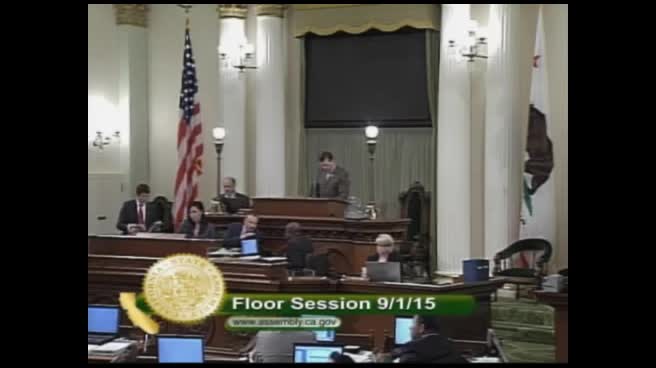
Bill Author

Bill Co-Author(s):
