AB 36: Local government: federal surplus property.
- Session Year: 2015-2016
- House: Assembly
- Latest Version Date: 2015-09-14
Existing law, the Federal Surplus Property Acquisition Law of 1945, authorizes a local agency, as defined, to acquire surplus federal property without regard to any law which requires posting of notices or advertising for bids, inviting or receiving bids, delivery of purchases before payment, or prevents the local agency from bidding on federal surplus property. Existing federal law authorizes the Department of Defense to transfer surplus personal property, including arms and ammunition, to federal or state agencies for use in law enforcement activities, subject to specified conditions, at no cost to the acquiring agency.
This bill would prohibit a local agency, other than a local law enforcement agency that is directly under the control of an elected officer, from applying to receive tactical surplus military equipment, as defined, pursuant to the above-described federal law unless the legislative body of the local agency approves the acquisition by ordinance or resolution at a regular public meeting. The bill would require the ordinance or resolution to include a list of the types of tactical surplus military equipment and would require the legislative body to review the ordinance at least annually, as specified. The bill would prohibit a local agency from applying to receive specified types of equipment. The bill would also declare that this is a matter of statewide concern.
The bill would also require the state agency that has signed a current memorandum of agreement with the Defense Logistics Agency for the purpose of administering a state program for acquiring surplus military equipment to develop a list of tactical surplus military equipment by January 31, 2016, as specified, and post the list on its Internet Web site.
By adding to the duties of local government officials, this bill would impose a state-mandated local program.
The California Constitution requires local agencies, for the purpose of ensuring public access to the meetings of public bodies and the writings of public officials and agencies, to comply with a statutory enactment that amends or enacts laws relating to public records or open meetings and contains findings demonstrating that the enactment furthers the constitutional requirements relating to this purpose.
This bill would make legislative findings to that effect.
The California Constitution requires the state to reimburse local agencies and school districts for certain costs mandated by the state. Statutory provisions establish procedures for making that reimbursement.
This bill would provide that no reimbursement is required by this act for a specified reason.
Existing law, the Federal Surplus Property Acquisition Law of 1945, authorizes a local agency, as defined, to acquire surplus federal property without regard to any law which requires posting of notices or advertising for bids, inviting or receiving bids, delivery of purchases before payment, or prevents the local agency from bidding on federal surplus property. Existing law, the Ralph M. Brown Act, requires that all meetings of a legislative body, as defined, of a local agency be open and public and all persons permitted to attend unless a closed session is authorized. Existing federal law authorizes the Department of Defense to transfer surplus personal property, including arms and ammunition, to federal or state agencies for use in law enforcement activities, subject to specified conditions, at no cost to the acquiring agency.
This bill would prohibit a local agency, other than a local law enforcement agency that is directly under the control of an elected officer, from applying to receive tactical surplus military equipment, as defined, pursuant to the above-described federal law unless the legislative body of the local agency approves the acquisition by ordinance or resolution at a regular public meeting. The bill would authorize the legislative body to consider the ordinance or resolution during a closed session of a regular meeting upon determination of 2/3 of the members of the legislative body, as specified. The bill would require the ordinance or resolution to include a list of the types of tactical surplus military equipment, or, if the legislative body considers the ordinance or resolution during a closed session, a statement that the local agency is authorized to acquire tactical surplus military equipment, equipment and would require the legislative body to review the ordinance at least annually, as specified. The bill would prohibit a local agency from applying to receive specified types of equipment. The bill would also declare that this is a matter of statewide concern.
The bill would also require the state agency that has signed a current memorandum of agreement with the Defense Logistics Agency for the purpose of administering a state program for acquiring surplus military equipment to develop a list of tactical surplus military equipment by January 31, 2016, as specified, and post the list on its Internet Web site.
By adding to the duties of local government officials, this bill would impose a state-mandated local program.
The California Constitution requires local agencies, for the purpose of ensuring public access to the meetings of public bodies and the writings of public officials and agencies, to comply with a statutory enactment that amends or enacts laws relating to public records or open meetings and contains findings demonstrating that the enactment furthers the constitutional requirements relating to this purpose.
This bill would make legislative findings to that effect.
The California Constitution requires the state to reimburse local agencies and school districts for certain costs mandated by the state. Statutory provisions establish procedures for making that reimbursement.
This bill would provide that no reimbursement is required by this act for a specified reason.
Existing law, the Federal Surplus Property Acquisition Law of 1945, authorizes a local agency, as defined, to acquire surplus federal property without regard to any law which requires posting of notices or advertising for bids, inviting or receiving bids, delivery of purchases before payment, or prevents the local agency from bidding on federal surplus property. Existing law, the Ralph M. Brown Act, requires that all meetings of a legislative body, as defined, of a local agency be open and public and all persons permitted to attend unless a closed session is authorized. Existing federal law authorizes the Department of Defense to transfer surplus personal property, including arms and ammunition, to federal or state agencies for use in law enforcement activities, subject to specified conditions, at no cost to the acquiring agency.
This bill would prohibit a local agency agency, other than a local law enforcement agency that is directly under the control of an elected officer, from applying to receive high-visibility tactical surplus military equipment, as defined, pursuant to the above-described federal law unless the legislative body of the local agency approves the acquisition by ordinance or resolution at a regular public meeting. The bill would authorize the legislative body to consider the ordinance or resolution during a closed session of a regular meeting upon determination of 2/3 of the members of the legislative body, as specified. The bill would require the ordinance or resolution to include a list of the types of high-visibility tactical surplus military equipment and the period of time for which the authorization is valid, not to exceed one year. equipment, or, if the legislative body considers the ordinance or resolution during a closed session, a statement that the local agency is authorized to acquire tactical surplus military equipment, and would require the legislative body to review the ordinance at least annually, as specified. The bill would prohibit a local agency from applying to receive specified types of equipment. The bill would also declare that this is a matter of statewide concern.
The bill would also require the state agency that has signed a current memorandum of agreement with the Defense Logistics Agency for the purpose of administering a state program for acquiring surplus military equipment to develop a list of high-visibility tactical surplus military equipment by January 31, 2016, as specified, and post the list on its Internet Web site.
By adding to the duties of local government officials, this bill would impose a state-mandated local program.
The California Constitution requires local agencies, for the purpose of ensuring public access to the meetings of public bodies and the writings of public officials and agencies, to comply with a statutory enactment that amends or enacts laws relating to public records or open meetings and contains findings demonstrating that the enactment furthers the constitutional requirements relating to this purpose.
This bill would make legislative findings to that effect.
The California Constitution requires the state to reimburse local agencies and school districts for certain costs mandated by the state. Statutory provisions establish procedures for making that reimbursement.
This bill would provide that no reimbursement is required by this act for a specified reason.
Existing law, the Federal Surplus Property Acquisition Law of 1945, authorizes a local agency, as defined, to acquire surplus federal property without regard to any law which requires posting of notices or advertising for bids, inviting or receiving bids, delivery of purchases before payment, or prevents the local agency from bidding on federal surplus property. Existing law, the Ralph M. Brown Act, requires that all meetings of a legislative body, as defined, of a local agency be open and public and all persons permitted to attend unless a closed session is authorized. Existing federal law authorizes the Department of Defense to transfer surplus personal property, including arms and ammunition, to federal or state agencies for use in law enforcement activities, subject to specified conditions, at no cost to the acquiring agency.
This bill would prohibit a local agency from receiving applying to receive high-visibility surplus military equipment equipment, as defined, pursuant to the above-described federal law unless the legislative body of the local agency votes to approve approves the acquisition by ordinance or resolution at a regular public meeting. The bill would require the ordinance or resolution to include a list of the types of high-visibility surplus military equipment and the period of time for which the authorization is valid, not to exceed one year. The bill would also declare that this is a matter of statewide concern.
The bill would also require the state agency that has signed a current memorandum of agreement with the Defense Logistics Agency for the purpose of administering a state program for acquiring surplus military equipment to develop a list of high-visibility surplus military equipment by January 31, 2016, as specified, and post the list on its Internet Web site.
By adding to the duties of local government officials, this bill would impose a state-mandated local program.
The California Constitution requires local agencies, for the purpose of ensuring public access to the meetings of public bodies and the writings of public officials and agencies, to comply with a statutory enactment that amends or enacts laws relating to public records or open meetings and contains findings demonstrating that the enactment furthers the constitutional requirements relating to this purpose.
This bill would make legislative findings to that effect.
The California Constitution requires the state to reimburse local agencies and school districts for certain costs mandated by the state. Statutory provisions establish procedures for making that reimbursement.
This bill would provide that no reimbursement is required by this act for a specified reason.
Existing law, the Federal Surplus Property Acquisition Law of 1945, authorizes a local agency, as defined, to acquire surplus federal property without regard to any law which requires posting of notices or advertising for bids, inviting or receiving bids, delivery of purchases before payment, or prevents the local agency from bidding on federal surplus property. Existing law, the Ralph M. Brown Act, requires that all meetings of a legislative body, as defined, of a local agency be open and public and all persons permitted to attend unless a closed session is authorized. Existing federal law authorizes the Department of Defense to transfer surplus personal property, including arms and ammunition, to federal or state agencies for use in law enforcement activities, subject to specified conditions, at no cost to the acquiring agency.
This bill would prohibit a local agency from receiving surplus military equipment pursuant to the above-described federal law unless the legislative body of the local agency votes to approve the acquisition at a regular public meeting. The bill would also declare that this is a matter of statewide concern.
By adding to the duties of local government officials, this bill would impose a state-mandated local program.
The California Constitution requires the state to reimburse local agencies and school districts for certain costs mandated by the state. Statutory provisions establish procedures for making that reimbursement.
This bill would provide that, if the Commission on State Mandates determines that the bill contains costs mandated by the state, reimbursement for those costs shall be made pursuant to these statutory provisions.
The California Constitution requires local agencies, for the purpose of ensuring public access to the meetings of public bodies and the writings of public officials and agencies, to comply with a statutory enactment that amends or enacts laws relating to public records or open meetings and contains findings demonstrating that the enactment furthers the constitutional requirements relating to this purpose.
This bill would make legislative findings to that effect.
The California Constitution requires the state to reimburse local agencies and school districts for certain costs mandated by the state. Statutory provisions establish procedures for making that reimbursement.
This bill would provide that no reimbursement is required by this act for a specified reason.
Existing law, the Federal Surplus Property Acquisition Law of 1945, authorizes a local agency, as defined, to acquire surplus federal property without regard to any law which requires posting of notices or advertising for bids, inviting or receiving bids, delivery of purchases before payment, or prevents the local agency from bidding on federal surplus property. Existing law, the Ralph M. Brown Act, requires that all meetings of a legislative body, as defined, of a local agency be open and public and all persons permitted to attend unless a closed session is authorized. Existing federal law authorizes the Department of Defense to transfer surplus personal property, including arms and ammunition, to federal or state agencies for use in law enforcement activities, subject to specified conditions, at no cost to the acquiring agency.
This bill would prohibit a local agency from receiving surplus military equipment pursuant to the above-described federal law unless the legislative body of the local agency votes to approve the acquisition at a public meeting. The bill would also declare that this is a matter of statewide concern.
By adding to the duties of local government officials, this bill would impose a state-mandated local program.
The California Constitution requires the state to reimburse local agencies and school districts for certain costs mandated by the state. Statutory provisions establish procedures for making that reimbursement.
This bill would provide that, if the Commission on State Mandates determines that the bill contains costs mandated by the state, reimbursement for those costs shall be made pursuant to these statutory provisions.
As used in this article:
(a)Local agency means county, city, whether general law or chartered, city and county, town, school district, municipal corporation, district, political subdivision, or any board, commission, or agency thereof, or other local public agency.
(b)United States includes any department, board, or agency thereof.
(c)State includes any department or agency thereof.
(d)Legislative body means a legislative body as defined in Section 54952.
(e)(1)Surplus military equipment means equipment made available to a local agency pursuant to Section 2576a of Title 10 of the United States Code.
(2)Tactical surplus military equipment means surplus military equipment identified on the list developed and maintained by the state coordinator pursuant to subdivision (e) of Section 54145.
(f)State coordinator means the state agency that has signed a current memorandum of agreement with the federal Defense Logistics Agency for the purpose of administering a state program for acquiring surplus military equipment.
SEC. 2.Section 54145 is added to the Government Code, to read:54145.(a)A local agency, other than a local law enforcement agency that is directly under the control of an elected officer, shall not apply to receive tactical surplus military equipment unless the legislative body of the local agency approves the acquisition of tactical surplus military equipment by ordinance or resolution, pursuant to subdivision (b), at a regular meeting held pursuant to the Ralph M. Brown Act (Chapter 9 (commencing with Section 54950)).
(b)The legislative body of a local agency may adopt an ordinance or resolution authorizing the local law enforcement agency in that jurisdiction to apply for tactical surplus military equipment. The ordinance or resolution shall comply with both of the following requirements:
(1)The ordinance shall include a list of the types of tactical surplus military equipment that the legislative body authorizes the local law enforcement agency to acquire.
(2)The legislative body shall review the ordinance or resolution at least annually. During the review, the legislative body shall vote on whether to renew the ordinance or resolution authorizing the acquisition of tactical surplus military equipment. If the legislative body does not approve a renewal pursuant to this paragraph, the authorization shall expire.
(c)This section shall not be construed to require the legislative body of a local agency to approve the acquisition of each individual item of tactical surplus military equipment, unless specified by the ordinance or resolution adopted pursuant to subdivision (b).
(d)The Legislature finds and declares that this section constitutes a matter of statewide concern, and shall apply to charter cities and charter counties. The provisions of this section shall supersede any inconsistent provisions in the charter of any city, county, or city and county.
(e)(1)The state coordinator, by January 31, 2016, shall develop a list of tactical surplus military equipment. The list shall identify surplus military equipment that warrants public input pursuant to this article. The state coordinator shall post this list on its Internet Web site and update it at least annually.
(2)In developing the list required by this subdivision, the state coordinator shall consider the current list of controlled property designated by the federal Defense Logistics Agency, as well as any other state or federal regulations or policies governing the use of surplus military equipment.
(3)The list required by this subdivision shall include, at minimum, the following types of equipment:
(A)Weapons.
(B)Armored vehicles.
(C)Watercraft.
(D)Aircraft.
(E)Other tactical equipment as determined by the state coordinator.
(f)Notwithstanding any other law, a local agency shall not apply to receive the following types of surplus military equipment:
(1)Tracked armored vehicles.
(2)Weaponized vehicles.
(3)Firearms of .50 caliber or greater.
(4)Ammunition of .50 caliber or greater.
(5)Grenade launchers.
(6)Bayonets.
(7)Camouflage uniforms.
SEC. 3.The Legislature finds and declares that Section 2 of this act, which adds Section 54145 to the Government Code, furthers, within the meaning of paragraph (7) of subdivision (b) of Section 3 of Article I of the California Constitution, the purposes of that constitutional section as it relates to the right of public access to the meetings of local public bodies or the writings of local public officials and local agencies. Pursuant to paragraph (7) of subdivision (b) of Section 3 of Article I of the California Constitution, the Legislature makes the following findings:
Requiring local agencies to hold public meetings prior to the acquisition of federal surplus military equipment further exposes that activity to public scrutiny and enhances public access to information concerning the conduct of the peoples business.
SEC. 4.No reimbursement is required by this act pursuant to Section 6 of Article XIII B of the California Constitution because the only costs that may be incurred by a local agency or school district under this act would result from a legislative mandate that is within the scope of paragraph (7) of subdivision (b) of Section 3 of Article I of the California Constitution.
As used in this article:
(a)Local agency means county, city, whether general law or chartered, city and county, town, school district, municipal corporation, district, political subdivision, or any board, commission, or agency thereof, or other local public agency.
(b)United States includes any department, board, or agency thereof.
(c)State includes any department or agency thereof.
(d)Legislative body means a legislative body as defined in Section 54952.
(e)(1)Surplus military equipment means equipment made available to a local agency pursuant to Section 2576a of Title 10 of the United States Code.
(2)Tactical surplus military equipment means surplus military equipment identified on the list developed and maintained by the state coordinator pursuant to subdivision (e) of Section 54145.
(f)State coordinator means the state agency that has signed a current memorandum of agreement with the federal Defense Logistics Agency for the purpose of administering a state program for acquiring surplus military equipment.
SEC. 2.Section 54145 is added to the Government Code, to read:54145.(a)A local agency, other than a local law enforcement agency that is directly under the control of an elected officer, shall not apply to receive tactical surplus military equipment unless the legislative body of the local agency approves the acquisition of tactical surplus military equipment by ordinance or resolution, pursuant to subdivision (b), at a regular meeting held pursuant to the Ralph M. Brown Act (Chapter 9 (commencing with Section 54950)).
(b)The legislative body of a local agency may adopt an ordinance or resolution authorizing the local law enforcement agency in that jurisdiction to apply for tactical surplus military equipment. The ordinance or resolution shall include comply with both of the following requirements:
(1)The ordinance shall include a list of the types of tactical surplus military equipment that the legislative body authorizes the local law enforcement agency to acquire, unless the legislative body considers the ordinance or resolution at a closed session pursuant to Section 54956.97, in which case the ordinance or resolution shall instead state that the local law enforcement agency is authorized to acquire tactical surplus military equipment. acquire.
(2)The legislative body shall review the ordinance or resolution at least annually. During the review, the legislative body shall vote on whether to renew the ordinance or resolution authorizing the acquisition of tactical surplus military equipment. If the legislative body does not approve a renewal pursuant to this paragraph, the authorization shall expire.
(c)This section shall not be construed to require the legislative body of a local agency to approve the acquisition of each individual item of tactical surplus military equipment, unless specified by the ordinance or resolution adopted pursuant to subdivision (b).
(d)The Legislature finds and declares that this section constitutes a matter of statewide concern, and shall apply to charter cities and charter counties. The provisions of this section shall supersede any inconsistent provisions in the charter of any city, county, or city and county.
(e)(1)The state coordinator, by January 31, 2016, shall develop a list of tactical surplus military equipment. The list shall identify surplus military equipment that warrants public input pursuant to this article. The state coordinator shall post this list on its Internet Web site and update it at least annually.
(2)In developing the list required by this subdivision, the state coordinator shall consider the current list of controlled property designated by the federal Defense Logistics Agency, as well as any other state or federal regulations or policies governing the use of surplus military equipment.
(3)The list required by this subdivision shall include, at minimum, the following types of equipment:
(A)Weapons.
(B)Armored vehicles.
(C)Watercraft.
(D)Aircraft.
(E)Other tactical equipment as determined by the state coordinator.
(f)Notwithstanding any other law, a local agency shall not apply to receive the following types of surplus military equipment:
(1)Tracked armored vehicles.
(2)Weaponized vehicles.
(3)Firearms of .50 caliber or greater.
(4)Ammunition of .50 caliber or greater.
(5)Grenade launchers.
(6)Bayonets.
(7)Camouflage uniforms.
SEC. 3.Section 54956.97 is added to the Government Code, to read:54956.97.(a)A legislative body of a local agency may hold a closed session for the purpose of considering an ordinance or resolution authorizing the acquisition of tactical surplus military equipment, as that term is defined in Section 54141, pursuant to Section 54145 if the following conditions are met:
(1)The ordinance or resolution is listed on the agenda of a regular meeting pursuant to Section 54954.2.
(2)A member of the legislative body, during an open session of the regular meeting, makes a motion to consider the ordinance or resolution at a closed session.
(3)Two-thirds of the members of the legislative body concur in the motion.
(4)The closed session complies with the applicable requirements of this chapter.
(b)The types of tactical surplus military equipment that the legislative body authorizes at a closed session held pursuant to this section shall not be disclosed during an open session.
SEC. 4.SEC. 3.The Legislature finds and declares that Section 2 of this act, which adds Section 54145 to the Government Code, furthers, within the meaning of paragraph (7) of subdivision (b) of Section 3 of Article I of the California Constitution, the purposes of that constitutional section as it relates to the right of public access to the meetings of local public bodies or the writings of local public officials and local agencies. Pursuant to paragraph (7) of subdivision (b) of Section 3 of Article I of the California Constitution, the Legislature makes the following findings:
Requiring local agencies to hold public meetings prior to the acquisition of federal surplus military equipment further exposes that activity to public scrutiny and enhances public access to information concerning the conduct of the peoples business.
SEC. 5.SEC. 4.No reimbursement is required by this act pursuant to Section 6 of Article XIII B of the California Constitution because the only costs that may be incurred by a local agency or school district under this act would result from a legislative mandate that is within the scope of paragraph (7) of subdivision (b) of Section 3 of Article I of the California Constitution.
As used in this article:
(a)Local agency means county, city, whether general law or chartered, city and county, town, school district, municipal corporation, district, political subdivision, or any board, commission, or agency thereof, or other local public agency.
(b)United States includes any department, board, or agency thereof.
(c)State includes any department or agency thereof.
(d)Legislative body means a legislative body as defined in Section 54952.
(e)(1)Surplus military equipment means equipment made available to a local agency pursuant to Section 2576a of Title 10 of the United States Code.
(2)High-visibility Tactical surplus military equipment means surplus military equipment identified on the list developed and maintained by the state coordinator pursuant to subdivision (e) of Section 54145.
(f)State coordinator means the state agency that has signed a current memorandum of agreement with the federal Defense Logistics Agency for the purpose of administering a state program for acquiring surplus military equipment.
SEC. 2.Section 54145 is added to the Government Code, to read:54145.(a)A local agency agency, other than a local law enforcement agency that is directly under the control of an elected officer, shall not apply to receive high-visibility tactical surplus military equipment unless the legislative body of the local agency approves the acquisition of high-visibility tactical surplus military equipment by ordinance or resolution, pursuant to subdivision (b), at a regular meeting held pursuant to the Ralph M. Brown Act (Chapter 9 (commencing with Section 54950)).
(b)The legislative body of a local agency may adopt an ordinance or resolution authorizing the local law enforcement agency in that jurisdiction to apply for high-visibility tactical surplus military equipment. The ordinance or resolution shall include comply with both of the following: following requirements:
(1)A The ordinance shall include a list of the types of high-visibility tactical surplus military equipment that the legislative body authorizes the local law enforcement agency to acquire. acquire, unless the legislative body considers the ordinance or resolution at a closed session pursuant to Section 54956.97, in which case the ordinance or resolution shall instead state that the local law enforcement agency is authorized to acquire tactical surplus military equipment.
(2)The period of time for which the authorization is valid, not to exceed one year.
(2)The legislative body shall review the ordinance or resolution at least annually. During the review, the legislative body shall vote on whether to renew the ordinance or resolution authorizing the acquisition of tactical surplus military equipment. If the legislative body does not approve a renewal pursuant to this paragraph, the authorization shall expire.
(c)This section shall not be construed to require the legislative body of a local agency to approve the acquisition of each individual item of high-visibility tactical surplus military equipment, unless specified by the ordinance or resolution adopted pursuant to subdivision (b).
(d)The Legislature finds and declares that this section constitutes a matter of statewide concern, and shall apply to charter cities and charter counties. The provisions of this section shall supersede any inconsistent provisions in the charter of any city, county, or city and county.
(e)(1)The state coordinator, by January 31, 2016, shall develop a list of high-visibility tactical surplus military equipment. The list shall identify surplus military equipment that poses a potential negative impact on the community in which it is deployed. warrants public input pursuant to this article. The state coordinator shall post this list on its Internet Web site and update it at least annually.
(2)In developing the list required by this subdivision, the state coordinator shall consider the current list of controlled property designated by the federal Defense Logistics Agency, as well as any other state or federal regulations or policies governing the use of surplus military equipment.
(3)The list required by this subdivision shall include, at minimum, the following types of equipment:
(A)The following types of weapons:
(i)Firearms and ammunition of .50 caliber or greater.
(ii)Specialized firearms and ammunition of less than .50 caliber. This subparagraph shall not apply to service-issued firearms and ammunition.
(iii)Explosives and pyrotechnics, including flash-bang grenades and grenade launchers.
(iv)Bayonets.
(B)The following types of vehicles:
(i)Armored vehicles, whether wheeled or utilizing a track system, including mine-resistant ambush protected vehicles and armored personnel carriers.
(ii)Tactical vehicles, including vehicles purpose-built to operate on and off road in support of military operations.
(iii)Command and control vehicles, including wheeled vehicles either purpose-built or modified to facilitate the operational control and direction of public safety units responding to an incident.
(iv)Manned fixed-wing or rotary-wing aircraft.
(v)Unmanned aerial vehicles.
(vi)Any weaponized vehicles, vessels, or aircraft.
(C)The following additional types of equipment:
(i)Camouflage uniforms.
(ii)Riot equipment, including batons, helmets, and shields. This subparagraph shall not apply to service-issued telescopic or fixed-length straight batons.
(iii)Breaching apparatus, including battering rams or similar entry devices.
(A)Weapons.
(B)Armored vehicles.
(C)Watercraft.
(D)Aircraft.
(E)Other tactical equipment as determined by the state coordinator.
(f)Notwithstanding any other law, a local agency shall not apply to receive the following types of surplus military equipment:
(1)Tracked armored vehicles.
(2)Weaponized vehicles.
(3)Firearms of .50 caliber or greater.
(4)Ammunition of .50 caliber or greater.
(5)Grenade launchers.
(6)Bayonets.
(7)Camouflage uniforms.
SEC. 3.Section 54956.97 is added to the Government Code, to read:54956.97.(a)A legislative body of a local agency may hold a closed session for the purpose of considering an ordinance or resolution authorizing the acquisition of tactical surplus military equipment, as that term is defined in Section 54141, pursuant to Section 54145 if the following conditions are met:
(1)The ordinance or resolution is listed on the agenda of a regular meeting pursuant to Section 54954.2.
(2)A member of the legislative body, during an open session of the regular meeting, makes a motion to consider the ordinance or resolution at a closed session.
(3)Two-thirds of the members of the legislative body concur in the motion.
(4)The closed session complies with the applicable requirements of this chapter.
(b)The types of tactical surplus military equipment that the legislative body authorizes at a closed session held pursuant to this section shall not be disclosed during an open session.
SEC. 3.SEC. 4.The Legislature finds and declares that Section 2 of this act, which adds Section 54145 to the Government Code, furthers, within the meaning of paragraph (7) of subdivision (b) of Section 3 of Article I of the California Constitution, the purposes of that constitutional section as it relates to the right of public access to the meetings of local public bodies or the writings of local public officials and local agencies. Pursuant to paragraph (7) of subdivision (b) of Section 3 of Article I of the California Constitution, the Legislature makes the following findings:
Requiring local agencies to hold public meetings prior to the acquisition of federal surplus military equipment further exposes that activity to public scrutiny and enhances public access to information concerning the conduct of the peoples business.
SEC. 4.SEC. 5.No reimbursement is required by this act pursuant to Section 6 of Article XIII B of the California Constitution because the only costs that may be incurred by a local agency or school district under this act would result from a legislative mandate that is within the scope of paragraph (7) of subdivision (b) of Section 3 of Article I of the California Constitution.
SEC. 5.No reimbursement is required by this act pursuant to Section 6 of Article XIIIB of the California Constitution because the only costs that may be incurred by a local agency or school district will be incurred because this act creates a new crime or infraction, eliminates a crime or infraction, or changes the penalty for a crime or infraction, within the meaning of Section 17556 of the Government Code, or changes the definition of a crime within the meaning of Section 6 of Article XIIIB of the California Constitution.
As used in this article:
(a)Local agency means county, city, whether general law or chartered, city and county, town, school district, municipal corporation, district, political subdivision, or any board, commission, or agency thereof, or other local public agency.
(b)United States includes any department, board, or agency thereof.
(c)State includes any department or agency thereof.
(d)Legislative body means a legislative body as defined in Section 54952.
(e)(1)Surplus military equipment means equipment made available to a local agency pursuant to Section 2576a of Title 10 of the United States Code.
(2)High-visibility surplus military equipment means surplus military equipment identified on the list developed and maintained by the state coordinator pursuant to subdivision (e) of Section 54145.
(f)State coordinator means the state agency that has signed a current memorandum of agreement with the federal Defense Logistics Agency for the purpose of administering a state program for acquiring surplus military equipment.
SEC. 2.Section 54145 is added to the Government Code, to read:54145.(a)A local agency shall not apply to receive high-visibility surplus military equipment pursuant to Section 2576a of Title 10 of the United States Code unless the legislative body of the local agency approves the acquisition of high-visibility surplus military equipment by ordinance or resolution, pursuant to subdivision (b), at a regular meeting held pursuant to the Ralph M. Brown Act (Chapter 9 (commencing with Section 54950)).
(b)The legislative body of a local agency may adopt an ordinance or resolution authorizing the local law enforcement agency in that jurisdiction to apply for high-visibility surplus military equipment. The ordinance or resolution shall include both of the following:
(1)A list of the types of high-visibility surplus military equipment that the legislative body authorizes the local law enforcement agency to acquire.
(2)The period of time for which the authorization is valid, not to exceed one year.
(c)This section shall not be construed to require the legislative body of a local agency to approve the acquisition of each individual item of high-visibility surplus military equipment, unless specified by the ordinance or resolution adopted pursuant to subdivision (b).
(b)
(d)The Legislature finds and declares that this section constitutes a matter of statewide concern, and shall apply to charter cities and charter counties. The provisions of this section shall supersede any inconsistent provisions in the charter of any city, county, or city and county.
(e)(1)The state coordinator, by January 31, 2016, shall develop a list of high-visibility surplus military equipment. The list shall identify surplus military equipment that poses a potential negative impact on the community in which it is deployed. The state coordinator shall post this list on its Internet Web site and update it at least annually.
(2)In developing the list required by this subdivision, the state coordinator shall consider the current list of controlled property designated by the federal Defense Logistics Agency, as well as any other state or federal regulations or policies governing the use of surplus military equipment.
(3)The list required by this subdivision shall include, at minimum, the following types of equipment:
(A)The following types of weapons:
(i)Firearms and ammunition of .50 caliber or greater.
(ii)Specialized firearms and ammunition of less than .50 caliber. This subparagraph shall not apply to service-issued firearms and ammunition.
(iii)Explosives and pyrotechnics, including flash-bang grenades and grenade launchers.
(iv)Bayonets.
(B)The following types of vehicles:
(i)Armored vehicles, whether wheeled or utilizing a track system, including mine-resistant ambush protected vehicles and armored personnel carriers.
(ii)Tactical vehicles, including vehicles purpose-built to operate on and off road in support of military operations.
(iii)Command and control vehicles, including wheeled vehicles either purpose-built or modified to facilitate the operational control and direction of public safety units responding to an incident.
(iv)Manned fixed-wing or rotary-wing aircraft.
(v)Unmanned aerial vehicles.
(vi)Any weaponized vehicles, vessels, or aircraft.
(C)The following additional types of equipment:
(i)Camouflage uniforms.
(ii)Riot equipment, including batons, helmets, and shields. This subparagraph shall not apply to service-issued telescopic or fixed-length straight batons.
(iii)Breaching apparatus, including battering rams or similar entry devices.
SEC. 3.The Legislature finds and declares that Section 2 of this act, which adds Section 54145 to the Government Code, furthers, within the meaning of paragraph (7) of subdivision (b) of Section 3 of Article I of the California Constitution, the purposes of that constitutional section as it relates to the right of public access to the meetings of local public bodies or the writings of local public officials and local agencies. Pursuant to paragraph (7) of subdivision (b) of Section 3 of Article I of the California Constitution, the Legislature makes the following findings:
Requiring local agencies to hold public meetings prior to the acquisition of federal surplus military equipment further exposes that activity to public scrutiny and enhances public access to information concerning the conduct of the peoples business.
SEC. 4.No reimbursement is required by this act pursuant to Section 6 of Article XIII B of the California Constitution because the only costs that may be incurred by a local agency or school district under this act would result from a legislative mandate that is within the scope of paragraph (7) of subdivision (b) of Section 3 of Article I of the California Constitution.
SEC. 5.No reimbursement is required by this act pursuant to Section 6 of Article XIIIB of the California Constitution because the only costs that may be incurred by a local agency or school district will be incurred because this act creates a new crime or infraction, eliminates a crime or infraction, or changes the penalty for a crime or infraction, within the meaning of Section 17556 of the Government Code, or changes the definition of a crime within the meaning of Section 6 of Article XIIIB of the California Constitution.
As used in this article:
(a)Local agency means county, city, whether general law or chartered, city and county, town, school district, municipal corporation, district, political subdivision, or any board, commission, or agency thereof, or other local public agency.
(b)United States includes any department, board, or agency thereof.
(c)State includes any department or agency thereof.
(d)Legislative body means a legislative body as defined in Section 54952.
SEC. 2.Section 54145 is added to the Government Code, to read:54145.(a)A local agency shall not receive surplus military equipment pursuant to Section 2576a of Title 10 of the United States Code unless the legislative body of the local agency approves the acquisition at a regular meeting held pursuant to the Ralph M. Brown Act (Chapter 9 (commencing with Section 54950)).
(b)The Legislature finds and declares that this section constitutes a matter of statewide concern, and shall apply to charter cities and charter counties. The provisions of this section shall supersede any inconsistent provisions in the charter of any city, county, or city and county.
SEC. 3.If the Commission on State Mandates determines that this act contains costs mandated by the state, reimbursement to local agencies and school districts for those costs shall be made pursuant to Part 7 (commencing with Section 17500) of Division 4 of Title 2 of the Government Code.
SEC. 3.The Legislature finds and declares that Section 2 of this act, which adds Section 54145 to the Government Code, furthers, within the meaning of paragraph (7) of subdivision (b) of Section 3 of Article I of the California Constitution, the purposes of that constitutional section as it relates to the right of public access to the meetings of local public bodies or the writings of local public officials and local agencies. Pursuant to paragraph (7) of subdivision (b) of Section 3 of Article I of the California Constitution, the Legislature makes the following findings:
Requiring local agencies to hold public meetings prior to the acquisition of federal surplus military equipment further exposes that activity to public scrutiny and enhances public access to information concerning the conduct of the peoples business.
SEC. 4.No reimbursement is required by this act pursuant to Section 6 of Article XIII B of the California Constitution because the only costs that may be incurred by a local agency or school district under this act would result from a legislative mandate that is within the scope of paragraph (7) of subdivision (b) of Section 3 of Article I of the California Constitution.
As used in this article:
(a)Local agency means county, city, whether general law or chartered, city and county, town, school district, municipal corporation, or public district. district, political subdivision, or any board, commission, or agency thereof, or other local public agency.
(b)United States includes any department, board, or agency thereof.
(c)State includes any department or agency thereof.
(d)Legislative body means a legislative body as defined in Section 54952.
SEC. 2.Section 54145 is added to the Government Code, to read:54145.(a)A local agency shall not receive surplus military equipment pursuant to Section 2576a of Title 10 of the United States Code unless the legislative body of the local agency approves the acquisition at a meeting held pursuant to the Ralph M. Brown Act (Chapter 9 (commencing with Section 54950)).
(b)The Legislature finds and declares that this section constitutes a matter of statewide concern, and shall apply to charter cities and charter counties. The provisions of this section shall supersede any inconsistent provisions in the charter of any city, county, or city and county.
SEC. 3.If the Commission on State Mandates determines that this act contains costs mandated by the state, reimbursement to local agencies and school districts for those costs shall be made pursuant to Part 7 (commencing with Section 17500) of Division 4 of Title 2 of the Government Code.
|
Date
|
Status
|
|---|---|
| Sep 9, 2015 | In Assembly. Concurrence in Senate amendments pending. |
| Sep 2, 2015 | In Assembly. Concurrence in Senate amendments pending. May be considered on or after September 4 pursuant to Assembly Rule 77. |
| Sep 2, 2015 | Read third time. Passed. Ordered to the Assembly. |
| Sep 2, 2015 | Read third time. Passed. Ordered to the Assembly. (Ayes 32. Noes 4. Page 2390.). |
| Sep 3, 2015 | In Senate. Held at Desk. |
| Sep 3, 2015 | Ordered to the Senate. |
| Sep 4, 2015 | Action rescinded whereby the bill was read third time, passed, and to Assembly. |
| Sep 4, 2015 | Ordered to third reading. |
| Sep 4, 2015 | Read third time and amended. Ordered to second reading. |
| Sep 8, 2015 | Read second time. Ordered to third reading. |
| Aug 25, 2015 | Read second time. Ordered to third reading. |
| Sep 9, 2015 | Read third time. Passed. Ordered to the Assembly. |
| Sep 9, 2015 | Read third time. Passed. Ordered to the Assembly. (Ayes 33. Noes 3. Page 2625.). |
| Sep 10, 2015 | Senate amendments concurred in. To Engrossing and Enrolling. |
| Sep 10, 2015 | Senate amendments concurred in. To Engrossing and Enrolling. (Ayes 78. Noes 0. Page 3071.). |
| Sep 10, 2015 | Senate amendments concurred in. To Engrossing and Enrolling. (Ayes 78. Noes 0.). |
| Sep 18, 2015 | Enrolled and presented to the Governor at 4 p.m. |
| Oct 7, 2015 | Vetoed by Governor. |
| Jan 15, 2016 | Consideration of Governor's veto stricken from file. |
| May 18, 2015 | Read third time. Passed. Ordered to the Senate. |
| Dec 2, 2014 | From printer. May be heard in committee January 1. |
| Jan 22, 2015 | Referred to Com. on L. GOV. |
| Apr 23, 2015 | From committee: Amend, and do pass as amended and re-refer to Com. on APPR. (Ayes 9. Noes 0.) (April 22). |
| Apr 27, 2015 | Read second time and amended. |
| Apr 28, 2015 | Re-referred to Com. on APPR. |
| May 13, 2015 | From committee: Do pass. (Ayes 16. Noes 1.) (May 13). |
| May 14, 2015 | Read second time. Ordered to third reading. |
| May 18, 2015 | In Senate. Read first time. To Com. on RLS. for assignment. |
| Dec 1, 2014 | Read first time. To print. |
| May 18, 2015 | Read third time. Passed. Ordered to the Senate. (Ayes 56. Noes 12. Page 1485.) |
| May 28, 2015 | Referred to Com. on GOV. & F. |
| Jun 16, 2015 | In committee: Set, first hearing. Hearing canceled at the request of author. |
| Jun 24, 2015 | From committee chair, with author's amendments: Amend, and re-refer to committee. Read second time, amended, and re-referred to Com. on GOV. & F. |
| Jul 1, 2015 | From committee: Do pass and re-refer to Com. on APPR. (Ayes 6. Noes 0.) (July 1). Re-referred to Com. on APPR. |
| Jul 13, 2015 | From committee: Be placed on second reading file pursuant to Senate Rule 28.8. |
| Jul 14, 2015 | Read second time. Ordered to third reading. |
| Aug 24, 2015 | Read third time and amended. Ordered to second reading. |
|
Date
|
Description
|
Location
|
Votes
|
|
|---|---|---|---|---|
| Sep 10, 2015 | AB 36 CAMPOS Concurrence in Senate Amendments | Assembly Floor |
Passed |
|
| Sep 9, 2015 | Assembly 3rd Reading AB36 Campos By Leno | Senate Floor |
Passed |
|
| Sep 2, 2015 | Assembly 3rd Reading AB36 Campos By Leno | Senate Floor |
Passed |
|
| Jul 1, 2015 | Do pass, but first be re-referred to the Committee on [Appropriations] | Senate Standing Committee on Governance and Finance |
Passed |
|
| May 18, 2015 | AB 36 CAMPOS Assembly Third Reading | Assembly Floor |
Passed |
|
| May 13, 2015 | Do pass. | Assembly Standing Committee on Appropriations |
Passed |
|
| Apr 22, 2015 | Do pass as amended and be re-referred to the Committee on [Appropriations] | Assembly Standing Committee on Local Government |
Passed |
This list shows positions taken on this bill by organizations on the date displayed, which is linked to the original source.
Positions by individuals are not included.
|
Organization
|
Position
|
Date
|
|---|---|---|
| California Broadcasters Association | ** Support | Sep 9, 2015 |
| California National Association for the Advancment of Colored People | * Indeterminate | Jul 1, 2015 |
| California Newspaper Publishers Association | ** Support | Sep 9, 2015 |
| California Police Chiefs Association | ** Against | Sep 2, 2015 |
| California State Sherriff's Association | ** Against | Sep 2, 2015 |
| City Of Visalia | ** Against | Sep 2, 2015 |
| League Of California Cities | ** Against | Sep 2, 2015 |
| PICO California | ** Support | Sep 9, 2015 |
| PolicyLink | ** Support | Sep 9, 2015 |
GOVERNOR'S VETO
AB 36
(Campos)
As Enrolled September 14, 2015
2/3 vote
ASSEMBLY: |
56-12 |
(May 18, 2015) |
SENATE: |
33-3 |
(September 9, 2015) |
ASSEMBLY: |
78-0 |
(September 10, 2015) |
|
|
|
Original Committee Reference: L. GOV.
SUMMARY: Prohibits local agencies, except local law enforcement agencies that are directly under the control of an elected officer, from applying to receive specified surplus military equipment from the federal government, unless the legislative body of the local agency approves the acquisition at a regular meeting held pursuant to the Ralph M. Brown Act (Brown Act).
FISCAL EFFECT: According to the Senate Appropriations Committee, pursuant to Senate Rule 28.8, negligible state costs.
COMMENTS:
Bill Summary. This bill makes a number of changes to California's Federal Surplus Property Law, which governs the receipt of surplus military equipment under the federal 1033 Program. Among its many provisions, this bill prohibits local agencies, except local law enforcement agencies that are directly under the control of an elected officer, from applying to receive tactical surplus military equipment from the 1033 Program, unless the acquisition is approved by ordinance or resolution at a regular meeting held pursuant to the Brown Act.
This bill requires the state coordinator, as defined, to develop a list of tactical surplus military equipment, which must include specified types of equipment and be posted on the state coordinator's Web site, as specified.
This bill updates the Federal Surplus Property Law's definition of "local agency" to include a county, city, whether general law or chartered, city and county, town, school district, municipal corporation, district, political subdivision, or any board, commission, or agency thereof, or other local public agency. All of these entities (except for sheriff's departments) would be subject to these provisions of this bill.
This bill also prohibits any local agency from applying to receive the following types of surplus military equipment: tracked armored vehicles; weaponized vehicles; firearms of .50 caliber or greater; ammunition of .50 caliber or greater; grenade launchers; bayonets; and, camouflage uniforms.
This bill declares that it constitutes a matter of statewide concern, that it shall apply to charter cities and charter counties, and that its provisions shall supersede any inconsistent provisions in the charter of any city, county, or city and county. This bill is sponsored by the author.
Author's Statement. According to the author, "Due to recent events of police brutality, distrust between law enforcement and many of our communities remains at an all-time high. Further exacerbating the issue is the recent militarization of law enforcement agencies and a movement away from community policing across the nation.
"Amid a national debate over the militarization of police, the San Jose Police Department acquired a 15-ton armored vehicle earlier this year from the military surplus program. After receiving community input that the armored vehicle was damaging the trust that a decade of community policing had created, the San Jose Police Department decided to return the vehicle. In a separate case, in Ferguson, Missouri, the mine-resistant, ambush-protected troop transport, or Mine-Resistant Ambush Protected Vehicle (MRAP), became a focus for debate after this military surplus vehicle and other military equipment were used by local law enforcement to respond to civil unrest over the police killing of unarmed teenager Michael Brown.
"These are only a few cases where the public felt threatened by military equipment in their communities. In both cases, the communities involved did not have the opportunity to weigh in before the military equipment was acquired. These situations hurt our most underserved communities by exacerbating their relationship with the police and government.
"Unilateral decisions by law enforcement agencies to acquire military equipment provide little or no opportunity for community input. Most law enforcement agencies are not required to engage in a public process that involves public debate about equipment purchases. This results in an inherently skewed decision-making process about what someone’s community will look like. AB 36 helps address this issue by prohibiting a public safety agency from receiving and buying surplus military equipment unless the legislative body of the local agency votes to approve the purchase at a public meeting."
Related Legislation. SB 242 (Monning), Chapter 79, Statutes of 2015, requires a school district's police department to obtain approval from its governing board prior to receiving federal surplus military equipment.
Arguments in Support. The California State Conference of the National Association for the Advancement of Colored People, in support, states "Law enforcement agencies unilateral decisions to acquire military grade equipment provide little or no opportunity for community input as most law enforcement agencies are not required to engage in a public process that involves public debate about equipment purchases. Local communities must be able to discuss the acquisition of military equipment and decide whether there is a real need for it before it becomes present in their everyday lives.
"AB 36 is good public safety policy in that it would require local agencies to have a hearing conducted by a governing body in the community regarding the necessity of military weapons in their community and would require a vote for approval of military grade weapons."
Arguments in Opposition. The League of California Cities, California Police Chiefs Association, California Colleges and University Police Chiefs Association, California Narcotics Officers Association, and California Association of Code Enforcement Officers, in opposition, write, "In a free society, keeping local police agencies accountable is critical. Transparency in connection with their acquisition of military equipment is equally critical. But transparency must be tempered by the security considerations associated with equipment designed to counter well-armed criminal acts, or to enhance local first response capability in the event of a terrorist attack. Making decisions about such equipment in an open meeting should be at the discretion of the local governing body. This was the sole motivation for the closed session amendment (in the prior version of the bill).
"As amended, AB 36 represents an irresponsible approach to a vitally important matter which stands to adversely affect the safety of all of the heavily populated communities in California."
This bill requires a local agency governing body to hold a public meeting prior to the acquisition of certain surplus military equipment.
Transparency is important between law enforcement and the communities they serve, but it must be tempered by security considerations before revealing law enforcement equipment shortages in a public hearing. This bill fails to strike the proper balance.
Moreover, the bill is unnecessary, as President Obama's Executive Order 13688 will implement a similar requirement for governing bodies to grant approval of surplus military equipment.
Analysis Prepared by: Angela Mapp / L. GOV. / (916) 319-3958 FN: 0002469
AB 36
Page 4
CONCURRENCE IN SENATE AMENDMENTS
AB 36
(Campos)
As Amended September 4, 2015
Majority vote
ASSEMBLY: |
56-12 |
(May 18, 2015) |
SENATE: |
33-3 |
(September 9, 2015) |
Original Committee Reference: L. GOV.
SUMMARY: Prohibits local agencies, except local law enforcement agencies that are directly under the control of an elected officer, from applying to receive specified surplus military equipment from the federal government, unless the legislative body of the local agency approves the acquisition at a regular meeting held pursuant to the Ralph M. Brown Act (Brown Act).
The Senate amendments:
Exempt a local law enforcement agency that is directly under the control of an elected officer from this bill's provisions.
Specify that a local agency, except a local law enforcement agency that is directly under the control of an elected officer, shall not apply to receive tactical surplus military equipment unless the legislative body of the local agency approves the acquisition of tactical surplus military equipment by ordinance or resolution, pursuant to 3) below, at a regular meeting held pursuant to the Brown Act.
Allow the legislative body of a local agency to adopt an ordinance or resolution authorizing the local law enforcement agency in that jurisdiction to apply for tactical surplus military equipment, and require the ordinance or resolution to comply with both of the following requirements:
The ordinance shall include a list of the types of tactical surplus military equipment that the legislative body authorizes the local law enforcement agency to acquire; and,
The legislative body shall review the ordinance or resolution at least annually. During the review, the legislative body shall vote on whether to renew the ordinance or resolution authorizing the acquisition of tactical surplus military equipment. If the legislative body does not approve a renewal pursuant to this bill, the authorization shall expire.
Provide that this bill shall not be construed to require the legislative body of a local agency to approve the acquisition of each individual item of tactical surplus military equipment, unless specified by the ordinance or resolution adopted pursuant to this bill.
Require the state coordinator, by January 31, 2016, to develop a list of tactical surplus military equipment. The list shall identify surplus military equipment that warrants public input pursuant to this bill. The state coordinator shall post this list on its Internet Web site and update it at least annually.
Require the state coordinator, in developing the list required by this bill, to consider the current list of controlled property designated by the federal Defense Logistics Agency (DLA), as well as any other state or federal regulations or policies governing the use of surplus military equipment.
Require the list required by this bill to include, at minimum, the following types of equipment: weapons; armored vehicles; watercraft; aircraft; and, other tactical equipment as determined by the state coordinator.
Provide that, notwithstanding any other law, a local agency shall not apply to receive the following types of surplus military equipment: tracked armored vehicles; weaponized vehicles; firearms of 0.50 caliber or greater; ammunition of 0.50 caliber or greater; grenade launchers; bayonets; and, camouflage uniforms.
Provide the following definitions:
"Surplus military equipment" means equipment made available to a local agency pursuant to United States Code Title 10, Section 2576a;
"Tactical surplus military equipment" means surplus military equipment identified on the list developed and maintained by the state coordinator pursuant to 5) and 6) above; and,
"State coordinator" means the state agency that has signed a current memorandum of agreement with the federal DLA for the purpose of administering a state program for acquiring surplus military equipment.
EXISTING LAW:
Requires, pursuant to the Brown Act, all meetings of a legislative body of a local agency to be open and public and all persons permitted to attend, as specified, unless a closed session is authorized.
Authorizes closed sessions under the Brown Act for limited purposes, including the discussion of litigation, real estate negotiations, personnel matters, some aspects of labor negotiations, matters posing a threat to public security, and other specified items.
Authorizes the Department of Defense (DOD), pursuant to United States Code Title 10, Section 2576a, to transfer surplus personal property, including arms and ammunition, to federal or state agencies for use in law enforcement activities, subject to specified conditions, at no cost to the acquiring agency. This program is commonly referred to as the 1033 Program.
Allows, pursuant to California's Federal Surplus Property Law, a local agency, as defined, to acquire surplus federal property without regard to any law that requires posting of notices or advertising for bids, inviting or receiving bids, delivery of purchases before payment, or that prevents the local agency from bidding on federal surplus property.
Defines "local agency" as used in California's Federal Surplus Property Law to mean county, city, municipal corporation, or public district.
FISCAL EFFECT: According to the Senate Appropriations Committee, pursuant to Senate Rule 28.8, negligible state costs.
COMMENTS:
Bill Summary. This bill makes a number of changes to California's Federal Surplus Property Law, which governs the receipt of surplus military equipment under the federal 1033 Program. Among its many provisions, this bill prohibits local agencies, except local law enforcement agencies that are directly under the control of an elected officer, from applying to receive tactical surplus military equipment from the 1033 Program, unless the acquisition is approved by ordinance or resolution at a regular meeting held pursuant to the Brown Act.
This bill requires the state coordinator, as defined, to develop a list of tactical surplus military equipment, which must include specified types of equipment and be posted on the state coordinator's Web site, as specified.
This bill updates the Federal Surplus Property Law's definition of "local agency" to include a county, city, whether general law or chartered, city and county, town, school district, municipal corporation, district, political subdivision, or any board, commission, or agency thereof, or other local public agency. All of these entities (except for sheriff's departments) would be subject to these provisions of this bill.
This bill also prohibits any local agency from applying to receive the following types of surplus military equipment: tracked armored vehicles; weaponized vehicles; firearms of .50 caliber or greater; ammunition of .50 caliber or greater; grenade launchers; bayonets; and, camouflage uniforms.
This bill declares that it constitutes a matter of statewide concern, that it shall apply to charter cities and charter counties, and that its provisions shall supersede any inconsistent provisions in the charter of any city, county, or city and county. This bill is sponsored by the author.
Author's Statement. According to the author, "Due to recent events of police brutality, distrust between law enforcement and many of our communities remains at an all-time high. Further exacerbating the issue is the recent militarization of law enforcement agencies and a movement away from community policing across the nation.
"Amid a national debate over the militarization of police, the San Jose Police Department acquired a 15-ton armored vehicle earlier this year from the military surplus program. After receiving community input that the armored vehicle was damaging the trust that a decade of community policing had created, the San Jose Police Department decided to return the vehicle. In a separate case, in Ferguson, Missouri, the mine-resistant, ambush-protected troop transport, or Mine-Resistant Ambush Protected Vehicle (MRAP), became a focus for debate after this military surplus vehicle and other military equipment were used by local law enforcement to respond to civil unrest over the police killing of unarmed teenager Michael Brown.
"These are only a few cases where the public felt threatened by military equipment in their communities. In both cases, the communities involved did not have the opportunity to weigh in before the military equipment was acquired. These situations hurt our most underserved communities by exacerbating their relationship with the police and government.
"Unilateral decisions by law enforcement agencies to acquire military equipment provide little or no opportunity for community input. Most law enforcement agencies are not required to engage in a public process that involves public debate about equipment purchases. This results in an inherently skewed decision-making process about what someone’s community will look like. AB 36 helps address this issue by prohibiting a public safety agency from receiving and buying surplus military equipment unless the legislative body of the local agency votes to approve the purchase at a public meeting."
Related Legislation. SB 242 (Monning), Chapter 79, Statutes of 2015, requires a school district's police department to obtain approval from its governing board prior to receiving federal surplus military equipment.
Arguments in Support. The California State Conference of the National Association for the Advancement of Colored People, in support, states "Law enforcement agencies unilateral decisions to acquire military grade equipment provide little or no opportunity for community input as most law enforcement agencies are not required to engage in a public process that involves public debate about equipment purchases. Local communities must be able to discuss the acquisition of military equipment and decide whether there is a real need for it before it becomes present in their everyday lives.
"AB 36 is good public safety policy in that it would require local agencies to have a hearing conducted by a governing body in the community regarding the necessity of military weapons in their community and would require a vote for approval of military grade weapons."
Arguments in Opposition. The League of California Cities, California Police Chiefs Association, California Colleges and University Police Chiefs Association, California Narcotics Officers Association, and California Association of Code Enforcement Officers, in opposition, write, "In a free society, keeping local police agencies accountable is critical. Transparency in connection with their acquisition of military equipment is equally critical. But transparency must be tempered by the security considerations associated with equipment designed to counter well-armed criminal acts, or to enhance local first response capability in the event of a terrorist attack. Making decisions about such equipment in an open meeting should be at the discretion of the local governing body. This was the sole motivation for the closed session amendment (in the prior version of the bill).
"As amended, AB 36 represents an irresponsible approach to a vitally important matter which stands to adversely affect the safety of all of the heavily populated communities in California."
Analysis Prepared by: Angela Mapp / L. GOV. / (916) 319-3958 FN: 0002256
AB 36
Page 7
|
Office of Senate Floor Analyses (916) 651-1520 Fax: (916) 327-4478 |
THIRD READING
Bill No: AB 36
Amended: 9/4/15 in Senate
SENATE GOVERNANCE & FIN. COMMITTEE: 6-0, 7/1/15
AYES: Hertzberg, Nguyen, Beall, Hernandez, Lara, Moorlach
NO VOTE RECORDED: Pavley
SENATE APPROPRIATIONS COMMITTEE: Senate Rule 28.8
ASSEMBLY FLOOR: 56-12, 5/18/15 - See last page for vote
SUBJECT: Local government: federal surplus property
DIGEST: This bill prohibits some local agencies from applying for certain types of federal surplus property without prior approval by its legislative body.
Senate Floor Amendments of 9/4/15 delete provisions that allow tactical equipment approval to be considered in closed session and prohibit disclosure of the types of surplus military equipment authorized at a closed session.
Senate Floor Amendments of 8/24/15 exempt sheriff’s departments from this bill’s requirements, allow the equipment approval to be considered in closed session, prohibit disclosure of the types of surplus military equipment authorized at a closed session, and prohibit acquisition of some types of surplus military equipment.
Existing law:
Establishes the Ralph M. Brown Act (Brown Act), which:
Requires the meetings of local governments’ legislative bodies to be “open and public,” thereby ensuring people’s access to information so that they may retain control over the public agencies that serve them.
Includes numerous requirements that legislative bodies must meet, such as noticing hearings and posting agendas prior to meetings.
Allows legislative bodies to meet in closed session for certain specified purposes, such as to discuss real estate negotiations.
Requires the votes on actions taken in closed session to be made public.
Provides procedures under the Federal Surplus Property Acquisition Law of 1945 for a local agency, defined as any county, city, municipal corporation, or public district, to acquire surplus federal property, without having to comply with state laws that require certain actions to be taken when procuring equipment, such as bidding or contracting processes.
Establishes the “1033 Program,” which:
Allows the Department of Defense (DoD) to transfer surplus military equipment, including arms, ammunition, and armored vehicles, to federal, state, and local agencies for use in law enforcement activities, particularly for counter-drug and counter-terrorism activities. The Defense Logistics Agency (DLA) administers the 1033 Program and develops rules and policies for the use of the property. Under the program, the local agencies only pay the cost of transporting the equipment to their jurisdiction.
Requires states that participate in the program to appoint a “state coordinator” to ensure the program is used correctly by the participating law enforcement agencies. The state coordinator signs a memorandum of agreement (MOA) with the DLA that lays out the terms of the property transfers as well as requirements that the state coordinators and local law enforcement agencies that receive the equipment must meet. The state coordinators are expected to maintain property accountability records and to investigate any alleged misuse of property and in certain cases, to report violations to DLA. Law enforcement agencies that misuse property or otherwise abuse the program are suspended from applying for equipment. In California, the Office of Emergency Services (CalOES) acts as the state coordinator.
Regulates, as specified in a report issued pursuant to Executive Order #13688, the equipment that local law enforcement agencies may acquire through the 1033 program, including by establishing requirements for the acquisition of “controlled” equipment and disallowing the acquisition of “prohibited” equipment.
This bill:
Prohibits a local agency, other than a sheriff’s department or other agency directly headed by an elected official, from applying for “tactical” surplus military equipment, as defined, unless the agency’s legislative body adopts an ordinance or resolution that lists the types of equipment that the agency may acquire.
Requires the ordinance or resolution to be adopted at a regular public meeting subject to the Brown Act.
Requires the ordinance or resolution to be reviewed annually. At that time, the legislative body must decide whether to renew the ordinance, or resolution. If it does not renew the resolution, the authorization to acquire tactical equipment expires.
States that it does not require local agencies to approve the acquisition, of each individual item unless the authorizing ordinance or resolution includes this requirement.
Requires the state coordinator, defined as the state agency that has signed a current MOA with the DLA, to develop a list of tactical surplus military equipment that includes:
Controlled equipment; and
Consideration of the DLA’s list of controlled property, or other state, or federal regulations, or policies governing the use of surplus military equipment.
Disallows all local agencies from acquiring prohibited equipment.
Expands the definition of “local agency” in the Federal Surplus Property Acquisition Law of 1945, to include any charter city or county, town, school district, district, political subdivision, or other local public agency.
States that no reimbursement is required for a state mandate, because its provisions fall under an exemption relating to the Brown Act.
Background
Under the 1033 program, a local agency must wait for the equipment to become available through the DoD’s process for disposing of equipment. This process first involves offering surplus military equipment to other branches of the military or other federal agencies. If a piece of equipment goes unclaimed by those agencies, local law enforcement agencies have 6 to 12 days to claim it. Once that period elapses, local agencies can no longer claim it. This process is repeated for each individual piece of surplus military equipment, meaning that there is a rotating inventory of new equipment that becomes available to local agencies and a limited time period for them to claim it.
Types of Surplus Military Equipment. The DLA maintains a list of surplus military equipment that is considered “controlled equipment.” All equipment transferred to local agencies through the 1033 program, is considered controlled equipment for the first year of use. After the first year, equipment that is not exclusively military in nature, such as office equipment, clothing, fire protection equipment and medical equipment, is removed from the controlled equipment list and becomes the property of a local law enforcement agency. Equipment with a uniquely military purpose is permanently listed as controlled and remains the property of the U.S. military, on loan to the local agency. This equipment includes weapons, ammunition, night vision equipment, vehicles, watercraft, and aircraft.
Based on DLA data, California law enforcement agencies received a total of $152 million in controlled equipment through the 1033 program between 2006 and April 2014. This amount includes $92 million for equipment with an exclusively military purpose, including 32 combat vehicles, and $60 million for equipment with non-military applications. Two thirds of controlled equipment (calculated by the value of the equipment) tracked by CalOES has gone to sheriff’s departments, while the remainder has gone to police departments.
Following a high-profile deployment of surplus military equipment in Ferguson, Missouri, citizen concerns over the militarization of the police department increased. In response, President Obama issued Executive Order #13688, which commissioned a report to identify changes to the 1033 process, in order to minimize the potential negative effects of deploying surplus military equipment in communities. The report recommended, among other steps, that certain equipment be either prohibited from being provided to local agencies through the 1033 process, or subject to stricter controls, as follows:
Prohibited Equipment |
Controlled Equipment |
|
|
Some local officials want the public to have the opportunity to provide input, on whether or not their communities should be able to acquire these types of surplus military equipment.
Comments
Purpose of this bill. The recent militarization of police undermines relations between law enforcement and the communities they serve. Events such as the police response to protests in Ferguson, highlight the harm that increasing militarization can cause and in California, the public outcry that arose against the San Jose Police Department’s acquisition of an armored vehicle indicates, that there is a strong desire for additional public scrutiny of the equipment that local law enforcement agencies acquire. AB 36 meets this need by improving local agencies’ transparency and accountability for their decisions to acquire certain types of military equipment that can have a negative effect on their community. AB 36 doesn’t prohibit any law enforcement agency from obtaining or using weapons or armored vehicles, and it is crafted to ensure that the process of obtaining authorization does not hamper the ability of local law enforcement to acquire the equipment if their legislative body approves it. This bill simply allows members of the public, to learn about the equipment being procured by the law enforcement agencies, that serve them and to provide an opportunity for their voices to be heard.
Related Legislation
SB 741 (Hill) prohibits a local agency from acquiring or using cellular communications interception technology, unless the agency’s legislative body adopts an authorizing resolution or ordinance. The resolution or ordinance must set a policy for when the technology can be used, how the data will be used and what provisions will be made to prevent unauthorized disclosure of the information. SB 741 is currently pending on the Assembly Floor.
SB 242 (Monning, Chapter 79, Statutes of 2015) prohibits a school district that establishes a school police department, from permitting the school police department to receive federal surplus military equipment, unless the governing board votes to approve the acquisition at a public meeting and sets forth other specified policies.
FISCAL EFFECT: Appropriation: No Fiscal Com.: Yes Local: Yes
California Broadcasters Association
California Newspaper Publishers Association
California State Conference of the National Association for the Advancement of Colored People
PICO California
PolicyLink
American Civil Liberties Association of California
ASSEMBLY FLOOR: 56-12, 5/18/15
AYES: Alejo, Bloom, Bonta, Brown, Burke, Calderon, Campos, Chang, Chau, Chávez, Chiu, Chu, Cooley, Dababneh, Daly, Dodd, Eggman, Frazier, Cristina Garcia, Eduardo Garcia, Gatto, Gipson, Gomez, Gonzalez, Gordon, Hadley, Harper, Roger Hernández, Holden, Jones-Sawyer, Lackey, Levine, Linder, Lopez, Low, Maienschein, Mayes, McCarty, Medina, Nazarian, Obernolte, Perea, Quirk, Rendon, Ridley-Thomas, Rodriguez, Salas, Santiago, Steinorth, Mark Stone, Thurmond, Ting, Waldron, Weber, Wood, Atkins
NOES: Travis Allen, Baker, Brough, Cooper, Dahle, Gallagher, Gray, Irwin, Olsen, Patterson, Wagner, Wilk
NO VOTE RECORDED: Achadjian, Bigelow, Bonilla, Beth Gaines, Grove, Jones, Kim, Mathis, Melendez, Mullin, O'Donnell, Williams
Prepared by: Anton Favorini-Csorba / GOV. & F. / (916) 651-4119
9/8/15 14:38:28
**** END ****
AB 36
Page 7
CONCURRENCE IN SENATE AMENDMENTS
AB 36
(Campos)
As Amended August 24, 2015
Majority vote
ASSEMBLY: |
56-12 |
(May 18, 2015) |
SENATE: |
32-4 |
(September 2, 2015) |
Original Committee Reference: L. GOV.
SUMMARY: Generally prohibits local agencies, except local law enforcement agencies that are directly under the control of an elected officer, from applying to receive specified surplus military equipment from the federal government, unless the legislative body of the local agency approves the acquisition at a regular meeting held pursuant to the Ralph M. Brown Act (Brown Act).
The Senate amendments:
Exempt a local law enforcement agency that is directly under the control of an elected officer from this bill's provisions.
Specify that a local agency, except a local law enforcement agency that is directly under the control of an elected officer, shall not apply to receive tactical surplus military equipment unless the legislative body of the local agency approves the acquisition of tactical surplus military equipment by ordinance or resolution, pursuant to 3) below, at a regular meeting held pursuant to the Brown Act.
Allow the legislative body of a local agency to adopt an ordinance or resolution authorizing the local law enforcement agency in that jurisdiction to apply for tactical surplus military equipment, and require the ordinance or resolution to comply with both of the following requirements:
The ordinance shall include a list of the types of tactical surplus military equipment that the legislative body authorizes the local law enforcement agency to acquire, unless the legislative body considers the ordinance or resolution at a closed session pursuant to 9) and 10) below, in which case the ordinance or resolution shall instead state that the local law enforcement agency is authorized to acquire tactical surplus military equipment; and,
The legislative body shall review the ordinance or resolution at least annually. During the review, the legislative body shall vote on whether to renew the ordinance or resolution authorizing the acquisition of tactical surplus military equipment. If the legislative body does not approve a renewal pursuant to this bill, the authorization shall expire.
Provide that this bill shall not be construed to require the legislative body of a local agency to approve the acquisition of each individual item of tactical surplus military equipment, unless specified by the ordinance or resolution adopted pursuant to this bill.
Require the state coordinator, by January 31, 2016, to develop a list of tactical surplus military equipment. The list shall identify surplus military equipment that warrants public input pursuant to this bill. The state coordinator shall post this list on its Internet Web site and update it at least annually.
Require the state coordinator, in developing the list required by this bill, to consider the current list of controlled property designated by the federal Defense Logistics Agency (DLA), as well as any other state or federal regulations or policies governing the use of surplus military equipment.
Require the list required by this bill to include, at minimum, the following types of equipment: weapons; armored vehicles; watercraft; aircraft; and, other tactical equipment as determined by the state coordinator.
Provide that, notwithstanding any other law, a local agency shall not apply to receive the following types of surplus military equipment: tracked armored vehicles; weaponized vehicles; firearms of 0.50 caliber or greater; ammunition of 0.50 caliber or greater; grenade launchers; bayonets; and, camouflage uniforms.
Allow a legislative body of a local agency to hold a closed session for the purpose of considering an ordinance or resolution authorizing the acquisition of tactical surplus military equipment, as specified, if the following conditions are met:
The ordinance or resolution is listed on the agenda of a regular meeting, pursuant to provisions of the Brown Act governing the posting of agendas, as specified;
A member of the legislative body, during an open session of the regular meeting, makes a motion to consider the ordinance or resolution at a closed session;
Two-thirds of the members of the legislative body concur in the motion; and,
The closed session complies with the applicable requirements of the Brown Act.
Prohibit the types of tactical surplus military equipment that the legislative body authorizes at a closed session held pursuant to this bill from being disclosed during an open session.
Provide the following definitions:
"Surplus military equipment" means equipment made available to a local agency pursuant to United States Code Title 10, Section 2576a;
"Tactical surplus military equipment" means surplus military equipment identified on the list developed and maintained by the state coordinator pursuant to 5) and 6) above; and,
"State coordinator" means the state agency that has signed a current memorandum of agreement with the federal DLA for the purpose of administering a state program for acquiring surplus military equipment.
EXISTING LAW:
Requires, pursuant to the Brown Act, all meetings of a legislative body of a local agency to be open and public and all persons permitted to attend, as specified, unless a closed session is authorized.
Authorizes closed sessions under the Brown Act for limited purposes, including the discussion of litigation, real estate negotiations, personnel matters, some aspects of labor negotiations, matters posing a threat to public security, and other specified items.
Authorizes the Department of Defense (DOD), pursuant to United States Code Title 10, Section 2576a, to transfer surplus personal property, including arms and ammunition, to federal or state agencies for use in law enforcement activities, subject to specified conditions, at no cost to the acquiring agency. This program is commonly referred to as the 1033 Program.
Allows, pursuant to California's Federal Surplus Property Law, a local agency, as defined, to acquire surplus federal property without regard to any law that requires posting of notices or advertising for bids, inviting or receiving bids, delivery of purchases before payment, or that prevents the local agency from bidding on federal surplus property.
Defines "local agency" as used in California's Federal Surplus Property Law to mean county, city, municipal corporation, or public district.
AS PASSED BY THE ASSEMBLY, this bill:
Expanded California's Federal Surplus Property Acquisition Law of 1945 (Federal Surplus Property Law) by prohibiting a local agency from receiving surplus military equipment pursuant to United States Code Title 10, Section 2576a (1033 Program), unless the legislative body of the local agency approves the acquisition at a regular meeting held pursuant to the Brown Act.
Expanded the definition of "local agency" in the Federal Surplus Property Law to include county, city, whether general law or chartered, city and county, town, school district, municipal corporation, district, political subdivision, or any board, commission, or agency thereof, or other local public agency.
Added a definition of "legislative body" to the Federal Surplus Property Law and defines it to have the same meaning as the term is defined in the Brown Act.
Found and declared that this bill constitutes a matter of statewide concern, that it shall apply to charter cities and charter counties, and that its provisions shall supersede any inconsistent provisions in the charter of any city, county, or city and county.
Found and declared that this bill furthers, within the meaning of California Constitution Article 1, Section 3(b), paragraph (7), the purposes of that constitutional section as it relates to the right of public access to the meetings of local public bodies or the writings of local public officials and local agencies, and declares, pursuant to California Constitution Article 1, Section 3(b), paragraph (7), that the Legislature makes the following findings:
Requiring local agencies to hold public meetings prior to the acquisition of federal surplus military equipment further exposes that activity to public scrutiny and enhances public access to information concerning the conduct of the people’s business.
Provided that no reimbursement is required by this bill because the only costs that may be incurred by a local agency or school district under this bill would result from a legislative mandate that is within the scope of California Constitution Article 1, Section 3(b), paragraph (7).
FISCAL EFFECT: According to the Senate Appropriations Committee, pursuant to Senate Rule 28.8, negligible state costs.
COMMENTS:
Bill Summary. This bill makes a number of changes to California's Federal Surplus Property Law, which governs the receipt of surplus military equipment under the federal 1033 Program. Among its many provisions, this bill prohibits local agencies, except local law enforcement agencies that are directly under the control of an elected officer, from applying to receive tactical surplus military equipment from the 1033 Program, unless the acquisition is approved by ordinance or resolution at a regular meeting held pursuant to the Brown Act.
However, a local agency's legislative body may hold a closed session for the purpose of considering an ordinance or resolution authorizing the acquisition of tactical surplus military equipment if the following conditions are met:
The ordinance or resolution is listed on the agenda of a regular meeting, pursuant to provisions of the Brown Act governing the posting of agendas, as specified;
A member of the legislative body, during an open session of the regular meeting, makes a motion to consider the ordinance or resolution at a closed session;
Two-thirds of the members of the legislative body concur in the motion; and,
The closed session complies with the applicable requirements of the Brown Act.
This bill prohibits the types of tactical surplus military equipment that the legislative body authorizes at a closed session from being disclosed during an open session.
This bill requires the state coordinator, as defined, to develop a list of tactical surplus military equipment, which must include specified types of equipment and be posted on the state coordinator's Web site, as specified.
This bill updates the Federal Surplus Property Law's definition of "local agency" to include a county, city, whether general law or chartered, city and county, town, school district, municipal corporation, district, political subdivision, or any board, commission, or agency thereof, or other local public agency. All of these entities (except for sheriff's departments) would be subject to these provisions of this bill.
This bill also prohibits any local agency from applying to receive the following types of surplus military equipment: tracked armored vehicles; weaponized vehicles; firearms of 0.50 caliber or greater; ammunition of 0.50 caliber or greater; grenade launchers; bayonets; and, camouflage uniforms.
This bill declares that it constitutes a matter of statewide concern, that it shall apply to charter cities and charter counties, and that its provisions shall supersede any inconsistent provisions in the charter of any city, county, or city and county. This bill is sponsored by the author.
Author's Statement. According to the author, "Due to recent events of police brutality, distrust between law enforcement and many of our communities remains at an all-time high. Further exacerbating the issue is the recent militarization of law enforcement agencies and a movement away from community policing across the nation.
"Amid a national debate over the militarization of police, the San Jose Police Department acquired a 15-ton armored vehicle earlier this year from the military surplus program. After receiving community input that the armored vehicle was damaging the trust that a decade of community policing had created, the San Jose Police Department decided to return the vehicle. In a separate case, in Ferguson, Missouri, the mine-resistant, ambush-protected troop transport, or Mine-Resistant Ambush Protected Vehicle (MRAP), became a focus for debate after this military surplus vehicle and other military equipment were used by local law enforcement to respond to civil unrest over the police killing of unarmed teenager Michael Brown.
"These are only a few cases where the public felt threatened by military equipment in their communities. In both cases, the communities involved did not have the opportunity to weigh in before the military equipment was acquired. These situations hurt our most underserved communities by exacerbating their relationship with the police and government.
"Unilateral decisions by law enforcement agencies to acquire military equipment provide little or no opportunity for community input. Most law enforcement agencies are not required to engage in a public process that involves public debate about equipment purchases. This results in an inherently skewed decision-making process about what someone's community will look like. AB 36 helps address this issue by prohibiting a public safety agency from receiving and buying surplus military equipment unless the legislative body of the local agency votes to approve the purchase at a public meeting."
Background. While the militarization of local police departments has been in news headlines for many months, starting with the unrest in Ferguson, Missouri, it is not new. It has been researched and written about for at least the past two decades, having its roots in the law enforcement response to the social unrest of the 1960s, and the development of Special Weapons and Tactics (SWAT) units. There has been a dramatic expansion in the use of SWAT teams since then, with a significant increase in their use for drug raids, as noted in an article released by the United States Department of Justice in December 2013 entitled, "Will the Growing Militarization of Our Police Doom Community Policing?" The article also cites the use of battle dress uniforms and stress training as contributors to the increased militarization of local police practices.
The American Civil Liberties Union released a comprehensive report in June entitled, "War Comes Home: The Excessive Militarization of American Policing," which recommends that state legislatures and municipalities "impose meaningful restraints on the use of SWAT" and notes that there needs to be greater documentation, transparency, and accountability on how the police are spending tax dollars. The report also includes a laundry list of recommendations for local agencies, primarily directed at best practices in the use of SWAT teams.
1033 Program. The DOD 1033 Program allows surplus United States military equipment to be transferred to municipal police departments free of charge. The 1033 Program is named for the section of the National Defense Authorization Act of 1997 that granted permanent authority to the Secretary of Defense to transfer defense material to federal and state agencies for use in law enforcement, particularly those associated with counter-drug and counter-terrorism activities.
The 1033 Program is reported to have transferred $5 billion in military equipment to police departments across the country. According to the Congressional Research Service, 1,000 law enforcement agencies are registered nationwide and 8,000 are currently using property provided through the program, including a number of California cities. News reports state the Cities of Davis and San Jose have recently decided to return armored vehicles they received from the federal government, and other cities have been reported to have such equipment at their disposal.
According to the Defense Logistics Agency (DLA), which administers the 1033 Program, "For states to participate in the program, they must each set up a business relationship with DLA through a Memorandum of Agreement (MOA). Each participating state's governor is required to appoint a State Coordinator to ensure the program is used correctly by the participating law enforcement agencies. The State Coordinators are expected to maintain property accountability records and to investigate any alleged misuse of property, and in certain cases, to report violations of the Memorandum of Agreement to DLA. State Coordinators are aggressive in suspending law enforcement agencies who abuse the program.
"Additionally, DLA has a compliance review program. The program's objective is to have (DLA's) Law Enforcement Support Office staff visit each state coordinator and assist him or her in ensuring that property accountability records are properly maintained, minimizing the potential for fraud, waste and abuse."
Office of Emergency Services. The Governor's Office of Emergency Services (OES) administers the 1033 Program for the state. According to the OES Web site, "California law enforcement agencies (LEAs) that wish to acquire and/or retain 1033 Program excess property must be certified and currently authorized to use the 1033 Program. Certification paperwork is required annually and whenever a participating agency's Chief Executive Official Changes. Authorization to use the 1033 Excess Property Program is valid for one year unless the Chief Executive Officer of the LEA changes.
"All CA Law Enforcement Agencies that have acquired program equipment must have at least one person registered and actively maintaining their agency's inventory in the Federal Excess Property Management Information System (LESO FEPMIS) as part of their property accounting system for all program related equipment."
OES maintains an inventory list of tracked 1033 equipment for California agencies and entities. It was created by OES from the (federal) Law Enforcement Support Office (LESO) database dated June 25, 2014. The list is a snapshot in time and may not reflect more recent transactions within the LESO's dynamically changing database. OES auditors pull from this database to form their lists for individual agency accountability checks throughout the year. The list is the only inventory OES retains outside of the LESO database. There are no historical inventories retained by OES. (Unfortunately, at the time this analysis was drafted, this list was not accessible on the OES Web site.)
LEAs also purchase equipment with their own money and/or with federal grants, in addition to equipment acquired through the 1033 Program.
Related Legislation. SB 242 (Monning), Chapter 79, Statutes of 2015, requires a school district's police department to obtain approval from its governing board prior to receiving federal surplus military equipment.
Arguments in Support. The California State Conference of the National Association for the Advancement of Colored People, in support, states "Law enforcement agencies unilateral decisions to acquire military grade equipment provide little or no opportunity for community input as most law enforcement agencies are not required to engage in a public process that involves public debate about equipment purchases. Local communities must be able to discuss the acquisition of military equipment and decide whether there is a real need for it before it becomes present in their everyday lives.
"AB 36 is good public safety policy in that it would require local agencies to have a hearing conducted by a governing body in the community regarding the necessity of military weapons in their community and would require a vote for approval of military grade weapons."
Arguments in Opposition. The California Newspaper Publishers Association, in opposition, writes, "The recent amendments to AB 36 would create a new closed session exemption to allow a legislative body to discuss, deliberate and vote on what tactical equipment to acquire all outside of public view. Providing the ability of the public to comment before the closed session does not justify the shroud of secrecy that would prevent the public from learning the reasons why decision makers reached consensus on the type of equipment they chose to acquire.
"Moreover, AB 36 deviates from the time-honored requirement that legislative bodies report to the public what happened in the closed session…In every instance where the legislature has created a closed session exemption, it has required the agency meeting in closed session to report to the public what occurred in the closed session. This process is the only oversight the public has to monitor government agencies. AB 36 would not only exclude from this new closed session the critical oversight component that accompanies every other closed session exemption, but it would actually prohibit a legislative body that goes into closed session from reporting to the public the most crucial piece of information that was discussed – the type of tactical military equipment that that the legislative body decided to acquire."
Senate Amendments. This bill was substantially amended in the Senate. Some of these amendments, which are substantive, have not been heard by any policy committee of the Legislature.
Analysis Prepared by: Angela Mapp / L. GOV. / (916) 319-3958 FN: 0001902
AB 36
Page 7
|
Office of Senate Floor Analyses (916) 651-1520 Fax: (916) 327-4478 |
THIRD READING
Bill No: AB 36
Amended: 8/24/15 in Senate
SENATE GOVERNANCE & FINANCE COMMITTEE: 6-0, 7/1/15
AYES: Hertzberg, Nguyen, Beall, Hernandez, Lara, Moorlach
NO VOTE RECORDED: Pavley
SENATE APPROPRIATIONS COMMITTEE: Senate Rule 28.8
ASSEMBLY FLOOR: 56-12, 5/18/15 - See last page for vote
SUBJECT: Local government: federal surplus property
DIGEST: This bill prohibits some local agencies from applying for certain types of federal surplus property without prior approval by its legislative body.
Senate Floor Amendments of 8/24/15 exempt sheriff’s departments from this bill’s requirements, allow the equipment approval to be considered in closed session, prohibit disclosure of the types of surplus military equipment authorized at a closed session, and prohibit acquisition of some types of surplus military equipment.
Existing law:
Establishes the Ralph M. Brown Act (Brown Act), which:
Requires the meetings of local governments’ legislative bodies to be “open and public,” thereby ensuring people’s access to information so that they may retain control over the public agencies that serve them.
Includes numerous requirements that legislative bodies must meet, such as noticing hearings and posting agendas prior to meetings.
Allows legislative bodies to meet in closed session for certain specified purposes, such as to discuss real estate negotiations.
Requires the votes on actions taken in closed session to be made public.
Provides procedures under the Federal Surplus Property Acquisition Law of 1945 for a local agency, defined as any county, city, municipal corporation, or public district, to acquire surplus federal property, without having to comply with state laws that require certain actions to be taken when procuring equipment, such as bidding or contracting processes.
Establishes the “1033 Program,” which:
Allows the Department of Defense (DoD) to transfer surplus military equipment, including arms, ammunition, and armored vehicles, to federal, state, and local agencies for use in law enforcement activities, particularly for counter-drug and counter-terrorism activities. The Defense Logistics Agency (DLA) administers the 1033 Program and develops rules and policies for the use of the property. Under the program, the local agencies only pay the cost of transporting the equipment to their jurisdiction.
Requires states that participate in the program to appoint a “state coordinator” to ensure the program is used correctly by the participating law enforcement agencies. The state coordinator signs a memorandum of agreement (MOA) with the DLA that lays out the terms of the property transfers as well as requirements that the state coordinators and local law enforcement agencies that receive the equipment must meet. The state coordinators are expected to maintain property accountability records and to investigate any alleged misuse of property and in certain cases, to report violations to DLA. Law enforcement agencies that misuse property or otherwise abuse the program are suspended from applying for equipment. In California, the Office of Emergency Services (CalOES) acts as the state coordinator.
Regulates, as specified in a report issued pursuant to Executive Order #13688, the equipment that local law enforcement agencies may acquire through the 1033 program, including by establishing requirements for the acquisition of “controlled” equipment and disallowing the acquisition of “prohibited” equipment.
This bill:
Prohibits a local agency, other than a sheriff’s department or other agency directly headed by an elected official, from applying for “tactical” surplus military equipment, as defined, unless the agency’s legislative body adopts an ordinance; or resolution that lists the types of equipment that the agency may acquire.
Requires the ordinance or resolution to be adopted either:
At a regular public meeting subject to the Brown Act, or
At a closed session, if all of the following occur:
The ordinance or resolution is listed on the agenda of a regular meeting.
A motion in a regular public meeting is approved by two-thirds of the members of the legislative body, to consider the ordinance or resolution at a closed session.
The closed session complies with other requirements of the Brown Act.
Prohibits disclosure of the types of equipment, authorized if the ordinance or resolution is approved in a closed session.
Requires the ordinance or resolution to be reviewed annually. At that time, the legislative body must decide whether to renew the ordinance, or resolution. If it does not renew the resolution, the authorization to acquire tactical equipment expires.
States that it does not require local agencies to approve the acquisition, of each individual item unless the authorizing ordinance or resolution includes this requirement.
Requires the state coordinator, defined as the state agency that has signed a current MOA with the DLA, to develop a list of tactical surplus military equipment that includes:
Controlled equipment and
Consideration of the DLA’s list of controlled property, or other state, or federal regulations, or policies governing the use of surplus military equipment.
Disallows all local agencies from acquiring prohibited equipment.
Expands the definition of “local agency” in the Federal Surplus Property Acquisition Law of 1945, to include any charter city or county, town, school district, district, political subdivision, or other local public agency.
States that no reimbursement is required for a state mandate, because its provisions fall under an exemption relating to the Brown Act.
Background
Under the 1033 program, a local agency must wait for the equipment to become available through the DoD’s process for disposing of equipment. This process first involves offering surplus military equipment to other branches of the military or other federal agencies. If a piece of equipment goes unclaimed by those agencies, local law enforcement agencies have 6 to 12 days to claim it. Once that period elapses, local agencies can no longer claim it. This process is repeated for each individual piece of surplus military equipment, meaning that there is a rotating inventory of new equipment that becomes available to local agencies and a limited time period for them to claim it.
Types of Surplus Military Equipment. The DLA maintains a list of surplus military equipment that is considered “controlled equipment.” All equipment transferred to local agencies through the 1033 program, is considered controlled equipment for the first year of use. After the first year, equipment that is not exclusively military in nature, such as office equipment, clothing, fire protection equipment and medical equipment, is removed from the controlled equipment list and becomes the property of a local law enforcement agency. Equipment with a uniquely military purpose is permanently listed as controlled and remains the property of the U.S. military, on loan to the local agency. This equipment includes weapons, ammunition, night vision equipment, vehicles, watercraft, and aircraft.
Based on DLA data, California law enforcement agencies received a total of $152 million in controlled equipment through the 1033 program between 2006 and April 2014. This amount includes $92 million for equipment with an exclusively military purpose, including 32 combat vehicles, and $60 million for equipment with non-military applications. In addition, two thirds of controlled equipment (calculated by the value of the equipment) tracked by CalOES has gone to sheriff’s departments, while the remainder has gone to police departments.
Following a high-profile deployment of surplus military equipment in Ferguson, Missouri, citizen concerns over the militarization of the police department increased. In response, President Obama issued Executive Order #13688, which commissioned a report to identify changes to the 1033 process, in order to minimize the potential negative effects of deploying surplus military equipment in communities. The report recommended, among other steps, that certain equipment be either prohibited from being provided to local agencies through the 1033 process, or subject to stricter controls, as follows:
Prohibited Equipment |
Controlled Equipment |
|
|
Some local officials want the public to have the opportunity to provide input, on whether or not their communities should be able to acquire these types of surplus military equipment.
Comments
Purpose of this bill. The recent militarization of police undermines relations between law enforcement and the communities they serve. Events such as the police response to protests in Ferguson, highlight the harm that increasing militarization can cause and in California, the public outcry that arose against the San Jose Police Department’s acquisition of an armored vehicle indicates, that there is a strong desire for additional public scrutiny of the equipment that local law enforcement agencies acquire. AB 36 meets this need by improving local agencies’ transparency and accountability for their decisions to acquire certain types of military equipment that can have a negative effect on their community. AB 36 doesn’t prohibit any law enforcement agency from obtaining or using weapons or armored vehicles and it is crafted to ensure that the process of obtaining authorization; does not hamper the ability of local law enforcement to acquire the equipment if their legislative body approves it. It also allays any security concerns with publicly disclosing an equipment list, by allowing the resolution to be adopted in closed session, while preserving public input by ensuring that the votes in the closed session are disclosed. This bill simply allows members of the public, to learn about the equipment being procured by the law enforcement agencies, that serve them and to provide an opportunity for their voices to be heard.
Sure, but will it work? While AB 36 provides some opportunities for public input, it also creates two large loopholes for local governments, that do not want a public discussion of the types of surplus military equipment, that their law enforcement agencies are authorized to use. First, over two-thirds of the surplus military equipment in California has gone to sheriff’s departments, which do not have to comply with the provisions of this bill. Second, AB 36 allows local governments to adopt the required ordinance, or resolution in a closed session and prohibits disclosure of the types of equipment authorized. Without a public debate of the equipment, or knowledge of what has been approved, citizens may not be able to effectively hold their elected officials accountable.
Related Legislation
SB 741 (Hill) prohibits a local agency from acquiring or using cellular communications interception technology, unless the agency’s legislative body adopts an authorizing resolution or ordinance. The resolution or ordinance must set a policy for when the technology can be used, how the data will be used and what provisions will be made to prevent unauthorized disclosure of the information. SB 741 is currently pending on the Assembly Floor.
SB 242 (Monning, Chapter 79, Statutes of 2015) prohibits a school district that establishes a school police department, from permitting the school police department to receive federal surplus military equipment, unless the governing board votes to approve the acquisition at a public meeting and sets forth other specified policies.
FISCAL EFFECT: Appropriation: No Fiscal Com.: Yes Local: Yes
California State Conference of the National Association for the Advancement of Colored People
PICO California
PolicyLink
OPPOSITION: (Verified 8/25/15)
None received
ASSEMBLY FLOOR: 56-12, 5/18/15
AYES: Alejo, Bloom, Bonta, Brown, Burke, Calderon, Campos, Chang, Chau, Chávez, Chiu, Chu, Cooley, Dababneh, Daly, Dodd, Eggman, Frazier, Cristina Garcia, Eduardo Garcia, Gatto, Gipson, Gomez, Gonzalez, Gordon, Hadley, Harper, Roger Hernández, Holden, Jones-Sawyer, Lackey, Levine, Linder, Lopez, Low, Maienschein, Mayes, McCarty, Medina, Nazarian, Obernolte, Perea, Quirk, Rendon, Ridley-Thomas, Rodriguez, Salas, Santiago, Steinorth, Mark Stone, Thurmond, Ting, Waldron, Weber, Wood, Atkins
NOES: Travis Allen, Baker, Brough, Cooper, Dahle, Gallagher, Gray, Irwin, Olsen, Patterson, Wagner, Wilk
NO VOTE RECORDED: Achadjian, Bigelow, Bonilla, Beth Gaines, Grove, Jones, Kim, Mathis, Melendez, Mullin, O'Donnell, Williams
Prepared by: Anton Favorini-Csorba / GOV. & F. / (916) 651-4119
8/26/15 16:14:53
**** END ****
AB 36
Page 7
|
Office of Senate Floor Analyses (916) 651-1520 Fax: (916) 327-4478 |
THIRD READING
Bill No: AB 36
Amended: 6/24/15 in Senate
SENATE GOVERNANCE & FIN. COMMITTEE: 6-0, 7/1/15
AYES: Hertzberg, Nguyen, Beall, Hernandez, Lara, Moorlach
NO VOTE RECORDED: Pavley
SENATE APPROPRIATIONS COMMITTEE: Senate Rule 28.8
ASSEMBLY FLOOR: 56-12, 5/18/15 - See last page for vote
SUBJECT: Local government: federal surplus property
DIGEST: This bill prohibits a local agency from applying for certain types of federal surplus property without prior approval by its legislative body.
Existing law:
Establishes the Ralph M. Brown Act (Brown Act), which:
Requires the meetings of local governments’ legislative bodies to be “open and public,” thereby ensuring people’s access to information so that they may retain control over the public agencies that serve them.
Includes numerous requirements that legislative bodies must meet, such as noticing hearings and posting agendas prior to meetings.
Provides procedures under the Federal Surplus Property Acquisition Law of 1945 for a local agency, defined as any county, city, municipal corporation, or public district, to acquire surplus federal property without having to comply with state laws that require certain actions to be taken when procuring equipment, such as bidding or contracting processes.
Establishes the “1033 Program,” which:
Allows the Department of Defense (DoD) to transfer surplus military equipment, including arms, ammunition, and armored vehicles, to federal, state, and local agencies for use in law enforcement activities, particularly for counter-drug and counter-terrorism activities. The Defense Logistics Agency (DLA) administers the 1033 Program and develops rules and policies for the use of the property. Under the program, the local agencies only pay the cost of transporting the equipment to their jurisdiction.
Requires states that participate in the program to appoint a “state coordinator” to ensure the program is used correctly by the participating law enforcement agencies. The state coordinator signs a memorandum of agreement (MOA) with the DLA that lays out the terms of the property transfers as well as requirements that the state coordinators and local law enforcement agencies that receive the equipment must meet. The state coordinators are expected to maintain property accountability records and to investigate any alleged misuse of property, and in certain cases, to report violations to DLA. Law enforcement agencies that misuse property or otherwise abuse the program are suspended from applying for equipment. In California, the Office of Emergency Services acts as the state coordinator.
This bill:
Prohibits any local agency from applying for “high-visibility” surplus military equipment, as defined, unless the agency’s legislative body adopts an ordinance or resolution authorizing the acquisition of those types at a regular public meeting subject to the Brown Act. This ordinance or resolution must include the types of high-visibility surplus military equipment that the local agency’s law enforcement agency is authorized to acquire and the length of time that the authorization can last, up to one year.
States that it does not require local agencies to approve the acquisition of each individual item unless the authorizing ordinance or resolution includes this requirement.
Requires the state coordinator, defined as the state agency that has signed a current MOA with the DLA, to develop a list of high-visibility surplus military equipment that includes:
The prohibited and controlled items included in the report developed pursuant to Executive Order #13688; and
Consideration of the DLA’s list of controlled property or other state or federal regulations or policies governing the use of surplus military equipment.
Expands the definition of “local agency” in the Federal Surplus Property Acquisition Law of 1945 to include any charter city or county, town, school district, district, political subdivision, or other local public agency, including every county sheriff and city police department.
Background
Under the 1033 program, a local agency must wait for the equipment to become available through the DoD’s process for disposing of equipment. This process first involves offering surplus military equipment to other branches of the military or other federal agencies. If a piece of equipment goes unclaimed by those agencies, local law enforcement agencies have 6 to 12 days to claim it. Once that period elapses, local agencies can no longer claim it. This process is repeated for each individual piece of surplus military equipment, meaning that there is a rotating inventory of new equipment that becomes available to local agencies—and a limited time period for them to claim it.
Types of Surplus Military Equipment. The DLA maintains a list of surplus military equipment that is considered “controlled equipment.” All equipment transferred to local agencies through the 1033 program is considered controlled equipment for the first year of use. After the first year, equipment that is not exclusively military in nature, such as office equipment, clothing, fire protection equipment and medical equipment, is removed from the controlled equipment list and becomes the property of a local law enforcement agency. Equipment with a uniquely military purpose is permanently listed as controlled and remains the property of the U.S. military, on loan to the local agency. This equipment includes weapons, ammunition, night vision equipment, vehicles, watercraft, and aircraft.
Based on DLA data, California law enforcement agencies received a total of $152 million in controlled equipment through the 1033 program between 2006 and April 2014. This amount includes $92 million for equipment with an exclusively military purpose, including 32 combat vehicles, and $60 million for equipment with non-military applications.
Following a high-profile deployment of surplus military equipment in Ferguson, Missouri, citizen concerns over the militarization of the police department increased. In response, President Obama issued Executive Order #13688, which commissioned a report to identify changes to the 1033 process in order to minimize the potential negative effects of deploying surplus military equipment in communities. The report recommended, among other steps, that certain equipment be either prohibited from being provided to local agencies through the 1033 process, or subject to stricter controls, as follows:
Prohibited Equipment |
Controlled Equipment |
|
|
Some local officials want the public to have the opportunity to provide input on whether or not their communities should be able to acquire these types of surplus military equipment.
Comments
Purpose of the bill. The recent militarization of police undermines relations between law enforcement and the communities they serve. Events such as the police response to protests in Ferguson highlight the harm that increasing militarization can cause, and in California, the public outcry that arose against the San Jose Police Department’s acquisition of an armored vehicle indicates that there is a strong desire for additional public scrutiny of the equipment that local law enforcement agencies acquire. AB 36 meets this need by improving local agencies’ transparency and accountability for their decisions to acquire certain types of military equipment that can have a negative effect on their community. AB 36 doesn’t prohibit any law enforcement agency from obtaining or using weapons or armored vehicles, and it is crafted to ensure that the process of obtaining authorization does not hamper the ability of local law enforcement to acquire the equipment if their legislative body approves it. This bill simply allows members of the public to learn about the equipment being procured by the law enforcement agencies that serve them and to provide an opportunity for their voices to be heard.
Home rule. Local law enforcement officials are in the best position to make judgments about the need for surplus military equipment and to what extent public safety considerations must be weighed against the desire for public input. This is especially true for county sheriffs, who are elected officials. Because they are directly accountable to the public, they should be allowed to make independent decisions about procuring and deploying law enforcement equipment to reflect local needs and priorities. State-imposed restrictions on certain types of equipment undermine a sheriff’s ability to use his or her discretion to enforce the law and maintain public safety. In addition, police chiefs are responsible to city councils, mayors, and city managers who are empowered to require public hearings on this equipment if they think it is necessary. In fact, some cities have already voluntarily decided to require a vote of the city council to acquire this equipment. In other cases, local governments have chosen to discuss these issues in closed session to avoid any potential security concerns. Thus, decisions about whether to acquire this equipment and the level of public input in that decision may be more appropriately left up to local officials.
Of barn doors. While requiring approval of this equipment at a public meeting improves transparency to some degree, many California communities have already received this equipment. AB 36’s requirements are not retroactive. Further, it doesn’t require any additional public information on the policies that will determine how the equipment is used. Yet, it is the high-profile manner in which some of these items have been used that has driven consideration of what surplus military equipment local law enforcement is authorized to acquire.
Related Legislation
SB 741 (Hill) prohibits a local agency from acquiring or using cellular communications interception technology unless the agency’s legislative body adopts an authorizing resolution or ordinance. The resolution or ordinance must set a policy for when the technology can be used, how the data will be used, and what provisions will be made to prevent unauthorized disclosure of the information. SB 741 is currently pending in the Assembly Local Government Committee.
SB 242 (Monning) prohibits a school district that establishes a school police department from permitting the school police department to receive federal surplus military equipment unless the governing board votes to approve the acquisition at a public meeting and sets forth other specified policies. SB 242 has been enrolled and is pending the Governor’s signature.
FISCAL EFFECT: Appropriation: No Fiscal Com.: Yes Local: Yes
California State Conference of the National Association for the Advancement of Colored People
PICO California
PolicyLink
OPPOSITION: (Verified 7/14/15)
California Police Chief’s Association
California State Sherriff’s Association
City of Visalia
League of California Cities
ASSEMBLY FLOOR: 56-12, 5/18/15
AYES: Alejo, Bloom, Bonta, Brown, Burke, Calderon, Campos, Chang, Chau, Chávez, Chiu, Chu, Cooley, Dababneh, Daly, Dodd, Eggman, Frazier, Cristina Garcia, Eduardo Garcia, Gatto, Gipson, Gomez, Gonzalez, Gordon, Hadley, Harper, Roger Hernández, Holden, Jones-Sawyer, Lackey, Levine, Linder, Lopez, Low, Maienschein, Mayes, McCarty, Medina, Nazarian, Obernolte, Perea, Quirk, Rendon, Ridley-Thomas, Rodriguez, Salas, Santiago, Steinorth, Mark Stone, Thurmond, Ting, Waldron, Weber, Wood, Atkins
NOES: Travis Allen, Baker, Brough, Cooper, Dahle, Gallagher, Gray, Irwin, Olsen, Patterson, Wagner, Wilk
NO VOTE RECORDED: Achadjian, Bigelow, Bonilla, Beth Gaines, Grove, Jones, Kim, Mathis, Melendez, Mullin, O'Donnell, Williams
Prepared by: Anton Favorini-Csorba / GOV. & F. / (916) 651-4119
7/15/15 15:02:44
**** END ****
AB 36 (Campos) 6/24/15 Page 5 of 5
SENATE COMMITTEE ON GOVERNANCE AND FINANCE
Senator Robert M. Hertzberg, Chair
2015 - 2016 Regular
Bill No: |
AB 36 |
Hearing Date: |
7/1/15 |
Author: |
Campos |
Tax Levy: |
No |
Version: |
6/24/15 |
Fiscal: |
Yes |
Consultant: |
Favorini-Csorba |
||
LOCAL GOVERNMENT: FEDERAL SURPLUS PROPERTY
Prohibits a local agency from applying for certain types of federal surplus property technology without prior approval by its legislative body.
Background and Existing Law
The Ralph M. Brown Act (Brown Act) requires the meetings of local governments’ legislative bodies to be “open and public,” thereby ensuring people’s access to information so that they may retain control over the public agencies that serve them. The Brown Act includes many requirements that legislative bodies must meet, such as noticing hearings and posting agendas prior to meetings.
State and Federal Surplus Property Laws. The California Federal Surplus Property Law of 1945 allows a local agency, defined as any county, city, municipal corporation, or public district, to acquire surplus federal property without having to comply with state laws that require certain actions to be taken when procuring equipment, such as bidding or contracting processes.
Section 2576a of Title 10 the United States Code allows the Department of Defense (DoD) to transfer surplus military equipment, including arms, ammunition, and armored vehicles, to federal, state, and local agencies for use in law enforcement activities, particularly for counter-drug and counter-terrorism activities. This program is commonly referred to as the 1033 Program. The Defense Logistics Agency (DLA) administers the 1033 Program and develops rules and policies for the use of the property. Under the program, the local agencies only pay the cost of transporting the equipment to their jurisdiction.
Acquiring Surplus Military Equipment. In order for states to participate in the program, a state’s governor is required to appoint a “state coordinator” to ensure the program is used correctly by the participating law enforcement agencies. The state coordinator signs a memorandum of agreement (MOA) with the DLA that lays out the terms of the property transfers as well as requirements that the state coordinators and local law enforcement agencies that receive the equipment must meet. The state coordinators are expected to maintain property accountability records and to investigate any alleged misuse of property, and in certain cases, to report violations to DLA. Law enforcement agencies that misuse property or otherwise abuse the program are suspended from applying for equipment. In California, the Office of Emergency Services acts as the state coordinator.
Under the 1033 program, a local agency must wait for the equipment to become available through the DoD’s process for disposing of equipment. This process first involves offering surplus military equipment to other branches of the military or other federal agencies. If a piece of equipment goes unclaimed by those agencies, local law enforcement agencies have 6 to 12 days to claim it. Once that period elapses, local agencies can no longer claim it. This process is repeated for each individual piece of surplus military equipment, meaning that there is a rotating inventory of new equipment that becomes available to local agencies—and a limited time period for them to claim it.
Types of Surplus Military Equipment. The DLA maintains a list of surplus military equipment that is considered “controlled equipment.” All equipment transferred to local agencies through the 1033 program is considered controlled equipment for the first year of use. After the first year, equipment that is not exclusively military in nature, such as office equipment, clothing, fire protection equipment and medical equipment, is removed from the controlled equipment list and becomes the property of a local law enforcement agency. Equipment with a uniquely military purpose is permanently listed as controlled and remains the property of the US military, on loan to the local agency. This equipment includes weapons, ammunition, night vision equipment, vehicles, watercraft, and aircraft.
Based on DLA data, California law enforcement agencies received a total of $152 million in controlled equipment through the 1033 program between 2006 and April 2014. This amount includes $92 million for equipment with an exclusively military purpose, including 32 combat vehicles, and $60 million for equipment with non-military applications.
Following a high-profile deployment of surplus military equipment in Ferguson, MO, citizen concerns over the militarization of the police department increased. In response, President Obama issued Executive Order #13688, which commissioned a report to identify changes to the 1033 process in order to minimize the potential negative effects of deploying surplus military equipment in communities. The report recommended, among other steps, that certain equipment be either prohibited from being provided to local agencies through the 1033 process, or subject to stricter controls, as follows:
Prohibited Equipment |
Controlled Equipment |
|
|
Some local officials want the public to have the opportunity to provide input on whether or not their communities should be able to acquire these types of surplus military equipment.
Proposed Law
AB 36 prohibits any local agency from applying for “high-visibility” surplus military equipment, as defined, unless the agency’s legislative body adopts an ordinance or resolution authorizing the acquisition of those types at a regular public meeting subject to the Brown Act. This ordinance or resolution must include the types of high-visibility surplus military equipment that the local agency’s law enforcement agency is authorized to acquire and the length of time that the authorization can last, up to one year. The bill also states that it does not require local agencies to approve the acquisition of each individual item unless the authorizing ordinance or resolution includes this requirement.
AB 36 also requires the state coordinator, defined as the state agency that has signed a current MOA with the DLA, to develop a list of high-visibility surplus military equipment that includes:
The prohibited and controlled items included in the report developed pursuant to Executive Order #13688; and
Consideration of the DLA’s list of controlled property or other state or federal regulations or policies governing the use of surplus military equipment.
AB 36 expands the definition of “local agency” in the Federal Surplus Property Acquisition Law of 1945 to include any charter city or county, town, school district, district, political subdivision, or other local public agency, including every county sheriff and city police department.
State Revenue Impact
No estimate.
Comments
1. Purpose of the bill. The recent militarization of police undermines relations between law enforcement and the communities they serve. Events such as the police response to protests in Ferguson highlight the harm that increasing militarization can cause, and in California, the public outcry that arose against the San Jose Police Department’s acquisition of an armored vehicle indicates that there is a strong desire for additional public scrutiny of the equipment that local law enforcement agencies acquire. AB 36 meets this need by improving local agencies’ transparency and accountability for their decisions to acquire certain types of military equipment that can have a negative effect on their community. AB 36 doesn’t prohibit any law enforcement agency from obtaining or using weapons or armored vehicles, and it is crafted to ensure that the process of obtaining authorization does not hamper the ability of local law enforcement to acquire the equipment if their legislative body approves it. The bill simply allows members of the public to learn about the equipment being procured by the law enforcement agencies that serve them and to provide an opportunity for their voices to be heard.
2. Home rule. Local law enforcement officials are in the best position to make judgments about the need for surplus military equipment and to what extent public safety considerations must be weighed against the desire for public input. This is especially true for county sheriffs, who are elected officials. Because they are directly accountable to the public, they should be allowed to make independent decisions about procuring and deploying law enforcement equipment to reflect local needs and priorities. State-imposed restrictions on certain types of equipment undermine a sheriff’s ability to use his or her discretion to enforce the law and maintain public safety. In addition, police chiefs are responsible to city councils, mayors, and city managers who are empowered to require public hearings on this equipment if they think it is necessary. In fact, some cities have already voluntarily decided to require a vote of the city council to acquire this equipment. In other cases, local governments have chosen to discuss these issues in closed session to avoid any potential security concerns. Thus, decisions about whether to acquire this equipment and the level of public input in that decision may be more appropriately left up to local officials.
3. Of barn doors. While requiring approval of this equipment at a public meeting improves transparency to some degree, many CA communities have already received this equipment. AB 36’s requirements are not retroactive. Further, it does it provide any additional public information on the policies that will determine how the equipment is used. Yet, it is the high-profile manner in which some of these items have been used that has driven consideration of what surplus military equipment local law enforcement is authorized to acquire. The Committee may wish to consider whether additional steps should be taken to publicly air the policies that govern local law enforcement agencies’ use of this equipment.
4. Charter cities. The California Constitution allows cities that adopt charters to control their own “municipal affairs.” In all other matters, charter cities must follow the general, statewide laws. Because the Constitution doesn’t define “municipal affairs,” the courts determine whether a topic is a municipal affair or whether it’s an issue of statewide concern. AB 36 includes a legislative finding and declaration that the bill’s provisions are a matter of statewide concern, so its requirements apply to all cities and counties in California, including charter cities and counties. However, the bill does not provide a rationale for why its provisions are a statewide concern.
5. Mandate. The California Constitution generally requires the state to reimburse local agencies for their costs when the state imposes new programs or additional duties on them. According to the Legislative Counsel’s Office, AB 36 creates a new state-mandated local program because it increases the duties of local officials. AB 36 disclaims this liability by stating that no reimbursement is required under the Constitution because the bill:
Creates a new crime or infraction, eliminates a crime or infraction, or changes the penalty or definition associated with a crime; and
Furthers public scrutiny and enhances public access to information regarding the conduct of the people’s business.
6. Related Legislation. There are several bills related to AB 36, including:
SB 741 (Hill), which prohibits a local agency from acquiring or using cellular communications interception technology unless the agency’s legislative body adopts an authorizing resolution or ordinance. The resolution or ordinance must set a policy for when the technology can be used, how the data will be used, and what provisions will be made to prevent unauthorized disclosure of the information. The Committee heard SB 741 on April 15, 2015. It passed the Committee on a vote of 7-0 and is currently pending in the Assembly Local Government Committee.
SB 242 (Monning), which prohibits a school district that establishes a school police department from permitting the school police department to receive federal surplus military equipment unless the governing board votes to approve the acquisition at a public meeting and sets forth other specified policies. SB 252 passed the Senate Floor on a vote of 31-5 and is currently on Third Reading in the Assembly.
Assembly Actions
Assembly Local Government Committee: 9-0
Assembly Appropriations Committee: 16-1
Assembly Floor: 56-12
Support and Opposition
(6/25/15)
Support: PICO California; PolicyLink; California State Conference of the National Association for the Advancement of Colored People.
Opposition: League of California Cities; California Police Chief’s Association; California State Sherriff’s Association; Central Valley Flood Control Association; City of Visalia.
-- END --
AB 36
Page 6
ASSEMBLY THIRD READING
AB 36
(Campos)
As Amended April 27, 2015
Majority vote
Committee |
Votes |
Ayes |
Noes |
Local Government |
9-0 |
Maienschein, Gonzalez, Alejo, Chiu, Cooley, Gordon, Holden, Linder, Waldron |
|
Appropriations |
16-1 |
Gomez, Bigelow, Bloom, Bonta, Calderon, Chang, Daly, Eggman, Eduardo Garcia, Holden, Jones, Quirk, Rendon, Wagner, Weber, Wood |
Gallagher |
SUMMARY: Prohibits local agencies from receiving surplus military equipment from the federal government, unless the acquisition is approved at a regular meeting held pursuant to the Ralph M. Brown Act (Brown Act). Specifically, this bill:
Expands California's Federal Surplus Property Acquisition Law of 1945 (Federal Surplus Property Law) by prohibiting a local agency from receiving surplus military equipment pursuant to United States Code Title 10, Section 2576a (1033 Program), unless the legislative body of the local agency approves the acquisition at a regular meeting held pursuant to the Brown Act.
Expands the definition of "local agency" in the Federal Surplus Property Law to include county, city, whether general law or chartered, city and county, town, school district, municipal corporation, district, political subdivision, or any board, commission, or agency thereof, or other local public agency.
Adds a definition of "legislative body" to the Federal Surplus Property Law and defines it to have the same meaning as the term is defined in the Brown Act.
Finds and declares that this bill constitutes a matter of statewide concern, that it shall apply to charter cities and charter counties, and that its provisions shall supersede any inconsistent provisions in the charter of any city, county, or city and county.
Finds and declares that this bill furthers, within the meaning of California Constitution Article 1, Section 3(b), paragraph (7), the purposes of that constitutional section as it relates to the right of public access to the meetings of local public bodies or the writings of local public officials and local agencies, and declares, pursuant to California Constitution Article 1, Section 3(b), paragraph (7), that the Legislature makes the following findings:
Requiring local agencies to hold public meetings prior to the acquisition of federal surplus military equipment further exposes that activity to public scrutiny and enhances public access to information concerning the conduct of the people’s business.
Provides that no reimbursement is required by this bill because the only costs that may be incurred by a local agency or school district under this bill would result from a legislative mandate that is within the scope of California Constitution Article 1, Section 3(b), paragraph (7).
EXISTING LAW:
Requires, pursuant to the Brown Act, that all meetings of a legislative body, as defined, of a local agency be open and public and all persons permitted to attend, unless a closed session is authorized.
Defines "legislative body" to mean:
The governing body of a local agency or any other local body created by state or federal statute;
A commission, committee, board, or other body of a local agency, whether permanent or temporary, decision-making or advisory, created by charter, ordinance, resolution, or formal action of a legislative body. However, advisory committees, composed solely of the members of the legislative body that are less than a quorum of the legislative body are not legislative bodies, except that standing committees of a legislative body, irrespective of their composition, which have a continuing subject matter jurisdiction, or a meeting schedule fixed by charter, ordinance, resolution, or formal action of a legislative body are legislative bodies for purposes of the Brown Act;
A board, commission, committee, or other multimember body that governs a private corporation, limited liability company, or other entity that either:
Is created by the elected legislative body in order to exercise authority that may lawfully be delegated by the elected governing body to a private corporation, limited liability company, or other entity; or,
Receives funds from a local agency and the membership of whose governing body includes a member of the legislative body of the local agency appointed to that governing body as a full voting member by the legislative body of the local agency.
Authorizes the Department of Defense (DOD), pursuant to United States Code Title 10, Section 2576a, to transfer surplus personal property, including arms and ammunition, to federal or state agencies for use in law enforcement activities, subject to specified conditions, at no cost to the acquiring agency. This program is commonly referred to as the 1033 Program.
Allows, pursuant to California's Federal Surplus Property Law, a local agency, as defined, to acquire surplus federal property without regard to any law that requires posting of notices or advertising for bids, inviting or receiving bids, delivery of purchases before payment, or that prevents the local agency from bidding on federal surplus property.
Defines "local agency" as used in California's Federal Surplus Property Law to mean county, city, municipal corporation, or public district.
FISCAL EFFECT: According to the Assembly Appropriations Committee, there is a negligible state fiscal impact. Local mandate costs would fall under Proposition 42 [2014] and, thus, are not reimbursable.
COMMENTS:
Bill Summary. This bill updates California's Federal Surplus Property Law, which was enacted in 1945, by prohibiting local agencies from receiving surplus military equipment from the 1033 Program, unless the acquisition is approved at a regular meeting held pursuant to the Brown Act.
This bill updates the Federal Surplus Property Law's definition of "local agency" to include a county, city, whether general law or chartered, city and county, town, school district, municipal corporation, district, political subdivision, or any board, commission, or agency thereof, or other local public agency. All of these entities would be subject to the law with passage of this bill.
This bill also declares that it constitutes a matter of statewide concern, that it shall apply to charter cities and charter counties, and that its provisions shall supersede any inconsistent provisions in the charter of any city, county, or city and county. This bill is sponsored by the author.
Author's Statement. According to the author, "Due to recent events of police brutality, distrust between law enforcement and many of our communities remains at an all-time high. Further exacerbating the issue is the recent militarization of law enforcement agencies and a movement away from community policing across the nation.
"Amid a national debate over the militarization of police, the San Jose Police Department acquired a 15-ton armored vehicle earlier this year from the military surplus program. After receiving community input that the armored vehicle was damaging the trust that a decade of community policing had created, the San Jose Police Department decided to return the vehicle. In a separate case, in Ferguson, Missouri, the mine-resistant, ambush-protected troop transport, or Mine-Resistant Ambush Protected Vehicle (MRAP), became a focus for debate after this military surplus vehicle and other military equipment were used by local law enforcement to respond to civil unrest over the police killing of unarmed teenager Michael Brown.
"These are only a few cases where the public felt threatened by military equipment in their communities. In both cases, the communities involved did not have the opportunity to weigh in before the military equipment was acquired. These situations hurt our most underserved communities by exacerbating their relationship with the police and government.
"Unilateral decisions by law enforcement agencies to acquire military equipment provide little or no opportunity for community input. Most law enforcement agencies are not required to engage in a public process that involves public debate about equipment purchases. This results in an inherently skewed decision-making process about what someone’s community will look like. AB 36 helps address this issue by prohibiting a public safety agency from receiving and buying surplus military equipment unless the legislative body of the local agency votes to approve the purchase at a public meeting."
Background. While the militarization of local police departments has been in news headlines for many months, starting with the unrest in Ferguson, Missouri, it is not new. It has been researched and written about for at least the past two decades, having its roots in the law enforcement response to the social unrest of the 1960s, and the development of Special Weapons and Tactics (SWAT) units. There has been a dramatic expansion in the use of SWAT teams since then, with a significant increase in their use for drug raids, as noted in an article released by the United States Department of Justice in December 2013 entitled, "Will the Growing Militarization of Our Police Doom Community Policing?" The article also cites the use of battle dress uniforms and stress training as contributors to the increased militarization of local police practices.
The American Civil Liberties Union released a comprehensive report in June entitled, "War Comes Home: The Excessive Militarization of American Policing," which recommends that state legislatures and municipalities "impose meaningful restraints on the use of SWAT" and notes that there needs to be greater documentation, transparency, and accountability on how the police are spending tax dollars. The report also includes a laundry list of recommendations for local agencies, primarily directed at best practices in the use of SWAT teams.
1033 Program. The DOD 1033 Program allows surplus United States military equipment to be transferred to municipal police departments free of charge. The 1033 Program is named for the section of the National Defense Authorization Act of 1997 that granted permanent authority to the Secretary of Defense to transfer defense material to federal and state agencies for use in law enforcement, particularly those associated with counter-drug and counter-terrorism activities.
The 1033 Program is reported to have transferred $5 billion in military equipment to police departments across the country. According to the Congressional Research Service, 1,000 law enforcement agencies are registered nationwide and 8,000 are currently using property provided through the program, including a number of California cities. News reports state the Cities of Davis and San Jose have recently decided to return armored vehicles they received from the federal government, and other cities have been reported to have such equipment at their disposal.
According to the Defense Logistics Agency (DLA), which administers the 1033 Program, "For states to participate in the program, they must each set up a business relationship with DLA through a Memorandum of Agreement (MOA). Each participating state's governor is required to appoint a State Coordinator to ensure the program is used correctly by the participating law enforcement agencies. The State Coordinators are expected to maintain property accountability records and to investigate any alleged misuse of property, and in certain cases, to report violations of the Memorandum of Agreement to DLA. State Coordinators are aggressive in suspending law enforcement agencies who abuse the program.
"Additionally, DLA has a compliance review program. The program's objective is to have (DLA's) Law Enforcement Support Office staff visit each state coordinator and assist him or her in ensuring that property accountability records are properly maintained, minimizing the potential for fraud, waste and abuse."
Office of Emergency Services. The Governor's Office of Emergency Services (OES) administers the 1033 Program for the state. According to the OES Web site, "California law enforcement agencies (LEAs) that wish to acquire and/or retain 1033 Program excess property must be certified and currently authorized to use the 1033 Program. Certification paperwork is required annually and whenever a participating agency's Chief Executive Official Changes. Authorization to use the 1033 Excess Property Program is valid for one year unless the Chief Executive Officer of the LEA changes.
"All CA Law Enforcement Agencies that have acquired program equipment must have at least one person registered and actively maintaining their agency's inventory in the Federal Excess Property Management Information System (LESO FEPMIS) as part of their property accounting system for all program related equipment."
OES maintains an inventory list of tracked 1033 equipment for California agencies and entities. It was created by OES from the (federal) Law Enforcement Support Office (LESO) database dated June 25, 2014. The list is a snapshot in time and may not reflect more recent transactions within the LESO's dynamically changing database. OES auditors pull from this database to form their lists for individual agency accountability checks throughout the year. The list is the only inventory OES retains outside of the LESO database. There are no historical inventories retained by OES. (Unfortunately, at the time this analysis was drafted, this list was not accessible on the OES Web site.)
LEAs also purchase equipment with their own money and/or with federal grants, in addition to equipment acquired through the 1033 Program.
Federal Legislation. On September 16, 2014, United States Representative Hank Johnson (D-GA) and Representative Raul Labrador (R-ID) introduced the Stop Militarizing Law Enforcement Act of 2014 (H.R. 5478), which would have placed restrictions and transparency measures on the 1033 Program. The bill would have:
Prevented transfers of equipment inappropriate for local policing, such as high-caliber weapons, long-range acoustic devices, grenade launchers, armed drones, armored vehicles, and grenades or similar explosives;
Ended incentives to use equipment in circumstances when the use is unnecessary. Under the 1033 Program, local police are required to use the equipment within a year, incentivizing towns to use it in inappropriate circumstances;
Required that recipients certify that they can account for all equipment. In 2012, the weapons portion of the 1033 Program was temporarily suspended after DOD found that a local sheriff had gifted out army-surplus Humvees and other supplies. This bill would have prohibited re-gifting and required recipients to account for all equipment received from DOD; and,
Added requirements to enforce tracking mechanisms that keep up with and control transfers of the equipment, implement policies ensuring that police agencies can’t surplus the equipment for resale, and define drones more clearly.
This federal measure was not enacted.
Related Legislation. SB 242 (Monning) of the current legislative session, pending in the Assembly, requires a school district's police department to obtain approval from its governing board prior to receiving federal surplus military equipment.
Arguments in Support. None on file.
Arguments in Opposition. The League of California Cities, in opposition, states, "The League of Cities opposes this measure as an unjustified incursion upon municipal sovereignty. Under current law, local agencies are fully within their constitutional police power in deciding whether to acquire military equipment from the Department of Defense pursuant to the 1033 Program, and under what circumstances. Some cities have voluntarily made the decision to acquire equipment such as an MRAP (an armored truck used by the U.S. [United States] Army) via a vote of the city council. But due to the security implications, jurisdictions can and should decide for themselves on the circumstances under which they make such decisions, including whether to observe the Brown Act.
"(L)ocal jurisdictions are in the best position to determine the method by which surplus equipment is acquired. In some instances, Brown Act compliance may be desirable to facilitate agreement by the community being served; in others, a vote in closed session of the local governing body may be the most prudent course; and in still other instances, an executive decision by a mayor, city manager or police chief, or some combination thereof, may be most appropriate. In any case, local flexibility should be preserved, and municipal sovereignty should not be pre-empted."
Analysis Prepared by: Angela Mapp / L. GOV. / (916) 319-3958 FN: 0000406
AB 36
Page 2
Date of Hearing: May 13, 2015
ASSEMBLY COMMITTEE ON APPROPRIATIONS
Jimmy Gomez, Chair
AB 36
(Campos) – As Amended April 27, 2015
Policy Committee: |
Local Government |
Vote: |
9 - 0 |
|
|
|
|
|
|
|
|
Urgency: No State Mandated Local Program: Yes Reimbursable: No
SUMMARY:
This bill prohibits local agencies from receiving surplus military equipment from the federal government, unless the acquisition is approved by the legislative body of the local agency, at a regular meeting held pursuant to the Brown Act. Specifically, this bill:
Expands California's Federal Surplus Property Acquisition Law of 1945 (Federal Surplus Property Law) by prohibiting a local agency from receiving surplus military equipment pursuant to Section 2576a of Title 10 the United States Code (1033 Program), unless the legislative body of the local agency approves the acquisition at a regular meeting held pursuant to the Ralph M. Brown Act (Brown Act).
Adds chartered cities and counties, school districts, political subdivisions, or any board, commission, or agency thereof, or other local public agency to the definition of "local agency" in the Federal Surplus Property Law.
Declares that this bill constitutes a matter of statewide concern, and therefore applies to charter cities and charter counties.
FISCAL EFFECT:
Negligible state fiscal impact.
Local mandate costs would fall under Proposition 42 and, thus, are not reimbursable.
COMMENTS:
Purpose. According to the author, "Unilateral decisions by law enforcement agencies to acquire military equipment provide little or no opportunity for community input. Most law enforcement agencies are not required to engage in a public process that involves public debate about equipment purchases. This results in an inherently skewed decision-making process about what someone’s community will look like. AB 36 helps address this issue by prohibiting a public safety agency from receiving and buying surplus military equipment unless the legislative body of the local agency votes to approve the purchase at a public meeting."
1033 Program. The Department of Defense (DOD) 1033 Program allows surplus U.S. military equipment to be transferred to municipal police departments free of charge. The National Defense Authorization Act of 1997 granted permanent authority to the Secretary of Defense to transfer defense material to federal and state agencies for use in law enforcement, particularly those associated with counter-drug and counter-terrorism activities.
According to the Defense Logistics Agency (DLA), which administers the 1033 Program, "For states to participate in the program, they must each set up a business relationship with DLA through a Memorandum of Agreement (MOA). Each participating state’s governor is required to appoint a State Coordinator to ensure the program is used correctly by the participating law enforcement agencies. The State Coordinators are expected to maintain property accountability records and to investigate any alleged misuse of property, and in certain cases, to report violations of the Memorandum of Agreement to DLA.
The Governor's Office of Emergency Services (OES) administers the 1033 Program for the state. According to the OES website, "California law enforcement agencies (LEAs) that wish to acquire and/or retain 1033 Program excess property must be certified and currently authorized to use the 1033 Program. Certification paperwork is required annually and whenever a participating agency's Chief Executive Official changes. OES maintains an inventory of tracked 1033 equipment for California agencies and entities.
Proposition 42. Proposition 42, passed by voters on June 3, 2014, amended the state Constitution to require all local governments to comply with the California Public Records Act and the Ralph M. Brown Act and with any subsequent changes to those Acts. Proposition 42 also eliminated reimbursement to local agencies for costs of complying with the California Public Records Act and the Ralph M. Brown Act.
Support. There is no registered support for this bill.
Arguments in Opposition. The League of California Cities, in opposition, states, "[We] oppose this measure as an unjustified incursion upon municipal sovereignty. Under current law, local agencies are fully within their constitutional police power in deciding whether to acquire military equipment from the Department of Defense pursuant to the 1033 Program, and under what circumstances. Some cities have voluntarily made the decision to acquire equipment such as an MRAP (an armored truck used by the U.S. Army) via a vote of the city council. But due to the security implications, jurisdictions can and should decide for themselves on the circumstances under which they make such decisions, including whether to observe the Brown Act.
Related Legislation. SB 242 (Monning) requires a school district’s police department to obtain approval from its governing board prior to receiving federal surplus military equipment. SB 242 is keyed non-fiscal and passed off the Senate Floor on April 30, 2015. The bill is awaiting referral in the Assembly.
Analysis Prepared by: Jennifer Swenson / APPR. / (916) 319-2081
AB 36
Page 6
Date of Hearing: April 22, 2015
ASSEMBLY COMMITTEE ON LOCAL GOVERNMENT
Brian Maienschein, Chair
AB 36
(Campos) – As Introduced December 1, 2014
SUBJECT: Local government: federal surplus property.
SUMMARY: Prohibits local agencies from receiving surplus military equipment from the federal government, unless the acquisition is approved at a meeting held pursuant to the Ralph M. Brown Act. Specifically, this bill:
Expands California's Federal Surplus Property Acquisition Law of 1945 (Federal Surplus Property Law) by prohibiting a local agency from receiving surplus military equipment pursuant to Section 2576a of Title 10 the United States Code (1033 Program), unless the legislative body of the local agency approves the acquisition at a meeting held pursuant to the Ralph M. Brown Act (Brown Act).
Expands the definition of "local agency" in the Federal Surplus Property Law to include county, city, whether general law or chartered, city and county, town, school district, municipal corporation, district, political subdivision, or any board, commission, or agency thereof, or other local public agency.
Adds a definition of "legislative body” to the Federal Surplus Property Law and defines it to have the same meaning as the term is defined in the Brown Act.
Finds and declares that this bill constitutes a matter of statewide concern, that it shall apply to charter cities and charter counties, and that its provisions shall supersede any inconsistent provisions in the charter of any city, county, or city and county.
Provides that, if the Commission on State Mandates determines that this bill contains costs mandated by the state, reimbursement to local agencies and school districts for those costs shall be made pursuant to current law governing state mandated local costs.
EXISTING LAW:
Requires, pursuant to the Brown Act, that all meetings of a legislative body, as defined, of a local agency be open and public and all persons permitted to attend, unless a closed session is authorized.
Defines "legislative body" to mean:
The governing body of a local agency or any other local body created by state or federal statute;
A commission, committee, board, or other body of a local agency, whether permanent or temporary, decision-making or advisory, created by charter, ordinance, resolution, or formal action of a legislative body. However, advisory committees, composed solely of the members of the legislative body that are less than a quorum of the legislative body are not legislative bodies, except that standing committees of a legislative body, irrespective of their composition, which have a continuing subject matter jurisdiction, or a meeting schedule fixed by charter, ordinance, resolution, or formal action of a legislative body are legislative bodies for purposes of the Brown Act;
A board, commission, committee, or other multimember body that governs a private corporation, limited liability company, or other entity that either:
Is created by the elected legislative body in order to exercise authority that may lawfully be delegated by the elected governing body to a private corporation, limited liability company, or other entity; or,
Receives funds from a local agency and the membership of whose governing body includes a member of the legislative body of the local agency appointed to that governing body as a full voting member by the legislative body of the local agency.
Authorizes the Department of Defense (DOD), pursuant to Section 2576a of Title 10 the United States Code, to transfer surplus personal property, including arms and ammunition, to federal or state agencies for use in law enforcement activities, subject to specified conditions, at no cost to the acquiring agency. This program is commonly referred to as the 1033 Program.
Allows, pursuant to California's Federal Surplus Property Law, a local agency, as defined, to acquire surplus federal property without regard to any law that requires posting of notices or advertising for bids, inviting or receiving bids, delivery of purchases before payment, or that prevents the local agency from bidding on federal surplus property.
Defines "local agency" as used in California's Federal Surplus Property Law to mean county, city, municipal corporation, or public district.
FISCAL EFFECT: This bill is keyed fiscal and contains a state-mandated local program.
COMMENTS:
Bill Summary. This bill updates California's Federal Surplus Property Law, which was enacted in 1945, by prohibiting local agencies from receiving surplus military equipment from the 1033 Program, unless the acquisition is approved at a meeting held pursuant to the Brown Act.
This bill updates the Federal Surplus Property Law's definition of "local agency" to include a county, city, whether general law or chartered, city and county, town, school district, municipal corporation, district, political subdivision, or any board, commission, or agency thereof, or other local public agency. All of these entities would be subject to the law with passage of this bill.
This bill also declares that it constitutes a matter of statewide concern, that it shall apply to charter cities and charter counties, and that its provisions shall supersede any inconsistent provisions in the charter of any city, county, or city and county. This bill is sponsored by the Author.
Author's Statement. According to the author, "Due to recent events of police brutality, distrust between law enforcement and many of our communities remains at an all-time high. Further exacerbating the issue is the recent militarization of law enforcement agencies and a movement away from community policing across the nation.
"Amid a national debate over the militarization of police, the
San Jose Police Department acquired a 15-ton armored vehicle earlier
this year from the military surplus program. After receiving
community input that the armored vehicle was damaging the trust that
a decade
of community policing had created, the San Jose Police
Department decided to return the vehicle. In a separate case, in
Ferguson, Missouri, the mine-resistant, ambush-protected troop
transport, or Mine-Resistant Ambush Protected Vehicle (MRAP), became
a focus for debate after this military surplus vehicle and other
military equipment were used by local law enforcement to respond to
civil unrest over the police killing of unarmed teenager Michael
Brown.
"These are only a few cases where the public felt threatened by military equipment in their communities. In both cases, the communities involved did not have the opportunity to weigh in before the military equipment was acquired. These situations hurt our most underserved communities by exacerbating their relationship with the police and government.
"Unilateral decisions by law enforcement agencies to acquire military equipment provide little or no opportunity for community input. Most law enforcement agencies are not required to engage in a public process that involves public debate about equipment purchases. This results in an inherently skewed decision-making process about what someone’s community will look like. AB 36 helps address this issue by prohibiting a public safety agency from receiving and buying surplus military equipment unless the legislative body of the local agency votes to approve the purchase at a public meeting."
Background. While the militarization of local police departments has been in news headlines for many months, starting with the unrest in Ferguson, Missouri, it is not new. It has been researched and written about for at least the past two decades, having its roots in the law enforcement response to the social unrest of the 1960s, and the development of Special Weapons and Tactics (SWAT) units. There has been a dramatic expansion in the use of SWAT teams since then, with a significant increase in their use for drug raids, as noted in an article released by the U.S. Department of Justice in December 2013 entitled “Will the Growing Militarization of Our Police Doom Community Policing?” The article also cites the use of battle dress uniforms and stress training as contributors to the increased militarization of local police practices.
The ACLU released a comprehensive report in June entitled, “War Comes Home: The Excessive Militarization of American Policing," which recommends that state legislatures and municipalities “impose meaningful restraints on the use of SWAT” and notes that there needs to be greater documentation, transparency, and accountability on how the police are spending tax dollars. The report also includes a laundry list of recommendations for local agencies, primarily directed at best practices in the use of SWAT teams.
1033 Program. The DOD 1033 Program allows surplus U.S. military equipment to be transferred to municipal police departments free of charge. The 1033 Program is named for the section of the National Defense Authorization Act of 1997 that granted permanent authority to the Secretary of Defense to transfer defense material to federal and state agencies for use in law enforcement, particularly those associated with counter-drug and counter-terrorism activities.
The 1033 Program is reported to have transferred $5 billion in military equipment to police departments across the country. According to the Congressional Research Service, 1,000 law enforcement agencies are registered nationwide and 8,000 are currently using property provided through the program, including a number of California cities. News reports state the cities of Davis and San Jose have recently decided to return armored vehicles they received from the federal government, and other cities have been reported to have such equipment at their disposal.
According to the Defense Logistics Agency (DLA), which administers the 1033 Program, "For states to participate in the program, they must each set up a business relationship with DLA through a Memorandum of Agreement (MOA). Each participating state’s governor is required to appoint a State Coordinator to ensure the program is used correctly by the participating law enforcement agencies. The State Coordinators are expected to maintain property accountability records and to investigate any alleged misuse of property, and in certain cases, to report violations of the Memorandum of Agreement to DLA. State Coordinators are aggressive in suspending law enforcement agencies who abuse the program.
"Additionally, DLA has a compliance review program. The program’s objective is to have (DLA's) Law Enforcement Support Office staff visit each state coordinator and assist him or her in ensuring that property accountability records are properly maintained, minimizing the potential for fraud, waste and abuse."
Office of Emergency Services. The Governor's Office of Emergency Services (OES) administers the 1033 Program for the state. According to the OES website, "California law enforcement agencies (LEAs) that wish to acquire and/or retain 1033 Program excess property must be certified and currently authorized to use the 1033 Program. Certification paperwork is required annually and whenever a participating agency's Chief Executive Official Changes. Authorization to use the 1033 Excess Property Program is valid for one year unless the Chief Executive Officer of the LEA changes.
"All CA Law Enforcement Agencies that have acquired program equipment must have at least one person registered and actively maintaining their agency's inventory in the Federal Excess Property Management Information System (LESO FEPMIS) as part of their property accounting system for all program related equipment."
OES maintains an inventory list of tracked 1033 equipment for California agencies and entities. It was created by OES from the (federal) Law Enforcement Support Office (LESO) database dated June 25, 2014. The list is a snapshot in time and may not reflect more recent transactions within the LESO's dynamically changing database. OES auditors pull from this database to form their lists for individual agency accountability checks throughout the year. The list is the only inventory OES retains outside of the LESO database. There are no historical inventories retained by OES. (Unfortunately, at the time this analysis was drafted, this list was not accessible on the OES website.)
LEAs also purchase equipment with their own money and/or with federal grants, in addition to equipment acquired through the 1033 Program.
Federal Legislation. On September 16, Rep. Hank Johnson (D-GA) and Rep. Raul Labrador (R-ID) introduced the Stop Militarizing Law Enforcement Act of 2014 (H.R. 5478), which would have placed restrictions and transparency measures on the 1033 Program. The bill would have:
Prevented transfers of equipment inappropriate for local policing, such as high-caliber weapons, long-range acoustic devices, grenade launchers, armed drones, armored vehicles, and grenades or similar explosives;
Ended incentives to use equipment in circumstances when the use is unnecessary. Under the 1033 Program, local police are required to use the equipment within a year, incentivizing towns to use it in inappropriate circumstances;
Required that recipients certify that they can account for all equipment. In 2012, the weapons portion of the 1033 Program was temporarily suspended after DOD found that a local sheriff had gifted out army-surplus Humvees and other supplies. This bill would have prohibited re-gifting and required recipients to account for all equipment received from DOD; and,
Added requirements to enforce tracking mechanisms that keep up with and control transfers of the equipment, implement policies ensuring that police agencies can’t surplus the equipment for resale, and define drones more clearly.
This federal measure was not enacted.
Related Legislation. SB 242 (Monning) requires a school district’s police department to obtain approval from its governing board prior to receiving federal surplus military equipment. SB 242 passed the Senate Education Committee on a 7-1 vote on March 25, 2015, and is pending in the Senate Public Safety Committee.
State Mandate. This bill is keyed a state mandate, which means the state could be required to reimburse local agencies and school districts for implementing the bill's provisions, if the Commission on State Mandates determines that the bill contains costs mandated by the state.
Committee Amendment. The author's intent for this bill is to increase transparency and public involvement when local agencies deliberate the acquisition of 1033 equipment. In keeping with that objective, the Committee may wish to specify that a local agency must approve such an acquisition at a regular meeting held pursuant to the Brown Act.
Arguments in Support. None on file.
Arguments in Opposition. The League of California Cities, in opposition, states, "The League of Cities opposes this measure as an unjustified incursion upon municipal sovereignty. Under current law, local agencies are fully within their constitutional police power in deciding whether to acquire military equipment from the Department of Defense pursuant to the 1033 Program, and under what circumstances. Some cities have voluntarily made the decision to acquire equipment such as an MRAP (an armored truck used by the U.S. Army) via a vote of the city council. But due to the security implications, jurisdictions can and should decide for themselves on the circumstances under which they make such decisions, including whether to observe the Brown Act.
"(L)ocal jurisdictions are in the best position to determine the method by which surplus equipment is acquired. In some instances, Brown Act compliance may be desirable to facilitate agreement by the community being served; in others, a vote in closed session of the local governing body may be the most prudent course; and in still other instances, an executive decision by a mayor, city manager or police chief, or some combination thereof, may be most appropriate. In any case, local flexibility should be preserved, and municipal sovereignty should not be pre-empted."
REGISTERED SUPPORT / OPPOSITION:
Support
None on file
Opposition
California Police Chiefs Association
League of California Cities
Analysis Prepared by: Angela Mapp / L. GOV. / (916) 319-3958
Discussed in Hearing
 55SEC
Assembly Floor
 4MIN
Senate Floor
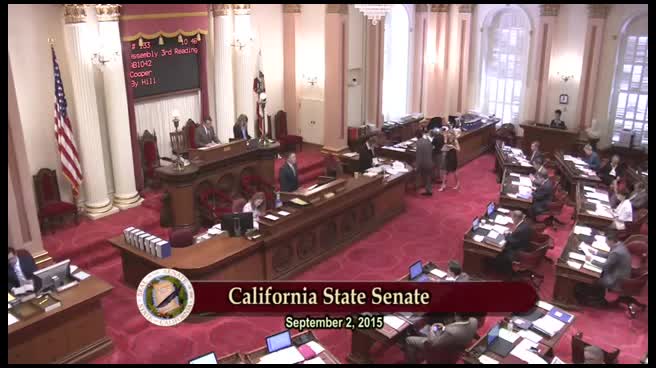 4MIN
Senate Floor
 19MIN
Senate Standing Committee on Governance and Finance
 11MIN
Assembly Floor
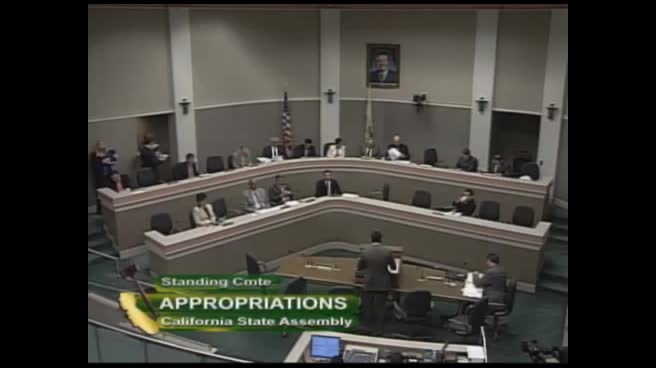 4MIN
Assembly Standing Committee on Appropriations
Bill Author

Bill Co-Author(s):