AB 385: Daylight Saving Time.
- Session Year: 2015-2016
- House: Assembly
- Latest Version Date: 2016-08-19
Existing federal law establishes the standard time of the United States for each of 9 zones and advances the standard time of each zone by one hour during the period commencing at 2 a.m. on the 2nd Sunday of March of each year and ending at 2 a.m. on the first Sunday of November of each year. Existing state law, the Daylight Saving Time Act, which was adopted as an initiative measure by the voters at the November 8, 1949, special election, provides that the standard time within the state is that which is known, described, and designated by federal law as United States Standard Pacific Time. The act also requires, from 1 a.m. on the last Sunday of April, until 2 a.m. on the last Sunday of October, the standard time within the state to be one hour in advance of United States Standard Pacific Time.
This bill would repeal the Daylight Saving Time Act, Act and would require the standard time within the state to be that of the 5th zone designated by federal law as Pacific standard time. The bill would authorize the Legislature to amend its provisions by a majority vote to further the purposes of the bill. provide for the application of year-round day light savings time, if authorized by federal law.
The California Constitution authorizes the Legislature to amend or repeal an initiative statute by another statute that becomes effective when approved by the electors.
This bill would provide that it would become effective only upon approval of the voters. It would also provide for submission of this measure to the voters for approval at the next statewide general election.
Existing federal law establishes the standard time of the United States for each of 9 zones and advances the standard time of each zone by one hour during the period commencing at 2 a.m. on the 2nd Sunday of March of each year and ending at 2 a.m. on the first Sunday of November of each year. Existing state law, the Daylight Saving Time Act, which was adopted as an initiative measure by the voters at the November 8, 1949, special election, provides that the standard time within the state is that which is known, described, and designated by federal law as United States Standard Pacific Time. The act also requires, from 1 a.m. on the last Sunday of April, until 2 a.m. on the last Sunday of October, the standard time within the state to be one hour in advance of United States Standard Pacific Time.
This bill would repeal the Daylight Saving Time Act, and would require the standard time within the state to be that of the 5th zone designated by federal law as Pacific standard time. The bill would authorize the Legislature to amend its provisions by a majority vote to further the purposes of the bill.
The California Constitution authorizes the Legislature to amend or repeal an initiative statute by another statute that becomes effective when approved by the electors.
This bill would provide that it would become effective only upon approval of the voters. It would also provide for submission of this measure to the voters for approval at the next statewide general election.
The California Integrated Waste Management Act of 1989, which is administered by the Department of Resources Recycling and Recovery, prohibits a person from operating a solid waste facility without a solid waste facilities permit, as provided. The act requires the department to prepare and adopt certification regulations for local enforcement agencies. The act requires the local enforcement agency, if it receives a complaint from an air pollution control district or an air quality management district pertaining to an odor emanating from a compost facility under its jurisdiction, to take appropriate enforcement actions, as provided. Existing law creates the Bay Area Air Quality Management District, with various responsibilities relative to the reduction of air pollution in the area of its jurisdiction.
This bill would, until January 1, 2019, require the Bay Area Air Quality Management District to establish a South Bay Odor Stakeholder Group, composed of representatives of specified local and state government agencies, members of the public, and a representative of the landfill operator, among other entities, to hold public meetings, relating to odors that emanate from the Newby Island Landfill and locations around the landfill and take other actions as provided. By imposing new duties on the Bay Area Air Quality Management District, this bill would create a state-mandated local program.
The bill would declare that a special law is necessary and that a general law cannot be made applicable within the meaning of Section 16 of Article IV of the California Constitution.
The California Constitution requires the state to reimburse local agencies and school districts for certain costs mandated by the state. Statutory provisions establish procedures for making that reimbursement.
This bill would provide that, if the Commission on State Mandates determines that the bill contains costs mandated by the state, reimbursement for those costs shall be made pursuant to these statutory provisions.
The California Integrated Waste Management Act of 1989, which is administered by the Department of Resources Recycling and Recovery, prohibits a person from operating a solid waste facility without a solid waste facilities permit, as provided. The act requires the department to prepare and adopt certification regulations for local enforcement agencies. The act requires the local enforcement agency, if it receives a complaint from an air pollution control district or an air quality management district pertaining to an odor emanating from a compost facility under its jurisdiction, to take appropriate enforcement actions, as provided. Existing law creates the Bay Area Air Quality Management District, with various responsibilities relative to the reduction of air pollution in the area of its jurisdiction.
This bill would, until January 1, 2019, require the local enforcement agency that has jurisdiction over the Newby Island Landfill Bay Area Air Quality Management District to establish a Newby Island Landfill Community Advisory Committee, comprised South Bay Odor Stakeholder Group, composed of representatives of specified local and state government agencies, members of the public, and a representative of the landfill operator, among other entities, to hold public meetings, relating to the proposed odors that emanate from the Newby Island Landfill expansion and locations around the landfill and take other actions as provided. By imposing new duties on a local enforcement agency, the Bay Area Air Quality Management District, this bill would create a state-mandated local program.
The bill would declare that a special law is necessary and that a general law cannot be made applicable within the meaning of Section 16 of Article IV of the California Constitution.
The California Constitution requires the state to reimburse local agencies and school districts for certain costs mandated by the state. Statutory provisions establish procedures for making that reimbursement.
This bill would provide that, if the Commission on State Mandates determines that the bill contains costs mandated by the state, reimbursement for those costs shall be made pursuant to these statutory provisions.
The California Integrated Waste Management Act of 1989, which is administered by the Department of Resources Recycling and Recovery, prohibits a person from operating a solid waste facility without a solid waste facilities permit, as provided. The act requires the department to prepare and adopt certification regulations for local enforcement agencies. The act requires the local enforcement agency, if it receives a complaint from an air pollution control district or an air quality management district pertaining to an odor emanating from a compost facility under its jurisdiction, to take appropriate enforcement actions, as provided.
This bill would, if a solid waste facility in a jurisdiction is within a quarter mile of a municipality or municipalities that are not part of the jurisdiction, require the local enforcement agency that has jurisdiction over the facility to hold a public meeting every 6 months to report violations, investigations, and remedial actions that have occurred since the previous meeting and to receive information regarding odor and other nuisance impacts of the facility from representatives of that municipality or those municipalities, as specified. until January 1, 2019, require the local enforcement agency that has jurisdiction over the Newby Island Landfill to establish a Newby Island Landfill Community Advisory Committee, comprised of representatives of specified local government agencies, members of the public, and a representative of the landfill operator, to hold public meetings, relating to the proposed Newby Island Landfill expansion and take other actions as provided. By imposing new duties on a local enforcement agency, this bill would create a state-mandated local program.
The California Constitution requires the state to reimburse local agencies and school districts for certain costs mandated by the state. Statutory provisions establish procedures for making that reimbursement.
This bill would provide that, if the Commission on State Mandates determines that the bill contains costs mandated by the state, reimbursement for those costs shall be made pursuant to these statutory provisions.
The California Integrated Waste Management Act of 1989, which is administered by the Department of Resources Recycling and Recovery, prohibits a person from operating a solid waste facility without a solid waste facilities permit, as provided. The act requires the department to prepare and adopt certification regulations for local enforcement agencies. The act requires the local enforcement agency, if it receives a complaint from an air pollution control district or an air quality management district pertaining to an odor emanating from a compost facility under its jurisdiction to take appropriate enforcement actions, as provided.
This bill would, if a solid waste facility in a jurisdiction is within a quarter mile of a municipality or municipalities that are not part of the jurisdiction, require the local enforcement agency that has jurisdiction over the facility to hold a public meeting every 6 months to report violations, investigations, and remedial actions that have occurred since the previous meeting and to receive information regarding odor and other nuisance impacts of the facility from representatives of that municipality or those municipalities, as specified. By imposing new duties on a local enforcement agency, this bill would create a state-mandated local program.
The California Constitution requires the state to reimburse local agencies and school districts for certain costs mandated by the state. Statutory provisions establish procedures for making that reimbursement.
This bill would provide that, if the Commission on State Mandates determines that the bill contains costs mandated by the state, reimbursement for those costs shall be made pursuant to these statutory provisions.
The California Integrated Waste Management Act of 1989, which is administered by the Department of Resources Recycling and Recovery, prohibits a person from operating a solid waste facility without a solid waste facilities permit, as provided. The act requires the department to prepare and adopt certification regulations for local enforcement agencies. The act requires the local enforcement agency, if it receives a complaint from an air pollution control district or an air quality management district pertaining to an odor emanating from a compost facility under its jurisdiction to take appropriate enforcement actions, as provided.
This bill would, if a solid waste facility in a jurisdiction is within a quarter mile of a municipality or municipalities that are not part of the jurisdiction, require the local enforcement agency that has jurisdiction over the facility to hold a public meeting every 6 months to receive information regarding odor and other nuisance impacts of the facility from representatives of that municipality or municipalities, as specified. By imposing new duties on a local enforcement agency, this bill would create a state-mandated local program.
The California Constitution requires the state to reimburse local agencies and school districts for certain costs mandated by the state. Statutory provisions establish procedures for making that reimbursement.
This bill would provide that, if the Commission on State Mandates determines that the bill contains costs mandated by the state, reimbursement for those costs shall be made pursuant to these statutory provisions.
Existing law defines the term legislative body for purposes of laws relating to cities, counties, and other local agencies.
This bill would make a technical, nonsubstantive change to that definition.
Existing law defines the term legislative body for purposes of laws relating to cities, counties, and other local agencies.
This bill would make a technical, nonsubstantive change to that definition.
(a)The standard time within the state is that of the fifth zone designated by federal law as Pacific standard time (15 U.S.C. Secs. 261 and 263).
(b)The If federal law authorizes the state to provide for the year-round application of the advancement of standard time commonly referred to as day light savings time, Legislature may amend this section by a majority vote to further the purposes of the act that added this section. provide for that application.
SEC. 2.Section 1 of the Daylight Saving Time Act is repealed.SEC. 3.Section 2 of the Daylight Saving Time Act is repealed.SEC. 4.Section 3 of the Daylight Saving Time Act is repealed.SEC. 5.Section 4 of the Daylight Saving Time Act is repealed.SEC. 6.Section 5 of the Daylight Saving Time Act is repealed.SEC. 7.(a)Sections 1 to 6, inclusive, of this act amend the Daylight Saving Time Act, Proposition 12, an initiative statute approved by the voters at the November 8, 1949, special election, and shall become effective only when this act is submitted to and approved by the voters. The Secretary of State shall submit Sections 1 to 6, inclusive, of this act to the voters at a statewide election in accordance with Section 9040 of the Elections Code.
(b)Upon approval of this act by the voters, the Secretary of State shall provide express notice to the federal Secretary of Transportation that California has, by law, exempted itself from provisions providing for the advancement of time, commonly referred to as daylight savings time.
(a)The standard time within the state is that of the fifth zone designated by federal law as Pacific standard time (15 U.S.C. Secs. 261 and 263).
(b)The Legislature may amend this section by a majority vote to further the purposes of the act that added this section.
SEC. 2.Section 1 of the Daylight Saving Time Act is repealed.Section 1.This act shall be known and may be cited as the Daylight Saving Time Act.
SEC. 3.Section 2 of the Daylight Saving Time Act is repealed.Section 2.The standard time within the State, except as hereinafter provided, is that of the One Hundred and Twentieth (120th) degree of longitude west from Greenwich and which is now known, described and designated by Act of Congress as United States Standard Pacific Time.
SEC. 4.Section 3 of the Daylight Saving Time Act is repealed.Sec. 3.From 1 oclock antemeridian on the last Sunday of April, until 2 o clock antemeridian on the last Sunday of October, the standard time in this State so established shall be one hour in advance of the standard time now known as United States Standard Pacific time.
SEC. 5.Section 4 of the Daylight Saving Time Act is repealed.Section 4.In all laws, statutes, orders, decrees, rules and regulations relating to the time of performance of any act by any officer or department of this State, or of any county, city and county, city, town or district thereof or relating to the time in which any rights shall accrue or determine, or within which any act shall or shall not be performed by any person subject to the jurisdiction of the State, and in all the public schools and in all other institutions of this State, or of any county, city and county, city, town or district thereof, and in all contracts or choses in actions made or to be performed in this State, the time shall be as set forth in this act and it shall be so understood and intended.
SEC. 6.Section 5 of the Daylight Saving Time Act is repealed.SECTION 5.All acts in conflict herewith are hereby repealed.
SEC. 7.Sections 1 to 6, inclusive, of this act amend the Daylight Saving Time Act, Proposition 12, an initiative statute approved by the voters at the November 8, 1949, special election, and shall become effective only when submitted to and approved by the voters. The Secretary of State shall submit Sections 1 to 6, inclusive, of this act to the voters at a statewide election in accordance with Section 9040 of the Elections Code.
SECTION 1.Article 6 (commencing with Section 40280) is added to Chapter 4 of Part 3 of Division 26 of the Health and Safety Code, to read:6.South Bay Odor Stakeholder Group40280.(a)The bay district shall establish a South Bay Odor Stakeholder Group, comprised of the following members:
(1)A representative from each of the City of San Jose, the City of Milpitas, and the City of Fremont, who shall be appointed by the city council of the respective city and who shall represent that city.
(2)A representative of the local enforcement agency for the city of San Jose.
(3)A representative of the bay district, who shall be appointed by the district.
(4)A representative of the San Francisco Bay Area Regional Water Quality Board.
(5)A representative of the California Coastal Conservancy and a representative of the California Environmental Protection Agency.
(6)A representative of the South Bay Salt Pond Restoration Project.
(7)A representative of the San Jose-Santa Clara Regional Wastewater Facility.
(8)A representative of the entity that represents the Newby Island Landfill and associated landfill operations, and a representative of a dry fermentation anaerobic digestion facility that operates in the City of San Jose.
(9)Two members of the public, who shall be agreed upon and appointed by the city councils of the cities described in paragraph (1).
(b)The stakeholder group shall do all of the following:
(1)Hold a public meeting, at least once every six months, but more frequently if desired by the stakeholder group, to discuss issues related to odors that emanate from the Newby Island Landfill and odors that emanate from other locations around the landfill.
(2)Receive and review information related to an independent odor study, if such a study is completed, and make recommendations to the government agencies, including the California Environmental Protection Agency, represented on the committee.
(c)This section shall remain in effect only until January 1, 2019, and as of that date is repealed, unless a later enacted statute, that is enacted before January 1, 2019, deletes or extends that date.
SEC. 2.The Legislature finds and declares that a special law is necessary and that a general law cannot be made applicable within the meaning of Section 16 of Article IV of the California Constitution because of the unique odors that emanate from various locations around the Newby Island Landfill located in the County of Santa Clara.
SEC. 3.If the Commission on State Mandates determines that this act contains costs mandated by the state, reimbursement to local agencies and school districts for those costs shall be made pursuant to Part 7 (commencing with Section 17500) of Division 4 of Title 2 of the Government Code.
(a)The local enforcement agency that has jurisdiction over the Newby Island Landfill shall establish a Newby Island Landfill Community Advisory Committee, comprised of the following members:
(1)A representative from each city located within one mile of the Newby Island Landfill, who shall be appointed by the city council of the city and who shall represent the city.
(2)A representative of the local enforcement agency that has jurisdiction over the Newby Island Landfill, who shall be appointed by that local enforcement agency.
(3)A representative from the Bay Area Air Quality Management District, who shall be appointed by the district.
(4)A representative of the Newby Island Landfill operator.
(5)Two members of the public, who shall be agreed upon and appointed by the city councils of the cities described in paragraph (1).
(b)The advisory committee shall do all of the following:
(1)Hold a public meeting, at least once every six months, but more frequently if desired by the advisory committee, to discuss issues related to the proposed Newby Island Landfill expansion.
(2)Receive and review information related to an independent odor study, if such a study is completed, and make recommendations to the government agencies represented on the committee.
(c)This section shall remain in effect only until January 1, 2019, and as of that date is repealed, unless a later enacted statute, that is enacted before January 1, 2019, deletes or extends that date.
SECTION 1.Article 6 (commencing with Section 40280) is added to Chapter 4 of Part 3 of Division 26 of the Health and Safety Code, to read:6.South Bay Odor Stakeholder Group40280.(a)The bay district shall establish a South Bay Odor Stakeholder Group, comprised of the following members:
(1)A representative from each of the City of San Jose, the City of Milpitas, and the City of Fremont, who shall be appointed by the city council of the respective city and who shall represent that city.
(2)A representative of the local enforcement agency for the city of San Jose.
(3)A representative of the bay district, who shall be appointed by the district.
(4)A representative of the San Francisco Bay Area Regional Water Quality Board.
(5)A representative of the California Coastal Conservancy and a representative of the California Environmental Protection Agency.
(6)A representative of the South Bay Salt Pond Restoration Project.
(7)A representative of the San Jose-Santa Clara Regional Wastewater Facility.
(8)A representative of the entity that represents the Newby Island Landfill and associated landfill operations, and a representative of a dry fermentation anaerobic digestion facility that operates in the City of San Jose.
(9)Two members of the public, who shall be agreed upon and appointed by the city councils of the cities described in paragraph (1).
(b)The stakeholder group shall do all of the following:
(1)Hold a public meeting, at least once every six months, but more frequently if desired by the stakeholder group, to discuss issues related to odors that emanate from the Newby Island Landfill and odors that emanate from other locations around the landfill.
(2)Receive and review information related to an independent odor study, if such a study is completed, and make recommendations to the government agencies, including the California Environmental Protection Agency, represented on the committee.
(c)This section shall remain in effect only until January 1, 2019, and as of that date is repealed, unless a later enacted statute, that is enacted before January 1, 2019, deletes or extends that date.
SEC. 2.The Legislature finds and declares that a special law is necessary and that a general law cannot be made applicable within the meaning of Section 16 of Article IV of the California Constitution because of the unique odors that emanate from various locations around the Newby Island Landfill located in the County of Santa Clara.
SEC. 2.SEC. 3.If the Commission on State Mandates determines that this act contains costs mandated by the state, reimbursement to local agencies and school districts for those costs shall be made pursuant to Part 7 (commencing with Section 17500) of Division 4 of Title 2 of the Government Code.
If a solid waste facility in a jurisdiction is within a quarter mile of a municipality or municipalities that are not part of the jurisdiction, the local enforcement agency that has jurisdiction over the facility shall hold a public meeting, at least every six months, to report violations, investigations, and remedial actions that have occurred since the previous meeting and to receive information regarding odor and other nuisance impacts of the facility from representatives of that municipality or those municipalities, unless waived in writing by the municipality or municipalities.
43209.3.(a)The local enforcement agency that has jurisdiction over the Newby Island Landfill shall establish a Newby Island Landfill Community Advisory Committee, comprised of the following members:
(1)A representative from each city located within one mile of the Newby Island Landfill, who shall be appointed by the city council of the city and who shall represent the city.
(2)A representative of the local enforcement agency that has jurisdiction over the Newby Island Landfill, who shall be appointed by that local enforcement agency.
(3)A representative from the Bay Area Air Quality Management District, who shall be appointed by the district.
(4)A representative of the Newby Island Landfill operator.
(5)Two members of the public, who shall be agreed upon and appointed by the city councils of the cities described in paragraph (1).
(b)The advisory committee shall do all of the following:
(1)Hold a public meeting, at least once every six months, but more frequently if desired by the advisory committee, to discuss issues related to the proposed Newby Island Landfill expansion.
(2)Receive and review information related to an independent odor study, if such a study is completed, and make recommendations to the government agencies represented on the committee.
(c)This section shall remain in effect only until January 1, 2019, and as of that date is repealed, unless a later enacted statute, that is enacted before January 1, 2019, deletes or extends that date.
SEC. 2.If the Commission on State Mandates determines that this act contains costs mandated by the state, reimbursement to local agencies and school districts for those costs shall be made pursuant to Part 7 (commencing with Section 17500) of Division 4 of Title 2 of the Government Code.
If a solid waste facility in a jurisdiction is within a quarter mile of a municipality or municipalities that are not part of the jurisdiction, the local enforcement agency that has jurisdiction over the facility shall hold a public meeting, at least every six months, to report violations, investigations, and remedial actions that have occurred since the previous meeting and to receive information regarding odor and other nuisance impacts of the facility from representatives of that municipality or those municipalities, unless waived in writing by the municipality or those municipalities.
SEC. 2.If the Commission on State Mandates determines that this act contains costs mandated by the state, reimbursement to local agencies and school districts for those costs shall be made pursuant to Part 7 (commencing with Section 17500) of Division 4 of Title 2 of the Government Code.
If a solid waste facility in a jurisdiction is within a quarter mile of a municipality or municipalities that are not part of the jurisdiction, the local enforcement agency that has jurisdiction over the facility shall hold a public meeting, at least every six months, to receive information regarding odor and other nuisance impacts of the facility from representatives of that municipality or those municipalities, unless waived in writing by the municipality or those municipalities.
SEC. 2.If the Commission on State Mandates determines that this act contains costs mandated by the state, reimbursement to local agencies and school districts for those costs shall be made pursuant to Part 7 (commencing with Section 17500) of Division 4 of Title 2 of the Government Code.
SECTION 1.Section 53000 of the Government Code is amended to read:53000.As used in this chapter, legislative body means the board of supervisors in the case of a county or a city and county, the city council or the board of trustees in the case of a city, and the board of directors or other governing body in the case of a district or other public agency, unless the context otherwise requires.
As used in this chapter, legislative body means the board of supervisors in the case of a county or a city and county, the city council or the board of trustees in the case of a city, and the board of directors or other governing body in the case of a district or other public agency, unless the context otherwise requires.
|
Date
|
Status
|
|---|---|
| Aug 19, 2016 | Read third time and amended. Ordered to second reading. |
| May 9, 2016 | From committee chair, with author's amendments: Amend, and re-refer to committee. Read second time, amended, and re-referred to Com. on E.Q. |
| May 11, 2016 | Re-referred to Com. on RLS. |
| May 11, 2016 | Withdrawn from committee. |
| May 19, 2016 | Re-referred to Com. on E., U., & C. |
| Jun 14, 2016 | From committee: Do pass and re-refer to Com. on APPR. (Ayes 9. Noes 2.) (June 13). Re-referred to Com. on APPR. |
| Jun 27, 2016 | In committee: Set, first hearing. Hearing canceled at the request of author. |
| Aug 1, 2016 | In committee: Referred to APPR. suspense file. |
| Aug 11, 2016 | From committee: Do pass. (Ayes 6. Noes 1.) (August 11). |
| Aug 15, 2016 | Read second time. Ordered to third reading. |
| Jul 1, 2015 | From committee chair, with author's amendments: Amend, and re-refer to committee. Read second time, amended, and re-referred to Com. on E.Q. |
| Aug 22, 2016 | Read second time. Ordered to third reading. |
| Aug 23, 2016 | Motion to reconsider made by Senator Gaines. |
| Aug 23, 2016 | Read third time. Refused passage. (Ayes 17. Noes 17. Page 5312.). |
| Aug 23, 2016 | Read third time. Refused passage. (Ayes 17. Noes 17.). |
| Aug 23, 2016 | Reconsideration granted. |
| Aug 23, 2016 | Reconsideration granted. (Ayes 39. Noes 0. Page 5312.) |
| Aug 30, 2016 | Read third time. Refused passage. |
| Aug 30, 2016 | Read third time. Refused passage. (Ayes 15. Noes 19. Page 5529.). |
| Apr 29, 2015 | Read second time and amended. |
| Feb 19, 2015 | From printer. May be heard in committee March 21. |
| Mar 26, 2015 | From committee chair, with author's amendments: Amend, and re-refer to Com. on L. GOV. Read second time and amended. |
| Mar 26, 2015 | Referred to Coms. on L. GOV. and NAT. RES. |
| Apr 6, 2015 | Re-referred to Com. on L. GOV. |
| Apr 14, 2015 | From committee chair, with author's amendments: Amend, and re-refer to Com. on L. GOV. Read second time and amended. |
| Apr 15, 2015 | Re-referred to Com. on L. GOV. |
| Apr 23, 2015 | From committee: Do pass and re-refer to Com. on NAT. RES. (Ayes 9. Noes 0.) (April 22). Re-referred to Com. on NAT. RES. |
| Apr 28, 2015 | From committee: Amend, and do pass as amended and re-refer to Com. on APPR. (Ayes 9. Noes 0.) (April 27). |
| Feb 18, 2015 | Read first time. To print. |
| Apr 30, 2015 | Re-referred to Com. on APPR. |
| May 20, 2015 | From committee: Do pass. To Consent Calendar. (Ayes 15. Noes 0.) (May 20). |
| May 21, 2015 | Read second time. Ordered to Consent Calendar. |
| May 26, 2015 | In Senate. Read first time. To Com. on RLS. for assignment. |
| May 26, 2015 | Read third time. Passed. Ordered to the Senate. |
| May 26, 2015 | Read third time. Passed. Ordered to the Senate. (Ayes 76. Noes 0. Page 1594.) |
| Jun 4, 2015 | Referred to Com. on E.Q. |
| Jun 30, 2015 | In committee: Set, first hearing. Hearing canceled at the request of author. |
|
Date
|
Description
|
Location
|
Votes
|
|
|---|---|---|---|---|
| Aug 30, 2016 | Assembly 3rd Reading AB385 Chu By Gaines | Senate Floor |
Failed |
|
| Aug 23, 2016 | Assembly 3rd Reading AB385 Chu By Gaines Reconsider | Senate Floor |
Passed |
|
| Aug 23, 2016 | Assembly 3rd Reading AB385 Chu By Gaines | Senate Floor |
Failed |
|
| Aug 11, 2016 | Do pass | Senate Standing Committee on Appropriations |
Passed |
|
| Aug 1, 2016 | Placed on suspense file | Senate Standing Committee on Appropriations |
Passed |
|
| Jun 13, 2016 | Do pass, but first be re-referred to the Committee on [Appropriations] | Senate Standing Committee on Energy, Utilities and Communications |
Passed |
|
| Jul 15, 2015 | [Second] hearing set for [07-15-2015]: Failed passage in Committee. Reconsideration granted | Senate Standing Committee on Environmental Quality |
Passed |
|
| Jul 15, 2015 | Do pass, but first be re-referred to the Committee on [Appropriations] | Senate Standing Committee on Environmental Quality |
Failed |
|
| May 26, 2015 | AB 385 CHU Consent Calendar Second Day Regular Session | Assembly Floor |
Passed |
|
| May 20, 2015 | Do pass. To Consent Calendar. | Assembly Standing Committee on Appropriations |
Passed |
|
| Apr 27, 2015 | Do pass as amended and be re-referred to the Committee on [Appropriations] | Assembly Standing Committee on Natural Resources |
Passed |
|
| Apr 22, 2015 | Do pass and be re-referred to the Committee on [Natural Resources] | Assembly Standing Committee on Local Government |
Passed |
This list shows positions taken on this bill by organizations on the date displayed, which is linked to the original source.
Positions by individuals are not included.
|
Organization
|
Position
|
Date
|
|---|---|---|
| An individual | ** Support | Jun 13, 2016 |
| City of Freemont | * Support | Jul 15, 2015 |
| Island Empire, Orange County, and LA Trade Association | * Neutral | Jul 15, 2015 |
| Milpitas, City Of | * Support | Jul 15, 2015 |
| Newby Island Landfill | * Against | Jul 15, 2015 |
Office of Senate Floor Analyses (916) 651-1520 Fax: (916) 327-4478 | AB |
THIRD READING
Bill No: AB 385
:
PRIOR VOTES NOT RELEVANT
SENATE ENERGY, U. & C. COMMITTEE: 9-2, 6/13/16
AYES: Hueso, Morrell, Gaines, Hertzberg, Hill, Lara, McGuire, Pavley, Wolk
NOES: Cannella, Leyva
SENATE APPROPRIATIONS COMMITTEE: 6-1, 8/11/16
AYES: Lara, Bates, Beall, Hill, McGuire, Mendoza
NOES: Nielsen
SENATE FLOOR: 17-17, 8/23/16 (FAIL)
AYES: Anderson, Bates, Beall, Berryhill, De León, Gaines, Glazer, Hancock, Hueso, Lara, McGuire, Mendoza, Mitchell, Morrell, Nguyen, Pan, Wolk
NOES: Block, Cannella, Fuller, Galgiani, Hall, Hernandez, Hill, Huff, Leno, Leyva, Monning, Moorlach, Nielsen, Pavley, Roth, Stone, Vidak
NO VOTE RECORDED: Allen, Hertzberg, Jackson, Liu, Wieckowski
DIGEST: This bill requires an initiative to be placed on the ballot allowing voters to decide to eliminate Daylight Saving Time (DST), also known Pacific Daylight Time or summer time, as it currently exists and switch to year-round standard time, also known as winter time.
Senate Floor Amendments of 8/19/16 (1) qualify the authority of the Legislature to amend the DST Act with a majority vote so that the authority exists only upon authorization in federal law and (2) require the Secretary of State to provide express notice to the Federal Secretary of Transportation stating that California is exempting itself from DST.
Existing law:
- Establishes, under federal law, the standard time of the United States for each of nine zones and advances the standard time of each zone by one hour during the period commencing at 2:00 a.m. on the second Sunday of March of each year and ending at 2:00 a.m. on the first Sunday of November of each year.
- Provides that under the DST Act, which was adopted as an initiative measure by the voters at the November 8, 1949, special election, the standard time within the state is that which is known, described, and designated by federal law as United States Standard Pacific Time.
- Requires, from 1:00 a.m. on the last Sunday of April, until 2:00 a.m. on the last Sunday of October, the standard time within the state to be one hour in advance of United States Standard Pacific Time.
This bill requires an initiative to be placed on the ballot allowing voters to eliminate DST, also known Pacific Daylight Time or “summer time”, as it currently exists and switch to year-round standard time, also known as “winter time.”
Background
This bill requires an initiative to be placed on the ballot allowing voters to decide to eliminate DST, also known Pacific Daylight Time or summer time, as it currently exists and switch to year-round standard time, also known as winter time.
The federal Uniform Time Act of 1966 (UTA) established a standardized system of operating DST throughout the U.S. and its territories, exempting only those states and territories that enacted laws to keep their entire state or territory on standard time. In 1972, Congress revised the law to provide that, if a state was in two or more time zones, the state could exempt the part of the state that was in one time zone while providing that the part of the state in a different time zone would observe DST. Most states opted for a coordinated DST. The UTA allows states to choose to remain on standard time; however, the UTA does not allow a state to choose to remain on DST.
California observes DST. California voters passed Proposition 12 in 1949, approving DST in the state and declaring that the standard time within the state is that which is known, described, and designated by federal law as United States Standard Pacific Time. Currently, California begins DST at 2:00 a.m. on the second Sunday of March and ended at 2:00 a.m. on the first Sunday of November.
The author has introduced this bill in response to what the author describes as “a public health emergency.” To support this dire characterization, the author references recent studies that find DST results in increases in the number of recorded heart attacks, greater likelihood of industrial and workplace injuries, or a noticeable uptick in traffic accidents and fatalities. Proponents of maintaining DTS counter the author’s arguments with claims of, and studies finding, increased public health costs associated with reduced outdoor recreation and increased crime that purportedly occur in the absence of DST.
The above claims and counter claims aside, it seems clear that DST is not an energy conservation measure. In separate studies completed in the last decade, the California Energy Commission found that DST saved a miniscule amount of energy, while the National Bureau of Economic Research found that the use of DST slightly increased the use of energy.
Related/Prior Legislation
AB 2496 (Chu, 2016) declares the intent of the Legislature to enact legislation to establish United States Standard Pacific Time as the standard time within the state during the entire year. The bill is pending referral at the Assembly Desk.
AJR 28 (Obernolte, 2016) memorializes the Congress and the President to enact legislation that would allow a state to adopt daylight saving time year-round. The bill is pending consideration by the full Assembly.
AJR 56 (Longville, Chapter 127, Statutes of 2000) memorialized the President and the Congress to enact legislation to allow states the opportunity to choose year-round daylight saving time, in addition to standard time or the current system of "traditional" DSY.
SJRX2 1 (Karnette, Resolution Chapter 1, Statutes of 2001-02, Second Extraordinary Session) memorialized the Congress to approve legislation that allows a state to uniformly apply DST year-round.
FISCAL EFFECT: Appropriation: Fiscal Com.: Local:
According to the Senate Appropriations Committee, one-time costs between $414,000 and $552,000 to the Secretary of State for printing and mailing costs to place the measure on the ballot in the next statewide election. (General Fund).
None received
OPPOSITION: (Verified 8/19/16)
Numerous individuals
8/23/16 20:23:53
**** END ****
Office of Senate Floor Analyses (916) 651-1520 Fax: (916) 327-4478 | AB |
THIRD READING
Bill No: AB 385
:
PRIOR VOTES NOT RELEVANT
SENATE ENERGY, U. & C. COMMITTEE: 9-2, 6/13/16
AYES: Hueso, Morrell, Gaines, Hertzberg, Hill, Lara, McGuire, Pavley, Wolk
NOES: Cannella, Leyva
SENATE APPROPRIATIONS COMMITTEE: 6-1, 8/11/16
AYES: Lara, Bates, Beall, Hill, McGuire, Mendoza
NOES: Nielsen
DIGEST: This bill requires an initiative to be placed on the ballot allowing voters to decide to eliminate Daylight Saving Time (DST), also known Pacific Daylight Time or summer time, as it currently exists and switch to year-round standard time, also known as winter time.
Senate Floor Amendments of 8/19/16 (1) qualify the authority of the Legislature to amend the DST Act with a majority vote so that the authority exists only upon authorization in federal law and (2) require the Secretary of State to provide express notice to the Federal Secretary of Transportation stating that California is exempting itself from DST.
Existing law:
- Establishes, under federal law, the standard time of the United States for each of nine zones and advances the standard time of each zone by one hour during the period commencing at 2:00 a.m. on the second Sunday of March of each year and ending at 2:00 a.m. on the first Sunday of November of each year.
- Provides that under the DST Act, which was adopted as an initiative measure by the voters at the November 8, 1949, special election, the standard time within the state is that which is known, described, and designated by federal law as United States Standard Pacific Time.
- Requires, from 1:00 a.m. on the last Sunday of April, until 2:00 a.m. on the last Sunday of October, the standard time within the state to be one hour in advance of United States Standard Pacific Time.
This bill requires an initiative to be placed on the ballot allowing voters to eliminate DST, also known Pacific Daylight Time or “summer time”, as it currently exists and switch to year-round standard time, also known as “winter time.”
Background
This bill requires an initiative to be placed on the ballot allowing voters to decide to eliminate DST, also known Pacific Daylight Time or summer time, as it currently exists and switch to year-round standard time, also known as winter time.
The federal Uniform Time Act of 1966 (UTA) established a standardized system of operating DST throughout the U.S. and its territories, exempting only those states and territories that enacted laws to keep their entire state or territory on standard time. In 1972, Congress revised the law to provide that, if a state was in two or more time zones, the state could exempt the part of the state that was in one time zone while providing that the part of the state in a different time zone would observe DST. Most states opted for a coordinated DST. The UTA allows states to choose to remain on standard time; however, the UTA does not allow a state to choose to remain on DST.
California observes DST. California voters passed Proposition 12 in 1949, approving DST in the state and declaring that the standard time within the state is that which is known, described, and designated by federal law as United States Standard Pacific Time. Currently, California begins DST at 2:00 a.m. on the second Sunday of March and ended at 2:00 a.m. on the first Sunday of November.
The author has introduced this bill in response to what the author describes as “a public health emergency.” To support this dire characterization, the author references recent studies that find DST results in increases in the number of recorded heart attacks, greater likelihood of industrial and workplace injuries, or a noticeable uptick in traffic accidents and fatalities. Proponents of maintaining DTS counter the author’s arguments with claims of, and studies finding, increased public health costs associated with reduced outdoor recreation and increased crime that purportedly occur in the absence of DST.
The above claims and counter claims aside, it seems clear that DST is not an energy conservation measure. In separate studies completed in the last decade, the California Energy Commission found that DST saved a miniscule amount of energy, while the National Bureau of Economic Research found that the use of DST slightly increased the use of energy.
Related/Prior Legislation
AB 2496 (Chu, 2016) declares the intent of the Legislature to enact legislation to establish United States Standard Pacific Time as the standard time within the state during the entire year. The bill is pending referral at the Assembly Desk.
AJR 28 (Obernolte, 2016) memorializes the Congress and the President to enact legislation that would allow a state to adopt daylight saving time year-round. The bill is pending consideration by the full Assembly.
AJR 56 (Longville, Chapter 127, Statutes of 2000) memorialized the President and the Congress to enact legislation to allow states the opportunity to choose year-round daylight saving time, in addition to standard time or the current system of "traditional" DSY.
SJRX2 1 (Karnette, Resolution Chapter 1, Statutes of 2001-02, Second Extraordinary Session) memorialized the Congress to approve legislation that allows a state to uniformly apply DST year-round.
FISCAL EFFECT: Appropriation: Fiscal Com.: Local:
According to the Senate Appropriations Committee, one-time costs between $414,000 and $552,000 to the Secretary of State for printing and mailing costs to place the measure on the ballot in the next statewide election. (General Fund).
None received
OPPOSITION: (Verified 8/19/16)
Numerous individuals
8/22/16 22:58:06
**** END ****
Office of Senate Floor Analyses (916) 651-1520 Fax: (916) 327-4478 | AB |
THIRD READING
Bill No: AB 385
:
PRIOR VOTES NOT RELEVANT
SENATE ENERGY, U. & C. COMMITTEE: 9-2, 6/13/16
AYES: Hueso, Morrell, Gaines, Hertzberg, Hill, Lara, McGuire, Pavley, Wolk
NOES: Cannella, Leyva
SENATE APPROPRIATIONS COMMITTEE: 6-1, 8/11/16
AYES: Lara, Bates, Beall, Hill, McGuire, Mendoza
NOES: Nielsen
DIGEST: This bill requires an initiative to be placed on the ballot allowing voters to decide to eliminate Daylight Saving Time (DST), also known Pacific Daylight Time or summer time, as it currently exists and switch to year-round standard time, also known as winter time. This bill also provides that any future changes could be made by a majority vote of the Legislature.
Existing law:
- Establishes, under federal law, the standard time of the United States for each of nine zones and advances the standard time of each zone by one hour during the period commencing at 2:00 a.m. on the second Sunday of March of each year and ending at 2:00 a.m. on the first Sunday of November of each year.
- Provides that under the DST Act, which was adopted as an initiative measure by the voters at the November 8, 1949, special election, the standard time within the state is that which is known, described, and designated by federal law as United States Standard Pacific Time.
- Requires, from 1:00 a.m. on the last Sunday of April, until 2:00 a.m. on the last Sunday of October, the standard time within the state to be one hour in advance of United States Standard Pacific Time.
This bill requires an initiative to be placed on the ballot allowing voters to eliminate DST, also known Pacific Daylight Time or “summer time”, as it currently exists and switch to year-round standard time, also known as “winter time”. This bill also provides that any future changes could be made by a majority vote of the Legislature.
Background
Some history. Benjamin Franklin (1784) is credited with the basic idea of DST after observing that people were sleeping during sunlit hours in the early morning and burning candles for illumination in the evening. However, it didn't "officially” begin in the U.S. until World War I (1918), when it was enacted primarily to extend the length of the production day and save fuel by reducing the need to use artificial lighting. Although some states and communities observed DST after the war ended, DST wasn't officially observed nationally again until 1942, when it was re-enacted for World War II, then repealed after the war in 1945. From 1945 to 1966, there was no federal law regarding DST, so states and localities were free to choose whether to observe DST and could choose when it began and ended. This understandably caused confusion, especially for the broadcasting industry, as well as for railways, airlines, and bus companies. [“Daylight Savings Time”. WebExhibits. http://www.webexhibits.org/daylightsaving/e.html ]
Daylight Saving Time Act. California voters passed Proposition 12 in 1949, approving DST in the state, and that the standard time within the state is that which is known, described, and designated by federal law as United States Standard Pacific Time.
Uniform Time Act of 1966. The federal Uniform Time Act of 1966 (UTA) established a standardized system of operating DST throughout the U.S. and its territories, exempting only those states and territories that enacted laws to keep their entire state or territory on standard time. Most states opted for a coordinated DST. However, the UTA allows states to choose only to remain on standard time as an alternative but not to choose to remain on DST. In 1972, Congress revised the law to provide that, if a state was in two or more time zones, the state could exempt the part of the state that was in one time zone while providing that the part of the state in a different time zone would observe DST. The federal law was amended in 1986 to begin DST on the first Sunday in April. [“Daylight Savings Time”]
Energy Policy Act of 2005. Energy Policy Act of 2005 extended DST in the U.S. by three weeks in the spring and one week in the fall, beginning on March 11 2007, in the hope that the extension would save energy. Since then, California has begun DST at 2:00 a.m. on the second Sunday of March and ended at 2:00 a.m. on the first Sunday of November. Should Congress enact legislation to allow a state to adopt DST year round, current statute would require that the change would have to be approved by California voters.
Legislative findings:
- Today, the UTA provides that either Congress or the Secretary of Transportation can change a time-zone boundary. [US Department of Transportation ]
- DST is currently practiced in 76 countries and directly affects more than 1.6 billion people worldwide. [Matthew J. Kotchen and Laura E. Grant, “Does Daylight Saving Time Save Energy? Evidence form a Natural Experiment in Indiana”. The National Bureau of Economic Research. http://www.nber.org/papers/w14429]
- States and territories in the United States that do not observe DST include: most of Arizona, Hawaii, American Samoa, Guam, Puerto Rico, and the Virgin Islands.
- Some parts of Indiana did not observe daylight saving time in the past.
- According to a national telephone survey of 1,000 adults conducted March 5-6, 2014 by Rasmussen Reports concluded that only 33 percent of American adults think DST is worth the hassle. 48 percent do not think the clock changing ritual is worth it, but percent are not sure.
Estimates of DST effects. The California Energy Commission (CEC) conducted a research on DST published in 2007 that examined whether and how much the Energy Policy Act of 2005 changed daily electricity. The extension of DST to March 2007 had little or no effect on energy consumption in California, according to a statistical analysis. The most likely approximation is a 0.2 percent decrease during these three weeks. In 2008 a study was published by the National Bureau of Economic Research, who studied energy use in Indiana. The experiment in the state of Indiana provided the first empirical estimates of DST effects on electricity consumption in the United States since the mid-1970s focusing on residential electricity demand. The main finding, contrary to the policy's intent: DST increases residential electricity demand. An estimate of the overall increase is approximately one percent. DST causes the greatest increase in electricity consumption in the fall, when estimates range between two percent and four percent.
Potential cost in California. According to a 2008 a study by the National Bureau of Economic Research, Indiana households pay an additional $9 million per year in energy bills because of DST. Also it was estimated a social costs of increased pollution emissions that range from $1.7 to $5.5 million per year. The study concluded that the effect is likely to be even stronger in other regions of the United States.
Another step away from uniformity. The purpose of the UTA of 1966 was to put states on a relatively uniform time schedule within their specific times zones. Granted, the fact that Hawaii, most of Arizona, and the eastern portion of Indiana have exercised the option under the UTA not to move to DST during the summer means that states already aren't operating on a uniform time system. However, this proposal, if enacted by the federal government, gives states the option to move even further away from the notion of a uniform time system by going to DST on a year-round basis.
Intended benefits. Reports indicate that in regions with a temperate climate, DST results in energy savings and year-round DST could potentially increase these savings as well as, industrial efficiency. Additionally, extra daylight in the evening hours could provide a boost to the tourism and shopping industries. [American College of Cardiology. "Daylight saving impacts timing of heart attacks." ScienceDaily. ScienceDaily, 29 March 2014. <www.sciencedaily.com /releases/2014/03/140329175108.htm .] According to the U.S. National Library of Medicine National Institutes of Health studies have connected DST with a reduction in pedestrian and driver fatalities, as well as a decrease in robberies. According to research presented at the American College of Cardiology's 63rd Annual Scientific Session it seems moving the clock forward or backward may alter the timing of when heart attacks occur in the week following these time changes.
Comments
According to the author, “Californians lose an hour in the spring to adjust to Daylight Saving Time. Whether it increases in the number of recorded heart attacks, greater likelihood of industrial and workplace injuries, or a noticeable uptick in traffic accidents and fatalities, there is correlative evidence that the loss of one hour each year constitutes an unnecessary public health emergency. The burden must be on the supporters of preserving DST to demonstrate what tangible reasons are there to continue the status quo when doing so causing demonstrable harm to the public.”
Related/Prior Legislation
AB 2496 (Chu, 2016) declares the intent of the Legislature to enact legislation to establish United States Standard Pacific Time as the standard time within the state during the entire year. The bill is pending referral at the Assembly Desk.
AJR 28 (Obernolte, 2016) memorializes the Congress and the President to enact legislation that would allow a state to adopt daylight saving time year-round. The bill is pending consideration by the full Senate.
AJR 56 (Longville, Chapter 127, Statutes of 2000) memorialized the President and the Congress to enact legislation to allow states the opportunity to choose year-round daylight saving time, in addition to standard time or the current system of "traditional" daylight saving time.
SJRX2 1 (Karnette, Resolution Chapter 1, Statutes of 2001-02, Second Extraordinary Session) memorialized the Congress to approve legislation that allows a state to uniformly apply daylight saving time year-round.
FISCAL EFFECT: Appropriation: Fiscal Com.: Local:
According to the Senate Appropriations Committee, one-time costs between $414,000 and $552,000 to the Secretary of State for printing and mailing costs to place the measure on the ballot in the next statewide election. (General Fund).
None received
OPPOSITION: (Verified 8/16/16)
Numerous individuals
8/16/16 13:48:58
**** END ****
SENATE COMMITTEE ON APPROPRIATIONS
Senator Ricardo Lara, Chair
2015 - 2016 Regular Session
AB 385 (Chu) - Daylight Saving Time
Version: May 9, 2016 | Policy Vote: E.Q. 7 - 0, E.Q. 2 - 4, E., U., & C. 9 - 2 |
Urgency: No | Mandate: No |
Hearing Date: June 27, 2016 | Consultant: Narisha Bonakdar |
This bill meets the criteria for referral to the Suspense File.
Bill Summary:
SB 385 places a question before the voters regarding whether to maintain Daylight Saving Time (DST) or to switch to year round standard time.
Fiscal Impact:
One-time costs between $414,000 and $552,000 to the Secretary of State for printing and mailing costs to place the measure on the ballot in the next statewide election. (General Fund).
Background:
The Daylight Saving Time Act. California voters passed Proposition 12 in 1949, which approved DST in the state and designated the United States Standard Pacific Time as the standard time within the state.
The Uniform Time Act of 1966. The Uniform Time Act of 1966 established a standardized system of operating DST throughout the U.S. and its territories. While most states opted for a coordinated DST, states and territories that enacted laws to maintain standard time were exempt from the act. Statute has never allowed states the option to remain on DST year round.
Estimates of DST effects. A 2008 National Bureau of Economic Research study provided the first empirical estimates on how DST effects electricity consumption. The study found that DST increases residential electricity demand by approximately one percent, and up to four percent in the fall.
Proposed Law:
This bill places a question before the voters regarding whether to keep DST as it currently exists or to switch to year round standard time.
Related Legislation:
AB 2496 (Chu, 2016) declares legislative intent to establish United States Standard Pacific Time as the standard time within the state during the entire year. The bill is pending referral at the Assembly Desk.
AJR 28 (Obernolte, 2016) memorializes the Congress and the President to enact legislation that would allow a state to adopt DST year round. The bill is on the Senate Floor.
-- END --
SENATE COMMITTEE ON ENERGY, UTILITIES AND COMMUNICATIONS
Senator Ben Hueso, Chair
2015 - 2016 Regular
Bill No: AB 385 Hearing Date: 6/13/2016
Author: | Chu | ||
Version: | 5/9/2016 As Amended | ||
Urgency: | No | Fiscal: | Yes |
Consultant: | Jay Dickenson, Genesis Tang | ||
SUBJECT: Daylight Saving Time
DIGEST: This bill would place a question before the voters regarding whether to keep Daylight Saving Time (DST) as it currently exists or switch to year round standard time. As a result, a change would require the Legislature’s approval of an initiative to be placed on the ballot giving California voters the option of deciding to remain in DST or eliminate it entirely.
ANALYSIS:
Existing law:
- Federal law establishes the standard time of the United States for each of nine zones and advances the standard time of each zone by one hour during the period commencing at 2:00 a.m. on the second Sunday of March of each year and ending at 2:00 a.m. on the first Sunday of November of each year.
- The DST Act, which was adopted as an initiative measure by the voters at the November 8, 1949, special election, provides that the standard time within the state is that which is known, described, and designated by federal law as United States Standard Pacific Time.
- Requires, from 1:00 a.m. on the last Sunday of April, until 2:00 a.m. on the last Sunday of October, the standard time within the state to be one hour in advance of United States Standard Pacific Time.
The bill would place a question before the voters regarding whether to keep DST as it currently exists or switch to year-round Standard Time. As a result, a change would require the Legislature’s approval of an initiative to be placed on the ballot giving California voters the option of deciding to remain in DST or eliminate it entirely.
Background
Benjamin Franklin (1784) is credited with the basic idea of DST after observing that people were sleeping during sunlit hours in the early morning and burning candles for illumination in the evening. However, it didn't "officially” begin in the U.S. until World War I (1918), when it was enacted primarily to extend the length of the production day and save fuel by reducing the need to use artificial lighting.
Although some states and communities observed DST after the war ended, DST wasn't officially observed nationally again until 1942, when it was re-enacted for World War II, then repealed after the war in 1945.
From 1945 to 1966, there was no federal law regarding DST, so states and localities were free to choose whether to observe DST and could choose when it began and ended. This understandably caused confusion, especially for the broadcasting industry, as well as for railways, airlines, and bus companies.[1]
The Daylight Saving Time Act. California voters passed Proposition 12 in 1949, approving DST in the state, and that the standard time within the state is that which is known, described, and designated by federal law as United States Standard Pacific Time.
The Uniform Time Act of 1966. This federal act established a standardized system of operating DST throughout the U.S. and its territories, exempting only those states and territories that enacted laws to keep their entire state or territory on standard time. Most states opted for a coordinated DST. However, the Uniform Time Act allows states to choose only to remain on standard time as an alternative but not to choose to remain on DST.
In 1972, Congress revised the law to provide that, if a state was in two or more time zones, the state could exempt the part of the state that was in one time zone while providing that the part of the state in a different time zone would observe DST. The Federal law was amended in 1986 to begin DST on the first Sunday in April.[2]
Energy Policy Act of 2005. Extended DST in the U.S. by three weeks in the spring and one week in the fall, beginning on March 11 2007, in the hope that the extension would save energy. Since then, California has begun DST at 2:00 a.m. on the second Sunday of March and ended at 2:00 a.m. on the first Sunday of November. Should Congress enact legislation to allow a state to adopt DST year round, the change would have to be approved by California voters.
Findings:
- Today, the Uniform Time Act provides that either Congress or the Secretary of Transportation can change a time-zone boundary.[3]
- DST is currently practiced in 76 countries and directly affects more than 1.6 billion people worldwide.[4]
- States and territories in the United States that do not observe DST include: most of Arizona, Hawaii, American Samoa, Guam, Puerto Rico, and the Virgin Islands.
- Some parts of Indiana did not observe daylight saving time in the past.
- According to a national telephone survey of 1,000 adults conducted March 5-6, 2014 by Rasmussen Reports concluded that only 33 percent of American adults think DST is worth the hassle. 48 percent do not think the clock changing ritual is worth it, but percent are not sure.
Estimates of DST effects. The California Energy Commission (CEC) conducted a research on DST published in 2007 that examined whether and how much the Policy Act of 2005 changed daily electricity. The extension of DST to March 2007 had little or no effect on energy consumption in California, according to a statistical analysis. The most likely approximation is a 0.2 percent decrease during these three weeks.
In 2008 a study was published by the National Bureau of Economic Research, who studied energy use in Indiana. The experiment in the state of Indiana provided the first empirical estimates of DST effects on electricity consumption in the United States since the mid-1970s focusing on residential electricity demand. The main finding, contrary to the policy's intent: DST increases residential electricity demand. An estimate of the overall increase is approximately one percent. DST causes the greatest increase in electricity consumption in the fall, when estimates range between two percent and four percent.
Potential cost in California. According to a 2008 a study by the National Bureau of Economic Research, Indiana households pay an additional $9 million per year in energy bills because of DST. Also it was estimated a social costs of increased pollution emissions that range from $1.7 to $5.5 million per year. The study concluded that the effect is likely to be even stronger in other regions of the United States.
Another step away from uniformity. The purpose of the UTA of 1966 was to put states on a relatively uniform time schedule within their specific times zones. Granted, the fact that Hawaii, most of Arizona, and the eastern portion of Indiana have exercised the option under the UTA not to move to DST during the summer means that states already aren't operating on a uniform time system. However, this proposal, if enacted by the federal government, gives states the option to move even further away from the notion of a uniform time system by going to DST on a year-round basis.
Intended benefits. Reports indicate that in regions with a temperate climate, DST results in energy savings and year round DST could potentially increase these savings as well as, industrial efficiency. Additionally, extra daylight in the evening hours could provide a boost to the tourism and shopping industries.[5]
According to the US National Library of Medicine National Institutes of Health
studies have connected DST with a reduction in pedestrian and driver fatalities, as well as a decrease in robberies.
According to research presented at the American College of Cardiology's 63rd Annual Scientific Session it seems moving the clock forward or backward may alter the timing of when heart attacks occur in the week following these time changes.
Final thoughts. Studies have shown ongoing debate about whether DST is needed anymore. Widely implemented during World War I, it was primarily adopted to save energy. Still some experts question whether it really saves energy and if it has negative health effects beyond just leaving people feeling groggy and out of sorts.[6]
Prior/Related Legislation
AB 2496 (Chu, 2016) declares the intent of the Legislature to enact legislation to establish United States Standard Pacific Time as the standard time within the state during the entire year. The bill is pending referral at the Assembly Desk.
AJR 28 (Obernolte, 2016) memorializes the Congress and the President to enact legislation that would allow a state to adopt daylight saving time year round. The bill is also being considered in this committee.
AJR 56 (Longville, Chapter 127, Statutes of 2000) memorializes the President and the Congress to enact legislation to allow states the opportunity to choose year-round daylight saving time, in addition to standard time or the current system of "traditional" daylight saving time.
SJRX2 1 (Karnette, Chapter 1, Statutes of 2001) this measure would memorialize the Congress to approve legislation that allows a state to uniformly apply daylight saving time year round.
FISCAL EFFECT: Appropriation: No Fiscal Com.: Yes Local: No
SUPPORT:
An individual
OPPOSITION:
None received
ARGUMENTS IN SUPPORT: According to the author:
Californians lose an hour in the spring to adjust to Daylight Saving Time. Whether it increases in the number of recorded heart attacks, greater likelihood of industrial and workplace injuries, or a noticeable uptick in traffic accidents and fatalities, there is correlative evidence that the loss of one hour each year constitutes an unnecessary public health emergency. The burden must be on the supporters of preserving DST to demonstrate what tangible reasons are there to continue the status quo when doing so causing demonstrable harm to the public.
-- END --
“Daylight Savings Time”. WebExhibits. http://www.webexhibits.org/daylightsaving/e.html ↑
“Daylight Savings Time” ↑
US Department of Transportation ↑
Matthew J. Kotchen and Laura E. Grant, “Does Daylight Saving Time Save Energy? Evidence form a Natural Experiment in Indiana”. The National Bureau of Economic Research. http://www.nber.org/papers/w14429 ↑
American College of Cardiology. "Daylight saving impacts timing of heart attacks." ScienceDaily. ScienceDaily, 29 March 2014. <www.sciencedaily.com/releases/2014/03/140329175108.htm>. ↑
American College of Cardiology. "Daylight saving impacts timing of heart attacks." ScienceDaily. ScienceDaily, 29 March 2014. <www.sciencedaily.com/releases/2014/03/140329175108.htm>. ↑
AB 385 (Chu) Page 6 of 6
SENATE COMMITTEE ON ENVIRONMENTAL QUALITY
Senator Wieckowski, Chair
2015 - 2016 Regular
Bill No: AB 385
Author: |
Chu |
||
Version: |
7/1/2015 |
Hearing Date: |
7/15/2015 |
Urgency: |
No |
Fiscal: |
Yes |
Consultant: |
Joanne Roy |
||
SUBJECT: Solid waste facilities: Newby Island Landfill: stakeholder group.
ANALYSIS:
Existing law:
Pursuant to the Integrated Waste Management Act of 1989 (IWMA):
Requires local agencies to divert, through source reduction, recycling, and composting, 50% of solid waste disposed by their jurisdictions and establishes a statewide waste diversion from landfills goal of 75% by the year 2020.
Requires local enforcement agencies (LEAs) (generally a city or county department) to enforce statewide minimum standards for solid waste handling and disposal.
Requires an LEA to issue, and the Department of Resources Recycling and Recovery (CalRecycle) to concur with, a solid waste facilities permit (SWFP) if the permit complies with state minimum standards for solid waste facilities.
Prohibits a solid waste facility from operating without an SWFP and requires an LEA to issue a cease and desist order for any facility operating in violation of this provision.
Prohibits CalRecycle from establishing or enforcing odor standards (or any air quality standards) at solid waste facilities and exclusively grants this authority to the Air Resources Board (ARB) and local air districts. Authorizes LEAs to investigate and respond to odor issues at compost facilities only. (Public Resources Code §43021).
Defines “solid waste facility,” to include a solid waste transfer or processing station, a composting facility, a gasification facility, a transformation facility, an engineered municipal solid waste facility, and a disposal facility.
This bill:
Requires the bay district to establish a South Bay Odor Stakeholder Group (SBOSG).
Requires membership of the group to include representatives of the following:
Cities of San Jose, Milpitas, and Fremont;
San Jose LEA;
Bay district;
San Francisco Bay Area Regional Water Quality Board
California Coastal Conservancy
California Environmental Protection Agency
South Bay Salt Pond Restoration Project;
San Jose-Santa Clara Regional Wastewater Facility;
Entity that represents the Newby Island Landfill and associated landfill operations;
The dry fermentation anaerobic digestion facility that operates in the City of San Jose; and,
Two members of the public, who shall be appointed by the city councils of San Jose, Milpitas, and Fremont.
Requires SBOSG to do the following:
Hold a public meeting, at least once every six months and to discuss issues related to odors emanating from the Newby Island Landfill as well as odors from other locations around the landfill.
Review information related to an independent odor study, if such a study is completed, and make recommendations to the governmental agencies represented on SBOSG and to the California Environmental Protection Agency (CalEPA).
Sunsets the provisions of this bill on January 1, 2019.
Background
Newby Island Landfill. According to CalRecycle, Newby Island Landfill is located in the City of San Jose and has been used as a landfill since the 1930s. It was annexed into the City of San Jose as an operating landfill in 1968. The solid waste facility permit, issued on March 14, 1997, allows for a maximum receipt of 4,000 tons per day (TPD) of waste disposed and an equivalent of 4,000 TPD maximum traffic volume. Materials that pass through the gate of the landfill include waste that is disposed in the landfill; clean soil that is used for cover and for temporary roadways; construction and demolition debris that is sorted, recycled and processed for re-use both onsite and elsewhere; and, materials that are used for alternative daily cover (ADC). ADC materials can include biosolids, processed construction and demolition debris, contaminated soil, green waste, and organic material from the onsite composting operation. The facility also accepts recyclables, including appliances, tires, carpet, and cardboard, which are sent to the landfill and either recycled or diverted for beneficial use. Incoming organics received at the landfill are processed and utilized as mulch for erosion control on-site and ADC or are sent off-site to be anaerobically digested or composted.
Newby Island Landfill’s current closure date is 2025. Republic Services proposes to extend the life of the Newby Island Landfill to 2041 and raise the current 150-foot height to 245 feet to provide for an additional 15.1 million cubic yards of garbage and trash. The growth would occur at the most westerly edge of the property toward the bay.
On February 5, 2015, CalRecycle approved the expansion. San Jose’s Department of Planning, Building and Code Enforcement Division, LEA, also granted approval. On May 6, 2015, the San Jose Planning Commission voted to defer a decision on the landfill’s expansion until a City of San Jose-initiated odor study could be completed before the end of 2015.
Addressing and enforcing odor issues at the local level. The Bay Area Air Quality Management District (BAAQMD) is the local air district with jurisdiction over odor standards and the location at issue. The agency has an investigation and complaint process; and has an ongoing investigation into the odor issue that is the subject of this bill. The complaint process includes a telephone hotline; and an inspector, who must adhere to a rigorous confirmation process and respond to each complaint.
BAAQMD has issued notices of violation to Republic Services and has referred issues to the California Division of Occupational Safety and Health and the LEA for possible enforcement action against Zero Waste Energy Development (an anaerobic digestion facility). According to BAAQMD, the facilities are cooperating with investigations and enforcement actions, and some operational changes have occurred to minimize odors. For example, Republic Services has stopped using biosolids as ADC.
For odor issues emanating from a compost facility, the LEA, not the local air district, has jurisdiction over such issues pursuant to Health and Safety Code §41705.
Comments
Purpose of bill. According to the author, “For years, residents in my community contacted me regarding their concerns about the Newby Island Landfill. Residents in the landfill’s immediate vicinity have experienced difficulty with communicating their opinions. Codifying the current South Bay Odor Stakeholder Group, which focuses on a myriad of odor sources, will hopefully ensure that the public is involved in resolution and mitigation of the many South Bay odor concerns.”
From where does the odor come? There are a variety of natural and industrial sources in the area at issue that could be causing odor problems, including:
Newby Island Resource Recovery Park (Newby Island Sanitary Landfill and Recyclery);
Newby Island Compost Facility;
Zero Waste Energy Development Company (anaerobic digestion facility);
San Jose/Santa Clara Regional sewage treatment plant, which includes open air sludge drying ponds;
Milpitas’ sewage pump station; and,
Surrounding bay lands, which include salt ponds, marshes, and conservation areas, etc.
Although
the purpose of the bill is to address the several sources of odor,
this bill highlights Newby Island Landfill. Concern has been raised
about the proposed Newby Island Landfill expansion. It is
questionable whether permitting the expansion of the size of the
landfill would worsen the odor because although there may be an
increase in the total volume placed there, the permit does not
increase volume allowed into the facility each day –the incoming,
fresh garbage arriving on a regular basis to the facility is likely
to have a stronger scent than the total mass that has been sitting
for years.
As stated by BAAQMD, there are other facilities
in the area and environmental causes of odors in the San Jose and
Milpitas areas. Although the landfill has contributed to the smell,
it may not be the biggest source responsible for the odor.
If
the issue that is to be ultimately addressed concerns the maliferous
smells permeating the surrounding communities, then would
it be prudent to look at and treat this problem more holistically and
not emphasize one among several odiferous offenders?
South Bay Odor Stakeholders Group already established at the local level. This bill proposes to slightly vary and codify an existing entity. The “South Bay Odor Stakeholders Group” recently formed at the local level and provides a forum for industry, regulatory bodies, and communities in identifying and resolving odor issues in the South Bay Area. The group includes the Cities of San Jose, Fremont, and Milpitas; the San Jose LEA; the San Francisco Bay Regional Water Quality Control Board, CalRecycle, Republic Services (which owns the landfill), San Jose Sewage Treatment Plant, California Coastal Conservancy, Zero Waste Energy Development, South Bay Salt Pond Restoration Project, and members of the affected communities.
The first meeting of the stakeholders group was held on April 30, 2015, to formulate a mission statement, which is to provide public education about the problem and to encourage sharing of technology and best practices to decrease odors.
The issue of odor is a local concern that is normally dealt with at the local level. A question arises as to why the state should weigh in on local land use and other local issues that arise such as odor.
This bill is very similar to the South Bay Odor Stakeholders Group that formed on its own earlier this year. It would appear that this newly, locally formed “South Bay Odor Stakeholders Group” is doing exactly that – dealing with the odor issue at the local level without state legislation.
Considering the purpose of this newly created “South Bay Odor Stakeholders Group” at the local level has formed for the purpose of addressing the very same odor issues as the SBOSG proposed in this bill, a question arises as to the need for this bill.
SOURCE:
Author
SUPPORT:
None received
OPPOSITION:
None received
-- END --
AB 385 (Chu) Page 5 of 5
SENATE COMMITTEE ON ENVIRONMENTAL QUALITY
Senator Wieckowski, Chair
2015 - 2016 Regular
Bill No: AB 385
Author: |
Chu |
||
Version: |
4/29/2015 |
Hearing Date: |
7/1/2015 |
Urgency: |
No |
Fiscal: |
Yes |
Consultant: |
Joanne Roy |
||
SUBJECT: Solid waste facilities: local enforcement agencies.
ANALYSIS:
Existing law:
Pursuant to the Integrated Waste Management Act of 1989 (IWMA):
Requires local agencies to divert, through source reduction, recycling, and composting, 50% of solid waste disposed by their jurisdictions and establishes a statewide waste diversion from landfills goal of 75% by the year 2020.
Requires local enforcement agencies (LEAs) (generally a city or county department) to enforce statewide minimum standards for solid waste handling and disposal.
Requires an LEA to issue, and the Department of Resources Recycling and Recovery (CalRecycle) to concur with, a solid waste facilities permit (SWFP) if the permit complies with state minimum standards for solid waste facilities.
Prohibits a solid waste facility from operating without an SWFP and requires an LEA to issue a cease and desist order for any facility operating in violation of this provision.
Prohibits CalRecycle from establishing or enforcing odor standards (or any air quality standards) at solid waste facilities and exclusively grants this authority to the Air Resources Board (ARB) and local air districts. Authorizes LEAs to investigate and respond to odor issues at compost facilities only. (Public Resources Code §43021).
Defines “solid waste facility,” to include a solid waste transfer or processing station, a composting facility, a gasification facility, a transformation facility, an engineered municipal solid waste facility, and a disposal facility.
This bill:
Requires the LEA that has jurisdiction over the Newby Island Landfill to create a Newby Island Landfill Community Advisory Committee (NILCAC).
Requires NILCAC to be comprised of representatives from each neighboring city within one mile of the landfill, the LEA that has jurisdiction over the landfill, the Bay Area Air Quality Management District (BAAQMD), Newby Island Landfill; and, two members of the public.
Requires NILCAC to hold a public meeting at least every six months to discuss issues related to the Newby Island Landfill expansion.
Require NILCAC to receive information related to an independent odor study, if one is completed, and allows NILCAC to make recommendations to the member agencies of NILCAC.
Sunsets the provisions of this bill on December 31, 2018.
Background
Newby
Island Landfill.
According
to CalRecycle, Newby Island Landfill is located in the City of San
Jose and has been used as a landfill since the 1930s. It was annexed
into the City of San Jose as an operating landfill in 1968. The
solid waste facility permit, issued on March 14, 1997, allows for a
maximum receipt of 4,000 tons per day (TPD) of waste disposed and an
equivalent of 4,000 TPD maximum traffic volume. Materials that pass
through the gate of the landfill include waste that is disposed in
the landfill; clean soil that is used for cover and for temporary
roadways; construction and demolition debris that is sorted, recycled
and processed for re-use both onsite and elsewhere; and, materials
that are used for alternative daily cover (ADC). ADC materials can
include biosolids, processed construction and demolition debris,
contaminated soil, green waste, and organic material from the onsite
composting operation. The facility also accepts recyclables,
including appliances, tires, carpet, and cardboard, which are sent to
the landfill and either recycled or diverted for beneficial use.
Incoming organics received at the landfill are processed and utilized
as mulch for erosion control on-site and ADC or are sent off-site to
be anaerobically digested or composted.
Newby Island
Landfill’s current closure date is 2025. Republic Services
proposes to extend the life of the Newby Island Landfill to 2041 and
raise the current 150-foot height to 245 feet to provide for an
additional 15.1 million cubic yards of garbage and trash. The growth
would occur at the most westerly edge of the property toward the bay.
On February 5, 2015, CalRecycle approved the expansion.
San Jose’s Department of Planning, Building and Code Enforcement
Division, LEA, also granted approval. On May 6, 2015, the San Jose
Planning Commission voted to defer a decision on the landfill’s
expansion until a City of San Jose-initiated odor study could be
completed before the end of 2015.
Addressing
and Enforcing Odor Issues at the Local Level.
BAAQMD
is the local air district with jurisdiction over odor standards and
the location at issue. The agency has an investigation and complaint
process; and has an ongoing investigation into the odor issue that is
the subject of this bill. The complaint process includes a telephone
hotline; and an inspector, who must adhere to a rigorous confirmation
process and respond to each complaint.
BAAQMD has issued
notices of violation to Republic Services and has referred issues to
the California Division of Occupational Safety and Health and the LEA
for possible enforcement action against Zero Waste Energy Development
(an anaerobic digestion facility). According to BAAQMD, the
facilities are cooperating with investigations and enforcement
actions, and some operational changes have occurred to minimize
odors. For example, Republic Services has stopped using biosolids as
ADC.
For odor issues emanating from a compost facility,
the LEA, not the local air district, has jurisdiction over such
issues pursuant to Health and Safety Code §41705.
Comments
Purpose of Bill.
According to the author, “For years, residents in my community contacted me regarding their concerns about the Newby Island Landfill. Residents in the landfill’s immediate vicinity have felt they have been left out of the decision making process. This is why I authored this measure, which will allow residents that live around the Newby Island Landfill to have the opportunity to voice their concerns regarding its undertakings. The bill will create a Community Advisory Committee that will hold various forums open to public comment. While this bill does not stop the expansion of the site, it will create a much needed public space for residents to have their voices heard.”
What’s That Smell?
Multiple Sources.
There are a variety of natural and industrial sources in the vicinity that could be causing odor problems, including:
Newby Island Resource Recovery Park (Newby Island Sanitary Landfill and Recyclery);
Newby Island Compost Facility;
Zero Waste Energy Development Company (anaerobic digestion facility);
San Jose/Santa Clara Regional sewage treatment plant, which includes open air sludge drying ponds;
Milpitas’ sewage pump station; and,
Surrounding bay lands, which include salt ponds, marshes, and conservation areas, etc.
This
bill focuses on the Newby Island Landfill, but the landfill is one of
many possible odor sources. As stated by BAAQMD, there are other
facilities in the area and environmental causes of odors in the San
Jose and Milpitas areas. Although the landfill has contributed to
the smell, it may not be the biggest source responsible for the
odor.
If the issue that is to be ultimately addressed
concerns the maliferous smells permeating the surrounding
communities, then would
it be prudent to look at and treat this problem more holistically
than the bill proposes; that perhaps the landfill should be looked at
among potentially several odiferous offenders?
Would the Proposed Committee Affect Change?
NILCAC is proposed to be charged with discussing issues related to the Newby Island Landfill expansion. It is questionable whether permitting the expansion of the size of the landfill worsens the odor because although there may be an increase in the total volume placed there, the permit does not increase volume allowed into the facility each day –the incoming, fresh garbage arriving on a regular basis to the facility is likely to have a stronger scent than the total mass that has been sitting for years.
In addition, the NILCAC proposed in this bill is required to meet at least twice a year to discuss these issues and receive information related to an odor study, if one is completed. However, the bill lacks a timeline, expectations, or potential outcomes – what is the goal of NILCAC beyond talking about issues at least twice each year? Is NILCAC expected to make recommendations? To whom? A question arises as to what change the proposed NILCAC is meant to accomplish.
South Bay Odor Stakeholders Group.
The South Bay Odor Stakeholders Group has recently formed and provides a forum for industry, regulatory bodies, and communities in identifying and resolving odor issues in the South Bay Area. The group includes the Cities of San Jose, Fremont, and Milpitas; the San Jose LEA; the San Francisco Bay Regional Water Quality Control Board, CalRecycle, Republic Services (which owns the landfill), San Jose Sewage Treatment Plant, California Coastal Conservancy, Zero Waste Energy Development, South Bay Salt Pond Restoration Project, and members of the affected communities.
The first meeting of the stakeholders group was held on April 30, 2015, to formulate a mission statement, which is to provide public education about the problem and to encourage sharing of technology and best practices to decrease odors.
This bill proposes to address one potential source of odor in the area. However, as noted above, there are numerous sources that may contribute to the smell. Considering the purpose of the newly created South Bay Odor Stakeholders Group is meant to address the odor issue in a more comprehensive fashion and is already underway, the Committee may wish to consider whether this bill is necessary.
SOURCE:
Author
SUPPORT:
None received
OPPOSITION:
None received
-- END --
AB 385
Page 2
Date of Hearing: May 20, 2015
ASSEMBLY COMMITTEE ON APPROPRIATIONS
Jimmy Gomez, Chair
AB 385
(Chu) – As Amended April 29, 2015
Policy Committee: |
Local Government |
Vote: |
9 - 0 |
|
Natural Resources |
|
9 - 0 |
|
|
|
|
Urgency: No State Mandated Local Program: Yes Reimbursable: Yes
SUMMARY:
This bill would require the local enforcement agency (LEA) that has jurisdiction over the Newby Island Landfill to create a Newby Island Landfill Community Advisory Committee (Committee). Specifically, this bill:
Requires the Committee to be comprised of representatives from each neighboring municipality within one mile of the Newby Island Landfill, the LEA that has jurisdiction over the Newby Island Landfill, the Bay Area Air Quality Management District (BAAQMD), on behalf of the Newby Island Landfill operator, and two members of the public.
Requires the Committee to hold a public meeting at least every six months to discuss issues related to the Newby Island Landfill Expansion.
Requires the Committee to receive information related to an independent odor study, if one is completed, and allows the Committee to make recommendations to the member agencies of the Committee.
Sunsets the bill’s provisions on December 31, 2018, unless a later statute extends the date.
FISCAL EFFECT:
Potentially reimbursable one-time state mandated local costs, likely minor, for the LEA to establish and operate the Committee.
COMMENTS:
Purpose. According to the author, "Newby Island Landfill in San Jose, California has posed significant problems for Milpitas and Fremont, the cities that are adjacent to the landfill. The primary problem is the noxious odor from the landfill. Residents contend that the odors prevent them from going outside and many are forced to stay indoors with windows and doors closed. Many also contend their health has suffered and that they are concerned for the future health of their children as a result of odor emissions from Newby Island. They further maintain that the odors have caused their property values to decrease.”
The City of San Jose Local Enforcement Agency (LEA) is in the process of securing permits for the expansion of Newby Island Landfill. This bill seeks an additional forum for adjacent local governments and others impacted by the expansion to voice their concerns regarding the operation of the landfill and its proposed expansion.
Background. According to CalRecycle, the Newby Island Landfill is situated on a 342 acre site located in the City of San Jose, and has been used as a landfill since the 1930s. It was annexed into the City of San Jose as an operating landfill in 1968. The Solid Waste Facilities Permit (SWFP), issued on March 14, 1997, allows for a maximum receipt of 4,000 tons per day (TPD) of waste disposed and an equivalent of 4,000 TPD maximum traffic volume.
In December 2014, CalRecycle, the state agency overseeing landfill operation permits, received a proposed permit from the LEA for Newby Island Landfill, asking for CalRecycle’s concurrence. For several months, both the LEA and CalRecycle received written opposition to the project from local agencies and the public. In addition, CalRecycle held several public hearings where the public testified in opposition to the project. On February 5, 2015, CalRecycle concurred with the issuance of a revised SWFP for the Newby Island Landfill allowing for several operational/design changes, including increased maximum height and design capacity, and a 16 year extension of the closure date.
CalRecycle notes that the majority of the opposition was regarding odor and air quality issues. Regulating or enforcing odor standards is the responsibility of the BAAQMD. Recently, BAAQMD convened the South Bay Odor Stakeholders Group to “provide a forum for industry, regulatory, and community collaboration in identifying and resolving odor issues in the South Bay Area.” The group includes the Cities of San Jose, Fremont, and Milpitas, the San Jose LEA, the State Water Resources Control Board, CalRecycle, Republic Services (which owns the landfill), San Jose STP, Zero Waste Energy Development, Bay Restoration Projects, and members of the affected communities.
This bill seeks to provide an additional forum for local agencies to voice concerns regarding the Newby Island Landfill.
Analysis Prepared by: Jennifer Swenson / APPR. / (916) 319-2081
AB 385
Page 4
Date of Hearing: April 27, 2015
ASSEMBLY COMMITTEE ON NATURAL RESOURCES
Das Williams, Chair
AB 385
(Chu) – As Amended April 14, 2015
SUBJECT: Solid waste facilities: local enforcement agencies
SUMMARY: Requires the local enforcement agency (LEA) of any jurisdiction that has a solid waste facility located within one-quarter of a mile of another municipality or municipalities to hold a public meeting, at least every six months, to report violations, investigations, and remedial actions that have occurred since the previous meeting and to receive information regarding odor and other nuisance impacts of the facility, unless waived in writing by the other municipalities.
EXISTING LAW:
Pursuant to the Integrated Waste Management Act of 1989 (Act):
Requires local agencies to divert, through source reduction, recycling, and composting, 50% of solid waste disposed by their jurisdictions by the year 2000;
Establishes a statewide diversion goal of 75% by 2020; and,
Requires LEAs (generally a city or county department) to enforce statewide minimum standards for solid waste handling and disposal.
Requires a LEA to issue, and CalRecycle to concur with, a solid waste facilities permit (SWFP) if the permit complies with state minimum standards for solid waste facilities.
Prohibits a solid waste facility from operating without a SWFP and requires a LEA to issue a cease and desist order for any facility operating in violation of this provision.
Prohibits CalRecycle from establishing or enforcing odor standards (or any air quality standards) at solid waste facilities and exclusively grants this authority to the Air Resources Board (ARB) and local air districts. Authorizes LEAs to investigate and respond to odor issues at compost facilities only.
Defines "solid waste facility," to include a solid waste transfer or processing station, a composting facility, a gasification facility, a transformation facility, an engineered municipal solid waste conversion facility, and a disposal facility."
FISCAL EFFECT: Unknown
COMMENTS:
Author's Statement:
Newby Island Landfill in San Jose, California has posed significant
problems for Milpitas and Fremont, the cities that are adjacent to
the landfill. The primary problem is the noxious odor from the
landfill. Residents contend that the odors prevent them from going
outside and many are forced to stay indoors with windows and doors
closed. Many also contend their health has suffered and that they
are concerned for the future health of their children as a result of
odor emissions from Newby Island. They further maintain that the
odors have caused their property values to decrease.
There
are various entities involved in this discussion. On February 5,
2015, CalRecycle, the state agency overseeing landfill operation
permits, granted issuance of an operating permit allowing
"operational/design changes" for Newby Island Landfill.
Additionally, the San Jose Planning Commission is scheduled to take
this item up on May 6, 2015 to determine whether to issue a Planned
Development Permit that would allow the landfill height to expand by
95’ to a full height of 245’, the height of a ten story building.
At a recent Milpitas City Council meeting, there was discussion
regarding establishing a third-party odor study.
With
this bill, the goal is to afford representation from local
governments adjacent to solid waste facilities the opportunity to
hear reports, violations and remedial actions from the Local
Enforcement Agency regulating the solid waste facility and to voice
their concerns regarding its operation, particularly so that their
opinions can be heard when considering expansion of this landfill.
Background on the Newby Island Landfill. According to CalRecycle, the Newby Island Landfill is located in the City of San Jose, and has been used as a landfill since the 1930s. It was annexed into the City of San Jose as an operating landfill in 1968. The SWFP, issued on March 14, 1997, allows for a maximum receipt of 4,000 tons per day (TPD) of waste disposed and an equivalent of 4,000 TPD maximum traffic volume. Materials that pass through the gate of the landfill include waste that is disposed in the landfill; clean soil that is used for cover and for temporary roadways; construction and demolition debris that is sorted, recycled and processed for re-use both onsite and elsewhere; and, materials that are used for alternative daily cover (ADC). ADC materials can include biosolids, processed C&D debris, contaminated soil, green waste, and organic material from the onsite composting operation. The facility also accepts recyclables, including appliances, tires, carpet, and cardboard, which are sent to the landfill and either recycled or diverted for beneficial use. Incoming organics received at the landfill are processed and utilized as mulch for erosion control on-site and ADC or are sent off-site to be anaerobically digested or composted.
CalRecycle received an application for a permit expansion from the LEA on December 9, 2014. According to the CalRecycle staff report, the landfill and proposed expansion comply with state minimum standards, and staff determined that the California Environmental Quality Act requirements have been met to support concurrence. The LEA provided a finding that the proposed permit was consistent with and supported by the cited environmental document.
On February 5, 2015, Cal Recycle concurred with the issuance of a Revised SWFP for the Newby Island Landfill. The SWFP allows for the following operational/design changes:
An increase in maximum elevation from 150 feet mean sea level to 245 feet mean sea level;
An increase in design capacity from 50.8 million cubic yards to 57.5 million cubic yards;
A decrease in permitted disposal area from 308 acres to 298 acres; and,
An extension of the estimated closure date from 2025 to 2041.
Odors and odor enforcement. The Act prohibits CalRecycle from regulating or enforcing odor standards. This provision was designed to eliminate regulatory overlap, conflict, and duplication between state agencies and state and local agencies. Public Resources Code 43020 states that CalRecycle "shall not include [in its regulations] any requirements that are already under the authority of the State Air Resources Board for the prevention of air pollution or of the state water board for the prevention of water pollution." Public Resources Code Section 43021 states that CalRecycle's regulations "shall not include aspects of solid waste handling of disposal which are solely of local concern or which are within the jurisdiction of the State Air Resources Board, air pollution control districts and air quality management districts."
According to a presentation of the Bay Area Air Quality Management District's (BAAQMD) Stationary Source Committee on March 16, 2015, there are several odor sources in the area that could be causing odor problems, including Newby Island Landfill, Newby Island Compost Facility, Zero Waste Energy Development Company, the San Jose/Santa Clara Regional Wastewater Facility, and surrounding bay lands, which include salt ponds, marshes, and conservation areas. At this March 16, 2015, meeting, BAAQMD discussed their role as the local air district with jurisdiction over the area, detailed its investigation and complaint process, and their ongoing investigation into the odor issues. As part of the next steps, BAAQMD will conduct a public meeting on April 23, 2015. There is a complaint process in place with a hotline (1-800-334-ODOR). All complaints are responded to by an inspector who complies with a rigorous confirmation process. At the meeting, it was also discussed that a South Bay Odor Stakeholders Group would be convened to discuss odor issues.
Since the meeting on March 16th, BAAQMD has convened the South Bay Odor Stakeholders Group to "provide a forum for industry, regulatory, and community collaboration in identifying and resolving odor issues in the South Bay Area." The group includes the Cities of San Jose, Fremont, and Milpitas, the San Jose LEA, the State Water Resources Control Board, CalRecycle, Republic Services (which owns the landfill), San Jose STP, Zero Waste Energy Development, Bay Restoration Projects, and members of the affected communities. The first meeting of the stakeholders group is scheduled for April 30, 2015.
BAAQMD has also issued notices of violations to Republic Services and has referred issues to California Division of Occupational Safety and Health and the LEA for possible enforcement action against Zero Waste Energy Development (an anaerobic digestion facility). According to BAAQMD staff, the facilities are cooperating with investigations and enforcement actions, and some operational changes have already occurred to minimize odors. For example, Republic Services has stopped using biosolids as ADC.
Double referral. This bill was heard by the Assembly Local Government Committee on April 22, 2015 and passed with a vote of 9-0 with significant amendments. Due to legislative deadlines, these amendments will be adopted by this committee if the bill passes. The Local Government amendments delete the provisions of the bill and instead:
Require the LEA that has jurisdiction over the Newby Island Landfill to create a Newby Island Landfill Community Advisory Committee to consist of the following:
A representative from each neighboring municipality within one mile of the Newby Island Landfill, to be appointed by that municipality and represent that municipality;
A representative from the LEA that has jurisdiction over the Newby Island Landfill, to be appointed by the LEA;
A representative from BAAQMD, to be appointed by the BAAQMD;
A representative on behalf of the Newby Island Landfill operator; and,
A total of two members of the public, to be agreed upon and appointed by the neighboring municipalities.
Require the Newby Island Landfill Community Advisory Committee to hold a public meeting, at least every six months, or more frequently if the Newby Island Landfill Community Advisory Committee wishes, to discuss issues related to the Newby Island Landfill Expansion.
Require the Newby Island Landfill Community Advisory Committee to receive information related to an independent odor study, if one is completed, and allow the Newby Island Landfill Community Advisory Committee to make recommendations to the member agencies of the Newby Island Landfill Community Advisory Committee.
Require the provisions of the bill to sunset on December 31, 2018, unless a later statute extends the date.
REGISTERED SUPPORT / OPPOSITION
Support
None on file
Opposition
None on file
Analysis Prepared by: Elizabeth MacMillan / NAT. RES. / (916) 319-2092
AB 385
Page 6
Date of Hearing: April 22, 2015
ASSEMBLY COMMITTEE ON LOCAL GOVERNMENT
Brian Maienschein, Chair
AB 385
(Chu) – As Amended April 14, 2015
SUBJECT: Solid waste facilities: local enforcement agencies.
SUMMARY: Requires local enforcement agencies to hold a public meeting and include nearby cities in order to share information about a solid waste facility and to receive information from nearby cities about odor and other nuisance impacts of the facility. Specifically, this bill:
Requires, if a solid waste facility in a jurisdiction is within a quarter mile of a municipality or municipalities that are not part of the jurisdiction, the local enforcement agency (LEA) that has jurisdiction over the facility to hold a public meeting, at least every six months, to report violations, investigations, and remedial actions that have occurred since the previous meeting and to receive information regarding odor and other nuisance impacts of the facility from the representatives of that municipality or those municipalities, unless waived in writing by the municipality or municipalities.
Requires reimbursement to local agencies and school districts, if the Commission on State Mandates determines that the bill's provisions contain costs mandated by the state.
EXISTING LAW:
Pursuant to the Integrated Waste Management Act of 1989 (Act):
Requires local agencies to divert, through source reduction, recycling, and composting, 50% of solid waste disposed by their jurisdictions by the year 2000;
Establishes a statewide diversion goal of 75% by 2020; and,
Requires LEAs (generally cities or counties) to enforce statewide minimum enforcement standards for solid waste handling and disposal.
Prohibits a solid waste facility from operating without a solid waste facilities permit and requires a LEA to issue a cease and desist order for any facility operating in violation of this provision. Prohibits an LEA from issuing a stay for a cease and desist order in this instance, unless the facility has applied for a solid waste facilities permit or has been denied a permit for the facility.
Defines "solid waste facility," to include "a solid waste transfer or processing station, a composting facility, a gasification facility, a transformation facility, an Engineered Municipal Solid Waste (EMSW) conversion facility, and a disposal facility."
FISCAL EFFECT: This bill is keyed fiscal and contains a state-mandated local program.
COMMENTS:
Bill Summary. This bill requires, if a solid waste facility in a jurisdiction is within a quarter mile of a city or cities that are not part of the jurisdiction, the LEA that has jurisdiction over the facility to hold a public meeting, at least every six months, to report violations, investigations, and remedial actions that have occurred since the previous meeting and to receive information regarding odor and other nuisance impacts of the facility from the representatives of that city or cities, unless waived in writing by the city or cities.
This bill is an author-sponsored measure.
Author's Statement. According to the author, "Newby Island Landfill in San Jose, California has posed significant problems for Milpitas and Fremont, the cities that are adjacent to the landfill. The primary problem is the noxious odor from the landfill. Residents contend that the odors prevent them from going outside and many are forced to stay indoors with windows and doors closed. Many also contend their health has suffered and that they are concerned for the future health of their children as a result of odor emissions from Newby Island. They further maintain that the odors have caused their property values to decrease.
"There are various entities involved in this discussion. On February 5, 2015, CalRecycle, the state agency overseeing landfill operation permits, granted issuance of an operating permit allowing "operational/design changes" for Newby Island Landfill. Additionally, the San Jose Planning Commission is scheduled to take this item up on May 6, 2015 to determine whether to issue a Planned Development Permit that would allow the landfill height to expand by 95’ to a full height of 245’, the height of a ten story building. At a recent Milpitas City Council meeting, there was discussion regarding establishing a third-party odor study.
"With this bill, the goal is to afford representation from local governments adjacent to solid waste facilities the opportunity to hear reports, violations and remedial actions from the Local Enforcement Agency regulating the solid waste facility and to voice their concerns regarding its operation, particularly so that their opinions can be heard when considering expansion of this landfill."
Background on the Newby Island Landfill. According to CalRecycle, the Newby Island Landfill is an existing Solid Waste Disposal Facility situated on a 342 acre site at 1601 Dixon Landing Road, City of San Jose, and has been used as a landfill since the 1930s. It was annexed into the City of San Jose as an operating landfill in 1968. The Solid Waste Facilities Permit, issued on March 14, 1997, allows for a maximum receipt of 4,000 tons per day (TPD) of waste disposed and an equivalent of 4,000 TPD maximum traffic volume. Materials that pass through the gate of the landfill include waste that is disposed in the landfill; clean soil that is used for cover and for temporary roadways; construction and demolition (C & D) debris that is sorted, recycled and processed for re-use both on-site and elsewhere; and, materials that are used for alternative daily cover (ADC), which include, but are not limited to, biosolids, processed C&D debris, contaminated soil, green waste, and organic material from the on-site composting operations. In addition to C&D waste, bulky recyclables, including appliances, tires, carpet, and cardboard, are sent to the landfill and either recycled or diverted for beneficial use. Incoming organics received at the landfill are processed and utilized as mulch for erosion control on-site and ADC or are sent off-site to be used as biofuel, for erosion control, or as a soil additive.
Newly Island Landfill Expansion. CalRecycle received the proposed permit by the City
of San Jose, Department of Planning, Building and Code Enforcement, Local Enforcement Agency on December 9, 2014, with the request that CalRecycle concur on the issuance of a proposed revised Solid Waste Facilities Permit (SWFP). According to the CalRecycle staff report, all of the required submittals and findings required by Title 27 of the California Code of Regulations, have been provided and made, and staff determined that the California Environmental Quality Act (CEQA) requirements have been met to support concurrence. The City of San Jose LEA provided a finding that the proposed permit was consistent with and supported by the cited environmental document.
On February 5, 2015, Cal Recycle concurred on the issuance of a Revised Solid Waste Facilities Permit for Newby Island Sanitary Landfill, City of San Jose. That permit allowed for the following operational/design changes:
An increase in maximum elevation from 150 feet mean sea level to 245 feet mean sea level;
An increase in design capacity from 50.8 million cubic yards to 57.5 million cubic yards;
A decrease in permitted disposal area from 308 acres to 298 acres; and,
An extension of the estimated closure date from 2025 to 2041.
Public Comment and Permit Approval. According to CalRecycle, the project document availability, hearings, and associated meetings were noticed consistent with SWFP requirements. The LEA held a public informational meeting on November 6, 2014, in the City of Milpitas. Department staff attended the meeting, which was attended by approximately 65 people, of which about half offered comments, with the majority of those comments relating to complaints of bad odor. During that meeting, Department staff received a letter from the City Manager of the City of Milpitas, regarding the proposed revised SWFP, that provided a list of reasons opposing the proposed SWFP.
Prior to submitting the proposed permit to the CalRecycle, the LEA received approximately 70 written comments in opposition of the project. As of January 29, 2015, CalRecycle had received over 250 written comments and phone calls in opposition. CalRecycle staff provided an opportunity for public comment during their monthly public meeting held on December 16, 2014, and January 27, 2015. At the December 16, 2014 meeting, 39 members of the public were in attendance to provide oral comments. At the January 27, 2015 meeting, 29 members of the public provided oral comments in opposition to the project. CalRecycle notes that the majority of those comments were from concerned members of the public regarding odor and air quality issues.
On February 5, 2015, Cal Recycle concurred on the issuance of a Revised Solid Waste Facilities Permit for Newby Island Sanitary Landfill, City of San Jose. That permit allowed for the following operational/design changes:
An increase in maximum elevation from 150 feet mean sea level to 245 feet mean sea level;
An increase in design capacity from 50.8 million cubic yards to 57.5 million cubic yards;
A decrease in permitted disposal area from 308 acres to 298 acres; and,
An extension of the estimated closure date from 2025 to 2041.
Air Quality Issues and Landfills. According to Public Resources Code Sections 43100 et seq, CalRecycle is prohibited under California law from regulating or enforcing odor standards and landfills. This section of law was designed to eliminate regulatory overlap, conflict, and duplication between state agencies and state and local agencies. Public Resources Code 43020 states that CalRecycle "shall not include [in its regulations] any requirements that are already under the authority of the State Air Resources Board for the prevention of air pollution or of the state water board for the prevention of water pollution." And, Public Resources Code Section 43021 states that CalRecycle's regulations "shall not include aspects of solid waste handling of disposal which are solely of local concern or which are within the jurisdiction of the State Air Resources Board, air pollution control districts and air quality management districts."
According to a presentation of the Bay Area Air Quality Management District's (BAAQMD) Stationary Source Committee on March 16, 2015, there are several odor sources in the area that could be causing odor problems, including Newby Island Landfill, Newby Island Compost Facility, Zero Waste Energy Development Company, the San Jose/Santa Clara Regional Wastewater Facility, and surrounding bay lands, which include salt ponds, marches, conservation areas, etc. At this March 16, 2015, meeting, BAAQMD discussed their role as the Air District with jurisdiction over the area, detailed the investigation and complaint process, and their ongoing investigation into the odor issues. As part of the next steps, BAAQMD will conduct a public meeting on April 23, 2015. There is a complaint process in place with a hotline (1-800-334-ODOR), with an inspector response to all odor complaints and a rigorous confirmation process. At the meeting, it was also discussed that a South Bay Odor Stakeholders Group would be convened to discuss odor issues.
Policy Considerations. The Committee may wish to consider the following:
Broad Scope. This bill, as currently written, applies broadly to all solid waste facilities in a jurisdiction that is within a quarter mile of a city or cities that are not part of the jurisdiction. However, the author has articulated one specific instance (Newby Island Landfill) as the impetus for the bill. The Committee may wish to consider whether the need is statewide or should be narrowed.
Also, the bill refers to any "solid waste facility," which is defined in the Integrated Waste Management Act to include "a solid waste transfer or processing station, a composting facility, a gasification facility, a transformation facility, an EMSW conversion facility, and a disposal facility."
The Newby Island Landfill is considered a solid waste disposal facility, just one type of "solid waste facility" as defined in law.
Air Quality. As noted in Comment #6 above, the issue of odor from a landfill may be more appropriately handled by the local entity that deals with air quality.
Public Process. It appears that the public process and requirements in state law were followed by both the LEA and CalRecycle, and that there were several opportunities for interested parties to make their concerns heard. The Committee may wish to consider whether the approach in the bill creates an additional meaningful public process in which the public can make their concerns heard.
Will the Bill Solve Community Concerns? While the bill will provide an additional forum for representatives from nearby cities to share information with the LEA by requiring the LEA to hold a public meeting at least every six months and to report violations, investigations and remedial actions that have occurred since the previous meeting, and for the LEA to receive information regarding odor and other nuisance impacts of the facility, there is no mechanism for action in the bill after such meetings are held. The Committee may wish to consider whether the additional public meeting and information will be helpful to a community that may ultimately want to see the expansion of the Newby Island Landfill halted.
Also, given that a South Bay Odor Stakeholders Group is being formed, the Committee may wish to consider whether the bill duplicates efforts at the local level to address these problems.
Landfill Siting vs. Local Government Land Use Authority. The Newby Island Landfill site has been used as a landfill since the 1930s. The City of Milpitas incorporated in 1954 and has had land use authority over their boundaries since that time, and approved development near the landfill.
Pending Investigations. It is unclear whether information regarding pending investigations could actually be shared by the LEA because of pending legal issues.
Committee Amendments. To address the policy considerations raised in Comment #7, the Committee may wish to consider amending the bill to strike the existing contents of the bill, and instead:
Require the LEA that has jurisdiction over the Newby Island Landfill to create a Newby Island Landfill Community Advisory Committee to consist of the following:
A representative from each neighboring municipality within one mile of the Newby Island Landfill, to be appointed by that municipality and represent that municipality;
A representative from the LEA that has jurisdiction over the Newby Island Landfill, to be appointed by the LEA;
A representative from the Bay Area Air Quality Management District, to be appointed by the District;
A representative on behalf of the Newby Island Landfill operator; and,
A total of two members of the public, to be agreed upon and appointed by the neighboring municipalities.
Require the Newby Island Landfill Community Advisory Committee to hold a public meeting, at least every six months, or more frequently if the Newby Island Landfill Community Advisory Committee wishes, to discuss issues related to the Newby Island Landfill Expansion.
Require the Newby Island Landfill Community Advisory Committee to receive information related to an independent odor study, if one is completed, and allow the Newby Island Landfill Community Advisory Committee to make recommendations to the member agencies of the Newby Island Landfill Community Advisory Committee.
Require the provisions of the bill to sunset on December 31, 2018, unless a later statute extends the date.
Arguments in Support. None on file.
Arguments in Opposition. None on file.
Double-Referral. This bill is double-referred to the Natural Resources Committee.
REGISTERED SUPPORT / OPPOSITION:
Support
None on file
Opposition
None on file
Analysis Prepared by: Debbie Michel / L. GOV. / (916) 319-3958
Discussed in Hearing
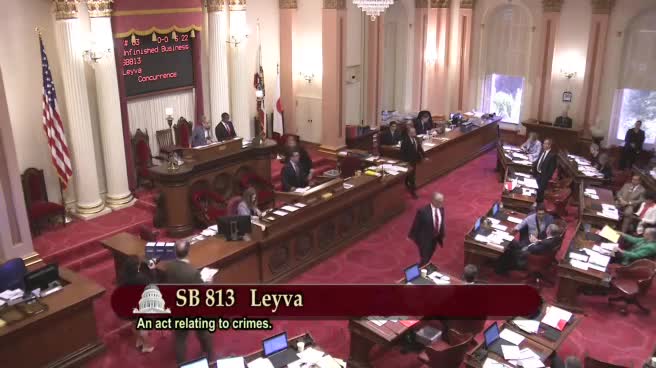 10MIN
Senate Floor
 9MIN
Senate Floor
 3MIN
Senate Standing Committee on Appropriations
 8MIN
Senate Standing Committee on Energy, Utilities and Communications
 23MIN
Senate Standing Committee on Environmental Quality
 5MIN
Assembly Standing Committee on Natural Resources
2MIN
Assembly Standing Committee on Natural Resources
Bill Author


