AB 387: Insurance: life and disability policies.
- Session Year: 2015-2016
- House: Assembly
- Latest Version Date: 2015-10-09
Existing law authorizes the Insurance Commissioner to promulgate, from time to time as conditions warrant, after notice and hearing, reasonable rules and regulations, and amendments and additions to those rules and regulations, as are necessary or advisable in order to establish and maintain a procedure for the filing and approval of specified documents prior to their issuance, delivery, or use in this state.
This bill would authorize the commissioner to develop and publish procedural requirements, guidelines, and standard insurance contract language for the purpose of streamlining and expediting the Department of Insurances file review process for life and disability insurance forms. The bill would require an expanded cover letter to be used to clearly document and demonstrate compliance with those published standards, as specified, in order to expedite review. The bill would require the department to make those published standards available on the departments Internet Web site, as specified.
Existing law provides various protections for consumers of annuity, life, disability income, and long-term care insurance products, such as the requirement that the recommendation of an insurer or an entity marketing an annuity or long-term care insurance product regarding the purchase of those products be based on suitability standards that are designed to ensure that the individual consumers needs are met.
This bill would require the commissioner to request that a multistate regulatory support organization commission a study to examine and report on the extent to which consumer protections for annuity, life, disability income, and long-term care insurance products differ from uniform standards developed by the Interstate Insurance Product Regulation Commission. The bill would prohibit the use of moneys from the General Fund or the Insurance Fund to carry out the study. The bill would authorize the commissioner to comment on the final study and would require the commissioner to submit the study to the Legislature, as specified, upon its completion.
Existing law provides for the licensing and regulation of disability insurers by the Department of Insurance. Existing law prohibits a disability policy from being issued until certain requirements are met. One of these conditions is if either (1) 30 days pass without notice from the Insurance Commissioner after a copy of the policy is filed with the commissioner; or (2) the commissioner gives written approval prior to the expiration of the 30 days.
This bill would increase that time period to 120 calendar days.
Existing law authorizes the Insurance Commissioner to promulgate, from time to time as conditions warrant, after notice and hearing, reasonable rules and regulations, and amendments and additions to those rules and regulations, as are necessary or advisable in order to establish and maintain a procedure for the filing and approval of specified documents prior to their issuance, delivery, or use in this state.
This bill would authorize the commissioner to develop and publish procedural requirements, guidelines, and standard insurance contract language for the purpose of streamlining and expediting the Department of Insurances file review process for life and disability insurance forms. The bill would require an expanded cover letter to be used to clearly document and demonstrate compliance with those published standards, as specified, in order to expedite review. The bill would require the department to make those published standards available on the departments Internet Web site, as specified.
Existing law provides various protections for consumers of annuity, life, disability income, and long-term care insurance products, such as the requirement that the recommendation of an insurer or an entity marketing an annuity or long-term care insurance product regarding the purchase of those products be based on suitability standards that are designed to ensure that the individual consumers needs are met.
This bill would require the commissioner to advise and present recommendations to a request that a multistate regulatory support organization, which is authorized to organization commission and pay for an independent a study to examine and report on the extent to which consumer protections for annuity, life, disability income, and long-term care insurance products differ from uniform standards developed by the Interstate Insurance Product Regulation Commission, to the extent solicited, nonpublic funds are received for that purpose. Commission. The bill would prohibit the use of moneys from the General Fund or the Insurance Fund to carry out the study. The bill would authorize the commissioner to comment on the final study and would require the commissioner to submit the study to the Legislature, as specified, no later than January 1, 2017. The bill would repeal those provisions on January 1, 2021. specified, upon its completion.
Existing law provides for the licensing and regulation of disability insurers by the Department of Insurance. Existing law prohibits a disability policy from being issued until certain requirements are met. One of these conditions is if either (1) 30 days pass without notice from the Insurance Commissioner after a copy of the policy is filed with the commissioner; or (2) the commissioner gives written approval prior to the expiration of the 30 days.
This bill would increase that time period to 120 calendar days.
Existing law authorizes the Insurance Commissioner to promulgate, from time to time as conditions warrant, after notice and hearing, reasonable rules and regulations, and amendments and additions to those rules and regulations, as are necessary or advisable in order to establish and maintain a procedure for the filing and approval of specified documents prior to their issuance, delivery, or use in this state.
This bill would authorize the commissioner to develop and publish procedural requirements, guidelines, and standard insurance contract language for the purpose of streamlining and expediting the Department of Insurances file review process for life and disability insurance forms. The bill would require an expanded cover letter to be used to clearly document and demonstrate compliance with those published standards, as specified, in order to expedite review. The bill would require the department to make those published standards available on the departments Internet Web site, as specified.
Existing law provides various protections for consumers of annuity, life, disability income, and long-term care insurance products, such as the requirement that the recommendation of an insurer or an entity marketing an annuity or long-term care insurance product regarding the purchase of those products be based on suitability standards that are designed to ensure that the individual consumers needs are met.
This bill would require the commissioner to commission advise and present recommendations to a multistate regulatory support organization, which is authorized to commission and pay for an independent study to examine and report on the extent to which consumer protections for annuity, life, disability income, and long-term care insurance products differ from uniform standards developed by the Interstate Insurance Product Regulation Commission, to the extent the commissioner receives solicited, nonpublic funds are received for that purpose. The bill would require the commissioner to submit the report study to the Legislature, as specified, no later than January 1, 2017. The bill would repeal those provisions on January 1, 2021.
Existing law provides for the licensing and regulation of disability insurers by the Department of Insurance. Existing law prohibits a disability policy from being issued until certain requirements are met. One of these conditions is if either (1) 30 days passes pass without notice from the Insurance Commissioner after a copy of the policy is filed with the commissioner; or (2) the commissioner gives written approval prior to the expiration of the 30 days.
This bill would increase that time period to 120 calendar days.
Existing law authorizes the Insurance Commissioner to promulgate, from time to time as conditions warrant, after notice and hearing, reasonable rules and regulations, and amendments and additions to those rules and regulations, as are necessary or advisable in order to establish and maintain a procedure for the filing and approval of specified documents prior to their issuance, delivery, or use in this state.
This bill would authorize the commissioner to develop and publish procedural requirements, guidelines, and standard insurance contract language for the purpose of streamlining and expediting the Department of Insurances file review process for life and disability insurance forms. The bill would require an expanded cover letter to be used to clearly document and demonstrate compliance with those published standards, as specified, in order to expedite review. The bill would require the department to make those published standards available on the departments Internet Web site, as specified.
Existing law provides various protections for consumers of annuity, life, disability income, and long-term care insurance products, such as the requirement that the recommendation of an insurer or an entity marketing an annuity or long-term care insurance product regarding the purchase of those products be based on suitability standards that are designed to ensure that the individual consumers needs are met.
This bill would require the commissioner to commission an independent study to examine and report on the extent to which consumer protections for annuity, life, disability income, and long-term care insurance products differ from uniform standards developed by the Interstate Insurance Product Regulation Commission, to the extent the commissioner receives solicited, nonpublic funds for that purpose. The bill would require the commissioner to submit the report to the Legislature, as specified, no later than January 1, 2017. The bill would repeal those provisions on January 1, 2021.
Existing law provides for the licensing and regulation of disability insurers by the Department of Insurance. Existing law prohibits a disability policy from being issued until certain requirements are met. One of these conditions is if either (1) 30 days passes without notice from the Insurance Commissioner after a copy of the policy is filed with the commissioner; or (2) the commissioner gives written approval prior to the expiration of the 30 days.
This bill would increase that time period to 120 calendar days.
Existing law provides for the licensing and regulation of disability insurers by the Department of Insurance. Existing law prohibits a disability policy from being issued until certain requirements are met. One of these conditions is if either (1) 30 days passes without notice from the Insurance Commissioner after a copy of the policy is filed with the commissioner; or (2) the commissioner gives written approval prior to the expiration of the 30 days.
This bill would clarify that the 30 days are 30 increase that time period to 120 calendar days.
Existing law provides for the licensing and regulation of disability insurers by the Department of Insurance. Existing law prohibits a disability policy from being issued until certain requirements are met. One of these conditions is if either (1) 30 days passes without notice from the Insurance Commissioner after a copy of the policy is filed with the commissioner; or (2) the commissioner gives written approval prior to the expiration of the 30 days.
This bill would clarify that the 30 days are 30 calendar days.
(a)In order to streamline the departments file review process for life and disability insurance forms, the commissioner may develop and publish all of the following:
(1)Procedural requirements for file submission.
(2)Guidelines and checklists that list and interpret applicable required and optional insurance statutes and regulations.
(3)Standard insurance contract language previously approved by the department.
(b)Documented use of the published standards described in paragraphs (1) to (3), inclusive, of subdivision (a) will enable the department to expedite its review process. In order to expedite file review, an expanded cover letter, in a format published by the department, shall be used to clearly document and demonstrate compliance with those standards.
(c)A publication developed pursuant to this section shall be made available on a dedicated page of the departments Internet Web site.
SEC. 2.Section 10191.5 is added to the Insurance Code, to read:10191.5.(a)(1)The commissioner shall request that a multistate regulatory support organization commission a study to examine and report on the extent to which the uniform standards set forth in the Interstate Insurance Product Regulation Compact developed by the Interstate Insurance Product Regulation Commission provide consumer protections that are equivalent to those established under state law for annuity, life, disability income, and long-term care insurance products.
(2)The commissioners request for the study described in paragraph (1) shall include a request that the study be completed no later than January 1, 2017, and that the study, to the extent feasible, highlight the substantive differences between the uniform standards set forth in the Interstate Insurance Product Regulation Compact and the statutory requirements under state law for annuity, life, disability income, and long-term care insurance products.
(b)(1)Upon completion of the study described in paragraph (1) of subdivision (a), the commissioner shall submit the study to the Chairpersons of the Assembly and Senate committees on insurance. The study shall be submitted in compliance with Section 9795 of the Government Code.
(2)The commissioner may review the final study prior to its submission to the Legislature, and submit written comments on the results of the study to the Legislature when submitting the study to the Legislature pursuant to paragraph (1).
(c)No moneys from the General Fund or the Insurance Fund may be used to implement this section.
SEC. 3.Section 10290 of the Insurance Code is amended to read:10290.A disability policy shall not be issued or delivered to any person in this state until both of the following conditions are met:
(a)A copy of the form thereof and, if more than one class of risks is written, of the classification of risks, and the premium rates pertaining thereto are filed with the commissioner.
(b)Either of the following occurs:
(1)One hundred twenty calendar days expire without notice from the commissioner after the copy is filed.
(2)The commissioner gives his or her written approval prior to that time.
(a)In order to streamline the departments file review process for life and disability insurance forms, the commissioner may develop and publish all of the following:
(1)Procedural requirements for file submission.
(2)Guidelines and checklists that list and interpret applicable required and optional insurance statutes and regulations.
(3)Standard insurance contract language previously approved by the department.
(b)Documented use of the published standards described in paragraphs (1) to (3), inclusive, of subdivision (a) will enable the department to expedite its review process. In order to expedite file review, an expanded cover letter, in a format published by the department, shall be used to clearly document and demonstrate compliance with those standards.
(c)A publication developed pursuant to this section shall be made available on a dedicated page of the departments Internet Web site.
SEC. 2.Section 10191.5 is added to the Insurance Code, to read:10191.5.(a)(1)The commissioner shall advise and present recommendations to a request that a multistate regulatory support organization, which is authorized to organization commission an independent a study to examine and report on the extent to which the uniform standards set forth in the Interstate Insurance Product Regulation Compact developed by the Interstate Insurance Product Regulation Commission provide consumer protections that are equivalent to those established under state law for annuity, life, disability income, and long-term care insurance products.
(2)Notwithstanding any other provision of law, the independent study described in paragraph (1) is not a personal services contract as described in Section 19130 of the Government Code.
(3)
(2)The independent commissioners request for the study described in paragraph (1) shall, shall include a request that the study be completed no later than January 1, 2017, and that the study, to the extent feasible, highlight the substantive differences between the uniform standards set forth in the Interstate Insurance Product Regulation Compact and the statutory requirements under state law for annuity, life, disability income, and long-term care insurance products.
(b)(1)Subject to paragraph (2), Upon completion of the study described in paragraph (1) of subdivision (a), the commissioner shall submit the independent study described in paragraph (1) of subdivision (a) to the Chairpersons of the Assembly and Senate committees on insurance no later than January 1, 2017. insurance. The study shall be submitted in compliance with Section 9795 of the Government Code.
(2)The commissioner may review and approve the final study prior to its submission to the Legislature. Legislature, and submit written comments on the results of the study to the Legislature when submitting the study to the Legislature pursuant to paragraph (1).
(c)The independent study described in paragraph (1) of subdivision (a) shall be commissioned and paid for by a multistate regulatory support organization, subject to the advice and recommendations of the commissioner. This section shall be implemented only to the extent that solicited, nonpublic funds are received and made available for the commission of the independent study. No moneys from the General Fund or the Insurance Fund may be used to implement this section.
(d)This section shall remain in effect only until January 1, 2021, and as of that date is repealed, unless a later enacted statute, that is enacted before January 1, 2021, deletes or extends that date.
SEC. 3.Section 10290 of the Insurance Code is amended to read:10290.A disability policy shall not be issued or delivered to any person in this state until both of the following conditions are met:
(a)A copy of the form thereof and, if more than one class of risks is written, of the classification of risks, and the premium rates pertaining thereto are filed with the commissioner.
(b)Either of the following occurs:
(1)One hundred twenty calendar days expire without notice from the commissioner after the copy is filed.
(2)The commissioner gives his or her written approval prior to that time.
(a)In order to streamline the departments file review process for life and disability insurance forms, the commissioner may develop and publish all of the following:
(1)Procedural requirements for file submission.
(2)Guidelines and checklists that list and interpret applicable required and optional insurance statutes and regulations.
(3)Standard insurance contract language previously approved by the department.
(b)Documented use of the published standards described in paragraphs (1) to (3), inclusive, of subdivision (a) will enable the department to expedite its review process. In order to expedite file review, an expanded cover letter, in a format published by the department, shall be used to clearly document and demonstrate compliance with those standards.
(c)A publication developed pursuant to this section shall be made available on a dedicated page of the departments Internet Web site.
SEC. 2.Section 10191.5 is added to the Insurance Code, to read:10191.5.(a)(1)The commissioner shall advise and present recommendations to a multistate regulatory support organization, which is authorized to commission an independent study to examine and report on the extent to which the uniform standards set forth in the Interstate Insurance Product Regulation Compact developed by the Interstate Insurance Product Regulation Commission provide consumer protections that are equivalent to those established under state law for annuity, life, disability income, and long-term care insurance products.
(2)Notwithstanding any other provision of law, the independent study described in paragraph (1) is not a personal services contract as described in Section 19130 of the Government Code.
(2)
(3)The report independent study described in paragraph (1) shall, to the extent feasible, also highlight the substantive differences between the uniform standards set forth in the Interstate Insurance Product Regulation Compact and the statutory requirements under state law for annuity, life, disability income, and long-term care insurance products.
(b)(1)The Subject to paragraph (2), the commissioner shall submit the report independent study described in paragraph (1) of subdivision (a) to the Chairpersons of the Assembly and Senate committees on insurance no later than January 1, 2017. The report study shall be made submitted in compliance with Section 9795 of the Government Code.
(2)The commissioner shall have the right to may review and approve the final report study prior to its submission to the Legislature.
(c)The independent study described in paragraph (1) of subdivision (a) shall be commissioned and paid for by a multistate regulatory support organization, subject to the advice and recommendations of the commissioner. This section shall be implemented only to the extent that solicited, nonpublic funds are received and made available for the commission of the independent study. No moneys from the General Fund or the Insurance Fund may be used to implement this section.
(d)This section shall remain in effect only until January 1, 2021, and as of that date is repealed, unless a later enacted statute, that is enacted before January 1, 2021, deletes or extends that date.
SEC. 3.Section 10290 of the Insurance Code is amended to read:10290.A disability policy shall not be issued or delivered to any person in this state until both of the following conditions are met:
(a)A copy of the form thereof and, if more than one class of risks is written, of the classification of risks, and the premium rates pertaining thereto are filed with the commissioner.
(b)Either of the following occurs:
(1)One hundred twenty calendar days expire without notice from the commissioner after the copy is filed.
(2)The commissioner gives his or her written approval prior to that time.
(a)In order to streamline the departments file review process for life and disability insurance forms, the commissioner may develop and publish all of the following:
(1)Procedural requirements for file submission.
(2)Guidelines and checklists that list and interpret applicable required and optional insurance statutes and regulations.
(3)Standard insurance contract language previously approved by the department.
(b)Documented use of the published standards described in paragraphs (1) to (3), inclusive, of subdivision (a) will enable the department to expedite its review process. In order to expedite file review, an expanded cover letter, in a format published by the department, shall be used to clearly document and demonstrate compliance with those standards.
(c)A publication developed pursuant to this section shall be made available on a dedicated page of the departments Internet Web site.
SEC. 2.Section 10191.5 is added to the Insurance Code, to read:10191.5.(a)(1)The commissioner shall commission an independent study to examine and report on the extent to which the uniform standards set forth in the Interstate Insurance Product Regulation Compact developed by the Interstate Insurance Product Regulation Commission provide consumer protections that are equivalent to those established under state law for annuity, life, disability income, and long-term care insurance products.
(2)The report described in paragraph (1) shall, to the extent feasible, also highlight the substantive differences between the uniform standards set forth in the Interstate Insurance Product Regulation Compact and the statutory requirements under state law for annuity, life, disability income, and long-term care insurance products.
(b)(1)The commissioner shall submit the report described in paragraph (1) of subdivision (a) to the Chairpersons of the Assembly and Senate committees on insurance no later than January 1, 2017. The report shall be made in compliance with Section 9795 of the Government Code.
(2)The commissioner shall have the right to review and approve the final report prior to its submission to the Legislature.
(c)This section shall be implemented only to the extent that solicited, nonpublic funds are received and made available for the commission of the independent study. No moneys from the General Fund or the Insurance Fund may be used to implement this section.
(d)This section shall remain in effect only until January 1, 2021, and as of that date is repealed, unless a later enacted statute, that is enacted before January 1, 2021, deletes or extends that date.
SECTION 1.SEC. 3.Section 10290 of the Insurance Code is amended to read:10290.A disability policy shall not be issued or delivered to any person in this state until both of the following conditions are met:
(a)A copy of the form thereof and, if more than one class of risks is written, of the classification of risks, and the premium rates pertaining thereto are filed with the commissioner.
(b)Either of the following occurs:
(1)One hundred twenty calendar days expire without notice from the commissioner after the copy is filed.
(2)The commissioner gives his or her written approval prior to that time.
A disability policy shall not be issued or delivered to any person in this state until both of the following conditions are met:
(a)A copy of the form thereof and, if more than one class of risks is written, of the classification of risks, and the premium rates pertaining thereto are filed with the commissioner.
(b)Either of the following occurs:
(1)Thirty One hundred twenty calendar days expires expire without notice from the commissioner after the copy is filed.
(2)The commissioner gives his or her written approval prior to that time.
A disability policy shall not be issued or delivered to any person in this State state until both of the following conditions are met:
(a)A copy of the form thereof and, if more than one class of risks is written, of the classification of risks, and the premium rates pertaining thereto are filed with the commissioner.
(b)Either of the following occurs:
(1)Thirty calendar days expires without notice from the commissioner after such copy is filed, or, the copy is filed.
(2)The commissioner gives his or her written approval prior to that time.
|
Date
|
Status
|
|---|---|
| Aug 31, 2015 | Read second time and amended. Ordered to third reading. |
| Oct 9, 2015 | Chaptered by Secretary of State - Chapter 691, Statutes of 2015. |
| Oct 9, 2015 | Approved by the Governor. |
| Sep 23, 2015 | Enrolled and presented to the Governor at 4 p.m. |
| Sep 11, 2015 | Senate amendments concurred in. To Engrossing and Enrolling. (Ayes 79. Noes 0.). |
| Sep 11, 2015 | Senate amendments concurred in. To Engrossing and Enrolling. (Ayes 79. Noes 0. Page 3128.). |
| Sep 11, 2015 | Senate amendments concurred in. To Engrossing and Enrolling. |
| Sep 10, 2015 | From committee: That the Senate amendments be concurred in. (Ayes 8. Noes 0.) (September 10). |
| Sep 9, 2015 | Re-referred to Com. on INS. pursuant to Assembly Rule 77.2. |
| Sep 9, 2015 | Joint Rule 62(a), file notice suspended. (Page 3032.) |
| Sep 9, 2015 | Joint Rule 62(a), file notice suspended. |
| Sep 8, 2015 | Read third time. Passed. Ordered to the Assembly. (Ayes 40. Noes 0. Page 2586.). |
| Sep 8, 2015 | Read third time. Passed. Ordered to the Assembly. |
| Sep 8, 2015 | In Assembly. Concurrence in Senate amendments pending. May be considered on or after September 10 pursuant to Assembly Rule 77. |
| Sep 3, 2015 | Read second time. Ordered to third reading. |
| Sep 2, 2015 | Read third time and amended. Ordered to second reading. |
| Feb 18, 2015 | Read first time. To print. |
| Aug 27, 2015 | From committee: Amend, and do pass as amended. (Ayes 7. Noes 0.) (August 27). |
| Aug 17, 2015 | In committee: Referred to APPR. suspense file. |
| Jul 8, 2015 | From committee: Do pass and re-refer to Com. on APPR. (Ayes 8. Noes 0.) (July 8). Re-referred to Com. on APPR. |
| Jun 29, 2015 | From committee chair, with author's amendments: Amend, and re-refer to committee. Read second time, amended, and re-referred to Com. on INS. |
| May 28, 2015 | Referred to Com. on INS. |
| May 14, 2015 | Read third time. Passed. Ordered to the Senate. (Ayes 78. Noes 0. Page 1452.) |
| May 14, 2015 | Read third time. Passed. Ordered to the Senate. |
| May 14, 2015 | In Senate. Read first time. To Com. on RLS. for assignment. |
| May 7, 2015 | Read second time. Ordered to Consent Calendar. |
| May 6, 2015 | From committee: Do pass. To Consent Calendar. (Ayes 13. Noes 0.) (May 6). |
| May 4, 2015 | Re-referred to Com. on INS. |
| Apr 30, 2015 | From committee chair, with author's amendments: Amend, and re-refer to Com. on INS. Read second time and amended. |
| Mar 5, 2015 | Referred to Com. on INS. |
| Feb 19, 2015 | From printer. May be heard in committee March 21. |
|
Date
|
Description
|
Location
|
Votes
|
|
|---|---|---|---|---|
| Sep 11, 2015 | AB 387 MCCARTY Concurrence in Senate Amendments | Assembly Floor |
Passed |
|
| Sep 10, 2015 | With recommendation: That Senate amendments be concurred in. | Assembly Standing Committee on Insurance |
Passed |
|
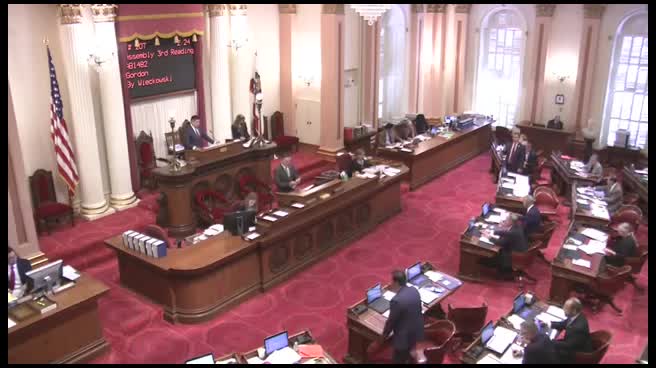
| Sep 8, 2015 | Assembly 3rd Reading AB387 McCarty By Roth | Senate Floor |
Passed |
|
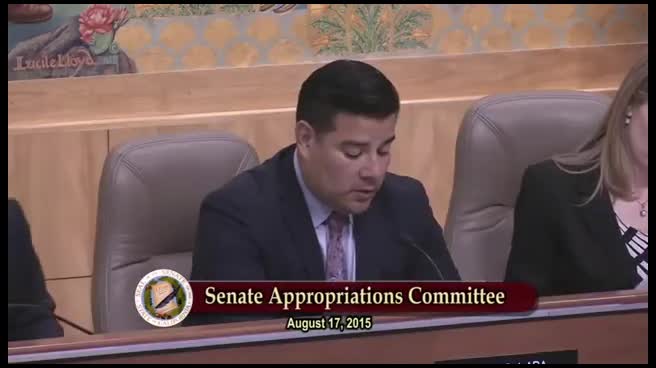
| Aug 27, 2015 | Do pass as amended | Senate Standing Committee on Appropriations |
Passed |
|
| Aug 17, 2015 | Placed on suspense file | Senate Standing Committee on Appropriations |
Passed |
|
| Jul 8, 2015 | Do pass, but first be re-referred to the Committee on [Appropriations] | Senate Standing Committee on Insurance |
Passed |
|
| May 14, 2015 | AB 387 MCCARTY Consent Calendar Second Day Regular Session | Assembly Floor |
Passed |
|
| May 6, 2015 | Do pass. To Consent Calendar. | Assembly Standing Committee on Insurance |
Passed |
This list shows positions taken on this bill by organizations on the date displayed, which is linked to the original source.
Positions by individuals are not included.
|
Organization
|
Position
|
Date
|
|---|---|---|
| Department of Insurance | ** Support | Aug 17, 2015 |
AB 387
Page 2
CONCURRENCE IN SENATE AMENDMENTS
AB 387
(McCarty)
As Amended September 2, 2015
Majority vote
ASSEMBLY: |
78-0 |
(May 14, 2015) |
SENATE: |
40-0 |
(September 8, 2015) |
||||
COMMITTEE VOTE: |
8-0 |
(September 10, 2015) |
RECOMMENDATION: |
concur |
|||||
(INS.)
Original Committee Reference: INS.
SUMMARY: Extends the period of time allowed for the Insurance Commissioner (commissioner) to review disability insurance policies from 30 to 120 days, requires the commissioner to take steps to facilitate the filing and approval of life and disability insurance products, and requires the commissioner to request a study of model laws for life insurance products.
The Senate amendments:
Require the commissioner to publish guidance regarding the submission of life and disability policies by insurers.
Require the commissioner to request that a multi-state regulatory support organization conduct a study to assess the differences between California law governing annuity, life, disability income, and long-term care insurance products and model laws related to those products adopted by the Interstate Insurance Product Regulation Commission.
EXISTING LAW:
Requires an insurer to file a disability insurance policy with commissioner prior to selling the policy.
Permits the policy to be sold either when the policy is approved by the commissioner or when 30 days have elapsed since the policy was filed, whichever is sooner.
Requires the commissioner to reject a disability policy that contains a provision that is vague or misleading.
Provides that the commissioner must require insurers to fully comply with the Insurance Code.
FISCAL EFFECT: Undetermined
COMMENTS: Purpose. This bill was introduced at the request of the Department of Insurance (department) to address the consequences of a 2014 decision by the First District of the California Court of Appeal. In this case (Ellena v. Department of Insurance), the department argued that the Insurance Code (code) did not impose a mandatory duty on the commissioner to review each policy filed. Rather, the department argued that the code provided the commissioner with the discretionary authority to review each policy filed, and that insurers were free to market a policy if the commissioner did not act on a policy within 30 days of filing. However, the court found that the commissioner has a mandatory duty to review each disability insurance policy. This decision creates substantial new workload in the department's policy review process. Extending the timeline for the commissioner's review will help the department adjust to the court's decision.
While the commissioner has devoted significant energy to speeding up the policy review process, there is wide agreement in the insurance industry that the policy approval process remains burdensome and slow. It is worth noting that there are ongoing discussions between insurers and the department on changes to the policy review process to streamline the review of new policies, and those discussions may produce additional statutory reforms to the process.
Analysis Prepared by: Paul Riches / INS. / (916) 319-2086 FN: 0002369
AB 387
Page 2
CONCURRENCE IN SENATE AMENDMENTS
AB 387
(McCarty)
As Amended September 2, 2015
Majority vote
ASSEMBLY: |
78-0 |
(May 14, 2015) |
SENATE: |
40-0 |
(September 8, 2015) |
Original Committee Reference: INS.
SUMMARY: Extends the period of time allowed for the Insurance Commissioner (commissioner) to review disability insurance policies from 30 to 120 days, requires the commissioner to take steps to facilitate the filing and approval of life and disability insurance products, and requires the commissioner to request a study of model laws for life insurance products.
The Senate amendments:
Require the commissioner to publish guidance regarding the submission of life and disability policies by insurers.
Requires the commissioner to request that a multi-state regulatory support organization conduct a study to assess the differences between California law governing annuity, life, disability income, and long-term care insurance products and model laws related to those products adopted by the Interstate Insurance Product Regulation Commission.
EXISTING LAW:
Requires an insurer to file a disability insurance policy with commissioner prior to selling the policy.
Permits the policy to be sold either when the policy is approved by the commissioner or when 30 days have elapsed since the policy was filed, whichever is sooner.
Requires the commissioner to reject a disability policy that contains a provision that is vague or misleading.
Provides that the commissioner must require insurers to fully comply with the Insurance Code.
FISCAL EFFECT: According to the Senate Appropriations Committee:
One-time costs of about $400,000 to develop procedures for reviewing disability insurance policies and developing and publishing procedural requirements and guidelines for use by insurance companies when making filings by CDI (Insurance Fund).
Unknown costs to prepare a report comparing California insurance standards to those developed by the IIPRC (private funds). This bill requires the report to be commissioned and paid for by a non-state entity and specifically prohibits the use of General Fund or Insurance Fund monies for implementation of that section of the bill (which would indicate that donated funds would also be used for any significant internal costs associated with the report incurred by CDI).
COMMENTS: Purpose. This bill was introduced at the request of the Department of Insurance (department) to address the consequences of a 2014 decision by the First District of the California Court of Appeal. In this case (Ellena v. Department of Insurance), the department argued that the Insurance Code (code) did not impose a mandatory duty on the commissioner to review each policy filed. Rather, the department argued that the code provided the commissioner with the discretionary authority to review each policy filed, and that insurers were free to market a policy if the commissioner did not act on a policy within 30 days of filing. However, the court found that the commissioner has a mandatory duty to review each disability insurance policy. This decision creates substantial new workload in the department's policy review process. Extending the timeline for the commissioner's review will help the department adjust to the court's decision.
While the commissioner has devoted significant energy to speeding up the policy review process, there is wide agreement in the insurance industry that the policy approval process remains burdensome and slow. It is worth noting that there are ongoing discussions between insurers and the department on changes to the policy review process to streamline the review of new policies, and those discussions may produce additional statutory reforms to the process.
Analysis Prepared by: Paul Riches / INS. / (916) 319-2086 FN: 0002218
AB 387
Page 5
|
Office of Senate Floor Analyses (916) 651-1520 Fax: (916) 327-4478 |
THIRD READING
Bill No: AB 387
Amended: 9/2/15 in Senate
SENATE INSURANCE COMMITTEE: 8-0, 7/8/15
AYES: Roth, Gaines, Berryhill, Glazer, Hall, Hernandez, Liu, Wieckowski
NO VOTE RECORDED: Mitchell
SENATE APPROPRIATIONS COMMITTEE: 7-0, 8/27/15
AYES: Lara, Bates, Beall, Hill, Leyva, Mendoza, Nielsen
ASSEMBLY FLOOR: 78-0, 5/14/15 (Consent) - See last page for vote
SUBJECT: Insurance: life and disability policies
SOURCE: California Department of Insurance
DIGEST: This bill extends the period of time allowed for the Insurance Commissioner (IC) to review disability insurance policies from 30 to 120 days, requires the IC to request that a multistate regulatory support organization to commission a report that compares California insurance standards with those developed by the Interstate Insurance Product Regulation Commission (IIPRC), and authorizes the IC to publish specified documents and information intended to streamline the review process for life and disability insurance forms.
Senate Floor Amendments of 9/2/15 (1) clarify the duties applicable to the Insurance Commissioner when requesting that a multistate regulatory support organization commission a study comparing California’s insurance standards to uniform standards adopted by the IIPRC; (2) remove the sunset date; and (3) eliminate unenforceable provisions applicable to the support organization.
Existing law:
Establishes standards for life and disability insurance policies.
Requires an insurer to file a disability insurance policy with the IC prior to selling the policy.
Permits the insurer to sell a policy when either the policy is approved by the IC or 30 days have elapsed since the policy was filed, whichever is sooner.
Prohibits the IC from approving a disability policy that contains a provision that is vague or misleading or fails to meet specified standards.
Prohibits an insurer from selling a disapproved policy.
This bill:
Extends the period of time for the IC to review disability insurance policies from 30 to 120 days.
Requires the IC to request that a multistate regulatory support organization commission a study comparing California insurance standards with those developed by the IIPRC and that the study be completed by January 1, 2017.
Authorizes the IC to review the study and to prepare written comments to include with the study, and requires the IC to submit the study to the Chairpersons of the Assembly and Senate Committees on Insurance.
Prohibits the use of General or Insurance Fund moneys for the purpose of commissioning the report.
Authorizes the IC to publish specified documents and information intended to streamline the review process for life and disability insurance forms.
Background
Disability and life insurance policies remain subject to statutory standards. Insurers must submit documents that contain the contractual provisions and other items integral to the transaction such as required disclosures (collectively referred to as “forms”) to the IC before issuing policies based on those forms. For some types of insurance, the IC must affirmatively approve the forms before the insurer issues contracts based on those forms. For other types of insurance, the insurer must submit the form but may issue policies after a waiting period without affirmative approval by the IC. In either case, the insurer must stop issuing policies based on that form if the IC subsequently disapproves the form.
Insurers must file forms for disability insurance. If the IC notifies the insurer that the form does not comply with required standards, the insurer must fix the form and get approval before issuing policies. If the IC affirmatively approves the form, or 30 days passes without notice, the insurer may issue policies under that form. Traditionally, the statute has been read so that the IC would have discretion to review a policy or not. The California Court of Appeal in the case Ellena v. Department of Insurance (2014) held that the IC has a mandatory duty to review each disability insurance policy. That opinion has created a substantial new workload in the California Department of Insurance’s (CDI) policy review process. This bill addresses the additional workload by extending the review period to 120 days.
AB 387 also authorizes CDI to publish on its website information designed to expedite approval of policy forms, including, instructions, guidelines, checklists, and examples of previously approved language. It does not, however, alter or expand CDI’s regulatory authority or obligations to comply with the Administrative Procedure Act.
Additionally, this bill calls for a comparison of California standards to the uniform standards established by the IIPRC. The IIPRC is a multi-state public entity which serves as a central point for developing uniform product standards for life, disability income, and long-term care insurance products. Products are submitted to the IIPRC for the review and, if approved, may be sold in member jurisdictions. The IIPRC has 44 members representing approximately 70% of the premium nationwide, but not including California, Florida, and New York. Some industry groups and the Federal Insurance Office recommend that every state join the IIPRC. However, concerns have been raised that joining the IIPRC would undermine California’s regulatory authority and result in with fewer consumer protections. This bill requires the IC to request that a multistate regulatory support organization, such as the National Association of Insurance Commissioners, commission a study comparing IIPRC and California standards.
FISCAL EFFECT: Appropriation: No Fiscal Com.: Yes Local: No
According to the Senate Appropriations Committee:
One-time costs of about $400,000 to develop procedures for reviewing disability insurance policies and developing and publishing procedural requirements and guidelines for use by insurance companies when making filings by CDI (Insurance Fund).
Unknown costs to prepare a report comparing California insurance standards to those developed by the IIPRC (private funds). This bill specifically prohibits the use of General Fund or Insurance Fund monies for implementation of that section of the bill (which would indicate that donated funds would also be used for any significant internal costs associated with the report incurred by CDI).
California Department of Insurance (source)
American Council of Life Insurers
Association of California Life and Health Insurance Companies
None received
ARGUMENTS IN SUPPORT: According to the author, this bill codifies an agreement between CDI and the disability insurance industry and clarifies what constitutes “acceptance” of a new disability insurance policy by CDI. CDI explains that providing standards to expedite the policy approval process coupled with increasing the amount of time provided to review and approve policies may help to improve the process and reduce confusion for consumers and industry.
AYES: Achadjian, Alejo, Travis Allen, Baker, Bigelow, Bloom, Bonilla, Bonta, Brough, Brown, Burke, Calderon, Campos, Chang, Chau, Chávez, Chiu, Chu, Cooley, Cooper, Dababneh, Dahle, Daly, Dodd, Eggman, Frazier, Beth Gaines, Gallagher, Cristina Garcia, Eduardo Garcia, Gatto, Gipson, Gomez, Gonzalez, Gordon, Gray, Grove, Hadley, Harper, Roger Hernández, Holden, Irwin, Jones, Jones-Sawyer, Kim, Lackey, Levine, Lopez, Low, Maienschein, Mathis, Mayes, McCarty, Melendez, Mullin, Nazarian, Obernolte, O'Donnell, Olsen, Patterson, Perea, Quirk, Rendon, Ridley-Thomas, Rodriguez, Salas, Santiago, Steinorth, Mark Stone, Thurmond, Ting, Wagner, Waldron, Weber, Wilk, Williams, Wood, Atkins
NO VOTE RECORDED: Linder, Medina
Prepared by: Hugh Slayden / INS. / (916) 651-4110
9/3/15 14:30:06
**** END ****
AB 387
Page 5
|
Office of Senate Floor Analyses (916) 651-1520 Fax: (916) 327-4478 |
THIRD READING
Bill No: AB 387
Amended: 8/31/15 in Senate
SENATE INSURANCE COMMITTEE: 8-0, 7/8/15
AYES: Roth, Gaines, Berryhill, Glazer, Hall, Hernandez, Liu, Wieckowski
NO VOTE RECORDED: Mitchell
SENATE APPROPRIATIONS COMMITTEE: 7-0, 8/27/15
AYES: Lara, Bates, Beall, Hill, Leyva, Mendoza, Nielsen
ASSEMBLY FLOOR: 78-0, 5/14/15 (Consent) - See last page for vote
SUBJECT: Insurance: life and disability policies
SOURCE: California Department of Insurance
DIGEST: This bill extends the period of time allowed for the Insurance Commissioner (IC) to review disability insurance policies from 30 to 120 days, requires the IC to present recommendations to a multistate regulatory support organization in regards to commissioning a report that compares California insurance standards with those developed by the Interstate Insurance Product Regulation Commission (IIPRC), and authorizes the IC to publish specified documents and information intended to streamline the review process for life and disability insurance forms.
Existing law:
Establishes standards for life and disability insurance policies.
Requires an insurer to file a disability insurance policy with the IC prior to selling the policy.
Permits the insurer to sell a policy when either the policy is approved by the IC or 30 days have elapsed since the policy was filed, whichever is sooner.
Prohibits the IC from approving a disability policy that contains a provision that is vague or misleading or fails to meet specified standards.
Prohibits an insurer from selling a disapproved policy.
This bill:
Extends the period of time for the IC to review disability insurance policies from 30 to 120 days.
Requires the IC to recommend to a multistate regulatory support organization that it commission a study that compares California insurance standards with those developed by the IIPRC.
Requires that the study be commissioned and paid for by the multistate regulatory support organization and prohibits the use of General or Insurance Fund moneys for the purpose of commissioning the report.
Requires the IC to submit a report no later than January 1, 2017, to the Senate and Assembly Insurance Committees.
Repeals the provisions relating to the report on January 1, 2021.
Authorizes the IC to publish specified documents and information intended to streamline the review process for life and disability insurance forms.
Background
Disability and life insurance policies remain subject to statutory standards. Insurers must submit documents that contain the contractual provisions and other items integral to the transaction such as required disclosures (collectively referred to as “forms”) to the IC before issuing policies based on those forms. For some types of insurance, the IC must affirmatively approve the forms before the insurer issues contracts based on those forms. For other types of insurance, the insurer must submit the form but may issue policies after a waiting period without affirmative approval by the IC. In either case, the insurer must stop issuing policies based on that form if the IC subsequently disapproves the form.
Insurers must file forms for disability insurance. If the IC notifies the insurer that the form does not comply with required standards, the insurer must fix the form and get approval before issuing policies. If the IC affirmatively approves the form, or 30 days passes without notice, the insurer may issue policies under that form. Traditionally, the statute has been read so that the IC would have discretion to review a policy or not. The California Court of Appeal in the case Ellena v. Department of Insurance (2014) held that the IC has a mandatory duty to review each disability insurance policy. That opinion has created a substantial new workload in the California Department of Insurance’s (CDI) policy review process. This bill addresses the additional workload by it extending the review period to 120 days.
AB 387 also authorizes CDI to publish on its website information designed to expedite approval of policy forms, including, instructions, guidelines, checklists, and examples of previously approved language. It does not, however, alter or expand CDI’s regulatory authority or obligations to comply with the Administrative Procedure Act.
Additionally, this bill calls for a comparison of California standards to the uniform standards established by the IIPRC, a multi-state public entity which serves as a central point for the filing and approval of some types of insurance products, including life, disability income, and long-term care insurance. The IIPRC has 44 members representing approximately 70% of the premium nationwide, but not including California, Florida, and New York. Some industry groups and the Federal Insurance Office recommend that every state join the IIPRC. However, concerns have been raised that joining the IIPRC would undermine California’s regulatory authority and result in with fewer consumer protections. This bill requires the IC to recommend to a multistate regulatory support organization, such as the National Association of Insurance Commissioners, that it commission an independent study to compare IIPRC and California standards.
FISCAL EFFECT: Appropriation: No Fiscal Com.: Yes Local: No
According to the Senate Appropriations Committee:
One-time costs of about $400,000 to develop procedures for reviewing disability insurance policies and developing and publishing procedural requirements and guidelines for use by insurance companies when making filings by CDI (Insurance Fund).
Unknown costs to prepare a report comparing California insurance standards to those developed by the IIPRC (private funds). This bill requires the report to be commissioned and paid for by a non-state entity and specifically prohibits the use of General Fund or Insurance Fund monies for implementation of that section of the bill (which would indicate that donated funds would also be used for any significant internal costs associated with the report incurred by CDI).
California Department of Insurance (source)
Association of California Life and Health Insurance Companies
OPPOSITION: (Verified 8/28/15)
None received
ARGUMENTS IN SUPPORT: According to the author, this bill codifies an agreement between CDI and the disability insurance industry and clarifies what constitutes “acceptance” of a new disability insurance policy by CDI. CDI explains that providing standards to expedite the policy approval process coupled with increasing the amount of time provided to review and approve policies may help to improve the process and reduce confusion for consumers and industry.
AYES: Achadjian, Alejo, Travis Allen, Baker, Bigelow, Bloom, Bonilla, Bonta, Brough, Brown, Burke, Calderon, Campos, Chang, Chau, Chávez, Chiu, Chu, Cooley, Cooper, Dababneh, Dahle, Daly, Dodd, Eggman, Frazier, Beth Gaines, Gallagher, Cristina Garcia, Eduardo Garcia, Gatto, Gipson, Gomez, Gonzalez, Gordon, Gray, Grove, Hadley, Harper, Roger Hernández, Holden, Irwin, Jones, Jones-Sawyer, Kim, Lackey, Levine, Lopez, Low, Maienschein, Mathis, Mayes, McCarty, Melendez, Mullin, Nazarian, Obernolte, O'Donnell, Olsen, Patterson, Perea, Quirk, Rendon, Ridley-Thomas, Rodriguez, Salas, Santiago, Steinorth, Mark Stone, Thurmond, Ting, Wagner, Waldron, Weber, Wilk, Williams, Wood, Atkins
NO VOTE RECORDED: Linder, Medina
Prepared by: Hugh Slayden / INS. / (916) 651-4110
8/30/15 19:42:07
**** END ****
AB 387 (McCarty) Page 0 of 1
SENATE COMMITTEE ON APPROPRIATIONS
Senator Ricardo Lara, Chair
2015 - 2016 Regular Session
AB 387 (McCarty) - Insurance: life and disability policies
|
|
Version: June 29, 2015 |
Policy Vote: INS. 8 - 0 |
Urgency: No |
Mandate: No |
Hearing Date: August 27, 2015 |
Consultant: Brendan McCarthy |
*********** ANALYSIS ADDENDUM – SUSPENSE FILE ***********
The following information is revised to reflect amendments
adopted by the committee on August 27, 2015
Bill Summary:
AB 387 would extend the time allowed for the Insurance Commissioner to review disability insurance policies from 30 days to 120 days. The bill would require the Insurance Commissioner to advise a multistate regulatory support organization regarding a report that compares California insurance standards with those developed by the Interstate Insurance Product Regulation Commission.
Fiscal Impact:
One-time costs of about $400,000 to develop procedures for reviewing disability insurance policies and developing and publishing procedural requirements and guidelines for use by insurance companies when making filings by the Department of Insurance (Insurance Fund).
Unknown costs to prepare a report comparing California insurance standards to those developed by the Interstate Insurance Product Regulation Commission (private funds). The bill requires the report to be commissioned and paid for by a non-state entity and specifically prohibits the use of General Fund or Insurance Fund monies for implementation of that section of the bill (which would indicate that donated funds would also be used for any significant internal costs associated with the report incurred by the Department).
Author Amendments:
Require the study to be commissioned and paid for by a multistate regulatory support organization, in consultation with the Insurance Commissioner.
-- END --
AB 387 (McCarty) Page 2 of 2
SENATE COMMITTEE ON APPROPRIATIONS
Senator Ricardo Lara, Chair
2015 - 2016 Regular Session
AB 387 (McCarty) - Insurance: life and disability policies
|
|
Version: June 29, 2015 |
Policy Vote: INS. 8 - 0 |
Urgency: No |
Mandate: No |
Hearing Date: August 17, 2015 |
Consultant: Brendan McCarthy |
This bill meets the criteria for referral to the Suspense File.
Bill Summary:
AB 387 would extend the time allowed for the Insurance Commissioner to review disability insurance policies from 30 days to 120 days. The bill would require the Insurance Commissioner to commission a report that compares California insurance standards with those developed by the Interstate Insurance Product Regulation Commission.
Fiscal Impact:
One-time costs of about $400,000 to develop procedures for reviewing disability insurance policies and developing and publishing procedural requirements and guidelines for use by insurance companies when making filings by the Department of Insurance (Insurance Fund).
Ongoing costs of about $270,000 per year to review disability insurance policies by the Department of Insurance (Insurance Fund). Under current practice, the Department of Insurance has not reviewed and approved every disability insurance policy that has been filed with the Department. Rather the Department used its discretion to review policies and respond to the filing insurer, as needed. A recent court case found that the Department is required to review each disability insurance policy. Therefore, the Department indicates that it will need additional staff resources to review all filings.
Unknown costs to prepare a report comparing California insurance standards to those developed by the Interstate Insurance Product Regulation Commission (private funds). The cost of preparing the report is unknown at this time. The bill specifically prohibits the use of General Fund or Insurance Fund monies for implementation of that section of the bill (which would indicate that donated funds would also be used for any significant internal costs associated with the report incurred by the Department).
Background:
Under current law, the Department of Insurance regulates the sale of several types of insurance in the state, including disability insurance policies. Current law provides that a disability insurance policy shall not be sold in the state until the policy is filed with the Insurance Commissioner and either 30 days expire or the Insurance Commissioner approves the filing earlier. In practice, the Department of Insurance has interpreted current law to allow it discretion in whether to actively review disability insurance policy filings. If 30 days elapse without action by the Department, the Department interpreted the law as allowing the policy to be sold. A recent court case found that the Department is required to review every disability insurance policy filing.
The Interstate Insurance Compact is an inter-jurisdictional agreement between states that establishes uniform standards for insurance products, to allow insurance companies to sell standard products in multiple states. While 44 states are members of the compact, California is not.
Proposed Law:
AB 387 would extend the time allowed for the Insurance Commissioner to review disability insurance policies from 30 days to 120 days. The bill would authorize the Commissioner to develop and post information on the filing and approval process and other information that can be of assistance to insurers that are required to file with the Commissioner.
The bill would require the Insurance Commissioner to commission a report that compares California insurance standards with those developed by the Interstate Insurance Product Regulation Commission. The bill would require the report to be submitted to the appropriate policy committees of the Legislature. The bill would prohibit the use of General Fund or Insurance Fund monies for the implementation of that section of the bill.
Staff Comments:
Given the new responsibility to review all disability insurance policy filings that was imposed by the court, the Department indicates that it will need both additional staff resources and additional time to review those filings.
-- END --
AB 387 (McCarty) Page 5 of 5
SENATE COMMITTEE ON INSURANCE
Senator Richard Roth, Chair
2015 - 2016 Regular
Bill No: AB 387 Hearing Date: July 8, 2015
Author: |
McCarty |
||
Version: |
June 29, 2015 Amended |
||
Urgency: |
No |
Fiscal: |
Yes |
Consultant: |
Hugh Slayden |
||
Subject: Insurance: life and disability policies.
SUMMARY
Extends the period of time allowed for the Insurance Commissioner (IC) to review disability insurance policies from 30 to 120 days, requires the IC to submit a report to the Senate and Assembly Insurance Committees that compares California insurance standards with those developed by the Interstate Insurance Product Regulation Commission (IIPRC), and authorizes the IC to publish specified documents and information intended to streamline the review process for life and disability insurance forms.
DIGEST
Existing law
Establishes standards for life and disability insurance policies.
Requires an insurer to file a disability insurance policy with the IC prior to selling the policy.
Permits the insurer to sell a policy when either the policy is approved by the IC or 30 days have elapsed since the policy was filed, whichever is sooner.
Prohibits the IC from approving a disability policy that contains a provision that is vague or misleading or fails to meet specified standards.
Prohibits an insurer from selling a disapproved policy.
This bill
Extends the period of time for the IC to review disability insurance policies from 30 to 120 days.
Requires the IC to commission a study and submit a report no later than January 1, 2017, to the Senate and Assembly Insurance Committees that compares California insurance standards with those developed by the IIPRC.
Prohibits the use of General or Insurance Fund moneys for the purpose of commissioning the report.
Repeals the provisions relating to the report on January 1, 2021.
Authorizes the IC to publish specified documents and information intended to streamline the review process for life and disability insurance forms.
COMMENTS
Purpose of the bill According to the author, this bill codifies an agreement between the California Department of Insurance (CDI) and the disability insurance industry and clarifies what constitutes “acceptance” of a new disability insurance policy by CDI. A recent court decision, Ellena v. Department of Insurance, found ambiguity in current state law as to when the IC is deemed to have approved a disability policy. The language of this bill, created through negotiations between CDI and industry, will clarify when a disability policy is approved.
Background The IC and the insurance industry have been working together to streamline the process for approval of disability insurance products that require approval by CDI. In that spirit, this bill takes a multi-prong approach to address immediate challenges and consider future options.
Disability Form Review. Disability and life insurance policies remain subject to statutory standards. Insurers must submit documents that contain the contractual provisions and other items integral to the transaction such as required disclosures (collectively referred to as “forms”) to the IC before issuing policies based on those forms. For some types of insurance, the IC must affirmatively approve the forms before the insurer issues contracts based on those forms. For other types of insurance, the insurer must submit the form but may issue policies after a waiting period without affirmative approval by the IC. In either case, the insurer must stop issuing policies based on that form if the IC subsequently disapproves the form.
Insurers must file forms for disability insurance. If the IC notifies the insurer that the form does not comply with required standards, the insurer must fix the form and get approval before issuing policies. However, if and when the IC affirmatively approves the form, or 30 days passes without notice, the insurer may issue policies under that form.
A 2014 decision by the California Court of Appeal challenged the traditional understanding of that disability insurance approval process. In Ellena v. Department of Insurance, CDI argued that the Insurance Code provided discretionary authority to review filed disability policies and that insurers were free to market a policy if the IC did not act on a policy within 30 days of filing. However, the court held that the IC has a mandatory duty to review each disability insurance policy. This decision creates substantial new workload in CDI’s policy review process. This bill extends the review period from 30 to 120 days in order to allow CDI to accommodate the additional workload.
Interstate Insurance Product Regulation Commission (IIPRC). The Interstate Insurance Compact (“Compact”) is an inter-jurisdiction agreement that establishes uniform product standards with a consolidated product approval process for U.S. state and territory members. The Compact established the IIPRC, a multi-state public entity which serves as a central point of electronic filing for certain insurance products, including life insurance, annuities, disability income, and long-term care insurance, and to develop uniform product standards. Today, the IIPRC has 44 members representing approximately two-thirds of the U.S. premium volume, but not including California, North Dakota, South Dakota, Florida, New York, and Delaware.
Some industry groups and the Federal Insurance Office recommend that every state join the IIPRC. However, others argue that joining the IIPRC would undermine California’s regulatory authority and likely result in lower quality products with fewer consumer protections. This bill requires the IC to commission an independent study to compare IIPRC standards to California standards.
Streamlining Form Approval. This bill would authorize CDI to
publish on its website information designed to expedite approval of
policy forms, including, instructions, guidelines, checklists, and
examples of previously approved language. The documents and
information referred to in this bill are intended to be informational
and not subject to the Administrative Procedure Act (APA). This
information should operate under preexisting APA exceptions governing
the publication of forms and instructions, as well as documents
related to the internal management of an agency. (Govt. Code §
11340.9(c) and (d).) According to the Office of Administrative Law,
a regulation is not needed if a form's content consists only of
existing, specific legal requirements. Any instruction, sample,
guidance, etc. that would otherwise create new legal requirements
would be unenforceable. For example, the IC could not disapprove a
filing, nor could an insurer demand that CDI approve a form, based on
any of the directions or information published under this bill if not
otherwise adopted under the APA or supported by other valid grounds.
Support
CDI explains that providing standards to expedite the policy approval process coupled with increasing the amount of time provided to review and approve policies may help to improve the process and reduce confusion for consumers and industry.
The Association of California Life and Health Insurance Companies supports this bill because it reflects their continued work with CDI to explore way to expedite product filings while ensuring all important consumer protections remain in place.
Opposition
None received
Question The bill prohibits the use of public funds for the commission of the IIPRC study and requires the use of solicited, nonpublic funds. What are the likely sources of these funds?
POSITIONS
Support
Department of Insurance (sponsor)
Association of California Life and Health Insurance Companies
Oppose
None received
-- END --
AB 387
Page 2
Date of Hearing: May 6, 2015
ASSEMBLY COMMITTEE ON INSURANCE
Tom Daly, Chair
AB 387
(McCarty) – As Amended April 30, 2015
SUBJECT: Insurance: disability policies: commissioner approval
SUMMARY: Extends the period of time allowed for the Insurance Commissioner (commissioner) to review disability insurance policies from 30 to 120 days.
EXISTING LAW:
Requires an insurer to file a disability insurance policy with commissioner prior to selling the policy.
Permits the policy to be sold either when the policy is approved by the commissioner or when 30 days have elapsed since the policy was filed, whichever is sooner.
Requires the commissioner to reject a disability policy that contains a provision that is vague or misleading.
Provides that the commissioner must require insurers to fully comply with the Insurance Code.
FISCAL EFFECT: Undetermined
COMMENTS:
Purpose. This bill was introduced at the request of the Department of Insurance (department) to address the consequences of a 2014 decision by the First District of the California Court of Appeal. In this case (Ellena v. Department of Insurance), the department argued that the Insurance Code (code) did not impose a mandatory duty on the commissioner to review each policy filed. Rather, the department argued that the code provided the commissioner with the discretionary authority to review each policy filed, and that insurers were free to market a policy if the commissioner did not act on a policy within 30 days of filing. However, the court found that the commissioner has a mandatory duty to review each disability insurance policy. This decision creates substantial new workload in the department's policy review process. Extending the timeline for the commissioner's review will help the department adjust to the court's decision.
While the commissioner has devoted significant energy to speeding up the policy review process, there is wide agreement in the insurance industry that the policy approval process remains burdensome and slow. It is worth noting that there are ongoing discussions between insurers and the department on changes to the policy review process to streamline the review of new policies, and those discussions may produce additional statutory reforms to the process.
REGISTERED SUPPORT / OPPOSITION:
Support
Department of Insurance (sponsor)
Opposition
None received
Analysis Prepared by: Paul Riches / INS. / (916) 319-2086
Discussed in Hearing
 2MIN
Assembly Floor
 2MIN
Senate Floor
 1MIN
Senate Standing Committee on Appropriations
Bill Author

Bill Co-Author(s):