AB 40: Toll bridges: pedestrians and bicycles.
- Session Year: 2015-2016
- House: Assembly
- Latest Version Date: 2015-10-07
Existing law provides for the construction and operation of various toll bridges by the state, the Golden Gate Bridge, Highway and Transportation District, and private entities that have entered into a franchise agreement with the state.
This bill would, until January 1, 2021, prohibit a toll from being imposed on the passage of a pedestrian or bicycle over these various toll bridges.
Existing law provides for the construction and operation of various toll bridges by the state, the Golden Gate Bridge, Highway and Transportation District, and by private entities that have entered into a franchise agreement with the state.
This bill would would, until January 1, 2021, prohibit a toll from being imposed on the passage of a pedestrian or bicycle over these various toll bridges.
Existing law provides for the construction and operation of various toll bridges by the state, the Golden Gate Bridge, Highway and Transportation District, and by private entities that have entered into a franchise agreement with the state.
This bill would prohibit a toll from being imposed on the passage of a pedestrian or bicycle over these various toll bridges.
Existing law establishes bridge and highway districts and various regional transportation authorities and transit districts, including the Golden Gate Bridge, Highway and Transportation District, and prescribes the powers and duties of the district, including the power to fix and collect all tolls for the use of the districts property.
This bill would prohibit the district from fixing or collecting any tolls or access fees for pedestrian and bicyclist use of the Golden Gate Bridge sidewalks.
(a)No toll shall be imposed on the passage of a pedestrian or bicycle over any bridge that is under the jurisdiction of the district, on which the travel of pedestrians and bicycles is otherwise authorized.
(b)This section shall remain in effect only until January 1, 2021, and as of that date is repealed, unless a later enacted statute, that is enacted before January 1, 2021, deletes or extends that date.
SEC. 2.Section 30114 is added to the Streets and Highways Code, to read:30114.(a)No toll shall be imposed on the passage of a pedestrian or bicycle over any state-owned bridge, on which the travel of pedestrians and bicycles is otherwise authorized, and on which tolls are imposed on the passage of motor vehicles.
(b)This section shall remain in effect only until January 1, 2021, and as of that date is repealed, unless a later enacted statute, that is enacted before January 1, 2021, deletes or extends that date.
SEC. 3.Section 30814 is added to the Streets and Highways Code, to read:30814.(a)No toll shall be imposed on the passage of a pedestrian or bicycle over any bridge that is part of the state highway system, on which the travel of pedestrians and bicycles is otherwise authorized, and on which tolls are imposed on the passage of motor vehicles, including any bridge constructed pursuant to a franchise granted under this article.
(b)This section shall remain in effect only until January 1, 2021, and as of that date is repealed, unless a later enacted statute, that is enacted before January 1, 2021, deletes or extends that date.
No toll shall be imposed on the passage of a pedestrian or bicycle over any bridge that is under the jurisdiction of the district, on which the travel of pedestrians and bicycles is otherwise authorized.
SEC. 2.Section 30114 is added to the Streets and Highways Code, to read:30114.No toll shall be imposed on the passage of a pedestrian or bicycle over any state-owned bridge, on which the travel of pedestrians and bicycles is otherwise authorized, and on which tolls are imposed on the passage of motor vehicles.
SEC. 3.Section 30814 is added to the Streets and Highways Code, to read:30814.No toll shall be imposed on the passage of a pedestrian or bicycle over any bridge that is part of the state highway system, on which the travel of pedestrians and bicycles is otherwise authorized, and on which tolls are imposed on the passage of motor vehicles, including any bridge constructed pursuant to a franchise granted under this article.
SECTION 1.Section 27567 is added to the Streets and Highways Code, to read:27567.(a)The Legislature finds and declares all of the following:
(1)The Golden Gate Bridge is a treasured San Francisco Bay Area landmark, attracting visitors from around the world. As a transportation and recreation corridor, the bridge links highway and trail traffic along the bay and it is crossed by tens of millions of people each year.
(2)Free bridge access for bicyclists and pedestrians is a tradition making the bridge a vibrant part of life in the Bay Area that is routinely enjoyed by area residents. It also provides an incentive for the use of nonvehicular forms of transportation that improve air quality, confront climate change, and encourage physical activity.
(3)The district was formed by the Legislature under authority of the Golden Gate Bridge and Highway Act of 1923, and was incorporated on December 4, 1928. At multiple times in recent years, the district has considered and rejected charging sidewalk fees. Sidewalk fees would directly contradict Californias commitment to reducing greenhouse gas emissions and fostering healthy, sustainable transportation strategies.
(4)A sidewalk fee is wrong and unfairly burdens people biking and walking. The state should work to expand access to this iconic landmark, not limit it to only those who can afford to pay. The Golden Gate Bridge sidewalks should remain free to the public.
(b)Notwithstanding Section 27171 or any other provision of law, the district may not fix or collect any tolls or access fees for pedestrian and bicyclist use of the Golden Gate Bridge sidewalks.
(a)The Legislature finds and declares all of the following:
(1)The Golden Gate Bridge is a treasured San Francisco Bay Area landmark, attracting visitors from around the world. As a transportation and recreation corridor, the bridge links highway and trail traffic along the bay and it is crossed by tens of millions of people each year.
(2)Free bridge access for bicyclists and pedestrians is a tradition making the bridge a vibrant part of life in the Bay Area that is routinely enjoyed by area residents. It also provides an incentive for the use of nonvehicular forms of transportation that improve air quality, confront climate change, and encourage physical activity.
(3)The district was formed by the Legislature under authority of the Golden Gate Bridge and Highway Act of 1923, and was incorporated on December 4, 1928. At multiple times in recent years, the district has considered and rejected charging sidewalk fees. Sidewalk fees would directly contradict Californias commitment to reducing greenhouse gas emissions and fostering healthy, sustainable transportation strategies.
(4)A sidewalk fee is wrong and unfairly burdens people biking and walking. The state should work to expand access to this iconic landmark, not limit it to only those who can afford to pay. The Golden Gate Bridge sidewalks should remain free to the public.
(b)Notwithstanding Section 27171 or any other provision of law, the district may not fix or collect any tolls or access fees for pedestrian and bicyclist use of the Golden Gate Bridge sidewalks.
|
Date
|
Status
|
|---|---|
| Sep 9, 2015 | Assembly Rule 77 suspended. (Ayes 52. Noes 28. Page 2990.) |
| Aug 27, 2015 | From committee: Do pass. (Ayes 5. Noes 2.) (August 27). |
| Aug 31, 2015 | Read second time. Ordered to third reading. |
| Sep 2, 2015 | Read third time and amended. Ordered to second reading. |
| Sep 3, 2015 | Read second time. Ordered to third reading. |
| Sep 8, 2015 | In Assembly. Concurrence in Senate amendments pending. May be considered on or after September 10 pursuant to Assembly Rule 77. |
| Sep 8, 2015 | Read third time. Passed. Ordered to the Assembly. |
| Sep 8, 2015 | Read third time. Passed. Ordered to the Assembly. (Ayes 29. Noes 11. Page 2586.). |
| Sep 9, 2015 | Assembly Rule 77 suspended. |
| Jul 6, 2015 | In committee: Referred to APPR. suspense file. |
| Sep 9, 2015 | Assembly Rule 77 suspended. (Ayes 52. Noes 28.) |
| Sep 9, 2015 | Senate amendments concurred in. To Engrossing and Enrolling. |
| Sep 9, 2015 | Senate amendments concurred in. To Engrossing and Enrolling. (Ayes 65. Noes 13. Page 3009.). |
| Sep 9, 2015 | Senate amendments concurred in. To Engrossing and Enrolling. (Ayes 65. Noes 13.). |
| Sep 17, 2015 | Enrolled and presented to the Governor at 11:30 a.m. |
| Oct 7, 2015 | Approved by the Governor. |
| Oct 7, 2015 | Chaptered by Secretary of State - Chapter 550, Statutes of 2015. |
| Dec 1, 2014 | Read first time. To print. |
| Jun 24, 2015 | From committee: Do pass and re-refer to Com. on APPR. (Ayes 10. Noes 1.) (June 23). Re-referred to Com. on APPR. |
| Jun 11, 2015 | Referred to Com. on T. & H. |
| Jun 2, 2015 | Read third time. Passed. Ordered to the Senate. (Ayes 64. Noes 13. Page 1775.) |
| Jun 2, 2015 | Read third time. Passed. Ordered to the Senate. |
| Jun 2, 2015 | In Senate. Read first time. To Com. on RLS. for assignment. |
| Jun 1, 2015 | Read second time. Ordered to third reading. |
| May 28, 2015 | From committee: Do pass. (Ayes 13. Noes 4.) (May 28). |
| Apr 29, 2015 | In committee: Set, first hearing. Referred to APPR. suspense file. |
| Apr 16, 2015 | Read second time. Ordered to third reading. |
| Apr 16, 2015 | Re-referred to Com. on APPR. pursuant to Joint Rule 10.5. |
| Apr 15, 2015 | Read second time and amended. Ordered returned to second reading. |
| Apr 14, 2015 | From committee: Amend, and do pass as amended. (Ayes 13. Noes 2.) (April 13). |
| Apr 6, 2015 | In committee: Set, first hearing. Hearing canceled at the request of author. |
| Jan 22, 2015 | Referred to Com. on TRANS. |
| Dec 2, 2014 | From printer. May be heard in committee January 1. |
|
Date
|
Description
|
Location
|
Votes
|
|
|---|---|---|---|---|
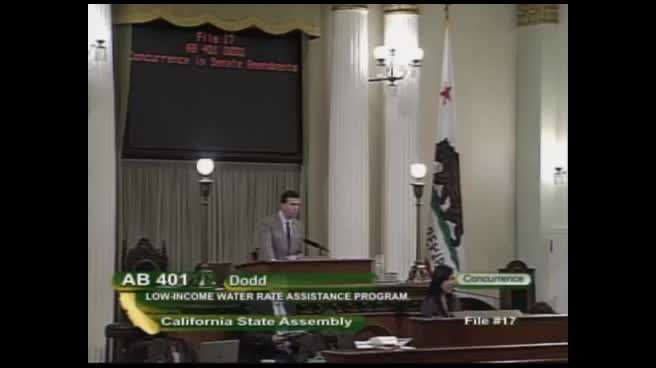
| Sep 9, 2015 | AB 40 TING Concurrence in Senate Amendments | Assembly Floor |
Passed |
|
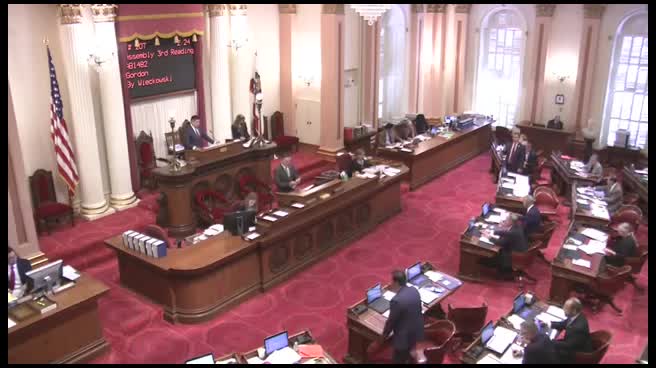
| Sep 8, 2015 | Assembly 3rd Reading AB40 Ting By Wolk | Senate Floor |
Passed |
|
| Aug 27, 2015 | Do pass | Senate Standing Committee on Appropriations |
Passed |
|
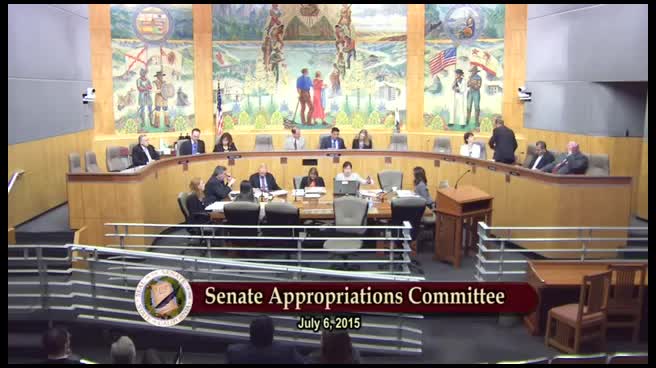
| Jul 6, 2015 | Placed on suspense file | Senate Standing Committee on Appropriations |
Passed |
|
| Jun 23, 2015 | Do pass, but first be re-referred to the Committee on [Appropriations] | Senate Standing Committee on Transportation and Housing |
Passed |
|
| Jun 2, 2015 | AB 40 TING Assembly Third Reading | Assembly Floor |
Passed |
|
| May 28, 2015 | Do pass. | Assembly Standing Committee on Appropriations |
Passed |
|
| Apr 13, 2015 | Do pass as amended. | Assembly Standing Committee on Transportation |
Passed |
This list shows positions taken on this bill by organizations on the date displayed, which is linked to the original source.
Positions by individuals are not included.
|
Organization
|
Position
|
Date
|
|---|---|---|
| California Bicycle Coalition | ** Support | Sep 8, 2015 |
| California Travel Association | ** Support | Sep 8, 2015 |
| Golden Gate Bridge, Highway, and Transportation District | ** Against | Sep 8, 2015 |
| Mayor of San Francisco | ** Support | Sep 8, 2015 |
| San Francisco Bay Trail Project | ** Support | Sep 8, 2015 |
| San Francisco Bicycle Coalition | ** Support | Sep 8, 2015 |
| San Francisco Travel Association | ** Support | Sep 8, 2015 |
| Save our Recreation | ** Support | Sep 8, 2015 |
| Walk San Francisco | ** Support | Sep 8, 2015 |
AB 40
Page 2
CONCURRENCE IN SENATE AMENDMENTS
AB 40
(Ting and Levine)
As Amended September 2, 2015
Majority vote
ASSEMBLY: |
64-13 |
(June 2, 2015) |
SENATE: |
29-11 |
(September 8, 2015) |
Original Committee Reference: TRANS.
SUMMARY: Prohibits the imposition of tolls on pedestrians and bicyclists on toll bridges.
The Senate amendments add a sunset date of January 1, 2021, to the prohibition on pedestrian and bicyclist tolls on California toll bridges.
EXISTING LAW:
Establishes the Golden Gate Bridge, Highway, and Transportation District (GGBHTD), which, among other functions and duties, owns and operates the Golden Gate Bridge.
Authorizes the California Department of Transportation (Caltrans) to build toll bridges.
Authorizes Caltrans to consider the inclusion of bicycle and pedestrian facilities on toll bridges.
FISCAL EFFECT: According to the Senate Appropriations Committee, prohibiting the imposition of tolls on pedestrian and bicycle passage on the Golden Gate Bridge and state-owned toll bridges would result in foregone revenues and future cost pressures, potentially in the millions, to the extent such tolls could otherwise be used to pay for pedestrian and bicycle capital improvements (State Highway Account, Bay Area Toll Account, local toll bridge accounts). This bill would likely shift these costs to drivers who pay tolls.
COMMENTS: California has eight toll bridges, all located in the San Francisco Bay Area. Seven of those bridges – the Antioch Bridge, the Benicia/Martinez Bridge, the Carquinez Bridge, the Dumbarton Bridge, the Richmond-San Rafael Bridge, the San Francisco-Oakland Bay Bridge, and the San Mateo Hayward Bridge – are owned by the state. The eighth, the Golden Gate Bridge, is owned and operated by the GGBHTD. The Golden Gate Bridge and four of the state-owned bridges - the Antioch, the Benicia-Martinez, the Carquinez, and the Dumbarton – allow bicycles and pedestrians to cross. In addition, the new eastern span of the Bay Bridge includes a bicycle and pedestrian path that will eventually extend from Oakland to Yerba Buena Island but will not extend across the entire bridge to San Francisco. Currently bicyclists and pedestrians do not pay a toll to cross any of these bridges.
When the Golden Gate Bridge first opened in 1937, pedestrians had to pay $0.05 to cross. The sidewalk toll eventually rose to $0.10 before it was abolished in 1970. Pedestrians and bicyclists have been able to cross the bridge for free ever since. GGBHTD, the owner and operator of the bridge, has explored reinstating a toll for use of the sidewalks several times since then but has never elected to impose the toll. GGBHTD is currently facing an operating deficit of $32.9 million over the next five years, as well as $209 million in unfunded capital needs, and recently adopted a 45-point plan aimed at keeping the district solvent. One point in the plan is to evaluate sidewalk access fees.
This bill would prohibit GGBHTD from imposing a toll for pedestrians or bicyclists to cross the Golden Gate Bridge until January 1, 2021. This bill additionally prohibits pedestrian and bicycle tolls on state-owned toll bridges until the same date. According to the author, this bill would promote non-vehicular forms of transportation across bridges that improve air quality, combat climate change and encourage physical activity. The author also argues that maintaining free access to the Golden Gate Bridge's sidewalks is critical to preserving overall access to the extensive network of parks, paths, and trails that connect the North Bay to the South Bay, of which the bridge is a part.
Analysis Prepared by: Justin Behrens / TRANS. / (916) 319-2093 FN: 0002157
AB 40
Page 4
|
Office of Senate Floor Analyses (916) 651-1520 Fax: (916) 327-4478 |
THIRD READING
Bill No: AB 40
Author: Ting (D) and Levine (D), et al.
Amended: 9/2/15 in Senate
SENATE TRANS. & HOUSING COMMITTEE: 10-1, 6/23/15
AYES: Beall, Cannella, Allen, Gaines, Galgiani, Leyva, McGuire, Mendoza, Roth, Wieckowski
NOES: Bates
SENATE APPROPRIATIONS COMMITTEE: 5-2, 8/27/15
AYES: Lara, Beall, Hill, Leyva, Mendoza
NOES: Bates, Nielsen
ASSEMBLY FLOOR: 64-13, 6/2/15 - See last page for vote
SUBJECT: Toll bridges: pedestrians and bicycles
DIGEST: This bill prohibits, until January 1, 2021, the tolling of pedestrians and bicycles on toll bridges in California that allow pedestrian and bicycle access.
Senate Floor Amendments of 9/2/15 add a sunset date of January 1, 2021.
Existing law:
Creates the California Transportation Commission (CTC) and assigns it all responsibility previously assigned to the California Toll Bridge Authority, including directing and authorizing the Department of Transportation (Caltrans) to build toll bridges.
Creates the Bay Area Toll Authority (BATA) to administer the base $1 auto toll for the San Francisco Bay Area’s seven state-owned toll bridges. BATA operates under the Metropolitan Transportation Commission. In 2005, BATA’s responsibilities were expanded to include administration of all toll revenues and joint oversight of the toll bridge construction program along with Caltrans and the CTC.
Requires Caltrans and the CTC to consider the inclusion of bicycle and pedestrian facilities on each new toll bridge designed and constructed, including appropriate connections thereto. These facilities are required to be included on each new bridge if the commission finds that they are economically and physically feasible.
Establishes the Golden Gate Bridge, Highway, and Transportation District (GGBHTD), which, among other functions, owns and operates the Golden Gate Bridge and sets tolls.
This bill prohibits a toll from being imposed on the passage of a pedestrian or bicycle, provided the travel of pedestrians and bicycles is otherwise authorized, over:
Any bridge that is under the jurisdiction of the GGBHTD.
Any state-owned bridge on which tolls are imposed on the passage of motor vehicles.
Any bridge that is part of the state highway system on which tolls are imposed on the passage of motor vehicles, including any bridge constructed pursuant to a franchise.
Provides that the provisions of this bill sunset on January 1, 2021.
Comments
Purpose of the bill. According to the author, cyclists and pedestrians put minimal wear and tear on bridges compared to vehicles, so imposing a fee for their use of bridges would disproportionately penalize these non-vehicular modes of transportation. The author contends sidewalk access fees would also discourage usage of public trails that are the pride of the Bay Area. The author believes this bill promotes non-vehicular forms of transportation across bridges that improve air quality, combat climate change, and encourage physical activity.
Toll bridges in California. California has eight toll bridges, all located in the San Francisco Bay Area. Seven of those bridges — the Antioch Bridge, Benicia/Martinez Bridge, Carquinez Bridge, Dumbarton Bridge, Richmond-San Rafael Bridge, San Francisco-Oakland Bay Bridge, and San Mateo Hayward Bridge — are owned by the state. The eighth bridge is owned and operated by GGBHTD. Of these bridges, five currently have pedestrian and bicycle access: the Golden Gate, Antioch, Benicia/Martinez, Carquinez, and Dumbarton bridges. There is currently no toll for pedestrians or bicyclists on any of the state-owned toll bridges.
GGBHTD. When the Golden Gate Bridge first opened in 1937, pedestrians had to pay five cents to cross. The sidewalk toll eventually rose to 10 cents before being abolished in 1970. The district’s board recently approved a study to determine whether a pedestrian/bicyclist toll would be feasible and helpful in light of the district’s budget woes. According to the district, about 6,000 cyclists and 10,000 pedestrians cross the bridge on a good-weather day. Sidewalk access fees are just one consideration in a 45-point plan to help GGBHTD remain solvent, as it faces $209 million in unfunded capital needs, in addition to a $32.9 million operating deficit over the next five years.
FISCAL EFFECT: Appropriation: No Fiscal Com.: Yes Local: No
According to the Senate Appropriations Committee, prohibiting the imposition of tolls on pedestrian and bicycle passage on the Golden Gate Bridge and state-owned toll bridges would result in foregone revenues and future cost pressures, potentially in the millions, to the extent such tolls could otherwise be used to pay for pedestrian and bicycle capital improvements (State Highway Account, Bay Area Toll Account, local toll bridge accounts). This bill would likely shift these costs to drivers who pay tolls.
California Bicycle Coalition
California Travel Association
Mayor of San Francisco
San Francisco Bay Trail Project
San Francisco Bicycle Coalition
San Francisco Travel Association
Save Our Recreation
Walk San Francisco
Golden Gate Bridge, Highway, and Transportation District
ASSEMBLY FLOOR: 64-13, 6/2/15
AYES: Achadjian, Alejo, Travis Allen, Baker, Bloom, Bonilla, Bonta, Brown, Burke, Calderon, Campos, Chang, Chau, Chiu, Chu, Cooley, Cooper, Dababneh, Daly, Dodd, Eggman, Frazier, Cristina Garcia, Eduardo Garcia, Gatto, Gipson, Gomez, Gonzalez, Gordon, Gray, Hadley, Roger Hernández, Holden, Irwin, Jones, Jones-Sawyer, Lackey, Levine, Linder, Lopez, Low, Maienschein, Mathis, McCarty, Medina, Mullin, Nazarian, O'Donnell, Olsen, Patterson, Perea, Quirk, Rendon, Rodriguez, Salas, Santiago, Mark Stone, Thurmond, Ting, Weber, Wilk, Williams, Wood, Atkins
NOES: Bigelow, Brough, Dahle, Beth Gaines, Grove, Harper, Kim, Mayes, Melendez, Obernolte, Steinorth, Wagner, Waldron
NO VOTE RECORDED: Chávez, Gallagher, Ridley-Thomas
Prepared by: Randy Chinn / T. & H. / (916) 651-4121
9/3/15 18:28:20
**** END ****
AB 40
Page 4
|
Office of Senate Floor Analyses (916) 651-1520 Fax: (916) 327-4478 |
THIRD READING
Bill No: AB 40
Author: Ting (D) and Levine (D)
Amended: 4/15/15 in Assembly
SENATE TRANS. & HOUSING COMMITTEE: 10-1, 6/23/15
AYES: Beall, Cannella, Allen, Gaines, Galgiani, Leyva, McGuire, Mendoza, Roth, Wieckowski
NOES: Bates
SENATE APPROPRIATIONS COMMITTEE: 5-2, 8/27/15
AYES: Lara, Beall, Hill, Leyva, Mendoza
NOES: Bates, Nielsen
ASSEMBLY FLOOR: 64-13, 6/2/15 - See last page for vote
SUBJECT: Toll bridges: pedestrians and bicycles
DIGEST: This bill prohibits the tolling of pedestrians and bicycles on toll bridges in California that allow pedestrian and bicycle access.
Existing law:
Creates the California Transportation Commission (CTC) and assigns it all responsibility previously assigned to the California Toll Bridge Authority, including directing and authorizing the Department of Transportation (Caltrans) to build toll bridges.
Creates the Bay Area Toll Authority (BATA) to administer the base $1 auto toll for the San Francisco Bay Area’s seven state-owned toll bridges. BATA operates under the Metropolitan Transportation Commission. In 2005, BATA’s responsibilities were expanded to include administration of all toll revenues and joint oversight of the toll bridge construction program along with Caltrans and the CTC.
Requires Caltrans and the CTC to consider the inclusion of bicycle and pedestrian facilities on each new toll bridge designed and constructed, including appropriate connections thereto. These facilities are required to be included on each new bridge if the commission finds that they are economically and physically feasible.
Establishes the Golden Gate Bridge, Highway, and Transportation District (GGBHTD), which, among other functions, owns and operates the Golden Gate Bridge and sets tolls.
This bill prohibits a toll from being imposed on the passage of a pedestrian or bicycle, provided the travel of pedestrians and bicycles is otherwise authorized, over:
Any bridge that is under the jurisdiction of the GGBHTD.
Any state-owned bridge on which tolls are imposed on the passage of motor vehicles.
Any bridge that is part of the state highway system on which tolls are imposed on the passage of motor vehicles, including any bridge constructed pursuant to a franchise.
Comments
Purpose of the bill. According to the author, cyclists and pedestrians put minimal wear and tear on bridges compared to vehicles, so imposing a fee for their use of bridges would disproportionately penalize these non-vehicular modes of transportation. The author contends sidewalk access fees would also discourage usage of public trails that are the pride of the Bay Area. The author believes this bill promotes non-vehicular forms of transportation across bridges that improve air quality, combat climate change, and encourage physical activity.
Toll bridges in California. California has eight toll bridges, all located in the San Francisco Bay Area. Seven of those bridges — the Antioch Bridge, Benicia/Martinez Bridge, Carquinez Bridge, Dumbarton Bridge, Richmond-San Rafael Bridge, San Francisco-Oakland Bay Bridge, and San Mateo Hayward Bridge — are owned by the state. The eighth bridge is owned and operated by GGBHTD. Of these bridges, five currently have pedestrian and bicycle access: the Golden Gate, Antioch, Benicia/Martinez, Carquinez, and Dumbarton bridges. There is currently no toll for pedestrians or bicyclists on any of the state-owned toll bridges.
GGBHTD. When the Golden Gate Bridge first opened in 1937, pedestrians had to pay five cents to cross. The sidewalk toll eventually rose to 10 cents before being abolished in 1970. The district’s board recently approved a study to determine whether a pedestrian/bicyclist toll would be feasible and helpful in light of the district’s budget woes. According to the district, about 6,000 cyclists and 10,000 pedestrians cross the bridge on a good-weather day. Sidewalk access fees are just one consideration in a 45-point plan to help GGBHTD remain solvent, as it faces $209 million in unfunded capital needs, in addition to a $32.9 million operating deficit over the next five years.
To toll or not to toll? Is that even the question? Although the author contends cyclists cause minimal wear and tear, the costs for bicycle and pedestrian projects and their maintenance are not negligible. According to the Senate Appropriations Committee, prohibiting tolling of pedestrians and bicyclists could have a potentially significant effect in terms of foregone revenue, perhaps in the millions of dollars. Supporters of this bill claim that AB 40 will preserve an incentive for residents and visitors alike to pursue emission-free methods of active transportation that are beneficial for our environment and for our health. Perhaps the larger question is whether the state should be responsible for determining tolling restrictions/allowances or whether it should be left to local jurisdictions.
FISCAL EFFECT: Appropriation: No Fiscal Com.: Yes Local: No
According to the Senate Appropriations Committee, prohibiting the imposition of tolls on pedestrian and bicycle passage on the Golden Gate Bridge and state-owned toll bridges would result in foregone revenues and future cost pressures, potentially in the millions, to the extent such tolls could otherwise be used to pay for pedestrian and bicycle capital improvements (State Highway Account, Bay Area Toll Account, local toll bridge accounts). This bill will likely shift these costs to drivers who pay tolls.
California Bicycle Coalition
California Travel Association
Mayor of San Francisco
San Francisco Bay Trail Project
San Francisco Bicycle Coalition
San Francisco Travel Association
Save Our Recreation
Walk San Francisco
OPPOSITION: (Verified 8/26/15)
None received
ASSEMBLY FLOOR: 64-13, 6/2/15
AYES: Achadjian, Alejo, Travis Allen, Baker, Bloom, Bonilla, Bonta, Brown, Burke, Calderon, Campos, Chang, Chau, Chiu, Chu, Cooley, Cooper, Dababneh, Daly, Dodd, Eggman, Frazier, Cristina Garcia, Eduardo Garcia, Gatto, Gipson, Gomez, Gonzalez, Gordon, Gray, Hadley, Roger Hernández, Holden, Irwin, Jones, Jones-Sawyer, Lackey, Levine, Linder, Lopez, Low, Maienschein, Mathis, McCarty, Medina, Mullin, Nazarian, O'Donnell, Olsen, Patterson, Perea, Quirk, Rendon, Rodriguez, Salas, Santiago, Mark Stone, Thurmond, Ting, Weber, Wilk, Williams, Wood, Atkins
NOES: Bigelow, Brough, Dahle, Beth Gaines, Grove, Harper, Kim, Mayes, Melendez, Obernolte, Steinorth, Wagner, Waldron
NO VOTE RECORDED: Chávez, Gallagher, Ridley-Thomas
Prepared by: Randy Chinn / T. & H. / (916) 651-4121
8/31/15 8:33:41
AB 40 (Ting) Page 2 of 2
SENATE COMMITTEE ON APPROPRIATIONS
Senator Ricardo Lara, Chair
2015 - 2016 Regular Session
AB 40 (Ting) - Toll bridges: pedestrians and bicycles
|
|
Version: April 15, 2015 |
Policy Vote: T. & H. 10 - 1 |
Urgency: No |
Mandate: No |
Hearing Date: July 6, 2015 |
Consultant: Mark McKenzie |
This bill meets the criteria for referral to the Suspense File.
Bill Summary:
AB 40 would prohibit the imposition of tolls on the passage of pedestrians and bicyclists over toll bridges.
Fiscal Impact:
Prohibiting the imposition of tolls on pedestrian and bicycle passage on the Golden Gate Bridge and state-owned toll bridges would result in foregone revenues and future cost pressures, potentially in the millions, to the extent such tolls could otherwise be used to pay for pedestrian and bicycle capital improvements (State Highway Account, Bay Area Toll Account, local toll bridge accounts). This bill would likely shift these costs to drivers who pay tolls.
Background:
There are currently seven state-owned toll bridges, and one other toll bridge, the Golden Gate, which is owned and operated by the Golden Gate Bridge, Highway, and Transportation District (GG District). Pedestrians and bicycles are currently allowed to cross the Golden Gate Bridge and four of the seven state-owned toll bridges. There is also a proposal to open the Richmond-San Rafael Bridge to bicycles. In addition, the new eastern span of the Bay Bridge includes a bicycle and pedestrian path that will eventually extend from Oakland to Yerba Buena Island, but there are no current plans to extend that path onto the existing western span. .
Proposed Law:
AB 40 would prohibit the imposition of a toll on the passage of a pedestrian or bicycle over any state-owned bridge, any bridge on the state highway system, or any bridge under the jurisdiction of the GG District, on which the travel of pedestrians and bicycles is otherwise authorized and tolls are imposed on the passage of motor vehicles.
Related Legislation:
AB 748 (Wolk), which was vetoed by Governor Schwarzenegger in 2005, is a nearly identical bill that would have temporarily prohibited the imposition of tolls on pedestrians and bicyclists on toll bridges until 2009. The veto message stated the following:
I strongly encourage Californians to use bicycling and walking as modes of transportation when possible because of the physical fitness benefit, as well as the congestion mitigation and air quality benefits. However, this bill would inappropriately usurp control from the local governing body, the Golden Gate Highway and Transportation District. Since the District has been authorized to operate and maintain the bridge, the state should not tie its hands by foreclosing certain funding options.
Staff Comments:
This bill would prohibit the imposition of tolls on the passage of pedestrians or bicyclists over any toll bridge or facility that is under the jurisdiction of the GG District or Caltrans, owned by the state, or constructed under a franchise agreement with the state.
The GG District currently faces a projected deficit of over $32.9 million in its five-year operating budget, and has $209 million in unfunded capital needs. To address this shortfall, the GG District recently adopted a 45-point plan to remain solvent that included a proposal to evaluate sidewalk access fees. Although pedestrians paid a sidewalk toll from 1937 until 1970, and the GG District has considered reinstating a toll for pedestrian and bicycle access several times in recent years, the district has not elected to impose a toll over the past 45 years. This bill is primarily intended to prevent the imposition of tolls on pedestrians and bicyclists as part of the solution to the GG District’s budget deficits.
There are no current plans to impose tolls on pedestrians or bicyclists for passage on state-owned toll bridges. As such, there would be no immediate or near-term state impacts. However, there is nothing in current law to prevent the imposition of such tolls in the future to pay for capital investments in pedestrian and bicycle facilities on toll bridges. As noted above, precluding the imposition of these tolls would likely shift the burden for any of these costs to drivers who pay tolls, thereby creating potential cost pressures on state and local toll bridge accounts.
-- END --
AB 40 (Ting) Page 4 of 4
SENATE COMMITTEE ON TRANSPORTATION AND HOUSING
Senator Jim Beall, Chair
2015 - 2016 Regular
Bill No: AB 40 Hearing Date: 6/23/2015
Author: |
Ting |
||
Version: |
4/15/2015 |
||
Urgency: |
No |
Fiscal: |
Yes |
Consultant: |
Christine Hochmuth |
||
SUBJECT: Toll bridges: pedestrians and bicycles
DIGEST: This bill prohibits the tolling of pedestrians and bicycles on toll bridges in California that allow pedestrian and bicycle access.
ANALYSIS:
Existing law:
Created the California Transportation Commission (CTC) and assigned it all responsibility previously assigned to the California Toll Bridge Authority, including directing and authorizing the Department of Transportation (Caltrans) to build toll bridges.
Created the Bay Area Toll Authority (BATA) to administer the base $1 auto toll for the San Francisco Bay Area’s seven state-owned toll bridges. BATA operates under the Metropolitan Transportation Commission. In 2005 BATA’s responsibilities were expanded to include administration of all toll revenues and joint oversight of the toll bridge construction program along with Caltrans and the CTC.
Requires Caltrans and CTC to consider the inclusion of bicycle and pedestrian facilities on each new toll bridge designed and constructed, including appropriate connections thereto. These facilities are required to be included on each new bridge if the commission finds that they are economically and physically feasible.
Established the Golden Gate Bridge, Highway, and Transportation District (GGBHTD), which, among other functions, owns and operates the Golden Gate Bridge and sets tolls.
This bill:
Prohibits a toll from being imposed on the passage of a pedestrian or bicycle, provided the travel of pedestrians and bicycles is otherwise authorized, over:
Any bridge that is under the jurisdiction of the GGBHTD.
Any state-owned bridge on which tolls are imposed on the passage of motor vehicles.
Any bridge that is part of the state highway system on which tolls are imposed on the passage of motor vehicles, including any bridge constructed pursuant to a franchise.
COMMENTS:
Purpose of the bill. According to the author, cyclists and pedestrians put minimal wear and tear on bridges compared to vehicles, so imposing a fee for their use of bridges would disproportionately penalize these non-vehicular modes of transportation. The author contends sidewalk access fees would also discourage usage of public trails that are the pride of the Bay Area. The author believes this bill would promote non-vehicular forms of transportation across bridges that improve air quality, combat climate change, and encourage physical activity.
Toll bridges in California. California has eight toll bridges, all located in the San Francisco Bay Area. Seven of those bridges — The Antioch Bridge, the Benicia/Martinez Bridge, the Carquinez Bridge, the Dumbarton Bridge, the Richmond-San Rafael Bridge, the San Francisco-Oakland Bay Bridge, and the San Mateo Hayward Bridge — are owned by the state. The eighth bridge is owned and operated by GGBHTD. Of these bridges, five currently have pedestrian and bicycle access: the Golden Gate, the Antioch, the Benicia-Martinez, the Carquinez, and the Dumbarton bridges. There is currently no toll for pedestrians or bicyclists on any of the state-owned toll bridges.
GGBHTD. When the Golden Gate Bridge first opened in 1937, pedestrians had to pay five cents to cross. The sidewalk toll eventually rose to 10 cents before being abolished in 1970. The district’s board recently approved a study to determine whether a pedestrian/bicyclist toll would be feasible and helpful in light of the district’s budget woes. According to the district, about 6,000 cyclists and 10,000 pedestrians cross the bridge on a good weather day. Sidewalk access fees are just one consideration in a 45-point plan to help GGBHTD remain solvent, as they face $209 million in unfunded capital needs, in addition to a $32.9 million operating deficit over the next five years.
To toll or not to toll? Is that even the question? Although the author contends cyclists cause minimal wear and tear, the costs for bicycle and pedestrian projects and their maintenance are not negligible. According to the Assembly Appropriations Committee, prohibiting tolling of pedestrians and bicyclists could have a potentially significant effect in terms of foregone revenue, perhaps in the millions of dollars. Supporters of the bill claim that AB 40 will preserve an incentive for residents and visitors alike to pursue emission-free methods of active transportation that are beneficial for our environment and for our health. Perhaps the larger question is whether the state should be responsible for determining tolling restrictions/allowances or whether it should be left to local jurisdictions.
Related Legislation:
AB 157 (Levine) — if the commission and the department develop a project to open the third lane on the Richmond-San Rafael Bridge to automobile traffic on the eastbound level and to bicycle traffic on the westbound level, would require the lead agency to complete the design work for the project simultaneously with the environmental review conducted pursuant to the California Environmental Quality Act. This bill is currently pending in this committee.
AB 748 (Wolk, Statutes of 2005) — prohibited a toll from being imposed on the passage of a pedestrian or bicycle over toll bridges that are a part of the state highway system, under the jurisdiction of Caltrans, or under the jurisdiction of the GGBHTD. AB 748 was vetoed by Governor Schwarzenegger.
Assembly Votes:
Floor: 64-13
Appr: 13-4
Trans: 13-2
FISCAL EFFECT: Appropriation: No Fiscal Com.: Yes Local: No
POSITIONS: (Communicated to the committee before noon on Wednesday,
June 17, 2015.)
SUPPORT:
California Bicycle Coalition
California Travel Association
Mayor of San Francisco
San Francisco Bay Trail Project
San Francisco Bicycle Coalition
San Francisco Travel Association
Save Our Recreation
Walk San Francisco
OPPOSITION:
None received
-- END --
AB 40
Page 2
ASSEMBLY THIRD READING
AB 40
(Ting and Levine)
As Amended April 15, 2015
Majority vote
Committee |
Votes |
Ayes |
Noes |
Tranportation |
13-2 |
Frazier, Achadjian, Baker, Bloom, Campos, Chu, Daly, Dodd, Eduardo Garcia, Gomez, Medina, Nazarian, O'Donnell |
Kim, Melendez |
Appropriations |
13-4 |
Gomez, Bonta, Calderon, Chang, Daly, Eggman, Eduardo Garcia, Gordon, Holden, Quirk, Rendon, Weber, Wood |
Bigelow, Gallagher, Jones, Wagner |
SUMMARY: Prohibits the imposition of tolls on pedestrians and bicyclists on toll bridges in California that allow pedestrian and bicycle access.
EXISTING LAW:
Establishes the Golden Gate Bridge, Highway, and Transportation District (GGBHTD), which, among other functions and duties, owns and operates the Golden Gate Bridge.
Authorizes the California Department of Transportation (Caltrans) to build toll bridges
Authorizes Caltrans to consider the inclusion of bicycle and pedestrian facilities on toll bridges.
FISCAL EFFECT: According to the Assembly Appropriations Committee, "Potentially significant foregone revenue, perhaps in the millions of dollars, to the extent this bill preempts a future decision to charge a toll on pedestrians and/or bicyclists using toll bridges. [State Highway Account and local bridge toll accounts.]"
COMMENTS: California has eight toll bridges, all located in the San Francisco Bay Area. Seven of those bridges – the Antioch Bridge, the Benicia/Martinez Bridge, the Carquinez Bridge, the Dumbarton Bridge, the Richmond-San Rafael Bridge, the San Francisco-Oakland Bay Bridge, and the San Mateo Hayward Bridge – are owned by the state. The eighth, the Golden Gate Bridge, is owned and operated by the GGBHTD. The Golden Gate Bridge and four of the state-owned bridges - the Antioch, the Benicia-Martinez, the Carquinez, and the Dumbarton – allow bicycles and pedestrians to cross. In addition, the new eastern span of the Bay Bridge includes a bicycle and pedestrian path that will eventually extend from Oakland to Yerba Buena Island but will not extend across the entire bridge to San Francisco. Currently bicyclists or pedestrians do not pay a toll to cross any of these bridges.
When the Golden Gate Bridge first opened in 1937, pedestrians had to pay $0.05 to cross. The sidewalk toll eventually rose to $0.10 before it was abolished in 1970. Pedestrians and bicyclists have been able to cross the bridge for free ever since. GGBHTD, the owner and operator of the bridge, has explored reinstating a toll for use of the sidewalks several times since then but has never elected to impose the toll. GGBHTD is currently facing an operating deficit of $32.9 million over the next five years as well as $209 million in unfunded capital needs and recently adopted a 45-point plan aimed at keeping the district solvent. One point in the plan is to evaluate sidewalk access fees.
This bill would prohibit GGBHTD from imposing a toll for pedestrians or bicyclists to cross the Golden Gate Bridge. This bill additionally prohibits pedestrian and bicycle tolls on state-owned toll bridges. According to the author, this bill would promote non-vehicular forms of transportation across bridges that improve air quality, combat climate change and encourage physical activity. The author also argues that maintaining free access to the Golden Gate Bridge's sidewalks is critical to preserving overall access to the extensive network of parks, paths, and trails that connect the North Bay to the South Bay, of which the bridge is a part.
Analysis Prepared by: Janet Dawson / TRANS. / (916) 319-2093 FN: 0000611
AB 40
Page 2
Date of Hearing: April 13, 2015
ASSEMBLY COMMITTEE ON TRANSPORTATION
Jim Frazier, Chair
AB 40
(Ting) – As Amended April 15, 2015
SUBJECT: Toll bridges: pedestrians and bicycles
SUMMARY: Prohibits the imposition of tolls on pedestrians and bicyclists on toll bridges in California that allow pedestrian and bicycle access.
EXISTING LAW:
Establishes the Golden Gate Bridge, Highway, and Transportation District (GGBHTD), which, among other functions and duties, owns and operates the Golden Gate Bridge.
Authorizes the California Department of Transportation (Caltrans) to build toll bridges
Authorizes Caltrans to consider the inclusion of bicycle and pedestrian facilities on toll bridges.
FISCAL EFFECT: Unknown
COMMENTS: California has eight toll bridges, all located in the San Francisco Bay Area. Seven of those bridges - the Antioch Bridge, the Benicia/Martinez Bridge, the Carquinez Bridge, the Dumbarton Bridge, the Richmond-San Rafael Bridge, the San Francisco-Oakland Bay Bridge, and the San Mateo Hayward Bridge – are owned by the state. The eighth, the Golden Gate Bridge, is owned and operated by the Golden Gate Bridge, Highway and Transportation District (GGBHTD). The Golden Gate Bridge and four of the state-owned bridges - the Antioch, the Benicia-Martinez, the Carquinez, and the Dumbarton – allow bicycles and pedestrians to cross. In addition, the new eastern span of the Bay Bridge includes a bicycle and pedestrian path that will eventually extend from Oakland to Yerba Buena Island but will not extend across the entire bridge to San Francisco. Currently bicyclists or pedestrians do not pay a toll to cross any of these bridges.
When the Golden Gate Bridge first opened in 1937, pedestrians had to pay 5 cents to cross. The sidewalk toll eventually rose to 10 cents before it was abolished in 1970. Pedestrians and bicyclists have been able to cross the bridge for free ever since. GGBHTD, the owner and operator of the bridge, has explored reinstating a toll for use of the sidewalks several times since then but has never elected to impose the toll. GGBHTD is currently facing an operating deficit of $32.9 million over the next five years as well as $209 million in unfunded capital needs and recently adopted a 45-point plan aimed at keeping the district solvent. One point in the plan is to evaluate sidewalk access fees.
AB 40 would prohibit GGBHTD from imposing a toll for pedestrians or bicyclists to cross the Golden Gate Bridge. The bill additionally prohibits pedestrian and bicycle tolls on state-owned toll bridges. According to the author, the bill would promote non-vehicular forms of transportation across bridges that improve air quality, combat climate change and encourage physical activity. The author also argues that maintaining free access to the Golden Gate Bridge's sidewalks is critical to preserving overall access to the extensive network of parks, paths, and trails that connect the North Bay to the South Bay, of which the bridge is a part.
REGISTERED SUPPORT / OPPOSITION:
Support
California Bicycle Coalition
California Travel Association
Save our Recreation
Walk San Francisco
Opposition
None on file
Analysis Prepared by: Anya Lawler / TRANS. / (916) 319-2093
AB 40
Page 2
Date of Hearing: April 29, 2015
ASSEMBLY COMMITTEE ON APPROPRIATIONS
Jimmy Gomez, Chair
AB 40
(Ting) – As Amended April 15, 2015
Policy Committee: |
Transportation |
Vote: |
13 - 2 |
|
|
|
|
|
|
|
|
Urgency: No State Mandated Local Program: No Reimbursable: No
SUMMARY:
This bill prohibits the imposition of a toll on the passage of a pedestrian or bicyclist over any bridge in the state where tolls are imposed on the passage of motor vehicles.
FISCAL EFFECT:
Potentially significant foregone revenue, perhaps in the millions of dollars, to the extent this bill preempts a future decision to charge a toll on pedestrians and/or bicyclists using toll bridges. [State Highway Account and local bridge toll accounts.]
COMMENTS:
Purpose. As introduced, this bill prohibited the imposition of tolls only on pedestrians or bicyclist crossing the Golden Gate Bridge, which is operated by the Golden Gate Bridge, Highway, and Transportation District (GGBHTD). When that bridge first opened in 1937, pedestrians had to pay five cents to cross. The sidewalk toll eventually rose to 10 cents before being abolished in 1970. The district has explored reinstating a toll for use of the sidewalks several times since then but has never elected to impose the toll. GGBHTD is currently facing an operating deficit of $32.9 million over the next five years as well as $209 million in unfunded capital needs, and recently adopted a 45-point plan aimed at keeping the district solvent. One point in the plan is to evaluate sidewalk access fees.
According to the author, this bill, by prohibiting a toll on pedestrians and bicyclists, would promote non-vehicular forms of transportation across the bridge that improve air quality, combat climate change and encourage physical activity. The author also argues that maintaining free access to the Golden Gate Bridge's sidewalks is critical to preserving overall access to the extensive network of parks, paths, and trails that connect the North Bay to the South Bay, of which the bridge is a part.
In addition to the Golden Gate, there are seven other toll bridges in California - the Antioch Bridge, the Benicia/Martinez Bridge, the Carquinez Bridge, the Dumbarton Bridge, the Richmond-San Rafael Bridge, the San Francisco-Oakland Bay Bridge, and the San Mateo Hayward Bridge - all of which are owned by the state. Only four of these bridges - the Antioch, the Benicia-Martinez, the Carquinez, and the Dumbarton - allow bicycles and pedestrians to cross. The new eastern span of the Bay Bridge includes a bicycle and pedestrian path that will eventually extend from Oakland to Yerba Buena Island but will not extend across the entire bridge to San Francisco. There is currently no toll for bicyclists or pedestrians on any of the state-owned toll bridges.
Prior Legislation. AB 748 (Wolk) of 2005, a similar bill, was vetoed by Governor Schwarzenegger over his concern that it usurped local authority of the GGBHTD.
Analysis Prepared by: Chuck Nicol / APPR. / (916) 319-2081
AB 40
Page 2
Date of Hearing: April 6, 2015
ASSEMBLY COMMITTEE ON TRANSPORTATION
Jim Frazier, Chair
AB 40
(Ting) – As Introduced December 1, 2014
SUBJECT: Golden Gate Bridge: sidewalk fees
SUMMARY: Prohibits the imposition of any tolls or access fees for pedestrians and bicyclists on the Golden Gate Bridge sidewalks.
EXISTING LAW: Establishes the Golden Gate Bridge, Highway, and Transportation District (GGBHTD), which, among other functions and duties, owns and operates the Golden Gate Bridge.
FISCAL EFFECT: Unknown
COMMENTS: When the Golden Gate Bridge first opened in 1937, pedestrians had to pay 5 cents to cross. The sidewalk toll eventually rose to 10 cents before it was abolished in 1970. Pedestrians and bicyclists have been able to cross the bridge for free ever since. GGBHTD, the owner and operator of the bridge, has explored reinstating a toll for use of the sidewalks several times since then but has never elected to impose the toll. GGBHTD is currently facing an operating deficit of $32.9 million over the next five years as well as $209 million in unfunded capital needs and recently adopted a 45-point plan aimed at keeping the district solvent. One point in the plan is to evaluate sidewalk access fees.
In addition to the Golden Gate, there are seven other toll bridges in California - the Antioch Bridge, the Benicia/Martinez Bridge, the Carquinez Bridge, the Dumbarton Bridge, the Richmond-San Rafael Bridge, the San Francisco-Oakland Bay Bridge, and the San Mateo Hayward Bridge - all of which are owned by the state. Only four of these bridges - the Antioch, the Benicia-Martinez, the Carquinez, and the Dumbarton - allow bicycles and pedestrians to cross. The new eastern span of the Bay Bridge includes a bicycle and pedestrian path that will eventually extend from Oakland to Yerba Buena Island but will not extend across the entire bridge to San Francisco. There is currently no toll for bicyclists or pedestrians on any of the state-owned toll bridges.
AB 40 would prohibit GGBHTD from imposing a toll for pedestrians or bicyclists to cross the Golden Gate Bridge. According to the author, the bill would promote non-vehicular forms of transportation across the bridge that improve air quality, combat climate change and encourage physical activity. The author also argues that maintaining free access to the Golden Gate Bridge's sidewalks is critical to preserving overall access to the extensive network of parks, paths, and trails that connect the North Bay to the South Bay, of which the bridge is a part.
Writing in support, the California Bicycle Coalition argues that "More bicycling solves so many problems in California that government agencies, including the Golden Gate Bridge, Highway and Transportation District, should welcome and encourage bicycling. The idea that 'everyone should pay their fair share' is a noble one but to use that argument to justify charging people when they walk or bicycle reflects a naïve and erroneous understanding of how we pay for the benefits and impacts of our transportation system."
Writing in opposition, GGBHTD argues that "the fact that the proposed legislation applies only to the District is problematic from a policy perspective. If the Legislature believes that there should be a prohibition on charging bicycles and pedestrians for access to bridge sidewalks, then the Legislature should apply this restriction universally." The district will remove its opposition if the bill is amended to apply to all toll bridges rather than just to the Golden Gate Bridge.
Committee Concerns: This bill focuses on the one toll bridge in California that is not owned by the state. It is not clear why one local government entity should be prohibited from charging bridge tolls for pedestrians and bicyclists while leaving open the option for such a charge on state-owned toll bridges. If free bridge access for those walking and using bicycles is good policy on the Golden Gate Bridge as a means of promoting these modes of transportation and their many benefits, surely it is good policy on all toll bridges.
Proposed Amendment: Apply the prohibition on bicyclist and pedestrian fees to all toll bridges in California that allow bicycle and pedestrian access.
Prior Legislation: AB 748 (Wolk) of 2005, would have prohibited, through 2009, the imposition of a toll for pedestrians or bicycles on any bridge or highway facility under the jurisdiction of GGBHTD or Caltrans on which the travel of pedestrians and bicycles is otherwise authorized. AB 748 was vetoed by Governor Schwarzenegger.
REGISTERED SUPPORT / OPPOSITION:
Support
California Bicycle Coalition
California Travel Association
Save our Recreation
Walk San Francisco
Opposition
Golden Gate Bridge, Highway, and Transportation District (unless amended)
Analysis Prepared by: Anya Lawler / TRANS. / (916) 319-2093