AB 429: Public contracts: preferences: forest products.
- Session Year: 2015-2016
- House: Assembly
- Latest Version Date: 2015-09-08
Existing law generally requires state agencies to comply with competitive bidding procedures in soliciting and evaluating bids for public works projects. Existing law authorizes bidding preferences for certain categories of business owners.
Existing law also requires the Department of General Services, in consultation with the California Environmental Protection Agency, members of the public, industry, and public health and environmental organizations, to provide state agencies with information and assistance regarding environmentally preferable purchasing.
The Zberg-Nejedly Forest Practice Act of 1973 prohibits a person from conducting timber operations on timberland unless a timber harvesting plan has been prepared by a registered professional forester and has been submitted to the Department of Forestry and Fire Protection and approved by the Director of Forestry and Fire Protection or the State Board of Forestry and Fire Protection.
The California Global Warming Solutions Act of 2006 designates the State Air Resources Board as the state agency charged with monitoring and regulating sources of emissions of greenhouse gases and requires the board to adopt a statewide greenhouse gas emissions limit equivalent to the statewide greenhouse gas emissions level in 1990 to be achieved by 2020. Under existing law, the board is required to consult with other states, the federal government, and other nations to identify the most effective strategies and methods to, among other things, reduce greenhouse gases and imposes limitations on any link, as defined, between the state and another state, province, or country for purposes of a market-based compliance mechanism, as specified.
This bill would require a state agency, as specified, that contracts for, or acquires, lumber or other solid wood products, excluding paper and other types of secondary manufactured goods, to give preference, to the extent consistent with federal law, if price, fitness, and quality are equal, based upon verifiable, self-certification from the supplier, to lumber and other solid wood products that are harvested in compliance with the Zberg-Nejedly Forest Practice Act of 1973, rules governing federal timber sales, or a forest certification program identified by the Director of the Department of Forestry and Fire Protection, as prescribed. The bill would authorize the Director of the Department of Forestry and Fire Protection to identify, after consideration at a public hearing, a forest certification program or programs that may be used for the purpose of purchasing preferences for lumber and solid wood products. The bill would require the Director of the Department of Forestry and Fire Protection to notify the Department of General Services of this identification in writing.
Existing law generally requires state agencies to comply with competitive bidding procedures in soliciting and evaluating bids for public works projects. Existing law authorizes bidding preferences for certain categories of business owners, including businesses owned by disabled veterans. owners.
Existing law also requires the Department of General Services, in consultation with the California Environmental Protection Agency, members of the public, industry, and public health and environmental organizations, to provide state agencies with information and assistance regarding environmentally preferable purchasing.
The Zberg-Nejedly Forest Practice Act of 1973 prohibits a person from conducting timber operations on timberland unless a timber harvesting plan has been prepared by a registered professional forester and has been submitted to the Department of Forestry and Fire Protection and approved by the Director of Forestry and Fire Protection or the State Board of Forestry and Fire Protection.
The California Global Warming Solutions Act of 2006 designates the State Air Resources Board as the state agency charged with monitoring and regulating sources of emissions of greenhouse gases and requires the board to adopt a statewide greenhouse gas emissions limit equivalent to the statewide greenhouse gas emissions level in 1990 to be achieved by 2020. Under existing law, the board is required to consult with other states, the federal government, and other nations to identify the most effective strategies and methods to, among other things, reduce greenhouse gases and imposes limitations on any link, as defined, between the state and another state, province, or country for purposes of a market-based compliance mechanism, as specified.
This bill would require a state agency, as specified, that contracts for, or acquires, lumber or other solid wood products, excluding paper and other types of secondary manufactured goods, to give preference, to the extent consistent with federal law, if price, fitness, and quality are equal, based upon verifiable, self-certification from suppliers, the supplier, to lumber and other solid wood products that are harvested pursuant to in compliance with the Zberg-Nejedly Forest Practice Act of 1973 or verified under a Compliance Offset Protocol for U.S. Forest Projects adopted by the State Air Resources Board or any other offset protocol linked by the board, as specified, to implement the California Global Warming Solutions Act of 2006. 1973, rules governing federal timber sales, or a forest certification program identified by the Director of the Department of Forestry and Fire Protection, as prescribed. The bill would authorize the Director of the Department of Forestry and Fire Protection to identify, after consideration at a public hearing, a forest certification program or programs that may be used for the purpose of purchasing preferences for lumber and solid wood products. The bill would require the Director of the Department of Forestry and Fire Protection to notify the Department of General Services of this identification in writing.
Existing law generally requires state agencies to comply with competitive bidding procedures in soliciting and evaluating bids for public works projects. Existing law authorizes bidding preferences for certain categories of business owners, including businesses owned by disabled veterans.
Existing law also requires the Department of General Services, in consultation with the California Environmental Protection Agency, members of the public, industry, and public health and environmental organizations, to provide state agencies with information and assistance regarding environmentally preferable purchasing.
The Zberg-Nejedly Forest Practice Act of 1973 prohibits a person from conducting timber operations on timberland unless a timber harvesting plan has been prepared by a registered professional forester and has been submitted to the Department of Forestry and Fire Protection and approved by the Director of Forestry and Fire Protection or the State Board of Forestry and Fire Protection.
The California Global Warming Solutions Act of 2006 designates the State Air Resources Board as the state agency charged with monitoring and regulating sources of emissions of greenhouse gases and requires the board to adopt a statewide greenhouse gas emissions limit equivalent to the statewide greenhouse gas emissions level in 1990 to be achieved by 2020. Under existing law, the board is required to consult with other states, the federal government, and other nations to identify the most effective strategies and methods to, among other things, reduce greenhouse gases and imposes limitations on any link, as defined, between the state and another state, province, or country for purposes of a market-based compliance mechanism, as specified.
This bill would require any a state agency agency, as specified, that contracts for, or acquires, lumber or other solid wood products, excluding paper and other types of secondary manufactured goods, to give preference, to the extent consistent with federal law, if price, fitness, and quality are equal, based upon verifiable, self-certification from suppliers, to lumber and other solid wood products that are harvested pursuant to the Zberg-Nejedly Forest Practice Act of 1973. 1973 or verified under a Compliance Offset Protocol for U.S. Forest Projects adopted by the State Air Resources Board or any other offset protocol linked by the board, as specified, to implement the California Global Warming Solutions Act of 2006.
Existing law generally requires state agencies to comply with competitive bidding procedures in soliciting and evaluating bids for public works projects. Existing law authorizes bidding preferences for certain categories of business owners, including businesses owned by disabled veterans.
Existing law also requires the Department of General Services, in consultation with the California Environmental Protection Agency, members of the public, industry, and public health and environmental organizations, to provide state agencies with information and assistance regarding environmentally preferable purchasing.
The Zberg-Nejedly Forest Practice Act of 1973 prohibits a person from conducting timber operations on timberland unless a timber harvesting plan has been prepared by a registered professional forester and has been submitted to the Department of Forestry and Fire Protection and approved by the Director of Forestry and Fire Protection or the State Board of Forestry and Fire Protection.
This bill would require any state agency that contracts for, or acquires, lumber or other solid wood products, excluding paper and other types of secondary manufactured goods, to give preference, if price, fitness, and quality are equal, to lumber and other solid wood products that are harvested from forests within this state. pursuant to the Zberg-Nejedly Forest Practice Act of 1973.
Existing law generally requires state agencies to comply with competitive bidding procedures in soliciting and evaluating bids for public works projects. Existing law authorizes bidding preferences for certain categories of business owners, including businesses owned by disabled veterans.
Existing law also requires the Department of General Services, in consultation with the California Environmental Protection Agency, members of the public, industry, and public health and environmental organizations, to provide state agencies with information and assistance regarding environmentally preferable purchasing.
This bill would require any state agency that contracts for, or acquires, lumber or other solid wood products, excluding paper and other types of secondary manufactured goods, to give preference, if price, fitness, and quality are equal, to lumber and other solid wood products that are harvested from forests within this state.
The Legislature finds and declares all of the following:
(a)It is a priority in California to protect the wildlife, rivers, streams, and soil that make up the states rich forest ecosystems covering 40 percent of the states entire land area.
(b)Forested lands in California do all of the following:
(1)Provide significant environmental benefits, including serving as the source of more than half the states supply of drinking water and habitat for numerous wildlife and plant species, some of which are rare, threatened, or endangered.
(2)Serve as the source of extensive recreational opportunities for millions of Californians.
(3)Provide a signature landscape that identifies California to people worldwide.
(4)Reduce the amount of carbon dioxide in the atmosphere, replacing it with clean, fresh air. According to the California Environmental Protection Agency, forestry is the only sector in California that reduces atmospheric carbon. Sequestered carbon is stored in the forest in trees, soil, wood debris on the forest floor, and in long-lasting products made from harvested wood.
(c)Forested lands in California also provide the source of raw materials for the timber products industry, and a source of jobs for those who are employed in that industry. Forested lands in California are an essential economic resource in rural communities across the state.
(d)The economic pressures faced by the timber industry have resulted in financial losses to the California timber industry and private landowners.
(e)It is appropriate for the State of California to officially support the continued economic vitality of the California timber products industry.
(f)Laws and regulations governing forestry in California represent the commitment of the state to strive for the highest environmental standards for industrial forestry anywhere in the world. The state may express its preference for timber products reflecting that commitment.
(g)Currently, approximately 70 percent of Californias timber products must be imported to meet the demand of the states population of 38 million people. Californias population is projected to increase to 49 million people by 2025, further intensifying our consumption of, and demand for, timber products from other states and abroad.
(h)The import and export of goods, including timber products, are and will remain part of the states economy. The import and export of all goods have contributed to the diverse economic base of California.
(i)When price, quality, and fitness are equal and when the marketplace provides timber products that are acceptable for use by state agencies, the State of California has a responsibility to purchase sustainable forest products.
SEC. 2.Section 12405 is added to the Public Contract Code, to read:12405.(a)Consistent with all applicable provisions of this code, and to the extent consistent with federal law as determined by the courts, when price, fitness, and quality are equal, a state agency that contracts for, or acquires, lumber or other solid wood products, excluding paper and other types of secondary manufactured goods, shall, if price, fitness, and quality are equal, based upon verifiable, self-certification from the supplier to the project that is selling directly to state agencies, give preference to lumber and other solid wood products that are harvested in compliance with one of the following:
(1)Zberg-Nejedly Forest Practice Act of 1973 (Chapter 8 (commencing with Section 4511) of Part 2 of Division 4 of the Public Resources Code).
(2)Rules governing federal timber sales.
(3)A forest certification program that has been identified by the Director of the Department of Forestry and Fire Protection, pursuant to subdivision (b).
(b)The Director of the Department of Forestry and Fire Protection, after consideration at a public hearing, may identify a forest certification program or programs that may be used for the purpose of purchasing preferences for lumber and solid wood products. The Director of the Department of Forestry and Fire Protection shall notify the Department of General Services of this identification in writing.
(c)Subdivision (a) applies only to a state agency that directly contracts for specified lumber and other wood products pursuant to Article 3 (commencing with Section 10300) of Chapter 2 of Part 2 of Division 2 of this code.
(d)Subdivision (a) shall be applied in a manner consistent with the states obligations under any applicable international agreement.
The Legislature finds and declares all of the following:
(a)It is a priority in California to protect the wildlife, rivers, streams, and soil that make up the states rich forest ecosystems covering 40 percent of the states entire land area.
(b)Forested lands in California do all of the following:
(1)Provide significant environmental benefits, including serving as the source of more than half the states supply of drinking water and habitat for numerous wildlife and plant species, some of which are rare, threatened, or endangered.
(2)Serve as the source of extensive recreational opportunities for millions of Californians.
(3)Provide a signature landscape that identifies California to people worldwide.
(4)Reduce the amount of carbon dioxide in the atmosphere, replacing it with clean, fresh air. According to the California Environmental Protection Agency, forestry is the only sector in California that reduces atmospheric carbon. Sequestered carbon is stored in the forest in trees, soil, wood debris on the forest floor, and in long-lasting products made from harvested wood.
(c)Forested lands in California also provide the source of raw materials for the timber products industry, and a source of jobs for those who are employed in that industry. Forested lands in California are an essential economic resource in rural communities across the state.
(d)The economic pressures faced by the timber industry, caused in part by globalization and imported timber products, industry have resulted in financial losses to the California timber industry and private landowners.
(e)It is appropriate for the State of California to officially support the continued economic vitality of the California timber products industry by directing its agencies to purchase timber products harvested from California, when appropriate. industry.
(f)A purchasing preference will contribute to stabilizing the California timber industry.
(g)
(f)Laws and regulations governing forestry in California represent the commitment of the state to strive for the highest environmental standards for industrial forestry anywhere in the world. The state may express its preference for timber products reflecting that commitment.
(h)
(g)Currently, approximately 70 percent of Californias timber products must be imported to meet the demand of the states population of 38 million people. Californias population is projected to increase to 49 million people by 2025, further intensifying our consumption of, and demand for, timber products from other states and abroad.
(i)
(h)The import and export of goods, including timber products, are and will remain part of the states economy. The import and export of all goods have contributed to the diverse economic base of California.
(j)
(i)When price, quality, and fitness are equal and when the marketplace provides timber products that are acceptable for use by state agencies, the State of California has a responsibility to purchase California grown sustainable forest products.
SEC. 2.Section 12405 is added to the Public Contract Code, to read:12405.(a)Consistent with all applicable provisions of this code, and to the extent consistent with federal law, law as determined by the courts, when price, fitness, and quality are equal, a state agency that contracts for, or acquires, lumber or other solid wood products, excluding paper and other types of secondary manufactured goods, shall, if price, fitness, and quality are equal, based upon verifiable, self-certification from suppliers, the supplier to the project that is selling directly to state agencies, give preference to lumber and other solid wood products that are harvested in compliance with the Zberg-Nejedly Forest Practice Act of 1973 (Chapter 8 (commencing with Section 4511) of Part 2 of Division 4 of the Public Resources Code) or verified under a Compliance Offset Protocol for U.S. Forest Projects adopted by the State Air Resources Board or any other offset protocol linked by the State Air Resources Board, pursuant to Section 12894 of the Government Code, to implement the California Global Warming Solutions Act of 2006 (Division 25.5 (commencing with Section 38500) of the Health and Safety Code). one of the following:
(1)Zberg-Nejedly Forest Practice Act of 1973 (Chapter 8 (commencing with Section 4511) of Part 2 of Division 4 of the Public Resources Code).
(2)Rules governing federal timber sales.
(3)A forest certification program that has been identified by the Director of the Department of Forestry and Fire Protection, pursuant to subdivision (b).
(b)The Director of the Department of Forestry and Fire Protection, after consideration at a public hearing, may identify a forest certification program or programs that may be used for the purpose of purchasing preferences for lumber and solid wood products. The Director of the Department of Forestry and Fire Protection shall notify the Department of General Services of this identification in writing.
(b)
(c)Subdivision (a) applies only to a state agency that directly contracts for specified lumber and other wood products pursuant to Article 3 (commencing with Section 10300) of Chapter 2 of Part 2 of Division 2 of this code.
(d)Subdivision (a) shall be applied in a manner consistent with the states obligations under any applicable international agreement.
The Legislature finds and declares all of the following:
(a)It is a priority in California to protect the wildlife, rivers, streams, and soil that make up the states rich forest ecosystems covering 40 percent of the states entire land area.
(b)Forested lands in California do all of the following:
(1)Provide significant environmental benefits, including serving as the source of more than half the states supply of drinking water and habitat for numerous wildlife and plant species, some of which are rare, threatened, or endangered.
(2)Serve as the source of extensive recreational opportunities for millions of Californians.
(3)Provide a signature landscape that identifies California to people worldwide.
(4)Reduce the amount of carbon dioxide in the atmosphere, replacing it with clean, fresh air. According to the California Environmental Protection Agency, forestry is the only sector in California that reduces atmospheric carbon. Sequestered carbon is stored in the forest in trees, soil, wood debris on the forest floor, and in long-lasting products made from harvested wood.
(c)Forested lands in California also provide the source of raw materials for the timber products industry, and a source of jobs for those who are employed in that industry. Forested lands in California are an essential economic resource in rural communities across the state.
(d)The economic pressures faced by the timber industry, caused in part by globalization and imported timber products, have resulted in financial losses to the California timber industry and private landowners.
(e)It is appropriate for the State of California to officially support the continued economic vitality of the California timber products industry by directing its agencies to purchase timber products harvested from California, when appropriate.
(f)A purchasing preference will contribute to stabilizing the California timber industry.
(g)Laws and regulations governing forestry in California represent the commitment of the state to strive for the highest environmental standards for industrial forestry anywhere in the world. The state may express its preference for timber products reflecting that commitment.
(h)Currently, approximately 70 percent of Californias timber products must be imported to meet the demand of the states population of 38 million people. Californias population is projected to increase to 49 million people by 2025, further intensifying our consumption of, and demand for, timber products from other states and abroad.
(i)The import and export of goods, including timber products, are and will remain part of the states economy. The import and export of all goods have contributed to the diverse economic base of California.
(j)When price, quality, and fitness are equal and when the marketplace provides timber products that are acceptable for use by state agencies, the State of California has a responsibility to purchase California grown forest products.
SEC. 2.Section 12405 is added to the Public Contract Code, to read:12405.(a)Consistent with all applicable provisions of this code, and to the extent consistent with federal law, when price, fitness, and quality are equal, any a state agency that contracts for, or acquires, lumber or other solid wood products, excluding paper and other types of secondary manufactured goods, shall, if price, fitness, and quality are equal, equal, based upon verifiable, self-certification from suppliers, give preference to lumber and other solid wood products that are harvested pursuant to in compliance with the Zberg-Nejedly Forest Practice Act of 1973 (Chapter 8 (commencing with Section 4511) of Part 2 of Division 4 of the Public Resources Code). Code) or verified under a Compliance Offset Protocol for U.S. Forest Projects adopted by the State Air Resources Board or any other offset protocol linked by the State Air Resources Board, pursuant to Section 12894 of the Government Code, to implement the California Global Warming Solutions Act of 2006 (Division 25.5 (commencing with Section 38500) of the Health and Safety Code).
(b)Subdivision (a) applies only to a state agency that directly contracts for specified lumber and other wood products pursuant to Article 3 (commencing with Section 10300) of Chapter 2 of Part 2 of Division 2 of this code.
The Legislature finds and declares all of the following:
(a)It is a priority in California to protect the wildlife, rivers, streams, and soil that make up the states rich forest ecosystems covering 40 percent of the states entire land area.
(b)Forested lands in California do all of the following:
(1)Provide significant environmental benefits, including serving as the source of more than half the states supply of drinking water and habitat for numerous wildlife and plant species, some of which are rare, threatened, or endangered.
(2)Serve as the source of extensive recreational opportunities for millions of Californians.
(3)Provide a signature landscape that identifies California to people worldwide.
(4)Reduce the amount of carbon dioxide in the atmosphere, replacing it with clean, fresh air. According to the California Environmental Protection Agency, forestry is the only sector in California that reduces atmospheric carbon. Sequestered carbon is stored in the forest in trees, soil, wood debris on the forest floor, and in long-lasting products made from harvested wood.
(c)Forested lands in California also provide the source of raw materials for the timber products industry, and a source of jobs for those who are employed in that industry. Forested lands in California are an essential economic resource in rural communities across the state.
(d)The economic pressures faced by the timber industry, caused in part by globalization and imported timber products, have resulted in financial losses to the California timber industry and private landowners.
(e)It is appropriate for the State of California to officially support the continued economic vitality of the California timber products industry by directing its agencies to purchase timber products harvested from California, when appropriate.
(f)A purchasing preference will contribute to stabilizing the California timber industry.
(g)Laws and regulations governing forestry in California represent the commitment of the state to strive for the highest environmental standards for industrial forestry anywhere in the world. The state may express its preference for timber products reflecting that commitment.
(h)Currently, approximately 70 percent of Californias timber products must be imported to meet the demand of the states population of 38 million people. Californias population is projected to increase to 49 million people by 2025, further intensifying our consumption of, and demand for, timber products from other states and abroad.
(i)The import and export of goods, including timber products, are and will remain part of the states economy. The import and export of all goods have contributed to the diverse economic base of California.
(j)When price, quality, and fitness are equal and when the marketplace provides timber products that are acceptable for use by state agencies, the State of California has a responsibility to purchase California grown forest products.
SEC. 2.Section 12405 is added to the Public Contract Code, to read:12405.Consistent with all applicable provisions of this code, when price, fitness, and quality are equal, any state agency that contracts for, or acquires, lumber or other solid wood products, excluding paper and other types of secondary manufactured goods, shall, if price, fitness, and quality are equal, give preference to lumber and other solid wood products that are harvested from forests within this state. pursuant to the Zberg-Nejedly Forest Practice Act of 1973 (Chapter 8 (commencing with Section 4511) of Part 2 of Division 4 of the Public Resources Code).
The Legislature finds and declares all of the following:
(a)It is a priority in California to protect the wildlife, rivers, streams, and soil that make up the states rich forest ecosystems covering 40 percent of the states entire land area.
(b)Forested lands in California do all of the following:
(1)Provide significant environmental benefits, including serving as the source of more than half the states supply of drinking water and habitat for numerous wildlife and plant species, some of which are rare, threatened, or endangered.
(2)Serve as the source of extensive recreational opportunities for millions of Californians.
(3)Provide a signature landscape that identifies California to people worldwide.
(4)Reduce the amount of carbon dioxide in the atmosphere, replacing it with clean, fresh air. According to the California Environmental Protection Agency, forestry is the only sector in California that reduces atmospheric carbon. Sequestered carbon is stored in the forest in trees, soil, wood debris on the forest floor, and in long-lasting products made from harvested wood.
(c)Forested lands in California also provide the source of raw materials for the timber products industry, and a source of jobs for those who are employed in that industry. Forested lands in California are an essential economic resource in rural communities across the state.
(d)The economic pressures faced by the timber industry, caused in part by globalization and imported timber products, have resulted in financial losses to the California timber industry and private landowners.
(e)It is appropriate for the State of California to officially support the continued economic vitality of the California timber products industry by directing its agencies to purchase timber products harvested from California, when appropriate.
(f)A purchasing preference will contribute to stabilizing the California timber industry.
(g)Laws and regulations governing forestry in California represent the commitment of the state to strive for the highest environmental standards for industrial forestry anywhere in the world. The state may express its preference for timber products reflecting that commitment.
(h)Currently, approximately 70 percent of Californias timber products must be imported to meet the demand of the states population of 38 million people. Californias population is projected to increase to 49 million people by 2025, further intensifying our consumption of, and demand for, timber products from other states and abroad.
(i)The import and export of goods, including timber products, are and will remain part of the states economy. The import and export of all goods have contributed to the diverse economic base of California.
(j)When price, quality, and fitness are equal and when the marketplace provides timber products that are acceptable for use by state agencies, the State of California has a responsibility to purchase California grown forest products.
SEC. 2.Section 12405 is added to the Public Contract Code, to read:12405.Consistent with all applicable provisions of this code, when price, fitness, and quality are equal, any state agency that contracts for, or acquires, lumber or other solid wood products, excluding paper and other types of secondary manufactured goods, shall, if price, fitness, and quality are equal, give preference to lumber and other solid wood products that are harvested from forests within this state.
|
Date
|
Status
|
|---|---|
| Jun 9, 2015 | In committee: Set, first hearing. Hearing canceled at the request of author. |
| Jan 15, 2016 | Consideration of Governor's veto stricken from file. |
| Oct 5, 2015 | Vetoed by Governor. |
| Sep 16, 2015 | Enrolled and presented to the Governor at 4 p.m. |
| Sep 3, 2015 | Senate amendments concurred in. To Engrossing and Enrolling. (Ayes 78. Noes 0.). |
| Sep 3, 2015 | Senate amendments concurred in. To Engrossing and Enrolling. (Ayes 78. Noes 0. Page 2868.). |
| Sep 3, 2015 | Assembly Rule 77 suspended. (Page 2859.) |
| Sep 3, 2015 | Assembly Rule 77 suspended. |
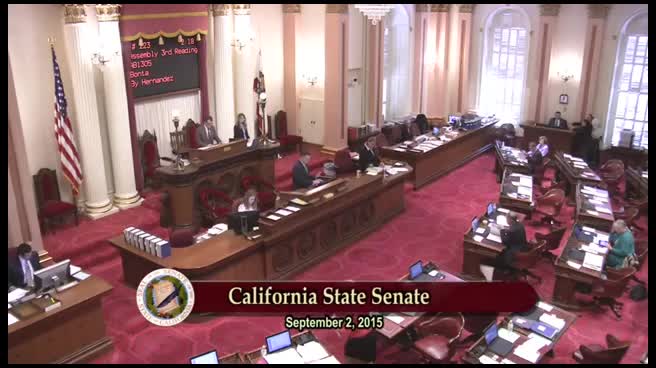
| Sep 2, 2015 | Read third time. Passed. Ordered to the Assembly. (Ayes 36. Noes 0. Page 2403.). |
| Sep 2, 2015 | Read third time. Passed. Ordered to the Assembly. |
| Sep 2, 2015 | In Assembly. Concurrence in Senate amendments pending. May be considered on or after September 4 pursuant to Assembly Rule 77. |
| Aug 31, 2015 | Read second time and amended. Ordered to third reading. |
| Aug 27, 2015 | From committee: Amend, and do pass as amended. (Ayes 7. Noes 0.) (August 27). |
| Aug 17, 2015 | In committee: Referred to APPR. suspense file. |
| Jul 15, 2015 | From committee: Do pass and re-refer to Com. on APPR. (Ayes 5. Noes 0.) (July 14). Re-referred to Com. on APPR. |
| Jun 29, 2015 | From committee chair, with author's amendments: Amend, and re-refer to committee. Read second time, amended, and re-referred to Com. on N.R. & W. |
| Feb 19, 2015 | Read first time. To print. |
| May 21, 2015 | Referred to Com. on N.R. & W. |
| May 11, 2015 | Read third time. Passed. Ordered to the Senate. (Ayes 78. Noes 0. Page 1379.) |
| May 11, 2015 | Read third time. Passed. Ordered to the Senate. |
| May 11, 2015 | In Senate. Read first time. To Com. on RLS. for assignment. |
| May 7, 2015 | Ordered to third reading. |
| May 7, 2015 | From Consent Calendar. |
| Apr 30, 2015 | Read second time. Ordered to Consent Calendar. |
| Apr 29, 2015 | From committee: Do pass. To Consent Calendar. (Ayes 17. Noes 0.) (April 29). |
| Apr 15, 2015 | From committee: Do pass and re-refer to Com. on APPR. (Ayes 9. Noes 0.) (April 15). Re-referred to Com. on APPR. |
| Apr 9, 2015 | Re-referred to Com. on A. & A.R. |
| Apr 8, 2015 | From committee chair, with author's amendments: Amend, and re-refer to Com. on A. & A.R. Read second time and amended. |
| Mar 19, 2015 | In committee: Hearing postponed by committee. |
| Mar 2, 2015 | Referred to Com. on A. & A.R. |
| Feb 20, 2015 | From printer. May be heard in committee March 22. |
|
Date
|
Description
|
Location
|
Votes
|
|
|---|---|---|---|---|
| Sep 3, 2015 | AB 429 DAHLE Concurrence in Senate Amendments | Assembly Floor |
Passed |
|
| Sep 2, 2015 | Assembly 3rd Reading AB429 Dahle By McGuire | Senate Floor |
Passed |
|
| Aug 27, 2015 | Do pass as amended | Senate Standing Committee on Appropriations |
Passed |
|
| Aug 17, 2015 | Placed on suspense file | Senate Standing Committee on Appropriations |
Passed |
|
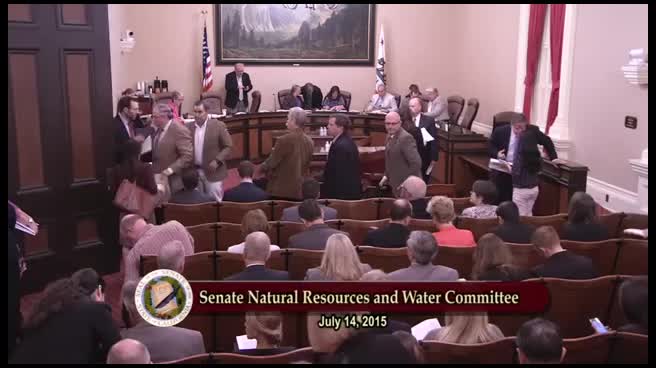
| Jul 14, 2015 | Do pass, but first be re-referred to the Committee on [Appropriations] | Senate Standing Committee on Natural Resources and Water |
Passed |
|
| May 11, 2015 | AB 429 DAHLE Assembly Third Reading | Assembly Floor |
Passed |
|
| Apr 29, 2015 | Do pass. To Consent Calendar. | Assembly Standing Committee on Appropriations |
Passed |
|
| Apr 15, 2015 | Do pass and be re-referred to the Committee on [Appropriations] | Assembly Standing Committee on Accountability and Administrative Review |
Passed |
This list shows positions taken on this bill by organizations on the date displayed, which is linked to the original source.
Positions by individuals are not included.
|
Organization
|
Position
|
Date
|
|---|---|---|
| Associated California Loggers | ** Support | Sep 2, 2015 |
| British Columbia | ** Against | Sep 2, 2015 |
| California Chamber Of Commerce | ** Support | Sep 2, 2015 |
| California Farm Bureau | ** Support | Sep 2, 2015 |
| California Forestry Association | ** Support | Sep 2, 2015 |
| California Licensed Foresters Association | ** Support | Sep 2, 2015 |
| Canada | * Against | Jul 14, 2015 |
| Coast Forest Products Association | ** Against | Sep 2, 2015 |
| Forest Industries National Management Committee | * Support | Jul 14, 2015 |
| Forest Landowners Of California | ** Support | Sep 2, 2015 |
| Forest Products Association of Canada | ** Against | Sep 2, 2015 |
| Green Diamond Resource Company | ** Support | Sep 2, 2015 |
| Humboldt Redwood Companies | ** Support | Sep 2, 2015 |
| Interfor | ** Against | Sep 2, 2015 |
| Mendocino | ** Support | Sep 2, 2015 |
| Shasta Forest Timberland's Red River Forest | * Support | Jul 14, 2015 |
| Sierra Pacific Industries | ** Support | Sep 2, 2015 |
| Western Wood Preservers Institute | ** Support | Sep 2, 2015 |
GOVERNOR'S VETO
AB 429
(Dahle)
As Enrolled September 8, 2015
2/3 vote
ASSEMBLY: |
78-0 |
(May 11, 2015) |
SENATE: |
36-0 |
(September 2, 2015) |
ASSEMBLY: |
78-0 |
(September 3, 2015) |
|
|
|
Original Committee Reference: A. & A.R.
SUMMARY: Establishes a bid preference for state contracts for lumber and other solid wood products harvested in compliance with the Z'berg-Nejedly Forest Practice Act (Act), federal timber sales, or a federal certification program identified by the director of the Department of Forestry and Fire Protection (CDF).
The Senate amendments:
Delete the purchase preference for lumber harvested under a compliance offset protocol.
Allow the purchase preference to apply to lumber harvested in accordance with a forest program that has been identified by the director of the CDF after consideration at a public hearing.
Make clarifying changes.
EXISTING LAW:
Declares in the Act that forest lands are among the most valuable natural resources in the state.
Recognizes that the state's forests currently are an annual net sequester of five million metric tons of carbon dioxide.
Expresses legislative intent to achieve the goal of maximum sustained production of high-quality timber products while giving consideration to values relating to sequestration of carbon dioxide, recreation, watershed, wildlife, range and forage, fisheries, regional economic vitality, employment, and aesthetic enjoyment.
Provides for the regulatory review and approval of timber harvest plans.
FISCAL EFFECT: According to the Senate Appropriations Committee, onetime costs of up to $100,000 to the General Fund for the Department of General Services to promulgate regulations that would establish how the bid preference in this bill would interact with other existing bid preferences.
GOVERNOR’S VETO MESSAGE:
This bill requires state agencies to provide a bid preference for California products when contracting for lumber and solid wood products.
In recent years I have signed sweeping reforms into law that have reduced fees and regulatory burdens on California's forestry industry. These reforms have helped the industry compete on a level playing field.
While I encourage the purchase of California products, especially when price and quality are equal, this bill could invite costly legal challenges for little benefit. For this reason I cannot sign it.
Analysis Prepared by: William Herms / A. & A.R. / (916) 319-3600 FN: 0002463
AB 429
Page 1
CONCURRENCE IN SENATE AMENDMENTS
AB 429
(Dahle)
As Amended August 31, 2015
Majority vote
ASSEMBLY: |
78-0 |
(May 11, 2015) |
SENATE: |
36-0 |
(September 2, 2015) |
Original Committee Reference: A. & A.R.
SUMMARY: Establishes a bid preference for state contracts for lumber and other solid wood products harvested in compliance with the Z'berg-Nejedly Forest Practice Act (Act), federal timber sales, or a federal certification program identified by the director of the Department of Forestry and Fire Protection (CDF).
The Senate amendments:
Delete the purchase preference for lumber harvested under a compliance offset protocol.
Allow the purchase preference to apply to lumber harvested in accordance with a forest program that has been identified by the director of the CDF after consideration at a public hearing.
Make clarifying changes.
EXISTING LAW:
Declares in the Act that forest lands are among the most valuable natural resources in the state.
Recognizes that the state's forests currently are an annual net sequester of five million metric tons of carbon dioxide.
Expresses legislative intent to achieve the goal of maximum sustained production of high-quality timber products while giving consideration to values relating to sequestration of carbon dioxide, recreation, watershed, wildlife, range and forage, fisheries, regional economic vitality, employment, and aesthetic enjoyment.
Provides for the regulatory review and approval of timber harvest plans.
FISCAL EFFECT: According to the Senate Appropriations Committee, onetime costs of up to $100,000 to the General Fund for the Department of General Services to promulgate regulations that would establish how the bid preference in this bill would interact with other existing bid preferences.
Analysis Prepared by: William Herms / A. & A.R. / (916) 319-3600 FN: 0001802
AB 429
Page 5
|
Office of Senate Floor Analyses (916) 651-1520 Fax: (916) 327-4478 |
THIRD READING
Bill No: AB 429
Amended: 8/31/15 in Senate
SENATE NATURAL RES. & WATER COMMITTEE: 5-0, 7/14/15
AYES: Stone, Hertzberg, Hueso, Jackson, Vidak
NO VOTE RECORDED: Pavley, Allen, Monning, Wolk
SENATE APPROPRIATIONS COMMITTEE: 7-0, 8/27/15
AYES: Lara, Bates, Beall, Hill, Leyva, Mendoza, Nielsen
ASSEMBLY FLOOR: 78-0, 5/11/15 - See last page for vote
SUBJECT: Public contracts: preferences: forest products
DIGEST: This bill establishes a bid preference for state contracts for lumber and other solid wood products that are harvested in compliance with the Z’berg-Nejedly Forest Practice Act, federal timber sales, or a federal certification program identified by the director of the Department of Forestry and Fire Protection.
Existing law:
Provides California has various programs that provide bid preferences to specific types of contractors or for projects in certain areas. Generally, various Government Code sections establish the programs and the Department of General Services' (DGS) State Contracting Manual specifies program parameters and compliance requirements.
The two main bid preference programs are the Disabled Veteran Business Enterprise Program and the Certified Small and Microbusiness Program. DGS oversees these programs and certifies these businesses so they are eligible for the preferences when bidding for state contracts. Additional smaller bid preferences are also overseen by DGS.
Another provision in Section 12400 of the Public Contract Code that is similar to a purchasing preference requires the state to engage in “environmentally preferable purchasing.”
Prohibits, pursuant to the Z’berg-Nejedly Forest Practice Act of 1973, a person from conducting timber operations on timberland unless a timber harvesting plan has been prepared by a registered professional forester and has been submitted to the Department of Forestry and Fire Protection and approved by the Director of Forestry and Fire Protection or the State Board of Forestry and Fire Protection.
This bill:
Contains numerous findings and declarations regarding the economic and environmental importance of forested lands including the importance of forested lands to sequester carbon dioxide.
Establishes conditions for a purchasing preference for lumber or other solid wood products that when those materials are purchased by state agencies. These conditions include harvesting that meets any of the following:
The lumber or wood products must be harvested in compliance with the California Forest Practices Act, rules governing federal timber sales, or a forest certification program that is identified by the director of the Department of Forestry and Fire Protection after conducting a public hearing. The director shall notify the DGS of any such identification in writing.
The preference must be consistent with federal law.
The preference would apply only to direct purchases of lumber and wood products by state agencies.
States that the direct purchase of lumber or other solid wood products pursuant to this preference are subject to this purchasing preference “if price, fitness and quality are equal, based upon verifiable, self-certification from suppliers that are selling directly to state agencies.”
States the lumber or other solid wood products that are subject to this purchasing preference are only those purchased directly by state agencies.
Provides the preference attaches only if consistent with federal law as determined by the courts.
Provides the preference attaches only when consistent with the state’s obligations under any applicable international agreement.
FISCAL EFFECT: Appropriation: No Fiscal Com.: Yes Local: No
According to the Senate Appropriations Committee, onetime costs of up to $100,000 to the General Fund for the DGS to promulgate regulations that would establish how the bid preference in this bill would interact with other existing bid preferences
Associated California Loggers
California Chamber of Commerce
California Farm Bureau
California Forestry Association
California Licensed Foresters Association
Forest Products Industry National Labor Management Committee
Forest Landowners of California
Green Diamond Resource Company
Mendocino/Humboldt Redwood Companies
Shasta Forests Timberlands, LLC and Red River Forests, LLC
Sierra Pacific Industries
Western Wood Preservers Institute
OPPOSITION: (Verified 8/28/15)
British Columbia
Coast Forest Products Association (20 companies from British Columbia)
Forest Products Association of Canada
Interfor
ARGUMENTS IN SUPPORT: The author and supporters state this bill would encourage state agencies to give preference to California lumber products as long as the price, quality and fitness of products are equal and those products are purchased directly by a state agency as opposed to a purchase through bidding on a major public works project. The author is concerned that lumber production in the state has declined as demand for lumber has increased. Further, the author argues that California’s forests are harvested sustainably and are subject to more rigorous regulation than competitors from other states and nations.
The author believes that the provision that limits the bill to situations when it is consistent with federal law should remove the concern that the bill would be implemented if it conflicted with federal trade agreements.
The author believes that allowing other suppliers whose forest products are harvested pursuant to federal timber sales rules or a third party certification program identified by the director of the California Department of Forestry and Fire Protection will allow many other suppliers from other states and nations to meet the requirements of this bill so that no international treaty obligations would be violated.
ARGUMENTS IN OPPOSITION: The opposition consists primarily of Canadian government and Canadian forestry interests who make several points based on earlier versions of the bill:
The bill discriminates against lumber and forest products imported into California from what the opposition contends are sustainably managed forests in Canada and elsewhere.
The bill violates U.S. obligations within the context of World Trade Organization (WTO) agreements. The WTO agreement requires California to provide “treatment no less favorable than the treatment” of California wood products purchased in Canada.
While the bill claims to be open to California purchases from all wood products harvested pursuant to the California Forest Practices Act, as a practical matter such lumber only comes from California because of the impossibility of verifying the lumber from outside of California was harvested pursuant to California law and regulations.
ASSEMBLY FLOOR: 78-0, 5/11/15
AYES: Achadjian, Alejo, Travis Allen, Baker, Bigelow, Bloom, Bonilla, Bonta, Brough, Brown, Burke, Calderon, Campos, Chang, Chau, Chávez, Chiu, Chu, Cooley, Cooper, Dababneh, Dahle, Daly, Dodd, Eggman, Frazier, Beth Gaines, Gallagher, Cristina Garcia, Eduardo Garcia, Gatto, Gipson, Gomez, Gonzalez, Gordon, Gray, Grove, Harper, Roger Hernández, Holden, Irwin, Jones, Jones-Sawyer, Kim, Lackey, Levine, Linder, Lopez, Low, Maienschein, Mathis, Mayes, McCarty, Medina, Melendez, Mullin, Nazarian, Obernolte, O'Donnell, Olsen, Patterson, Perea, Quirk, Rendon, Ridley-Thomas, Rodriguez, Salas, Santiago, Steinorth, Mark Stone, Thurmond, Ting, Wagner, Waldron, Weber, Wilk, Williams, Wood
NO VOTE RECORDED: Hadley, Atkins
Prepared by: William Craven / N.R. & W. / (916) 651-4116
8/31/15 15:43:15
**** END ****
AB 429 (Dahle) Page 0 of 1
SENATE COMMITTEE ON APPROPRIATIONS
Senator Ricardo Lara, Chair
2015 - 2016 Regular Session
AB 429 (Dahle) - Public contracts: preferences: forest products.
|
|
Version: June 29, 2015 |
Policy Vote: N.R. & W. 5 - 0 |
Urgency: No |
Mandate: No |
Hearing Date: August 27, 2015 |
Consultant: Marie Liu |
*********** ANALYSIS ADDENDUM – SUSPENSE FILE ***********
The following information is revised to reflect amendments
adopted by the committee on August 27, 2015
Bill Summary:
AB 429 would establish a bid preference for state contracts for lumber and other solid wood products that are harvested in compliance with the Z’berg-Nejedly Forest Practice Act, federal timber sales, or a federal certification program identified by the director of the Department of Forestry and Fire Protection.
Fiscal Impact:
Onetime costs of up to $100,000 to the General Fund for the Department of General Services (DGS) to promulgate regulations that would establish how the bid preference in this bill would interact with other existing bid preferences.
Author Amendments:
Delete the purchase preference for lumber harvested under a compliance offset protocol.
Allow the purchase preference to apply to lumber harvested in accordance with a forest program that has been identified by the director of the Department of Forestry and Fire Protection after consideration at a public hearing.
Clarifying changes
-- END --
AB 429 (Dahle) Page 3 of 3
SENATE COMMITTEE ON APPROPRIATIONS
Senator Ricardo Lara, Chair
2015 - 2016 Regular Session
AB 429 (Dahle) - Public contracts: preferences: forest products.
|
|
Version: June 29, 2015 |
Policy Vote: N.R. & W. 5 - 0 |
Urgency: No |
Mandate: No |
Hearing Date: August 17, 2015 |
Consultant: Marie Liu |
This bill meets the criteria for referral to the Suspense File.
Bill Summary:
AB 429 would establish a bid preference for state contracts for lumber and other solid wood products that are harvested in compliance with the Z’berg-Nejedly Forest Practice Act or verified under a Compliance Offset Protocol for U.S. Forest Projects adopted by the Air Resources Board (ARB).
Fiscal Impact:
Onetime costs of up to $100,000 to the General Fund for the Department of General Services (DGS) to promulgate regulations that would establish how the bid preference in this bill would interact with other existing bid preferences.
Potential legal costs to the General Fund as a result of legal actions challenging DGS’s implementation, or lack of implementation, of this bill.
Background:
Existing law gives bid preferences to specific types of contractors or for projects in certain areas. Generally, various Government Code sections establish the programs and DGS’ State Contracting Manual specifies program parameters and compliance requirements.
Proposed Law:
This bill would establish a bid preference in state contracts for lumber and other solid wood products that are harvested in compliance with the Z’berg-Nejedly Forest Practice Act or verified under a Compliance Offset Protocol for U.S. Forest Products adopted by the State ARB if price, fitness, and quality are equal and to the extent consistent with federal law. This preference would only apply to a state agency that directly contracts for specified lumber and other wood products. Paper and other types of secondary manufactured goods would not be subject to this bid preference.
This bill would also make a number of findings and declarations regarding the importance of forested lands in California both for the environment and the state’s economy.
Related Legislation:
AB 2994 (Frommer) 2004 would have required state agencies to give preference to the purchase of lumber and certain solid wood products harvested from forests in California when price, fitness, an quality are equal. AB 2994 was vetoed and in the veto message of Governor Schwarzenegger stated, “The preferences imposed by this bill could result in costly legal challenges, retaliation by other states and nations, and bid protests from those claiming the preference should be granted and those objecting to it.”
AB 994 (Parra, 2007) would have established a similar bid preference. AB 994 was ultimately amended into a bill dealing with another topic.
AB 199 (Holden, 2013) would have required specified state agencies to purchase agricultural products produced in California if certain criteria are met. AB 199 was vetoed by Governor Brown.
Staff Comments:
The author has committed to delete the provision of the bill that would give a bid preference to lumber and solid wood products that are harvested in a Compliance Offset Protocol for US Forest Products adopted by the ARB or any other offset protocol linked by the ARB. As this provision will be removed by author’s request should this bill move forward, this analysis does not analyze any potential costs associated with that provision.
To implement this bill, DGS anticipates that it would need to develop regulations to determine how this bid preference would interact with existing bid preferences. For example, the regulations would address how a bid from an out-of-state business owned by a disabled veteran would be ranked against a bid from an in-state business for lumber harvested in compliance with the Forest Practice Act. DGS estimates that developing the necessary regulations would likely cost no more than $100,000 for one year.
This bill would require the suppliers to self-certify that the wood products are harvest in compliance with the Forest Practices Act. Staff notes that compliance with the Forest Practices Act may be fairly easy to verify for the purpose of investigating the accuracy of the self-certification. However should the bill be expanded to give preference to lumber that meets other criteria, DGS may have costs associated with investigating the accuracy of the self-certification either because of a complaint or to ensure program integrity.
Staff notes that this bill only creates a bid preference “to the extent consistent with federal law.” This provision was added in recognition that such a bid preference could be challenged as violating the Commerce Clause in the US Constitution which establishes the exclusive federal authority to regulate commerce with foreign nations and among the states. It is unclear who would make the determination on whether the bid preference is consistent with federal law. Staff notes that it is reasonable to assume that DGS would likely face legal challenges either from those who think that the bid preference is legal and those who think that it is unconstitutional, depending on whether DGS implements the preference. These legal costs are unknown.
Proposed Author Amendments:
The author proposes to delete reference to the Compliance Offset Protocol adopted by the ARB on page 4 lines 17-23.
-- END --
AB 429 (Dahle) Page 4 of 4
SENATE COMMITTEE ON NATURAL RESOURCES AND WATER
Senator Fran Pavley, Chair
2015 - 2016 Regular
Bill No: AB 429 Hearing Date: July 14, 2015
Author: |
Dahle |
|
|
Version: |
June 29, 2015 Amended |
||
Urgency: |
No |
Fiscal: |
Yes |
Consultant: |
William Craven |
||
Subject: Public contracts: preferences: forest products.
BACKGROUND AND EXISTING LAW
1) California has various programs that provide bid preferences to specific types of contractors or for projects in certain areas. Generally, various Government Code sections establish the programs and the Department of General Services' (DGS) State Contracting Manual specifies program parameters and compliance requirements.
The two main bid preference programs, according to the Assembly Committee on Accountability and Administrative Review that considered this bill earlier in the year, are the Disabled Veteran Business Enterprise Program and the Certified Small and Microbusiness Program. DGS oversees these programs and certifies these businesses so they are eligible for the preferences when bidding for state contracts. Additional smaller bid preferences are also overseen by DGS.
Another provision in Section 12400 of the Public Contract Code that is similar to a purchasing preference requires the state to engage in “environmentally preferable purchasing.”
2) The Z’berg-Nejedly Forest Practice Act of 1973 prohibits a person from conducting timber operations on timberland unless a timber harvesting plan has been prepared by a registered professional forester and has been submitted to the Department of Forestry and Fire Protection and approved by the Director of Forestry and Fire Protection or the State Board of Forestry and Fire Protection.
PROPOSED LAW
1) This bill contains numerous findings and declarations regarding the economic and environmental importance of forested lands including the importance of forested lands to sequester carbon dioxide.
2) The bill establishes conditions for a purchasing preference for lumber or other solid wood products that when those materials are purchased by state agencies. These conditions include:
a) The lumber or wood products must be harvested in compliance with the California Forest Practices Act or verified under a compliance offset protocol for U.S. forest projects adopted by the State Air Resources Board or any other offset protocol linked by the air board to implement AB 32.
b) The preference must be consistent with federal law;
c) The preference would apply only to direct purchases of lumber and wood products by state agencies.
3) The bill states that the direct purchase of lumber or other solid wood products pursuant to this preference are subject to this purchasing preference “if price, fitness and quality are equal, based upon verifiable, self-certification from suppliers.”
4) The lumber or other solid wood products that are subject to this purchasing preference are only those purchased directly by state agencies.
5) The preference would attach only when consistent with federal law.
ARGUMENTS IN SUPPORT
The author states this bill would simply encourage state agencies to give preference to California lumber products as long as the price, quality and fitness of products are equal. He is concerned that lumber production in the state has declined as demand for lumber has increased. Further, the author argues that California’s forests are harvested sustainably and are subject to more rigorous regulation than competitors from other states and nations. Those in support of the bill have made many of the same points provided by the author.
The author believes that the provision that limits the bill to situations when it is consistent with federal law should remove the concern that the bill would be implemented if it conflicted with federal trade agreements.
ARGUMENTS IN OPPOSITION
The opposition consists primarily of Canadian government and Canadian forestry interests who make several points:
1) The bill discriminates against lumber and forest products imported into California from what the opposition contends are sustainably managed forests in Canada and elsewhere.
2) The bill violates U.S. obligations within the context of World Trade Organization (WTO) agreements. The WTO agreement requires California to provide “treatment no less favorable than the treatment” of California wood products purchased in Canada.
3) While the bill claims to be open to California purchases from all wood products harvested pursuant to the California Forest Practices Act, as a practical matter such lumber only comes from California because of the impossibility of verifying the lumber from outside of California was harvested pursuant to California law and regulations.
COMMENTS
1) Third time a charm? AB 2994 (Frommer) of 2004 would have required state agencies to give preference to the purchase of lumber and certain solid wood products harvested from forests in California when price, fitness and quality are equal. AB 2994 was vetoed, and the veto message of Governor Schwarzenegger stated: "While I support the goal of recognizing the stringent environmental standards California has placed on the forestry industry, many other industries face similar regulatory burdens without the availability of bidding preferences. The preferences imposed by this bill could result in costly legal challenges, retaliation by other states and nations, and bid protests from those claiming the preference should be granted and those objecting to it.”
In 2007, AB 994 (Parra) would have established a similar preference, but that bill was amended into a bill dealing with another topic.
2) Assuming the bill moves forward, the author and sponsors are undoubtedly aware of the possible legal quagmire that may ensue as referenced in comment 1. While the constitutional and international trade issues in purchasing preferences are not often before this committee, it is safe to make two basic observations:
a) It is uncertain whether courts would look kindly on this purchasing preference in light of possible complaints from both international and domestic competitors.
b) It is uncertain whether Canada would invoke international trade agreements to challenge this law. Its clear preference is to stop the bill rather than to initiate an international trade dispute resolution protocol with the U.S.
3) If the bill becomes law, those implementing this law may need to establish a mechanism to differentiate lumber products from trees harvested in California or pursuant to an offset protocol if satisfactory identification measures are not already in place.
4) The Department of General Services informed the Committee that state agencies make direct purchases of lumber (including signage posts, survey stake, etc.) in an approximate amount of $1.4 million annually. The WTO economic floor for activities not covered by the trade agreement is $$498,000.
5) The bill would establish for the first time that lumber harvested pursuant to an offset protocol linked by the State Air Resources Board pursuant to section 12894 of the Government Code is an appropriate basis for conditioning lawful timber imports into California. The Committee may wish to ask the sponsors to explain the rationale for this proposal.
The primary purpose of Section 12894 was to provide transparency to the Legislature and the public of the Western Climate Initiative. Four Canadian provinces are participating in the Western Climate Initiative (WCI), an agreement between British Columbia, Alberta, Ontario, Quebec, and California to reduce emissions and fight climate change through a cap-and-trade system. Offset protocols were not originally intended to affect the lumber import or export markets across national boundaries.
6) If the Committee is so inclined, it could consider a sunset date in order to provide greater data about the effectiveness of using the offset protocol, what the economic effects of the bill are on both the domestic and other forest-based economies that export to California, how the direct purchases of lumber by state agencies is trending over a few years, whether any international trade issues develop, and any other related issues. Whether to impose a sunset and of what duration is a decision of the Committee.
SUPPORT
Associated California Loggers
California Chamber of Commerce
California Farm Bureau
California Forestry Association
California Licensed Foresters Association
Forest Products Industry National Labor Management Committee
Green Diamond Resource Company
Mendocino/Humboldt Redwood Companies
Shasta Forests Timberlands, LLC and Red River Forests, LLC
Sierra Pacific Industries
Western Wood Preservers Institute
OPPOSITION
British Columbia
Coast Forest Products Association (20 companies from British Columbia)
Forest Products Association of Canada
Interfor
-- END --
AB 429
Page 2
ASSEMBLY THIRD READING
AB 429
(Dahle)
As Amended April 8, 2015
Majority vote
Committee |
Votes |
Ayes |
Noes |
Accountability |
9-0 |
Salas, Lackey, Brough, Burke, Frazier, Beth Gaines, Irwin, Medina, Rodriguez |
|
Appropriations |
17-0 |
Gomez, Bigelow, Bloom, Bonta, Calderon, Chang, Daly, Eggman, Gallagher, Eduardo Garcia, Holden, Jones, Quirk, Rendon, Wagner, Weber, Wood |
|
SUMMARY: Directs state agencies to provide a preference when acquiring or contracting for lumber or other solid wood products. Specifically, this bill:
Requires price, fitness and quality to be equal among bidders for the preference to apply.
Requires lumber or other solid wood products to be produced consistent with the Z'berg-Nejedly Forest Practice Act of 1973 (Act) of the California Public Resources Code.
EXISTING LAW:
Declares in the Act that forest lands are among the most valuable natural resources in the state.
Recognizes that the state's forests currently are an annual net sequester of five million metric tons of carbon dioxide.
Expresses legislative intent to achieve the goal of maximum sustained production of high-quality timber products while giving consideration to values relating to sequestration of carbon dioxide, recreation, watershed, wildlife, range and forage, fisheries, regional economic vitality, employment, and aesthetic enjoyment.
Provides for the regulatory review and approval of timber harvest plans.
FISCAL EFFECT:
According to the Assembly Appropriations Committee, the Department of General Services (DGS) indicates it would need to conduct a rulemaking to modify existing preference program regulations to reflect that other preferences do not operate when they would result in Act-grown timber over non-Act-grown timber. In addition, DGS would need to update the State Contracting Manual and training materials for the California Procurement and Contracting Academy basic course to reflect the new requirement. These one-time costs should be absorbable.
In individual cases where the harvesting practice for the timber became a deciding factor in a contract award, a state agency would need to be able to verify whether the wood products being purchased were made from timber using harvesting practices in compliance with the Act. This bill's provisions would apply to only a very narrow range of state purchase contracts, however. DGS indicates that annual direct spending on lumber and wood products by the state is around $1.4 million, so the cost impact of this bill should not be significant.
The requirement that the wood products be harvested consistent with California law, assuming price is equal, could discourage out-of-state suppliers from bidding, thus reducing competition and increasing contracting costs for wood products.
COMMENTS: The state has various programs that provide bid preferences to specific types of contractors or for projects in certain areas. Generally, various Government Code sections establish the programs and the DGS' State Contracting Manual specifies program parameters and compliance requirements.
The two main bid preference programs are the Disabled Veteran Business Enterprise Program and the Certified Small and Microbusiness Program. DGS oversees these programs and certifies these businesses so they are eligible for the preferences when bidding for state contracts. Additional smaller bid preferences are also overseen by DGS.
This bill would add a preference for lumber or other solid wood products that are produced in an environmentally preferred process as set out in the Act. The author states this bill would simply encourage state agencies to give preference to California lumber products as long as the price, quality and fitness of products are equal. The problem with existing law, the author contends, is that there is no recognition of the higher California standards of environmental compliance for California timber companies. Production has fallen due to timberland removals from production for environmental and social benefit; high costs of compliance with regulations; and, competition from out-of-state producers.
Analysis Prepared by: William Herms / A. & A.R. / (916) 319-3600 FN: 0000356
AB 429
Page 2
Date of Hearing: April 29, 2015
ASSEMBLY COMMITTEE ON APPROPRIATIONS
Jimmy Gomez, Chair
AB 429
(Dahle) – As Amended April 8, 2015
Policy Committee: |
Accountability and Administrative Review |
Vote: |
9 - 0 |
|
|
|
|
|
|
|
|
Urgency: No State Mandated Local Program: No Reimbursable: No
SUMMARY:
This bill requires state agencies, when purchasing lumber or other solid wood products, to give a preference, and price and quality are equal, to products harvested pursuant to California statutes and regulations governing this activity—specifically the Z'berg-Nejedly Forest Practice Act of 1973.
FISCAL EFFECT:
The Department of General Services (DGS) indicates it would need to conduct a rulemaking to modify existing preference program regulations to reflect that other preferences do not operate when they would result in Forest Practice Act-grown timber over non-Forest Practice Act-grown timber. In addition, DGS would need to update the State Contracting Manual and training materials for the California Procurement and Contracting Academy basic course to reflect the new requirement. These one-time costs should be absorbable.
In individual cases where the harvesting practice for the timber became a deciding factor in a contract award, a state agency would need to be able to verify whether the wood products being purchased were made from timber using harvesting practices in compliance with the Forest Practice Act. The bill's provisions would apply to only a very narrow range of state purchase contracts, however. DGS indicates that annual direct spending on lumber and wood products by the state is around $1.4 million, so the cost impact of this bill should not be significant.
The requirement that the wood products be harvested consistent with California law, assuming price is equal, could discourage out-of-state suppliers from bidding, thus reducing competition and increasing contracting costs for wood products.
COMMENTS:
Purchase. The author states this bill would simply encourage state agencies to give preference to California lumber products as long as the price, quality and fitness of products are equal. The problem with existing law, the author contends, is that there is no recognition of the higher California standards of environmental compliance for California timber companies. Production has fallen due to timberland removals from production for environmental and social benefit; high costs of compliance with regulations; and, competition from out-of-state producers.
Prior Legislation. AB 994 (Parra) of 2007, a similar bill, passed the Assembly, but was amended in the Senate to address a different topic.
AB 2994 (Frommer) of 2004, another similar bill, was vetoed by Governor Schwarzenegger, who was opposed another preference in state contracts.
Analysis Prepared by: Chuck Nicol / APPR. / (916) 319-2081
AB 429
Page 2
Date of Hearing: April 15, 2015
ASSEMBLY COMMITTEE ON ACCOUNTABILITY AND ADMINISTRATIVE REVIEW
Rudy Salas, Chair
AB 429
(Dahle) – As Amended April 8, 2015
SUBJECT: Public contracts: preferences: forest products
SUMMARY: Directs state agencies to provide a preference when acquiring or contracting for lumber or other solid wood products. Specifically, this bill:
Requires price, fitness and quality to be equal among bidders for the preference to apply.
Requires lumber or other solid wood products to be produced consistent with the Z'berg-Nejedly Forest Practice Act of 1973 (Act) of the California Public Resources Code.
EXISTING LAW:
Declares in the Act that forest lands are among the most valuable natural resources in the state.
Recognizes that the state's forests currently are an annual net sequester of five million metric tons of carbon dioxide.
Expresses legislative intent to achieve the goal of maximum sustained production of high-quality timber products while giving consideration to values relating to sequestration of carbon dioxide, recreation, watershed, wildlife, range and forage, fisheries, regional economic vitality, employment, and aesthetic enjoyment.
Provides for the regulatory review and approval of timber harvest plans.
FISCAL EFFECT: Unknown
COMMENTS: The state has various programs that provide bid preferences to specific types of contractors or for projects in certain areas. Generally, various Government Code sections establish the programs and the Department of General Services' (DGS) State Contracting Manual specifies program parameters and compliance requirements.
The two main bid preference programs are the Disabled Veteran Business Enterprise Program and the Certified Small and Microbusiness Program. DGS oversees these programs and certifies these businesses so they are eligible for the preferences when bidding for state contracts. Additional smaller bid preferences are also overseen by DGS.
This bill would add a preference for lumber or other solid wood products that are produced in an environmentally preferred process as set out in the Act. The author states this bill would simply encourage state agencies to give preference to California lumber products as long as the price, quality and fitness of products are equal. The problem with existing law, the author contends, is that there is no recognition of the higher California standards of environmental compliance for California timber companies. Production has fallen due to timberland removals from production for environmental and social benefit; high costs of compliance with regulations; and, competition from out-of-state producers.
REGISTERED SUPPORT / OPPOSITION:
Support
California Chamber of Commerce
California Forestry Association
Forest Products Industry National Labor Management Committee
Green Diamond Resource Company
Mendocino/Humbolt Redwood Companies
Shasta Forests Timberlans, LLC and Red River Forests, LLC
Sierra Pacific Industries
Western Wood Preservers Institute
Opposition
None on file
Analysis Prepared by: William Herms / A. & A.R. / (916) 319-3600
Bill Author

Bill Co-Author(s):
