AB 442: Governor’s Military Council.
- Session Year: 2015-2016
- House: Assembly
- Latest Version Date: 2015-09-21
Existing law establishes the California Military Department, which contains the California National Guard, the State Military Reserve, and other offices.
This bill would codify the Governors Military Council, under the direction of the California Military Department, and would provide for appointment to the council by the Governor. The bill would require that the appointments shall include, but not be limited to, bipartisan representatives from both houses of the Legislature. The provisions of this bill would be repealed on January 1, 2021.
Existing law establishes the California Military Department, which contains the California National Guard, the State Military Reserve, and other offices.
This bill would codify the Governors Military Council, under the direction of the California Military Department, and would provide for appointment to the council by the governor Governor. The bill would provide require that the appointments may include policy level representatives from specified areas shall include, but not be limited to, bipartisan representatives from both houses of the Legislature. The provisions of this bill would remain operative only until be repealed on January 1, 2021.
Existing law establishes the California Military Department, which contains the California National Guard, the State Military Reserve, and other offices.
This bill would codify the Governors Military Council, under the direction of the California Military Department, and would provide for appointment to the council by the governor. The bill would provide that the appointments may include policy level representatives from specified areas. The provisions of this bill would remain operative only until January 1, 2021.
The Legislature finds and declares as follows:
(a)California is home to 29 federal military installations and the United States Department of Defense directly employs more than 236,000 people in California. In an effort to protect and expand the militarys vital role in national security and Californias economy, Governor Edmund G. Brown Jr. established the Governors Military Council and appointed former Congresswoman and Under Secretary of State Ellen Tauscher as chair. The Governors Military Council works to protect Californias military installations and operations amid ongoing United States Department of Defense budget cuts, and leverage changes in federal military strategy to position the state to continue innovation and leadership in its military mission.
(b)The Military Council articulates the unique national defense value of California installations, and the importance of the Californians and businesses that support them. The Military Council also provides insight to state policy leaders on how state government can ensure that California serves as an operating environment for military and defense operations.
(c)The Military Council has convened several meetings throughout the state over the last year to tour installations and gather information and input from military commanders, business leaders, and community support organizations. The Military Council will deliver a report with recommendations to state leaders in the summer of 2015.
(d)The effect of sequestration and the continuing prospect of base reduction and closure necessitate that California maintain vigilance and speak with a unified voice to protect and enhance the United States Department of Defense mission in California.
SEC. 2.Section 59 is added to the Military and Veterans Code, to read:59.(a)There is in the state government a Governors Military Council (council) that shall serve under the direction of the Military Department and consist of members appointed by the Governor. The council shall advise the Governor on efforts to retain military installations and operations within this state that are necessary for the defense of the nation, and to coordinate and focus those efforts.
(b)The council shall include, but not be limited to, bipartisan representatives from both houses of the Legislature. Senate representatives shall be nominated by the Senate Committee on Rules and Assembly representatives shall be nominated by the Speaker of the Assembly.
(c)This section shall remain in effect only until January 1, 2021, and as of that date is repealed, unless a later enacted statute, that is enacted before January 1, 2021, deletes or extends that date.
The Legislature finds and declares as follows:
(a)California is home to 29 federal military installations and the United States Department of Defense directly employs more than 236,000 people in California. In an effort to protect and expand the militarys vital role in national security and Californias economy, Governor Edmund G. Brown Jr. established the Governors Military Council and appointed former Congresswoman and Under Secretary of State Ellen Tauscher as chair. The Governors Military Council works to protect Californias military installations and operations amid ongoing United States Department of Defense budget cuts, and leverage changes in federal military strategy to position the state to continue innovation and leadership in its military mission.
(b)The Military Council articulates the unique national defense value of California installations, and the importance of the Californians and businesses that support them. The Military Council also provides insight to state policy leaders on how state government can ensure that California serves as an operating environment for military and defense operations.
(c)The Military Council has convened several meetings throughout the state over the last year to tour installations and gather information and input from military commanders, business leaders, and community support organizations. The Military Council will deliver a report with recommendations to state leaders in the summer of 2015.
(d)The effect of sequestration and the continuing prospect of base reduction and closure necessitate that California maintain vigilance and speak with a unified voice to protect and enhance the United States Department of Defense mission in California.
SEC. 2.Section 59 is added to the Military and Veterans Code, to read:59.(a)There is in the state government a Governors Military Council (council) that shall serve under the direction of the Military Department and consist of members appointed by the governor. Governor. The council shall advise the governor Governor on efforts to retain military installations and operations within this state that are necessary for the defense of the nation, and to coordinate and focus those efforts.
(b)The council membership may include, but is not limited to, policy level representatives from the following:
(1)The Governors Advisor on Military Affairs.
(2)The Director of the Governors Office of Business and Economic Development.
(3)The Secretary for Environmental Protection.
(4)The Director of Employment Development.
(5)The Director of State Planning and Research.
(6)The Chairperson of the State Energy Resources Conservation and Development Commission.
(7)The Secretary of Transportation.
(8)The Executive Director of the Employment Training Panel.
(9)The Secretary of the Natural Resources Agency.
(10)The President of the University of California.
(11)The Chancellor of the California State University.
(12)The Chancellor of the California Community Colleges.
(13)The President pro Tempore of the Senate.
(14)The Speaker of the Assembly.
(15)The State Air Resources Board.
(16)The State Energy Resources Conservation and Development Commission.
(17)Any other legislative offices, state agencies, local governments, industry, civic, and research organizations that may have an interest in defense-related activities.
(b)The council shall include, but not be limited to, bipartisan representatives from both houses of the Legislature. Senate representatives shall be nominated by the Senate Committee on Rules and Assembly representatives shall be nominated by the Speaker of the Assembly.
(c)This section shall remain in effect only until January 1, 2021, and as of that date is repealed, unless a later enacted statute, that is enacted before January 1, 2021, deletes or extends that date.
The Legislature finds and declares as follows:
(a)California is home to 29 federal military installations and the United States Department of Defense directly employs more than 236,000 people in California. In an effort to protect and expand the militarys vital role in national security and Californias economy, Governor Edmund G. Brown Jr. established the Governors Military Council and appointed former Congresswoman and Under Secretary of State Ellen Tauscher as chair. The Governors Military Council works to protect Californias military installations and operations amid ongoing United States Department of Defense budget cuts, and leverage changes in federal military strategy to position the state to continue innovation and leadership in its military mission.
(b)The Military Council articulates the unique national defense value of California installations, and the importance of the Californians and businesses that support them. The Military Council also provides insight to state policy leaders on how state government can ensure that California serves as an operating environment for military and defense operations.
(c)The Military Council has convened several meetings throughout the state over the last year to tour installations and gather information and input from military commanders, business leaders, and community support organizations. The Military Council will deliver a report with recommendations to state leaders in summer 2015.
(d)The effect of sequestration and the continuing prospect of base reduction and closure necessitate that California maintain vigilance and speak with a unified voice to protect and enhance the United States Department of Defense mission in California.
SEC. 2.Section 59 is added to the Military and Veterans Code, to read:59.(a)There is in the state government a Governors Military Council (council) that shall serve under the direction of the Military Department and consist of members appointed by the governor. The council shall advise the governor on efforts to retain military installations and operations within this state that are necessary for the defense of the nation, and to coordinate and focus those efforts.
(b)The council membership may include, but is not limited to, policy level representatives from the following:
(1)The Governors Advisor on Military Affairs.
(2)The Director of the Governors Office of Business and Economic Development.
(3)The Secretary for Environmental Protection.
(4)The Director of Employment Development.
(5)The Director of State Planning and Research.
(6)The Chairperson of the State Energy Resources Conservation and Development Commission.
(7)The Secretary of Transportation.
(8)The Executive Director of the Employment Training Panel.
(9)The Secretary of the Natural Resources Agency.
(10)The President of the University of California.
(11)The Chancellor of the California State University.
(12)The Chancellor of the California Community Colleges.
(13)The President pro Tempore of the Senate.
(14)The Speaker of the Assembly.
(15)The State Air Resources Board.
(16)The State Energy Resources Conservation and Development Commission.
(17)Any other legislative offices, state agencies, local governments, industry, civic, and research organizations that may have an interest in defense-related activities.
(c)This section shall remain in effect only until January 1, 2021, and as of that date is repealed, unless a later enacted statute, that is enacted before January 1, 2021, deletes or extends that date.
|
Date
|
Status
|
|---|---|
| Jun 2, 2015 | In committee: Set, first hearing. Hearing canceled at the request of author. |
| Sep 21, 2015 | Chaptered by Secretary of State - Chapter 298, Statutes of 2015. |
| Sep 21, 2015 | Approved by the Governor. |
| Sep 9, 2015 | Enrolled and presented to the Governor at 4 p.m. |
| Aug 31, 2015 | Read third time. Passed. Ordered to the Assembly. (Ayes 40. Noes 0. Page 2311.). |
| Aug 31, 2015 | Read third time. Passed. Ordered to the Assembly. |
| Aug 31, 2015 | In Assembly. Ordered to Engrossing and Enrolling. |
| Aug 26, 2015 | Ordered to special consent calendar. |
| Aug 19, 2015 | Read second time. Ordered to third reading. |
| Aug 18, 2015 | From committee: Do pass. (Ayes 7. Noes 0.) (August 17). |
| Jun 30, 2015 | In committee: Hearing postponed by committee. |
| Jun 24, 2015 | From committee: Do pass and re-refer to Com. on APPR. with recommendation: To Consent Calendar. (Ayes 5. Noes 0.) (June 23). Re-referred to Com. on APPR. |
| Feb 23, 2015 | Read first time. To print. |
| May 14, 2015 | Referred to Com. on V.A. |
| Apr 30, 2015 | Read third time. Passed. Ordered to the Senate. (Ayes 77. Noes 0. Page 1223.) |
| Apr 30, 2015 | Read third time. Passed. Ordered to the Senate. |
| Apr 30, 2015 | In Senate. Read first time. To Com. on RLS. for assignment. |
| Apr 23, 2015 | Read second time. Ordered to Consent Calendar. |
| Apr 22, 2015 | From committee: Do pass. To Consent Calendar. (Ayes 17. Noes 0.) (April 22). |
| Apr 15, 2015 | From committee: Do pass and re-refer to Com. on APPR. (Ayes 9. Noes 0.) (April 14). Re-referred to Com. on APPR. |
| Mar 17, 2015 | Re-referred to Com. on V.A. |
| Mar 16, 2015 | From committee chair, with author's amendments: Amend, and re-refer to Com. on V.A. Read second time and amended. |
| Mar 5, 2015 | Referred to Com. on V.A. |
| Feb 24, 2015 | From printer. May be heard in committee March 26. |
|
Date
|
Description
|
Location
|
Votes
|
|
|---|---|---|---|---|
| Aug 31, 2015 | Special Consent #8 AB442 Irwin | Senate Floor |
Passed |
|
| Aug 17, 2015 | Do pass | Senate Standing Committee on Appropriations |
Passed |
|
| Jun 23, 2015 | Do pass, but first be re-referred to the Committee on [Appropriations] with the recommendation: To Consent Calendar | Senate Standing Committee on Veterans Affairs |
Passed |
|
| Apr 30, 2015 | AB 442 IRWIN Consent Calendar Second Day Regular Session | Assembly Floor |
Passed |
|
| Apr 22, 2015 | Do pass. To Consent Calendar. | Assembly Standing Committee on Appropriations |
Passed |
|
| Apr 14, 2015 | Do pass and be re-referred to the Committee on [Appropriations] | Assembly Standing Committee on Veterans Affairs |
Passed |
This list shows positions taken on this bill by organizations on the date displayed, which is linked to the original source.
Positions by individuals are not included.
|
Organization
|
Position
|
Date
|
|---|---|---|
| American Legion - Department of California | ** Support | Aug 17, 2015 |
| AMVETS - Department of California | ** Support | Aug 17, 2015 |
| California Association Of County Veterans Service Officers | ** Support | Aug 17, 2015 |
| California State Commanders Veteran Council | ** Support | Aug 17, 2015 |
| Veterans of Foreign Wars - Department of California | ** Support | Aug 17, 2015 |
| Vietnam Veterans of American - California State Council | ** Support | Aug 17, 2015 |
AB 442
Page 5
|
Office of Senate Floor Analyses (916) 651-1520 Fax: (916) 327-4478 |
THIRD READING
Bill No: AB 442
Amended: 3/16/15 in Assembly
SENATE VETERANS AFFAIRS COMMITTEE: 5-0, 6/23/15
AYES: Nielsen, Hueso, Allen, Nguyen, Roth
SENATE APPROPRIATIONS COMMITTEE: 7-0, 8/17/15
AYES: Lara, Bates, Beall, Hill, Leyva, Mendoza, Nielsen
ASSEMBLY FLOOR: 77-0, 4/30/15 (Consent) - See last page for vote
SUBJECT: Governor’s Military Council
DIGEST: This bill codifies the Governor’s Military Council, under the direction of the California Military Department (CMD); provides for appointment to the Council by the Governor; and self-repeals on January 1, 2021.
Existing law:
Establishes the State’s active militia, which consists of the National Guard, State Military Reserve, and Naval Militia, under the direction of the Adjutant General (TAG).
Authorizes a state active duty (SAD) program, which provides full-time uniformed state military personnel, who serve full-time on state active duty at the Governor’s call and perform a wide variety of military-related tasks.
Provides for the CMD, which, among other things, manages the active militia and SAD program, under the direction of the TAG.
This bill:
Codifies the Governor’s Military Council, under the direction of the CMD.
Provides for appointment to the Council by the Governor.
Requires the appointments to include, but not be limited to, bipartisan representatives from both houses of the Legislature.
Self-repeals on January 1, 2021.
Background
California and the Military. California has a strategic location, unique landscape and valuable resources that help further U.S. military readiness for actions around the globe. As a result, the Department of Defense (DoD) has made many economic and technological investments in the state, including large investments in land and military installations. The state’s unique resources and the military’s investments have fostered a strong partnership, and the ensuing collaboration is vital for economic, resource management, and military readiness reasons.
State and local economies are influenced by the military’s presence. The burden of maintaining this partnership often falls on the shoulders of cities and counties. In addition to juggling the competing demands of expanding development, promoting economic development and upholding environmental quality standards, local governments also must consider the needs of local military installations in their land use planning.
Traditionally, military installations were strategically located in underdeveloped areas so as to avoid land use conflicts. As the population of the state has continued to grow and communities continued to expand outward, the need for stronger relationships and communication between local governments and the military developed. Without adequate communication and coordinated land use efforts, military missions, quality of life and public safety are increasingly jeopardized. Growth encroaching on a military installation so as to hinder its mission can contribute to the installation’s closure.
The federal government worked its way through four initial iterations of the BRAC process between late 1988 and 1993. Nationally, that process led to the closing of 350 large and small military bases and 55 major realignments. Reportedly, this saved federal taxpayers more than $16 billion through 2001 and six billion dollars more each subsequent year.
Prior to 1988, California had, by far, the largest military presence of any state, and was home to 335,979 (14.7%) of DoD’s total 2,275,264 personnel and 91 (18.3%) of the 495 major military bases then scattered around the nation. Not surprisingly, the 1990s’ Base Realignment and Closure (BRAC) cuts fell heavily on California.
Through the first four rounds (1988, 1991, 1993, 1995), the state suffered the loss of 93,546 uniformed and civilian DoD jobs, which represented 53.8% of the net cuts nationally. California lost nearly 28 percent of its military personnel, while the rest of the nation saw a reduction of just 3.6 percent. In terms of major base closures, California lost 24 installations; Texas, seven; Pennsylvania, six; Illinois and New York, five each; and Florida, Indiana, Maryland and Virginia, four each. (Unlike the previous rounds, the fifth BRAC round in 2005 focused more on realignment than closure and had little negative impact on California.)
Governor’s Military Council. On March 28, 2013, the Governor announced the creation of the Governor’s Military Council. The Council’s mission is to help position California to maintain and grow military operations within the state. The DoD has announced several strategic shifts, including increasing force strength in the Pacific theater and prioritizing cyber-security, which provide opportunities to increase military investment in our state. The Council also is intended to provide insight to state leaders who are developing a strategy to support and grow military operations.
The Council also is charged with articulating the military value of California bases and operations as federal leaders consider cuts and realignment to federal military operations. The Secretary of Defense recently explained that coming military cuts “will impact all 50 states and many districts across America." The Council’s website says that, in recognizing these threats to military operations, the Council will highlight the ongoing military value of California installations, and of the Californians and businesses that support them.
Current Council membership includes many retired flag officers, high-ranking military leaders from all the branches of the armed forces, civic and state leaders, and includes bipartisan representation from both houses of the Legislature. Currently, Senators Fuller and Roth and Assembly Members Chávez and Irwin serve as the state legislative representatives to the Council.
Related Legislation
SB 506 (Fuller, 2015), among other things, (1) establishes a process for designating a local retention authority to serve as the lead local government entity responsible for efforts to retain local military installations; and (2) creates the Military and Aerospace Program under the Governor’s Office of Business and Economic Development (GO-Biz) to address concerns relating to state and local defense retention, base conversion and base reuse activities. (Pending, Senate Committee on Appropriations)
SB 121 (Fuller, 2015) requires that school construction projects on military installations that are eligible for specified federal grants are given priority for funding under the State School Facility program. (Pending, Senate Committee on Education)
AJR 11 (Burke and Atkins, Res. Chapter 68, Statutes of 2015) memorialized the President and Congress of the United States to recognize the unique military value of California's defense installations and the disproportionate sacrifices California endured in previous BRAC rounds.
FISCAL EFFECT: Appropriation: No Fiscal Com.: Yes Local: No
According to the Senate Appropriations Committee, the CMD “indicates minimal fiscal impact to the department.”
American Legion - Department of California
AMVETS - Department of California
California Association of County Veterans Service Officers
California State Commanders Veteran Council
Military Officers Association of America - California Council of Chapters
San Diego Military Advisor Council
San Diego Regional Economic Development Corporation
Veterans of Foreign Wars - Department of California
Vietnam Veterans of American - California State Council
OPPOSITION: (Verified 8/18/15)
None received
ASSEMBLY FLOOR: 77-0, 4/30/15
AYES: Achadjian, Alejo, Travis Allen, Baker, Bigelow, Bloom, Bonilla, Bonta, Brough, Brown, Burke, Calderon, Chang, Chau, Chiu, Chu, Cooley, Cooper, Dababneh, Dahle, Daly, Dodd, Eggman, Frazier, Beth Gaines, Gallagher, Cristina Garcia, Eduardo Garcia, Gatto, Gipson, Gonzalez, Gordon, Gray, Grove, Hadley, Harper, Roger Hernández, Holden, Irwin, Jones, Jones-Sawyer, Kim, Lackey, Levine, Linder, Lopez, Low, Maienschein, Mathis, Mayes, McCarty, Medina, Melendez, Mullin, Nazarian, Obernolte, O'Donnell, Olsen, Patterson, Perea, Quirk, Rendon, Ridley-Thomas, Rodriguez, Salas, Santiago, Steinorth, Mark Stone, Thurmond, Ting, Wagner, Waldron, Weber, Wilk, Williams, Wood, Atkins
NO VOTE RECORDED: Campos, Chávez, Gomez
Prepared by: Wade Cooper Teasdale / V.A. / (916) 651-1503
8/19/15 20:53:29
**** END ****
AB 442 (Irwin) Page 2 of 2
SENATE COMMITTEE ON APPROPRIATIONS
Senator Ricardo Lara, Chair
2015 - 2016 Regular Session
AB 442 (Irwin) - Governor’s Military Council.
|
|
Version: March 16, 2015 |
Policy Vote: V.A. 5 - 0 |
Urgency: No |
Mandate: No |
Hearing Date: August 17, 2015 |
Consultant: Jillian Kissee |
This bill does not meet the criteria for referral to the Suspense File.
Bill Summary:
This bill codifies the Governor’s Military Council, under the direction of the California Military Department. The bill’s provisions sunset on January 1, 2021.
Fiscal Impact:
The California Military Department indicates minimal fiscal impact to the department.
Background:
The Governor announced the establishment of the Governor’s Military Council in March of 2013. The council was envisioned to advise the Governor as federal priorities shift to cyber security and new military technology to expand defense-industry jobs and investment in the state. The council was created to also protect California’s 29 military installations and operations and the jobs of 236,000 people amid Department of Defense budget cuts. The announcement of the council indicated that it will meet for one year and draft specific recommendations to the Governor and Legislature.
Proposed Law:
This bill codifies the Governor’s Military Council, under the direction of the California Military Department, in which members are appointed by the Governor. The council must include, but not be limited to, bipartisan representatives from both houses of the Legislature. The bill requires the council is to advise the Governor on efforts to retain military installations and operations within the state that are necessary for national defense, and to coordinate those efforts.
Related Legislation:
SB 506 (Fuller, 2015) among other things: (1) establishes a process for the designation of a local retention authority to serve as the lead local government entity responsible for efforts to retain local military installations, and (2) creates the Military and Aerospace Program under the Governor’s Office of Business and Economic Development to address concerns relating to state and local defense retention, base conversion, and base reuse activities. SB 506 is pending in this committee.
SB 121 (Fuller, 2015) requires that school construction projects on military installations eligible for specified federal grants are given priority for funding under the State School Facility program. SB 121 is pending in the Senate Committee on Education.
Staff Comments:
According to the California Military Department, it has been supporting the Council out of existing funds since it was created in 2013. The department has redirected one position and approximately $65,000, and also received an augmentation of $85,000 General Fund in the 2014-15 budget.
This bill codifies the Governor’s Military Council until January 1, 2021, guaranteeing its existence at least up until this date. To the extent the Council would have otherwise been discontinued without the enactment of this bill, California Military Department would have likely redirected funds that supported the Council for other activities.
-- END --
AB 442 (Irwin) Page 6 of 6
SENATE COMMITTEE ON VETERANS AFFAIRS
Senator Jim Nielsen, Chair
2015 - 2016 Regular
Bill No: AB 442 Hearing Date: 6/23/15
Author: |
Irwin |
||
Version: |
3/16/15 |
||
Urgency: |
No |
Fiscal: |
Yes |
Consultant: |
Wade Cooper Teasdale |
||
Subject: Governor’s Military Council
DESCRIPTION
Summary:
Codifies the Governor’s Military Council, under the direction of the California Military Department (CMD) and provides for appointment to the Council by the Governor. The bill would require that the appointments shall include, but not be limited to, bipartisan representatives from both houses of the Legislature. The provisions of this bill would be repealed on January 1, 2021.
Existing law:
Establishes the State’s active militia, which consists of the California National Guard, State Military Reserve, and Naval Militia.
Authorizes a state active duty (SAD) program, which provides full-time uniformed state military personnel serving full-time on active duty at the Governor’ call.
Provides for the CMD, which, among other things, manages the active militia and SAD program.
This bill:
Codifies the Governor’s Military Council, under the direction of the CMD.
Provides for appointment to the Council by the Governor.
Requires the appointments to include, but not be limited to, bipartisan representatives from both houses of the Legislature
Self-repeals on January 1, 2021.
BACKGROUND
According to the website for the Governor’s Military Council:
On March 28, 2013, the Governor announced the creation of the Governor’s Military Council. This Council will position California to maintain and grow military operations in the state. The Department of Defense has announced several strategic shifts, including increasing force strength in the Pacific theater and prioritizing cyber-security, which provide California opportunities to increase military investment in our state. The Council will provide insight to state leaders who are developing a strategy to support and grow military operations in the Golden State.
As a major investor and landholder in the state, the military provides many economic and environmental benefits to the state as it provides for our nation's security. Similarly, California offers unique geographical, operational and technological benefits to the military installations that call it home. Ensuring that the two continue to support each other is a key focus of this Council.
The Council will also articulate the military value of California bases and operations as federal leaders consider cuts and realignment to federal military operations. The Secretary of Defense recently explained that coming military cuts “will impact all 50 states and many districts across America." Recognizing these threats to military operations, the Council will highlight the ongoing military value of California installations, and of the Californians and businesses that support them.
Governor Brown selected a formidable first Council. The Honorable Ellen O. Tauscher is the current Chair of the Council. She represented California’s 10th Congressional District for more than 12 years in the U.S. House of Representatives, where she chaired the House Armed Services Subcommittee on Strategic Forces. Current Council membership includes many retired flag officers, high-ranking military leaders from all the branches of service, civic and state leaders and includes bipartisan representation from both houses of the Legislature.
The purpose of this bill is to codify the Governor’s Military Council, under the direction of the California Military Department and provide for appointment to the Council by the Governor. This bill requires that the appointments shall include, but not be limited to, bipartisan representatives from both houses of the Legislature. The statute this bill would create contains a sunset provision for January 1, 2021. Codification of the Council ensures that even if there is leadership change in the Executive Branch, the Council will remain for at least a reasonable period into the future and then its utility will be reevaluated.
A consistent theme and lesson-learned that staff has heard from the defense community in California is that vigilance, active early engagement, and a unified message are vital when it comes to BRAC. These strategies ensure that the value of California's defense community and unique installations is well-articulated and heard by decision makers in both the pre-BRAC phase as well as during BRAC itself.
Base Realignment and Closure
California has a strategic location, unique landscape and valuable resources that help further U.S. military readiness for actions around the globe. As a result, the DoD has made many economic and technological investments in the state, including large investments in land and military installations. The state’s unique resources and the military’s investments have fostered a strong partnership, and the ensuing collaboration is vital for economic, resource management, and military readiness reasons. State and local economies are influenced by the military’s presence. The burden of maintaining this partnership often falls on the shoulders of cities and counties. In addition to juggling the competing demands of expanding development, promoting economic development and upholding environmental quality standards, local governments must also consider the needs of local military installations in their land use planning.
Traditionally, military installations were strategically located in underdeveloped areas so as to avoid land use conflicts. As the population of the state continues to grow and the land use needs of communities continue to expand outward, the need for stronger relationships and communication between local governments and the military developed. Without adequate communication and coordinated land use efforts, military missions, quality of life and public safety are increasingly jeopardized. Growth encroaching on a military installation so as to hinder its mission can contribute to the installation’s closure.
The federal government worked its way through four initial iterations of the BRAC process between late 1988 and 1993. Nationally, that process led to the closing of 350 large and small military bases and 55 major realignments. Reportedly, this saved federal taxpayers more than $16 billion through 2001 and six billion dollars more each subsequent year.
Prior to 1988, California had, by far, the largest military presence of any state, and was home to 335,979 (14.7%) of the Department of Defense's (DoD) total 2,275,264 personnel and 91 (18.3%) of the 495 major military bases then scattered around the nation. Not surprisingly, the BRAC cuts fell heavily on California.
Through the first four rounds (1988, 1991, 1993, 1995), the state suffered the loss of 93,546 uniformed and civilian DoD jobs, which represented 53.8% of the net cuts nationally. California lost nearly 28 percent of its military personnel, while the rest of the nation saw a reduction of just 3.6 percent.
In terms of major base closures, California lost 24 installations; Texas, seven; Pennsylvania, six; Illinois and New York, five each; and Florida, Indiana, Maryland and Virginia, four each.
Prior to the mid 1990's, California's response to BRAC was primarily focused on assisting local communities in the reuse of shuttered military bases. In 1994, then-Governor Wilson issued an Executive Order (W-87-94) which directed the Governor's Office of Planning and Research to coordinate the state's effort to assist local communities in developing strategies to protect California bases from further closings, as a means of focusing on the importance military bases have on the state’s economy.
Subsequent legislation (AB 639, Alby, 1998 and SB 1099, Knight, 1999) codified an Office of Military Base Retention and Reuse (OMBRR), placing it within the Technology, Trade and Commerce Agency (TTCA) and outlining the responsibilities of the office, including the creation of a Defense Retention Grant Program. The grant program aided local communities in preparing for future BRAC rounds. SB 926 (Knight and Ashburn, 2004) then renamed OMBRR to the Office of Military and Aerospace Support (OMAS), signifying the close relationship between military and aerospace activities. OMAS exited through the 2005 BRAC round and subsequently sunsetted in January of 2007.
Unlike previous rounds, the fifth BRAC round (2005) focused more on realignment than closure. Along with saving money, a top priority was military force readiness, consolidating assets onto centralized installations from which they can be deployed rapidly and flexibly in support of an evolving global situation, and joint service missions. Implementation of the 2005 BRAC recommendations was completed in 2011.
When a military installation is closed or its tenant units merely downsized, the communities in the area are adversely affected, particularly in the short-term. Military and civilian personnel face the loss or relocation of jobs. The uniformed personnel expect to be transferred regularly, but civilian workers on base usually are long-term local residents.
Local retailers who support the bases directly or indirectly suffer serious revenue decreases and may even be forced to close. Area governments lose revenues needed to maintain services and infrastructure. In addition, the negotiation and execution of land transfer, environmental cleanup, and redevelopment of the properties can be a challenging, alien process to communities.
The enabling BRAC statute typically provides a variety of mechanisms for disposing of property at closed or realigned military installations. In the past, some federal real property has been made available by public benefit conveyances for airport, education, and homeless assistance. Some have been converted to military reserve component bases. Others have been transferred to native American tribes. For some properties, economic development conveyances have been awarded to local redevelopment authorities. Some have been put up for public sale.
The 2005 BRAC Commission recommended that Congress authorize another BRAC round in 2015, and then every 8 years thereafter. In 2012 then-Defense Secretary Leon Panetta called for two BRAC rounds for 2013 and 2015, but Congress rejected Panetta’s requests and also declined to fund a Pentagon request in 2014 to fund another BRAC round.
COMMENT
Related legislation – current year
SB 506 (Fuller, 2015) among other things. (1) establishes a process for the designation of a local retention authority to serve as the lead local government entity responsible for efforts to retain local military installations. (2) Creates the Military and Aerospace (MA) Program under the Governor’s Office of Business and Economic Development (GO-Biz) to address concerns relating to state and local defense retention, base conversion and base reuse activities. (Pending, Senate Committee on Appropriations)
SB 121 (Fuller, 2015) requires that school construction projects on military installations that are eligible for specified federal grants are given priority for funding under the State School Facility program. (Pending, Senate Committee on Education)
AB 1080 (Obernolte, 2015) authorizes the Department of Finance to find that an agreement between a former redevelopment agency and a joint powers authority that was created to exercise the powers provided by the Military Base Reuse Authority Act is an enforceable obligation. (Pending, Assembly Committee on Local Government)
AJR 11 (Burke and Atkins, 2015) memorializes the President and the Congress of the United States to recognize the unique military value of California's defense installations and the disproportionate sacrifices California has endured in previous BRAC rounds. (Pending, Senate Committee on Veterans Affairs)
Related legislation – prior years
SB 245 (Rubio, 2011) would have re-established the Office of Military Support within the Governor's Office of Planning and Research (OPR) for the purpose of serving as a clearinghouse for state activities related to the military, including base closures.(Held, suspense, Assembly Committee on Appropriations)
AB 2565 (Parra, Chapter 763, Statutes of 2004) requires that the strategic plan originally prepared by the California Defense Retention and Conversion Council as it existed in 1998 be updated.
AB 1202 (Laird, Chapter 330, Statues of 2005) replaced obsolete references to the Defense Conversion Council with OMAS and revised the definition of military bases, required the Director of OPR to select a mediator, in consultation with the federal Office of Economic Adjustment, to reach agreement among different jurisdictions on a local reuse entity in the event that the multiple local governments cannot agree on a single reuse entity for each base.
SB 926 (Knight and Ashburn, Chapter 907, Statutes of 2004) consolidated the defense retention and conversion efforts in the state. The bill changed the name of OMBRR to OMAS, transferred its functions to BTH, and set forth its duties and authority with respect to state and local defense retention and conversion, consolidating all such programs under a single office within state government. The bill also provided for the use of state Infrastructure and Economic Development Bank funds by local governments to develop projects on or near a military base that enhance the base's mission.
SB 296 (Soto, 2001) would have enacted the Department of Defense Operational Effectiveness Preparedness Act to help prevent any further base closures in the state.
(Referred, but not heard in Senate Committee on Governmental Organization)
SB 1468 (Knight, Chapter 971, Statutes of 2002) required cities and counties to include military installations, aviation routes, airspace, and readiness activities in their state-mandated general plans, and requires OPR to provide guidance to local officials as part of its advisory General Plan Guidelines.
SB 1099 (Knight, Chapter 425, Statutes of 1999), the California Defense Retention and Conversion Act, reconstituted the defunct Defense Conversion Council as the California Defense and Retention and Conversion Council as well as required the establishment of a Defense Retention Grant Program.
AB 639 (Alby Chapter 952, Statutes of 1998) enacted the Defense Conversion, Reuse and Retention Omnibus Act which was designed to assist communities in both closure and retention efforts.
POSITIONS
Sponsor: Author
Support:
American Legion - Department of California
AMVETS - Department of California
California Association of County Veterans Service Officers
California State Commanders Veteran Council
Military Officers Association of America - California Council of Chapters
Veterans of Foreign Wars - Department of California
Vietnam Veterans of American - California State Council
Oppose: None received
-- END --
AB 442
Page 2
Date of Hearing: April 22, 2015
ASSEMBLY COMMITTEE ON APPROPRIATIONS
Jimmy Gomez, Chair
AB 442
(Irwin) – As Amended March 16, 2015
Policy Committee: |
Veterans Affairs |
Vote: |
9 - 0 |
|
|
|
|
|
|
|
|
Urgency: No State Mandated Local Program: No Reimbursable: No
SUMMARY:
This bill codifies the Governor’s Military Council, under the direction of the California Military Department, and provides for appointment to the council by the Governor. Specifically, this bill:
Codifies the existence of the Governor's Military Council, but sunsets the provisions of the bill on January 1, 2021.
Requires that the appointments shall include, but not be limited to, bipartisan representatives from both houses of the Legislature.
FISCAL EFFECT:
Minor absorbable costs to the Military Department.
COMMENTS:
Background. According to the Governor's Military Council Website:
"In an effort to protect and expand the military’s vital role
in national security and California’s economy, Governor Edmund G.
Brown Jr. today [3-28-2013] established the Governor’s Military
Council and appointed former Congresswoman and Under Secretary of
State Ellen Tauscher as chair.
'California plays a
crucial role in our nation’s defense, and military bases and
activities are vital to our state’s economy,' said Governor Brown.
As federal priorities shift to cyber security and new military
technology, this Council will work to expand defense-industry jobs
and investment in California.”
California is home to 29
federal military installations and the Department of Defense directly
employs more than 236,000 people in California. The Governor’s
Military Council will work to protect California’s military
installations and operations amid ongoing Department of Defense
budget cuts, and leverage changes in federal military strategy to
position the state to continue innovation and leadership in its
military mission.
'California’s military
infrastructure is critically important to national security,'
Tauscher said. 'The Council will send a unified message to
Washington, D.C., that highlights the value of our military bases.'"
Purpose. According to the author, "Though the Governor has shown leadership and created the Council, it lacks any foundation in statute or executive order to give it permanence."
AB 442 codifies the Governor’s Military Council, under the direction of the California Military Department, and provides for appointment to the Council by the Governor. This bill requires that the appointments include bipartisan representatives from both houses of the Legislature.
Analysis Prepared by: Pedro R. Reyes / APPR. / (916) 319-2081
AB 442
Page 2
Date of Hearing: April 14, 2015
ASSEMBLY COMMITTEE ON VETERANS AFFAIRS
Jacqui Irwin, Chair
AB 442
(Irwin) – As Amended March 16, 2015
SUBJECT: Governor’s Military Council
SUMMARY: Codifies the Governor’s Military Council, under the direction of the California Military Department, and provides for appointment to the council by the Governor. This bill:
Codifies the existence of the Governor's Military Council.
Requires that the appointments shall include, but not be limited to, bipartisan representatives from both houses of the Legislature.
States that the provisions of this bill would be repealed on January 1, 2021.
EXISTING LAW: Neither current law nor any current Executive Order pertain to the Governor's Military Council.
FISCAL EFFECT: Unknown at this time.
COMMENTS: The recession eases at a slow pace, sequestration, once unthinkable, is now the norm for the foreseeable future, and the Secretary of Defense has repeatedly proposed further rounds of BRAC. This is the reality of the current state of the country. Recognizing this, Governor Brown acted boldly and formed the Governor's Military Council.
According to the website for the Council:
On March 28, 2013, the Governor announced the creation of the Governor’s Military Council. This Council will position California to maintain and grow military operations in the state. The Department of Defense has announced several strategic shifts, including increasing force strength in the Pacific theater and prioritizing cyber-security, that provide California opportunities to increase military investment in our state. The Council will provide insight to state leaders who are developing a strategy to support and grow military operations in the Golden State.
As a major investor and landholder in the state, the military provides many economic and environmental benefits to the state as it provides for our nation's security. Similarly, California offers unique geographical, operational and technological benefits to the military installations that call it home. Ensuring that the two continue to support each other is a key focus of this Council.
The Council will also articulate the military value of California bases and operations as federal leaders consider cuts and realignment to federal military operations. The Secretary of Defense recently explained that coming military cuts “will impact all 50 states and many districts across America." Recognizing these threats to military operations, the Council will highlight the ongoing military value of California installations, and of the Californians and businesses that support them.
Governor Brown selected a formidable first Council. The Honorable Ellen O. Tauscher is the current Chair of the Council. She represented California’s 10th Congressional District for more than 12 years in the U.S. House of Representatives, where she chaired the House Armed Services Subcommittee on Strategic Forces. Current Council membership includes many retired flag officers, high-ranking military leaders from all the branches of service, civic and state leaders and includes bipartisan representation from both houses of the Legislature.
The purpose of this bill is to codify the Governor’s Military Council, under the direction of the California Military Department and provide for appointment to the Council by the Governor. This bill requires that the appointments shall include, but not be limited to, bipartisan representatives from both houses of the Legislature. The statute this bill would create contains a sunset provision for January 1, 2021. Codification of the Council ensures that even if there is leadership change in the Executive Branch, the Council will remain for at least a reasonable period into the future and then its utility will be reevaluated.
A consistent theme and lesson-learned that staff has heard from the defense community in California is that vigilance, active early engagement, and a unified message are vital when it comes to BRAC. These strategies ensure that the value of California's defense community and unique installations is well-articulated and heard by decisionmakers in both the pre-BRAC phase as well as during BRAC itself.
REGISTERED SUPPORT / OPPOSITION:
Support
None on File.
Opposition
None on File.
Analysis Prepared by: John Spangler / V.A. / (916) 319-3550
Discussed in Hearing
 2MIN
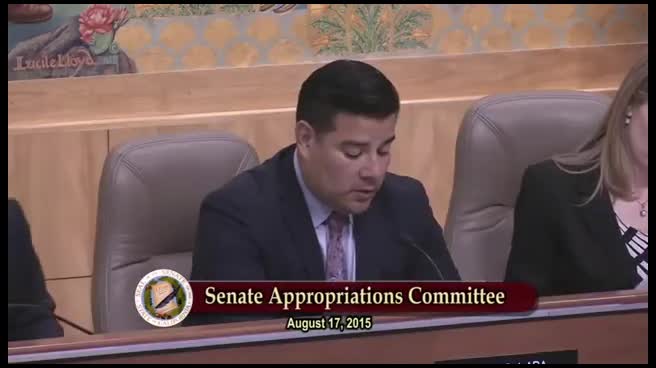
Senate Standing Committee on Appropriations
 6MIN
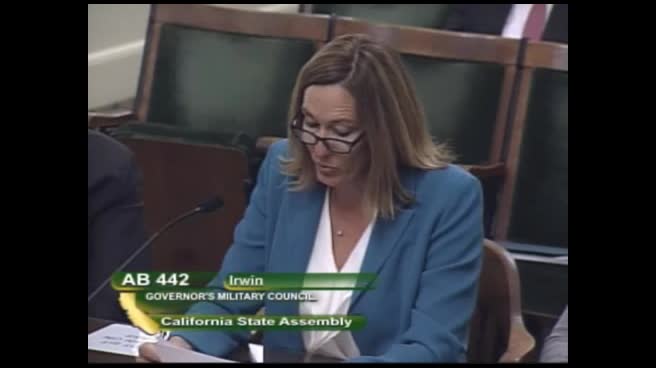
Assembly Standing Committee on Veterans Affairs
Bill Author

Bill Co-Author(s):