AB 451: Private parking facilities.
- Session Year: 2015-2016
- House: Assembly
- Latest Version Date: 2015-08-11
Existing law authorizes a city or county, by ordinance or resolution, to find and declare that there are privately owned and maintained offstreet parking facilities within the city or county that are generally held open for use of the public for purposes of vehicular parking and requires, upon enactment of the ordinance or resolution, that specified traffic laws apply, including those related to basic speed law, reckless driving, and speed contests and exhibitions of speed, except as specified.
This bill would authorize a city or county to include in that ordinance or resolution authorization for the operator of a privately owned and maintained offstreet parking facility to regulate unauthorized parking in that facility. The bill would, if a city or county has exercised that authority and unauthorized parking is regulated in a privately owned and maintained offstreet parking facility, require the owner or operator of the facility to post language, as specified, stating that violators may be subject to a parking invoice fee, and include in a parking fee invoice instructions that describe the manner in which to contest the parking fee invoice and prohibit the owner or operator from filing with, or transmitting to, the Department of Motor Vehicles a parking fee invoice, as specified. The bill would also require a city or county that authorizes private parking regulation to include, in its ordinance or resolution, specified provisions, including those related to dispute resolution.
Existing law authorizes a city or county, by ordinance or resolution, to find and declare that there are privately owned and maintained offstreet parking facilities within the city or county that are generally held open for use of the public for purposes of vehicular parking and requires, upon enactment of the ordinance or resolution, that specified traffic laws apply, including those related to basic speed law, reckless driving, and speed contests and exhibitions of speed, except as specified.
This bill would authorize a city or county to include in that ordinance or resolution authorization for the operator of privately owned and maintained offstreet parking facility to regulate unauthorized parking in that facility. The bill would, if a city or county has exercised that authority and unauthorized parking is regulated in a privately owned and maintained offstreet parking facility, require the owner or operator of the facility to include in a parking fee invoice instructions that describe the manner in which to contest the parking fee invoice and prohibit the owner or operator from filing with, or transmitting to, the Department of Motor Vehicles a parking fee invoice, as specified. The bill would also require a city or county that authorizes private parking regulation to include, in its ordinance or resolution, specified provisions, including those related to dispute resolution.
(a)(1) Any city or county may, by ordinance or resolution, find and declare that there are privately owned and maintained offstreet parking facilities as described in the ordinance or resolution within the city or county that are generally held open for use of the public for purposes of vehicular parking. Upon enactment by a city or county of the ordinance or resolution, Sections 22350, 23103, and 23109 and the provisions of Division 16.5 (commencing with Section 38000) shall apply to privately owned and maintained offstreet parking facilities, except as provided in subdivision (b).
(2)(A)If a city or county enacts an ordinance or resolution authorized by paragraph (1), a city or county may include in that ordinance or resolution authorization for the operator of a privately owned and maintained offstreet parking facility to regulate unauthorized parking in that facility.
(B)(i)If a city or county has exercised its authority pursuant to subparagraph (A) and unauthorized parking is regulated in a privately owned and maintained offstreet parking facility, the owner or operator of that facility shall include in a parking fee invoice instructions that describe the manner in which to contest the parking fee invoice.
(ii)If a city or county has exercised its authority pursuant to subparagraph (A) and unauthorized parking is regulated in a privately owned and maintained offstreet parking facility, the owner or operator of that facility shall not file with, or transmit to, the Department of Motor Vehicles a parking fee invoice for the purpose of having the Department of Motor Vehicles attempt to collect unpaid parking fees by refusing to issue or renew a license pursuant to Section 12808.1 or refusing to renew the registration of a vehicle pursuant to Section 4760.
(b)(1)Notwithstanding subdivision (a), an ordinance or resolution enacted thereunder does not apply to any offstreet parking facility described in that subdivision unless the owner or operator has caused to be posted in a conspicuous place at each entrance to that offstreet parking facility a notice not less than 17 by 22 inches in size with lettering not less than one inch in height, to the effect that the offstreet parking facility is subject to public moving vehicle laws and violators may be subject to a parking invoice fee.
(2)If applicable, a parking receipt distributed to drivers shall include language explicitly stating that violators may be subject to a parking invoice fee.
(c)No ordinance or resolution shall be enacted under subdivision (a) without a public hearing thereon and 10 days prior written notice to the owner and operator of the privately owned and maintained offstreet parking facility involved.
(d) Section 22507.8 may be enforced without enactment of an ordinance or resolution as required under subdivision (a) or the posting of a notice at each entrance to the offstreet parking facility as required under paragraph (1) of subdivision (b).
(e)The department shall not be required to provide patrol or enforce any provisions of this code on any privately owned and maintained offstreet parking facility subject to the provisions of this code under this section except those provisions applicable to private property other than by action under this section.
(f)A city or county that authorizes private parking regulation pursuant to this section shall, in its ordinance or resolution, include provisions that include all of the following:
(1)Procedures of dispute resolution in accordance with those procedures set forth in Section 40215, which shall include all of the following:
(A)A written and publicly available dispute resolution policy that includes specified time periods for notifications, review, and appeal.
(B)An administrative hearing process that includes all of the following:
(i)Options for a hearing in person or by mail.
(ii)Administrative review.
(iii)A hearing by a third-party examiner who has been adequately trained and who provides an independent, objective, fair, and impartial review.
(iv)Personal delivery or delivery by first-class mail of an examiners decision.
(v)Authority for the examiner to allow payment of the parking charge in installments for persons showing evidence of inability to pay the parking charge in full.
(2)A prohibition against incentives based on the number of invoices issued or the number or percent of disputed invoices adjudicated that uphold parking charges.
(3)A cap on a parking invoice fee that is commensurate with the most nearly equivalent municipal parking fine.
(4)Measures to prevent a private parking regulator from representing itself as a government enforcement agency, including a prohibition against use of terminology in ordinances or resolutions, and in parking fee invoices, which are restricted to governmental law enforcement, and a requirement for a conspicuous statement on parking fee invoices to the effect that This parking charge notice is not issued by the [local government].
(a)(1) Any city or county may, by ordinance or resolution, find and declare that there are privately owned and maintained offstreet parking facilities as described in the ordinance or resolution within the city or county that are generally held open for use of the public for purposes of vehicular parking. Upon enactment by a city or county of the ordinance or resolution, Sections 22350, 23103, and 23109 and the provisions of Division 16.5 (commencing with Section 38000) shall apply to privately owned and maintained offstreet parking facilities, except as provided in subdivision (b).
(2)(A)If a city or county enacts an ordinance or resolution authorized by paragraph (1), a city or county may include in that ordinance or resolution authorization for the operator of a privately owned and maintained offstreet parking facility to regulate unauthorized parking in that facility.
(B)(i)If a city or county has exercised its authority pursuant to subparagraph (A) and unauthorized parking is regulated in a privately owned and maintained offstreet parking facility, the owner or operator of that facility shall include in a parking fee invoice instructions that describe the manner in which to contest the parking fee invoice.
(ii)If a city or county has exercised its authority pursuant to subparagraph (A) and unauthorized parking is regulated in a privately owned and maintained offstreet parking facility, the owner or operator of that facility shall not file with, or transmit to, the Department of Motor Vehicles a parking fee invoice for the purpose of having the Department of Motor Vehicles attempt to collect unpaid parking fees by refusing to issue or renew a license pursuant to Section 12808.1 or refusing to renew the registration of a vehicle pursuant to Section 4760.
(b)(1)Notwithstanding the provisions of subdivision (a), no an ordinance or resolution enacted thereunder shall does not apply to any offstreet parking facility described therein in that subdivision unless the owner or operator has caused to be posted in a conspicuous place at each entrance to that offstreet parking facility a notice not less than 17 by 22 inches in size with lettering not less than one inch in height, to the effect that the offstreet parking facility is subject to public moving vehicle laws. laws and violators may be subject to a parking invoice fee.
(2)If applicable, a parking receipt distributed to drivers shall include language explicitly stating that violators may be subject to a parking invoice fee.
(c)No ordinance or resolution shall be enacted under subdivision (a) without a public hearing thereon and 10 days prior written notice to the owner and operator of the privately owned and maintained offstreet parking facility involved.
(d) Section 22507.8 may be enforced without enactment of an ordinance or resolution as required under subdivision (a) or the posting of a notice at each entrance to the offstreet parking facility as required under paragraph (1) of subdivision (b).
(e)The department shall not be required to provide patrol or enforce any provisions of this code on any privately owned and maintained offstreet parking facility subject to the provisions of this code under this section except those provisions applicable to private property other than by action under this section.
(f)A city or county that authorizes private parking regulation pursuant to this section shall, in its ordinance or resolution, include provisions that include all of the following:
(1)Procedures of dispute resolution in accordance with those procedures set forth in Section 40215, which shall include all of the following:
(A)A written and publicly available dispute resolution policy that includes specified time periods for notifications, review, and appeal.
(B)An administrative hearing process that includes all of the following:
(i)Options for a hearing in person or by mail.
(ii)Administrative review.
(iii)A hearing by a third-party examiner who has been adequately trained and who provides an independent, objective, fair fair, and impartial review.
(iv)Personal delivery or delivery by first-class mail of an examiners decision.
(v)Authority for the examiner to allow payment of the parking charge in installments for persons showing evidence of inability to pay the parking charge in full.
(2)A prohibition against incentives based on the number of invoices issued or the number or percent of disputed invoices adjudicated that uphold parking charges.
(3)A cap on a parking invoice fee that is commensurate with the most nearly equivalent municipal parking fine.
(4)Measures to prevent a private parking regulator from representing itself as a government enforcement agency, including a prohibition against use of terminology in ordinances or resolutions, and in parking fee invoices, which are restricted to governmental law enforcement, and a requirement for a conspicuous statement on parking fee invoices to the effect that This parking charge notice is not issued by the [local government].
(a)(1) Any city or county may, by ordinance or resolution, find and declare that there are privately owned and maintained offstreet parking facilities as described in the ordinance or resolution within the city or county that are generally held open for use of the public for purposes of vehicular parking. Upon enactment by a city or county of the ordinance or resolution, Sections 22350, 23103, and 23109 and the provisions of Division 16.5 (commencing with Section 38000) shall apply to privately owned and maintained offstreet parking facilities, except as provided in subdivision (b).
(2)(A)If a city or county enacts an ordinance or resolution authorized by paragraph (1), a city or county may include in that ordinance or resolution authorization for the operator of a privately owned and maintained offstreet parking facility to regulate unauthorized parking in that facility.
(B)(i)If a city or county has exercised its authority pursuant to subparagraph (A) and unauthorized parking is regulated in a privately owned and maintained offstreet parking facility, the owner or operator of that facility shall include in a parking fee invoice instructions that describe the manner in which to contest the parking fee invoice.
(ii)If a city or county has exercised its authority pursuant to subparagraph (A) and unauthorized parking is regulated in a privately owned and maintained offstreet parking facility, the owner or operator of that facility shall not file with, or transmit to, the Department of Motor Vehicles a parking fee invoice for the purpose of having the Department of Motor Vehicles attempt to collect unpaid parking fees by refusing to issue or renew a license pursuant to Section 12808.1 or refusing to renew the registration of a vehicle pursuant to Section 4760.
(b)Notwithstanding the provisions of subdivision (a), no ordinance or resolution enacted thereunder shall apply to any offstreet parking facility described therein unless the owner or operator has caused to be posted in a conspicuous place at each entrance to that offstreet parking facility a notice not less than 17 by 22 inches in size with lettering not less than one inch in height, to the effect that the offstreet parking facility is subject to public traffic regulations and control. moving vehicle laws.
(c)No ordinance or resolution shall be enacted under subdivision (a) without a public hearing thereon and 10 days prior written notice to the owner and operator of the privately owned and maintained offstreet parking facility involved.
(d) Section 22507.8 may be enforced without enactment of an ordinance or resolution as required under subdivision (a) or the posting of a notice at each entrance to the offstreet parking facility as required under subdivision (b).
(e)The department shall not be required to provide patrol or enforce any provisions of this code on any privately owned and maintained offstreet parking facility subject to the provisions of this code under this section except those provisions applicable to private property other than by action under this section.
(f)A city or county that authorizes private parking regulation pursuant to this section shall, in its ordinance or resolution, include provisions that include all of the following:
(1)Procedures of dispute resolution in accordance with those procedures set forth in Section 40215, which shall include all of the following:
(A)A written and publicly available dispute resolution policy that includes specified time periods for notifications, review, and appeal.
(B)An administrative hearing process that includes all of the following:
(i)Options for a hearing in person or by mail.
(ii)Administrative review.
(iii)A hearing by a third-party examiner who has been adequately trained and who provides an independent, objective, fair and impartial review.
(iv)Personal delivery or delivery by first-class mail of an examiners decision.
(v)Authority for the examiner to allow payment of the parking charge in installments for persons showing evidence of inability to pay the parking charge in full.
(2)A prohibition against incentives based on the number of invoices issued or the number or percent of disputed invoices adjudicated that uphold parking charges.
(3)A cap on a parking invoice fee that is commensurate with the most nearly equivalent municipal parking fine.
(4)Measures to prevent a private parking regulator from representing itself as a government enforcement agency, including a prohibition against use of terminology in ordinances or resolutions, and in parking fee invoices, which are restricted to governmental law enforcement, and a requirement for a conspicuous statement on parking fee invoices to the effect that This parking charge notice is not issued by the [local government].
|
Date
|
Status
|
|---|---|
| Jun 19, 2015 | From committee: Amend, and do pass as amended. (Ayes 11. Noes 0.) (June 16). |
| Aug 11, 2015 | Chaptered by Secretary of State - Chapter 168, Statutes of 2015. |
| Aug 11, 2015 | Approved by the Governor. |
| Aug 3, 2015 | Enrolled and presented to the Governor at 3 p.m. |
| Jul 9, 2015 | Senate amendments concurred in. To Engrossing and Enrolling. (Ayes 79. Noes 0. Page 2313.). |
| Jul 9, 2015 | Senate amendments concurred in. To Engrossing and Enrolling. |
| Jul 6, 2015 | Read third time. Passed. Ordered to the Assembly. (Ayes 39. Noes 0. Page 1792.). |
| Jul 6, 2015 | Read third time. Passed. Ordered to the Assembly. |
| Jul 6, 2015 | In Assembly. Concurrence in Senate amendments pending. May be considered on or after July 8 pursuant to Assembly Rule 77. |
| Jul 1, 2015 | Ordered to special consent calendar. |
| Jun 22, 2015 | Read second time and amended. Ordered to third reading. |
| Feb 23, 2015 | Read first time. To print. |
| Jun 4, 2015 | In committee: Hearing postponed by committee. |
| May 7, 2015 | Referred to Com. on T. & H. |
| Apr 16, 2015 | Read third time. Passed. Ordered to the Senate. (Ayes 79. Noes 0. Page 971.) |
| Apr 16, 2015 | Read third time. Passed. Ordered to the Senate. |
| Apr 16, 2015 | In Senate. Read first time. To Com. on RLS. for assignment. |
| Apr 13, 2015 | Read second time. Ordered to third reading. |
| Apr 9, 2015 | From committee: Do pass. (Ayes 9. Noes 0.) (April 8). |
| Mar 5, 2015 | Referred to Com. on L. GOV. |
| Feb 24, 2015 | From printer. May be heard in committee March 26. |
|
Date
|
Description
|
Location
|
Votes
|
|
|---|---|---|---|---|
| Jul 9, 2015 | AB 451 BONILLA Concurrence in Senate Amendments | Assembly Floor |
Passed |
|
| Jul 6, 2015 | Special Consent #4 AB451 Bonilla | Senate Floor |
Passed |
|
| Jun 16, 2015 | Do pass as amended | Senate Standing Committee on Transportation and Housing |
Passed |
|
| Apr 16, 2015 | AB 451 BONILLA Assembly Third Reading | Assembly Floor |
Passed |
|
| Apr 8, 2015 | Do pass. | Assembly Standing Committee on Local Government |
Passed |
This list shows positions taken on this bill by organizations on the date displayed, which is linked to the original source.
Positions by individuals are not included.
|
Organization
|
Position
|
Date
|
|---|---|---|
| Association Of Regional Center Agencies | * Support | Apr 14, 2015 |
| California Retailers Association | ** Support | Jul 9, 2015 |
| California State Association Of Counties | ** Support | Jun 16, 2015 |
| Children'S Specialty Care Coalition | * Support | Apr 14, 2015 |
| City of Walnut Creek [SPONSOR] | ** Support | Apr 14, 2015 |
| Health Plan Of San Mateo | * Support | Apr 14, 2015 |
| League Of California Cities | ** Support | Jul 9, 2015 |
| Regional Parking, Inc. | ** Support | Jul 9, 2015 |
| San Rafael/Marin County Council Of Mayors & Council Members, City Of | * Support | Jun 16, 2015 |
| Walnut Creek, City Of | ** Support | Jul 9, 2015 |
AB 451
Page 5
CONCURRENCE IN SENATE AMENDMENTS
AB 451
(Bonilla)
As Amended June 22, 2015
Majority vote
ASSEMBLY: |
79-0 |
(April 16, 2015) |
SENATE: |
39-0 |
(July 6, 2015) |
Original Committee Reference: L. GOV.
SUMMARY: Allows cities or counties to authorize, via ordinance or resolution, operators of privately owned and maintained off-street parking facilities to regulate unauthorized parking in their facilities.
The Senate amendments:
Clarify that an owner or operator of a private, off-street parking facility must post a specified notice at each entrance to the facility to the effect that violators of moving vehicle laws may be subject to a parking invoice fee.
Provide that, if applicable, a parking receipt distributed to drivers shall include language explicitly stating that violators may be subject to a parking invoice fee.
Make technical and clarifying changes.
EXISTING LAW:
Allows any city or county, by ordinance or resolution, to find and declare that there are privately owned and maintained off-street parking facilities as described in the ordinance or resolution within the city or county that are generally held open for use of the public for purposes of vehicular parking, and that specified traffic laws apply to such facilities, including those related to basic speed law, reckless driving, speed contests and exhibitions of speed.
Prohibits any ordinance or resolution described above from applying to any off-street parking facility unless the owner or operator posts specified notices that the parking facility is subject to public traffic regulations and control.
Prohibits any ordinance or resolution described above from being enacted without a public hearing and 10 days prior written notice to the owner and operator of the privately owned and maintained off-street parking facility involved.
Outlines the requirements for, and limitations on, the removal of vehicles parked on private property, as specified (Vehicle Code Section 22658).
AS PASSED BY THE ASSEMBLY, this bill:
Provided that, if a city or county enacts an ordinance or resolution finding and declaring that there are privately owned and maintained off-street parking facilities within the city or county that are generally held open for use of the public for purposes of vehicular parking, a city or county may include in that ordinance or resolution authorization for the operator of a privately owned and maintained off-street parking facility to regulate unauthorized parking in that facility.
Provided that, if a city or county has exercised its authority pursuant to 1) above, and unauthorized parking is regulated in a privately owned and maintained off-street parking facility, the owner or operator of that facility shall include in a parking fee invoice instructions that describe the manner in which to contest the notice of parking violation.
Provided that, if a city or county has exercised its authority pursuant to 1) above, and unauthorized parking is regulated in a privately owned and maintained off-street parking facility, the owner or operator of that facility shall not file with, or transmit to, the Department of Motor Vehicles (DMV) a parking fee invoice for the purpose of having the DMV attempt to collect unpaid parking fees by refusing to issue or renew a license or refusing to renew the registration of a vehicle, as specified.
Required a city or county that authorizes private parking regulation pursuant to this bill to, in its ordinance or resolution, include provisions that include all of the following:
Procedures of dispute resolution in accordance with those procedures set forth in current law governing procedures on parking violations, which shall include all of the following:
A written and publicly available dispute resolution policy that includes specified time periods for notifications, review, and appeal;
An administrative hearing process that includes all of the following:
Options for a hearing in person or by mail;
Administrative review;
A hearing by a third-party examiner who has been adequately trained and who provides an independent, objective, fair and impartial review;
Personal delivery or delivery by first-class mail of an examiner's decision; and,
Authority for the examiner to allow payment of the parking charge in installments for persons showing evidence of inability to pay the parking charge in full.
A prohibition against incentives based on the number of invoices issued or the number or percent of disputed invoices adjudicated that uphold parking charges;
A cap on a parking invoice fee that is commensurate with the most nearly equivalent municipal parking fine; and,
Measures to prevent a private parking regulator from representing itself as a government enforcement agency, including a prohibition against use of terminology in ordinances or resolutions, and in parking fee invoices, which are restricted to governmental law enforcement, and a requirement for a conspicuous statement on parking fee invoices to the effect that, "This parking charge notice is not issued by the [local government]."
FISCAL EFFECT: None
COMMENTS:
Bill Summary. This bill clarifies that a city or a county may enact an ordinance that allows the owners or operators of privately owned and maintained off-street parking facilities to regulate parking in their facilities. This bill requires owners or operators of a privately owned and maintained off-street parking facility to include in any parking fee invoice instructions on how to contest the notice of parking violation. Owners or operators must also provide notice at each entrance to their facilities and on any receipts issued that violators may be subject to a parking fee invoice.
This bill also prohibits information regarding parking violations from being filed with, or transmitted to, the DMV for the purpose of a DMV "hold" on issuing or renewing a license or refusing to renew a vehicle registration. In addition, this bill requires a city or county to include in its ordinance or resolution a number of consumer protection measures, such as procedures for dispute resolution, prohibitions against incentives for issuing or upholding invoices, a cap on a parking invoice fee, and measures to prevent a private parking regulator from representing itself as a government agency. This bill is sponsored by the City of Walnut Creek.
Author's Statement. According to the author, "Some cities and counties have ordinances authorizing private parking lot operators to regulate private lots and enforce parking violations through the use of invoices. However, state law does not prescribe whether or not private companies can enforce meter limits in private parking lots, even when local jurisdictions authorize a company to do so. Clarity is needed to protect all parties and maintain existing parking enforcement policies."
Background. In December of 2011, the Attorney General issued an opinion that was sought to answer four questions:
Does California Vehicle Code Section 22658, or any other state law, authorize private property owners to issue parking citations imposing monetary sanctions to the owners of vehicles parked on their property?
May private property owners acquire, by means of issuing a written warning or posting signage, the right to issue parking citations imposing monetary sanctions to the owners of vehicles parked on their property?
May persons, who tow and impound vehicles under Vehicle Code Section 22658, require payment of parking citations that have been issued by private property owners, in addition to the towing and storage charges?
What rights or remedies are available to the owners of vehicles that have received parking citations imposing monetary sanctions issued by private property owners?
The opinion concluded that:
Neither California Vehicle Code Section 22658, nor any other state law, authorizes private property owners to issue parking citations imposing monetary sanctions to the owners of vehicles parked on their property.
Absent statutory authorization, private property owners may not acquire, by means of issuing a written warning or posting signage, the right to issue parking citations imposing monetary sanctions to the owners of vehicles parked on their property.
Persons who tow and impound vehicles under Vehicle Code Section 22658 may not require payment of parking citations that have been issued by private property owners.
Owners of vehicles who have received parking citations imposing monetary sanctions issued by private property owners or their agents do not have rights or remedies per se, but the citations are unenforceable against the vehicle owners.
Subsequent to this opinion, a class action case was filed in August of 2012 alleging that the opinion, together with various provisions of the Vehicle Code, preclude local governments in California from enacting ordinances allowing the private issuance of invoices for parking fees. The case involved a private parking operator, Regional Parking Corporation, doing business pursuant to a Walnut Creek ordinance governing private parking lots.
In its order after hearing this case, the Contra Costa Superior Court (Court) noted that, "The Opinion is silent on the question of whether a local government ordinance would be sufficient 'statutory authorization' to allow a private property owner to issue parking citations. California courts interpret the term 'statute' to include municipal ordinances… Thus, the Court reads the Opinion as including ordinances as potential statutory authorization for the private issuance of citations."
The Court then considered a question not addressed in the opinion: whether a local government can enact an ordinance allowing for private property owners to issue citations, or whether any such ordinance would necessarily be preempted by state law. The Court found that, "Because the Vehicle Code for the most part does not address the regulation of private parking, the Court also finds that there is no implied preemption of the Ordinance. What little state law there is on the topic of private parking expressly provides for the possibility of local regulation thereof… There is no statutory scheme fully occupying the field so as to impliedly preempt local regulation.
"Nor is the plaintiff persuasive in arguing that because the City of Walnut Creek cannot contract with private parties to issue citations for public parking violations, it cannot authorize private parties to impose fees for unauthorized parking on their own property… Although local governments are restricted from contracting out the performance of their public functions – such as the enforcement of public parking laws – the issuance of invoices for unauthorized parking on private property is not such a public function."
This bill will clarify, in state statute, that cities and counties have the authority to enact ordinances allowing operators of privately owned and maintained off-street parking facilities to regulate unauthorized parking in their facilities. This bill also contains consumer protections for providing notice of possible fees, contesting violations, and preventing adverse impacts on drivers' licenses or vehicle registrations.
Previous Legislation. AB 2381 (Bonilla) of 2014, would have allowed cities or counties to authorize, via ordinance or resolution, operators of privately owned and maintained off-street parking facilities to regulate unauthorized parking in their facilities. AB 2381 was held in the Senate Transportation and Housing Committee.
Arguments in Support. The City of Walnut Creek, sponsor of this bill, states, "(T)he validity of the Walnut Creek ordinance has been put into question by an Attorney General legal opinion which states that California statute must authorize such an ordinance. This opinion, while not binding, has had the unfortunate consequence of discouraging other cities from similar ordinances that would benefit their downtown business associations, local merchants and communities. AB 451 will provide clarity to the matter by addressing the Attorney General's opinion and clearly stating that such ordinances are valid."
Arguments in Opposition. None on file.
Analysis Prepared by: Angela Mapp / L. GOV. / (916) 319-3958 FN: 0001064
AB 451
Page 6
|
Office of Senate Floor Analyses (916) 651-1520 Fax: (916) 327-4478 |
THIRD READING
Bill No: AB 451
Amended: 6/22/15 in Senate
SENATE TRANS. & HOUSING COMMITTEE: 11-0, 6/16/15
AYES: Beall, Cannella, Allen, Bates, Gaines, Galgiani, Leyva, McGuire, Mendoza, Roth, Wieckowski
ASSEMBLY FLOOR: 79-0, 4/16/15 - See last page for vote
SUBJECT: Private parking facilities
DIGEST: This bill permits cities and counties, by ordinance or resolution, to authorize operators of privately owned and maintained off-street parking facilities to regulate unauthorized parking in their facilities.
Existing law:
Authorizes any city or county, by ordinance or resolution, to authorize privately owned and maintained off-street parking facilities to provide parking to the public. Upon enactment of the ordinance or resolution, specific traffic laws apply to these facilities, including those related to basic speed law, reckless driving, speed contests, and exhibitions of speed.
Prohibits the enactment of the authorization under (1) above if the operator of the facility fails to post a conspicuous notice of a specified size that the parking facility is subject to public traffic regulations and control.
Prohibits the enactment of the authorization under (1) above without a public hearing and 10 days’ prior written notice to the owner and operator of the privately owned and maintained off-street parking facility.
Outlines the requirements for, and limitations on, the removal of vehicles parked on private property.
This bill:
Provides that if a city or county authorizes the owner or operator of a privately owned and maintained off-street parking facility to provide parking to the public, a city or county may include in that ordinance or resolution authorization for the owner or operator to regulate unauthorized parking in that facility.
Provides that if a city or county has exercised its authority under this section and the parking facility owner or operator regulates unauthorized parking in the parking facility, the owner or operator shall include instructions for how to contest a parking fee invoice in the parking fee invoice. The owner or operator shall not file with or transmit the parking invoice to the Department of Motor Vehicles for the purpose of collecting unpaid parking fees by refusing to issue or renew a license or refusal to renew vehicle registration.
Prohibits the enactment of the authorization under this section if the operator of the facility fails to post a conspicuous notice of a specified size that violators may be subject to a parking invoice fee. If applicable, a parking receipt distributed to drivers shall include language explicitly stating that violators may be subject to a parking invoice fee.
Provides that a city or county that authorizes private parking under this section must include the following:
Procedures for dispute resolution in accordance with state law governing parking violations, which include:
A written and publicly available dispute resolution policy that includes specified time periods for notification, review, and appeal.
An administrative hearing process that includes:
Options for a hearing in person or by mail;
Administrative review;
A hearing by a third-party examiner who has been adequately trained and who provides an independent, objective, fair, and impartial review;
Personal delivery or delivery by first-class mail of an examiner’s decision; and
Authority for the examiner to allow payment of the parking charge in installments for persons showing evidence of inability to pay the parking charge in full.
A prohibition against incentives based on the number of invoices issued or the number or percentage of disputed invoices adjudicated that uphold parking charges.
A cap on a parking invoice fee that is commensurate with the most nearly equivalent municipal parking fine.
Requires measures to prevent a private parking owner from representing itself as a government enforcement agency, including: 1) a prohibition against using terminology in ordinances or resolutions and in parking fee invoices, and 2) a requirement for a conspicuous statement on the parking fee invoices, to the effect, stating: “This parking charge notice is not issued by the [local government].”
Comments
Purpose of the bill. According to the source, many parking lots in California are privately owned. In the City of Walnut Creek, for example, 70% of downtown parking spaces are privately owned. For this reason, some cities, such as Walnut Creek, have enacted ordinances authorizing private parking lot operators to regulate their lots and enforce parking violations through the use of invoices. Metered parking is often recommended by parking lot managers and adopted by local governments.
Current state law does not prescribe whether or not private companies can enforce meter limits in private parking lots, even when local jurisdictions authorize a company to do so. This bill addresses the problem by providing clarity to cities and counties by authorizing them to adopt parking ordinances that best facilitate economic activity within their jurisdiction.
Background of inadequate authorization. In 2011, the Attorney General concluded that state law does not authorize private property owners to issue parking citations imposing monetary sanctions to the owners of vehicles parked on their property. The Attorney General reasoned that issuing “citations,” “notices of parking violations,” and otherwise imposing monetary sanctions are traditionally municipal functions; absent express authority from the Legislature, only a governmental entity may issue parking citations that impose monetary sanctions.
Shortly after this opinion was released, a class action case of parking invoice recipients was filed alleging that the Attorney General opinion and the Vehicle Code preclude local governments in California from enacting ordinances allowing the private issuance of invoices for parking fees. In that case, the City of Walnut Creek passed an ordinance allowing private parking operators to regulate parking. A class of plaintiffs alleged that the invoices they received were unlawful and an unauthorized penalty assessed by the defendant, a manager of a private parking facility. The Superior Court of Contra Costa held that ordinances are statutory authorization for the private issuance of citations. It further held that because the Vehicle Code does not address the regulation of private parking, there is no implied state preemption of the Walnut Creek ordinance. For this reason, the court found the Walnut Creek ordinance to be valid and not preempted by state law.
The holding in that case, however, is limited in application to Walnut Creek and does not apply to other jurisdictions. This bill would clarify that cities and counties across the state have the authority to enact ordinances allowing operators of privately owned and maintained off-street parking facilities to regulate unauthorized parking.
Empty threat? The sponsor states that the intent of the bill is to facilitate the flow of traffic and ease parking in busy shopping areas. In Walnut Creek, for example, hikers park early on Saturday mornings near the downtown for day-long climbs at Mount Diablo, taking up limited parking spaces near high-end shopping. Consumers, therefore, become frustrated that they cannot find parking, and, in some cases, go somewhere else. Presently, the only recourse for private parking operators is to tow an unauthorized vehicle; operators hope that receiving a parking invoice will encourage consumers to abide by time restrictions and free up limited parking for other consumers.
Those in support state that, even though this bill authorizes them to do so, the bill is not intended to generate money for unauthorized parking. Supporters have also stated, however, that private parking operators could and likely will retain lists of license plates of “repeat offenders” so that operators may exercise their right to prohibit offenders from re-entering their private parking lots. While the bill expressly prohibits the private parking operators from remitting information to and therefore receiving identifiable information from the DMV, it is not clear whether parking operators may obtain personal information from another source. This personal information could be used to take the parking violator to small claims court to obtain the parking invoice fee or send the parking violator to collections for failure to pay. When asked, the supporters stated that it is unlikely a private parking operator would pursue a violator in small claims court for a mere $25 fee. The hope is that the receipt of an invoice will be enough of an incentive to prevent unauthorized parking, and that a violator will simply pay the invoice.
Prior Legislation
This bill is similar to AB 2381 (Bonilla, 2014) that was held at the author’s request in Senate Transportation and Housing Committee last year. That bill would have allowed cities or counties to authorize, by ordinance or resolution, operators of privately owned and maintained off-street parking facilities to regulate unauthorized parking in their facilities. The analysis for AB 2381 in the Senate Transportation and Housing Committee pointed out potential abuses of private enforcement, including: 1) unfair or arbitrary adjudication of contested violation notices, 2) private entities masquerading as public law enforcement, 3) exorbitant fines, and 4) promotion of bounty hunter activity in issuing violation notices.
This bill has addressed those concerns by: 1) establishing dispute resolution processes similar to those set forth in existing state law, 2) requiring measures to prevent a private parking owner or operator from representing itself as a local government, 3) capping parking invoice fees, and 4) prohibiting incentives to issue invoices. Additionally, this bill replaces the terms “violation” and “penalties” used in AB 2381 that are associated with governmental sanctions with the terms “invoices” and “fees,” which are more appropriate for non-governmental entities. It also requires parking owners to provide notice on a conspicuous sign at each entrance of the parking facility and, if applicable, on a parking receipt, that violators may be subject to an invoice
FISCAL EFFECT: Appropriation: No Fiscal Com.: No Local: No
City of Walnut Creek (source)
California Retailers Association
City of Indian Wells
League of California Cities
Regional Parking, Inc.
OPPOSITION: (Verified 6/22/15)
None received
ASSEMBLY FLOOR: 79-0, 4/16/15
AYES: Achadjian, Alejo, Travis Allen, Baker, Bigelow, Bloom, Bonilla, Bonta, Brough, Brown, Burke, Calderon, Campos, Chang, Chau, Chávez, Chiu, Chu, Cooley, Cooper, Dababneh, Dahle, Daly, Dodd, Eggman, Frazier, Beth Gaines, Gallagher, Cristina Garcia, Eduardo Garcia, Gatto, Gipson, Gomez, Gonzalez, Gordon, Gray, Grove, Hadley, Harper, Roger Hernández, Holden, Irwin, Jones, Jones-Sawyer, Kim, Lackey, Levine, Linder, Lopez, Low, Maienschein, Mathis, Mayes, McCarty, Medina, Melendez, Mullin, Nazarian, Obernolte, O'Donnell, Olsen, Patterson, Perea, Rendon, Ridley-Thomas, Rodriguez, Salas, Santiago, Steinorth, Mark Stone, Thurmond, Ting, Wagner, Waldron, Weber, Wilk, Williams, Wood, Atkins
NO VOTE RECORDED: Quirk
Prepared by: Alison Dinmore / T. & H. / (916) 651-4121
6/25/15 8:52:06
**** END ****
AB 451 (Bonilla) Page 6 of 6
SENATE COMMITTEE ON TRANSPORTATION AND HOUSING
Senator Jim Beall, Chair
2015 - 2016 Regular
Bill No: AB 451 Hearing Date: 6/16/2015
Author: |
Bonilla |
||
Version: |
2/23/2015 |
||
Urgency: |
No |
Fiscal: |
No |
Consultant: |
Alison Dinmore |
||
SUBJECT: Private parking facilities
DIGEST: This bill permits cities and counties, by ordinance or resolution, to authorize operators of privately owned and maintained off-street parking facilities to regulate unauthorized parking in their facilities.
ANALYSIS:
Existing law:
Authorizes any city or county, by ordinance or resolution, to authorize privately owned and maintained off-street parking facilities to provide parking to the public. Upon enactment of the ordinance or resolution, specific traffic laws apply to these facilities, including those related to basic speed law, reckless driving, speed contests, and exhibitions of speed.
Prohibits the enactment of the authorization under (1) above if the operator of the facility fails to post a conspicuous notice of a specified size that the parking facility is subject to public traffic regulations and control.
Prohibits the enactment of the authorization under (1) above without a public hearing and 10 days’ prior written notice to the owner and operator of the privately owned and maintained off-street parking facility.
Outlines the requirements for, and limitations on, the removal of vehicles parked on private property.
This bill:
Provides that if a city or county authorizes the owner or operator of a privately owned and maintained off-street parking facility to provide parking to the public, a city or county may include in that ordinance or resolution authorization for the owner or operator to regulate unauthorized parking in that facility.
Provides that if a city or county has exercised its authority under this section and the parking facility owner or operator regulates unauthorized parking in the parking facility, the owner or operator shall include instructions for how to contest a parking fee invoice in the parking fee invoice. The owner or operator shall not file with or transmit the parking invoice to the Department of Motor Vehicles for the purpose of collecting unpaid parking fees by refusing to issue or renew a license or refusal to renew vehicle registration.
Provides that a city or county that authorizes private parking under this section must include the following:
Procedures for dispute resolution in accordance with state law governing parking violations, which include:
A written and publicly available dispute resolution policy that includes specified time periods for notification, review, and appeal.
An administrative hearing process that includes:
Options for a hearing in person or by mail;
Administrative review;
A hearing by a third-party examiner who has been adequately trained and who provides an independent, objective, fair, and impartial review;
Personal delivery or delivery by first-class mail of an examiner’s decision; and
Authority for the examiner to allow payment of the parking charge in installments for persons showing evidence of inability to pay the parking charge in full.
A prohibition against incentives based on the number of invoices issued or the number or percentage of disputed invoices adjudicated that uphold parking charges.
A cap on a parking invoice fee that is commensurate with the most nearly equivalent municipal parking fine.
Measures to prevent a private parking owner from representing itself as a government enforcement agency, including: 1) a prohibition against using terminology in ordinances or resolutions and in parking fee invoices, and 2) a requirement for a conspicuous statement on the parking fee invoices, to the effect, stating: “This parking charge notice is not issued by the [local government].”
COMMENTS:
Purpose of the bill. According to the author, many parking lots in California are privately owned. In the City of Walnut Creek, for example, 70% of downtown parking spaces are privately owned. For this reason, some cities, such as Walnut Creek, have enacted ordinances authorizing private parking lot operators to regulate their lots and enforce parking violations through the use of invoices. Metered parking is often recommended by parking lot managers and adopted by local governments.
Current state law does not prescribe whether or not private companies can enforce meter limits in private parking lots, even when local jurisdictions authorize a company to do so. This bill addresses the problem by providing clarity to cities and counties by authorizing them to adopt parking ordinances that best facilitate economic activity within their jurisdiction.
Background of inadequate authorization. In 2011, the Attorney General concluded that state law does not authorize private property owners to issue parking citations imposing monetary sanctions to the owners of vehicles parked on their property. The Attorney General reasoned that issuing “citations,” “notices of parking violations,” and otherwise imposing monetary sanctions are traditionally municipal functions; absent express authority from the Legislature, only a governmental entity may issue parking citations that impose monetary sanctions.
Shortly after this opinion was released, a class action case of parking invoice recipients was filed alleging that the Attorney General opinion and the Vehicle Code preclude local governments in California from enacting ordinances allowing the private issuance of invoices for parking fees. In that case, the City of Walnut Creek passed an ordinance allowing private parking operators to regulate parking. A class of plaintiffs alleged that the invoices they received were unlawful and an unauthorized penalty assessed by the defendant, a manager of a private parking facility. The Superior Court of Contra Costa held that ordinances are statutory authorization for the private issuance of citations. It further held that because the Vehicle Code does not address the regulation of private parking, there is no implied state preemption of the Walnut Creek Ordinance. For this reason, the court found the Walnut Creek ordinance to be valid and not preempted by state law.
The holding in that case, however, is limited in application to Walnut Creek and does not apply to other jurisdictions. This bill would clarify that cities and counties across the state have the authority to enact ordinances allowing operators of privately owned and maintained off-street parking facilities to regulate unauthorized parking.
3) Empty threat? The sponsor states that the intent of the bill is to facilitate the flow of traffic and ease parking in busy shopping areas. In Walnut Creek, for example, hikers park early on Saturday mornings near the downtown for day-long climbs at Mount Diablo, taking up limited parking spaces near high-end shopping. Consumers, therefore, become frustrated that they cannot find parking, and, in some cases, go somewhere else. Presently, the only recourse for private parking operators is to tow an unauthorized vehicle; operators hope that receiving a parking invoice will encourage consumers to abide by time restrictions and free up limited parking for other consumers.
Those in support state that, even though this bill authorizes them to do so, the bill is not intended to generate money for unauthorized parking. Supporters have also stated, however, that private parking operators could and likely will retain lists of license plates of “repeat offenders” so that operators may exercise their right to prohibit offenders from re-entering their private parking lots. While the bill expressly prohibits the private parking operators from remitting information to and therefore receiving identifiable information from the DMV, it is not clear whether parking operators may obtain personal information from another source. This personal information could be used to take the parking violator to small claims court to obtain the parking invoice fee or send the parking violator to collections for failure to pay. When asked, the supporters stated that it is unlikely a private parking operator would pursue a violator in small claims court for a mere $25 fee. The hope is that the receipt of an invoice will be enough of an incentive to prevent unauthorized parking, and that a violator will simply pay the invoice.
4) Prior legislation. This bill is similar to AB 2381 (Bonilla) that was held at the author’s request in this committee last year. That bill would have allowed cities or counties to authorize, by ordinance or resolution, operators of privately owned and maintained off-street parking facilities to regulate unauthorized parking in their facilities. The analysis for AB 2381 in this committee pointed out potential abuses of private enforcement, including: 1) unfair or arbitrary adjudication of contested violation notices, 2) private entities masquerading as public law enforcement, 3) exorbitant fines, and 4) promotion of bounty hunter activity in issuing violation notices.
This bill has addressed those concerns by: 1) establishing dispute resolution processes similar to those set forth in existing state law, 2) requiring measures to prevent a private parking owner or operator from representing itself as a local government, 3) capping parking invoice fees, and 4) prohibiting incentives to issue invoices. Additionally, this bill replaces the terms “violation” and “penalties” used in AB 2381 that are associated with governmental sanctions with the terms “invoices” and “fees,” which are more appropriate for non-governmental entities.
5) Advance notice to consumers. While drivers are aware that parking violations on city or county streets may result in a fine or citation, drivers will not be aware that a private parking operator may impose a parking fee invoice for unauthorized parking. The author will accept amendments in committee to ensure that if a city or county has exercised its authority pursuant to subparagraph (2) (A) of Section 21107.8 of the Vehicle Code, private parking facility owners or managers shall post signage in a conspicuous place at each entrance to that off-street parking facility in a notice not less than 17 by 22 inches in size with lettering not less than one inch in height notifying drivers that parking violators may be subject to a parking fee invoice. In addition, if applicable, any parking tickets or receipts distributed to drivers must also include language explicitly stating that those in violation may be subject to a parking fee invoice.
Assembly votes:
Floor: 79-0
L Gov: 9-0
Related Legislation:
AB 2381 (Bonilla, 2014) — would have permitted cities and counties, by ordinance or resolution, to authorize operators of privately owned and maintained off-street parking facilities to regulate parking in their facilities. This bill was held at the author’s request in the Senate Transportation and Housing Committee.
FISCAL EFFECT: Appropriation: No Fiscal Com.: No Local: No
POSITIONS: (Communicated to the committee before noon on Wednesday,
June 10, 2015.)
SUPPORT:
City of Walnut Creek (sponsor)
California Retailers Association
California State Association of Counties
City of Indian Wells
League of California Cities
Regional Parking, Inc.
OPPOSITION:
None received
-- END --
AB 451
Page 4
ASSEMBLY THIRD READING
AB 451
(Bonilla)
As Introduced February 23, 2015
Majority vote
Committee |
Votes |
Ayes |
Noes |
Local Government |
9-0 |
Maienschein, Gonzalez, Alejo, Chiu, Cooley, Gordon, Holden, Linder, Waldron |
|
SUMMARY: Allows cities or counties to authorize, via ordinance or resolution, operators of privately owned and maintained off-street parking facilities to regulate unauthorized parking in their facilities. Specifically, this bill:
Provides that, if a city or county enacts an ordinance or resolution finding and declaring that there are privately owned and maintained off-street parking facilities within the city or county that are generally held open for use of the public for purposes of vehicular parking, a city or county may include in that ordinance or resolution authorization for the operator of a privately owned and maintained off-street parking facility to regulate unauthorized parking in that facility.
Provides that, if a city or county has exercised its authority pursuant to 1) above, and unauthorized parking is regulated in a privately owned and maintained off-street parking facility, the owner or operator of that facility shall include in a parking fee invoice instructions that describe the manner in which to contest the notice of parking violation.
Provides that, if a city or county has exercised its authority pursuant to 1) above, and unauthorized parking is regulated in a privately owned and maintained off-street parking facility, the owner or operator of that facility shall not file with, or transmit to, the Department of Motor Vehicles (DMV) a parking fee invoice for the purpose of having the DMV attempt to collect unpaid parking fees by refusing to issue or renew a license or refusing to renew the registration of a vehicle, as specified.
Requires a city or county that authorizes private parking regulation pursuant to this bill to, in its ordinance or resolution, include provisions that include all of the following:
Procedures of dispute resolution in accordance with those procedures set forth in current law governing procedures on parking violations, which shall include all of the following:
A written and publicly available dispute resolution policy that includes specified time periods for notifications, review, and appeal;
An administrative hearing process that includes all of the following:
Options for a hearing in person or by mail;
Administrative review;
A hearing by a third-party examiner who has been adequately trained and who provides an independent, objective, fair and impartial review;
Personal delivery or delivery by first-class mail of an examiner’s decision; and,
Authority for the examiner to allow payment of the parking charge in installments for persons showing evidence of inability to pay the parking charge in full.
A prohibition against incentives based on the number of invoices issued or the number or percent of disputed invoices adjudicated that uphold parking charges;
A cap on a parking invoice fee that is commensurate with the most nearly equivalent municipal parking fine; and,
Measures to prevent a private parking regulator from representing itself as a government enforcement agency, including a prohibition against use of terminology in ordinances or resolutions, and in parking fee invoices, which are restricted to governmental law enforcement, and a requirement for a conspicuous statement on parking fee invoices to the effect that, “This parking charge notice is not issued by the [local government].”
EXISTING LAW:
Allows any city or county, by ordinance or resolution, to find and declare that there are privately owned and maintained off-street parking facilities as described in the ordinance or resolution within the city or county that are generally held open for use of the public for purposes of vehicular parking, and that specified traffic laws apply to such facilities, including those related to basic speed law, reckless driving, speed contests and exhibitions of speed.
Prohibits any ordinance or resolution described above from applying to any off-street parking facility unless the owner or operator posts specified notices that the parking facility is subject to public traffic regulations and control.
Prohibits any ordinance or resolution described above from being enacted without a public hearing and 10 days prior written notice to the owner and operator of the privately owned and maintained off-street parking facility involved.
Outlines the requirements for, and limitations on, the removal of vehicles parked on private property, as specified (Vehicle Code Section 22658).
FISCAL EFFECT: None
COMMENTS:
Bill Summary. This bill clarifies that a city or a county may enact an ordinance that allows the owners or operators of privately owned and maintained off-street parking facilities to regulate parking in their facilities. The bill requires operators of a privately owned and maintained off-street parking facility to include in any parking fee invoice instructions on how to contest the notice of parking violation. The bill also prohibits information regarding parking violations from being filed with, or transmitted to, the DMV for the purpose of a DMV "hold" on issuing or renewing a license or refusing to renew a vehicle registration. The bill also requires a city or county to include in its ordinance or resolution a number of consumer protection measures, such as procedures for dispute resolution, prohibitions against incentives for issuing or upholding invoices, a cap on a parking invoice fee, and measures to prevent a private parking regulator from representing itself as a government agency. This bill is sponsored by the City of Walnut Creek.
Author's Statement. According to the author, "Some cities and counties have ordinances authorizing private parking lot operators to regulate private lots and enforce parking violations through the use of invoices. However, state law does not prescribe whether or not private companies can enforce meter limits in private parking lots, even when local jurisdictions authorize a company to do so. Clarity is needed to protect all parties and maintain existing parking enforcement policies."
Background. In December of 2011, the Attorney General issued an opinion that was sought to answer four questions:
Does California Vehicle Code Section 22658, or any other state law, authorize private property owners to issue parking citations imposing monetary sanctions to the owners of vehicles parked on their property?
May private property owners acquire, by means of issuing a written warning or posting signage, the right to issue parking citations imposing monetary sanctions to the owners of vehicles parked on their property?
May persons, who tow and impound vehicles under Vehicle Code Section 22658, require payment of parking citations that have been issued by private property owners, in addition to the towing and storage charges?
What rights or remedies are available to the owners of vehicles that have received parking citations imposing monetary sanctions issued by private property owners?
The opinion concluded that:
Neither California Vehicle Code Section 22658, nor any other state law, authorizes private property owners to issue parking citations imposing monetary sanctions to the owners of vehicles parked on their property.
Absent statutory authorization, private property owners may not acquire, by means of issuing a written warning or posting signage, the right to issue parking citations imposing monetary sanctions to the owners of vehicles parked on their property.
Persons who tow and impound vehicles under Vehicle Code Section 22658 may not require payment of parking citations that have been issued by private property owners.
Owners of vehicles who have received parking citations imposing monetary sanctions issued by private property owners or their agents do not have rights or remedies per se, but the citations are unenforceable against the vehicle owners.
Subsequent to this opinion, a class action case was filed in August of 2012 alleging that the opinion, together with various provisions of the Vehicle Code, preclude local governments in California from enacting ordinances allowing the private issuance of invoices for parking fees. The case involved a private parking operator, Regional Parking Corporation, doing business pursuant to a Walnut Creek ordinance governing private parking lots.
In its order after hearing this case, the Contra Costa Superior Court (Court) noted that, "The Opinion is silent on the question of whether a local government ordinance would be sufficient 'statutory authorization' to allow a private property owner to issue parking citations. California courts interpret the term 'statute' to include municipal ordinances…Thus, the Court reads the Opinion as including ordinances as potential statutory authorization for the private issuance of citations."
The Court then considered a question not addressed in the opinion: whether a local government can enact an ordinance allowing for private property owners to issue citations, or whether any such ordinance would necessarily be preempted by state law. The Court found that, "Because the Vehicle Code for the most part does not address the regulation of private parking, the Court also finds that there is no implied preemption of the Ordinance. What little state law there is on the topic of private parking expressly provides for the possibility of local regulation thereof … There is no statutory scheme fully occupying the field so as to impliedly preempt local regulation.
"Nor is the plaintiff persuasive in arguing that because the City of Walnut Creek cannot contract with private parties to issue citations for public parking violations, it cannot authorize private parties to impose fees for unauthorized parking on their own property…Although local governments are restricted from contracting out the performance of their public functions – such as the enforcement of public parking laws – the issuance of invoices for unauthorized parking on private property is not such a public function."
This bill will clarify, in state statute, that cities and counties have the authority to enact ordinances allowing operators of privately owned and maintained off-street parking facilities to regulate unauthorized parking in their facilities. This bill also contains consumer protections for contesting violations and preventing adverse impacts on driver's licenses or vehicle registrations.
Previous Legislation. AB 2381 (Bonilla) of 2014 would have allowed cities or counties to authorize, via ordinance or resolution, operators of privately owned and maintained off-street parking facilities to regulate unauthorized parking in their facilities. AB 2381 was held in the Senate Transportation and Housing Committee.
Arguments in Support. The City of Walnut Creek, sponsor of this bill, states, "(T)he validity of the Walnut Creek ordinance has been put into question by an Attorney General legal opinion which states that California statute must authorize such an ordinance. This opinion, while not binding, has had the unfortunate consequence of discouraging other cities from similar ordinances that would benefit their downtown business associations, local merchants and communities. AB 451 will provide clarity to the matter by addressing the Attorney General's opinion and clearly stating that such ordinances are valid."
Arguments in Opposition. None on file.
Analysis Prepared by: Angela Mapp / L. GOV. / (916) 319-3958 FN: 0000119
AB 451
Page 5
Date of Hearing: April 8, 2015
ASSEMBLY COMMITTEE ON LOCAL GOVERNMENT
Brian Maienschein, Chair
AB 451
(Bonilla) – As Introduced February 23, 2015
SUBJECT: Private parking facilities.
SUMMARY: Allows cities or counties to authorize, via ordinance or resolution, operators of privately owned and maintained off-street parking facilities to regulate unauthorized parking in their facilities. Specifically, this bill:
Provides that, if a city or county enacts an ordinance or resolution finding and declaring that there are privately owned and maintained off-street parking facilities within the city or county that are generally held open for use of the public for purposes of vehicular parking, a city or county may include in that ordinance or resolution authorization for the operator of a privately owned and maintained off-street parking facility to regulate unauthorized parking in that facility.
Provides that, if a city or county has exercised its authority pursuant to 1) above, and unauthorized parking is regulated in a privately owned and maintained off-street parking facility, the owner or operator of that facility shall include in a parking fee invoice instructions that describe the manner in which to contest the notice of parking violation.
Provides that, if a city or county has exercised its authority pursuant to 1) above, and unauthorized parking is regulated in a privately owned and maintained off-street parking facility, the owner or operator of that facility shall not file with, or transmit to, the Department of Motor Vehicles (DMV) a parking fee invoice for the purpose of having the DMV attempt to collect unpaid parking fees by refusing to issue or renew a license or refusing to renew the registration of a vehicle, as specified.
Requires a city or county that authorizes private parking regulation pursuant to this bill to, in its ordinance or resolution, include provisions that include all of the following:
Procedures of dispute resolution in accordance with those procedures set forth in current law governing procedures on parking violations, which shall include all of the following:
A written and publicly available dispute resolution policy that includes specified time periods for notifications, review, and appeal;
An administrative hearing process that includes all of the following:
Options for a hearing in person or by mail;
Administrative review;
A hearing by a third-party examiner who has been adequately trained and who provides an independent, objective, fair and impartial review;
Personal delivery or delivery by first-class mail of an examiner’s decision; and,
Authority for the examiner to allow payment of the parking charge in installments for persons showing evidence of inability to pay the parking charge in full;
A prohibition against incentives based on the number of invoices issued or the number or percent of disputed invoices adjudicated that uphold parking charges;
A cap on a parking invoice fee that is commensurate with the most nearly equivalent municipal parking fine; and,
Measures to prevent a private parking regulator from representing itself as a government enforcement agency, including a prohibition against use of terminology in ordinances or resolutions, and in parking fee invoices, which are restricted to governmental law enforcement, and a requirement for a conspicuous statement on parking fee invoices to the effect that “This parking charge notice is not issued by the [local government].”
EXISTING LAW:
Allows any city or county, by ordinance or resolution, to find and declare that there are privately owned and maintained off-street parking facilities as described in the ordinance or resolution within the city or county that are generally held open for use of the public for purposes of vehicular parking, and that specified traffic laws apply to such facilities, including those related to basic speed law, reckless driving, speed contests and exhibitions
of speed.
Prohibits any ordinance or resolution described above from applying to any off-street parking facility unless the owner or operator posts specified notices that the parking facility is subject to public traffic regulations and control.
Prohibits any ordinance or resolution described above from being enacted without a public hearing and 10 days prior written notice to the owner and operator of the privately owned and maintained off-street parking facility involved.
Outlines the requirements for, and limitations on, the removal of vehicles parked on private property, as specified (Vehicle Code Section 22658).
FISCAL EFFECT: None
COMMENTS:
Bill Summary. This bill clarifies that a city or a county may enact an ordinance that allows the owners or operators of privately owned and maintained off-street parking facilities to regulate parking in their facilities. The bill requires operators of a privately owned and maintained off-street parking facility to include in any parking fee invoice instructions on how to contest the notice of parking violation. The bill also prohibits information regarding parking violations from being filed with, or transmitted to, the DMV for the purpose of a DMV "hold" on issuing or renewing a license or refusing to renew a vehicle registration. The bill also requires a city or county to include in its ordinance or resolution a number of consumer protection measures, such as procedures for dispute resolution, prohibitions against incentives for issuing or upholding invoices, a cap on a parking invoice fee, and measures to prevent a private parking regulator from representing itself as a government agency. This bill is sponsored by the City of Walnut Creek.
Author's Statement. According to the author, "Some cities and counties have ordinances authorizing private parking lot operators to regulate private lots and enforce parking violations through the use of invoices. However, state law does not prescribe whether or not private companies can enforce meter limits in private parking lots, even when local jurisdictions authorize a company to do so. Clarity is needed to protect all parties and maintain existing parking enforcement policies."
Background. In December of 2011, the Attorney General issued an opinion that was sought to answer four questions:
Does California Vehicle Code Section 22658, or any other state law, authorize private property owners to issue parking citations imposing monetary sanctions to the owners of vehicles parked on their property?
May private property owners acquire, by means of issuing a written warning or posting signage, the right to issue parking citations imposing monetary sanctions to the owners of vehicles parked on their property?
May persons, who tow and impound vehicles under Vehicle Code Section 22658, require payment of parking citations that have been issued by private property owners, in addition to the towing and storage charges?
What rights or remedies are available to the owners of vehicles that have received parking citations imposing monetary sanctions issued by private property owners?
The opinion concluded that:
Neither California Vehicle Code Section 22658, nor any other state law, authorizes private property owners to issue parking citations imposing monetary sanctions to the owners of vehicles parked on their property.
Absent statutory authorization, private property owners may not acquire, by means of issuing a written warning or posting signage, the right to issue parking citations imposing monetary sanctions to the owners of vehicles parked on their property.
Persons who tow and impound vehicles under Vehicle Code Section 22658 may not require payment of parking citations that have been issued by private property owners.
Owners of vehicles who have received parking citations imposing monetary sanctions issued by private property owners or their agents do not have rights or remedies per se, but the citations are unenforceable against the vehicle owners.
Subsequent to this opinion, a class action case was filed in August of 2012 alleging that the opinion, together with various provisions of the Vehicle Code, preclude local governments in California from enacting ordinances allowing the private issuance of invoices for parking fees. The case involved a private parking operator, Regional Parking Corporation, doing business pursuant to a Walnut Creek ordinance governing private parking lots.
In its order after hearing this case, the Contra Costa Superior Court (Court) noted that, "The Opinion is silent on the question of whether a local government ordinance would be sufficient 'statutory authorization' to allow a private property owner to issue parking citations. California courts interpret the term 'statute' to include municipal ordinances…Thus, the Court reads the Opinion as including ordinances as potential statutory authorization for the private issuance of citations."
The Court then considered a question not addressed in the opinion:
whether a local government can enact an ordinance allowing for
private property owners to issue citations, or whether any such
ordinance would necessarily be preempted by state law. The Court
found that, "Because the Vehicle Code for the most part does not
address the regulation of private parking, the Court also finds that
there is no implied preemption of the Ordinance. What little state
law there is on the topic of private parking expressly provides for
the possibility
of local regulation thereof…There is no
statutory scheme fully occupying the field so as to impliedly preempt
local regulation.
"Nor is the plaintiff persuasive in arguing that because the
City of Walnut Creek cannot contract with private parties to issue
citations for public parking violations, it cannot authorize private
parties to impose fees for unauthorized parking on their own
property…Although local governments are restricted from contracting
out the performance of their public functions – such as the
enforcement of public parking laws – the issuance
of invoices
for unauthorized parking on private property is not such a public
function."
This bill will clarify, in state statute, that cities and counties have the authority to enact ordinances allowing operators of privately owned and maintained off-street parking facilities to regulate unauthorized parking in their facilities. This bill also contains consumer protections for contesting violations and preventing adverse impacts on driver's licenses or vehicle registrations.
Previous Legislation. AB 2381 (Bonilla) of 2014 would have allowed cities or counties to authorize, via ordinance or resolution, operators of privately owned and maintained off-street parking facilities to regulate unauthorized parking in their facilities. This bill was held in Senate Transportation and Housing Committee.
Arguments in Support. The City of Walnut Creek, sponsor of this bill, states, "(T)he validity of the Walnut Creek ordinance has been put into question by an Attorney General legal opinion which states that California statute must authorize such an ordinance. This opinion, while not binding, has had the unfortunate consequence of discouraging other cities from similar ordinances that would benefit their downtown business associations, local merchants and communities. AB 451 will provide clarity to the matter by addressing the Attorney General's opinion and clearly stating that such ordinances are valid."
Arguments in Opposition. None on file.
REGISTERED SUPPORT / OPPOSITION:
Support
City of Walnut Creek [SPONSOR]
California Retailers Association
California State Association of Counties
League of California Cities
Regional Parking, Inc.
Opposition
None on file
Analysis Prepared by: Angela Mapp / L. GOV. / (916) 319-3958
Discussed in Hearing
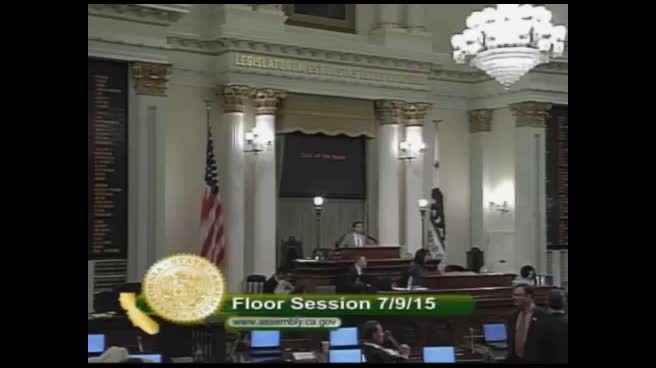 45SEC
Assembly Floor
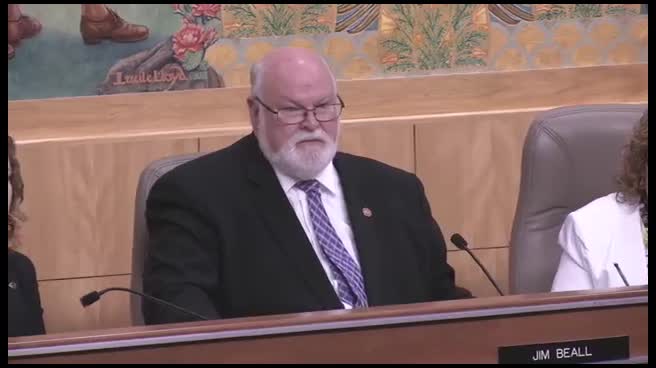 5MIN
Senate Standing Committee on Transportation and Housing
 52SEC
Assembly Floor
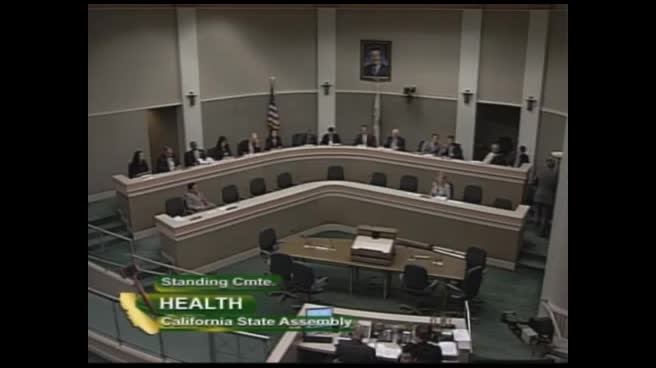 4MIN
Assembly Standing Committee on Health
Bill Author

Bill Co-Author(s):