AB 496: Pupil nutrition: fresh drinking water: funding.
- Session Year: 2015-2016
- House: Assembly
- Latest Version Date: 2015-10-09
Existing law requires a school district to provide access to free, fresh drinking water during meal times in the food service areas of the schools under its jurisdiction, unless the governing board of the school district adopts a resolution stating that it is unable to comply with that requirement, as specified.
This bill would authorize the State Department of Education to receive funds transferred from available state and federal sources, to be allocated to school districts for purposes of complying with the requirement for providing access to drinking water specified above, and would require the department to consult with specified state agencies, including the State Water Resources Control Board, to identify available sources of funding for school water quality and infrastructure and to post that information on the departments Internet Web site. The bill would authorize school districts to use those funds for water quality projects, including, but not limited to, water treatment, water facilities restructuring, water filling stations, and maintenance of water facilities, subject to all laws, guidelines, policies, and criteria applicable to the funds.
Existing law requires a school district to provide access to free, fresh drinking water during meal times in the food service areas of the schools under its jurisdiction, unless the governing board of the school district adopts a resolution stating that it is unable to comply with that requirement, as specified.
This bill would authorize the State Department of Education to receive funds transferred from available state and federal sources, to be allocated to school districts for purposes of complying with the requirement for providing access to drinking water specified above, and would require the department to consult with the specified state agencies, including the State Water Resources Control Board, to identify available sources of funding for school water quality and infrastructure and to post that information on the departments Internet Web site. The bill would authorize school districts to use these funds for water quality projects, including, but not limited to, water treatment, water facilities restructuring, water filling stations, and maintenance of water facilities, subject to all laws, guidelines, policies, and criteria applicable to the funds.
Existing law requires a school district to provide access to free, fresh drinking water during meal times in the food service areas of the schools under its jurisdiction, unless the governing board of the school district adopts a resolution stating that it is unable to comply with that requirement, as specified.
This bill would authorize the State Department of Education to receive funds transferred from available state and federal sources, to be allocated to school districts for purposes of complying with the requirement for providing access to drinking water specified above, and would require the department to consult with the State Water Resources Control Boards Division of Drinking Water Programs specified state agencies, including the State Water Resources Control Board, to identify available sources of funding for school water quality and infrastructure and to post that information on the departments Internet Web site. The bill would authorize school districts to use these funds for water quality projects projects, including, but not limited to, water treatment, water facilities restructuring, water filling stations, and maintenance of water facilities. facilities, subject to all laws, guidelines, policies, and criteria applicable to the funds.
Existing law requires a school district to provide access to free, fresh drinking water during meal times in the food service areas of the schools under its jurisdiction, unless the governing board of the school district adopts a resolution stating that it is unable to comply with that requirement, as specified.
This bill would authorize the State Department of Education to receive funds transferred from available state and federal sources, to be allocated to school districts for purposes of complying with the requirement for providing access to drinking water specified above, and would require the department to consult with the State Water Resources Control Boards Division of Drinking Water Programs to identify available sources of funding for school water quality and infrastructure and to post that information on the departments Internet Web site. The bill would authorize school districts to use these funds for water quality projects including, but not limited to, water treatment, water facilities restructuring, water filling stations, and maintenance of water facilities.
Existing law requires a school district to provide access to free, fresh drinking water during meal times in the food service areas of the schools under its jurisdiction, unless the governing board of the school district adopts a resolution stating that it is unable to comply with that requirement, as specified.
This bill would authorize the State Department of Education to receive funds transferred from available state and federal sources, to be allocated to school districts for purposes of complying with the requirement for providing access to drinking water specified above, and would require the department to consult with the State Water Resources Control Boards Division of Drinking Water Programs to identify available sources of funding for school water quality and infrastructure. infrastructure and to post that information on the departments Internet Web site. The bill would authorize school districts to use these funds for water quality projects including, but not limited to, water treatment, water facilities restructuring, water filling stations, and maintenance of water facilities.
Existing law requires a school district to provide access to free, fresh drinking water during meal times in the food service areas of the schools under its jurisdiction, unless the governing board of the school district adopts a resolution stating that it is unable to comply with that requirement, as specified.
This bill would authorize the State Department of Education to receive funds transferred from available state and federal sources, to be allocated to school districts for purposes of complying with the requirement for providing access to drinking water specified above, and would require the department to consult with the State Water Resources Control Boards Division of Drinking Water Programs to identify available sources of funding for those purposes. school water quality and infrastructure. The bill would authorize school districts to use these funds for water quality projects including, but not limited to, water treatment, water facilities restructuring, water filling stations, and maintenance of water facilities.
Existing law requires a school district to provide access to free, fresh drinking water during meal times in the food service areas of the schools under its jurisdiction, unless the governing board of the school district adopts a resolution stating that it is unable to comply with that requirement, as specified.
This bill would authorize the State Department of Education to receive funds transferred from available state and federal sources, to be allocated to school districts for purposes of complying with the requirement for providing access to drinking water specified above, and would require the department to identify available sources of funding for those purposes.
(a)The Legislature finds and declares all of the following:
(1)Recent studies show that unsafe drinking water plagues school water systems at a startling rate.
(2)Some schools have sealed pipes and turned off drinking fountains due to lead piping and other water system contaminants.
(3)Limited funding and a growing list of needs to rebuild school infrastructure causes the need for clean drinking water to fall by the wayside.
(4)Schools need a one-stop shop where information and funding is available for clean drinking water programs.
(b)It is the intent of the Legislature to build public confidence in our states water systems, and to ensure that schools serving our children have clean water available to pupils at all times.
SEC. 2.Section 38086.1 is added to the Education Code, to read:38086.1.(a)The department may receive funds transferred from any available state and federal source, to be allocated by the department to school districts for the purpose of complying with the requirements of Section 38086.
(b)Subject to all laws, guidelines, policies, and criteria applicable to the funds, school districts may use funds received pursuant to subdivision (a) for water quality projects, including, but not limited to, water treatment, water facilities restructuring, water filling stations, and maintenance of water facilities.
(c)The department shall do both of the following:
(1)Consult with the State Department of Public Health, the Department of Water Resources, and the State Water Resources Control Board to identify available sources of funding, including, but not limited to, funding from Proposition 1, approved by the voters at the November 4, 2014, statewide general election, funds for safe drinking water programs administered by the department, the State Department of Public Health, the Department of Water Resources, and the State Water Resources Control Board, other state funding, and federal funding available to fund school water quality and infrastructure.
(2)Post the information collected pursuant to paragraph (1) on the departments Internet Web site.
(d)Nothing in this section or Section 38086 affects criteria established by the State Water Resources Control Board for funds and funding programs administered by the State Water Resources Control Board.
(a)The Legislature finds and declares all of the following:
(1)Recent studies show that unsafe drinking water plagues school water systems at a startling rate.
(2)Some schools have sealed pipes and turned off drinking fountains due to lead piping and other water system contaminants.
(3)Limited funding and a growing list of needs to rebuild school infrastructure causes the need for clean drinking water to fall by the wayside.
(4)Schools need a one-stop shop where information and funding is available for clean drinking water programs.
(b)It is the intent of the Legislature to build public confidence in our states water systems, and to ensure that schools serving our children have clean water available to pupils at all times.
SEC. 2.Section 38086 of the Education Code is amended to read:38086.(a)Except as provided in subdivision (b), a school district shall provide access to free, fresh drinking water during meal times in the food service areas of the schools under its jurisdiction, including, but not necessarily limited to, areas where reimbursable meals under the National School Lunch Program or the federal School Breakfast Program are served or consumed. A school district may comply with this section by, among other means, providing cups and containers of water or soliciting or receiving donated bottled water.
(b)The governing board of a school district may adopt a resolution stating that it is unable to comply with the requirements of this section and demonstrating the reasons why it is unable to comply due to fiscal constraints or health and safety concerns. The resolution shall be publicly noticed on at least two consecutive meeting agendas, first as an information item and second as an action item, and approved by at least a majority of the governing board of the school district.
(c)The department may receive funds transferred from any available state and federal source, to be allocated by the department to school districts for the purpose of complying with the requirements of this section.
(d)Subject to all laws, guidelines, policies, and criteria applicable to the funds, school districts may use funds received pursuant to subdivision (c) for water quality projects, including, but not limited to, water treatment, water facilities restructuring, water filling stations, and maintenance of water facilities.
(e)The department shall do both of the following:
(1)Consult with the State Department of Public Health, the Department of Water Resources, and the State Water Resources Control Board to identify available sources of funding, including, but not limited to, funding from Proposition 1, approved by the voters at the November 4, 2014, statewide general election, funds for safe drinking water programs administered by the department, the State Department of Public Health, the Department of Water Resources, and the State Water Resources Control Board, other state funding, and federal funding available to fund school water quality and infrastructure.
(2)Post the information collected pursuant to paragraph (1) on the departments Internet Web site.
(f)Nothing in this section affects criteria established by the State Water Resources Control Board for funds and funding programs administered by the State Water Resources Control Board.
SEC. 2.Section 38086.1 is added to the Education Code, to read:38086.1.(a)The department may receive funds transferred from any available state and federal source, to be allocated by the department to school districts for the purpose of complying with the requirements of Section 38086.
(b)Subject to all laws, guidelines, policies, and criteria applicable to the funds, school districts may use funds received pursuant to subdivision (a) for water quality projects, including, but not limited to, water treatment, water facilities restructuring, water filling stations, and maintenance of water facilities.
(c)The department shall do both of the following:
(1)Consult with the State Department of Public Health, the Department of Water Resources, and the State Water Resources Control Board to identify available sources of funding, including, but not limited to, funding from Proposition 1, approved by the voters at the November 4, 2014, statewide general election, funds for safe drinking water programs administered by the department, the State Department of Public Health, the Department of Water Resources, and the State Water Resources Control Board, other state funding, and federal funding available to fund school water quality and infrastructure.
(2)Post the information collected pursuant to paragraph (1) on the departments Internet Web site.
(d)Nothing in this section or Section 38086 affects criteria established by the State Water Resources Control Board for funds and funding programs administered by the State Water Resources Control Board.
(a)The Legislature finds and declares all of the following:
(1)Recent studies show that unsafe drinking water plagues school water systems at a startling rate.
(2)Some schools have sealed pipes and turned off drinking fountains due to lead piping and other water system contaminants.
(3)Limited funding and a growing list of needs to rebuild school infrastructure causes the need for clean drinking water to fall by the wayside.
(4)Schools need a one-stop shop where information and funding is available for clean drinking water programs.
(b)It is the intent of the Legislature to build public confidence in our states water systems, and to ensure that schools serving our children have clean water available to pupils at all times.
SEC. 2.Section 38086 of the Education Code is amended to read:38086.(a)Except as provided in subdivision (b), a school district shall provide access to free, fresh drinking water during meal times in the food service areas of the schools under its jurisdiction, including, but not necessarily limited to, areas where reimbursable meals under the National School Lunch Program or the federal School Breakfast Program are served or consumed. A school district may comply with this section by, among other means, providing cups and containers of water or soliciting or receiving donated bottled water.
(b)The governing board of a school district may adopt a resolution stating that it is unable to comply with the requirements of this section and demonstrating the reasons why it is unable to comply due to fiscal constraints or health and safety concerns. The resolution shall be publicly noticed on at least two consecutive meeting agendas, first as an information item and second as an action item, and approved by at least a majority of the governing board of the school district.
(c)The department may receive funds transferred from any available state and federal source, to be allocated by the department to school districts for the purpose of complying with the requirements of this section.
(d)School Subject to all laws, guidelines, policies, and criteria applicable to the funds, school districts may use funds received pursuant to subdivision (c) for water quality projects, including, but not limited to, water treatment, water facilities restructuring, water filling stations, and maintenance of water facilities.
(e)The department shall do both of the following:
(1)Consult with the State Department of Public Health, the Department of Water Resources, and the State Water Resources Control Boards Division of Drinking Water Programs Board to identify available sources of funding, including, but not limited to, funding from Proposition 1, approved by the voters at the November 4, 2014, statewide general election, funds for safe drinking water programs administered by the department, the State Department of Public Health, the Department of Water Resources, and the State Water Resources Control Board, other state funding, and federal funding available to fund school water quality and infrastructure.
(2)Post the information collected pursuant to paragraph (1) on the departments Internet Web site.
(f)Nothing in this section affects criteria established by the State Water Resources Control Board for funds and funding programs administered by the State Water Resources Control Board.
(a)The Legislature finds and declares all of the following:
(1)Recent studies show that unsafe drinking water plagues school water systems at a startling rate.
(2)Some schools have sealed pipes and turned off drinking fountains due to lead piping and other water system contaminants.
(3)Limited funding and a growing list of needs to rebuild school infrastructure causes the need for clean drinking water to fall by the wayside.
(4)Schools need a one-stop shop where information and funding is available for clean drinking water programs.
(b)It is the intent of the Legislature to build public confidence in our states water systems, and to ensure that schools serving our children have clean water available to pupils at all times.
SEC. 2.Section 38086 of the Education Code is amended to read:38086.(a)Except as provided in subdivision (b), a school district shall provide access to free, fresh drinking water during meal times in the food service areas of the schools under its jurisdiction, including, but not necessarily limited to, areas where reimbursable meals under the National School Lunch Program or the federal School Breakfast Program are served or consumed. A school district may comply with this section by, among other means, providing cups and containers of water or soliciting or receiving donated bottled water.
(b)The governing board of a school district may adopt a resolution stating that it is unable to comply with the requirements of this section and demonstrating the reasons why it is unable to comply due to fiscal constraints or health and safety concerns. The resolution shall be publicly noticed on at least two consecutive meeting agendas, first as an information item and second as an action item, and approved by at least a majority of the governing board of the school district.
(c)The department may receive funds transferred from any available state and federal source, to be allocated by the department to school districts for the purpose of complying with the requirements of this section. The department shall do both of the following:
(d)School districts may use funds received pursuant to subdivision (c) for water quality projects, including, but not limited to, water treatment, water facilities restructuring, water filling stations, and maintenance of water facilities.
(e)The department shall do both of the following:
(1)Consult with the State Water Resources Control Boards Division of Drinking Water Programs to identify available sources of funding, including, but not limited to, funding from Proposition 1, approved by the voters at the November 4, 2014, statewide general election, funds for safe drinking water programs administered by the department, the State Department of Public Health, the Department of Water Resources, and the State Water Resources Control Board, other state funding, and federal funding available to fund school water quality and infrastructure.
(2)Post the information collected pursuant to paragraph (1) on the departments Internet Web site.
(d)School districts may use funds received pursuant to subdivision (c) for water quality projects including, but not limited to, water treatment, water facilities restructuring, water filling stations, and maintenance of water facilities.
(a)The Legislature finds and declares all of the following:
(1)Recent studies show that unsafe drinking water plagues school water systems at a startling rate.
(2)Some schools have sealed pipes and turned off drinking fountains due to lead piping and other water system contaminants.
(3)Limited funding and a growing list of needs to rebuild school infrastructure causes the need for clean drinking water to fall by the wayside.
(4)Schools need a one-stop shop where information and funding is available for clean drinking water programs.
(b)It is the intent of the Legislature to build public confidence in our states water systems, and to ensure that schools serving our children have clean water available to pupils at all times.
SEC. 2.Section 38086 of the Education Code is amended to read:38086.(a)Except as provided in subdivision (b), a school district shall provide access to free, fresh drinking water during meal times in the food service areas of the schools under its jurisdiction, including, but not necessarily limited to, areas where reimbursable meals under the National School Lunch Program or the federal School Breakfast Program are served or consumed. A school district may comply with this section by, among other means, providing cups and containers of water or soliciting or receiving donated bottled water.
(b)The governing board of a school district may adopt a resolution stating that it is unable to comply with the requirements of this section and demonstrating the reasons why it is unable to comply due to fiscal constraints or health and safety concerns. The resolution shall be publicly noticed on at least two consecutive meeting agendas, first as an information item and second as an action item, and approved by at least a majority of the governing board of the school district.
(c)The department may receive funds transferred from any available state and federal source, to be allocated by the department to school districts for the purpose of complying with the requirements of this section. The department shall consult do both of the following:
(1)Consult with the State Water Resources Control Boards Division of Drinking Water Programs to identify available sources of funding, including, but not limited to, funding from Proposition 1, approved by the voters at the November 4, 2014, statewide general election, funds for safe drinking water programs administered by the department, the State Department of Public Health, the Department of Water Resources, and the State Water Resources Control Board, other state funding, and federal funding available to fund school water quality and infrastructure.
(2)Post the information collected pursuant to paragraph (1) on the departments Internet Web site.
(d)School districts may use funds received pursuant to subdivision (c) for water quality projects including, but not limited to, water treatment, water facilities restructuring, water filling stations, and maintenance of water facilities.
(a)The Legislature finds and declares all of the following:
(1)Recent studies show that unsafe drinking water plagues school water systems at a startling rate.
(2)Some schools have sealed pipes and turned off drinking fountains due to lead piping and other water system contaminants.
(3)Limited funding and a growing list of needs to rebuild school infrastructure causes the need for clean drinking water to fall by the wayside.
(4)Schools need a one-stop shop where information and funding is available for clean drinking water programs.
(b)It is the intent of the Legislature to build public confidence in our states water systems, and to ensure that schools serving our children have clean water available to pupils at all times.
SEC. 2.Section 38086 of the Education Code is amended to read:38086.(a)Except as provided in subdivision (b), a school district shall provide access to free, fresh drinking water during meal times in the food service areas of the schools under its jurisdiction, including, but not necessarily limited to, areas where reimbursable meals under the National School Lunch Program or the federal School Breakfast Program are served or consumed. A school district may comply with this section by, among other means, providing cups and containers of water or soliciting or receiving donated bottled water.
(b)The governing board of a school district may adopt a resolution stating that it is unable to comply with the requirements of this section and demonstrating the reasons why it is unable to comply due to fiscal constraints or health and safety concerns. The resolution shall be publicly noticed on at least two consecutive meeting agendas, first as an information item and second as an action item, and approved by at least a majority of the governing board of the school district.
(c)The department may receive funds transferred from any available state and federal source, to be allocated by the department to school districts for the purpose of complying with the requirements of this section. The department shall consult with the State Water Resources Control Boards Division of Drinking Water Programs to identify available sources of funding, including, but not limited to, funding from Proposition 1, approved by the voters at the November 4, 2014, statewide general election, funds for safe drinking water programs administered by the department, the State Department of Public Health, the Department of Water Resources, and the State Water Resources Control Board. Board, other state funding, and federal funding available to fund school water quality and infrastructure.
(d)School districts may use funds received pursuant to subdivision (c) for water quality projects including, but not limited to, water treatment, water facilities restructuring, water filling stations, and maintenance of water facilities.
(a)The Legislature finds and declares all of the following:
(1)Recent studies show that unsafe drinking water plagues school water systems at a startling rate.
(2)Some schools have sealed pipes and turned off drinking fountains due to lead piping and other water system contaminants.
(3)Limited funding and a growing list of needs to rebuild school infrastructure causes the need for clean drinking water to fall by the wayside.
(4)Schools need a one-stop shop where information and funding is available for clean drinking water programs.
(b)It is the intent of the Legislature to build public confidence in our states water systems, and to ensure that schools serving our children have clean water available to pupils at all times.
SEC. 2.Section 38086 of the Education Code is amended to read:38086.(a)Except as provided in subdivision (b), by July 1, 2011, a school district shall provide access to free, fresh drinking water during meal times in the food service areas of the schools under its jurisdiction, including, but not necessarily limited to, areas where reimbursable meals under the National School Lunch Program or the federal School Breakfast Program are served or consumed. A school district may comply with this section by, among other means, providing cups and containers of water or soliciting or receiving donated bottled water.
(b)The governing board of a school district may adopt a resolution stating that it is unable to comply with the requirements of this section and demonstrating the reasons why it is unable to comply due to fiscal constraints or health and safety concerns. The resolution shall be publicly noticed on at least two consecutive meeting agendas, first as an information item and second as an action item, and approved by at least a majority of the governing board of the school district.
(c)The department may receive funds transferred from any available state and federal source, to be allocated by the department to school districts for the purpose of complying with the requirements of this section. The department shall identify available sources of funding, including, but not limited to, funds for safe drinking water programs administered by the department, the State Department of Public Health, the Department of Water Resources, and the State Water Resources Control Board.
|
Date
|
Status
|
|---|---|
| Sep 2, 2015 | Read third time. Passed. Ordered to the Assembly. |
| Jul 16, 2015 | From committee: Do pass and re-refer to Com. on APPR. (Ayes 7. Noes 0.) (July 15). Re-referred to Com. on APPR. |
| Aug 17, 2015 | From committee: Be placed on second reading file pursuant to Senate Rule 28.8. |
| Aug 18, 2015 | Read second time. Ordered to third reading. |
| Aug 24, 2015 | Read third time and amended. Ordered to second reading. |
| Aug 25, 2015 | Read second time. Ordered to third reading. |
| Aug 31, 2015 | Read third time and amended. Ordered to second reading. |
| Sep 1, 2015 | Read second time. Ordered to third reading. |
| Sep 2, 2015 | In Assembly. Concurrence in Senate amendments pending. May be considered on or after September 4 pursuant to Assembly Rule 77. |
| Jul 8, 2015 | From committee: Do pass and re-refer to Com. on E.Q. with recommendation: To Consent Calendar. (Ayes 9. Noes 0.) (July 8). Re-referred to Com. on E.Q. |
| Sep 2, 2015 | Read third time. Passed. Ordered to the Assembly. (Ayes 40. Noes 0. Page 2409.). |
| Sep 3, 2015 | Assembly Rule 77 suspended. |
| Sep 3, 2015 | Assembly Rule 77 suspended. (Page 2859.) |
| Sep 3, 2015 | Senate amendments concurred in. To Engrossing and Enrolling. (Ayes 80. Noes 0. Page 2868.). |
| Sep 3, 2015 | Senate amendments concurred in. To Engrossing and Enrolling. (Ayes 80. Noes 0.). |
| Sep 16, 2015 | Enrolled and presented to the Governor at 4 p.m. |
| Oct 9, 2015 | Approved by the Governor. |
| Oct 9, 2015 | Chaptered by Secretary of State - Chapter 664, Statutes of 2015. |
| May 13, 2015 | In committee: Set, first hearing. Referred to APPR. suspense file. |
| Feb 24, 2015 | From printer. May be heard in committee March 26. |
| Mar 5, 2015 | Referred to Com. on ED. |
| Apr 8, 2015 | In committee: Hearing postponed by committee. |
| Apr 13, 2015 | From committee chair, with author's amendments: Amend, and re-refer to Com. on ED. Read second time and amended. |
| Apr 14, 2015 | Re-referred to Com. on ED. |
| Apr 30, 2015 | From committee: Amend, and do pass as amended and re-refer to Com. on APPR. with recommendation: To Consent Calendar. (Ayes 7. Noes 0.) (April 22). |
| May 4, 2015 | Read second time and amended. |
| May 5, 2015 | Re-referred to Com. on APPR. |
| Feb 23, 2015 | Read first time. To print. |
| May 28, 2015 | From committee: Amend, and do pass as amended. (Ayes 17. Noes 0.) (May 28). |
| May 28, 2015 | Read second time and amended. Ordered returned to second reading. |
| Jun 1, 2015 | Read second time. Ordered to third reading. |
| Jun 3, 2015 | In Senate. Read first time. To Com. on RLS. for assignment. |
| Jun 3, 2015 | Read third time. Passed. Ordered to the Senate. |
| Jun 3, 2015 | Read third time. Passed. Ordered to the Senate. (Ayes 80. Noes 0. Page 1856.) |
| Jun 18, 2015 | Referred to Coms. on ED. and E.Q. |
|
Date
|
Description
|
Location
|
Votes
|
|
|---|---|---|---|---|
| Sep 3, 2015 | AB 496 RENDON Concurrence in Senate Amendments | Assembly Floor |
Passed |
|
| Sep 2, 2015 | Assembly 3rd Reading AB496 Rendon By Leyva | Senate Floor |
Passed |
|
| Jul 15, 2015 | Do pass, but first be re-referred to the Committee on [Appropriations] | Senate Standing Committee on Environmental Quality |
Passed |
|
| Jul 8, 2015 | Do pass, but first be re-referred to the Committee on [Environmental Quality] with the recommendation: To Consent Calendar | Senate Standing Committee on Education |
Passed |
|
| Jun 3, 2015 | AB 496 RENDON Assembly Third Reading | Assembly Floor |
Passed |
|
| May 28, 2015 | Do pass as amended. | Assembly Standing Committee on Appropriations |
Passed |
|
| Apr 22, 2015 | Do pass as amended, and be re-referred to the Committee on [Appropriations] with recommendation: To Consent Calendar | Assembly Standing Committee on Education |
Passed |
This list shows positions taken on this bill by organizations on the date displayed, which is linked to the original source.
Positions by individuals are not included.
|
Organization
|
Position
|
Date
|
|---|---|---|
| American Heart Association | ** Support | Sep 2, 2015 |
| American Stroke Association | ** Support | Sep 2, 2015 |
| California Academy Of Family Physicians | ** Support | Sep 2, 2015 |
| California Equity Leaders Network | ** Support | Sep 2, 2015 |
| California Food Policy Advocates | ** Support | Sep 2, 2015 |
| California School Employees Association | ** Support | Sep 2, 2015 |
| California School Employees Association, AFL-CIO | ** Support | Sep 2, 2015 |
| California State PTA | ** Support | Sep 2, 2015 |
| Californians Against Waste | ** Support | Sep 2, 2015 |
| Clean Water Action | ** Support | Sep 2, 2015 |
| Community Clinic Association of Los Angeles County | ** Support | Sep 2, 2015 |
| Community Water Center | ** Support | Sep 2, 2015 |
| Leadership Counsel for Justice and Accountability | ** Support | Sep 2, 2015 |
| Los Angeles Unified School District | ** Support | Sep 2, 2015 |
| Mission: Readiness | ** Support | Sep 2, 2015 |
| Page G | ** Support | Jun 3, 2015 |
| Santa Clara Valley Water District | ** Support | Sep 2, 2015 |
| School Energy Coalition | ** Support | Sep 2, 2015 |
| u None received. | ** Against | Sep 2, 2015 |
AB 496
Page 2
CONCURRENCE IN SENATE AMENDMENTS
AB 496
(Rendon)
As Amended August 31, 2015
Majority vote
ASSEMBLY: |
80-0 |
(June 3, 2015) |
SENATE: |
40-0 |
(September 2, 2015) |
Original Committee Reference: ED.
SUMMARY: Requires the California Department of Education (CDE) to identify available sources of funding to fund school water quality and infrastructure. Specifically, this bill:
Requires the CDE to consult with the State Department of Public Health, the Department of Water Resources, and the State Water Resources Control Board (SWRCB) to identify available sources of funding, including, but not limited to, funding from Proposition 1, approved by the voters at the November 4, 2014, statewide General Election; funds for safe drinking water programs administered by the CDE, the Department of Public Health, the Department of Water Resources, and the SWRCB; other state funding; and federal funding available to fund school water quality and infrastructure.
Requires the CDE to post the information collected on the CDE's Internet Web site.
Authorizes the CDE to receive funds transferred from any available state and federal source, to be allocated by the CDE to school districts for the purpose of complying with the requirement for schools to provide access to free, fresh drinking water during meal time.
Specifies that subject to all laws, guidelines, policies, and criteria applicable to the funds, school districts may use funds received for water quality projects including, but not limited to, water treatment, water facilities restructuring, water filling stations, and maintenance of water facilities.
Specifies that nothing in this bill affects criteria established by the SWRCB for funds and funding programs administered by the SWRCB.
Finds and declares that recent studies show that unsafe drinking water plagues school water systems at a startling rate, that some schools have sealed pipes and turned off drinking fountains due to lead piping and other water system contaminants, and that schools need a one-stop shop where information and funding is available for clean drinking water programs.
The Senate amendments require the CDE to consult with the State Department of Public Health and the Department of Water Resources in addition to the SWRCB; specify that school districts may use funds subject to all laws, guidelines, policies and criteria applicable to the funds; specify that nothing in this bill affects the funds and funding programs administered by the SWRCB; and insert this bill's provisions in a new code section to avoid chaptering out problems with another bill.
FISCAL EFFECT: According to the Senate Appropriations Committee, pursuant to Senate Rule 28.8, negligible state costs.
COMMENTS: Access to free, fresh water. Current law requires school districts to provide free, fresh drinking water during meal times in the food service areas. A school district may provide cups and containers of water or bottled water to comply with this requirement. According to a 2012 study on the water access law conducted by researchers at the University of California, San Francisco, in conjunction with the California Food Policy Advocates and ChangeLab Solutions, one in four schools had not complied with the law in 2011. Of those that did comply, drinking fountains were cited as the most common source of free drinking water in schools. One of the reasons cited by schools for not complying was concerns about water safety and quality. Among others, the report recommended facilitating and supporting the development of good models for purchase, installation, and maintenance of a range of water delivery systems, from short-term solutions to permanent solutions, and requiring annual water-quality testing at the tap of every school's drinking water.
What does this bill do? This bill requires the CDE to consult with the State Department of Public Health, the Department of Water Resources, and the SWRCB to identify available funding sources that schools can access to improve drinking water quality. Some of the funding sources the CDE is required to explore include Proposition 1, the water bond passed by voters in November 2014, which provided $520 million for expenditures, grants, and loans for projects that improve water quality or help provide clean, safe, and reliable drinking water to all Californians. The bill also requires the CDE to post the information on its Internet Web site.
Water quality in schools. According to an Associated Press evaluation of data from the Environmental Protection Agency, schools in California reported the most federal drinking water violations from 1998 to 2008 in schools with their own water supplies. The contaminant most frequently identified in water was coliform bacteria, followed by lead and cooper, arsenic and nitrates.1 According to the SWRCB, while the "majority of Californians are drinking water that meets water quality standards, many small water systems, both that serve residential communities as well as noncommunity facilities, such as factories and rural schools, struggle to achieve compliance.2" Small water systems have difficulties with upgrading treatment facilities due to costs.
The author states, "Limited funding and a growing list of needs to repair school infrastructure causes clean drinking water to fall to the wayside. School districts may be unaware of various State and federal funding streams available to them. Districts need a one-stop shop where information and funding is available for clean drinking water programs. Even if water from a local utility is clean, contamination happens as chemicals such as copper, lead, and arsenic seep into water supplies from school facilities. Water served in cafeterias or school water fountains may contain these harmful chemicals."
Analysis Prepared by: Sophia Kwong Kim / ED. / (916) 319-2087 FN: 0002002
1 "Drinking Water Unsafe at Thousands of Schools," Associated Press, September 25, 2009.
2 "Safe Drinking Water Plan for California (draft)," State Water Resources Control Board, October 2014.
AB 496
Page 5
|
Office of Senate Floor Analyses (916) 651-1520 Fax: (916) 327-4478 |
THIRD READING
Bill No: AB 496
Amended: 8/31/15 in Senate
SENATE EDUCATION COMMITTEE: 9-0, 7/8/15
AYES: Liu, Runner, Block, Hancock, Leyva, Mendoza, Monning, Pan, Vidak
SENATE ENVIRONMENTAL QUALITY COMMITTEE: 7-0, 7/15/15
AYES: Wieckowski, Gaines, Bates, Hill, Jackson, Leno, Pavley
SENATE APPROPRIATIONS COMMITTEE: Senate Rule 28.8
ASSEMBLY FLOOR: 80-0, 6/3/15 - See last page for vote
SUBJECT: Pupil nutrition: fresh drinking water: funding
DIGEST: This bill requires the California Department of Education to consult with the State Department of Public Health, the Department of Water Resources, and the State Water Resources Control Board to identify available sources of funding for school water quality and infrastructure.
Senate Floor Amendments of 8/31/15 move the contents of this bill to a new section of the Education Code to avoid chaptering problems with SB 334 (Leyva).
ANALYSIS: Existing federal law, the federal Safe Drinking Water Act (SDWA), authorizes the United States Environmental Protection Agency to set standards for drinking water quality and to oversee the states, localities and water suppliers who implement those standards.
Existing state law:
Requires the Board to regulate drinking water and to enforce the federal SDWA, the state SDWA, and other related regulations. The duties and responsibilities related to the regulation and oversight of drinking water were transferred from the California Department of Public Health to the State Water Resources Control Board in 2014. (Health and Safety Code § 116270, et seq.)
The Board’s Division of Drinking Water Programs regulates over 8,000 public water systems by inspecting the systems, issuing permits, taking enforcement actions and implementing new requirements due to changes in federal or state law or regulations.
Requires schools that receive notification from a public water system regarding non-compliance with any primary drinking water standard or a violation of monitoring requirements, to notify school employees, students and parents. (HSC § 116450)
Requires interior and exterior drinking fountains to be functional, accessible, and free of leaks, and with adequate water pressure. Drinking fountain water must be clear and without unusual taste or odor, and have no evidence of moss, mold, or excessive staining. Drinking fountains must appear to have been cleaned each day that the school is in session. (Education Code § 17002)
Requires school districts to provide access to free, fresh drinking water during meal times in the food service areas. School districts may adopt a resolution stating that it is unable to comply with this requirement and demonstrate the reasons why it is unable to comply due to fiscal constraints or health and safety concerns. (EC § 38086)
This bill:
Requires the CDE to consult with the State Department of Public Health, the Department of Water Resources, and the Board to identify available sources of funding, including, but not limited to
Funding from Proposition 1, approved in the November 4, 2014, statewide General Election.
Funds for safe drinking water programs administered by the CDE, the Department of Public Health, the Department of Water Resources, and the Board.
Other state funding.
Federal funding available to fund school water quality and infrastructure.
Requires the CDE to post the information collected on the CDE's website.
Authorizes the CDE to receive funds transferred from any available state and federal source, to be allocated by the CDE to school districts for the purpose of complying with the requirement for schools to provide access to free, fresh drinking water during meal time.
Authorizes, subject to all laws, guidelines, policies, and applicable criteria, funds received to provide access to free, fresh drinking water to be used for water quality projects including, but not limited to, water treatment, water facilities restructuring, water filling stations, and maintenance of water facilities.
Specifies that nothing in this bill affects criteria established by the Board for funds and funding programs administered by the Board.
States legislative findings and declarations relative to poor drinking water quality at schools and limited funding to rebuild the infrastructure of schools.
Comments
Funds for safe drinking water programs. This bill requires the identification of available sources of funding, including funds for safe drinking water programs administered by the CDE. Information on CDE’s website relative to safe drinking water programs includes a link relative to school facilities funding through the State Allocation Board; school facilities funds are not currently available for safe drinking water programs, as those funds have been fully expended and will not be replenished until a school facilities bond is approved. [http://www.cde.ca.gov/ls/nu/he/water.asp]
FISCAL EFFECT: Appropriation: No Fiscal Com.: Yes Local: No
American Heart Association
American Stroke Association
California Equity Leaders Network
California Food Policy Advocates
California School Employees Association
California State PTA
Californians Against Waste
Clean Water Action
Community Clinic Association of Los Angeles County
Community Water Center
Leadership Counsel for Justice and Accountability
Los Angeles Unified School District
Mission: Readiness
Santa Clara Valley Water District
School Energy Coalition
OPPOSITION: (Verified 8/31/15)
None received
ARGUMENTS IN SUPPORT: According to the California Food Policy Advocates, “in 2010, California enacted SB 1413, which requires schools to provide students with access to free, fresh drinking water during meal times in school food service areas. Even when water from a local utility is safe to drink, aging school infrastructure can cause contaminants, such as lead, to seep into a school’s water supply. It is important that the state prioritize resources to help improve water infrastructure in schools. By allowing CDE to receive and allocate funds from multiple state and federal sources, AB 496 creates a one-stop shop where school districts can find available funding for safe drinking water programs.”
ASSEMBLY FLOOR: 80-0, 6/3/15
AYES: Achadjian, Alejo, Travis Allen, Baker, Bigelow, Bloom, Bonilla, Bonta, Brough, Brown, Burke, Calderon, Campos, Chang, Chau, Chávez, Chiu, Chu, Cooley, Cooper, Dababneh, Dahle, Daly, Dodd, Eggman, Frazier, Beth Gaines, Gallagher, Cristina Garcia, Eduardo Garcia, Gatto, Gipson, Gomez, Gonzalez, Gordon, Gray, Grove, Hadley, Harper, Roger Hernández, Holden, Irwin, Jones, Jones-Sawyer, Kim, Lackey, Levine, Linder, Lopez, Low, Maienschein, Mathis, Mayes, McCarty, Medina, Melendez, Mullin, Nazarian, Obernolte, O'Donnell, Olsen, Patterson, Perea, Quirk, Rendon, Ridley-Thomas, Rodriguez, Salas, Santiago, Steinorth, Mark Stone, Thurmond, Ting, Wagner, Waldron, Weber, Wilk, Williams, Wood, Atkins
Prepared by: Lynn Lorber / ED. / (916) 651-4105
9/1/15 20:29:48
**** END ****
AB 496
Page 5
|
Office of Senate Floor Analyses (916) 651-1520 Fax: (916) 327-4478 |
THIRD READING
Bill No: AB 496
Amended: 8/24/15 in Senate
SENATE EDUCATION COMMITTEE: 9-0, 7/8/15
AYES: Liu, Runner, Block, Hancock, Leyva, Mendoza, Monning, Pan, Vidak
SENATE ENVIRONMENTAL QUALITY COMMITTEE: 7-0, 7/15/15
AYES: Wieckowski, Gaines, Bates, Hill, Jackson, Leno, Pavley
SENATE APPROPRIATIONS COMMITTEE: Senate Rule 28.8
ASSEMBLY FLOOR: 80-0, 6/3/15 - See last page for vote
SUBJECT: Pupil nutrition: fresh drinking water: funding
DIGEST: This bill requires the California Department of Education to consult with the State Department of Public Health, the Department of Water Resources, and the State Water Resources Control Board to identify available sources of funding for school water quality and infrastructure.
Senate Floor Amendments of 8/24/15 require the California Department of Education (CDE) to also consult with the State Department of Public Health and the Department of Water Resources; specify that the CDE is to consult with the State Water Resources Control Board (Board), rather than the Board’s Division of Drinking Water Programs; clarify that school districts may use specified funds for water quality projects, but are subject to all laws, guidelines, policies, and criteria applicable to the funds; and specify that nothing in this bill affects criteria established by the Board for funds and funding programs administered by the Board.
ANALYSIS: Existing federal law, the federal Safe Drinking Water Act (SDWA), authorizes the United States Environmental Protection Agency to set standards for drinking water quality and to oversee the states, localities and water suppliers who implement those standards.
Existing state law:
Requires the Board to regulate drinking water and to enforce the federal SDWA, the state SDWA, and other related regulations. The duties and responsibilities related to the regulation and oversight of drinking water were transferred from the California Department of Public Health to the State Water Resources Control Board in 2014. (Health and Safety Code § 116270, et seq.)
The Board’s Division of Drinking Water Programs regulates over 8,000 public water systems by inspecting the systems, issuing permits, taking enforcement actions and implementing new requirements due to changes in federal or state law or regulations.
Requires schools that receive notification from a public water system regarding non-compliance with any primary drinking water standard or a violation of monitoring requirements, to notify school employees, students and parents. (HSC § 116450)
Requires interior and exterior drinking fountains to be functional, accessible, and free of leaks, and with adequate water pressure. Drinking fountain water must be clear and without unusual taste or odor, and have no evidence of moss, mold, or excessive staining. Drinking fountains must appear to have been cleaned each day that the school is in session. (Education Code § 17002)
Requires school districts to provide access to free, fresh drinking water during meal times in the food service areas. School districts may adopt a resolution stating that it is unable to comply with this requirement and demonstrate the reasons why it is unable to comply due to fiscal constraints or health and safety concerns. (EC § 38086)
This bill:
Requires the CDE to consult with the State Department of Public Health, the Department of Water Resources, and the Board to identify available sources of funding, including, but not limited to
Funding from Proposition 1, approved in the November 4, 2014, statewide General Election.
Funds for safe drinking water programs administered by the CDE, the Department of Public Health, the Department of Water Resources, and the Board.
Other state funding.
Federal funding available to fund school water quality and infrastructure.
Requires the CDE to post the information collected on the CDE's website.
Authorizes the CDE to receive funds transferred from any available state and federal source, to be allocated by the CDE to school districts for the purpose of complying with the requirement for schools to provide access to free, fresh drinking water during meal time.
Authorizes, subject to all laws, guidelines, policies, and applicable criteria, funds received to provide access to free, fresh drinking water to be used for water quality projects including, but not limited to, water treatment, water facilities restructuring, water filling stations, and maintenance of water facilities.
Specifies that nothing in this bill affects criteria established by the Board for funds and funding programs administered by the Board.
States legislative findings and declarations relative to poor drinking water quality at schools and limited funding to rebuild the infrastructure of schools.
Comments
Funds for safe drinking water programs. This bill requires the identification of available sources of funding, including funds for safe drinking water programs administered by the CDE. Information on CDE’s website relative to safe drinking water programs includes a link relative to school facilities funding through the State Allocation Board; school facilities funds are not currently available for safe drinking water programs, as those funds have been fully expended and will not be replenished until a school facilities bond is approved. [http://www.cde.ca.gov/ls/nu/he/water.asp]
FISCAL EFFECT: Appropriation: No Fiscal Com.: Yes Local: No
American Heart Association
American Stroke Association
California Equity Leaders Network
California Food Policy Advocates
California School Employees Association
California State PTA
Californians Against Waste
Clean Water Action
Community Clinic Association of Los Angeles County
Community Water Center
Leadership Counsel for Justice and Accountability
Los Angeles Unified School District
Mission: Readiness
Santa Clara Valley Water District
School Energy Coalition
OPPOSITION: (Verified 8/17/15)
None received
ARGUMENTS IN SUPPORT: According to the California Food Policy Advocates, “in 2010, California enacted SB 1413, which requires schools to provide students with access to free, fresh drinking water during meal times in school food service areas. Even when water from a local utility is safe to drink, aging school infrastructure can cause contaminants, such as lead, to seep into a school’s water supply. It is important that the state prioritize resources to help improve water infrastructure in schools. By allowing CDE to receive and allocate funds from multiple state and federal sources, AB 496 creates a one-stop shop where school districts can find available funding for safe drinking water programs.”
ASSEMBLY FLOOR: 80-0, 6/3/15
AYES: Achadjian, Alejo, Travis Allen, Baker, Bigelow, Bloom, Bonilla, Bonta, Brough, Brown, Burke, Calderon, Campos, Chang, Chau, Chávez, Chiu, Chu, Cooley, Cooper, Dababneh, Dahle, Daly, Dodd, Eggman, Frazier, Beth Gaines, Gallagher, Cristina Garcia, Eduardo Garcia, Gatto, Gipson, Gomez, Gonzalez, Gordon, Gray, Grove, Hadley, Harper, Roger Hernández, Holden, Irwin, Jones, Jones-Sawyer, Kim, Lackey, Levine, Linder, Lopez, Low, Maienschein, Mathis, Mayes, McCarty, Medina, Melendez, Mullin, Nazarian, Obernolte, O'Donnell, Olsen, Patterson, Perea, Quirk, Rendon, Ridley-Thomas, Rodriguez, Salas, Santiago, Steinorth, Mark Stone, Thurmond, Ting, Wagner, Waldron, Weber, Wilk, Williams, Wood, Atkins
Prepared by: Lynn Lorber / ED. / (916) 651-4105
8/26/15 16:09:57
**** END ****
AB 496
Page 4
|
Office of Senate Floor Analyses (916) 651-1520 Fax: (916) 327-4478 |
THIRD READING
Bill No: AB 496
Amended: 5/28/15 in Assembly
SENATE EDUCATION COMMITTEE: 9-0, 7/8/15
AYES: Liu, Runner, Block, Hancock, Leyva, Mendoza, Monning, Pan, Vidak
SENATE ENVIRONMENTAL QUALITY COMMITTEE: 7-0, 7/15/15
AYES: Wieckowski, Gaines, Bates, Hill, Jackson, Leno, Pavley
SENATE APPROPRIATIONS COMMITTEE: Senate Rule 28.8
ASSEMBLY FLOOR: 80-0, 6/3/15 - See last page for vote
SUBJECT: Pupil nutrition: fresh drinking water: funding
DIGEST: This bill requires the California Department of Education to consult with the State Water Resources Control Board to identify available sources of funding for school water quality and infrastructure.
ANALYSIS: Existing federal law, the federal Safe Drinking Water Act (SDWA), authorizes the United States Environmental Protection Agency to set standards for drinking water quality and to oversee the states, localities and water suppliers who implement those standards.
Existing state law:
Requires the State Water Resources Control Board to regulate drinking water and to enforce the federal SDWA, the state SDWA, and other related regulations. The duties and responsibilities related to the regulation and oversight of drinking water were transferred from the California Department of Public Health to the State Water Resources Control Board in 2014. (Health and Safety Code § 116270, et seq.)
The State Water Resources Control Board’s Division of Drinking Water Programs regulates over 8,000 public water systems by inspecting the systems, issuing permits, taking enforcement actions and implementing new requirements due to changes in federal or state law or regulations.
Requires schools that receive notification from a public water system regarding non-compliance with any primary drinking water standard or a violation of monitoring requirements, to notify school employees, students and parents. (HSC § 116450)
Requires interior and exterior drinking fountains to be functional, accessible, and free of leaks, and with adequate water pressure. Drinking fountain water must be clear and without unusual taste or odor, and have no evidence of moss, mold, or excessive staining. Drinking fountains must appear to have been cleaned each day that the school is in session. (Education Code § 17002)
Requires school districts to provide access to free, fresh drinking water during meal times in the food service areas. School districts may adopt a resolution stating that it is unable to comply with this requirement and demonstrate the reasons why it is unable to comply due to fiscal constraints or health and safety concerns. (EC § 38086)
This bill:
Requires the California Department of Education (CDE) to consult with the State Water Resources Control Board's Division of Drinking Water Programs to identify available sources of funding, including, but not limited to
Funding from Proposition 1, approved in the November 4, 2014, statewide General Election.
Funds for safe drinking water programs administered by the CDE, the Department of Public Health, the Department of Water Resources, and the State Water Resources Control Board.
Other state funding.
Federal funding available to fund school water quality and infrastructure.
Requires the CDE to post the information collected on the CDE's website.
Authorizes the CDE to receive funds transferred from any available state and federal source, to be allocated by the CDE to school districts for the purpose of complying with the requirement for schools to provide access to free, fresh drinking water during meal time.
Authorizes funds received to provide access to free, fresh drinking water to be used for water quality projects including, but not limited to, water treatment, water facilities restructuring, water filling stations, and maintenance of water facilities.
States legislative findings and declarations relative to poor drinking water quality at schools and limited funding to rebuild the infrastructure of schools.
Comments
Funds for safe drinking water programs. This bill requires the identification of available sources of funding, including funds for safe drinking water programs administered by the CDE. Information on CDE’s website relative to safe drinking water programs includes a link relative to school facilities funding through the State Allocation Board; school facilities funds are not currently available for safe drinking water programs, as those funds have been fully expended and will not be replenished until a school facilities bond is approved. [http://www.cde.ca.gov/ls/nu/he/water.asp]
FISCAL EFFECT: Appropriation: No Fiscal Com.: Yes Local: No
American Heart Association
American Stroke Association
California Equity Leaders Network
California Food Policy Advocates
California School Employees Association
California State PTA
Californians Against Waste
Clean Water Action
Community Clinic Association of Los Angeles County
Community Water Center
Leadership Counsel for Justice and Accountability
Los Angeles Unified School District
Mission: Readiness
Santa Clara Valley Water District
School Energy Coalition
OPPOSITION: (Verified 8/17/15)
None received
ARGUMENTS IN SUPPORT: According to the California Food Policy Advocates, “in 2010, California enacted SB 1413, which requires schools to provide students with access to free, fresh drinking water during meal times in school food service areas. Even when water from a local utility is safe to drink, aging school infrastructure can cause contaminants, such as lead, to seep into a school’s water supply. It is important that the state prioritize resources to help improve water infrastructure in schools. By allowing CDE to receive and allocate funds from multiple state and federal sources, AB 496 creates a one-stop shop where school districts can find available funding for safe drinking water programs.”
ASSEMBLY FLOOR: 80-0, 6/3/15
AYES: Achadjian, Alejo, Travis Allen, Baker, Bigelow, Bloom, Bonilla, Bonta, Brough, Brown, Burke, Calderon, Campos, Chang, Chau, Chávez, Chiu, Chu, Cooley, Cooper, Dababneh, Dahle, Daly, Dodd, Eggman, Frazier, Beth Gaines, Gallagher, Cristina Garcia, Eduardo Garcia, Gatto, Gipson, Gomez, Gonzalez, Gordon, Gray, Grove, Hadley, Harper, Roger Hernández, Holden, Irwin, Jones, Jones-Sawyer, Kim, Lackey, Levine, Linder, Lopez, Low, Maienschein, Mathis, Mayes, McCarty, Medina, Melendez, Mullin, Nazarian, Obernolte, O'Donnell, Olsen, Patterson, Perea, Quirk, Rendon, Ridley-Thomas, Rodriguez, Salas, Santiago, Steinorth, Mark Stone, Thurmond, Ting, Wagner, Waldron, Weber, Wilk, Williams, Wood, Atkins
Prepared by: Lynn Lorber / ED. / (916) 651-4105
8/19/15 21:09:43
**** END ****
AB 496 (Rendon) Page 4 of 4
SENATE COMMITTEE ON ENVIRONMENTAL QUALITY
Senator Wieckowski, Chair
2015 - 2016 Regular
Bill No: AB 496
Author: |
Rendon |
||
Version: |
5/28/2015 |
Hearing Date: |
7/15/2015 |
Urgency: |
No |
Fiscal: |
Yes |
Consultant: |
Rachel Machi Wagoner |
||
SUBJECT: Pupil nutrition: fresh drinking water: funding.
ANALYSIS:
Existing law:
Under the federal Safe Drinking Water Act and California Safe Drinking Water Act, requires drinking water to meet specified standards for contamination (maximum contaminant levels) as set by the United States Environmental Protection Agency (US EPA) or the State Water Resources Control Board (SWRCB).
Under the California Human Right to Water Act states that all “human beings have the right to safe, clean, affordable, and accessible water.”
Requires a school district to provide access to free, fresh drinking water during meal times in school food service areas.
Authorizes the governing board of a school district to adopt a resolution stating that it is unable to comply with the above requirement. The school board must demonstrate the reasons why it is unable to comply due to fiscal constraints or health and safety concerns. The resolution must be publicly noticed on at least 2 consecutive meeting agendas and approved by at least a majority of the governing board of the school district.
Under the Lead-Safe Schools Protection Act, the California Department of Public Health (DPH) is required to perform various activities related to reducing the risk of exposure to lead hazards in public schools, including identification of potential lead exposure risks.
This bill: Requires the California Department of Education (CDE) to identify available sources of funding to fund school water quality and infrastructure. Specifically, this bill:
Requires the CDE to consult with the State Water Resources Control Board's (SWRCB) Division of Drinking Water Programs to identify available sources of funding, including, but not limited to, funding from Proposition 1, approved by the voters at the November 4, 2014, statewide General Election; funds for safe drinking water programs administered by the CDE, the Department of Public Health, the Department of Water Resources, and the SWRCB; other state funding; and federal funding available to fund school water quality and infrastructure.
Requires the CDE to post the information collected on the CDE's Internet Web site.
Authorizes the CDE to receive funds transferred from any available state and federal source, to be allocated by the CDE to school districts for the purpose of complying with the requirement for schools to provide access to free, fresh drinking water during meal time.
Authorizes school districts to use funds received for water quality projects including, but not limited to, water treatment, water facilities restructuring, water filling stations, and maintenance of water facilities.
Finds and declares that recent studies show that unsafe drinking water plagues school water systems at a startling rate, that some schools have sealed pipes and turned off drinking fountains due to lead piping and other water system contaminants, and that schools need a one-stop shop where information and funding is available for clean drinking water programs.
Background
Access to free, fresh water. Current law requires school districts to provide free, fresh drinking water during meal times in the food service areas. A school district may provide cups and containers of water or bottled water to comply with this requirement. The goal of this provision of law is to reduce the consumption of sugar-sweetened beverage while increasing the consumption of water in an effort to reduce obesity among children.
According to a 2012 study on the water access law conducted by researchers at the University of California, San Francisco, in conjunction with the California Food Policy Advocates and ChangeLab Solutions, one in four schools had not complied with the law in 2011. Of those that did comply, drinking fountains were cited as the most common source of free drinking water in schools. One of the reasons cited by schools for not complying was concerns about water safety and quality. Among others, the report recommended facilitating and supporting the development of good models for purchase, installation, and maintenance of a range of water delivery systems, from short-term solutions to permanent solutions, and requiring annual water-quality testing at the tap of every school's drinking water.
Water quality in schools. According to an Associated Press evaluation of data from the Environmental Protection Agency, schools in California reported the most federal drinking water violations from 1998-2008 in schools with their own water supplies. The contaminant most frequently identified in water was coliform bacteria, followed by lead and cooper, arsenic and nitrates.
According to the SWRCB “Safe Drinking Water Plan” released in 2014, while the “majority of Californians are drinking water that meets water quality standards, many small water systems, both that serve residential communities as well as noncommunity facilities, such as factories and rural schools, struggle to achieve compliance.” Small water systems have difficulties with upgrading treatment facilities due to costs.
Comments
Purpose
of Bill. The
author states, “Limited funding and a growing list of needs to
repair school infrastructure causes clean drinking water to fall to
the wayside. School districts may be unaware of various State and
federal funding streams available to them. Districts need a one-stop
shop where information and funding is available for clean drinking
water programs. Even if water from a local utility is clean,
contamination happens as chemicals such as copper, lead, and arsenic
seep into water supplies from school facilities. Water served in
cafeterias or school water fountains may contain these harmful
chemicals.”
Related/Prior Legislation
SB 334 (Leyva) requires a school district that has drinking water sources with drinking water that does not meet US EPA drinking water standards for lead or any other contaminant to close access to those drinking water sources and to provide alternative drinking water sources, as specified.
SB 1413 (Leno, Chapter 558, Statutes of 2010) requires school districts to provide access to free, fresh drinking water during meal times in the food service areas. School districts may adopt a resolution stating that it is unable to comply with this requirement and demonstrate the reasons why it is unable to comply due to fiscal constraints or health and safety concerns.
DOUBLE REFERRAL:
This measure was heard in Senate Education Committee on July 8, 2015, and passed out of committee with a vote of 9-0.
SOURCE:
Author
SUPPORT:
California Academy of Family Physicians
California Food Policy Advocates
California School Employees Association, AFL-CIO
California State PTA
Californians Against Waste
Clean Water Action
Community Water Center
Leadership Counsel for Justice and Accountability
Los Angeles Unified School District
MISSION: READINESS
OPPOSITION:
None received
-- END --
AB 496 (Rendon) Page 5 of 5
SENATE COMMITTEE ON EDUCATION
Senator Carol Liu, Chair
2015 - 2016 Regular
Bill No: AB 496
Author: |
Rendon |
||
Version: |
May 28, 2015 Hearing Date: July 8, 2015 |
||
Urgency: |
No |
Fiscal: |
Yes |
Consultant: |
Lynn Lorber |
||
Subject: Pupil nutrition: fresh drinking water: funding
NOTE: This bill has been referred to the Committees on Education and Environmental Quality. A "do pass" motion should include referral to the Committee on Environmental Quality.
SUMMARY
This bill requires the California Department of Education to consult with the State Water Resources Control Board to identify available sources of funding for school water quality and infrastructure.
BACKGROUND
The federal Safe Drinking Water Act (SDWA) authorizes the United States Environmental Protection Agency to set standards for drinking water quality and to oversee the states, localities and water suppliers who implement those standards. The California SDWA requires the State Water Resources Control Board to regulate drinking water and to enforce the federal SDWA and other related regulations. The duties and responsibilities related to the regulation and oversight of drinking water were transferred from the California Department of Public Health to the State Water Resources Control Board in 2014. (Health and Safety Code § 116270, et seq.)
The State Water Resources Control Board’s Division of Drinking water regulates over 8,000 public water systems by inspecting the systems, issuing permits, taking enforcement actions and implementing new requirements due to changes in federal or state law or regulations.
Existing law:
Requires schools that receive notification from a public water system regarding non-compliance with any primary drinking water standard or a violation of monitoring requirements, to notify school employees, students and parents. (HSC § 116450)
Requires interior and exterior drinking fountains to be functional, accessible, and free of leaks, and with adequate water pressure. Drinking fountain water must be clear and without unusual taste or odor, and have no evidence of moss, mold, or excessive staining. Drinking fountains must appear to have been cleaned each day that the school is in session. (Education Code § 17002)
Requires school districts to provide access to free, fresh drinking water during meal times in the food service areas. School districts may adopt a resolution stating that it is unable to comply with this requirement and demonstrate the reasons why it is unable to comply due to fiscal constraints or health and safety concerns.
(EC § 38086)
ANALYSIS
This bill requires the California Department of Education (CDE) to consult with the State Water Resources Control Board to identify available sources of funding for school water quality and infrastructure. Specifically, this bill:
Requires the CDE to consult with the State Water Resources Control Board's Division of Drinking Water Programs to identify available sources of funding, including, but not limited to
Funding from Proposition 1, approved in the November 4, 2014, statewide General Election.
Funds for safe drinking water programs administered by the CDE, the Department of Public Health, the Department of Water Resources, and the State Water Resources Control Board.
Other state funding.
Federal funding available to fund school water quality and infrastructure.
Requires the CDE to post the information collected on the CDE's website.
Authorizes the CDE to receive funds transferred from any available state and federal source, to be allocated by the CDE to school districts for the purpose of complying with the requirement for schools to provide access to free, fresh drinking water during meal time.
Authorizes funds received to provide access to free, fresh drinking water to be used for water quality projects including, but not limited to, water treatment, water facilities restructuring, water filling stations, and maintenance of water facilities.
States legislative findings and declarations relative to poor drinking water quality at schools and limited funding to rebuild the infrastructure of schools.
STAFF COMMENTS
Need for the bill. According to the author, “Recent studies show unsafe drinking water plagues school water systems at a startling rate. Some schools sealed pipes and turned off drinking water sources due to lead piping and other water system contaminants. Limited funding and a growing list of needs to repair school infrastructure causes clean drinking water to fall to the wayside. School districts may be unaware of various state and federal funding streams available to them. Districts need a one-stop shop where information and funding is available for clean drinking water programs.”
Funds for safe drinking water programs. This bill requires the identification of available sources of funding, including funds for safe drinking water programs administered by the California Department of Education (CDE). Information on CDE’s website relative to safe drinking water programs includes a link relative to school facilities funding through the State Allocation Board; school facilities funds are not currently available for safe drinking water programs, as those funds have been fully expended and will not be replenished until a school facilities bond is approved. http://www.cde.ca.gov/ls/nu/he/water.asp
Survey of schools. Current law requires the State Department of Health Services (now called the Department of Public Health) to conduct a sample survey of schools to determine the likely extent and distribution of lead exposure to children from paint on the school, soil in play areas at the school, drinking water at the tap, and other potential sources. The Department of Health Services conducted a study, beginning in 1994, of the extent of lead contamination in paint, soil and water in California schools. Data was collected from 200 randomly selected schools between 1995 and 1997; the report was submitted to the Legislature in 1998. The report states:
The United States Environmental Protection Agency (USEPA) has set the action level for lead in drinking water at 15 parts lead per billion (ppb) parts water. The action recommended by USEPA is to remove the drinking water outlet from service immediately until the lead content falls below the action level. Study data indicate that an estimated 18.1 percent of California schools are likely to have lead in drinking water at or above the federal action level. Lead exceeding this level was found at 10.5 percent of schools where the sampled outlet had been used within 24 hours of testing. These findings indicate that in some situations drinking water from school water outlets could contribute to children's lead exposure, and demonstrate a need for monitoring lead from drinking water outlets in schools. Water from outlets that have been left standing for 24 hours are generally more likely to contain higher lead levels than water from outlets that have recently been flushed. However, within the study, this flushing procedure did not always reduce lead content to below the action level. The age of the school was not a significant factor in the amount of lead in drinking water. http://files.eric.ed.gov/fulltext/ED462820.pdf
Current law required the Department of Health Services to work with
the CDE to develop guidelines to ensure that lead hazards are
minimized in the course of school repair and maintenance and
abatement procedures. These guidelines were never developed.
Los Angeles Unified. The Los Angeles Unified School District (LAUSD) requires all drinking water fountains, faucets and food service faucets to be flushed for a minimum of 30 seconds prior to the first use each day. Reference Guide REF-3930.3 states:
Water that remains stationary within standard piping for extended periods of time can leach lead out of pipes joined with lead-containing solder as well as brass fixtures or galvanized pipes. Flushing fixtures has been found to be an effective means of reducing lead levels below the Action Level set by the Environmental Protection Agency. Based on past studies and current data, all drinking water fountains, faucets and food service faucets must be flushed for a minimum of 30 seconds prior to the first use each day. Faucets not used for human consumption which are labeled “Hand Wash Only” or “Laboratory Use Only” are not required to be flushed daily.
http://www.lausd-oehs.org/docs/ReferenceGuides/REF-3930.pdf
According to the Los Angeles Unified School District (LAUSD), the
district tested drinking fountains for lead annually between 1988 and
2009, but halted testing due to budget reductions. In 2013, the
LAUSD Board of Education requested an audit titled “Maintaining
School Cleanliness and Safety” after the board expressed concerns
about the effectiveness of the district’s cleanliness, safety and
custodial programs due to the declining budget for maintenance and
operations.
One of the audit’s objectives was to
assess the daily flushing of drinking fountains. The audit found, of
the 35 schoolsites visited, 23 had drinking fountains inside the
classroom; six of the 23 schoolsites did not flush the drinking
faucets for a minimum of 30 seconds prior to the first use each day.
The audit also found that, although the classroom drinking faucets
had not been flushed, the administrators at the six schoolsites had
certified that all applicable fixtures had been flushed.
http://notebook.lausd.net/pls/ptl/docs/PAGE/CA_LAUSD/FLDR_ORGANIZATIONS/FLDR_OIG_PUBLICATIONS_AUDIT_REPORTS/13512MAINTINSCHOOLCLEANLINESS.PDF
The LAUSD reports it has replaced drinking fountains at 200
schoolsites at a cost of $15,000 - $20,000 per drinking
fountain.
Fiscal impact. According to the Assembly Appropriations Committee, this bill would impose General Fund administrative costs to California Department of Education of approximately $400,000, to research available resources, consult with the appropriate outside agencies and perform other administrative tasks related to the identification and provision of funds for school water quality and infrastructure.
Related legislation. SB 334 (Leyva, 2015) requires the State Department of Public Health to test drinking water resources at a sample of schoolsites for lead in the drinking water, prohibits drinking water that does not meet the United States Environmental Protection Agency drinking water standards for lead from being provided at a school facility. SB 334 is pending in the Assembly Environmental Quality Committee.
SUPPORT
American Heart Association
American Stroke Association
California Food Policy Advocates
California School Employees Association
California State PTA
Community Clinic Association of Los Angeles County
Los Angeles Unified School District
Santa Clara Valley Water District
OPPOSITION
None received.
-- END --
AB 496
Page 2
ASSEMBLY THIRD READING
AB 496
(Rendon)
As Amended May 28, 2015
Majority vote
Committee |
Votes |
Ayes |
Noes |
Education |
7-0 |
O'Donnell, Chávez, Kim, McCarty, Santiago, Thurmond, Weber |
|
Appropriations |
17-0 |
Gomez, Bigelow, Bonta, Calderon, Chang, Daly, Eggman, Gallagher, Eduardo Garcia, Gordon, Holden, Jones, Quirk, Rendon, Wagner, Weber, Wood |
|
SUMMARY: Requires the California Department of Education (CDE) to identify available sources of funding to fund school water quality and infrastructure. Specifically, this bill:
Requires the CDE to consult with the State Water Resources Control Board's (SWRCB) Division of Drinking Water Programs to identify available sources of funding, including, but not limited to, funding from Proposition 1, approved by the voters at the November 4, 2014, statewide General Election; funds for safe drinking water programs administered by the CDE, the Department of Public Health, the Department of Water Resources, and the SWRCB; other state funding; and federal funding available to fund school water quality and infrastructure.
Requires the CDE to post the information collected on the CDE's Internet Web site.
Authorizes the CDE to receive funds transferred from any available state and federal source, to be allocated by the CDE to school districts for the purpose of complying with the requirement for schools to provide access to free, fresh drinking water during meal time.
Authorizes school districts to use funds received for water quality projects including, but not limited to, water treatment, water facilities restructuring, water filling stations, and maintenance of water facilities.
Finds and declares that recent studies show that unsafe drinking water plagues school water systems at a startling rate, that some schools have sealed pipes and turned off drinking fountains due to lead piping and other water system contaminants, and that schools need a one-stop shop where information and funding is available for clean drinking water programs.
FISCAL EFFECT: According to the Assembly Appropriations Committee, General Fund administrative cost to CDE of approximately $400,000, to research available resources, consult with the appropriate outside agencies and perform other administrative tasks related to the identification and provision of funds for school water quality and infrastructure.
COMMENTS: Access to free, fresh water. Current law requires school districts to provide free, fresh drinking water during meal times in the food service areas. A school district may provide cups and containers of water or bottled water to comply with this requirement. The goal of this bill is to reduce the consumption of sugar-sweetened beverage while increasing the consumption of water in an effort to reduce obesity among children. According to a 2012 study on the water access law conducted by researchers at the University of California, San Francisco, in conjunction with the California Food Policy Advocates and ChangeLab Solutions, one in four schools had not complied with the law in 2011. Of those that did comply, drinking fountains were cited as the most common source of free drinking water in schools. One of the reasons cited by schools for not complying was concerns about water safety and quality. Among others, the report recommended facilitating and supporting the development of good models for purchase, installation, and maintenance of a range of water delivery systems, from short-term solutions to permanent solutions, and requiring annual water-quality testing at the tap of every school's drinking water.
What does this bill do? This bill requires the CDE to consult with the SWRCB to identify available funding sources that schools can access to improve drinking water quality. Some of the funding sources the CDE is required to explore include Proposition 1, the water bond passed by voters in November 2014, which provided $520 million for expenditures, grants, and loans for projects that improve water quality or help provide clean, safe, and reliable drinking water to all Californians. The bill also requires the CDE to post the information on its Internet Web site.
Water quality in schools. According to an Associated Press evaluation of data from the Environmental Protection Agency, schools in California reported the most federal drinking water violations from 1998 to 2008 in schools with their own water supplies. The contaminant most frequently identified in water was coliform bacteria, followed by lead and cooper, arsenic and nitrates.1 According to the SWRCB, while the "majority of Californians are drinking water that meets water quality standards, many small water systems, both that serve residential communities as well as noncommunity facilities, such as factories and rural schools, struggle to achieve compliance.2" Small water systems have difficulties with upgrading treatment facilities due to costs.
The author states, "Limited funding and a growing list of needs to repair school infrastructure causes clean drinking water to fall to the wayside. School districts may be unaware of various State and federal funding streams available to them. Districts need a one-stop shop where information and funding is available for clean drinking water programs. Even if water from a local utility is clean, contamination happens as chemicals such as copper, lead, and arsenic seep into water supplies from school facilities. Water served in cafeterias or school water fountains may contain these harmful chemicals."
Analysis Prepared by: Sophia Kwong Kim / ED. / (916) 319-2087 FN: 0000784
1 "Drinking Water Unsafe at Thousands of Schools," Associated Press, September 25, 2009.
2 "Safe Drinking Water Plan for California (draft)," State Water Resources Control Board, October 2014.
AB 496
Page 2
Date of Hearing: May 13, 2015
ASSEMBLY COMMITTEE ON APPROPRIATIONS
Jimmy Gomez, Chair
AB 496
(Rendon) – As Amended May 4, 2015
Policy Committee: |
Education |
Vote: |
7 - 0 |
|
|
|
|
|
|
|
|
Urgency: No State Mandated Local Program: No Reimbursable: No
SUMMARY:
Authorizes the California Department of Education (CDE) to receive funds transferred from any available state and federal source, to be allocated to school districts for the purpose of complying with the requirements in existing law related to providing access to free, fresh drinking water during meal times. Specifically, this bill:
Requires the CDE to consult with the State Water Resources Control Board’s Division of Drinking Water Programs to identify available sources of funding, including, but not limited to, funding from the 2014 Water Bond, funds for safe drinking water programs administered by the State Department of Public Health, the Department of Water Resources, and the State Water Resources Control Board, other state funding, and federal funding available to fund school water quality and infrastructure. Further, requires CDE to post this information on the department's website.
Authorizes school districts to use funds received, as specified, for water quality projects including, but not limited to, water treatment, water facilities restructuring, water filling stations, and maintenance of water facilities.
FISCAL EFFECT:
General Fund administrative cost to CDE of approximately $400,000, to research available resources, consult with the appropriate outside agencies, and perform other administrative tasks related to the identification and provision of funds for school water quality and infrastructure.
COMMENTS:
Background. Current law requires school districts to provide free, fresh drinking water during meal times in the food service areas. A school district may provide cups and containers of water or bottled water to comply with this requirement. The goal of this provision of law is to reduce the consumption of sugar-sweetened beverage while increasing the consumption of water in an effort to reduce obesity among children.
Purpose. This bill requires the CDE to consult with the SWRCB to identify available funding sources that schools can access to improve drinking water quality. Some of the funding sources the CDE is required to explore include Proposition 1, the water bond passed by voters in November 2014, which provided $520 million for expenditures, grants, and loans for projects that improve water quality or help provide clean, safe, and reliable drinking water to all Californians.
The Community Water Center, Clean Water Action, and Leadership Counsel for Justice and Accountability support the bill and state, "Schools throughout California have been impacted by unsafe drinking water at the tap, and many schools face recurring challenges to providing safe water. Through our efforts, working in communities on water issues in the Central Valley, we have witnessed firsthand the statewide problem of unsafe drinking water in schools caused by contaminants such as lead, nitrates, and bacteria. Consumption of unsafe water in schools is a substantial health risk to children as they are more susceptible to the health effects of exposure to lead and other contaminants than adults."
Analysis Prepared by: Misty Feusahrens / APPR. / (916) 319-2081
AB 496
Page 4
Date of Hearing: April 22, 2015
ASSEMBLY COMMITTEE ON EDUCATION
Patrick O'Donnell, Chair
AB 496
Rendon – As Amended April 13, 2015
SUBJECT: Pupil nutrition: fresh drinking water: funding
SUMMARY: Requires the California Department of Education (CDE) to identify available sources of funding to fund school water quality and infrastructure. Specifically, this bill:
Requires the CDE to consult with the State Water Resources Control Board's (SWRCB) Division of Drinking Water Programs to identify available sources of funding, including, but not limited to, funding from Proposition 1, approved by the voters at the November 4, 2014, statewide general election; funds for safe drinking water programs administered by the CDE, the Department of Public Health, the Department of Water Resources, and the SWRCB; other state funding; and federal funding available to fund school water quality and infrastructure.
Authorizes the CDE to receive funds transferred from any available state and federal source, to be allocated by the CDE to school districts for the purpose of complying with the requirement for schools to provide access to free, fresh drinking water during meal time.
Authorizes school districts to use funds received for water quality projects including, but not limited to, water treatment, water facilities restructuring, water filling stations, and maintenance of water facilities.
Finds and declares that recent studies show that unsafe drinking water plagues school water systems at a startling rate, that some schools have sealed pipes and turned off drinking fountains due to lead piping and other water system contaminants, and that schools need a one-stop shop where information and funding is available for clean drinking water programs.
EXISTING LAW:
Requires a school district to provide access to free, fresh drinking water during meal times in the food service areas of the schools under its jurisdiction, including, but not necessarily limited to, areas where reimbursable meals under the National School Lunch Program or the federal School Breakfast Program are served or consumed. Authorizes a school district to comply with this requirement by, among other means, providing cups and containers of water or soliciting or receiving donated bottled water.
Authorizes the governing board of a school district to adopt a resolution stating that it is unable to comply with the requirement to provide access to free, fresh drinking water during meal times and demonstrating the reasons why it is unable to comply due to fiscal constraints or health and safety concerns. Requires the resolution to be publicly noticed on at least two consecutive meeting agendas, first as an information item and second as an action item, and approved by at least a majority of the governing board.
FISCAL EFFECT: Unknown
COMMENTS: Access to free, fresh water. Current law requires school districts to provide free, fresh drinking water during meal times in the food service areas. A school district may provide cups and containers of water or bottled water to comply with this requirement. The goal of this provision of law is to reduce the consumption of sugar-sweetened beverage while increasing the consumption of water in an effort to reduce obesity among children. According to a 2012 study on the water access law conducted by researchers at the University of California, San Francisco, in conjunction with the California Food Policy Advocates and ChangeLab Solutions, one in four schools had not complied with the law in 2011. Of those that did comply, drinking fountains were cited as the most common source of free drinking water in schools. One of the reasons cited by schools for not complying was concerns about water safety and quality. Among others, the report recommended facilitating and supporting the development of good models for purchase, installation, and maintenance of a range of water delivery systems, from short-term solutions to permanent solutions, and requiring annual water-quality testing at the tap of every school's drinking water.
What does this bill do? This bill requires the CDE to consult with the SWRCB to identify available funding sources that schools can access to improve drinking water quality. Some of the funding sources the CDE is required to explore include Proposition 1, the water bond passed by voters in November 2014, which provided $520 million for expenditures, grants, and loans for projects that improve water quality or help provide clean, safe, and reliable drinking water to all Californians. The bill requires CDE to collect information, but does not require CDE to inform school districts of the available funding sources. Staff recommends requiring CDE to post the information on its Internet Web site.
The author may also wish to consider strengthening the bill by requiring the SWRCB to consider allocations to school projects.
Water quality in schools. According to an Associated Press evaluation of data from the Environmental Protection Agency, schools in California reported the most federal drinking water violations from 1998-2008 in schools with their own water supplies. The contaminant most frequently identified in water was coliform bacteria, followed by lead and cooper, arsenic and nitrates.1 According to the SWRCB, while the "majority of Californians are drinking water that meets water quality standards, many small water systems, both that serve residential communities as well as noncommunity facilities, such as factories and rural schools, struggle to achieve compliance.2" Small water systems have difficulties with upgrading treatment facilities due to costs.
The author states, "Limited funding a growing list of needs to repair school infrastructure causes clean drinking water to fall to the wayside. School districts may be unaware of various State and federal funding streams available to them. Districts need a one-stop shop where information and funding is available for clean drinking water programs. Even if water from a local utility is clean, contamination happens as chemicals such as copper, lead, and arsenic seep into water supplies from school facilities. Water served in cafeterias or school water fountains may contain these harmful chemicals."
The Community Water Center, Clean Water Action, and Leadership Counsel for Justice and Accountability support the bill and state, "Schools throughout California have been impacted by unsafe drinking water at the tap, and many schools face recurring challenges to providing safe water. Through our efforts working in communities on water issues in the Central Valley, we have witnessed firsthand the statewide problem of unsafe drinking water in schools caused by contaminants such as lead, nitrates, and bacteria. Consumption of unsafe water in schools is a substantial health risk to children as they are more susceptible to the health effects of exposure to lead and other contaminants than adults."
Prior related legislation. SB 1413 (Leno), Chapter 558, Statutes of 2010, required, by July 1, 2011, a school district to provide access to free, fresh drinking water during meal times in the food service areas of the schools under its jurisdiction, including, but not necessarily limited to, areas where reimbursable meals under the National School Lunch Program or the federal School Breakfast Program are served or consumed. Authorizes a school district to comply with this requirement by, among other means, providing cups and containers of water or soliciting or receiving donated bottled water.
AB 629 (Krekorian), held in the Assembly Appropriations Committee suspense file in 2009, would have required a school district, by January 1, 2010, to conduct a one-time analysis of the level of lead in water in schools with plumbing that has not been updated since 1993.
AB 2965 (Krekorian), held in the Assembly Appropriations Committee suspense file in 2008, would have required a school district to conduct a one-time assessment of water toxicity levels at point of entry and delivery in schools 40 years of age or older, and states the intent of the Legislature that funding be made available from the Safe Drinking Water, Water Quality and Supply, Flood Control, River and Coastal Protection Bond Act of 2006 for this purpose.
AB 2704 (Leno), vetoed by Governor Schwarzenegger in 2008, would have prohibited the governing board of a school district from entering or renewing a contract that prevents or discourages schools from providing free tap water in areas where school meals are served, and authorizes schools to provide free tap water in school meal areas.
REGISTERED SUPPORT / OPPOSITION:
Support
California Academy of Family Physicians
California Food Policy Advocates
Clean Water Action
Community Water Center
Leadership Counsel for Justice and Accountability
Los Angeles Unified School District
MISSION: READINESS
Opposition
None on file
Analysis Prepared by: Sophia Kwong Kim / ED. / (916) 319-2087
1 "Drinking Water Unsafe at Thousands of Schools," Associated Press, September 25, 2009.
2 "Safe Drinking Water Plan for California (draft)," State Water Resources Control Board, October 2014.
Discussed in Hearing
View Older Hearings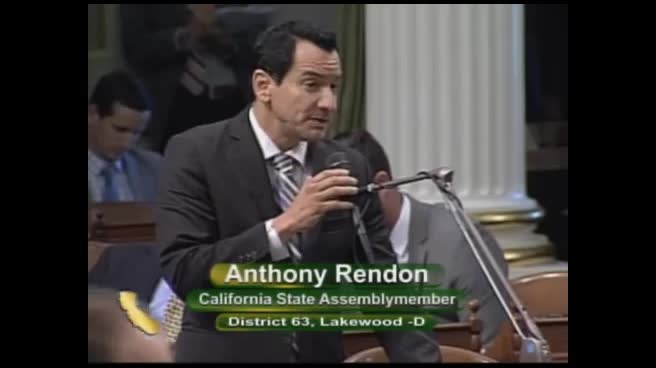
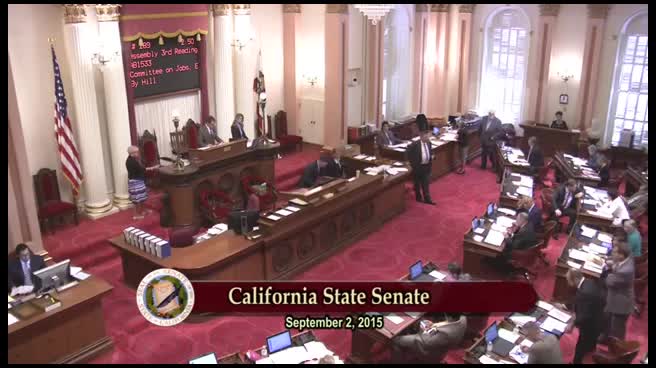

Bill Author

Bill Co-Author(s):