AB 501: State fabric.
- Session Year: 2015-2016
- House: Assembly
- Latest Version Date: 2016-09-30
Existing law declares the official state animal, rock, mineral, grass, insect, bird, and marine fish, among other things.
This bill would make denim the official state fabric.
Existing law declares the official state animal, rock, mineral, grass, insect, bird, and marine fish, among other things.
This bill would make denim the official state fabric.
Existing law declares the official state animal, rock, mineral, grass, insect, bird, and marine fish, among other things.
This bill would make denim the official state fabric.
Existing law declares the official state animal, rock, mineral, grass, insect, bird, and marine fish, among other things.
This bill would make denim the official state fabric.
Existing law declares the official state animal, rock, mineral, grass, insect, bird, and marine fish, among other things.
This bill would make denim the official state fabric.
Existing law, the Sacramento-San Joaquin Delta Reform Act of 2009, requires the Delta Stewardship Council to develop, adopt, and commence implementation of a comprehensive management plan for the Delta, meeting specified requirements. The act requires the Delta Independent Science Board to develop a scientific program relating to the management of the Delta.
This bill would require a person conducting Delta research, as defined, whose research is funded, in whole or in part, by the state, to take specified actions with regard to the sharing of the primary data, metadata, and other supporting materials created or gathered in the course of that research. The bill would make a researcher ineligible for state funding if the researcher does not substantially comply with these requirements within 6 months of completing the Delta research project, until the researcher complies with those requirements. The bill would require a state agency that funds or participates in Delta research to (1) make it a condition of a Delta research grant that the grantee implement a data management plan that specifies how the grantee will share research data, metadata, and findings with other researchers and (2) adopt policies and programs to disseminate and share Delta research results, unless the agency determines that sufficient funds are not available for that purpose. The bill would authorize the requirement to adopt policies and programs to be met by an interagency group adopting coordinated guidelines to provide consistent procedural and technical requirements for Delta research and adjustments to, and, where essential, exceptions from, the bills requirements and would exempt the adoption of these coordinated guidelines from the procedural requirements for the adoption of regulations.
Existing law, the Sacramento-San Joaquin Delta Reform Act of 2009, requires the Delta Stewardship Council to develop, adopt, and commence implementation of a comprehensive management plan for the Delta, meeting specified requirements. The act requires the Delta Independent Science Board to develop a scientific program relating to the management of the Delta.
This bill would require a person conducting Delta research, as defined, whose research is funded, in whole or in part, by the state, to take specified actions with regard to the sharing of the primary data, samples, physical collections, metadata, and other supporting materials created or gathered in the course of that research. The bill would make a researcher ineligible for state funding if the researcher does not substantially comply with these requirements within 6 months of completing the Delta research project, until the researcher complies with those requirements. The bill would authorize the Delta Independent Science Board to adopt guidelines to provide adjustments to, and, where essential, exceptions from, these requirements and would exempt the adoption of these guidelines from the procedural requirements for the adoption of regulations. The bill would require a state agency that funds or participates in Delta research to implement policies to disseminate and share Delta research results, including, but not limited to, making (1) make it a condition of a Delta research grant that the grantee implement a data management plan that specifies how the grantee will share research data, collections, metadata, and findings with other researchers. researchers and (2) adopt policies and programs to disseminate and share Delta research results, unless the agency determines that sufficient funds are not available for that purpose. The bill would authorize the requirement to adopt policies and programs to be met by an interagency group adopting coordinated guidelines to provide consistent procedural and technical requirements for Delta research and adjustments to, and, where essential, exceptions from, the bills requirements and would exempt the adoption of these coordinated guidelines from the procedural requirements for the adoption of regulations.
Existing law, the Sacramento-San Joaquin Delta Reform Act of 2009, requires the Delta Stewardship Council to develop, adopt, and commence implementation of a comprehensive management plan for the Delta, meeting specified requirements. The act requires the Delta Independent Science Board to develop a scientific program relating to the management of the Delta.
This bill would require a person conducting Delta research, as defined, whose research is funded, in whole or in part, by the state, to take specified actions with regard to the sharing of the primary data, samples, physical collections, and other supporting materials created or gathered in the course of that research. The bill would make a researcher ineligible for state funding if the researcher does not substantially comply with these requirements within 6 months of completing the Delta research project, until the researcher complies with those requirements. The bill would authorize the Delta Independent Science Board to adopt guidelines to provide adjustments to, and, where essential, exceptions from, these requirements and would exempt the adoption of these guidelines from the procedural requirements for the adoption of regulations. The bill would require a state agency that funds or participates in Delta research to implement policies to disseminate and share Delta research results, in a specified manner. including, but not limited to, making it a condition of a grant that the grantee share research data, collections, and findings with other researchers.
The bill would make a researcher ineligible for state funding if the researcher does not provide the information required by the bill within 6 months of the date of the final publication or public dissemination of the research findings, until the researcher complies with the bills requirements.
The bill would provide that all legal rights to tangible property collected or created during Delta research remain with the researcher, as determined by the policies of the organization providing the grant, contract, or other agreement, except as specified, but would require a researcher to make this tangible property appropriately available to other researchers.
Existing law, the Sacramento-San Joaquin Delta Reform Act of 2009, requires the Delta Stewardship Council to develop, adopt, and commence implementation of a comprehensive management plan for the Delta, meeting specified requirements. The act requires the Delta Independent Science Board to develop a scientific program relating to the management of the Delta.
This bill would require a person conducting Delta research, as defined, whose research is funded, in whole or in part, by the state, to take specified actions with regard to the sharing of the primary data, samples, physical collections, and other supporting materials created or gathered in the course of that research. The bill would authorize the Delta Independent Science Board to adopt guidelines to provide adjustments to, and, where essential, exceptions from, these requirements and would exempt the adoption of these guidelines from the procedural requirements for the adoption of regulations. The bill would require a state agency that funds or participates in Delta research to implement policies to disseminate and share Delta research results, in a specified manner.
The bill would make a researcher ineligible for state funding if the researcher does not provide the information required by the bill within 6 months of the date of the final publication or public dissemination of the research findings, until the researcher complies with the bills requirements.
The bill would provide that all legal rights to tangible property collected or created during Delta research remain with the researcher, as determined by the policies of the organization providing the grant, contract, or other agreement, except as specified, but would require a researcher to make this tangible property appropriately available to other researchers.
The Legislature finds and declares all of the following:
(a)Denim is a sturdy cotton twill fabric. To create denim fabric, horizontal threads pass under two or more vertical threads. However, denim is much more than just a fabric. Denims history is interwoven with California history from the 1850s through today.
(b)Since the 17th century through the present day, denim has been used to make upholstery, tents, blankets, wagon covers, and of course, pants known as jeans.
(c)Denim jeans were invented in San Francisco during the Gold Rush Era, and in May 1873, the United States Patent and Trademark Office approved patent number 139,121 for the invention of jeans.
(d)The history of denim jeans parallels the history of California. At first, jeans were designed as practical working clothes. They eventually became a symbol of American culture. Jeans have been worn by gold miners, cowboys, farm workers, rock stars, beatniks, hippies, and people of all walks of life. Jeans were featured in the first Hollywood silent films and became an iconic costume in a variety of genres, especially westerns and war films.
(e)Today, California is responsible for about 75 percent of the premium denim jeans sold throughout the world. The industry employs more than 200,000 people in southern California alone, making it the largest fashion manufacturing hub in the United States. Denim jeans can be found in the wardrobes of 96 percent of American consumers who, on average, own seven pairs. Denim jeans represent an estimated $60 billion global market for retailers.
(f)Celebrities, music artists, models, business people, and Californians of all ages continue to wear denim. Jeans have become the uniform for several companies in the technology industry in Silicon Valley. Prominent technology companies developed genius innovations while working in a garage wearing comfortable denim jeans.
(g)The cotton industry is vital to the production of denim jeans. In California, cotton is grown primarily in the San Joaquin Valley, but there is acreage in both the Palos Verde and Sacramento Valleys. During the 2015 crop year, over 800 California producers grew cotton and 29 California gins ginned over 700,000 bales of cotton. One bale of cotton can generate 325 pairs of denim jeans. In 2015 there were 743 cotton businesses operating in California, providing employment to 10,049 California residents and generating revenues of $1.4 billion.
(h)Through corporate social responsibility initiatives, companies spread awareness about gender equality, climate change, fair trade, workplace equality, and a variety of other contemporary issues.
(i)Several denim companies are now looking into the future and making sustainability a core principle of its business model. Californias denim industry has worked to shrink its carbon and water footprints.
(j)In order to supply denim companies with cotton, the cotton growers are working to become more sustainable by using responsible production methods on their farms. Some of the positive benefits of these efforts include a decrease in soil erosion, irrigation water, energy use, and greenhouse gas emission. Additionally, Cotton Incorporated the research and promotion company for the upland variety of cotton has a United States program called Blue Jeans Go Green that recycles unwanted denim. Both denim and cotton companies are conscious of their environmental impact, especially within the State of California.
SEC. 2.Section 423.6 is added to the Government Code, to read:423.6.Denim is the official state fabric.
The Legislature finds and declares all of the following:
(a)Denim is a sturdy cotton twill fabric. To create denim fabric, horizontal threads pass under two or more vertical threads. However, denim is much more than just a fabric. Denims history is interwoven with California history from the 1850s through today.
(b)Since the 17th century through the present day, denim has been used to make upholstery, tents, blankets, wagon covers, and of course, pants known as jeans.
(c)Denim jeans were invented in San Francisco during the Gold Rush Era, and in May 1873, the United States Patent and Trademark Office approved patent number 139,121 for the invention of jeans.
(d)The history of denim jeans parallels the history of California. At first, jeans were designed as practical working clothes. They eventually became a symbol of American culture. Jeans have been worn by gold miners, cowboys, farm workers, rock stars, beatniks, hippies, and people of all walks of life. Jeans were featured in the first Hollywood silent films and became an iconic costume in a variety of genres, especially westerns and war films.
(e)Today, California is responsible for about 75 percent of the premium denim jeans sold throughout the world. The industry employs more than 200,000 people in southern California alone, making it the largest fashion manufacturing hub in the United States. Denim jeans can be found in the wardrobes of 96 percent of American consumers who, on average, own seven pairs. Denim jeans represent an estimated $60 billion global market for retailers.
(f)Celebrities, music artists, models, business people, and Californians of all ages continue to wear denim. Jeans have become the uniform for several companies in the technology industry in Silicon Valley. Prominent technology companies developed genius innovations while working in a garage wearing comfortable denim jeans.
(g)The cotton industry is vital to the production of denim jeans. In California, cotton is grown primarily in the San Joaquin Valley, but there is acreage in both the Palos Verde and Sacramento Valleys. During the 2015 crop year, over 800 California producers grew cotton and 29 California gins ginned over 700,000 bales of cotton. One bale of cotton can generate 325 pairs of denim jeans. In 2015 there were 743 cotton businesses operating in California, providing employment to 10,049 California residents and generating revenues of $1.4 billion.
(g)
(h)Through corporate social responsibility initiatives, companies spread awareness about gender equality, climate change, fair trade, workplace equality, and a variety of other contemporary issues.
(h)
(i)Several denim companies are now looking into the future and making sustainability a core principal principle of its business model. Californias denim industry has worked to shrink its carbon and water footprints.
(j)In order to supply denim companies with cotton, the cotton growers are working to become more sustainable by using responsible production methods on their farms. Some of the positive benefits of these efforts include a decrease in soil erosion, irrigation water, energy use, and greenhouse gas emission. Additionally, Cotton Incorporated the research and promotion company for the upland variety of cotton has a United States program called Blue Jeans Go Green that recycles unwanted denim. Both denim and cotton companies are conscious of their environmental impact, especially within the State of California.
SEC. 2.Section 423.6 is added to the Government Code, to read:423.6.Denim is the official state fabric.
The Legislature finds and declares all of the following:
(a)Denim is a sturdy cotton twill fabric. To create denim fabric, horizontal threads pass under two or more vertical threads. However, denim is much more than just a fabric. Denims history is interwoven with California history from the 1850s through today.
(b)Since the 17th century through the present day, denim has been used to make upholstery, tents, blankets, wagon covers, and of course, pants known as jeans.
(c)Denim jeans were invented in San Francisco during the Gold Rush Era, and in May 1873, the United States Patent and Trademark Office approved patent number 139,121 for the invention of jeans.
(d)The history of denim jeans parallels the history of California. At first, jeans were designed as practical working clothes. They eventually became a symbol of American culture. Jeans have been worn by gold miners, cowboys, farm workers, rock stars, hippies, beatniks, hippies, and people of all walks of life. Jeans were featured in the first Hollywood silent films and became an iconic costume in a variety of genres, especially westerns and war films.
(e)Today, California is responsible for about 75 percent of the premium denim jeans sold throughout the world. The industry employs more than 200,000 people in southern California alone, making it the largest fashion manufacturing hub in the United States. Denim jeans can be found in the wardrobes of 96 percent of American consumers who, on average, own seven pairs. Denim jeans represent an estimated $60 billion global market for retailers.
(f)Celebrities, music artists, models, business people, and Californians of all ages continue to wear denim. Jeans have become the uniform for several companies in the technology industry in Silicon Valley. Prominent technology companies developed genius innovations while working in a garage wearing comfortable denim jeans.
(g)Denim companies have used their brands to positively impact the global community by spreading Through corporate social responsibility initiatives, companies spread awareness about gender equality, climate change, fair trade, workplace equality, and a variety of other contemporary issues.
(h)Several denim companies are now looking into the future and making sustainability a core principal of its business model. Californias denim industry has worked to shrink its carbon footprint and combat drought. and water footprints.
SEC. 2.Section 423.6 is added to the Government Code, to read:423.6.Denim is the official state fabric.
The Legislature finds and declares all of the following:
(a)Denim is a sturdy cotton twill fabric. To create denim fabric, horizontal threads pass under two or more vertical threads. However, denim is much more than just a fabric. Denims history is interwoven with California history from the 1850s through today.
(b)Since the 17th century through the present day, denim has been used to make upholstery, tents, blankets, wagon covers, and of course, pants known as jeans.
(c)Denim jeans were invented in San Francisco during the Gold Rush Era, and in May 1873, the United States Patent and Trademark Office approved patent number 139,121 for the invention of jeans.
(d)The history of denim jeans parallels the history of California. At first, jeans were designed as practical working clothes. They eventually became a symbol of American culture. Jeans have been worn by gold miners, cowboys, farm workers, rock stars, hippies, and people of all walks of life. Jeans were featured in the first Hollywood silent films and became an iconic costume in a variety of genres, especially westerns and war films.
(e)Today, California is responsible for about 75 percent of the premium denim jeans sold throughout the world. The industry employs more than 200,000 people in southern California alone, making it the largest fashion manufacturing hub in the United States. Denim jeans can be found in the wardrobes of 96 percent of American consumers who, on average, own seven pairs. Denim jeans represent an estimated $60 billion global market for retailers.
(f)Celebrities, music artists, models, business people, and Californians of all ages continue to wear denim. Jeans have become the uniform for several companies in the technology industry in Silicon Valley. Prominent technology companies developed genius innovations while working in a garage wearing comfortable denim jeans.
(g)Denim companies have used their brands to positively impact the global community by spreading awareness about gender equality, climate change, fair trade, workplace equality, and a variety of other contemporary issues.
(h)Several denim companies are now looking into the future and making sustainability a core principal of its business model. Californias denim industry has worked to shrink its carbon footprint and combat drought.
SEC. 2.Section 423.6 is added to the Government Code, to read:423.6.Denim is the official state fabric.
SECTION 1.Chapter 6 (commencing with Section 85285) is added to Part 3 of Division 35 of the Water Code, to read:6.Dissemination and Sharing of State-Funded Delta Research Data 85285.For purposes of this chapter, the following definitions shall apply:
(a)Delta research means scientific inquiry that meets one or both of the following conditions:
(1)The San Francisco Bay or the Sacramento-San Joaquin Delta is, in whole or in part, the locus of the research.
(2)The research addresses environmental factors relevant to this division, including, but not limited to, hydrodynamics, salinity, geomorphology, studies related to aquatic species, and water quality, including mercury contamination, in the Sacramento River, the San Joaquin River, or any tributary, including any impoundment on any tributary, of the Sacramento or San Joaquin Rivers.
(b)Machine readable means data encoded on an appropriate medium and in a form suitable for processing by computer.
(c)Researcher means a person who conducts Delta research and whose research is funded, in whole or in part, by the state, including, but not limited to, by a research grant.
85285.5.It is the intent of the Legislature that a person conducting Delta research has a responsibility, as a member of the scientific community, to share results and findings with other researchers for the public benefit.
85286.(a)Except as provided in coordinated guidelines adopted pursuant to Section 85287, if any, a researcher shall do all of the following:
(1)Implement a data management plan that specifies how the researcher will share research data, metadata, and findings with other researchers in a form that is machine readable.
(2)Provide the Delta Science Program with access to all primary data created for conducting Delta research.
(3)Promptly prepare and submit for publication, with authorship that accurately reflects the contributions of those involved, all significant findings from Delta research.
(4)Permit and encourage the publication of Delta research by those actually performing Delta research, unless a state funding recipient intends to publish or disseminate those findings by itself.
(5)Share with other researchers, at no more than incremental cost and within a reasonable time, the primary data, metadata, and other supporting materials created or gathered in the course of conducting Delta research.
(6)Encourage and facilitate the sharing of the primary data, metadata, and other supporting materials created or gathered in the course of conducting Delta research.
(7)Release privileged or confidential information only in a form that protects the privacy of individuals and subjects involved.
(b)It is the intent of the Legislature that this section provide the Delta Science Program, as described in Section 85280, with the authority to request data when the Delta Science Program deems, at its discretion, that data is relevant, but that this section not create an obligation or duty upon the Delta Science Program to request or manage data.
85287.(a)A state agency that funds or participates in Delta research shall make it a condition of a Delta research grant that the grantee implement a data management plan, as required by paragraph (1) of subdivision (a) of Section 85286.
(b)(1)A state agency that funds or participates in Delta research shall adopt policies and programs to disseminate and share Delta research results, unless the agency determines that sufficient funds are not available for that purpose.
(2)The requirements of this subdivision may be met by an interagency group that includes, but need not be limited to, the department, the State Water Resources Control Board, the Department of Fish and Wildlife, the Delta Stewardship Council, and the Sacramento-San Joaquin Delta Conservancy adopting coordinated guidelines to provide consistent procedural and technical requirements for Delta research, including, but not limited to, standardized types of information, and adjustments to, and, where essential, exceptions from, the requirements of this chapter, for the purposes of safeguarding the rights of individuals and subjects, or the validity of the results, or accommodating legitimate research interests. Coordinated guidelines adopted pursuant to this paragraph are not regulations for purposes of, and shall not be subject to, Chapter 3.5 (commencing with Section 11340) of Part 1 of Division 3 of Title 2 of the Government Code.
(c)To the extent permitted by federal law, a state agency that funds or participates in Delta research may accept any funds, services, equipment, or grants to further the purpose of this section.
85287.5.A researcher that does not substantially comply with the requirements of Section 85286 within six months of completing the Delta research project is not eligible for state funding until the researcher complies with those requirements.
For purposes of this chapter, the following definitions shall apply:
(a)Delta research means scientific inquiry that meets one or both of the following conditions:
(1)The San Francisco Bay or the Sacramento-San Joaquin Delta is, in whole or in part, the locus of the research.
(2)The research addresses environmental factors relevant to this division, including, but not limited to, hydrodynamics, salinity, geomorphology, studies related to aquatic species, and water quality, including mercury contamination, in the Sacramento River, the San Joaquin River, or any tributary, including any impoundment on any tributary, of the Sacramento or San Joaquin Rivers.
(b)Machine readable means data encoded on an appropriate medium and in a form suitable for processing by computer.
(b)
(c)Researcher means a person who conducts Delta research and whose research is funded, in whole or in part, by the state, including, but not limited to, by a research grant.
85285.5.It is the intent of the Legislature that persons a person conducting Delta research have has a responsibility, as members a member of the scientific community, to share results and findings with other researchers for the public benefit, including, but not limited to, data, samples, and other material collected while conducting the research. benefit.
85286.(a)Except as provided in Section 85286.5, coordinated guidelines adopted pursuant to Section 85287, if any, a researcher shall do all of the following:
(1)Implement a data management plan that specifies how the researcher will share research data, metadata, and findings with other researchers in a form that is machine readable.
(a)
(2)Provide the Delta Science Program with access to all primary data created for conducting Delta research.
(b)
(3)Promptly prepare and submit for publication, with authorship that accurately reflects the contributions of those involved, all significant findings from Delta research.
(c)
(4)Permit and encourage the publication of Delta research by those actually performing Delta research, unless a state funding recipient intends to publish or disseminate those findings by itself.
(d)
(5)Share with other researchers, at no more than incremental cost and within a reasonable time, the primary data, samples, physical collections, metadata, and other supporting materials created or gathered in the course of conducting Delta research.
(e)
(6)Encourage and facilitate the sharing of the primary data, samples, physical collections, metadata, and other supporting materials created or gathered in the course of conducting Delta research.
(f)
(7)Release privileged or confidential information only in a form that protects the privacy of individuals and subjects involved.
(b)It is the intent of the Legislature that this section provide the Delta Science Program, as described in Section 85280, with the authority to request data when the Delta Science Program deems, at its discretion, that data is relevant, but that this section not create an obligation or duty upon the Delta Science Program to request or manage data.
85286.5.The Delta Independent Science Board established pursuant to Section 85280 may adopt guidelines to provide adjustments to, and, where essential, exceptions from, the requirements of this chapter, for the purposes of safeguarding the rights of individuals and subjects, or the validity of the results, and the integrity of collections, or accommodating legitimate research interests. The guidelines adopted pursuant to this section are not regulations for purposes of, and shall not be subject to, Chapter 3.5 (commencing with Section 11340) of Part 1 of Division 3 of Title 2 of the Government Code.
85287.(a)A state agency that funds or participates in Delta research shall implement policies to disseminate and share Delta research results, including, but not limited to, making make it a condition of a Delta research grant that the grantee share research data, collections, and findings with other researchers. implement a data management plan, as required by paragraph (1) of subdivision (a) of Section 85286.
(b)(1)A state agency that funds or participates in Delta research shall adopt policies and programs to disseminate and share Delta research results, unless the agency determines that sufficient funds are not available for that purpose.
(2)The requirements of this subdivision may be met by an interagency group that includes, but need not be limited to, the department, the State Water Resources Control Board, the Department of Fish and Wildlife, the Delta Stewardship Council, and the Sacramento-San Joaquin Delta Conservancy adopting coordinated guidelines to provide consistent procedural and technical requirements for Delta research, including, but not limited to, standardized types of information, and adjustments to, and, where essential, exceptions from, the requirements of this chapter, for the purposes of safeguarding the rights of individuals and subjects, or the validity of the results, or accommodating legitimate research interests. Coordinated guidelines adopted pursuant to this paragraph are not regulations for purposes of, and shall not be subject to, Chapter 3.5 (commencing with Section 11340) of Part 1 of Division 3 of Title 2 of the Government Code.
(c)To the extent permitted by federal law, a state agency that funds or participates in Delta research may accept any funds, services, equipment, or grants to further the purpose of this section.
85287.5.A researcher that does not substantially comply with the requirements of Section 85286 within six months of completing the Delta research project is not eligible for state funding until the researcher complies with those requirements.
For purposes of this chapter, the following definitions shall apply:
(a)Delta research means scientific inquiry that meets one or both of the following conditions:
(1)The San Francisco Bay or the Sacramento-San Joaquin Delta is, in whole or in part, the locus of the research.
(2)The research addresses environmental factors relevant to this division, including, but not limited to, hydrodynamics, salinity, geomorphology, studies related to aquatic species, and water quality, including mercury contamination, in the Sacramento River, the San Joaquin River, or any tributary, including any impoundment on any tributary, of the Sacramento or San Joaquin Rivers.
(b)Researcher means a person who conducts Delta research and whose research is funded, in whole or in part, by the state, including, but not limited to, by a research grant.
(c)Tangible property means personal property other than equipment and intellectual property.
85285.5.The Legislature finds and declares all of the following:
(a)The state normally allows researchers to retain principal legal rights to intellectual property developed through state-funded research to provide incentives for development and dissemination of inventions, software, and publications that can enhance their usefulness, accessibility, and upkeep.
(b)These incentives do not, however, reduce the responsibility that investigators and organizations have, as members of the scientific and engineering community, to make results, data, and collections available to other researchers.
(c)Some state-funded Delta research supports the collection or creation of tangible property, such as insects, marine life, drilling core samples, and genetically altered microorganisms.
85285.5.It is the intent of the Legislature that persons conducting Delta research have a responsibility, as members of the scientific community, to share results and findings with other researchers for the public benefit, including, but not limited to, data, samples, and other material collected while conducting the research.
85286.Except as provided in Section 85286.5, a researcher shall do all of the following:
(a)Provide the Delta Science Program with access to all primary data created for conducting Delta research.
(b)Promptly prepare and submit for publication, with authorship that accurately reflects the contributions of those involved, all significant findings from Delta research.
(c)Permit and encourage the publication of Delta research by those actually performing Delta research, unless a state funding recipient intends to publish or disseminate those findings by itself.
(d)Share with other researchers, at no more than incremental cost and within a reasonable time, the primary data, samples, physical collections, and other supporting materials created or gathered in the course of conducting Delta research.
(e)Encourage and facilitate the sharing of the primary data, samples, physical collections, and other supporting materials created or gathered in the course of conducting Delta research.
(f)Release privileged or confidential information only in a form that protects the privacy of individuals and subjects involved.
85286.5.The Delta Independent Science Board established pursuant to Section 85280 may adopt guidelines to provide adjustments to, and, where essential, exceptions from, the requirements of this chapter, for the purposes of safeguarding the rights of individuals and subjects, or the validity of the results, and the integrity of collections, or accommodating legitimate research interests. The guidelines adopted pursuant to this section are not regulations for purposes of, and shall not be subject to, Chapter 3.5 (commencing with Section 11340) of Part 1 of Division 3 of Title 2 of the Government Code.
85287.A state agency that funds or participates in Delta research shall implement policies to disseminate and share Delta research results, in ways appropriate to field and circumstances, including through the proposal review process, conducting negotiations for, and imposing conditions upon, awards, providing appropriate support and incentives for data cleanup, documentation, dissemination, and storage, and by taking other similar actions. including, but not limited to, making it a condition of a grant that the grantee share research data, collections, and findings with other researchers.
85287.5.A researcher that does not provide the information in the manner required by this chapter within six months of the date of the final publication or public dissemination of the findings of the Delta research results is not eligible for state funding until the researcher complies with this chapter.
85288.(a)All legal rights to tangible property collected or created during Delta research remain with the researcher, as determined by the policies of the organization providing the grant, contract, or other agreement specifying the rights and obligations of the researcher, except as otherwise provided in that grant, contract, or agreement.
(b)A researcher shall, as a member of the scientific and engineering community, make the tangible property specified in subdivision (a) appropriately available to other researchers.
85287.5.A researcher that does not substantially comply with the requirements of Section 85286 within six months of completing the Delta research project is not eligible for state funding until the researcher complies with those requirements.
For purposes of this chapter, the following definitions shall apply:
(a)Delta research means scientific inquiry that meets one or both of the following conditions:
(1)The San Francisco Bay or the Sacramento-San Joaquin Delta is, in whole or in part, the locus of the research.
(2)The research addresses environmental factors relevant to this division, including, but not limited to, hydrodynamics, salinity, geomorphology, studies related to aquatic species, and water quality, including mercury contamination, in the Sacramento River, the San Joaquin River, or any tributary, including any impoundment on any tributary, of the Sacramento or San Joaquin Rivers.
(b)Researcher means a person who conducts Delta research and whose research is funded, in whole or in part, by the state, including, but not limited to, by a research grant.
(c)Tangible property means personal property other than equipment and intellectual property.
85285.5.The Legislature finds and declares all of the following:
(a)The state normally allows researchers to retain principal legal rights to intellectual property developed through state-funded research to provide incentives for development and dissemination of inventions, software, and publications that can enhance their usefulness, accessibility, and upkeep.
(b)These incentives do not, however, reduce the responsibility that investigators and organizations have, as members of the scientific and engineering community, to make results, data, and collections available to other researchers.
(c)Some state-funded Delta research supports the collection or creation of tangible property, such as insects, marine life, drilling core samples, and genetically altered microorganisms.
85286.Except as provided in Section 85286.5, a researcher shall do all of the following:
(a)Provide the Delta Science Program with access to all primary data created for conducting Delta research.
(b)Promptly prepare and submit for publication, with authorship that accurately reflects the contributions of those involved, all significant findings from Delta research.
(c)Permit and encourage the publication of Delta research by those actually performing Delta research, unless a state funding recipient intends to publish or disseminate those findings by itself.
(d)Share with other researchers, at no more than incremental cost and within a reasonable time, the primary data, samples, physical collections, and other supporting materials created or gathered in the course of conducting Delta research.
(e)Encourage and facilitate the sharing of the primary data, samples, physical collections, and other supporting materials created or gathered in the course of conducting Delta research.
(f)Release privileged or confidential information only in a form that protects the privacy of individuals and subjects involved.
85286.5.The Delta Independent Science Board established pursuant to Section 85280 may adopt guidelines to provide adjustments to, and, where essential, exceptions from, the requirements of this chapter, for the purposes of safeguarding the rights of individuals and subjects, or the validity of the results, and the integrity of collections, or accommodating legitimate research interests. The guidelines adopted pursuant to this section are not regulations for purposes of, and shall not be subject to, Chapter 3.5 (commencing with Section 11340) of Part 1 of Division 3 of Title 2 of the Government Code.
85287.A state agency that funds or participates in Delta research shall implement policies to disseminate and share Delta research results, in ways appropriate to field and circumstances, including through the proposal review process, conducting negotiations for, and imposing conditions upon, awards, providing appropriate support and incentives for data cleanup, documentation, dissemination, and storage, and by taking other similar actions.
85287.5.A researcher that does not provide the information in the manner required by this chapter within six months of the date of the final publication or public dissemination of the findings of the Delta research results is not eligible for state funding until the researcher complies with this chapter.
85288.(a)All legal rights to tangible property collected or created during Delta research remain with the researcher, as determined by the policies of the organization providing the grant, contract, or other agreement specifying the rights and obligations of the researcher, except as otherwise provided in that grant, contract, or agreement.
(b)A researcher shall, as a member of the scientific and engineering community, make the tangible property specified in subdivision (a) appropriately available to other researchers.
|
Date
|
Status
|
|---|---|
| Aug 15, 2016 | Read third time. Passed. Ordered to the Assembly. (Ayes 38. Noes 0. Page 4968.). |
| Jun 20, 2016 | Withdrawn from committee. |
| Jun 21, 2016 | From committee chair, with author's amendments: Amend, and re-refer to committee. Read second time, amended, and re-referred to Com. on G.O. |
| Jun 21, 2016 | Re-referred to Com. on G.O. |
| Jun 28, 2016 | From committee: Do pass. (Ayes 13. Noes 0.) (June 28). |
| Jun 29, 2016 | Read second time. Ordered to third reading. |
| Aug 1, 2016 | Read third time and amended. Ordered to second reading. |
| Aug 2, 2016 | Read second time. Ordered to third reading. |
| Aug 15, 2016 | Read third time. Passed. Ordered to the Assembly. |
| Jun 20, 2016 | Re-referred to Com. on RLS. |
| Aug 15, 2016 | Read third time. Passed. Ordered to the Assembly. (Ayes 38. Noes 0.). |
| Aug 16, 2016 | In Assembly. Concurrence in Senate amendments pending. May be considered on or after August 18 pursuant to Assembly Rule 77. |
| Aug 18, 2016 | Re-referred to Com. on G.O. pursuant to Assembly Rule 77.2. |
| Aug 31, 2016 | Assembly Rule 63 suspended. |
| Aug 31, 2016 | From committee: That the Senate amendments be concurred in. (Ayes 16. Noes 0.) (August 30). |
| Aug 31, 2016 | Senate amendments concurred in. To Engrossing and Enrolling. |
| Sep 9, 2016 | Enrolled and presented to the Governor at 2:30 p.m. |
| Feb 23, 2015 | Read first time. To print. |
| Jun 15, 2016 | From committee chair, with author's amendments: Amend, and re-refer to committee. Read second time, amended, and re-referred to Com. on N.R. & W. |
| Feb 4, 2016 | Referred to Com. on N.R. & W. |
| Jan 27, 2016 | Read third time. Passed. Ordered to the Senate. (Ayes 76. Noes 1. Page 3507.) |
| Jan 27, 2016 | In Senate. Read first time. To Com. on RLS. for assignment. |
| Jan 26, 2016 | Read second time. Ordered to third reading. |
| Jan 25, 2016 | Read second time and amended. Ordered returned to second reading. |
| Jan 25, 2016 | From committee: Amend, and do pass as amended. (Ayes 17. Noes 0.) (January 21). |
| May 28, 2015 | In committee: Hearing postponed by committee. |
| Apr 29, 2015 | In committee: Set, first hearing. Referred to APPR. suspense file. |
| Apr 23, 2015 | Re-referred to Com. on APPR. |
| Apr 22, 2015 | Read second time and amended. |
| Apr 21, 2015 | From committee: Amend, and do pass as amended and re-refer to Com. on APPR. (Ayes 10. Noes 0.) (April 21). |
| Apr 14, 2015 | From committee: Do pass and re-refer to Com. on JUD. with recommendation: To Consent Calendar. (Ayes 15. Noes 0.) (April 14). Re-referred to Com. on JUD. |
| Mar 5, 2015 | Referred to Coms. on W., P., & W. and JUD. |
| Feb 24, 2015 | From printer. May be heard in committee March 26. |
|
Date
|
Description
|
Location
|
Votes
|
|
|---|---|---|---|---|
| Aug 31, 2016 | AB 501 LEVINE Concurrence in Senate Amendments | Assembly Floor |
Passed |
|
| Aug 30, 2016 | With recommendation: That Senate amendments be concurred in. | Assembly Standing Committee on Governmental Organization |
Passed |
|
| Aug 15, 2016 | Assembly 3rd Reading AB501 Levine By Leno | Senate Floor |
Passed |
|
| Jun 28, 2016 | Do pass | Senate Standing Committee on Governmental Organization |
Passed |
|
| Jan 27, 2016 | AB 501 LEVINE Assembly Third Reading | Assembly Floor |
Passed |
|
| Jan 21, 2016 | Do pass as amended. | Assembly Standing Committee on Appropriations |
Passed |
|
| Apr 21, 2015 | Do pass as amended and be re-referred to the Committee on [Appropriations] | Assembly Standing Committee on Judiciary |
Passed |
|
| Apr 14, 2015 | Do pass and be re-referred to the Committee on [Judiciary] with recommendation: To Consent Calendar | Assembly Standing Committee on Water, Parks, and Wildlife |
Passed |
This list shows positions taken on this bill by organizations on the date displayed, which is linked to the original source.
Positions by individuals are not included.
|
Organization
|
Position
|
Date
|
|---|---|---|
| California Cotton Ginners and Growers Associations | ** Support | Aug 15, 2016 |
| Gap Inc. | ** Support | Aug 15, 2016 |
| Metropolitan Water District of California | ** Support | Apr 21, 2015 |
| Recreational Boaters Of California | * Indeterminate | Apr 21, 2015 |
(Without Reference to File)
CONCURRENCE IN SENATE AMENDMENTS
CSA2 Bill Id:AB 501
Author:(Levine)
As Amended Ver:August 1, 2016
Majority vote
ASSEMBLY: |
| (January 27, 2016) | SENATE: | 38-0 | (August 15, 2016) |
(vote not relevant)
COMMITTEE VOTE: | 16-0 | (August 30, 2016) | RECOMMENDATION: | concur |
(G.O.)
Original Committee Reference: W. P. & W.
SUMMARY: Designates "denim" as the official state fabric.
The Senate amendments delete the Assembly version of the bill, and instead:
- Designate "denim" as the official state fabric.
- Make various findings and declarations regarding denim.
AS PASSED BY THE ASSEMBLY, this bill would have required that state-funded environmental research in the San Francisco Bay/Sacramento-San Joaquin Delta Estuary (Delta) be shareable and made available to the Delta Science Program.
EXISTING LAW:
- Designates the following as official state insignia:
- State Flower – "Golden Poppy" (Added by Chapter 69, Statutes of 1903)
- State Bird – "California Valley Quail" (Added by Chapter 777, Statutes of 1931)
- State Tree – "California Redwood" includes both the coast redwood (Sequoia empervirens) and the Sierra big tree (Sequoia gigantea) – (Added by Chapter 134, Statutes of 1943; Amended by Chapter 1140, Statutes of 1953)
- State Theatre – "Pasadena Playhouse" (Added by Resolution Chapter 45, Statutes of 1937)
- State Fish – "California Golden Trout" (Added by Resolution Chapter 90, Statutes of 1947)
- State Song – "I Love You California" (Added by Resolution Chapter 87, Statutes of 1951)
- State Animal – "California Grizzly" (Added by Chapter 1140, Statutes of 1953)
- State Motto – "Eureka" (Added by Chapter 1237, Statutes of 1963)
- State Rock – "Serpentine" (Added by Chapter 89, Statutes of 1965)
- State Mineral – "Native Gold" (Added by Chapter 89, Statutes of 1965)
- State Nickname – "Golden State" (Added by Chapter 66, Statutes of 1968)
- State Reptile – "Desert Tortoise" (Added by Chapter 683, Statutes of 1972)
- State Insect – "California Dogface Butterfly" (Added by Chapter 521, Statutes of 1972)
- State Fossil – "Sabre-Tooth Cat" (Added by Chapter 792, Statutes of 1973)
- State Historical Society – "California Historical Society" (Added by Chapter 52, Statutes of 1979)
- State Marine Mammal – "California Gray Whale" (Added by Chapter 328, Statutes of 1975)
- State Gemstone – "Benitoite" (Added by Chapter 1365, Statutes of 1985)
- State Folk Dance – "Square Dance" (Added by Chapter 1645, Statutes of 1988)
- State Dance – "West Coast Swing" (Added by Chapter 1645, Statutes of 1988)
- State Prehistoric Artifact – "Chipped Stone Bear" (Added by Chapter 73, Statutes of 1991)
- State Marine Fish – "Garibaldi" (Added by Chapter 948, Statutes of 1995)
- State Soil – "San Joaquin Soil" (Added by Chapter 331, Statutes of 1997)
- State Fife and Drum Band – "California Consolidated Drum Band" (Added by Chapter 58, Statutes of 1997)
- State Tartan – "Based on the family tartan of the revered John Muir" (blue and green with red, gold, and blue seams) (Added by Chapter 100, Statutes of 2001)
- State Gold Rush Ghost Town – "Town of Bodie" (Added by Chapter 365, Statutes of 2002)
- State Tall Ship – "Californian" (Added by Chapter 113, Statutes of 2003)
- State Grass – "Nassella Pulchra" – commonly referred to as "purple needlegrass" (Added by Chapter 243, Statutes of 2004)
- State Silver Rush Ghost Town – "Calico" (Added by Chapter 90, Statutes of 2005)
- Official Marine Reptile – "Pacific Leatherback Sea Turtle" (Added by Chapter 591, Statutes of 2012)
- State Amphibian – "California Red-Legged Frog" (Added by Chapter 77, Statutes of 2014)
- State Pet – "Shelter Pet" (Added by Resolution Chapter 184, Statutes of 2015)
- State Lichen – "Lace Lichen" (Added by Chapter 113, Statutes of 2015)
FISCAL EFFECT: This bill is keyed non-fiscal by the Legislative Counsel.
COMMENTS:
Purpose of the bill: According to the author: "Existing law provides for several "official" state emblems that are well known – the Great Seal of the State of California, the Bear Flag and Golden Poppy. Additionally, the existing list of state insignia goes further and includes among other things, the state fish, the state insect, the state reptile, the state tartan, the state grass, the state soil, the state folkdance, and the state marine mammal. AB 501 recognizes denim as the official state fabric of California. The author's office contends that denim represents more than just a fabric – it represents California's diversity, culture, and economic and technological development since the Gold Rush."
Summary of Findings: Denim's history is interwoven with California's history from the 1850s through today. Since the 17th century through the present day, denim has been used to make upholstery, tents, blankets, wagon covers, and pants known as jeans. With the news of the Gold Rush, Bavarian business owner Levi Strauss moved to San Francisco to open a branch of his family's dry goods store. In partnership with tailor Jacob Davis, Levi Strauss eventually invented the first pair of denim jeans in 1873.
Denim jeans were designed as practical working attire, but they eventually became a symbol of not only California culture, but also American culture. Through the decades, gold miners, cowboys, farm workers, rock stars, beatniks, hippies, and people of all walks of life wore denim jeans.
The first Hollywood silent films featured actors who wore jeans, especially in westerns and war films. As the film industry grew, famous actors such as John Wayne, Bing Crosby, Marlon Brando, James Dean, and Marilyn Monroe, were photographed and filmed wearing denim jeans.
Today, California is responsible for about 75% of the premium denim jeans sold throughout the world. The industry employs more than 200,000 people in Southern California alone, making it the largest fashion manufacturing hub in the United States. Denim jeans represent an estimated $60 billion global market for retailers. Celebrities, United States Presidents, music artists, models, business people, government officials, legislators, and Californians of all ages wear denim – in fact, denim can be found in the wardrobes of 96% of American consumers.
Several denim companies are now looking into the future and making sustainability a core principle of their business model. California's denim industry has also worked to shrink its carbon and water footprints.
According to a writer for American Fabrics magazine in 1969, "Denim is one of the world's oldest fabrics, yet it remains eternally young."
Prior/Related Legislation: AB 1528 (Committee on Water, Parks, and Wildlife, Chapter 113, Statutes of 2015) among other things, declared "Lace Lichen" (Ramalina menziesii) the official State Lichen.
ACR 56 (Linder), Resolution Chapter184, Statutes of 2015, declared a "shelter pet" as the official State Pet.
AB 2364 (V. Manuel Pérez), Chapter 77, Statutes of 2014, designated the "California Red-Legged Frog" (Rana draytonii) as the official State Amphibian.
AB 1776 (Fong), Chapter 591, Statutes of 2012, designated the Pacific Leatherback Sea Turtle as the official marine reptile of the State of California and established October 15 as Pacific Leatherback Sea Turtle Conservation Day.
SB 906 (Ashburn), Chapter 90, Statutes of 2005, designated "Calico" in San Bernardino County as the official State Silver Rush Ghost Town.
SB 1226 (Machado), Chapter 243, Statutes of 2004, designated "purple needlegrass," or Nassella Pulchra, as the official State Grass.
AB 965 (Kehoe), Chapter 113, Statutes of 2003, established the "Californian" as the official State Tall Ship.
AB 1757 (Leslie), Chapter 365, Statutes of 2002, designated "Bodie" as the official State Gold Rush Ghost Town.
Analysis Prepared by: Kenton Stanhope / G.O. / (916) 319-2531 FN: 0005009
CONCURRENCE IN SENATE AMENDMENTS
CSA1 Bill Id:AB 501
Author:(Levine)
As Amended Ver:August 1, 2016
Majority vote
ASSEMBLY: |
| (January 27, 2016) | SENATE: | 38-0 | (August 15, 2016) |
(vote not relevant)
Original Committee Reference: W.,P., & W.
SUMMARY: Designates "denim" as the official state fabric.
The Senate amendments delete the Assembly version of the bill, and instead:
- Designate "denim" as the official state fabric.
- Make various findings and declarations regarding denim.
AS PASSED BY THE ASSEMBLY, this bill would have required that state-funded environmental research in the San Francisco Bay/Sacramento-San Joaquin Delta Estuary (Delta) be shareable and made available to the Delta Science Program.
EXISTING LAW:
- Designates the following as official state insignia:
- State Flower – "Golden Poppy" (Added by Statutes of1903, Chapter 69)
- State Bird – "California Valley Quail" (Added by Statutes of 1931, Chapter 777)
- State Tree – "California Redwood" includes both the coast redwood (Sequoia empervirens) and the Sierra big tree (Sequoia gigantea) – (Added by Statutes of 1943, Chapter 134; Amended by Statutes of 1953, Chapter 1140)
- State Theatre – "Pasadena Playhouse" (Added by Statutes of 1937, Resolution Chapter 45)
- State Fish – "California Golden Trout" (Added by Statutes of 1947, Resolution Chapter 90)
- State Song – "I Love You California" (Added by Statutes of 1951, Resolution Chapter 87)
- State Animal – "California Grizzly" (Added by Statutes of 1953, Chapter 1140)
- State Motto – "Eureka" (Added by Statutes of 1963, Chapter 1237)
- State Rock – "Serpentine" (Added by Statutes of 1965, Chapter 89)
- State Mineral – "Native Gold" (Added by Statutes of 1965, Chapter 89)
- State Nickname – "Golden State" (Added by Statutes of 1968, Chapter 66)
- State Reptile – "Desert Tortoise" (Added by Statutes of 1972, Chapter 683)
- State Insect – "California Dogface Butterfly" (Added by Statutes of 1972, Chapter 521)
- State Fossil – "Sabre-Tooth Cat" (Added by Statutes of 1973, Chapter 792)
- State Historical Society – "California Historical Society" (Added by Statutes of 1979, Chapter 52)
- State Marine Mammal – "California Gray Whale" (Added by Statutes of 1975, Chapter 328)
- State Gemstone – "Benitoite" (Added by Statutes of 1985, Chapter 1365)
- State Folk Dance – "Square Dance" (Added by Statutes of 1988, Chapter 1645)
- State Dance – "West Coast Swing" (Added by Statutes of 1988, Chapter 1645)
- State Prehistoric Artifact – "Chipped Stone Bear" (Added by Statutes of 1991, Chapter 73)
- State Marine Fish – "Garibaldi" (Added by Statutes of 1995, Chapter 948)
- State Soil – "San Joaquin Soil" (Added by Statutes of 1997, Chapter 331)
- State Fife and Drum Band – "California Consolidated Drum Band" (Added by Statutes of 1997, Resolution Chapter 58)
- State Tartan – "Based on the family tartan of the revered John Muir" (blue and green with red, gold, and blue seams) (Added by Statutes of 2001, Chapter 100)
- State Gold Rush Ghost Town – "Town of Bodie" (Added by Statutes of 2002, Chapter 365)
- State Tall Ship – "Californian" (Added by Statutes of 2003, Chapter 113)
- State Grass – "Nassella Pulchra" – commonly referred to as "purple needlegrass" (Added by Statutes of 2004, Chapter 243)
- State Silver Rush Ghost Town – "Calico" (Added by Statutes of 2005, Chapter 90)
- Official Marine Reptile – "Pacific Leatherback Sea Turtle" (Added by Statutes of 2012, Chapter 591)
- State Amphibian – "California Red-Legged Frog" (Added by Statutes of 2014, Chapter 77)
- State Pet – "Shelter Pet" (Added by Statutes of 2015, Resolution Chapter 184)
- State Lichen – "Lace Lichen" (Added by Statutes of 2015, Chapter 113)
FISCAL EFFECT: None. This bill has been keyed non-fiscal by legislative counsel.
COMMENTS:
Purpose of the bill: The author's office points out existing law provides for several "official" state emblems that are well known – the Great Seal of the State of California, the Bear Flag and Golden Poppy. Additionally, the existing list of state insignia goes further and includes among other things, the state fish, the state insect, the state reptile, the state tartan, the state grass, the state soil, the state folkdance, and the state marine mammal. This bill recognizes denim as the official state fabric of California. The author's office contends that denim represents more than just a fabric – it represents California's diversity, culture, and economic and technological development since the Gold Rush.
Summary of Findings: Denim's history is interwoven with California's history from the 1850s through today. Since the 17th century through the present day, denim has been used to make upholstery, tents, blankets, wagon covers, and pants known as jeans. With the news of the Gold Rush, Bavarian business owner Levi Strauss moved to San Francisco to open a branch of his family's dry goods store. In partnership with tailor Jacob Davis, Levi Strauss eventually invented the first pair of denim jeans in 1873.
Denim jeans were designed as practical working attire, but they eventually became a symbol of not only California culture, but also American culture. Through the decades, gold miners, cowboys, farm workers, rock stars, beatniks, hippies, and people of all walks of life wore denim jeans.
The first Hollywood silent films featured actors who wore jeans, especially in westerns and war films. As the film industry grew, famous actors such as John Wayne, Bing Crosby, Marlon Brando, James Dean, and Marilyn Monroe, were photographed and filmed wearing denim jeans.
Today, California is responsible for about 75% of the premium denim jeans sold throughout the world. The industry employs more than 200,000 people in Southern California alone, making it the largest fashion manufacturing hub in the United States. Denim jeans represent an estimated $60 billion global market for retailers. Celebrities, United States Presidents, music artists, models, business people, government officials, legislators, and Californians of all ages wear denim – in fact, denim can be found in the wardrobes of 96% of American consumers.
Several denim companies are now looking into the future and making sustainability a core principle of their business model. California's denim industry has also worked to shrink its carbon and water footprints.
According to a writer for American Fabrics magazine in 1969, "Denim is one of the world's oldest fabrics, yet it remains eternally young."
Prior/Related Legislation: AB 1528 (Committee on Water, Parks, and Wildlife), Chapter 113, Statutes of 2015, among other things, declared "Lace Lichen" (Ramalina menziesii) the official State Lichen.
ACR 56 (Linder), Resolution Chapter 184, Statutes of 2015, declared a "shelter pet" as the official State Pet.
AB 2364 (V. Manuel Pérez), Chapter 77, Statutes of 2014, designated the "California Red-Legged Frog" (Rana draytonii) as the official State Amphibian.
AB 1776 (Fong), Chapter 591, Statutes of 2012, designated the "Pacific Leatherback Sea Turtle" as the official marine reptile of the State of California and established October 15 as Pacific Leatherback Sea Turtle Conservation Day.
SB 906 (Ashburn), Chapter 90, Statutes of 2005, designated "Calico" in San Bernardino County as the official State Silver Rush Ghost Town.
SB 1226 (Machado), Chapter 243, Statutes of 2004, designated "purple needlegrass," or Nassella Pulchra, as the official State Grass.
AB 965 (Kehoe), Chapter 113, Statutes of 2003, established the "Californian" as the official State Tall Ship.
AB 1757 (Leslie), Chapter 365, Statutes of 2002, designated "Bodie" as the official State Gold Rush Ghost Town.
Analysis Prepared by: Kenton Stanhope / G.O. / (916) 319-2531 FN: 0003780
Office of Senate Floor Analyses (916) 651-1520 Fax: (916) 327-4478 | AB |
THIRD READING
Bill No: AB 501
: 8/1/16
SENATE GOVERNMENTAL ORG. COMMITTEE: 13-0, 6/28/16
AYES: Hall, Berryhill, Bates, Block, Gaines, Galgiani, Glazer, Hernandez, Hill, Hueso, Lara, McGuire, Vidak
ASSEMBLY FLOOR: Not relevant
DIGEST: This bill designates “denim” as the official state fabric.
Senate Floor Amendments of 8/1/16 add co-authors, make technical corrections, and expand findings and declarations by identifying the importance of California’s cotton industry in the production of denim jeans and recognizing that cotton growers are working to become more sustainable by using responsible production methods.
ANALYSIS: Existing law designates the following as official state insignia:
- State Flower – “Golden Poppy” (Added by Chapter 69, Statutes of 1903)
- State Bird – “California Valley Quail” (Added by Chapter 777, Statutes of 1931)
- State Tree – “California Redwood” includes both the coast redwood (Sequoia empervirens) and the Sierra big tree (Sequoia gigantea) – (Added by Chapter 134, Statutes of 1943; Amended by Chapter 1140, Statutes of 1953)
- State Theatre – “Pasadena Playhouse” (Added by Resolution Chapter 45, Statutes of 1937)
- State Fish – “California Golden Trout” (Added Resolution Chapter 90, Statutes of 1947)
- State Song – “I Love You California” (Added by Resolution Chapter 87, Statutes of 1951)
- State Animal – “California Grizzly” (Added by Chapter 1140, Statutes of 1953)
- State Motto – “Eureka” (Added by Chapter 1237, Statutes of 1963)
- State Rock – “Serpentine” (Added by Chapter 89, Statutes of 1965)
- State Mineral – “Native Gold” (Added by Chapter 89, Statutes of 1965)
- State Nickname – “Golden State” (Added by Chapter 66, Statutes of 1965)
- State Reptile – “Desert Tortoise” (Added by Chapter 683, Statutes of 1972)
- State Insect – “California Dogface Butterfly” (Added by Chapter 521, Statutes of 1972)
- State Fossil – “Sabre-Tooth Cat” (Added by Chapter 792, Statutes of 1973)
- State Historical Society – “California Historical Society” (Added by Chapter 52, Statutes of 1979)
- State Marine Mammal – “California Gray Whale” (Added by Chapter 328, Statutes of 1975)
- State Gemstone – “Benitoite” (Added by Chapter 1365, Statutes of 1985)
- State Folk Dance – “Square Dance” (Added by Chapter 1645, Statutes of 1988)
- State Dance – “West Coast Swing” (Added by Chapter 1645, Statutes of 1988)
- State Prehistoric Artifact – “Chipped Stone Bear” (Added by Chapter 73, Statutes of 1991)
- State Marine Fish – “Garibaldi” (Added by Chapter 948, Statutes of 1995)
- State Soil – “San Joaquin Soil” (Added by Chapter 331, Statutes of 1997)
- State Fife and Drum Band – “California Consolidated Drum Band” (Added by Chapter 58, Statutes of 1997)
- State Tartan – “Based on the family tartan of the revered John Muir” (blue and green with red, gold, and blue seams) (Added by Chapter 100, Statutes of 2001)
- State Gold Rush Ghost Town – “Town of Bodie” (Added by Chapter 365, Statutes of 2002)
- State Tall Ship – “Californian” (Added by Chapter 113, Statutes of 2003)
- State Grass – “Nassella Pulchra” – commonly referred to as “purple needlegrass” (Added by Chapter 243, Statutes of 2004)
- State Silver Rush Ghost Town – “Calico” (Added by Chapter 90, Statutes of 2005)
- Official Marine Reptile – “Pacific Leatherback Sea Turtle” (Added by Chapter 591, Statutes of 2012)
- State Amphibian – “California Red-Legged Frog” (Added by Chapter 77, Statutes of 2014)
- State Pet – “Shelter Pet” (Added by Resolution Chapter 184, Statutes of 2015)
- State Lichen – “Lace Lichen” (Added by Chapter 113, Statutes of 2015)
This bill designates denim as the official state fabric.
Background
Summary of Findings. Denim’s history is interwoven with California’s history from the 1850s through today. Since the 17th century through the present day, denim has been used to make upholstery, tents, blankets, wagon covers, and pants known as jeans. With the news of the Gold Rush, Bavarian business owner Levi Strauss moved to San Francisco to open a branch of his family’s dry goods store. In partnership with tailor Jacob Davis, Levi Strauss eventually invented the first pair of denim jeans in 1873.
Denim jeans were designed as practical working attire, but they eventually became a symbol of not only California culture, but also American culture. Through the decades, gold miners, cowboys, farm workers, rock stars, beatniks, hippies, and people of all walks of life wore denim jeans. The first Hollywood silent films featured actors who wore jeans, especially in westerns and war films. As the film industry grew, famous actors such as John Wayne, Bing Crosby, Marlon Brando, James Dean, and Marilyn Monroe, were photographed and filmed wearing denim.
Today, California is responsible for about 75% of the premium denim jeans sold throughout the world. The industry employs more than 200,000 people in Southern California alone, making it the largest fashion manufacturing hub in the United States. Denim jeans represent an estimated $60 billion global market for retailers. Celebrities, U.S. Presidents, music artists, models, business people, government officials, legislators, and Californians of all ages wear denim – in fact, denim can be found in the wardrobes of 96% of American consumers.
Several denim companies are now looking into the future and making sustainability a core principle of their business model. California’s denim industry has also worked to shrink its carbon and water footprints.
According to a writer for American Fabrics magazine in 1969, “Denim is one of the world’s oldest fabrics, yet it remains eternally young.”
Purpose of AB 501. The author’s office points out existing law provides for several “official” state emblems that are well known – the Great Seal of the State of California, the Bear Flag and Golden Poppy. Additionally, the existing list of state insignia goes further and includes among other things, the state fish, the state insect, the state reptile, the state tartan, the state grass, the state soil, the state folkdance, and the state marine mammal. The author’s office contends that denim represents more than just a fabric – it represents California’s diversity, culture, and economic and technological development since the Gold Rush.
Related /Prior Legislation
AB 1528 (Committee on Water, Parks, and Wildlife, Chapter 113, Statutes of 2015), among other things, declared “Lace Lichen” (Ramalina menziesii) the official State Lichen.
ACR 56 (Linder, Resolution Chapter184, Statutes of 2015) declared a “shelter pet” as the official State Pet.
AB 2364 (V. Manuel Perez, Chapter 77, Statutes of 2014) designated the “California Red-Legged Frog” (Rana draytonii) as the official State Amphibian.
FISCAL EFFECT: Appropriation: No Fiscal Com.: No Local: No
SUPPORT:
(Verified 8/2/16)
California Cotton Ginners and Growers Associations
Gap Inc.
OPPOSITION: (Verified 8/2/16)
None received
8/3/16 18:31:54
**** END ****
Office of Senate Floor Analyses (916) 651-1520 Fax: (916) 327-4478 | AB |
THIRD READING
Bill No: AB 501
:
SENATE GOVERNMENTAL ORG. COMMITTEE: 13-0, 6/28/16
AYES: Hall, Berryhill, Bates, Block, Gaines, Galgiani, Glazer, Hernandez, Hill, Hueso, Lara, McGuire, Vidak
ASSEMBLY FLOOR: Not relevant
DIGEST: This bill designates “denim” as the official state fabric.
ANALYSIS: Existing law designates the following as official state insignia:
- State Flower – “Golden Poppy” (Added by Chapter 69, Statutes of 1903)
- State Bird – “California Valley Quail” (Added by Chapter 777, Statutes of 1931)
- State Tree – “California Redwood” includes both the coast redwood (Sequoia empervirens) and the Sierra big tree (Sequoia gigantea) – (Added by Chapter 134, Statutes of 1943; Amended by Chapter 1140, Statutes of 1953)
- State Theatre – “Pasadena Playhouse” (Added by Resolution Chapter 45, Statutes of 1937)
- State Fish – “California Golden Trout” (Added Resolution Chapter 90, Statutes of 1947)
- State Song – “I Love You California” (Added by Resolution Chapter 87, Statutes of 1951)
- State Animal – “California Grizzly” (Added by Chapter 1140, Statutes of 1953)
- State Motto – “Eureka” (Added by Chapter 1237, Statutes of 1963)
- State Rock – “Serpentine” (Added by Chapter 89, Statutes of 1965)
- State Mineral – “Native Gold” (Added by Chapter 89, Statutes of 1965)
- State Nickname – “Golden State” (Added by Chapter 66, Statutes of 1965)
- State Reptile – “Desert Tortoise” (Added by Chapter 683, Statutes of 1972)
- State Insect – “California Dogface Butterfly” (Added by Chapter 521, Statutes of 1972)
- State Fossil – “Sabre-Tooth Cat” (Added by Chapter 792, Statutes of 1973)
- State Historical Society – “California Historical Society” (Added by Chapter 52, Statutes of 1979)
- State Marine Mammal – “California Gray Whale” (Added by Chapter 328, Statutes of 1975)
- State Gemstone – “Benitoite” (Added by Chapter 1365, Statutes of 1985)
- State Folk Dance – “Square Dance” (Added by Chapter 1645, Statutes of 1988)
- State Dance – “West Coast Swing” (Added by Chapter 1645, Statutes of 1988)
- State Prehistoric Artifact – “Chipped Stone Bear” (Added by Chapter 73, Statutes of 1991)
- State Marine Fish – “Garibaldi” (Added by Chapter 948, Statutes of 1995)
- State Soil – “San Joaquin Soil” (Added by Chapter 331, Statutes of 1997)
- State Fife and Drum Band – “California Consolidated Drum Band” (Added by Chapter 58, Statutes of 1997)
- State Tartan – “Based on the family tartan of the revered John Muir” (blue and green with red, gold, and blue seams) (Added by Chapter 100, Statutes of 2001)
- State Gold Rush Ghost Town – “Town of Bodie” (Added by Chapter 365, Statutes of 2002)
- State Tall Ship – “Californian” (Added by Chapter 113, Statutes of 2003)
- State Grass – “Nassella Pulchra” – commonly referred to as “purple needlegrass” (Added by Chapter 243, Statutes of 2004)
- State Silver Rush Ghost Town – “Calico” (Added by Chapter 90, Statutes of 2005)
- Official Marine Reptile – “Pacific Leatherback Sea Turtle” (Added by Chapter 591, Statutes of 2012)
- State Amphibian – “California Red-Legged Frog” (Added by Chapter 77, Statutes of 2014)
- State Pet – “Shelter Pet” (Added by Resolution Chapter 184, Statutes of 2015)
- State Lichen – “Lace Lichen” (Added by Chapter 113, Statutes of 2015)
This bill designates denim as the official state fabric.
Background
Summary of Findings. Denim’s history is interwoven with California’s history from the 1850s through today. Since the 17th century through the present day, denim has been used to make upholstery, tents, blankets, wagon covers, and pants known as jeans. With the news of the Gold Rush, Bavarian business owner Levi Strauss moved to San Francisco to open a branch of his family’s dry goods store. In partnership with tailor Jacob Davis, Levi Strauss eventually invented the first pair of denim jeans in 1873.
Denim jeans were designed as practical working attire, but they eventually became a symbol of not only California culture, but also American culture. Through the decades, gold miners, cowboys, farm workers, rock stars, beatniks, hippies, and people of all walks of life wore denim jeans. The first Hollywood silent films featured actors who wore jeans, especially in westerns and war films. As the film industry grew, famous actors such as John Wayne, Bing Crosby, Marlon Brando, James Dean, and Marilyn Monroe, were photographed and filmed wearing denim.
Today, California is responsible for about 75% of the premium denim jeans sold throughout the world. The industry employs more than 200,000 people in Southern California alone, making it the largest fashion manufacturing hub in the United States. Denim jeans represent an estimated $60 billion global market for retailers. Celebrities, U.S. Presidents, music artists, models, business people, government officials, legislators, and Californians of all ages wear denim – in fact, denim can be found in the wardrobes of 96% of American consumers.
Several denim companies are now looking into the future and making sustainability a core principle of their business model. California’s denim industry has also worked to shrink its carbon and water footprints.
According to a writer for American Fabrics magazine in 1969, “Denim is one of the world’s oldest fabrics, yet it remains eternally young.”
Purpose of AB 501. The author’s office points out existing law provides for several “official” state emblems that are well known – the Great Seal of the State of California, the Bear Flag and Golden Poppy. Additionally, the existing list of state insignia goes further and includes among other things, the state fish, the state insect, the state reptile, the state tartan, the state grass, the state soil, the state folkdance, and the state marine mammal. The author’s office contends that denim represents more than just a fabric – it represents California’s diversity, culture, and economic and technological development since the Gold Rush.
Related /Prior Legislation
AB 1528 (Committee on Water, Parks, and Wildlife, Chapter 113, Statutes of 2015), among other things, declared “Lace Lichen” (Ramalina menziesii) the official State Lichen.
ACR 56 (Linder, Resolution Chapter184, Statutes of 2015) declared a “shelter pet” as the official State Pet.
AB 2364 (V. Manuel Perez, Chapter 77, Statutes of 2014) designated the “California Red-Legged Frog” (Rana draytonii) as the official State Amphibian.
AB 1776 (Fong, Chapter 591, Statutes of 2012) designated the Pacific Leatherback Sea Turtle as the official marine reptile of the State of California and established October 15 as Pacific Leatherback Sea Turtle Conservation Day.
SB 906 (Ashburn, Chapter 90, Statutes of 2005) designated “Calico” in San Bernardino County as the official State Silver Rush Ghost Town.
SB 1226 (Machado, Chapter 243, Statutes of 2004) designated “purple needlegrass,” or Nassella Pulchra, as the official State Grass.
FISCAL EFFECT: Appropriation: No Fiscal Com.: No Local: No
SUPPORT:
(Verified 6/28/16)
California Cotton Ginners and Growers Associations
Gap Inc.
OPPOSITION: (Verified 6/28/16)
None received
7/29/16 12:18:24
**** END ****
SENATE COMMITTEE ON GOVERNMENTAL ORGANIZATION
Senator Isadore Hall, III
Chair
2015 - 2016 Regular
Bill No: 501 Hearing Date: 6/28/2016
Author: | |||
Version: | 6/21/2016 Amended | ||
Urgency: | No | Fiscal: | No |
Consultant: | Arthur Terzakis | ||
SUBJECT: State fabric
DIGEST: This bill designates “denim” as the official state fabric.
ANALYSIS:
Existing law designates the following as official state insignia:
- State Flower – “Golden Poppy” (Added by Stats.1903, c. 69)
- State Bird – “California Valley Quail” (Added by Stats.1931, c. 777)
- State Tree – “California Redwood” includes both the coast redwood (Sequoia empervirens) and the Sierra big tree (Sequoia gigantea) – (Added by Stats.1943, c. 134; Amended by Stats.1953, c. 1140)
- State Theatre – “Pasadena Playhouse” (Added by Stats.1937, Res. Chapter 45)
- State Fish – “California Golden Trout” (Added by Stats.1947, Res. Chapter 90)
- State Song – “I Love You California” (Added by Stats.1951, Res. Chapter 87)
- State Animal – “California Grizzly” (Added by Stats.1953, c. 1140)
- State Motto – “Eureka” (Added by Stats.1963, c. 1237)
- State Rock – “Serpentine” (Added by Stats.1965, c. 89)
- State Mineral – “Native Gold” (Added by Stats.1965, c. 89)
- State Nickname – “Golden State” (Added by Stats.1968, c. 66)
- State Reptile – “Desert Tortoise” (Added by Stats.1972, c. 683)
- State Insect – “California Dogface Butterfly” (Added by Stats.1972, c. 521)
- State Fossil – “Sabre-Tooth Cat” (Added by Stats.1973, c. 792)
- State Historical Society – “California Historical Society” (Added by Stats.1979, c. 52)
- State Marine Mammal – “California Gray Whale” (Added by Stats.1975, c. 328)
- State Gemstone – “Benitoite” (Added by Stats.1985, c. 1365)
- State Folk Dance – “Square Dance” (Added by Stats.1988, c. 1645)
- State Dance – “West Coast Swing” (Added by Stats.1988, c. 1645)
- State Prehistoric Artifact – “Chipped Stone Bear” (Added by Stats.1991, c. 73)
- State Marine Fish – “Garibaldi” (Added by Stats.1995, c. 948)
- State Soil – “San Joaquin Soil” (Added by Stats.1997, c. 331)
- State Fife and Drum Band – “California Consolidated Drum Band” (Added by Stats.1997, c. 58)
- State Tartan – “Based on the family tartan of the revered John Muir” (blue and green with red, gold, and blue seams) (Added by Stats.2001, c. 100)
- State Gold Rush Ghost Town – “Town of Bodie” (Added by Stats.2002, c. 365)
- State Tall Ship – “Californian” (Added by Stats.2003, c. 113)
- State Grass – “Nassella Pulchra” – commonly referred to as “purple needlegrass” (Added by Stats. 2004, c. 243)
- State Silver Rush Ghost Town – “Calico” (Added by Stats.2005, c. 90)
- Official Marine Reptile – “Pacific Leatherback Sea Turtle” (Added by Stats.2012, c. 591)
- State Amphibian – “California Red-Legged Frog” (Added by Stats.2014, c. 77)
- State Pet – “Shelter Pet” (Added by Stats. 2015, Res. Chapter 184)
- State Lichen – “Lace Lichen” (Added by Stats. 2015, c. 113)
This bill designates denim as the official state fabric.
Background
Summary of Findings. Denim’s history is interwoven with California’s history from the 1850s through today. Since the 17th century through the present day, denim has been used to make upholstery, tents, blankets, wagon covers, and pants known as jeans. With the news of the Gold Rush, Bavarian business owner Levi Strauss moved to San Francisco to open a branch of his family’s dry goods store. In partnership with tailor Jacob Davis, Levi Strauss eventually invented the first pair of denim jeans in 1873.
Denim jeans were designed as practical working attire, but they eventually became a symbol of not only California culture, but also American culture. Through the decades, gold miners, cowboys, farm workers, rock stars, beatniks, hippies, and people of all walks of life wore denim jeans.
The first Hollywood silent films featured actors who wore jeans, especially in westerns and war films. As the film industry grew, famous actors such as John Wayne, Bing Crosby, Marlon Brando, James Dean, and Marilyn Monroe, were photographed and filmed wearing denim jeans.
Today, California is responsible for about 75% of the premium denim jeans sold throughout the world. The industry employs more than 200,000 people in Southern California alone, making it the largest fashion manufacturing hub in the United States. Denim jeans represent an estimated $60 billion global market for retailers. Celebrities, U.S. Presidents, music artists, models, business people, government officials, legislators, and Californians of all ages wear denim – in fact, denim can be found in the wardrobes of 96% of American consumers.
Several denim companies are now looking into the future and making sustainability a core principle of their business model. California’s denim industry has also worked to shrink its carbon and water footprints.
According to a writer for American Fabrics magazine in 1969, “Denim is one of the world’s oldest fabrics, yet it remains eternally young.”
Purpose of AB 501. The author’s office points out existing law provides for several “official” state emblems that are well known – the Great Seal of the State of California, the Bear Flag and Golden Poppy. Additionally, the existing list of state insignia goes further and includes among other things, the state fish, the state insect, the state reptile, the state tartan, the state grass, the state soil, the state folkdance, and the state marine mammal. AB 501 recognizes denim as the official state fabric of California. The author’s office contends that denim represents more than just a fabric – it represents California’s diversity, culture, and economic and technological development since the Gold Rush.
Prior/Related Legislation
AB 1528 (Committee on Water, Parks, and Wildlife, Chapter 113, Statutes of 2015) among other things, declared “Lace Lichen” (Ramalina menziesii) the official State Lichen.
ACR 56 (Linder, Resolution Chapter184, Statutes of 2015) declared a “shelter pet” as the official State Pet.
AB 2364 (V. Manuel Perez, Chapter 77, Statutes of 2014) designated the “California Red-Legged Frog” (Rana draytonii) as the official State Amphibian.
AB 1776 (Fong, Chapter 591, Statutes of 2012) designated the Pacific Leatherback Sea Turtle as the official marine reptile of the State of California and established October 15 as Pacific Leatherback Sea Turtle Conservation Day.
SB 906 (Ashburn, Chapter 90, Statutes of 2005) designated “Calico” in San Bernardino County as the official State Silver Rush Ghost Town.
SB 1226 (Machado, Chapter 243, Statutes of 2004) designated “purple needlegrass,” or Nassella Pulchra, as the official State Grass.
AB 965 (Kehoe, Chapter 113, Statutes of 2003) established the “Californian” as the official State Tall Ship.
AB 1757 (Leslie, Chapter 365, Statutes of 2002) designated “Bodie” as the official State Gold Rush Ghost Town.
FISCAL EFFECT: Appropriation: Fiscal Com.: Local:
SUPPORT:
California Cotton Ginners and Growers Associations
Gap Inc.
OPPOSITION:
None received
ASSEMBLY THIRD READING
ATR Bill Id:AB 501
Author:(Levine)
As Amended Ver:January 25, 2016
Majority vote
Committee | Votes | Ayes | Noes |
Water | 15-0 | Levine, Bigelow, Dahle, Dodd, Beth Gaines, Cristina Garcia, Gomez, Gray, Harper, Lopez, Mathis, Medina, Rendon, Ridley-Thomas, Williams | |
Judiciary | 10-0 | Mark Stone, Wagner, Alejo, Chau, Chiu, Gallagher, Cristina Garcia, Holden, Maienschein, O'Donnell | |
Appropriations | 17-0 | Gomez, Bigelow, Bloom, Bonilla, Bonta, Calderon, Chang, Daly, Eggman, Gallagher, Eduardo Garcia, Holden, Jones, Quirk, Wagner, Weber, Wood |
SUMMARY: Requires that state-funded environmental research in the San Francisco Bay/Sacramento-San Joaquin Delta Estuary (Delta) be shareable and made available to the Delta Science Program. Specifically, this bill:
- Requires state-funded Delta research, as defined, to be provided to the Delta Science Program with access to all primary data created for conducting the research.
- Requires significant findings from Delta research to be promptly prepared and submitted for publication, either by the state funded recipient or by others as permitted and encouraged by the recipient.
- Specifies Delta research must be shared with other researchers at no more than incremental cost and within a reasonable time.
- Encourages the sharing of primary data, metadata, and other supporting materials created or gathered in the course of conducting Delta research.
- Prohibits the release of privileged or confidential information except in a form that protects the privacy of individuals and subjects involved.
- Requires implementation of a management plan as to how a researcher will share research data and findings in a form that is machine readable.
- States legislative intent that a Delta science researcher has a responsibility to share results and findings with other researchers for public benefit. Further states that it is the intent of the Legislature to provide the Delta Science Program with authority to request data when it deems that such data is relevant, but not to create an obligation or duty upon the Delta Science program to request or manage data.
- Requires a state agency that funds or participates in Delta research to make it a condition of a Delta research grant that the grantee implement a data management plan.
- Requires a state agency that funds or participates in Delta research to adopt policies and programs to disseminate and share Delta research results, unless the agency determines that sufficient funds are not available for that purpose. Authorizes these requirements to be met by an interagency group including, but not necessarily limited to, the Department of Water Resources, the State Water Resources Control Board, the Department of Fish and Wildlife, the Delta Stewardship Council, and the Sacramento-San Joaquin Delta Conservancy, that adopts coordinated guidelines and standards for Delta research. Specifies that such guidelines are not regulations for purposes of the Administrative Procedures Act.
- Authorizes a state agency that funds or participates in Delta research to accept funds, services, equipment, or grants to further the purposes of this bill.
- Makes a researcher that does not substantially comply with the requirements of this bill for data sharing within six months of completing a Delta research project ineligible for state funding until the researcher complies with the requirements.
EXISTING LAW:
- Establishes coequal goals for the Delta of providing a more reliable water supply for California and protecting, restoring, and enhancing the Delta ecosystem. States the coequal goals shall be achieved in a manner that protects and enhances the unique cultural, recreational, natural resource, and agricultural values of the Delta as an evolving place.
- Establishes a Delta Science Program with the mission of providing the best possible scientific information to inform water and environmental decision making in the Delta.
- Establishes a Delta Independent Science Board of nationally and internationally prominent scientists to evaluate the broad range of scientific programs that support Delta adaptive management.
- Requires the Delta Independent Science Board to choose a lead scientist with an advanced degree in a field related to water or ecosystem management, a strong record of publishing peer-reviewed scientific research, and high-level management experience to oversee implementation of the Delta Science Program.
FISCAL EFFECT: According to the Assembly Appropriations Committee, increased one-time contract and administrative costs for the Delta Stewardship Council to develop and implement guidelines to facilitate the sharing of Delta research.
COMMENTS: This bill seeks to foster communication and transparency among Delta researchers and provide the Delta Science Program with open access to research data.
California's laws for managing resources require that the best available scientific information is used to inform decision makers. Perhaps nowhere is this more important or more difficult than in the Delta, which is home to many historic communities, farms, and businesses; the crossroads of California's two largest surface water delivery projects, the federal Central Valley Project and the State Water Project; and together with the Suisun Marsh a vibrant ecosystem that supports more than 55 fish species and more than 750 plant and wildlife species.
The Delta Reform Act of 2009 (Act) created the Delta Stewardship Council and tasked it with achieving the coequal goals for the Delta of providing a more reliable water supply for California, and protecting, restoring, and enhancing the Delta ecosystem. The Act requires the coequal goals to be achieved in a manner that protects and enhances the unique cultural, recreational, natural resource, and agricultural values of the Delta as an evolving place. The Act also created the Delta Science Program with the mission of providing the best possible scientific information to inform water and environmental decision making in the Delta.
In February 2015 the Environmental Data Summit Organizing Committee, under the leadership of the Delta Science Program, released a draft white paper entitled Enhancing the Vision for Managing California's Environmental Information, which discussed the need for shareable data to help inform Delta policy. The paper states that shared and accessible data with a clear understanding of the accuracy and content of the information is paramount to minimizing lawsuits and conflicts, advancing nimble management and deepening public engagement.
The author of this bill states in support that by some estimates there are over 100 different state, federal, local, and non-governmental entities conducting scientific analyses in the Delta. The author intends for the sharing and transparency requirements of this bill to increase collaborative and integrated approaches to Delta science and to help ensure that the best decisions are made to balance the Delta's needs. Other supporters state that, too often, data sets are either not accessible or are accessible only in limited formats. Those supporters state that this bill takes a positive step forward to make publicly-funded data accessible to the public and would like to see the bill go farther and help ensure data comparability, accessibility and usability. There is no registered opposition to this bill.
Analysis Prepared by: Diane Colborn / W., P., & W. / (916) 319-2096 FN: 0002595
Date of Hearing: January 21, 2016
ASSEMBLY COMMITTEE ON APPROPRIATIONS
Jimmy Gomez, Chair
ABPCA Bill Id:AB 501
Author:(Levine) – As Amended Ver:April 22, 2015
Policy Committee: | Water, Parks and Wildlife | Vote: | 15 - 0 |
Judiciary | 10 - 0 | ||
|
|
Urgency: No State Mandated Local Program: No Reimbursable: No
SUMMARY:
This bill requires a person conducting Delta research, and whose research is funded in whole or in part by state funds, to share findings, data, samples, collections, and other supporting material created and gathered in the course of the research. Additionally, this bill:
- Requires a state agency that funds or participates in Delta research to implement appropriate policies to disseminate and share Delta research results, including requiring the grantee to share research data, collections, and findings with other researchers.
- Provides that a researcher who fails to comply with the sharing and dissemination requirements, as specified, is not eligible for state-funding until he or she complies.
- Permits the Delta Independent Science Board (ISB) to adopt guidelines to provide adjustments to, or exemptions from, the requirements of this bill if necessary to safeguard the rights of individuals or the validity or integrity of research.
FISCAL EFFECT:
- One-time increased costs to the Delta Stewardship Council of up to $1 million to develop an online data submittal and retrieval system. Ongoing annual costs of up to $800,000 depending on how delta research is defined (GF or special fund).
- Increased one-time costs in the range of $150,000 to $200,000 for the Delta Independent Science Board to adopt guidelines (GF or special fund).
- Increased ongoing annual costs, likely of over $150,000 for ISB to provide adjustments and exemptions from the requirements of the bill (GF or special fund).
The ISB is a part-time board with limited staff. This bill would significantly expand their duties.
- Unknown, potentially significant, increased costs for state agencies, such as the Department of Water Resources, Department of Fish and Wildlife, and State Water Resources Control Board to comply with the requirements of the bill (GF or special).
COMMENTS:
- Rationale. The Delta Stewardship Council held an Environmental Data Summit last June to explore challenges identified in the Delta Science Plan which resulted in the release of
Enhancing the Vision for Managing California's Environmental Information. This document provides a list of recommendations including the need for sharable data to help inform Delta policy
According to the author, there are over 100 different state, federal, local, and non-governmental entities conducting scientific analyses in the Delta. This bill will foster communication and transparency among Delta researchers and provide the Delta Science Program with open access to research data.
- Background. The Delta Stewardship Council is charged with achieving the state's "coequal goals" of providing a more reliable water supply for California and protecting, restoring, and enhancing the Sacramento-San Joaquin Delta ecosystem.
In furtherance of these goals, the Delta Science Program seeks independent research to help lawmakers and state agencies develop scientifically-based water and environmental policies for the Delta. According to the Council's Web site, the science program has funded 40 research grants totaling more than $25 million.
Analysis Prepared by: Jennifer Galehouse / APPR. / (916) 319-2081
AB 501
Page 2
Date of Hearing: April 29, 2015
ASSEMBLY COMMITTEE ON APPROPRIATIONS
Jimmy Gomez, Chair
AB 501
(Levine) – As Amended April 22, 2015
Policy Committee: |
Water, Parks and Wildlife |
Vote: |
15 - 0 |
|
Judiciary |
|
10 - 0 |
|
|
|
|
Urgency: No State Mandated Local Program: No Reimbursable:
SUMMARY:
This bill requires a person conducting Delta research, and whose research is funded in whole or in part by state funds, to share findings, data, samples, collections, and other supporting material created and gathered in the course of the research. Additionally, this bill:
Requires a state agency that funds or participates in Delta research to implement appropriate policies to disseminate and share Delta research results, including by making it a condition of a grant that the grantee share research data, collections, and findings with other researchers.
Provides that a researcher who fails to comply with the sharing and dissemination requirements, as specified, is not eligible for state-funding until he or she complies.
Permits the Delta Independent Science Board (ISB) to adopt guidelines to provide adjustments to, or exemptions from, the requirements of this bill if necessary to safeguard the rights of individuals or the validity or integrity of research.
FISCAL EFFECT:
One-time increased costs to the Delta Stewardship Council of up to $1 million to develop an online data submittal and retrieval system. Ongoing annual costs of up to $800,000 depending on how delta research is defined (GF or special fund).
Increased one-time costs in the range of $150,000 to $200,000 for the Delta Independent Science Board to adopt guidelines (GF or special fund).
Increased ongoing annual costs, likely of over $150,000 for ISB to provide adjustments and exemptions from the requirements of the bill (GF or special fund).
The ISB is a part-time board with limited staff. This bill would significantly expand their duties.
Unknown, potentially significant, increased costs for state agencies, such as the Department of Water Resources, Department of Fish and Wildlife, and State Water Resources Control Board to comply with the requirements of the bill (GF or special).
COMMENTS:
Rationale. In February 2015, the Environmental Data Summit Organizing Committee, under the leadership of the Delta Science Program, released a draft white paper, Enhancing the Vision for Managing California's Environmental Information. This draft discusses the need for sharable data to help inform Delta policy and asserts that shared and accessible data with a clear understanding of the accuracy and content of the information is paramount to minimizing lawsuits and conflicts, advancing nimble management and deepening public engagement.
According to the author, by some estimates there are over 100 different state, federal, local, and non-governmental entities conducting scientific analyses in the Delta. This bill will foster communication and transparency among Delta researchers and provide the Delta Science Program with open access to research data.
Background. The Delta Stewardship Council is charged with achieving the state's "coequal goals" of providing a more reliable water supply for California and protecting, restoring, and enhancing the Sacramento-San Joaquin Delta ecosystem.
In furtherance of these goals, the Delta Science Program seeks unbiased research to help lawmakers and state agencies develop scientifically-based water and environmental policies for the Delta. According to the Council's Web site, the science program has funded 40 research grants totaling more than $25 million. The Science Program considers funding scientific research to be a critical component in establishing unbiased and authoritative knowledge directly relevant to Bay-Delta actions.
Analysis Prepared by: Jennifer Galehouse / APPR. / (916) 319-2081
AB 501
Page 6
Date of Hearing: April 21, 2015
ASSEMBLY COMMITTEE ON JUDICIARY
Mark Stone, Chair
AB 501
(Levine) – As Introduced February 23, 2015
As Proposed to be Amended
SUBJECT:
Resources: Delta research
KEY ISSUE: Should researchers receiving state funds to conduct research on the Sacramento-San Joaquin Delta be required to promptly prepare and submit results for publication and share their findings and results with other state-funded researchers?
SYNOPSIS
This bill would promote the sharing of data and research findings among persons and entities engaged in state-funded research on a critical component of California's water system. The Sacramento-San Joaquin Delta Reform Act of 2009 created the Delta Stewardship Council to develop and implement a plan for managing the Delta to meet the state's twin goals of water reliability and ecological sustainability. The Act also created a Delta Science Program to sponsor necessary research toward these ends. This non-controversial bill would require a researcher that receives state funds to share findings, data, and material collected with other state-funded Delta researchers. The bill was referred to this Committee to consider whether the sharing and dissemination requirements constitute an infringement upon the intellectual property rights of researchers. Although California lacks a consistent approach to handling competing intellectual property claims in state-funded research, individual state agencies tend to follow rules and guidelines established by federal agencies, which in turn look to the general framework provided by the Bayh-Dole Act of 1980. At the risk of oversimplification, federal and state policies generally recognize that a state-funded researcher retains patent rights to inventions that might result from the research and copyrights to any expression of the research, unless a contract expressly provides otherwise or assigns rights in some other manner. However, there is nothing unusual about requiring a researcher, as a condition of receiving the grant, to share research results, including collected data and samples, if possible, with other researchers. This does not preclude a researcher from seeking patent and copyright protection for anything that the researcher invents or creates as a result of the research. Indeed, under this bill the state does not assert any new claim to property rights, intellectual or otherwise; it simply says that if the researcher accepts the grant then he or she agrees to share results as required by the grant.
SUMMARY:
Requires a person conducting Delta research and whose research is funded in whole or in part by state funds to share findings, data, samples, collections, and other supporting material created and gathered in the course of the research, as specified. Specifically, this bill:
Declares Legislative intent that persons conducting Delta research have a responsibility, as members of the scientific community, to share results and findings with other researchers for the public benefit, including data, samples, and other material collected while conducting the research.
Requires a researcher, whose research is funded in whole or in part with state funds, to do all of the following:
Provide the Delta Science Program with access to all primary data created for conducting Delta research.
Promptly prepare and submit for publication, with authorship that accurately reflects the contributions of those involved, all significant findings from Delta research.
Permit and encourage the publication by others performing state-funded research, unless the recipient intends to publish or disseminate those findings by itself.
Share with other researchers, at not more than incremental cost and within a reasonable time, the primary data, samples, physical collections, and other supporting materials created or gathered in the course of conducting Delta research.
Encourage and facilitate the sharing of primary data, samples, physical collections, and other supporting materials created or gathered in the course of research.
Release privileged or confidential information only in a form that protects the privacy of individuals and subjects involved.
Provides that a researcher who fails to comply with the sharing and dissemination requirements, as specified, is not eligible for state-funding until he or she complies.
Permits the Delta Independent Science Board to adopt guidelines to provide adjustments to, or exemptions from, the requirements of this bill if necessary to safeguard the rights of individuals or the validity or integrity of research.
Requires a state agency that funds or participates in Delta research to implement appropriate policies to disseminate and share Delta research results, including by making it a condition of a grant that the grantee share research data, collections, and findings with other researchers.
EXISTING LAW:
Creates the Delta Stewardship Council to oversee agencies responsible for implementing the Delta Plan and to promote the state's co-equal goals of providing a more reliable water supply for California and protecting, restoring, and enhancing the Delta ecosystem. Creates the Delta Independent Science Board to oversee the Delta Science Program. Requires the Delta Science Program to fund scientific research, communicate scientific information to policymakers, promote independent scientific peer review, and coordinate with Delta agencies to promote science-based adaptive management. (Water Code Sections 85050 to 85280.)
Declares that it is in the interest of the state to ensure that the results of state-funded research are promptly developed and protected to make the research available in the public domain, where appropriate. (Government Code Section 13988 (b).)
Provides that everything that an employee acquires by virtue of his employment, except compensation which is due to him by his employer, belongs to the employer, whether acquired lawfully or unlawfully, or during or after the expiration of the term of his employment. (Labor Code Section 2860.)
Provides, under federal law, for the disposition of patent rights for inventions made with federal assistance. Generally permits third-party contractors to elect to retain intellectual property rights in an invention while granting the government a non-exclusive, nontransferable, irrevocable license. Declares the policy and objective of the Congress to use the patent system to promote the utilization of inventions arising from federally supported research and to ensure that the Government obtains sufficient rights in federally supported inventions to meet the needs of the Government and protect the public against nonuse or unreasonable use of inventions. (35 U.S.C. Section 200 et seq.)
FISCAL EFFECT: As currently in print this bill is keyed fiscal.
COMMENTS:
This measure will require a person who conducts state-funded research on the Sacramento-San Joaquin Delta to share her findings, data, and material collected with other state-funded Delta researchers. The approach taken by this bill is wholly consistent with the policies of other federal and state agencies that fund scientific research for the public benefit. This measure would not preclude a researcher from seeking patent and copyright protection for anything that she invents or creates as a result of the research. Indeed, under this bill, the state does not assert any new claim to property rights, intellectual or otherwise; it simply says that if the researcher accepts the grant, she agrees to share data and results as required.
Background: The Delta Stewardship Council is charged with achieving the state's "coequal goals" of providing a more reliable water supply for California and protecting, restoring, and enhancing the Sacramento-San Joaquin Delta ecosystem. In furtherance of these goals, the Delta Science Program seeks unbiased research to help lawmakers and state agencies develop scientifically-based water and environmental policies for the Delta. According to the Council's Web site, the science program "has funded 40 research grants totaling more than $25 million. The Science Program considers funding scientific research to be a critical component in establishing unbiased and authoritative knowledge directly relevant to Bay-Delta actions. This knowledge will fundamentally advance the understanding of the complex environments and ecosystems within the Bay-Delta system to aid policy-makers, managers and other decision-makers." (http://deltacouncil.ca.gov/science-program)
Purpose: According to the author, the fundamental purpose of this bill is to ensure that state-funded scientific research is widely shared and accessible to the scientific community, policy makers, and the public. Specifically, the bill requires researchers to make primary data available to the Delta Science Program; promptly prepare and submit work for publications; permit other researchers to publish if the grantee does not intend to publish the findings; and share primary data, samples, physical collections, and other supporting materials created or gathered in the course of the research.
The bill would also permit the Delta Independent Science Board to adopt guidelines that facilitate the intent of the bill while at the same time create exceptions and adjustments as necessary to safeguard the rights of individuals, the integrity of the research, or otherwise accommodate legitimate research interests. The bill would also require any state agency that funds or participates in Delta research to implement policies to facilitate the sharing and dissemination of research data and results in ways that are appropriate to the circumstances. Finally, the bill provides that if any researcher fails to comply with the sharing and dissemination requirements of this bill, the researcher will not be eligible for state funding until she complies.
Intellectual Property Issues: Presumably the bill was referred to this Committee to consider whether the sharing and dissemination requirements constitute an infringement upon the intellectual property rights of researchers. State law provides that anything created by an employee in the scope of employment, including intellectual property, belongs to the employer. An independent contractor or grant recipient, however, generally retains intellectual property rights, but this may vary depending upon the policies of the particular state agency that awarded the grant or contract and conditions in the grant or contract.
In the past fifteen years, the Legislature has made several efforts to assist state agencies in managing and developing intellectual property created by state employees or by independent researchers using state funds. Much of this legislation was prompted by a 2000 report by the Bureau of State Audits (now the California State Auditor) which concluded that "many state agencies are not sufficiently knowledgeable about the intellectual property they own." The report recommended that the Legislature "clarify state law to specifically allow all state agencies to own, and if necessary, formally register intellectual property they create or otherwise acquire when it is deemed to be in the public's best interest." (Bureau of State Audits, State-Owned Intellectual Property, November 2000.) Between 2004 and 2007, at least four bills or resolutions attempted to create a central office to coordinate the policies of the many state agencies funding research, but all of these efforts failed. In 2012, however, AB 744 (Chapter 463, Stats. of 2012) gave the Department of General Services the power to assist state agencies in managing intellectual properties. However, these legislative efforts were primarily concerned with helping state agencies assert the state's right to state-funded intellectual property, subject of course, to any counter claims of researchers which are based in federal patent or copyright law.
This bill, however, does not attempt to claim any intellectual property rights on behalf of the state. Rather, the bill merely seeks to clarify that the state has the right to require state-funded researchers, as a condition of receiving state funds, to share and disseminate research findings and results, whether by promptly submitting results for publication, or by sharing research data, findings, and results with other state-funded researchers. Sharing and disseminating the findings, data, and material as provided would not, by itself, expand or limit any right of the researcher to seek a patent for any invention resulting from the research or recording a copyright on any manuscript or similar created work based on the research.
This bill is somewhat similar to last year's AB 609 (Chapter 789, Stats. of 2014). That legislation requires any person receiving a research grant from the State Department of Public Health to provide free public access to any publication resulting from that research. Although this bill does not impose the same requirement on the researcher, the policy rationale for that legislation is nearly identical to the bill under consideration: the results of research funded at state expense to serve a public benefit should be shared with the state to the widest extent possible. Like the bill under review, which is modeled in part on the policies promulgated by the National Science Foundation, AB 609 was modeled on the research funding policies of the National Institutes of Health. These federal policies are, in turn, modeled on the federal Bayh-Dole Act of 1980.
At the risk of oversimplification, federal and state policies generally recognize that a government -funded researcher retains patent rights to inventions and copyrights to any expression of the research, unless a contract expressly provides otherwise or assigns rights in some other manner. However, there is nothing unusual about requiring a researcher, as a condition of receiving the grant, to share research results, data, and other materials, or to require the researcher to promptly prepare and submit research findings for publication. This bill, therefore, seems fully consistent with the policies of state and federal agencies, the latter of which have been in place for thirty-five years and have served the dual purpose of making publicly-funded research widely available while simultaneously protecting the legitimate intellectual property rights of researchers.
Arguments in Support: According to the author, "AB 501 fosters open, transparent, and credible Delta science by requiring that, for state-funded Delta research, significant findings are promptly published, primary data is made available to the Delta Science Program, and that Delta researchers share their data and supporting materials with others in the scientific community at no more than an incremental cost and within a reasonable time." The author contends that under existing law and practice "there is a lack of formal communication and transparency among State agencies with regard to environmental data, despite the fact that enormously important policy decisions are being made based upon scientific assumptions. Nowhere is this more apparent than in the Sacramento-San Joaquin Delta."
Proposed Author Amendments: The author will take the following amendments in this Committee:
On page 2 delete lines 23-24.
On page 2 delete line 25 and on page 3 lines 1-12 delete contents of Section 85285.5 and insert:
It is in the intent of the Legislature that persons conducting Delta research have a responsibility, as members of the scientific community, to share results and findings with other researchers for the public benefit, including data, samples, and other material collected while conducting the research.
On page 4 lines 3-9 delete contents of Section 85287 and insert:
A state agency that funds or participates in Delta research shall implement appropriate policies to disseminate and share Delta research results, including by making it a condition of a grant that the grantee share research data, collections, and findings with other researchers.
On page 4 lines 10-14 delete contents of Section 85287.5 and insert:
A researcher that does not substantially comply with the requirements of Section 85286 within six months of completing the Delta research project is not eligible for state funding until the researcher complies with those requirements.
On page 4 delete lines 15 to 23
REGISTERED SUPPORT / OPPOSITION:
Support
None on file
Opposition
None on file
Analysis Prepared by:
Thomas Clark / JUD. / (916) 319-2334
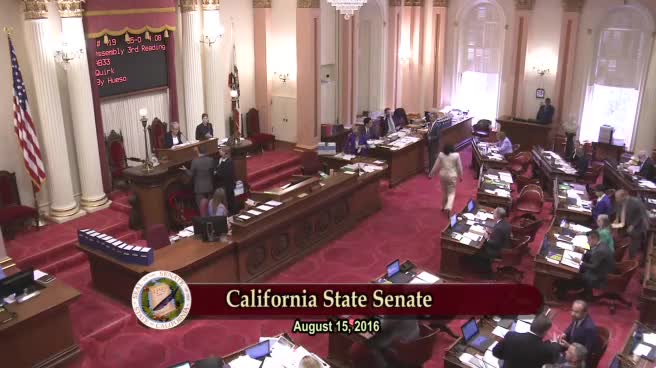
Bill Author










