AB 525: Franchise relations: renewal and termination.
- Session Year: 2015-2016
- House: Assembly
- Latest Version Date: 2015-10-11
The California Franchise Relations Act sets forth certain requirements related to the termination, nonrenewal, and transfer of franchises between a franchisor, subfranchisor, and franchisee, as those terms are defined.
That act, except as otherwise provided, prohibits a franchisor from terminating a franchise prior to the expiration of its term, except for good cause, which includes, but is not limited to, the failure of the franchisee to comply with any lawful requirement of the franchise agreement after being given notice and a reasonable opportunity to cure the failure within 30 days.
This bill would instead limit good cause to the failure of the franchisee to substantially comply with the lawful requirements of the franchise agreement imposed on the franchisee after being given notice at least 60 days in advance and would require that the period for a reasonable opportunity to cure the failure be no less than 60 days from the date of the notice of noncompliance. The bill would prohibit the period for curing the failure from exceeding 75 days, except as specified. The bill also would allow immediate termination of a specified separate motor vehicle franchise under specified circumstances.
This bill would make it unlawful for a franchise agreement to prevent a franchisee from selling or transferring a franchise, all or substantially all of the assets of the franchise business, as defined, or a controlling or noncontrolling interest in the franchise business, to another person, provided that the person is qualified under the franchisors then-existing and reasonable standards for approval of new or renewing franchisees, as specified, and the parties comply with specified transfer provisions. The bill would prohibit a sale, transfer, or assignment of a franchise, all or substantially all of the assets of a franchise business, or a controlling or noncontrolling interest in the franchise business, without the franchisors written consent, but would prohibit that consent from being withheld unless the buyer, transferee, or assignor does not meet standards for new or renewing franchisees or the parties fail to meet specified transfer provisions.
This bill would require the franchisee, prior to the sale, assignment, or transfer of a franchise, all or substantially all of the assets of a franchise business, as defined, or a controlling or noncontrolling interest in the franchise business, to another person, to notify the franchisor of the franchisees intent to sell, transfer, or assign the franchise or its assets or interest, as specified, and would require the notice to be in writing and include specified information. The bill would require the franchisor, within a specified period, to notify the franchisee of the approval or disapproval of the proposed sale, assignment, or transfer of the franchise, and would require the notice to be in writing and be delivered by courier to the franchisee or sent by receipted mail. The bill would require the franchisor to communicate the franchisors standards for approval of new or renewing franchisees, as specified. The bill would deem a proposed sale, assignment, or transfer approved, unless disapproved by the franchisor, as specified.
The act requires a franchisor that terminates or fails to renew a franchise, other than in accordance with specified provisions of law, to offer to repurchase from the franchisee the franchisees resalable current inventory, as specified.
This bill would repeal those provisions and would, with certain exceptions, require the franchisor, upon a lawful termination or nonrenewal of a franchisee, to purchase from the franchisee at the value of price paid, minus depreciation, all inventory, supplies, equipment, fixtures, and furnishings purchased or paid for under the franchise agreement, as specified. The bill would not require a franchisor to purchase assets to which the franchisee cannot or does not provide clear title and possession.
This bill would entitle a franchisee to receive from the franchisor the fair market value of the franchise business and assets, as well as resulting damages, if a franchisor terminates or fails to renew a franchise in violation of the act. The bill would provide for injunctive relief in the event of a violation or threatened violation of these provisions.
The bill would limit its application to a franchise agreement entered into or renewed on or after January 1, 2016, or to franchises of an indefinite duration that may be terminated without cause.
The California Franchise Relations Act sets forth certain requirements related to the termination, nonrenewal, and transfer of franchises between a franchisor, subfranchisor, and franchisee, as those terms are defined.
That act, except as otherwise provided, prohibits a franchisor from terminating a franchise prior to the expiration of its term, except for good cause, which includes, but is not limited to, the failure of the franchisee to comply with any lawful requirement of the franchise agreement after being given notice and a reasonable opportunity to cure the failure within 30 days.
This bill would instead limit good cause to the failure of the franchisee to substantially comply with the lawful requirements of the franchise agreement imposed on the franchisee after being given notice at least 60 days in advance and would require that the period for a reasonable opportunity to cure the failure be no less than 60 days from the date of the notice of noncompliance. The bill would prohibit the period for curing the failure from exceeding 75 days, except as specified.
This bill would make it unlawful for a franchise agreement to prevent a franchisee from selling or transferring a franchise, all or substantially all of the assets of the franchise business business, as defined, or a controlling or noncontrolling interest in the franchise business, to another person, provided that the person is qualified under the franchisors then-existing and reasonable standards for approval of new or renewing franchisees, as specified. specified, and the parties comply with specified transfer provisions. The bill would prohibit a sale, transfer, or assignment if of a franchise, all or substantially all of the assets of a franchise business, or a controlling or noncontrolling interest in the franchise business, without the franchisors written consent, but would prohibit that consent from being withheld unless the buyer, transferee, or assignor does not meet standards for new franchisees. or renewing franchisees or the parties fail to meet specified transfer provisions.
This bill would require the franchisee, prior to the sale, assignment, or transfer of a franchise, all or substantially all of the assets of the a franchise business, as defined, or a controlling or noncontrolling interest in the franchise business, to another person, to notify the franchisor of the franchisees intent to sell, transfer, or assign the franchise or its assets or interest, as specified, and would require the notice to be in writing and include specified information. The bill would require the franchisor, within a specified period, to notify the franchisee of the approval or disapproval of the proposed sale, assignment, or transfer of the franchise, and would require the notice to be in writing and be delivered by courier to the franchisee or sent by receipted mail. The bill would require the franchisor to communicate the franchisors standards for approval of new or renewing franchisees, as specified. The bill would deem a proposed sale, assignment, or transfer approved, unless disapproved by the franchisor, as specified.
The act requires a franchisor that terminates or fails to renew a franchise, other than in accordance with specified provisions of law, to offer to repurchase from the franchisee the franchisees resalable current inventory, as specified.
This bill would repeal those provisions and would, with certain exceptions, require the franchisor, upon a lawful termination or nonrenewal of a franchisee, to compensate purchase from the franchisee at the value of price paid, minus depreciation, for all inventory, supplies, equipment, fixtures, and furnishings purchased or paid for under the franchise agreement, as specified. The bill would not require a franchisor to purchase assets to which the franchisee cannot or does not provide clear title and possession.
This bill would prescribe specified remedies that may be elected by entitle a franchisee to receive from the franchisor the fair market value of the franchise business and assets, as well as resulting damages, if a franchisor terminates or fails to renew a franchise in violation of the act. The bill would entitle a franchisee to be reinstated under the same terms as the existing franchise agreement, in addition to an award for damages or, at the request of the franchisee, if reinstatement is impossible or impracticable, as determined by the trier of fact, would require the franchisor to pay the franchisee the fair market value of the franchise and franchise assets and any other damages, as provided. The bill would provide for injunctive relief in the event of a violation or threatened violation of these provisions.
The bill would limit its application to a franchise agreement entered into or renewed on or after January 1, 2016, or to franchises of an indefinite duration that may be terminated without cause.
The California Franchise Relations Act sets forth certain requirements related to the termination, nonrenewal, and transfer of franchises between a franchisor, subfranchisor, and franchisee, as those terms are defined.
That act, except as otherwise provided, prohibits a franchisor from terminating a franchise prior to the expiration of its term, except for good cause, which includes, but is not limited to, the failure of the franchisee to comply with any lawful requirement of the franchise agreement after being given notice and a reasonable opportunity to cure the failure within 30 days.
This bill would instead limit good cause to the failure of the franchisee to substantially comply with the franchise agreement after being given notice at least 60 days in advance and would require that the period for a reasonable opportunity to cure the failure be no less than 60 days from the date of the notice of noncompliance. The bill would prohibit the period for curing the failure from exceeding 75 days, except as specified.
This bill would make it unlawful for a franchise agreement to prevent a franchisee from selling or transferring all or substantially all of the assets of the franchise business as defined, or a controlling or noncontrolling interest in the franchise business business, to another person, provided that the person is qualified under the franchisors then-existing and reasonable standards for approval of new franchisees, as specified. The bill would prohibit a sale, transfer, or assignment if a franchise, or substantially all of the assets or a controlling or noncontrolling interest in the franchise business, without the franchisors written consent consent, but would prohibit that consent from being withheld unless the buyer, transferee, or assignor does not meet standards for new franchisees.
This bill would require the franchisee, prior to the sale, assignment, or transfer of all or substantially all of the assets of the franchise business, as defined, or a controlling or noncontrolling interest in the franchise business, to another person, to notify the franchisor of the franchisees intent to sell, transfer, or assign the franchise or its assets or interest, as specified, and would require the notice to be in writing and include specified information. The bill would require the franchisor, within a specified period, to notify the franchisee of the approval or disapproval of the sale, assignment, or transfer of the franchise, and would require the notice to be in writing and be personally served on delivered by courier to the franchisee or sent by receipted mail. The bill would deem a proposed sale, assignment, or transfer approved, unless disapproved by the franchisor, as specified.
The act requires a franchisor that terminates or fails to renew a franchise, other than in accordance with specified provisions of law, to offer to repurchase from the franchisee the franchisees resalable current inventory, as specified.
This bill would repeal those provisions and would, with certain exceptions, require the franchisor, upon a lawful termination or nonrenewal of a franchisee, to compensate the franchisee at the value of price paid paid, minus depreciation of depreciation, for all inventory, supplies, equipment, fixtures, and furnishings purchased from the franchisor or paid for by the franchisee, under the franchise agreement, as specified.
This bill would, if a franchisor violates these provisions, require the finder of fact in awarding damages to reinstate the franchisee and pay specified damages or would prescribe specified remedies that may be elected by a franchisee if a franchisor terminates or fails to renew a franchise in violation of the act. The bill would entitle a franchisee to be reinstated under the same terms as the existing franchise agreement, in addition to an award for damages or, at the election request of the franchisee, or if reinstatement is impossible or impracticable, as determined by the trier of fact, would require the franchisor to pay the franchisee the fair market value of the franchise and franchise assets and any other damages, as provided. The bill would provide for injunctive relief in the event of a violation or threatened violation of these provisions. The
The bill would limit its application to a franchise agreement entered into or renewed on or after January 1, 2016, or to franchises of an indefinite duration that may be terminated without cause.
The California Franchise Relations Act sets forth certain requirements related to the termination, nonrenewal, and transfer of franchises between a franchisor, subfranchisor, and franchisee, as those terms are defined.
That act, except as otherwise provided, prohibits a franchisor from terminating a franchise prior to the expiration of its term, except for good cause, which includes, but is not limited to, the failure of the franchisee to comply with any lawful requirement of the franchise agreement after being given notice and a reasonable opportunity to cure the failure within 30 days.
This bill would instead limit good cause to the failure of the franchisee to substantially comply with the franchise agreement after being given notice at least 60 days in advance and would require that the period for a reasonable opportunity to cure the failure be no less than 60 days from the date of the notice of noncompliance. The bill would prohibit the period for curing the failure from exceeding 75 days, except as specified.
This bill would make it unlawful for a franchise agreement to prevent a franchisee from selling or transferring all or substantially all of the assets of the franchise business as defined, or a controlling or noncontrolling interest in the franchise business to another person, provided that the person is qualified under the franchisors then-existing and reasonable standards for approval of new franchisees, as specified. The bill would prohibit a sale, transfer, or assignment if a franchise, or substantially all of the assets or a controlling or noncontrolling interest in the franchise business, without the franchisors written consent but would prohibit that consent from being withheld unless the buyer, transferee, or assignor does not meet standards for new franchisees.
This bill would require the franchisee, prior to the sale, assignment, or transfer of all or substantially all of the assets of the franchise business, as defined, or a controlling or noncontrolling interest in the franchise business, to another person, to notify the franchisor of the franchisees intent to sell, transfer, or assign the franchise or its assets or interest, as specified, and would require the notice to be in writing and include specified information. The bill would require the franchisor, within a specified period, to notify the franchisee of the approval or disapproval of the sale, assignment, or transfer of the franchise, and would require the notice to be in writing and be personally served on the franchisee or sent by receipted mail. The bill would deem a proposed sale, assignment, or transfer approved, unless disapproved by the franchisor, as specified.
The act requires a franchisor that terminates or fails to renew a franchise, other than in accordance with specified provisions of law, to offer to repurchase from the franchisee the franchisees resalable current inventory, as specified.
This bill would, with certain exceptions, require the franchisor, upon a lawful termination or nonrenewal of a franchisee, to compensate the franchisee at the value of price paid minus depreciation of all inventory, supplies, equipment, fixtures, and furnishings purchased from the franchisor or paid for by the franchisee, as specified.
This bill would, if a franchisor violates these provisions, require the finder of fact in awarding damages to reinstate the franchisee and pay specified damages or at the election of the franchisee, or if reinstatement is impossible or impracticable, require the franchisor to pay the franchisee the fair market value of the franchise and franchise assets and any other damages, as provided. The bill would provide for injunctive relief in the event of a violation or threatened violation of these provisions. The bill would limit its application to a franchise agreement entered into or renewed on or after January 1, 2016, or to franchises of an indefinite duration that may be terminated without cause.
The California Franchise Relations Act sets forth certain requirements related to the termination, nonrenewal, and transfer of franchises between a franchisor, subfranchisor, and franchisee, as those terms are defined.
That act, except as otherwise provided, prohibits a franchisor from terminating a franchise prior to the expiration of its term, except for good cause, which includes, but is not limited to, the failure of the franchisee to comply with any lawful requirement of the franchise agreement after being given notice and a reasonable opportunity to cure the failure within 30 days.
This bill would instead limit good cause to the failure of the franchisee to substantially comply with the franchise agreement after being given notice at least 60 days in advance and a reasonable opportunity to cure the failure no less than 60 days from the date of the notice of noncompliance.
This bill would make it unlawful for a franchise agreement to prevent a franchisee from selling or transferring a franchise or a part of an interest of a franchise all or substantially all of the assets of the franchise business as defined, or a controlling interest in the franchise business to another person, provided that the person is qualified under the franchisors then-existing and reasonable standards for approval of new franchisees, as specified. The bill would prohibit a sale, transfer, or assignment or if a franchise, or substantially all of the assets or a controlling interest in the franchise business, without the franchisors written consent but would prohibit that consent from being withheld unless the buyer, transferee, or assignor does not meet standards for new franchisees.
This bill would require the franchisee, prior to the sale, assignment, or transfer of all or substantially all of the assets of the franchise business, as defined, or a controlling interest in the franchise business, to another person, to notify the franchisor of the franchisees decision intent to sell, transfer, or assign the franchise, franchise or its assets or interest, as specified, and would require the notice to be in writing and include specified information. The bill would require the franchisor, within a specified period, to notify the franchisee of the approval or disapproval of the sale, assignment, or transfer of the franchise, and would require the notice to be in writing and be personally served on the franchisee or sent by certified mail, return receipt requested. receipted mail. The bill would deem a proposed sale, assignment, or transfer approved, unless disapproved by the franchisor, as specified.
The act requires a franchisor that terminates or fails to renew a franchise, other than in accordance with specified provisions of law, to offer to repurchase from the franchisee the franchisees resalable current inventory, as specified.
This bill would, with certain exceptions, require the franchisor, upon a lawful termination or nonrenewal of a franchisee, to compensate the franchisee at the value of price paid minus depreciation of all inventory, supplies, equipment, fixtures, and furnishings purchased by the franchisee from the franchisor, from the franchisor or paid for by the franchisee, as specified.
This bill would, if a franchisor violates these provisions, require the finder of fact in awarding damages to reinstate the franchisee and pay specified damages or at the election of the franchisee, or if reinstatement is impossible or impracticable, require the franchisor to pay the franchisee the fair market value of the franchise and franchise assets and any other damages, as provided. The bill would provide for injunctive relief in the event of a violation or threatened violation of these provisions.
The California Franchise Relations Act sets forth certain requirements related to the termination, nonrenewal, and transfer of franchises between a franchisor, subfranchisor, and franchisee, as those terms are defined.
That act, except as otherwise provided, prohibits a franchisor from terminating a franchise prior to the expiration of its term, except for good cause, which includes, but is not limited to, the failure of the franchisee to comply with any lawful requirement of the franchise agreement after being given notice and a reasonable opportunity to cure the failure within 30 days.
This bill would instead limit good cause to the failure of the franchisee to substantially comply with the franchise agreement after being given notice at least 60 days in advance and a reasonable opportunity to cure the failure no less than 60 days from the date of the notice of noncompliance.
This bill would make it unlawful for a franchise agreement to prevent a franchisee from selling or transferring a franchise or a part of an interest of a franchise to another person, provided that the person is qualified under the franchisors then-existing and reasonable standards for approval of new franchisees. The bill would prohibit a sale, transfer, or assignment or a franchise without the franchisors written consent but would prohibit that consent from being withheld unless the buyer, transferee, or assignor does not meet standards for new franchisees.
This bill would provide that a franchise agreement require the franchisee, prior to the sale, assignment, or transfer of all or substantially all of the assets of the franchise business, or a controlling interest in the franchise business, to another person, to notify the franchisor of the franchisees decision to sell, transfer, or assign the franchise, and would require the notice to be in writing and include specified information. The bill would provide that the franchise agreement require the franchisor, within a specified period, to notify the franchisee of the approval or disapproval of the sale, assignment, or transfer of the franchise, and would require the notice to be in writing and be personally served on the franchisee or sent by certified mail, return receipt requested. The bill would deem a proposed sale, assignment, or transfer approved, unless disapproved by the franchisor, as specified.
The act requires a franchisor that terminates or fails to renew a franchise, other than in accordance with specified provisions of law, to offer to repurchase from the franchisee the franchisees resalable current inventory, as specified.
This bill would, with certain exceptions, require the franchisor, upon a lawful termination or nonrenewal of a franchisee, to compensate the franchisee at the value of price paid minus depreciation of all inventory, supplies, equipment, and furnishings purchased by the franchisee from the franchisor, as specified.
This bill would require, if a franchisor that terminates or fails to allow the renewal, sale, assignment, or transfer of a franchise, other than in accordance with specified provisions of law, violates these provisions, require the finder of fact in awarding damages to, at the election of the franchisee, either reinstate the franchisee and pay specified damages or at the election of the franchisee, or if reinstatement is impossible or impracticable, require the franchisor to pay the franchisee the fair market value of the franchise and franchise assets and any other damages, as provided.
This bill would also require that a franchisee have the opportunity to monetize any equity the franchise may have developed in the franchise business prior to the termination or nonrenewal of the franchise agreement, as specified. The bill would define equity for these purposes. The bill would prohibit application of these provisions to certain franchisees terminated without an opportunity to cure, including those who abandon their franchises.
The California Franchise Relations Act sets forth certain requirements related to the termination, nonrenewal, and transfer of franchises between a franchisor, subfranchisor, and franchisee, as those terms are defined.
That act, except as otherwise provided, prohibits a franchisor from terminating a franchise prior to the expiration of its term, except for good cause, which includes, but is not limited to, the failure of the franchisee to comply with any lawful requirement of the franchise agreement after being given notice and a reasonable opportunity to cure the failure within 30 days.
This bill would instead limit good cause to the failure of the franchisee to substantially comply with any lawful requirement of the franchise agreement after being given notice at least 60 days in advance and a reasonable opportunity to cure the failure no less than 60 days from the date of the notice of noncompliance.
This bill would make it unlawful for a franchise agreement to prevent a franchisee from selling or transferring a franchise or a part of an interest of a franchise to another person, provided that the person is qualified under the franchisors then-existing and reasonable standards for approval of new franchisees. The bill would prohibit a sale, transfer, or assignment or a franchise without the franchisors written consent but would prohibit that consent from being withheld unless the buyer, transferee, or assignor does not meet standards for new franchisees.
This bill would provide that a franchise agreement require the franchisee, prior to the sale, assignment, or transfer of all or substantially all of the assets of the franchise business, or a controlling interest in the franchise business, to another person, to notify the franchisor of the franchisees decision to sell, transfer, or assign the franchise, and would require the notice to be in writing and include specified information. The bill would provide that the franchise agreement require the franchisor, within a specified period, to notify the franchisee of the approval or disapproval of the sale, assignment, or transfer of the franchise, and would require the notice to be in writing and be personally served on the franchisee or sent by certified mail, return receipt requested. The bill would deem a proposed sale, assignment, or transfer approved, unless disapproved by the franchisor, as specified.
The act requires a franchisor that terminates or fails to renew a franchise, other than in accordance with specified provisions of law, to offer to repurchase from the franchisee the franchisees resalable current inventory, as specified.
This bill would require a franchisor that terminates or fails to allow the renewal, sale, assignment, or transfer of a franchise, other than in accordance with specified provisions of law, to, at the election of the franchisee, either reinstate the franchisee and pay specified damages or pay the franchisee the fair market value of the franchise and franchise assets, as provided.
This bill would also require that a franchisee have the opportunity to monetize any equity the franchise may have developed in the franchise business prior to the termination or nonrenewal of the franchise agreement, as specified. The bill would define equity for these purposes. The bill would prohibit application of these provisions to certain franchisees terminated without an opportunity to cure, including those who abandon their franchises.
The California Franchise Relations Act sets forth certain requirements related to the termination, nonrenewal, and transfer of franchises between a franchisor, subfranchisor, and franchisee, as those terms are defined.
That act, except as otherwise provided, prohibits a franchisor from terminating a franchise prior to the expiration of its term, except for good cause, which includes, but is not limited to, the failure of the franchisee to comply with any lawful requirement of the franchise agreement after being given notice and a reasonable opportunity to cure the failure within 30 days.
This bill would instead limit good cause to be the failure of the franchisee to comply with any lawful requirement of the franchise agreement after being given notice at least 60 days in advance and a reasonable opportunity to cure the failure within no less than 60 days or more. from the date of the notice of noncompliance.
The act prohibits a franchisor from failing to renew a franchise agreement unless the franchisor provides the franchisee at least 180 days prior written notice of its intention not to renew and specified conditions are met.
This bill would instead prohibit a franchisor from failing to renew a franchise agreement unless the franchisee has failed to substantially comply with the franchise agreement. The bill would allow the franchisee to renew for the same duration as provided in the expiring franchise agreement and would require the renewal to be under the franchise agreement terms that are being offered to new franchises. The bill would require, if the franchisor has grounds not to renew a franchise, the franchisor to provide written notice of its intention not to renew at least 180 days prior to the termination of the existing franchise agreement. The bill would, upon termination or expiration of the franchise, prohibit the franchisor from seeking to enforce against the franchisee any covenant not to compete.
This bill would make it unlawful for a franchise agreement to prevent a franchisee from selling or transferring a franchise or a part of an interest of a franchise to another person, provided that the person is qualified under the franchisors then-existing and reasonable standards for approval of new franchisees. The bill would prohibit a sale, transfer, or assignment or a franchise without the franchisors written consent but would prohibit that consent from being withheld unless the buyer, transferee, or assignor does not meet standards for new franchisees.
This bill would provide that a franchise agreement require the franchisee, prior to the sale, assignment, or transfer of all or substantially all of the assets of the franchise business, or a controlling interest in the franchise business, to another person, to notify the franchisor of the franchisees decision to sell, transfer, or assign the franchise, and would require the notice to be in writing and include specified information. The bill would provide that the franchise agreement require the franchisor, within a specified period, to notify the franchisee of the approval or disapproval of the sale, assignment, or transfer of the franchise, and would require the notice to be in writing and be personally served on the franchisee or sent by certified mail, return receipt requested. The bill would deem a proposed sale, assignment, or transfer approved, unless disapproved by the franchisor, as specified.
The act requires a franchisor that terminates or fails to renew a franchise, other than in accordance with specified provisions of law, to offer to repurchase from the franchisee the franchisees resalable current inventory, as specified.
This bill would require a franchisor that terminates or fails to allow the renewal, sale, assignment, or transfer of a franchise, other than in accordance with specified provisions of law, to, at the election of the franchisee, either reinstate the franchisee and pay specified damages or pay the franchisee the fair market value of the franchise and franchise assets, as provided.
This bill would also allow require that a franchisee to have the opportunity to monetize any equity the franchise may have developed in the franchise business prior to the termination or nonrenewal of the franchise agreement, as specified. The bill would define equity for these purposes. The bill would prohibit application of these provisions to certain franchisees terminated without an opportunity to cure, including those who abandon their franchises.
The California Franchise Relations Act sets forth certain requirements related to the termination, nonrenewal, and transfer of franchises between a franchisor, subfranchisor, and franchisee, as those terms are defined.
That act, except as otherwise provided, prohibits a franchisor from terminating a franchise prior to the expiration of its term, except for good cause, which includes, but is not limited to, the failure of the franchisee to comply with any lawful requirement of the franchise agreement after being given notice and a reasonable opportunity to cure the failure within 30 days.
This bill would instead limit good cause to be the failure of the franchisee to comply with any lawful requirement of the franchise agreement after being given notice at least 60 days in advance and a reasonable opportunity to cure the failure within 60 days or more.
The act prohibits a franchisor from failing to renew a franchise agreement unless the franchisor provides the franchisee at least 180 days prior written notice of its intention not to renew and specified conditions are met.
This bill would instead prohibit a franchisor from failing to renew a franchise agreement unless the franchisee has failed to substantially comply with the franchise agreement. The bill would allow the franchisee to renew for the same duration as provided in the expiring franchise agreement and would require the renewal to be under the franchise agreement terms that are being offered to new franchises. The bill would require, if the franchisor has grounds not to renew a franchise, the franchisor to provide written notice of its intention not to renew at least 180 days prior to the termination of the existing franchise agreement. The bill would, upon termination or expiration of the franchise, prohibit the franchisor from seeking to enforce against the franchisee any covenant not to compete.
This bill would make it unlawful for a franchise agreement to prevent a franchisee from selling or transferring a franchise or a part of an interest of a franchise to another person, provided that the person is qualified under the franchisors then-existing and reasonable standards for approval of new franchisees.
This bill would provide that a franchise agreement require the franchisee, prior to the sale, assignment, or transfer of all or substantially all of the assets of the franchise business, or a controlling interest in the franchise business, to another person, to notify the franchisor of the franchisees decision to sell, transfer, or assign the franchise, and would require the notice to be in writing and include specified information. The bill would provide that the franchise agreement require the franchisor, within a specified period, to notify the franchisee of the approval or disapproval of the sale, assignment, or transfer of the franchise, and would require the notice to be in writing and be personally served on the franchisee or sent by certified mail, return receipt requested. The bill would deem a proposed sale, assignment, or transfer approved, unless disapproved by the franchisor, as specified.
The act requires a franchisor that terminates or fails to renew a franchise, other than in accordance with specified provisions of law, to offer to repurchase from the franchisee the franchisees resalable current inventory, as specified.
This bill would require a franchisor that terminates or fails to allow the renewal, sale, assignment, or transfer of a franchise, other than in accordance with specified provisions of law, to, at the election of the franchisee, either reinstate the franchisee and pay specified damages or pay the franchisee the fair market value of the franchise and franchise assets, as provided.
This bill would also allow a franchisee to have the opportunity to monetize any equity the franchise may have developed in the franchise business prior to the termination of the franchise agreement, as specified.
The Private Investigator Act provides for the licensure and regulation of private investigators by the Bureau of Security and Investigative Services within the Department of Consumer Affairs and makes a violation of the licensing requirements a crime. The act authorizes the Director of Consumer Affairs to impose a civil penalty of no greater than $500 instead of suspending or revoking a license issued under the act for the violation of specified provisions if the director determines that the imposition of the civil penalty better serves the purposes of the act.
This bill would increase that civil penalty to an amount no greater than $1,000 instead of $500.
This bill would declare that it is to take effect immediately as an urgency statute.
Except as otherwise provided by this chapter, no franchisor may terminate a franchise prior to the expiration of its term, except for good cause. Except as provided in Section 20021, good cause shall be limited to the failure of the franchisee to substantially comply with the lawful requirements imposed upon the franchisee by the franchise agreement after being given notice at least 60 days in advance of the termination and a reasonable opportunity, which in no event shall be less than 60 days from the date of the notice of noncompliance, to cure the failure. The period to exercise the right to cure shall not exceed 75 days unless there is a separate agreement between the franchisor and franchisee to extend the time.
SEC. 2.Section 20021 of the Business and Professions Code is amended to read:20021.If during the period in which the franchise is in effect, there occurs any of the following events which is relevant to the franchise, immediate notice of termination without an opportunity to cure, shall be deemed reasonable:
(a)The franchisee or the business to which the franchise relates has been the subject of an order for relief in bankruptcy, judicially determined to be insolvent, all or a substantial part of the assets thereof are assigned to or for the benefit of any creditor, or the franchisee admits his or her inability to pay his or her debts as they come due;
(b)The franchisee abandons the franchise by failing to operate the business for five consecutive days during which the franchisee is required to operate the business under the terms of the franchise, or any shorter period after which it is not unreasonable under the facts and circumstances for the franchisor to conclude that the franchisee does not intend to continue to operate the franchise, unless such failure to operate is due to fire, flood, earthquake, or other similar causes beyond the franchisees control;
(c)The franchisor and franchisee agree in writing to terminate the franchise;
(d)The franchisee makes any material misrepresentations relating to the acquisition of the franchise business or the franchisee engages in conduct which reflects materially and unfavorably upon the operation and reputation of the franchise business or system;
(e)The franchisee fails, for a period of 10 days after notification of noncompliance, to comply with any federal, state, or local law or regulation, including, but not limited to, all health, safety, building, and labor laws or regulations applicable to the operation of the franchise;
(f)The franchisee, after curing any failure in accordance with Section 20020 engages in the same noncompliance whether or not such noncompliance is corrected after notice;
(g)The franchisee repeatedly fails to comply with one or more requirements of the franchise, whether or not corrected after notice;
(h)The franchised business or business premises of the franchise are seized, taken over, or foreclosed by a government official in the exercise of his or her duties, or seized, taken over, or foreclosed by a creditor, lienholder, or lessor, provided that a final judgment against the franchisee remains unsatisfied for 30 days (unless a supersedeas or other appeal bond has been filed); or a levy of execution has been made upon the license granted by the franchise agreement or upon any property used in the franchised business, and it is not discharged within five days of such levy;
(i)The franchisee is convicted of a felony or any other criminal misconduct which is relevant to the operation of the franchise;
(j)The franchisee fails to pay any franchise fees or other amounts due to the franchisor or its affiliate within five days after receiving written notice that such fees are overdue; or
(k)The franchisor makes a reasonable determination that continued operation of the franchise by the franchisee will result in an imminent danger to public health or safety.
(l)If the franchise expressly permits termination under such circumstances, there is a lawful termination or nonrenewal of a separate motor fuel franchise governed by provisions of the Petroleum Marketing Practices Act (15 U.S.C. Secs. 2801 to 2807, inclusive) that is operated by the franchisee or affiliate of the franchisee located at the same business premises if both franchises are granted by the same franchisor or an affiliate of the franchisor. Affiliate shall have the same meaning as set forth in subdivision (k) of Section 31005.5 of the Corporations Code.
SEC. 3.Section 20022 is added to the Business and Professions Code, to read:20022.(a)Except as provided in this section, upon a lawful termination or nonrenewal of a franchisee, the franchisor shall purchase from the franchisee, at the value of price paid, minus depreciation, all inventory, supplies, equipment, fixtures, and furnishings purchased or paid for under the terms of the franchise agreement or any ancillary or collateral agreement by the franchisee to the franchisor or its approved suppliers and sources, that are, at the time of the notice of termination or nonrenewal, in the possession of the franchisee or used by the franchisee in the franchise business. The franchisor shall have the right to receive clear title to and possession of all items purchased from the franchisee under this section.
(b)This section shall not require the franchisor to purchase any personalized items, inventory, supplies, equipment, fixtures, or furnishings not reasonably required to conduct the operation of the franchise business in accordance with the franchise agreement or any ancillary or collateral agreement or to which the franchisee, at the cessation of operation of the franchise business by the franchisee, cannot lawfully, or does not, grant the franchisor clear title and possession upon the franchisors payment to the franchisee for the inventory, supplies, equipment, fixtures, or furnishings.
(c)This section shall not apply when the franchisee declines a bona fide offer of renewal from the franchisor.
(d)This section shall not apply if the franchisor does not prevent the franchisee from retaining control of the principal place of the franchise business.
(e)This section shall not apply to any termination or nonrenewal of a franchise due to a publicly announced and nondiscriminatory decision by the franchisor to completely withdraw from all franchise activity within the relevant geographic market area in which the franchise is located. For the purpose of this section relevant geographic market area shall have the same meaning as in Section 20999.
(f)This section shall not apply if the franchisor and franchisee mutually agree in writing to terminate or not renew the franchise.
(g)This section shall not apply to any inventory, supplies, equipment, fixtures, or furnishings that are sold by the franchisee between the date of the notice of termination or nonrenewal, and the cessation of operation of the franchise business, by the franchisee, pursuant to the termination or nonrenewal.
(h)Upon the termination or nonrenewal of a franchise, a franchisor may offset against the amounts owed to a franchisee under this section any amounts owed by the franchisee to the franchisor.
SEC. 4.Section 20028 is added to the Business and Professions Code, to read:20028.(a)It is unlawful for a franchisor to prevent a franchisee from selling or transferring a franchise, all or substantially all of the assets of the franchise business, or a controlling or noncontrolling interest in the franchise business, to another person provided that the person is qualified under the franchisors then-existing standards for the approval of new or renewing franchisees, these standards to be made available to the franchisee, as provided in Section 20029, and to be consistently applied to similarly situated franchisees operating within the franchise brand, and the franchisee and the buyer, transferee, or assignee comply with the transfer conditions specified in the franchise agreement.
(b)Notwithstanding subdivision (a), a franchisee shall not have the right to sell, transfer, or assign the franchise, all or substantially all of the assets of the franchise business, or a controlling or noncontrolling interest in the franchise business, without the written consent of the franchisor, except that the consent shall not be withheld unless the buyer, transferee, or assignee does not meet the standards for new or renewing franchisees described in subdivision (a) or the franchisee and the buyer, transferee, or assignee do not comply with the transfer conditions specified in the franchise agreement.
(c)This section does not prohibit a franchisor from exercising the contractual right of first refusal to purchase a franchise, all or substantially all of the assets of a franchise business, or a controlling or noncontrolling interest in a franchise business after receipt of a bona fide offer from a proposed purchaser to purchase the franchise, assets, or interest. A franchisor exercising the contractual right of first refusal shall offer the seller payment at least equal to the value offered in the bona fide offer.
(d)For the purpose of this section franchise business shall include a legal entity that is a party to a franchise agreement.
SEC. 5.Section 20029 is added to the Business and Professions Code, to read:20029.(a)The franchisee shall, prior to the sale, assignment, or transfer of a franchise, all or substantially all of the assets of a franchise business, or a controlling or noncontrolling interest in the franchise business, to another person, notify the franchisor, of the franchisees intent to sell, transfer, or assign the franchise, all or substantially all of the assets of the franchise business, or the controlling or noncontrolling interest in the franchise business. The notice shall be in writing, delivered to the franchisor by business courier or by receipted mail and include all of the following:
(1)The proposed transferees name and address.
(2)A copy of all agreements related to the sale, assignment, or transfer of the franchise, the assets of the franchise business, or the interest in the franchise business.
(3)The proposed transferees application for approval to become the successor franchisee. The application shall include all forms, financial disclosures, and related information generally utilized by the franchisor in reviewing prospective new franchisees, if those forms are readily made available to the existing franchisee. If the forms are not readily available, the franchisee shall request and the franchisor shall deliver the forms to the franchisee by business courier or receipted mail within 15 calendar days. As soon as practicable after the receipt of the proposed transferees application, the franchisor shall notify, in writing, the franchisee and the proposed transferee of any additional information or documentation necessary to complete the transfer application. If the franchisors then-existing standards for the approval of new or renewing franchisees are not readily available to the franchisee when the franchisee notifies the franchisor of the franchisees intent to sell, transfer, or assign the franchise, the assets of the franchise business, or the controlling or noncontrolling interest in the franchise business, the franchisor shall communicate the standards to the franchisee within 15 calendar days.
(b)(1)The franchisor shall, within 60 days after the receipt of all of the necessary information and documentation required pursuant to subdivision (a), or as specified by written agreement between the franchisor and the franchisee, notify the franchisee of the approval or disapproval of the proposed sale, assignment, or transfer. The notice shall be in writing and shall be delivered to the franchisee by business courier or receipted mail. A proposed sale, assignment, or transfer shall be deemed approved, unless disapproved by the franchisor in the manner provided by this subdivision. If the proposed sale, assignment, or transfer is disapproved, the franchisor shall include in the notice of disapproval a statement setting forth the reasons for the disapproval.
(2)In any action in which the franchisors disapproval of a sale, assignment, or transfer pursuant to this subdivision is an issue, the reasonableness of the franchisors decision shall be a question of fact requiring consideration of all existing circumstances. For purposes of this paragraph, the finder of fact may be an arbitrator specified in the franchise agreement and who satisfies the requirements of Section 20040. Nothing in this paragraph shall prohibit summary judgment when the reasonableness of transfer approval or disapproval can be decided as a matter of law.
(3)This section does not require a franchisor to exercise a contractual right of first refusal.
(c)This section does not prohibit a franchisor from exercising the contractual right of first refusal to purchase a franchise, all or substantially all of the assets of a franchise business, or a controlling or noncontrolling interest in a franchise business after receipt of a bona fide offer from a proposed purchaser to purchase the franchise, assets, or interest. Any franchisor exercising the contractual right of first refusal shall offer the seller payment at least equal to the value offered in the bona fide offer.
(d)For the purpose of this section franchise business shall include a legal entity that is a party to a franchise agreement.
SEC. 6.The heading of Article 6 (commencing with Section 20035) of Chapter 5.5 of Division 8 of the Business and Professions Code is amended to read:6.RemediesSEC. 7.Section 20035 of the Business and Professions Code is repealed.SEC. 8.Section 20035 is added to the Business and Professions Code, to read:20035.(a)In the event a franchisor terminates or fails to renew a franchisee, in violation of this chapter, the franchisee shall be entitled to receive from the franchisor the fair market value of the franchised business and franchise assets and any other damages caused by the violation of this chapter.
(b)A court may grant preliminary and permanent injunctions for a violation or threatened violation of this chapter.
SEC. 9.Section 20036 of the Business and Professions Code is amended to read:20036.The franchisor may offset against any remedies made pursuant to Section 20035 any prior recovery by the franchisee pursuant to Section 20022 and any sums owed the franchisor or its subsidiaries by the franchisee pursuant to the franchise or any ancillary agreement.
SEC. 10.Section 20041 of the Business and Professions Code is amended to read:20041.(a)Except as provided in subdivision (b), the provisions of this chapter shall apply only to franchises granted or renewed on or after January 1, 1981, or to franchises of an indefinite duration that may be terminated by the franchisee or franchisor without cause.
(b)The amendments to this chapter made by the act adding this subdivision shall apply only to franchise agreements entered into or renewed on or after January 1, 2016, or to franchises of an indefinite duration that may be terminated by the franchisee or franchisor without cause.
Except as otherwise provided by this chapter, no franchisor may terminate a franchise prior to the expiration of its term, except for good cause. Good Except as provided in Section 20021, good cause shall be limited to the failure of the franchisee to substantially comply with the lawful requirements imposed upon the franchisee by the franchise agreement after being given notice at least 60 days in advance of the termination and a reasonable opportunity, which in no event shall be less than 60 days from the date of the notice of noncompliance, to cure the failure. The period to exercise the right to cure shall not exceed 75 days unless there is a separate agreement between the franchisor and franchisee to extend the time.
SEC. 2.Section 20021 of the Business and Professions Code is amended to read:20021.If during the period in which the franchise is in effect, there occurs any of the following events which is relevant to the franchise, immediate notice of termination without an opportunity to cure, shall be deemed reasonable:
(a)The franchisee or the business to which the franchise relates has been the subject of an order for relief in bankruptcy, judicially determined to be insolvent, all or a substantial part of the assets thereof are assigned to or for the benefit of any creditor, or the franchisee admits his or her inability to pay his or her debts as they come due;
(b)The franchisee abandons the franchise by failing to operate the business for five consecutive days during which the franchisee is required to operate the business under the terms of the franchise, or any shorter period after which it is not unreasonable under the facts and circumstances for the franchisor to conclude that the franchisee does not intend to continue to operate the franchise, unless such failure to operate is due to fire, flood, earthquake, or other similar causes beyond the franchisees control;
(c)The franchisor and franchisee agree in writing to terminate the franchise;
(d)The franchisee makes any material misrepresentations relating to the acquisition of the franchise business or the franchisee engages in conduct which reflects materially and unfavorably upon the operation and reputation of the franchise business or system;
(e)The franchisee fails, for a period of 10 days after notification of noncompliance, to comply with any federal, state, or local law or regulation, including, but not limited to, all health, safety, building, and labor laws or regulations applicable to the operation of the franchise;
(f)The franchisee, after curing any failure in accordance with Section 20020 engages in the same noncompliance whether or not such noncompliance is corrected after notice;
(g)The franchisee repeatedly fails to comply with one or more requirements of the franchise, whether or not corrected after notice;
(h)The franchised business or business premises of the franchise are seized, taken over, or foreclosed by a government official in the exercise of his or her duties, or seized, taken over, or foreclosed by a creditor, lienholder, or lessor, provided that a final judgment against the franchisee remains unsatisfied for 30 days (unless a supersedeas or other appeal bond has been filed); or a levy of execution has been made upon the license granted by the franchise agreement or upon any property used in the franchised business, and it is not discharged within five days of such levy;
(i)The franchisee is convicted of a felony or any other criminal misconduct which is relevant to the operation of the franchise;
(j)The franchisee fails to pay any franchise fees or other amounts due to the franchisor or its affiliate within five days after receiving written notice that such fees are overdue; or
(k)The franchisor makes a reasonable determination that continued operation of the franchise by the franchisee will result in an imminent danger to public health or safety.
(l)If the franchise expressly permits termination under such circumstances, there is a lawful termination or nonrenewal of a separate motor fuel franchise governed by provisions of the Petroleum Marketing Practices Act (15 U.S.C. Secs. 2801 to 2807, inclusive) that is operated by the franchisee or affiliate of the franchisee located at the same business premises if both franchises are granted by the same franchisor or an affiliate of the franchisor. Affiliate shall have the same meaning as set forth in subdivision (k) of Section 31005.5 of the Corporations Code.
SEC. 3.Section 20022 is added to the Business and Professions Code, to read:20022.(a)Upon Except as provided in this section, upon a lawful termination or nonrenewal of a franchisee, the franchisor shall compensate purchase from the franchisee, at the value of price paid, minus depreciation, for all inventory, supplies, equipment, fixtures, and furnishings purchased or paid for under the terms of the franchise agreement or any ancillary or collateral agreement by the franchisee to the franchisor or its approved suppliers and sources, that, that are, at the time of the notice of termination or nonrenewal, are in the possession of the franchisee or used by the franchisee in the franchise business. The franchisor shall have the right to receive clear title to and possession of all items purchased from the franchisee under this section.
(b)This section shall not require the franchisor to purchase any personalized items, inventory, supplies, equipment, fixtures, or furnishings not reasonably required to conduct the operation of the franchise business in accordance with the franchise agreement or any ancillary or collateral agreement. agreement or to which the franchisee, at the cessation of operation of the franchise business by the franchisee, cannot lawfully, or does not, grant the franchisor clear title and possession upon the franchisors payment to the franchisee for the inventory, supplies, equipment, fixtures, or furnishings.
(c)This section shall not apply when the franchisee declines a bona fide offer of renewal from the franchisor.
(d)This section shall not apply if the franchisor does not prevent the franchisee retains from retaining control of the principal place of the franchise business.
(e)This section shall not apply to any termination or nonrenewal of a franchise due to a publicly announced and nondiscriminatory decision by the franchisor to completely withdraw from all franchise activity within the relevant geographic market area in which the franchise is located. For the purpose of this section relevant geographic market area shall have the same meaning as in Section 20999.
(f)This section shall not apply if the franchisor and franchisee mutually agree in writing to terminate or not renew the franchise.
(f)
(g)This section shall not apply to any inventory, supplies, equipment, fixtures, or furnishings that are sold by the franchisee between the date of the notice of termination or nonrenewal, and the cessation of operation of the franchise business, by the franchisee, pursuant to the termination or nonrenewal.
(g)
(h)Upon the termination or nonrenewal of a franchise, a franchisor may offset against the amounts owed to a franchisee under this section any amounts owed by such the franchisee to the franchisor.
SEC. 4.Section 20028 is added to the Business and Professions Code, to read:20028.(a)It is unlawful for a franchisor to prevent a franchisee from selling or transferring a franchise, all or substantially all of the assets of the franchise business, or a controlling or noncontrolling interest in the franchise business, to another person provided that the person is qualified under the franchisors then-existing and reasonable standards, as standards for the approval of new or renewing franchisees, these standards to be made available to the franchisee, as provided in Section 20029, and to be consistently applied to similarly situated franchisees operating within the franchise brand, for the approval of new or renewing franchisees. brand, and the franchisee and the buyer, transferee, or assignee comply with the transfer conditions specified in the franchise agreement.
(b)Notwithstanding subdivision (a), a franchisee shall not have the right to sell, transfer, or assign the franchise franchise, all or substantially all of the assets of the franchise business, or a controlling or noncontrolling interest in the franchise business, without the written consent of the franchisor, except that the consent shall not be withheld unless the buyer, transferee, or assignor assignee does not meet the standards for new or renewing franchisees described in subdivision (a). (a) or the franchisee and the buyer, transferee, or assignee do not comply with the transfer conditions specified in the franchise agreement.
(c)Nothing in this section shall This section does not prohibit a franchisor from exercising the contractual right of first refusal to purchase a franchise franchise, all or substantially all of the assets of a franchise business, or a controlling or noncontrolling interest in a franchise business after receipt of a bona fide offer from a proposed purchaser to purchase the franchise by a proposed purchaser of the franchise. franchise, assets, or interest. A franchisor exercising the contractual right of first refusal shall offer the franchisee seller payment at least equal to the value offered in the bona fide offer.
(d)For the purpose of this section franchise business shall include a legal entity that is a party to a franchise agreement.
SEC. 5.Section 20029 is added to the Business and Professions Code, to read:20029.(a)The franchisee shall, prior to the sale, assignment, or transfer of a franchise, all or substantially all of the assets of the a franchise business, or a controlling or noncontrolling interest in the franchise business, to another person, notify the franchisor, of the franchisees intent to sell, transfer, or assign the franchise franchise, all or substantially all of the assets of the franchise business, or a the controlling or noncontrolling interest in the franchise business. The notice shall be in writing, delivered to the franchisor by business courier or by receipted mail and include all of the following:
(1)The proposed transferees name and address.
(2)A copy of all agreements related to the sale, assignment, or transfer of the franchised business or its assets. franchise, the assets of the franchise business, or the interest in the franchise business.
(3)The proposed transferees application for approval to become the successor franchisee. The application shall include all forms, financial disclosures, and related information generally utilized by the franchisor in reviewing prospective new franchisees, if those forms are readily made available to the existing franchisee. If the forms are not readily available, the franchisee shall request and the franchisor shall deliver the forms to the franchisee by business courier or receipted mail within 15 calendar days. As soon as practicable after the receipt of the proposed transferees application, the franchisor shall notify, in writing, the franchisee and the proposed transferee of any additional information or documentation necessary to complete the transfer application. If the franchisors then-existing standards for the approval of new or renewing franchisees are not readily available to the franchisee when the franchisee notifies the franchisor of the franchisees intent to sell, transfer, or assign the franchise, the assets of the franchise business, or the controlling or noncontrolling interest in the franchise business, the franchisor shall communicate the standards to the franchisee within 15 calendar days.
(b)(1)The franchisor shall, within 60 days after the receipt of all of the necessary information and documentation required pursuant to subdivision (a), or as specified by written agreement between the franchisor and the franchisee, notify the franchisee of the approval or disapproval of the proposed sale, assignment, or transfer of the franchise. transfer. The notice shall be in writing and shall be delivered to the franchisee by business courier or receipted mail. A proposed sale, assignment, or transfer shall be deemed approved, unless disapproved by the franchisor in the manner provided by this subdivision. If the proposed sale, assignment, or transfer is disapproved, the franchisor shall include in the notice of disapproval a statement setting forth the reasons for the disapproval.
(2)In any action in which the franchisors disapproval of a sale, assignment, or transfer pursuant to this subdivision is an issue, the reasonableness of the franchisors decision shall be a question of fact requiring consideration of all existing circumstances. For purposes of this paragraph, the finder of fact may be an arbitrator specified in the franchise agreement and who satisfies the requirements of Section 20040. Nothing in this paragraph shall prohibit summary judgment when the reasonableness of transfer approval or disapproval can be decided as a matter of law.
(3)Nothing in this subdivision requires This section does not require a franchisor to exercise a contractual right of first refusal.
(c)Nothing in this section shall This section does not prohibit a franchisor from exercising the contractual right of first refusal to purchase a franchise franchise, all or substantially all of the assets of a franchise business, or a controlling or noncontrolling interest in a franchise business after receipt of a bona fide offer to purchase the franchise by from a proposed purchaser of the franchise. to purchase the franchise, assets, or interest. Any franchisor exercising the contractual right of first refusal shall offer the franchisee seller payment at least equal to the value offered in the bona fide offer.
(d)For the purpose of this section franchise business shall include a legal entity that is a party to a franchise agreement.
SEC. 6.The heading of Article 6 (commencing with Section 20035) of Chapter 5.5 of Division 8 of the Business and Professions Code is amended to read:6.RemediesSEC. 7.Section 20035 of the Business and Professions Code is repealed.SEC. 8.Section 20035 is added to the Business and Professions Code, to read:20035.(a)In the event a franchisor terminates or fails to renew a franchisee, in violation of this chapter, the franchisee shall be entitled to either of the following remedies: receive from the franchisor the fair market value of the franchised business and franchise assets and any other damages caused by the violation of this chapter.
(1)Reinstatement of the franchisee under the same terms as the existing franchise agreement, and the franchisor shall pay all damages caused to the franchisee from the violation.
(2)Upon request of the franchisee, or if the relief in paragraph (1) is determined by the finder of fact to be impossible or impracticable, then the franchisor shall pay the franchisee the fair market value of the franchise and franchise assets and any other damages caused by the violation of this chapter.
(b)A court may grant preliminary and permanent injunctions for a violation or threatened violation of this chapter.
SEC. 9.Section 20036 of the Business and Professions Code is amended to read:20036.The franchisor may offset against any remedies made pursuant to Section 20035 any prior recovery by the franchisee pursuant to Section 20022 and any sums owed the franchisor or its subsidiaries by the franchisee pursuant to the franchise or any ancillary agreement.
SEC. 10.Section 20041 of the Business and Professions Code is amended to read:20041.(a)Except as provided in subdivision (b), the provisions of this chapter shall apply only to franchises granted or renewed on or after January 1, 1981, or to franchises of an indefinite duration that may be terminated by the franchisee or franchisor without cause.
(b)The amendments to this chapter made by the act adding this subdivision shall apply only to franchise agreements entered into or renewed on or after January 1, 2016, or to franchises of an indefinite duration that may be terminated by the franchisee or franchisor without cause.
Except as otherwise provided by this chapter, no franchisor may terminate a franchise prior to the expiration of its term, except for good cause. Good cause shall be limited to the failure of the franchisee to substantially comply with the franchise agreement after being given notice at least 60 days in advance of the termination and a reasonable opportunity, which in no event shall be less than 60 days from the date of the notice of noncompliance, to cure the failure. The period to exercise the right to cure shall not exceed 75 days unless there is a separate agreement between the franchisor and franchisee to extend the time.
SEC. 2.Section 20021 of the Business and Professions Code is amended to read:20021.If during the period in which the franchise is in effect, there occurs any of the following events which is relevant to the franchise, immediate notice of termination without an opportunity to cure, shall be deemed reasonable:
(a)The franchisee or the business to which the franchise relates has been the subject of an order for relief in bankruptcy, judicially determined to be insolvent, all or a substantial part of the assets thereof are assigned to or for the benefit of any creditor, or the franchisee admits his or her inability to pay his or her debts as they come due;
(b)The franchisee abandons the franchise by failing to operate the business for five consecutive days during which the franchisee is required to operate the business under the terms of the franchise, or any shorter period after which it is not unreasonable under the facts and circumstances for the franchisor to conclude that the franchisee does not intend to continue to operate the franchise, unless such failure to operate is due to fire, flood, earthquake, or other similar causes beyond the franchisees control;
(c)The franchisor and franchisee agree in writing to terminate the franchise;
(d)The franchisee makes any material misrepresentations relating to the acquisition of the franchise business or the franchisee engages in conduct which reflects materially and unfavorably upon the operation and reputation of the franchise business or system;
(e)The franchisee fails, for a period of 10 days after notification of noncompliance, to comply with any federal, state, or local law or regulation, including, but not limited to, all health, safety, building, and labor laws or regulations applicable to the operation of the franchise;
(f)The franchisee, after curing any failure in accordance with Section 20020 engages in the same noncompliance whether or not such noncompliance is corrected after notice;
(g)The franchisee repeatedly fails to comply with one or more requirements of the franchise, whether or not corrected after notice;
(h)The franchised business or business premises of the franchise are seized, taken over, or foreclosed by a government official in the exercise of his or her duties, or seized, taken over, or foreclosed by a creditor, lienholder, or lessor, provided that a final judgment against the franchisee remains unsatisfied for 30 days (unless a supersedeas or other appeal bond has been filed); or a levy of execution has been made upon the license granted by the franchise agreement or upon any property used in the franchised business, and it is not discharged within five days of such levy;
(i)The franchisee is convicted of a felony or any other criminal misconduct which is relevant to the operation of the franchise;
(j)The franchisee fails to pay any franchise fees or other amounts due to the franchisor or its affiliate within five days after receiving written notice that such fees are overdue; or
(k)The franchisor makes a reasonable determination that continued operation of the franchise by the franchisee will result in an imminent danger to public health or safety.
SEC. 3.Section 20022 is added to the Business and Professions Code, to read:20022.(a)Upon a lawful termination or nonrenewal of a franchisee, the franchisor shall compensate the franchisee, at the value of price paid paid, minus depreciation, of for all inventory, supplies, equipment, fixtures, and furnishings purchased or paid for by the franchisee from the franchisor or its approved suppliers and sources under the terms of the franchise agreement or any ancillary or collateral agreement, and, agreement by the franchisee to the franchisor or its approved suppliers and sources, that, at the time of the notice of termination or nonrenewal, are in possession of the franchisee or used in the franchise business.
(b)This section shall not require the franchisor to purchase any personalized items, inventory, supplies, equipment, fixtures, or furnishings not reasonably required to conduct the operation of the franchise business in accordance with the franchise agreement or any ancillary or collateral agreement.
(c)This section shall not apply when the franchisee declines a bona fide offer of renewal from the franchisor.
(d)This section shall not apply if the franchisee retains control of the principal place of the franchise business.
(e)This section shall not apply to any termination or nonrenewal of a franchisee franchise due to a publicly announced and nondiscriminatory decision by the franchisor to completely withdraw from all franchise activity within the relevant geographic market area in which the franchise is located. For the purpose of this section relevant geographic market area shall have the same meaning as in Section 20999.
(f)This section shall not apply to any inventory, supplies, equipment, fixtures, or furnishings that are sold by the franchisee between the date of the notice of termination or nonrenewal, and the cessation of operation of the franchise business, by the franchisee, pursuant to the termination or nonrenewal.
(g)Upon the termination of a franchisee, franchise, a franchisor may offset against amounts owed to a franchisee under this section any amounts owed by such franchisee to the franchisor.
SEC. 4.Section 20028 is added to the Business and Professions Code, to read:20028.(a)It is unlawful for a franchisor to prevent a franchisee from selling or transferring all or substantially all of the assets of the franchise business, or a controlling or noncontrolling interest in the franchise business, to another person provided that the person is qualified under the franchisors then-existing and reasonable standards, as consistently applied to similarly situated franchisees operating within the franchise brand, for the approval of new or renewing franchisees.
(b)Notwithstanding subdivision (a), a franchisee shall not have the right to sell, transfer, or assign the franchise or substantially all of the assets of the franchise business, or a controlling or noncontrolling interest in the franchise business, without the written consent of the franchisor, except that the consent shall not be withheld unless the buyer, transferee, or assignor does not meet the standards for new or renewing franchisees described in subdivision (a).
(c)Nothing in this section shall prohibit a franchisor from exercising the contractual right of first refusal to purchase a franchise after receipt of a bona fide offer to purchase the franchise by a proposed purchaser of the franchise. A franchisor exercising the contractual right of first refusal shall offer the franchisee payment at least equal to the value offered in the bona fide offer.
(d)For the purpose of this section franchise business shall include a legal entity that is a party to a franchise agreement.
SEC. 5.Section 20029 is added to the Business and Professions Code, to read:20029.(a)The franchisee shall, prior to the sale, assignment, or transfer of all or substantially all of the assets of the franchise business, or a controlling or noncontrolling interest in the franchise business, to another person, notify the franchisor, of the franchisees intent to sell, transfer, or assign the franchise or substantially all of the assets of the franchise business, or a controlling or noncontrolling interest in the franchise business. The notice shall be in writing, delivered to the franchisor by business courier or by receipted mail and include all of the following:
(1)The proposed transferees name and address.
(2)A copy of all agreements related to the sale, assignment, or transfer of the franchised business or its assets.
(3)The proposed transferees application for approval to become the successor franchisee. The application shall include all forms, financial disclosures, and related information generally utilized by the franchisor in reviewing prospective new franchisees, if those forms are readily made available to the existing franchisee. If the forms are not readily available, the franchisee shall request and the franchisor shall deliver the forms to the franchisee by business courier or receipted mail within 15 calendar days. As soon as practicable after the receipt of the proposed transferees application, the franchisor shall notify, in writing, the franchisee and the proposed transferee of any additional information or documentation necessary to complete the transfer application.
(b)(1)The franchisor shall, within 60 days after the receipt of all of the necessary information and documentation required pursuant to subdivision (a), or as specified by written agreement between the franchisor and the franchisee, notify the franchisee of the approval or disapproval of the proposed sale, assignment, or transfer of the franchise. The notice shall be in writing and shall be delivered to the franchisor franchisee by business courier or receipted mail within 15 calendar days. mail. A proposed sale, assignment, or transfer shall be deemed approved, unless disapproved by the franchisor in the manner provided by this subdivision. If the proposed sale, assignment, or transfer is disapproved, the franchisor shall include in the notice of disapproval a statement setting forth the reasons for the disapproval.
(2)In any action in which the franchisors disapproval of a sale, assignment, or transfer pursuant to this subdivision is an issue, the reasonableness of the franchisors decision shall be a question of fact requiring consideration of all existing circumstances. For purposes of this paragraph, the finder of fact may be an arbitrator specified in the franchise agreement and who satisfies the requirements of Section 20040. Nothing in this paragraph shall prohibit summary judgment when the reasonableness of transfer approval or disapproval can be decided as a matter of law.
(3)Nothing in this subdivision requires a franchisor to exercise a contractual right of first refusal.
(c)Nothing in this section shall prohibit a franchisor from exercising the contractual right of first refusal to purchase a franchise after receipt of a bona fide offer to purchase the franchise by a proposed purchaser of the franchise. Any franchisor exercising the contractual right of first refusal shall offer the franchisee payment at least equal to the value offered in the bona fide offer.
(d)For the purpose of this section franchise business shall include a legal entity that is a party to a franchise agreement.
SEC. 6.The heading of Article 6 (commencing with Section 20035) of Chapter 5.5 of Division 8 of the Business and Professions Code is amended to read:6.RemediesSEC. 7.Section 20035 of the Business and Professions Code is repealed.SEC. 8.Section 20035 is added to the Business and Professions Code, to read:20035.(a)In the event a franchisor terminates or fails to renew a franchisee, in violation of this chapter, the franchisee shall be entitled to either of the following remedies:
(1)Reinstatement of the franchisee under the same terms as the existing franchise agreement, and the franchisor shall pay all damages caused to the franchisee from the violation.
(2)Upon request of the franchisee, or if the relief in paragraph (1) is determined by the finder of fact to be impossible or impracticable, then the franchisor shall pay the franchisee the fair market value of the franchise and franchise assets and any other damages caused by the violation of this chapter.
(b)A court may grant preliminary and permanent injunctions for a violation or threatened violation of this chapter.
SEC. 9.Section 20036 of the Business and Professions Code is amended to read:20036.The franchisor may offset against any remedies made pursuant to Section 20035 any prior recovery by the franchisee pursuant to Section 20022 and any sums owed the franchisor or its subsidiaries by the franchisee pursuant to the franchise or any ancillary agreement.
SEC. 10.Section 20041 of the Business and Professions Code is amended to read:20041.(a)Except as provided in subdivision (b), the provisions of this chapter shall apply only to franchises granted or renewed on or after January 1, 1981, or to franchises of an indefinite duration that may be terminated by the franchisee or franchisor without cause.
(b)The amendments to this chapter made by the act adding this subdivision shall apply only to franchise agreements entered into or renewed on or after January 1, 2016, or to franchises of an indefinite duration that may be terminated by the franchisee or franchisor without cause.
Except as otherwise provided by this chapter, no franchisor may terminate a franchise prior to the expiration of its term, except for good cause. Good cause shall be limited to the failure of the franchisee to substantially comply with the franchise agreement after being given notice at least 60 days in advance of the termination and a reasonable opportunity, which in no event shall be less than 60 days from the date of the notice of noncompliance, to cure the failure. The period to exercise the right to cure shall not exceed 75 days unless there is a separate agreement between the franchisor and franchisee to extend the time.
SEC. 2.Section 20021 of the Business and Professions Code is amended to read:20021.If during the period in which the franchise is in effect, there occurs any of the following events which is relevant to the franchise, immediate notice of termination without an opportunity to cure, shall be deemed reasonable:
(a)The franchisee or the business to which the franchise relates has been the subject of an order for relief in bankruptcy, judicially determined to be insolvent, all or a substantial part of the assets thereof are assigned to or for the benefit of any creditor, or the franchisee admits his or her inability to pay his or her debts as they come due;
(b)The franchisee abandons the franchise by failing to operate the business for five consecutive days during which the franchisee is required to operate the business under the terms of the franchise, or any shorter period after which it is not unreasonable under the facts and circumstances for the franchisor to conclude that the franchisee does not intend to continue to operate the franchise, unless such failure to operate is due to fire, flood, earthquake, or other similar causes beyond the franchisees control;
(c)The franchisor and franchisee agree in writing to terminate the franchise;
(d)The franchisee makes any material misrepresentations relating to the acquisition of the franchise business or the franchisee engages in conduct which reflects materially and unfavorably upon the operation and reputation of the franchise business or system;
(e)The franchisee fails, for a period of 10 days after notification of noncompliance, to comply with any federal, state, or local law or regulation, including, but not limited to, all health, safety, building, and labor laws or regulations applicable to the operation of the franchise;
(f)The franchisee, after curing any failure in accordance with Section 20020 engages in the same noncompliance whether or not such noncompliance is corrected after notice;
(g)The franchisee repeatedly fails to comply with one or more requirements of the franchise, whether or not corrected after notice;
(h)The franchised business or business premises of the franchise are seized, taken over, or foreclosed by a government official in the exercise of his or her duties, or seized, taken over, or foreclosed by a creditor, lienholder, or lessor, provided that a final judgment against the franchisee remains unsatisfied for 30 days (unless a supersedeas or other appeal bond has been filed); or a levy of execution has been made upon the license granted by the franchise agreement or upon any property used in the franchised business, and it is not discharged within five days of such levy;
(i)The franchisee is convicted of a felony or any other criminal misconduct which is relevant to the operation of the franchise;
(j)The franchisee fails to pay any franchise fees or other amounts due to the franchisor or its affiliate within five days after receiving written notice that such fees are overdue; or
(k)The franchisor makes a reasonable determination that continued operation of the franchise by the franchisee will result in an imminent danger to public health or safety.
SEC. 3.Section 20022 is added to the Business and Professions Code, to read:20022.(a)Upon a lawful termination or nonrenewal of a franchisee, the franchisor shall compensate the franchisee, at the value of price paid minus depreciation, of all inventory, supplies, equipment, fixtures, and furnishings purchased or paid for by the franchisee from the franchisor or its approved suppliers and sources under the terms of the franchise agreement or any ancillary or collateral agreement, and, at the time of the notice of termination or nonrenewal, are in possession of the franchisee or used in the franchise business.
(b)This section shall not require the franchisor to purchase any personalized items, inventory, supplies, equipment, fixtures, or furnishings not reasonably required to conduct the operation of the franchise business in accordance with the franchise agreement or any ancillary or collateral agreement.
(c)This section shall not apply when the franchisee declines a bona fide offer of renewal from the franchisor.
(d)This section shall not apply if the franchisee retains control of the principal place of the franchise business.
(e)This section shall not apply to any termination or nonrenewal of a franchisee due to a publicly announced and nondiscriminatory decision by the franchisor to completely withdraw from all franchise activity within the relevant geographic market area in which the franchise is located. For the purpose of this section relevant geographic market area shall have the same meaning as in Section 20999.
(f)This section shall not apply to any inventory, supplies, equipment, fixtures, or furnishings that are sold by the franchisee between the date of the notice of termination or nonrenewal, and the cessation of operation of the franchise business, by the franchisee, pursuant to the termination or nonrenewal.
(g)Upon the termination of a franchisee, a franchisor may offset against amounts owed to a franchisee under this section any amounts owed by such franchisee to the franchisor.
SEC. 4.Section 20028 is added to the Business and Professions Code, to read:20028.(a)It is unlawful for a franchisor to prevent a franchisee from selling or transferring all or substantially all of the assets of the franchise business, or a controlling or noncontrolling interest in the franchise business, to another person provided that the person is qualified under the franchisors then-existing and reasonable standards, as consistently applied to similarly situated franchisees operating within the franchise brand, for the approval of new or renewing franchisees.
(b)Notwithstanding subdivision (a), a franchisee shall not have the right to sell, transfer, or assign the franchise or substantially all of the assets of the franchise business, or a controlling or noncontrolling interest in the franchise business, without the written consent of the franchisor, except that the consent shall not be withheld unless the buyer, transferee, or assignor does not meet the standards for new or renewing franchisees described in subdivision (a).
(c)Nothing in this section shall prohibit a franchisor from exercising the contractual right of first refusal to purchase a franchise after receipt of a bona fide offer to purchase the franchise by a proposed purchaser of the franchise. A franchisor exercising the contractual right of first refusal shall offer the franchisee payment at least equal to the value offered in the bona fide offer.
(d)For the purpose of this section franchise business shall include a legal entity that is a party to a franchise agreement.
SEC. 5.Section 20029 is added to the Business and Professions Code, to read:20029.(a)The franchisee shall, prior to the sale, assignment, or transfer of all or substantially all of the assets of the franchise business, or a controlling or noncontrolling interest in the franchise business, to another person, notify the franchisor, of the franchisees intent to sell, transfer, or assign the franchise or substantially all of the assets of the franchise business, or a controlling or noncontrolling interest in the franchise business. The notice shall be in writing, delivered to the franchisor by business courier or by receipted mail and include all of the following:
(1)The proposed transferees name and address.
(2)A copy of all agreements related to the sale, assignment, or transfer of the franchised business or its assets.
(3)The proposed transferees application for approval to become the successor franchisee. The application shall include all forms, financial disclosures, and related information generally utilized by the franchisor in reviewing prospective new franchisees, if those forms are readily made available to the existing franchisee. If the forms are not readily available, the franchisee shall request and the franchisor shall deliver the forms to the franchisee by business courier or receipted mail within 15 calendar days. As soon as practicable after the receipt of the proposed transferees application, the franchisor shall notify, in writing, the franchisee and the proposed transferee of any additional information or documentation necessary to complete the transfer application.
(b)(1)The franchisor shall, within 60 days after the receipt of all of the necessary information and documentation required pursuant to subdivision (a), or as specified by written agreement between the franchisor and the franchisee, notify the franchisee of the approval or disapproval of the sale, assignment, or transfer of the franchise. The notice shall be in writing and shall be delivered to the franchisor by business courier or receipted mail within 15 calendar days. A proposed sale, assignment, or transfer shall be deemed approved, unless disapproved by the franchisor in the manner provided by this subdivision. If the proposed sale, assignment, or transfer is disapproved, the franchisor shall include in the notice of disapproval a statement setting forth the reasons for the disapproval.
(2)In any action in which the franchisors disapproval of a sale, assignment, or transfer pursuant to this subdivision is an issue, the reasonableness of the franchisors decision shall be a question of fact requiring consideration of all existing circumstances. For purposes of this paragraph, the finder of fact may be an arbitrator specified in the franchise agreement and who satisfies the requirements of Section 20040. Nothing in this paragraph shall prohibit summary judgment when the reasonableness of transfer approval or disapproval can be decided as a matter of law.
(3)Nothing in this subdivision requires a franchisor to exercise a contractual right of first refusal.
(c)Nothing in this section shall prohibit a franchisor from exercising the contractual right of first refusal to purchase a franchise after receipt of a bona fide offer to purchase the franchise by a proposed purchaser of the franchise. Any franchisor exercising the contractual right of first refusal shall offer the franchisee payment at least equal to the value offered in the bona fide offer.
(d)For the purpose of this section franchise business shall include a legal entity that is a party to a franchise agreement.
SEC. 6.The heading of Article 6 (commencing with Section 20035) of Chapter 5.5 of Division 8 of the Business and Professions Code is amended to read:6.RemediesSEC. 7.Section 20035 of the Business and Professions Code is repealed.SEC. 8.Section 20035 is added to the Business and Professions Code, to read:20035.(a)In the event a franchisor terminates or fails to renew a franchisee, in violation of this chapter, the franchisee shall be entitled to either of the following remedies:
(1)Reinstatement of the franchisee under the same terms as the existing franchise agreement, and the franchisor shall pay all damages caused to the franchisee from the violation.
(2)Upon request of the franchisee, or if the relief in paragraph (1) is determined by the finder of fact to be impossible or impracticable, then the franchisor shall pay the franchisee the fair market value of the franchise and franchise assets and any other damages caused by the violation of this chapter.
(b)A court may grant preliminary and permanent injunctions for a violation or threatened violation of this chapter.
SEC. 9.Section 20036 of the Business and Professions Code is amended to read:20036.The franchisor may offset against any remedies made pursuant to Section 20035 any prior recovery by the franchisee pursuant to Section 20022 and any sums owed the franchisor or its subsidiaries by the franchisee pursuant to the franchise or any ancillary agreement.
SEC. 10.Section 20041 of the Business and Professions Code is amended to read:20041.The (a)Except as provided in subdivision (b), the provisions of this chapter shall apply only to franchises granted or renewed on or after January 1, 1981 1981, or to franchises of an indefinite duration which that may be terminated by the franchisee or franchisor without cause.
(b)The amendments to this chapter made by the act adding this subdivision shall apply only to franchise agreements entered into or renewed on or after January 1, 2016, or to franchises of an indefinite duration that may be terminated by the franchisee or franchisor without cause.
Except as otherwise provided by this chapter, no franchisor may terminate a franchise prior to the expiration of its term, except for good cause. Good cause shall be limited to the failure of the franchisee to substantially comply with the franchise agreement after being given notice at least 60 days in advance of the termination and a reasonable opportunity, which in no event shall be less than 60 days from the date of the notice of noncompliance, to cure the failure.
SEC. 2.Section 20021 of the Business and Professions Code is amended to read:20021.If during the period in which the franchise is in effect, there occurs any of the following events which is relevant to the franchise, immediate notice of termination without an opportunity to cure, shall be deemed reasonable:
(a)The franchisee or the business to which the franchise relates has been the subject of an order for relief in bankruptcy, judicially determined to be insolvent, all or a substantial part of the assets thereof are assigned to or for the benefit of any creditor, or the franchisee admits his or her inability to pay his or her debts as they come due;
(b)The franchisee abandons the franchise by failing to operate the business for five consecutive days during which the franchisee is required to operate the business under the terms of the franchise, or any shorter period after which it is not unreasonable under the facts and circumstances for the franchisor to conclude that the franchisee does not intend to continue to operate the franchise, unless such failure to operate is due to fire, flood, earthquake, or other similar causes beyond the franchisees control;
(c)The franchisor and franchisee agree in writing to terminate the franchise;
(d)The franchisee makes any material misrepresentations relating to the acquisition of the franchise business or the franchisee engages in conduct which reflects materially and unfavorably upon the operation and reputation of the franchise business or system;
(e)The franchisee fails, for a period of 10 days after notification of noncompliance, to comply with any federal, state, or local law or regulation, including, but not limited to, all health, safety, building, and labor laws or regulations applicable to the operation of the franchise;
(f)The franchisee, after curing any failure in accordance with Section 20020 engages in the same noncompliance whether or not such noncompliance is corrected after notice;
(g)The franchisee repeatedly fails to comply with one or more requirements of the franchise, whether or not corrected after notice;
(h)The franchised business or business premises of the franchise are seized, taken over, or foreclosed by a government official in the exercise of his or her duties, or seized, taken over, or foreclosed by a creditor, lienholder, or lessor, provided that a final judgment against the franchisee remains unsatisfied for 30 days (unless a supersedeas or other appeal bond has been filed); or a levy of execution has been made upon the license granted by the franchise agreement or upon any property used in the franchised business, and it is not discharged within five days of such levy;
(i)The franchisee is convicted of a felony or any other criminal misconduct which is relevant to the operation of the franchise;
(j)The franchisee fails to pay any franchise fees or other amounts due to the franchisor or its affiliate within five days after receiving written notice that such fees are overdue; or
(k)The franchisor makes a reasonable determination that continued operation of the franchise by the franchisee will result in an imminent danger to public health or safety.
SEC. 3.Section 20022 is added to the Business and Professions Code, to read:20022.(a)Upon a lawful termination or nonrenewal of a franchisee, the franchisor shall compensate the franchisee, at the value of price paid minus depreciation, of all inventory, supplies, equipment, fixtures, and furnishings purchased or paid for by the franchisee from the franchisor or its approved suppliers and sources under the terms of the franchise agreement or any ancillary or collateral agreement. agreement, and, at the time of the notice of termination or nonrenewal, are in possession of the franchisee or used in the franchise business.
(b)This section shall not require the franchisor to purchase any personalized items, inventory, supplies, equipment, fixtures, or furnishings not reasonably required to conduct the operation of the franchise business in accordance with the franchise agreement or any ancillary or collateral agreement.
(c)This section shall not apply when the franchisee declines a bona fide offer of renewal from the franchisor.
(d)This section shall not apply if the franchisee retains control of the premises principal place of the franchise business.
(e)This section shall not apply to any termination or nonrenewal of a franchisee due to a publicly announced and nondiscriminatory decision by the franchisor to completely withdraw from all franchise activity within the relevant geographic market area in which the franchise is located. For the purpose of this section relevant geographic market area shall have the same meaning as Section 20999.
(f)This section shall not apply to any inventory, supplies, equipment, fixtures, or furnishings that are sold by the franchisee between the date of the notice of termination or nonrenewal, and the cessation of operation of the franchise business, by the franchisee, pursuant to the termination or nonrenewal.
(f)
(g)Upon the termination of a franchisee, a franchisor may offset against amounts owed to a franchisee under this section any amounts owed by such franchisee to the franchisor.
SEC. 4.Section 20028 is added to the Business and Professions Code, to read:20028.(a)It is unlawful for a franchisor to prevent a franchisee from selling or transferring a franchise or a part of an interest of a franchise to another person, all or substantially all of the assets of the franchise business, or a controlling interest in the franchise business, to another person provided that the person is qualified under the franchisors then-existing and reasonable standards standards, as consistently applied to similarly situated franchisees operating within the franchise brand, for the approval of new or renewing franchisees.
(b)Notwithstanding subdivision (a), a franchisee shall not have the right to sell, transfer, or assign the franchise, or any right thereunder, franchise or substantially all of the assets of the franchise business, or a controlling interest in the franchise business, without the written consent of the franchisor, except that the consent shall not be withheld unless the buyer, transferee, or assignor does not meet the standards for new or renewing franchisees described in subdivision (a).
(c)Nothing in this section shall prohibit a franchisor from exercising the contractual right of first refusal to purchase a franchise after receipt of a bona fide offer to purchase the franchise by a proposed purchaser of the franchise. A franchisor exercising the contractual right of first refusal shall offer the franchisee payment at least equal to or greater than the value offered in the bona fide offer.
(d)For the purpose of this section franchise business shall include a legal entity that is a party to a franchise agreement.
SEC. 5.Section 20029 is added to the Business and Professions Code, to read:20029.(a)The franchisee shall, prior to the sale, assignment, or transfer of all or substantially all of the assets of the franchise business, or a controlling interest in the franchise business, to another person, notify the franchisor, of the franchisees decision intent to sell, transfer, or assign the franchise. franchise or substantially all of the assets of the franchise business, or a controlling interest in the franchise business. The notice shall be in writing writing, delivered to the franchisor by business courier or by receipted mail and include all of the following:
(1)The proposed transferees name and address.
(2)A copy of all agreements related to the sale, assignment, or transfer of the franchised business or its assets.
(3)The proposed transferees application for approval to become the successor franchisee. The application shall include all forms, financial disclosures, and related information generally utilized by the franchisor in reviewing prospective new franchisees, if those forms are readily made available to the existing franchisee. If the forms are not readily available, the franchisee shall request and the franchisor shall deliver the forms to the franchisee by business courier or receipted mail within 15 calendar days. As soon as practicable after the receipt of the proposed transferees application, the franchisor shall notify, in writing, the franchisee and the proposed transferee of any additional information or documentation necessary to complete the transfer application.
(b)(1)The franchisor shall, within 60 days after the receipt of all of the necessary information and documentation required pursuant to subdivision (a), or as specified by written agreement between the franchisor and the franchisee, notify the franchisee of the approval or disapproval of the sale, assignment, or transfer of the franchise. The notice shall be in writing and be personally served on the franchisee or sent by certified mail, return receipt requested. and shall be delivered to the franchisor by business courier or receipted mail within 15 calendar days. A proposed sale, assignment, or transfer shall be deemed approved, unless disapproved by the franchisor in the manner provided by this subdivision. If the proposed sale, assignment, or transfer is disapproved, the franchisor shall include in the notice of disapproval a statement setting forth the reasons for the disapproval.
(2)In any action in which the franchisors disapproval of a sale, assignment, or transfer pursuant to this subdivision is an issue, the reasonability reasonableness of the franchisors decision shall be a question of fact requiring consideration of all existing circumstances. For purposes of this paragraph, the finder of fact may be an arbitrator specified in the franchise agreement and who satisfies the requirements of Section 20040. Nothing in this paragraph shall prohibit summary judgment when the reasonableness of transfer approval or disapproval can be decided as a matter of law.
(3)Nothing in this subdivision requires a franchisor to exercise a contractual right of first refusal.
(c)Nothing in this section shall prohibit a franchisor from exercising the contractual right of first refusal to purchase a franchise after receipt of a bona fide offer to purchase the franchise by a proposed purchaser of the franchise. Any franchisor exercising the contractual right of first refusal shall offer the franchisee payment at least equal to or greater than the value offered in the bona fide offer.
(d)For the purpose of this section franchise business shall include a legal entity that is a party to a franchise agreement.
SEC. 6.The heading of Article 6 (commencing with Section 20035) of Chapter 5.5 of Division 8 of the Business and Professions Code is amended to read:6.RemediesSEC. 7.Section 20035 of the Business and Professions Code is repealed.SEC. 8.Section 20035 is added to the Business and Professions Code, to read:20035.In the event a franchisor violates this chapter, the finder of fact in awarding damages shall either require the franchisor to reinstate the franchisee under the same terms as the existing franchise agreement and pay all damages caused thereby, or at the election of the franchisee, or if reinstatement is impossible or impracticable, require the franchisor to pay the franchisee the fair market value of the franchise and franchise assets, and any other damages caused by the violation of this chapter. A court may grant preliminary and permanent injunctions for a violation of this chapter.
20035.(a)In the event a franchisor terminates or fails to renew a franchisee, in violation of this chapter, the franchisee shall be entitled to either of the following remedies:
(1)Reinstatement of the franchisee under the same terms as the existing franchise agreement, and the franchisor shall pay all damages caused to the franchisee from the violation.
(2)Upon request of the franchisee, or if the relief in paragraph (1) is determined by the finder of fact to be impossible or impracticable, then the franchisor shall pay the franchisee the fair market value of the franchise and franchise assets and any other damages caused by the violation of this chapter.
(b)A court may grant preliminary and permanent injunctions for a violation or threatened violation of this chapter.
SEC. 9.Section 20036 of the Business and Professions Code is amended to read:20036.The franchisor may offset against any remedies made pursuant to Section 20035 any prior recovery by the franchisee pursuant to Section 20022 and any sums owed the franchisor or its subsidiaries by the franchisee pursuant to the franchise or any ancillary agreement.
Except as otherwise provided by this chapter, no franchisor may terminate a franchise prior to the expiration of its term, except for good cause. Good cause shall be limited to the failure of the franchisee to substantially comply with the franchise agreement after being given notice at least 60 days in advance thereof of the termination and a reasonable opportunity, which in no event shall be less than 60 days from the date of the notice of noncompliance, to cure the failure.
SEC. 2.Section 20021 of the Business and Professions Code is amended to read:20021.If during the period in which the franchise is in effect, there occurs any of the following events which is relevant to the franchise, immediate notice of termination without an opportunity to cure, shall be deemed reasonable:
(a)The franchisee or the business to which the franchise relates has been the subject of an order for relief in bankruptcy, judicially determined to be insolvent, all or a substantial part of the assets thereof are assigned to or for the benefit of any creditor, or the franchisee admits his or her inability to pay his or her debts as they come due;
(b)The franchisee abandons the franchise by failing to operate the business for five consecutive days during which the franchisee is required to operate the business under the terms of the franchise, or any shorter period after which it is not unreasonable under the facts and circumstances for the franchisor to conclude that the franchisee does not intend to continue to operate the franchise, unless such failure to operate is due to fire, flood, earthquake, or other similar causes beyond the franchisees control;
(c)The franchisor and franchisee agree in writing to terminate the franchise;
(d)The franchisee makes any material misrepresentations relating to the acquisition of the franchise business or the franchisee engages in conduct which reflects materially and unfavorably upon the operation and reputation of the franchise business or system;
(e)The franchisee fails, for a period of 10 days after notification of noncompliance, to comply with any federal, state, or local law or regulation, including, but not limited to, all health, safety, building, and labor laws or regulations applicable to the operation of the franchise;
(f)The franchisee, after curing any failure in accordance with Section 20020 engages in the same noncompliance whether or not such noncompliance is corrected after notice;
(g)The franchisee repeatedly fails to comply with one or more requirements of the franchise, whether or not corrected after notice;
(h)The franchised business or business premises of the franchise are seized, taken over, or foreclosed by a government official in the exercise of his or her duties, or seized, taken over, or foreclosed by a creditor, lienholder, or lessor, provided that a final judgment against the franchisee remains unsatisfied for 30 days (unless a supersedeas or other appeal bond has been filed); or a levy of execution has been made upon the license granted by the franchise agreement or upon any property used in the franchised business, and it is not discharged within five days of such levy;
(i)The franchisee is convicted of a felony or any other criminal misconduct which is relevant to the operation of the franchise;
(j)The franchisee fails to pay any franchise fees or other amounts due to the franchisor or its affiliate within five days after receiving written notice that such fees are overdue; or
(k)The franchisor makes a reasonable determination that continued operation of the franchise by the franchisee will result in an imminent danger to public health or safety.
SEC. 3.Section 20022 is added to the Business and Professions Code, to read:20022.(a)While not transferring any equity in the franchisors intellectual property to the franchisee, a franchisee shall have the opportunity to monetize any equity the franchisee may have developed in the franchised business prior to the termination or nonrenewal of the franchise agreement.
(b)(1)Except as provided in paragraph (2), for the purpose of this section, equity means the fair market value, on the date of the notice of termination or nonrenewal, of the franchise and franchise assets, and of all investments in the franchise made by the franchisee, including, but not limited to, purchases of real property, improvements to real property, equipment, inventory, advertising, and real estate, as determined by a mutually agreed-upon appraiser of business value. Equity does not mean any initial franchise fees paid by franchisee.
(2)Notwithstanding paragraph (1), if the franchisee sells, transfers, or assigns a franchise asset before a valuation is made, the price associated with that sale, transfer, or assignment shall be deemed the monetized value of the equity of that franchise asset.
(c)This section does not apply to a franchisee terminated pursuant to Section 20021.
20022.(a)Upon a lawful termination or nonrenewal of a franchisee, the franchisor shall compensate the franchisee, at the value of price paid minus depreciation, of all inventory, supplies, equipment, and furnishings purchased by the franchisee from the franchisor or its approved suppliers and sources under the terms of the franchise agreement or any ancillary or collateral agreement.
(b)This section shall not require the franchisor to purchase any personalized items, inventory, supplies, equipment, or furnishings not reasonably required to conduct the operation of the franchise business in accordance with the franchise agreement or any ancillary or collateral agreement.
(c)This section shall not apply when the franchisee declines a bona fide offer of renewal from the franchisor.
(d)This section shall not apply if the franchisee retains control of the premises of the franchise business.
(e)This section shall not apply to any termination or nonrenewal of a franchisee due to publicly announced and nondiscriminatory decision by the franchisor to completely withdraw from all franchise activity within the relevant geographic market area in which the franchise is located. For the purpose of this section relevant geographic market area shall have the same meaning as Section 20999.
(f)Upon the termination of a franchisee, a franchisor may offset against amounts owed to a franchisee under this section any amounts owed by such franchisee to the franchisor.
SEC. 4.Section 20028 is added to the Business and Professions Code, to read:20028.(a)It is unlawful for a franchise agreement franchisor to prevent a franchisee from selling or transferring a franchise or a part of an interest of a franchise to another person, provided that the person is qualified under the franchisors then-existing and reasonable standards for the approval of new or renewing franchisees.
(b)Notwithstanding subdivision (a), a franchisee shall not have the right to sell, transfer, or assign the franchise, or any right thereunder, without the written consent of the franchisor, except that the consent shall not be withheld unless the buyer, transferee, or assignor does not meet the standards for new or renewing franchisees described in subdivision (a).
(c)Nothing in this section shall prohibit a franchisor from exercising the contractual right of first refusal to purchase a franchise after receipt of a bona fide offer to purchase the franchise by a proposed purchaser of the franchise. A franchisor exercising the contractual right of first refusal shall offer the franchisee payment equal to or greater than the value offered in the bona fide offer.
SEC. 5.Section 20029 is added to the Business and Professions Code, to read:20029.(a)The franchise agreement shall require the franchisee, franchisee shall, prior to the sale, assignment, or transfer of all or substantially all of the assets of the franchise business, or a controlling interest in the franchise business, to another person, to notify the franchisor, of the franchisees decision to sell, transfer, or assign the franchise. The notice shall be in writing and include all of the following:
(1)The proposed transferees name and address.
(2)A copy of all agreements related to the sale, assignment, or transfer of the franchised business or its assets.
(3)The proposed transferees application for approval to become the successor franchisee. The application shall include all forms forms, financial disclosures, and related information generally utilized by the franchisor in reviewing prospective new franchisees, if those forms are readily made available to the existing franchisee. If the forms are not readily available, the franchisee shall request and the franchisor shall deliver the forms to the franchisee by business courier or receipted mail within 15 calendar days. As soon as practicable after the receipt of the proposed transferees application, the franchisor shall notify, in writing, the franchisee and the proposed transferee of any additional information or documentation necessary to complete the transfer application.
(b)(1)The franchise agreement shall require the franchisor, franchisor shall, within 60 days after the receipt of all of the necessary information and documentation required pursuant to subdivision (a), or as specified by written agreement between the franchisor and the franchisee, to notify the franchisee of the approval or disapproval of the sale, assignment, or transfer of the franchise. The notice shall be in writing and be personally served on the franchisee or sent by certified mail, return receipt requested. A proposed sale, assignment assignment, or transfer shall be deemed approved, unless disapproved by the franchisor in the manner provided by this subdivision. If the proposed sale, assignment, or transfer is disapproved, the franchisor shall include in the notice of disapproval a statement setting forth the reasons for the disapproval.
(2)In any action in which the franchisors disapproval of a sale, assignment assignment, or transfer pursuant to this subdivision is an issue, the reasonability of the franchisors decision shall be a question of fact requiring consideration of all existing circumstances. For purposes of this paragraph, the finder of fact may be an arbitrator specified in the franchise agreement and who satisfies the requirements of Section 20040.
(3)Nothing in this subdivision requires a franchisor to exercise a contractual right of first refusal.
(c)Nothing in this section shall prohibit a franchisor from exercising the contractual right of first refusal to purchase a franchise after receipt of a bona fide offer to purchase the franchise by a proposed purchaser of the franchise. Any franchisor exercising the contractual right of first refusal shall offer the franchisee payment equal to or greater than the value offered in the bona fide offer.
SEC. 6.The heading of Article 6 (commencing with Section 20035) of Chapter 5.5 of Division 8 of the Business and Professions Code is amended to read:6.RemediesSEC. 7.Section 20035 of the Business and Professions Code is repealed.SEC. 8.Section 20035 is added to the Business and Professions Code, to read:20035.In the event a franchisor terminates or fails to allow the renewal, sale, assignment, or transfer of a franchise other than in accordance with the provisions of this chapter, violates this chapter, the finder of fact in awarding damages shall either require the franchisor shall to reinstate the franchisee under the same terms as the existing franchise agreement and shall pay all damages caused thereby, or at the election of the franchisee shall franchisee, or if reinstatement is impossible or impracticable, require the franchisor to pay the franchisee the fair market value of the franchise and franchise assets. assets, and any other damages caused by the violation of this chapter. A court may grant preliminary and permanent injunctions for a violation of this chapter.
SEC. 9.Section 20036 of the Business and Professions Code is amended to read:20036.The franchisor may offset against any remedies made pursuant to Section 20035 any sums owed the franchisor or its subsidiaries by the franchisee pursuant to the franchise or any ancillary agreement.
Except as otherwise provided by this chapter, no franchisor may terminate a franchise prior to the expiration of its term, except for good cause. Good cause shall be limited to the failure of the franchisee to substantially comply with any lawful requirement of the franchise agreement after being given notice at least 60 days in advance thereof and a reasonable opportunity, which in no event shall be less than 60 days from the date of the notice of noncompliance, to cure the failure.
SEC. 2.Section 20021 of the Business and Professions Code is amended to read:20021.If during the period in which the franchise is in effect, there occurs any of the following events which is relevant to the franchise, immediate notice of termination without an opportunity to cure, shall be deemed reasonable:
(a)The franchisee or the business to which the franchise relates has been the subject of an order for relief in bankruptcy, judicially determined to be insolvent, all or a substantial part of the assets thereof are assigned to or for the benefit of any creditor, or the franchisee admits his or her inability to pay his or her debts as they come due;
(b)The franchisee abandons the franchise by failing to operate the business for five consecutive days during which the franchisee is required to operate the business under the terms of the franchise, or any shorter period after which it is not unreasonable under the facts and circumstances for the franchisor to conclude that the franchisee does not intend to continue to operate the franchise, unless such failure to operate is due to fire, flood, earthquake earthquake, or other similar causes beyond the franchisees control;
(c)The franchisor and franchisee agree in writing to terminate the franchise;
(d)The franchisee makes any material misrepresentations relating to the acquisition of the franchise business or the franchisee engages in conduct which reflects materially and unfavorably upon the operation and reputation of the franchise business or system;
(e)The franchisee fails, for a period of 10 days after notification of noncompliance, to comply with any federal, state state, or local law or regulation, including, but not limited to, all health, safety, building, and labor laws or regulations applicable to the operation of the franchise;
(f)The franchisee, after curing any failure in accordance with Section 20020 engages in the same noncompliance whether or not such noncompliance is corrected after notice;
(g)The franchisee repeatedly fails to comply with one or more requirements of the franchise, whether or not corrected after notice;
(h)The franchised business or business premises of the franchise are seized, taken over, or foreclosed by a government official in the exercise of his or her duties, or seized, taken over, or foreclosed by a creditor, lienholder lienholder, or lessor, provided that a final judgment against the franchisee remains unsatisfied for 30 days (unless a supersedeas or other appeal bond has been filed); or a levy of execution has been made upon the license granted by the franchise agreement or upon any property used in the franchised business, and it is not discharged within five days of such levy;
(i)The franchisee is convicted of a felony or any other criminal misconduct which is relevant to the operation of the franchise;
(j)The franchisee fails to pay any franchise fees or other amounts due to the franchisor or its affiliate within five days after receiving written notice that such fees are overdue; or
(k)The franchisor makes a reasonable determination that continued operation of the franchise by the franchisee will result in an imminent danger to public health or safety.
SEC. 3.Section 20022 is added to the Business and Professions Code, to read:20022.(a)While not transferring any equity in the franchisors intellectual property to the franchisee, a franchisee shall have the opportunity to monetize any equity the franchisee may have developed in the franchised business prior to the termination or nonrenewal of the franchise agreement.
(b)(1)Except as provided in paragraph (2), for the purpose of this section, equity means the fair market value, on the date of the notice of termination or nonrenewal, of the franchise and franchise assets, and of all investments in the franchise made by the franchisee, including, but not limited to, purchases of real property, improvements to real property, equipment, inventory, advertising, and real estate, as determined by a mutually agreed-upon appraiser of business value. Equity does not mean any initial franchise fees paid by franchisee.
(2)Notwithstanding paragraph (1), if the franchisee sells, transfers, or assigns a franchise asset before a valuation is made, the price associated with that sale, transfer, or assignment shall be deemed the monetized value of the equity of that franchise asset.
(c)This section does not apply to a franchisee terminated pursuant to Section 20021.
SEC. 4.Section 20028 is added to the Business and Professions Code, to read:20028.(a)It is unlawful for a franchise agreement to prevent a franchisee from selling or transferring a franchise or a part of an interest of a franchise to another person, provided that the person is qualified under the franchisors then-existing and reasonable standards for approval of new franchisees.
(b)Notwithstanding subdivision (a), a franchisee shall not have the right to sell, transfer, or assign the franchise, or any right thereunder, without the written consent of the franchisor, except that the consent shall not be withheld unless the buyer, transferee, or assignor does not meet the standards for new franchisees described in subdivision (a).
SEC. 5.Section 20029 is added to the Business and Professions Code, to read:20029.(a)The franchise agreement shall require the franchisee, prior to the sale, assignment, or transfer of all or substantially all of the assets of the franchise business, or a controlling interest in the franchise business, to another person, to notify the franchisor, of the franchisees decision to sell, transfer transfer, or assign the franchise. The notice shall be in writing and include all of the following:
(1)The proposed transferees name and address.
(2)A copy of all agreements related to the sale, assignment, or transfer of the franchised business or its assets.
(3)The proposed transferees application for approval to become the successor franchisee. The application shall include all forms and related information generally utilized by the franchisor in reviewing prospective new franchisees, if those forms are readily made available to the existing franchisee. As soon as practicable after the receipt of the proposed transferees application, the franchisor shall notify, in writing, the franchisee and the proposed transferee of any additional information necessary to complete the transfer application.
(b)(1)The franchise agreement shall require the franchisor, within 60 days after the receipt of all of the necessary information required pursuant to subdivision (a), or as specified by written agreement between the franchisor and the franchisee, to notify the franchisee of the approval or disapproval of the sale, assignment, or transfer of the franchise. The notice shall be in writing and be personally served on the franchisee or sent by certified mail, return receipt requested. A proposed sale, assignment or transfer shall be deemed approved, unless disapproved by the franchisor in the manner provided by this subdivision. If the proposed sale, assignment, or transfer is disapproved, the franchisor shall include in the notice of disapproval a statement setting forth the reasons for the disapproval.
(2)In any action in which the franchisors disapproval of a sale, assignment or transfer pursuant to this subdivision is an issue, the reasonability of the franchisors decision shall be a question of fact requiring consideration of all existing circumstances. For purposes of this paragraph, the finder of fact may be an arbitrator specified in the franchise agreement and who satisfies the requirements of Section 20040.
SEC. 6.The heading of Article 6 (commencing with Section 20035) of Chapter 5.5 of Division 8 of the Business and Professions Code is amended to read:6.RemediesSEC. 7.Section 20035 of the Business and Professions Code is repealed.SEC. 8.Section 20035 is added to the Business and Professions Code, to read:20035.In the event a franchisor terminates or fails to allow the renewal, sale, assignment, or transfer of a franchise other than in accordance with the provisions of this chapter, the franchisor shall reinstate the franchisee under the same terms as the existing franchise agreement and shall pay all damages caused thereby, or at the election of the franchisee shall pay the franchisee the fair market value of the franchise and franchise assets. A court may grant preliminary and permanent injunctions for a violation of this chapter.
SEC. 9.Section 20036 of the Business and Professions Code is amended to read:20036.The franchisor may offset against any remedies made pursuant to Section 20035 any sums owed the franchisor or its subsidiaries by the franchisee pursuant to the franchise or any ancillary agreement.
Except as otherwise provided by this chapter, no franchisor may terminate a franchise prior to the expiration of its term, except for good cause. Good cause shall be limited to the failure of the franchisee to substantially comply with any lawful requirement of the franchise agreement after being given notice at least 60 days in advance thereof and a reasonable opportunity, which in no event shall be less than 60 days, days from the date of the notice of noncompliance, to cure the failure.
SEC. 2.Section 20021 of the Business and Professions Code is amended to read:20021.If during the period in which the franchise is in effect, there occurs any of the following events which is relevant to the franchise, immediate notice of termination without an opportunity to cure, shall be deemed reasonable:
(a)The franchisee or the business to which the franchise relates has been the subject of an order for relief in bankruptcy, judicially determined to be insolvent, all or a substantial part of the assets thereof are assigned to or for the benefit of any creditor, or the franchisee admits his or her inability to pay his or her debts as they come due;
(b)The franchisee abandons the franchise by failing to operate the business for five consecutive days during which the franchisee is required to operate the business under the terms of the franchise, or any shorter period after which it is not unreasonable under the facts and circumstances for the franchisor to conclude that the franchisee does not intend to continue to operate the franchise, unless such failure to operate is due to fire, flood, earthquake or other similar causes beyond the franchisees control;
(c)The franchisor and franchisee agree in writing to terminate the franchise;
(d)The franchisee makes any material misrepresentations relating to the acquisition of the franchise business or the franchisee engages in conduct which reflects materially and unfavorably upon the operation and reputation of the franchise business or system;
(e)The franchisee fails, for a period of 10 days after notification of noncompliance, to comply with any federal, state or local law or regulation, including, but not limited to, all health, safety, building, and labor laws or regulations applicable to the operation of the franchise;
(f)The franchisee, after curing any failure in accordance with Section 20020 engages in the same noncompliance whether or not such noncompliance is corrected after notice;
(g)The franchisee repeatedly fails to comply with one or more requirements of the franchise, whether or not corrected after notice;
(h)The franchised business or business premises of the franchise are seized, taken over, or foreclosed by a government official in the exercise of his or her duties, or seized, taken over, or foreclosed by a creditor, lienholder or lessor, provided that a final judgment against the franchisee remains unsatisfied for 30 days (unless a supersedeas or other appeal bond has been filed); or a levy of execution has been made upon the license granted by the franchise agreement or upon any property used in the franchised business, and it is not discharged within five days of such levy;
(i)The franchisee is convicted of a felony or any other criminal misconduct which is relevant to the operation of the franchise;
(j)The franchisee fails to pay any franchise fees or other amounts due to the franchisor or its affiliate within five days after receiving written notice that such fees are overdue; or
(k)The franchisor makes a reasonable determination that continued operation of the franchise by the franchisee will result in an imminent danger to public health or safety.
SEC. 3.Section 20022 is added to the Business and Professions Code, to read:20022.(a)While not transferring any equity in the franchisors intellectual property to the franchisee, a franchisee shall have the opportunity to monetize any equity the franchisee may have developed in the franchised business prior to the termination or nonrenewal of the franchise agreement.
(b)(1)Except as provided in paragraph (2), for the purpose of this section, equity means the fair market value, on the date of the notice of termination or nonrenewal, of the franchise and franchise assets, and of all investments in the franchise made by the franchisee, including, but not limited to, purchases of real property, improvements to real property, equipment, inventory, advertising, and real estate, as determined by a mutually agreed-upon appraiser of business value. Equity does not mean any initial franchise fees paid by franchisee.
(2)Notwithstanding paragraph (1), if the franchisee sells, transfers, or assigns a franchise asset before a valuation is made, the price associated with that sale, transfer, or assignment shall be deemed the monetized value of the equity of that franchise asset.
(c)This section does not apply to a franchisee terminated pursuant to Section 20021.
SEC. 4.Section 20025 of the Business and Professions Code is repealed.SEC. 5.Section 20025 is added to the Business and Professions Code, to read:20025.(a)No franchisor may fail to renew a franchise unless the franchisee has failed to substantially comply with the franchise agreement.
(b)If the franchisee is in substantial compliance with the franchise agreement at the time of the expiration of the franchise agreement, the franchisee may renew for the same duration as provided in the expiring franchise agreement. The renewal shall be under the franchise agreement terms that are being offered to new franchises.
(c)If the franchisor has grounds not to renew a franchise under this chapter, then the franchisor shall provide written notice of its intention not to renew, as set forth in this chapter, at least 180 days prior to the termination of the existing franchise agreement.
(d)Upon termination or expiration of the franchise, the franchisor shall not seek to enforce against the franchisee any covenant not to compete.
SEC. 6.SEC. 4.Section 20028 is added to the Business and Professions Code, to read:20028.(a)It is unlawful for a franchise agreement to prevent a franchisee from selling or transferring a franchise or a part of an interest of a franchise to another person, provided that the person is qualified under the franchisors then-existing and reasonable standards for approval of new franchisees.
(b)Notwithstanding subdivision (a), a franchisee shall not have the right to sell, transfer, or assign the franchise, or any right thereunder, without the written consent of the franchisor, except that the consent shall not be unreasonably withheld. withheld unless the buyer, transferee, or assignor does not meet the standards for new franchisees described in subdivision (a).
SEC. 7.SEC. 5.Section 20029 is added to the Business and Professions Code, to read:20029.(a)The franchise agreement shall require the franchisee, prior to the sale, assignment, or transfer of all or substantially all of the assets of the franchise business, or a controlling interest in the franchise business, to another person, to notify the franchisor, of the franchisees decision to sell, transfer or assign the franchise. The notice shall be in writing and include all of the following:
(1)The proposed transferees name and address.
(2)A copy of all agreements related to the sale, assignment, or transfer of the franchised business or its assets.
(3)The proposed transferees application for approval to become the successor franchisee. The application shall include all forms and related information generally utilized by the franchisor in reviewing prospective new franchisees, if those forms are readily made available to the existing franchisee. As soon as practicable after the receipt of the proposed transferees application, the franchisor shall notify, in writing, the franchisee and the proposed transferee of any additional information necessary to complete the transfer application.
(b)(1)The franchise agreement shall require the franchisor, within 60 days after the receipt of all of the necessary information required pursuant to subdivision (a), or as specified by written agreement between the franchisor and the franchisee, to notify the franchisee of the approval or disapproval of the sale, assignment, or transfer of the franchise. The notice shall be in writing and be personally served on the franchisee or sent by certified mail, return receipt requested. A proposed sale, assignment or transfer shall be deemed approved, unless disapproved by the franchisor in the manner provided by this subdivision. If the proposed sale, assignment, or transfer is disapproved, the franchisor shall include in the notice of disapproval a statement setting forth the reasons for the disapproval.
(2)In any action in which the franchisors disapproval of a sale, assignment or transfer pursuant to this subdivision is an issue, the reasonability of the franchisors decision shall be a question of fact requiring consideration of all existing circumstances. For purposes of this paragraph, the finder of fact may be an arbitrator specified in the franchise agreement and who satisfies the requirements of Section 20040.
SEC. 8.SEC. 6.The heading of Article 6 (commencing with Section 20035) of Chapter 5.5 of Division 8 of the Business and Professions Code is amended to read:6.RemediesSEC. 9.SEC. 7.Section 20035 of the Business and Professions Code is repealed.SEC. 10.SEC. 8.Section 20035 is added to the Business and Professions Code, to read:20035.In the event a franchisor terminates or fails to allow the renewal, sale, assignment, or transfer of a franchise other than in accordance with the provisions of this chapter, the franchisor shall reinstate the franchisee under the same terms as the existing franchise agreement and shall pay all damages caused thereby, or at the election of the franchisee shall pay the franchisee the fair market value of the franchise and franchise assets. A court may grant preliminary and permanent injunctions for a violation of this chapter.
SEC. 11.SEC. 9.Section 20036 of the Business and Professions Code is amended to read:20036.The franchisor may offset against any remedies made pursuant to Section 20035 any sums owed the franchisor or its subsidiaries by the franchisee pursuant to the franchise or any ancillary agreement.
Except as otherwise provided by this chapter, no franchisor may terminate a franchise prior to the expiration of its term, except for good cause. Good cause shall include, but not be limited to, to the failure of the franchisee to substantially comply with any lawful requirement of the franchise agreement after being given notice at least 60 days in advance thereof and a reasonable opportunity, which in no event need be more shall be less than 30 60 days, to cure the failure.
SEC. 2.Section 20021 of the Business and Professions Code is amended to read:20021.If during the period in which the franchise is in effect, there occurs any of the following events which is relevant to the franchise, immediate notice of termination without an opportunity to cure, shall be deemed reasonable:
(a)The franchisee or the business to which the franchise relates has been the subject of an order for relief in bankruptcy, judicially determined to be insolvent, all or a substantial part of the assets thereof are assigned to or for the benefit of any creditor, or the franchisee admits his or her inability to pay his or her debts as they come due;
(b)The franchisee abandons the franchise by failing to operate the business for five consecutive days during which the franchisee is required to operate the business under the terms of the franchise, or any shorter period after which it is not unreasonable under the facts and circumstances for the franchisor to conclude that the franchisee does not intend to continue to operate the franchise, unless such failure to operate is due to fire, flood, earthquake or other similar causes beyond the franchisees control;
(c)The franchisor and franchisee agree in writing to terminate the franchise;
(d)The franchisee makes any material misrepresentations relating to the acquisition of the franchise business or the franchisee engages in conduct which reflects materially and unfavorably upon the operation and reputation of the franchise business or system;
(e)The franchisee fails, for a period of 10 days after notification of noncompliance, to comply with any federal, state or local law or regulation regulation, including, but not limited to, all health, safety, building, and labor laws or regulations applicable to the operation of the franchise;
(f)The franchisee, after curing any failure in accordance with Section 20020 engages in the same noncompliance whether or not such noncompliance is corrected after notice;
(g)The franchisee repeatedly fails to comply with one or more requirements of the franchise, whether or not corrected after notice;
(h)The franchised business or business premises of the franchise are seized, taken over, or foreclosed by a government official in the exercise of his or her duties, or seized, taken over, or foreclosed by a creditor, lienholder or lessor, provided that a final judgment against the franchisee remains unsatisfied for 30 days (unless a supersedeas or other appeal bond has been filed); or a levy of execution has been made upon the license granted by the franchise agreement or upon any property used in the franchised business, and it is not discharged within five days of such levy;
(i)The franchisee is convicted of a felony or any other criminal misconduct which is relevant to the operation of the franchise;
(j)The franchisee fails to pay any franchise fees or other amounts due to the franchisor or its affiliate within five days after receiving written notice that such fees are overdue; or
(k)The franchisor makes a reasonable determination that continued operation of the franchise by the franchisee will result in an imminent danger to public health or safety.
SEC. 3.Section 20022 is added to the Business and Professions Code, to read:20022.While not transferring any equity in the franchisors intellectual property to the franchisee, a franchisee shall have the opportunity to monetize any equity the franchisee may have developed in the franchised business prior to the termination of the franchise agreement.
SEC. 4.Section 20025 of the Business and Professions Code is repealed.20025.No franchisor may fail to renew a franchise unless such franchisor provides the franchisee at least 180 days prior written notice of its intention not to renew; and
(a)During the 180 days prior to expiration of the franchise the franchisor permits the franchisee to sell his business to a purchaser meeting the franchisors then current requirements for granting new franchises, or if the franchisor is not granting a significant number of new franchises, the then current requirements for granting renewal franchises; or
(b)(1)The refusal to renew is not for the purpose of converting the franchisees business premises to operation by employees or agents of the franchisor for such franchisors own account, provided, that nothing in this paragraph shall prohibit a franchisor from exercising a right of first refusal to purchase the franchisees business; and
(2)Upon expiration of the franchise, the franchisor agrees not to seek to enforce any covenant of the nonrenewed franchisee not to compete with the franchisor or franchisees of the franchisor; or
(c)Termination would be permitted pursuant to Section 20020 or 20021; or
(d)The franchisee and the franchisor agree not to renew the franchise; or
(e)The franchisor withdraws from distributing its products or services through franchises in the geographic market served by the franchisee, provided that:
(1)Upon expiration of the franchise, the franchisor agrees not to seek to enforce any covenant of the nonrenewed franchisee not to compete with the franchisor or franchisees of the franchisor; and
(2)The failure to renew is not for the purpose of converting the business conducted by the franchisee pursuant to the franchise agreement to operation by employees or agents of the franchisor for such franchisors own account; and
(3)Where the franchisor determines to sell, transfer, or assign its interest in a marketing premises occupied by a franchisee whose franchise agreement is not renewed pursuant to this paragraph:
(A)The franchisor, during the 180-day period after giving notice offers such franchisee a right of first refusal of at least 30 days duration of a bona fide offer, made by another to purchase such franchisors interest in such premises; or
(B)In the case of the sale, transfer, or assignment to another person of the franchisors interest in one or more other controlled marketing premises, such other person in good faith offers the franchisee a franchise on substantially the same terms and conditions currently being offered by such other person to other franchisees; or
(f)The franchisor and the franchisee fail to agree to changes or additions to the terms and conditions of the franchise agreement, if such changes or additions would result in renewal of the franchise agreement on substantially the same terms and conditions on which the franchisor is then customarily granting renewal franchises, or if the franchisor is not then granting a significant number of renewal franchises, the terms and conditions on which the franchisor is then customarily granting original franchises. The franchisor may give the franchisee written notice of a date which is at least 30 days from the date of such notice, on or before which a proposed written agreement of the terms and conditions of the renewal franchise shall be accepted in writing by the franchisee. Such notice, when given not less than 180 days before the end of the franchise term, may state that in the event of failure of such acceptance by the franchisee, the notice shall be deemed a notice of intention not to renew at the end of the franchise term.
SEC. 5.Section 20025 is added to the Business and Professions Code, to read:20025.(a)No franchisor may fail to renew a franchise unless the franchisee has failed to substantially comply with the franchise agreement.
(b)If the franchisee is in substantial compliance with the franchise agreement at the time of the expiration of the franchise agreement, the franchisee may renew for the same duration as provided in the expiring franchise agreement. The renewal shall be under the franchise agreement terms that are being offered to new franchises.
(c)If the franchisor has grounds not to renew a franchise under this chapter, then the franchisor shall provide written notice of its intention not to renew, as set forth in this chapter, at least 180 days prior to the termination of the existing franchise agreement.
(d)Upon termination or expiration of the franchise, the franchisor shall not seek to enforce against the franchisee any covenant not to compete.
SEC. 6.Section 20028 is added to the Business and Professions Code, to read:20028.(a)It is unlawful for a franchise agreement to prevent a franchisee from selling or transferring a franchise or a part of an interest of a franchise to another person, provided that the person is qualified under the franchisors then-existing and reasonable standards for approval of new franchisees.
(b)Notwithstanding subdivision (a), a franchisee shall not have the right to sell, transfer, or assign the franchise, or any right thereunder, without the written consent of the franchisor, except that the consent shall not be unreasonably withheld.
SEC. 7.Section 20029 is added to the Business and Professions Code, to read:20029.(a)The franchise agreement shall require the franchisee, prior to the sale, assignment, or transfer of all or substantially all of the assets of the franchise business, or a controlling interest in the franchise business, to another person, to notify the franchisor, of the franchisees decision to sell, transfer or assign the franchise. The notice shall be in writing and include all of the following:
(1)The proposed transferees name and address.
(2)A copy of all agreements related to the sale, assignment, or transfer of the franchised business or its assets.
(3)The proposed transferees application for approval to become the successor franchisee. The application shall include all forms and related information generally utilized by the franchisor in reviewing prospective new franchisees, if those forms are readily made available to the existing franchisee. As soon as practicable after the receipt of the proposed transferees application, the franchisor shall notify, in writing, the franchisee and the proposed transferee of any additional information necessary to complete the transfer application.
(b)(1)The franchise agreement shall require the franchisor, within 60 days after the receipt of all of the necessary information required pursuant to subdivision (a), or as specified by written agreement between the franchisor and the franchisee, to notify the franchisee of the approval or disapproval of the sale, assignment, or transfer of the franchise. The notice shall be in writing and be personally served on the franchisee or sent by certified mail, return receipt requested. A proposed sale, assignment or transfer shall be deemed approved, unless disapproved by the franchisor in the manner provided by this subdivision. If the proposed sale, assignment, or transfer is disapproved, the franchisor shall include in the notice of disapproval a statement setting forth the reasons for the disapproval.
(2)In any action in which the franchisors disapproval of a sale, assignment or transfer pursuant to this subdivision is an issue, the reasonability of the franchisors decision shall be a question of fact requiring consideration of all existing circumstances.
SEC. 8.The heading of Article 6 (commencing with Section 20035) of Chapter 5.5 of Division 8 of the Business and Professions Code is amended to read:6.Offers to Repurchase Inventory RemediesSEC. 9.Section 20035 of the Business and Professions Code is repealed.20035.In the event a franchisor terminates or fails to renew a franchise other than in accordance with the provisions of this chapter, the franchisor shall offer to repurchase from the franchisee the franchisees resalable current inventory meeting the franchisors present standards that is required by the franchise agreement or commercial practice and held for use or sale in the franchised business at the lower of the fair wholesale market value or the price paid by the franchisee. The franchisor shall not be liable for offering to purchase personalized items which have no value to the franchisor in the business which it franchises.
SEC. 10.Section 20035 is added to the Business and Professions Code, to read:20035.In the event a franchisor terminates or fails to allow the renewal, sale, assignment, or transfer of a franchise other than in accordance with the provisions of this chapter, the franchisor shall reinstate the franchisee under the same terms as the existing franchise agreement and shall pay all damages caused thereby, or at the election of the franchisee shall pay the franchisee the fair market value of the franchise and franchise assets. A court may grant preliminary and permanent injunctions for a violation of this chapter.
SEC. 11.Section 20036 of the Business and Professions Code is amended to read:20036.The franchisor may offset against any repurchase offer remedies made pursuant to Section 20035 any sums owed the franchisor or its subsidiaries by the franchisee pursuant to the franchise or any ancillary agreement.
SECTION 1.Section 7563 of the Business and Professions Code is amended to read:7563.The director, in lieu of suspending or revoking a license issued under this chapter for violations of Sections 7561.1, 7561.3, and 7561.4, may impose a civil penalty not to exceed one thousand dollars ($1,000) upon a licensee, if the director determines that this action better serves the purposes of this chapter.
SEC. 2.This act is an urgency statute necessary for the immediate preservation of the public peace, health, or safety within the meaning of Article IV of the Constitution and shall go into immediate effect. The facts constituting the necessity are:
In order to enable the Director of Consumer Affairs to provide increased protection to consumers from unscrupulous private investigators at the earliest possible time it is necessary that this act take effect immediately.
The director, in lieu of suspending or revoking a license issued under this chapter for violations of Sections 7561.1, 7561.3, and 7561.4, may impose a civil penalty not to exceed five hundred one thousand dollars ($500) ($1,000) upon a licensee, if the director determines that this action better serves the purposes of this chapter.
SEC. 2.This act is an urgency statute necessary for the immediate preservation of the public peace, health, or safety within the meaning of Article IV of the Constitution and shall go into immediate effect. The facts constituting the necessity are:
In order to enable the Director of Consumer Affairs to provide increased protection to consumers from unscrupulous private investigators at the earliest possible time it is necessary that this act take effect immediately.
|
Date
|
Status
|
|---|---|
| Aug 27, 2015 | In Assembly. Concurrence in Senate amendments pending. May be considered on or after August 30 pursuant to Assembly Rule 77. |
| Jun 18, 2015 | In committee: Hearing postponed by committee. |
| Jun 23, 2015 | From committee chair, with author's amendments: Amend, and re-refer to committee. Read second time, amended, and re-referred to Com. on B., P. & E.D. |
| Jul 1, 2015 | From committee: Amend, and do pass as amended and re-refer to Com. on JUD. (Ayes 6. Noes 1.) (June 29). |
| Jul 2, 2015 | Read second time and amended. Re-referred to Com. on JUD. |
| Jul 16, 2015 | From committee: Amend, and do pass as amended. (Ayes 7. Noes 0.) (July 14). |
| Aug 17, 2015 | Read second time and amended. Ordered to third reading. |
| Aug 24, 2015 | Read third time and amended. Ordered to second reading. |
| Aug 25, 2015 | Read second time. Ordered to third reading. |
| Jun 15, 2015 | From committee chair, with author's amendments: Amend, and re-refer to committee. Read second time, amended, and re-referred to Com. on B., P. & E.D. |
| Aug 27, 2015 | Read third time. Passed. Ordered to the Assembly. |
| Aug 27, 2015 | Read third time. Passed. Ordered to the Assembly. (Ayes 37. Noes 0. Page 2191.). |
| Aug 31, 2015 | Senate amendments concurred in. To Engrossing and Enrolling. (Ayes 79. Noes 0. Page 2669.). |
| Aug 31, 2015 | Senate amendments concurred in. To Engrossing and Enrolling. (Ayes 79. Noes 0.). |
| Sep 9, 2015 | Enrolled and presented to the Governor at 4 p.m. |
| Oct 11, 2015 | Approved by the Governor. |
| Oct 11, 2015 | Chaptered by Secretary of State - Chapter 776, Statutes of 2015. |
| May 4, 2015 | Read second time and amended. Ordered returned to second reading. |
| Feb 24, 2015 | From printer. May be heard in committee March 26. |
| Mar 5, 2015 | Referred to Com. on B. & P. |
| Apr 6, 2015 | From committee chair, with author's amendments: Amend, and re-refer to Com. on B. & P. Read second time and amended. |
| Apr 7, 2015 | Re-referred to Com. on B. & P. |
| Apr 9, 2015 | Re-referred to Com. on RLS. pursuant to Assembly Rule 96. |
| Apr 13, 2015 | From committee: Be re-referred to Coms. on JUD. and B. & P. (Ayes 11. Noes 0.) (April 13). Re-referred to Com. on JUD. |
| Apr 21, 2015 | From committee: Do pass and re-refer to Com. on B. & P. (Ayes 7. Noes 2.) (April 21). Re-referred to Com. on B. & P. |
| Apr 30, 2015 | From committee: Amend, and do pass as amended. (Ayes 11. Noes 0.) (April 28). |
| Feb 23, 2015 | Read first time. To print. |
| May 5, 2015 | Read second time. Ordered to third reading. |
| May 7, 2015 | Read third time and amended. Ordered to third reading. |
| May 7, 2015 | Read third time and amended. Ordered to third reading. (Page 1340.) |
| May 14, 2015 | In Senate. Read first time. To Com. on RLS. for assignment. |
| May 14, 2015 | Read third time. Passed. Ordered to the Senate. |
| May 14, 2015 | Read third time. Passed. Ordered to the Senate. (Ayes 56. Noes 12. Page 1433.) |
| Jun 4, 2015 | Referred to Coms. on B., P. & E.D. and JUD. |
|
Date
|
Description
|
Location
|
Votes
|
|
|---|---|---|---|---|
| Aug 31, 2015 | AB 525 HOLDEN Concurrence in Senate Amendments | Assembly Floor |
Passed |
|
| Aug 27, 2015 | Assembly 3rd Reading AB525 Holden By Jackson | Senate Floor |
Passed |
|
| Jul 14, 2015 | Do pass as amended | Senate Standing Committee on Judiciary |
Passed |
|
| Jun 29, 2015 | Do pass as amended, but first amend, and re-refer to the Committee on [Judiciary] | Senate Standing Committee on Business, Professions and Economic Development |
Passed |
|
| May 14, 2015 | AB 525 HOLDEN Assembly Third Reading | Assembly Floor |
Passed |
|
| Apr 28, 2015 | Do pass as amended. | Assembly Standing Committee on Business and Professions |
Passed |
|
| Apr 21, 2015 | Do pass and be re-referred to the Committee on [Business and Professions] | Assembly Standing Committee on Judiciary |
Passed |
|
| Apr 13, 2015 | Be re-referred to the Committee on [Judiciary] | Assembly Standing Committee on Rules |
Passed |
This list shows positions taken on this bill by organizations on the date displayed, which is linked to the original source.
Positions by individuals are not included.
|
Organization
|
Position
|
Date
|
|---|---|---|
| 10 individual business owners and representatives and franchisees | ** Support | Aug 27, 2015 |
| 7-11 | * Support | Jul 14, 2015 |
| 7-11 and Subway | * Indeterminate | Apr 21, 2015 |
| 7-11 Franchisee | * Support | Jul 14, 2015 |
| AM/PM | * Support | Jul 14, 2015 |
| AMPM | * Support | Jul 14, 2015 |
| Arco | * Support | Jul 14, 2015 |
| Arco Travel Zone Center | ** Support | Apr 21, 2015 |
| BP America | * Against | Jun 29, 2015 |
| BrightStar Healthcare | * Support | Jun 29, 2015 |
| California Association for Micro Enterprise Opportunity | ** Support | Aug 27, 2015 |
| California Beer and Beverage Distributors | ** Support | Aug 27, 2015 |
| California Black Chamber of Commerce | * Indeterminate | Apr 21, 2015 |
| California Fair Franchise Association | ** Support | Aug 27, 2015 |
| California Labor Federation, Afl-Cio | * Support | Jun 29, 2015 |
| California Retailers Association | * Against Unless Amend | Jun 29, 2015 |
| California Subway Franchise 8 | * Indeterminate | Apr 21, 2015 |
| Capitol Advocacy, LLC | * Indeterminate | Apr 28, 2015 |
| CFA | * Support | Jul 14, 2015 |
| Chevron | * Support | Jul 14, 2015 |
| Chico Market | * Support | Jul 14, 2015 |
| Civil Justice Association Of California | ** Against | Aug 27, 2015 |
| Dunkin Brands | * Against | Jun 29, 2015 |
| Dunkin Donuts Independent Franchise Owners | ** Support | Aug 27, 2015 |
| EA Independent Franchisee Association | ** Support | Aug 27, 2015 |
| East Small Business California | * Support | Jul 14, 2015 |
| East Valley Business Legislative Advocacy Committee | ** Support | Aug 27, 2015 |
| Former Franchisee | * Support | Jul 14, 2015 |
| Franchise Owners Association of Greater Los Angeles and Government Affiars | * Support | Jul 14, 2015 |
| Golden Corral | * Against | Jun 29, 2015 |
| Golden Corral | * Support | Jun 29, 2015 |
| Greater Bay Area 7-11 Franchisee Owner's Association | * Support | Jul 14, 2015 |
| Independent Organization of Little Caesar Franchisees | ** Support | Aug 27, 2015 |
| Independent Organization of Little Caesars Franchisees | ** Support | Aug 27, 2015 |
| International Franchise Association | ** Against | Aug 27, 2015 |
| Jan-Pro | * Against | Jun 29, 2015 |
| Lagarias Law Offices | ** Support | Apr 21, 2015 |
| Lagarias& Napell, LLP | ** Support | Aug 27, 2015 |
| Los Angeles | * Indeterminate | Apr 21, 2015 |
| McDonalds | * Indeterminate | Apr 21, 2015 |
| North American Association of Subway Franchisees | ** Support | Aug 27, 2015 |
| Pacific Advocacy | ** Support | Aug 27, 2015 |
| Pacific Management Consulting Group | ** Support | Aug 27, 2015 |
| Plumbing Heating Cooling Contractors Association of California | ** Support | Aug 27, 2015 |
| Powell's Sweet Shoppe | * Support | Jul 14, 2015 |
| Sacramento Shell | * Support | Jun 29, 2015 |
| San Rafael | * Indeterminate | Apr 21, 2015 |
| SEIU California State Council | * Support | Jul 14, 2015 |
| Service Station Franchise Association | * Indeterminate | Apr 21, 2015 |
| Shell | * Support | Jul 14, 2015 |
| Slater Associates | ** Support | Aug 27, 2015 |
| Small Business California | ** Support | Aug 27, 2015 |
| Small Business Majority | ** Support | Aug 27, 2015 |
| State Superintendent of Public Instruction | * Support | Jun 29, 2015 |
| Subway | * Support | Jul 14, 2015 |
| University of Phoenix | * Support | Jun 29, 2015 |
| UPS Store, Instant Imprints | * Against | Jun 29, 2015 |
AB 525
Page 6
CONCURRENCE IN SENATE AMENDMENTS
AB 525
(Holden, et al.)
As Amended August 24, 2015
Majority vote
ASSEMBLY: |
56-12 |
(May 14, 2015) |
SENATE: |
37-0 |
(August 27, 2015) |
Original Committee Reference: B.&P.
SUMMARY: Revises the rights and responsibilities of franchisors and franchisees under the California Franchise Relations Act (CFRA) with respect to the termination of franchise agreements. Specifically, this bill:
Revises the definition of "good cause," for the purpose of authorizing termination of a franchise agreement prior to the end of its term, to mean the failure of the franchisee to substantially comply with the lawful requirements imposed upon the franchisee by the franchise agreement after being given notice and a reasonable opportunity to cure the failure.
Further specifies that the above notice shall be given at least 60 days in advance, and that a reasonable opportunity to cure the failure shall in no event be less than 60 days from the date of the notice of noncompliance (rather than 30 days provided under existing law). Further provides that the period to exercise the right to cure shall not exceed 75 days unless there is a separate agreement between the franchisor and franchisee to extend the time.
Clarifies that the franchisee's failure, for a period of 10 days after notification of noncompliance, to comply with any federal, state or local laws or regulations including, but not limited to, all health, safety, building and labor laws or regulations applicable to operation of the franchise shall constitute grounds for immediate termination of the franchise agreement by the franchisor.
Establishes an additional ground for immediate termination of a separate motor fuel franchise governed by the federal Petroleum Marketing Practices Act if the franchise expressly permits termination under such circumstances, as specified.
Requires a franchisor, upon a lawful termination or nonrenewal of a franchisee to compensate the franchisee, at the value of price paid minus depreciation, of all inventory, supplies, equipment, fixtures, and furnishings purchased or paid for by the franchisee from the franchisor or its approved suppliers and sources under the terms of the franchise agreement or any ancillary or collateral agreement, that are, at the time of the notice of termination or nonrenewal in possession of the franchisee or used in the franchise business, except as specified.
Clarifies that the above requirement:
Shall not require the franchisor to purchase any personalized items, inventory, supplies, equipment, fixtures, or furnishings not reasonably required to conduct the operation of the franchise business in accordance with the franchise agreement or any ancillary or collateral agreement;
Shall not apply if the franchisee declines a bona fide offer of renewal from the franchisor;
Shall not apply to any termination or nonrenewal of a franchisee due to a publicly announced and nondiscriminatory decision by the franchisor to completely withdraw from all franchise activity within the relevant geographic market area, as defined under existing law, in which the franchise is located;
Shall not apply to any inventory, supplies, equipment, fixtures, or furnishings that are sold by the franchisee between the date of the notice of termination or nonrenewal, and the cessation of operation of the franchise business, by the franchisee, pursuant to the termination or nonrenewal.
Makes it unlawful for a franchise agreement to prevent a franchisee from selling or transferring a franchise, all or substantially all of the assets of the franchise business, or a controlling or noncontrolling interest of the business, to another person, provided that certain conditions are met, including that: a) the person is qualified under the franchisor's then-existing standards for approval of new or renewing franchisees; b) the standards are made available to the franchisee and are consistently applied to similarly situated franchisees; and c) the franchisee and buyer comply with the transfer conditions specified in the franchise agreement.
Clarifies that, notwithstanding the prohibition in 7) above, a franchisee shall not have the right to sell, transfer, or assign the franchise without the written consent of the franchisor except that consent shall not be withheld unless the buyer, transferee, or assignor does not meet the standards for new franchisees or do not comply with the transfer conditions specified in the franchise agreement.
Clarifies that this bill shall not prohibit a franchisor from exercising the contractual right of first refusal to purchase a franchise after receipt of a bona fide offer to purchase from a proposed purchaser of the franchise, and requires a franchisor exercising the contractual right of first refusal to offer the seller payment at least equal to the value offered in the bona fide offer.
Establishes a process and timeline for the franchisee to notify the franchisor of a decision to sell or transfer the franchise, and for the franchisor to notify the franchisee, within 60 days after receipt of necessary information from the franchisee, of his or her approval or disapproval of the sale or transfer, as specified.
Provides that in any action in which the franchisor's disapproval of a sale, assignment or transfer pursuant to this subdivision is an issue, the reasonableness of the franchisor's decision shall be a question of fact requiring consideration of all existing circumstances, and clarifies that the finder of fact may include an arbitrator as specified in the franchise agreement.
Provides that in the event a franchisor terminates or fails to renew a franchisee in violation of the CFRA, the franchisee shall be entitled to receive from the franchisor the fair market value of the franchised business and franchise assets and any other damages caused by the violation of this chapter. Further authorizes a court to grant preliminary and permanent injunctions for a violation or threatened violation of the CFRA.
Provides that amendments to the CFRA made by this bill shall apply only to franchise agreements entered into or renewed on or after January 1, 2016, or to franchises of an indefinite duration that may be terminated by the franchisee or franchisor without cause.
The Senate amendments, among other things:
Revise the definition of "good cause" and clarify that the period to exercise the right to cure noncompliance shall not exceed 75 days unless there is a separate agreement between the franchisor and franchisee to extend the time.
Establish an additional ground for termination of a franchise agreement, specifically to allow the immediate termination of a cross-contracted convenience store when a franchisee is lawfully terminated under federal law, provided that the termination is detailed in the contract and both facilities are licensed by the same franchisor.
Require the franchisor, upon lawful termination or nonrenewal of a franchise, to compensate the franchisee for supplies, inventory, furnishings, fixtures, and equipment at the value of price paid minus depreciation, except under certain specified circumstances.
Specify additional conditions that must be met in order to authorize a franchisee to sell or transfer a franchise, all or substantially all of the assets of the franchise business, or a controlling or noncontrolling interest of the business, to another person without being prevented by the franchise agreement from doing so.
Clarify that this bill shall not prohibit a franchisor from exercising the contractual right of first refusal to purchase a franchise after receipt of a bona fide offer to purchase from a proposed purchaser of the franchise, and requires a franchisor exercising the contractual right of first refusal to offer the seller payment at least equal to the value offered in the bona fide offer.
Ensure that the franchisee is entitled to receive from the franchisor the fair market value of the franchised business and franchise assets and any other damages caused by the violation of the CFRA, in the event that a franchisor terminates or fails to renew a franchisee in violation of the CFRA.
Provide that amendments to the CFRA made by this bill shall apply only to franchise agreements entered into or renewed on or after January 1, 2016, or to franchises of an indefinite duration that may be terminated by the franchisee or franchisor without cause.
FISCAL EFFECT: None
COMMENTS: This bill, sponsored by the Coalition of Franchisee Associations, proposes a number of changes to California franchise law that, according to the author, seek to protect the investment and wellbeing of franchisees against unfair practices by franchisors. This bill revises rights and responsibilities of franchisors and franchisees under the CFRA, primarily with respect to the termination of franchise agreements and the sale or transfer of franchise businesses.
Proponents of this bill assert that the franchise business relationship is inherently one-sided in favor of franchisors, often to the detriment of small business franchisees. This view has been supported by, among others, the California Court of Appeal (2nd District), who described the dynamic as follows: "The relationship between franchisor and franchisee is characterized by a prevailing, although not universal, inequality of economic resources between the contracting parties. Franchisees typically, but not always, are small businessmen or businesswomen or people seeking to make the transition from being wage earners and for whom the franchise is their very first business. Franchisors typically, but not always, are large corporations. The agreements themselves tend to reflect this gross bargaining disparity. Usually they are form contracts the franchisor prepared and offered to franchisees on a take-it-or-leave-it basis." (Emerson, Franchising and the Collective Rights of Franchisees (1990) 43 V and. L. Rev. 1503, 1509 and fn. 21.)
The bill was previously opposed by the International Franchise Association (IFA), who contended that the bill creates ambiguity in the enforcement of franchise contracts and will promote litigation between franchisees and franchisors, which will result in sub-standard services and products being delivered to California consumers. After substantial amendments negotiated with the author and subsequently taken in the Senate, the IFA has removed their opposition to the bill, as has the Chamber of Commerce, Civil Justice Association and other opponents. The current version of the bill now has no known opposition.
Substantial compliance standard for termination. Business and Professions Code (BPC) Section 20020 currently allows premature termination of a franchise agreement for good cause, which includes failure to comply with any lawful requirement of the franchise agreement after written notice and a reasonable opportunity to cure the breach of at least 30 days. BPC Section 20025 allows the franchisor to fail to renew a franchise agreement simply by providing the franchisee with 180 days written notice of its intent not to renew the agreement. According to the author, these standards unfortunately allow some franchisors to unfairly take advantage of franchisees by using the contract to punish franchisees by taking their business away and to avoid their legal obligations to give franchisees another chance.
Accordingly, this bill provides that "good cause" is limited to the failure of the franchisee to substantially comply with the lawful requirements imposed upon the franchisee by the franchise agreement after being given notice at least 60 days in advance of the termination and a reasonable opportunity to cure the failure. The bill clarifies that a reasonable opportunity to cure the failure shall in no event be less than 60 days from the date of the notice of noncompliance (rather than 30 days provided under existing law), but shall not exceed 75 days unless there is a separate agreement between the parties to extend the time. According to the author, these important provisions ensure fairness to franchisees by barring the termination of any franchisee that is in substantial compliance with the franchise agreement, instead of allowing termination much more broadly for any failure to comply "with any lawful requirement of the franchise agreement." The author also notes that because some franchisees are often given as little as five days to cure noncompliance – an unreasonable amount of time depending on the nature of the cure needed – providing 60 days to cure is a reasonable solution common to many other commercial transactions.
Restrictions on transfer of franchise. Existing law limits the transfer of franchises to family members of a deceased franchisee as long as those family members meet criteria for owning a franchise as determined by the franchisor. Similarly, current law also provides the deceased franchisee's family the opportunity to sell or transfer the franchise to a third party that meets the franchisor's criteria for owning a franchise, as specified. As recently amended, this bill makes it unlawful for a franchisor to prevent a franchisee from selling or transferring a franchise, all or substantially all of the assets of the franchise business, or a controlling or noncontrolling interest in the franchise business, to another person provided that the following conditions are met: 1) the person is qualified under the franchisor's then-existing standards for the approval of new or renewing franchisees; 2) these standards are to be made available to the franchisee and consistently applied to similarly situated franchisees operating within the franchise brand; and 3) the franchisee and the buyer, transferee, or assignee comply with the transfer conditions specified in the franchise agreement. In response to opposition concerns that the transfer provisions are too ambiguous and will lead to uncertainty and increased litigation costs for both the franchisor and franchisee, the author has amended this bill to reinforce that the franchisor shall approve a sale or transfer request without withholding consent unless the transferee does not meet the franchisor's then-existing standards for approval of new or renewing franchisees or the franchisee and buyer or transferee do not comply with the transfer conditions in the franchise agreement.
This bill also seeks to establish a streamlined process and timeline for the sale or transfer of a franchise. Amendments in the Senate require the franchisee to notify the franchisor of a decision to sell or transfer the franchise, accompanied by a specified notice, a copy of all agreements related to the sale or transfer, and the proposed transferee's application for approval to become the successor franchisee, among other things. As amended, the bill also requires the franchisor to notify the franchisee, within 60 days after receipt of necessary information from the franchisee, of his or her approval or disapproval of the sale or transfer, as specified.
The bill also provides that in any action in which the franchisor's disapproval of a sale, assignment or transfer pursuant to this subdivision is an issue, the reasonableness of the franchisor's decision shall be a question of fact requiring consideration of all existing circumstances, and clarifies that the finder of fact may include an arbitrator as specified in the franchise agreement. Finally, Senate amendments now clarify that this bill shall not prohibit a franchisor from exercising the contractual right of first refusal to purchase a franchise after receipt of a bona fide offer to purchase from a proposed purchaser of the franchise, and require any franchisor exercising the contractual right of first refusal to offer the seller payment at least equal to the value offered in the bona fide offer. As a result of these negotiated amendments, it should be again noted that all opposition to the bill has been removed, including from the IFA.
Compensation upon dissolution. Unlike other types of contract law in California, the CFRA only entitles franchisees to recover the cost of any existing inventory remaining upon dissolution of the franchise. Current law that allows the franchisor to essentially take all equity, personal capital, and goodwill a franchisee has developed upon franchise dissolution is particularly unfair to small business franchisees, contends the author, given that franchisees invest a large amount of their own money in the business and continue to pay for upgrades and changes in response to the market. Even if the franchisor breaches the franchise contract, the franchisee is limited by the original franchisee agreement in what contract damages they can claim.
As amended in the Senate, this bill would require a franchisor, upon lawful termination or nonrenewal of a franchise, to compensate the franchisee at the value of the price paid minus depreciation, of all inventory, supplies, equipment, fixtures, and furnishings purchased or paid for by the franchisee under the terms of the franchise agreement or any ancillary or collateral agreement, and, at the time of the notice of termination or nonrenewal, are in possession of the franchisee or used in the franchise business, except as specified. These exceptions include any personalized items, inventory, supplies, equipment, fixtures, or furnishings not reasonably required to conduct the operation of the franchise business in accordance with the franchise agreement or any ancillary or collateral agreement; as well as any inventory, supplies, equipment, fixtures, or furnishings that are sold by the franchisee between the date of the notice of termination or nonrenewal, and the cessation of operation of the franchise business, by the franchisee, pursuant to the termination or nonrenewal. A franchisor would further be exempted from these requirements if the franchisee declines a bona fide offer of renewal from the franchisor; or if the termination or nonrenewal of a franchise is due to a publicly announced and nondiscriminatory decision by the franchisor to completely withdraw from all franchise activity within the relevant geographic market area, as defined under existing law, in which the franchise is located.
With respect to any instance in which a franchisor terminates or fails to renew a franchisee in violation of the CFRA, Senate amendments to the bill entitle the franchisee to receive from the franchisor the fair market value of the franchised business and franchise assets and any other damages caused by the violation of the CFRA. The bill also authorizes a court to grant preliminary and permanent injunctions for a violation or threatened violation of the CFRA.
Violation of local health and safety laws; grounds for immediate termination. Existing law, BPC Section 20021, provides for a number of circumstances that justify immediate notice of termination of a franchise agreement without an opportunity to cure. These circumstances are considered so serious that they threaten to damage the brand reputation of the franchise and are thus grounds for immediate termination – for example, when a franchisee is convicted of a felony, goes bankrupt, or the franchise operation poses an imminent danger to public health. Among other things, Section 20021 calls for immediate termination when "the franchisee fails, for a period of 10 days after notification of noncompliance, to comply with any federal, state or local law or regulation applicable to the operation of the franchise." Supporters of this bill contend that this particular clause justifying immediate termination should be clarified to avoid an unnecessarily broad interpretation. Accordingly, this bill clarifies that violations of state and local "health, safety, building and labor" laws and regulations are grounds for immediate termination, but not violations not falling outside of those important categories of laws.
Applicability of this bill. In order to address concerns about the retroactive application of this bill to existing franchise agreements, the bill now provides that amendments to the CFRA made by this bill shall apply only to franchise agreements entered into or renewed on or after January 1, 2016, or to franchises of an indefinite duration that may be terminated by the franchisee or franchisor without cause.
Analysis Prepared by: Anthony Lew / JUD. / (916) 319-2334 FN: 0001598
AB 525
Page 8
|
Office of Senate Floor Analyses (916) 651-1520 Fax: (916) 327-4478 |
THIRD READING
Bill No: AB 525
Author: Holden (D), Atkins (D), Dodd (D), and Wilk (R)
Amended: 8/24/15 in Senate
SENATE BUS, PROF. & ECON. DEV. COMMITTEE: 6-1, 6/29/15
AYES: Hill, Block, Hernandez, Jackson, Mendoza, Wieckowski
NOES: Bates
NO VOTE RECORDED: Berryhill, Galgiani
SENATE JUDICIARY COMMITTEE: 7-0, 7/14/15
AYES: Jackson, Moorlach, Anderson, Hertzberg, Leno, Monning, Wieckowski
ASSEMBLY FLOOR: 56-12, 5/14/15 - See last page for vote
SUBJECT: Franchise relations: renewal and termination
SOURCE: Coalition of Franchisee Associations
DIGEST: This bill revises the rights and responsibilities of franchisors and franchisees, as currently specified in the California Franchise Relations Act (CFRA), as to the termination of a franchise agreement, compensation to the franchisee pursuant to a termination or nonrenewal of the franchise agreement, and the sale, transfer or assignment of a franchise by the franchisee and makes other minor and clarifying changes.
Senate Floor Amendments of 8/24/15 address an issue regarding cross-contracts for a gas franchise and convenience store, compensation for franchisees, and the selling and transferring of a franchise; and make technical and clarifying changes.
Existing law:
Establishes the CFRA which governs the renewal, termination, transfer, and all other conditions and provisions made pursuant to franchise agreements. (Business and Professions Code (BPC) § 20000 et seq.)
Defines a franchise as a contract or agreement, either expressed or implied, whether oral or written, between two or more persons, as specified. (BPC § 20001 (a), (b) and (c))
Excludes from the definition of a franchise those governed by the Petroleum Marketing Practices Act (PMPA), lease departments, licenses, or concessions at or with a general merchandise retail establishment, and a cooperatively operated nonprofit organization. (BPC § 20001 (d))
Specifies that a “franchisee” is a person to whom a franchise is granted and a “franchisor” is a person who grants or has granted a franchise. (BPC § 20002, § 20003)
Establishes that the provisions under the CFRA apply to any franchise where either the franchisee is domiciled in this state or the franchised business is or has been operated in this state. (BPC § 20015)
Prohibits termination of a franchise agreement prior to the end of the term, except for good cause which includes failure to comply with any lawful requirement of the franchise agreement after written notice and a reasonable opportunity (no more than 30 days) to cure the failure. (BPC § 20020)
Authorizes the immediate termination of a franchise agreement without notice or an opportunity to cure in cases of bankruptcy, abandonment, mutual agreement, material misrepresentation; failure to comply with any federal or local law applicable to the operation of the franchise; repeated noncompliance after cure; seizure of the premises by a governmental entity or creditor; conviction of a felony or relevant misdemeanor; failure to pay franchisee fees within five days of overdue notice; and imminent danger to public health or safety. (BPC § 20021)
Requires a franchisor to notify the franchisee of its intention not to renew a contract at least 180 days prior to the expiration of the franchise under specified circumstances, during which time the franchisee may attempt to find a purchaser acceptable to the franchisor that meets their current requirements regarding new franchises or for renewal franchises. Provides that nothing shall prohibit a franchisor from exercising a right of first refusal to purchase the franchisee’s business. (BPC § 20025)
Provides that no franchisor shall deny the surviving spouse, heirs, or estate of a deceased franchisee or the majority of shareholder of the franchisee the opportunity to participate in the ownership of the franchise under specified conditions. (BPC § 20027)
Requires a franchisor that terminates or fails to renew a franchise without complying with the CFRA to offer to repurchase the franchisee's resalable current inventory at the lower of the fair wholesale market value or the price paid by the franchisee. (BPC § 20035)
Provides that the franchisor may offset against any repurchase offer made pursuant to Item #11 above, any sums owed the franchisor or its subsidiaries by the franchisee pursuant to the franchise or any ancillary agreement.
(BPC § 20036)Provides that nothing under the CFRA shall limit the right of a franchisor and franchisee to agree before or after a dispute has arisen to binding arbitration of claims under the CFRA, as specified. (BPC § 20040)
Defines “relevant geographic market area” as this state or a standard metropolitan statistical area within this state which has been established by the United States Office of Management and Budget. (BPC § 20999)
Establishes the California Franchise Investment Law – which governs financial disclosures and registration requirements with the Department of Business Oversight. (Corporations Code § 31000 et seq.)
This bill:
Provides that no franchisor may terminate a franchise prior to the expiration of its term except for good cause, but that good cause, as specified, shall be limited to the failure of the franchisee to substantially comply with the lawful requirements imposed upon the franchisee by the franchise agreement and that the franchisee must be given notice at least 60 days (rather than the current 30 days or less) in advance of the termination to cure the failure. The period to exercise the right to cure shall not exceed 75 days unless there is a separate agreement between the franchisor and franchisee to extend the time.
Specifies that one of the reasons for an immediate notice of termination of the franchise without an opportunity to cure, is if the franchisee fails, for a period of 10 days after notification of noncompliance, to comply with any federal, state, or local law or regulation, including, but not limited to, all health, safety, building, and labor laws or regulations applicable to the operation of the franchise.
Provides for the immediate termination of a convenience store only if a contract’s provisions link both the fueling franchise and convenience store and if the PMPA/fueling breach is lawful (either not contested or upheld in court).
Requires a franchisor, upon lawful termination or nonrenewal of a franchise, to purchase from the franchisee at the value of price paid, minus depreciation, all inventory, supplies, equipment, fixtures, and furnishings purchased or paid for under the terms of the franchise agreement or any ancillary or collateral agreement by the franchisee to the franchisor or its approved suppliers and sources, that are, at the time of the notice of termination or nonrenewal, are in the possession of the franchisee or currently used in the franchise business; additionally, provides the franchisor the right to receive clear title to and possession of all items purchased from the franchisee, as specified.
Provides that a franchisor is not required to purchase any personalized items, inventory, supplies, equipment, fixtures, or furnishings not reasonably required to conduct the operation of the franchise business in accordance with the franchise agreement or any ancillary or collateral agreement or to which the franchisee, at the cessation of operation of the franchise business by the franchisee, cannot lawfully, or does not, grant the franchisor clear title and possession upon the franchisor’s payment to the franchisee for the inventory, supplies, equipment, fixtures, or furnishings.
Provides that the franchisor is not required to compensate the franchisee as specified, when the franchisee declines a bona fide offer of renewal from the franchisor or if the franchisor does not prevent the franchisee from retaining control of the principal place of the franchise business.
Provides that franchisor is not required to compensate the franchisee as specified, if termination or nonrenewal of a franchise is due to publically announced and non-discriminatory decision by the franchisor to completely withdraw from all franchise activity within the “relevant geographic market area” in which the franchise is located. For the purpose of this section “relevant geographic market area” shall have the same meaning as in BPC § 20999 (p).
Provides that the franchisor is not required to compensate the franchisee if the franchisor and franchisee mutually agree in writing to terminate or not renew the franchise.
Provides that the franchisor does not have to compensate the franchisee for any inventory, supplies, equipment, fixtures, or furnishings that are sold by the franchisee between the date of the notice of termination or renewal, and the cessation of operation of the franchise business, by the franchisee, pursuant to the termination or nonrenewal.
Provides that, upon termination or nonrenewal of a franchise, a franchisor may offset against the amounts owed to a franchisee by any amounts owed by the franchisee to the franchisor.
Deems it unlawful for a franchisor to prevent a franchisee from selling or transferring a franchise, all or substantially all of the assets of the franchise business, or a controlling or noncontrolling interest in the franchise business, to another person provided that the person is qualified under the franchisor’s then-existing standards for the approval of new or renewing franchisees, these standards to be made available to the franchisee, as provided in BPC § 20029, and to be consistently applied to similarly situated franchisees operating within the franchise brand and the franchisee and the buyer, transferee, or assignee comply with the transfer conditions specified in the franchise agreement.
Provides that a franchisee does not have the right to sell transfer, or assign the franchise, all or substantially all of the assets of the franchise business, or a controlling or noncontrolling interest in the franchise business, without the written consent of the franchisor, except that the consent shall not be withheld unless the buyer, transferee, or assignee does not meet the standards for new or renewing franchisees, as specified, or the franchisee and the buyer, transferee, or assignee do not comply with the transfer conditions specified in the franchise agreement.
Allows a franchisor to exercise the right of first refusal to purchase a franchise, all or substantially all of the assets of a franchise business, or a controlling or noncontrolling interest in a franchise business after receipt of a bona fide offer from a proposed purchaser to purchase the franchise, assets, and interest; additionally provides that any franchisor exercising the right of first refusal must offer the seller payment at least equal to the value offered in the bona fide offer.
Defines “franchise business” specified in Items #11-13 above, as a legal entity that is a party to a franchise agreement
Requires the franchisee, prior to the sale, assignment, or transfer of a franchise, all or substantially all of the assets of a franchise business, or a controlling or noncontrolling interest in the franchise business, to another person, to notify the franchisor of the franchisee’s intent to sell, transfer, or assign the franchise, all or substantially all of the assets of the franchise business, or the controlling or noncontrolling interest in the franchise business, as specified.
Requires the franchisor to notify the franchisee of the approval or disapproval of the sale, assignment, or transfer of the franchise within 60 days, as specified.
Provides that a proposed sale, assignment or transfer shall be deemed approved, unless disapproved by the franchisor by providing notice as specified and if the proposed sale, assignment, or transfer is disapproved, the franchisor shall include in the notice of disapproval a statement setting forth the reasons for the disapproval.
Provides that in any action in which the franchisor’s disapproval of a sale, assignment or transfer is an issue, the reasonableness of the franchisor’s decision shall be a question of fact requiring consideration of all circumstances and that the finder of fact may be an arbitrator as specified in the franchise agreement and satisfies the requirements of BPC § 20040. Provides, however, that nothing shall prohibit summary judgment when the reasonableness of transfer approval or disapproval can be decided as a matter of law.
Provides that a franchisor is not required to exercise a right of first refusal pursuant to the sale, assignment, or transfer of the franchised business; additionally provides that a franchisor is not required to exercise the right of first refusal to purchase a franchise all or substantially all of the assets of a franchise business, or a controlling or noncontrolling interest in a franchise business after receipt of a bona fide offer from a proposed purchaser to purchase the franchise, assets, or interest. Any franchisor exercising the contractual right of first refusal shall offer the seller payment at least equal to the value offered in the bona fide offer.
Provides that in the event a franchisor terminates or fails to renew a franchisee in violation of provisions of the CFRA , the franchisee shall be entitled to receive from the franchisor the fair market value of the franchised business and franchise assets and any other damages caused by the violation of this chapter.
Provides that a court may grant preliminary and permanent injunctions for a violation or threatened violation of the CFRA.
Provides that the franchisor may offset against any remedies, as specified, any prior recovery by the franchisee pursuant to BPC Section 20022 and any sums owed the franchisor or its subsidiaries by the franchisee pursuant to the franchise or any ancillary agreement.
Provides that the provisions of this chapter shall apply only to franchises granted or renewed on or after January 1, 1981, or to franchises of an indefinite duration that may be terminated by the franchisee or franchisor without cause, except as specified.
Provides that the amendments to this chapter made by the act adding this subdivision shall apply only to franchise agreements entered into or renewed on or after January 1, 2016, or to franchises of an indefinite duration that may be terminated by the franchisee or franchisor without cause.
Makes other technical and clarifying changes.
FISCAL EFFECT: Appropriation: No Fiscal Com.: No Local: No
Coalition of Franchisee Associations (source)
California Association for Micro Enterprise Opportunity
California Beer and Beverage Distributors
California Fair Franchise Association
California Labor Federation
Dunkin Donuts Independent Franchise Owners
EA Independent Franchisee Association
East Valley Business Legislative Advocacy Committee
Independent Organization of Little Caesar Franchisees
Lagarias& Napell, LLP
North American Association of Subway Franchisees
Pacific Advocacy
Pacific Management Consulting Group
Plumbing Heating Cooling Contractors Association of California
Service Employees International Union
Slater Associates
Small Business California
Small Business Majority
10 individual business owners and representatives and franchisees
OPPOSITION: (Verified 8/25/15)
None received
ARGUMENTS IN SUPPORT: The Coalition of Franchisee Associations (CFA) is the sponsor of this bill and explains that across the country, millions of small business owners embrace the entrepreneurial spirit and support their local communities by opening their own franchise. These businesses are their livelihood, supporting their family and the families of their employees. However, contracts with franchisors, the franchise agreement, allow franchisors to take away that livelihood for any reason, with all the equity the franchisee invested into it and without recourse for the franchisee. According to CFA, this bill will clarify state law to specify that a franchisor can terminate a franchise, but only when there are serious and substantial violations of contract. It will also allow these small business owners to sell their business to legitimate buyers or family members, prevent franchisors from terminating a franchise without any opportunity to cure, and allow franchisees to renew their contracts pending compliance so as to continue their financial and personal investment in the franchise.
ASSEMBLY FLOOR: 56-12, 5/14/15
AYES: Alejo, Bloom, Bonilla, Bonta, Brown, Burke, Calderon, Campos, Chang, Chau, Chiu, Chu, Cooley, Cooper, Dababneh, Daly, Dodd, Eggman, Frazier, Cristina Garcia, Eduardo Garcia, Gatto, Gipson, Gomez, Gonzalez, Gordon, Gray, Roger Hernández, Holden, Irwin, Jones-Sawyer, Levine, Linder, Lopez, Low, Mayes, McCarty, Medina, Mullin, Nazarian, O'Donnell, Patterson, Quirk, Rendon, Ridley-Thomas, Rodriguez, Santiago, Steinorth, Mark Stone, Thurmond, Ting, Weber, Wilk, Williams, Wood, Atkins
NOES: Travis Allen, Baker, Brough, Chávez, Beth Gaines, Grove, Kim, Lackey, Obernolte, Perea, Salas, Wagner
NO VOTE RECORDED: Achadjian, Bigelow, Dahle, Gallagher, Hadley, Harper, Jones, Maienschein, Mathis, Melendez, Olsen, Waldron
Prepared by: Mark Mendoza / B., P. & E.D. / (916) 651-4104
8/26/15 12:15:08
**** END ****
AB 525
Page 10
|
Office of Senate Floor Analyses (916) 651-1520 Fax: (916) 327-4478 |
THIRD READING
Bill No: AB 525
Author: Holden (D), Atkins (D), Dodd (D), and Wilk (R)
Amended: 8/17/15 in Senate
SENATE BUS, PROF. & ECON. DEV. COMMITTEE: 6-1, 6/29/15
AYES: Hill, Block, Hernandez, Jackson, Mendoza, Wieckowski
NOES: Bates
NO VOTE RECORDED: Berryhill, Galgiani
SENATE JUDICIARY COMMITTEE: 7-0, 7/14/15
AYES: Jackson, Moorlach, Anderson, Hertzberg, Leno, Monning, Wieckowski
ASSEMBLY FLOOR: 56-12, 5/14/15 - See last page for vote
SUBJECT: Franchise relations: renewal and termination
SOURCE: Coalition of Franchisee Associations
DIGEST: This bill revises the rights and responsibilities of franchisors and franchisees, as currently specified in the California Franchise Relations Act, as to the termination of a franchise agreement, compensation to the franchisee pursuant to a termination or nonrenewal of the franchise agreement, and the sale, transfer or assignment of a franchise by the franchisee, and makes other minor and clarifying changes.
Existing law:
Establishes the California Franchise Relations Act (CFRA) which governs the renewal, termination, transfer, and all other conditions and provisions made pursuant to franchise agreements. (Business and Professions Code (BPC) § 20000 et seq.)
Defines a franchise as a contract or agreement, either expressed or implied, whether oral or written, between two or more persons by which:
A franchisee is granted the right to offer, sell or distribute goods or services under the plan or system of the franchisor;
Operation of the business is substantially associated with franchisor's trademark, advertising or other symbol; and,
A franchise fee, as defined, is paid by the franchisee. (BPC § 20001 (a), (b) and (c))
Excludes from the definition of a franchise those governed by the Petroleum Marketing Practices Act, lease departments, licenses, or concessions at or with a general merchandise retail establishment, and a cooperatively operated nonprofit organization. (BPC § 20001 (d))
Specifies that a “franchisee” is a person to whom a franchise is granted and a “franchisor” is a person who grants or has granted a franchise.
(BPC § 20002, § 2003)
Provides that any condition, stipulation, or provision waiving compliance with the CFRA is contrary to public policy and void. (BPC § 20010)
Establishes that the provisions under the CFRA apply to any franchise where either the franchisee is domiciled in this state or the franchised business is or has been operated in this state. (BPC § 20015)
Prohibits termination of a franchise agreement prior to the end of the term, except for good cause which includes failure to comply with any lawful requirement of the franchise agreement after written notice and a reasonable opportunity (no more than 30 days) to cure the failure. (BPC § 20020)
Authorizes the immediate termination of a franchise agreement without notice or an opportunity to cure in cases of bankruptcy, abandonment, mutual agreement, material misrepresentation; failure to comply with any federal or local law applicable to the operation of the franchise; repeated noncompliance after cure; seizure of the premises by a governmental entity or creditor; conviction of a felony or relevant misdemeanor; failure to pay franchisee fees within five days of overdue notice; and imminent danger to public health or safety. (BPC § 20021)
Requires a franchisor to notify the franchisee of its intention not to renew a contract at least 180 days prior to the expiration of the franchise under specified circumstances, during which time the franchisee may attempt to find a purchaser acceptable to the franchisor that meets their current requirements regarding new franchises or for renewal franchises. Provides that nothing shall prohibit a franchisor from exercising a right of first refusal to purchase the franchisees business. (BPC § 20025)
Provides that no franchisor shall deny the surviving spouse, heirs, or estate of a deceased franchisee or the majority of shareholder of the franchisee the opportunity to participate in the ownership of the franchise under specified conditions. (BPC § 20027)
Requires a franchisor that terminates or fails to renew a franchise without complying with the CFRA to offer to repurchase the franchisee's resalable current inventory at the lower of the fair wholesale market value or the price paid by the franchisee. (BPC § 20035)
Provides that the franchisor may offset against any repurchase offer made pursuant to Item #11 above, any sums owed the franchisor or its subsidiaries by the franchisee pursuant to the franchise or any ancillary agreement.
(BPC § 20036)
Provides that nothing under the CFRA shall limit the right of a franchisor and franchisee to agree before or after a dispute has arisen to binding arbitration of claims under the CFRA, as specified. (BPC § 20040)
Defines “relevant geographic market area” as this state or a standard metropolitan statistical area within this state which has been established by the United States Office of Management and Budget. (BPC § 20999)
Establishes the California Franchise Investment Law (CFIL) – which governs financial disclosures and registration requirements with the Department of Business Oversight. (Corporations Code (CORP) § 31000 et seq.)
Makes it a violation of the CFIL for any franchisor, directly or indirectly, through any officer, agent or employee, to restrict or inhibit the right of franchisees to join a trade association or to prohibit the right of free association among franchisees for any lawful purposes. (CORP § 31220)
Provides that any person who offers or sells a franchise in violation of specified sections of the CFIL, or in violation of any provision that provides an exemption from the requirements of the CFIL, as specified, shall be liable to the franchisee or sub-franchisor, who may sue for damages caused thereby, and if the violation is willful, the franchisee may also sue for rescission, unless, in specified cases, the defendant proves that the plaintiff knew the facts concerning the untruth or omission, or that the defendant exercised reasonable care and did not know, or, if he or she had exercised reasonable care, would not have known, of the untruth or omission.
(CORP § 31300)
Allows any person who violates the right to free association to be sued in the superior court in the county in which the defendant resides or where a franchise affected by the violation does business, for temporary and permanent injunctive relief and for damages, if any, and the costs of suit, including reasonable attorneys’ fees. Further provides that a plaintiff shall not be required to allege or prove that actual damages have been suffered in order to obtain injunctive relief. (CORP § 31302.5)
Prohibits an action from being maintained to enforce any liability for violation of the right of free association unless it is brought within two years after the violation upon which it is based or within one year after the discovery by the plaintiff of the facts constituting such violation, whichever occurs first. (CORP § 31302.5)
Prohibits, except as explicitly provided, civil liability in favor of any private party against any person by implication from or as a result of the violation of any provision of CFIL or any rule or order thereunder. (CORP § 31306)
This bill:
Provides that no franchisor may terminate a franchise prior to the expiration of its term except for good cause, but that good cause shall be limited to the failure of the franchisee to substantially comply with the franchise agreement and that the franchisee must be given notice at least 60 days (rather than the current 30 days or less) in advance of the termination to cure the failure. The period to exercise the right to cure shall not exceed 75 days unless there is a separate agreement between the franchisor and franchisee to extend the time.
Specifies that one of the reasons for an immediate notice of termination of the franchise without an opportunity to cure, is if the franchisee fails, for a period of 10 days after notification of noncompliance, to comply with any federal, state, or local law or regulation, including, but not limited to, all health, safety, building, and labor laws or regulations applicable to the operation of the franchise.
Requires a franchisor, upon termination or nonrenewal of a franchise, to compensate the franchisee at the value of price paid, minus depreciation, for all inventory, supplies, equipment, fixtures, and furnishings purchased or paid for under the terms of the franchise agreement or any ancillary or collateral agreement by the franchisee to the franchisor or its approved suppliers and sources, that, at the time of the notice of termination or nonrenewal, are in possession of the franchisee or currently used in the franchise business.
Provides that a franchisor is not required to purchase any personalized items, inventory, supplies, equipment, fixtures, or furnishings not reasonably required to conduct the operation of the franchise business in accordance with the franchise agreement or any ancillary or collateral agreement.
Provides that the franchisor is not required to compensate the franchisee as specified, when the franchisee declines a bona fide offer of renewal from the franchisor or if the franchisee is to retain control of the principal place of the franchise business.
Provides that franchisor is not required to compensate the franchisee as specified, if termination or nonrenewal of a franchise is due to publically announced and non-discriminatory decision by the franchisor to completely withdraw from all franchise activity within the “relevant geographic market area” in which the franchise is located. For the purpose of this section “relevant geographic market area” shall have the same meaning as in BPC § 20999 (p).
Provides that the franchisor does not have to compensate the franchisee for any inventory, supplies, equipment, fixtures, or furnishings that are sold by the franchisee between the date of the notice of termination or renewal, and the cessation of operation of the franchise business, by the franchisee, pursuant to the termination or nonrenewal.
Provides that, upon termination of a franchise, a franchisor may offset amounts owed to a franchisee by any amounts owed by such franchisee to the franchisor.
Deems it unlawful for a franchisor to prevent a franchisee from selling or transferring all of substantially all of the assets of the franchise business, or a controlling or noncontrolling interest in the franchise business, to another person provided that the person is qualified under the franchisor’s then-existing and reasonable standards, as consistently applied to similarly situated franchisees operating within the franchise brand, for the approval of new or renewed franchisees.
Provides that a franchisee does not have the right to sell transfer, or assign the franchise or substantially all of the assets of the franchise business, or a controlling or noncontrolling interest in the franchise business, without the written consent of the franchisor, except that the consent shall not be withheld unless the buyer, transferee, or assignor is not qualified under the franchisor’s then-existing and reasonable standards for the approval of new or renewed franchisees.
Provides that nothing shall prohibit a franchisor from exercising the right of first refusal to purchase a franchise after receipt of a bona fide offer to purchase the franchise by a proposed purchaser of the franchise; additionally provides that any franchisor exercising the right of first refusal must offer the franchisee payment at least equal to the value offered in the bona fide offer.
Specifies that pursuant to the provisions that permit the sale, transfer or assignment of a franchise business by the franchisee, that “franchise business” shall include a legal entity that is a party to a franchise agreement.
Requires the franchisee, prior to the sale, assignment, or transfer of all or substantially all of the assets of the franchise business, or a controlling or noncontrolling interest in the franchise business, to another person, to notify the franchisor of the franchisee’s intent to sell, transfer, or assign the franchise or substantially all of the assets of the franchise business, or a controlling or noncontrolling interest in the franchise business, as specified.
Requires the franchisor to notify the franchisee of the approval or disapproval of the sale, assignment, or transfer of the franchise within 60 days, as specified.
Provides that a proposed sale, assignment or transfer shall be deemed approved, unless disapproved by the franchisor by providing notice as specified and if the proposed sale, assignment, or transfer is disapproved, the franchisor shall include in the notice of disapproval a statement setting forth the reasons for the disapproval.
Provides that in any action in which the franchisor’s disapproval of a sale, assignment or transfer is an issue, the reasonableness of the franchisor’s decision shall be a question of fact requiring consideration of all circumstances and that the finder of fact may be an arbitrator as specified in the franchise agreement and satisfies the requirements of BPC § 20040. Provides, however, that nothing shall prohibit summary judgment when the reasonableness of transfer approval or disapproval can be decided as a matter of law.
Provides that a franchisor is not required to exercise a right of first refusal pursuant to the sale, assignment, or transfer of the franchised business, but that nothing shall prohibit a franchisor from exercising the right of first refusal to purchase a franchise after receipt of a bona fide offer to purchase the franchise by a proposed purchaser of the franchise, however, any franchisor exercising the right of first refusal must offer the franchisee payment at least equal to the value offered in the bona fide offer.
Provides that in the event a franchisor terminates or fails to renew a franchisee in violation of provisions of the CFRA , the franchisee shall be entitled to either of the following remedies:
Reinstatement of the franchisee under the same terms as the existing franchise agreement, and the franchisor shall pay all the damages caused to the franchisee from the violation.
Upon request of the franchisee, or if the relief provided above (reinstatement) is determined by the finder of fact to be impossible or impracticable, then the franchisor shall pay the franchisee the fair market value of the franchise and franchisee assets and any other damages caused by the violation of the CFRA.
A court may grant preliminary and permanent injunctions for a violation or threatened violation of the CFRA.
Provides that the franchisor may offset against any remedies made pursuant to Item #18 above, any prior recovery by the franchisee made as to compensation for their inventory, supplies, etc. and any sums owed the franchisor or its subsidiaries by the franchisee pursuant to the franchise or any ancillary agreement.
Provides that the provisions of this chapter shall apply only to franchises granted or renewed on or after January 1, 1981, or to franchises of an indefinite duration that may be terminated by the franchisee or franchisor without cause, except as specified.
Provides that the amendments to this chapter made by the act adding this subdivision shall apply only to franchise agreements entered into or renewed on or after January 1, 2016, or to franchises of an indefinite duration that may be terminated by the franchisee or franchisor without cause.
Makes other technical and clarifying changes.
FISCAL EFFECT: Appropriation: No Fiscal Com.: No Local: No
Coalition of Franchisee Associations (source)
California Association for Micro Enterprise Opportunity
California Beer and Beverage Distributors
California Fair Franchise Association
California Labor Federation
EA Independent Franchisee Association
East Valley Business Legislative Advocacy Committee
Service Employees International Union
Independent Organization of Little Caesars Franchisees
North American Association of Subway Franchisees
Plumbing Heating Cooling Contractors Association of California
Small Business California
Small Business Majority
10 individual business owners and representatives and franchisees
OPPOSITION: (Verified 8/18/15)
Civil Justice Association of California
International Franchise Association
ARGUMENTS IN SUPPORT: The Coalition of Franchisee Associations (CFA) is the sponsor of this bill and explains that across the country, millions of small business owners embrace the entrepreneurial spirit and support their local communities by opening their own franchise. These businesses are their livelihood, supporting their family and the families of their employees. However, contracts with franchisors, the franchise agreement, allow franchisors to take away that livelihood for any reason, with all the equity the franchisee invested into it and without recourse for the franchisee. Franchisees have had their business terminated without any proof of any substantial violation of a contract or with manufactured evidence. They have also been denied the ability to sell, assign or transfer their business to a legitimate purchaser. After the business is taken, the franchisee cannot even recover the hundreds of thousands of dollars they have invested. This is all done through unethical intimidation tactics that remain legal because franchisors write contracts that allow them to do what they want and hide behind vague state laws. According to CFA, this bill will clarify state law to specify that a franchisor can terminate a franchise, but only when there are serious and substantial violations of contract. It will also allow these small business owners to sell their business to legitimate buyers or family members, prevent franchisors from terminating a franchise without any opportunity to cure, and allow franchisees to renew their contracts pending compliance so as to continue their financial and personal investment in the franchise.
ARGUMENTS IN OPPOSITION: The International Franchise Association (IFA) has an “Oppose Unless Amended” position on this bill. The issues and most of the suggested changes they propose are reflected in this analysis. The IFA has argued initially that, “AB 525 is unnecessary. California already regulates franchise disclosure above and beyond the requirements established by the Federal Trade Commission’s Franchise Rule to provide consumers with protections about the investments they feely enter into under the CFIL. Additionally, California regulates certain terms of the relationship between franchisor and franchisee under the Franchise Relations Act. If adopted, AB 525 would make it extremely difficult for existing franchise systems to conduct business in California, rendering the state an unattractive place to open a new franchise business.” IFA has, however, been working with the author’s office to try and address many of their concerns with this bill.
ASSEMBLY FLOOR: 56-12, 5/14/15
AYES: Alejo, Bloom, Bonilla, Bonta, Brown, Burke, Calderon, Campos, Chang, Chau, Chiu, Chu, Cooley, Cooper, Dababneh, Daly, Dodd, Eggman, Frazier, Cristina Garcia, Eduardo Garcia, Gatto, Gipson, Gomez, Gonzalez, Gordon, Gray, Roger Hernández, Holden, Irwin, Jones-Sawyer, Levine, Linder, Lopez, Low, Mayes, McCarty, Medina, Mullin, Nazarian, O'Donnell, Patterson, Quirk, Rendon, Ridley-Thomas, Rodriguez, Santiago, Steinorth, Mark Stone, Thurmond, Ting, Weber, Wilk, Williams, Wood, Atkins
NOES: Travis Allen, Baker, Brough, Chávez, Beth Gaines, Grove, Kim, Lackey, Obernolte, Perea, Salas, Wagner
NO VOTE RECORDED: Achadjian, Bigelow, Dahle, Gallagher, Hadley, Harper, Jones, Maienschein, Mathis, Melendez, Olsen, Waldron
Prepared by: Mark Mendoza / B., P. & E.D. / (916) 651-4104
8/20/15 16:29:09
**** END ****
AB 525 (Holden)
Page 20 of 20
Senator Hannah-Beth Jackson, Chair
2015-2016 Regular Session
AB 525 (Holden)
Version: July 2, 2015
Hearing Date: July 14, 2015
Fiscal: No
Urgency: No
RD
SUBJECT
Franchise relations: renewal and termination
DESCRIPTION
This bill would modify the California Franchise Relations Act (CFRA), which governs the relations between a franchisor, subfranchisor, and franchisee, to:
specify that “good cause” (for purposes of a valid termination of a franchise under the CFRA) is limited to the failure of the franchisee to substantially comply with the franchise agreement after being given notice at least 60 days in advance of the termination and a reasonable opportunity, which in no event shall be less than 60 days and generally may not exceed 75 days from the date of the notice of noncompliance, to cure the failure;
revise and expand the rights and duties of franchisees and franchisors in relation to any terminations and renewals of franchise agreements; compensation for inventory pursuant to a termination or nonrenewal of the franchise agreement; the sale, transfer or assignment of a franchise by the franchisee; and
revise the remedies available to a franchisee in the event a franchisor terminates or fails to renew a franchisee in violation of the CFRA, as specified.
BACKGROUND
The California Franchise Investment Law (CFIL) was enacted in 1970 to regulate franchise investment opportunities in order to protect California investors from flimsy or fraudulent franchise investments. The CFIL generally requires franchisors to provide prospective franchisees with the information necessary to make an intelligent decision regarding franchise offers, and prohibits the sale of franchises where they would lead to fraud or likelihood that a franchisor’s promises would not be fulfilled. (Corp. Code Sec. 31000 et seq.)
Subsequently, the California Franchise Relations Act (CFRA) was enacted to govern the ongoing relationships between franchisors and franchisees in an effort to prevent unfair practices in the termination, renewal, or transfer of a franchise, where either the franchise is domiciled in California or the franchise business is or has been operated in California. (Bus. & Prof. Code Sec. 20000 et seq.) For example, the CFRA generally prohibits franchisors from terminating a franchise prior to the expiration of its term, except for good cause, as specified. (Bus. & Prof. Code Sec. 20020.)
In 2012, AB 2305 (Huffman, 2012) was introduced to enact the Level Playing Field for Small Businesses Act of 2012 and would have amended both the CFIL and CFRA in an attempt to address “the widespread use of one-sided and nonnegotiable franchise agreements [which have] created numerous problems for franchisees in California.” That bill sought to increase protections against unfair practices of franchisors, for example, by permitting termination of a franchise agreement for good cause only where there has been a substantial and material breach of the franchise agreement and the franchisee was granted specified time to cure the breach. Among other things, the bill would have required good faith in the performance and enforcement of the franchise agreement. AB 2305 also would have created a cause of action and would have permitted the award of attorney’s fees where a franchisor or subfranchisor sold or offered to sell a franchise in violation of the bill’s prohibitions against specified unfair or deceptive acts or practices or unfair methods of competition.
Subsequently, SB 610 (Jackson, 2013) took a narrower approach than AB 2305 in seeking to amend the CFRA to enhance various protections for franchisees against unfair practices of franchisors with respect to sales, transfers, assignments, or terminations of a franchise. For example, similar to this bill, SB 610 would have generally prohibited a franchise agreement from preventing a franchisee from selling or transferring all or part of the franchise interest to another person and from unreasonably withholding consent to a franchisee seeking to sell, transfer, or assign the franchise or related rights, as specified, and would have required certain notices to be given in relation to a proposed sale, transfer, or assignment of a franchise. Additionally, SB 610 sought to protect franchisees by prohibiting a franchisor from terminating a franchise prior to expiration to its term, except upon a substantial and material breach of the franchise agreement, in which case the bill would have required the franchisor to allow the franchisee 30 days to cure the failure before termination. Also similar to this bill, SB 610 would have required a franchisor that fails to renew a franchise in violation of the CFRA to offer to repurchase the franchisee’s resalable current inventory meeting the franchisor’s present standards that is required by the franchise agreement or commercial practice and held for use or sale in the franchised business at the lower of the fair wholesale market value or the price paid by the franchisee. Ultimately, SB 610 was vetoed by the Governor due to concern that the bill would replace the well-known “good cause” standard with a “substantial and material breach” standard.
This bill, seeks to enhance various protections under the CFRA for franchisees, while also being responsive to the Governor’s veto message of SB 610.
CHANGES TO EXISTING LAW
Existing law, the California Franchise Relations Act (CFRA), generally regulates the termination, nonrenewal, and certain transfers of franchises with the intent to protect franchise investors. (Bus. & Prof. Code Sec. 20000 et seq.) Existing law provides that the provisions of the CFRA apply to any franchise where either the franchisee is domiciled in this state or the franchised business is or has been operated in this state. (Bus. & Prof. Code Sec. 20015.) Existing law provides that any condition, stipulation or provision purporting to bind any person to waive compliance with any provision of this law is contrary to public policy and void. (Bus. & Prof. Code Sec. 20010.)
Existing law, the CFRA, generally defines a franchise to mean a contract or agreement, either express or implied, whether oral or written, between two or more persons by which:
a franchisee is granted the right to engage in the business of offering, selling or distributing goods or services under a marketing plan or system prescribed in substantial part by a franchisor;
the operation of the franchisee’s business pursuant to that plan or system is substantially associated with the franchisor’s trademark, service mark, trade name, logotype, advertising, or other commercial symbol designating the franchisor or its affiliate; and,
the franchisee is required to pay, directly or indirectly, a franchise fee. (Bus. & Prof. Code Sec. 20001(a)-(c).)
Existing law, the CFRA, expressly excludes various establishments or organizations from the definition of “franchise.” In relevant part, existing law provides that “franchise” does not include any franchise governed by the Petroleum Marketing Practices Act (P.L. 95-297). (Bus. & Prof. Code Sec. 20001(d).)
Existing law, the CFRA, defines a “franchisee” as a person to whom a franchise is granted, and defines “franchisor” as a person who grants or has granted a franchise. (Bus. & Prof. Code Secs. 20002, 20003.)
Existing law, the CFRA, prohibits franchisors, unless otherwise provided under the CFRA, from terminating a franchise prior to the expiration of its term, except for good cause. Existing law provides that “good cause” shall include, but is not limited to, the failure of the franchisee to comply with any lawful requirement of the franchise agreement after being given notice thereof and a reasonable opportunity, as specified, to cure the failure. (Bus. & Prof. Code Sec. 20020.)
Existing law, the CFRA, specifies various grounds under which immediate notice of termination without an opportunity to cure shall be deemed reasonable. Among other things, this includes where the franchisee:
makes any material misrepresentations relating to the acquisition of the franchise business or the franchisee engages in conduct which reflects materially and unfavorably upon the operation and reputation of the franchise business or system;
fails, for a period of 10 days after notification of noncompliance, to comply with any federal, state or local law applicable to the operation of the franchise;
engages in the same noncompliance whether or not such noncompliance is corrected after notice after curing any failure in accordance with specified law above; or
repeatedly fails to comply with one or more requirements of the franchise, whether or not corrected after notice. (Bus. & Prof. Code Sec. 20021.)
Existing law prohibits a franchisor from failing to renew a franchise unless the franchisor provides a written notice, to the franchisee, of its intention not to renew the franchise, at least 180 days prior to the expiration of the franchise, and, certain other circumstances apply or are met. (Bus. & Prof. Code Sec. 20025.) In relevant part, existing law permits the franchisor to fail to renew the contract if the franchisor gives the required notice to the franchisee at least 180 days prior to the expiration of the franchise, and during that time, permits the franchisee to sell his business to a purchaser meeting the franchisor’s then current requirements for granting new franchises, or if the franchisor is not granting a significant number of new franchises, the then current requirements for granting renewal franchises. (Bus. & Prof. Code Sec. 20025(a).)
Existing law prohibits a franchisor from denying the surviving spouse, heirs, or estate of a deceased franchisee or the majority shareholder of the franchisee the opportunity to participate in the ownership of the franchise under a valid franchise agreement for a reasonable time after the death of the franchisee or majority shareholder of the franchisee. Existing law provides that during that time, the surviving spouse, heirs, or estate of the deceased must either satisfy all of the then current qualifications for a purchaser of a franchise or sell, transfer, or assign the franchise to a person who satisfies the franchisor’s then current standards for new franchisees. Existing law specifies that the rights granted pursuant to these provisions shall be granted subject to the surviving spouse, heirs or estate of the deceased maintaining all standards and obligations of the franchise. (Bus. & Prof. Code Sec. 20027.)
Existing law, the CFRA, provides that in the event a franchisor terminates or fails to renew a franchise other than in accordance with the CFRA, the franchisor must offer to repurchase the franchisee’s resalable current inventory, as specified. (Bus. & Prof. Code Sec. 20035.)
Existing law, the CFRA, provides that the franchisor may offset against any repurchase offer made pursuant to provision, above, any sums owed the franchisor or its subsidiaries by the franchisee pursuant to the franchise or any ancillary agreement. (Bus. & Prof. Code Sec. 20036.)
Existing law, the California Franchise Investment Law (CFIL), provides, in relevant part, that it shall be a violation of the CFIL for any franchisor, directly or indirectly, through any officer, agent or employee, to restrict or inhibit the right of franchisees to join a trade association or to prohibit the right of free association among franchisees for any lawful purposes. (Corp. Code Sec. 31220.)
Existing law, the CFIL, permits any person who violates the above to be sued in the superior court in the county in which the defendant resides or where a franchise affected by the violation does business, for temporary and permanent injunctive relief and for damages, if any, and the costs of suit, including reasonable attorneys’ fees. A plaintiff shall not be required to allege or prove that actual damages have been suffered in order to obtain injunctive relief. (Corp. Code Sec. 31302.5(a).)
Existing law, the CFIL, prohibits an action from being maintained to enforce any liability under Section 31220 unless it is brought within two years after the violation upon which it is based or within one year after the discovery by the plaintiff of the facts constituting such violation, whichever occurs first. (Corp. Code Sec. 31302.5(b).)
Existing law, the CFIL, provides that any person who offers or sells a franchise in violation of specified sections of the CFIL or in violation of any provision that provides an exemption from the requirements of the CFIL, as specified, shall be liable to the franchisee or subfranchisor, who may sue for damages caused thereby, and if the violation is willful, the franchisee may also sue for rescission, unless, in specified cases (provisions relating to the willful making of an untrue statement of material fact or omission of a material fact), the defendant proves that the plaintiff knew the facts concerning the untruth or omission, or that the defendant exercised reasonable care and did not know, or, if he or she had exercised reasonable care, would not have known, of the untruth or omission. (Corp. Code Sec. 31300.)
Existing law provides that except as explicitly provided in the CFIL, no civil liability in favor of any private party shall arise against any person by implication from or as a result of the violation of any provision of this law or any rule or order hereunder. Existing law further provides that nothing in the CFIL shall limit any liability which may exist by virtue of any other statute or under common law if this law were not in effect. (Corp. Code Sec. 31306.)
This bill would redefine “good cause” for purposes of the CFRA’s provision on franchise terminations. Specifically, the bill would specify that good cause is limited to the failure of the franchisee to substantially comply with the franchise agreement after being given notice at least 60 days in advance of the termination and a reasonable opportunity, which in no event shall be less than 60 days from the date of the notice of noncompliance, to cure the failure. This bill would further provide that in no event will the right to cure the failure exceed 75 days unless there is a separate agreement between the franchisor or franchisee to extend the time.
This bill would revise existing law to authorize immediate termination where the franchisee fails, for a period of 10 days after notification of noncompliance, to comply with any federal, state, or local law or regulation, including, but not limited to, all health, safety, building, and labor laws or regulations applicable to the operation of the franchise.
This bill would require a franchisor, upon a lawful termination or nonrenewal of a franchisee to compensate the franchisee, at the value of price paid minus depreciation, of all inventory, supplies, equipment, fixtures, and furnishings purchased or paid for by the franchisee from the franchisor or its approved suppliers and sources under the terms of the franchise agreement or any ancillary or collateral agreement, and, at the time of the notice of termination or nonrenewal, are in possession of the franchisee or used in the franchise business, except as specified. This bill would provide that this provision:
shall not require the franchisor to purchase any personalized items, inventory, supplies, equipment, fixtures, or furnishings not reasonably required to conduct the operation of the franchise business in accordance with the franchise agreement or any ancillary or collateral agreement;
shall not apply if the franchisee declines a bona fide offer of renewal from the franchisor;
shall not apply to any termination or nonrenewal of a franchisee due to a publicly announced and nondiscriminatory decision by the franchisor to completely withdraw from all franchise activity within the relevant geographic market area, as defined under existing law, in which the franchise is located; or
shall not apply to any inventory, supplies, equipment, fixtures, or furnishings that are sold by the franchisee between the date of the notice of termination or nonrenewal, and the cessation of operation of the franchise business, by the franchisee, pursuant to the termination or nonrenewal.
This bill would authorize a franchisor, upon the termination of a franchisee, to offset against amounts owed to a franchisee under the provisions above, any amounts owed by such franchisee to the franchisor.
This bill would provide that it is unlawful for a franchisor to prevent a franchisee from selling or transferring all or substantially all of the assets of the franchise business, as defined, or a controlling or noncontrolling interest in the franchise business, to another person provided that the person is qualified under the franchisor’s then-existing and reasonable standards, as consistently applied to similarly situated franchisees operating within the franchise brand, for the approval of new or renewing franchisees.
This bill would provide that, notwithstanding the above, a franchisee shall not have the right to sell, transfer, or assign the franchise or substantially all of the assets of the franchise business, or a controlling or noncontrolling interest in the franchise business, without the written consent of the franchisor, except that the consent shall not be withheld unless the buyer, transferee, or assignor does not meet the standards for new or renewing franchisees described above.
This bill would further specify that nothing in the above provisions shall prohibit a franchisor from exercising the contractual right of first refusal to purchase a franchise after receipt of a bona fide offer to purchase the franchise by a proposed purchaser of the franchise. A franchisor exercising the contractual right of first refusal shall offer the franchisee payment at least equal to the value offered in the bona fide offer.
This bill would require the franchisee, prior to the sale, assignment, or transfer of all or substantially all of the assets of the franchise business, or a controlling or noncontrolling interest in the franchise business, to another person, to notify the franchisor of the franchisee’s intent to sell, transfer, or assign the franchise or substantially all of the assets of the franchise business, or a controlling or noncontrolling interest in the franchise business. The notice shall be in writing, delivered to the franchisor by business courier or by receipted mail, and include specified information.
This bill would require the franchisor, within 60 days after the receipt of all of the necessary information and documentation required pursuant to the above, or as specified by written agreement between the franchisor and the franchisee, to notify the franchisee of the approval or disapproval of the sale, assignment, or transfer of the franchise. This bill would require the notice to be in writing and be delivered to the franchisor by business courier or receipted mail within 15 calendar days. The bill would require a proposed sale, assignment, or transfer to be deemed approved, unless disapproved by the franchisor in the manner provided by this subdivision. Further, if the proposed sale, assignment, or transfer is disapproved, the bill would require the franchisor to include in the notice of disapproval a statement setting forth the reasons for the disapproval.
This bill would provide that in any action in which the franchisor’s disapproval of a sale, assignment, or transfer pursuant to this subdivision is an issue, the reasonableness of the franchisor’s decision shall be a question of fact requiring consideration of all existing circumstances. This bill would provide that for these purposes, the finder of fact may be an arbitrator specified in the franchise agreement and who satisfies the specified requirements under the CFRA. This bill would provide that nothing in this paragraph shall prohibit summary judgment when the reasonableness of transfer approval or disapproval can be decided as a matter of law.
This bill would provide that nothing in the above notice provisions requires a franchisor to exercise a contractual right of first refusal or prohibits a franchisor from exercising the contractual right of first refusal to purchase a franchise after receipt of a bona fide offer to purchase the franchise by a proposed purchaser of the franchise. Any franchisor exercising the contractual right of first refusal shall offer the franchisee payment at least equal to the value offered in the bona fide offer.
This bill would repeal the existing provision requiring that a franchisor offer to repurchase from the franchisee the franchisee’s resalable current inventory, as specified, in the event a franchisor terminates or fails to renew a franchise other than in accordance with the provisions of the CFRA.
This bill would provide that in the event a franchisor terminates or fails to renew a franchisee, in violation of this chapter, the franchisee shall be entitled to either: (1) reinstatement of the franchisee under the same terms as the existing franchise agreement, and the franchisor shall pay all damages caused to the franchisee from the violation; or (2) upon request of the franchisee, or if the specified reinstatement relief is determined by the finder of fact to be impossible or impracticable, then the franchisor shall pay the franchisee the fair market value of the franchise and franchise assets and any other damages caused by the violation of this chapter. This bill would authorize the court to grant preliminary and permanent injunctions for a violation or threatened violation of this bill.
This bill would revise the existing authorization for the franchisor to offset against any repurchase officer for the franchisee’s resalable current inventory to, instead, provide that the franchisor may offset against any remedies made pursuant to the provisions above, any prior recovery by the franchisee pursuant the bill’s specified provisions on compensation for inventory at the time of termination or nonrenewal, and any sums owed the franchisor or its subsidiaries by the franchisee pursuant to the franchise or any ancillary agreement.
This bill would provide that the amendments to the CFRA made by this bill shall apply only to franchise agreements entered into or renewed on or after January 1, 2016, or to franchises of an indefinite duration that may be terminated by the franchisee or franchisor without cause.
COMMENT
1. Stated need for the bill
According to the author, “[t]he annual survey of the franchise industry, the National Survey of Franchisees-2015, found that many franchisees feel that they do not receive support from the national organization. Although 68 [percent] of franchisee’s reported that a franchise sales person helped induce them into buying the business, only 20 [percent] feel they were given a full and accurate picture of the franchise costs and requirements. Although 70 [percent] of franchisees reporting requirements involving investment of new capital beyond their original investment, only one-third believe the franchisor adequately tries to develop new products and grow business. Perhaps most telling from the 2015 survey is that only 17 [percent] of franchisees would recommend joining the industry to friends and family.” The author writes that this bill is needed because “[t]he California Franchise Relations Act provides franchisee’s fewer rights than nearly every other form of contract law in California, especially as it pertains to termination, breach and damages. Franchise agreements are frequently one-sided contracts that strongly favor the franchisor over the small business owners who operate franchises.” As stated by the author:
AB 525 restores fairness to franchise agreements by applying traditional contract law standards, giving franchisees the right to transfer the business, ensuring franchisees can recover the depreciated value of supplies, inventories, equipment, and business fixtures and furnishings, all while protecting the franchisor’s rights to terminate the worst actors, including those who break laws, cannot make required payments or operate in direct defiance of the contract terms.
The author further asserts that “AB 525 adopts provisions and legal standards already used in nearly a half-dozen states, including some standards that date back to the 1970’s. These states continue to see robust growth and success in franchising, showing that providing a level playing field between franchisors and franchisees helps, not hurts, business.”
The sponsor of this bill, the Coalition of Franchisee Associations, writes that:
Franchisees in California have had their businesses terminated without proof of any substantial violation of a contract or with manufactured evidence. They have also been denied the opportunity to pass the business to their family member, even though the family member was qualified to run it. After the business is taken, the franchisee cannot even recover the hundreds of thousands of dollars they have invested. This is all done through unethical intimidation tactics that remain legal because franchisors write contracts that allow them to do what they want and hide behind vague state laws. AB 525 clarifies state law to specify that a franchisor can terminate a franchise, but only where there are serious and substantial violations of the contract. It will also help California-based small business owners pass their business onto their family members, prevent franchisors from terminating a franchise without an opportunity to cure, and allow franchisees to renew their contracts (pending compliance with the franchise agreement) so as to continue their financial and personal investment in the franchise.”
2. Nature of franchise agreements and state attempts to address disparity of bargaining power between franchisor and franchisees
A 2010 article by the American Bar Association’s Business Law Section notes that, since the “[r]egulation of the offer and sale of franchises was ushered in by the adoption of the California Franchise Investment Law in 1970,” at least “16 states have passed ‘relationship laws’ focused on the rights of franchisees in existing franchise relationships. There are also other state statutes, in these and other states, that address specific industries, most notably petroleum dealers, automobile dealers, farm equipment dealers, and alcoholic beverage distributorships.” These franchise “[r]elationship laws were passed to restrict the power of franchisors over franchise terminations, renewals, transfers, and certain other aspects of the franchise relationship. The statutes generally apply to franchisees located within a particular state, although coverage of state relationship laws may vary. State relationship laws usually require good cause for termination, which is defined as a material breach of the franchise agreement. State laws often impose a requirement of a notice of default and an opportunity to cure.” (Gruneberg and Solish, Franchising 101: Key Issues in the Law of Franchising, American Bar Association, Business Law Today (Vol. 19, No. 4) (Mar./Apr. 2010) < http://apps.americanbar.org/buslaw/blt/2010-03-04/grueneberg-solish.shtml> [as of Jul. 4, 2015].)
Multiple proponents of the bill write in support of the bill’s effort to strengthen this state’s CFRA, noting the need for such laws based upon the fact that franchise agreements typically continue to be one-sided adhesion contracts favoring the franchisor. One individual supporting this bill, an attorney with experience representing franchisees, calls attention to a 1996 California Court of Appeal opinion, Postal Instant Press v. Sealy (1996) 43 Cal.App.4th 1704, 1715-1717, detailing the one-sided franchise relationship as follows:
Although franchise agreements are commercial contracts they exhibit many of the attributes of consumer contracts. The relationship between franchisor and franchisee is characterized by a prevailing, although not universal, inequality of economic resources between the contracting parties. Franchisees typically, but not always, are small businessmen or businesswomen or people [ . . . ] seeking to make the transition from being wage earners and for whom the franchise is their very first business. Franchisors typically, but not always, are large corporations. The agreements themselves tend to reflect this gross bargaining disparity. Usually they are form contracts the franchisor prepared and offered to franchisees on a take-it-or-leave-it basis. (Emerson, Franchising and the Collective Rights of Franchisees (1990) 43 Vand. L. Rev. 1503, 1509 & fn. 21.) Among other typical terms, these agreements often allow the franchisor to terminate the agreement or refuse to renew for virtually any reason, including the desire to give a franchisor-owned outlet the prime territory the franchisee presently occupies.
Some courts and commentators have stressed the bargaining disparity between franchisors and franchisees is so great that franchise agreements exhibit many of the attributes of an adhesion contract and some of the terms of those contracts may be unconscionable. “Franchising involves the unequal bargaining power of franchisors and franchisees and therefore carries within itself the seeds of abuse. Before the relationship is established, abuse is threatened by the franchisor's use of contracts of adhesion presented on a take-it-or-leave-it basis. (See, e.g., Ungar [v. Dunkin' Donuts of America, Inc. (3d Cir. 1976) 531 F.2d 1211], 1222-1223; Semmes Motors, Inc. v. Ford Motor (2d Cir. 1970) 429 F.2d 1197, 1207; see generally, Note, Fairness in Franchising: The Need for a Good Cause Termination Requirement in California (1980) 13 U.C. Davis L.Rev. 780, 785, fn. 18….) Indeed such contracts are sometimes so one-sided, with all the obligations on the franchisee and none on the franchisor, as not to be legally enforceable. (Brown & Cohen, Franchising: Constitutional Considerations for 'Good Cause' State Legislation (1978) 16 Hous.L.Rev. 21, 33….).”(E. S. Bills, Inc. v. Tzucanow (1985) 38 Cal. 3d 824, 835-836 [215 Cal. Rptr. 278, 700 P.2d 1280] (conc. opn. of Mosk, J.).)
The individual notes that while the CFRA was enacted over thirty years ago as one of the first state statutes to address the franchise relationship and partially limit terminations and non-renewals in franchising, the protections afforded to franchisees under these laws are still not sufficiently strong enough and the remedies are limited. In contrast, he notes that “[o]ther states including Hawaii, Indiana, Iowa, Washington, and Wisconsin, have enacted other franchise or dealership relationship provisions to prohibit unfair practices in the franchise relationship. AB 525 copies already existing statutes providing that ‘good cause’ for terminating the franchise or dealership relationship requires that the franchisee or dealer fail ‘to comply substantially’ with the franchise or dealership agreement [requirements],’” citing Arkansas Franchise Practices Act (Ark. Code Sec. 4-72-202[7(A)]); Nebraska Franchise Law (Neb. Rev. Stats. Sec. 87-402[8]); New Jersey Franchise Practices Act (N.J. Stat. [Sec. 56:10-5]); Rhode Island Fair Dealership Law (R.I. [Gen.] Law[s] Sec. 6-5[4]-2); Wisconsin Fair Dealership Act (Wis. Stat. Sec. 135.02[4(A)]).
3. Bill more narrowly defines what constitutes “good cause” for purposes of termination of a franchise agreement
This bill would modify the California Franchise Relations Act (CFRA) to enhance the protections for and rights of franchisees in the performance and enforcement of the franchise agreement. As noted in the Background, the CFRA governs the ongoing relationships between franchisors and franchisees to generally prevent unfair practices in the termination, renewal, or transfer of a franchise. Specifically, the CFRA law prohibits a franchisor from terminating a franchise prior to the expiration of its term, except for good cause. Such a requirement prohibits a franchisor from terminating a franchise at will, after the franchisee has invested substantial time and money into the franchise to make it profitable, so that the franchisor can continue to run the operation and reap the profits for himself or herself. Under the CFRA, “good cause,” for these purposes, is currently defined to include, but not be limited to, the failure of the franchisee to comply with any lawful requirement of the franchise agreement after being given notice thereof and a reasonable opportunity, which in no event need be more than 30 days, to cure the failure. Other states similarly require good cause, but define it more narrowly to constitute situations where the franchisee fails to substantially comply with the requirements (or in some cases, reasonable or material requirements), of the franchise agreement. Some, but not all, of these states further require a 60 day opportunity to cure the failure. (See e.g. Conn. Gen. Stat. Sec. 42-133l ; Haw. Rev. Stats. Ann. Sec. 437-58; Minn. Stat. Sec. 80C.14; N.J. Stat. Sec. 56:10-5; Wis. Stat. Secs. 135.02, 135.04.)
The author asserts that the vagueness of the term “good cause” under the CFRA leads to termination of franchisees for minor issues. Accordingly, this bill seeks to instead provide that “good cause” shall be limited to the failure of the franchisee to substantially comply with the franchise agreement after being given notice at least 60 days in advance of the termination and a reasonable opportunity, which in no event shall be less than 60 days from the date of the notice of noncompliance, to cure the failure.
As a matter of public policy, this more limited definition of “good cause” would arguably provide greater clarity to the parties that not any and every violation of what the contract constitutes a lawful ground for immediate termination of the franchise agreement. For example, if the franchisee were to fail to wash the windows of the franchise pursuant to a provision in the franchise agreement requiring window washing on a daily basis, such a violation, arguably, would not justify immediate termination where the franchisee is otherwise complying with the requirements of the franchise agreement. Instead, the franchisee would be given the opportunity to come into compliance with the window washing requirements within the specified time periods above. Of course, under the CFRA, existing law provides that if during the period in which the franchise is in effect the franchisee repeatedly fails to comply with one or more requirements of the franchise, whether or not corrected after notice, immediate notice of termination without an opportunity to cure, is deemed reasonable.
This bill would not affect that existing authorization—it simply would recognize that in order for there to be good cause to terminate a franchise, there must be a failure by the franchisee to substantially comply with the franchise agreement after being given notice at least 60 days in advance of the termination and a reasonable opportunity to correct the failure. In order to address opposition concerns that the bill failed to place a cap on the cure period beyond the minimum 60 day cure period in which the franchisee has the opportunity to fix a violation of the franchise agreement, this bill was recently amended in the prior policy committee to include a cap of 75 days. Specifically, the bill now provides that, in no event will the right to cure the failure exceed 75 days, unless there is a separate agreement between the franchisor or franchisee to extend the time.
Small Business Majority writes in support that “[w]hile the franchisee-franchisor relationship is often mutually beneficial, there have been instances of franchisors taking advantage of individual franchise owners, using their contract as a shield. Certain franchisors included unfair provisions in their contracts to limit franchisee rights while others have broadly interpreted state law to terminate the franchise agreements without cause and avoid their legal obligations to give franchisees another chance or return the franchisee’s basic investment. This has led business owners who have invested their money into a franchise to be left with no possibility to regain the equity invested and no legal recourse to gain their investment back. AB 525 will address this by upholding the current relationship between franchisors and franchisees while helping protect small franchise owners from unfair termination practices. The legislation will clarify existing law to make it harder for franchisors to unfairly terminate contracts with the small business owners who run their franchises, and help protect the equity of franchisees by ensuring they receive the equity they put into their businesses in cases of termination.”
The International Franchise Association (IFA), in opposition, contends that “[t]his language poses a much higher threshold for a franchisor to establish than the ‘failure of the franchisee to substantially comply with lawful requirements of the agreement.’ California would be the only state imposing such a high threshold. The language [ . . . ] allows a franchisee to avoid termination, no matter how serious and longstanding its default and failure to cure, as long as the franchisee complies with its remaining obligations. Each default situation will require an individual balancing of the uncured default against the balance of the required contractual performance in order to assess ‘substantial compliance.’” [Emphasis in original.]
In response, the author writes:
Substantial compliance is rooted in the traditional contract law principal of substantial performance. Both standards, by definition, examine the contract as a whole. California courts have been interpreting substantial performance of contracts dating back to at least the early 1900s (see, e.g., Thomas Haverty Co. v. Jones, 185 Cal. 285 (1921)). California’s own civil jury instructions (CAIC 312) require the non- performing party to show that[: (1) a] good faith effort to comply with the contract[;] and [(2)] that the non-breaching party “received essentially what the contract called for.” These instructions do not require a clause by clause analysis but rather ensure that the purpose of the contract is not frustrated. Longstanding defaults and failures to cure by franchisees would clearly be considered frustrating the purpose of the agreement, as the franchisor is not receiving their end of the bargain. To adopt the IFA’s language would adopt a new, untested legal standard, something the Governor expressly rejected in vetoing SB 610 last year.”
4. Bill modifies CFRA remedies
This bill would modify the remedies available under the CFRA, including repealing a provision requiring the franchisor to offer to repurchase the franchisee’s resalable current inventory in the event a franchisor terminates or fails to renew a franchise other than in accordance with the provisions of the CFRA, as specified, and replacing it with a provision that provides the franchisee with the following limited remedies: (1) reinstatement of the franchisee, as specified, including damages caused to the franchisee from the violation; or (2) upon request of the franchisee, or if the reinstatement relief is determined to be impossible or impracticable, as specified, payment of the fair market value of the franchise and franchise assets and any other damages caused by the violation of the CFRA. The bill would also authorize the court to grant preliminary and permanent injunctions for a violation or threatened violation of the CFRA.
Separately, this bill would require a franchisor, upon a lawful termination or nonrenewal of a franchise to compensate the franchisee, at the value of the price paid minus depreciation, of all inventory, supplies, equipment, fixtures, and furnishings purchased or paid for by the franchisee from the franchisor or its approved suppliers and sources under the terms of the franchise agreement or any ancillary or collateral agreement, and, at the time of the notice of termination or nonrenewal, are in possession of the franchisee or used in the franchise business, except as specified. These exceptions include any personalized items, inventory, supplies, equipment, fixtures, or furnishings not reasonably required to conduct the operation of the franchise business in accordance with the franchise agreement or any ancillary or collateral agreement; as well as any inventory, supplies, equipment, fixtures, or furnishings that are sold by the franchisee between the date of the notice of termination or nonrenewal, and the cessation of operation of the franchise business, by the franchisee, pursuant to the termination or nonrenewal. A franchisor would further be exempted from these requirements if the franchisee declines a bona fide offer of renewal from the franchisor; or if the termination or nonrenewal of a franchise is due to a publicly announced and nondiscriminatory decision by the franchisor to completely withdraw from all franchise activity within the relevant geographic market area, as defined under existing law, in which the franchise is located.
In opposition, the IFA, questions why a franchisee whose franchise is legitimately terminated under the new and heightened good cause standard should be entitled to any compensation, noting also that a prior version of the bill at the very least excluded from the compensation requirement those immediate terminations that a franchisor is authorized to make without any opportunity to cure pursuant to the CFRA’s own terms. “A bad-actor or wholly incompetent franchisee can unfairly harm a franchise system by daring the franchisor to terminate the franchise, knowing that the franchisor ultimately must compensate the franchisee even if the termination decision is lawful.” Moreover, IFA asserts, “[i]t is unfair to the franchisor, and creates an improper windfall for the franchisee, to require the franchisor to compensate the franchisee when the franchisor and franchisee mutually agree not to renew; where franchisee purchases are required by applicable law; and where the franchisee is provided an opportunity to sell its business over an extended timeframe.”
Additionally, IFA raises concerns with the remedy of “reinstatement,” writing that it “does not work and makes little sense when the franchisee may seek injunctive relief to stop an allegedly inappropriate termination or non-renewal and also is entitled to recover damages for the franchisor's violation of its rights.” Staff notes that it may behoove a franchise seeking to be reinstated to still seek injunctive relief so that he or she may feasibly be reinstated once the issue surrounding the validity of termination is resolved. Nonetheless, if the franchisee does not and the court finds that reinstatement is not possible or is impracticable, then the concerns raised would be moot under the provisions of the bill that would limit the franchisees remedies to payment of the fair market value of the franchise and franchise assets and any other damages caused by the violation of the CFRA.
In response, the author argues:
AB 525’s narrow compensation requirements only apply when a franchisor retains the premises upon which the franchise was operated. Regardless of the reason for termination this section simply provides the franchisee compensation for goods they purchased that can now be used by the franchisor, or future franchisee, in running the business for a profit. This provision simply provides that if the franchisor can benefit from purchases made by the franchisee then the franchisee should be compensated. The franchisee remains liable for all damages caused to the franchisor and loses any opportunity to continue running the business.
The reinstatement provisions of AB 525 have already been significantly amended to address concerns raised by the IFA. AB 525 provides the finder of fact the discretion to provide reinstatement, only when it is requested by the franchisee and the finder of fact determines the reinstatement is not otherwise impossible or impractical. In reality few franchisees will seek reinstatement after a business relationship has soured and those that wish to continue working in the industry will likely seek an injunction. The reinstatement provisions only apply in the narrow circumstances in which an injunction was not obtained and a neutral party believes continuing the relationship is practical.
5. Governor’s veto message of SB 610 (Jackson)
This bill is in many ways similar to SB 610 (Jackson, 2013), which was ultimately vetoed by Governor Brown in 2014, with the following veto message:
This bill alters the relationship
between franchisors and franchisees by, among other things, changing
the standard required to terminate a franchise agreement from “good
cause” to a “substantial and material breach.” While the “good
cause” standard is common and well understood, the standard
provided in this bill is new and untested.
The
bill's changes would significantly impact California’s vast
franchise industry that relies on the certainty of well-settled laws.
I am open to reforming the California Franchise Relations Act to give
more protections to franchisees if there are indeed unacceptable or
predatory practices by franchisors. I need, however, a better
explanation of the scope of the problem so I am certain that the
solution crafted will fix those problems and not create new
ones.
Additionally, the parties supporting and opposing
this bill have diametrically different views. Given the polarized
positions, it is in the best interest of all that a concerted effort
be made to reach a more collaborative solution.
This bill, however, attempts to respond to the Governor’s veto message, and as such includes differences from SB 610. Most obvious is this bill’s retention of the “good cause” standard, though the bill does attempt to provide better clarity as to what constitutes “good cause” under the CFRA statute. (See Comment 3, above.)
Additionally, staff notes that when heard in the Senate Business, Professions & Economic Development Committee, it was specifically noted that the author and proponents have held stakeholder meetings and attempted to revise the bill in an effort to respond to the concerns raised by opponents. At that hearing, where additional amendments were taken in response to concerns, many of the opponents commented that they believed the few remaining issues could also be resolved.
6. Other opposition concerns
IFA also argues in opposition to the bill that “requiring ‘reasonable’ standards under [proposed Business and Professions] Section 20028 for the approval of new franchisees in the transfer context is troublesome because it allows every franchisee to challenge any standard a franchisor articulates for new franchisees, even if the franchisor consistently applies the standard to similarly-situated franchisees. [That provision] also ignores whether a franchisor may require compliance with transfer conditions expressly stated in a franchise agreement from the inception of the franchise relationship.”
The Civil Justice Association of California (CJAC) also writes an “oppose unless amended” position letter with respect to the prior version of this bill, asserting that this bill “would create uncertainty and encourage litigation in the franchise relationship by (1) changing the standard under which a franchisee agreement may be terminated from good cause when failing to comply with lawful requirements of the contract and (2) introducing new, litigious standards on nonrenewals/nontransfers of the franchise relationship.”
In response, the author writes that “language regarding automatic renewals was removed from the bill in April, two months before CJAC began opposing the measure.”
Additionally, in response to the concerns regarding the change in the “good cause” standard, the author reiterates that “substantial compliance is based in the traditional contract law principal of substantial performance and can traces its origins back to English Common Law” and is less vague than the current “good cause” standard used by the CFRA. (See also Comment 2 above, for further response by the author on this issue in response to IFA’s similar concerns.) “Furthermore,” the author writes, “six states have already successfully implemented substantial compliance standards in the franchise context starting in the 1970’s. This well understood standard provides legal clarity that will actually reduce litigation by eliminating fights over every minor dispute between a franchisee and a franchisor, and eliminate the necessity or arguing over every instance of ‘good cause.’” In fact, the author asserts:
[ . . . ] the new standards and processes for transfers will reduce litigation by providing a clear, step-by-step procedure for the approval or denials of a transfer. Existing law requires no affirmative disclosure by the franchisor as to why a franchise cannot be transferred, leaving litigation and the lengthy discovery process as the only remedy retained by a franchisee seeking answers as to why they cannot sell a franchise. Instead AB 525 requires the franchisor to clearly state the grounds for denying transfer, which so long as they are equally applied to other similarly situated franchisees, precludes the franchisee from objecting to the denial.
In response to the IFA’s concerns regarding “reasonable standards,” the author argues that “[c]urrently, franchisors retain authority to unilaterally and arbitrarily change the conditions for transfers by simply updating their operations manual. The ‘reasonable’ language ensures that a franchisor cannot unilaterally change the criteria for the transfer of a franchise while the sales process is taking place. In response to IFA concerns that this standard would require their member companies to compare transfer terms across the industry, AB 525 was amended to significantly narrow the language to apply only to similarly situated franchisees operating within the same brand. Rather than permitting the contesting of every standard in every contract, it prohibits the unilateral inclusion of one-time conditions on an individual franchisee’s transfer or sale.”
7. Technical and clarifying amendments
The following technical and clarifying amendments are suggested to address drafting errors and issues.
Suggested amendments:
On page 5, line 9, strike “Upon lawful termination or nonrenewal of a”
On page 5, strike lines 10-17, inclusive, and insert “Upon a lawful termination or nonrenewal of a franchisee, the franchisor shall compensate the franchisee, at the value of the price paid, minus depreciation, for all inventory, supplies, equipment, fixtures, and furnishings purchased or paid for under the terms of the franchise agreement or any ancillary or collateral agreement by the franchisee to the franchisor or its approved suppliers and sources, that, at the time of the notice of termination or nonrenewal, are in possession of the franchisee or used in the franchise business.”
On page 5, line 28, strike “franchisee” and insert “franchise”
On page 6, line 1, strike “franchisee” and insert “franchise”
On page 7, line 22, before “sale, assignment, or transfer” insert “proposed”
On page 7, line 24, strike “franchisor” and insert “franchisee”
On page 7, line 25, strike “15 calendar days”
Support: California Association for Micro Enterprise Opportunity; California Beer and Beverage Distributors; California Fair Franchise Association; California Labor Federation; EA Independent Franchisee Association; East Valley Business Legislative Advocacy Committee; Service Employees International Union; Independent Organization of Little Caesars Franchisees; North American Association of Subway Franchisees; Plumbing Heating Cooling Contractors Association of California; Slater Associates; Small Business California; Small Business Majority; numerous individuals
Opposition: Civil Justice Association of California (oppose unless amended);
International Franchise Association (oppose unless amended)
HISTORY
Source: Coalition of Franchisee Associations
Related Pending Legislation: None Known
Prior Legislation:
SB 610 (Jackson, 2013) See Background.
AB 1141 (Dahle, 2013) would have enacted the Small Business Investment Protection Act of 2013, which was broader in scope than SB 610 but also similar in some respect. AB 1141 died in the Assembly Judiciary Committee without a hearing.
AB 2305 (Huffman, 2012) See Background.
Prior Vote:
Senate Business, Professions & Economic Development (Ayes 6, Noes 1)
Assembly Floor (Ayes 56, Noes 12)
Assembly Business and Professions Committee (Ayes 11, Noes 0)
Assembly Judiciary Committee (Ayes 7, Noes 2)
Assembly Rules Committee (Ayes 11, Noes 0)
**************
AB 525 (Holden) Page 21 of 21
SENATE COMMITTEE ON
BUSINESS, PROFESSIONS AND ECONOMIC DEVELOPMENT
Senator Jerry Hill, Chair
2015 - 2016 Regular
Bill No: AB 525 Hearing Date: June 29, 2015
Author: |
Holden |
||
Version: |
June 23, 2015 |
||
Urgency: |
No |
Fiscal: |
No |
Consultant: |
Bill Gage/Mark Mendoza |
||
Subject: Franchise relations: renewal and termination
SUMMARY:
Revises the rights and responsibilities of franchisors and franchisees, as currently specified in the California Franchise Relations Act, as to the termination of a franchise agreement, compensation to the franchisee pursuant to a termination or nonrenewal of the franchise agreement, the sale, transfer or assignment of a franchise by the franchisee and remedies provided for violation of the Act, and makes other minor and clarifying changes.
Existing law:
Establishes the California Franchise Relations Act (CFRA) which governs the renewal, termination, transfer, and all other conditions and provisions made pursuant to franchise agreements. (BPC § 20000 et seq.)
Defines a franchise as a contract or agreement, either expressed or implied, whether oral or written, between two or more persons by which:
A franchisee is granted the right to offer, sell or distribute goods or services under the plan or system of the franchisor;
Operation of the business is substantially associated with franchisor's trademark, advertising or other symbol; and,
A franchise fee, as defined, is paid by the franchisee.
(Business & Professions Code (BPC) § 20001 (a), (b) and (c))
Excludes from the definition of a franchise those governed by the Petroleum Marketing Practices Act, lease departments, licenses, or concessions at or with a general merchandise retail establishment, and a cooperatively operated nonprofit organization. (BPC § 20001 (d))
Specifies that a “franchisee” is a person to whom a franchise is granted and a “franchisor” is a person who grants or has granted a franchise. (BPC § 20002, § 2003)
Provides that any condition, stipulation, or provision waiving compliance with the CFRA is contrary to public policy and void. (BPC § 20010)
Establishes that the provisions under the CFRA apply to any franchise where either the franchisee is domiciled in this state or the franchised business is or has been operated in this state. (BPC § 20015)
Prohibits termination of a franchise agreement prior to the end of the term, except for good cause which includes failure to comply with any lawful requirement of the franchise agreement after written notice and a reasonable opportunity (no more than 30 days) to cure the failure. (BPC § 20020)
Authorizes the immediate termination of a franchise agreement without notice or an opportunity to cure in cases of bankruptcy, abandonment, mutual agreement, material misrepresentation; failure to comply with any federal or local law applicable to the operation of the franchise; repeated noncompliance after cure; seizure of the premises by a governmental entity or creditor; conviction of a felony or relevant misdemeanor; failure to pay franchisee fees within five days of overdue notice; and imminent danger to public health or safety. (BPC § 20021)
Requires a franchisor to notify the franchisee of its intention not to renew a contract at least 180 days prior to the expiration of the franchise under specified circumstances, during which time the franchisee may attempt to find a purchaser acceptable to the franchisor that meets their current requirements regarding new franchises or for renewal franchises. Provides that nothing shall prohibit a franchisor from exercising a right of first refusal to purchase the franchisees business.
(BPC § 20025)
Provides that no franchisor shall deny the surviving spouse, heirs, or estate of a deceased franchisee or the majority of shareholder of the franchisee the opportunity to participate in the ownership of the franchise under specified conditions.
(BPC § 20027)
Requires a franchisor that terminates or fails to renew a franchise without complying with the CFRA to offer to repurchase the franchisee's resalable current inventory at the lower of the fair wholesale market value or the price paid by the franchisee. (BPC § 20035)
Provides that the franchisor may offset against any repurchase offer made pursuant to Item #11 above, any sums owed the franchisor or its subsidiaries by the franchisee pursuant to the franchise or any ancillary agreement. (BPC § 20036)
Provides that nothing under the CFRA shall limit the right of a franchisor and franchisee to agree before or after a dispute has arisen to binding arbitration of claims under the CFRA, as specified. (BPC § 20040)
Defines “relevant geographic market area” as this state or a standard metropolitan statistical area within this state which has been established by the United States office of Management and Budget. (BPC § 20999)
Establishes a Franchises Act and the Franchise Dealers Fair Practices law – which governs franchise relationships and contracts between a refiner and a distributor, between a refiner and retailer, between a distributor and another distributor, or between a distributor and a retailer for the sale, consignment, or distribution of gasoline, diesel, etc. (BPC § 20999 et seq. and BPC § 21140 et seq.)
Establishes the California Franchise Investment Law (CFIL) – which governs financial disclosures and registration requirements with the Department of Business Oversight. (Corporations Code (CORP) § 31000 et seq.)
Makes it a violation of the CFIL for any franchisor, directly or indirectly, through any officer, agent or employee, to restrict or inhibit the right of franchisees to join a trade association or to prohibit the right of free association among franchisees for any lawful purposes. (CORP § 31220)
Provides that any person who offers or sells a franchise in violation of specified sections of the CFIL, or in violation of any provision that provides an exemption from the requirements of the CFIL, as specified, shall be liable to the franchisee or sub-franchisor, who may sue for damages caused thereby, and if the violation is willful, the franchisee may also sue for rescission, unless, in specified cases, the defendant proves that the plaintiff knew the facts concerning the untruth or omission, or that the defendant exercised reasonable care and did not know, or, if he or she had exercised reasonable care, would not have known, of the untruth or omission. (CORP § 31300)
Allows any person who violates the right to free association to be sued in the superior court in the county in which the defendant resides or where a franchise affected by the violation does business, for temporary and permanent injunctive relief and for damages, if any, and the costs of suit, including reasonable attorneys’ fees. Further provides that a plaintiff shall not be required to allege or prove that actual damages have been suffered in order to obtain injunctive relief.
(CORP § 31302.5)
Prohibits an action from being maintained to enforce any liability for violation of the right of free association unless it is brought within two years after the violation upon which it is based or within one year after the discovery by the plaintiff of the facts constituting such violation, whichever occurs first. (CORP § 31302.5)
Except as explicitly provided, prohibits civil liability in favor of any private party against any person by implication from or as a result of the violation of any provision of CFIL or any rule or order thereunder. (CORP § 31306)
This
bill:
Provides that no franchisor may terminate a franchise prior to the expiration of its term except for good cause, but that good cause shall be limited to the failure of the franchisee to substantially comply with the franchise agreement and that the franchisee must be given notice at least 60 days (rather than the current 30 days or less) in advance of the termination to cure the failure.
Specifies that one of the reasons for an immediate notice of termination of the franchise without an opportunity to cure, is if the franchisee fails, for a period of 10 days after notification of noncompliance, to comply with any federal, state, or local
law or regulation, including, but not limited to, all health, safety, building, and labor laws or regulations applicable to the operation of the franchise.
Requires a franchisor, upon termination or nonrenewal of a franchise, to compensate the franchisee at the value of price paid minus depreciation, of all inventory, supplies, equipment, fixtures, and furnishings purchased or paid for by the franchisee from the franchisor or its approved suppliers and sources under the terms of the franchise agreement or any ancillary or collateral agreement, and, at the time of the notice of termination or nonrenewal, are in possession of the franchisee or currently used in the franchise business.
Provides that a franchisor is not required to purchase any personalized items, inventory, supplies, equipment, fixtures, or furnishings not reasonably required to conduct the operation of the franchise business in accordance with the franchise agreement or any ancillary or collateral agreement.
Provides that the franchisor is not required to compensate the franchisee as specified, when the franchisee declines a bona fide offer of renewal from the franchisor or if the franchisee is to retain control of the principal place of the franchise business.
Provides that franchisor is not required to compensate the franchisee as specified, if termination or nonrenewal of a franchisee is due to publically announced and non-discriminatory decision by the franchisor to completely withdraw from all franchise activity within the “relevant geographic market area” in which the franchise is located. For the purpose of this section “relevant geographic market area” shall have the same meaning as BPC § 20999 (p).
Provides that the franchisor does not have to compensate the franchisee for any inventory, supplies, equipment, fixtures, or furnishings that are sold by the franchisee between the date of the notice of termination or renewal, and the cessation of operation of the franchise business, by the franchisee, pursuant to the termination or nonrenewal.
Provides that, upon termination of a franchise, a franchisor may offset amounts owed to a franchisee by any amounts owed by such franchisee to the franchisor.
Deems it unlawful for a franchisor to prevent a franchisee from selling or transferring all of substantially all of the assets of the franchise business, or a controlling interest in the franchise business, to another person provided that the person is qualified under the franchisor’s then-existing and reasonable standards, as consistently applied to similarly situated franchisees operating within the franchise brand, for the approval of new or renewed franchisees.
Provides that a franchisee does not have the right to sell transfer, or assign the franchise or substantially all of the assets of the franchise business, or a controlling interest in the franchise business, without the written consent of the franchisor, except that the consent shall not be withheld unless the buyer, transferee, or assignor is not qualified under the franchisor’s then-existing and reasonable standards for the approval of new or renewed franchisees.
Provides that nothing shall prohibit a franchisor from exercising the right of first refusal to purchase a franchise after receipt of a bona fide offer to purchase the franchise by a proposed purchaser of the franchise; additionally provides that any franchisor exercising the right of first refusal must offer the franchisee payment at least equal to the value offered in the bona fide offer.
Specifies that pursuant to the provisions that permit the sale, transfer or assignment of a franchise business by the franchisee, that “franchise business” shall include a legal entity that is a party to a franchise agreement.
Requires the franchisee, prior to the sale, assignment, or transfer of all or substantially all of the assets of the franchise business, or a controlling interest in the franchise business, to another person, to notify the franchisor of the franchisee’s intent to sell, transfer, or assign the franchise or substantially all of the assets of the franchise business, or a controlling interest in the franchise business, as specified.
Requires the franchisor to notify the franchisee of the approval or disapproval of the sale, assignment, or transfer of the franchise within 60 days, as specified.
Provides that a proposed sale, assignment or transfer shall be deemed approved, unless disapproved by the franchisor by providing notice as specified and if the proposed sale, assignment, or transfer is disapproved, the franchisor shall include in the notice of disapproval a statement setting forth the reasons for the disapproval.
Provides that in any action in which the franchisor’s disapproval of a sale, assignment or transfer is an issue, the reasonableness of the franchisor’s decision shall be a question of fact requiring consideration of all circumstances and that the finder of fact may be an arbitrator as specified in the franchise agreement and satisfies the requirements of BPC § 20040. Provides however that nothing shall prohibit summary judgment when the reasonableness of transfer approval or disapproval can be decided as a matter of law.
Provides that a franchisor is not required to exercise a right of first refusal pursuant to the sale, assignment, or transfer of the franchised business, but that nothing shall prohibit a franchisor from exercising the right of first refusal to purchase a franchise after receipt of a bona fide offer to purchase the franchise by a proposed purchaser of the franchise, however, any franchisor exercising the right of first refusal must offer the franchisee payment at least equal to the value offered in the bona fide offer.
Provides that in the event a franchisor terminates or fails to renew a franchisee in violation of provisions of the CFRA , the franchisee shall be entitled to either of the following remedies:
Reinstatement of the franchisee under the same terms as the existing franchise agreement, and the franchisor shall pay all the damages caused to the franchisee from the violation.
Upon request of the franchisee, or if the relief provided above (reinstatement) is determined by the finder of fact to be impossible or impracticable, then the franchisor shall pay the franchisee the fair market value of the franchise and franchisee assets and any other damages caused by the violation of the CFRA.
A court may grant preliminary and permanent injunctions for a violation or threatened violation of the CFRA.
Provides that the franchisor may offset against any remedies made pursuant to
Item #18 above, any prior recovery by the franchisee made as to compensation for their inventory, supplies, etc. and any sums owed the franchisor or its subsidiaries by the franchisee pursuant to the franchise or any ancillary agreement.
Makes other technical and clarifying changes.
FISCAL EFFECT:
None. This bill is not keyed “fiscal” by Legislative Counsel.
COMMENTS:
Purpose. This bill is sponsored by the Coalition of Franchisee Associations.
According to the Author, the California Franchise Relations Act provides franchisee’s fewer rights than nearly every other form of contract law in California, especially as it pertains to termination, breach and damages. Franchise agreements are frequently one-sided contracts that strongly favor the franchisor over the small business owners who operate franchises. Unlike traditional small businesses, most franchises reflect a profound imbalance of contractual power that favors the franchisor and places franchisees in a financially precarious situation. “AB 525 restores fairness to franchise agreements by applying traditional contract law standards, giving franchisees the right to transfer the business, ensuring franchisees can recover their [investment] when a franchise relationship end[s], all while protecting the franchisor’s rights to terminate the worst actors, including those who break laws, cannot make required payments or operate in direct defiance of the contract terms.”
The Author further states that, “The current franchise relations act has allowed franchisors to use unethical practices against franchisees. These practices are used to terminate a franchise agreement which effectively takes the franchisees business away from them. This is evidenced in multiple lawsuits throughout the country involving franchisors that engage in ‘churning.’ Recent whistleblower lawsuits have exposed franchisors engaging in this churning process whereby franchisors file questionable violation reports against franchisees in order to generate ‘good cause,’ a one-sided contractual standard, to ‘take back’ the business. Once the business is returned to corporate control, the business is sold to a new franchisee for higher franchise fees. Good cause is a legal standard rarely used in contract law. Even if a franchisor is in the wrong, franchisees are severely limited in the equity or damages they can recover- frequently leaving many franchisees penniless.”
The Franchise Business. Franchised businesses represent a large and growing segment of the nation’s businesses, making up almost 11 percent of businesses with employees, employing an estimated 9.1 million people, and consistently adding jobs faster than non-franchised businesses in recent years. According to the International Franchise Association (IFA), 21 percent of franchisees nationally are minority owned businesses, while there are 14 percent of minority non-franchised small business ownerships. Also, a higher proportion of Asian Americans and African Americans are in franchised business than non-franchised business, and a similar proportion of Latinos are in franchised and non-franchised business. In
California, over 83,000 franchised establishments employ more than 925,700 workers. Fast food restaurants are the biggest employers in the franchise sector.
Franchises are a popular and potentially lucrative way for people to open their own business. Just like any other small business owner, franchisees invest a large amount of their own money in the business and continue to pay for upgrades and changes in response to the market. Also like independent business owners, they often work long days and nights handling operations, managing employees and overseeing expenses. According to the Author, “they are the accountants, human resource managers, office managers, and employees of these businesses. Franchise owners invest so much of their time, money and energy into these businesses because the business is their livelihood for today and security in the future.”
The advantage of owning a franchise over an independent business is the name brand recognition and the support of the corporation. Franchise owners rely on the trusted name brand of their products to drive sales. Reliably providing the well-known product or service makes their business successful. It can also lead to ownership of more franchises.
The franchise agreement contract is the central authority for the relationship between the franchisor and franchisee, which can be hundreds of pages long and contains a highly detailed description of the rights, responsibilities and remedies of the parties. The franchisee must sign the contract promising to comply with all of the requirements and the franchisor’s service and marketing directives now and in the future. According to the International Franchise Association, a “franchise is the agreement or license between two legally independent parties which gives a person or group of people (the franchisee) the right to market a product or service using the trademark or trade name of another business (the franchisor)." It also gives the franchisee the right to market a product or service using the operating methods of the franchisor and the obligation to pay the franchisor fees for those rights. The franchisor has the obligation to provide those rights and support the franchisee according to their agreement. More specifically, franchisees serve to provide the look, name recognition, and brand of the business. The franchisee builds the brand locally and develops good will within the community. The franchisee’s business success helps support the community with taxes and other contributions as well as improves the bottom line for franchisors.Current Law Regulating the Franchisor-Franchisee Relationship. A substantial part of California franchise law is largely embodied in California Franchise Investment Law (CFIL) and California Franchise Relations Act (CFRA), although certain specific industries (i.e., auto dealers and gas stations) have their own unique provisions as well.
Under the Corporations Code, CFIL was enacted in 1970 to regulate franchise investment opportunities in order to protect California investors from potentially fraudulent franchise investments. CFIL generally requires franchisors to disclose to prospective franchisees the information necessary to make an informed decision about franchise offers, and prohibits the sale of franchises that would lead to fraud or the likelihood that a franchisor’s promises would not be fulfilled. CFIL contains explicit provisions for enforcement generally through damages (payment for economic losses) and rescission (cancellation of the contract). It also provides for injunctive relief (to require or prohibit a specific action), and reasonable costs and attorneys' fees in certain circumstances.
CFRA (which excludes petroleum-related franchises, like gas stations) was enacted in 1980 to govern relationships between franchisors and franchisees after they have entered into contract with each other. CFRA is designed to prevent unfair practices in the transfer, renewal, or termination of a franchise. CFRA prohibits termination of a franchise agreement except for good cause and only after notice and an opportunity to fix the problem. It also lays out certain circumstances where immediate termination is permitted, for example: bankruptcy, abandonment, mutual agreement, material misrepresentation, illegal activity, noncompliance with the franchise agreement, failure to pay franchise fees, and imminent danger to the public. CFRA prohibits nonrenewal of a franchise agreement without 180 days prior notice, and with certain additional protections for the franchisee. It also provides for the transfer of ownership to surviving spouses or heirs. CFRA does not contain explicit provisions to compensate a franchisee for the nonrenewal or termination of a franchise, except for the buyback of inventory when a franchise is improperly terminated or nonrenewed, although general contract remedies may still be available.
The Imbalance in Bargaining Power between Franchisors and Franchisees. Supporters of this bill argue that there is both a systemic problem (a basic imbalance in bargaining power between the franchisor and the franchisee), and a host of specific abuses of that power which make this bill necessary.
An oft-cited 1996 court decision by the California Court of Appeal (2nd Dist.) describes the franchise dynamic this way:
The
relationship between franchisor and franchisee is characterized by a
prevailing, although not universal, inequality of economic resources
between the contracting parties. Franchisees typically, but not
always, are small businessmen or businesswomen or people seeking to
make the transition from being wage earners and for whom the
franchise is their very first business. Franchisors typically, but
not always, are large corporations. The agreements themselves tend to
reflect this gross bargaining disparity. Usually they are form
contracts the franchisor prepared and offered to franchisees on a
take-it-or-leave-it basis. (Emerson, Franchising and the
Collective Rights of Franchisees (1990) 43 V and L. Rev. 1503,
1509 & fn. 21.)…Some courts and commentators have stressed the
bargaining disparity between franchisors and franchisees is so great
that franchise agreements exhibit many of the attributes of an
adhesion contract and some of the terms of those contracts may be
unconscionable. “Franchising involves the unequal bargaining power
of franchisors and franchisees and therefore carries within itself
the seeds of abuse. Before the relationship is established, abuse in
threatened by the franchisor’s use of contracts of adhesion
presented on a take-it-or-leave-it basis. Indeed such contracts are
sometimes so one-sided, with all the obligations on the franchisee
and none on the franchisor, as not to be legally enforceable.
(Postal Instant Press v. Sealy, 43 Cal. App. 4th 1704,
1715-1717 (1996.))
As indicated by the proponents, franchising in California today is
still characterized by increasingly one-sided and non-negotiable
franchise agreements. What may be worse, according to proponents, is
that franchisees cannot easily close down even a money-losing
franchise. With zero cash flow, the franchisee cannot pay rents,
loans, employees, or other obligations. Indeed, many franchise
agreements are written so that failed franchisees are required to
continue to pay the franchisor royalties for the balance of the
franchise term, even if there is no franchise generating income.
Franchisees thus become indentured servants to the franchisor. At
least by keeping the business open, there is some money to cover or
partially cover these expenses. The franchisee become literally
trapped in a downward spiral and cannot close the business.
Unfortunately, this happens repeatedly in franchising as pointed out
by proponents. When the funds completely run out the only remaining
recourse may be bankruptcy.
The Small Business Administration has lending programs for
individuals seeking to buy franchises. A published report, however,
found dozens of franchise systems with over fifty percent of
franchisees with loans failing to pay back their loan obligations and
some systems have loan failure rates over ninety percent as noted in
the report. Veterans have also been targeted through the use of SBA
loans to own and operate a franchise and are experiencing high
failure rates as well with particular franchises. VetFran, a program
sponsored by the IFA, has worked to make franchise ownership and
employment more accessible to veterans since 1991. According to
VetFran, veterans own approximately 66,000 franchise businesses, and
since 2011, over 5,600 veterans have become franchise business owners
since 2011, and 65 percent of franchisors report an increase in the
number of veterans being recruited over just the last 12 months.
Proponents point out, however, that there are certain franchises
which have had a higher than normal risk of failure for veterans even
though they are listed as by VetFran directory as one of its “premium
veteran franchisors.” AAMCO Transmissions, for example, has a 23.8
percent SBA loan failure rate, Meineke Car Care Center has a 22.2
percent failure rate, Huntington Learning Center has a 30.8 percent,
and Matco Tools has a 33.4 percent failure rate on SBA loans.
Veterans have actually accused Matco Tools of aggressively recruiting
and falsely representing the business opportunity and have online
petitions and urged Matco Tools in other social media to “stop
selling fraudulent franchises to our troops.”
As
indicated, the CFRA was enacted over thirty years ago as one of the
first state statutes to address the franchise relationship and
partially limit terminations and nonrenewals. But even then,
franchisees were opposed to the bill (AB 295, Chapter 1355,
Statutes of 1980) to implement the CFRA and argued that while the
original intent of creating the CFRA was to cure the widespread
abuses in the termination and nonrenewal of franchises, it instead
basically sanctioned many of those abuses in law. They stated, [We]
cannot describe how distressed franchisees throughout the State of
California are over the fact that this bill is no longer in
their best interests but is, in reality a franchisor bill.”
Proponents argue that it has been proven over time that the statutory
provisions which were intended to protect franchisees are not strong
enough and the remedies provided are limited. Other states including
Arkansas, Hawaii, Indiana, Iowa, Nebraska, New Jersey, Rhode Island,
Washington and Wisconsin have enacted stronger provisions for
franchisees to prohibit unfair practice in the franchise relationship
and to address franchisors who unfairly terminate, fail to renew,
block transfers, or adequately compensate franchisees for their
investment in the business.
Recent Survey of Franchisees Satisfaction and Relationship with Franchisors. A recent survey was conducted in 2015 by an organization called, “FranchiseGrade.com.” The purpose of the survey was to develop and conduct a survey of franchisees, and various dimensions related to their satisfaction [in the franchise business]. Some of the topics covered in the survey included satisfaction with the franchise business, level of work and business experience, degree of investment due diligence, types of financing and assets pledged, relationship with franchisor, and economic success. The survey sample was drawn from a list of
282,809 unique franchisees nationally, and 39,681 in California and the target population were those that had been in a franchise business for one year or more.
According to the survey, 72% of franchisees are in the 40 to 60 age range, 77% are male, 68% have a community college or four-year degree, a majority of franchisees have been in business over 5 years and 66% have only one franchise business. This survey seems to indicate that many franchisees in California are dissatisfied with their franchises because they have invested a lot into their business, but are not receiving the benefits they expected. Approximately 46% said they were dissatisfied or very dissatisfied as a franchisee and 65% said they would not recommend franchising to a family member. Meanwhile only 28% said they were satisfied. Many had little experience owning a business initially, but they indicate that they did their research before purchasing: 85% spoke to a franchisee and 72% had an attorney review the franchise agreement before signing it. Although franchisors’ representatives provided revenue and profit projections, only 13% said they also received a clear estimate of how much they would need to spend on major improvements.
The survey also indicates that after deciding to invest their time and energy into a new business, franchisees also invested heavily financially. Approximately 74% took out a loan, 34% of those were SBA loans and 49% pledged their home as an asset to purchase the franchise. After establishing the franchise, the large, mandatory financial investments continued. About 50% have been required to make major capital improvements and only 33% of them believe it improved their business. Another 78% say there have been mandatory changes to the business model that increased their costs, but not increased revenue, and 73% said there has been an increase in mandatory fees. There is a possibility that these required changes to the business model can cause a franchisee to be terminated for noncompliance, and many of them have been warned accordingly. Approximately 82% said they have been warned that a failed inspection can lead to termination or nonrenewal.
Finally, only 22% say they can earn a decent living from their franchise, and 79% pull a salary of less than $50,000 from their business. The survey also asked
franchisees about transfers and 48% say that they cannot sell their business for a fair price and only 30% believe they can.
Requirements and Remedies Provided in this Measure Attempt to Level the Playing Field Between Franchisee and Franchisor. Supporters argue that this bill provides significant new remedies for franchisees from unfair terminations and nonrenewals of their franchises by the franchisor, adequate compensation to the franchisee upon termination or nonrenewal of their franchise business, and protection of their rights to sell, assign or transfer their franchise business. The following describes existing law and the changes proposed and the responses of the Author, proponents and opponents to these changes:
Substantial compliance standard applied to termination and renewal.
BPC Section 20020 currently allows premature termination of a franchise agreement for good cause, which includes failure to comply with any lawful requirement of the franchise agreement after written notice and a reasonable opportunity to comply with the agreement within at least 30 days. Section 20025 allows the franchisor to not renew a franchise agreement simply by providing the franchisee with 180 days written notice of its intent not to renew. According to the Author, these standards unfortunately allow some franchisors to unfairly take advantage of franchisees by using the contract to punish franchisees by taking their business away and to avoid their legal obligations to give franchisees another chance.
Accordingly, this bill would allow termination of franchise agreement for good cause only upon the failure of the franchisee to substantially comply with the franchise agreement, and give the franchisee advance notice and an opportunity of at least 60 days to comply. According to the Author, this provision ensures fairness to franchisees by barring the termination of any franchisee that is in substantial compliance with the franchise agreement, instead of allowing termination much more broadly for failure to comply, in the case of terminations, "with any lawful requirement of the franchise agreement."
Proponents of the bill argue that the "substantial compliance" legal standard reduces ambiguity in terms of the franchise agreement because the term is well-defined, historically accepted, and is a central tenet of contract law used by many other states to regulate franchise agreements and contracts, generally. They note that California courts have been interpreting substantial performance of contracts dating back to at least the early 1900s (see, e.g., Thomas Haverty Co. v. Jones, 185 Cal. 285 (1921), holding that substantial performance was achieved when the non-breaching party still "is enjoying the fruits of the . . . work in performance of the contract.") Proponents also note that current California jury instructions provide for a simple two-part test to determine the existence of substantial performance. First, the breaching party must show they “made a good faith effort to comply with the contract,” and second, “[the non-breaching party] received essentially what the contract called for because…failures, if any, were so trivial that they could have been easily fixed or paid for." (California Civil Jury Instructions No. 312. Substantial Compliance.)
Opponents argue that the bill limits good cause to the “failure of the franchisee to substantially comply with the franchise agreement,” and removes the words “any lawful requirement” of the franchise agreement. This language poses a much higher threshold for a franchisor to establish than the “failure of the franchisee to substantially comply with lawful requirements of the agreement.” California would be the only state imposing such a high threshold. The language in this Section allows a franchisee to avoid termination, no matter how serious and longstanding its default and failure to cure, as long as the franchisee complies with its remaining obligations. Each default situation will require an individual balancing of the uncured default against the balance of the required contractual performance in order to assess "substantial compliance."Allow 60-day opportunity to substantially comply with franchise agreement. BPC Section 20020 allows the franchisor to set a period of time to cure noncompliance with the franchise agreement “which in no event need be more than 30 days to cure the failure.” Supporters report that franchisees are often given as little as 5 days to cure noncompliance; an unreasonable amount of time depending on the nature of the cure needed. Therefore, providing 60 days to cure is a reasonable solution common to many other commercial transactions.
Initially, opponents argued that the substantial compliance standard and the extended opportunity to cure provisions will make it burdensome and difficult for existing franchisors to conduct business in California, and will render it an unattractive place to open new franchises.
Proponents argue that economic data derived from states that employ the substantial compliance standard and a 60-day notice before termination requirement, or both, do not support this contention. Instead, they report that between 2003 and 2013, the eleven states that have one or both of these provisions had an average franchised unit growth rate of 23.2 percent, as compared to the 18.9 percent growth rate for the other 39 states and the District of Columbia that have neither provision in law. Of those eleven states, five (Arkansas, Nebraska, New Jersey, Rhode Island and Wisconsin) employ both the "substantial compliance" standard and require at least 60 days' notice before termination. The same data show that the franchise growth rate for those five states is essentially identical to the growth rate as compared to the other 45 states and the District of Columbia (19.4 percent vs. 19.8 percent, respectively.) In short, proponents contend that “substantial compliance” standards and extending the time frame to cure noncompliance of the agreement have resulted in greater certainty and investment protection, not less, for franchisees in those states that employ such standards.
Opponents assert that Section 20020 contains no cap on the cure period beyond the minimum 60-day cure period in which a franchisee has the opportunity to fix a violation of the franchise agreement. Each franchisee will be able to argue that the new 60-day minimum cure period, already at least twice as long a cure period as the cure period in the current statute, still is an inadequate cure opportunity. That will result in a case-by-case analysis of the proper cure period for a particular franchisee, in a particular situation, involving a particular default. There will be no guidance for franchisors and franchisees, inviting litigation in each and every situation. “We suggest a cap on the franchisee's cure period [of 75 days].”Clarifies grounds for immediate termination. Existing law, BPC Section 20021, provides for a number of circumstances that justify immediate notice of termination of a franchise agreement without an opportunity to cure. These circumstances are considered so serious that they threaten to damage the brand reputation of the franchise and are thus grounds for immediate termination by the franchisor, for example, when a franchisee abandons the business, is convicted of a felony, goes bankrupt, or the franchise operation poses an imminent danger to public health. One set of circumstances listed in Section 20021 calls for immediate termination when "the franchisee fails, for a period of 10 days after notification of noncompliance, to comply with any federal, state or local law or regulation applicable to the operation of the franchise." Supporters of the bill contend that, like the provision that allows early termination "for any lawful requirement of the franchise agreement," this particular set of circumstances justifying immediate termination should be clarified to avoid an unnecessarily broad interpretation of laws that would allow the franchisor to immediately terminate the franchise agreement. Accordingly, the bill clarifies that violations of federal, state of local law or regulation, including, but not limited to, all "health, safety, building and labor laws or regulations” applicable to the operation of the franchise, are grounds for immediate termination.
Removes “monetization of equity” provision for termination or nonrenewal of a franchise and requires instead “compensation” to franchisee for inventory, supplies, equipment, fixtures and furnishings at current depreciated value. Unlike other types of contract law in California, the CFRA only entitles franchisees to recover the cost of any existing inventory remaining upon dissolution of the franchise. Current law that allows the franchisor to essentially take all equity, personal capital, and goodwill a franchisee has developed upon franchise dissolution is particularly unfair to small business franchisees, contends the Author, given that franchisees invest a large amount of their own money in the business and continue to pay for upgrades and changes in response to the market. Even if the franchisor breaches the franchise contract, the franchisee is limited by the original franchisee agreement in what contract damages they can claim.
This measure, prior to recent amendments on June 15, 2015, codified the IFA's own “Statement of Guiding Principles” by providing for a franchisee’s right to “monetize any equity” they have developed in their business prior to the termination or nonrenewal of the franchise agreement, this “equity” included the fair market value of the franchise and franchise assets, all investments in the franchise made by the franchisee, including, but not limited to, purchase of real property, equipment, inventory, advertising, and real estate.
The recent amendments to Section 20022 of the BPC removed this requirement and instead now provides for compensation to the franchisee, upon termination or nonrenewal of a franchise, for the value of price paid, minus depreciation, of all inventory, supplies, equipment, fixtures and furnishings purchased or paid for by the franchisee from the franchisor or its approved supplier, or other sources under the terms of the franchise agreement or any ancillary or collateral agreement, and, at the time of the notice of termination or nonrenewal, are in possession of the franchisee or used in the franchise business. It also specifies under what circumstances a franchisor would not have to compensate the franchisee for the above items, or provide for an offset against amounts owed to the franchisee.
The opponents still raise a concern about including the term, “termination” under this Section since it would allow for a franchisee to receive compensation from the franchisor when its franchise agreement is terminated for cause [immediate termination without an opportunity to cure]; a previous version of AB 525 at least excluded from coverage any termination under Section 20021. Opponents ask, “Why should a franchisee whose franchise is legitimately terminated under the new and heightened good cause standard be entitled to any compensation?”
A bad-actor or wholly incompetent franchisee can unfairly harm a franchise system by daring the franchisor to terminate the franchise, knowing that the franchisor ultimately must compensate the franchisee even if the termination decision is lawful.
Opponents are also concerned that one of the reasons for not compensating the franchisee would be if the franchisee retains control of the principal place of the franchise business. Opponents argue that there should be no compensation to the franchisee “if the franchisor does not prevent the franchisee from retaining control of the franchise business.” It should be the franchisor preventing the franchisee from continuing the use of the franchise business, not the franchisee who decides to retain control of the business.
Opponents believe as well that the compensation would not be needed if the franchisor and franchisee mutually agree not to renew or where purchases are required by applicable law. As explained by the opponents, this is to clarify that the parties can mutually agree not to renew and Section 20022 (g) will not be applicable. Similarly, a franchisor should not be required to pay the franchisee for items the franchisee must purchase because of the requirements of applicable law and not because the franchisor requires such purchases.
Opponents lastly indicate that compensation would not be needed if the franchisor provides notice of nonrenewal of the franchise agreement not less than one year prior to the expiration date of the agreement during which time the franchisee has the opportunity to transfer or assign the franchise or the assets of the business.
Attempts to streamline process and timeline for sale, assignment or transfer of franchise business by franchisee. BPC Section 20025 required a franchisor to notify the franchisee of its intention not to renew a contract at least 180 days prior to the expiration of the franchise under specified circumstances, during which time the franchisee may attempt to find a purchaser acceptable to the franchisor that meets their current requirements regarding new franchises or for renewal franchises, and provided that nothing shall prohibit a franchisor from exercising a right of first refusal to purchase the franchisees business.
BPC Section 20027 limits the transfer of franchises to family members of a deceased franchisee as long as those family members meet criteria for owning a franchise as determined by the franchisor. Similarly, Section 20027also provides the deceased franchisee’s family the opportunity to sell or transfer the franchise to a third party that meets the franchisor’s criteria for owning a franchise, as specified.
According to the Author, this bill seeks to establish a streamlined process and timeline for the sale or transfer of a franchise and under what conditions the sale, assignment or transfer could occur. Section 20025 is repealed and two new Sections were added to the CFRA. The Section 20028 specifies that it is unlawful for a franchisor to prevent a franchisee from selling or transferring all or substantially all of the assets of the franchise business, or a controlling interest in the franchise business, to another person provided that the person is qualified under the franchisor’s then-existing and reasonable standards, as consistently applied to similarly situated franchisees operating within the franchise brand, for the approval of new or renewing franchisees, but also provides that the franchisee shall not have the right to sell, transfer, or assign the franchise or substantially all of the assets of the franchise business, or a controlling interest in the franchise business, without the written consent of the franchisor, except that the consent shall not be withheld unless the buyer, transferee, or assignor does not meet the standards for new or renewing franchisees as specified. The measure also details the requirements of the notice and other necessary information and documentation that shall be provided to the franchisor and provides that the franchisor may still exercise their right of first refusal to purchase the franchise.
Opponents argue that the new requirements of Section 20028 appear to allow unfettered transfers by franchisees of non-controlling interests in either the franchise business or the legal entity that is a party to a franchise agreement. Applying transfer qualifications only to a person who obtains all or a controlling interest of a franchise eliminates the qualification requirements of people who may acquire lesser ownership interests in a franchise. All purchasers or acquirers of an interest must be qualified in order to protect the brand and the integrity of the franchise. For example, someone could purchase a 10% ownership and may be selected to operate the franchise. Or someone acquiring a non-controlling interest could already own or operate a competing business, buy his way into the franchise business to which he otherwise would not have had access, and now have access to proprietary information generally unavailable to competitors. The franchisor should have the right to review and approve all potential owners of the franchise business or legal entity. In addition, retaining the word “reasonable” as a modifier of "standards" under Section 20028, rather than relying solely on "then applicable" or "then-existing" standards, for the approval of new franchisees, allows every franchisee to challenge any standard a franchisor articulates, even if the franchisor consistently applies the standard to similarly-situated franchisees.
For violation of CFRA, provides for reinstatement, award of damages or fair market value of franchise to the franchisee. Current BPC Section 20035 provides that in the event a franchisor terminates or fails to renew a franchise other than in accordance with the CFRA, the franchisor shall offer to repurchase from the franchisee the franchisee’s resalable current inventory meeting the franchisor’s present standards that is required by the franchise agreement or commercial practice and held for use or sale in the franchised business at the lower of the fair wholesale market value or the price paid by the franchisee. The language in this Section has now been eliminated and recast and now specifies that in the event that a franchisor terminates or fails to renew a franchise in violation of the CFRA, the franchisee shall be entitled to either of two remedies: (1) “reinstatement” of the franchisee under the same terms as the existing franchise agreement and for the franchisor to pay all damages caused thereby; or (2) upon the request of the franchisee, or if the relief provided for pursuant to reinstatement above is determined by the finder of fact to be impossible or impracticable, then the franchisor shall pay the franchisee the fair market value of the franchise and franchise assets and any other damages caused by the violation of the CFRA. It also provides that a court may to grant preliminary and permanent injunctions for violation of threatened violation of the CFRA.
Opponents argue against the “reinstatement” remedy and contend that it still makes no sense when the franchisee may seek injunctive relief to stop an allegedly inappropriate termination or non-renewal and also be entitled to recover damages. In the event of a violation, the franchisor must pay the franchisee the fair market value of the franchise and franchise assets and any other damages caused by the violation. This is an adequate remedy.
Measure Have Prospective or Retroactive Effect. Although laws which are generally passed by the Legislature have prospective effect unless explicitly indicated otherwise in the measure, Opponents are concerned that since there is no language specifying that SB 525 will have only prospective application that this would unfairly and unconstitutionally impair all existing franchise agreements that were entered into by franchisors and franchisees under a specific set of legal rules and expectations. “Litigation attacking the constitutionality of AB 525 on this basis alone would be a given.”
Prior Legislation. SB 610 (Jackson) of 2014 would have revised various provisions of the California Franchise Relations Act with respect to termination or transfer of a franchise, as well as the right of association among franchisees. (Status: This bill was vetoed by the Governor. In his veto message he indicated the following:
“This bill alters the relationship between franchisors and franchisees by, among other things, changing the standard required to terminate a franchise agreement from "good cause" to a "substantial and material breach." While the "good cause" standard is common and well understood, the standard provided in this bill is new and untested.
The bill's changes would significantly impact California's vast franchise industry that relies on the certainty of well-settled laws. I am open to reforming the California Franchise Relations Act to give more protections to franchisees if there are indeed unacceptable or predatory practices by franchisors. I need, however, a better explanation of the scope of the problem so I am certain that the solution crafted will fix those problems and not create new ones.
Additionally, the parties supporting and opposing this bill have diametrically different views. Given the polarized positions, it is in the best interest of all that a concerted effort be made to reach a more collaborative solution.”)
AB 1141 (Dahle) of 2013 would have enacted the “Small Business Investment Protection Act of 2013” to incorporate some of the good faith and rights association provisions of SB 610 as well as changes to the right to terminate a franchise agreement. (Status: This bill was held in the Assembly Judiciary Committee).
AB
2305 (Huffman) of 2012 would have enacted “The Level Playing
Field for Small Business Act of 2012” to revise the rights and
responsibilities of franchisors and franchisees as well as the rules
that govern the franchise relationship in California. (Status:
This bill was held in the Assembly Business, Professions and Consumer
Protection Committee).
SB 814 (Oller) of 2001
would have authorized a franchisee to pursue damages, including
attorney’s fees, from a franchisor that violates the CFRA by
terminating or failing to renew a franchise. It also provided a
franchisee could seek injunctive relief if the franchisor did not
provide adequate notice of termination of a franchise to seek
injunctive relief. (Status: This bill was held in the
Senate Judiciary Committee.)
Arguments in Support. The Coalition of Franchisee Associations (CFA) is the sponsor of this measure and explains that across the country, millions of small business owners embrace the entrepreneurial spirit and support their local communities by opening their own franchise. These businesses are their livelihood, supporting their family and the families of their employees. However, contracts with franchisors, the franchise agreement, allow franchisors to take away that livelihood for any reason, with all the equity the franchisee invested into it and without recourse for the franchisee. Franchisees have had their business terminated without any proof of any substantial violation of a contract or with manufactured evidence. They have also been denied the ability to sell, assign or transfer their business to a legitimate purchaser. After the business is taken, the franchisee cannot even recover the hundreds of thousands of dollars they have invested. This is all done through unethical intimidation tactics that remain legal because franchisors write contracts that allow them to do what they want and hide behind vague state laws. According to CFA, this bill will clarify state law to specify that a franchisor can terminate a franchise, but only when there are serious and substantial violations of contract. It will also allow these small business owners to sell their business to legitimate buyers or family members, prevent franchisors from terminating a franchise without any opportunity to cure, and allow franchisees to renew their contracts pending compliance so as to continue their financial and personal investment in the franchise.
The Service Employees International Union supports the bill and writes, “These provisions are significant steps toward rebalancing the relationship between franchisors and franchisees. Prohibiting unfair terminations and non-renewals ensures that franchisees who play by the rules have the opportunity to thrive, while still providing franchisors with authority to terminate or not renew franchisees who don’t meet franchise standards. Protecting franchisees’ rights to transfer their business means that franchisees can pass their franchise on to their children or sell it can reap the reward of their labor and investment. Many franchisees operate in an unpredictable environment of ever changing rules and financial requirements as dictated by the franchisor. A more balanced system would stabilize franchisees and enable them to invest in their business as well as pay living wages to a chronically underpaid low-wage workforce.”
The California Labor Federation also supports this measure and believes it will clarify exiting law and provide modest and important protections to franchisees. The provisions in the bill are significant steps toward rebalancing the relationship between franchisors and franchisees. Prohibiting unfair terminations ensures that franchisees that play by the rules have the opportunity to thrive, while still providing franchisors with authority to terminate franchisees who do not meet franchise standards. Protecting franchisees’ rights to transfer their business means that franchisees can pass on the fruits of their labor. Allowing franchisees to receive compensation for their investments in the franchise will enable them to recoup some what they put into the business upon termination of the franchise. “The current system is one where the franchisor has all the power and the franchisee has little security or say. This structure is not only unfair for small business owners, but it also promotes a low-wage, high turnover environment for the almost one million fast food workers. Franchisees need the protections in this bill, especially those seeking to do the right thing for their workers.”
Other proponents of this measure including the Small Business California and the Small Business Majority and many of the franchisees from across the nation and state make similar arguments and the need for this measure. They indicate that the legislation is crucial to helping California’s small franchises grow and thrive. While franchisee-franchisor relationship is often mutually beneficial, there have been instances of franchisors taking advantage of individual franchise owners, using their contract as a shield. Certain franchisors include unfair provisions in their contracts to limit franchisee rights while others have broadly interpreted state law to terminate the franchise agreements without cause and avoid their legal obligations to give franchisees another chance or return the franchisees basic investment. This has led to business owners who have invested their money into a franchise to be left with no possibility to regain the equity invested and no legal recourse to gain their investment back.
Arguments in Opposition. The International Franchise Association (IFA) has an “Oppose Unless Amended” position on this measure. The issues and most of the suggested changes they propose are reflected in this analysis. The IFA has argued initially that, “AB 525 is unnecessary. California already regulates franchise disclosure above and beyond the requirements established by the Federal Trade Commission’s Franchise Rule to provide consumers with protections about the investments they feely enter into under the CFIL. Additionally, California regulates certain terms of the relationship between franchisor and franchisee under the Franchise Relations Act. If adopted, AB 525 would make it extremely difficult for existing franchise systems to conduct business in California, rendering the state an unattractive place to open a new franchise business.” IFA has, however, been working with the Author’s office to try and address many of their concerns with this bill. It appears as if the Author’s office has tried to address many of these concerns and have met with the IFA and the opponents and provided this Committee with at least two significant sets of amendments; one set of amendments on June 15, 2015 and another on June 23, 2015.
As of June 25, 2015, this Committee received an “Oppose Unless Amended” letter from the Civil Justice Association of California (CJAC) and they state that this bill “would create uncertainty and encourage litigation in the franchise relationship by
(1) changing the standard under which a franchisee agreement may be from good cause when failing to comply with lawful requirements of the contract, (2) introducing new, litigious standards on nonrenewals/nontransfers of the franchise relationship, and (3) impacting existing, complex long-term contracts making these changes retroactive.” CJAC goes on to raise many of the same concerns which have been expressed by IFA.
Policy Issue: Is it intended that petroleum companies and their convenience stores (mini-marts) would be covered under, or exempt from the current requirements of the CFRA? Petroleum related franchises are regulated by both state law, BPC § 20999 et seq., and federal law, the Petroleum Marketing Practices Act. Both statutes outline “good cause” requirements for the termination and non-renewal of a franchise. However, it is unclear whether state or federal “good cause” guidelines would apply to their convenience stores or “mini-marts” located at the same premises as a franchise governed by the Petroleum Marketing Practices Act. The Author may wish to clarify in the future whether or not it is intended that these franchises would be covered under this measure.
Recommended Amendments:
Because of concerns raised that there is no cap on the cure period beyond the minimum of 60-day cure period in which a franchisee has the opportunity to fix a violation of the franchise agreement, recommend the following amendment:
On page 3, line 10, insert after “failure.”: In no event will the right to cure the failure exceed 75 days unless there is a separate agreement between the franchisor and franchisee to extend the time.
Because of concerns raised that under Section 20028 the franchisor would not have the right to review and approve a person who may acquire a lesser ownership interest in the franchise and possibly threaten the brand and integrity of the franchise, recommend the following amendment:
On page 5, line 40, insert after “controlling”: or non-controlling interest
On page 6, line 9, insert after “controlling”: or non-controlling interest
On page 6, line 27, insert after “controlling”: or non-controlling interest
On page 6, line 31, insert after “controlling”: or non-controlling interest
Clarify that the implementation of this measure will be prospective rather than retroactive.
NOTE:
Double-referral to the Senate Committee on Judiciary.
SUPPORT AND OPPOSITION:
Support:
Coalition of Franchisee Associations (Sponsor)
California Association for Micro Enterprise Opportunity
California Beer and Beverage Distributors
California Fair Franchise Association
California Labor Federation
EA Independent Franchisee Association
East Valley Business Legislative Advocacy Committee
Service Employees International Union
Independent Organization of Little Caesars Franchisees
North American Association of Subway Franchisees
Plumbing Heating Cooling Contractors Association of California
Small Business California
Small Business Majority
10 Individual Business Owners and Representatives and Franchisees
Opposition:
Civil Justice Association of California (Oppose Unless Amended)
International
Franchise Association (Oppose Unless Amended)
-- END --
AB 525
Page 5
ASSEMBLY THIRD READING
AB 525
(Holden, et al.)
As Amended May 7, 2015
Majority vote
Committee |
Votes |
Ayes |
Noes |
Judiciary |
7-2 |
Mark Stone, Alejo, Chau, Chiu, Cristina Garcia, Holden, O'Donnell |
Wagner, Maienschein |
Business & Professions |
11-0 |
Bonilla, Bloom, Burke, Dodd, Eggman, Gatto, Holden, Mullin, Ting, Wilk, Wood |
|
SUMMARY: Revises the rights and responsibilities of franchisors and franchisees under the California Franchise Relations Act (CFRA) with respect to the termination of franchise agreements. Specifically, this bill:
Revises the definition of "good cause," for the purpose of authorizing termination of a franchise agreement prior to the end of its term, to mean the failure of the franchisee to substantially comply with the franchise agreement after being given notice and a reasonable opportunity to cure the failure.
Further specifies that the above notice shall be given at least 60 days in advance, and that a reasonable opportunity to cure the failure shall in no event be less than 60 days from the date of the notice of noncompliance (rather than 30 days provided under existing law).
Clarifies that the franchisee's failure to comply with any federal, state or local laws or regulations including, but not limited to all health, safety, building and labor laws or regulations applicable to operation of the franchise shall constitute grounds for immediate termination of the franchise agreement by the franchisor.
Provides that a franchisee shall have the opportunity to monetize any equity the franchisee may have developed in the franchised business prior to the termination or non-renewal of the franchise agreement, but not transferring any equity in the franchisor's intellectual property to the franchisee.
Defines "equity," for purposes of the above provision, to mean the fair market value of the franchise and franchise assets, on the date of the notice of termination or non-renewal, of all investments in the franchise made by the franchisee, including but not limited to improvements to or purchases of real property, equipment, inventory, advertising, and real estate, as determined by a mutually agreed upon appraiser of business value. Clarifies, however, that equity does not include any initial franchise fees paid by the franchisee, and the right to monetize equity does not apply to any franchisee terminated for any reason for which immediate termination without opportunity to cure is specifically allowed under Business and Professions Code (BPC) Section 20021.
Provides that, notwithstanding the above definition of "equity", should the franchisee sell, transfer, or assign any franchise assets before a valuation is made, the sale price shall be deemed the monetized value of the equity of that franchise asset.
Makes it unlawful for a franchise agreement to prevent a franchisee from selling or transferring a franchise or a part of an interest of a franchise to another person, provided that the person is qualified under the franchisor's then-existing and reasonable standards for approval of new franchisees, except that a franchisee shall not have the right to sell, transfer, or assign the franchise, or any right thereunder, without the written consent of the franchisor but not to be withheld unless the buyer, transferee, or assignor does not meet the standards for new franchisees.
Establishes a process and timeline for the franchisee to notify the franchisor of a decision to sell or transfer the franchise, and for the franchisor to subsequently notify the franchisee of his or her approval or disapproval of the sale or transfer, as specified.
Provides that in any action in which the franchisor's disapproval of a sale, assignment or transfer pursuant to this subdivision is an issue, the reasonability of the franchisor's decision shall be a question of fact requiring consideration of all existing circumstances. Clarifies that the finder of fact may include an arbitrator as specified in the franchise agreement and agreed upon by both the franchisor and franchisee.
Provides that in the event a franchisor terminates or fails to allow the renewal, sale, assignment, or transfer of a franchise other than in accordance with the CFRA, the franchisor must reinstate the franchisee under the same terms as the existing franchise agreement and pay all damages caused thereby, or at the election of the franchisee, pay the franchisee the fair market value of the franchise and franchise assets.
Authorizes a court to grant preliminary and permanent injunctions for a violation of the CFRA.
FISCAL EFFECT: None
COMMENTS: This bill, sponsored by the Coalition of Franchisee Associations, proposes a number of changes to California franchise law that, according to the author, seek to protect the investment and wellbeing of franchisees against unfair practices by franchisors. This bill revises rights and responsibilities of franchisors and franchisees under the CFRA, primarily with respect to the termination of franchise agreements.
Disparity in bargaining power between franchisors and franchisees. Proponents of this bill assert that the franchise business relationship is inherently one-sided in favor of franchisors, often to the great detriment of small business franchisees. This view has been supported by, among others, the California Court of Appeal (2nd District), who described the dynamic as follows: "The relationship between franchisor and franchisee is characterized by a prevailing, although not universal, inequality of economic resources between the contracting parties. Franchisees typically, but not always, are small businessmen or businesswomen or people seeking to make the transition from being wage earners and for whom the franchise is their very first business. Franchisors typically, but not always, are large corporations. The agreements themselves tend to reflect this gross bargaining disparity. Usually they are form contracts the franchisor prepared and offered to franchisees on a take-it-or-leave-it basis." (Emerson, Franchising and the Collective Rights of Franchisees (1990) 43 V and. L. Rev. 1503, 1509 & fn. 21.)
This bill is opposed by the International Franchise Association (IFA), who contends that this bill creates ambiguity in the enforcement of franchise contracts and will promote litigation between franchisees and franchisors, which will result in sub-standard services and products being delivered to California consumers. IFA argues that franchisors and franchisees have the right to freely contract as they wish, and that this bill will hurt business in California by interfering in contracts between consenting parties that are needed to freely develop new franchise businesses. Proponents of this bill, including franchisee associations and organized labor, counter that this bill is simply intended to prohibit tactics used by bad actor franchisors, while upholding the current relationship between franchisors and franchisees.
Substantial compliance standard for termination. BPC Section 20020 currently allows premature termination of a franchise agreement for good cause, which includes failure to comply with any lawful requirement of the franchise agreement after written notice and a reasonable opportunity to cure the breach of at least 30 days. BPC Section 20025 allows the franchisor to fail to renew a franchise agreement simply by providing the franchisee with 180 days written notice of its intent not to renew the agreement. According to the author, these standards unfortunately allow some franchisors to unfairly take advantage of franchisees by using the contract to punish franchisees by taking their business away and to avoid their legal obligations to give franchisees another chance.
Accordingly, this bill would allow termination of franchise agreement for good cause only upon the failure of the franchisee to substantially comply with the franchise agreement, and give the franchisee advance notice and an opportunity of at least 60 days to cure the breach. Recent amendments provide that good cause shall be limited to failure of the franchisee to "substantially comply with the franchise agreement," rather than failure to "comply with any lawful requirement of the franchise agreement." According to the author, this provision ensures fairness to franchisees by barring the termination of any franchisee that is in substantial compliance with the franchise agreement, instead of allowing termination much more broadly for any failure to comply "with any lawful requirement of the franchise agreement." To address opposition concerns, the author has taken amendments to remove provisions that would have applied the same substantial compliance standard to failure of the franchisor to renew a franchise agreement.
In response to IFA's argument that the failure to specifically define "substantial compliance" in this bill will lead to uncertainty and litigation, proponents counter that the substantial compliance standard reduces, rather than increases, ambiguity. They contend ambiguity is reduced because the term is well-defined, historically accepted, and is a central tenet of contract law used by many other states to regulate franchise agreements and contracts generally. Proponents note that California courts have been interpreting substantial performance of contracts dating back to at least the early 1900s (see, e.g., Thomas Haverty Co. v. Jones, 185 Cal. 285 (1921), holding that substantial performance was achieved when the non-breaching party still "is enjoying the fruits of the... work in performance of the contract.") They also note that current California jury instructions provide for a simple two-part test to determine the existence of substantial performance. First, the breaching party must show they "made a good faith effort to comply with the contract," and second, "[the non-breaching party] received essentially what the contract called for because… failures, if any, were so trivial that they could have been easily fixed or paid for." (California Civil Jury Instructions No. 312.)
60-day opportunity to cure breach. Supporters also report that franchisees are often given as little as five days to cure noncompliance – an unreasonable amount of time depending on the nature of the cure needed – and therefore providing 60 days to cure is a reasonable solution common to many other commercial transactions. Opponents contend that this change is anti-consumer because it will allow sub-standard franchise outlets to offer inferior products and services to consumers that are not up to par with high standards necessary to protect the brand's reputation. They also contend generally that the substantial compliance and extended opportunity to cure provisions are burdensome and make it difficult for existing franchisors to conduct business in California, rendering it an unattractive place to open new franchises.
Proponents counter that economic data derived from states that employ the substantial compliance standard, a 60-day notice before termination, or both, do not support this last contention. Instead, they report that between 2003 and 2013, the eleven states that have one or both of these provisions had an average franchised unit growth rate of 23.2%, as compared to the 18.9% growth rate for the other 39 states and the District of Columbia that have neither provision in law. Of those 11 states, five employ both the "substantial compliance" standard and require at least 60 days' notice before termination. The same data show that the franchise growth rate for those five states is essentially identical to the growth rate as compared to the other 45 states and the District of Columbia (19.4% vs. 19.8%, respectively.). In short, proponents contend that "substantial compliance" standards have resulted in greater certainty and investment protection, not less, for franchisees in those states that employ such standards.
Restrictions on transfer of franchise. Existing law limits the transfer of franchises to family members of a deceased franchisee as long as those family members meet criteria for owning a franchise as determined by the franchisor. Similarly, current law also provides the deceased franchisee's family the opportunity to sell or transfer the franchise to a third party that meets the franchisor's criteria for owning a franchise, as specified. According to the author, this bill seeks to establish a streamlined process and timeline for the sale or transfer of a franchise without decreasing the advance notice period of 180 days that franchisees must provide to the franchisor.
Opponents have contended that the transfer provisions are too ambiguous and will lead to uncertainty and increased litigation costs for both the franchisor and franchisee, while increasing the burden upon our courts. To address these concerns, the author has amended this bill to reinforce that the franchisor shall approve a sale or transfer request without withholding consent unless the transferee does not meet the franchisor's then-existing and reasonable standards for approval of new franchisees. In addition, this bill clarifies that disputes over the reasonability of a franchisor's disapproval of a sale or transfer may be handled by an arbitrator as agreed to by the parties pursuant to the franchise agreement, thus lessening the burden upon the courts.
Monetization of franchise equity. Unlike other types of contract law in California, the CFRA only entitles franchisees to recover the cost of any existing inventory remaining upon dissolution of the franchise. Current law that allows the franchisor to essentially take all equity, personal capital, and goodwill a franchisee has developed upon franchise dissolution is particularly unfair to small business franchisees, contends the author, given that franchisees invest a large amount of their own money in the business and continue to pay for upgrades and changes in response to the market. Even if the franchisor breaches the franchise contract, the franchisee is limited by the original franchisee agreement in what contract damages they can claim.
According to the author, this bill seeks to adopt the IFA's own "Statement of Guiding Principles" by codifying a franchisee's right to "monetize any equity" they have developed in their business while offering strong protections to the franchisor’s intellectual property. Proponents contend this provision is needed to ensure that franchisees receive the full equity they put into a business in cases of termination. In addition, in the event that the franchisor breaches the franchise agreement or violates state law, this bill would provide franchisees the opportunity to seek all contract damages provided for every other contract relationship by common law but not to franchisees under current franchise law. Opponents contend that it is uncertain as to how such "monetized equity" would be assessed and be determined by the franchisee or evaluated by the franchisor. They contend this language is unprecedented in any franchise statute and again will lead to increased litigation.
Recent amendments to this bill seek to address these concerns by defining "equity" to mean the fair market value of the franchise and franchise assets, on the date of the notice of termination or non-renewal, of all investments in the franchise made by the franchisee. These investments would include things such as improvements to or purchases of real property, equipment, inventory, and advertising, but would not include any initial franchise fees paid by the franchisee. This bill also clarifies that the right to monetize equity does not apply to a franchisee terminated for any reason for which immediate termination without opportunity to cure is allowed under BPC Section 20021, and that if the franchisee sells, transfers, or assigns any franchise assets before a valuation is made, the sale price shall be deemed the monetized value of the equity of that franchise asset.
Violation of local health and safety laws; grounds for immediate termination. Existing law provides for a number of circumstances that justify immediate notice of termination of a franchise agreement without an opportunity to cure. These circumstances are considered so serious that they threaten to damage the brand reputation of the franchise and are thus grounds for immediate termination – for example, when a franchisee is convicted of a felony, goes bankrupt, or the franchise operation poses an imminent danger to public health. One set of circumstances listed in BPC Section 20021 calls for immediate termination when "the franchisee fails, for a period of 10 days after notification of noncompliance, to comply with any federal, state or local law or regulation applicable to the operation of the franchise." Supporters of this bill contend that, like the provision that allows early termination "for any lawful requirement of the franchise agreement," this particular set of circumstances justifying immediate termination should be clarified to avoid an unnecessarily broad interpretation. Accordingly, this bill clarifies that violations of state and local "health, safety, building and labor" laws and regulations are grounds for immediate termination, but not violations not falling outside of those important categories of laws.
Analysis Prepared by: Anthony Lew / JUD. / (916) 319-2334 FN: 0000324
AB 525
Page 5
ASSEMBLY THIRD READING
AB 525
(Holden, et al.)
As Amended May 4, 2015
Majority vote
Committee |
Votes |
Ayes |
Noes |
Rules |
11-0 |
Gordon, Chang, Burke, Campos, Cooley, Dodd, Jones, Mayes, Rodriguez, Waldron, Wood |
|
Judiciary |
7-2 |
Mark Stone, Alejo, Chau, Chiu, Cristina Garcia, Holden, O'Donnell |
Wagner, Maienschein |
Business & Professions |
11-0 |
Bonilla, Bloom, Burke, Dodd, Eggman, Gatto, Holden, Mullin, Ting, Wilk, Wood |
|
SUMMARY: Revises the rights and responsibilities of franchisors and franchisees under the California Franchise Relations Act (CFRA) with respect to the termination of franchise agreements. Specifically, this bill:
Revises the definition of "good cause," for the purpose of authorizing termination of a franchise agreement prior to the end of its term, to mean the failure of the franchisee to substantially comply with any lawful requirement of the franchise agreement after being given notice and a reasonable opportunity to cure the failure.
Further specifies that the above notice shall be given at least 60 days in advance, and that a reasonable opportunity to cure the failure shall in no event be less than 60 days from the date of the notice of noncompliance (rather than 30 days provided under existing law.)
Clarifies that the franchisee's failure to comply with any federal, state or local laws or regulations including, but not limited to all health, safety, building and labor laws or regulations applicable to operation of the franchise shall constitute grounds for immediate termination of the franchise agreement by the franchisor.
Provides that a franchisee shall have the opportunity to monetize any equity the franchisee may have developed in the franchised business prior to the termination or non-renewal of the franchise agreement, but not transferring any equity in the franchisor's intellectual property to the franchisee.
Defines "equity", for purposes of the above provision, to mean the fair market value of the franchise and franchise assets, on the date of the notice of termination or non-renewal, of all investments in the franchise made by the franchisee, including but not limited to improvements to or purchases of real property, equipment, inventory, advertising, and real estate, as determined by a mutually agreed upon appraiser of business value. Clarifies, however, that equity does not include any initial franchise fees paid by the franchisee, and the right to monetize equity does not apply to any franchisee terminated for any reason for which immediate termination without opportunity to cure is specifically allowed under Business and Professions Code (BPC) Section 20021.
Provides that, notwithstanding the above definition of "equity", should the franchisee sell, transfer, or assign any franchise assets before a valuation is made, the sale price shall be deemed the monetized value of the equity of that franchise asset.
Makes it unlawful for a franchise agreement to prevent a franchisee from selling or transferring a franchise or a part of an interest of a franchise to another person, provided that the person is qualified under the franchisor's then-existing and reasonable standards for approval of new franchisees, except that a franchisee shall not have the right to sell, transfer, or assign the franchise, or any right thereunder, without the written consent of the franchisor but not to be withheld unless the buyer, transferee, or assignor does not meet the standards for new franchisees.
Establishes a process and timeline for the franchisee to notify the franchisor of a decision to sell or transfer the franchise, and for the franchisor to subsequently notify the franchisee of his or her approval or disapproval of the sale or transfer, as specified.
Provides that in any action in which the franchisor's disapproval of a sale, assignment or transfer pursuant to this subdivision is an issue, the reasonability of the franchisor's decision shall be a question of fact requiring consideration of all existing circumstances. Clarifies that the finder of fact may include an arbitrator as specified in the franchise agreement and agreed upon by both the franchisor and franchisee.
Provides that in the event a franchisor terminates or fails to allow the renewal, sale, assignment, or transfer of a franchise other than in accordance with the CFRA, the franchisor must reinstate the franchisee under the same terms as the existing franchise agreement and pay all damages caused thereby, or at the election of the franchisee, pay the franchisee the fair market value of the franchise and franchise assets.
Authorizes a court to grant preliminary and permanent injunctions for a violation of the CFRA.
FISCAL EFFECT: None
COMMENTS: This bill, sponsored by the Coalition of Franchisee Associations, proposes a number of changes to California franchise law that, according to the author, seek to protect the investment and wellbeing of franchisees against unfair practices by franchisors. This bill revises rights and responsibilities of franchisors and franchisees under the CFRA, primarily with respect to the termination of franchise agreements.
Disparity in bargaining power between franchisors and franchisees. Proponents of this bill assert that the franchise business relationship is inherently one-sided in favor of franchisors, often to the great detriment of small business franchisees. This view has been supported by, among others, the California Court of Appeal (2nd District), who described the dynamic as follows: "The relationship between franchisor and franchisee is characterized by a prevailing, although not universal, inequality of economic resources between the contracting parties. Franchisees typically, but not always, are small businessmen or businesswomen or people seeking to make the transition from being wage earners and for whom the franchise is their very first business. Franchisors typically, but not always, are large corporations. The agreements themselves tend to reflect this gross bargaining disparity. Usually they are form contracts the franchisor prepared and offered to franchisees on a take-it-or-leave-it basis." (Emerson, Franchising and the Collective Rights of Franchisees (1990) 43 V and. L. Rev. 1503, 1509 & fn. 21.)
This bill is opposed by the International Franchise Association (IFA), who contends that this bill creates ambiguity in the enforcement of franchise contracts and will promote litigation between franchisees and franchisors, which will result in sub-standard services and products being delivered to California consumers. IFA argues that franchisors and franchisees have the right to freely contract as they wish, and that this bill will hurt business in California by interfering in contracts between consenting parties that are needed to freely develop new franchise businesses. Proponents of this bill, including franchisee associations and organized labor, counter that this bill is simply intended to prohibit tactics used by bad actor franchisors, while upholding the current relationship between franchisors and franchisees.
Substantial compliance standard for termination. BPC Section 20020 currently allows premature termination of a franchise agreement for good cause, which includes failure to comply with any lawful requirement of the franchise agreement after written notice and a reasonable opportunity to cure the breach of at least 30 days. BPC Section 20025 allows the franchisor to fail to renew a franchise agreement simply by providing the franchisee with 180 days written notice of its intent not to renew the agreement. According to the author, these standards unfortunately allow some franchisors to unfairly take advantage of franchisees by using the contract to punish franchisees by taking their business away and to avoid their legal obligations to give franchisees another chance.
Accordingly, this bill would allow termination of franchise agreement for good cause only upon the failure of the franchisee to substantially comply with any lawful requirement of the franchise agreement, and give the franchisee advance notice and an opportunity of at least 60 days to cure the breach. According to the author, this provision ensures fairness to franchisees by barring the termination of any franchisee that is in substantial compliance with the franchise agreement, instead of allowing termination much more broadly for failure to comply, in the case of terminations, "with any lawful requirement of the franchise agreement." To address opposition concerns, the author has taken amendments to remove provisions that would have applied the same substantial compliance standard to failure of the franchisor to renew a franchise agreement.
In response to IFA's argument that the failure to specifically define "substantial compliance" in this bill will lead to uncertainty and litigation, proponents counter that the substantial compliance standard reduces, rather than increases, ambiguity. They contend ambiguity is reduced because the term is well-defined, historically accepted, and is a central tenet of contract law used by many other states to regulate franchise agreements and contracts generally. Proponents note that California courts have been interpreting substantial performance of contracts dating back to at least the early 1900s (see, e.g., Thomas Haverty Co. v. Jones, 185 Cal. 285 (1921), holding that substantial performance was achieved when the non-breaching party still "is enjoying the fruits of the... work in performance of the contract.") They also note that current California jury instructions provide for a simple two-part test to determine the existence of substantial performance. First, the breaching party must show they "made a good faith effort to comply with the contract,"and second, "[the non-breaching party] received essentially what the contract called for because… failures, if any, were so trivial that they could have been easily fixed or paid for." (California Civil Jury Instructions No. 312.)
60-day opportunity to cure breach. Supporters also report that franchisees are often given as little as five days to cure noncompliance – an unreasonable amount of time depending on the nature of the cure needed – and therefore providing 60 days to cure is a reasonable solution common to many other commercial transactions. Opponents contend that this change is anti-consumer because it will allow sub-standard franchise outlets to offer inferior products and services to consumers that are not up to par with high standards necessary to protect the brand's reputation. They also contend generally that the substantial compliance and extended opportunity to cure provisions are burdensome and make it difficult for existing franchisors to conduct business in California, rendering it an unattractive place to open new franchises.
Proponents counter that economic data derived from states that employ the substantial compliance standard, a 60-day notice before termination, or both, do not support this last contention. Instead, they report that between 2003 and 2013, the eleven states that have one or both of these provisions had an average franchised unit growth rate of 23.2%, as compared to the 18.9% growth rate for the other 39 states and the District of Columbia that have neither provision in law. Of those 11 states, five employ both the "substantial compliance" standard and require at least 60 days' notice before termination. The same data show that the franchise growth rate for those five states is essentially identical to the growth rate as compared to the other 45 states and the District of Columbia (19.4% vs. 19.8%, respectively.) In short, proponents contend that "substantial compliance" standards have resulted in greater certainty and investment protection, not less, for franchisees in those states that employ such standards.
Restrictions on transfer of franchise. Existing law limits the transfer of franchises to family members of a deceased franchisee as long as those family members meet criteria for owning a franchise as determined by the franchisor. Similarly, current law also provides the deceased franchisee's family the opportunity to sell or transfer the franchise to a third party that meets the franchisor's criteria for owning a franchise, as specified. According to the author, this bill seeks to establish a streamlined process and timeline for the sale or transfer of a franchise without decreasing the advance notice period of 180 days that franchisees must provide to the franchisor.
Opponents have contended that the transfer provisions are too ambiguous and will lead to uncertainty and increased litigation costs for both the franchisor and franchisee, while increasing the burden upon our courts. To address these concerns, the author has amended this bill to reinforce that the franchisor shall approve a sale or transfer request without withholding consent unless the transferee does not meet the franchisor's then-existing and reasonable standards for approval of new franchisees. In addition, this bill clarifies that disputes over the reasonability of a franchisor's disapproval of a sale or transfer may be handled by an arbitrator as agreed to by the parties pursuant to the franchise agreement, thus lessening the burden upon the courts.
Monetization of franchise equity. Unlike other types of contract law in California, the CFRA only entitles franchisees to recover the cost of any existing inventory remaining upon dissolution of the franchise. Current law that allows the franchisor to essentially take all equity, personal capital, and goodwill a franchisee has developed upon franchise dissolution is particularly unfair to small business franchisees, contends the author, given that franchisees invest a large amount of their own money in the business and continue to pay for upgrades and changes in response to the market. Even if the franchisor breaches the franchise contract, the franchisee is limited by the original franchisee agreement in what contract damages they can claim.
According to the author, this bill seeks to adopt the IFA's own "Statement of Guiding Principles" by codifying a franchisee's right to "monetize any equity" they have developed in their business while offering strong protections to the franchisor’s intellectual property. Proponents contend this provision is needed to ensure that franchisees receive the full equity they put into a business in cases of termination. In addition, in the event that the franchisor breaches the franchise agreement or violates state law, this bill would provide franchisees the opportunity to seek all contract damages provided for every other contract relationship by common law but not to franchisees under current franchise law. Opponents contend that it is uncertain as to how such "monetized equity" would be assessed and be determined by the franchisee or evaluated by the franchisor. They contend this language is unprecedented in any franchise statute and again will lead to increased litigation.
Recent amendments to this bill seek to address these concerns by defining "equity" to mean the fair market value of the franchise and franchise assets, on the date of the notice of termination or non-renewal, of all investments in the franchise made by the franchisee. These investments would include things such as improvements to or purchases of real property, equipment, inventory, and advertising, but would not include any initial franchise fees paid by the franchisee. This bill also clarifies that the right to monetize equity does not apply to a franchisee terminated for any reason for which immediate termination without opportunity to cure is allowed under BPC Section 20021, and that if the franchisee sells, transfers, or assigns any franchise assets before a valuation is made, the sale price shall be deemed the monetized value of the equity of that franchise asset.
Violation of local health and safety laws; grounds for immediate termination. Existing law provides for a number of circumstances that justify immediate notice of termination of a franchise agreement without an opportunity to cure. These circumstances are considered so serious that they threaten to damage the brand reputation of the franchise and are thus grounds for immediate termination – for example, when a franchisee is convicted of a felony, goes bankrupt, or the franchise operation poses an imminent danger to public health. One set of circumstances listed in BPC Section 20021 calls for immediate termination when "the franchisee fails, for a period of 10 days after notification of noncompliance, to comply with any federal, state or local law or regulation applicable to the operation of the franchise." Supporters of this bill contend that, like the provision that allows early termination "for any lawful requirement of the franchise agreement," this particular set of circumstances justifying immediate termination should be clarified to avoid an unnecessarily broad interpretation. Accordingly, this bill clarifies that violations of state and local "health, safety, building and labor" laws and regulations are grounds for immediate termination, but not violations not falling outside of those important categories of laws.
Analysis Prepared by: Anthony Lew / JUD. / (916) 319-2334 FN: 0000267
AB 525
Page 8
Date of Hearing: April 28, 2015
ASSEMBLY COMMITTEE ON BUSINESS AND PROFESSIONS
Susan Bonilla, Chair
AB 525
(Holden and Atkins) – As Amended April 6, 2015
NOTE: This bill is double-referred, having been previously heard by the Assembly Judiciary Committee on April 21st, 2015 and approved on a 7-2 vote.
SUBJECT: Franchise relations: renewal and termination.
SUMMARY: Revises the rights and responsibilities of franchisors and franchisees as outlined in the California Franchise Relations Act (CFRA), which governs the renewal and termination of franchise agreements.
EXISTING LAW:
Establishes the CRFA, which:
Defines a franchise as a contract between two or more persons by which: (Business & Professions Code (BPC) § 20001)
A franchisee is granted the right to offer, sell or distribute goods or services under the plan or system of the franchisor;
Operation of the business is substantially associated with franchisor's trademark, advertising or other symbol; and,
A franchise fee is paid by the franchisee.
Excludes from the definition of a franchise those governed by the Petroleum Marketing Practices Act; lease departments, licenses, or concessions at or with a general merchandise retail establishment; and, a cooperatively operated nonprofit organization; (BPC § 20001)
Provides that any condition, stipulation or provision waiving compliance with the CFRA is contrary to public policy and void; (BPC § 20010)
Prohibits termination of a franchise agreement prior to the end of the term, except for good cause, which includes failure to comply with any lawful requirement of the franchise agreement after written notice and a reasonable opportunity (no more than 30 days) to cure; (BPC § 20020)
Authorizes the immediate termination of a franchise agreement without notice or an opportunity to cure in cases of bankruptcy, abandonment, mutual agreement, material misrepresentation, failure to comply with the law after notice, repeated noncompliance after cure, seizure of the premises by a governmental entity or creditor, conviction of a felony or relevant misdemeanor, failure to pay franchisee fees within five days of overdue notice, and imminent danger to public health or safety; (BPC 20021)
Requires a franchisor to notify the franchisee of its intention not to renew a contract at least 180 days prior to the expiration of the franchise in specified circumstances, during which time the franchisee may attempt to find a buyer acceptable to the franchisor; and, (BPC 20025)
Requires a franchisor that terminates or fails to renew a franchise without complying with the CFRA to offer to repurchase the franchisee's resalable current inventory at the lower of the fair wholesale market value or the price paid by the franchisee. (BPC 20035)
Establishes the California Franchise Investment Law (CFIL), which:
Makes it a violation of the CFIL for any franchisor, directly or indirectly, through any officer, agent or employee, to restrict or inhibit the right of franchisees to join a trade association or to prohibit the right of free association among franchisees for any lawful purposes; (Corporations Code (CORP) § 31220)
Provides that any person who offers or sells a franchise in violation of specified sections of the CFIL or in violation of any provision that provides an exemption from the requirements of the CFIL, as specified, shall be liable to the franchisee or sub-franchisor, who may sue for damages caused thereby, and if the violation is willful, the franchisee may also sue for rescission, unless, in specified cases, the defendant proves that the plaintiff knew the facts concerning the untruth or omission, or that the defendant exercised reasonable care and did not know, or, if he or she had exercised reasonable care, would not have known, of the untruth or omission; (CORP § 31300)
Allows any person who violates the right to free association to be sued in the superior court in the county in which the defendant resides or where a franchise affected by the violation does business, for temporary and permanent injunctive relief and for damages, if any, and the costs of suit, including reasonable attorneys’ fees. Further provides that a plaintiff shall not be required to allege or prove that actual damages have been suffered in order to obtain injunctive relief; (CORP § 31302.5)
Prohibits an action from being maintained to enforce any liability for violation of the right of free association unless it is brought within two years after the violation upon which it is based or within one year after the discovery by the plaintiff of the facts constituting such violation, whichever occurs first; and, (CORP § 31302.5)
Except as explicitly provided, prohibits civil liability in favor of any private party against any person by implication from or as a result of the violation of any provision of CFIL or any rule or order thereunder. (CORP § 31306)
THIS BILL:
Provides that if a franchisor terminates a franchise for good cause, good cause is limited to the failure of the franchisee to substantially comply with any lawful requirement of the franchise agreement after being given notice at least 60 days in advance, and increases from 30 to at least 60 days the amount of time to cure the failure.
Deletes existing requirements specifying when a franchisor may fail to renew a franchise and instead prohibits a franchisor from failing to renew a franchise agreement unless the franchisee has failed to substantially comply with the franchise agreement.
Allows a franchisee to have the opportunity to monetize any equity the franchisee may have developed in the franchise business prior to the termination of the franchise agreement.
Allows a franchisee in substantial compliance to renew for the same duration as provided in the expiring franchise agreement and would require the renewal to be under the franchise agreement terms that are being offered to new franchises.
Requires a franchisor that has grounds not to renew a franchise to provide written notice of its intention not to renew at least 180 days prior to the termination of the existing franchise agreement.
Makes it unlawful for a franchise agreement to prevent a franchisee from selling or transferring a franchise or a part of an interest of a franchise to another person, except as specified.
Requires a franchisee to notify the franchisor of its decision to sell, transfer, or assign the franchise, as specified, and requires the franchisor to notify the franchisee of the approval or disapproval of the sale, assignment, or transfer of the franchise within 60 days, as specified.
Requires a franchisor that terminates or fails to allow the renewal, sale, assignment, or transfer of a franchise other than in accordance with these provisions to reinstate the franchisee under the same terms as the existing franchise agreement and to pay all damages caused thereby, as specified.
Makes clarifying changes.
FISCAL EFFECT: None. This bill is keyed non-fiscal by the Legislative Counsel.
COMMENTS:
Purpose. This bill is sponsored by the Coalition of Franchisee Associations. According to the author, “The California Franchise Relations Act provides franchisee’s fewer rights than nearly every other form of contract law in California, especially as it pertains to termination, breach and damages. Franchise agreements are frequently one-sided contracts that strongly favor the franchisor over the small business owners who operate franchises. AB 525 restores fairness to franchise agreements by applying traditional contract law standards, giving franchisees the right to transfer the business, ensuring franchisees can recover their equity when a franchise relationship ends, all while protecting the franchisor’s rights to terminate the worst actors, including those who break laws, cannot make required payments or operate in direct defiance of the contract terms.”
Background. According to the International Franchise Association, "[a] franchise is the agreement or license between two legally independent parties which gives a person or group of people (the franchisee) the right to market a product or service using the trademark or trade name of another business (the franchisor)." It also gives the franchisee the right to market a product or service using the operating methods of the franchisor and the obligation to pay the franchisor fees for those rights. The franchisor has the obligation to provide those rights and support the franchisee according to their agreement.
More specifically, franchisees serve to provide the look, name
recognition, and brand of the business. The franchisee builds the
brand locally and develops good will within the community. The
franchisee’s business success helps support the community with
taxes and other contributions as well as improves the bottom line for
franchisors. Franchisees employ hundreds of thousands of workers
across the state.
The franchise agreement contract is the
central authority for the relationship between the franchisor and
franchisee, which can be hundreds of pages long and contains a highly
detailed description of the rights, responsibilities and remedies of
the parties.
Current Law Regulating the Franchisor/Franchisee Relationship.
A substantial part of California franchise law is largely embodied
in CFIL and CFRA, although certain specific industries (i.e., auto
dealers and filling stations) have their own unique provisions as
well.
CFIL was enacted in 1970 to regulate franchise investment
opportunities in order to protect California investors from
potentially fraudulent franchise investments. The CFIL generally
requires franchisors to disclose to prospective franchisees the
information necessary to make an informed decision about franchise
offers, and prohibits the sale of franchises that would lead to fraud
or the likelihood that a franchisor’s promises would not be
fulfilled. The CFIL contains explicit provisions for enforcement
generally through damages (payment for economic losses) and
rescission (cancellation of the contract). It also provides for
injunctive relief (to require or prohibit a specific action), and
reasonable costs and attorneys' fees in certain circumstances.
The CFRA (which excludes petroleum-related franchises, like gas stations) was enacted in 1980 to govern relationships between franchisors and franchisees after they have entered into contract with each other. The CFRA is designed to prevent unfair practices in the transfer, renewal or termination of a franchise. The CFRA prohibits termination of a franchise agreement except for good cause and only after notice and an opportunity to fix the problem. It also lays out certain circumstances where immediate termination is permitted, for example: bankruptcy, abandonment, mutual agreement, material misrepresentation, illegal activity, non-compliance with the franchise agreement, failure to pay franchise fees and imminent danger to the public. The CFRA prohibits non-renewal of a franchise agreement without 180 days prior notice, and with certain additional protections for the franchisee. It also provides for the transfer of ownership to surviving spouses or heirs. The CFRA does not contain explicit enforcement provisions except for the buyback of inventory when a franchise is improperly terminated or non-renewed, although general contract remedies may still be available.
The Balance of Power Between Franchisors and Franchisees. Supporters of this bill argue that there is both a systemic problem (a basic imbalance in bargaining power between the franchisor and the franchisee), and a host of specific abuses of that power which make this bill necessary.
An oft-cited 1996 court decision by the California Court of Appeal (2nd Dist.) describes the franchise dynamic this way:
The relationship between franchisor and franchisee is characterized
by a prevailing, although not universal, inequality of economic
resources between the contracting parties. Franchisees typically,
but not always, are small businessmen or businesswomen or people
seeking to make the transition from being wage earners and for whom
the franchise is their very first business. Franchisors typically,
but not always, are large corporations. The agreements themselves
tend to reflect this gross bargaining disparity. Usually they are
from contracts the franchisor prepared and offered to franchisees on
a take-it-or-leave-it basis. (Emerson, Franchising and the
Collective Rights of Franchisees (1990) 43 V and L. Rev.
1503, 1509 & fn. 21.) . . . Some courts and commentators have
stressed the bargaining disparity between franchisors and franchisees
is so great that franchise agreements exhibit many of the attributes
of an adhesion contract and some of the terms of those contracts may
be unconscionable. Postal Instant Press v. Sealy, 43 Cal.
App. 4th 1704, 1715-1717 (1996.)
Opponents of this measure will cite that existing laws protect the franchisor/franchisee relationship making the bill unnecessary. Further, they argue that this measure would put in jeopardy existing contracts and would create a number of unprofitable situations for both the franchisor and franchisee. They also believe that if this measure is enacted, a number of franchisors will look to other states to expand their brands.
ARGUMENTS IN SUPPORT:
The Coalition of Franchisee Associations, the bill’s sponsor, writes in its letter of support, “Our members work hard to make their franchises a success and want franchisors to shut down bad franchisees that damage the brand. However, we believe this can be accomplished without forfeiting our right to operate.”
The California Labor Federation writes in support, “AB 525 will impact over 83,000 franchised establishments that employ more than 925,700 workers in California. Fast food restaurants are the biggest employers in the franchise sector, and fast food workers and franchisees, mostly small-business people, share a common problem – the unchecked power of big corporations.”
The Service Employees International Union supports the bill and writes, “These provisions are significant steps toward rebalancing the relationship between franchisors and franchisees. Prohibiting unfair terminations and non-renewals ensures that franchisees who play by the rules have the opportunity to thrive, while still providing franchisors with authority to terminate or not renew franchisees who don’t meet franchise standards. Protecting franchisees’ rights to transfer their business means that franchisees can pass their franchise on to their children or sell it can reap the reward of their labor and investment.”
ARGUMENTS IN OPPOSITION:
The International Franchise Association opposes the bill and writes, “AB 525 is unnecessary. California already regulates franchise disclosure above and beyond the requirements established by the Federal Trade Commission’s Franchise Rule to provide consumers with protections about the investments they feely enter into under the CFIL. Additionally, California regulates certain terms of the relationship between franchisor and franchisee under the Franchise Relations Act. If adopted, AB 525 would make it extremely difficult for existing franchise systems to conduct business in California, rendering the state an unattractive place to open a new franchise business.”
AMENDMENTS:
In order to clarify definitions within the bill and provide protections for the franchisee, the following amendments should be made by the author:
Strike BPC § 20025, page 7, lines 7-22 inclusive.
In order to clarify exactly when the 60 day timeline begins, the following amendment should be made to BPC § 20020:
Except as otherwise provided by this chapter, no franchisor may terminate a franchise prior to the expiration of its term, except for good cause. Good cause shall be limited to the failure of the franchisee to substantially comply with any lawful requirement of the franchise agreement after being given notice at least 60 days in advance thereof and a reasonable opportunity, which in no event shall be less than 60 days from the date of the notice of non-compliance, to cure the failure
The author should amend BPC § 20022 as follows:
In order to better specify the ability for the franchisee to monetize any equity in the business should the franchisor not provide an opportunity for the franchisee’s contract to be renewed, the author should make the following amendment on page 5, line19:
(a) While not transferring any equity in the franchisor’s intellectual property to the franchisee, a franchisee shall have the opportunity to monetize any equity the franchisee may have developed in the franchised business prior to the termination or non-renewal of the franchise agreement.
The author should include the following amendment in order to more clearly define equity and specify that the appraiser is a mutually agreed upon third party:
(b)(1) For the purpose of this section, “equity” shall mean the fair market value of the franchise and franchise assets, on the date of the notice of termination or non-renewal, of all investments in the franchise made by the franchisee, including but not limited to improvements to or purchases of real property, equipment, inventory, advertising, and real estate, as determined by a mutually agreed upon appraiser of business value.
(2) Notwithstanding paragraph (1), equity shall not include any initial franchise fees paid by the franchisee.
Add the following language in order to ensure that a franchisee would not be able to file suit to seek additional remedies if the franchise is sold by a franchisee before the franchise relationship is terminated.
(c) Notwithstanding subdivision (b), should the franchisee sell, transfer or assign any franchise assets before a valuation is made, the sale price shall be deemed the monetized value of the equity of that franchise asset.
The following amendment should be made in order to ensure that the worst acting franchisees are not entitled to monetize any equity in their business.
(d) This section shall not apply to any franchisee terminated pursuant to Business and Professions Code §20021.
In order to ensure that the standards set for one franchisee’s request to sell his/her franchise is not arbitrary and punitive compared to standards imposed on another franchisee, the author should make the following amendment to BPC § 20028, page 7, lines 30-33:
(b) Notwithstanding subdivision (a), a franchisee shall not have the
right to sell, transfer, or assign the franchise, or any right
thereunder, without the written consent of the franchisor, except
that consent shall not be withheld unless the transferee does
not meet the then-existing and reasonable standards for new
franchisees, as defined in subdivision (a). unreasonably
withheld.
In order to clarify that the finder of fact does not have to be a judge and jury, but can also be an arbitrator, as specified in the franchise agreement, the author should amend BPC § 20029, page 8, line 32, as follows:
(3) The finder of fact may include an arbitrator as specified in the franchise agreement and agreed upon pursuant to Business and Professions Code Section 20040.
In order to clarify that the finder of fact does not have to be a judge and jury, but can also be an arbitrator, as specified in the franchise agreement, the author should amend BPC § 20041 as follows:
The provisions of this chapter shall apply only to franchises granted or renewed on or after January 1, 2016
January 1, 1981or to franchises of an indefinite duration which may be terminated by the franchisee or franchisor without cause.Any franchises granted before January 1, 2016 shall be governed by the provisions of this chapter in effect at the time the franchise was granted or renewed.
REGISTERED SUPPORT:
Coalition of Franchisee Associations (sponsor)
California Fair Franchise Association
California Labor Federation
Service Employees International Union
Independent Organization of Little Caesars Franchisees
Plumbing Heating Cooling Contractors Association of California
Slater Associates
Small Business California
Small Business Majority
3 individuals
REGISTERED OPPOSITION:
International Franchise Association
Analysis Prepared by: Le Ondra Clark Harvey, Ph.D. / B. & P. / (916) 319-3301
AB 525
Page 8
Date of Hearing: April 21, 2015
ASSEMBLY COMMITTEE ON JUDICIARY
Mark Stone, Chair
AB 525
(Holden and Atkins) – As Amended April 6, 2015
SUBJECT: FRANCHISE RELATIONS: RENEWAL AND TERMINATION
KEY ISSUE: SHOULD CALIFORNIA FRANCHISE LAW BE REVISED TO STRENGTHEN KEY PROTECTIONS FOR SMALL BUSINESS FRANCHISEES, INCLUDING, AMONG OTHER THINGS, PROHIBITING TERMINATION AND NONRENEWAL OF FRANCHISEES WHO ARE IN SUBSTANTIAL COMPLIANCE WITH THEir FRANCHISE AGREEMENTs?
SYNOPSIS
Proponents of this bill, including associations of franchisee business owners and organized labor groups, contend that greater measures are needed to protect the investment and wellbeing of franchisees against unfair practices by franchisors—practices made easier by the inherently one-sided nature of the franchise relationship and the typically unequal bargaining power between franchisors and franchisees. To establish such protections, this bill, sponsored by the Coalition of Franchisee Associations, proposes a number of changes to state franchise law, including, among other things: (1) allowing franchisors to terminate or fail to renew a franchisee for good cause only where the franchisee has failed to substantially comply with terms of the franchise agreement; (2) extending the period of notice and opportunity to cure a breach from 30 days to 60 days; (3) protecting franchisees' ability to pass their businesses on to their family and heirs; and (4) ensuring that franchisees can monetize the equity they may have invested in the business prior to termination of the agreement, as specified.
The bill is opposed by the International Franchise Association, representing franchisors, who contend generally that parties have the right to freely contract as they wish, and that this bill will hurt business in California by interfering in contracting between consenting parties, and increasing litigation over ambiguities created by the bill. Opponents also contend that the substantial compliance and extended opportunity to cure provisions are burdensome and make it difficult for existing franchisors to conduct business in this state, rendering it an unattractive place to open new franchises. Proponents counter that economic data from states that employ the substantial compliance standard and/or a 60-day notice before termination do not support this contention. Should the bill be approved by this Committee, it will be referred to the Assembly Business and Professions Committee.
SUMMARY: Revises the rights and responsibilities of franchisors and franchisees with respect to the rules under the California Franchise Relations Act (CFRA) governing the renewal and termination of franchise agreements. Specifically, this bill:
Revises the definition of "good cause," for the purpose of authorizing termination of a franchise agreement prior to the end of its term, to mean the failure of the franchisee to substantially comply with any lawful requirement of the franchise agreement after being given notice and a reasonable opportunity to cure the failure.
Further specifies that the above notice shall be given at least 60 days in advance, and that a reasonable opportunity to cure the failure shall in no event be less than 60 days (rather than 30 days provided under existing law.)
Clarifies that the franchisee's failure to comply with any federal, state or local laws or regulations including, but not limited to all health, safety, building and labor laws or regulations applicable to operation of the franchise shall constitute grounds for immediate termination of the franchise agreement by the franchisor.
Provides that a franchisee shall have the opportunity to monetize any equity the franchisee may have developed in the franchised business prior to the termination of the franchise agreement, but not transferring any equity in the franchisor’s intellectual property to the franchisee.
Prohibits a franchisor from failing to renew a franchise unless the franchisee has failed to substantially comply with the franchise agreement. Further provides that if the franchisee is in substantial compliance with the franchise agreement at the time of the expiration of the franchise agreement, the franchisee may renew for the same duration as provided in the expiring franchise agreement and the renewal shall be under the franchise agreement terms that are being offered to new franchises.
Requires the franchisor to provide written notice to the franchisee of its intention not to renew at least 180 days prior to the termination of the existing franchise agreement if the franchisor has legitimate grounds not to renew the franchise.
Makes it unlawful for a franchise agreement to prevent a franchisee from selling or transferring a franchise or a part of an interest of a franchise to another person, provided that the person is qualified under the franchisor’s then-existing and reasonable standards for approval of new franchisees, except that a franchisee shall not have the right to sell, transfer, or assign the franchise, or any right thereunder, without the written consent of the franchisor but not to be unreasonably withheld.
Establishes a process and timeline for the franchisee to notify the franchisor of a decision to sell or transfer the franchise, and for the franchisor to subsequently notify the franchisee of his or her approval or disapproval of the sale or transfer, as specified.
Provides that in the event a franchisor terminates or fails to allow the renewal, sale, assignment, or transfer of a franchise other than in accordance with the CFRA, the franchisor must reinstate the franchisee under the same terms as the existing franchise agreement and pay all damages caused thereby, or at the election of the franchisee, pay the franchisee the fair market value of the franchise and franchise assets.
Authorizes a court to grant preliminary and permanent injunctions for a violation of the CFRA.
EXISTING LAW, under the California Franchise Relations Act:
Defines a franchise as a contract between two or more persons by which: (1) a franchisee is granted the right to offer, sell or distribute goods or services under the plan or system of the franchisor; (2) operation of the business is substantially associated with franchisor's trademark, advertising or other symbol; and (3) a franchise fee is paid by the franchisee. (Business & Professions Code Section 20001. All further references are to this code unless otherwise stated.)
Prohibits termination of a franchise agreement prior to the end of the term, except for good cause, where good cause includes failure to comply with any lawful requirement of the franchise agreement after written notice and a reasonable opportunity to cure the failure, which need not be more than 30 days. (Section 20020.)
Specifies a number of circumstances that justify immediate notice of termination of a franchise agreement without an opportunity to cure, including, among other things: (1) bankruptcy of the franchisee; (2) abandonment of the franchise; (3) mutual written agreement to terminate the franchise; (4) the franchisee is convicted of a felony or other crime relevant to operation of the franchise; (5) operation of the franchise poses an imminent danger to public health or safety; and (6) the franchisee fails, for 10 days after notification of noncompliance to comply with any federal, state or local laws or regulations applicable to operation of the franchise. (Section 20021.)
Requires a franchisor to notify the franchisee of the intention not to renew a contract at least 180 days prior to the expiration of the franchise, during which time the franchisee may attempt to find a buyer acceptable to the franchisor. (Section 20025.)
Prohibits a franchisor from denying the surviving spouse, heirs, or estate of a deceased franchisee or the majority shareholder of the franchisee the opportunity to participate in the ownership of the franchise under a valid franchise agreement for a reasonable time after the death of the franchisee or majority shareholder of the franchisee. Further provides that during that time, the surviving spouse, or heirs of the deceased shall either satisfy all of the then current qualifications for a purchaser of a franchise, or sell, transfer, or assign the franchise to a person who satisfies the franchisor’s then current standards for new franchisees. (Section 20027.)
Requires a franchisor that terminates or fails to renew a franchise without complying with the CFRA to offer to repurchase the franchisee's resalable current inventory at the lower of the fair wholesale market value or the price paid by the franchisee. (Section 20035.)
FISCAL EFFECT: As currently in print this bill is keyed non-fiscal.
COMMENTS: This bill, sponsored by the Coalition of Franchisee Associations, proposes a number of changes to California franchise law that, according to the author, seek to protect the investment and wellbeing of franchisees against unfair practices by franchisors. The bill revises rights and responsibilities of franchisors and franchisees under the California Franchise Relations Act (CFRA), primarily with respect to the renewal and termination of franchise agreements. The author explains the need for the bill as follows:
The California Franchise Relations Act provides franchisees with fewer rights than nearly every other form of contract law in California, especially as they pertain to termination, breach and damages. Franchise agreements are frequently one-sided contracts that strongly favor the franchisor over the small business owners who operate franchises. AB 525 restores fairness to franchise agreements by applying traditional contract law standards, giving franchisees the right to transfer the business, ensuring franchisees can recover their equity when a franchise relationship end, all while protecting the franchisor’s rights to terminate the worst actors, including those who break laws, cannot make required payments or operate in direct defiance of the contract terms.
Disparity in bargaining power between franchisors and franchisees. Proponents of the bill assert that the franchise business relationship is inherently one-sided in favor of franchisors, often to the great detriment of small business franchisees. This view has been supported by, among others, the California Court of Appeal (2nd Dist.), who described the dynamic as follows:
The relationship between franchisor and franchisee is characterized by a prevailing, although not universal, inequality of economic resources between the contracting parties. Franchisees typically, but not always, are small businessmen or businesswomen or people seeking to make the transition from being wage earners and for whom the franchise is their very first business. Franchisors typically, but not always, are large corporations. The agreements themselves tend to reflect this gross bargaining disparity. Usually they are form contracts the franchisor prepared and offered to franchisees on a take-it-or-leave-it basis. (Emerson, Franchising and the Collective Rights of Franchisees (1990) 43 V and. L. Rev. 1503, 1509 & fn. 21.) . . . Some courts and commentators have stressed the bargaining disparity between franchisors and franchisees is so great that franchise agreements exhibit many of the attributes of an adhesion contract and some of the terms of those contracts may be unconscionable. (Postal Instant Press v. Sealy, 43 Cal. App. 4th 1704, 1715-1717 (1996).)
This bill is opposed by the International Franchise Association (IFA), who contends that the bill creates ambiguity in the enforcement of franchise contracts and will promote litigation between franchisees and franchisors, which will result in sub-standard services and products being delivered to California consumers. IFA argues that franchisors and franchisees have the right to freely contract as they wish, and that this bill will hurt business in California by interfering in contracts between consenting parties that are needed to freely develop new franchise businesses. Proponents of the bill, including franchisee associations and organized labor, counter that the bill is simply intended to prohibit tactics used by bad actor franchisors, while upholding the current relationship between franchisors and franchisees.
Substantial compliance standard applied to termination and renewal. Business and Professions Code Section 20020 currently allows premature termination of a franchise agreement for good cause, which includes failure to comply with any lawful requirement of the franchise agreement after written notice and a reasonable opportunity to cure the breach of at least 30 days. Section 20025 allows the franchisor to fail to renew a franchise agreement simply by providing the franchisee with 180 days written notice of its intent not to renew the agreement. According to the author, these standards unfortunately allow some franchisors to unfairly take advantage of franchisees by using the contract to punish franchisees by taking their business away and to avoid their legal obligations to give franchisees another chance.
Accordingly, this bill would allow termination of franchise agreement for good cause only upon the failure of the franchisee to substantially comply with any lawful requirement of the franchise agreement, and give the franchisee advance notice and an opportunity of at least 60 days to cure the breach. In addition, the bill would also prohibit a franchisor from failing to renew a franchise unless the franchisee has failed to substantially comply with the franchise agreement. According to the author, this provision ensures fairness to franchisees by barring the termination or nonrenewal of any franchisee that is in substantial compliance with the franchise agreement, instead of allowing termination much more broadly for failure to comply, in the case of terminations, "with any lawful requirement of the franchise agreement."
In opposition to the bill, IFA contends that the failure to define "substantial compliance" in the bill will lead to uncertainty and litigation. They note, for example, that this provision would allow a franchisee to be renewed who only becomes substantially compliant in the last year of their contract, even though there may not have been substantial compliance throughout the entire franchise term.
Proponents of the bill counter, rather convincingly, that the "substantial compliance" standard reduces, rather than increases, ambiguity because the term is well-defined, historically accepted, and is a central tenet of contract law used by many other states to regulate franchise agreements and contracts, generally. They note that California courts have been interpreting substantial performance of contracts dating back to at least the early 1900s (see, e.g., Thomas Haverty Co. v. Jones, 185 Cal. 285 (1921), holding that substantial performance was achieved when the non-breaching party still "is enjoying the fruits of the . . . work in performance of the contract.") Proponents also note that current California jury instructions provide for a simple two-part test to determine the existence of substantial performance. First, the breaching party must show they “made a good faith effort to comply with the contract,” and second, “[the non-breaching party] received essentially what the contract called for because…failures, if any, were so trivial that they could have been easily fixed or paid for." (CACI No. 312.)
60-day opportunity to cure breach. Supporters also report that franchisees are often given as little as five days to cure noncompliance—an unreasonable amount of time depending on the nature of the cure needed—and therefore providing 60 days to cure is a reasonable solution common to many other commercial transactions. Opponents contend that this change is anti-consumer because it will allow sub-standard franchise outlets to offer inferior products and services to consumers that are not up to par with high standards necessary to protect the brand's reputation. They also contend generally that the substantial compliance and extended opportunity to cure provisions are burdensome and make it difficult for existing franchisors to conduct business in California, rendering it an unattractive place to open new franchises.
Proponents counter that economic data derived from states that employ the substantial compliance standard, a 60-day notice before termination, or both, do not support this last contention. Instead, they report that between 2003 and 2013, the eleven states that have one or both of these provisions had an average franchised unit growth rate of 23.2 percent, as compared to the 18.9 percent growth rate for the other 39 states and the District of Columbia that have neither provision in law. Of those eleven states, five (Arkansas, Nebraska, New Jersey, Rhode Island and Wisconsin) employ both the "substantial compliance" standard and require at least 60 days' notice before termination. The same data show that the franchise growth rate for those five states is essentially identical to the growth rate as compared to the other 45 states and the District of Columbia (19.4 percent vs. 19.8 percent, respectively.) In short, proponents contend that “substantial compliance” standards have resulted in greater certainty and investment protection, not less, for franchisees in those states that employ such standards.
Terms of renewal. As previously mentioned, this bill seeks to prohibit the franchisor from failing to renew a franchise unless the franchisee has failed to substantially comply with the franchise agreement. If the franchisee is in substantial compliance with the franchise agreement at the time of the expiration of the franchise agreement, the bill permits the franchisee to renew for the same duration as provided in the expiring franchise agreement, and requires the renewal to be under the same terms that are being offered to new franchisees. This is needed, supporters contend, because at the time of renewal, the franchisor often uses its superior bargaining power to obtain new terms that may not be as favorable to the franchisee as the terms that persuaded him or her to enter the initial contract. Having invested so much in the new franchise, they contend, the franchisee is placed in an unfair and unworkable position. On the other hand, opponents contend that the bill appears to mandate renewal even if the franchise agreement does not grant a renewal right, and even though the parties understood at the inception of their relationship that there would be no contractual renewal right. Opponents assert that the bill fails to account for franchisors that may no longer wish to have franchises in the area currently being served, and that the bill unnecessarily changes a well-established law that has operated for over forty years, with the possible consequence of disrupting thousands of contracts already in place.
Restrictions on transfer of franchise. Existing law limits the transfer of franchises to family members of a deceased franchisee as long as those family members meet criteria for owning a franchise as determined by the franchisor. Similarly, current law also provides the deceased franchisee’s family the opportunity to sell or transfer the franchise to a third party that meets the franchisor’s criteria for owning a franchise, as specified. According to the author, this bill seeks to establish a streamlined process and timeline for the sale or transfer of a franchise without decreasing the advance notice period of 180 days that franchisees must provide to the franchisor. The bill requires the franchisor to approve the sale or transfer request without unreasonably withholding consent.
Opponents contend again that the bill is too ambiguous because, for example, while the bill states that the transfer of a franchise must be to a person “qualified under the contract,” it also requires that approval must be based upon a “reasonable standard," without defining this term. Because the bill also requires the trier of fact to make this determination, opponents contend the transfer provisions will lead to uncertainty and increased litigation costs for both the franchisor and franchisee while increasing the burden upon our courts. Proponents contend that the bill does not increase uncertainty, but in fact reinforces provisions already contained in franchise agreements by requiring new franchisees to meet the franchisor’s then existing and reasonable standards for approval.
Monetization of franchise equity. Unlike other types of contract law in California, the CFRA only entitles franchisees to recover the cost of any existing inventory remaining upon dissolution of the franchise. Current law that allows the franchisor to essentially take all equity, personal capital, and goodwill a franchisee has developed upon franchise dissolution is particularly unfair to small business franchisees, contends the author, given that franchisees invest a large amount of their own money in the business and continue to pay for upgrades and changes in response to the market. Even if the franchisor breaches the franchise contract, the franchisee is limited by the original franchisee agreement in what contract damages they can claim.
According to the author, this bill seeks to adopt the IFA's own “Statement of Guiding Principles” by codifying a franchisee’s right to “monetize any equity” they have developed in their business while offering strong protections to the franchisor’s intellectual property. Proponents contend this provision is needed to ensure that franchisees receive the full equity they put into a business in cases of termination. In addition, in the event that the franchisor breaches the franchise agreement or violates state law, this bill would provide franchisees the opportunity to seek all contract damages provided for every other contract relationship by common law but not to franchisees under current franchise law. Opponents contend that it is uncertain as to how such "monetized equity" would be assessed and be determined by the franchisee or evaluated by the franchisor. They contend this language is unprecedented in any franchise statute and again will likely lead to litigation in California.
Violation of local health and safety laws; grounds for immediate termination. Existing law provides for a number of circumstances that justify immediate notice of termination of a franchise agreement without an opportunity to cure. These circumstances are considered so serious that they threaten to damage the brand reputation of the franchise and are thus grounds for immediate termination—for example, when a franchisee is convicted of a felony, goes bankrupt, or the franchise operation poses an imminent danger to public health. One set of circumstances listed in Section 20021 calls for immediate termination when "the franchisee fails, for a period of 10 days after notification of noncompliance, to comply with any federal, state or local law or regulation applicable to the operation of the franchise." (Section 20021(e).) Supporters of the bill contend that, like the provision that allows early termination "for any lawful requirement of the franchise agreement," this particular set of circumstances justifying immediate termination should be clarified to avoid an unnecessarily broad interpretation. Accordingly, the bill clarifies that violations of state and local "health, safety, building and labor" laws and regulations are grounds for immediate termination, but not violations not falling outside of those important categories of laws.
Previous related legislation. SB 610 (Jackson) of 2013 would have explicitly required franchisors and franchisees to negotiate in good faith, and would have permitted termination of a franchisee only in instances of a “substantial and material” breach of the franchise agreement. SB 610 was vetoed by Governor Brown, who characterized the “substantial and material breach" standard as unknown and untested. To remedy the Governor’s concerns on this point, this bill instead applies the “substantial compliance” standard, rooted in well-established case law dealing with “substantial performance” of contracts. Additionally, as the author notes, substantial compliance is the standard used in franchise law in five other states, with the first such state adopting this standard back in the early 1970's.
AB 2305 (Huffman) of 2012 would have enacted several reforms to the CFRA, as well as the California Franchise Investment Law, among them requiring “substantial and material” breach to terminate early; prohibiting provisions restricting venue for resolution of disputes solely to a forum outside of this state; and requiring good faith in the performance and enforcement of franchise agreements. AB 2305 failed in Assembly Business and Professions Committee after passing this Committee.
ARGUMENTS IN SUPPORT: The bill is supported by associations of franchisee business owners and organized labor. In addition to many of the arguments discussed above, these organizations support the bill because of its potential benefits to the working-class employees of mostly small-business franchisees. For example, SEIU writes in support:
This bill will impact over 83,000 franchised establishments that employ more than 925,700 workers in California. Fast food restaurants are the biggest employers in the franchise sector, and fast food workers and franchisees share a common problem—the unchecked power of big corporations. AB 52 protects franchisees against franchisor abuse, giving franchisees the opportunity to grow profitable businesses, achieve financial security and pass some of their gains to their workers in the form of higher wages and benefits.
ARGUMENTS IN OPPOSITION: This bill is opposed by the International Franchise Association (IFA), representing franchisors. In addition to the arguments discussed previously, IFA also contends that existing California law and the Federal Trade Commission (FTC) already require extensive disclosure documents to ensure that both parties know what is expected from the other before they enter into a franchise agreement. Among other reasons for their opposition, IFA writes:
Franchisors impose standards and expectations on all franchisees to protect the brand’s reputation for other franchise owners nearby, and, ultimately, the general public – their collective customer. This bill would result in allowing sub-standard franchise outlets to continue offering inferior products and services to consumers.
[In addition] during a period of stagnant growth globally, franchisors, like many other businesses, are being extremely judicious with their investment capital, yet according to IHS Global Insight and ADP, franchise businesses have been expanding at a greater rate than non-franchised for the five years since the Recession. Passing burdensome legislation as AB 525 would undoubtedly force franchisors to look to other states to expand their brands – taking jobs and new businesses with them.
REGISTERED SUPPORT / OPPOSITION:
Support
Coalition of Franchisee Associations (sponsor)
ARCO Travel Zone Center
California Labor Federation
Coalition of Franchisee Associations (CFA)
Independent Organization of Little Caesar Franchisees (IOLCF)
Lagarias Law Offices
Pacific Management Consulting Group
Plumbing-Heating-Cooling Contractors Association of California (CAPHCC)
Service Employees International Union (SEIU)
Small Business Majority
Small Business California
Numerous individuals
Opposition
International Franchise Association (IFA)
Analysis Prepared by: Anthony Lew / JUD. / (916) 319-2334
Discussed in Hearing
 1MIN
Assembly Floor
 8MIN
Senate Floor
 19MIN
Senate Standing Committee on Judiciary
 44MIN
Senate Standing Committee on Business, Professions and Economic Development
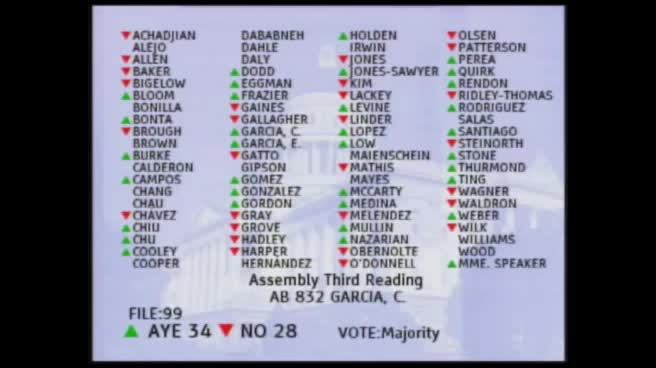 17MIN
Assembly Floor
 57SEC
Assembly Floor
 20MIN
Assembly Standing Committee on Business and Professions
 35MIN
Assembly Standing Committee on Judiciary




Bill Co-Author(s):