AB 546: Peace officers: basic training requirements.
- Session Year: 2015-2016
- House: Assembly
- Latest Version Date: 2015-08-13
Existing law requires every peace officer to complete an introductory course of training prescribed by the Commission on Peace Officer Standards and Training, except for specifically exempted categories of peace officers, and imposes other training requirements on those persons who would exercise the powers of peace officers. Existing law provides that a probation department that is a certified provider of that training course shall not be required to offer the course to the general public.
This bill would require the commission, when evaluating a certification request from a probation department for that training course, to deem there to be an identifiable and unmet need for the training course.
Existing law requires every peace officer to complete an introductory course of training prescribed by the Commission on Peace Officer Standards and Training, except for specifically exempted categories of peace officers, and imposes other training requirements on those persons who would exercise the powers of peace officers. Existing law provides that a probation department that is a certified provider of that training course shall not be required to offer the course to the general public.
This bill would prohibit require the commission, when evaluating a certification request from a probation department for that training course, from considering the need and justification for the course, or requiring that there to deem there to be an identifiable and unmet need for the training course as a condition of certifying the training course.
Existing law requires every peace officer to complete an introductory course of training prescribed by the Commission on Peace Officer Standards and Training, except for specifically exempted categories of peace officers, and imposes other training requirements on those persons who would exercise the powers of peace officers. Existing law provides that a probation department that is a certified provider of that training course shall not be required to offer the course to the general public.
This bill would authorize a probation department to apply to either the commission or the Board of State and Community Corrections to become a certified provider of that training course for the purpose of training probation officers. prohibit the commission, when evaluating a certification request from a probation department for that training course, from considering the need and justification for the course, or requiring that there be an identifiable and unmet need for the training course as a condition of certifying the training course.
Existing law requires every peace officer to complete an introductory course of training prescribed by the Commission on Peace Officer Standards and Training, except for specifically exempted categories of peace officers, and imposes other training requirements on those persons who would exercise the powers of peace officers. Existing law provides that a probation department that is a certified provider of that training course shall not be required to offer the course to the general public.
This bill would authorize a probation department to apply to either the commission or the Board of State and Community Corrections to become a certified provider of that training course for the purpose of training probation officers.
(a)Every person described in this chapter as a peace officer shall satisfactorily complete an introductory training course prescribed by the Commission on Peace Officer Standards and Training. On or after July 1, 1989, satisfactory completion of the course shall be demonstrated by passage of an appropriate examination developed or approved by the commission. Training in the carrying and use of firearms shall not be required of a peace officer whose employing agency prohibits the use of firearms.
(b)(1)Every peace officer described in this chapter, prior to the exercise of the powers of a peace officer, shall have satisfactorily completed the training course described in subdivision (a).
(2)Every peace officer described in Section 13510 or in subdivision (a) of Section 830.2 may satisfactorily complete the training required by this section as part of the training prescribed pursuant to Section 13510.
(c)Persons described in this chapter as peace officers who have not satisfactorily completed the course described in subdivision (a), as specified in subdivision (b), shall not have the powers of a peace officer until they satisfactorily complete the course.
(d)A peace officer who, on March 4, 1972, possesses or is qualified to possess the basic certificate as awarded by the Commission on Peace Officer Standards and Training is exempted from this section.
(e)(1)A person completing the training described in subdivision (a) who does not become employed as a peace officer within three years from the date of passing the examination described in subdivision (a), or who has a three-year or longer break in service as a peace officer, shall pass the examination described in subdivision (a) prior to the exercise of the powers of a peace officer, except for a person described in paragraph (2).
(2)The requirement in paragraph (1) does not apply to a person who meets any of the following requirements:
(A)Is returning to a management position that is at the second level of supervision or higher.
(B)Has successfully requalified for a basic course through the Commission on Peace Officer Standards and Training.
(C)Has maintained proficiency through teaching the course described in subdivision (a).
(D)During the break in California service, was continuously employed as a peace officer in another state or at the federal level.
(E)Has previously met the requirements of subdivision (a), has been appointed as a peace officer under subdivision (c) of Section 830.1, and has been continuously employed as a custodial officer as defined in Section 831 or 831.5 by the agency making the peace officer appointment since completing the training prescribed in subdivision (a).
(f)The commission may charge appropriate fees for the examination required by subdivision (e), not to exceed actual costs.
(g)Notwithstanding any other law, the commission may charge appropriate fees for the examination required by subdivision (a) to each applicant who is not sponsored by a local or other law enforcement agency, or is not a peace officer employed by, or under consideration for employment by, a state or local agency, department, or district, or is not a custodial officer as defined in Sections 831 and 831.5. The fees shall not exceed actual costs.
(h)(1)When evaluating a certification request from a probation department for a training course described in this section, the commission shall deem there to be an identifiable and unmet need for the training course.
(2)A probation department that is a certified provider of the training course described in this section shall not be required to offer the course to the general public.
(a)Every person described in this chapter as a peace officer shall satisfactorily complete an introductory training course prescribed by the Commission on Peace Officer Standards and Training. On or after July 1, 1989, satisfactory completion of the course shall be demonstrated by passage of an appropriate examination developed or approved by the commission. Training in the carrying and use of firearms shall not be required of a peace officer whose employing agency prohibits the use of firearms.
(b)(1)Every peace officer described in this chapter, prior to the exercise of the powers of a peace officer, shall have satisfactorily completed the training course described in subdivision (a).
(2)Every peace officer described in Section 13510 or in subdivision (a) of Section 830.2 may satisfactorily complete the training required by this section as part of the training prescribed pursuant to Section 13510.
(c)Persons described in this chapter as peace officers who have not satisfactorily completed the course described in subdivision (a), as specified in subdivision (b), shall not have the powers of a peace officer until they satisfactorily complete the course.
(d)A peace officer who, on March 4, 1972, possesses or is qualified to possess the basic certificate as awarded by the Commission on Peace Officer Standards and Training is exempted from this section.
(e)(1)A person completing the training described in subdivision (a) who does not become employed as a peace officer within three years from the date of passing the examination described in subdivision (a), or who has a three-year or longer break in service as a peace officer, shall pass the examination described in subdivision (a) prior to the exercise of the powers of a peace officer, except for a person described in paragraph (2).
(2)The requirement in paragraph (1) does not apply to a person who meets any of the following requirements:
(A)Is returning to a management position that is at the second level of supervision or higher.
(B)Has successfully requalified for a basic course through the Commission on Peace Officer Standards and Training.
(C)Has maintained proficiency through teaching the course described in subdivision (a).
(D)During the break in California service, was continuously employed as a peace officer in another state or at the federal level.
(E)Has previously met the requirements of subdivision (a), has been appointed as a peace officer under subdivision (c) of Section 830.1, and has been continuously employed as a custodial officer as defined in Section 831 or 831.5 by the agency making the peace officer appointment since completing the training prescribed in subdivision (a).
(f)The commission may charge appropriate fees for the examination required by subdivision (e), not to exceed actual costs.
(g)Notwithstanding any other law, the commission may charge appropriate fees for the examination required by subdivision (a) to each applicant who is not sponsored by a local or other law enforcement agency, or is not a peace officer employed by, or under consideration for employment by, a state or local agency, department, or district, or is not a custodial officer as defined in Sections 831 and 831.5. The fees shall not exceed actual costs.
(h)(1)When evaluating a certification request from a probation department for a training course described in this section, the commission shall not do either of the following: deem there to be an identifiable and unmet need for the training course.
(A)Consider the need and justification for the training course.
(B)Require that there be an identifiable and unmet need for the training course as a condition of certifying the training course.
(2)A probation department that is a certified provider of the training course described in this section shall not be required to offer the course to the general public.
(a)Every person described in this chapter as a peace officer shall satisfactorily complete an introductory training course prescribed by the Commission on Peace Officer Standards and Training. On or after July 1, 1989, satisfactory completion of the course shall be demonstrated by passage of an appropriate examination developed or approved by the commission. Training in the carrying and use of firearms shall not be required of a peace officer whose employing agency prohibits the use of firearms.
(b)(1)Every peace officer described in this chapter, prior to the exercise of the powers of a peace officer, shall have satisfactorily completed the training course described in subdivision (a).
(2)Every peace officer described in Section 13510 or in subdivision (a) of Section 830.2 may satisfactorily complete the training required by this section as part of the training prescribed pursuant to Section 13510.
(c)Persons described in this chapter as peace officers who have not satisfactorily completed the course described in subdivision (a), as specified in subdivision (b), shall not have the powers of a peace officer until they satisfactorily complete the course.
(d)A peace officer who, on March 4, 1972, possesses or is qualified to possess the basic certificate as awarded by the Commission on Peace Officer Standards and Training is exempted from this section.
(e)(1)A person completing the training described in subdivision (a) who does not become employed as a peace officer within three years from the date of passing the examination described in subdivision (a), or who has a three-year or longer break in service as a peace officer, shall pass the examination described in subdivision (a) prior to the exercise of the powers of a peace officer, except for a person described in paragraph (2).
(2)The requirement in paragraph (1) does not apply to a person who meets any of the following requirements:
(A)Is returning to a management position that is at the second level of supervision or higher.
(B)Has successfully requalified for a basic course through the Commission on Peace Officer Standards and Training.
(C)Has maintained proficiency through teaching the course described in subdivision (a).
(D)During the break in California service, was continuously employed as a peace officer in another state or at the federal level.
(E)Has previously met the requirements of subdivision (a), has been appointed as a peace officer under subdivision (c) of Section 830.1, and has been continuously employed as a custodial officer as defined in Section 831 or 831.5 by the agency making the peace officer appointment since completing the training prescribed in subdivision (a).
(f)The commission may charge appropriate fees for the examination required by subdivision (e), not to exceed actual costs.
(g)Notwithstanding any other law, the commission may charge appropriate fees for the examination required by subdivision (a) to each applicant who is not sponsored by a local or other law enforcement agency, or is not a peace officer employed by, or under consideration for employment by, a state or local agency, department, or district, or is not a custodial officer as defined in Sections 831 and 831.5. The fees shall not exceed actual costs.
(h)(1)When evaluating a certification request from a probation department for a training course described in this section, the commission shall not do either of the following:
(A)Consider the need and justification for the training course.
(B)Require that there be an identifiable and unmet need for the training course as a condition of certifying the training course.
(h)(1)
(2)A probation department that is a certified provider of the training course described in this section shall not be required to offer the course to the general public.
(2)A probation department may apply to either the commission or the Board of State and Community Corrections to become a certified provider of the training course described in this section for the purpose of training probation officers.
(a)Every person described in this chapter as a peace officer shall satisfactorily complete an introductory training course prescribed by the Commission on Peace Officer Standards and Training. On or after July 1, 1989, satisfactory completion of the course shall be demonstrated by passage of an appropriate examination developed or approved by the commission. Training in the carrying and use of firearms shall not be required of a peace officer whose employing agency prohibits the use of firearms.
(b)(1)Every peace officer described in this chapter, prior to the exercise of the powers of a peace officer, shall have satisfactorily completed the training course described in subdivision (a).
(2)Every peace officer described in Section 13510 or in subdivision (a) of Section 830.2 may satisfactorily complete the training required by this section as part of the training prescribed pursuant to Section 13510.
(c)Persons described in this chapter as peace officers who have not satisfactorily completed the course described in subdivision (a), as specified in subdivision (b), shall not have the powers of a peace officer until they satisfactorily complete the course.
(d)A peace officer who, on March 4, 1972, possesses or is qualified to possess the basic certificate as awarded by the Commission on Peace Officer Standards and Training is exempted from this section.
(e)(1)A person completing the training described in subdivision (a) who does not become employed as a peace officer within three years from the date of passing the examination described in subdivision (a), or who has a three-year or longer break in service as a peace officer, shall pass the examination described in subdivision (a) prior to the exercise of the powers of a peace officer, except for a person described in paragraph (2).
(2)The requirement in paragraph (1) does not apply to a person who meets any of the following requirements:
(A)Is returning to a management position that is at the second level of supervision or higher.
(B)Has successfully requalified for a basic course through the Commission on Peace Officer Standards and Training.
(C)Has maintained proficiency through teaching the course described in subdivision (a).
(D)During the break in California service, was continuously employed as a peace officer in another state or at the federal level.
(E)Has previously met the requirements of subdivision (a), has been appointed as a peace officer under subdivision (c) of Section 830.1, and has been continuously employed as a custodial officer as defined in Section 831 or 831.5 by the agency making the peace officer appointment since completing the training prescribed in subdivision (a).
(f)The commission may charge appropriate fees for the examination required by subdivision (e), not to exceed actual costs.
(g)Notwithstanding any other law, the commission may charge appropriate fees for the examination required by subdivision (a) to each applicant who is not sponsored by a local or other law enforcement agency, or is not a peace officer employed by, or under consideration for employment by, a state or local agency, department, or district, or is not a custodial officer as defined in Sections 831 and 831.5. The fees shall not exceed actual costs.
(h)(1)A probation department that is a certified provider of the training course described in this section shall not be required to offer the course to the general public.
(2)A probation department may apply to either the commission or the Board of State and Community Corrections to become a certified provider of the training course described in this section for the purpose of training probation officers.
|
Date
|
Status
|
|---|---|
| Jun 23, 2015 | From committee: Do pass and re-refer to Com. on APPR. (Ayes 7. Noes 0.) (June 23). Re-referred to Com. on APPR. |
| Aug 13, 2015 | Chaptered by Secretary of State - Chapter 200, Statutes of 2015. |
| Aug 13, 2015 | Approved by the Governor. |
| Aug 3, 2015 | Enrolled and presented to the Governor at 3 p.m. |
| Jul 16, 2015 | Senate amendments concurred in. To Engrossing and Enrolling. (Ayes 78. Noes 0. Page 2414.). |
| Jul 16, 2015 | Senate amendments concurred in. To Engrossing and Enrolling. |
| Jul 13, 2015 | Read third time. Passed. Ordered to the Assembly. (Ayes 40. Noes 0. Page 1902.). |
| Jul 13, 2015 | Read third time. Passed. Ordered to the Assembly. |
| Jul 13, 2015 | In Assembly. Concurrence in Senate amendments pending. May be considered on or after July 15 pursuant to Assembly Rule 77. |
| Jul 7, 2015 | Read second time. Ordered to third reading. |
| Jul 6, 2015 | From committee: Be placed on second reading file pursuant to Senate Rule 28.8. |
| Jun 29, 2015 | From committee chair, with author's amendments: Amend, and re-refer to committee. Read second time, amended, and re-referred to Com. on APPR. |
| Feb 23, 2015 | Read first time. To print. |
| Jun 15, 2015 | From committee chair, with author's amendments: Amend, and re-refer to committee. Read second time, amended, and re-referred to Com. on PUB. S. |
| May 7, 2015 | Referred to Com. on PUB. S. |
| Apr 23, 2015 | Read third time. Passed. Ordered to the Senate. (Ayes 78. Noes 0.) |
| Apr 23, 2015 | Read third time. Passed. Ordered to the Senate. (Ayes 78. Noes 0. Page 1109.) |
| Apr 23, 2015 | In Senate. Read first time. To Com. on RLS. for assignment. |
| Apr 16, 2015 | Read second time. Ordered to consent calendar. |
| Apr 15, 2015 | From committee: Do pass. To Consent Calendar. (Ayes 16. Noes 0.) (April 15). |
| Apr 15, 2015 | From committee: Do pass. Ordered to Consent Calendar. (Ayes 16. Noes 0.) (April 15). |
| Apr 8, 2015 | From committee: Do pass and re-refer to Com. on APPR. with recommendation: To Consent Calendar. (Ayes 7. Noes 0.) (April 7). Re-referred to Com. on APPR. |
| Mar 5, 2015 | Referred to Com. on PUB. S. |
| Feb 24, 2015 | From printer. May be heard in committee March 26. |
|
Date
|
Description
|
Location
|
Votes
|
|
|---|---|---|---|---|
| Jul 16, 2015 | AB 546 GONZALEZ Concurrence in Senate Amendments | Assembly Floor |
Passed |
|
| Jul 13, 2015 | Assembly 3rd Reading AB546 Gonzalez By Glazer | Senate Floor |
Passed |
|
| Jun 23, 2015 | Do pass, but first be re-referred to the Committee on [Appropriations] | Senate Standing Committee on Public Safety |
Passed |
|
| Apr 23, 2015 | AB 546 GONZALEZ Consent Calendar Second Day Regular Session | Assembly Floor |
Passed |
|
| Apr 15, 2015 | Do pass. To Consent Calendar. | Assembly Standing Committee on Appropriations |
Passed |
|
| Apr 7, 2015 | Do pass and be re-referred to the Committee on [Appropriations] with recommendation: To Consent Calendar | Assembly Standing Committee on Public Safety |
Passed |
This list shows positions taken on this bill by organizations on the date displayed, which is linked to the original source.
Positions by individuals are not included.
|
Organization
|
Position
|
Date
|
|---|---|---|
| California Probation, Parole And Correctional Association | ** Support | Jul 13, 2015 |
| Chief Probation Officers Of California | ** Support | Jul 13, 2015 |
| Contra Costa County Board of Supervisors | ** Support | Jul 13, 2015 |
| L.A. County Probation Officers Union | ** Support | Jun 23, 2015 |
| Los Angeles County Probation Officers | ** Support | Jul 13, 2015 |
| Riverside Sheriffs' Association | ** Support | Jun 23, 2015 |
| State Coalition Of Probation Organizations | * Support | Jun 23, 2015 |
AB 546
Page 2
CONCURRENCE IN SENATE AMENDMENTS
AB 546
(Gonzalez)
As Amended June 29, 2015
Majority vote
ASSEMBLY: |
78-0 |
(April 23, 2015) |
SENATE: |
40-0 |
(July 13, 2015) |
Original Committee Reference: PUB. S.
SUMMARY: Requires the Commission on Peace Officer Standards and Training (POST), when evaluating a certification request from a probation department for the introductory and requisite peace officer training course, to deem that there is an identifiable and unmet need for the training course.
The Senate amendments recast the original language of this bill to require POST, when evaluating a certification request from a probation department for the introductory and requisite peace officer training course, to deem that there is an identifiable and unmet need for the training course.
EXISTING LAW:
Provides that every person described in this chapter as a peace officer shall satisfactorily complete an introductory training course prescribed by POST. On or after July 1, 1989, satisfactory completion of the course shall be demonstrated by passage of an appropriate examination developed or approved by the commission. Training in the carrying and use of firearms shall not be required of a peace officer whose employing agency prohibits the use of firearms.
Provides that every peace officer described in this chapter, prior to the exercise of the powers of a peace officer, shall have satisfactorily completed the specified training course.
Provides that every specified peace officer may satisfactorily complete the training required by this section as part of the training prescribed.
Provides that persons described in this chapter as peace officers who have not satisfactorily completed the specified course shall not have the powers of a peace officer until they satisfactorily complete the course.
Provides that a peace officer who, on March 4, 1972, possesses or is qualified to possess the basic certificate as awarded by POST is exempted from this section.
Requires all peace officers to complete an introductory course of training prescribed by POST, demonstrated by passage of an appropriate examination developed by POST.
Establishes the POST.
Empowers POST to develop and implement programs to increase the effectiveness of law enforcement.
Authorizes POST, for the purpose of raising the level of competence of local law enforcement officers, to adopt rules establishing minimum standards related to physical, mental and moral fitness and training that shall govern the recruitment of any peace officers in California.
Requires POST to conduct research concerning job-related educational standards and job-related selection standards to include vision, hearing, physical ability, and emotional stability and adopt standards supported by this research.
Requires POST to establish a certification program for peace officers, which shall be considered professional certificates.
FISCAL EFFECT: According to the Senate Appropriations Committee, pursuant to Senate Rule 28.8, negligible state costs.
COMMENTS: According to the author, "The work of probation departments has become an essential part of our public safety blueprint in California. To ensure we are meeting local and regional training demands for our officers, Assembly Bill 546 would authorize these departments to submit the PC 832 course for certification to either POST or the Board of State and Community Corrections. Allowing probation departments to have another option for certification will better facilitate the delivery and coordination of courses, giving County probation departments across the state the ability to choose what best fits their training needs."
Probation Departments and Lack of Vacancies: According to the proponents of this bill, there is a significant waiting list for probation department officers to receive the basic "PC 832" training due to a lack of vacancies in existing classes which are offered by other agencies. By permitting the Board of State Community Corrections to certify courses for probation departments, probation officers would no longer have such significant waiting times in order to be properly trained pursuant to the requirements of Penal Code Section 832.
Analysis Prepared by: Gabriel Caswell / PUB. S. / (916) 319-3744 FN: 0001212
AB 546
Page 7
|
Office of Senate Floor Analyses (916) 651-1520 Fax: (916) 327-4478 |
THIRD READING
Bill No: AB 546
Amended: 6/29/15 in Senate
SENATE PUBLIC SAFETY COMMITTEE: 7-0, 6/23/15
AYES: Hancock, Anderson, Glazer, Leno, Liu, Monning, Stone
SENATE APPROPRIATIONS COMMITTEE: Senate Rule 28.8
ASSEMBLY FLOOR: 78-0, 4/23/15 (Consent) - See last page for vote
SUBJECT: Peace officers: basic training requirements
SOURCE: Chief Probation Officers of California
DIGEST: This bill requires the Commission on Peace Officer Standards and Training (POST), when evaluating a certification request from a probation department for a training course described Penal Code Section 832, to deem there to be an identifiable and unmet need for the training course.
Existing law:
Requires every peace officer, as specified, except those whose employing agency prohibits the use of firearms, to satisfactorily complete an introductory POST-prescribed introductory training course and that satisfactory completion of the course is to be demonstrated by passage of an appropriate POST-developed or approved examination. (Penal Code § 832(a).)
Requires every peace officer, as specified, to satisfactorily complete the course described above prior to exercising the powers of a peace officer, and states that peace officers who have not satisfactorily completed the introductory training course do not have peace officer powers until they satisfactorily complete the course. (Penal Code §§ 832 (b) and (c).)
Requires, in Penal Code Section 832(e), any person completing the introductory training course described above who does not become employed as a peace officer within three years from the date of passing the examination, or who has a three-year or longer break in service as a peace officer, to pass the examination prior to exercising peace officer powers, except for any person who meets any of the following requirements:
Is returning to a management position that is at the second level of supervision or higher;
Has successfully requalified for a basic course through the POST;
Has maintained proficiency through teaching the introductory training course described above;
During the break in California service, was continuously employed as a peace officer in another state or at the federal level; or,
Has previously satisfactorily completed the introductory training course and passed the appropriate examination; has been appointed as a peace officer, as specified; and has been continuously employed as a custodial officer, as defined, by the agency making the peace officer appointment since completing the introductory training course. (Penal Code § 832(e).)
Authorizes POST, notwithstanding any other law, to charge appropriate fees, not exceeding actual costs, for the examination required to demonstrate satisfactory completion of the introductory training course to each applicant who is not sponsored by a local or other law enforcement agency; is not a peace officer employed by, or under consideration for employment by, a state or local agency, department, or district; or is not a custodial officer, as defined. (Penal Code § 832(g).)
States that a probation department that is a certified provider of the training course is not required to offer the course to the general public. (Penal Code § 832(h).)
States that POST administers the Course Certification Program to provide needed and quality training to law enforcement personnel. References to a course being “POST-certified” means that the POST has approved presentation of the course in accordance with POST regulations. (11 California Code of Regulations 1051 (2015).)
States, in Section 1052 of Title 11 of the California Code of Regulations, each instructor-led training (Web-based, classroom, or other) course certification request shall be evaluated in accordance with the following factors:
Need and Justification for Course
Course Content
Hours of Instruction
Qualification of Instructors, Coordinators, and/or Academy Staff (Reference Regulations 1070 and 1071 for minimum training standards)
Potential Clientele and Volume of Trainees
Physical Facilities Appropriate for the Training
Methods of Course Presentation
Availability of Staff to Administer the Course
Course Evaluation Processes
Cost of Course
Instructor/Trainee Ratios
Provisions for Student Safety
This bill requires POST, when evaluating a certification request from a probation department for a training course described Penal Code Section 832, to deem there to be an identifiable and unmet need for the training course.
Background
According to information provided by POST, “prior to Riverside County, Santa Clara County Probation Department was the only probation department that sought course certification for the PC [Penal Code] 832 course. Santa Clara was able to show a demonstrated need and certification was granted in July 2006. The last two classes Santa Clara held were in September 2014 and April 2015 with 10 and 16 attendees respectively. In 2013/2014 Riverside County requested certification . . . but did not show a demonstrated need. . .”
In determining an identifiable and unmet training need, POST considers:
Is there a demonstrated ongoing unmet need expressed by a survey of agencies, Training Needs Assessment, and a commitment of trainees/students?
Are there existing courses available locally or that can be imported into the area to meet this need?
Will this course adversely impact another similar course locally or statewide (student distribution and/or fiscal considerations)?
Is the course an expressed priority by legislation, commission regulation or policy?
Is the course content an appropriate training subject for POST certification?
Is there required POST standardized curriculum?
Is there a demonstrated ability of the presenter to deliver the course?
Are there other factors and/or circumstances to be taken into consideration?
With regard to Riverside, POST states, “[t]hey were denied certification until recently when Chief Hake met with POST staff and demonstrated the need for the course. Riverside has since been approved for certification.” POST is not aware of any additional probation departments that have applied for certification and have been denied.
Comments
According to the author:
According to the Chief Probation Officers of California, probation departments across the state are facing challenges meeting the PC 832 firearms and arrest course requirement for their officers to become fully sworn. Probation departments do all of their mandated training to become an officer through the Board of State and Community Corrections (BSCC), except for the PC 832 course—which is required to be certified by the Commission on Peace Officer Standards and Training (POST).
A recent informal survey of 22 counties showed that half of them have experienced difficulty in gaining access to PC 832 training within the last year, with seven of those counties having officers on formal waitlists for courses. Locally, in some jurisdictions the only choice is via the local junior college, which may be structured differently and require a semester long commitment usually held in the evening for four hours a week. In certain regions, particularly smaller counties, there are no local courses offered which then require departments to send officers out of county to the nearest training facility.
Despite the abovementioned training needs, additional courses have not been considered for certification by POST. To ensure we are meeting local and regional demands, AB 546 would allow probation departments that have met all other training and testing specifications, and that are willing to pay for putting on the course, the ability to be certified by POST even if their internal view of “needs” is not met. Operationally, this is what has been happening. POST doesn’t see a need for more courses yet probation is asking to be certified and willing to do what is necessary to start these trainings. Allowing probation departments to get courses certified will give County probation departments across the state the ability to decide what best fits their training needs.
AB 546 will not impact other agencies such as police and sheriffs with their trainings or course offerings.
FISCAL EFFECT: Appropriation: No Fiscal Com.: Yes Local: No
Chief Probation Officers of California (source)
California Probation, Parole and Correctional Association
Contra Costa County Board of Supervisors
Los Angeles County Probation Officers
Riverside Sheriffs Association
None received
ARGUMENTS IN SUPPORT:
The Chief Probation Officers of California (CPOC), this bill’s sponsor, state:
Probation departments across the state are facing significant access issues to attending this particular PC 832 training. This is due to fewer courses being offered over the last few years, attendance slots can be difficult to identify for non-POST agencies and therefore not available when probation seeks registration, and travel challenges in regions where fewer courses are offered.
A recent informal survey of 22 counties showed that half of the counties have experienced difficulty in gaining access to PC 832 training within the last year, with seven of those counties having officers on formal waitlists for courses. 17 of the 22 respondents have to send officers out of county at a cost of $500-$1,700 per officer due to costs associated with mileage, meals, lodging and tuition. The cost will vary by the distance of travel required and length of time. This is causing new hires to delay the start of their service, in some cases for several months, and is forcing numerous departments to send personnel out of county which can be time-consuming and expensive.
CPOC has been in conversations with POST toward this end and while we appreciate the efforts of the current POST administration to address these concerns, it is important that we address this legislatively to mitigate this in future years and find lasting resolution.
Despite the abovementioned training needs, additional courses have not been certified at this time. This is due in part to current POST regulatory requirements that state that “only those courses for which there is an identifiable and unmet need shall be certified.” POST determines needs based off of the number of courses offered, available participant slots, and vacancies, but it does not take into account the unique issues that non-POST agencies like probation face. Therefore, probation departments have a difficult time fitting the POST regulatory definition of the needs assessment for a variety of reasons. As such, we are seeking to remove this requirement for purposes of probation course certification without removing the other training and course requirements so that probation departments can offer the same level of training more efficiently.
AYES: Achadjian, Alejo, Travis Allen, Baker, Bigelow, Bloom, Bonilla, Bonta, Brough, Brown, Burke, Calderon, Chang, Chau, Chávez, Chiu, Chu, Cooley, Cooper, Dababneh, Dahle, Daly, Dodd, Eggman, Frazier, Beth Gaines, Gallagher, Cristina Garcia, Eduardo Garcia, Gatto, Gipson, Gomez, Gonzalez, Gordon, Gray, Grove, Hadley, Harper, Roger Hernández, Holden, Irwin, Jones, Jones-Sawyer, Kim, Lackey, Levine, Linder, Lopez, Low, Maienschein, Mathis, Mayes, McCarty, Medina, Melendez, Mullin, Nazarian, Obernolte, O’Donnell, Olsen, Patterson, Perea, Quirk, Rendon, Ridley-Thomas, Rodriguez, Santiago, Steinorth, Mark Stone, Thurmond, Ting, Wagner, Waldron, Weber, Wilk, Williams, Wood, Atkins
NO VOTE RECORDED: Campos, Salas
Prepared by: Jessica Devencenzi / PUB. S. /
7/7/15 17:20:18
**** END ****
AB 546 (Gonzalez ) Page 6 of 6
SENATE COMMITTEE ON PUBLIC SAFETY
Senator Loni Hancock, Chair
2015 - 2016 Regular
Bill No: AB 546 Hearing Date: June 23, 2015
Author: |
Gonzalez |
||
Version: |
June 15, 2015 |
||
Urgency: |
No |
Fiscal: |
Yes |
Consultant: |
JRD |
||
Subject: Peace Officers: Basic Training Requirements
HISTORY
Source: Chief Probation Officers of California
Prior Legislation: AB 1860 (V. Manual Perez) ― Chapter 87, Statutes of 2014
Support: Contra Costa County Board of Supervisors; Los Angeles County Probation Officers; Riverside Sheriffs Association; California Probation, Parole and Correctional Association
Opposition: None known
Assembly Floor Vote: 78 - 0
PURPOSE
The purpose of this bill is to prohibit the Commission on Peace Officer Standards and Training (POST), when it is evaluating a certification request from a probation department for the training course prescribed in Penal Code section 832, to: (1) consider the need and justification for the training course; or (2) require that there be an identifiable and unmet need for the training course as a condition of certifying the training course.
Existing law requires every peace officer, as specified, except those whose employing agency prohibits the use of firearms, to satisfactorily complete an introductory POST-prescribed introductory training course and that satisfactory completion of the course is to be demonstrated by passage of an appropriate POST-developed or approved examination. (Penal Code § 832(a).)
Existing law requires every peace officer, as specified, to satisfactorily complete the course described above prior to exercising the powers of a peace officer, and states that peace officers who have not satisfactorily completed the introductory training course do not have peace officer powers until they satisfactorily complete the course. (Penal Code §§ 832 (b) and (c).)
Existing law requires any person completing the introductory training course described above who does not become employed as a peace officer within 3 years from the date of passing the examination, or who has a 3 year or longer break in service as a peace officer, to pass the examination prior to exercising peace officer powers, except for any person who meets any of the following requirements:
Is returning to a management position that is at the second level of supervision or higher;
Has successfully requalified for a basic course through the POST;
Has maintained proficiency through teaching the introductory training course described above;
During the break in California service, was continuously employed as a peace officer in another state or at the federal level; or,
Has previously satisfactorily completed the introductory training course and passed the appropriate examination; has been appointed as a peace officer, as specified; and has been continuously employed as a custodial officer, as defined, by the agency making the peace officer appointment since completing the introductory training course. (Penal Code § 832(e).)
Existing law authorizes POST, notwithstanding any other law, to charge appropriate fees, not exceeding actual costs, for the examination required to demonstrate satisfactory completion of the introductory training course to each applicant who is not sponsored by a local or other law enforcement agency; is not a peace officer employed by, or under consideration for employment by, a state or local agency, department, or district; or is not a custodial officer, as defined. (Penal Code § 832(g).)
Existing law states that a probation department that is a certified provider of the training course is not required to offer the course to the general public. (Penal Code § 832(h).)
Under existing regulation POST administers the Course Certification Program to provide needed and quality training to law enforcement personnel. References to a course being “POST-certified” means that the POST has approved presentation of the course in accordance with POST regulations. (11 CCR 1051 (2015).)
Existing regulation states each instructor-led training (Web-based, classroom, or other) course certification request shall be evaluated in accordance with the following factors:
Need and Justification for Course
Course Content
Hours of Instruction
Qualification of Instructors, Coordinators, and/or Academy Staff (Reference Regulations 1070 and 1071 for minimum training standards)
Potential Clientele and Volume of Trainees
Physical Facilities Appropriate for the Training
Methods of Course Presentation
Availability of Staff to Administer the Course
Course Evaluation Processes
Cost of Course
Instructor/Trainee Ratios
Provisions for Student Safety
(11 CCR 1052 (2015).)
This bill prohibits POST, when it is evaluating a certification request from a probation department for the training course prescribed in Penal Code section 832, to: (1) consider the need and justification for the training course; or (2) require that there be an identifiable and unmet need for the training course as a condition of certifying the training course.
RECEIVERSHIP/OVERCROWDING CRISIS AGGRAVATION
For the past eight years, this Committee has scrutinized legislation referred to its jurisdiction for any potential impact on prison overcrowding. Mindful of the United States Supreme Court ruling and federal court orders relating to the state’s ability to provide a constitutional level of health care to its inmate population and the related issue of prison overcrowding, this Committee has applied its “ROCA” policy as a content-neutral, provisional measure necessary to ensure that the Legislature does not erode progress in reducing prison overcrowding.
On February 10, 2014, the federal court ordered California to reduce its in-state adult institution population to 137.5% of design capacity by February 28, 2016, as follows:
143% of design bed capacity by June 30, 2014;
141.5% of design bed capacity by February 28, 2015; and,
137.5% of design bed capacity by February 28, 2016.
In February of this year the administration reported that as “of February 11, 2015, 112,993 inmates were housed in the State’s 34 adult institutions, which amounts to 136.6% of design bed capacity, and 8,828 inmates were housed in out-of-state facilities. This current population is now below the court-ordered reduction to 137.5% of design bed capacity.” ( Defendants’ February 2015 Status Report In Response To February 10, 2014 Order, 2:90-cv-00520 KJM DAD PC, 3-Judge Court, Coleman v. Brown, Plata v. Brown (fn. omitted).
While significant gains have been made in reducing the prison population, the state now must stabilize these advances and demonstrate to the federal court that California has in place the “durable solution” to prison overcrowding “consistently demanded” by the court. (Opinion Re: Order Granting in Part and Denying in Part Defendants’ Request For Extension of December 31, 2013 Deadline, NO. 2:90-cv-0520 LKK DAD (PC), 3-Judge Court, Coleman v. Brown, Plata v. Brown (2-10-14). The Committee’s consideration of bills that may impact the prison population therefore will be informed by the following questions:
Whether a proposal erodes a measure which has contributed to reducing the prison population;
Whether a proposal addresses a major area of public safety or criminal activity for which there is no other reasonable, appropriate remedy;
Whether a proposal addresses a crime which is directly dangerous to the physical safety of others for which there is no other reasonably appropriate sanction;
Whether a proposal corrects a constitutional problem or legislative drafting error; and
Whether a proposal proposes penalties which are proportionate, and cannot be achieved through any other reasonably appropriate remedy.
COMMENTS
1. Need for This Legislation
According to the author:
According to the Chief Probation Officers of California, probation departments across the state are facing challenges meeting the PC 832 firearms and arrest course requirement for their officers to become fully sworn. Probation departments do all of their mandated training to become an officer through the Board of State and Community Corrections (BSCC), except for the PC 832 course—which is required to be certified by the Commission on Peace Officer Standards and Training (POST).
A recent informal survey of 22 counties showed that half of them have experienced difficulty in gaining access to PC 832 training within the last year, with seven of those counties having officers on formal waitlists for courses. Locally, in some jurisdictions the only choice is via the local junior college, which may be structured differently and require a semester long commitment usually held in the evening for four hours a week. In certain regions, particularly smaller counties, there are no local courses offered which then require departments to send officers out of county to the nearest training facility.
Despite the abovementioned training needs, additional courses have not been considered for certification by POST. To ensure we are meeting local and regional demands, AB 546 would allow probation departments that have met all other training and testing specifications, and that are willing to pay for putting on the course, the ability to be certified by POST even if their internal view of “needs” is not met. Operationally, this is what has been happening. POST doesn't see a need for more courses yet probation is asking to be certified and willing to do what is necessary to start these trainings. Allowing probation departments to get courses certified will give County probation departments across the state the ability to decide what best fits their training needs.
AB 546 will not impact other agencies such as police and sheriffs with their trainings or course offerings.
2. Effect of Legislation
This legislation would allow a probation department to have an introductory peace officer course certified by POST, without having to show a need or justification for the course. The Chief Probation Officers of California (CPOC), who are the sponsors of this legislation state:
Probation departments across the state are facing significant access issues to attending this particular PC 832 training. This is due to fewer courses being offered over the last few years, attendance slots can be difficult to identify for non-POST agencies and therefore not available when probation seeks registration, and travel challenges in regions where fewer courses are offered.
A recent informal survey of 22 counties showed that half of the counties have experienced difficulty in gaining access to PC 832 training within the last year, with seven of those counties having officers on formal waitlists for courses. 17 of the 22 respondents have to send officers out of county at a cost of $500-$1,700 per officer due to costs associated with mileage, meals, lodging and tuition. The cost will vary by the distance of travel required and length of time. This is causing new hires to delay the start of their service, in some cases for several months, and is forcing numerous departments to send personnel out of county which can be time-consuming and expensive.
CPOC has been in conversations with POST toward this end and while we appreciate the efforts of the current POST administration to address these concerns, it is important that we address this legislatively to mitigate this in future years and find lasting resolution.
Despite the abovementioned training needs, additional courses have not been certified at this time. This is due in part to current POST regulatory requirements that state that “only those courses for which there is an identifiable and unmet need shall be certified.” POST determines needs based off of the number of courses offered, available participant slots, and vacancies, but it does not take into account the unique issues that non-POST agencies like probation face. Therefore, probation departments have a difficult time fitting the POST regulatory definition of the needs assessment for a variety of reasons. As such, we are seeking to remove this requirement for purposes of probation course certification without removing the other training and course requirements so that probation departments can offer the same level of training more efficiently.
According to information provided by POST, “prior to Riverside County, Santa Clara County Probation Department was the only probation department that sought course certification for the PC 832 course. Santa Clara was able to show a demonstrated need and certification was granted in July 2006. The last two classes Santa Clara held were in September 2014 and April 2015 with 10 and 16 attendees respectively. In 2013/2014 Riverside County requested certification . . . but did not show a demonstrated need. . .”
In determining an identifiable and unmet training need, POST considers:
Is there a demonstrated ongoing unmet need expressed by a survey of agencies, Training Needs Assessment, and a commitment of trainees/students?
Are there existing courses available locally or that can be imported into the area to meet this need?
Will this course adversely impact another similar course locally or statewide (student distribution and/or fiscal considerations)?
Is the course an expressed priority by legislation, commission regulation or policy?
Is the course content an appropriate training subject for POST certification?
Is there required POST standardized curriculum?
Is there a demonstrated ability of the presenter to deliver the course?
Are there other factors and/or circumstances to be taken into consideration?
With regard to Riverside, POST states, “[t]hey were denied certification until recently when Chief Hake met with POST staff and demonstrated the need for the course. Riverside has since been approved for certification.” POST is not aware of any additional probation departments that have applied for certification and have been denied.
SHOULD POST BE PROHIBITED FROM REQUIRING A PROBATION DEPARTMENT TO DEMONSTRATE A NEED AND JUSTIFICATION IN ORDER TO HAVE A BASIC TRAINING COURSE CERTIFIED?
-- END –
AB 546
Page 2
Date of Hearing: April 15, 2015
ASSEMBLY COMMITTEE ON APPROPRIATIONS
Jimmy Gomez, Chair
AB 546
(Gonzalez) – As Introduced February 23, 2015
Policy Committee: |
Public Safety |
Vote: |
7 - 0 |
|
|
|
|
|
|
|
|
Urgency: No State Mandated Local Program: No Reimbursable: No
SUMMARY:
This bill provides that a probation department may apply to either the Commission on Peace Officer Standards and Training (POST) or the Board of State Community Corrections (BSCC) to become a certified provider of specified training courses for becoming peace officers under California law.
FISCAL EFFECT:
Minor absorbable GF costs to BSCC to review and approve the provider certification requests.
COMMENTS:
Background. Under current law, every peace officer is required to satisfactorily complete an introductory training course prescribed by the POST, commonly referred to as the PC 832 training.
The BSSC currently provides training for probation departments through their Standards and Training for Corrections (STC) program. Under current law, the BSCC provides all of the training probation departments receive other than the PC 832 training that must be completed through a POST certified program.
Purpose. According to the proponents of the bill, there is a significant waiting list for probation department officers to receive the basic "PC 832" training due to a lack of vacancies in existing classes which are offered by other agencies. By permitting BSCC to certify courses for probation departments, probation officers would no longer have such significant waiting times in order to be properly trained pursuant to the requirements of Penal Code section 832.
Arguments in Support. According to The Chief Probation Officers of California, "Under existing law, probation officers are required to complete a course of training certified by the Commission on Peace Officer Standards and Training (POST) prior to being sworn in as a peace officer."
"In order for a department to offer a PC 832 course, the courts and trainer must be certified by POST. This course is the only training that probation departments must obtain through POST. The rest of the probation training is done through the Board of State and Community Corrections' (BSCC) Standards and Training for Corrections (STC) program."
Prior Legislation: AB 1860 (V. Manual Perez), Chapter 87, Statutes of 2014, provided that a probation department that is a certified provider of a specified peace officer introductory training course on arrests and firearms prescribed by the Commission on Peace Officer Standards and Training (POST) is not required to offer the course to the general public.
Analysis Prepared by: Pedro Reyes / APPR. / (916) 319-2081
AB 546
Page 5
Date of Hearing: April 7, 2015
Counsel: Gabriel Caswell
ASSEMBLY COMMITTEE ON PUBLIC SAFETY
Bill Quirk, Chair
AB 546
(Gonzalez) – As Introduced February 23, 2015
SUMMARY:
Provides that a probation department may apply to either the Commission on Peace Officer Standards and Training (POST) or the Board of State Community Corrections (BSCC) to become a certified provider of specified training courses for becoming peace officers under California law.
EXISTING LAW:
Provides that every person described in this chapter as a peace officer shall satisfactorily complete an introductory training course prescribed by the Commission on Peace Officer Standards and Training. On or after July 1, 1989, satisfactory completion of the course shall be demonstrated by passage of an appropriate examination developed or approved by the commission. Training in the carrying and use of firearms shall not be required of a peace officer whose employing agency prohibits the use of firearms. (Pen. Code, § 832, subd. (a).)
Provides that every peace officer described in this chapter, prior to the exercise of the powers of a peace officer, shall have satisfactorily completed the specified training course. (Pen. Code, § 832, subd. (b)(1).)
Provides that every specified peace officer may satisfactorily complete the training required by this section as part of the training prescribed. (Pen. Code, § 832, subd. (b)(2).)
Provides that persons described in this chapter as peace officers who have not satisfactorily completed the specified course shall not have the powers of a peace officer until they satisfactorily complete the course. (Pen. Code, § 832, subd. (c).)
Provides that a peace officer who, on March 4, 1972, possesses or is qualified to possess the basic certificate as awarded by the Commission on Peace Officer Standards and Training is exempted from this section. (Pen. Code, § 832, subd. (d).)
Requires all peace officers to complete an introductory course of training prescribed by POST, demonstrated by passage of an appropriate examination developed by POST. (Pen. Code, § 832, subd. (a).)
Establishes the Commission on Peace Officer Training and Standards. (Pen. Code, § 13500.)
Empowers POST to develop and implement programs to increase the effectiveness of law enforcement. (Pen. Code, §13503.)
Authorizes POST, for the purpose of raising the level of competence of local law enforcement officers, to adopt rules establishing minimum standards related to physical, mental and moral fitness and training that shall govern the recruitment of any peace officers in California. (Pen. Code, § 13510, subd. (a).)
Requires POST to conduct research concerning job-related educational standards and job-related selection standards to include vision, hearing, physical ability, and emotional stability and adopt standards supported by this research. (Pen. Code, § 13510, subd. (b).)
Requires POST to establish a certification program for peace officers, which shall be considered professional certificates. (Pen. Code, § 13510.1, subd. (a).)
FISCAL EFFECT:
Unknown
COMMENTS:
Author's Statement: According to the author, "The work of probation departments has become an essential part of our public safety blueprint in California. To ensure we are meeting local and regional training demands for our officers, Assembly Bill 546 would authorize these departments to submit the PC 832 course for certification to either POST or the Board of State and Community Corrections. Allowing probation departments to have another option for certification will better facilitate the delivery and coordination of courses, giving County probation departments across the state the ability to choose what best fits their training needs.”
POST Training Requirements Generally: POST was created by the legislature in 1959 to set minimum selection and training standards for California law enforcement. (Pen. Code, § 13500, subd. (a).) Their mandate includes establishing minimum standards for training of peace officers in California. (Pen. Code § 13510, subd. (a).) As of 1989, all peace officers in California are required to complete an introductory course of training prescribed by POST, and demonstrate completion of that course by passing an examination. (Pen. Code, § 832, subd. (a).)
According to the POST Web site, the Regular Basic Course Training includes 42 separate topics, ranging from juvenile law and procedure to search and seizure. [POST, Regular Basic Course Training Specifications; <http://post.ca.gov/regular-basic-course-training-specifications.aspx>.] These topics are taught during a minimum of 664 hours of training. [POST, Regular Basic Course, Course Formats, available at: [<http://post.ca.gov/regular-basic-course.aspx.] Over the course of the training, individuals are trained not only on policing skills such as crowd control, evidence collection and patrol techniques, they are also required to recall the basic definition of a crime and know the elements of major crimes. This requires knowledge of the California Penal code specifically.
Peace Officer "Arrest and Firearm" Training Course: The introductory training course prescribed in Penal Code section 832, subdivision (a) is commonly referred to as the "PC 832 Arrest and Firearms" course and is the minimum training standard required of California peace officers in order to exercise peace officer powers, namely those of making arrests and using and carrying firearm throughout the state (with specified exceptions). According to POST, this course is the "entry-level training requirement for many California peace officers." (Regular Basic Course, POST <http://post.ca.gov/regular-basic-course.aspx> [as of Apr. 1, 2014].) The course can be completed through a 664-hour-minimum Standard Format training or a 730-hour-minimum Modular Format, which can be taken over an extended period of time. (Ibid.) The curriculum for the course is divided among 41 topics called "Learning Domains," which "contain the minimum required foundational information for given subjects." (Ibid.) The Learning Domains include the following topics: leadership, professionalism, and ethics; criminal justice system; policing in the community; laws of arrests; search and seizure; presentation of evidence; investigative report writing; use of force; crime scene, evidence, and forensics; arrest and control; firearms/chemical agents; and cultural diversity/discrimination. (PC 832 Arrest and Firearms Training Specifications, POST <http://post.ca.gov/pc-832-arrest-and-firearms-training-specifications.aspx> [as of Apr. 1, 2014].)
BSCC Training: Board of State and Community Corrections' (BSCC) currently provides training for probation departments through their Standards and Training for Corrections (STC) program. Under current law, the BSCC provides all of the training probation departments receive other than the PC 832 training that must be completed through a POST certified program. The current BSCC Standards & Training for Corrections (STC) program focuses on two main training areas:
Core training program – six courses, depending on classification, for corrections staff employed in local jails and probation departments. http://www.bscc.ca.gov/s_stcaboutcoretrainingprogram.php
Annual training program – mandatory annual training that is based on the needs related to the employee’s job classification. http://www.bscc.ca.gov/s_stcservices.php (e.g. Family Finding and Engagement Skill Building Workshop, From Prisons to Probation, Mentally Disordered Inmates: Effective Skills for Corrections Staff, etc)
Probation Departments and Lack of Vacancies: According to the proponents of the bill, there is a significant waiting list for probation department officers to receive the basic "PC 832" training due to a lack of vacancies in existing classes which are offered by other agencies. By permitting BSCC to certify courses for probation departments, probation officers would no longer have such significant waiting times in order to be properly trained pursuant to the requirements of Penal Code section 832.
Argument in Support: According to The Chief Probation Officers of California, "Under existing law, probation officers are required to complete a course of training certified by the Commission on Peace Officer Standards and Training (POST) prior to being sworn in as a peace officer. This training requirement includes the PC 832 Arrest and Firearms Course , which consists of a minimum of 64 hours learning domains such as use of force, laws of arrest, search and seizure, investigate report writing, arrest methods and other topics.
"In order for a department to offer a PC 832 course, the courts and trainer must be certified by POST. This course is the only training that probation departments must obtain through POST. The rest of the probation training is done through the Board of State and Community Corrections' (BSCC) Standards and Training for Corrections (STC) program.
Probation departments across the state are facing significant access issues to attending this particular PC 832 training. This is due to fewer courses being offered over the last few years, attendance slots can be difficult to identify for non-POST agencies and therefore not available when probation seeks registration, and travel challenges in regions where fewer courses are offered.
"A recent informal survey of 22 counties showed that half of those counties have experienced difficulty in gaining access to PC 832 training within the last year, with seven of those counties having officers on formal waitlists for courses.
"17 of the 22 respondents have to send officers out of county at a cost of $500-1,700 per officers due to costs associated with mileage, meals, lodging, and tuition. The cost will vary by the distance of travel required and the length of time.
"Despite the abovementioned training needs, additional courses have not been considered for certification. This is causing new hires to delay the start of their service. In some areas for several months, and is forcing numerous departments to send personnel out of county which can be time-consuming and expensive.
"To ensure we are meeting local and regional training demands, AB 546 would authorize probation departments to submit their course for certification to either POST or the Board of State and Community Corrections for the purpose of training probation officers.
"Allowing probation to seek certification through the BSCC will
better facilitate the delivery and coordination of courses as
departments and training officers work regularly with the BSCC's STC
program for all other training."
Prior Legislation: AB 1860 (V. Manual Perez), Chapter 87, Statutes of 2014, provided that a probation department that is a certified provider of a specified peace officer introductory training course on arrests and firearms prescribed by the Commission on Peace Officer Standards and Training (POST) is not required to offer the course to the general public.
REGISTERED SUPPORT / OPPOSITION:
Support
Chief Probation Officers of California (Sponsor)
California Probation, Parole, and Correctional Association
L.A. County Probation Officers Union
Riverside Sheriffs' Association
Opposition
None
Analysis Prepared by:
Gabriel Caswell / PUB. S. / (916) 319-3744
Discussed in Hearing
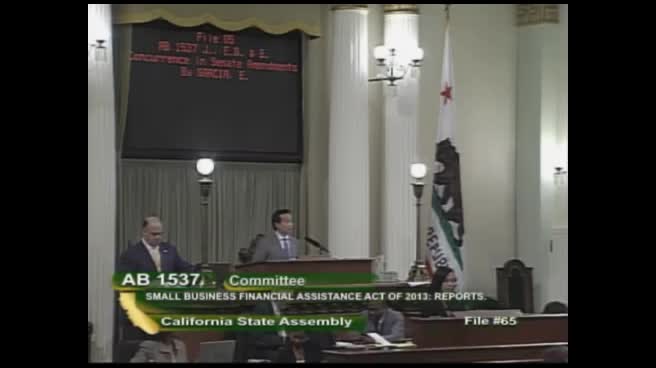 37SEC
Assembly Floor
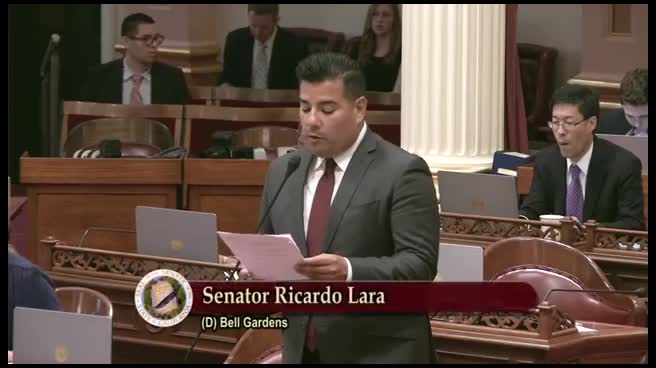 2MIN
Senate Floor
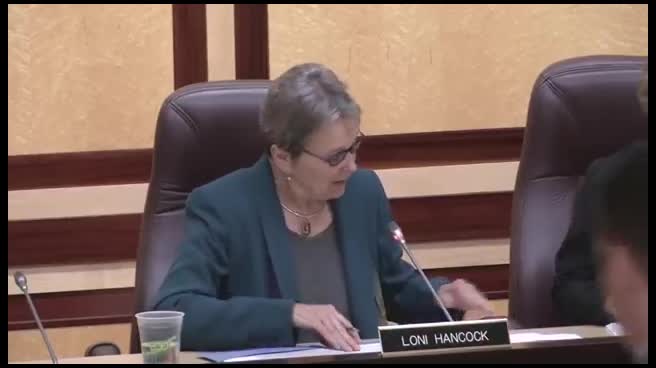 6MIN
Senate Standing Committee on Public Safety
Bill Author

Bill Co-Author(s):