AB 552: Public works contracts: damages.
- Session Year: 2015-2016
- House: Assembly
- Latest Version Date: 2015-10-02
Existing law prescribes requirements for contracts between private parties and public entities, as defined.
This bill would, among other things, provide that a public works contract entered into on or after January 1, 2016, that contains a clause expressly requiring a contractor to be responsible for delay damages, as defined, is not enforceable unless the delay damages have been liquidated to a set amount and identified in the public works contract. Under the bill, these provisions would not apply to specified state agencies. The bill would also make findings and declarations related to public contracts.
Existing law prescribes requirements for contracts between private parties and public entities, as defined.
This bill would would, among other things, provide that a public works contract entered into on or after January 1, 2016, that contains a clause expressly requiring a contractor to be responsible for delay damages, as defined, is not enforceable unless the delay damages have been liquidated to a set amount and identified in the public works contract. The bill would also make findings and declarations related to public contracts.
Existing law prescribes requirements for contracts between private parties and public entities, as defined.
This bill would provide that a public works contract entered into on or after January 1, 2016, that contains a clause expressly requiring a contractor to be responsible for consequential damages delay damages, as defined, is not enforceable unless the consequential delay damages have been liquidated to a set amount and identified in the public works contract. The bill would also make findings and declarations related to public contracts.
Existing law prescribes requirements for contracts between private parties and public entities, as defined.
This bill would require provide that a public works contracts contract entered into by a public agency, as defined, on or after January 1, 2016, to provide that damages recoverable from a nonperforming party be liquidated and specified in the contract, to provide that liquidated damages not be disproportionate to potential actual consequential and provable damages, and to not require that a contractor be responsible for consequential damages unless those damages have been liquidated to a set amount, as provided. that contains a clause requiring a contractor to be responsible for consequential damages is not enforceable unless the consequential damages have been liquidated to a set amount and identified in the public works contract. The bill would also make findings and declarations related to public contracts.
Existing law sets forth various goals and timetables for participation of minorities and women with respect to state employment and certain state contracts, including contracts entered into by the University of California. prescribes requirements for contracts between private parties and public entities, as defined.
This bill would make nonsubstantive changes to this provision. require public works contracts entered into by a public agency, as defined, on or after January 1, 2016, to provide that damages recoverable from a nonperforming party be liquidated and specified in the contract, to provide that liquidated damages not be disproportionate to potential actual consequential and provable damages, and to not require that a contractor be responsible for consequential damages unless those damages have been liquidated to a set amount, as provided. The bill would also make findings and declarations related to public contracts.
Existing law sets forth various goals and timetables for participation of minorities and women with respect to state employment and certain state contracts, including contracts entered into by the University of California.
This bill would make nonsubstantive changes to this provision.
(a)The Legislature finds and declares that, as a matter of public policy, it is in the best interest of California taxpayers to ensure uniformity in the bidding and contracting process for public works construction projects within the State of California.
(b)The Legislature further finds and declares that contractually imposing undefined and unlimited risk associated with delays in completion of public works on to public works construction contractors increases public works construction costs.
(c)It is therefore in the best interest of California taxpayers and public works construction contractors for the Legislature to establish clear guidelines for imposing delay damages in a public works contract.
SEC. 2.Section 7203 is added to the Public Contract Code, to read:7203.(a)A public works contract entered into on or after January 1, 2016, that contains a clause that expressly requires a contractor to be responsible for delay damages is not enforceable unless the delay damages have been liquidated to a set amount and identified in the public works contract.
(b)Delay damages as used in this section, means damages incurred by the public agency for each day after the date on which the work was to be completed by the contractor pursuant to the public works contract. Delay damages shall not include damages incurred by a public agency after the filing of a notice of completion or, in the absence of a notice of completion, the acceptance by the public agency of the public work as complete.
(c)Public agency shall include the state, the Regents of the University of California, a city, charter city, county, charter county, district, public authority, municipal utility, and any other political subdivision or public corporation of the state.
(d)This section shall not be construed to limit a right or remedy that the public agency has to enforce the express terms of the public works contract, except for a clause that expressly requires a contractor to be liable for delay damages.
(e)This section shall not be construed to preclude a public agency from including more than one clause for delay damages for specified portions of work when the delay damages have been liquidated to a set amount for each individual clause and identified in the public works contract.
(f)This section shall not apply to departments identified in Section 10106.
(a)The Legislature finds and declares that, as a matter of public policy, it is in the best interest of California taxpayers to ensure uniformity in the bidding and contracting process for public works construction projects within the State of California.
(b)The Legislature further finds and declares that contractually imposing undefined and unlimited risk associated with delays in completion of public works on to public works construction contractors increases public works construction costs.
(c)It is therefore in the best interest of California taxpayers and public works construction contractors for the Legislature to establish clear guidelines for imposing delay damages in a public works contract.
SEC. 2.Section 7203 is added to the Public Contract Code, to read:7203.(a)A public works contract entered into on or after January 1, 2016, that contains a clause that expressly requires a contractor to be responsible for delay damages is not enforceable unless the delay damages have been liquidated to a set amount and identified in the public works contract.
(b)Delay damages as used in this section, means damages incurred by the public agency for each day after the date on which the work was to be completed by the contractor pursuant to the public works contract. Delay damages shall not include damages incurred by a public agency after the filing of a notice of completion or, in the absence of a notice of completion, the acceptance by the public agency of the public work as complete.
(c)Public agency shall include the state, the Regents of the University of California, a city, charter city, county, charter county, district, public authority, municipal utility, and any other political subdivision or public corporation of the state.
(d)This section shall not be construed to limit a right or remedy that the public agency has to enforce the express terms of the public works contract, except for a clause that expressly requires a contractor to be liable for delay damages.
(e)This section shall not be construed to preclude a public agency from including more than one clause for delay damages for specified portions of work when the delay damages have been liquidated to a set amount for each individual clause and identified in the public works contract.
(a)The Legislature finds and declares that, as a matter of public policy, it is in the best interest of California taxpayers to ensure uniformity in the bidding and contracting process for public works construction projects within the State of California.
(b)The Legislature further finds and declares that contractually imposing undefined and unlimited risk associated with delays in completion of public works on to public works construction contractors increases public works construction costs because construction contractors must account for the undefined and unlimited risk, which is generally uninsurable, in their bids. costs.
(c)It is therefore in the best interest of California taxpayers and public works construction contractors for the Legislature to establish clear guidelines for how liquidated damages and consequential damages are expressed imposing delay damages in a public works contract.
SEC. 2.Section 7203 is added to the Public Contract Code, to read:7203.(a)A public works contract entered into on or after January 1, 2016, that contains a clause requiring that expressly requires a contractor to be responsible for consequential delay damages is not enforceable unless the consequential delay damages have been liquidated to a set amount and identified in the public works contract.
(b)Delay damages as used in this section, means damages incurred by the public agency for each day after the date on which the work was to be completed by the contractor pursuant to the public works contract. Delay damages shall not include damages incurred by a public agency after the filing of a notice of completion or, in the absence of a notice of completion, the acceptance by the public agency of the public work as complete.
(b)
(c)Public agency shall include the state, the Regents of the University of California, a city, charter city, county, charter county, district, public authority, municipal utility, and any other political subdivision or public corporation of the state.
(d)This section shall not be construed to limit a right or remedy that the public agency has to enforce the express terms of the public works contract, except for delay damages.
(a)The Legislature finds and declares that, as a matter of public policy, it is in the best interest of California taxpayers to ensure uniformity in the bidding and contracting process for public works construction projects within the State of California.
(b)The Legislature further finds and declares that contractually imposing undefined and unlimited risk on to public works construction contractors increases public works construction costs because construction contractors must account for the undefined and unlimited risk, which is generally uninsurable, in their bids.
(c)It is therefore in the best interest of California taxpayers and public works construction contractors for the Legislature to establish clear guidelines for how liquidated damages and consequential damages are expressed in a public works contract.
SEC. 2.Section 7203 is added to the Public Contract Code, to read:7203.(a)Public works contracts entered into by a public agency on or after January 1, 2016, shall provide that damages recoverable from a nonperforming party shall be liquidated and specified in the contract in order to be enforceable against the nonperforming party. Liquidated damages shall not be disproportionate to potential actual consequential and provable damages, otherwise all damages shall not be recoverable against the nonperforming party.
(b)A public agency shall not require a contractor to be responsible for consequential damages of any sort unless the consequential damages have been liquidated to a set amount and identified in a public works contract entered into on or after January 1, 2016.
7203.(a)A public works contract entered into on or after January 1, 2016, that contains a clause requiring a contractor to be responsible for consequential damages is not enforceable unless the consequential damages have been liquidated to a set amount and identified in the public works contract.
(c)
(b)Public agency shall include the state, the Regents of the University of California, a city, charter city, county, charter county, district, public authority, public agency, municipal utility, and any other political subdivision or public corporation of the state.
(a)The Legislature finds and declares that, as a matter of public policy, it is in the best interest of California taxpayers to ensure uniformity in the bidding and contracting process for public works construction projects within the State of California.
(b)The Legislature further finds and declares that contractually imposing undefined and unlimited risk on to public works construction contractors increases public works construction costs because construction contractors must account for the undefined and unlimited risk, which is generally uninsurable, in their bids.
(c)It is therefore in the best interest of California taxpayers and public works construction contractors for the Legislature to establish clear guidelines for how liquidated damages and consequential damages are expressed in a public works contract.
SEC. 2.Section 7203 is added to the Public Contract Code, to read:7203.(a)Public works contracts entered into by a public agency on or after January 1, 2016, shall provide that damages recoverable from a nonperforming party shall be liquidated and specified in the contract in order to be enforceable against the nonperforming party. Liquidated damages shall not be disproportionate to potential actual consequential and provable damages, otherwise all damages shall not be recoverable against the nonperforming party.
(b)A public agency shall not require a contractor to be responsible for consequential damages of any sort unless the consequential damages have been liquidated to a set amount and identified in a public works contract entered into on or after January 1, 2016.
(c)Public agency shall include the state, the Regents of the University of California, a city, charter city, county, charter county, district, public authority, public agency, municipal utility, and any other political subdivision or public corporation of the state.
SECTION 1.Section 10500.5 of the Public Contract Code is amended to read:10500.5.It is the intent of the Legislature to facilitate the participation of small businesses, particularly small disadvantaged or minority business enterprises, women business enterprises, and disabled veteran business enterprises, in business contracting with the University of California. The Legislature intends that the Regents of the University of California adopt policies and procedures to ensure that a fair proportion of university contracts be placed with small business enterprises, particularly small disadvantaged, women, and disabled veteran business enterprises, in areas of commodity purchases, services, and construction contracts. It is the further intent of the Legislature that the regents adopt, by January 1, 1985, with respect to small business enterprises, particularly small disadvantaged and women business enterprises, and by January 1, 1992, with respect to disabled veteran business enterprises, policies and procedures that include, but are not limited to, all of the following:
(a)Annual targets for utilization of small businesses, particularly disadvantaged business enterprises, women business enterprises, and disabled veteran business enterprises, including subcontracts for construction.
(b)Annual statistical reports on the participation of small businesses, particularly disadvantaged business enterprises, women business enterprises, and disabled veteran business enterprises, as general contractors and subcontractors in each project.
(c)Outreach programs.
(d)Directories of disadvantaged business enterprises, women business enterprises, and disabled veteran business enterprises.
(e)Monitoring by the regents of progress with respect to utilizing disadvantaged business enterprises, women business enterprises, and disabled veteran business enterprises.
It is also the intent of the Legislature that the Regents of the University of California report annually to the Legislature, on or before each July 1, on the participation of small disadvantaged business enterprises, women business enterprises, and disabled veteran business enterprises in university business contracting.
It is the intent of the Legislature to facilitate the participation of small businesses, particularly small disadvantaged or minority business enterprises, women business enterprises, and disabled veteran business enterprises, in business contracting with the University of California. The Legislature intends that the Regents of the University of California adopt policies and procedures to ensure that a fair proportion of university contracts be placed with small business enterprises, particularly small disadvantaged, women, and disabled veteran business enterprises, in areas of commodity purchases, services, and construction contracts. It is further the the further intent of the Legislature that the regents adopt, by January 1, 1985, with respect to small business enterprises, particularly small disadvantaged and women business enterprises, and by January 1, 1992, with respect to disabled veteran business enterprises, policies and procedures that include, but are not limited to, all of the following:
(a)Annual targets for utilization of small businesses, particularly disadvantaged business enterprises, women business enterprises, and disabled veteran business enterprises, including subcontracts for construction.
(b)Annual statistical reports on the participation of small businesses, particularly disadvantaged business enterprises, women business enterprises, and disabled veteran business enterprises, as general contractors and subcontractors in each project.
(c)Outreach programs.
(d)Directories of disadvantaged business enterprises, women business enterprises, and disabled veteran business enterprises.
(e)Monitoring by the regents of progress with respect to the utilization of utilizing disadvantaged business enterprises, women business enterprises, and disabled veteran business enterprises.
It is also the intent of the Legislature that the Regents of the University of California report annually to the Legislature, on or before each July 1, on the participation of small disadvantaged business enterprises, women business enterprises, and disabled veteran business enterprises in university business contracting.
|
Date
|
Status
|
|---|---|
| Sep 9, 2015 | Read third time. Passed. Ordered to the Assembly. |
| Jul 16, 2015 | Read second time and amended. Re-referred to Com. on APPR. |
| Aug 17, 2015 | From committee: Be placed on second reading file pursuant to Senate Rule 28.8. |
| Aug 18, 2015 | Read second time. Ordered to third reading. |
| Aug 24, 2015 | Read third time and amended. Ordered to second reading. |
| Aug 25, 2015 | Read second time. Ordered to third reading. |
| Sep 4, 2015 | Read third time and amended. Ordered to second reading. |
| Sep 8, 2015 | Read second time. Ordered to third reading. |
| Sep 9, 2015 | In Assembly. Concurrence in Senate amendments pending. |
| Jul 15, 2015 | From committee: Amend, and do pass as amended and re-refer to Com. on APPR. (Ayes 7. Noes 0.) (July 14). |
| Sep 9, 2015 | Read third time. Passed. Ordered to the Assembly. (Ayes 40. Noes 0. Page 2641.). |
| Sep 10, 2015 | Senate amendments concurred in. To Engrossing and Enrolling. |
| Sep 10, 2015 | Senate amendments concurred in. To Engrossing and Enrolling. (Ayes 78. Noes 0. Page 3059.). |
| Sep 10, 2015 | Senate amendments concurred in. To Engrossing and Enrolling. (Ayes 78. Noes 0.). |
| Sep 18, 2015 | Enrolled and presented to the Governor at 4 p.m. |
| Oct 2, 2015 | Approved by the Governor. |
| Oct 2, 2015 | Chaptered by Secretary of State - Chapter 434, Statutes of 2015. |
| Feb 23, 2015 | Read first time. To print. |
| Jun 23, 2015 | In committee: Set, first hearing. Hearing canceled at the request of author. |
| Jun 9, 2015 | From committee: Do pass and re-refer to Com. on JUD. (Ayes 13. Noes 0.) (June 9). Re-referred to Com. on JUD. |
| May 21, 2015 | Referred to Coms. on G.O. and JUD. |
| May 11, 2015 | Read third time. Passed. Ordered to the Senate. (Ayes 79. Noes 0. Page 1385.) |
| May 11, 2015 | In Senate. Read first time. To Com. on RLS. for assignment. |
| May 7, 2015 | Read second time. Ordered to third reading. |
| May 6, 2015 | From committee: Do pass. (Ayes 17. Noes 0.) (May 6). |
| Apr 28, 2015 | Re-referred to Com. on APPR. |
| Apr 27, 2015 | Read second time and amended. |
| Apr 23, 2015 | From committee: Amend, and do pass as amended and re-refer to Com. on APPR. (Ayes 10. Noes 0.) (April 21). |
| Apr 15, 2015 | From committee: Do pass and re-refer to Com. on JUD. (Ayes 9. Noes 0.) (April 15). Re-referred to Com. on JUD. |
| Apr 6, 2015 | Re-referred to Com. on A. & A.R. |
| Mar 26, 2015 | Referred to Coms. on A. & A.R. and JUD. |
| Mar 26, 2015 | From committee chair, with author's amendments: Amend, and re-refer to Com. on A. & A.R. Read second time and amended. |
| Feb 24, 2015 | From printer. May be heard in committee March 26. |
|
Date
|
Description
|
Location
|
Votes
|
|
|---|---|---|---|---|
| Sep 10, 2015 | AB 552 O'DONNELL Concurrence in Senate Amendments | Assembly Floor |
Passed |
|
| Sep 9, 2015 | Assembly 3rd Reading AB552 O'Donnell By Jackson | Senate Floor |
Passed |
|
| Jul 14, 2015 | Do pass as amended, but first amend, and re-refer to the Committee on [Appropriations] | Senate Standing Committee on Judiciary |
Passed |
|
| Jun 9, 2015 | Do pass, but first be re-referred to the Committee on [Judiciary] | Senate Standing Committee on Governmental Organization |
Passed |
|
| May 11, 2015 | AB 552 O'DONNELL Assembly Third Reading | Assembly Floor |
Passed |
|
| May 6, 2015 | Do pass. | Assembly Standing Committee on Appropriations |
Passed |
|
| Apr 21, 2015 | Do pass as amended and be re-referred to the Committee on [Appropriations] | Assembly Standing Committee on Judiciary |
Passed |
|
| Apr 15, 2015 | Do pass and be re-referred to the Committee on [Judiciary] | Assembly Standing Committee on Accountability and Administrative Review |
Passed |
This list shows positions taken on this bill by organizations on the date displayed, which is linked to the original source.
Positions by individuals are not included.
|
Organization
|
Position
|
Date
|
|---|---|---|
| Air Conditioning Sheet Metal Association | ** Support | Sep 9, 2015 |
| Air-Conditioning & Refrigeration Contractors Association | ** Support | Sep 9, 2015 |
| Associated Builders And Contractors Of California | ** Support | Sep 9, 2015 |
| Associated General Contractors | ** Support | Sep 9, 2015 |
| California Association of Sheet Metal Air Conditioning Contractors | * Support | Jul 14, 2015 |
| California Chapters of the National Electrical Contractors Association | ** Support | Sep 9, 2015 |
| California Concrete Contractors Association | ** Support | Sep 9, 2015 |
| California Craft Brewers Association | * Support | Jun 9, 2015 |
| California Landscape Contractor'S Association | * Support | Jul 14, 2015 |
| California School Boards Association | * Neutral | Jul 14, 2015 |
| California Special Districts Association | ** Against | Aug 24, 2015 |
| California State Association Of Counties | ** Against | Apr 21, 2015 |
| California Surety Federation | ** Support | Sep 9, 2015 |
| City Of La Quinta | ** Against | Sep 9, 2015 |
| Construction Employers' Association | ** Support | Sep 9, 2015 |
| Finishing Contractors Association Of Southern California | ** Support | Sep 9, 2015 |
| State Building & Construction Trades Council Of California | * Support | Jul 14, 2015 |
| Thousand Oaks, City Of | ** Against | Jun 9, 2015 |
| United Contractors | ** Support | Sep 9, 2015 |
| University of California | * Neutral | Jul 14, 2015 |
| Wall and Ceiling Alliance | ** Support | Sep 9, 2015 |
| Water Center, Clean Water Action | * Support | Jul 14, 2015 |
AB 552
Page 1
CONCURRENCE IN SENATE AMENDMENTS
AB 552
(O'Donnell)
As Amended September 4, 2015
Majority vote
ASSEMBLY: |
79-0 |
(May 11, 2015) |
SENATE: |
40-0 |
(September 9, 2015) |
Original Committee Reference: A. & A.R.
SUMMARY: Limits the scope of consequential damages arising from a breach of a public works contract to cover only "delay damages," defined as damages incurred by a public agency for each day after the date on which the work was to be completed by the contractor pursuant to the public works contract.
The Senate amendments limit the scope of consequential damages arising from a breach of a public works contract by:
Covering only "delay damages," defined as damages incurred by a public agency for each day after the date on which the work was to be completed by the contractor pursuant to the public works contract;
Applying the provision of this bill to only those public works contracts that contain a clause expressly requiring a contractor to be responsible for delay damages; and,
Specifying that this bill shall not be construed to preclude a public agency from including more than one clause for delay damages for specified portions of work when the delay damages have been liquidated to a set amount for each individual clause and identified in the public works contract.
Exempting the following departments, as identified in Public Contract Code Section 10106, from the provisions of this bill:
The Department of Water Resources;
The Department of Transportation;
The Department of Boating and Waterways;
The Department of Corrections and Rehabilitation;
The Military Department; and,
The Department of General Services.
EXISTING LAW specifies that, for the breach of an obligation arising from a contract, the measure of damages, with certain exceptions, is the amount which will compensate the aggrieved party for all damages likely to result from the breach. (Civil Code Section 3300.)
FISCAL EFFECT: According to the Senate Appropriations Committee, pursuant to Senate Rule 28.8, negligible state costs.
Analysis Prepared by: William Herms / A. & A.R. / (916) 319-3600 FN: 0002242
AB 552
Page 6
|
Office of Senate Floor Analyses (916) 651-1520 Fax: (916) 327-4478 |
THIRD READING
Bill No: AB 552
Amended: 9/4/15 in Senate
SENATE GOVERNMENTAL ORG. COMMITTEE: 13-0, 6/9/15
AYES: Hall, Berryhill, Block, Gaines, Galgiani, Glazer, Hernandez, Hill, Hueso, Lara, McGuire, Runner, Vidak
SENATE JUDICIARY COMMITTEE: 7-0, 7/14/15
AYES: Jackson, Moorlach, Anderson, Hertzberg, Leno, Monning, Wieckowski
SENATE APPROPRIATIONS COMMITTEE: Senate Rule 28.8
ASSEMBLY FLOOR: 79-0, 5/11/15 - See last page for vote
SUBJECT: Public works contracts: damages
SOURCE: Construction Employers’ Association
DIGEST: This bill provides that any state or local public works contract, entered into on or after January 1, 2016, that contains a clause that expressly requires a contractor to be responsible for delay damages is not enforceable unless the delay damages have been liquidated to a set amount and identified in the public works contract.
Senate Floor Amendments of 9/4/15 exempt certain state entities from this bill’s provisions so as not to conflict with existing state contracting requirements.
Senate Floor Amendments of 8/24/15 add clarifying language and a new provision specifying that this bill shall not be construed to preclude a public agency from including more than one clause for delay damages for specified portions of work when the delay damages have been liquidated to a set amount for each individual clause and identified in the public works contract.
ANALYSIS:
Existing law:
Provides that for a breach of contract the proper measure of damages, except where otherwise provided by statute, is the amount which will compensate the party aggrieved for all the detriment proximately caused by the breach, or which in the ordinary course of things, would be likely to result from the breach. (Civil Code Section 3300.)
Provides that a provision in a contract liquidating the damages for the breach of the contract is valid unless the party seeking to invalidate the provision establishes that the provision was unreasonable under circumstances existing at the time the contract was made. (Civil Code Section 1671 (b).)
Requires every state contract to contain a provision in regard to the time when the whole or any specified portion of the work contemplated shall be completed, and shall provide that for each day completion is delayed beyond the specified time, the contractor shall forfeit and pay to the state a specified sum of money, to be deducted from any payments due or to become due to the contractor. The sum so specified is valid as liquidated damages unless manifestly unreasonable under the circumstances existing at the time the contract was made. (Public Contract Code Section 10226.)
This bill:
Provides that a public works contract entered into on or after January 1, 2016, that contains a clause expressly requiring a contractor to be responsible for delay damages is not enforceable unless the delay damages have been liquidated to a set amount and identified in the public works contract.
Defines “public agency” for purposes of this bill to include the state, the Regents of the University of California, a city, charter city, county, charter county, district, public authority, municipal utility, and any other political subdivision or public corporation of the state.
Defines “delay damages” to mean damages incurred by the public agency for each day after the date on which the work was to be completed by the contractor pursuant to the public works contract. Delay damages shall not include damages incurred by a public agency after the filing of a notice of completion or, in the absence of a notice of completion, the acceptance by the public agency of the public work as complete.
Stipulates that the provisions of this bill shall not be construed to limit a right or remedy that the public agency has to enforce the express terms of the public works contract, except for a clause that expressly requires a contractor to be liable for delay damages.
Stipulates that the provisions of this bill shall not be construed to preclude a public agency from including more than one clause for delay damages for specified portions of work when the delay damages have been liquidated to a set amount for each individual clause and identified in the public works contract.
Exempts projects undertaken by the Department of Water Resources, the Department of Transportation, the Department of Boating and Waterways, the Department of General Services, the Department of Corrections and Rehabilitation and the Military Department.
Makes findings and declarations relative to the need for clear and uniform guidelines for imposing delay damages in a public works contracts.
Background
Purpose of AB 552. When a public agency enters into a contract for a public works project with a contractor, the agency generally includes provisions for charging the contractor for damages due to delays or nonperformance of the contract. These liquidated damages are specified within the contract and agreed to upon signing of the contract.
According to the author’s office, this bill is intended to address a troubling trend concerning public works construction contracts. Specifically, the author’s office points out that a number of public agencies have begun utilizing contract provisions that call for both liquidated damages and unlimited consequential damages as penalties for project delays in their public works contracts.
Liquidated damages are specific sums of money stipulated by the parties and written into the contract as the amount of damages to be recovered by a party in the event of a breach by the other party. Consequential damages, which may or may not be referenced in the contract, allow the non-breaching party to recover damages not only for the value of the non-performed part of the contract, but for any losses that flow from the consequences of breach, so long as such consequences were reasonably foreseeable at the time the contract was made.
According
to the author’s office, unlike liquidated damages, which are
insurable, defined in contract and are intended to cover actual
projected damages, consequential damages are uninsurable, open-ended
and speculative. The author’s office contends that inclusion of
consequential damages provisions raises construction costs, chills
participation by mid and small-sized contractors and subcontractors,
and increases litigation costs.
Additionally, the author’s
office states that having a measurable penalty rather than an
open-ended penalty is an important condition for insurers providing
surety bonds for projects. The author’s office notes that no
business can reasonably assume open-ended, undefined and uninsurable
risk and that this recent trend by public agencies to try and do this
creates an untenable and unjustifiable burden on contractors. AB 552
seeks to remedy this issue.
The author’s office states that to address concerns about the potential invalidation of clauses that, though not directly involving consequential damages, may nonetheless be interpreted as falling within this bill’s liquidation requirements, this bill limits the scope of consequential damages covered to only “delay damages,” as defined. Additionally, this bill’s scope is limited to cover only those public works contracts that contain a clause expressly requiring a contractor to be responsible for delay damages. Furthermore, this bill exempts public works projects undertaken by specified state entities from these provisions – those entities essentially default to existing law.
FISCAL EFFECT: Appropriation: No Fiscal Com.: Yes Local: No
SUPPORT: (Verified 9/8/15)
Construction Employers’ Association (source)
Air Conditioning Sheet Metal Association
Air-Conditioning & Refrigeration Contractors Association
Associated Builders and Contractors of California
Associated General Contractors
California Association of Sheet Metal & Air Conditioning Contractors’ National Association
California Chapters of the National Electrical Contractors Association
California Concrete Contractors Association
California Legislative Conference of the Plumbing, Heating and Piping Industry
California Surety Federation
Finishing Contractors Association of Southern California
United Contractors
Wall and Ceiling Alliance
OPPOSITION: (Verified 9/8/15)
City of La Quinta
City of Sacramento
ARGUMENTS IN SUPPORT: Proponents reference the fact that some public agencies have adopted policies requiring both liquidated damages and unlimited consequential damages as penalties for project delays in their public works contracts. Specifically, the City and County of San Francisco, the San Francisco Public Utilities Commission, the San Francisco Metropolitan Transportation Agency, and the Los Angeles World Airports, among others, have attempted to create contracts that include undefined consequential damages for project delay as a term contractors must accept. While some of these entities have reversed their decision on pursuing these provisions due to difficulty finding contractors willing to agree, others have not.
The Construction Employers’ Association states that, “Consequential damages are not a standard form of damages for construction contracts because they are difficult to define, quantify or ascertain. They are also uninsurable, and as a matter of practice, they are only recoverable in tort actions. Instead, contacts have historically addressed consequential damages for delay using a stipulated liquidated damages amount. In fact, the American Institute of Architects has utilized this approach in their standard contract forms for approximately 25 years. Liquidated damages are intended to be a reasonable advance approximation of an owner’s projected damages for delay such as indirect fees and costs, rental charges, and utility costs. Liquidated damages therefore give all parties notice and opportunity to evaluate the risk of delay, whereas one cannot evaluate or price risk under an open-ended consequential damages clause.”
ARGUMENTS IN OPPOSITION: The Cities of La Quinta and Sacramento, writing in opposition, state, “By requiring that all consequential damages be liquidated, AB 552 limits the ability of public agencies to ensure that the costs associated with a contractor’s non-performance or under-performance could be collected. The priority for cities is to have a project completed on time, not to collect damages. However, when a contractor does not perform as required under their contract, damages provide restitution for the taxpayers and agency.”
ASSEMBLY FLOOR: 79-0, 5/11/15
AYES: Achadjian, Alejo, Travis Allen, Baker, Bigelow, Bloom, Bonilla, Bonta, Brough, Brown, Burke, Calderon, Campos, Chang, Chau, Chávez, Chiu, Chu, Cooley, Cooper, Dababneh, Dahle, Daly, Dodd, Eggman, Frazier, Beth Gaines, Gallagher, Cristina Garcia, Eduardo Garcia, Gatto, Gipson, Gomez, Gonzalez, Gordon, Gray, Grove, Hadley, Harper, Roger Hernández, Holden, Irwin, Jones, Jones-Sawyer, Kim, Lackey, Levine, Linder, Lopez, Low, Maienschein, Mathis, Mayes, McCarty, Medina, Melendez, Mullin, Nazarian, Obernolte, O’Donnell, Olsen, Patterson, Perea, Quirk, Rendon, Ridley-Thomas, Rodriguez, Salas, Santiago, Steinorth, Mark Stone, Thurmond, Ting, Wagner, Waldron, Weber, Wilk, Williams, Wood
NO VOTE RECORDED: Atkins
Prepared by: Arthur Terzakis / G.O. / (916) 651-1530
9/8/15 14:42:07
**** END ****
AB 552
Page 6
|
Office of Senate Floor Analyses (916) 651-1520 Fax: (916) 327-4478 |
THIRD READING
Bill No: AB 552
Amended: 8/24/15 in Senate
SENATE GOVERNMENTAL ORG. COMMITTEE: 13-0, 6/9/15
AYES: Hall, Berryhill, Block, Gaines, Galgiani, Glazer, Hernandez, Hill, Hueso, Lara, McGuire, Runner, Vidak
SENATE JUDICIARY COMMITTEE: 7-0, 7/14/15
AYES: Jackson, Moorlach, Anderson, Hertzberg, Leno, Monning, Wieckowski
SENATE APPROPRIATIONS COMMITTEE: Senate Rule 28.8
ASSEMBLY FLOOR: 79-0, 5/11/15 - See last page for vote
SUBJECT: Public works contracts: damages
SOURCE: Construction Employers’ Association
DIGEST: This bill provides that any state or local public works contract, entered into on or after January 1, 2016, that contains a clause that expressly requires a contractor to be responsible for delay damages is not enforceable unless the delay damages have been liquidated to a set amount and identified in the public works contract.
Senate Floor Amendments of 8/24/15 add clarifying language and a new provision specifying that this bill shall not be construed to preclude a public agency from including more than one clause for delay damages for specified portions of work when the delay damages have been liquidated to a set amount for each individual clause and identified in the public works contract.
ANALYSIS:
Existing law:
Provides that for a breach of contract the proper measure of damages, except where otherwise provided by statute, is the amount which will compensate the party aggrieved for all the detriment proximately caused by the breach, or which in the ordinary course of things, would be likely to result from the breach. (Civil Code Section 3300.)
Provides that a provision in a contract liquidating the damages for the breach of the contract is valid unless the party seeking to invalidate the provision establishes that the provision was unreasonable under circumstances existing at the time the contract was made. (Civil Code Section 1671 (b).)
Requires every state contract to contain a provision in regard to the time when the whole or any specified portion of the work contemplated shall be completed, and shall provide that for each day completion is delayed beyond the specified time, the contractor shall forfeit and pay to the state a specified sum of money, to be deducted from any payments due or to become due to the contractor. The sum so specified is valid as liquidated damages unless manifestly unreasonable under the circumstances existing at the time the contract was made. (Public Contract Code Section 10226.)
This bill:
Provides that a public works contract entered into on or after January 1, 2016, that contains a clause expressly requiring a contractor to be responsible for delay damages is not enforceable unless the delay damages have been liquidated to a set amount and identified in the public works contract.
Defines “public agency” for purposes of this bill to include the state, the Regents of the University of California, a city, charter city, county, charter county, district, public authority, municipal utility, and any other political subdivision or public corporation of the state.
Defines “delay damages” to mean damages incurred by the public agency for each day after the date on which the work was to be completed by the contractor pursuant to the public works contract. Delay damages shall not include damages incurred by a public agency after the filing of a notice of completion or, in the absence of a notice of completion, the acceptance by the public agency of the public work as complete.
Stipulates that the provisions of this bill shall not be construed to limit a right or remedy that the public agency has to enforce the express terms of the public works contract, except for a clause that expressly requires a contractor to be liable for delay damages.
Stipulates that the provisions of this bill shall not be construed to preclude a public agency from including more than one clause for delay damages for specified portions of work when the delay damages have been liquidated to a set amount for each individual clause and identified in the public works contract.
Makes findings and declarations relative to the need for clear and uniform guidelines for imposing delay damages in a public works contracts.
Background
Purpose of AB 552. When a public agency enters into a contract for a public works project with a contractor, the agency generally includes provisions for charging the contractor for damages due to delays or nonperformance of the contract. These liquidated damages are specified within the contract and agreed to upon signing of the contract.
According to the author’s office, this bill is intended to address a troubling trend concerning public works construction contracts. Specifically, the author’s office points out that a number of public agencies have begun utilizing contract provisions that call for both liquidated damages and unlimited consequential damages as penalties for project delays in their public works contracts.
Liquidated damages are specific sums of money stipulated by the parties and written into the contract as the amount of damages to be recovered by a party in the event of a breach by the other party. Consequential damages, which may or may not be referenced in the contract, allow the non-breaching party to recover damages not only for the value of the non-performed part of the contract, but for any losses that flow from the consequences of breach, so long as such consequences were reasonably foreseeable at the time the contract was made.
According
to the author’s office, unlike liquidated damages, which are
insurable, defined in contract and are intended to cover actual
projected damages, consequential damages are uninsurable, open-ended
and speculative. The author’s office contends that inclusion of
consequential damages provisions raises construction costs, chills
participation by mid and small-sized contractors and subcontractors,
and increases litigation costs.
Additionally, the author’s
office states that having a measurable penalty rather than an
open-ended penalty is an important condition for insurers providing
surety bonds for projects. The author’s office notes that no
business can reasonably assume open-ended, undefined and uninsurable
risk and that this recent trend by public agencies to try and do this
creates an untenable and unjustifiable burden on contractors. AB 552
seeks to remedy this issue.
The author’s office states that to address concerns about the potential invalidation of clauses that, though not directly involving consequential damages, may nonetheless be interpreted as falling within this bill’s liquidation requirements, this bill limits the scope of consequential damages covered to only “delay damages,” as defined. Additionally, this bill’s scope is limited to cover only those public works contracts that contain a clause expressly requiring a contractor to be responsible for delay damages.
FISCAL EFFECT: Appropriation: No Fiscal Com.: Yes Local: No
SUPPORT: (Verified 8/24/15)
Construction Employers’ Association (source)
Air Conditioning Sheet Metal Association
Air-Conditioning & Refrigeration Contractors Association
Associated Builders and Contractors of California
Associated General Contractors
California Association of Sheet Metal & Air Conditioning Contractors’ National Association
California Chapters of the National Electrical Contractors Association
California Concrete Contractors Association
California Legislative Conference of the Plumbing, Heating and Piping Industry
California Surety Federation
Finishing Contractors Association of Southern California
United Contractors
Wall and Ceiling Alliance
OPPOSITION: (Verified 8/26/15)
City of La Quinta
City of Sacramento
ARGUMENTS IN SUPPORT: Proponents reference the fact that some public agencies have adopted policies requiring both liquidated damages and unlimited consequential damages as penalties for project delays in their public works contracts. Specifically, the City and County of San Francisco, the San Francisco Public Utilities Commission, the San Francisco Metropolitan Transportation Agency, and the Los Angeles World Airports, among others, have attempted to create contracts that include undefined consequential damages for project delay as a term contractors must accept. While some of these entities have reversed their decision on pursuing these provisions due to difficulty finding contractors willing to agree, others have not.
The Construction Employers’ Association states that, “Consequential damages are not a standard form of damages for construction contracts because they are difficult to define, quantify or ascertain. They are also uninsurable, and as a matter of practice, they are only recoverable in tort actions. Instead, contacts have historically addressed consequential damages for delay using a stipulated liquidated damages amount. In fact, the American Institute of Architects has utilized this approach in their standard contract forms for approximately 25 years. Liquidated damages are intended to be a reasonable advance approximation of an owner’s projected damages for delay such as indirect fees and costs, rental charges, and utility costs. Liquidated damages therefore give all parties notice and opportunity to evaluate the risk of delay, whereas one cannot evaluate or price risk under an open-ended consequential damages clause.”
ARGUMENTS IN OPPOSITION: The Cities of La Quinta and Sacramento, writing in opposition, state, “By requiring that all consequential damages be liquidated, AB 552 limits the ability of public agencies to ensure that the costs associated with a contractor’s non-performance or under-performance could be collected. The priority for cities is to have a project completed on time, not to collect damages. However, when a contractor does not perform as required under their contract, damages provide restitution for the taxpayers and agency.”
AYES: Achadjian, Alejo, Travis Allen, Baker, Bigelow, Bloom, Bonilla, Bonta, Brough, Brown, Burke, Calderon, Campos, Chang, Chau, Chávez, Chiu, Chu, Cooley, Cooper, Dababneh, Dahle, Daly, Dodd, Eggman, Frazier, Beth Gaines, Gallagher, Cristina Garcia, Eduardo Garcia, Gatto, Gipson, Gomez, Gonzalez, Gordon, Gray, Grove, Hadley, Harper, Roger Hernández, Holden, Irwin, Jones, Jones-Sawyer, Kim, Lackey, Levine, Linder, Lopez, Low, Maienschein, Mathis, Mayes, McCarty, Medina, Melendez, Mullin, Nazarian, Obernolte, O’Donnell, Olsen, Patterson, Perea, Quirk, Rendon, Ridley-Thomas, Rodriguez, Salas, Santiago, Steinorth, Mark Stone, Thurmond, Ting, Wagner, Waldron, Weber, Wilk, Williams, Wood
NO VOTE RECORDED: Atkins
Prepared by: Arthur Terzakis / G.O. / (916) 651-1530
8/26/15 17:56:34
**** END ****
AB 552
Page 6
|
Office of Senate Floor Analyses (916) 651-1520 Fax: (916) 327-4478 |
THIRD READING
Bill No: AB 552
Amended: 7/16/15 in Senate
SENATE GOVERNMENTAL ORG. COMMITTEE: 13-0, 6/9/15
AYES: Hall, Berryhill, Block, Gaines, Galgiani, Glazer, Hernandez, Hill, Hueso, Lara, McGuire, Runner, Vidak
SENATE JUDICIARY COMMITTEE: 7-0, 7/14/15
AYES: Jackson, Moorlach, Anderson, Hertzberg, Leno, Monning, Wieckowski
SENATE APPROPRIATIONS COMMITTEE: Senate Rule 28.8
ASSEMBLY FLOOR: 79-0, 5/11/15 - See last page for vote
SUBJECT: Public works contracts: damages
SOURCE: Construction Employers’ Association
DIGEST: This bill provides that any state or local public works contract, entered into on or after January 1, 2016, that contains a clause that expressly requires a contractor to be responsible for delay damages is not enforceable unless the delay damages have been liquidated to a set amount and identified in the public works contract.
ANALYSIS:
Existing law:
Provides that for a breach of contract the proper measure of damages, except where otherwise provided by statute, is the amount which will compensate the party aggrieved for all the detriment proximately caused by the breach, or which in the ordinary course of things, would be likely to result from the breach. (Civil Code Section 3300.)
Provides that a provision in a contract liquidating the damages for the breach of the contract is valid unless the party seeking to invalidate the provision establishes that the provision was unreasonable under circumstances existing at the time the contract was made. (Civil Code Section 1671 (b).)
Requires every state contract to contain a provision in regard to the time when the whole or any specified portion of the work contemplated shall be completed, and shall provide that for each day completion is delayed beyond the specified time, the contractor shall forfeit and pay to the state a specified sum of money, to be deducted from any payments due or to become due to the contractor. The sum so specified is valid as liquidated damages unless manifestly unreasonable under the circumstances existing at the time the contract was made. (Public Contract Code Section 10226.)
This bill:
Provides that a public works contract entered into on or after January 1, 2016, that contains a clause expressly requiring a contractor to be responsible for delay damages is not enforceable unless the delay damages have been liquidated to a set amount and identified in the public works contract.
Defines “public agency” for purposes of this bill to include the state, the Regents of the University of California, a city, charter city, county, charter county, district, public authority, municipal utility, and any other political subdivision or public corporation of the state.
Defines “delay damages” to mean damages incurred by the public agency for each day after the date on which the work was to be completed by the contractor pursuant to the public works contract. Delay damages shall not include damages incurred by a public agency after the filing of a notice of completion or, in the absence of a notice of completion, the acceptance by the public agency of the public work as complete.
Stipulates that the provisions of this bill shall not be construed to limit a right or remedy that the public agency has to enforce the express terms of the public works contract, except for delay damages.
Makes findings and declarations relative to the need for clear and uniform guidelines for imposing delay damages in a public works contracts.
Background
Purpose of AB 552. When a public agency enters into a contract for a public works project with a contractor, the agency generally includes provisions for charging the contractor for damages due to delays or nonperformance of the contract. These liquidated damages are specified within the contract and agreed to upon signing of the contract.
According to the author’s office, this bill is intended to address a troubling trend concerning public works construction contracts. Specifically, the author’s office points out that a number of public agencies have begun utilizing contract provisions that call for both liquidated damages and unlimited consequential damages as penalties for project delays in their public works contracts.
Liquidated damages are specific sums of money stipulated by the parties and written into the contract as the amount of damages to be recovered by a party in the event of a breach by the other party. Consequential damages, which may or may not be referenced in the contract, allow the non-breaching party to recover damages not only for the value of the non-performed part of the contract, but for any losses that flow from the consequences of breach, so long as such consequences were reasonably foreseeable at the time the contract was made.
According
to the author's office, unlike liquidated damages, which are
insurable, defined in contract and are intended to cover actual
projected damages, consequential damages are uninsurable, open-ended
and speculative. The author’s office contends that inclusion of
consequential damages provisions raises construction costs, chills
participation by mid and small-sized contractors and subcontractors,
and increases litigation costs.
Additionally, the author’s
office states that having a measurable penalty rather than an
open-ended penalty is an important condition for insurers providing
surety bonds for projects. The author’s office notes that no
business can reasonably assume open-ended, undefined and uninsurable
risk and that this recent trend by public agencies to try and do this
creates an untenable and unjustifiable burden on contractors. AB 552
seeks to remedy this issue.
The author’s office states that to address concerns about the potential invalidation of clauses that, though not directly involving consequential damages, may nonetheless be interpreted as falling within this bill’s liquidation requirements, this bill limits the scope of consequential damages covered to only “delay damages,” as defined. Additionally, this bill’s scope is limited to cover only those public works contracts that contain a clause expressly requiring a contractor to be responsible for delay damages.
FISCAL EFFECT: Appropriation: No Fiscal Com.: Yes Local: No
SUPPORT: (Verified 8/18/15)
Construction Employers' Association (source)
Air Conditioning Sheet Metal Association
Air-Conditioning & Refrigeration Contractors Association
Associated Builders and Contractors of California
Associated General Contractors
California Association of Sheet Metal & Air Conditioning Contractors’ National Association
California Chapters of the National Electrical Contractors Association
California Concrete Contractors Association
California Legislative Conference of the Plumbing, Heating and Piping Industry
California Surety Federation
Finishing Contractors Association of Southern California
United Contractors
Wall and Ceiling Alliance
OPPOSITION: (Verified 8/18/15)
California Special Districts Association
City of La Quinta
City of Sacramento
ARGUMENTS IN SUPPORT: Proponents reference the fact that some public agencies have adopted policies requiring both liquidated damages and unlimited consequential damages as penalties for project delays in their public works contracts. Specifically, the City and County of San Francisco, the San Francisco Public Utilities Commission, the San Francisco Metropolitan Transportation Agency, and the Los Angeles World Airports, among others, have attempted to create contracts that include undefined consequential damages for project delay as a term contractors must accept. While some of these entities have reversed their decision on pursuing these provisions due to difficulty finding contractors willing to agree, others have not.
The Construction Employers’ Association states that, “Consequential damages are not a standard form of damages for construction contracts because they are difficult to define, quantify or ascertain. They are also uninsurable, and as a matter of practice, they are only recoverable in tort actions. Instead, contacts have historically addressed consequential damages for delay using a stipulated liquidated damages amount. In fact, the American Institute of Architects has utilized this approach in their standard contract forms for approximately 25 years. Liquidated damages are intended to be a reasonable advance approximation of an owner’s projected damages for delay such as indirect fees and costs, rental charges, and utility costs. Liquidated damages therefore give all parties notice and opportunity to evaluate the risk of delay, whereas one cannot evaluate or price risk under an open-ended consequential damages clause.”
ARGUMENTS IN OPPOSITION: The Cities of La Quinta and Sacramento, writing in opposition, state, "By requiring that all consequential damages be liquidated, AB 552 limits the ability of public agencies to ensure that the costs associated with a contractor's non-performance or under-performance could be collected. The priority for cities is to have a project completed on time, not to collect damages. However, when a contractor does not perform as required under their contract, damages provide restitution for the taxpayers and agency.”
The California Special Districts Association, also in opposition, states, “This bill threatens to void many commonly used contract terms which state specific recoverable damages that could be classified as consequential damages. Public works contracts contain many items which pertain to damages for breach. Because it can be difficult to determine whether a particular breach has caused consequential damages, AB 552 could lead to uncertainty as to which contract items should include a liquidated damages amount in order to prevent the provisions being voided.”
AYES: Achadjian, Alejo, Travis Allen, Baker, Bigelow, Bloom, Bonilla, Bonta, Brough, Brown, Burke, Calderon, Campos, Chang, Chau, Chávez, Chiu, Chu, Cooley, Cooper, Dababneh, Dahle, Daly, Dodd, Eggman, Frazier, Beth Gaines, Gallagher, Cristina Garcia, Eduardo Garcia, Gatto, Gipson, Gomez, Gonzalez, Gordon, Gray, Grove, Hadley, Harper, Roger Hernández, Holden, Irwin, Jones, Jones-Sawyer, Kim, Lackey, Levine, Linder, Lopez, Low, Maienschein, Mathis, Mayes, McCarty, Medina, Melendez, Mullin, Nazarian, Obernolte, O'Donnell, Olsen, Patterson, Perea, Quirk, Rendon, Ridley-Thomas, Rodriguez, Salas, Santiago, Steinorth, Mark Stone, Thurmond, Ting, Wagner, Waldron, Weber, Wilk, Williams, Wood
NO VOTE RECORDED: Atkins
Prepared by: Arthur Terzakis / G.O. / (916) 651-1530
8/20/15 16:31:15
**** END ****
AB 552 (O'Donnell)
Page 9 of 9
Senator Hannah-Beth Jackson, Chair
2015-2016 Regular Session
AB 552 (O'Donnell)
Version: April 27, 2015
Hearing Date: July 14, 2015
Fiscal: Yes
Urgency: No
TH
SUBJECT
Public Works Contracts: Damages
DESCRIPTION
This bill would provide that a public works contract entered into on or after January 1, 2016, that contains a clause requiring a contractor to be responsible for consequential damages is not enforceable unless the consequential damages have been liquidated to a set amount and identified in the public works contract.
BACKGROUND
It is a well-established principle of contract law in California, dating back to before the codification of the Civil Code in 1872, that contract formation requires four basic elements: “parties capable of contracting; their consent; a lawful object; and, a sufficient cause or consideration.” (Civ. Code Sec 1550.) “Once entered into, a contract gives rise to an obligation or legal duty, enforceable in an action at law.” (1 Witkin, Summary of Cal. Law (10th ed. 2005) pgs. 58-59.) The wrongful, unjustified, or unexcused failure to perform a contract constitutes a breach of that duty, and the party to whom that duty was owed may recover compensation in the form of damages. (Summary of Cal. Law at 935; Civ. Code Secs. 3274, 3281.) “The basic object of damages is compensation, and in the law of contracts the theory is that the party injured by a breach should receive as nearly as possible the equivalent of the benefits of performance.” (Brandon & Tibbs v. George Kevorkian Accountancy Corp. (1990) 226 Cal.App.3d 442, 455.) “The aim is to put the injured party in as good a position as he would have been had performance been rendered as promised.” (Id.)
In general, California’s measure of damages for breach of a contract “is the amount which will compensate the party aggrieved for all the detriment proximately caused thereby, or which, in the ordinary course of things, would be likely to result therefrom.” (Civ. Code Sec. 3300.) As the language of Section 3300 indicates, awards of damages for breach of contract are limited to those damages that are typically foreseeable by the parties at the time they formed their contract. “The seminal case announcing this doctrine, still generally accepted as a limitation on damages recoverable for breach of contract, is Hadley v. Baxendale (1854) 156 Eng.Rep. 145.” (George Kevorkian Accountancy Corp., 226 Cal.App.3d at 455 [citations omitted].)
Hadley v. Baxendale established that foreseeable damages for breach of contract are of two types. “First, general damages are ordinarily confined to those which would naturally arise from the breach, or which might have been reasonably contemplated or foreseen by both parties, at the time they made the contract, as the probable result of the breach.” (Id. at 455-56.) General damages would include, for example, the costs associated with finding and purchasing replacement brandy on the open market that, except for another party’s breach, would have been delivered under contract. “Second, if special circumstances caused some unusual injury, special damages are not recoverable therefor unless the circumstances were known or should have been known to the breaching party at the time he entered into the contract.” (Id. at 455.) Special damages, also known as consequential damages, would arise from that same contractual breach involving undelivered brandy if, for example, the parties to the delivery contract knew and understood that the recipient had arranged to sell the brandy to a third party at a profit. (See Morello v. Growers Grape Products Assn. (1947) 82 Cal.App.2d 365 [holding that buyer’s lost profits for sale of undelivered brandy to third party could be awarded as consequential damages].) “The requirement of knowledge or notice as a prerequisite to the recovery of special [consequential] damages is based on the theory that a party does not and cannot assume limitless responsibility for all consequences of a breach, and that at the time of contracting he must be advised of the facts concerning special harm which might result therefrom, in order that he may determine whether or not to accept the risk of contracting.” (George Kevorkian Accountancy Corp., 226 Cal.App.3d at 456 [citations omitted].)
This bill would render unenforceable a public works contract entered into on or after January 1, 2016, that contains a clause requiring a contractor to be responsible for consequential damages unless the consequential damages have been liquidated to a set amount and identified in the contract.
CHANGES TO EXISTING LAW
Existing law provides that a contract is an agreement to do or not to do a certain thing. (Civ. Code Sec 1549.)
Existing law states that formation of a contract requires: parties capable of contracting; their consent; a lawful object; and, a sufficient cause or consideration. (Civ. Code Sec 1550.)
Existing law specifies that for the breach of an obligation arising from contract, the measure of damages, except as provided, is the amount which will compensate the party aggrieved for all the detriment proximately caused thereby, or which, in the ordinary course of things, would be likely to result therefrom. (Civ. Code Sec 3300.)
Existing law states that no damages can be recovered for a breach of contract which are not clearly ascertainable in both their nature and origin. (Civ. Code Sec 3301.)
Existing case law holds as a “well-recognized rule of law” that recovery may be had for damages not covered by the general liability for breach of contract, where facts are specifically pleaded showing that the injury was one reasonably within the contemplation of the parties. Special damages are such as really took place, and are not implied by law, and are either superadded to general damages arising from an act injurious in itself or are such as arise from an act indifferent and not actionable in itself, but injurious only in its consequences. (Cohn v. Bessemer Gas Engine Co. (1919) 44 Cal.App. 85.)
This bill would state that the Legislature finds and declares the following:
that, as a matter of public policy, it is in the best interest of California taxpayers to ensure uniformity in the bidding and contracting process for public works construction projects within the State of California;
that contractually imposing undefined and unlimited risk on to public works construction contractors increases public works construction costs because construction contractors must account for the undefined and unlimited risk, which is generally uninsurable, in their bids; and
that it is in the best interest of California taxpayers and public works construction contractors for the Legislature to establish clear guidelines for how liquidated damages and consequential damages are expressed in a public works contract.
This bill would provide that a public works contract entered into on or after January 1, 2016, that contains a clause requiring a contractor to be responsible for consequential damages is not enforceable unless the consequential damages have been liquidated to a set amount and identified in the public works contract.
This bill would define “public agency” to include the state, the Regents of the University of California, a city, charter city, county, charter county, district, public authority, municipal utility, and any other political subdivision or public corporation of the state.
COMMENT
Stated need for the bill
The author writes:
AB 552 makes unenforceable any public works contract entered into by a public agency after January 1, 2016 that contains a clause holding a contractor responsible for consequential damages unless the damages are liquidated to a set amount in the contract. The bill defines a public agency to include the state, the Regents of the University of California, a city, charter city, county, charter county, district, public authority, public agency, municipal utility, and any other political subdivision or public corporation of the state.
When a contract is breached, it is common practice for one of the parties in that contract to seek damages from the breaching party. Some contracts will specify what damages may be recoverable in the event of a breach. The vast majority of public works contracts that speak to damages resulting from breach call for a specific liquidated damage amount. Liquidated damage amounts provide certainty for all parties and force both sides of a contract to consider the various fiscal implications and risks associated with a breach. When a contract is silent on damages for a specific kind of breach, any party may seek consequential damages, damages arising from the consequences of a breach, from the breaching party. Some public works contracts contain clauses calling for consequential damages upon a breach, but in these instances the contract will commonly contain a maximum limit or other set amount to provide some certainty to contractors and the companies tasked with insuring the project.
Having a measurable penalty is extremely important for insurers providing surety bonds for projects. Contractors will generally pay periodic premiums to a surety company in exchange for providing a guarantee to anyone hiring the contractor that the surety company will pay if the contractor fails to meet their contractual obligations . . . Recently, some public agencies have adopted policies requiring unlimited consequential damages as penalties for project delays in their public works contracts . . . The further adoption of these provisions creates numerous problems for contractors. First, insurance companies have difficulty insuring contractors for these damages since they do not know how much a contract could cost them. Second, small and mid-size contractors do not have the financial capacity to expose themselves to undisclosed and possibly unlimited damages. Finally, prime contractors can have problems securing subcontractors to complete projects, since damages will often pass through to subcontractors when a breach occurs. These issues ultimately result in higher costs due to reduced competition and increased insurance costs.
Providing Certainty in Public Works Projects
As the author notes above, some recent public works construction contracts drafted by public agencies in California apparently include clauses assigning liability for consequential or special damages to contractors. Of the examples provided to the Committee, these clauses range from brief assertions that contractors shall be liable for consequential damages to lengthy clauses purporting to assign liability for a host of acts, including acts normally sounding in tort. On their face, many of these “consequential damages” clauses resemble indemnity agreements. Indemnity is the allocation of liability among parties to a contract. The Civil Code defines indemnity as “a contract by which one engages to save another from a legal consequence of the conduct of one of the parties, or of some other person.” (Civ. Code Sec. 2772.) While it may not be unusual for parties to agree via contract to indemnify each other for various acts through clauses similar to these, liability for consequential damages – a type of contract remedy for breach – is not the same as an agreement to indemnify.
Contract formation fundamentally involves consenting parties reaching a mutual agreement to perform or not perform certain acts. If contracting parties fail to perform what they had mutually agreed to, breach of contract has occurred. Damages for breach are generally limited to that which was “reasonably within the contemplation of the parties as a probable result of a breach at the time the contract was formed.” (Brandon & Tibbs v. George Kevorkian Accountancy Corp. (1990) 226 Cal.App.3d 442, 457.) California courts have explained, “[w]here two parties have made a contract which one of them has broken, the damages which the other party ought to receive in respect to such breach of contract should be such as would fairly and reasonably be considered either arising naturally, i.e., according to the usual course of things, from such breach of contract itself, or such as may reasonably be supposed to have been in the contemplation of both parties, at the time they made the contract, as the probable result of the breach of it.” (George Kevorkian Accountancy Corp., 226 Cal.App.3d at 456 [quoting Hadley v. Baxendale, 156 Eng.Rep. at 151].)
However, when parties enter into a contract with an understanding that breach would result in unusual or special costs or harms to one of the parties, the remedy for breach is typically enlarged to include those special costs. “[I]f the special circumstances under which the contract was actually made were communicated by the plaintiff to the defendant, and thus known to both parties, the damages resulting from the breach of such contract, which they would reasonably contemplate, would be the amount of injury which would ordinarily follow from the breach of contract under these special circumstances so known and communicated.” (Id.) Thus, in a construction contract, if a contractor knew that delays in completion of a building project would cause unusual damages to a contracting party, such as forcing that party to pay additional storage fees to store items that the parties understood would be moved into the new building upon timely completion, those additional fees would be the proper subject of a suit to recover special or consequential damages.
This bill would follow Hadley v. Baxendale and the litany of California cases reaffirming its holding by requiring consequential damages clauses, if included in public works projects, to state with specificity the amount that may be recovered upon breach. Consequential damages, unlike broader agreements to indemnify other parties for future or undefined wrongs, are based on identifiable and definable harms that will result from the breach of a contract. By definition, these harms are known and contemplated by the parties during contract formation, and as such should be quantifiable when the parties draft the terms of a contract. Specifying the proper level of recoverable damages after breach for these unique harms will help parties understand the consequences of a breach and the degree of risk they undertake when entering into public works contracts.
Effect of Including Unenforceable Consequential Damages Clause
The plain meaning of this bill would appear to render unenforceable any public works contract entered into on or after January 1, 2016, that contains a clause requiring a contractor to be responsible for consequential damages, unless the consequential damages have been liquidated to a set amount and identified in the contract. Normally, when a contract contains an unlawful provision, California law directs that it be interpreted in a matter that preserves its operability without undermining the intent of the parties. Civil Code Section 1643 states that “[a] contract must receive such an interpretation as will make it lawful, operative, definite, reasonable, and capable of being carried into effect, if it can be done without violating the intention of the parties.” The California Supreme Court has held that “it will not be supposed that the parties entered into agreements contemplating a violation of the law. On the contrary, it will be deemed that they intended a lawful, rather than an unlawful, act, and their agreements will be construed, if possible, as intending something for which they had the power to contract.” (Barham v. Barham (1949) 33 Cal.2d 416, 429.) Consequently, unless evidence to the contrary dictates a different result, it is likely that a reviewing court would strike an offending consequential damages provision from a public works contract before rendering the entire contract unenforceable.
Liquidated Damages Distinguished
Where breach of a contract could result in damages that are impractical or extremely difficult to quantify, parties may agree ahead of time upon an amount presumed to be the actual amount of damages sustained by an aggrieved party. These agreed upon estimates of damages are known as “liquidated damages.” Liquidated damages provisions are useful for parties who need to account for harms that cannot clearly be known in advance of a breach, such as damages resulting from lost economic activity. Civil Code Section 1671 authorizes the inclusion of liquidated damages provisions in contracts and states that they will be held as valid measures liquidating the damages for a breach “unless the party seeking to invalidate the provision establishes that the provision was unreasonable under the circumstances existing at the time the contract was made.” (Civ. Code Sec. 1671(b).) Indeed, California law requires state contracts to contain “a provision in regard to the time when the whole or any specified portion of the work contemplated shall be completed, and [to] provide that for each day completion is delayed beyond the specified time, the contractor shall forfeit and pay to the state a specified sum of money, to be deducted from any payments due or to become due to the contractor.” (Pub. Contract Code Sec. 10266.)
Liquidated damages provisions may be appropriate mechanisms for capturing special or consequential damages that are identifiable during contract formation but not easily quantified. This bill would not preclude the ability of public agencies to include liquidated damages provisions in their public works contracts, nor make provisions for identifiable consequential damages that are difficult to quantify by including these damages within a liquidated damages clause.
No Application Absent Consequential Damages Clause
The Cities of Sacramento and Thousand Oaks, writing in opposition, state: “[b]y requiring that all consequential damages be liquidated, AB 552 would limit the ability of public agencies to ensure that the costs associated with a contractor’s non-performance or under-performance could be collected.” Similarly, the California School Boards Association states: “[b]y forcing public agencies, such as local educational agencies (LEAs), to include in contracts the specific dollar value of consequential damages . . . the bill threatens the ability of public agencies to recover consequential damages.” The California Special Districts Association, also in opposition, states:
This bill threatens to void many commonly used contract terms which state specific recoverable damages that could be classified as “consequential damages.” Public works contracts contain many items which pertain to damages for breach. Because it can be difficult to determine whether a particular breach has caused “consequential damages,” AB 552 could lead to uncertainty as to which contract items should include a liquidated damages amount in order to prevent the provisions being voided.
To address the concern about the potential invalidation of clauses that, though not directly involving consequential damages, may nonetheless be interpreted as falling within this bill’s liquidation requirements, the author offers the following set of amendments. These amendments would limit the scope of consequential damages covered by this bill to only “delay damages,” which would be defined as damages incurred by a public agency for each day after the date on which the work was to be completed by the contractor pursuant to the public works contract.” These amendments would also limit the bill’s scope to cover only those public works contracts that contain a clause expressly requiring a contractor to be responsible for delay damages.
Author’s Amendments:
On page 2, line 7, after “risk” insert “associated with delays in completion of public works”
On page 2, line 8, strike “costs” and insert “costs.”
On page 2, strike lines 9 through 10
On page 2, lines 13 through 14, strike “how liquidated damages and consequential damages are expressed” and insert “imposing delay damages”
On page 2, line 31, strike “requiring” and insert “that expressly requires”
On page 2, line 32, strike “consequential” and insert “delay”
On page 2, line 33, strike “consequential” and insert “delay”
On page 2, between lines 34 and 35, insert: (b) “Delay damages,” as used in this section, means damages incurred by the public agency for each day after the date on which the work was to be completed by the contractor pursuant to the public works contract. Delay damages shall not include damages incurred by a public agency after the filing of a notice of completion or, in the absence of a notice of completion, the acceptance by the public agency of the public work as complete.
On page 2, line 36, strike “(b)” and insert “(c)”
On page 3, below line 2, insert: (d) This section shall not be construed to limit a right or remedy that the public agency has to enforce the express terms of the public works contract, except for delay damages.
Support: Air Conditioning Sheet Metal Association; Air Conditioning & Refrigeration Contractors Association; Associated Builders and Contractors of California; Associated General Contractors; California Association of Sheet Metal and Air Conditioning Contractors’ National Association; California Chapters of the National Electrical Contractors Association; California Concrete Contractors Association; California Legislative Conference of the Plumbing, Heating, and Piping Industry; California Surety Federation; Construction Employers’ Association; Finishing Contractors Association of Southern California; United Contractors; Wall and Ceiling Alliance
Opposition: California School Boards Association; California Special Districts Association; City of Sacramento; City of Thousand Oaks
HISTORY
Source: Construction Employers’ Association
Related Pending Legislation: None Known
Prior Legislation: AB 1314 (Pescetti, Ch. 875, Stats. 1999) prohibited local entities from requiring a contractor to assume responsibility for the completeness and accuracy of architectural or engineering plans and specifications on public works projects, except on designated design-build projects.
Prior Vote:
Senate Governmental Organization Committee (Ayes 13, Noes 0)
Assembly Floor (Ayes 79, Noes 0)
Assembly Appropriations Committee (Ayes 17, Noes 0)
Assembly Judiciary Committee (Ayes 10, Noes 0)
Assembly Accountability and Administrative Review Committee (Ayes 9, Noes 0)
**************
AB 552 (O'Donnell) Page 5 of 5
SENATE COMMITTEE ON GOVERNMENTAL ORGANIZATION
Senator Isadore Hall, III
Chair
2015 - 2016 Regular
Bill No: AB 552 Hearing Date: 6/9/2015
Author: |
O'Donnell |
||
Version: |
4/27/2015 Amended |
||
Urgency: |
No |
Fiscal: |
Yes |
Consultant: |
Arthur Terzakis |
||
SUBJECT: Public works contracts: damages.
DIGEST: This bill requires that any state or local public works contract, entered into on or after January 1, 2016, that contains a clause requiring a contractor to be responsible for consequential damages is not enforceable unless the consequential damages have been liquidated to a set amount and identified in the contract.
ANALYSIS:
Existing law:
Provides that for a breach of contract the proper measure of damages, except where otherwise provided by statute, is the amount which will compensate the party aggrieved for all the detriment proximately caused by the breach, or which in the ordinary course of things, would be likely to result from the breach. (Civil Code Section 3300.)
Provides that a provision in a contract liquidating the damages for the breach of the contract is valid unless the party seeking to invalidate the provision establishes that the provision was unreasonable under circumstances existing at the time the contract was made. (Civil Code Section 1671 (b).)
Requires every state contract to contain a provision in regard to the time when the whole or any specified portion of the work contemplated shall be completed, and shall provide that for each day completion is delayed beyond the specified time, the contractor shall forfeit and pay to the state a specified sum of money, to be deducted from any payments due or to become due to the contractor. The sum so specified is valid as liquidated damages unless manifestly unreasonable under the circumstances existing at the time the contract was made. (Public Contract Code Section 10226.)
This bill:
Provides that a public works contract entered into on or after January 1, 2016 that contains a clause requiring a contractor to be responsible for consequential damages is not enforceable unless the consequential damages have been liquidated to a set amount and identified in the public works contract.
Defines “public agency” for purposes of this bill to include the state, the Regents of the University of California, a city, charter city, county, charter county, district, public authority, municipal utility, and any other political subdivision or public corporation of the state.
Makes findings and declarations relative to the need for clear and uniform guidelines for how liquidated damages and consequential damages are expressed in public works contracts.
Background
Purpose of AB 552. When a public agency enters into a contract for a public works project with a contractor, the agency generally includes provisions for charging the contractor for damages due to delays or nonperformance of the contract. These liquidated damages are specified within the contract and agreed to upon signing of the contract.
According to the author’s office, this bill is intended to address a troubling trend concerning public works construction contracts. Specifically, the author’s office points out that a number of public agencies have begun utilizing contract provisions that call for both liquidated damages and unlimited consequential damages as penalties for project delays in their public works contracts.
Liquidated damages are specific sums of money stipulated by the parties and written into the contract as the amount of damages to be recovered by a party in the event of a breach by the other party. Consequential damages, which may or may not be referenced in the contract, allow the non-breaching party to recover damages not only for the value of the non-performed part of the contract, but for any losses that flow from the consequences of breach, so long as such consequences were reasonably foreseeable at the time the contract was made.
According
to the author's office, unlike liquidated damages, which are
insurable, defined in contract and are intended to cover actual
projected damages, consequential damages are uninsurable, open-ended
and speculative. The author’s office contends that inclusion of
consequential damages provisions raises construction costs, chills
participation by mid and small-sized contractors and subcontractors,
and increases litigation costs.
Additionally, the author’s
office states that having a measurable penalty rather than an
open-ended penalty is an important condition for insurers providing
surety bonds for projects. The author’s office notes that no
business can reasonably assume open-ended, undefined and uninsurable
risk and that this recent trend by public agencies to try and do this
creates an untenable and unjustifiable burden on contractors. AB 552
seeks to remedy this issue.
Furthermore, the author’s office emphasizes that this bill will not prevent a public agency from seeking consequential damages, nor will it require a public agency to include a consequential damages clause in its contract. Rather, this bill provides that if the public agency opts to include a consequential damages clause in the contract, then the damages must be liquidated at a set amount and identified in the contract.
FISCAL EFFECT: Appropriation: No Fiscal Com.: Yes Local: No
SUPPORT:
Air Conditioning Sheet Metal Association
Air-conditioning & Refrigeration Contractors Association
Associated General Contractors
California Assoc. of Sheet Metal & Air Conditioning Contractors’ National Assoc.
California Chapters of the National Electrical Contractors Association
California Concrete Contractors Association
California Legislative Conference of the Plumbing, Heating and Piping Industry
California Surety Federation
Construction Employers' Association (sponsor)
Finishing Contractors Association of Southern California
United Contractors
OPPOSITION:
California School Boards Association
City of Sacramento
City of Thousand Oaks
ARGUMENTS IN SUPPORT: Proponents reference the fact that some public agencies have adopted policies requiring both liquidated damages and unlimited consequential damages as penalties for project delays in their public works contracts. Specifically, the City and County of San Francisco, the San Francisco Public Utilities Commission, the San Francisco Metropolitan Transportation Agency, and the Los Angeles World Airports, among others, have attempted to create contracts that include undefined consequential damages for project delay as a term contractors must accept. While some of these entities have reversed their decision on pursuing these provisions due to difficulty finding contractors willing to agree, others have not.
The Construction Employers’ Association states that, “Consequential damages are not a standard form of damages for construction contracts because they are difficult to define, quantify or ascertain. They are also uninsurable, and as a matter of practice, they are only recoverable in tort actions. Instead, contacts have historically addressed consequential damages for delay using a stipulated liquidated damages amount. In fact, the American Institute of Architects has utilized this approach in their standard contract forms for approximately 25 years. Liquidated damages are intended to be a reasonable advance approximation of an owner’s projected damages for delay such as indirect fees and costs, rental charges, and utility costs. Liquidated damages therefore give all parties notice and opportunity to evaluate the risk of delay, whereas one cannot evaluate or price risk under an open-ended consequential damages clause.”
ARGUMENTS
IN OPPOSITION: The City of Thousand Oaks has expressed
opposition to AB 552 and claims, "It will be nearly impossible
to craft a liquidated damages provision that would cover the full
realm of consequential damages. It's easy to have liquidated damages
that are a daily amount for delay but much more difficult to
determine a liquidated damages amount for other types of
consequential damages. The result will be that the City will bear
100 % of the risk for any damages that are not identified as
liquidated damages."
The City of Sacramento notes
that, "By requiring that all consequential damages be
liquidated, AB 552 would limit the ability of public agencies to
ensure that the costs associated with a contractor's non-performance
or under-performance could be collected. The priority for cities is
to have a project completed on time, not to collect damages.
However, when a contractor does not perform as required under their
contract, damages provide restitution for the taxpayers and agency.”
Also writing in opposition, the California School Boards Association states that “AB 552 would shift project risk from the contractor to the owner by exposing local educational agencies to liability for damages beyond the cap stipulated in the contract.”
DUAL
REFERRAL: Senate Judiciary Committee
AB 552
Page 2
ASSEMBLY THIRD READING
AB 552
(O'Donnell)
As Amended April 27, 2015
Majority vote
Committee |
Votes |
Ayes |
Noes |
Accountability |
9-0 |
Salas, Lackey, Brough, Burke, Frazier, Beth Gaines, Irwin, Medina, Rodriguez |
|
Judiciary |
10-0 |
Mark Stone, Wagner, Alejo, Chau, Chiu, Gallagher, Cristina Garcia, Holden, Maienschein, O'Donnell |
|
Appropriations |
17-0 |
Gomez, Bigelow, Bloom, Bonta, Calderon, Chang, Daly, Eggman, Gallagher, Eduardo Garcia, Holden, Jones, Quirk, Rendon, Wagner, Weber, Wood |
|
SUMMARY: Provides that if a public contract contains a consequential damages (CDs) clause it must specify a set amount. Specifically, this bill:
Provides that a public works contract entered into on or after January 1, 2016, that contains a clause requiring a contractor to be responsible for CDs, is not enforceable unless the CDs have been liquidated to a set amount and identified in the public works contract.
Defines "public agency" for purposes of the above to include the state, Regents of the University of California, a city, charter city, county, charter county, district, public authority, municipal utility, and any other political subdivision or public corporation of the state.
Makes findings and declarations relating to the need for clear and uniform guidelines relating to liquidated damages in public contracts.
EXISTING LAW provides for liquidated damages to be generally included in a public works contract. Existing law does not prohibit a public agency from including unspecified CDs resulting from a delay of a nonperforming party.
FISCAL EFFECT: According to the Assembly Appropriations Committee, no likely state fiscal impact, as it appears CDs clauses are not used in state contracts.
COMMENTS: When a public agency enters into a contract for a public works project with a contractor, the agency generally includes provisions for charging the contractor for damages due to delays or nonperformance of the contract. These liquidated damages are specified within the contract and agreed to upon signing of the contract.
According to the author, an unknown but apparently small number of public agencies (there are over 2,000 cities, counties and special districts across the state) have begun to include unanticipated and unspecified CDs in public works contracts. These damages are determined after the fact considering available evidence.
Specifically, the author states that the City and County of San Francisco, the San Francisco Public Utilities Commission, the San Francisco Metropolitan Transportation Agency, and the Los Angeles World Airports, among others, have attempted to create contracts that include undefined CDs for project delay in the terms and conditions that contractors must accept. While some of these organizations have since reversed their decision to include these provisions in their contracts due to difficulty finding contractors willing to agree, others have not.
Contractors argue that having a measurable penalty is extremely important for insurers providing surety bonds for projects. Contractors will generally pay periodic premiums to a surety company in exchange for providing a guarantee to anyone hiring the contractor that the surety company will pay if the contractor fails to meet their contractual obligations. In order to properly provide this guarantee in the form of a surety bond, the surety company must assess the risk involved in any given contract based on a number of factors, including the track record of the contractor, the premium they receive for their service, and the damages they might incur if the contractor fails.
This bill, as amended, would simply provide that if a public contract contains a clause making the contractor liable for CDs, the amount cannot be open-ended. This bill would not prevent a public agency from seeking CDs, nor would it require a public agency to include a CD clause in its contract. Rather, this bill provides that if the public agency opts to include a CD clause in the contract, then CDs must be liquidated at a set amount and identified in the contract.
Analysis Prepared by: William Herms / A. & A.R. / (916) 319-3600 FN: 0000303
AB 552
Page 2
Date of Hearing: May 6, 2015
ASSEMBLY COMMITTEE ON APPROPRIATIONS
Jimmy Gomez, Chair
AB 552
(O'Donnell) – As Amended April 27, 2015
Policy Committee: |
Accountability and Administrative Review |
Vote: |
9 - 0 |
|
Judiciary |
|
10 - 0 |
|
|
|
|
Urgency: No State Mandated Local Program: No Reimbursable: No
SUMMARY:
This bill requires that any state or local public works contract, entered into after January 1, 2016, and containing a clause requiring a contractor to be responsible for consequential damages is not enforceable unless the damages are for a set amount identified in the contract.
FISCAL EFFECT:
No likely state fiscal impact, as it appears consequential damages clauses are not used in state contracts.
COMMENTS:
Background. When a breach of contract delays completion of a construction project, the non-breaching party may recover consequential damages (CDs) from the breaching party for any losses indirectly caused by the breach and reasonably foreseeable at the time the contract was made. Because the indirect consequences of delay are potentially unlimited and difficult to prove, construction contracts often instead contain a liquidated damage (LD) provision to limit liability for and make it easier for all parties, as well as sureties, to assess risk. State law requires state construction contracts to contain an LD provision that specifies a fixed sum which the contractor must pay for each day beyond the contracted completion date.
While LD provisions are common in construction contracts, CD provisions are relatively rare, and if they exist at all, it is often to specify that there is "no liability" for CDs. Indeed LD clauses for delay are often intended as a substitute for difficult to prove CDs resulting from delay. Recently, however, the author and sponsor (Construction Employers Association) assert some public agencies have included CD clauses in contracts that make the contractor liable for potentially unlimited consequential damages, with no set amount or even a range of amounts, even though these same contracts may contain LD clauses requiring the contractor to a pay a fixed daily amount for delays.
While CD clauses in public contracts are still not the norm, such clauses are common enough that surety bonders have informed contractors and public agencies that they cannot underwrite public contracts with open-ended CD clauses, or can only provide bonds at higher prices. In response to such concerns, some public agencies have already removed open-ended CD clauses from all of their contracts, but apparently several have not.
Purpose. This bill provides that if a public contract contains a clause making the contractor liable for CDs, the amount cannot be open-ended, i.e. the damages must be liquidated to a set amount and identified in the contract. It is not the author's or sponsor's intent, however, that CDs can only be recovered if they are included in the contract and liquidated. If a public agency opts not to include a CD clause, it could still recover if it could show that the CDs were caused by a contract breach and were reasonably foreseeable at the time the contract was entered into.
Analysis Prepared by: Chuck Nicol / APPR. / (916) 319-2081
AB 552
Page 6
Date of Hearing: April 21, 2015
ASSEMBLY COMMITTEE ON JUDICIARY
Mark Stone, Chair
AB 552
(O'Donnell) – As Amended March 26, 2015
As Proposed to be Amended
SUBJECT: Public works contracts: damages
KEY ISSUE: Should a public CONTRACT that requires a contractor to pay consequential damages specify a fixed amount of damages, instead of holding the contractor liable for open-ended consequential damages?
SYNOPSIS
When a breach of contract delays completion of a construction project, the non-breaching party may recover consequential damages (CDs) from the breaching party for any losses indirectly caused by the breach and reasonably foreseeable at the time the contract was made. Because the indirect consequences of delay are potentially unlimited and difficult to prove, construction contracts often contain a liquidated damage (LD) provision to limit liability for and make it easier for all parties, as well as sureties, to assess risk. Indeed, state law requires state construction contracts to contain an LD provision that specifies a fixed sum which the contractor must pay for each day beyond the contracted completion date. While LD provisions are common in construction contracts, CD provisions are relatively rare. Where CD clauses exist at all in construction contracts, it is often to specify that there is "no liability" for CDs. Indeed LD clauses for delay are often intended as a substitute for difficult to prove CDs resulting from delay. Recently however, the author and sponsor claim, some public agencies have included CD clauses in contracts that make the contractor liable for potentially unlimited consequential damages with no set amount or even a range of amounts, even though these same contracts may contain LD clauses that require the contractor to a pay a fixed daily amount for delays. While CD clauses in public contracts are still not the norm, the author provided the Committee with evidence that such clauses are common enough that surety bonders have informed contractors and public agencies that they cannot underwrite public contracts with open-ended CD clauses, or can only provide bonds at higher prices. In response to such concerns, some public agencies, the Committee is informed, have already removed open-ended CD clauses from all of their contracts. But apparently several have not. This bill would provide that if a public contract contains a clause making the contractor liable for CDs, the amount cannot be open-ended. In other words, if there is a CD clause, the damages must be liquidated to a set amount and identified in the contract. This bill is supported by several contractors' associations. The original version of the bill was opposed by the California State Association of Counties (CSAC) and the League of California Cities (League). CSAC no longer opposes the bill as it is proposed to be amended today. The Committee is uncertain as to whether today's amendments will remove the League's opposition. The bill, as introduced, passed out of the Assembly Accountability and Administrative Review Committee on a 9-0 vote. Author amendments to be taken in this Committee are reflected in the analysis.
SUMMARY: Provides that if a public contract contains a consequential damages clause it must specify a set amount. Specifically, this bill:
Provides that a public works contract entered into on or after January 1, 2016, that contains a clause requiring a contractor to be responsible for consequential damages, is not enforceable unless the consequential damages have been liquidated to a set amount and identified in the public works contract.
Defines "public agency" for purposes of the above to include the state, Regents of the University of California, a city, charter city, county, charter county, district, public authority, municipal utility, and any other political subdivision or public corporation of the state.
Makes findings and declarations relating to the need for clear and uniform guidelines relating to liquidated damages in public contracts.
EXISTING LAW:
Provides that for a breach of contract the proper measure of damages, except where otherwise provided by statute, is the amount which will compensate the party aggrieved for all the detriment proximately caused by the breach, or which in the ordinary course of things, would be likely to result from the breach. (Civil Code Section 3300.)
Provides that a provision in a contract liquidating the damages for the breach of the contract is valid unless the party seeking to invalidate the provision establishes that the provision was unreasonable under circumstances existing at the time the contract was made. (Civil Code Section 1671 (b).)
Requires every state contract to contain a provision in regard to the time when the whole or any specified portion of the work contemplated shall be completed, and shall provide that for each day completion is delayed beyond the specified time, the contractor shall forfeit and pay to the state a specified sum of money, to be deducted from any payments due or to become due to the contractor. The sum so specified is valid as liquidated damages unless manifestly unreasonable under the circumstances existing at the time the contract was made. (Public Contract Code Section 10226.)
FISCAL EFFECT: As currently in print this bill is keyed fiscal.
COMMENTS: According to the sponsor, the California Construction Employer Association, this bill responds to the practice of some public agencies to use construction contracts that include both liquidated and consequential damages. Liquidated damages are specific sums of money stipulated by the parties and written into the contract as the amount of damages to be recovered by a party in the event of a breach by the other party. Consequential damages, which may or may not be referenced in the contract, allow the non-breaching party to recover damages not only for the value of the non-performed part of the contract, but for any losses that flow from the consequences of breach, so long as such consequences were reasonably foreseeable at the time the contract was made.
This bill, as proposed to be amended, would simply provide that if a public contract contains a clause making the contractor liable for CDs, the amount cannot be open-ended. The bill would not prevent a public agency from seeking CDs, nor would it require a public agency to include a CD clause in its contract. Rather, the bill provides that if the public agency opts to include a CD clause in the contract, then CDs must be liquidated at a set amount and identified in the contract.
The Legacy of Hadley's Mill: The law governing a party's ability to recover CDs still owes a great deal to the 19th century English case of Hadley v. Baxendale 156 Eng. Rep. 145 (1854). Hadley, the owner of a mill, needed to replace a worn out crankshaft. The manufacturer that Hadley hired to build a new crankshaft asked Hadley to deliver the old crankshaft to its facility, so that it could use the old crankshaft as a model for constructing the new one. Hadley hired Baxendale, a common carrier, to deliver the crankshaft to the manufacturer. Because Baxendale was late in delivering the crankshaft to the manufacturer's facility, the facility was late in getting the new crankshaft to Hadley. As a result Hadley had to close down his mill for several days and failed to meet orders, all the while continuing to pay his idle workers. Hadley sued Baxendale to recover his lost profits. While the trial court ruled in favor of Hadley and granted damages for the lost profits caused by the delay, Hadley's damage award was overturned on appeal. While the court conceded that the losses were caused by Baxendale's breach, Hadley was not entitled to damages for lost profits because they were not "reasonably foreseeable" consequences of Baxendale's delay. Because Baxendale did not know that Hadley would need to suspend operations until the new crankshaft arrived, it was reasonable for him to assume that an experienced mill operator would have anticipated that crankshafts wear out after a time and had a spare crankshaft around, or had made some other arrangement to keep the mill running. Had Baxendale known that the mill would be closed until the new crankshaft was delivered, he would have been liable for the lost profits. But Hadley never informed Baxendale of any "special circumstances." The still-accepted rule of Hadley is that consequential damages are only available where (1) the injury was a consequence of the breach and (2) the result was reasonably foreseeable at the time when the contract was made or the breaching party had knowledge of the "special circumstances" that made the damages a natural consequence of the breach.
For contractors and the bonding companies that underwrite them, "consequential damages" (CDs) are especially troublesome because they are unpredictable and potentially unlimited. One of the more common sources of CDs in construction contracts is the failure of the contractor to complete the project on time. Depending on the length of the delay and the nature of the project, delays can result in lost profits and lost revenues that may exceed the value of the contract. When a breach of contract delays completion of a construction project, the non-breaching party may recover CDs from the breaching party for any losses indirectly caused by the breach and reasonably foreseeable at the time that the contract was made. Because the indirect consequences of delay are potentially unlimited and difficult to prove, construction contracts often contain a liquidated damage (LD) provision to limit liability for delay or at least make it easier for the parties to assess risk. Indeed, state law requires state construction contracts to contain an LD provision that specifies a fixed sum that the contractor must pay for each day beyond the contracted completion date.
While LD provisions are common in construction contracts, CD provisions are relatively rare. When CD clauses are included in construction contracts, it is often to specify that there is "no liability" for CDs. However in recent years, say the author and sponsor, some public agencies have included CD clauses in their contracts which make the contractor liable for potentially unlimited consequential damages, even though these same contracts may contain LD clauses that require the contractor to a pay a fixed daily amount for a delay. While CD clauses in public contracts are still not the norm, the author provided the Committee with evidence that such clauses are common enough that surety bonders say they cannot underwrite public contracts with open-ended CD clauses, or can only do so at higher prices. In response to such concerns, some public agencies, the Committee is informed, have already removed open-ended CD clauses. But, apparently, several have not.
Bill Does Not Prevent Public Agencies from Seeking Consequential Damages: Both proponents and opponents of this bill inform the Committee that CDs in public construction contracts are relatively rare, although some proponents claim that their use is increasing. (The Committee is not aware of anything other than anecdotal evidence in support of this claim.) In any event, as noted above, CD provisions are common enough that surety bond issuers have informed contractors and public agencies that they cannot reasonably underwrite them, especially when such contracts are open-ended without setting a fixed amount. According to the sponsor, the purpose of this bill is not to prevent a public agency from seeking consequential damages – which it can do with or without a CD clause – but only to require that CDs effectively be capped if they are included in the contract. If a public agency can recover CDs whether or not they are referenced in the contract, it raises questions about why public agencies would insist on including them and why contractors would object when they are included. The answer to these questions may have something to do with Hadley v. Baxendale. While an express CD clause in a contract might not be dispositive, it would seem to help the agency meet its burden of showing that the CDs were "reasonably foreseeable" and that the contractor had knowledge of the agency's "special circumstances." This also explains why contractors would not want a CD clause included in a contract unless the CDs were liquidated at a set amount. It is important to stress, however, that this legislation is not intended to prevent public agencies from recovering CDs. Public agencies may opt to exclude CD provisions from construction contracts and still be entitled to CDs, which remain recoverable even if they are not expressly provided for in the contract. The agency would need to prove, however, that the CDs were caused by the breach and were reasonably foreseeable at the time when the contract was made.
ARGUMENTS IN SUPPORT: According to author, "some public agencies have adopted policies requiring both liquidated damages and unlimited consequential damages as penalties for project delays in their public works contracts. . . . While some of these [public agencies] have reversed their decision on pursuing these provisions due to difficulty finding contractors willing to agree, others have not."
In addition to noting the "troubling trend" of public agencies using LD provisions and unlimited CD provisions, the Construction Employers Association (CEA), the bill's sponsor, argues that CDs "are not a standard form of damages for construction contracts because they are difficult to define, quantify, or ascertain." Like many of the proponents of the bill, CEA stresses that CD provisions in recent public agency contracts are "uninsurable because sureties will not issue open-ended policies. Instead," CEA continues, "construction contracts have historically addressed consequential damages for delay using a stipulated Liquidated Damage . . . amount." Finally CEA argues that the impact of CD provisions is not "borne exclusively by general contractors;" in fact, CD provisions "chill participation by subcontractors, especially small contractors," in part due to rising costs and in part due to the fact that most delays are caused by subcontractors and damage provisions in the general contract are passed through subcontractors.
The California Concrete Contractors Association (CCA) argues that, unlike liquidated damages, which are insurable, defined in the contract and intended to cover actual projected damages, consequential damages provisions are "uninsurable, open-ended and speculative." Their inclusion in public contracts, CCA contends, "raises construction costs, chills participation by mid and mall sized contractors and subcontractors, and increases litigation costs." CCA notes that "liquidated damages have been the contractual standard for addressing delay damages for decades and we do not believe there is a need for this practice to be changed."
ARGUMENTS IN OPPOSITION (To Pre-Amended Version): The League of California Cities (League) opposed the bill as introduced, and a considerable portion of its letter addressed the provisions that will no longer be included in the bill as proposed to be amended. However, the League would presumably object to the remaining provision of the bill as well. The League argues that by "requiring that all consequential damages be liquidated, AB 552 would limit the ability of public agencies to ensure that the costs associated with a contractor's non-performance or under-performance could be collected. . . AB 552 would remove important tools public agencies use to ensure that public works projects be completed on time, and to protect taxpayer dollars." The City of Sacramento opposes the bill for substantially the same reasons.
[NOTE: It is unclear at the time of this writing if the proposed amendments remove the opposition of the League, or the City of Sacramento. The California Association of Counties (CSAC) informed the Committee that they originally planned to oppose the bill, but dropped their opposition in light of the proposed amendments. However, CSAC made it clear to the Committee that it reserves its right to oppose the bill in the future based on its ongoing analysis of the potential consequences of the bill.]
Proposed Author Amendments: The author will take the amendments listed below in this committee. In addition to deleting a subdivision that would have required all public works contracts to contain liquidated damages in order to be enforceable, the amendments also revise subdivision (b) to better reflect to author's intent to only require CDs to be fixed at a set amount if the public agency opts to include a CD clause. It was not the author's or sponsor's intent to say that CDs could only be recovered if they were included in the contract and liquidated. In other words, if a public agency opts not to include a CD clause, it can still recover if it can show that the CDs were caused by the breach and were reasonably foreseeable at the time the contract was entered into.
On page 2 delete lines 17 through 29 and insert:
(a) Any public works contract entered into on or after January 1, 2016, that contains a clause requiring a contractor to be responsible for consequential damages is not enforceable unless the consequential damages have been liquidated to a set amount and identified in the public works contract.
On page 2 line 30 change "(c)" to (b)
On page 2 line 32 delete "public agency"
REGISTERED SUPPORT / OPPOSITION:
Support
Construction Employers' Association (sponsor)
California Concrete Contractors Association
California Surety Federation
Opposition
California State Association of Counties (to pre-amended version)
League of California Cities (to pre-amended version)
Analysis Prepared by: Thomas Clark / JUD. / (916) 319-2334
AB 552
Page 2
Date of Hearing: April 15, 2015
ASSEMBLY COMMITTEE ON ACCOUNTABILITY AND ADMINISTRATIVE REVIEW
Rudy Salas, Chair
AB 552
(O'Donnell) – As Amended March 26, 2015
SUBJECT: Public works contracts: damages
SUMMARY: Requires public agencies to identify and include specified damages within a public works contract beginning January 1, 2016. Specifically, this bill:
Requires damages from a nonperforming party to be liquidated and included in the contract and that all such damages must be reasonable and provable, otherwise all damages shall not be recoverable against the nonperforming party.
Prohibits a public agency from requiring a contractor to be responsible for consequential damages of any sort unless these damages have been liquidated and included in the contract upfront.
Defines a "public agency" as the Regents of the University of California, a city, charter city, county, charter county, district, public authority, public agency, municipal utility, or any other political subdivision or public corporation of the state.
EXISTING LAW provides for liquidated damages to be generally included in a public works contract. Existing law does not prohibit a public agency from including unspecified consequential damages resulting from a delay of a nonperforming party.
FISCAL EFFECT: Unknown
COMMENTS: When a public agency enters into a contract for a public works project with a contractor, the agency generally includes provisions for charging the contractor for damages due to delays or nonperformance of the contract. These "liquidated damages" are specified within the contract and agreed to upon signing of the contract.
According to the author, an unknown but apparently small number of public agencies (there are over 2,000 cities, counties and special districts across the state) have begun to include unanticipated and unspecified "consequential damages" in public works contracts. These damages are determined after the fact considering available evidence.
Specifically, the author asserts that the City and County of San Francisco, the San Francisco Public Utilities Commission, the San Francisco Metropolitan Transportation Agency, and the Los Angeles World Airports, among others, have attempted to create contracts that include undefined consequential damages for project delay in the terms and conditions that contractors must accept. While some of these organizations have since reversed their decision to include these provisions in their contracts due to difficulty finding contractors willing to agree, others have not.
Contractors argue that having a measurable penalty is extremely important for insurers providing surety bonds for projects. Contractors will generally pay periodic premiums to a surety company in exchange for providing a guarantee to anyone hiring the contractor that the surety company will pay if the contractor fails to meet their contractual obligations. In order to properly provide this guarantee in the form of a surety bond, the surety company must assess the risk involved in any given contract based on a number of factors, including the track record of the contractor, the premium they receive for their service, and the damages they might incur if the contractor fails.
The author contends this bill reduces the cost of public works projects by requiring public agencies to specify all potential damages associated with project delays in the contract. This requirement will reduce the cost of insuring construction projects; increase the number of contractors that can afford to compete for public contracts; and, reduce the risk for subcontractors hired by prime contractors.
REGISTERED SUPPORT / OPPOSITION:
Support
Air Conditioning & Refrigeration Contractors Association
Air Conditioning Sheet Metal Association
California Chapters of the National Electrical Contractors Association
California Concrete Contractors Association
California Legislative Conference of the Plumbing, Heating and Piping Industry
California Surety Federation
Construction Employers' Association
Finishing Contractors Association of Southern California
United Contractors
Opposition
None on file
Analysis Prepared by: William Herms / A. & A.R. / (916) 319-3600
Discussed in Hearing
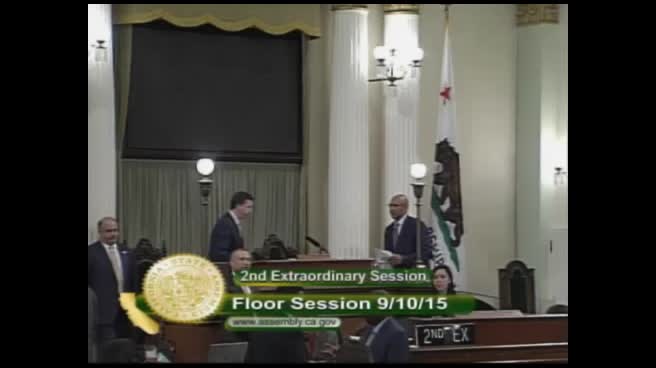 42SEC
Assembly Floor
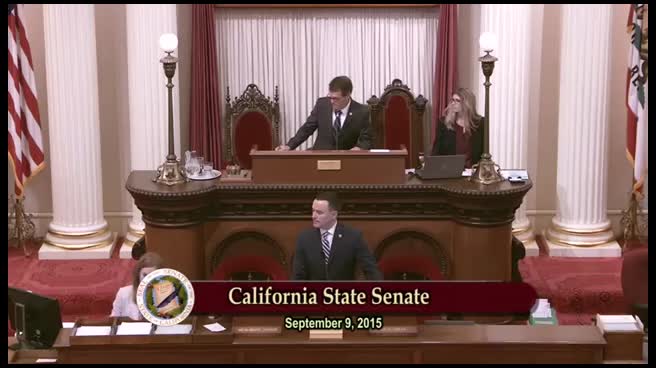 1MIN
Senate Floor
 1MIN
Senate Floor
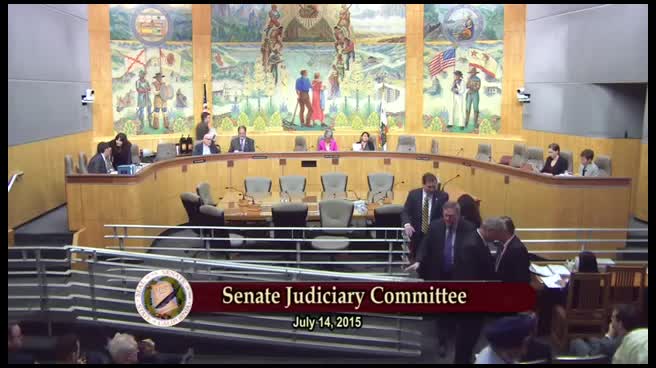 5MIN
Senate Standing Committee on Judiciary
 8MIN
Senate Standing Committee on Governmental Organization
 1MIN
Assembly Floor
 3MIN
Assembly Standing Committee on Appropriations
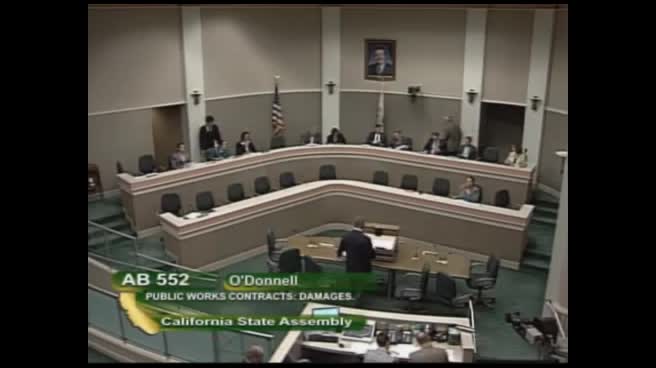 14MIN
Assembly Standing Committee on Judiciary
Bill Author

Bill Co-Author(s):