AB 57: Telecommunications: wireless telecommunication facilities.
- Session Year: 2015-2016
- House: Assembly
- Latest Version Date: 2015-10-09
Existing law requires a city, including a charter city, or county to administratively approve an application for a collocation facility on or immediately adjacent to a wireless telecommunications collocation facility, as defined, through the issuance of a building permit or a nondiscretionary permit, as specified. Existing law prohibits a city or county from taking certain actions as a condition of approval of an application for a permit for construction or reconstruction for a development project for a wireless telecommunications facility.
Under existing federal law, the Federal Communications Commission issued rulings establishing reasonable time periods within which a local government is required to act on a collocation or siting application for a wireless telecommunications facility.
This bill would provide that a collocation or siting application for a wireless telecommunications facility is deemed approved if the city or county fails to approve or disapprove the application within the reasonable time periods specified in applicable decisions of the Federal Communications Commission, all required public notices have been provided regarding the application, and the applicant has provided a notice to the city or county that the reasonable time period has lapsed.
Existing law requires a city, including a charter city, or county to administratively approve an application for a collocation facility on or immediately adjacent to a wireless telecommunications collocation facility, as defined, through the issuance of a building permit or a nondiscretionary permit, as specified. Existing law prohibits a city or county from taking certain actions as a condition of approval of an application for a permit for construction or reconstruction for a development project for a wireless telecommunications facility.
Under existing federal law, the Federal Communications Commission issued a ruling rulings establishing reasonable time periods within which a local government is required to act on a collocation or siting application for a wireless telecommunications facility.
This bill would provide that a collocation or siting application for a wireless telecommunications facility is deemed approved if the city or county fails to approve or disapprove the application within the reasonable time periods specified in applicable decisions of the Federal Communications Commission, all required public notices have been provided regarding the application, and the applicant has provided a notice to the city or county that the reasonable time period has lapsed.
Existing law requires a city, including a charter city, or county to administratively approve an application for a collocation facility on or immediately adjacent to a wireless telecommunications collocation facility, as defined, through the issuance of a building permit or a nondiscretionary permit, as specified. Existing law prohibits a city or county from taking certain actions as a condition of approval of an application for a permit for construction or reconstruction for a development project for a wireless telecommunications facility.
Under existing federal law, the Federal Communications Commission issued a ruling establishing reasonable time periods within which a local government is required to act on a collocation or siting application for a wireless telecommunications facility.
This bill would provide that a city or county is presumed to have failed to act within a reasonable time upon a collocation or siting application for a wireless telecommunications facility is deemed approved if the city or county fails to approve or disapprove the application within 90 days for a collocation application, or 150 days for a siting application other than a collocation application, and the reasonable time periods specified in applicable decisions of the Federal Communications Commission, all required public notices have been provided regarding the application. The bill would authorize these periods to be extended by mutual consent of the applicant and the city or county. The bill would provide that if a city or county fails to approve or disapprove an application for collocation or siting application for a wireless telecommunications facility within a reasonable period of time, the application is deemed approved. The bill would provide that, in any action in a court of competent jurisdiction pursuant to a specified federal law, a city or county bears the burden of proof to disprove the presumption that it failed to act within a reasonable time to approve a collocation or siting application for a wireless telecommunications facility. application, and the applicant has provided a notice to the city or county that the reasonable time period has lapsed.
Existing law requires a city, including a charter city, or county to administratively approve an application for a collocation facility on or immediately adjacent to a wireless telecommunications collocation facility, as defined, through the issuance of a building permit or a nondiscretionary permit, as specified. Existing law prohibits a city or county from taking certain actions as a condition of approval of an application for a permit for construction or reconstruction for a development project for a wireless telecommunications facility.
Under existing federal law, the Federal Communications Commission issued a ruling establishing reasonable time periods within which a local government is required to act on a colocation collocation or siting application for a wireless telecommunications facility.
This bill would provide that a colocation city or county is presumed to have failed to act within a reasonable time upon a collocation or siting application for a wireless telecommunications facility is deemed approved, if the city or county fails to approve or disapprove the application within the time periods established by the commission 90 days for a collocation application, or 150 days for a siting application other than a collocation application, and all required public notices have been provided regarding the application. The bill would authorize these periods to be extended by mutual consent of the applicant and the city or county. The bill would provide that if a city or county fails to approve or disapprove an application for collocation or siting application for a wireless telecommunications facility within a reasonable period of time, the application is deemed approved. The bill would provide that, in any action in a court of competent jurisdiction pursuant to a specified federal law, a city or county bears the burden of proof to disprove the presumption that it failed to act within a reasonable time to approve a collocation or siting application for a wireless telecommunications facility.
Existing law requires a city, including a charter city, or county to administratively approve an application for a collocation facility on or immediately adjacent to a wireless telecommunications collocation facility, as defined, through the issuance of a building permit or a nondiscretionary permit, as specified. Existing law prohibits a city or county from taking certain actions as a condition of approval of an application for a permit for construction or reconstruction for a development project for a wireless telecommunications facility.
Under existing federal law, the Federal Communications Commission issued a ruling establishing reasonable time periods within which a local government is required to act on a colocation or siting application for a wireless telecommunications facility.
This bill would provide that a colocation or siting application for a wireless telecommunications facility is deemed approved, if the city or county fails to approve or disapprove the application within the time periods established by the commission and all required public notices have been provided regarding the application.
The existing federal Telecommunications Act of 1996 preempts any state or local statute or regulation that may prohibit or have the effect of prohibiting the ability of any entity to provide any interstate or intrastate telecommunications service. However, this provision does not prohibit a state from imposing, on a competitively neutral basis, requirements necessary to preserve and advance universal service, protect the public safety and welfare, ensure the continued quality of telecommunications services, and safeguard the rights of consumers, nor does it prevent a state or local government from managing the public rights-of-way or requiring fair and reasonable compensation from telecommunications providers, on a competitively neutral and nondiscriminatory basis, for use of public rights-of-way on a nondiscriminatory basis.
Under existing law, telegraph or telephone corporations may construct lines of telegraph or telephone lines along and upon any public road or highway, along or across any of the waters or lands within the state, and may erect related poles, posts, piers, abutments, and other necessary fixtures of their lines, but may not incommode the public use of the road or highway or interrupt the navigation of the waters. Existing law declares the intent of the Legislature that, consistent with this authorization, municipalities have the right to exercise reasonable control as to the time, place, and manner in which roads, highways, and waterways are accessed, but that for the control to be reasonable it must, at a minimum, be applied to all entities in an equivalent manner.
Existing law establishes the California Broadband Council in state government for the purpose of promoting broadband deployment in unserved and underserved areas of the state and broadband adoption throughout the state, imposes specified duties on the council relating to that purpose, and specifies the membership of the council.
This bill would state the intent of the Legislature to enact legislation to promote the deployment of communications infrastructure by removing barriers to investment. The bill would add the President of the Board of Directors of the League of California Cities and the President of the Executive Committee of the California State Association of Counties, or their respective designees, to the membership of the council.
The existing federal Telecommunications Act of 1996 preempts any state or local statute or regulation that may prohibit or have the effect of prohibiting the ability of any entity to provide any interstate or intrastate telecommunications service, but service. However, this provision does not prohibit a state from imposing imposing, on a competitively neutral basis, requirements necessary to preserve and advance universal service, protect the public safety and welfare, ensure the continued quality of telecommunications services, and safeguard the rights of consumers. The prohibition also contains a safe harbor that does not affect the authority of consumers, nor does it prevent a state or local government to manage from managing the public rights-of-way or to require requiring fair and reasonable compensation from telecommunications providers, on a competitively neutral and nondiscriminatory basis, for use of public rights-of-way on a nondiscriminatory basis.
Under existing law, telegraph or telephone corporations may construct lines of telegraph or telephone lines along and upon any public road or highway, along or across any of the waters or lands within the state, and may erect related poles, posts, piers, abutments, and other necessary fixtures of their lines, but may not incommode the public use of the road or highway or interrupt the navigation of the waters. Existing law declares the intent of the Legislature that that, consistent with this authorization, municipalities have the right to exercise reasonable control as to the time, place, and manner in which roads, highways, and waterways are accessed, but that for the control to be reasonable it must, at a minimum, be applied to all entities in an equivalent manner.
Existing law establishes the California Broadband Council in state government for the purpose of promoting broadband deployment in unserved and underserved areas of the state and broadband adoption throughout the state, imposes specified duties on the council relating to that purpose, and specifies the membership of the council.
This bill would state the intent of the Legislature to enact legislation to promote the deployment of communications infrastructure by removing barriers to investment. The bill would add the President of the Board of Directors of the League of California Cities and the President of the Executive Committee of the California State Association of Counties, or their respective designees, to the membership of the council.
The existing federal Telecommunications Act of 1996 preempts any state or local statute or regulation that may prohibit or have the effect of prohibiting the ability of any entity to provide any interstate or intrastate telecommunications service, but does not prohibit a state from imposing on a competitively neutral basis, requirements necessary to preserve and advance universal service, protect the public safety and welfare, ensure the continued quality of telecommunications services, and safeguard the rights of consumers. The prohibition also contains a safe harbor that does not affect the authority of a state or local government to manage the public rights-of-way or to require fair and reasonable compensation from telecommunications providers, on a competitively neutral and nondiscriminatory basis, for use of public rights-of-way on a nondiscriminatory basis.
Under existing law, telegraph or telephone corporations may construct lines of telegraph or telephone lines along and upon any public road or highway, along or across any of the waters or lands within the state, and may erect related poles, posts, piers, abutments, and other necessary fixtures of their lines, but may not incommode the public use of the road or highway or interrupt the navigation of the waters. Existing law declares the intent of the Legislature that consistent with this authorization, municipalities have the right to exercise reasonable control as to the time, place, and manner in which roads, highways, and waterways are accessed, but that for the control to be reasonable it must, at a minimum, be applied to all entities in an equivalent manner.
This bill would state the intent of the Legislature to enact legislation to promote the deployment of communications infrastructure by removing barriers to investment.
(a)A collocation or siting application for a wireless telecommunications facility, as defined in Section 65850.6, shall be deemed approved if all of the following occur:
(1)The city or county fails to approve or disapprove the application within a reasonable period of time in accordance with the time periods and procedures established by applicable FCC decisions. The reasonable period of time may be tolled to accommodate timely requests for information required to complete the application or may be extended by mutual agreement between the applicant and the local government, consistent with applicable FCC decisions.
(2)The applicant has provided all public notices regarding the application that the applicant is required to provide under applicable laws consistent with the public notice requirements for the application.
(3)(A)The applicant has provided notice to the city or county that the reasonable time period has lapsed and that the application is deemed approved pursuant to this section.
(B)Within 30 days of the notice provided pursuant to subparagraph (A), the city or county may seek judicial review of the operation of this section on the application.
(b)This section does not apply to eligible facilities requests.
(c)The Legislature finds and declares that a wireless telecommunications facility has a significant economic impact in California and is not a municipal affair as that term is used in Section 5 of Article XI of the California Constitution, but is a matter of statewide concern.
(d)As used in this section, the following terms have the following meanings:
(1)Applicable FCC decisions means In re Petition for Declaratory Ruling, 24 FCC Rcd. 13994 (2009) and In the Matter of Acceleration of Broadband Deployment by Improving Wireless Facilities Siting Policies, Report and Order, 29 FCC Rcd. 12865 (2014).
(2)Eligible facilities request has the same meaning as in Section 1455 of Title 47 of the United States Code.
(e)Except as provided in subdivision (a), nothing in this section limits or affects the authority of a city or county over decisions regarding the placement, construction, and modification of a wireless telecommunications facility.
(f)Due to the unique duties and infrastructure requirements for the swift and effective deployment of firefighters, this section does not apply to a collocation or siting application for a wireless telecommunications facility where the project is proposed for placement on fire department facilities.
(a)A collocation or siting application for a wireless telecommunications facility, as defined in Section 65850.6, shall be deemed approved if all of the following occur:
(1)The city or county fails to approve or disapprove the application within a reasonable period of time in accordance with the time periods and procedures established by applicable FCC decisions. The reasonable period of time may be tolled to accommodate timely requests for information required to complete the application or may be extended by mutual agreement between the applicant and the local government, consistent with applicable FCC decisions.
(2)The applicant has provided all public notices regarding the application that the applicant is required to provide under applicable laws consistent with the public notice requirements for the application.
(3)(A)The applicant has provided notice to the city or county that the reasonable time period has lapsed and that the application is deemed approved pursuant to this section.
(B)Within 30 days of the notice provided pursuant to subparagraph (A), the city or county may seek judicial review of the operation of this section on the application.
(b)This section does not apply to eligible facilities requests.
(c)The Legislature finds and declares that a wireless telecommunications facility has a significant economic impact in California and is not a municipal affair as that term is used in Section 5 of Article XI of the California Constitution, but is a matter of statewide concern.
(d)As used in this section, the following terms have the following meanings:
(1)Applicable FCC decisions means In re Petition for Declaratory Ruling, 24 FCC Rcd. 13994 (2009) and In the Matter of Acceleration of Broadband Deployment by Improving Wireless Facilities Siting Policies, Report and Order, 29 FCC Rcd. 12865 (2014), as they may be modified or superseded by subsequent decisions of the Federal Communications Commission. (2014).
(2)Eligible facilities request has the same meaning as in Section 1455 of Title 47 of the United States Code.
(e)Except as provided in subdivision (a), nothing in this section limits or affects the authority of a city or county over decisions regarding the placement, construction, and modification of a wireless telecommunications facility.
(f)Due to the unique duties and infrastructure requirements for the swift and effective deployment of firefighters, this section does not apply to a collocation or siting application for a wireless telecommunications facility where the project is proposed for placement on fire department facilities.
(a)(1)A city or county is presumed to have failed to act within a reasonable time upon a A collocation or siting application for a previously permitted wireless telecommunications facility, as defined in Section 65850.6, shall be deemed approved if both all of the following occur:
(A)
(1)The city or county fails to approve or disapprove the completed application within 90 days. When an application is incomplete as filed, the 90-day limitation does not run during that period of time that it takes the applicant to respond to the city or countys request for additional information. a reasonable period of time in accordance with the time periods and procedures established by applicable FCC decisions. The reasonable period of time may be tolled to accommodate timely requests for information required to complete the application or may be extended by mutual agreement between the applicant and the local government, consistent with applicable FCC decisions.
(B)All
(2)The applicant has provided all public notices regarding the application have been provided that the applicant is required to provide under applicable laws consistent with the public notice requirements for the application.
(2)A city or county is presumed to have failed to act within a reasonable time upon a siting application for a wireless telecommunications facility, other than a collocation application, if both of the following occur:
(A)The city or county fails to approve or disapprove the completed application within 150 days. When an application is incomplete as filed, the 150-day limitation does not run during that period of time that it takes the applicant to respond to the city or countys request for additional information.
(B)All public notices regarding the application have been provided consistent with the public notice requirements for the application.
(3)The 90-day and 150-day periods of paragraphs (1) and (2) may be extended by mutual consent of the applicant and the city or county.
(4)If a city or county fails to approve or disapprove an application for a collocation or siting application for a wireless telecommunications facility within a reasonable period of time, the application is deemed approved.
(5)In any action in a court of competent jurisdiction pursuant to Section 332 (c)(7)(B)(v) of Title 47 of the United States Code, a city or county bears the burden of proof to disprove the presumption that it did not act within a reasonable time to approve or disapprove an application pursuant to paragraph (1) or (2). The grounds that the city or county may show to overcome the presumption of a failure to act within a reasonable time include, but are not limited to, the following:
(A)Novel or unusual circumstances prevented completion of review of the application within the 90-day or 150-day period.
(B)A complete review of the application within the prescribed 90-day or 150-day period would require the city or county to give preferential treatment to the applicant over other types of land use applications.
(3)(A)The applicant has provided notice to the city or county that the reasonable time period has lapsed and that the application is deemed approved pursuant to this section.
(B)Within 30 days of the notice provided pursuant to subparagraph (A), the city or county may seek judicial review of the operation of this section on the application.
(b)This section does not apply to eligible facilities requests.
(b)
(c)The Legislature finds and declares that a wireless telecommunications facility has a significant economic impact in California and is not a municipal affair as that term is used in Section 5 of Article XI of the California Constitution, but is a matter of statewide concern.
(d)As used in this section, the following terms have the following meanings:
(1)Applicable FCC decisions means In re Petition for Declaratory Ruling, 24 FCC Rcd. 13994 (2009) and In the Matter of Acceleration of Broadband Deployment by Improving Wireless Facilities Siting Policies, Report and Order, 29 FCC Rcd. 12865 (2014), as they may be modified or superseded by subsequent decisions of the Federal Communications Commission.
(2)Eligible facilities request has the same meaning as in Section 1455 of Title 47 of the United States Code.
(a)(1)A colocation or siting city or county is presumed to have failed to act within a reasonable time upon a collocation application for a previously permitted wireless telecommunications facility, as defined in Section 65850.6, shall be deemed approved if both of the following occur:
(1)
(A)The city or county fails to approve or disapprove the completed application within the time periods established by the Federal Communications Commission in In re Petition for Declaratory Ruling, 24 FCC Rcd. 13994 (2009). 90 days. When an application is incomplete as filed, the 90-day limitation does not run during that period of time that it takes the applicant to respond to the city or countys request for additional information.
(2)
(B)All public notices regarding the application have been provided consistent with the public notice requirements for the application.
(2)A city or county is presumed to have failed to act within a reasonable time upon a siting application for a wireless telecommunications facility, other than a collocation application, if both of the following occur:
(A)The city or county fails to approve or disapprove the completed application within 150 days. When an application is incomplete as filed, the 150-day limitation does not run during that period of time that it takes the applicant to respond to the city or countys request for additional information.
(B)All public notices regarding the application have been provided consistent with the public notice requirements for the application.
(3)The 90-day and 150-day periods of paragraphs (1) and (2) may be extended by mutual consent of the applicant and the city or county.
(4)If a city or county fails to approve or disapprove an application for a collocation or siting application for a wireless telecommunications facility within a reasonable period of time, the application is deemed approved.
(5)In any action in a court of competent jurisdiction pursuant to Section 332 (c)(7)(B)(v) of Title 47 of the United States Code, a city or county bears the burden of proof to disprove the presumption that it did not act within a reasonable time to approve or disapprove an application pursuant to paragraph (1) or (2). The grounds that the city or county may show to overcome the presumption of a failure to act within a reasonable time include, but are not limited to, the following:
(A)Novel or unusual circumstances prevented completion of review of the application within the 90-day or 150-day period.
(B)A complete review of the application within the prescribed 90-day or 150-day period would require the city or county to give preferential treatment to the applicant over other types of land use applications.
(b)The Legislature finds and declares that a wireless telecommunications facility has a significant economic impact in California and is not a municipal affair as that term is used in Section 5 of Article XI of the California Constitution, but is a matter of statewide concern.
(a)A colocation or siting application for a wireless telecommunications facility, as defined in Section 65850.6, shall be deemed approved if both of the following occur:
(1)The city or county fails to approve or disapprove the application within the time periods established by the Federal Communications Commission in In re Petition for Declaratory Ruling, 24 FCC Rcd. 13994 (2009).
(2)All public notices regarding the application have been provided consistent with the public notice requirements for the application.
(b)The Legislature finds and declares that a wireless telecommunications facility has a significant economic impact in California and is not a municipal affair as that term is used in Section 5 of Article XI of the California Constitution, but is a matter of statewide concern.
SECTION 1.The Legislature finds and declares all of the following:
(a)California consumers and businesses have adopted new, Internet-based technologies and mobile connections at an unprecedented rate. Internet-based products and devices, including smartphones and tablets, are providing consumers everywhere with new choices to connect, to communicate, and to access information and entertainment.
(b)The deployment of faster, more robust, and advanced wireless and wireline broadband infrastructure is essential to ensuring there is sufficient capacity and coverage to support the increasing reliance of California residents on broadband services.
(c)State and local review of broadband infrastructure deployment serves important interests, but at the same time, California must take steps to ensure that requirements do not hinder investment. State and local permitting processes should be designed to eliminate unnecessary barriers and spur deployment of infrastructure. This includes streamlining permitting requirements to reduce delay and cost, and the creation of uniform processes.
(d)New and upgraded infrastructure delivers a vast array of consumer and community benefits, including important improvements to public safety, education, and healthcare. The power of mobile communications is a critical tool for first responders in emergency situations. According to the Federal Communications Commission, nearly 70 percent of 911 calls are made from mobile telephones, and that percentage is growing.
(e)As we continue the transition to a knowledge-based, technology-driven economy, California must invest in students and provide them with the proper tools and technologies to bolster academic achievement, starting with expanding access to high-speed broadband Internet and next-generation Internet Protocol-based networks.
(f)Facilitating broadband deployment additionally plays a key role in advancing telemedicine and mobile health applications, which can help Californians remotely monitor their health while reducing medical costs.
(g)Wireless broadband is also key to economic development and a driver for new business and jobs. Businesses increasingly depend on strong wireless broadband service to carry their employees through the work day. An estimated 94 percent of small businesses surveyed use smartphones to conduct business and mobile technologies are saving the countrys small businesses more than sixty-five billion dollars ($65,000,000,000) a year.
(h)Broadband infrastructure deployment creates jobs. A 2013 study conducted by the research firm Information Age Economics projects that wireless infrastructure investment will generate as much as one trillion two-hundred billion dollars ($1,200,000,000,000) in economic growth while creating over 1.2 million new jobs, nationally, over the next five years.
(i)It is the intent of the Legislature to enact legislation to promote the deployment of communications infrastructure by removing barriers to investment. Removing investment barriers is critical to meeting the surging demand by California residents for advanced wireless and wireline broadband technologies and services, supporting and enhancing critical public safety needs, and bridging the digital divide by increasing access for more Californians to improved education, health care, and economic development opportunities.
SEC. 2.Section 8886 of the Government Code is amended to read:8886.(a)The membership of the California Broadband Council shall include all of the following:
(1)The Director of Technology, or his or her designee.
(2)The President of the Public Utilities Commission, or his or her designee.
(3)The Director of Emergency Services, or his or her designee.
(4)The Superintendent of Public Instruction, or his or her designee.
(5)The Director of General Services, or his or her designee.
(6)The Secretary of Transportation, or his or her designee.
(7)The President of the California Emerging Technology Fund, or his or her designee.
(8)A member of the Senate, appointed by the Senate Committee on Rules.
(9)A member of the Assembly, appointed by the Speaker of the Assembly.
(10)The President of the Board of Directors of the League of California Cities, or his or her designee.
(11)The President of the Executive Committee of the California State Association of Counties, or his or her designee.
(b)Members of the Legislature appointed to the council shall participate in the activities of the council to the extent that their participation is not incompatible with their positions as Members of the Legislature.
The Legislature finds and declares all of the following:
(a)California consumers and businesses have adopted new, Internet-based technologies and mobile connections at an unprecedented rate. Internet-based products and devices, including smartphones and tablets, are providing consumers everywhere with new choices to connect, to communicate, and to access information and entertainment.
(b)The deployment of faster, more robust, and advanced wireless and wireline broadband infrastructure is essential to ensuring there is sufficient capacity and coverage to support the increasing reliance of California residents on broadband services.
(c)State and local review of broadband infrastructure deployment serves important interests, but at the same time, California must take steps to ensure that requirements do not hinder investment. State and local permitting processes should be designed to eliminate unnecessary barriers and spur deployment of infrastructure. This includes streamlining permitting requirements to reduce delay and cost, and the creation of uniform processes.
(d)New and upgraded infrastructure delivers a vast array of consumer and community benefits, including important improvements to public safety, education, and healthcare. The power of mobile communications is a critical tool for first responders in emergency situations. According to the Federal Communications Commission, nearly 70 percent of 911 calls are made from mobile telephones, and that percentage is growing.
(e)As we continue the transition to a knowledge-based, technology-driven economy, California must invest in students and provide them with the proper tools and technologies to bolster academic achievement, starting with expanding access to high-speed broadband Internet and next-generation Internet Protocol-based networks.
(f)Facilitating broadband deployment additionally plays a key role in advancing telemedicine and mobile health applications, which can help Californians remotely monitor their health while reducing medical costs.
(g)Wireless broadband is also key to economic development and a driver for new business and jobs. Businesses increasingly depend on strong wireless broadband service to carry their employees through the work day. An estimated 94 percent of small businesses surveyed use smartphones to conduct business and mobile technologies are saving the countrys small businesses more than sixty-five billion dollars ($65,000,000,000) a year.
(h)Broadband infrastructure deployment creates jobs. A 2013 study conducted by the research firm Information Age Economics projects that wireless infrastructure investment will generate as much as one trillion two-hundred billion dollars ($1,200,000,000,000) in economic growth while creating over 1.2 million new jobs, nationally, over the next five years.
(i)It is the intent of the Legislature to enact legislation to promote the deployment of communications infrastructure by removing barriers to investment. Removing investment barriers is critical to meeting the surging demand by California residents for advanced wireless and wireline broadband technologies and services, supporting and enhancing critical public safety needs, and bridging the digital divide by increasing access for more Californians to improved education, health care, and economic development opportunities.
|
Date
|
Status
|
|---|---|
| May 22, 2015 | Read third time. Passed. Ordered to the Senate. (Ayes 66. Noes 4. Page 1552.) |
| Oct 9, 2015 | Chaptered by Secretary of State - Chapter 685, Statutes of 2015. |
| Oct 9, 2015 | Approved by the Governor. |
| Sep 3, 2015 | Enrolled and presented to the Governor at 4 p.m. |
| Aug 27, 2015 | Senate amendments concurred in. To Engrossing and Enrolling. (Ayes 66. Noes 8.). |
| Aug 27, 2015 | Senate amendments concurred in. To Engrossing and Enrolling. (Ayes 66. Noes 8. Page 2604.). |
| Aug 25, 2015 | In Assembly. Concurrence in Senate amendments pending. May be considered on or after August 27 pursuant to Assembly Rule 77. |
| Aug 24, 2015 | Read third time. Passed. Ordered to the Assembly. (Ayes 28. Noes 6. Page 2154.). |
| Aug 24, 2015 | Read third time. Passed. Ordered to the Assembly. |
| Aug 18, 2015 | Read second time and amended. Ordered to third reading. |
| Aug 17, 2015 | From committee: Amend, and do pass as amended. (Ayes 6. Noes 1.) (July 15). |
| Jul 8, 2015 | From committee chair, with author's amendments: Amend, and re-refer to committee. Read second time, amended, and re-referred to Com. on GOV. & F. |
| Jul 2, 2015 | Read second time and amended. Re-referred to Com. on GOV. & F. |
| Jul 1, 2015 | From committee: Amend, and do pass as amended and re-refer to Com. on GOV. & F. (Ayes 8. Noes 1.) (June 16). |
| Jun 4, 2015 | Referred to Coms. on E., U., & C. and GOV. & F. |
| Dec 2, 2014 | Introduced. To print. |
| May 22, 2015 | Read third time. Passed. Ordered to the Senate. |
| May 22, 2015 | In Senate. Read first time. To Com. on RLS. for assignment. |
| May 18, 2015 | Read second time. Ordered to third reading. |
| May 14, 2015 | From committee: Do pass. (Ayes 7. Noes 0.) (May 13). |
| Apr 13, 2015 | From committee: Be re-referred to Com. on L. GOV. Re-referred. (Ayes 11. Noes 0.) (April 13). Re-referred to Com. on L. GOV. |
| Apr 9, 2015 | Re-referred to Com. on RLS. pursuant to Assembly Rule 96. |
| Apr 7, 2015 | Re-referred to Com. on U. & C. |
| Apr 6, 2015 | Re-referred to Com. on U. & C. |
| Apr 6, 2015 | From committee chair, with author's amendments: Amend, and re-refer to Com. on U. & C. Read second time and amended. |
| Mar 26, 2015 | Referred to Com. on U. & C. |
| Mar 26, 2015 | From committee chair, with author's amendments: Amend, and re-refer to Com. on U. & C. Read second time and amended. |
| Jan 5, 2015 | Read first time. |
| Dec 3, 2014 | From printer. May be heard in committee January 2. |
|
Date
|
Description
|
Location
|
Votes
|
|
|---|---|---|---|---|
| Aug 27, 2015 | AB 57 QUIRK Concurrence in Senate Amendments | Assembly Floor |
Passed |
|
| Aug 24, 2015 | Assembly 3rd Reading AB57 Quirk By Hueso | Senate Floor |
Passed |
|
| Jul 15, 2015 | Do pass as amended | Senate Standing Committee on Governance and Finance |
Passed |
|
| Jun 16, 2015 | Do pass as amended, but first amend, and re-refer to the Committee on [Governance and Finance] | Senate Standing Committee on Energy, Utilities and Communications |
Passed |
|
| May 22, 2015 | AB 57 QUIRK Assembly Third Reading | Assembly Floor |
Passed |
|
| May 13, 2015 | Do pass. | Assembly Standing Committee on Local Government |
Passed |
|
| Apr 13, 2015 | Be re-referred to the Committee on [Local Government] | Assembly Standing Committee on Rules |
Passed |
This list shows positions taken on this bill by organizations on the date displayed, which is linked to the original source.
Positions by individuals are not included.
|
Organization
|
Position
|
Date
|
|---|---|---|
| Alameda County Board of Supervisors | * Against | Jun 16, 2015 |
| American Planning Association - California Chapter | ** Against | Aug 24, 2015 |
| Association Of Environmental Professionals | ** Against | Aug 24, 2015 |
| At&T | ** Support | Aug 24, 2015 |
| Bay Area Council | ** Support | Aug 24, 2015 |
| Berkeley, City Of | ** Against | Aug 24, 2015 |
| Brentwood Community Council | ** Against | Aug 24, 2015 |
| Brentwood Homeowners Association | ** Against | Aug 24, 2015 |
| Burbank, City of | ** Against | Aug 24, 2015 |
| California Asian Pacific Chamber Of Commerce | ** Support | Aug 24, 2015 |
| California Chamber Of Commerce | ** Support | Aug 24, 2015 |
| California Hispanic Chamber Of Commerce | ** Support | Aug 24, 2015 |
| California Manufacturers And Technology Association | * Support | Jun 16, 2015 |
| California State Association Of Counties | ** Against | Aug 24, 2015 |
| California Wireless Association | ** Support | Aug 24, 2015 |
| Camarillo, City Of | * Against | Jun 16, 2015 |
| Cerritos, City Of | ** Against | Aug 24, 2015 |
| City of Baldwin Park | ** Against | Aug 24, 2015 |
| City Of Beverly Hills | ** Against | Aug 24, 2015 |
| City of Calabasas | ** Against | Aug 24, 2015 |
| City of Culver City | ** Against | Aug 24, 2015 |
| City of Fremont | ** Against | Aug 24, 2015 |
| City Of Huntington Beach | ** Against | Aug 24, 2015 |
| City of La Caxf1ada Flintridge | ** Against | Aug 24, 2015 |
| City Of La Quinta | ** Against | Aug 24, 2015 |
| City Of Ontario | ** Against | Aug 24, 2015 |
| City of Oxnard | ** Against | Aug 24, 2015 |
| City of Piedmont | ** Against | Aug 24, 2015 |
| City of San Francisco | ** Against | Jun 16, 2015 |
| City Of Seaside | ** Against | Jun 16, 2015 |
| City of Vista | ** Against | Jun 16, 2015 |
| CompTIA | ** Support | Aug 24, 2015 |
| County Of San Diego | * Against | Jun 16, 2015 |
| County of San Francisco | ** Against | Jun 16, 2015 |
| Ctia - The Wireless Association | ** Support | Aug 24, 2015 |
| Diamond Bar, City Of | ** Against | Aug 24, 2015 |
| Ecological Options Network | ** Against | Jun 16, 2015 |
| Encinitas, City Of | ** Against | Aug 24, 2015 |
| Glendale, City Of | ** Against | Aug 24, 2015 |
| Irvine County's Caucus | * Against | Jun 16, 2015 |
| La Canada Flintridge City Of | * Against | Jun 16, 2015 |
| Laguna Beach, City Of | ** Against | Aug 24, 2015 |
| Lakewood, City Of | * Against | Jun 16, 2015 |
| League Of California Cities | * Against | Jun 16, 2015 |
| Los Angeles County Board of Supervisors | * Against | Jun 16, 2015 |
| Los Angeles, City Of | ** Against | Aug 24, 2015 |
| Marin County Council of Mayors and Council | ** Against | Jun 16, 2015 |
| Marin Telecommunications Agency | ** Against | Jun 16, 2015 |
| National Emergency Number Association - The 911 Association | ** Support | Aug 24, 2015 |
| Norwalk, City Of And Norwalk Redevelopment Agency | ** Against | Aug 24, 2015 |
| Orange County Business Council | ** Support | Aug 24, 2015 |
| PCIA - The Wireless Infrastructure Association | ** Support | Aug 24, 2015 |
| Qualcomm, Inc. | * Support | Jun 16, 2015 |
| Rancho Cucamonga, City Of | * Against | Jun 16, 2015 |
| Roseville, City Of | * Against | Jun 16, 2015 |
| Rural Counties | * Against | Jun 16, 2015 |
| Sacramento County Board of Supervisors | * Against | Jun 16, 2015 |
| Sacramento, County Of | * Against | Jun 16, 2015 |
| San Bernardino County Board of Supervisors | * Against | Jun 16, 2015 |
| San Diego County Board of Supervisors | * Against | Jun 16, 2015 |
| San Francisco | * Against | Jun 16, 2015 |
| San Gabriel; City Of | ** Against | Jun 16, 2015 |
| San Rafael/Marin County Council Of Mayors & Council Members, City Of | * Against | Jun 16, 2015 |
| Santa Monica, City Of | * Against | Jun 16, 2015 |
| Silicon Valley Leadership Group | ** Support | Aug 24, 2015 |
| Southwest California Legislative Council | ** Support | Aug 24, 2015 |
| Sprint | ** Support | Aug 24, 2015 |
| T-Mobile | ** Support | Aug 24, 2015 |
| TechAmerica | ** Support | Aug 24, 2015 |
| Technet | ** Support | Aug 24, 2015 |
| Thousand Oaks, City Of | * Against | Jun 16, 2015 |
| Torrance, City Of | * Against | Jun 16, 2015 |
| TracFone Wireless | * Support | Jun 16, 2015 |
| Urban Counties Caucus | * Indeterminate | May 13, 2015 |
| VALLEY INDUSTRY AND COMMERCE ASSOCIATION | ** Support | Aug 24, 2015 |
| Ventura County Board of Supervisors | * Against | Jun 16, 2015 |
| Verizon | ** Support | Aug 24, 2015 |
| World Institute on Disability | ** Support | Aug 24, 2015 |
AB 57
Page 7
CONCURRENCE IN SENATE AMENDMENTS
AB 57
(Quirk)
As Amended August 18, 2015
Majority vote
ASSEMBLY: |
66-4 |
(May 22, 2015) |
SENATE: |
27-6 |
(August 24, 2015) |
Original Committee Reference: L. GOV.
SUMMARY: Requires a collocation or siting application for a wireless telecommunications facility to be deemed approved, if specified conditions are met, and applies these provisions to all counties and cities, including charter cities.
The Senate amendments:
Declare that the provisions of this bill do not apply to eligible facilities requests, and define the term "eligible facilities request" to have the same meaning as in 47 United States Code Section 1455.
Revise language in this bill to require a city or county to approve or disapprove the application within a reasonable period of time in accordance with the time periods and procedures established by applicable Federal Communications Commission (FCC) decisions, and define the term "applicable FCC decisions" to mean in re Petition for Declaratory Ruling, 24 FCC Rcd. 13994 (2009) and In the Matter of Acceleration of Broadband Deployment by Improving Wireless Facilities Siting Policies, Report and Order, 29 FCC Rcd. 12865 (2014).
Allow the reasonable period of time to be tolled to accommodate timely requests for information required to complete the application, or allow it to be extended by mutual agreement between the applicant and the local government, consistent with applicable FCC decisions.
Add, as a condition for the application to be deemed approved, that the applicant has provided notice to the city or county that the reasonable time period has lapsed and that the application is deemed approved.
Allow, within 30 days of the notice required in 4) above, the city or county to seek judicial review of the operation of this bill's provisions on the application.
Declare that nothing limits or affects the authority of a city or county over decisions regarding the placement, construction and modification of a wireless telecommunications facility, except the provisions contained in the bill that require a collocation or siting application for a wireless telecommunications facility to be deemed approved, when specified conditions are met.
Declare that due to the unique duties and infrastructure requirements for the swift and effective deployment of firefighters that the bill's provisions do not apply to a collocation or siting application for a wireless telecommunications facility where the project is proposed for placement of fire department facilities.
EXISTING LAW:
Defines the following terms:
"Collocation facility" to mean the placement or installation of wireless facilities, including antennas, and related equipment, on, or immediately adjacent to, a wireless telecommunications collocation facility.
"Wireless telecommunications facility" to mean equipment and network components, such as towers, utility poles, transmitters, base stations, and emergency power systems that are integral to providing wireless telecommunications services.
"Wireless telecommunications collocation facility" to mean a wireless telecommunications facility that includes collocation facilities.
Provides that a collocation facility shall be a permitted use not subject to a city or county discretionary permit, if it satisfies the following requirements:
The collocation of facility is consistent with requirements for the wireless telecommunications collocation facility pursuant to 3) below, on which the collocation facility is proposed;
The wireless telecommunications collocation facility on which the collocation facility is proposed was subject to a discretionary permit by the city or county and an environmental impact report (EIR) was certified, or a negative declaration or mitigated negative declaration was adopted for the wireless telecommunications collocation facility in compliance with the California Environmental Quality Act (CEQA), the requirements of Public Resources Code Section 21166 do not apply, and the collocation facility incorporates required mitigation measures specified in that EIR, negative declaration, or mitigated negative declaration.
Provides that a wireless telecommunications collocation facility, where a subsequent collocation facility is a permitted use not subject to a city or county discretionary permit pursuant to 2) above, shall be subject to a city or county discretionary permit issued on or after January 1, 2007, and shall comply with all of the following:
City or county requirements for a wireless telecommunications collocation facility that specifies types of wireless telecommunications facilities that are allowed to include a collocation facility, or types of wireless telecommunications facilities that are allowed to include certain types of collocation facilities; height, location, bulk, and size of the wireless telecommunications collocation facility; percentage of the wireless telecommunications collocation facility that may be occupied by collocation facilities; and, aesthetic or design requirements for the wireless telecommunications collocation facility;
City or county requirements for a proposed collocation facility, including any types of collocation facilities that may be allowed on a wireless telecommunications collocation facility; height, location, bulk, and size of allowed collocation facilities; and, aesthetic or design requirements for a collocation facility;
State and local requirements, including the general plan, any applicable community plan or specific plan, and zoning ordinance; and,
CEQA through certification of an EIR, or adoption of a negative declaration or mitigated negative declaration.
Requires the city or county to hold at least one public hearing on the discretionary permit required pursuant to 3) above, and requires notice to be given as specified, unless otherwise required.
States that the Legislature finds and declares that a collocation facility has a significant economic impact in California and is not a municipal affair, but is a matter of statewide concern.
Limits the consideration of the environmental effects of radio frequency emissions by the city or county to that authorized by 47 United States Code Section 332(c)(7), as specified.
FISCAL EFFECT: None
COMMENTS:
Bill Summary. This bill requires a collocation or siting application for a wireless telecommunications facility to be deemed approved, if all of the following occur: a) the city or county fails to approve or disapprove the application within a reasonable period of time in accordance with the time periods and procedures established by applicable FCC decisions, as defined; b) the applicant has provided all public notices regarding the application that the applicant is required to provide under applicable laws consistent with the public notice requirements for the application; and, c) the applicant has provided notice to the city or county that the reasonable time period has lapsed and the application is deemed approved. This bill also allows a city or county, within 30 days of the notice that the reasonable time period has lapsed, to seek judicial review of the operation of this bill's provisions on the application, and declares that this bill does not apply to "eligible facilities requests," as defined in this bill.
This bill declares that a wireless telecommunications facility has a significant economic impact in California and is not a municipal affair, but is a matter of statewide concern, thus applying the requirements of this bill to all cities, including charter cities. This bill is sponsored by the author.
Author's Statement. According to the author, "In order to encourage the expansion of wireless networks, Congress passed the Telecommunications Act of 1996, which requires a local jurisdiction to act on a wireless facility colocation or siting application within a 'reasonable period of time.' As the entity charged with implementing the Act, the Federal Communications Commission (FCC), issued a declaratory ruling that a 'reasonable period of time' is presumptively 90 days to process collocation applications and 150 days to process all other applications.
"While the FCC's regulations were promulgated pursuant to the agency's rulemaking and adjudicatory authority, thus carrying the force of law, local jurisdictions charged with acting on these wireless facility applications often ignore the FCC's timeline. If the FCC deadlines are not met, the only remedy currently available to the provider seeking the permit is to sue the local jurisdiction in court.
"Instead of requiring the provider to seek a judicial remedy to enforce the FCC's timeline, AB 57 would provide that a wireless facility colocation or siting application that is not acted on by the local jurisdiction within the timeline shall be 'deemed approved.' Consistent with the FCC's finding that 'wireless service providers have faced lengthy and unreasonable delays in the consideration of their facility siting applications, and that the persistence of such delays is impeding the deployment of advanced and emergency services,' this bill would close a loophole that allows a local jurisdiction to effectively extend the timeline beyond that established by the FCC.
"Nothing in AB 57 limits or affects the authority of a local jurisdiction over siting decisions, as they still retain all existing rights to deny applications that do not meet the jurisdiction's lawful siting requirements. AB 57 simply provides a workable remedy for a local jurisdiction's failure to abide by existing federal deadlines."
Background on Siting of Wireless Facilities. In the Telecommunications Act of 1996, Congress imposed specific limitations on the traditional authority of state and local governments to regulate the location, construction, and modification of [towers and antennas], and incorporated those limitations into the federal Communications Act of 1934. Federal Communications Act, Section 201(b) empowers the FCC to "prescribe such rules and regulations as may be necessary in the public interest to carry out [its] provisions." The Act imposed five substantive limitations codified in 47 United States Code Section 332(c)(7)(B). One of those limitations, Section 332 (c)(7)(B)(ii), required state or local governments to act on wireless siting applications "within a reasonable period of time after the request is duly filed."
On November 18, 2009, the FCC released a Declaratory Ruling (In re Petition for Declaratory Ruling, 24 FCC Rcd. 13994 (2009)) in response to a July 11, 2008, petition filed by CTIA – The Wireless Association, asking the FCC to clarify provisions in Communications Act of 1934 Section 253 and Section 332 (c)(7), as amended, regarding state and local review of wireless facility siting applications. That Declaratory Ruling found that a "reasonable period of time" for a state or local government to act on a personal wireless service facility siting application is presumptively 90 days for collocation applications and presumptively 150 days for siting applications other than collocations, and that the lack of a decision within this timeframes constitutes a "failure to act" based on which a service provider may commence an action in court under Section 332(c)(7)(B)(v). The 2009 Declaratory Ruling noted that "by clarifying the statute in this manner, we recognize Congress' dual interests in promoting the rapid and ubiquitous deployment of advanced, innovative, and competitive services, and in preserving the substantial area of authority that Congress reserved to State and local governments to ensure that personal wireless service facility siting occurs in a manner consistent with each community's values."
The Cities of Arlington and San Antonio, Texas, sought review of the 2009 Declaratory Ruling in the Fifth Circuit. They argued that the FCC lacked authority to interpret Section 332(c)(7)(B)'s limitations. Relying on Circuit precedent, the Court upheld the presumptive 90- and 150- deadlines and entitled to Chevron deference. The Supreme Court of the United States granted certiorari to look at whether a court should apply Chevron to an agency's determination of its own jurisdiction. On May 20, 2013, the judgment of the Court of Appeals was affirmed by the Supreme Court, thus confirming that Congress has vested the FCC with general authority to administer the Communications Act through rulemaking and adjudication.
The Middle Class Tax Relief and Job Creation Act of 2012 (Spectrum Act) was signed into law by President Barack Obama on February 22, 2012, and included provisions regarding wireless facilities deployment. Section 6409(a) of the Spectrum Act states that "a state or local government may not deny, and shall approve, any eligible facilities request for a modification of an existing wireless tower or base station that does not substantially change the physical dimensions of such a tower or base station."
In a report released by the FCC on October 21, 2014, the FCC interpreted and implemented the "collocation" provisions of Middle Class Tax Relief and Job Creation Act of 2012, Section 6409(a). The report noted that Spectrum Act Section 6409(a) included a number of undefined terms, and the FCC adopted rules to clarify many of the terms and enforce their requirements. Among other measures, the FCC:
Clarified that Spectrum Act Section 6409(a) applies to support structures and to transmission equipment used in connection with any Commission-licensed or authorized wireless transmission;
Clarified that a modification "substantially changes" the physical dimensions of a tower or base station, as measured from the dimensions of the tower or base station inclusive of any modifications approved prior to the passage of the Spectrum Act, if it meets specified criteria;
Provided that states and localities may continue to enforce and condition approval on compliance with generally applicable building, structural, electrical, and safety codes and with other laws codifying objective standards reasonable related to health and safety;
Provided that a state or local government may only require applicants to provide documentation that is reasonably related to determining whether the eligible facilities request meets the requirements of the Spectrum Act Section 6409 (a);
Required, within 60 days from the date of filing, accounting for tolling, a state or local government to approve an application covered by Spectrum Act Section 6409 (a);
Provided that an application filed under Spectrum Act Section 6409 (a) is deemed granted, if a state or local government fails to act on it within the requisite time period.
The 2014 FCC report also clarified Communications Act Section 3329(c)(7) and the FCC's 2009 Declaratory Ruling, as follows:
Clarified, with regard to the FCC's determination in the 2009 Declaratory Ruling that a state or municipality may toll the running of the shot clock, if it notifies the applicant within 30 days of submission that its application is incomplete, that:
The timeframe begins to run when an application is first submitted, not when it is deemed complete by the reviewing government;
A determination of incompleteness tolls the shot clock only, if the state or local government provides notice to the applicant in writing within 30 days of the application's submission, specifically delineating all mission information, and specifying the code provision, ordinance, application instruction, or otherwise publically-stated procedures that require the information to be submitted;
Following an applicant's submission in response to a determination of incompleteness, the state or local government may reach a subsequent determination of incompleteness based solely on the applicant's failure to supply the specific information that was requested within the first 30 days;
The shot clock begins running again when the applicant makes its supplemental submission; however, the shot clock may again be tolled if the state or local government notifies the applicant within 10 days that the supplemental submission did not provide the specific information identified in the original notice delineating missing information.
Clarified that the presumptively reasonable timeframes run regardless of any applicable moratoria;
FCC declined to adopt an additional remedy for state or local government failures to act within the presumptively reasonable time limits.
On March 6, 2015, Montgomery County, Maryland filed a lawsuit in the United States Court of Appeals for the Fourth Circuit, petitioning for review of the 2014 FCC Report that made federal rules implementing Middle Class Tax Relief and Job Creation Act of 2012, Spectrum Act Section 6409(a), stating that the Report is inconsistent with the United States Constitution; an unlawful interpretation of Spectrum Act Section 6409(a) and other statutory provisions; arbitrary and capricious and an abuse of discretion; and otherwise contrary to law.
Policy Considerations. A joint coalition of the California State Association of Counties, the American Planning Association, California Chapter, the Urban Counties Caucus, the League of California Cities, the City of Los Angeles, the City and County of San Francisco, Los Angeles County, and the Rural County Representatives of California, in opposition the bill, raise the following concerns:
Clarity on CEQA. The joint coalition notes that the bill is silent on whether review must be completed during the shot-clock period.
Deemed Approved Rule. The joint coalition points out that the FCC refused to adopt the industry's request to issue a "deemed approved" rule, and therefore the bill goes beyond the scope of federal law and regulations.
Matters of Municipal Concern. The joint coalition is concerned that the bill provides wireless telecommunications facilities a higher priority under state law than other broadband providers using different technologies, ties the hands of municipalities, and sets a dangerous precedent of removing localities' power to make key land use decisions.
Arguments in Support. Supporters believe that this bill provides important guidelines and the appropriate balance to keep the permit process moving and promote needed wireless service improvements for consumers, business, government and public safety.
Arguments in Opposition. Opposition argues that this bill effectively eliminates the ability of local agencies to meet the needs and best interests of local communities on determining the siting and collocation of wireless facilities. Opposition notes that federal law and regulations are sufficient on the matter and no change to state law is needed.
Analysis Prepared by: Debbie Michel / L. GOV. / (916) 319-3958 FN: 0001469
AB 57
Page 14
|
Office of Senate Floor Analyses (916) 651-1520 Fax: (916) 327-4478 |
THIRD READING
Bill No: AB 57
Amended: 8/18/15 in Senate
SENATE ENERGY, U. & C. COMMITTEE: 8-1, 6/16/15
AYES: Hueso, Fuller, Cannella, Hertzberg, Hill, Lara, Morrell, Wolk
NOES: Leyva
NO VOTE RECORDED: McGuire, Pavley
SENATE GOVERNANCE & FIN. COMMITTEE: 6-1, 7/15/15
AYES: Hertzberg, Nguyen, Beall, Hernandez, Lara, Moorlach
NOES: Pavley
ASSEMBLY FLOOR: 66-4, 5/22/15 - See last page for vote
SUBJECT: Telecommunications: wireless telecommunication facilities
DIGEST: This bill provides that a collocation or siting application for a wireless telecommunications facility is deemed approved if the city or county fails to approve or disapprove the application within the reasonable time periods specified in applicable decisions of the Federal Communications Commission, all required public notices have been provided regarding application, and the applicant has provided a notice to the city or county that the reasonable time period has lapsed.
Existing law:
Establishes that every county or city may make and enforce within its limits all local, police, sanitary, and other ordinances and regulations not in conflict with general laws. (California Constitution, Section 7 of Article XI)
Requires every county and city to adopt a general plan that sets out planned uses for all of the area covered by the plan. (California Government Code §65000 et seq)
Requires cities’ and counties’ major land use decisions – including development permitting – must be consistent with their general plan.
Requires public notice to be given at least 10 days in advance of hearings where most permitting decisions will be made. Permits residents to appeal permitting decisions and other actions to either a board of appeals of the legislative body of the city or county.
Requires providers of wireless telecommunications services (“carriers”) must apply to cities and counties for permits to build structures or other wireless facilities that support wireless telecommunications equipment, like antennae and related devices.
Requires wireless carriers to seek local approval to place additional telecommunications equipment on structures where that equipment already exists, known as “collocations.”
Establishes specified limitations, preemptions and preservation of local zoning authority in relation to the siting of personal wireless service facilities as part of the many provisions of the Federal Telecommunication Act of 1996. (47 United States Code §332)
Provides that except as noted in the Federal Telecommunication Act of 1996, nothing in the Act shall limit or affect the authority of a state or local government or instrumentality thereof over decisions regarding the placement, construction, and modification of personal wireless service facilities. (47 United States Code §332)
Establishes that the regulation of the placement, construction, and modification of personal wireless service facilities by any state or local government or instrumentality thereof – (i) shall not unreasonably discriminate among providers of functionality equivalent services; and (ii) shall not prohibit or have the effect of prohibiting the provision of personal wireless services. (47 United States Code §332)
Establishes that a state or local government shall act on any request for authorization to place, construct, or modify personal wireless service facilities within a reasonable period of time after the request is duly filed with such government, taking into account the nature and scope of such request. (47 United States Code §332)
Requires that any decision by a state or local government to deny a request to place, construct, or modify personal wireless service facilities shall be in writing and supported by substantial evidence contained in a written record. (47 United States Code §332)
Provides that no state or local government may regulate the placement, construction, and modification of personal wireless service facilities on the bases of the environmental effects of radio frequency emissions to the extent that such facilities comply with the Federal Communications Commission (FCC) regulations concerning such emissions. Allows any person adversely affected by an act or failure to act by a state or local government that is inconsistent with the FCC compliance requirements related to radio frequency emissions may petition the FCC for relief. (47 United States Code §332)
Provides that any person adversely affected by any final action or failure to act by a state or local government that is inconsistent with this subparagraph may, within 30 days after such action or failure to act, commence an action in any court of competent jurisdiction. The court shall hear and decide such action on an expedited basis. (47 United States Code §332)
Limits the consideration of the environmental effects of radio frequency emissions by the city or county to that authorized by Section 332(c)(7) of Title 47 of the United States Code, as specified. (California Government Code §65850.6)
Provides that no state or local statute or regulation, or other state or local legal requirement, may prohibit or have the effect of prohibiting the ability of any entity to provide any interstate or intrastate telecommunications service. (47 United States Code §253)
Provides that a state or local government may not deny, and shall approve, any eligible facilities request for a modification of an existing wireless tower or base station that does not substantially change the physical dimensions of such a tower or base station. (47 United States Code §1455 (a))
Provides that a wireless telecommunications collocation facility shall be a permitted use not subject to a city or county discretionary permit if it satisfies several requirements, as specified. (California Government Code §65850.6)
This bill:
Provides that an application for a collocation or siting of a wireless telecommunications facility is deemed approved, if specified requirements are met. Specifically:
The city or county fails to approve or disapprove the application within the time periods established by applicable FCC decisions.
The applicant has provided all required public notices regarding the application.
The applicant has provided notice to the city or county that the reasonable time period has lapsed and that the application is deemed approved pursuant to this section.
Provides that the reasonable time may be tolled to accommodate timely requests for information required to complete the application or by mutual agreement between the applicant and the local government.
Defines applicable FCC decisions to include both the 2009 FCC Declaratory Ruling and FCC Report and Order of 2014.
Provides that a city or county may seek judicial review of the operation of the applicant’s notice to the city or county that the reasonable time period has lapsed and the application is deemed approved.
Provides legislative findings that a wireless telecommunications facility has a significant economic impact in California and is not a municipal affair as that term is used in Section 5 of Article XI of the California Constitution, but is a matter of statewide concern.
Provides that this section does not limit or affects the authority of a city or county over decision regarding the placement, construction, and modification of a wireless telecommunications facility.
Exempts from this section applications of collocation or siting application for a wireless telecommunications facility proposed to be placed on fire department facilities.
Exempts from this section eligible facilities requests, as defined under federal law.
Background
As society becomes increasingly reliant on wireless communications for business, education, safety, and leisure activities, expansion of wireless infrastructure is needed to keep pace with consumer demand for faster and more reliable connectivity of mobile devices. A key component of the necessary infrastructure is a network of wireless facilities, specifically towers and other antenna, which utilize radio frequency to allow users to connect with voice and data transfers on their devices.
Applications to site wireless facilities are among the many land use permitting decisions made by local governments. In these permitting decisions, local governments attempt to balance competing concerns over wireless service adequacy, health, safety, and aesthetics. With the adoption of the Federal Telecommunications Act of 1996, the U.S. Congress established federal law regarding wireless communications that generally preempts state and local regulation of wireless services. With some exceptions, the Act largely preserved the authority of states and local governments to determine decisions regarding the placement, construction, and modification of personal wireless service facilities. Among the exceptions, the federal law requires local governments to act within a “reasonable period of time” on permits for siting wireless facilities.
The shot clock – defining “Reasonable Period of Time.” The Federal Communications Commission (FCC) is responsible for administering the federal communications laws. In 2009, the FCC adopted a Declaratory Ruling in response to a petition by the wireless industry requesting clarification of what constitutes a “reasonable period of time” after which an aggrieved applicant for a tower may file suit asserting a failure to act by the local land use agency. The petitioner, CTIA – The Wireless Association, had compiled more than 3,300 pending personal wireless service facility siting applications before local jurisdictions and argued that the local jurisdictions were hindering the pace of wireless communications growth. The ruling concluded there is a need to establish separate timeframes for facilities on pre-existing structures (collocation) and those on new sites. The FCC noted that a reasonable period of time, or a shot clock, is, presumptively, 90 days to process personal wireless service facility for collocation applications and 150 days for the review of siting applications other than collocations. These timeframes were upheld in a related court case, City of Arlington, Texas vs. FCC.
FCC provides local governments flexibility. In the Declaratory Ruling, the FCC argued that some applications may require more time for review and that such time should be granted. The FCC further noted that the additional time could lead to collaborative solutions among the governments, wireless providers, and affected communities. The ruling further clarified that the reasonable period of time may be extended by mutual consent of the personal wireless service provider and the State or local government, and that in such instances, the commencement of the 30-day period for filing suit will be tolled.
FCC rejects “Deemed Approved” approach. The ruling further stipulated that if a local agency did not act within those timeframes then a “failure to act” has occurred and personal wireless service providers may seek redress in a court of competent jurisdiction. However, the ruling also stipulated a rejection by the FCC for a presumption in favor of a court-ordered injunction granting the application. Rather, the FCC adopted an approach whereby the court would review the record to determine the appropriate remedy. Furthermore, the FCC explicitly rejected the petitioner’s proposal that the ruling go farther and deem an application granted when a state or local government has failed to act within a defined timeframe or adopt a presumption that the court should issue an injunction.
Need for more federal clarification. The Middle Class Tax Relief and Job Creation Act of 2012 was signed into law by President Barack Obama as an effort to extend a payroll tax exemption, but the Act also included provisions regarding wireless facilities. Specifically, the new law further limited the ability of the state and local government in siting collocation facilities that did not substantially change the existing structures by deeming those applications approved, based on specified criteria.
In 2014, the FCC published a final rule titled, “Acceleration of Broadband Deployment by Improving Wireless Facilities Siting Policies.” The rule provided further clarification of the telecommunications provisions of the Middle Class Tax Relief and Job Creation Act of 2012, including more specific definition regarding what constitutes a modification that “substantially changes” the physical dimensions of an existing tower or base stations, as well as, applying the provision to support structures and transmission equipment in connection with a wireless facility. The rule explicitly noted the need for a state or local government to approve an application meeting the specified criteria to be approved within 60 days from the date of filing, accounting for tolling. Furthermore, the final rule provided that states and local governments could continue to enforce and condition approval on compliance with generally applicable building, structural, electrical, and safety codes.
The FCC final rule also provided further clarification for the 2009 Declaratory Ruling by specifying a more specific timeline for notifying an applicant of an incomplete application and opportunities to toll the shot clock (as noted below).
Moreover, the final rule stated that should a state or local government institute a moratorium on wireless facility applications for that jurisdiction, the shot clock will still apply. However, the applicant may need to take the local government to court to seek a remedy. Lastly, the FCC’s final rule noted the FCC “…concludes that the explicit remedies under Section 332(c)(7) preclude adoption of a deemed granted remedy for failures to act.”
Summary 2015 final rule “Reasonable Period of Time”:
Initial submission: The shot clock begins when the application is filed.
Within the first 30 days: The local government must notify the applicant if the application is incomplete and the specific ordinance/provision/ application requirement.
At this point, the shot clock will be tolled until the information is submitted.
Within 10 days from resubmittal: The local government can toll the shot clock if the applicant is notified that the supplemental submission did not provide the specific information requested.
The clock can continue to be tolled should there be incomplete information as identified within the first 30 days, but not any newly identified incomplete information.
State Requirements for Local Decisions on Wireless Facilities. State law also specifies timelines for approvals of wireless facilities. Specifically, the 1977 Permit Streamlining Act requires public agencies to act fairly and promptly on applications for development permits, including wireless facilities. Public agencies must compile lists of information that applicants must provide and explain the criteria they will use to review permit applications. Public agencies have 30 days to determine whether applications for development projects are complete; failure to act results in an application being "deemed complete." However, local governments may continue to request additional information, potentially extending the time before the shot clock begins running.
Once a complete application for a wireless facility has been submitted, the Act requires local officials to act within a specific time period after completing any environmental review documents required under the California Environmental Quality Act. Specifically, local governments must act within (1) 60 days after completing a negative declaration or determining that a project is exempt from review, or (2) 180 days after certifying an environmental impact report (EIR). If the local government fails to approve or disapprove the application in the applicable time period, the application is deemed granted, and the applicant may file suit in state court to order the local government to issue the permit.
Interaction between Federal and State Requirements. These state and federal processes run separately, such that the shot clock may run under one law, while not running under the other. For example, under the Permit Streamlining Act, all CEQA work must be completed prior to the start of the shot clock. By contrast, under the FCC decisions, some CEQA work may need to be completed while the clock is running, such as in a case where a local government suggests a new location to a developer. In addition, an application must be complete before the shot clock starts under the Permit Streamlining Act, while under the FCC decisions the shot clock starts when an application is filed.
Due to the differences in the way the shot clock runs under state and federal law, federal law is more frequently used by wireless carriers to compel local government action on wireless facilities, even though the remedy is stronger under state law.
Home rule. The collocation and siting of wireless telecommunications facilities are matters best addressed by local governments. When considering the siting of wireless facilities, local governments must balance competing concerns over wireless service adequacy, health and safety, and aesthetics. In addition, local governments must make decisions on many types of development permit applications within the timelines specified by the Permit Streamlining Act and other state laws—not just wireless sites. AB 57 significantly reduces local governments’ flexibility to balance these various considerations by going beyond what federal law requires. Specifically, the FCC declined to adopt a “deemed-approved” remedy such as the one in AB 57 precisely because of these considerations.
For whom the clock tolls. AB 57 is silent on several aspects relating to tolling the shot clock, including whether the shot clock is tolled for:
Environmental review pursuant to CEQA;
Public notice as required by the state’s open meetings laws—as opposed to the notice that the applicants themselves are required to provide;
Appeals of decisions on wireless facilities to the legislative bodies of cities and counties.
However, local governments may not be able to complete those activities before an application is deemed complete under AB 57. As a result, they face the difficult choice of cutting short these important processes, reducing the time that they have to review applications, or denying permits and facing litigation.
Burden shifting. Federal law places the burden on carriers to bring suit in federal court if a local government does not act within a reasonable period of time to prove that there was an unreasonable delay. AB 57 would shift that burden to local governments to file suit to prevent a permit from being deemed approved. Thus, legislators are being asked to decide whether the burden of proof and responsibility for seeking a remedy should fall on private industry or public agencies.
Charter cities. The California Constitution allows cities that adopt charters to control their own “municipal affairs.” In all other matters, charter cities must follow the general, statewide laws. Because the Constitution doesn’t define “municipal affairs,” the courts determine whether a topic is a municipal affair or whether it’s an issue of statewide concern. AB 57 includes a legislative finding and declaration that a wireless telecommunications facility has a significant economic impact in California and is a matter of statewide concern. Accordingly, the bill’s provisions apply to all cities and counties in California, including charter cities and counties, although the bill does not explicitly state it.
Prior/Related Legislation
AB 162 (Holden, 2013) would have prohibited a local government from denying an eligible facilities request, as defined, for a modification of an existing wireless telecommunications facility or structure that does not substantially change the physical dimensions of the wireless telecommunications facility or structure, and would have required a local government to act on eligible facilities request within 90 days of receipt. The measure was referred to the Assembly Local Government Committee but was never heard.
SB 1627 (Kehoe, Chapter 676, Statutes of 2006) required that a city or county to administratively approve, through the issuance of a building permit or nondiscretionary permit issued by the planning department, an application for a collocation facility on or immediately adjacent to a wireless telecommunication facility that complies with specified state and local requirements for such projects. The bill expanded the definition of the term “development project” within the Permit Streamlining Act to include projects involving the issuance of a permit for construction or reconstruction for a wireless telecommunications facility. Additionally, SB 1627 prohibited a development project for a wireless telecommunications facility from being subject to a permit to operate.
FISCAL EFFECT: Appropriation: No Fiscal Com.: No Local: No
AT&T
Bay Area Council
CTIA – The Wireless Association
California Asian Pacific Chamber of Commerce
California Chamber of Commerce
California Hispanic Chamber of Commerce
California Manufacturers & Technology Association
California Wireless Association
CompTIA
National Emergency Number Association – The 911 Association
Orange County Business Council
PCIA – The Wireless Infrastructure Association
Silicon Valley Leadership Group
Southwest California Legislative Council
Sprint
T-Mobile
TechAmerica
TechNet
Valley Industry and Commerce Association
Verizon
World Institute on Disability
OPPOSITION: (Verified 8/19/15)
American Planning Association – California Chapter
Association of Environmental Professionals
Brentwood Community Council
Brentwood Homeowners Association
BVW
California State Association of Counties
City of Agoura Hills
City of Baldwin Park
City of Berkeley
City of Beverly Hills
City of Burbank
City of Calabasas
City of Camarillo
City of Cerritos
City of Corona
City of Costa Mesa
City of Culver City
City of Diamond Bar
City of Encinitas
City of Fremont
City of Glendale
City of Huntington Beach
City of La Cañada Flintridge
City of La Quinta
City of Laguna Beach
City of Lake Forest
City of Lakewood
City of Los Angeles
City of Norwalk
City of Ontario
City of Oxnard
City of Pico Rivera
City of Piedmont
City of Rancho Cucamonga
City of Rocklin
City of Roseville
City of Sacramento
City of San Dimas
City of San Francisco
City of San Gabriel
City of San Jose
City of San Rafael
City of Seaside
City of Thousand Oaks
City of Torrance
City of Visalia
City of Vista
City of Walnut
City of Walnut Creek
City of Whittier
County of Alameda
County of Imperial
County of Lassen
County of Los Angeles
County of Marin
County of Monterey
County of San Bernardino
County of San Diego
County of San Francisco
County of Santa Barbara
County of Stanislaus
County of Ventura
Ecological Options Network
League of California Cities
Marin County Council of Mayors and Councilmembers
Marin Telecommunications Agency
Montecito Association
National Association for Children and Safe Technology
Pacific Palisades Community Council
Palisades Preservation Association
Rural County Representatives of California
SCAN NATOA
Town of Fairfax
Town of Hillsborough
Town of Moraga
Town of Tiburon
Urban Counties Caucus
Several Individuals
ARGUMENTS IN SUPPORT: The author states that “consumers’ use of wireless broadband service continues to increase… putting ever-growing capacity demands on wireless networks. Consequently, providers are making massive investment in new wireless cell sites, additional equipment at existing sites. While the FCC’s regulation were promulgated pursuant to the agency’s rulemaking and adjudicatory authority, thus carrying the force of law, local jurisdictions charged with acting on these wireless facility applications often ignore the FCC’s timeline. If the FCC deadlines are not met, the only remedy currently available to the provider seeking the permit is to sue the local jurisdiction in court.”
“CTIA – The Wireless Association ® states that the demand for wireless broadband is growing exponentially as new applications, devices and technologies consume more bandwidth and attract more subscribers. Wireless infrastructure is critical to meet the public’s increasing demand for wireless services. .. But, in California, the local approval process for needed wireless facilities is often unworkable. Decisions can take years and halt needed improvements.”
ARGUMENTS IN OPPOSITION: Local governments in opposition state that AB 57 goes beyond the requirements of federal law and the FCC’s Declaratory Rule by deeming an application approved. Wireless telecommunications companies are generally required to obtain various state and local zoning approvals before building a new wireless facility or collocating equipment at an existing wireless facility. The local government associations also state that the “FCC refused to adopt the industry’s request to issue a deemed approved rule.” AB 57 “fails to include references in the 2009 Ruling,” including tolling provisions. Wireless telecommunications facilities are matters best addressed by local governments.”
ASSEMBLY FLOOR: 66-4, 5/22/15
AYES: Achadjian, Travis Allen, Baker, Bloom, Bonilla, Bonta, Brough, Brown, Burke, Calderon, Campos, Chang, Chau, Chávez, Chu, Cooley, Cooper, Dababneh, Dahle, Daly, Dodd, Eggman, Frazier, Beth Gaines, Gallagher, Cristina Garcia, Eduardo Garcia, Gipson, Gomez, Gonzalez, Gray, Grove, Hadley, Harper, Roger Hernández, Holden, Irwin, Jones, Jones-Sawyer, Kim, Lackey, Levine, Linder, Low, Maienschein, Mathis, Mayes, McCarty, Medina, Melendez, Mullin, Obernolte, Patterson, Perea, Quirk, Rendon, Ridley-Thomas, Rodriguez, Salas, Santiago, Steinorth, Thurmond, Wagner, Wilk, Williams, Wood
NOES: Chiu, Gatto, Lopez, Mark Stone
NO VOTE RECORDED: Alejo, Bigelow, Gordon, Nazarian, O'Donnell, Olsen, Ting, Waldron, Weber, Atkins
Prepared by: Nidia Bautista / EUC / (916) 651-4107
8/19/15 20:45:07
**** END ****
AB 57 (Quirk) 7/8/15 Page 6 of 6
SENATE COMMITTEE ON GOVERNANCE AND FINANCE
Senator Robert M. Hertzberg, Chair
2015 - 2016 Regular
Bill No: |
AB 57 |
Hearing Date: |
7/15/15 |
Author: |
Quirk |
Tax Levy: |
No |
Version: |
7/8/15 |
Fiscal: |
No |
Consultant: |
Favorini-Csorba |
||
TELECOMMUNICATIONS: WIRELESS TELECOMMUNICATIONS FACILITIES
Deems approved applications for wireless facilities if local governments do not approve or deny the applications within a specified time period.
Background and Existing Law
Land Use Regulation. The California Constitution allows a city to "make and enforce within its limits, all local, police, sanitary, and other ordinances and regulations not in conflict with general laws, known as the police power of cities." It is from this fundamental power that local governments derive their authority to regulate land through planning, zoning, and building ordinances, thereby protecting public health, safety and welfare.
The Planning and Zoning Law requires every county and city to adopt a general plan that sets out planned uses for all of the area covered by the plan. Cities’ and counties’ major land use decisions—including development permitting—must be consistent with their general plans. The Planning and Zoning Law also requires public notice to be given at least 10 days in advance of hearings where most permitting decisions will be made. It also allows residents to appeal permitting decisions and other actions to either a board of appeals or the legislative body of the city or county. Cities and counties may adopt ordinances governing the appeals process.
Providers of wireless telecommunications services (“carriers”) must apply to cities and counties for permits to build structures or other wireless facilities that support wireless telecommunications equipment, like antennae and related devices. Similarly, wireless carriers must seek local approval to place additional telecommunications equipment on structures where that equipment already exists, known as “collocations.”
Federal Requirements for Local Decisions on Wireless Facilities. Two federal laws, the Telecommunications Act of 1996 and the Spectrum Act, require local governments to act within a “reasonable period of time” on permits for siting wireless facilities. The Federal Communications Commission (FCC) is responsible for administering these laws and implementing this requirement. Accordingly, in 2009 and 2014, the FCC issued two decisions to clarify, among other things, the definition of a period of time that is presumed to be reasonable for various categories of wireless telecommunications facilities. Specifically, the FCC established a so-called “shot clock” by ruling that local governments should generally approve or disapprove applications for projects within:
60 days for a project that is an “eligible facilities request” under Section 1455 of Title 47 of the United States Code. An eligible facilities request is defined by the FCC as a collocation on an existing facility that does not substantially change its physical dimensions. In practice, these types of applications could include locating additional equipment cabinets on a rooftop that already has wireless facilities.
90 days for a project that is a collocation that substantially changes the dimensions of the facility, but do not substantially change its size. For example, this could include a project that increases the height of a tower in a public right of way by more than 10%.
150 days for projects that are new sites for wireless facilities.
The FCC also identified remedies in cases where local governments do not act within those periods. For collocations that do not change the physical dimensions, the application is “deemed approved”—the permit is automatically granted if a local government has not acted on the application. However, for all other types of applications, the FCC specifically declined to adopt a deemed-approved remedy because the circumstances of wireless facility applications can vary greatly. Instead, the FCC specified that if a local government does not act within the reasonable time period for collocations that change the physical dimensions or for new sites, an applicant may bring an action in federal court within 30 days of the reasonable time period elapsing. The court then determines whether the delay was unreasonable under all circumstances of the case and, if necessary, identifies an appropriate remedy.
The FCC decisions also clarified procedures for pausing, or tolling, the shot clock by specifying circumstances when the passage of time counts against the time that a local government has to act on an application and when it does not. Specifically, the decisions provide that:
When the application is filed, the clock begins to run.
Within the first 30 days, the local government must notify the applicant if the application is incomplete and must reference the specific ordinance or other policy that established the requirement for that information. At that point, the clock will be tolled (stopped) until the information is submitted.
Once the applicant submits additional information, the local government has 10 days to review the new information and notify the applicant that the supplemental submission did not provide the specific information requested. At that point, the clock is tolled again until the requested information is submitted. The clock can continue to be tolled if subsequent information provided by the applicant does not address the deficiencies identified within the first 30 days, but not for any newly-identified incomplete information.
Once the applicant has submitted all of the requested information in the initial request by the local government, the clock runs until it reaches the deadline for that particular type of wireless facility.
The decisions further clarified that the reasonable period of time may be extended if the carrier and the local government agree. In those cases, the 30-day period for the applicant to challenge the local government’s action is tolled as well.
State Requirements for Local Decisions on Wireless Facilities. State law also specifies timelines for approvals of wireless facilities. Specifically, the 1977 Permit Streamlining Act requires public agencies to act fairly and promptly on applications for development permits, including wireless facilities. Public agencies must compile lists of information that applicants must provide and explain the criteria they will use to review permit applications. Public agencies have 30 days to determine whether applications for development projects are complete; failure to act results in an application being "deemed complete." However, local governments may continue to request additional information, potentially extending the time before the shot clock begins running.
Once a complete application for a wireless facility has been submitted, the Act requires local officials to act within a specific time period after completing any environmental review documents required under the California Environmental Quality Act. Specifically, local governments must act within (1) 60 days after completing a negative declaration or determining that a project is exempt from review, or (2) 180 days after certifying an environmental impact report (EIR). If the local government fails to approve or disapprove the application in the applicable time period, the application is deemed granted, and the applicant may file suit in state court to order the local government to issue the permit.
Interaction between Federal and State Requirements. These state and federal processes run separately, such that the shot clock may run under one law, while not running under the other. For example, under the Permit Streamlining Act, all CEQA work must be completed prior to the start of the shot clock. By contrast, under the FCC decisions, some CEQA work may need to be completed while the clock is running, such as in a case where a local government suggests a new location to a developer. In addition, an application must be complete before the shot clock starts under the Permit Streamlining Act, while under the FCC decisions the shot clock starts when an application is filed.
Because of these differences in the way the shot clock runs under state and federal law, federal law is more frequently used by wireless carriers to compel local government action on wireless facilities, even though the remedy is stronger under state law. Some lawmakers want to change the remedy that wireless carriers may invoke when local governments do not act on wireless facility applications.
Proposed Law
Assembly Bill 57 provides that an application for a collocation or new siting of a wireless telecommunications facility shall be deemed approved if all of the following conditions occur:
The city or county reviewing the application does not approve or disapprove the application within a reasonable period of time, as defined by the applicable FCC decisions and any updates to those decisions.
The applicant has provided any public notice that it is required to provide under applicable laws.
The applicant has notified the city or county that the reasonable time period has lapsed and that the application is deemed approved.
A local government, within 30 days of receiving the deemed-approved notice, can ask a court to review the applicant’s use of the deemed-approved remedy. AB 57 also allows the shot clock to be tolled as described in the FCC decisions and allows the reasonable time period to be extended if both the applicant and the city or county agree. Finally, the bill specifies that it does not apply to eligible facilities requests, as defined under federal law.
State Revenue Impact
No estimate.
Comments
1. Purpose of the bill. Demand for wireless service and the associated bandwidth is rising rapidly. For example, between 2012 and 2013, transmission of wireless data grew by 120%, and more than 1 in 3 California households use only wireless devices. Additional antennae, cell towers, and other wireless facilities must be built to meet those needs. However, wireless carriers face significant challenges and delays while navigating local governments’ permitting processes for these facilities. AB 57 is a straightforward solution to these challenges. By deeming applications approved if local governments fail to approve or deny the application, AB 57 provides certainty about timing to wireless carriers that seek to build additional wireless facilities. Local governments retain their ability to deny permits for legitimate reasons and impose aesthetic requirements or other conditions on cell sites. In addition, because local governments can still deny permits, it is in the best interest of carriers to take advantage of AB 57’s provision to extend the shot clock by mutual consent in order to work out viable compromises with carriers or complete environmental review under CEQA. AB 57 simply provides important guidelines and appropriate balance to keep the permit process moving.
2. Home rule. The collocation and siting of wireless telecommunications facilities are matters best addressed by local governments. When considering the siting of wireless facilities, local governments must balance competing concerns over wireless service adequacy, health and safety, and aesthetics. In addition, local governments must make decisions on many types of development permit applications within the timelines specified by the Permit Streamlining Act and other state laws—not just wireless sites. AB 57 significantly reduces local governments’ flexibility to balance these various considerations by going beyond what federal law requires. Specifically, the FCC declined to adopt a “deemed-approved” remedy such as the one in AB 57 precisely because of these considerations. Moreover, AB 57 does not contain the same protections of local government’s land use authority that are included in federal law. The Committee may wish to consider amending AB 57 to codify similar protections in state law. These amendments could include provisions that clearly state that the bill does not prohibit local governments from approving or denying permits, imposing conditions on permits, or regulating the placement of wireless telecommunications facilities on public buildings.
3. For whom the clock tolls. AB 57 is silent on several aspects relating to tolling the shot clock, including whether the shot clock is tolled for:
Environmental review pursuant to CEQA;
Public notice as required by the state’s open meetings laws—as opposed to the notice that the applicants themselves are required to provide;
Appeals of decisions on wireless facilities to the legislative bodies of cities and counties.
However, local governments may not be able to complete those activities before an application is deemed complete under AB 57. As a result, they face the difficult choice of cutting short these important processes, reducing the time that they have to review applications, or denying permits and facing litigation. In order to ensure that there is adequate time for these processes to proceed and for local governments to consider applications, the Committee may wish to consider amending AB 57 to allow the shot clock to be tolled while these processes occur.
4. Burden shifting. Federal law places the burden on carriers to bring suit in federal court if a local government does not act within a reasonable period of time to prove that there was an unreasonable delay. AB 57 would shift that burden to local governments to file suit to prevent a permit from being deemed approved. Thus, legislators are being asked to decide whether the burden of proof and responsibility for seeking a remedy should fall on private industry or public agencies. The Committee may wish to amend AB 57 to specify that in order for an applicant to act on a permit that has been deemed approved, the applicant must file suit to demonstrate that the permit process was unreasonably delayed. Such an amendment would still allow for the use of the deemed-approved remedy by applicants.
5. Charter cities. The California Constitution allows cities that adopt charters to control their own “municipal affairs.” In all other matters, charter cities must follow the general, statewide laws. Because the Constitution doesn’t define “municipal affairs,” the courts determine whether a topic is a municipal affair or whether it’s an issue of statewide concern. AB 57 includes a legislative finding and declaration that a wireless telecommunications facility has a significant economic impact in California and is a matter of statewide concern. Accordingly, the bill’s provisions apply to all cities and counties in California, including charter cities and counties, although the bill does not explicitly state it.
6. Incoming! The Senate Energy, Utilities, and Communications Committee passed AB 57 by a vote of 8-1 on June 16th, 2015.
Assembly Actions
Assembly Rules Committee: 11-0
Assembly Local Government Committee: 7-0
Assembly Floor: 66-4
Support and Opposition
(7/9/15)
Support: AT&T; Bay Area Council; California Asian Pacific Chamber of Commerce; California Hispanic Chambers of Commerce; California Chamber of Commerce; California Manufacturers & Technology Association; California Wireless Association; CTIA – The Wireless Association; California Chamber of Commerce; Los Angeles Area Chamber of Commerce; National Emergency Number Association – The 911 Association; Orange County Business Council; PCIA – The Wireless Infrastructure Association; Silicon Valley Leadership Group; Southwest California Legislative Council; Sprint; T-Mobile; TechAmerica; TechNet; Valley Industry and Commerce Association; Verizon; World Institute on Disability.
Opposition: American Planning Association – California Chapter; Association of Environmental Professionals; Brentwood Community Council; BVW; California Professional Firefighters; California State Association of Counties; Center to Keep Healthy Families; City and County of San Francisco; City of Berkeley; City of Beverly Hills; City of Burbank; City of Calabasas; City of Camarillo; City of Cerritos; City of Corona; City of Culver City; City of Diamond Bar; City of Fremont; City of Glendale; City of Huntington Beach; City of La Cañada Flintridge; City of La Quinta; City of Laguna Beach; City of Lake Forest; City of Los Angeles; City of Norwalk; City of Ontario; City of Oxnard; City of Pico Rivera; City of Piedmont; City of Rancho Cucamonga; City of Roseville; City of San Dimas; City of San Gabriel; City of San Rafael; City of Seaside; City of Thousand Oaks; City of Torrance; City of Vista; City of Walnut Creek; City of Whittier; County of Alameda; County of San Bernardino; County of Imperial; County of Marin; County of Monterey; County of Los Angeles; County of San Diego; County of Stanislaus; County of Ventura; Ecological Options Network; Intersight, LLC; League of California Cities; Los Angeles County Firefighters Local 1014; Marin County Council of Mayors and Council; Marin Telecommunications Agency; Mast Victims; National Association for Children and Safe Technology; North Hollywood Neighborhood Watch; Pacific Palisades Community Council; Palisades Preservation Association; Rural County Representatives of California; San Francisco Firefighters, Local 798; Stop Smart Meters!; Town of Fairfax; Town of Hillsborough; Town of Tiburon; Urban Counties Caucus; Windheim EMF Solutions; Wireless Radiation Alert Network; Dr. Cindy Russell; Elizabeth Skolnik; Ellen Marks; Jenny Miller; Larry Parish; Mark Graham; Shelley Masters; Virginia Farver; Virginia Arnold; Kathy Zavada; J. Petzold; Cheriel Jensen; Gerry Gras; Deborah Kopald; Jon Newland; Victoia Hoekstra; Shannon Bishop; Alex Stadtner; Jerry Cady; Sabine Dherbecourt; Kim Johnson; Lousie and Jay Stanphill; Rola Masri.
-- END --
AB 57 (Quirk) Page 9 of 9
SENATE COMMITTEE ON ENERGY, UTILITIES AND COMMUNICATIONS
Senator Ben Hueso, Chair
2015 - 2016 Regular
Bill No: AB 57 Hearing Date: 6/16/2015
Author: |
Quirk |
||
Version: |
4/6/2015 Amended |
||
Urgency: |
No |
Fiscal: |
No |
Consultant: |
Nidia Bautista |
||
SUBJECT: Telecommunications: wireless telecommunication facilities
DIGEST: This bill requires a collocation or siting application for a wireless telecommunications facility to be deemed approved by the local land use agency, if specified conditions are met, and applies these provisions to all counties and cities.
ANALYSIS:
Existing law:
Establishes specified limitations, preemptions and preservation of local zoning authority in relation to the siting of personal wireless service facilities as part of the many provisions of the Federal Telecommunication Act of 1996. (47 United States Code §332)
Provides that except as noted in the Federal Telecommunication Act of 1996, nothing in the Act shall limit or affect the authority of a state or local government or instrumentality thereof over decisions regarding the placement, construction, and modification of personal wireless service facilities. (47 United States Code §332)
Establishes that the regulation of the placement, construction, and modification of personal wireless service facilities by any state or local government or instrumentality thereof – (i) shall not unreasonably discriminate among providers of functionality equivalent services; and (ii) shall not prohibit or have the effect of prohibiting the provision of personal wireless services. (47 United States Code §332)
Establishes that a state or local government shall act on any request for authorization to place, construct, or modify personal wireless service facilities within a reasonable period of time after the request is duly filed with such government, taking into account the nature and scope of such request. (47 United States Code §332)
Requires that any decision by a state or local government to deny a request to place, construct, or modify personal wireless service facilities shall be in writing and supported by substantial evidence contained in a written record. (47 United States Code §332)
Provides that no state or local government may regulate the placement, construction, and modification of personal wireless service facilities on the bases of the environmental effects of radio frequency emissions to the extent that such facilities comply with the Federal Communications Commission (FCC) regulations concerning such emissions. Allows any person adversely affected by an act or failure to act by a state or local government that is inconsistent with the FCC compliance requirements related to radio frequency emissions may petition the FCC for relief. (47 United States Code §332)
Provides that any person adversely affected by any final action or failure to act by a state or local government that is inconsistent with this subparagraph may, within 30 days after such action or failure to act, commence an action in any court of competent jurisdiction. The court shall hear and decide such action on an expedited basis. (47 United States Code §332)
Limits the consideration of the environmental effects of radio frequency emissions by the city or county to that authorized by Section 332(c)(7) of Title 47 of the United States Code, as specified. (California Government Code §65850.6)
Provides that no state or local statute or regulation, or other state or local legal requirement, may prohibit or have the effect of prohibiting the ability of any entity to provide any interstate or intrastate telecommunications service. (47 United States Code §253)
Provides that a state or local government may not deny, and shall approve, any eligible facilities request for a modification of an existing wireless tower or base station that does not substantially change the physical dimensions of such a tower or base station. (47 United States Code §1455 (a))
Provides that a wireless telecommunications collocation facility shall be a permitted use not subject to a city or county discretionary permit if it satisfies several requirements, as specified. (California Government Code §65850.6)
This bill:
Provides that a collocation or siting application for a wireless telecommunications facility is deemed approved, if two conditions are met: (1) the city or county fails to approve or disapprove the application within the time periods established by the FCC in its Declaratory Ruling of 2009 and (2) all required public notices have been provided regarding the applications.
Includes legislative findings that a wireless telecommunications facility has a significant economic impact in California and is not a municipal affair as that term is used in Section 5 of Article XI of the California Constitution, but is a matter of statewide concern.
Background
The use of wireless communications has grown exponentially in recent decades with the advent of new mobile devices, including smartphones and tablets. As society becomes increasingly reliant on wireless communications for business, education, safety, and leisure activities, wireless infrastructure is challenged to keep pace with consumer demand for faster and more reliable connectivity. A key component of the necessary infrastructure is a network of wireless facilities, specifically towers and other antenna, which utilize radio frequency to allow users to connect with voice and data transfers on their devices. With the adoption of the Federal Telecommunications Act of 1996, the U.S. Congress established federal law regarding wireless communications that on-the-one-hand, generally preempts state and local regulation of wireless services and partially preempts some local zoning and building regulations. Conversely, the Federal Telecommunications Act of 1996, with some exceptions, largely preserved the authority of states and local governments to determine decisions regarding the placement, construction, and modification of personal wireless service facilities.
The shot clock – defining “Reasonable Period of Time.” In 2009, the FCC adopted a Declaratory Ruling in response to a petition by the wireless industry requesting clarification of the wireless communications provisions adopted in the Federal Telecommunications Act of 1996. Among the elements of the Act discussed, the Declaratory Ruling addressed what constitutes a “reasonable period of time” after which an aggrieved applicant for a tower may file suit asserting a failure to act by the local land use agency. The petitioner, CTIA – The Wireless Association, had compiled more than 3,300 pending personal wireless service facility siting applications before local jurisdictions and argued that the local jurisdictions were hindering the pace of wireless communications growth. The ruling concluded there is a need to establish separate timeframes for facilities on pre-existing structures (collocation) and those on new sites. The FCC noted that a reasonable period of time is, presumptively, 90 days to process personal wireless service facility for collocation applications and 150 days for the review of siting applications other than collocations. These timeframes were upheld in a related court case, City of Arlington, Texas vs. FCC.
FCC provides local governments flexibility. In the Declaratory Ruling, the FCC argued that some applications may require more time for review and that such time should be granted. The FCC further noted that the additional time could lead to collaborative solutions among the governments, wireless providers, and affected communities. The ruling further clarified that the reasonable period of time may be extended by mutual consent of the personal wireless service provider and the State or local government, and that in such instances, the commencement of the 30-day period for filing suit will be tolled.
FCC rejects “Deemed Approved” approach. The ruling further stipulated that if a local agency did not act within those timeframes then a “failure to act” has occurred and personal wireless service providers may seek redress in a court of competent jurisdiction. However, the ruling also stipulated a reluctance by the FCC for a presumption in favor of a court-ordered injunction granting the application. Rather, the FCC adopted an approach whereby the court would review the record to determine the appropriate remedy. Furthermore, the FCC explicitly rejected the petitioner’s proposal that the ruling go farther and deem an application granted when a state or local government has failed to act within a defined timeframe or adopt a presumption that the court should issue an injunction.
Need for more federal clarification. The Middle Class Tax Relief and Job Creation Act of 2012 was signed into law by President Barack Obama as an effort to extend a payroll tax exemption, but the Act also included provisions regarding wireless facilities. Specifically, the new law further limited the ability of the state and local government in siting collocation facilities that did not substantially change the existing structures by deeming those applications approved, based on specified criteria.
On January 8, 2015, the FCC published a final rule in the Federal Register titled, “Acceleration of Broadband Deployment by Improving Wireless Facilities Siting Policies.” The rule provided further clarification of the telecommunications provisions of the Middle Class Tax Relief and Job Creation Act of 2012, including more specific definition regarding what constitutes a modification that “substantially changes” the physical dimensions of an existing tower or base stations, as well as, applying the provision to support structures and transmission equipment in connection with a wireless facility. The rule explicitly noted the need for a state or local government to approve an application meeting the specified criteria to be approved within 60 days from the date of filing, accounting for tolling. Furthermore, the final rule provided that states and local governments could continue to enforce and condition approval on compliance with generally applicable building, structural, electrical, and safety codes.
The FCC final rule also provided further clarification for the 2009 Declaratory Ruling by specifying a more specific timeline for notifying an applicant of an incomplete application and opportunities to toll the shot clock (as noted below).
Moreover, the final rule stated that should a state or local government institute a moratorium on wireless facility applications for that jurisdiction, the shot clock will still apply. However, the applicant may need to take the local government to court to seek a remedy. Lastly, the FCC’s final rule noted the FCC “…concludes that the explicit remedies under Section 332(c)(7) preclude adoption of a deemed granted remedy for failures to act.”
Summary 2015 final rule “Reasonable Period of Time”:
Initial submission: The shot clock begins when the application is filed.
Within the first 30 days: The local government must notify the applicant if the application is incomplete and the specific ordinance/provision/ application requirement.
At this point, the shot clock will be tolled until the information is submitted.
Within 10 days from resubmittal: The local government can toll the shot clock if the applicant is notified that the supplemental submission did not provide the specific information requested.
The clock can continue to be tolled should there be incomplete information as identified within the first 30 days, but not any newly identified incomplete information.
Questions for the Senate Energy, Utilities and Communications Committee
As the Senate Energy, Utilities &Communications (EU&C) Committee considers this bill proposal, the committee may wish to consider the following questions:
What is the state’s priority? The state is forced to consider the need to preserve local authority regarding land use decisions, including the siting of a wireless facility, versus the importance of ensuring wide coverage and fast speeds for wireless communications. The increased use in wireless telecommunications technology, the overall importance of broadband for schools and the economy, and the need to ensure wireless 9-1-1 can come in direct conflict with the political realities of residents not wanting a cell tower on, around or near their property.
Do we intend to include all broadband? AB 57 speaks directly to wireless facilities that provide broadband access to mobile devices. However, California also has landline broadband providers who are interested in expanding the bill to include their technologies, including cable companies.
Will local governments be inundated with requests for wireless facilities that will overwhelm their capacity? Based on federal law, a state or local government can not simply deny an application. Federal law requires the local government must develop an evidentiary record to support a denial decision.
What are the limitations to the state and local government’s ability to address health concerns related to radio frequency? As noted above (under existing law), the Federal Telecommunications Act of 1996 limits the consideration of the environmental effects of radio frequency emissions by states and local governments in so far as a proposed project is in compliance with FCC requirements. Furthermore, the law requires that any remedies for those projects that are out of compliance must be addressed by the FCC. In short, the Act largely preempts states and local governments from adopting any standards above and beyond the federal government.
Is the intention to prioritize wireless facility applications above other permit requests? Local governments receive permit applications for a wide variety of projects and they are routinely backlogged and overwhelmed. However, those other project requests may not necessarily have their own shot clocks.
Questions for Committee on Governance and Finance
Since AB 57 is double-referred to the Senate Governance and Finance Committee, questions more directly related to local government responsibilities, such as: addressing requirements of the California Environmental Quality Act (CEQA); ensuring adequate public notice; adequately responding to building and fire safety codes and review; and any others, may be best addressed in that committee (should this bill successfully be voted out of the Senate EU&C Committee).
Suggested Amendments:
The author and committee may wish to amend the bill to explicitly include other provisions of the Declaratory Rulemaking, including the ability of the parties to toll the shot clock.
Prior/Related Legislation
AB 162 (Holden, 2013) would have prohibited a local government from denying an eligible facilities request, as defined, for a modification of an existing wireless telecommunications facility or structure that does not substantially change the physical dimensions of the wireless telecommunications facility or structure, and would have required a local government to act on eligible facilities request within 90 days of receipt. The measure was referred to the Assembly Local Government Committee but was never heard.
SB 1627 (Kehoe, Chapter 676, Statutes of 2006) required that a city or county to administratively approve, through the issuance of a building permit or nondiscretionary permit issued by the planning department, an application for a collocation facility on or immediately adjacent to a wireless telecommunication facility that complies with specified state and local requirements for such projects. The bill expanded the definition of the term “development project” within the Permit Streamlining Act to include projects involving the issuance of a permit for construction or reconstruction for a wireless telecommunications facility. Additionally, SB 1627 prohibited a development project for a wireless telecommunications facility from being subject to a permit to operate.
FISCAL EFFECT: Appropriation: No Fiscal Com.: No Local: No
SUPPORT:
AT&T
CTIA – The Wireless Association
California Chamber of Commerce
California Manufacturers & Technology Association
California Wireless Association
National Emergency Number Association – The 911 Association
PCIA – The Wireless Infrastructure Association
Silicon Valley Leadership Group
Sprint
T-Mobile
TechAmerica
TechNet
Valley Industry and Commerce Association
Verizon
World Institute on Disability
OPPOSITION:
American Planning Association – California Chapter
Association of Environmental Professionals
Brentwood Community Council
BVW
California State Association of Counties
City of Burbank
City of Calabasas
City of Cerritos
City of Corona
City of Diamond Bar
City of Fremont
City of Glendale
City of La Cañada Flintridge
City of Lakewood
City of Oxnard
City of Pico Rivera
City of Roseville
City of San Francisco
City of San Gabriel
City of Seaside
City of Torrance
City of Vista
City of Whittier
County of San Diego
County of San Francisco
Ecological Options Network
League of California Cities
Marin County Council of Mayors and Council
Marin Telecommunications Agency
National Association for Children and Safe Technology
Pacific Palisades Community Council
Palisades Preservation Association
Rural County Representatives of California
Town of Fairfax
Urban Counties Caucus
Several Individuals
ARGUMENTS IN SUPPORT: The author states that “consumers’ use of wireless broadband service continues to increase… putting ever-growing capacity demands on wireless networks. Consequently, providers are making massive investment in new wireless cell sites, additional equipment at existing sites. While the FCC’s regulation were promulgated pursuant to the agency’s rulemaking and adjudicatory authority, thus carrying the force of law, local jurisdictions charged with acting on these wireless facility applications often ignore the FCC’s timeline. If the FCC deadlines are not met, the only remedy currently available to the provider seeking the permit is to sue the local jurisdiction in court.”
“CTIA – The Wireless Association ® states that the demand for wireless broadband is growing exponentially as new applications, devices and technologies consume more bandwidth and attract more subscribers. Wireless infrastructure is critical to meet the public’s increasing demand for wireless services. .. But, in California, the local approval process for needed wireless facilities is often unworkable. Decisions can take years and halt needed improvements.”
ARGUMENTS IN OPPOSITION: Local governments in opposition state that AB 57 goes beyond the requirements of federal law and the FCC’s Declaratory Rule by deeming an application approved. Wireless telecommunications companies are generally required to obtain various state and local zoning approvals before building a new wireless facility or collocating equipment at an existing wireless facility. The local government associations also state that the “FCC refused to adopt the industry’s request to issue a deemed approved rule.” AB 57 “fails to include references in the 2009 Ruling,” including tolling provisions. Wireless telecommunications facilities are matters best addressed by local governments.”
-- END --
AB 57
Page 6
ASSEMBLY THIRD READING
AB 57
(Quirk)
As Amended April 6, 2015
Majority vote
Committee |
Votes |
Ayes |
|
Local Government |
7-0 |
Maienschein, Gonzalez, Alejo, Cooley, Holden, Linder, Waldron |
|
SUMMARY: Requires a colocation or siting application for a wireless telecommunications facility to be deemed approved, if specified conditions are met, and applies these provisions to all counties and cities, including charter cities. Specifically, this bill:
Requires a colocation or siting application for a wireless telecommunications facility to be deemed approved, if both of the following occur:
The city or county fails to approve or disapprove the application within the time periods established by the Federal Communications Commission in In re Petition for Declaratory Ruling, 24 FCC Rcd. 13994 (2009); and,
All public notices regarding the application have been provided consistent with the public notice requirements for the application.
States that the Legislature finds and declares that a wireless telecommunications facility has a significant economic impact in California and is not a municipal affair as that term is used in California Constitution Article XI, Section 5, but is a matter of statewide concern.
EXISTING LAW:
Defines the following terms:
"Collocation facility" to mean the placement or installation of wireless facilities, including antennas, and related equipment, on, or immediately adjacent to, a wireless telecommunications collocation facility.
"Wireless telecommunications facility" to mean equipment and network components, such as towers, utility poles, transmitters, base stations, and emergency power systems that are integral to providing wireless telecommunications services.
"Wireless telecommunications collocation facility" to mean a wireless telecommunications facility that includes collocation facilities.
Provides that a collocation facility shall be a permitted use not subject to a city or county discretionary permit, if it satisfies the following requirements:
The collocation of facility is consistent with requirements for the wireless telecommunications collocation facility pursuant to 3) below, on which the collocation facility is proposed;
The wireless telecommunications collocation facility on which the collocation facility is proposed was subject to a discretionary permit by the city or county and an environmental impact report (EIR) was certified, or a negative declaration or mitigated negative declaration was adopted for the wireless telecommunications collocation facility in compliance with the California Environmental Quality Act (CEQA), the requirements of Section 21166 do not apply, and the collocation facility incorporates required mitigation measures specified in that EIR, negative declaration, or mitigated negative declaration.
Provides that a wireless telecommunications collocation facility, where a subsequent collocation facility is a permitted use not subject to a city or county discretionary permit pursuant to 2) above, shall be subject to a city or county discretionary permit issued on or after January 1, 2007, and shall comply with all of the following:
City or county requirements for a wireless telecommunications collocation facility that specifies types of wireless telecommunications facilities that are allowed to include a collocation facility, or types of wireless telecommunications facilities that are allowed to include certain types of collocation facilities; height, location, bulk, and size of the wireless telecommunications collocation facility; percentage of the wireless telecommunications collocation facility that may be occupied by collocation facilities; and, aesthetic or design requirements for the wireless telecommunications collocation facility;
City or county requirements for a proposed collocation facility, including any types of collocation facilities that may be allowed on a wireless telecommunications collocation facility; height, location, bulk, and size of allowed collocation facilities; and, aesthetic or design requirements for a collocation facility;
State and local requirements, including the general plan, any applicable community plan or specific plan, and zoning ordinance; and,
CEQA through certification of an EIR, or adoption of a negative declaration or mitigated negative declaration.
Requires the city or county to hold at least one public hearing on the discretionary permit required pursuant to 3) above, and requires notice to be given as specified, unless otherwise required.
States that the Legislature finds and declares that a collocation facility has a significant economic impact in California and is not a municipal affair, but is a matter of statewide concern.
Limits the consideration of the environmental effects of radio frequency emissions by the city or county to that authorized by 47 United States Code Section 332(c)(7), as specified.
FISCAL EFFECT: None
COMMENTS:
Bill Summary. This bill requires a colocation or siting application for a wireless telecommunications facility to be deemed approve, if both of the following occur: 1) the city or county fails to approve or disapprove the application within the time periods established by the FCC 2009 Declaratory Ruling; and, 2) all public notices regarding the application have been provided consistent with the public notice requirements for the application. This bill declares that a wireless telecommunications facility has a significant economic impact in California and is not a municipal affair, but is a matter of statewide concern, thus applying the requirements of this bill to all cities, including charter cities.
This bill is sponsored by the author.
Author's Statement. According to the author, "In order to encourage the expansion of wireless networks, Congress passed the Telecommunications Act of 1996, which requires a local jurisdiction to act on a wireless facility colocation or siting application within a 'reasonable period of time.' As the entity charged with implementing the Act, the Federal Communications Commission (FCC), issued a declaratory ruling that a 'reasonable period of time' is presumptively 90 days to process collocation applications and 150 days to process all other applications.
"While the FCC's regulations were promulgated pursuant to the agency's rulemaking and adjudicatory authority, thus carrying the force of law, local jurisdictions charged with acting on these wireless facility applications often ignore the FCC's timeline. If the FCC deadlines are not met, the only remedy currently available to the provider seeking the permit is to sue the local jurisdiction in court.
"Instead of requiring the provider to seek a judicial remedy to enforce the FCC's timeline, AB 57 would provide that a wireless facility colocation or siting application that is not acted on by the local jurisdiction within the timeline shall be 'deemed approved.' Consistent with the FCC's finding that 'wireless service providers have faced lengthy and unreasonable delays in the consideration of their facility siting applications, and that the persistence of such delays is impeding the deployment of advanced and emergency services,' this bill would close a loophole that allows a local jurisdiction to effectively extend the timeline beyond that established by the FCC.
"Nothing in AB 57 limits or affects the authority of a local jurisdiction over siting decisions, as they still retain all existing rights to deny applications that do not meet the jurisdiction's lawful siting requirements. AB 57 simply provides a workable remedy for a local jurisdiction's failure to abide by existing federal deadlines."
Background on Siting of Wireless Facilities. In the Telecommunications Act of 1996, Congress imposed specific limitations on the traditional authority of state and local governments to regulate the location, construction, and modification of [towers and antennas], and incorporated those limitations into the federal Communications Act of 1934. Federal Communications Act, Section 201(b) empowers the FCC to "prescribe such rules and regulations as may be necessary in the public interest to carry out [its] provisions." The Act imposed five substantive limitations codified in 47 United States Code Section 332(c)(7)(B). One of those limitations, Section 332 (c)(7)(B)(ii), required state or local governments to act on wireless siting applications "within a reasonable period of time after the request is duly filed."
On November 18, 2009, the FCC released a Declaratory Ruling (In re Petition for Declaratory Ruling, 24 FCC Rcd. 13994 (2009)) in response to a July 11, 2008, petition filed by CTIA – The Wireless Association, asking the FCC to clarify provisions in Communications Act of 1934 Section 253 and Section 332 (c)(7), as amended, regarding state and local review of wireless facility siting applications. That Declaratory Ruling found that a "reasonable period of time" for a state or local government to act on a personal wireless service facility siting application is presumptively 90 days for collocation applications and presumptively 150 days for siting applications other than collocations, and that the lack of a decision within this timeframes constitutes a "failure to act" based on which a service provider may commence an action in court under Section 332(c)(7)(B)(v). The 2009 Declaratory Ruling noted that "by clarifying the statute in this manner, we recognize Congress' dual interests in promoting the rapid and ubiquitous deployment of advanced, innovative, and competitive services, and in preserving the substantial area of authority that Congress reserved to State and local governments to ensure that personal wireless service facility siting occurs in a manner consistent with each community's values."
The Cities of Arlington and San Antonio, Texas, sought review of the 2009 Declaratory Ruling in the Fifth Circuit. They argued that the FCC lacked authority to interpret Section 332(c)(7)(B)'s limitations. Relying on Circuit precedent, the Court upheld the presumptive 90- and 150- deadlines and entitled to Chevron deference. The Supreme Court of the United States granted certiorari to look at whether a court should apply Chevron to an agency's determination of its own jurisdiction. On May 20, 2013, the judgment of the Court of Appeals was affirmed by the Supreme Court, thus confirming that Congress has vested the FCC with general authority to administer the Communications Act through rulemaking and adjudication.
The Middle Class Tax Relief and Job Creation Act of 2012 (Spectrum Act) was signed into law by President Barack Obama on February 22, 2012, and included provisions regarding wireless facilities deployment. Section 6409(a) of the Spectrum Act states that "a state or local government may not deny, and shall approve, any eligible facilities request for a modification of an existing wireless tower or base station that does not substantially change the physical dimensions of such a tower or base station."
In a report released by the FCC on October 21, 2014, the FCC interpreted and implemented the "collocation" provisions of Middle Class Tax Relief and Job Creation Act of 2012, Section 6409(a). The report noted that Section 6409(a) included a number of undefined terms, and the FCC adopted rules to clarify many of the terms and enforce their requirements. Among other measures, the FCC:
Clarified that Section 6409(a) applies to support structures and to transmission equipment used in connection with any Commission-licensed or authorized wireless transmission;
Clarified that a modification "substantially changes" the physical dimensions of a tower or base station, as measured from the dimensions of the tower or base station inclusive of any modifications approved prior to the passage of the Spectrum Act, if it meets specified criteria;
Provided that states and localities may continue to enforce and condition approval on compliance with generally applicable building, structural, electrical, and safety codes and with other laws codifying objective standards reasonable related to health and safety;
Provided that a state or local government may only require applicants to provide documentation that is reasonably related to determining whether the eligible facilities request meets the requirements of 6409 (a);
Required, within 60 days from the date of filing, accounting for tolling, a state or local government to approve an application covered by Section 6409 (a);
Provided that an application filed under Section 6409 (a) is deemed granted, if a state or local government fails to act on it within the requisite time period.
The 2014 FCC report also clarified Communications Act Section 3329(c)(7) and the FCC's 2009 Declaratory Ruling, as follows:
Clarified, with regard to the FCC's determination in the 2009 Declaratory Ruling that a state or municipality may toll the running of the shot clock, if it notifies the applicant within 30 days of submission that its application is incomplete, that:
The timeframe begins to run when an application is first submitted, not when it is deemed complete by the reviewing government;
A determination of incompleteness tolls the shot clock only, if the state or local government provides notice to the applicant in writing within 30 days of the application's submission, specifically delineating all mission information, and specifying the code provision, ordinance, application instruction, or otherwise publically-stated procedures that require the information to be submitted;
Following an applicant's submission in response to a determination of incompleteness, the state or local government may reach a subsequent determination of incompleteness based solely on the applicant's failure to supply the specific information that was requested within the first 30 days;
The shot clock begins running again when the applicant makes its supplemental submission; however, the shot clock may again be tolled if the state or local government notifies the applicant within 10 days that the supplemental submission did not provide the specific information identified in the original notice delineating missing information.
Clarified that the presumptively reasonable timeframes run regardless of any applicable moratoria;
FCC declined to adopt an additional remedy for state or local government failures to act within the presumptively reasonable time limits.
On March 6, 2015, Montgomery County, Maryland filed a lawsuit in the United States Court of Appeals for the Fourth Circuit, petitioning for review of the 2014 FCC Report that made federal rules implementing Middle Class Tax Relief and Job Creation Act of 2012, Section 6409(a), stating that the Report is inconsistent with the United States Constitution; an unlawful interpretation of Section 6409(a) and other statutory provisions; arbitrary and capricious and an abuse of discretion; and otherwise contrary to law.
Previous Legislation. AB 162 (Holden) of 2013, would have prohibited a local government from denying an eligible facilities request, as defined, for a modification of an existing wireless telecommunications facility or structure that does not substantially change the physical dimensions of the wireless telecommunications facility or structure, and would have required a local government to act on eligible facilities request within 90 days of receipt. The measure was referred to the Assembly Local Government Committee but was never heard.
Policy Considerations. The Legislature may wish to consider the following:
Specific Examples. The author notes that local jurisdictions charged with acting on these wireless facility applications often ignore the FCC's timeline. The Legislature may wish to ask the author for specific examples in which this has happened in California, and to determine whether this is a widespread practice that warrants a legislative fix.
"Deemed Approved." According to the American Planning Association, California Chapter (APA), the California State Association of Counties (CSAC), and the Urban Counties Caucus (UCC), in opposition, "In 2014, the FCC determined that under a new federal law (47 U. S. C. 1455 (a)), applications for modifications to wireless facilities would be "deemed approved" in 60 days provided those modifications not substantially "change the physical dimensions" of the existing wireless facility. The FCC's 'deemed approved' requirement doesn’t apply to new wireless siting applications, which require more time for important environmental and esthetical review and permit processing, nor does it apply to colocations that involve substantial increases in the size of the permitted facility. In AB 57, however, the state would apply this remedy to both new applications and all colocation applications."
The Legislature may wish to ask the author why it is necessary to go beyond the requirements and regulations promulgated by the FCC.
Incentivizing Denial? APA, CSAC, and UCC note that "adding a 'deemed approved' rule to state law where none presently exists, as proposed under AB 57, could incentivize local jurisdictions to deny new siting or colocation applications in order to avoid allowing the shot-clock to run out before the local agency has been able to effectively negotiate on environmental and aesthetic matters that are at the heart of community concerns. In this way, AB 57 could promote litigation rather than successful deployment of new or improved wireless infrastructure."
Arguments in Support. Supporters argue that the current remedy in which the wireless provider may sue the locality for unreasonable delay in any 'court of competent jurisdiction,' is not a meaningful remedy and that California's courts are already overburdened. Supporters note that the inherent delay in bringing a lawsuit over a single application, when a wireless provider may have hundreds of applications, make the FCC rule all but meaningless in this state, and that as a result, local governments can, and often do, get away with violating federal law.
Arguments in Opposition. Opposition argues that this bill goes beyond the requirements of federal law and regulations, and that this bill effectively eliminates the ability of local agencies to meet the needs and best interests of local communities and determining the siting and collocation of wireless facilities. Opposition notes that federal law and regulations are sufficient on the matter and moreover that the state should not enact statute that expands the rights of wireless carriers beyond what is provided by federal law.
Analysis Prepared by: Debbie Michel / L. GOV. / (916) 319-3958 FN: 0000417
AB 57
Page 7
Date of Hearing: May 13, 2015
ASSEMBLY COMMITTEE ON LOCAL GOVERNMENT
Brian Maienschein, Chair
AB 57
(Quirk) – As Amended April 6, 2015
SUBJECT: Telecommunications: wireless telecommunication facilities.
SUMMARY: Requires a colocation or siting application for a wireless telecommunications facility to be deemed approved, if specified conditions are met, and applies these provisions to all counties and cities, including charter cities. Specifically, this bill:
Requires a colocation or siting application for a wireless telecommunications facility to be deemed approved, if both of the following occur:
The city or county fails to approve or disapprove the application within the time periods established by the Federal Communications Commission in In re Petition for Declaratory Ruling, 24 FCC Rcd. 13994 (2009); and,
All public notices regarding the application have been provided consistent with the public notice requirements for the application.
States that the Legislature finds and declares that a wireless telecommunications facility has a significant economic impact in California and is not a municipal affair as that term is used in Section 5 of Article XI of the California Constitution, but is a matter of statewide concern.
EXISTING LAW:
Defines the following terms:
“Collocation facility” to mean the placement or installation of wireless facilities, including antennas, and related equipment, on, or immediately adjacent to, a wireless telecommunications collocation facility.
“Wireless telecommunications facility” to mean equipment and network components, such as towers, utility poles, transmitters, base stations, and emergency power systems that are integral to providing wireless telecommunications services.
“Wireless telecommunications collocation facility” to mean a wireless telecommunications facility that includes collocation facilities.
Provides that a collocation facility shall be a permitted use not subject to a city or county discretionary permit, if it satisfies the following requirements:
The collocation of facility is consistent with requirements for the wireless telecommunications collocation facility pursuant to 3), below, on which the collocation facility is proposed;
The wireless telecommunications collocation facility on which the collocation facility is proposed was subject to a discretionary permit by the city or county and an environmental impact report (EIR) was certified, or a negative declaration or mitigated negative declaration was adopted for the wireless telecommunications collocation facility in compliance with the California Environmental Quality Act (CEQA), the requirements of Section 21166 do not apply, and the collocation facility incorporates required mitigation measures specified in that EIR, negative declaration, or mitigated negative declaration.
Provides that a wireless telecommunications collocation facility, where a subsequent collocation facility is a permitted use not subject to a city or county discretionary permit pursuant to 2), above, shall be subject to a city or county discretionary permit issued on or after January 1, 2007, and shall comply with all of the following:
City or county requirements for a wireless telecommunications collocation facility that specifies types of wireless telecommunications facilities that are allowed to include a collocation facility, or types of wireless telecommunications facilities that are allowed to include certain types of collocation facilities; height, location, bulk, and size of the wireless telecommunications collocation facility; percentage of the wireless telecommunications collocation facility that may be occupied by collocation facilities; and, aesthetic or design requirements for the wireless telecommunications collocation facility;
City or county requirements for a proposed collocation facility, including any types of collocation facilities that may be allowed on a wireless telecommunications collocation facility; height, location, bulk, and size of allowed collocation facilities; and, aesthetic or design requirements for a collocation facility;
State and local requirements, including the general plan, any applicable community plan or specific plan, and zoning ordinance; and,
CEQA through certification of an EIR, or adoption of a negative declaration or mitigated negative declaration.
Requires the city or county to hold at least one public hearing on the discretionary permit required pursuant to 3), above, and requires notice to be given as specified, unless otherwise required.
States that the Legislature finds and declares that a collocation facility has a significant economic impact in California and is not a municipal affair, but is a matter of statewide concern.
Limits the consideration of the environmental effects of radio frequency emissions by the city or county to that authorized by Section 332(c)(7) of Title 47 of the United States Code, as specified.
FISCAL EFFECT: None
COMMENTS:
Bill Summary. This bill requires a colocation or siting application for a wireless telecommunications facility to be deemed approve, if both of the following occur: (1) The city or county fails to approve or disapprove the application within the time periods established by the FCC 2009 Declaratory Ruling; and, (2) All public notices regarding the application have been provided consistent with the public notice requirements for the application. The bill declares that a wireless telecommunications facility has a significant economic impact in California and is not a municipal affair, but is a matter of statewide concern, thus applying the requirements of the bill to all cities, including charter cities.
This bill is sponsored by the author.
Author's Statement. According to the author, "In order to encourage the expansion of wireless networks, Congress passed the Telecommunications Act of 1996, which requires a local jurisdiction to act on a wireless facility colocation or siting application within a "reasonable period of time." As the entity charged with implementing the Act, the Federal Communications Commission (FCC), issued a declaratory ruling that a "reasonable period of time" is presumptively 90 days to process collocation applications and 150 days to process all other applications.
"While the FCC's regulations were promulgated pursuant to the agency's rulemaking and adjudicatory authority, thus carrying the force of law, local jurisdictions charged with acting on these wireless facility applications often ignore the FCC's timeline. If the FCC deadlines are not met, the only remedy currently available to the provider seeking the permit is to sue the local jurisdiction in court.
"Instead of requiring the provider to seek a judicial remedy to enforce the FCC's timeline, AB 57 would provide that a wireless facility colocation or siting application that is not acted on by the local jurisdiction within the timeline shall be "deemed approved." Consistent with the FCC's finding that "wireless service providers have faced lengthy and unreasonable delays in the consideration of their facility siting applications, and that the persistence of such delays is impeding the deployment of advanced and emergency services," this bill would close a loophole that allows a local jurisdiction to effectively extend the timeline beyond that established by the FCC.
"Nothing in AB 57 limits or affects the authority of a local jurisdiction over siting decisions, as they still retain all existing rights to deny applications that do not meet the jurisdiction's lawful siting requirements. AB 57 simply provides a workable remedy for a local jurisdiction's failure to abide by existing federal deadlines."
Background on Siting of Wireless Facilities. In the Telecommunications Act of 1996, Congress imposed specific limitations on the traditional authority of state and local governments to regulate the location, construction, and modification of [towers and antennas], and incorporated those limitations into the federal Communications Act of 1934. Section 201 (b) of that Act empowers the FCC to "prescribe such rules and regulations as may be necessary in the public interest to carry out [its] provisions." The Act imposed five substantive limitations codified in 47 U.S. C Section 332(c)(7)(B). One of those limitations, Section 332 (c)(7)(B)(ii), required state or local governments to act on wireless siting applications "within a reasonable period of time after the request is duly filed."
On November 18, 2009, the FCC released a Declaratory Ruling (In re Petition for Declaratory Ruling, 24 FCC Rcd. 13994 (2009)) in response to a July 11, 2008, petition filed by CTIA – The Wireless Association, asking the FCC to clarify provisions in Section 253 and 332(c)(7) of the Communications Act of 1934, as amended, regarding state and local review of wireless facility siting applications. That Declaratory Ruling found that a "reasonable period of time" for a state or local government to act on a personal wireless service facility siting application is presumptively 90 days for collocation applications and presumptively 150 days for siting applications other than collocations, and that the lack of a decision within this timeframes constitutes a "failure to act" based on which a service provider may commence an action in court under Section 332(c)(7)(B)(v). The 2009 Declaratory Ruling noted that "by clarifying the statute in this manner, we recognize Congress' dual interests in promoting the rapid and ubiquitous deployment of advanced, innovative, and competitive services, and in preserving the substantial area of authority that Congress reserved to State and local governments to ensure that personal wireless service facility siting occurs in a manner consistent with each community's values."
The cities of Arlington and San Antonio, Texas, sought review of the 2009 Declaratory Ruling in the Fifth Circuit. They argued that the FCC lacked authority to interpret Section 332(c)(7)(B)'s limitations. Relying on Circuit precedent, the Court upheld the presumptive 90- and 150- deadlines and entitled to Chevron deference. The Supreme Court of the United States granted certiorari to look at whether a court should apply Chevron to an agency's determination of its own jurisdiction. On May 20, 2013, the judgment of the Court of Appeals was affirmed by the Supreme Court, thus confirming that Congress has vested the FCC with general authority to administer the Communications Act through rulemaking and adjudication.
The Middle Class Tax Relief and Job Creation Act of 2012 (Spectrum Act) was signed into law by President Barack Obama on February 22, 2012, and included provisions regarding wireless facilities deployment. Section 6409 (a) of that Act states that "a state or local government may not deny, and shall approve, any eligible facilities request for a modification of an existing wireless tower or base station that does not substantially change the physical dimensions of such a tower or base station."
In a report released by the FCC on October 21, 2014, the FCC interpreted and implemented the “collocation” provisions of Section 6409(a) of the Middle Class Tax Relief and Job Creation Act of 2012. The report noted that Section 6409 (a) included a number of undefined terms, and the FCC adopted rules to clarify many of the terms and enforce their requirements. Among other measures, the FCC:
Clarified that Section 6409 (a) applies to support structures and to transmission equipment used in connection with any Commission-licensed or authorized wireless transmission;
Clarified that a modification "substantially changes" the physical dimensions of a tower or base station, as measured from the dimensions of the tower or base station inclusive of any modifications approved prior to the passage of the Spectrum Act, if it meets specified criteria;
Provided that states and localities may continue to enforce and condition approval on compliance with generally applicable building, structural, electrical, and safety codes and with other laws codifying objective standards reasonable related to health and safety;
Provided that a state or local government may only require applicants to provide documentation that is reasonably related to determining whether the eligible facilities request meets the requirements of 6409 (a);
Required, within 60 days from the date of filing, accounting for tolling, a state or local government to approve an application covered by Section 6409 (a);
Provided that an application filed under Section 6409 (a) is deemed granted, if a state or local government fails to act on it within the requisite time period.
The 2014 FCC report also clarified Section 332(c)(7) of the Communications Act and the FCC's 2009 Declaratory Ruling, as follows:
Clarified, with regard to the FCC's determination in the 2009 Declaratory Ruling that a state or municipality may toll the running of the shot clock, if it notifies the applicant within 30 days of submission that its application is incomplete, that:
The timeframe begins to run when an application is first submitted, not when it is deemed complete by the reviewing government;
A determination of incompleteness tolls the shot clock only, if the state or local government provides notice to the applicant in writing within 30 days of the application's submission, specifically delineating all mission information, and specifying the code provision, ordinance, application instruction, or otherwise publically-stated procedures that require the information to be submitted;
Following an applicant's submission in response to a determination of incompleteness, the state or local government may reach a subsequent determination of incompleteness based solely on the applicant's failure to supply the specific information that was requested within the first 30 days;
The shot clock begins running again when the applicant makes its supplemental submission; however, the shot clock may again be tolled if the state or local government notifies the applicant within 10 days that the supplemental submission did not provide the specific information identified in the original notice delineating missing information.
Clarified that the presumptively reasonable timeframes run regardless of any applicable moratoria;
FCC declined to adopt an additional remedy for state or local government failures to act within the presumptively reasonable time limits.
On March 6, 2015, Montgomery County, Maryland filed a lawsuit in the United States Court of Appeals for the Fourth Circuit, petitioning for review of the 2014 FCC Report that made federal rules implementing Section 6409(a) of the Middle Class Tax Relief and Job Creation Act of 2012, stating that the Report is inconsistent with the United States Constitution; an unlawful interpretation of Section 6409(a) and other statutory provisions; arbitrary and capricious and an abuse of discretion; and otherwise contrary to law.
Previous Legislation. AB 162 (Holden, 2013) would have prohibited a local government from denying an eligible facilities request, as defined, for a modification of an existing wireless telecommunications facility or structure that does not substantially change the physical dimensions of the wireless telecommunications facility or structure, and would have required a local government to act on eligible facilities request within 90 days of receipt.
The measure was referred to the Local Government Committee but was never heard.
Policy Considerations. The Committee may wish to consider the following:
Specific Examples. The author notes that local jurisdictions charged with acting on these wireless facility applications often ignore the FCC's timeline. The Committee may wish to ask the author for specific examples in which this has happened in California, and to determine whether this is a widespread practice that warrants a legislative fix.
"Deemed Approved." According to the American Planning Association, California Chapter (APA), the California State Association of Counties (CSAC), and the Urban Counties Caucus (UCC), in opposition, "In 2014, the FCC determined that under a new federal law (47 U. S. C. 1455 (a)), applications for modifications to wireless facilities would be "deemed approved" in 60 days provided those modifications not substantially "change the physical dimensions" of the existing wireless facility. The FCC's "deemed approved" requirement doesn’t apply to new wireless siting applications, which require more time for important environmental and esthetical review and permit processing, nor does it apply to colocations that involve substantial increases in the size of the permitted facility. In AB 57, however, the state would apply this remedy to both new applications and all colocation applications."
The Committee may wish to ask the author why it is necessary to go beyond the requirements and regulations promulgated by the FCC.
Incentivizing Denial? APA, CSAC, and UCC note that "adding a "deemed approved" rule to state law where none presently exists, as proposed under AB 57, could incentive local jurisdictions to deny new siting or colocation applications in order to avoid allowing the shot-clock to run out before the local agency has been able to effectively negotiate on environmental and aesthetic matters that are at the heart of community concerns. In this way, AB 57 could promote litigation rather than successful deployment of new or improved wireless infrastructure."
Arguments in Support. Supporters argue that the current remedy in which the wireless provider may sue the locality for unreasonable delay in any 'court of competent jurisdiction,' is not a meaningful remedy and that California's courts are already overburdened. Supporters note that the inherent delay in bringing a lawsuit over a single application, when a wireless provider may have hundreds of applications, make the FCC rule all but meaningless in this state, and that as a result, local governments can, and often do, get away with violating federal law.
Arguments in Opposition. Opposition argues that this bill goes beyond the requirements
of federal law and regulations, and that this bill effectively eliminates the ability of local agencies to meet the needs and best interests of local communities and determining the siting
and collocation of wireless facilities. Opposition notes that federal law and regulations are sufficient on the matter and moreover that the state should not enact statute that expands the rights of wireless carriers beyond what is provided by federal law.
REGISTERED SUPPORT / OPPOSITION:
Support
AT & T
CalChamber
CALWA – The California Wireless Association
CTIA – The Wireless Association
California Manufacturers & Technology Association
PCIA – The Wireless Infrastructure Association
Silicon Valley Leadership Group
Sprint
Tech America
TechNet
T-Mobile
Valley Industry & Commerce Association
Verizon
Opposition
American Planning Association, California Chapter
California State Association of Counties
City of Burbank
Rural County Representatives of California
Urban Counties Caucus
Analysis Prepared by: Debbie Michel / L. GOV. / (916) 319-3958
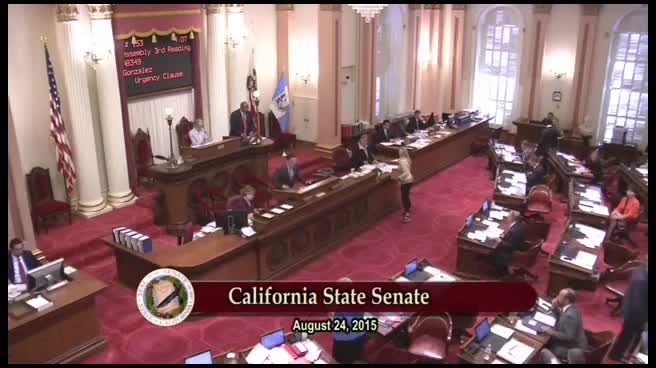
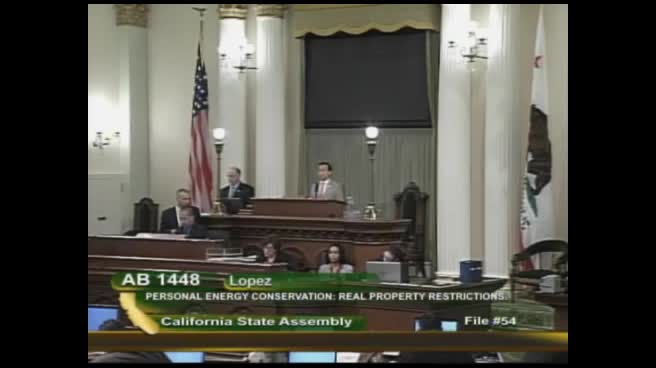
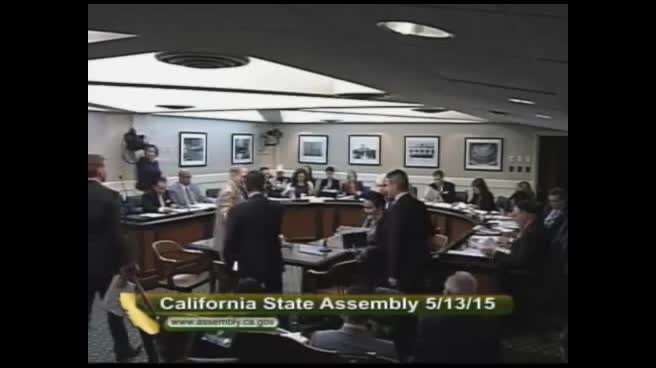
Bill Author

Bill Co-Author(s):